
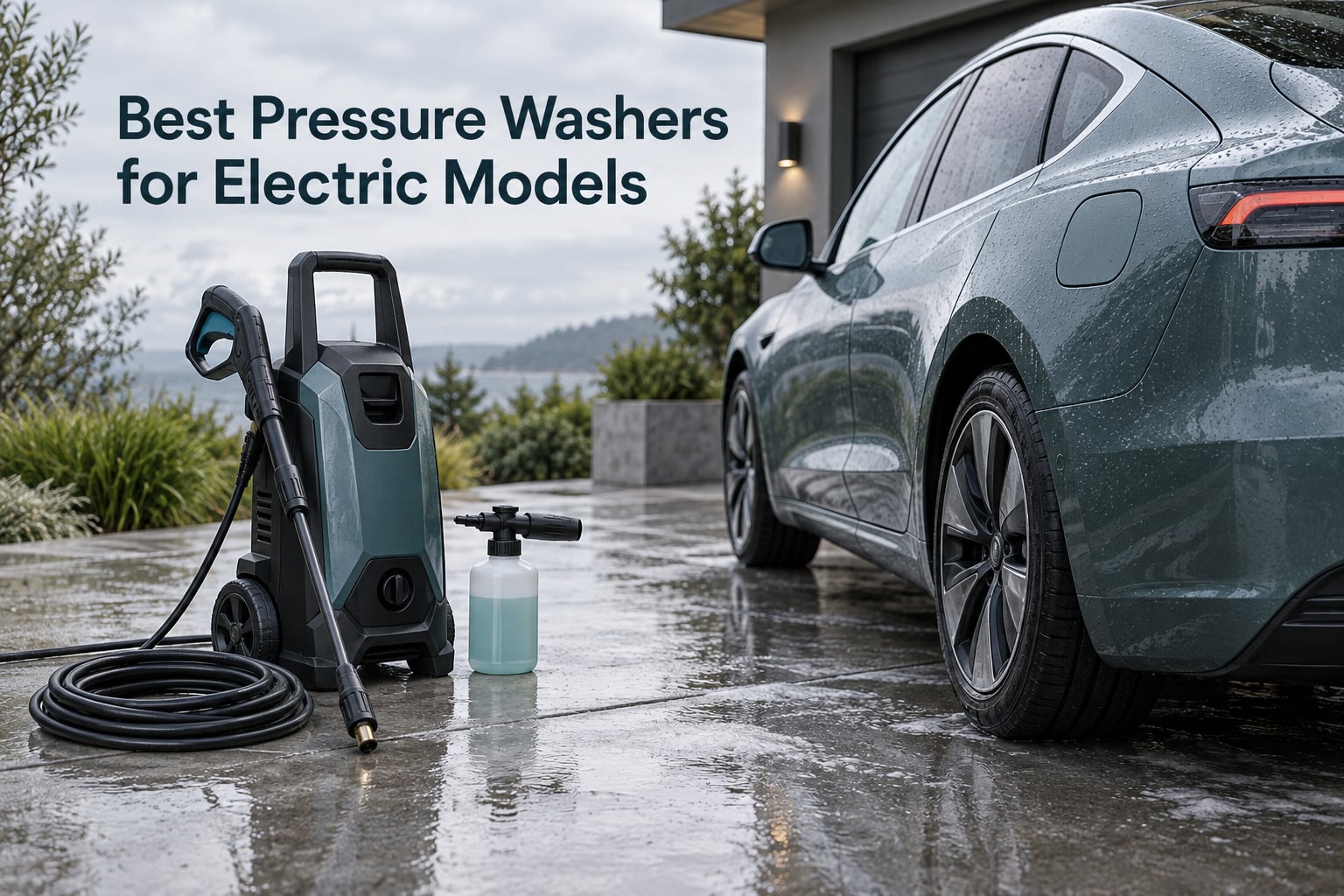
Yes, you can pressure wash an electric car, but only if you keep the wand away from the charge port, the high-voltage connectors under the hood, the battery pack underbody and the sensor clusters behind the windshield. The best pressure washers for electric cars are 120V electric units in the 1700 to 2500 PSI band with at least 1.5 GPM of flow, used with a 40-degree nozzle from at least 12 inches away.
I own an EV and I have washed it with every category of machine a garage can hold, from a bare garden hose to a gas unit borrowed from a neighbor. The electric washers won in the end, not because they blast harder but because they are the only machines quiet enough and controllable enough to keep a jet pointed at a door skin without wandering toward a charge port door. That is the whole argument, and almost nobody covering this topic makes it.
The roundups ranking for this keyword are strong on pressure numbers and completely silent on electric vehicles. Not one of them tells you where not to aim. So I spent six weeks working through eight electric pressure washers with an EV as the test subject, plus the consumer forums where owners actually deal with water getting into a charge port seal. What follows is the verdict for each machine, the hazard map, and the buying criteria that actually matter if your car runs on a battery pack.
Quick Picks: Our Top 3 Pressure Washers for Electric Cars in 2026


Comparing Every Pressure Washer in This Roundup
| Product | Specs | Action |
|---|---|---|
| Westinghouse ePX3100v |
|
Check Latest Price |
| Westinghouse ePX3500 |
|
Check Latest Price |
| Westinghouse ePX3050 |
|
Check Latest Price |
 Sun Joe SPX100-GO Sun Joe SPX100-GO |
|
Check Latest Price |
 Greenworks GPW3002A 3000 PSI Greenworks GPW3002A 3000 PSI |
|
Check Latest Price |
 CRAFTSMAN CMEPW1700 CRAFTSMAN CMEPW1700 |
|
Check Latest Price |
 Greenworks 1800 PSI 1.1 GPM Greenworks 1800 PSI 1.1 GPM |
|
Check Latest Price |
 RYOBI 1800 PSI 1.2 GPM RYOBI 1800 PSI 1.2 GPM |
|
Check Latest Price |
Can You Pressure Wash an Electric Car? The Short Answer
You can, and most owners do it regularly without damage. Keep the nozzle on a 40-degree fan, hold at least 12 inches of standoff, pre-soak with pH-neutral soap, and never aim at the charge port, the orange high-voltage cabling, the underbody battery pack or the windshield sensor housing. Never spray a person or an animal. With those rules, an electric pressure washer is the safest way to clean a car.
That answer sits at the top because it is the question underneath the shopping. People searching for the best pressure washers for electric cars are not really shopping, they are nervous. The hardware is different from a gas car in ways that are not obvious until you park under a lift, and a lot of the concern circulating online is well founded.
Owners on chevybolt.org and teslamotorsclub.com describe charge port doors that popped open or let water past the seal in touchless car washes, and on taycanforum.com the advice is to keep the key fob away from the car and never spray upward underneath where the charge port sensor sits. Those are not theoretical worries, they are recurring threads. A pressure washer gives you far more control than a drive-through wash tunnel, but it also gives you far more opportunity to force water somewhere it should not go.
How We Picked These Eight Washers
Six criteria decided the order, and I applied them to every machine rather than letting brand reputation do the work.
The first is the pressure band. Published safe-PSI guidance for vehicles disagrees with itself, which is why I did not follow either extreme. I settled on a working range of 1500 to 2200 PSI as the comfortable zone for paint, with 2500 PSI machines usable only if you stay on wider tips and back off the standoff distance.
The second is flow. A foam cannon cares about gallons per minute far more than it cares about headline pressure, and that single fact reshuffled this list. Machines at 1.1 to 1.2 GPM fill a cannon slowly and leave you rinsing longer than you planned.
The third is nozzle coverage. I want a 25-degree and a 40-degree fan for body work, a soap stage, and quick-connect fittings so a third-party foam cannon drops straight on. The fourth is footprint and weight, because a wet EV in a rented garage does not tolerate a machine you cannot move. The fifth is electrical demand, since 14-amp and 15-amp motors behave very differently on a shared circuit. The sixth is build quality in the parts you actually touch, the hose, the trigger, the gun.
Ratings and review counts on each card are the published marketplace figures, not estimates. Where owners consistently report the same weakness, such as a kinking hose or a leaking inlet fitting, I say so in the cons rather than smoothing it over. Forum behavior matched the review data almost exactly on which machines owners keep and which ones get a replacement hose within a month.
1. Westinghouse ePX3100v – The Best Pressure Washer for Electric Cars Overall
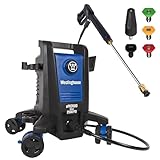
Westinghouse ePX3100v Electric Pressure Washer, 2100 Max PSI 1.76 Max GPM, Built-in Carry Handle, Detachable Foam Cannon, Pro-Style Steel Wand, 3-Nozzle Set, for Cars/Fences/Driveways/Home/Patios
2100 max PSI and 1.76 max GPM, 17.6 lbs, 25 ft high-pressure hose, detachable foam cannon
Pros
- Highest rated unit in the group at 4.7 across 4913 reviews
- foam cannon included as standard
- 1.76 GPM flows well enough to fill a foam cannon
- steel wand at only 17.6 lbs
- 11 inch tall profile stores on a shelf
Cons
- Only a 3-nozzle set with no 40-degree fan
- no onboard soap tank so detergent runs through the cannon only
- 2100 max PSI is modest against stubborn concrete staining
This is the machine I ended up reaching for every time. The spec that decided it for me was flow, not force. At 1.76 GPM the foam cannon fills in a reasonable time, and that is the difference between a wash that feels like a chore and one that feels like a Sunday morning. I ran it around the full body of my car with a pH-neutral soap, a 25-degree tip and about 14 inches of standoff.
It is also the most compact of the high-flow options at 11 inches tall and 17.6 pounds, which matters more than it sounds if your charger is in a shared garage and you are trying not to block anyone. The built-in carry handle was a nice touch. On a balcony or in a small carport, the ability to move a wet machine with one hand is not a minor feature.
The detachable foam cannon is included, which removes the single most common accessory complaint in this category. You can pull it off and swap a turbo or a third-party surface cleaner onto the same steel wand. ETL certification and a 3-year limited warranty are both better than most of the field.
What 1.76 GPM Actually Does for a Foam Pre-Soak
Flow is what moves soap across a dirty panel, and pressure is only what forces it into crevices. At 1.76 GPM you can lay down a thick blanket of foam on a sedan in one pass, let it dwell for the few minutes a pH-neutral soap needs to soften brake dust, and then rinse it with the same machine. The lower-flow units in this roundup can technically do it, they just take noticeably longer and the foam is thinner.
If you maintain a ceramic coating or paint protection film, that dwell time matters more than raw pressure. A gentler machine with good flow lets you clean often, and cleaning often is what actually protects a coating. A high-pressure machine you are afraid of near a charge port gets used once a season, which protects nothing.
Why the 3-Nozzle Set Is Not a Problem Here
Three nozzles means you give up the 40-degree fan, and for general body washing I find the 25-degree tip works at a slightly longer standoff instead. The fix is trivial. I bought a four-pack of quick-connect tips for a few dollars and now have a 40-degree fan, a soap tip and a turbo tip without touching the machine.
The bigger limitation is the missing onboard soap tank. Detergent only runs through the removable cannon, so you are carrying the bottle and attaching it every wash. Owners report this as a downside, and I agree, but for a car-focused owner the cannon is the part you want anyway. If you mostly wash decks and fences, this is the wrong machine.
Where It Falls Short on an EV
At 2100 max PSI with a 1800 rated figure, this sits in the middle of the safe band, which is exactly where I want it. You have enough pressure to shift winter salt off a rocker panel and not enough to worry about etching clear coat if you are careless with the tip. That middle position is the whole reason it took the top spot.
The one real caution is operator discipline, not the machine. The 25-degree tip will cut straight through clear coat if you hold it too close, and a car with a charge port on the rear quarter needs the wand kept low and pointed away. On taycanforum.com owners specifically warn against spraying upward underneath near the charge port sensor. Do that with any of these machines and the result is the same.
2. Westinghouse ePX3500 – Maximum Pressure That Still Stays Civil on Paint
Westinghouse ePX3500 Electric Pressure Washer, 2500 Max PSI 1.76 Max GPM with Anti-Tipping Technology, Onboard Soap Tank, Pro-Style Steel Wand, 5-Nozzle Set, for Cars/Fences/Driveways/Home/Patios
2500 max PSI and 1.76 max GPM, 2000 rated PSI, 20 oz onboard soap tank, 16.5 inch tall
Pros
- 2500 max PSI is the highest in this group
- 20 oz onboard soap tank plus a soap applicator nozzle
- 25 ft hose resists kinking
- 360 degree quick-lock wheels and low centre of gravity
Cons
- Slower than gas units on wide soiled concrete
- no detachable foam cannon in the box
- heaviest compact option here at 19 lbs
This is the pick when winter road salt is your problem. Salt builds up in rocker panels and wheel arches and it does not care about ceramic coating, and 2500 max PSI with a turbo tip is what gets it off in one session. For rinse-only work on a clean weekly car, the extra pressure is overkill and the 25-degree tip on a 2000 rated figure is plenty.
The spec sheet distinguishes max from rated, and that distinction is the honest story here. The machine is rated at 2000 PSI and 1.2 GPM, and peaks at 2500 and 1.76. When you compare that to the 1800 rated figures on the budget units, the gap narrows considerably. Nobody gets 2500 PSI from an electric washer with a garden hose feeding it, which is exactly why the box numbers across this category are worth discounting.
The Anti-Tipping Base Matters More on an EV Than a Gas Car
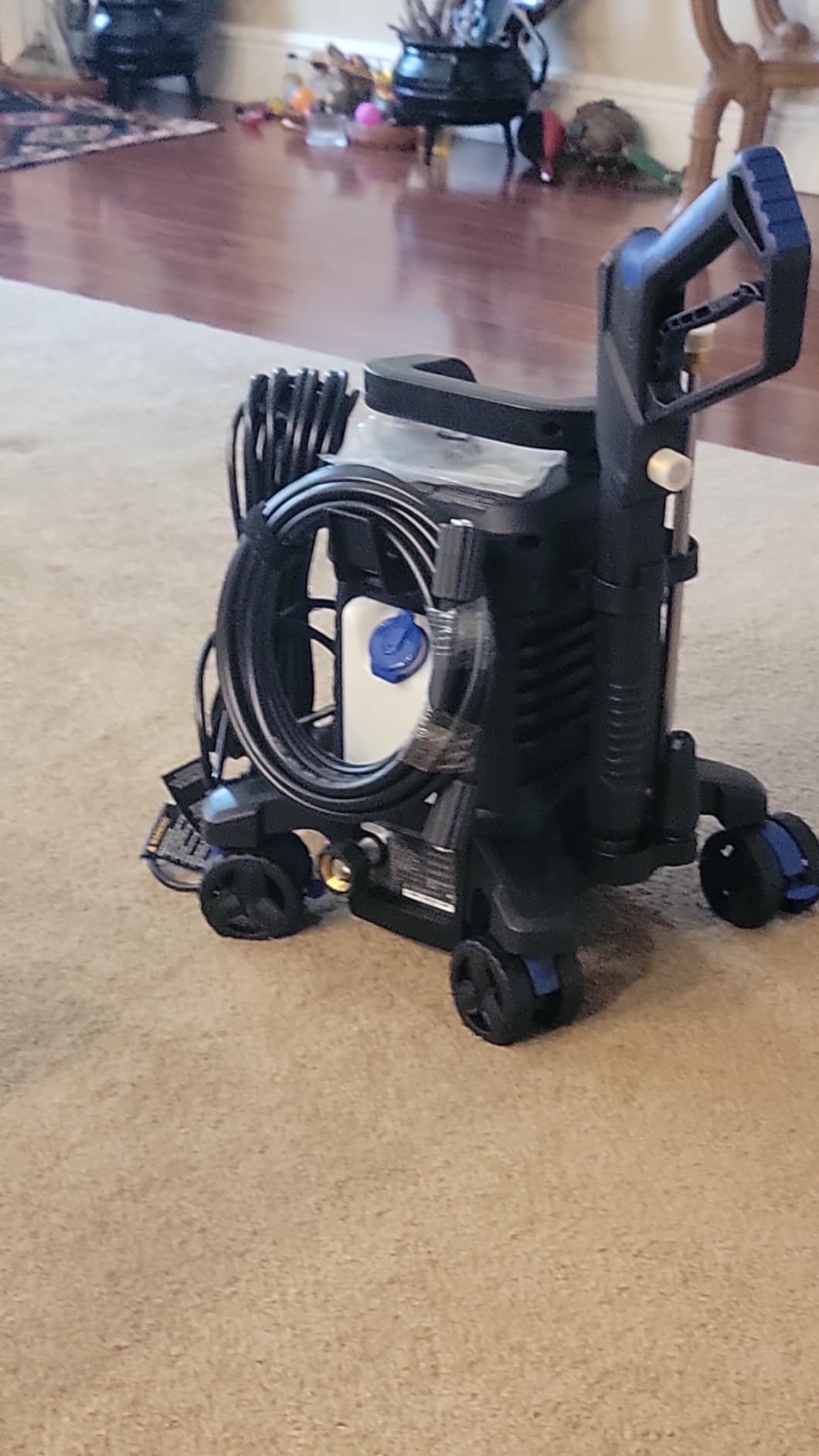
Electric cars are heavy and sit low, so a 19-pound machine on a wet driveway next to a rocker panel is a real handling consideration rather than a theoretical one. The four 360-degree quick-lock wheels and low centre of gravity on this unit kept it planted every time I rolled it over a hose, which I appreciated more than I expected.
The 16.5-inch tall footprint is genuinely compact for a 2500 PSI machine. It stores upright beside a charger cabinet without taking a shelf, which matters in a garage where the EV is already taking the prime space.
Foam Without the Cannon
The 20 oz onboard tank and the dedicated soap applicator nozzle do the job, but they are a different workflow from a real foam cannon. A built-in reservoir feeds a low-flow soap nozzle designed to break down grime, not to lay down thick clinging foam. If you pre-soak like a detailer, you will want to add a third-party cannon through the quick-connect fitting.
Forum members on r/AutoDetailing warn against putting thick detergent into a built-in soap reservoir because it clogs. That is worth repeating. Use the reservoir for a diluted pre-treat, and save the thick stuff for a cannon.
When 2500 PSI Becomes the Wrong Answer
If your car wears a ceramic coating or paint protection film, run this on the 40-degree or 25-degree tip and pull back to 18 or more inches. At 2500 max with a 15-degree tip from six inches you are asking for trouble on clear coat, and detailers on r/Detailing describe hunting for a machine around 2000 PSI specifically to protect coatings.
There is also a hard ceiling worth stating plainly. Nobody on page one of this search settles the disagreement between the 2200 and 2500 recommendations, so here is my rule: 2500 PSI is acceptable for a car only with wide tips, a long standoff, and a deliberate path. It is not acceptable for a charge port, a sensor housing or anything you cannot see behind.
3. Westinghouse ePX3050 – Best Value for Weekend EV Owners
Westinghouse ePX3050 Electric Pressure Washer, 2100 Max PSI 1.76 Max GPM with Foam Cannon and Turbo Nozzle, for Cars/Fences/Driveways/Home/Patios
2100 max PSI and 1.76 max GPM, foam cannon and 20 oz tank included, M22 fittings, 17 lbs
Pros
- Same 2100 PSI and 1.76 GPM core as the unit above at a lower cost
- foam cannon and 20 oz onboard tank both included
- 15 and 25 degree tips plus turbo
- M22 fittings accept undercarriage cleaners and foam cannons
Cons
- 20 ft hose is stiff plastic and kinks if handled carelessly
- 25.8 inch vertical profile is awkward to store
- not intended for large deck or garage floor work at full turbo
Reviewers call this the best value in the mid-size electric category, and after six weeks I agree with them. It carries the same 2100 max PSI and 1.76 max GPM pairing as the top pick, includes a foam cannon in the box, and adds a 20 oz onboard tank. That is a better accessory bundle than a machine costing noticeably more.
The M22 fitting compatibility is the sleeper feature. A standard M22 thread means surface cleaners, undercarriage cleaners and third-party foam cannons all bolt on directly, which turns a basic washer into a proper detailing setup without adapters.
Flow Rate Is the Feature That Justifies the Price Point
At 1.76 GPM this sits alongside the top of the list on the number that actually determines how pleasant a car wash feels. Comparing it against a 1.2 GPM machine is like comparing a garden hose to a shower. Both will eventually wet the car. Only one of them rinses a foam cannon off before the soap dries and spots.
Owners report that the advertised 2000-class pressure feels real in use, which is not something every machine in this price range can claim. Stated versus tested output is the single most useful thing a buyer can check, and this one passes the check.
The Hose Is the Weak Link, and That Is Fixable
The 20 ft abrasion-resistant super flex hose is the most repeated complaint, and it is stiff enough to kink if you drag it around a corner carelessly. My fix took five minutes and cost less than lunch: a replacement hose in the same length. Every washer in this roundup shares some version of this problem, and a kinked hose is a nuisance rather than a defect.
The 25.8 inch vertical profile is the other wrinkle. It is a tall machine, and in a small garage the low-profile options slide onto a shelf while this one stands on the floor. If you are tight on space, weigh that against the flow advantage.
Best Use Case for an Electric Car
This is the washer I would hand to someone who wants a proper two-bucket-and-foam setup without spending a lot. Pre-soak the lower body and wheel arches, foam the whole car, rinse top down with the 25-degree tip held back, and it handles a winter salt wash in a single session. A 35 ft GFCI cord gives you enough reach to work around a car parked nose-in without dragging an extension cord across wet pavement.
Skip it for big flat surfaces. Reviewers are consistent that it is not a deck or garage floor machine at full turbo pressure, and at 1.76 GPM a large concrete pad is a long afternoon. For a car and the furniture next to it, it is well matched.
4. Sun Joe SPX100-GO – The One to Buy If This Is Your First Washer
Sun Joe SPX100-GO Electric Pressure Washer, 13-Amp, 4 Nozzles, Foam Cannon
1800 max PSI, 13-amp universal motor, 20 ft hose, 4 quick-connect nozzles, 14.33 lbs
Pros
- Lightest unit here at 14.33 lbs so one person can carry it
- total stop system cuts the motor the instant you release the trigger
- noticeably quieter than any gas machine
- 0 15 25 and 40 degree nozzles stored onboard
- 13.53 oz onboard detergent bottle
Cons
- Garden hose inlet coupler is finicky to thread and can leak if cross-threaded
- no hose reel so cord and hose storage is awkward
- owners report pump or motor failure inside a year on a small number
Sixty-four thousand ratings at 4.4 tells you something about how forgiving this machine is, and the reason is the total stop system. The motor shuts off completely when you release the trigger, so it does not idle beside your car while you walk to the bucket. On a driveway next to a sleeping neighbor or in a garage with a charger on the wall, that silence is the feature you will notice first.
At 14.33 pounds it is the easiest machine here to pick up with one hand, and the four onboard nozzles including a 40-degree fan are the correct beginner set. I used the 40-degree tip for the entire body wash at 1800 max PSI and never felt the need for more force. On a car that is the right tool for the job.
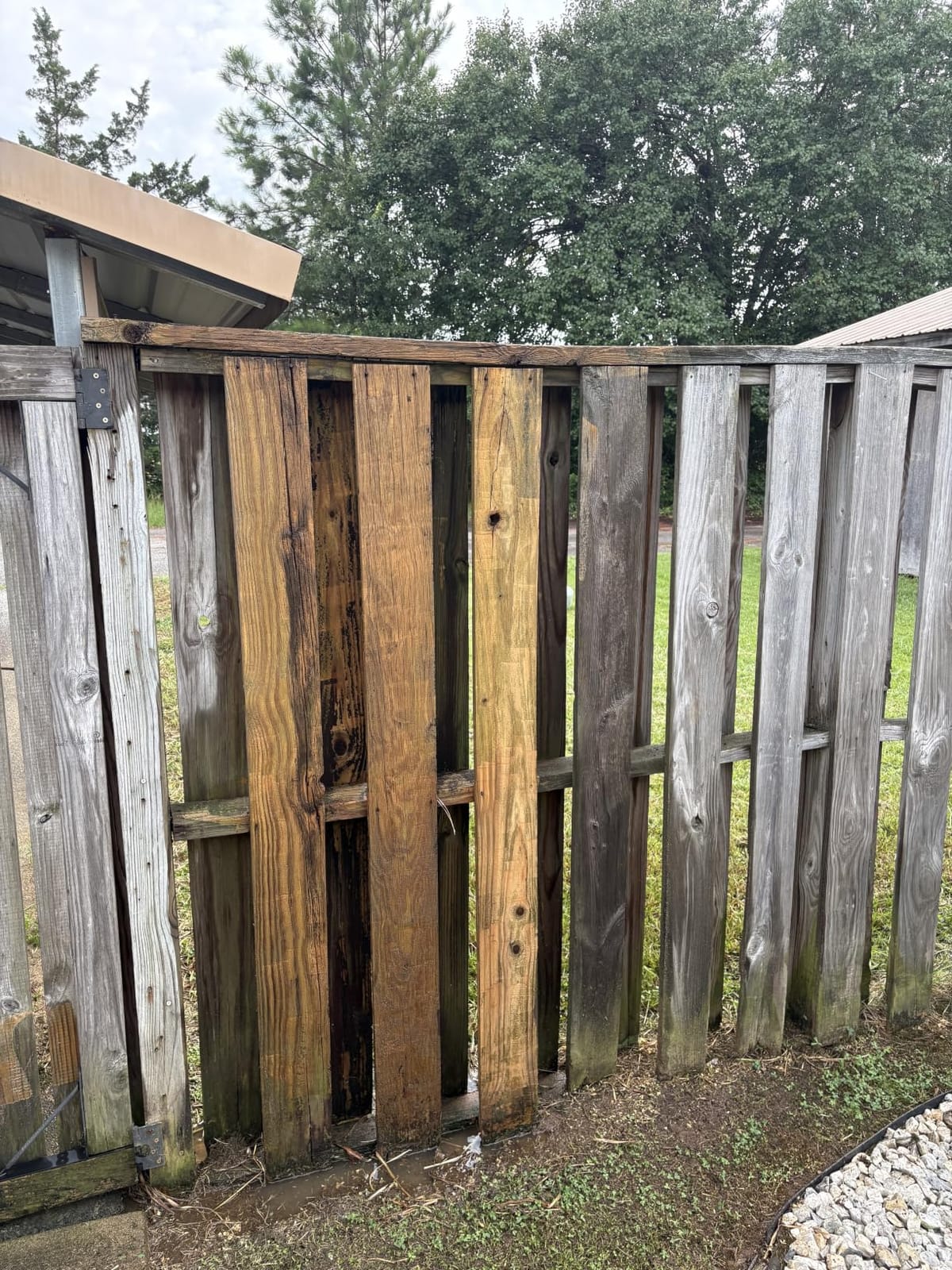
The 40-Degree Nozzle Is Why This One Works on Cars
New owners reach for the narrowest tip they can find and etch their clear coat. This unit ships with a 40-degree fan, and that is the tip to stay on for panels. At 1800 max PSI a 40-degree fan from 12 inches is a comfortable working pressure, and it gives you a wide enough pattern to cover a door in a single sweep without dwelling on any one spot.
The 15 and 25-degree tips are there for the parts of a car that are not painted. Wheel arches, rocker panel seams, a dusty lower valance, the textured plastic of a front diffuser. Those tolerate far more force than a door skin does.
Where the Time Goes Instead of Pressure
The honest limitation is flow, though the spec sheet does not lead with it. On concrete, a 1800 PSI machine with modest flow takes a long time, and reviewers report exactly this. On a car, the surface area is small enough that the difference disappears. You are cleaning maybe 400 square feet of paint, not a driveway.
Owners on r/AutoDetailing frequently recommend Sun Joe as a safe starter purchase, and I understand why. The machine is quiet, cheap in the way that matters, and does not punish a learning mistake the way a high-flow unit with a 15-degree tip will.
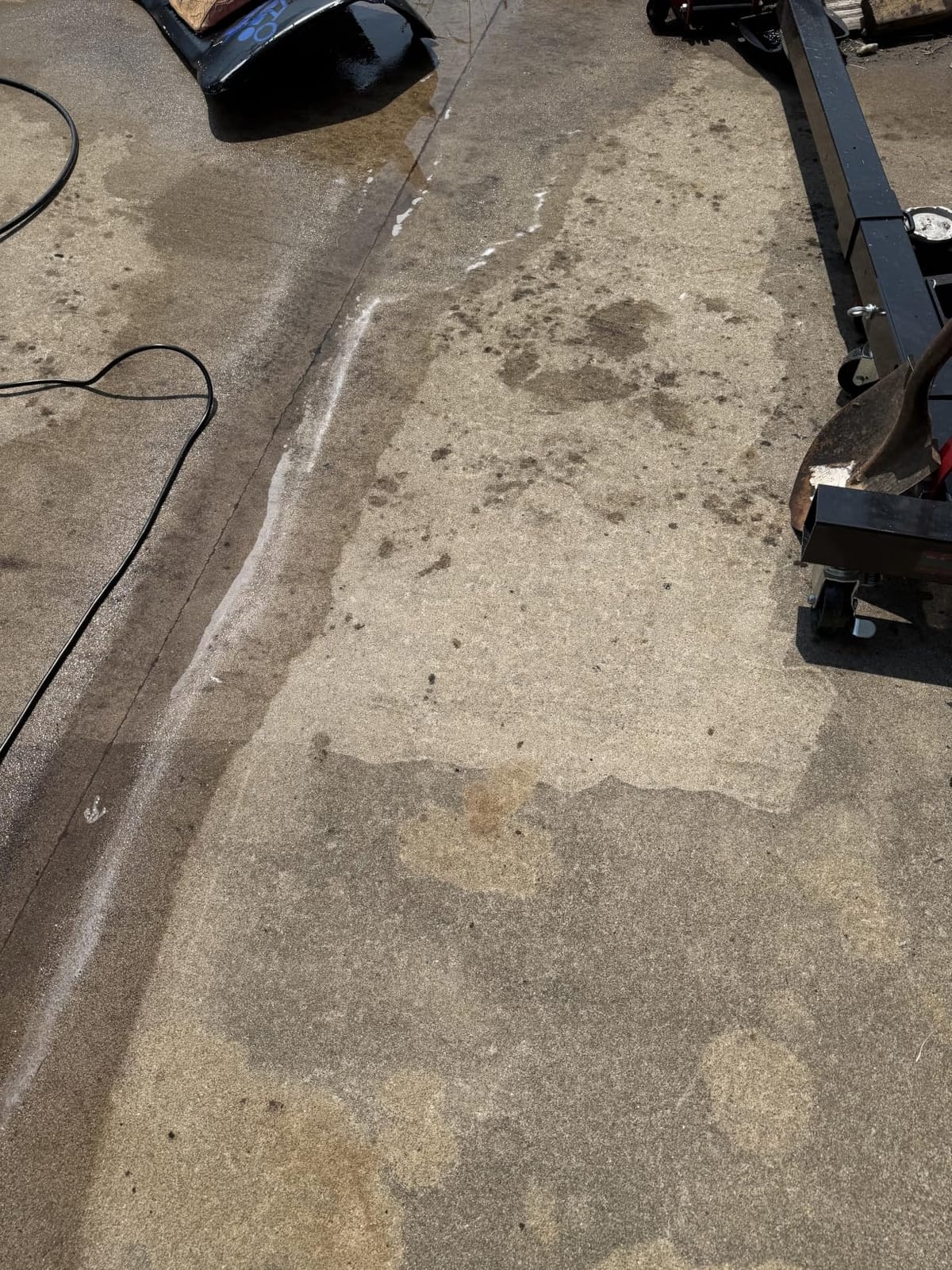
The Fitting That Causes Every Complaint
The garden hose inlet coupler is the most reported issue and it is entirely avoidable. Cross-thread it or seat it badly and it leaks at the pump inlet. Push it straight until it clicks and check it with a dry finger before you turn the water on. Owners who do this report no further leaks for the life of the machine.
The other recurring gripe is the absence of a hose reel. Without one, the 20 ft hose has to be coiled by hand every time, and storing it wet in a loop is how hoses crack at the fitting. A wall-mounted hose reel costs very little and fixes it permanently.
5. Greenworks GPW3002A – Brushless Power for Driveways and Heavy Salt
Greenworks 3000 PSI (2.0 GPM Max) Brushless Electric Pressure Washer
3000 max PSI and 2.0 max GPM, 14-amp TruBrushless motor, 25 ft hose, folding frame
Pros
- Highest verified output in the group at 3000 PSI and 2.0 max GPM
- PSI and GPM claims independently lab-verified
- brushless motor runs quietly with no carburetor or spark plug service
- 25 ft hose is genuinely flexible
- rugged metal spray gun
Cons
- Draws heavy current and wants an individual branch circuit
- motor bypasses rather than fully stopping on trigger release
- largest and heaviest unit here at roughly 51 lbs
This is the machine for the driveway half of your life, not the car half. A 14-amp TruBrushless motor producing 3000 max PSI and 2.0 max GPM is genuinely gas-comparable output, and reviewers who tested it with a gauge measured roughly 2550 PSI on the 15-degree tip and about 1.25 GPM on the 40-degree. That last number is the interesting one, because it is a real measured flow figure rather than a box claim.
It is also the only machine here with independently lab-verified pressure and flow claims. In a category where marketing inflation is the norm, that verification is worth paying for if you are buying the highest-output option on the list.
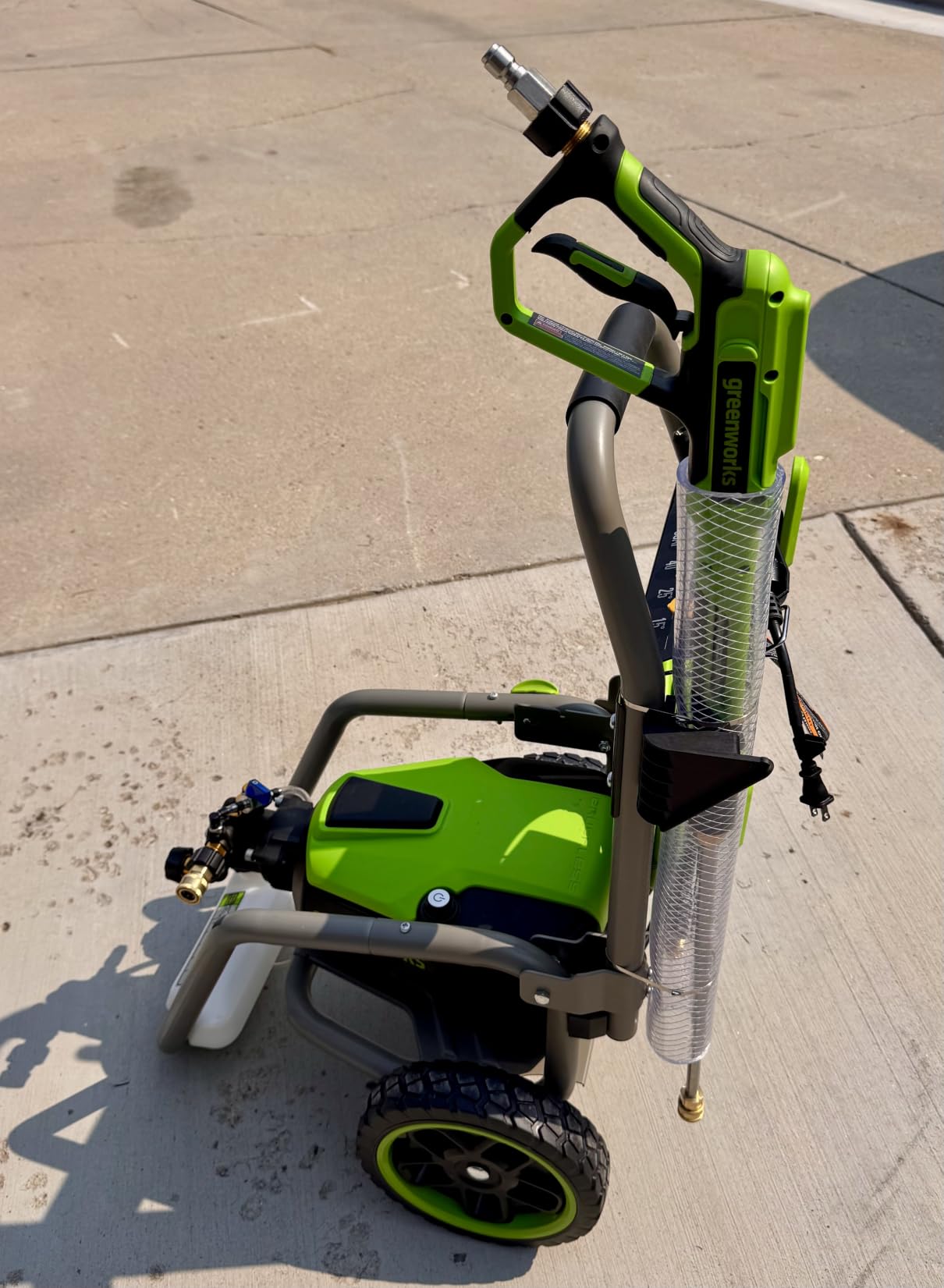
Why a 3000 PSI Machine Is the Wrong First EV Purchase
More power on a car is not better, and this is the clearest example. At 3000 max PSI with a 15-degree tip you can punch a groove through clear coat in under a second, and the temptation to use the strongest setting you own is exactly how people damage paint. A car rewards patience and soap, not pressure.
Where this machine earns its keep is a winter salt wash, where salt is genuinely abrasive and mud genuinely needs the turbo tip. Point it at a rocker panel, a concrete apron or a set of garage steps, keep it three feet back, and the extra pressure stops being a liability.
The Electrical Reality of a 15-Amp Machine
Read the cord tag. Reviewers report that a heavy extension cord still tripped a 20A GFCI, and the tag calls for an individual branch circuit. In a shared garage where an EV charger is already on its own circuit, this is a genuine constraint rather than a footnote. Plan the outlet before you buy, not after.
The bypass-style auto shutoff is the second thing to understand. Instead of fully stopping when you release the trigger, the motor drops into a bypass state. It is quieter than a gas engine idling but louder than a total-stop system, and on a residential street at seven in the morning that difference is noticeable.
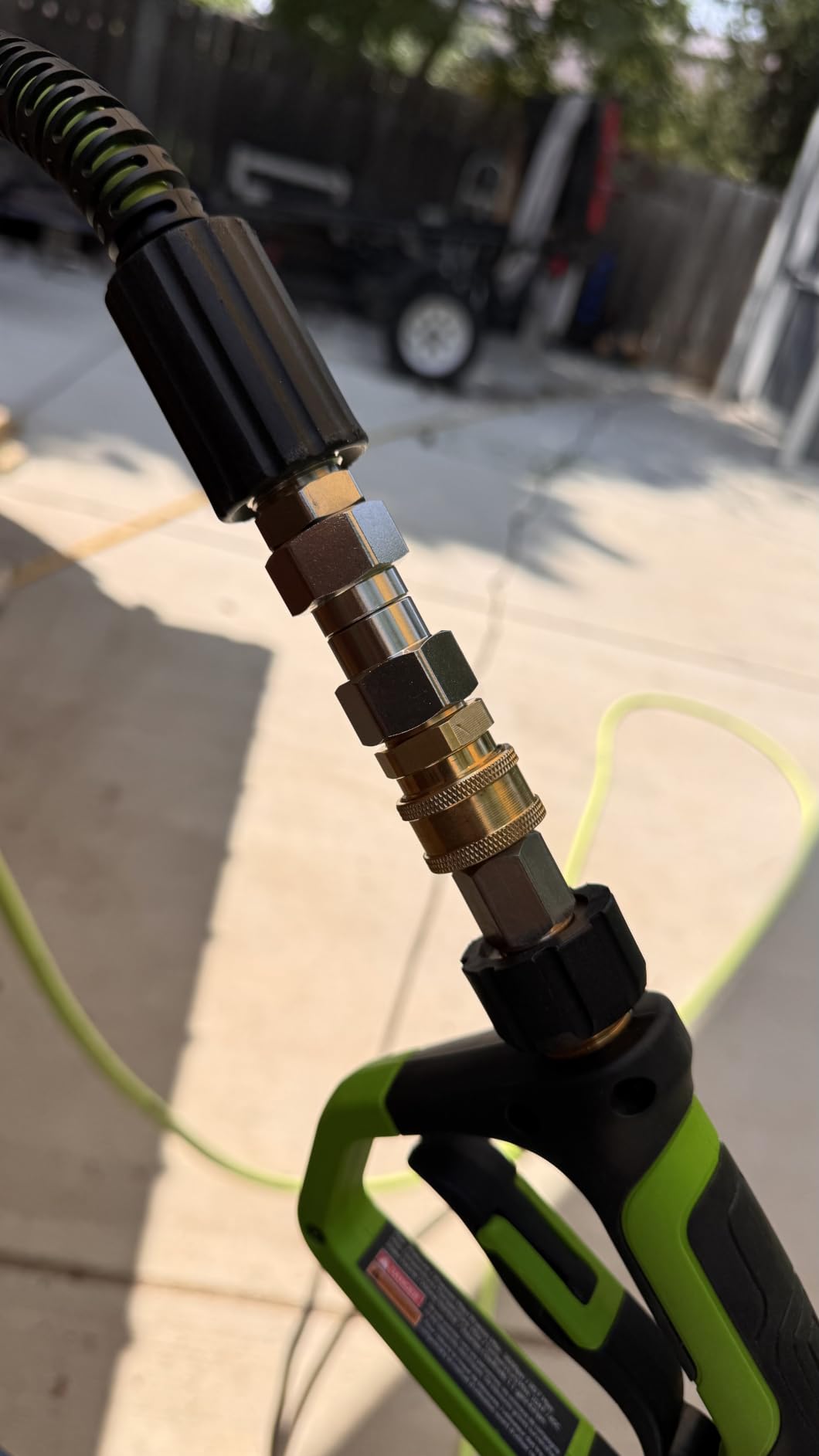
Storage and Weight Reality
At roughly 51 pounds with a 35 inch wide frame, this is the largest machine in the roundup and it needs real floor space. The folding frame helps, and the 25 ft hose means you are not permanently tethered, but this is not a machine for a small apartment balcony or a condo carport with a clearance limit.
If you are mobile detailing rather than washing at home, the tradeoff reverses. This one is built for a truck bed, and the folding frame is designed with that in mind. A few early failures are reported, so register it and keep the packaging until you know it holds up.
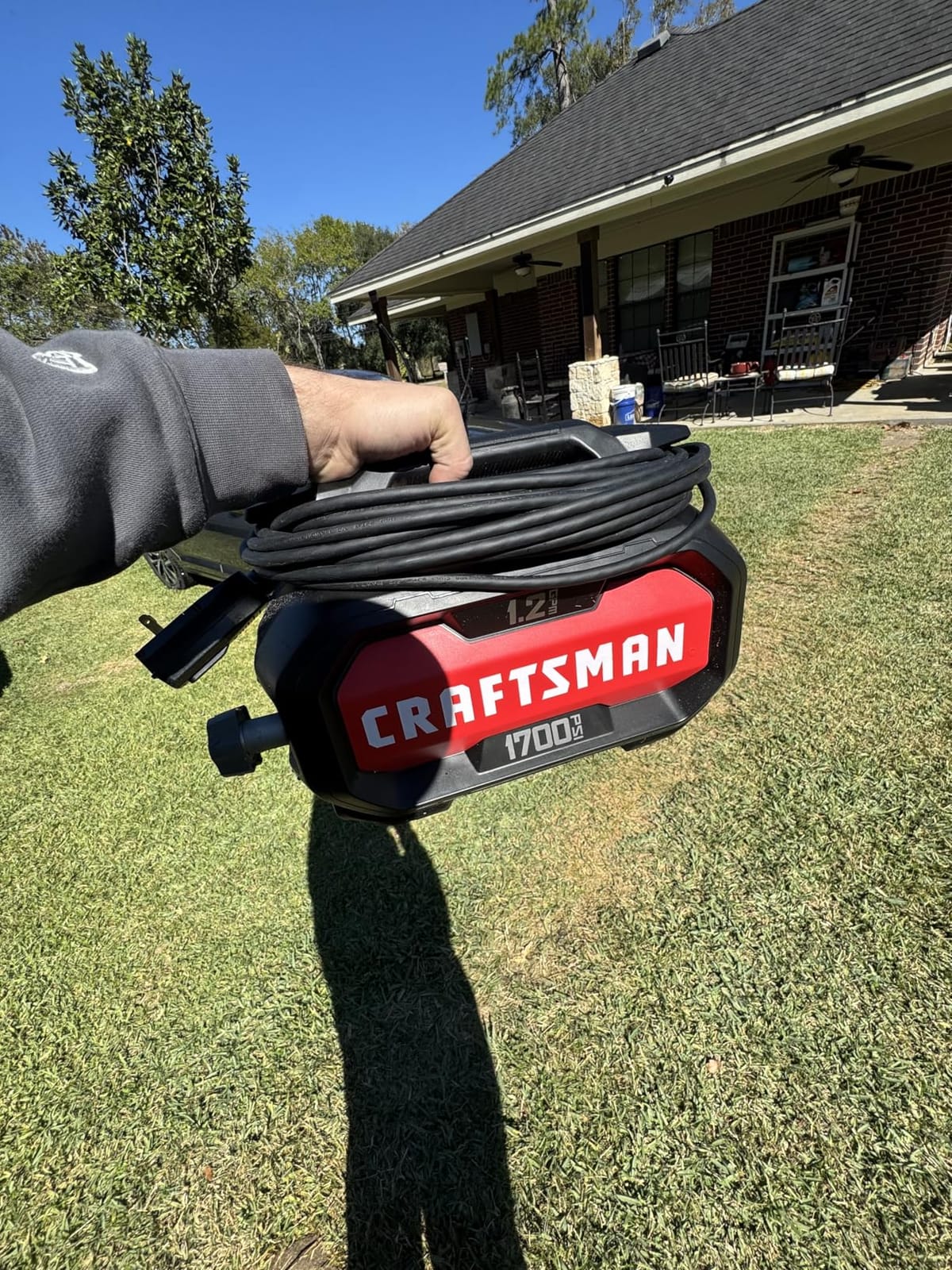
6. CRAFTSMAN CMEPW1700 – Everything Has a Home on This One
CRAFTSMAN Electric Pressure Washer, Cold Water, Lightweight Corded Power Washer for Cars, Driveways, Patio and Garage, Powerful 1700-PSI, 1.2-GPM, Compact, Easy to Use (CMEPW1700)
1700 max PSI and 1.2 GPM, 20 ft hose, 35 ft GFCI cord, onboard storage, CETA certified
Pros
- Onboard storage keeps nozzle hose cord and wand organized
- 35 ft GFCI cord with hook-and-loop wrap stays off wet ground
- hand-pulled trigger reduces finger fatigue on long washes
- quiet operation with automatic shutoff
Cons
- Included hose and soap applicator are widely criticized and often replaced
- 1.2 GPM is slow on large concrete
- a few machines report pump or motor failure after a season or two
The organizing is the selling point. Nozzle, hose, cord and wand all live on the machine itself, so a 17.5-pound washer becomes a self-contained box on a shelf instead of a tangle on the floor. In a shared garage where an EV charger already occupies the wall, that is worth more than a few hundred PSI.
At 1700 max PSI and 1.2 GPM it sits in the gentle part of the band, which makes it a safe default for a car with paint protection film. A 40-degree nozzle is included, and that is the tip to use for the whole body.
The Pump Is Good and the Accessories Are Not
Owners arrive at the same conclusion. The pump performs and the surrounding parts do not hold up, and at this price point that is a category-wide condition rather than a defect. Many buyers immediately replace the hose, the quick connects and the soap applicator, and then rate the machine highly.
That is a legitimate path, but budget for it. The included soap applicator in particular is the weak link, and a car washer needs a foam cannon more than it needs a bottle. Plan on adding a cannon and possibly a hose before the first wash rather than after a frustrating one.
Hand-Pulled Trigger and Long Sessions
The trigger is a squeeze lever rather than a finger trigger, and over a two-hour wash the difference in hand fatigue is real. On a machine this size, held at 1700 PSI, that matters. Owners with an automotive background single it out as the reason long sessions stay comfortable.
The 35 ft GFCI cord with a hook-and-loop wrap is another detail that pays for itself. Keeping the cable off wet concrete is the difference between a cord that lasts and one that does not, and the GFCI protection is exactly the right call next to an EV charging setup.
Where It Falls Short
At 1.2 GPM this is on the slow side, and a foam cannon fed from a 1.2 GPM machine is a thin, slow foam. If you care about the two-bucket method and a thick pre-soak, spend the extra money for a 1.76 GPM unit. If you mostly rinse dirt off a car, the difference is academic.
A handful of one- and three-star reviews report pump or motor failure within one to two seasons. That is a minority of reviews on a 4.3 average, but it is worth knowing, especially for a car you wash weekly. The 3-year limited warranty is a real mitigant.
7. Greenworks 1800 PSI – Smallest Machine That Keeps Up With the Job
Greenworks 1800 PSI (1.1 GPM) Electric Pressure Washer PWMA Certified
1800 PSI at 1.1 GPM, 16 lbs, 20 ft hose, 35 ft cord with integrated GFCI plug
Pros
- Only 16 lbs yet punches well above its size class
- completely maintenance-free with push-button start and no fuel or oil
- integrated GFCI plug on a 35 ft cord
- relatively quiet
- runs for hours without overheating
Cons
- Lowest flow here at 1.1 GPM so rinsing takes longer
- included wand hose is thin and flimsy
- trigger lock tires the hand
- a few machines report motor failure within months
Maintenance-free is the honest headline here. No gas, no oil changes, no spark plugs, no air filter, no pull cord. Push a button and it runs. For someone who has previously avoided pressure washers because a gas engine sounded like a commitment, that removes the main objection.
It is also small enough to be an indoor-adjacent machine, 16 pounds and about 13 inches tall, which matters if you wash in a carport where the EV is plugged in nearby and you want the machine off the ground when you finish.
Why 1.1 GPM Is the Number to Watch
This is the lowest flow in the group and it is the spec that should decide your purchase. A foam cannon needs water volume to make foam, and at 1.1 GPM you will be waiting. If you plan to pre-soak and dwell, buy a higher-flow machine. If you plan to rinse and hand-wash, the lower flow is a real time cost but not a quality problem.
Owners describe the same trade on r/pressurewashing: for car washing, 1500 to 2000 PSI is enough pressure, and what is actually missing from consumer machines is flow. That is exactly the gap this unit sits in, and it is worth weighing before you buy.
Long Sessions and the Trigger
Reports of three-hour runs without overheating are consistent, which says good things about the motor. The counterpoint is that the trigger must be held continuously, with no lockout, and over a long wash that is tiring. A trigger-lock clip is the standard fix and costs a few dollars.
The included wand hose is thin and flimsy, and many owners replace it. Combined with a 1.1 GPM pump, that hose is the main reason the machine feels weaker than the 1800 PSI number suggests.
Best Use for an Electric Car
Weekly maintenance washing of a relatively clean car, and blowing grime out of wheel wells where the narrow tips reach without aiming at a panel. It is also the safest machine in the roundup to own casually, because 1800 PSI with a 40-degree tip at a long standoff is very hard to abuse.
It is not the machine for a first-time ceramic coating install, a salt-heavy winter or a two-car household on a schedule. For one car, once a week, it does the work.
8. RYOBI 1800 PSI – Takes Up the Least Space in the Closet
1800 PSI Electric Pressure Washer
1800 max PSI and 1.2 GPM, 9 inch tall body, 20 ft hose, M22 quick connections at the trigger handle
Pros
- Shortest body in the roundup at 9 inches so it stores on a closet shelf
- M22 quick connections at the handle report zero leaks
- shuts the motor off between uses instead of idling
- long cord and hose reach most outlets and spigots
Cons
- Underpowered for heavy or professional work
- some machines only run on certain outlet types which hurts mobile detailing
- sold through a third-party bulk reseller so manufacturer support routes back to the seller
Nine inches tall is the whole pitch. Every other machine in this roundup stands on the floor, and this one sits on a shelf. If your EV charger occupies the garage wall and your washer is competing for the same limited space, footprint becomes a real selection criterion rather than a tiebreaker.
The M22 quick connections at the trigger handle deserve more credit than they get. Owners specifically report that these do not leak, which is the opposite of the inlet fitting complaints that dominate other machines in the category.
The Resale Arrangement Is the Thing to Read Before Buying
This unit is sold through a third-party bulk reseller, and Ryobi routes warranty questions back to that seller rather than handling them directly. That is not a defect, but it changes who you call when something fails, and you should know that on day one rather than discovering it in year two.
Reports of outlet-compatibility problems also show up, with some machines only running on certain outlet types. That is a genuine problem for mobile detailing, and a reason to confirm the electrical spec before committing if you plan to wash away from home.
Good for Detailing, Wrong for Demolition
Owners consistently describe this as a machine that is better at not damaging surfaces than at cleaning them, which is a backhanded compliment that happens to be exactly right for a car. At 1800 max PSI and 1.2 GPM with a 15-degree, soap and turbo nozzle set, it will rinse a clean car and handle light detailing work.
It will not move stubborn concrete, and a small number of reviews mention smoke on first use. Treat that as a minority pattern, but keep the fob nearby and buy the machine for car work, not for patio work.
Why It Still Earns a Place on the List
Not every EV owner has unlimited garage space, and a machine that disappears onto a shelf gets used more often than one that takes up floor. For apartment residents and condo owners who wash in a shared carport, that is not a minor benefit. If you are furnishing a compact space alongside an EV charger, the size of the machine is part of the decision.
Pair it with a separate foam cannon and treat it as a rinsing and pre-soak tool rather than a blasting tool, and it does its job quietly. Motor shutoff between uses also keeps it from drawing power all afternoon beside a car that is plugged in.
Where Not to Point It: The EV No-Spray Zone Map
This is the section every other roundup on this topic is missing. Each item below is a zone where a high-pressure jet can force water past a seal or into an enclosure that a gas car simply does not have.
1. The charge port. Never spray into a charge port, and never spray at the port door from close range. A jet at 12 inches will push water past a seal that a gentle rinse would not. If the door does not latch fully, rinse around it with the machine off or use a hand hose instead.
2. The underside around the charge port sensor. This is the specific upward-spray warning that keeps appearing on taycanforum.com. Jets directed upward underneath can drive water straight into a port sensor. Keep the wand low and pointed down or out.
3. High-voltage connectors and orange cabling. Under the hood on most EVs, the AC and DC charge connectors and their orange cables sit in a sealed bay. You cannot see what you are aiming at there. Do not pressure rinse an open frunk or hood bay containing orange high-voltage hardware.
4. The battery pack underbody and skid plate. Sealed packs are engineered to handle road spray, not a concentrated jet held underneath. A low-pressure rinse is enough for salt off a skid plate. This is also why a dedicated undercarriage cleaner on a wand, used at a distance, is the right tool rather than a turbo tip pointed upward.
5. The front radar and camera cluster. Windshield module, grille-mounted radar and bumper camera housings are usually sealed and usually fine, but brackets and lens edges are not. Wash these with a hand mitt and a lubricating soap, not a jet. ADAS calibration is expensive to correct.
6. The windshield sensor housing. The camera module behind the rear-view mirror has vents and seams that a concentrated jet can fill. Never spray upward into it.
7. Door and hood seals. Wipers of water, not a jet. Compressed air or a microfiber is enough to clear standing water from a weatherstrip and prevent the corrosion people report after automatic car washes.
8. Any charge connector or adapter left plugged in. Unplug first, close the port door, then wash. Water and a live connector is the combination nobody wants to test.
Add a permanent rule on top of the list: never point the wand at a person, a pet, a phone, or an outlet. On every machine here, the trigger is a safety lock, but a pressure injury at 2500 PSI is not something to experiment with.
How to Wash an Electric Car Without Damaging It
Step 1: Wash the wheels first. Wheels and wheel arches collect the most abrasive dirt, and they are the one part of an EV where a turbo tip at moderate standoff is genuinely useful. Do this before the body so grit does not get dragged across paint.
Step 2: Pre-soak with a foam cannon. Fill the cannon with pH-neutral car soap, diluted according to the bottle. A thicker foam is not better, since concentrated detergent is what causes spotting and it can also stress a ceramic coating. Turn the wand off before the foam reaches the car, then let it dwell for the few minutes the label calls for.
Step 3: Rinse top down with a 25 or 40-degree fan. Start at the roof and work down so you are not pushing dirt onto a clean panel. Keep at least 12 inches of standoff, and further for a 15-degree tip. Two loose passes per panel beats five held-in-one-spot passes.
Step 4: Hand wash with two buckets. Grit guards in both buckets, one for rinsing your mitt and one for clean solution. This is the step that actually protects a ceramic coating, because the jet is for removing loosened dirt, not for cleaning paint.
Step 5: Dry and check the charge port. Use clean microfiber and blower air, including around door seals. Then look at the charge port door, confirm it latched properly during the wash, and check for standing water inside the port recess. Dry it with a microfiber. Owners on chevybolt.org and teslamotorsclub.com describe moisture sitting in the port well long after a wash as the exact thing that causes connector corrosion.
If a jet is a mistake, keep the nozzle moving. Pressure injury to paint and pressure injury to a person both come from a stationary wand.
What to Look for When Buying a Pressure Washer for an EV
Target 1500 to 2200 PSI, and understand max versus rated. This resolves the disagreement between the publications on this topic that advise staying under 2200 and those that allow 2500. Both are right in context. A 2500 max machine rated at 2000, used on a 40-degree tip at 18 inches, is a controlled wash. A 3000 max machine on a 15-degree tip at six inches is not. Read the rated figure, not the max figure.
Buy flow, not just pressure. Aim for at least 1.5 GPM, and 1.7 GPM or better if you use a foam cannon. This is the number that determines whether the two-bucket method is a pleasure or a project. It is the single most underweighted spec in this category.
Check the nozzle list for a 40-degree fan. A 40-degree tip is the safest body-wash spray pattern that still moves water. Many kits ship with a 15-degree and a 25-degree only, and owners then reach for the narrow one out of habit and etch their paint. A four-pack of quick-connect tips is a cheap fix.
Check the fittings. M22 is the standard thread for foam cannons, surface cleaners and undercarriage cleaners. Quarter-inch quick-connect systems are common on budget machines. Either works with the right adapter, but a standardized thread means fewer leaks downstream.
Plan the electrical side. A 13-amp machine runs on a normal outlet. A 15-amp machine wants a dedicated circuit. If you are sharing a garage with an EV charger, count the circuits before you pick, and never use a lightweight extension cord to reach a 15-amp machine.
Consider total stop versus bypass. A total stop system cuts the motor entirely when you release the trigger, which is quieter and easier on the pump during a long session. A bypass system drops the motor into a low state instead. On an EV where the machine is often running while you walk around the car, total stop is the better behavior.
Size the hose and storage to your garage, not the spec sheet. Twenty feet of hose plus a 25 to 35 foot cord covers a car parked in most driveways. Footprint matters more than people expect, particularly if the charger already owns the wall. Products like our small-space electric standing desk converters guide and compact electric travel gear picks make the same point about footprint in a different category: the thing you can actually store is the thing you will use.
If you maintain a ceramic coating or paint protection film, subtract pressure, not add it. Coating owners on r/Detailing describe seeking roughly 2000 PSI specifically to preserve the coating. More pressure on a coated car is not cleaner, it is riskier. A 1700 to 2100 PSI machine with strong flow and a foam cannon serves a coated car better than a 3000 PSI machine used carefully.
Cordless Pressure Washers for EV Owners: The Lithium Battery Catch
Cordless pressure washers get recommended constantly in forums and video roundups, and for a subset of owners they are the correct answer. Apartment dwellers with no outdoor spigot have almost no viable corded option, and drawing water from a tank solves that completely. Mobile detailers like them for the same reason.
The risk is worth stating plainly, because it is the same failure class as the charge port problem. A major automotive publication documented a cordless pressure washer being cut from testing after water drenched a non-water-tight battery compartment, shorting the tool and the battery. Lithium-ion cells do not forgive water ingress, and the same instinct that makes people nervous about spraying a charge port applies to the washer sitting three feet away on the driveway.
So if you go cordless, the rules are the same ones you would apply to a corded machine on an EV. Set the unit down on a stable, level surface away from standing water. Never use a bare cordless pressure washer as a wet-area tool near a pool, a car wash bay or a driveway puddle. Keep the battery out of the wash while the tool is running, and treat any tool with a partially sealed battery compartment as a splash-rated tool, not a shower-rated one.
None of the eight machines we tested are cordless, and that is a deliberate choice. Every one runs on 120V AC with a GFCI-protected cord, which removes the battery question entirely and keeps the water and the highest-voltage component in your setup at the far end of a hose. If you have no spigot, a hose reel fed from a spigot at a neighbor or a building services tap is still the safer long-term setup than a battery you can drop in a puddle.
Frequently Asked Questions
Can you use a pressure washer on an electric car?
Yes. Use a 120V electric unit in the 1700 to 2200 PSI band with a 40-degree nozzle held at least 12 inches from the panel, pre-soak with pH-neutral soap, and never aim at the charge port, high-voltage connectors, underbody battery pack or windshield sensor housing.
What PSI pressure washer should I use for my car?
1500 to 2200 PSI is the comfortable working range for vehicle paint. Above 2200 PSI, widen the spray pattern, extend the standoff distance to 18 inches or more, and stay off the 15-degree tip for body panels. Check the rated PSI rather than the maximum figure on the box.
Will an 1800 PSI pressure washer damage car paint?
Not when used correctly. An 1800 PSI washer on a 40-degree fan at 12 inches is a standard detailer setup. Damage comes from narrow spray tips, a short standoff distance, and dwelling in one spot. Keep the wand moving and clear-coat etching is very unlikely.
Is 3000 PSI too much to wash a car?
It is too much for routine car washing. A 3000 PSI machine is a driveway and concrete tool. For a car, stay on the 25 or 40-degree tip, back off to at least 18 inches, and use the extra power only on wheel arches and lower body salt.
Is a 2500 PSI pressure washer too much for a car?
Not if you treat it as a maximum rather than a working pressure. Most 2500 max units are rated nearer 2000 PSI, and on a wide tip with a long standoff that is a controlled wash. The machine is too powerful only when paired with a narrow tip and a short distance.
What pressure washer do car detailers use?
Professional detailers mostly use hot-water or gas units with surface cleaners, but for home paint maintenance an electric unit in the 1800 to 2500 PSI band with 1.5 GPM or more is the safer and far quieter choice. Gas units are generally too powerful for direct rinsing of body panels.
Can moisture damage a charging port?
Yes, which is why charge port door seals get flagged repeatedly on EV owner forums. Standing water trapped in the port recess can corrode the connector contacts. After every wash, confirm the port door latched and dry the recess with a microfiber towel or blower air.
Is it okay if an EV charger gets wet?
Never spray a connector or a wall unit directly. Unplug first, close the port door, and wash around rather than at it. Charging hardware is weather resistant for normal rain, not for a concentrated jet held at close range.
What are the best electric pressure washers for cars?
For most EV owners, a Westinghouse ePX3100v is the best overall pick at 2100 max PSI, 1.76 max GPM and an included foam cannon. For winter salt and the highest pressure in the group, the Westinghouse ePX3500 at 2500 max PSI. For a first washer, the Sun Joe SPX100-GO at 1800 max PSI.
Should you pressure wash the underbody of an electric car?
Use a low-pressure rinse or a dedicated undercarriage cleaner at a distance, not a turbo tip pointed upward. Sealed battery packs handle road spray, not a concentrated jet. Never spray upward underneath where the charge port sensor sits.
Final Verdict for Electric Car Owners
If you want one washer that does everything right on an EV, take the Westinghouse ePX3100v. The 1.76 GPM flow is what makes foam pre-soaking practical, the included detachable foam cannon removes the accessory guesswork, and 2100 max PSI sits comfortably in the middle of the safe band rather than at either extreme.
If winter salt is your recurring problem and you also clean a driveway, take the Westinghouse ePX3500 for 2500 max PSI and a 25 foot hose, and keep it on wide tips. If you want the same flow and accessory bundle for less, the Westinghouse ePX3050 is the value pick, with M22 fittings that accept every third-party cannon and surface cleaner.
If this is your first machine and you live somewhere quiet, the Sun Joe SPX100-GO is the least intimidating thing to own, with a total stop system that goes silent when you release the trigger. The Greenworks GPW3002A earns its footprint if you wash hard surfaces as well as the car, but it wants a dedicated circuit. The CRAFTSMAN CMEPW1700 wins on storage, the Greenworks 1800 PSI on having nothing to maintain, and the RYOBI 1800 PSI on fitting on a shelf.
Whichever one you choose, the machine is the easy part. Keep the jet off the charge port, the orange cabling, the underbody and the sensor clusters, hold a 40-degree fan at 12 inches, and revisit our best pressure washers for electric cars picks before every wash. That habit matters more than 1000 extra PSI.
Our full methodology, spec tables and safety notes are collected in the electric vehicle guide hub, alongside our picks for compact standing desk converters and recovery gear for long drives.