
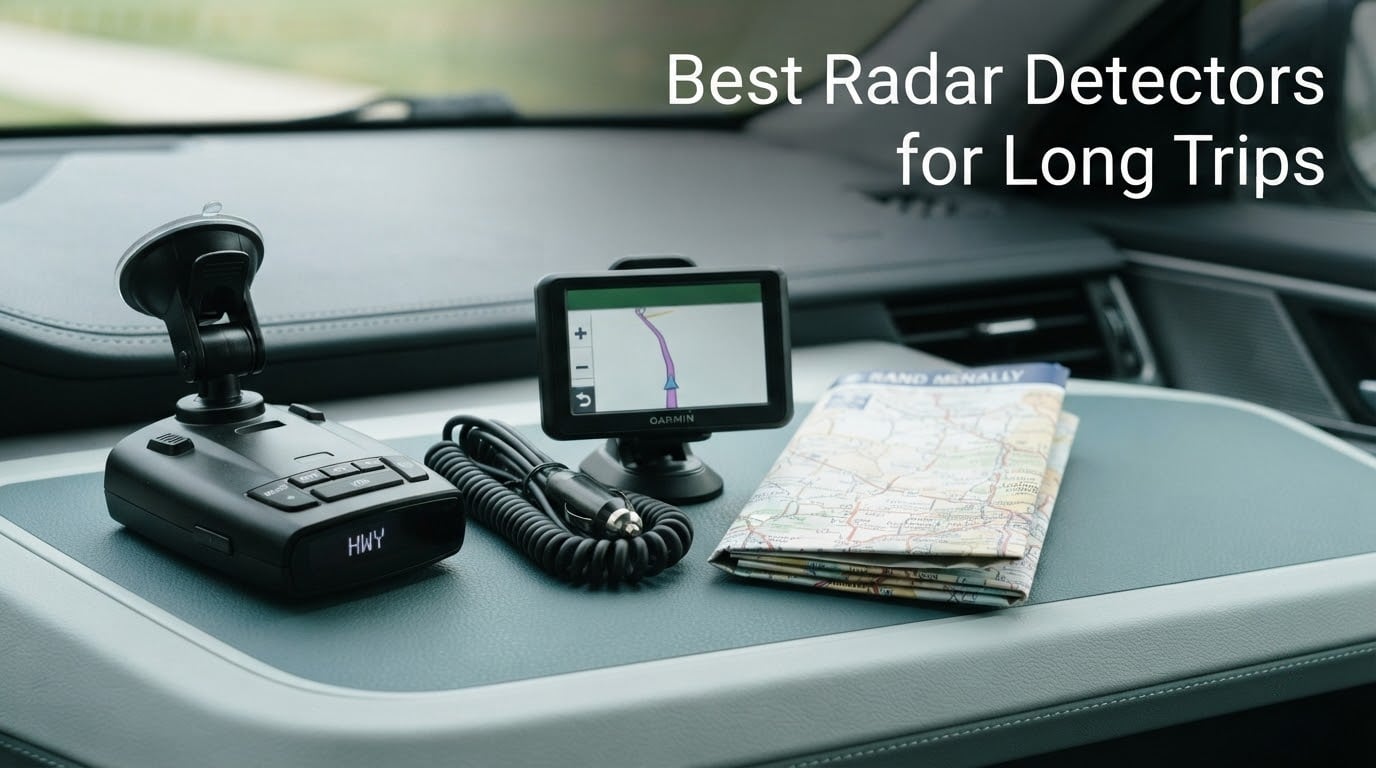
If you rack up highway miles, the best radar detectors for long trips come down to three qualities: how far ahead the unit sees, how quiet it stays through a full day of highway noise, and whether the mount and power survive day nine of the trip. After working through the current Uniden, Escort, Cobra, Radenso and Valentine lineups, those three qualities narrow the field to a Uniden R3 for raw reach, a Uniden R7 when you want directional arrows, and a Cobra RAD 480i when you would rather not spend an afternoon tuning menus.
A detector buys you reaction time, not immunity. It picks up X, K and Ka band microwave energy and warns you seconds before an officer can clock your speed. It cannot stop a laser, it cannot cancel a red light camera ticket, and it does not make speeding legal anywhere. What it does do is turn a surprise citation into a foot off the throttle, which matters a great deal when a single ticket costs more in insurance surcharges over the following three years than any detector on this list.
How I picked: I compared all ten units below on the criteria that actually break down on a road trip rather than on a dealership test loop. That means range in open country and behind a curve, behaviour beside adaptive cruise control and blind-spot monitors, how quickly GPS lockouts can be prepared before departure, and whether the power cord routing still works when you are nine states from home. Anything that needed constant re-tuning while I drove got cut before this list was written.
One thing worth saying early: a detector is a complement to a phone, not a replacement for one. The consensus on enthusiast forums is to run a crowdsourced app such as Waze, JBV1 or Highway Radar alongside the hardware, because apps report speed cameras and live police sightings that radar cannot see. The hardware catches the officer holding a gun; the app tells you the camera was already there.
If your route takes you away from mains power, charging planning matters as much as the detector itself. Our power bank picks for long trips cover that side of the logistics, and the same trip-planning mindset applies here: everything that can be prepared at home should be prepared at home, because you will not be doing it in a rest-area parking lot at 11pm.
Our Top 3 Radar Detectors for Long Trips in 2026
These three cover the realistic range of a long-distance driver, from a two-week rental to a full cross-country loop in your own car.
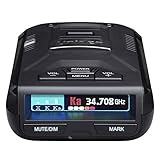
Uniden R3 Long Range
- Class-leading detection range
- Built-in GPS mute memory
- Multi-color OLED display
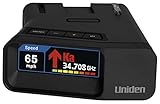

Cobra RAD 480i Bluetooth
- Bluetooth and iRadar app
- Front and rear LaserEye
- OLED with dark mode
The R3 wins on reach alone. The R7 wins when you want to know whether a signal is ahead, behind or beside you, which matters far more on a highway with five lanes and a semi in the mirror. The RAD 480i wins on owner volume: more than ten thousand ratings give you a much better read on long-term reliability than any lab test.
Comparing All 10 Radar Detectors for Long-Distance Driving in 2026
Every unit below, ordered as it appears in the reviews. Key features are pulled straight from the manufacturer specifications for each model.
| Product | Specs | Action |
|---|---|---|
| Uniden R3 Long Range Detector |
|
Check Latest Price |
| Uniden R7 with Directional Arrows |
|
Check Latest Price |
 Uniden DFR7 GPS Radar Detector Uniden DFR7 GPS Radar Detector |
|
Check Latest Price |
| Cobra RAD 480i with Bluetooth |
|
Check Latest Price |
 Cobra RAD 350 Laser Radar Detector Cobra RAD 350 Laser Radar Detector |
|
Check Latest Price |
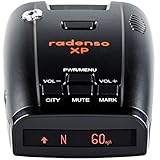 Radenso XP GPS Lockout Detector Radenso XP GPS Lockout Detector |
|
Check Latest Price |
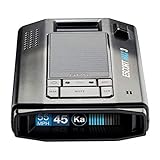 Escort MAX 3 Radar Detector Escort MAX 3 Radar Detector |
|
Check Latest Price |
 Escort Redline 360c Escort Redline 360c |
|
Check Latest Price |
 Escort MAX 360c MKII Escort MAX 360c MKII |
|
Check Latest Price |
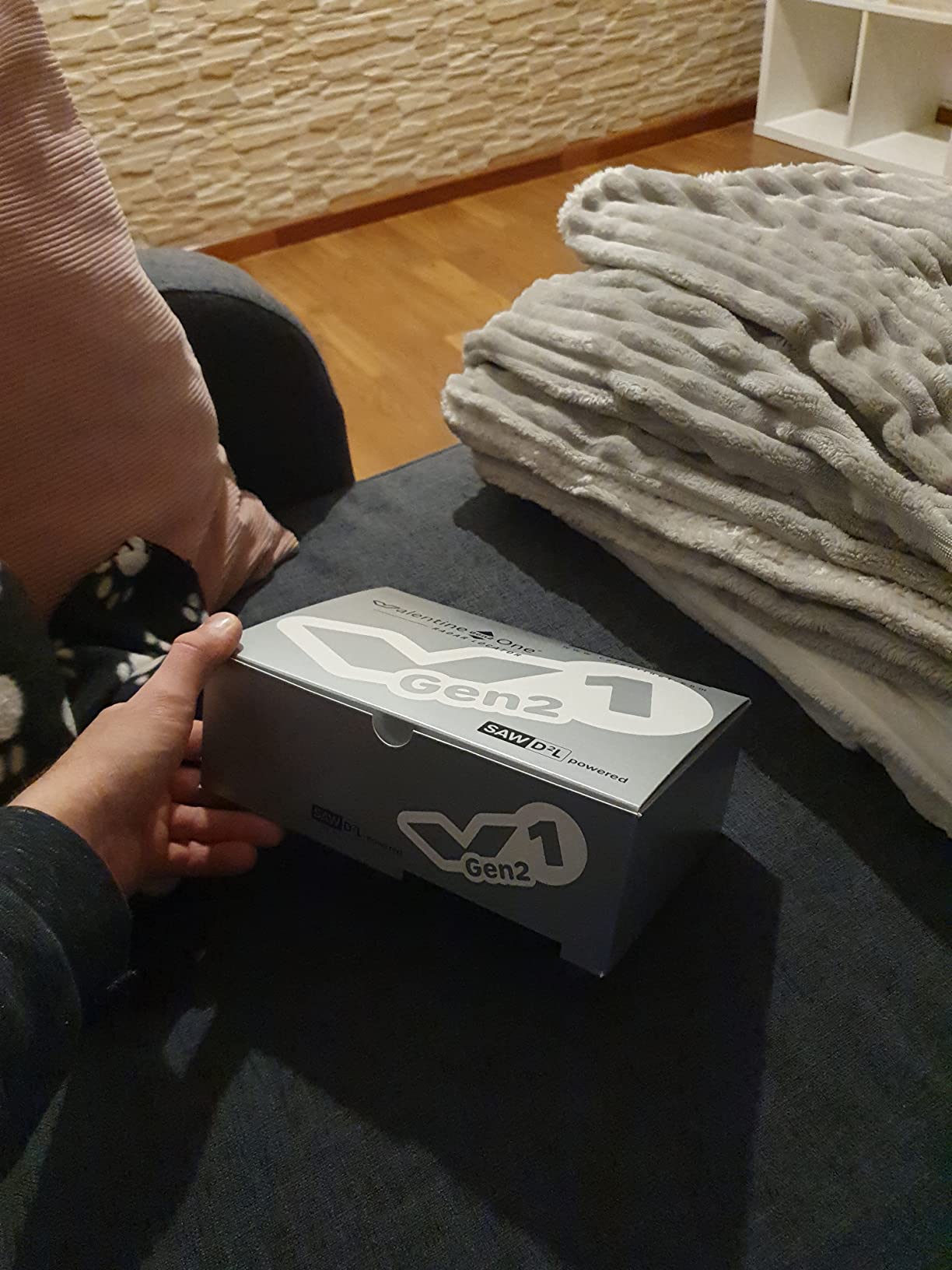
 Valentine One V1 Gen 2 Valentine One V1 Gen 2 |
|
Check Latest Price |
1. Uniden R3 – Maximum Range Without Directional Arrows
Uniden R3 EXTREME LONG RANGE Laser/Radar Detector, Record Shattering Performance, Built-in GPS w/ Mute Memory, Voice Alerts, Red Light & Speed Camera Alerts, Multi-Color OLED Display , Black
X, K, Ka and laser detection
Built-in GPS mute memory
Multi-color OLED display
4.5 by 2.81 by 1.25 inches
Pros
- Roughly half a mile of warning in tough terrain
- Several miles of warning on open road
- GPS mute memory for store doors and nuisance signals
- Deeply programmable bands and alert tones
Cons
- Needs a tuning period before filters are dialed in
- Included suction cups can lose grip in hot weather
- Firmware and database updates are manual by USB
The R3 is the one I would put in a car with no roof rack, no dash cam and no plan to touch the settings again before arriving. Owners describe roughly half a mile of warning in tough terrain and several miles on open road, and that range is the reason it keeps sitting near the top of the category with the heaviest review base of anything on this list.
What you give up for that reach is direction. The R3 has one antenna, so an alert tells you a signal is present without telling you where it came from. On a divided highway that rarely matters, since the radar is almost always ahead. On a two-lane mountain road where a state patrol car is running the other way, it matters more than you would think.
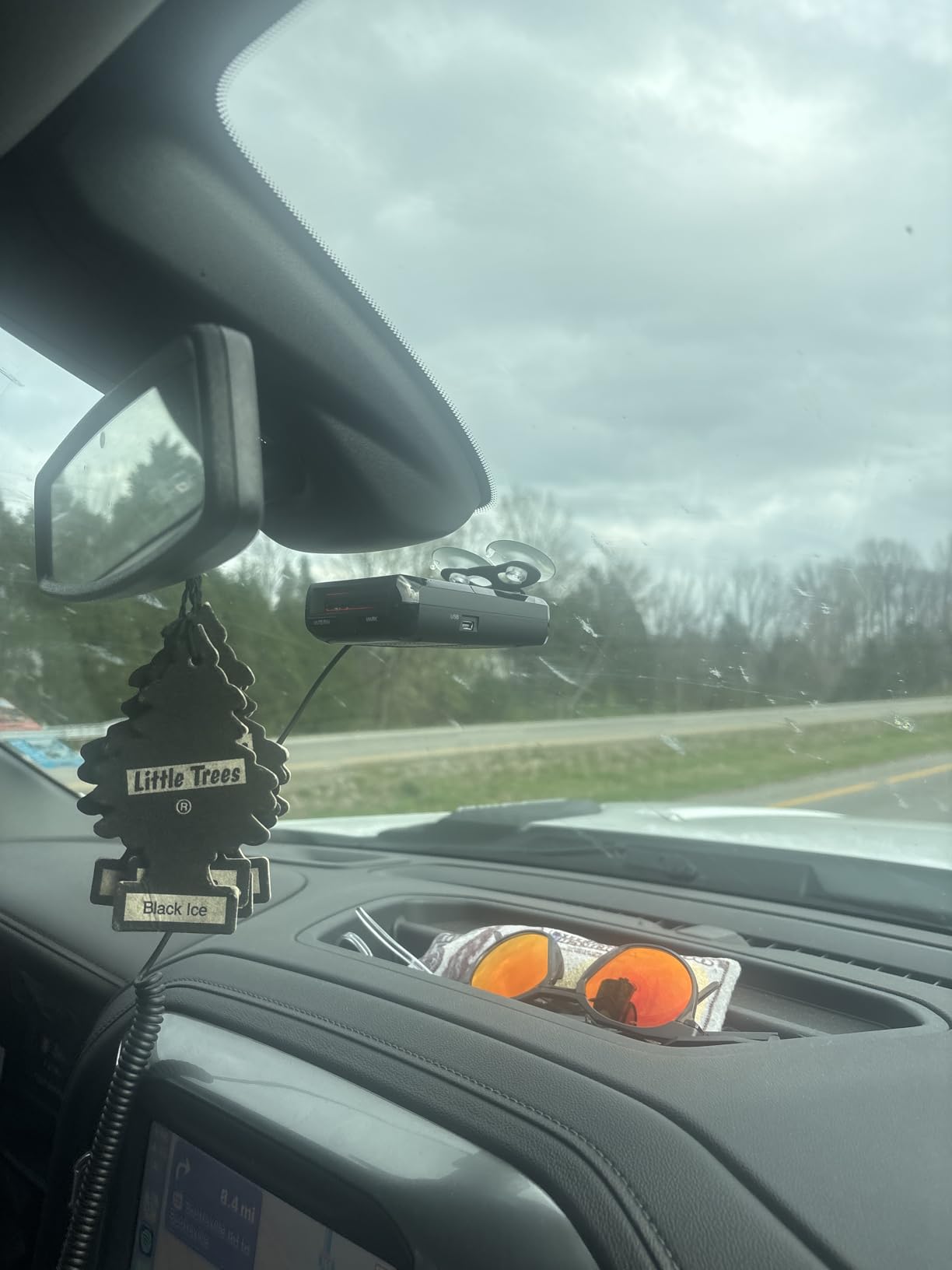
Range and sensitivity in real road conditions
Owner reports consistently put the R3 at the front of the pack for raw sensitivity, particularly on Ka band at highway speed. The build is compact, at 4.5 by 2.81 by 1.25 inches and 1.7 pounds, which means it tucks under a rearview mirror without the sag you get from a larger body, and the coiled power cord keeps the run to the accessory socket short.
GPS mute memory and the tuning tax
The built-in GPS records nuisance locations and mutes them on repeat passes, which is exactly what a long trip needs. The catch is that the first few hundred miles produce false alerts until you and the unit settle into agreement. Bands, display colours, alert tones and auto-mute thresholds are all programmable, and the deeper you go the quieter it gets, but that depth is exactly what makes the first drive annoying.
One practical note for anyone outside the United States or Canada: the preloaded red light and speed camera database covers those two countries only, so the camera warnings will not help on a European or Australian route.
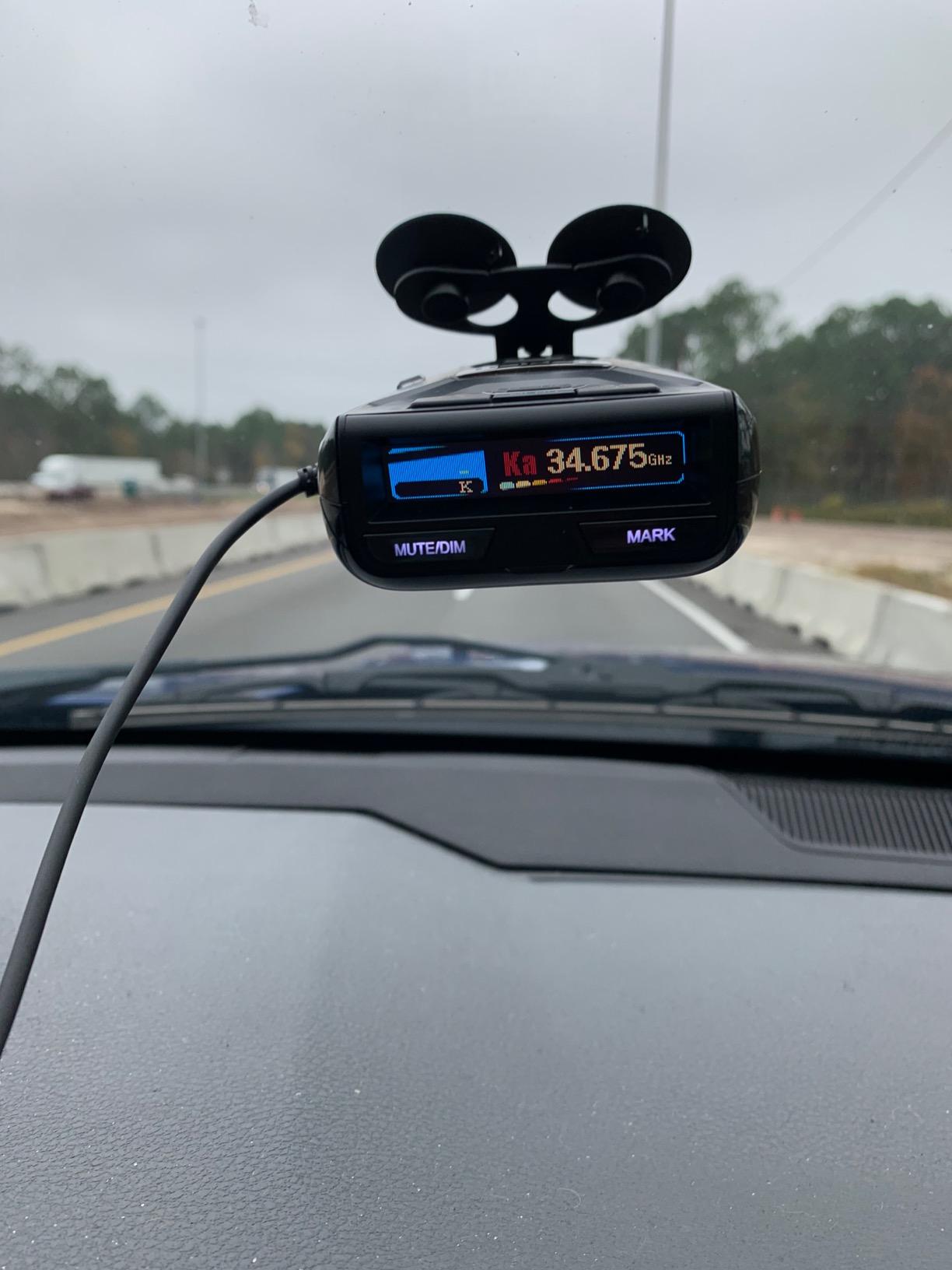
Mounting and power on a 2,000 mile loop
The included suction cups are the most common complaint in the review base, and they are a real problem in summer heat on a windshield. A sturdier aftermarket mount is close to mandatory for a trip that crosses three climate zones. The unit itself runs on 12 volts DC, and a small internal button cell preserves your memory but does not run the detector, so the power cord is not optional.
2. Uniden R7 – Directional Arrows That Actually Change Your Decisions
Uniden R7 Extreme Long-Range Laser-Radar Detector, Built-in GPS w/ Real-Time Alerts, Dual-Antennas Front & Rear w/Directional Arrows, Voice Alerts, Red Light Camera and Speed Camera Alerts
Dual antennas with 360 degree arrows
K and Ka band support
Built-in GPS with mute memory
Large multi-color OLED display
Pros
- Two to three miles of warning on open highway
- Dual antennas flag front
- side and rear threats
- Advanced menu for bands tones and arrow colors
- GPS mute memory maps recurring nuisance signals
Cons
- Tuning is needed before false alerts are under control
- No Bluetooth so updates need a USB cable
- Arrows can occasionally misread a signal source
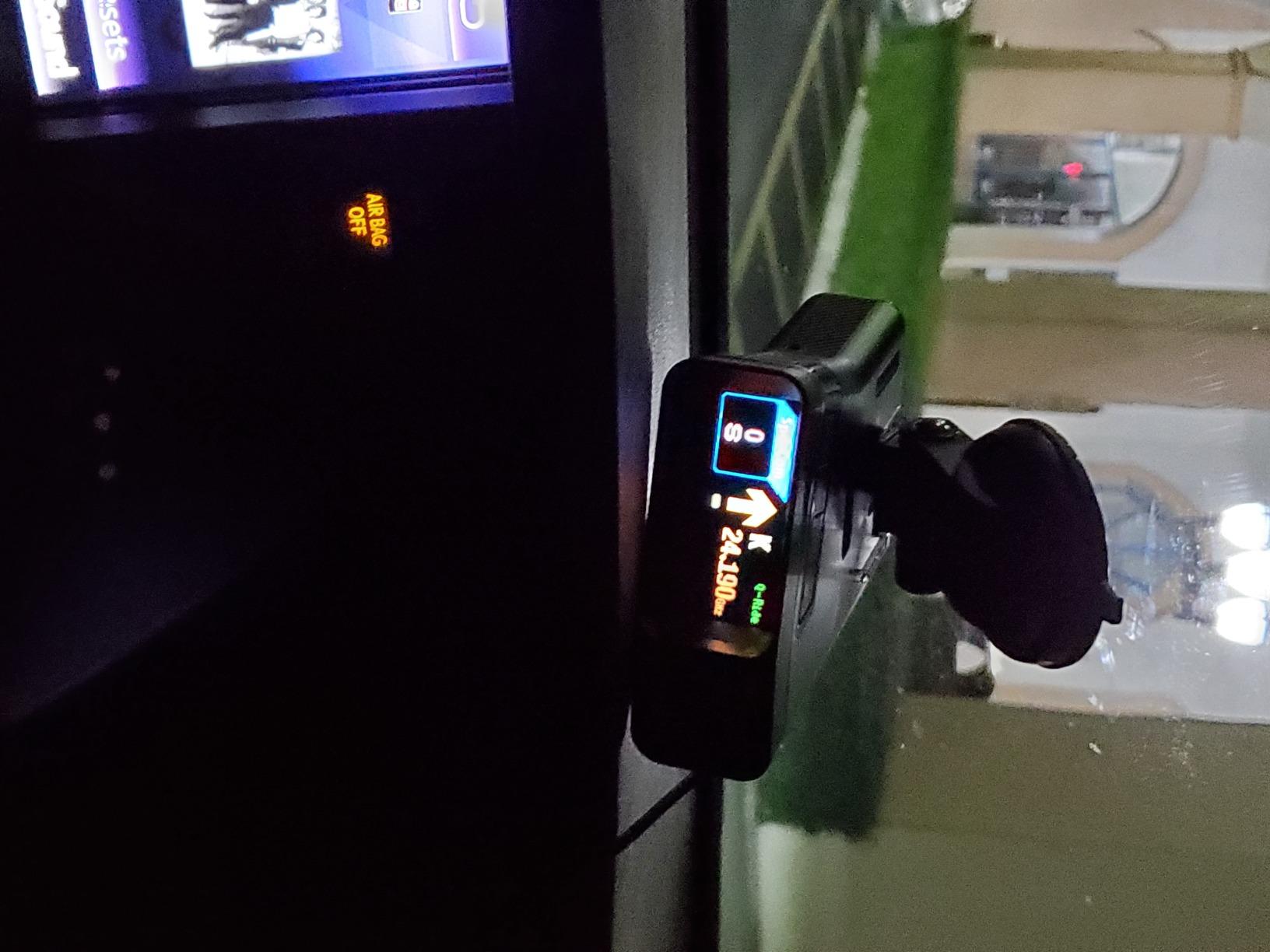
Directional arrows are the feature that changes how you drive rather than how you react, and the R7 is the version of that idea I would trust on a long haul. With dual antennas, an alert can point you forward, backward or to a side, and the display shows band and signal strength rather than a bare number.
That matters most when the road is busy. A rear arrow on a divided highway usually means an officer running the opposite carriageway, which is a reason to hold your speed rather than lift off. A front arrow at two miles on open interstate is the signal you act on.
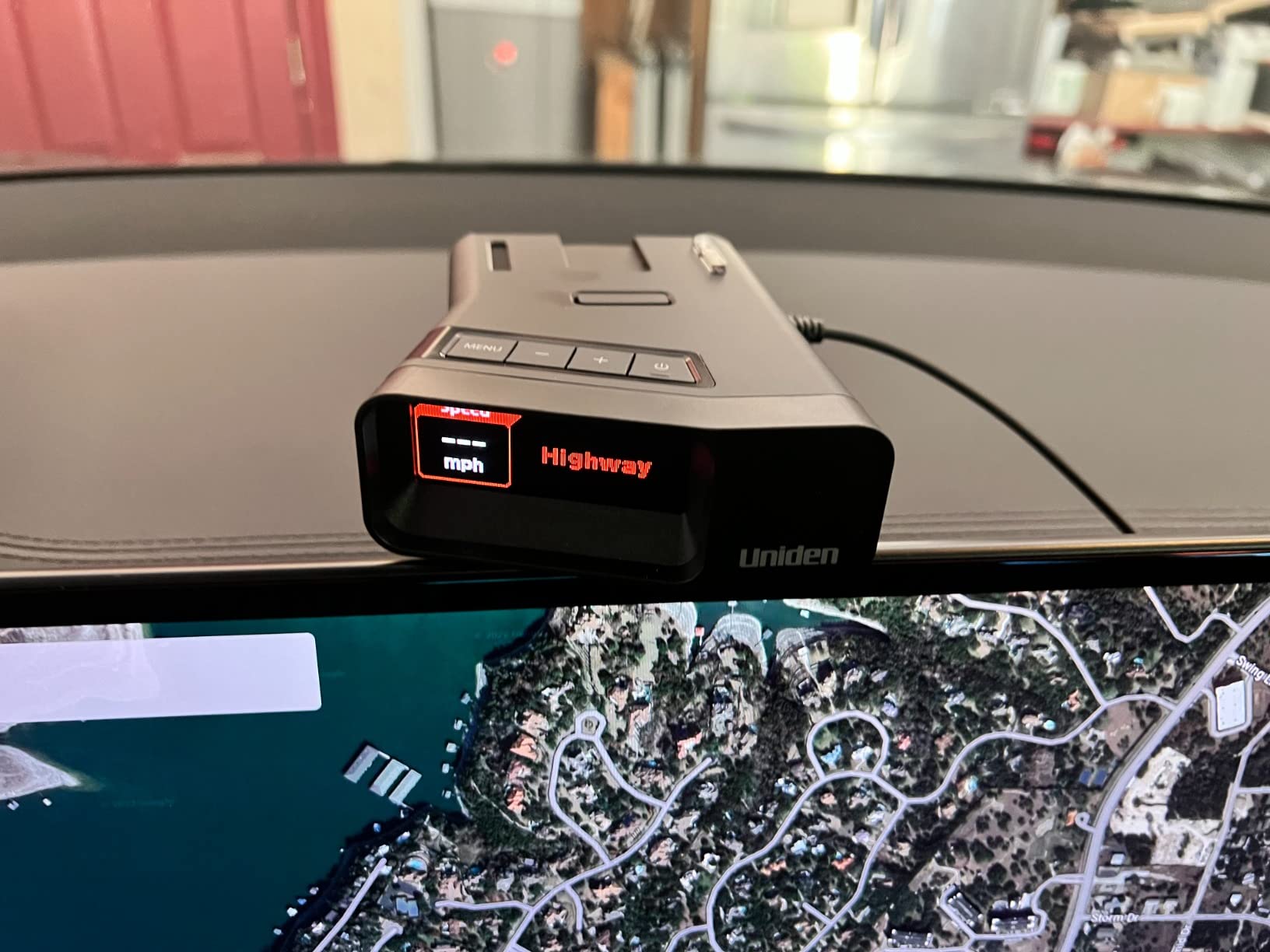
Range, antennas and what the arrows do
Owners report two to three miles of warning on open highway, which sits at the top of the group alongside the premium Escort units. The body measures 4.81 by 1.38 by 3.88 inches and weighs just 6.72 ounces, so it stays put on a windshield without the fatigue of a heavier body, and the large OLED can show up to four simultaneous signals at once.
The setup work before the first long drive
This is the part enthusiasts complain about most, and the complaint is fair. The advanced menu gives extensive control over bands, alert tones, arrow colours and priority ordering, but the unit wants tuning before false alerts are under control. Plan thirty minutes before departure rather than thirty minutes into the first state line.
GPS mute memory handles the repeat offenders once you have driven them twice. The arrows themselves are good but not infallible, with a small number of owners reporting the direction being misread when multiple signals overlap in traffic.
Connectivity, stealth and what you give up
The R7 has no Bluetooth, so firmware and database updates mean unplugging the unit and running a USB cable, which is the least convenient part of a product that otherwise feels modern. It also does not detect radar detector detector signals such as VG-2 or Spectre, so if you are worried about being scanned, this is not the model that addresses it.
3. Uniden DFR7 – Full GPS Features Without the Flagship Bill
Uniden DFR7 Super Long Range Wide Band Laser/Radar Detector, Built-in GPS w/Mute Memory, Voice Alerts, Red Light & Speed Camera Alerts, OLED Display, Black
Built-in GPS with mute memory
OLED with max speed warning
Programmable voice alerts
8.25 by 2.7 by 7 inches
Pros
- About a mile of warning on open road
- GPS quiet mode cuts door and parking lot falsies
- K and Ka filtering tuned against driver assists
- Entry level GPS detector with voice alerts
Cons
- Chirps on K band until filters are tightened
- Bulky body needs careful windshield placement
- Some units report speaker or cord failure over years
The DFR7 is the value entry into a real GPS detector, and on a long trip that matters more than it does on a daily commute. You get mute memory, a preloaded camera database, voice alerts and a display that shows band, signal strength, a max speed warning and battery voltage.
It is also the model road-trip regulars on r/radardetectors name most often when the question is a rental car or a borrowed vehicle, because it does the useful things without a learning curve and without a phone in the loop.
Filtering against modern driver assistance
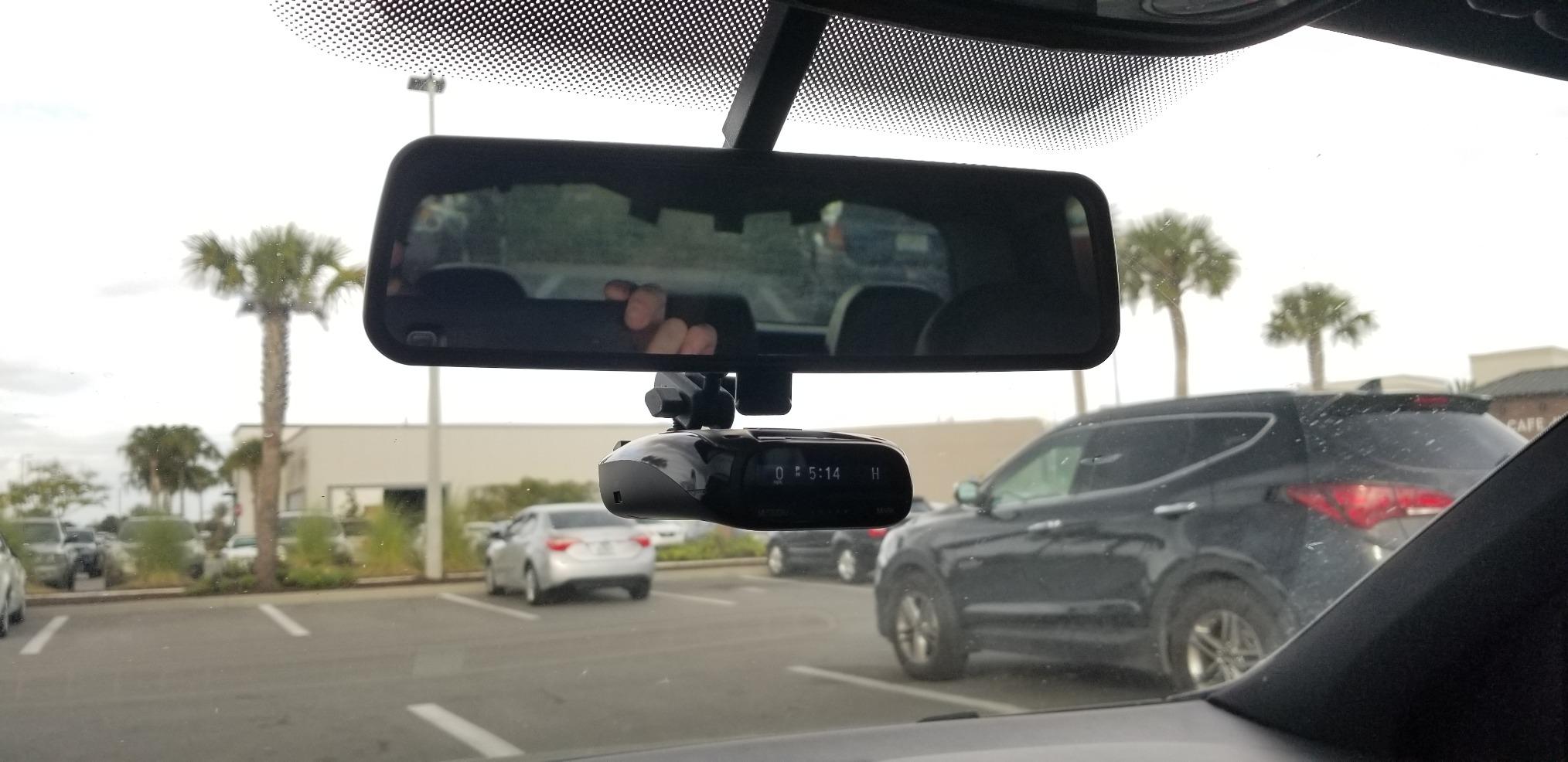
The advanced K and Ka filtering is tuned against blind spot monitors and collision avoidance systems, which is the single most important filter on a modern highway. Owners rate detection at about a mile on open road, which is enough time to lift off and settle to a defensible speed well before the officer is close enough to request it.
Out of the box it chirps on K band from other vehicles’ radar until the filters are tightened, so treat the first drive as a training run. The difference between the DFR7 as shipped and the DFR7 as configured is the difference between a noisy unit and a genuinely useful one.
Size, placement and long-term durability
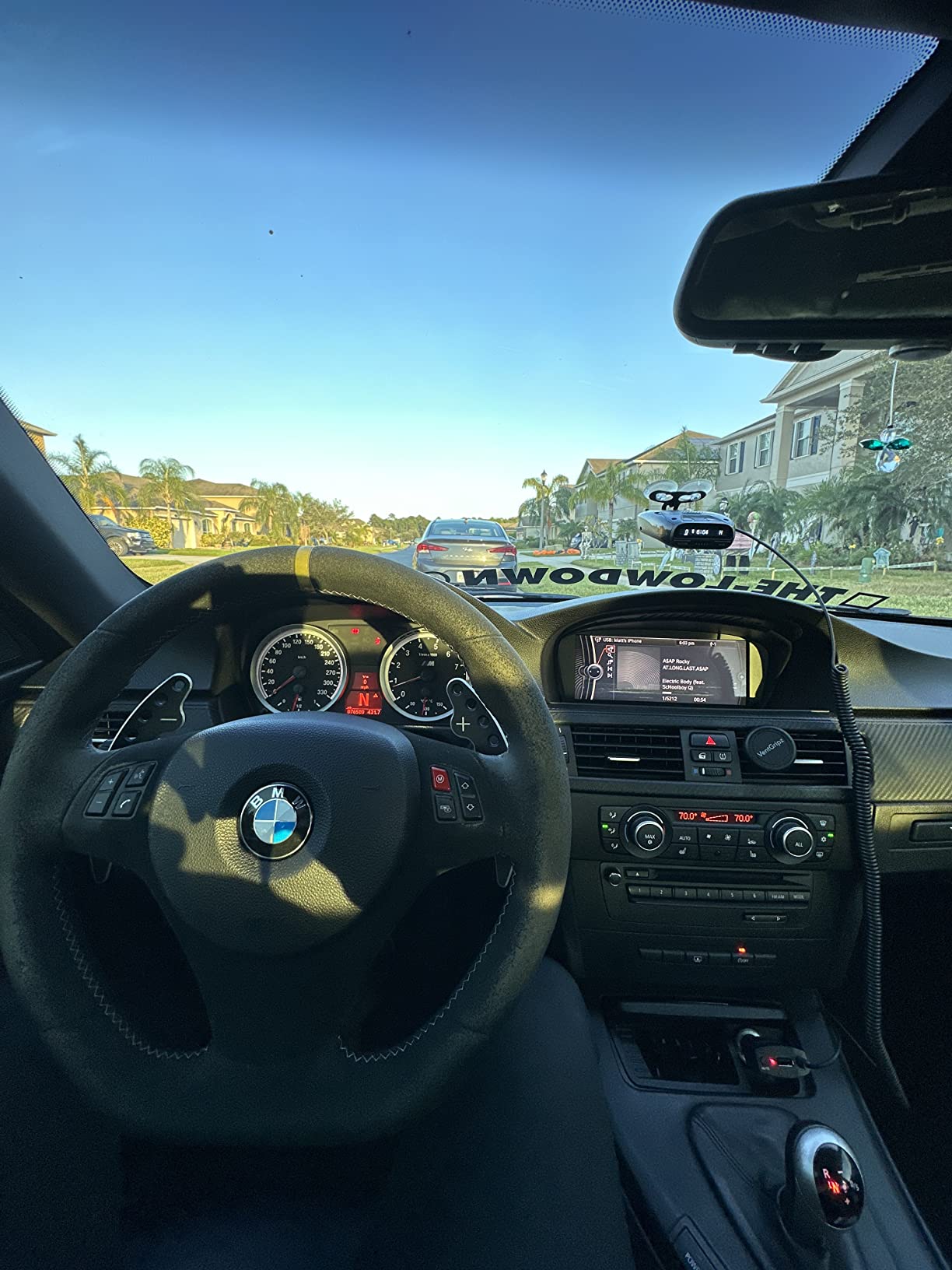
At 8.25 by 2.7 by 7 inches and 0.5 kg, this is the bulkiest body in the group, and windshield placement takes care to keep it clear of your view of the road. On a long trip that is a real trade, because the detector is sitting in your sightline for eight hours a day.
A handful of owners report the speaker or the power cord failing after years of use. The manufacturer warranty runs one year. The camera database covers the United States and Canada only.
Where it fits against the flagship Unidens
Against the R3 and R7 you give up raw sensitivity and directional information respectively. What you keep is the GPS workflow, which is the part that actually determines whether you will tolerate having the thing in your car for a month.
4. Cobra RAD 480i – The Most Widely Owned Detector in the Category
Cobra RAD 480i Laser Radar Detector, Long Range Detection, Bluetooth, Black
Front and rear LaserEye detection
Bluetooth with iRadar app
OLED display with dark mode
4.25 by 2.75 by 1.25 inches
Pros
- Solid Ka range with highway usable warning distance
- Front and rear LaserEye adds awareness from behind
- Bluetooth with iRadar app and CarPlay display
- Bright OLED with a discreet dark mode
Cons
- App connectivity can be unreliable
- No mute button on the power cord
- More false alerts than GPS equipped rivals
With more than ten thousand ratings, the RAD 480i has the largest review base of any detector on this list, and that is not a trivial advantage when you are buying something to depend on for two weeks of interstate driving. A large sample tells you more about year-three reliability than any specification sheet does.
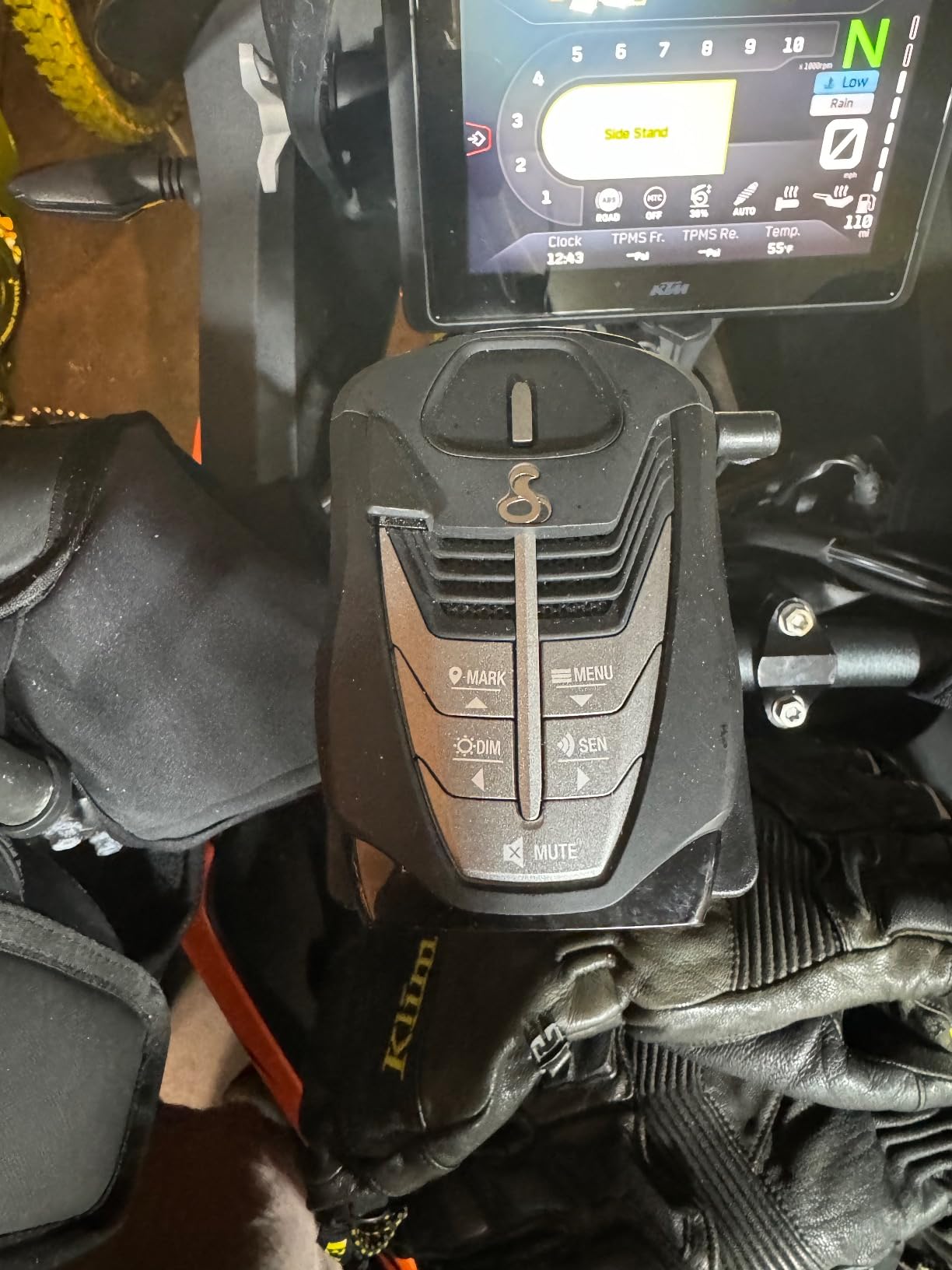
The 480i pairs front and rear LaserEye detection with Bluetooth and the iRadar app, so alerts can appear on a CarPlay or Android Auto head unit instead of only on the windscreen unit. On a long trip, having the display read out over the audio system is a meaningful quality-of-life difference.
Band coverage and range at highway speed
Detection covers 34.7 GHz, 24.125 GHz and 10.525 GHz, which is the full modern radar set, with an updateable IVT filter and anti-falsing circuitry handling the noise from modern vehicles. Owners describe solid long range Ka detection with enough warning distance to be useful at highway speed, though it does not reach the two-to-three-mile figures the premium units report.
App integration and the cord
The app experience divides owners, and it is the most common criticism. Bluetooth pairing is not always reliable, and community alert quality varies by area. The power cord carries no mute button, so silencing an alert means reaching over to the unit, which is a real annoyance at night on a dark road.
It also false-alerts more than GPS-equipped rivals, especially on K band in heavy traffic, because there is no database to silence a recurring door or a fixed interference source.
What is in the box and how it wears
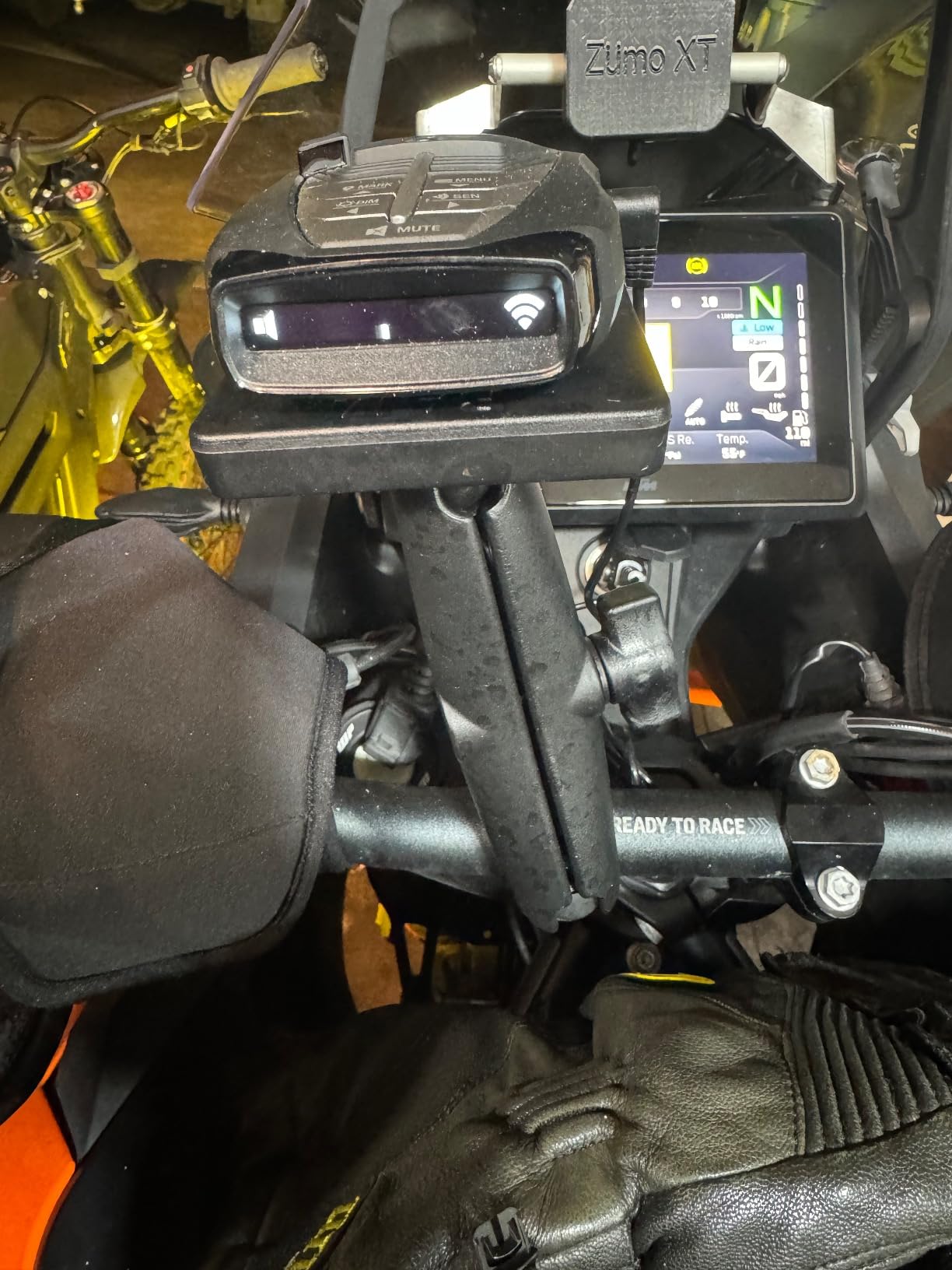
You get a 12V power cord, a suction cup windshield mount and a hook-and-loop dash fastener, and the 4.25 by 2.75 by 1.25 inch body weighs 136 grams. The suction mount is praised more often than it is on Uniden units. The recurring durability note is a speaker that starts buzzing or failing after a year or two of use, with a one year limited manufacturer warranty behind it.
5. Cobra RAD 350 – The Simple Second-Vehicle or Backup Detector
Cobra RAD 350 Laser Radar Detector, Long Range, False Alert Filter, Black
Front and rear LaserEye detection
Patented IVT filter
Instant-On detection readiness
4.12 by 2.64 by 1.35 inches
Pros
- Picks up front and rear radar including Ka
- IVT filter reduces driver assist false alerts
- Seven segment color display with signal meter
- Compact and easy to move between vehicles
Cons
- Shorter detection range than GPS equipped models
- Power cord is too short for A-pillar routing
- No voice alerts for hands free use
The RAD 350 is not a long-distance detector, and treating it as one is a mistake. It is a small, cheap, reliable box that detects front and rear radar across 10.525, 24.125 and 34.7 GHz, and for a weekend trip in a second car that is exactly the right amount of capability.
The patented IVT filter is the feature that separates it from a bare-bones detector. It suppresses the alerts generated by collision avoidance and blind spot systems, which are the two things that make cheap detectors unpleasant in modern traffic.
What the display and tones do
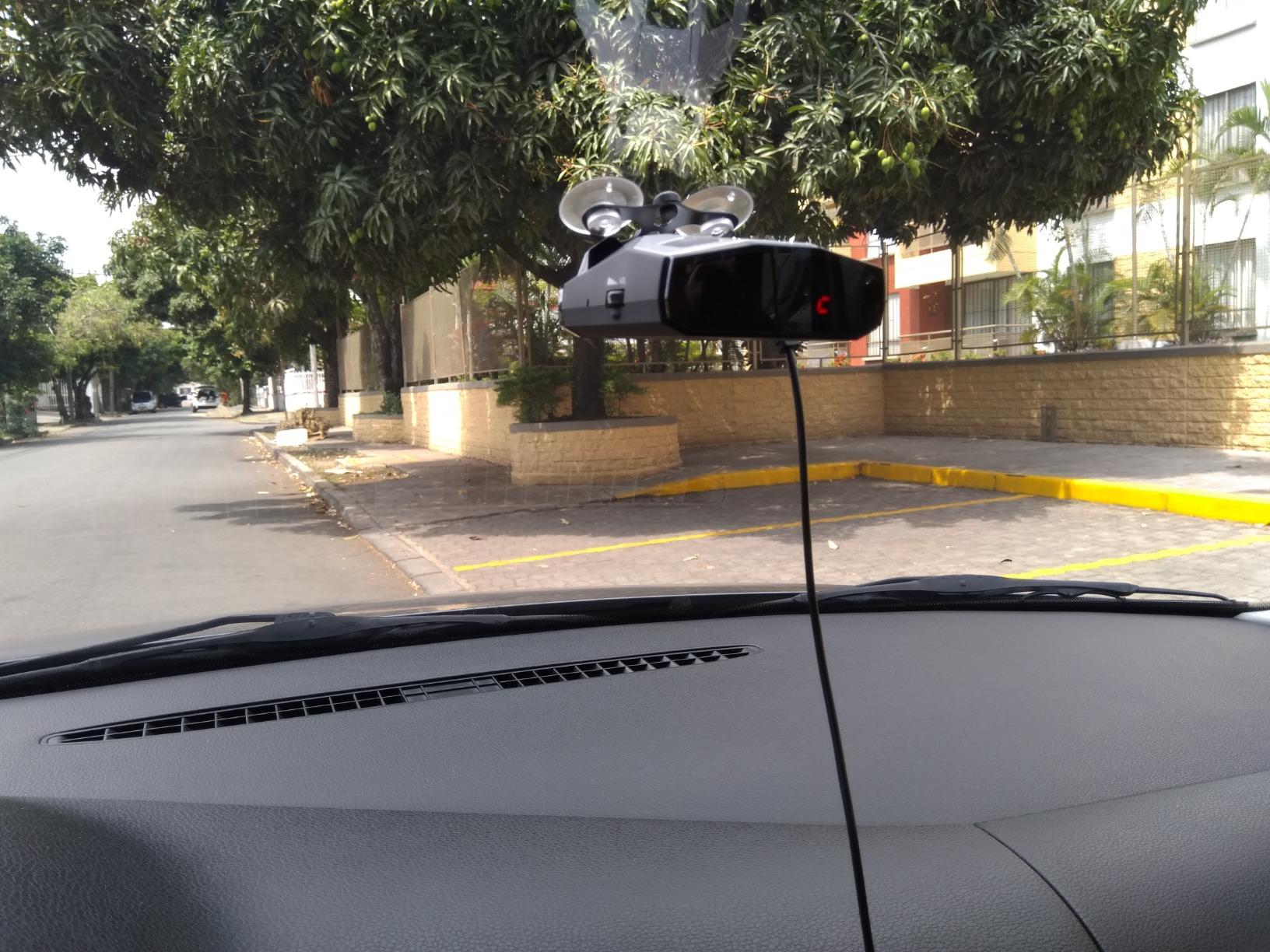
Audible tones identify the band, a seven-segment color display shows a numeric signal strength meter, and Instant-On detection means the unit is ready the moment the gun fires rather than needing a warm-up period. For long-distance driving, the signal strength reading is the part that helps most, because it tells you whether to lift now or lift in two miles.
Why it is not our long-trip pick
Detection range is shorter than anything with GPS in it, and without a database the unit cannot permanently silence a recurring false alert. On a route that crosses a dozen states, that means a driver who is sensitive to noise will be annoyed by the third hour rather than the first.
There is also no voice alert, which limits usability in a loud truck or SUV cabin where the beeps are easy to miss, and the included power cord is too short for tidy routing up the A-pillar or along the headliner.
Physical details worth knowing
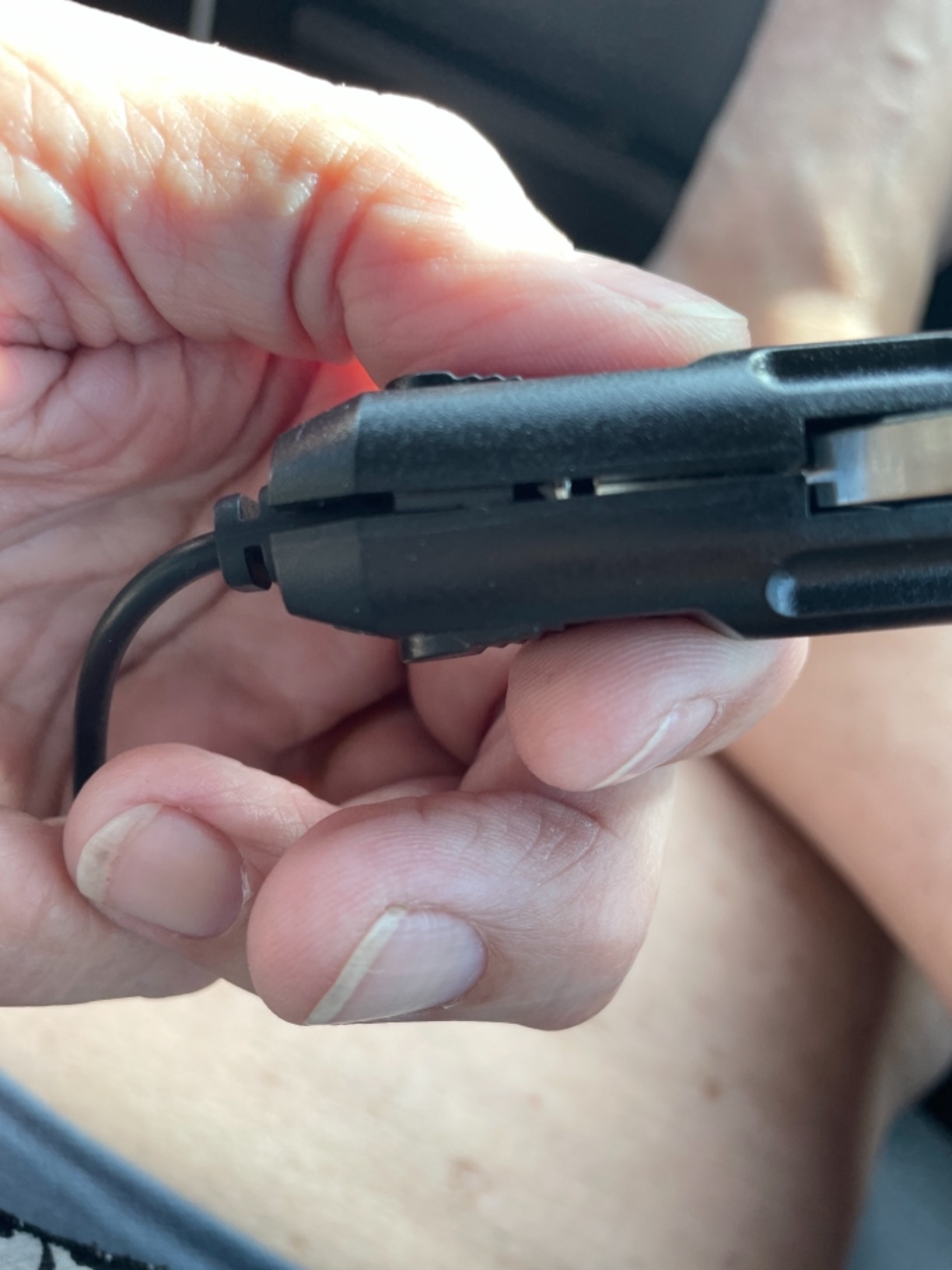
The body is 4.12 by 2.64 by 1.35 inches and 10.08 ounces, with a solid suction cup mount and a 12 month warranty. One recurring complaint is glare: the silver top surface reflects sunlight onto the windshield at exactly the wrong angle on a long afternoon drive.
6. Radenso XP – Built Specifically for Drivers Who Hate Noise
Radenso XP Radar & Laser Detector with GPS Lockouts
X, K, Ka and laser detection
GPS lockout for repeat false alerts
Automatic muting below a set speed
4.63 by 2.75 by 1.25 inches
Pros
- Adjustable K band sensitivity silences doors and blind spot radar
- GPS lockout stores nuisance locations with a press and hold
- Works out of the box with Windows and Mac updates
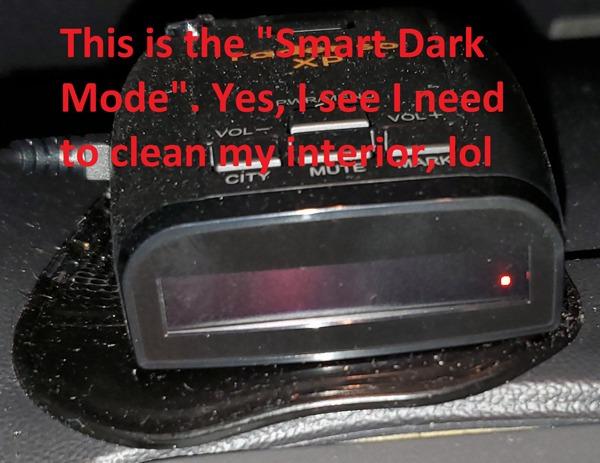
- Clean OLED with a smart dark mode
Cons
- Driver side power plug adds cable clutter
- No printed instructions and vague website documentation
- Volume is low for a loud diesel truck cabin
The XP is the pick for a driver who has previously owned a chatty detector and turned it off. It ships with adjustable K band sensitivity that silences automatic doors and blind spot radar, and a GPS lockout that stores nuisance locations with a press-and-hold so they stay quiet on every future pass.
That combination is what makes it a genuinely good long-trip unit despite reaching less far than the flagships. An alert you can trust is worth more at four hundred miles than a warning you have learned to ignore at two thousand.
GPS lockout versus auto-learn
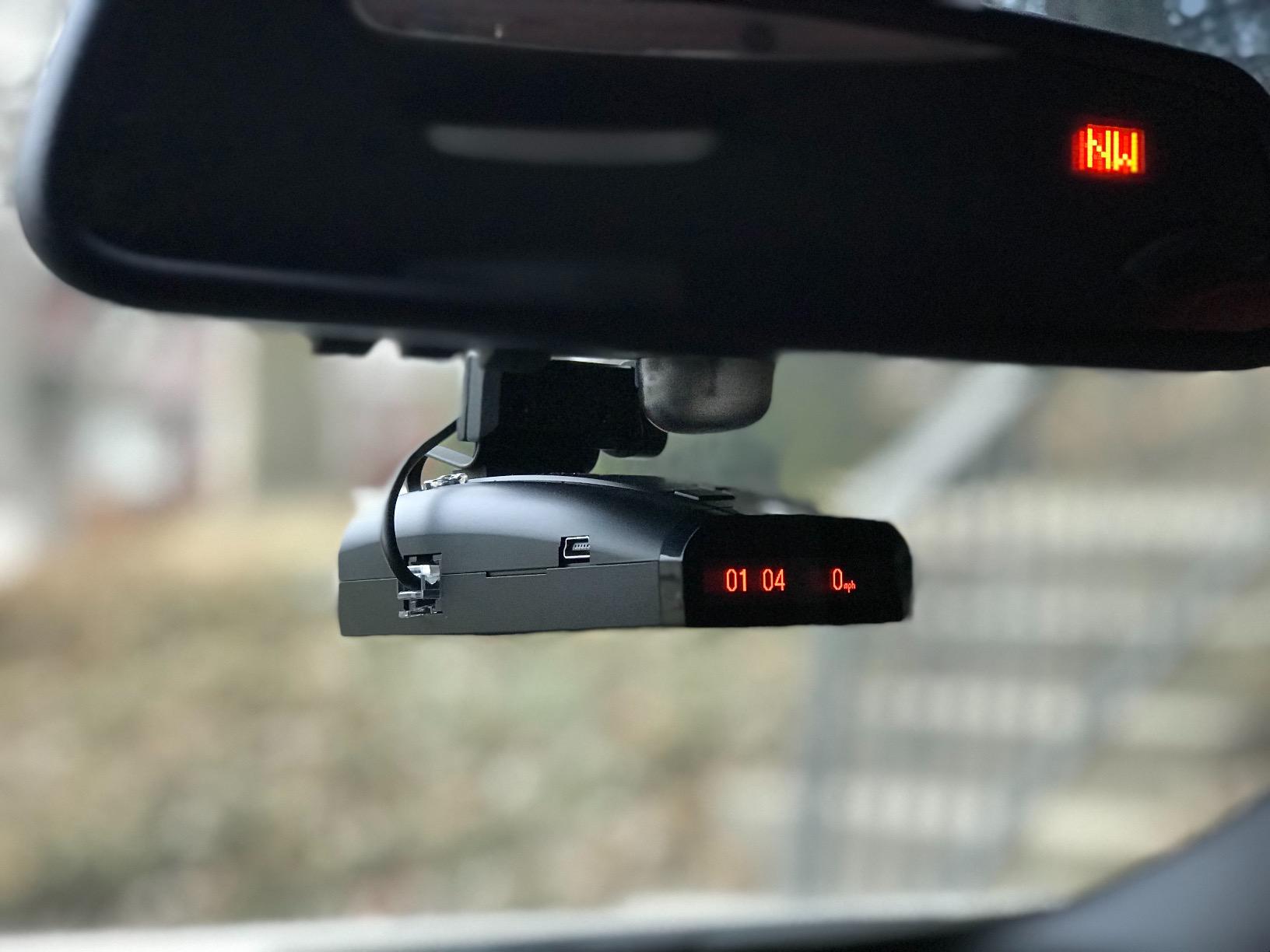
There are two ways a detector kills a recurring false alert, and the difference matters on the road. GPS lockout means you mark the location once and it is silenced permanently. Auto-learn means the detector figures it out by itself after you have driven past enough times. Lockout is better for a new route, because you do not have to drive an interstate twice before the unit settles down.
Out of the box behaviour and updates
The XP works without setup, which is unusual in this category and directly useful when you are collecting a rental car at 6pm with no time to configure menus. Updates run on Windows or Mac, and the brand backs it with a one year manufacturer warranty plus a one year speeding ticket guarantee and USA-based support.
Automatic muting below a speed you select is the other quiet-oriented feature: below that threshold, the unit stops talking to you entirely, which removes the entire class of alerts that come from urban driving and parking lots.
Cable routing, volume and reach
Three practical negatives. The power plug sits on the driver’s side, which adds cable clutter across your view. There are no printed instructions and the website documentation is vague, and menu order changes after firmware updates. And the speaker volume is not loud enough for a loud diesel truck cabin, which is a real problem if you tow anything.
Reach is good rather than exceptional, sitting below the step-up Radenso Pro-M. The body is 4.63 by 2.75 by 1.25 inches with a clean OLED display, a smart dark mode and well-spaced buttons you can find without looking down.
7. Escort MAX 3 – App Control and AutoLearn on a Repeat Route
Escort MAX 3 Laser Radar Detector, Bluetooth Connectivity, Premium Range
AutoLearn GPS intelligence
Variable speed sensitivity
Defender Database camera alerts
5.13 by 1.25 by 2.88 inches
Pros
- About a mile of warning on open highway
- AutoLearn GPS learns recurring routes
- Variable speed sensitivity cuts noise on long drives
- Bluetooth app for band toggling and head unit display
Cons
- Single antenna with no directional arrows
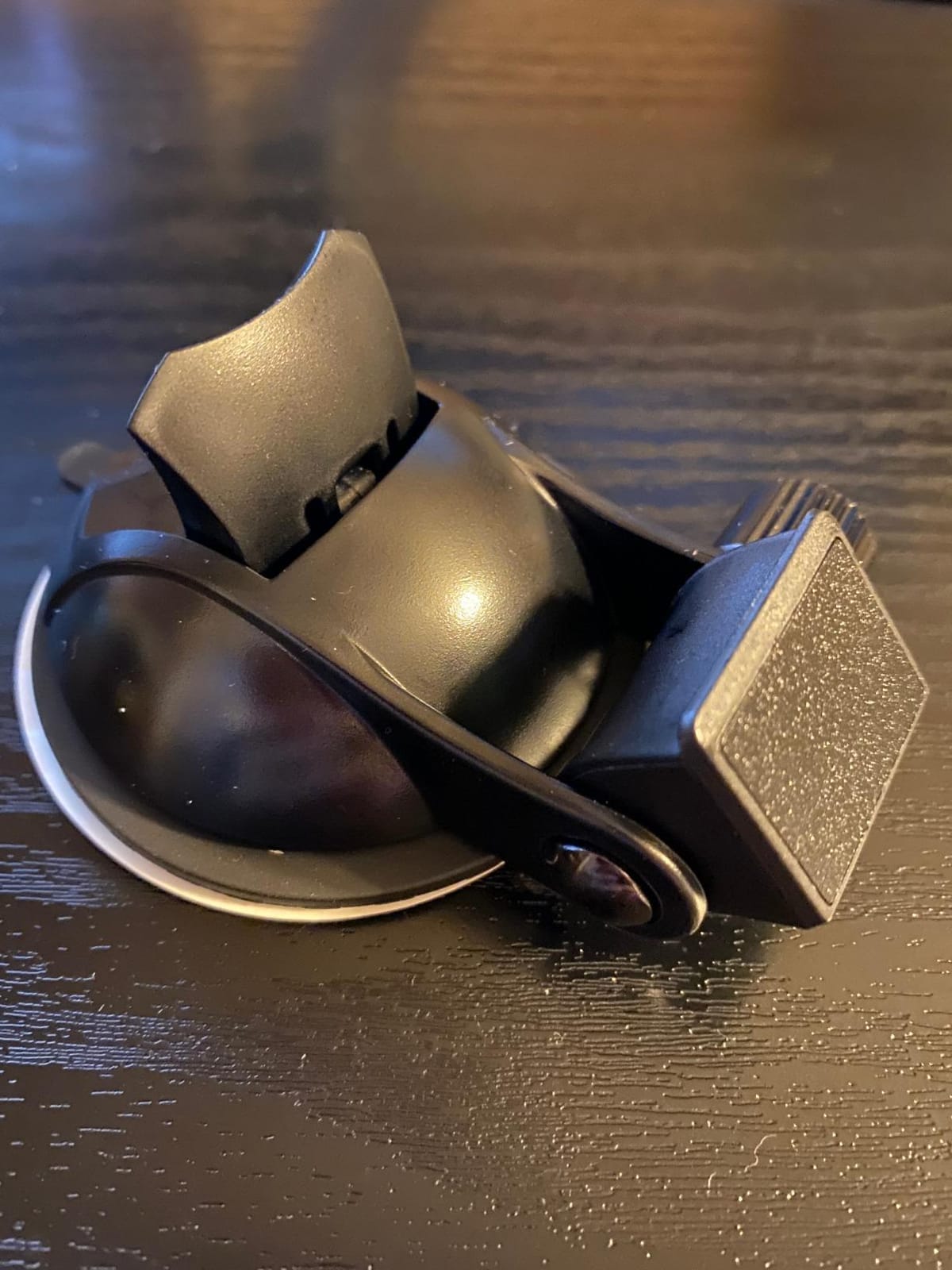
- Suction cup mount loses grip on the windshield
- Learning settings take time to configure
The MAX 3 is Escort’s answer to the question a long trip actually asks, which is how quiet can this be. AutoLearn GPS figures out your recurring routes and rejects location-specific false alerts on its own, and variable speed sensitivity keeps the unit quiet at low speeds and more attentive at highway speeds.
Owners describe roughly a mile of warning on open highway and many consider it good value for what it does. The Defender Database handles red light and speed camera alerts, and the Bluetooth app lets you toggle bands from the phone rather than from the unit.
Band coverage and the no-arrows trade
Detection covers K, Ka, X, M and POP bands, which is the broadest spec sheet coverage in this group. Against that, there is a single antenna and therefore no directional arrows. On a solo highway run that is a reasonable sacrifice; on a road with cross traffic and a motorcycle behind you, you are guessing.
App and head-unit integration
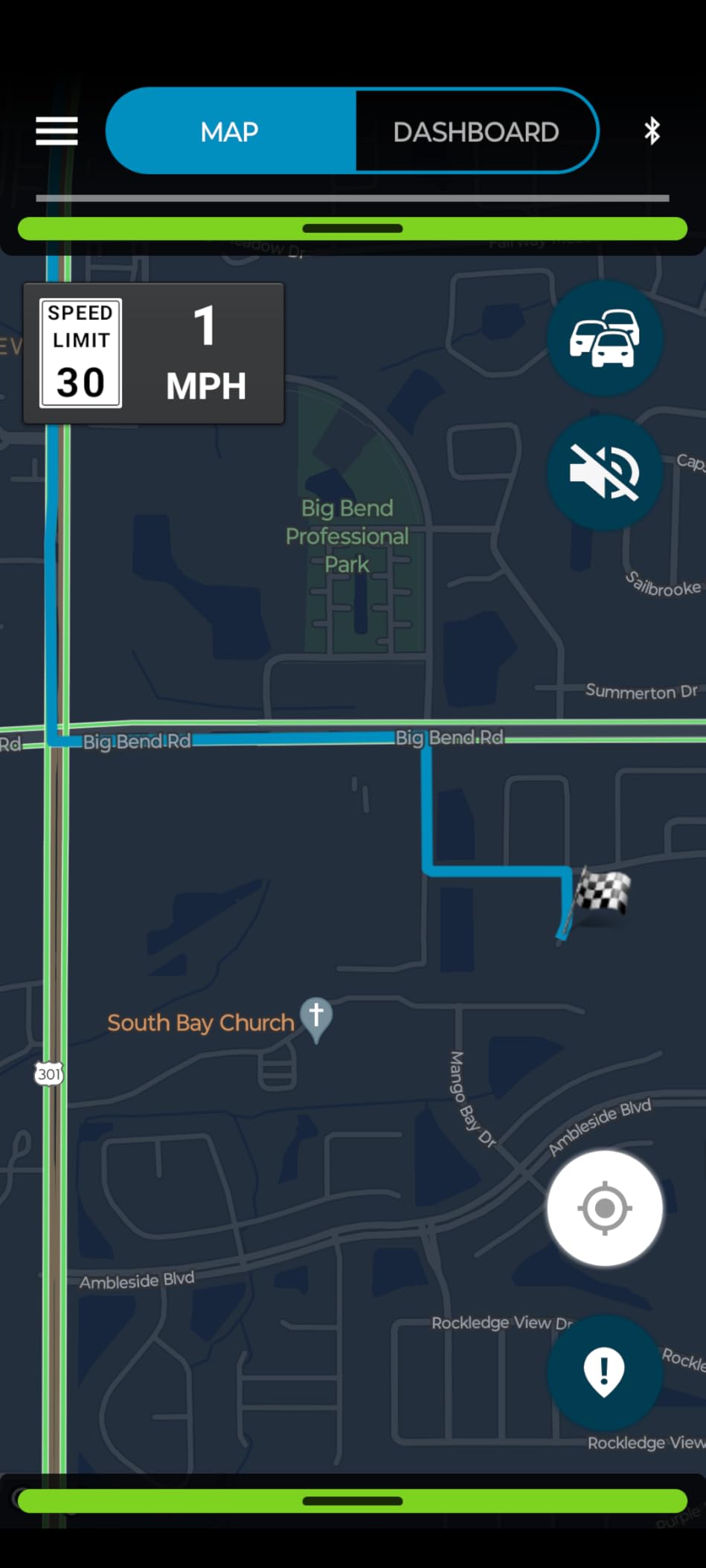
Bluetooth integration is a real strength here compared with the Uniden units that need a USB cable, and the ability to display alerts on a head unit keeps your eyes on the road. Band toggling from the phone is genuinely useful when you pull into a state with different enforcement habits.
Some owners report a slow scan rate and a late first alert against a handheld radar gun, which is the situation where early warning matters most. The suction cup mount also loses grip on the windscreen, so plan to replace it before a long run.
Long-run comfort and pairing
The body is 5.13 by 1.25 by 2.88 inches and 0.23 kg, with a two year manufacturer warranty behind it, which is the longest coverage in this roundup. The learning and filtering settings take time to configure, so treat the first drive as calibration. It is also M2 compatible, so it can pair with the Escort M2 smart dash cam if you are building a combined front-and-rear kit for a long trip.
8. Escort Redline 360c – The Full 360 Degree Long-Distance Setup
Escort Redline 360c Plug and Play Radar Detector, Extreme Range
Extreme range with 25x faster processor
360 degree awareness to 2.5 meters
AI assisted filtering
Premium travel case and magnetic mount
Pros
- Claimed range about twice the Redline EX with a faster processor
- 360 degree awareness with GPS accuracy within 2.5 meters
- Filtering combines AutoLearn IVT updates and network data
- Travel case SmartCord USB and magnetic EZ mount included
Cons
- Premium hardware mainly suits long distance highway driving
- Needs smartphone pairing and app familiarity
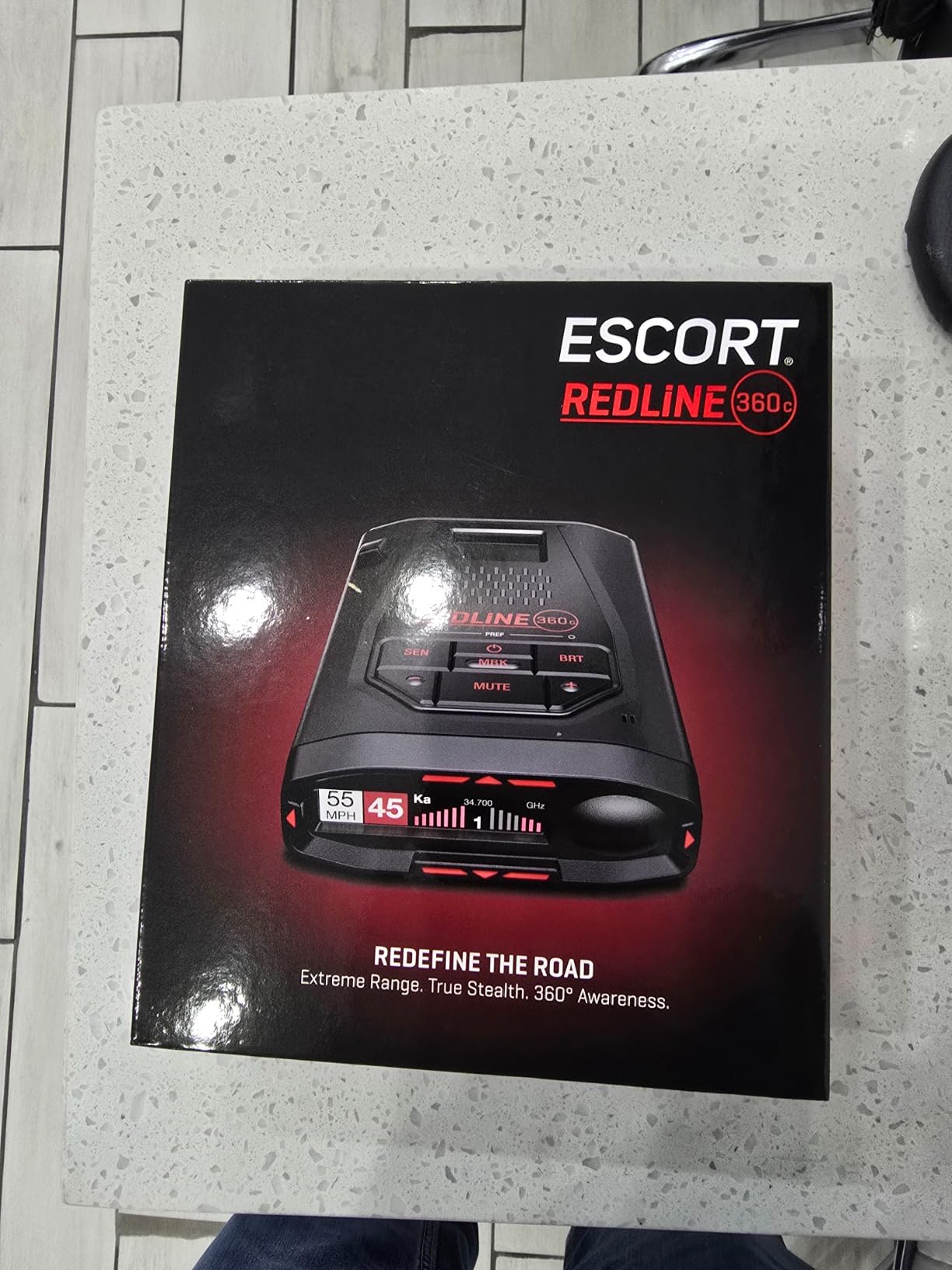
The Redline 360c is the model a person buys when the trip is the point. It combines an extreme range claim of roughly twice the Redline EX with a 25x faster processor, and it is the only unit in this roundup that ships with a travel case, which tells you everything about the use case the brand has in mind.
Its 360 degree awareness is backed by GPS accuracy within 2.5 meters, so an arrow genuinely corresponds to a direction rather than a guess. Filtering is AI assisted, combining GPS AutoLearn, updateable IVT filter data and the Drive Smarter community network.
What the travel kit actually solves
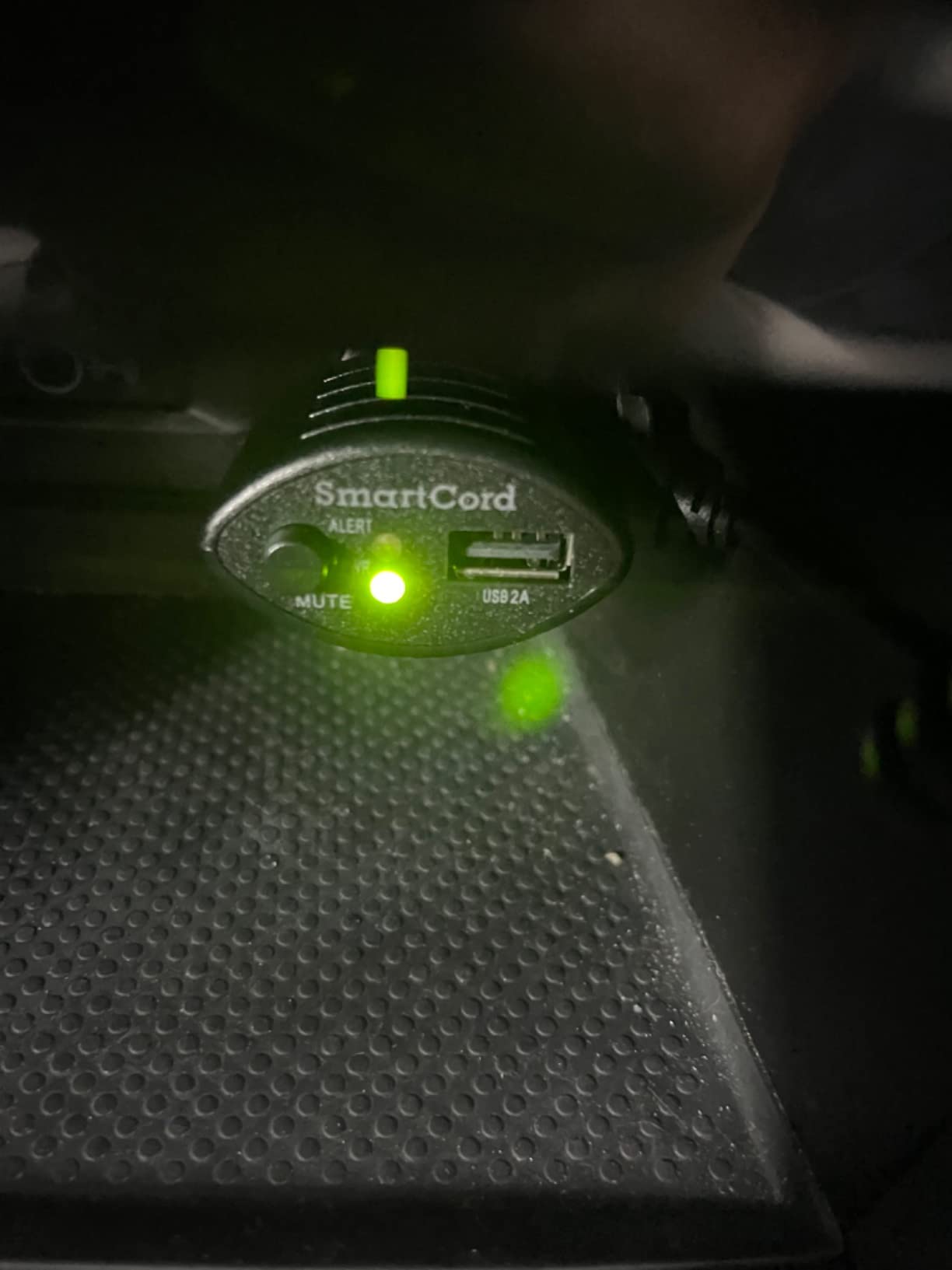
Three accessories matter here. The magnetic EZ mount is far more stable over hundreds of miles of rough road than a suction cup, the SmartCord USB carries AutoMute so you can silence a band from the cord rather than reaching the unit, and the case means the detector does not live in the glove box between trips.
Those are small things individually and the difference between a device you leave in the car and a device you leave in the case at the hotel.
App dependence and who it suits
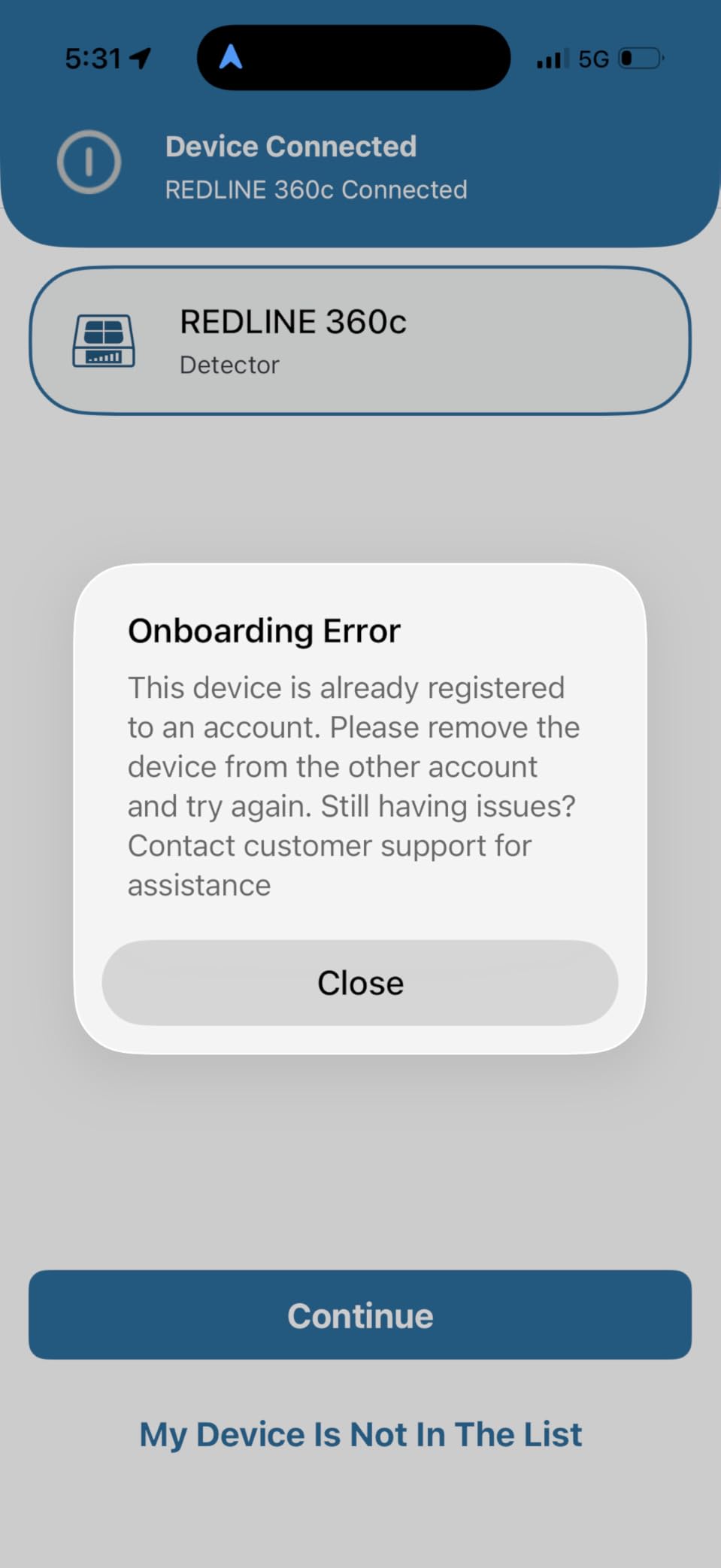
Getting the full benefit requires smartphone pairing and real familiarity with the app, which is a genuine learning cost. This is a detector for a driver who intends to stay with it for years, not someone testing whether radar detectors are worth owning.
It is also the most expensive option here, and the 360 degree hardware and stealth features only justify that for long-distance highway drivers. If your trip is four hours of interstate rather than four days, the capability is wasted.
Specifications and one honest caveat
Detection is specified in full across X, K, Ka and 904nm laser, the display is OLED, power is 12V DC, and the body measures 5.13 by 1.3 by 3.35 inches at 14.24 ounces with a one year limited warranty. One caveat: for this listing we could not retrieve written review text, so the sentiment here comes from the rating distribution and stated features rather than owner commentary.
9. Escort MAX 360c MKII – Escort Arrows With Over-the-Air Updates
Escort MAX 360c MKII Laser Radar Detector, 360° Directional Arrows, Black
50 percent improved range on the M13 platform
Four direction threat arrows
AutoLearn GPS learning
Dual-band Wi-Fi for OTA updates
Pros
- About 50 percent more range than the original MAX 360c
- Directional arrows show direction and multiple signals
- Better filtering of driver assist radar than earlier Escorts
- Dual-band Wi-Fi for over the air updates and app alerts
Cons
- Bulkier and heavier than older Escort models
- Over the air updates reported to take over an hour
- Range drops noticeably through hills and curves
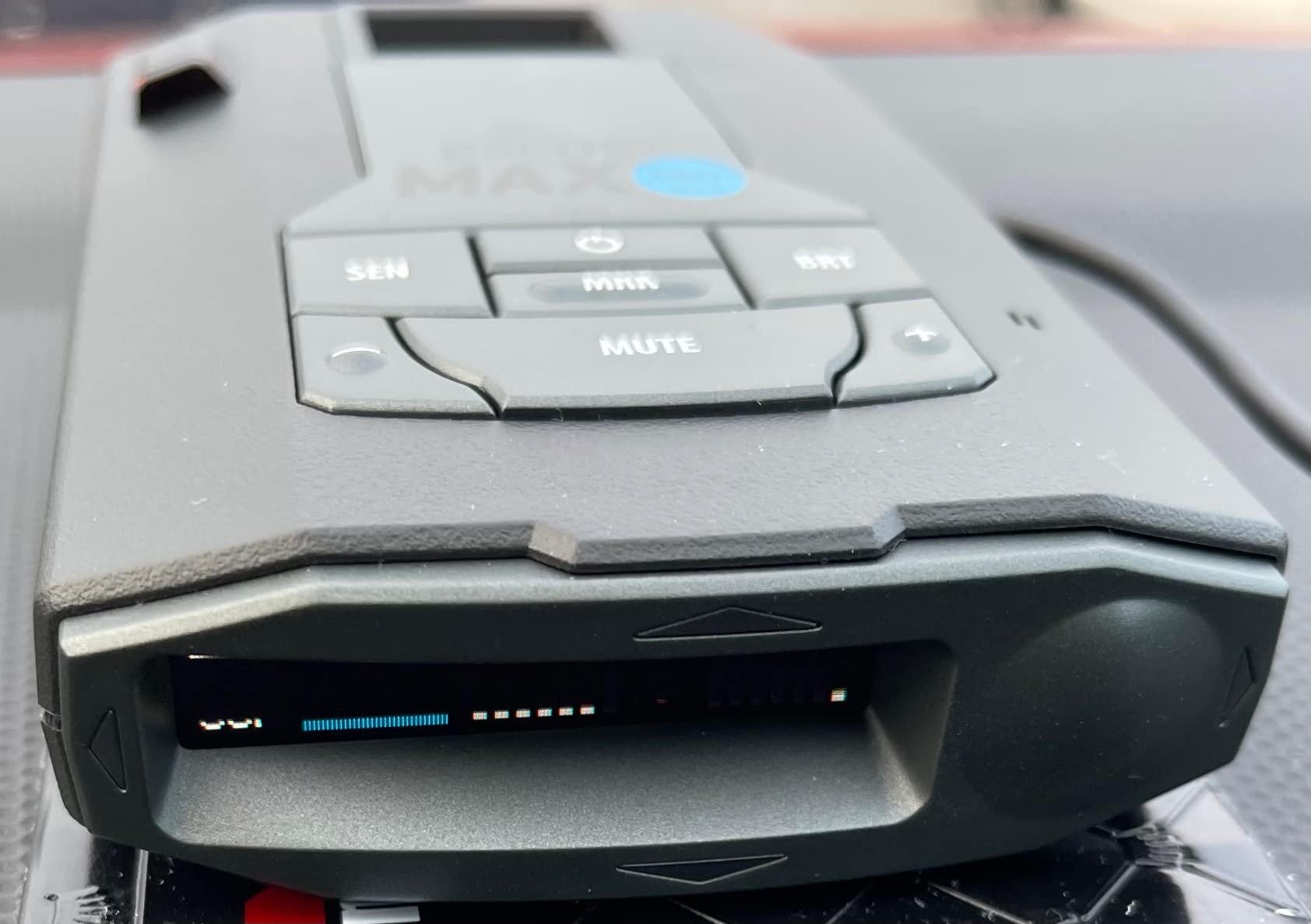
The MKII is the refreshed version of Escort’s arrow-equipped model, rebuilt on the M13 platform with dual antennas and Blackfin DSP processing. Owners credit it with roughly fifty percent more range than the original MAX 360c and with arrows that can show more than one signal at a time.
On a long trip the headline feature is the dual-band Wi-Fi, because firmware and database updates happen over the air in a hotel parking lot rather than on a laptop at home. Drive Smarter shared alerts and CarPlay or Android Auto display are included.
Arrows on a multi-lane highway
With four-direction arrows, the unit can tell you a threat is behind while another is ahead, and the display handles multiple simultaneous signals. That is the situation a single-antenna detector simply cannot describe, and it is the situation you are in most of the time in fast-moving traffic.
Filtering improvements over earlier Escorts
The review base consistently reports a markedly quieter ride than earlier Escort models, specifically against collision avoidance and blind spot systems. That is the same filter battle fought by the Radenso XP and the Uniden DFR7, and all three have improved on it in different ways.
Range and accuracy do drop noticeably through hills and sharp curves, which matters on a trip that crosses mountain states. Budget for a slower response through terrain than the open-road figures suggest.
Size, update speed and reliability reports
It is bulkier and heavier than older Escort models, at 5.15 by 1.38 by 3.25 inches and 10.08 ounces, and it takes more of your windshield than anything else in this roundup. Over-the-air updates are reported to take over an hour, though PC updates are much faster. A small number of owners report a black screen failure within months, and with a one year warranty that produces a real dispute.
10. Valentine One V1 Gen 2 – Raw Range and the Quietest Cabin in the Group
Valentine One V1 Gen 2 Radar Detector
X, K, Ka and super wideband Ka
Rear radar antenna and directional indicator
360 degree laser protection
4.6 by 3.8 by 1 inches
Pros
- Alerts a mile or two out against a steady radar signal
- Near silent in city driving so alerts are trustworthy
- Rear antenna and directional indicator show signal source
- Simple gadget free operation popular on long road trips
Cons
- No GPS so recurring false alert locations stay audible
- Ku band and app settings are hard to find documentation for
- Laser detection needs careful mounting
The V1 Gen 2 is the enthusiast choice for a specific reason: it reports a mile or two of warning when an officer’s radar is held steady, and it is near silent in city driving. That combination means an alert from this unit is worth acting on every single time, which is the entire point.
Forum consensus on rdforum.org specifically recommends it for trips because of its potential to catch rare lidar scatter, and suggests running it in maximum Ka sensitivity mode. If your route crosses a state where laser is common, that is a real argument for this model over a cheaper one.
Why enthusiasts pick it for long drives
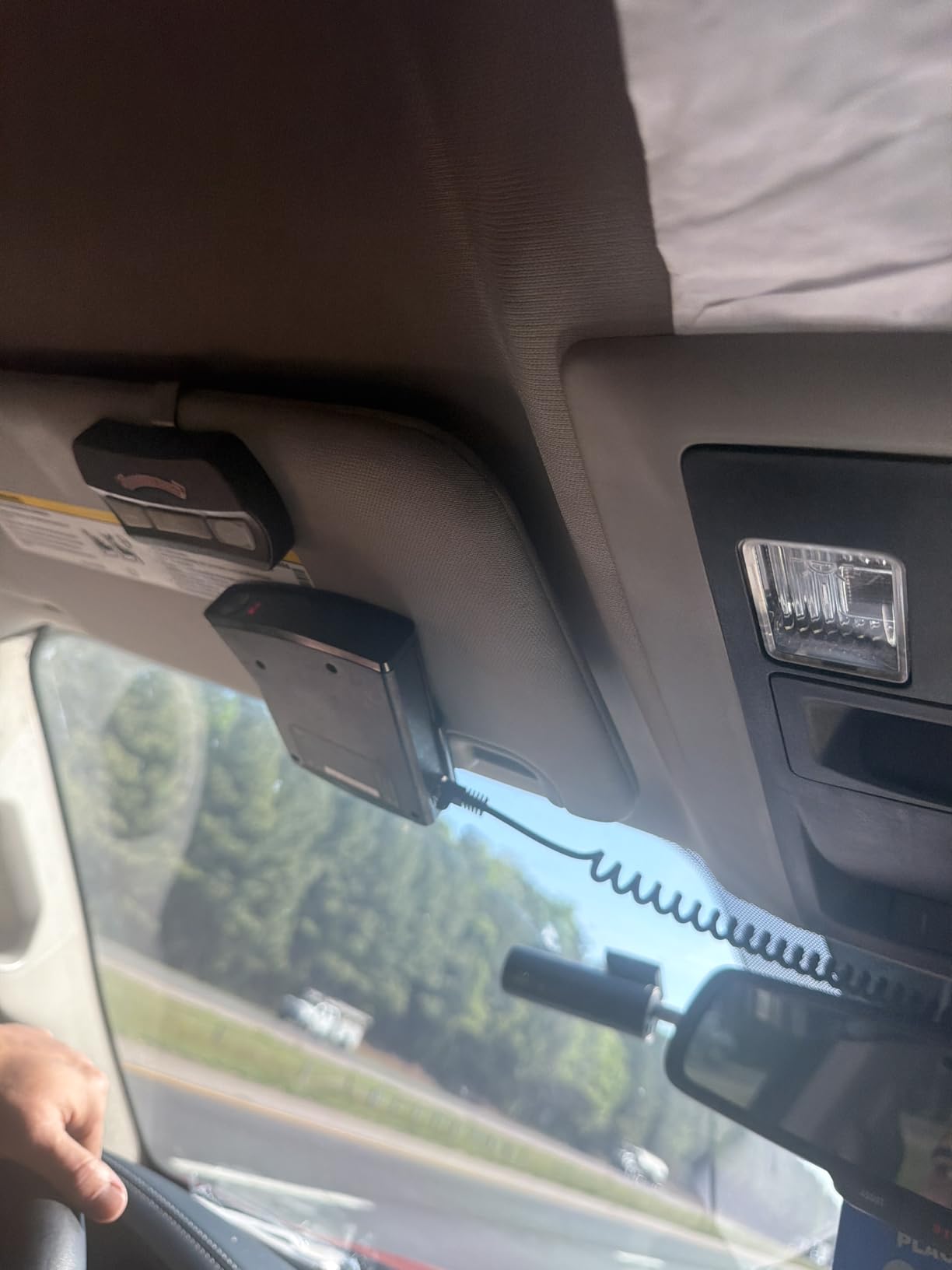
Owners describe the rear antenna and directional indicator as the feature that keeps it useful, because you can tell whether a signal is behind you or ahead. The gadget-free approach means no menus to relearn every time you switch vehicles, which is why it does well for people who rotate between a rental, a family car and a truck.
Detection covers 10.525, 24.125 and 34.7 GHz plus 13.45 GHz Ku band, and laser coverage is 360 degree. For a driver who wants to know where a threat is rather than just that one exists, that rear antenna is doing more work than any other single component here.
The GPS gap and what it costs you
There is no GPS, so recurring false alert locations cannot be permanently muted. You rely on the tuning and filtering instead, which works well on open roads and less well on a daily commute through a city full of doors and driver assist systems. On a single cross-country trip, that limitation matters far less than it would in daily use.
The Ku band and app settings are complicated and not well documented, which adds a real learning cost. And some users find the laser detection unreliable unless the unit is mounted very carefully, so a solid mount is not optional.
Physical details and the steep entry cost
The body is 4.6 by 3.8 by 1 inches with an LCD display and corded electric power, pairing with a smartphone or tablet through its app. The premium price makes it a steep entry cost next to GPS-equipped rivals, and that is the honest argument against it: on a two-week trip you are paying a lot for a tuning-based approach to false alerts.
Still, for the specific case of a long haul through states where laser use is common, the raw range and the near-zero false alert rate justify the money more than they would in ordinary commuting.
How to Set Up a Radar Detector Before a Long Trip
Competitors cover what a detector does. Almost none of them cover the ten minutes before you leave, which on a long trip is where most of the value is created or lost.
- Sync the firmware and camera database while you still have a USB port and a laptop. On units with Wi-Fi, trigger the over-the-air update and let it finish rather than leaving it for day two.
- Pair the app and grant location permission. A detector that has not been paired will not receive community alerts, which is half of why people think they are getting false alerts everywhere.
- Set band sensitivity for your local area before you leave, not on the first state line. The single biggest reduction in noise comes from tuning K band down where there is no local radar use.
- Set the speed threshold for muting so the unit stays quiet in parking lots and towns and wakes up on the interstate.
- Mark a few GPS lockouts on your first drive through recurring nuisance signals, so they are quiet on the trip home.
- Replace the suction mount with a visor, dash or adhesive mount. Stock suction cups are the most common failure on a multi-day run.
- Route the power cord up the A-pillar so it does not cross your view of the road, and check the cord is long enough to reach the accessory socket at full steering lock.
- Download your route in a crowdsourced app before departure, and add the two others you intend to run. App data for a route does not download well over a weak mobile signal.
- Download the offline map for the same reason, because the stretches where you most want a camera warning are often the stretches with no signal.
- Test the radar alert at a known quiet stretch before you join the highway, so you know the volume is right and you can hear it over the cabin noise.
One more step that forum regulars insist on: verify your GPS database independently. Community databases are accurate most of the time and occasionally stale, and a lockout pointed at the wrong stretch of road is worse than no lockout at all.
Radar Detector Buying Guide for Long-Distance Drivers
Decide how much false-alert noise you can tolerate
This is the first question, and it eliminates more products than price does. If you are the kind of driver who turns a detector off after an hour of K-band chirping from other cars, buy a filtering-first unit such as the Radenso XP or the Cobra RAD 480i and accept less range. If you are comfortable with a busy display and want to know about everything, a Uniden with deeper menu control serves you better.
Match the hardware to your trip length
A weekend loop needs a detector, a suction cup and a phone app. A two-week cross-country run needs GPS, a stable mount, a cord long enough to route properly, and a database that covers every state you cross. A multi-state trip is where lockouts and auto-learn start paying for themselves, because they only improve with time and distance.
Arrows versus no arrows
Directional arrows matter when there is more than one source of radar around you, which on a divided highway or in dense traffic is most of the time. They also add cost, and on a rural two-lane road you will rarely use them. The Uniden R7, Escort MAX 360c MKII and Redline 360c are the arrow options here.
GPS lockout versus auto-learn
Lockout is manual and immediate, which is what a first-time long trip needs. Auto-learn is hands-off and better on a route you drive every week, which is what a long trip is not. Several forum members recommend running the detector in a reduced sensitivity mode on unfamiliar roads so that a genuine alert stands out from a background of noise.
Which brand ecosystem to commit to
Uniden, Escort and Valentine are the three brands enthusiasts actually name, with Cobra and Radenso treated as value tiers. The practical difference is the app: Escort’s Drive Smarter and Cobra’s iRadar are the more mature ecosystems, while Uniden models largely rely on USB updates except for Wi-Fi equipped units. Pick the brand whose update method you can actually use on the road.
RDD stealth and when it is worth paying for
A radar detector detector, or RDD, is a device officers use to spot detectors. Spectre and VG-2 protection makes your unit invisible to that scan. If you drive in states with strict enforcement and a reputation for RDD use, this matters. If you drive a cross-country loop, note that the Uniden R7 does not detect RDD signals at all, while the Redline 360c includes stealth technology.
Know what the detector cannot do
Laser and lidar is the honest limit. A detector senses it; it does not stop it. Forum members name several states where laser use is common enough to worry about, and one user explicitly recommends routing around Georgia, South Carolina, Virginia and Ohio to reduce laser threat. That is a real planning decision, and no amount of spend changes it. Laser jammers are a separate category with their own legal exposure, and they are not covered here.
Legality before you mount anything
Radar detectors are legal in every US state except Washington DC, and Virginia repealed its ban effective July 1, 2022. Some competitor guides still list Virginia as banned, so check the date on anything you read. A handful of states regulate mounting that obstructs the driver’s view of the road, so check that your position is legal. Commercial vehicles over 10,000 pounds are treated differently by federal regulation, and so is driving on federal property or certain military installations.
If your trip includes gear you will be tempted to dig up along the way, our beach hunting metal detector guide and gold prospecting detector guide cover the opposite end of the spectrum: detectors meant to find signals rather than avoid them.
Frequently Asked Questions
Which radar detector is best for highway driving?
For sustained highway driving the Uniden R7 is the strongest all-round choice, because its dual antennas show whether a radar signal is ahead, behind or beside you while owners report two to three miles of warning on open road. If you want maximum reach and do not care about direction, the Uniden R3 reaches further. If noise tolerance matters more than range, the Radenso XP is quietest out of the box.
Which radar detector has the longest range?
Range depends on band sensitivity, antenna design and how the signal arrives rather than on one brand. Owners of the Uniden R3 report roughly half a mile of warning in tough terrain and several miles on open road, while the Uniden R7 and Valentine V1 Gen 2 are both reported to alert a mile or two out. The Escort Redline 360c claims twice the reach of the Redline EX. Mountain terrain shortens every one of these figures.
Can cops tell if you are using a radar detector?
Sometimes, yes. Officers can use a radar detector detector, commonly called RDD or Spectre, to spot a detector in use. Units with Spectre and VG-2 immunity are invisible to that scan, and the Escort Redline 360c includes stealth technology for exactly this reason. Some budget detectors offer no RDD protection at all, and the Uniden R7 does not detect RDD signals. On a long trip, check your state rules before you rely on any of it.
Are radar detectors legal in every state?
Radar detectors are legal in every US state except Washington DC. Virginia is no longer an exception, since it repealed its ban effective July 1, 2022, although some guides published before that date still list it as banned. Two other rules apply: a few states restrict mounting that obstructs the driver’s view, and commercial vehicles over 10,000 pounds are covered by separate federal regulation. Mount low and to the side of the detector to stay compliant.
Is a radar detector worth it for a long trip?
For a driver who spends hours at highway speeds across many states, usually yes. A single speeding ticket costs more in premium surcharges over the following three years than any detector in this roundup costs outright, and a long trip is exactly when a radar-based traffic stop is most likely. The caveat is what a detector cannot do: it buys reaction time against radar, and it does nothing about laser or lidar, which is common enough in several states to plan your route around.
Which Radar Detector Should You Take on Your Long Trip?
If you want the most warning and do not need to know the direction, take the Uniden R3. If you are running high-speed multi-lane traffic and want to know whether the threat is ahead or behind, the Uniden R7 is the pick. If noise is the thing that would make you switch it off, the Radenso XP is quietest and works without setup.
For a rental car or a second vehicle, the Uniden DFR7 does the most for the least fuss. For full 360 degree coverage with a travel kit, the Escort Redline 360c is the answer. For routes through states where laser is common, the Valentine One V1 Gen 2 is worth the tuning effort.
Whatever you choose, spend the ten minutes before departure on firmware, lockouts and mount. That preparation is what separates a detector you use for the whole trip from one you switch off on day two, and it is the reason the best radar detectors for long trips are the ones that work quietly without demanding your attention.