
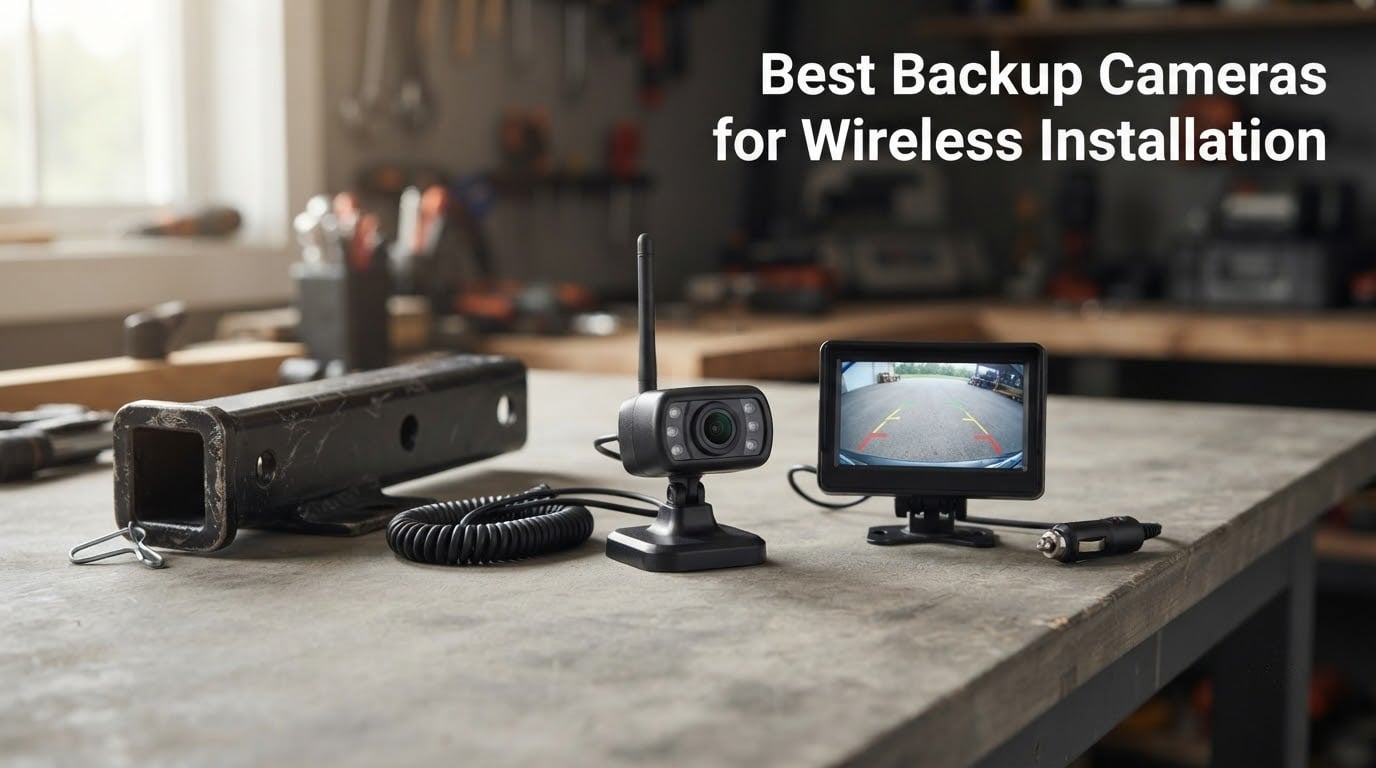
The best wireless backup camera is the pemacom 1080P magnetic kit — it mounts to a metal surface in about a minute, runs on a 15000mAh solar-assisted battery, and comes with a 7-inch anti-glare display that holds a stable 2.4GHz feed at ordinary trailer distances. That combination is why it took the number one spot in Vehicle Backup Cameras and gathered more reviews than anything else we analyzed. The AUTO-VOX SOLAR5 is the better pick if you tow long trailers and need real range, and the Haloview BT7 is the system to beat when you run an RV with multiple cameras.
Here is the honest definition most sellers blur: a wireless backup camera means no video cable runs from the camera to the screen. It does not mean the camera is completely wire-free. Only battery and solar architectures qualify as that, and even then the monitor in the box still needs 12V power from your cigarette lighter socket or an accessory circuit. We spent weeks reading customer feedback across all ten systems below, checking which ones hold a signal at highway speed, which magnets survive wash cycles, and which claims about range actually match what owners report.
Quick picks, if you want the short answer:
- Best overall: pemacom 1080P magnetic kit — fastest true no-drill install with a 7-inch screen included
- Best for towing and long range: AUTO-VOX SOLAR5 — dual-antenna link rated to 524 ft
- Best for RVs running multiple cameras: Haloview BT7 — four camera inputs and up to 984 ft of line-of-sight reach
- Budget pick: LeeKooLuu 7-inch kit — pre-paired, IP69 rated, and the simplest setup here
- Best in freezing climates: DOUXURY 5-inch solar kit — rated to minus 32F
- Best for horse and livestock trailers: DoHonest R50 — pair two cameras and watch either side
One more thing worth saying up front, because no editorial page in this category says it plainly. The most upvoted advice from people who already own these systems is that self-installability matters more than any spec on the box. Nobody raves about a four-decimal field-of-view number. They rave that it took ten minutes and no trim-panel disassembly. Every pick below installs without cutting a hole in a single panel.
Our Top 3 Picks for Wireless Backup Cameras

pemacom 1080P Magnetic Kit
- 1-minute magnetic no-drill install
- 15000mAh battery with 5W solar
- 7-inch anti-glare LCD
- IP69 rated

AUTO-VOX SOLAR5 7.2-Inch Solar
- Dual antennas up to 524 ft
- Solar plus battery up to 20 hours
- 1080P with IR night vision
- DVR loop recording

Haloview BT7 7-Inch RV System
- Up to 4 wireless camera inputs
- 984 ft line-of-sight range
- 10-32V wide voltage input
- Full-colour dim-light night vision
Comparing All 10 Wireless Backup Cameras in 2026
| Product | Specs | Action |
|---|---|---|
| pemacom 1080P Magnetic Kit |
|
Check Latest Price |
| AUTO-VOX SOLAR5 |
|
Check Latest Price |
| Haloview BT7 |
|
Check Latest Price |
 LeeKooLuu 7-Inch Kit LeeKooLuu 7-Inch Kit |
|
Check Latest Price |
 DOUXURY 5-Inch Solar Kit DOUXURY 5-Inch Solar Kit |
|
Check Latest Price |
 DoHonest R50 DoHonest R50 |
|
Check Latest Price |
 AUTO-VOX SL56AI AUTO-VOX SL56AI |
|
Check Latest Price |
 Thybro 7-Inch Kit Thybro 7-Inch Kit |
|
Check Latest Price |
 VEKOOTO VK7 Pro VEKOOTO VK7 Pro |
|
Check Latest Price |
 AMTIFO A26-11 AMTIFO A26-11 |
|
Check Latest Price |
A note on how to read that table. The stated transmission distances are not directly comparable, because manufacturers measure from the camera to the monitor with a clear line of sight and nothing else in the way. Owners regularly report real-world distances that either exceed or fall short of the printed figure. Treat the number as a hint, not a promise, and read the vehicle-matching notes in the buying guide further down.
1. pemacom 1080P Magnetic Kit — The Install That Really Is One Minute
1080P HD Wireless Backup Camera – 1 Minute Magnetic Easy Install No Wiring
1080P CMOS with night vision
15000mAh battery plus 5W solar
7-inch anti-glare LCD
IP69, -22F to 176F
Pros
- Genuinely one-minute magnetic install with no drilling
- Stable 2.4GHz feed at typical trailer distances
- Bright 7-inch anti-glare display with a 170-degree view
- Solar and USB-C charging both supported
- Clear low-light night vision
Cons
- Monitor has no on/off switch and must be unplugged
- Solar charging reported slower than advertised
- 10 percent of ratings are 1-star
- mostly long-term unit failures
This is the kit that most cleanly answers what are some backup cameras that don’t require wiring. Six neodymium magnets sit inside a rubber-coated base, so the camera clamps to a hitch receiver, a tailgate, or a license plate bracket and you are done. No adhesive pad to fail in summer heat, no suction cup to lose at highway speed, and no hole in the bodywork. Reviewers repeatedly describe a charge, pair, magnet-on sequence that takes under a minute, which matches the one-minute claim on the box.
The signal is the part that matters most and it holds up better than the modest 33 ft rating suggests. The system uses 2.4GHz digital transmission with frequency hopping, and owners report a stable picture with no dropped frames at normal trailer distances, which is the range that most pickups and bumper-pull trailers actually operate in. Do not expect it to reach the far end of a 65 ft fifth-wheel.
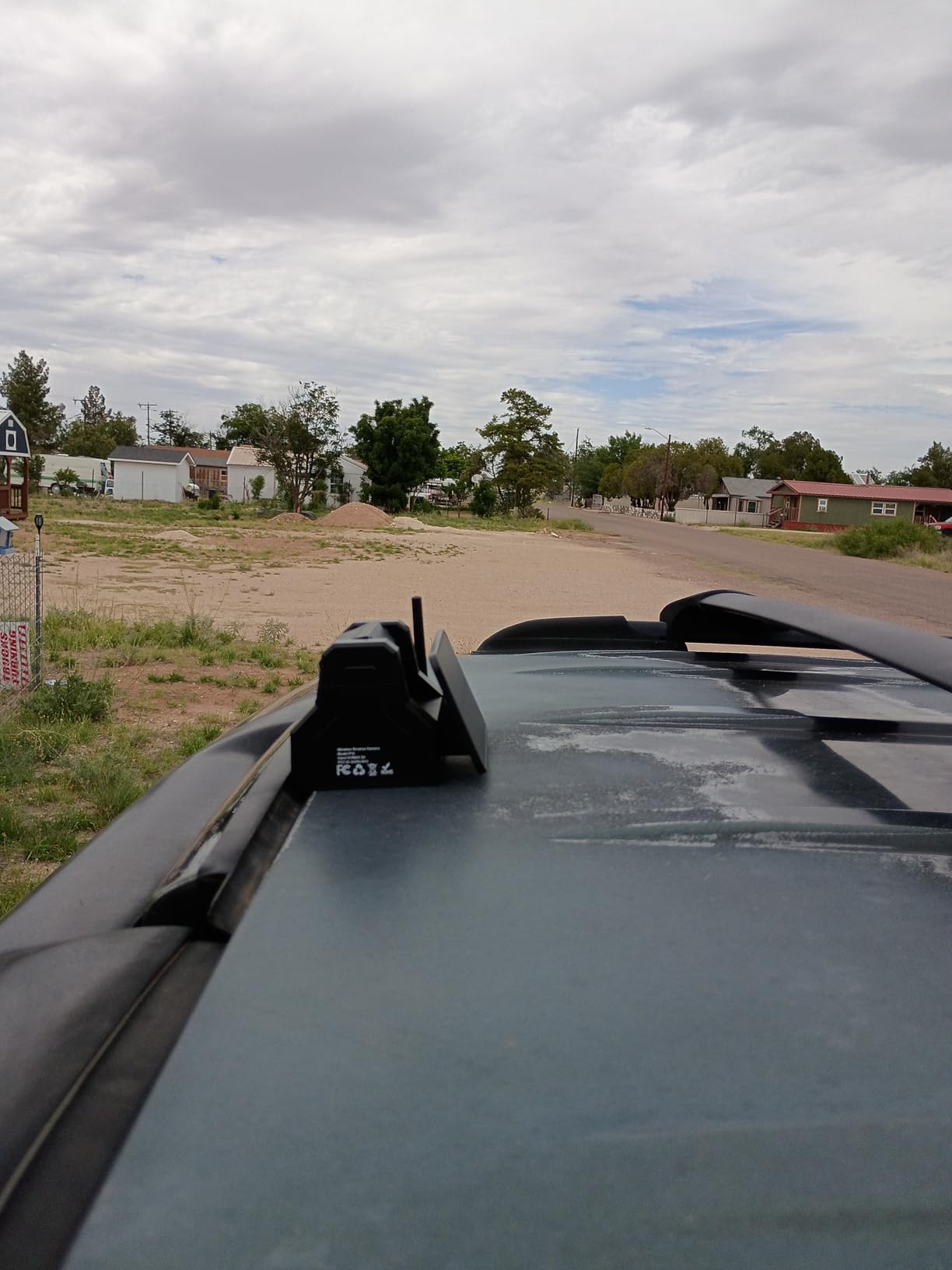
What you give up for that simplicity is scale. The 170-degree field of view is one of the widest in this roundup, but 1080P at that width means edges soften a little near the corners. The 7-inch LCD is bright and treated against glare, which is one of the most useful things about the display package in this class.
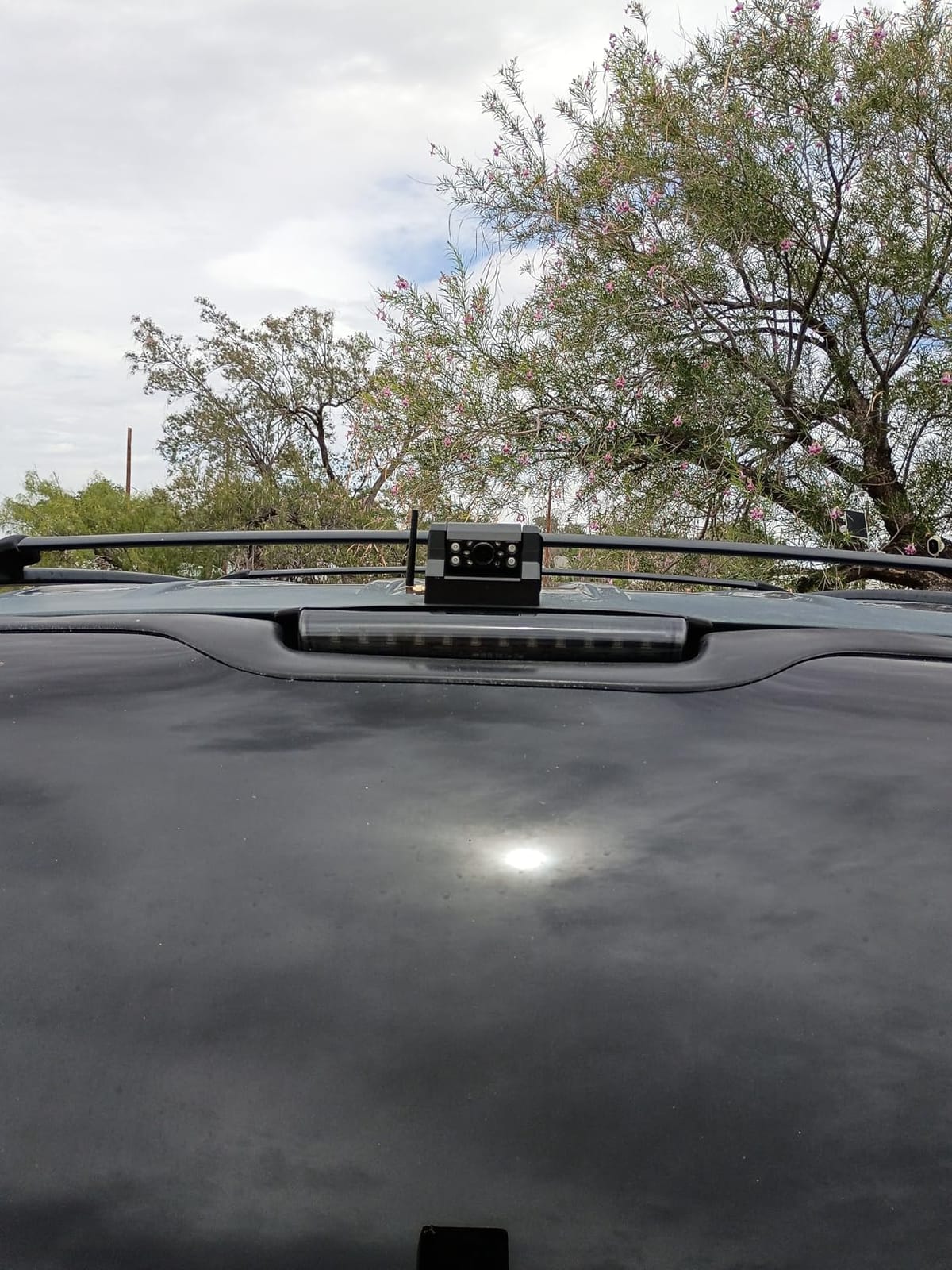
Solar charging and cold weather reality
The 5W panel and 15000mAh cell deliver up to 24 hours of runtime on a five-hour charge. In practice, treat the panel as a top-up rather than a primary supply — owners report charging slower than advertised, so topping up over a USB-C cable before a long trip is the sensible habit. The stated operating range of minus 22F to 176F covers most of North America, but battery chemistry derating still applies, so expect less runtime on a hard freeze. Our guide to backup power options for winter travel covers the same chemistry logic at a larger scale.
Who it suits and who it does not
Choose this if you want the shortest possible path from box to working camera and you tow within about 30 ft. It suits sedans, pickups, small RVs, and boat trailers equally well. Skip it if you need more than two cameras, if you want recorded footage on a card, or if your trailer is long enough that you need a 500 ft link.
2. AUTO-VOX SOLAR5 — Dual Antennas Built for Long Trailer Days
AUTO VOX Wireless Backup Camera Solar Magnetic, 7.2″ DVR 1080P Monitor
Dual antennas to 524 ft
Solar plus battery up to 20 hours
7.2-inch 16:9 split screen
IP69K, -4F to 149F
Pros
- Dual-antenna signal stays steady at highway speed over long trailers
- Sharp 1080P with effective IR night vision
- Built-in DVR loop recording with microSD support
- Very quick magnetic install with automatic reconnection
- Exceptionally responsive customer service
Cons
- Magnetic hold can fail at speed on very rough roads
- 12 percent of ratings are 1-star
- many from cameras failing after months of non-use
- Included USB-C cable is too short to seat fully
The AUTO-VOX SOLAR5 is the pick for anyone whose driving involves a long trailer, a boat on a tandem axle, or a fifth-wheel. Two external high-gain antennas and a rated 524 ft transmission distance put it in a different class from the 33 ft and 36 ft systems, and owners backing long trailers at road speed report the picture holding steady where cheaper kits stutter. The 7.2-inch 16:9 display is large enough to show two cameras side by side without either becoming unreadable.
Power comes from a solar panel and a high-capacity rechargeable cell, with up to 20 hours of use. An auto sleep mode with 120-second, 240-second, and never settings lets you decide how aggressively the system powers down. That matters if you leave the truck in a lot for days between trips and do not want to come back to a flat camera.
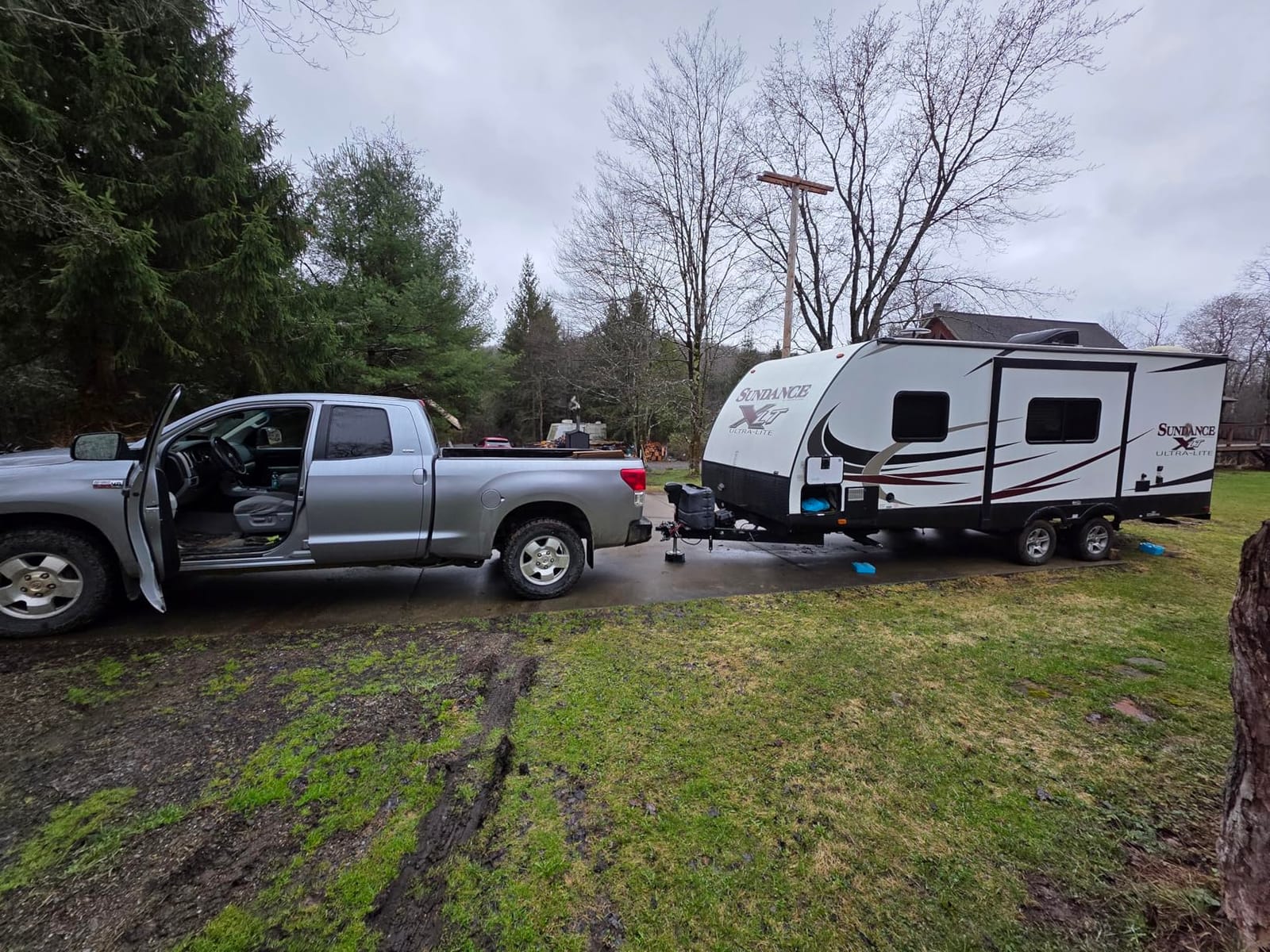
DVR recording is the sleeper feature
Built-in DVR loop recording with microSD support means this system can capture what happened behind you, not just show you the present. For anyone who has backed into something in a parking lot and needed proof afterwards, that is worth more than another 20 degrees of field of view. The recording runs locally, so it does not depend on a cloud service staying online.
What the negatives actually amount to
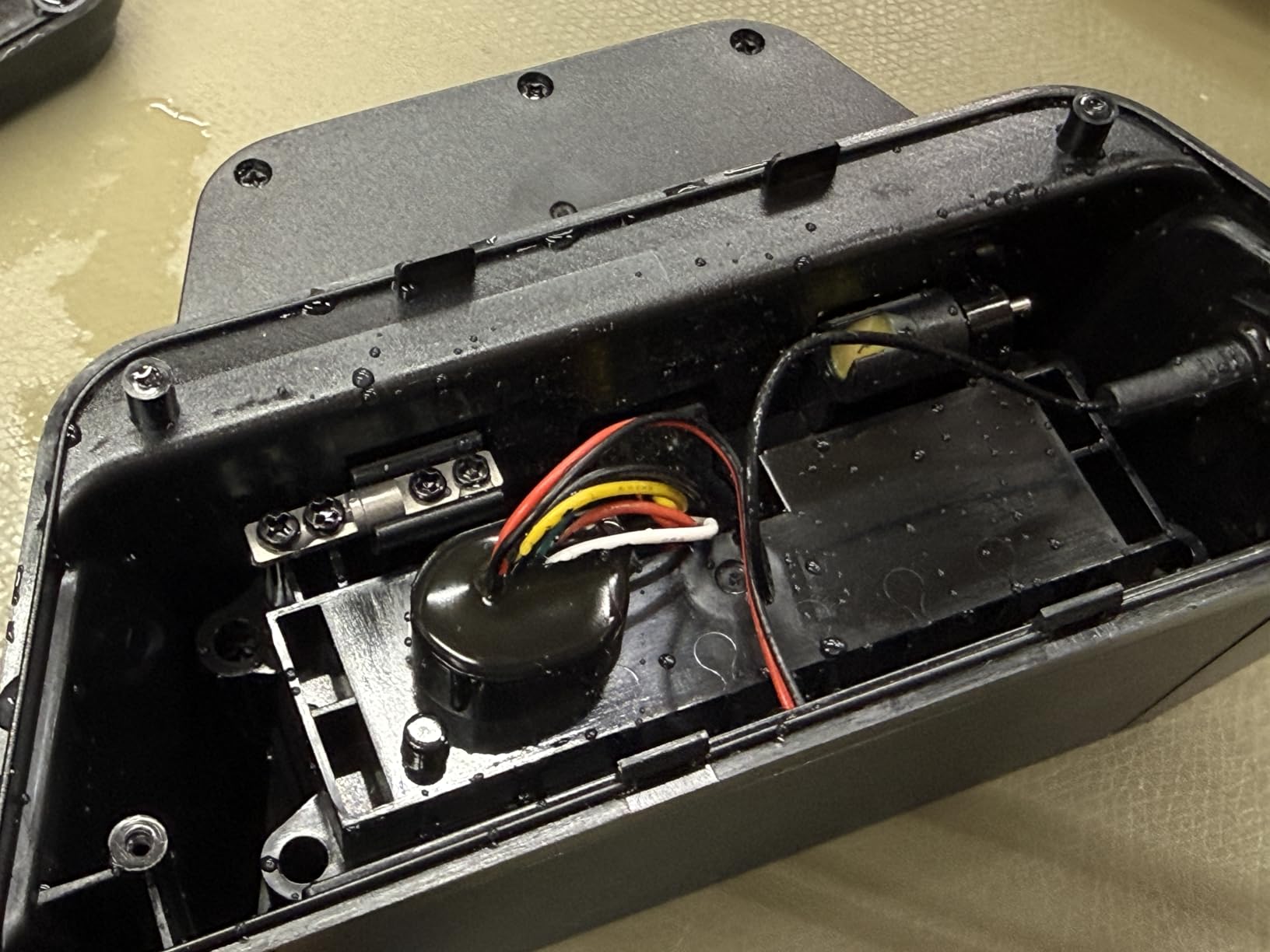
Two themes show up repeatedly in the feedback. The first is magnet security: on very rough or broken roads the hold can release, and several owners have moved to permanent mounting for that reason. The second is long-term reliability, with 12 percent of ratings at one star and several reports of units refusing to power on after months sitting unused. Note the operating floor is minus 4F, which is milder than some kits here and worth checking against your winter climate.
One practical annoyance: the included USB-C cable is too short to seat fully in the camera port, so bring your own. On the support side, this brand stands out — owners report replacements sent without argument when something failed, which is a meaningful difference when a camera dies two winters in.
Best fit
Pick the SOLAR5 for trucks and pickups that tow regularly, for RVs that want two cameras, and for anyone who wants incident recording. Choose the pemacom instead if your driving is short local trips and you care more about the install being genuinely tool-free.
3. Haloview BT7 — Four Cameras and Full-Colour Night Vision
Haloview BT7 RV Backup Camera Wireless FHD 1080P DVR 7″ Monitor System
4 wireless camera inputs
984 ft line-of-sight range
10-32V wide voltage input
Full-colour dim-light night vision
Pros
- Supports up to four wireless cameras at once
- Longest line-of-sight reach in this roundup at 984 ft
- Full-colour image in dim light instead of switching to greyscale
- Built-in recorder with playback
- 10-32V input suits larger RV electrical systems
Cons
- Sits at the premium end of this roundup's cost range
- 120-degree field of view is tied for narrowest in this roundup
- Cameras are typically permanently mounted so setup takes longer
- Durability complaints persist at the higher price point
Everything else in this roundup is a single camera with a single screen. The Haloview BT7 accepts up to four wireless camera inputs and puts them on one 7-inch LCD monitor with a built-in recorder, which makes it the natural starting point for full rig coverage — front, rear, and both sides of a coach or a tandem trailer. With a line-of-sight rating of 984 feet, it comfortably covers vehicles up to 65 ft including fifth-wheels, motorhomes, and tractor trailers.
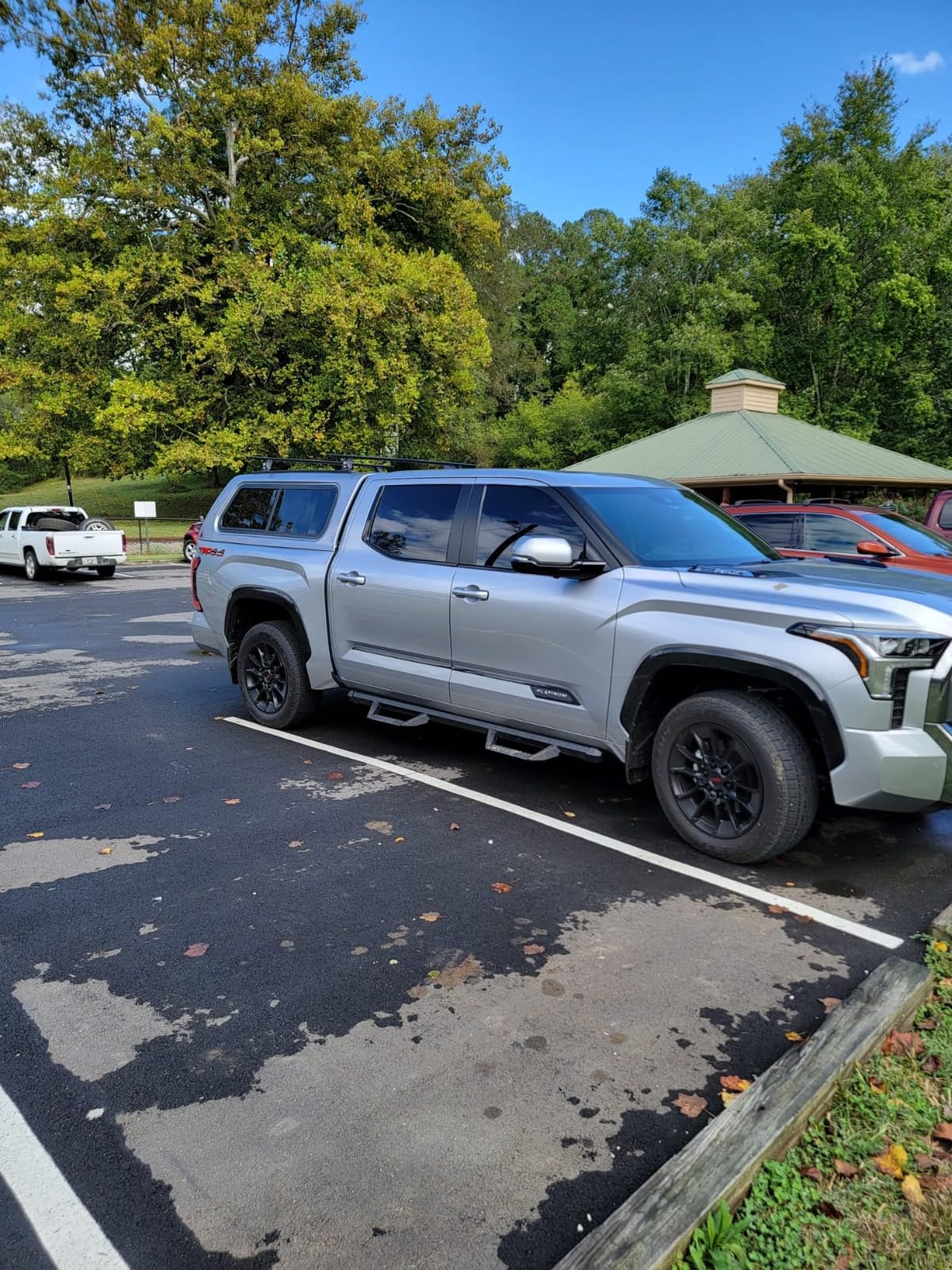
The night vision is the technical standout. Instead of dropping to monochrome in low light, it holds full colour and adds remotely activated fill lights, so a dim driveway or a dusk campsite still shows you colour cues — a red tail light, a reflective vest, wet paint. For low-speed manoeuvring where colour tells you depth, that beats raw resolution every time.
Built for a real RV electrical system
The 10-32V wide voltage input is not a spec-sheet nicety. RV and trailer systems swing widely as the house bank charges and drains, and a monitor that browns out on a 12V accessory feed is a useless safety device. A built-in sensor records at 1080P 30fps with playback, and it supports both 4-channel composite and single-channel AVI recording.
Where the compromises sit
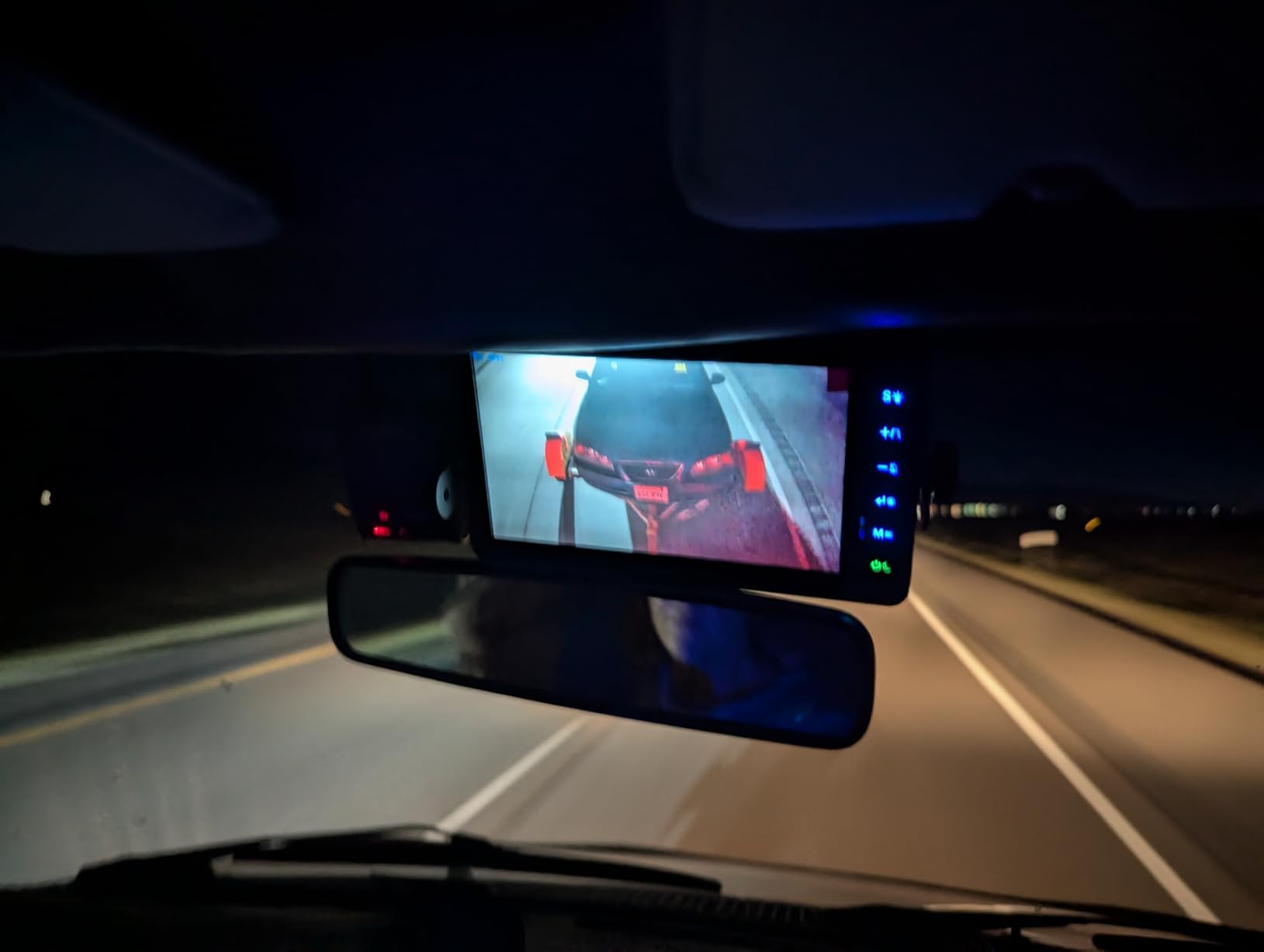
At 120 degrees, this is tied for the narrowest view we collected, and that matters at very tight clearances. It is also where a hitch ball comes into play — a camera mounted behind a ball can be partially blocked no matter how good the lens is, so plan the mounting position carefully. Owners also note that this is the least “no-drill” option here, since cameras are usually permanently mounted to the trailer. Plan for a longer install than a magnetic kit demands.
Who should buy it
RV owners with more than one trailer, fifth-wheel hitters, and anyone who wants recorded footage with playback should start here. It is also the system to consider if you can accept a 120-degree view in exchange for four-camera coverage and dim-light colour. For a single vehicle needing a quick magnetic install, it is overkill.
4. LeeKooLuu 7-Inch Kit — The Budget Pick That Pre-Pairs Everything
HD 1080P 7 Inch Wireless Backup Camera for Truck: 15-Min Easy to Install
7-inch LCD monitor
1080P with starlight night vision
150-degree real angle of view
IP69, -22F to 176F
Pros
- Fast setup with a pre-paired system and clear written instructions
- Clear 1080P day and night picture
- Large 7-inch monitor with a wide viewing angle
- Weather-resistant build that handles rain dust and rough roads
- Built-in DVR recording with split screen for a second camera
Cons
- Occasional freezing or stuttering in the wireless feed
- Included suction cup mount holds poorly and many owners switch to a dash or Velcro mount
- Thin power wires are included so the install is not fully wire-free
- 15 percent of ratings are 1-star
- clustered around signal and support
This is the entry point most buyers should start from, and it is the one we would hand to someone who has never installed anything. The camera and monitor arrive pre-paired, so the job is mounting the bracket, plugging the monitor into the cigarette lighter socket, and adjusting the angle. The instruction sheet is straightforward enough that several reviewers described the whole setup as done before their coffee cooled.
Specification-wise it is credible rather than impressive: 1080P capture on a 1/3-inch CMOS sensor, a 150-degree real angle of view, starlight night vision, adjustable parking guidelines, and split screen for up to two cameras. One-click channel switching handles the second camera without digging through menus at a slow parking lot.

The suction cup is the weak point
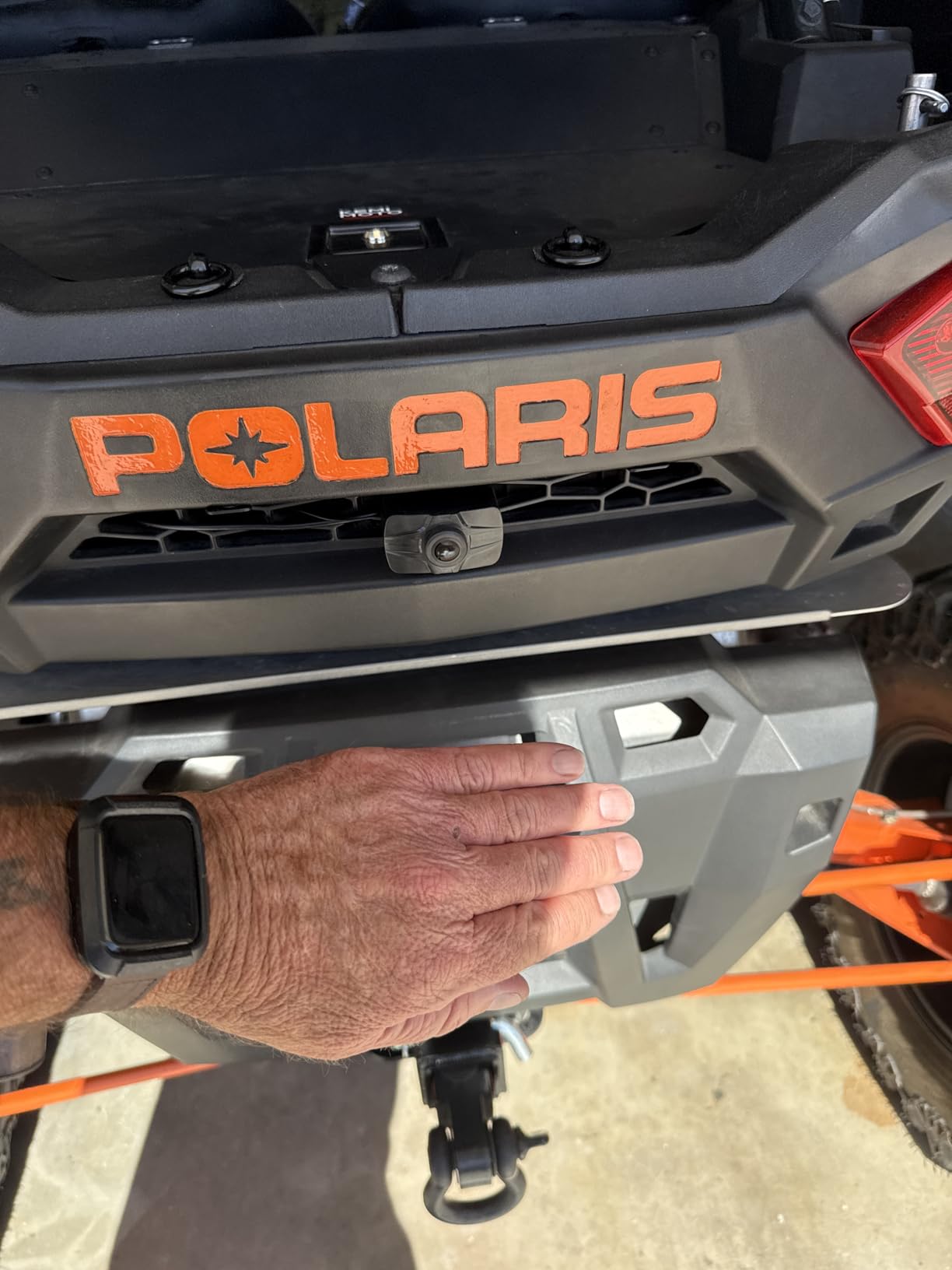
Be clear-eyed about the included windshield mount. Owners report it holds poorly in summer heat and on rough roads, and many have replaced it with a dash mount or a strip of hook-and-loop tape. That is a five-minute fix, but plan for it rather than discovering it the first time the monitor slides down mid-manoeuvre. The camera side mounts on the surface with screws and a bracket, so it stays put.
Signal quality is the real complaint
15 percent of ratings sit at one star, and those reviews concentrate on two things: intermittent freezing of the wireless feed and unhelpful support when troubleshooting goes wrong. The picture quality itself draws consistent praise in both day and night, and the weather resistance is rated to IP69 with a minus 22F to 176F operating range. If you tow long distances regularly and cannot tolerate a stutter, step up to the AUTO-VOX SOLAR5.
There is also a nuance about the word wireless here. Thin power wires are included in the box, so while the video link is cable-free, the system is not a purely battery unit. That is a fair trade for never charging the camera, and worth knowing before you compare it against a solar kit.
5. DOUXURY 5-Inch Solar Kit — Built for Freezing Nights
Wireless Backup Camera Solar Magnetic for RV Car Trailer Truck Camper 5th Wheels Hitch Towing No Wiring No Drilling Rechargeable Night Vision Portable Backup Camera with 5″ 1080P HD 2-Split Monitor
Rated to minus 32F and 187F
9600mAh solar and adapter charging
180 ft and 330 ft open-area range
5-inch monitor with 2-split
Pros
- Strong magnetic base that stays put on rough roads
- Real-world range reported well past the stated figure
- Clean IR night vision and good daytime colour
- Two-minute setup with automatic reconnection
- Responsive US-based support that troubleshoots and replaces units
Cons
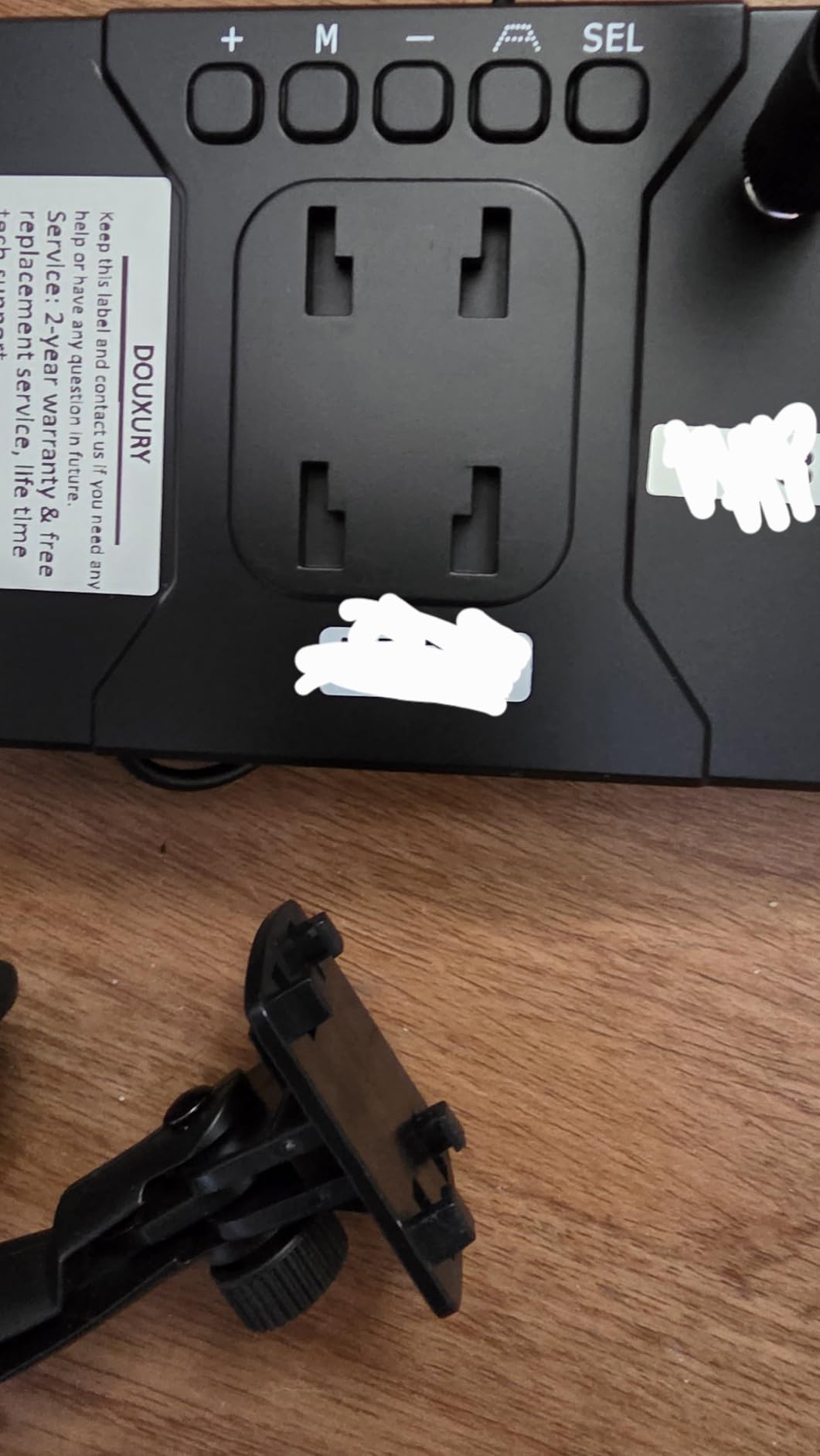
- Monitor buttons are on the back
- awkward to operate while mounted
- No on/off switch so the monitor must be unplugged
- Some cameras lost signal or stopped accepting charge over time
If you tow in winter, the operating range on this one is the headline. Rated from minus 32F to 187F, it has the widest temperature envelope of any kit in this roundup, and the housing is IP69 rated with a fog-resistant lens. That combination matters in a place where the camera is outside a metal trailer all night in weather that would make a lesser unit refuse to wake up. Battery capacity in the cold still drops, but the camera itself keeps working.
The signal is unusually strong for a magnetic unit. Reviewers report clear pictures at 100 to 250 ft and beyond, comfortably past the stated 180 ft rating and approaching the 330 ft open-area figure. That is enough reach for most fifth-wheel hitches and larger travel trailers without moving to a permanently mounted system.
The magnet is the reason owners keep it
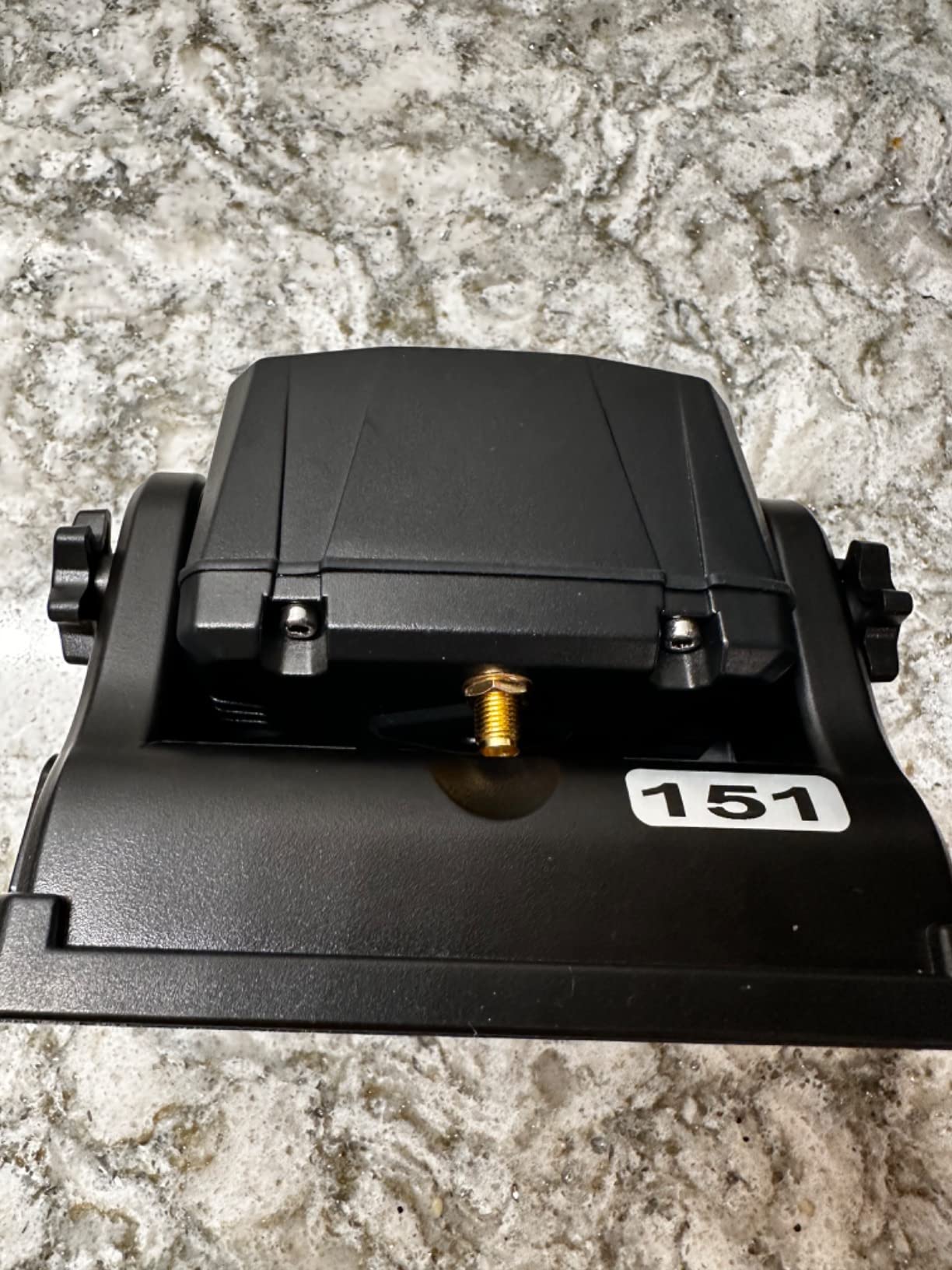
Multiple reviews describe the magnetic base as unusually strong, holding through wash cycles and gravel roads without releasing, and owners use the system as a portable rear-view and hitching aid rather than a fixed camera. That flexibility matters if you move the same camera between a truck, a flatbed trailer, and a boat. The camera is the 1.2 kg item that travels; the 5-inch monitor stays in the tow vehicle.
Interface annoyances to live with
Two design choices will test your patience. The monitor’s buttons are on the back, so adjusting brightness or switching channels means reaching behind the screen while it is suction-mounted to the windshield. And there is no power switch, which means unplugging the cigarette lighter adapter to turn it off. The 9600mAh cell delivers about 26 hours, with both solar and adapter charging, and an auto energy-saving mode kicks in roughly 10 seconds after the monitor is powered down.
A few owners report cameras that lost signal or stopped accepting charge after extended use, and one flagged the included charging cable for overheating. That last point deserves attention given how much cold-weather charging this kit will see. Our coverage of charging hardware that holds up in the cold explains what to look for when a cable is running hot.
6. DoHonest R50 — Two Cameras on a 5-Inch Screen for Livestock Trailers
Wireless Backup Camera Solar Magnetic: Portable Cordless Scratch-Proof Truck Trailer Hitch Rear View Camera HD 1080P No Wiring No Drilling Rechargeable 5” Monitor Kit for Car RV Camper – DoHonest R50
9600mAh solar battery, up to 24 hours
16 IR LEDs with auto brightness
IP69K housing
5-inch IPS display
Pros
- Real-world range far beyond the stated 36 ft
- with users reaching 125 ft
- Two-camera pairing and side-by-side viewing for horse trailer monitoring
- Durable enough to survive being knocked off a truck onto pavement
- Clear HD picture that stays stable over rough roads
- Very easy setup: charge
- pair
- magnet on
Cons
- Occasional brief connection drops that recover within seconds
- Split view compresses each image noticeably
- 5-inch screen is small when two cameras are shown together
- Heavier than expected
The DoHonest R50 is the one to look at if you haul animals. Owners with horse and livestock trailers pair two cameras and watch either side of the trailer in split view, which is the use case the two-channel support was built for. It is also just a good-value general kit, with a 9600mAh solar battery, up to 24 hours of use, and a tool-free neodymium magnetic mount that the brand rates as scratch-resistant.
Night vision is handled by 16 IR LEDs with an automatic light sensor that adjusts brightness, and the housing carries an IP69K rating. The 5-inch IPS display lets you tune brightness, contrast, and saturation independently, which matters when a trailer is backlit at sunset or sitting in a dark barn aisle. Integrated parking assist distance lines cover the simpler parking case.
The stated range is badly conservative
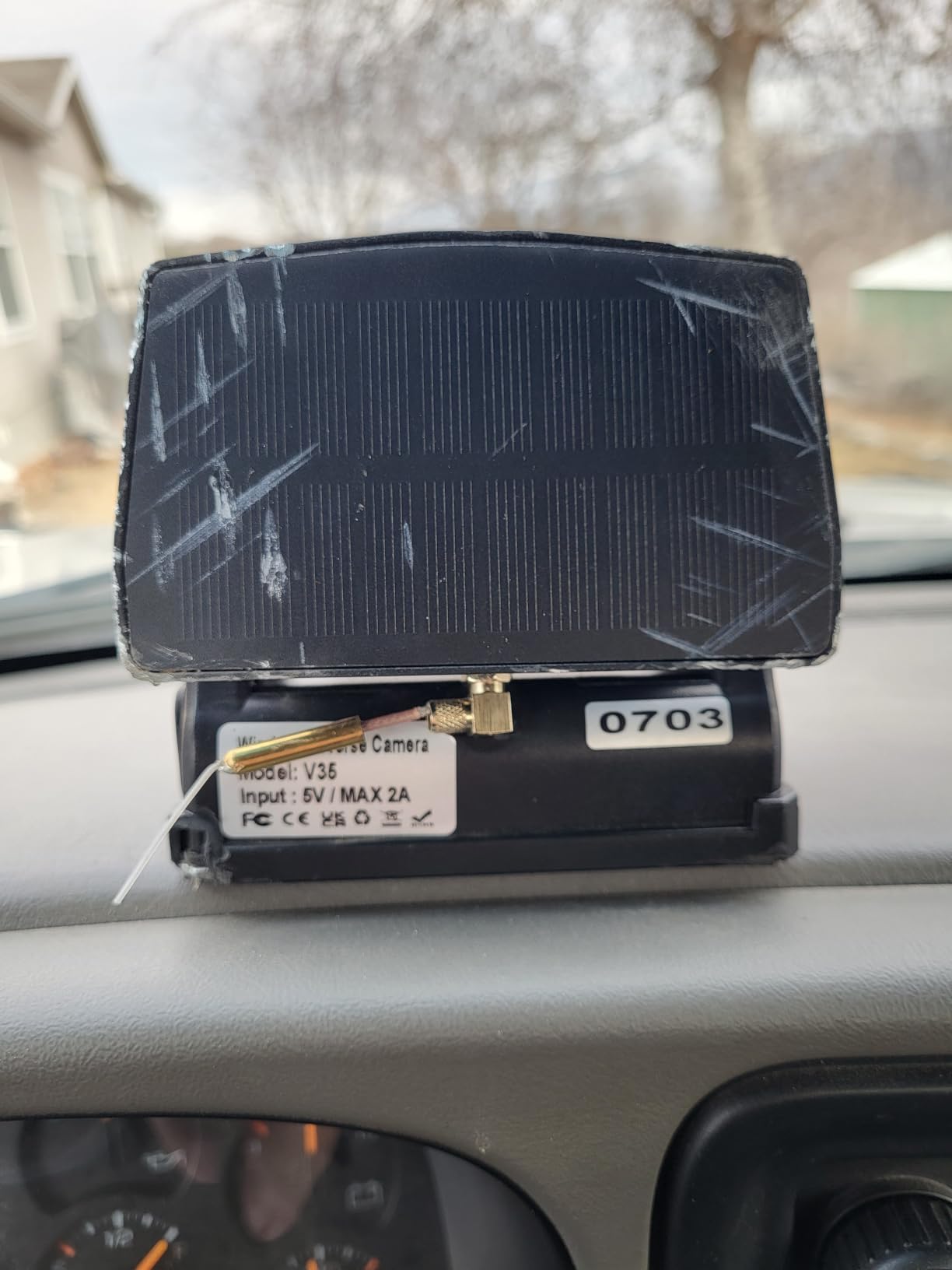
The listed transmission distance is 36 ft, which sounds unimpressive next to the AUTO-VOX figure. Owners report clear images at 125 ft, so the printed number reflects a worst-case configuration rather than real performance. The stated field of view is 150 degrees with a 170-degree real angle, so the wide view holds up better here than the range spec suggests.
The split screen is cramped, and that is the trade
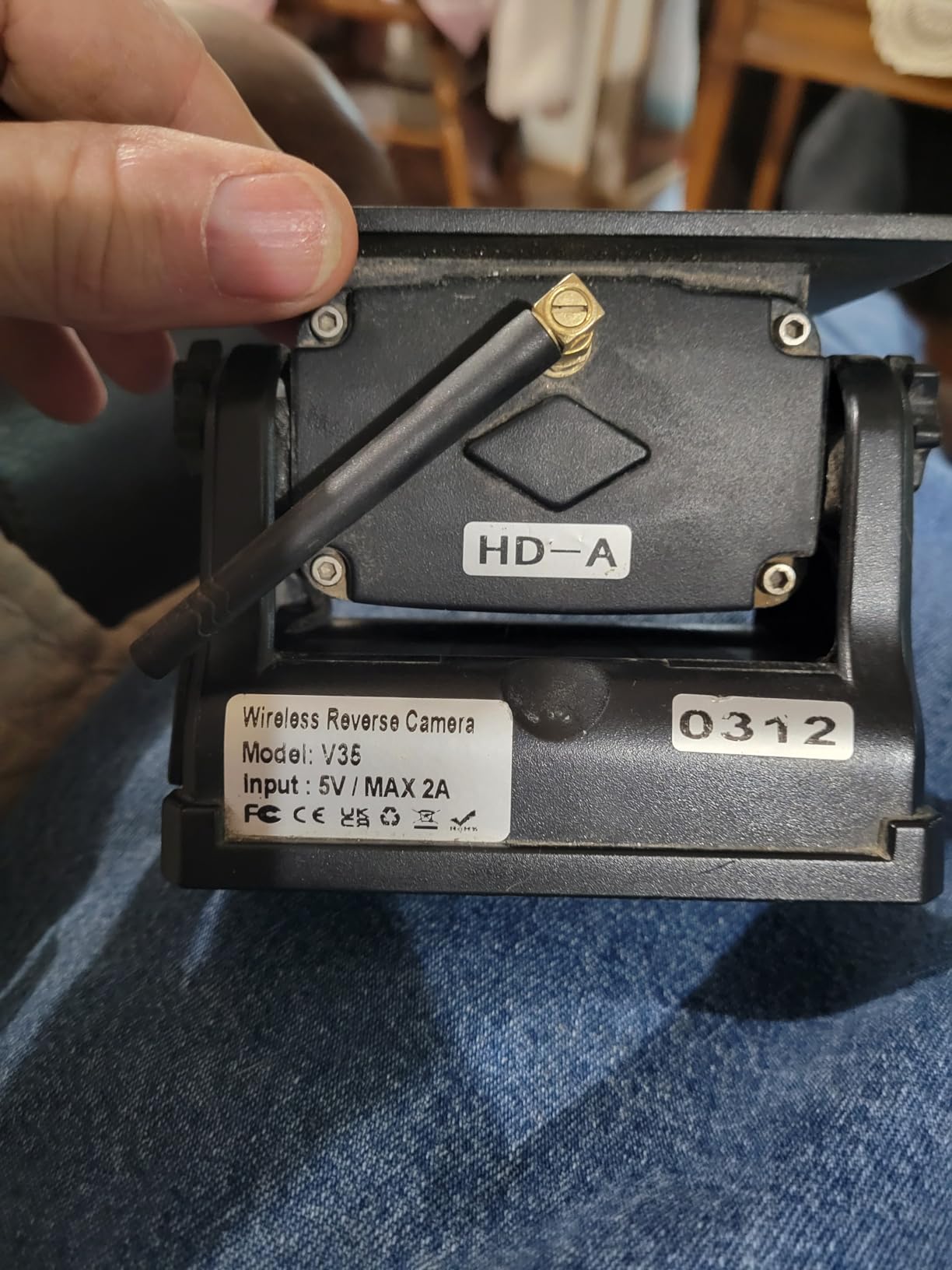
Showing two cameras on a 5-inch screen compresses each image noticeably, and buyers who move up in size usually land on a 7-inch panel. Brief connection drops do occur, but owners describe them as momentary and self-recovering within seconds — a blink rather than a blackout. At 2.5 kg the whole package is heavier than expected, worth knowing if you plan to carry it between vehicles rather than mount it once.
Durability is the quiet strength here. One owner reported the unit surviving being thrown off a truck onto pavement at speed, which is a crude but convincing argument for a magnetic no-drill design. The magnet means the camera absorbs the shock instead of the paint.
7. AUTO-VOX SL56AI — Detection Boxes and an Audible Proximity Alert
AUTO-VOX 7.2″ Solar Wireless Backup Camera, 1-Min Easy Magnetic Install
Smart detection of people and vehicles
Audible reversing proximity alert
7.2-inch display, 120-degree view
Dual high-gain antennas to 500 ft
Pros
- Smart detection boxes plus audible reversing alerts add real assistance
- Fast magnetic install
- often under two minutes
- 7.2-inch display large enough for two cameras at once
- Strong stable connection for typical truck and trailer setups
- DVR loop recording with microSD slot
Cons
- 120-degree field of view is tied for the narrowest here
- Signal drops reported with a 26 ft trailer even using the antenna extension
- 11 percent of ratings are 1-star including a unit that died after about a year and a half
- Guide lines adjust vertically only
- not horizontally
Most wireless backup cameras are a passive window. This one watches. Smart detection puts boxes around people and vehicles on screen, and an audible proximity alert fires as a target crosses the reversing guide lines — the feature that actually does something for you while you are looking over your shoulder. If you back into parking structures or shared driveways regularly, the alert is a meaningful safety upgrade over a plain video feed.
Installation matches the AUTO-VOX pattern: an instant magnetic mount with a rubber-coated base and two included metal plates for aluminum or fiberglass trailer skins. Owners report full install times under two minutes with automatic reconnection, and the connection holds for typical truck and trailer setups on dual high-gain antennas rated to 500 ft.
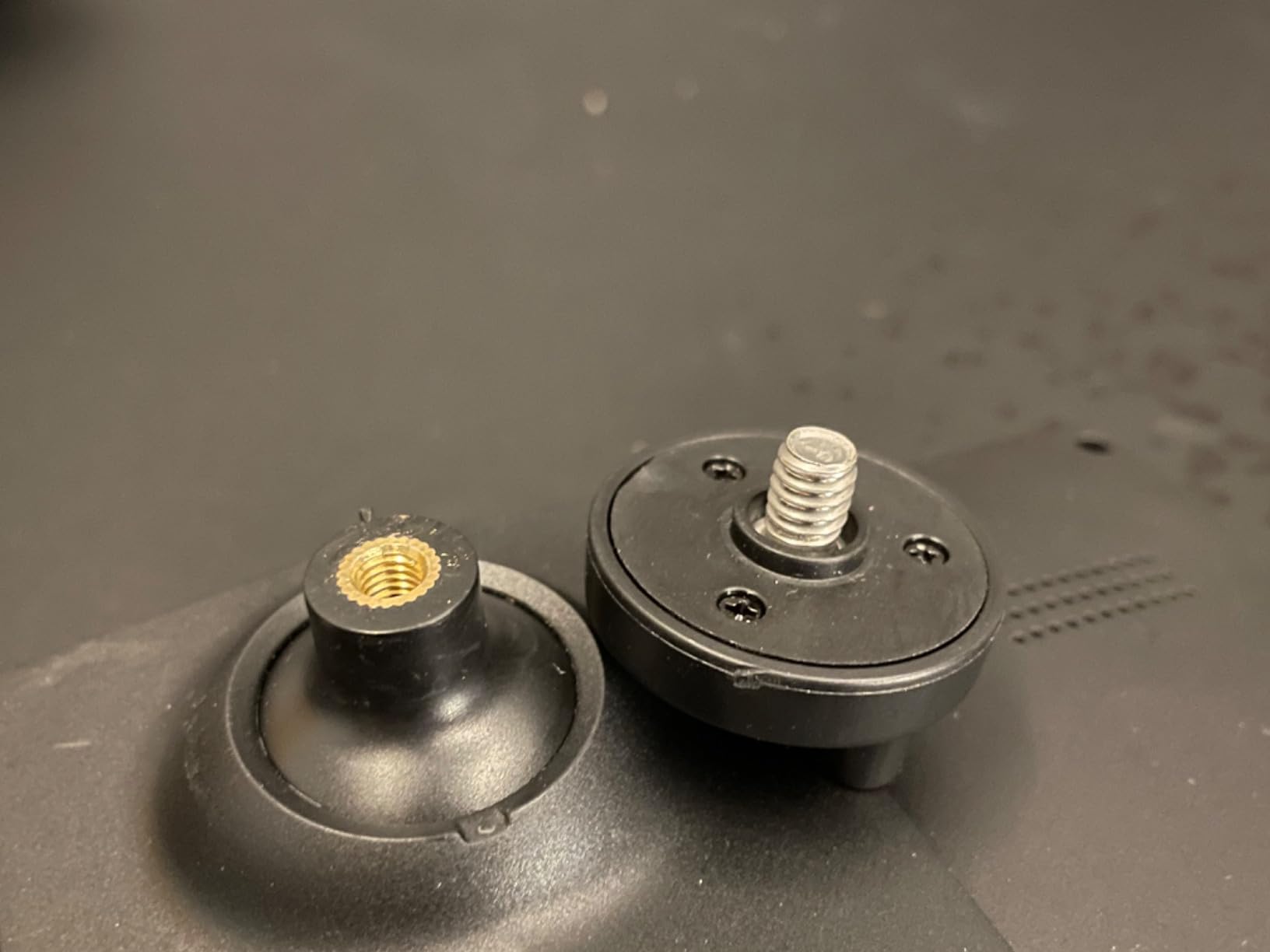
The narrow field of view is the honest flaw
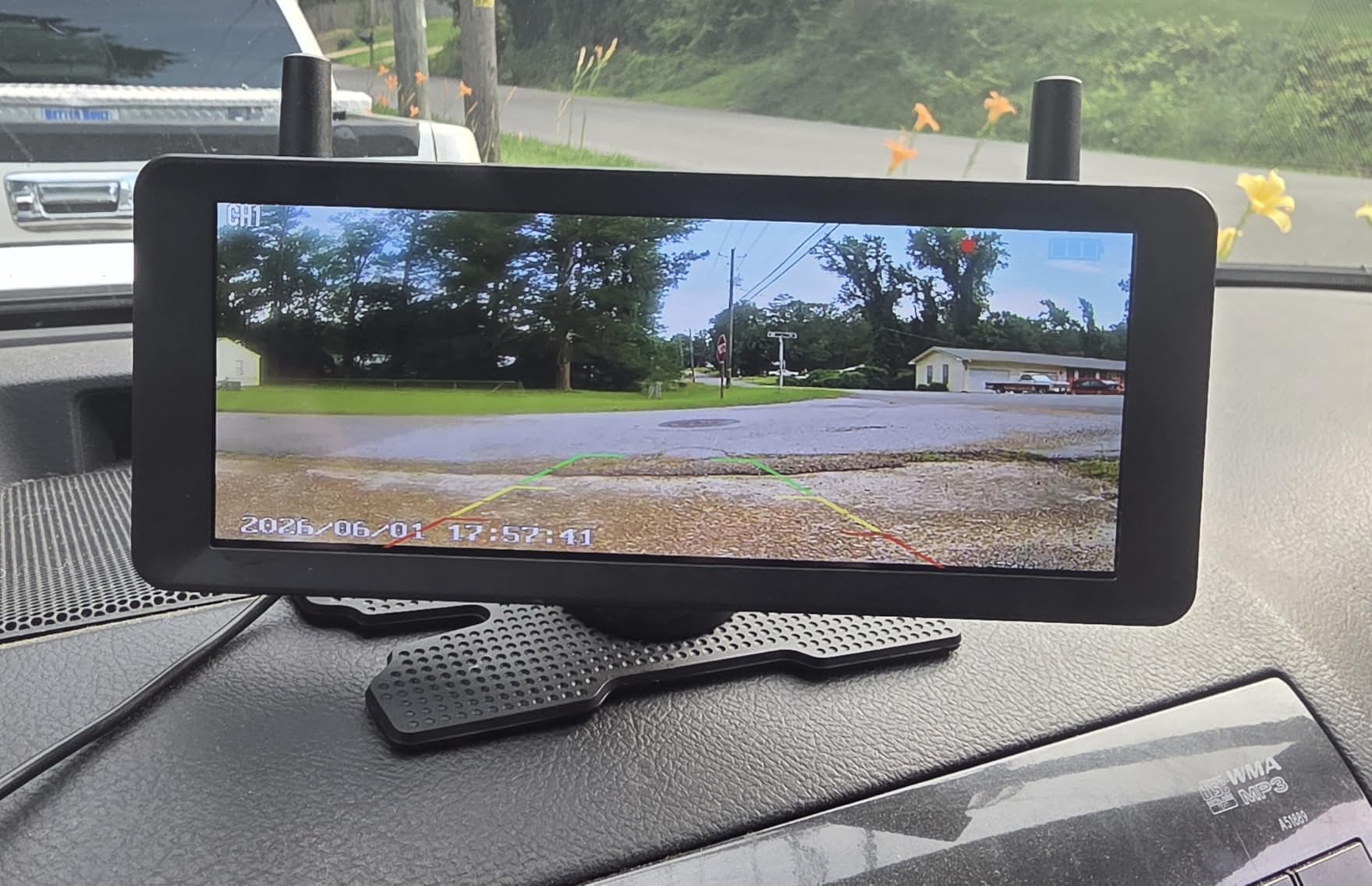
At 120 degrees, this is tied for the tightest angle in the roundup, and it is a real limitation at bumper-level clearances where the 170-degree systems on this page see much more of the curb. Reviewers also report signal drops with a 26 ft trailer even after adding the antenna extension, which is shorter than you would expect from a 500 ft headline figure. Test it on your actual trailer before you commit to long-distance towing work.
Guide lines adjust vertically but not horizontally, so the lane markers cannot be narrowed for a narrow trailer or widened for a wide one. That limits its usefulness for trailer alignment, though the detection boxes partly compensate by identifying what is actually in frame.
How it compares to its sibling
If you want detection alerts, this is the AUTO-VOX to buy. If you want long-range stability and recorded footage instead, the SOLAR5 in position two is the stronger all-round tow system. Power here is solar-assisted with a rechargeable battery and a sleep mode offering 120-second, 240-second, or never timeouts, and the DVR loop recording covers incident review.
8. Thybro 7-Inch Kit — A 50-Pound Magnetic Grip That Holds
HD 1080P Magnetic Wireless Backup Camera for RV – 1-Min Easy Install
50 lb magnetic pull base, vibration tested
1080P with 170-degree ultra-wide lens
56 ft link, IP69K
Pre-paired 7-inch monitor
Pros
- 50 lb magnetic pull base
- vibration tested
- One-minute install with a pre-paired monitor and no tools
- Clear 1080P image with 170-degree coverage
- Solar panel plus USB-C for cloudy-day charging
- Iron mounting plate included for non-magnetic trailer surfaces
- 24-month warranty with a 30-day money-back guarantee
Cons
- Review base of 109 ratings
- the smallest here
- so long-term durability is unproven
- 56 ft link is shorter than several competing systems and may limit very long trailers
- No written customer review detail on specific drawbacks
The Thybro is the one to buy if your driving involves wash roads, gravel, and rough two-lane highways where a camera bouncing off the vehicle is a real possibility. Its magnetic base is rated to 50 lb of pull, vibration tested, and covered in scratch-resistant rubber, and it is among the strongest magnetic holds in the customer feedback we read. Rated 56 ft for the link, it is aimed at 40 ft trailers, where the manufacturer claims a stable picture at highway speed.
Everything else is straightforward and good: a 7-inch monitor pre-paired in the box, 1080P capture on a 170-degree ultra-wide lens, infrared low-light assistance, IP69K waterproofing, and both solar and USB-C charging so a cloudy week does not strand you. An iron mounting plate is included for trailer skins that are not magnetic, plus a 3M sticker and two screws as fallbacks.
The 170-degree lens is worth a second look for anyone who needs to see the full width of a trailer bed rather than a slice of it. Image clarity at that width is good in daylight, and the infrared low-light assistance is what carries the picture once the sun goes down.
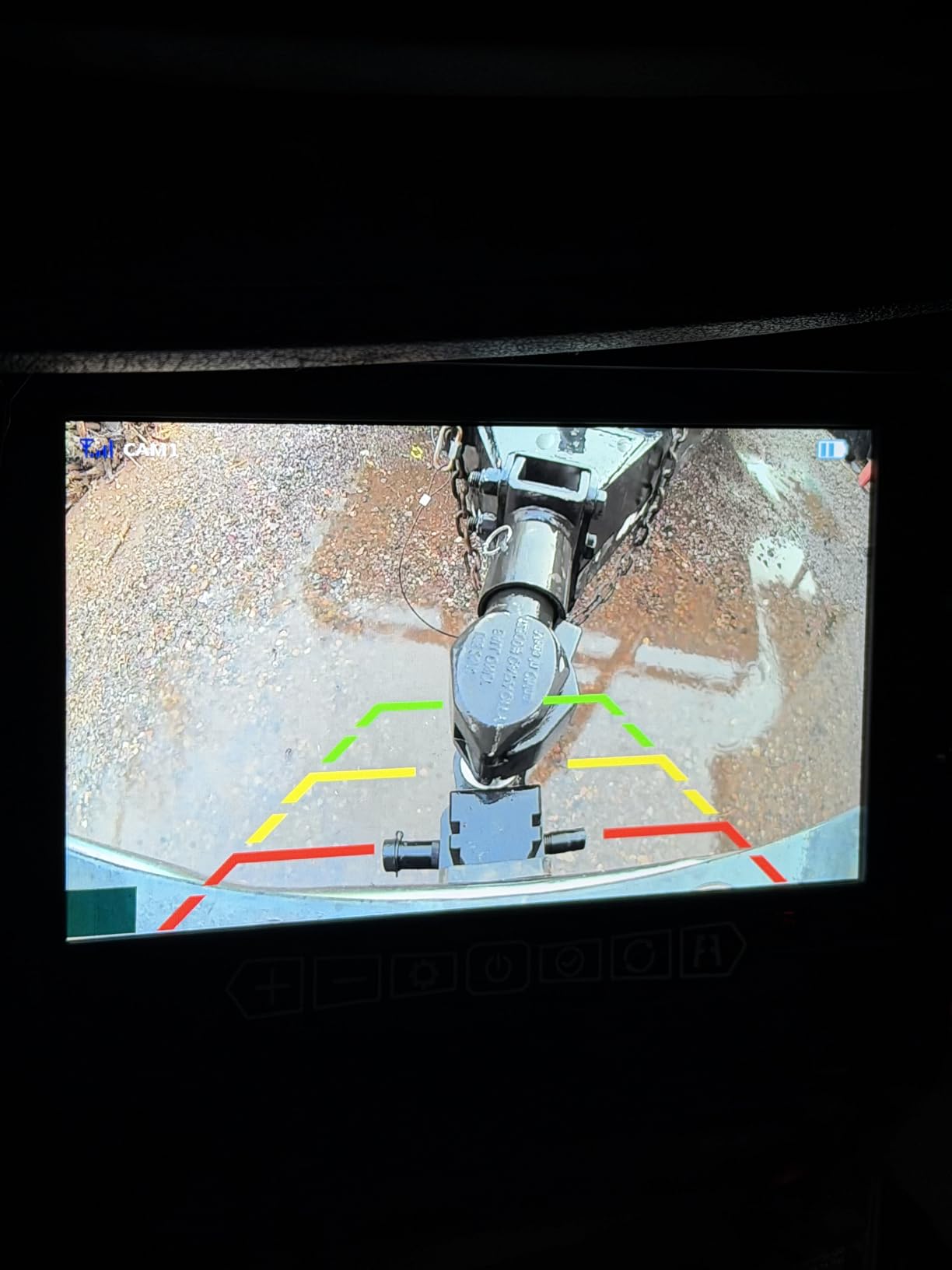
Why the short review count matters
It carries a 4.6 average with 84 percent of ratings at five stars, matching the top average in this roundup, and a two-year warranty with a 30-day money-back guarantee behind it. But it has a review base of 109 ratings, the smallest in the roundup, which means nothing in the data tells us how the unit behaves after three winters. Every other system here has hundreds or thousands of ratings behind it. That is not disqualifying, it is a risk you should price in.
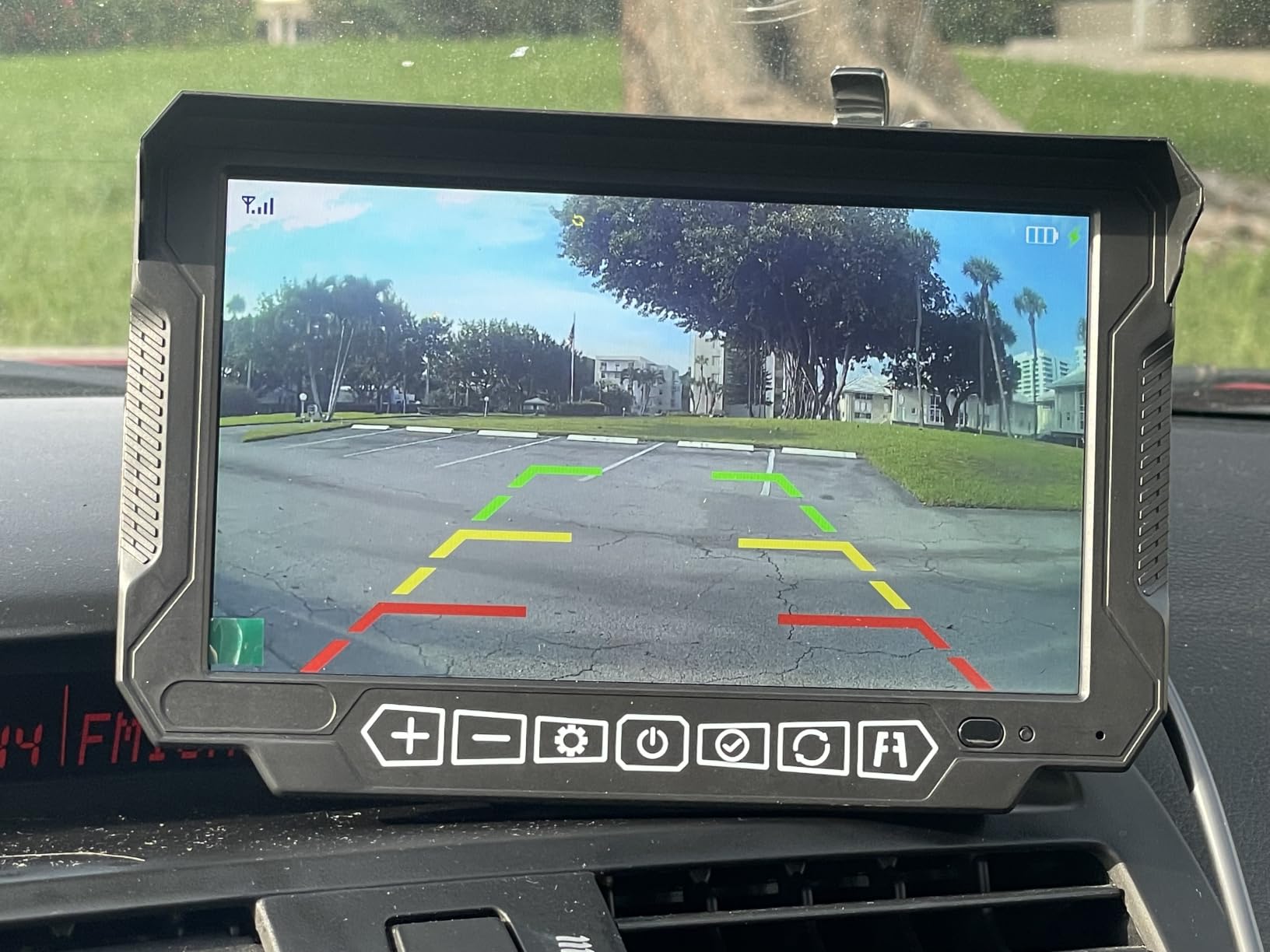
The box is also unusually well equipped for a magnetic kit, including both a USB-C cable and a USB-to-DC monitor cable, a cigarette lighter plug, and the iron bracket. Nothing missing, which is more than can be said for several systems in this group. At 3.3 pounds the package is portable enough to move between a farm truck and a boat rather than mount once.
Best fit
Buy it for a gravel-hauling truck, a farm trailer, or a boat on a rough launch ramp where grip matters more than maximum range. If you tow the longest trailer in your life and need reach, the AUTO-VOX SOLAR5 or the Haloview BT7 is the better answer.
9. VEKOOTO VK7 Pro — A Touchscreen That Scales to Four Cameras
VEKOOTO VK7 Pro Magnetic Solar Wireless Backup Camera, 7-Inch Touchscreen
7-inch 1024 x 600 IPS touchscreen
15,800mAh battery, up to 30 hours
Monocrystalline solar plus USB-C fast charging
Supports up to 4 cameras
Pros
- Quick pairing at power up with a strong magnet
- Bright 7-inch touchscreen with good resolution
- Long battery life with users completing a full trip on one overnight charge
- Clear IR night vision at roughly 20 yards
- Scales to multiple cameras and supports DVR loop recording to 128 GB
Cons
- Solar panel on some cameras does not charge effectively
- requiring frequent USB charging
- Roughly 15-second delay before the monitor wakes the camera
- Free metal plate for aluminum or fiberglass is inconsistent to obtain
- Backplate requests sometimes go unanswered
The VEKOOTO VK7 Pro is a capable touchscreen package here. The 7-inch 1024 x 600 IPS panel is bright enough for a daylit windshield and touch-responsive for menu changes, and the monitor supports up to four cameras simultaneously with DVR loop recording to a 128 GB microSD card. Built-in spherical antennas give a 2.4GHz link rated to 500 ft in open areas, which puts it in the long-range group despite the magnetic mount.
Battery endurance is the standout: a 15,800mAh cell delivering up to 30 hours of continuous use, topped up by a monocrystalline solar panel rated to 400mA or by USB-C fast charging. Owners report completing a full trip on one overnight charge, and an auto power sync feature turns the camera on and off with the monitor so there is nothing to remember.
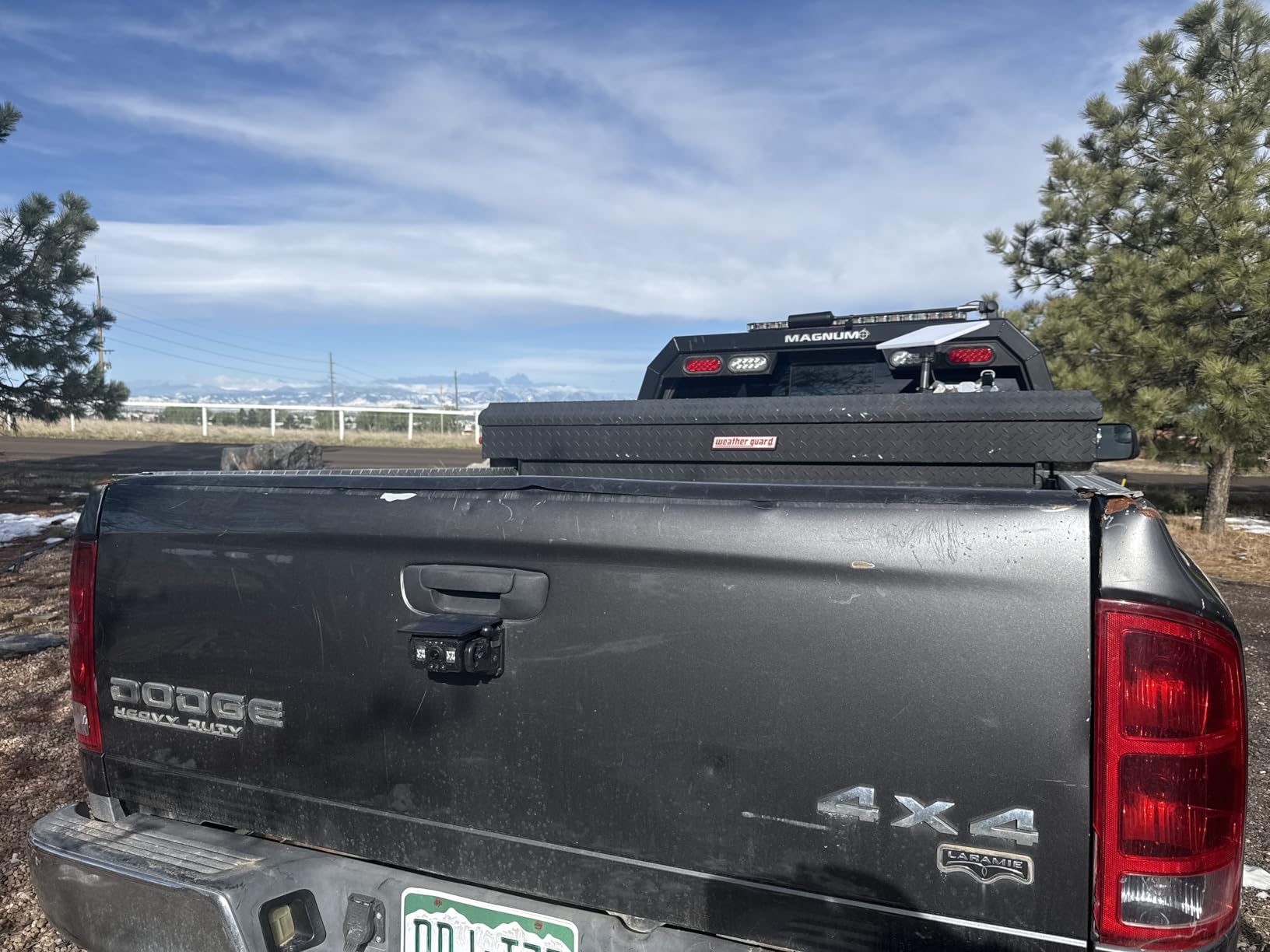
The 15-second wake delay needs context
Auto power sync is convenient most of the time and frustrating when you shift into reverse at a busy lot: the monitor takes roughly 15 seconds to bring the camera up. Nobody measures reverse-trigger latency for these products consistently, so treat any delay figure as approximate. For a hitching camera this is irrelevant. For a car in a tight garage it is the difference between comfort and a held breath.
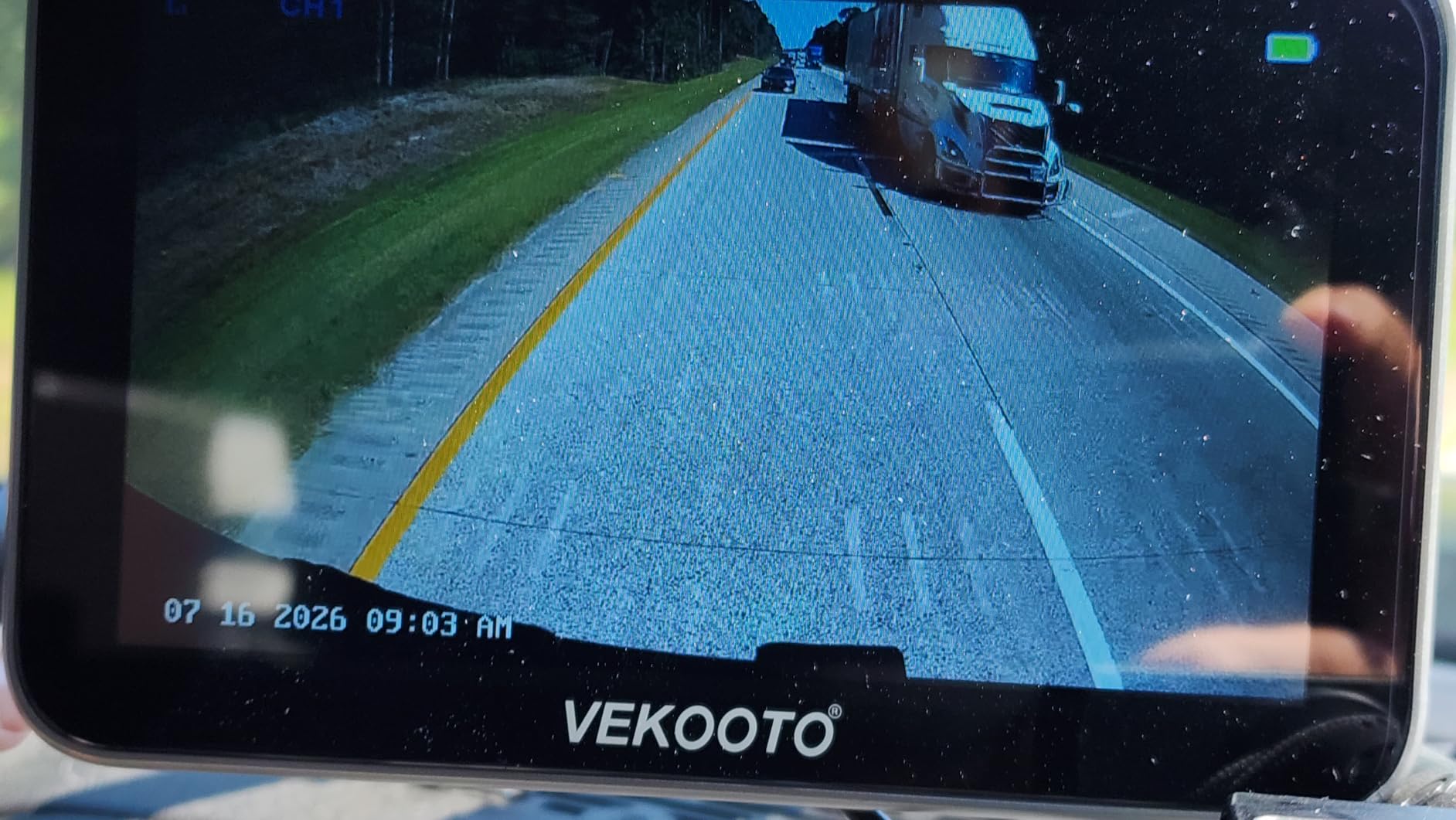
Solar charging is the most-raised negative. Some owners report the panel barely contributing, leaving owners charging by USB frequently, and the monocrystalline panel specification did not translate into consistent real-world gain. Night vision reaches about 30 ft on infrared, and the housing is IP69 rated.
Plan for the aluminum trailer problem early
VEKOOTO offers a free metal plate for aluminum and fiberglass vehicles so the magnet has something to grip, but owners report the request process is inconsistent and sometimes simply goes unanswered. If you tow an aluminum trailer, message the seller before you order and confirm the plate is coming, or plan to use the included suction bracket and check the camera constantly. Warranty is 19 months, which is short for the class.
10. AMTIFO A26-11 — The Compact 5-Inch Pick for Short Trailers
Magnetic Solar Wireless Backup Camera – No-Drill Installation, Scratch-Proof, No Delay 5-Inch HD1080P Screen, Long Battery Life, Night Vision, Anti-Interference 2.4GHz Signal for Trucks
5-inch touchscreen LCD at 1080P 30 FPS
170-degree real angle of view
36 ft anti-interference signal
Magnetic mount, no drilling
Pros
- Cleanest rating distribution in the roundup with only 4 percent one-star ratings
- Straightforward no-drill magnetic installation
- Clear 1080P image with usable night vision
- Removable camera makes it easy to move between vehicles
- Adjustable viewing angles help reduce blind spots in tight spots
- Rugged shockproof design for rough terrain
Cons
- Smaller 5-inch touchscreen than several competitors in this roundup
- Stated 36 ft signal range is modest for longer trailers
- Solar charging not confirmed in customer feedback
- Relatively small review base at 152 ratings
The AMTIFO is the tidy one. It is a 5-inch touchscreen running 1080P at 30 fps on a CMOS sensor with a 170-degree real angle of view, and it installs by magnet with no drilling and no permanent marks on the vehicle. Weatherproof housing handles night vision, dual channel input accepts a second camera, and you can adjust viewing angle, brightness, and contrast from the screen itself. At 0.88 kg it is one of the lighter packages here and easy to carry between vehicles.
What separates it is consistency. Only 4 percent of its ratings are one star, the cleanest distribution in this roundup, and 77 percent are five stars. That pattern usually signals a product that does the simple thing consistently rather than one that impresses on some days and fails on others.
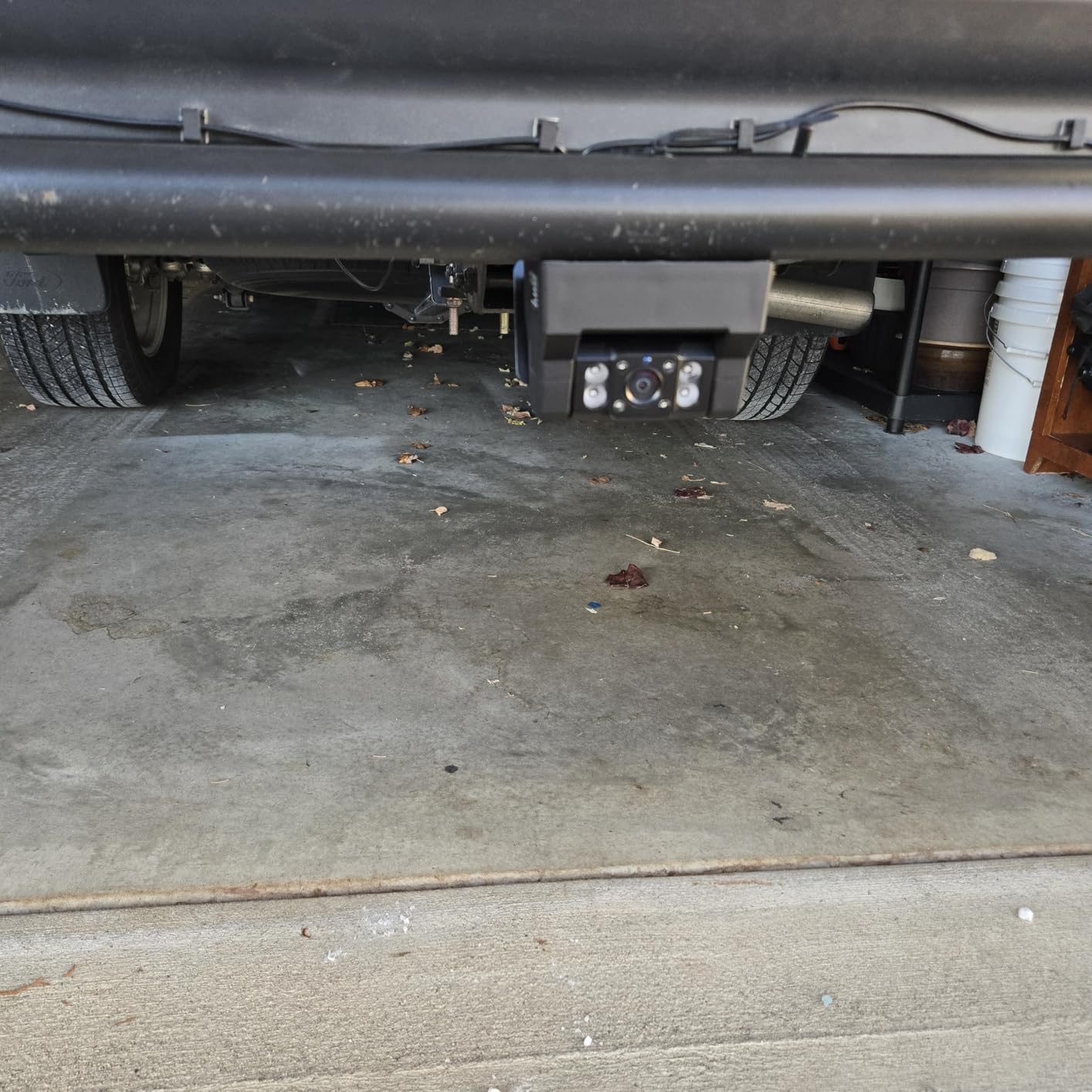
Where the 36 ft ceiling bites
The stated transmission range is 36 ft with anti-interference technology, which is honest and modest. That covers a bumper-pull utility trailer, a small boat trailer, and a car with a spotter behind it. It will not comfortably cover a 30 ft travel trailer, and it is at the short end for the magnetic kits here. The good news is that the extra antennas in the box help, and several systems in this category outperform their stated range anyway.
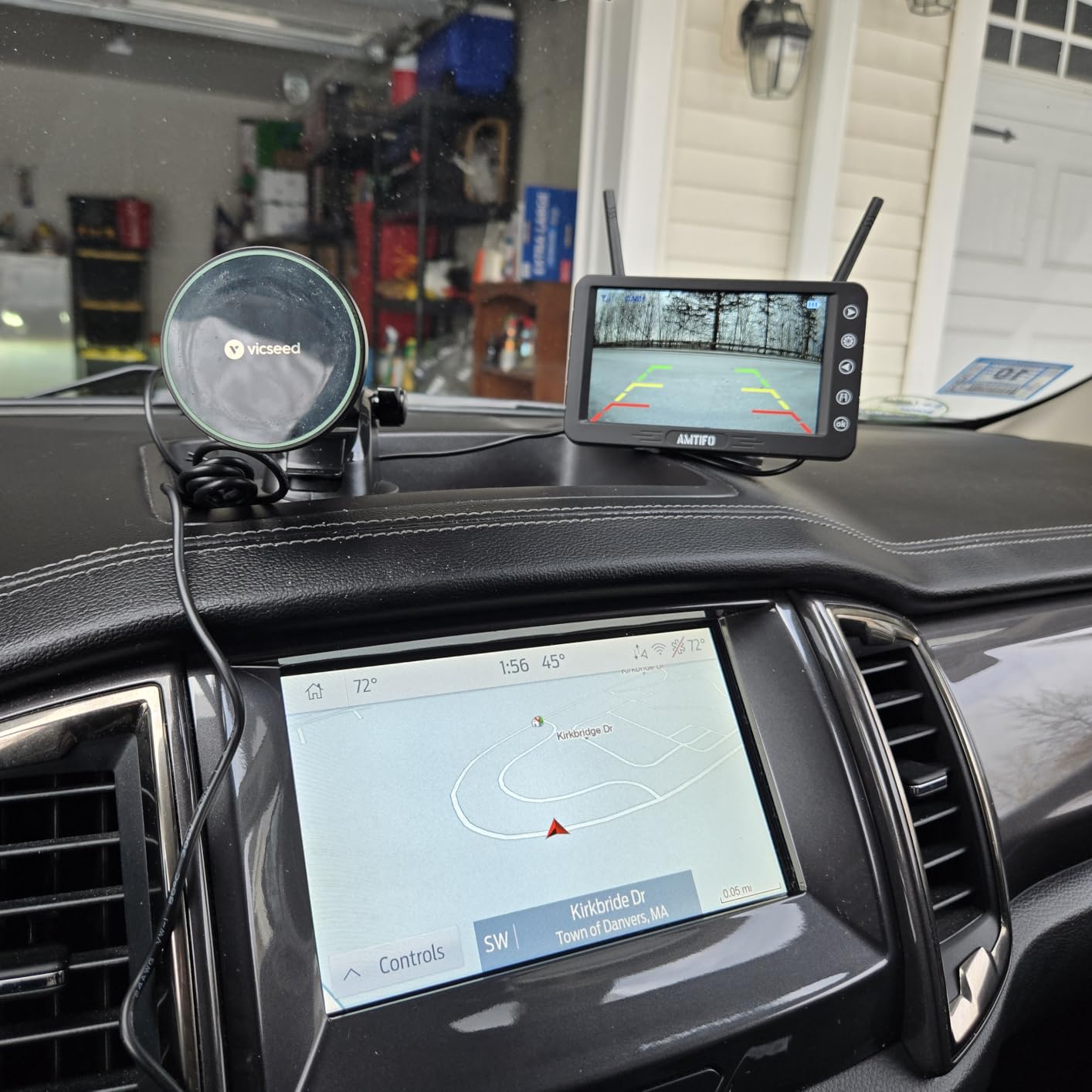
The 5-inch screen is also among the smallest here, which is fine for one camera and tight for two. Solar charging could not be independently confirmed in customer feedback, so treat the panel as a bonus and plug in regularly. At 152 ratings the review base is small, and a two-year warranty is a solid counterweight to that.
Best fit
This suits someone who wants one camera they can move between two vehicles, drives short distances, and does not need incident recording or a second camera channel. For anything longer than a small utility trailer, budget for the AUTO-VOX SOLAR5 instead. We also compared how the alternatives handle indoor and driveway coverage in our guide to outdoor cameras for wireless setups.
How to Choose a Wireless Backup Camera
The right question is not which camera has the best number on the box. It is which one survives your actual vehicle, your actual weather, and your actual towing distance. These seven criteria are the ones that changed our minds while reading owner feedback across all ten systems.
Battery, solar, or 12V hardwired — pick a power architecture first
There are three architectures, and only two of them are genuinely cable-free. A rechargeable battery plus phone app is the cleanest: no monitor in the box, no 12V anywhere, and your phone is the screen. The catch is latency and the fact that you have to unlock a phone while reversing. A battery plus included monitor system is the most common design on this page, and the monitor still needs 12V from a cigarette lighter socket or accessory circuit. A solar panel plus battery camera is the only architecture where nothing in the box draws from your vehicle at all.
On cold-weather behaviour, the honest rule is that lithium-ion capacity falls in freezing conditions, and a camera parked outside a trailer overnight will wake with less charge than it went to sleep with. If you tow in winter, match the stated operating floor to your coldest week, not your average. The DOUXURY kit, rated to minus 32F, is the most cold-capable unit we collected; the AUTO-VOX SOLAR5 is the mildest at minus 4F.
Screen or no screen? Phone-only versus a dedicated monitor
A phone-only system is the truest answer to the question of whether a completely wireless backup camera exists, and it is what DIY owners reach for when they want zero hardware. The trade is real: you are looking at a phone screen in your hand, which is smaller and lower than a dash-mounted display, and some setups add noticeable delay. A dedicated monitor is easier to glance at, works with any phone in the family, and does not drain the phone battery. Many owners use both ideas together — a magnetic camera and a monitor you only power on when towing.
Screen size matters more than most specs. A 5-inch panel is workable for one camera and cramped for split view, while 7 inches and up makes two-camera use genuinely readable. If you plan to run more than one camera, do not buy a 5-inch screen.
Mount types — magnetic, adhesive, suction cup, and screw-on
Mount durability is where most returns come from, and the four options fail in predictable ways. Adhesive pads soften and let go in summer heat, especially on a black or dark-painted tailgate. Suction cups are fine for a car and unsafe above highway speed on a truck. Screw-on brackets never fail but put a hole in your vehicle, which is exactly what most buyers are trying to avoid. Magnetic mounts with rubber bases are the compromise most people land on, and the pull rating is the number that separates a good one from a bad one — 50 lb is the strongest we saw.
On aluminum or fiberglass trailer skins there is no metal for the magnet to grip, so plan on the included metal plate. Several brands offer one free; confirm it is included in your order before you buy.
Which camera fits which vehicle
Match the hardware to the rig. A sedan or hatchback needs one camera and a modest monitor, and a magnetic unit is ideal. A pickup towing a utility trailer works with a 36 to 60 ft link and benefits enormously from a removable camera you can move to the trailer. A travel trailer needs reach measured from the back of the trailer to the tow vehicle cab, plus a magnet that survives wash roads. A fifth-wheel or gooseneck puts a ball between you and the view, so mount high or offset, and treat 100 ft-plus reach as a requirement. A boat or pontoon needs an IP69K housing above all else, because saltwater and wash-down are constant. A horse or livestock trailer benefits from two channels so you can watch both sides.
Signal range and 2.4GHz interference — what actually limits you
Every unit in this roundup transmits on 2.4GHz, and that band is crowded. It is the same band your phone hotspot, a dashcam, a trailer brake controller, and campground Wi-Fi all use. The result is the most common real-world complaint in this category: a picture that freezes or stutters at speed, usually on a metal RV surrounded by wireless devices.
Two things actually limit you. The first is line of sight — a metal cargo van or a coach with an aluminium skin between the camera and monitor will cut range sharply, and mounting a camera on the far rear of a fifth-wheel puts the whole trailer between the two ends. The second is transmitted video bitrate at 1080P over 2.4GHz, which is why the systems with dual antennas and multiple external aerials hold up better on long trailers. If your rig is a metal box, prioritise antenna count over the printed range figure, and consider a permanently mounted system with a wired monitor.
When not to go wireless
We will say the unpopular thing: if you reverse daily, a hardwired camera is the better purchase. A wired system draws from the vehicle, has no battery to degrade, no magnet to release, and no sleep mode to misfire, and its latency is effectively zero. Wireless exists to solve the routing problem — pulling trim panels through an RV wall is why most trailers never got a camera at all. If the routing is not actually a problem for you, the wireless premium buys you convenience and a swappable battery, not better video.
Wireless earns its place when you rent, when you move the camera between vehicles, when the wall run would mean tearing into cabinetry, or when the parking job is once a week rather than twice a day.
Total cost of ownership over three years
Add it up honestly. A solar battery system costs more up front than a wired kit and then asks nothing of you, aside from a possible battery replacement in year three or four. A battery-only system is cheapest to buy and most likely to need a new cell eventually. Kits with DVR and microSD recording avoid a subscription entirely, which is a genuine advantage over app-based cameras that treat local storage as a paid feature. Buying a card once beats a recurring plan.
One related note: if you want continuous off-vehicle coverage of a driveway or a boat yard, that is a different category of product with different storage expectations, covered in our wireless outdoor camera guide.
Frequently Asked Questions
What are some backup cameras that don’t require wiring?
The wire-free architectures are three: a rechargeable battery camera viewed on your phone with no screen in the box, a battery camera paired with an included monitor that plugs into 12V, and a solar panel camera that draws nothing from the vehicle. Magnetic mount kits such as the pemacom 1080P system and the AUTO-VOX SL56AI attach in about a minute with no drilling. Note that even monitor-equipped kits need 12V power for the screen, so only the phone-only and solar designs are completely cable-free.
Is there a completely wireless backup camera?
Yes, but only under two conditions: you view the picture on your phone, or you accept a solar panel on the camera. Any kit that includes a monitor still needs 12V power to run that screen, even when the camera itself is wire-free. A solar magnetic camera such as the AUTO-VOX SOLAR5 or the DOUXURY 5-inch kit is the closest thing to a fully self-contained system, drawing power from sunlight rather than the vehicle.
What is the best wireless reverse camera for a car with a display?
The pemacom 1080P magnetic kit is the strongest all-round choice for a car with a display, pairing a 7-inch anti-glare LCD with a one-minute magnetic install and a 15000mAh solar-assisted battery. Look for three things: a screen of 5 inches or larger, 12V power via cigarette lighter or hardwire, and 1080P minimum with infrared night vision. For a 7-inch screen with detection alerts, the AUTO-VOX SL56AI is the alternative.
What is the best wireless reverse camera?
The best wireless reverse camera is the pemacom 1080P magnetic kit for most vehicles: 1080P night vision, a 7-inch monitor, a 15000mAh solar battery, and an IP69 housing rated to minus 22F to 176F, with more customer ratings than any other option here. Tow long trailers often and choose the AUTO-VOX SOLAR5 for its 524 ft dual-antenna link. Run an RV with several cameras and the Haloview BT7 is the answer.
Why does my wireless backup camera keep losing signal?
Loss of signal is usually one of four things. Metal between the camera and monitor, such as an aluminium RV skin or a loaded cargo van, blocks the 2.4GHz link. Crowding on the 2.4GHz band from phone hotspots, dashcams, or campground Wi-Fi interferes with it. A dying battery starves the transmitter. And a camera mounted at the extreme rear of a long trailer puts a lot of metal in the path. Adding the external antennas included in most kits, and moving the camera higher and closer to the tow vehicle, fixes most cases.
Do wireless backup cameras work in cold weather?
They work, but capacity drops. Lithium-ion cells lose usable charge in freezing conditions, so a camera parked outside overnight may wake with less charge than it went to sleep with. Match the stated operating floor to your coldest week rather than your average: the DOUXURY 5-inch solar kit is rated to minus 32F, several kits handle minus 22F, and the AUTO-VOX SOLAR5 is rated to minus 4F. Top up by USB before a long winter trip rather than trusting the panel alone.
Final Verdict
If you want one answer for most people, take the pemacom 1080P magnetic kit — it is the fastest true no-drill install here, it holds a stable feed at ordinary trailer distances, and it carries the largest body of customer ratings in the roundup. If you tow long trailers daily, the AUTO-VOX SOLAR5 is worth the step up for its dual-antenna reach and DVR recording. If your rig needs multiple cameras and dim-light colour, the Haloview BT7 is the only one of these that does the job properly.
Match the rest to your vehicle: the LeeKooLuu for a first install, the DOUXURY for freezing winters, the DoHonest R50 for livestock, the AUTO-VOX SL56AI if you want audible proximity alerts, the Thybro if gravel roads are your reality, the VEKOOTO for a touchscreen and four-camera expansion, and the AMTIFO for a compact kit on a short trailer. Whichever you pick, check the operating temperature floor against your coldest week before you head out. These are the best backup cameras for wireless installation in 2026, and any of them takes ten minutes and one hole-free magnetic mount to get rolling.