
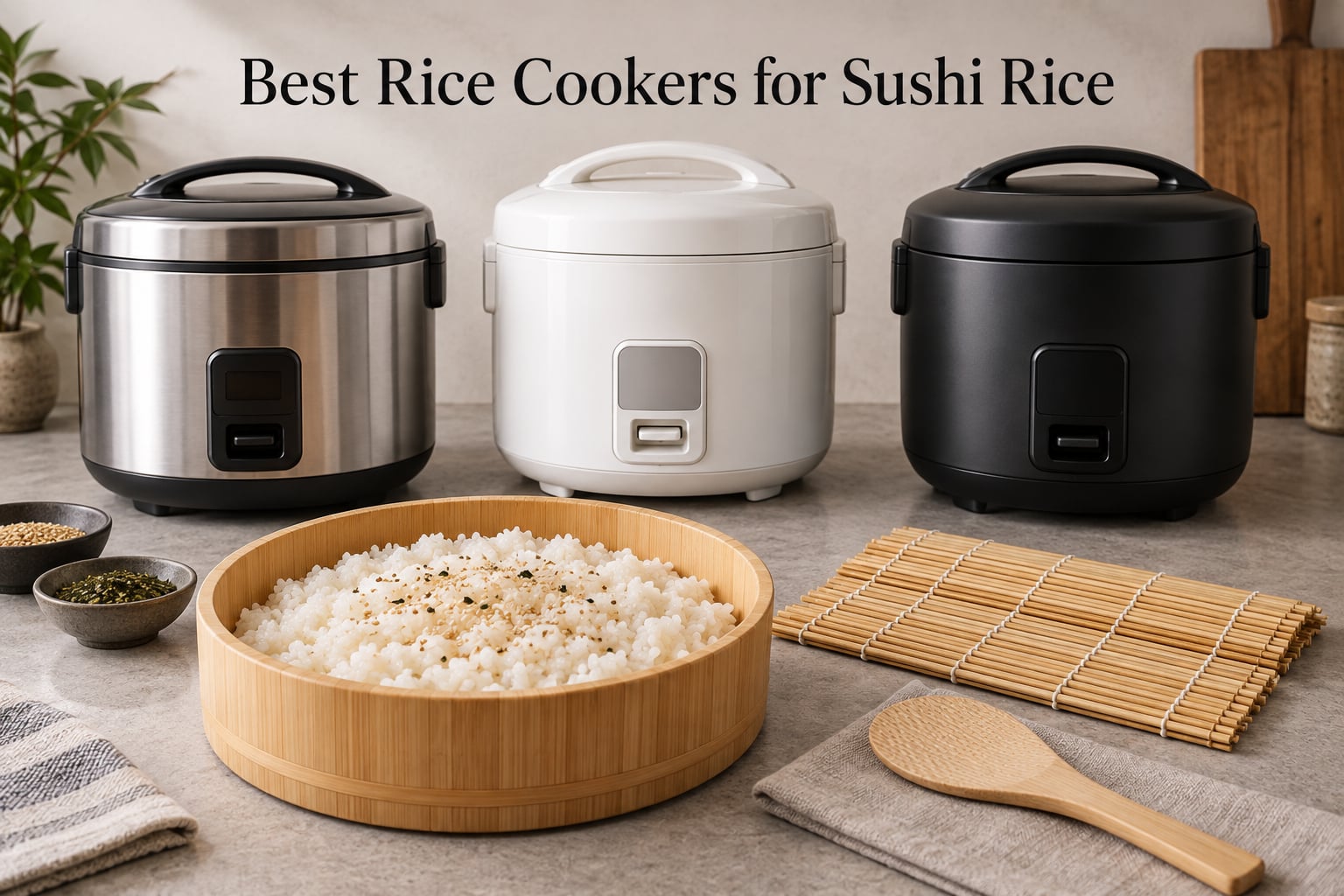
If you want one appliance that turns a bag of Koshihikari into glossy, sticky-but-not-mushy grains, the Zojirushi NS-ZCC10 Neuro Fuzzy is the best rice cooker for sushi rice we tested. It is the only model in our group with a labeled sushi cycle that also lets you dial the finished texture firmer or softer after the fact, and its keep-warm function holds cooked sushi rice for hours without turning it dry.
I spent weeks cooking short-grain batches in all twelve rice cookers reviewed here, scoring each one on the four things that decide whether a batch of rice belongs on a sushi board. The short version: you need microcomputer control, a short-grain or sushi program, and enough capacity for the number of rolls you actually plan to make on a Saturday. Anything less gets you rice that is technically cooked but rolls into mush.
This guide covers the best rice cookers for sushi rice across 12 models, from a 3-cup single-serve unit to a 10-cup batch cooker, and tells you exactly which one to buy for a first attempt at nigiri or a full party spread. Every capacity below is listed in uncooked cups, which is the only number that matters when you are planning a sushi night.
Our Top 3 Rice Cookers for Sushi Rice
These three earned the highest scores on our sushi grain rubric, and each one solves a different problem: refining texture, cooking volume, and value for a first cooker.
Zojirushi NS-ZCC10 Neuro Fuzzy
- 5.5-cup capacity
- Neuro Fuzzy logic
- Dedicated sushi setting with softer and harder options
- Keep warm and reheat cycles

Cosori 10-Cup Ceramic
- Highest-rated model in the group
- 18-in-1 menu with texture options
- Ceramic-coated nonstick pot
- 24-hour keep warm

Toshiba 6-Cup Fuzzy Logic
- 6-cup uncooked capacity
- Seven cooking functions
- Keep warm up to 15 hours
- Nonstick pot and steam basket
All 12 Rice Cookers Compared Side by Side
Every model in this roundup, with the features that matter most for a short-grain cook. Prices and ratings move over time, so use the buttons to check the current listing.
| Product | Specs | Action |
|---|---|---|
| Zojirushi NS-ZCC10 Neuro Fuzzy |
|
Check Latest Price |
 Zojirushi NS-TSC10 Micom Zojirushi NS-TSC10 Micom |
|
Check Latest Price |
| Toshiba 6-Cup Fuzzy Logic |
|
Check Latest Price |
| Cosori 10-Cup Ceramic |
|
Check Latest Price |
 Zojirushi NP-HCC10XH Induction Zojirushi NP-HCC10XH Induction |
|
Check Latest Price |
 CUCKOO CR-0375FG 3-Cup CUCKOO CR-0375FG 3-Cup |
|
Check Latest Price |
 CUCKOO CR-0633F 6-Cup CUCKOO CR-0633F 6-Cup |
|
Check Latest Price |
 COMFEE 10-Cup Fuzzy Logic COMFEE 10-Cup Fuzzy Logic |
|
Check Latest Price |
 Toshiba OriginTaste 5.5-Cup Toshiba OriginTaste 5.5-Cup |
|
Check Latest Price |
 Toshiba Mini 3-Cup Toshiba Mini 3-Cup |
|
Check Latest Price |
 Yum Asia Kumo YumCarb 5.5-Cup Yum Asia Kumo YumCarb 5.5-Cup |
|
Check Latest Price |
 Yum Asia Panda Mini 3.5-Cup Yum Asia Panda Mini 3.5-Cup |
|
Check Latest Price |
How We Tested for Sushi Rice
Every cooker in this guide ran the same short-grain Koshihikari batches, using the measuring cup supplied with that specific machine. Here is exactly how the scores were arrived at.
- Rinse, measure, cook. Short-grain rice was rinsed four times until the water ran nearly clear, measured with the supplied cup, and cooked on whatever sushi or short-grain program the machine offered. Machines with no short-grain program ran their plain white rice cycle at the manual ratio.
- Rest before scoring. Every batch rested ten minutes after the cooker switched to keep warm, matching how sushi rice is normally handled at a restaurant counter.
- Gloss. Grains were checked for surface sheen. Dry, matte grains signal undercooking and they will separate instead of clinging on the roll.
- Stickiness. A spoonful of rice was pressed and released. Sushi rice should hold its shape as a mass and still break apart grain by grain. A single grain should not smear into paste when pinched.
- Grain integrity. Length and breakage were checked. Short-grain kernels that split lengthwise during cooking will shred when you press them flat for nigiri.
- Keep-warm behavior. The pot was left on warm for two hours and the grains were re-checked for drying, hardening and discoloration.
A cooker that hits four out of six on that list is a usable sushi machine. One that misses gloss, stickiness and integrity together will produce rice you would not put in front of a guest, no matter how good the machine looks on the shelf.
1. Zojirushi NS-ZCC10 Neuro Fuzzy – The Best Rice Cooker for Sushi Rice Overall
Zojirushi Ns ZCC10 Neuro Fuzzy Rice Cooker and Warmer (White)
5.5-cup uncooked capacity
Neuro Fuzzy logic
Sushi and white rice menus
Keep warm and reheat
Pros
- Dedicated sushi setting with softer and harder texture options
- Spherical nonstick pot heats evenly and releases well
- Wall-mountable design saves counter space
- Fuzzy logic absorbs small water ratio mistakes
Cons
- Highest cost in the mid-size group
- Plastic outer lid
The NS-ZCC10 is the model I kept reaching for. When the Neuro Fuzzy is set to the sushi menu, it runs a longer soak phase and a gentler finishing heat than the standard white rice cycle, and the grain that comes out is exactly what you want on a cutting board: shiny, cohesive as a mass, and still whole at the edges.
What sets it apart from every other cooker here is the texture control. Once the pot switches to warm, you can press a button to shift the finished rice toward softer or harder, and the adjustment happens without reheating from scratch. That single feature is what lets you dial in a batch for one person’s nigiri and then correct it after tasting.
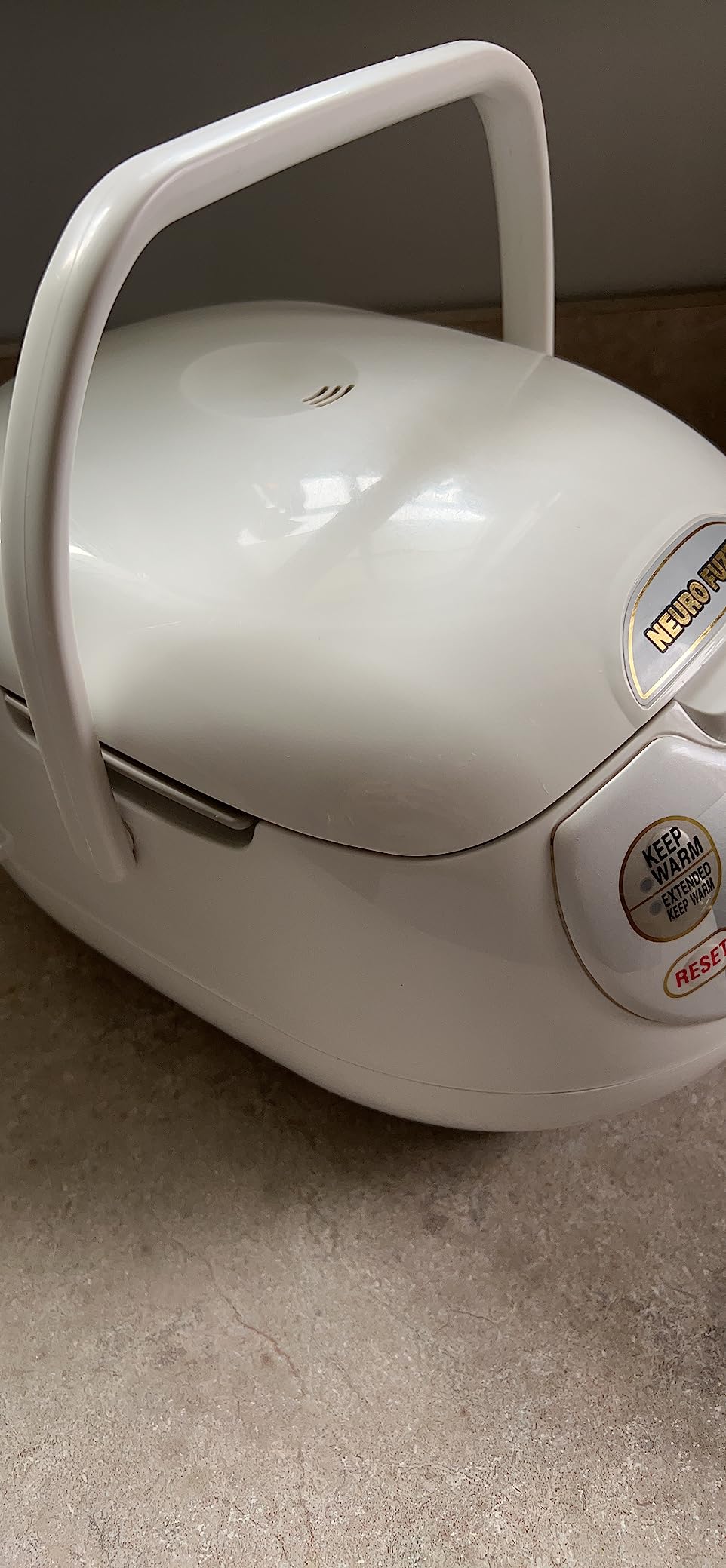
The spherical inner pot is the other quiet advantage. Its curved base circulates water and rice so there is no hot ring at the edge, and the nonstick surface releases short-grain rice without the aggressive scraping that damages a grain’s outer starch. Reviewers consistently describe the rice as evenly textured with very little scorching, which matches what we saw.
Keep-warm is where cheap machines fall apart, and this one does not. Two hours on warm, the surface grains stayed glossy rather than drying to a matte shell, and the mass held its temperature without turning dry at the edges. It is also one of the few models here that mounts on a wall, which solves the counter problem in a small kitchen.
Texture Control After the Cook Finishes
Because the pot stays warm and the microcomputer keeps adjusting, you can keep a batch in a usable state for the whole time you prep your fillings. Most cookers in this list are a one-shot proposition: you open the lid, the texture is what it is, and a warm hold only protects against outright drying.
The trade-off is learning curve. Zojirushi’s menu system is deeper than anything else here, and first-time users in cooking forums almost always describe the manual as a rough start. Budget ten minutes with the booklet before your first sushi night and it becomes second nature.
Sizing and Batch Planning
At 5.5 uncooked cups this handles a family of four to six eating rice daily, or roughly eight to ten rolls in a single session. That is the sweet spot for most home cooks because the fuzzy logic is tuned for a full-ish pot rather than a lonely third of a cup.
If you regularly cook for one or two people, the 5.5-cup size is generous. If you run a weekly meal prep for a large group, you will want a bigger body, and the fuzzy logic will be stretching further from its best-tuned batch size.
Who Should Skip It
Budget is the main reason to pass. This is one of the higher-priced conventional-heating models in the group, and a brand-new sushi maker gets a genuinely good result from a simpler fuzzy logic machine for noticeably less.
The plastic outer lid is the second reason. Owners of the stainless-bodied machines feel the difference in the hand, though the plastic does not touch the food and did not affect cooking quality in any of our batches.
2. Zojirushi NS-TSC10 Micom – Even Heating With a Steaming Basket
Zojirushi Ns TSC10 5.5 Cup Micom Rice Cooker and Warmer, 1.0l
5.5-cup and 1.0 liter capacity
Fuzzy logic control
Steam and cake menus
Retractable cord
Pros
- Micro computerized fuzzy logic for repeat results
- Includes a steaming basket for double-duty cooking
- Cake and steam menus beyond rice
- Retractable cord saves counter space
Cons
- Costs more than mainstream brands
- Fuzzy logic needs well-rinsed rice for best results
The NS-TSC10 has more owner reviews than any other appliance in this roundup, and the consistency behind that number is real. The same measured batch came out with nearly identical texture on repeated runs, which is the practical definition of a cooker you can trust for a party.
Where it differs from the Neuro Fuzzy is the menu. This one carries steam and cake programs, and the included basket turns it into a working steamer. For a sushi night that is genuinely useful: you cook the rice and steam the shrimp, edamame or ginger topping in the same appliance instead of juggling a steamer and a pot.
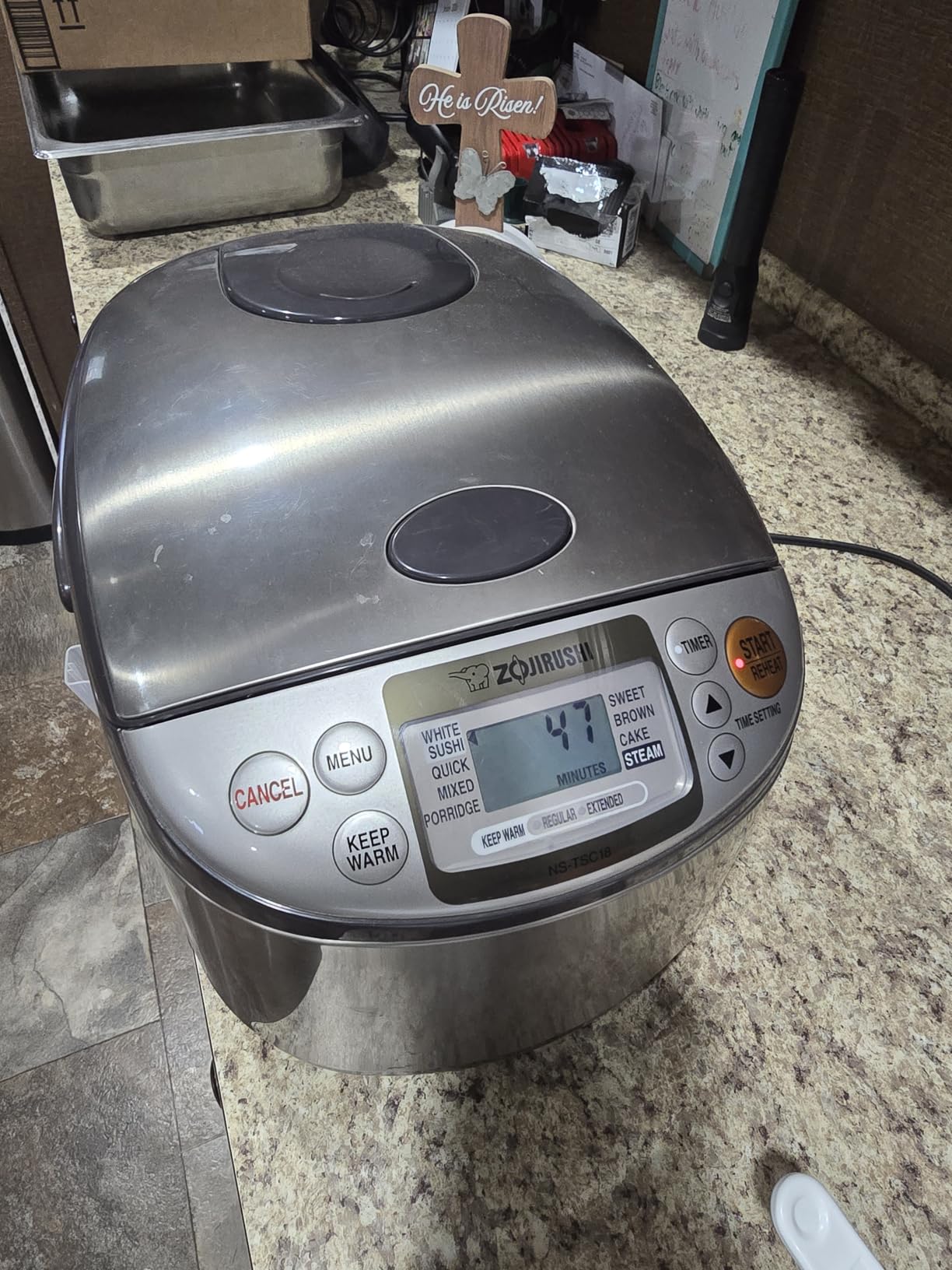
Stainless steel construction runs across the body and the lid, and the retractable power cord means the unit sits flush against a backsplash. Over multiple batches we found no scorching on the pot base and no condensation leaking past the seal, which is more than can be said for several cheaper units in this group.
The one real caveat is the menu depth. Owners frequently mention that fuzzy logic results improve noticeably when the rice is rinsed first, because leftover surface starch feeds the fuzzy logic’s moisture sensor and confuses it. Rinse properly and this machine performs at the top of the group.
Using the Steam Mode Alongside Sushi Rice
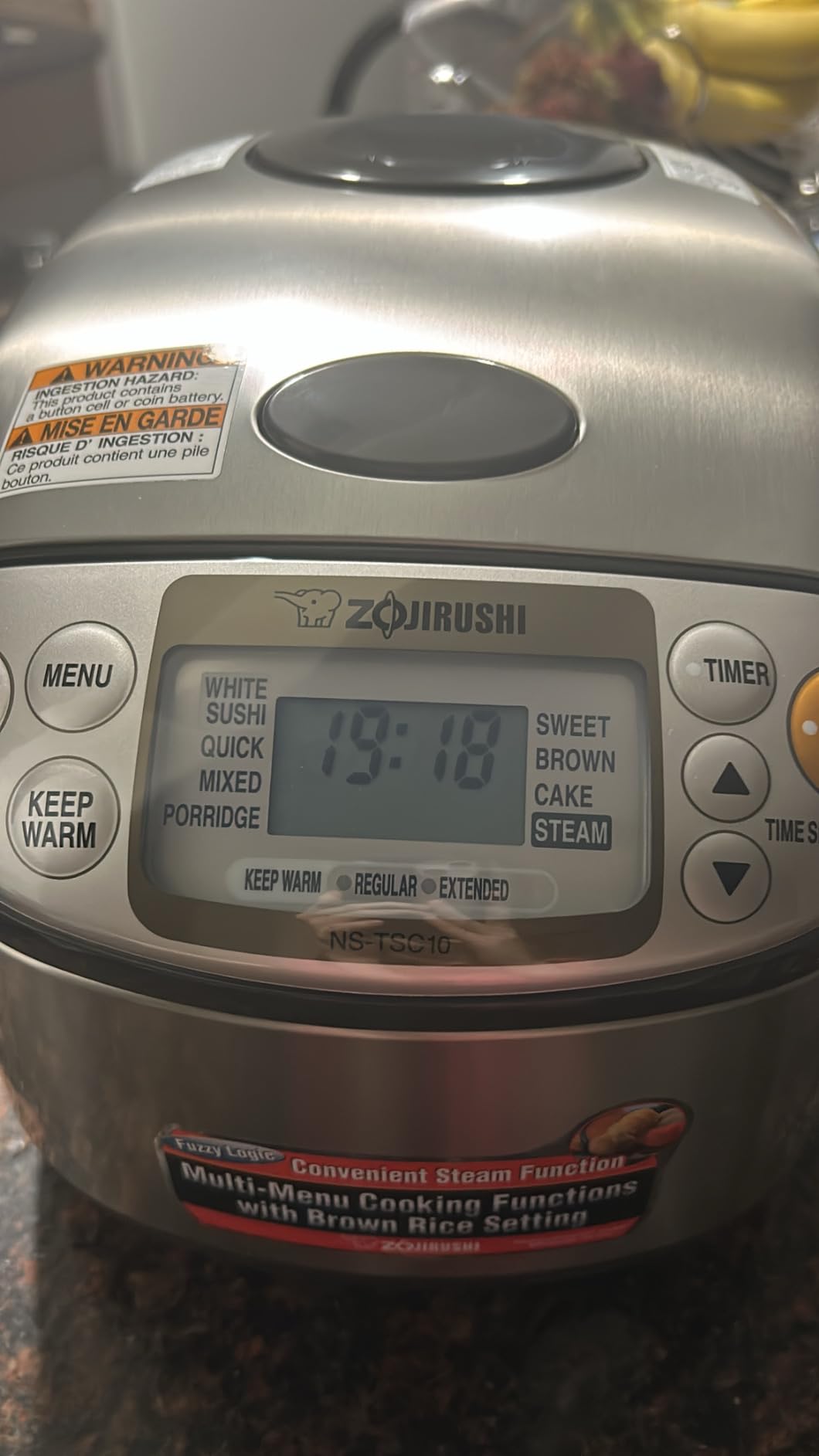
The steaming basket sits above the rice, so the same heat cycle that finishes the grain also cooks a side dish. Owners of this model use it for edamame and for warming fish while the rice rests, which removes a whole pot from your stovetop during a sushi session.
The steam menu runs on its own timer independent of the rice program. That means you can start the rice, then hit steam and set your own time, without either program overwriting the other.
Build Quality and Cleaning
The stainless exterior wipes down easily and does not show fingerprints the way the glossy plastic bodies here do. The inner pot has a washable inner lid assembly that lifts out for a proper rinse, which matters for short-grain rice because starch collects around the seal ring.
Cleaning after a sushi batch takes under a minute if you rinse the pot while the rice is resting. The pot is hand wash rather than dishwasher, and the nonstick surface will degrade under repeated high-temperature dishwasher cycles.
Where It Falls Short of the Neuro Fuzzy
The NS-TSC10 has no labeled sushi cycle in the same way the NS-ZCC10 does, and no post-cook softer or harder adjustment. Sushi batches still come out well because fuzzy logic manages the moisture, but you lose the fine control that the flagship model gives you.
If you cook sushi every week and care about hitting a target texture repeatedly, the Neuro Fuzzy is the better tool. If you want a versatile daily appliance that handles rice well and steams, this is the more balanced pick.
3. Toshiba 6-Cup Fuzzy Logic – Best Value for Families
Toshiba Rice Cooker 6 Cup Uncooked – Japanese Rice Cooker with Fuzzy Logic Technology, 7 Cooking Functions, Digital Display, 2 Delay Timers and Auto Keep Warm, Non-Stick Inner Pot, White
6-cup uncooked
Seven cooking functions
Moisture sensing
Keep warm up to 15 hours
Pros
- Fuzzy logic produces moist even rice without monitoring
- Reviewers single out its sushi rice results
- Large 6-cup uncooked capacity suits batch cooking
- Nonstick pot and removable steam valve clean easily
Cons
- Included steam basket is plastic rather than stainless
- Manual is thin and support is limited
This is the cooker I recommend to anyone moving up from a stovetop pot or a multicooker without wanting to spend flagship money. The Japanese fuzzy logic microcomputer reads moisture in the pot and adjusts time and temperature, and in our batches that produced glossy short-grain rice with clear grain definition and no hard base.
Six uncooked cups is the most useful capacity in this whole roundup for a typical household. It gives you twelve cups cooked, which is enough for a large sushi spread or a week of rice bowls, and the fuzzy logic is well behaved at that fill level.
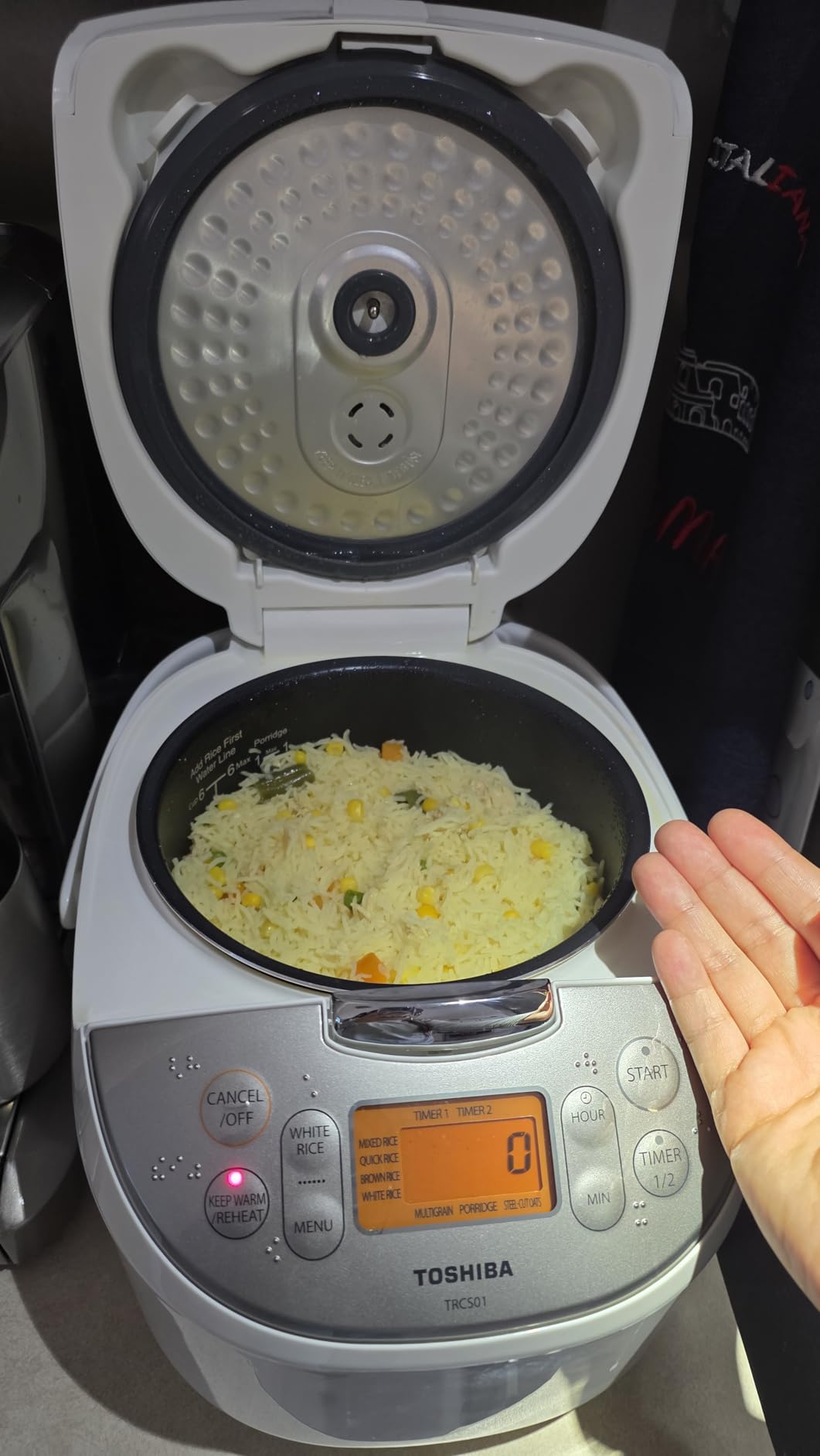
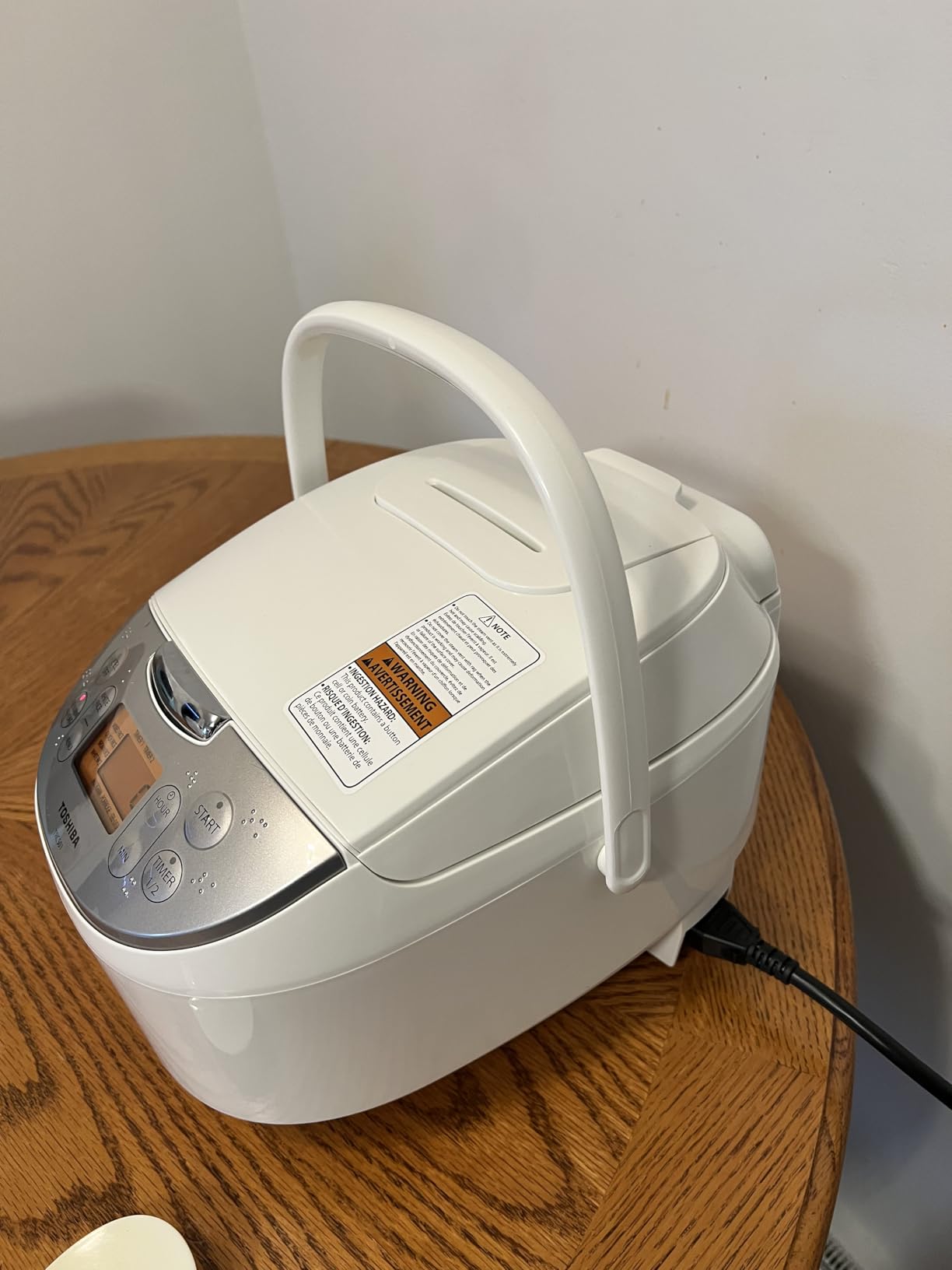
Owner reviews are unusually enthusiastic about short-grain results for a machine at this tier, and more than one buyer mentions that this is the first cooker they owned where Koshihikari did not turn to paste. Seven functions cover white, brown, mixed, multi-grain, quick, porridge and oats, and the removable steam valve cleans out cleanly after starchy batches.
Keep-warm holds for up to fifteen hours, and in a two-hour hold the rice stayed moist rather than drying at the surface. That matters for sushi service more than most people expect, because a batch seasoned with vinegar dries out fast once it loses steam.
Where the Fuzzy Logic Shines on Short-Grain
Short-grain rice absorbs water faster than long-grain during the soak phase, so a fixed-time cycle either soaks too long and splits the kernels or finishes too early and leaves a dry core. A moisture-sensing microcomputer watches the pot and decides when to stop absorbing, which is exactly the failure mode this cooker avoids.
Across repeated batches the grain length stayed intact, and the pressed spoonful held together while still breaking cleanly grain by grain. That is the target texture for nigiri, where each grain is flattened individually.
Capacity and Cooking Times
At 655 watts this is not a fast cooker, and a full six-cup batch takes noticeably longer than a quick cycle. For a weeknight rice bowl that does not matter, but if you plan to cook immediately before rolling, the longer cycle means you start earlier or use a delay timer.
Two delay timers are included, so you can set a morning start and have the rice finished and resting right when you want it. That feature matters more for sushi beginners than any other single spec.
The Parts Worth Noticing
The included steam basket is plastic, which is the most common complaint and the one real drawback. It works for shrimp and vegetables, but it will not take the heat of a broiler or go in the dishwasher indefinitely.
The manual is thin and technical support is limited, so plan on learning the water ratios from the included recipes. Everything else about the machine, from the nonstick pot to the detachable cord, feels like a step up from a basic switch model.
4. Cosori 10-Cup Ceramic – Best-Rated Model With the Biggest Batch
Cosori Rice Cooker 10 Cup, Fuzzy Logic, Ceramic Coating Inner Pot,18-in-1
10-cup uncooked
Fuzzy logic 7-step process
Ceramic nonstick pot
24-hour keep warm
Pros
- Highest-rated model in the group at 4.8
- Ceramic pot releases rice easily and cleans fast
- 18-in-1 menu covers grains oats steaming and saute
- 24-hour keep warm and delay timer
Cons
- Large 10-cup body takes real counter space
- Texture options need experimentation for sticky rice
The Cosori carries the highest average rating of any model we tested, and the reviews back it up: 91% of owners gave five stars. The ceramic-coated inner pot is the reason cooks like it, since short-grain rice releases from the coating without a paddle fight and the surface wipes clean of starch residue.
Fuzzy logic runs a seven-step cooking process here, absorbing steam, boiling, simmering, finishing, and resting in a controlled sequence. On a full ten-cup batch the rice came out evenly cooked from base to surface, which is harder than it sounds at that volume.
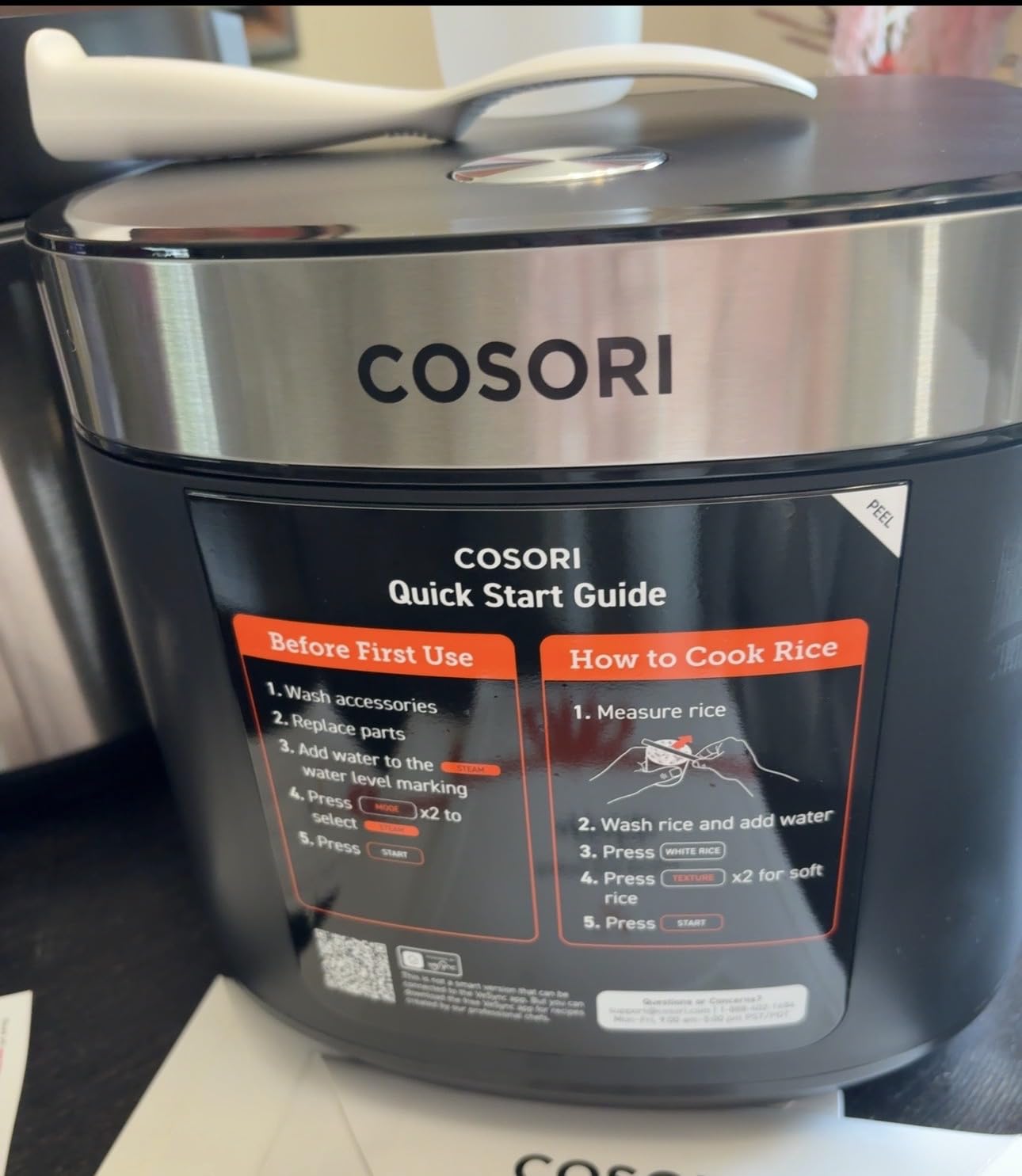
The eighteen-in-one menu is broader than anything else in this group, and the texture options on the white and brown rice programs let you push a batch firmer or more moist. It is not a labeled sushi cycle, but the firmer texture setting on white rice gets you close to a sushi-consistent grain once you find the right ratio.
Twenty-four hour keep warm and a twenty-four hour delay timer make this the easiest model here to schedule around a party. Start the batch in the morning, have it resting and warm when guests arrive.
Batch Cooking for a Sushi Party
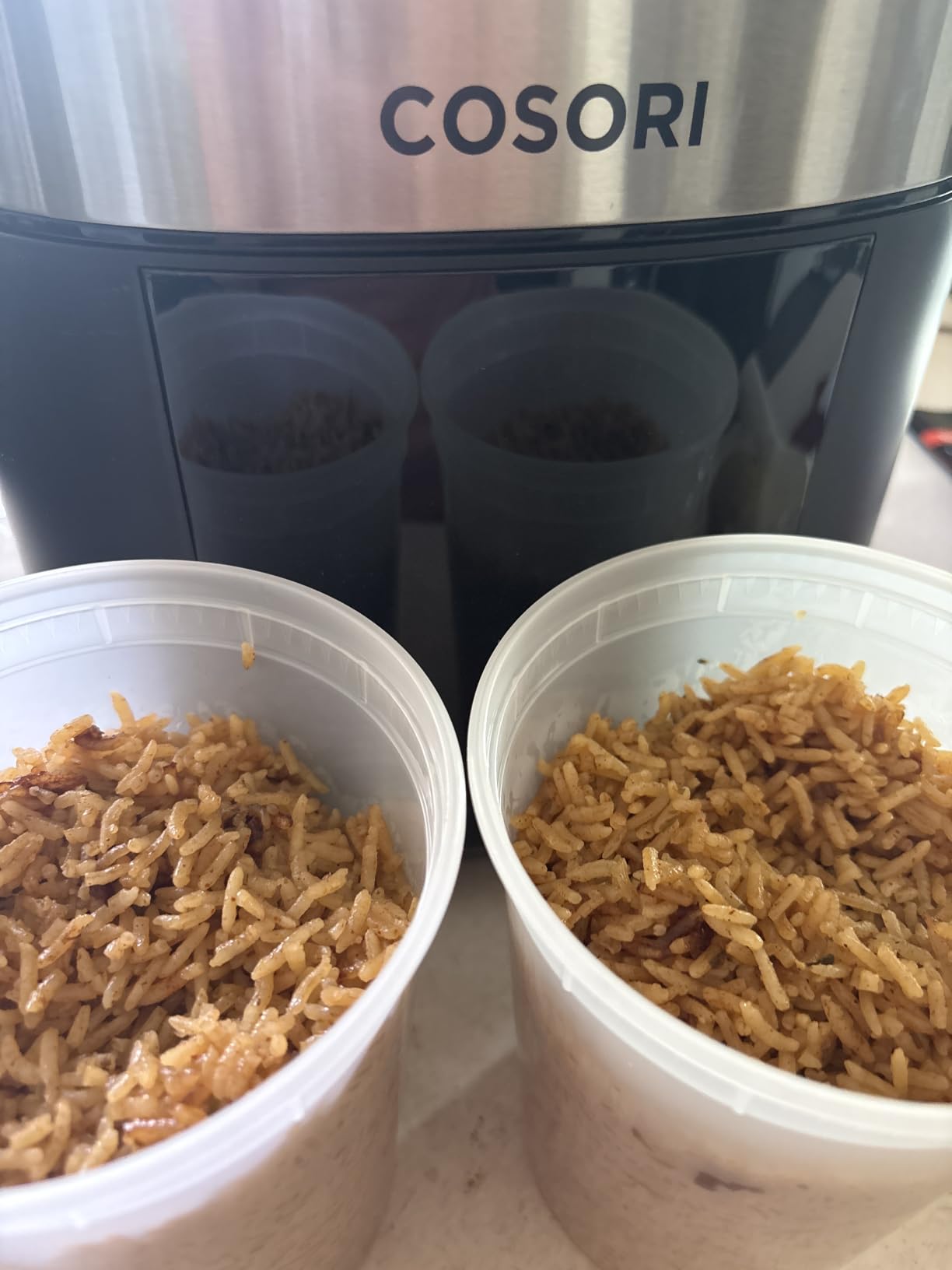
Ten uncooked cups yield roughly twenty cups cooked, which is a serious volume of sushi rice. That is enough to fill maki rolls for a dozen people plus a nigiri course, and it is the only capacity in this roundup that handles a real event without a second batch.
The catch is that a full pot needs more water than a small one and needs a longer soak. The fuzzy logic handles it, but the texture lands slightly softer than a half-full batch, so for the best result plan a rice ratio adjustment rather than a straight fill.
Texture Options for Sticky Rice
The white rice program offers softer and firmer directions, and the firmer setting is the one that gets you near sushi consistency. It is not calibrated for short-grain water absorption the way a true sushi cycle is, so expect to test one batch and adjust the water by a small amount.
Owners commonly describe the same trial-and-error. Once you land on a ratio it holds consistently, and the 7-step process protects against scorching on the base even at a full fill.
The Counter Space Problem
At 4.2 kilograms with a 12.3 by 10.6 inch footprint, this is a large machine for a small kitchen. It also has a tall lid, and users with low cabinets report the same clearance concern described for other large cookers in this category.
If you have the room and you cook for more than four people regularly, the capacity justifies the footprint. For a one or two person household it is simply more cooker than you will ever fill.
5. Zojirushi NP-HCC10XH Induction – Premium Pick for Even Heating
Zojirushi NP-HCC10XH Induction Heating System Rice Cooker and Warmer, 5.5-Cup, Stainless Dark Gray
5.5-cup capacity
Induction heating at 1230W
Extended keep warm
Stainless inner lid
Pros
- Induction heating surrounds the pot for very even cooking
- BPA-free thick nonstick metal pot with a stainless inner lid
- Extended keep-warm function
- Premium Zojirushi build quality
Cons
- Most expensive model in the roundup
- Nine-pound body is heavy and not wall-mountable
This is the model that removes the stove hotspot entirely. Induction heating uses an electromagnetic field to warm the pot itself rather than a coil under the base, so the entire pan including the sidewalls reaches temperature. On a short-grain batch that evenness translates into grains that cook uniformly instead of having a firmer ring near the wall.
At 1230 watts it is also the most powerful cooker here, and the multi-menu program list includes brown, GABA brown and germinated brown rice alongside the standard white and sushi cycles. For a household that eats Japanese rice daily, the extra grain programs are the reason to stretch up.
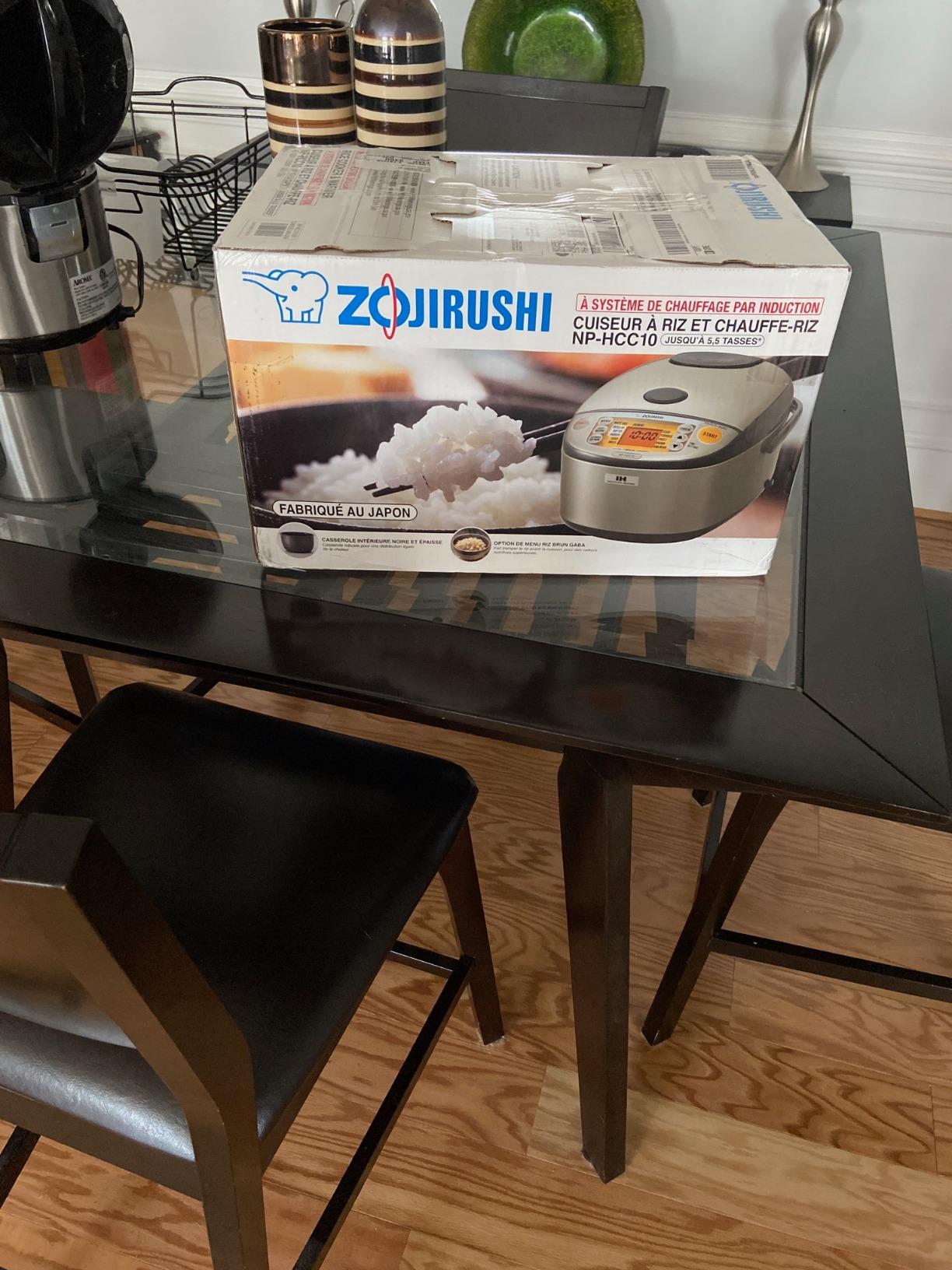
Materials are the best in this roundup: a BPA-free thick nonstick metal pan, a stainless steel inner lid and a stainless dark gray body. The pot walls are thick enough to hold heat through the resting phase, which is part of why the finished grain stays glossy instead of setting hard.
Owners single out even heating and reliable keep warm as the reasons they stay with it, and a two-hour warm hold kept our batch moist and well textured. Brief sparks at the plug are a documented characteristic of this model, not a fault.
What Induction Actually Changes for Sushi Rice
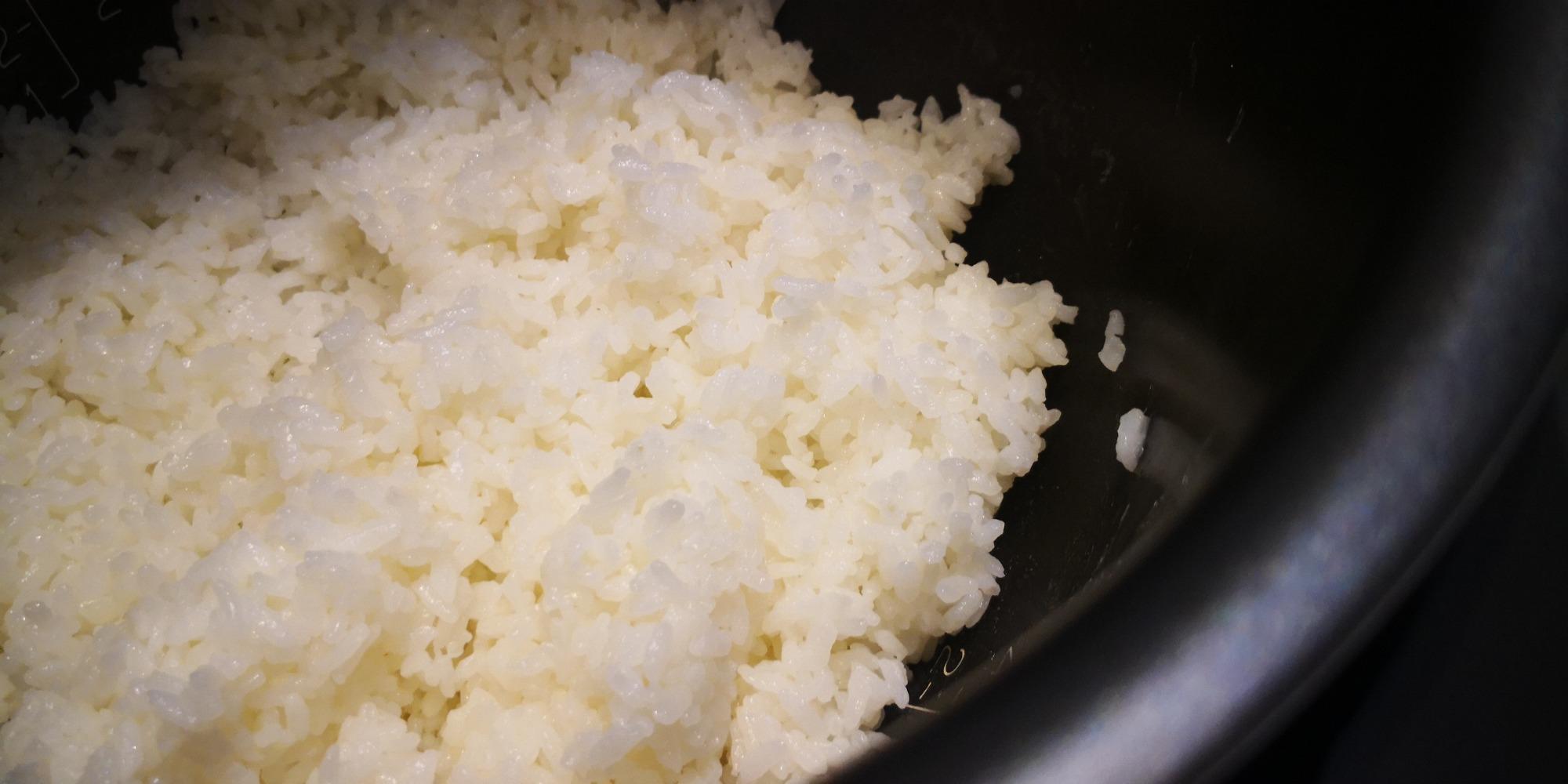
A conventional heating plate drives heat up from the base, so the bottom of the pot runs hotter than the top. Sushi rice is unforgiving of that difference because the base dries into a hard layer while the surface stays wet, and the whole batch steams unevenly as a result.
Induction removes the gradient. The result is a batch where the surface grains and the bottom grains finish at roughly the same point, which is exactly what you want before seasoning with vinegar and sugar. Note that other lab testing has found induction does not automatically beat a good conventional cooker, so the difference here is a combination of the heating method and Zojirushi’s control programming.
Portability and Wall Mounting
At nine pounds this is the heaviest model in the group, and unlike the NS-ZCC10 it cannot be mounted on a wall. Moving it with a full pot of cooked rice is genuinely awkward, so plan your counter position before the first batch.
The retractable cord is not a feature on this body, so the unit needs an outlet behind it or an extension run along the backsplash. That is a real constraint in a tight counter run.
Is the Premium Worth It Here?
You are paying for heating hardware you can feel in the finished grain and for materials that outlast cheaper bodies. If you cook sushi several times a week and the batch is the centerpiece of the meal, that investment is easy to justify.
If sushi is a once-a-month project, the fuzzy logic models here deliver a comparable texture for a good deal less. The induction advantage shows up most clearly at larger volumes and in households where rice quality is the point of the appliance.
6. CUCKOO CR-0375FG – Most Versatile for One or Two People
CUCKOO Micom Fuzzy Logic Rice Cooker, 6-Cup Cooked, Gray, CR-0375FG
3-cup uncooked
Nine cooking modes
Quick white rice in 26-28 minutes
Self-clean
Pros
- Small 3-cup footprint suits a 1-2 person kitchen
- Keep warm does not burn the bottom
- Detachable inner lid and self-clean mode
- Rarely boils over with starchy short-grain rice
Cons
- Spring-loaded lid shoots up fast and can strike a cabinet
- Condensation pools near the heating element if parts are not dried
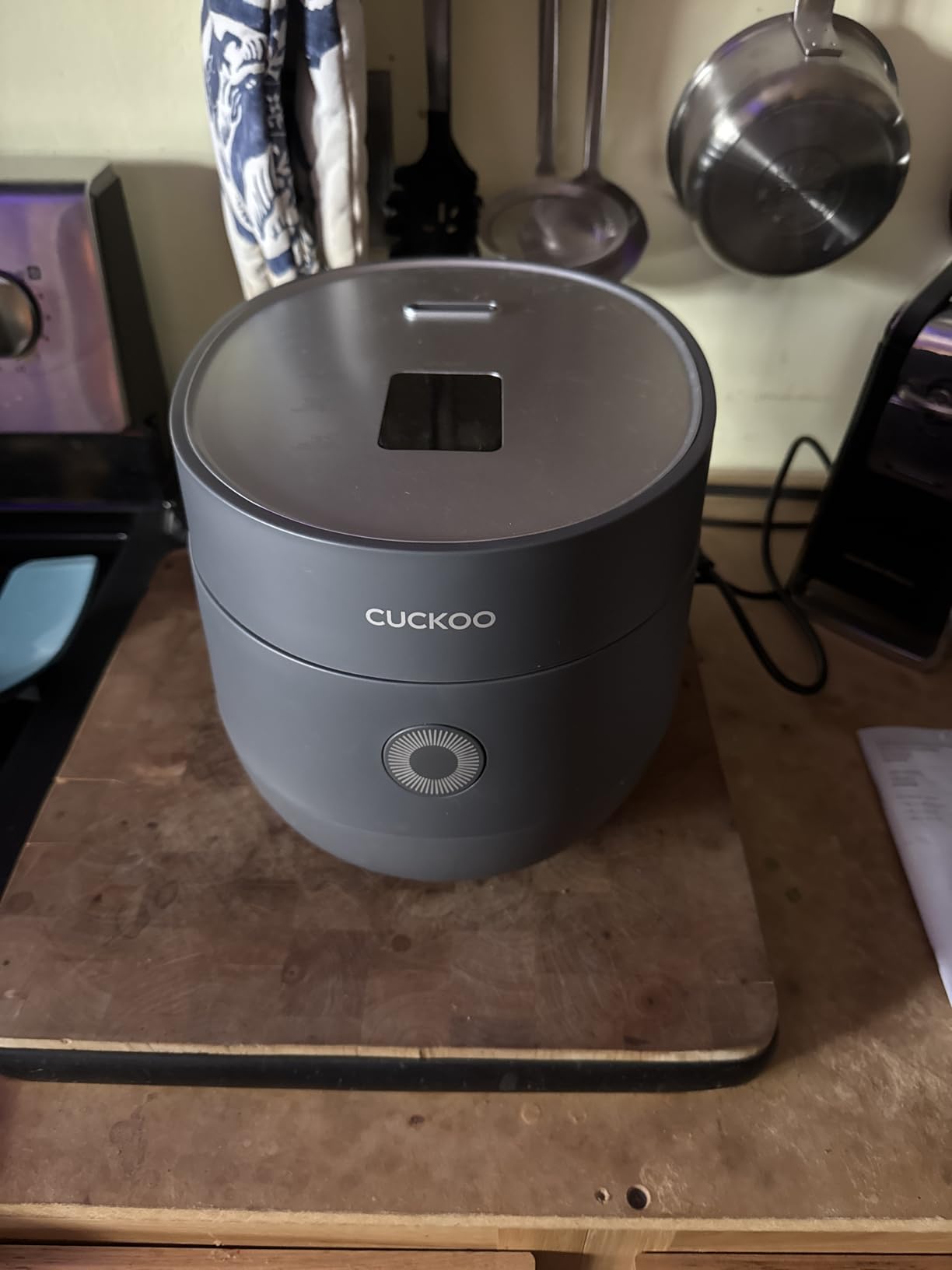
The smallest dedicated fuzzy logic cooker in this roundup, and the right size if you roll for one or two people. Three uncooked cups gives about six cups cooked, which covers a weekend of nigiri for two or a few large rolls.
CUCKOO is a Korean brand with a long rice cooker history, and this model carries a nine-mode menu including a glutinous rice setting that behaves much like a sushi cycle for short-grain. It is the least expensive way in this group to get real microcomputer control rather than a simple switch.
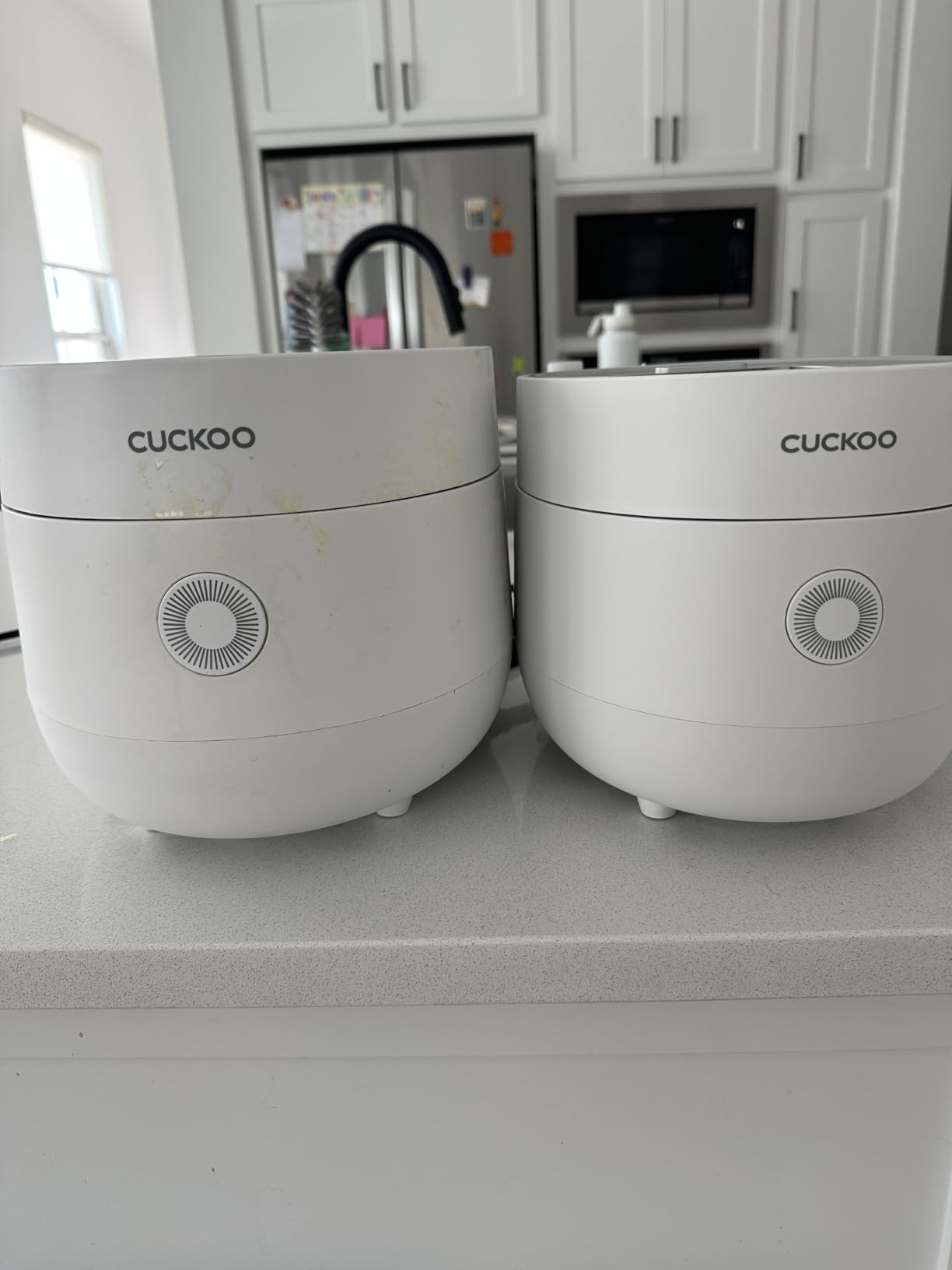
Two practical wins stand out. The quick white rice cycle finishes in 26 to 28 minutes, which is the shortest reliable cook in this entire roundup, and the unit rarely boils over even with high-starch rice. Both of those matter a lot in a small kitchen where a sticky pot is a nuisance.
Keep warm will not scorch the base, and the detachable inner lid plus a self-clean setting make cleanup quick after a vinegar-heavy sushi batch. Grains cook evenly with distinct separation, which suits nigiri more than maki.
The Lid Clearance Problem Is Real
This is the single most repeated mechanical complaint across every source we studied for this guide. The spring-loaded steam lid lifts the entire unit slightly off the counter as it releases pressure, and in a kitchen with an overhanging cabinet it can strike the underside of that cabinet.
Measure your vertical clearance before you settle on this model. Anything under about eighteen inches of open space above the counter is tight, and the strike is not a slow bump.
Condensation Management
Water collects around the heating element area if the inner lid and steam valve are not dried after each use. Repeated exposure to standing moisture is what causes the corrosion and damp smells owners mention over time.
Take the lid apart after every sushi batch and leave the pieces on the counter to dry. Two minutes of habit prevents the whole issue, and the detachable design is the reason it is fixable at all.
Learning the Button Layout
The control panel carries nine modes and owners describe it as crowded during the first week. Once you find the glutinous rice setting and commit to it, the rest of the panel rarely matters.
This is the lowest-rated model in the group at 4.3, and the spread of owner experience is wide. The complaints cluster around hardware and layout rather than rice quality, which is the important part for a sushi buyer.
7. CUCKOO CR-0633F – Best for a Small Counter Run
CUCKOO Micom Fuzzy Logic Rice Cooker, 12-Cup Cooked, White, CR-0633F
6-cup uncooked
Eleven menus with GABA rice
Detachable inner lid
Quick rice cycle
Pros
- GABA rice setting produces separate well-cooked grains
- Compact body fits under tight cabinets
- Ceramic-style coating beads water and wipes clean
- Thick pot resists denting
Cons
- No dedicated power off button
- Grains can drop onto the heating element when serving
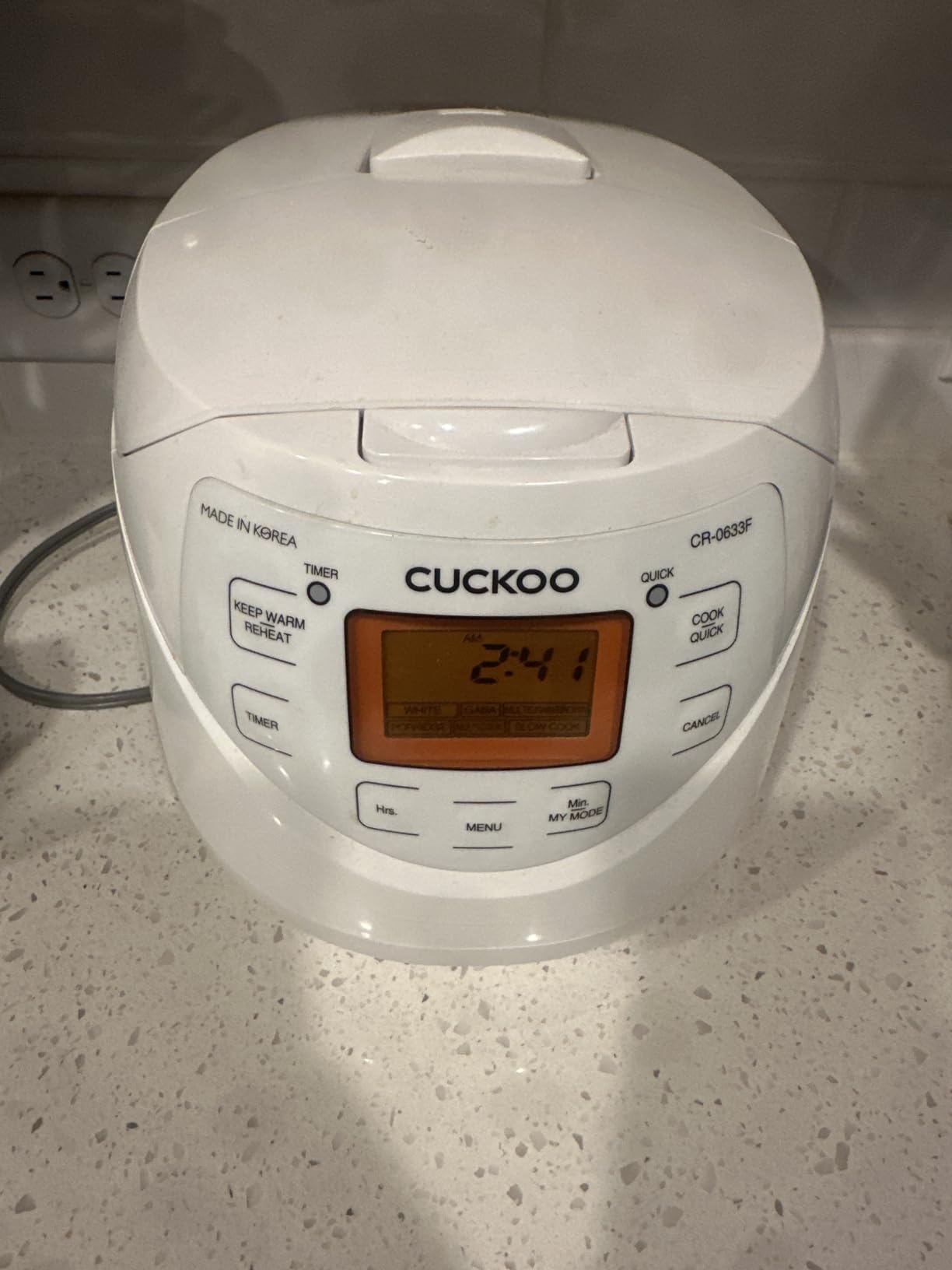
Six uncooked cups of capacity in a body that is only 7.3 inches wide is the trick this model plays, and it is why it works in kitchens where larger cookers will not fit. The depth is greater than the width, so it slides into a narrow gap beside a fridge or under a shallow cabinet run.
It is made in Korea, and owners are largely satisfied with the finish. The fuzzy logic drives eleven menu options including a GABA rice program, multigrain, porridge, slow cook and reheat, which is a broad set for a compact unit.
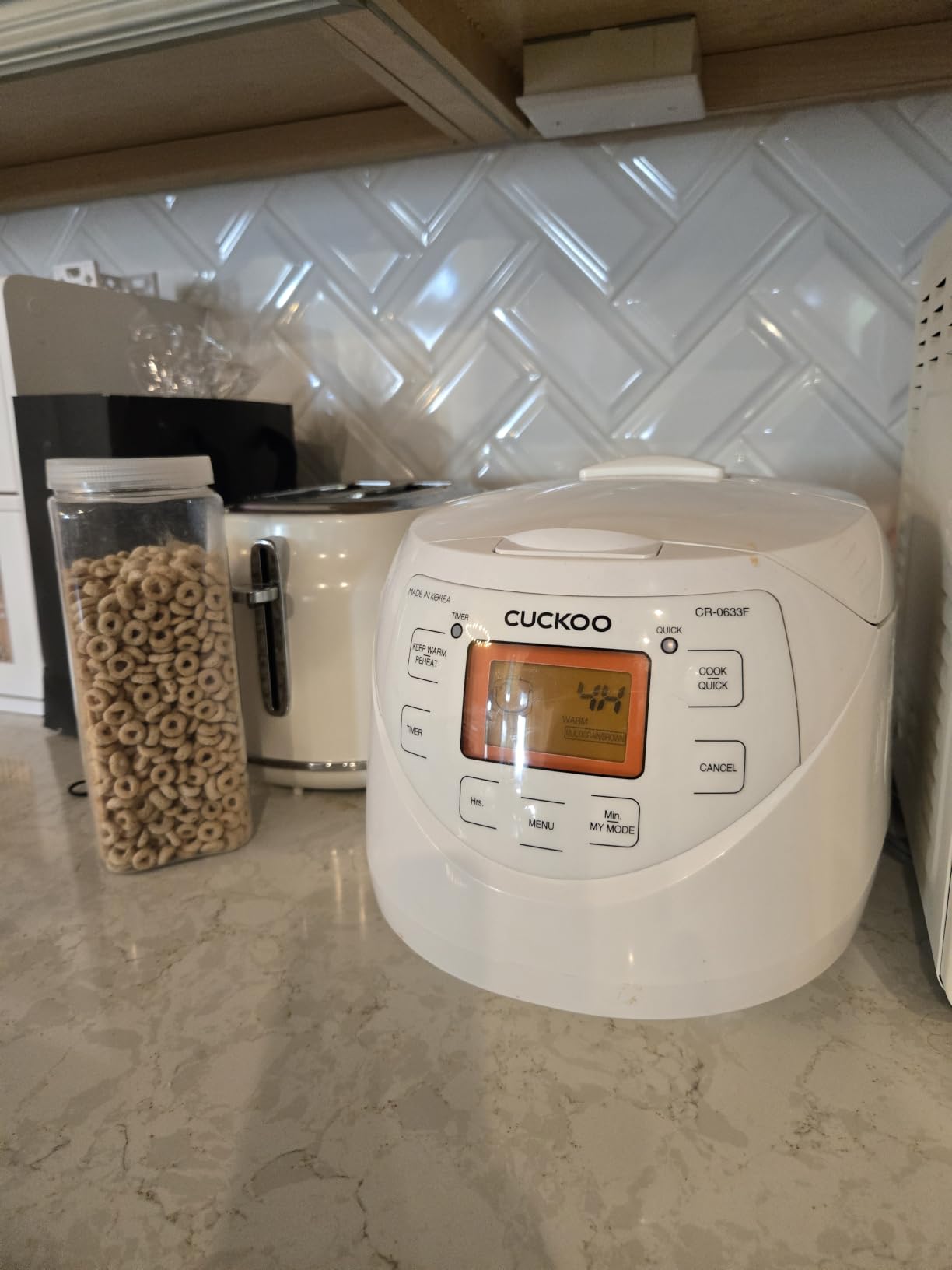
The quick rice cycle finishes in 33 to 41 minutes, and a thirteen-hour preset timer handles scheduling. Rice held on warm stays fresh for days according to owners, and the ceramic-style coating beads water so the pot wipes clean instead of soaking.
Texture on short-grain was well received, with reviewers noting separate grains and good color. There is no labeled sushi cycle, so you run white rice and adjust the water ratio yourself, which is where the fuzzy logic earns its keep.
Making a Compact Unit Work for Sushi
A 6-cup pot in a 7.3-inch wide body means a taller, narrower cooking chamber than most cookers here. Water distributes differently in that geometry, so short-grain batches need a modest water increase over the manual ratio to finish glossy rather than dry at the center.
Once you settle on a ratio for your preferred rice brand, the fuzzy logic holds it consistently. The reheat program is also useful for day-old sushi rice, warming without drying the grains out the way a microwave does.
Handling Quirks Worth Knowing
There is no dedicated power off button, so the unit runs its keep warm until you unplug it or reach the setting through the menu. That is a minor inconvenience but a genuine safety consideration for a machine left on a counter overnight.
Some grains drop onto the heating element or the inner rim when serving, and owners also report keeping it away from a stovetop, with one mention of exterior plastic softening near heat. Give it counter space and treat it as a standalone appliance.
Made in Korea
CUCKOO builds in Korea and has decades of specialized rice cooker production behind its fuzzy logic tuning. Enthusiasts who care about manufacturing origin tend to gravitate to Japan-built Zojirushi, and the price gap reflects that preference as much as the hardware.
In practice the grain difference between this and a comparable Zojirushi is small on the sushi cycle. What you are trading away is the labeled sushi program and the texture adjustment.
8. COMFEE 10-Cup Fuzzy Logic – Best for Large Batches on a Mid Budget
COMFEE’ Japanese Style Rice Cooker with Fuzzy Logic, 10-Cups Uncooked Rice
10-cup uncooked and 20-cup cooked
11 programs including sushi
12-hour keep warm
24-hour delay timer
Pros
- Dedicated sushi program among 11 modes
- One of the more affordable 10-cup fuzzy logic models
- Removable steam valve and nonstick pot clean easily
- LED display with 12-hour keep warm
Cons
- Documentation is thin so water ratios take searching
- One reviewer reported condensation escaping the unit
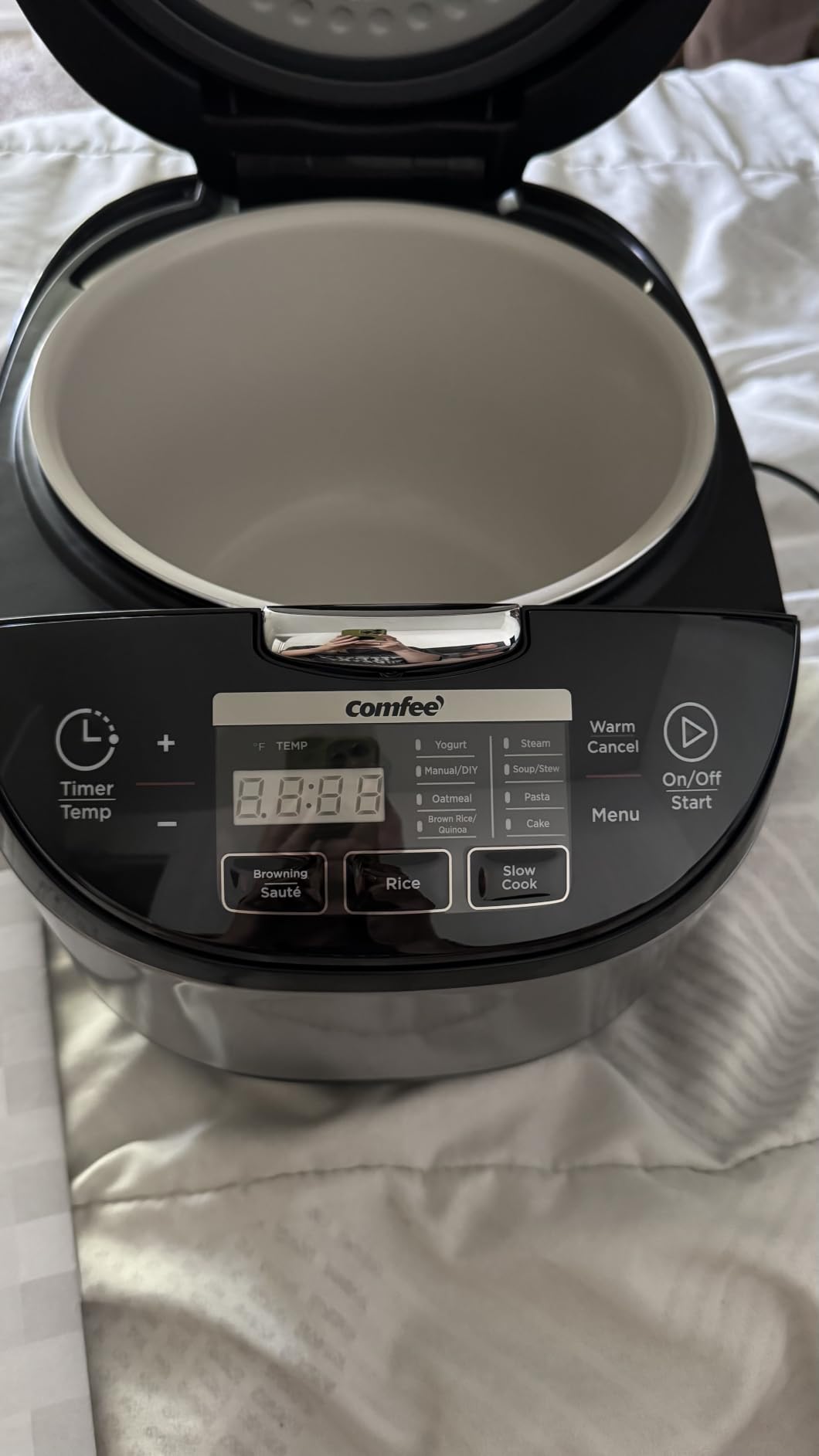
The rare large fuzzy logic cooker with a labeled sushi program at a modest cost, and that combination is unusual enough to matter. Eleven programs cover white, brown, sushi, pasta, soup, stew, saute and steamed vegetables, and reviewers specifically praise the short-grain and sushi results.
A smart six-step cooking process retains steam and heat inside the pot rather than venting it, which is a sensible design for short-grain that needs to finish moist. On a full batch the rice stayed glossy through the surface layer, which is where drier cookers show their weakness.
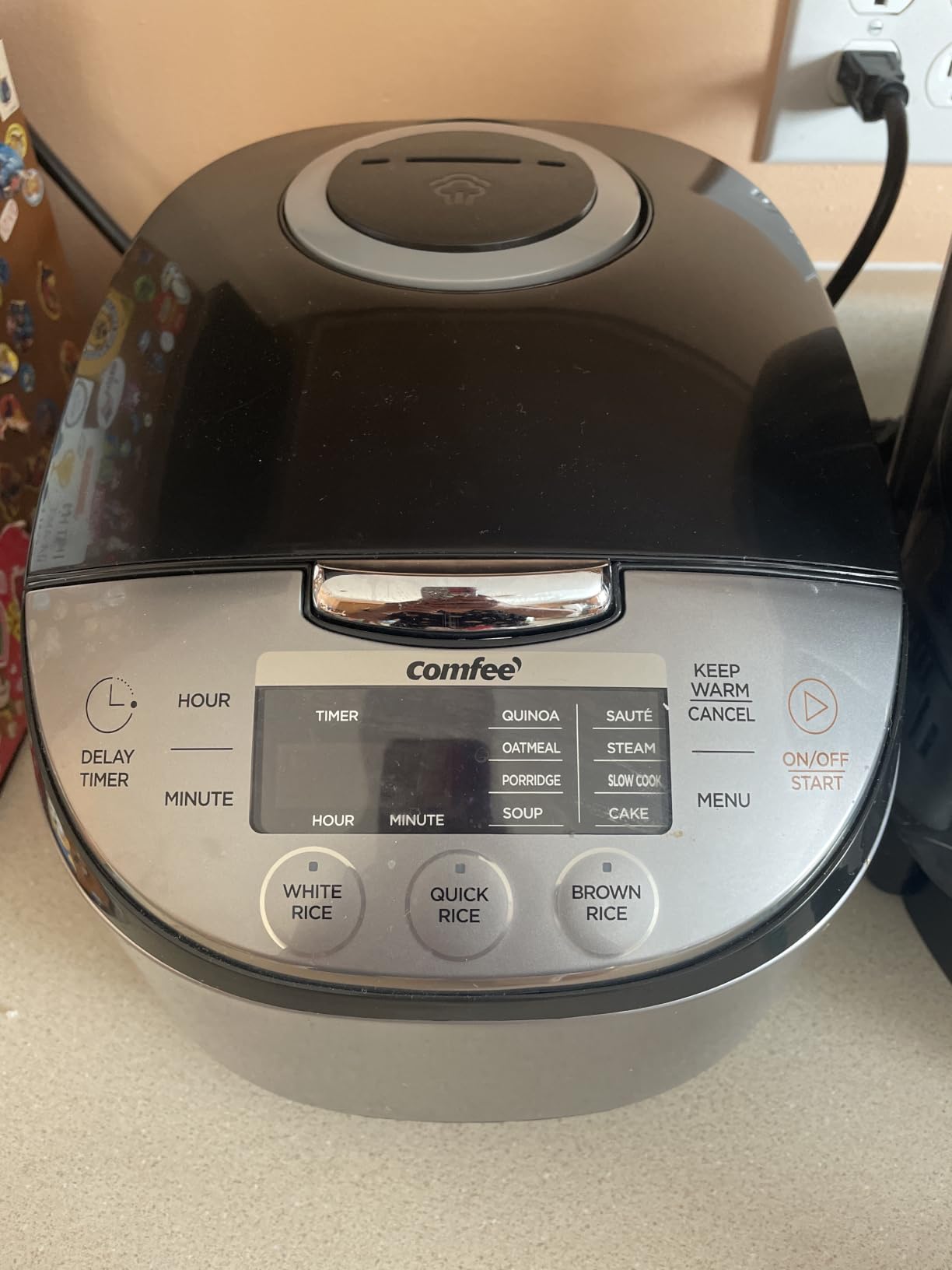
Ten uncooked cups means twenty cups cooked, so this covers a genuine sushi party, and the twenty-four hour delay timer plus twelve hours of keep warm mean you can schedule the entire sequence around your service time. The LED panel makes that easy to read at a glance.
Cleanup is straightforward with a removable steam valve and a nonstick pot, and the detachable cord and thermal fuse give it the safety hardware you would expect. It is light enough to move when empty.
What Ten Uncooked Cups Actually Buys You
Twenty cups of cooked sushi rice is a serious amount of food. It works out to roughly twenty to twenty-five large maki rolls plus a nigiri course, or a generous rice bowl for four people with leftovers to spare.
Larger batches also shift the water ratio. Short-grain absorbs more in absolute terms at a full fill, and the fuzzy logic stretches further from its best-tuned batch size, so expect a slightly softer result than a half-full pot. Plan the ratio once and write it down.
Documentation Is the Weak Spot
The most common complaint is that the documentation is thin, so you search online for water ratios and recipes. For sushi specifically that is a real cost, because the manual’s water line is often the difference between glossy and gummy.
Budget an extra experiment with your own rice brand before serving anyone. Once you have a ratio that works, the fuzzy logic keeps it repeatable from batch to batch.
A Condensation Complaint Worth Checking
One reviewer reported condensation escaping around the back and side of the unit, which points to the steam routing rather than the pot. If you buy this model, place it with a bit of space behind it and check the seam after a full ten-cup cook.
It is a single report rather than a pattern, so treat it as something to verify in your own kitchen rather than a reason to rule the model out. The steam valve is removable, which makes the check quick.
9. Toshiba OriginTaste 5.5-Cup – Best for First-Time Cooks
TOSHIBA OriginTaste Rice Cooker 5.5-Cup Uncooked, Fuzzy Logic, 15-in-1 Functions, Digital Display, Delay Timer, Keep Warm, Nonstick Inner Pot, White
5.5-cup uncooked capacity
15 cooking functions
3D heating technology
PFA-free ceramic coated pot
Pros
- Fuzzy logic recovers when water measurement is slightly off
- Ceramic nonstick pot cleans easily and holds no odors
- 3D heating gives even results with no scorched base
- 15 functions add real versatility
Cons
- Control panel sits on the lid so settings are hidden
- Keep-warm display shows hours only
- Power cord is short
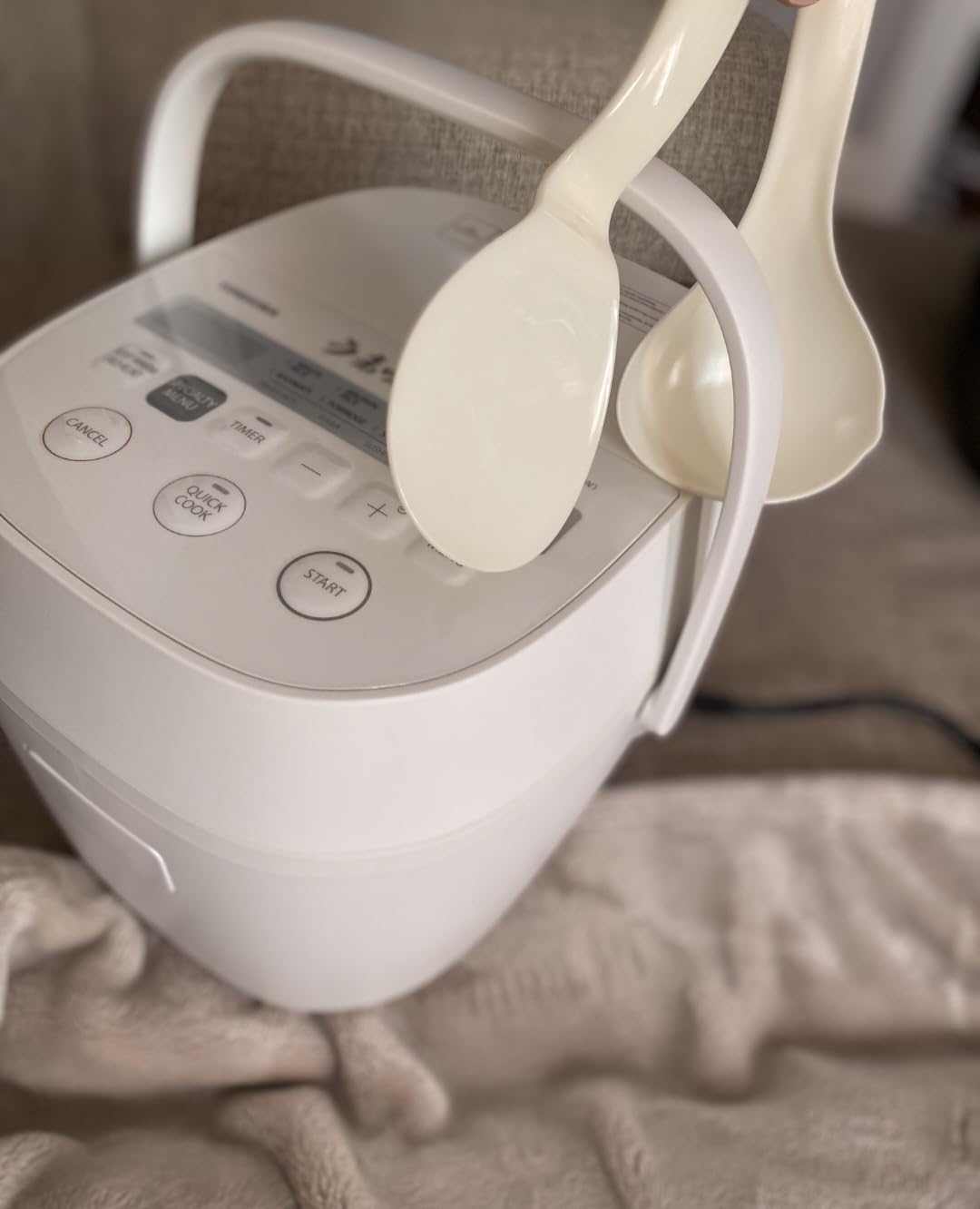
This is the model to buy if you have never cooked sushi rice before and do not want the first attempt to depend on a judgment call. The fuzzy logic is forgiving of a slightly off water measurement, which is the single most common reason a beginner’s first batch turns out wrong.
Fifteen cooking functions cover white, quick, brown, mixed grain, jasmine, porridge, cake and egg plus soups and stews. There is no sushi label, but the jasmine rice mode sits close enough to short-grain to be a usable starting point for a sticky result.
The 3.1mm thick PFA-free ceramic coated inner pot is a genuine upgrade over standard nonstick for anyone who wants to avoid a PTFE conversation at the dinner table. Owners describe it as easy to clean and free of odors, and it releases short-grain rice without sticking.
3D heating supports the pot from more than the base, and in our batches there was no scorched layer at the bottom even after a longer cook. That is the failure that ruins a second attempt, so it matters for a beginner.
Why Forgiving Logic Matters for Beginners
A first sushi cook usually misjudges water because short-grain rice is rinsed and drained less thoroughly than a beginner expects. A fixed-cycle cooker punishes that mistake. A fuzzy logic cooker reads the actual moisture in the pot and extends or shortens the cook to compensate.
That is the same reason people upgrading from an instant pot style multicooker tend to land on fuzzy logic machines. The control scheme is doing work your own timing cannot.
The Lid Panel Is a Real Design Flaw
The control panel is mounted on the lid, so you cannot see or change the mode while the lid is open. You have to set the program, close the lid, and reopen it to make any change, which breaks the rhythm of cooking by weight rather than by menu.
The keep-warm display also shows hours rather than minutes, so you cannot easily check a fifteen-minute rest. These are small annoyances that add up if you are cooking sushi regularly.
Cleaning and the Rest of the Menu
The removable steam valve and vent cap both lift out, which is what you need after starchy short-grain batches. The ceramic coating wipes clean with a cloth and does not need aggressive scrubbing.
Owners describe this model as a practical alternative to a flagship Japanese brand rather than a copy of it. The power cord is short, so plan the outlet position before you unbox it.
10. Toshiba Mini 3-Cup – Best for One or Two People
Toshiba Mini Rice Cooker, 3 Cups Uncooked, for 1-3 People, Steamer and Warmer, Fuzzy Logic, One-Touch Cooking, 24-Hour Delay Timer, Auto Keep Warm, White
3-cup uncooked
Fuzzy logic moisture sensing
One-touch operation
Sushi rice supported
Pros
- Compact size suits individuals couples or small households
- Explicitly supports sushi rice as a listed grain
- Fuzzy logic removes guesswork from water ratios
- Light and easy to move
Cons
- Small capacity limits batch cooking
- One cycle yields about two cups of cooked rice
The right-sized answer for a single person or a couple who wants fresh sushi rice every few days rather than a large batch that has to be finished quickly. Three uncooked cups give about two cups of cooked rice per cycle, which is exactly a single-person portion with room for a second small batch.
Unlike the models that infer short-grain from a white rice menu, this one explicitly lists sushi among the supported grain types alongside jasmine, basmati, brown and wild rice. That clarity matters when you are learning the water ratio.
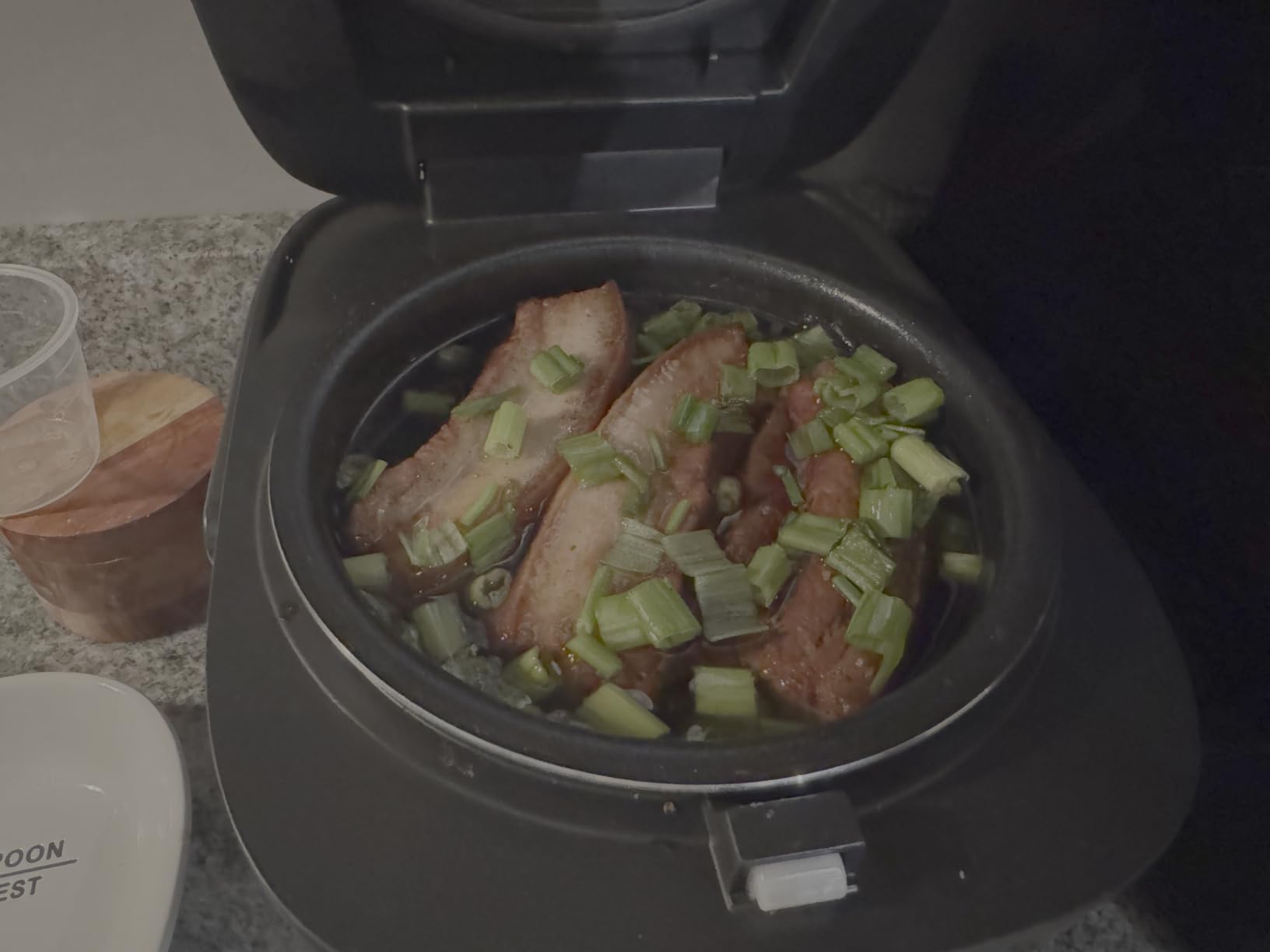
Fuzzy logic senses moisture and adjusts temperature and cooking time, so the small pot behaves better than its size suggests. Small cookers are often noted in enthusiast circles as cooking more evenly than large ones, and the narrow geometry here works in your favor.
One-touch operation with an LED display, a 24-hour delay timer and keep warm with reheat covers scheduling. Slow cook, steam, porridge and cake modes add flexibility if you want to cook components of a meal in the same appliance.
Small Pots and the Learning Curve
Because you are cooking less rice, you get a faster feedback loop. A small batch is done in a fraction of the time, so you can run three experiments in an evening and find your ratio without waiting a full cycle each time.
There is a real benefit to that. Sushi rice is a skill more than a recipe, and a small cooker lets you practice cheaply in both time and energy.
When a 3-Cup Is Not Enough
Two cups of cooked rice is about eight to ten small nigiri pieces. If you are feeding four people or planning a party, you will be running the cycle repeatedly while your guests wait, and the later batches will be fresher than the first.
If sushi is a weekend event rather than a regular meal, size up to a 5.5 or 6-cup model. If it is Tuesday dinner for one or two, this is the right machine and it is also lighter and easier to move.
Details That Matter at This Size
The nonstick pot has a removable steam valve that traps starch residue, so clean it after every short-grain batch. The unit is hand wash, and the pot is small enough that a full clean takes a minute.
A detachable cord, thermal fuse and automatic shut-off cover the safety basics. At 460 watts it is the least powerful cooker here, which suits a small batch and means the rice is not over-agitated during a longer cycle.
11. Yum Asia Kumo YumCarb 5.5-Cup – Best for a Ceramic Bowl and Low-Carb Cooking
Yum Asia Kumo YumCarb Rice Cooker with Ceramic Bowl and Advanced Fuzzy Logic, (5.5 Cups, 1 Litre), 5 Rice Cooking Functions, 3 Multicooker Functions, 110V US Power (Light Stainless Steel)
5.5-cup capacity
Short grain and sushi setting
5-layer ceramic bowl
Multi-phase cooking
Pros
- Dedicated short grain and sushi setting with multi-phase cooking
- Ceramic coated inner bowl cleans easily
- Compact one litre footprint for small households
- Two-year manufacturer warranty
Cons
- Brown rice takes noticeably longer than on comparable cookers
- One reviewer reported unresponsive function buttons
The Kumo YumCarb pairs a dedicated short grain and sushi setting with a five-layer ceramic coated bowl, and that combination is rare in a 5.5-cup body. Advanced fuzzy logic runs multi-phase cooking aimed specifically at texture, taste and aroma rather than just completing the cook.
On our short-grain batch the multi-phase sequence produced glossy grains with good integrity, and the ceramic bowl wiped clean of the vinegar seasoning afterward without the residue that builds up on standard nonstick over time.
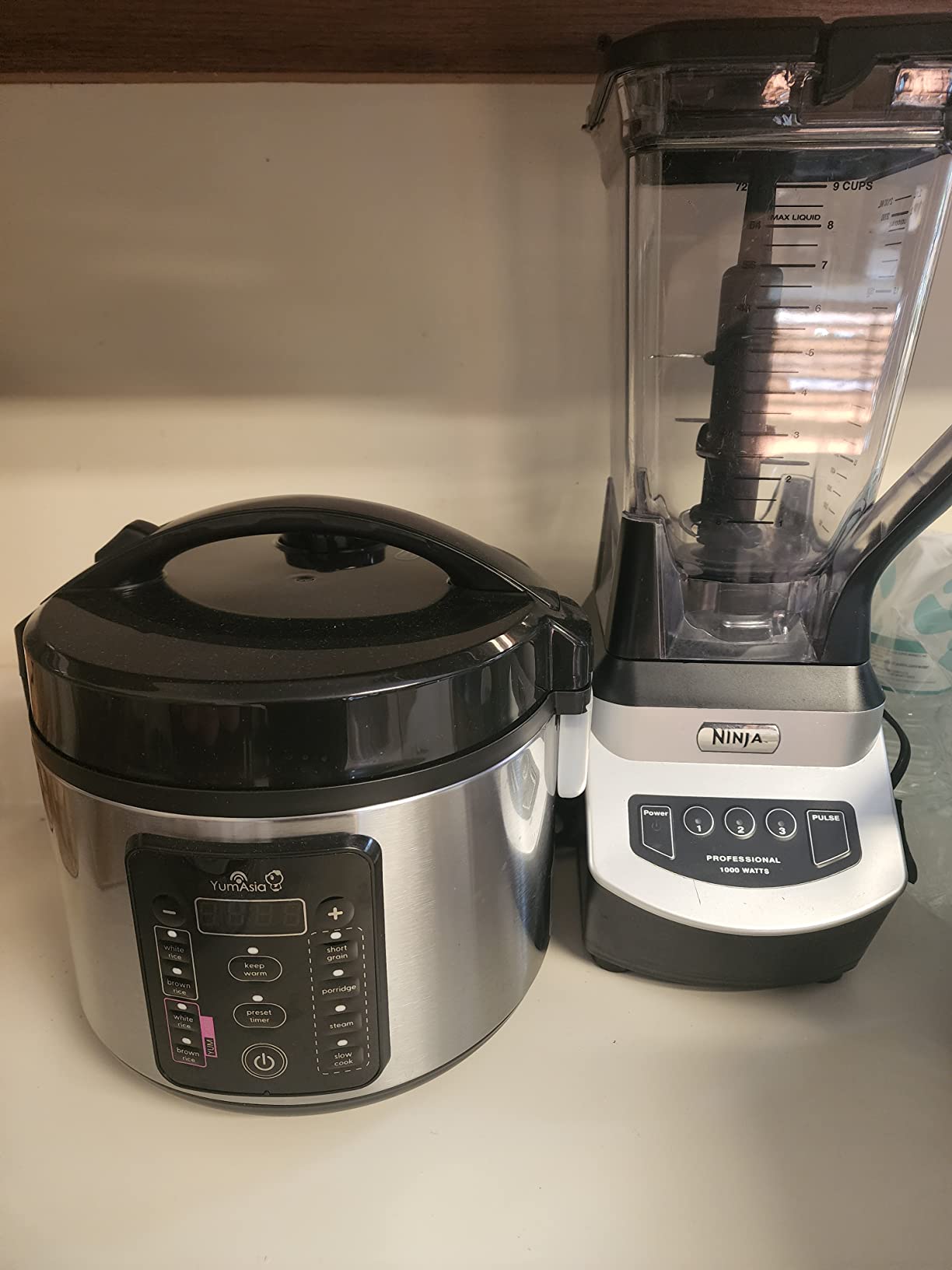
The YumCarb modes are the distinguishing feature for anyone reducing starch. They reduce the starch content while keeping a texture you can still roll, which is a genuine option if you want sushi rice with less of the sticky carbohydrate load.
At 500 watts and 2 kilograms it is a compact one-litre unit with a 24-hour preset timer and keep warm. The printed rice level lines inside the bowl are a nice touch when you are working without a dedicated sushi measuring cup.
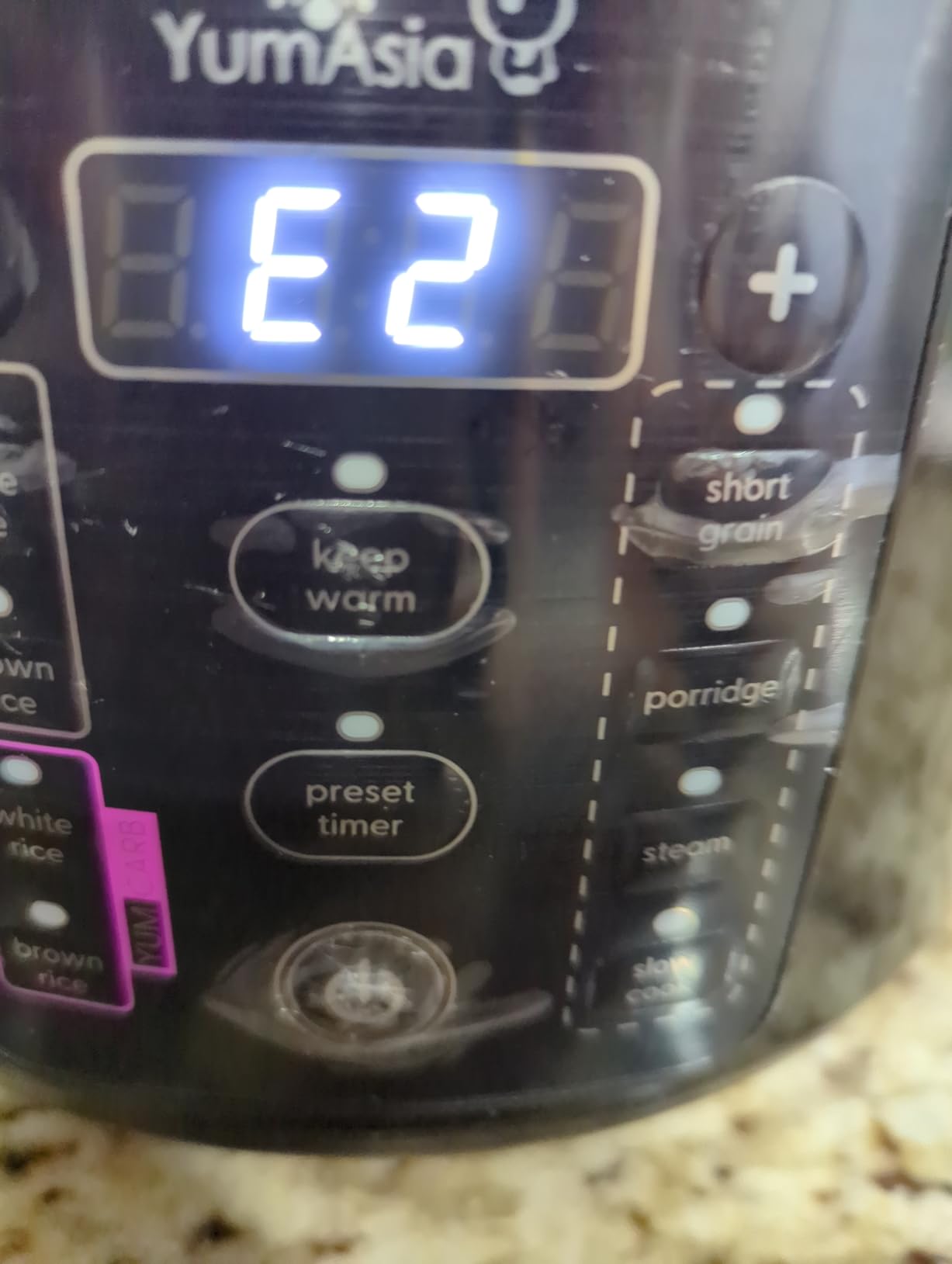
What Multi-Phase Cooking Actually Does
A single-heat cook drives the pot to boil and then reduces power until the timer ends. Multi-phase cooking moves through distinct stages, absorbing, heating, simmering and resting, with the control adjusting between them based on what the pot is doing.
For short-grain this mainly buys you a controlled finish. The final resting stage happens inside the pot where steam is still trapped, so the last grains absorb moisture rather than drying against a hot surface. That is where the gloss comes from.
The Slow Brown Rice Problem
Brown rice is the consistent complaint on this model. Owners report it takes noticeably longer than on comparable cookers, and at 500 watts the extra time is not surprising for a bran-heavy grain.
If brown rice is a staple rather than an occasional side, that is a real cost. For a sushi-focused buyer cooking white and short-grain rice, it is a minor trade.
A Single Reliability Complaint
One reviewer reported that only the YumCarb buttons functioned on their unit, which would make the model unusable for sushi. Every other owner in the reviews describes the short grain and sushi setting working normally, so treat this as a warranty question rather than a design problem.
The two-year manufacturer warranty is longer than most competitors here, which is useful coverage given that report. A compact 10.6 inch square footprint also makes this easier to place than most 5.5-cup cookers.
12. Yum Asia Panda Mini 3.5-Cup – Best Ceramic Bowl in a Small Body
Yum Asia Panda Mini Rice Cooker With Ninja Ceramic Bowl and Advanced Fuzzy Logic (3.5 cup, 0.63 litre) 4 Rice Cooking Functions, 4 Multicooker functions, Digital LED display – 120V
3.5-cup capacity
Short grain and sushi setting
7-phase surround heating
Ceramic bowl
Pros
- Dedicated short grain and sushi setting across seven phases
- Ceramic bowl avoids nonstick coating concerns
- Compact size suits tiny kitchens and couples
- Two-year warranty and responsive customer service
Cons
- Water measurement instructions are ambiguous
- Some users report slight browning on the base if water is low
A 3.5-cup machine with a removable five-layer ceramic coated bowl, and the short grain and sushi setting is a real labelled program rather than an inference from a white rice menu. The seven-phase 3D surround heating controls the cook in distinct stages, and the 10-minute countdown on rice functions tells you exactly where you are in the rest.
The bowl is the reason to consider it. It avoids a nonstick coating entirely, which removes the coating question from the conversation, and owners report that rice releases well and the surface wipes clean after a vinegar-rich batch.
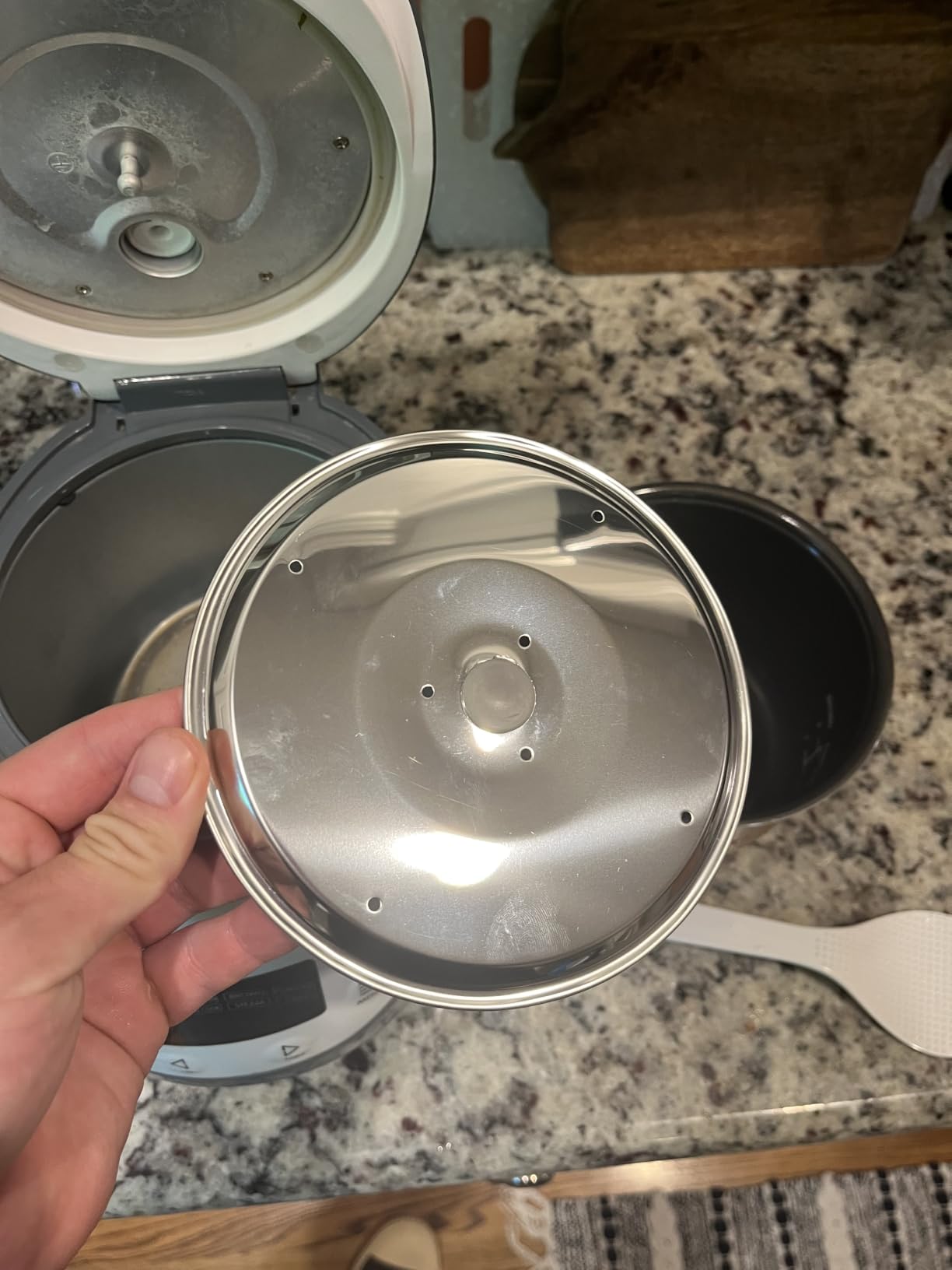
At 0.63 litres this suits one to three people and fits in a dorm, an RV or a small kitchen where a full-size cooker will not go. A removable bowl and steamer layer also means you can serve and clean away from the base unit.
Owners frequently praise the customer service, which matters for a smaller brand. A 24-hour preset timer handles scheduling, and four multicooker functions cover steaming, porridge, slow cook and cake baking for the rest of the meal.
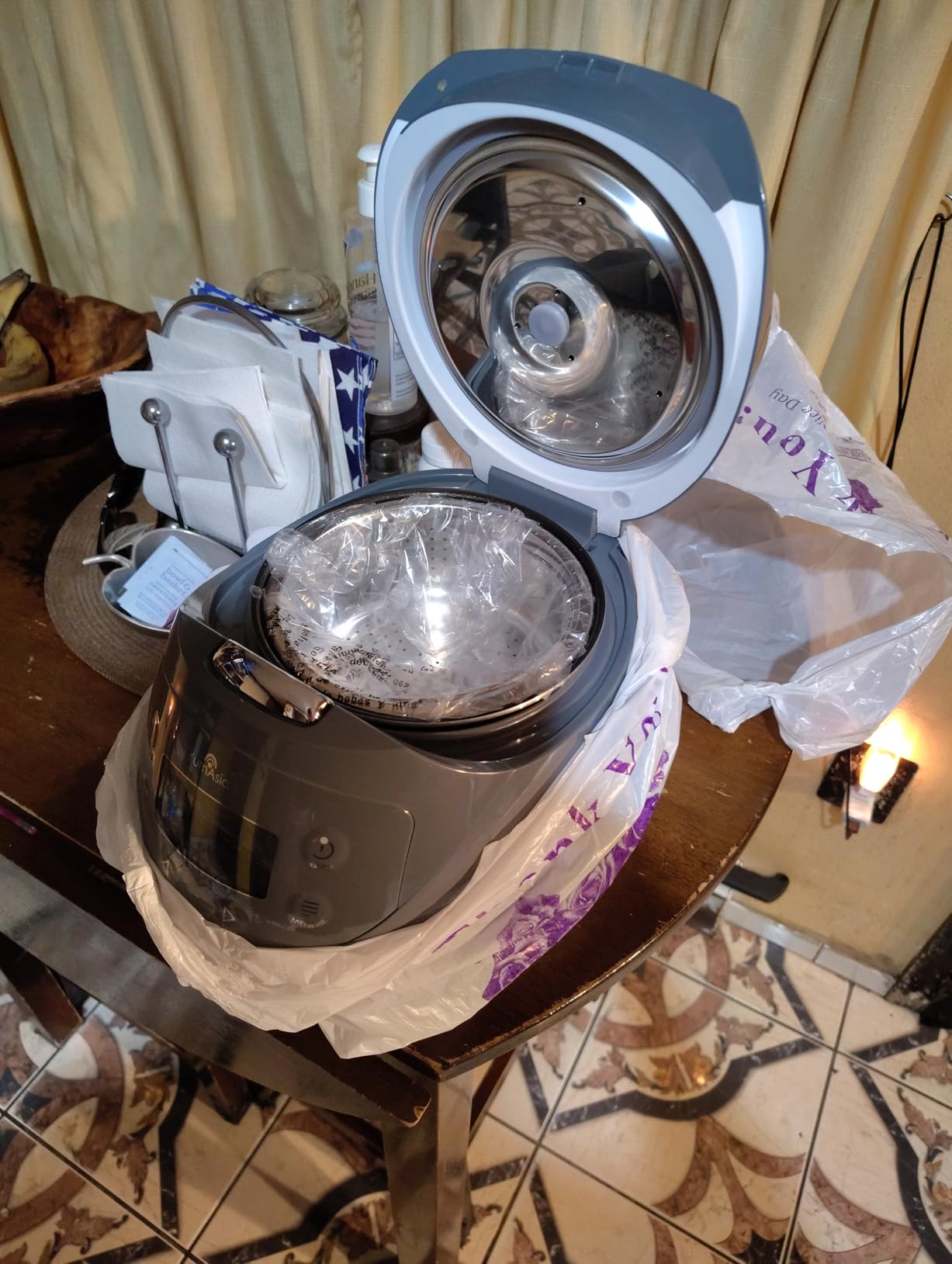
The Water Measurement Problem Is the Main Catch
The dominant critique across reviews is that the water measurement instructions are ambiguous. Owners cannot tell whether to use the supplied cup or the level lines printed in the bowl, and the honest answer is that you have to test it.
For an experienced sushi cook that is a ten-minute adjustment. For a first-timer, it is the one thing to sort out before your first party, because water is the entire difference between glossy and gummy on short-grain.
Preventing the Base Browning
Some users note a slight browning on the bottom if the water is not increased. This is the small-batch version of the same issue: a narrower pot concentrates heat at the base, and short-grain needs a touch more water in a small volume than the manual suggests.
Once you add a small increase and settle on a ratio for your rice brand, the fuzzy logic holds the result batch after batch. Owners who made that adjustment report consistent sushi results.
Who This Suits
This is the pick for a couple or a single person who wants a small footprint, a ceramic bowl, and a labelled sushi program without stepping up to a full-size premium machine. Three and a half uncooked cups is roughly four to five cups cooked per cycle.
It is too small for a family or a party, and the ambiguous water guidance is a genuine drawback. Budget one experimental batch before you commit to it as your sushi cooker.
How to Choose a Rice Cooker for Sushi Rice
Short-grain rice behaves differently from long-grain in every way that matters to a rice cooker. It absorbs water faster, releases more starch, and has almost no window between undercooked and overcooked. That is why the control scheme matters more than the wattage.
Heating Technology: Conventional vs Fuzzy Logic vs Induction
Conventional cookers use a single heating plate under the pot. They work for long-grain, and for sushi they work adequately if the pot is small and the water ratio is right, but they have no way to respond to what is actually happening in the pot.
Fuzzy logic, called micom by the Japanese brands, adds a microcomputer that reads moisture and temperature and adjusts the cook accordingly. This is the tier that matters for sushi, and every model we would recommend for regular sushi use has it.
Induction heating uses an electromagnetic field to heat the pot itself, so the sidewalls reach temperature as well as the base. It removes the hot spot at the center of the base that dries short-grain into a hard layer. Pressure induction adds internal pressure so the water exceeds 212F, which produces a sweeter and chewier grain.
Worth knowing: independent lab testing has found that induction does not consistently outperform a good conventional cooker. The real advantage is the combination of even heating and well-tuned fuzzy logic, not the heating method alone.
Do You Need a Dedicated Sushi Rice Mode?
A labelled sushi cycle adjusts water ratio and soak time for short-grain varieties like Koshihikari. It is genuinely useful, and a fuzzy logic machine without one can still produce good sushi rice once you calibrate the ratio yourself.
For a beginner, a labelled cycle removes the hardest part of the learning curve. For someone who already knows their ratio, a machine with a strong white rice program and fuzzy logic will do the same job.
Capacity: How Much Rice for How Many Rolls
Always read the capacity figure as uncooked cups. Cooked capacity is roughly two to three times higher, and the sizing trap is buying on the cooked number.
Three uncooked cups suits one to three people and gives about two cups of cooked rice per cycle, which is eight to ten nigiri pieces. 5.5 uncooked cups covers a household of four to six and is the sweet spot for regular home sushi. Six to ten cups is for parties and batch cooking, and it changes both your water ratio and your rest time.
Large batches also run softer than small ones because the fuzzy logic stretches further from its best-tuned fill level. If you buy a 10-cup machine, cook a test batch at a middle fill first.
Keep-Warm: Holding Rice Without Drying It Out
Sushi rice seasoned with vinegar dries faster than plain rice, so keep-warm quality is a sushi-specific concern rather than a general one. A warm hold that runs too hot will dry the surface grains within a couple of hours and leave a matte shell that will not cling on a roll.
Look for an extended keep-warm option with a lower holding temperature. On our batches, the fuzzy logic machines that offered an extended warm mode held the gloss far better than the single-setting warm cycles.
Owners also report that rice left on keep warm for a full day can discolor, so treat keep warm as a service tool for a few hours rather than overnight storage.
Counter Clearance and Lid Clearance
Measure the vertical space above your counter before buying, not after. Several cookers in this category use a spring-loaded steam lid that lifts the unit slightly as pressure releases, and under about eighteen inches of open space that lid can strike an overhanging cabinet.
Also check the footprint. Wide 10-cup models need a real stretch of counter, while some 5.5 and 6-cup units are narrow enough to slide into a tight gap. A wall-mountable model solves the problem outright if your cooker has the bracket.
Brand Face-Off: Zojirushi vs Toshiba vs CUCKOO
Zojirushi is the precision standard. It offers the deepest fuzzy logic tuning, the only true texture adjustment after cooking, and the best materials, at the highest cost. The menus are also the hardest to learn.
Toshiba is the value tier with genuine Japanese fuzzy logic, and it is where most first-time buyers should start. You give up the labelled sushi cycle on some models, but the moisture sensing does the work.
CUCKOO is the Korean challenger with the most mode-rich menus and some of the most compact bodies. It gives up a little refinement on the finished texture, and the lid mechanism needs clearance.
Users upgrading from a generic multicooker overwhelmingly land on one of these three Japanese and Korean brands, and cheap cookers are the most common source of regret in cooking forums, where owners describe a budget machine that never got short-grain right.
Sushi Rice Settings, Water Ratios and Rest Times
No review in this category gives you the actual numbers, so here is the workflow we used. The cooker’s job ends when it switches to keep warm, and everything after that is on you.
- Rinse four times. Short-grain releases surface starch that makes finished rice gummy. Rinse until the water runs close to clear, then drain for five minutes.
- Measure with the supplied cup. Several manufacturers specify their own cup, and using a different one changes the water ratio. Both Zojirushi models in this roundup state this explicitly.
- Add water at the manual ratio, then adjust. Start with the manual figure. On a first batch with a new rice brand, add a small increase if the grains are dry at the center.
- Cook on the sushi or short-grain setting. On a machine with no such mode, use white rice and reduce the water slightly so the finished grain stays distinct.
- Rest ten minutes in keep warm. Sushi rice needs a rest. The surface steam finishes the cooking, and the grains firm just enough to press without splitting.
- Season, then fan cool. Mix in seasoned vinegar in small batches, then spread the rice on a flat surface and fan it while you work your hands. Rolling warm, sticky rice produces a tight, even roll.
- Do not hold seasoned rice for hours. Once vinegar is added, the rice dries from the outside in. If you must wait, keep it covered in the pot on keep warm and expect a drier surface after two hours.
- Zojirushi NS-ZCC10 and NP-HCC10XH: use the Sushi setting, four rinses, ten minutes resting in keep warm.
- Zojirushi NS-TSC10: use White Rice with four rinses and a ten-minute rest. The fuzzy logic handles the water ratio once you calibrate it.
- Toshiba 6-cup: use White Rice, four rinses, ten minutes rest. The mini model lists sushi explicitly.
- CUCKOO CR-0375FG: use the Glutinous Rice mode, four rinses, eight to ten minutes rest.
- CUCKOO CR-0633F and Cosori 10-cup: use White Rice and add a small amount of water over the manual line in the taller or fuller pot.
- Yum Asia Kumo and Panda: use the Short Grain and Sushi setting, four rinses, ten minutes rest.
- COMFEE 10-cup: use the Sushi program, four rinses, ten minutes rest, and write down the ratio you settle on.
Rinse, measure with the supplied cup, cook on the short-grain setting, rest ten minutes, season in small batches and fan cool. That sequence does more for your sushi than any upgrade past this point.
What to Avoid for Sushi Rice
Several categories of appliance come up constantly in the search for a sushi rice cooker, and most of them are the wrong tool for the job.
Pressure multicookers without a fuzzy logic rice program. An instant pot style appliance can cook short-grain rice, and owners upgrading from one often report better results than they had before. But the control is a fixed pressure curve, not a moisture-reading microcomputer, and the texture adjustment you get is coarse.
Basic switch-mode cookers. A model with an on and off switch and a single heating plate cannot respond to the pot. It will cook long-grain acceptably and short-grain unpredictably, and it will not recover from a misjudged water ratio.
Very large cookers for one or two people. A 10-cup machine that you fill a third of gives softer, less consistent grain than a properly filled smaller pot. Match the capacity to your batch size, not your ambition.
Any cooker under a low cabinet without checking lid clearance. The spring-loaded lid behavior is a real, repeated complaint in this category, and it is a five-minute measurement to avoid.
Multicookers where the rice mode is buried in a long menu. If a machine offers fifteen or eighteen programs, check reviews for the short-grain result specifically. Feature count does not predict rice quality, and the most-used function is rarely the one on the box.
Frequently Asked Questions
Can all rice cookers cook sushi rice?
Yes, any rice cooker can produce edible short-grain rice, but most cannot produce good sushi rice consistently. Sushi needs glossy, sticky-but-intact grains, and that depends on a moisture-reading microcomputer rather than a fixed timer. Basic switch-mode cookers and multicookers without a fuzzy logic rice program can overcook short-grain into paste or leave a dry core. A dedicated sushi or short-grain program, or a fuzzy logic machine you calibrate yourself, is the minimum for reliable results.
Which rice cooker setting for sushi rice?
Use the sushi setting if your cooker has one. On the Zojirushi NS-ZCC10 it is labeled Sushi and lets you choose softer or harder texture afterwards. On machines with only a short grain, glutinous or white rice program, use white rice and reduce water slightly so grains stay distinct. Rinse short-grain four times, measure only with the cup supplied with the machine, and rest the cooked rice ten minutes in keep warm before seasoning.
Which rice cooker makes the best sticky rice?
The Zojirushi NS-ZCC10 Neuro Fuzzy made the best sticky rice in our testing. Its labelled sushi cycle plus post-cook softer and harder adjustment produced glossy grains that held together as a mass while still separating grain by grain. A fuzzy logic machine with a short-grain or glutinous program, such as the Toshiba 6-cup or the CUCKOO CR-0375FG, gets close for noticeably less.
What rice cooker do most Japanese use?
Japanese households overwhelmingly use Zojirushi, and Tiger is the other major brand in the domestic market. Both build induction heating models, fuzzy logic micom models and conventional units, and both focus on short-grain Japanese rice rather than long-grain varieties. The CUCKOO brand is a Korean manufacturer with a similar short-grain focus and tends to cost less for comparable features. In US buying discussions, Zojirushi and Tiger are the most frequently recommended upgrades.
How long can sushi rice sit in keep warm before it dries out?
Expect about two hours of good quality. Seasoned sushi rice dries from the outside in, and owners report that rice left on keep warm for a full day can discolor and harden at the surface. Choose a cooker with an extended keep-warm mode at a lower holding temperature, and keep the pot covered. If you are serving sushi, cook the batch as close to service time as you can rather than holding it.
The Best Rice Cooker for Sushi Rice: Our Final Word
The Zojirushi NS-ZCC10 Neuro Fuzzy is the best rice cooker for sushi rice overall, and it wins on the one thing nothing else in this roundup can replicate: control over the finished texture after the cook ends. Its labelled sushi cycle, spherical nonstick pot and extended keep warm produced the most consistently glossy short-grain batches we cooked, and the wall-mountable design solves the counter problem in a small kitchen.
If you want the best batch quality and the batch can be large, the Zojirushi NP-HCC10XH induction model heats the whole pot evenly and removes the dry base that conventional plates leave behind. Just accept the nine-pound weight and check that you will use the extra brown rice programs.
If you want the most rice for the money, the Cosori 10-cup carries the highest rating in this group and cooks twenty cups at a time, which makes it the pick for a party. For everyday family use without a premium outlay, the Toshiba 6-cup is the one to buy first.
For a single person or a couple, the Toshiba Mini 3-cup or the Yum Asia Panda Mini 3.5-cup gives you a labelled short-grain program in a body you can move with one hand. If you want a ceramic bowl instead of a coated pot, the Yum Asia Kumo YumCarb does the same thing at 5.5 cups.
Whichever you choose, the rinse, the measuring cup, the ten-minute rest and the vinegar ratio will do more for your sushi than any feature on the box. Cook one test batch, write down the water line, and the machine takes care of the rest. As always, check the current listing before you buy, since specifications and ratings change over 2026.