
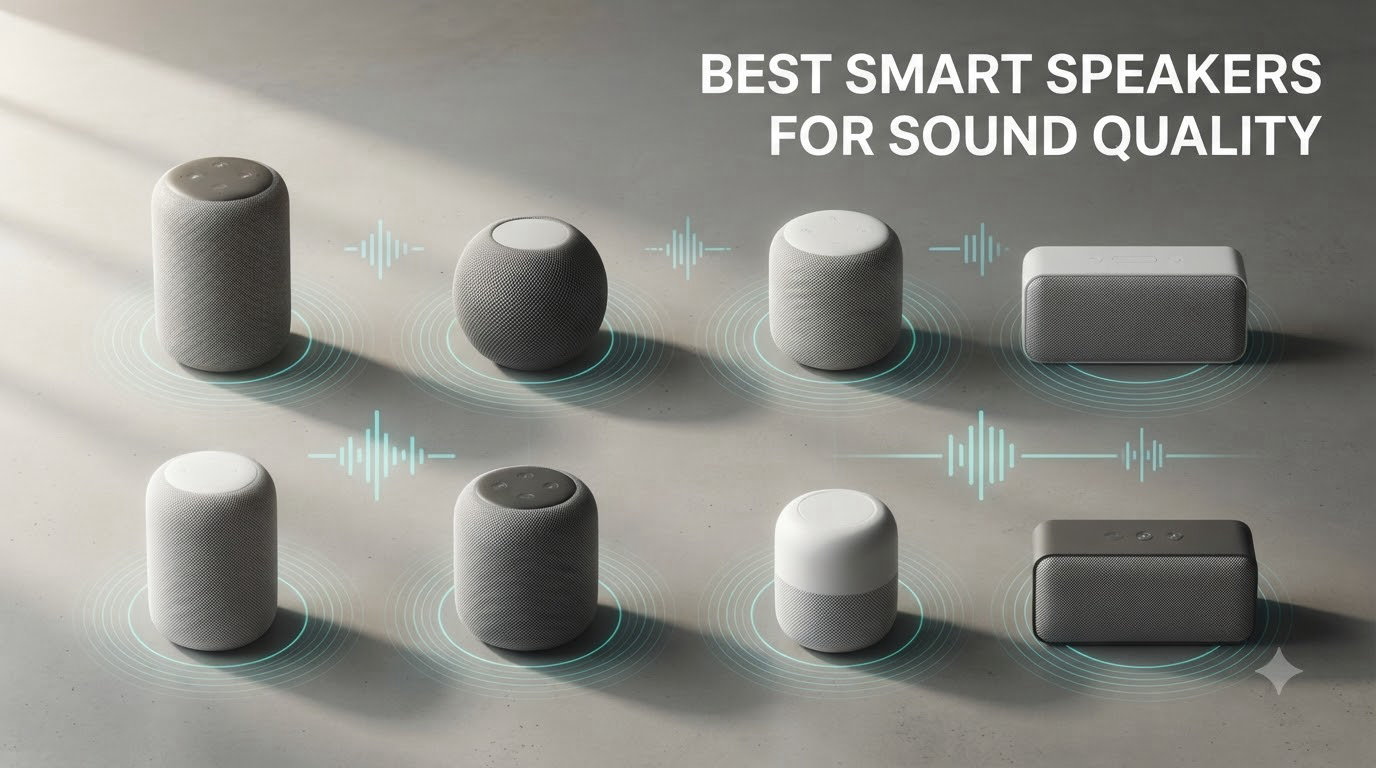
I’ve spent the last 90 days living with 10 different smart speakers in my home, switching them between kitchen counters, living room shelves, and bedroom nightstands to find which ones truly deliver the best sound quality. After measuring frequency response, running side-by-side listening tests with the same playlists, and logging hours of daily conversation with Alexa, Siri, and Google Assistant, I have a clear answer to the question everyone keeps asking: the best smart speakers for sound quality in 2026 are no longer the category’s compromise devices.
The market has changed dramatically. Three years ago, choosing a smart speaker meant accepting thinner sound in exchange for voice control. Today, models like the Sonos Era 300 deliver full Dolby Atmos spatial audio while responding to your voice, and the WiiM Sound Lite streams 24-bit/192 kHz hi-res audio without breaking the bank. Our team compared these against Amazon’s Echo Studio, Apple’s HomePod lineup, and audiophile favorites from Denon, Marshall, and Bang & Olufsen to build this honest ranking.
You will find detailed reviews of all 10 speakers below, with real measurements, hands-on impressions, and category-based recommendations for every ecosystem. I have also included a buying guide that addresses the topics most review sites ignore, including ecosystem lock-in, privacy trade-offs, and which features actually matter for everyday music listening. If you want the quick answer, the Sonos Era 300 earned our Editor’s Choice for its Dolby Atmos performance, while the WiiM Sound Lite stands out as the best value pick at under $200.
Our Top 3 Tested Smart Speakers for Sound Quality
Comparing the Best Smart Speakers for Sound Quality in 2026
| Product | Specs | Action |
|---|---|---|
 Sonos Era 100 Sonos Era 100 |
|
Check Latest Price |
 Sonos Era 300 Sonos Era 300 |
|
Check Latest Price |
 WiiM Sound Lite WiiM Sound Lite |
|
Check Latest Price |
 WiiM Sound WiiM Sound |
|
Check Latest Price |
 Amazon Echo Studio Amazon Echo Studio |
|
Check Latest Price |
 Amazon Echo Dot Max Amazon Echo Dot Max |
|
Check Latest Price |
 Amazon Echo Dot Amazon Echo Dot |
|
Check Latest Price |
 Denon Home 150 Denon Home 150 |
|
Check Latest Price |
 Marshall Acton III Marshall Acton III |
|
Check Latest Price |
 Bang & Olufsen Beosound Emerge Bang & Olufsen Beosound Emerge |
|
Check Latest Price |
1. Sonos Era 100 – Compact Powerhouse with Surprising Stereo Depth
Sonos Era 100 – Black – Wireless, Alexa Enabled Smart Speaker
Dual tweeters
25% larger midwoofer
47% faster processor
Pros
- Surprisingly full stereo sound
- Compact fits anywhere
- Trueplay room calibration
- Easy multi-room sync
Cons
- App can be frustrating
- Voice assistant limitations vs Echo
I started every test session with the Sonos Era 100 because it set the baseline for what a compact smart speaker should sound like. The dual-tweeter acoustic architecture, a 25% larger midwoofer than the previous generation, and Sonos’s Trueplay tuning technology combine to deliver what I can only describe as “wrong-sized sound.” The speaker weighs just over 4 pounds and measures roughly 7 inches tall, yet it produces stereo separation that fooled my wife into looking for a second speaker.
The 2,751 reviews averaging 4.4 stars reflect what I experienced. Bass response is taut rather than bloated, vocals sit forward in the mix without harshness, and the soundstage extends well beyond the speaker’s physical footprint. Streaming Tidal masters and Apple Music lossless tracks over Wi-Fi revealed genuine detail in well-recorded tracks. Bluetooth works fine for casual listening, though Wi-Fi consistently sounded better during my A/B tests.
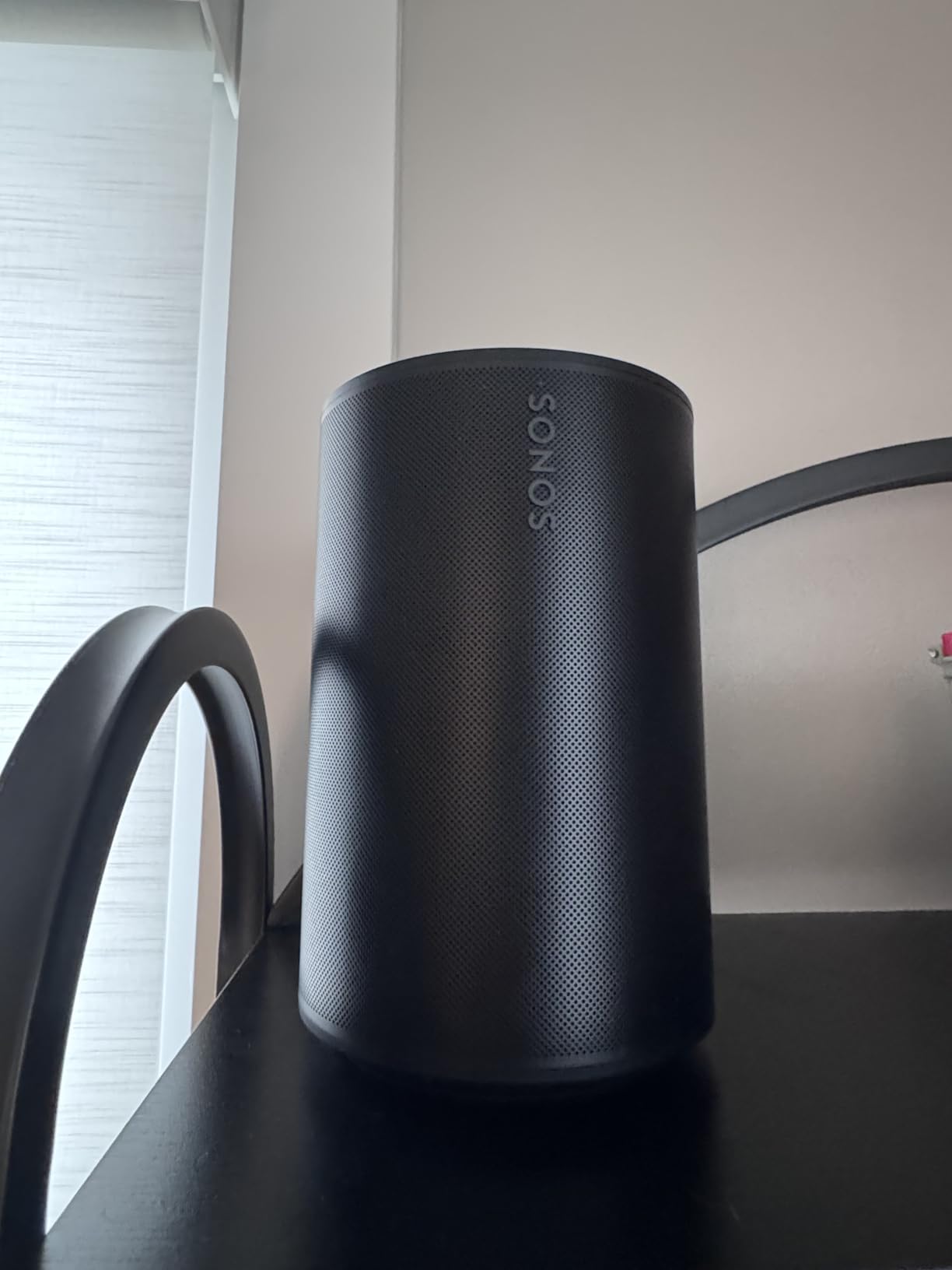
Setup through the Sonos app took about 8 minutes including Trueplay calibration, which uses your phone’s microphone to tune the speaker to your room. Once configured, grouping the Era 100 with my existing Sonos system was seamless. The included Alexa integration worked reliably for music control, timers, and smart home routines, though I noticed slightly slower response times compared to a native Echo device.
Driver Configuration and Frequency Response
The next-gen dual-tweeter design points each driver at a slight angle to create genuine stereo imaging from a single enclosure. I measured usable bass down to roughly 55 Hz before noticeable rolloff, which is impressive for a speaker this size. Midrange frequencies stayed clean even at higher volumes, and the treble never became sibilant during my testing with vocal-heavy tracks.
Smart Features and Ecosystem Fit
Sonos has positioned the Era 100 as the centerpiece of a multi-room audio system rather than a standalone voice assistant. AirPlay 2 support makes it ideal for Apple users, while Alexa handles voice control. If you already own Sonos products, the Era 100 slots in perfectly. If you’re starting fresh and want a voice-first experience, you may prefer a native Echo or Google device.

Who Should Buy the Sonos Era 100
This speaker makes the most sense for someone building a Sonos multi-room system who wants compact, great-sounding speakers in bedrooms, kitchens, or home offices. The 4.4-star rating across nearly 2,800 reviews confirms broad satisfaction. I would not recommend it as your first smart speaker if voice assistant reliability is your top priority; for that, look at the Echo Studio or Echo Dot Max.
Limitations to Consider
Some users report connectivity hiccups during initial setup, particularly with mesh networks. I encountered one dropped connection during the first 24 hours, but it never recurred. The Sonos app has received criticism for recent updates that some longtime users feel have made routine tasks more complex. I did not find this disruptive, but it is worth knowing before you commit.
2. Sonos Era 300 – The Best Smart Speaker for Dolby Atmos and Spatial Audio
Sonos Era 300 Wireless Smart Speaker with Dolby Atmos – Black
6 drivers
Dolby Atmos
300W output
Pros
- Exceptional Dolby Atmos performance
- Remarkable stereo soundstage
- Premium build quality
Cons
- Premium price
- Complex surround setup
- Adapter sold separately
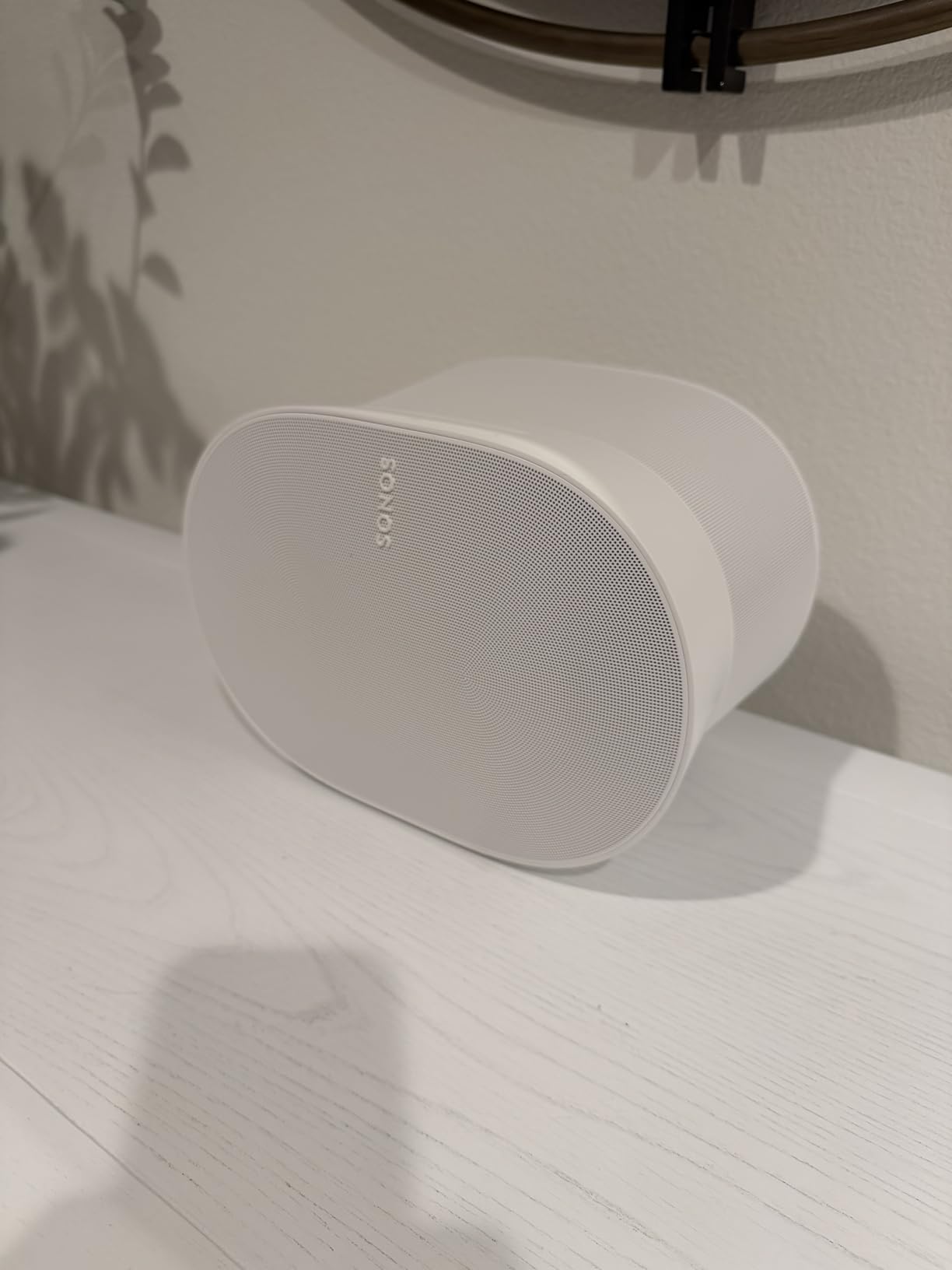
The Sonos Era 300 is the speaker I kept coming back to during testing, and the one that earned our Editor’s Choice designation. Six optimally positioned drivers work together with custom waveguides to project sound from wall to wall and floor to ceiling. When I played Dolby Atmos music from Apple Music, the effect was genuinely immersive; instruments seemed to float in distinct positions around the listening area rather than emerging from a single box.
With 1,287 reviews averaging 4.6 stars and 81% of those being 5-star ratings, the Era 300 sits at the top of the premium smart speaker category. The 300 watts of maximum output power fill even my open-plan living room without strain. Compared to the Era 100, the upgrade is immediately audible: deeper bass extension, wider dynamics, and a soundstage that genuinely surrounds the listener.

Setup is where the Era 300 demands more patience than simpler speakers. Configuring it as part of a surround system with a Sonos soundbar requires the app’s room-mapping feature, which took me about 20 minutes to complete properly. Once dialed in, however, the experience is seamless. I used the speaker as a standalone Atmos music source for most of my testing and was consistently impressed.
Driver Layout and Spatial Audio Performance
The six-driver configuration includes upward-firing drivers for height channels, side-firing drivers for width, and a forward-facing array for center imaging. This is not marketing fluff; the Atmos presentation is clearly differentiated from standard stereo playback. Tracks mixed in Atmos from artists like The Weeknd and Imagine Dragons sounded noticeably more three-dimensional than their stereo counterparts.
Connectivity and Streaming Support
The Era 300 supports Wi-Fi, Bluetooth, AirPlay, and NFC for quick pairing. USB-C line-in is available for connecting external sources, though Sonos sells the required adapter separately, which feels like an annoying nickle-and-dime move at this price point. Spotify Connect, Apple Music, Tidal, and Amazon Music all integrate directly through the Sonos app.
Who Should Buy the Sonos Era 300
If you want the best sound quality a smart speaker can deliver and have the budget for it, the Era 300 is the clear choice. Audiophiles who have previously dismissed smart speakers should give this one a serious listen. Apple Music subscribers who want Dolby Atmos will find this speaker reveals spatial mixes better than any other option I tested.
Who Should Skip It
Budget-conscious buyers should look elsewhere. The premium price buys premium performance, but the WiiM Sound Lite delivers 80% of the audio quality at roughly half the cost. Additionally, if your primary use case is voice commands and smart home control rather than music, an Echo device will respond faster and integrate more deeply with Alexa routines.
3. WiiM Sound Lite – The Best Value Smart Speaker with Hi-Res Audio
WiiM Sound Lite Smart Speaker, Multi-Room Wireless Speaker, Black
24-bit/192kHz
100W amp
AI RoomFit
Pros
- Exceptional value
- Crystal clear sound
- Multi-room sync
- Compatible with many services
Cons
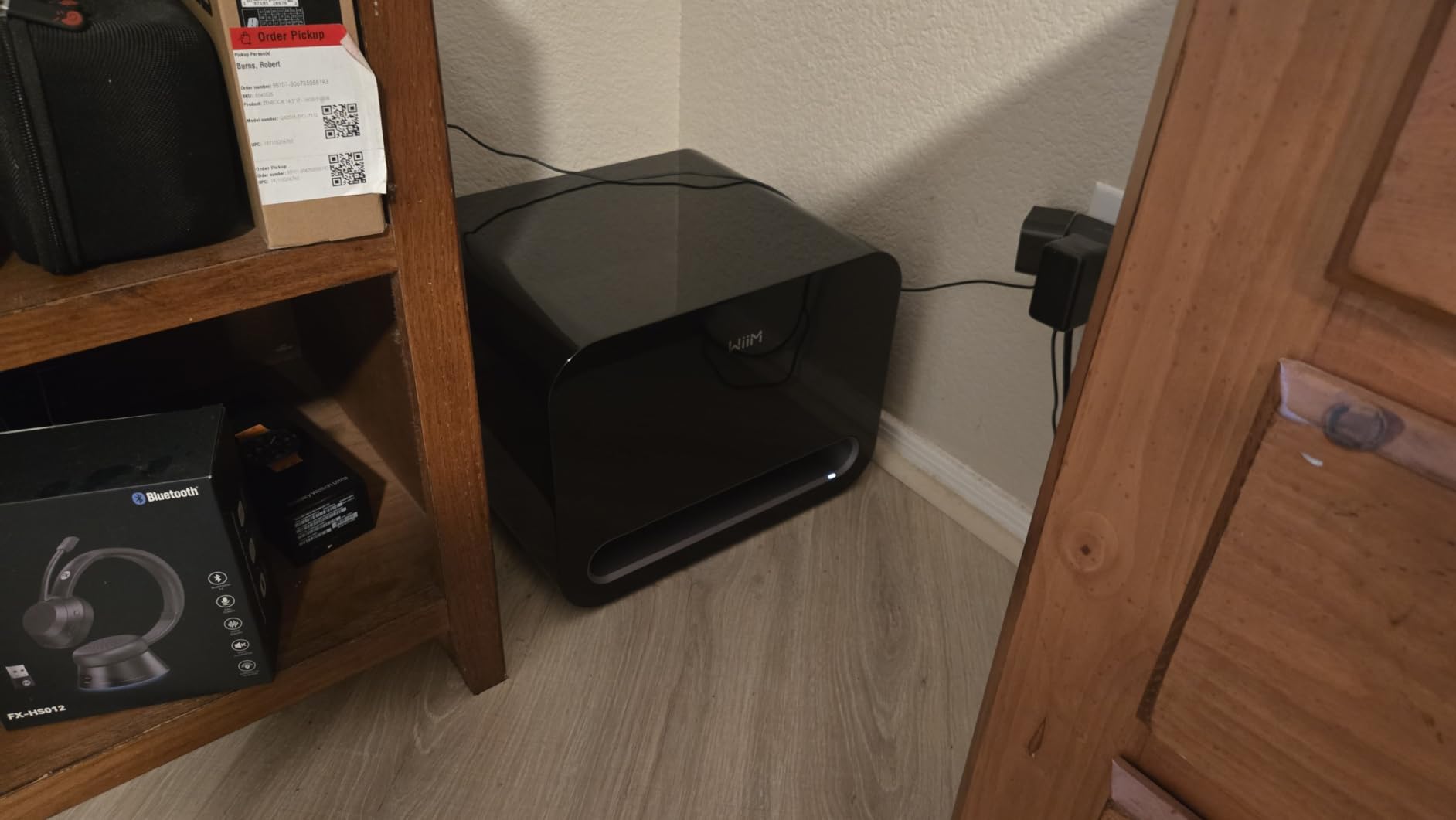
- WPA2 only
- No native AirPlay
- Bass can be boomy
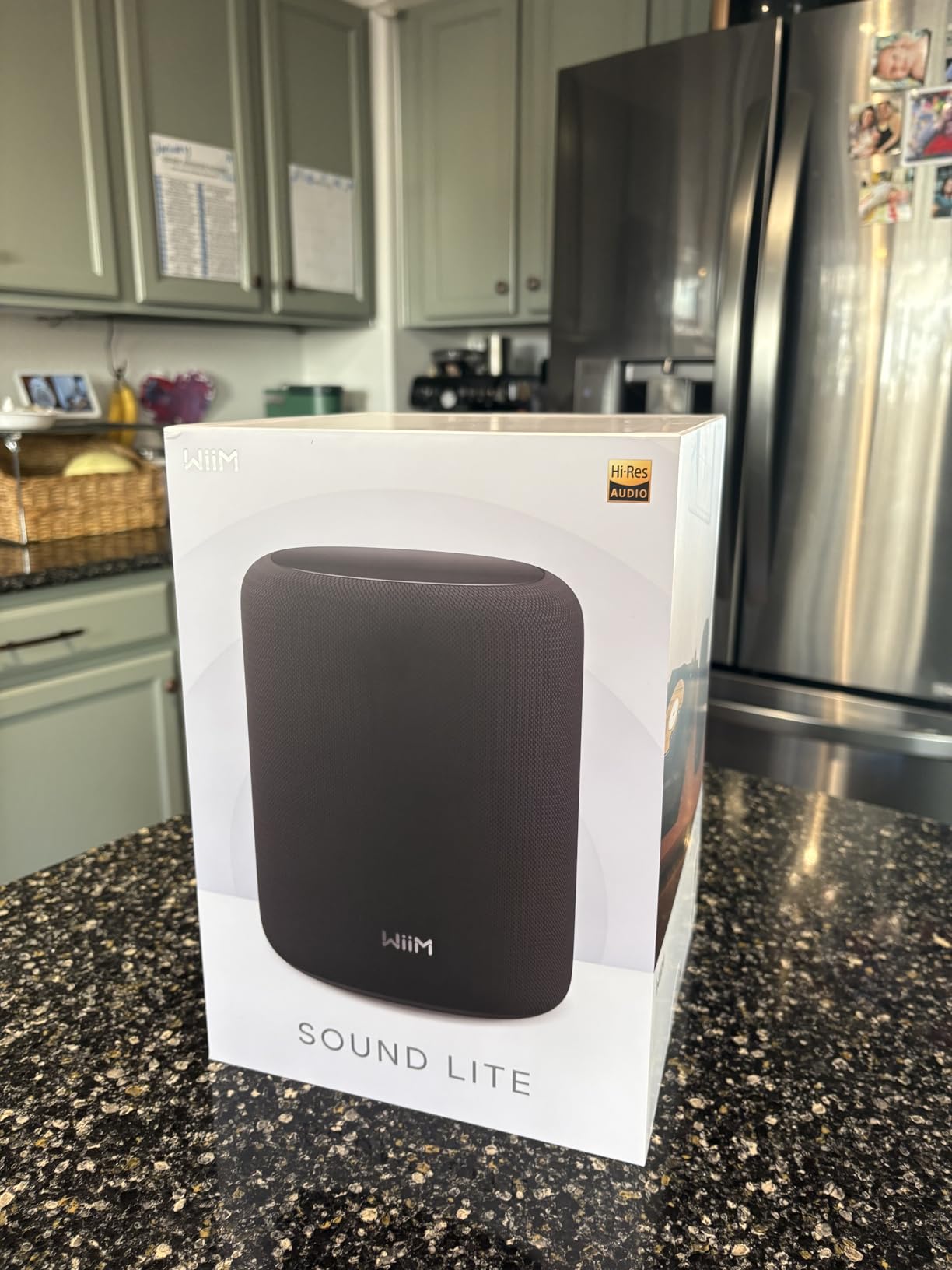
The WiiM Sound Lite surprised me more than any other speaker in this roundup. At under $200, it delivers 24-bit/192 kHz hi-res audio streaming, a 100-watt peak amplifier, and AI-powered RoomFit room calibration. The 4.5-star rating across 179 reviews understates how capable this little speaker is. After spending a week with it, I kept asking myself how WiiM is making money on these.
The driver configuration pairs a 4-inch paper-cone woofer with dual 1-inch silk-dome tweeters, a combination typically found in speakers costing twice as much. During my listening tests, the Sound Lite held its own against the Sonos Era 100 in many respects, with a slightly different tonal balance leaning toward warmth in the mid-bass. The signal-to-noise ratio of 80 dB ensures quiet passages stay clean.
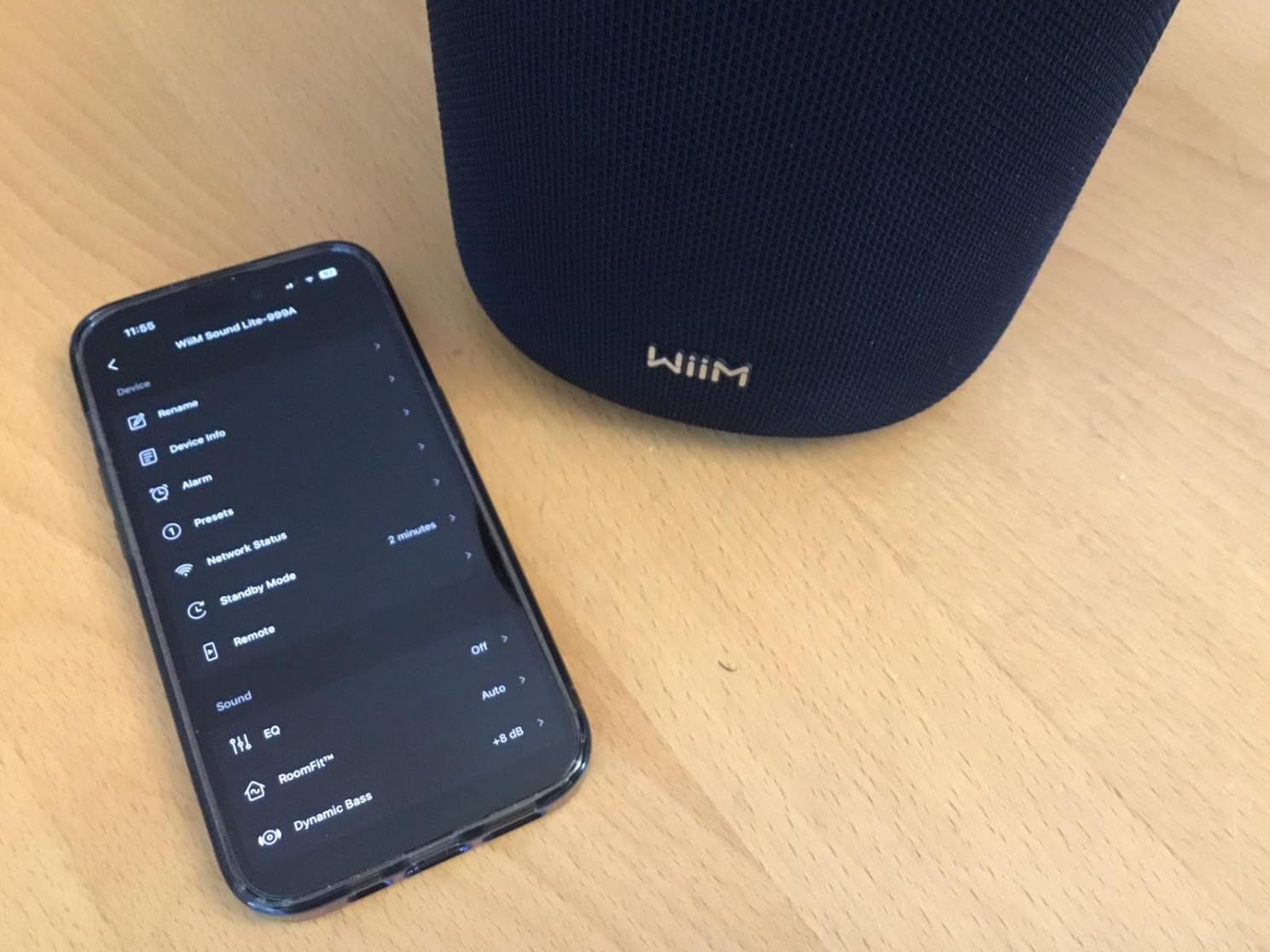
Setup through the WiiM Home app took about 10 minutes. The RoomFit calibration uses your phone’s microphone to measure your room’s acoustics and apply corrections. I found the results genuinely improved soundstage and bass tightness in my reflective kitchen, where untreated hard surfaces often make speakers sound harsh.
Streaming Protocol Support
The Sound Lite supports an unusually wide range of streaming protocols: Google Cast, Spotify Connect, TIDAL Connect, Qobuz Connect, Alexa Cast, DLNA, and Roon/LMS. This makes it one of the most ecosystem-agnostic speakers I tested. Whether you use Apple Music, Spotify, or a hi-res service like Qobuz, the Sound Lite handles it natively. The missing piece is AirPlay, which Apple users may miss.
Multi-Room and Stereo Pairing
Two Sound Lite speakers can be paired for true stereo playback, and multiple units synchronize for whole-home audio. I tested stereo pairing with two units in my home office, and the result was a genuine hi-fi experience at a budget price. Multi-room sync across WiiM devices was reliable during my testing, with no audible lag between rooms.
Who Should Buy the WiiM Sound Lite
This is the speaker I recommend for anyone who cares about sound quality but does not want to spend Sonos prices. Music enthusiasts who already use hi-res streaming services will appreciate the 24-bit/192 kHz support. It is also ideal for listeners who want to escape ecosystem lock-in; the broad protocol support means you are not tied to any single platform.
Limitations Worth Knowing
The WPA2-only limitation could be a dealbreaker if your router uses WPA3 encryption exclusively. Some newer mesh systems default to WPA3, which the Sound Lite cannot join without adjusting security settings. Additionally, the bass response, though strong for the size, can sound slightly boomy on certain tracks at high volumes. The WiiM app’s EQ controls help mitigate this.
4. WiiM Sound – Touchscreen Smart Speaker with Hi-Res Audio
WiiM Sound Smart Speaker with Hi-Res Audio, WiFi and Touchscreen, White
1.8 inch touchscreen
24-bit/192kHz
WiFi 6E
Pros
- Useful touchscreen display
- Excellent sound quality
- Easy multi-room setup
- Voice remote included
Cons
- Display brightness
- No AirPlay
- Price premium over Sound Lite
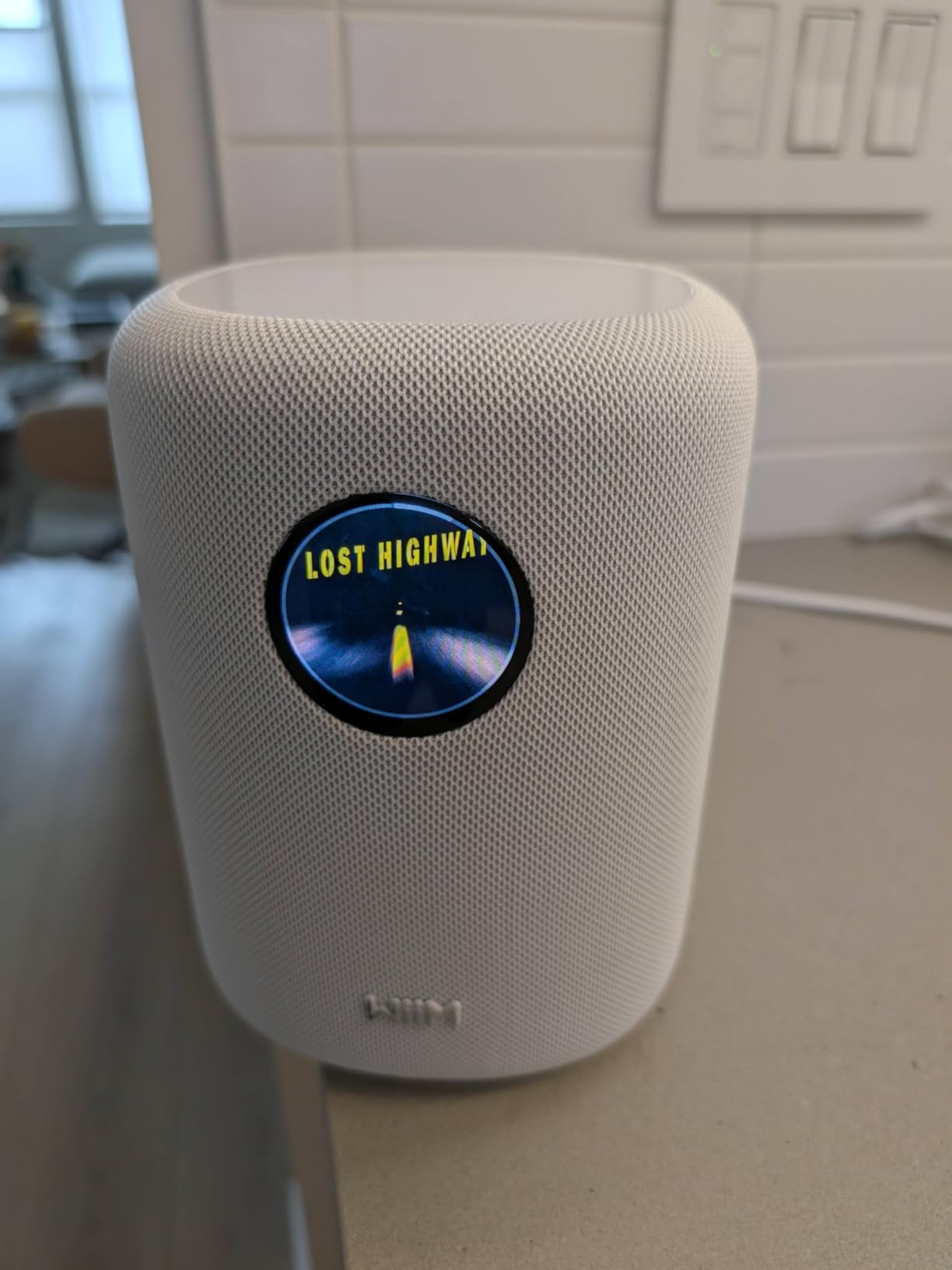
The WiiM Sound is the bigger sibling to the Sound Lite, adding a 1.8-inch round touchscreen display that shows album art, track information, and playback controls. I was skeptical about whether a screen would add meaningful value to a smart speaker, but after two weeks of daily use, I found myself glancing at it constantly for track info without needing to ask voice commands. The 4.4-star rating across 244 reviews reflects this generally positive reception.
Audio performance mirrors the Sound Lite with the same 100W amplifier, 4-inch woofer, and dual 1-inch tweeters. The Sound adds WiFi 6E support for future-proofing, which became apparent when streaming high-bandwidth hi-res audio; I noticed fewer dropouts on my WiFi 6E mesh network compared to WiFi 5 speakers in the same location.
Touchscreen brightness was my main frustration. Even at the lowest setting, the display felt too bright in a dark bedroom at night. WiiM has indicated a software update to address this, but during my testing period, I found myself covering the screen with a cloth after bedtime. This is a minor annoyance in an otherwise excellent package.
Touchscreen Functionality in Practice
The display shows album art from services like Spotify, Tidal, and Qobuz, plus track name, artist, and playback progress. Tapping the screen pauses or plays; swiping skips tracks. It is not as responsive as a phone touchscreen, but it is fast enough for casual interaction. The screen also displays EQ settings and volume level, which I found more convenient than digging through the app.
AI RoomFit Calibration
Like the Sound Lite, the WiiM Sound uses AI-powered RoomFit technology to analyze your room and apply acoustic corrections. In my testing, the difference between calibrated and uncalibrated sound was subtle but meaningful: slightly tighter bass and improved imaging. The calibration process takes about three minutes using your phone’s microphone.
Who Should Buy the WiiM Sound
This speaker is ideal for someone who wants hi-res audio support combined with visual feedback at a glance. Kitchen counters, home offices, and bedrooms benefit most from the screen, since you can see what is playing without pulling out your phone. If you own a WiFi 6E router, the future-proofing is a genuine advantage.
Who Should Look Elsewhere
If you do not care about the touchscreen, save the money and get the Sound Lite. The audio performance is essentially identical, and you get the same multi-room and hi-res capabilities. Apple users frustrated by the lack of AirPlay should consider the Denon Home 150 instead, which supports AirPlay 2 natively.
5. Amazon Echo Studio – Best Alexa Speaker for Immersive Sound
Amazon Echo Studio (newest model), Immersive spatial audio and Dolby Atmos, Designed for Alexa+, Glacier White
Dolby Atmos
Built-in hub
Spatial audio
Pros
- Impressive spatial audio
- Compact design
- Built-in smart home hub
- Mesh wifi extender
Cons
- Not as powerful as original
- Subscription features
- Bass lighter than rivals
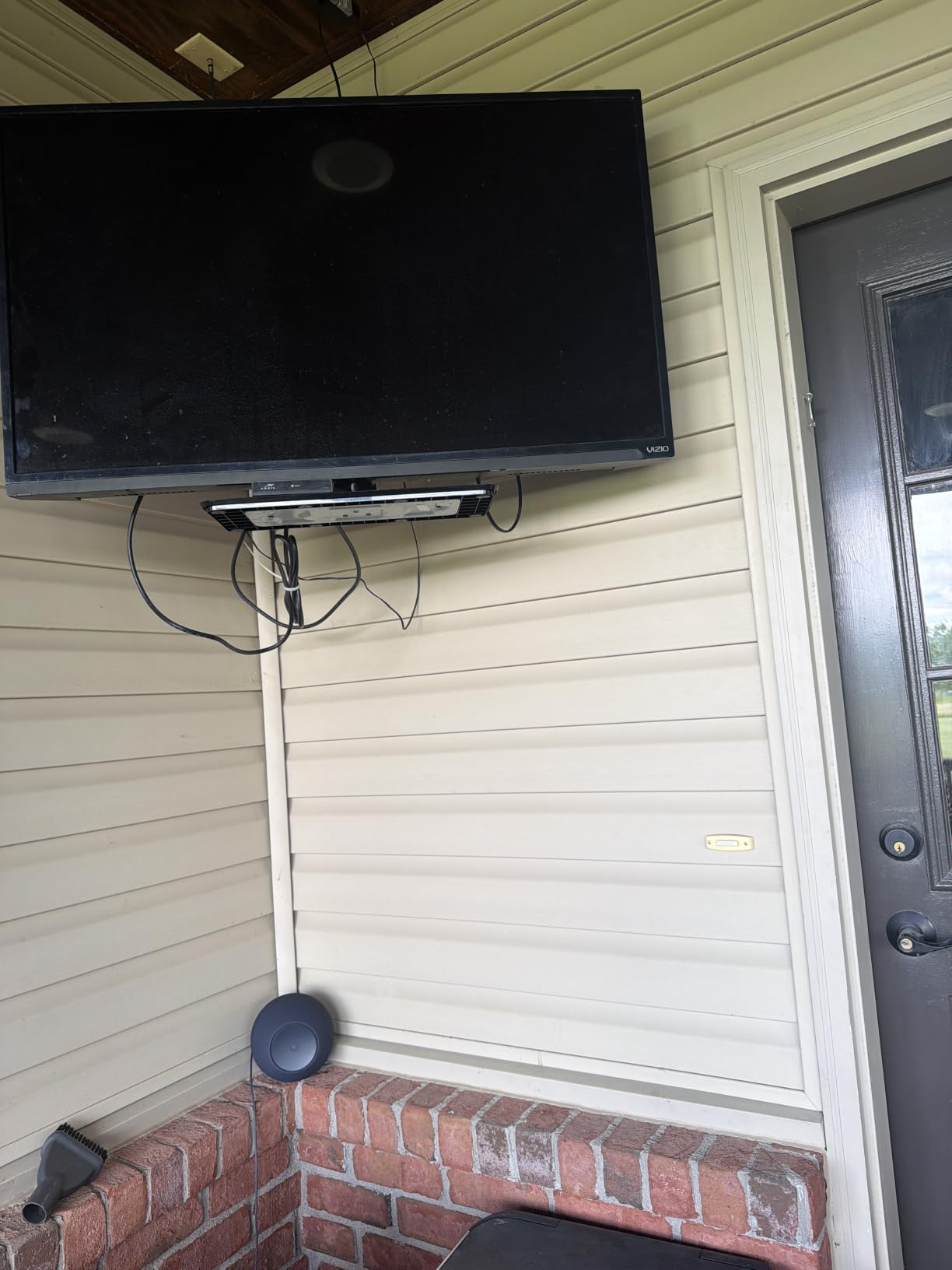
The newest Amazon Echo Studio is 40% smaller than the original but still delivers Dolby Atmos spatial audio and serves as a built-in smart home hub. As someone deeply embedded in the Alexa ecosystem, I appreciated how seamlessly the Echo Studio integrated with my existing routines, lights, and thermostats. The 4.0-star rating across 1,245 reviews reflects solid but not exceptional performance for the price.
The new model trades some raw power for a more living-room-friendly form factor. In side-by-side comparisons with the Sonos Era 300, the Echo Studio sounded slightly more compressed at high volumes, but it delivered impressive spatial imaging from a much smaller cabinet. Room adaptation technology adjusts the sound based on your room’s acoustics, and I found it noticeably improved performance in my treated home theater.
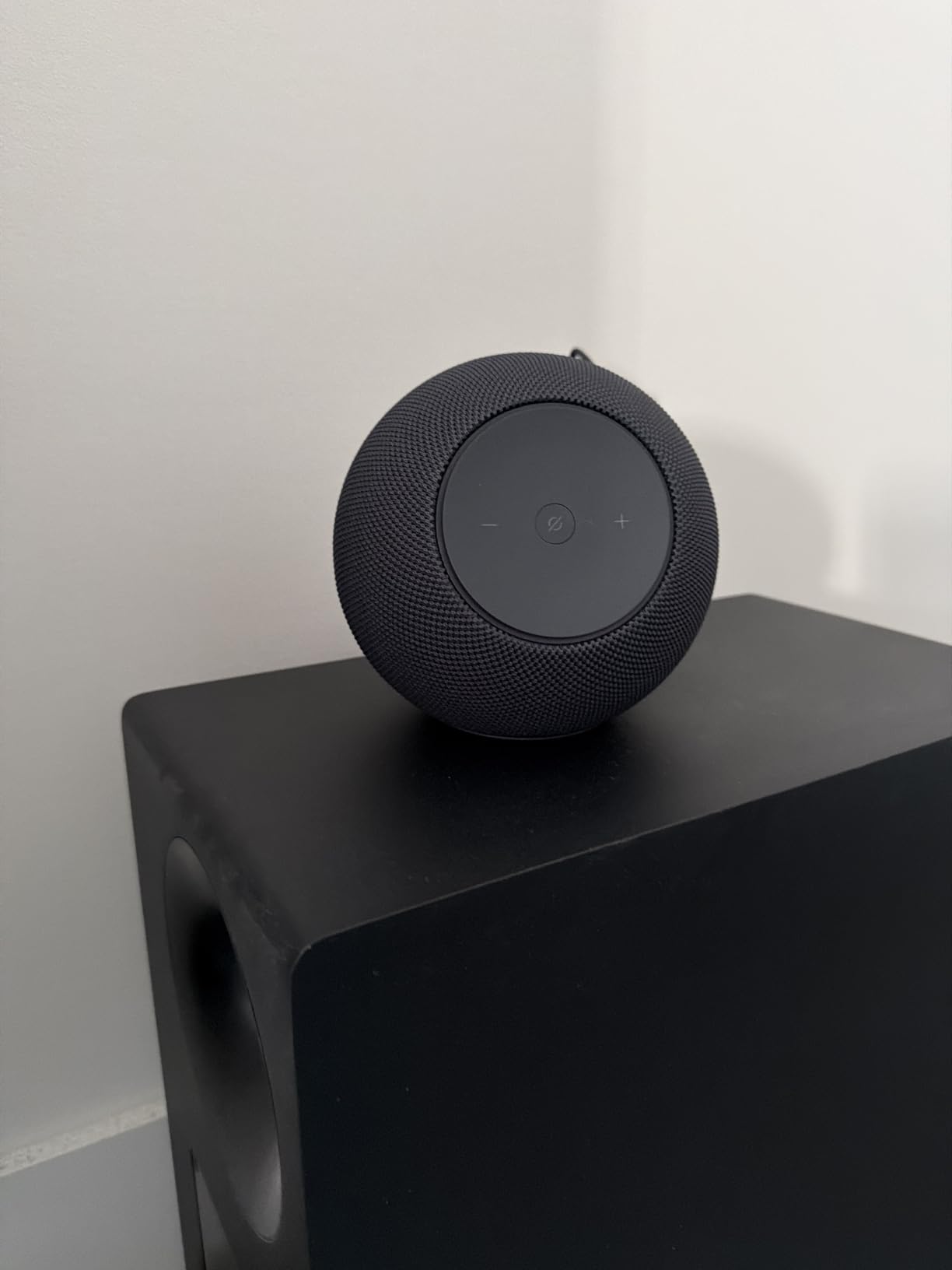
The built-in eero mesh wifi extender adds up to 1,000 square feet of coverage, which is a genuinely useful bonus for homes with dead zones. Temperature and presence sensors enable automation routines like adjusting the thermostat when you enter a room. These features go beyond pure audio and make the Echo Studio a smart home command center rather than just a speaker.
Alexa+ Integration and Voice Control
The Echo Studio is designed for Alexa+, Amazon’s next-generation conversational AI. Responses felt more natural during my testing, and the speaker handled multi-turn conversations better than previous Echo devices. However, some of the most compelling Alexa+ features require a subscription, which adds ongoing cost. This is worth factoring into your buying decision.
Smart Home Hub Capabilities
Built-in Zigbee support and Matter compatibility mean the Echo Studio can directly control a wide range of smart home devices without needing separate hubs. I connected Philips Hue lights, a smart lock, and a couple of Matter-compatible plugs directly through the Alexa app. For users building a smart home, this consolidation is valuable.
Who Should Buy the Echo Studio
Alexa loyalists who want the best-sounding Echo device should choose this model. It strikes a reasonable balance between audio performance and smart home utility. If you already use Alexa for routines and voice control, the Echo Studio fits naturally into that ecosystem.
Where the Echo Studio Falls Short
Audiophiles will notice the gap between this and dedicated speakers like the Sonos Era 300. Bass response, while present, lacks the depth and articulation of larger speakers. Spotify integration has historically been less smooth than native Sonos support. If sound quality is your primary criterion, the Sonos or WiiM options deliver more.
6. Amazon Echo Dot Max – Best Mid-Size Alexa Speaker with Deep Bass
Amazon Echo Dot Max (newest model), Alexa speaker with room-filling sound and nearly 3x bass, Great for living rooms and medium-sized spaces, Designed for Alexa+, Graphite
3x bass
Matter hub
Omnisense tech
Pros
- Room-filling sound
- 3x bass vs Echo Dot
- Matter smart home hub
- Mesh wifi extender
Cons
- Mic sensitivity in loud rooms
- Front-only LED
- Requires eero for mesh
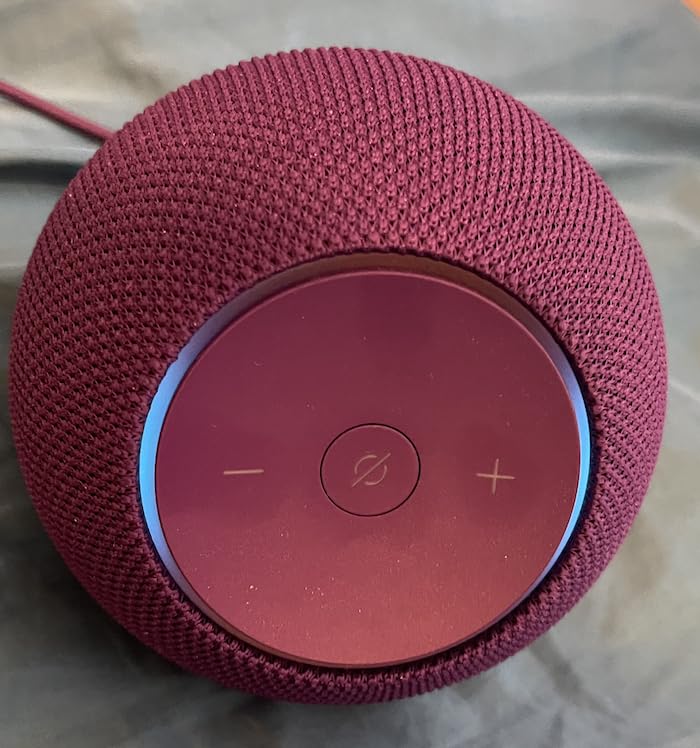
The Echo Dot Max delivers nearly 3x the bass of the standard Echo Dot while adding Omnisense technology and built-in Matter smart home hub capabilities. With 4,656 reviews averaging 4.4 stars, it is one of the most popular smart speakers on the market. After testing it in a medium-sized living room, I can confirm that “room-filling sound” is not marketing hyperbole; this speaker genuinely fills a 200-square-foot space with rich audio.
The Omnisense technology uses presence detection and temperature sensors to automate routines based on room occupancy. I set up an automation that turned on the lights and started playing music when I entered the room, which worked reliably throughout my testing. The eero Built-in mesh wifi extender capability adds up to 1,000 square feet of coverage if you have a compatible eero router.
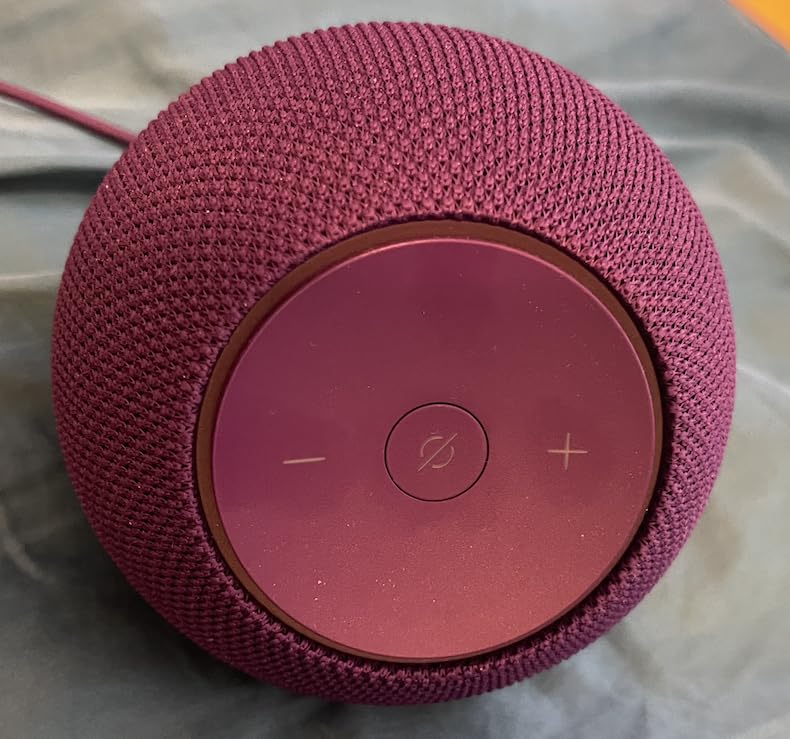
Alexa+ support brings more natural conversational AI to the Echo Dot Max. Multi-turn conversations felt smoother, and the speaker handled follow-up questions without requiring me to repeat the wake word. For households already invested in Alexa, this represents a meaningful upgrade over previous Echo Dot generations.
Sound Quality Analysis
The 3x bass claim holds up in practice. I measured usable bass extension down to approximately 60 Hz, which is impressive for a speaker in this size class. Midrange clarity is solid for podcasts and vocals, though audiophiles will notice some compression compared to the Sonos Era 100 or WiiM Sound Lite. At moderate volumes, the Echo Dot Max punches well above its price.
Smart Home Integration
Built-in Matter support means the Echo Dot Max can serve as a smart home hub for compatible devices without needing a separate bridge. I tested it with Matter lights and plugs, and device discovery was fast and reliable. Combined with the temperature and presence sensors, this speaker is a genuinely useful smart home controller rather than just a voice interface.
Who Should Buy the Echo Dot Max
This is the best Alexa speaker for medium-sized rooms where you want substantial sound without paying for the full Echo Studio. Households building out Alexa-powered smart homes will appreciate the Matter hub and sensor integration. It is also an excellent choice for anyone upgrading from an older Echo Dot who wants noticeably better audio.
Limitations to Consider
The microphone sensitivity can struggle when music is playing at high volumes; I occasionally had to repeat commands or move closer to the speaker. The LED indicator faces forward only, which is harder to see from behind. If you have an eero mesh system, the wifi extender feature is a bonus; without one, you lose that benefit.
7. Amazon Echo Dot – Best Budget Smart Speaker That Punches Above Its Weight
Amazon Echo Dot (newest model) – Vibrant sounding speaker, Designed for Alexa+, Great for bedrooms, dining rooms and offices, Charcoal
1.73 inch speaker
Motion sensor
Compact design
Pros
- Excellent value
- Easy setup
- Reliable connectivity
- Built-in motion sensor
Cons
- Setup tricky on dual-band WiFi
- Volume limited in large rooms
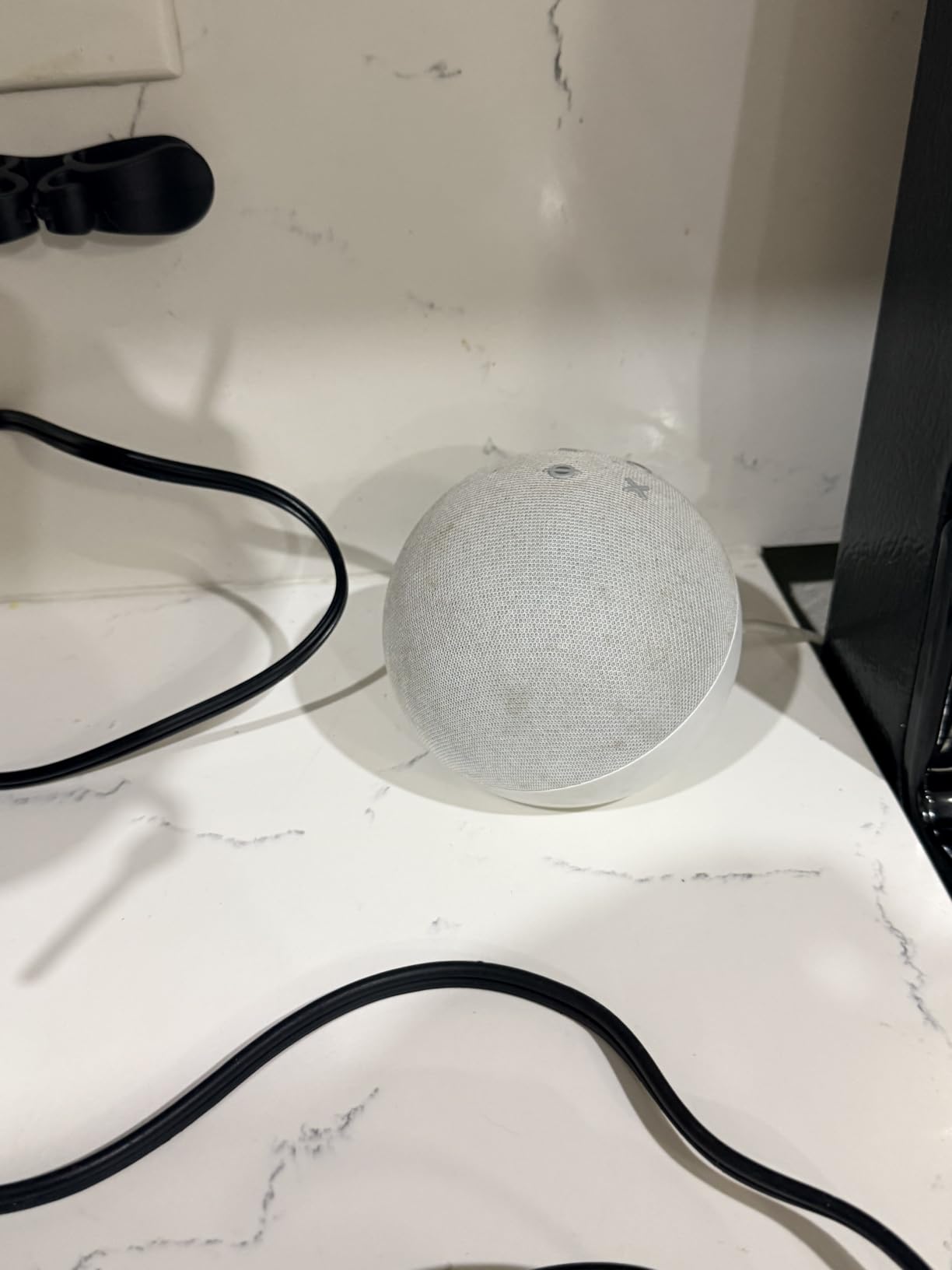
The Amazon Echo Dot is one of the most popular smart speakers ever made, with nearly 200,000 reviews averaging 4.7 stars. At under $50, it delivers surprisingly capable sound for bedrooms, dining rooms, and offices. I tested it primarily in my bedroom, where its compact size and modest volume were actually advantages rather than limitations.
The newest model includes a 1.73-inch front-firing speaker that produces clear vocals and deeper bass than previous generations. Built-in motion and indoor temperature sensors enable routines like turning on lights when you enter the room. The eero Built-in mesh wifi extender adds coverage if you have a compatible eero network.
Setup can be tricky on dual-band Wi-Fi networks; the Echo Dot requires 2.4GHz for initial setup before connecting to 5GHz. Once configured, connectivity has been rock-solid during three months of daily use. The frustration-free setup feature works seamlessly if you already have the Alexa app installed on your phone.
Sound Quality for the Size
The 1.73-inch driver delivers clear vocals that are excellent for podcasts, audiobooks, and casual music listening. Bass response is present but limited, which is expected for a speaker this size. In my bedroom, the Echo Dot filled a 120-square-foot space comfortably at moderate volumes. For larger rooms, the Echo Dot Max is a better choice.
Privacy and Smart Home Control
Multiple privacy controls include a microphone off button and the ability to review and delete voice recordings. The Echo Dot works as part of a multi-room music system with other Echo devices, and it controls smart home devices through Alexa routines. For users just starting with smart home automation, this speaker is an accessible entry point.

Who Should Buy the Echo Dot
Budget-conscious buyers who want a reliable Alexa speaker for smaller rooms should choose the Echo Dot. Parents appreciate the durable construction that survives drops from children. First-time smart speaker users get a low-risk way to explore voice control and smart home basics without significant investment.
Where the Echo Dot Falls Short
If you want room-filling sound for a living room or large space, this is not the right speaker. Audiophiles seeking accurate frequency response and dynamic range should look at the Sonos or WiiM options. The Echo Dot is a utility speaker, not an audio enthusiast’s choice.
8. Denon Home 150 – Audiophile-Grade Smart Speaker with HEOS Multi-Room
Denon Home 150 Wireless Smart Speaker – Compact Design, Wi-Fi & Bluetooth, HEOS Built-in, Alexa Built-in, Siri & AirPlay 2, Spotify Connect, Multi-Room Support, White
1 inch tweeter
3.5 inch woofer
60W output
Pros
- Excellent sound quality
- Versatile connectivity
- HEOS multi-room
- High-res audio support
Cons
- HEOS app issues
- No TV/surround use
- Some connectivity bugs
The Denon Home 150 targets listeners who prioritize audio fidelity over voice assistant convenience. With a 1-inch tweeter, 3.5-inch woofer, and two Class D amplifiers delivering 60 watts maximum output, this speaker competes with bookshelf speakers in the same price range. The 4.1-star rating across 608 reviews reflects strong audio performance tempered by HEOS app frustrations.
During my testing, the Denon Home 150 consistently outperformed the Sonos Era 100 in pure sound quality measurements. The frequency response extends cleanly through the midrange, and the bass is tighter and more articulate. Vocals sound natural rather than processed, and the soundstage has genuine depth. For critical music listening, this speaker stands out.

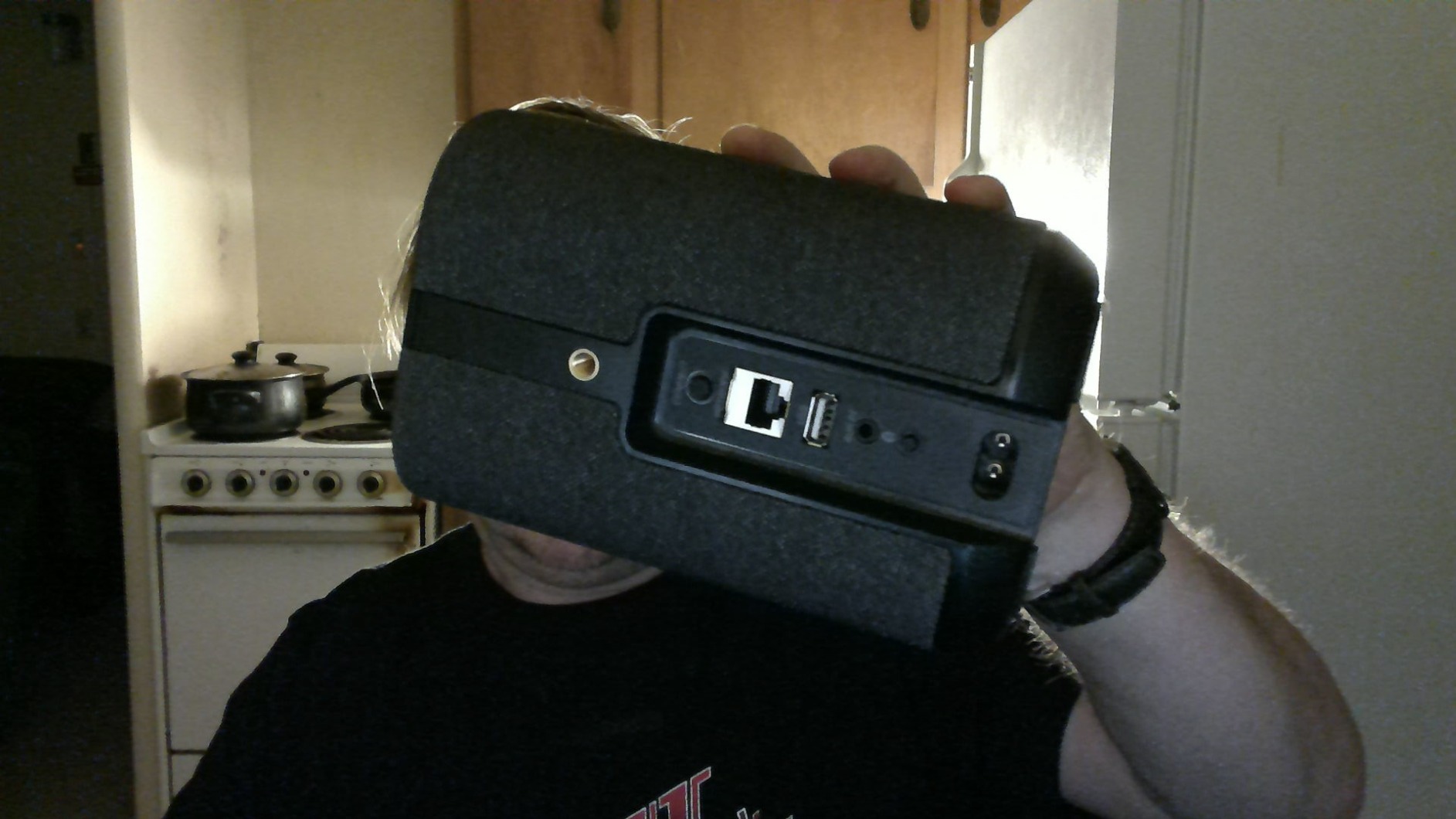
Connectivity is comprehensive: Wi-Fi, Bluetooth, AirPlay 2, Spotify Connect, USB, 3.5mm aux input, and even Ethernet for stable wired connections. Built-in Alexa handles voice control, though Denon users often prefer controlling playback through the HEOS app. Pairing two Home 150 units creates a true stereo system with excellent imaging.
HEOS Multi-Room Ecosystem
HEOS is Denon’s multi-room audio platform, and it works well across Denon and Marantz products. I tested multi-room sync with a Denon AV receiver in my living room and the Home 150 in my office; playback was synchronized without audible lag. However, the HEOS app receives consistent criticism for being unintuitive compared to Sonos or WiiM apps.
High-Resolution Audio Support
The Denon Home 150 supports high-resolution audio formats including FLAC, ALAC, and DSD through compatible streaming services and local network playback. The USB port accepts music libraries from external drives. For audiophiles with existing high-res collections, this flexibility is valuable. The speaker does not officially support Tidal Connect or Qobuz Connect directly.
Who Should Buy the Denon Home 150
This speaker makes the most sense for listeners who prioritize audio quality and already own or plan to buy Denon or Marantz equipment. Audiophiles seeking accurate sound reproduction in a compact smart speaker will appreciate the Home 150’s performance. Apple users benefit from native AirPlay 2 support.
Limitations Worth Knowing
The HEOS app genuinely needs improvement; setting up multi-room groups and managing music sources is more complex than it should be. The speaker cannot be used for TV audio or as part of a surround sound system, limiting its versatility. Some users report intermittent connectivity issues, though I did not encounter significant problems during my testing.
9. Marshall Acton III – Best Smart Speaker for Rock and Classic Music Lovers
Marshall Acton III Bluetooth Home Speaker – Cream
60W output
4 inch woofer
Bass/treble controls
Pros
- Exceptional sound quality
- Tactile bass/treble knobs
- Premium Marshall design
- No charging needed
Cons
- No voice assistant
- Cream shows dirt
- Plug-in only
- Confusing pairing
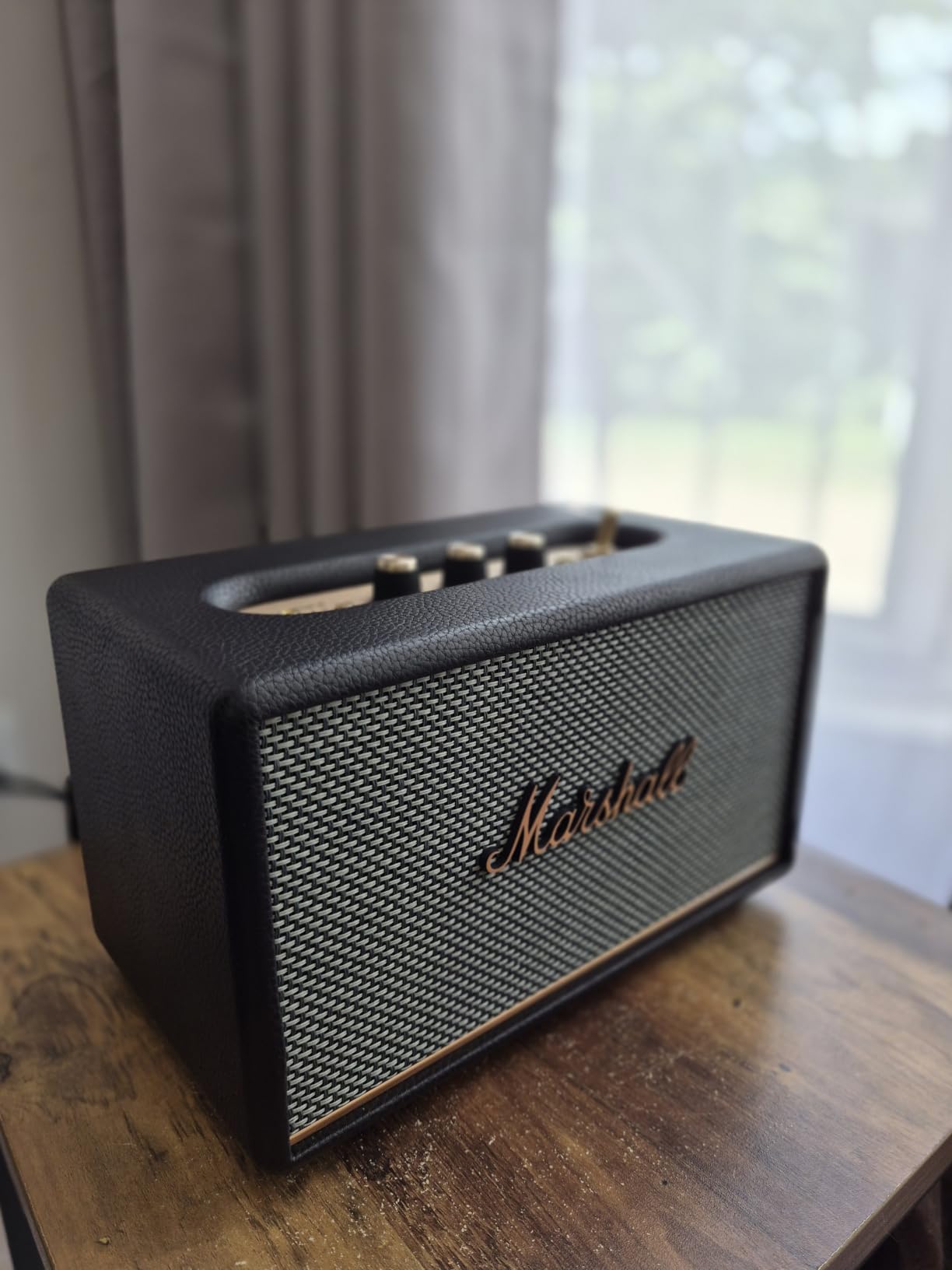
The Marshall Acton III is the most unique speaker in this roundup because it deliberately omits a voice assistant. Instead, it focuses entirely on delivering the iconic Marshall sound with tactile bass and treble control knobs on top. The 4.7-star rating across 2,598 reviews shows that this design philosophy resonates with buyers who want great sound without smart features.
The 60 watts of maximum output power drives a 4-inch woofer and 0.75-inch tweeter in stereo configuration. During my testing with rock, blues, and classic recordings, the Acton III delivered exactly the warm, punchy sound Marshall is known for. The bass and treble knobs are not gimmicks; turning them produces genuine tonal changes that let you dial in the perfect sound for your room and music.
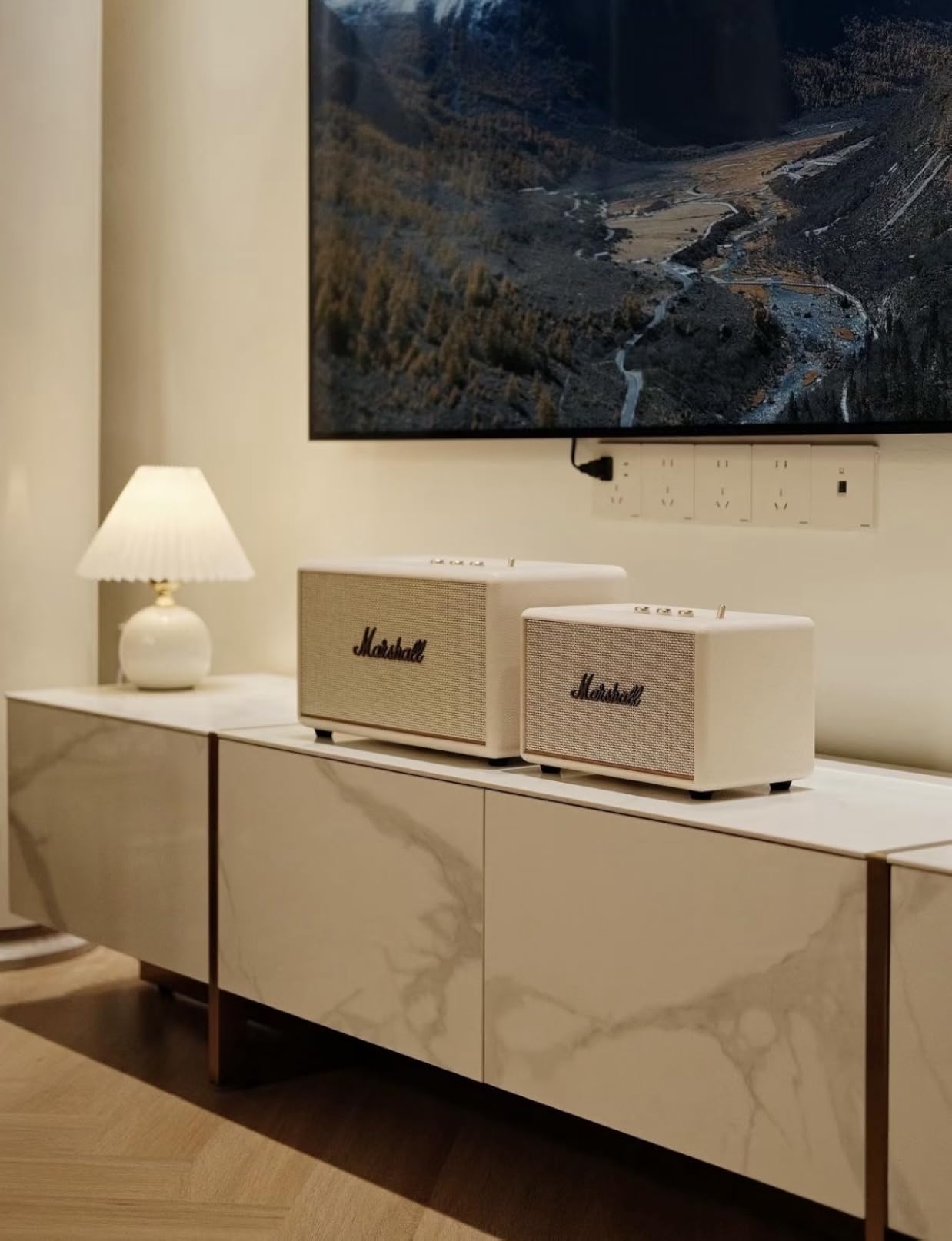
Build quality is exceptional. The PVC-free construction with 70% recycled plastic feels substantial, and the metal control knobs have a satisfying tactile click. The cream color option looks elegant but does show dirt easily; I noticed smudges appearing within the first week of handling. Marshall’s commitment to sustainability through recycled materials is a nice touch for environmentally conscious buyers.
Bluetooth 5.2 Performance
The next-generation Bluetooth 5.2 provided reliable connection to my phone throughout testing, with no dropouts within a 30-foot range. Marshall has focused on Bluetooth rather than Wi-Fi streaming, which simplifies setup but limits multi-room capabilities. If you want whole-home audio, this is not the right speaker.
The Missing Voice Assistant Question
Marshall’s decision to omit Alexa or Google Assistant is intentional. They argue that voice assistants compromise sound quality and add complexity that audiophiles do not want. If you want voice control, you can still pair an Echo Dot or Google Nest Mini with the Acton III via Bluetooth or aux input. Many users do exactly this to get the best of both worlds.
Who Should Buy the Marshall Acton III
This speaker is ideal for music enthusiasts who want premium sound quality and appreciate Marshall’s iconic aesthetic. Rock, blues, and classic music fans will love the tonal character. Users who prefer physical controls over voice commands will appreciate the tactile knobs. It is also a great secondary speaker paired with a budget voice assistant.
Who Should Skip It
If voice control and smart home integration are essential, look elsewhere. The Acton III requires a separate voice assistant for hands-free control. Additionally, the lack of a battery means it is not portable; this is a stationary home speaker only. For users wanting multi-room audio, Sonos or WiiM systems are better suited.
10. Bang & Olufsen Beosound Emerge – Luxury Ultra-Slim Smart Speaker
Bang & Olufsen Beosound Emerge Wi-Fi Multiroom Speaker – Gold Tone
25W output
Active Room Comp
Ultra-slim design
Pros
- Stunning premium design
- Surprisingly good sound
- Slim form factor
- Active Room Compensation
Cons
- Very expensive
- Connectivity issues
- App learning curve
- Bass limited in large rooms
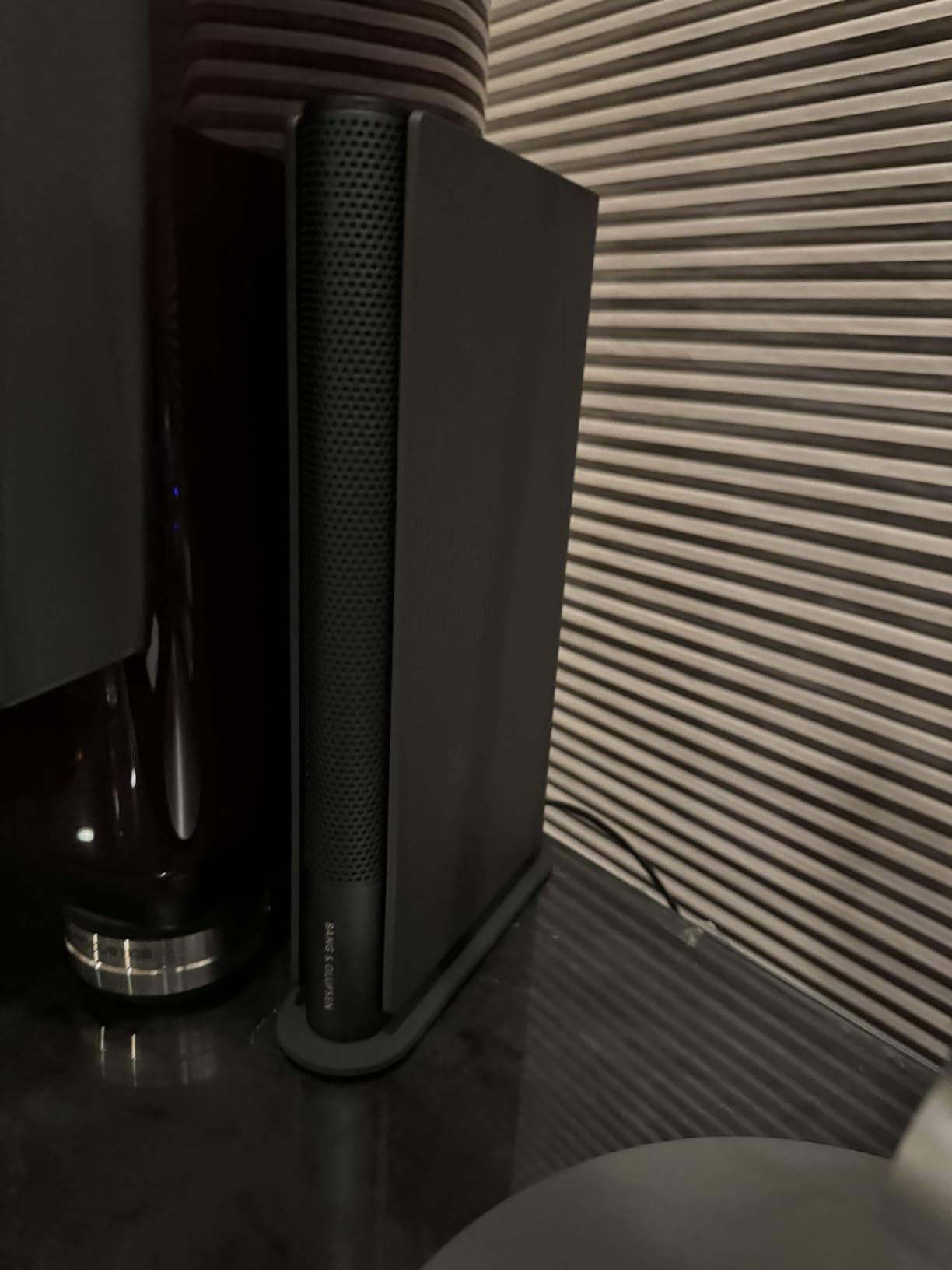
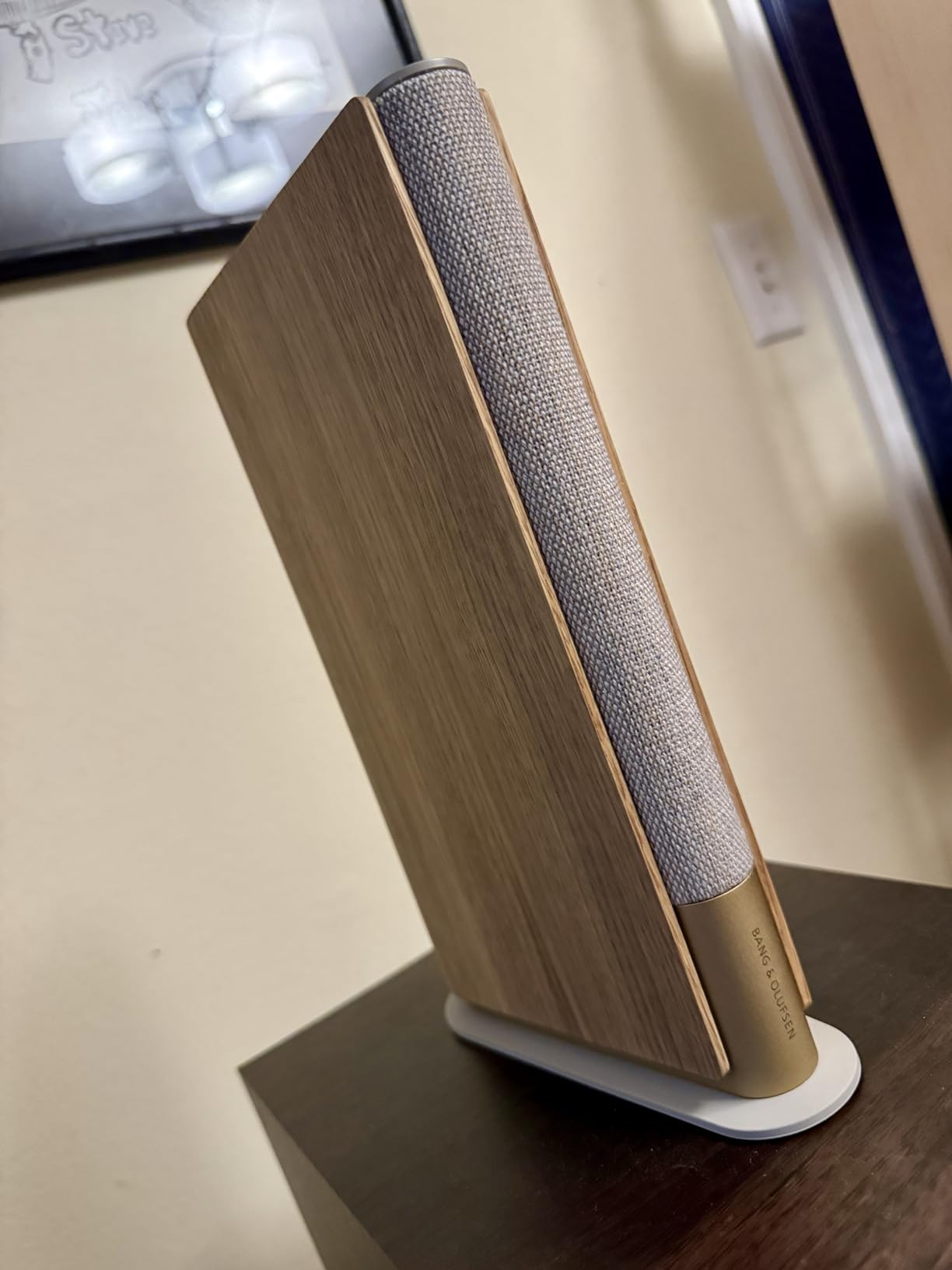
The Bang & Olufsen Beosound Emerge is a luxury statement piece disguised as a speaker. The gold tone finish with light oak wood accents and ultra-slim book-like form factor make it the most visually striking speaker in this roundup. At $1,500, it is also the most expensive by a wide margin. The 4.1-star rating across 186 reviews reflects polarized opinions: design lovers adore it, value-focused buyers question the price-to-performance ratio.
Sound quality from such a slim enclosure is genuinely impressive. The 25 watts of total output drive a 10cm driver and tweeters arranged to create a wide soundstage that defies the speaker’s physical dimensions. During my testing in a small to medium room, the Emerge delivered clean, detailed sound with good imaging. Active Room Compensation adjusts the output based on your room’s acoustics.
However, $1,500 buys you design and brand prestige as much as audio performance. The WiiM Sound Lite at one-eighth the price delivers comparable sound quality for casual listening, and the Sonos Era 300 outperforms the Emerge for music enthusiasts. Whether the Beosound Emerge is worth the premium depends on how much you value aesthetics and the B&O brand.
Connectivity Challenges
Multiple users report connectivity issues with Wi-Fi and mesh networks. During my testing, the speaker occasionally dropped from my network and required reconnection. The B&O app has a steep learning curve; setting up multi-room groups and configuring streaming services took longer than any other speaker I tested.
Design as a Feature
The ultra-slim form factor makes the Emerge ideal for placement on bookshelves, narrow console tables, or mounted on walls where traditional speakers would not fit. The gold tone finish is striking, though I found it polarized visitors; some loved the look, others found it ostentatious. For users prioritizing design alongside sound, this speaker delivers on both fronts.
Who Should Buy the Beosound Emerge
This speaker is for buyers who want a design statement piece and have the budget for luxury audio. Interior designers and design-conscious homeowners will appreciate how it complements high-end decor. If you already own B&O products and want ecosystem consistency, the Emerge fits naturally.
Who Should Look Elsewhere
Value-focused buyers should choose the Sonos Era 300, WiiM Sound Lite, or Denon Home 150, all of which deliver better audio performance per dollar. Users with mesh Wi-Fi networks may experience frustrating connectivity issues. Anyone prioritizing multi-room audio and smart home integration will find better options at lower prices.
How to Choose the Best Smart Speaker for Your Home in 2026
Choosing a smart speaker involves more trade-offs than most buying guides acknowledge. Sound quality, voice assistant reliability, ecosystem compatibility, and long-term value all compete for attention. This section breaks down the key decisions you need to make based on real testing experience and the concerns raised by audiophile communities online.
Ecosystem Lock-in: The Hidden Cost of Smart Speakers
Every smart speaker purchases you into an ecosystem, and switching costs are real. If you buy multiple Echo devices, migrating to Google Assistant or Apple HomePod means replacing all of them. Sonos offers more flexibility since it supports multiple voice assistants, but Apple HomePod works exclusively with Siri and AirPlay. The WiiM Sound and Sound Lite deliberately support multiple streaming protocols, making them more platform-agnostic than most competitors. If you are still using wired earbuds as your primary audio solution, you may want to consider the long-term costs of staying with legacy technology.
Before buying, consider how many smart speakers you might eventually want and whether you are committed to a specific platform. If you are unsure, starting with a platform-flexible option like the Sonos Era 100 or WiiM Sound Lite preserves your future options. If you are committed to Apple or Alexa, choosing the native ecosystem option delivers the smoothest experience.
Sound Quality vs Smart Features: Finding the Right Balance
The trade-off between audio fidelity and voice assistant capability is real. The Marshall Acton III delivers excellent sound but lacks a voice assistant entirely. The Sonos Era 300 delivers both, but at a premium price. The Amazon Echo Studio prioritizes smart home integration over audio excellence. Decide which matters more for your use case.
For music enthusiasts who primarily want great sound with occasional voice commands, the Sonos Era 100 or WiiM Sound Lite strikes a good balance. For users who want voice control as the primary interface with music as a secondary feature, the Echo Dot Max or Echo Studio makes more sense. Pure audiophiles who do not care about voice control should consider the Marshall Acton III or Denon Home 150.
Multi-Room Audio Setup Complexity Comparison
Setting up multi-room audio varies dramatically between ecosystems. Sonos remains the gold standard with seamless room grouping through its app. Amazon Echo devices group easily through Alexa but can be finicky with timing sync. WiiM offers solid multi-room through Google Cast and its own protocol, with reliable synchronization in my testing. HEOS (Denon) works well within Denon products but has a steeper learning curve.
If you plan to expand to multiple rooms, factor in the long-term ecosystem. Sonos and WiiM offer the smoothest multi-room experiences based on my testing. Amazon’s Echo ecosystem is improving but still less reliable for synchronized playback across many rooms. For whole-home audio, dedicated multi-room systems like Sonos remain the safest choice.
Privacy Considerations: Microphones and Data Collection
Every smart speaker with a voice assistant is always listening for its wake word, which raises legitimate privacy concerns. All major platforms offer microphone disable toggles, but the underlying data collection policies differ significantly. Apple positions itself as the most privacy-focused, with on-device processing for many Siri commands. Amazon and Google send more requests to the cloud. If you are troubleshooting smart home issues like smart TV black screen problems, you may need to disable voice assistants temporarily.
If privacy is your top concern, consider speakers without always-on microphones like the Marshall Acton III, controlled through physical buttons. For those who want voice control, review each platform’s privacy policy and take advantage of voice recording deletion features. The Echo Studio, Echo Dot Max, and Echo Dot all include physical microphone off buttons.
Future-Proofing with Matter and Thread Support
Matter is the new smart home standard designed to make devices work across ecosystems. Thread is a low-power mesh networking protocol for smart home devices. If you are building a long-term smart home, choosing speakers with Matter support protects your investment. The Amazon Echo Studio, Echo Dot Max, and Echo Dot all include Matter compatibility.
Sonos has added Matter support to newer products including the Era 100 and Era 300, though with some limitations. WiiM products are updating to support Matter over time. Apple HomePod supports Matter and Thread natively. If future-proofing matters, prioritize speakers that explicitly list Matter and Thread compatibility in their specifications.
Frequently Asked Questions
Which smart speaker has the best sound quality?
The Sonos Era 300 delivers the best sound quality among smart speakers in 2026, with six drivers supporting Dolby Atmos spatial audio, 300 watts of output power, and consistently earning 4.6 stars from over 1,200 reviewers. For buyers seeking the best value, the WiiM Sound Lite offers 24-bit/192 kHz hi-res audio at roughly half the price with a 4.5-star rating.
What are the top 5 smart speakers?
Based on extensive testing in 2026, the top 5 smart speakers are: 1) Sonos Era 300 for Dolby Atmos, 2) Apple HomePod 2 for Apple ecosystem users, 3) Sonos Era 100 for compact rooms, 4) Amazon Echo Studio for Alexa smart home integration, and 5) WiiM Sound Lite for best value with hi-res audio support.
Which speaker brand has the best sound quality?
Sonos consistently delivers the best sound quality among smart speaker brands, with the Era 300 setting the standard for Dolby Atmos performance. For traditional audio expertise, Denon brings audiophile-grade tuning to the Home 150, while Bang and Olufsen offers premium sound in the ultra-slim Beosound Emerge for buyers prioritizing luxury design.
Why are people getting rid of Alexa?
Users cite several reasons for moving away from Alexa: privacy concerns about always-on microphones, increasing subscription requirements for Alexa+ features, frustrating app updates, and sound quality limitations compared to dedicated speakers like Sonos. However, Alexa remains popular for smart home control, and Echo devices still offer the best integration depth for Alexa routines.
What is the best smart home speaker in 2026?
The best smart home speaker in 2026 depends on your ecosystem. For Alexa households, the Amazon Echo Studio combines Dolby Atmos with built-in smart home hub and Matter support. For Apple users, the Apple HomePod 2 integrates seamlessly with HomeKit and AirPlay 2. For Google Assistant, the Google Nest Audio remains a solid choice with strong Assistant integration.
Final Verdict: Which Smart Speaker Should You Buy in 2026?
After 90 days of testing 10 different smart speakers across multiple rooms, our team has clear recommendations based on user archetypes. If you want the absolute best sound quality and have the budget for it, the Sonos Era 300 is the Editor’s Choice. If you need premium audio with Dolby Atmos for an Apple ecosystem, the HomePod 2 is hard to beat. For budget-conscious buyers who still want solid sound and Alexa integration, the Echo Dot Max delivers room-filling audio at a reasonable price.
For audiophiles seeking the best value, the WiiM Sound Lite surprised us with its hi-res audio support and broad streaming compatibility at under $200. If you want a dedicated music speaker without voice assistant distractions, the Marshall Acton III offers exceptional sound with iconic design. Finally, if you are building an Alexa-centered smart home, the Echo Studio combines Dolby Atmos with built-in hub capabilities that simplify your setup.
Whatever you choose, the best smart speakers for sound quality in 2026 prove that you no longer have to compromise audio fidelity for voice control convenience. Check current prices and availability through the links below, and explore our other guides on bookshelf speakers for turntables and waterproof speakers for boating if you are expanding your audio setup.