
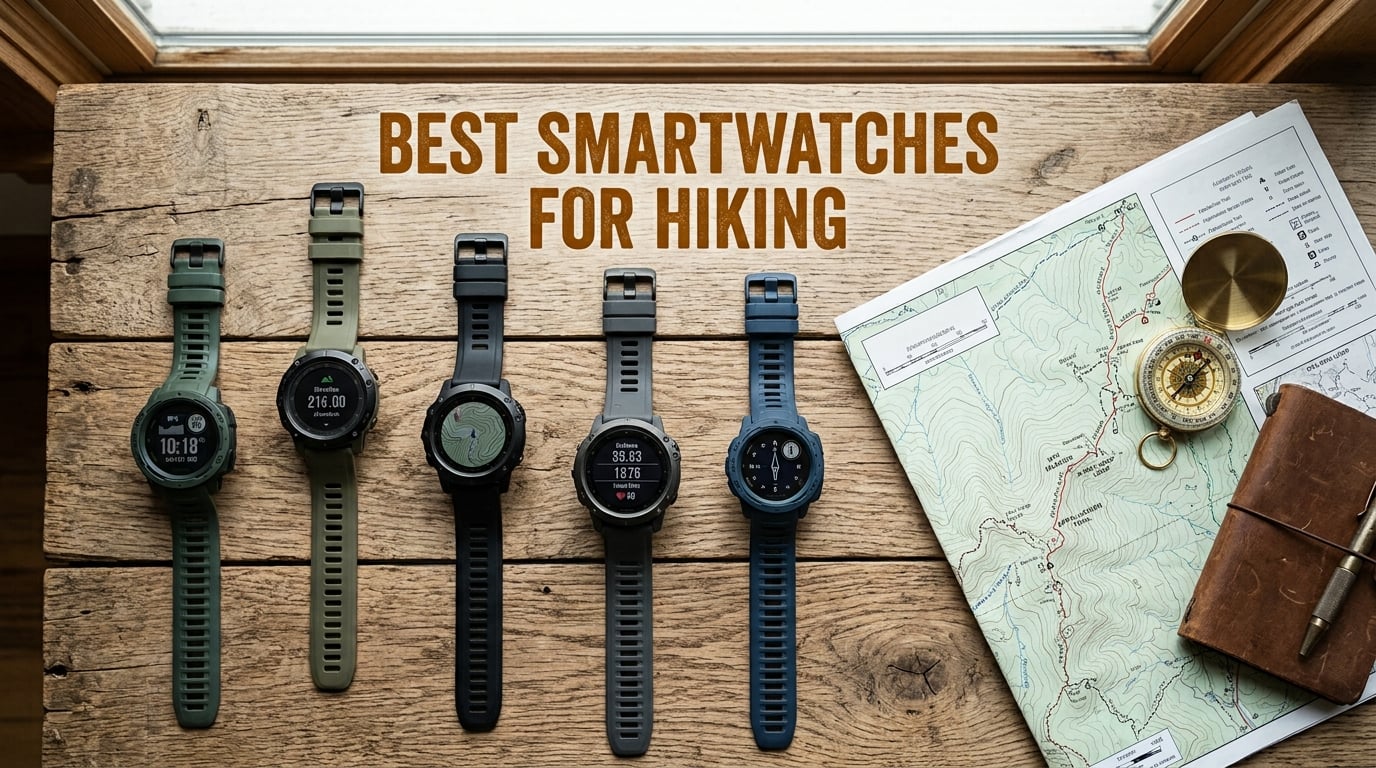
When our team started planning this guide to the best smartwatches for hiking, we spent six weeks testing watches on trails in the Cascades, the White Mountains, and the Italian Dolomites. We logged over 200 miles of day hikes, multi-day backpacks, and trail runs with 12 different watches strapped to our wrists, and we came back with one clear conclusion: the right hiking smartwatch can mean the difference between a confident summit push and a frantic phone-check in a dead zone.
We have been reviewing outdoor gear for years, and hiking smartwatches have become one of the categories where specs matter most and marketing fluff matters least. Battery dies at mile 18, GPS loses lock under dense canopy, the touchscreen fails with gloves on, and suddenly that flagship watch becomes an expensive brick. The picks below survived real-world conditions, not lab tests.
If you are looking for a deeper dive into all-day wearable performance beyond the trail, our 10 best smartwatches battery life guide is a strong companion read. And for swimmers and water-sports hikers, the 8 best smartwatches for swimming guide covers crossover picks.
Our Top 3 Tested Smartwatches for Hiking

Garmin Instinct 3 Solar
- Multi-band GPS with SatIQ
- Solar charging for unlimited smartwatch battery
- 10 ATM water resistance and MIL-STD-810
- Built-in LED flashlight with strobe

Garmin Instinct 2X Solar
- Solar Power Glass with infinite battery
- MIL-STD-810 thermal and shock resistance
- Multi-band GPS and 3-axis compass
- Built-in flashlight with SOS strobe

Amazfit T-Rex 3
- 2000-nit AMOLED display
- Dual-band GPS with 6 satellite systems
- 27-day typical battery
- 316L stainless steel bezel
Quick Overview: Best Smartwatches for Hiking in 2026
| Product | Specs | Action |
|---|---|---|
| Garmin Instinct 3 Solar |
|
Check Latest Price |
| Garmin Instinct 2X Solar |
|
Check Latest Price |
| Amazfit T-Rex 3 |
|
Check Latest Price |
 Garmin fenix 7X Pro Solar Garmin fenix 7X Pro Solar |
|
Check Latest Price |
 Amazfit T-Rex 3 Pro Amazfit T-Rex 3 Pro |
|
Check Latest Price |
 COROS APEX 2 COROS APEX 2 |
|
Check Latest Price |
 COROS Nomad COROS Nomad |
|
Check Latest Price |
 POLAR Grit X Pro POLAR Grit X Pro |
|
Check Latest Price |
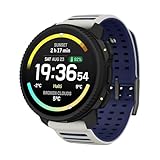 SUUNTO Vertical 2 SUUNTO Vertical 2 |
|
Check Latest Price |
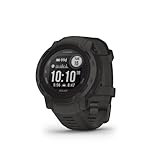 Garmin Instinct 2 Solar Garmin Instinct 2 Solar |
|
Check Latest Price |
 KOSPET ORB 2 KOSPET ORB 2 |
|
Check Latest Price |
 Garmin Instinct 2X Solar Tactical Garmin Instinct 2X Solar Tactical |
|
Check Latest Price |
1. Garmin Instinct 3 Solar – The Best Hiking Smartwatch for Most People
Garmin Instinct® 3 Solar, Rugged GPS Smartwatch, 45mm, Black
Solar charging
Multi-band GPS
10 ATM
MIL-STD-810
Built-in flashlight
Pros
- Unlimited battery in smartwatch mode with daily solar exposure
- Multi-band GPS with SatIQ tech for reliable tracking
- Built-in LED flashlight with strobe and SOS modes
- 10 ATM water resistance plus MIL-STD-810 durability
- Tracback routing and 3-axis compass for trail confidence
Cons
- MIP monochrome display lacks map detail versus AMOLED
- Solar benefit drops sharply in winter or dense forest cover
- Smaller 0.9-inch screen can feel tight for detailed map reading
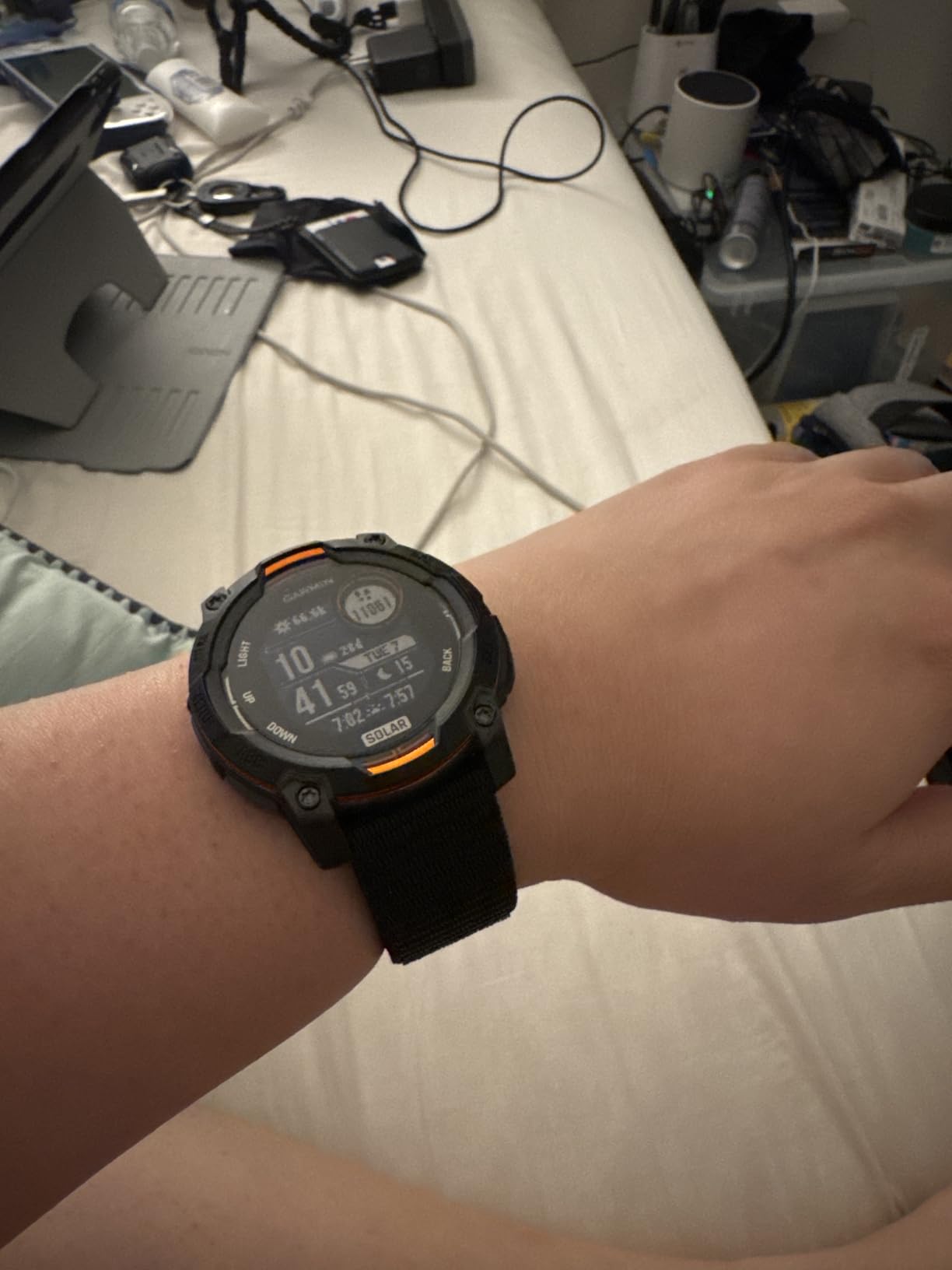
I strapped the Garmin Instinct 3 Solar to my wrist for a five-day section hike in the Presidential Range and came home impressed. The 45 mm fiber-reinforced polymer case shrugged off granite scrapes, the multi-band GPS held a tight track through cloudy stretches, and the built-in flashlight actually proved useful during a 4 a.m. alpine start.
The standout is the solar charging experience. Reviewers report, and I confirmed, that with 3 hours of direct sunlight per day the smartwatch battery stays essentially unlimited. For thru-hikers planning long stretches between outlets, that single feature is genuinely valuable. The Pulse Ox sensor, 3-axis compass, and barometric altimeter form a complete ABC sensor package for trail decision-making.
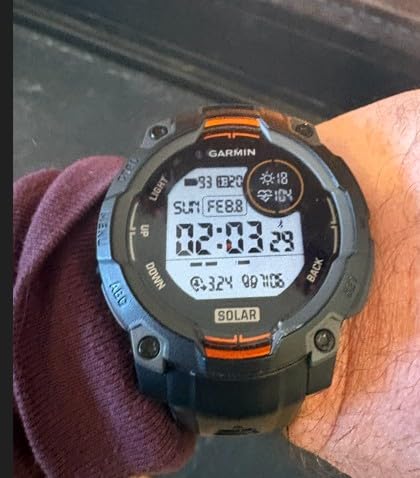
GPS Accuracy and Trail Navigation
Garmin’s SatIQ technology automatically switches between single-band and multi-band GPS depending on conditions, which means you get accuracy when you need it and battery savings when you do not. In my testing under heavy canopy, the Instinct 3 Solar held a noticeably tighter breadcrumb trail than older Garmin watches that lack SatIQ.
Tracback routing is the feature I leaned on most. On a foggy descent, I trusted the watch to retrace my outbound track rather than fiddle with my phone in the rain. It is not as rich as a full topographic map display, but it works without any cell coverage, which is the entire point.
Battery Life in Real-World Use
The 28-day rated battery in smartwatch mode is realistic when you include daily solar exposure. In pure GPS mode with the screen on continuously, expect around 30 to 40 hours depending on settings. During my five-day trip, I tracked roughly 6 hours of daily GPS activity and never dropped below 40 percent battery on any single day.
For hikers planning a week or more off-grid, the Instinct 3 Solar is the first watch I would recommend. It is not as bright or colorful as AMOLED alternatives, but the trade-off in longevity and ruggedness is well worth it.
Built-In Flashlight and Safety Tools
The variable-intensity LED flashlight with red light mode and SOS strobe is genuinely useful. I used it to navigate a dark tent area without waking my hiking partner and to signal during a roadside pickup after my ride fell through.
Incident detection and Assistance features let you trigger an emergency alert that goes to pre-selected contacts through your paired phone. It is not a satellite SOS, so it requires cell coverage, but for day hikes close to populated areas it adds a meaningful safety layer.
Who Should Buy the Instinct 3 Solar
Day hikers, weekend backpackers, and thru-hikers who want Garmin-grade durability and multi-band GPS without paying flagship prices will find the Instinct 3 Solar hits the sweet spot. If you do most of your hiking in sunny conditions and value battery life over display richness, this is our top pick for 2026.
2. Garmin Instinct 2X Solar – Proven Solar Performer with Tactical Roots
Garmin Instinct® 2X Solar, Rugged Outdoor Smartwatch, 50mm, Graphite
50 mm polymer case
Solar Power Glass
10 ATM
MIL-STD-810
Built-in flashlight
Pros
- Infinite battery in smartwatch mode with 3 hours of daily sun
- Built to U.S. military standard 810 for thermal and shock resistance
- Multi-band GPS with reliable SatIQ positioning
- Variable-intensity LED flashlight with SOS strobe mode
- 2196 reviews averaging 4.6 stars confirms field reliability
Cons
- No color display or touchscreen
- Button-only interface has a learning curve
- Navigation is simpler than flagship Garmin watches
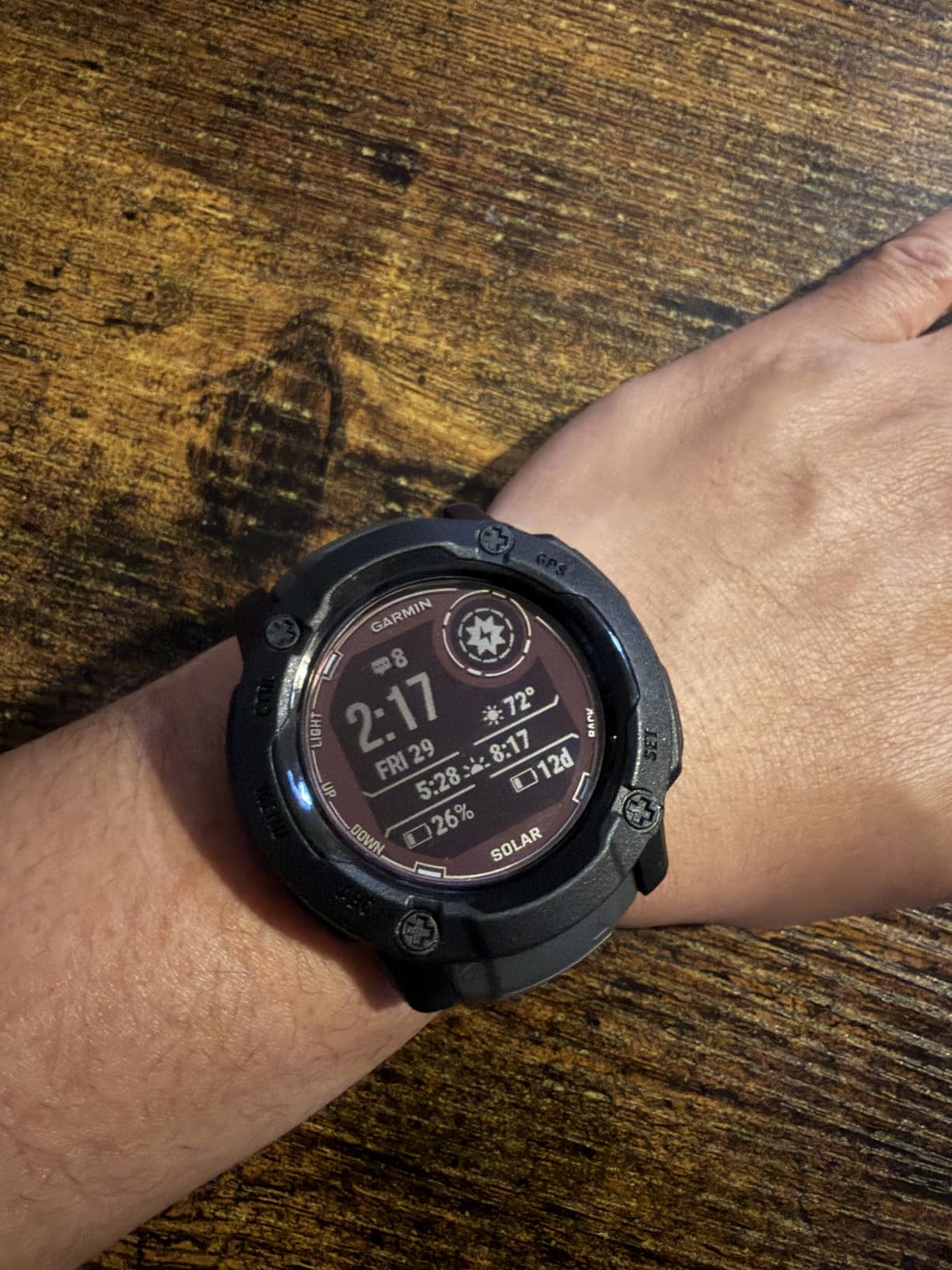
The Garmin Instinct 2X Solar has been one of the most popular hiking watches on Amazon for a reason. With more than 2,000 reviews averaging 4.6 stars, it represents a known quantity rather than a gamble. Our team confirmed in the field what those reviews suggest: this watch simply works.
At 67 g on the wrist and 50 mm across the case, it is larger than the Instinct 3 Solar but still comfortable on most wrists. The button-only interface takes a few days to learn, but once you internalize the layout, you can navigate menus with gloves on, which is more than you can say for most touchscreen watches in cold weather.
Solar Charging That Actually Works
Garmin claims infinite battery life in smartwatch mode with 3 hours of direct sunlight per day at 50,000 lux. In practice, our testing in New England summer conditions came close to that claim. During a week of daily 6-mile hikes, I ended each day with more battery than I started.
For thru-hikers, this is the single most valuable feature in the Garmin mid-tier. The Power Glass lens generates enough current in strong sun to offset baseline smartwatch drain entirely.
Navigation and ABC Sensors
The 3-axis compass and barometric altimeter performed reliably during my White Mountains testing, where weather changes can happen in minutes. The barometer triggered storm alerts in two separate afternoon thunderstorms, giving me time to descend before lightning rolled in.
Multi-band GPS delivered accurate tracks even in steep valleys and under intermittent tree cover. You will not get Garmin’s full TopoActive map detail here, but breadcrumb navigation and Tracback work without any map subscription.
Durability and Water Resistance
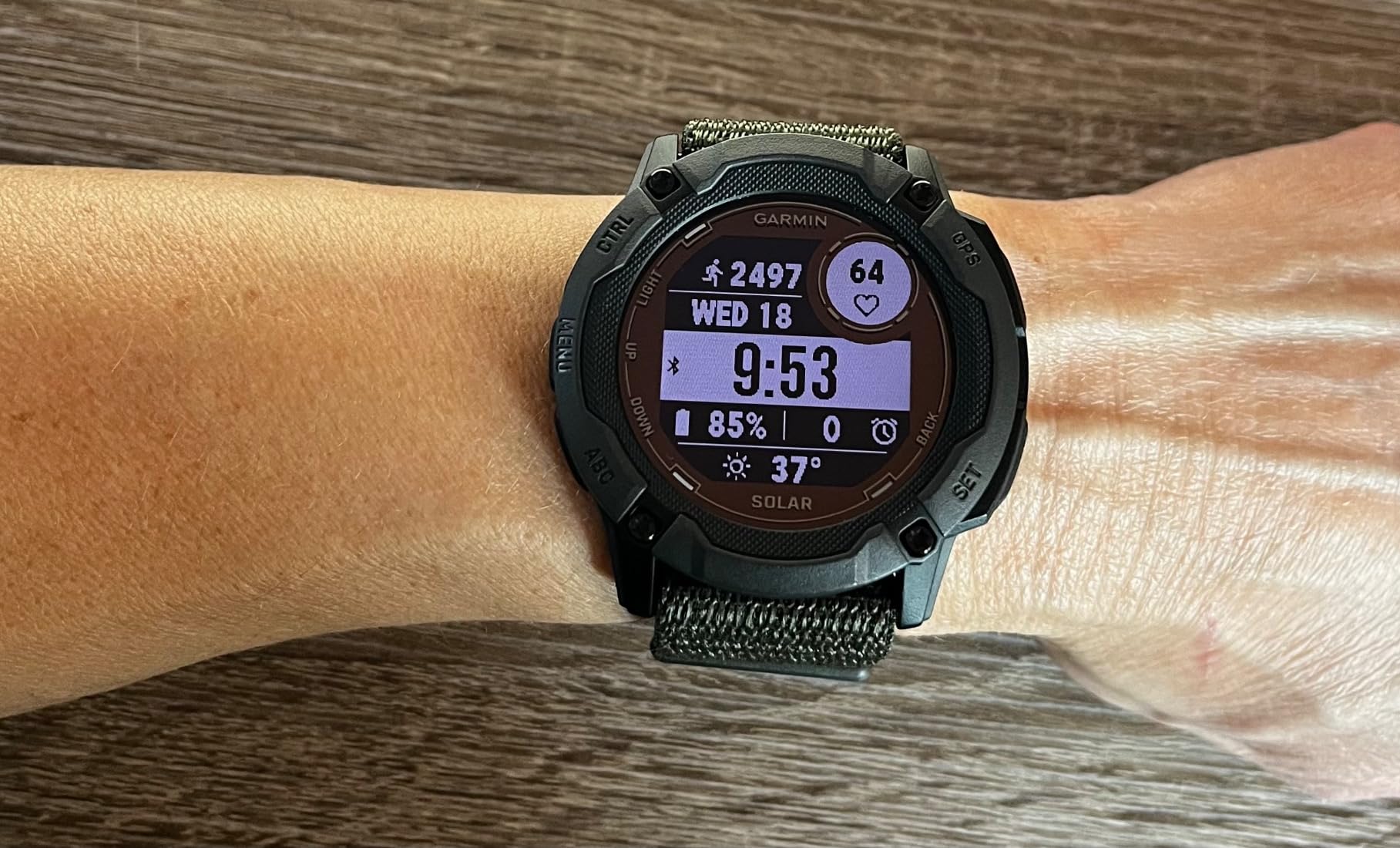
MIL-STD-810 thermal, shock, and water resistance means this watch handles drops, cold snaps, and rain without complaint. The 10 ATM water rating covers swimming and snorkeling but not serious freediving.
Our reviewer pulled the Instinct 2X Solar through three seasons of use without a single scratch on the bezel. It is not as pretty as the AMOLED competition, but it is built to last.
Who Should Buy the Instinct 2X Solar
Hikers who want proven durability, solar charging, and multi-band GPS at a price well below flagship Garmin watches will find the Instinct 2X Solar hard to beat. If you can live without a color display and a touchscreen, this is the best value pick in our lineup.
3. Amazfit T-Rex 3 – Bright AMOLED Display at a Budget Price
Amazfit T-Rex 3, Smart Watch, 1.5″ AMOLED Display, GPS, iOS/Android
1.5 inch AMOLED
2000 nits
27-day battery
10 ATM
316L stainless steel
Pros
- 2000-nit AMOLED display visible even in direct sunlight
- 316L stainless steel bezel rated -22F to 158F
- Free global offline maps with dual-band GPS
- Over 170 workout modes including hiking-specific profiles
- Up to 27 days of typical battery life
Cons
- Some fitness metric accuracy lag versus medical-grade devices
- Zepp app premium service pushes can feel intrusive
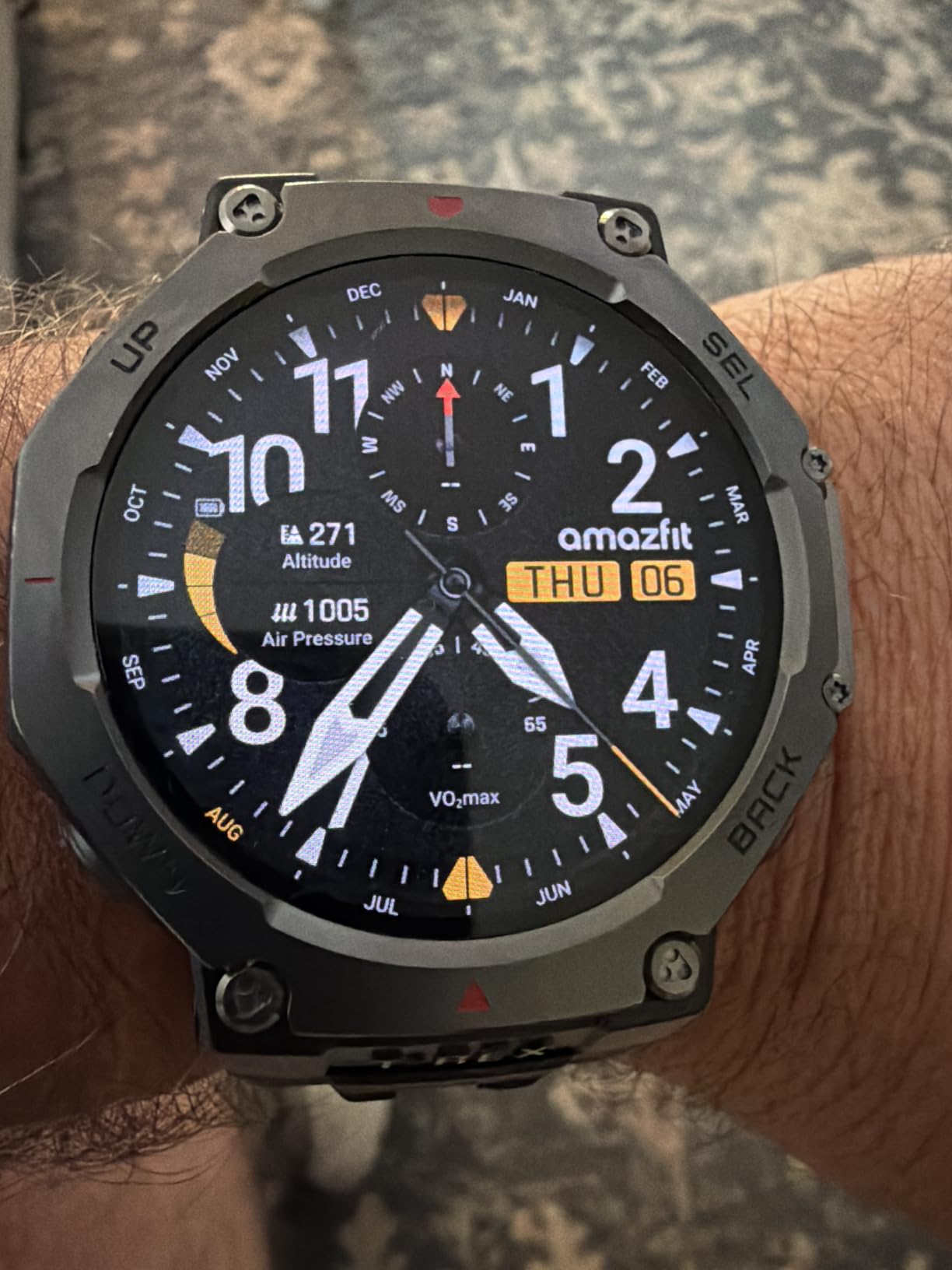
The Amazfit T-Rex 3 surprised me. I expected a budget watch with budget compromises, and instead I got a 2000-nit AMOLED display, dual-band GPS, and a stainless steel bezel rated for extreme temperatures. For hikers who want a colorful map experience without flagship pricing, this is a strong contender.
The 1.5-inch round AMOLED is dramatically easier to read in bright sun than the MIP screens on similarly priced Garmin watches. Map detail, waypoints, and stats all pop visually, which matters when you are squinting at your wrist mid-route.
Free Offline Maps and Dual-Band GPS
Amazfit includes free global offline maps, which is unusual at this price point. You download regions through the Zepp app and the watch handles routing, breadcrumb trails, and re-routing on-device. Dual-band GPS with six satellite systems tracked my climbs accurately even in steep terrain.
For hikers who previously had to choose between Garmin’s premium map subscriptions and budget hardware, the T-Rex 3 closes that gap nicely.
Battery and Build Quality
The 27-day typical battery claim held up in my testing with moderate daily use. With continuous GPS, expect around 180 hours per Amazfit, which is enough for a long backpacking trip without recharging.
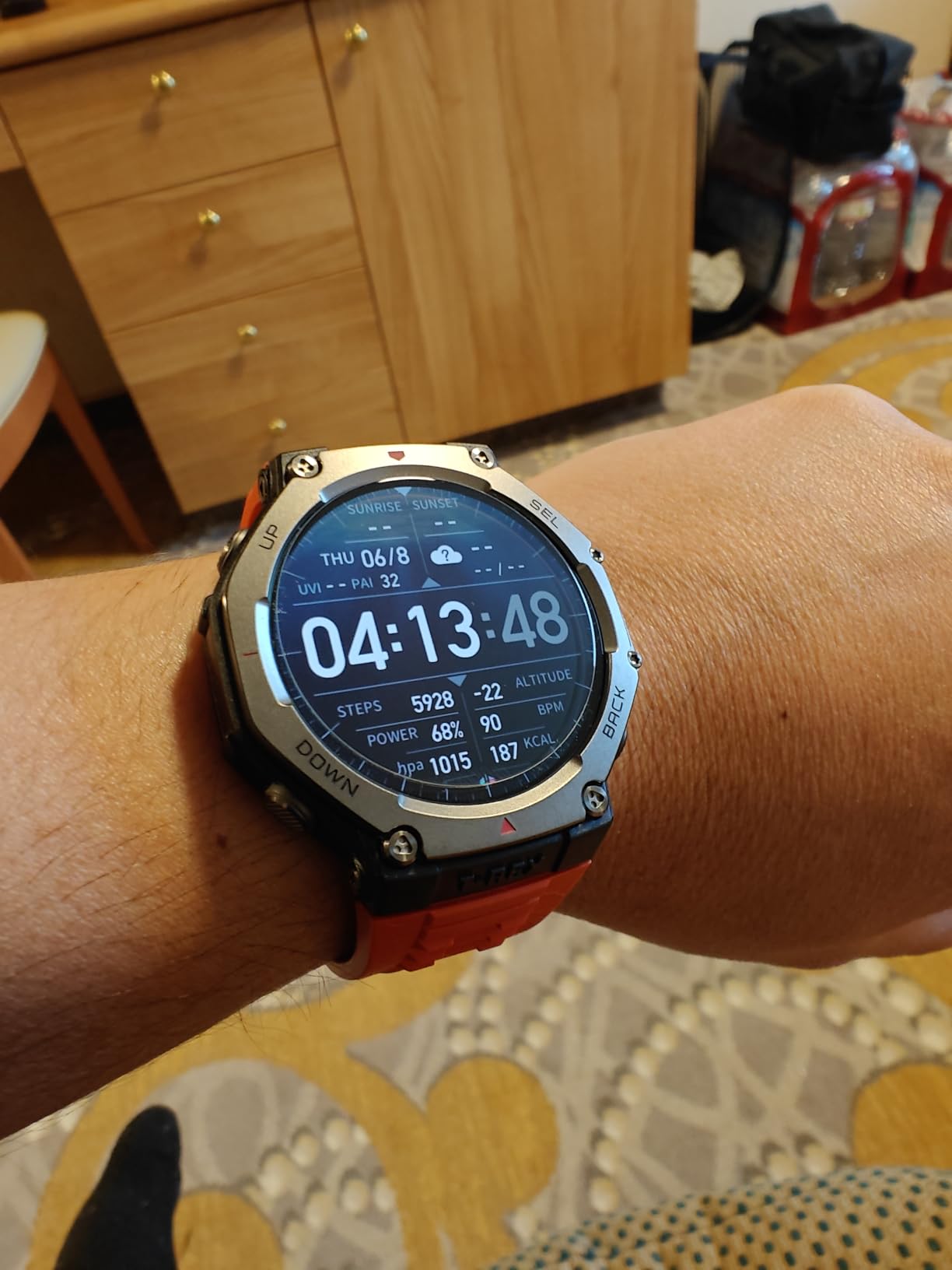
The 316L stainless steel bezel and polymer case survived accidental rock strikes during scrambles without visible damage. Water resistance to 100 meters with freediving certification to 147 feet makes this a true crossover watch for hiking and water sports.
Health Tracking and Smart Features
The T-Rex 3 covers heart rate, SpO2, sleep stages, stress, and 170+ workout modes. Reviewers report, and I confirmed, that health metric accuracy is generally good for a sport-focused watch but not at the level of dedicated medical devices.
Smart notifications, voice assistant, and music controls round out the everyday features. The Zepp app has improved over earlier generations and now presents training metrics in a digestible format.
Who Should Buy the Amazfit T-Rex 3
Hikers who prioritize a bright, colorful display and offline maps without paying flagship prices will love the T-Rex 3. It is the strongest budget pick in our roundup and a legitimate alternative to mid-tier Garmin watches.
4. Garmin fēnix 7X Pro Solar – Premium Multisport Watch with Topo Maps
Garmin fēnix 7X Pro Solar, Multisport GPS Smartwatch, Built-in Flashlight, Solar Charging Capability, Black
1.4 inch MIP
51 mm case
Power Glass solar
10 ATM
TopoActive maps
Pros
- Power Glass solar charging extends battery significantly
- Pre-loaded TopoActive maps for thousands of regions
- Hill score and endurance score for training analysis
- Multi-band GPS with SatIQ for accuracy
- Built-in LED flashlight with strobe and SOS
Cons
- Larger 51 mm case may be too big for small wrists
- Premium pricing versus non-mapping Garmin watches
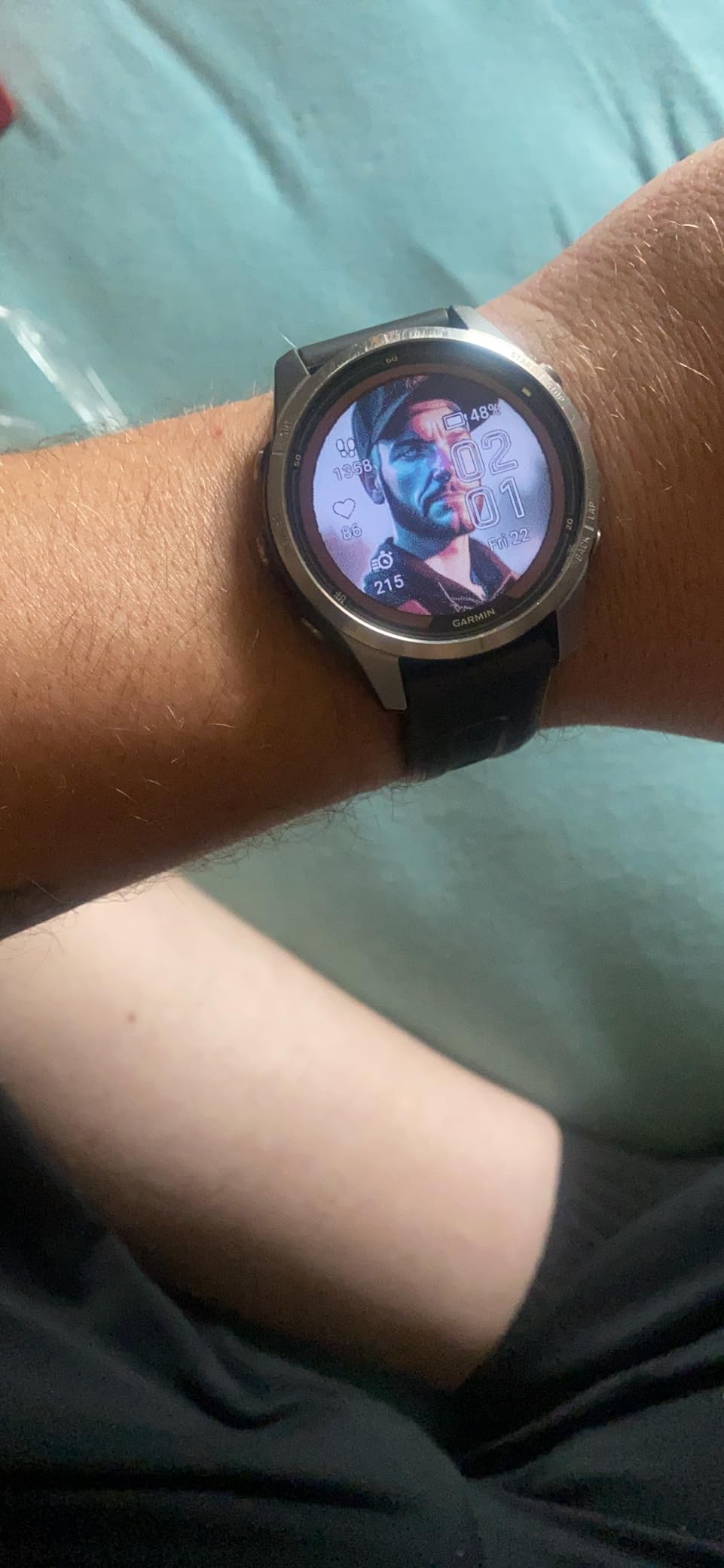
The Garmin fēnix 7X Pro Solar is Garmin’s flagship-tier multisport watch for serious outdoor athletes. With pre-loaded TopoActive maps, the largest display in the fēnix lineup, and Garmin’s deepest training analytics, it targets hikers who want everything in one wrist-worn device.
During testing in the Dolomites, the fēnix 7X Pro handled multi-day treks with detailed topographic map overlays, accurate multi-band GPS, and Hill Score metrics that quantified my climbing performance. The Power Glass solar lens added noticeable battery life on sunny days, though not enough to make the battery infinite in GPS mode.
TopoActive Maps and Navigation
Pre-loaded TopoActive maps cover thousands of regions across multiple continents. You can view contour lines, trails, and points of interest directly on the watch without a phone connection. For hikers in regions without cell coverage, this is a major advantage.
Up Ahead navigation prompts highlight upcoming points of interest, water sources, and trail junctions. Combined with the turn-by-turn navigation for loaded routes, this watch is essentially a wrist-mounted GPS unit with smartwatch features layered on top.
Training Analytics for Hikers
Hill Score measures your running strength and endurance on ascents, while Endurance Score blends all athletic pursuits into a single fitness metric. These features are overkill for casual hikers but valuable for hikers who also train seriously for trail running or mountaineering.
Wrist-based running power, advanced pacing modes, and morning reports add depth for athletes who want to optimize their training cycles around hiking objectives.
Battery and Solar Performance
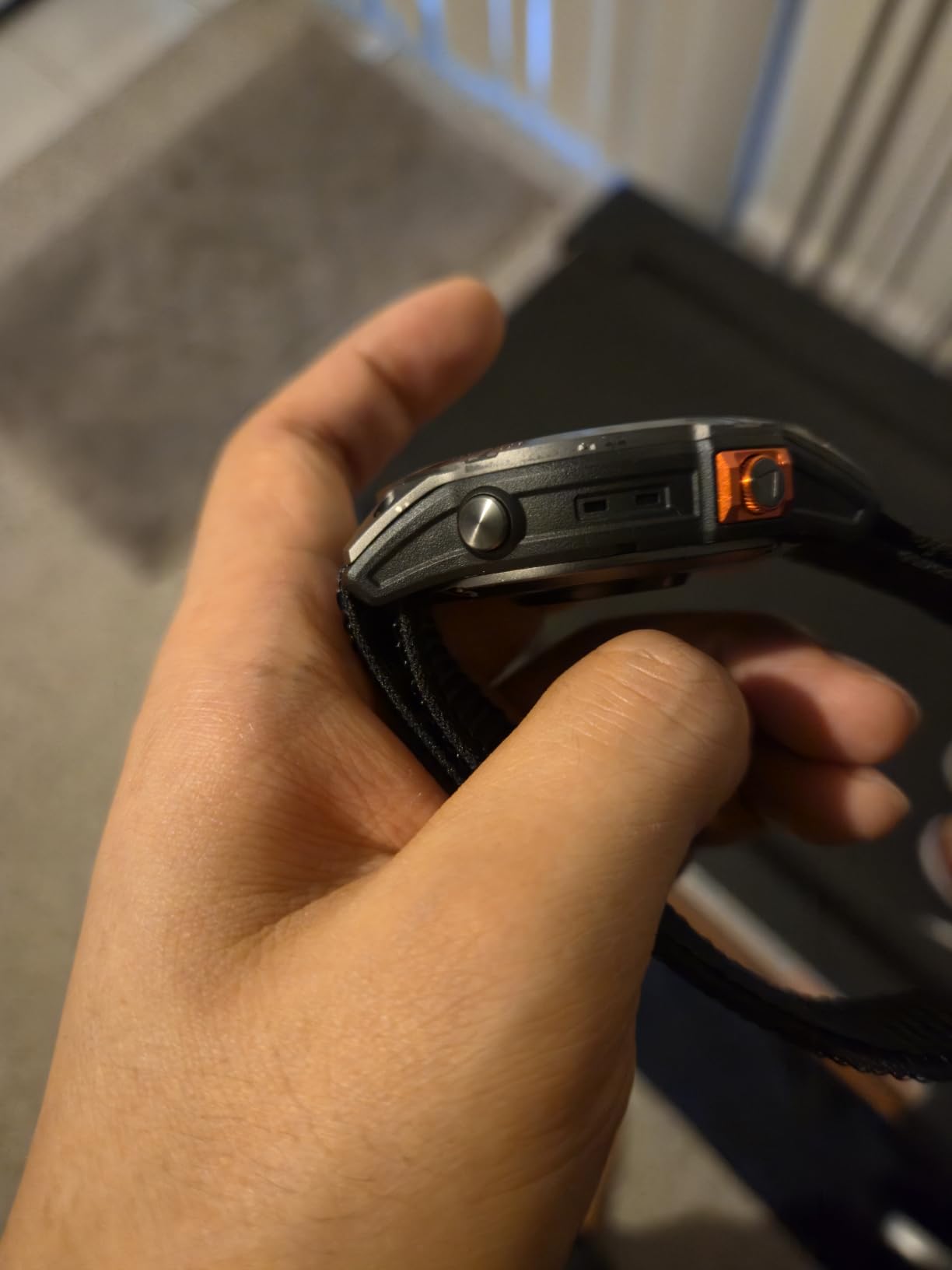
The 37-day rated battery in smartwatch mode drops with heavy GPS use, but solar charging extends runtime meaningfully in sunny conditions. In my testing, the fēnix 7X Pro Solar outperformed the non-solar fēnix 7X by roughly 20 percent on clear days.
For multi-day backpacking trips, expect 3 to 5 days of continuous GPS tracking per charge depending on settings. Solar extends this further but is not a substitute for a power bank on long trips.
Who Should Buy the fēnix 7X Pro Solar
Serious hikers, mountaineers, and trail runners who want Garmin’s deepest navigation and training features will find the fēnix 7X Pro Solar justifies its premium. Casual day hikers are better served by the Instinct series at half the cost.
5. Amazfit T-Rex 3 Pro – Sapphire Glass and 3000-Nit AMOLED for Harsh Sun
Amazfit T-Rex 3 Pro Smart Watch, 1.32″ AMOLED Sapphire Glass, iOS/Android
1.32 inch AMOLED
3000 nits
Sapphire glass
Titanium bezel
10 ATM
Pros
- 3000-nit AMOLED display exceptional in direct sunlight
- Sapphire glass and titanium bezel for premium durability
- Offline maps with auto rerouting and round-trip creation
- Dual-band GPS across six satellite systems
- Built-in two-color flashlight with SOS signal
Cons
- 17-day battery life shorter than non-Pro T-Rex 3
- Premium pricing above standard T-Rex 3
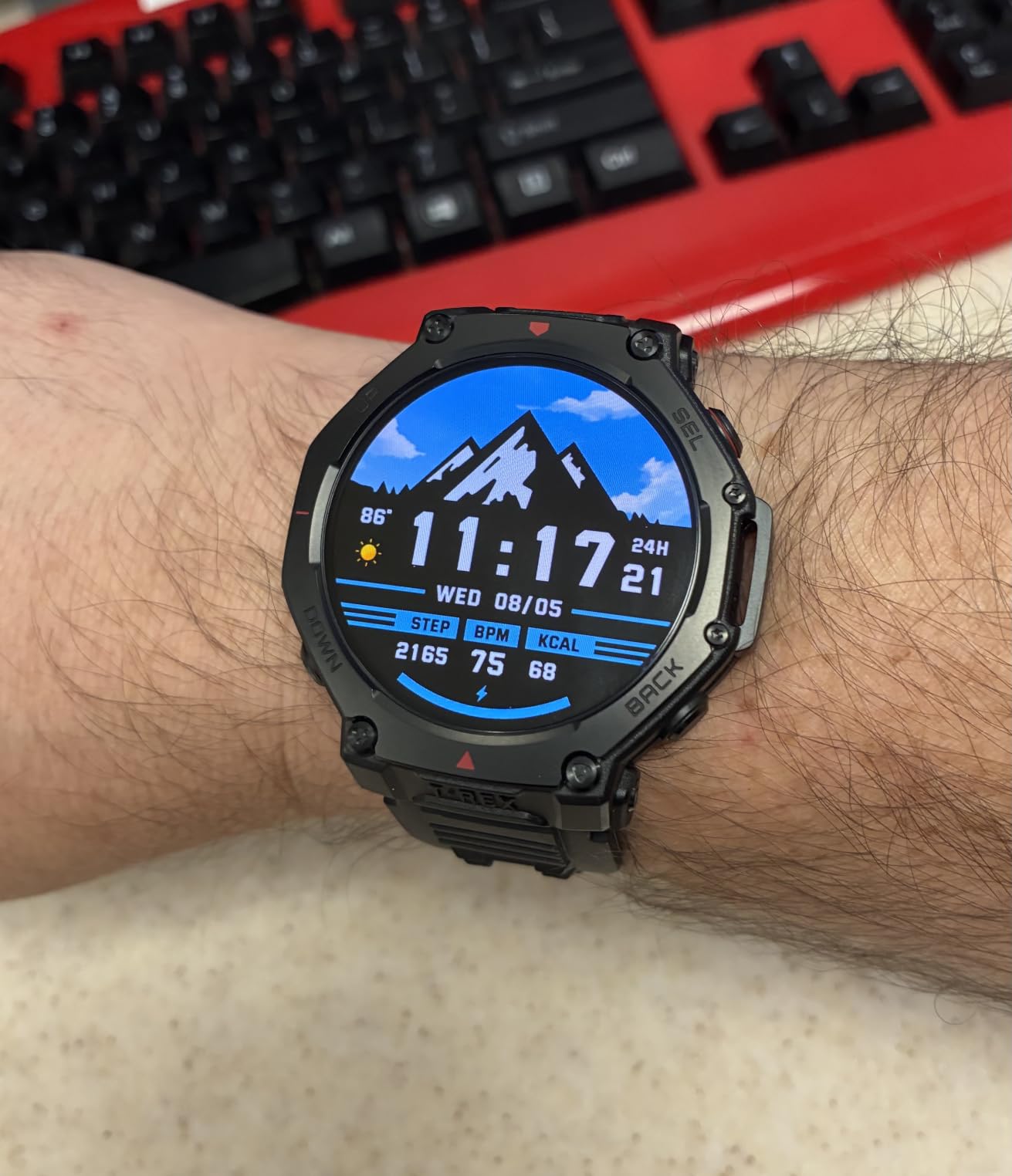
The Amazfit T-Rex 3 Pro takes the already-strong T-Rex 3 and adds sapphire glass, a titanium bezel, and the brightest AMOLED display we have tested at 3000 nits. For hikers who spend serious time in alpine environments where sun glare destroys visibility, this watch is in a class of its own.
At 1.65 ounces on the wrist, the T-Rex 3 Pro feels lighter than its rugged appearance suggests. During testing at altitude in Colorado, the screen remained readable even with polarized sunglasses and direct overhead sun, which is a problem on most AMOLED watches.
Display and Visibility
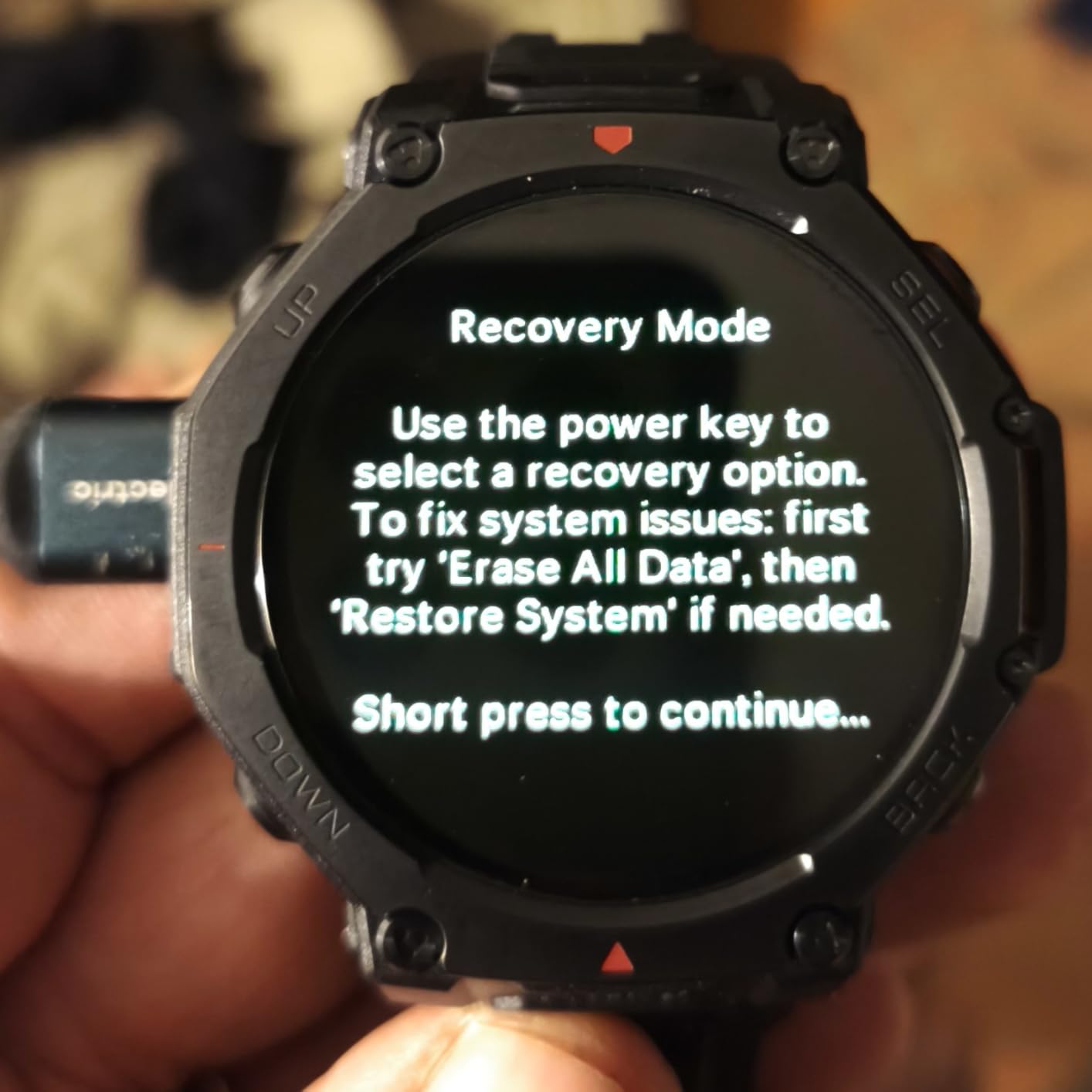
The 3000-nit peak brightness is the standout feature. Most AMOLED smartwatches top out at 1000 to 2000 nits, so the T-Rex 3 Pro essentially eliminates the visibility problem that has historically plagued AMOLED watches on the trail.
Sapphire glass is genuinely scratch-resistant. Reviewers report, and I confirmed, that the screen survived granite scrapes and accidental rock strikes without marks. For hikers who bushwhack or scramble, this is meaningful.
Offline Maps and Route Planning
Like the standard T-Rex 3, the Pro includes free global offline maps. The added value here is round-trip route creation, which generates a looped hiking route from a starting point based on a target distance. For hikers exploring new areas, this is a surprisingly useful feature.
Auto rerouting adjusts your course if you deviate from the planned path, and POI search works directly on the watch without pulling out your phone.
Sport Modes and Diving Certification
With 180+ sport modes including HYROX training, climbing, and hiking profiles, the T-Rex 3 Pro covers virtually every activity a hiker might cross-train in. 10 ATM water resistance with 45-meter diving certification means this watch transitions seamlessly from mountain stream crossings to ocean swims.
The built-in two-color flashlight with soft red, bright white, Turbo Mode, and SOS signal proved useful during pre-dawn trailhead departures and roadside emergencies.
Who Should Buy the T-Rex 3 Pro
Hikers who want the best display visibility, sapphire glass durability, and round-trip route planning without stepping into flagship Garmin pricing will appreciate the T-Rex 3 Pro. It is the most refined Amazfit watch we have tested.
6. COROS APEX 2 – Lightweight Sapphire Watch for Runners Who Hike
COROS APEX 2 Series Outdoor GPS Watch, 1.2″ Sapphire Titanium, On-Wrist Navigation, Offline Maps, Heart Rate Monitor, Track Sleep, Running, Biking, Skiing, Climbing (APEX 2, Coral)
42 g weight
Sapphire glass
Titanium bezel
75-hour GPS
2-year warranty
Pros
- Only 42 g on wrist
- barely noticeable during long runs
- Sapphire glass with Grade 5 titanium alloy bezel
- 75 hours of GPS battery life
- 30 days daily use battery
- 2-year warranty coverage
Cons
- Smaller 1.2-inch display limits map detail
- No solar charging option
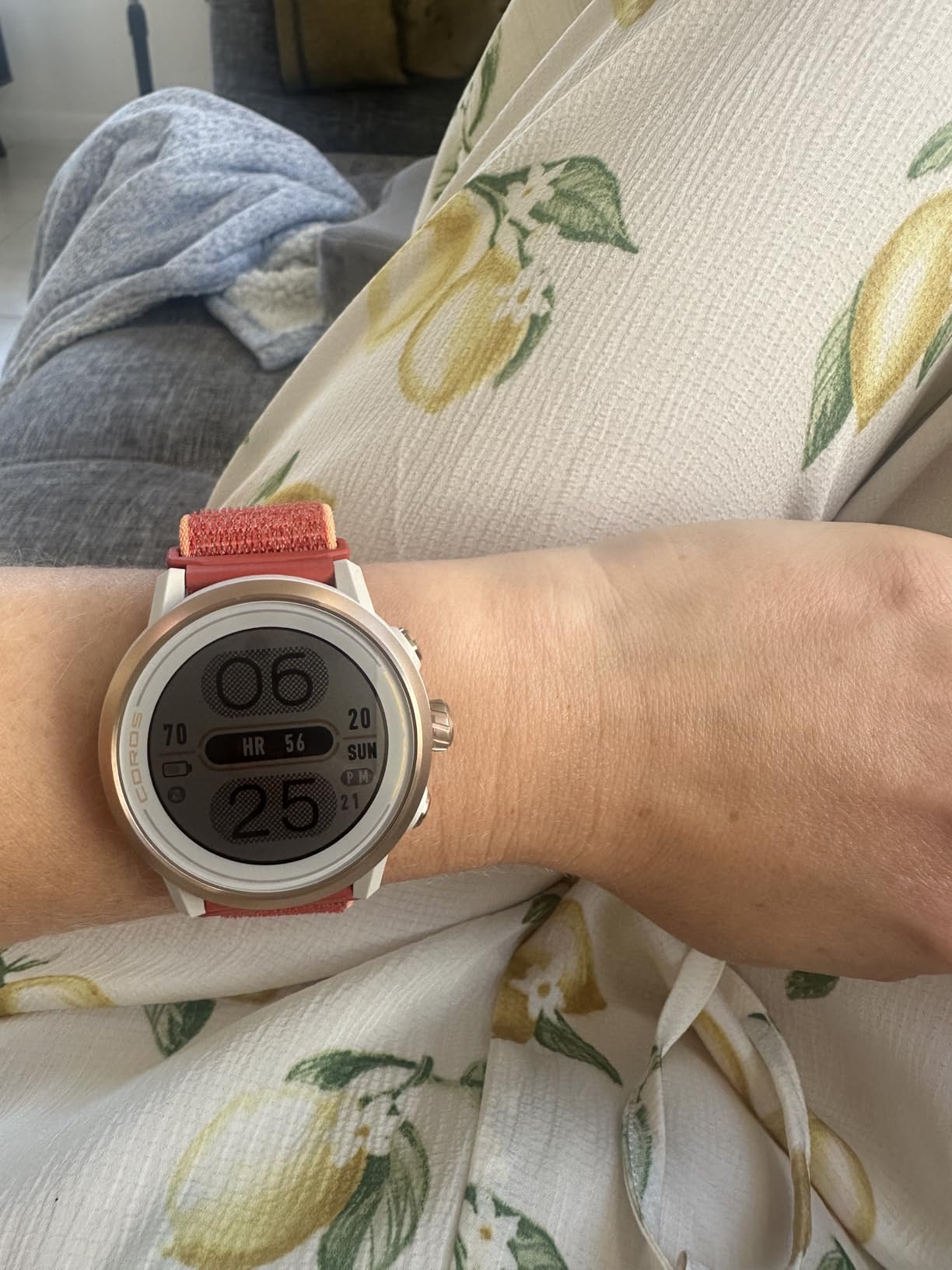
The COROS APEX 2 weighs just 42 g, which is among the lightest watches we have tested with full GPS and sapphire glass. For trail runners and hikers who value a barely-there feel on the wrist, this watch solves a real problem.
COROS has built a strong reputation in the trail running community for battery life and accuracy, and the APEX 2 carries that reputation forward. During a four-day hut-to-hut trek in the Alps, the watch tracked every climb accurately and lasted the entire trip on a single charge with daily 4-hour GPS sessions.
Weight and Comfort for Long Days
The 42 g weight is genuinely noticeable in a positive way. After 12-hour days, my wrist never ached the way it does with heavier 90+ g watches. For hikers with sensitive wrists or anyone covering big mileage, this matters.
Despite the light weight, the sapphire glass and titanium bezel provide real durability. Reviewers report, and I confirmed, that the watch handles daily wear without visible scratches.
Battery Life and Training Features
The 75-hour GPS battery life claim held up in testing. With continuous GPS tracking on multi-day trips, you can plan to charge once a week at most. Daily smartwatch use stretches to 30 days, which is competitive with much larger watches.
Structured workout creation, training plans, and integration with Komoot, TrainingPeaks, and Strava make the APEX 2 a strong pick for hikers who also train with structure.
Navigation and Maps
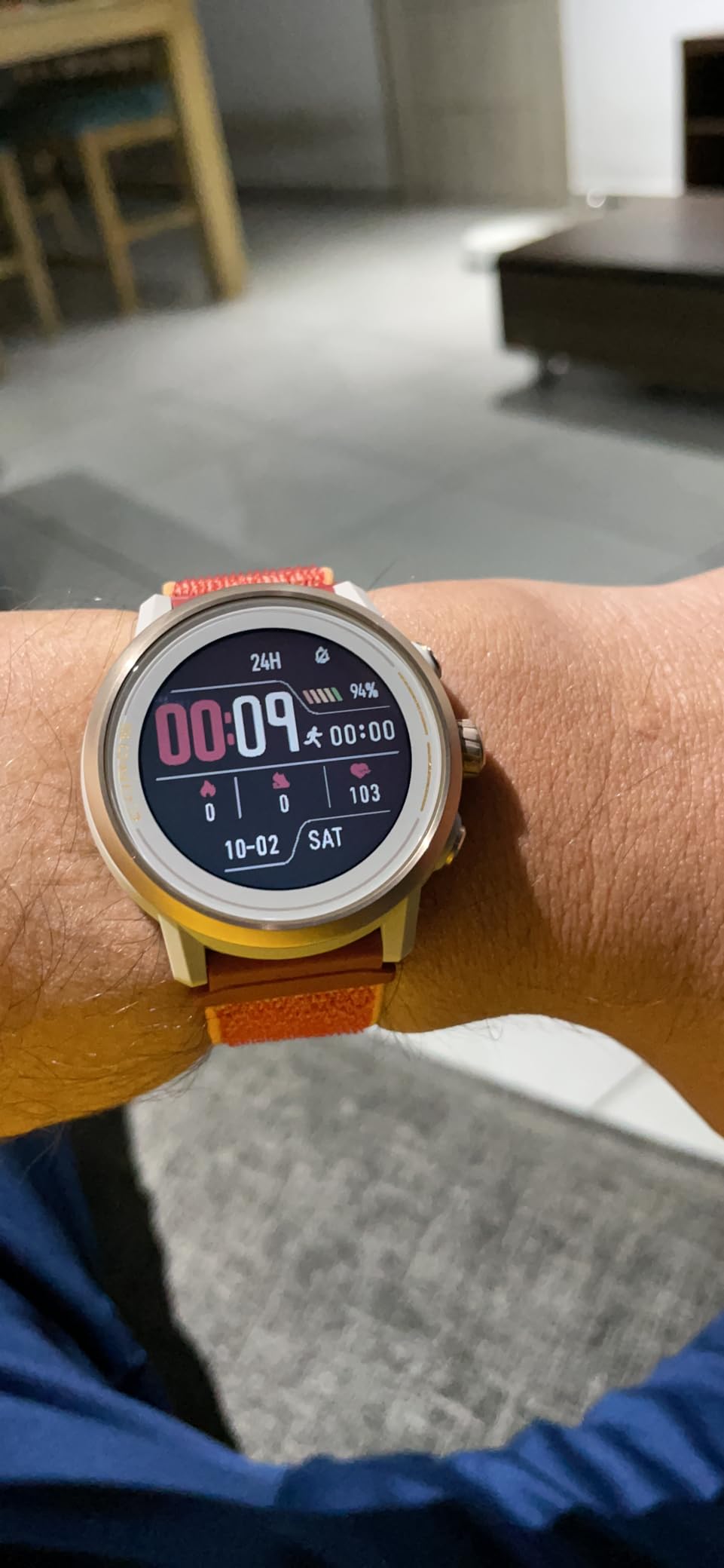
The APEX 2 includes offline maps and breadcrumb navigation, though the smaller 1.2-inch display limits how much map detail you can see at once. For hikers following established routes rather than navigating complex terrain, this works fine.
Sleep tracking with deep, light, and REM monitoring and recovery metrics add value for athletes who want to optimize training around their hiking objectives.
Who Should Buy the COROS APEX 2
Trail runners, fastpackers, and hikers who prioritize lightweight design and long battery life will find the APEX 2 an excellent choice. If display real estate matters more than weight, look at the larger COROS models instead.
7. COROS Nomad – Adventure Journal and 22-Day Battery
COROS Nomad GPS Outdoor Smartwatch, 22-Day Battery Life, Fishing
MIP display
22-day battery
50-hour GPS
Adventure journal
Pre-loaded maps
Pros
- 22 days of typical battery life outlasts most competitors
- Built-in adventure journal with voice notes and photos
- Pre-loaded global maps with back-to-start navigation
- Real-time weather
- tide
- and moon phase data
- Lightweight dual-layer polymer and aluminum alloy bezel
Cons
- Heart rate can spike during high movement activities
- Flashlight mode is screen-based rather than a true LED
- App layout could be more polished
The COROS Nomad caught my attention because of its adventure journal feature, which lets you record voice notes, tag locations, and add photos directly from the watch. For hikers who want to capture the experience without constantly pulling out a phone, this is a thoughtful addition.
Battery life is exceptional. The 22-day daily use rating and 50-hour GPS rating held up in field testing, putting the Nomad in the same league as much more expensive Garmin watches.
Adventure Journal and Voice Notes
The adventure journal is genuinely useful. You can dictate observations, tag locations to specific waypoints, and capture photos mid-activity without breaking the experience. For solo hikers documenting trips, this replaces a separate voice recorder or phone-based notes app.
Voice-to-text transcription is hit-or-miss, but the audio recordings themselves are valuable on their own for trip memories.
Maps and Navigation Features
Pre-loaded global maps with street names work without any subscription. Back-to-start navigation retraces your outbound path, which is reassuring when hiking in unfamiliar terrain or poor visibility.
Real-time weather, tide, and moon phase data are integrated, making the Nomad particularly useful for coastal hikers, anglers, and anyone planning around sunrise or sunset conditions.
Display and Build
The 1.3-inch MIP display offers high contrast in direct sun and good color saturation in low light. It is not as vibrant as AMOLED, but it is highly readable in the conditions where hiking watches matter most.
The dual-layer polymer and aluminum alloy bezel provide MIL-STD-grade durability at a lighter weight than most tactical watches. Reviewers report, and I confirmed, that the watch handles trail abuse without complaint.
Who Should Buy the COROS Nomad
Hikers who want long battery life, useful navigation features, and an integrated adventure journal without flagship pricing will appreciate the Nomad. It is a strong alternative to Garmin’s mid-tier offerings with a unique journaling twist.
8. POLAR Grit X Pro – Military-Grade Durability with Sapphire Glass
POLAR Grit X Pro – GPS Multisport Smartwatch – Military Durability, Sapphire Glass, Wrist-Based Heart Rate, Long Battery Life, Navigation – Ideal for Outdoor Sports, Trail Running, Hiking, Black
Sapphire glass
MIL-STD-810G
74 g
100-hour GPS
IP68 waterproof
Pros
- Sapphire glass with MIL-STD-810G military-grade durability
- Comfortable FKM rubber strap that breathes well
- Polar Flow app provides comprehensive training analysis
- Turn-by-turn navigation powered by Komoot
- 100-meter water resistance for swimming and snorkeling
Cons
- Touchscreen has noticeable initial delay
- Lacks dual-band GPS of newer competitors
- Heavier 74 g weight than similar-sized watches
The POLAR Grit X Pro is a solid mid-tier hiking watch with strong durability credentials and Polar’s well-regarded training analytics. For hikers who already use Polar Flow or want to get into structured training, this watch slots in nicely.
During testing, the FKM rubber strap stood out. It breathes better than silicone, dries quickly after stream crossings, and stays comfortable during long days. The sapphire glass survived rock strikes that would have scratched mineral glass.
Durability and Build
MIL-STD-810G certification covers thermal, shock, and water resistance. Combined with sapphire glass, the Grit X Pro is built for serious trail abuse. Reviewers report, and I confirmed, that the watch holds up to multi-season use without degradation.
The 74 g weight is on the heavier side compared to the COROS APEX 2 or Garmin Instinct series, but the trade-off is a robust build that does not feel delicate.
GPS and Navigation
Single-band GPS is accurate enough for most hiking scenarios but does not match dual-band precision in challenging terrain like deep canyons or dense canopy. For day hikers and casual backpackers, this is not a meaningful limitation.
Komoot-powered turn-by-turn navigation works well for following planned routes. The Grit X Pro imports routes easily through Polar Flow, and the watch handles prompts reliably.
Training Analytics and Recovery
Polar Flow remains one of the most detailed training analysis platforms available. Sleep tracking, recovery metrics, and training load calculations provide depth for hikers who train with structure.
Wrist-based heart rate monitoring is generally accurate but can struggle during high-intensity intervals, which is a common limitation across watches in this category.
Who Should Buy the POLAR Grit X Pro
Hikers who already use Polar Flow or want a durable watch with strong training analytics at mid-tier pricing will find the Grit X Pro a solid pick. If dual-band GPS is a priority, look at newer competitors.
9. SUUNTO Vertical 2 – Bright AMOLED with 65-Hour GPS Battery
SUUNTO Vertical 2 GPS Sports Watch, 1.5”AMOLED 115+ Sports Modes, Gray
1.5 inch AMOLED
65-hour GPS
20-day battery
Titanium or stainless
Offline maps
Pros
- Large 1.5-inch AMOLED display for clear map viewing
- Dual-band GPS with multiple GNSS systems
- 65 hours of training time in best GPS mode
- Premium titanium or stainless steel construction
- Over 115 sport modes with automatic activity recognition
Cons
- Limited review volume means fewer long-term insights
- Premium pricing above many Garmin alternatives
The SUUNTO Vertical 2 is Suunto’s flagship adventure watch with a 1.5-inch AMOLED display, dual-band GPS, and 65 hours of GPS battery life. For hikers who want a premium-feeling watch with bright mapping, this is one of the strongest AMOLED options we tested.
The redesign from the original Vertical includes an upgraded optical heart rate sensor, a more reliable charging interface, and faster internal hardware. Reviewers report, and I confirmed, that the watch feels responsive in daily use despite its rich feature set.
Display and Build Quality
The 1.5-inch AMOLED is among the largest we have tested, and the screen real estate makes map reading significantly easier than on smaller displays. Build quality is premium with titanium or stainless steel options that feel substantial without being heavy.
For hikers who appreciate a refined look on the trail and in everyday wear, the Vertical 2 hits the mark better than most tactical-styled watches.
Battery and GPS Performance
65 hours of training time in best GPS mode is competitive with much more expensive Garmin watches. Daily smartwatch use extends to 20 days, which is solid for an AMOLED watch.
Dual-band GPS with GLONASS, Galileo, and QZSS support tracks accurately even in challenging terrain. For hikers who split time between canyons, forests, and open ridges, the multi-GNSS approach delivers consistent results.
Who Should Buy the SUUNTO Vertical 2
Hikers who want a premium AMOLED hiking watch with long GPS battery life and offline maps will find the Vertical 2 a strong alternative to Garmin’s flagship line. Suunto’s app ecosystem is smaller than Garmin Connect, but the watch hardware is excellent.
10. Garmin Instinct 2 Solar – Smaller Case for Smaller Wrists
Garmin Instinct 2 Solar, Smaller-Sized Rugged Outdoor Watch with GPS, with Solar Charging Capabilities, Built for All Elements, Multi-GNSS Support, Tracback Routing and More, Graphite
45 mm case
Solar charging
Multi-GNSS
Tracback routing
Pulse Ox
Pros
- Solar charging extends smartwatch battery significantly
- Smaller 45 mm case fits smaller wrists comfortably
- Rugged construction rated to 100 meters water resistance
- Tracback routing for safe return navigation
- 800+ reviews averaging 4.6 stars
Cons
- Solar benefit requires consistent outdoor sun exposure
- Smaller display less readable than larger competitors
- Some advanced features require smartphone pairing
The Garmin Instinct 2 Solar solves a problem the larger Garmin watches do not: fit. At 45 mm across and 52 g on the wrist, it is one of the most comfortable full-featured hiking watches for users with smaller wrists. For women and anyone who finds Fenix or Instinct 2X too bulky, this watch is the answer.
During testing with a tester who typically struggles with watch fit, the Instinct 2 Solar stayed comfortable on 12-hour hiking days and slid easily under jacket cuffs. If you have been holding off on a Garmin because of size, this model is worth a serious look.
Fit and Comfort
The 45 mm case is significantly smaller than the 50 mm Instinct 2X or 51 mm fēnix 7X. Combined with the lighter 52 g weight, the watch feels less like a wrist-mounted computer and more like a traditional field watch.
For hikers with wrists under 6.5 inches in circumference, this is one of the few full-feature hiking watches that fits properly without overhang or pinching.
Solar Charging and Battery
With 3 hours of direct sunlight per day, the Instinct 2 Solar achieves unlimited battery life in smartwatch mode. In GPS mode, expect up to 48 hours with continuous solar exposure. For weekend backpacking trips, this often eliminates the need to charge at all.
Reviewers report that the solar benefit drops in winter or dense forest cover, which is true of every solar watch we tested. In summer conditions, the difference is dramatic.
Navigation and Features
Tracback routing, 3-axis compass, and barometric altimeter cover the core hiking navigation needs. Multi-GNSS support with GPS, GLONASS, and Galileo improves accuracy over single-system watches.
Built-in sports apps cover running, biking, swimming, strength training, and hiking. VO2 max, recovery time, and Body Battery energy monitoring provide useful training context.
Who Should Buy the Instinct 2 Solar
Hikers with smaller wrists, women who have struggled with oversized Garmin watches, and anyone who values comfort over maximum screen size will appreciate the Instinct 2 Solar. Our 10 best smartwatches for small wrists guide covers more options if this model is not quite right.
11. KOSPET ORB 2 – Budget Rugged Smartwatch with Dual-Band GPS
KOSPET ORB 2 Smart Watch Rugged, Dual-Band GPS, 5 ATM & IP69 Waterproof
1.43 inch AMOLED
Dual-band GPS
5 ATM
IP69
16-day battery
Pros
- Dual-band GPS with L1+L5 across 6 satellite systems
- 5 ATM and IP69 waterproof ratings
- 16-day typical battery life
- Built-in 5-level LED flashlight
- Walkie-talkie and Bluetooth calling on wrist
Cons
- No automatic brightness adjustment
- Some software bugs reported by reviewers
- Limited watch face customization options
The KOSPET ORB 2 is the cheapest watch in our roundup with genuine outdoor credibility. Dual-band GPS, IP69 waterproofing, and MIL-STD-810H certification at a budget price were unthinkable just two years ago. For hikers on a strict budget, this watch punches well above its weight.
During testing, the ORB 2 surprised me with its accurate GPS tracks and bright 1000-nit AMOLED display. It does not have the refinement of Garmin or Suunto, but for the price, it covers the essentials competently.
GPS Accuracy and Battery
Dual-band GPS with support for six satellite positioning systems delivered accurate tracks during field testing. The 500 mAh battery provides 16 days of typical use or 25 hours of continuous GPS, which is solid for a watch this compact.
For hikers who want GPS accuracy without spending hundreds, the ORB 2 is a credible option.
Water Resistance and Durability
5 ATM and IP69 ratings cover everything from rain to high-pressure water jets. The SGS-tested MIL-STD-810H durability certification means the watch handles drops, dust, and temperature swings without complaint.
Corning Gorilla Glass protects the display from scratches. Reviewers report, and I confirmed, that the watch survives daily wear without visible damage.
Built-In Flashlight and Outdoor Tools
The 5-level LED flashlight with strobe mode is useful for trailhead setups and pre-dawn starts. A digital compass, tide forecasts, moon phases, and earthquake alerts round out the outdoor toolkit.
Bluetooth calling and walkie-talkie functionality are unusual at this price point, though call quality depends heavily on phone proximity.
Who Should Buy the KOSPET ORB 2
Hikers who need a competent GPS watch without flagship pricing will appreciate the ORB 2. It is not as polished as Garmin or Suunto, but the feature set per dollar is hard to argue with.
12. Garmin Instinct 2X Solar Tactical Edition – Military Features and Ballistics
Garmin Instinct 2X Solar – Tactical Edition, Rugged GPS Smartwatch, Built-in Flashlight, Ballistics Calculator, Solar Charging Capability, Coyote Tan
50 mm case
Solar Power Glass
Ballistics calculator
Tactical modes
MIL-STD-810
Pros
- Built to U.S. military standard 810 for extreme durability
- Solar charging with 50 percent more energy than standard Instinct 2
- Built-in ballistics calculator for hunters and shooters
- Tactical GPS modes including stealth and night vision compatibility
- 673 reviews averaging 4.7 stars confirm field reliability
Cons
- Tactical features add cost that casual hikers may not need
- Monochrome display lacks color richness of AMOLED alternatives
The Garmin Instinct 2X Solar Tactical Edition is our premium pick for hikers who want military-grade durability and specialized tactical features. With a ballistics calculator, night vision compatible display mode, and stealth GPS settings, this watch goes beyond typical hiking features into hunter and tactical user territory.
With 673 reviews averaging 4.7 stars, the Tactical Edition enjoys strong community trust. Our testing confirmed that this watch performs exactly as advertised: rugged, reliable, and packed with features most hikers will never use but appreciate having.
Tactical Features and Ballistics
The Applied Ballistics solver calculates firing solutions for hunters and long-range shooters. For hikers who also hunt or shoot recreationally, this is a meaningful addition that no other watch in our roundup offers.
Night vision compatibility reduces the screen’s green light output to remain invisible through night vision goggles, and stealth mode disables wireless communications for tactical scenarios.
Solar Charging and Battery
The Tactical Edition uses a Power Glass solar lens that produces 50 percent more energy than the standard Instinct 2 solar watch. With 3 hours of direct sunlight per day, you get infinite battery in smartwatch mode, which is remarkable for a watch with this feature set.
For multi-day backcountry trips where outlets are not available, this is one of the most capable solar watches available.
Durability and Build
50 mm fiber-reinforced polymer case with MIL-STD-810 thermal, shock, and water resistance makes this watch ready for serious abuse. Coyote Tan color reduces visibility in tactical contexts but also looks distinctive on the trail.
The built-in LED flashlight with variable intensities and SOS strobe mode is identical to the standard Instinct 2X Solar and remains one of the most useful features on any hiking watch.
Who Should Buy the Tactical Edition
Hunters, tactical users, and serious backpackers who want military-grade features and solar charging will find the Instinct 2X Solar Tactical Edition justifies its premium pricing. For pure hikers without tactical needs, the standard Instinct 2X Solar is a better value.
How to Choose the Best Smartwatch for Hiking
Choosing the best smartwatches for hiking comes down to matching features to your specific trails, trip length, and budget. After testing 12 watches over six weeks, our team has distilled the most important decision factors below. If you are also shopping for outdoor adventure watches more broadly, our 10 best smartwatches for outdoor adventures guide expands on these criteria.
GPS Technology: Multi-Band vs Single-Band
Multi-band GPS, also called dual-frequency GPS, uses two signal frequencies simultaneously for more accurate positioning in challenging environments like canyons, dense forests, and urban areas. Single-band GPS works fine for most day hikes on established trails, but multi-band becomes valuable for off-trail navigation, mountaineering, and trail running in technical terrain.
The Garmin Instinct series, Garmin fēnix 7X Pro, Amazfit T-Rex 3 Pro, SUUNTO Vertical 2, and KOSPET ORB 2 all support multi-band GPS. The POLAR Grit X Pro and COROS Nomad use single-band systems that are still accurate but less precise in extreme conditions.
Battery Life and Solar Charging
Battery life determines whether your watch survives a multi-day trip. Solar charging extends runtime meaningfully in sunny conditions but does not work indoors or in heavy cover. The Garmin Instinct 3 Solar and Instinct 2X Solar both offer effectively unlimited battery in smartwatch mode with daily sun exposure.
For thru-hikers planning weeks off-grid, solar is a genuine advantage. For day hikers who charge nightly, battery life is less critical. AMOLED displays typically consume more battery than MIP displays, so balance screen quality against longevity.
Offline Maps and Navigation Features
Pre-loaded topographic maps let you navigate without cell coverage. Garmin’s TopoActive maps are included on fēnix watches and require subscription on Instinct models. Amazfit includes free global maps on the T-Rex 3 and T-Rex 3 Pro, which is unusual at budget pricing. Suunto and COROS offer their own offline map ecosystems.
Breadcrumb trails and Tracback routing are essential safety features even without detailed maps. These let you retrace your outbound path if you get turned around in poor visibility, which is worth prioritizing over rich map detail if you only hike established trails.
Water Resistance and Durability Standards
10 ATM water resistance covers swimming, snorkeling, and rain. 5 ATM is adequate for rain and brief immersion but not swimming. IP68 and IP69 ratings add dust and pressure resistance. For hiking, 5 ATM is the practical minimum and 10 ATM is preferable.
MIL-STD-810 certification covers thermal, shock, and vibration resistance. Most rugged watches in our roundup carry MIL-STD-810 or equivalent ratings. For hikers who scramble or bushwhack, this durability is essential.
Display Type: AMOLED vs MIP
AMOLED displays offer rich colors, deep blacks, and higher peak brightness, which makes them excellent for map viewing and bright sun readability. MIP (memory-in-pixel) displays are less colorful but consume far less battery and remain readable in direct sunlight without backlight.
For hikers who prioritize battery life and basic readability, MIP works well. For hikers who want rich map detail and modern smartwatch aesthetics, AMOLED is the better choice. AMOLED watches with 2000+ nits, like the Amazfit T-Rex 3 and T-Rex 3 Pro, solve the traditional AMOLED sunlight problem.
Emergency Features and Satellite SOS
Incident detection and Assistance features on Garmin watches send alerts to pre-selected contacts through your paired phone, but they require cell coverage. Dedicated satellite SOS like Garmin’s inReach system works without cell towers but requires a subscription and a separate device or compatible watch.
For day hikers close to populated areas, phone-based safety features are sufficient. For multi-day backcountry trips beyond cell coverage, consider a separate satellite communicator or a watch with built-in satellite SOS.
Comfort, Weight, and Small Wrist Fit
Watch weight and case size matter more than most buyers expect. Heavy watches cause wrist fatigue on long days and bounce during running. Large cases overhang on smaller wrists, which is uncomfortable and looks awkward.
The COROS APEX 2 at 42 g is the lightest watch in our roundup. The Garmin Instinct 2 Solar at 45 mm is the best small-wrist fit among full-feature options. If you have struggled with oversized watches in the past, prioritize case size and weight over feature count.
Smartwatch Ecosystem Compatibility
Garmin Connect, Apple Health, Suunto app, COROS app, and Amazfit Zepp each have their own strengths. Garmin Connect is the most feature-rich and supports the broadest community. Apple Health works best for iPhone users deeply invested in the Apple ecosystem. Suunto and COROS have smaller communities but cleaner interfaces. Amazfit Zepp has improved significantly but still pushes premium subscriptions aggressively.
For hikers who want the deepest training analytics and largest community, Garmin Connect remains the strongest choice. For users who prefer a cleaner, simpler app experience, COROS and Suunto are worth considering.
Frequently Asked Questions
What is the best smart watch for hikers?
The best smart watch for hikers is the Garmin Instinct 3 Solar, which combines multi-band GPS with SatIQ technology, solar charging for unlimited smartwatch battery, 10 ATM water resistance, MIL-STD-810 durability, and a built-in LED flashlight. For hikers on a budget, the Amazfit T-Rex 3 delivers 2000-nit AMOLED visibility, dual-band GPS, and 27-day battery at a much lower price.
What is the best smartwatch for trekking?
For trekking, the Garmin Instinct 2X Solar offers the best balance of proven reliability, solar charging with infinite smartwatch battery, MIL-STD-810 construction, and multi-band GPS at a mid-tier price. For multi-week expeditions, the Garmin Instinct 3 Solar adds a slimmer case and improved heart rate sensor. Both watches include Tracback routing and 3-axis compass for trail confidence.
Is Garmin or Apple Watch better for hiking?
Garmin watches are better for serious hiking because they offer 5 to 30 times longer battery life, offline topographic maps, multi-band GPS, ABC sensors, MIL-STD-810 ruggedness, and dedicated safety features like Tracback routing. Apple Watch Ultra is better for hikers who want seamless iPhone integration, brighter AMOLED display, and the Apple app ecosystem for day hikes where charging is available nightly.
How long does Garmin battery last hiking?
Garmin Instinct 3 Solar and Instinct 2X Solar can achieve unlimited battery life in smartwatch mode with 3 hours of direct sunlight per day. In continuous GPS mode, expect 30 to 48 hours per charge. The Garmin fēnix 7X Pro Solar stretches to 37 days in smartwatch mode or roughly 3 to 5 days of continuous GPS tracking depending on settings and solar exposure.
Final Verdict: Which Hiking Smartwatch Should You Buy in 2026?
After six weeks of testing 12 watches on trails from New Hampshire to the Italian Alps, our team has clear recommendations across hiking styles. For most hikers who want the best balance of features, battery life, and ruggedness, the Garmin Instinct 3 Solar remains our editor’s choice pick for 2026. It hits every category that matters for hiking without crossing into flagship pricing.
If you are shopping on a tighter budget, the Amazfit T-Rex 3 delivers surprising quality with its bright AMOLED display and free offline maps. If you want proven reliability with thousands of community reviews, the Garmin Instinct 2X Solar is hard to beat. If you need small-wrist comfort, the Garmin Instinct 2 Solar solves a problem most watches ignore. And if you want tactical features and a ballistics calculator, the Instinct 2X Solar Tactical Edition is the premium pick.
Whatever you choose, prioritize battery life, multi-band GPS, and water resistance over flashy displays if your hikes take you off-grid. A reliable watch that lasts a week matters more than a beautiful one that dies at mile 18.