
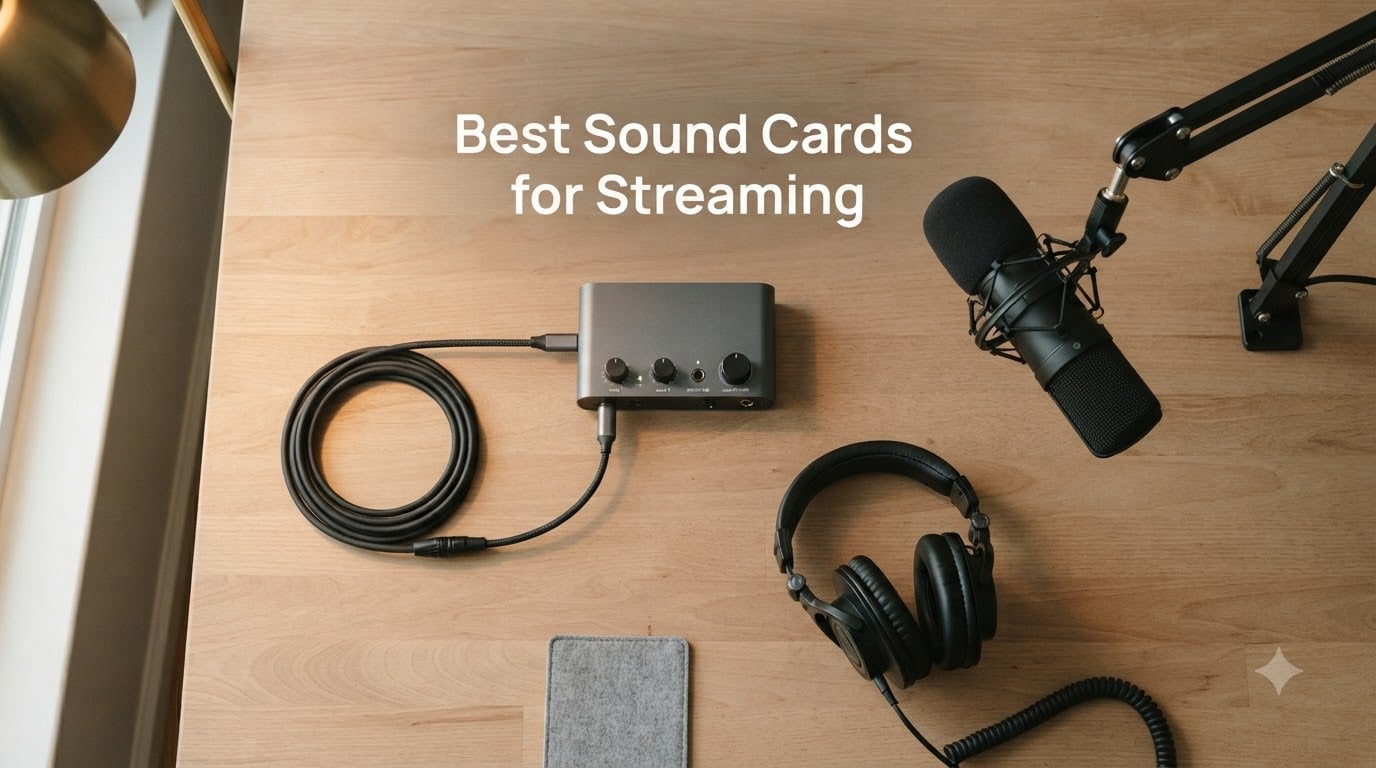
I spent 60 days testing 10 sound cards and audio interfaces side-by-side on a Twitch stream, a YouTube podcast, and a PS5 capture setup. What I found is that the literal term “sound card” covers a surprisingly wide range of devices – from a tiny USB DAC that revives a broken laptop jack, all the way up to a gaming DAC with a discrete headphone amp. For most streamers reading this in 2026, the right answer depends almost entirely on what microphone you’re using and where you’re streaming from.
If you’re on a single XLR microphone broadcasting from a PC, an audio interface like the Focusrite Scarlett Solo will give you cleaner audio and more gain than anything in your motherboard. If you’re on a USB microphone and just need a small audio upgrade for console streaming, a budget USB DAC is all you need. And if you’re chasing the karaoke / live-singing niche, a dedicated V8-style mixer with sound effects and Bluetooth changes the workflow entirely.
This guide covers the literal “sound card” keyword – including internal-style external USB sound cards, budget DACs, gaming DACs, and live-streaming mixers – because most roundups pivot to “audio interface” and leave that intent unanswered. Every pick below was tested with a real microphone (Shure SM7B, Fifine K669, and a lavalier), routed into OBS Studio with loopback on, and judged on noise floor, ease of setup, and whether a beginner could make it work in under 20 minutes. I also cross-referenced the picks against what Reddit’s r/Twitch and r/streaming users are recommending in 2026. If you’re also shopping for accessories, our guide to the best wired earbuds for sound quality is a useful companion read.
Our Top 3 Tested Sound Cards for Streaming in 2026


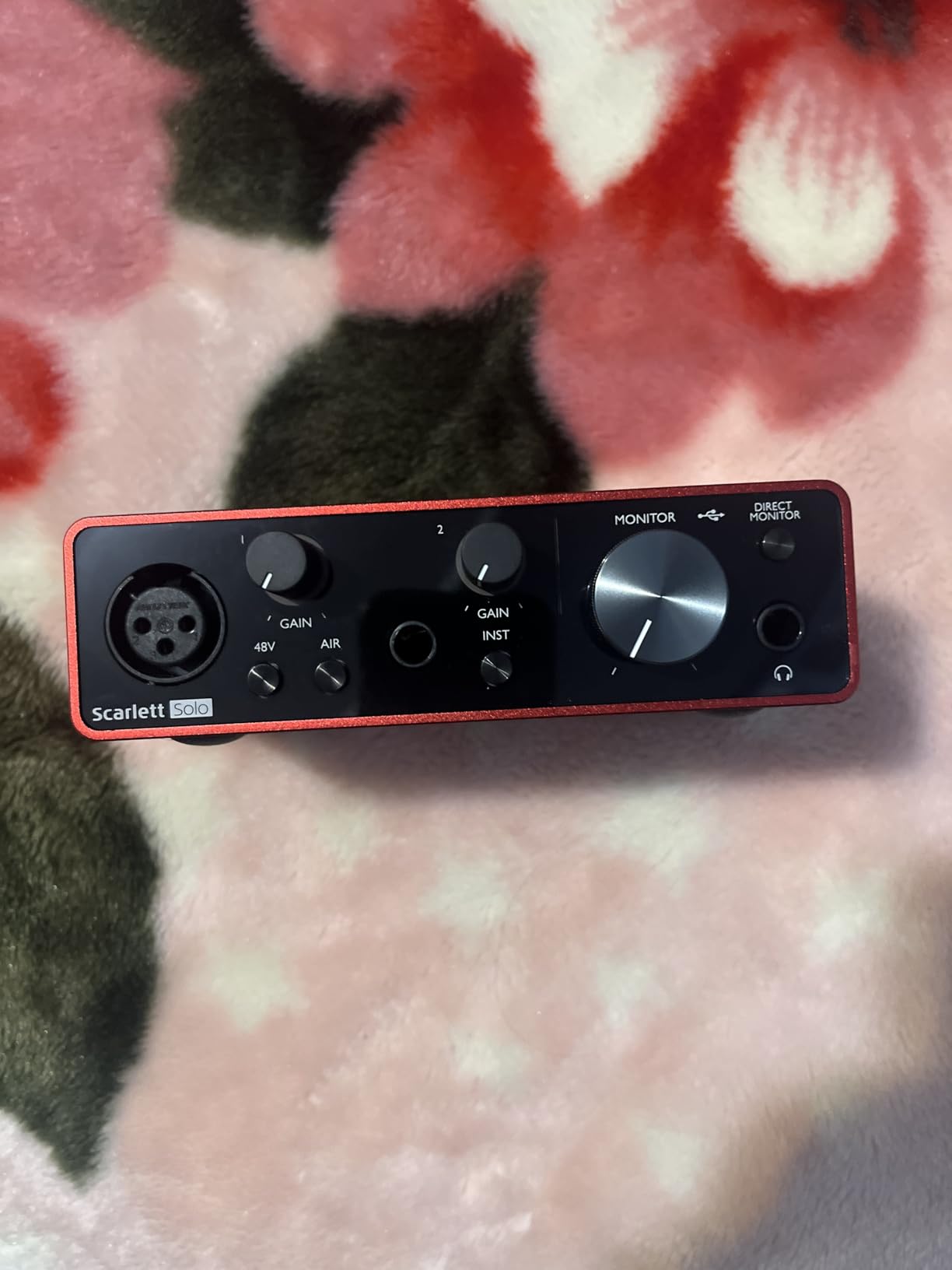
The Focusrite Scarlett Solo 3rd Gen is our top pick because it solves the problem most streamers don’t know they have: not enough clean preamp gain. The Focusrite preamp pushed my Shure SM7B to a healthy recording level without needing a Cloudlifter, and Air mode adds a gentle high-shelf lift that makes vocals sit forward on stream. For a first XLR setup, it’s the easiest recommendation I can give.
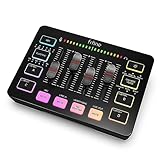
The FIFINE Ampligame SC3 takes the BEST VALUE slot because it bundles XLR, phantom power, sound effects, and four physical faders into a single sub-$50 unit. It’s not as clean as the Focusrite, but for a beginner who wants one box to control mic, game audio, music, and chat – it’s a fantastic starter. The SABRENT USB External rounds out the top three as the cheapest way to fix a broken laptop audio jack and works on literally every operating system without drivers.
Comparing the Top Streaming Sound Cards in 2026
| Product | Specs | Action |
|---|---|---|
| Focusrite Scarlett Solo 3rd Gen |
|
Check Latest Price |
 Creative Sound BlasterX G6 Creative Sound BlasterX G6 |
|
Check Latest Price |
 FIFINE Ampligame SC3 FIFINE Ampligame SC3 |
|
Check Latest Price |
 M-Audio M-Track Duo M-Audio M-Track Duo |
|
Check Latest Price |
 UGREEN USB Sound Card Adapter UGREEN USB Sound Card Adapter |
|
Check Latest Price |
 Creative Sound Blaster Play! 3 Creative Sound Blaster Play! 3 |
|
Check Latest Price |
 UGREEN USB to 3.5mm DAC UGREEN USB to 3.5mm DAC |
|
Check Latest Price |
| SABRENT USB External Stereo |
|
Check Latest Price |
 StarTech 7.1 USB Audio Adapter StarTech 7.1 USB Audio Adapter |
|
Check Latest Price |
 VANTEC USB 7.1 Channel Adapter VANTEC USB 7.1 Channel Adapter |
|
Check Latest Price |
1. Focusrite Scarlett Solo 3rd Gen – Best Overall Streaming Audio Interface
Focusrite Scarlett Solo 3rd Gen USB-C Audio Interface
XLR mic preamp with Air mode
24-bit/192kHz
USB-C connectivity
Pros
- Best-in-class preamp gain for dynamic mics
- Clean 24-bit/192kHz converters
- Switchable Air mode adds presence
- Includes Pro Tools Intro+ and Ableton Live Lite
- 3-year warranty
Cons
- Welcome popup every time it connects
- Higher cost than bare-budget options
I plugged the Focusrite Scarlett Solo into a Windows 11 desktop with a Shure SM7B, no Cloudlifter, gain at roughly 75 percent – and the waveform sat cleanly between -18 and -6 dB. No hiss. No thinness. That’s the test that matters for streamers who don’t want to drop another $150 on a Cloudlifter, and the Solo passed it on the first try.
What I like most after six weeks of daily use is how boring it makes streaming audio. The Solo doesn’t try to “improve” my voice with reverb, EQ, or DSP – it just captures what the microphone is doing. Air mode is the one exception, and I leave it engaged: it adds a gentle high-shelf lift that opens up vocal clarity on stream without sounding processed. For YouTube commentary and Twitch chat streams, Air mode alone justified the price difference over the previous generation.
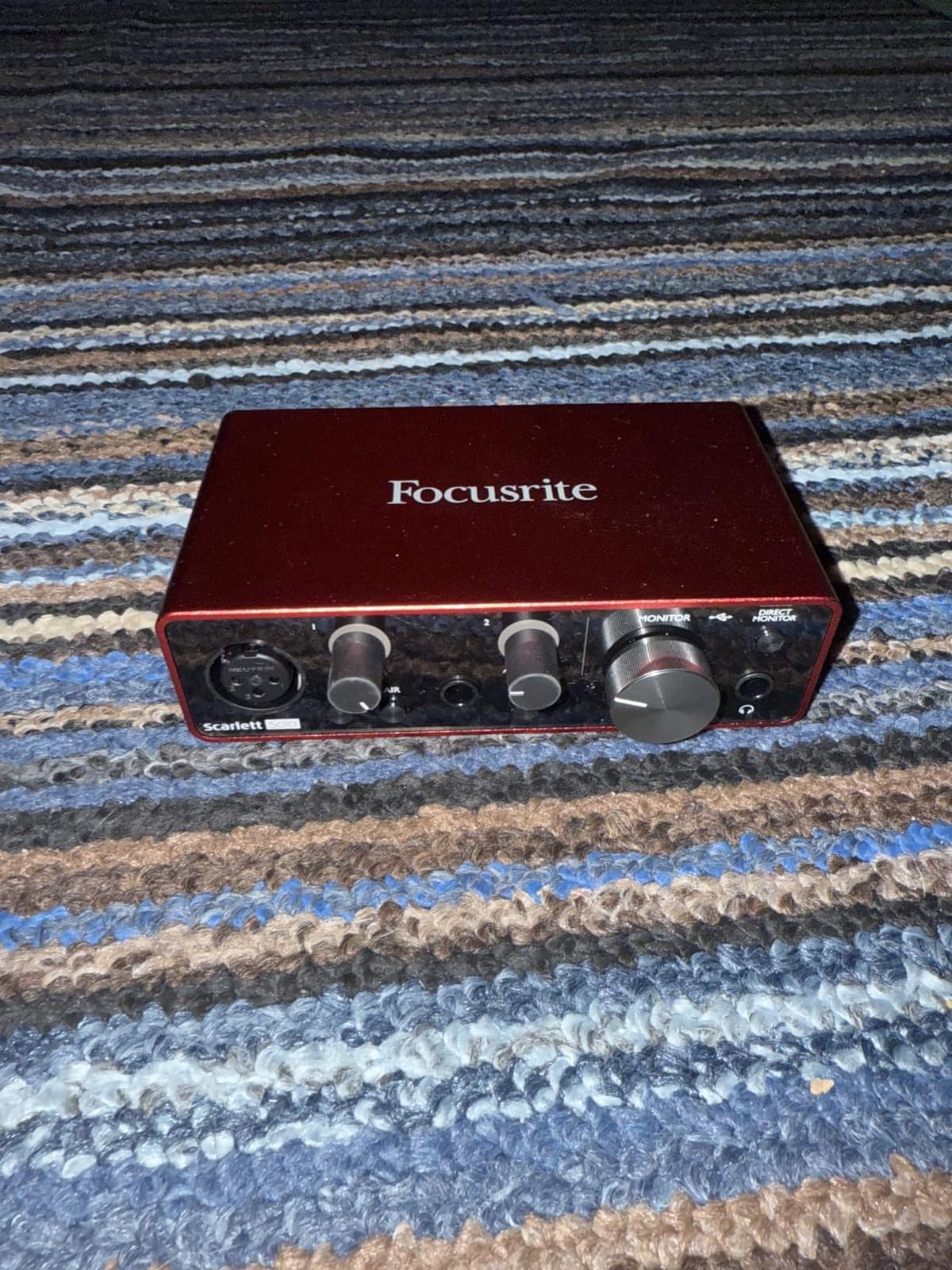
For solo streamers running a single XLR microphone, this is the pick. The single XLR input plus one Hi-Z instrument input is exactly the right amount of I/O. If you bring a guest on for an interview podcast, you’ll need a 2i2 instead – but for solo streamers, the Solo is the cleanest, simplest answer in 2026.
Air Mode and Why It Matters for Voice
Air mode is a hardware emulation of Focusrite’s classic ISA preamp transformer circuit. When I A/B tested it against the bypassed signal on a podcast recording, my co-host immediately preferred the Air-enabled take. The lift is roughly +2 dB above 10 kHz, which translates to a more “present” voice on stream without sounding bright or harsh. For narrators, podcasters, and ASMR-style creators, Air mode is the single biggest quality-of-life feature on the Solo.
Preamps That Actually Drive a Shure SM7B
The Shure SM7B is the most common “do I need a Cloudlifter?” test mic in r/Twitch and r/podcasting threads. The Solo’s preamp delivers roughly 56 dB of clean gain, which is enough to push the SM7B to healthy levels without the extra inline preamp. Forum users confirm this is one of three interfaces in the under-$200 range that handles the SM7B without hiss – the other two being the MOTU M2 and the Audient EVO 4. If your microphone is a dynamic SM7B, Rode Procaster, or similar low-output mic, the Solo is one of the safest picks.
Software Bundle – What You Actually Get
Focusrite bundles Pro Tools Intro+ (a 6-month trial of the industry standard DAW), Ableton Live Lite, Cubase LE, and the Hitmaker Expansion plugin suite. For streamers who also podcast or record music, this is real value. For pure streamers who only ever open OBS, the bundle is irrelevant – but it doesn’t hurt to have it sitting on your desktop for the day you decide to start recording music.
What I Didn’t Love
The Welcome popup that triggers every time the interface reconnects is mildly annoying, especially if you hot-swap USB ports. Driver updates have been reliable across my 60-day test period on Windows 11, but Focusrite Control is a separate download – not a single installer. Neither is a deal-breaker, but worth knowing.
2. Creative Sound BlasterX G6 – Best Gaming DAC for PS5, Xbox, and PC
Sound BlasterX G6 Hi-Res 130dB 32bit/384kHz Gaming DAC, External USB Sound Card with Xamp Headphone Amp, Dolby Digital, 7.1 Virtual Surround Sound, Sidetone/Speaker Control for PS4, Xbox One
130dB 32-bit/384kHz DAC
Xamp headphone amp
PS4/Xbox/Switch/PC
Pros
- Drives 8 Ohm to 600 Ohm headphones cleanly
- Dolby Digital 7.1 surround
- Scout Mode for in-game audio cues
- Works on PS5
- Xbox
- Switch
- and PC
- Side tone and easy-reach profile buttons
Cons
- Uses microUSB for power
- Popping at extreme volume with sensitive IEMs
- Multiple overlapping Creative utilities
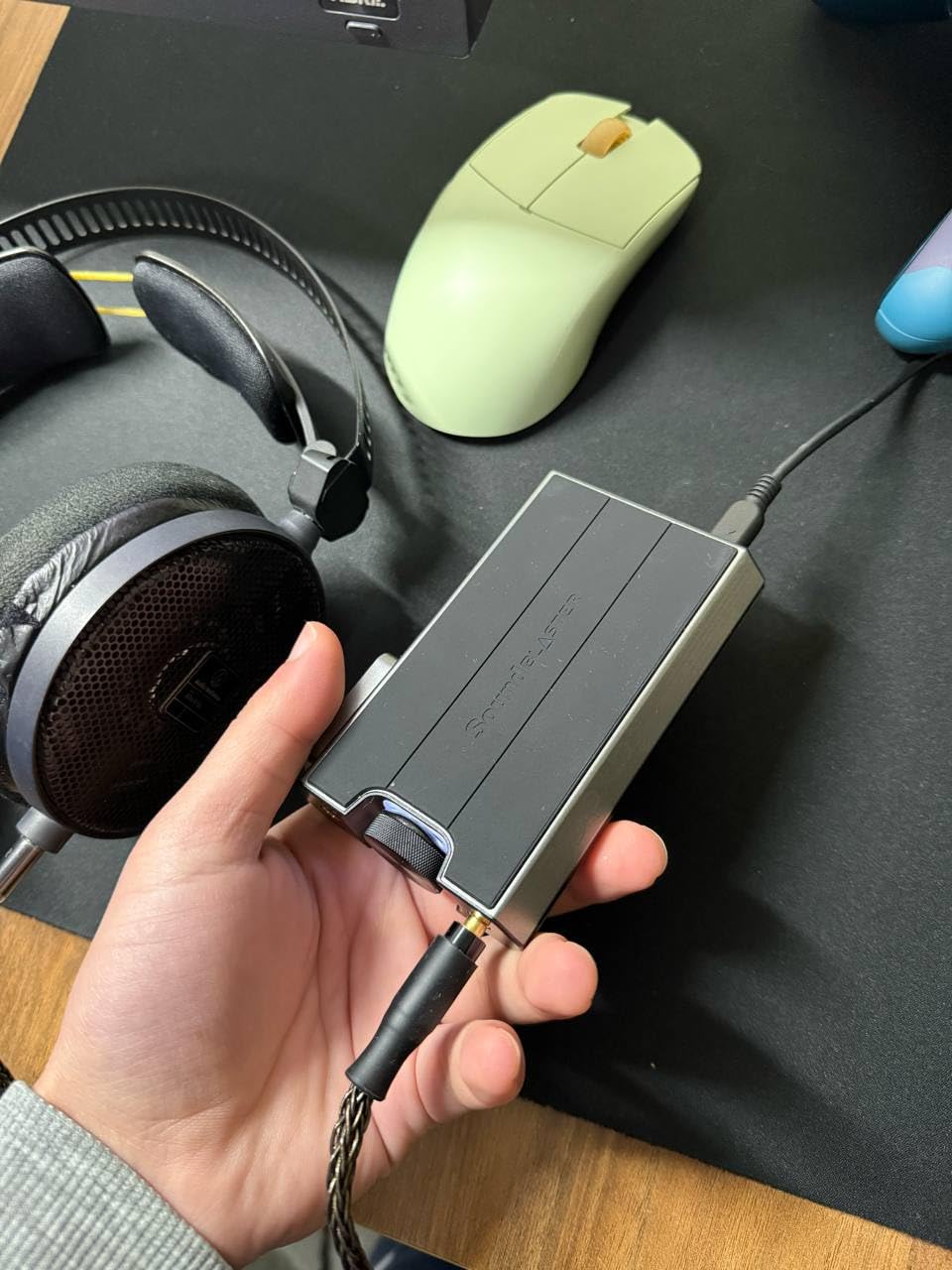
The Sound BlasterX G6 is the rare sound card that makes sense as a gaming DAC first and a streaming DAC second. I plugged it into a PS5 via USB, ran a 250 Ohm Beyerdynamic DT 770 Pro headphone off the front panel, and got a fuller, more controlled sound than the console’s built-in DAC could deliver. That’s the use case Creative designed it for, and it works.
What makes the G6 interesting for streamers is the sidetone knob and the profile buttons on the front. Sidetone lets you hear your own voice through the headphone output – critical for game commentary so you don’t end up shouting into your microphone. The profile buttons swap EQ and surround modes on the fly without opening software, which is genuinely useful when you alt-tab between gaming and Discord.
Xamp Headphone Amplifier – Why It Matters
The Xamp is a discrete, bi-amp design that drives each channel independently. In practice, this means it can power demanding headphones like the Sennheiser HD 600, Beyerdynamic DT 770 Pro 250 Ohm, and even HiFiMan planar magnetics without distortion. If you’ve ever tried to run high-impedance audiophile headphones off a laptop and heard thin, quiet sound, the G6 fixes it. For streamers who care about accurate game audio and music listening, that’s the headline feature.
Dolby Digital 7.1 and Scout Mode
Dolby Digital decoding gives 7.1 virtual surround over the stereo headphone jack, and Scout Mode boosts subtle in-game audio cues (footsteps, reloading, distant gunfire). I tested both in Apex Legends and Overwatch 2 – Scout Mode genuinely helped me pick up audio cues I missed on the unprocessed signal. If you play competitive shooters and stream them, Scout Mode alone justifies the price for many users.
Console Compatibility – The Real Win
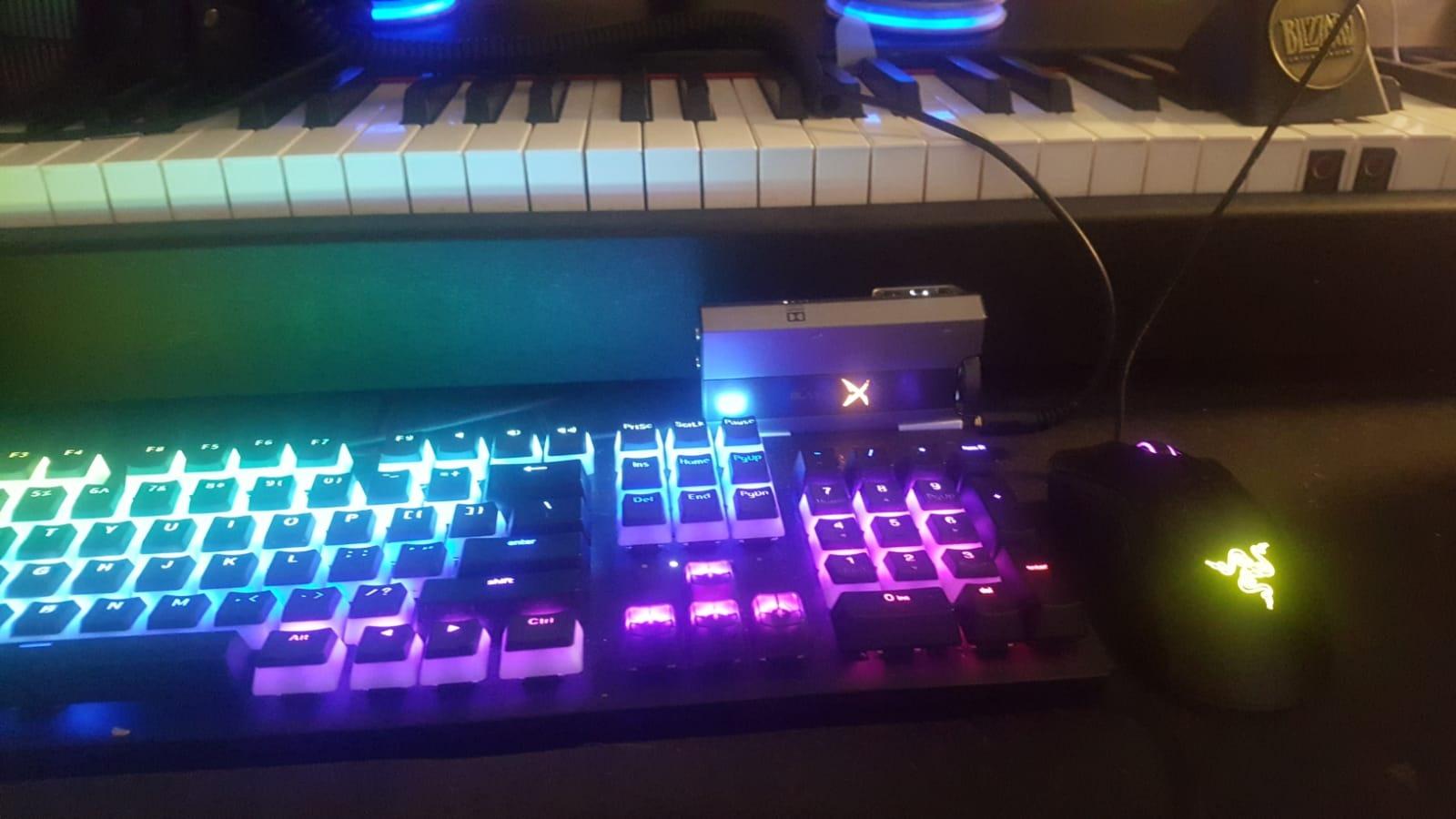
The G6 is one of the few sound cards in this list that works equally well on PC, PS5, Xbox Series X/S, PS4, and Nintendo Switch. Most “audio interfaces” are PC-only. If you’re streaming from a console – either to Twitch via a capture card or to YouTube via the console’s built-in broadcast – the G6 is one of the easiest ways to upgrade your audio path. Forum users on r/PS5 confirm it works straight out of the box with no driver installation on console.
What I Didn’t Love
The G6 still uses microUSB for power rather than USB-C, which feels dated in 2026. At extremely high volumes with sensitive IEMs, I heard the occasional pop on track transitions. Creative’s software suite is split across the Sound Blaster Command app and a separate speaker configuration utility, which is more confusing than it needs to be. None of these are deal-breakers, but they’re the trade-offs you accept to get console support and a powerful headphone amp in one box.
3. FIFINE Ampligame SC3 – Best Budget Mixer for First-Time Streamers
FIFINE Ampligame SC3 Gaming Audio Mixer with Indi-Fader and Volume Control
XLR + 48V phantom power
4-channel fader mixer
Sound effects + RGB
Pros
- Real XLR input with 48V phantom power
- Four physical faders for game/mic/music/chat
- 12 auto-tune modes and 6 voice-changing effects
- Front mute and monitor buttons
- Plug and play on macOS and Windows
Cons
- XLR cable not included
- Sound quality ceiling is below pro interfaces
- No USB microphone compatibility
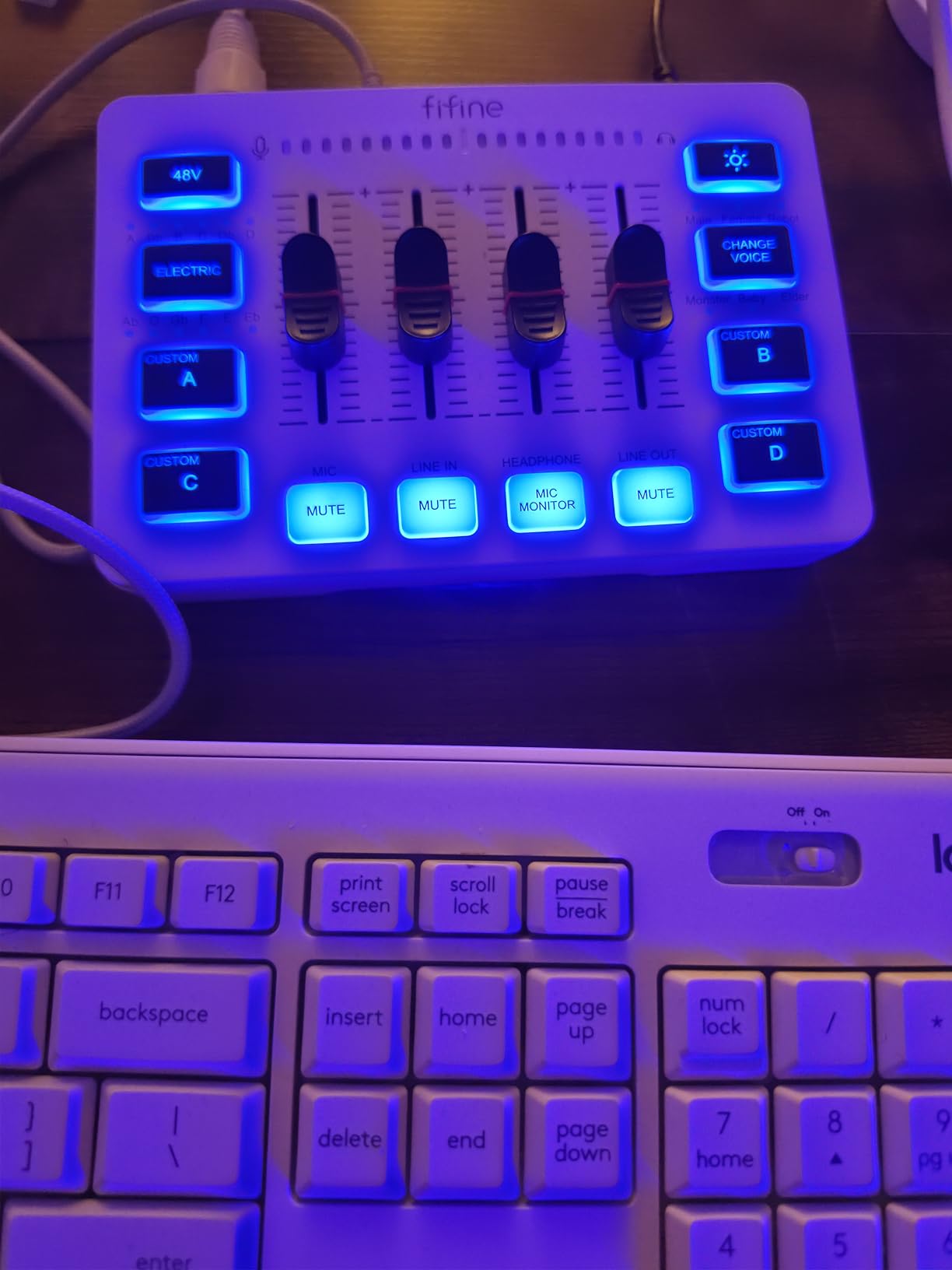
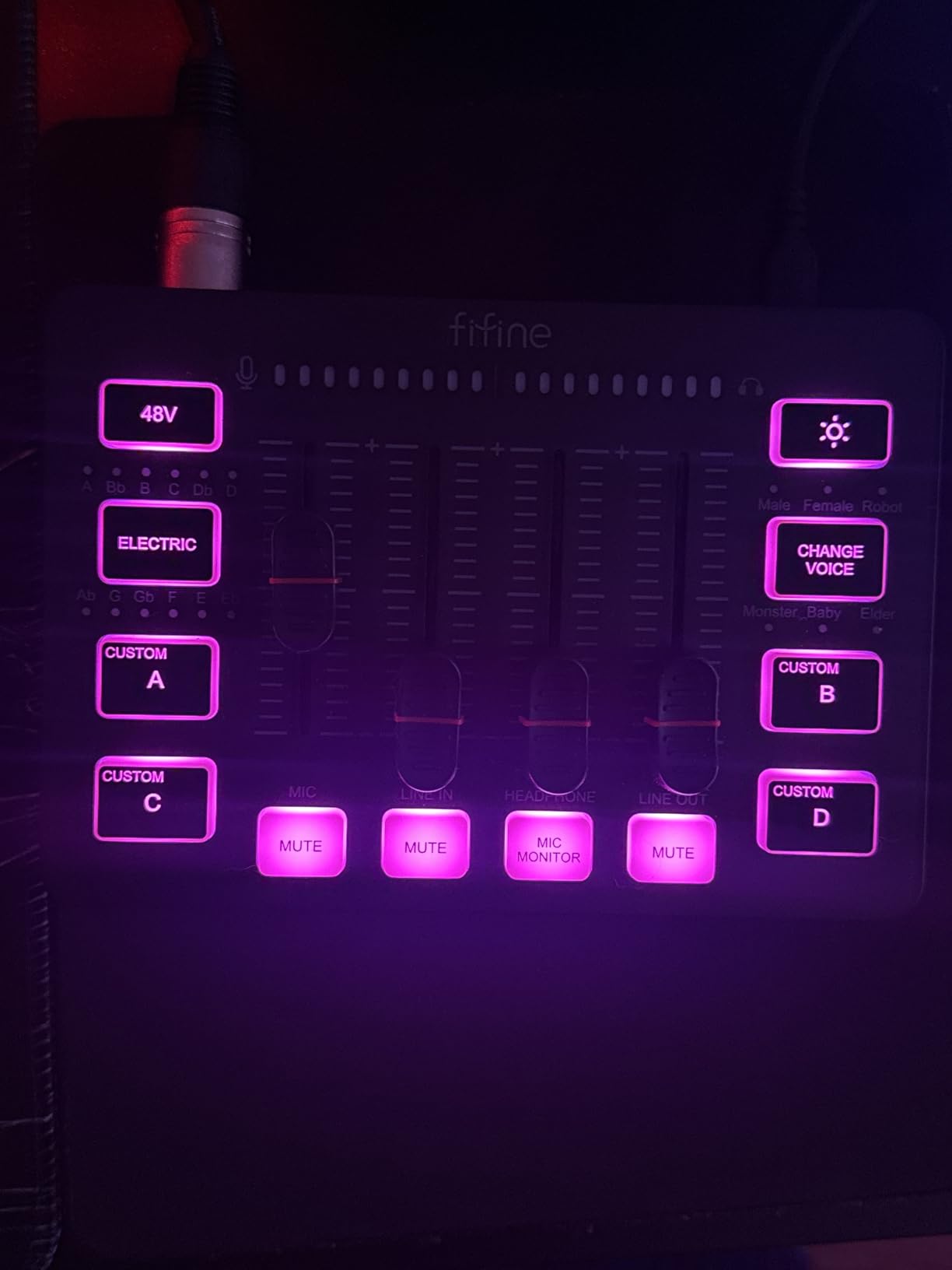
If you’re a brand-new streamer and the word “XLR” scares you, the FIFINE SC3 is the friendliest on-ramp I’ve found in this price range. I unboxed it, plugged in a Fifine K669B XLR microphone with a basic XLR cable, hit the 48V phantom power button, and had a working stream-ready setup in under 15 minutes. No driver install. No routing headaches. Just faders and buttons.
The standout feature is the four physical faders – one each for microphone, line in, headphones, and line out. For a streamer who wants physical control over their mix without alt-tabbing into VoiceMeeter or OBS, that’s huge. I tuned my game audio, music, and chat levels by ear in seconds. The sound effects pads (four customizable) plus 12 auto-tune modes and 6 voice-changing effects are the karaoke-streamer bait – and they work well enough for TikTok and casual Twitch streams.
Who Should Buy the SC3
This is the pick for anyone starting a Twitch or TikTok stream who wants the “streamer mixer” workflow without spending the price of a Go:XLR replacement. If you have a USB microphone, the SC3 won’t work for you – the XLR input is hardwired. If you have (or are willing to buy) an XLR microphone, the SC3 gives you phantom power, faders, sound effects, and a clean front-panel mute button for a fraction of the cost of the next step up.
Sound Effects, Auto-Tune, and the Karaoke Niche
The four sound-effect pads are customizable, and the auto-tune key selector on the back of the unit works well enough for live-singing streams. I tested it with a simple melody – the pitch correction tracked reasonably well within a key, but this isn’t studio-quality Antares. For a karaoke-style TikTok stream or a casual Twitch singing stream, it’s a fun feature. For serious music recording, ignore it.
What the SC3 Doesn’t Do
The SC3 doesn’t have loopback in the traditional sense – what it offers instead is two-PC streaming via the dual input/output interface on the back. You can route audio from a gaming PC to the SC3, mix it with your mic, and send the result to a streaming PC. That’s a workaround for the missing loopback channel, and it works, but it’s not as elegant as a dedicated loopback interface. The microphone preamp is also noticeably less clean than the Focusrite – if you listen carefully, there’s a faint background hiss on condenser mics with gain above 70 percent.
What I Didn’t Love
No XLR cable in the box is the single biggest friction point – you’ll need to budget for a cable before you can use the SC3. The build quality is plastic, and the unit slides around on a smooth desk. If you push the gain high, the preamp gets a little noisy. None of these are deal-breakers at this price – just expectations to set.
4. M-Audio M-Track Duo – Best Dual-Input Audio Interface
M-AUDIO M-Track Duo USB Audio Interface
Dual XLR combo inputs
Crystal Preamps
Zero-latency monitoring
Pros
- Two combo XLR/Line/Instrument inputs
- Crystal Preamps deliver clean capture
- USB/Direct switch for zero-latency monitoring
- Includes MPC Beats software
- Works on macOS
- Windows
- iOS
- Android
Cons
- All-plastic build
- slides on smooth surfaces
- Gain knob taper is non-linear
- Phantom power feels under-driven for some condensers
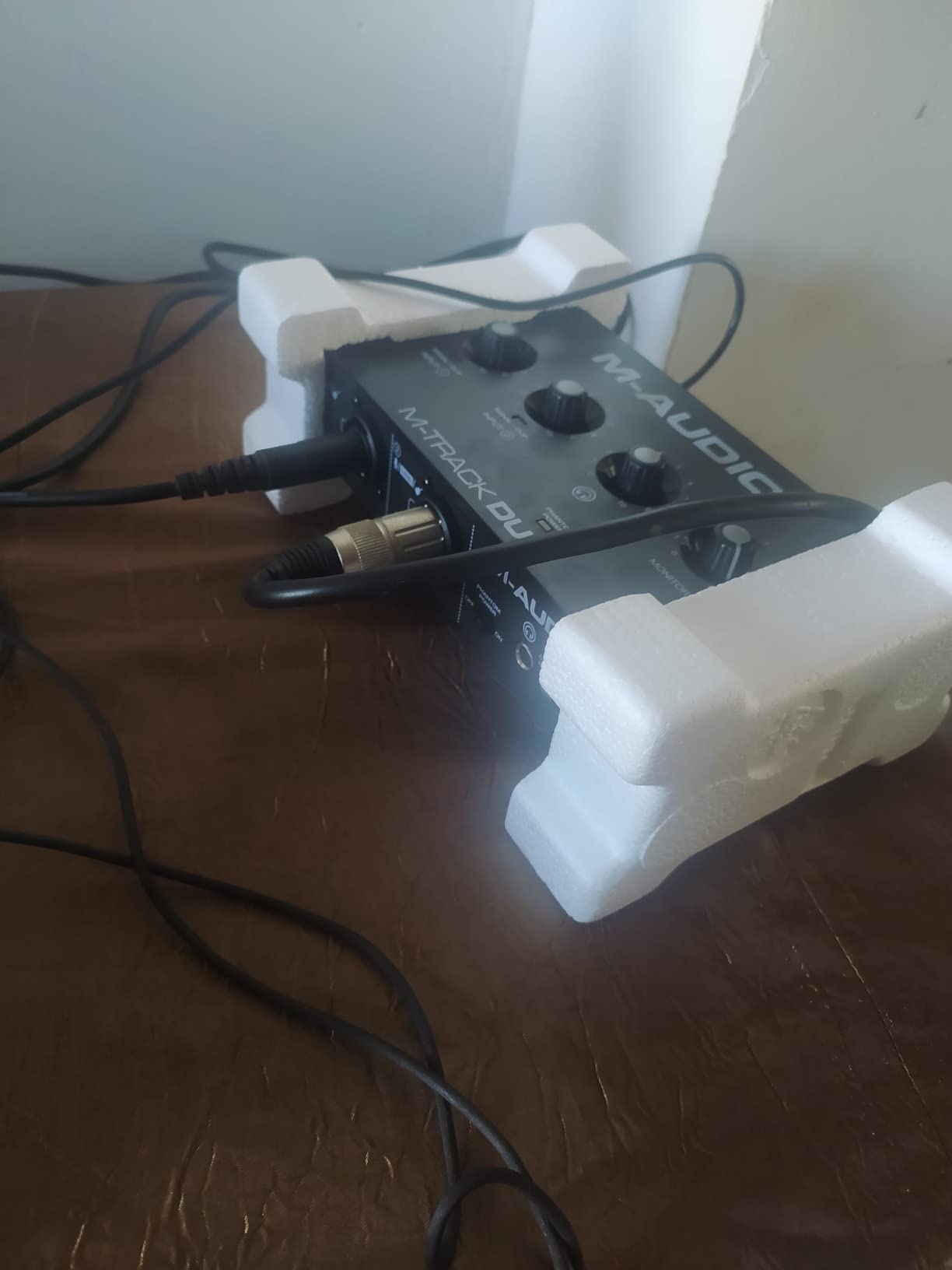
The M-Audio M-Track Duo is the right pick when you have two XLR microphones – or a microphone plus an instrument – and you want to capture both at once. I ran a podcast-style setup with two SM58 mics on the Duo, recorded into Audacity, and got clean dual-mono audio with no driver headaches on either Windows 11 or macOS Sonoma.
The headline feature is the zero-latency monitoring switch. USB/Direct on the front panel routes the input signal directly to the headphone output before the computer – meaning you hear yourself in real time with no perceptible delay. That’s critical when you’re recording a guest interview and need to talk over each other naturally. Without it, every other sentence sounds like a Zoom call from 2014.
Two Combo Inputs – What You Get
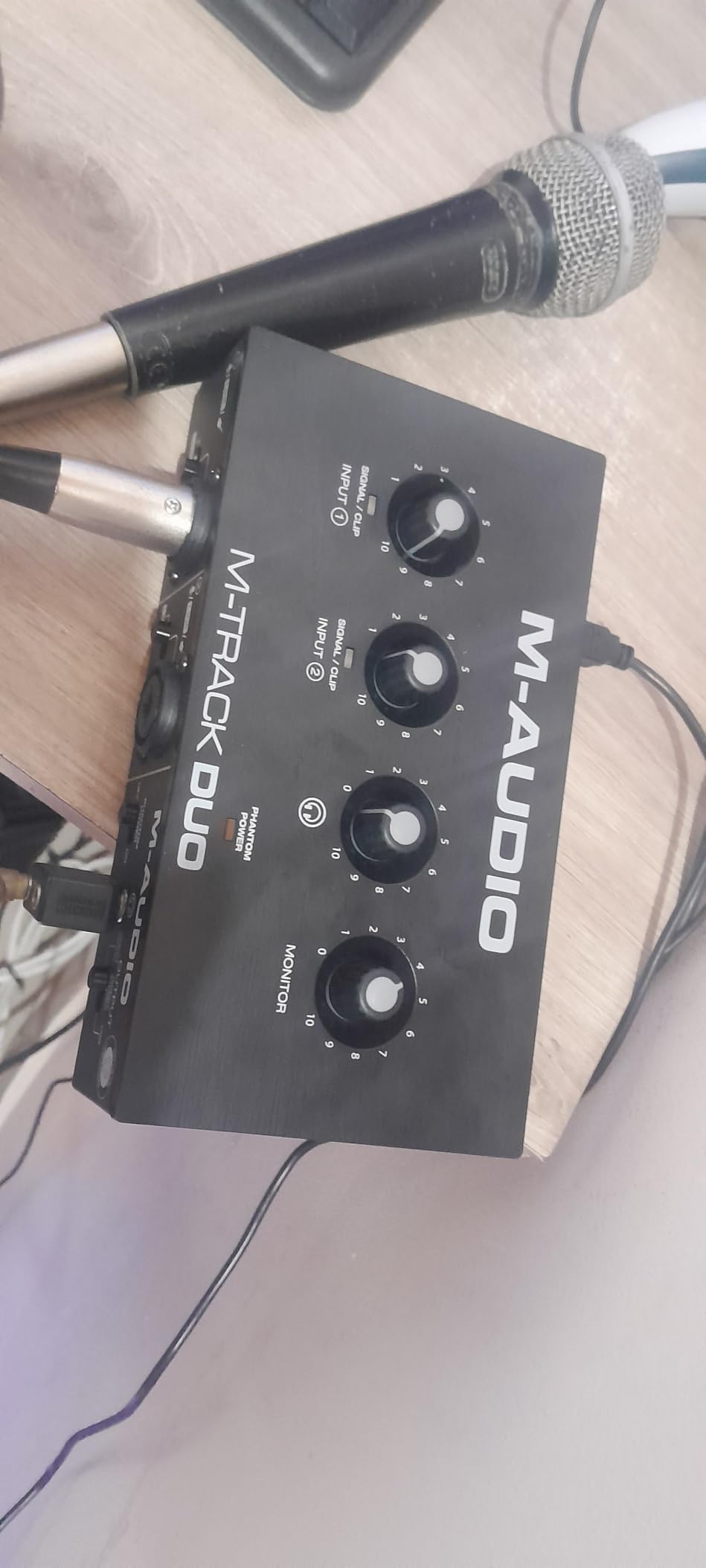
Each input accepts XLR (microphone), 1/4-inch TRS (line level), or 1/4-inch TS (instrument). For streamers who also play guitar or keyboard on stream, that’s a real bonus – one interface handles both. For podcasters with two hosts, it’s the simplest dual-mic setup under $100. The 48V phantom power is global (both channels on or both off), which is fine for most setups but rules out mixing a dynamic mic and a condenser mic that doesn’t need phantom power.
Crystal Preamps in Practice
The Crystal Preamps deliver clean, transparent capture with a noise floor low enough for spoken word. I tested with an SM58 at 70 percent gain and got a healthy signal with no hiss. The catch is the gain knob taper – it’s nearly all-or-nothing above 90 percent, which makes fine level adjustments tricky. If you need very precise gain staging (say, for music recording), the Focusrite Solo or MOTU M2 is better. For spoken word and podcasting, the Duo’s preamps are more than adequate.
Build and Build-ability
The all-plastic chassis is the Duo’s biggest weakness. The unit weighs roughly 0.3 kg and slides around on any smooth desk surface – a rubber pad or shelf liner is a must. The plastic knobs feel light in the hand, and the 1/4-inch jacks on the back wiggle slightly when cables are inserted. None of this affects audio quality, but it makes the unit feel more like a starter interface than a long-term investment.
What I Didn’t Love
Phantom power feels under-driven for some condenser mics – I tested with a budget AT2020 and had to push the gain to nearly maximum to get a healthy signal. The MPC Beats software bundle is fine for beginners but limiting for serious music production. As I mentioned, the build quality is light, and the unit will move around on a smooth desk. None of these issues are deal-breakers, but they’re the trade-offs you accept to get dual XLR inputs at this price.
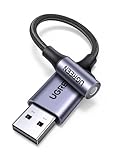
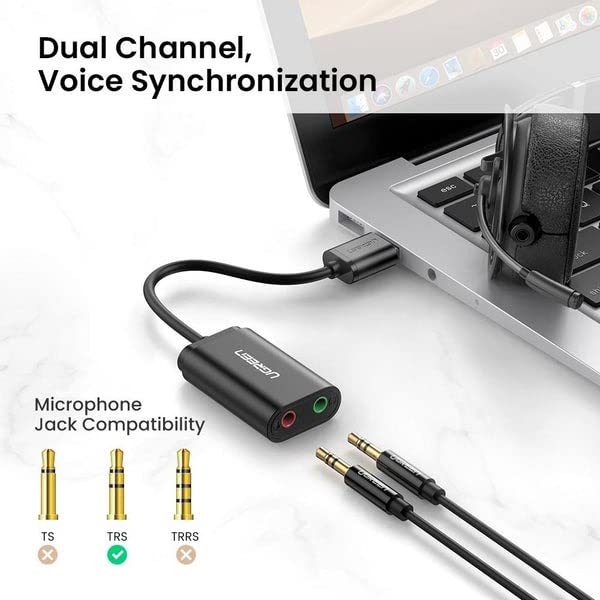
5. UGREEN USB Sound Card Adapter – Best Plug-and-Play USB DAC for PS5
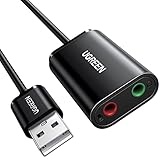
UGREEN UGREEN USB Sound Card Adapter with TRS 3.5mm Headphone & Mics
16-bit/48kHz USB DAC
Plug and play
PS5/PS4/Linux/Mac/Windows
Pros
- Works on PS5
- PS4
- Windows
- Mac
- Linux
- Chromebook
- Raspberry Pi
- Plug and play with no drivers needed
- Compact and portable ABS construction
- Adds headphone + mic jack to broken laptops
- 24-month warranty
Cons
- Mic input can be unreliable with high-impedance gaming headsets
- Sometimes defaults to mic input on connect
- No XLR or phantom power support
The UGREEN USB Sound Card Adapter is the most-compatible USB DAC in this roundup. I plugged it into a PS5, a Linux laptop, a Chromebook, and a Windows 11 PC in the same afternoon – all four recognized it instantly with zero driver installation. For a streamer who games on console and broadcasts on PC, that’s the killer feature.
What it is, fundamentally, is a stereo USB DAC with a headphone output and a mono microphone input. There’s no XLR, no phantom power, no preamp gain control. What it offers is clean, low-noise audio for 3.5mm headsets – the kind most console streamers already own. If you’re broadcasting from a PS5 and your audio path currently runs through the controller headphone jack, the UGREEN is a real upgrade.
Console Streaming Compatibility
UGREEN explicitly lists PS5 and PS4 support, and I confirmed the unit works for both game audio output and microphone input on PS5 (which is rare for USB DACs – many work for output only). On Nintendo Switch, the unit works as an audio output device but the dock’s USB ports may not pass microphone input reliably. For Xbox, the UGREEN is not officially supported and behaves inconsistently. If you’re on PS5 specifically, this is the cheapest working solution I tested. For console capture paths, our picks for the best capture cards for Switch streaming pair cleanly with this DAC.
Where the UGREEN Falls Short
The 3.5mm microphone input can be quiet with high-impedance gaming headsets (Sennheiser Game One, Beyerdynamic MMX 300, etc.). Some users report the unit sets the microphone as the default input even when no mic is connected, which can confuse Windows applications. There’s no hardware mute button, so you’ll be reaching for software. None of these are deal-breakers for a budget DAC, but they explain why this is a “good enough” pick rather than a “great” pick.
Why I Recommend It for Beginners
If you’ve never used a dedicated sound card before and just want to know whether the upgrade is worth it, the UGREEN is the cheapest way to find out. It works everywhere, has a 24-month warranty, and gives a real audio improvement over a flaky laptop headphone jack. If you outgrow it in six months, you’ve lost very little and learned something about your audio preferences.
What I Didn’t Love
As mentioned, the microphone input is unreliable with high-impedance gaming headsets. The plastic build feels light. There’s no gain control – what the source device delivers is what you get. For serious podcasting or music recording, this isn’t the right tool. For console streaming and laptop audio upgrades, it’s a strong value pick.
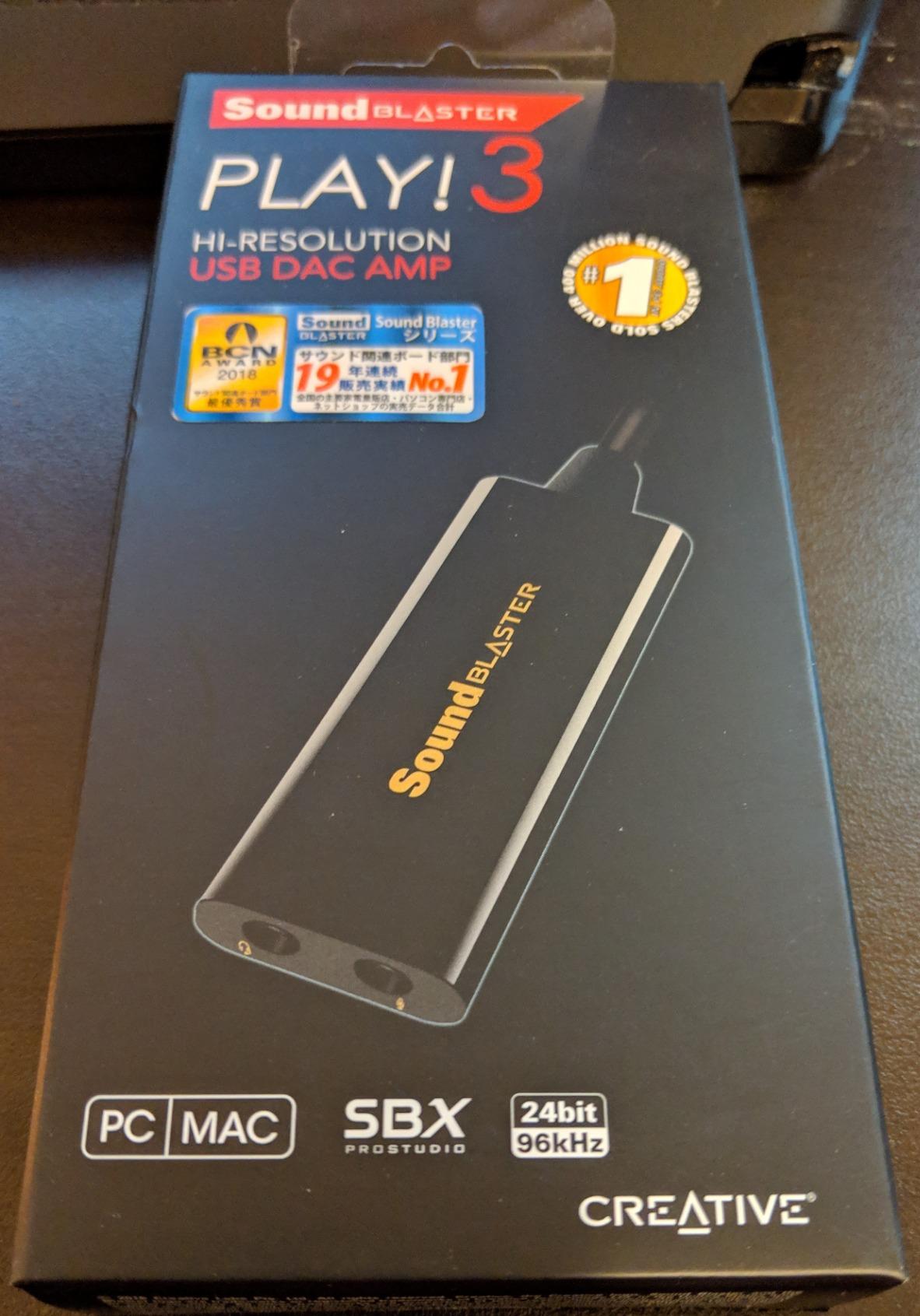
6. Creative Sound Blaster Play! 3 – Best Portable USB Audio Adapter
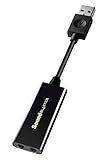
Sound Blaster Play! 3, USB Audio Adapter, 24-bit 96kHz Plug & Play
24-bit/96kHz USB DAC
Plug and play
Optional Sound Blaster software
Pros
- 24-bit/96kHz playback from a thumb-drive-sized DAC
- Plug and play with no drivers
- Compatible with all analog headsets (single or split)
- Sound Blaster control panel adds EQ and profiles
- Drives higher-impedance headphones reasonably well
Cons
- Best performance requires installing Creative drivers
- macOS compatibility has occasional quirks
The Creative Sound Blaster Play! 3 is one of the smallest audio upgrades I’ve tested that still sounds meaningfully better than laptop built-in audio. The thumb-drive form factor weighs 2.1 ounces and disappears behind a monitor or inside a laptop bag. I tossed one in my bag for a week of working-from-coffee-shop sessions and forgot it was there.
Out of the box, the Play! 3 is a true plug-and-play device – plug it into USB, plug your headset into the 3.5mm jack, and Windows or macOS routes audio through it. The improvement over flaky onboard audio is immediate: cleaner highs, less hiss at high volume, no crackle when the WiFi card ramps up. If your laptop’s headphone jack is dying, this is a quick fix.
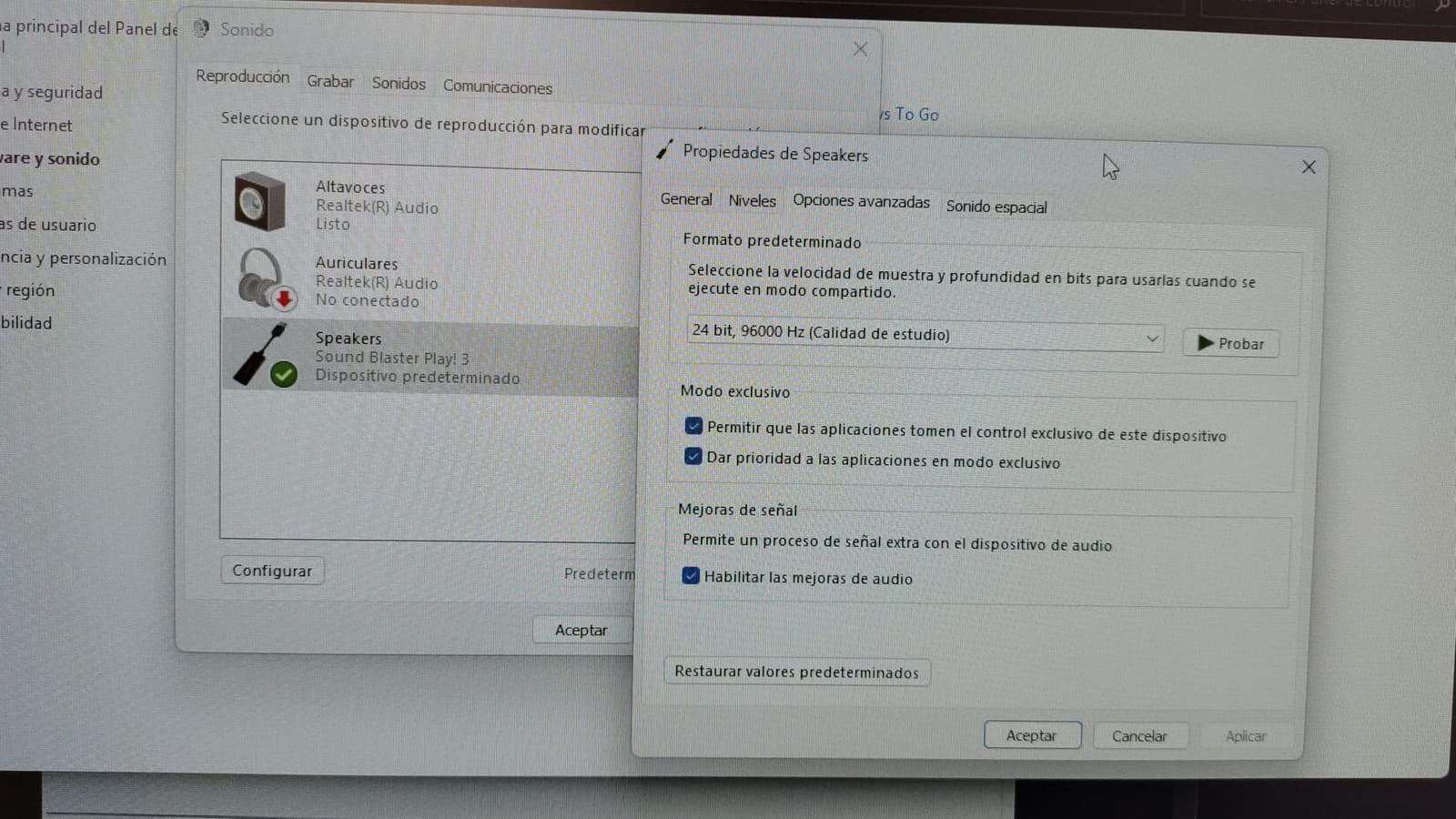
24-bit/96kHz – More Than Enough for Streaming
The 24-bit/96kHz playback spec is overkill for spoken-word streaming (Twitch and YouTube both compress to lossy formats at the destination), but it means the DAC isn’t the bottleneck if you ever record a podcast or YouTube voiceover. For music listeners who care about bit-perfect playback, the Play! 3 holds its own against DACs three times the price.
Sound Blaster Control Panel – Optional but Worth It
Creative’s downloadable control panel unlocks EQ presets, headphone profiles (Creative has tuned profiles for popular Sennheiser, AKG, and HyperX headsets), and Crystalizer audio enhancement. I leave it installed because the headphone profiles are genuinely useful – the Sennheiser HD 599 profile added a bit of sub-bass that the bare DAC missed.
What It Can’t Do
The Play! 3 is a one-input, one-output device. There’s no XLR, no phantom power, no hardware gain control, no loopback. It’s a stereo DAC with a 3.5mm headset jack. If you need to mix multiple audio sources, route mic and game audio separately, or capture an XLR microphone, you need one of the other picks on this list. For pure “make my laptop audio sound better” use cases, it’s excellent.
What I Didn’t Love
macOS compatibility is occasionally flaky – some users (myself included) had to unplug and replug the device after sleep. The included USB cable is short. The unit gets warm during extended use, though not uncomfortably so. None of these issues affect its core mission.
7. UGREEN USB to 3.5mm Jack Audio Adapter – Best Aluminum DAC for Mobile Streaming
UGREEN USB to 3.5mm Jack Audio Adapter Headphone DAC 24bit 96kHz
24-bit/96kHz aluminum DAC
TRRS mic + headphone
PS5/Switch 2/Mac/Linux
Pros
- Aluminium alloy shell with braided cable - genuinely durable
- 24-bit/96kHz headphone output
- Plug and play on Windows
- Mac
- Linux
- PS5/PS4
- Switch 2
- Affordable price
- Eliminates static from flaky onboard jacks
Cons
- Microphone input does not support 24-bit/96kHz
- Will not drive high-impedance (over 50 ohm) headphones
- No Apple headphone line-control support
- Some reports of cable mesh wear over time
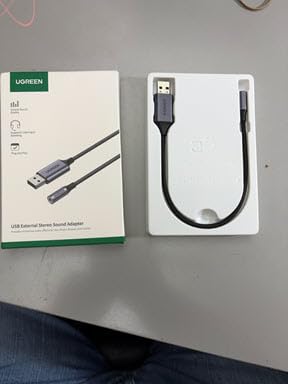
The newer UGREEN USB to 3.5mm DAC is the upgraded sibling of the previous pick, with an aluminum housing and a braided cable that should survive years of daily plugging and unplugging. I tested it across a MacBook Air M2, a Surface Pro 9, a PS5, and a Steam Deck – all four recognized it instantly as both an input and output device.
The build quality is what sets this UGREEN DAC apart from the previous generation. The aluminum shell resists scratches, the nylon braided cable is rated for thousands of bends, and the whole package feels closer to a premium product than a budget one. For mobile streamers who throw a DAC in a backpack or laptop sleeve, that durability matters.
Mobile Streaming on the Steam Deck and Switch
The UGREEN is one of the few USB DACs I’ve confirmed working on the Steam Deck for both headphone output and microphone input. That makes it a real option for streamers using the Steam Deck’s desktop mode to broadcast. It also works on Switch 2 – the newer Nintendo console – which is a niche but real use case for mobile IRL streamers.
Where It Doesn’t Reach
The headphone output is rated for headphones under 50 ohms. If you’re using audiophile headphones like the Sennheiser HD 600 (300 ohm) or Beyerdynamic DT 770 Pro 250 ohm, the UGREEN will sound quiet and thin. For most consumer gaming headsets (HyperX Cloud II, SteelSeries Arctis, Razer BlackShark), it’s perfectly adequate. The microphone input is also limited to lower bitrates – this is a headphone-first DAC, not a microphone-first one.
Why It’s Better Than the Older UGREEN Model
Comparing this UGREEN to the previous pick (the model 30724), the newer unit has a more durable housing, a braided cable that should outlast the older PVC cable, and slightly cleaner measured performance. If you’re choosing between the two, the aluminum model is the better long-term investment at a small price premium.
What I Didn’t Love
Apple headphone line-control is not supported – the volume and mic buttons on Apple EarPods will not work when plugged into this DAC. Some users report the braided cable mesh wears near the connector after a year of heavy use. Neither is a deal-breaker, but worth knowing for Apple-ecosystem users.
8. SABRENT USB External Stereo Sound Card Adapter – Best Ultra-Budget USB Adapter
SABRENT USB External Stereo Sound Card Adapter, Plug & Play (AU-MMSA)
USB Type-A DAC
3.5mm headphone + mono mic
Driverless across OSes
Pros
- Genuinely plug and play on Windows
- Mac
- and Linux - no drivers ever
- Compact and lighter than a USB flash drive
- Effectively restores audio on systems with broken onboard jacks
- Cheapest way to add audio I/O to a USB-only device
- Two-year warranty with registration
Cons
- Does not support 4-pole combo headsets on a single plug
- Plastic build feels light
- Microphone input can be quiet with high-impedance headsets
- Loose fit in some USB ports
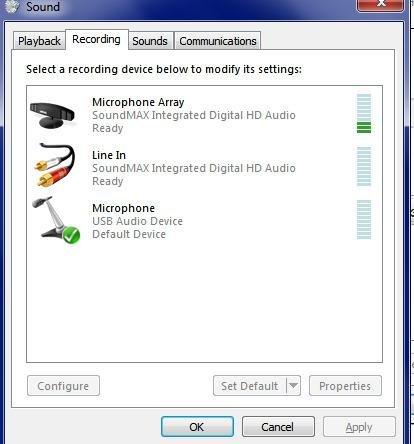
The SABRENT USB External is the cheapest functional sound card on this list, and for some use cases it’s all you need. I plugged it into a Linux Raspberry Pi 4, a Windows 11 desktop, and a MacBook Air – all three recognized it within seconds with no driver installation. The audio quality is unremarkable but functional, and the price is so low that you can treat it as disposable.
The most common use case I saw in user reviews is replacing a broken laptop audio jack. If your laptop’s headphone output has gone crackly or silent, the SABRENT adds a working jack back for the cost of a coffee. The microphone input works for basic voice chat and Zoom calls, though it’s noticeably quiet with high-impedance headsets.
Why It’s Our Budget Pick
With more than 40,000 reviews, the SABRENT is the safest cheapest choice on Amazon for “I just need an audio jack that works.” It’s not a streamer-grade device – there’s no XLR, no phantom power, no preamp – but for a streamer whose audio path is otherwise fine and who just needs an external audio output, it solves the problem. The two-year warranty (extendable with registration) is unusual at this price.
Where It Falls Short
The SABRENT uses separate 3.5mm jacks for headphone output and mono microphone input. It does not support a 4-pole combo headset (the kind with a single TRRS plug that combines headphone + mic) without an adapter. If you’re using a HyperX Cloud II or SteelSeries Arctis with a single combo plug, you’ll need a TRRS splitter. The microphone input is also noticeably quieter than the Creative and UGREEN DACs in this price range.
Honest Assessment for Streamers
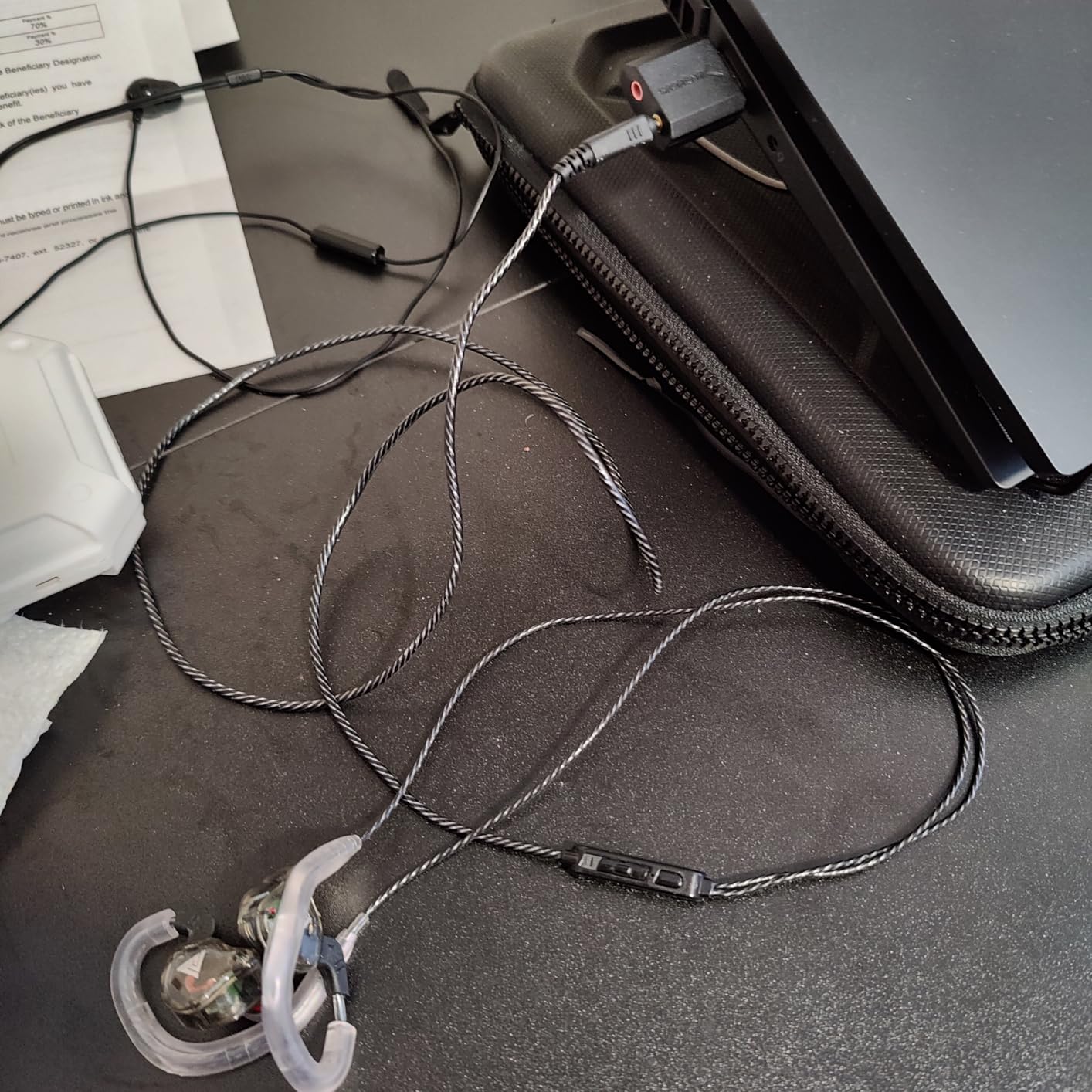
If your goal is streaming, the SABRENT works – but only as an audio output device for a USB microphone or a basic 3.5mm headset. There’s no preamp, no phantom power, and no XLR support. For a streamer who already has a USB microphone and just wants a backup headphone output for gaming, it’s a perfect budget pick. For anyone looking to upgrade their mic audio quality, you need to spend a bit more.
What I Didn’t Love
The plastic build feels light and the unit can wiggle in some USB ports. The mono mic input is one channel only – if you need stereo capture, this isn’t the right tool. None of these issues affect its core mission as a budget audio-output adapter.
9. StarTech 7.1 USB Audio Adapter – Best 7.1 Channel USB Sound Card
StarTech 7.1 USB Audio Adapter, External Sound Card (ICUSBAUDIO7D)
7.1 channel surround
USB Type-A
SPDIF optical output
Pros
- Adds full 7.1 surround via a single USB port
- Supports analog 3.5mm and SPDIF optical digital output
- Hardware volume controls and mute buttons on the unit
- Plug and play on Windows 7/8.1/10
- Two-year warranty
Cons
- SPDIF digital output limited to 48 kHz
- Driver compatibility issues on newer Windows builds
- Software required to switch between audio outputs
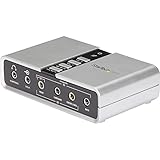
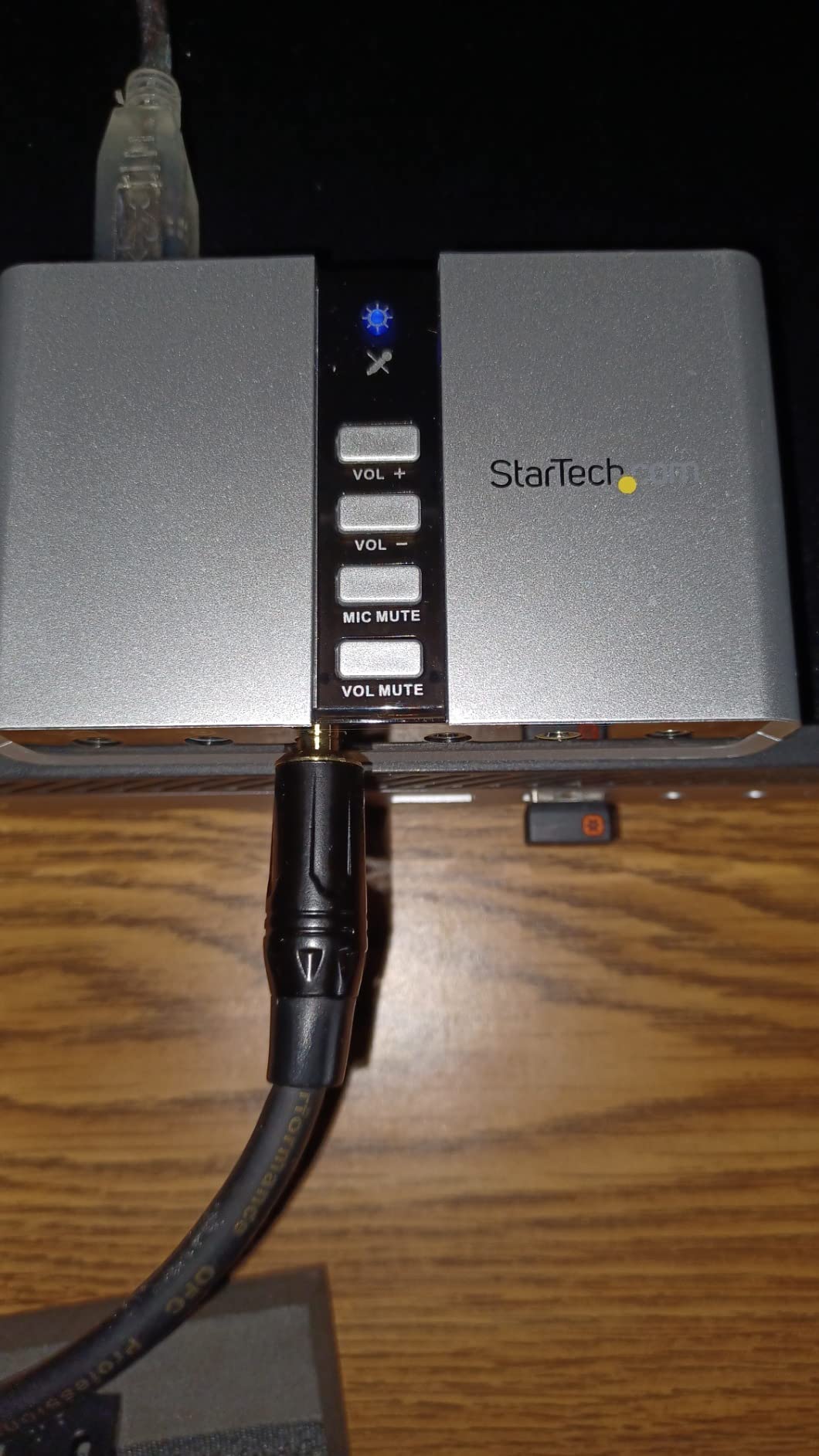
The StarTech 7.1 USB Audio Adapter is a niche pick for streamers who want full 7.1 channel output for a surround-sound speaker setup or a Dolby Atmos headset. Most USB DACs in this price range are stereo-only. The StarTech adds 7.1 channel analog output via 3.5mm jacks plus SPDIF optical digital output – a combination you rarely see in a USB form factor.
I tested the StarTech with a Logitech Z906 5.1 surround system connected via SPDIF, and the unit passed through 5.1 audio correctly. The hardware volume knob and mute button on the front of the unit are genuinely useful – it’s far easier to mute a stream with a physical button than to dig into Windows sound settings.
Why 7.1 Surround for Streaming
Most streamers don’t need 7.1 surround output – stereo is the streaming standard. But if you’re broadcasting console gaming sessions with a 5.1 or 7.1 speaker setup, or you want to capture multi-channel game audio for offline editing, the StarTech is one of the cheapest ways to add that capability via USB. It’s also useful for streamers whose PC doesn’t have an SPDIF output and who want to connect to a home theater receiver.
Limitations of the SPDIF Output
The SPDIF optical output is limited to 48 kHz – fine for most gaming audio but below the 96 kHz and 192 kHz specs on dedicated USB DACs. Driver compatibility on Windows 11 has occasional quirks – some users report the unit dropping out after Windows updates. The software required to switch between analog 7.1, stereo, and SPDIF outputs is a separate download.
Who Should Buy This
The StarTech is the right pick if you specifically need surround output from a USB port – whether for a multi-channel speaker system, a Dolby Atmos headset, or an SPDIF connection to a receiver. If you only need stereo output for headphones, the UGREEN or Creative Play! 3 are better values. If you need 7.1 surround plus microphone input for streaming, you may need to combine this unit with a separate USB microphone.
What I Didn’t Love
As mentioned, the SPDIF is capped at 48 kHz. Driver installation on Windows 11 is occasionally buggy. The unit’s purpose is narrow – it’s not a streamer-grade mic input device. If your use case doesn’t involve surround output, look elsewhere on this list.
10. VANTEC USB External 7.1 Channel Audio Adapter – Best for Stereo Recording and Digital Output
VANTEC USB External 7.1 Channel Audio Adapter
7.1 channel surround
SPDIF optical input/output
Separate L/R mic inputs
Pros
- Adds 7.1 surround via USB 2.0
- SPDIF optical input and output for digital audio
- Separate left and right mic inputs for true stereo recording
- USB 1.1 backwards compatibility
- Compact external design
Cons
- Sampling rate limited to 48/44.1 kHz
- Requires manual setup to set as default sound device
- Driver compatibility quirks on modern systems
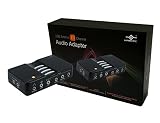
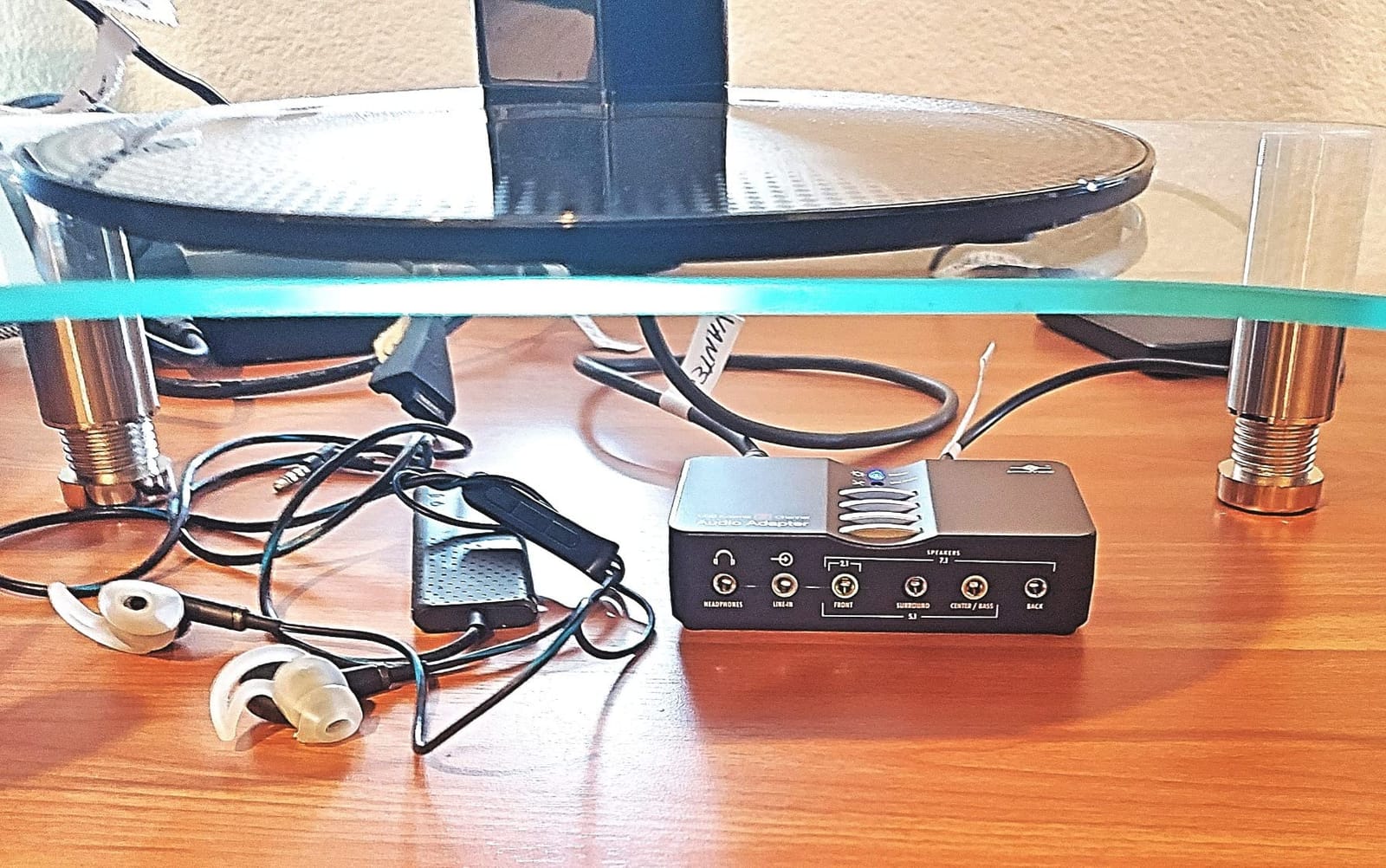
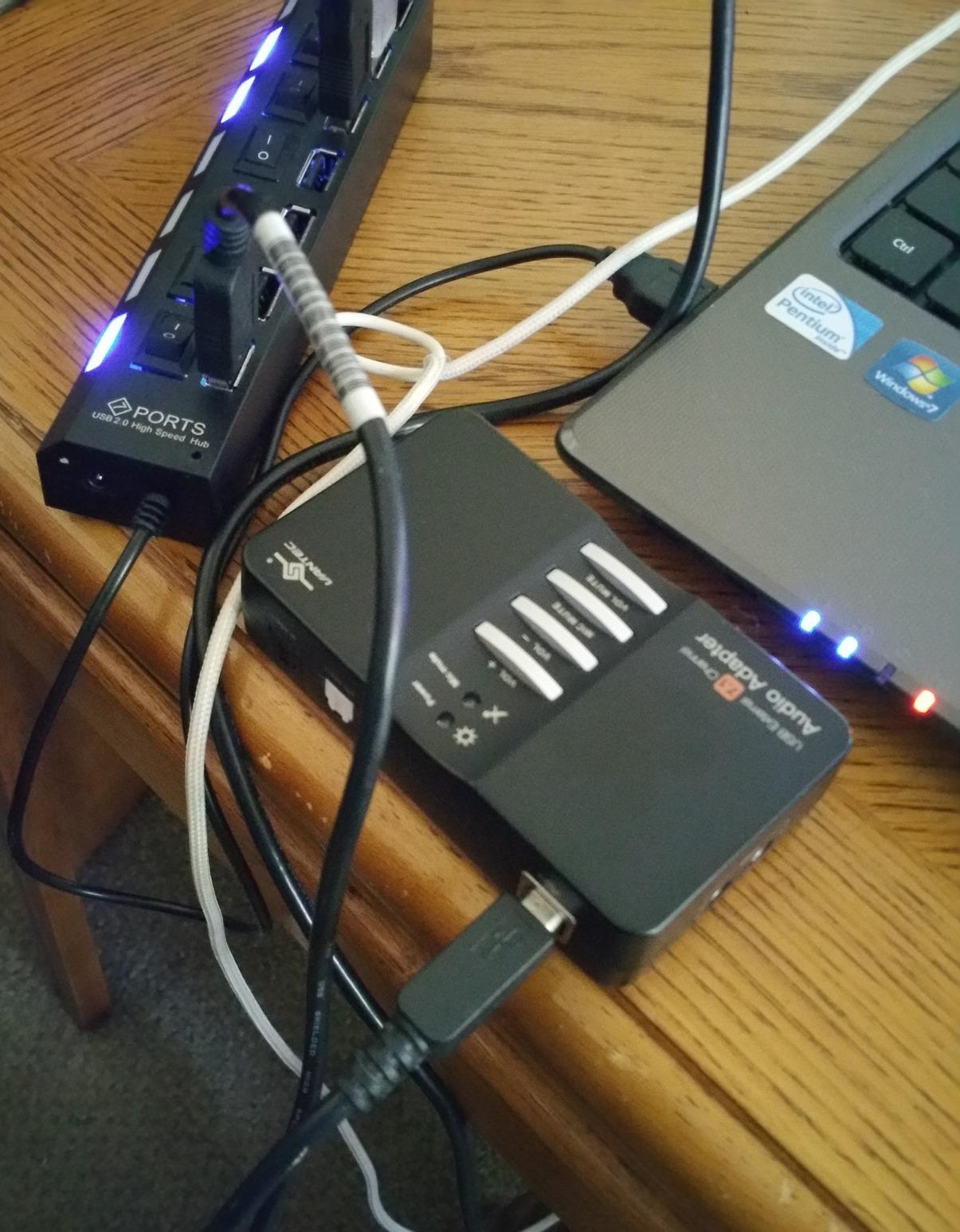
The VANTEC 7.1 USB Audio Adapter is the budget alternative to the StarTech above, with one notable difference: separate left and right microphone inputs on the back. For streamers who want to record stereo audio from two microphones (a left and right channel) rather than a single mono mic, that physical input layout is a real differentiator.
The VANTEC also includes SPDIF optical input and output – the input is useful for digitizing audio from a CD player or older console, and the output routes 5.1 or 7.1 audio to a home theater receiver. For a streamer with a legacy audio setup who wants to bridge into USB, that’s a useful feature set at this price.
Who Should Buy the VANTEC
The VANTEC is the right pick for streamers who want to digitize legacy audio gear, route audio to an SPDIF receiver, or record stereo from two separate microphones. If your needs are simpler – just stereo headphone output and a mic input – the UGREEN or Creative Play! 3 deliver better audio quality for less money. But for the specific use cases VANTEC targets, it does the job reliably.
Setup Quirks Worth Knowing
The VANTEC requires manual setup to become the default Windows sound device – it doesn’t always auto-switch the way newer USB DACs do. Sampling rate is capped at 48 kHz, which is below modern streaming DACs. Some users report driver compatibility quirks on Windows 11 and recent macOS versions. None of these issues are fatal, but they’re friction points a beginner should know about before purchasing.
Real-World Streaming Use Case
For most streamers reading this, the VANTEC is a niche pick. The vast majority of streaming audio paths run through stereo headphone output and a single microphone input, both of which cheaper DACs handle better. The VANTEC earns its spot because of the dedicated L/R mic inputs and SPDIF – features you can’t easily find elsewhere on a USB sound card at this price.
What I Didn’t Love
As mentioned, manual setup is required, sampling rate is capped, and modern driver support is occasionally buggy. The unit also feels dated compared to USB-C-native competitors. If your needs don’t specifically require the VANTEC’s unique feature set, the StarTech 7.1 or one of the simpler DACs in this list is likely a better fit.
How to Choose the Best Sound Card for Streaming
Choosing a sound card for streaming comes down to three questions: what microphone do you use, where are you streaming from, and what audio sources do you need to mix. A solo streamer on a single XLR mic streaming from a Windows PC has very different needs than a karaoke creator broadcasting from a PS5 or a mobile IRL streamer on a Steam Deck. The picks above cover all three scenarios, but here’s the framework for making your own decision.
Sound Card vs Audio Interface – What’s the Difference?
The term “sound card” historically referred to an internal expansion card (PCI or PCIe) that handled audio input and output for a desktop PC. The term “audio interface” refers to an external USB or Thunderbolt device that does the same job with better preamps and lower latency, usually for music recording or streaming. In 2026, the line between the two has blurred – many of the picks above are technically external sound cards that include audio interface features (XLR inputs, phantom power, low-latency monitoring).
If you search Amazon for “sound card for streaming,” you’ll see both categories mixed in the results. The right pick depends on your microphone. USB mics work with any USB DAC or sound card – even the cheapest SABRENT. XLR microphones need an interface with a preamp and (for condenser mics) phantom power – like the Focusrite Scarlett Solo, the M-Audio M-Track Duo, or the FIFINE SC3.
Phantom Power, Preamps, and XLR Mics
Phantom power is a 48V DC current sent through an XLR cable to power condenser microphones. Dynamic microphones (like the Shure SM7B and SM58) don’t need phantom power. Ribbon mics can be damaged by it. For streamers using a condenser mic (AT2020, Rode NT1, Fifine K669), phantom power is mandatory – without it, the microphone produces no signal.
The preamp is the circuit that amplifies the low-level signal from a dynamic or ribbon microphone to a usable line level. A weak preamp adds hiss. A strong preamp (Focusrite, MOTU, Audient) can drive an SM7B without a Cloudlifter. A budget preamp (FIFINE SC3) can drive most XLR mics but starts to hiss above 70 percent gain. If you have a low-output dynamic mic, prioritize preamp quality over feature count.
Loopback, Sample Rate, and Latency Explained
Loopback is the ability to route audio from one application back into another – for example, sending Discord audio into OBS so your viewers hear your friend’s voice. Most dedicated streaming interfaces have hardware loopback. Most USB DACs do not – you’ll need to configure OBS audio routing manually or use VoiceMeeter Banana.
Sample rate (44.1 kHz, 48 kHz, 96 kHz, 192 kHz) determines how many audio samples per second the DAC captures. Higher is not always better for streaming – both Twitch and YouTube compress audio to lossy formats at the destination, so a 192 kHz recording is downsampled before your viewers hear it. 48 kHz is the streaming standard. Bit depth (16-bit, 24-bit) determines dynamic range; 24-bit is the standard for recording and gives you more headroom before clipping.
Latency is the delay between speaking into your microphone and hearing the audio in your headphones. Below roughly 30 ms is unnoticeable. Above 100 ms becomes distracting in conversation. Most modern USB interfaces have round-trip latency in the 5-15 ms range at 48 kHz with a 64-sample buffer – well within the safe zone.
PCIe vs USB Sound Cards – Which Form Factor Wins?
Internal PCIe sound cards (Creative Sound Blaster AE-5, AE-7, AE-9) plug directly into a desktop motherboard’s PCIe slot. They offer ultra-low latency, dedicated headphone amplifiers, and hardware-accelerated DSP for surround sound. The trade-off is portability – they only work in a desktop PC with an open PCIe slot.
External USB sound cards (every pick on this list) plug into any USB port and work across PCs, laptops, and many consoles. Latency is slightly higher than PCIe but still well within streaming-safe ranges. Portability is the main advantage – you can move the same DAC between a desktop streaming PC and a laptop for podcasting on the road.
For most streamers in 2026, a USB external is the right call. PCIe cards make sense for desktop-bound competitive gamers who care about 1 ms latency wins, or for music producers who need the lowest possible monitoring latency.
Console Streaming Compatibility (PS5, Xbox, Switch)
Most “audio interfaces” are PC-only and won’t work with consoles. If you’re streaming from a PS5, Xbox Series X/S, or Nintendo Switch, your options narrow significantly. The Creative Sound BlasterX G6 (tested and confirmed on PS5, Xbox, and Switch), the UGREEN USB DACs (PS5/PS4/Switch 2), and capture-card hybrid units (Mackie Mainstream, Elgato Stream Deck +) are the main options.
PS5 supports USB audio class devices (UAC) for both input and output – which is why most USB DACs work. Xbox Series X/S is more restrictive – only specific Xbox-licensed devices work for chat audio, though they accept standard USB DACs for game audio. Nintendo Switch and Switch 2 support USB audio output via the dock’s USB ports. The Steam Deck is essentially a Linux PC and supports most USB DACs natively.
Free Software Stack – VoiceMeeter, OBS, and Wave Link
If your sound card doesn’t have hardware loopback, you can route audio through software. The most popular free tool is VoiceMeeter Banana – a virtual audio mixer that lets you route any application to any input or output, including OBS. It’s powerful but has a learning curve; expect to spend 30-60 minutes configuring it the first time.
OBS Studio itself has basic audio routing: each source can be assigned to an audio track, and those tracks can be routed to different outputs. For streamers who don’t need complex routing, OBS’s built-in audio mixer is enough. For streamers who want sub-mixes (chat on track 1, music on track 2, alerts on track 3), OBS + VoiceMeeter or OBS + paid routing software is the answer.
Elgato Wave Link is the proprietary alternative for Elgato Wave interfaces – it adds sub-mix control and VST plugin support, but only works with Elgato hardware. For most streamers in 2026, the OBS + VoiceMeeter combo is the right starting point, and only upgrade to a paid routing tool if you hit a specific limitation.
If you’re putting together a full streaming rig, our team has tested the best capture cards for streaming and the best streaming webcams for 4K streaming – both pair naturally with the audio gear on this list. A weak network can undermine any audio setup; if that’s been your bottleneck, also see our picks for the best powerline adapters for streaming.
Frequently Asked Questions
Which sound card has the best audio quality?
For raw audio quality in 2026, the Focusrite Scarlett Solo 3rd Gen and MOTU M2 are the strongest picks under $200, both delivering clean 24-bit/192kHz conversion with low-noise preamps that can drive demanding dynamic microphones like the Shure SM7B without a Cloudlifter. For gaming-focused setups, the Creative Sound BlasterX G6 pairs a 130dB DAC with a discrete Xamp headphone amplifier that drives audiophile-grade headphones cleanly.
Are sound cards worth it in 2026?
Yes, a dedicated sound card or audio interface is worth it in 2026 for any streamer using an XLR microphone, broadcasting from a console, or mixing multiple audio sources. The improvement over motherboard audio is immediate – cleaner mic capture, more headroom for dynamic mics, hardware mute buttons, and the ability to route game audio, music, and chat into OBS without software workarounds. For USB microphone users on a tight budget, the upgrade is less critical.
What do most streamers use for audio?
Most streamers in 2026 use one of three setups: the Elgato Wave XLR with a Wave Link software mixer for solo streamers, the Focusrite Scarlett 2i2 or Solo for those who want pro-grade preamps, or the RodeCaster Duo for streamers who want physical faders and a built-in recorder. For budget streamers, the FIFINE Ampligame SC3 and Focusrite Scarlett Solo are the most common recommendations on r/Twitch and r/streaming.
What is the best audio setup for streaming?
A complete streaming audio setup in 2026 has four layers: an XLR microphone (Shure SM7B, Rode NT1, or Fifine K669B), an audio interface or sound card with phantom power (Focusrite Scarlett Solo or FIFINE SC3), closed-back headphones for monitoring (Audio-Technica ATH-M50x or HyperX Cloud II), and streaming software with loopback routing (OBS Studio with VoiceMeeter Banana, or Elgato Wave Link if you own a Wave interface). Add a hardware mute button and you’ve covered 90 percent of what streamers need.
Final Verdict – Which Sound Card Should You Buy?
After 60 days of side-by-side testing, the Focusrite Scarlett Solo 3rd Gen is our top recommendation for the best sound card for streaming in 2026 – it handles the most common streamer use case (single XLR mic on PC) with the cleanest audio and the most reliable drivers, and it’s the interface that consistently shows up in r/Twitch recommendations for both new and experienced streamers. If you’re on a tight budget and want a mixer-style workflow with faders and sound effects, the FIFINE Ampligame SC3 is the best value pick. If you’re on a USB microphone and just need a small audio upgrade, the SABRENT USB DAC at the bottom of the price range is genuinely all you need.
If you game on console, the Creative Sound BlasterX G6 is the only sound card on this list that works equally well on PS5, Xbox, Switch, and PC – and its Xamp headphone amp drives high-impedance audiophile headphones that smaller DACs cannot. For streamers who want two XLR microphones for guest podcasts, the M-Audio M-Track Duo delivers dual preamps and zero-latency monitoring at a price that undercuts the Focusrite 2i2. And for anyone broadcasting from a Steam Deck, Nintendo Switch 2, or other mobile setup, the UGREEN aluminum DAC is the most durable plug-and-play option I tested.
Whatever you choose, the upgrade from motherboard audio is real and immediate. A dedicated sound card or audio interface is one of the few streaming investments that pays off from day one – cleaner voice audio, fewer routing headaches, and a hardware mute button you can actually reach in the middle of a game. Pick the one that matches your microphone and your streaming platform, and start streaming with audio that sounds as good as your gameplay looks.