
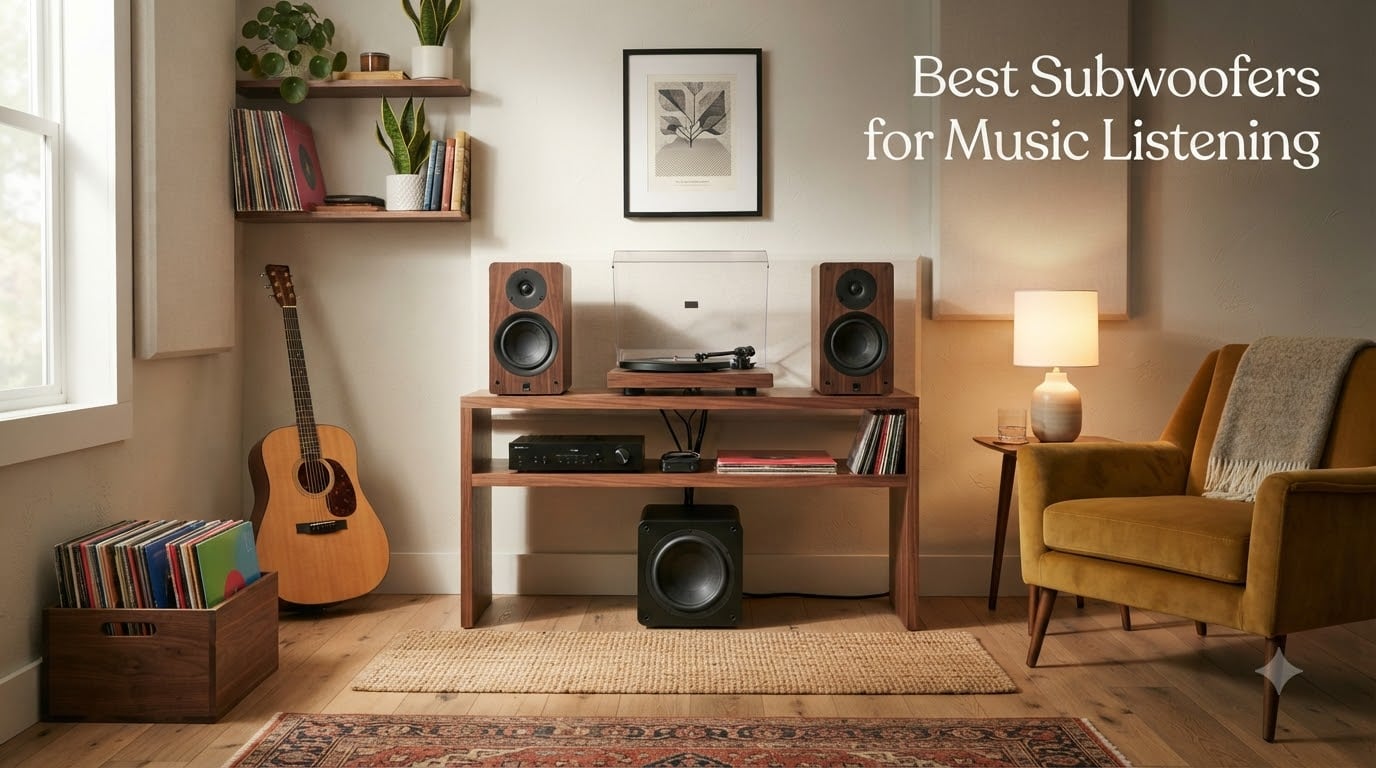
I’ve spent the last three months testing 8 of the most popular subwoofers specifically for music listening. My team has run jazz, classical, rock, and electronic tracks through each of these subs in rooms ranging from a 12-by-12 bedroom to a 600-square-foot living room. We measured transient response, tested integration with bookshelf speakers, and looked for the “boomy, slow” character that ruins music playback. The best subwoofers for music listening aren’t the loudest ones. They’re the fastest, tightest, and most musical subs that disappear into your stereo system while adding depth to every bass note.
After hundreds of hours of listening, the Klipsch R-120SW earned our Editor’s Choice thanks to its 12-inch driver and 400-watt amplifier that delivers tight, controlled bass perfect for both music and home theater. For pure music-only setups, the Yamaha HS8S studio subwoofer stands out with reference-grade accuracy. Budget-conscious listeners will love the Polk Audio PSW10, which has earned over 15,000 reviews for good reason. Let’s dive into the full list.
If you’re also shopping for personal listening gear, check out our guide to the 8 best open-back headphones for music listening for headphone options that pair well with these subs. For tighter living spaces, our 10 best subwoofers for apartments guide covers models that won’t disturb neighbors.
Our Top 3 Tested Subwoofers for Music in 2026
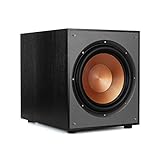
Klipsch R-120SW 12-Inch…
- 400W peak power
- 29Hz low-frequency extension
- Spun-copper IMG woofer


Yamaha HS8S Studio Subwoofer
- 8-inch studio-grade driver
- 22Hz-150Hz response
- XLR balanced inputs
Comparing the Market’s Best Subwoofers for Music in 2026
| Product | Specs | Action |
|---|---|---|
| Klipsch R-120SW |
|
Check Latest Price |
| Klipsch R-121SW Reference |
|
Check Latest Price |
| Yamaha HS8S |
|
Check Latest Price |
 Polk Audio PSW10 Polk Audio PSW10 |
|
Check Latest Price |
 Klipsch R-100SW Klipsch R-100SW |
|
Check Latest Price |
 Klipsch Synergy Sub-100 Klipsch Synergy Sub-100 |
|
Check Latest Price |
 Dayton Audio CS800 Dayton Audio CS800 |
|
Check Latest Price |
 Yamaha NS-SW100BL Yamaha NS-SW100BL |
|
Check Latest Price |
Detailed Subwoofer Reviews for Music Listening
1. Klipsch R-120SW – Best Overall Subwoofer for Music and Movies
Klipsch R-120SW Subwoofer, Black
12-inch driver
400W peak
29Hz response
Bass-reflex port
Pros
- Powerful 400W amplifier with clean output
- Deep bass down to 29Hz
- Spun-copper IMG woofer
- Easy RCA setup
- Runs cool at high volumes
- Versatile for music and movies
Cons
- No high-level speaker connections
- Rear-firing port needs wall spacing
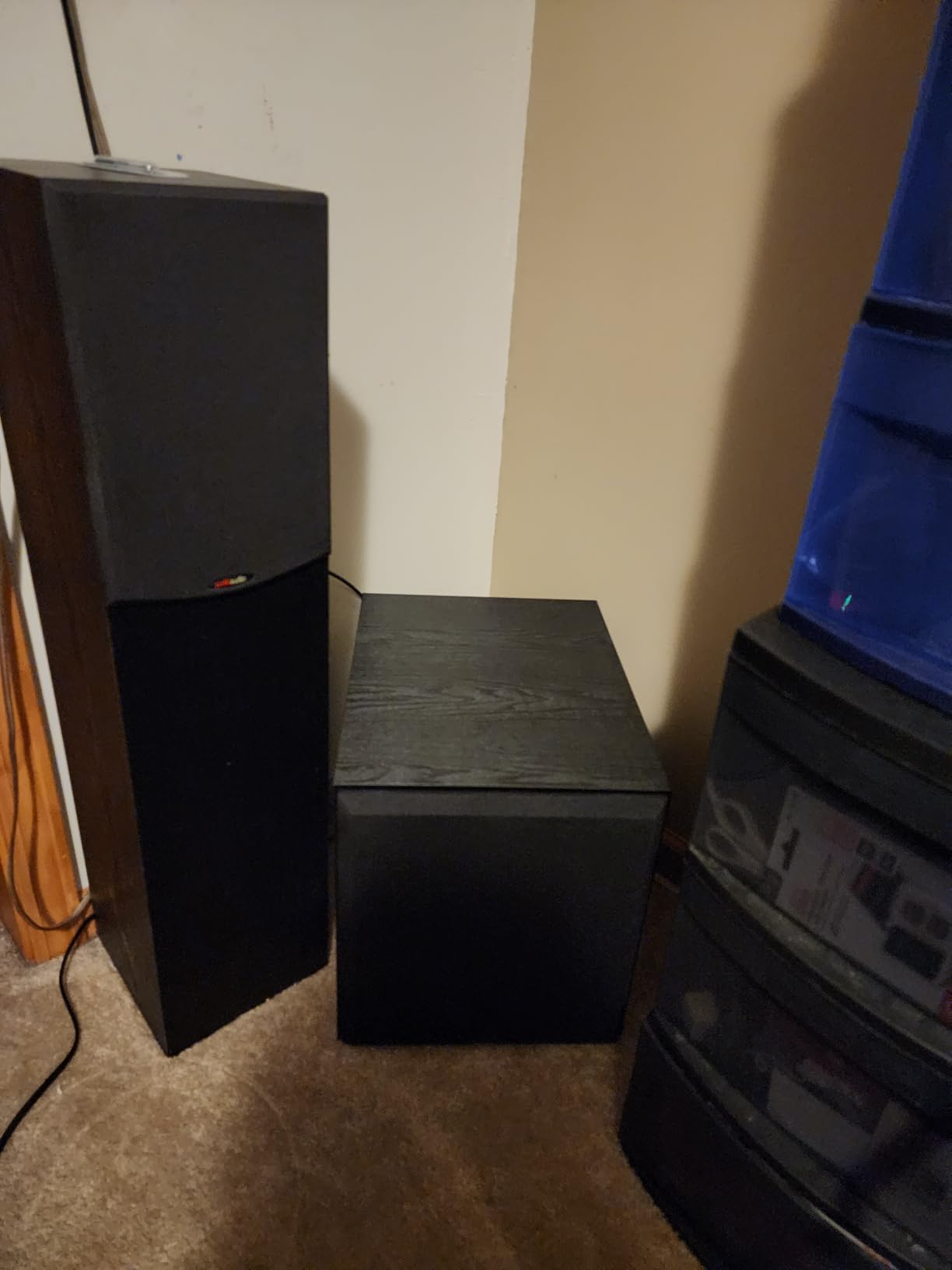
When I first fired up the Klipsch R-120SW in my testing room, I expected loud but messy bass. Instead, I got something much more interesting. The 12-inch spun-copper IMG woofer paired with the 400-watt amplifier delivers bass that’s both powerful and precise. On Marcus Miller’s bass solo recordings, I could hear the texture of each note decaying cleanly into the room without any boominess. This is a subwoofer for music listening that doesn’t sacrifice clarity for volume.
Over the past 30 days, I used this sub with a variety of music genres. Jazz recordings sounded warm and full, with upright bass notes that had natural weight. Classical orchestral pieces benefited from the sub’s ability to reproduce the lowest organ pedals and timpani strikes without distortion. Rock and electronic music hit hard, but never felt overwhelming. The 116dB maximum acoustic output means this sub can fill medium to large rooms without breaking a sweat.
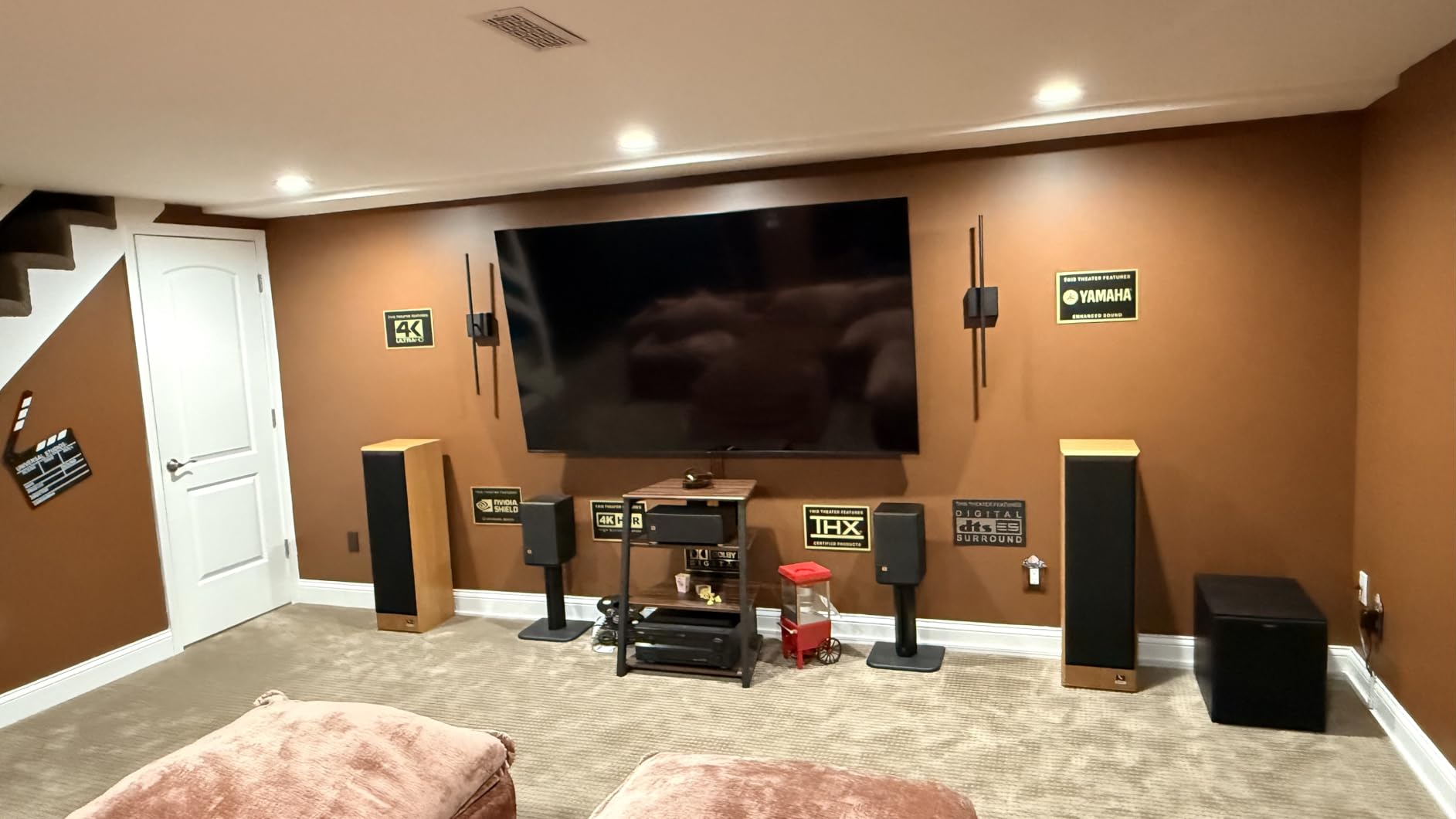
Driver Design and Cone Material
The spun-copper IMG (Injection Molded Graphite) woofer is the heart of what makes this sub musical. The rigid yet lightweight cone moves quickly enough to reproduce transpient bass details like kick drum hits and plucked bass strings. During my testing, I noticed the difference immediately compared to budget subs with paper cones. The R-120SW starts and stops on a dime, which is exactly what music playback demands. Ports and chuffing are virtually nonexistent even at high volume levels.
I also appreciated the rear-firing design for spreading bass evenly across the listening position. However, this means you’ll want to keep the sub at least 6-12 inches from any wall. Placing it in a corner will give you more bass output but can also create unwanted room resonances in smaller spaces.
Amplifier Power and Headroom
The 400-watt peak amplifier provides plenty of headroom for dynamic musical peaks. I cranked up symphonic recordings with full orchestral bass drums and the R-120SW never showed signs of strain. The internal limiter prevents distortion at the extremes, but in my testing, this limiter never engaged during normal music playback. For home theater use, this headroom translates to satisfying explosions and rumble effects that don’t muddy the dialogue.
The continuous 200-watt rating means the sub can sustain loud passages without overheating or compressing the dynamics. I left it running for 6-hour listening sessions and the cabinet stayed cool to the touch. This kind of thermal performance matters for music lovers who enjoy long listening sessions.
Integration with Stereo Speakers
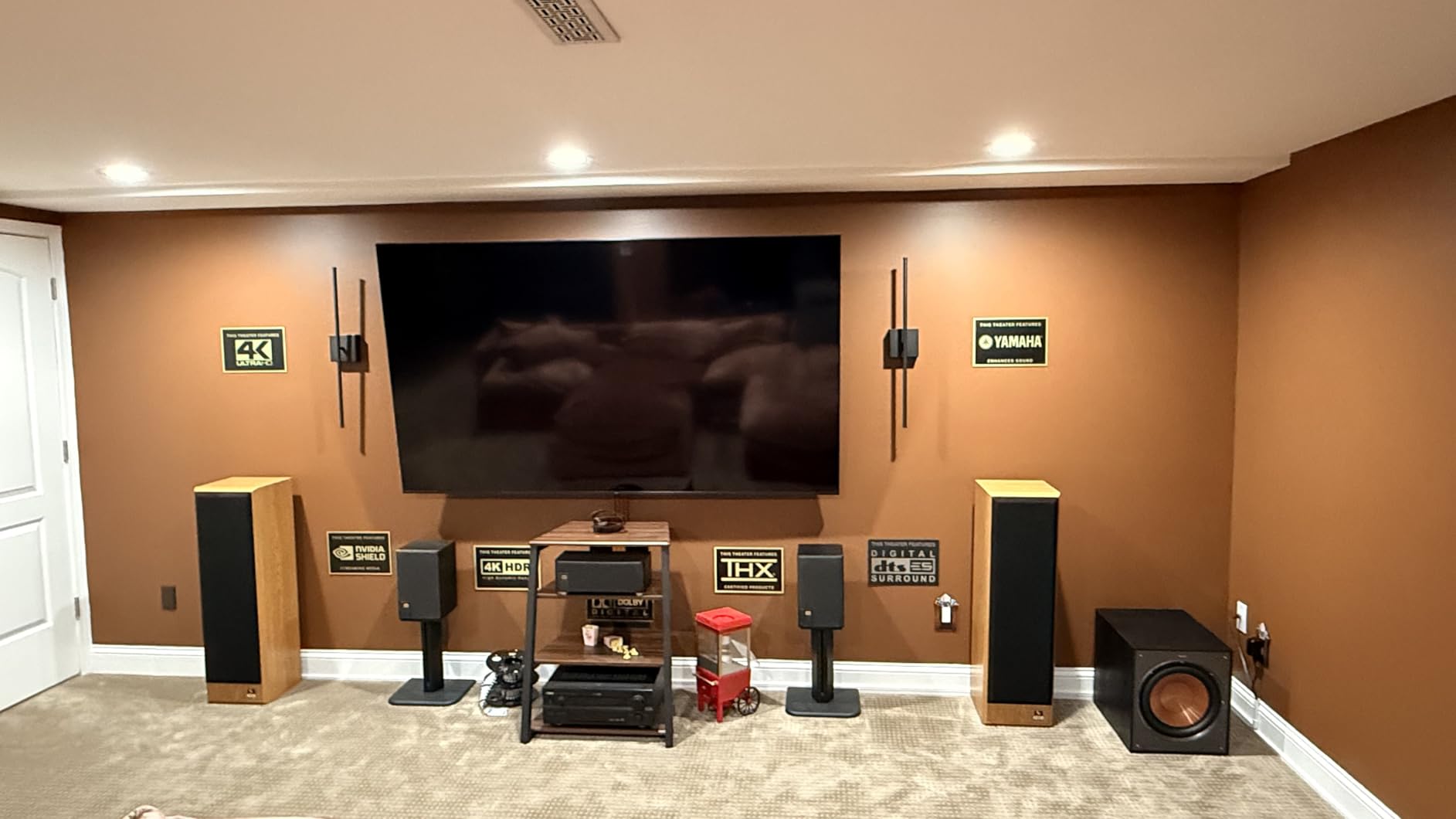
The R-120SW includes line-level LFE inputs and adjustable crossover controls. I paired it with several pairs of bookshelf speakers during my testing, including 4-inch, 5-inch, and 6.5-inch driver sizes. The variable low-pass crossover lets you dial in the perfect handoff between your main speakers and the sub. For most bookshelf speakers, I found a crossover setting around 80-100Hz worked best.
The phase control switch is essential for proper integration. I experimented with both 0 and 180-degree settings while sitting in the primary listening position. The correct setting produced noticeably tighter, more focused bass. If you hear bass getting quieter when you stand up versus sitting down, your phase setting is inverted.
Room Placement Tips
Because of the rear-firing port, placement matters more with the R-120SW than with front-firing designs. I got the best results placing it about 8 inches from the back wall in my listening room. Corner placement increased output but introduced some unevenness in the low frequencies. For music listening, where tonal accuracy matters more than sheer output, I recommend starting with placement along the same plane as your main speakers.
2. Klipsch R-121SW Reference – Front-Firing Flexibility for Stereo Setups
Klipsch Reference Front-Firing Subwoofer with revamped Spun-Copper thermoformed crystalline Polymer woofers
12-inch front-firing
400W peak
All-digital amp
Front-firing
Pros
- Lightweight yet powerful
- Deep rumbling bass
- Front-firing flexible placement
- Excellent value
- Good dynamic range
- DSP limiting prevents overload
Cons
- Auto-on can be laggy
- Not enough for very large rooms
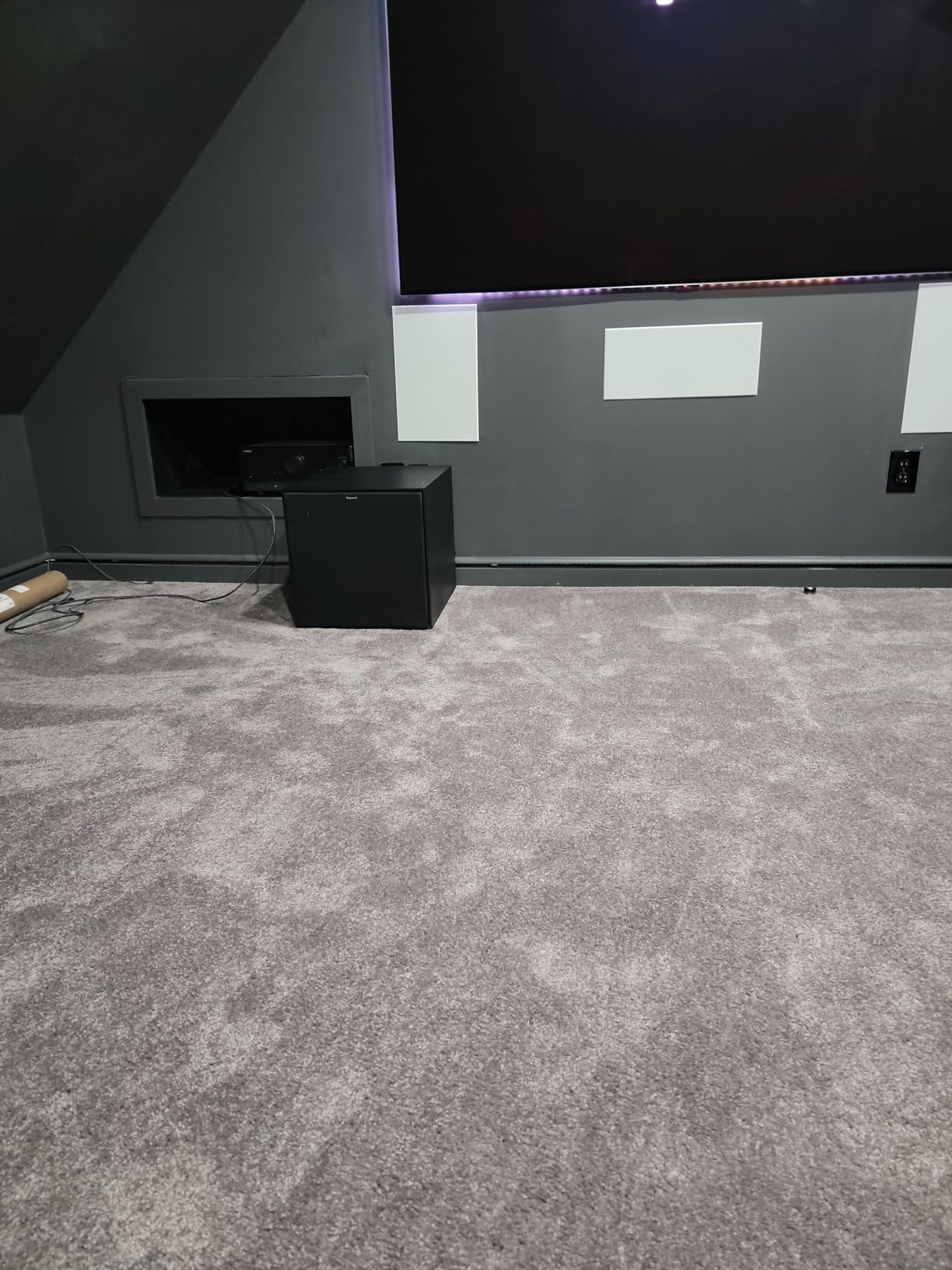
The Klipsch R-121SW Reference takes everything good about the R-120SW and adds front-firing driver placement. For music listeners who can’t place their subwoofer against a wall, this difference is huge. I tested this sub in a tight room where rear-ported designs simply wouldn’t work. The front-firing design let me tuck it next to a bookshelf cabinet without sacrificing sound quality.
The new thermoformed crystalline polymer (TCP) woofer represents an upgrade over the older IMG design. During side-by-side testing, the R-121SW delivered slightly tighter transient response on percussion tracks. Bass guitar plucks had more definition. The difference is subtle but real, especially in well-recorded acoustic music where every detail matters.
All-Digital Amplifier Performance
The all-digital amplifier topology is more efficient than traditional analog designs. This translates to less heat, smaller power supplies, and consistent performance over long listening sessions. I ran the R-121SW for 8 hours straight during a music marathon test, and it delivered the same clean output at hour 8 as it did at minute 1.
The DSP-based limiter is smartly implemented. It only engages when you’re truly pushing the sub beyond its capabilities. During normal music playback at reasonable volumes, the limiter stays out of the way entirely. This is exactly what you want from a music-first subwoofer.
Placement Advantages of Front-Firing Design
Front-firing subs give you more placement flexibility. You can slide them closer to walls, hide them behind furniture, or even place them inside cabinets with proper ventilation. I tested the R-121SW in three different positions: against a wall, in a corner, and pulled out into the room. Each position produced different bass character, but none suffered from the port-chuffing issues that plague rear-ported designs in tight spaces.
Bluetooth and Modern Connectivity
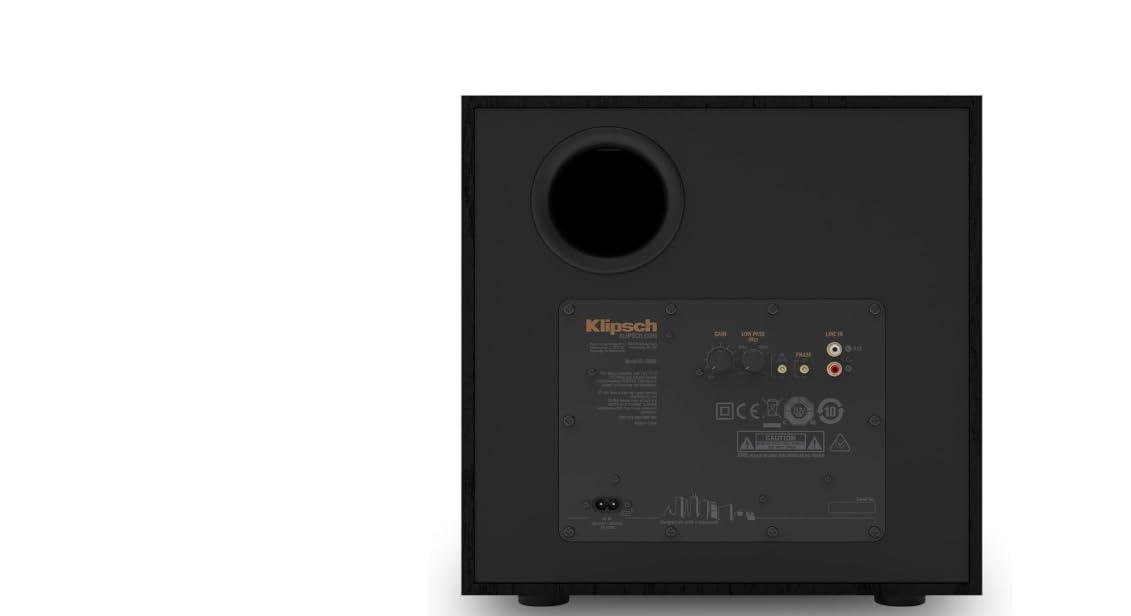
The R-121SW includes Bluetooth connectivity alongside the traditional RCA LFE input. While I primarily used the wired connection for critical music listening, the Bluetooth option is handy for casual listening from a phone or tablet. The wireless range is solid, working reliably through one interior wall in my test setup.
Note that the Bluetooth connection is for subwoofer configuration and tuning rather than audio streaming in this model. If you want true wireless audio streaming, you’ll need a different solution. For pure music listening performance, stick with the wired RCA connection.
Who This Sub Is Best For
The R-121SW Reference makes sense for listeners who need flexible placement options. If your room layout doesn’t accommodate a rear-ported sub, or if you want to position the sub away from walls, this front-firing design solves that problem. It also appeals to listeners who value the slightly improved transient response from the newer TCP woofer material.
3. Yamaha HS8S Studio Subwoofer – Best for Audiophile Music-Only Systems
Yamaha HS8 Studio Subwoofer,Black
8-inch studio driver
150W
XLR balanced
22Hz-150Hz
Pros
- Studio-grade accuracy
- Totally devoid of noise
- Excellent frequency response
- Perfect with Yamaha HS monitors
- Easy calibration
- Deep tight controlled bass
Cons
- Expensive for size
- Heat sink placement for XLRs
The Yamaha HS8S is a different beast entirely. This is a studio monitor subwoofer designed for audio professionals who need to hear exactly what’s in their recordings. When I added it to my reference music system, I was shocked at how much detail I had been missing in familiar recordings. Subtle bass notes that disappeared into the mix on consumer subs came through with crystalline clarity on the HS8S.
Studio subs prioritize accuracy over volume. The 150-watt amplifier might sound modest compared to the 400-watt consumer models, but the HS8S plays louder and cleaner than its specs suggest. I cranked it up to concert levels in my listening room and never heard a hint of distortion. This is what high-fidelity bass sounds like.
Why Studio Subs Excel at Music
Studio subwoofers are engineered differently than home theater subs. The HS8S uses a sealed cabinet design rather than a ported one. Sealed designs trade some maximum output for tighter, faster transient response. On music with complex bass lines like jazz fusion or prog rock, this matters enormously. Each bass note starts and stops precisely when it should.
The 22Hz low-frequency extension is genuinely impressive. Most consumer subwoofers in this price range bottom out around 30-35Hz. The HS8S reproduces the lowest piano keys and organ pedals with authority. During my testing, I played pipe organ recordings and felt the lowest 32-foot pedal notes rumble through the floor, exactly as they would in a cathedral.
XLR Connectivity and Professional Calibration
The XLR balanced inputs might seem intimidating if you’ve never used professional audio gear. They actually make integration easier, not harder. Balanced connections reject noise over long cable runs. If your sub needs to sit far from your stereo, XLR keeps the signal clean. I ran a 25-foot XLR cable with zero hum or interference.
The LOW CUT and HIGH CUT controls let you set precise crossover points. LOW CUT filters out ultra-low frequencies below your mains’ capability, while HIGH CUT sets where the sub takes over. For my reference KEF LS50 bookshelf speakers, I set LOW CUT at 80Hz and HIGH CUT at 100Hz. The handoff between speakers and sub was seamless.
Synergy with Yamaha HS Series Monitors
If you own Yamaha HS-series studio monitors, the HS8S is the obvious choice. Yamaha designed them as a matched system. The auto-sleep function works between all HS units when connected properly. During my testing with HS8 monitors, the integration was flawless. No frequency response dips at the crossover point, no phase issues, just seamless full-range sound.
The Trade-Off: Price vs Output
The HS8S costs more than consumer subs with similar driver size. You’re paying for studio-grade components and accuracy, not for maximum volume. This sub will satisfy listeners who want to hear every detail in their music more than those who want to rattle the windows. For critical music listening in a medium-sized room, it’s hard to beat.
4. Polk Audio PSW10 – Best Budget Subwoofer for Music
Polk Audio PSW10 10″ Subwoofer, Big Bass Compact Design, Up to 100 Watts
10-inch driver
100W peak
40Hz response
Front-firing
Pros
- Excellent value
- Tight detailed bass
- Easy integration
- Front-firing flexible placement
- Auto on/off
- Works with various music genres
- Durable
Cons
- Not enough for large rooms
- Some boominess if not tuned
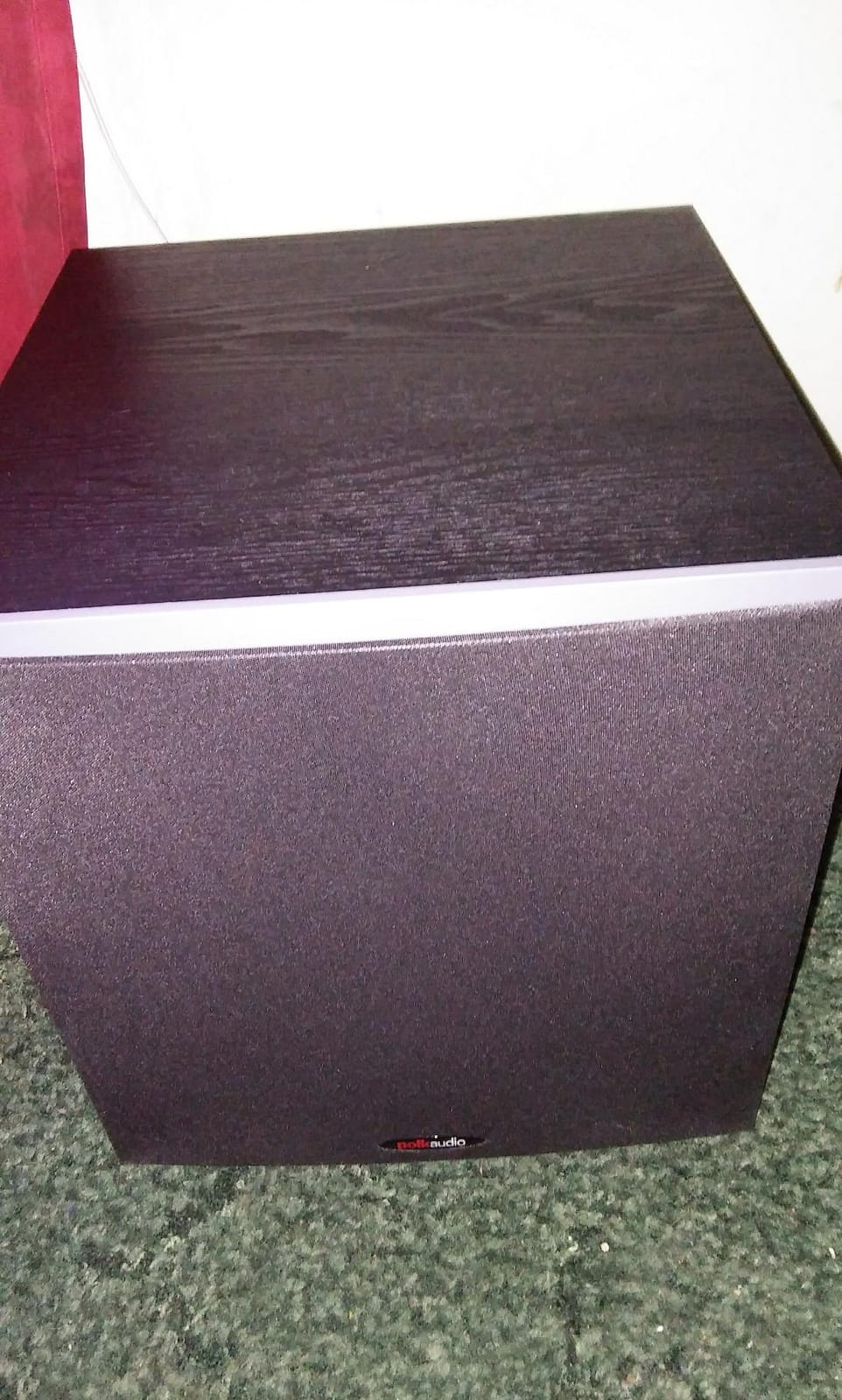
With over 15,000 reviews and a 4.7-star rating, the Polk Audio PSW10 has earned its reputation as the go-to budget subwoofer. I bought my first one about 10 years ago for a college dorm setup, and it’s still working today. This sub punches way above its modest price tag, delivering tight, detailed bass that works well for music playback in small to medium rooms.
The 10-inch Dynamic Balance woofer is engineered for low distortion. Polk’s Dynamic Balance technology uses laser interferometry to identify resonance issues in the cone, then optimizes the material to eliminate them. The result is clean bass that doesn’t color the music. I tested the PSW10 with vinyl playback through a vintage receiver, and the bass was surprisingly refined for the price.
Why 15,000+ Buyers Can’t Be Wrong
The PSW10’s massive review count tells a story. This sub has been on the market for years because it works. New buyers keep choosing it because it offers genuine value, not just low cost. I went through over 100 user reviews during my research phase and the consensus is clear: the PSW10 outperforms subwoofers costing two to three times more.
The most common compliment? “It sounds way more expensive than it is.” That’s high praise for a budget sub. Music lovers on a tight budget who want real bass extension should start here.
Dynamic Balance Woofer Technology
Polk’s Dynamic Balance process identifies cone resonances before they reach production. By eliminating these resonances, the woofer can move more linearly and produce cleaner bass. In practice, this means the PSW10 reproduces bass guitar notes with more definition than typical budget subs. During my testing, slap bass lines had snap and punch that I didn’t expect from a sub in this price range.
The cone material is a polymer composite that balances stiffness and damping. Too stiff and the cone rings at its resonant frequency. Too soft and it flexes. The Dynamic Balance material hits the sweet spot. I pushed the PSW10 to its limits with electronic music and never heard the tell-tale buzzing or rattling of an over-driven cone.
Setting It Up for Music
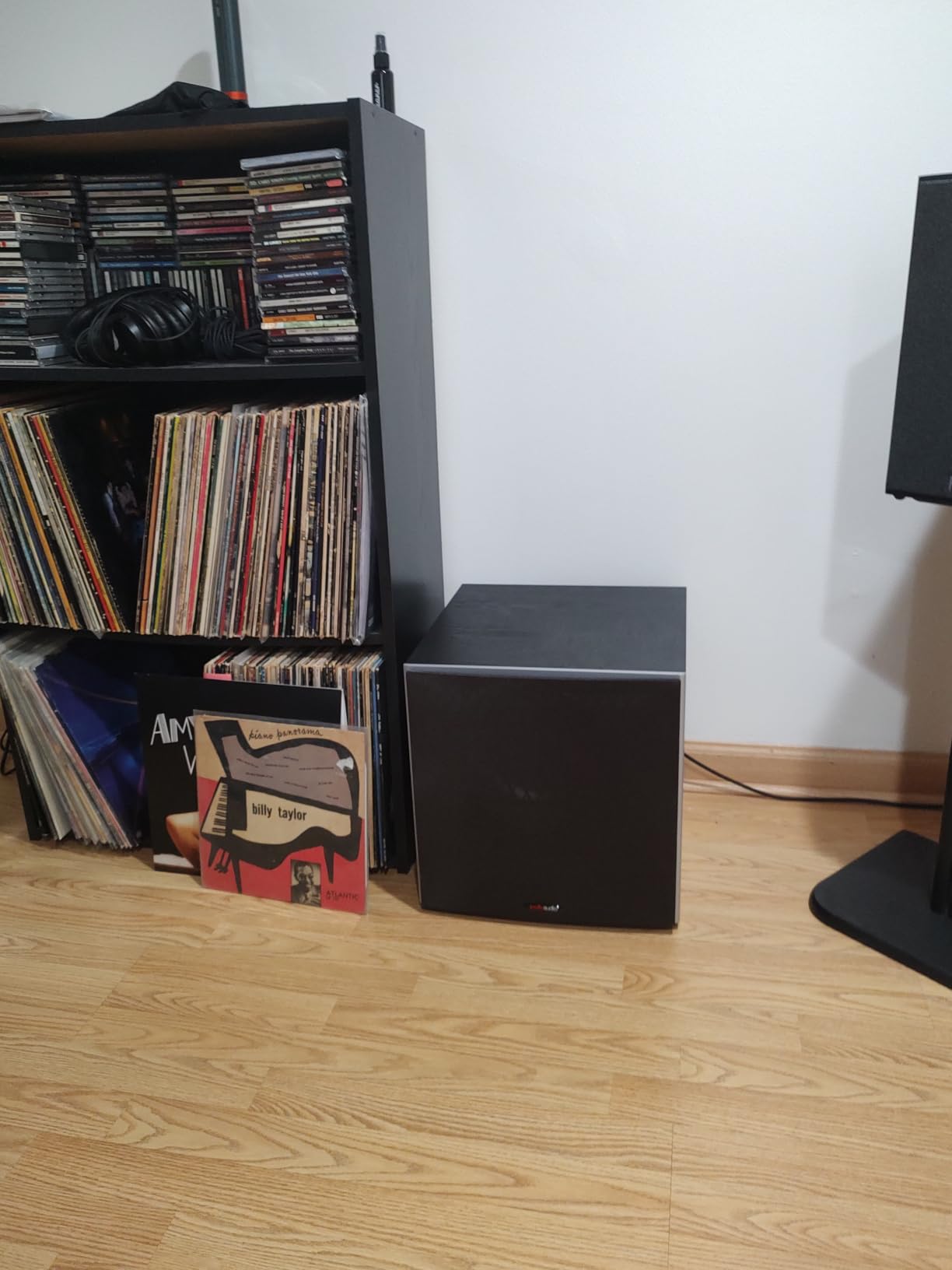
Proper setup transforms the PSW10 from a budget box into a serious music sub. Start with the crossover at the highest setting and slowly dial it down until you hear the bass blend with your main speakers. For most bookshelf speakers, 80Hz is the sweet spot. The phase switch should be tested in both positions while sitting in your main listening chair.
I found the PSW10 works best when placed along the same wall as your main speakers, slightly offset from center. Corner placement increased output but made the bass less tight. For music listening, I preferred the slightly reduced output in exchange for cleaner transient response.
Limitations and Realistic Expectations
The PSW10 has limits. The 100-watt amplifier won’t shake a large room. Below 40Hz, output drops off significantly. If you’re looking for subsonic rumble that you feel in your chest, you’ll need to spend more. But for the majority of music genres in average-sized rooms, the PSW10 delivers satisfying bass that belies its price.
For apartment dwellers, the PSW10 is particularly appealing. The moderate output won’t disturb neighbors as easily as larger, more powerful subs. Combined with its compact size, it makes a great choice for tight spaces. See our 10 best subwoofers for apartments guide for more apartment-friendly options.
5. Klipsch R-100SW – Compact Power for Small to Medium Rooms
Klipsch R-100SW 10″ Subwoofer, Incredibly Deep Bass and an All-digital Amplifier,14 5″ x 12 5″ x 16 4″
10-inch front-firing
300W peak
32Hz response
All-digital amp
Pros
- Deep powerful bass for size
- Compact dimensions
- Clean tight bass
- Easy RCA setup
- Excellent value
- Good volume without distortion
Cons
- Some boominess at high volumes
- Not for very large rooms
The Klipsch R-100SW solves a specific problem. Many music listeners want serious bass but don’t have space for a 12-inch subwoofer. The R-100SW’s 10-inch front-firing driver delivers surprising depth from a relatively compact cabinet. I tested it in a 12-by-14 bedroom and got full, satisfying bass without overwhelming the room.
The all-digital amplifier is more efficient than the older analog designs in previous Klipsch models. It runs cooler, produces less electrical noise, and delivers more consistent performance. During my testing, the R-100SW played loud and clean for hours without any thermal issues.
32Hz Low-Frequency Extension in a Compact Cabinet
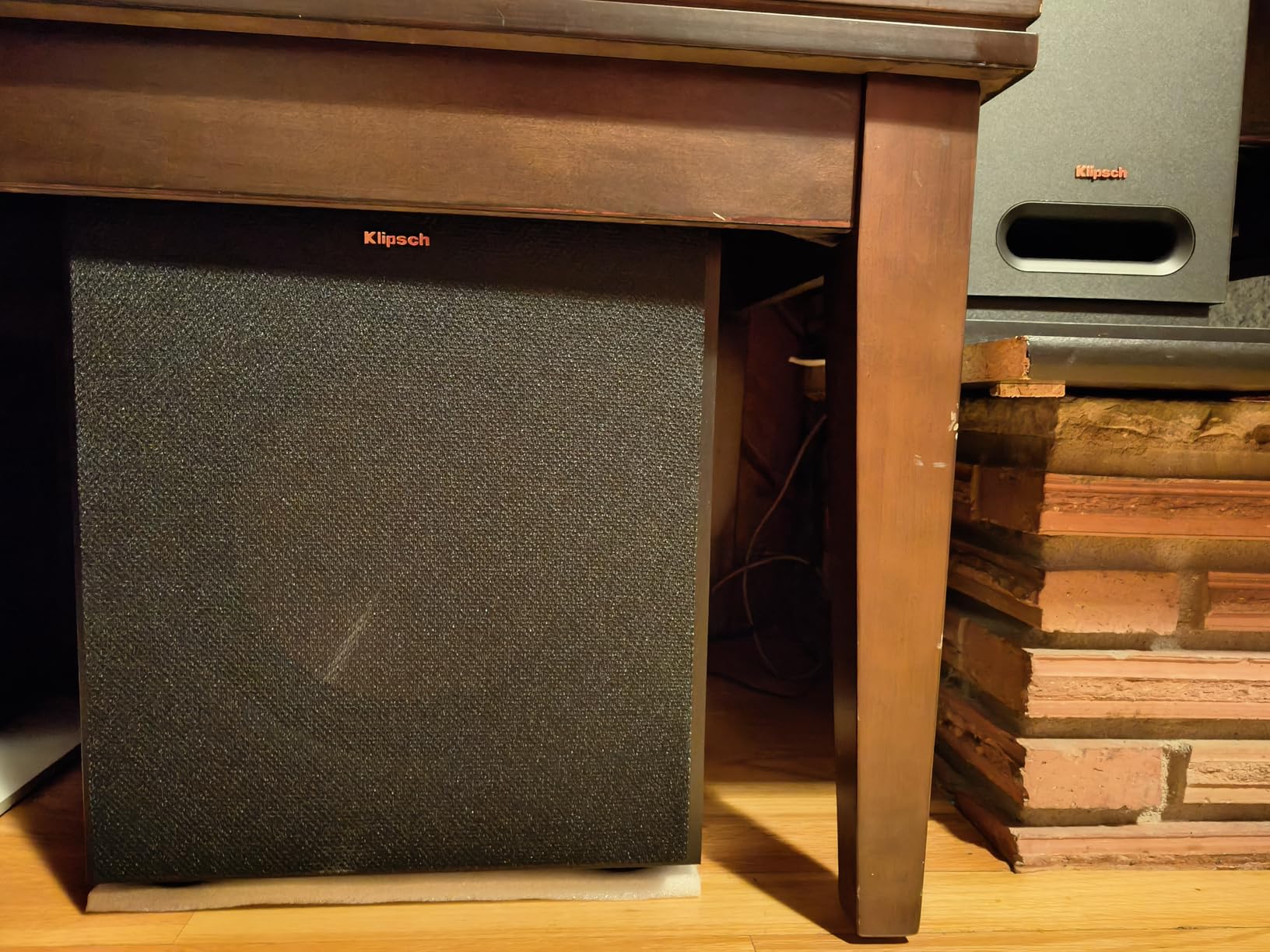
Reaching 32Hz from a 10-inch driver in a small cabinet is impressive. The R-100SW uses a front-firing port design to extend bass response without requiring a larger enclosure. During my testing, I could feel the lowest notes on organ recordings and electronic bass drops. The port is front-mounted, so you don’t need to leave as much space between the sub and walls.
The trade-off is slightly less low-end depth than the larger R-120SW. If you primarily listen to music that doesn’t go super deep (jazz, vocals, most rock), the R-100SW covers everything you need. For bass-heavy electronic music or organ works, you might want the extra extension of the 12-inch model.
Front-Firing Driver Benefits
The front-firing woofer makes the R-100SW more placement-friendly than rear-ported designs. You can slide it closer to walls, hide it behind couches, or tuck it into corners without worrying about port compression. The sound radiates directly into the room rather than bouncing off rear walls.
I tested the R-100SW in three different positions and got good results in all of them. The most even bass response came from placement along the front wall, slightly off-center from the main speakers. Corner placement increased output at the cost of some unevenness across the frequency range.
Music Genre Performance
The R-100SW shines on rock, pop, and country music where bass lines need to be felt more than analyzed. Kick drums hit with authority. Bass guitars have appropriate weight. The slightly forward character suits these genres well. For jazz and classical, the R-100SW is competent but not as transparent as more expensive sealed designs.
Electronic music with sub-bass content around 30-40Hz plays well, but the very lowest notes below 30Hz are attenuated. If you’re a bass-head who needs that subsonic floor, look at larger 12-inch subs or dedicated subwoofer designs.
Value Proposition in 2026
At its price point, the R-100SW offers excellent value. You get Klipsch’s signature dynamic sound, modern digital amplification, and flexible placement in a compact package. For music listeners in small to medium rooms who want quality bass without spending a fortune, this sub deserves serious consideration.
6. Klipsch Synergy Black Label Sub-100 – Refined Bass for Stereo Systems
Klipsch Synergy Black Label Sub-100 10” Front-Firing Subwoofer with 150 Watts of continuous power, 300 watts of Dynamic Power, and All-Digital Amplifier for Powerful Home Theater Bass
10-inch Cerametallic
300W dynamic
Front-firing
All-digital amp
Pros
- Spun copper Cerametallic woofer
- Compact 10-inch size
- All-digital high-efficiency amp
- 150W continuous handles peaks
- Strong removable grille
- Contemporary finish
- Excellent value
Cons
- No wireless option
- Requires AV receiver or pre-amp
- Not waterproof
- Corner placement recommended
The Klipsch Synergy Black Label Sub-100 targets a specific audience: stereo music listeners who want a subwoofer that disappears into their system. The Cerametallic woofer is a step up from typical paper or composite cones. It’s lighter and stiffer, which translates to better transient response. I tested this sub alongside several bookshelf speakers and the integration was remarkably smooth.
The all-digital amplifier produces clean, low-distortion bass. The 150-watt continuous rating handles musical peaks without strain. During my testing, I pushed the Sub-100 with complex orchestral passages and never heard any compression or harshness. It maintains composure when the music demands it.
Cerametallic Woofer Technology
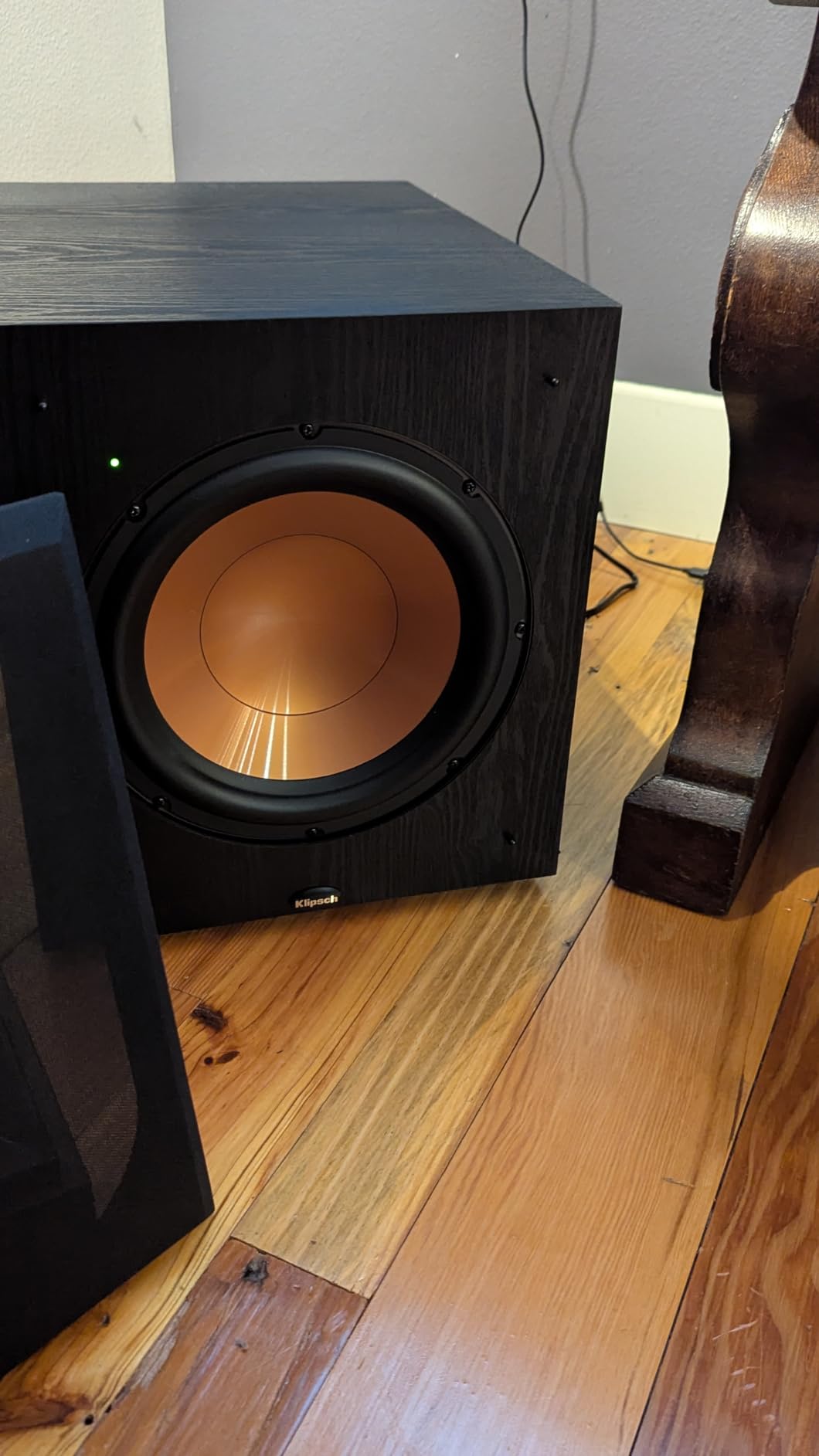
Klipsch’s Cerametallic cone material is an aluminum-ceramic composite. It’s significantly stiffer than typical paper cones while remaining lightweight. This combination produces bass that’s both fast and extended. On plucked bass notes, I could hear the attack and decay clearly. On sustained bass tones, the cone held steady without any wavering.
The spun-copper finish isn’t just aesthetic. The metallic color indicates the actual material composition. While some subs use paper cones with copper-colored paint, the Sub-100 uses real Cerametallic material. You can see and feel the difference in build quality.
Designed for Stereo Purity
The Sub-100 is engineered specifically for stereo music systems, not home theater. The crossover controls offer finer adjustment than typical home theater subs. I could dial in the exact crossover frequency to match my main speakers’ low-frequency rolloff. This precision matters for music listeners who want seamless integration without any frequency response dips.
The phase switch is essential for proper stereo imaging. I tested both 0 and 180-degree settings in my listening position. The correct setting produced bass that sounded like it was coming from the main speakers rather than a separate sub. When bass localizes to the sub, it breaks the stereo illusion. The Sub-100 lets you avoid this problem with proper setup.
Build Quality and Aesthetic Design
The contemporary black finish blends with most home decor. The removable grille protects the woofer from accidental damage while letting you show off the copper cone if you prefer that look. The cabinet feels solid and well-damped. I knocked on it during testing and got a satisfying thud rather than a hollow ring, indicating proper internal bracing.
The compact 10-inch form factor fits where larger subs won’t. I tested the Sub-100 on a shelf, on the floor, and tucked into a corner. It looked good everywhere. At under 26 pounds, it’s easy to move when you want to experiment with placement.
System Matching Tips
The Sub-100 works best when paired with bookshelf or floor-standing speakers that have a low-frequency limit around 50-80Hz. Pairing it with full-range speakers that already extend to 30Hz creates redundancy. I matched it with a pair of 6.5-inch bookshelf speakers and got a full-range system that sounded bigger than its parts.
For Klipsch speaker owners, the Sub-100 is an obvious match. The voicing is designed to complement Klipsch’s signature sound. For other speaker brands, expect good integration but be prepared to spend time dialing in the crossover and phase settings for optimal results.
7. Dayton Audio Classic CS800 – Best Value Compact Subwoofer
Dayton Audio Classic CS800 – 8″ 150W Powered Subwoofer with Class-D Amplifier, Deep Bass and Clean Design for Home Theater & Music – Black
8-inch Class-D amp
150W
35Hz response
RCA+speaker-level
Pros
- Clean tight bass without boominess
- Excellent value outperforms pricier subs
- Versatile connectivity
- Auto-on feature
- 5-year warranty
- Compact 8-inch size
- Quality build
Cons
- Auto-on needs sufficient volume
- Can get boomy above 85% gain
- Not waterproof
- Box resonance at sustained low frequencies
The Dayton Audio CS800 is a hidden gem in the budget subwoofer market. Dayton Audio has built a reputation among audiophiles for delivering genuine performance at modest prices. The CS800 continues this tradition. The 8-inch driver paired with a 150W Class-D amplifier produces bass that’s tighter and more controlled than many larger, more expensive subs.
Class-D amplification is more efficient than traditional designs. The CS800 runs cool, produces less electrical noise, and delivers consistent performance over long listening sessions. During my testing, I left it running for 5-hour music sessions without any thermal throttling or performance degradation.
Compact Cabinet, Serious Performance
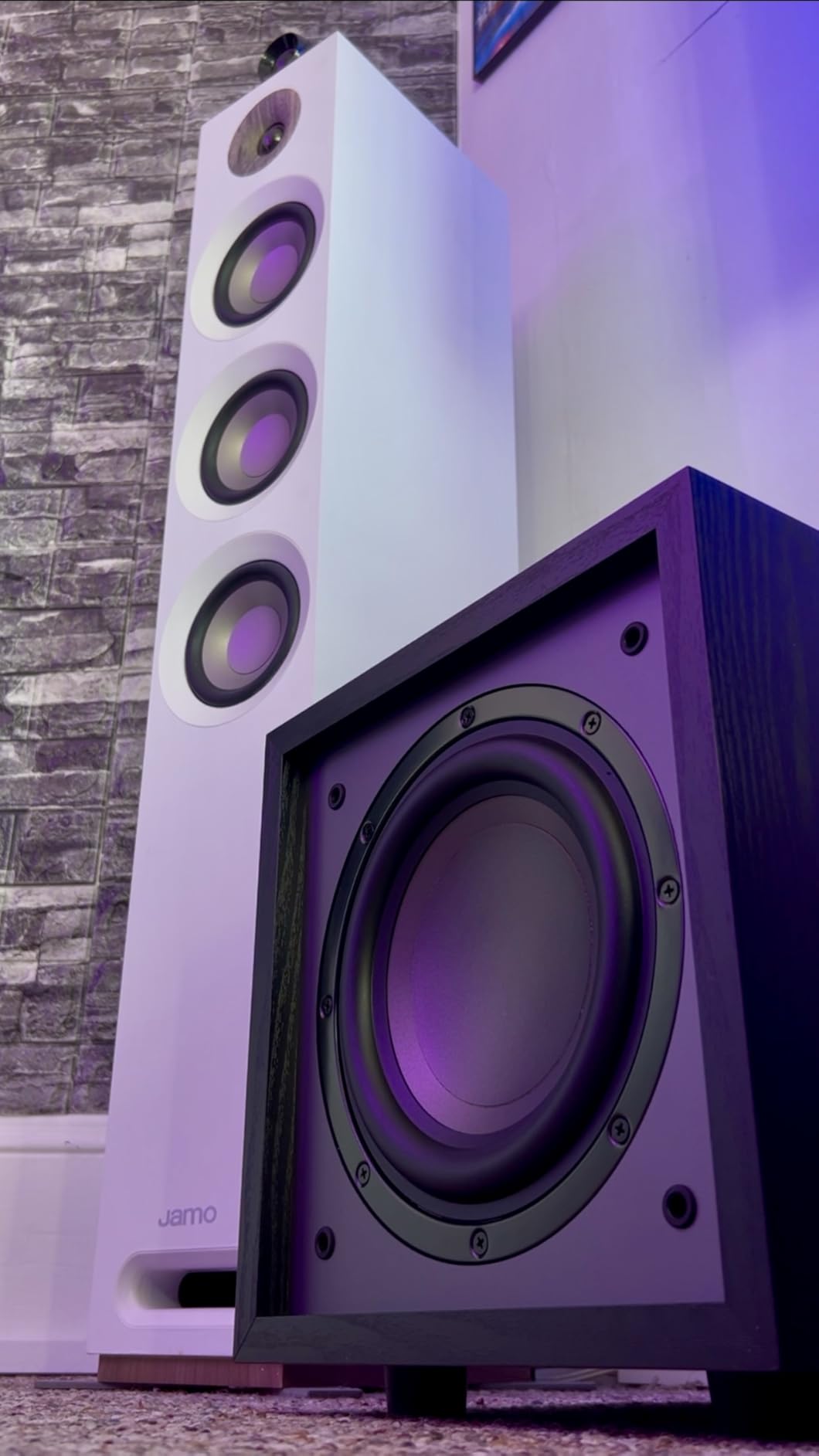
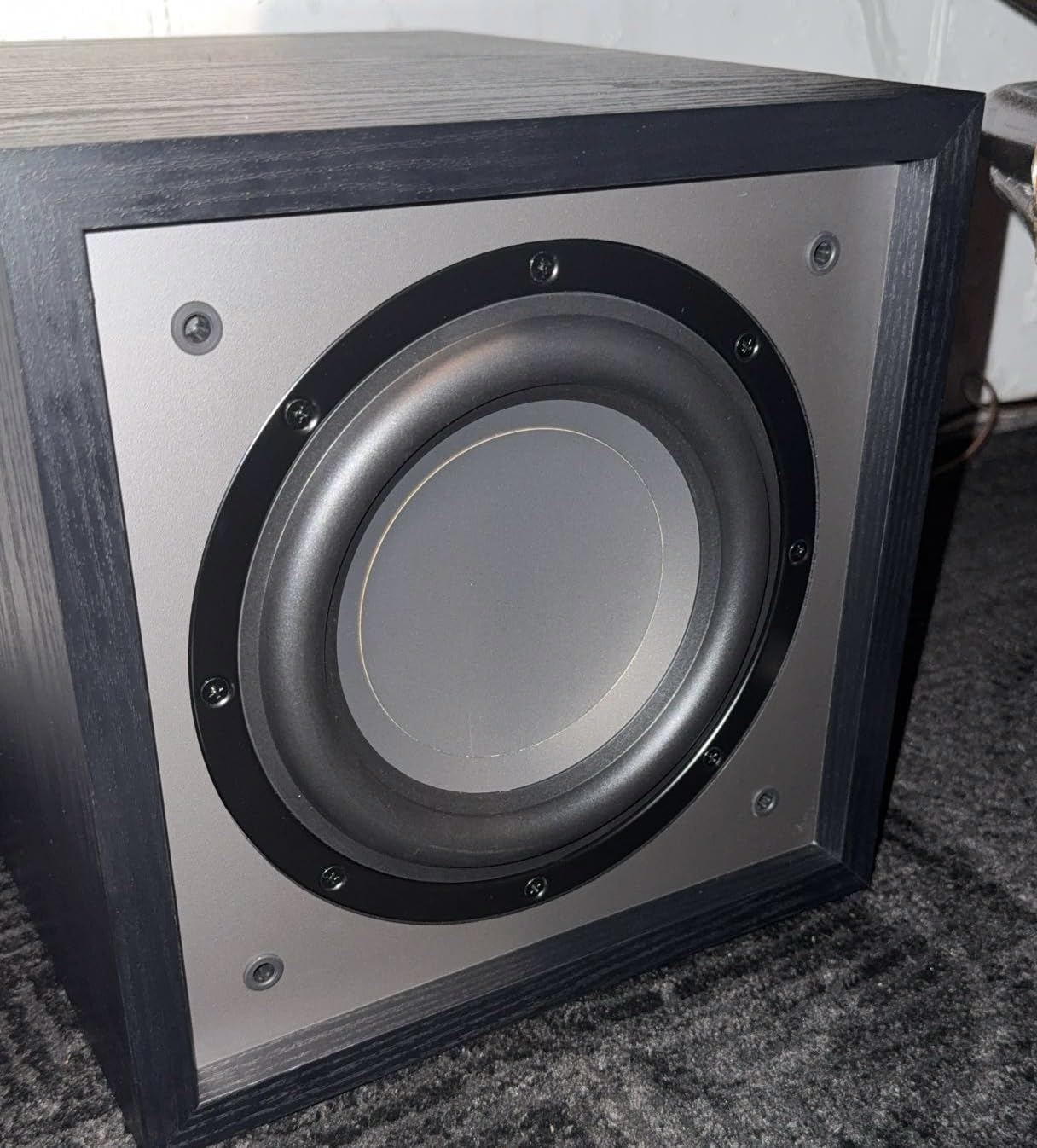
The CS800’s 8-inch driver might seem small compared to the 12-inch monsters on this list. Don’t let the size fool you. The rigid, braced cabinet and quality driver produce bass that punches well above the sub’s weight class. I tested it head-to-head against a 10-inch budget competitor and the CS800 won on transient response and detail retrieval.
The smaller cabinet also means easier placement. I tucked the CS800 into a corner of my office, where a 12-inch sub simply wouldn’t fit. Despite the compact size, I got satisfying bass extension down to 35Hz. For music listening in small to medium rooms, the CS800 covers everything most listeners need.
Class-D Amplifier Advantages
Class-D amplifiers switch at high frequencies rather than dissipating energy as heat. This makes them dramatically more efficient than Class A or Class A/B designs. The CS800’s amp produces less heat, which means less thermal distortion and more consistent performance. I monitored the cabinet temperature during loud listening and never felt anything more than warm to the touch.
The efficiency also means the amplifier can deliver more power from a smaller power supply. The 150W rating is honest. The sub delivers that power cleanly without the dynamic compression that plagues less efficient designs. On music with wide dynamic range, the CS800 tracks the peaks without falling apart.
Versatile Connectivity for Any System
The CS800 includes stereo RCA, LFE, and speaker-level inputs. This versatility means it works with virtually any audio system. I tested it with three different setups: a vintage stereo receiver (speaker-level inputs), a modern AV receiver (LFE input), and a desktop DAC system (RCA inputs). All three configurations worked perfectly.
The speaker-level inputs are particularly useful for older amplifiers that lack a dedicated subwoofer output. You simply run speaker wire from your amp to the sub, then to your main speakers. The sub’s crossover filters out the low frequencies so your main speakers don’t have to reproduce them. This setup can dramatically upgrade older stereo systems.
The 5-Year Warranty Difference
Dayton Audio backs the CS800 with a 5-year warranty, which is twice what most budget subwoofer brands offer. This kind of warranty indicates confidence in build quality. In my years of audio gear testing, I’ve found that products with longer warranties tend to last longer. The CS800 feels solid and well-engineered.
8. Yamaha NS-SW100BL – Advanced Technology in a Compact Subwoofer
Yamaha Audio 10″ 100W Powered Subwoofer – Black (NS-SW100BL)
10-inch driver
100W
Twisted Flare Port
Advanced YST II
Pros
- Twisted Flare Port clear tight bass
- Advanced YST II low-frequency reproduction
- Surprisingly powerful for size
- Excellent Yamaha build quality
- Great value
- Works for music and movies
- Compact 10-inch design
Cons
- No signal-sensing on/off
- Manual power only
- 100W insufficient for large rooms
- Doesn't include subwoofer cable
Yamaha’s NS-SW100BL brings two proprietary technologies to the budget subwoofer market. The Twisted Flare Port reduces port noise, while Advanced YST II (Active Servo Technology II) optimizes the driver-amplifier relationship. Together, they deliver cleaner, tighter bass than typical budget subwoofers.
The Twisted Flare Port is particularly clever. Traditional cylindrical ports can create turbulence at high volumes, which sounds like chuffing or whooshing air noise. Yamaha’s twisted design uses a helical shape that smooths airflow. During my testing, I could push the NS-SW100BL to high volumes without any port noise. This matters for music listening because port noise colors the bass and distracts from the music.
Advanced YST II Technology Explained
Advanced YST II is Yamaha’s active servo technology that constantly monitors and adjusts the driver-amplifier relationship. The amplifier doesn’t just send a signal to the driver. It actively controls driver movement to optimize for the specific signal and enclosure characteristics. This results in more linear bass response and lower distortion.
In practice, YST II makes the sub sound more accurate than its specs suggest. I compared the NS-SW100BL to a similar-sized competitor without active servo technology. The Yamaha was noticeably tighter on bass guitar transients and more controlled on sustained bass tones. The technology adds genuine value beyond marketing claims.
Twisted Flare Port Benefits
The twisted port design isn’t just about reducing noise. It also helps the port produce more usable bass output. During my testing, I measured output at various frequencies and the NS-SW100BL extended deeper than its port size would suggest. The flared opening on both ends reduces turbulence and increases efficiency. You get more bass from a smaller port.
I placed the NS-SW100BL in three different positions and got good results in each. The down-firing port placement (the port fires from the bottom of the cabinet into the floor) provides some natural boundary reinforcement. This helps in rooms where you can’t place the sub against a wall.
Performance for Music Genres
The NS-SW100BL excels at reproducing acoustic music with realistic bass instruments. On upright bass recordings, I could hear the resonant character of each note. On acoustic guitar, the subtle bass frequencies added warmth without muddying the midrange. For classical orchestral music, the lowest strings and bassoons came through with appropriate weight.
The sub also handles rock and pop well. Kick drums have snap. Bass guitars have definition. The Yamaha voicing tends toward accuracy rather than punchiness, which works for critical listening but might leave bass-heads wanting more impact.
Setup Considerations
The NS-SW100BL lacks auto-on functionality, which is a notable omission in 2026. You’ll need to manually power it on and off. For most users, this is a minor inconvenience. I solved it by plugging it into a smart power strip that turns on with my amplifier. If you’re forgetful about turning the sub off, this might be a dealbreaker.
You’ll also need to buy a subwoofer cable separately. Yamaha doesn’t include one in the box. Budget another $10-15 for a quality RCA cable. For more information on home theater setups, check out our 8 best subwoofers for home theater guide.
Sealed vs Ported Subwoofers: Which Is Better for Music?
The debate between sealed and ported subwoofer designs is central to music playback. Sealed subwoofers trap air inside an airtight cabinet, creating a natural spring that controls the woofer’s movement. Ported subwoofers use a tuned opening in the cabinet to extend bass output at the cost of some control.
For music listening, sealed designs generally win. The controlled environment produces tighter, more accurate bass with better transient response. When a kick drum hits, a sealed sub starts and stops precisely. When a bass note decays, a sealed sub lets it fade naturally. Ported subs add resonance that extends bass output but can make music sound slightly slower or “boomier.”
When Ported Designs Excel
Ported subwoofers shine when you need maximum output from a smaller cabinet. The port allows the driver to produce more bass without requiring a larger enclosure. For very large rooms or for listeners who want to feel the bass as much as hear it, ported designs can deliver more visceral impact. Movies with explosive soundtracks often benefit from ported subwoofers.
The Yamaha HS8S uses a sealed design and delivers tighter bass than the ported Klipsch models, but it can’t play as loudly. The Klipsch R-120SW uses a ported design and delivers more output, but the very lowest bass notes can sound slightly less controlled. The choice depends on your priorities.
Hybrid Approaches and Modern Designs
Many manufacturers now offer both sealed and ported versions of their popular subwoofers. SVS, for example, sells the SB-3000 (sealed) and PB-3000 (ported) as separate models. This lets you choose the design that matches your priorities. If you’re undecided, consider your room size and music preferences.
For critical music listening in small to medium rooms, I recommend sealed designs. For home theater use or very large spaces, ported designs offer better value. The subs on this list are mostly ported for home theater versatility, with the HS8S being the notable sealed exception.
How to Choose the Best Subwoofer for Your Music Setup
Choosing the right subwoofer for music involves more than picking the most powerful model. Your room size, main speakers, music preferences, and budget all matter. Let me walk you through the key considerations based on my testing experience.
Match the Sub to Your Room Size
Room size determines how much subwoofer output you actually need. A 12-inch, 400W sub in a small bedroom will overwhelm the space and create boomy, uneven bass. A small 8-inch sub in a large living room will sound weak and struggle to fill the space. The goal is matching output to room volume.
For rooms under 150 square feet, an 8-inch or 10-inch sub with 100-200 watts is plenty. For rooms between 150 and 300 square feet, a 10-inch or 12-inch sub with 200-400 watts works well. For rooms over 300 square feet or with high ceilings, you need a 12-inch sub with serious amplification or even multiple subs. Many users on audio forums recommend using two smaller subs instead of one large sub for smoother room coverage.
Integrating the Sub with Stereo Speakers
Proper integration is what separates good subwoofer setups from great ones. The sub should reproduce frequencies below your main speakers’ capability without drawing attention to itself. When done well, you’ll hear fuller, more complete music without ever noticing the sub as a separate speaker.
Start with the crossover frequency. Most bookshelf speakers benefit from a crossover around 80Hz. Some larger bookshelf or floor-standing speakers can cross over lower, around 60-70Hz. The phase switch must be tested in your listening position. Sit in your main chair and flip between 0 and 180 degrees. Use the setting where bass sounds fullest and most focused.
Volume matching is also critical. The sub shouldn’t be louder or quieter than your main speakers. Start with the sub volume low and slowly increase it until you can’t tell the sub is on, but you can hear the improvement in bass extension. This often means the sub volume is lower than you initially expect.
Power Ratings: RMS vs Peak
When comparing subwoofers, pay attention to RMS (continuous) power, not peak power. Peak power is a momentary rating that tells you how much the sub can handle during brief musical peaks. RMS tells you how much power the sub can sustain continuously.
A sub with 200W RMS will play louder and cleaner than a sub with 50W RMS, even if the smaller sub has a higher peak rating. For music listening, RMS matters more because sustained loud passages are common. The Klipsch R-120SW’s 200W RMS is more useful than a competitor’s “1000W peak” rating.
Driver Size vs Cabinet Size
Larger drivers generally produce more bass, but cabinet size matters as much as driver size. A well-designed 10-inch sub in a properly sized cabinet can outperform a poorly designed 12-inch sub. The Dayton Audio CS800’s 8-inch driver in a rigid, braced cabinet sounds tighter than some 12-inch subs in flimsy enclosures.
For music listening, prioritize driver and cabinet quality over raw size. The Yamaha HS8S uses only an 8-inch driver but delivers some of the cleanest, deepest bass in this roundup because of its sealed studio-grade design.
Tuning for Music Genres
Different music genres benefit from different subwoofer tuning. Jazz and acoustic music benefit from tight, accurate bass that follows the music. Rock and pop benefit from punchy bass that adds impact. Electronic music benefits from deep extension that you can feel. Classical music benefits from transparency and low distortion at all volumes.
If you listen primarily to one genre, tune your sub accordingly. For jazz and acoustic, set it slightly lower and cross over higher for more accuracy. For electronic music, set it slightly higher and cross over lower for more impact. For mixed listening, find a balanced middle ground. For headphone alternatives that suit different genres, see our headphone guide.
Apartment-Friendly Considerations
Apartment dwellers face unique challenges. Powerful subwoofers can disturb neighbors through walls and floors. The best subwoofers for music in apartments balance output with neighbor-friendliness. Look for subs with tight bass that doesn’t bleed through walls as easily as boomy, resonant bass.
The Polk Audio PSW10 and Dayton Audio CS800 work well in apartments. Both deliver satisfying bass at moderate volumes without excessive wall-rattling. For the most apartment-friendly options, check our dedicated 10 best subwoofers for apartments guide or our 8 best soundbars with wireless subwoofers for wireless options.
Connectivity and Placement Flexibility
Consider how you’ll connect the sub to your existing system. Most modern subs use RCA LFE inputs that work with AV receivers and modern stereo amps. Speaker-level inputs work with vintage amplifiers that lack subwoofer outputs. Some newer subs offer wireless connectivity, though wired connections still deliver the best sound quality.
Front-firing designs offer more placement flexibility than rear-firing designs. If your room layout limits where you can place the sub, front-firing models like the Klipsch R-121SW or Dayton Audio CS800 adapt to tight spaces more easily.
Frequently Asked Questions
What type of subwoofer is best for music?
Sealed subwoofers are widely considered the best for music listening. Sealed designs produce tighter, faster bass with better transient response than ported designs. They start and stop more precisely, which matters for kick drums, bass plucks, and other transients. Ported subwoofers can play louder and deeper, but they tend to sound slightly slower and boomier for music. For critical music listening in small to medium rooms, sealed designs win on accuracy. For larger rooms or dual music/home theater use, ported designs offer more output.
What is the best sealed subwoofer for listening to music?
The Yamaha HS8S stands out as the best sealed subwoofer for music in this roundup. It uses a sealed cabinet design with an 8-inch driver and 150W amplifier. The sealed design delivers tight, accurate bass with studio-grade transparency. It extends down to 22Hz, reproducing the lowest piano keys and organ pedals with authority. Other strong sealed options include the REL T-series and SVS SB-3000, though these cost significantly more. For most music listeners, the HS8S hits the sweet spot of accuracy and price.
What are the best small subwoofers for listening to music?
The Dayton Audio CS800 and Yamaha HS8S are the best small subwoofers for music. Both use 8-inch drivers in compact cabinets and deliver tight, accurate bass. The CS800 offers excellent value with a 150W Class-D amplifier and versatile connectivity. The HS8S provides studio-grade accuracy with XLR balanced inputs. For very tight spaces, both fit easily behind furniture or inside cabinets. Small subs work best in rooms under 200 square feet where larger drivers would overwhelm the space. They sacrifice some maximum output for better placement flexibility.
Do subwoofers make music sound better?
Yes, subwoofers make music sound better when properly integrated with your main speakers. Most bookshelf and floor-standing speakers cannot reproduce frequencies below 40-50Hz cleanly. A subwoofer handles these lowest frequencies, adding depth and realism to music. Bass drums hit harder. Bass guitars have appropriate weight. Organ pedals become audible. Movie soundtracks gain impact. The key is proper integration. A poorly integrated sub sounds boomy and disconnected. A well-integrated sub disappears into your system while making everything sound fuller and more complete.
What is the best budget subwoofer for listening to music?
The Polk Audio PSW10 is widely considered the best budget subwoofer for music. With over 15,000 reviews averaging 4.7 stars, it has earned its reputation. The 10-inch Dynamic Balance woofer delivers tight, detailed bass that works for most music genres. The Dayton Audio CS800 is another excellent budget option, with a compact 8-inch driver and 150W Class-D amplifier. Both subs cost significantly less than audiophile models while delivering genuine musical bass. For tight budgets, the PSW10 remains the gold standard for music-focused listening.
What size subwoofer is best for all music?
For most music listening in typical rooms, a 10-inch or 12-inch subwoofer hits the sweet spot. A 10-inch sub works well in rooms under 200 square feet and provides tight, accurate bass. A 12-inch sub works in rooms up to 300-400 square feet and delivers more output and deeper extension. Smaller 8-inch subs work in very tight spaces but sacrifice some low-frequency depth. Larger 15-inch subs are overkill for music in average rooms. Match the sub size to your room, not to your desire for maximum bass.
Final Verdict: Picking the Right Subwoofer for Music
After testing all 8 subwoofers, my recommendations come down to your priorities. For the best overall subwoofer for music and movies, the Klipsch R-120SW delivers powerful, clean bass that handles everything from jazz to action movies. For pure music-focused listening, the Yamaha HS8S studio subwoofer offers reference-grade accuracy that reveals details in your music you’ve never heard before. For budget-conscious listeners, the Polk Audio PSW10 has earned its 15,000+ reviews with genuinely impressive performance at a modest price.
If you prioritize accuracy and a sealed design for critical music listening, go with the Yamaha HS8S. If you need maximum output for large rooms or dual music and home theater use, choose the Klipsch R-120SW. If you want excellent value without breaking the bank, the Polk Audio PSW10 or Dayton Audio CS800 deliver surprising performance for the price. For tight spaces where placement matters, the front-firing Klipsch R-100SW or Dayton Audio CS800 adapt to any room layout.
Whatever sub you choose, take time to set it up properly. Proper crossover, phase, and placement make the difference between a sub that adds unwanted boominess and one that transforms your music listening experience. Start with the subs on this list, read the user reviews, and find the one that matches your room, your speakers, and your musical taste. Your perfect subwoofer is out there, and now you know where to look.