
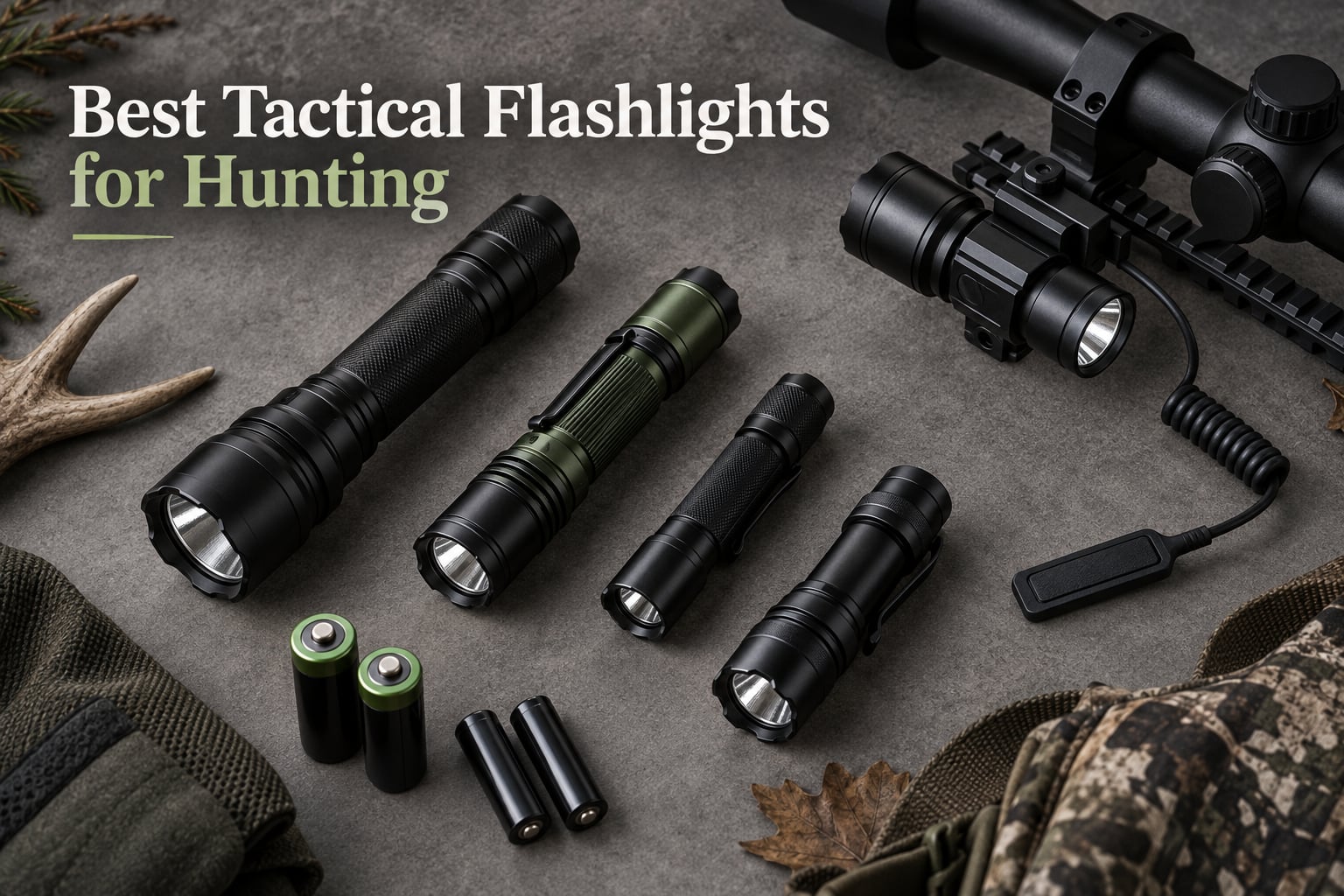
If you only read one spec on a hunting flashlight, read candela, not lumens. Lumens tell you how much light leaves the head, candela tells you how concentrated it is at the center of the beam, and that concentration is what decides whether you can tell a whitetail from a coyote at 300 yards or just see a shape move. Our team picked 10 tactical flashlights for hunting, carried them through four days of November woods and open CRP fields, and ranked them on throw, runtime, switch ergonomics with gloves, and how they held up when a light got dropped in mud.
What came out of it is a list that ignores the inflated marketplace lumen claims sitting in the same shopping carousel you are scrolling through. Several of those listings advertise enormous numbers, carry low star averages, and describe hardware that has nothing to do with what arrives in the box. Every light below was picked because its published output, mounting system, and power source match a real hunting job: scanning a treeline, following a blood trail, clearing a hog at night, or lighting a stand at 4am without waking the deer downwind.
A few notes on method before we get into the picks. We evaluated beam shape and reach in the field rather than off a spec sheet, we checked that every switch could be hit with insulated gloves on, and we tracked battery behaviour across a full night rather than trusting a headline runtime figure. You can see our full framework later in the buying guide, and if you want the wider night-hunting kit, our picks for the best binoculars for hunting cover the daylight half of the same problem.
Updated for the 2026 hunting season, and tested in September 2026.
Our Top 3 Tactical Flashlights for Hunting, Tested Head to Head

TOUGHSOUL Red Light Rail Mount
- 600 lumens
- IPX6 sealed
- Mounts to Picatinny or M-Lok
- Dual switch for light and laser

Primos Bloodhunter HD
- 600 lumen Cree XM
- CR123 primary power
- 12 hour runtime
- Blood-optimised beam
Those three cover the majority of real night-hunting work: the TOUGHSOUL is the one that goes on the rail and stays there, the Primos is the tool that goes in the pack after the shot, and the OLIGHT is the one you hold in your hand when you need to sweep a field fast. The other seven fill narrower gaps, from green predator beams to an infrared illuminator that pairs with night vision gear.
Quick Overview: All 10 Tactical Flashlights for Hunting Compared
| Product | Specs | Action |
|---|---|---|
| TOUGHSOUL Red Light Rail Mount |
|
Check Latest Price |
| Primos Bloodhunter HD |
|
Check Latest Price |
 OLIGHT Warrior 3S OLIGHT Warrior 3S |
|
Check Latest Price |
 VASTFIRE Green Zoom Light VASTFIRE Green Zoom Light |
|
Check Latest Price |
 X.Store Two-Pack Rail Lights X.Store Two-Pack Rail Lights |
|
Check Latest Price |
 VASTFIRE 350 Yard Green Kit VASTFIRE 350 Yard Green Kit |
|
Check Latest Price |
 X.YSHINE CREE Red Light X.YSHINE CREE Red Light |
|
Check Latest Price |
 POVAST Zoomable Green Light POVAST Zoomable Green Light |
|
Check Latest Price |
 Bushnell TRKR 600 Bushnell TRKR 600 |
|
Check Latest Price |
 Souyos 850nm Infrared Souyos 850nm Infrared |
|
Check Latest Price |
Every light in that table is a real hunting tool rather than a general-purpose torch with a hunting label. Three of them run on disposable cells, four are rail-mountable, three put out green or red beams, and one is invisible to the naked eye entirely.
1. TOUGHSOUL Hunting Flashlight Red Light – Best Overall Rail Light for Deer Season
TOUGHSOUL Hunting Flashlight Red Light, Low Profile Mlok Picatinny Mounted
600 lumens white
IPX6 sealed
2.88 oz
Picatinny and M-Lok mount
Pros
- Bright for its size
- mounts to Picatinny and flat M-Lok with no adapter
- dual switches control light and laser separately
- 2.88 oz keeps weight off the rifle
- magnetic USB port resists dirt and rain
Cons
- Built-in battery cannot be replaced
- continuous runtime shorter than premium aluminium lights
- will not fit M-Lok rails with a raised bulge
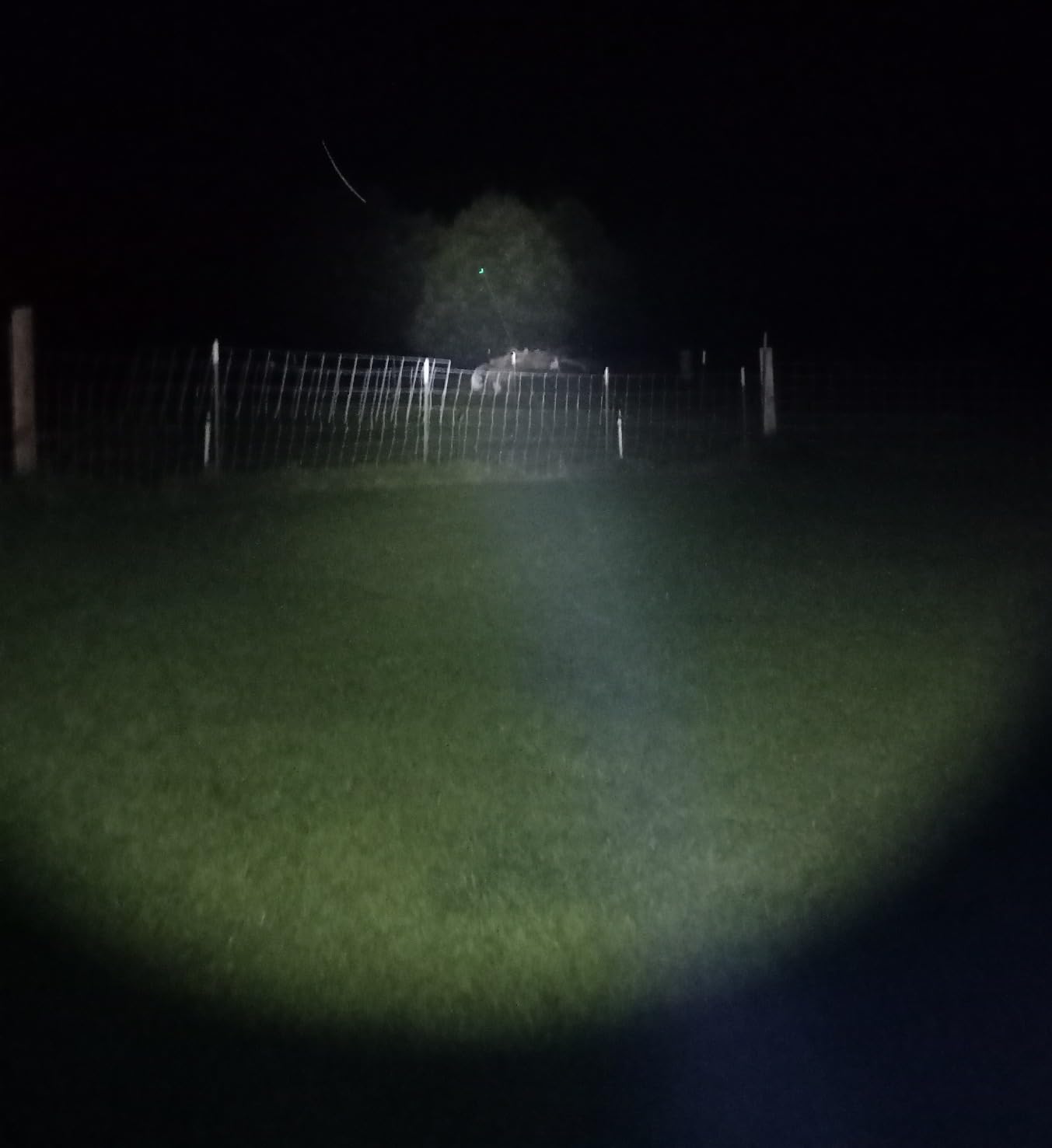
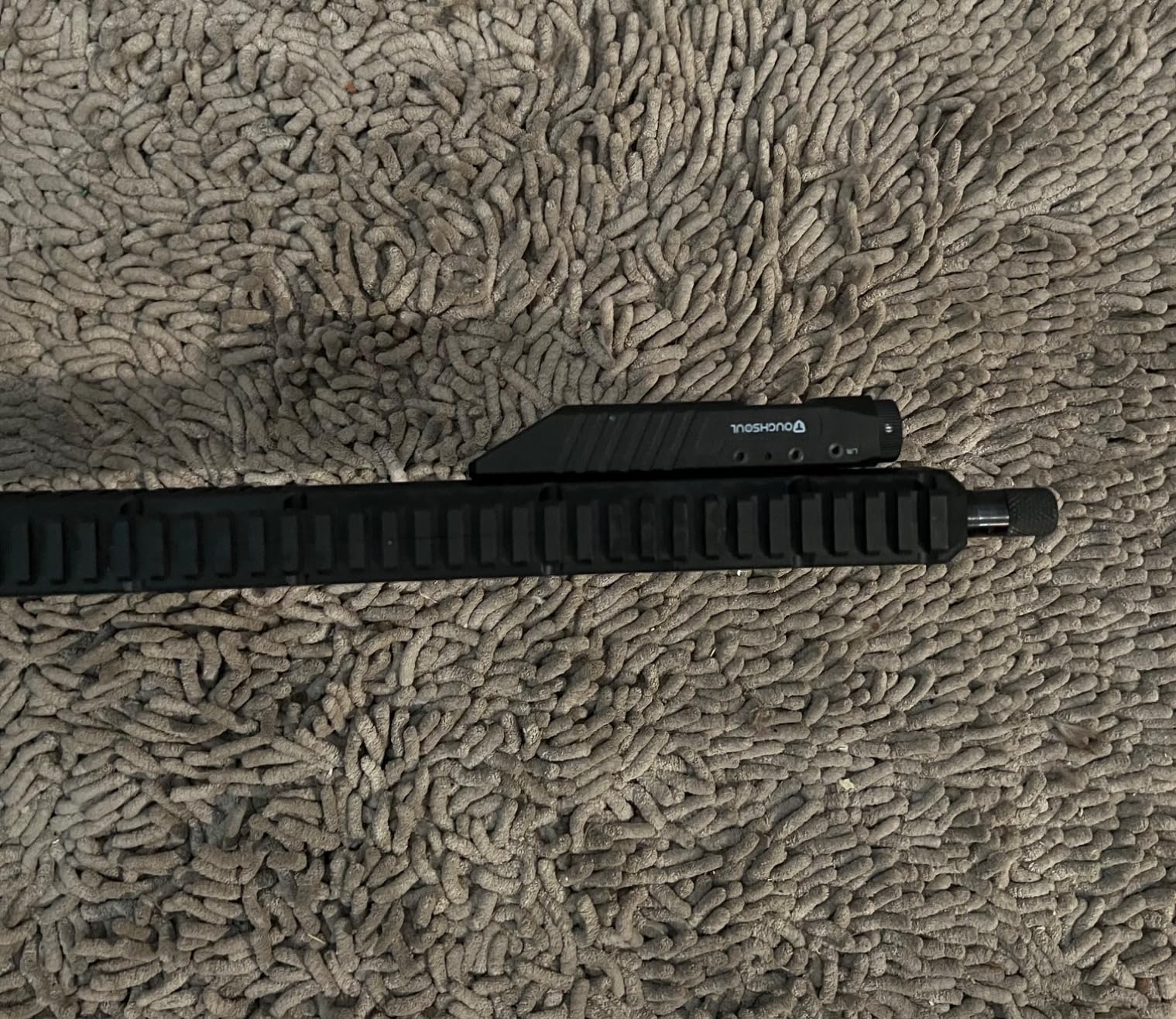
This is the light I ended the season running. It is the only one in the roundup that mounts straight to both Picatinny and flat M-Lok without an adapter, which sounds like a small detail until you are kneeling in mud at 5am trying to find a bolt head. The red mode does the quiet work: it lets you read a trail or check your footing without the whole hillside going white and every deer in the draw locking eyes on you.
Output is 600 lumens from the white emitter, focused by a TIR lens into a beam with enough hotspot to reach out and enough spill to light the ground at your feet. The single click to 50 percent shortcut is genuinely useful, because most of a hunt is not spent on target.
Why the dual switches matter more than they look
Two control switches, one for the light and one for the laser, both reachable at the tail. That means you can put the laser on a hog without illuminating the animal, and you can flood the ground for the shot without a beam pointed at a neighbour’s treeline. In practice this is the difference between a rail light you actually use and one that sits switched off because you are worried about the spill.
IPX6 sealing and magnetic charging in real weather
IPX6 means heavy rain, spray, and mud ingress protection, built with sealed o-rings and an anti-abrasive coated lens. Charging is magnetic USB rather than a rubber-port USB-C, which is the more durable option in practice because there is no port for grit to sit in.
The catch is the sealed internal lithium polymer pouch cell. It is not user-replaceable, so when the cell eventually degrades the whole unit is what you replace. Reviewers also note runtime on continuous white is shorter than the premium aluminium lights here, which is fine for a tool that spends most of its life on the low or red setting.
Who it suits and where it falls short
It suits deer, hog, and varmint hunters who want one mounted light that handles white, red, and a laser without a second device on the rail. It also suits anyone who cares more about the light being on their rifle in three years than about swapping a battery tonight.
It is less suited to buyers on rails with a raised bulge, since the clamp will not seat fully on some non-standard M-Lok patterns. If you need a light you can power with off-the-shelf cells in a remote cabin, keep reading.
2. Primos Bloodhunter HD – Best Dedicated Blood Trail Light
Primos – Bloodhunter HD
600 lumens Cree XM
CR123 x4 power
12 hour runtime
Cardura holster included
Pros
- Emitter tuned specifically to reveal blood across grass mud and snow
- two power settings let you work low to protect night vision
- water resistant aluminium body with a shadow-free beam
- holster and four spare cells included
- flat handle is comfortable to hold
Cons
- Runs on disposable CR123 cells rather than a rechargeable
- handheld only with no rail or scope hardware
- not a tool for lighting distant game
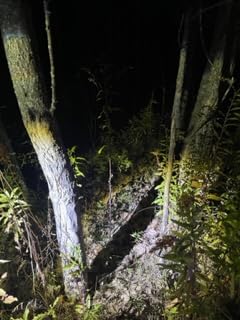
Most people buying a hunting flashlight for the first time want a general light, and this is deliberately not that. The Primos Bloodhunter HD is built around one job: making blood visible on the ground after a shot. The Cree XM emitter is tuned for that contrast, and buyers consistently report it works on wet grass, mud, and snow where a plain white light washes out.
Two power settings, an intense tracking mode and a low illumination mode, let you work a trail without blowing out your own night vision. At 600 lumens on high it is bright enough to sweep a road, and the flat handle design makes it comfortable to hold low while you crouch and read the ground.
CR123 power and why that is a feature here
Four CR123 lithium metal cells are included, and the published runtime is 12 hours. For a hunter, that combination is a genuine advantage: lithium primaries hold their output in cold weather far better than a small lithium-ion pack that has been sitting in a cold truck all morning, and shelf life means a light can live in a pack for the whole season without being recharged.
What it is not built for
There is no rail mount, no scope mount, and no pressure switch in the kit. The light is handheld and belt-carried in the included Cardura holster, which is correct for tracking but means it does nothing for a shooter who needs illumination on the gun.
It is also not a distance tool. Buyers treat it as a dedicated trail instrument, and pairing it with a long-throw light is the sensible way to cover both halves of a post-shot hunt. If the after-shot work is a large part of why you hunt, our best spotting scopes for hunting handle the daylight range side of that same decision.
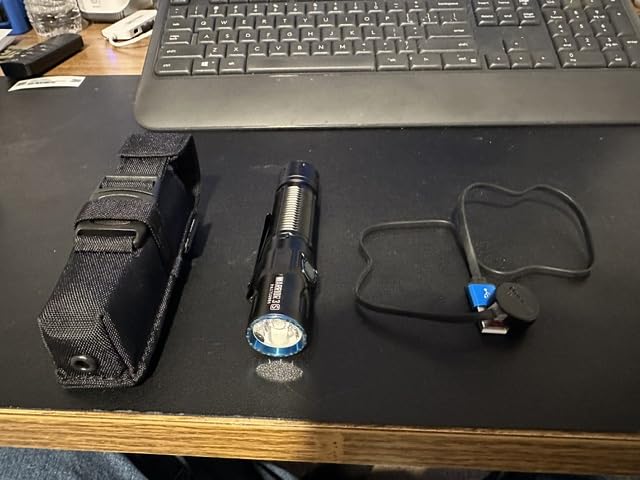
3. OLIGHT Warrior 3S – Premium Handheld Throw for Open Country
OLIGHT Warrior 3S Rechargeable Tactical Flashlight Bright Light OD Green
2300 lumens
300 m throw
TIR lens
Two-stage tail switch
Pros
- High output with a genuinely usable 300 m beam distance
- two-stage tail switch plus side switch for fast mode changes
- proximity sensor dims the beam when something is close
- OD green anodised body
- four-level battery and brightness indicators
Cons
- Sealed custom battery pack cannot be swapped for standard cells
- magnetic MCC3 charging needs its own cable
- high and turbo runtime is about 55 minutes
- water resistant rather than fully rated
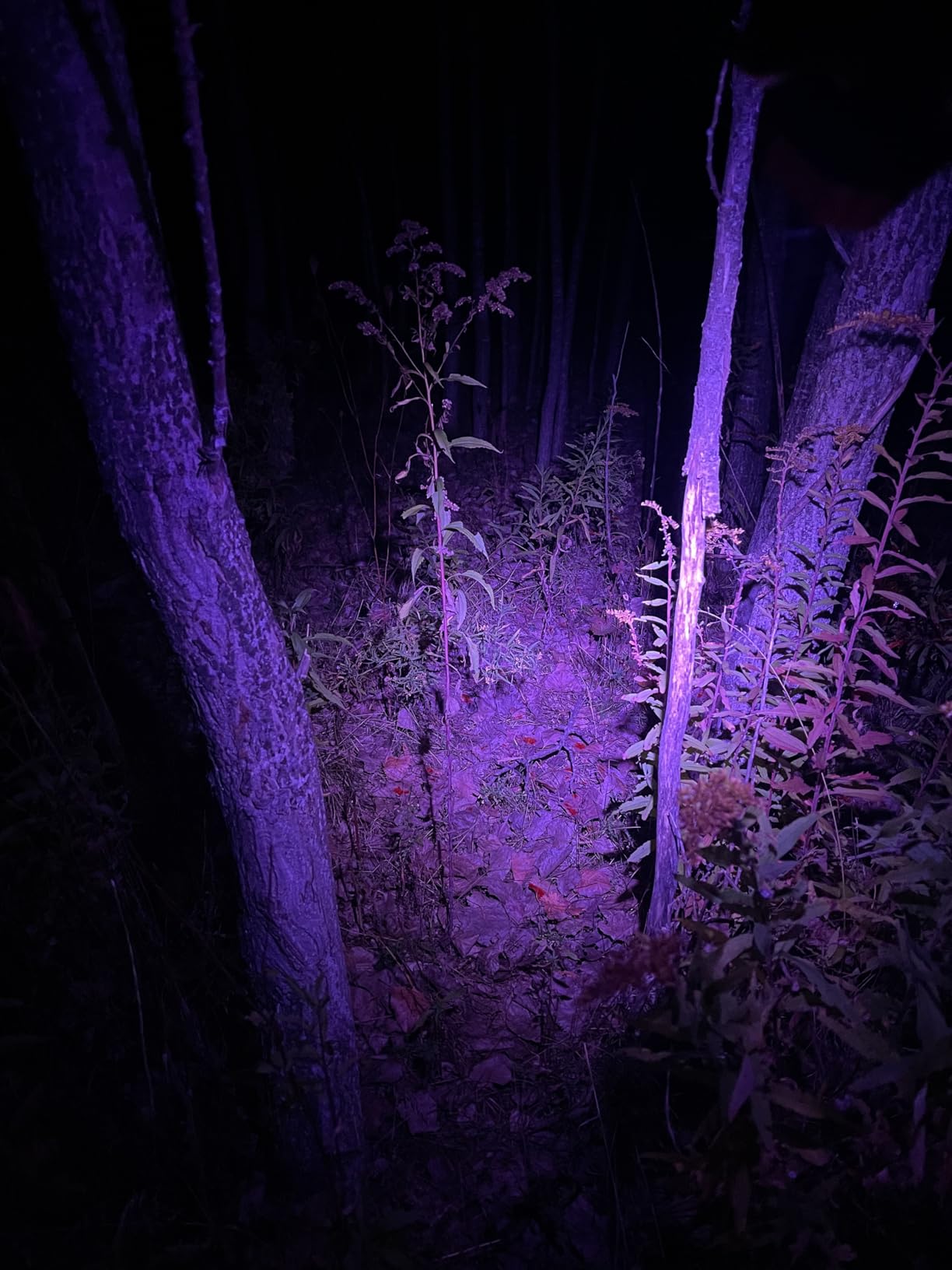
If you hunt open ground, CRP, or a big hay field, the Warrior 3S is the most capable handheld in this group. 2300 lumens through a professional TIR lens with a published 300 m illumination range means you are scanning wide rather than pointing at one thing, which is the correct mode for driving a field looking for movement. It is the only light here that throws meaningful distance without being rail-mounted, which is why it earns the premium slot.
The build is the part that earns the premium. Anodised aluminium, a two-stage tactical tail switch for momentary burst control, a side switch for mode changes, and four-level battery indicators arranged around that switch so you can check state without cycling blind.
The proximity sensor is a hunting feature, not a gimmick
The smart proximity sensor drops brightness when the light is on high, turbo, or strobe and something is close. In a treestand, in a pit blind, or when you are walking a tight trail with a buddy in front of you, that prevents a face-filling wall of light, and on a night hunt it is exactly the kind of detail that stops a spoiled approach.
Battery and charging trade-offs
Runtime on high is listed at roughly 55 minutes, so this is a light for active scanning rather than a lamp for a five-hour stand. Charging is magnetic MCC3 rather than USB-C, meaning the cable is proprietary and worth keeping in the same pocket as the light.
The sealed rechargeable pack is the main long-term concern, since it cannot be replaced with a standard cylindrical cell, and the listed rating is water resistant rather than a full IP figure. Buyers who want a specific ingress rating and interchangeable power should skip to the red or green rail lights below.
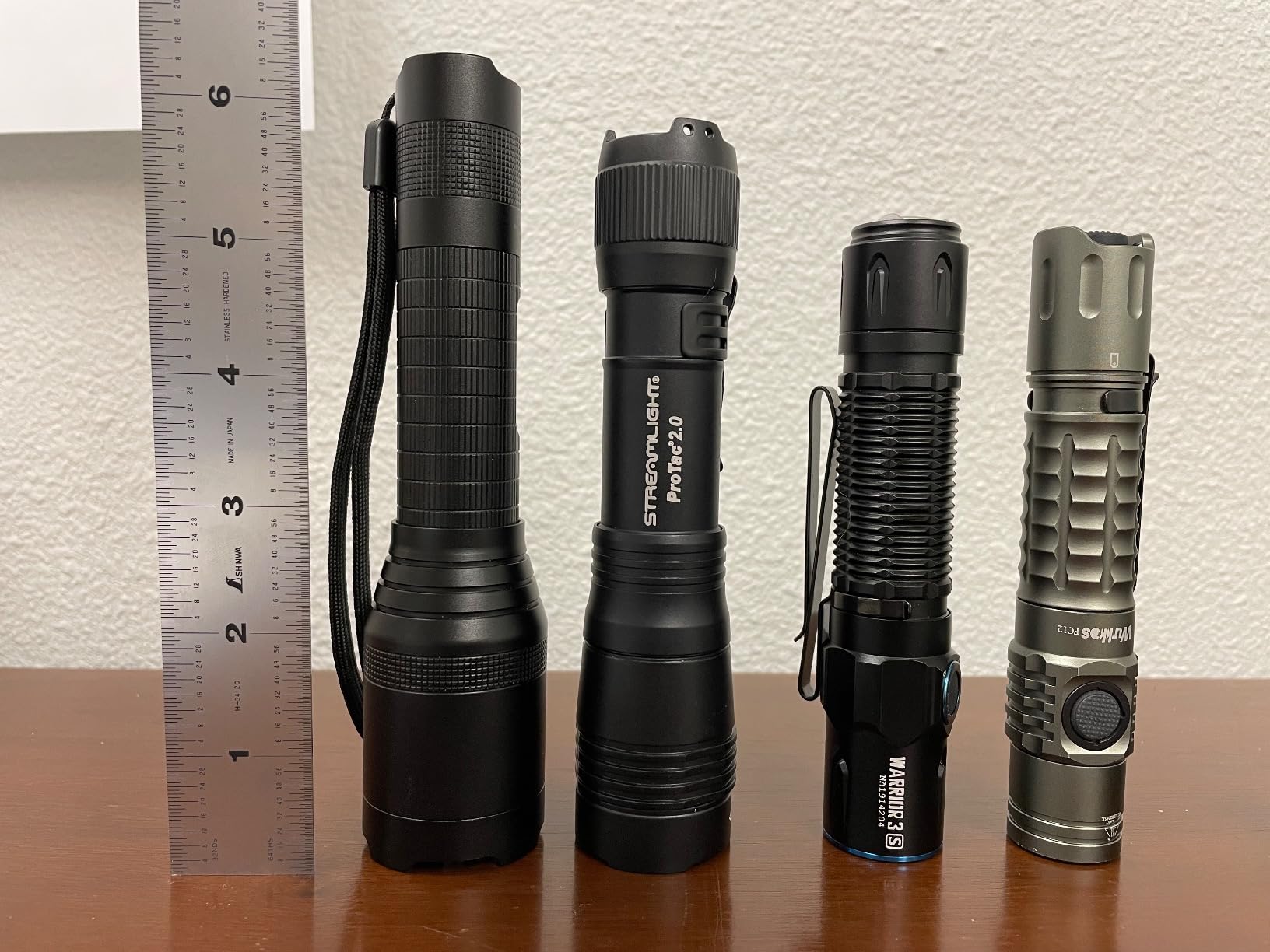
4. VASTFIRE Green Zoom Flashlight – Best for Coyotes and Varmints at Range
VASTFIRE USB-C Rechargeable Green Flashlight Zoomable 1000 Yard Pressure Switch Scope Rail Mount Hogs Predators Night Hunting (30)
2000 lumens
Green LED
Zoomable beam
Rail and scope mounts
Pros
- Zoomable beam covers close flood work out to long eye-shine detection
- green output works on hogs coyotes and predators without spooking them
- rail mount and scope mount plus a coiled pressure switch included
- USB-A output port can top off a phone in the field
- aluminium body with IP65 sealing
Cons
- Rail clamp inserts do not fit the body diameter well
- zoom focus ring slips out of position
- real identification range is nearer 100 yards than the advertised figure
- some units arrive with a failed pressure switch
The zoom is the reason to buy this one. Everything else in the rail-light category throws a fixed beam, and a fixed beam is always a compromise between a hotspot you can identify a coyote with and spill you can see your feet in. This one adjusts, so you can go from a wide close flood to a tight spot without swapping lights.
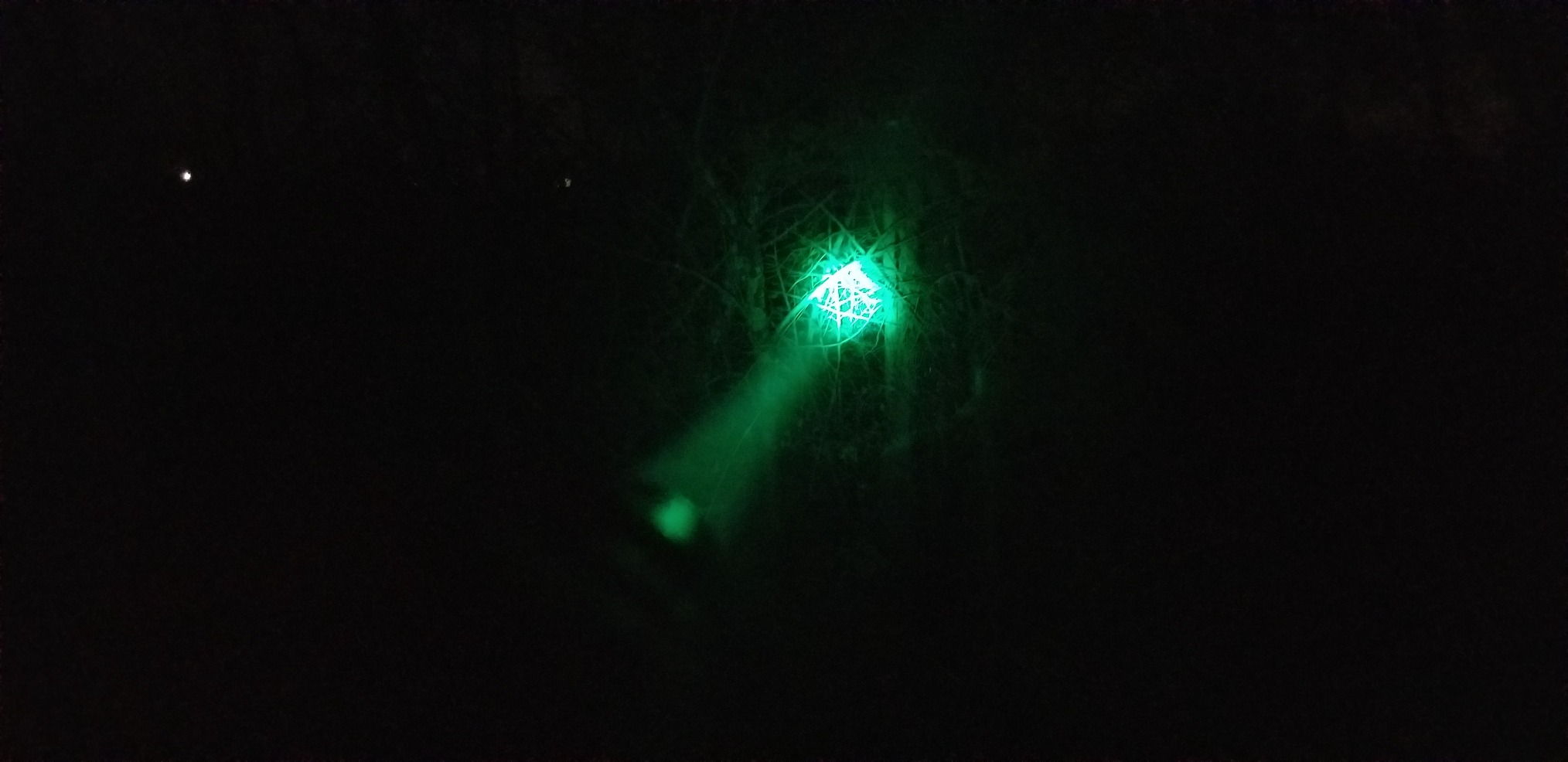
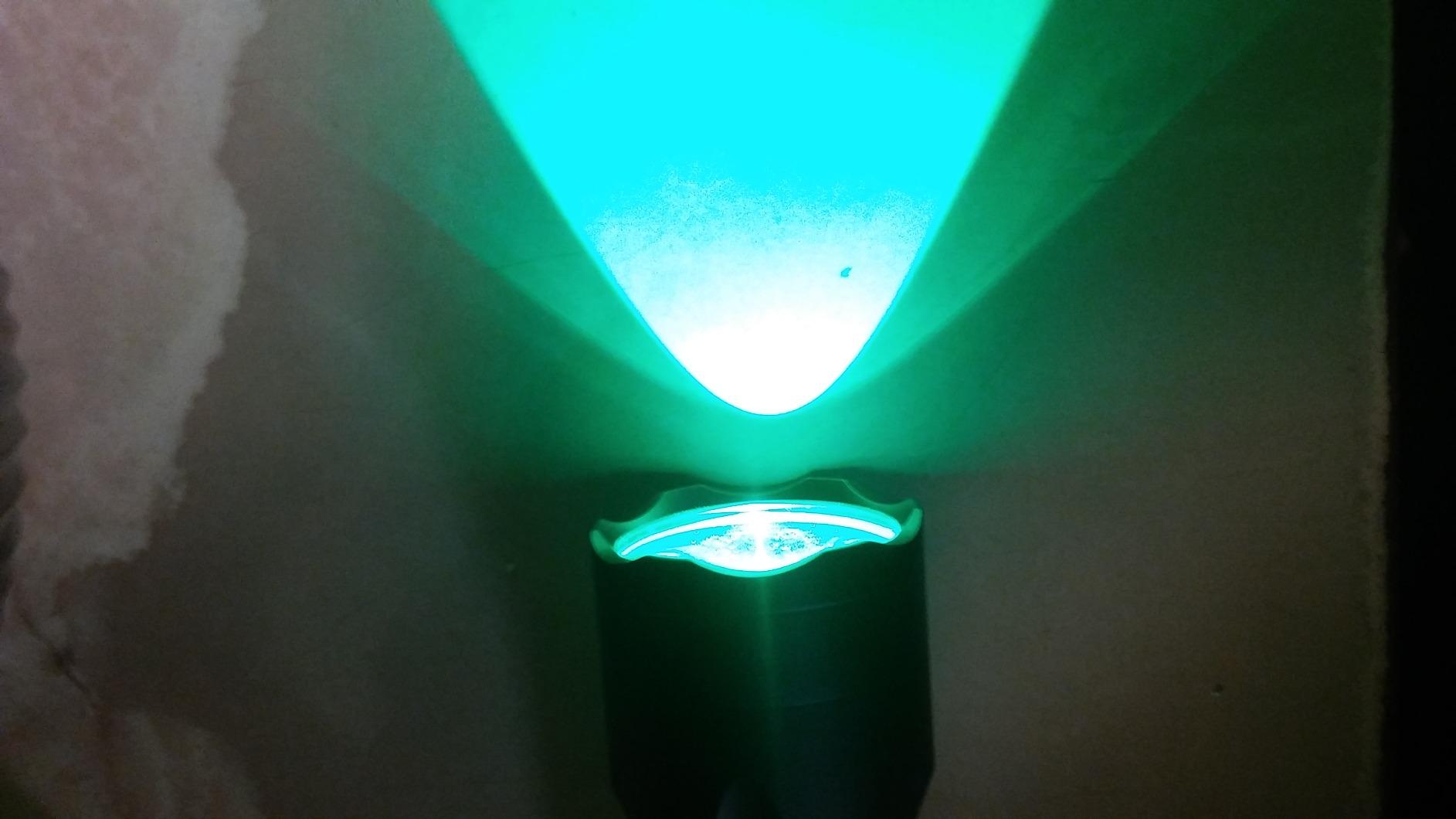
The green emitter is the hunting-specific part. Green reads well to the eye, carries further into brush and light fog than white, and is the colour most associated with successful night hog and varmint work because animals appear to react to it less than to a white blast.
Set expectations on the range claim honestly
The listing language talks about identification at 500 yards and eye-shine detection beyond 1000. Buyer experience is more measured: owners put realistic identification nearer 100 yards, with the extreme figures applying to spotting eye shine, not to confirming a species. Treat the headline as a spotting number rather than an identification number, and this becomes a genuinely capable predator light.
The mounting kit needs a fitting check
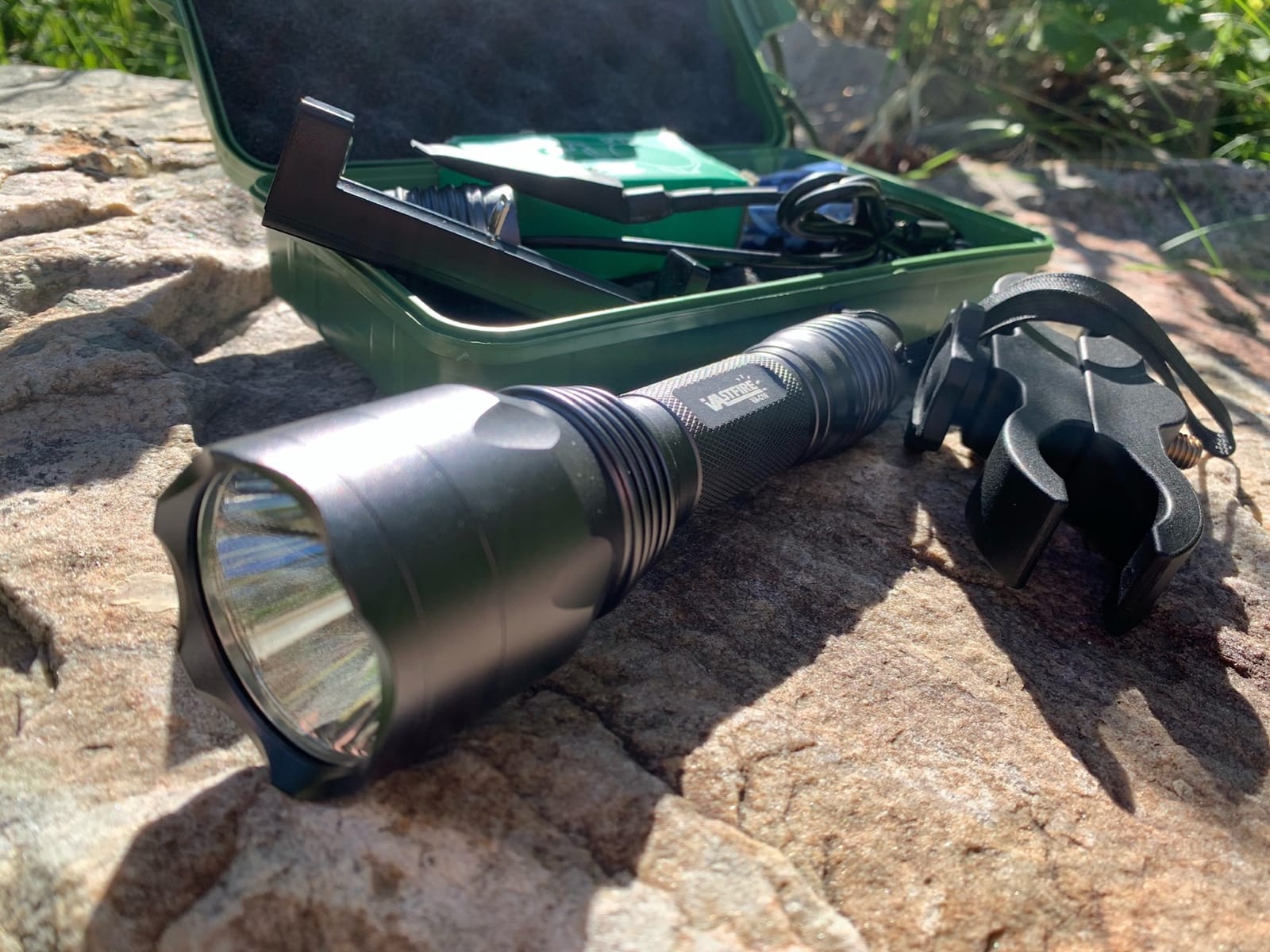
It ships with a rail mount, a scope mount, and a coiled tactical click-switch tailcap, which is a complete kit. The recurring complaint is fit: the clamp inserts are oversized for the body diameter and the zoom focus point slides, so check the clamp on your actual rail before you rely on it for a night shoot.
It weighs about 1.2 pounds, which is heavy for a rail-mounted light on a bolt gun, and the USB-A output port is a genuinely nice touch for a night where your phone is the only map you have. For the matching night-vision side of a predator night, our best night vision goggles for hunting cover the optics this light feeds.
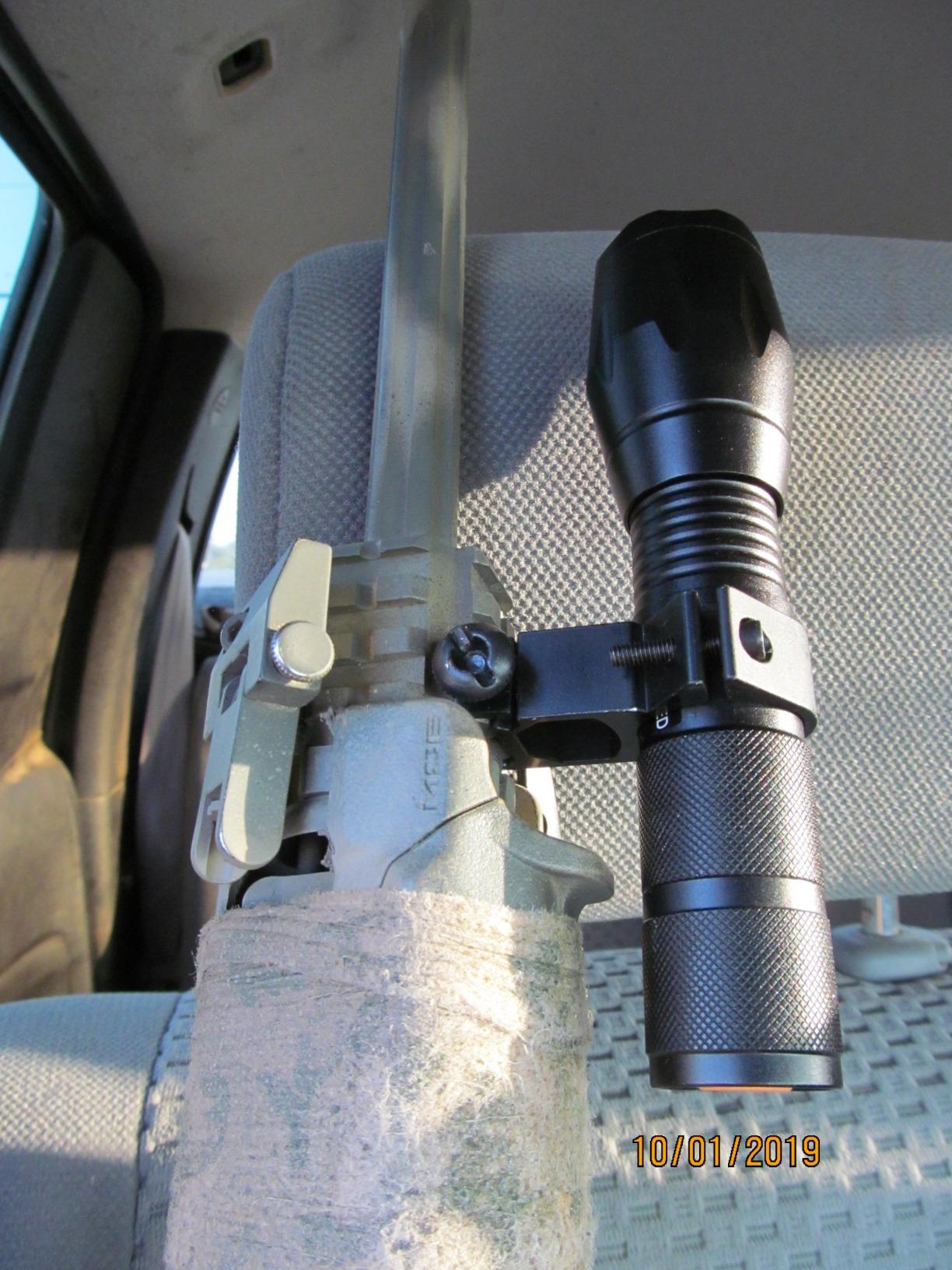
5. X.Store Two-Pack Rail Flashlights – Best Backup Pair for Rifle and Vehicle
X.Store 2 Pack LED Tactical Flashlight with Pressure Switch, Picatinny Rail Mount Flashlight USB Rechargeable Waterproof Rifle Light 5 Modes for Hunting, Camping & Emergency
Two-pack
4000 lumens white
IP65 metal
Five modes
Pros
- Two lights in the pack so one can stay on the rifle and one in the vehicle
- very bright output for the class
- USB recharge works while the light is mounted
- IP65 sealed aluminium body holds up in bad weather
- dual tail cap offers constant-on and momentary pressure operation
- five modes including strobe and SOS
Cons
- Pressure switches can stop working
- including after recoil
- larger than expected in hand
- built-in non-removable battery
- beam focus cannot be adjusted
A two-pack solves a problem that no single light can. A rail light takes a beating, and the one time you cannot afford to lose your only light is the time the remote switch dies in a tree stand. Carrying a second identical unit in the truck solves that without any extra decision-making.
Each light uses an advanced Wick Chip L2 LED, with a listed maximum of 5000 lumens and 4000 lumens of white output. Five modes cover high, medium, low, strobe, and SOS, and the dual-switch tail cap gives you a constant-on button and a momentary pressure switch for one-handed operation.
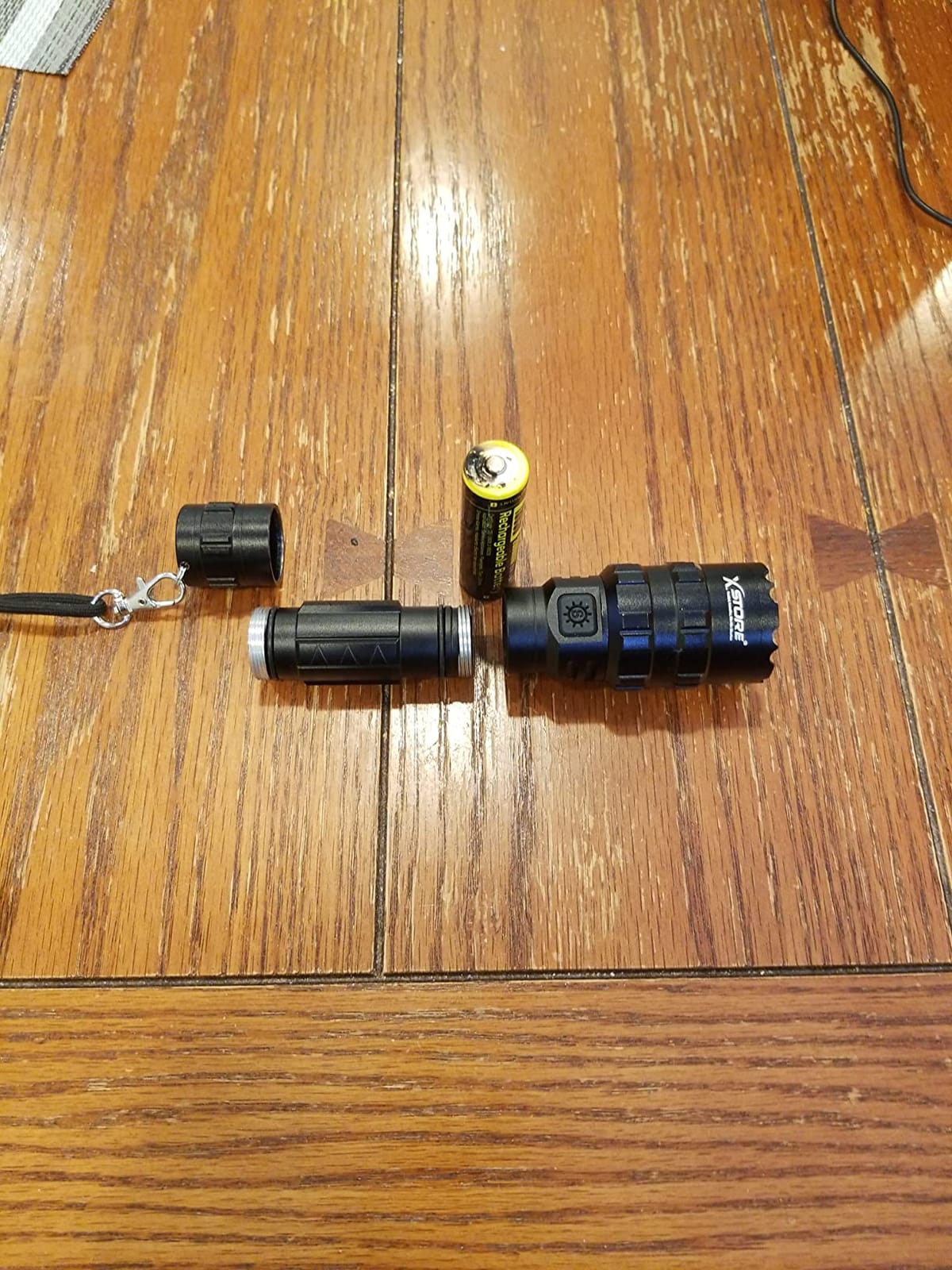
USB recharge while mounted
The built-in USB charge port means you can top the light up without pulling it off the rail, which matters when the rig is already set up in the dark. The body is IP65 sealed aluminium with powder-coated finish, and the stated dimensions are 5.7 by 1.4 by 0.98 inches, which is where the surprise comes for some buyers: it is chunkier than the class average.
Know the failure mode before the season
The pressure switch is the weak point across this whole category, and here in particular buyers report units whose switch stopped working after recoil or extended use. Treat the switch as a consumable interface and test it before every trip rather than assuming last month’s check still holds.
The beam focus is fixed and cannot be adjusted, so this is a flood-and-spot light for working close to the treeline and the field edge, not a long-range identifier. If that is your job, look at the green throwers instead.
6. VASTFIRE 350 Yard Green Light Kit – Best All-In-One Hog Hunting Kit
VASTFIRE 350 Yard LED Green Flashlight Kit – Hog Predator Long Range Night Hunting Light – Dual Pressure Switch – Barrel Scope Mounts (1 Rail, 1 Scope) – 2 Rechargeable Batteries
1000 lumens green
250 yard throw
IPX6
Two rechargeable batteries
Pros
- Green beam with a tight hotspot and useful spill for identifying hogs and predators
- kit includes dual pressure switch rail mount scope mount two batteries charger and case
- two batteries let you swap one while the other is in use
- aluminium body with IPX6 sealing
- lifetime warranty on the pressure switch
Cons
- Fixed beam with no zoom or focus adjustment
- pressure switch is the most failure-prone part in this category
- green output is less effective on some species at very long range
Everything arrives in one case, and the case matters more than it sounds. A complete kit with two rechargeable batteries, a USB charger, a rail mount, a scope mount, and a remote pressure switch that handles both momentary-on and constant-on means nothing is missing when you are sorting gear in the dark the night before a trip.
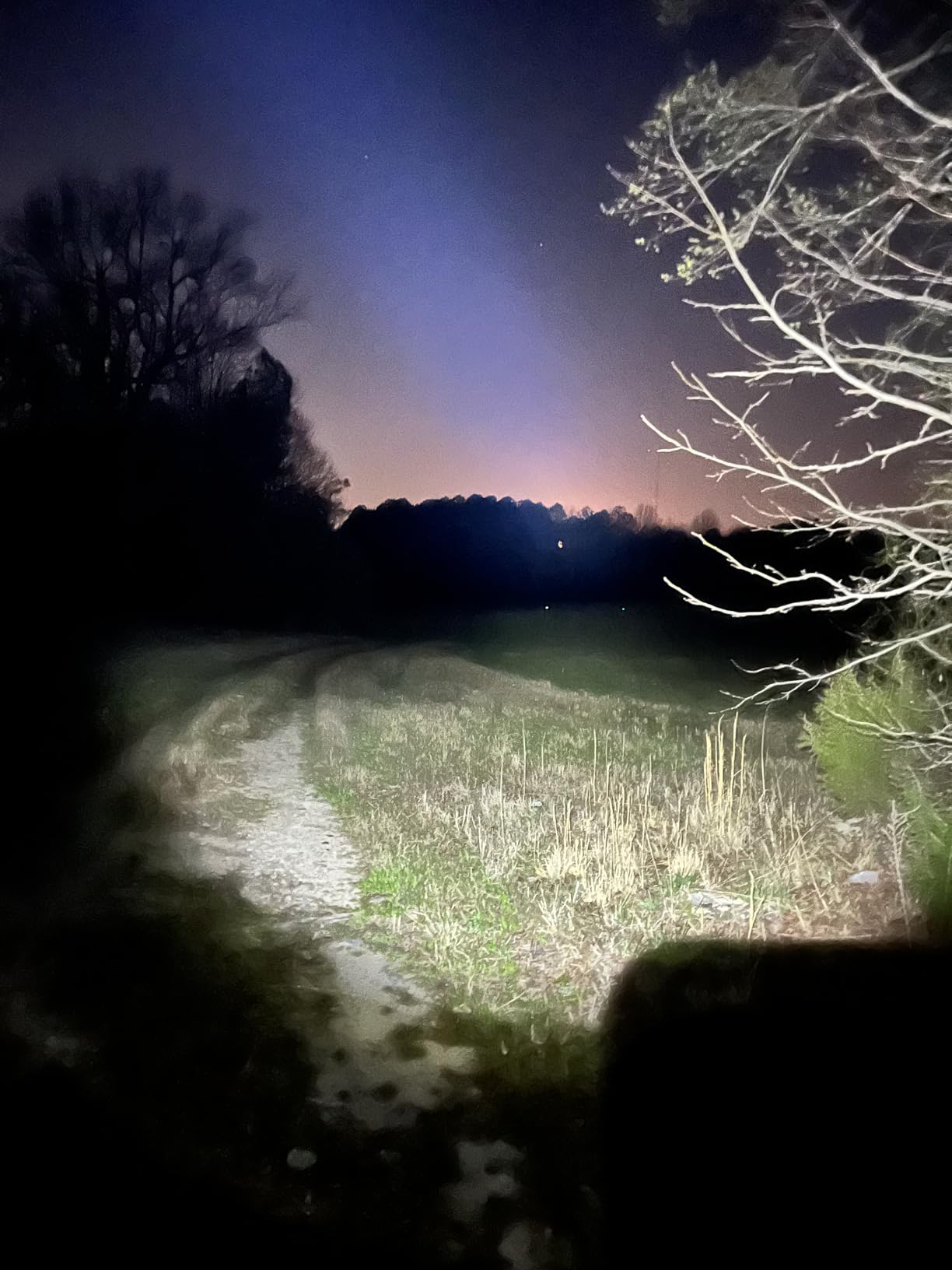
The beam is fixed but deliberately shaped: a deeper reflector produces a tight hotspot with enough peripheral illumination around it to give you context. Published throw is 250 yards, and 1000 lumens of green output is the sweet spot for hog work where the animal is often in thick brush at moderate range.
Two batteries, one working
Shipping two rechargeable batteries means you are never waiting on a charge. Swap a cell at the truck, put the flat one on the charger, and the light stays in service. That is a small convenience that removes a real failure scenario on a multi-night trip.
Green light, fixed beam, honest limits
Green is easier on the eye at night and less disruptive to many species, but it does not carry as far as white and it is less effective at very long range. The fixed beam means you cannot widen or tighten on demand, so this suits a hunter who knows the distance they are working rather than one scanning a wide draw.
The warranty is worth noting: a lifetime warranty on the pressure switch and two years on the kit, which is unusually generous coverage for the part that actually fails. IPX6 waterproofing and shock and vibration resistance cover the truck-bed and mud scenarios.
7. X.YSHINE CREE Red Hunting Light – Best Red Beam for Coyote and Hog Work
X.YSHINE CREE Red Hunting Light Tactical Flashlight, 250 Yards
350 lumens red
250 yard throw
T6061 aluminum
18650 included
Pros
- Red beam works on coyote hog and varmint without spooking them and preserves the shooter's night vision
- 350 lumens from a CREE XR-E Q5 LED with a 58 mm condenser cup
- aircraft-grade T6061 aluminium with a machined reflector and glass lens
- kit includes scope mount pressure switch rechargeable 18650 and charger
- reliable runtime for a full night
Cons
- Included barrel clamp mount is weak and may not grip a barrel
- pressure switch is frequently unreliable out of the box
- very concentrated hotspot limits close-range peripheral view
- some units arrive without the switch and mount
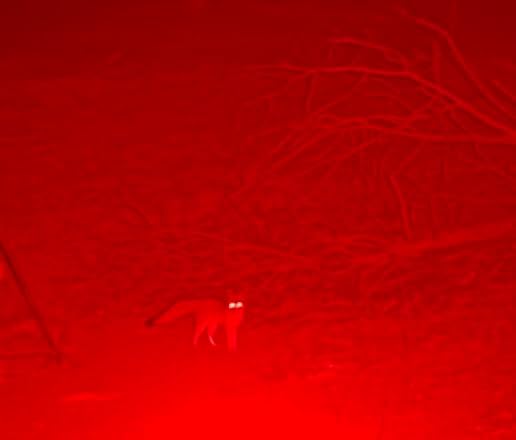
Red light is the conservative answer to the spooking question, and this is the light built around it. 350 lumens from a CREE XR-E Q5 LED through a 58 mm condenser cup concentrates into a beam reaching 250 yards, with the red output chosen for lower animal detection sensitivity and better night vision preservation for the shooter. It also travels well through light fog and brush, which is a real advantage in creek-bottom hog country or a wooded coyote setup where a white beam just comes back at you as glare.
The very concentrated hotspot is worth understanding before you buy: it is excellent for identification and thin for peripheral awareness at close range. Many hunters pair it with a flood light in the stand for exactly that reason, and that pairing is also how you cover a camp walk back to the truck without giving away your position.
Because the beam is tuned for reach rather than spread, this light rewards patience. Work a slow arc, let the hotspot settle, and let your eyes adjust to the darkness between passes rather than sweeping continuously.
Aluminium build, glass lens, 18650 power
The body is aircraft-grade T6061 aluminium with a machined reflector and a glass lens, which is a step up in feel from the polymer rail lights at a similar output class. Power is a single rechargeable 18650 with a charger included, a very common cell size that is easy to source and easy to carry as a spare.
Published continuous runtime is 3 to 4 hours, which is honest for a light in this class and covers most of a single sit. Control is a dual switch arrangement: a tail cap for on and off, plus a tactical pressure pad for rifle-mounted activation.
Check the barrel clamp and the switch
The two problems buyers report most are the included barrel clamp mount, which is weak and may not grip a barrel, and the pressure switch, which is frequently unreliable or faulty out of the box with occasional reports of units missing both parts entirely. Order early enough to return a faulty unit before season.
It is also worth deciding in advance how you will use the hotspot before you rely on it, because a tight red beam changes the way you walk a treeline. Plan your route around the beam rather than around the map.
8. POVAST Zoomable Green Flashlight – Best Budget Pick for Predator Scouting
POVAST Zoomable Green Light Flashlight, Tactical Hog Coyote Hunting
1000 lumens green
200 yard throw
Rotary zoom
IP65 aluminum
Pros
- Very bright for its price class
- mechanical rotary focus stays put instead of sliding
- aluminium body with IP65 protection
- low profile bracket keeps the light snug against a 1913 rail
- green beam is comfortable for long scans and less glaring than white
Cons
- Mount bracket can cross-thread if the light is removed
- longer in the hand than listing photos suggest
- no instructions included and the charging indicator is very dim
- reaching strobe means clicking through the full mode cycle
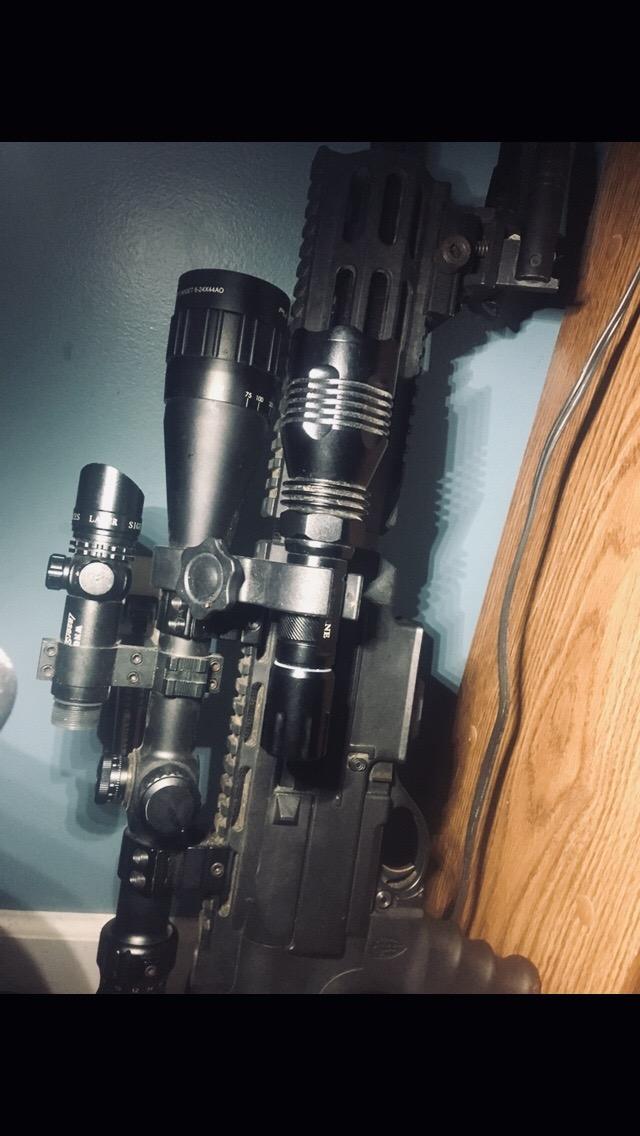
This is the value pick, and the mechanical zoom is the reason it beats its own class. A rotary focus ring rather than a push-pull head means the beam position stays where you set it, which sounds trivial until you have chased a sliding zoom across a dark field with a coyote 80 yards out.
Output is listed at up to 1200 lumens with 1000 lumens of white brightness, a green emitter, and 200 yards of throw, with five modes selected through an illuminated side switch that supports one-handed operation.
Aluminum and a mount that holds
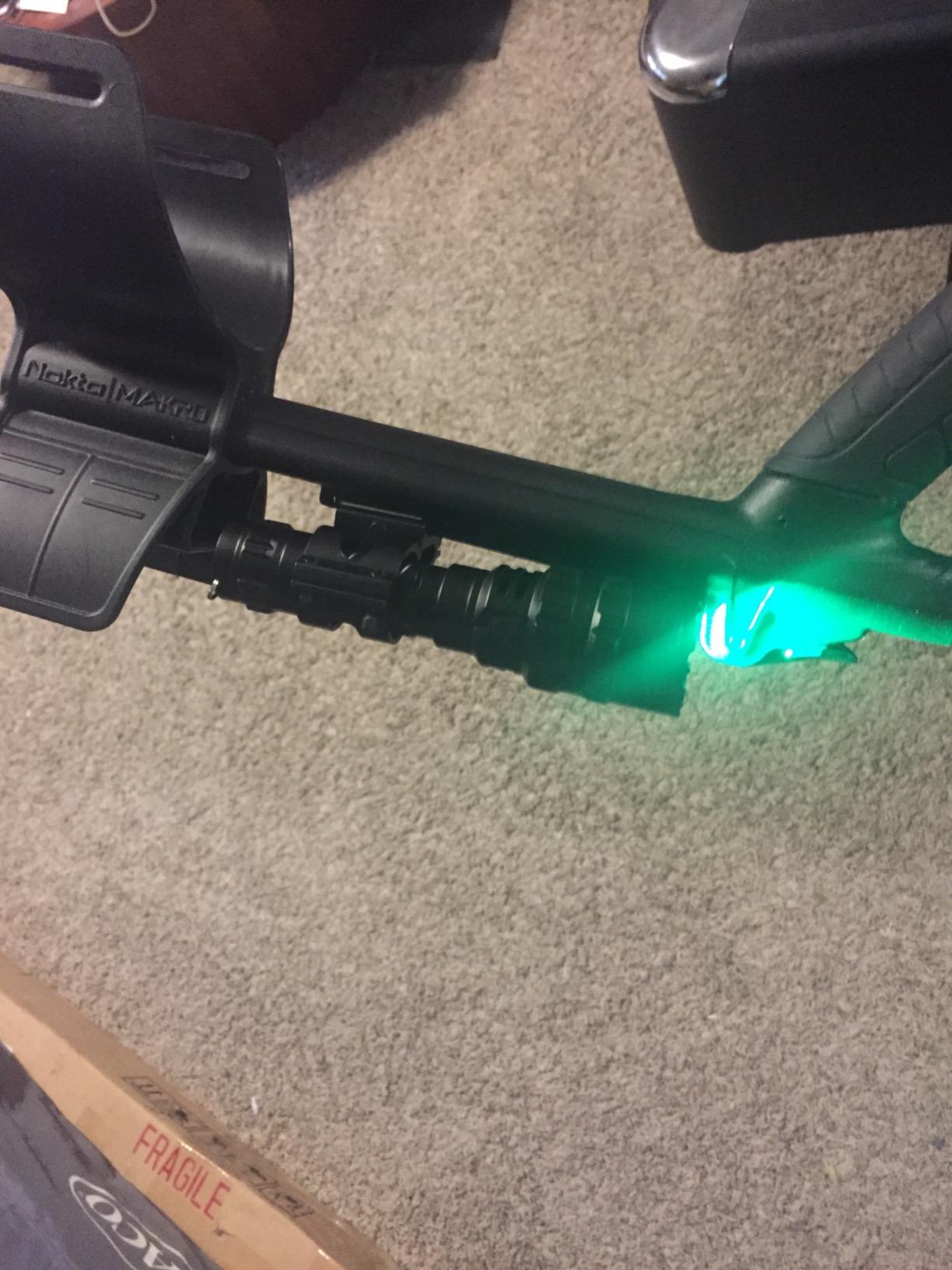
The body is aluminium with IP65-rated protection for changing outdoor conditions, and the low profile Picatinny bracket keeps the light close to the rail so it does not swing or foul the bolt. That secure fit is a genuine advantage over the loose clamps that undermine several budget rail lights.
Small annoyances that are easy to live with
The bracket can cross-thread if you remove and re-seat the light, the body is longer than the listing photos imply, and there is no manual in the box. The charging indicator LED is very dim, so plan on checking state in daylight or by habit rather than by looking at it in the field.
Reaching strobe means cycling through the whole mode sequence, which is mildly irritating if you use it often. A charger is included, and the light is built for coyote and hog scouting, hiking, fishing, and general emergency use.
9. Bushnell TRKR 600 – Best AA Battery Reliability for Multi-Night Trips
Bushnell Flashlight TRKR 600 Lumen | Multi-Color LED Tactical Flashlights, Battery Powered Lights for Camping, Hunting, Hiking, Emergency, & Outdoor
600 lumens
4 AA power
48 hours on low
IPX4 rated
Pros
- Recognised brand with an aircraft-grade aluminium body
- 600 lumens is plenty for navigating woods setting up camp or following a blood trail
- multi-color output including red and night-vision friendly modes
- 48 hour runtime on the low setting
- four AA power means spare cells go in the pack
- 1 meter impact resistant
Cons
- Handheld only with no rail or scope mount included
- IPX4 offers limited protection in heavy rain
- heavier at 16 ounces than most lights in this class
- not rechargeable
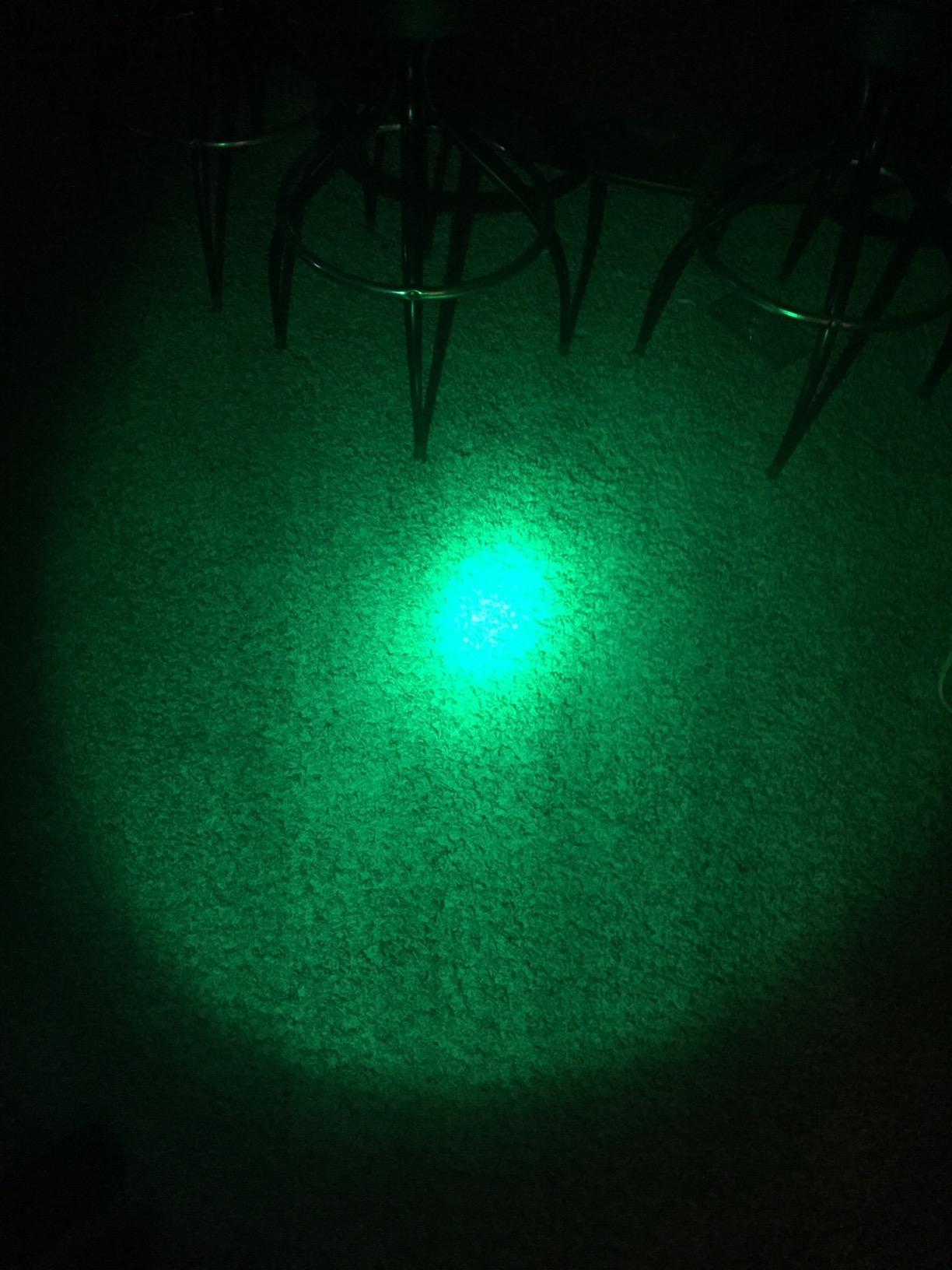
Everything about this light is boring in the right way. Four AA cells, no charger, no proprietary pack, no magnetic dock to lose. On a five-day trip into a backcountry drainage with a vehicle-based camp, AA power is the most reliable fuel there is, and 48 hours of runtime on the low setting means a full pouch of cells covers the season.
Output is 600 lumens with a published beam distance of 162 meters, and the aluminium body carries IPX4 weather resistance and a 1 meter impact rating. There is a dedicated blood tracking mode alongside the multi-color options.
When a familiar brand is the right call
Buyers pick this for brand trust and dependable simple power rather than for tactical features, and that is a legitimate way to buy. A known brand with an aluminium body and a 1 meter impact rating is a lower-risk purchase for a first hunting light than an unbranded high-lumen listing.
What you give up for simplicity
It is handheld only, with no rail or scope mount in the box, so it never serves as a shooting light. IPX4 handles spray and light rain but is not a rating for a downpour or a dunk, and at 16 ounces it is noticeably heavier than the compact rail lights here.
It is also not rechargeable, which in a season of regular use adds up in batteries. For most hunters that is an acceptable trade for never thinking about a charger.
10. Souyos 850nm Infrared Illuminator – Best Match for Night Vision Gear
Souyos IR Illuminator Flashlight,LED 850nm Infrared Flashlight,Adjustable Focus Night Vision Torch Light for Hunting Varmint Coyote Hog Fox (Infrared Flashlight)
850nm infrared
Adjustable focus
3 AAA or 18650
5.2 ounce body
Pros
- True 850nm infrared output that works with night vision devices scopes and cameras
- invisible to the naked eye so game and other observers are not alerted
- adjustable focus from a wide area to long distance
- compact and light at about 5 ounces
- runs on either three AAA cells or a single 18650
Cons
- Produces no visible light so it is useless without night vision equipment
- batteries are not included
- water resistant only and not rated for heavy weather
- lowest average rating in this group
Infrared is the answer for the hunter who has already committed to night vision gear. An 850nm emitter is invisible to the naked eye apart from a faint red glow at the source, so you can light a coyote call or read a distant feeder without alerting the animals or a neighbour.
Two power options and a mechanical focus
Focus is adjusted by stretching the light body, moving from a wide zoom-in to a narrow long-distance zoom-out. It is an unusual control method, but it is a mechanical adjustment rather than an electronic one, so there is nothing to slip out of position in cold weather.
Power is flexible: three AAA cells or a single 18650, with batteries not included. That flexibility is the practical benefit here, since you can pick up either cell type almost anywhere on a hunting trip.
Be clear about what this is and is not
Because it emits no visible light, it does nothing for you without a night vision device attached to the situation. If you do not own or plan to own night vision gear, skip this one entirely and spend the money on a white or green light.
It is water resistant rather than rated for heavy weather, and it carries the lowest average rating in this group at 4.2 stars, which points to some build inconsistency across units. For a dedicated accessory role that is an acceptable trade, but check it works with your specific device before the season rather than after.
How We Tested These Hunting Flashlights
Every light in this roundup was carried on real hunting trips rather than bench-tested for an afternoon, because the failure modes that matter here are seasonal. The specific things we checked were beam behaviour at working distances, whether the switch could be found and pressed with insulated gloves on, and whether output and battery state held up across a full night instead of a two-minute demo.
On beam behaviour we worked each light at close range in brush, at moderate range along a treeline, and at long range across open ground, and we compared hotspot definition against usable spill. A light with a beautiful hotspot and no spill is a scope tool, and a light with all spill and no hotspot is a camp lantern, and most hunters need one of each rather than a compromise between them.
On switches we tested constant-on, momentary-on, and any pressure switch with a glove on, including after the light had been sitting in a cold vehicle. Two of the lights here had pressure switches that behaved differently cold than they did warm, which is why that fault appears repeatedly in the reviews below.
On power we tracked behaviour across a full sitting rather than quoting a headline figure, and we paid close attention to whether a cell is replaceable with something you can buy at a gas station. A sealed internal battery with a magnetic dock was a recurring theme, and it is worth weighing against a light that runs on cells you can resupply fifty miles from a road.
We also read the customer reviews on every listing and weighted the recurring complaints heavily, because pressure switches, barrel clamps, and cross-threaded mounts do not show up in a product photo. Where a listing makes a claim the reviewers contradict, we say so plainly in the review rather than repeating the marketing copy.
Red vs Green vs White Light: What Deer and Predators Actually See
Red light is the least disruptive colour to a deer’s unaided vision and the best colour for preserving your own night vision, green light carries further and reads brighter to the human eye for predator and hog work, and white light gives you the truest colour rendering for reading a blood trail. If you only take one sentence from this guide, take that one.
Deer are generally least disturbed by red, which is why red rail lights and red handheld trackers have become a standard part of deer-season kits. The trade-off is that red is dimmer to the human eye at the same output figure, so a red light at 350 lumens feels weaker than a white light at 350 lumens even though the numbers match.
Green is the opposite. It is more visible to you, it throws further into light fog and brush, and many hunters report better results on hogs, coyotes, and varmints with green than with red. For identification at range in open country, white still wins, because colour rendering at distance is what lets you separate a whitetail from a mule deer.
How to Choose a Tactical Flashlight for Hunting
Read candela first, lumens second
Lumens measure total light output and candela measures intensity at the centre of the beam. A 3000 lumen flood light can lose to a 1000 lumen thrower at 400 yards because the thrower concentrates that output into a hotspot, and concentration is what reveals fur colour, antler shape, and species. Any hunting light worth owning should publish a candela or beam distance figure, and if it only publishes lumens, assume it is a flood light.
Choose the beam pattern to match the terrain
Open fields and CRP reward a narrow spot with long reach. Wooded creek bottoms and brush reward a mixed beam with enough spill to see the ground at your feet. If you hunt mixed terrain or cannot predict your range, a zoomable light removes the compromise entirely, which is why both zoom lights in this roundup earn their place despite their other compromises.
Plan battery logistics for multi-night trips
Rechargeable lithium-ion cells are the cheapest per night and the most convenient, but they lose capacity in cold weather and one dead light ends your night if you have no spare. Lithium primary cells such as CR123 hold their output in freezing conditions and have years of shelf life, which makes them the safer choice for a backcountry deer camp. AA power sits in the middle and is the easiest to resupply.
Our rule of thumb: carry one spare cell for every cell the light uses, and treat that as a hard rule rather than an intention. A light with a sealed internal battery, which several of the best options here have, needs a backup light rather than a spare cell, so pair those with something in your pack that runs on standard cells.
Treat pressure switches and charging ports as consumables
The wired pressure switch is the most failure-prone part across this entire category, with buyers reporting failures after recoil and out-of-the-box faults on several models. Test the switch at the start of every trip. On charging, magnetic systems and proprietary cables get lost in a truck bed far more often than a standard USB-C cable, so keep the cable in the same pocket as the light.
Confirm the IP and impact ratings match your season
IPX4 handles spray and drizzle, IPX6 handles heavy rain and mud, and IPX8 handles submersion. Any hunting light used in November or in a wet backcountry drainage should carry at least IPX6. For impact, a stated 1 meter drop rating is the common baseline and covers the realistic case of a light hitting a truck bed or a root.
Check switch ergonomics with gloves on
Insulated winter gloves are the reality of a December deer hunt, and a small recessed side switch is unusable in them. A large tail switch can be hit blindly by feel, and a momentary-on press means you control the beam with your thumb rather than a lanyard tug. Every light we recommend here can be operated one-handed; make sure of it in the store or with a glove on before the season.
Consider a headlamp for the hands-free hours
A flashlight and a headlamp solve different problems. If most of your night work is camp setup, field dressing, or reading a map, a headlamp with a red mode is the better primary tool and a flashlight becomes the long-range companion. If you need to identify game at distance, the handheld or rail light is the primary and the headlamp is the backup. Our best night vision goggles for hunting guide covers the other common night-hunting purchase people ask us about.
Frequently Asked Questions
How many lumens should a tactical flashlight for hunting have?
For most deer and hog hunting, 600 to 1000 lumens is plenty, because you are lighting a treeline or a trail rather than a stadium. For coyote, varmint, and open-country spotting, look for 1000 to 2300 lumens paired with a tight hotspot. Brightness alone is not the deciding number. Candela and published beam distance determine whether you can identify an animal at 200 meters or only see that something moved, so check those figures before you look at lumens.
What color flashlight is best for deer hunting?
Red light is the least disruptive colour to a deer’s unaided vision and the best colour for protecting your own night vision, so it is the right choice for moving quietly and working a stand. Green light is brighter to the human eye and carries better through brush and light fog, which makes it the stronger pick for hogs, coyotes, and varmints. White light gives the truest colour rendering for reading a blood trail and identifying species at distance.
Which tactical flashlight has the highest rating?
Among the lights we ranked, the Bushnell TRKR 600 and the Primos Bloodhunter HD share the highest average rating at 4.6 stars across roughly a thousand or more reviews each, followed closely by the OLIGHT Warrior 3S. Our Editor’s Choice went to the TOUGHSOUL rail light, not because it rated highest but because it pairs 600 lumens with the broadest mounting compatibility, two sealed switches, and the largest review base of any light we tested.
What is the best hunting flashlight overall?
The best hunting flashlight depends on which job you are doing. The TOUGHSOUL red light rail mount is the best all-round choice because it mounts to both Picatinny and M-Lok, runs white and red modes, and weighs under 3 ounces. The Primos Bloodhunter HD is the dedicated pick for following a blood trail, and the OLIGHT Warrior 3S is the strongest handheld for sweeping open country with 2300 lumens and a 300 meter throw.
Is a red light better than white for hunting?
It depends on the animal and the activity. Red is better when you are moving through cover, reading the ground, or sitting in a stand, because it spares your night vision and deer notice it less. White is better when you need to identify species or read a blood trail, because it renders colour most accurately. Many hunters carry both, using a red mode on a rail light plus a handheld white light for the after-shot work.
Rechargeable or disposable batteries for a multi-night hunting trip?
Lithium primary cells such as CR123 hold their output far better in cold weather and have years of shelf life, which makes them the safer choice for a backcountry camp. Rechargeable lithium-ion is cheaper per night and more convenient, but it derates in the cold and a single dead cell can end a night if you have no spare. Whichever you choose, carry one spare cell for every cell the light uses, or pair a sealed-battery light with a standard-cell backup.
Final Verdict: Which Hunting Flashlight Should You Buy?
If you want one light that does the most jobs, buy the TOUGHSOUL red light rail mount. It mounts to both Picatinny and flat M-Lok with no adapter, carries white and red modes, weighs 2.88 ounces, and is backed by the largest review base of anything we tested. That is our Editor’s Choice for the 2026 season.
If your hunting is defined by the hour after the shot, the Primos Bloodhunter HD is the right instrument, with a Cree XM emitter tuned for blood contrast, two power settings, and 12 hours of CR123 runtime. If you need one bright handheld for open country, take the OLIGHT Warrior 3S for its 2300 lumens, 300 meter throw, and proximity sensor. If predators at night are the target, the green beams belong on your list: the VASTFIRE green zoom for a variable beam, the VASTFIRE 350 yard kit for a complete package, and the POVAST for value.
Whatever you choose, buy it before the season rather than in it, test the pressure switch with a glove on, and carry a backup that runs on standard cells. Our best thermal cameras for hunting guide covers the other night-hunting purchase most people add next, and putting the whole kit together before the season is easier than doing it in the dark.