
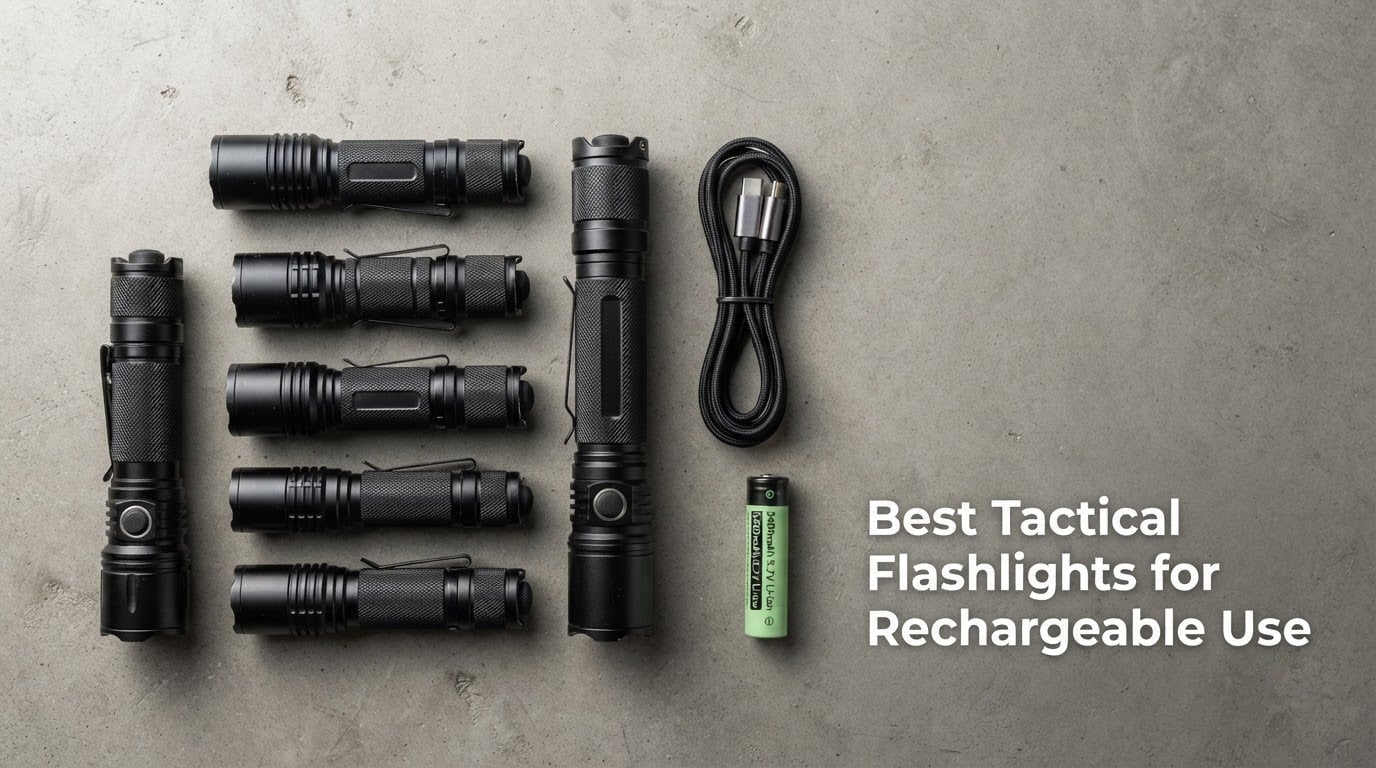
Most people shopping a tactical flashlight in 2026 are not actually looking for the brightest number on the page. They are looking for a light that is still charged, still working, and still findable by touch after six months in a jacket pocket. That is the whole argument for the best rechargeable tactical flashlight, and it is the standard every pick below has to clear. I compared twelve rechargeable lights across output, throw, charging path, durability ratings and carry size, and I read every one of the thousands of owner reviews attached to them before ranking the field.
A word on the numbers first, because it matters more than any opinion here. Every lumen, candela, beam-distance, runtime and IP rating in this guide is a manufacturer-reported figure tested to the ANSI FL1 standard, not something our team measured in a lab. That is how the enthusiast community evaluates these lights anyway: brands that publish complete FL1 breakdowns are trusted, and brands that publish a single headline number are not. Where owners report results that diverge from the spec sheet, I flag it.
The other thing worth knowing before you read on is that a huge share of rechargeable tactical flashlights sold online claim impossible output. Listings from unnamed marketplace brands routinely advertise 100,000 or 150,000 lumens, and both shopping carousels for this keyword are crowded with them. They are not real. Later in this guide I show you the three checks that separate a legitimate light from a listing written by a marketing team.
Our Top 3 Rechargeable Tactical Flashlights for 2026
Before the full list, these are the three that earned the most favorable reviews relative to their review volume, and the three I would hand to a friend buying today. The Streamlight ProTac 2L-X takes our top slot on the strength of the largest review base in the group and a switch that works the way a duty light should. The WUBEN L50 is the value pick, and the Energizer TacR-1000 covers the cheapest workable option.
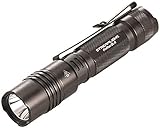
Streamlight ProTac 2L-X
- 500 lumens and 165 m beam
- TEN-TAP programmable tail switch
- IPX7 waterproof
- 4.48 ounces
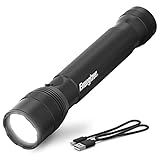
Energizer TacR-1000
- 1000 lumens and 200 m throw
- 15 hour runtime
- USB cable included
- One-hand tail switch
Comparing 12 Rechargeable Tactical Flashlights Side by Side in 2026
The table below is the fast route. Every one of the twelve picks appears with its headline output, throw, charging method and durability rating, so you can narrow the field before reading any individual review. Output alone does not decide this; the charging column is where most long-term ownership problems hide.
| Product | Specs | Action |
|---|---|---|
| Streamlight ProTac 2L-X |
|
Check Latest Price |
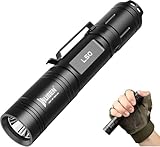 WUBEN L50 WUBEN L50 |
|
Check Latest Price |
| Energizer TacR-1000 |
|
Check Latest Price |
 PowerTac M5-G3 PowerTac M5-G3 |
|
Check Latest Price |
 Coast XP11R Coast XP11R |
|
Check Latest Price |
 Streamlight ProTac HL USB Streamlight ProTac HL USB |
|
Check Latest Price |
 Streamlight Stinger 2020 Streamlight Stinger 2020 |
|
Check Latest Price |
 Wurkkos TD02 Wurkkos TD02 |
|
Check Latest Price |
 Nitecore EDC29 Nitecore EDC29 |
|
Check Latest Price |
 OLIGHT PL X Rail Light OLIGHT PL X Rail Light |
|
Check Latest Price |
 Fenix PD35 v3.0 Fenix PD35 v3.0 |
|
Check Latest Price |
 Nitecore MH12 Pro Nitecore MH12 Pro |
|
Check Latest Price |
1. Streamlight ProTac 2L-X – The Duty Light With the Biggest Following
Streamlight 88082 ProTac 2L-X USB Tactical Flashlight, Black
500 lumens
6,800 candela and 165 m beam
IPX7
4.48 oz
Limited lifetime warranty
Pros
- Machined aircraft-grade aluminum with anodized finish
- TEN-TAP programming for high low and strobe modes
- Momentary or constant tail switch activation
- Compact 4.48 ounce everyday-carry size
- Limited lifetime warranty
Cons
- 500-lumen ceiling is modest beside 2000-lumen lights
- About 2 hours of runtime on high
- Charging method is not documented in the spec sheet
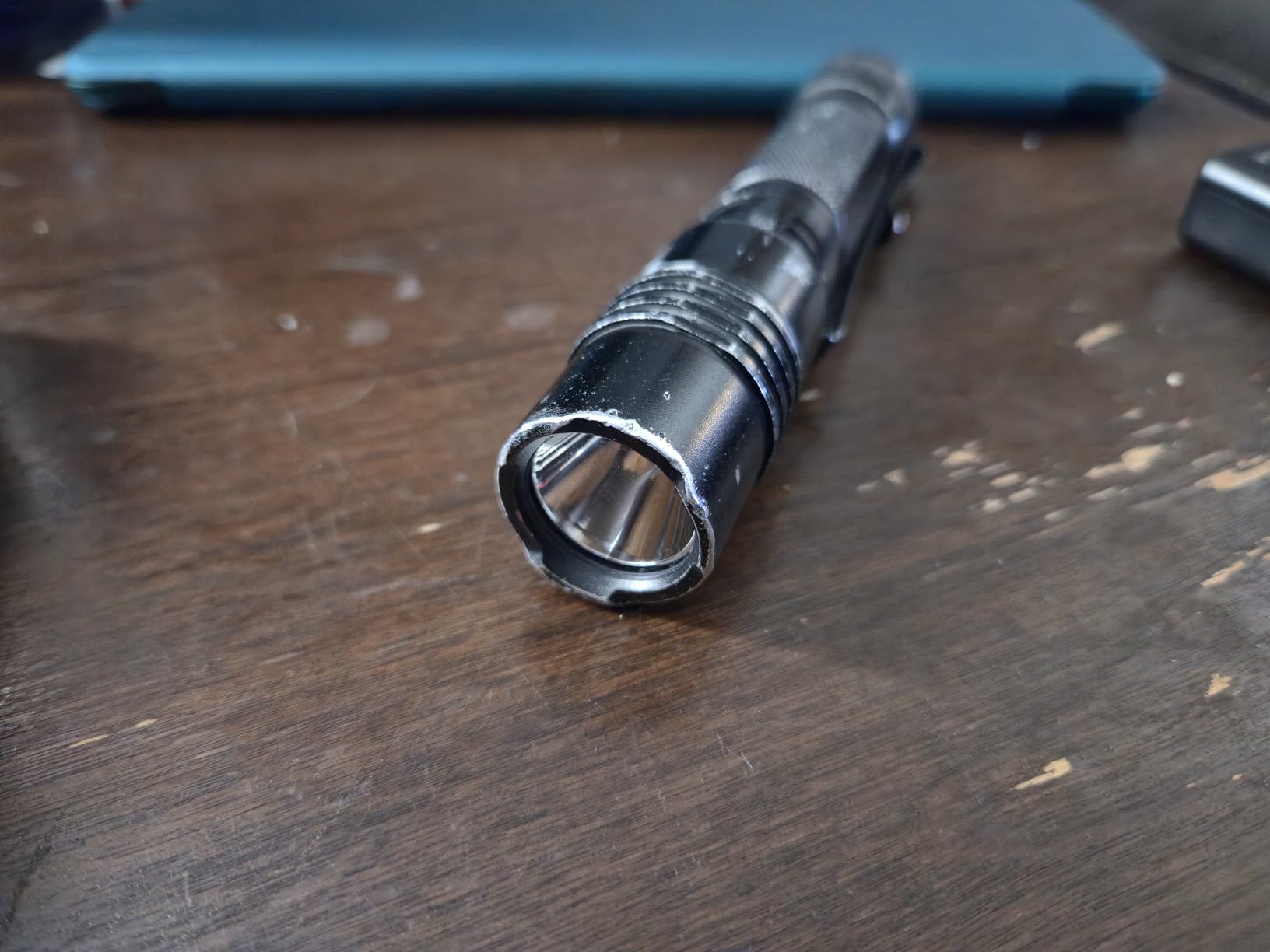
This is the light I keep reaching for when someone asks what a tactical flashlight should look like in practice, and it earned our editor’s choice because of what the review volume reveals. Across more than 5,700 owner ratings it holds a 4.6 average, and 83 percent of those are five-star. That kind of consensus across a decade of ownership is rarer than high lumen counts.
Physically it is a small, unshowy light: 5.14 inches long, 1.06 inches wide, 4.48 ounces, machined from aircraft-grade aluminum with an anodized finish. The tailcap switch gives you momentary or constant-on, and the TEN-TAP system lets you step through high, low and strobe with a set number of taps rather than guessing.
Where 500 Lumens Is Genuinely Enough
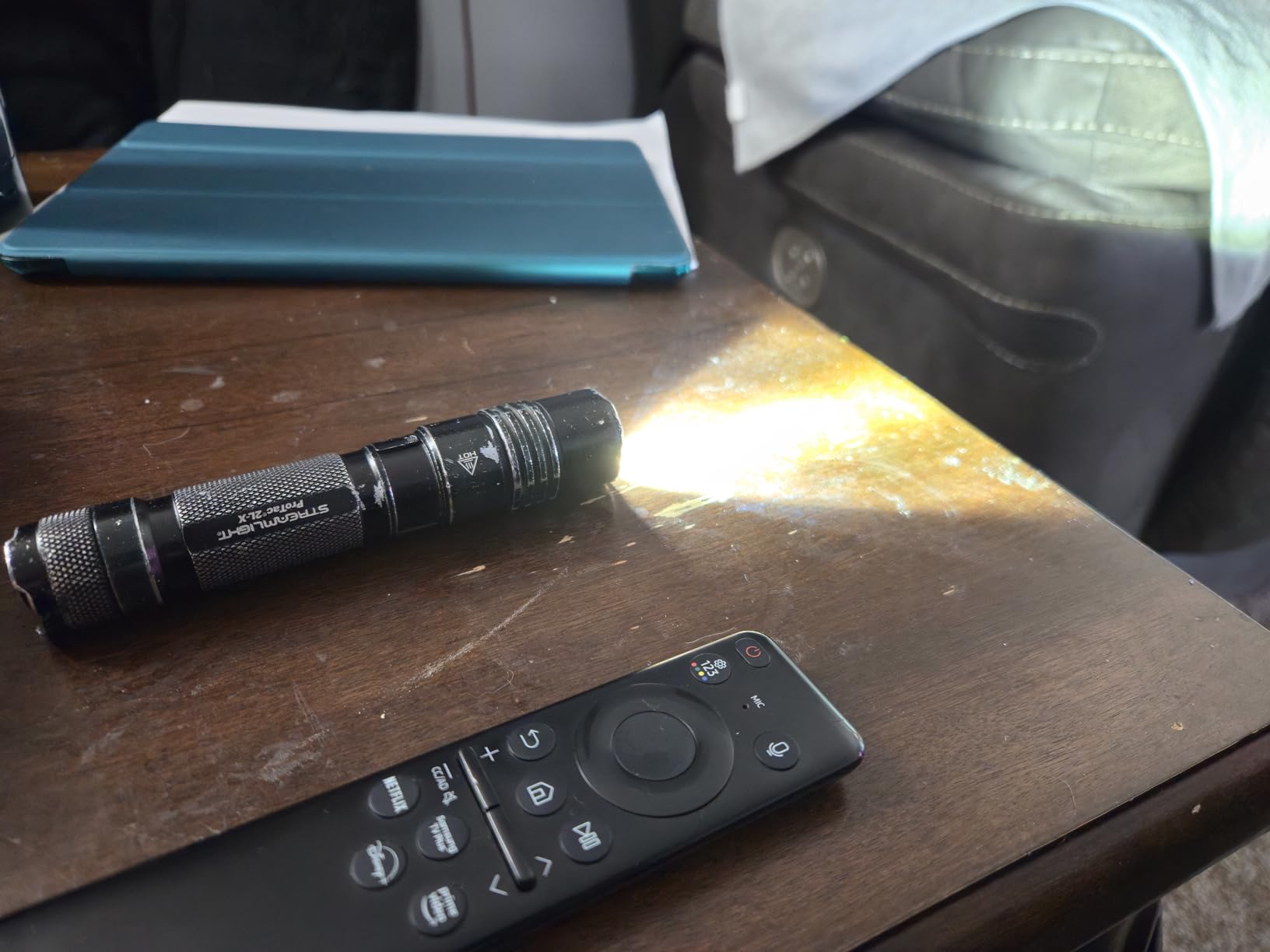
Five hundred lumens sounds unimpressive next to the 6,500-lumen monsters later in this list, and for a property line at 300 meters it is not enough. For hallways, stairwells, a vehicle interior, a garage and a room at arm’s length, 500 lumens is more than adequate, and 6,800 candela means the hot spot stays useful well past 100 meters.
Streamlight rates it at 2 hours of runtime on high and 5 hours of battery life across the lower modes. Treat the 2-hour figure as a floor, though, not a promise. Once the cell is a few years old and cold weather has pulled capacity down, the sustained output and the runtime both fall short of the printed number.
TEN-TAP Programming and the Tail Switch Feel
The switch is the reason professionals keep coming back to this pattern. A tail switch is operable with a glove on and without looking at the light, which matters when the whole point is finding something fast. TEN-TAP removes the mode-cycle guesswork: a fixed number of taps lands you on the setting you decided on months ago.
The build is the other half of the story. Precision-machined aluminum and an IPX7 rating mean it survives rain, drops and the general abuse of a duty belt. Streamlight backs it with a limited lifetime warranty, which is the kind of commitment that tells you how they expect the light to be used.
Who Should Skip This Light
Skip it if you need to identify a person or read a license plate at 200 meters. This is a close-to-medium-range instrument, and no amount of marketing changes that. The other honest drawback is that 2 hours of high runtime is the limiting factor on long shifts, so if your use case is long-duration illumination rather than fast, reliable short bursts, step up in power.
2. WUBEN L50 – The Best Rechargeable Tactical Flashlight for Value
WUBEN L50 Rechargeable Tactical Flashlight, 1200 High Lumens Super Bright Handheld Flashlighs, IP68 with 5 Mode Pocket Light, LED Tail Switch Flash Light for Emergencie Camping Home Inspection Repair
1200 lumens
656 ft throw
5 modes
USB-C in 3 hours
IP68
Pros
- 1200 lumens at a very low price point
- Very long Eco runtime of up to 143 hours
- USB-C charging with cable and charge indicator included
- IP68 water resistance and 1.5 m impact rating
- Simple single-button interface with mode memory
Cons
- Runs warm on sustained high output
- Small tail switch is hard to find with gloves
- Power level is not remembered on restart
- Bulkier than slim EDC lights
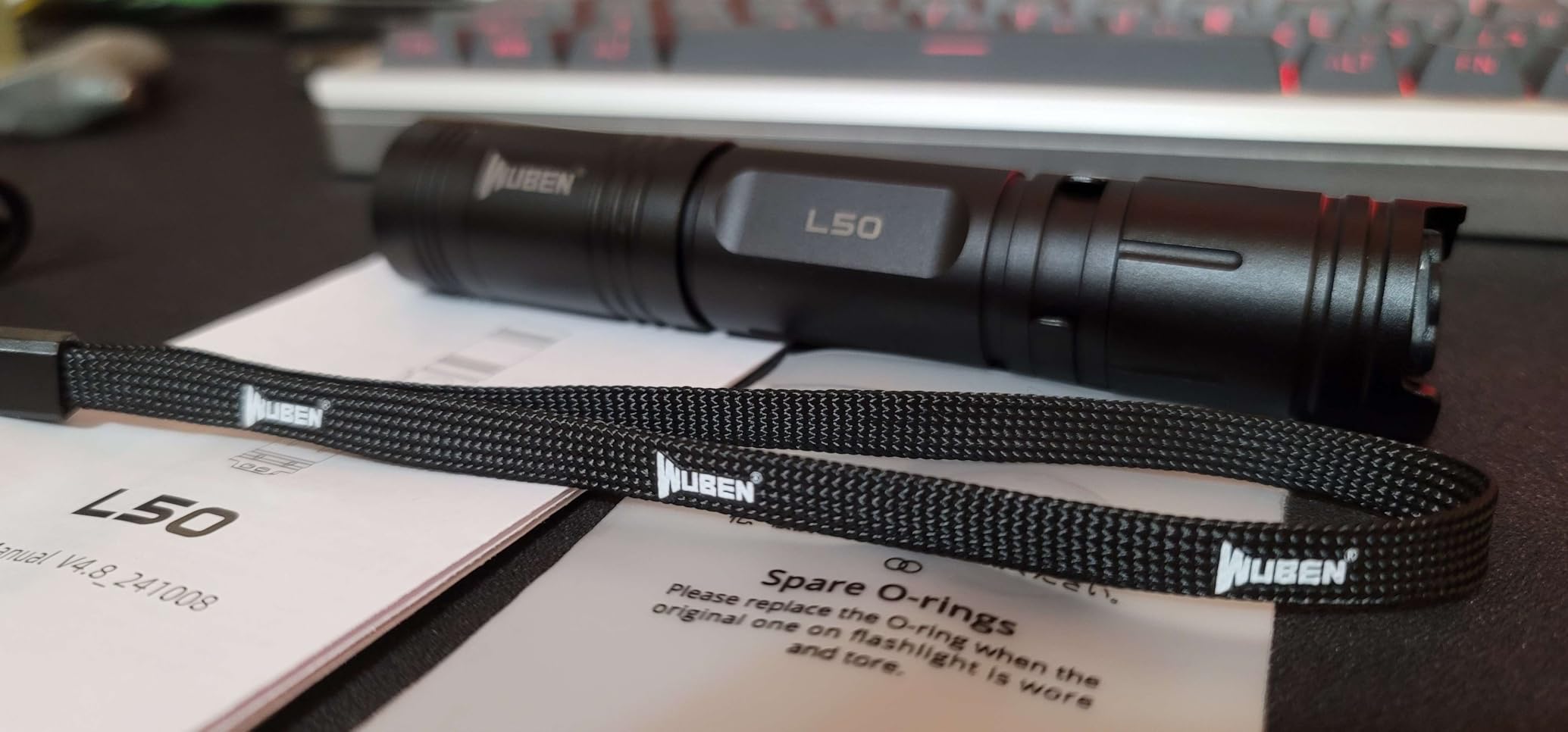
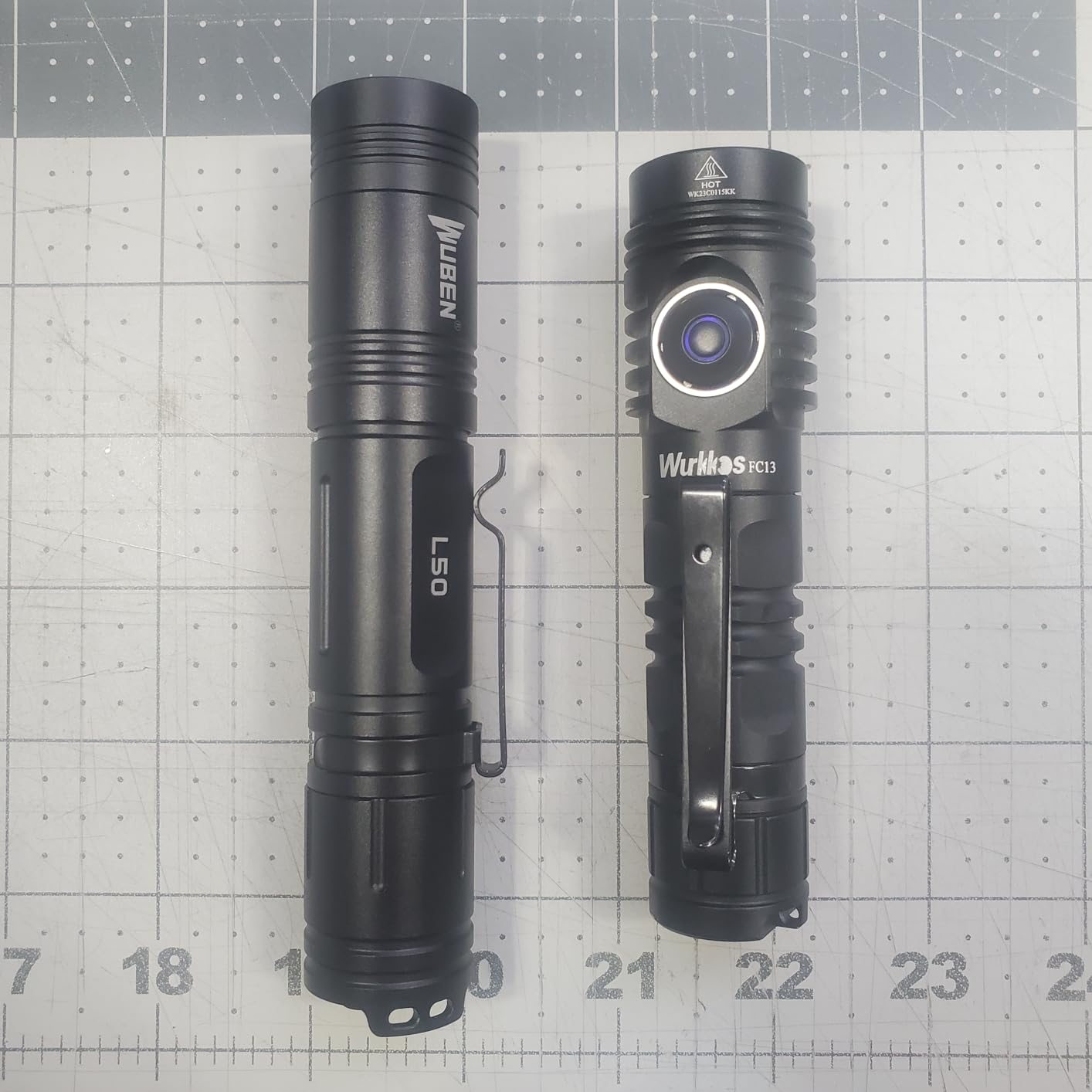
If the ProTac 2L-X is the light a professional already owns, the WUBEN L50 is the light most people should actually buy first. It delivers 1200 lumens, throws 656 feet, takes a USB-C cable, and carries an IP68 water rating with 1.5 meter impact resistance. For that combination of output and sealing, very little else at this level of cost comes close.
Five modes are on the dial: high at 1200 lumens, medium at 400, low at 75, an Eco mode at 5 lumens, and SOS, with a memory function so the light comes back on the level you last used. A 2600 mAh rechargeable battery is included along with the USB-C cable, and a full charge takes roughly three hours.
1200 Lumens With a 143-Hour Eco Floor
The Eco runtime figure is the sleeper detail here. A 5-lumen mode that runs 143 hours is what makes this light a genuine emergency-lighting option rather than a range toy, and a low mode this dim will not wake a sleeping household or blow out your dark adaptation while you check on a noise at 2am. Reviewers do report that the light runs warm when left on high and that the beam color reads cooler than some buyers prefer, which are worth knowing before you decide the color rendering is wrong for your eyes.
USB-C Charging and the Battery That Ships With It
This is the practical core of the value argument. The port is a standard USB-C and the cable is in the box, so the light recharges from the same charger as your phone, your headlamp and your power bank. On a category where the number one ownership complaint is a lost proprietary charger, that single design decision removes an entire class of friction.
One piece of owner feedback to plan around: several users report that the light does not return to the exact brightness level it was on before power-down, so it can come back up somewhere unexpected. Mode memory is present for the SOS and level sequence, but the restart behavior is not fully consistent. Set expectations and it stops being a surprise.
Watch Outs: Heat, Switch Size and Carry Bulk
The most repeated criticism across the reviews is the tail switch itself. It is small, sits at the very back of a 5.53-inch body, and owners say it is genuinely hard to locate and actuate while wearing gloves. If you plan to run this light one-handed in cold weather, test that first.
At 4.96 ounces and 1.02 inches wide, it is also bulkier than the flat EDC lights later in this list. It is a backpack, glove-box and job-site light more than a formal-clothing pocket light. Buy it for the value, and buy a slimmer model alongside if pocketability is your deciding factor.
3. Energizer TacR-1000 – Straightforward Backup Lighting With Long Runtime
Energizer TacR-1000 Rechargeable Tactical Flashlight, USB Included
1000 lumens
200 m throw
15 hour runtime
IPX4
1.1 pounds
Pros
- 1000 lumens rated far brighter than standard LED technology
- Shatterproof lens and aircraft-grade aluminum body
- USB charging cable included in the box
- Simple one-hand push-button tail switch
- Long listed runtime for the output class
Cons
- IPX4 is the lowest water rating in this group
- 1.1 pounds is heavy and bulky
- No manufacturer warranty beyond parts coverage
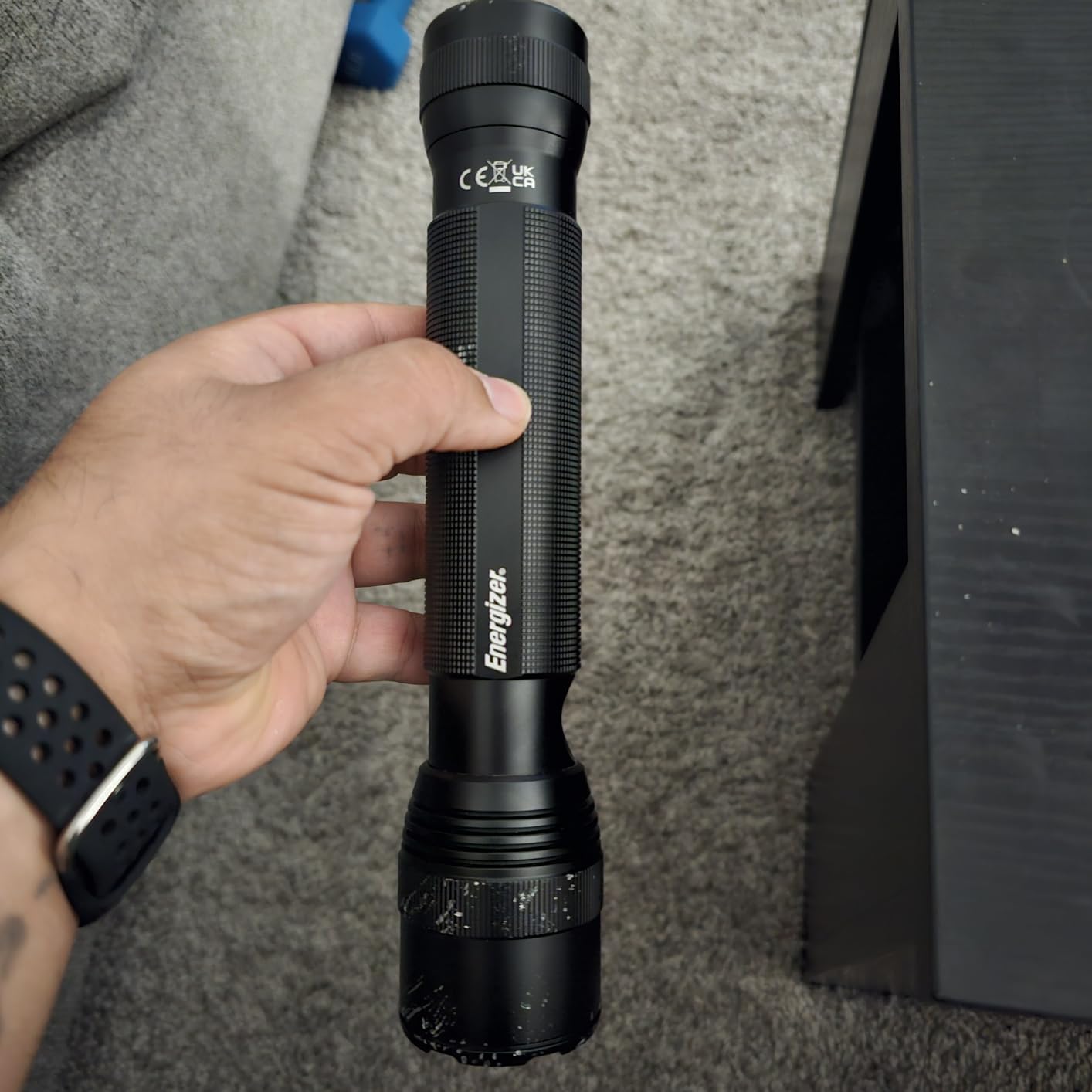
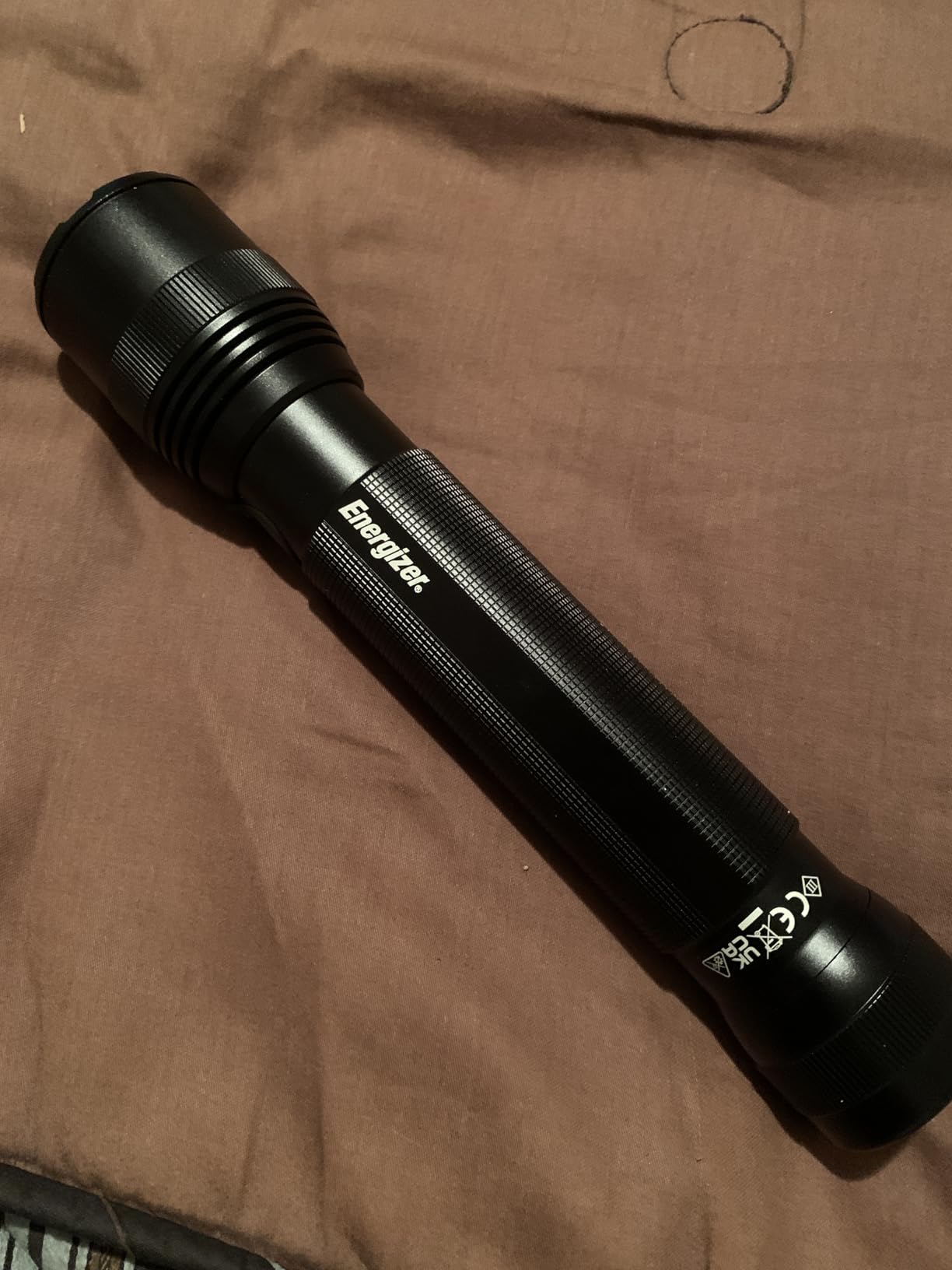
The TacR-1000 is the pick for someone building a kit rather than choosing a sidearm-grade tool. It puts out 1000 lumens with a listed 200-meter beam distance, and owners consistently treat it as a dependable work light for campsites, job sites and outage prep. It is the least glamorous light here and the easiest to explain to someone who does not care about beam shots.
Runtime is its quiet strength, with 15 hours listed overall and about 4 hours on high. The body is aircraft-grade aluminum with a shatterproof lens, impact resistant to one meter, and the tail switch is a single push-button you can work with gloves on. A USB charging cable ships in the box.
Long Runtime at a Modest Output Ceiling
Energizer rates the beam out to 200 meters, which is a useful number for checking a property line or the edge of a treeline. The 4-hour high runtime is generous for the class, and a light that still works after a long shift is worth more than one that is brighter for the first twenty minutes. It will not read a face at 200 meters, so buyers who want distance should check the candela column in the table above instead.
IPX4 and the Weight Trade-Off
IPX4 means splashing water only. This light is fine in rain and on a wet job site, but it is not rated for submersion and it is the weakest seal in this group. If your use involves waterways, boat work or anything that gets dunked, move up to an IPX7 or IP68 model.
The 1.1-pound weight figure is worth taking seriously, because it comes with a 10.83-inch overall length. That is a truck-glove-box and garage light, not a jacket pocket light. If you want a big battery in a small tube, the WUBEN L50 above does the same job in a fraction of the size.
Best For: Kits, Outages and Budget Buyers
Several owners mention they keep one in the trunk, one in the garage and one in a go-bag, which is exactly how this light is meant to be used. Bulk that would be annoying in a pocket is an advantage when you are packing for a week-long outage.
The honest watch-out is warranty coverage. Some owners note there is no meaningful manufacturer warranty beyond parts, which matters more if you intend to use the light hard. For occasional and emergency use, that is a reasonable trade. For daily professional duty, pick a brand with a lifetime or multi-year warranty behind it.
4. PowerTac M5-G3 – Dual Switch, Dual Fuel and 2030 Lumens
PowerTac M5-G3 2030 Lumens Rechargeable Tactical Flashlight, 330M Throw with Magnetic Charging and Dual Switch, LED Flashlight for Outdoor Emergency
2030 lumens
330 m throw
6 modes
Dual switch
Magnetic charging
Pros
- 2030 lumens from a 2.24 ounce body
- Dual switch with a momentary-on tail switch
- Runs on 2600 mAh cell or 2x CR123A for emergency use
- Magnetic charging without removing the battery
- Firefly low mode preserves night vision
Cons
- Magnetic charge port is finicky across USB power supplies
- Headline output is well above what it sustains continuously
- Side mode switch is hard to locate by touch
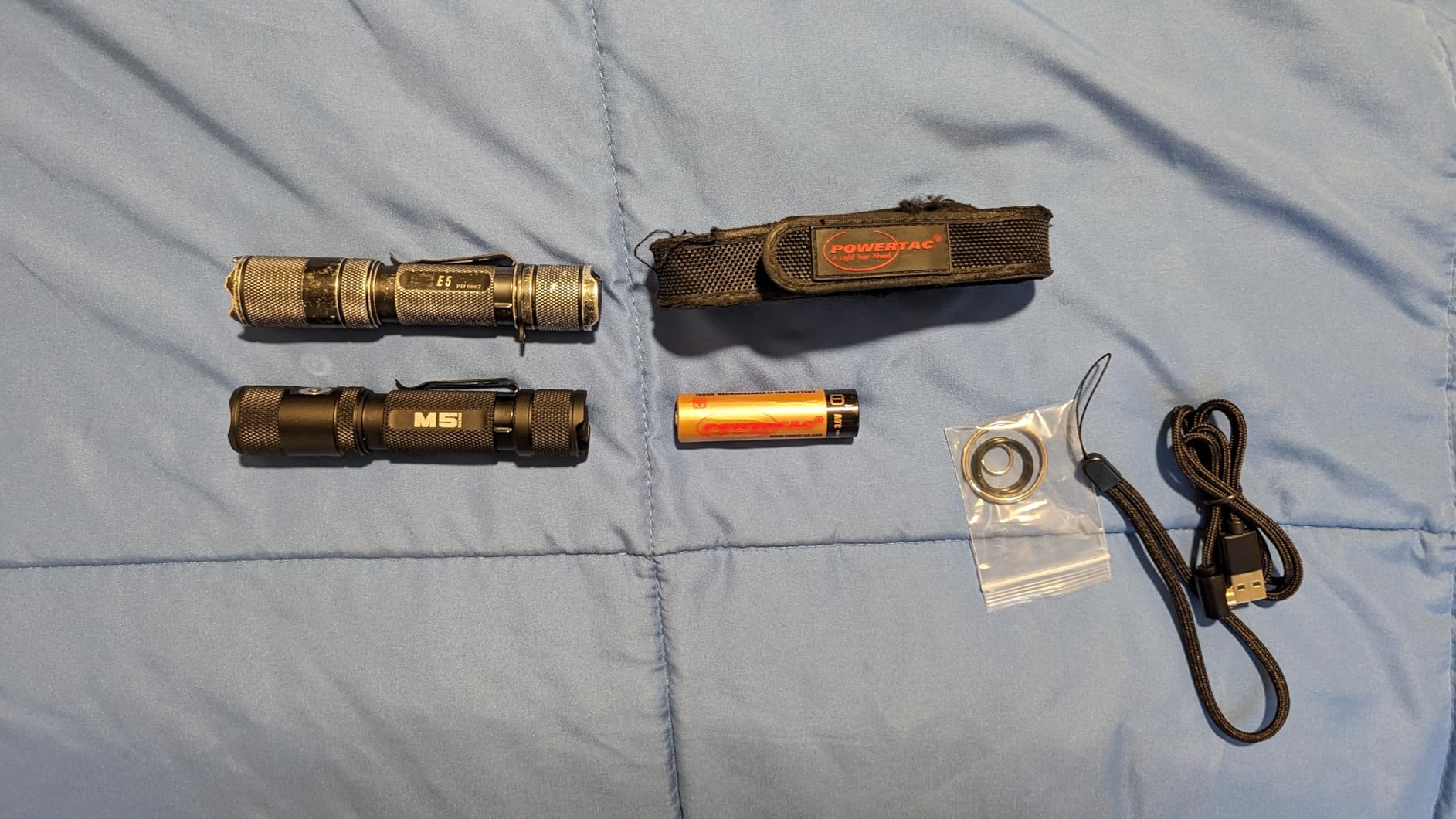
The M5-G3 is the most interesting power-path design in this group. It ships with a 2600 mAh rechargeable battery, and it also runs on two CR123A disposables at up to 260 lumens. That dual-fuel capability is the single most valuable longevity feature a tactical flashlight can have, because it means the light never becomes useless when the cell finally dies.
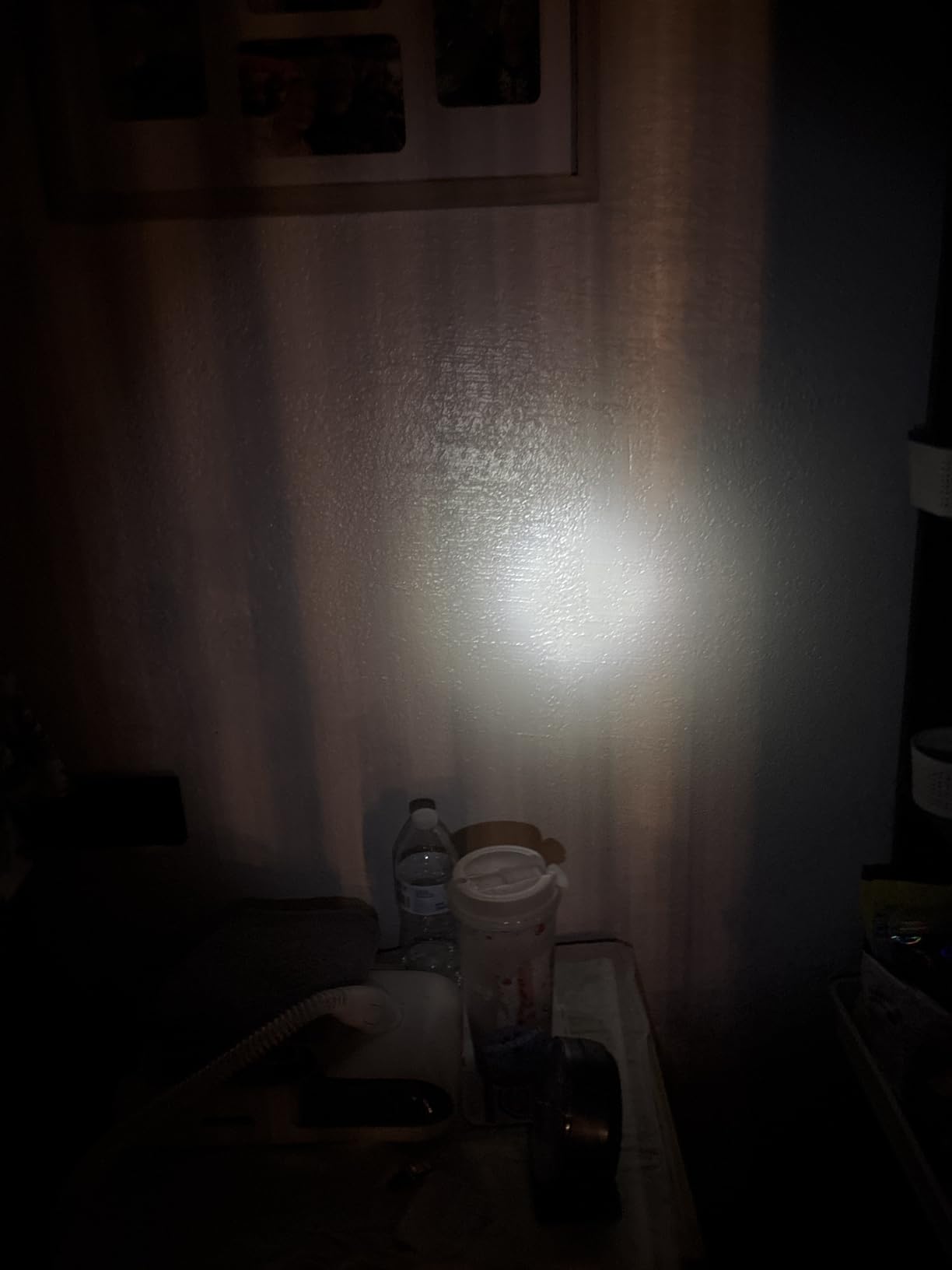
Output is 2030 lumens from an SST40 emitter at 6500 Kelvin, with a 330-meter beam distance, in a body that weighs 2.24 ounces. There are six modes including Turbo and Strobe, controlled by a side switch, while the tail switch handles momentary-on. Magnetic charging means you can top up without removing the cell, which is the right call for a light with two power sources.
Why Dual Fuel Matters More Than Any Spec
Owners on enthusiast forums treat dual fuel as close to a deal breaker, and this light answers it properly. If you are heading into a backcountry trip, a winter road or a long power outage, a light that accepts CR123A cells you can buy anywhere is a fundamentally different object from one that dies with its sealed pack. Running on disposables caps the output at 260 lumens, so treat the cells as the emergency tier and the 2600 mAh pack as the daily tier.
Magnetic Charging: Convenient but Finicky
The magnetic port with the braided cable is a genuinely good idea. It avoids the port cover that eventually fails, and it charges with the cell installed. Independent testing reported by owners even found real capacity above the 2600 mAh label, which is rare.
What owners do not like is the initiation step. The charge only starts after a specific alignment or press sequence, and different USB power sources behave differently. If you are the kind of person who tops up a light every few days without thinking, a plain USB-C port like the Wurkkos TD02 below is less ceremony.
Where the Headline Lumens Overstate the Light
Experienced reviewers point out that the 2030-lumen figure is a peak number, and the light does not sustain it indefinitely before stepping down. Treat turbo-style output as a brief tool for the first few seconds of a contact, not a constant setting.
Two smaller complaints round out the list: the side mode switch is hard to find by touch in the dark, and the aggressive crenellated bezel will chew through a jacket pocket if you clip it there. Both are fixable with practice and a better clip position. Neither changes the recommendation for a light that weighs under two ounces and works with two different cell types.
5. Coast XP11R – Flood-to-Spot Focusing With Dual Power
Coast XP11R 2600 Lumen USB-C Rechargeable LED Flashlight with Slide Focus and Pure Beam Focusing Optic, 4 Light Modes, Black
3000 lumens in Turbo
280 m beam
Slide Focus
Dual power
IP54
Pros
- Slide Focus moves from wide flood to tight spot one-handed
- Turbo mode delivers 3000 lumens for short critical bursts
- Dual power accepts rechargeable or alkaline cells
- Real-time battery power indicator on the tail switch
- Backed by Coast lifetime warranty
Cons
- Output steps down after sustained use on the highest setting
- Beam reads somewhat yellow to some buyers
- Sits between bright and long-throwing without leading either
- No pocket clip included
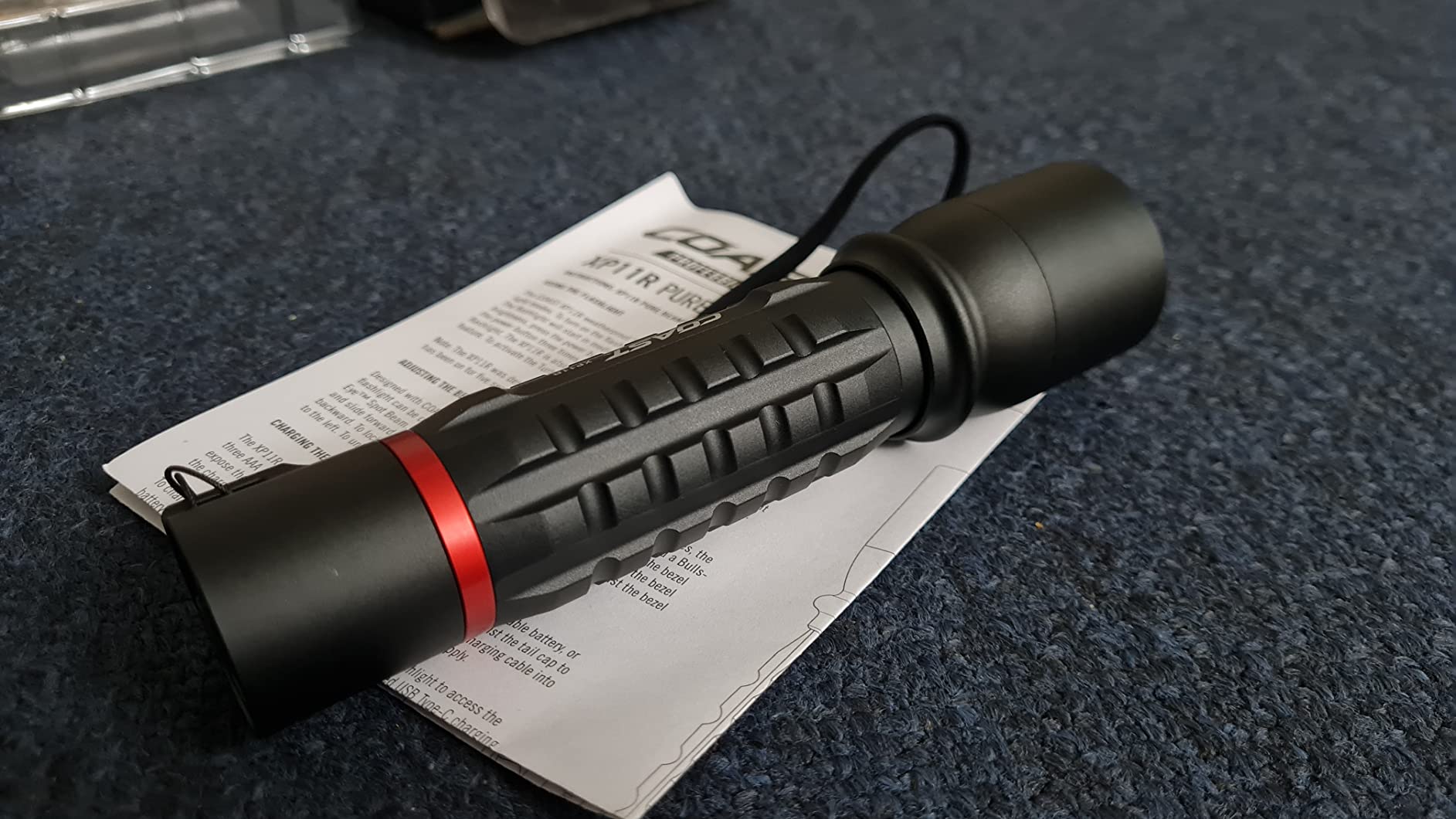
The defining feature of the XP11R is Coast’s patented Slide Focus optic, which physically slides between an Ultra View flood and a Bulls-Eye spot. It is a one-handed transition, and it means one light can wash a room or punch a hot spot at 280 meters. That flexibility is why it earns a place here even though it is not a pure tactical tail-switch design.
Turbo mode delivers 3000 lumens for critical moments, and a green glow on the tail switch tells you the light is on while a red indicator means recharge. The light runs on a ZITHION-X rechargeable pack or on alkaline batteries through the included AAA adapter, so the same dual-fuel logic as the PowerTac applies here.
Slide Focus and What It Does to Identification
A tight spot concentrates lumens into candela, which is exactly what you need to identify a shape or a person at distance. Sliding from flood to spot takes under a second and does not require a mode cycle or a second light. For property work and roadside scenarios, that single feature replaces an entire bag of tools.
The green-and-red tail indicator is a small quality-of-life feature that matters more than it sounds. A light that tells you its own status means you are not shaking it, unscrewing the tail or hunting for a button in the dark to find out whether it is on and how much charge is left.
Turbo Mode and the Realistic Output Ceiling
Owners are clear that 3000 lumens is a burst, not a working level. Sustained use on the top setting triggers an automatic step-down, and the light also reads as slightly yellow compared with a pure-white beam. Neither is unusual, but both should shape what you expect from it. On the plus side, many owners report still using the original rechargeable pack after two years of service, rated runtime is 17 hours overall, and Coast covers the light with a lifetime warranty on materials and workmanship.
Who Should Skip This Light
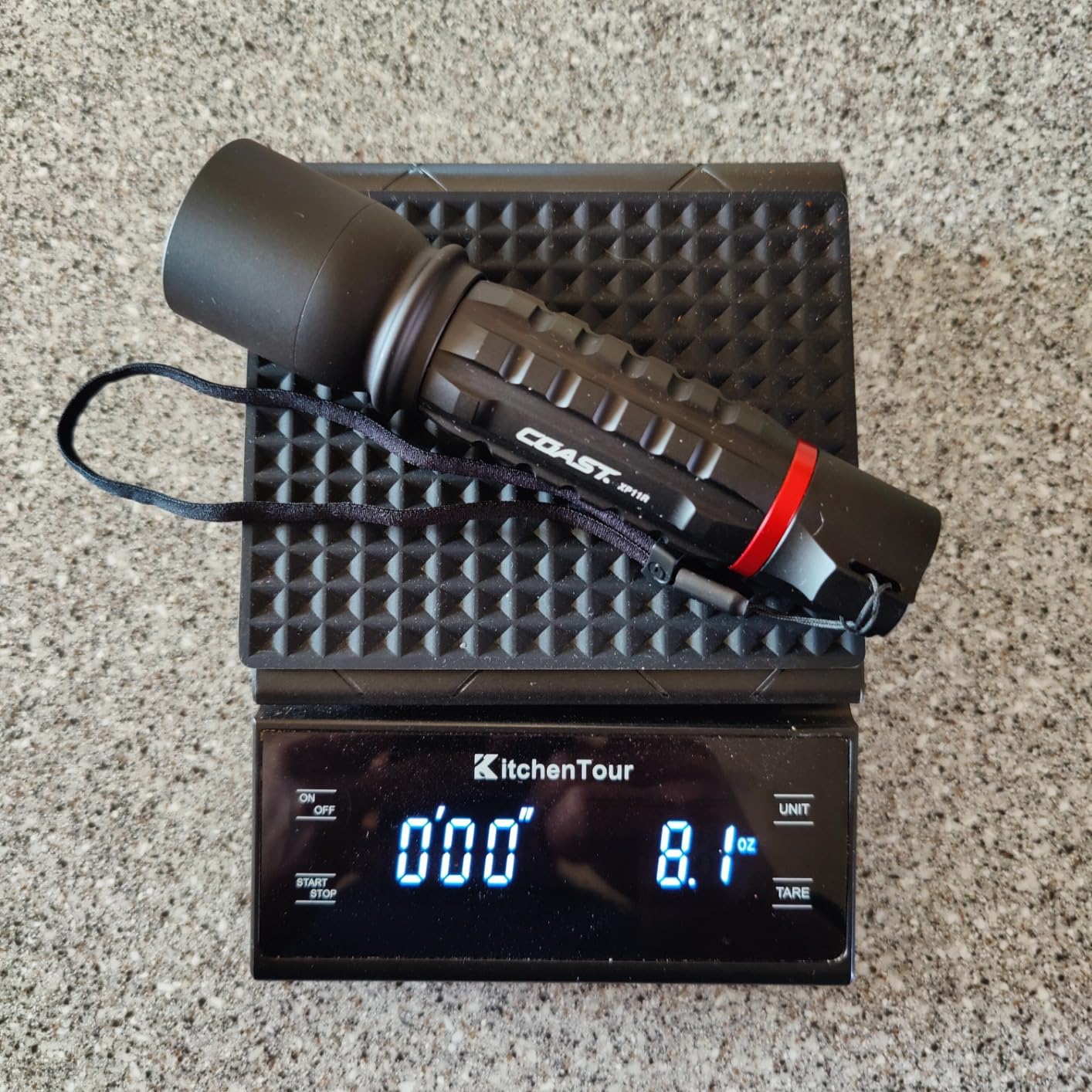
Skip it if you need a tail switch you can find without looking, because the Coast’s primary control is the head-mounted focus ring. It is a handheld light first, not a duty instrument. At 6.08 ounces and 5.98 inches it is also a full-size handheld, not a pocket light.
IP54 water resistance is another limit, and there is no pocket clip in the box, which is an odd omission for a light meant to leave the house. If you want a sealed, pocketable, throw-capable light, the Fenix PD35 v3.0 later in this list is the closer match.
6. Streamlight ProTac HL USB – The Duty Belt Standard
Streamlight 88052 ProTac HL USB Rechargeable Tactical Light, Black
1000 lumens
219 m beam
Integrated USB-C
IPX4
7.2 oz
Pros
- 1000 lumens with a 219 meter beam distance
- Integrated USB-C charging with no port cover
- Ten-TAP programming for custom mode order
- Machined aircraft-grade aluminum with impact lens
- Nylon holster and cable included in the box
Cons
- IPX4 is modest for the class
- 1000 lumens feels dated beside newer high-output lights
- 7.2 ounces is heavy for a pocket light
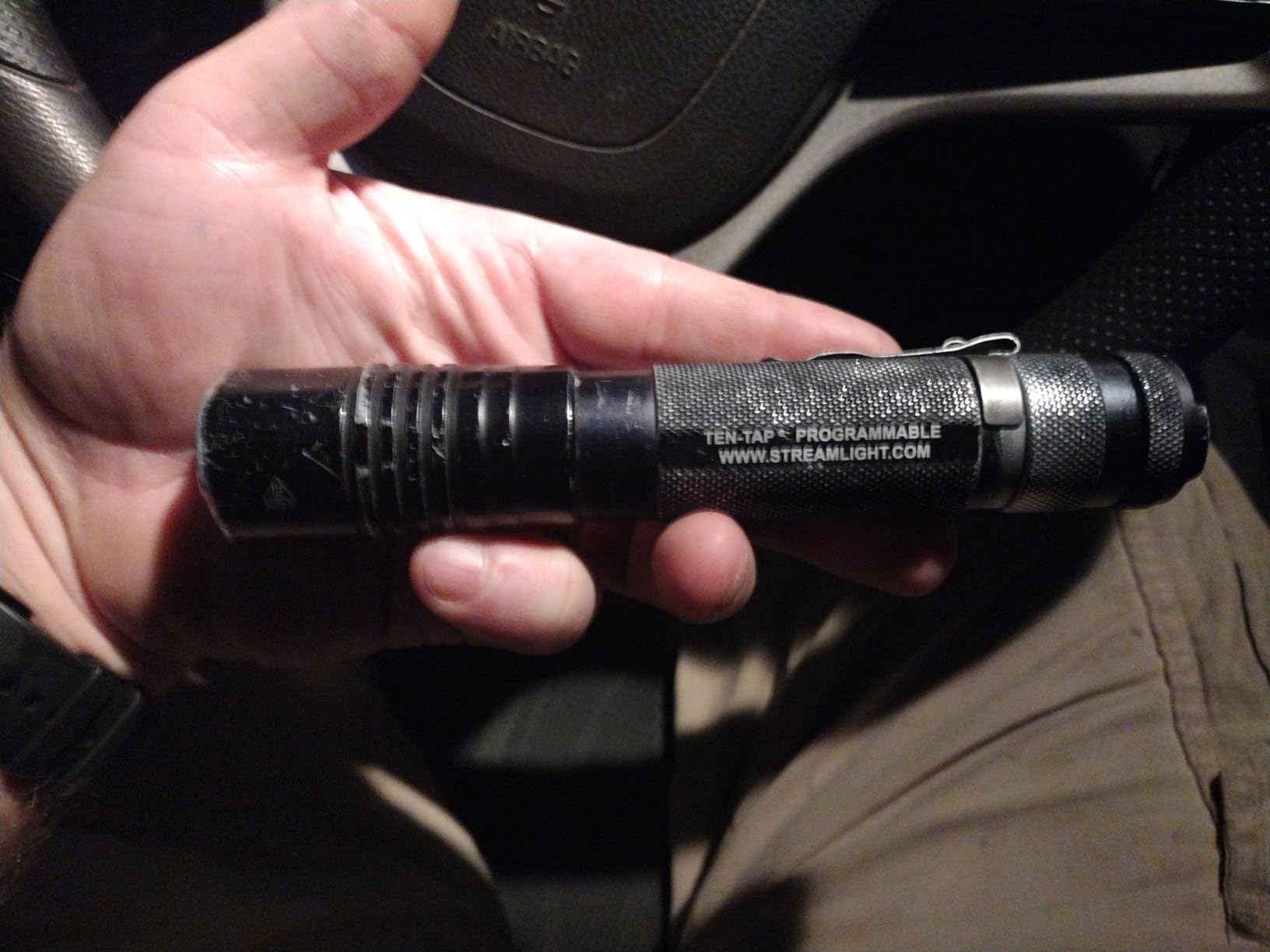
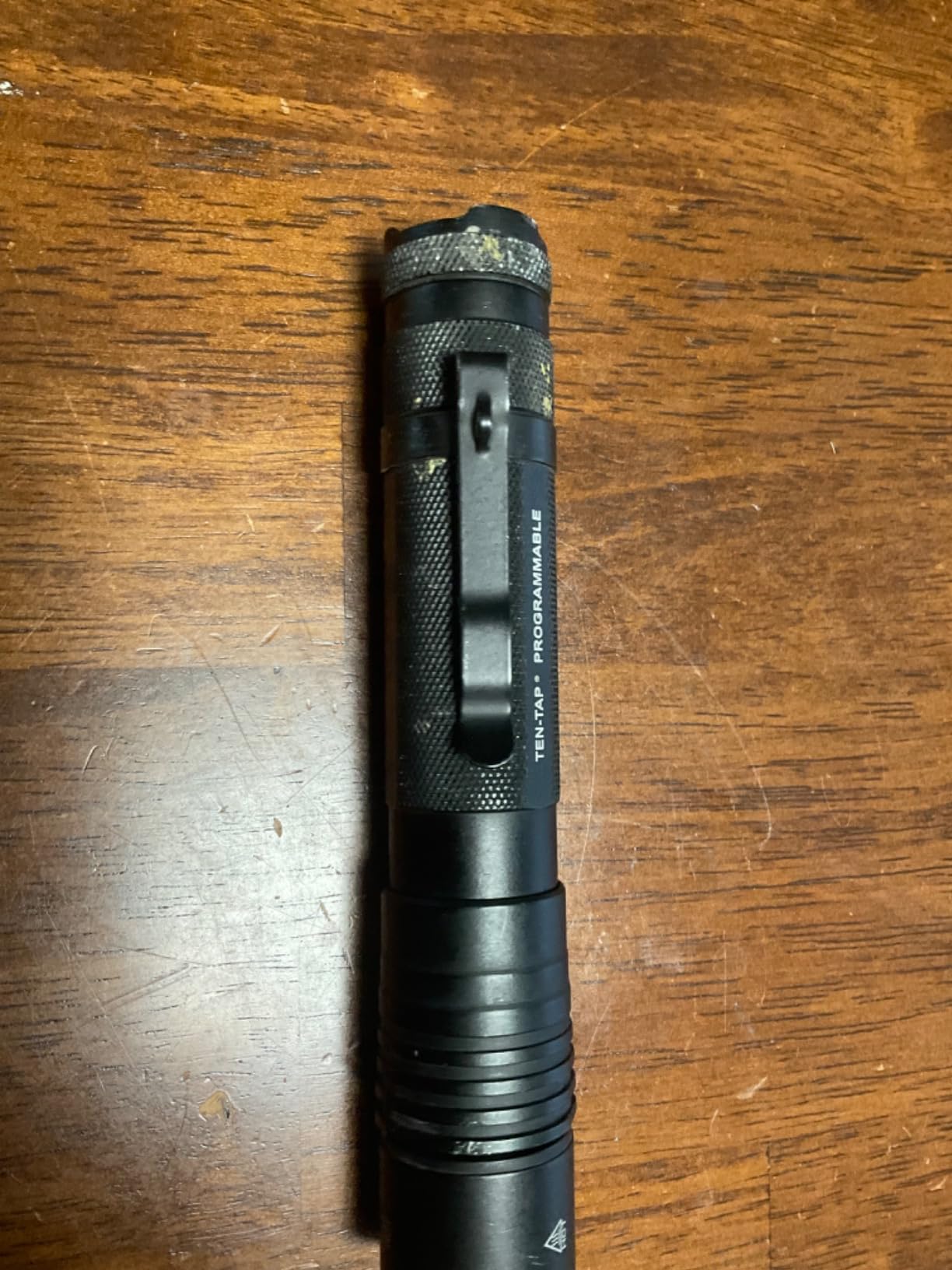
This is the light to buy if the phrase duty belt means something specific to you. The ProTac HL USB is 6.5 inches long, 7.2 ounces, machined from aircraft-grade aluminum, and it ships with a nylon holster and a USB cable. Streamlight backs it with a limited lifetime warranty, and it has held a 4.6 average across roughly 1,800 ratings.
Output is 1000 lumens with a listed 219-meter beam distance, which is a real throw figure for a light in this weight class. The charging port is integrated USB-C with no rubber flap to perish, and the same TEN-TAP programming as the 2L-X lets you reorder high, medium and low.
1000 Lumens With a 219-Meter Beam
Two thousand lumens is flashbulb output: impressive in a driveway, unhelpful at the far end of a property line. What matters past 100 meters is candela, and the ProTac HL USB projects a usable beam well past 200. That is why it remains a standard issue light for law enforcement and inspection work despite newer, brighter options existing. Runtime is the counterweight: the published figures give 1 hour at maximum output and about 5 hours across the lower modes.
Integrated USB-C and What Ships in the Box
The integrated port is a meaningful upgrade over sealed or proprietary charging, and it removes one of the two most common long-term failure points in this category. No flap to tear, no proprietary brick to lose, and the same cable charges your phone and your other lights.
The included holster matters more than it sounds. A duty belt already carries a radio, a cuff, a sidearm and a spare magazine, and a light with no carry solution ends up loose in a pocket or forgotten entirely. The flashlight, cable, holster and documentation all come in the box.
Watch Out: Sealing and a Dated Output Figure
IPX4 is the honest drawback. It handles rain and splashing but not immersion, and for a light intended for outdoor duty that is a lower ceiling than several cheaper picks in this guide manage. If you work in sustained rain or wash-down environments, choose an IPX7 light instead.
The second watch-out is the 1000-lumen figure itself, which owners regularly note no longer feels cutting-edge. You are buying proven durability, warranty and switch quality here rather than headline output. If raw brightness is your priority, the Nitecore MH12 Pro delivers more than three times as much.
7. Streamlight Stinger 2020 – Genuine Long-Range Throw
Streamlight 78101 Stinger 2020 2,000-Lumen Flashlight with Charger, Black
2000 lumens
25,000 candela
315 m beam
IPX7
12.8 oz
Pros
- 2000 lumens with roughly 25000 candela of beam intensity
- Highest average rating in this roundup at 4.7
- Balanced beam pattern for distance and peripheral coverage
- Includes a 120V AC and 12V DC charging kit
- IPX7 waterproof with limited lifetime warranty
Cons
- Heaviest light in the group at 12.8 ounces
- Premium cost relative to output-per-dollar alternatives
- Large format means it is not a pocket light
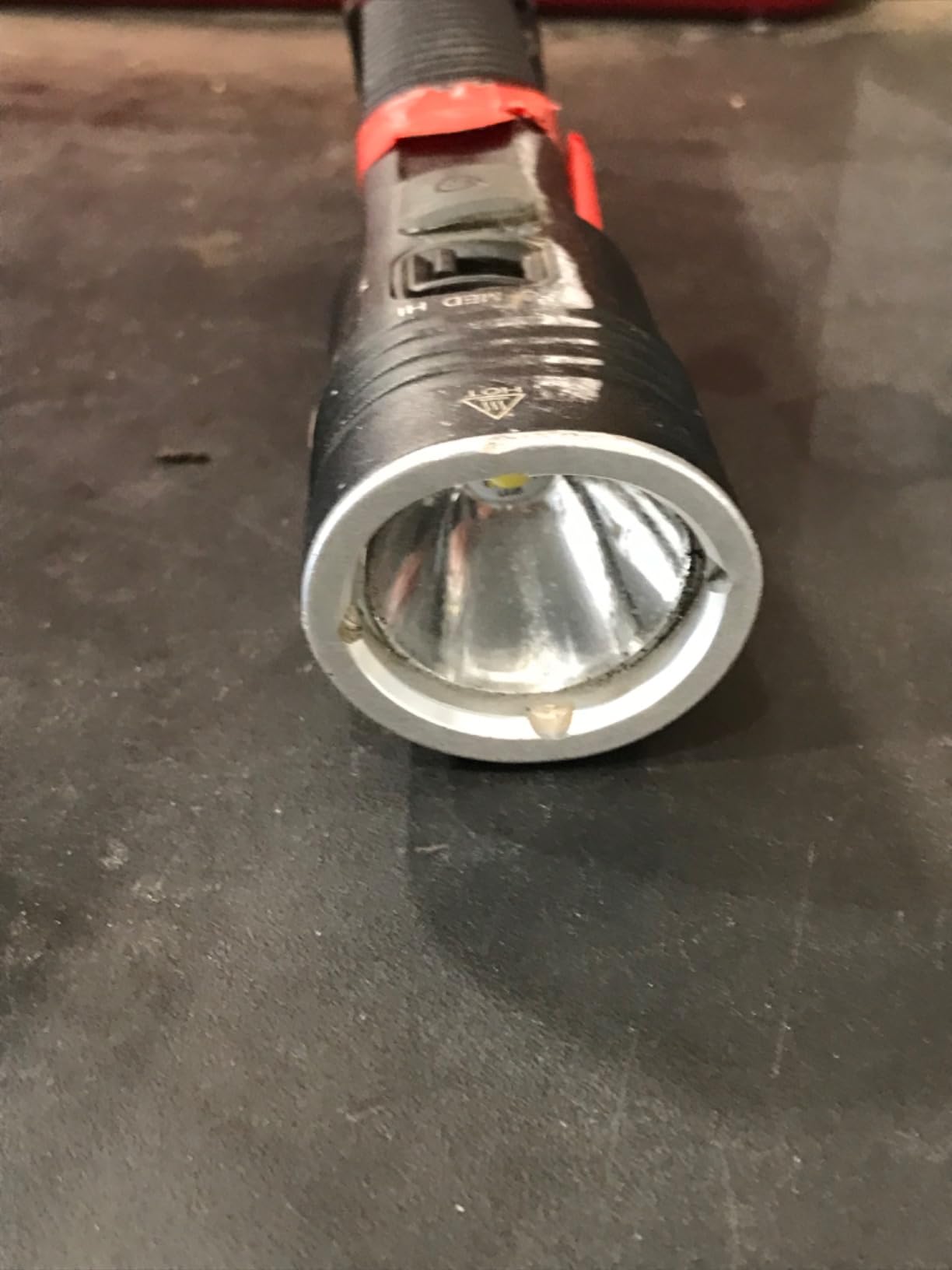
The Stinger 2020 is the only light in this group where the candela figure is genuinely striking: roughly 25,000 candela paired with 2,000 lumens and a listed 315-meter beam distance. That is the number that matters if you are identifying shapes at distance, and it is why this light exists in the professional market at all.
The beam is deliberately balanced, with strong center intensity plus wide peripheral illumination, so you are not choosing between a spot and a flood. Modes cover high, medium, low and strobe, the body is IPX7 waterproof, and the charging kit includes both a 120V AC charger and a 12V DC charger for a vehicle.
25,000 Candela Is the Number That Matters Here
Lumens describe how much light a lamp makes in total. Candela describes how much of that light is aimed in one direction. A light can be extremely bright and still be useless at 200 meters if all of that output is spread evenly, which is exactly why a 25,000 candela rating on a 2,000-lumen light outperforms a 3,000-lumen light with weak throw.
The 87 percent five-star share across more than 1,300 ratings is the strongest consensus in this roundup. Owners consistently point to real throw, a balanced beam and professional build as the reasons. If you patrol, inspect infrastructure or cover large outdoor areas, that combination is worth the extra bulk.
Included Charging Kit and Duty Durability
Most rechargeable lights in this guide charge over USB and nothing else. The Stinger 2020 ships with a charging kit containing a 120V AC holder and a 12V DC one-holder, so you can top the light up from a wall or a patrol vehicle without carrying a separate cable. Durability is straightforwardly professional: IPX7 waterproof, impact-resistant construction, a non-slip grip sized for gloved hands, and a limited lifetime warranty.
Watch Out: 12.8 Ounces Is a Real Cost
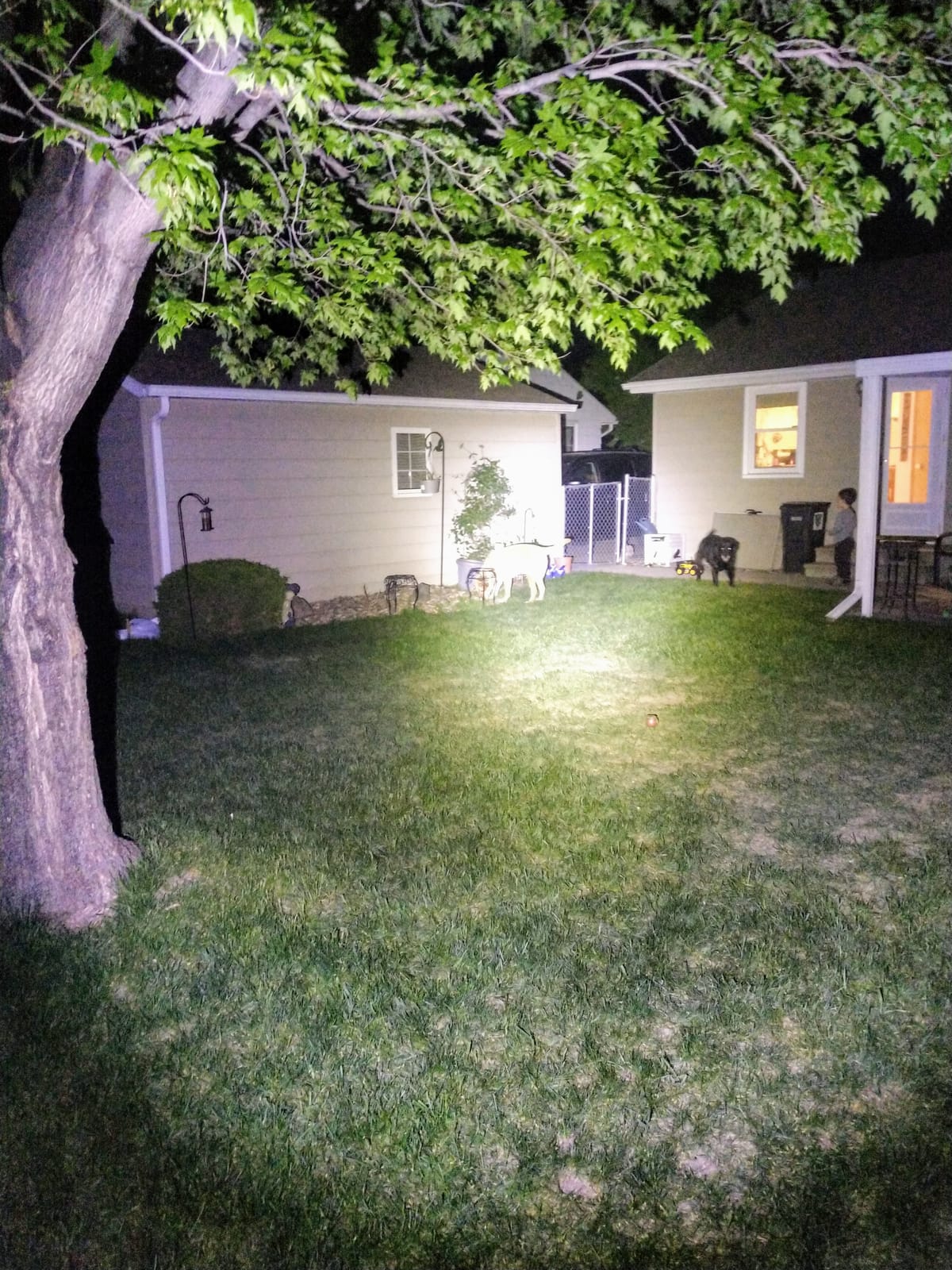
At 12.8 ounces and 7.67 inches, this is the heaviest and longest light in the roundup. It is a handheld duty instrument, not something you clip in a pocket or mount on a rifle. Budget for the weight before you commit, and consider a lanyard for extended carry.
Cost relative to output is the other recurring note among owners. You are paying for throw quality, beam balance and warranty backing rather than lumens per dollar. If throw is not your requirement, the Nitecore MH12 Pro delivers 3,300 lumens in a body roughly half the weight.
8. Wurkkos TD02 – 2000 Lumens on Standard 18650 Cells
Wurkkos TD02 Led Tactical Flashlight, Super Bright Pocket Flashlights Rechargeable, 2000 High Lumens Flashlight EDC Flash Light with Type C Charging Port Tail Switch for Outdoor and Indoor Activities
2000 lumens in Turbo
833 ft throw
6 modes
USB-C
IPX8
Pros
- 2000-lumen Turbo output at a very low cost
- Uses standard 18650 cells you can swap or share
- USB-C fast charging with an on-body battery indicator
- IPX8 water resistance and 1 m impact rating
- Reversible barrel works for hat clip or reversed carry
Cons
- Gets very hot after a few minutes on high
- Two intermediate brightness levels are nearly identical
- Double half-press for strobe is hard to do blindly
- Some reports of switch or included cell failing within a year
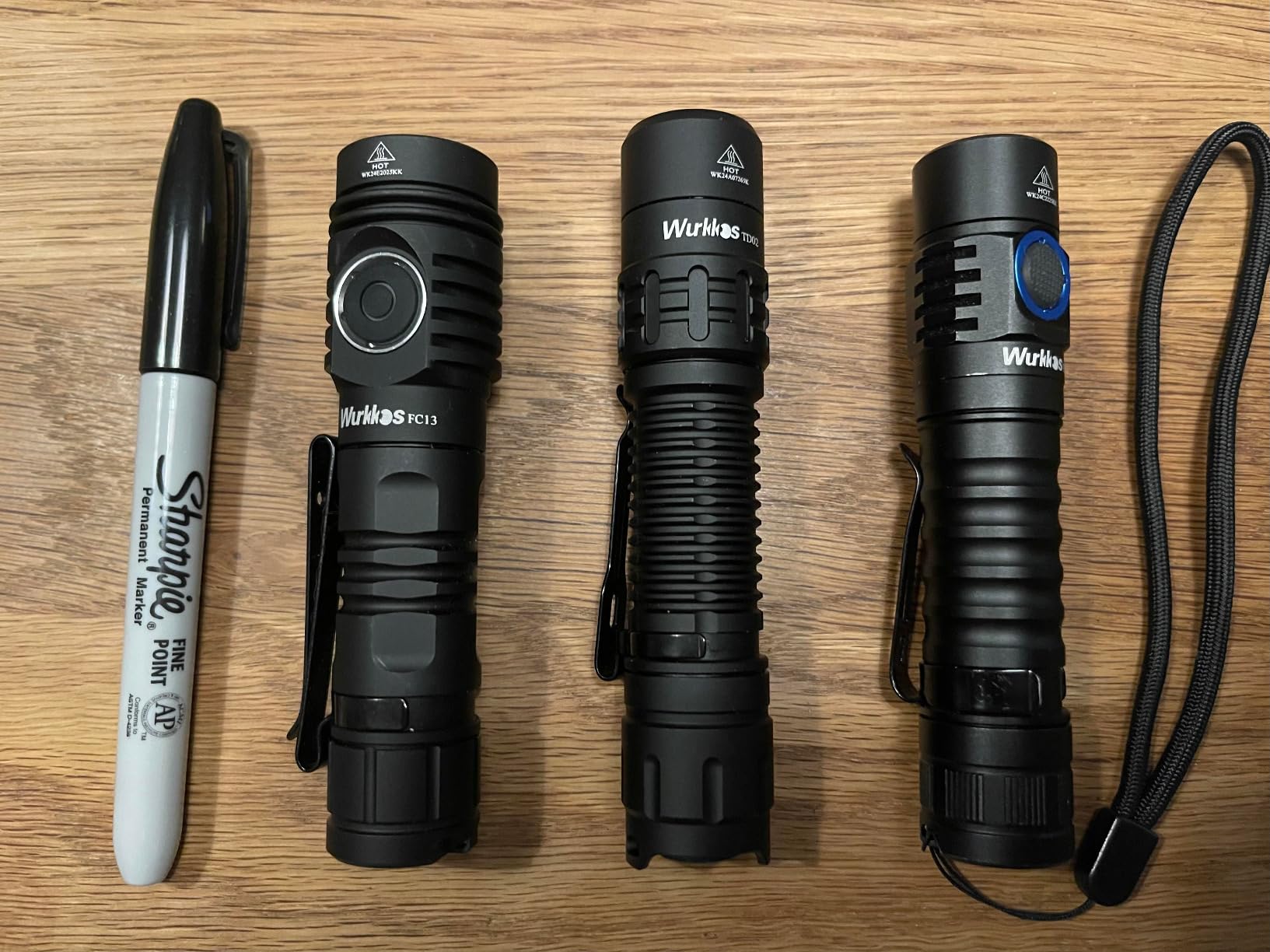
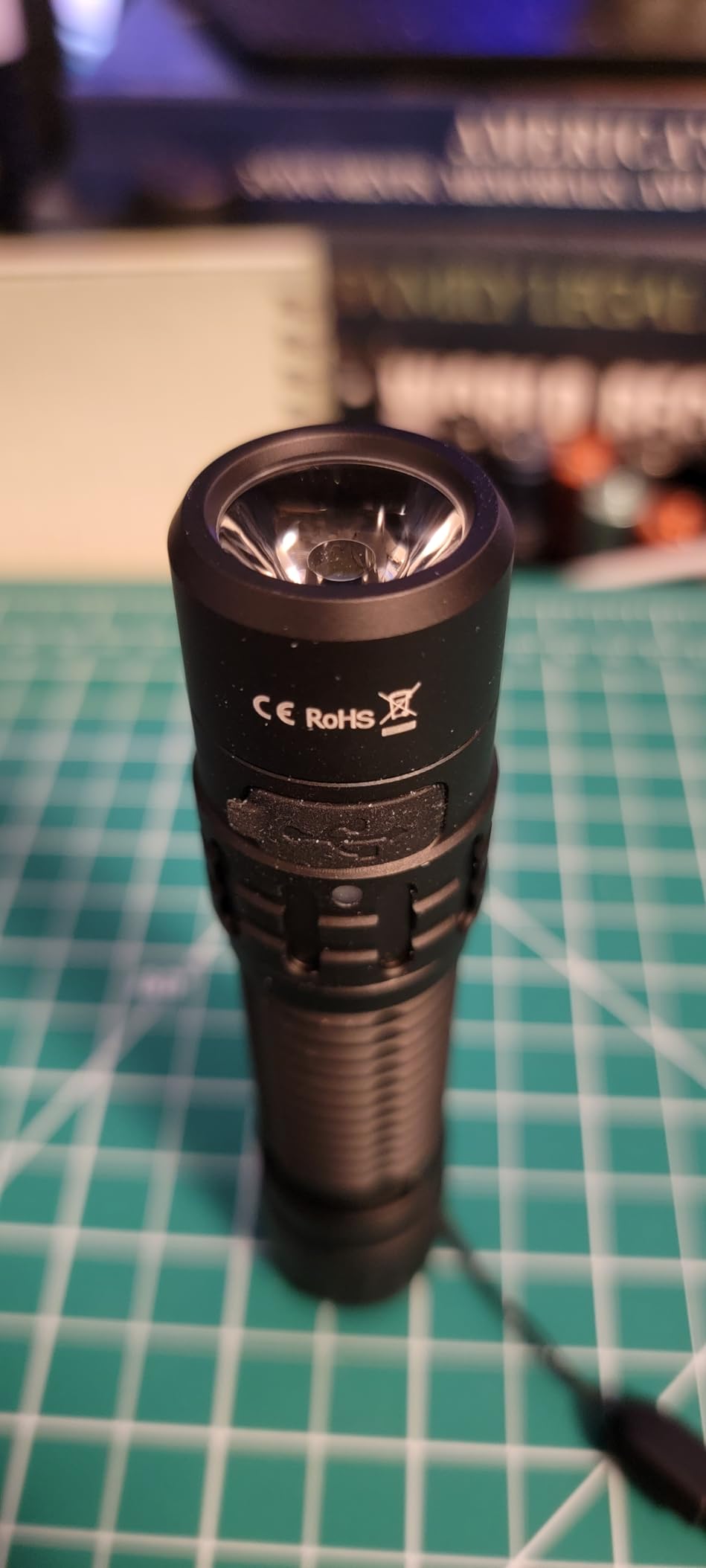
The TD02 solves the problem that the whole category is quietly failing: it runs on a standard 18650 lithium-ion cell. Any reputable charger will refill it, any reputable cell will replace it, and you can carry spares in a pocket indefinitely. That single choice makes the light outlive its own battery ecosystem.
Output is 2000 lumens in Turbo from a Luminus SST40 emitter with roughly 833 feet of throw, across six modes from a 10-lumen Eco setting up to Turbo, with mode memory. The USB-C port is built into the body so the cell does not need to come out, and an indicator underneath the port shows charge state from green through red to flashing.
Standard Cells Are the Feature, Not an Afterthought
Owners on forums rank replaceable cells above brand prestige. When a sealed pack finally fails in year four, a sealed-pack light is a paperweight, while this one opens up with a screwdriver and takes any 18650 you like. That is a real ownership advantage independent of any lumen figure, and an anti-reverse protection circuit means installing a cell backwards will not destroy anything.
USB-C Charging and the Battery Indicator
The built-in Type-C port charges without removing the battery, and the three-color indicator underneath gives you a quick read: green above half, red in the middle range, flashing red under 20 percent. Being able to check state without switching the light on is useful before you head out, and at 4.72 inches by 0.91 inches the reversible barrel lets you wear the clip in either direction for hat or reversed pocket carry.
Watch Outs: Heat, Strobe Access and Longevity Reports
Three negatives recur. The light gets very hot after two to three minutes of continuous high use, two of the six brightness levels are nearly indistinguishable from one another, and reaching strobe requires a double half-press that is awkward to perform without looking.
There are also a small number of reports of the mode switch or the included cell failing within about a year, against a 12-month warranty. That is a real reliability data point worth weighing against the Fenix and Streamlight entries, which carry lifetime and multi-year coverage. The cell format, though, is the one thing no warranty can substitute for.
9. Nitecore EDC29 – 6500 Lumens in a Flat Pocket Profile
Nitecore EDC29 6500 Lumen Rechargeable EDC Tactical Flashlight (Black)
6500 lumens
437 yd throw
0.76 in thick
USB-C
OLED display
Pros
- 6500-lumen mode reachable in about a second
- Extremely slim 0.76 inch profile for pocket carry
- OLED display shows output battery and turbo stamina
- Mechanical slide lock prevents accidental activation
- Two lockout modes and a two-year warranty
Cons
- Turbo modes last only 5 to 10 seconds at full output
- No dedicated strobe button
- Integrated battery is not swappable
- Several reports of switch failure around the one-year mark
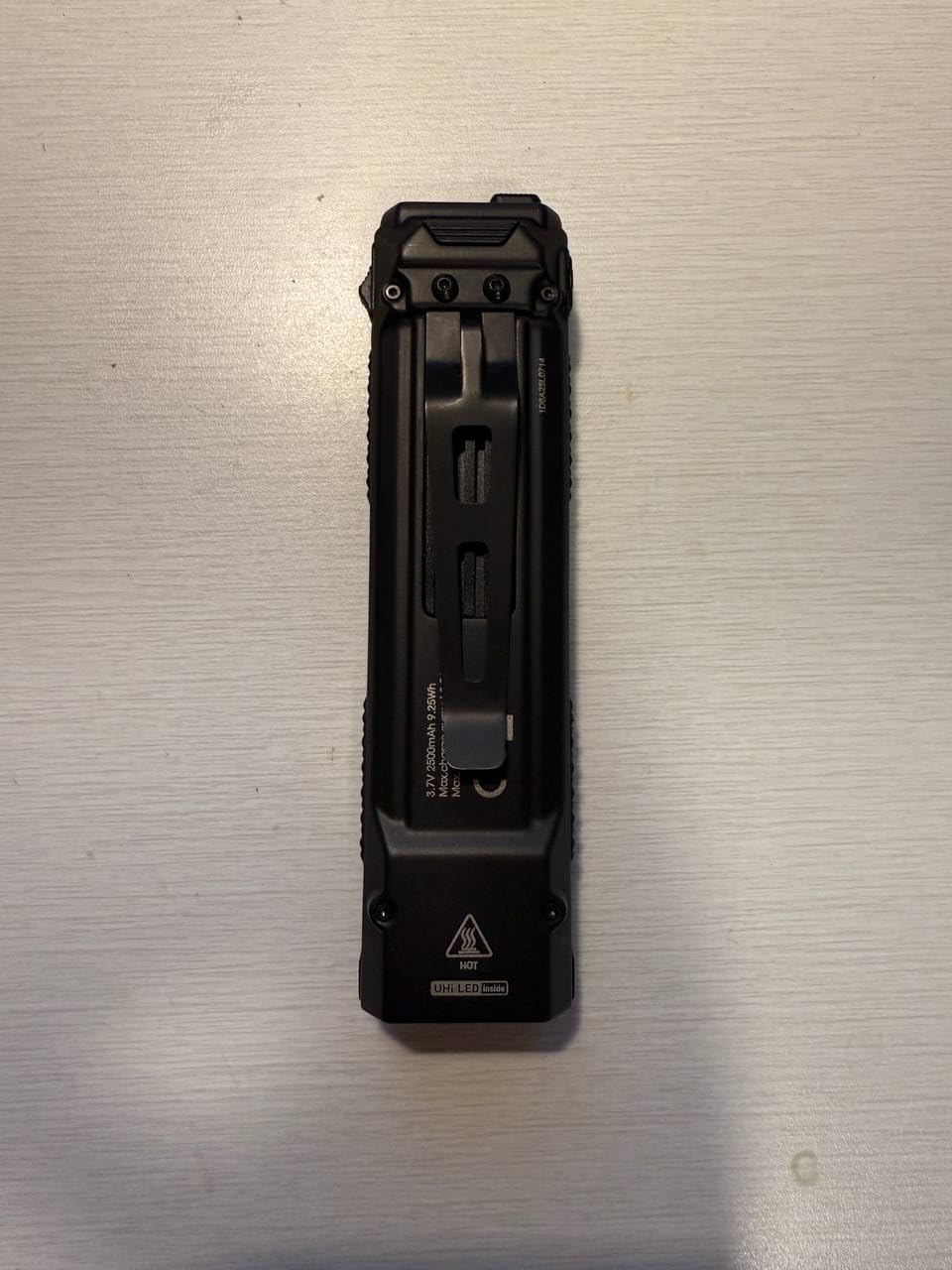
The EDC29 solves the problem most high-output lights create: they are too bulky to actually carry, so the brightness never gets used. At 0.76 inches thick and 5.6 ounces, this one disappears into a front pocket, which means the 6500-lumen Lumin Shield mode is available on demand rather than theoretically available in a truck.
It is also the most instrumented light here. An OLED display reports current output, battery status and a turbo stamina bar, so you can see how much burst is left before the step-down arrives. Charging is USB-C and takes about 1 hour 15 minutes, with up to 61 hours of runtime on low.
Why the Mechanical Slide Lock Matters
Accidental activation is the most common complaint about flat EDC lights, and it is the one that ends up in a returned product. A tail switch you can brush against in a pocket turns on a 6500-lumen light in a dark bag, drains the cell and announces your presence. The EDC29 uses a physical slide lock with two lockout modes, which is a hardware solution rather than a press-and-hold software trick.
Hardware locks outlive software locks, and they work when your fingers are cold or gloved. For anyone who has unpacked a flashlight to find it dead because it switched on in transit, this is the single most important feature on the light.
Turbo Is a Burst, and Owners Know It
The most common criticism is the 5 to 10 second limit on turbo output before step-down. That is thermal and battery management doing its job, not a defect, and the OLED stamina bar exists to show you how much burst remains. Strobe has to be created by tapping the Lumin Shield button rather than pressed directly, the flood ring only engages in high-power modes so there is no low flood, and stepping through the four normal brightness levels takes multiple presses.
Long-Term Ownership Risk
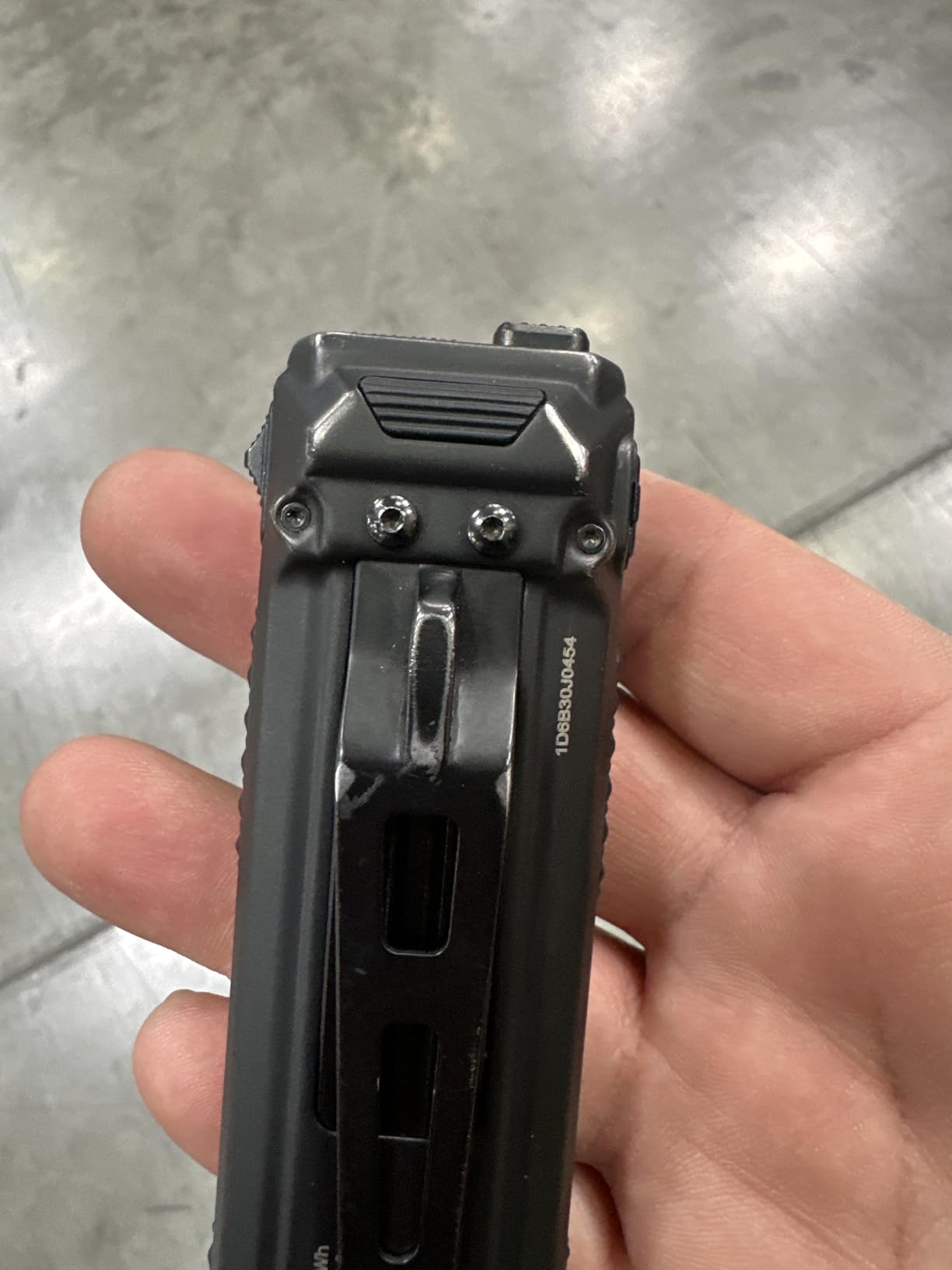
There is a recurring durability theme in the reviews: several owners report the power or brightness switch failing at roughly the one-year mark. Nitecore has been replacing units under warranty, and the light carries a two-year manufacturer warranty, so the risk is mitigated rather than open.
The bigger structural caveat is the integrated lithium polymer battery. It cannot be replaced with another cell type, so once it degrades the light loses its high-output modes regardless of how well the electronics hold up. If you intend to own a light for a decade, buy the Wurkkos TD02 instead.
10. OLIGHT PL X – Dual Beams on a Rail Mount
OLIGHT PL X Dual Beams Rechargeable Tactical Rail Mount Flashlight, Black
1200 lumen flood
22,500 cd spot to 300 m
IPX7
USB-C in 2 hours
Pros
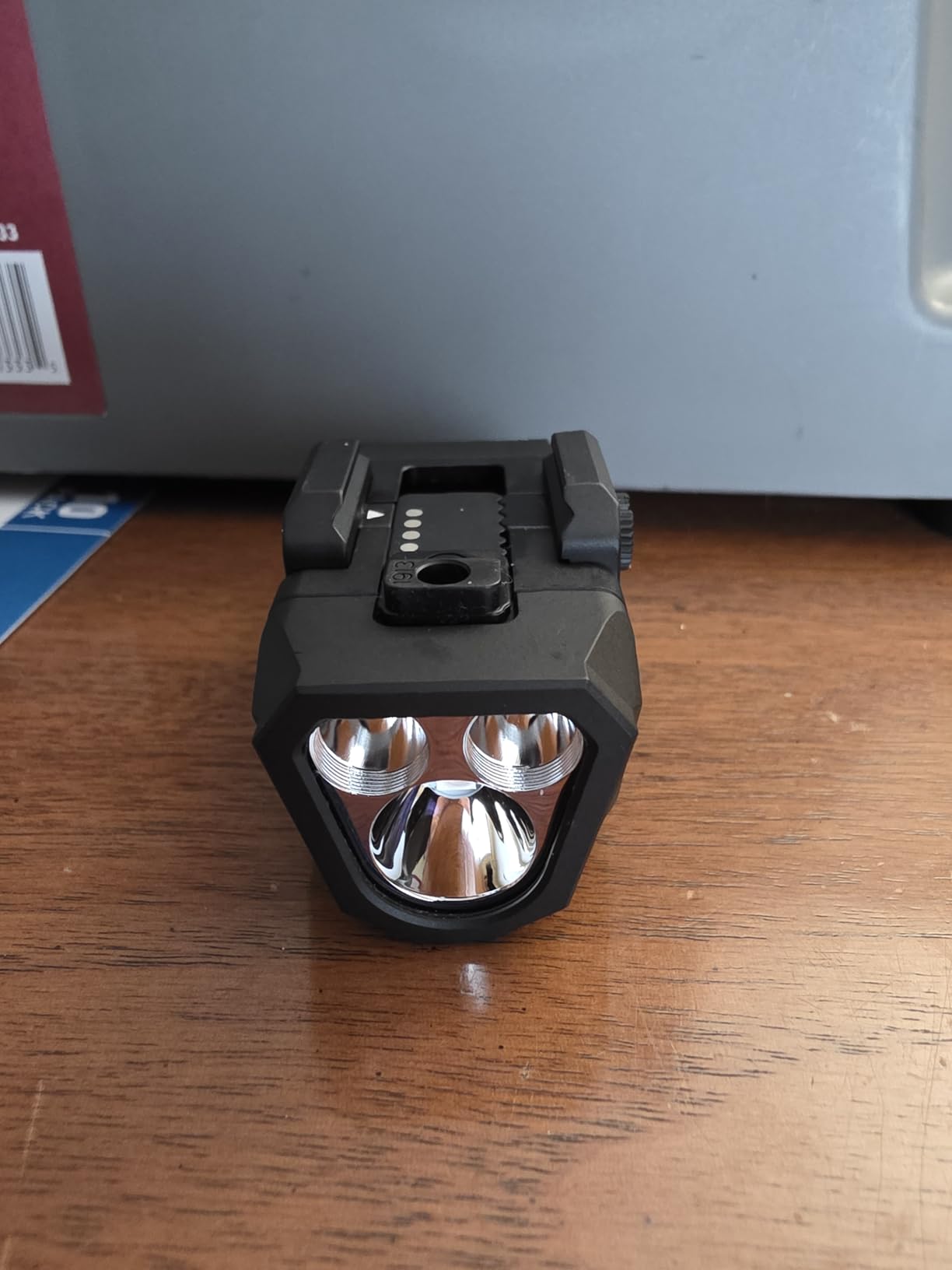
- Two independent beams: 1200 lumen flood and 22500 candela spot
- Adjustable reversible lugs with anti-loosening ratchet mount
- 6061 aluminum with Type III hard anodizing and IPX7
- Drop tested to 1.5 meters
- Supported by major holster manufacturers
Cons
- Built-in lithium polymer battery cannot be replaced
- Rail-mount design needs a compatible rail rather than pocket carry
- 2 hours 25 minutes of runtime at the top setting
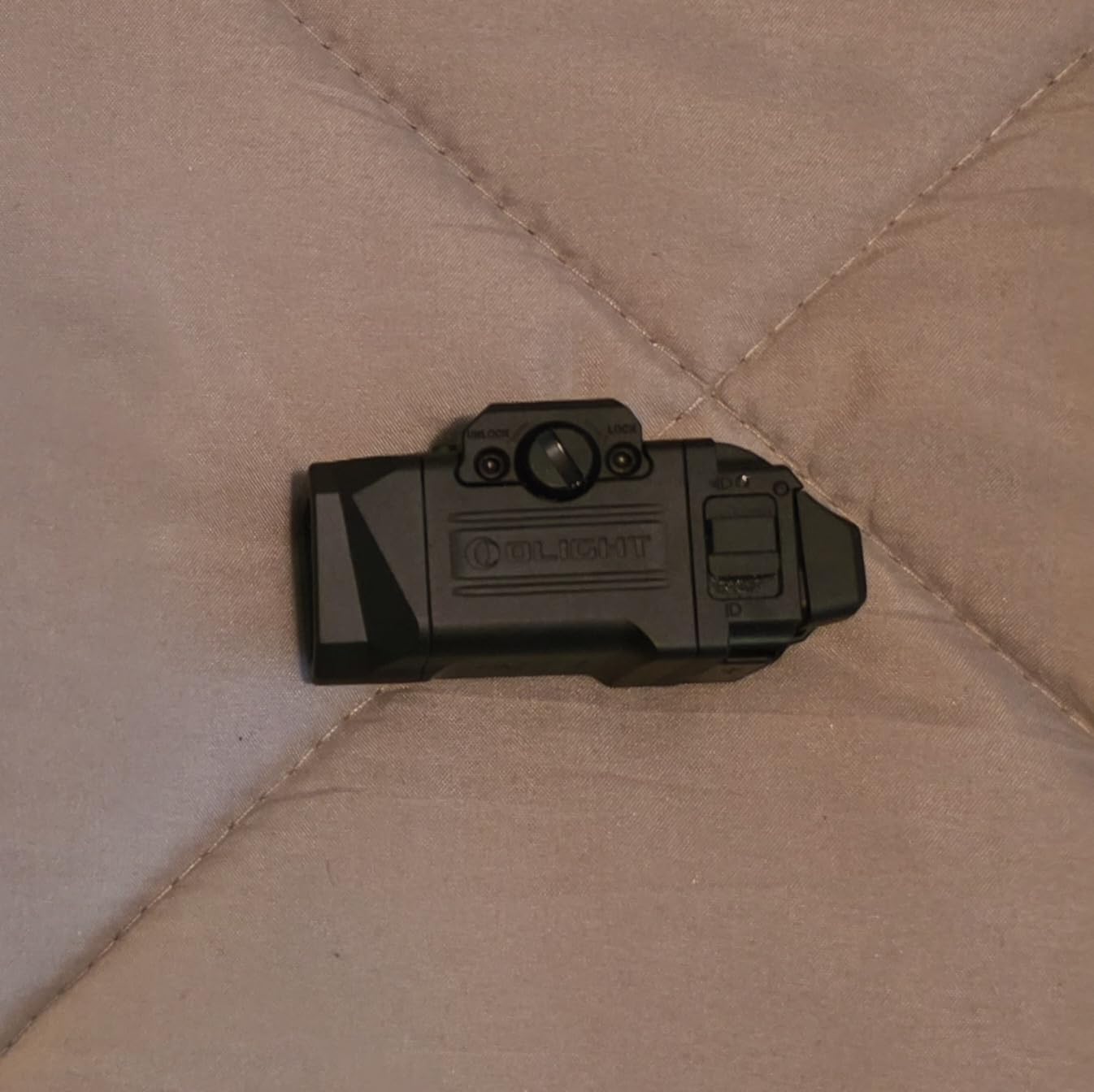
The PL X is the only weapon-oriented light in this roundup, and it is the one to consider if your use case involves a rifle or a pistol. Instead of choosing between a wide and a narrow beam, it fires both independently: a 1,200-lumen floodlight for close work and a 22,500 candela spotlight reaching 300 meters. You select each beam with its own control.
The mount is the other half of the story. Adjustable, reversible lugs with a patented anti-loosening ratchet interface fit 1913 Picatinny and GL rails, the 1913 insert is pre-installed, and the light is supported by major holster manufacturers, which matters because a pistol light changes the shape of the holster you need.
Two Beams Instead of a Mode Dial
Most tactical lights force you to choose a beam pattern. The PL X removes the choice by giving you a 1,200-lumen flood for identifying a target inside a doorway and a 22,500 candela spot for confirming a shape across a yard, at the same time. That 4.8 average across more than 600 ratings is the highest in this group, and it tracks with how often rail lights are used in exactly the scenario they were designed for.
Mount Fit and Holster Compatibility
The ratcheting lugs are what separate a solid rail light from one that walks off under vibration. Owners consistently single out the mount as rock solid, and the reversible design lets you flip the light between either rail side without tools.
If you are mounting this to a pistol slide, plan the holster before you buy the light. A pistol light changes the silhouette of the gun, and a holster designed for the bare firearm will not reliably retain it. Buying the holster and light together saves a return.
Watch Out: A Permanently Integrated Battery
The most commonly cited limitation is the built-in lithium polymer battery, which cannot be replaced with any other battery type. Charging is a two-hour USB-C cycle with red and green status LEDs, and runtime at the top setting is listed at 2 hours 25 minutes.
The second limit is form factor. At 2.48 inches and built around a rail interface, this is not a pocket light and does not pretend to be one. If you want a light that works on a rail and in a pocket, the Fenix PD35 v3.0 below covers the handheld role at 2.92 ounces.
11. Fenix PD35 v3.0 – The Tactically Proper Pocket Light
Fenix PD35 v3.0 Rechargeable Tactical Flashlight, 1700 Lumens EDC with Organizer (Black)
1700 lumens
357 m throw
Two-stage tail switch
USB-C
2.92 oz
Pros
- 1700 lumens with 357 meter beam distance
- Two-stage tactical tail switch for momentary and constant
- USB-C port built into the removable battery
- Metal side switch with brightness levels and strobe
- Kit includes holster
- lanyard and pocket clip
Cons
- Runs very hot in turbo and high modes
- Pocket clip sits low so about an inch protrudes
- Tail switch boot wears with constant daily use over long periods
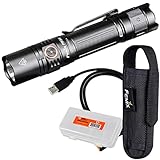
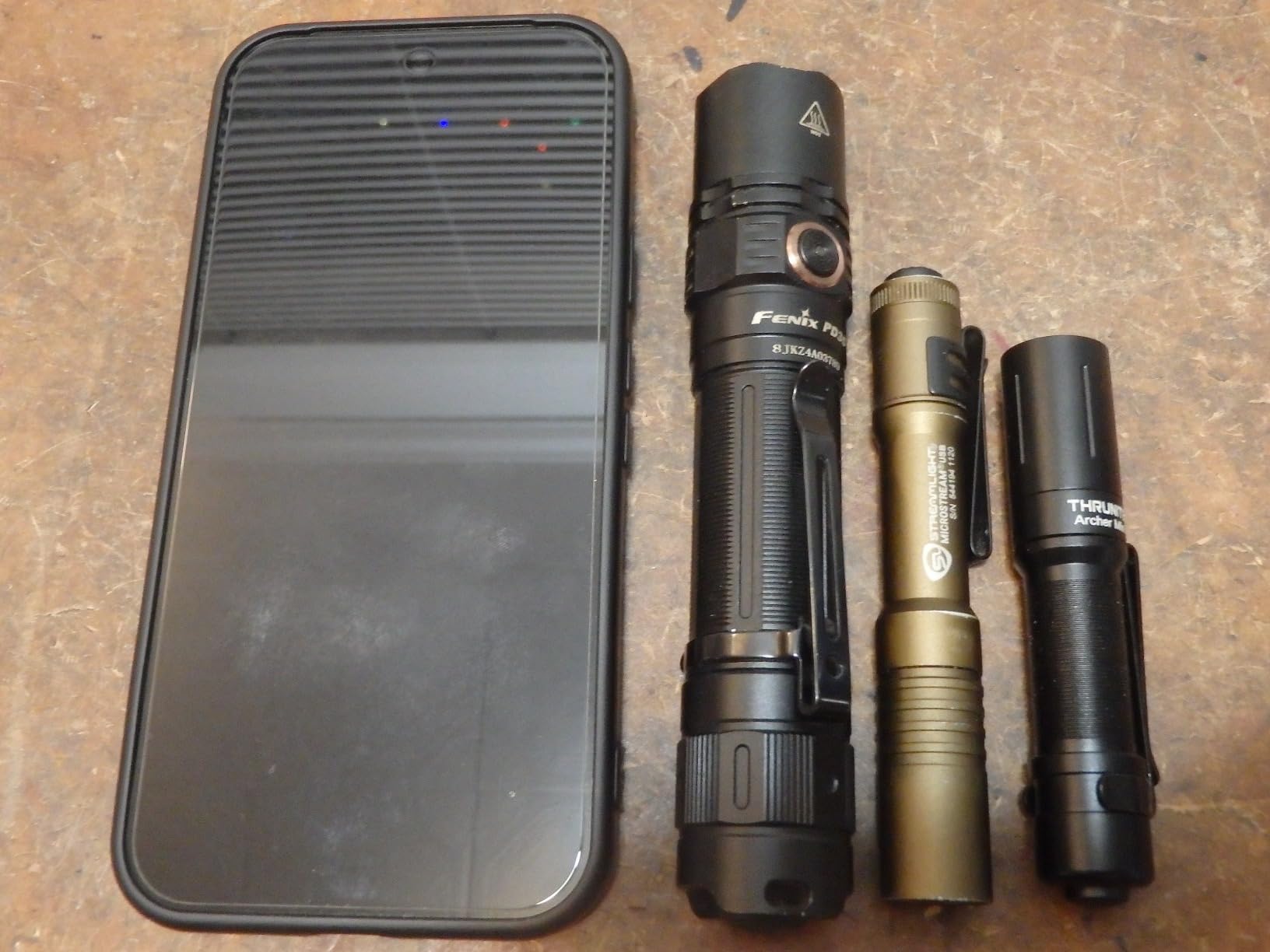
For most readers, this is the correct answer to which rechargeable tactical flashlight to buy. It is 5.28 inches long, 2.92 ounces, puts out 1,700 lumens with a listed 357-meter beam distance, and it uses a two-stage tactical tail switch with momentary activation. That is the combination the category is named after, and Fenix executes it cleanly.
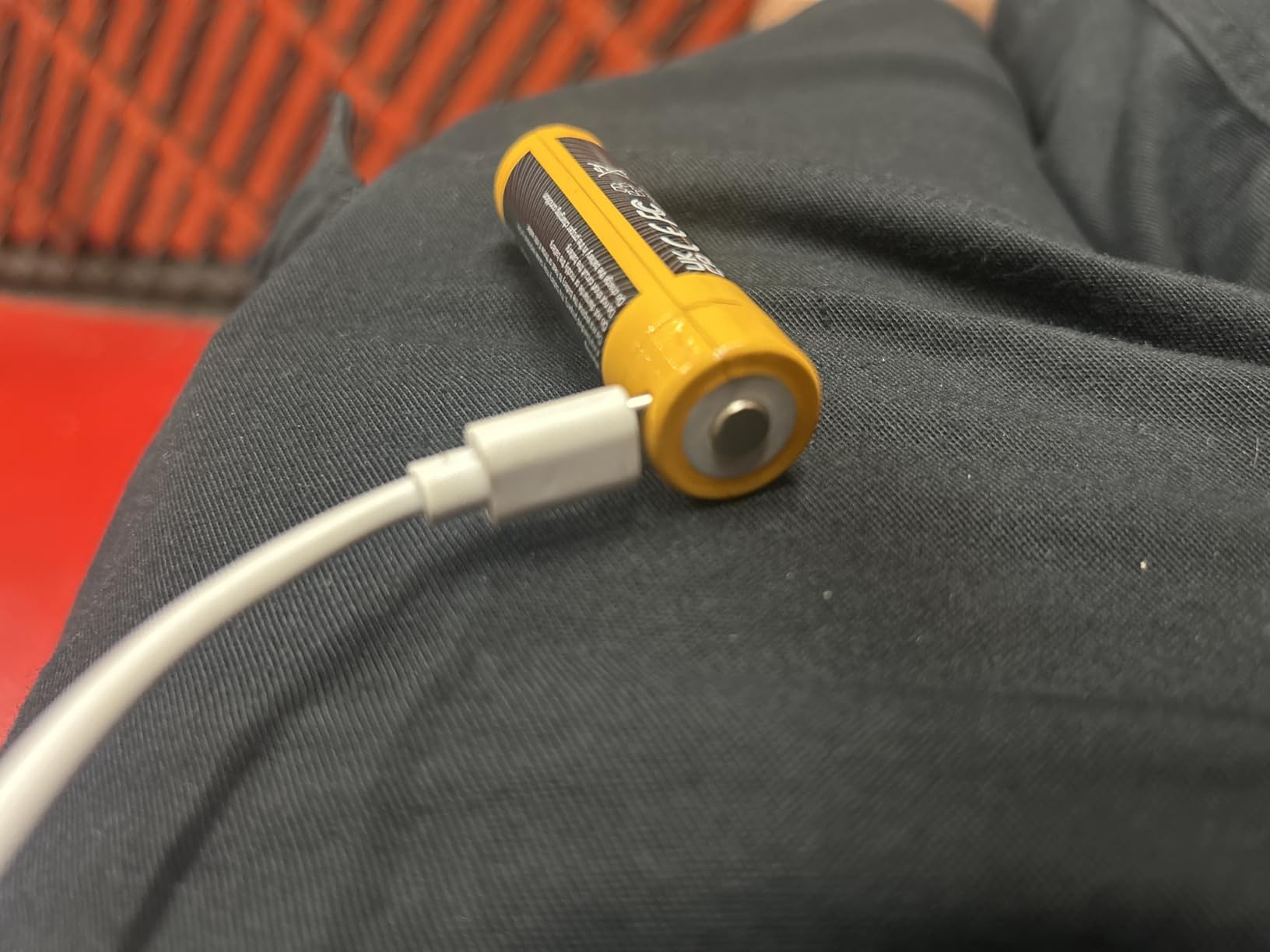
Charging is USB-C through a port built into the removable battery, which is the arrangement you want: the light recharges on any modern cable, and the pack still comes out rather than being sealed into the body. A metal side switch handles brightness levels and strobe, and the kit includes a holster, lanyard, steel pocket clip and cable.
1700 Lumens and a Two-Stage Tail Switch
Two-stage means half-press gives momentary on while held, and full-press latches constant. On a duty light or a home-defense light, momentary is the default you want, because it means the light turns off the instant you release it instead of announcing your position for the next several minutes. Output is 1700 lumens at maximum with a beam reaching 390 yards per the manufacturer, and the multiple brightness levels include a genuinely usable low mode that extends runtime when you are working up close.
The Removable Battery and a Real USB-C Port
Having the USB-C port in the removable battery solves two problems at once. You charge with a standard cable, and the pack is still a discrete part rather than adhesive-sealed into the shell. The anodized aluminum body has no rubber port flaps to crack or tear, which is a common failure point on sealed designs, and the included steel pocket clip, lanyard and holster mean you have real carry options from day one.
Watch Outs: Heat and a Low-Sitting Clip
The most common complaint is heat. Running turbo or high for extended periods makes the body uncomfortable to hold, which is the unavoidable consequence of driving that much current through a light this small. Plan to use the lower levels for extended work and reserve turbo for short searches.
The second note is the pocket clip position, which sits low on the body so roughly an inch protrudes when carried. That can catch on seat belts or jacket edges. The third is the tail switch boot, which owners report wearing out after long stretches of constant daily activation. None of these are serious, but all three are predictable and worth knowing before the first patrol or shift.
12. Nitecore MH12 Pro – Compact Long Throw With a Five-Year Warranty
Nitecore MH12 Pro Tactical Flashlight, 3300 Lumen high Lumen USB-C Rechargeable Long Throw Compact EDC Duty Light with Holster and Lumentac Organizer
3300 lumens
552 yd throw
USB-C
IP68
5 oz
5 year warranty
Pros
- 3300 lumens with over 552 yards of throw
- Built-in waterproof USB-C fast charging with level indicator
- Tail switch for on and off plus a separate mode button
- Aero-grade aluminum with HA III hard anodizing and IP68
- Complete kit with holster
- clip
- lanyard and organizer
Cons
- Multiple mode controls take practice to run one-handed
- Brightness level indicators are small and sit next to the mode button
- Integrated lithium polymer battery is not user replaceable
The MH12 Pro is the throw-per-ounce pick in this roundup. It delivers 3,300 lumens out to more than 552 yards in a 5.45-inch, 5-ounce body, which is a level of reach that normally implies a much larger instrument. Nitecore backs it with a five-year manufacturer warranty, the longest coverage in this group alongside the Coast lifetime warranty.
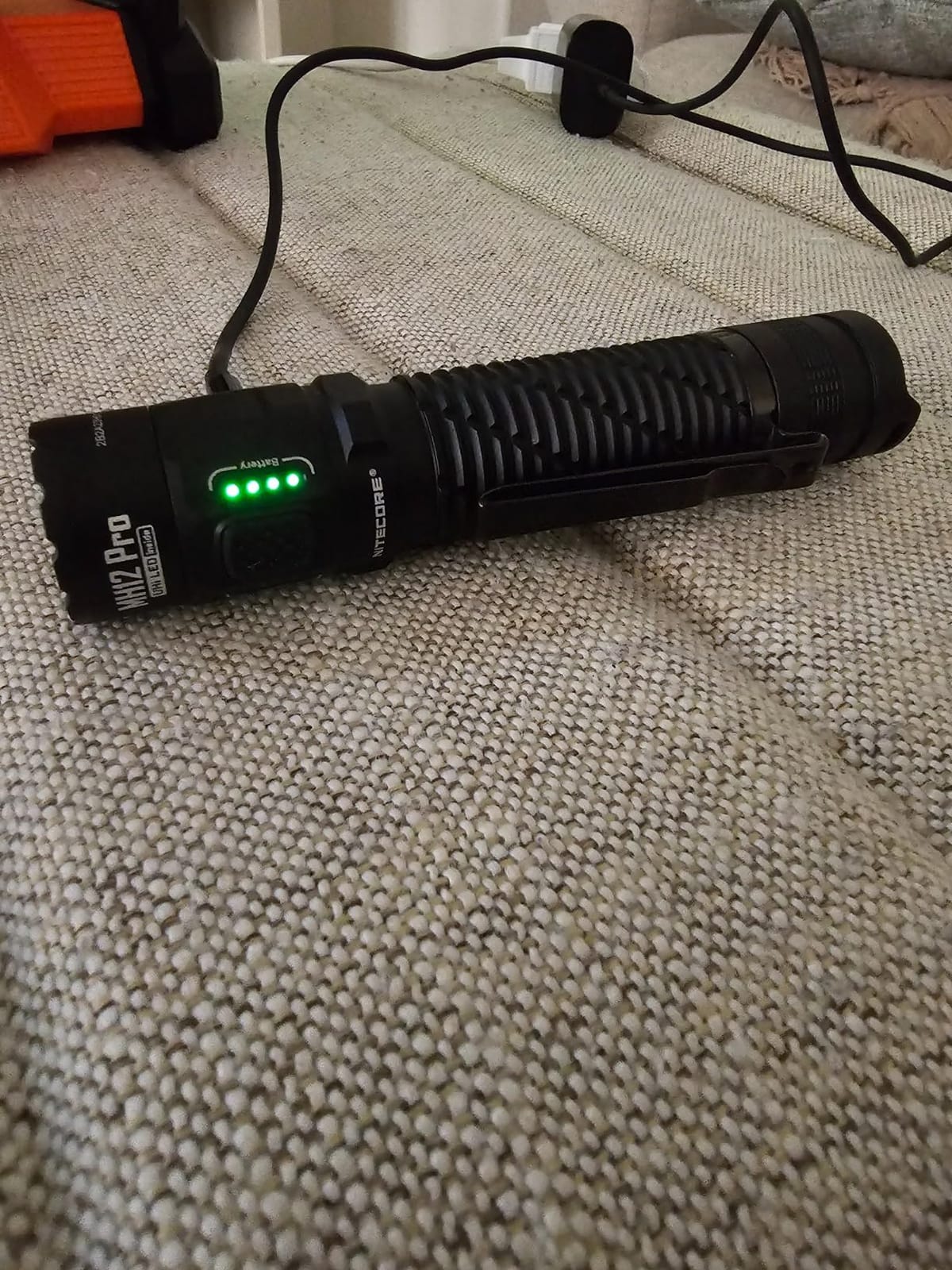
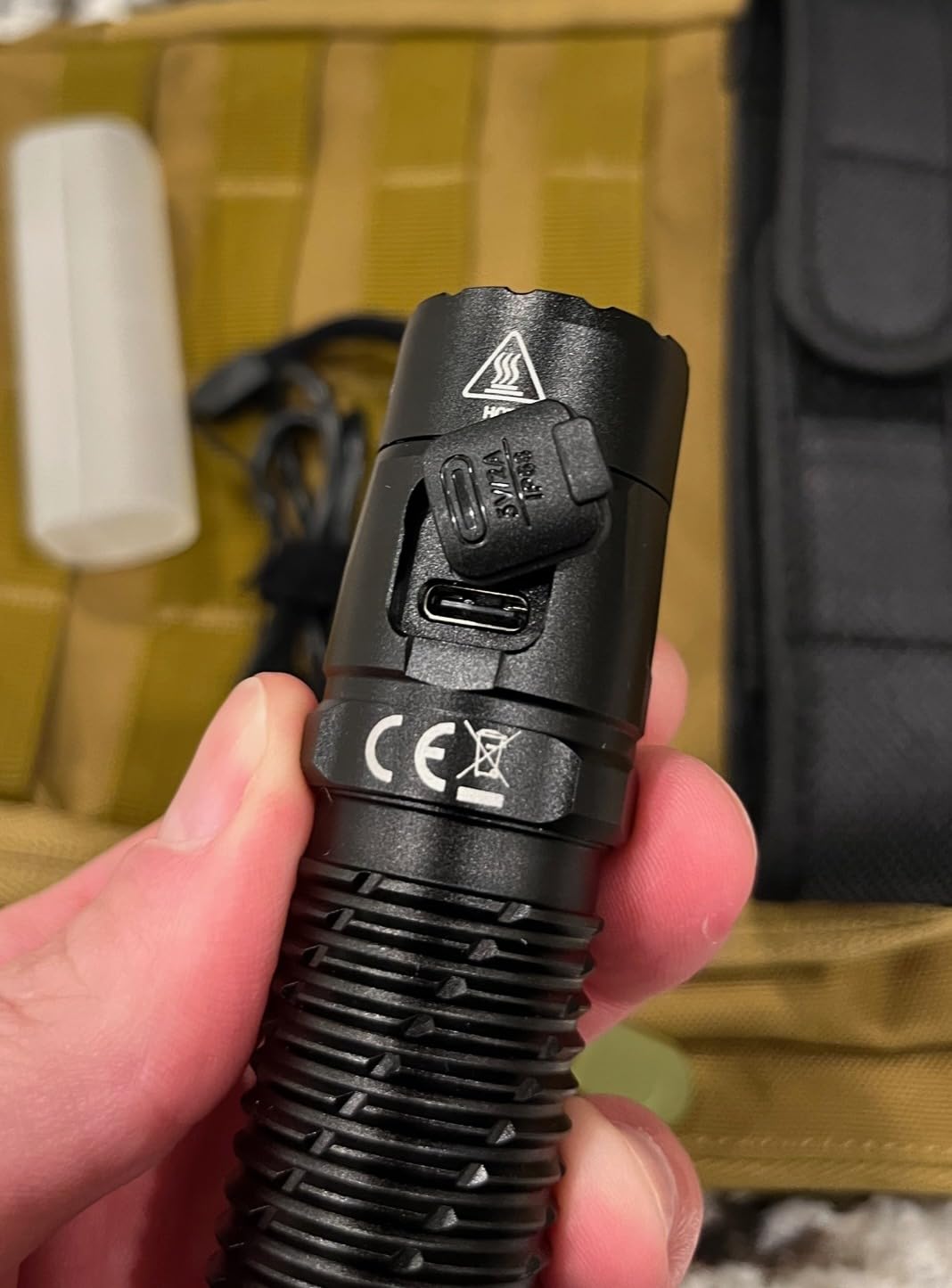
Charging is a built-in waterproof USB-C port with a power level indicator, so you are not opening the body or pulling a pack. Controls are split: a tail switch handles on and off, and a separate mode button steps through five brightness levels plus strobe, SOS and beacon signaling. The body is aero-grade aluminum with HA III hard anodizing, rated IP68 and impact resistant to one meter.
3300 Lumens With 552 Yards of Throw
That throw figure puts the MH12 Pro in property-check and search-and-rescue territory rather than duty-belt territory, and it does so in a package that still fits a jacket pocket. The five brightness levels let you drop down to sensible output when you are walking a trail instead of scanning a treeline, and owners rate it highly for the combination rather than any single number.
Built-In USB-C and a Five-Year Warranty
A waterproof built-in USB-C port is the pattern the rest of the category is moving toward. No port cover to fail, no cell to remove, and a power level indicator so you can check state before you leave. A full charge in roughly an hour and a half is normal for a pack this size.
Warranty coverage is the underrated story here. Five years, on a light with an integrated battery, covers roughly the realistic service life of the pack, which is a materially different ownership risk from a light sealed with a two-year warranty and a non-replaceable cell. The included holster, pocket clip, lanyard and organizer make it a complete kit rather than a bare light.
Who Should Skip This Light
Skip it if you need to find the light by feel alone. Splitting controls between a tail switch for on and off and a small side mode button for everything else means more to learn than the single-switch designs earlier in this list, and owners report the brightness indicators are small and sit right next to the mode button.
Also skip it if long-term cell serviceability is your priority. Like the EDC29, the battery is an integrated lithium polymer pack rather than a standard 18650. The Wurkkos TD02 gives up some output to keep cells swappable, and that is a trade worth making deliberately.
How Many Lumens Do You Actually Need?
For most tactical and home-defense use, 500 to 1,000 lumens is the right amount; go above 1,500 lumens for outdoor search and property lines, and 100 to 300 lumens is plenty for indoor everyday carry. Past 3,000 lumens you are buying capability you will rarely use, and past 5,000 you are buying a flashlight that gets hot in your hand.
Four tiers cover essentially every buyer in this category:
Tier 1, 100 to 300 lumens: indoor navigation, checking a breaker panel, walking to a car, finding a dropped key, preserving night vision. Under 300 is plenty for indoor EDC, and the 5-lumen Eco mode on the WUBEN L50 is a real night-vision tool at the bottom of this range.
Tier 2, 500 to 1,000 lumens: hallways, garages, yards, a room at arm’s length, close-range work. This is where the Streamlight ProTac 2L-X and the ProTac HL USB sit, and it covers most home-defense and light-duty professional use.
Tier 3, 1,500 to 3,000 lumens: outdoor search, property lines, trail navigation, hunting, lighting up a vehicle at 50 meters. The Fenix PD35 v3.0, PowerTac M5-G3, Wurkkos TD02 and Nitecore MH12 Pro all land here, and this is the range most buyers are actually shopping for.
Tier 4, 3,000 lumens and above: long-range identification, search and rescue, large-area illumination. The Nitecore EDC29 at 6,500 lumens is the extreme of this roundup. It is genuinely useful, but the turbo burst is short and the light is not a substitute for candela at distance.
One correction to a common assumption: brightness and distance are different measurements. Lumens are total light output, candela is how concentrated that light is, and lux is illumination at a given distance. A 1,000-lumen light with strong candela will outperform a 3,000-lumen flood at 200 meters. Read the candela and beam distance figures, not just the headline lumen number.
How to Spot Inflated Lumen Claims Before You Buy
Check three things, in this order. First, look for a complete FL1 spec block: lumens, candela, beam distance, runtime per mode and an IP rating. Second, read the candela figure, not the lumen figure. Third, see whether the cells are standard format.
1. Demand the full spec set. A legitimate tactical flashlight lists output, intensity, beam distance, runtime and water resistance together. A listing claiming 150,000 lumens usually gives you nothing else, because there is nothing else true to give.
2. Read candela and beam distance instead of lumens. A real 2,000-lumen tactical light typically measures somewhere between 5,000 and 25,000 candela with a beam distance in the 150 to 350 meter range. A genuine light cannot produce 150,000 lumens in a handheld tube; the numbers are physically incompatible.
3. Prefer standard cells and named brands. If the listing names a cell format such as 18650, 21700 or CR123A, there is a real engineering design behind it. If it names no cell and no manufacturer, you are buying a heat sink with an LED in it. Both shopping carousels for this keyword are packed with listings of exactly that kind, sitting near the bottom with 4.0 and 4.1 ratings across a thousand reviews.
One further tell: a missing IP rating. A 15-lumen phone flashlight is 20 to 30 times a typical household bulb, and a real high-end tactical light landing near 6,500 lumens is the practical ceiling for this form factor.
USB-C, Docks and Swappable Cells: The Decision That Outlives the Light
Charging method determines how long the flashlight is useful, and it is the part of the buying decision most people skip. Four approaches exist in this roundup, and only two of them age well.
USB-C in the body. The WUBEN L50, Wurkkos TD02, Streamlight ProTac HL USB, Fenix PD35 v3.0, Nitecore MH12 Pro, Nitecore EDC29 and OLIGHT PL X all charge over USB-C. One cable ecosystem, no lost proprietary charger, no perishable rubber port cover. This is where the category has landed and where you should default.
USB-C on a removable pack. The Fenix PD35 v3.0 is the interesting variant: the port lives in the battery, so the light charges on a standard cable and the cell still comes out. The Wurkkos TD02 goes further by using a standard 18650 you can replace with any cell you like.
Magnetic dock or proprietary connector. The PowerTac M5-G3 charges magnetically without removing the cell, which is elegant, and the cable is a braided design that resists kinking. Owners report the initiation step is finicky across different USB power supplies, so it needs more attention than a plain port.
Integrated sealed pack. The Nitecore EDC29, Nitecore MH12 Pro and OLIGHT PL X all ship with a built-in lithium polymer cell that cannot be replaced. When that cell degrades, the light is finished, regardless of how good the electronics were. This is the exact deal breaker enthusiasts raise most often, and it is the one worth planning around.
Whichever you pick, the maintenance routine is simple and worth stating. Top the light up before you store it rather than after. Do not charge a lithium-ion pack below freezing, because charging a cold cell risks plating lithium inside it, which permanently reduces capacity. If you carry a light into winter conditions, warm the body to room temperature before you plug it in. If you want a dependable charger for those cells and any other lithium gear, our guide to the best battery chargers for rechargeable batteries covers the features that actually matter for multi-cell charging.
Dual fuel is the pattern that removes the problem entirely. Both the PowerTac M5-G3 and the Coast XP11R will run on disposable cells as well as their rechargeable pack, which means a light bought today still works in a decade when the battery ecosystem has moved on. On a long trip or during an extended outage, that is worth more than any lumen figure on the box.
Tail Switches, Lockout and Night-Vision Modes
How you turn the light on matters as much as how bright it is. A tail switch is operable with gloves on, without looking, and without changing your grip on whatever else you are holding. That is why the Streamlight ProTac 2L-X, the Fenix PD35 v3.0, the PowerTac M5-G3 and the Nitecore MH12 Pro all put one on the tail, and why reviewers repeatedly single out switch feel as the top buying factor.
Momentary versus constant is the second half of the decision. Half-press for momentary means the light dies the moment you let go, which is the correct default for a duty or home-defense light. Full-press for constant is what you want when you are lighting up a work area with both hands occupied. Two-stage switches, as on the Fenix PD35 v3.0, give you both from one control.
Mode access is the third piece, and it is where cheap lights fail. A light that requires a double half-press to reach strobe, as the Wurkkos TD02 does, will not produce a strobe when your hands are shaking. Strobe and SOS are for signaling, which is a calm activity, but a light you cannot cycle blindly is a light you will fumble in the dark.
Lockout solves the other end of the problem. A flat EDC light in a front pocket with a tail switch will switch itself on in transit, drain the cell and give your position away. The Nitecore EDC29’s mechanical slide lock is the strongest answer in this roundup, because it is a physical mechanism rather than a press-and-hold software routine that fails when gloves are involved.
Finally, night vision. A 1-lumen mode, as found on the PowerTac M5-G3 in its Firefly setting, preserves the dark adaptation your rods build up over 20 to 30 minutes. Red and green outputs do the same thing without adding a second LED array. For home defense, a family camping or a night hike, that matters more than the top mode does. None of the twelve lights here carries a dedicated red LED, so a low-lumen white mode is your practical option.
Frequently Asked Questions
What tactical flashlight do the Navy SEALs use?
There is no single answer, and anyone telling you otherwise is guessing. Procurement varies by unit and by era, and both SureFire and Streamlight are widely fielded across special operations and supporting units, with other brands appearing in different contexts. The honest takeaway is that these organizations choose lights the way our picks do: for build quality, tail switch reliability and a replaceable power path. If you want the closest civilian equivalent to a professional standard issue light, the Streamlight ProTac 2L-X and the Fenix PD35 v3.0 are the two most defensible picks.
What is the best rechargeable flashlight brand?
For duty longevity, Fenix and SureFire are the names enthusiasts trust most, and Streamlight is close behind on warranty coverage and machined aluminum build. For everyday-carry ergonomics and flat form factors, Nitecore is widely considered the strongest option in this roundup. For feature density, Olight packs more modes and displays into a given size than anyone else. We would not endorse any unnamed marketplace brand regardless of the lumen figure on the listing.
How many lumens should a tactical flashlight be?
For most tactical and home-defense use, 500 to 1,000 lumens is the right amount. Go above 1,500 lumens for outdoor search and property lines, and 100 to 300 lumens is plenty for indoor everyday carry. Above 3,000 lumens you are buying capability you will rarely use, and above 5,000 the light gets hot in your hand and the turbo burst is short.
What is the best police tactical flashlight?
Public safety buyers prioritize the same five things: a tail switch that works with gloves and without looking, simple output control, dual fuel or a replaceable cell, a body that survives a duty belt, and a warranty that covers years of service. On those criteria, the Streamlight ProTac HL USB with its integrated USB-C charging and included holster is the most complete package here, and the Fenix PD35 v3.0 is the strongest pocket-carry alternative.
Can you charge a tactical flashlight with USB-C?
Most can, and that is now the category default. The WUBEN L50, Wurkkos TD02, Fenix PD35 v3.0, Streamlight ProTac HL USB, Nitecore MH12 Pro, Nitecore EDC29 and OLIGHT PL X all charge over USB-C from a standard cable. The PowerTac M5-G3 uses a magnetic connector instead, and the Energizer TacR-1000 ships with a USB cable for its lithium-ion pack. If you are buying multiple cells, our guide to the best battery chargers for rechargeable batteries covers what matters in a multi-bay charger.
How can you tell if a flashlight’s lumen rating is real?
Check for a complete ANSI FL1 spec block listing lumens, candela, beam distance, runtime per mode and an IP rating. Then read the candela figure, not the lumen figure, and confirm whether the light runs a standard cell such as 18650, 21700 or CR123A. A genuine high-end tactical light in this form factor lands somewhere around 2,000 to 6,500 lumens with thousands of candela; listings claiming 100,000 or 150,000 lumens with no candela figure and no IP rating are not describing a real light.
Which Rechargeable Tactical Flashlight Should You Buy?
Match the light to the role, not the other way around. If you carry a light every day and want it to disappear in a pocket, the Wurkkos TD02 gives you 2,000 lumens on cells you can replace, and the Nitecore EDC29 goes thinner if you will accept an integrated battery. If you need a tail switch you can find by feel, the Fenix PD35 v3.0 and the Streamlight ProTac 2L-X are the two most proven answers, and the ProTac 2L-X carries the largest review base in the group.
For duty and home defense on a budget, the WUBEN L50 is the strongest single purchase here, and the Energizer TacR-1000 covers kits and outages. For long-range identification, the Streamlight Stinger 2020 with 25,000 candela and the Nitecore MH12 Pro with 552 yards of throw are the tools built for it. For a rail, the OLIGHT PL X is the only purpose-built option. Before you buy, check the lumen claims against the three tests above, and buy the best rechargeable tactical flashlight you can actually recharge, not the brightest one in the listing.