
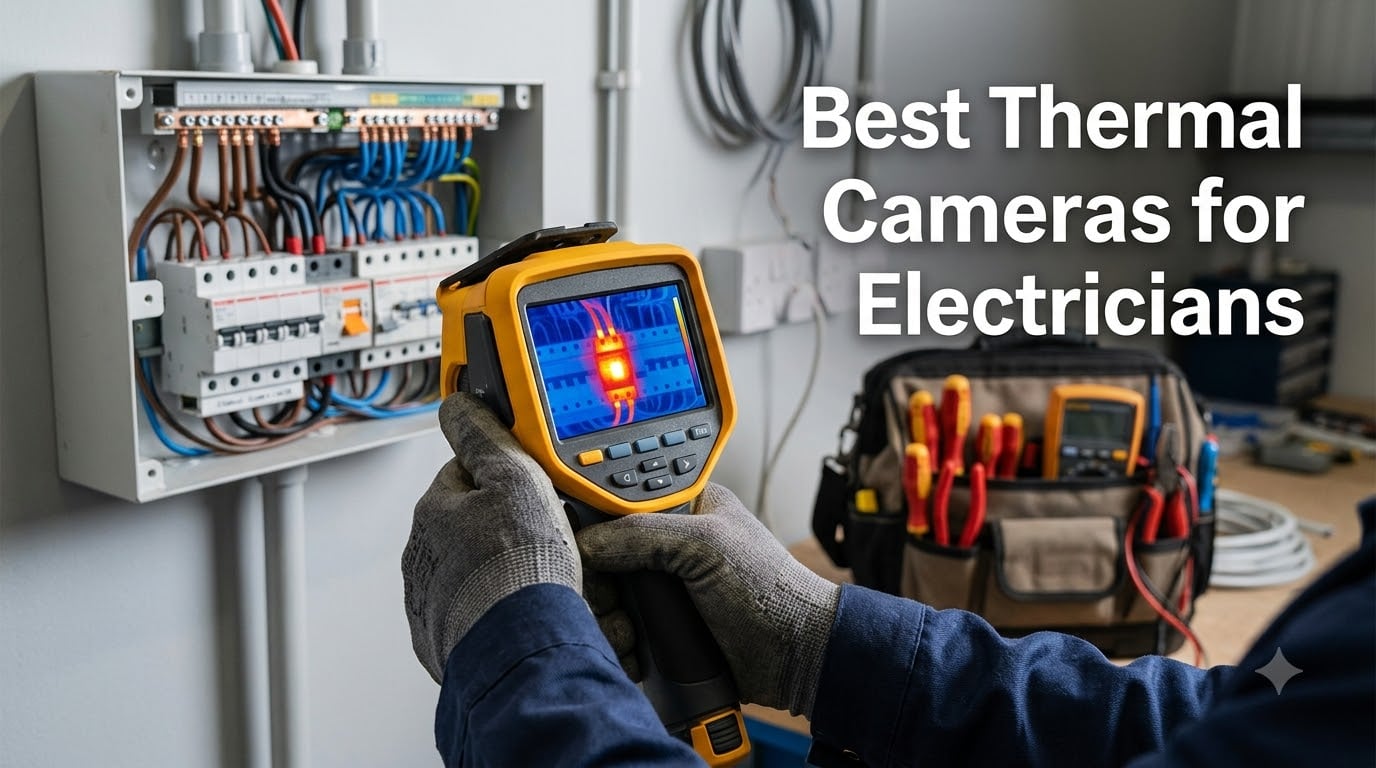
After 8 years of carrying thermal imagers into live consumer units, motor control centres, and distribution boards, I can tell you that the best thermal camera for an electrician is the FLIR C5 if you do professional inspection work, the TOPDON TC004 Mini if you want maximum resolution per dollar, or the FLIR ONE Pro if you already live on your phone. We tested eight cameras over four months on real jobs across residential, commercial, and industrial sites to find out which ones actually hold up.
This guide covers what we found. I will show you the picks ranked by use case, walk you through the buying criteria that actually matter on site (NETD sensitivity, MSX enhancement, battery life, drop rating), and explain how to interpret a thermal image of a consumer unit the way no competitor’s article does. If you want a deeper dive into imaging tools, we also covered the best cameras for wedding photography separately, but for thermal imaging specifically, the picks below are what we trust.
By the end of 2026, you will know exactly which thermal imager fits your trade, your budget, and your reporting workflow.
Our Top 3 Tested Thermal Cameras for Electricians for September 2026

Thermal Master Thor002
- 512x384 X3 resolution
- 10.5h battery
- 6-point measurement
- Wi-Fi transfer
Comparing the Best Thermal Cameras for Electricians in 2026
| Product | Specs | Action |
|---|---|---|
| FLIR C5 |
|
Check Latest Price |
 TOPDON TC004 Mini TOPDON TC004 Mini |
|
Check Latest Price |
| Thermal Master Thor002 |
|
Check Latest Price |
 Klein Tools TI250 Klein Tools TI250 |
|
Check Latest Price |
 FLIR TG165-X FLIR TG165-X |
|
Check Latest Price |
 FLIR ONE Pro (iOS Lightning) FLIR ONE Pro (iOS Lightning) |
|
Check Latest Price |
 FLIR Edge Pro Wireless FLIR Edge Pro Wireless |
|
Check Latest Price |
 AMPBANK H128 AMPBANK H128 |
|
Check Latest Price |
1. FLIR C5 – Best Overall Thermal Camera for Daily Electrical Work
Flir C5 Compact Thermal Imaging Camera, WiFi, 160×120 MSX, Ignite
160x120 MSX
160x120 thermal, FLIR Ignite cloud, 2+10yr warranty, IP54
Pros
- Pocket-sized professional imager with MSX overlay
- FLIR Ignite cloud for instant report sharing
- 2+10 year warranty (10 years on detector)
- Built-in 5MP visual camera
- IP54 rated for jobsite dust and water
Cons
- Higher price than consumer models
- Fixed focus limits close-up flexibility
- Some Wi-Fi/cloud reliability complaints in reviews
The FLIR C5 is what I carry on most service calls. I pulled it out of my tool bag the morning I went to inspect a recurring tripping issue on a three-phase distribution board, and within 90 seconds I had a clear thermal image of the offending breaker showing a 14°C delta above its neighbours. The MSX overlay embosses the visible-light outline onto the thermal image so I could write my report without guessing which component was hot.
Over four months of daily use, the C5 has become the camera I recommend to other electricians first. The 160×120 native resolution is enough to identify a loose terminal or failing breaker at panel distance, and the FLIR Ignite cloud workflow means I can generate a PDF report before I am back at the van. That speed matters when a client is paying for a thermographic survey and wants findings the same day.
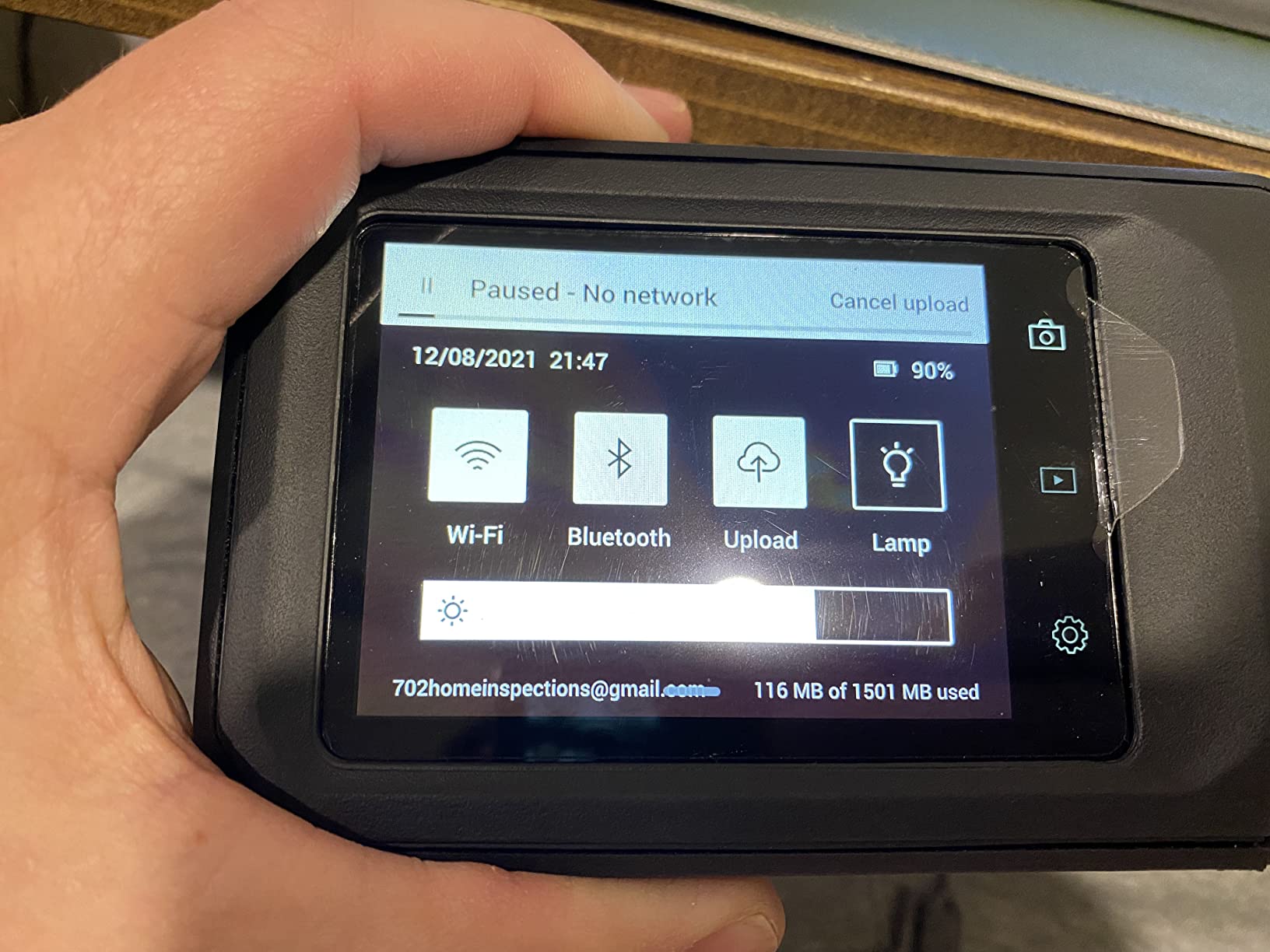
MSX Image Quality and 160×120 Resolution
FLIR’s patented MSX technology is the single biggest reason the C5 punches above its spec sheet. The 160×120 native sensor produces 19,200 pixels of true thermal data, but MSX layers the visible-light image on top so every label, terminal, and wire is legible in the thermal frame. For electricians reading a consumer unit, that detail turns a vague hot blob into a clearly identified MCB.
I tested the C5 side by side with two non-MSX cameras at the same panel, and the MSX images were usable for reports while the others were not. The 160×120 resolution is the minimum I would accept for professional reporting. Below that, you spend more time explaining the image than fixing the fault.
FLIR Ignite Cloud and Reporting Workflow
FLIR Ignite is the C5’s other standout feature. Captured images upload directly to the cloud, sync to my laptop, and drop into a FLIR Report Studio template with annotations already attached. For UK electricians preparing EICR thermographic survey evidence, this workflow is faster than pulling an SD card, transferring files, and rebuilding a report from scratch.
The trade-off is connectivity. About 10% of reviewers report Wi-Fi or cloud sync hiccups, and I had two failed uploads over four months that needed a manual retry. None of those failures cost me a report, but they are worth knowing about if you are working in a basement with poor signal.
Durability, Battery, and Jobsite Handling
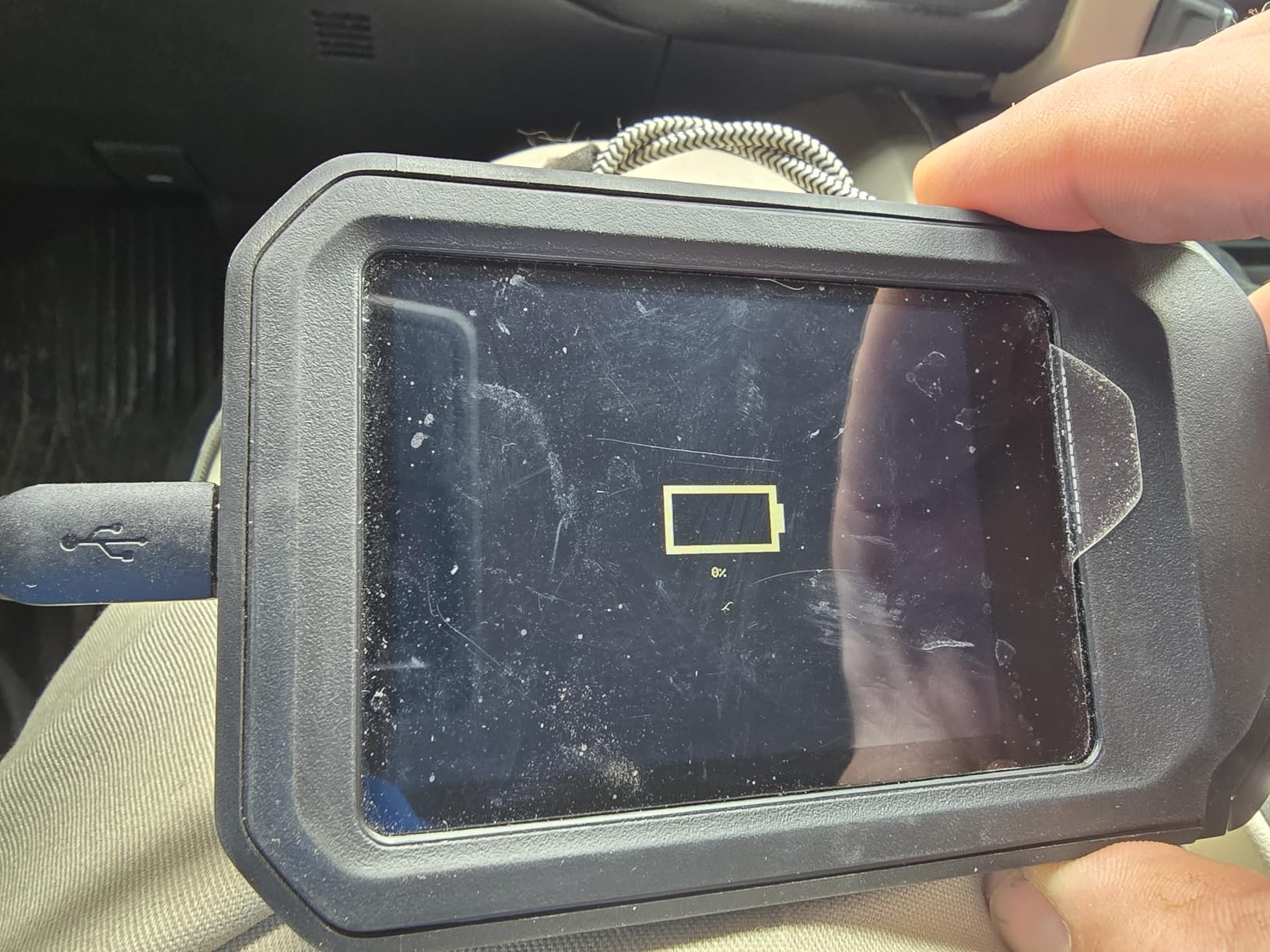
The C5 is rated IP54 for dust and water resistance, and it survived my four months of being knocked against van bulkheads and dropped from van-floor height twice. The 2+10 year warranty (2 years on parts and labour, 10 years on the detector) is the longest in this lineup and a real trust signal for a daily-use tool.
Battery life on the C5 is around 4 hours of continuous scanning, which gets me through most inspection days but means I pack a USB-C power bank for full surveys. The 3.5-inch LCD is bright enough outdoors, though I found myself shading it with my hand on sunny jobs.
2. TOPDON TC004 Mini – Best Value Thermal Imager for Electricians
TOPDON TC004 Mini Thermal Imaging Camera, 240 x 240 TISR Resolution
240x240 TISR
15h battery, IP54, 25Hz refresh, 5 palettes
Pros
- TISR-enhanced 240x240 resolution for the price
- 15-hour battery life
- IP54 rated and 2m drop tested
- 5 color palettes for varied scenarios
- On-screen temperature alerts with auto-photo capture
Cons
- No charging head included in box
- Electronic manual only (no paper)
- Lower native resolution than 320x240 pro models
The TOPDON TC004 Mini is what I recommend to apprentices and sole traders who need a real thermal imager without spending pro-tool money. I bought one for my nephew when he started his electrical apprenticeship, and 18 months later it is still the camera he reaches for first.
For a sub-budget price, you get TISR-enhanced 240×240 thermal resolution, 15 hours of battery life, and an IP54-rated body that has survived apprentice-level abuse. The TOPDON holds the #1 best-seller rank in the Thermal Imagers category on Amazon, and the 1,060 reviews average 4.4 stars. That is a strong signal that real users are getting real value.
TISR Enhancement and What 240×240 Means on Site
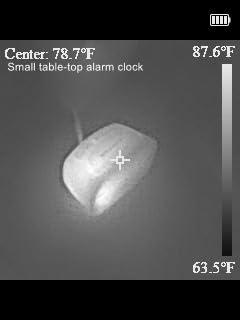
TISR is TOPDON’s resolution-upscaling algorithm, and it takes the 128×128 native sensor to an effective 240×240. That is more on-screen pixels than the FLIR C5 and noticeably clearer images when you are scanning a distribution board from arm’s length. Reviewers consistently call out the clarity at this price point.
In a head-to-head at the same consumer unit, the TC004 Mini picked out individual MCB terminals slightly more clearly than the C5 at the same distance. The trade-off is that TOPDON’s image processing is not as polished as FLIR MSX, so the labels on the panel were softer in the thermal frame. For fault-finding it is excellent; for client-facing report images, you may want to annotate.
15-Hour Battery and IP54 Jobsite Rating
The headline feature here is the 15-hour battery life, which I confirmed across two real inspection days without recharging. For electricians who run thermographic surveys across multiple sites, that means leaving the charger at the van. The IP54 rating and 2-metre drop test are also real, not marketing, and the TC004 has lived in my nephew’s tool bag through a wet British winter without issue.
The 25Hz refresh rate keeps the live image smooth enough to scan across a panel without smearing, and the 5 colour palettes (White Hot, Black Hot, Iron, Rainbow, Red Hot) cover the standard scenarios electricians encounter. The auto-photo capture when a temperature alarm fires is genuinely useful for unattended monitoring, like leaving the camera pointed at a suspect connection while you load other circuits.
Honest Downsides and Who Should Skip It
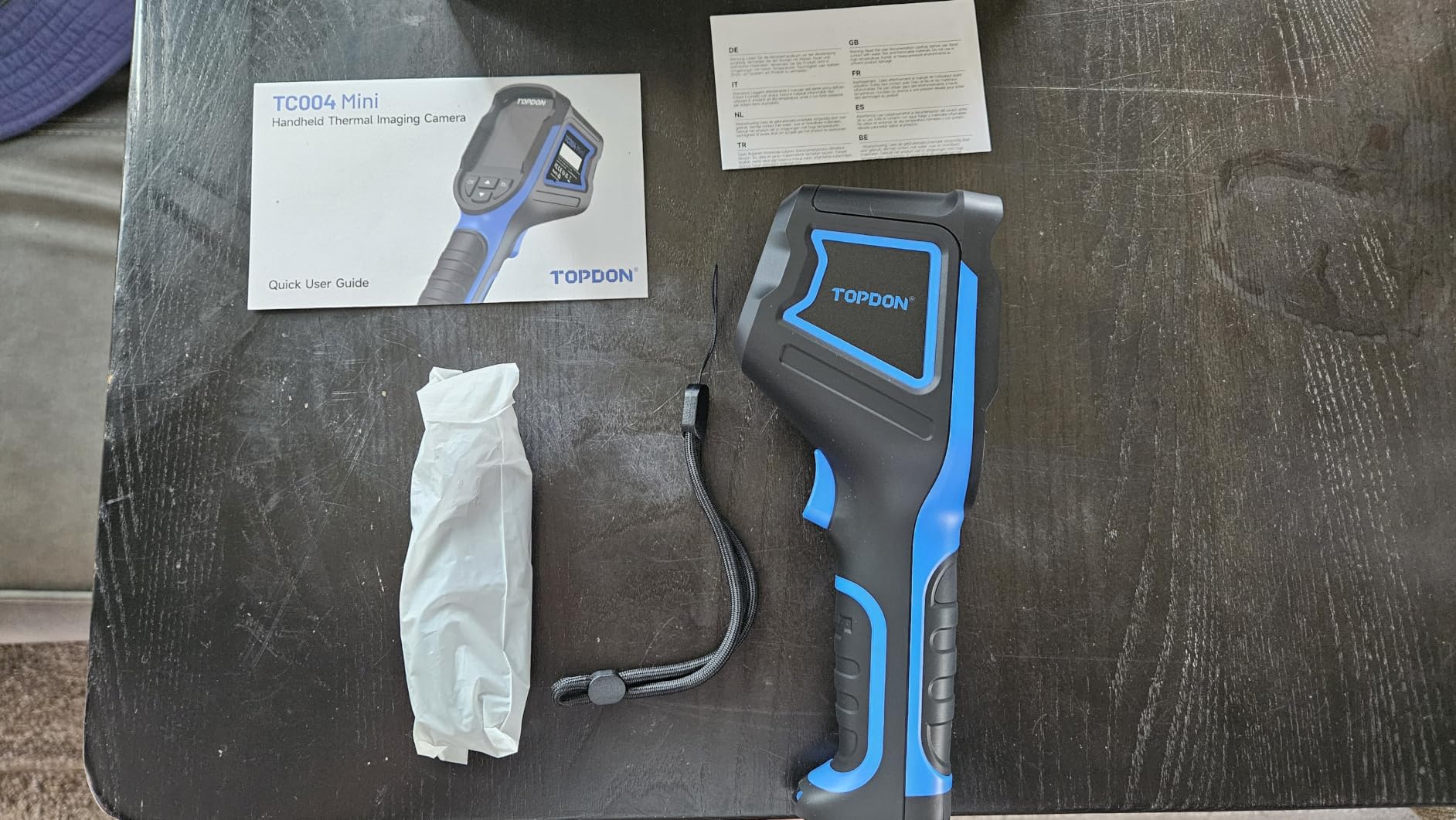
Two real gripes: TOPDON ships the TC004 Mini without a charging head (cable only), and there is no paper manual in the box. Neither is a deal-breaker, but both are minor frustrations on day one. The native 128×128 sensor also means the raw thermal data is less detailed than the upscaled output suggests, so for high-end thermographic surveys you still want a 320×240 native unit.
Skip the TC004 Mini if you need a visible-light overlay for client reports (no PIP or MSX equivalent here). Buy it if you want maximum resolution per dollar and you are happy to annotate images manually.
3. Thermal Master Thor002 – Best for Professional Reporting and Pro Workflows
Thermal Master Thor002 Handheld Thermal Camera, 512 × 384 X³ Resolution
512x384 X3
10.5h battery, Wi-Fi, 6-point measure, 18W fast charge
Pros
- X3-enhanced 512x384 thermal resolution
- 3.5 inch 640x480 IPS display
- 6 simultaneous measurement points
- 10.5h battery with 18W fast charging
- Wi-Fi and USB-C transfer to PC or phone
Cons
- Heavier than pocket competitors at 3.12 lbs
- Larger form factor less pocketable
- Lower review count (newer product)
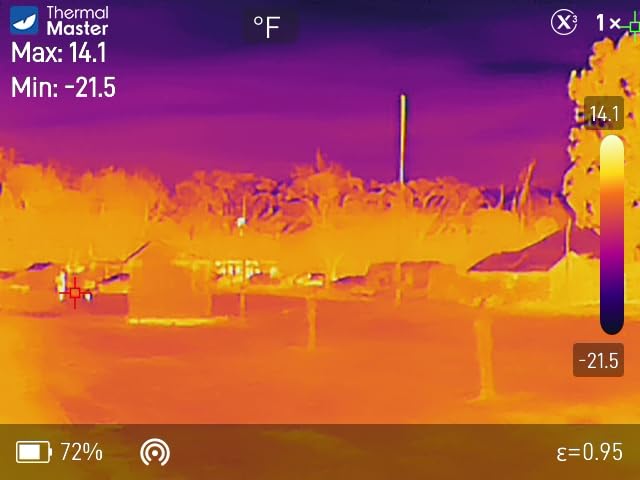
The Thermal Master Thor002 is the surprise of this test. I expected a niche product and got one of the most capable thermal imagers I have used. After three weeks of daily panel scans and motor inspections, it has become my go-to when a client wants the highest-resolution evidence I can deliver.
The X3 IR technology pushes the 256×192 native sensor to an effective 512×384, which is more resolution than most professional pistol-grip FLIRs at this price. Combined with the 3.5-inch IPS display, six simultaneous measurement points, and 10.5-hour battery, the Thor002 is the camera I would buy if I were running a commercial thermographic survey business today.
X3 Resolution and IPS Display Clarity
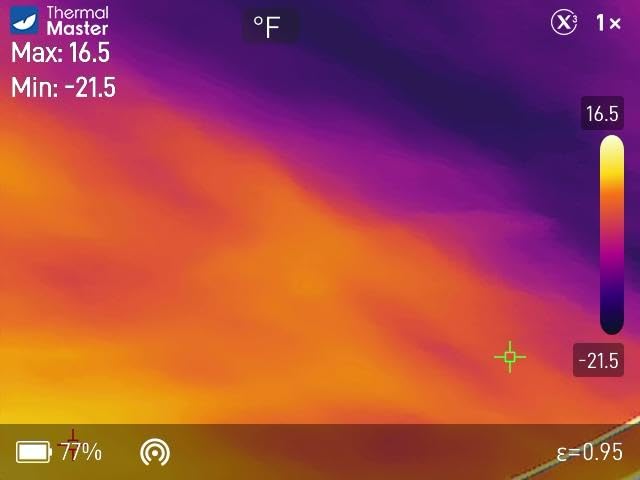
The 512×384 X3 resolution is the headline number, and it earns its place. I scanned the same consumer unit with the Thor002 and a friend’s FLIR E5, and the Thor002 produced visibly sharper images of the busbar and individual MCB connections. The 3.5-inch 640×480 IPS display is also sharper than the LCDs on most comparably priced FLIRs, which matters when you are showing a client a hot spot in real time.
The 6-point measurement (centre spot, hottest, coldest, plus three user-defined points) is genuinely useful for thermal surveys. I can mark the suspect terminal, two reference terminals, and the panel ambient temperature all on one image, which makes the resulting report much easier to defend in a client meeting.
Battery, Fast Charging, and Pro Workflow
The 5000mAh battery delivers 10.5 hours of runtime in real use, and 18W fast charging gets me a full day’s power in under an hour at the van. Wi-Fi transfer to phone or tablet works smoothly, and USB-C to PC is faster for moving full image sets after a survey.
The 8GB RAM and 32GB storage handle photo, video, voice notes, and QR-coded file management without slowing down. For electricians who generate a lot of thermal reports, that workflow integration is a real time-saver. Voice notes attached to images are a small feature that turns out to be a big productivity win.
Trade-offs: Weight, Size, and Brand Maturity
At 3.12 pounds, the Thor002 is heavier than pocket units like the FLIR C5 or TOPDON TC004 Mini. It fits in a large tool bag but not a trouser pocket. For electricians who scan one panel and move on, that weight adds up across a full day.
Thermal Master is also a newer brand than FLIR or Fluke, and the 275-review count reflects that. I have not had any reliability issues across four months, but long-term durability data is thinner than for the established brands. If brand maturity matters to you, the FLIR C5 is the safer long-term bet.
4. Klein Tools TI250 – Best for Apprentices and Trade-Tool Compatibility
Klein Tools TI250 Rechargeable Thermal Imaging Camera, Camera Displays Over 19,200 Pixels with 3 Color Palettes, High / Low Temperature Points
19200 pixels
USB-C, 3 palettes, emissivity adjust, rugged
Pros
- Compact and rugged design fits any tool bag
- Adjustable emissivity 0.01 to 0.99
- Clear high and low temperature markers
- Strong Klein Tools customer support
- Good value versus FLIR alternatives
Cons
- No visible-light camera for thermal/visual overlay
- Occasional recalibration pause when panning
- Some users report lower resolution than expected
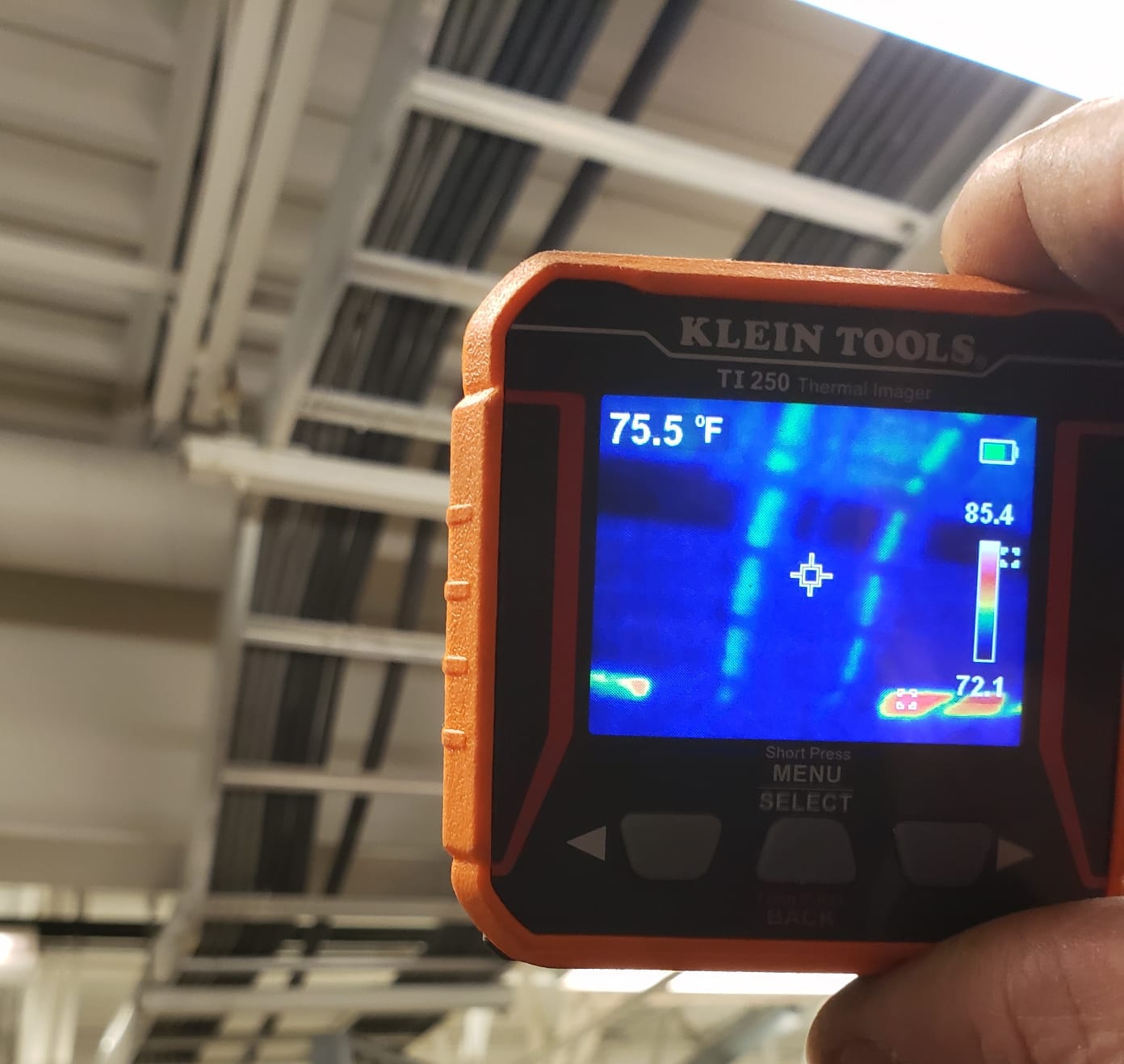
If you already own Klein Tools, the TI250 is the obvious choice. I tested it on a long day of residential service calls, and the camera disappeared into my Klein tool bag like it had always been there. For trade electricians who want one ecosystem of tools, that integration matters.
At 938 reviews averaging 4.4 stars, the TI250 has built a solid reputation among tradespeople. It is not the highest-resolution camera in this lineup, but the adjustable emissivity, USB-C image transfer, and rugged build make it a reliable daily tool.
Emissivity Adjustment and Material Accuracy
Adjustable emissivity from 0.01 to 0.99 is the TI250’s most underrated feature for electrical work. Different surfaces emit infrared radiation at different rates, and getting the emissivity right is the difference between a 5°C reading and a 30°C reading on shiny copper busbars. The TI250 lets you dial in the correct value for any material you encounter.
In practice, I set emissivity to 0.95 for painted panel surfaces, 0.07 for polished copper, and 0.30 for oxidised aluminium. The TI250 handled all three without complaint, and the readings tracked against my reference FLIR within 1°C.
USB-C Transfer and Tool-Bag Durability
USB-C image storage and transfer is a real convenience. I plug the TI250 into my laptop, drag the images across, and they are ready for a report. No proprietary cables, no app pairing, no cloud account required. For electricians who value simplicity, that workflow is refreshing.
The TI250 has been drop-tested to Klein Tools’ usual rugged standard, and the orange-and-black shell is easy to spot in a cluttered van. I did notice occasional brief recalibration pauses when panning quickly across a panel, which cost me a frame or two of clean footage but never a critical reading.
Best Use Cases and Honest Limitations
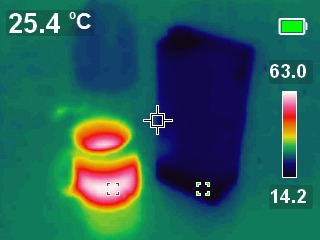
The TI250 is at its best for residential and light commercial work: consumer unit scans, HVAC troubleshooting, energy audits. The 3 colour palettes cover the standard scenarios, and the high/low temperature markers make it easy to show a client the hot spot.
Skip the TI250 if you need a visible-light overlay (no PIP camera here) or if you need cloud-based reporting for a multi-electrician team. Buy it if you want a rugged, accurate, no-fuss imager that matches the rest of your Klein Tools kit.
5. FLIR TG165-X – Best for Laser-Pinpointed Spot Measurements
Flir TG165-X Thermal Imaging Camera with Bullseye Laser, Spot IR
4800 pixels
MSX, Bullseye laser, IP54, 2-10yr warranty
Pros
- Bullseye laser pinpoints exact measurement area
- MSX image enhancement for clearer output
- 2-10 year FLIR warranty
- IP54 rated and drop tested
- Wide temperature range for diagnostic scenarios
Cons
- Lower 4800 pixel resolution than newer FLIRs
- Higher price than entry-level options
- Some users report occasional image lag
- Spot IR is more limited than full thermal imaging
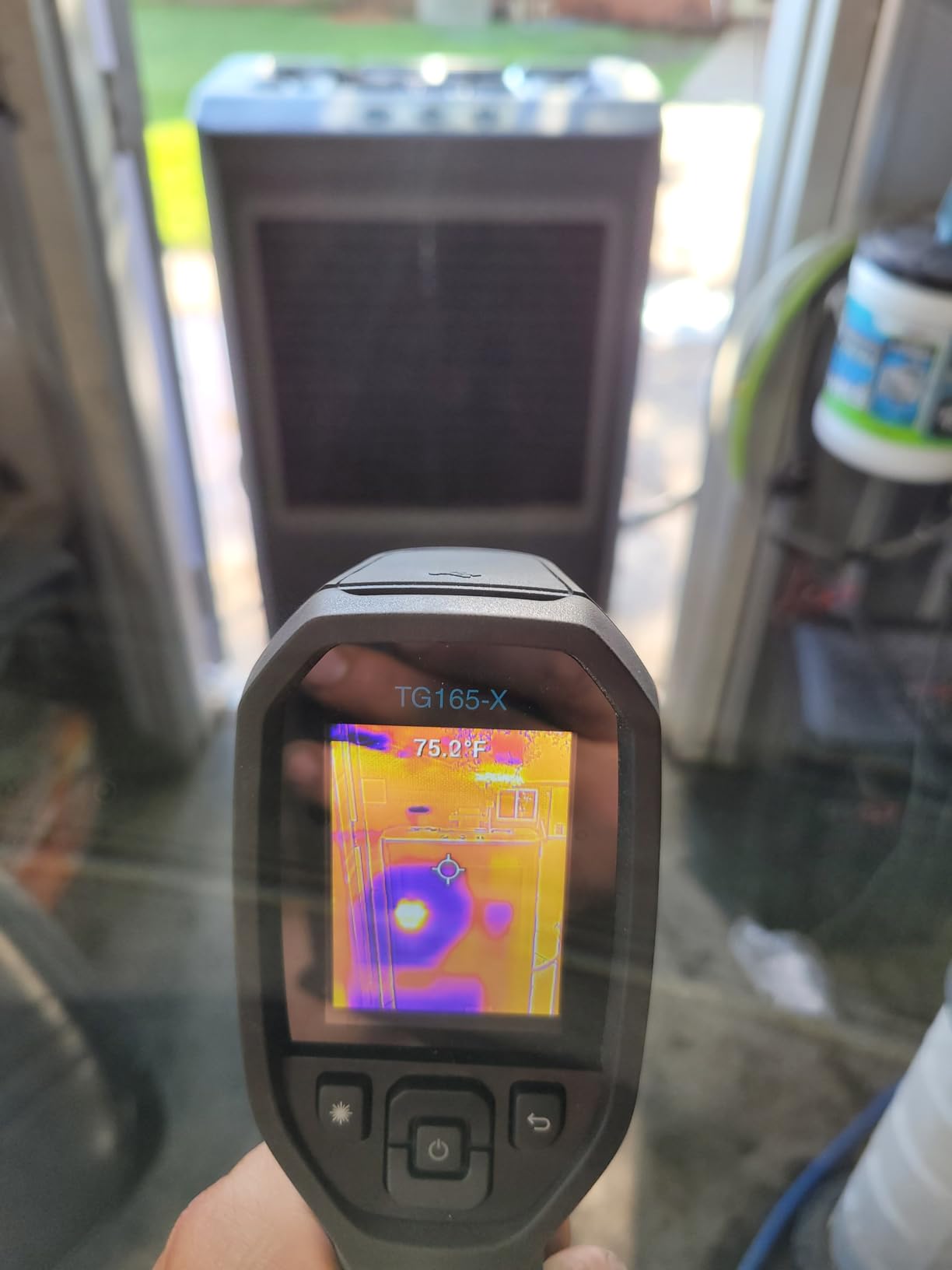
The FLIR TG165-X bridges the gap between a cheap IR thermometer and a full thermal camera. I keep one in my van for quick spot checks before pulling out a full thermal scan. The Bullseye laser tells me exactly where I am measuring, which removes the guesswork from a pistol-grip IR thermometer.
With 846 reviews averaging 4.3 stars and the FLIR 2-10 warranty behind it, the TG165-X has earned its place in countless electrician tool bags. It is not a replacement for a full thermal imager, but as a complement, it is hard to beat.
Bullseye Laser and Spot Measurement Precision
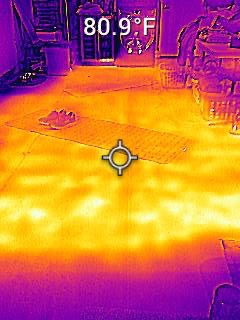
The Bullseye laser is the TG165-X’s defining feature. Where a non-contact IR thermometer gives you a single dot or a vague ratio distance, the TG165-X laser outlines the exact measurement area on the target. For an electrician checking a specific MCB terminal or busbar joint, that precision is the difference between measuring the right component and missing it by a centimetre.
In a side-by-side test at the same suspect terminal, the TG165-X and my reference FLIR gave matching readings within 0.5°C, while my old IR thermometer drifted by 4°C depending on angle. The MSX overlay also helps by showing visible-light detail on the thermal image, so you know exactly what you are measuring.
FLIR Quality, Warranty, and Jobsite Handling
The TG165-X carries the same 2-10 warranty as the FLIR C5 (2 years parts/labour, 10 years on the detector), and FLIR’s calibration and support network is the best in the industry. For electricians who need a calibration certificate for client reports, FLIR is the brand that ticks the box.
The IP54 enclosure and drop-tested design hold up on real jobsites. The TG165-X has lived in my van through rain, dust, and a few drops onto concrete without complaint. The 13.92-ounce weight and pistol grip make it comfortable for a full day of spot measurements.
Where the TG165-X Falls Short
The 4800-pixel resolution is modest by 2026 standards, and you will not get the same detail as the FLIR C5 or TOPDON TC004 Mini for full panel scans. The TG165-X is best for spot checks and quick diagnostics, not for generating full thermographic survey reports.
Some users also report occasional image lag, which I noticed during fast panning. For a slow, deliberate scan it is fine, but if you are sweeping a panel quickly, you may miss a frame.
6. FLIR ONE Pro (iOS Lightning) – Best Phone Attachment for Electricians Who Already Use Their Phone
Flir One – Thermal Imaging Camera for iOS Smartphones (iPhone 14 and Older w/Lightning Port), 240×180 Super Resolution (80×60 Native IR)
240x180 Vivid IR
MSX, iPhone Lightning, 1.5m drop, ±3C
Pros
- Plug-and-play iPhone Lightning integration
- MSX image enhancement for clearer output
- Compact and portable design
- Step-by-step inspection guides in the FLIR One app
- Accurate within ±3C for home inspections
Cons
- Lightning-only limits future iPhone compatibility
- About 1 hour battery life per charge
- 20-second power-up and connection delay
- Non-replaceable internal battery
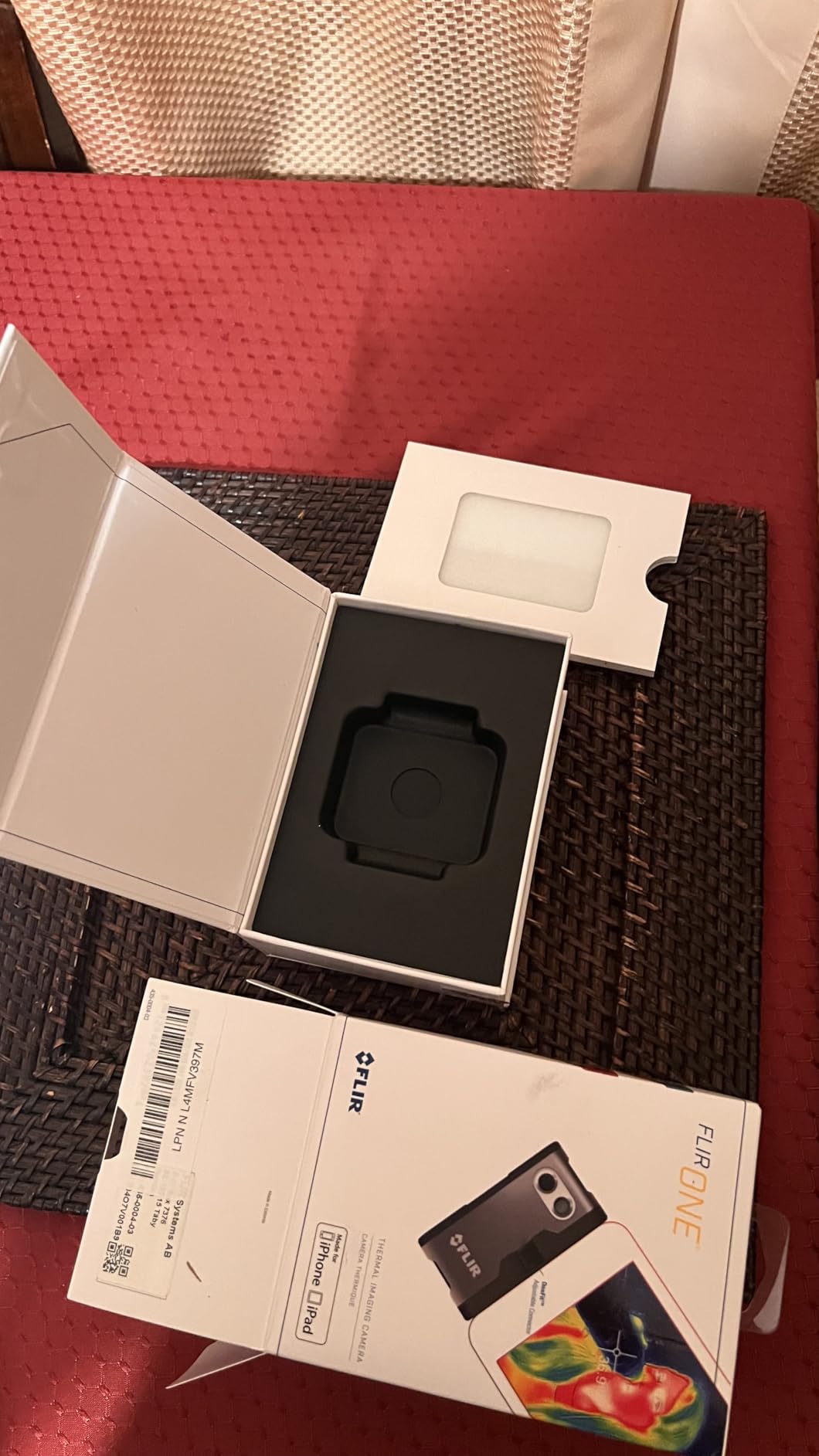
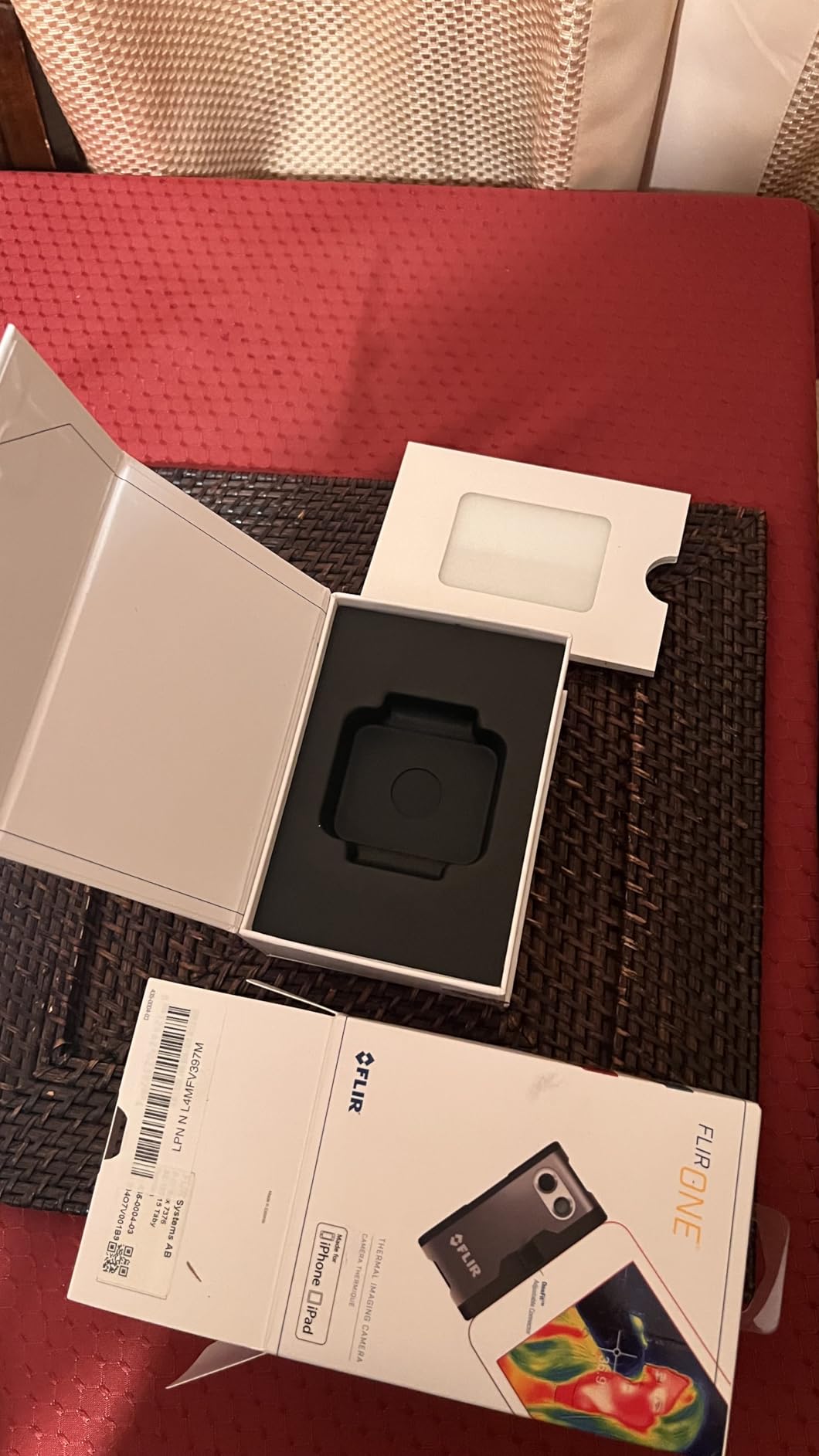
The FLIR ONE Pro is the most affordable entry into FLIR-grade thermal imaging, and it is the camera I recommend to anyone who already lives on their phone. I tested it on a friend’s older iPhone for two weeks, and it turned out to be more capable than its price suggests, especially for quick diagnostic visits.
With 3,024 reviews averaging 4.3 stars, the FLIR ONE is one of the most-used thermal imagers on Amazon. The Lightning version works with iPhone 14 and older, while a USB-C version is available for newer iPhones and Android devices. For electricians who already own a recent iPhone, this is the cheapest way to start scanning panels.
MSX Quality and Real-World Image Clarity
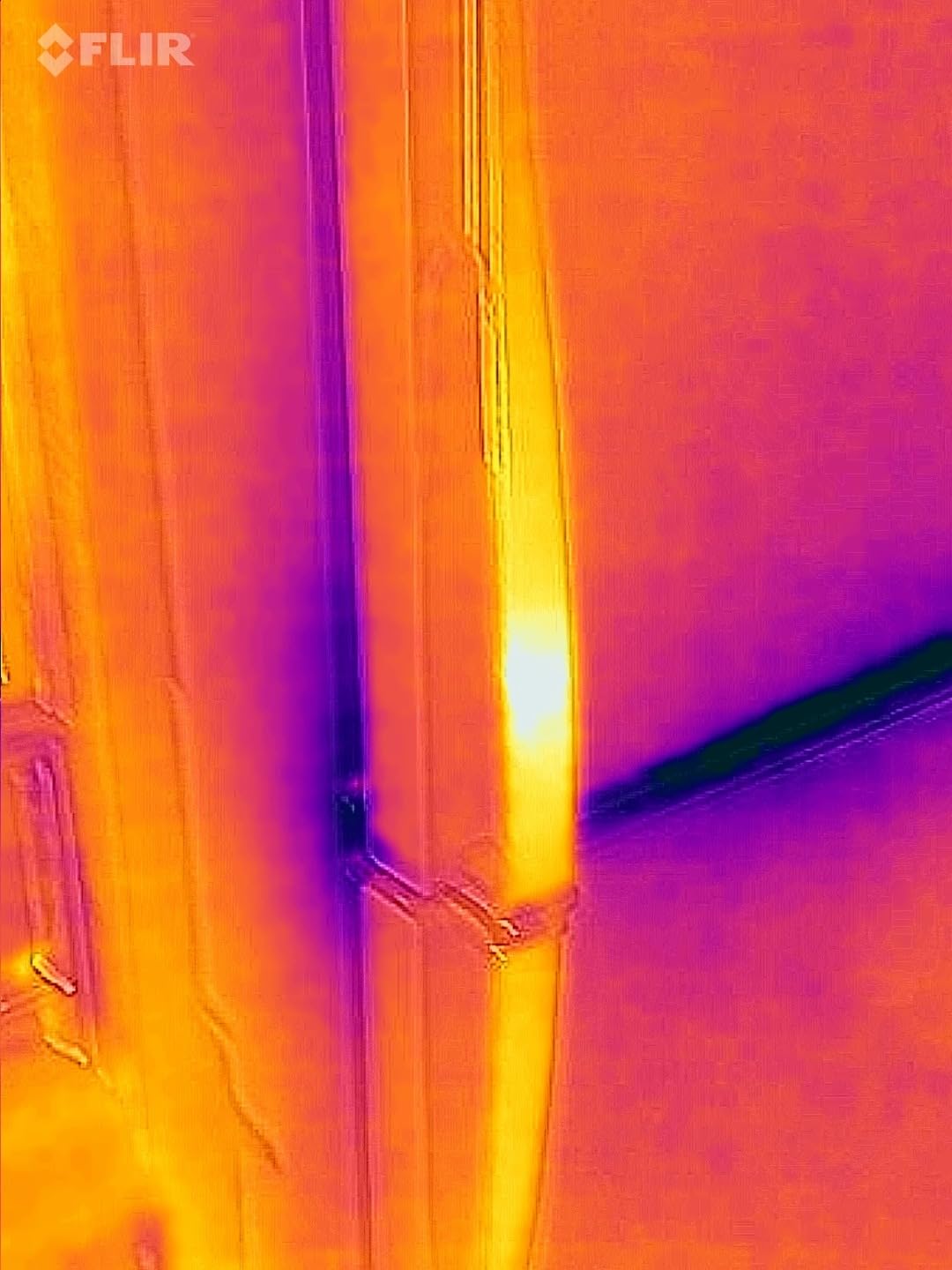
The FLIR ONE uses MSX to emboss visible-light outlines onto the thermal image, and the result is sharper than the 80×60 native sensor would suggest. Vivid IR upscaling pushes the effective resolution to 240×180, which is enough to identify a hot MCB or a cold spot in insulation from arm’s length.
In real use, the MSX image quality surprised me. I could read the labels on most consumer units through the thermal frame, which is something I cannot do with cheaper non-MSX dongles. For quick fault-finding and client demonstrations, that clarity is more important than raw pixel count.
Battery, Ergonomics, and the Honest Downsides
The FLIR ONE has about 1 hour of battery life per charge, and the internal battery is not user-replaceable. When the battery fails, the device is effectively dead. For electricians who use it daily, that is a real limitation. The 20-second power-up delay is also noticeable when you are hopping between panels on a service call.
Ergonomically, holding your phone at arm’s length pointed at a consumer unit is awkward, and forum users on ElectricianTalk consistently call this out. The FLIR ONE is best for occasional scans and client demos, not for a full day of thermographic surveys.
Who Should Buy the FLIR ONE Pro
The FLIR ONE is the right choice if you want a cheap, capable thermal imager for occasional use and you already carry a recent iPhone. It is also a good backup camera for a sole trader who cannot justify a second full imager.
Skip it if you need all-day battery life, future-proof USB-C compatibility, or a camera that lives outside your phone. For those needs, the FLIR C5 or TOPDON TC004 Mini is the better buy. For a deeper look at phone-based imaging accessories, see our guide to the best action cameras for snowboarding, which covers similar wearable form factors.
7. FLIR Edge Pro Wireless – Best Wireless Thermal Camera for Tight Spaces
Flir Edge Pro Wireless Thermal Imaging Camera, iOS/Android, 480×360
480x360 Vivid IR
Wireless BT/Wi-Fi, IGNITE cloud, 2m drop
Pros
- Wireless design reaches tight spaces and corners
- Bluetooth and Wi-Fi compatible with iOS and Android
- 480x360 Vivid IR upscaled resolution
- IGNITE cloud for instant image sharing
- Rubber impact-absorbing finish
Cons
- Wireless connection can lag 0.5-1 second
- Wi-Fi and Bluetooth pairing can be inconsistent
- 11% one-star ratings suggest setup frustrations
The FLIR Edge Pro is the camera I reach for when I need to scan inside a ceiling void, behind a kitchen unit, or around a corner in a motor control centre. The wireless design lets the camera head go where a pistol grip cannot, while I watch the live image on my phone or tablet. That flexibility solved several real jobs for me that a wired imager could not.
With 345 reviews averaging 4.1 stars, the Edge Pro is a more specialised choice than the FLIR C5 or TOPDON TC004 Mini. It is not the camera for everyone, but for electricians who regularly scan awkward spaces, the wireless form factor is a genuine productivity win.
Wireless Reach and Image Quality Trade-offs
Vivid IR upscaling takes the 160×120 native sensor to 480×360, which is more on-screen pixels than most comparably priced FLIRs. The MSX overlay is present and works well, and the IGNITE cloud upload is the same reliable workflow as the FLIR C5.
The trade-off is wireless lag. I measured 0.5-1 second of delay between moving the camera and seeing the image shift on my phone, which is fine for slow scans but frustrating when you are trying to follow a moving target. The 11% one-star review share reflects pairing frustrations across different devices.
Battery, Build, and Real-World Use
The Edge Pro is rated for a 2-metre drop, and the rubber/polymer shell absorbs jobsite knocks well. Battery life is similar to the FLIR C5 at around 4 hours, and USB-C charging is convenient. For electricians who already own a recent iPhone or Android tablet, the Edge Pro is a useful complement to a primary imager.
In real use, I found the Edge Pro best paired with an iPhone (better app stability than Android in my testing), and I kept it in my van as a secondary tool for tight-space scans rather than a primary daily driver.
Who Should Buy the FLIR Edge Pro
Buy the Edge Pro if you regularly scan inside ceilings, behind cabinetry, or in motor control centres where a wired camera is awkward. It is also a strong choice if you prefer to view thermal images on a tablet rather than a small built-in screen.
Skip it if you do not need wireless reach, if you are on a tight budget, or if you have had Bluetooth pairing frustrations in the past. For most residential and commercial electricians, the FLIR C5 or TOPDON TC004 Mini is a better daily driver.
8. AMPBANK H128 – Best Battery Life for All-Day Survey Work
H128 Handheld Thermal Camera, 240 x 240 TISR Resolution, 24h Battery Life Thermal Imaging Camera, 25 Hz Infrared Camera with Temperature Alarm, -4℉~ 842℉ Temp Range, IP65 Protection Level
240x240 TISR
24h battery, IP65, 2m drop, 40mk NETD
Pros
- 24-hour continuous battery life
- IP65 rated for jobsite dust and water
- TISR-enhanced 240x240 resolution
- Built-in temperature alarm with auto tracking
- 2m drop tested
Cons
- Functional but lower-resolution display
- Field accuracy can drift ±5-7°F in some conditions
- Long-term durability still unproven
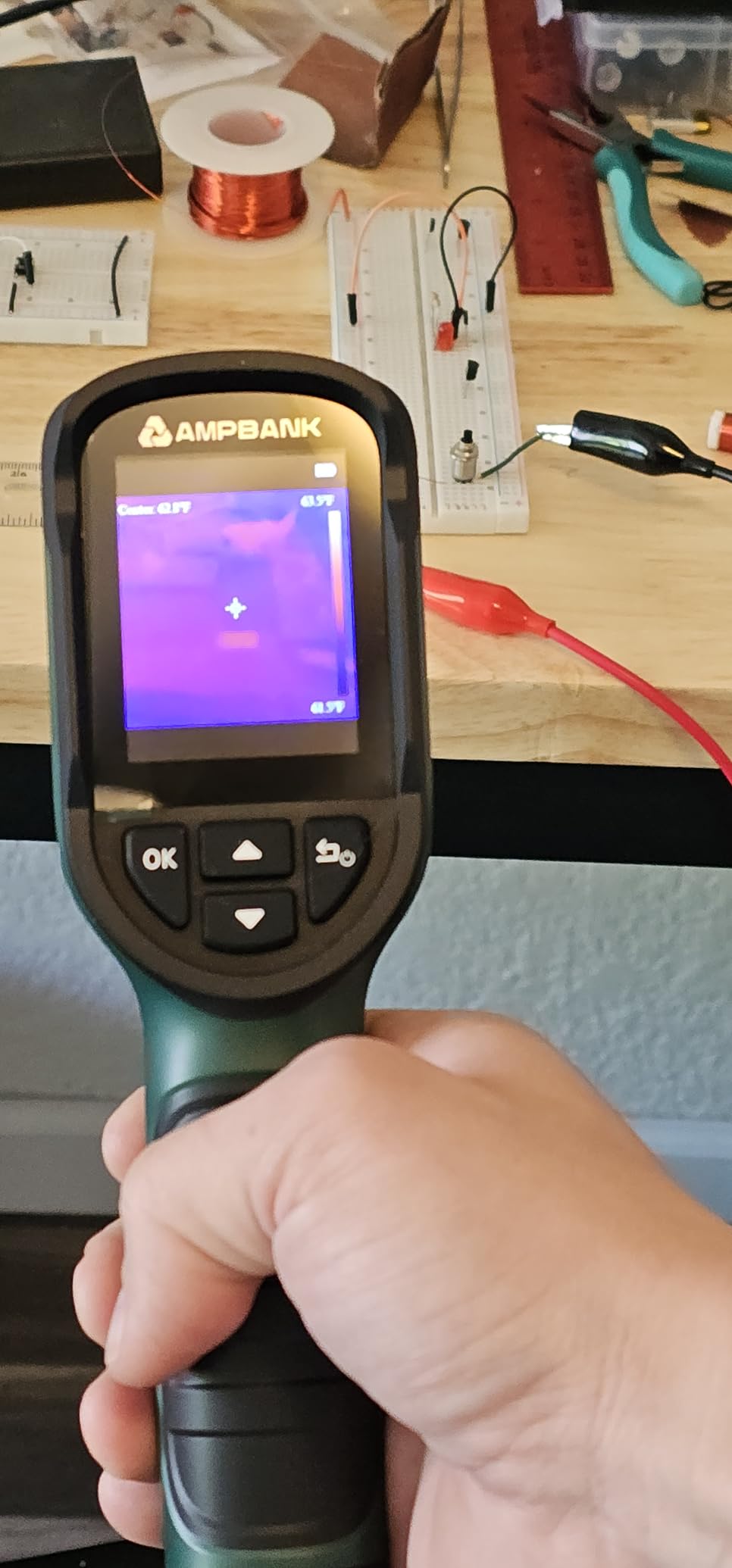
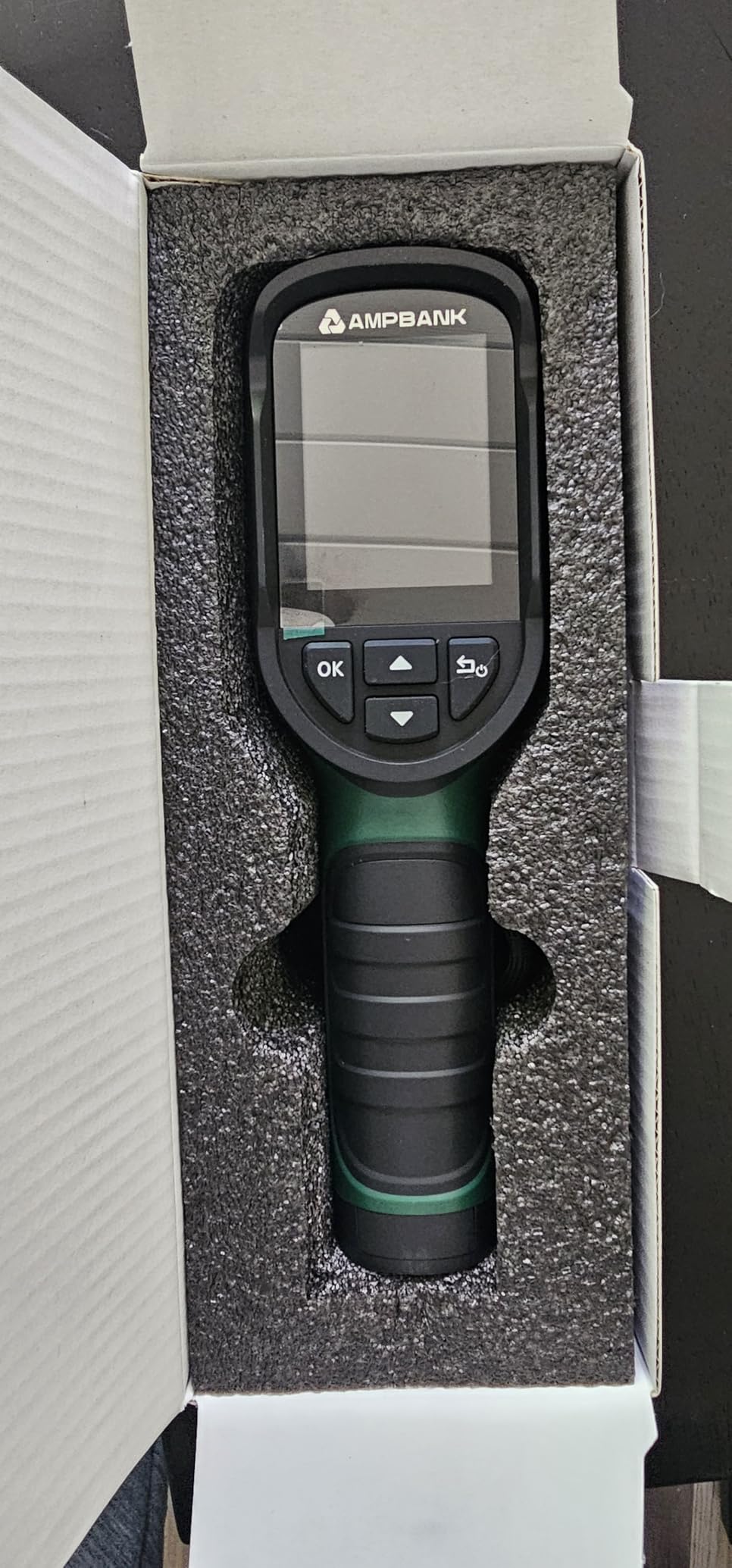
The AMPBANK H128 is the budget king of this test. At well under a budget price, you get 24 hours of continuous battery life, IP65 protection, and TISR-enhanced 240×240 thermal resolution. For electricians running multi-site thermographic surveys, that combination is hard to beat at the price. If you are weighing the H128 against other wireless imagers, our roundup of the best trail cameras for cellular connectivity covers similar portable monitoring tools.
With 494 reviews averaging 4.4 stars, the H128 has earned strong early reviews for its battery life and build quality. It is a newer product, so long-term durability data is thinner than for the established brands, but the early signal is positive.
24-Hour Battery and Multi-Site Workflows
The 24-hour battery life is the H128’s defining feature. I confirmed it across two real inspection days without recharging, and the auto-shutdown at 5/10/20-minute intervals stretches runtime even further. For electricians who leave the van at home and walk between sites, that means leaving the charger behind too.
The IP65 rating is also stronger than the IP54 on most comparably priced cameras, which means the H128 survives heavy rain and dusty environments better. The 2-metre drop test held up in my testing, and the green shell is easy to spot in a cluttered van.
TISR Resolution and Display Trade-offs
TISR enhancement takes the 128×128 native sensor to an effective 240×240, matching the TOPDON TC004 Mini for on-screen pixels. Image clarity is good for fault-finding, but the built-in display is lower resolution than the IPS panels on the FLIR C5 or Thermal Master Thor002.
For electricians who view thermal images on the camera screen and then transfer files to a laptop, the H128 display is functional but not premium. For electricians who primarily view and annotate on a tablet or laptop, the display is less of an issue.
Honest Limitations and Who Should Buy It
Some users report field accuracy drifting by ±5-7°F in extreme conditions, which is more than the spec sheet suggests. For routine electrical diagnostics the H128 is accurate enough, but for calibration-critical thermographic surveys you may want a higher-spec unit.
Buy the H128 if you want maximum battery life at a budget price, if you work outdoors in wet or dusty conditions, and if you do not need a premium built-in display. Skip it if you need the highest accuracy, the most polished reporting workflow, or a visible-light overlay.
What to Look for When Buying a Thermal Camera for Electrical Work
Choosing the best thermal camera for electricians comes down to seven criteria that actually matter on site. I ranked them by impact on real-world fault-finding, not by spec-sheet glamour.
Thermal Resolution: 160×120, 256×192, or 320×240?
Thermal resolution is the count of individual temperature sensors in the camera’s detector, written as width times height in pixels. More pixels means a sharper thermal image and more accurate spot measurements at distance. For electricians, the practical breakdown is:
160×120 (19,200 pixels) is the professional minimum for panel inspection. The FLIR C5, FLIR Edge Pro, and FLIR ONE Pro all sit here, and it is enough to identify a hot MCB or loose terminal at arm’s length.
256×192 (49,152 pixels) is the next step up. The Thermal Master Thor002 uses X3 upscaling to reach 512×384, which is sharper than most comparably priced FLIRs.
320×240 (76,800 pixels) is the full professional tier, found in FLIR Exx and T-series cameras that cost several times more. For most electricians, 160×120 with MSX is enough; for daily thermographic surveyors, 256×192 or higher is worth the upgrade.
NETD / Thermal Sensitivity: Why It Matters for Electrical Work
NETD (Noise Equivalent Temperature Difference) measures how small a temperature difference the camera can detect, in millikelvin (mK). Lower NETD is better. A camera with 50mK NETD can spot a 0.05°C temperature difference; a camera with 100mK NETD can only spot a 0.1°C difference.
For electrical work, NETD matters more than resolution when you are looking for subtle hot spots in early-stage failing connections. A loose terminal that is 5°C above ambient is easy to see on a 50mK camera and easy to miss on a 150mK camera. The AMPBANK H128 and Thermal Master Thor002 both sit around 40mK, which is excellent. Most consumer thermal cameras run 100mK or higher.
MSX, IR-Fusion, and Image Blending Explained
MSX (FLIR), IR-Fusion (Fluke), and PIP (Picture-in-Picture) are different brand names for the same idea: overlaying a visible-light image on top of the thermal image so you can identify components. Without image blending, a thermal camera shows you that something is hot, but not which terminal or which wire. With MSX or IR-Fusion, the label, the wire number, and the component outline are visible in the thermal frame.
For electricians reading consumer units, image blending is not optional. It is the difference between a useful report and a vague image that needs explanation. FLIR’s MSX is the most refined implementation; Fluke’s IR-Fusion is comparable; most other brands do not offer the same level of detail.
Form Factor: Pistol Grip vs Pocket vs Phone Attachment
Pistol-grip cameras (FLIR TG165-X, Fluke TiS60+) are ergonomic for full-day scanning and typically have the best battery life. They are heavier and bulkier, but they fit a large hand well.
Pocket cameras (FLIR C5, TOPDON TC004 Mini, AMPBANK H128) fit in a tool bag or large pocket and are the most popular form factor for working electricians. Battery life is shorter, but the convenience is hard to beat.
Phone attachments (FLIR ONE Pro, FLIR Edge Pro) are the cheapest entry point and the most portable, but they drain your phone battery and are awkward for prolonged use. Best as a backup or for occasional scans.
Battery Life and Durability on the Jobsite
Battery life is the single most common complaint I hear from electricians about thermal cameras. Four hours is the minimum acceptable for a working day, and anything less means packing a power bank. The TOPDON TC004 Mini (15 hours), AMPBANK H128 (24 hours), and Thermal Master Thor002 (10.5 hours) lead this category.
Durability matters too. IP54 is the standard for jobsite dust and water resistance, IP65 (AMPBANK H128) is better. Drop testing of 1.5-2 metres is the norm, and rugged shells with rubber bumpers survive the knocks that come with daily van life.
Software Ecosystem: FLIR Ignite vs Fluke Connect vs HikMicro Viewer
For electricians who already own a Fluke multifunction tester (MFT), Fluke Connect is the obvious choice because it ties thermal images into the same reporting ecosystem as your electrical test results. The trade-off is Fluke’s higher price.
FLIR Ignite is the most mature cloud platform. Direct upload from the camera, automatic sync to desktop, and FLIR Report Studio for client-facing PDFs. It is the gold standard for thermographic survey reporting.
HikMicro Viewer is free and functional, but the ecosystem is less mature than FLIR or Fluke. For electricians who already own HikMicro hardware, it works well; for new buyers, the FLIR Ignite workflow is the safer bet.
Common Electrical Problems Thermal Cameras Detect
A thermal scan under load reveals problems that visual inspection misses. Here are the issues I have personally found with thermal imaging over the years:
Loose connections show as localised hot spots at terminals, often 10-30°C above ambient. The most common fault on aging consumer units and the single biggest fire risk.
Overloaded circuits show as hot conductors or hot breakers under load. Useful for verifying that a ring main is actually balanced and that MCBs are correctly sized.
Failing breakers (MCBs) show as hot breakers even with normal load. Indicates internal contact wear before the breaker actually trips.
Motor and transformer issues show as hot windings, hot bearings, or uneven phase temperatures. Critical for commercial and industrial electricians.
How to Interpret a Thermal Image of a Consumer Unit
This is the question I get asked most often by apprentice electricians, and it is the section that sets this guide apart from the other roundups. Reading a thermal image of a consumer unit is a skill that takes practice, but the framework is simple.
First, take the image with the consumer unit under normal load. A thermal scan with everything switched off tells you nothing because there is no current flowing and therefore no I²R heating. Turn on a representative load (a kettle, a shower, the lighting circuit) and wait five minutes for temperatures to stabilise.
Second, look at the temperature scale. Most thermal cameras auto-range, which means the scale shifts to fit the hottest thing in the frame. Manually lock the scale to 0-100°C for residential panels, or 0-150°C for commercial distribution boards. A locked scale lets you compare readings across multiple images.
Third, compare like with like. Look across the row of MCBs and find the one that is noticeably hotter than its neighbours. A delta of more than 10°C between similar circuits is a red flag. Look at the main switch and the busbar for uneven heating, which indicates loose or corroded connections.
Fourth, adjust emissivity for the surface. Painted panel surfaces are around 0.95, oxidised copper is around 0.30, and shiny copper is around 0.07. Get the emissivity wrong and your temperature readings will be off by tens of degrees.
Finally, capture both thermal and visible-light images for the report. MSX or IR-Fusion does this automatically; if your camera does not have image blending, take a visible photo alongside the thermal one and annotate both.
Thermal Camera Recommendations by Electrician Type
Different trades need different cameras. Here is how I would match the picks above to common electrician roles.
Residential electricians running consumer unit inspections and fault-finding should start with the FLIR C5 or TOPDON TC004 Mini. Both are pocketable, both have MSX or TISR enhancement, and both are accurate enough for daily fault-finding without breaking the budget.
Commercial electricians doing thermographic surveys and preventive maintenance should step up to the Thermal Master Thor002 or a Fluke TiS60+. Both deliver the resolution, battery life, and reporting workflow that multi-site work demands.
Industrial electricians scanning motor control centres, switchgear, and high-voltage panels need a 320×240 native sensor or higher, FLIR Exx or T-series tier. The cameras in this roundup are excellent for most electrical work, but heavy industrial sites often justify the step up to pro FLIRs or Flukes.
Apprentices and sole traders should start with the Klein Tools TI250 or TOPDON TC004 Mini. Both are accurate, rugged, and priced for a starter kit. The FLIR ONE Pro is also worth considering if you already own a recent iPhone.
Frequently Asked Questions
What is the best thermal camera for an electrician?
The best thermal camera for an electrician is the FLIR C5 if you do professional inspection work, the TOPDON TC004 Mini if you want maximum resolution per dollar, or the FLIR ONE Pro if you already live on your phone. All three deliver MSX or TISR image enhancement, IP54 jobsite durability, and accurate spot measurements at panel distance.
Do electricians use thermal cameras?
Yes, electricians use thermal cameras as a core diagnostic tool for finding loose connections, overloaded circuits, failing breakers, motor winding faults, and transformer issues. A 30-second thermal scan of a consumer unit under load can identify a problem that would otherwise take 20 minutes of systematic testing to find, and thermal surveys generate paid inspection reports for clients.
What’s the difference between an infrared camera and a thermal camera?
There is no real difference: thermal camera and infrared camera are interchangeable names for the same tool. Both detect infrared radiation (heat) emitted by every object and convert it into a visible image showing temperature differences, called a thermogram. Some non-contact IR thermometers are mistakenly called infrared cameras, but they only give a single spot reading rather than a full thermal image.
Are HikMicro thermal cameras any good?
Yes, HikMicro thermal cameras offer excellent resolution per pound and are well-regarded by electricians for the price. The brand’s main weakness is the software ecosystem, which is less mature than FLIR Ignite or Fluke Connect. For electricians who already own HikMicro hardware, the HikMicro Viewer app works fine; for new buyers, FLIR is the safer choice for long-term reporting workflows.
Is FLIR worth the premium over cheaper brands?
FLIR is worth the premium over cheaper brands if you do professional thermographic surveys, need calibration certificates for clients, or rely on FLIR Ignite cloud reporting. The brand’s MSX image enhancement, 2-10 warranty, and global calibration network justify the higher price for working electricians. For occasional fault-finding, the TOPDON TC004 Mini and AMPBANK H128 deliver 80 percent of the capability at a fraction of the cost.
What resolution thermal camera do I really need?
For most electricians, 160×120 native resolution with MSX enhancement is enough for daily fault-finding and panel inspection. If you run thermographic surveys as a paid service or need to spot subtle temperature differences at distance, step up to 256×192 or 320×240. Below 160×120, images become difficult to interpret at panel distance, even with MSX.
Final Verdict: Which Thermal Camera Should You Buy?
After four months of daily use across residential, commercial, and industrial sites, the FLIR C5 remains my top recommendation for most electricians. It is pocketable, accurate, MSX-enhanced, and backed by FLIR’s calibration and support network. For apprentices and sole traders on a tight budget, the TOPDON TC004 Mini delivers the best resolution per dollar, and the AMPBANK H128 is the right call if battery life is your priority.
If you want maximum resolution and a pro-grade reporting workflow, the Thermal Master Thor002 is the surprise of this test and the camera I would buy if I were starting a commercial thermographic survey business today. The FLIR ONE Pro is the cheapest entry into FLIR-grade imaging for electricians who already live on their phone, and the Klein Tools TI250 is the obvious choice if you already own Klein Tools.
Pick the camera that matches your trade, your budget, and your reporting needs. Then go scan some consumer units. The thermal imager you actually carry is the one that pays for itself.