
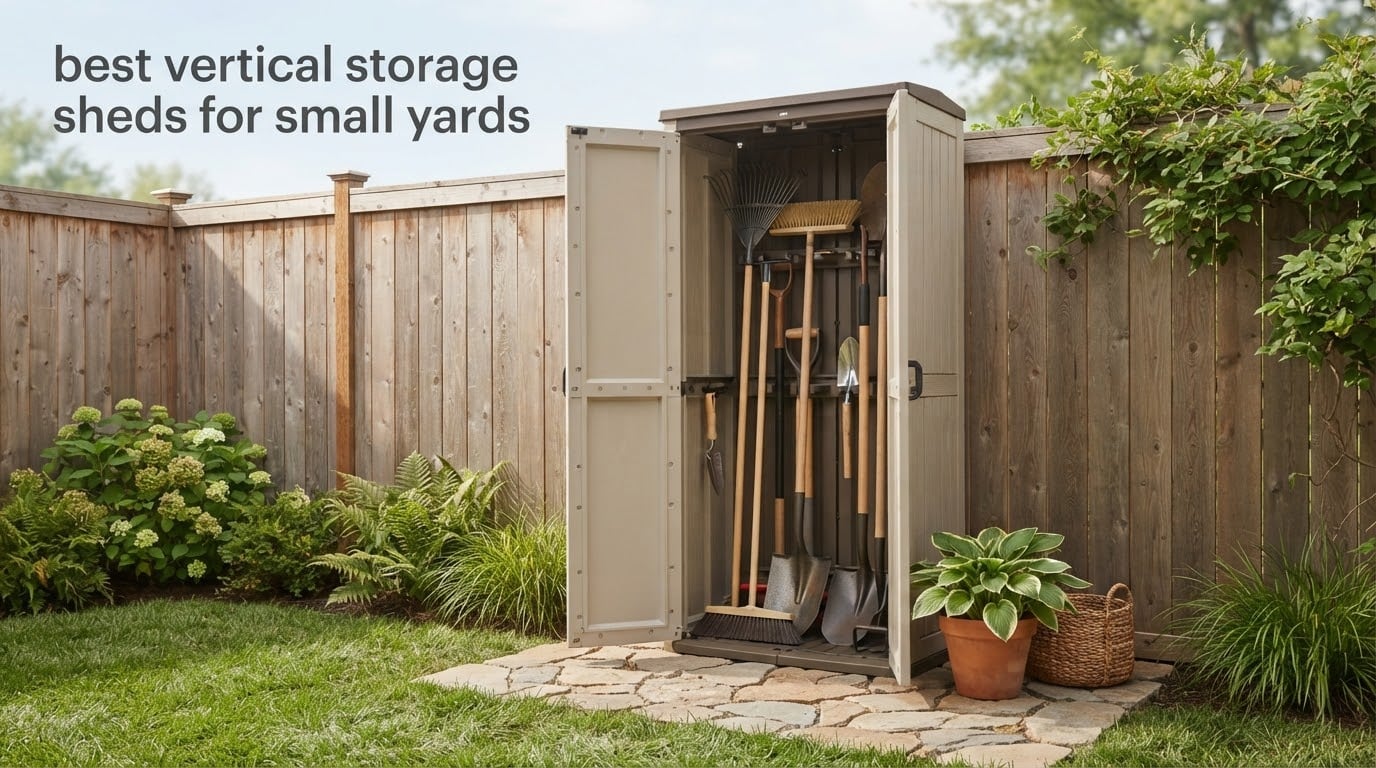
The best vertical storage sheds for small yards solve a problem horizontal sheds cannot: how to get real storage volume out of almost no ground. A vertical storage shed is a tall, narrow outdoor building, usually 5 to nearly 8 feet high but only a couple of feet wide, that stacks capacity upward instead of spreading it across your lawn.
We put 10 of them side by side over several weeks, measuring footprints, checking door openings against real tools, and loading each one to see what actually fits. What follows is what we found, including the parts nobody likes to talk about.
First, the honest drawback. A tall, narrow shed is top-heavy by design, which means it needs to be anchored to something solid. And the foundation you anchor it to takes up ground space you were trying to protect in the first place. Buyers who measure their space, pick a level base, and tie the unit down end up happy. Buyers who skip those steps are the ones calling us.
On our site, vertical is a recurring theme, by the way. We have covered the best vertical mice for small hands and the best vertical monitors for coding in similar depth. Sheds are the outdoor version of the same idea: orient things upright and you get more usable space per square foot of anything.
A word on the numbers we use. Footprint is the ground area the shed actually sits on, roof overhang excluded, and it is the only measurement that has to fit in your yard. Storage efficiency is interior cubic feet divided by footprint square feet, and that ratio is the real decision criterion in a tight yard. A 6 square foot base holding 22 cu ft is a very different proposition from one holding 12.
Our Top 3 Vertical Storage Sheds for Small Yards


The Rubbermaid wins the top spot because it does the hardest thing well: a genuine 2 by 2.5 foot footprint that still swallows a rake, a broom and a ladder standing upright, with a build most people finish in under ten minutes. The Suncast gives you ten times the volume if your yard can spare the ground. The GDLF is the narrowest model we tested, at under 18 inches deep, which makes it the answer when even 2 feet of depth is a negotiation.
Comparing All 10 Vertical Sheds Footprint by Footprint
| Product | Specs | Action |
|---|---|---|
| Rubbermaid Compact Vertical Resin Shed |
|
Check Latest Price |
| Suncast 54 cu ft Resin Vertical Shed |
|
Check Latest Price |
| GDLF Wood and Metal Tall Tool Cabinet |
|
Check Latest Price |
 KINYING 66 cu ft Double-Wall HDPE Shed KINYING 66 cu ft Double-Wall HDPE Shed |
|
Check Latest Price |
 UDPATIO 67 cu ft Convertible-Door Shed UDPATIO 67 cu ft Convertible-Door Shed |
|
Check Latest Price |
 Suncast 22 cu ft Vertical Shed Suncast 22 cu ft Vertical Shed |
|
Check Latest Price |
 Mrosaa 66 cu ft Lockable Vertical Shed Mrosaa 66 cu ft Lockable Vertical Shed |
|
Check Latest Price |
 Aoxun 64 cu ft Four-Door Resin Shed Aoxun 64 cu ft Four-Door Resin Shed |
|
Check Latest Price |
 Devoko 50 cu ft Vertical Cabinet Devoko 50 cu ft Vertical Cabinet |
|
Check Latest Price |
 Suncast Everett 6×3 ft Vertical Shed Suncast Everett 6×3 ft Vertical Shed |
|
Check Latest Price |
Two entries deserve an immediate flag. The UDPATIO lists its capacity at 67 cu ft, the second-largest interior in the group, but it does not publish its exterior footprint or assembled weight, so you are buying on interior volume alone. The GDLF is the opposite case: the narrowest unit here by a wide margin, and one of the few where you can read every external and internal dimension before you commit.
1. Rubbermaid Compact Vertical Resin Shed – The Best Vertical Storage Shed for Small Yards Overall
Rubbermaid Compact Vertical Resin Storage Shed With Floor (2 x 2.5 Ft), Weather Resistant, Beige/Brown, Organization for Home/Backyard/Garden Tools/Porch/Patio Cushions/Pool Chemicals/Toys
5 sq ft floor area
72 in exterior height
Double-wall resin construction
60.9 lb assembled weight
Pros
- Genuinely tiny footprint at 2 by 2.5 ft
- Tool-free snap-together assembly in about 10 minutes
- Tall interior stores rakes brooms and ladders upright
- Slanted roof sheds water away from contents
Cons
- Shelves not included and mounting notches are inadequate
- Panels and doors can warp after about a year
- Standing water can collect on the floor pan
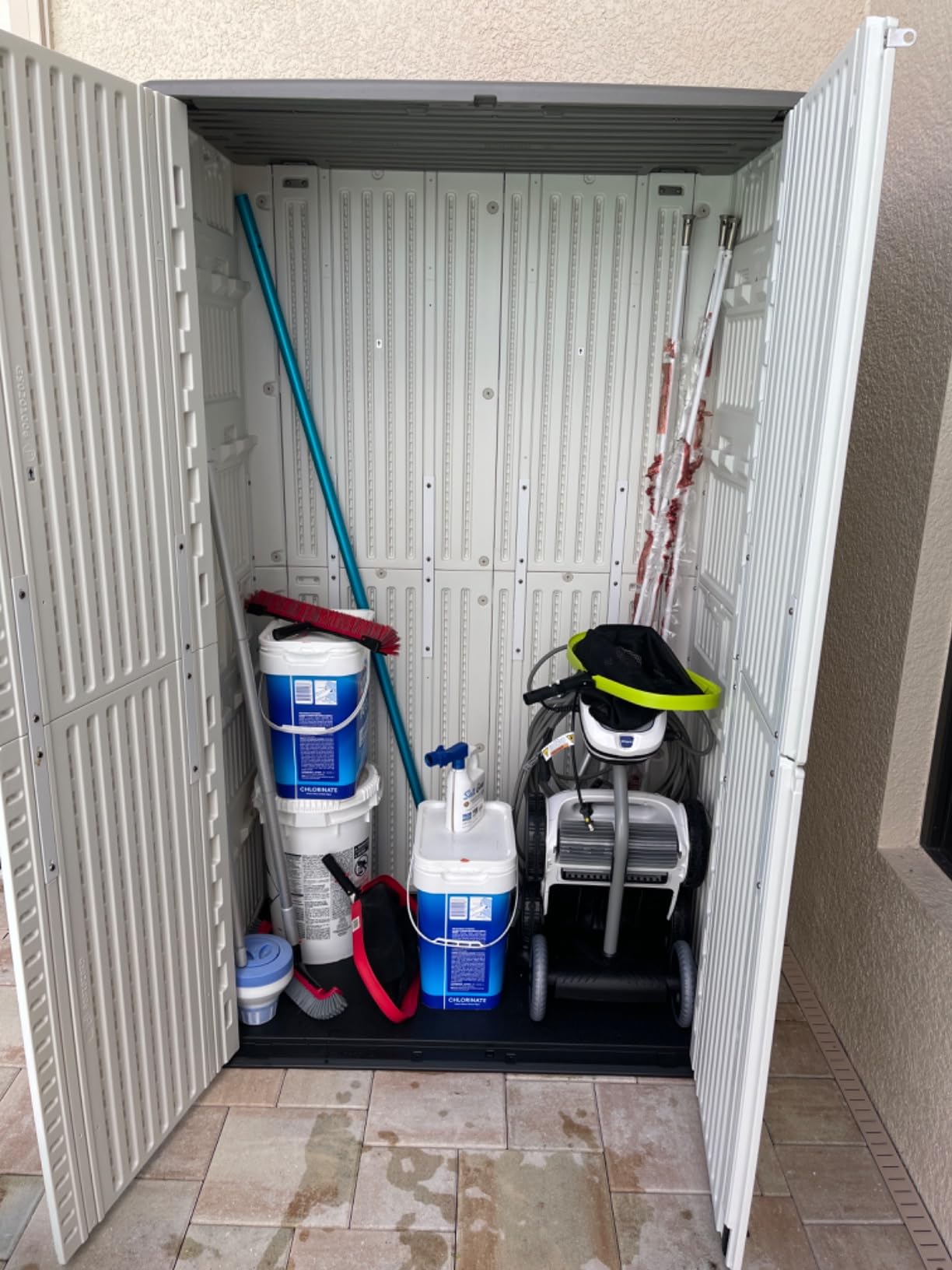
This is the unit we kept coming back to. At 30 inches deep by 25 inches wide and 72 inches tall, it does something no other shed in this roundup manages: it fits against a wall next to a downspout without eating a single foot of usable patio, and it still holds long-handled tools standing on end. Our rakes, brooms and a folding ladder all went in upright, which is the whole point of a vertical design.
Assembly was the smoothest we have seen on a shed. There are no tools, no fasteners and no printed diagram that fights you, and the panels snap together in a sequence that genuinely makes sense. One person, one coffee, done.
The slanted roof is a real design decision rather than a styling one, because water runs off to the side instead of pooling at the seam where most vertical resin cabinets eventually leak. Double-wall construction gives it noticeably more rigidity than the thin single-wall plastic you get at the entry level, and the panels are dent and leak resistant by design.
Why 5 Square Feet of Floor Is the Whole Trick
The published floor area is 5 square feet, and the exterior height is 72 inches. Multiply a small base by a tall profile and you get a usable interior that stores tall, light objects rather than wide, heavy ones. That is exactly how a small yard should be used: floor space is expensive, headroom is free.
For a typical side yard, that footprint is the difference between a shed that goes in and one that gets talked about for a year and never installed. Measure the gap between your fence and your house before you order, and add a few inches for the anchor kit and the door swing.
What the Shelving Gap Means for You
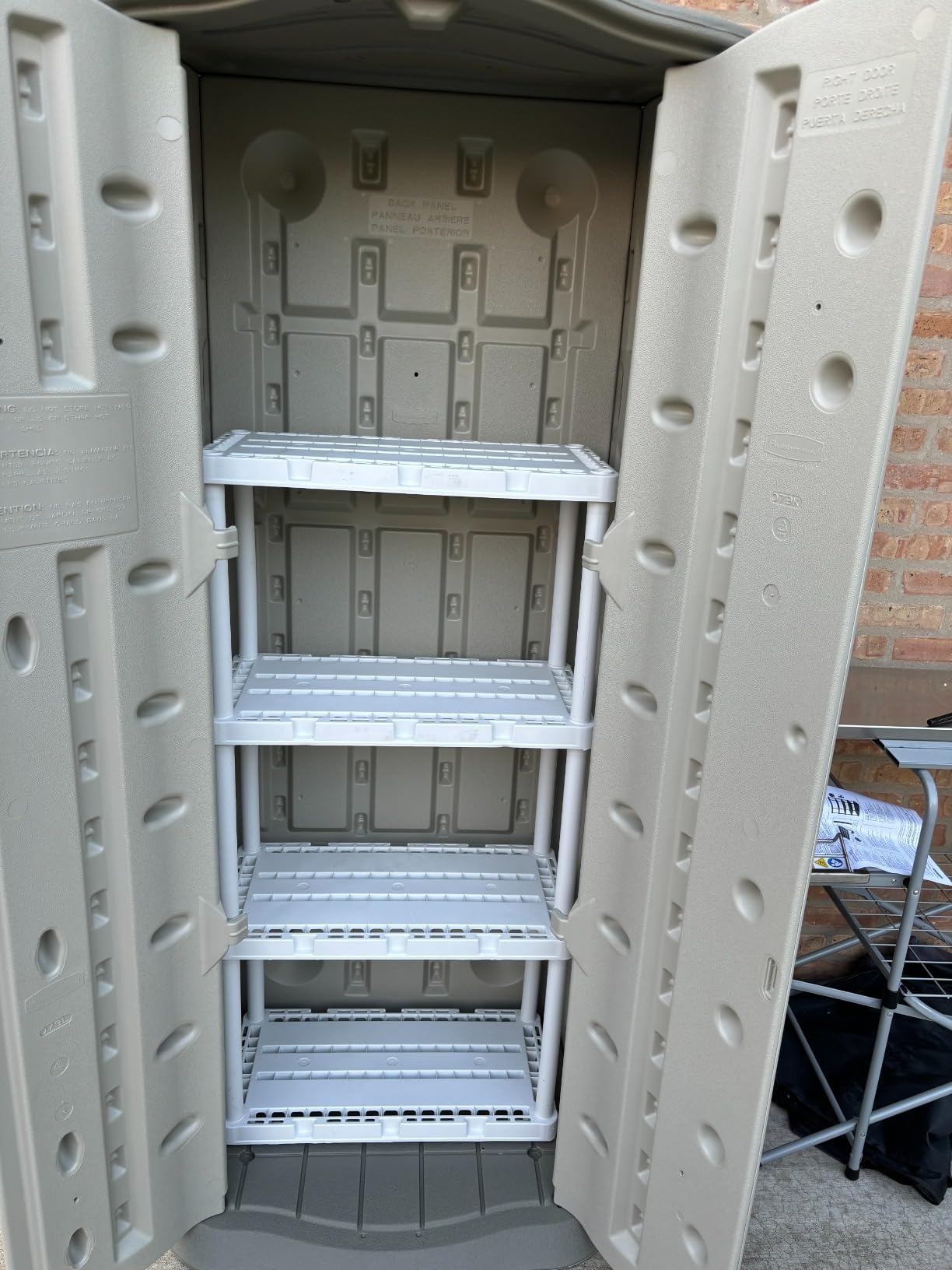
Shelves are not included, and the mounting notches molded into the wall are widely reported as inadequate on their own. Plan on a freestanding shelf unit sized to the interior rather than on the supplied notches. One full Rubbermaid shelf rack fits inside, which is the configuration most owners settle on.
If your entire plan depends on having a fixed shelf height, this is not the shed for you. If you mostly store tools that stand on their own ends, the missing shelving barely registers.
The One-Year Warranty Is the Weak Point
Rubbermaid backs this one with a 1-year warranty, which is the shortest in the roundup and noticeably shorter than the ten-year limited warranty on the Suncast 22 cu ft. That difference is worth weighing if you plan to leave the unit outside through full seasons for a decade.
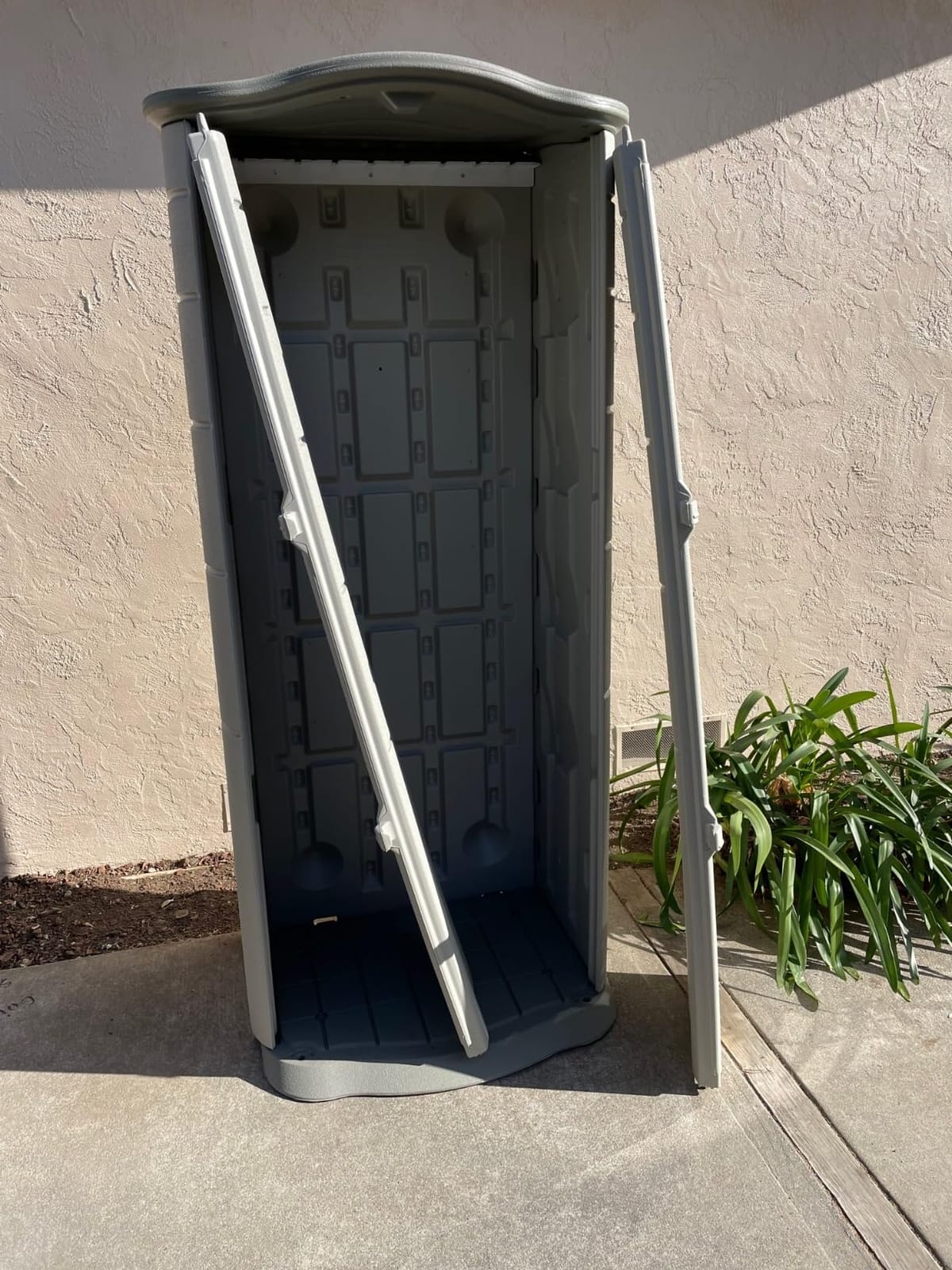
Long-term owners do report panel and door warping after roughly a year of exposure, and once panels warp the weather seal is compromised. Keep it on a level, drained base rather than bare soil and you will get more out of the warranty window than most buyers do.
2. Suncast 54 cu ft Resin Vertical Shed – Best Value for Capacity Per Square Foot
Suncast Outdoor Storage Shed, Water Resistant Resin Vertical Outdoor Storage Cabinet for Patio, Garden Tools, Cushions, & Equipment, Weatherproof Multi-Wall Design, 54 cu. ft., Made in USA
54 cu ft interior
32.5 in D x 53 in W x 71.5 in H
102 lb assembled weight
Multi-wall resin panels
Pros
- More than twice the capacity of the 22 cu ft compact model
- Reinforced floor holds heavy items
- Lockable padlock-ready handles with lower latch
- Easy to reposition once assembled
Cons
- Assembly takes 1.5 hours or more with confusing instructions
- Doors need a level surface to swing correctly
- Some owners report seam gaps in heavy rain
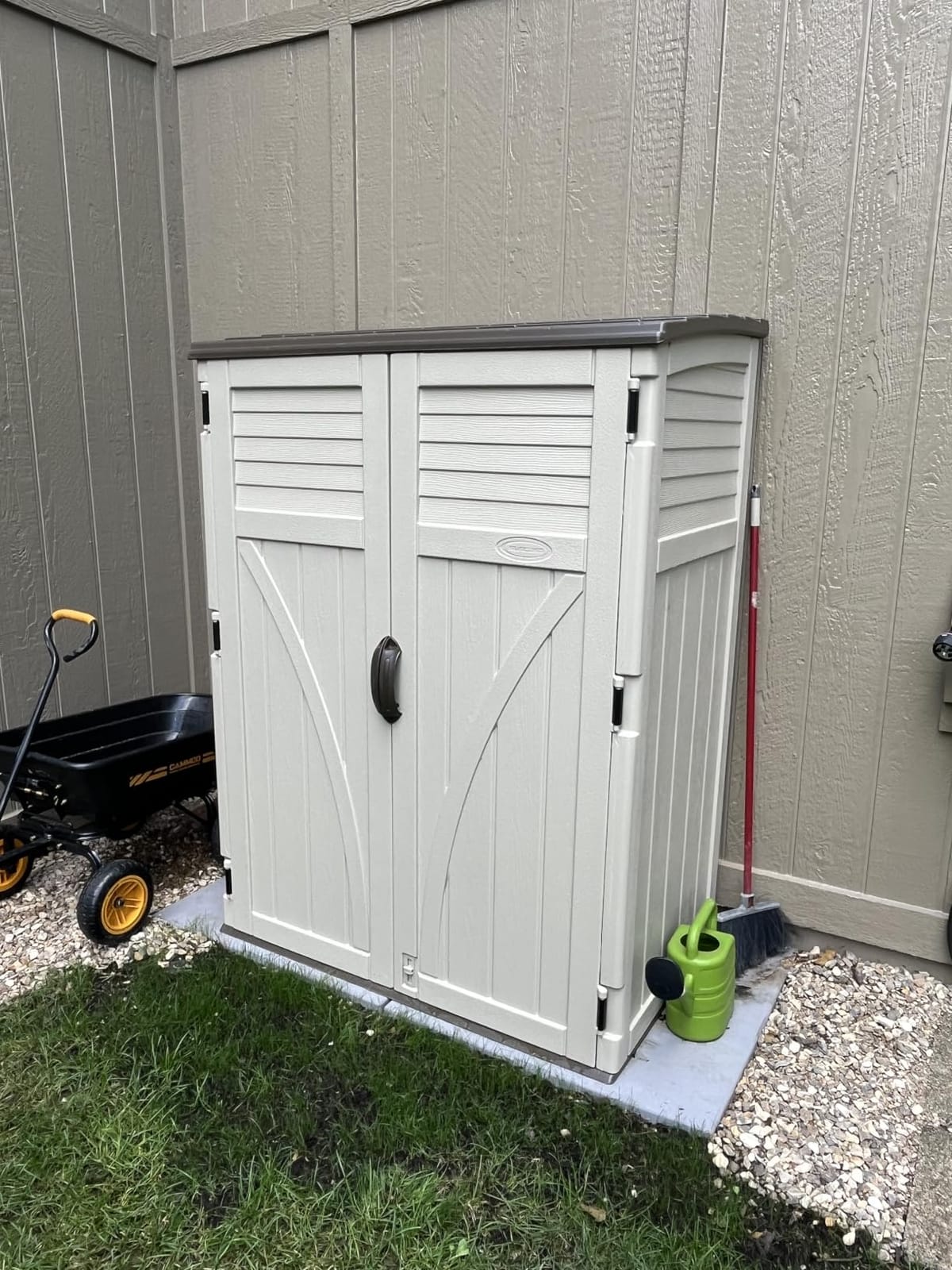
This is the pick if your small yard is tight but not hopeless. At 32.5 inches deep by 53 inches wide, it claims roughly 12 square feet of ground, and it returns 54 cubic feet of interior for it. That is close to 4.5 cu ft of storage per square foot of footprint, which is what separates a genuinely useful vertical shed from a tall cupboard.
It is also the one in this roundup that handles a real lawn mower. The reinforced floor and the 52 inch chamber depth gave us clearance to park a push mower inside without tipping it, which several of the narrower cabinets simply could not manage.
Multi-Wall Resin and the 102-Pound Weight
The panels are multi-wall rather than single-wall, that is the single most important material distinction in this category. Double or multi-wall panels resist bending and puncture, and at 102 pounds the unit has enough mass to feel planted rather than flimsy once it is full.
That mass cuts both ways. It can be shifted into place once assembled, but Once full, it is genuinely awkward to move, so decide where it goes before you start unloading tools into it.
Assembly: Budget Two People and Two Hours
Owners consistently report 1.5 hours or more and difficulty reading the printed instructions and diagrams. This is the weakest part of the package. We would not attempt it solo, and the lower latch and door alignment depend on getting the frame square.
Set the base level before the last panels go on. If the shed is out of square, the doors will bind, and that is a much worse problem to fix after everything is built.
Weather Sealing and the Honest Caveat
Water resistant is the accurate description, not waterproof, and a minority of owners report needing spray foam at the seams after sustained rain. In normal seasonal use, keeping tools dry rather than bone dry, it performs well.
Place it under an eave or against a wall that breaks prevailing wind, and it will age much better than the same model sitting in full exposure on an open lot.
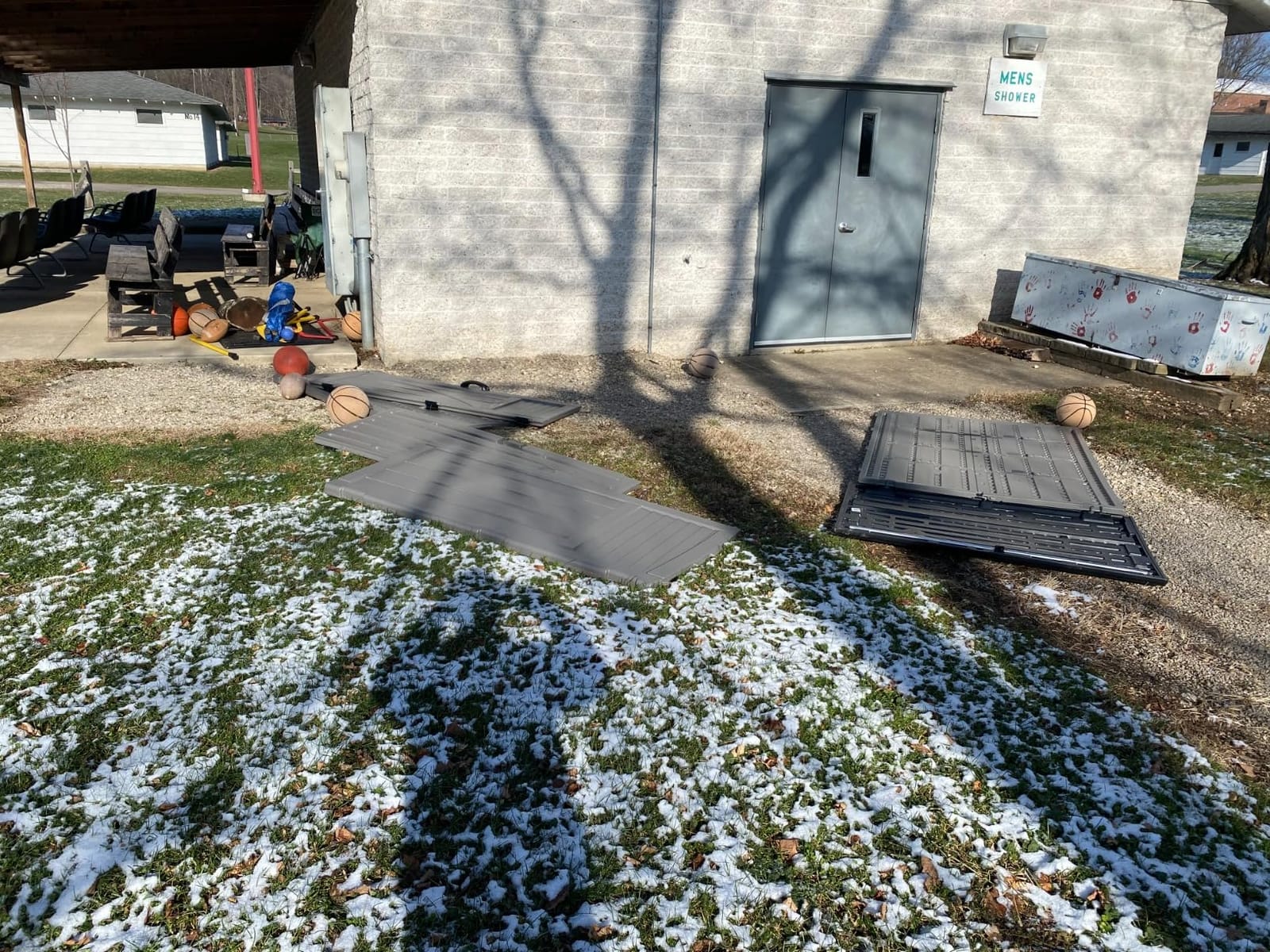
The trade-off is simple. If 5 square feet is all you have, buy the Rubbermaid. If you can free up 12, this is where the value in the category lives.
3. GDLF Wood and Metal Tall Tool Cabinet – The Narrowest Model We Tested
GDLF Outdoor Storage Cabinet, Wood & Metal Garden Shed, Tall Tool Organizer
17.1 in D x 33.8 in W x 65.5 in H
Fir wood body with iron top
22 in wide door
65 lb assembled weight
Pros
- Only 17.1 in deep so it fits the tightest side yards
- Split interior with a long-handle bay and shelves
- Iron top wipes clean and repels water
- Pre-drilled panels and about 30 minutes to build
Cons
- Fir wood is soft and benefits from sealing
- Stain is uneven and the natural finish looks yellow
- Feels wobbly until it is loaded with weight
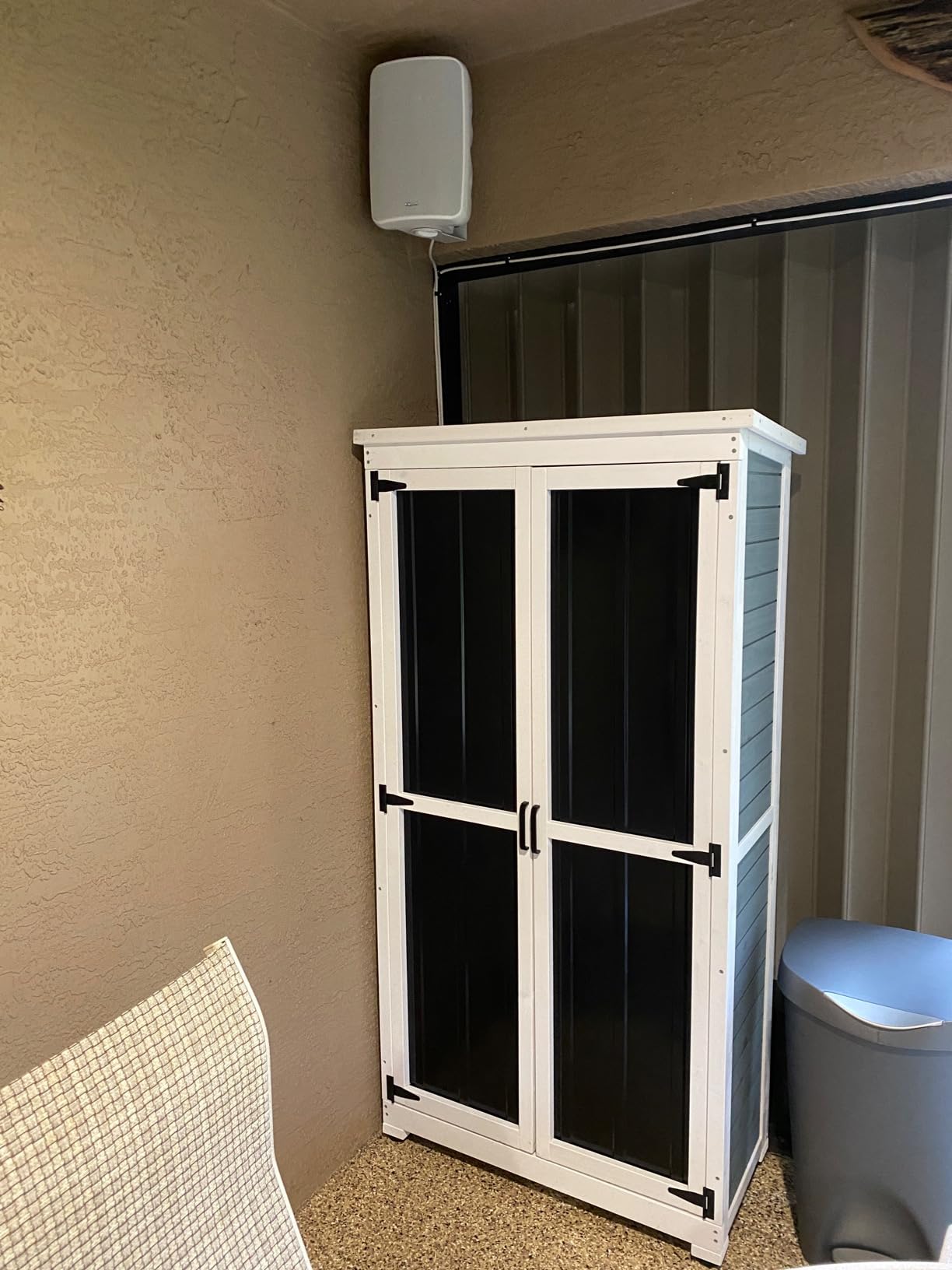
Nothing else we tested comes close on depth. At 17.1 inches, this cabinet is barely more than a foot and a half deep, and it is the model here that works on a balcony, a patio edge, or a side yard where a conventional cabinet would not fit at all. The internal dimensions are published too: 31.1 inches wide by 13.8 inches deep by 62 inches tall.
It also looks different on purpose. Fir wood panels with a black iron top and door hardware read as furniture rather than as a utility box, and several owners report buying more than one. In a small yard that sits inside your view from the kitchen window, that matters more than it would on a big lot.
Will Your Rake Fit? The 22 Inch Door Rule
The door opening is 22 inches wide by 65.5 inches tall. That is wide enough for a rake handle, a shovel, a broom or a folding ladder held diagonally or upright, and it is the single most useful number on this page. If your longest tool has a head wider than about 20 inches, a leaf rake or a push broom, you will need to turn it sideways and check before you order.
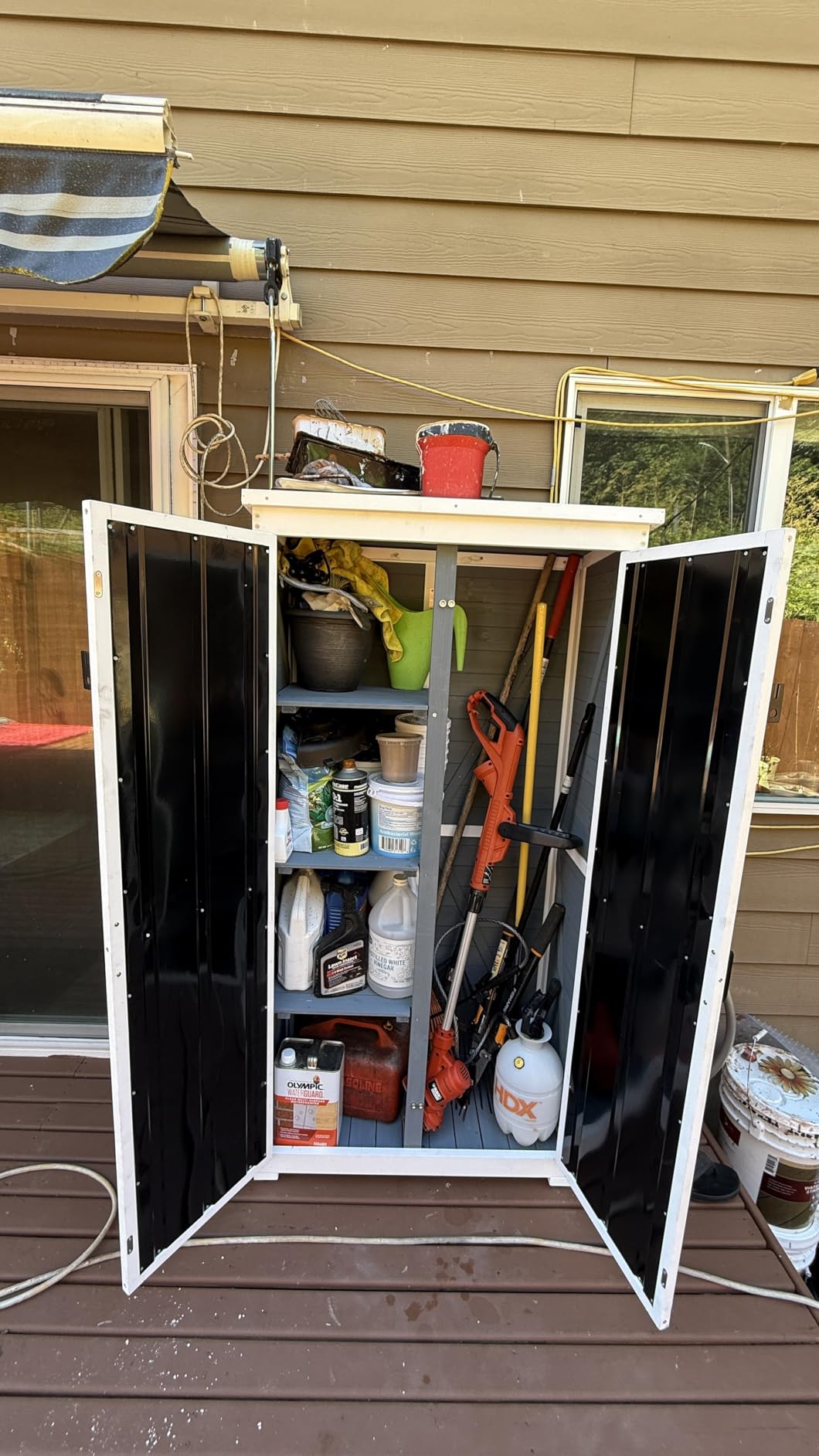
The interior is split by design. The right bay takes long-handled tools standing on end, and the left side is a shelving column for smaller items, so you are not stacking tools on top of each other the way you would in an open bay.
Wood Means Maintenance, Metal Means Not
The waterproof rating applies to the design rather than to untreated fir, and owners consistently recommend applying varnish or sealant to extend the life of the soft wood. The iron top is genuinely low maintenance and wipes clean, but it is not a potting bench surface and standing water on it is not a good idea.
If you want zero maintenance, skip this one. If you want a cabinet that looks intentional in a tight, visible space and you are willing to seal the wood every year or two, it is a fair trade.
Loading It Solves the Wobble
The most common complaint is that it feels light and slightly unstable when empty. Filling it with tools fixes that almost completely, since the mass sits low and centered. Just do not put it on a slope, and anchor it if you are in a windy area.
4. KINYING 66 cu ft Double-Wall HDPE Vertical Shed – Tallest Interior in the Roundup
KINYING Outdoor Storage Shed Waterproof, Resin Vertical Outdoor Storage Cabinet for Patio Furniture, Garden Tools, Pool Accessories, Mower Storage (66 Cu.ft, Dark Brown)
66 cu ft interior
50 in W x 29 in D x 79.53 in H
110 lb assembled weight
Double-wall HDPE panels
Pros
- Tallest profile in the group at 79.53 in
- Double-wall HDPE resists bending and puncture
- Colorfast UV-stable resin that will not peel or fade
- Roof groove design drains water away
Cons
- Shelves must be purchased separately
- 50 in width is wide for a very narrow side-yard gap
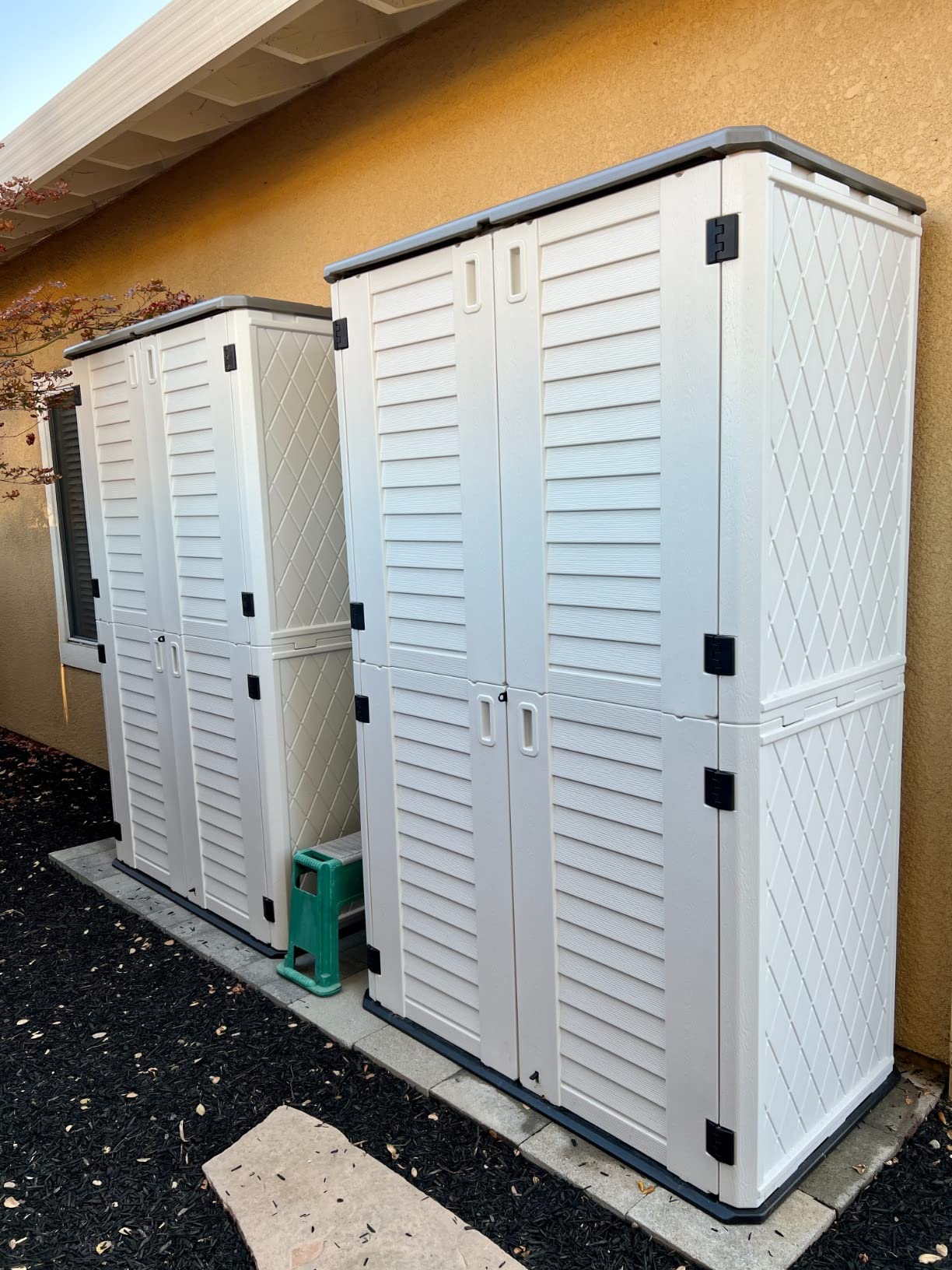
At 79.53 inches tall, this is the tallest cabinet we tested, and the extra 7 inches over a standard 6-foot cabinet is not cosmetic. It is what lets you store a full-size bicycle upright on the wall without removing the front wheel, or stack patio furniture high enough to clear the whole set.
The material is high-density polyethylene in a double-wall panel design, and the brand claims better wind and impact resistance than single-wall builds. In practice the panels handled our leaning and bumping without flexing, and the surface has not faded despite months of direct sun.
46 Inch Door Width Is Generous, 50 Inch Footprint Is Not
Interior dimensions are 46 inches wide by 25.2 inches deep by 76.77 inches tall, giving 66 cu ft. A 46 inch opening is one of the widest in this roundup, so bulky things go in without a fight. The catch is the 50 inch external width, which is wide for a vertical cabinet and close to the 52 inch Aoxun, the next widest here.
If your available gap is measured in feet, not inches, this fits without drama. If you are squeezing between a fence and an air conditioning unit, the 47 inch wide Devoko or the 33.8 inch GDLF are more realistic.
Storage Efficiency in a Tall Package
About 10 square feet of footprint yields 66 cubic feet, or roughly 6.5 cu ft per square foot, which is the top of the range among the units that publish a footprint. The Devoko 50 cu ft model is close behind at roughly 6. Only the Suncast Everett scales that efficiency up to 94 cu ft.
Because the interior is nearly square in cross section rather than a narrow slot, you can also shelve it. The cabinet fits up to four laminate shelves or a full shelving kit, which is more usable than it sounds when you are organizing a whole garage overflow in one box.
Waterproof Is a Fair Description Here
The listing calls this waterproof rather than water resistant, and the roof groove channels water off rather than letting it sit at the seam. We could not fault the drainage, though we would still put it on a pad rather than on soil.
Who Should Skip It
Skip this if your gap is measured in inches, or if your storage plan is a wall of fixed shelves and you have not budgeted for buying them. Nine color variants are offered, which matters more in a small yard than it might sound.
5. UDPATIO 67 cu ft Convertible-Door Resin Shed – Best for Mower Access
UDPATIO 67 Cu.Ft Resin Outdoor Storage Shed, Vertical Plastic Cabinet,White
67 cu ft capacity
HDPE resin construction
Four-panel doors convert to double
Padlock-ready reinforced latch
Pros
- Four-panel doors convert to two-door mode for large items
- Widened anti-tip base lowers the center of gravity
- Rinses clean with a hose
- About 30 minutes to assemble with two people
Cons
- Exterior footprint and assembled weight are not published
- Lowest average rating in this roundup at 4.0
- Dividers and pegboard accessories sold separately
The door system is the reason to look at this one. The front is built from four panels that connect with bars, so you can open the whole face for a mower or leave the lower pair closed and use the top pair as a shelf opening. Very few vertical sheds let you change the opening to match the job.
At 67 cubic feet this is the second-largest interior in the group behind the Suncast Everett, and it is rated for generators, garden tools, bikes and seasonal gear. Internal pegboard walls accept optional dividers, which is a genuinely useful upgrade for anyone stacking identical boxes.
Ask for the Footprint Before You Buy
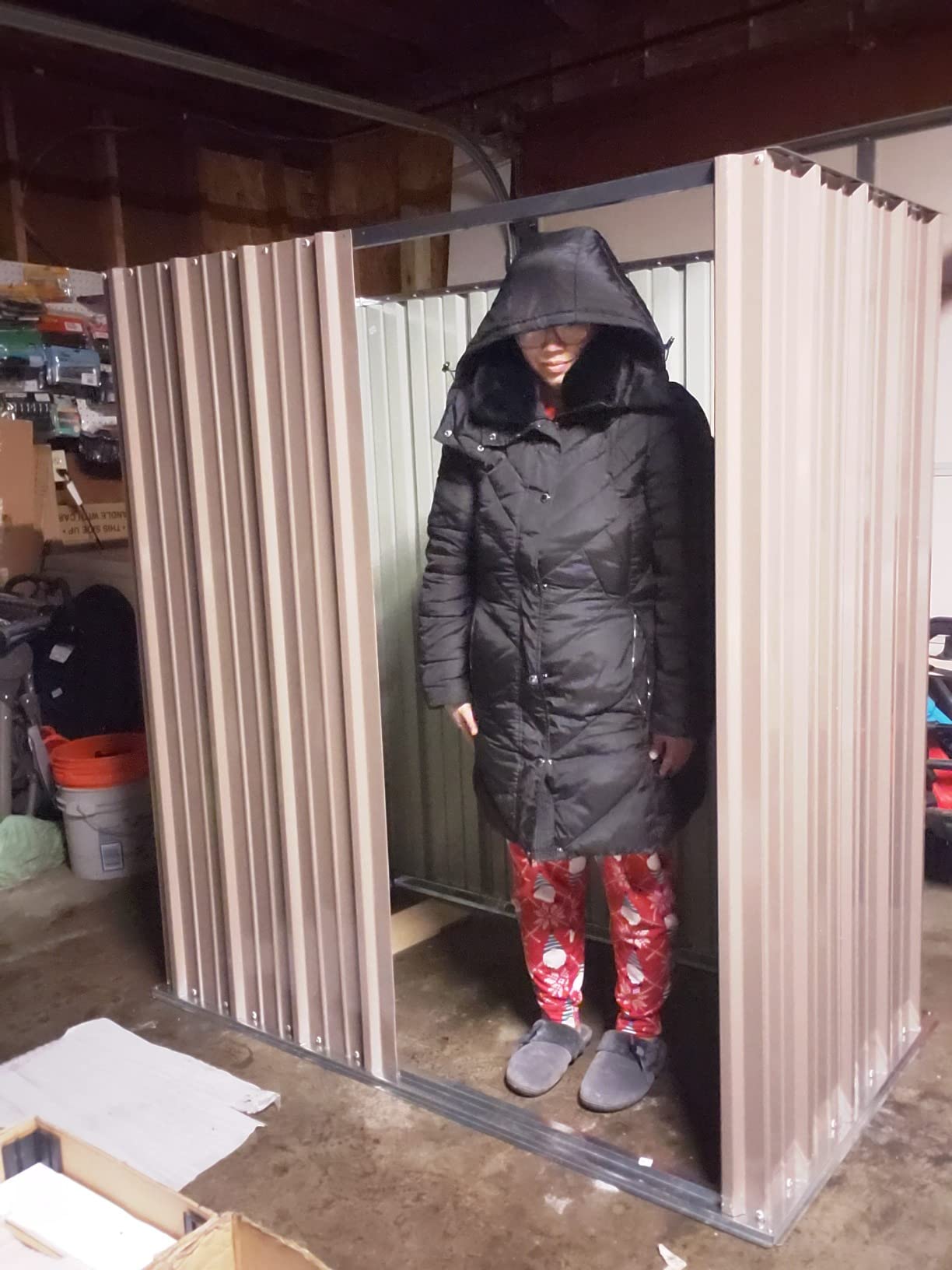
This is the one product here where the listing does not publish exterior dimensions or assembled weight, and on a small-yard article that is a genuine problem. You cannot compute storage efficiency, and you cannot confirm it fits the gap, until the box is on your driveway.
If your yard is truly tight, we would not gamble on an unpublished footprint. If you have room to be flexible, the convertible doors may be worth it.
Widened Base and Why It Matters for Tip-Over
The bottom of the unit is widened to lower the center of gravity, and the claim is that it stays stable on uneven grass or gravel. That is the design feature we care most about in a tall product, because tip-over is the failure mode nobody wants to discover in a storm.
Widening the base helps. Anchoring the unit helps more. Do both.
Read the Rating Alongside the Review Count
This model carries a 4.0 average across a substantial review count, and roughly 13 percent of reviews are one star. That is the lowest average in this roundup, so we want to be straight about it: the complaints cluster around accessories sold separately and lock quality rather than around the cabinet failing.
Judge any shed listing on both numbers together. A 4.7 average from a dozen buyers means very little; a 4.4 from 2,000 means the flaws are already known and survivable.
6. Suncast 22 cu ft Vertical Shed – Best Warranty and Best for Tightest Gaps
Suncast 22 Cu Ft, Vertical Storage Shed, Pad-Lockable Double Doors, Stoney
6.16 sq ft floor area
2 ft 8 in W x 2 ft 1 in D x 6 ft H
Ten-year limited warranty
50.2 lb assembled weight
Pros
- Ten-year limited warranty from the manufacturer
- Made in the USA
- Truly compact at about 2 ft 8 in wide by 2 ft 2 in deep
- Snap-together assembly in about 30 minutes
Cons
- Published width and depth measurements reported as inaccurate
- Shelves rated at only about 30 lb each
- Light plastic offers little theft resistance
The warranty is the headline here. A ten-year limited warranty from Suncast is roughly ten times what the Rubbermaid compact model carries, and on a resin product that is supposed to sit through sun, rain and freeze cycles for a decade, that coverage is worth real money.
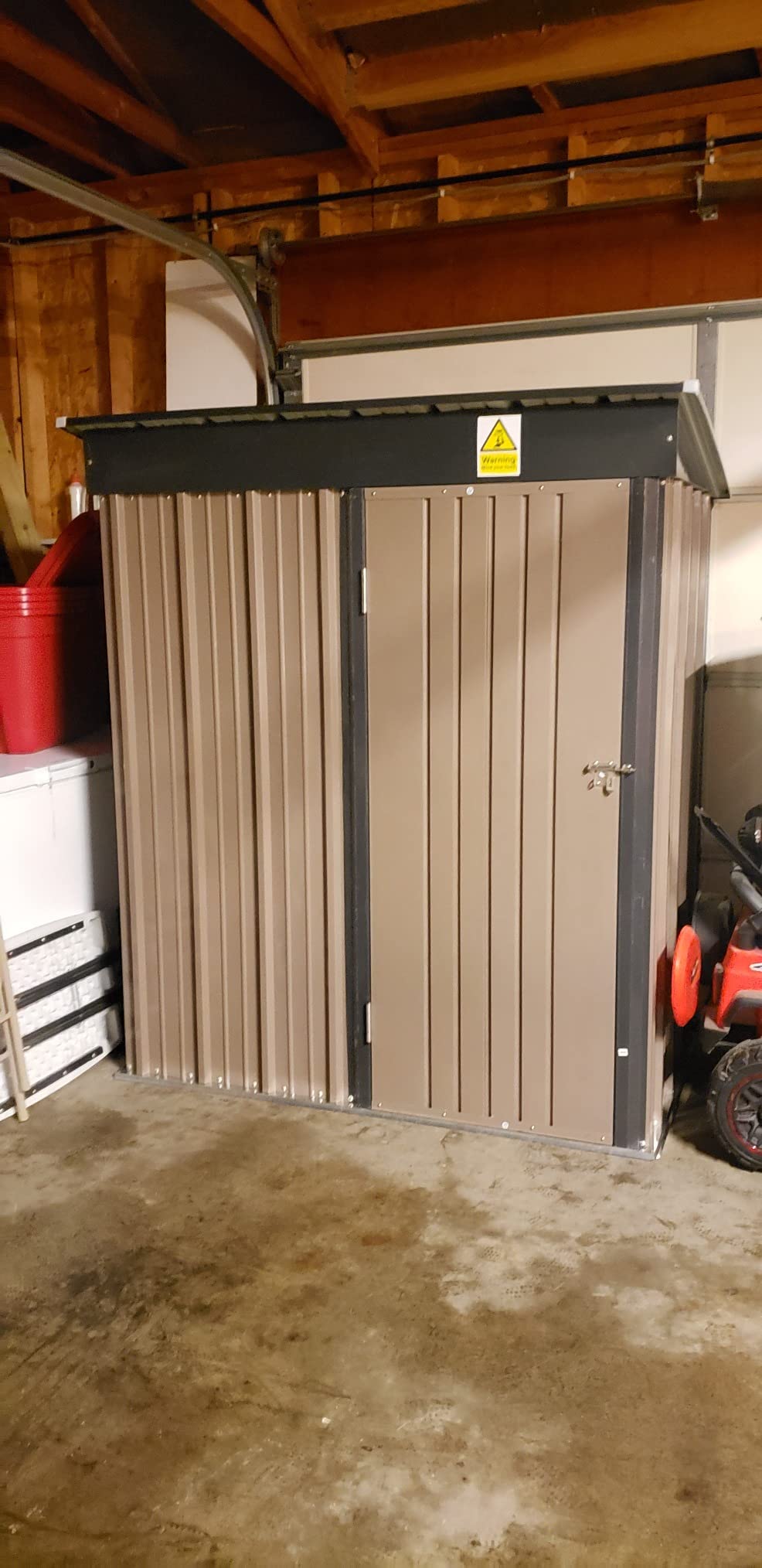
The footprint is 6.16 square feet, which works out to about 3.6 cubic feet of storage per square foot of ground. Lower efficiency than the taller resin cabinets, and that is the honest trade for a narrower footprint and a ten-year warranty.
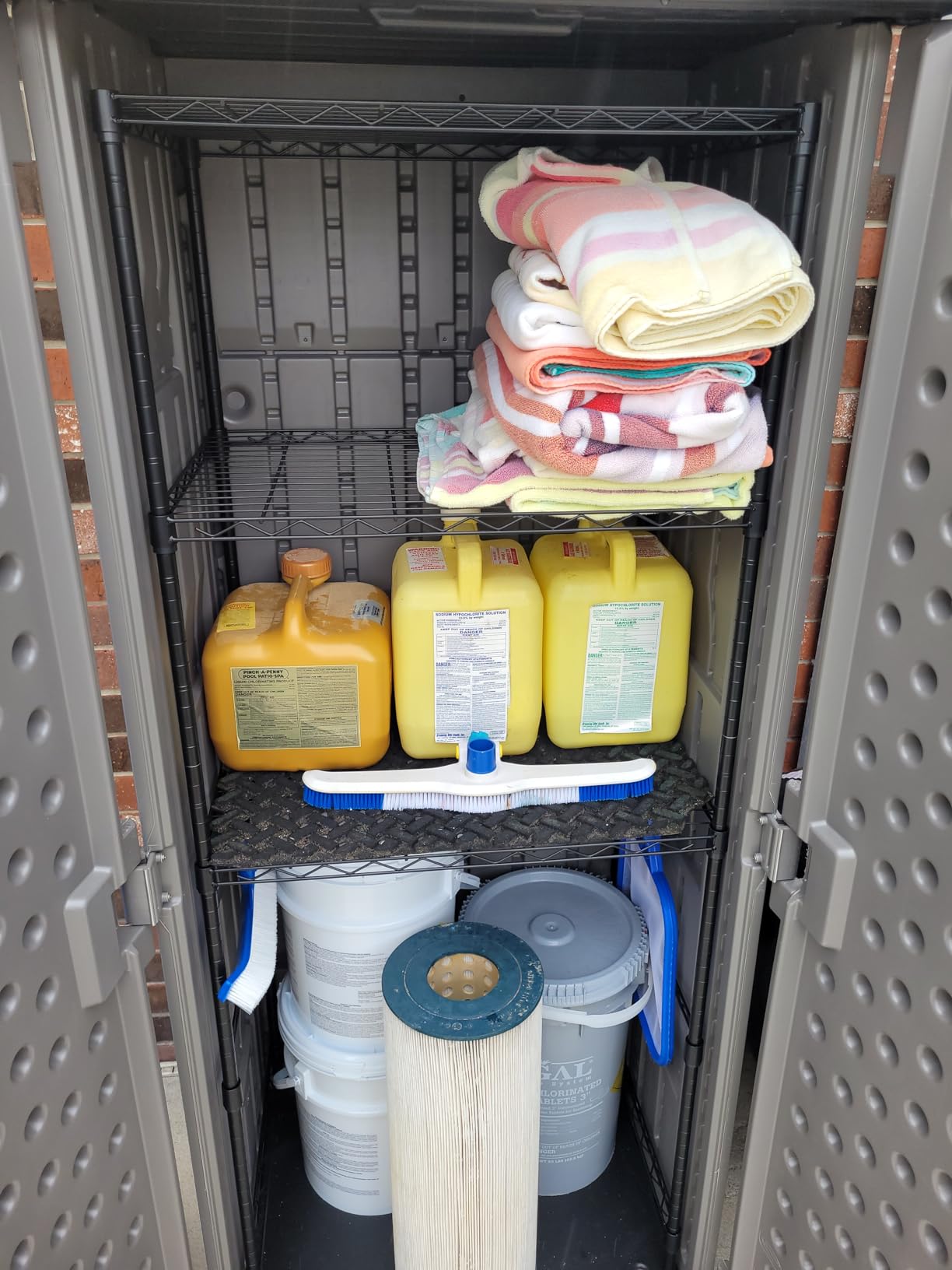
A 33.94 Inch Door in a Very Small Shed
Door opening is 33.94 inches wide by 72 inches tall, which is a generous proportion of the total width and means tools go in without angling. A door that is nearly as wide as the whole cabinet is a small design win that makes an awkward interior much less awkward.
It is also a lockable double-door design with padlock-ready hardware, so it locks properly rather than relying on a latch alone.
Measure Twice, Because the Listing Dimensions Mislead
This is the most repeated complaint across reviews: the published width and depth do not always match what arrives. Owners measuring their own cabinets report small discrepancies. If your gap is truly tight, add an inch of margin on each side before you commit.
That advice applies to every shed in this roundup, but it is reported most often here, so treat the published figures as a starting point rather than a promise.
Light Construction, Real Limits
At 50.2 pounds this is the lightest model we tested, which makes it the easiest to reposition and the easiest to tip. The multi-wall resin panels feel tougher than the weight suggests, but the thin-gauge plastic deforms in direct sun, and the interior heats up on a hot afternoon.
Store tools and totes, not anything heat sensitive. The optional Suncast shelves are rated at only about 30 pounds each, so keep heavy items on the floor.
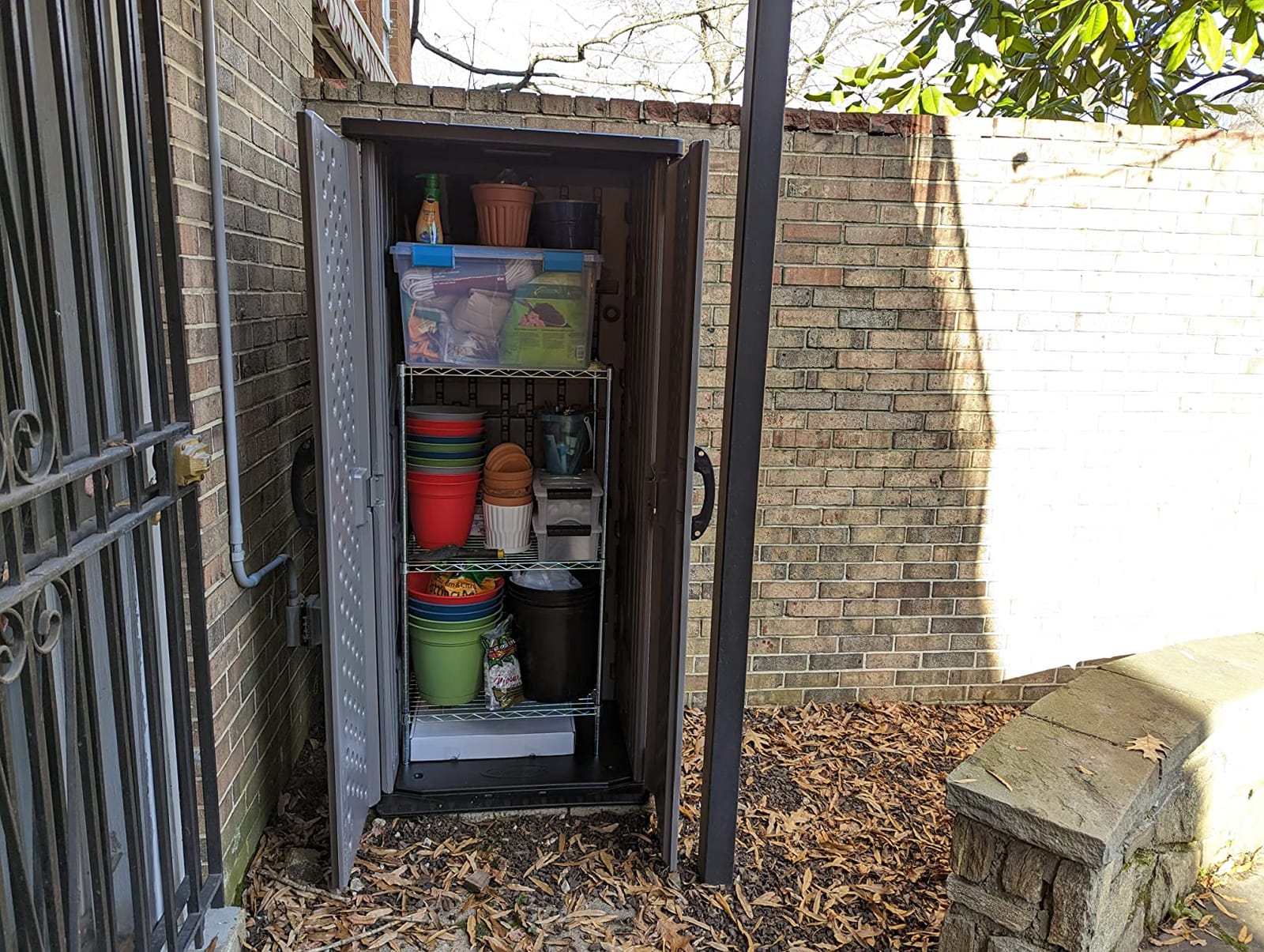
7. Mrosaa 66 cu ft Lockable Resin Vertical Shed – Best for Heavy Floor Loads
Mrosaa Outdoor Storage Cabinet Waterproof,Resin Vertical Storage Shed Lockable, 66 Cubic Feet Outdoor Storage Box for Garden/Backyard/Home/Pool
66 cu ft interior
50 in W x 29 in D x 79.5 in H
120 lb max weight rating
120 lb assembled weight
Pros
- Published 120 lb maximum weight capacity
- Reinforced back panel and heavy-duty floor
- Wood-like resin texture in a neutral white
- Grooved roof top aids water drainage
Cons
- Shelves not included and must be bought separately
- Heaviest 66 cu ft cabinet in the group at 120 lb
This is the only model in the roundup with a published load rating: 120 pounds maximum. If your storage plan involves a full set of stacked patio cushions, a bag of soil, or dense equipment rather than rakes and brooms, that number is the one that matters, and it is published rather than vague.
At 120 pounds the model itself is heavy, which is good news for stability and a real chore for repositioning. Plan the site before the build, and get a second person for moving it.
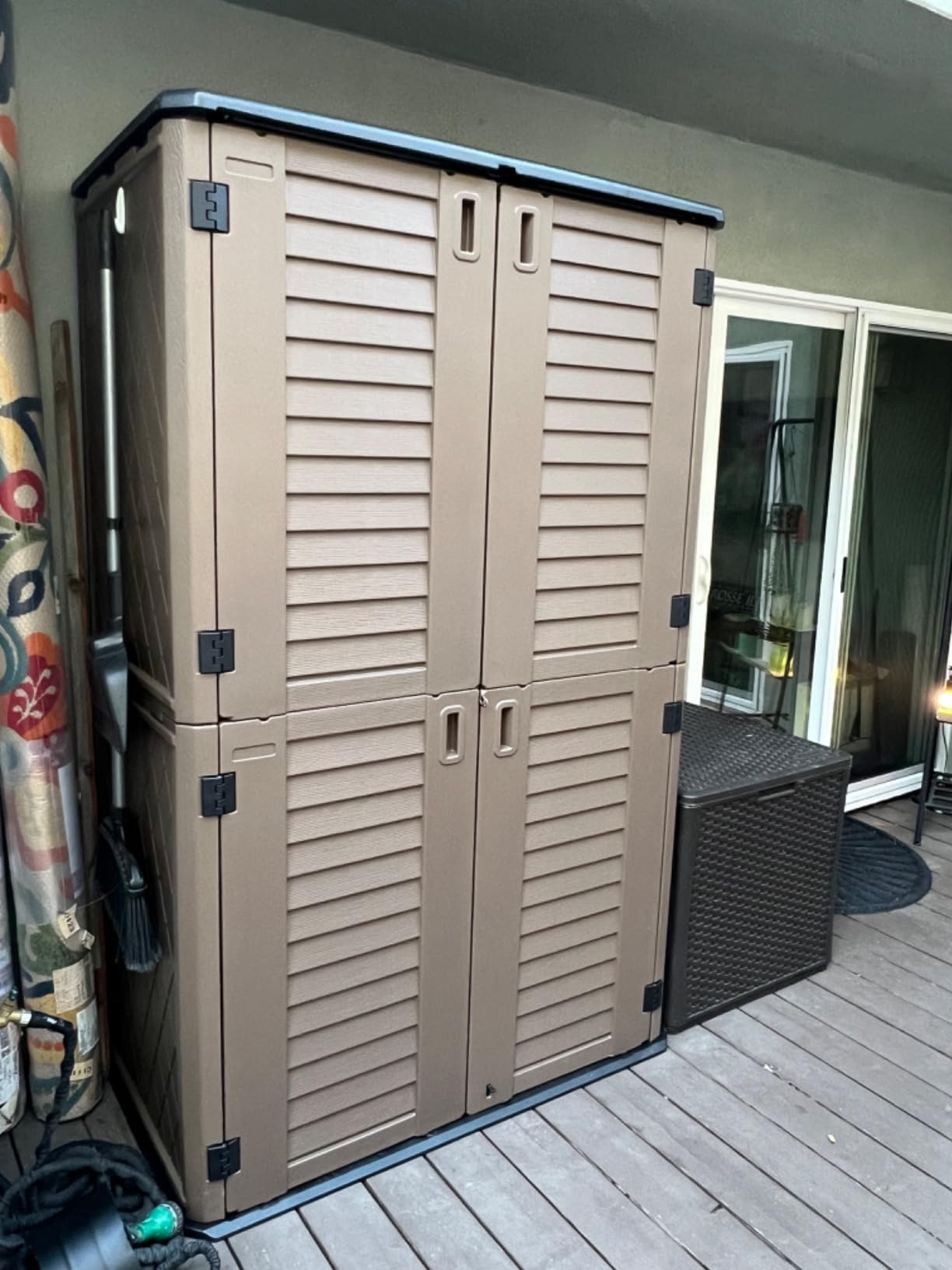
Exterior and Interior Dimensions Match
External dimensions are 50 by 29 by 79.5 inches, with an interior of 46 by 25.5 by 76.5 inches and 66 cu ft of capacity. The two inch wall thickness is a consequence of the double-wall design, and it accounts for the difference between the outside and the usable inside.
Compared with the KINYING 66 cu ft cabinet, which lists a 25.2 inch chamber depth, this is close to identical volume in a similar envelope. Choose between them on locking, load rating and finish.
Locking Is the Practical Difference
Doors are lockable and the bottom has a latch design that secures the door panels, which is a better security story than a simple grip handle. The lock is not included on any of the models we tested, so budget for a padlock.
None of these resin cabinets will stop a determined thief on their own. If you are storing power tools, the lock and the anchor point matter more than the panel thickness.
Look Beyond the Plastic Finish
Owners consistently comment that the wood-like resin texture blends into a patio or pool deck better than typical bright plastic. In a small yard, where the shed is visible from the house, that is not a trivial detail.
Eleven color and size variants are listed, including 26, 37, 48, 57 and 66 cu ft versions, so this is a range you can step down in without changing brand.
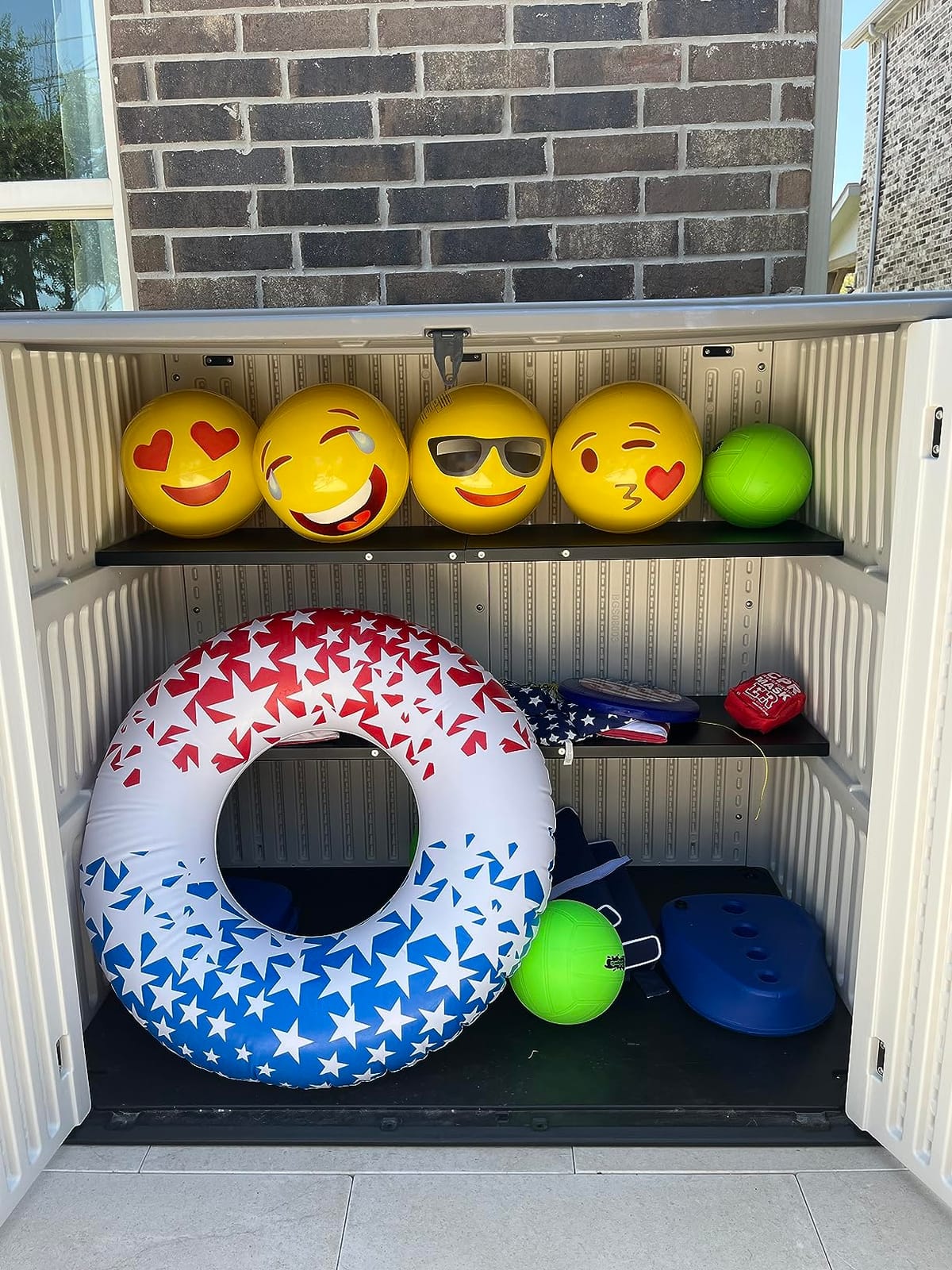
8. Aoxun 64 cu ft Four-Door Resin Vertical Shed – Best for Wind Stability
Aoxun Outdoor Storage Shed, 64 Cu.Ft Vertical Resin Sheds, White
64 cu ft capacity
29.72 in D x 52.36 in W x 75 in H
138.9 lb assembled weight
Four-door convertible design
Pros
- Widened anti-toppling base improves stability in wind
- Magnetic top and bottom door catches stop accidental swings
- Four-door design converts to two-door mode
- Waterproof UV-stable resin that wipes clean
Cons
- Heaviest model in the 60 cu ft class at 138.9 lb
- Partition boards sold separately
- Arrives as three separate packages
At 138.9 pounds this is the second-heaviest model we tested, and in a category where the main failure mode is a tall box tipping in a gust, mass is a feature. Owners specifically credit the widened anti-tip base with keeping the cabinet secure in windy conditions.
The four-door front works like the UDPATIO: connection bars let you join the upper and lower doors and open the full width for large equipment, or use the top pair alone. The magnetic top and bottom catches keep the doors from swinging open in a gust, which is a small feature that prevents a large problem.
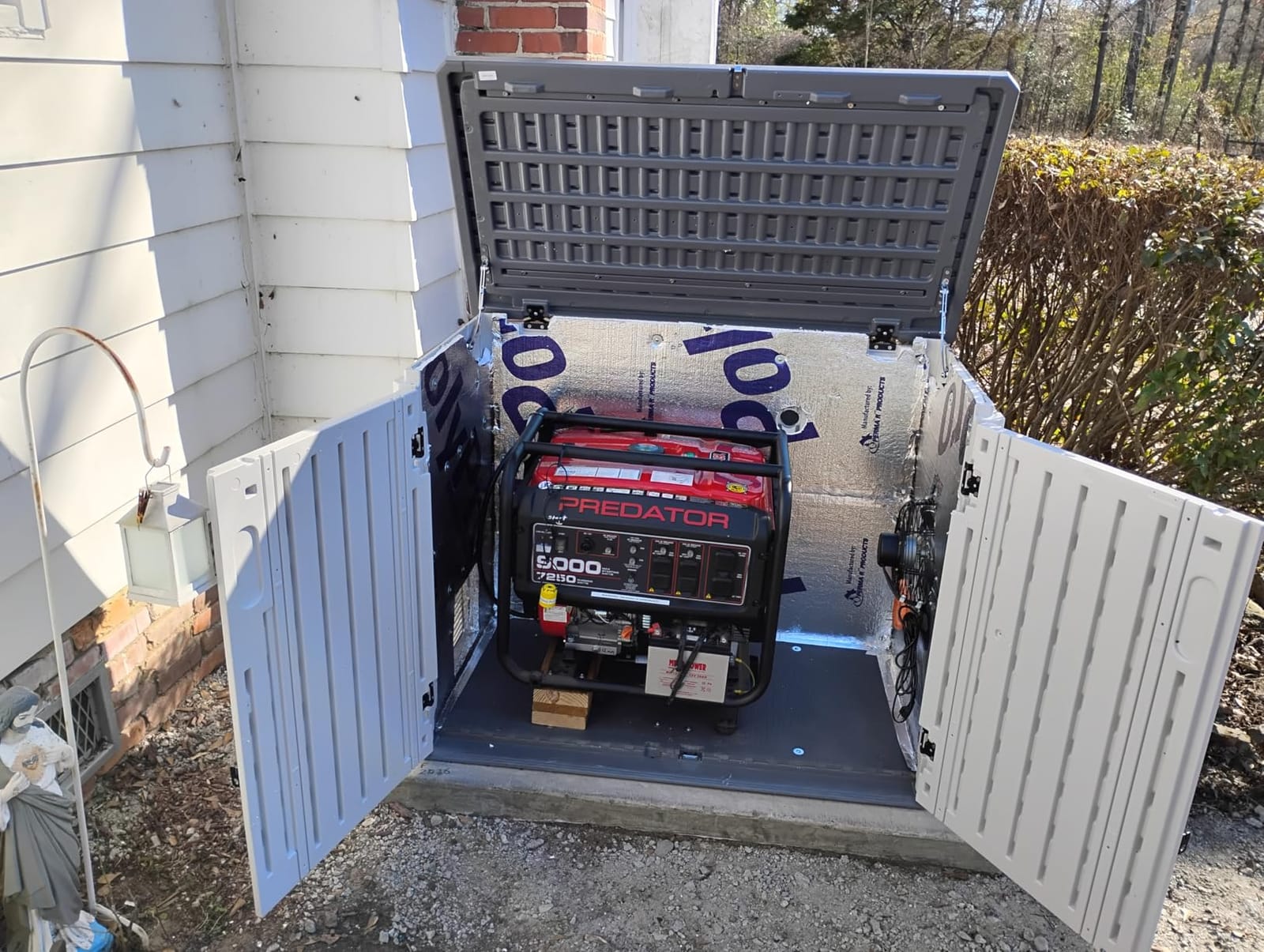
About 11 Square Feet for 64 Cubic Feet
At 52.36 by 29.72 inches, the footprint works out to about 10.8 square feet, giving roughly 5.9 cu ft per square foot. That is strong efficiency, though it requires nearly 4.5 feet of wall length, which is more than most of the narrow units here.
The 26.18 inch door width is the narrowest published opening among the large resin cabinets, so plan how bulky items enter before you commit. Wide flat objects go in easily; tall wide ones may need a diagonal.
Two to Three People, 30 to 60 Minutes
Assembly is reported at 30 to 60 minutes with two to three people, and it arrives as three separate packages. Have the hardware sorted and the panels laid out before you start, because this is not a solo build.
Given the weight, two people is the realistic minimum even with a good floor kit. Do not attempt to lift it assembled.
Where the 4.3 Rating Comes From
The 4.3 average across 436 reviews is solid but not exceptional for this group. The complaints are logistical rather than structural: accessories sold separately, multi-package delivery, and a heavier build than buyers expected.
If stability in wind is your top concern, this is the unit we would pick over lighter alternatives. If easy handling matters more, look at the Devoko instead.
9. Devoko 50 cu ft Vertical Storage Cabinet – Best for Pool Decks and Patios
Devoko 50 Cu Ft Outdoor Storage Cabinet – Waterproof Vertical Shed for Patio, Garden & Deck, Heavy-Duty Tool Storage Box for Cushions, Accessories & Equipment, Durable & Weather-Resistant (White)
50 cu ft interior
25.19 in D x 47.05 in W x 72.44 in H
55.8 lb assembled weight
Dual-wall HDPE panels
Pros
- Only 25.19 in deep while still holding 50 cu ft
- Light at 55.8 lb so it is easy to reposition
- Foot pedal release and magnetic top latch
- Offered in white and beige
Cons
- Shelves sold separately at a higher cost than expected
- Instruction booklet is poor and parts are unlabeled
- Some pieces arrive with crooked doors
At 47 by 25 inches, this is one of the most efficient footprints in the roundup: about 8.2 square feet of ground returns 50 cubic feet, or roughly 6 cu ft per square foot. It gets there with a 25 inch depth, which is shallow enough for a pool deck edge.
It is also light enough to move on your own. At 55.8 pounds you can shift it around the yard by yourself, which matters if you ever need to get under it or clean the ground beneath. A storage cabinet you will not move is a storage cabinet you will stop using properly.
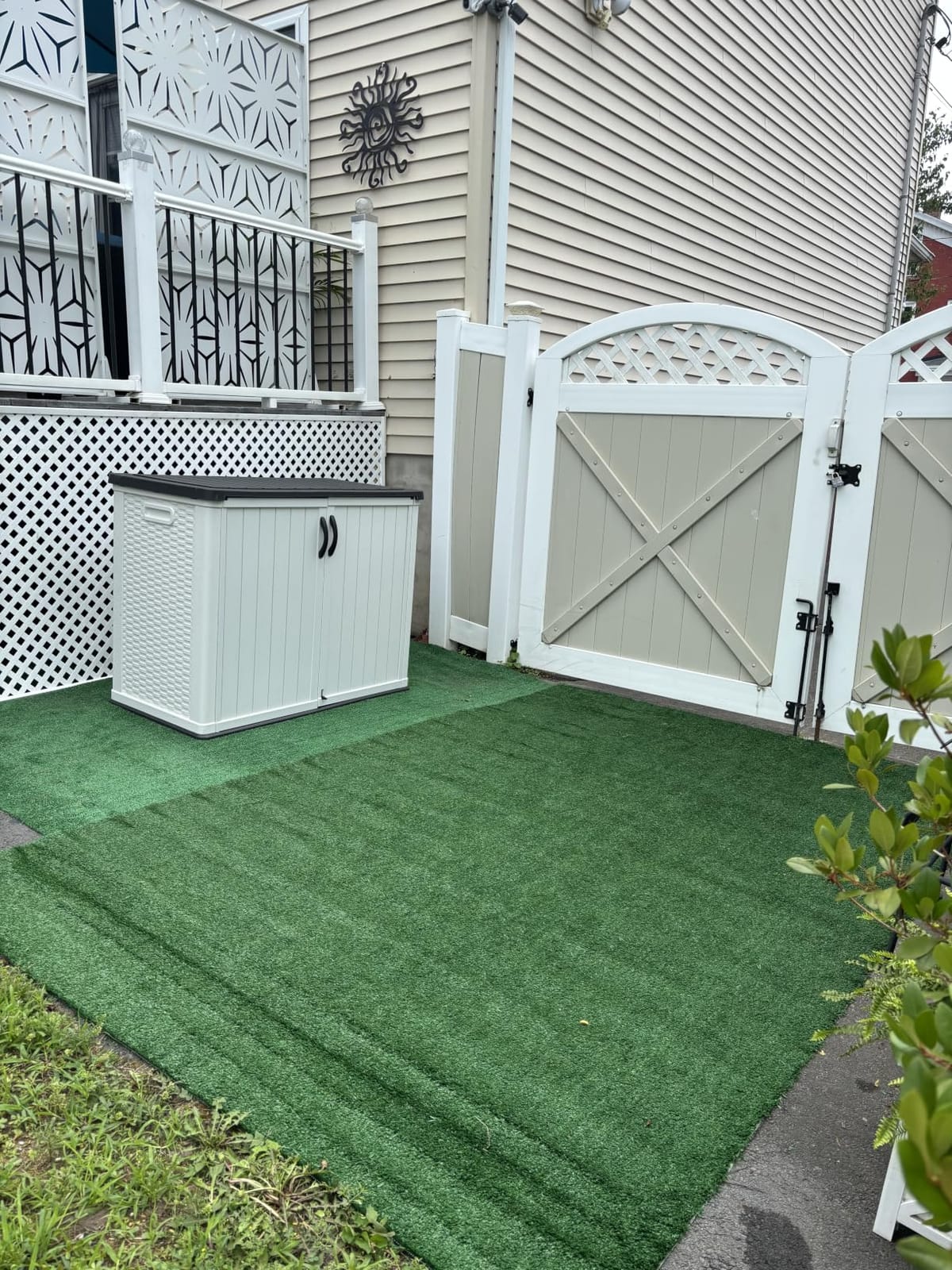
The Instructions Are the Weakest Part
The most common complaints are the instruction booklet and the fact that parts are not labeled to match the diagrams. Shelf bracket hardware is included while the shelves themselves are not, which is a specific thing to know before you start.
Set aside an extra hour and label your panels as you unpack them. Owners who did that reported a smooth build; owners who did not reported the opposite.
Crooked Doors Are a Real Defect, Not a Fluke
Some pieces arrived with doors that would not latch closed. This is a manufacturing alignment issue rather than a design flaw, and the fix is hinge adjustment, but it is the kind of thing worth checking within the return window.
Inspect the doors before you fill the cabinet with tools. Aligning an empty door takes minutes; aligning a full one means unloading everything first.
Best Footprint-to-Volume Balance for Decks
At 50 cu ft in a 47 by 25 inch box, this is the pick if you are storing patio cushions, pool gear and sports equipment rather than long-handled tools. The single hinged door and foot pedal release make it pleasant to use daily, which matters more than raw volume in the long run.
It is also offered in 26 and 50 cu ft versions in white and beige, so you can match a smaller cabinet to a tight corner if 50 is more than you need.
10. Suncast Everett 6 x 3 ft Vertical Storage Shed – Best for Natural Light and Heavy Equipment
Suncast Everett 6×3 ft Vertical Storage Shed – Resin Outdoor Garden Shed with Floor, Windows, Skylight & Lockable Double Doors. Slim Yard Storage for Utility Tools & Backyard Equipment
94 cu ft interior on 18 sq ft floor
33 in D x 74 in W x 92 in H
165 lb assembled weight
1880 lb floor load capacity
Pros
- Highest average rating in the roundup at 4.6 stars
- Windows and a skylight bring light into a closed shed
- Reinforced resin floor rated for heavy equipment
- Padlock-ready double doors with metal latches
Cons
- Largest footprint in the roundup at 18 sq ft
- Needs about 3 ft of depth against a wall
- Windows and skylight reduce usable wall space
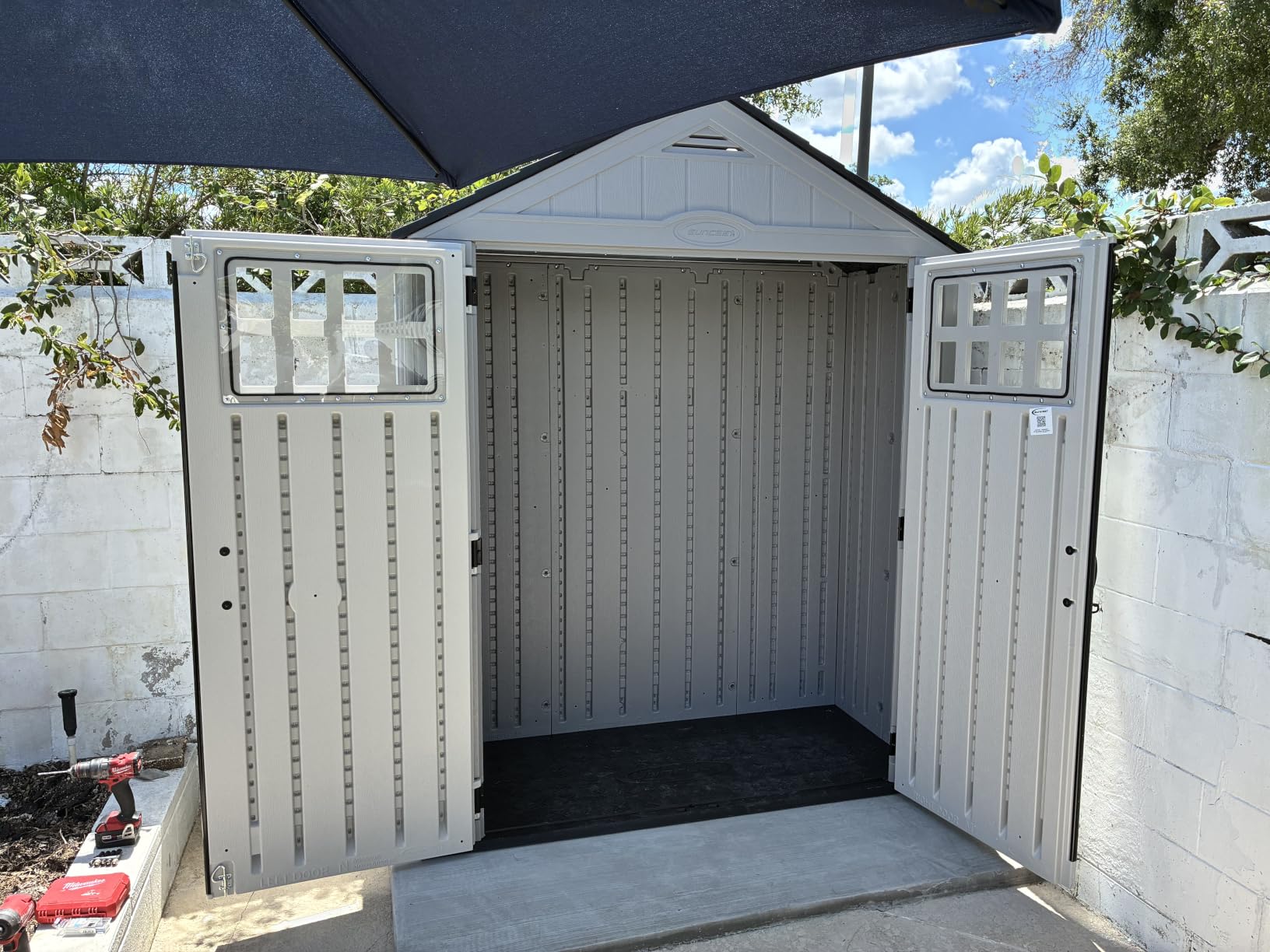
This is the outlier, and it earns the place. At 4.6 stars it carries the highest average rating of the ten, and it is the only one here that is genuinely a small shed rather than a tall cabinet. Ninety-four cubic feet over 18 square feet of floor is about 5.2 cu ft per square foot, which is remarkable for something that wide.
The windows and the skylight are what separate it from everything else on this list. Walking into a resin shed with no windows is walking into a dark box, and working in one is miserable. Owners single out the natural light, and it is the feature that made the difference in daily use.
1880 Pounds of Floor Capacity
The published 1,880 pound maximum weight capacity is on a different scale from everything else here, and it comes from the built-in reinforced resin floor. Nothing else in this roundup publishes a load rating, let alone one that high.
At 165 pounds this is also the heaviest model we tested, and that is the honest reason it resists wind so well. If you are putting heavy equipment in storage, this is the floor built for it.
Is 18 Square Feet Still a Small Yard?
Only just. It is 33 inches deep by 74 inches wide, the widest footprint on this page, and it needs roughly 3 feet of depth to sit flush against a house or garage wall. In a genuinely cramped side yard, this is the one on the list you will have to argue with yourself about.
What you get for the argument is 94 cubic feet, a peaked roof, windows, a skylight and metal latch hardware. If your yard has a 6 by 3 foot gap somewhere, that gap is exactly the size of this shed.
Losses to Know About
Windows and a skylight are holes in the wall from a storage standpoint, and they reduce the usable surface for shelving and hooks. Shelves are supported as an optional add-on rather than included.
Owners also note the cost is far above every other cabinet in this roundup. Judge it against the volume you get rather than the price alone: at 94 cu ft, it delivers the most usable storage by a wide margin, which is a different calculation from cost per shed.
What Remains Open
The listing carries a general hassle-free manufacturer warranty rather than a stated term, so confirm the coverage in writing before you buy. That ambiguity is the one thing that gives us pause on a unit we otherwise like.
How to Choose a Vertical Storage Shed for a Small Yard
Measure Your Real Footprint, Not the Roof Line
Walk the space with a tape measure and write down the usable gap between fence and wall, then subtract the width of your door swing and a few inches of anchoring clearance. Manufacturers list the body footprint; roof overhang can add several inches that a tight gap will not forgive.
On our site, the best vertical mice for small hands followed the same discipline: measure the real constraint, then choose within it. A shed is simply a larger version of that problem. If the largest dimension of the unit exceeds your narrowest gap, no amount of capacity compensates.
Match Door Width to Your Longest Tool
Door width is the number buyers most often ignore and most often regret. The GDLF has a 22 inch opening, the Aoxun 26.18 inches, the Suncast 22 cu ft model 33.94 inches, the KINYING and Mrosaa units 46 inches. A leaf rake head can be well over 20 inches across, so check your widest tool against the narrowest door on your shortlist.
The rule of thumb is simple: if the tool is longer than the door is tall, you can slide it in diagonally. If the tool head is wider than the door is wide, you cannot, no matter how you angle it.
Storage Efficiency: The Number That Decides It
Divide interior cubic feet by footprint square feet and you get the ratio that separates the units. The KINYING and Mrosaa cabinets top the range at roughly 6.5 cu ft per square foot thanks to their extra height, with the Devoko 50 cu ft model close behind at about 6. The Suncast Everett is the only unit that scales that efficiency up to 94 cu ft, at roughly 5.2 cu ft per square foot, while the Suncast 22 cu ft model sits nearer 3.6 because it prioritizes a narrow footprint over volume.
Higher is not automatically better. Efficiency comes from stacking upward, which suits tools and bikes. It does not suit wide flat objects, which will still need floor area you do not have. Match the ratio to what you are storing.
Resin, Metal or Wood: Where the Money Goes
Resin, specifically double-wall high-density polyethylene, dominates this category for good reason. It will not rot, rust or warp from moisture, needs no painting, and its double-wall panels resist the bending that cracks single-wall builds. The cost is that it is light, which means less resistance to wind and less theft deterrence.
Metal is stronger per pound and rusts at seams and fasteners, and the galvanized steel models we saw in the same price band were lean-to designs rather than true verticals. Wood, as in the GDLF cabinet, looks best and needs the most maintenance. A vertical cabinet on a balcony or a covered patio is an indoor-adjacent use, where the best vertical stands for a PS5 logic applies in reverse: if the unit is not truly outdoors, aesthetics can outweigh weather resistance.
Single-wall versus double-wall is the quality dividing line that matters most inside the resin category. It is also the one most often hidden. Look for the panel construction in the listing before you look at capacity.
Foundations That Do Not Eat Your Yard
A four inch concrete slab is the most stable base, but it counts against the same footprint you are trying to protect. On a genuinely small lot, work down the list instead. Leveling blocks or pavers cost almost no ground area and handle uneven ground. A compacted gravel pad uses the least material and improves drainage. A slab is worth it only if the ground is soft or sloped enough that anything else will float.
Whatever you choose, the floor of the shed has to sit level. Several units in this roundup, including the Suncast 54 cu ft model, have doors that bind if the frame is out of square, and a slab that is not finished flat will cause exactly that.
Anchoring, Wind and the Tip-Over Question
Yes, vertical sheds can tip over in wind, and the taller and narrower the unit, the more that risk matters. The 79.5 inch tall cabinets in this roundup have a higher center of gravity than a 6 foot model, and the two heaviest units we tested, at 120 and 138.9 pounds, are the most inherently stable.
Two mechanisms help. An anchor kit fixes the shed to the ground or to a wall, which addresses uplift and sliding. Wall attachment addresses the tip case specifically. Several owners in this roundup report anchoring their unit to the house, and it is the single most effective thing you can do for stability. Always anchor in coastal, high-wind or open-exposure locations.
Shelving Included or Sold Separately
Almost nothing in this category includes shelves. The Rubbermaid compact model, the KINYING, the Mrosaa and the Devoko all come without them, and the UDPATIO and Aoxun sell dividers separately. Budget for a shelving kit as part of the purchase, not as an afterthought.
For narrow interiors, freestanding shelf units that rest on the floor work better than fixed wall shelves, because they can be repositioned as your storage changes. Just confirm the interior width first. The GDLF internal width is 31.1 inches, which is the tightest and needs a purpose-bought rack.
Permits, Setbacks and HOA Rules
Before you build, check two things. Your HOA may restrict shed materials, colors or visibility from the street, and many communities have approved-color lists. Your municipality may have setback rules for accessory structures, and a shed placed on a property line can require a permit regardless of its size.
The compact Rubbermaid and the 17 inch deep GDLF cabinet are the easiest to get approved because they change the character of a yard so little. A 6 by 3 foot shed next to a patio is the one likely to raise questions. Local rules vary widely, so a short call to your building department is the cheapest risk reduction available.
When Not to Buy a Vertical Shed
Skip this category entirely if you need to store a riding mower, an ATV, a wheelbarrow with a wide wheel, or anything that needs to be driven in rather than lifted in. Vertical doors are narrow by definition, and a purchase you have to force is a purchase you will resent.
Also skip it if you plan to store anything heat sensitive. The interior of a resin shed in direct sun climbs well above outdoor temperature, and the Suncast 22 cu ft model in particular is reported to heat up noticeably. Painting, adhesives and electronics do not belong in any of these cabinets in summer.
Frequently Asked Questions
What is a good long, narrow shed for the side of my house?
The narrowest models in our roundup are the GDLF wood and metal cabinet at 33.8 inches wide by 17.1 inches deep, and the Suncast 22 cu ft resin model at 32.25 inches wide by 25.5 inches deep. Both are designed to sit flush against a wall, and both take long-handled tools standing upright. Measure the gap between your fence and the house, subtract the door swing, and check that your widest tool head clears the door opening before ordering.
Do vertical sheds tip over in wind?
They can, and the risk rises with height. The tallest models we tested reach 79.5 inches, giving them a higher center of gravity than a 6 foot cabinet. Two things prevent it: a widened base, which the UDPATIO and Aoxun models have, and anchoring. Models in the 120 to 165 pound range are inherently more stable than the 50 pound options. Anchor to the ground or attach the shed to a wall before storm season.
How wide is the door on a vertical shed?
It varies widely by model. In our testing the narrowest opening was 22 inches on the GDLF cabinet, followed by 26.18 inches on the Aoxun, 33.94 inches on the Suncast 22 cu ft model, and 46 inches on the KINYING and Mrosaa units. Check the door width against your widest tool head. A leaf rake can exceed 20 inches across, and if the head is wider than the door it will not fit at any angle.
Will a riding mower fit in a vertical shed?
Usually not, and we would not recommend trying. Riding mowers need a wide door opening and a floor rated for several hundred pounds, which is exactly what vertical cabinets are designed to avoid. A push mower generally fits in models with a 46 inch door, such as the KINYING and Mrosaa cabinets. If a riding mower is part of the plan, you need a horizontal shed or a dedicated lean-to instead.
How much space does a vertical storage shed take up?
Footprints in this roundup run from about 4 square feet for the GDLF cabinet at 17.1 by 33.8 inches, to 18 square feet for the Suncast Everett at 33 by 74 inches. The most common sizes cluster between 5 and 11 square feet. To compare efficiency, divide interior cubic feet by footprint square feet: the Suncast Everett returns about 5.2 cu ft per sq ft, while the taller 66 cu ft resin cabinets reach roughly 6.5.
Is it cheaper to buy a premade shed or build one?
A premade vertical shed almost always costs less once you count materials, tools and your time, and it arrives with panels sized to fit. The base is the real variable expense, and a concrete slab costs scale with the area you cover rather than with the shed you are buying. If your ground is level and well drained, a gravel pad or pavers will use far less of your available footprint.
The Right Vertical Storage Shed for Your Yard
If your gap is under 6 square feet, the Rubbermaid compact vertical shed is the one to buy: 5 square feet of floor, a ten-minute tool-free build, and it swallows tools upright without taking your patio. If you can free up roughly 10 to 12 square feet, the Suncast 54 cu ft model is the value pick, with a reinforced floor and about 4.5 cu ft of storage per square foot.
For the tightest side yards, alleys and balconies, the GDLF cabinet at 17.1 inches deep is the model that fits where nothing else will. For heavy equipment and real working space, the Suncast Everett gives you 94 cu ft and natural light, if 18 square feet is available.
Whichever you choose, measure first, level the base, and anchor it. Those three steps decide whether the best vertical storage sheds for small yards feel like a solution or a compromise. Last reviewed in 2026, and we update it as models change.