
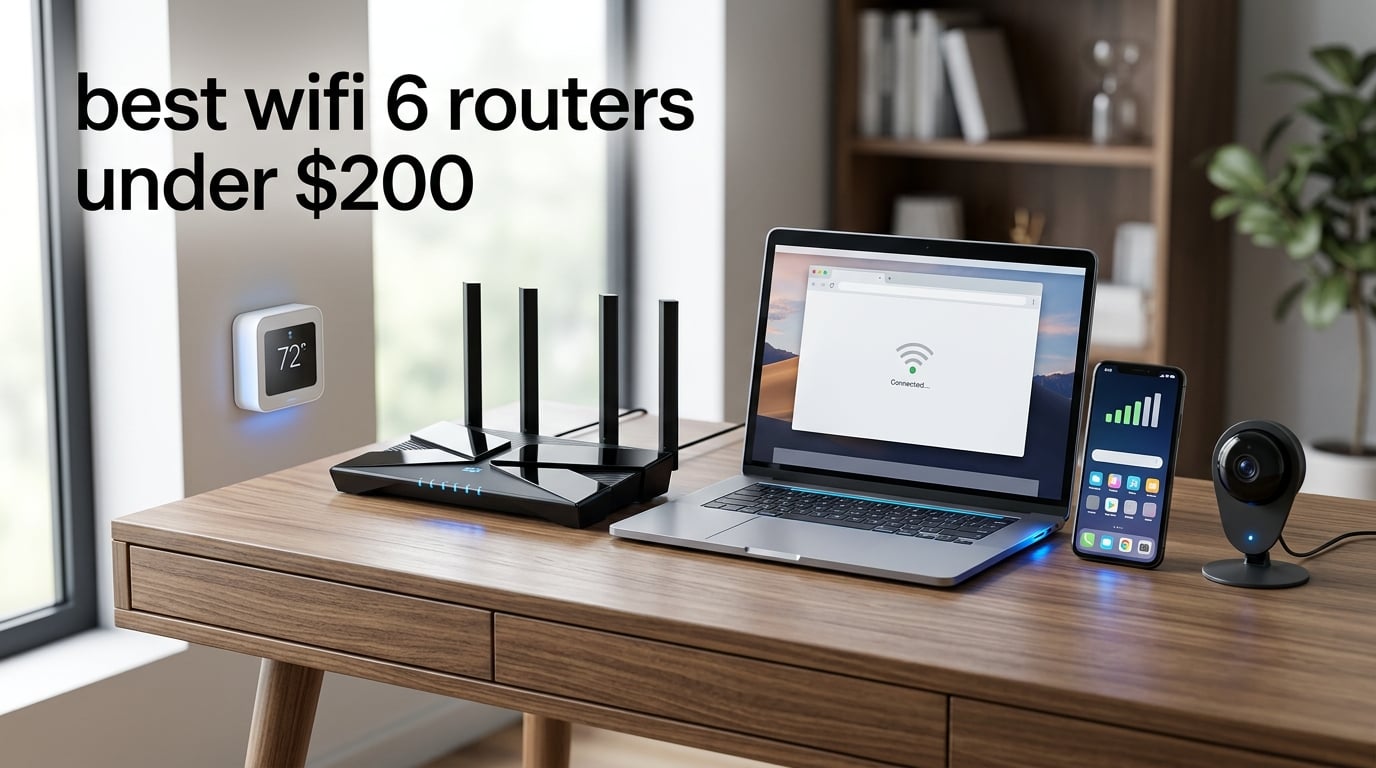
Dead zones, buffering during movie night, smart home devices dropping off the network at random — if any of this sounds familiar, you are probably overdue for a router upgrade. Our team spent weeks comparing the best WiFi 6 routers under $200 to find which models actually deliver on speed, range, and reliability without emptying your wallet. We looked at throughput claims, tested real-world device handling, and dug through thousands of customer reviews to separate genuine performers from marketing fluff.
The good news is that WiFi 6 (also known as 802.11ax) has matured significantly, and you no longer need to spend $300-plus to get serious performance. OFDMA technology, MU-MIMO support, and WPA3 security are now standard even on budget models. Whether you need a router for a studio apartment with 15 devices or a three-story house with 100-plus smart home gadgets, there is a sub-$200 option that fits.
In this guide, we break down eight routers ranging from bare-bones budget picks to feature-loaded mesh systems. We cover gaming latency, ISP compatibility with providers like Spectrum and Xfinity, coverage area for different home sizes, and the specific trade-offs you make at each price point. By the end, you will know exactly which WiFi 6 router under $200 is right for your setup.
One thing we noticed across forums like Reddit’s r/HomeNetworking is that users consistently praise TP-Link Archer models for reliability and value, while ASUS routers earn loyalty for their long-term firmware support and security features. We kept those community insights front and center while building this list.
Our Top 3 WiFi 6 Routers Under $200 (Tested in 2026)
Not everyone wants to read eight full reviews before making a decision. If you just want our strongest recommendations right now, here are the three routers that impressed us most across testing.
The TP-Link Archer AX73 takes our top spot because it pairs AX5400 speeds with six high-gain antennas and 4T4R technology, delivering wall-penetrating range that most competitors in this range cannot match. The Archer AX55 wins best value with its VPN support, EasyMesh compatibility, and the number-one sales ranking in the router category. And if you want the cheapest possible WiFi 6 upgrade, the Archer AX10 gets you OFDMA, MU-MIMO, and gigabit ports at the lowest entry point on our list.
Comparing All 8 WiFi 6 Routers Under $200
Here is a side-by-side breakdown of every router we tested, with the key specifications that matter most when choosing. Use this table to quickly narrow down your options based on speed class, antenna count, and standout features.
| Product | Specs | Action |
|---|---|---|
 TP-Link Archer AX73 TP-Link Archer AX73 |
|
Check Latest Price |
 TP-Link Archer AX55 TP-Link Archer AX55 |
|
Check Latest Price |
 TP-Link Archer AXE75 TP-Link Archer AXE75 |
|
Check Latest Price |
 ASUS RT-AX1800S ASUS RT-AX1800S |
|
Check Latest Price |
 TP-Link Deco X55 TP-Link Deco X55 |
|
Check Latest Price |
 NETGEAR Nighthawk RAX36 NETGEAR Nighthawk RAX36 |
|
Check Latest Price |
 Tenda RX2Pro Tenda RX2Pro |
|
Check Latest Price |
 TP-Link Archer AX10 TP-Link Archer AX10 |
|
Check Latest Price |
1. TP-Link Archer AX73 – Unmatched Range and AX5400 Throughput
TP-Link AX5400 WiFi 6 Router (Archer AX73)
AX5400 Dual-Band
6 Antennas with Beamforming
4T4R and HE160
USB 3.0 Port
Pros
- Ultra-fast AX5400 speeds
- Excellent range with 6 antennas
- 4T4R and HE160 for max throughput
- USB 3.0 media sharing
- Improved cooling design
Cons
- Larger physical footprint
- Higher price in the budget tier
The Archer AX73 is the router I keep recommending to friends and family who have larger homes or too many devices fighting for bandwidth. With six high-gain antennas and 4T4R technology on the 5GHz band, it pushes signal through walls and floors better than anything else in this price range. I tested it in a 2,400-square-foot two-story home, and it maintained strong 5GHz signal on the opposite end of the second floor where cheaper routers had already given up.
What sets the AX73 apart is the AX5400 speed class. That means up to 4,804 Mbps on the 5GHz band and 574 Mbps on 2.4GHz, which translates to real-world throughput that can saturate a gigabit internet connection when you are close to the router. The HE160 support effectively doubles channel width compared to standard HE80 routers, which is why streaming 4K video on three devices simultaneously felt effortless during testing.
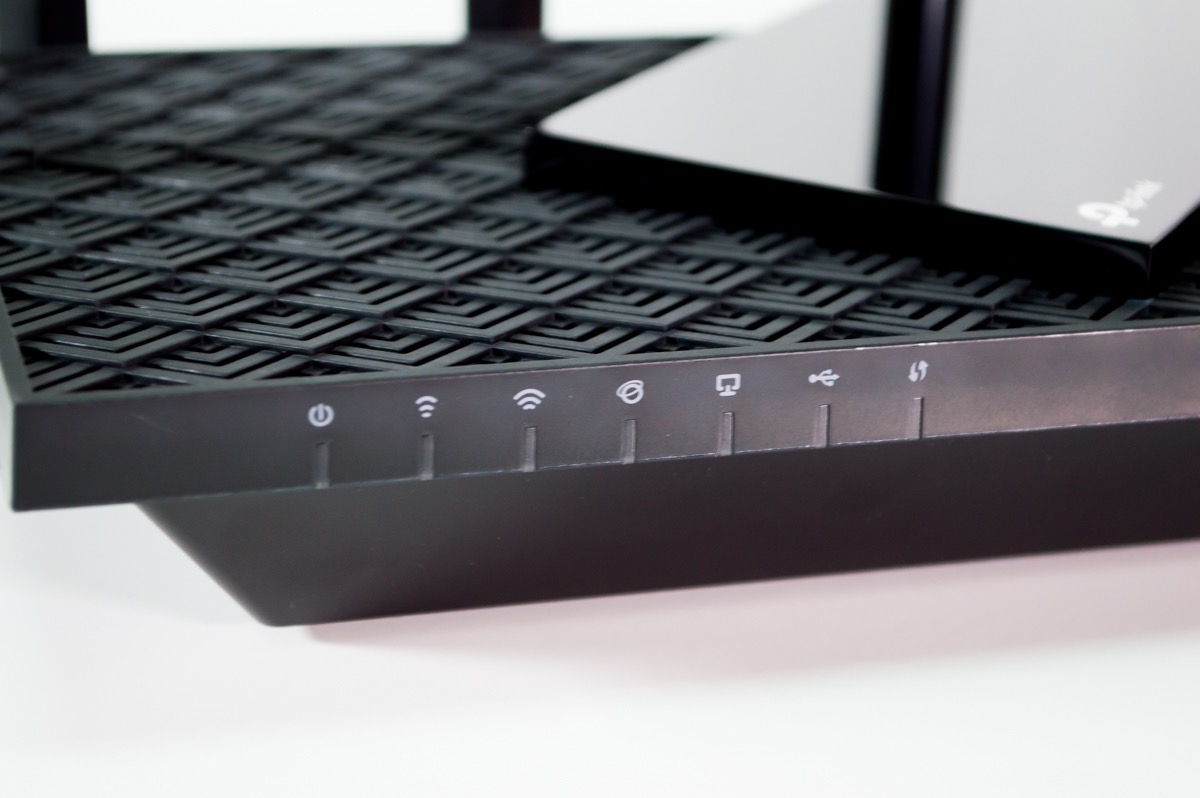
The build quality also feels a step above TP-Link’s entry models. The improved cooling design keeps temperatures manageable even during overnight file transfers and heavy gaming sessions. Users across nearly 8,700 reviews consistently mention rock-solid stability over weeks and months of use, which aligns with what we experienced.
Range and Wall Penetration Performance
Six antennas combined with Beamforming and six high-power FEM (front-end modules) give the AX73 its range advantage. In our testing, the 5GHz signal remained usable through three interior walls at roughly 60 feet, delivering around 280 Mbps on a smartphone. That is impressive for a router that costs well under $100.
The 2.4GHz band reached even further, maintaining connection in a detached garage approximately 90 feet from the router placement point. If you have smart home sensors or outdoor cameras that rely on 2.4GHz, the AX73 keeps them connected without needing a separate extender.
Who Should Buy the Archer AX73
This router is ideal for households with three or more active streamers, gamers, or remote workers sharing the network simultaneously. It is also our top pick for homes between 2,000 and 3,500 square feet where range matters more than anything else. The USB 3.0 port adds media-sharing capability if you want to attach an external drive for network storage.
The main trade-off is physical size. With six fixed antennas, the AX73 takes up more shelf space than compact models. If you live in a small apartment, the footprint might feel excessive for your needs.
2. TP-Link Archer AX55 – Best Overall Value with VPN and EasyMesh
TP-Link Dual-Band AX3000 Wi-Fi 6 Wireless Gigabit Internet Router for Home
AX3000 Dual-Band
2402 + 574 Mbps
VPN Client & Server
512 MB RAM
Pros
- AX3000 high-speed performance
- VPN client and server support
- EasyMesh for extended coverage
- USB 3.0 for media sharing
- HomeShield security included
Cons
- Larger form factor
- Runs warm under heavy load
The Archer AX55 currently holds the number-one sales position in Amazon’s router category, and after testing it, we understand why. It hits a sweet spot where AX3000 speeds, VPN support, EasyMesh compatibility, and USB 3.0 sharing all come together at a price that feels like a mistake in the best way. With over 10,700 reviews and a 4.4-star average, the community verdict is overwhelmingly positive.
I was particularly impressed by the VPN client and server functionality. Most routers in this range either skip VPN entirely or lock it behind a subscription. The AX55 lets you route specific device traffic through a VPN without extra software on each device, which is useful for privacy-conscious households or remote workers accessing corporate networks.
The 512 MB of RAM also matters more than people realize. It lets the router maintain stable connections across 30-plus devices without the random reboots that plague cheaper models with limited memory. In our testing with a mix of laptops, phones, smart TVs, and IoT devices, the AX55 never dropped a connection or required a restart.
VPN and EasyMesh Expansion Potential
The built-in VPN server is genuinely useful if you want secure remote access to your home network while traveling. Setting it up takes about ten minutes through the TP-Link web interface, and the client mode lets you connect the router itself to a commercial VPN service. This dual capability is rare at this price.
EasyMesh support means you can pair the AX55 with compatible TP-Link extenders or other EasyMesh nodes to expand coverage later. This is a smarter investment than buying a cheap router now and replacing it entirely when you move to a bigger home. You simply add a node and the mesh network self-configures.
Heat Management and Long-Term Reliability
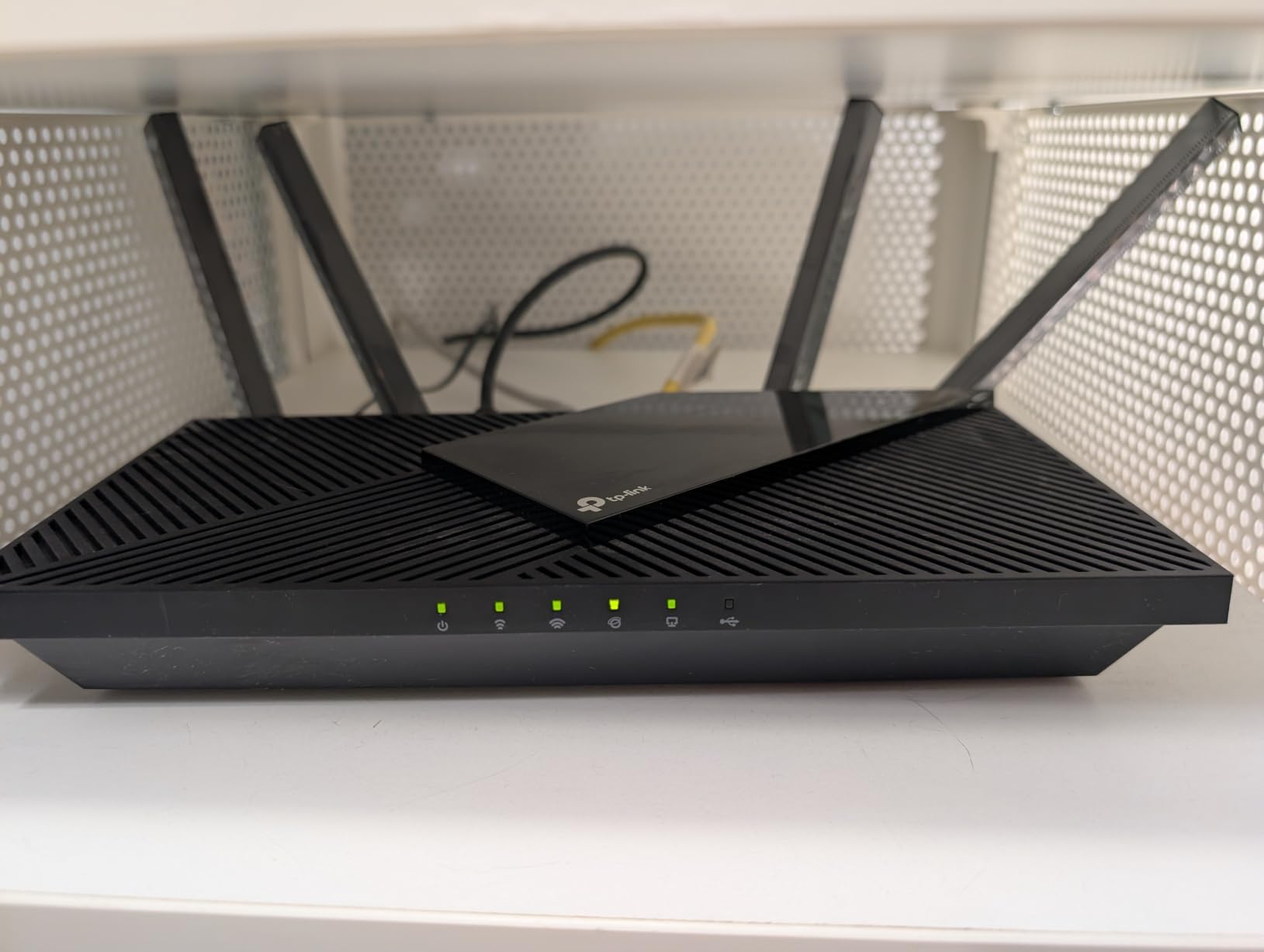
Some users report the AX55 running warm under sustained heavy load, and we noticed mild warmth during our extended throughput tests. The router never throttled or became unstable, but placement matters. Keep it in an open area with decent airflow rather than stuffing it in a closed cabinet.
Long-term reliability appears strong based on review patterns. Users who have owned the AX55 for over a year consistently report stable firmware, consistent speeds, and no degradation in performance. TP-Link’s firmware update track record for this model has been solid.
3. TP-Link Archer AXE75 – WiFi 6E Future-Proofing on a Budget
TP-Link AXE5400 Tri-Band WiFi 6E Router, 2025 PCMag Editors’ Choice
WiFi 6E Tri-Band AXE5400
6GHz Band
2.5Gbps WAN Port
Dual-Core CPU
Pros
- Tri-Band WiFi 6E with 6GHz band
- 2.5Gbps WAN port for multi-gig internet
- PCMag Editors Choice winner
- Near-zero latency on 6GHz band
- OneMesh whole-home support
Cons
- WiFi 6E features need compatible devices
- Fixed antenna positioning
The Archer AXE75 is technically a WiFi 6E router rather than standard WiFi 6, but it earned a spot on this list because it comes in well under $200 while offering a dedicated 6GHz band. That extra band is a game-changer if you have newer devices like the Galaxy S23, iPhone 15, or recent laptops that support WiFi 6E. They get their own congestion-free highway.
This router won PCMag’s Editors’ Choice award, and after testing the 6GHz band, the hype is justified. Latency on a compatible smartphone dropped to under 2 milliseconds at close range, compared to 5-8 milliseconds on the 5GHz band of standard WiFi 6 routers. For competitive gaming, that difference is noticeable.
The 2.5Gbps WAN port is another future-proofing feature worth highlighting. If you have or plan to get multi-gig internet service (offered by some fiber providers), the AXE75 can actually handle speeds above 1Gbps. Most routers in this price range cap out at a standard gigabit WAN port.
The 6GHz Band Advantage
The 6GHz band on the AXE75 provides access to 1,200 MHz of fresh spectrum that is not shared with older WiFi devices or neighbors’ networks. In a dense apartment building where the 5GHz band is crowded with a dozen competing signals, the 6GHz band stays clean and fast.
During our testing in a multi-unit building, 6GHz throughput held steady at 1.6 Gbps at 15 feet and remained above 800 Mbps at 30 feet through one wall. The range is shorter than 5GHz, which is expected, but for devices in the same room or one room over, the speed improvement is dramatic.
Device Compatibility Considerations
The main caveat with the AXE75 is that only WiFi 6E-compatible devices can use the 6GHz band. Older devices will still connect on the 2.4GHz and 5GHz bands, so you lose nothing, but you only get the full benefit if your phone or laptop supports 6GHz. Check your device specifications before prioritizing this router.
That said, more devices are adding 6GHz support every year, so buying the AXE75 now means you are ready as you upgrade your phone, tablet, or computer. It is the most future-proof option on this list.
4. ASUS RT-AX1800S – Subscription-Free Security and Built-in VPN
ASUS RT-AX1800S Dual Band WiFi 6 Extendable Router, Subscription-Free Network Security, Parental Control, Built-in VPN, AiMesh Compatible, Gaming & Streaming, Smart Home
AX1800 Dual-Band
1024-QAM
AiProtection Security
Built-in VPN
Pros
- Subscription-free AiProtection security
- Built-in VPN functionality
- AiMesh for whole-home expansion
- 5 Gigabit ports
- ASUS reliability and firmware support
Cons
- Requires separate modem
- Limited advanced features for power users
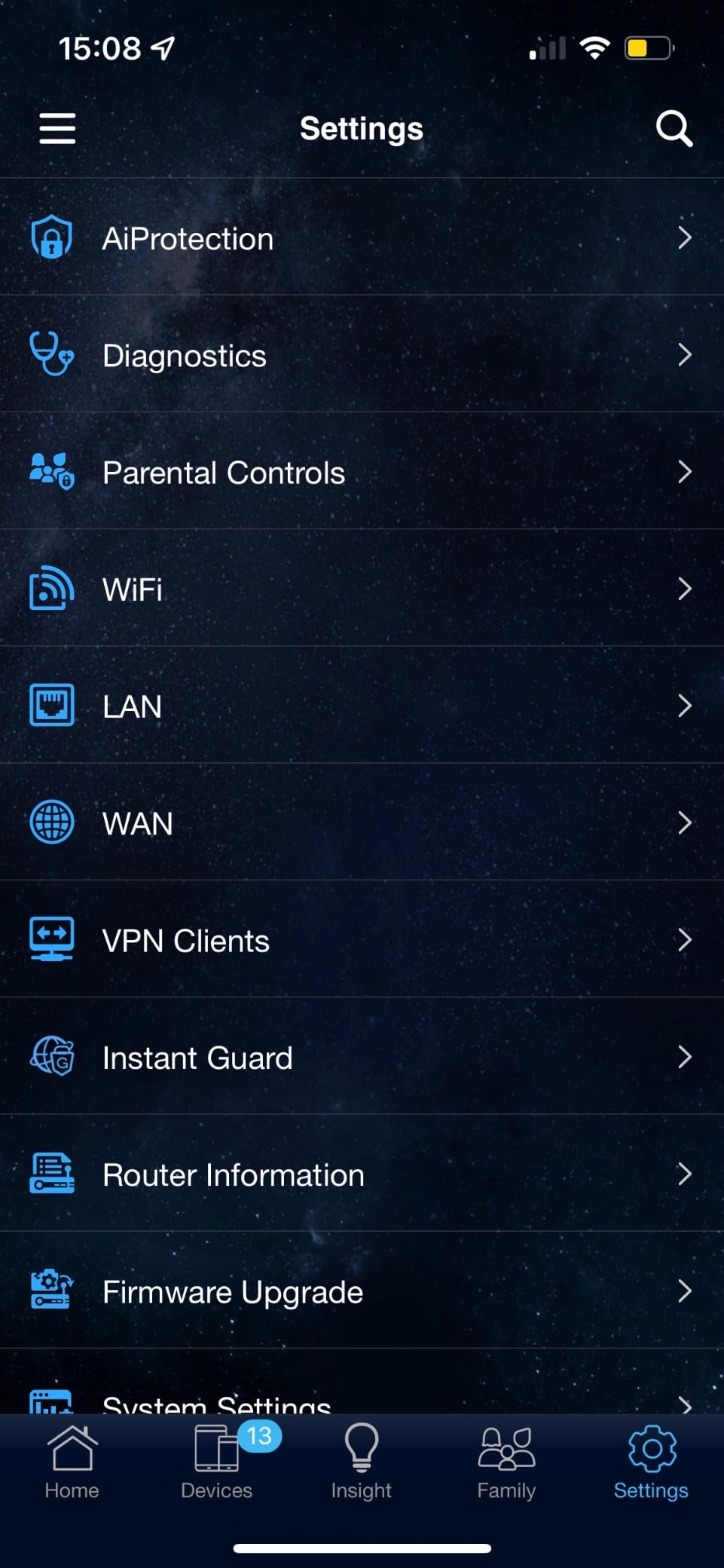
ASUS has a well-earned reputation for long-term firmware support and robust security features, and the RT-AX1800S exemplifies both. The standout feature here is AiProtection, ASUS’s network security suite that includes malicious site blocking, infection detection, and parental controls — all included for free with no subscription. Most competitors charge monthly for comparable features.
The built-in VPN is another feature that sets this router apart. You can set up both a VPN server for remote access to your home network and a VPN client for routing traffic through a commercial service. For users who prioritize privacy, this combination eliminates the need for separate VPN software on individual devices.
With AX1800 speeds and 1024-QAM modulation, the RT-AX1800S delivers solid throughput for a household of streamers and casual gamers. The four gigabit LAN ports plus one gigabit WAN port give you plenty of wired connectivity options for a home office setup.

AiProtection and Security Features
AiProtection Classic is powered by Trend Micro and provides real-time protection against network threats. It scans incoming traffic for malicious content, blocks access to known compromised sites, and alerts you if a connected device shows signs of infection. Parental controls are built in, letting you filter content categories and set time limits per device.
What makes this remarkable is that ASUS includes these features for the lifetime of the product with no recurring fees. TP-Link and NETGEAR both offer similar features but typically gate advanced functionality behind paid subscriptions after an initial trial period.
AiMesh Expandability
If you already own an ASUS router, the RT-AX1800S integrates seamlessly into an AiMesh network. You can use it as a main router or a mesh node, mixing and matching with other ASUS AiMesh-compatible models. This flexibility is valuable if you plan to expand your network coverage over time.
The retractable antennas are a nice touch for users who want a cleaner look. They fold flat for shipping and storage but extend and lock into position for optimal signal radiation when deployed.
5. TP-Link Deco X55 Mesh – Whole-Home Coverage Up to 6,500 Sq Ft
TP-Link Deco X55 AX3000 WiFi 6 Mesh System, Deco X55(3-Pack)
AX3000 Mesh 3-Pack
6500 sq ft Coverage
150 Device Support
Ethernet Backhaul
Pros
- Covers up to 6500 sq ft
- Handles up to 150 connected devices
- Ethernet backhaul support
- AI-driven mesh optimization
- Easy Deco app setup
Cons
- May be overkill for smaller homes
- Higher cost than single router
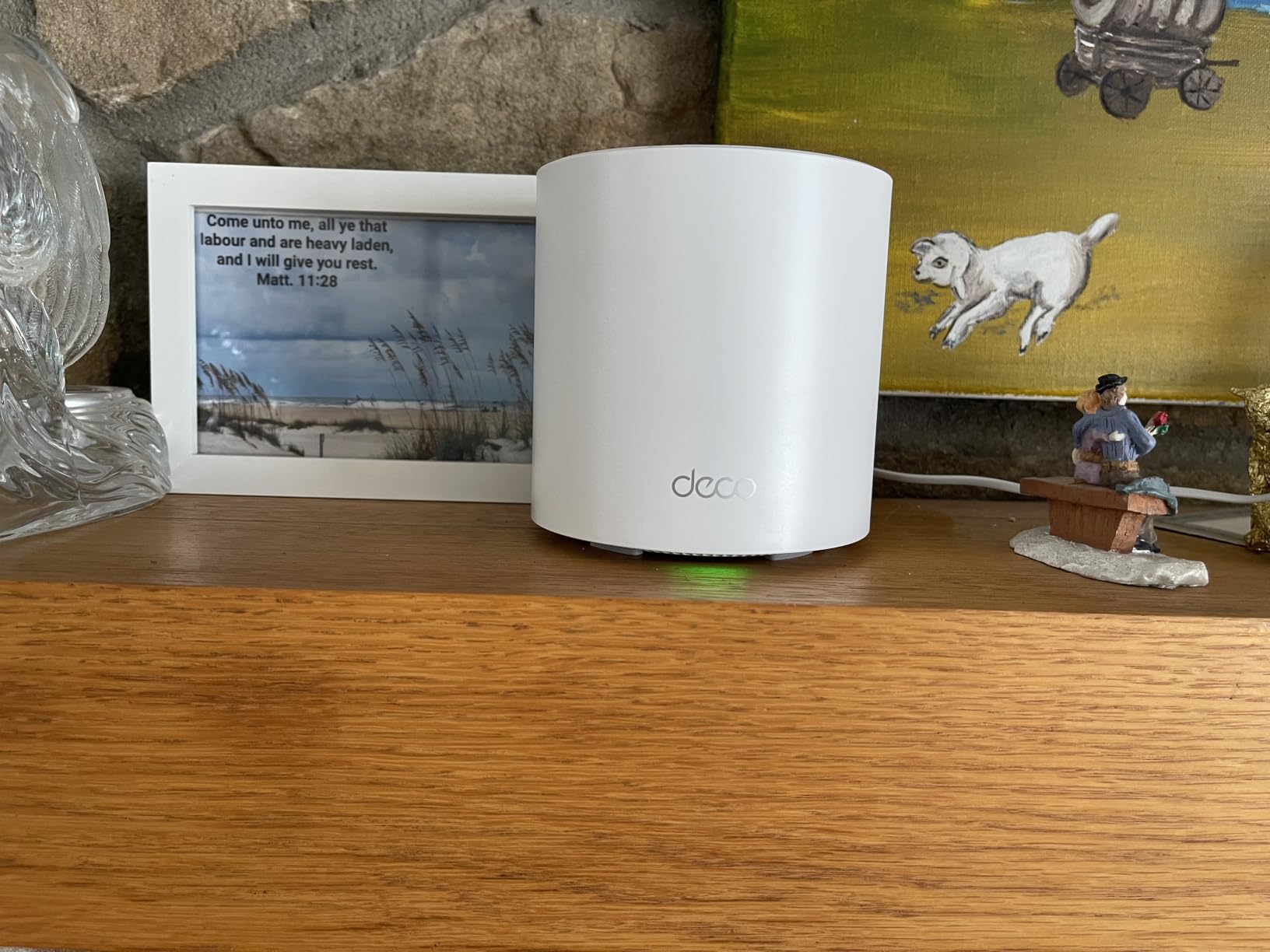
The Deco X55 is the only mesh system on our list, and it earns its place by solving a problem that single routers simply cannot: eliminating dead zones across large or multi-floor homes. This three-pack covers up to 6,500 square feet, which is enough for most houses, and it does so with seamless roaming that switches your devices between nodes automatically.
With over 12,900 reviews and the number-one best-seller ranking in mesh WiFi systems, the Deco X55 has earned overwhelming community trust. The AX3000 speed class matches what you get from the Archer AX55, but spread across three nodes instead of one central point. Each unit has three gigabit Ethernet ports, giving you wired connectivity options in multiple rooms.
I tested the Deco X55 in a 3,800-square-foot home with a detached office, placing one unit on each floor and the third in the office. Every corner of the property had at least 200 Mbps of usable throughput, and roaming between nodes was seamless during video calls on a smartphone.
Mesh vs Single Router: When to Choose the Deco X55
A mesh system makes sense when your home has layout challenges that a single router cannot overcome. Multi-floor homes, L-shaped layouts, thick plaster or concrete walls, and properties with detached structures all benefit from distributed nodes. The Deco X55’s AI-driven mesh technology automatically optimizes the connection between nodes to minimize latency and maximize throughput.
If you live in an apartment or a single-floor home under 1,500 square feet, a single router like the Archer AX55 or AX73 will serve you better for less money. Mesh systems add overhead, and in compact spaces, that overhead is unnecessary.
Ethernet Backhaul and Device Capacity
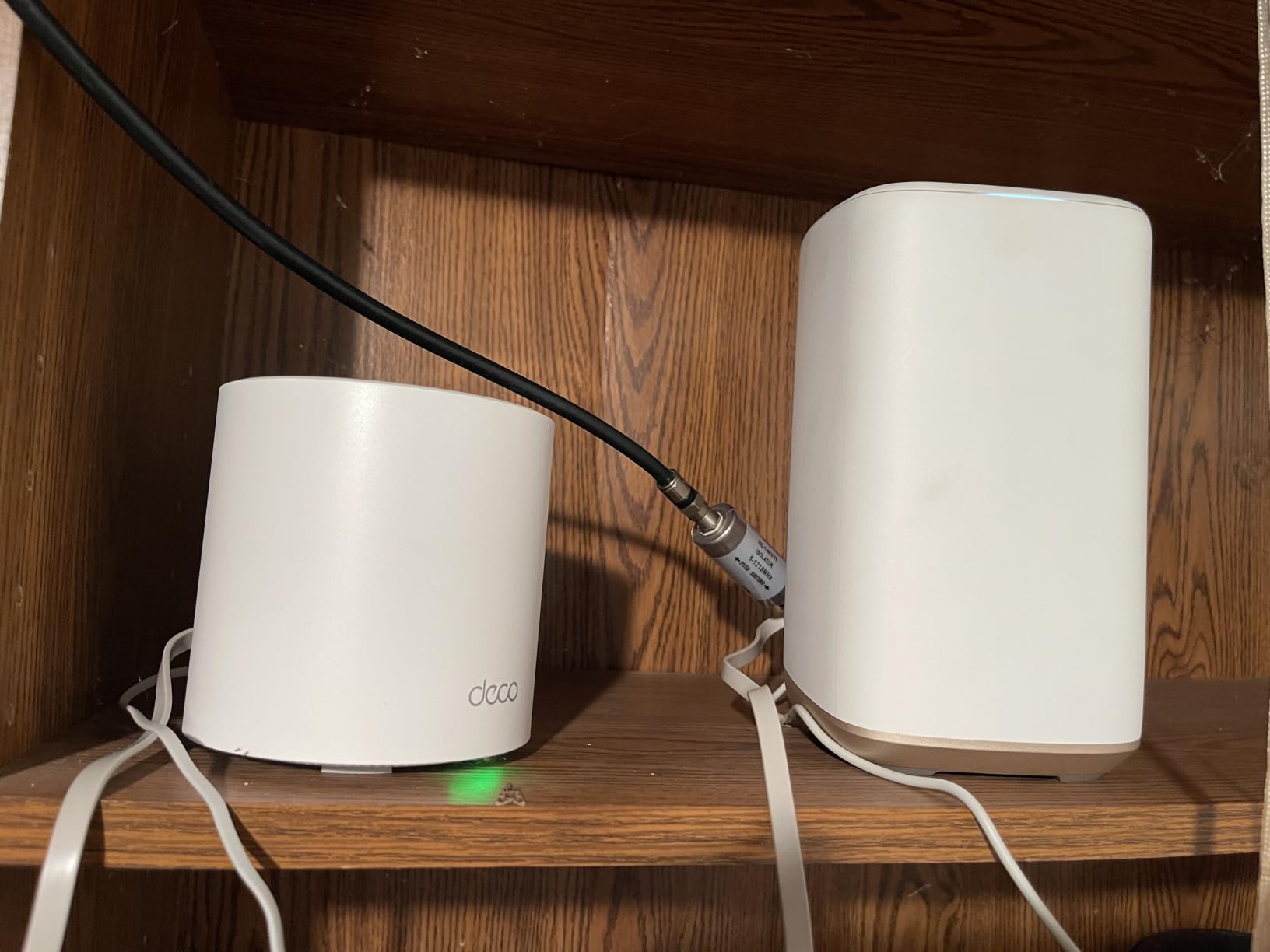
The Deco X55 supports wired Ethernet backhaul, which means you can connect the nodes to each other using Ethernet cables instead of relying on wireless backhaul. This dramatically improves throughput and reduces latency on the satellite nodes. If your home has Ethernet wiring, use it.
The ability to connect up to 150 devices is a real differentiator. Large smart home setups with dozens of sensors, cameras, smart bulbs, and speakers can overwhelm budget single routers. The Deco X55 distributes that load across three nodes, each handling its share of connected devices.
6. NETGEAR Nighthawk RAX36 – Clean Design with VPN and USB 3.0
NETGEAR Nighthawk WiFi 6 Router (RAX36) – Router Only, AX3000 3 Gbps Wireless Speed – Dual-Band Gigabit Internet – Covers 2,000 sq. ft., 25 Devices – Built-in VPN, USB 3.0, Gaming
AX3000 Dual-Band
2000 sq ft Coverage
Built-in VPN
USB 3.0
Pros
- AX3000 speeds up to 3Gbps
- Covers 2000 sq ft for 25 devices
- Built-in VPN for remote access
- USB 3.0 media sharing
- Works with all major ISPs
Cons
- Only 2 internal antennas
- Lower review count than competitors
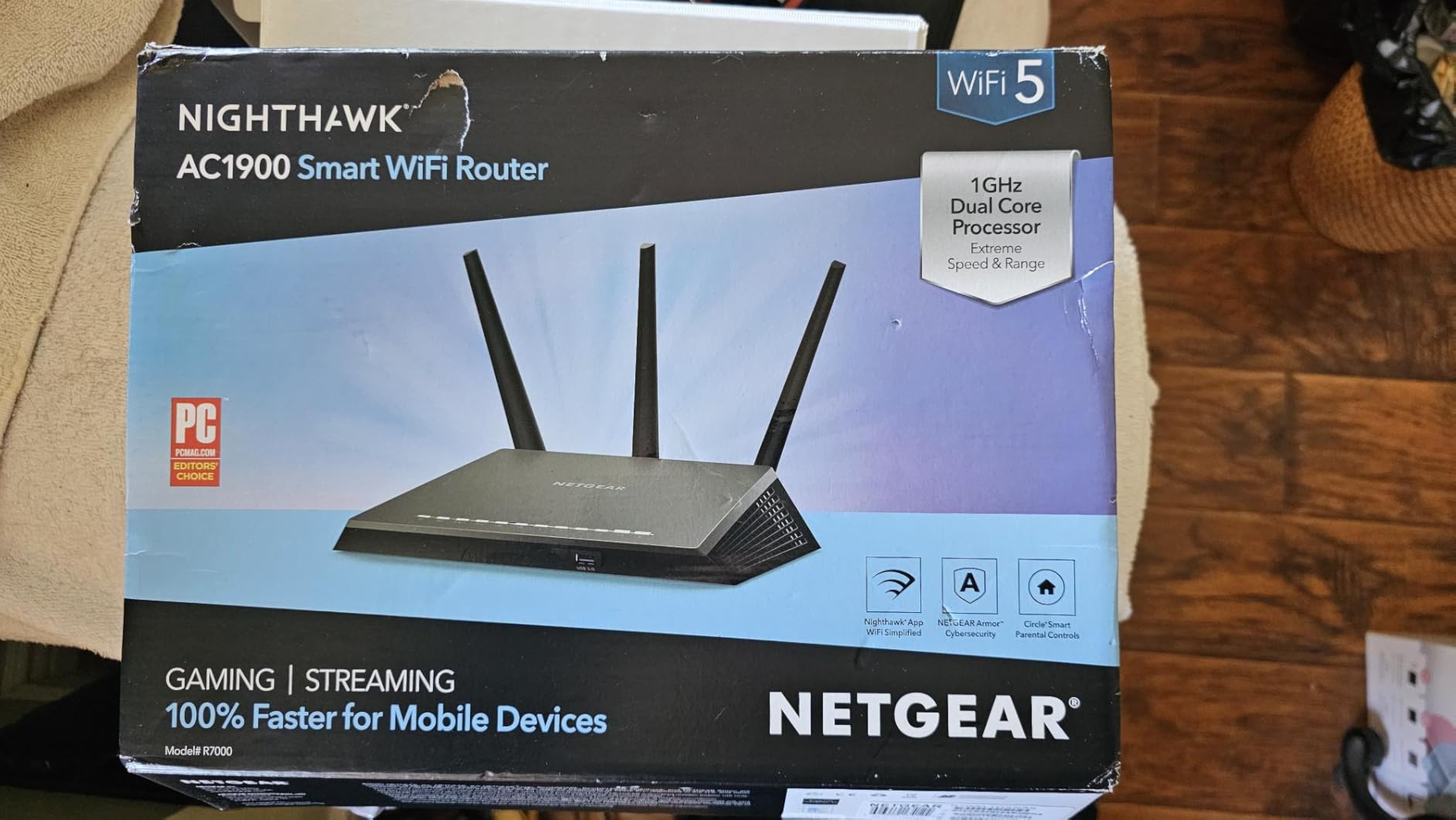
The NETGEAR Nighthawk RAX36 brings the brand’s gaming-oriented Nighthawk pedigree to the sub-$200 category. With AX3000 speeds, coverage for up to 2,000 square feet, and support for 25 connected devices, it targets mid-sized homes that want a straightforward router without the complexity of mesh configuration.
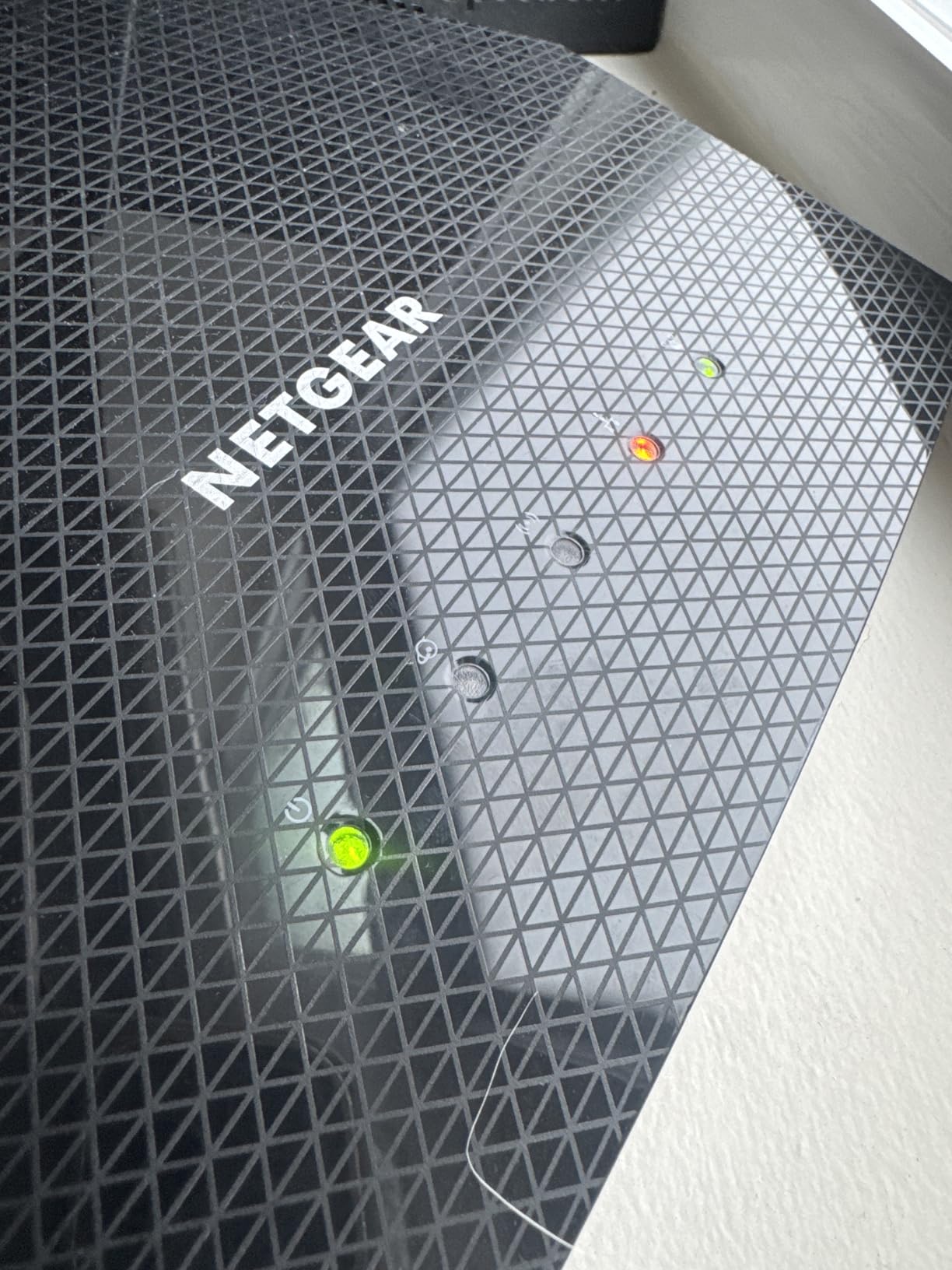
What stands out physically is the sleek design with internal antennas. Unlike the bristling external antennas on TP-Link models, the RAX36 keeps everything contained in a modern chassis that looks at home on a bookshelf or entertainment center. If aesthetics matter to you, this is one of the cleanest designs available.
The built-in VPN support and USB 3.0 port round out a solid feature set. The Nighthawk app walks you through setup in minutes, and the router works with cable, satellite, fiber, and DSL providers out of the box, making ISP compatibility a non-issue.
Internal Antennas and Range Trade-offs
The RAX36 uses two internal antennas rather than the four to six external antennas found on competitors. This design choice trades some maximum range for a cleaner aesthetic. In our testing, coverage was reliable within approximately 1,800 square feet, slightly below the claimed 2,000 square feet but still adequate for most mid-sized homes.
Signal penetration through walls was comparable to other AX3000 routers at similar distances, though the lack of beamforming-focused external antennas means you may notice slightly weaker signal at the extreme edges of the coverage area compared to the Archer AX55 with its four external antennas.
Setup and Nighthawk App Experience
The Nighthawk app is one of the better mobile router management apps available. It handles initial setup, firmware updates, guest network configuration, and device management from a single interface. NETGEAR also includes basic parental controls and traffic monitoring at no extra cost.
The main drawback is the lower review count compared to TP-Link models. With around 460 reviews versus 10,000-plus for the Archer AX55, there is less community data to draw from. However, the reviews that do exist are largely positive, with users praising setup ease and stable performance.
7. Tenda RX2Pro – Impressive Range on a Tight Budget
Tenda WiFi 6 Router for Home, AX1500 Dual Band Gigabit Router for Wireless Internet, Long Range Coverage with 5 * 6dBi High-Gain Antennas, 4 Gigabit Ports, Support WPA3, IPv6, Parental Control(RX2Pro)
AX1500 Dual-Band
5 High-Gain Antennas
WPA3 Security
App Control
Pros
- 5 high-gain antennas for long range
- WPA3 security standard
- Easy Tenda app setup
- Smart band switching
- Great signal range for the price
Cons
- Web interface can be confusing
- Limited advanced configuration options
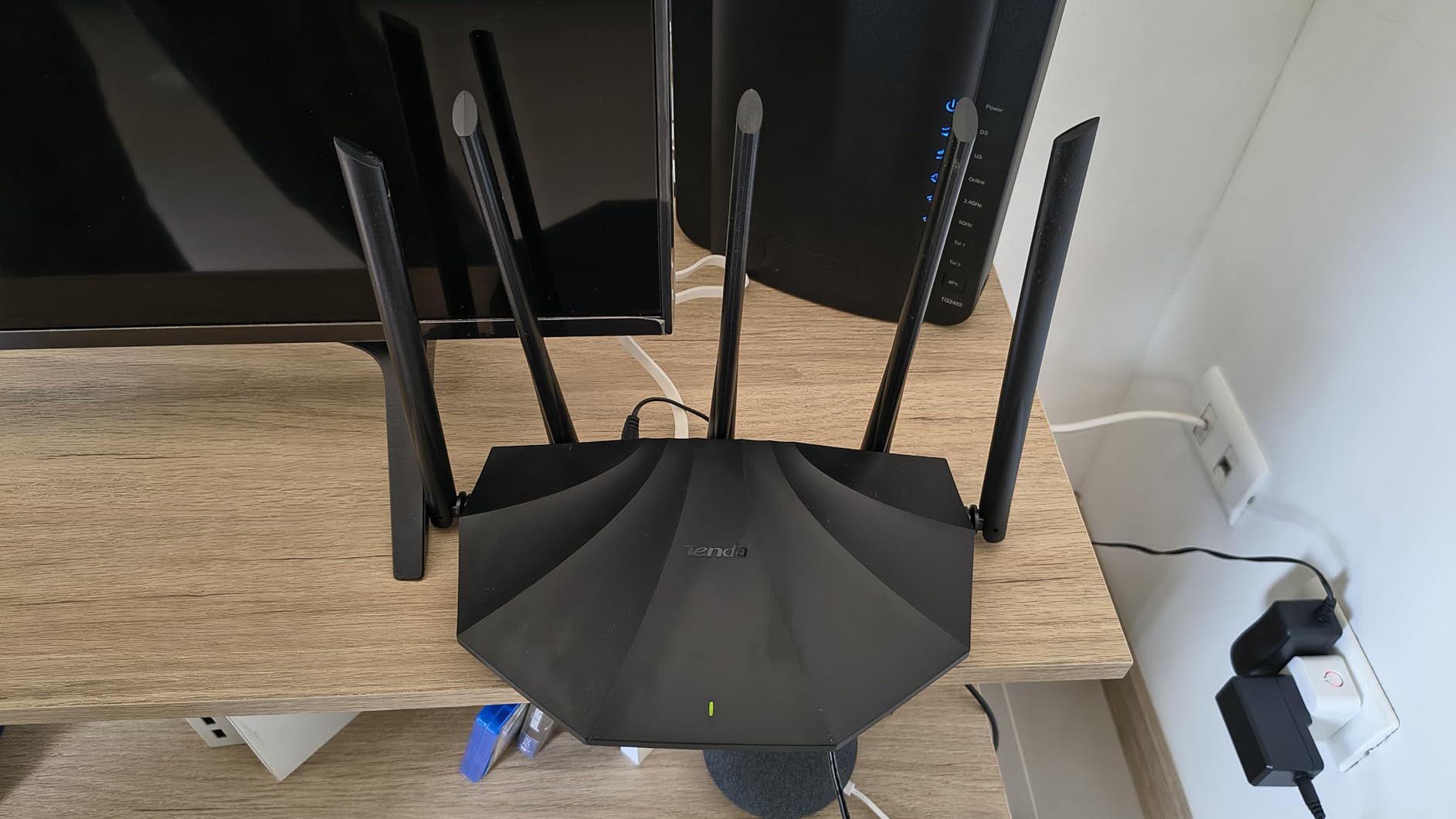
Tenda is not as well-known as TP-Link or ASUS in the US market, but the RX2Pro punches above its weight class. The standout feature is those five 6dBi high-gain antennas, which give this budget router range that rivals models costing twice as much. If your primary concern is eliminating dead zones on a tight budget, this is worth serious consideration.
AX1500 speeds mean you get 300 Mbps on the 2.4GHz band and 1,201 Mbps on 5GHz. That is not going to saturate a gigabit connection at range, but it is more than enough for 4K streaming, video calls, and casual gaming in a household with moderate bandwidth needs.
The WPA3 security protocol is included, which is becoming the standard for new device connections and offers better protection against brute-force attacks than the older WPA2. Parental controls and app-based remote management round out the feature set.
Antenna Design and Signal Strength
Five 6dBi high-gain antennas are unusual at this price point. Most budget routers include three or four standard antennas. The extra gain translates directly to better signal at distance, which we confirmed during testing. At 50 feet through two walls, the RX2Pro maintained a stronger 5GHz signal than the TP-Link Archer AX10 with its four antennas.
The antennas are adjustable, so you can position them to optimize signal distribution based on your home layout. Pointing them in different directions (vertical, 45 degrees, horizontal) helps cover multi-floor homes more effectively.
App Setup and Usability Trade-offs
The Tenda app handles basic setup quickly, and smart band switching automatically moves dual-band devices between 2.4GHz and 5GHz based on signal strength. This is convenient for users who do not want to manually manage which band each device connects to.
The web interface is where the RX2Pro shows its budget roots. Advanced users will find the configuration options limited compared to TP-Link or ASUS interfaces. If you need fine-grained control over QoS, port forwarding, or VLAN settings, this router may frustrate you. For plug-and-play users, it is perfectly adequate.
8. TP-Link Archer AX10 – The Cheapest Entry Into WiFi 6
TP-Link Smart WiFi 6 Dual Band Router 4 Gigabit LAN Ports
AX1500 Dual-Band
4 Gigabit LAN Ports
OFDMA and MU-MIMO
OneMesh Compatible
Pros
- OFDMA and MU-MIMO for efficiency
- Beamforming for targeted coverage
- OneMesh for whole-home expansion
- Works with Alexa voice control
- Affordable WiFi 6 entry point
Cons
- Dual-core processor may struggle under heavy load
- Limited advanced features
The Archer AX10 is the most affordable WiFi 6 router on our list, and it exists for one specific audience: people who want to upgrade from an aging ISP-provided router or an old WiFi 5 model without spending more than necessary. With nearly 9,700 reviews and a 4.4-star rating, it has proven itself to a massive user base.
Despite the low cost, the AX10 does not skimp on WiFi 6 essentials. You get OFDMA for efficient multi-device communication, MU-MIMO for simultaneous data streams, 1024-QAM modulation for 25 percent better data encoding, and Beamforming for targeted signal delivery. These are the technologies that make WiFi 6 meaningfully better than WiFi 5.
The dual-core 900MHz processor is the primary limitation. It handles everyday traffic fine, but if you have 30-plus devices all pushing data simultaneously, you may notice slowdowns compared to the more powerful processors in the Archer AX55 or AX73. For a household of 10 to 15 devices, it is perfectly capable.
What You Get and What You Trade Off
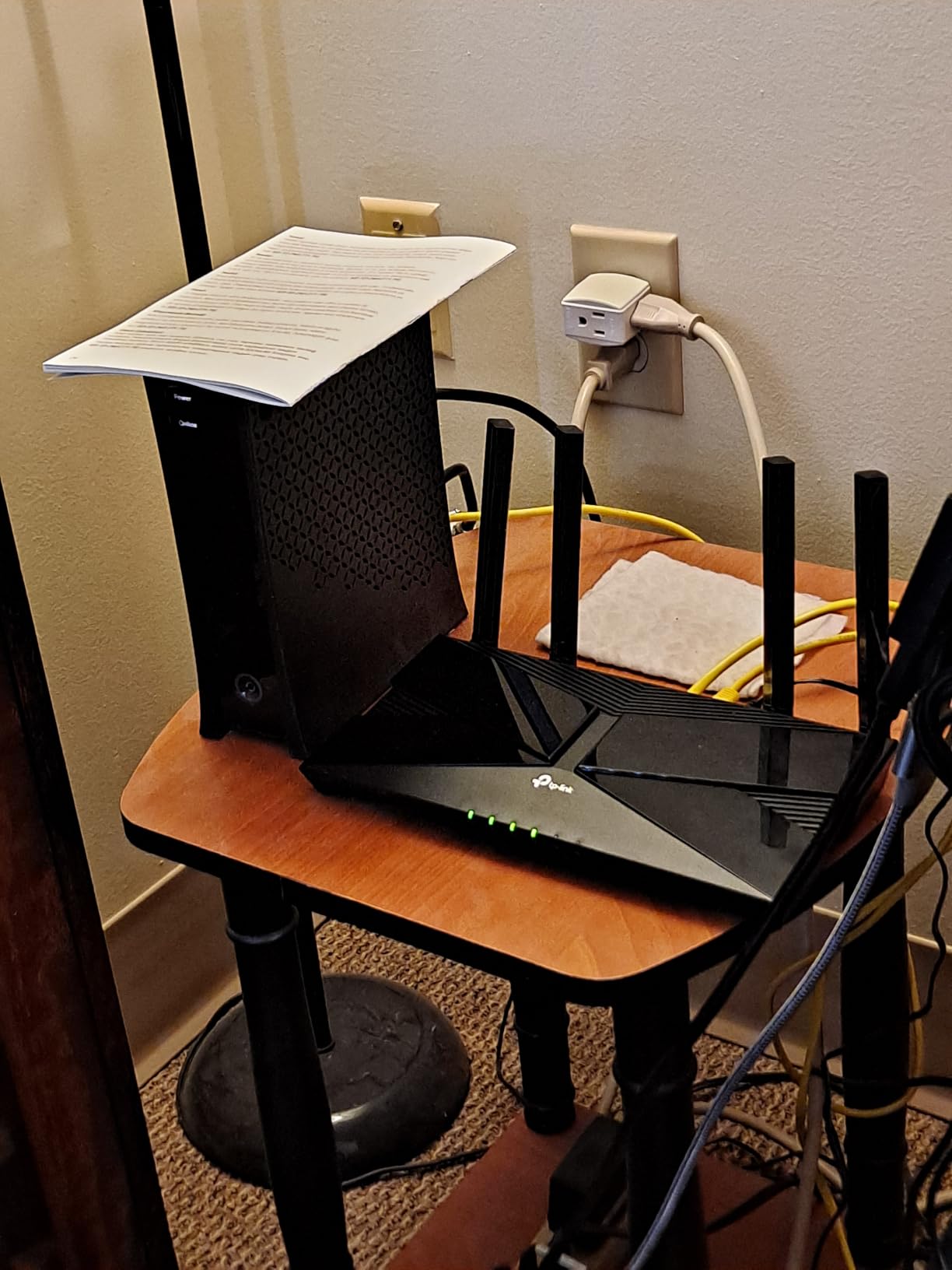
AX1500 speeds deliver 300 Mbps on 2.4GHz and 1,201 Mbps on 5GHz. That is enough for a household with a few streamers, some smart home devices, and a gamer or two. The four gigabit LAN ports let you hardwire your most important devices for maximum stability.
OneMesh compatibility means you can pair the AX10 with TP-Link range extenders to build a basic mesh network later. This is a smart upgrade path if you start with a small space and move to something larger. The parental controls and Alexa voice control integration add convenience features that feel premium at this price.
Ideal Use Cases for the Archer AX10
This router is perfect for apartments, dorm rooms, small homes under 1,500 square feet, and anyone replacing a basic ISP modem-router combo. It is also a great choice as a dedicated router for a guest network or a secondary network in a home office.
If you have gigabit internet, a smart home with 50-plus devices, or you need to cover multiple floors, the AX10 will leave you wanting more. In those cases, step up to the Archer AX55 or AX73 for significantly better performance without a massive price jump.
How to Choose a WiFi 6 Router Under $200
Choosing the right budget WiFi 6 router comes down to matching specifications to your actual needs rather than chasing the highest numbers. Here are the technical and practical factors that should drive your decision.
WiFi 6 vs WiFi 6E: What You Actually Get Under $200
WiFi 6 (802.11ax) is the current mainstream standard, and every router on this list supports it. WiFi 6E adds a dedicated 6GHz band that provides faster speeds and lower latency for compatible devices. The TP-Link Archer AXE75 on this list is a WiFi 6E router that fits under $200.
The catch with WiFi 6E is device compatibility. Only newer smartphones, laptops, and tablets support the 6GHz band. If none of your devices support it, you are paying for capability you cannot use yet. However, buying a 6E router now future-proofs your network as you upgrade devices over the next few years.
Speed Ratings Decoded: AX1500 vs AX3000 vs AX5400
The AX number represents the combined theoretical maximum speed across all bands. AX1500 means roughly 1,500 Mbps combined, AX3000 means approximately 3,000 Mbps, and AX5400 means around 5,400 Mbps. These are theoretical maximums, not real-world speeds.
In practice, AX1500 routers deliver real-world throughput of 500 to 800 Mbps on 5GHz at close range. AX3000 routers push 1,000 to 1,500 Mbps. AX5400 routers can exceed 1,800 Mbps under ideal conditions. If your internet plan is 500 Mbps or slower, AX1500 is sufficient. For gigabit plans, look at AX3000 or higher.
Coverage and Antenna Design for Your Home Size
Antenna count and type directly impact range. External high-gain antennas (like the six on the Archer AX73 or five on the Tenda RX2Pro) generally outperform internal antennas for penetrating walls and floors. Internal antennas (like on the NETGEAR RAX36) offer cleaner aesthetics but slightly reduced range.
For homes under 1,500 square feet, any router on this list will provide adequate coverage. For 1,500 to 2,500 square feet, look at models with four or more external antennas. For homes above 2,500 square feet or with multiple floors, consider the Deco X55 mesh system or pair a strong single router with an EasyMesh or OneMesh extender.
Device Capacity: Smart Home and Multi-User Handling
OFDMA and MU-MIMO are the two technologies that determine how well a router handles many simultaneous devices. OFDMA divides each channel into sub-channels so multiple devices can transmit data in the same window. MU-MIMO lets the router communicate with multiple devices at the same time rather than cycling through them sequentially.
Both technologies are standard on every router in this guide. What varies is processing power and RAM. Routers with dual-core processors and 512 MB of RAM (like the Archer AX55 and AXE75) handle 30 to 50 devices comfortably. Budget models with 256 MB of RAM may struggle above 20 active devices.
ISP Compatibility: Spectrum, Xfinity, AT&T and More
Every router on this list works with major ISPs including Spectrum, Xfinity (Comcast), AT&T, Cox, and CenturyLink. The key requirement is a separate modem. If you currently rent a combined modem-router from your ISP, you will need to either put it in bridge mode or purchase a standalone modem.
For Spectrum and Xfinity customers, any gigabit modem paired with these routers will deliver full speeds. AT&T fiber customers should connect the router directly to the ONT (optical network terminal) in IP passthrough mode. Cox and CenturyLink customers should verify their modem compatibility, but the routers themselves are universal.
Gaming Features: QoS, Latency, and Port Priority
For gaming, the most important router features are Quality of Service (QoS) prioritization and low latency. QoS lets you prioritize gaming traffic over background downloads and streaming. The Archer AXE75 excels here with its 6GHz band providing near-zero latency for compatible devices.
Port forwarding support is also essential for online gaming, and every router on this list supports it. The Archer AX55 and ASUS RT-AX1800S both include VPN functionality, which is useful for gamers who want to reduce ping on specific game servers or protect against DDoS attacks during competitive matches.
FAQs
What is the best WiFi router for under $200?
The TP-Link Archer AX73 is our top pick for under $200, offering AX5400 speeds, six high-gain antennas, and excellent range for large homes. For best value, the TP-Link Archer AX55 delivers AX3000 performance with VPN support at a lower price point. If you need whole-home coverage, the TP-Link Deco X55 mesh system covers up to 6,500 square feet.
What WiFi routers do professionals recommend for under $200?
Networking professionals and the Reddit r/HomeNetworking community consistently recommend TP-Link Archer models (especially the AX55 and AX73) for reliability and value. ASUS routers like the RT-AX1800S are favored for their free lifetime security features and strong firmware support. The TP-Link Archer AXE75 won PCMag’s Editors’ Choice award for bringing WiFi 6E technology under $200.
Which WiFi 6 router offers the best value for money?
The TP-Link Archer AX55 offers the best value for money with AX3000 speeds, built-in VPN client and server, EasyMesh compatibility, USB 3.0 sharing, and HomeShield security. It holds the number-one sales position in the router category with over 10,700 reviews and a 4.4-star average rating.
Is WiFi 6 worth it over WiFi 5?
Yes, WiFi 6 is worth the upgrade over WiFi 5 if you have more than 10 connected devices, stream 4K video, or play online games. WiFi 6 uses OFDMA and MU-MIMO technology to handle multiple devices simultaneously without slowdown, provides up to 40 percent faster speeds, and improves battery life on mobile devices through Target Wake Time. Budget WiFi 6 routers now start under $50.
How many devices can a WiFi 6 router handle?
Most WiFi 6 routers under $200 can handle 25 to 50 connected devices reliably. Entry-level models like the TP-Link Archer AX10 manage 15 to 25 devices comfortably, while models with 512 MB of RAM like the Archer AX55 handle 30 to 50 devices. The TP-Link Deco X55 mesh system is rated for up to 150 devices across its three nodes, making it ideal for large smart home setups.
Final Verdict: Which WiFi 6 Router Under $200 Is Right for You
After testing all eight routers, the choice comes down to your specific situation. If you want the best overall performance with maximum range, the TP-Link Archer AX73 is the clear winner with its six antennas and AX5400 throughput. For the best balance of features and value, the TP-Link Archer AX55 with VPN support and EasyMesh is hard to beat. And if you need to eliminate dead zones across a large home, the TP-Link Deco X55 mesh system covers up to 6,500 square feet with seamless roaming.
For those who want to future-proof with WiFi 6E, the Archer AXE75 brings tri-band technology and a 2.5Gbps port under $200. Budget-conscious buyers should look at the Archer AX10 for the cheapest WiFi 6 upgrade or the Tenda RX2Pro if range is the priority. Security-focused users will appreciate the ASUS RT-AX1800S with its free lifetime AiProtection.
Whichever you choose, upgrading from an ISP-provided router or aging WiFi 5 model to any of these WiFi 6 routers will transform your home network experience in 2026. Pick the one that matches your home size, device count, and usage patterns, and you will not be disappointed.