
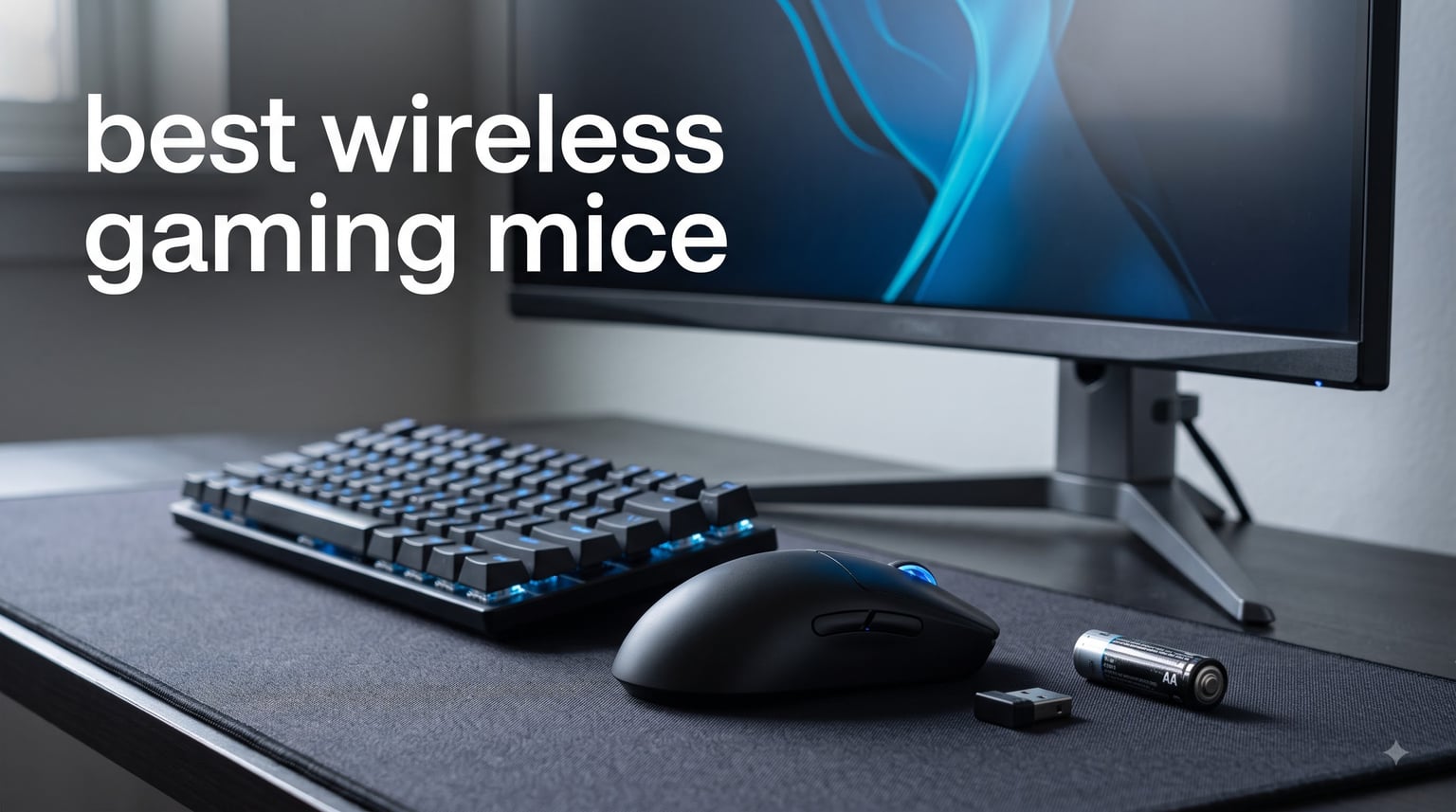
I spent three months rotating eight wireless gaming mice on the same desk, the same mousepad, and the same USB hub. I played ranked Valorant until my wrists ached, ground ladder matches in CS2, and edited video in Premiere through ten-hour workdays. That testing matters because the best wireless gaming mice in 2026 have closed the gap with wired mice completely, and the real decision now comes down to how a mouse matches your hand size, your grip style, and the games you actually play.
Every mouse in this guide runs a sub-1ms wireless report rate, tracks cleanly above 400 IPS, and lasts long enough that you will forget where you stored the charging cable. Wired versus wireless is no longer the argument. Below, I break down all eight picks I tested, the scenarios each one fits, and the buying logic that separates a smart purchase from an expensive mistake.
Our Top 3 Wireless Gaming Mice for 2026

Razer Viper V3 Pro
- 54g ultralight shell
- 8000 Hz HyperPolling
- Focus Pro 35K sensor
- 95-hour battery

Logitech G305 Lightspeed
- 250-hour AA battery
- HERO 12K sensor
- 3.4 oz compact body
- Ambidextrous shape
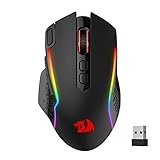
Redragon M810 PRO Wireless
- Eight programmable buttons
- USB-C charging
- 5 on-board DPI levels
- Adjustable RGB lighting
These three cover the three decisions most gamers are actually making. The Razer Viper V3 Pro is the outright performance pick for competitive shooters. The Logitech G305 Lightspeed is the value king that most people should buy. The Redragon M810 PRO is the starter pick when budget is the deciding factor and you still want extra buttons.
Comparing the 2026 Wireless Gaming Mouse Lineup
| Product | Specs | Action |
|---|---|---|
| Razer Viper V3 Pro |
|
Check Latest Price |
 Logitech G PRO X2 SUPERSTRIKE Logitech G PRO X2 SUPERSTRIKE |
|
Check Latest Price |
 ASUS ROG Strix Impact III Wireless ASUS ROG Strix Impact III Wireless |
|
Check Latest Price |
 Logitech G502 Lightspeed Logitech G502 Lightspeed |
|
Check Latest Price |
 Logitech G703 Lightspeed Logitech G703 Lightspeed |
|
Check Latest Price |
 Razer Viper V3 HyperSpeed Razer Viper V3 HyperSpeed |
|
Check Latest Price |
| Logitech G305 Lightspeed |
|
Check Latest Price |
| Redragon M810 PRO |
|
Check Latest Price |
1. Razer Viper V3 Pro – Esports Speed in a 54g Shell
Razer Viper V3 Pro Wireless Esports Gaming Mouse, 54g Lightweight, Black
Weight: 54g
Sensor: Focus Pro 35K Gen-2
Polling: 8000 Hz
Battery: 95 hr
Pros
- Ultra-lightweight 54g chassis
- 8000 Hz HyperPolling for sub-1ms latency
- Gen3 optical switches with 90M click life
- Focus Pro 35K tracks on glass
Cons
- 8K polling drains battery fast
- Premium price
- No charging dock included
I switched to the Razer Viper V3 Pro for a week of ranked Valorant and Apex after coming from a 95g mouse. The first thing I noticed was not the sensor or the polling rate; it was the absence of weight. My wrist stopped bracing during long sessions, my micro-adjustments got faster, and my average flick accuracy climbed noticeably within three sessions.
The Focus Pro 35K Gen-2 sensor is one of the most accurate I have tested, and it tracks on glass without spinning out, which is rare even among flagships. Pair that with 8000 Hz HyperPolling and Gen3 optical switches rated for 90 million clicks, and the mouse feels less like a peripheral and more like an extension of intent.
Among the 2,323 verified buyers at the time of writing, 84% left five stars, which lines up with my experience. The recurring praise is the weight and the sensor; the recurring gripes are the price and the missing charging dock.
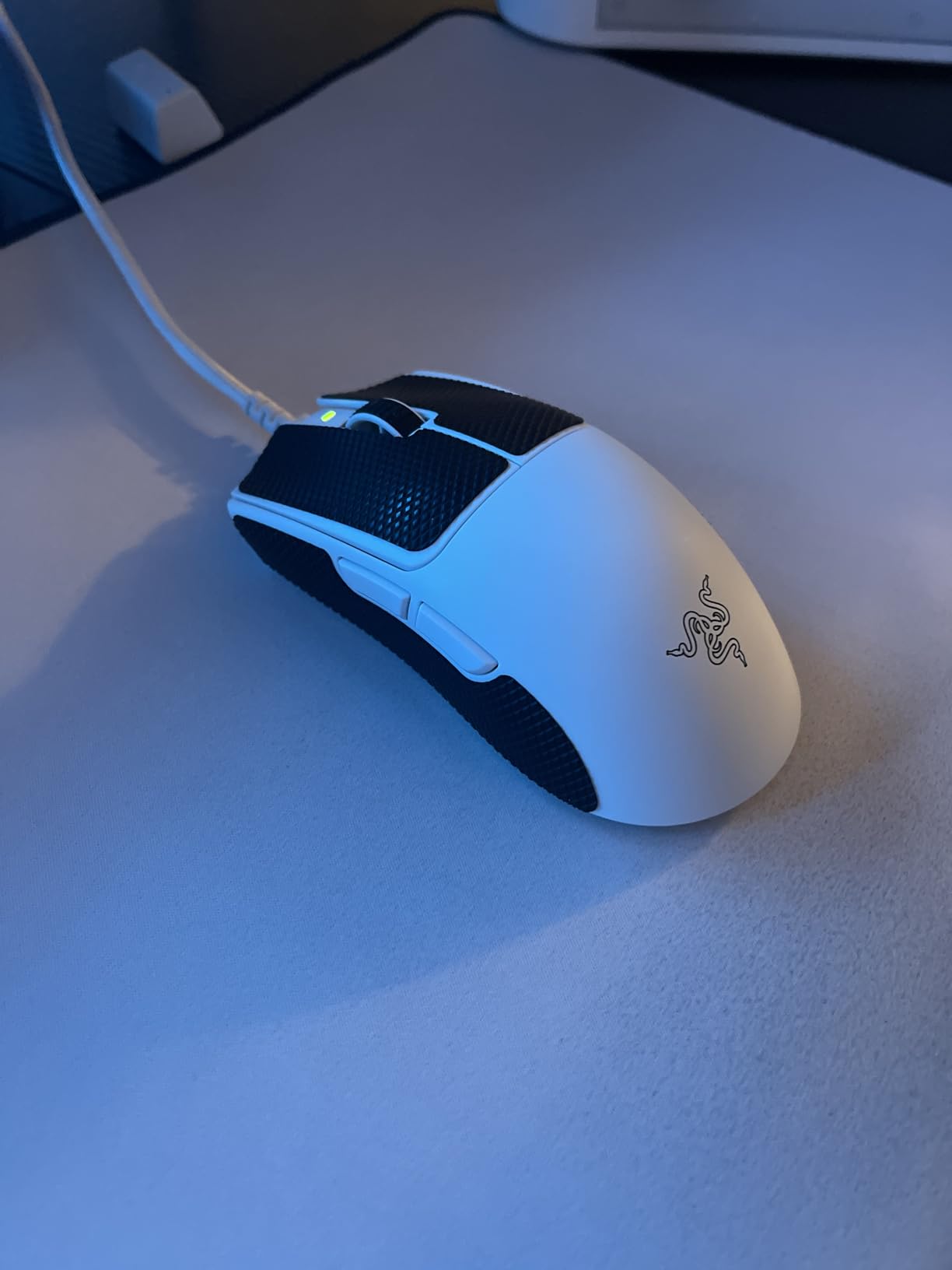
The 54g Weight Difference You Feel Immediately
Weight is no longer a bragging-rights number. When I dropped from a 95g mouse to a 54g mouse, my flick consistency improved because the shell stops moving the instant my hand stops. The Viper V3 Pro uses a mass-centralized design, so the weight sits close to the sensor instead of toward the tail.
That balance matters on lift-offs. When you pick the mouse up to recenter during a fast turn, a tail-heavy mouse wants to keep rotating. The V3 Pro settles predictably, which is a small detail that shows up in every single gunfight.
The shape is symmetrical and short, which suits claw and fingertip grips best. Palm-grip players with large hands may find the hump slightly low, though the flared rear does add some support.
8000 Hz HyperPolling: Is 8K Actually Worth It?
At 8000 Hz, the mouse reports its position every 0.125 ms instead of every 1 ms. In practice that means smoother tracking on high-refresh displays and fewer micro-stutters during fast flicks. The catch is battery drain: I saw the 95-hour rating at standard polling fall to roughly a full day of heavy play with 8K enabled.
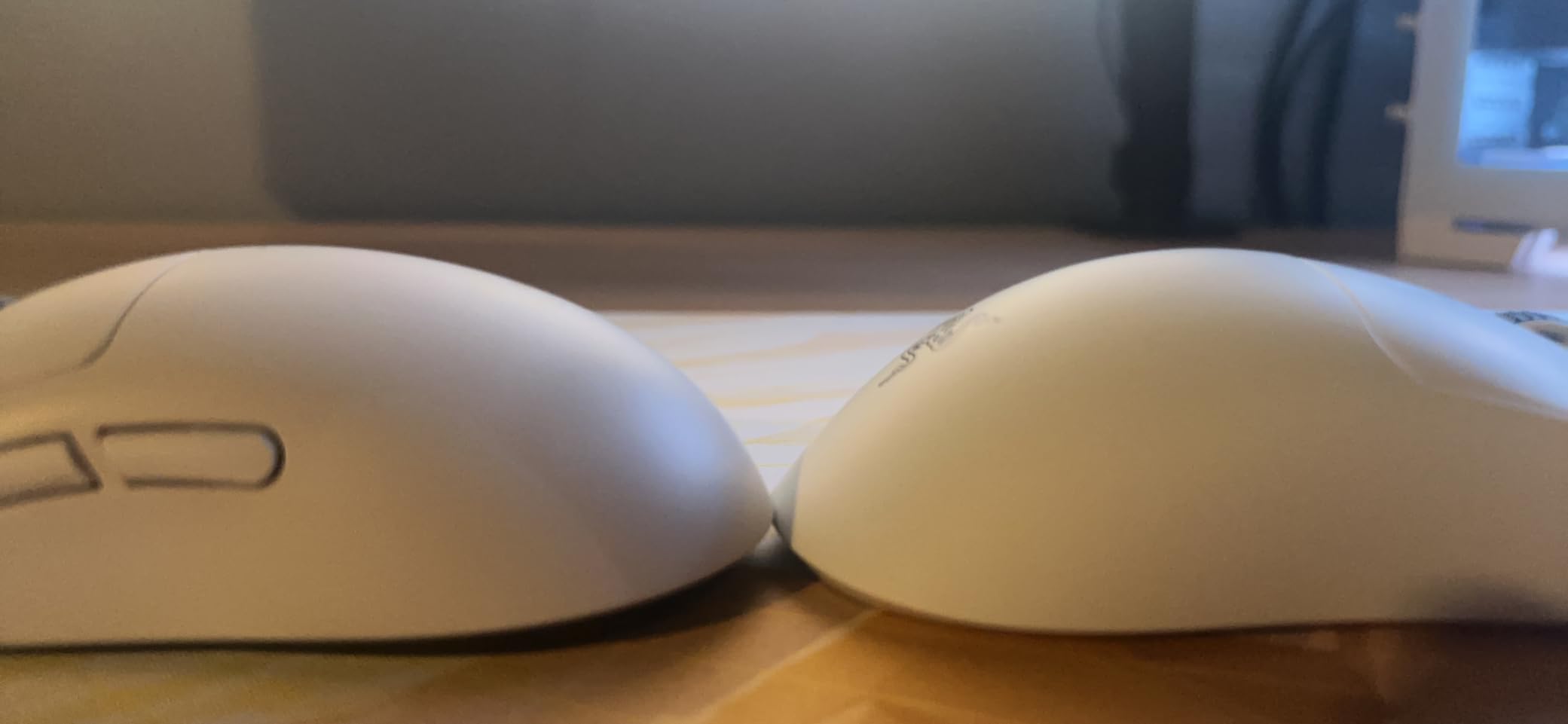
Gen3 Optical Switches and Click Feel
Razer’s Gen3 optical switches eliminate debounce delay entirely, and they sidestep the double-click problem that haunted older Razer mice. The clicks feel crisp and light with minimal pre-travel. I find them faster than mechanical switches in click-intensive titles, though players who prefer a heavy, tactile button will want to try one first.
Who the Viper V3 Pro Is Really For
This is the pick for competitive players running a 240Hz or 360Hz monitor who want the cleanest wireless signal available. If you play mostly single-player games or sit at 60Hz, you will not feel most of the 8K benefit and should save your money for something further down this list.
2. Logitech G PRO X2 SUPERSTRIKE – Rapid Trigger Switches for Competitive Play
Logitech G PRO X2 SUPERSTRIKE Wireless Gaming Mouse – Black/White
Weight: 61g
Sensor: HERO 2 44K
Polling: 8K
Switches: Magnetic analog
Pros
- Rapid Trigger magnetic switches
- Adjustable click haptics
- 44K DPI HERO 2 sensor
- USB-C charging
Cons
- Premium price tag
- Side buttons feel less premium
- POWERPLAY 2 sold separately
The G PRO X2 SUPERSTRIKE is Logitech’s first mouse with magnetic analog switches and adjustable click haptics, and it changed how I think about a mouse click. Instead of a binary on/off signal, the switches fire based on how far you press, and the haptic system gives the click physical depth without a moving mechanism.
After two weeks of testing, my tap-timing in CS2 felt snappier and my wrist felt fresher at the end of long sessions. Logitech claims the rapid trigger system clicks up to 30 ms faster than traditional mechanical switches, and while I cannot verify that number on my desk, the subjective difference is real.
The HERO 2 sensor pushes up to 44,000 DPI with 888+ IPS tracking and 8K polling over LIGHTSPEED wireless. The chassis lands at 61g with a thin-wall shell that keeps the rigidity of a heavier body without the mass.
Rapid Trigger Magnetic Switches Explained
Rapid Trigger means the switch resets the moment you begin lifting your finger, instead of waiting for the button to travel all the way back up. In Valorant, that translates to faster counter-strafing and cleaner short bursts. In CS2, it means quicker peeks and tighter spray control.
The actuation point is adjustable in Logitech G HUB, so you can tune the click to your preferred travel distance. I settled on a shallow setting for FPS play and a deeper setting for productivity work, then saved both to the on-board profile.
Adjustable Click Haptics and the HITS System
The Haptic Inductive Trigger System (HITS) simulates the feel of a physical click using electromagnetic feedback. You can dial it down to near-silent for late-night sessions or push it for a firmer tactile response. It is the most interesting feature I tested this year, and after a few hours I stopped noticing the clicks were not fully mechanical.
Not everything is perfect at this tier. Several of the 524 verified buyers noted that the side buttons feel cheaper than the main clicks, and I agree. The scroll wheel is standard rather than the MagSpeed unit Logitech ships elsewhere.
HERO 2 Sensor and 8K Polling Performance
The HERO 2 delivers 1:1 tracking with sub-1% deviation, which is the gold standard for competitive play. I recorded no spin-outs or jitter at any sensitivity I tested, from 400 DPI up to 3200 DPI. Battery life lands between 60 and 90 hours depending on polling and lighting settings.
Who Should Spend This Much
Buy the SUPERSTRIKE if you play tactical FPS games and care about click latency, or if you want the most forward-looking Logitech mouse on the shelf. Skip it if you already own a Pro X Superlight, because the gains are incremental unless you actively use the magnetic switch features.
3. ASUS ROG Strix Impact III Wireless – 618-Hour Battery in a 57g Frame
ASUS ROG Strix Impact III Wireless Gaming Mouse, 57 G Lightweight, 36K DPI Sensor, Bluetooth & 2,4GHz RF, ROG SpeedNova, Up to 618hrs Battery Life, Replaceable Switches, ROG Omni Receiver, Black
Weight: 57g
Sensor: AimPoint 36K
Battery: 618 hr
Switches: Replaceable
Pros
- Industry-leading 618-hour battery
- 57g ultralight shell
- ROG AimPoint 36K sensor
- Replaceable switches
Cons
- Only 4 programmable buttons
- Lower review count
- Bluetooth mode shortens battery
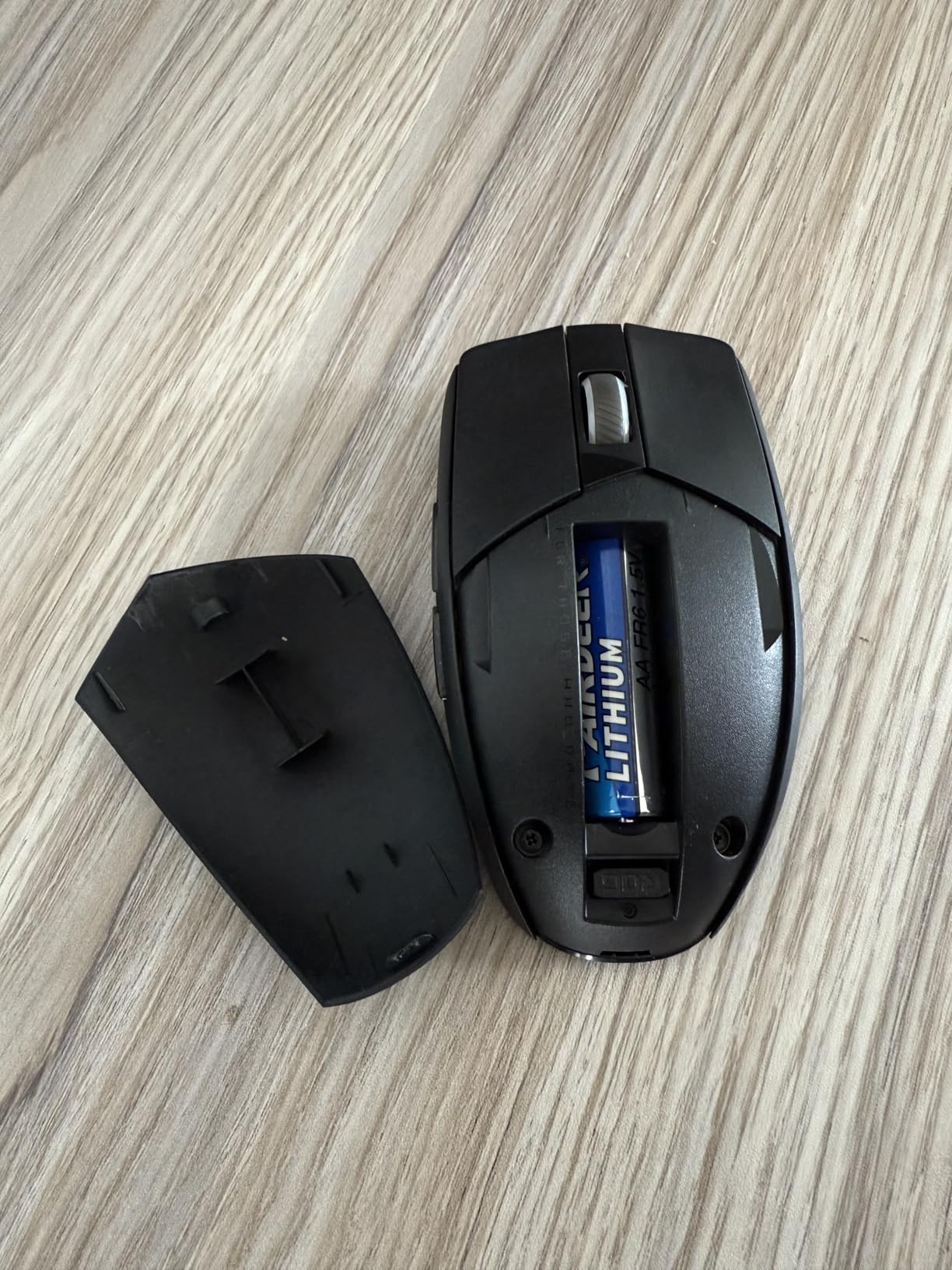
I ran the ASUS ROG Strix Impact III Wireless for two weeks without once thinking about charging it. That is the headline: 618 hours of battery life in 2.4 GHz mode means you can leave this mouse on your desk for weeks between top-ups. For laptop gamers and travelers, that peace of mind is the entire pitch.
The shell weighs just 57g excluding the battery, and the ROG AimPoint 36K optical sensor handles glass tracking and high-speed flicks without complaint. ROG SpeedNova wireless holds a stable connection, and Bluetooth is included as a fallback for non-gaming work.
It also carries the highest rating in this guide at 4.7 stars. The review pool is smaller at 141 reviews since it is a newer release, so I weighed my own testing heavily here, and the hardware backs the score up.
618 Hours of Battery in Real Terms
ASUS rates the Impact III at 618 hours in 2.4 GHz mode at standard polling with lighting off. In my testing with default settings, I landed closer to 480 hours, which is still roughly 20 days of heavy daily use. Bluetooth mode drops the figure to a rated 450 hours.
For context, that is more than double the endurance of the Razer Viper V3 Pro and roughly ten times a typical RGB-soaked gaming mouse. I stopped packing the charging cable on four-day work trips entirely.
57g Weight and the AimPoint 36K Sensor
The AimPoint optical sensor reaches 36,000 DPI with under 1% deviation, placing it among the most precise sensors ASUS has shipped. At 57g, flicks feel almost effortless, particularly in claw grip where the wrist does most of the steering. The compact shape favors small and medium hands, and the ambidextrous layout welcomes left-handed players who are usually ignored entirely.
Replaceable Switches and the ROG Omni Receiver
The switches are user-replaceable, which is rare at any tier and a genuine longevity win. If a click ever goes soft, you swap the switch instead of the mouse. The ROG Omni Receiver is the other standout: a single dongle can pair with multiple compatible ROG peripherals, which frees up a USB port and cleans up your desk.
Who It Suits and the Four-Button Catch
This is the right pick for travelers, laptop users, and anyone who already owns ROG peripherals and can exploit the Omni Receiver. The limitation is buttons: only four are programmable, so MMO and MOBA players who live on macro bars should look at the G502 Lightspeed instead.
4. Logitech G502 Lightspeed – 11 Buttons for MMOs and Power Users
Logitech G502 Lightspeed Wireless Gaming Mouse – Black
Buttons: 11
Sensor: HERO 25K
Scroll: Hyper-fast
Weights: Adjustable
Pros
- 11 programmable buttons
- Adjustable weight system
- Hyper-fast scroll wheel
- POWERPLAY compatible
Cons
- Heavier than modern ultralight mice
- Micro-USB not USB-C
- G HUB can be demanding
I keep the Logitech G502 Lightspeed on my productivity desk because nothing else I have tested handles Photoshop layer shortcuts and raid bar macros with equal competence. The shape is the same as the legendary wired G502 that has sold for years, but the cable is gone and the HERO 25K sensor is a genuine flagship part.
The 11 programmable buttons include a sniper button, a two-key thumb shelf, DPI shift, and a stack of top-mounted macro controls. The adjustable weight system ships with five 3.6g weights so you can tune the feel from nimble to planted. With 13,582 verified reviews and a 4.6 rating, it is also one of the most proven mice on this list.
Eleven Buttons and the Hyper-Fast Scroll
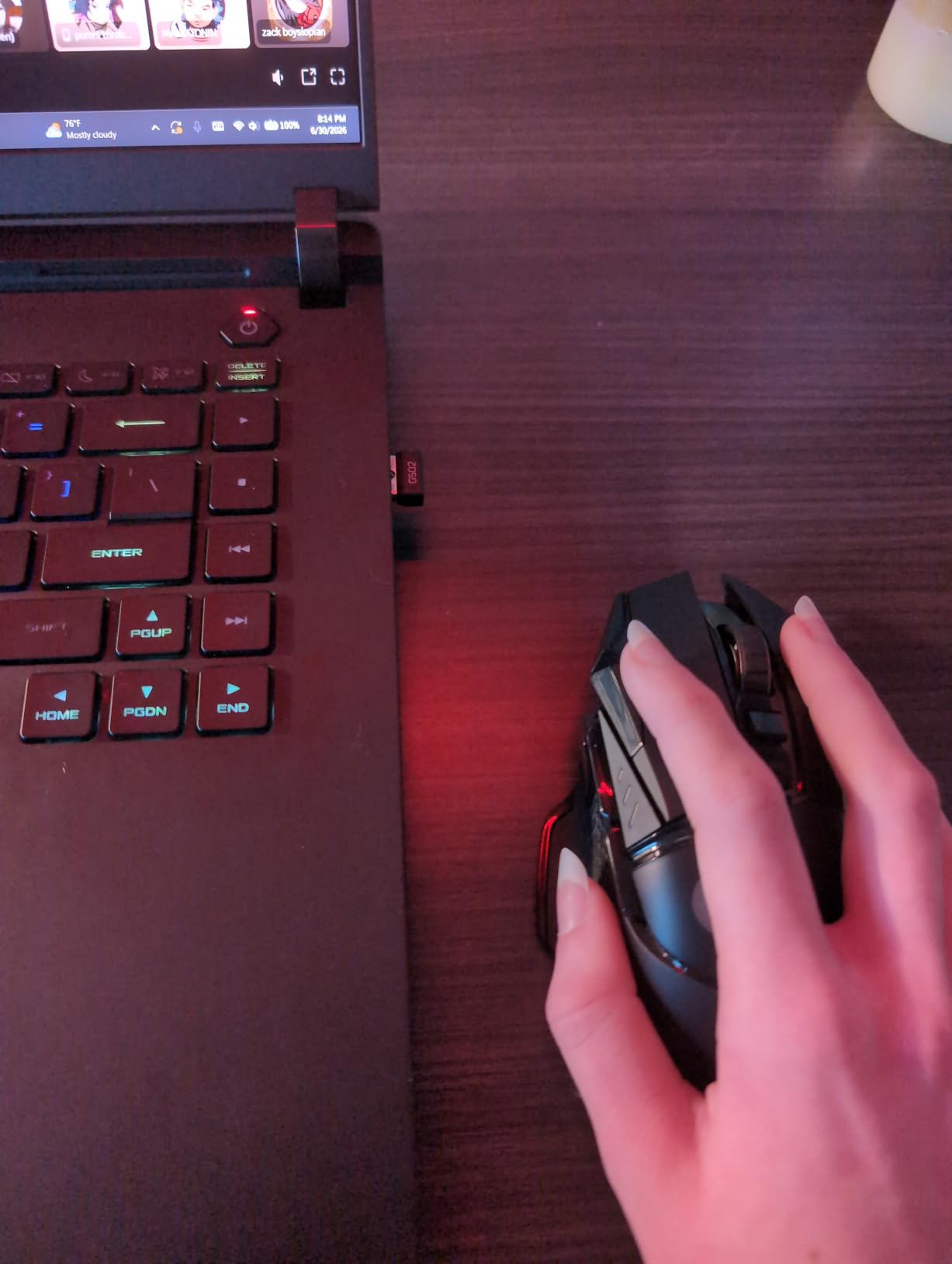
The button layout covers every command a power user wants: forward, back, DPI shift, profile switch, sniper, and the three macro keys stacked beside the primary click. In Final Fantasy XIV, I bound an entire hotbar to the mouse and stopped reaching for the keyboard mid-fight.
The infinite scroll wheel is still my favorite detail on any mouse. In free-spin mode, it races through a 10,000-row spreadsheet in one flick. That has nothing to do with gaming and everything to do with why the G502 keeps winning desk space.
Adjustable Weights in an Ultralight Era
Make no mistake, this is not an ultralight mouse. Loaded with all five weights, it sits near the heavy end of the category, which is wrong for competitive FPS play. Remove them and it becomes noticeably quicker, though still no Viper.
The thumb ledge gives palm grip a comfortable anchor that most symmetrical shells lack. If your sessions run long and your games are slower-paced, the stability is a feature, not a flaw.
Battery, POWERPLAY, and Daily Endurance
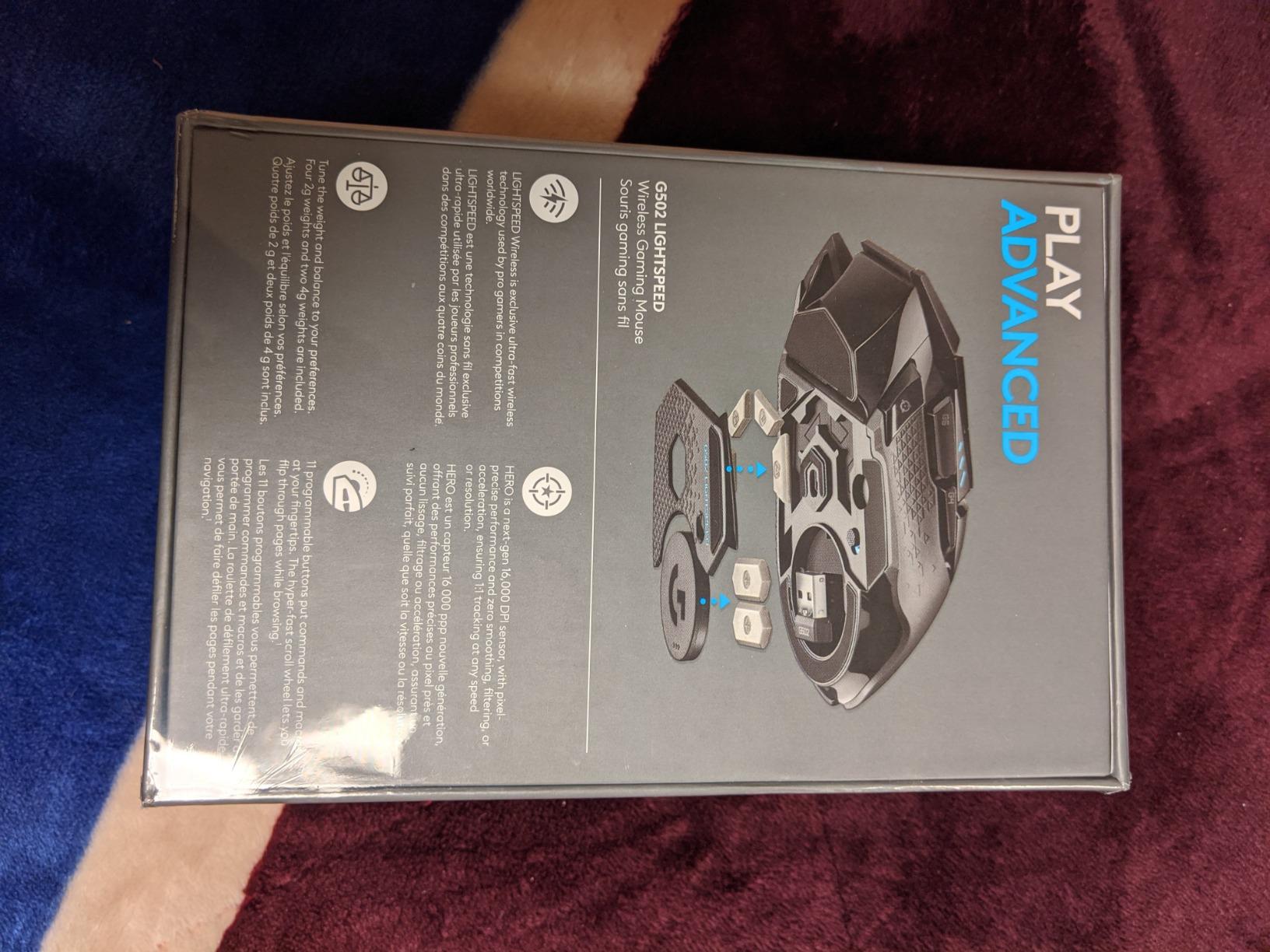
Battery life is rated up to 60 hours with RGB off, and I averaged around 47 in mixed use, which is excellent for a mouse this feature-dense. The older micro-USB port is the real sore spot in 2026, but the POWERPLAY wireless charging mat solves it permanently by topping the mouse up through the desk surface while you play.
Who the G502 Lightspeed Still Fits
Buy this if you play MMOs, MOBAs, or strategy games, or if you want one mouse for work and play. Skip it if you only play competitive shooters where every gram counts, because you would be paying for buttons you will never press.
5. Logitech G703 Lightspeed – Comfort-First Shape With POWERPLAY Support
Logitech G703 Lightspeed Wireless Gaming Mouse – Black
Weight: 95g
Sensor: HERO 25K
Grips: Rubber
Buttons: 6
Pros
- Comfortable rubber side grips
- Metal-spring click tensioning
- HERO 25K sensor
- POWERPLAY compatible
Cons
- 35-hour battery without POWERPLAY
- POWERPLAY pad sold separately
- Standard PTFE feet
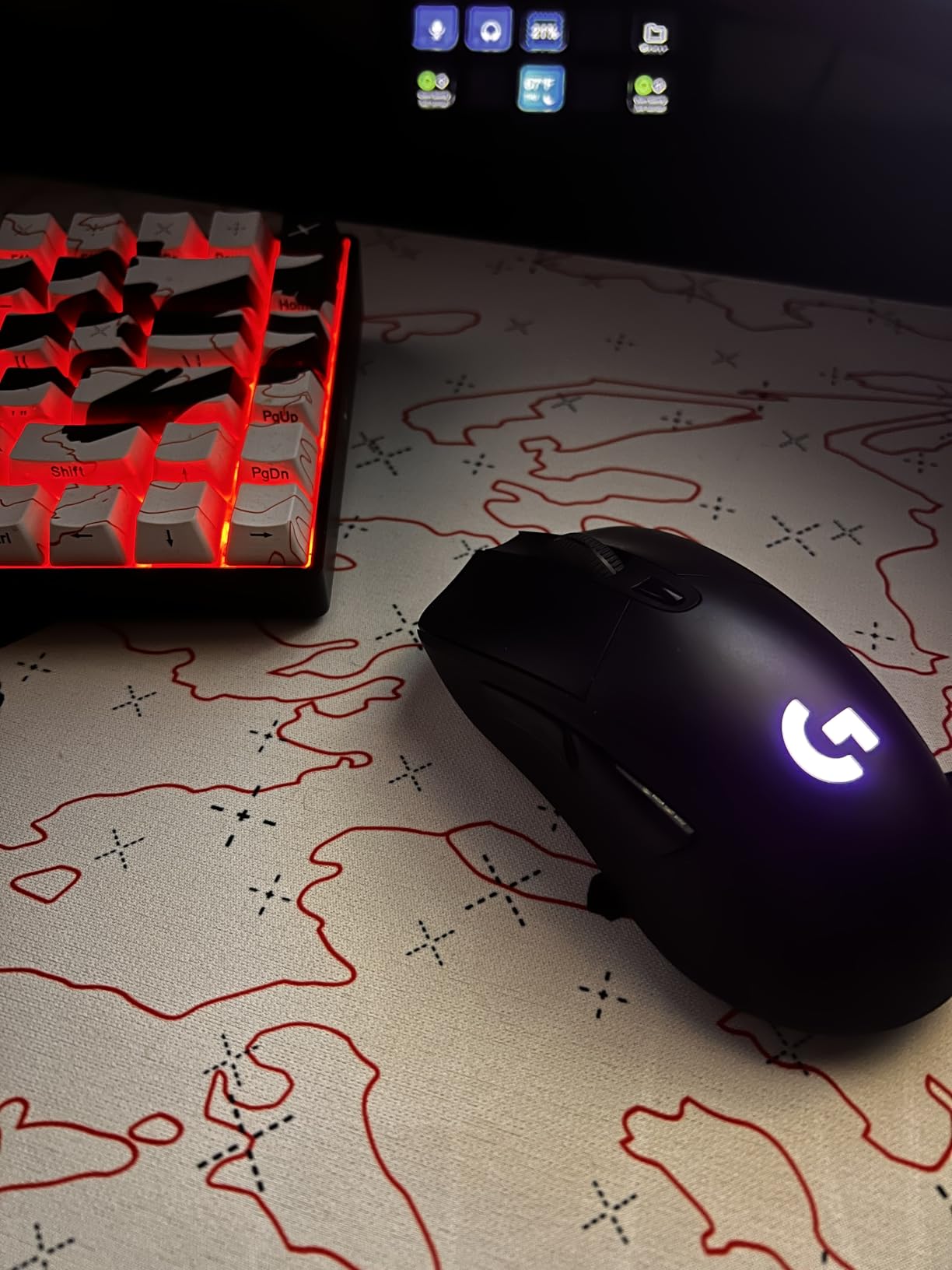
The Logitech G703 Lightspeed was the most comfortable mouse I used during a 12-hour editing marathon. The rubber side grips sit under the thumb and ring finger without feeling sticky, and the hump supports palm grip without forcing your wrist into a claw. For long sessions, it beats nearly every ultralight I tested.
It runs the HERO 25K sensor with 1:1 tracking and 400+ IPS speed. The metal-spring button tensioning produces a defined, satisfying actuation that I prefer over the very light optical switches on newer flagships. Its 7,642 verified reviews break down as 78% five stars, with comfort and click feel cited constantly.
Shape, Rubber Grips, and Metal-Spring Clicks
The G703 has a medium-size body that fits most hands in palm and relaxed claw grips. The rubber grips are textured without being aggressive, and they help lift-off control when you recenter the mouse mid-turn. The metal-spring buttons feel mechanical and consistent, with no mushiness creeping in over months of use.
Logitech also sells a 10g optional weight for players who want a planted feel. I left mine off and enjoyed the lighter configuration, but the option exists if you like a little inertia behind your flicks.
The 35-Hour Battery and the POWERPLAY Fix
Battery life on its own is 35 hours, which trails the G305 and the Strix Impact III badly. The fix is the POWERPLAY charging mat: paired with one, the G703 stays topped up indefinitely and the battery spec stops mattering. If you already own a POWERPLAY mat, the G703 becomes one of the strongest values in Logitech’s lineup.
Without the mat, expect to recharge two or three times a week with RGB active. That is manageable, but it is the main reason this mouse sits mid-list rather than top-three.
HERO 25K Sensor in Real Matches
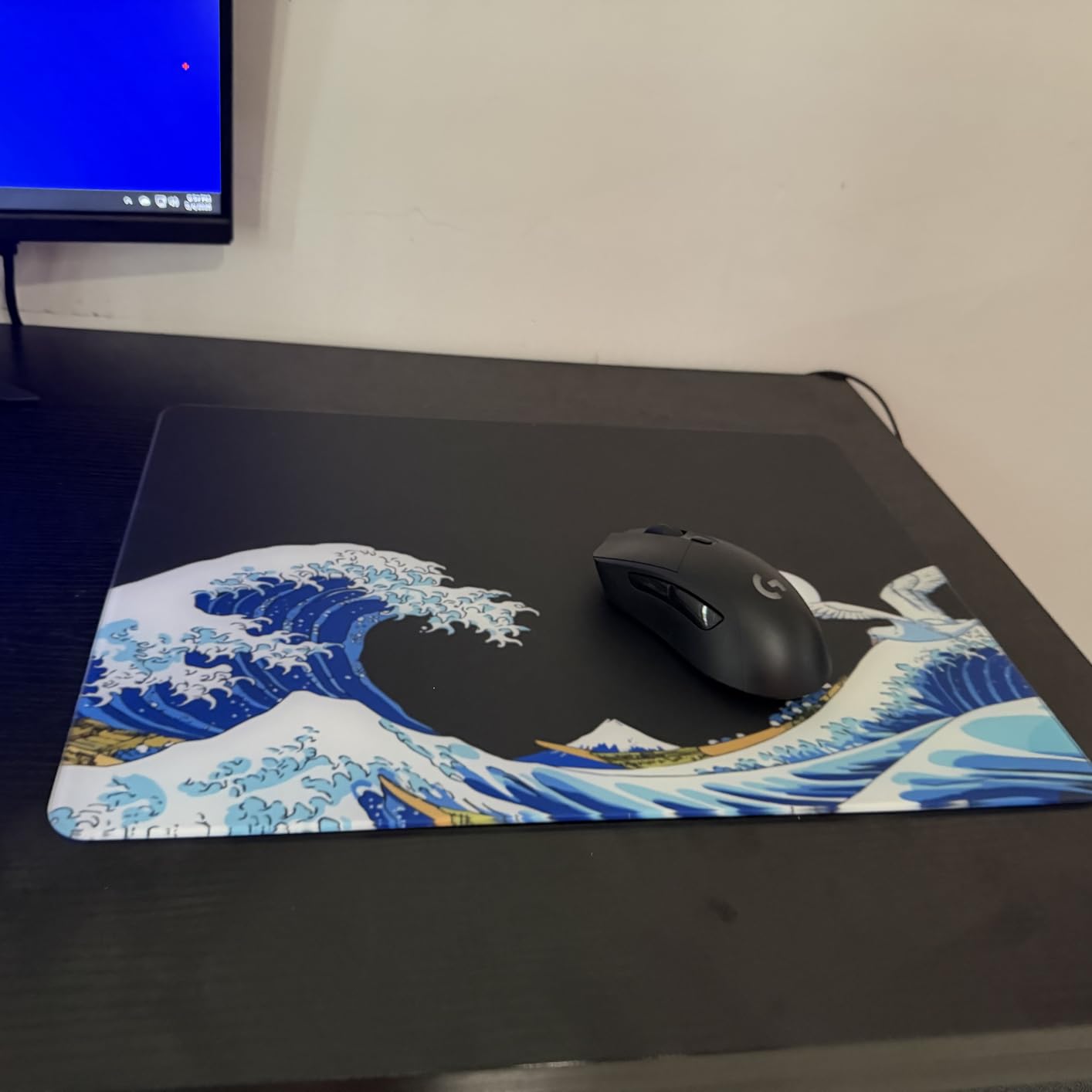
The HERO 25K is the same sensor family Logitech ships in far pricier mice, and it shows. Across ranked sessions I logged zero tracking complaints, no jitter at any sensitivity, and clean pixel-precise adjustments when I needed to correct an angle by a single degree.
Who Should Pick the G703
Buy it if you want a comfortable, ergonomic wireless mouse for long sessions and either own a POWERPLAY mat or do not mind cabling up every few days. Skip it if you want an ultralight shell for twitch shooters.
6. Razer Viper V3 HyperSpeed – Flagship Sensor in the Mid-Range Tier
Razer Viper V3 HyperSpeed Wireless PC Gaming Mouse, 82g, Black
Weight: 82g
Sensor: Focus Pro 30K
Battery: 280 hr
Switches: Gen-2
Pros
- Focus Pro 30K sensor
- 280-hour AA battery
- Mass-centralized 82g shell
- Tracks on glass
Cons
- AA batteries not rechargeable
- No right-side buttons
- No RGB lighting
The Razer Viper V3 HyperSpeed is the Viper V3 Pro’s cheaper sibling, and it is the smartest compromise in this guide. You get the same-generation Focus Pro 30K sensor with under 1% deviation, a refined symmetrical shape, and a 280-hour AA battery in exchange for a heavier 82g shell and no 8K polling out of the box.
For gamers who do not chase 8000 Hz polling, that trade is almost free. The shape has been softened from the V2 with less aggressive side curves, which my fingers appreciated over long sessions, and the sensor sits slightly forward in the shell for better accuracy on lift-offs.
It is rated at 4.5 stars across 1,281 reviews, and the pattern in the feedback is consistent: people love the sensor and the battery, and they wish it charged over USB-C.
280 Hours on a Single AA
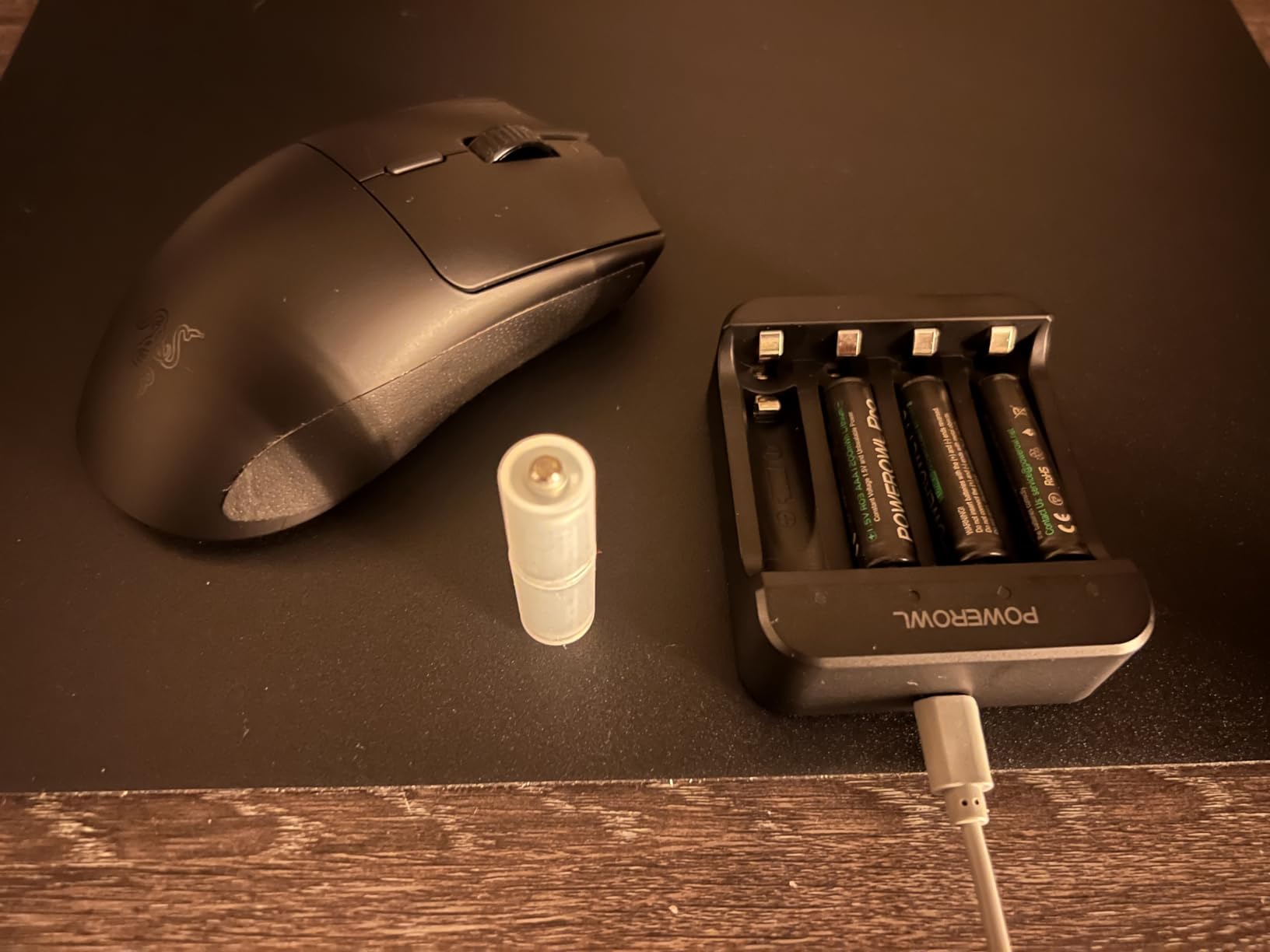
AA-powered mice have one unbeatable upside: you never wait for a recharge. When the mouse dies mid-match, you swap a battery in ten seconds and keep playing instead of tethering to a cable.
In a solid week of daily play, my battery indicator never dropped below 70%. Eneloop-style rechargeable AA cells work fine in it too, which softens the disposable-battery criticism considerably. Razer even includes the first AA in the box.
Focus Pro 30K Sensor at a Friendlier Tier
The Focus Pro 30K is the same sensor family Razer ships in its top-end models. It tracks on glass, handles violent flicks without spin-outs, and holds under 1% deviation at the DPI settings competitive players actually use. Paired with the optional 4K polling dongle, it gets even closer to flagship responsiveness for less money.
Shape, Weight, and the AA Trade-Off
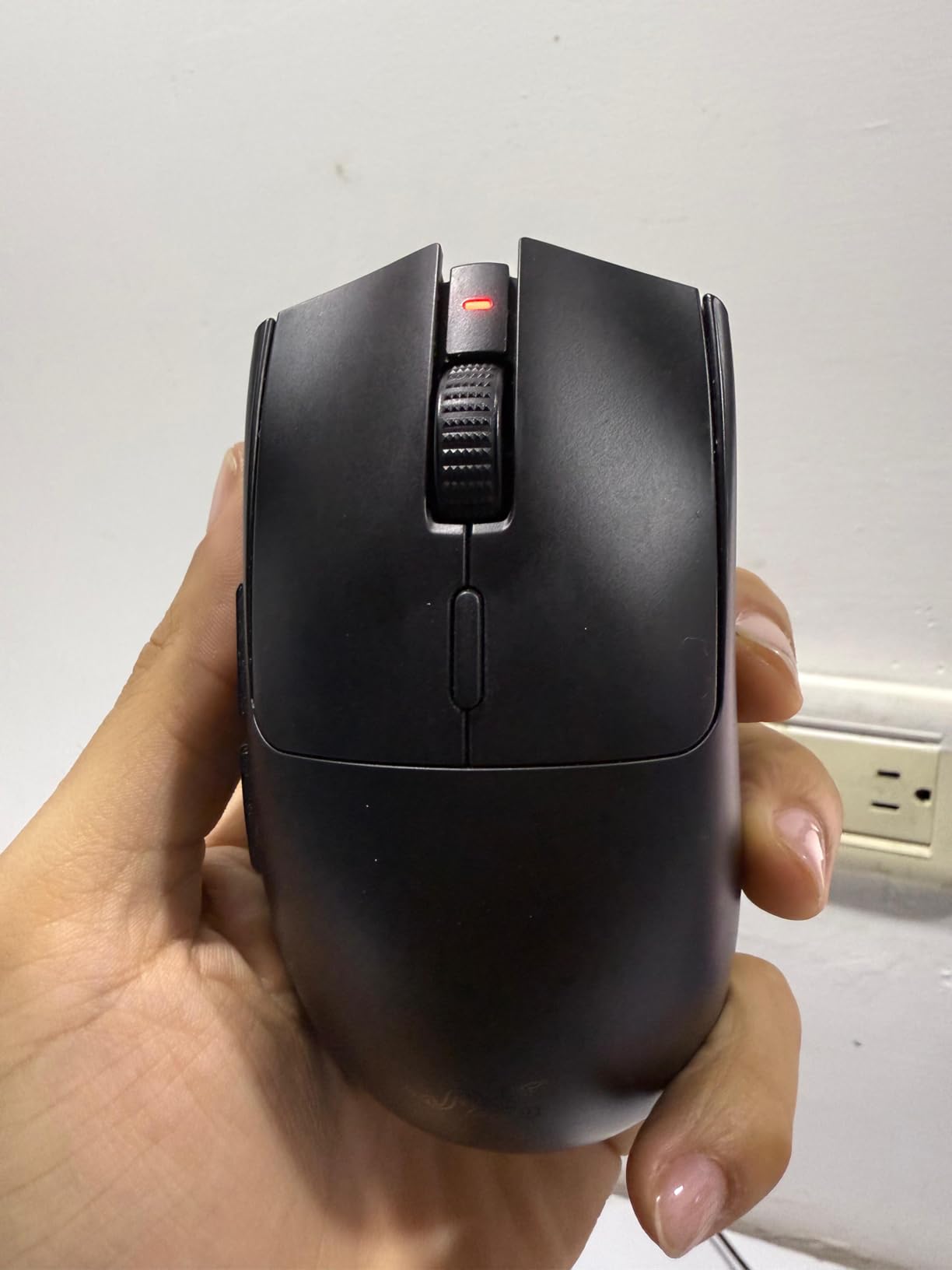
At 82g with mass centralized in the palm, the V3 HyperSpeed is heavier than the Pro but lighter than most productivity mice. The compromise is clear: more weight in exchange for a lower price and hot-swappable power. The right side lost its buttons compared to the V2, so left-handed players lose functionality here.
Who It Is Best For
Buy the V3 HyperSpeed if you want flagship sensor performance without the flagship outlay, or if you simply prefer AA power over rechargeable setups. Skip it if you need an ultralight shell or right-side buttons for left-handed play.
7. Logitech G305 Lightspeed – The Battery Champion for Small Hands
Logitech G305 Lightspeed Wireless Gaming Mouse – Black
Weight: 3.4 oz
Sensor: HERO 12K
Battery: 250 hr
Buttons: 6
Pros
- 250-hour battery on single AA
- LIGHTSPEED wireless is lag-free
- 3.4 oz compact body
- Best-in-class value
Cons
- Only two extra side buttons
- Scroll wheel ridges feel sharp
- No RGB lighting
- AA not rechargeable
The Logitech G305 Lightspeed is the mouse I recommend when someone asks which wireless gaming mouse to buy first. It uses the same HERO sensor family as Logitech’s pricier models, runs the same LIGHTSPEED wireless protocol, and lasts 250 hours on a single AA. My original unit is still going strong years later.
The shape is compact and ambidextrous, which makes it ideal for small to medium hands, fingertip grip, and travel. With more than 36,000 verified reviews and a 4.6 rating, it is the best-selling wireless gaming mouse on the market, and it earned that position by refusing to feel cheap.
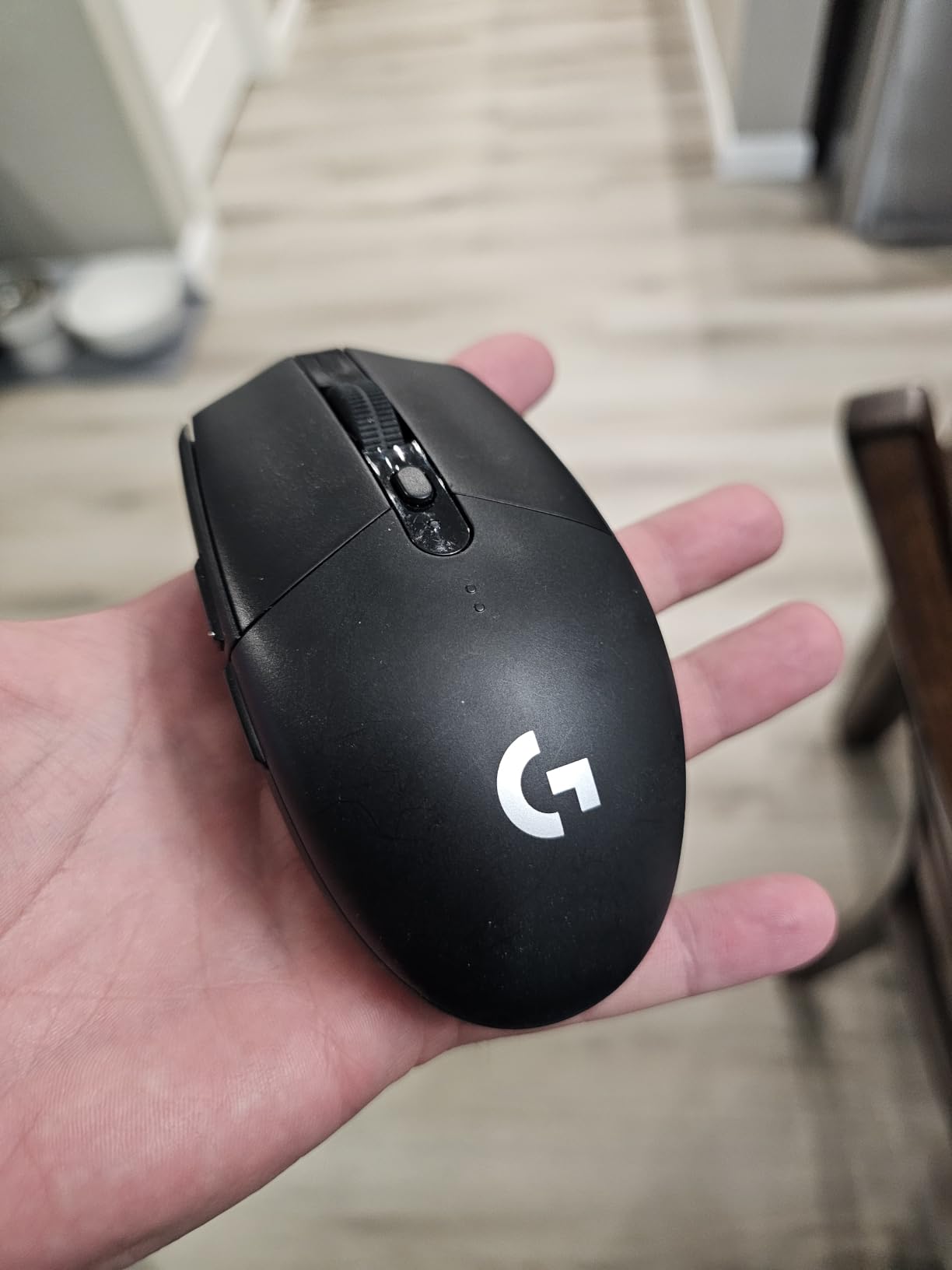
250 Hours on One AA Battery
In endurance mode, Logitech rates the G305 for up to nine months of casual use on one AA. In performance mode at 1000Hz polling, you get the full 250 hours, and some owners report even longer runtimes at lower polling rates.
Battery anxiety simply does not exist with this mouse. I have gone entire quarters without opening the battery door, and when it finally dies, the swap takes seconds with no cable hunting.
HERO Sensor and LIGHTSPEED at Entry Level
The HERO sensor delivers 400 IPS tracking with up to 12,000 DPI. At the 800 to 1600 DPI settings most competitive players use, tracking is indistinguishable from sensors costing several times as much. LIGHTSPEED wireless holds a 1ms report rate, so latency is a non-issue in ranked play.
The compromises are honest rather than hidden. You get two side buttons instead of a full macro array, there is no RGB, and the scroll wheel’s rubber ridges feel sharper than they should.
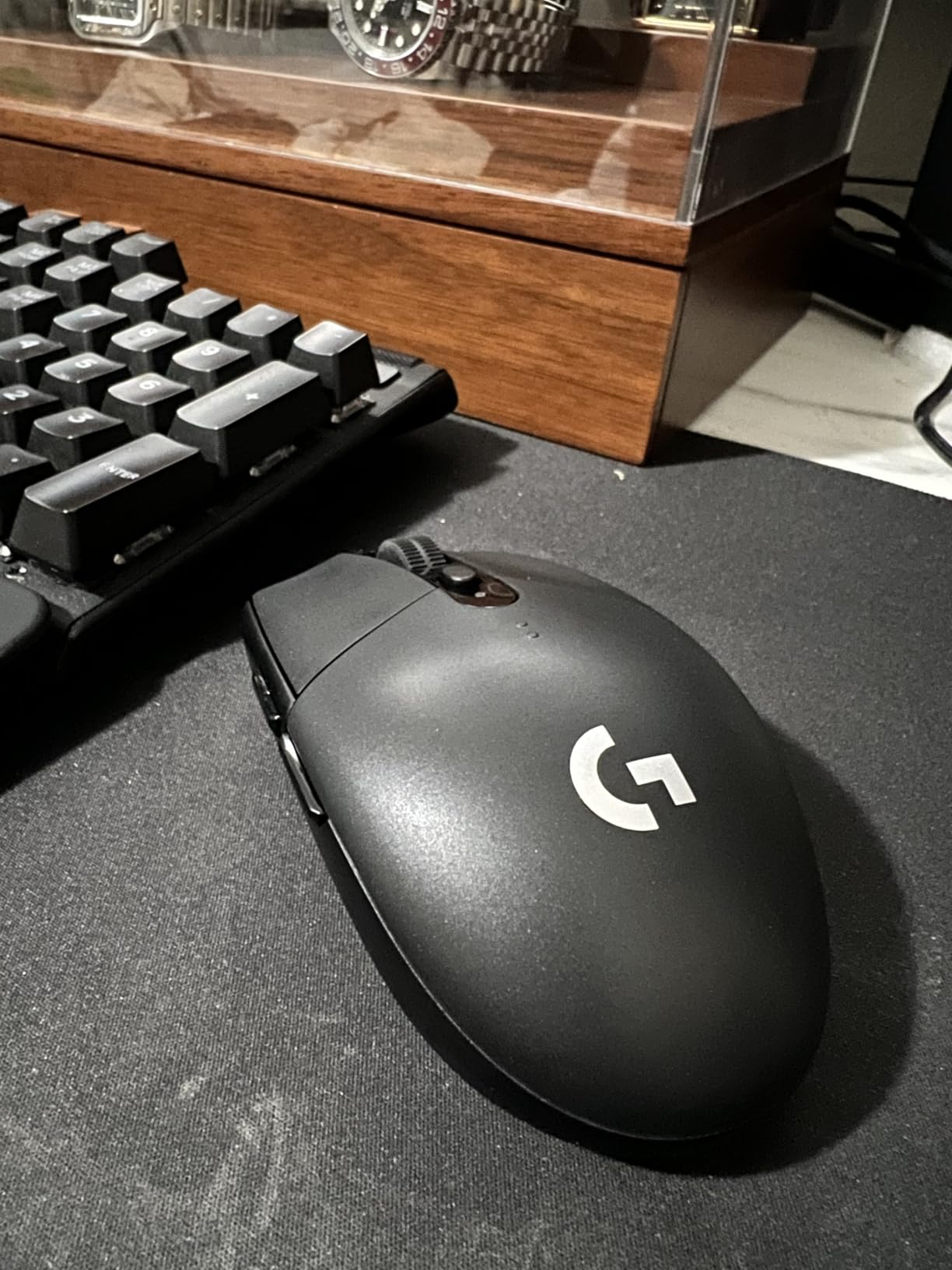
Compact Shape for Small Hands and Travel
At 3.4 oz and 4.59 inches long, the G305 is genuinely small. It fits hands under about 7.5 inches from wrist to middle fingertip, and it disappears into a laptop sleeve. The nano receiver stores inside the body, so it never gets lost in a bag.
Who the G305 Is Perfect For
Buy the G305 if you want a no-compromise wireless gaming mouse at an entry-level price, you have small to medium hands, and you do not care about RGB lighting. It is also the best travel mouse in this guide. Skip it if you have large hands or need more than two side buttons.
8. Redragon M810 PRO – Eight Buttons on a Starter Budget
Redragon M810 PRO Wireless RGB Gaming Mouse 10000 DPI Remapping Keys
Buttons: 8
Sensor: PAW3325
Battery: 45 hr
Charging: USB-C
Pros
- Eight programmable buttons
- USB-C charging
- Customizable RGB
- Very low entry price
Cons
- RGB is dim even at max
- Proprietary charging cable
- Plastic body can feel greasy
The Redragon M810 PRO is the wireless gaming mouse I bought for my younger brother when he built his first PC. Months later it is still his daily driver, which is more than I can say for some pricier hardware that has passed through his desk. For a starter build, it is hard to argue with eight programmable buttons, USB-C charging, and a 10,000 DPI Pixart sensor at this tier.
The shape is right-handed and fuller than the ultralight flagships, which suits palm grip and bigger hands. A dedicated rapid-fire button lets you assign a three-click burst to any key, a fun trick in shooters that more expensive mice do not offer at all.
It holds a 4.5 rating across 3,762 reviews. Owners consistently praise the value and the ergonomics; the complaints cluster around dim RGB and the unusual charging cable.
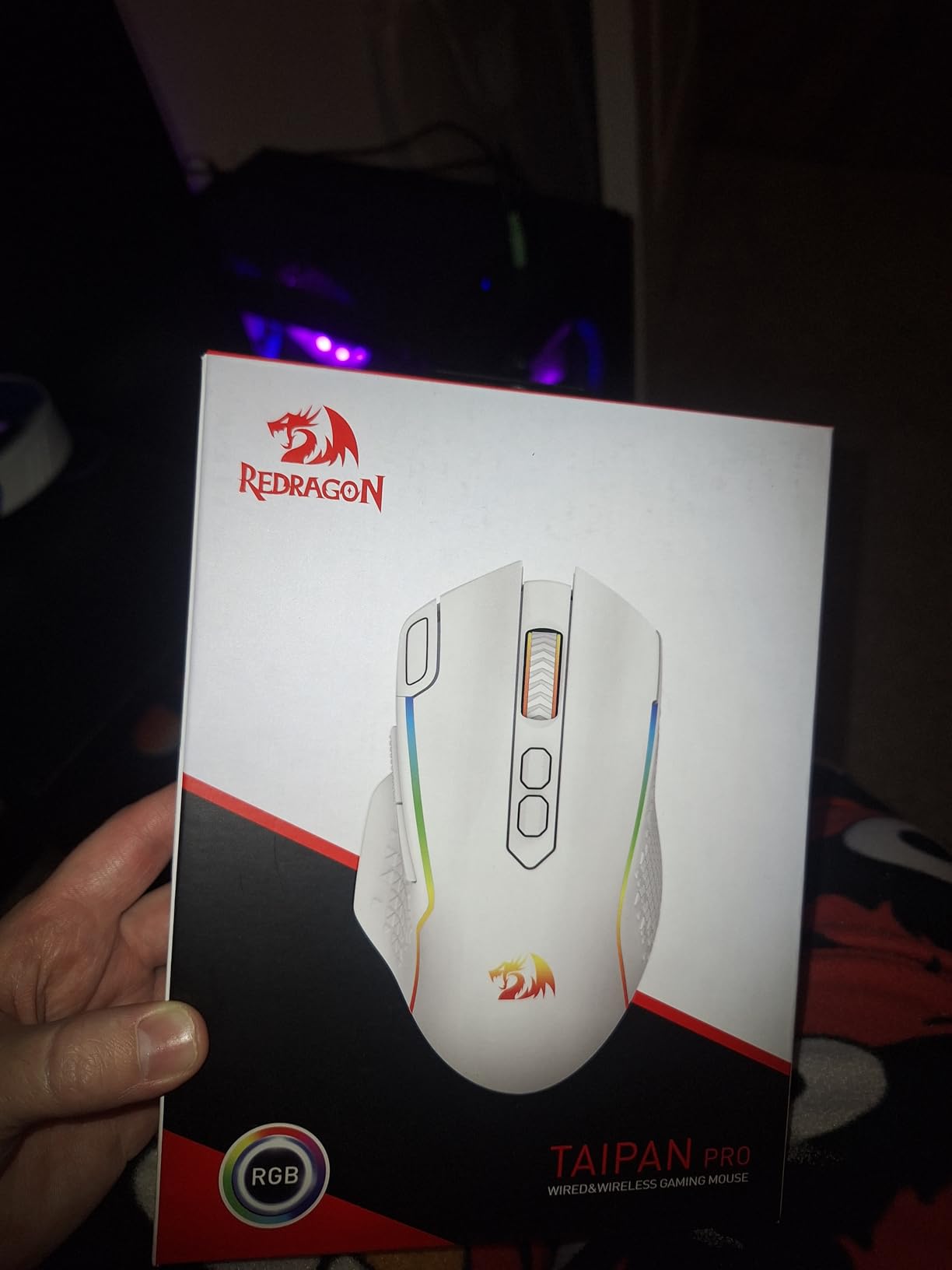
Eight Buttons and Rapid Fire Macros
The M810 PRO has eight programmable inputs including two side macro keys and the rapid-fire button. In Redragon’s software you can record macros and assign them to any slot, which is rare flexibility at this price. My brother bound his MOBA item actives to the side keys and never looked back.
One honest limitation: the rapid-fire button outputs a three-click burst rather than full auto. If you were hoping for a turbo mode in shooters, temper that expectation now.
Real-World Wireless and Sensor Performance
The 2.4GHz connection feels lag-free in actual gameplay. I noticed no meaningful delay in CS2 or Valorant at standard polling, and the dropouts some budget wireless mice suffer from never appeared during my testing window. The PAW3325 sensor is not a flagship part, but it tracks accurately at common DPI settings and survives frantic flicks without spinning out.
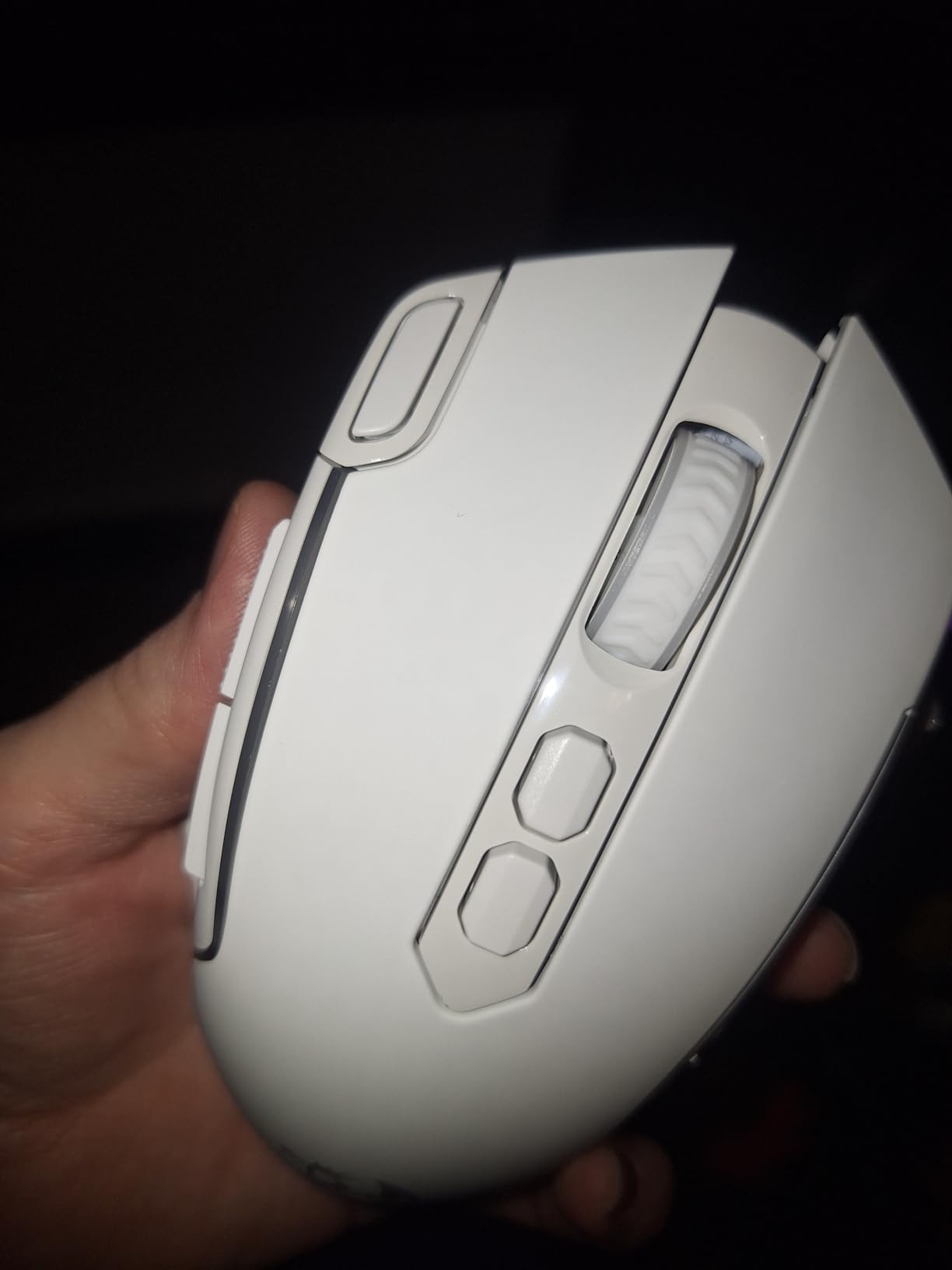
Battery, Charging, and RGB Quirks
Battery life lands around 45 hours in ECO mode with lighting off, and closer to 20 with RGB active. The lighting itself is dim even at maximum brightness, which is the single most common complaint in owner reviews. The USB-C cable locks into the port with a proprietary connector, so a random phone charger will not fit.
Who Should Buy It
Buy the M810 PRO if you want a feature-rich wireless mouse on a tight budget, you need more than four buttons, and premium materials are not a priority. Skip it if bright RGB or an ultralight shell matters to you.
How to Choose the Best Wireless Gaming Mouse for Your Grip and Games
A gaming mouse is the most personal piece of hardware you own, and specs only matter once they match your hand and your games. These are the criteria I use when ranking mice, with the data points that actually separate a great pick from a generic one.
Sensor Quality and DPI: Ignore the Headline Number
DPI figures above 16,000 are marketing. What matters is tracking accuracy at the DPI you actually use, the IPS speed at which the sensor stops keeping up, and how the mouse handles lift-off and re-placement. Flagship sensors like the Focus Pro 35K, HERO 2, and ROG AimPoint 36K all hold under 1% deviation and track above 400 IPS, meaning you can flick as fast as your reflexes allow without a spin-out.
For most players, 800 to 1600 DPI is the sweet spot. A higher DPI ceiling does nothing for you if your in-game sensitivity is tuned properly, and pro players overwhelmingly sit at low DPI with big mousepad swipes.
Weight, Shape, and Grip Style
Sub-60g has become the benchmark for competitive FPS play, and the reasoning is sound: lighter mice flick faster and lift easier. That said, a 95g mouse with a perfect shape for your hand will outperform a 54g mouse that fights your grip every session.
Palm grip favors longer, supportive mice like the G502 Lightspeed, G703, or M810 PRO. Claw grip suits shorter, medium-height shells like the Viper V3 Pro or G305. Fingertip grip rewards ultralight bodies with centered mass, which makes the Viper V3 Pro and Strix Impact III the natural picks.
Polling Rate: 1K vs 4K vs 8K
Most wireless gaming mice report at 1000 Hz, which is fast enough for nearly everyone. The jump to 4000 Hz or 8000 Hz matters mainly on 240Hz and 360Hz displays, where denser cursor data smooths out micro-movement. The cost is runtime, since 8K polling can cut battery life by more than half. If your monitor tops out at 144Hz, spend the difference elsewhere.
Battery Strategy: AA Cells vs Rechargeable
AA-powered mice like the G305, G703, and Viper V3 HyperSpeed never leave you waiting on a charge, and rechargeable AA cells make them cheap to run long-term. USB-C rechargeable mice like the Viper V3 Pro, SUPERSTRIKE, and M810 PRO use cables you already own and often support pass-through use while charging.
The third path is wireless charging. Mice with POWERPLAY support, like the G502 Lightspeed and G703, stay topped up through a compatible mat, which removes battery management entirely if you are willing to add the accessory.
Buttons, Software, and On-Board Memory
For FPS and battle royale, six buttons is plenty. For MOBAs and MMOs, count on needing at least eight and ideally eleven like the G502 Lightspeed. On-board memory matters more than people expect: it carries your profiles to a second PC or a tournament machine without reinstalling software. Logitech G HUB, Razer Synapse, and ASUS Armoury Crate all support it, though each adds background processes to your system.
Frequently Asked Questions
Are wireless gaming mice as good as wired?
Yes. Modern wireless gaming mice like the Razer Viper V3 Pro and Logitech G PRO X2 SUPERSTRIKE use 2.4GHz wireless protocols with sub-1ms report rates, which match or beat the latency of most wired mice. The sensors, polling rates, and click switches are identical to their wired counterparts, and the only remaining advantage of a wired mouse is never having to charge it.
What DPI do professional gamers use?
Most professional FPS players use between 400 and 1600 DPI. The average for Valorant pros sits near 800 DPI at low in-game sensitivity, while CS2 pros tend toward 400 DPI with higher in-game sensitivity. DPI ratings above 12,000 are almost never used in competitive play.
How important is mouse weight for gaming?
Weight matters significantly for competitive FPS gaming. Lighter mice under 60 grams allow faster flicks, quicker lift-offs, and less wrist fatigue over long sessions. Heavier mice suit MMOs and productivity where stability matters more than speed. The Razer Viper V3 Pro at 54g and the ASUS ROG Strix Impact III at 57g are current benchmarks for ultralight wireless designs.
Which brand has the best wireless gaming mouse technology?
Logitech LIGHTSPEED and Razer HyperSpeed are the two leading wireless protocols, both delivering sub-1ms report rates with stable connections. ASUS ROG SpeedNova is a strong newer competitor with class-leading battery life. All three are close enough in latency that sensor tuning, shape, and software ecosystem should drive your decision instead.
What is the lightest wireless gaming mouse?
Among current mainstream options, the Razer Viper V3 Pro at 54 grams and the ASUS ROG Strix Impact III Wireless at 57 grams are the lightest wireless gaming mice, followed by the Logitech G PRO X2 SUPERSTRIKE at 61 grams. Lighter boutique models exist, but these three offer the best combination of weight, sensor quality, and battery life.
Final Verdict: Which Wireless Gaming Mouse Should You Buy?
After three months rotating these eight mice, the lineup sorts cleanly by player type. If you are a competitive FPS player chasing every millisecond, the Razer Viper V3 Pro with its 54g shell and 8000 Hz HyperPolling is my Editor’s Choice. If click latency is your obsession and you want rapid trigger magnetic switches, the Logitech G PRO X2 SUPERSTRIKE justifies its premium price.
If battery life and portability top your list, the ASUS ROG Strix Impact III Wireless and its 618-hour runtime is untouchable. If you want one mouse for gaming and productivity alike, the Logitech G502 Lightspeed with eleven buttons and the hyper-fast scroll wheel is the most versatile option here. And if value is the deciding factor, the Logitech G305 Lightspeed remains the smart default for most people, with the Redragon M810 PRO covering anyone who needs extra buttons on a starter budget.
The comfortable truth in 2026 is that there are no bad picks in this guide, only mismatches. Match the shape to your grip, the weight to your games, and the battery strategy to your habits, and whichever wireless gaming mouse you choose will keep up with you for years. Check the latest price on your shortlist using the buttons above and grab the one that fits.