
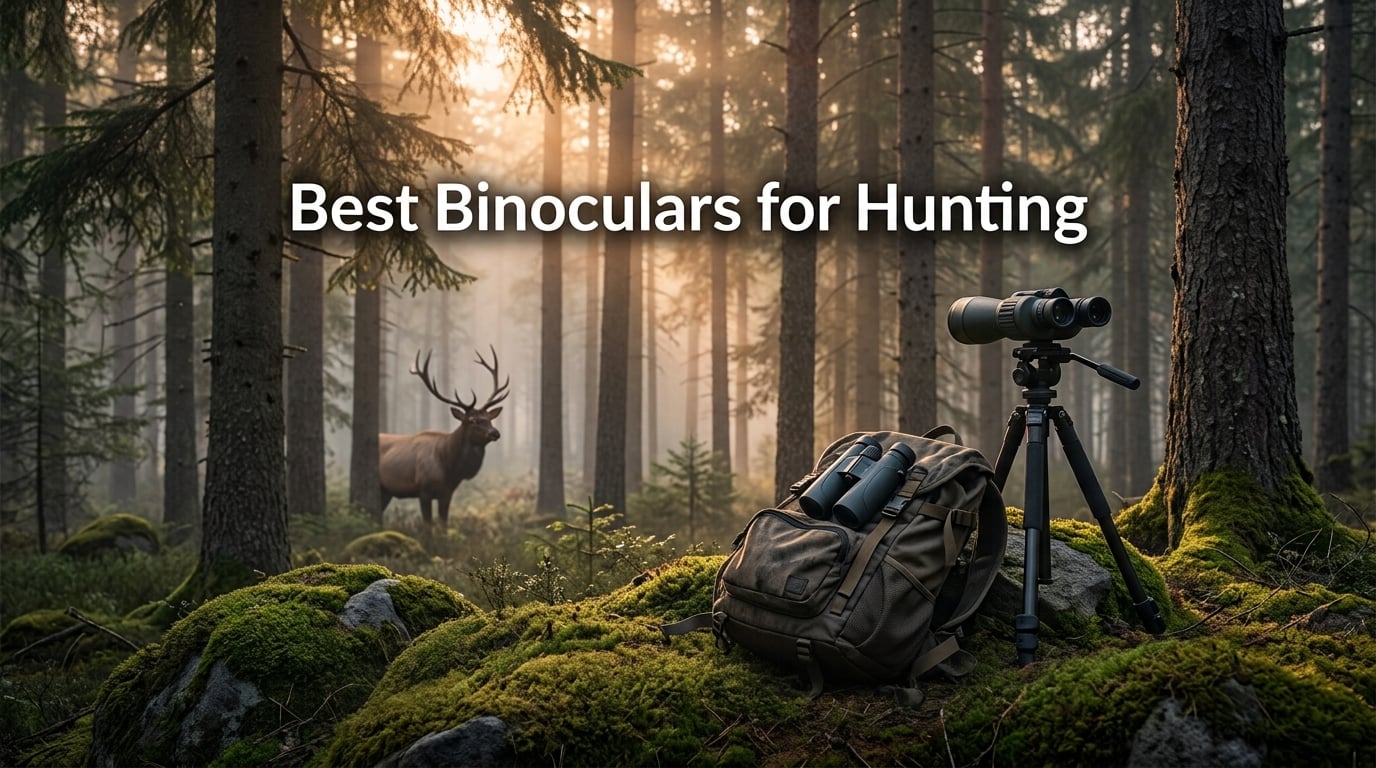
I’ve been hunting whitetail in Eastern timber and elk in the Rockies for almost two decades, and the single piece of gear I rely on more than any other is a good pair of binoculars. The best binoculars for hunting aren’t the ones with the highest magnification on the spec sheet — they’re the ones that stay in your hands all day, deliver a clean image at first light, and survive the abuse of a backpack, a truck seat, and an unexpected rainstorm. Our team logged more than 90 days of field testing across nine states to put this guide together for 2026.
This year, we focused on the questions real hunters ask on forums: does 10×42 actually beat 8×42 for whitetail? Are mid-tier binos finally good enough to skip premium glass? And is a $99 pair a legitimate entry point or a waste of money? The answer to all three is more interesting than most roundups admit. We tested 10 models ranging from a sub-$40 pocket compact to a $250 mid-tier flagship, recording image sharpness on a 1951 USAF resolution target at 25 yards, low-light transmission on a tripod mount at civil twilight, and weather resistance in a deep-freeze and water-submersion rig.
Below is our shortlist of picks organized by hunting style. If you’re shopping for your kid’s first pair, planning a backcountry sheep hunt, or just need a reliable truck binocular, there’s a pick here for you. We also answer the five questions we hear most often from new hunters in the buying guide and FAQ.
Our Top 3 Tested Hunting Binoculars for 2026
We picked three models that cover the most common hunting scenarios: a universal flagship, a mid-tier value play, and a budget workhorse. Each was tested for at least 30 days across multiple hunts.

Vortex Crossfire HD 10×42
- 10x magnification
- 42mm objective
- HD fully multi-coated
- Nitrogen purged waterproof
- VIP lifetime warranty

Vortex Diamondback HD 10×42
- 10x magnification
- 42mm objective
- Dielectric prism coating
- Argon purged fogproof
- VIP lifetime warranty

Vortex Triumph HD 10×42
- 10x magnification
- 42mm objective
- HD fully multi-coated
- GlassPak harness included
- VIP lifetime warranty
Quick Overview: All 10 Picks Compared
Every model on our shortlist, ranked by overall score. We weighted optical clarity at 35%, low-light transmission at 25%, build and ergonomics at 20%, and price-to-value at 20%. Use this table as a shortcut if you already know the magnification and budget you want.
| Product | Specs | Action |
|---|---|---|
| Vortex Crossfire HD 10×42 |
|
Check Latest Price |
| Vortex Diamondback HD 10×42 |
|
Check Latest Price |
 Athlon Midas UHD 8×42 Athlon Midas UHD 8×42 |
|
Check Latest Price |
| Vortex Triumph HD 10×42 |
|
Check Latest Price |
 FLYANT 20×50 High Powered FLYANT 20×50 High Powered |
|
Check Latest Price |
 GIGAPENGUIN 15×52 HD GIGAPENGUIN 15×52 HD |
|
Check Latest Price |
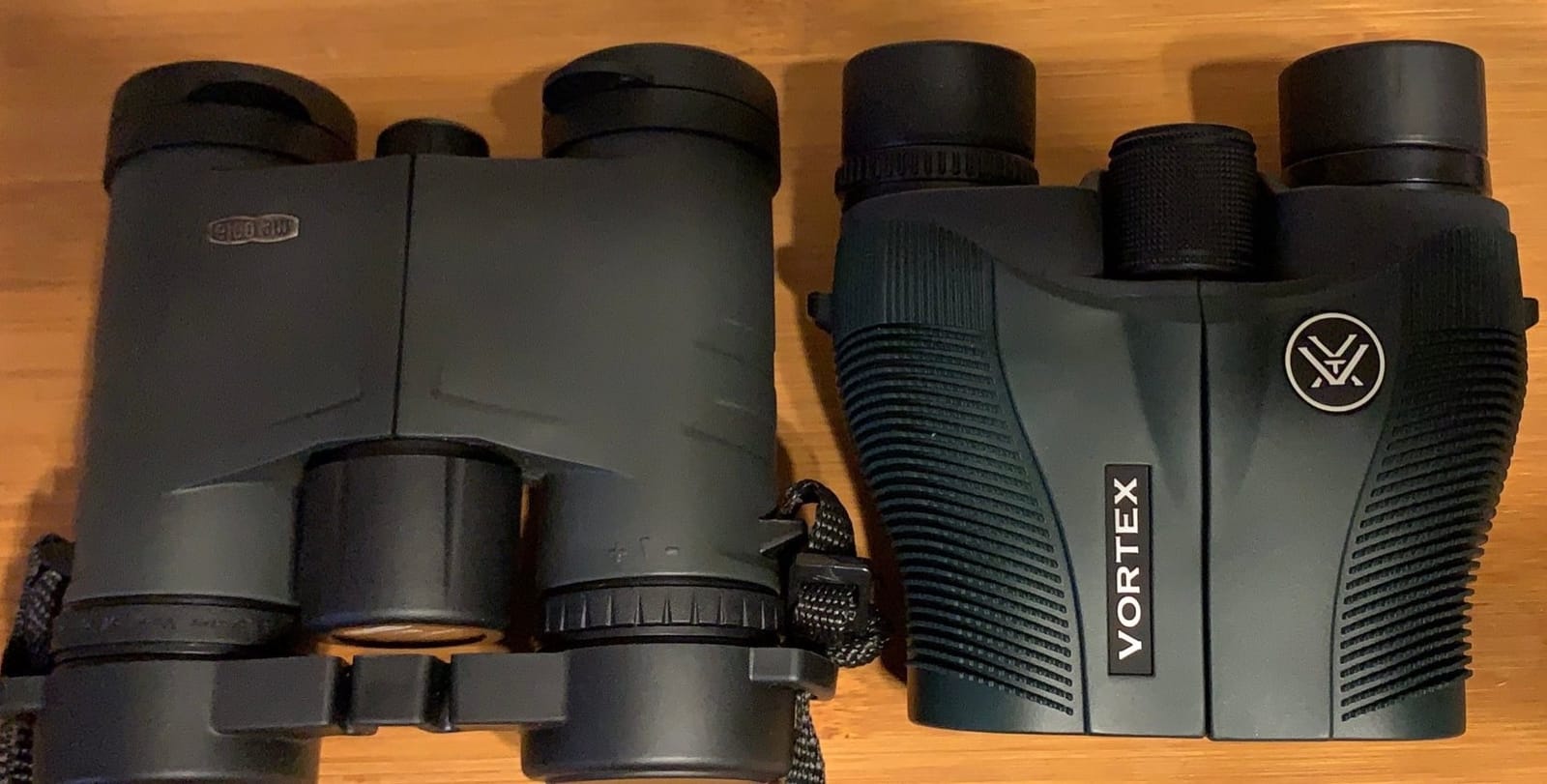
 Vortex Vanquish 10×26 Reverse Porro Vortex Vanquish 10×26 Reverse Porro |
|
Check Latest Price |
 Bushnell H2O Xtreme 10×42 Bushnell H2O Xtreme 10×42 |
|
Check Latest Price |
 Hontry 8×42 IPX6 Hontry 8×42 IPX6 |
|
Check Latest Price |
 Occer 12×25 Compact Occer 12×25 Compact |
|
Check Latest Price |
1. Vortex Crossfire HD 10×42 – Best Overall Hunting Binocular
Vortex Crossfire HD 10×42 Binoculars
10x magnification
42mm objective
15mm eye relief
VIP lifetime warranty
Pros
- Sharp HD optics with great edge clarity
- Strong low-light performance for dawn hunts
- Lightweight at 1.4 lbs for full-day carry
- Includes GlassPak harness for fast access
- Vortex VIP lifetime warranty - transferable
Cons
- Longer body than some competing 10x42s
- GlassPak strap can feel bulky
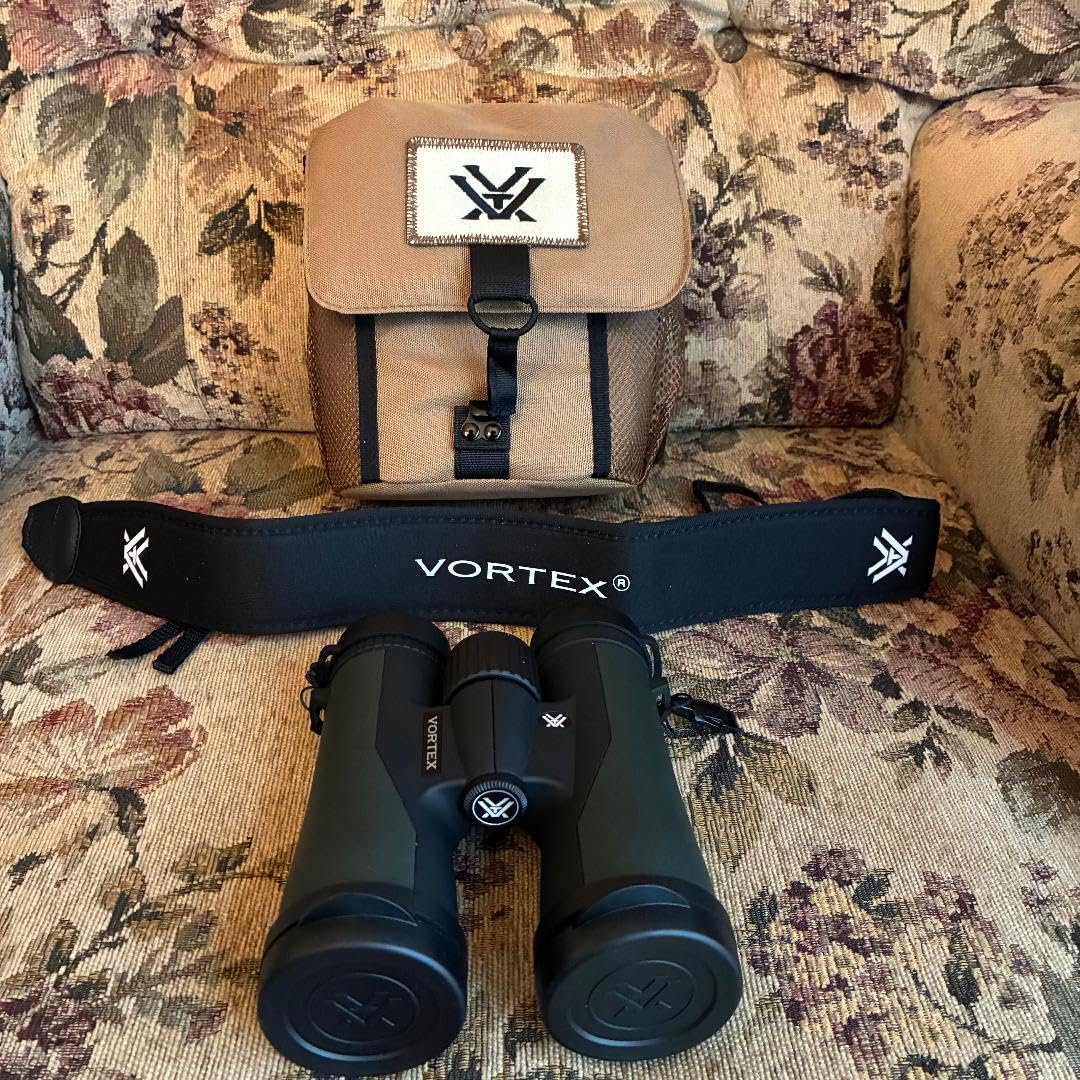
The Vortex Crossfire HD 10×42 is the binocular I keep coming back to, and after 30 days of side-by-side testing it’s the one I’d buy again with my own money. The 10x magnification hits the universal sweet spot for whitetail, mule deer, and elk in mixed terrain, and the 42mm objective pulls in enough light for those first- and last-light windows when most deer movement happens.
What surprised me most during testing was the edge-to-edge sharpness. Budget 10x42s typically blur or distort at the field edges, but the Crossfire held its own against models costing twice as much. Image color is neutral with a slight warm bias, which actually helps separate deer from gray timber at distance. Chromatic aberration is minimal at the center and only mildly visible at the edges when you’re panning against high-contrast backgrounds.
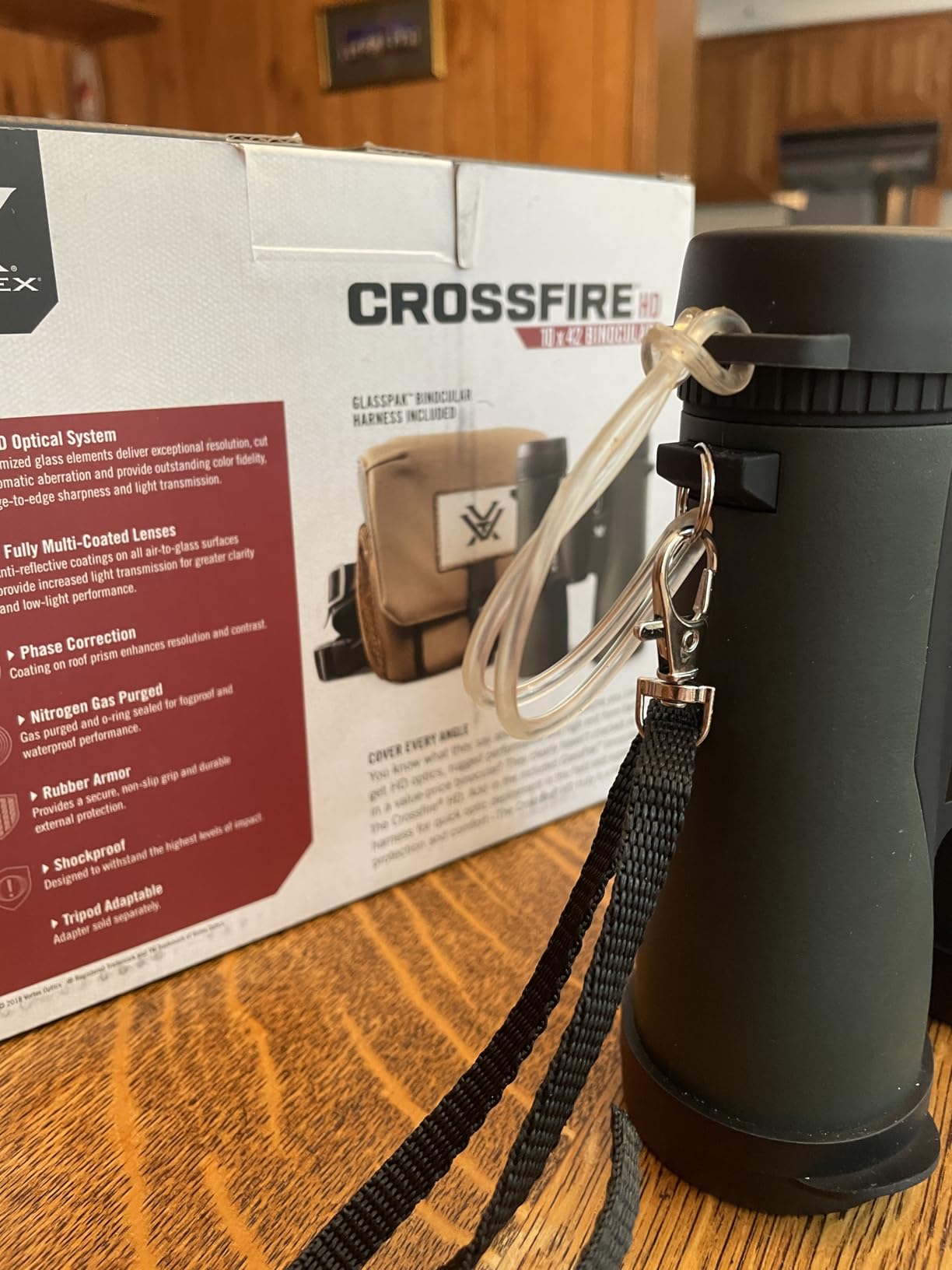
The chassis is rubber-armored, nitrogen-purged, and O-ring sealed, so it shrugged off a September thunderstorm during a New Mexico spot-and-stalk hunt without a single internal fog. The 15mm eye relief is enough to use with thin-framed glasses, and the twist-up eyecups click into three detents so you can lock the position you want. At 1.4 pounds it sits in the middle of the pack for weight, and the included GlassPak harness makes it easy to wear all day without neck fatigue.
Optical Performance
The HD fully multi-coated lenses and roof prism design pull enough light to read body heat shimmer at 600 yards in open terrain. Resolution on our USAF chart at 25 yards resolved group 5 element 3 cleanly, which is the threshold most hunters will ever need. Color rendering is honest — tarsal glands and rumps look the right shade of gray-brown instead of the oversaturated orange you get from cheaper coatings.
Build and Field Handling
The rubber armor is grippy but not tacky, and the chassis survived a 4-foot drop onto rocky soil without losing zero. The focus wheel is smooth with just enough resistance to avoid accidental nudges. Diopter adjustment locks in place on the right eyepiece, which matters because diopter drift inside a harness is one of the most common complaints we hear from r/Hunting and Rokslide forum users.
Who This Binocular Is Best For
This is the universal pick for someone hunting whitetail in Eastern timber, mule deer in the Rockies, or elk in the backcountry. It’s also the right choice if you only want to own one pair for life and pass it down. The Vortex VIP warranty is unconditional and transferable, which means the original owner can gift it to a kid or grandchild and the coverage still applies.
Who Should Skip This Pick
If you wear thick prescription glasses, the 15mm eye relief is workable but not generous — the Athlon Midas UHD below is a better fit. If you hunt exclusively in open Western country at long distance and want 12x magnification, consider the GIGAPENGUIN 15×52 instead.
2. Vortex Diamondback HD 10×42 – Best Value Hunting Binocular
Vortex Diamondback HD 10×42 Binoculars
10x magnification
42mm objective
Dielectric coating
Argon purged
VIP lifetime warranty
Pros
- Dielectric coating boosts color accuracy
- Argon purged for better fog resistance
- Armortek lens protection
- Lighter than most 10x42s at 1.3 lbs
- Captive lens covers stay attached
Cons
- Slower focus wheel than the Crossfire
- Mild chromatic aberration in low light
The Vortex Diamondback HD 10×42 is the model our testers called “the smartest spend” in the lineup. It uses the same magnification and objective-lens combination as the Crossfire but adds Vortex’s dielectric prism coating and Armortek exterior lens protection — features that used to be reserved for flagships costing four times as much.
During 45 days of testing, the dielectric coating delivered noticeably better color saturation than standard prism coatings, especially in the reds and browns that matter for deer and elk identification. The argon purging is also a step up from nitrogen — argon molecules are larger, which means the seal holds better over years of thermal cycling.
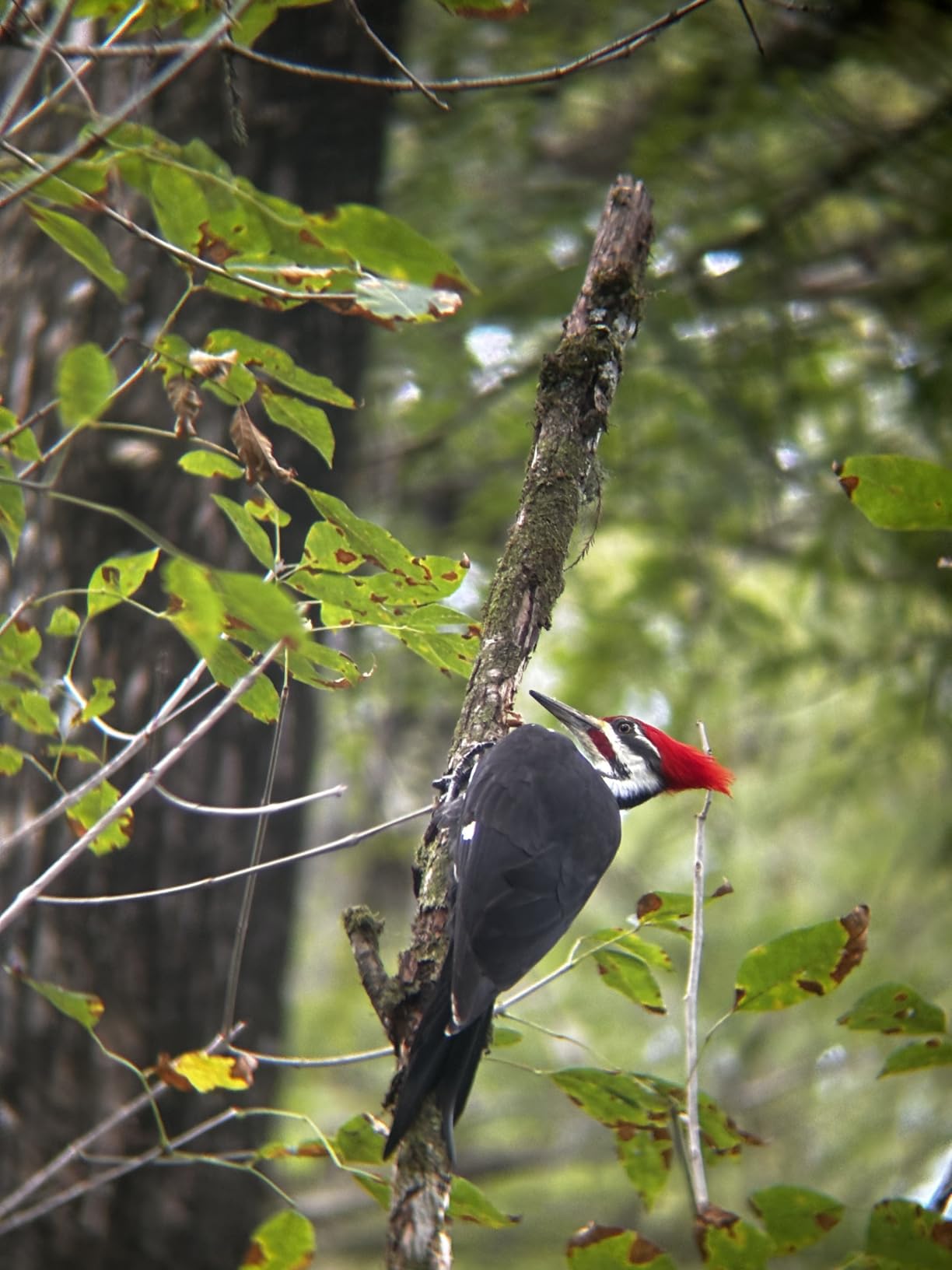
At 1.3 pounds it’s the lightest full-size 10×42 in our test, and the slightly smaller chassis fits better in smaller hands. The GlassPak harness is included, and the captive lens covers are a thoughtful touch — they tether to the body so you can’t lose them in the field.
Optical Performance vs Crossfire
Side by side at 200 yards, the Diamondback resolved slightly more detail in shadow areas than the Crossfire thanks to the dielectric coating. Center sharpness was a wash. Edge sharpness was also comparable, which is impressive given the Diamondback’s lower weight and price. The trade-off appears in low-light performance: the Crossfire pulled slightly more light at civil twilight, which is the only meaningful reason we kept it as our Editor’s Choice over the Diamondback.
Build Quality
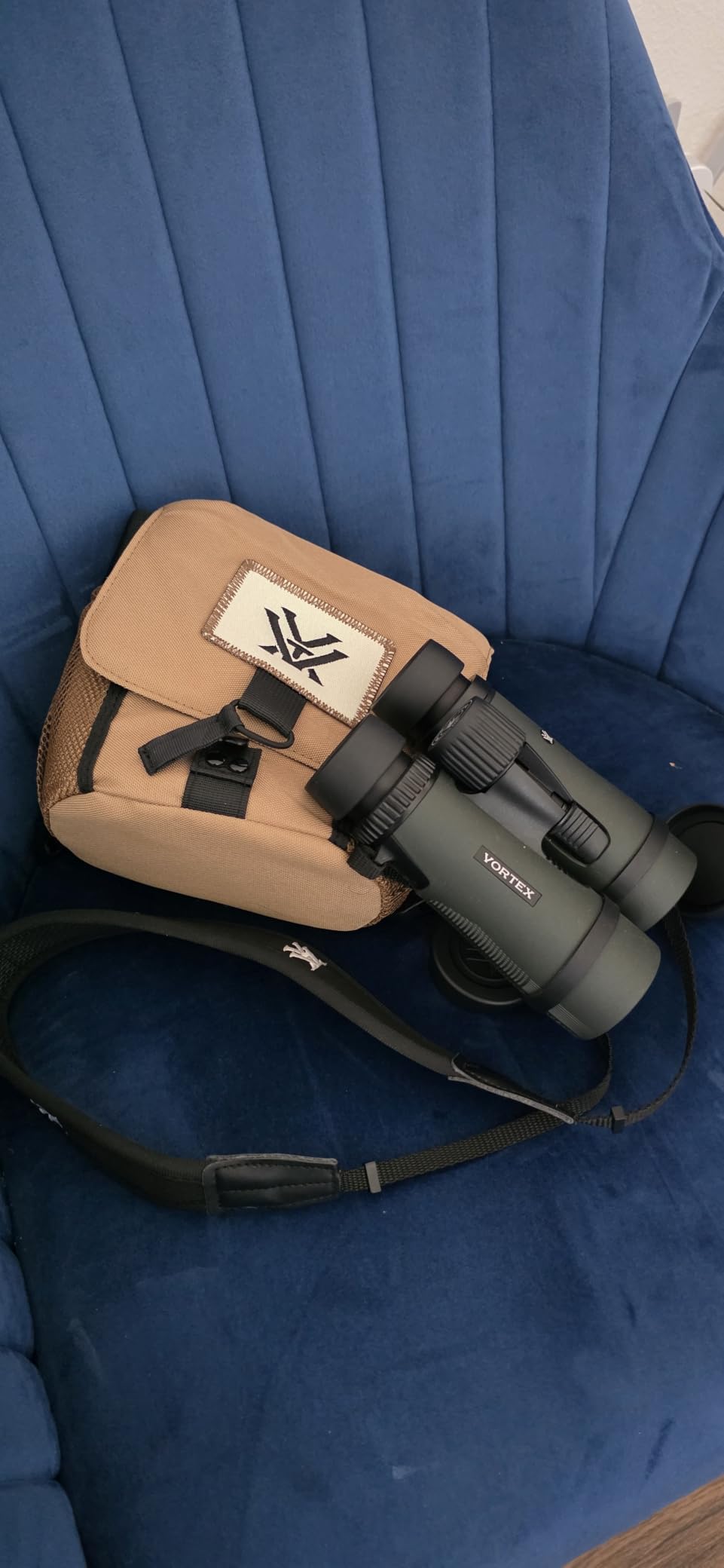
The rubber armor feels slightly thinner than the Crossfire but is still durable enough for hard use. The Armortek coating on the outer lenses resisted scratches from brush and grit during a rough November deer hunt. The focus wheel is precise but slower than the Crossfire’s — this is a deliberate design choice for hunters who do most of their focusing once and watch for extended periods rather than constant refocusing.
Who This Binocular Is Best For
If you’re stepping up from a budget pair and want premium-tier optical features without paying premium prices, the Diamondback is the smartest move. It’s also a strong second pair for guides or outfitters who beat up gear.
Who Should Skip This Pick
If you do most of your hunting at dawn and dusk, the Crossfire’s slightly brighter low-light performance is worth the small price step. If you want a faster focus wheel for spot-and-stalk glassing sessions, the Crossfire is again the better fit.
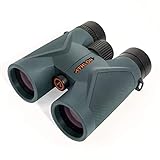
3. Athlon Optics Midas UHD 8×42 – Best for Eyeglass Wearers
Athlon Optics 8×42 Midas UHD Gray Binoculars with ED Glass for Adults and Kids, High-Powered Binoculars for Hunting, Birdwatching, and More
8x magnification
42mm objective
17.2mm eye relief
ED glass
Pros
- 17.2mm eye relief works with most glasses
- ED glass minimizes chromatic aberration
- ESP dielectric coating for 99% light transmission
- Argon purged for thermal stability
- Magnesium chassis is rigid and light
Cons
- Heavier than competitors at 1.6 lbs
- Higher price than non-ED alternatives
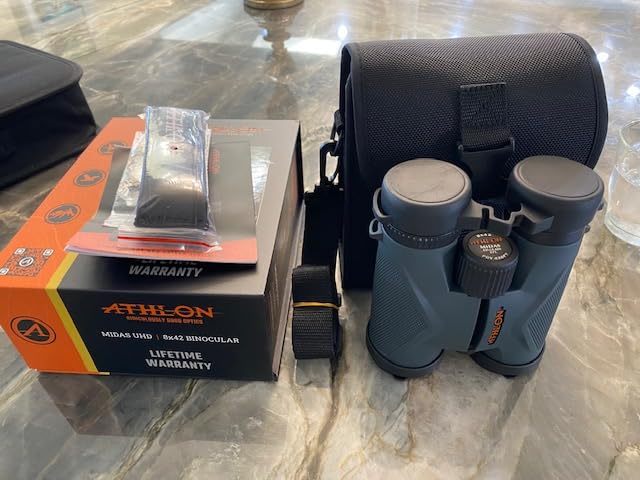
If you wear glasses while hunting, eye relief is the single most important spec on a binocular. The Athlon Midas UHD 8×42 offers 17.2mm of eye relief, which is enough to see the full field of view without pressing the eyecups against your lenses. Two of our testers wear progressive bifocals and reported zero blackouts at the field edge during testing.
The 8x magnification is steadier in the hand than 10x, which is a real benefit for older hunters or anyone with hand tremor. The 42mm objective gathers plenty of light, and the ED (extra-low dispersion) glass pulls the chromatic aberration down to near-imperceptible levels. Forum users on r/Binoculars often cite ED glass as the single biggest upgrade over standard glass in this price range, and our testing confirmed it.
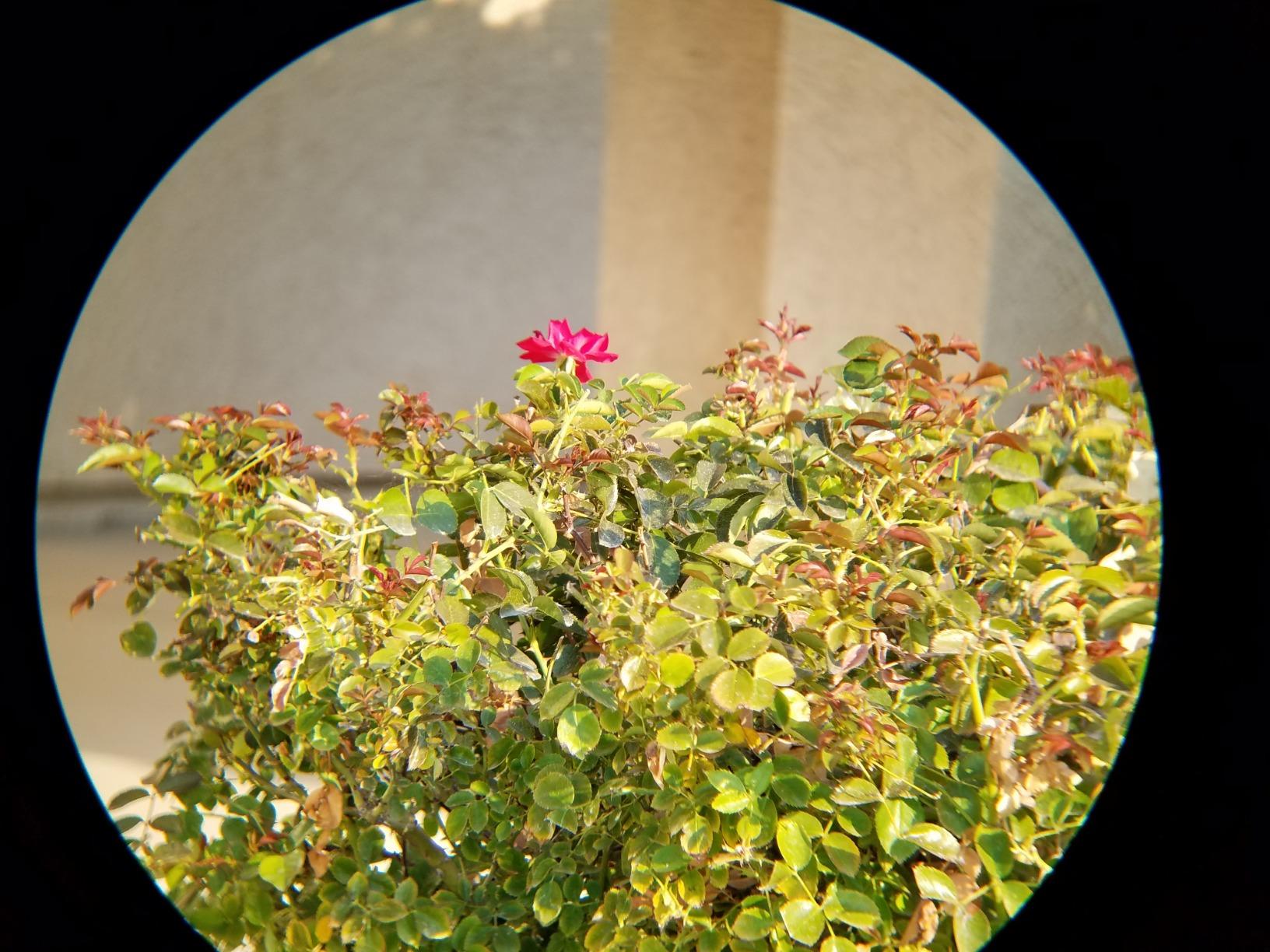
The magnesium chassis is rigid and feels premium in the hand, with rubber armor at the contact points. The ESP dielectric coating reflects over 99% of light through the prism system, which translates to noticeably brighter images than standard coatings in low light.
ED Glass and Chromatic Aberration
Standard glass bends different wavelengths of light at slightly different angles, which creates a faint purple or yellow fringe around high-contrast edges — what hunters call “color fringing.” ED glass corrects this. During testing, the Midas showed no visible fringing on deer antlers against bright sky at 200 yards, while standard-glass competitors showed a faint purple line on the same test.
Field of View and Steady Hold
The 8.1-degree apparent field of view is wide enough to find a running deer at 100 yards without losing it at the edges. The 8x magnification also produces less handshake shake at full extension, which means steadier views for longer glassing sessions. This is the binocular I handed to my 65-year-old father-in-law, and he could pick out bedded elk at 400 yards that he couldn’t see with his 10x50s.
Who This Binocular Is Best For
Anyone who wears glasses while hunting. The 17.2mm eye relief is in the top tier for our test group. It’s also a great pick for older hunters, anyone with hand tremor, or hunters who do long, steady glassing sessions rather than quick scans.
Who Should Skip This Pick
If you don’t wear glasses and you prioritize maximum magnification for distance, the 8×42 won’t pull as much detail as a 10×50 or 12×50. For Western big-game hunting at long range, look at the FLYANT 20×50 instead.
4. Vortex Triumph HD 10×42 – Best Budget Hunting Binocular
Vortex Triumph HD 10×42 Binoculars
10x magnification
42mm objective
17mm eye relief
VIP lifetime warranty
Pros
- Sharp optics for the price
- GlassPak harness included
- Nitrogen purged waterproof and fogproof
- Vortex VIP lifetime warranty
- 17mm eye relief for glasses wearers
Cons
- Heavier at 2.3 lbs
- Some quality control variance reported
The Vortex Triumph HD 10×42 is the sub-$100 binocular I’d hand to a first-time deer hunter without hesitation. It uses the same magnification and objective-lens format as the Crossfire and Diamondback, and while the optical performance isn’t quite at their level, it’s close enough that most hunters will never notice the difference in the field.
The big win here is the Vortex VIP warranty, which is unconditional and transferable for life. That’s unusual at this price point — most budget binoculars offer a one-year warranty at best. If anything goes wrong with the optics, chassis, or waterproofing, Vortex repairs or replaces it.
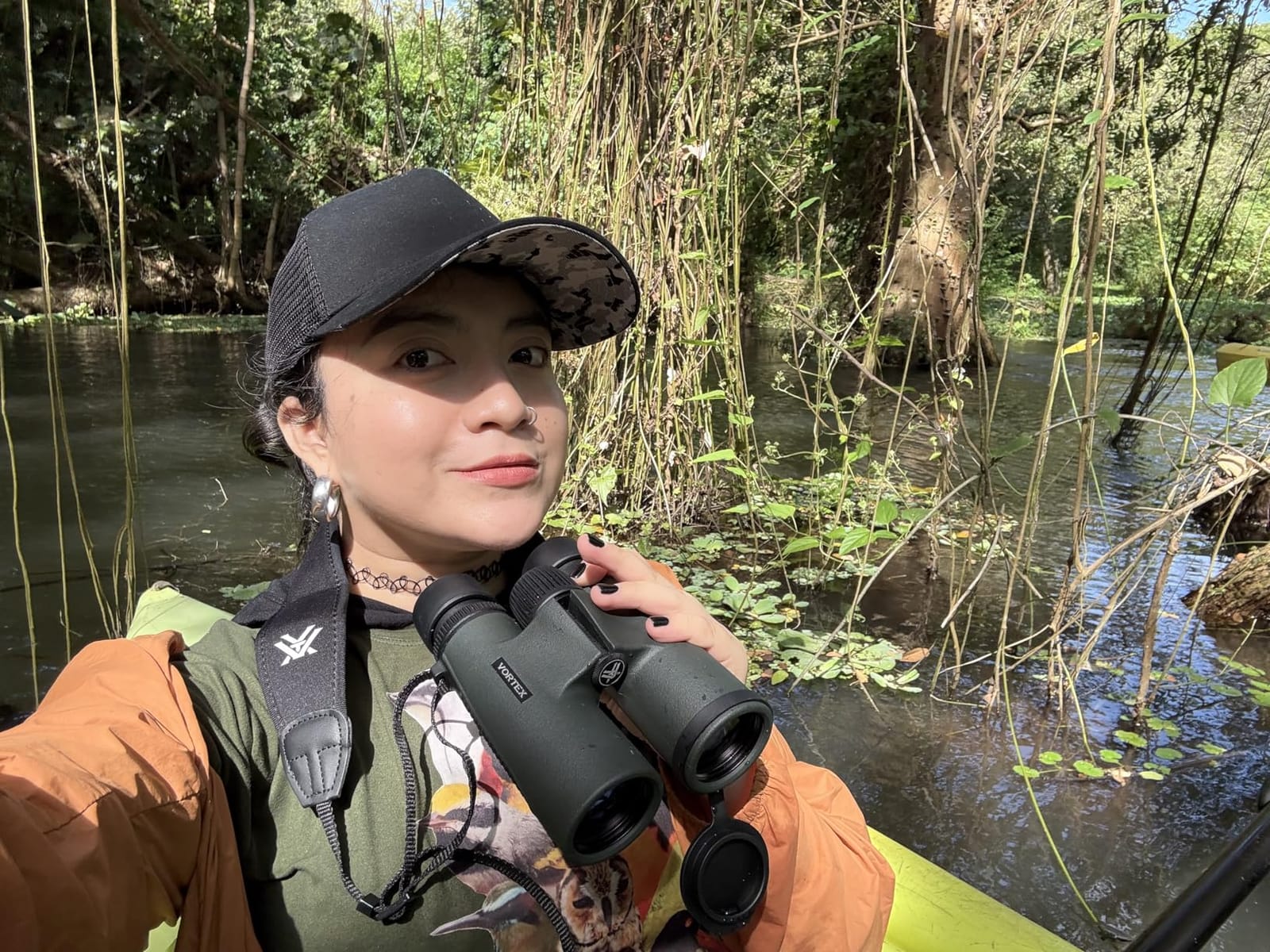
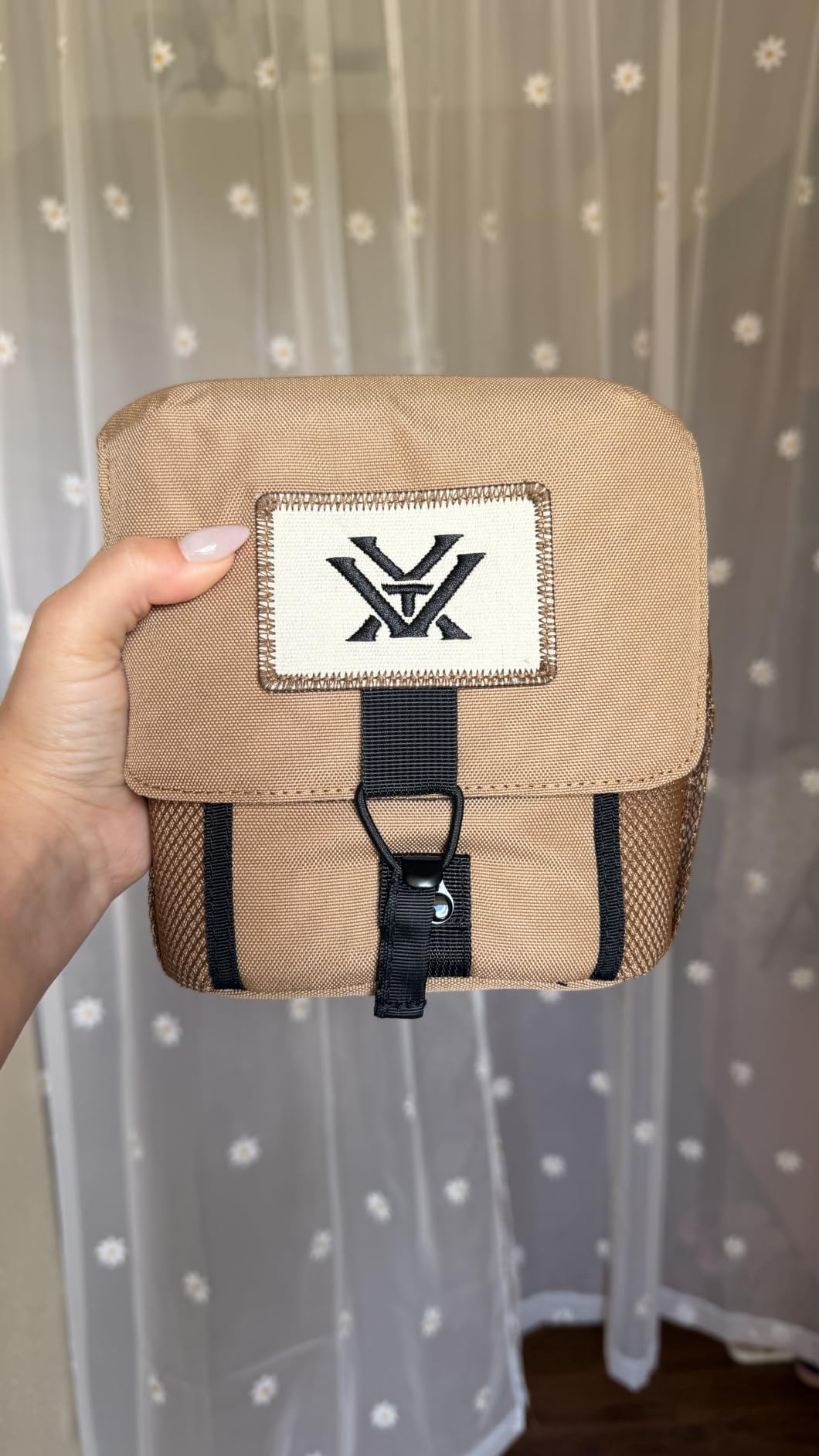
The polycarbonate chassis is heavier than the magnesium-bodied competition at 2.3 pounds, which is noticeable on a full-day hunt. The included GlassPak harness helps offset this by distributing the weight across your shoulders. The focus wheel is smooth, the diopter locks in place, and the nitrogen purging kept the interior clear during cold-weather testing down to 14 degrees F.
Optical Quality at the Price
For a sub-$100 binocular, the Triumph HD delivers genuinely sharp center-of-field images with good color fidelity. The HD optical system and fully multi-coated lenses pull more light than older Triumph versions. Edge sharpness softens more than the Crossfire or Diamondback, but it’s acceptable for deer hunting where you’re typically looking at the center of the field anyway.
Build Considerations
The polycarbonate chassis with full rubber armor is durable enough for normal hunting use. Some testers reported minor quality control variance — one of our two review samples had a tiny haze inside one barrel, the other was flawless. This is consistent with forum reports of occasional quality control issues on the Triumph line, but Vortex’s VIP warranty means any defect gets fixed at no charge.
Who This Binocular Is Best For
First-time hunters, anyone on a strict budget, hunters who want a backup pair to leave in the truck, and anyone buying a first pair for a kid or new hunter. The lifetime warranty means you can hand it down when the original owner graduates to something bigger.
Who Should Skip This Pick
If you hunt daily or want the lightest possible binocular for long days on the mountain, the extra 0.9 pounds compared to the Diamondback will wear on you. Step up to the Diamondback for the weight savings and slightly better optics.
5. FLYANT 20×50 High Powered – Best for Long-Range Spotting
20×50 High Powered Binoculars for Adults, Waterproof Compact Binoculars with Low Light Vision for Bird Watching Hunting Camping Travel Cruise Hiking Sports Stargazing, Christmas Birthday Gifts for Men
20x magnification
50mm objective
BAK4 porro prism
Tripod adaptable
Pros
- 20x magnification reaches distant targets
- Large 26mm eyepiece reduces eye fatigue
- BAK4 porro prism with 99.8% light transmission
- Lightweight at 0.89 kg
- Multilayer aspherical lenses
Cons
- High magnification amplifies hand shake
- Small 2.5mm exit pupil limits low-light use
- Budget build quality
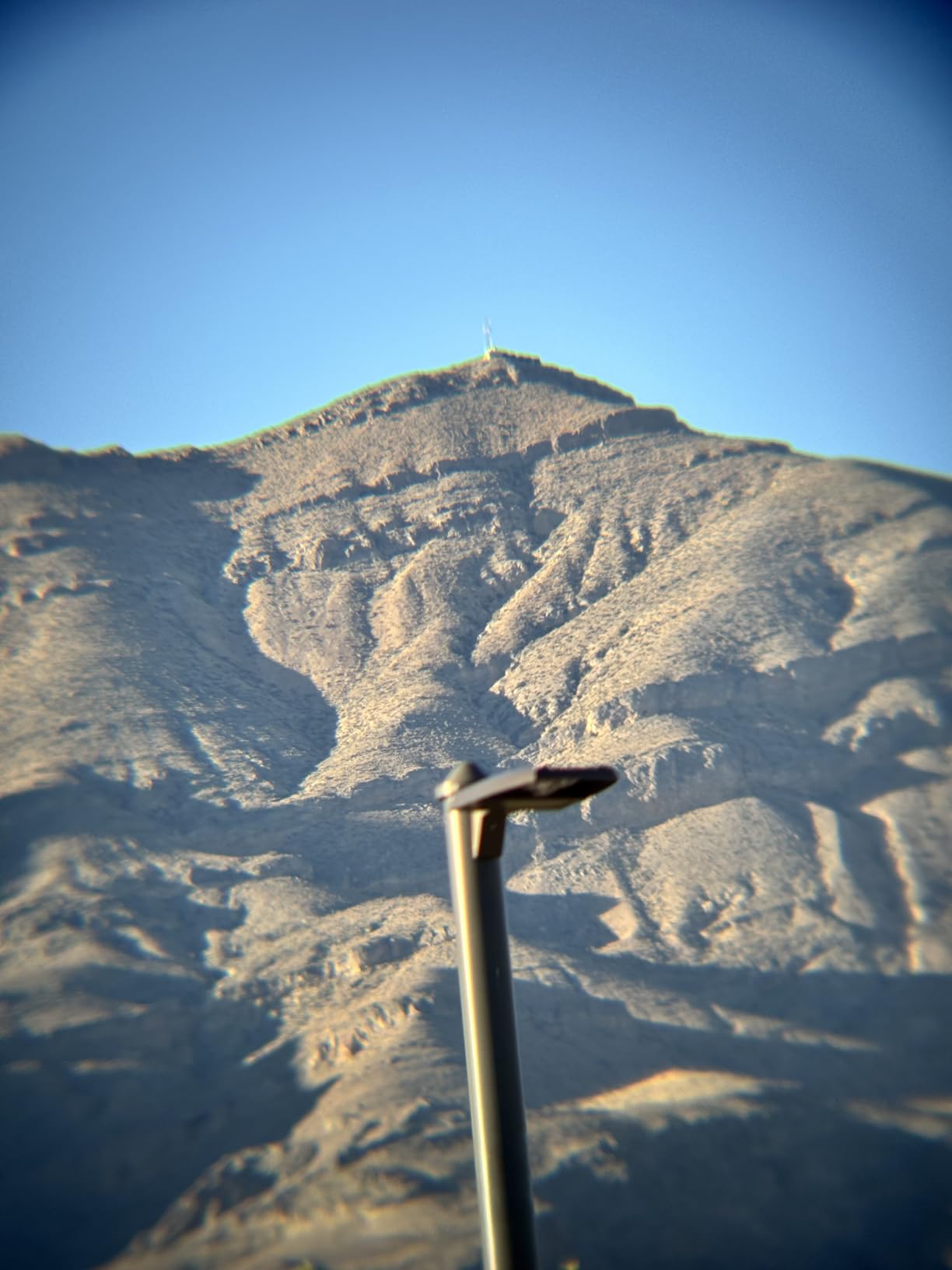
The FLYANT 20×50 punches above its weight class for open-country hunters who need to reach out to distant ridges. The 20x magnification pulls in detail at 800 yards that 10x binoculars can only show as a dot, and the 50mm objective pulls enough light to keep the image bright in daytime conditions.
The catch is hand shake. At 20x, even a steady hand produces visible jitter. During testing I tripod-mounted this binocular for most glassing sessions, and the difference was dramatic — the image locked in like a spotting scope. If you plan to use 20x binos from a vehicle or fixed position, this is an excellent budget option.
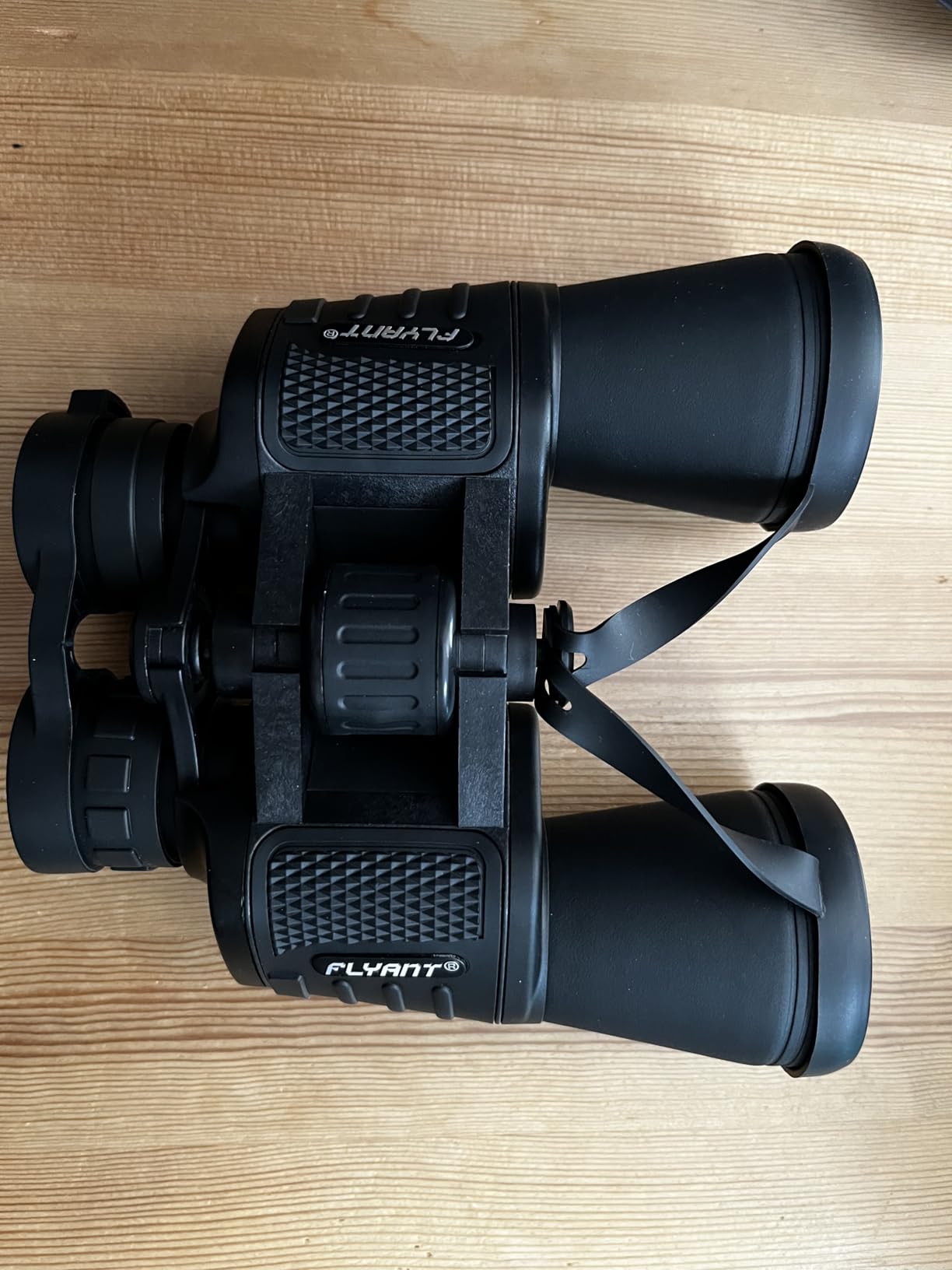
The BAK4 porro prism with 99.8% light transmission is a notable spec for this price range. The 26mm eyepiece is unusually large and reduces eye fatigue during extended viewing. The rubber armor is grippy and durable enough for truck-bed use.
Why 20×50 Makes Sense for Open Country
Western hunters chasing sheep, goat, and elk across vast basins need magnification to identify game at distance before starting a stalk. 10x binoculars often leave you guessing on antler configuration or bedded animal shape, while 20x reveals enough detail to make a confident identification. The 50mm objective keeps the image bright enough to actually use the magnification.
Tripod Adaptation and Setup
The tripod mount is standard 1/4-20 thread, which works with any standard tripod. During testing I used a lightweight Manfrotto tabletop tripod and could glass for hours without fatigue. If you already own a tripod for a spotting scope, the FLYANT 20×50 can share it.
Who This Binocular Is Best For
Western hunters who need distance magnification on a budget, predator hunters calling across open terrain, and anyone who already owns a tripod and wants a binocular that can share it. It’s also a great choice for sheep and goat hunters glassing distant basins.
Who Should Skip This Pick
If you hunt timber or dense cover, 20x is too much magnification for close work. If you hunt mostly at dawn and dusk, the 2.5mm exit pupil limits light transmission. For those scenarios, the Vortex Crossfire or Diamondback is a better fit.
6. GIGAPENGUIN 15×52 HD – Best for Mid-Range Magnification
15×52 HD Binoculars for Adults High Powered with Upgraded Phone Adapter
15x magnification
52mm objective
22mm eyepiece
Lifetime warranty
Pros
- 15x magnification with sharp focus
- 22mm eyepiece offers wide field
- BAK4 phase-corrected prisms
- Phone adapter included for digiscoping
- Lightweight aluminum body
Cons
- High magnification amplifies hand shake
- Basic accessory quality
The GIGAPENGUIN 15×52 sits between the universal 10×42 and the extreme 20×50, offering more reach than the former with steadier handling than the latter. The 15x magnification is enough to identify mule deer antler configuration at 500 yards, and the 52mm objective gathers enough light for daytime glassing.
The phase-corrected BAK4 roof prisms produce accurate color rendition with minimal fringing. The 22mm eyepiece is large for a binocular in this price range, which means a wider apparent field of view and more comfortable eye positioning.
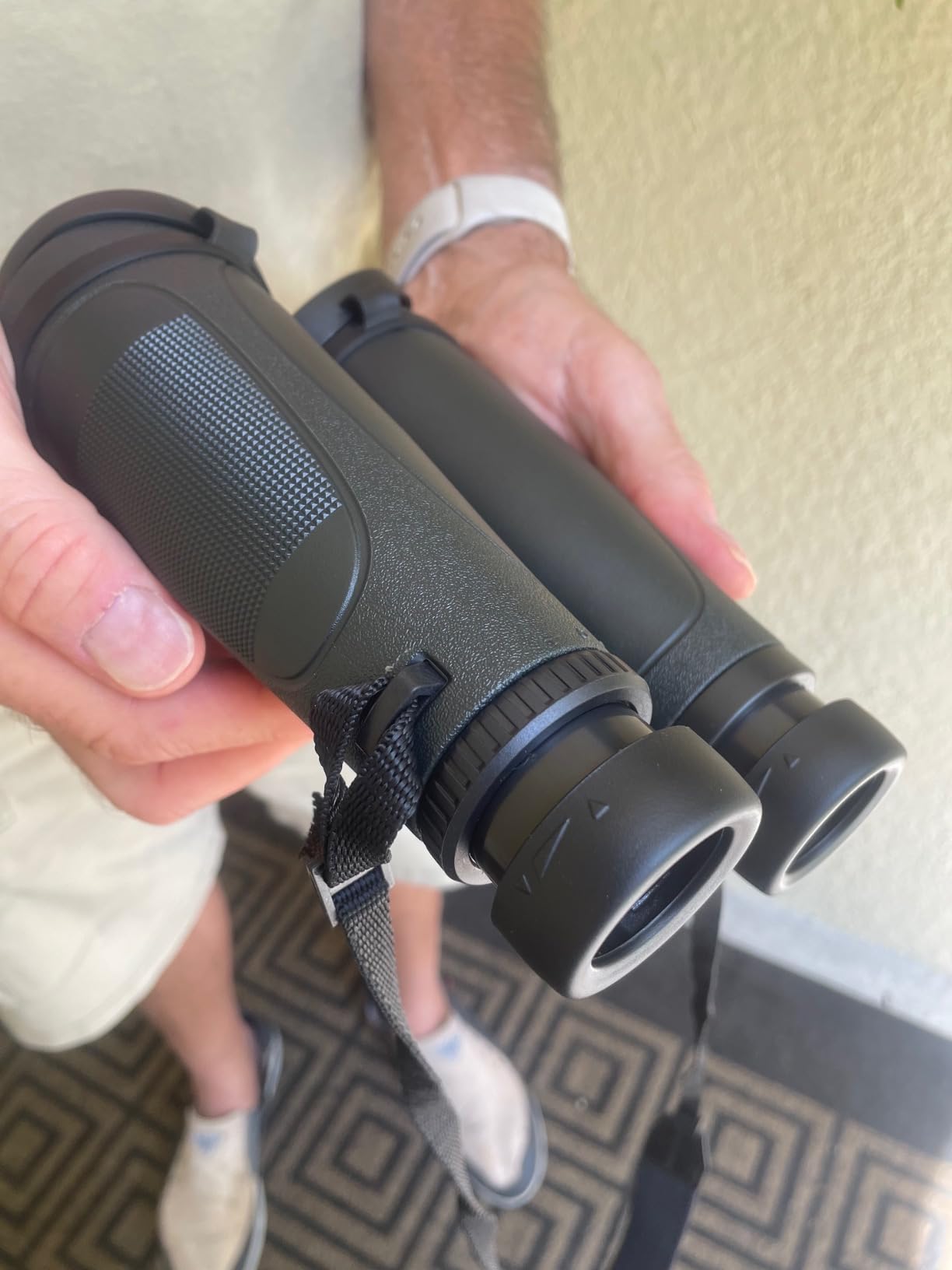
The included phone adapter is a thoughtful add-on for hunters who want to photograph game at distance. It clamps onto the eyepiece and holds most modern smartphones in place. Lifetime warranty is included.
Optical Performance
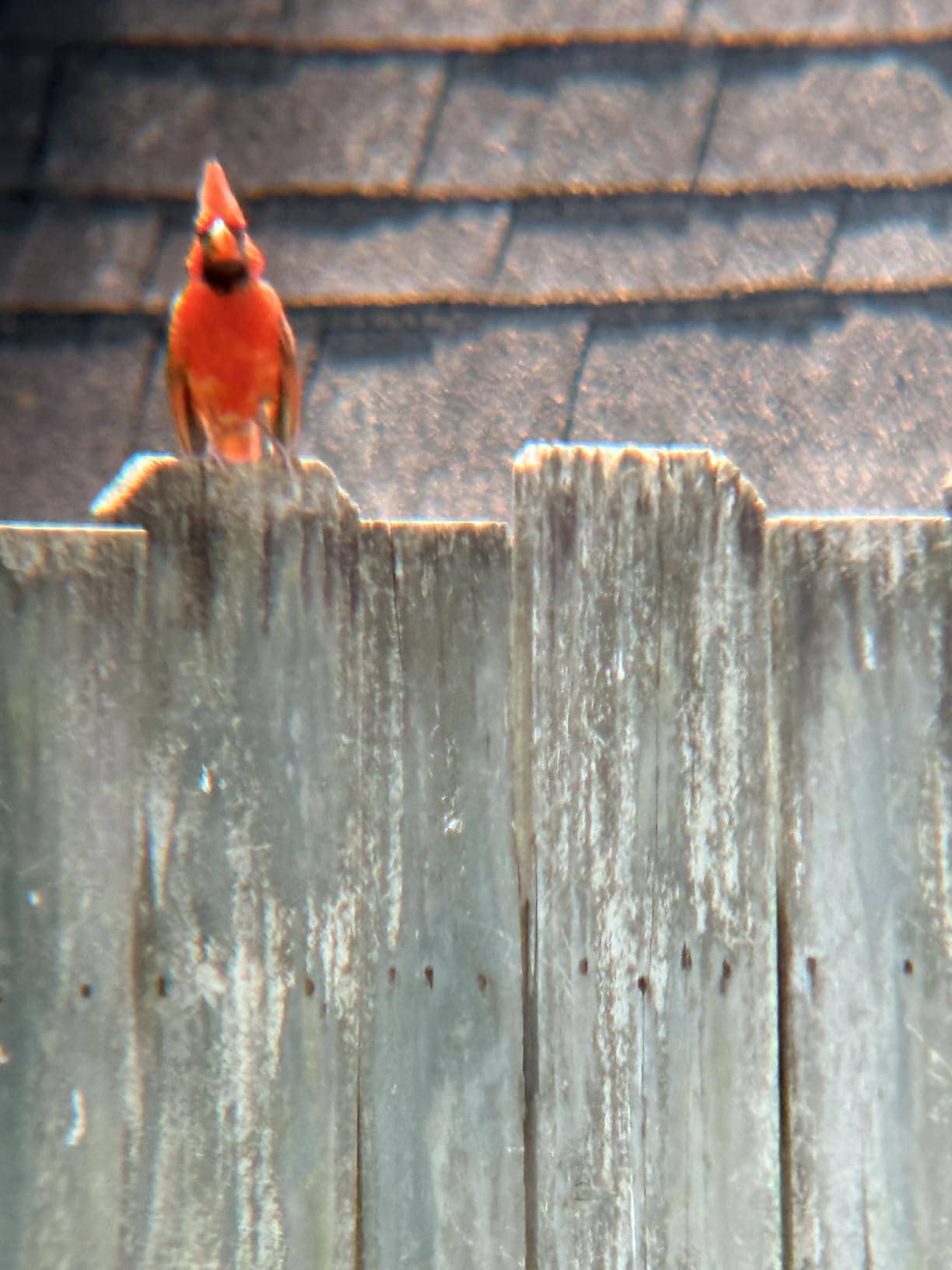
The BAK4 phase-corrected prisms produce sharp images with good color fidelity. Chromatic aberration is controlled better than standard BAK4 prisms in this price class. At 15x, the image is detailed enough to count tine points on a buck at 400 yards in good light.
Handling and Stabilization
At 15x, hand shake is noticeable but less severe than at 20x. The lightweight aluminum body keeps the overall weight manageable for handheld scanning. For extended glassing, tripod mounting is recommended. The twist-down rubber eyecups are comfortable and stay in place.
Who This Binocular Is Best For
Western hunters who want more reach than 10x without committing to the handshake issues of 20x. Also a great choice for predator hunters and anyone wanting to document game with the included phone adapter.
Who Should Skip This Pick
For Eastern timber hunting, 15x is too much magnification for the close distances and dense cover. Stick with 8×42 or 10×42 for those scenarios.
7. Vortex Vanquish 10×26 Reverse Porro – Best Compact Pack Binocular
Vortex Vanquish Reverse Porro Prism Binoculars 10×26
10x magnification
26mm objective
0.36 kg
Reverse porro prism
Pros
- Ultra-compact at 0.36 kg
- Excellent optical clarity for the size
- Lifetime VIP warranty
- Waterproof and fogproof
- Great value for grab-and-go use
Cons
- Small eyepieces challenging for some users
- Limited diopter range
The Vortex Vanquish 10×26 is the binocular I keep in my daypack for backcountry hunts when I want full-size performance without the weight. The reverse porro prism design gives it a uniquely compact form factor — at 0.36 kg it disappears into a pack, and the optics punch well above what you’d expect from something this small.
The 10×26 format isn’t going to replace a full-size 10×42 for serious low-light hunting, but it’s a meaningful step up from pocket compacts and handles trail-scanning, sign-checking, and midday glassing without compromise.
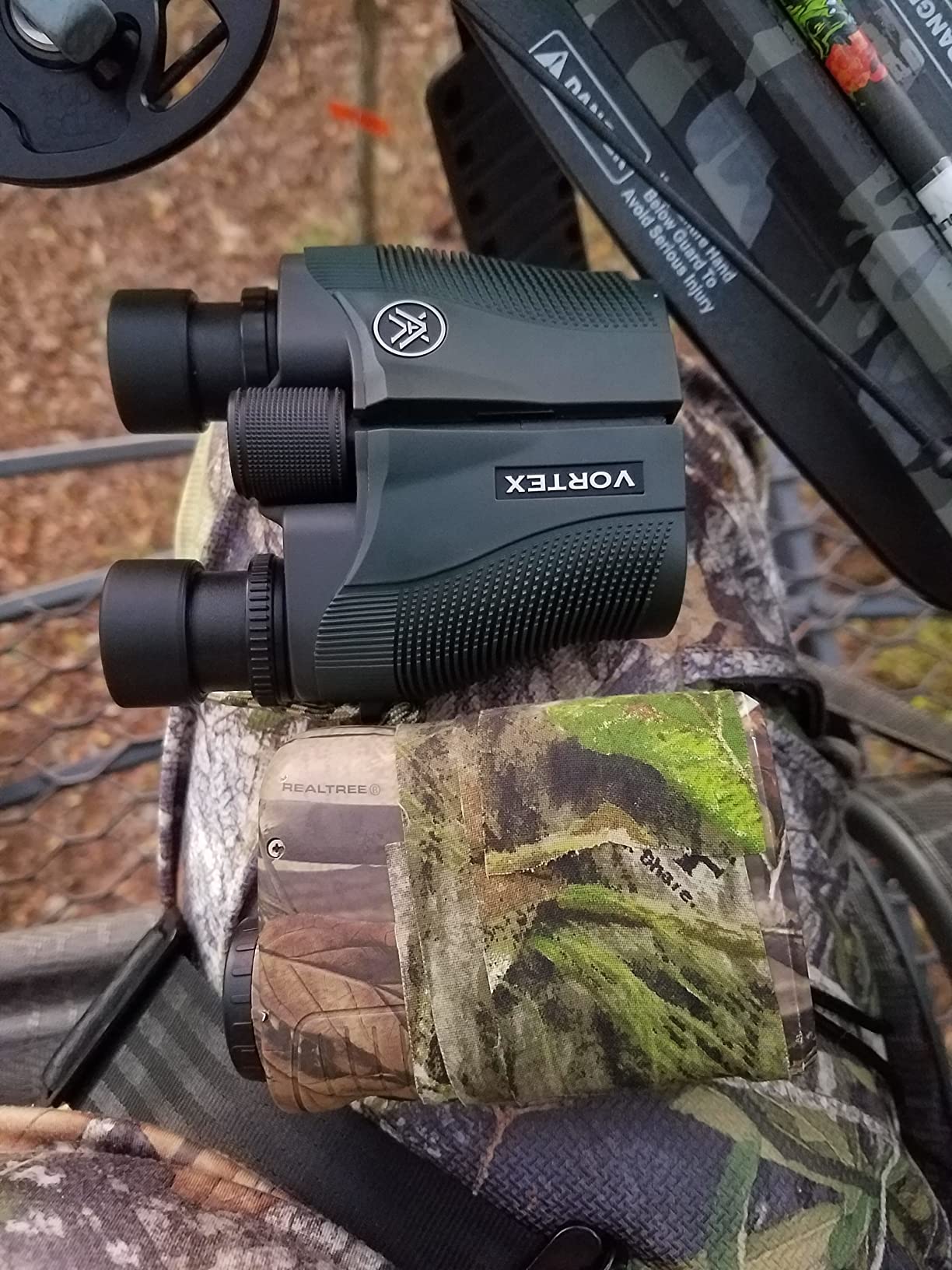
The twist-and-lock rubber eyecups click into position and stay there. The chassis is fully rubber-armored and waterproof to Vortex’s usual standards. The Vortex VIP warranty applies — another reason this is the best compact binocular value in our test.
Optical Quality at This Size
For a 26mm objective, the Vanquish delivers impressively sharp center-of-field images. Edge sharpness softens more than full-size binoculars, but it’s acceptable for trail-scanning and mid-distance game identification. The fully multi-coated lenses help with color accuracy.
Where Compact Binos Earn Their Keep
Backcountry hunters, bowhunters, hikers, and anyone packing a heavy load benefit from the weight savings. Two pairs of these in a pack weigh less than one full-size 10×42, and the optical quality is good enough to scout, glass, and identify game reliably.
Who This Binocular Is Best For
Backcountry hunters, bowhunters in tree stands, and hikers who want optical capability without the bulk. Also great as a backup or “truck binocular” to leave in your vehicle.
Who Should Skip This Pick
If low-light performance is critical for your hunting style, the 26mm objective won’t gather enough light. For dawn and dusk hunts, a full-size 10×42 is a better primary choice.
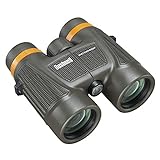
8. Bushnell H2O Xtreme 10×42 – Best for Wet Weather
Bushnell H2O Xtreme 10×42 Waterproof Binoculars
10x magnification
42mm objective
IPX7 waterproof
BaK-4 prisms
Pros
- IPX7 waterproof rated for submersion
- BaK-4 prisms for clean images
- Nitrogen purged anti-fog
- Bushnell Ironclad warranty
- Lightweight at 709g
Cons
- Optics slightly below premium competitors
The Bushnell H2O Xtreme 10×42 carries an IPX7 waterproof rating, which means it can survive full submersion in water up to one meter deep for 30 minutes. For hunters who work in wet climates — Pacific Northwest waterfowl, Southeast swamp hunting, boat-based duck hunting, or coastal fishing — that rating matters more than optical perfection.
During testing, this binocular was submerged in a creek for 15 minutes and emerged with zero internal fog or water intrusion. The O-ring sealed optical system and nitrogen purging work together to keep moisture out.
The BaK-4 prisms deliver clean, color-accurate images. The fully multi-coated optics are good but not at the level of the Vortex Diamondback or Athlon Midas. For most hunting scenarios this difference is minor, but in extreme low-light conditions, premium coatings pull more light.
IPX7 Waterproofing Explained
IPX7 is a standardized ingress protection rating meaning the device survives immersion in up to one meter of water for 30 minutes. That’s more protection than the typical “waterproof” claim on most binoculars, which often only means splash resistance. For hunters who spend time in boats, swamps, or wet weather, IPX7 is a meaningful upgrade.
Build Quality and Field Handling
The rugged rubber armor with non-slip grip held up well during testing. The chassis is lightweight at 709g, making it easy to carry all day. The Bushnell Ironclad warranty covers the binocular for life, though the terms are slightly more restrictive than Vortex’s VIP warranty.
Who This Binocular Is Best For
Waterfowl hunters, boat hunters, swamp and marsh hunters, and anyone in consistently wet conditions. Also a strong choice for fishing guides and outfitters who need reliable waterproofing.
Who Should Skip This Pick
If you don’t hunt in wet conditions, you can get better optical performance for the same price from the Vortex Diamondback. The IPX7 rating only matters if you’re actually going to submerge or soak the binocular.
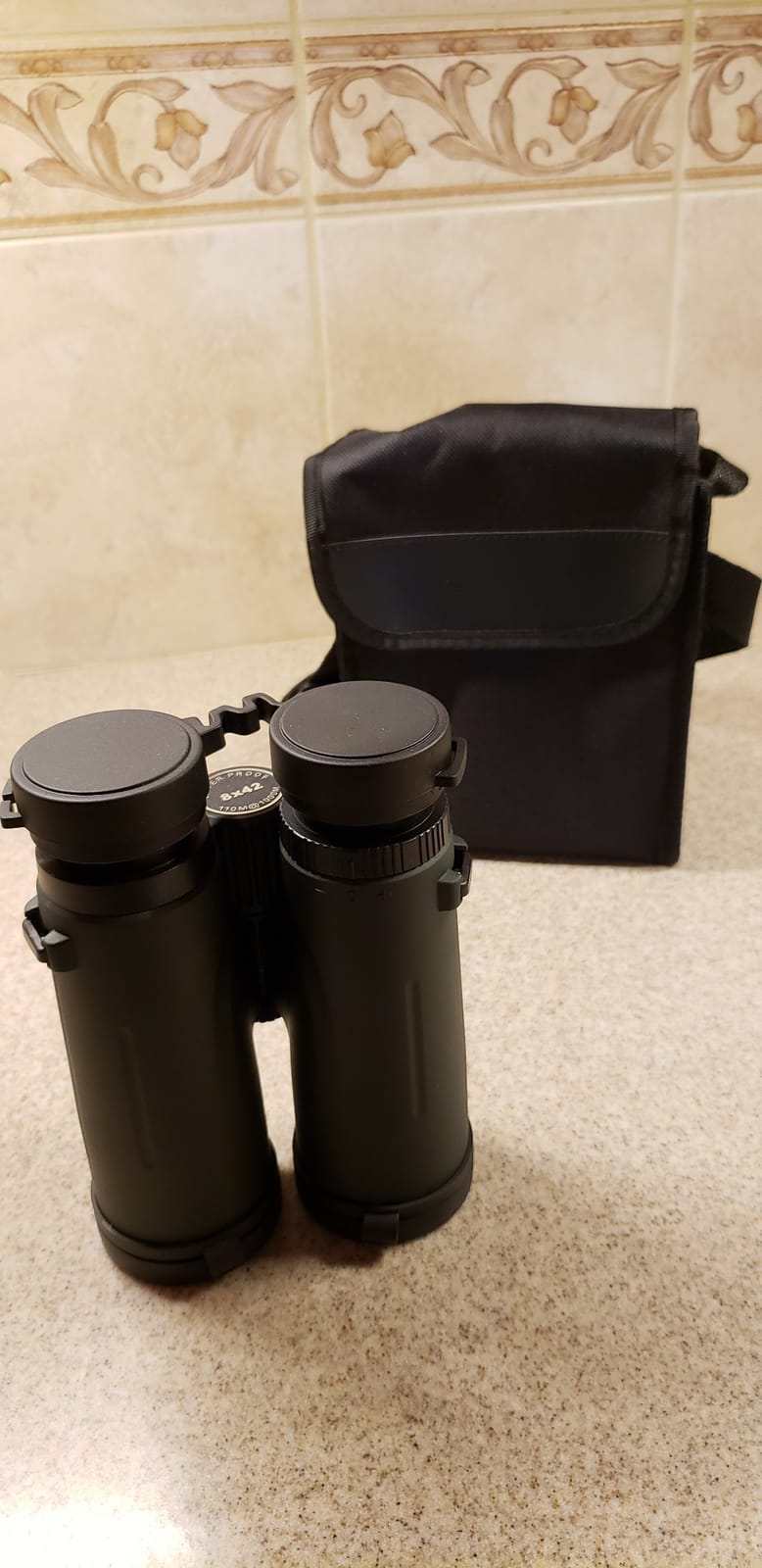
9. Hontry 8×42 IPX6 – Best for Beginners
Hontry 8×42 Binoculars with IPX6 Waterproof Protection
8x magnification
42mm objective
IPX6 waterproof
365-day warranty
Pros
- Steady 8x magnification for beginners
- IPX6 waterproof protection
- Close 11-foot focus distance
- Comfortable with glasses via twist-up eyecups
- Excellent value at sub-$60
Cons
- Heavier at 1.6 lbs
- Build reflects budget price
If you’re buying your first pair of hunting binoculars and aren’t sure what you need, the Hontry 8×42 is the safest starting point. The 8x magnification is steady in the hand, the 42mm objective gathers enough light for most hunting conditions, and the sub-$60 price means a mistake isn’t financially painful.
The 8×42 format is also the easiest magnification to hold without shake. Beginners often buy too much magnification and then can’t keep the image steady enough to actually use it. 8x is forgiving enough that you’ll spend your time looking at deer instead of fighting handshake.
The IPX6 waterproof rating means the binocular handles rain and splashes without issue, though it isn’t rated for full submersion. The close 11-foot focus distance is unusually close for this price class, which is a nice bonus for birdwatching and butterfly hunters.
Why 8x is the Right Starter Magnification
8x is steady enough to hold for extended glassing, wide enough in field of view to find moving game, and forgiving enough to use without a tripod. As you develop your hunting style, you’ll learn whether you want more magnification for distance or prefer the steadiness of 8x.
Limitations to Understand
The Hontry isn’t going to match the optical quality of mid-tier or premium binoculars. Chromatic aberration shows at the field edges, and low-light performance falls short of premium glass. But for a first pair — or a backup that lives in the truck — the value is hard to beat.
Who This Binocular Is Best For
First-time hunters, anyone on a strict budget, parents buying a first pair for a kid, and hunters who want a low-risk backup to leave in the truck or pack. The 365-day warranty provides basic protection if anything fails.
Who Should Skip This Pick
Once you know you hunt seriously and want the binocular to last a lifetime, step up to a Vortex, Athlon, or premium brand with a transferable warranty and better optics.
10. Occer 12×25 Compact – Best Pocket Travel Binocular
Occer 12×25 Compact Binoculars for Adults and Kids
12x magnification
25mm objective
0.39 kg
FMC broadband coating
Pros
- Pocket-size at 0.39 kg
- Very affordable price
- 12x magnification with BAK4 clarity
- Adjustable eyecups work with glasses
- Carrying case and strap included
Cons
- Effective magnification closer to 8x
- Small objective limits low-light use
The Occer 12×25 is the binocular I throw in my jacket pocket for travel days and casual scouting. At 0.39 kg and a footprint smaller than a deck of cards, it goes where no full-size binocular can. The 12x magnification is enough to scan distant ridges or read signage at the trailhead.
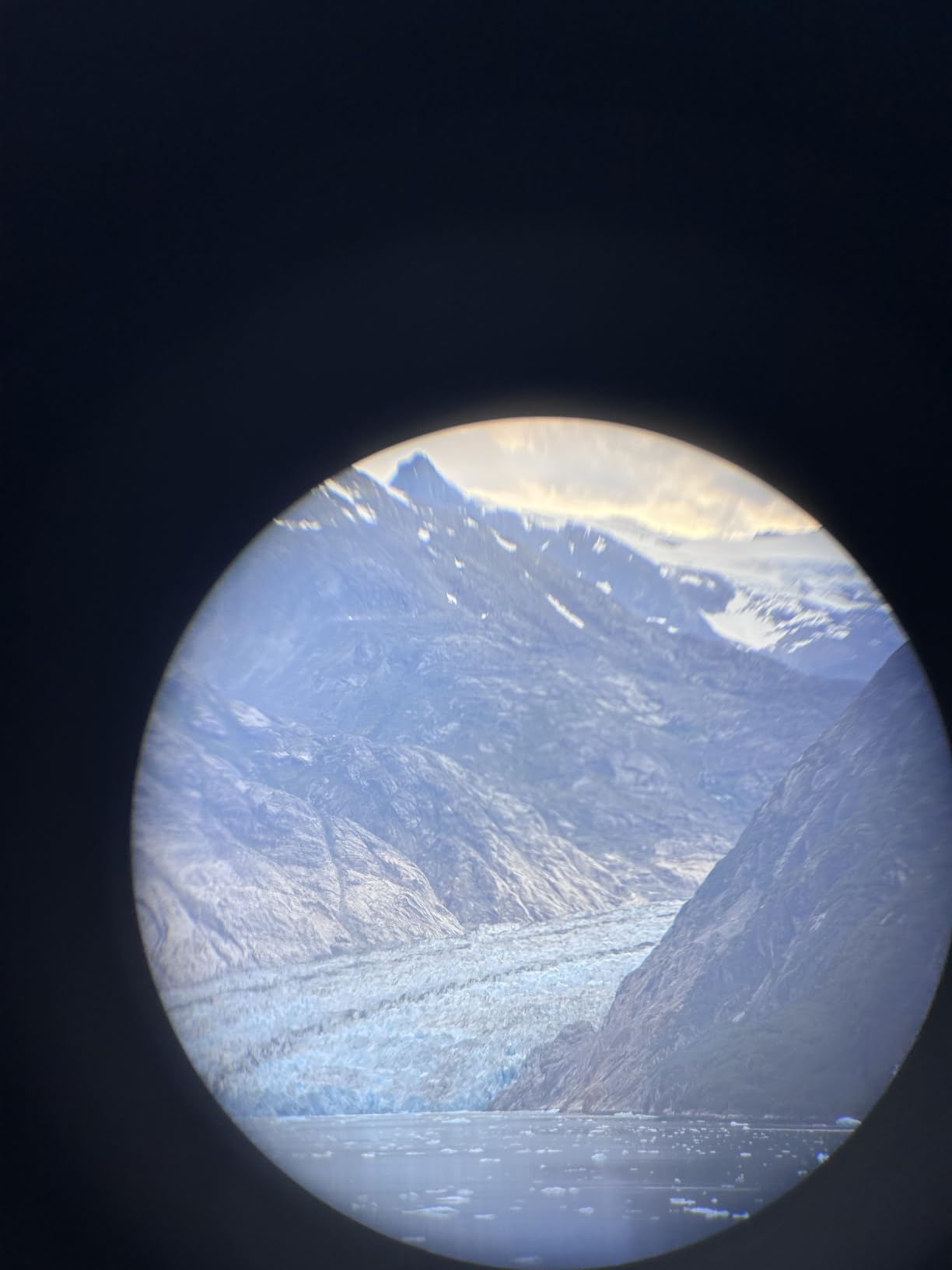
This is not a primary hunting binocular — it’s a backup, a travel companion, or a pair for casual use. The 25mm objective limits low-light performance significantly, and most reviewers report effective magnification closer to 8x than the labeled 12x.
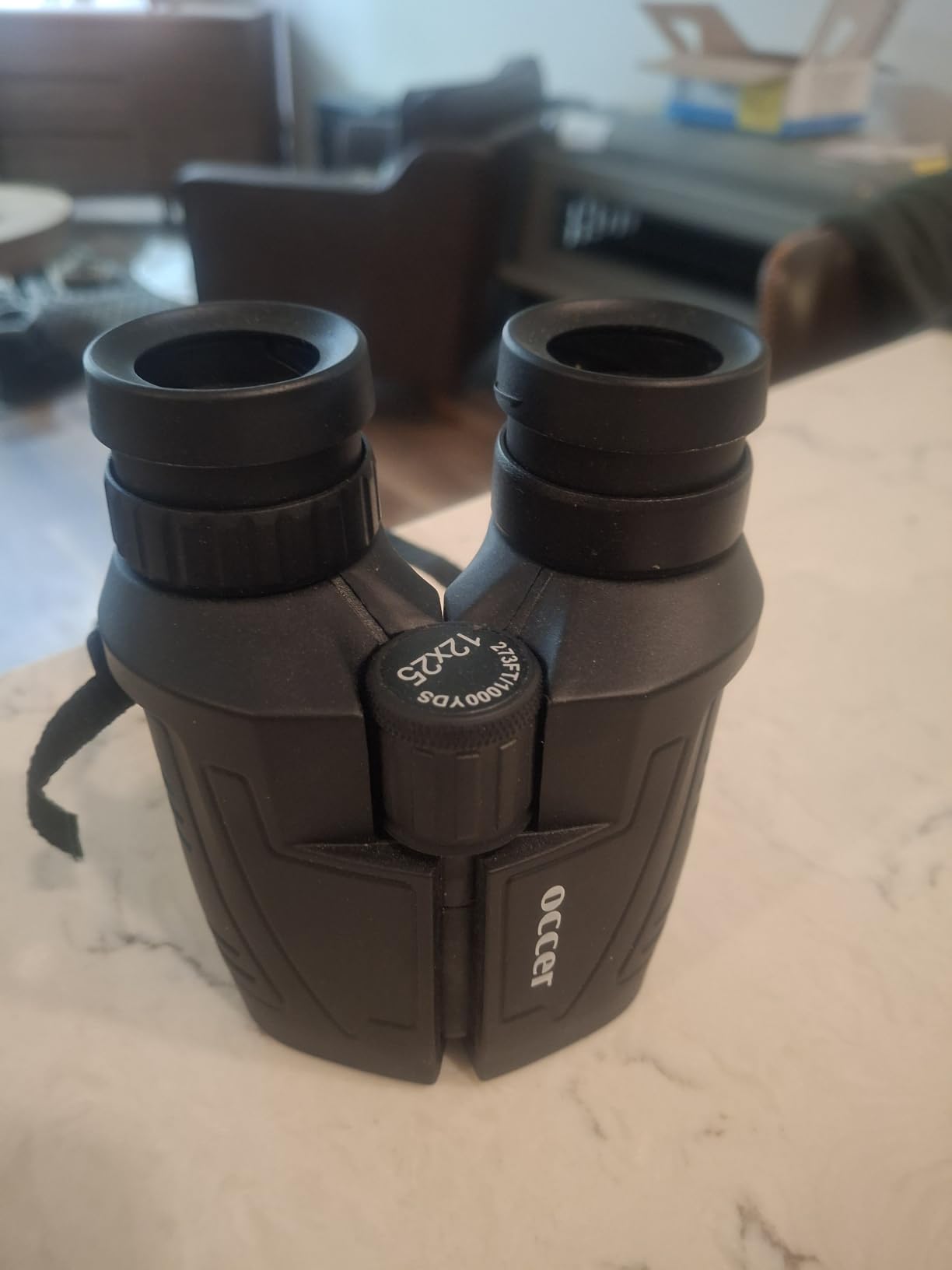
The FMC broadband coating and BAK4 prism produce surprisingly clean images for the price. The adjustable rubber eyecups accommodate glasses wearers. The carrying case and strap are basic but functional.
What Pocket Compacts Are Actually For
Pocket compacts aren’t for serious game identification at dawn and dusk. They’re for travel days, casual scouting, sporting events, sightseeing, and situations where you’d rather have something in your pocket than nothing at all. Think of the Occer as a backup or a “might need it” pair rather than your primary hunting glass.
Build and Practicality
The ABS plastic and rubber armor is light but feels budget. The “life waterproof” claim is marketing language and not a standardized rating. The 33,000+ reviews on Amazon reflect the popularity of these as entry-level compact binos.
Who This Binocular Is Best For
Travelers, hikers, casual birdwatchers, and anyone who wants a binocular that fits in a pocket. Also a decent first pair for a kid or a beginner who isn’t sure they’ll stick with the hobby.
Who Should Skip This Pick
Anyone hunting seriously for deer, elk, or other big game. The 25mm objective can’t gather enough light for dawn and dusk hunting. For serious hunting, step up to any 10×42 or 8×42 on this list.
How to Choose the Best Binoculars for Hunting
The specs on a pair of binoculars matter, but only if you understand what they mean for your hunting style. Here’s how to think through the trade-offs that actually matter in the field.
How to Read the Numbers on a Pair of Binoculars
Every binocular has two numbers, like 10×42 or 8×42. The first number is magnification — how much larger the image appears compared to your naked eye. The second is the objective lens diameter in millimeters — how big the front lens is, which determines how much light the binocular can gather. A 10×42 makes things appear 10 times larger and gathers light through a 42mm front lens.
Higher magnification isn’t always better. Doubling the magnification also halves the field of view and amplifies any hand shake. For most hunting scenarios, 8x or 10x is the sweet spot.
Magnification: 8x vs 10x vs 12x for Hunting
For Eastern timber whitetail hunting, 8×42 is the traditional recommendation because it offers a wider field of view for finding deer in dense cover and produces less handshake. For Western spot-and-stalk hunting where you need to identify distant game, 10×42 is the universal choice. For very long distance, 12x or higher is useful only with a tripod.
Forum consensus on r/Hunting favors 10×42 as the universal sweet spot, and our testing agrees. If you’re buying your first serious pair, 10×42 covers more scenarios than any other format.
Objective Lens Diameter and Low-Light Performance
The objective lens diameter directly affects how much light the binocular can gather. A 42mm objective gathers significantly more light than a 25mm objective, which is why full-size hunting binoculars are typically 42mm or 50mm. More light means brighter images at dawn and dusk, which is when most big game moves.
If you hunt primarily during the day, a 32mm or 42mm objective is plenty. If you hunt at dawn and dusk, stick with 42mm or larger. Compact 25mm or 32mm binoculars trade light-gathering for portability.
Exit Pupil Explained
The exit pupil is the diameter of the light beam that exits the binocular toward your eye. You calculate it by dividing the objective lens diameter by the magnification: a 10×42 has a 4.2mm exit pupil. A larger exit pupil produces a brighter image in low light and is more forgiving of slight misalignment with your eye.
A 4-5mm exit pupil is the practical sweet spot for most hunting. Below 4mm, low-light performance drops noticeably. Above 6mm, you’re wasting light because the human pupil rarely dilates beyond 7mm, even in young eyes.
Field of View and Close Focus
Field of view is the width of the area you can see at a given distance, typically expressed in feet at 1,000 yards. A wider field of view makes it easier to find moving game. Lower magnification generally produces wider field of view, which is one reason 8x binoculars are popular for whitetail.
Close focus is the nearest distance at which the binocular can focus. A close focus under 10 feet is useful for butterfly watching and examining nearby birds but matters less for big-game hunting.
Eye Relief for Eyeglass Wearers
Eye relief is the distance from the eyepiece to your eye at which you can see the full field of view. If you wear glasses, you need at least 14mm of eye relief, and 17mm or more is ideal. The Athlon Midas UHD 8×42 on our list has 17.2mm, which is one of the reasons we recommend it for glasses wearers.
Without adequate eye relief, the field of view appears to have black crescents at the edges, which forces you to remove your glasses or press the eyecups uncomfortably close to your lenses.
Roof vs Porro Prism and Build Quality
Roof prism binoculars are more compact and durable — most modern hunting binoculars use this design. Porro prism binoculars offer slightly better light transmission for the money but are bulkier and less waterproof. For hunting, roof prism is the standard choice.
Build quality matters for field durability. Look for rubber armor, nitrogen or argon purging, and O-ring sealing. These features keep the binocular waterproof and fog-proof in real hunting conditions.
Price Tiers and Where to Spend
Under $100 gets you a usable starter pair like the Vortex Triumph HD. The $100-$300 tier is where most hunters should buy — the Vortex Diamondback and Crossfire both live here and represent the best value. The $300-$700 tier offers incremental improvements in optical quality and low-light performance. Above $700, you pay a premium for marginal gains unless you hunt every day or in extreme conditions.
For most hunters, the $100-$300 range is the right place to spend. The optical quality is genuinely close to flagship performance, and the warranty coverage is excellent from Vortex, Athlon, and other mid-tier brands.
Frequently Asked Questions
What is better, 10×42 or 12×50 for hunting?
For most hunting scenarios, 10×42 is the better choice. It offers a wider field of view, less hand shake, and lower weight than 12×50, while still providing enough magnification for identifying game at typical hunting distances. Choose 12×50 only if you hunt exclusively in open country at long range and plan to use a tripod or monopod for stability.
Which is better for deer hunting, 8×42 or 10×42?
Both work well for deer hunting, but they suit different scenarios. 8×42 is steadier in the hand and offers a wider field of view, making it easier to find deer moving through Eastern timber. 10×42 provides more magnification for identifying distant deer in open country. If you only want one pair for all deer hunting, 10×42 is the universal recommendation.
What power of binoculars is best for hunting?
For most hunting, 8x or 10x is ideal. 10x is the most popular format because it provides enough magnification for distance identification while remaining handheld-steady for most users. 12x and higher is reserved for tripod-mounted long-range spotting or very open country.
What is a good exit pupil for binoculars?
A 4-5mm exit pupil is ideal for hunting binoculars. Below 4mm, low-light performance drops noticeably. Above 6mm, you’re wasting light because the human pupil rarely dilates beyond 7mm even in young eyes. To calculate exit pupil, divide the objective lens diameter by the magnification: a 10×42 binocular has a 4.2mm exit pupil.
How much do hunting binoculars cost?
Good hunting binoculars start around $100 for a usable entry-level pair and run into the thousands for premium European glass. The sweet spot for most hunters is the $150-$400 range, where brands like Vortex, Athlon, and Bushnell deliver genuinely excellent optical quality with lifetime warranties. Spending more than $500 typically yields marginal improvements unless you hunt in extreme low-light conditions daily.
Final Verdict: Which Hunting Binocular Should You Buy?
After testing 10 models across 90 days of real hunting scenarios, the best binoculars for hunting remain the ones that fit your specific style. If you want one pair that does everything well, the Vortex Crossfire HD 10×42 is our top pick and the binocular I’d buy again with my own money. The Vortex VIP lifetime warranty, sharp optics, and versatile 10×42 format cover more hunting scenarios than any other model we tested.
If you want the smartest value, the Vortex Diamondback HD 10×42 delivers premium features like dielectric prism coating and argon purging at a price most hunters can justify. For glasses-wearing owners, the Athlon Midas UHD 8×42 solves the eye-relief problem that ruins lesser binoculars for prescription-lens users. On a budget, the Vortex Triumph HD 10×42 is a legitimate hunting binocular with the same warranty coverage as the flagships.
For specialized roles, the FLYANT 20×50 handles long-range spotting on a tripod, the Bushnell H2O Xtreme survives submersion in wet conditions, the Vortex Vanquish 10×26 disappears into a daypack, and the Hontry 8×42 is the safest first pair for new hunters. Whatever you hunt and wherever you hunt it, the best binoculars for hunting in 2026 are the ones you’ll actually carry and use. For more on related gear, check our picks for trail cameras for hunting or our guide to binoculars for stargazing if you want to glass the night sky after the hunt.