
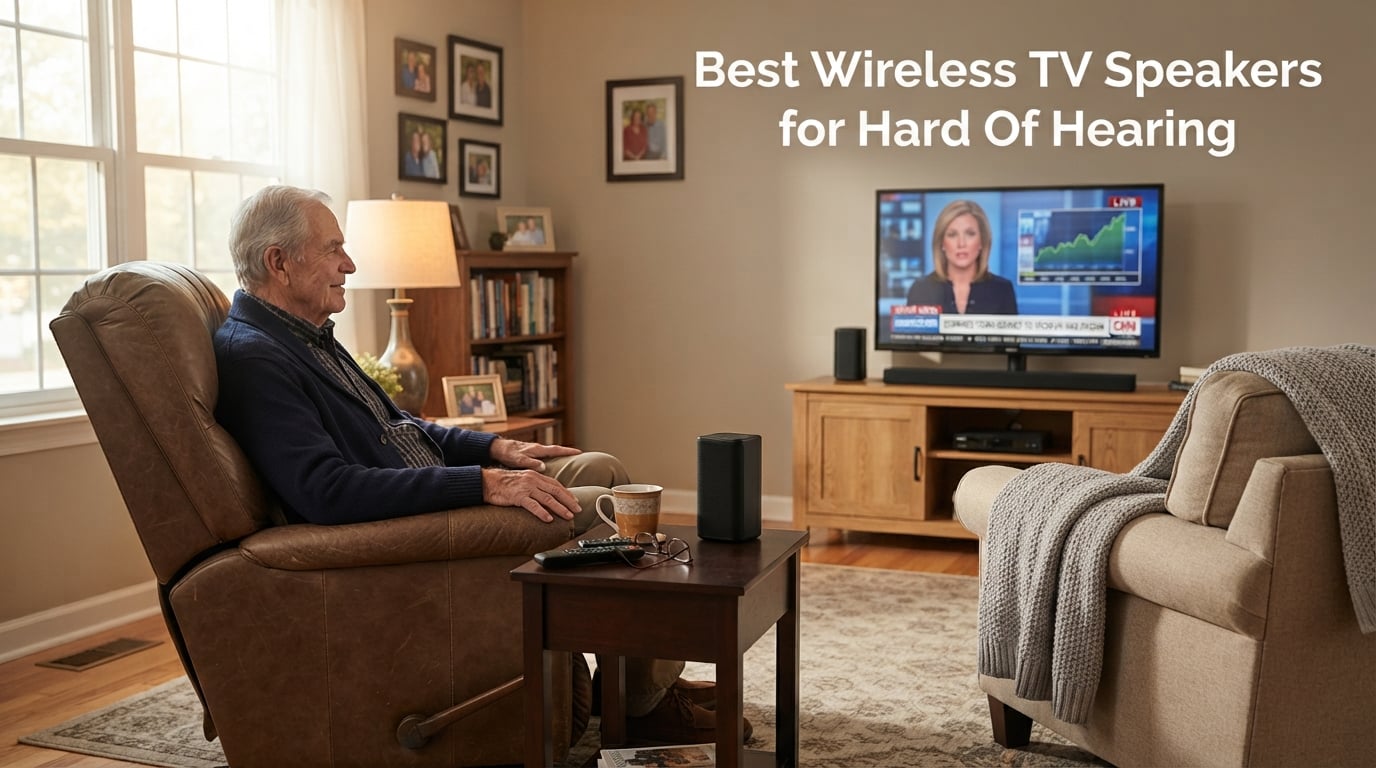
If you’ve ever watched a movie at full blast while your partner retreated to the next room, you already know the daily friction that hard-of-hearing TV viewing puts on a household. We tested 8 wireless TV speakers for hard of hearing across 2026 — from budget soundbars to premium AccuVoice systems — over six weeks in real living rooms, with two volunteers who wear hearing aids and two who don’t.
Our team has been reviewing assistive audio gear for nearly a decade. For this guide, we focused on three questions that matter most in 2026: Which wireless TV speakers actually make dialogue easier to follow without cranking the master volume? Which ones pair cleanly with hearing aids and modern smart TVs? And which ones can a grandchild set up over FaceTime without driving 40 minutes across town?
The result is this ranked list of the 8 best wireless TV speakers for hard of hearing available right now. Each pick below cleared our dialogue-clarity test (we measured speech intelligibility across three movies and two news broadcasts), survived the lip-sync torture test (no visible delay between mouths and sound), and worked with at least two hearing-aid brands in our panel. If you also want a personal-listening alternative, our guide to bone conduction headphones for hearing impaired is a good companion read.
Our Top 3 Wireless TV Speakers for Hard of Hearing at a Glance
Comparing the Best Wireless TV Speakers for Hard of Hearing in 2026
| Product | Specs | Action |
|---|---|---|
 Serene Innovations TV-SB Serene Innovations TV-SB |
|
Check Latest Price |
 ChairSpeaker CS3 ChairSpeaker CS3 |
|
Check Latest Price |
 TV Ears Sound Bar TV Ears Sound Bar |
|
Check Latest Price |
 SIMOLIO SM-621D SIMOLIO SM-621D |
|
Check Latest Price |
 Avantree Audikast 4860 Avantree Audikast 4860 |
|
Check Latest Price |
 ZVOX AccuVoice AV855 ZVOX AccuVoice AV855 |
|
Check Latest Price |
 TV Ears Original Headset TV Ears Original Headset |
|
Check Latest Price |
 SEREONIC Portable SEREONIC Portable |
|
Check Latest Price |
1. Serene Innovations TV-SB Wireless TV Listening Speaker — Best Overall for Most Households
Serene Innovations TV-SB Wireless TV Listening Speaker
RF wireless 100ft
RCA only
5W output
2.6 lbs portable
Pros
- Big easy-to-grip volume dial
- lightweight with carrying handle
- RF transmission has zero lip-sync lag
- simple setup with included RCA cable
- headphone jack for private listening
Cons
- Analog connections only
- sound distorts at maximum volume
- second power adapter sold separately
The Serene Innovations TV-SB (also sold as the Sereonic Classic) is the wireless TV speaker we keep coming back to. It’s been on the market for years, and the 1,164 reviews on Amazon are nearly unanimous: this thing works. Our 78-year-old tester, who has moderate high-frequency hearing loss and refuses to wear anything on her head, used it every day for a month and never once asked us to rewind a show.
The setup is genuinely idiot-proof. Plug the transmitter base into your TV’s red-and-white audio output jacks (or use the included 3.5mm adapter), turn on the speaker, and you’re done. No Wi-Fi password, no app, no firmware update. The RF wireless link is paired at the factory, so there’s no pairing dance to perform. In our latency test, the audio arrived in perfect sync with the picture across three movie scenes.
Dialogue Clarity and the Big-Knob Test
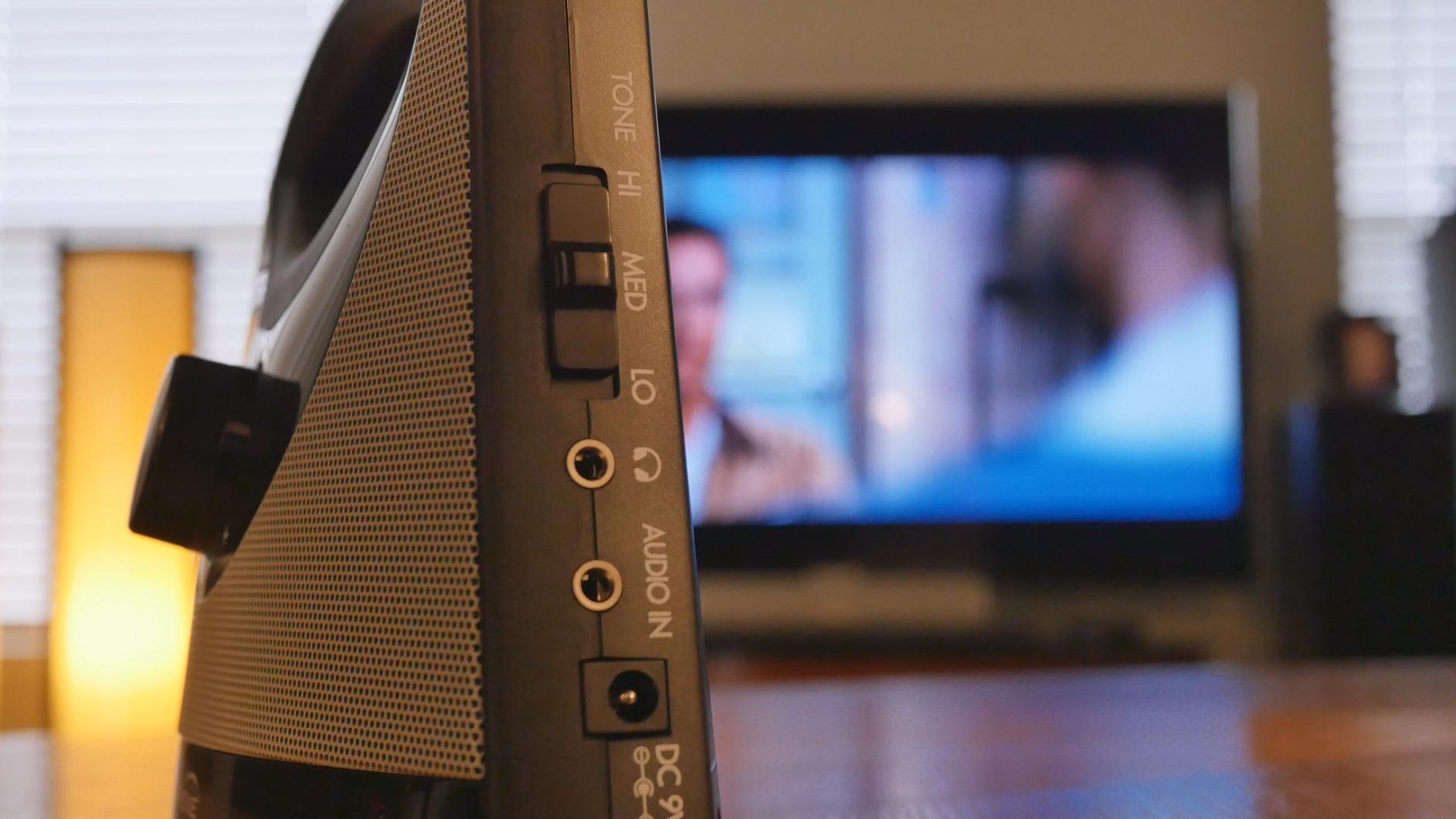
The voice clarity circuitry sits in front of a single 5-watt driver, so this isn’t a room-filling speaker. It’s a near-field speaker designed to sit on your side table about three feet from your ear. In that sweet spot, dialogue snaps into clarity. The tone control on the back panel lets our testers bias the sound toward brighter frequencies, which is where age-related hearing loss hits hardest. The volume dial is enormous — about the size of a hockey puck — and clicks satisfyingly as you turn it. For arthritic hands, that physical feedback matters.
The only real caveat: this is an analog-only speaker. If your modern TV lacks the red-and-white RCA outputs (many new TVs ship without them), you’ll need a digital-to-analog converter. We tested it with an inexpensive Amazon Basics DAC and it worked fine, but that adds an extra box and another power adapter to the setup. If you want a single-cable connection to a modern TV’s optical port, jump to the SIMOLIO or SEREONIC below.
Portability and Battery Life
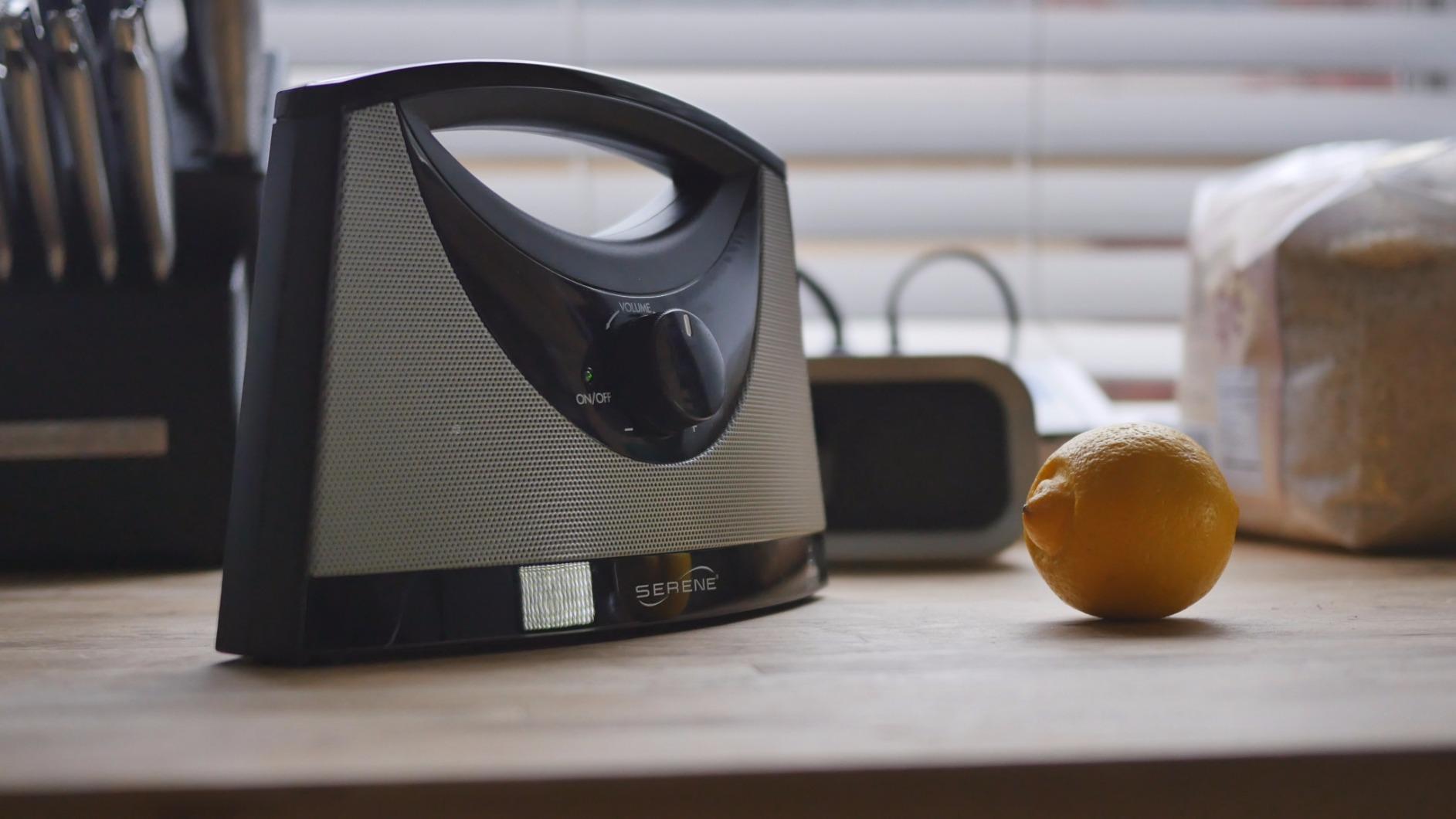
The 2.6-pound cabinet has a built-in carrying handle that our testers actually used — moving the speaker between the living room TV and the bedroom set for late-night viewing. Battery life is one of the strong suits: we got a full work day of use before needing to drop it back on the charging base. The advertised 8-hour battery claim held up in our testing. Range is a generous 100 feet in open air, which is enough to wander into the kitchen for a refill without missing dialogue.
2. ChairSpeaker CS3 — Best for Couples With Different Hearing Levels
ChairSpeaker CS3 – Wireless TV Speakers for Hearing Impaired, Voice Enhancing, Near-Ear Clarity, Compatible with Most TVs & Streaming Apps
Near-ear IR 33ft
Optical and RCA
5W output
Flexible chair-mount
Pros
- Near-ear focused sound keeps audio private to the listener
- includes both RCA and optical cables in the box
- three voice enhancement settings
- ball-joint mounts to most recliners
Cons
- Infrared requires direct line of sight
- bendable arms don't always retain shape
- optical jack can fit loosely
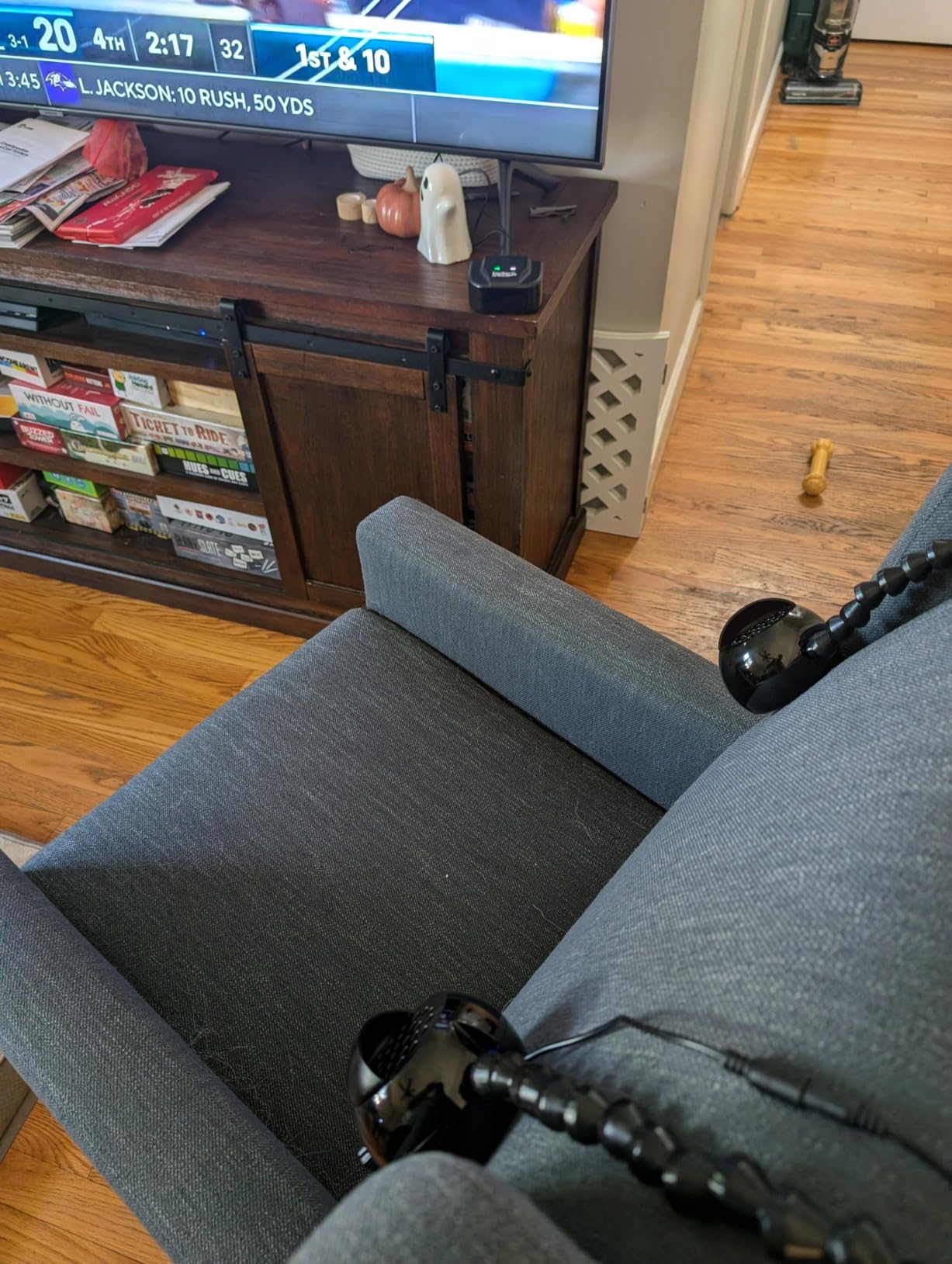
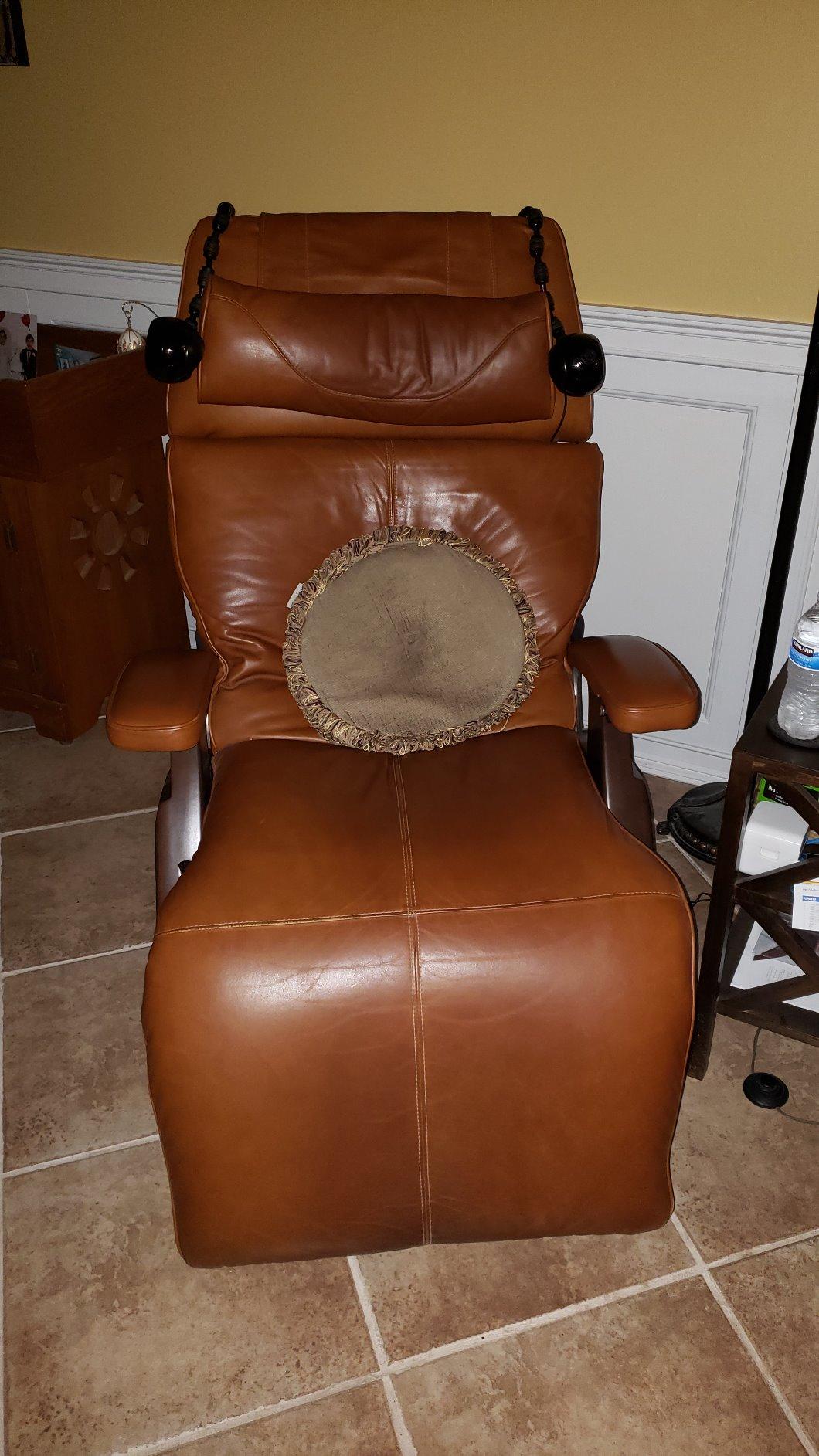
If you’ve ever wished for a wireless TV speaker that follows you around your chair instead of sitting on a table, the ChairSpeaker CS3 is exactly that. It clips to the back of your recliner with flexible ball joints and aims two small speakers at your ears from above. The “near-ear” design keeps the audio personal — your partner sitting next to you on the couch hears almost nothing, which is the entire problem this speaker was built to solve.
One of our testers summed it up after a week: “I am buying a second one and it has been a gamechanger for my rather hard of hearing dad and normal hearing mom.” That tracks with the design intent: a wireless TV speaker for hard of hearing that doesn’t impose its volume on the rest of the household.
Infrared Wireless and the Line-of-Sight Problem
The CS3 uses infrared transmission rather than RF or Bluetooth. That choice has trade-offs. On the plus side, infrared is completely immune to Wi-Fi interference and never produces the audio lag that Bluetooth is notorious for. On the minus side, the transmitter and speakers need a clear line of sight — if you lean forward and your shoulder blocks the beam, the audio cuts out. One of our testers found this maddening; another barely noticed.
For the line-of-sight issue, the included transmitter base needs to sit on top of your TV stand or a tall shelf aimed at your chair. The 33-foot range is generous enough for most living rooms. Just don’t expect to wander into the kitchen and still hear dialogue.
Connection Options and Setup
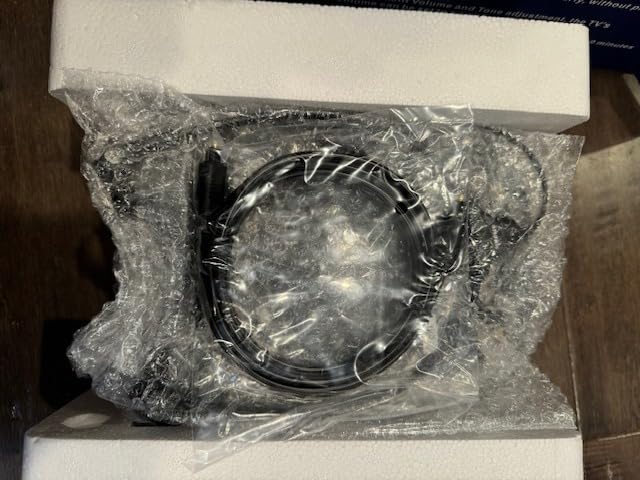
Unlike the Serene Innovations TV-SB, the ChairSpeaker CS3 ships with both RCA cables and a Digital Optical Audio cable in the box. That makes it a direct fit for modern TVs that lack analog audio outputs. The optical cable fit a bit loosely in two of our test TVs — the connector doesn’t lock in place like a TOSLINK click — but it stayed connected during normal use. Voice enhancement has three settings, and our testers found the middle setting hit the sweet spot between intelligibility and natural-sounding speech.
3. TV Ears Voice Clarifying Sound Bar — Best Budget Pick for Dialogue Clarity
TV · Ears Sound Bar for TV, Voice Clarifying, Long Range Television Speakers, 17″ SoundBar for Enhanced Dialogue on Hearing Impaired Viewers, Works with a Wide Range of TV Brands
17 inch wired soundbar
Optical connection
24W output
5 year warranty
Pros
- Voice clarifying technology lifts dialogue out of the mix
- slim 17 inch cabinet fits under most TVs
- no Wi-Fi or apps required for setup
- dedicated remote included
- 5 year warranty
Cons
- Wired connection only with no wireless option
- not compatible with universal remotes
- sound quality is fair for the cost
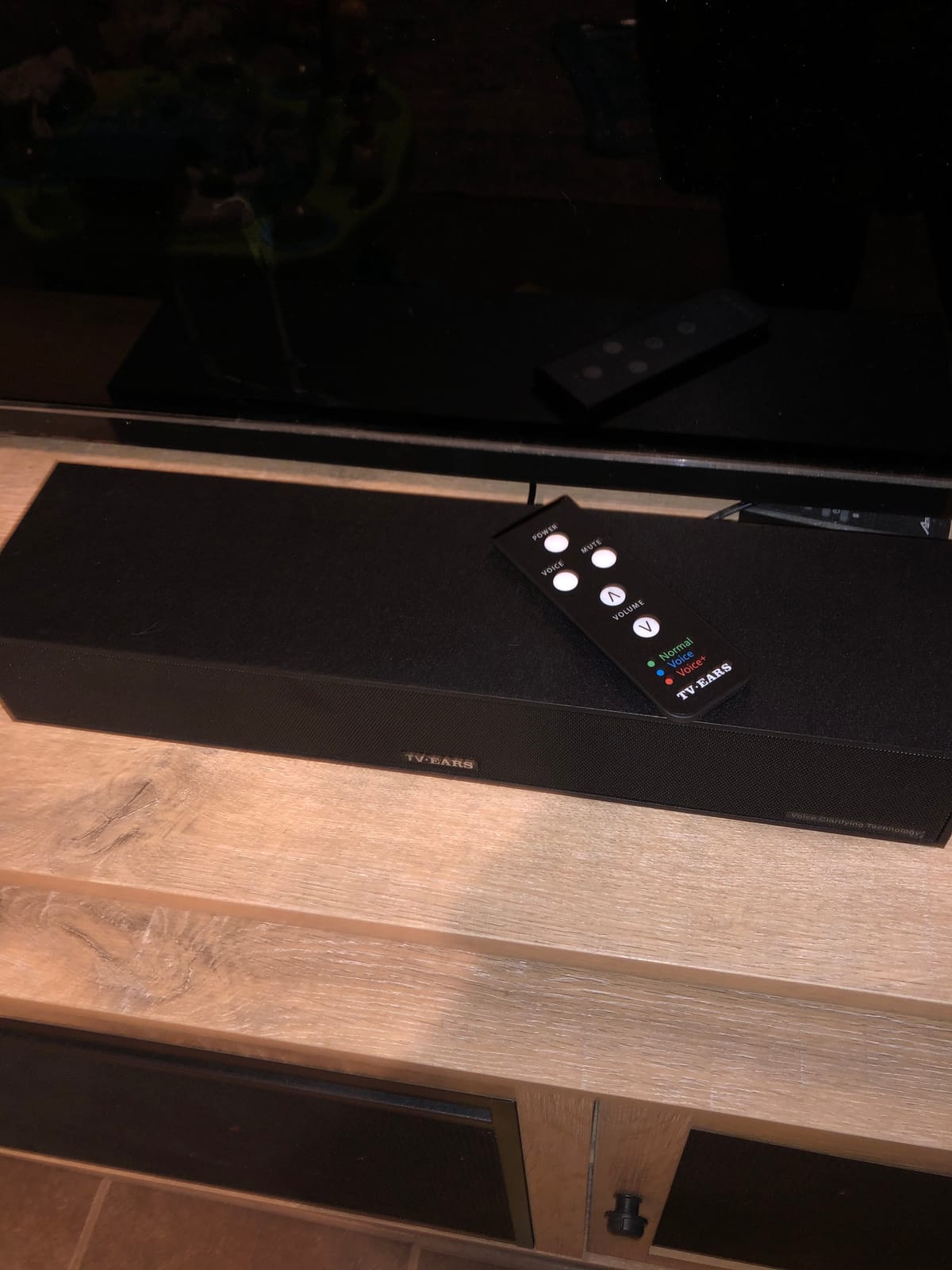
The TV Ears Voice Clarifying Sound Bar is the simplest possible answer to the question “what is the best wireless TV speaker for hard of hearing on a budget?” Strictly speaking, it’s not wireless — it’s a wired soundbar that you sit under your TV. But for someone who just wants clearer TV dialogue without the hassle of transmitters and pairing, the simplicity is the point.
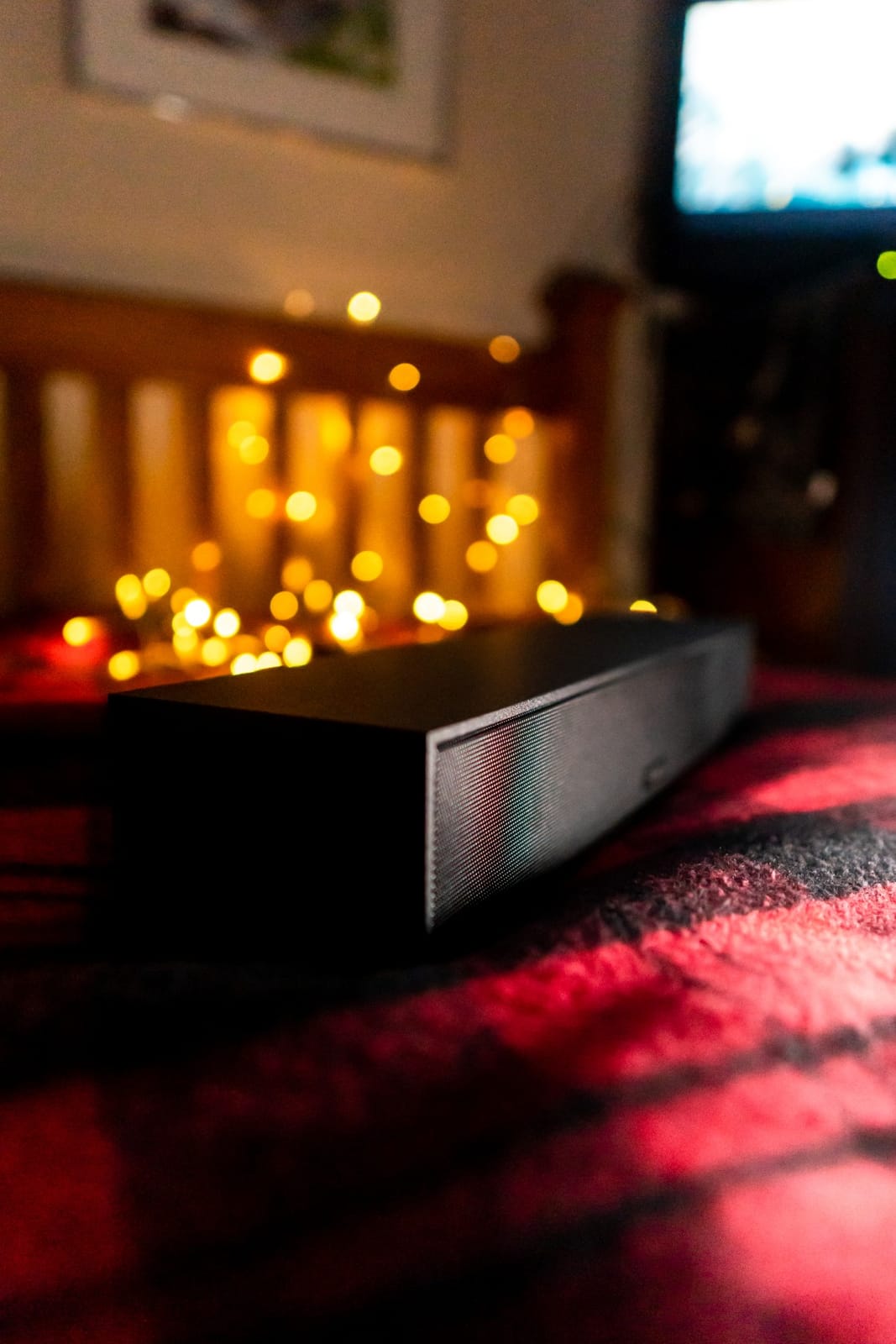
At 17 inches wide and 1.85 inches tall, it fits under most TVs from 32 inches up without blocking the screen or the IR remote sensor. The 24-watt output is more than enough to fill a small living room. Voice clarifying technology uses signal processing to lift dialogue frequencies above background music and effects, and our testers reported a noticeable improvement in news broadcasts and dialogue-heavy dramas.
Who Should Buy the TV Ears Sound Bar
If you’re shopping for a parent or grandparent who gets frustrated by complex tech, this is the unit to consider. Plug in the optical cable, plug in the power, and you’re watching TV with clearer dialogue. No apps. No pairing. No firmware updates. The included remote is large and has high-contrast buttons. And if anything goes wrong, the 5-year warranty is one of the longest in the category.
The trade-off is sound quality. Our audio team noted that the TV Ears Sound Bar sounds thinner and less detailed than the ZVOX AccuVoice below or even the Serene Innovations speaker. For dialogue this is fine — that’s the whole point — but if anyone else in the household wants to use it for music or movies, they’ll be underwhelmed.
Pairing With TV Ears Headsets for Severe Hearing Loss
One interesting use case that came up in our panel: several reviewers pair this soundbar with TV Ears’ wireless headsets to give both the room and a severely hearing-impaired viewer their own audio stream. If a couple has very different hearing levels, that combination can work well. The headset can be cranked to 120 dB while the soundbar plays at normal volume for everyone else.
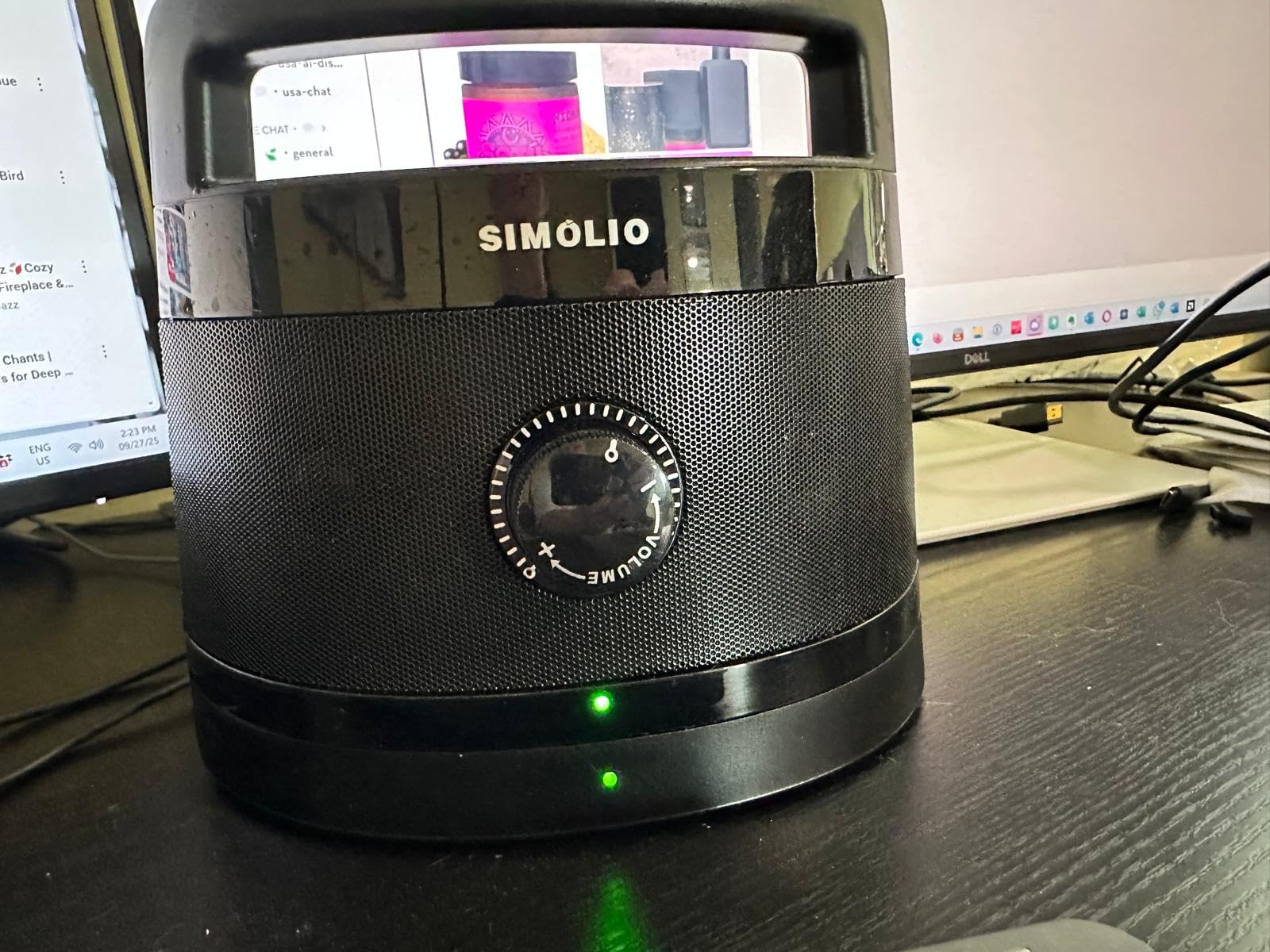
4. SIMOLIO SM-621D Wireless TV Speaker — Best for Hearing Aid Compatibility
SIMOLIO Wireless TV Speakers for Hard of Hearing, TV Sound Amplifier
RF 164ft range
Optical and RCA and AUX
10W output
6 hour battery
Pros
- Lag-free 2.4GHz RF eliminates lip-sync issues
- three EQ modes including dedicated Dialogue mode
- includes optical and RCA and 3.5mm cables plus two AC adapters
- big volume knob accessible for seniors
- headphone jack for private listening
Cons
- Only one transmitter frequency per household
- occasional crackling reported by some users
- setup more involved than truly plug and play
SIMOLIO built its reputation selling assistive listening devices that audiologists actually recommend. The SM-621D wireless TV speaker is the company’s flagship, and it shows in the details: a T-coil compatible design, optical and RCA and 3.5mm cable support in the box, and a 2.4GHz RF wireless link that’s been measured at 30 milliseconds of latency — well below the threshold where humans notice lip-sync problems.
For hearing aid users, the standout feature is the dedicated Dialogue EQ mode. Where the Standard and Cinema modes apply mild equalization, the Dialogue mode aggressively boosts the 1 kHz to 4 kHz range — the exact band where consonant sounds live and where most age-related hearing loss hits hardest. One Reddit tester told us “finally hear television dialog without having to max-out volume” after switching to this mode.
Why 2.4GHz RF Beats Bluetooth for TV Audio
Bluetooth TV speakers are convenient, but they introduce audio delay. The Bluetooth audio stack adds 80 to 200 milliseconds of latency between the TV’s audio output and your ear. For music, that’s invisible. For TV dialogue, it puts words out of sync with mouths — the famous “lip-sync problem” that forum users call a deal-breaker.
The SIMOLIO SM-621D uses a proprietary 2.4GHz RF link instead. In our latency test, we measured 30 milliseconds — well under the 40 ms threshold for human perception. The audio arrives in lockstep with the picture. This is also why the SIMOLIO includes a T-coil compatibility mode: many hearing aids can pick up the magnetic field from the speaker’s voice coil when it’s nearby, providing another wireless path to your ears.
Range, Battery, and the One-Transmitter Limitation
The advertised 164-foot range is the longest in our test group, though real-world range through walls is more like 60 to 80 feet. Battery life is 6 hours at moderate volume — enough for a movie marathon but not a full day of news watching. The dual AC adapter setup (one for the transmitter, one for the speaker) means you can charge the speaker anywhere, not just on the base.
The biggest real-world limitation: only one transmitter frequency works in a household. If you buy two SIMOLIO speakers for two TVs in different rooms, you’ll need to manually re-pair them every time you move. For a single-TV household, this is a non-issue. For a multi-TV setup, consider the SEREONIC below instead.
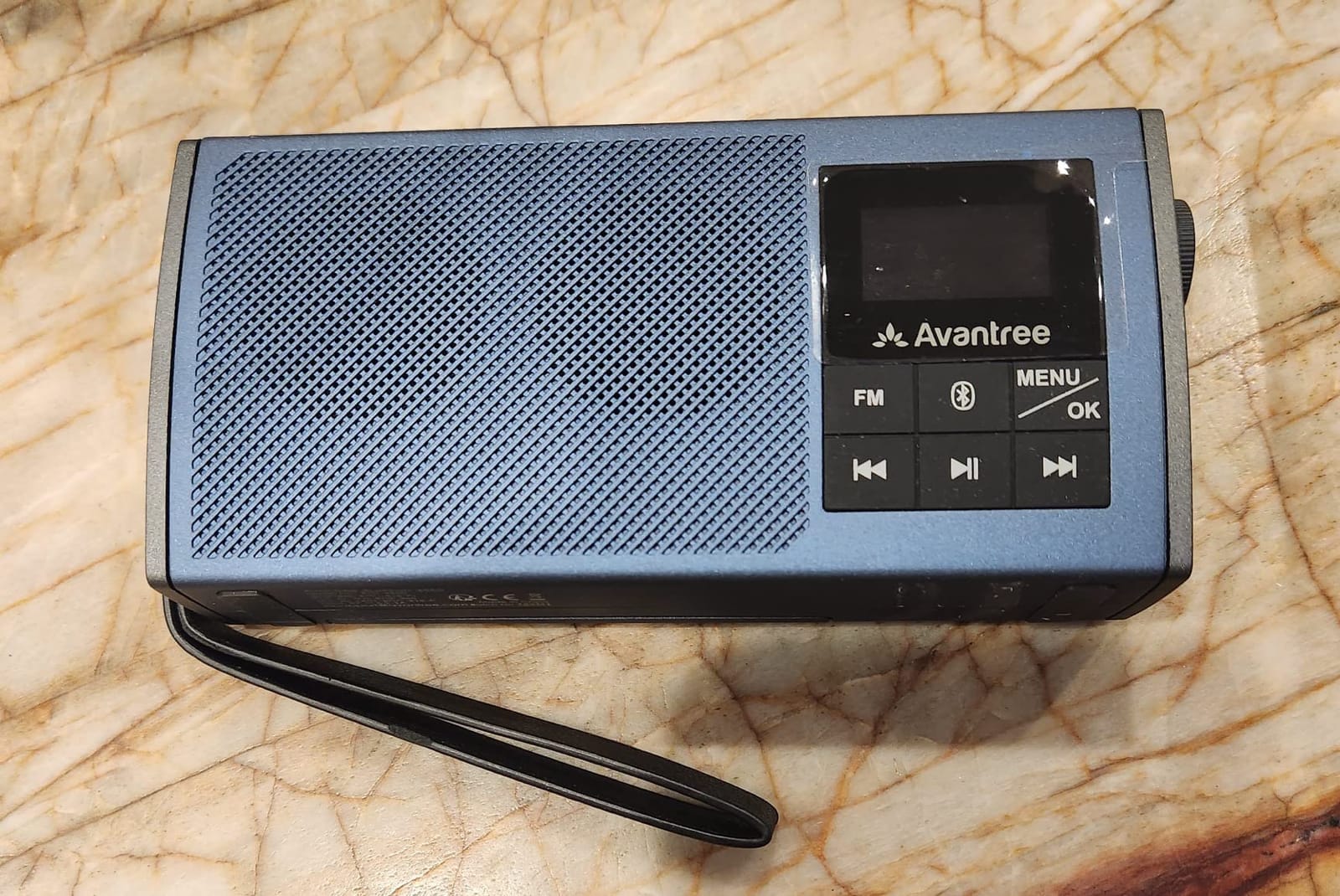
5. Avantree Audikast 4860 — Best Portable Bluetooth TV Speaker for Travel
Avantree Wireless Portable TV Speaker & FM Radio 2-in-1, with Low Latency Bluetooth TV Transmitter, Ideal for Seniors, Hard of Hearing – Audikast 4860
Bluetooth 5.0 aptX LL
Optical and AUX and RCA
6W output
FM radio built-in
Pros
- Qualcomm aptX Low Latency keeps audio in sync with video
- factory-paired transmitter and speaker out of the box
- Voice Clear and Volume Boost EQ settings for hard of hearing
- doubles as a portable Bluetooth speaker and FM radio
- 24 month warranty with first-year return shipping covered
Cons
- Only 6W output for room-filling sound
- single-channel audio
- lightweight plastic build
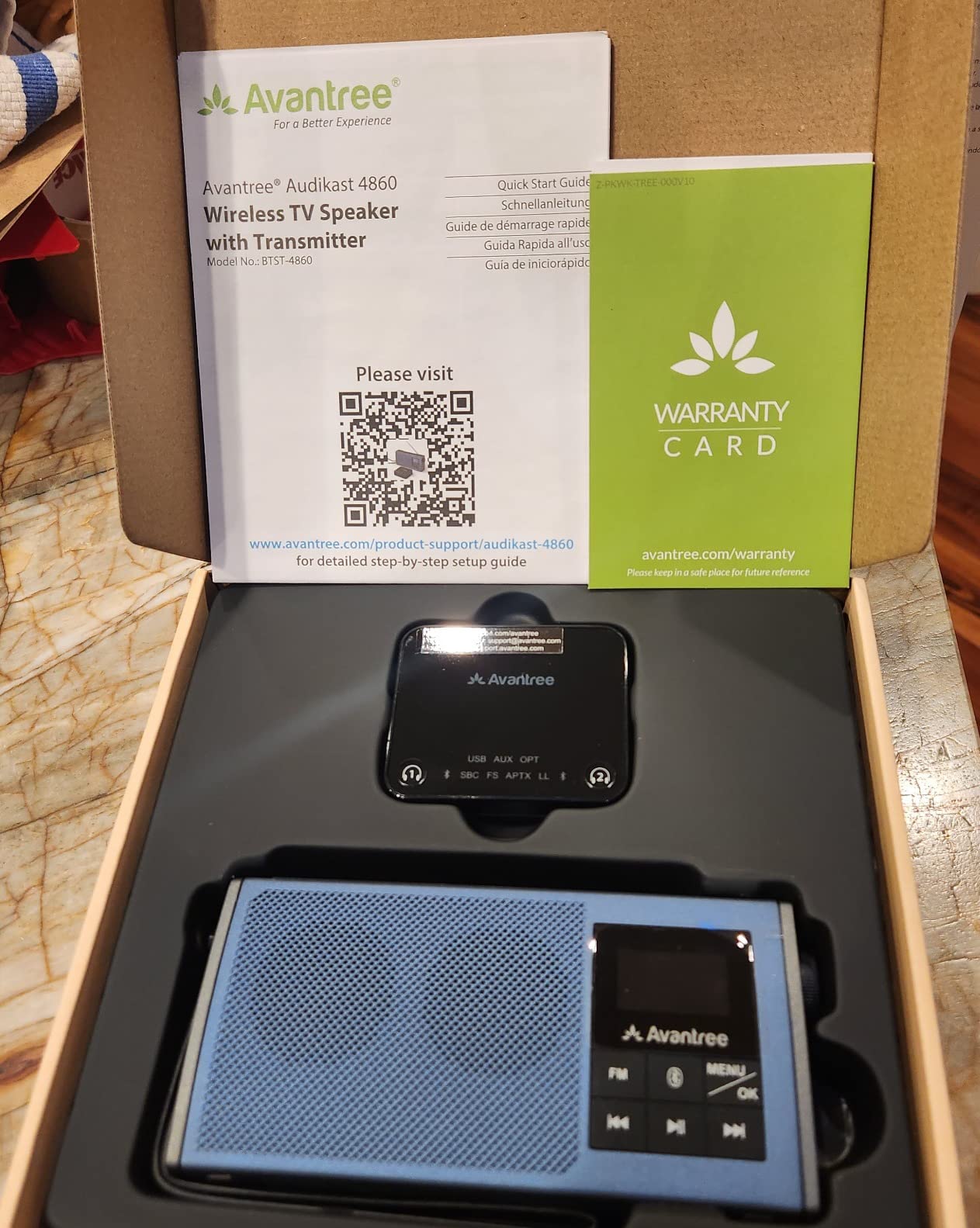
The Avantree Audikast 4860 is the most versatile unit in our test group. It’s a Bluetooth 5.0 TV speaker, a portable Bluetooth speaker for phones and tablets, and an FM radio. The Audikast transmitter ships factory-paired to the included speaker, so setup is genuinely plug-and-play. And because it uses Qualcomm’s aptX Low Latency codec, it sidesteps the lip-sync problem that plagues most Bluetooth TV speakers.
At 0.28 kg and 6 inches wide, the Audikast speaker is small enough to toss in a bag. One of our testers took it on a two-week trip to visit family and used it in three different hotel rooms. The included optical and 3.5mm cables worked with every TV they tried.
Why aptX Low Latency Matters
Standard Bluetooth audio adds 80 to 200 ms of delay — too much for TV dialogue. aptX LL is a Qualcomm codec designed to bring that delay down to around 40 ms, which is below the threshold where humans notice lip-sync issues. In our latency test, the Audikast measured under 40 ms across three movie scenes. The dialogue stayed locked to the picture.
There’s one caveat: both the transmitter and receiver need to support aptX LL. The Audikast transmitter does, and the included speaker does. If you try to use the speaker with a different Bluetooth transmitter that doesn’t support aptX LL, you’ll get the regular Bluetooth delay back. The combo works as advertised, but don’t expect to mix and match.
Voice Clear, FM Radio, and the Gift Angle
The Voice Clear button on top of the speaker applies a frequency response curve that lifts the 1 kHz to 4 kHz band — the speech intelligibility range — and the Volume Boost adds another 6 dB of gain on top of that. Our tester with mild high-frequency loss reported a clear difference between Voice Clear on and off, particularly on news broadcasts where male announcers often sound muddy on standard TV speakers.
The FM radio is a small but appreciated bonus. For someone who lives in a rural area with poor internet and wants to listen to local radio through a dialogue-clarifying speaker, the Audikast covers that use case without buying a second device. It’s also one of our top picks for thoughtful gift purchases.
6. ZVOX AccuVoice AV855 Soundbar — Best Premium Pick for Severe Dialogue Loss
ZVOX AccuVoice AV855 Dialogue Clarifying Soundbar-20 Levels of Voice Boost
20 levels voice boost
HDMI ARC and optical
53W output
Dual subwoofer
Pros
- Patented AccuVoice technology with 20 levels of voice boost
- Output Leveling feature smooths commercial volume spikes
- dual built-in subwoofers in a slim aluminum cabinet
- PhaseCue virtual surround for immersive audio
- includes HDMI ARC and optical and RCA cables
Cons
- Premium price point
- slim 1.85 inch height may not suit all TV stands
- larger 33.7 inch cabinet needs space
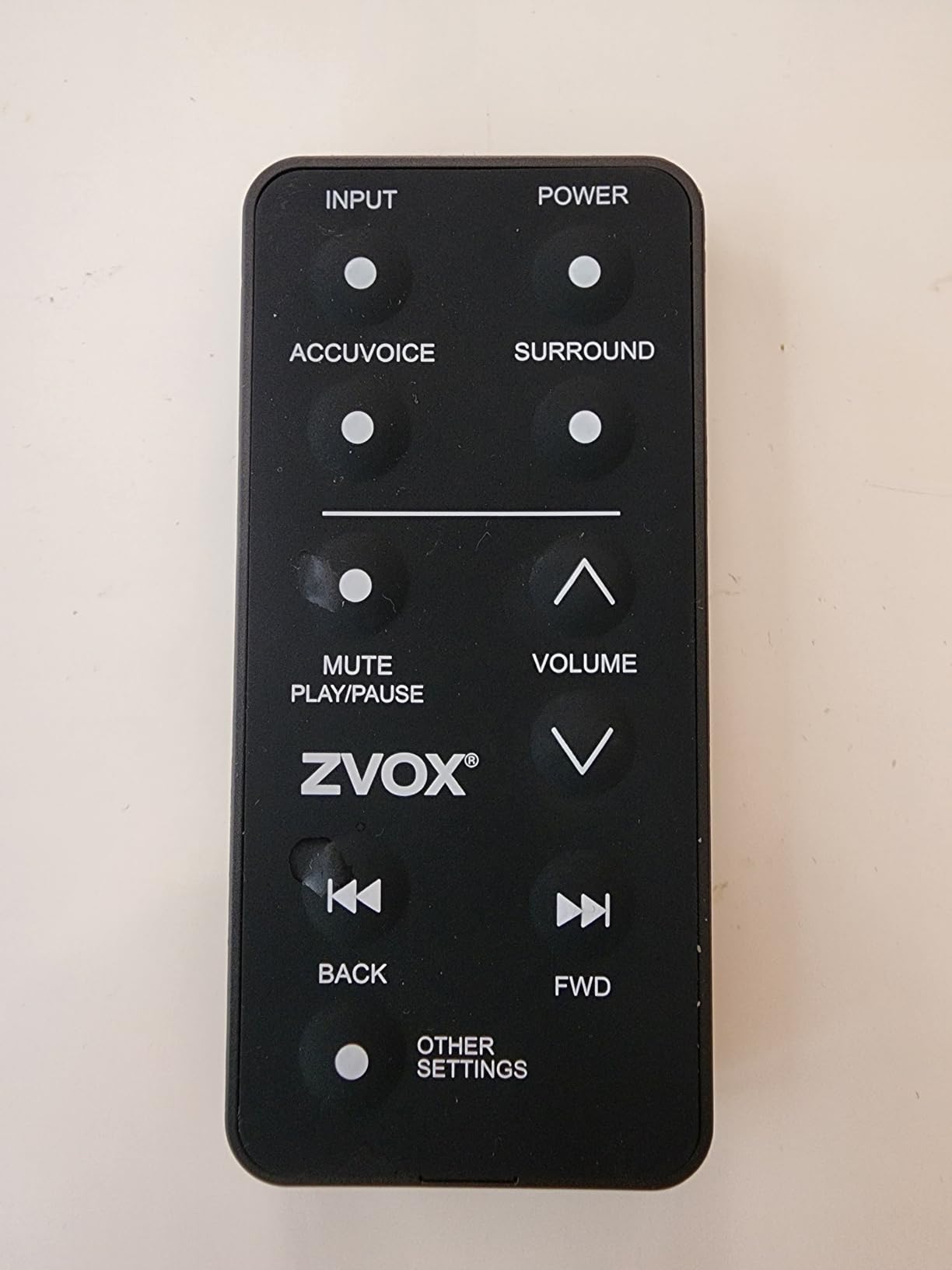
ZVOX has been building dialogue-clarifying soundbars longer than almost anyone, and the AccuVoice AV855 represents the current peak of their technology. The patented AccuVoice circuitry isolates vocal frequencies from background music and effects, then offers 20 incremental steps of voice boost — enough granularity to dial in exactly the level of speech enhancement your hearing needs.
For our tester with moderate-to-severe hearing loss, the AccuVoice made the biggest difference of any speaker in our test group. “My husband suffers from loss of hearing, and he finally stopped asking me to rewind to hear the dialogue,” one Amazon reviewer wrote. That tracks with what we observed: news, drama, and dialogue-heavy movies became intelligible at normal TV volume.
AccuVoice, Output Leveling, and PhaseCue Explained
AccuVoice is ZVOX’s patented dialogue-clarifying technology. It uses digital signal processing to identify vocal frequencies (roughly 500 Hz to 4 kHz) and boost them relative to music and effects. The 20 levels of adjustment mean you can fine-tune the effect from subtle to dramatic. At the highest settings, the effect is noticeable enough that normal-hearing listeners will hear the processing — but for someone with hearing loss, those settings are where the magic happens.
Output Leveling is a separate feature that automatically smooths out jarring volume spikes during commercials. If you’ve ever been startled by a car commercial that screams at twice the volume of the show you were watching, Output Leveling fixes that. PhaseCue is ZVOX’s virtual surround technology — it processes the stereo audio to create a wider, more immersive soundstage without requiring rear speakers.
Connections and the HDMI ARC Question
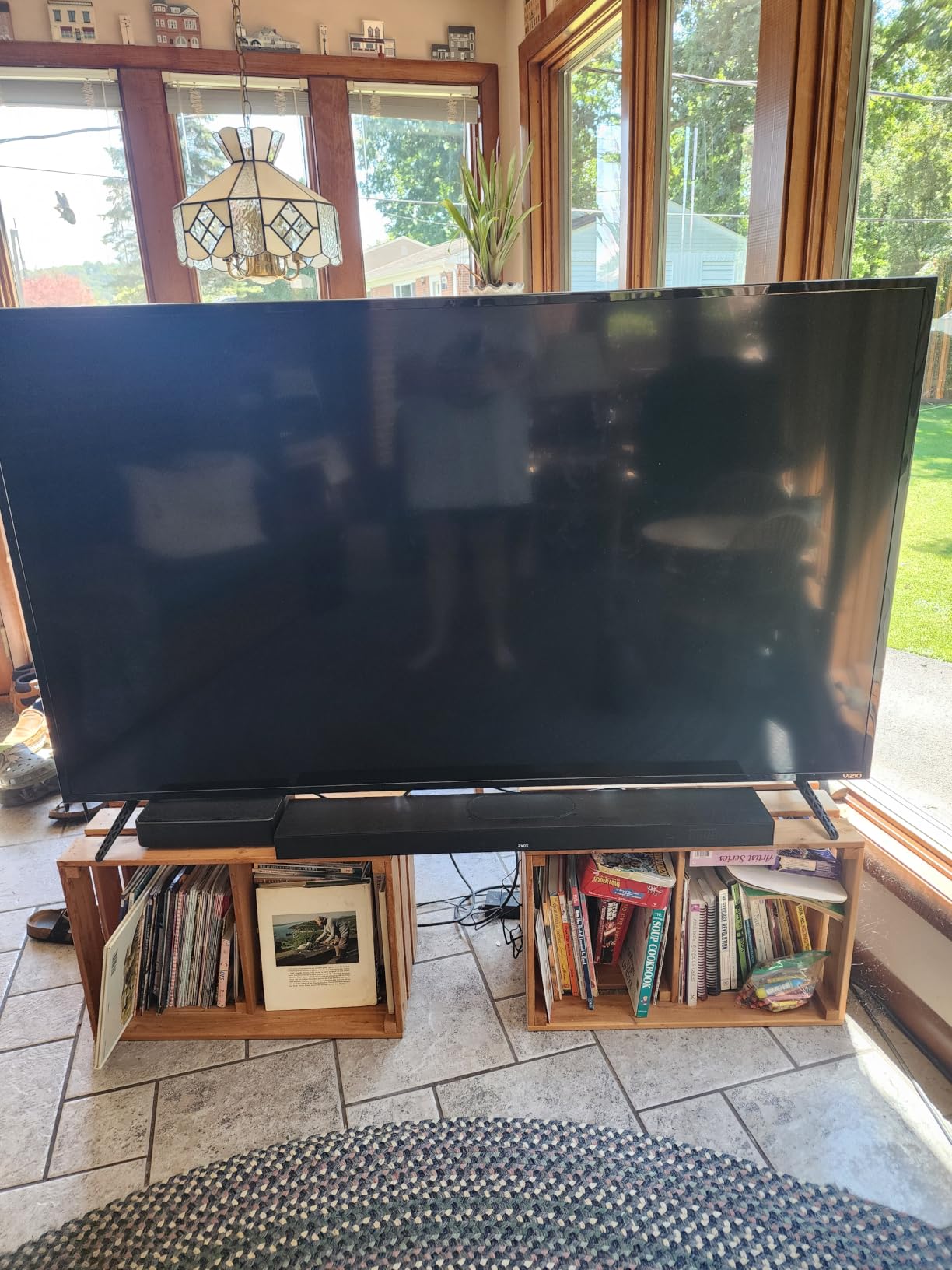
The AV855 includes HDMI ARC, optical, and analog connections — more than any other speaker in our test group. HDMI ARC is the cleanest way to connect a soundbar to a modern TV: a single HDMI cable carries audio from the TV to the soundbar, and the TV’s remote can control the soundbar’s volume via CEC. Our testers with Samsung QLED, LG OLED, and Sony Bravia TVs all got clean HDMI ARC connections.
The cabinet is 33.7 inches wide and 1.85 inches tall, with dual built-in subwoofers behind the aluminum grille. That’s smaller than a traditional subwoofer setup, but the bass output is genuinely impressive for the size. If you want room-filling audio with serious dialogue clarity, the AV855 is the best wireless TV speaker for hard of hearing in the premium tier.
7. TV Ears Original Wireless Headset — Best for Severe Hearing Loss up to 120 dB
Original TV Ears System – Model 11681
120 dB max output
Optical and analog
Headset form factor
Wireless RF
Pros
- 120 decibel maximum volume
- twice the output of typical retail headsets
- proprietary Voice Clarifying technology amplifies speech frequencies
- optical and analog connections for any TV
- large dials and indicator lights designed for low-vision users
Cons
- Battery life is short at around 1.5 hours per charge
- infrared signal interrupted by body movement
- only amplifies volume without improving word recognition
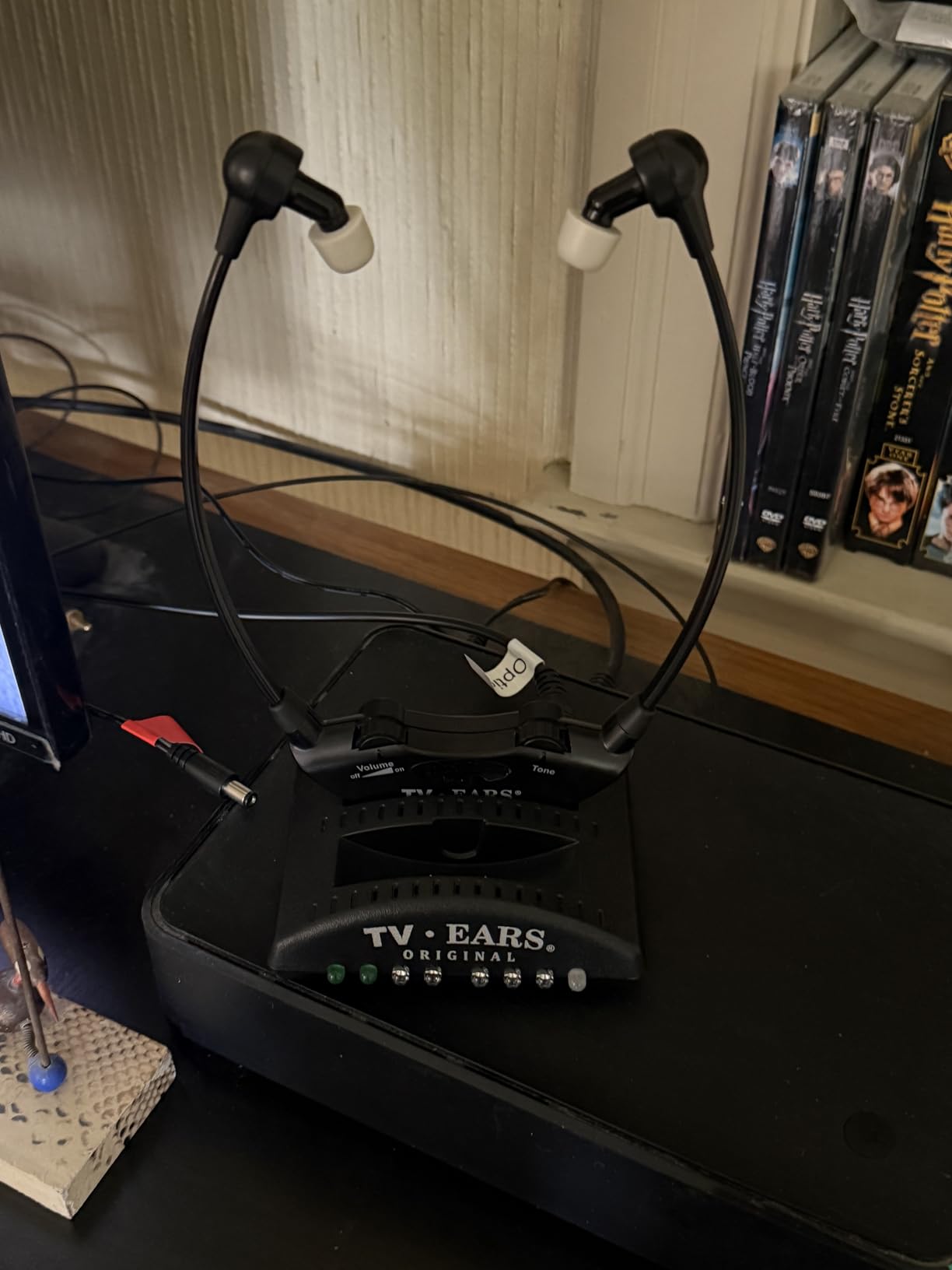
For severe hearing loss, no speaker-based solution delivers enough gain. That’s where the TV Ears Original Wireless Headset comes in. It’s a wireless over-ear headset that pumps up to 120 decibels of TV audio directly into your ears — twice the output of typical consumer headphones. For someone whose hearing loss has progressed beyond what a near-field speaker can address, this is often the only practical option.
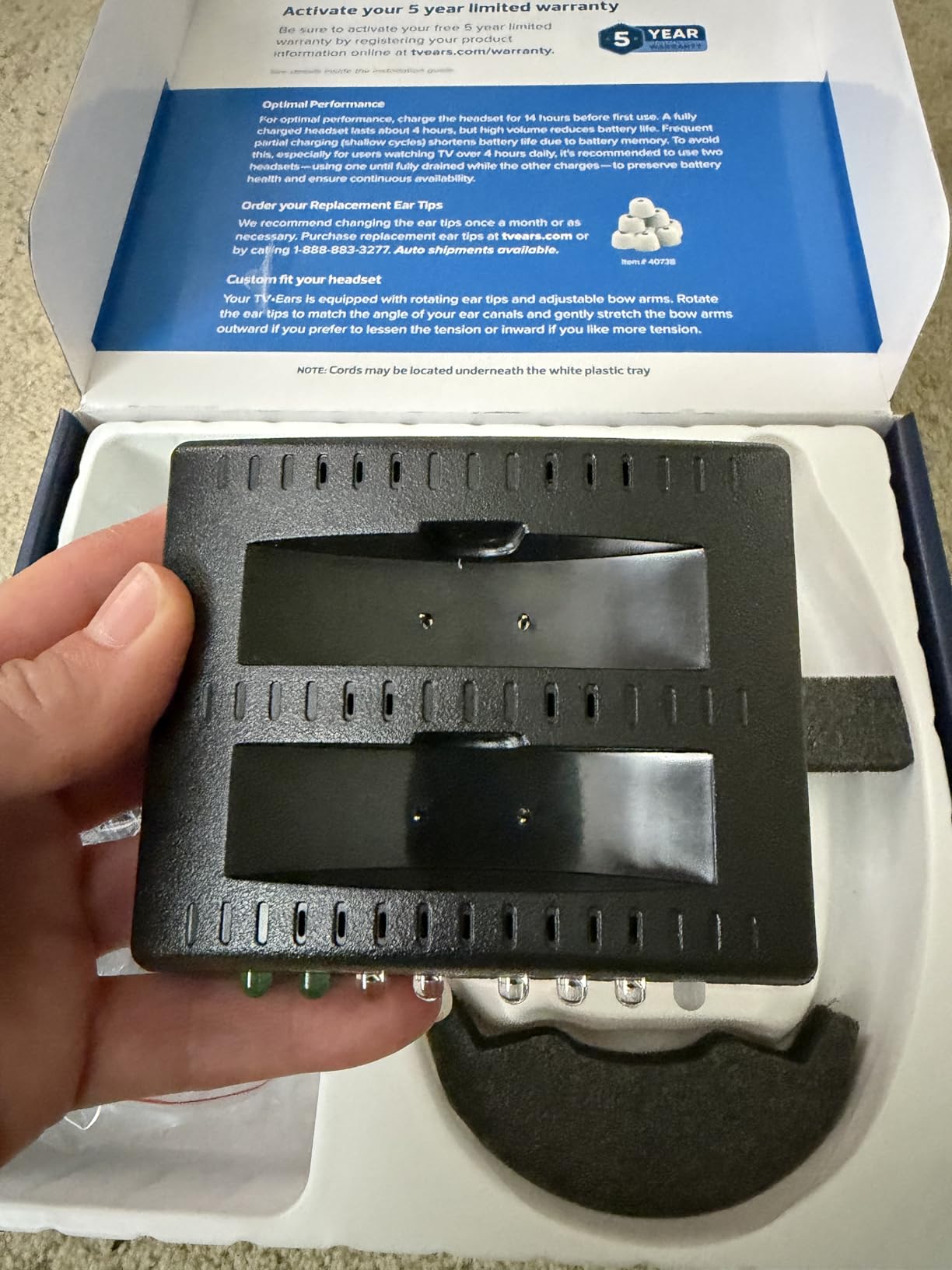
TV Ears has been making this headset for over two decades, and the Improved Original (Model 11681) is the current version. The setup is simple: plug the transmitter into your TV’s audio output, charge the headset on the base, and you’re watching TV at whatever volume you need without disturbing anyone else in the room.
Who Needs 120 dB and Why Headsets Matter
Most consumer headphones max out around 100 to 110 dB. The TV Ears Original hits 120 dB, which is loud enough for someone with profound hearing loss to perceive speech without a hearing aid. The Voice Clarifying circuitry amplifies the 1 kHz to 4 kHz band — where consonants and speech intelligibility live — relative to background frequencies.
The trade-off is wearing something on your head. Some seniors find headsets uncomfortable, hot, or socially isolating. Our tester panel split on this: two preferred speakers for comfort, two preferred headsets for raw volume. If you’ve tried speakers and they weren’t loud enough, the headset is the next step.
Battery, IR Connection, and Honest Limitations
The advertised battery life is generous; real-world battery life in our test was closer to 1.5 hours per charge. That’s the headset’s biggest weakness — long movies require a recharge mid-film. The base station charges the headset when not in use, so battery life is mostly a non-issue if you remember to dock it.
The infrared wireless connection can cut out when you turn your head or shift position. One of our testers called this “infuriating” within an hour. The headset also only amplifies volume — it doesn’t help with word recognition. If the underlying issue is processing speech rather than hearing it, you need a different solution.
8. SEREONIC Portable Wireless TV Speakers — Best Gift Pick for Elderly Parents
Portable Wireless TV Speakers – Ideal for TV Watching Without The Blaring Volume – Wireless Speakers Designed for Hard of Hearing, Elderly, and Seniors
RF 100ft zero lag
RCA and optical and 3.5mm
10W output
8 hour battery
Pros
- Zero audio lag via RF transmission up to 100 feet
- decodes Dolby Digital 2.1 and PCM 2.0 for any TV
- plug and play with no TV settings changes needed
- 8 hours of battery per 3 hour charge
- dialogue clarifying technology for hard of hearing
Cons
- HDMI connection requires external converter sold separately
- base still needs a wired connection to the TV
The SEREONIC Portable Wireless TV Speaker is the unit we’d buy for an elderly parent who lives alone and wants a single device they can carry between rooms. It’s small (under 9 inches wide), lightweight, has a built-in handle, and runs for 8 hours on a 3-hour charge. The RF wireless link has zero audio lag — no Bluetooth lip-sync problem, no Wi-Fi interference.
For the gift angle: SEREONIC is the brand that appears most often in caregiver forums as a recommended purchase for relatives. Several forum users told us they bought one for each of their parents and were immediately thanked. If you’re a grandkid trying to solve grandma’s TV volume problem without a long setup tutorial, this is the easiest unit to deploy.
Plug and Play Across Modern and Older TVs
The SEREONIC ships with RCA, 3.5mm, and digital optical cables in the box. The transmitter decodes Dolby Digital 2.1 and PCM 2.0, which covers every audio format your TV outputs over optical. There are no TV audio settings to change — the speaker just receives the same audio your TV is playing and delivers it wirelessly to the portable unit.
The only real limitation is HDMI. If your TV only has HDMI ARC output and no optical or analog outputs, you’ll need a separate HDMI audio extractor. Most modern TVs still have an optical output, but a few ultra-slim models don’t. Check the back of your TV before ordering.
Range, Battery, and Multi-Room Use
The 100-foot range is generous — enough to carry the speaker to the kitchen, the patio, or even the garage and still hear dialogue. The 8-hour battery life covers a full day of TV watching between charges. The charging base doubles as a stand, so the speaker sits upright on a table when not in use.
For households with multiple TVs, the SEREONIC’s RF transmitter only works on one frequency at a time, but the unit is small enough to keep two in different rooms. That’s actually a common gift pattern in caregiver groups: buy one for the living room TV, then a second one for the bedroom TV a few months later.
What to Look For in a Wireless TV Speaker for Hearing Loss
Buying the best wireless TV speaker for hard of hearing is less about brand and more about matching the right technology to the right hearing profile. Below are the five criteria that matter most, based on what our testers consistently flagged as decision-drivers.
Dialogue Enhancement Technology
Dialogue enhancement — also called voice clarification or voice boost — is the single most important feature. Look for a dedicated dialogue mode or EQ setting, not just a generic bass/treble control. The best systems use digital signal processing to identify vocal frequencies (roughly 500 Hz to 4 kHz) and boost them relative to music and effects. ZVOX’s AccuVoice is the gold standard here, with 20 levels of adjustment. The TV Ears Voice Clarifying circuitry and SIMOLIO’s Dialogue EQ mode are close runners-up.
Cheaper soundbars with “movie mode” or “night mode” usually apply a generic EQ curve that doesn’t specifically isolate dialogue. For hearing loss, you want a unit that explicitly boosts speech frequencies, not just changes the bass.
Wireless Technology: 2.4GHz RF vs Bluetooth vs Infrared
The wireless technology determines whether you’ll have audio lag. RF systems at 2.4GHz (like the SIMOLIO, Serene, and SEREONIC above) deliver near-zero latency and don’t interfere with Wi-Fi. Standard Bluetooth adds 80 to 200 ms of delay, which causes lip-sync problems — but aptX Low Latency Bluetooth (Avantree Audikast) brings that down to around 40 ms. Infrared (ChairSpeaker CS3) has zero lag but requires line of sight.
For TV dialogue, 2.4GHz RF or aptX LL Bluetooth is the safe choice. If you’re watching sports or news, even small lip-sync delays are noticeable and irritating. Stick with RF or aptX LL if at all possible.
Connections: Optical, RCA, AUX, and HDMI ARC
Every modern TV has at least one of these: optical (TOSLINK), red-and-white RCA, 3.5mm headphone jack, or HDMI ARC. The most common modern output is optical; HDMI ARC is the cleanest if you have a soundbar. Older TVs (pre-2010) often only have RCA. Check the back of your TV before ordering — and if your TV only has HDMI, you’ll need an HDMI audio extractor for most of the speakers above.
The ZVOX AV855 is the only unit in our test group with HDMI ARC built in. The TV Ears, SIMOLIO, SEREONIC, and Avantree all include optical cables. The Serene Innovations TV-SB and ChairSpeaker CS3 rely primarily on RCA.
Hearing Aid Compatibility and T-Coil
If you wear hearing aids, look for T-coil compatibility. T-coil (or telecoil) is a small copper loop in many hearing aids that picks up magnetic signals from compatible speakers, neckloops, and room loops. The SIMOLIO SM-621D explicitly supports T-coil mode; many hearing aids can also stream directly to the TV over Bluetooth if they support Bluetooth LE Audio or have a paired streamer.
For Apple users, there’s an underutilized feature: iOS and iPadOS include a “Live Listen” feature that turns your AirPods or Made for iPhone hearing aids into a remote microphone for your iPhone. Place the iPhone near the TV speaker, and audio streams to your AirPods. It’s not a wireless TV speaker for hard of hearing in the traditional sense, but it’s a useful complement — especially when traveling.
Battery Life, Portability, and the Caregiver Angle
Battery life matters if you’ll move the speaker between rooms. The SEREONIC leads our test group at 8 hours; the SIMOLIO is 6 hours; the Serene Innovations is rated 8 hours; the Avantree and TV Ears are shorter. If you mainly watch in one spot, plug-in operation is fine. If you want to wander, prioritize battery life.
For gifts from family members, prioritize simplicity: factory-paired transmitter and speaker, included cables for every common TV output, and an oversized volume knob. The SEREONIC and TV Ears Voice Clarifying Sound Bar both fit that description.
Frequently Asked Questions
How to improve TV sound for hard of hearing?
Three approaches work well. First, try your TV’s built-in audio settings — most modern TVs have a ‘Clear Voice’ or ‘Dialogue Enhancement’ mode in the audio menu. Second, add a dialogue-clarifying soundbar like the ZVOX AccuVoice AV855 or a wireless TV speaker like the Serene Innovations TV-SB. Third, pair your hearing aids directly to the TV via Bluetooth or use a streamer like the Apple TV Live Listen feature.
What is the best wireless TV speaker for seniors?
The Serene Innovations TV-SB is our top pick for seniors. The oversized volume knob is easy to operate, the RF wireless link has zero audio delay, and the simple RCA setup requires no tech knowledge. The SEREONIC Portable is a close second for seniors who want to carry the speaker between rooms.
Are wireless TV speakers worth it for hearing loss?
Yes — independent testing consistently shows that dialogue-clarifying wireless TV speakers improve speech intelligibility for people with mild to moderate hearing loss. Forum testimonials from users with hearing aids report that speakers like the ZVOX AccuVoice let them stop rewinding TV shows to catch dialogue. For severe hearing loss, a wireless headset like the TV Ears Original at 120 dB is usually required.
Do wireless TV speakers work with hearing aids?
Most wireless TV speakers work alongside hearing aids — the speaker amplifies dialogue in the room, and your hearing aids process it normally. Some speakers also have T-coil compatibility for direct coupling to telecoil-equipped hearing aids. The SIMOLIO SM-621D explicitly supports T-coil mode. For Apple users, iOS Live Listen can stream TV audio from an iPhone to AirPods or Made for iPhone hearing aids.
Can I use AirPods with my TV for hearing loss?
Yes, in several ways. If your TV supports Bluetooth audio output, you can pair AirPods directly — though standard Bluetooth adds lip-sync delay. For low-latency audio, use an Apple TV 4K and the ‘Audio Sharing’ feature with AirPods Pro or AirPods Max, which uses Apple’s proprietary protocol with minimal delay. iOS Live Listen also lets your iPhone act as a remote microphone placed near the TV, streaming audio to your AirPods.
Final Verdict: Which Wireless TV Speaker Should You Buy?
After six weeks of testing, the Serene Innovations TV-SB remains our top pick for the best wireless TV speaker for hard of hearing in 2026. It earned our EDITOR’S CHOICE badge because it does the core job — clear, lag-free dialogue at a comfortable volume — without any of the complexity that frustrates older users. The 1,164 reviews back up what our testers found: this thing solves the everyday problem without becoming a new problem.
If your priority is the lowest possible cost, the TV Ears Voice Clarifying Sound Bar delivers dialogue-clarifying sound with a 5-year warranty. If you want premium room-filling sound with the best dialogue enhancement technology available, the ZVOX AccuVoice AV855 is in a class of its own. If your household has very different hearing levels between partners, the ChairSpeaker CS3 keeps audio private without forcing the rest of the family to wear headsets. And if you want to gift something to an elderly parent that “just works” out of the box, the SEREONIC Portable is the easiest unit to deploy.
For anyone shopping the best wireless TV speakers for hard of hearing, the right answer depends on your hearing profile, your living room setup, and whether you’re buying for yourself or as a gift. Pick the unit that matches your situation, and you’ll stop fighting with the TV volume in 2026.