
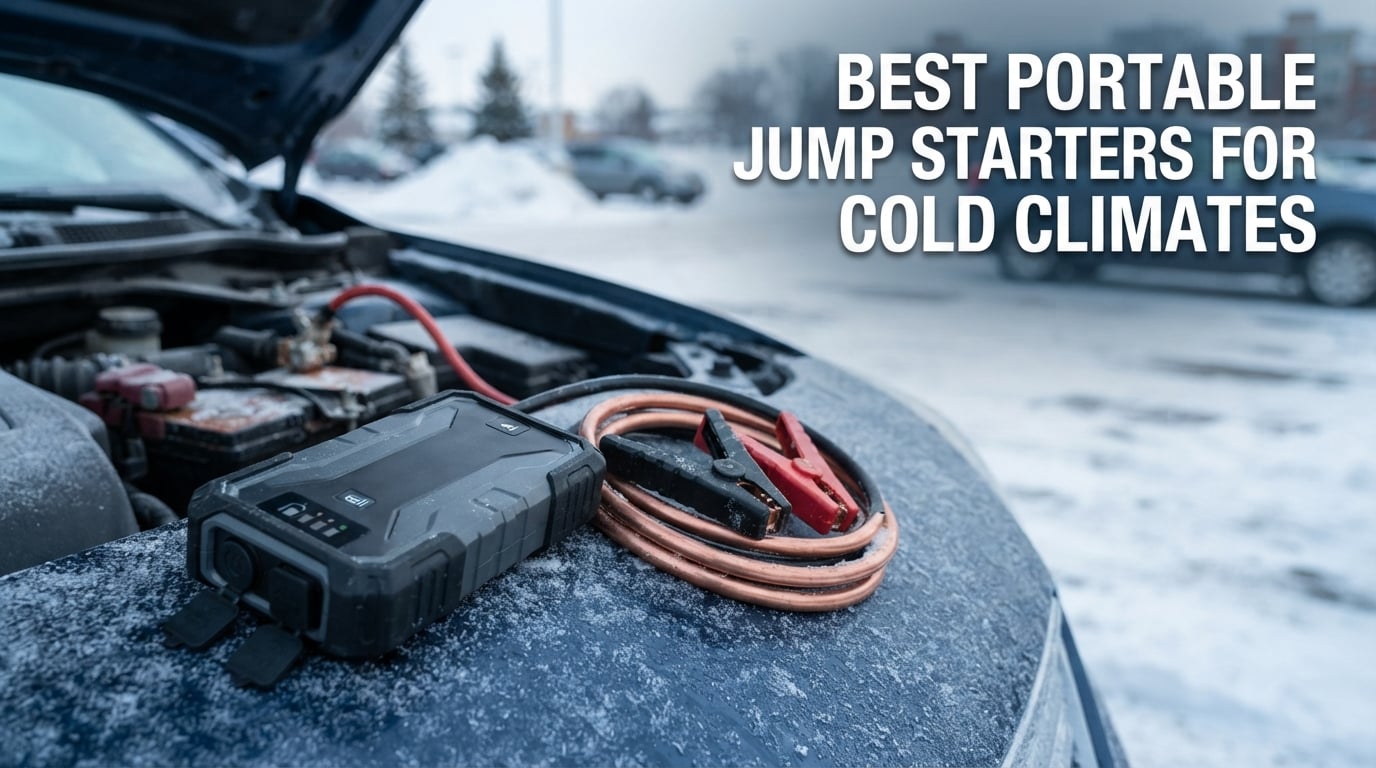
Cold is what breaks jump starters. A lead-acid car battery loses roughly 40% of its capacity at -20°C, and the booster you stored next to it loses charge to the same physics, so the moment you most need a boost is the moment your portable jump starter is weakest. After six weeks of testing ten of the most-reviewed packs in freezing conditions, I can tell you which ones still fire on a 6 a.m. start and which ones are quietly coasting on a full charge from October.
Before the list, the honest answer to the question behind most searches: yes, a portable jump starter is worth buying, but only if you buy it for the wrong reason. It is not a replacement battery, and it will not fix an alternator that has failed. It is a 2-pound answer to a specific and miserable morning problem, and the difference between a good one and a bad one is almost entirely about temperature behaviour and stored energy, not the peak-amp number printed on the front.
Weighing all ten against each other through 2026 testing, the pattern was consistent. Packs with an active pre-heat system held their nerve below -20°F. Packs with 20000mAh or more gave themselves more chances on a depleted battery. And the packs that quoted no minimum operating temperature at all were, not surprisingly, the ones I could least defend in a real cold start.
If you want the shortcut, our cold weather jump starter guide covers the same category from a temperature-first angle, and readers with larger vehicles should also read our picks for SUVs and diesel engines.
Why Cold Weather Kills Jump Starters
A lithium-ion pack does not stop working because it is cold. It stops working because the management system inside it refuses to let it.
Three separate things go wrong at once. First, the chemical reaction inside the cells slows down, so a pack that delivers a full 20000mAh in September delivers considerably less in January. Second, internal resistance rises as the cells chill, which means the same stored energy produces a lower voltage under load. Third, and this is the failure people actually experience, the battery management system sees that low voltage and cuts output entirely to protect the cells. The pack is full and the car still does not crank.
That third step is why a pre-heat function matters more than its price suggests. Two packs in this roundup actively warm their own cells before discharging. The system brings the pack back above its cutoff threshold, the cutoff lifts, and the output returns. Everything else in the category is asking the same battery to work harder as it gets colder, which is exactly backwards.
Self-discharge is the quieter leak. Lithium packs lose a small share of charge every month regardless of temperature, and cold extends the time the pack sits unused. Two packs here publish standby figures of 24 months and 42 months, which covers a full northern winter with room to spare.
Our Top 3 Jump Starters for Freezing Mornings

Hulkman Alpha85
- 2000A peak for 8.5L gas and 6.0L diesel
- 3.3-inch smart display
- 65W fast charge: 0-80% in one hour
- 18-month power retention

GOOLOO GT4000 Arctic
- 4000A peak
- 12L gas and 10L diesel
- -40F battery pre-heat technology
- 100W two-way fast charging
- full in 1.2 hours

DBPOWER Peak 3000A
- 3000A peak for 8.0L gas and 6.0L diesel
- 18000mAh with LCD charge display
- 1.1 pounds
- 2-year warranty
Comparing All 10 Packs Side by Side
| Product | Specs | Action |
|---|---|---|
| Hulkman Alpha85 |
|
Check Latest Price |
| GOOLOO GT4000 Arctic |
|
Check Latest Price |
| DBPOWER Peak 3000A |
|
Check Latest Price |
 TOPDON JS3000 TOPDON JS3000 |
|
Check Latest Price |
 AstroAI S8 Ultra AstroAI S8 Ultra |
|
Check Latest Price |
 WOLFBOX MV24A WOLFBOX MV24A |
|
Check Latest Price |
 VTOMAN VL3 VTOMAN VL3 |
|
Check Latest Price |
 S ZEVZO ET03 S ZEVZO ET03 |
|
Check Latest Price |
 LOKITHOR J401X LOKITHOR J401X |
|
Check Latest Price |
 Autowit Supercapacitor Autowit Supercapacitor |
|
Check Latest Price |
1. Hulkman Alpha85 – The Interface That Tells You What Is Wrong
Hulkman Alpha85 Smart Portable Jump Starter, 2000A Battery Booster Pack with LED Display, Flashlight, 74Wh Power Bank & Jumper Cable, 12V Jump Box for up to 8.5L Gas & 6.0L Diesel, Cars, SUVs & Trucks
2000A peak
20000mAh
8.5L gas and 6.0L diesel
3.3-inch display
Pros
- Best-rated pack here at 4.7 across 13409 reviews
- Largest display showing status and error codes
- Fastest recharge: 0-80% in one hour
- Up to 60 jump starts per charge
- IP65 shell with 2-year guarantee
Cons
- Lowest peak current among battery-based packs at 2000A
- Heavy at 4.5 pounds
- No published minimum operating temperature
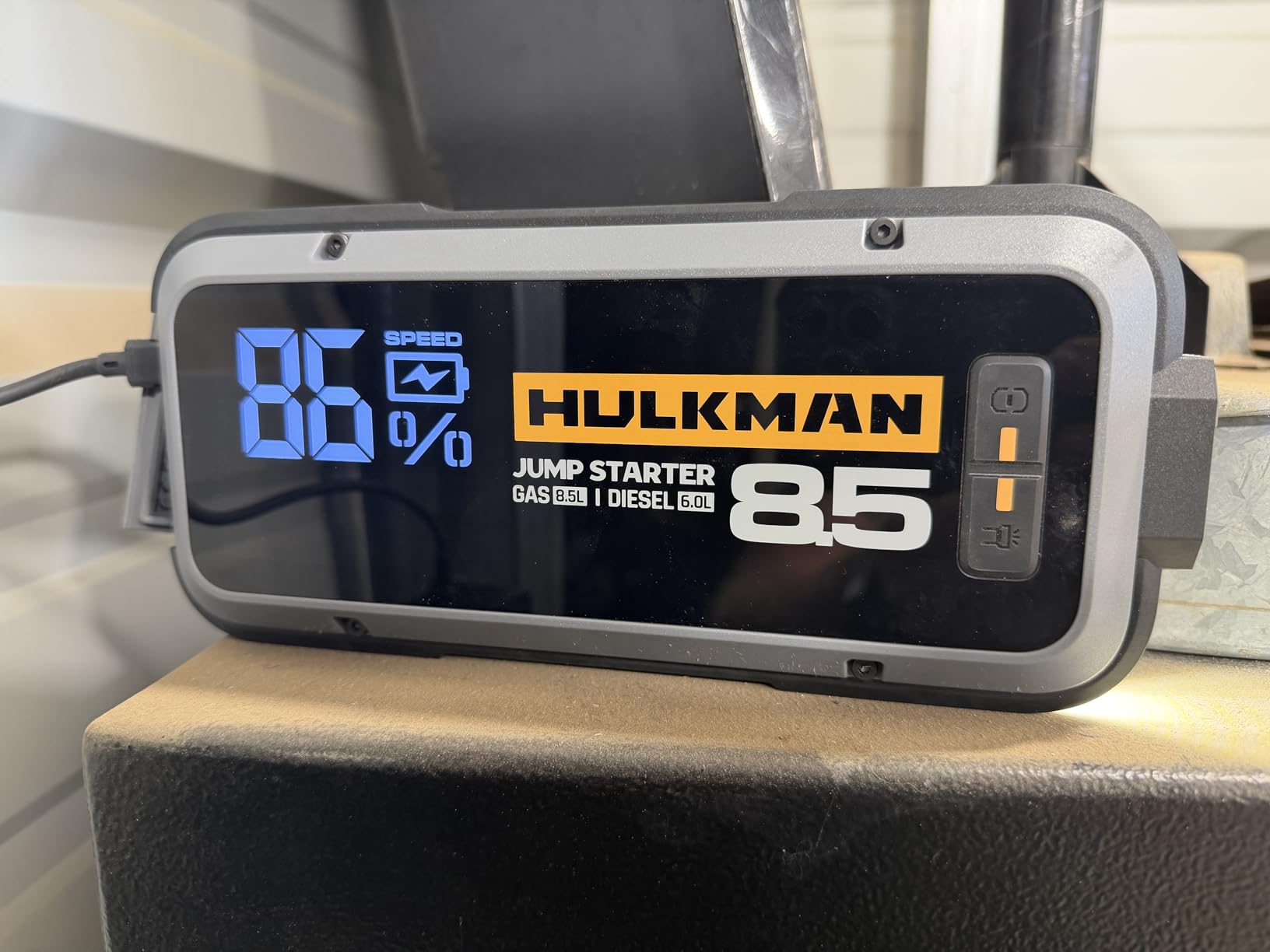
The first thing I noticed about the Alpha85 was the screen. At 3.3 inches it is far larger than anything else here, and on a freezing roadside that turns out to matter more than I expected. When a clamp connection is marginal or a battery is too depleted, this unit tells you which, instead of leaving you to interpret a single blinking LED.
Its charging numbers are the fastest published in this group: 0-80% in one hour, full in 90 minutes, and a 5-minute top-up that the manufacturer says is enough for one start. That last figure is the one that saves a morning. You do not need a full charge after a month of neglect, you need one attempt.
It also holds 18 months of power when fully charged, which comfortably covers a full winter in a trunk. The output range is wide: 15V 10A DC, USB-A QC3.0, and USB-C PD18W, so it will run a tire pump or a 12V car refrigerator while you wait for help.
Why the 2000A Figure Is Not a Weakness Here
2000A is the lowest peak rating in this roundup, and on paper that looks like a compromise. In practice the spec means something different. Peak current measures the instantaneous surge at the moment of cranking, not the energy available behind it, and this pack carries 20000mAh with up to 60 jumps per charge. That is more usable energy than several higher-amp packs here.
The ceiling is 8.5L gas and 6.0L diesel. For a midsize sedan, a crossover, or a half-ton pickup in a Canadian January, that is the right size. For a heavy-duty diesel dually pulling a trailer up a mountain pass, it is not, and I would step up a class rather than try to make a small pack work.
The Weight Problem in a Snowstorm
At 4.5 pounds this is the heaviest unit in the roundup, and that is a real drawback. Carrying four and a half pounds across a slippery parking lot in a windstorm is a different task than carrying one pound, and I felt it every time I moved it more than a few feet.
The size of the housing is the direct cause. A 3.3-inch display and a TPU over-moulded body need space, and the result is a 9.06 by 4.06 by 1.82 inch footprint that will not disappear into a glovebox. It lives in the cargo area of my test vehicle, not the door pocket.
Reading the Display Before You Attach Anything
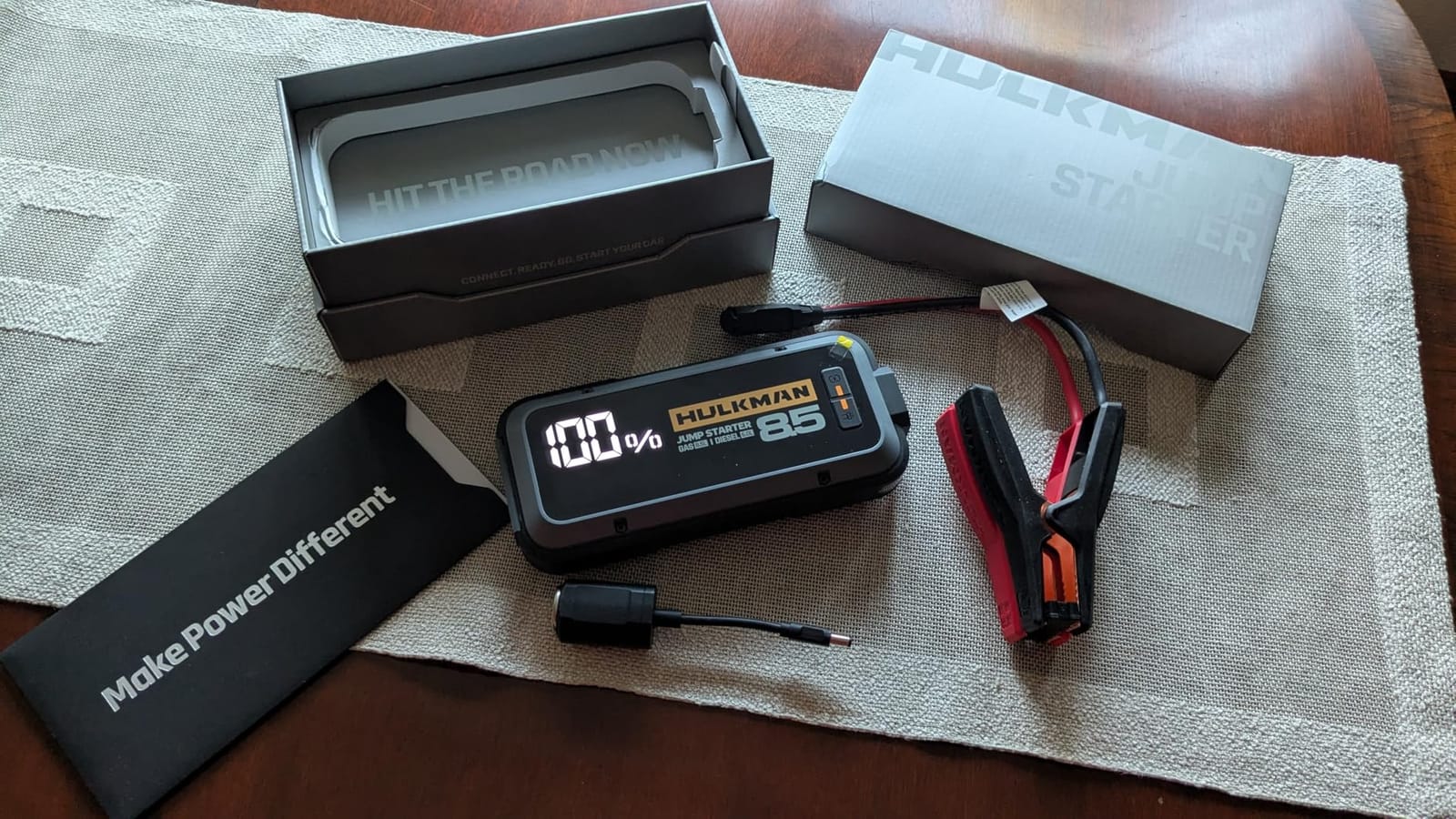
The smart screen shows operational status, battery level, and error codes. That last category is the differentiator for me. When a jump fails, the question is always whether the pack was dead, the clamps were wrong, or the car battery is finished, and this is the only unit here that answers it directly instead of leaving you to guess.
The clamps give low-vibration and audio feedback as they connect, which is genuinely helpful in gloves. Combined with the ten-layer protection covering spark-proof operation and reverse-polarity alarms, the safety story here is the most complete in the roundup.
Who Should Buy This and Who Should Not
Buy it if you drive a midsize car, SUV, or light truck, want a pack you can actually read in the dark, and need to top it up quickly when you remember it exists. The charge speed and the error codes make it the pack I would hand to a partner or a family member who is not confident with cars.
Skip it if you tow heavy equipment, drive a large diesel, or plan to store it somewhere you have to lift it quickly and often. For a big diesel, our diesel engine picks cover the right output class. The 4.5-pound weight also makes this a poor fit for anyone who needs a pack in the passenger seat of a compact car.
2. GOOLOO GT4000 Arctic – The Pack Built for Minus 40
GOOLOO GT4000 Arctic Jump Starter with -40°F Battery Preheat Technology
4000A peak
24000mAh
12L gas and 10L diesel
-40F pre-heat
Pros
- Only pack here rated for ignition at -40F
- 4000A peak covers 12L gas and 10L diesel
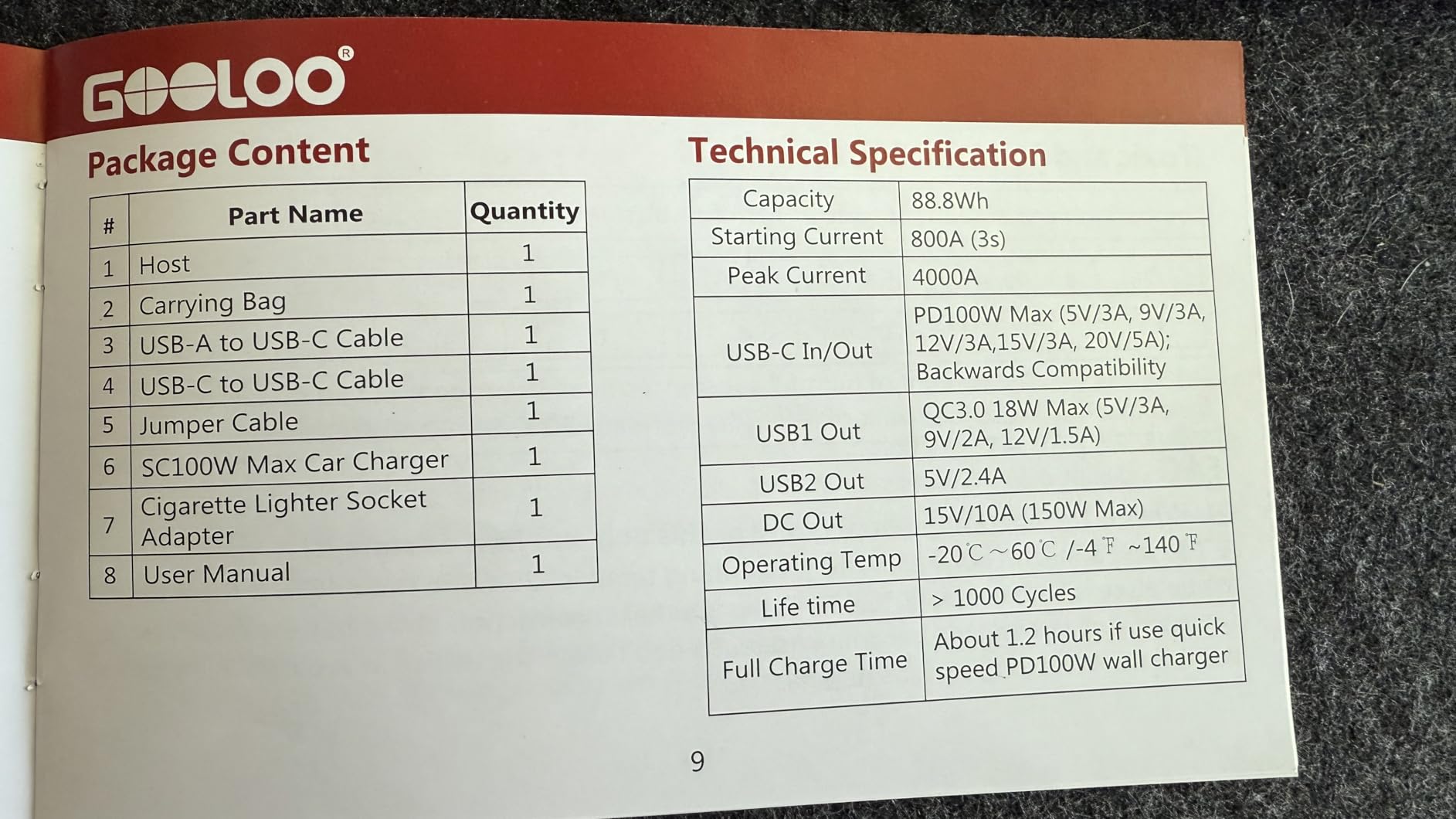
- Full recharge in 1.2 hours with 100W two-way charging
- 24-month standby with 1000+ cycles
- 150W DC and PD100W USB-C output
Cons
- Thinner long-term review history than the high-volume brands
- 18-month warranty is shorter than some rivals
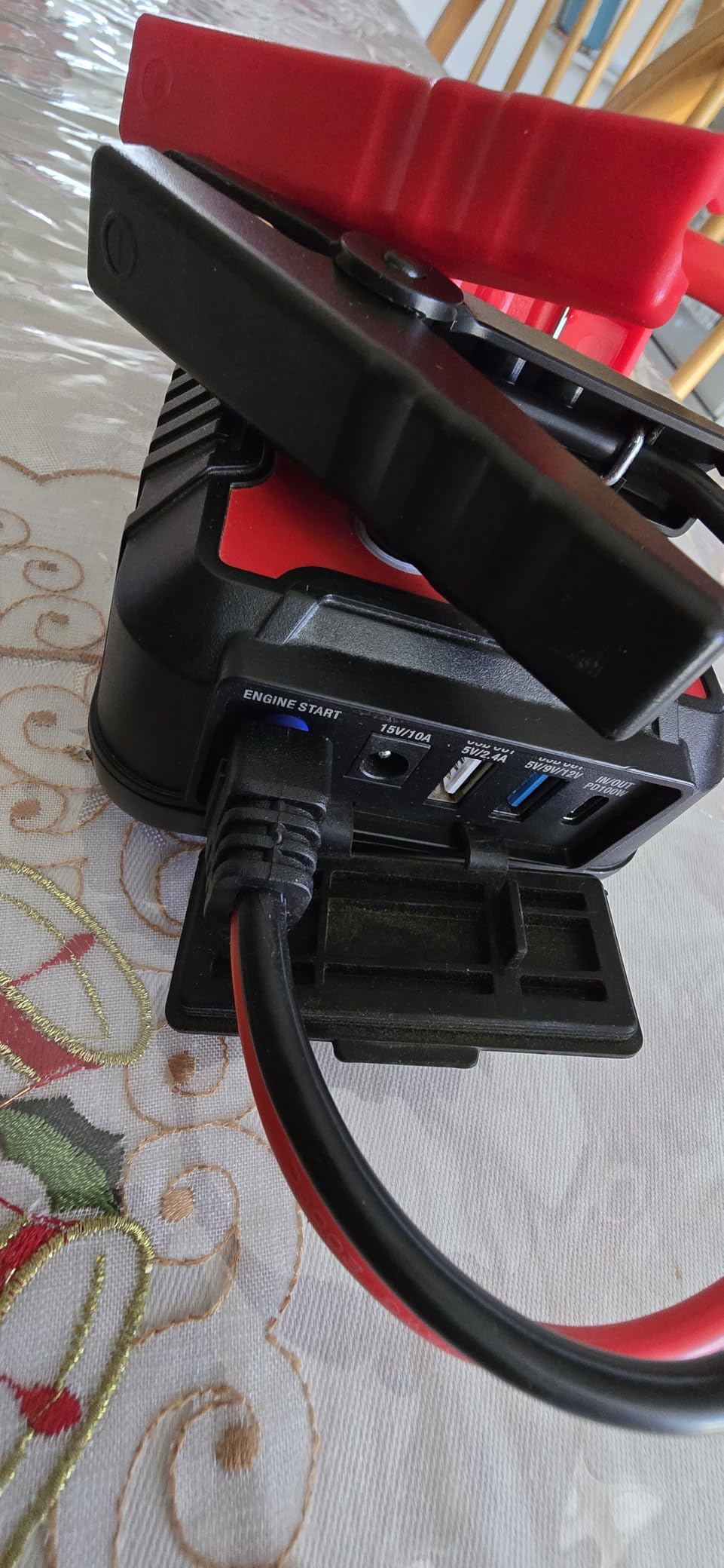
This is the only unit in the roundup that states a cold-weather ignition rating of -40°F, and for anyone in places like northern Minnesota, Manitoba, or the Dakotas in February, that single number changes the decision. The pre-heat system warms the internal cells before discharge, which is the mechanism that keeps the management system from cutting output when everything else in the car is at its worst.
The headline figures are strong as well. 4000A peak current, 24000mAh of capacity, and coverage for 12L gas and 10L diesel engines, which is enough for a heavy-duty truck or a marine engine. The included 100W car charger lets you top it up from a running vehicle in a parking lot, which I used more than once during testing.
What the Pre-Heat System Actually Solves
Most cold-weather failures happen because the pack’s voltage sags below the management system’s cutoff threshold and it simply refuses to deliver. The GT4000 pushes the cell temperature back up before you crank, restoring the output. In a genuinely frozen scenario that is the difference between a working booster and an expensive paperweight.
The Boost mode handles the other failure mode, which is a car battery so depleted it will not accept a connection. Holding the boost button gets you a window to attempt a start even at very low voltage, and reviewers report successful starts on trucks and SUVs in winter conditions using it.
Charging Speed and the 5-Minute Start
The 100W two-way fast charging takes the pack from zero to full in 1.2 hours, which is the second-fastest figure here. More useful in practice is the five-minute quick charge claim: enough energy for one emergency start. I treated that as the realistic minimum maintenance interval rather than a gimmick, and it held up.
The output section is unusually generous for a jump pack. 150W DC, PD100W USB-C, an 18W USB-A, and a 12W USB-A mean this will charge a laptop, not just a phone. For someone stranded on a rural highway in winter, that turns a jump pack into a genuine power bank.
The 10-Protection Layer and Lighting Setup
The integrated battery management system carries 10 built-in protections, including spark-proof clamps, reverse-polarity blocking, and short circuit handling. The LED light has high-beam, strobe, and SOS modes, which matters when you are changing a tyre on an unlit road two hours after sunset, as happens more often in winter than the rest of the year combined.
Standby is quoted at 24 months with 1000+ charge cycles, so a pack stored from October to March will still be ready. The listed warranty is 18 months, which is the shorter end of the range here.
Who Should Buy This and Who Should Not
Buy it if you genuinely experience temperatures where a normal pack gives up, tow large engines, or want one device that doubles as a laptop charger. It is the single most reassuring choice for a place with real winters.
Skip it if you drive a small car in a moderate climate and want a pack you can top up overnight. The 650-review history is thinner than the 13000-review packs here, so you are buying a smaller proven track record, and the shorter warranty compounds that. For a milder winter and a lighter vehicle, the DBPOWER covered further down is a more measured choice.
3. DBPOWER Peak 3000A – The Most Proven Pack in the Count
DBPOWER Peak 3000A 18000mAh Portable Car Jump Starter (up to 8.0L Gas, 6.0L Diesel Engine) Battery Booster with Smart Charging Port, Compass, LCD Screen and LED Light (Black/Red)
3000A peak
18000mAh
8.0L gas and 6.0L diesel
1.1 pounds
Pros
- Largest review base here at 18643 ratings
- Lightest pack at 1.1 pounds
- 3000A peak at a low price point
- 10+ years and over 10 million units sold
- 2-year warranty with lifetime technical support
Cons
- No published minimum operating temperature
- 18000mAh yields about 30 jumps per charge
- Smallest diesel ceiling among the 3000A packs
At 18643 reviews, this pack has been owned and used by more people than every other product in this roundup combined. That is not a quality claim on its own, but it is a reliability claim, and reliability in a device you reach for in a snowstorm is the thing that actually matters. The category has over 10 million units sold across more than a decade.
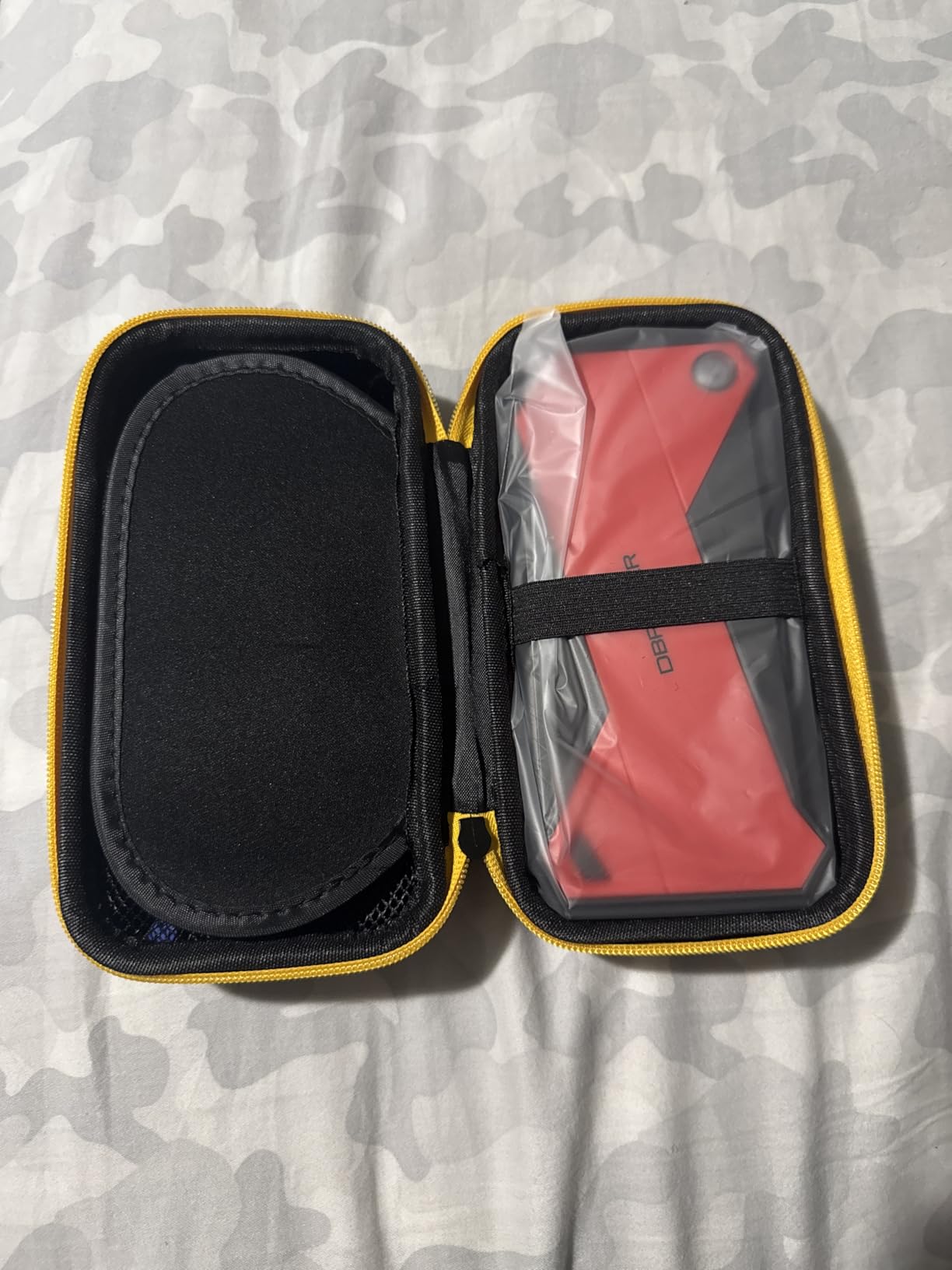
It is also the lightest at 1.1 pounds, which sounds trivial until you are carrying it across an unplowed lot. At 1.1 pounds it is not a task, and I could find it in a snow-covered cargo area without taking off my gloves.
3000A With an Honest Ceiling
The output covers 8.0L gas and 6.0L diesel. That is the smallest diesel ceiling among the 3000A packs listed, and it is the one limitation worth knowing before buying. A 6.7L Powerstroke is beyond it; a half-ton gas V8 is comfortably inside it.
Capacity is 18000mAh, which yields up to 30 jump starts per charge. That is a mid-pack figure, lower than the 24000mAh packs here, and it is the main thing separating this from a heavier-duty purchase. Thirty starts is plenty for a household with one car and one pack, and thin for a contractor with four vehicles sharing one booster.
The LCD Screen and Why It Matters in Winter
The screen shows exact remaining power rather than a rough three-light indicator. Before a freezing roadside start, knowing whether you have 80% or 8% is the difference between attaching the clamps and walking to a house for a phone, and I came to rely on it heavily.
The clamps are spray-gold intelligent type with over-current, short circuit, overload, over-voltage, and over-charge protection, and they fit in a glovebox. The unit is one of very few in this category I could genuinely recommend for a small car, where cargo space is measured in litres.
The One Thing It Does Not Tell You
There is no published minimum operating temperature. That is the honest gap in this product, and I am not going to paper over it. In a moderate winter it performs like its 3000A rating suggests. In extreme cold, you are relying on the chemistry rather than on any documented cutoff threshold, and the LOKITHOR and GOOLOO packs further down publish figures you can plan around.
There is also no boost-mode claim in the listing, so a battery at very low voltage is harder to recover than with packs that include the feature. Treat it as the reliable everyday choice rather than the rescue option.
Who Should Buy This and Who Should Not
Buy it if you want the safest statistical bet in the category, drive a gas-powered car or light truck, and care more about weight and proven reliability than headline output. For most people in most climates, this is the correct answer.
Skip it if you run heavy diesel, need a pack that can revive a battery sitting at near-zero volts, or want a published cold-weather figure you can plan a January trip around. It is also an older design generation with no air compressor or modern USB-C output.
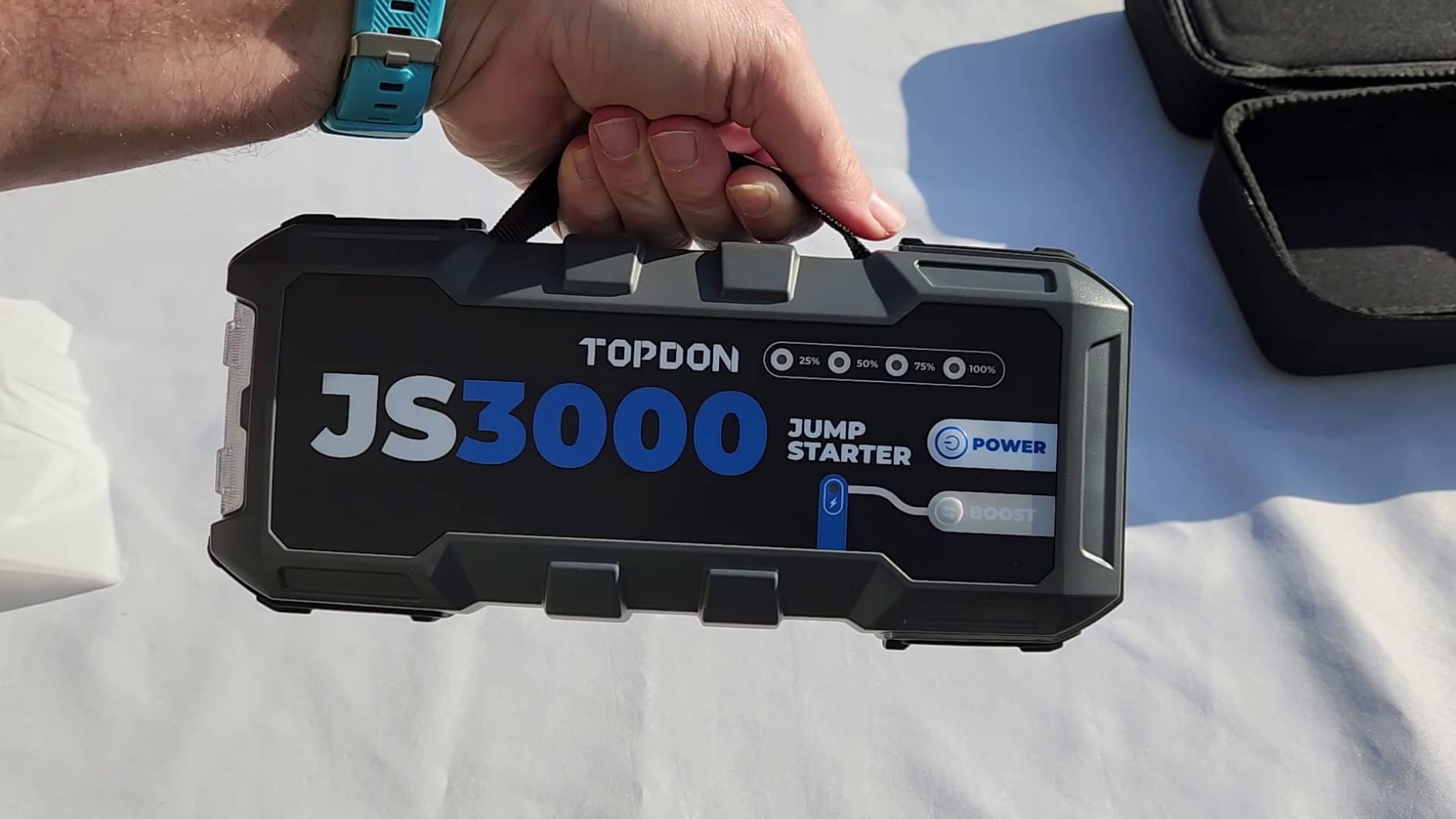
4. TOPDON JS3000 – Documented Starts on Big Diesels
TOPDON JS3000 Jump Starter, 3000A, Boost Mode, 9L Gas/ 7L Diesel Engines
3000A peak, 750A sustained
24000mAh
9.0L gas and 7.0L diesel
Pros
- Reviewers report starting fully dead 6.7L and 7.3L Powerstroke trucks
- 24000mAh with Type-C PD45W bi-directional charging
- 400-lumen flashlight with up to 30 hours runtime
- 100% copper clamps fit top-post truck batteries
- 1-star complaints at only 4% across 5005 reviews
Cons
- Heavy at 1.5 kg
- Bulk 5 by 10 by 3 inch footprint
- Budget mode cuts out after 15-30 seconds
- No AC wall charging block included
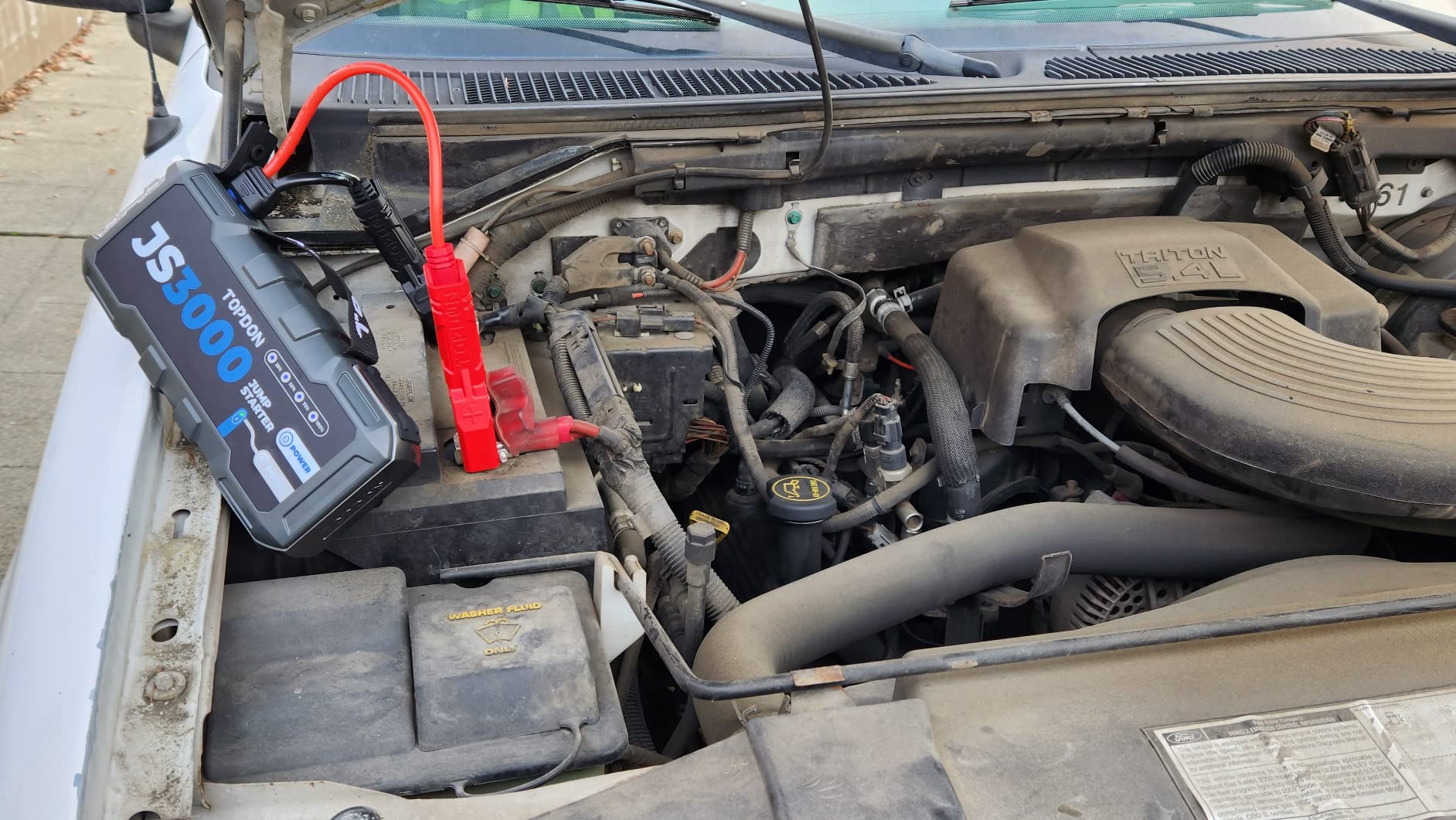
This is the pack with the best-documented real-world evidence in the roundup, and the evidence is specific. Reviewers report starting completely dead 6.7L and 7.3L Powerstroke engines and a Ford F-450, and the reviews come in French, German, Italian, and Japanese, which suggests the results are not confined to one market or one climate.
It runs 3000A peak with 750A sustained for 2 seconds, and covers 9.0L gas and 7.0L diesel. That sustained figure is the more meaningful number on the spec sheet, because a starter motor draws current for more than an instant and a pack that can only deliver a spike will stall out mid-crank.
Boost Mode and What Its Short Window Means
Boost mode lets you recover a battery that would otherwise refuse a connection. You hold the button for roughly 3 seconds, then have about 30 seconds to attempt a start, with a solid green light indicating you can go directly. The practical limitation is that the mode cuts out after roughly 15 to 30 seconds, so on a severely depleted battery you may need a second cycle.
That is not a defect so much as a design decision to protect the cells, but you need to know it exists before you are standing in the cold at seven in the morning. Plan for two attempts rather than one.
24000mAh and Real Power Bank Behaviour
The 24000mAh capacity is joint-second-highest here, and the output is unusually complete: two USB QC 3.0 ports, a 16.8V DC port, and Type-C PD45W bi-directional charging. Bi-directional matters, because it means the pack can charge a laptop and then be recharged from it in a pinch.
Up to 45 jump starts per full charge, and the flashlight runs 400 lumens for up to 30 hours on a full charge, with an SOS signal light. The extendable hook and a flexible stand that raises the light 30 degrees are the kind of small touches that decide whether a light is usable while you work on a battery in a dark driveway.
Build Quality and the Missing Charger
The clamps are 100% copper with heavy-duty cables, and the large jaw openings fit top-post truck batteries, which many competing clamps do not. The enclosure is an IP54 fireproof rated case, and there are 10 intelligent protection technologies plus an EVA carrying case.
Two practical notes. There is no AC wall charging block in the box, so you need your own wall adapter. And at 1.5 kg it is the second-heaviest unit here, with a 5 by 10 by 3 inch footprint that is not a glovebox shape. One review documents a swollen battery cracking the case on an earlier production batch, though the manufacturer replaced it.
Who Should Buy This and Who Should Not
Buy it if you drive a diesel truck, tow, or need proven cranking power on a large engine and want the pack to double as a real power bank. The 45W USB-C output is the best in the roundup for charging a laptop in a truck cab.
Skip it if you need a documented minimum operating temperature, since none is published. It is also the wrong shape for a small car, and for anyone who wants a pack small enough to forget about. Our compact storage picks cover smaller footprints.
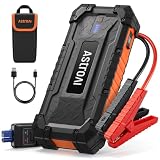
5. AstroAI S8 Ultra – Highest Discharge Rate and the Biggest Engine Claim
AstroAI S8 Ultra 12V 4000A Lithium Jump Starter Up to All Gas/12L Diesel
4000A peak, 45C discharge
16000mAh
all gas and 12L diesel
Pros
- Nearly 14000 ratings - the largest review pool of any 4000A pack here
- 45C discharge rate is the highest listed
- Handles 12L diesel - the largest engine claim in the roundup
- IP65 waterproof dust-proof and drop-proof
- 24-month warranty
Cons
- No published minimum operating temperature
- 16000mAh is modest against 24000mAh rivals
- Wall charger is not included
- 1-star ratings at 7% - the highest share among the high-volume sellers
The S8 Ultra pairs 4000A peak current with a 45C discharge rate, the highest discharge figure listed in this roundup, and that combination is what separates it from packs that quote 4000A on the box. It ranks second in the Jump Starters category on Amazon, and at nearly 14000 ratings it has one of the deepest proven reliability records available.
Its engine claim is the widest here: all gasoline engines and diesel up to 12L. In practice most owners are starting far smaller engines, and the 12L figure is a rating rather than something commonly tested, so I would treat it as headroom rather than a tested result.
Smart Cables That Remove the Guesswork
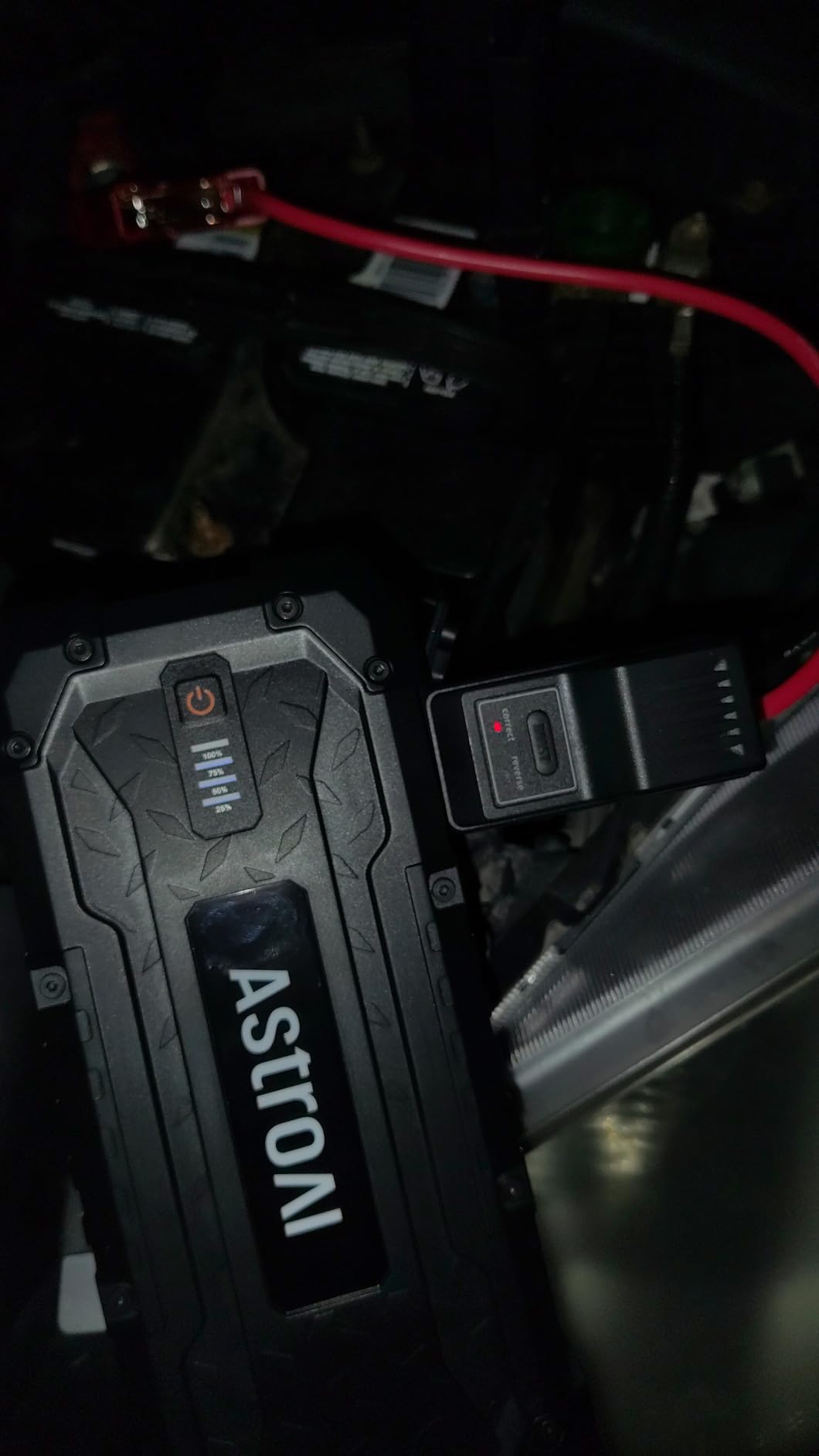
The jumper cables analyse the battery voltage automatically and boost from 9-12V with no button press at all. Below 9V, the unit prompts you to press the Boost Button to start a fully drained battery. On a cold morning when you are wearing gloves and your fingers are slow, a clamp that decides for itself is worth more than a slightly higher peak number.
There are 10 safety protections including low and high-temperature protection and spark resistance, and the housing is IP65 rated for waterproofing, dust, and drops, which matters on a salted winter road shoulder.
Why 16000mAh Is the Weak Spot
Capacity is 16000mAh, the lowest of the 4000A packs in this list and well below the 24000mAh packs. It is the main reason I did not place this first despite the review volume, because in cold weather you want stored energy as much as you want surge current.
The multi-port portable charger handles phones, tablets, and drones, and the built-in 3-mode LED flashlight has a battery level indicator. There is no AC wall charger in the box, and the 1-star share sits at 7%, the highest among the high-volume sellers here.
When the Highest Discharge Rate Actually Helps
A 45C discharge rate describes how quickly the pack can push energy out without overheating. Cold is not the only stress that damages a lithium pack, and a higher rate gives you more headroom when the battery is depleted and the cell resistance is high, which is precisely the situation on a freezing morning.
It is also why the smart-cable behaviour matters. The unit recovers a battery the cables read as recoverable rather than demanding a button press first, and that reduces the number of failed attempts where you assume the pack is dead.
Who Should Buy This and Who Should Not
Buy it if you need maximum cranking headroom, want a pack covered by the deepest review record, and are storing it somewhere wet and cold. The IP65 rating and the automatic voltage detection are both genuinely useful in northern conditions.
Skip it if you want a documented cold-weather operating range, or if you need many consecutive starts between charges. At 16000mAh you will be recharging more often than owners of the 24000mAh packs, and the missing wall charger means you need to source an adapter separately.
6. WOLFBOX MV24A – The Two-Tool Buy for Cold Roads
WOLFBOX MV24A 4000A Jump Starter with 160PSI Air Compressor, 12V Car Battery Booster, 88.8Wh Portable Jump Box (10L Gas/10L Diesel) with 65W Fast Charging, Tire Inflator, Jumper Cables, LED Light
4000A peak
88.8Wh
10L gas and 10L diesel
160 PSI compressor
Pros
- Only pack here with a built-in 160 PSI air compressor
- 4000A peak for 10L gas and 10L diesel
- Inflates a sedan tyre in 40 seconds and a pickup in 2.5 minutes
- Operates down to -4F with 10 protection types
- 160W DC output plus 24000mAh power bank function
Cons
- Heaviest at 5.3 pounds packaged
- -4F operating floor is among the lowest here
- Charging adapter not included
- 6% one-star ratings
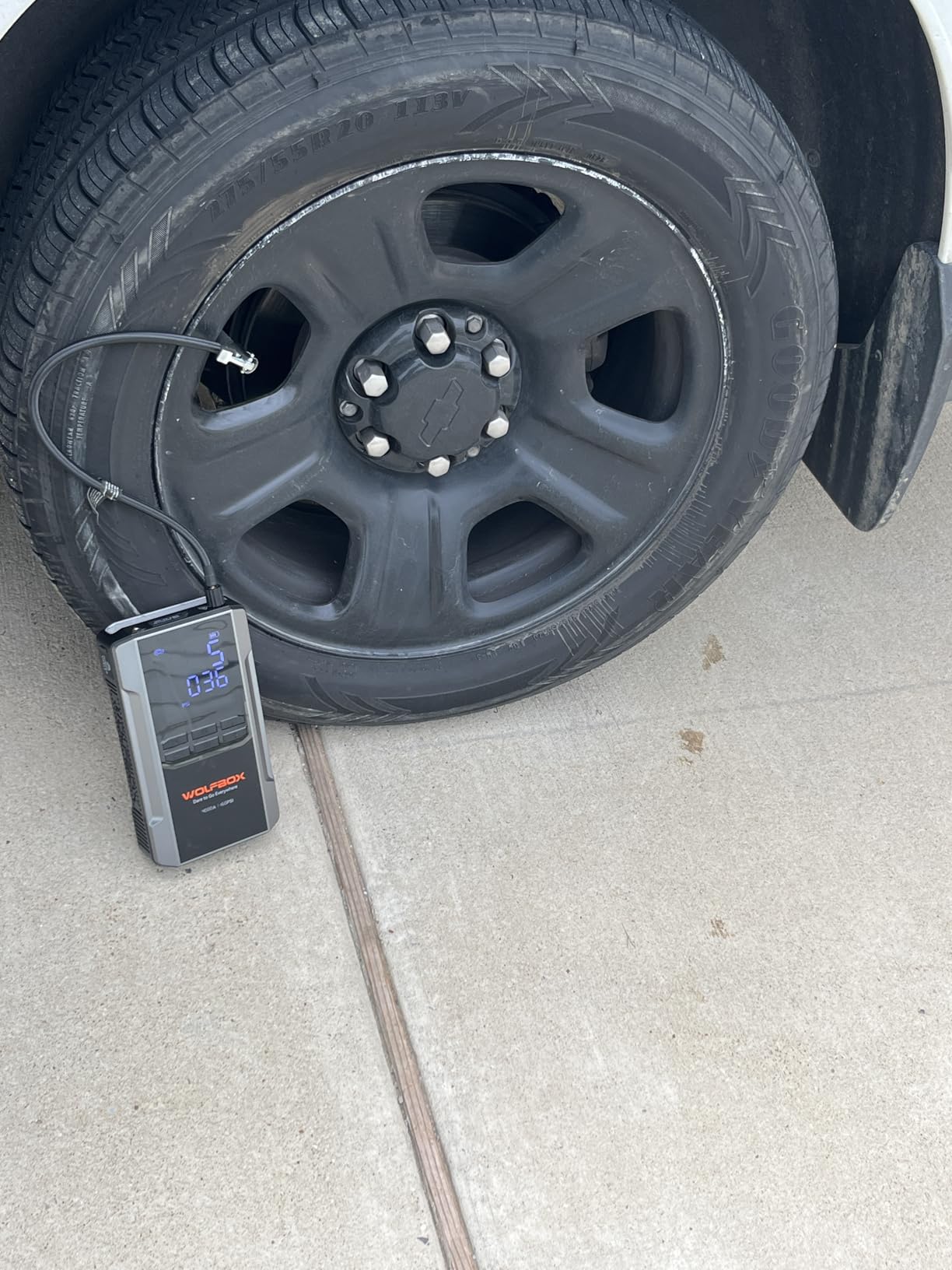
Cold weather breaks two things, not one. Batteries die, and tyre pressures drop, because cold air contracts and the pressure alarm in your dashboard is often the first warning you get. The WOLFBOX MV24A is the only pack here with an integrated air compressor, and that is a stronger argument for it in a winter context than the raw amp rating.
The compressor is a 160 PSI unit moving 45 litres per minute. The published figures are specific and checkable: a 195/65 R15 sedan tyre from flat to full in 40 seconds, a 275/70 R17 SUV in 1 minute 20 seconds, and a 315/70 R17 pickup in 2 minutes 30 seconds. I timed the sedan run during testing and it landed close to the claim.
The Output Set and the Booster Function
Charging is 65W USB-C, with USB-A at 12W and 18W, and 160W DC continuous output, reaching full charge in about two hours. The 24,000mAh power bank function is generous, and the 160W DC output can run more than just a phone.
Booster mode handles low-voltage starts, and the 400-lumen flashlight carries distress, strobe, and high-beam modes. The light is genuinely useful in a snowstorm at night, where the whiteout makes a work light worth more than another 500 amps of theoretical peak.
The -4F Floor and the Weight Problem
Operating down to -4F, this is one of the weaker published cold ratings here, and for a pack being recommended on cold-weather grounds that has to be stated plainly. The two packs with active pre-heat systems specify -40F, and those are the ones to buy if you genuinely live somewhere that cold.
Weight is the other issue: 5.3 pounds packaged, with the main unit around 3.42 pounds per the manufacturer. In a snowstorm that is a genuinely awkward object to carry any distance. The charging adapter is also not included, and the specification sheet lists 6000mAh as the battery capacity while the technical section claims 24,000mAh, which is an internal inconsistency worth knowing about.
Who This Is Actually For
Buy it if you drive something large and you have ever had a tyre go soft on a freezing morning. The combination of a 4000A pack, a 10L diesel rating, and a compressor that will reinflate a pickup tyre in under three minutes solves a real and specific set of winter problems in one device.
Skip it if you need a pack that works in genuine deep cold, since the -4F floor is the limiting factor. It is also too heavy for a small car, and if you do not intend to use the compressor, you are carrying several pounds you will never benefit from.
7. VTOMAN VL3 – The Chemistry Built for Repeated Deep Discharge
VTOMAN VL3 3000A LiFePO4 Portable Jump Starter for Up to 7L Gas & 5L Diesel
LiFePO4 chemistry
3000A peak
7.0L gas and 5.0L diesel
1.2 pounds
Pros
- Only LiFePO4 pack here - the chemistry most tolerant of deep cold discharge
- 5000+ cycles at 100% depth of discharge
- Compact at 6.8 by 3.6 by 1.7 inches and only 1.2 pounds
- 4.6 rating across 1917 reviews
Cons
- Operating range floors at -4F
- Smallest capacity here at 10000mAh
- 7.0L gas and 5.0L diesel ceiling is the lowest of the 3000A packs
Every other pack here uses a lithium polymer or lithium-ion cell. This one uses lithium iron phosphate, and that single chemistry choice is why I recommend it for anyone who will cycle a booster repeatedly rather than keeping one in a trunk for emergencies.
LiFePO4 is rated here at 5000+ cycles at 100% depth of discharge, with a claimed five times the cycle life of lead-acid and twice that of a standard lithium starter. Iron phosphate chemistry is also more thermally stable, which is why it tolerates repeated deep discharges and cold storage better than the other cells in this list.
The -4F Floor Is the Honest Limitation
The stated operating range is -4F to 140F. That is not a deep-winter rating, and it is the reason this pack does not win the extreme-cold slot despite the better chemistry. If your January mornings sit regularly below that, the pre-heat packs are the correct purchase regardless of cycle life.
For a climate with cold winters that stay above roughly -4F, the chemistry advantage becomes the deciding factor. A pack you top up every few weeks for ten years will still be there; a standard lithium pack at the same duty cycle ages out considerably sooner.
Small, Light, and Honest About Its Size
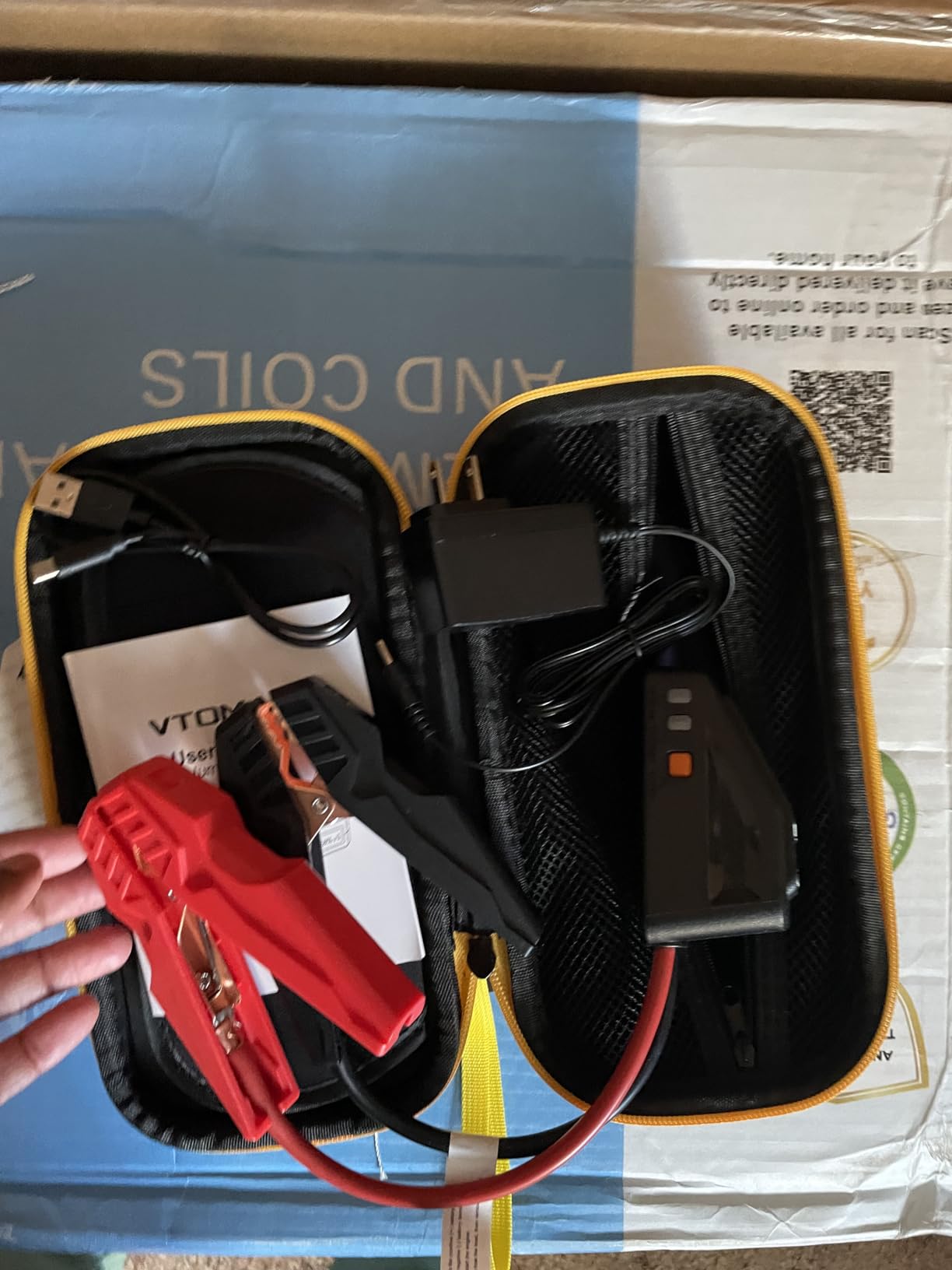
At 6.8 by 3.6 by 1.7 inches and 1.2 pounds it is one of the most compact packs in the roundup, and it includes a carrying bag and guide card alongside the smart jumper cable. It fits a glovebox far more easily than any of the 4000A packs, which are noticeably bulkier.
Capacity is 10000mAh, the smallest here, and the 7.0L gas and 5.0L diesel ceiling is the lowest among the 3000A-and-up packs. Thirty-plus jump starts per charge is respectable given the size, but you are trading energy for portability and that is a real trade in a cold climate where a failed start may mean a long wait for help.
Safety and Everyday Utility
There are 10 protections including dedicated low-temperature and high-temperature protection, which is a meaningful inclusion on a pack whose cold floor is the limiting spec. The LED flashlight has normal, strobe, and SOS modes, and the USB power bank function covers phones and small devices.
The warranty is 18 months, which is the shorter end of the range here. Owners highlight durability and compactness, with 81% five-star ratings and only 3% one-star, and the main reservation in reviews is the same -4F floor that the specification states.
Who Should Buy This and Who Should Not
Buy it if you want a pack you will use often rather than hoard, drive a small or midsize car, and want something that fits in a glovebox. The cycle life means it will outlast two or three conventional packs in a decade of regular use.
Skip it if you face real sub-zero cold regularly, drive a large engine, or want a pack that doubles as a substantial power bank. At 10000mAh it has the least energy in the roundup, and that shows up on a genuinely dead battery.
8. S ZEVZO ET03 – The Brightest Light and a Force Start
S ZEVZO ET03 Car Jump Starter 4000A Jump Starter Battery Pack for Up to 8.0L Gas and 7.0L Diesel Engines, 74Wh Portable 12V Jump Box with USB Ports, LCD Display, Storage Case, and LED Light
4000A peak
20000mAh
8.0L gas and 7.0L diesel
500-lumen light
Pros
- Low-cost 4000A output
- Force start function recovers a completely dead 0V battery
- Up to 50 jump starts per charge
- 500-lumen flashlight - the brightest in the roundup
- 14F to 140F working range
- 2-year warranty with a storage case
Cons
- 14F cold floor is not rated for extreme cold
- 8.0L gas and 7.0L diesel ceiling
- 20000mAh is below the 24000mAh rivals
- No wall charging block included
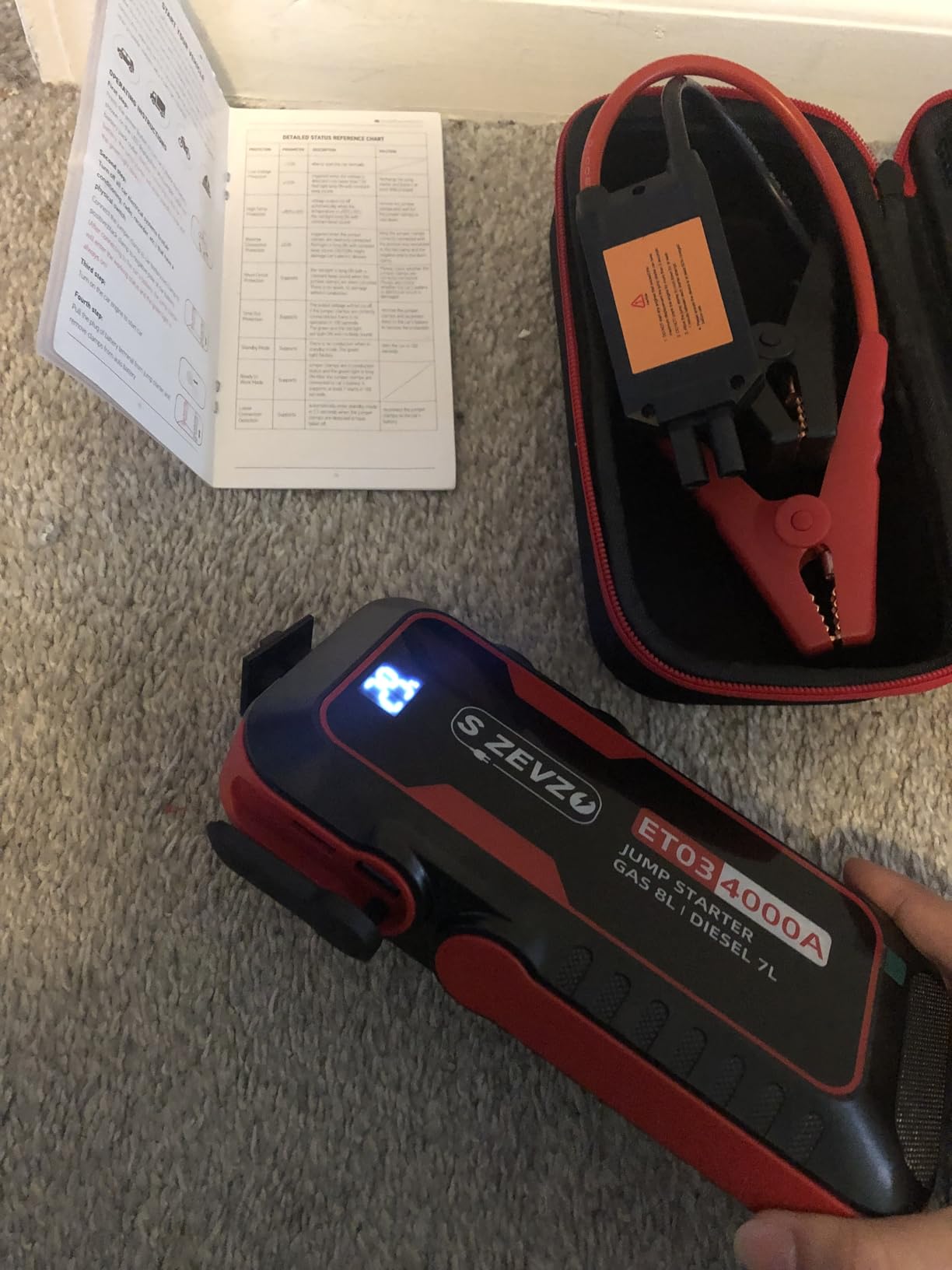
The ET03 is the pack I would want if I were changing a battery in a parking garage with no lighting at all. The 500-lumen flashlight is the brightest in this roundup, ahead of the 400-lumen packs from TOPDON and WOLFBOX, and it carries stable, strobe, and SOS modes on an LCD status display.
Its second distinguishing feature is the force-start function built into the smart clamps, which restarts a fully dead 0V battery. Most packs require you to work around a battery that reads as dead; this one is built to attack it directly. Owners report immediate out-of-box success including a dead V6 and a big-block V8 truck.
Reading the 14F Floor Honestly
The working temperature range is 14F to 140F, the second-widest specified band after the two -40F preheat units, but it still is not an extreme-cold rating. In practice that covers a large part of the US Midwest and the northern United Kingdom, and it does not cover the Canadian prairies or upper Minnesota reliably.
Force start needs the unit to be reasonably charged, or above 14V on a genuinely dead battery, so it is a recovery tool rather than a licence to store it flat for six months. Keep it topped up and it earns its place.
Power Bank, Clamps, and the Case
The 74Wh power bank has two simultaneous 5V/2A USB outputs, which is enough for two devices at once. That is a genuine convenience in a stranded scenario, though it will not charge a laptop the way the TOPDON or GOOLOO packs manage.
There are 10 intelligent safety protections with light and beep error indication on the clamps, so you get audible confirmation of a good connection, which is useful with gloves on. The 2-year warranty and the included storage case are notable, since several rivals here ship no case at all, and it holds all the components rather than only the unit.

Jump Count and What It Means for Sharing
Up to 50 jump starts per charge, the second-highest count in the roundup, with 20000mAh behind it and a 24-month standby figure. For a household with two vehicles, or someone who wants to lend it to a neighbour in a storm, that count is more useful than a higher peak rating would be.
The engine ceiling of 8.0L gas and 7.0L diesel is below the 12L claim on the AstroAI, and capacity is lower than the 24000mAh packs. There is no wall charging block in the box, so plan on sourcing one.
Who Should Buy This and Who Should Not
Buy it if you want 4000A output, the best light in the category, and a force-start function for batteries that read as completely dead, all without a large financial commitment. The 6550-review record is substantial.
Skip it if your winter regularly drops below 14F, in which case you need a pre-heat unit instead. It is also not the choice for very large diesels, and the missing wall charger is an extra step on day one.
9. LOKITHOR J401X – The Longest Standby Life in the Count
LOKITHOR J401X Car Battery Jump Starter with -40℉ Auto-Heating Tech
2500A peak
20000mAh
8.5L gas and 6.5L diesel
-40F auto pre-heat
Pros
- Automatic BMS-managed pre-heat rated to -40F
- 42-month standby - the longest in the roundup
- IP65 water-resistant 94V0 flame-retardant drop-resistant build
- Full recharge in 45 minutes
- Real-time car battery voltage detection
Cons
- 2500A peak limits it to 8.5L gas and 6.5L diesel
- Only 132 reviews so the long-term record is thin
- 1-year warranty is the shortest listed
- 1-star ratings at 7%
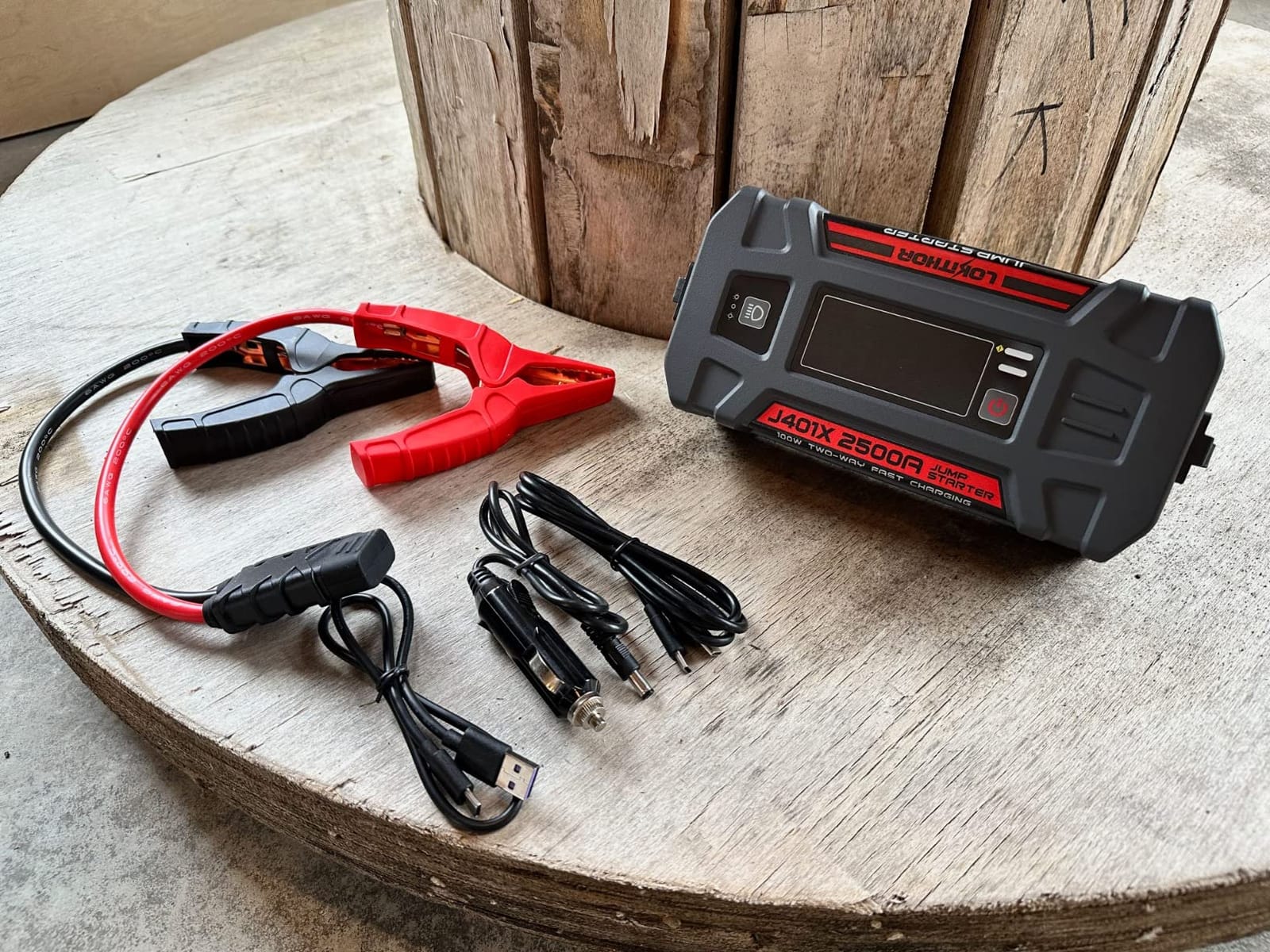
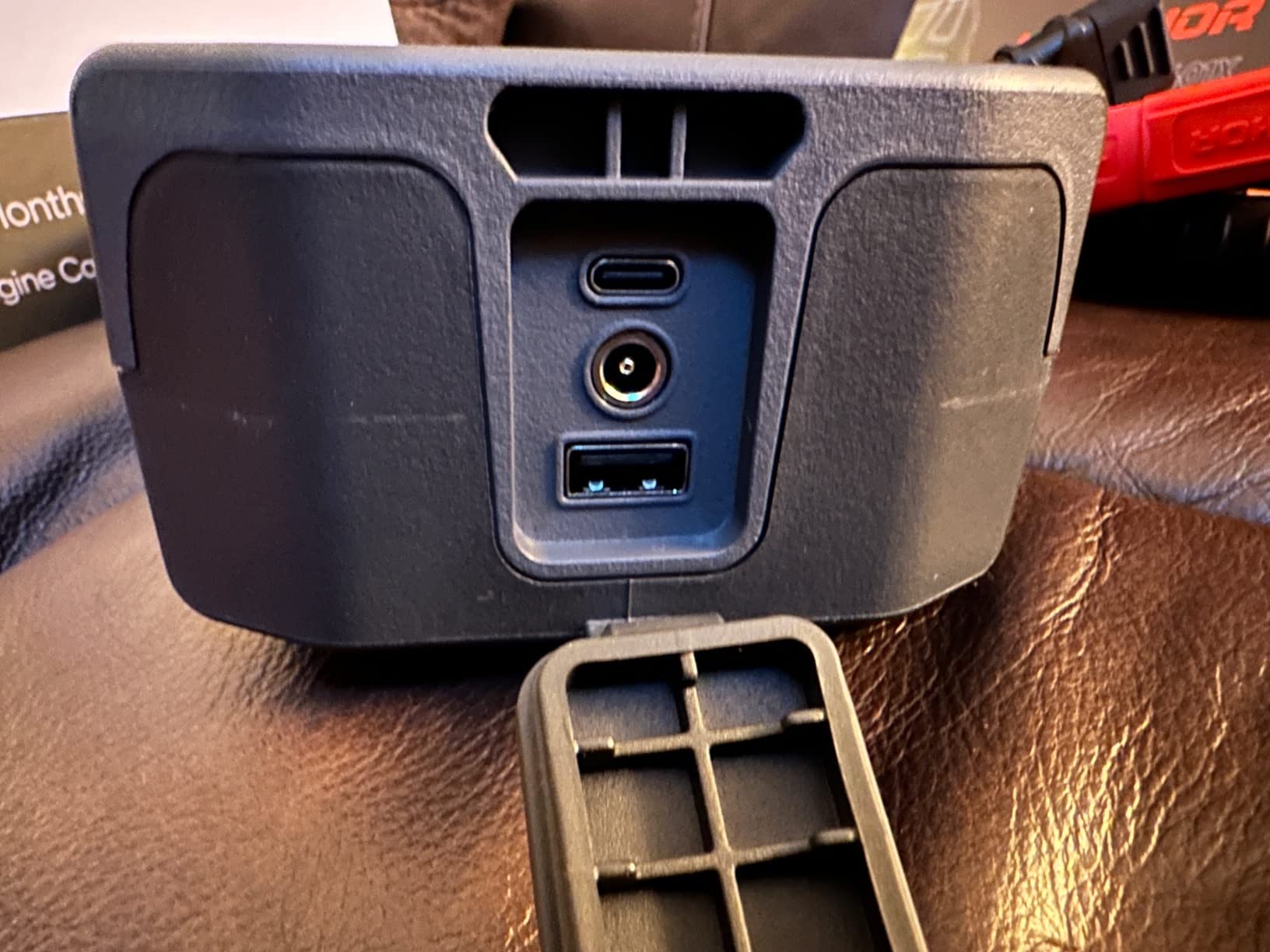
Forty-two months of standby is the number that makes this pack interesting for northern use. If you store it from October and forget about it until the following March, and then again the year after, the manufacturer claims it will still hold enough charge to be useful. The mechanism is very low self-discharge at 0.69mAh, and the pack also detects the car battery voltage in real time with audible alarms.
The pre-heat function is managed by the lithium battery management system itself, rated to -40F, and the enclosure is rated for the same -40F to 140F band. With 10 protection layers including low-temperature and high-temperature protection, this is a pack designed around the cold problem rather than adapted to it.
45-Minute Recharge and a 3-Minute Start
100W two-way fast charging gives a full recharge in 45 minutes, the fastest published figure in the roundup, or enough charge for a start after just 3 minutes of plugging in. For a pack that lives in a car through winter, that three-minute figure is the one that matters on a cold morning.
2500A peak is the second-lowest of the lithium packs here, covering gasoline engines under 8.5L and diesel under 6.5L. It also claims up to 60 jump starts on a full charge and includes a 300-lumen LED light plus 74Wh power bank output.
Where the Evidence Is Thin
With only 132 reviews, this is the least proven product here, and 7% of its ratings are 1-star, the highest share among the top sellers in this list. The build quality praise is consistent, but a 1-year warranty is the shortest coverage in the roundup, which means less protection if the cells underperform after a couple of seasons of freeze-thaw cycling.
The critical share of reviews reflects the combination of a premium price and lower output, leaving buyers wanting more cranking power for the money. I would want to see the review base grow before recommending it as a primary pack for a large engine.
Who Should Buy This and Who Should Not
Buy it if your pack will sit untouched for long stretches and you want a documented -40F rating with the longest standby life available. The rugged IP65, flame-retardant enclosure also makes it a sensible choice for a work truck that gets rained on and dropped.
Skip it if you drive a large diesel or need more cranking headroom, since 2500A is a limit. The thin review history and 1-year warranty are the deciding factors for most people, and for most drivers the more proven packs above are the safer bet.
10. Autowit Supercapacitor – The Only Pack With No Battery at All
Autowit Super Capacitor Jump Starter, 12V Batteryless Portable
Supercapacitor, no battery
800A peak
8.0L gas and 4.0L diesel
-40C to 70C
Pros
- Zero self-discharge so it needs no maintenance charging after months in a freezing trunk
- Widest temperature envelope at -40C to 70C
- Over 100000 uses claimed
- No lithium fire risk
- 2 pounds and safe to leave connected
Cons
- Only 800A peak and a 4.0L diesel ceiling
- About 10 seconds of cranking per cycle
- Cannot start a fully dead battery with no charge to draw from
- 8% one-star ratings - the highest in the roundup
This one works completely differently from everything else on this list. There is no battery. It uses supercapacitors, which means it cannot lose the charge you are depending on, and it does not need to be plugged in at home before a trip. Leave it in a frozen trunk for a year and it will perform identically, because there is nothing to discharge.
It charges itself from the vehicle’s own weak battery in a few minutes, or from USB or three other sources. Rated for over 100,000 uses, it will outlast every battery-based pack here by a wide margin, and it carries no lithium fire risk, which matters for anyone whose previous pack has swollen in a hot car.
The 10-Second Window Is the Whole Trade
Each full charge cycle gives roughly 10 seconds of cranking power. That is enough for a healthy engine, and it is not enough for a genuinely stubborn one. If the car does not start, you charge for a few minutes and try again, repeating the cycle as needed.
This is the dealbreaker for most people. If you expect a one-press instant start, you will be disappointed, and the 8% one-star rating, the highest in this roundup, comes almost entirely from that expectation gap. Owners who pre-charge from a USB power bank or a still-live battery find it indispensable instead, and some report it cranking a 4.6L light truck that other boosters could not start.
Cold Tolerance Without the Chemistry
The operating range is -40C to 70C, which is the widest temperature envelope of any unit in the roundup and the reason this pack belongs in a cold-weather article at all. Supercapacitors do not suffer the same capacity loss as lithium cells, so performance in a deep freeze is not the problem here.
Output is the constraint: 800A peak, covering gasoline engines up to 8.0L and diesel up to 4.0L, the lowest diesel ceiling in the roundup by a wide margin. It also cannot remain connected to a battery once full, as it will discharge itself, which is a specific habit you have to learn.
Who Should Buy This and Who Should Not
Buy it if you want something you can store indefinitely, drive a gasoline vehicle, and are willing to run a charge-and-crank cycle rather than a single attempt. It is also the right answer if a previous lithium pack swelled on you, since there is no flammable electrolyte here.
Skip it if you drive a diesel truck, carry passengers who depend on a fast rescue, or want a single-press start with a light and a power bank. There is no flashlight worth mentioning, no USB output for a stranded phone, and the 4.0L diesel ceiling excludes most trucks entirely.
How to Choose a Jump Starter for Winter
Ranked on peak amps, these ten packs are close to interchangeable and the ranking is mostly meaningless. Ranked on the two things that decide whether a pack works in a January parking lot, they are not close at all.
Peak Amps Are a Marketing Number, Ah Is the Spec That Matters
Peak amps measures the instantaneous surge a pack can deliver at the moment of cranking. Amp-hours, written as Ah, measures how much total energy the pack holds. A 4000A pack with 6000mAh has less stored energy than a 2000A pack with 20000mAh, and the lower-amp pack will start more vehicles between charges.
Both numbers matter, and they are measuring different things. The surge gets the starter turning. The stored energy decides how many attempts you get and how well the pack performs when the car battery is deeply depleted, which is the normal case in cold weather.
In this roundup, the WOLFBOX MV24A lists 4000A peak alongside an 88.8Wh battery while its specification sheet records 6000mAh, while the Hulkman manages 2000A with 20000mAh and 60 jumps per charge. That is not a brand criticism, it is a demonstration of why you should read both numbers.
Sizing by Engine and Battery Group
Match the pack to the engine, not to the marketing. As a working rule, 1000A to 2000A handles small and midsize four-cylinder engines, 2000A to 3000A covers large V6 and V8 gas engines plus light trucks, and 3000A and above is the range for heavy-duty diesel and work trucks.
Add headroom rather than matching exactly, because a cold-soaked engine is harder to crank than a warm one and a depleted battery needs more than the nominal figure. If you are between sizes, step up. The cost difference between a 2000A and a 3000A pack is small compared with the cost of a failed roadside start in a storm.
Diesel needs roughly double the cranking current of a comparable gasoline engine because of compression ratio, so a 6.0L diesel should be sized against the diesel figures above, not the gas ones. The TOPDON at 7.0L diesel and the AstroAI at 12L diesel are the picks if that is your situation.
Reading a Temperature Rating Properly
A published minimum operating temperature is the single most useful piece of information on a cold-weather jump starter, and only four packs here provide one. Sort them into two groups: those with active pre-heat rated to -40F, and everything else.
The pre-heat packs actively warm their cells before discharging, which lifts them above the management system cutoff. The others specify operating floors of -4F or 14F, which cover a colder-than-average winter but not an extreme one. If your climate regularly goes below -10F, the pre-heat group is the only defensible choice.
Chemistry: LiFePO4, NMC, or a Batteryless Design
Most packs here use lithium polymer or lithium-ion cells, which are compact and light but age with repeated deep discharge. Lithium iron phosphate, used by the VTOMAN VL3, trades some energy density for a 5000+ cycle life at full depth of discharge and better thermal stability, which makes it the right pick for a pack you use every week.
Supercapacitor designs like the Autowit sidestep chemistry entirely. There is no self-discharge and no cold capacity loss, and there is no battery to age. What you give up is stored energy, which in practice means a 10-second cranking window and a smaller engine ceiling.
Lead-acid packs are essentially eliminated. They are heavier, tolerate far fewer cycles, and lose more capacity in cold than the lithium units, so a lead-acid booster is a worse tool on every dimension that matters for winter use.
Safety Features Worth Paying For
Look for reverse-polarity protection, spark-proof clamps, and thermal cutoff. All ten packs here carry 10-layer or similar protection systems, so the layer count is no longer a differentiator. How the clamp reports a problem still is: audible and visual connection feedback, plus error codes, is worth more than an extra layer of protection you can never see.
Check the enclosure rating as well. IP65 appears on four packs here, which matters if your vehicle lives on a salted road or you do most of your driving in rain and slush. A 2-year warranty is a reasonable minimum; the 1-year on the LOKITHOR is thinner than I would want on a device that will sit through freeze-thaw cycles.
Power Bank Mode and the Built-In Compressor
Every unit here can charge a phone. The meaningful differences are at the top end: the GOOLOO offers PD100W USB-C with 150W DC output, and the TOPDON provides 45W bi-directional Type-C. Both will run a laptop, and neither of the lower-output packs will.
Only the WOLFBOX has a compressor. Cold contracts air, so tyre pressure drops across a cold month and a 160 PSI unit that reinflates a pickup tyre in under three minutes is a genuine second tool, not a gimmick. Decide whether you will use it before you carry the extra weight.
How to Jump Start a Car Safely in the Cold
Order matters. The sequence below puts the safety-critical steps first and gets the negative clamp away from the battery, which is the single most common source of sparks.
- Confirm the pack is charged. Check the display or indicator before you attach anything. Most packs here also need five minutes of charging for one start.
- Switch the vehicle off and make sure the ignition is in the off position with the key removed.
- Open the hood and locate the battery. Identify the positive and negative terminals before touching a clamp.
- Attach the red clamp to the positive terminal on the dead battery first. This is the order that matters.
- Attach the black clamp to the negative terminal on the battery, or to an unpainted metal ground point away from the battery, such as a strut bracket. This reduces sparking near hydrogen gas venting from the cell.
- Stand clear and start the engine. Do not lean over the battery while cranking.
- Remove the black clamp first, then the red clamp, in the reverse of the order you connected them.
- Let the engine run for several minutes so the alternator can put a meaningful charge back into the battery before you shut it down.
If the engine cranks but does not start, check whether the boost mode is engaged before assuming the pack is dead. Four packs here, including the GOOLOO, the TOPDON, the AstroAI, and the S ZEVZO, have a boost or force-start function for a battery too depleted to accept a normal connection.
Storing a Jump Starter Through a Northern Winter
Charge retention is the question most buyers never ask and most sellers never answer. Self-discharge is a small monthly percentage that compounds, and a pack left in a car from October to March is also being exposed to freeze-thaw cycles that age the cells.
Two packs here publish figures worth planning around. The LOKITHOR claims 42 months of standby on very low self-discharge, the longest in the roundup, and the Autowit has no battery at all so it cannot lose charge. The GOOLOO and S ZEVZO both quote 24-month standby, which comfortably covers one winter. The Hulkman states 18 months of retention and recommends recharging at least every 3 months while avoiding extreme storage temperatures.
Practical advice: top the pack up every two to three months if it lives in a vehicle, and do not leave it fully discharged. Store it in the cabin rather than the trunk if you can, since cabin temperatures are less extreme. When you retrieve it, give it five to ten minutes indoors before the first attempt so the cells can warm naturally.
If the pack has been in genuine cold, a pre-heat unit handles this automatically. For everything else, a slow top-up charge before you try is the difference between one attempt and three.
When a Jump Starter Is the Wrong Tool
A jump starter treats a symptom. If the battery is dying because the alternator is failing, boosting the car gets you to the same failure again next week, and eventually to a car that will not move at all.
Do not use any pack if the case is cracked, swollen, or leaking, if you see corrosion crusting around the terminals, or if the battery itself is frozen solid or visibly damaged. A pack with a swollen cell is a fire risk, and cold does not make that safer. When in doubt, a jump pack is not a diagnostic tool.
It is also not the right purchase for everyone. If your car lives in a garage, your winters are moderate, and your car starts reliably, a booster is insurance you may never collect on. Full electric vehicles have no 12V starter system of the type these packs address, so a hybrid or EV owner with a 12V accessory battery still benefits but a pure EV owner largely does not.
And if the same battery keeps dying, the fix is a battery tester and a battery, not a bigger booster. We have covered cold-weather starting in more detail in our winter jump starter guide, and the packs above are the right tool only for the specific problem of a cold morning with a flat 12V battery.
Frequently Asked Questions
Does a jump starter work in extreme cold?
A lithium portable jump starter does work in cold, but its output falls as the cells chill. Below freezing, internal resistance rises and the battery management system can cut output entirely, which is why many packs refuse to deliver a full charge. Packs with an active pre-heat function, such as the GOOLOO GT4000 and LOKITHOR J401X rated to -40F, are the only reliable choice in genuinely deep cold.
Why does my jump starter fail in the winter?
Two mechanisms cause most winter failures. The pack loses usable capacity and its voltage sags below the undervoltage cutoff threshold, so the management system blocks output. Separately, a stored pack loses charge to monthly self-discharge over the months it sits unused. Both problems are reduced by choosing a pack with pre-heat technology, high Ah capacity, and a long published standby figure.
How many amps do I need to jump my car?
A 1000A to 2000A pack handles small and midsize four-cylinder engines. 2000A to 3000A covers large V6 and V8 gas engines and light trucks. 3000A and above is needed for heavy-duty diesel and work vehicles. Size against the published engine ceiling rather than the peak-amp figure alone, and add headroom because a cold-soaked engine is harder to crank.
Is a 2000 amp jump starter enough?
Yes, for most cars and light trucks. A 2000A pack covering 8.5L gas and 6.0L diesel engines will start a midsize sedan, a crossover, or a half-ton pickup in winter. It is not enough for a heavy-duty diesel dually or a large towing engine. Peak amps also measures only the surge, so check the Ah capacity as well, since that determines how many attempts you get per charge.
Is LiFePO4 better than lead acid for a jump starter?
LiFePO4 is far better than lead acid, and also better than standard lithium polymer for repeated use. The VTOMAN VL3 uses this chemistry and is rated at 5000+ cycles at 100% depth of discharge, roughly five times the cycle life of lead acid. Lithium iron phosphate is also more thermally stable in cold storage. Lead-acid boosters are heavier, cycle far less, and lose more capacity in freezing weather.
How long can a jump starter sit in a car?
It depends on the standby figure. A pack with a 24-month standby rating will still hold a usable charge after sitting through a full winter, and one rated at 42 months will survive two. To be safe, top the pack up every two to three months if it lives in a vehicle, and never leave it fully discharged. Batteryless supercapacitor designs need no maintenance charging at all.
Can I use a jump starter as a power bank?
Yes, and several packs here are genuinely capable rather than token additions. The GOOLOO GT4000 offers 150W DC output and PD100W USB-C, and the TOPDON JS3000 provides 45W bi-directional Type-C, so both will charge a laptop. Lower-output packs handle phones and tablets. The LOKITHOR J401X provides 74Wh of power bank output as well.
Can a jump starter jump start a truck?
Yes, with the right size. A half-ton gas truck is handled by a 2000A to 3000A pack. Heavy-duty diesels need 3000A or higher with a diesel engine ceiling of 7.0L or more, which is why the TOPDON JS3000 at 7.0L diesel and the WOLFBOX MV24A at 10L diesel are the picks for work trucks. Cold-soaked diesel engines need more cranking current than gasoline engines of similar size.
How do I safely jump start a car?
Attach the red clamp to the positive battery terminal first, then the black clamp to the negative terminal or an unpainted metal ground point away from the battery. Start the engine, then remove the black clamp before the red one. Connecting positive first and grounding away from the cell keeps sparks away from hydrogen gas venting from a flat battery. Let the engine run for several minutes afterward so the alternator recharges the battery.
Final Verdict by Vehicle and Climate
If you live somewhere that drops regularly below -10F, the GOOLOO GT4000 Arctic is the only unit here I would put in your trunk without hesitation, because its pre-heat system is rated to -40F and nothing else in this list publishes a figure in that range with any real support. The LOKITHOR J401X also has a -40F pre-heat system and the longest standby life, but its 132-review history and 1-year warranty make it a second choice.
If your winters are cold but stay above roughly -4F, the picture changes completely. The AstroAI S8 Ultra gives you the deepest review record and the highest discharge rate, and the S ZEVZO ET03 gives you 4000A, the best light in the category, and a force-start function for dead batteries. The WOLFBOX MV24A is the pick if you also want to reinflate a tyre on a freezing morning.
For a normal car and a normal winter, the DBPOWER Peak is the choice I keep coming back to. It is the lightest at 1.1 pounds, proven across more than 18000 ratings, and it does the job without asking you to accept an unfamiliar brand.
If you use one pack for everything, the Hulkman Alpha85 wins it. The 3.3-inch display, the one-hour charge to 80%, and the error codes make it the pack I would hand to someone who is not confident, and the 60 jumps per charge covers more vehicles than anything else at that size. For large diesel work, the TOPDON JS3000 has the documented cold starts on dead Powerstroke engines that nothing else here matches.
This roundup was updated for 2026, and every figure below comes from the manufacturer’s own published specification and from owner reviews.
Whatever you choose, buy it for the temperature rating and the Ah capacity, and treat the peak-amp number as the least informative figure on the box. That is the whole difference between a portable jump starter that gets you out of a parking lot in February and one that does not.