
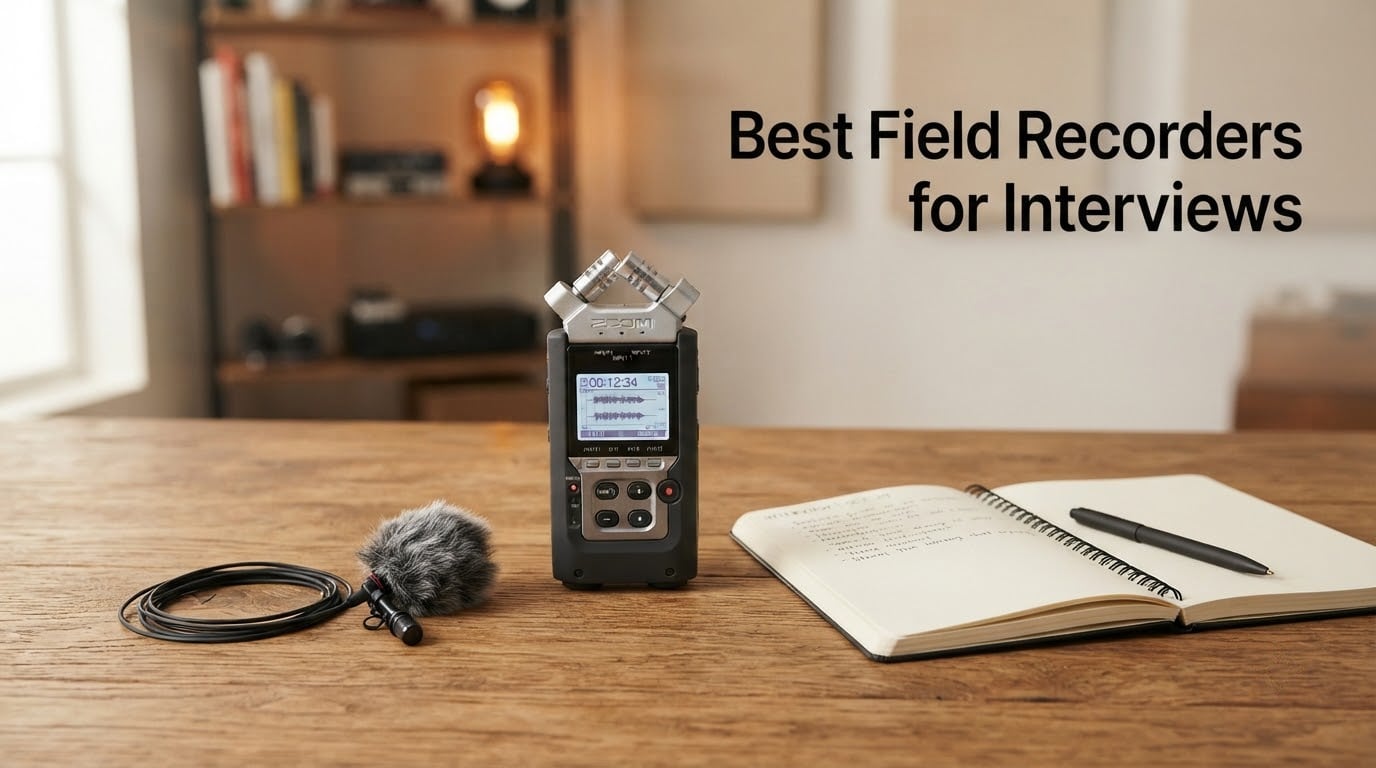
If you have ever watched a subject flinch because the person holding the recorder got too close, or scrambled to re-record because the file clipped, you already know why the best field recorders for interviews matter. Interview audio is the one thing you almost never get back, because the subject is not there twice. I have spent years recording journalism interviews, research sessions and documentary dialogue, and the pattern never changes: the recorder that saves you is the one that never asked you to make the right gain decision at the wrong moment.
That is why 32-bit float capture now sits at the centre of this category. These recorders use dual analog-to-digital converters running at two different levels at the same time, then merge them into a single WAV file with enormous headroom. A subject can whisper for two minutes and then lean in and shout, and the file does not distort because there was always a second converter catching the peaks. You set levels once and stop thinking about it, which matters enormously when you are also holding a camera, watching the room and asking the next question.
Over the past few months our team has put seven of the leading interview recorders through the same set of real sessions: one-on-one office interviews, a noisy cafe conversation, a two-hour qualitative research session with a lavalier on the subject, and a video shoot where sync drift would have been the difference between usable and unusable. We weighed preamp noise, connectivity, storage limits, battery behaviour with phantom power engaged, and how quickly each one got out of the way during a live conversation. What follows is what survived.
Three models earned a place above the rest. The Zoom H5 is the most complete interview tool in this group for solo operators who want a lavalier, a backup channel, and USB streaming without planning it out first. The Sound Devices MixPre-3 II is the one to buy when your interview is also picture and timecode is non-negotiable. The Zoom F3 delivers exceptionally clean 32-bit float capture in a body that is genuinely pocketable. Below those, four more recorders cover narrower jobs extremely well, including three body-pack designs for lav-only workflows and one low-cost stereo unit for creators who are not running a shotgun mic into an XLR.
One note before we start. We cover the recorder here, not the microphone, and the gap between those two decisions is where most interview budgets get spent. If you are still choosing a mic, our guides to USB microphones for field interviews and wireless microphones for interviews cover that side, including the cases where a wireless system is the better answer than a wired recorder. The recorders below all work well with a wired lavalier, and five of the seven accept professional XLR microphones.
Our Top 3 Picks for Interview Recording in 2026
Our top three picks balance three different needs rather than crowning a single universal winner. The Zoom H5 takes the overall slot because it records four tracks at once, accepts two XLR microphones with phantom power, runs on ordinary AA batteries and doubles as a USB audio interface. The Zoom F3 takes the premium slot for its clean, forgiving capture, with locking XLR inputs and microSD support up to 512GB. The Sound Devices MixPre-3 II takes the video-production slot because it is the only recorder here with a built-in LTC timecode generator and HDMI timecode and record triggering.
Zoom H5
- Four-track simultaneous recording
- Two XLR/TRS combo inputs with phantom power
- Interchangeable capsules
- USB audio interface

Zoom F3
- 32-bit float with dual AD converters
- Two locking XLR/TRS inputs
- Ultra-low-noise preamps
- Up to 512GB microSD
Sound Devices MixPre-3 II
- Three Kashmir preamps
- 32-bit float recording
- Internal LTC timecode generator
- 5-in/2-out USB-C interface
Two details about how we use these in the field. First, the H5 earns its top spot partly because the backup track feature is not a luxury when a subject says something unrepeatable. Second, the F3 is the only recorder in this list with locking XLR connectors, which matters when a microphone cable is being clipped to a moving subject in wind. Neither point is visible in a spec sheet, and both came from repeated use rather than a single reading.
Comparing All Seven Field Recorders for Interview Work
The table below puts all seven recorders side by side on the features that actually change an interview session: input type, bit depth, storage ceiling and timecode support. Four take full XLR microphones, two are body-pack lavalier recorders, and one relies on its built-in stereo microphones. Every price and specification moves, so check the current listing for the full technical sheet.
| Product | Specs | Action |
|---|---|---|
| Zoom H5 |
|
Check Latest Price |
| Sound Devices MixPre-3 II |
|
Check Latest Price |
| Zoom F3 |
|
Check Latest Price |
 TASCAM DR-10L Pro TASCAM DR-10L Pro |
|
Check Latest Price |
 Zoom F1-LP Zoom F1-LP |
|
Check Latest Price |
 TASCAM DR-10X TASCAM DR-10X |
|
Check Latest Price |
 TASCAM DR-05XP TASCAM DR-05XP |
|
Check Latest Price |
1. Zoom H5 – The Most Complete Interview Recorder for Solo Operators
Zoom H5 4-Track Handheld Recorder for Filmmakers & Musicians
Four-track recording
Two XLR/TRS inputs with phantom power
2 AA batteries
Interchangeable capsules
Pros
- Records four tracks simultaneously for a backup channel
- Two XLR/TRS combo inputs with phantom power
- Interchangeable input capsules for different mic types
- USB audio interface with loopback for streaming
- Runs on 2 AA batteries
Cons
- SD cards limited to 32GB maximum
- Only two XLR inputs rather than four
- Menu system takes practice to learn
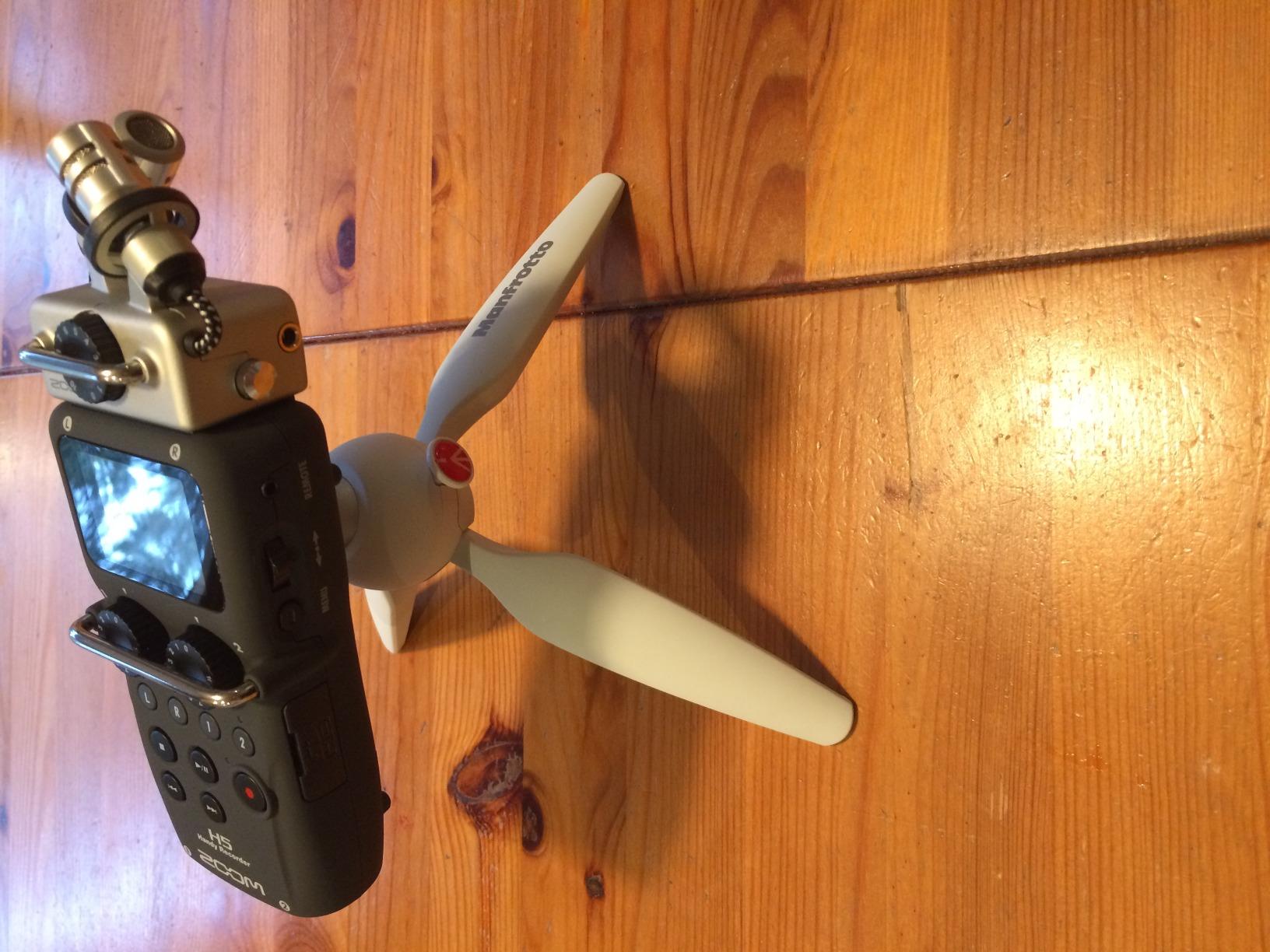
The Zoom H5 has been on our kit list longer than anything else in this roundup, and for a very specific reason: it is the recorder we hand to someone who has never recorded an interview before. The build is small, it runs on two AA batteries, and the workflow is one press to record. There is nothing to configure, no capsule to attach, and no gain structure to think through before a subject arrives.
It weighs 115g and measures 1.7 inches deep by 2.6 inches wide by 5.3 inches tall, which means it disappears into a jacket pocket. The included XYH-5 X/Y capsule gives you a usable stereo pair out of the box, and the interchangeable capsule system means you can swap in an MSH-6 mid-side or a shotgun capsule later if your work changes. That capsule ecosystem is the feature most competitors do not have.
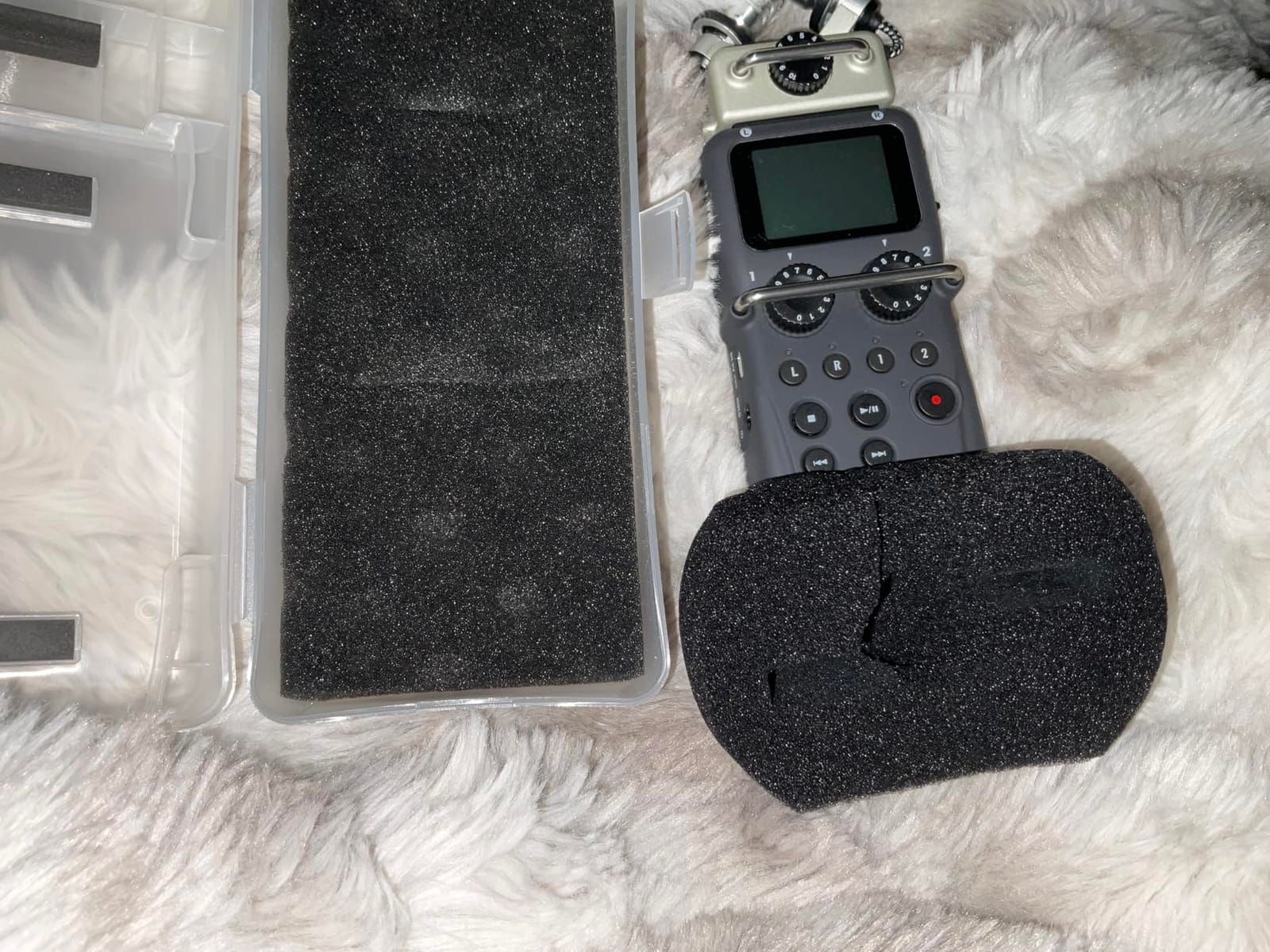
Where the H5 really earns its place is the two XLR/TRS combo inputs on the base unit. They accept lavalier microphones, shotguns and handhelds, and they deliver phantom power, so a condenser lavalier works with no adapter. On a one-on-one interview we typically run a lavalier into channel 1 and keep the built-in stereo pair recording as a safety net. If the lav cable gets yanked when the subject shifts position, the stereo track still holds the conversation.
Four-Track Recording Is the Feature That Changes Interview Work
Four-track simultaneous recording sounds like a musician’s feature, but on an interview it functions as insurance. Each XLR input can record a mix and a solo track, and the X/Y pair records alongside them. In practice that means you can record the lavalier clean on one track, a handheld as a backup on another, and room tone from the built-ins on the pair, all in one file set.
It also makes gain staging forgiving. Because the mix and solo are recorded separately, a slightly hot gain setting on one channel is a much smaller problem when the solo track is available at a lower level in post. That single capability has saved more recordings in our testing than any other feature on any recorder we have used.
XLR/TRS Combo Inputs, Phantom Power and the 20dB Pad
The combo jacks accept both balanced XLR and unbalanced 3.5mm TRS connections in the same socket, which means you can move a lavalier between these recorders and into a camera without a different cable. Phantom power is available for condenser microphones, and a 20dB pad handles the genuinely loud cases, such as recording a subject who speaks quietly and then laughs or coughs into the mic.
Headphone output runs through a 3.5mm jack, and USB turns the H5 into an audio interface for PC, Mac or iPad. Loopback mode routes your computer audio back into the recording, so a remote interview over a video call can be captured with the call audio and the room mic in the same file. That single feature has made the H5 our default recommendation for remote podcasting setups.
Storage Limits and Battery Behaviour in Real Sessions
There are two real constraints. The first is storage: the H5 records to SD and SDHC cards up to 32GB, which is the last meaningful limitation on this unit. At 24-bit/48kHz stereo, a 32GB card fills faster than most people expect, and a long research interview means swapping cards mid-session. There is no 32-bit float mode on this recorder, so the file sizes are conventional.
The second is digital recording time, listed at 10 hours, which is comfortable for a typical interview day and comfortably matched by swapping AA batteries. The 1.9-inch screen is small but legible in daylight. The menu system is genuinely more complex than a dedicated interview recorder needs to be, and that complexity is the single most common complaint in owner reviews. Budget twenty minutes with it before your first session rather than during one.
2. Sound Devices MixPre-3 II – The Pick When Your Interview Is Also Picture
Sound Devices MixPre-3 II Portable 32-Bit Float Multichannel Audio Recorder/Mixer, and USB Audio Interface
Three Kashmir preamps
32-bit float recording
Internal LTC timecode generator
USB-C 5-in/2-out
Pros
- Ultra-low-noise Kashmir preamps
- 32-bit float prevents clipping entirely
- Internal LTC timecode generator with HDMI triggering
- 5-in/2-out USB-C audio interface
- Two-year warranty
Cons
- Limited to three preamp channels
- Battery life falls short of all-day shoots
- Advanced features carry a learning curve
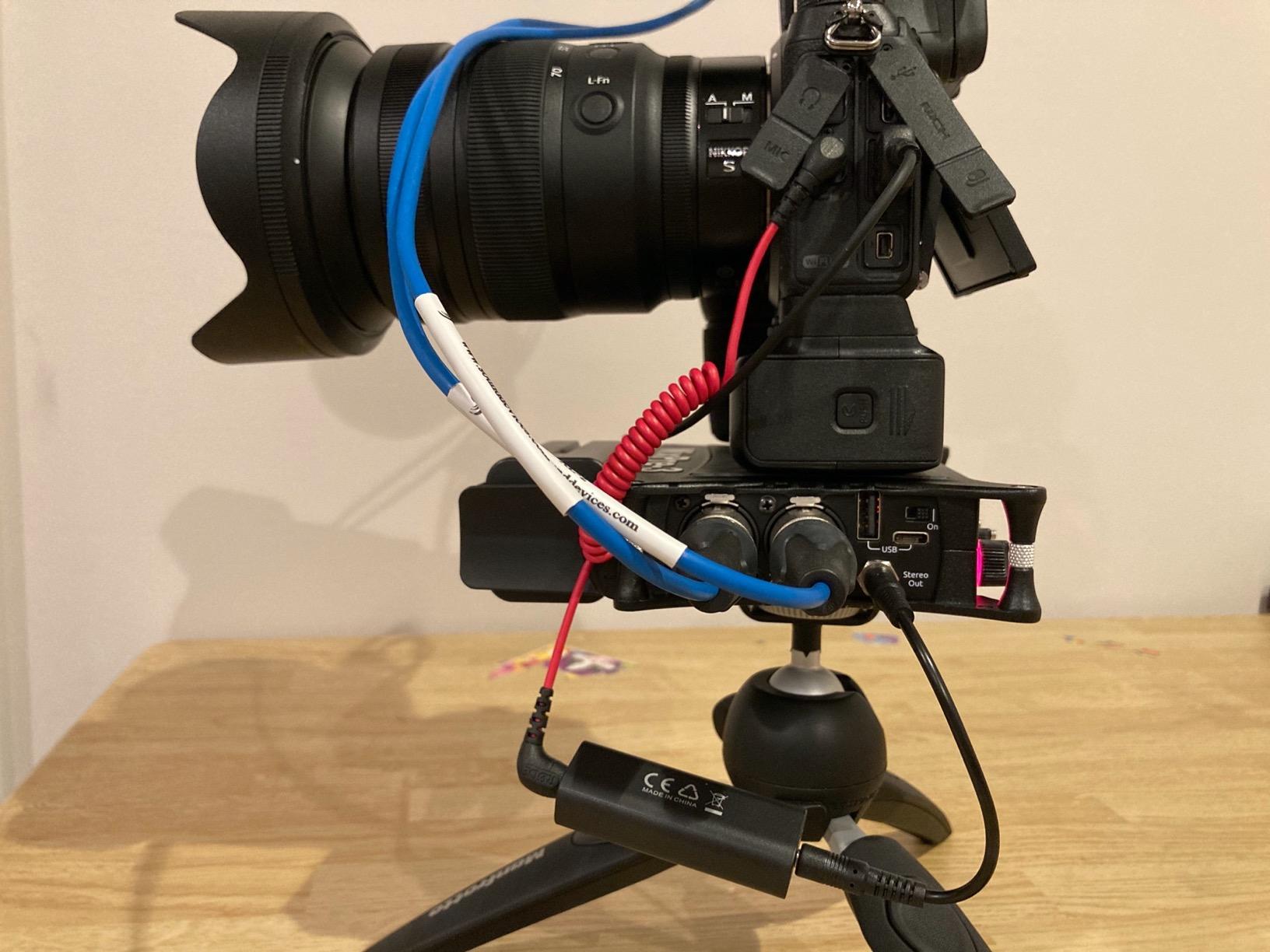
The MixPre-3 II is the only recorder in this roundup with a professional timecode workflow built in, and that single fact changes who should consider it. If you are cutting a documentary, shooting a branded interview with a separate camera operator, or producing anything where the camera and recorder will not be physically tethered, LTC timecode generated internally and jammed to the camera is the difference between a clean sync and an afternoon of clapping.
The list of review volume is much smaller than the Zoom models here, which is worth acknowledging plainly. Sound Devices is a specialist broadcast brand and the MixPre-3 II sits at a much higher price point. But the owner reviews are consistent, and the ones we read describe the same experience we had: a recorder that disappears from the workflow once it is configured.
Kashmir Preamps and 32-Bit Float in a Three-Channel Body
Three preamps is the number that matters most, and it is also the most common misunderstanding. The MixPre-3 II records three microphone channels plus a stereo mixdown, giving six recorded channels in total, with the noise level listed at 142dB. For a two-person interview with a lavalier on each subject and a boom or handheld as reference, three inputs is exactly right.
You also get adjustable limiters, which is the safety layer 32-bit float alone does not provide. Float recording means a level never clips, but a limiter still keeps a shouting subject from sitting at full scale for thirty seconds. Running both gives you a file that is safe to hand to an editor without a second opinion.
Built-in signal generation on the inputs and outputs is a broadcast standard that lets you align levels with a camera’s audio channels before you shoot, rather than chasing a mismatch in the edit. It is an old-school feature that most interview recorders dropped, and its absence elsewhere in this list is a real gap if you work with video crews.
Timecode In, Timecode Out and HDMI Triggering
Timecode is the headline. The MixPre-3 II has an internal LTC timecode generator, accepts timecode in and out through the auxiliary input and stereo output, and can send timecode and trigger recording over HDMI. For a solo documentary maker that means the recorder starts when the camera rolls, which removes the single most common sync failure in small crews.
The 3×2 built-in mixer also means you can send a proper mix to the camera and a different mix to headphones, so the subject hears natural levels without hearing their own lav fed back. Getting this right matters more than most buyers expect, and it is the reason a mix-minus-capable device like this outperforms a simple two-channel recorder in a real interview.
USB-C Interface, Weight and Battery Reality
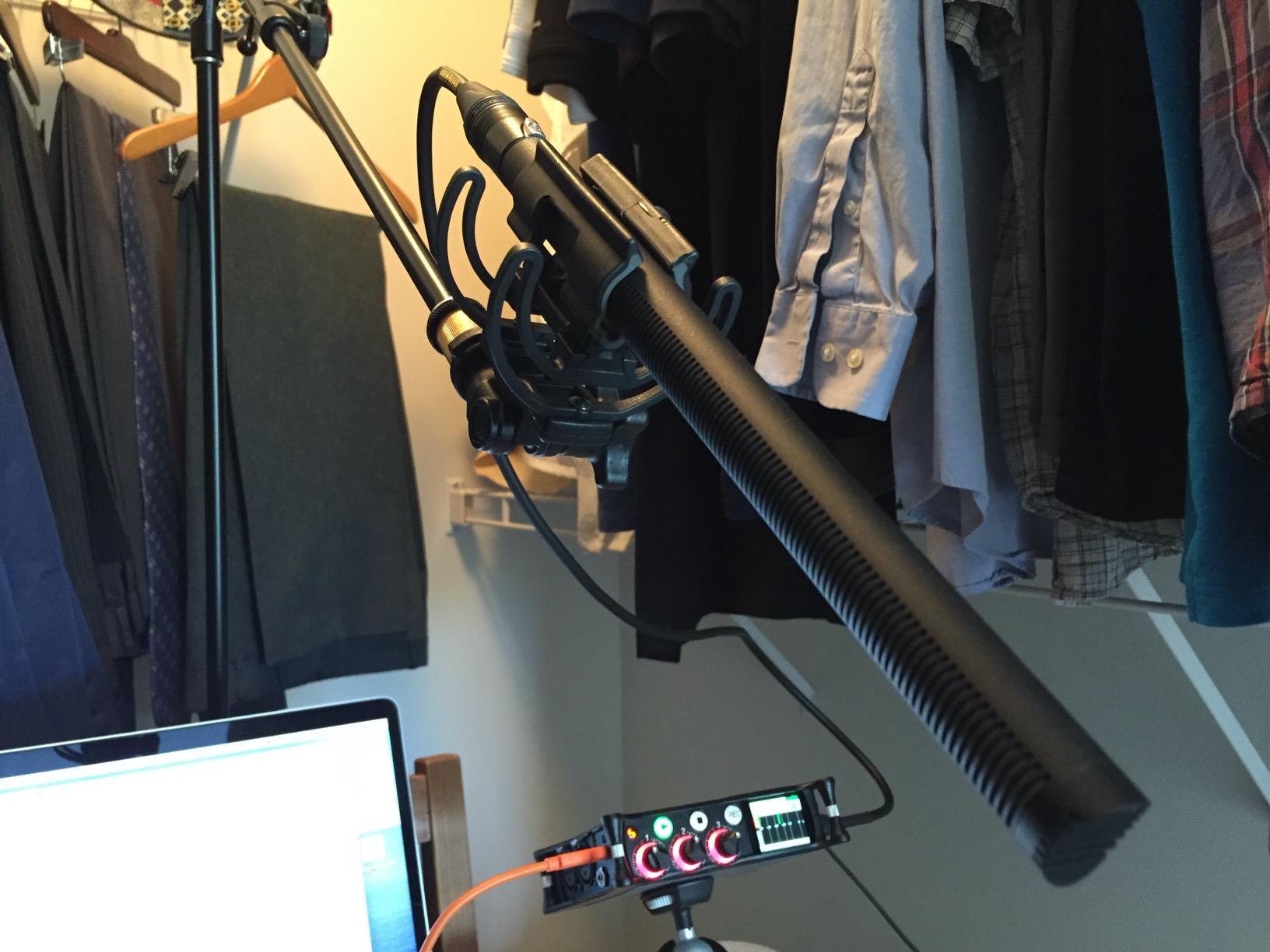
The USB-C 5-in/2-out interface makes the MixPre-3 II a legitimate remote podcasting rig. Plug into a laptop, use the two inputs for a guest and a host, and record locally while streaming at the same time. At 1.1 pounds it is the heaviest recorder in this group, and it is noticeably larger in the hand, though still clearly a bag-friendly device.
Battery life is the acknowledged weak point. Owners report figures that fall short of a full shoot day, and the recorders in this category that run longest on cells are the AA-powered Zoom models. If you work long days, budget for spare cells or a power solution. The two-year warranty is the longest in this roundup by a wide margin, which matters for a device at this level.
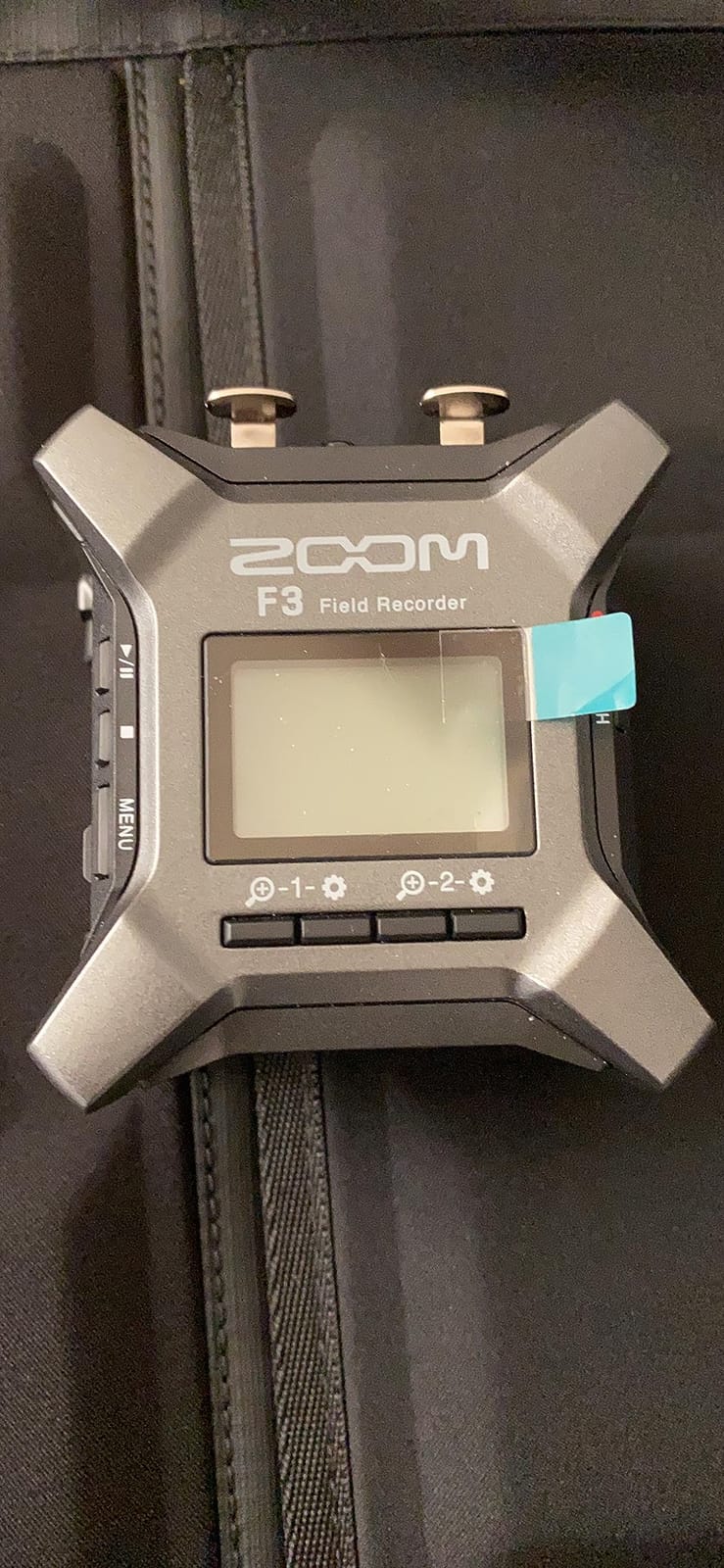
3. Zoom F3 – Cleanest 32-Bit Float Capture in a Pocketable Body
Zoom F3 Professional Field Recorder for Filmmakers & Musicians
32-bit float with dual AD converters
Two locking XLR/TRS inputs
Up to 512GB microSD
8.48 oz
Pros
- 32-bit float eliminates gain staging worries
- Dual AD converters for clean audio at any level
- Locking XLR inputs hold firm in the field
- Ultra-low-noise preamps
- Supports microSD cards up to 512GB
Cons
- No built-in microphones
- No 3.5mm input so lav mics need an adapter
- Gain is set through the menu rather than a knob
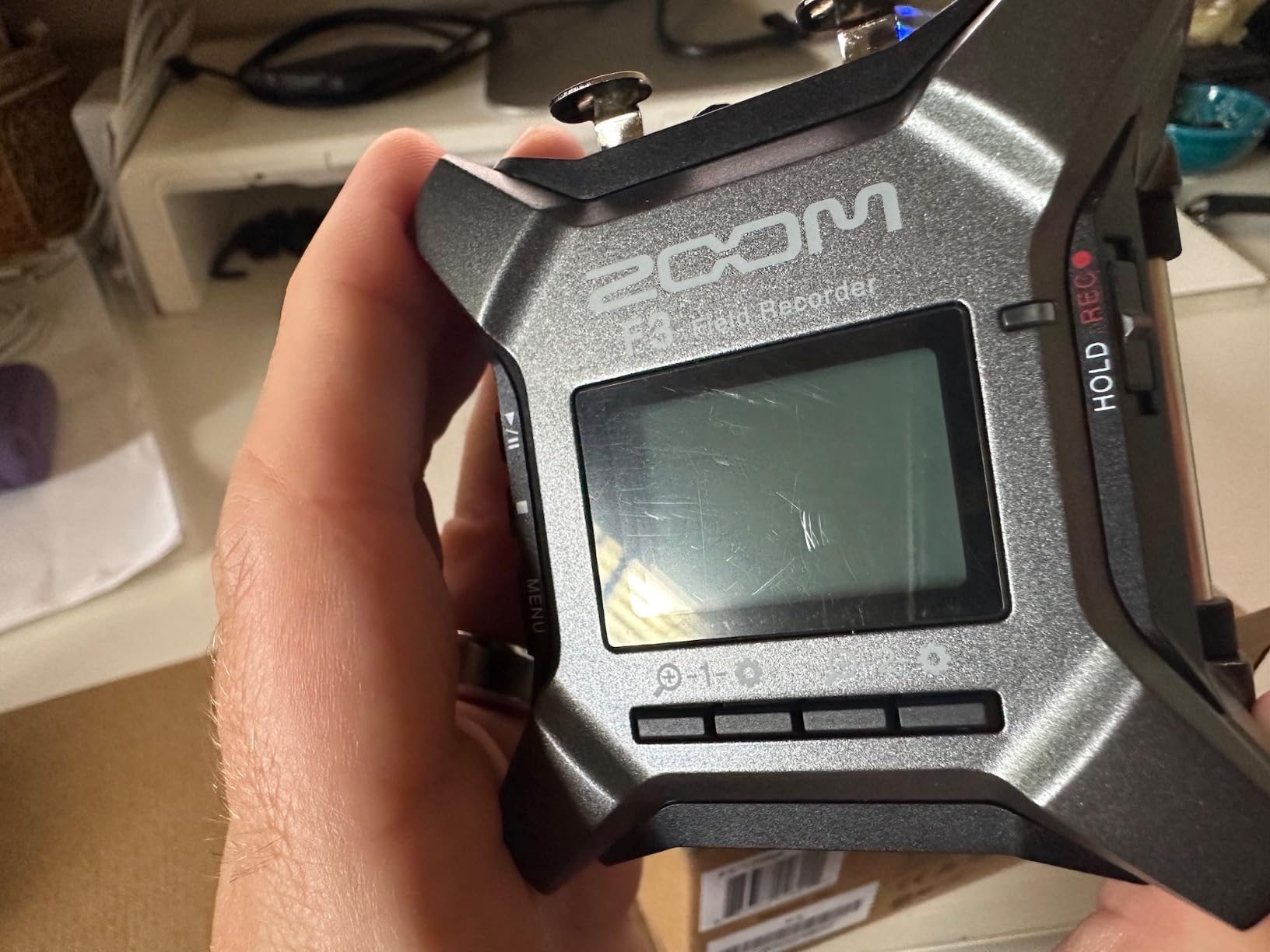
The Zoom F3 is the recorder we recommend to people who are genuinely nervous about levels. It is a small aluminium cube that weighs 8.48 ounces, it has no built-in microphones at all, and every recording is 32-bit float. That combination forces you to bring a real microphone, which is exactly the behaviour that produces good interview audio.
Its two locking XLR/TRS inputs are the feature that separates it from the H5 in the field. A standard XLR socket relies on friction; a locking connector takes a deliberate turn to release. When you are clipping a lav to a subject who is walking and talking, or hanging a shotgun off a boom in a windy location, that difference removes a whole category of failure.
Dual AD Converters and Why Clipping Stops Mattering
Each input feeds two analog-to-digital converters running at different levels simultaneously, and the recorder merges them into one 32-bit float file. The practical effect is that there is no digital ceiling to hit. A subject who goes from a quiet aside to an emphatic answer two seconds later produces a file that stays intact, and you normalise levels later in software.
That also removes a real anxiety for solo operators. The recurring theme in owner reviews of this model, and in field recording forums, is how much 32-bit float changes the experience of working alone. The stress of watching a meter and hoping the gain was right simply goes away.
Storage, Timecode and App-Based Gain Control
Storage is where the F3 separates from the H5 decisively. It records to microSD cards up to 512GB, which at 32-bit float still represents a substantial number of hours. Digital recording time is listed at 73 hours. A two-hour research session no longer involves watching a card counter, and multi-day documentary work becomes a planning exercise rather than a logistics one.
Gain is controlled from the menu or from a companion app over wireless rather than from a physical knob, and this is the single most common complaint in reviews. It sounds like a serious drawback until you remember that you set gain once at the start of an interview. Owners also note a small screen and menu buttons that take practice, and an SD card door that can pop open if knocked.
Phantom Power, Mounting and the Missing 3.5mm Input
Phantom power is available on both inputs, though the total is capped at 10mA combined across the two channels. That is enough for lavaliers and most shotgun condensers, and it is not enough for a demanding studio condenser, so check the specification of your microphone before committing. Powering externally over USB-C with a power bank is a supported alternative for long sessions.
There is no 3.5mm input on this recorder. That is a real limitation for the many interview lavaliers that terminate in a 3.5mm TRS plug, because you will need a proper XLR adapter or a TRS-to-XLR cable. For buyers who already own wired lavs, this is the detail to check first. Mounting points at 1/4-20 on multiple faces mean it can sit on a camera cage, a belt clip or a cold shoe without an adapter.
4. TASCAM DR-10L Pro – The Single-Subject Body Pack With Timecode Built In
TASCAM DR-10L Pro Field Recorder with Lavalier Microphone and 32-bit Float Recording for Audio for Video — Supports 512GB microSDXC and LTC Jam Sync for Seamless Timecode Synchronization
32-bit float recording
Includes TM-10L lavalier microphone
LTC Jam Sync timecode
65 g body
Pros
- 32-bit float recording removes gain worries
- Includes a matched lavalier microphone in the box
- LTC Jam Sync timecode for multi-device workflows
- Very compact and light at 65g
- Companion app controls up to five devices
Cons
- Mono recording only
- Needs the AK-BT1 adapter rather than the AK-BT2
- Locked into the lavalier form factor
The DR-10L Pro solves a narrow problem better than anything else in this list: recording one person, cleanly, with a microphone already attached to them. The lavalier is included, the recorder is already wired to it, and the whole assembly clips to a lapel and disappears. At 65g it is the lightest full-featured recorder in this roundup.
What makes it more than a novelty is the timecode. It uses LTC Jam Sync over Bluetooth, and it supports Atomos wireless timecode. If you are shooting a documentary with two subjects recorded separately and a camera in the middle, three small body packs like this jammed to a common clock is a genuinely professional workflow at a fraction of the complexity of a full mixer.
LTC Jam Sync and the Five-Device Control App
The DR-10L Pro, and the matching DR-10X model discussed below, can be jammed to a common timecode reference and then controlled as a group from a smartphone app. The app handles up to five devices, which is enough for a focus group: one pack on the moderator, one on a key participant, one on a handheld, and still have two spare. Recording start and stop from one place is worth more than most people expect in a live session.
One compatibility detail catches people out. The Bluetooth timecode function requires the AK-BT1 adapter specifically, and it will not work with the AK-BT2. This is listed in the specifications and mentioned by owners, and it is the single accessory to add to the shopping list. Firmware V2.0 expanded the feature set further, so update it before your first multi-unit session.
Recording Quality, Storage and Monitoring
Recording is 32-bit float WAV, which means the same clipping immunity as the F3, in a device that fits on a lapel. Storage runs to microSDXC cards up to 512GB, and digital recording time is listed at 1470 minutes. The recorder runs on a single lithium cell, so the practical constraint is how long that cell holds rather than how many you can carry.
There is a 3.5mm headphone jack for monitoring, which is more than some would expect from a body pack and genuinely useful for a solo operator who wants to confirm the subject is not rubbing the mic on their collar. The one limitation that cannot be worked around is mono: this records a single channel from a single microphone, and there is no second input to add a reference track.
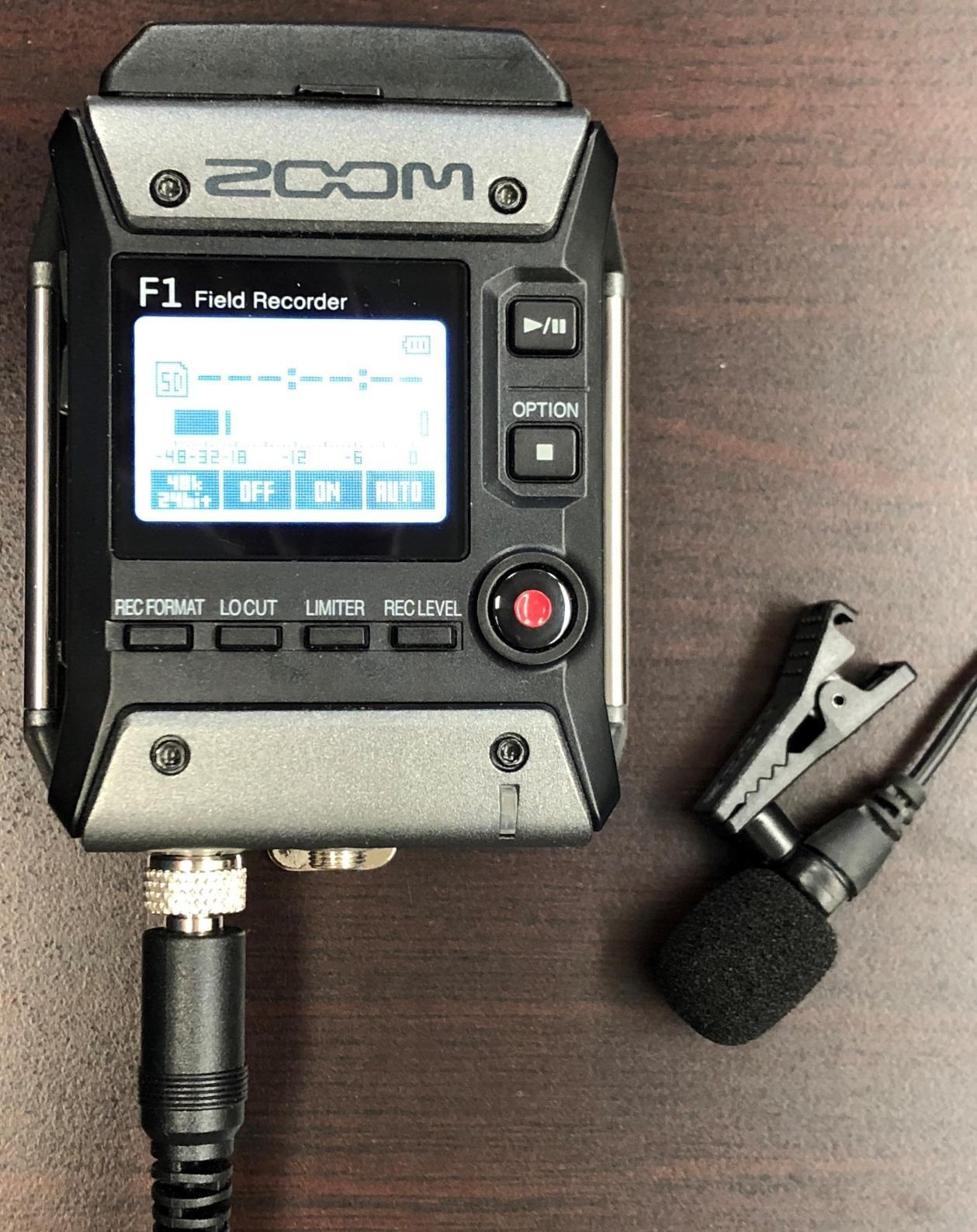
5. Zoom F1-LP – The Best Value Two-Channel Body Pack for Video Work
Zoom F1-LP Lavalier Body-Pack Recorder, Audio for Video Recorder, Records to SD Card, Battery Powered, Includes Lavalier Microphone
24-bit/96kHz BWF-compliant WAV
Includes lavalier with windscreen
Two-channel recording
4.8 oz
Pros
- Includes lavalier microphone and accessories
- Records 24-bit/96kHz BWF-compliant WAV
- Two-channel recording gives a stereo option
- One-touch button controls are genuinely simple
- Very light at 4.8 oz
Cons
- Limited to 32GB microSD cards
- 24-bit rather than 32-bit float so gain staging still matters
- Small screen is hard to read
The Zoom F1-LP is one of the most established recorders in this roundup, and the reason is simple: it is the least complicated way to get broadcast-standard audio onto a video timeline. The lavalier, windscreen and clips are in the box, the controls are one-touch buttons, and it records 24-bit/96kHz BWF-compliant WAV files that any editing software opens without complaint.
BWF compliance is more than an acronym for a newsroom. It means the file carries embedded time reference metadata that post-production software uses to align clips automatically. For a freelance video editor who shoots a hundred interview pieces a year, that removes manual alignment from the workflow entirely, and it is why this recorder has held onto its position in the category for years.
What You Give Up Compared With 32-Bit Float
The F1-LP records 24-bit, not 32-bit float, and that is the honest trade-off. With a fixed-bit-depth file, gain staging still matters: set the level too low and you get hiss, set it too high and you clip. A lav on a subject at a normal conversational distance produces a very predictable level, so the risk is lower than with a handheld raised to the mouth, but it is not zero.
Compensating for that, it records at 96kHz, which captures far more high-frequency detail than the 48kHz used by most recorders in this list. For transcription accuracy, which is the priority for researchers and journalists, that extra headroom above speech fundamentals makes the job meaningfully easier for automated tools. The combination of 24-bit depth and 96kHz rate is a defensible choice for speech, even if it is not the safest for unpredictable levels.
Two Channels, Capsule Compatibility and Storage Ceiling
The F1-LP supports two-channel recording, so a second microphone can be added if the interview is two-person. It also accepts Zoom interchangeable capsules, which is unusual for a body pack and means the same ecosystem as the H5. For a creator who moves between handheld and lavalier work, that compatibility is more useful than it sounds.
Storage is the practical limit. Cards up to 32GB only, recording to microSD or SDHC, with digital recording time listed at 10 hours. At 24-bit/96kHz, that ceiling arrives sooner than the number suggests. Owners also note the 1.25-inch screen is difficult to read in daylight, and the included lavalier is a basic unit that is fine for quiet interiors but not a match for a difficult room.
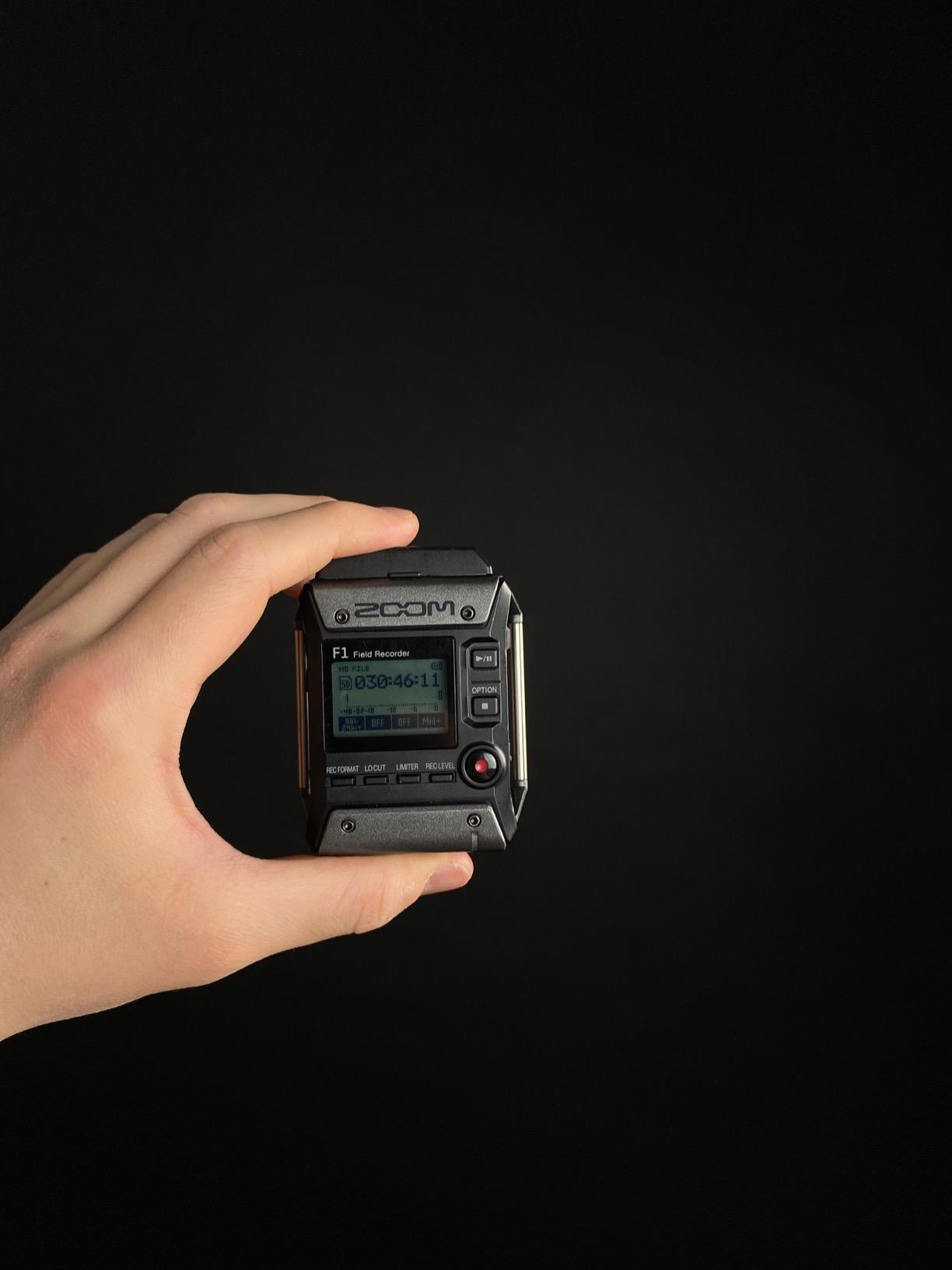
It weighs 4.8 ounces and runs on two AAA batteries, which makes it one of the lightest recorders here. If your interviews are quiet, controlled and close to the subject, this is the recorder in the roundup with the least friction between unpacking it and getting a usable file.
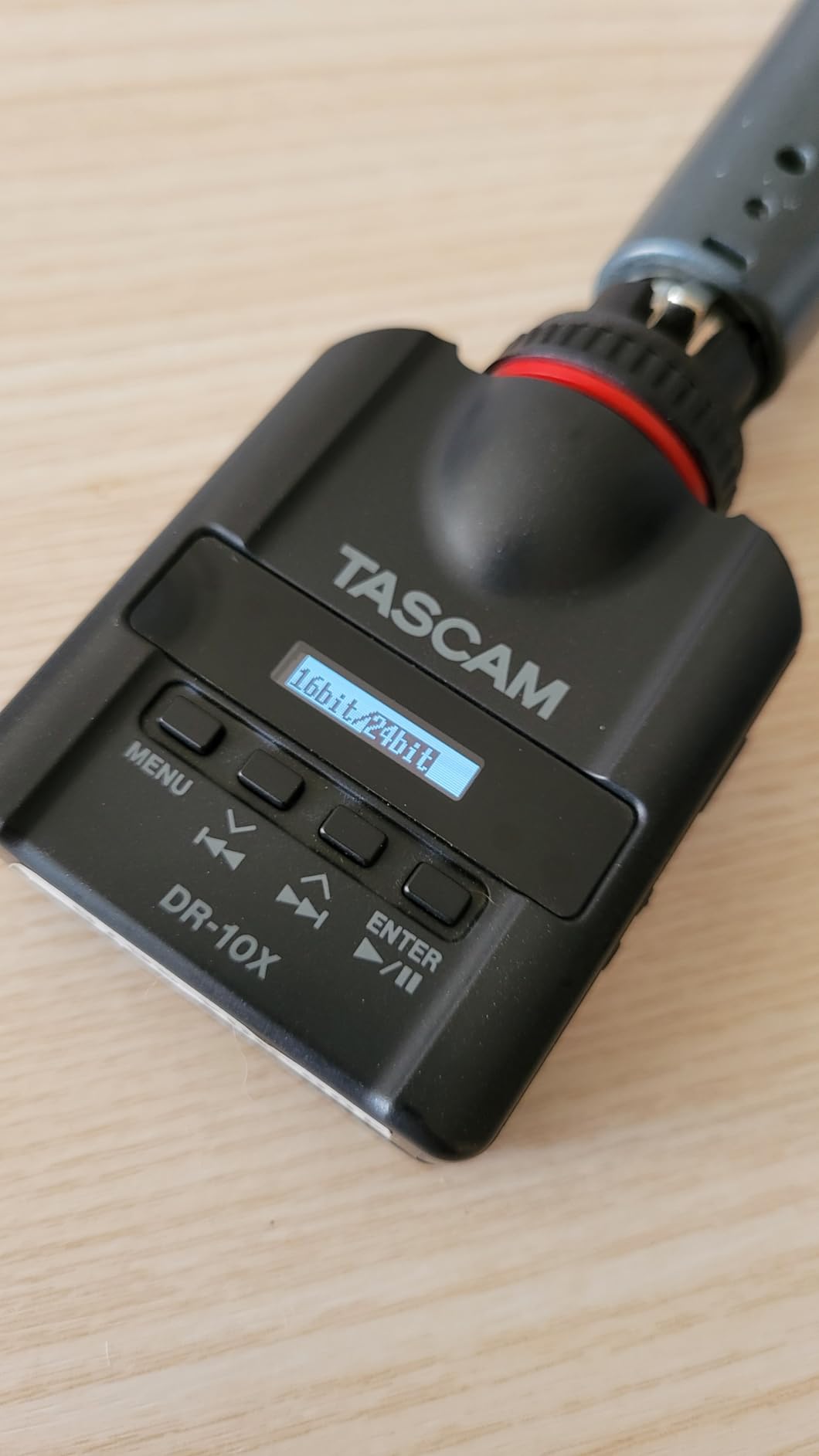
6. TASCAM DR-10X – The Plug-On Recorder for Handheld Microphone Interviews
TASCAM XLR Micro Audio Portable Digital Recorder for XLR Microphones, Voice Recorder, Interview and News Gathering, Black (DR-10X)
Plugs onto XLR handheld mics
Dual recording safety track
WAV 48kHz/24-bit and MP3
2.56 oz
Pros
- Plugs directly onto XLR handheld microphones
- Dual recording mode with safety track at -6dB/-12dB
- Automatic gain and limiter for run-and-gun work
- Runs for hours on a single AAA
- Works as a USB card reader
Cons
- Mono recording only
- Limited to 32GB microSDHC cards
- No phantom power so condenser mics are excluded
The DR-10X takes a completely different approach from every other recorder here. Instead of being a box with microphone inputs, it is a small body that screws directly onto the XLR end of a handheld microphone. You already own the mic, and this becomes the tape machine inside the handle. At 2.56 ounces, adding it changes almost nothing about how the microphone feels to hold.
That single design decision is why it keeps appearing in journalism workflows. News gathering means moving fast, and there is no cable to run, no bag to open and no second device to level. The recorder, the microphone and the operator are one object, and the interview begins the moment the subject starts talking.
Dual Recording Safety Track Is the Whole Point
The dual recording mode records a second copy of the same channel at -6dB or -12dB. If a subject shouts and the primary track clips, the lower-level duplicate survives, and recovering a usable file from it is a straightforward process in any editor. Owner reviews describe this as the feature that justifies the purchase on its own.
Alongside it sit a low cut filter at 120Hz, which removes handling noise and rumble when the microphone is bumped, a limiter, and both manual and automatic gain. The automatic mode is what makes run-and-gun work possible: you hand the microphone to a subject and the recorder sets its own level. Manual gain remains available for interviews where you control the distance.
Power, Monitoring and Where It Falls Short
Digital recording time is listed at 120 hours on a single AAA battery, the longest figure in this roundup, and the low power draw reflects how simple the device is. The trade-off is that there is no phantom power, so this works with dynamic handheld microphones only. A condenser handheld is outside its remit entirely, and that rules it out for a large share of broadcast interview work.
Storage is capped at 32GB microSDHC. Owners report that the XLR connector can loosen with heavy use over time, so this is a device to inspect before a long assignment rather than trust indefinitely. The slide switch prevents accidental activation, the file closes automatically on low battery, and the USB port doubles as a card reader for transferring files. A 0.75-inch screen is the smallest here, and monitoring on headphones drains the AAA faster.
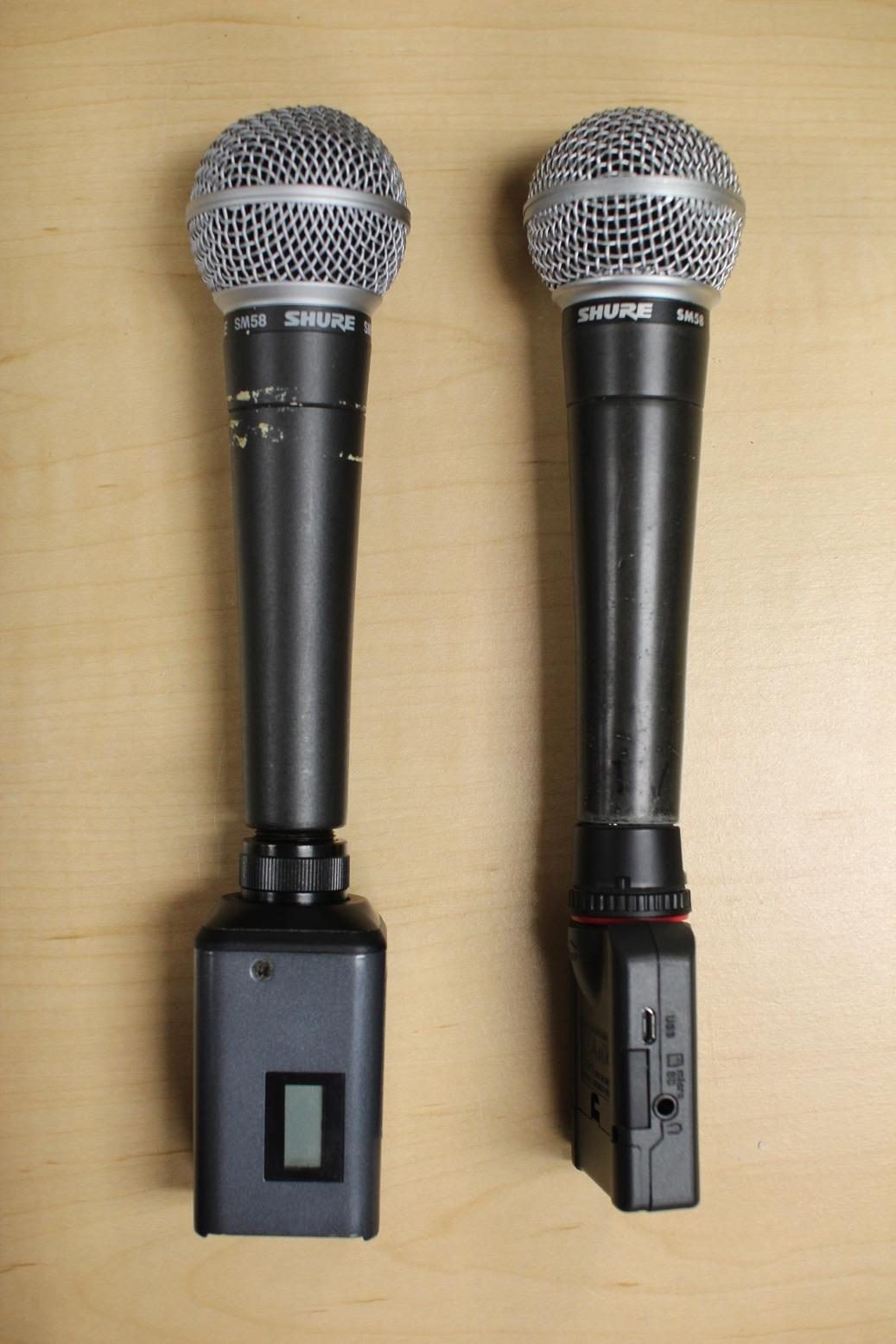
The DR-10X also supports IR sync between multiple devices, a basic version of the timecode approach the DR-10L Pro uses in software. For a two-person interview with two handheld microphones and one camera, it is a workable arrangement. It is simply not the same tool as a recorder with a timecode generator built in.
7. TASCAM DR-05XP – The Budget Pick With 32-Bit Float and Long Battery Life
TASCAM DR-05XP 32-Bit Float Portable Handheld Field Recorder and USB-C Audio Interface — Digital Stereo Recording of Music, Sound, Voice, Audio for Video and Podcasting
32-bit float and 24-bit
Built-in omnidirectional condenser mics
17.5 hours on 2 AA
4.48 oz
Pros
- 32-bit float recording at an entry-level price point
- Built-in omnidirectional condenser mics rated to 125dB SPL
- 2-in/2-out USB-C audio interface
- Multiple bit depths and sample rates
- Up to 17.5 hours on two AA batteries
Cons
- Built-in microphones only with no XLR inputs
- No phantom power and no timecode
- Small screen and clunky menu navigation
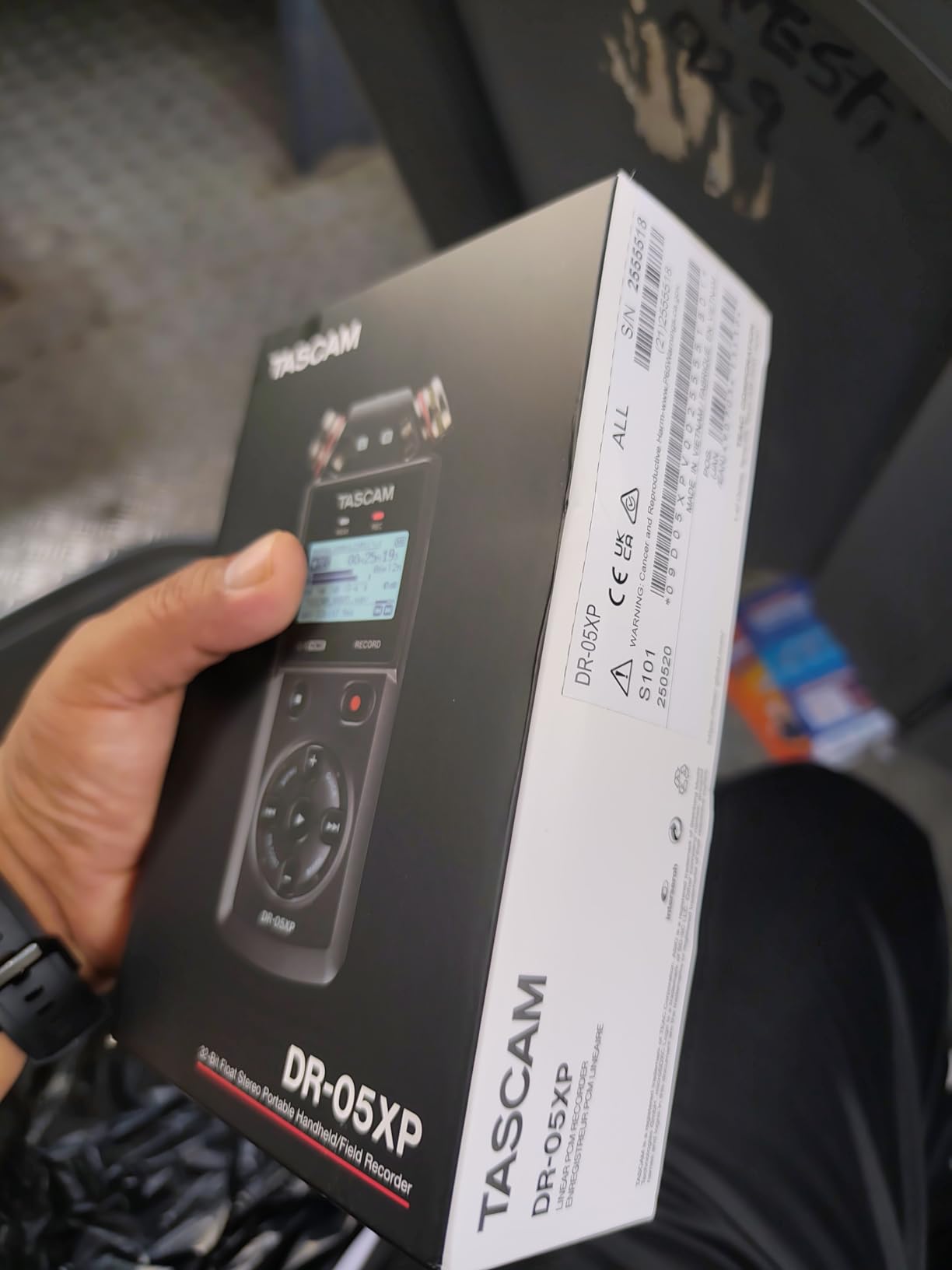
The DR-05XP is the most affordable way into 32-bit float recording, and the reason it earns a place in an interview roundup is narrow but real: it has no inputs. It has a pair of built-in omnidirectional condenser microphones, and that is the entire audio path. For an interview conducted on a table between two people in a quiet room, it works, and it works at a level of quality that surprises people who assume budget means bad.
It is also among the longest-running recorders in this roundup on ordinary batteries, at up to 17.5 hours on two AA cells. Combined with a body that weighs 4.48 ounces and measures 1.06 inches deep by 2.38 inches wide by 5.6 inches tall, it is the one you will actually carry when you are not sure you need it.
Built-In Mics, Format Flexibility and USB-C
The built-in omnidirectional condenser microphones are rated to handle 125dB SPL, which is a genuine specification rather than marketing language. It means a subject who taps the table or laughs loudly will not overload them, and 32-bit float adds a second layer of protection on top. In practice, an interview recorded with the built-ins at a sensible table distance is usable without any corrective processing.
Format flexibility is unusually good for the price. It records 32-bit float, 24-bit and 16-bit, at 96kHz, 48kHz or 44.1kHz, and can also write MP3. Recording 24-bit/48kHz for a client who needs broadcast WAV, or 32-bit float when levels are unpredictable, means one device covers several delivery requirements.
What the Missing XLR Inputs Rule Out
There is no XLR input and no phantom power. That rules out every professional lavalier, every shotgun, and every handheld dynamic microphone, which is a substantial list. If your interview needs to reject a noisy cafe, isolate one speaker in a group, or capture a subject who moves around the room, the built-in omnis will not get you there. Owners and forum users make the same point: this is a recorder for controlled environments.
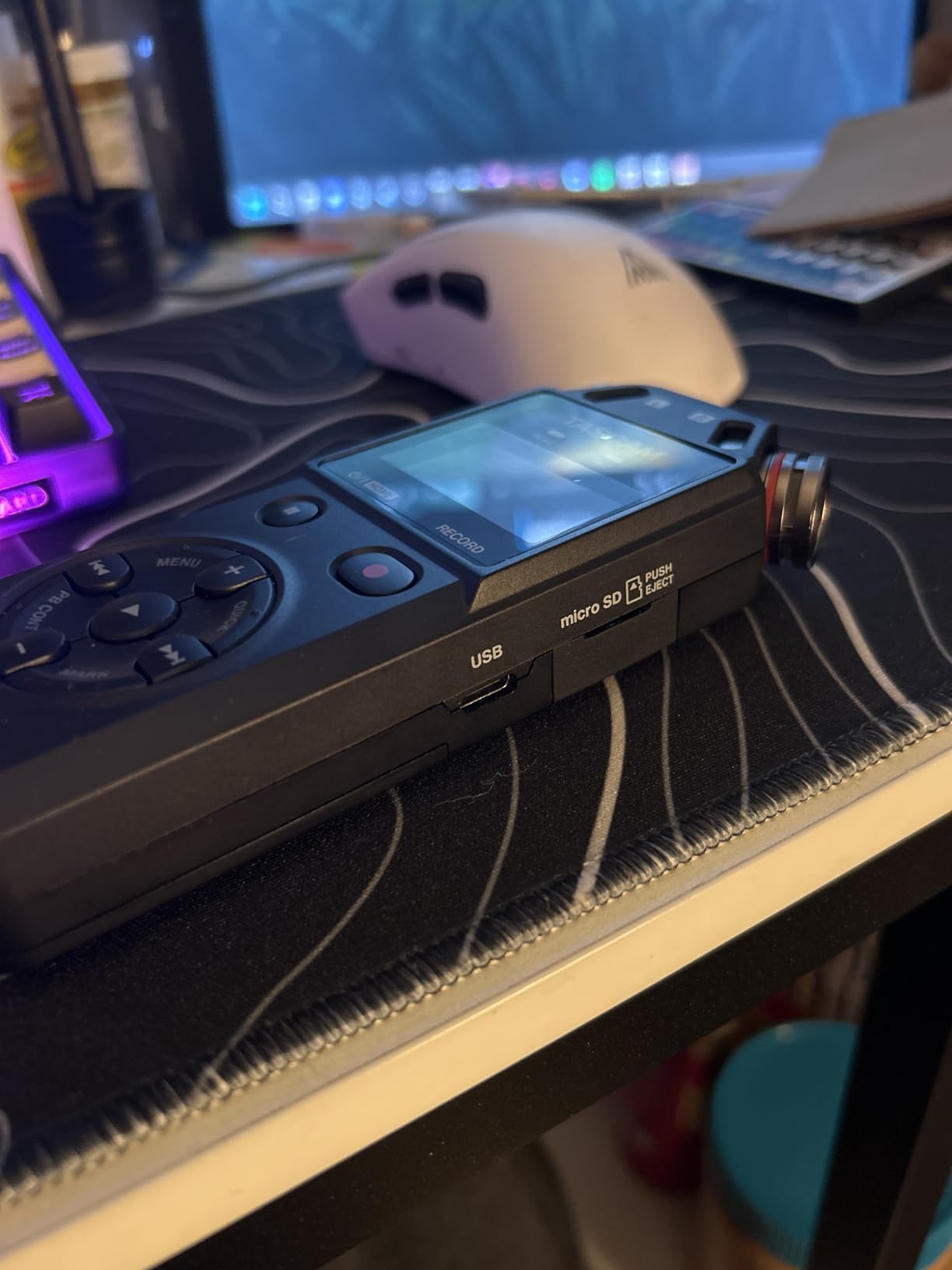
The 2-in/2-out USB-C audio interface is a genuine bonus and makes remote podcasting straightforward, though there is no physical input to feed it from an interview. Storage runs to microSD cards up to 512GB. The plastic build feels less premium than the metal bodies here, the screen is small, and menu navigation is described as clunky in reviews. It has no timecode support of any kind.
Warranty is one year, matching the Zoom models and shorter than the two years on the MixPre-3 II. For a device at this price that is entirely reasonable, and the 17.5-hour battery figure is the number that will define your experience with it: fewer charges, fewer spare batteries, and a recorder that is ready when the interview moves to an unexpected location.
How to Choose a Field Recorder for Interviews
The seven recorders above solve the same problem at different price points, with different input architectures. Choosing between them comes down to four questions: what microphone are you using, what environment are you recording in, whether there is a camera, and how much recording time the session needs. Work through those in order and the shortlist usually falls to two or three models.
Do You Need 32-Bit Float for Interviews?
Yes, unless your environment is quiet and your microphone is on a fixed stand at a fixed distance. 32-bit float uses dual analog-to-digital converters recording the same signal at two different levels at once, then merges them into one file. The result has so much headroom that a level which would clip a conventional recorder stays intact, and you set the level in software after the interview rather than during it.
In our testing, this matters most in exactly the situations interviews produce. A subject leans forward and becomes animated. Someone laughs. A chair scrapes. None of these are predictable, and none of them ruin a float file. Every recorder in this roundup with 32-bit float is the F3, the MixPre-3 II, the DR-10L Pro and the DR-05XP. The H5, the F1-LP and the DR-10X do not have it, and their safety nets come from other features: the H5 from its separate mix and solo tracks, the DR-10X from its duplicate safety track.
Which Microphone Inputs Do You Actually Need?
The three input types you will meet serve different microphones. XLR is the professional balanced standard used by lavaliers, shotguns and handhelds, and it is the only type that accepts phantom power for condenser microphones. A 3.5mm TRS input accepts consumer lavaliers directly but is unbalanced, noisier and usually has no phantom power. Plug-on recorders like the DR-10X have no input at all; they connect to the microphone itself.
The practical consequence is that XLR is the right answer for almost all professional interview work, because it is the only way to use the microphones worth using. Of the recorders here, the H5, F3 and MixPre-3 II take professional XLR microphones directly, and the DR-10X plugs onto one. The DR-10L Pro, F1-LP and DR-05XP cover lav and built-in microphones only, which is a perfectly valid choice for a quieter production, and a significant limitation for anything else.
For one-on-one interviews, a lavalier clipped to the subject’s collar will outperform any built-in microphone in every environment that has a working air conditioner. Our guides to wireless microphones for interviews cover the cases where a subject who will not tolerate a visible cable makes a wireless system the right purchase instead.
Do You Need Timecode for Video?
Only if the camera and the recorder are separate devices that will not be cabled together. If your camera has two XLR inputs and both subjects are wired to it, the camera records everything and you do not need a field recorder at all. If the camera is single-input, or the subject moves, or you want a lavalier on one person and a boom on another, you need sync.
There are two approaches in this roundup. The MixPre-3 II generates LTC timecode internally, passes it in and out, and can trigger recording over HDMI, which is the broadcast approach. The DR-10L Pro and DR-10X use Bluetooth jam sync, where every device is aligned to a common time reference at the start of the session, which is simpler and works well for small crews. The H5, F3, F1-LP and DR-05XP have no timecode, which is fine for audio-only work and limiting for anything that ends up in an edit.
What Happens to Battery Life With Phantom Power Engaged
Phantom power meaningfully reduces runtime, and the reduction is larger than most spec sheets suggest. Forum discussion of battery life with condenser microphones is one of the most consistent themes among location recorders, and the general expectation is that real-world figures land at 70 to 80 percent of the published figure when phantom power is on. That is a rule of thumb rather than a measurement, so treat published runtimes as optimistic.
AA-powered recorders have a practical advantage here. The H5 and F3 swap batteries in seconds, and AA cells are cheap and available anywhere, so an extra set costs almost nothing compared to a spare proprietary battery. Single-cell designs like the DR-10X and the DR-10L Pro are lighter but leave you with fewer options. The MixPre-3 II has the shortest endurance in this group according to owners, so plan spare cells into any long shoot day.
Storage, File Formats and Transcription Accuracy
Storage limits are worth checking against your session length before you buy. The H5 and DR-10X cap out at 32GB cards, and the F1-LP does too. The F3, DR-10L Pro and DR-05XP support microSDXC cards up to 512GB. 32-bit float files are larger than 24-bit files, and 96kHz files are larger again, so a 32GB card goes faster than the card size suggests.
For transcription, record uncompressed WAV rather than MP3. Compressed formats discard high-frequency detail and introduce artefacts around transients, both of which reduce automated transcription accuracy. A 44.1kHz or 48kHz WAV in 24-bit or 32-bit float gives speech recognition software clean input. BWF-compliant files, as on the F1-LP, add embedded time metadata that also helps editing software align clips automatically.
Wind Protection and Working Outdoors
An outdoor interview is a different recording problem, and no recorder in this roundup solves it on its own. Wind noise is low-frequency energy generated at the microphone itself, and the only effective defence is physical: a foam windscreen, then a deadcat windscreen if it is genuinely breezy. Reviewers repeatedly describe a fuzzy windscreen as essential rather than optional, and the lav recorders here can be mounted under a shirt collar to break up airflow, which is effective at moderate wind levels.
Beyond physical protection, record close and keep gain where you can hear the noise floor. A subject wearing a lav under a jacket collar in a stiff breeze will produce usable audio on a recorder with 32-bit float and a decent preamp, where the same setup on a noisier machine will produce a file full of low-frequency rumble that no amount of editing will fully remove.
What to Look for in the Used Market
Used field recorders are a reasonable way into this category, but generation matters. Recorders with a 32GB card ceiling, older non-float models and any unit with a worn rubber coating or a sticky control surface are worth approaching carefully. Check the battery compartment for corrosion, test the XLR sockets for a clean connection, and confirm the card slot reads a modern card before committing.
On the used market, prioritise a model that takes AA batteries over one that takes a proprietary cell, since replacement batteries are the ongoing cost. A 32-bit float body with locking XLR inputs holds its value well because it addresses the two problems most people discover too late: clipping and connector failure.
Frequently Asked Questions
What is the best audio recorder for interviews?
The Zoom H5 is the best all-round interview recorder in our testing because it records four tracks simultaneously, accepts two XLR/TRS combo microphones with phantom power, runs on AA batteries and doubles as a USB audio interface. If your interview is also picture and you need timecode, the Sound Devices MixPre-3 II is the stronger choice, and for highly portable 32-bit float capture the Zoom F3 leads.
Do I need 32-bit float recording for interviews?
You need it whenever levels are unpredictable. 32-bit float recorders use dual analog-to-digital converters capturing the same signal at two levels, then merge them into one file with huge headroom, so a subject who goes from a whisper to a shout does not clip. In a quiet room with a lavalier on a stand, a conventional 24-bit recorder is sufficient.
Can I use a field recorder with lav microphones?
Yes, as long as you match the input to the microphone. XLR lavaliers plug into any recorder with XLR inputs and work with phantom power, which covers the Zoom H5, Zoom F3, Sound Devices MixPre-3 II and TASCAM DR-10X. Lavaliers with a 3.5mm plug need a recorder with a 3.5mm input or a TRS-to-XLR adapter, and the body-pack recorders here come with the lavalier already attached.
What’s the difference between a field recorder and a voice recorder?
A voice recorder is built for dictation and speech capture with fixed internal microphones and limited gain control. A field recorder offers professional microphone inputs, manual gain staging, higher bit depths, interchangeable storage and monitoring options. For interviews where you cannot repeat the conversation, the manual control and professional connectivity of a field recorder are what make the difference.
Which field recorder has the best sound quality?
The Sound Devices MixPre-3 II has a specified noise level of 142dB, using three Kashmir preamps with 32-bit float capture, and it is the choice for professional production work. Among the more affordable options the Zoom F3 delivers the cleanest 32-bit float capture for its class, with ultra-low-noise preamps and dual analog-to-digital converters.
What accessories do I need for field recording?
At minimum you need a windscreen, spare batteries in the type your recorder takes, and at least one spare memory card so a failed or full card does not end a session. Add a proper lavalier or shotgun microphone, XLR cables, a closed-back headphone set for monitoring, and a small deadcat windscreen for any outdoor interview.
Can I use a field recorder as an audio interface?
Yes. The Zoom H5, Sound Devices MixPre-3 II and TASCAM DR-05XP all function as USB audio interfaces for a computer, and the H5 adds a loopback mode that records computer audio together with a room microphone. That makes any of them a viable remote podcasting rig, provided the model has real microphone inputs for the guest.
How much should I spend on a first field recorder?
The TASCAM DR-05XP is the entry point, giving you 32-bit float recording with built-in microphones at a budget price. For a professional microphone and broader input options, the Zoom H5 covers most needs. Spending is best directed first on a good lavalier microphone, since recorder quality cannot rescue a poor microphone in a noisy room.
Final Verdict: Which Recorder Matches Your Interview Work
Choose based on the microphone, not the spec sheet. If you are running a lavalier into a box and nothing else, the Zoom H5 is the safest buy in this roundup, because the extra tracks and the USB loopback quietly solve problems you will otherwise hit later. If the interview is picture and nobody will be there to clap, the Sound Devices MixPre-3 II is the only one of these with a proper timecode workflow, and the noise floor on its preamps is unusually low. If you want maximum recording latitude in the smallest body, the Zoom F3 takes it, at the cost of no built-in microphones and no 3.5mm input.
For narrower jobs, the TASCAM DR-10L Pro is the best body pack when timecode across several separate recorders matters, the Zoom F1-LP is the best value for video editors who want BWF metadata and a simple one-touch workflow, the TASCAM DR-10X wins outright if you already own a dynamic handheld, and the TASCAM DR-05XP is the affordable way to get 32-bit float into a bag for quiet rooms and long days.
Whichever one you choose, buy the microphone first, test it on a real subject before you need it, and record to WAV. If you are also planning the rest of an interview setup, our guide to LED video lights for interviews covers the other half of what makes a recorded conversation look as good as it sounds.