
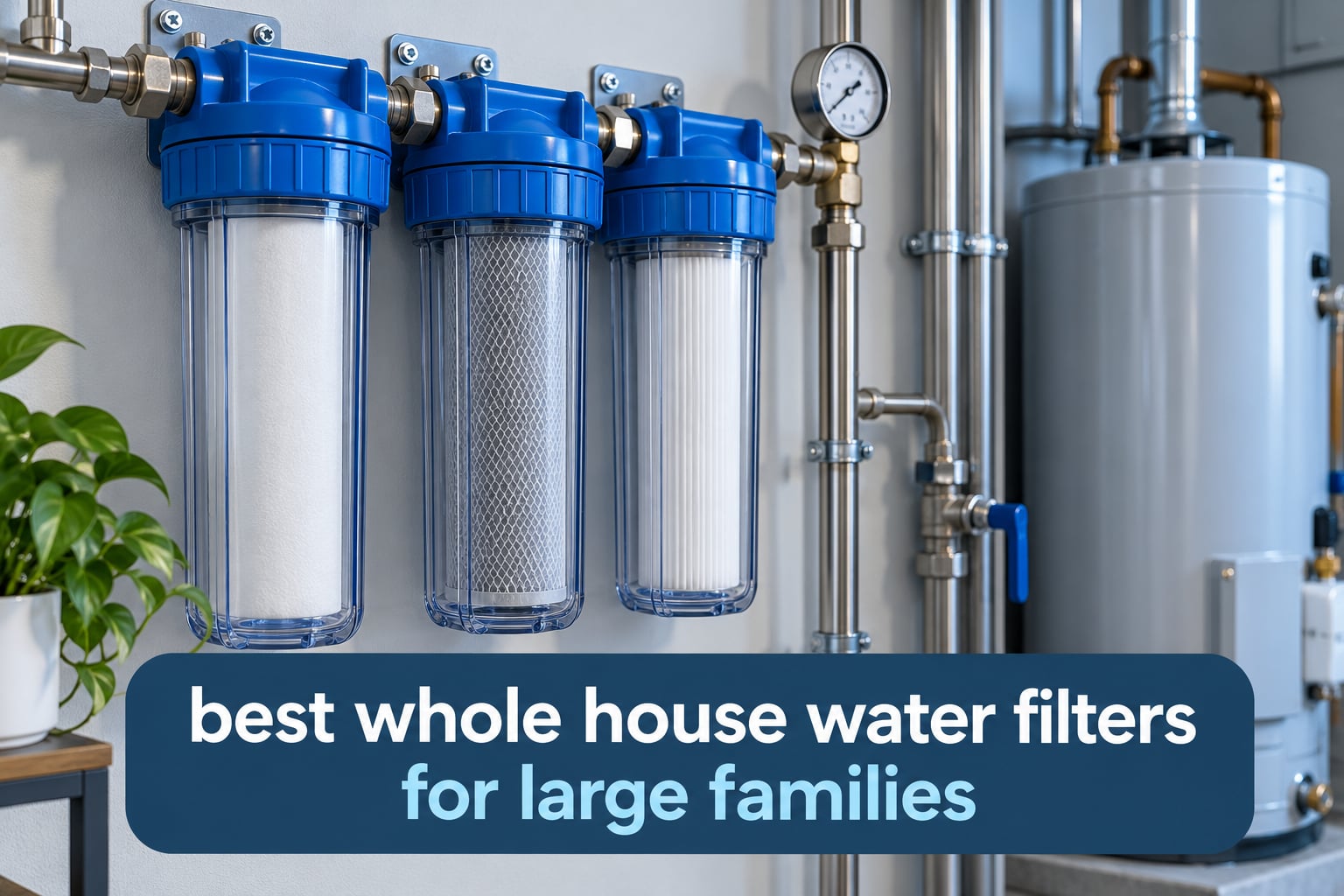
The best whole house water filters for large families are the systems rated at 15 GPM or higher, because a family of five to eight can easily pull 15 to 20 gallons per minute through the pipes when showers, laundry and the dishwasher run at the same time. Our top pick, the iSpring WGB21B, handles 15 GPM through 1-inch ports and holds a 50000-gallon sediment and carbon cartridge pair. Below it we rank eight systems that actually survive the demand pattern of a busy home, including the highest-flow cartridge housing, the longest-lasting media tank, and the pick built specifically for well water with iron.
Most sizing guides start with a chart. We started with the math instead, because households on this topic almost never arrive at a hardware store with a flow number in hand. They arrive with a symptom: the upstairs shower thins out whenever the dishwasher kicks on, or the water heater lining is gone in four years.
We spent several weeks reading spec sheets, warranty terms and owner reports on all eight systems below, and cross-checking every published number against what owners actually observe after a year of use. Nothing here is paid placement. Where a removal claim comes from the manufacturer rather than a third-party certification, we say so.
Our Top 3 Whole House Filters for High-Demand Homes
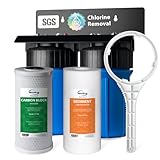
iSpring WGB21B 2-Stage
- 15 gpm peak flow
- 50000 gallon capacity
- 5 micron sediment plus CTO carbon block
- 1 inch inlet and outlet

iSpring WGB32B 3-Stage
- 15 gpm peak flow
- 100000 gallon capacity
- Three 20 inch Big Blue housings
- Removes up to 99 percent chlorine

Express Water 3-Stage
- 17 gpm peak flow
- 100000 gallon capacity
- KDF and carbon stages
- Polyphosphate anti scale media
Why Large Families Undersize Their Filters
Here is the number that changes most purchases: a rough rule of thumb puts indoor use at roughly 50 to 80 gallons per person per day, and a home of six people running two showers, a dishwasher, laundry and irrigation can push past 1000 gallons on a Saturday morning alone.
A 3-stage cartridge system rated at 10 GPM with 3/4-inch inlet and outlet fittings simply cannot feed that load. The water has to go somewhere, and it comes out as a pressure drop at the fixture furthest from the main line, which is almost always the upstairs shower. This is the single most common complaint we found in homeowner discussions about high-volume filtration setups.
One long-running thread on r/WaterTreatment follows a nine-person household averaging roughly 38000 gallons of indoor water per month. Their old point-of-use setup could not keep up with that draw, and their entire shopping plan changed once they turned the volume into a sizing requirement instead of a preference.
Peak simultaneous demand is what matters, not the daily average. Two showers running at roughly 2 gallons per minute each, a dishwasher, a laundry machine and an irrigation zone will exceed 15 GPM in most homes. That is why the flow rating on the spec sheet is the first number to check and the last one shoppers look at.
Sizing bands that hold up in practice:
- 1 to 2 bathrooms, up to 3 people: 7 to 10 GPM is enough. A 10-inch housing or a small tank works.
- 3 bathrooms, 4 to 5 people: 10 to 15 GPM. This is where 20-inch Big Blue housings start to make sense.
- 4 or more bathrooms, 6 to 8 people: 15 to 20 GPM, with 1-inch inlet and outlet on both ends.
- Above 20,000 gallons per month or irrigation on the main line: 20 GPM and up, ideally a tank-based media system rather than a stack of cartridges.
One more sizing factor catches people: the third-quarter inch fitting on cheap housings. Even when the housing is rated for 15 GPM, a 3/4-inch connection caps real-world flow well below that figure. On a large home that single detail matters more than the cartridge marketing.
All 8 Whole House Filters Compared in 2026
| Product | Specs | Action |
|---|---|---|
| iSpring WGB21B 2-Stage |
|
Check Latest Price |
| iSpring WGB32B 3-Stage |
|
Check Latest Price |
| Express Water 3-Stage |
|
Check Latest Price |
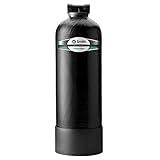 A. O. Smith 600K Gallon A. O. Smith 600K Gallon |
|
Check Latest Price |
 Aquasana Max Flow WH-1010-CT-LM Aquasana Max Flow WH-1010-CT-LM |
|
Check Latest Price |
 3M Aqua-Pure AP904 3M Aqua-Pure AP904 |
|
Check Latest Price |
 Home Master 3-Stage Home Master 3-Stage |
|
Check Latest Price |
 iSpring Heavy Metals 3-Stage iSpring Heavy Metals 3-Stage |
|
Check Latest Price |
1. iSpring WGB21B 2-Stage – Best Overall Pick for Large Families
iSpring WGB21B 2-Stage Whole House Water Filtration System, 50000 Gallons
15 gpm max flow
50000 gallon capacity
5 micron sediment plus CTO carbon
No power needed
Pros
- 15 gpm through 1 inch inlet and outlet ports
- Removes over 90 percent of chlorine
- Caps at 50000 gallons between changes
- Keeps healthy minerals in the water
- Filter wrench and pressure release valve included
Cons
- Threaded fittings need careful PTFE taping
- Some housings and threads arrive damaged
- Cartridges need replacing roughly once a year
The WGB21B is the simplest thing on this list that still respects a large household’s demand. It runs two 10-inch by 4.5-inch housings on 1-inch inlet and outlet ports, rated to 15 GPM, and it arrives pre-assembled on a mounting bracket with the filter wrench and a pressure release valve already in the box.
The first housing takes a 5-micron polypropylene sediment cartridge that catches dirt, sand, rust and scale particles. The second is a CTO carbon block rated to remove more than 90 percent of chlorine along with VOCs such as pesticides, herbicides and industrial solvents. Capacity is listed at 50000 gallons, which the manufacturer frames as roughly a year of supply for a family of four.
For a family of six, expect to be on that cartridge change schedule more often than once a year, and plan the budget for it accordingly. What you get in exchange is the rare combination of decent flow rating, small physical footprint and an unusually responsive support operation based in Atlanta, Georgia, which repeatedly ships replacement manifolds and canisters at no charge.
Why 1-Inch Connections Matter More Than the Gallon Number
A lot of budget filtration gets cut off at the fitting, not at the cartridge. The WGB21B uses 1-inch NPT on both ends, and that single spec is what allows the published 15 GPM rating to survive contact with a real house.
If you have ever run two showers and a washer at once and felt the pressure sag, the sag was usually the house’s smallest restriction absorbing the difference. Replacing a 3/4-inch connector with a 1-inch one often does more than swapping the filter media.
What CTO Carbon Block Does and Does Not Remove
CTO means chlorine, taste and odor. The carbon block adsorbs those compounds onto its surface, which is why the after-taste improvement shows up within days of the first change.
It also handles a good share of VOCs, and that matters more than most buyers expect because municipal disinfection byproducts ride along with chlorinated water. What it does not do is soften water, lower TDS, or remove metals. This system will not touch iron, and it will not fix hard water spots.
Installation Reality Check
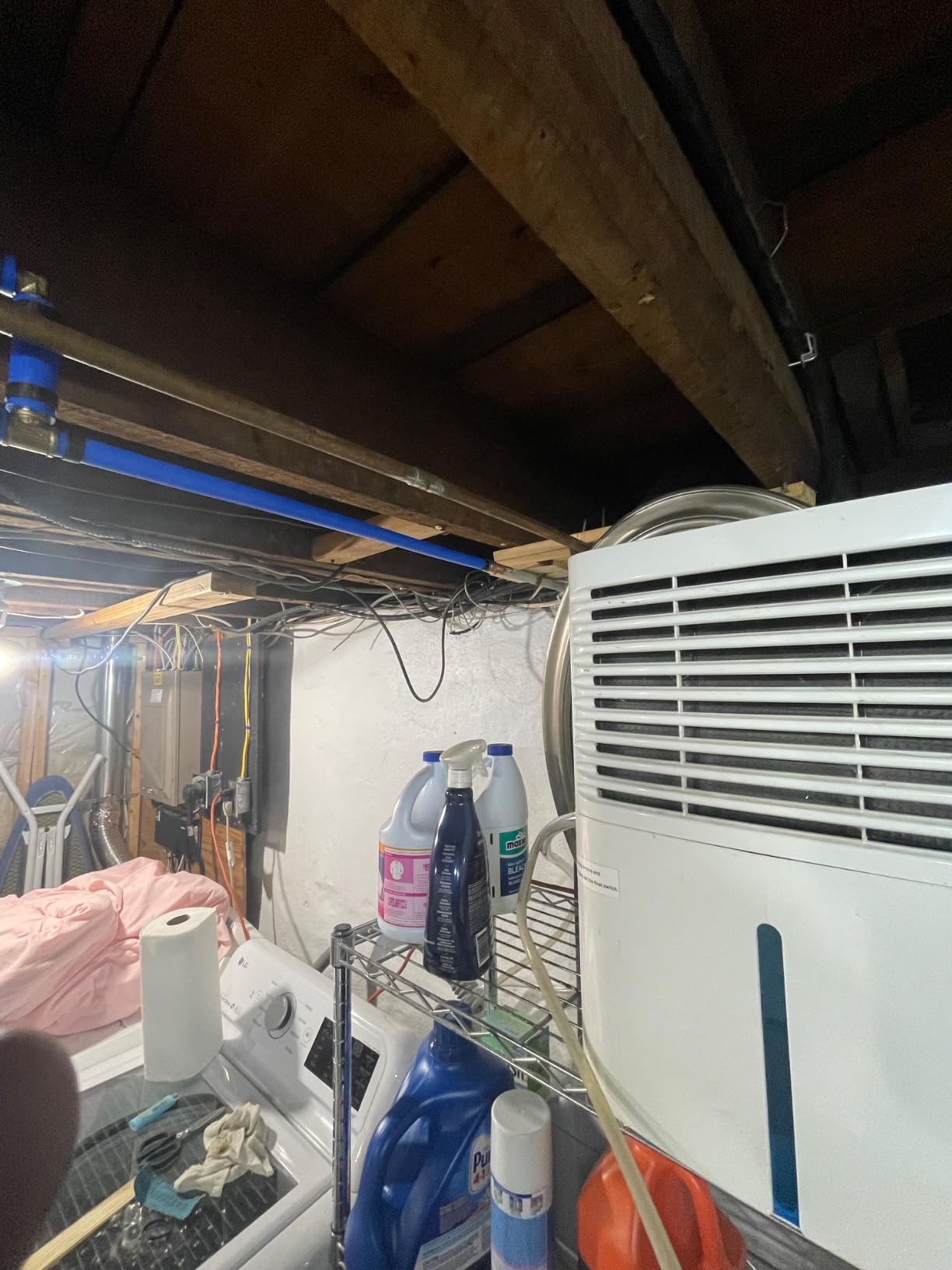
Owners describe this as a straightforward weekend job if you have basic plumbing experience. Cut into the main line after the shutoff, mount the bracket to a stud, thread the housings, and go.
The recurring complaint is sealing, not assembly. Threaded housing fittings are leak-prone, and multiple owners report needing many wraps of PTFE tape plus pipe dope on the housing threads. A few also received cracked housings or damaged threads in the box. Budget twenty minutes of teflon work per housing rather than assuming a dry hand-tight fit is enough.
Who This Is Right For
This fits a family on municipal or chlorinated water who wants chlorine and sediment gone at every tap, has roughly four or more people, and wants the smallest sensible footprint in a tight mechanical room.
Skip it if you are on a well with iron or sulfur, or if hard-water scale is the main complaint. In those cases the Home Master three-stage system or the Express Water unit is a better fit.
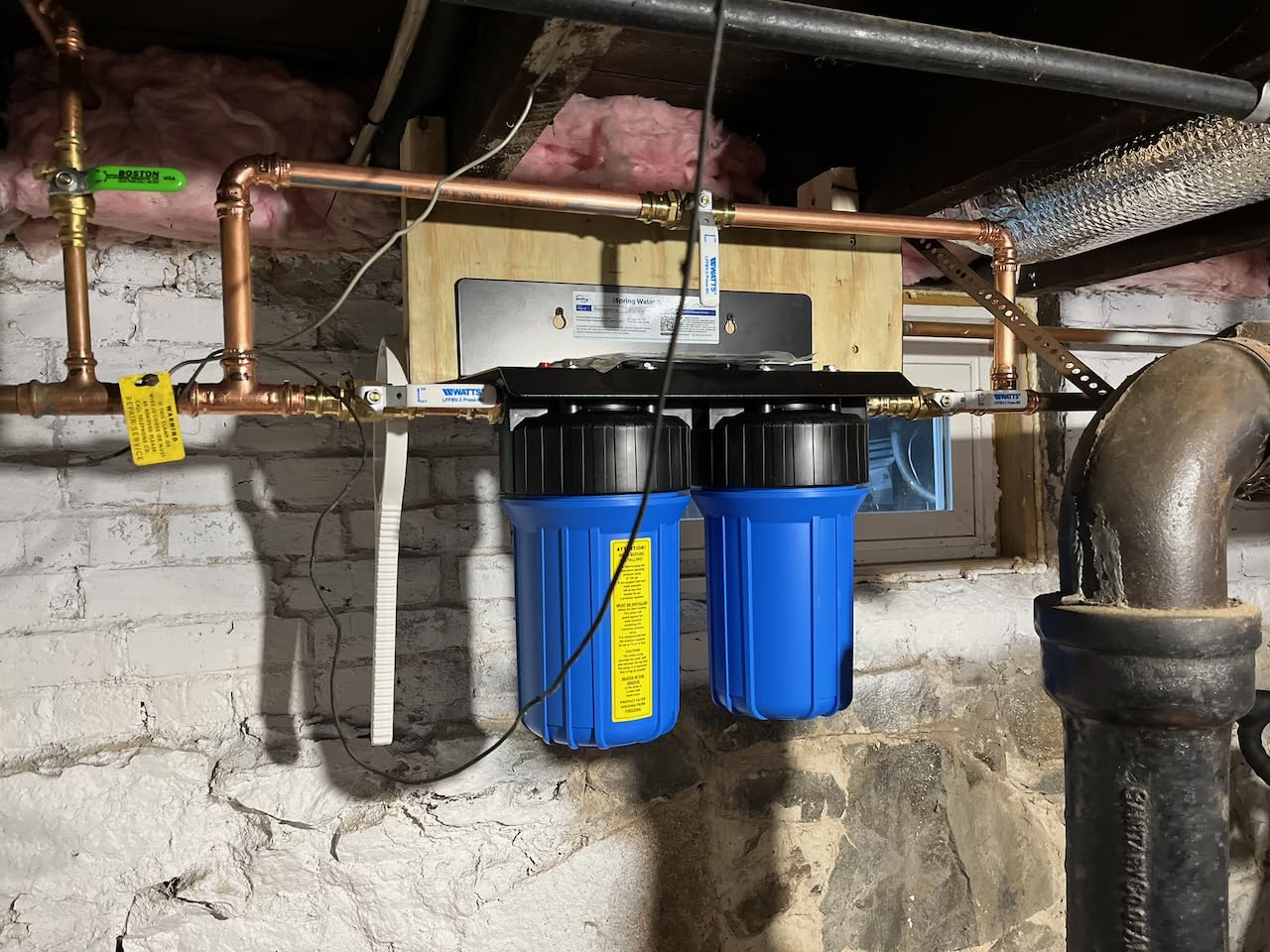
We also like it as the downstream stage in a two-unit setup, with a sediment or heavy-metals unit ahead of it. Owners running well water frequently pair a pre-treatment housing with this one behind it, which lets the carbon block do what it is good at without fighting sediment.
2. iSpring WGB32B 3-Stage – Highest Rated Pick with 20-Inch Housings
iSpring WGB32B Commercial-Grade Whole House Water Filter System
15 gpm max flow
100000 gallon capacity
Three 20 inch Big Blue housings
Coconut shell carbon block
Pros
- Highest average rating in the lineup at 4.7 across 2239 reviews
- Removes up to 99 percent of chlorine
- 100000 gallon capacity
- Coconut shell carbon block media
- 20 inch housings resist pressure drop
Cons
- Heavy manifold needs stud mounting
- Threaded connections need heavy sealing
- Canister threads can strip in transit
- 300 ppm TDS ceiling
The WGB32B carries the highest average rating in this group at 4.7 across 2239 reviews, and the reason is that the 20-inch by 4.5-inch housings give it far more dirt-holding capacity than a stack of 10-inch cans at the same nominal flow rate.
Stage one is a 5-micron sediment cartridge. Stages two and three are CTO carbon block cartridges using third-party tested coconut shell carbon meeting NSF standards. Published capacity is 100000 gallons, rated up to 15 GPM through 1-inch NPT ports.
Why Bigger Housings Beat More Stages
Housing diameter is the underrated spec in this category. A 20-inch canister holds far more media than a 10-inch one, so pressure drop climbs more slowly as the media loads up. In a house that runs hard all day, that difference shows up as steadier flow in month eight than a small housing delivers.
Reviewers make the same point from the other direction: pulling a full 20-inch cartridge out at change time and finding brown, tea-colored water inside is the most convincing proof anyone has that the system worked.
The 300 ppm TDS Ceiling Is a Real Constraint
This system is rated for water up to 300 ppm total dissolved solids. If your municipal supply sits higher than that, or you are combining it with a softener that raises TDS, the cartridge capacity claims stop applying.
That ceiling is the main reason we do not rank this first for every household. On a very hard or very mineral-heavy supply, the Express Water system or the Aquasana Max Flow handles a wider range with more published headroom.
Installation and Mounting
At 45 pounds, this is a two-person lift, and the manifold must be anchored into studs rather than drywall anchors. Reviewers mention that removing the full housings for a change also takes two wrenches and some working room in front of the unit.
The same leak complaints appear here as on the two-stage model: threaded manifold connections need careful PTFE taping and pipe dope, and canister threads occasionally arrive damaged in transit. Support is the bright spot, with multiple reports of replacement parts shipped free.
Who This Is Right For
Choose this one when you want the highest confidence rating in the group, the largest cartridge volume, and enough capacity that you are not opening housings twice a year on a moderate-TDS supply.
It is the pick for a family of five or six on city water who will actually notice the difference between a marginal and a clean chlorine-free taste at the kitchen tap.
3. Express Water 3-Stage – Best for Hard Water and Heavy Metals
Express Water Whole House Water Filter System, Ultimate Protection, 3-Stage
17 gpm max flow
100000 gallon capacity
KDF carbon and polyphosphate media
Pressure gauges included
Pros
- Highest flow rating in the group at 17 gpm
- Targets chlorine heavy metals and scale in one pass
- Three pressure gauges and release buttons
- Fits tight mechanical rooms on a freestanding frame
Cons
- Stated filter life of only 6 months
- Bulky frame at 63 pounds
- Polyphosphate media does not suit every water chemistry
This is the pick when scale is the actual problem. Its three stages combine activated carbon, KDF copper-zinc media and laboratory packed polyphosphate, and the manufacturer states it significantly reduces chlorine plus heavy metals including lead, arsenic, mercury, chromium and cadmium.
Flow is rated at 17 GPM, the highest of the multi-stage cartridge systems here, with 100000 gallon capacity and an operating range of 20 to 80 psi. It works on water up to 800 ppm TDS.
What Polyphosphate Actually Does
Polyphosphate is a sequestrant, not a softener. It binds calcium and magnesium in the water column so they cannot crystallize into scale on heater elements, pipe walls and appliance coils. Scale still exists in the water; it just stays dissolved longer.
That distinction matters when you are budgeting. Polyphosphate media needs replacing on a short cycle and it is not the right chemistry for every supply, which is why the published filter life of 6 months is the shortest in this lineup despite the large gallon rating.
Gauges and Release Buttons Are Not Gimmicks
Each housing has its own pressure release button and the frame carries three gauges. On a high-demand system, gauges are how you catch a clog before it becomes a shower-pressure problem.
Owners single out this hardware as a genuine convenience, because on a system this size you are routinely pulling 20-inch canisters and you want to be able to relieve pressure without cracking a fitting.
The Weight and Footprint Problem
At 63 pounds on a freestanding stainless steel frame, this is the heaviest system in the group and filter swaps are a two-person job. It also occupies more floor area than a bracket-mounted unit.
For a basement mechanical room with room to spare, that is a fair trade for the flow rating. For a cramped closet-sized space under a slab, the bracket systems are simply easier to live with.
Who This Is Right For
This suits a family dealing with hard water, mineral deposits and appliance scaling who also wants heavier contaminant coverage than a plain carbon system provides. It is our pick when the water heater lining is the thing you are trying to protect.
Pair it with a softener upstream if hardness is extreme, and remember the correct order on the main line is filter first, softener second.
4. A. O. Smith 600K Gallon – Best for Set-and-Forget Maintenance
A. O. Smith Whole House Water Filter System | 600K Gal | AO-WH-Filter
600000 gallon capacity
6 year media life
7 gpm flow with 3/4 inch ports
NSF ANSI 42 certified
Pros
- 600000 gallon capacity over a 6 year media life
- NSF ANSI 42 certified with a 6 year limited warranty
- No backwashing draining or water waste
- Reduces 96.9 percent of chlorine taste and odor
Cons
- Only 7 gpm with 3/4 inch connections
- Does not treat iron sulfur or TDS
- Works better as a pre-filter than primary treatment
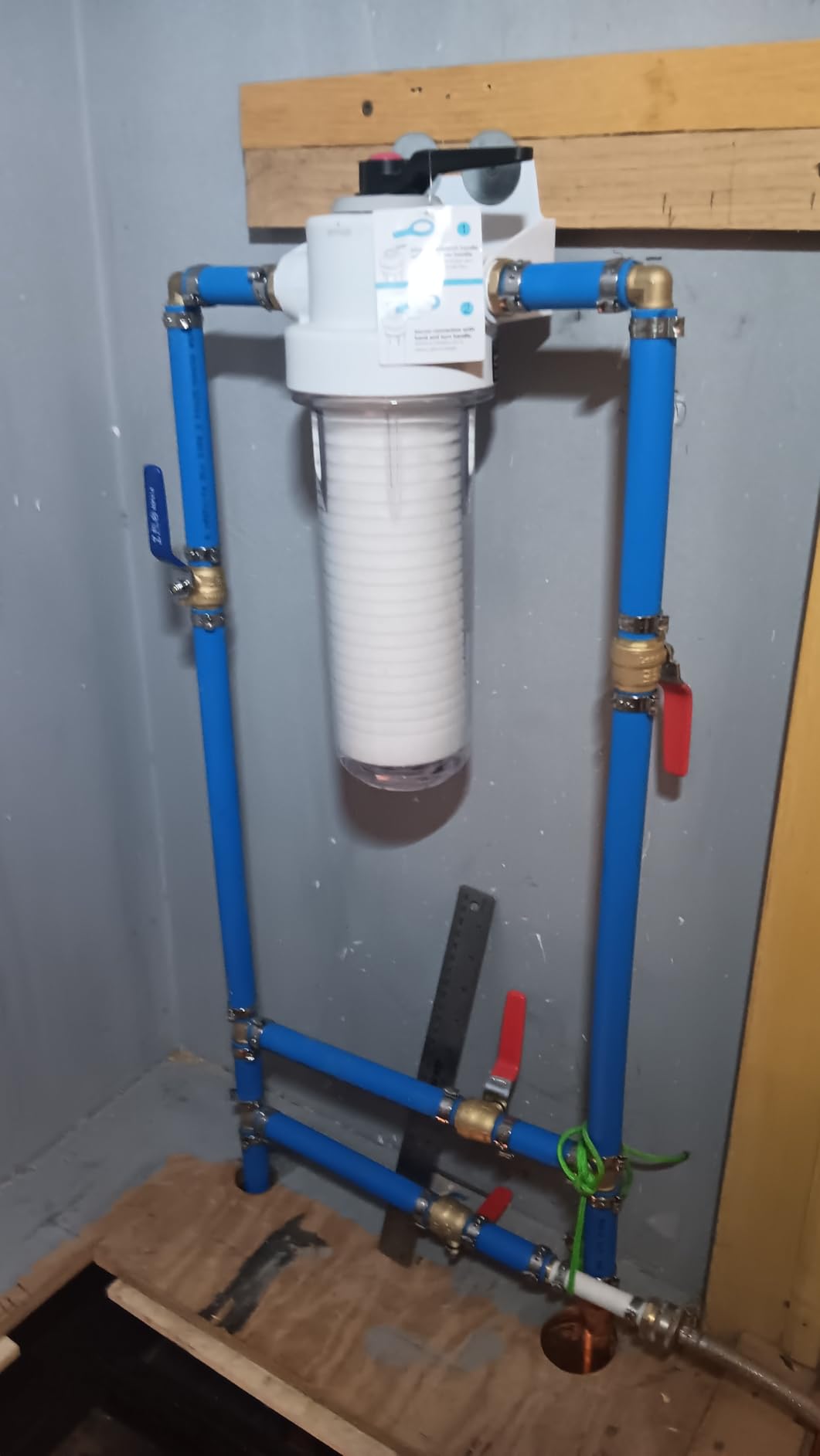
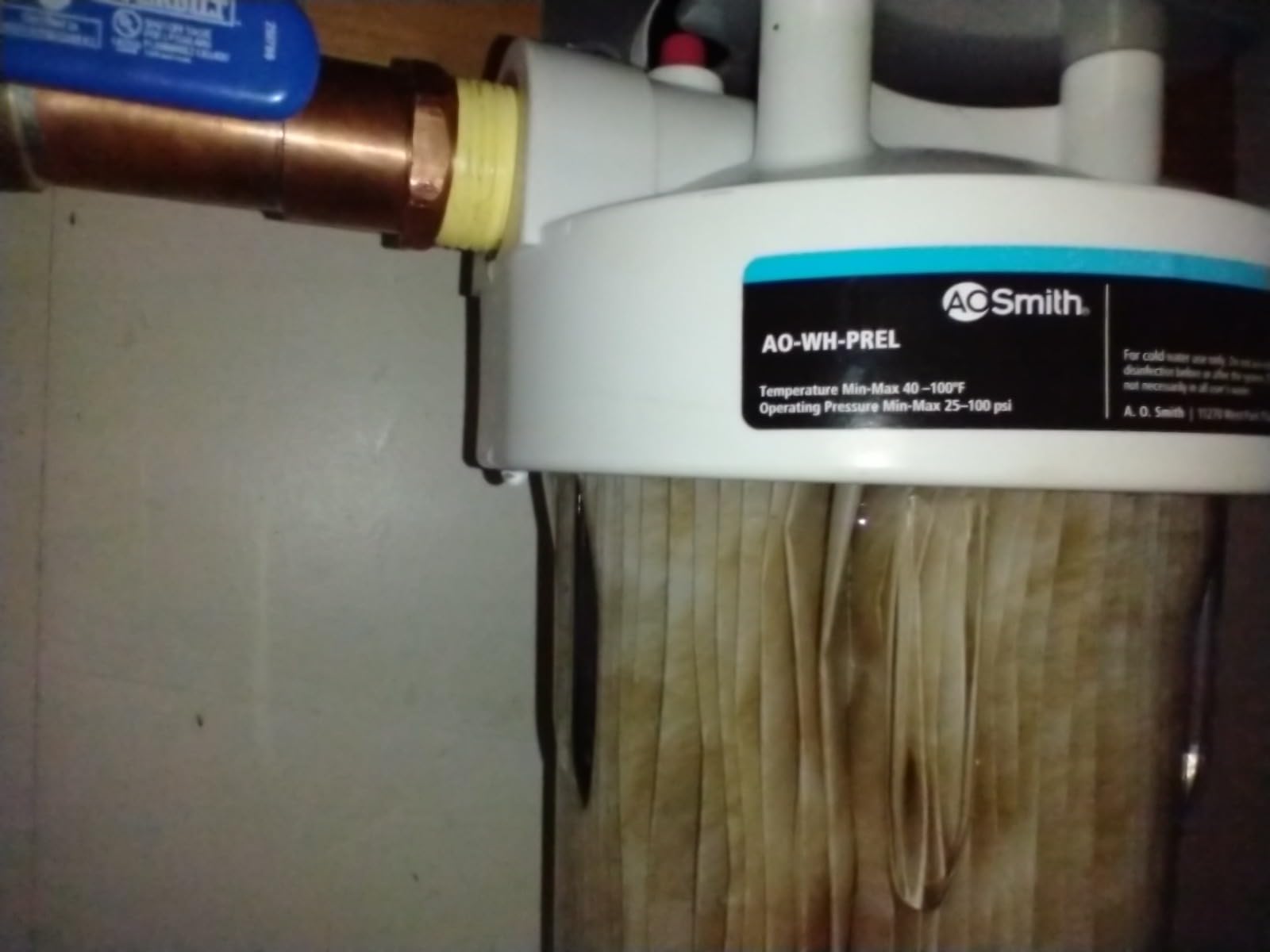
The A. O. Smith whole house filter is the opposite of everything else in this list. It is a single large activated carbon tank rated at 600000 gallons or six years, whichever comes first, and it does not drain, backwash or waste a single gallon.
It is NSF/ANSI 42 certified, reduces 96.9 percent of chlorine taste and odor, and carries a 6-year limited warranty from a brand that has been building water heaters for over a century. That warranty length is unusual and it is the main selling point.
The 7 GPM Rating Is the Deal Breaker for Large Homes
We have to be direct about this. A 7 GPM rating paired with 3/4-inch inlet and outlet fittings is the most restrictive flow figure in this entire roundup, and it is the reason this is not our top pick for a household of six or more.
Owners on larger homes report the modest flow matters most exactly when several fixtures run simultaneously, which is the defining feature of high-volume households. Buyers on very hard water also note that this unit targets chlorine rather than hardness, so a separate softener is still needed.
Why a Tank Design Wins on Maintenance
Cartridge systems fail on a schedule you have to remember. A media tank holds enough carbon for six years, which means the practical maintenance load on a busy family is close to zero.
There is no brine, no drain line, no control valve and no electricity. For a household that travels or simply does not want to track change dates, that is a real advantage over every cartridge option here.
Best Used as a Pre-Filter, Honestly
The manufacturer recommends pairing it with a pre-filter, and that is exactly how it performs best. Behind a sediment stage, six years of carbon capacity is realistic rather than optimistic.
Its published operating range of 20 to 100 psi is wide, and it will not reduce TDS, sulfur or iron, so it is not a well-water solution on its own.
Who This Is Right For
This is the pick for a household of four or five who wants chlorine-free water everywhere and genuinely does not want to think about cartridges for half a decade. It also works well as a finishing stage after a sediment or iron unit.
If you have four or more bathrooms and expect real simultaneous demand, pair it behind a higher-flow pre-treatment housing rather than running it alone.
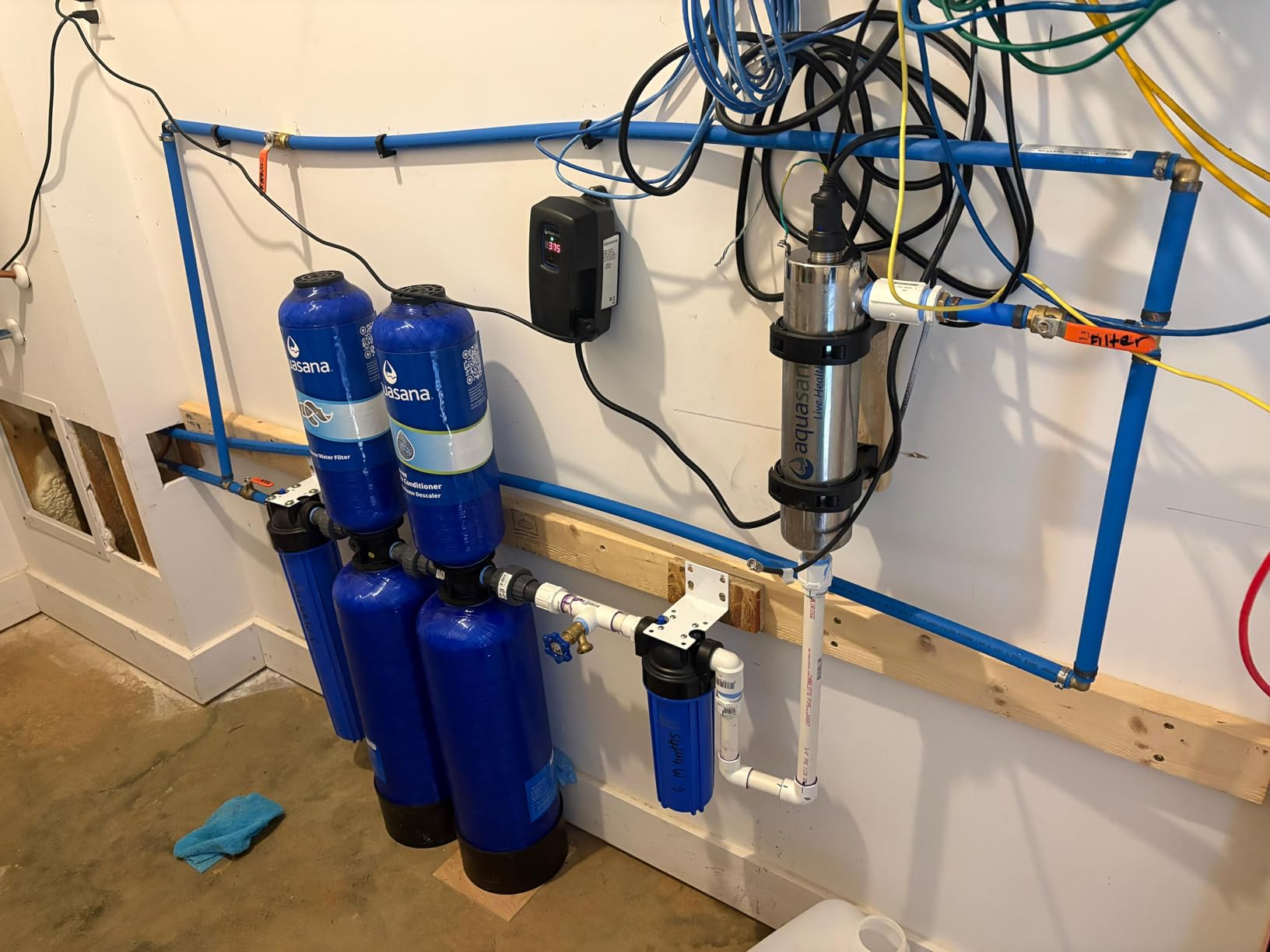
5. Aquasana Max Flow – Best 10-Year Media Life for Moderate Hardness
Aquasana Max Flow Whole House Water Filter | Carbon & KDF | WH-1010-CT-LM
14.5 gpm peak flow
1000000 gallon capacity
Carbon KDF and salt free scale control
10 year limited warranty
Pros
- Peak flow of 14.5 gpm for larger homes
- Up to 1000000 gallons or 10 years of media life
- Salt free scale control with no backwashing
- Priced well under a cent per gallon treated
Cons
- Highest cost in this roundup
- Only rated for hardness under 15 gpg and iron under 0.3 ppm
- Does not soften water
- Plastic threaded connections leak frequently
The Max Flow is the only tankless, salt-free media system here, and the only one that treats scale control as a first-class design goal rather than a cartridge afterthought. Multi-stage filtration combines pre- and post-filters with carbon, KDF copper-zinc media and salt-free scale control media to reduce 97 percent of chlorine while preserving healthy minerals.
Peak flow is published at 14.5 GPM, which is designed to support multiple showers, laundry and cooking at once. Capacity is up to 1000000 gallons or ten years, with a 10-year limited warranty and spare part availability listed at ten years.
The Water Chemistry Limits Are Not a Suggestion
This system is recommended only for water under 15 gpg hardness, 250 mg/L alkalinity, pH below 8.3 and iron under 0.3 ppm. If your supply exceeds any of those, performance drops and warranty claims get harder.
That makes it a strong fit for a large family on moderate-hardness city water and a poor fit as a universal answer. Test first. It also does not soften, so hard-water spots and dry skin can persist.
No Salt, No Drain, No Backwash
The scale control is salt-free, which means no salt bags to carry, no brine discharge and nothing to plumb. There is also no backwashing cycle, so the system does not interrupt flow on a schedule.
The included low-maintenance pre-filter lasts up to six months, which is the one recurring maintenance item in an otherwise very hands-off system.
Owner Reports on the Fittings
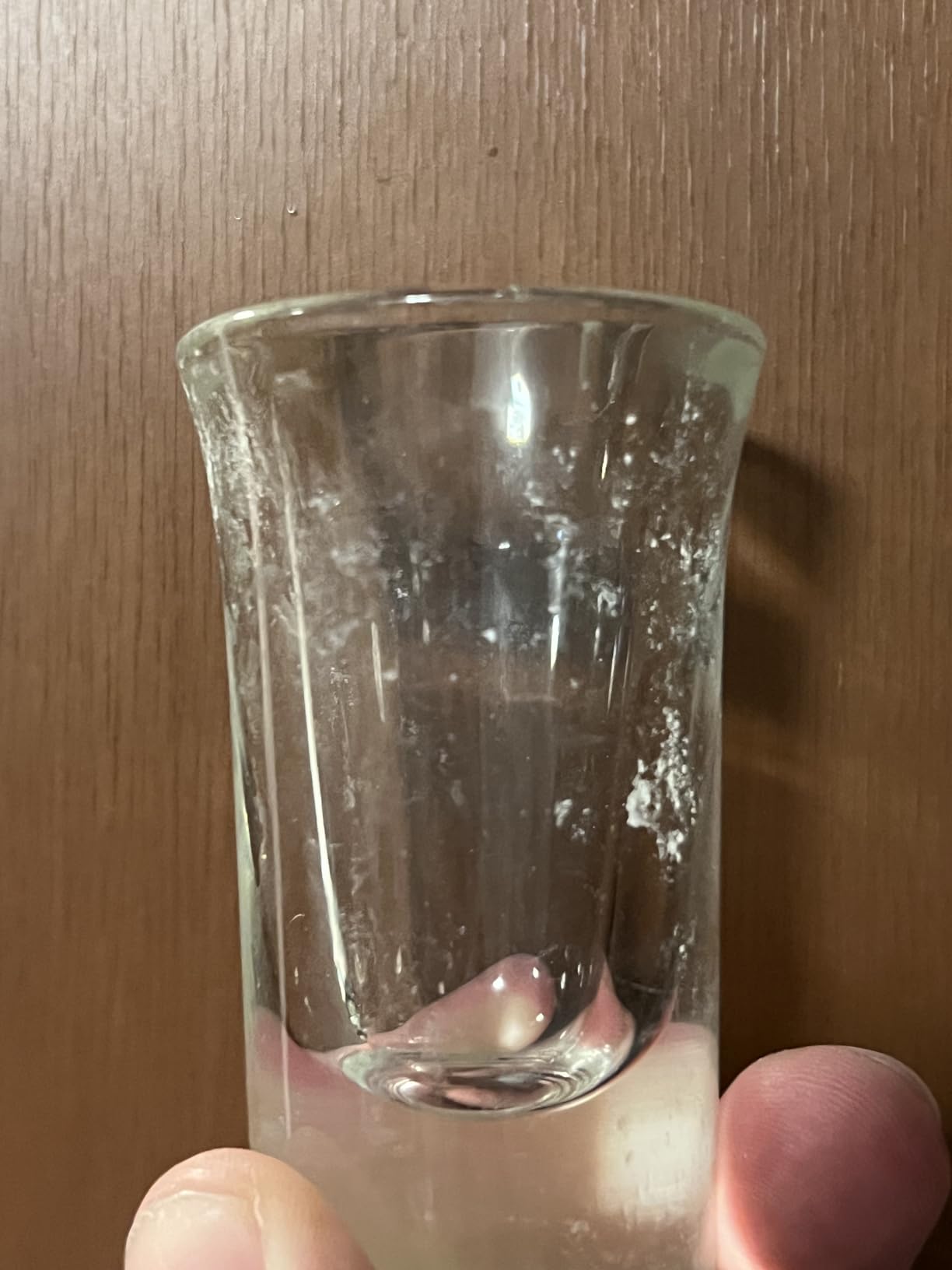
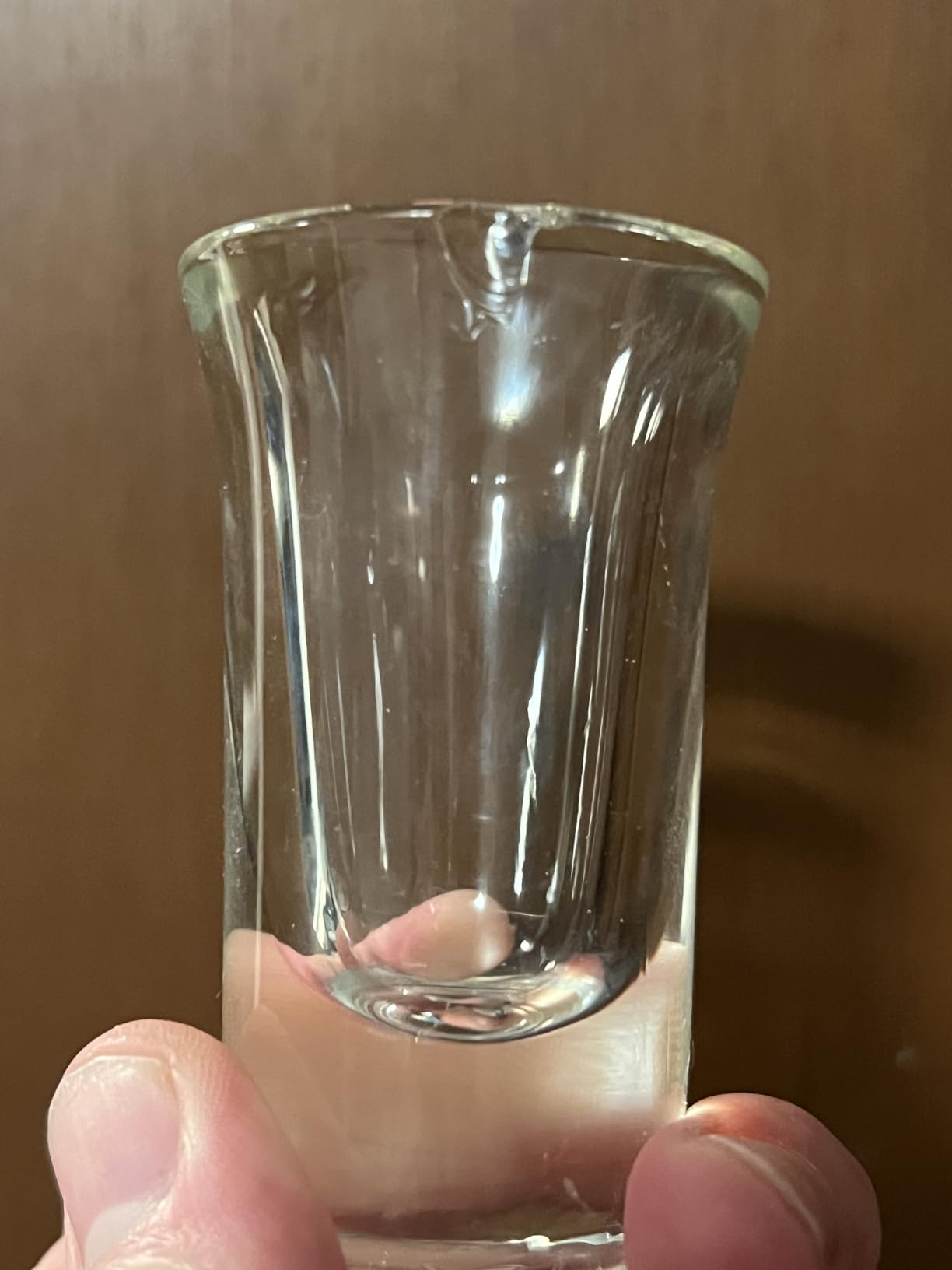
The most vocal complaints are about plastic threaded connections that are difficult to seal and leak repeatedly, along with reports of missing parts or incomplete packaging on arrival. Several owners had to buy brass connectors and extra fittings that were not included.
Some self-installed installations reportedly voided the warranty, so if you install this yourself, read the terms before you turn the water on.
Who This Is Right For
This is the pick for a large household on moderate-hardness municipal water that wants decade-long media life, no salt and no drain line, and is willing to deal with a much higher upfront cost.
It is also a good second-stage choice behind a sediment or iron unit, since the pre-filter takes the grit that would otherwise foul the carbon bed.
6. 3M Aqua-Pure AP904 – Highest Flow Rated Pick at 20 GPM
3M Aqua-Pure AP900 Series Whole House Water Filtration System AP904
20 gpm flow rating
100000 gallon capacity
Sanitary Quick Change cartridge
NSF Standard 42 and 372 tested
Pros
- Highest flow rating in the group at 20 gpm
- Sanitary Quick Change needs no tools or contact with media
- 304 stainless steel head with pleat media
- Tested to NSF Standard 42 and 372
Cons
- Single cartridge gives narrower coverage than multi-stage systems
- Does not treat heavy metals iron or TDS
- Tall housing needs real utility space
The AP904 is the flow answer to the large-family question. It is rated up to 20 GPM, which is the highest published figure in this roundup, and 3M positions it for homes with three or more bathrooms.
The cartridge holds 100000 gallons with up to one year of filter life, using an activated carbon block with non-woven pleat media on a 304 stainless steel head. The media is tested to NSF Standard 42 and 372.
Sanitary Quick Change Is the Feature That Sells It
The SQC design lets you pull and replace the cartridge without a filter wrench and without touching the media itself. For a family that has been trained to put off cartridge changes, removing the wrench from the job is genuinely significant.
Users also like that it works with both chlorinated municipal water and non-chlorinated well water, which gives it more flexibility than a pure chlorine cartridge.
Single Stage Means Narrower Coverage
This is the honest limitation. One cartridge cannot do what three stages do. It will not treat heavy metals, iron or TDS, so if your concern is more than sediment, taste, odor and scale inhibition, this is not the complete answer.
It also inhibits lime scale rather than removing hardness, so it helps protect appliance life without softening water.
Space and Configuration
The housing measures about 4.5 inches square by 25 inches tall on 1-inch inlet and outlet connections, so you need usable wall or utility space rather than a shallow shelf.
Only replacement cartridges and complete systems are offered, which limits configuration choice if you were hoping to build around it with an additional stage.
Who This Is Right For
This is our pick when flow rate is the deciding factor, such as a home with four or more bathrooms where two showers routinely overlap. It is also an excellent second stage behind a sediment or KDF housing.
Pair it behind a pre-treatment unit if you have iron or heavy metals to deal with, and let the AP904 handle sediment, taste, odor and scale on the finish pass.
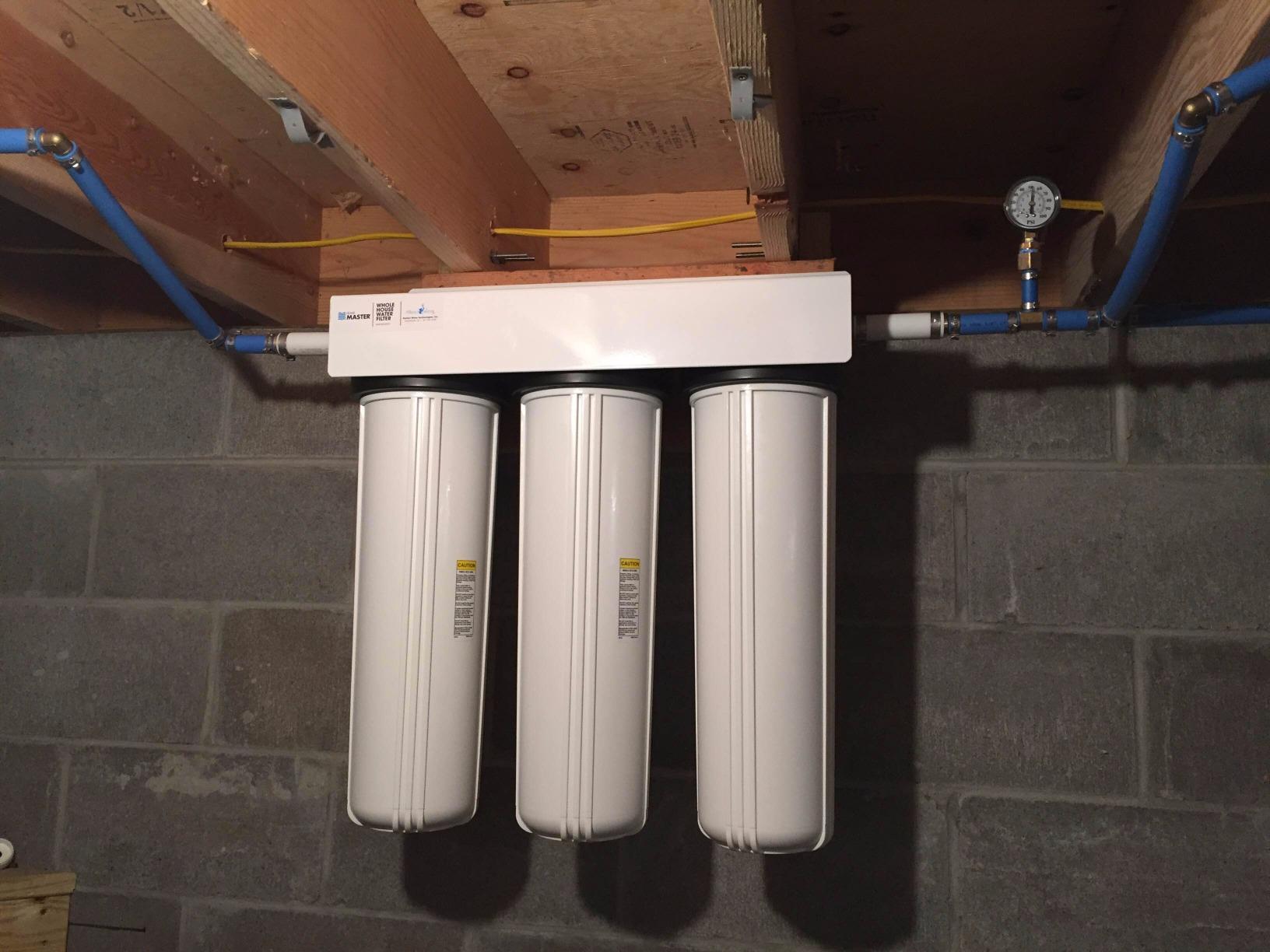
7. Home Master 3-Stage – Best for Well Water with Iron and Sulfur
Home Master Whole House Three Stage Water Filtration System with Fine Sediment, Iron and Carbon, Blue
15 gpm max flow
100000 gallon capacity
25-10-5-1 micron sediment layers
Treats iron manganese and sulfur
Pros
- Removes up to 95 percent of iron manganese sediment and chemicals
- Four layer 25-10-5-1 micron cartridge
- 15 gpm across oversized housings with 1 inch ports
- Immediate drop in staining on high iron wells
Cons
- Smallest review base in this group at 207 ratings
- O-rings can pop out of the housing groove
- Sediment cartridge can load in 2 to 3 months on dirty wells
The Home Master system is the only one in this roundup built specifically for well water. It is engineered for iron, manganese, sediment and sulfur, and the manufacturer states up to 95 percent removal across those contaminants up to a combined 3 ppm load.
Flow is rated at 15 GPM through oversized housings with 1-inch ports. Capacity is listed at 100000 gallons, and the filter uses a four-layer 25-10-5-1 micron replaceable sediment cartridge that provides finer filtration and greater dirt holding than a single-micron cartridge.
Why Gradient Micron Layers Matter on a Well
A four-stage gradient cartridge catches coarse grit at the outer layers and fine particles deeper in, which delays the pressure spike that comes from a single-micron media loading up. On a well that produces sediment after heavy rain, that delay is worth real money in cartridge life.
Even so, owners on very dirty wells report the sediment cartridge needing replacement in as little as two to three months. That is a function of your aquifer, not the filter.
The Rotten-Eegg Problem and What Actually Fixes It
Hydrogen sulfide odor is a common and unpleasant companion to iron on private wells. The Home Master system is rated to handle it alongside the sediment, which most carbon-only filters do not.
Owners on high-iron wells report water color improving, the odor disappearing and appliance staining dropping within days of the first change. Those are the results you are buying when you choose a well-specific unit over a generic carbon stage.
O-Rings Are the Weak Point
The most repeated negative is the O-ring seals losing their diameter and popping out of the housing groove, which turns a routine change into a leak. Several owners also report plastic-to-copper fittings cracking during installation.
Check the seals every time you open a housing, and keep a spare set on hand. It is a five-minute fix once you know to look for it.
Test Your Water First, Always
This system requires whole-house water testing beforehand to select the correct filter set. On a well that is not negotiable, because iron load, manganese and sulfur all behave differently at different concentrations.
It also carries the smallest review base here at 207 ratings, so treat the removal percentages as manufacturer-published figures rather than independently certified claims.
Who This Is Right For
This is the pick for a large family on a private well with iron, manganese or sulfur odor, where staining and water color are the driving complaints. At 15 GPM it suits four or more occupants with three or more bathrooms.
Pair it with a softener downstream if hardness is also an issue, and remember that well water changes seasonally, so expect to test again after a heavy year.
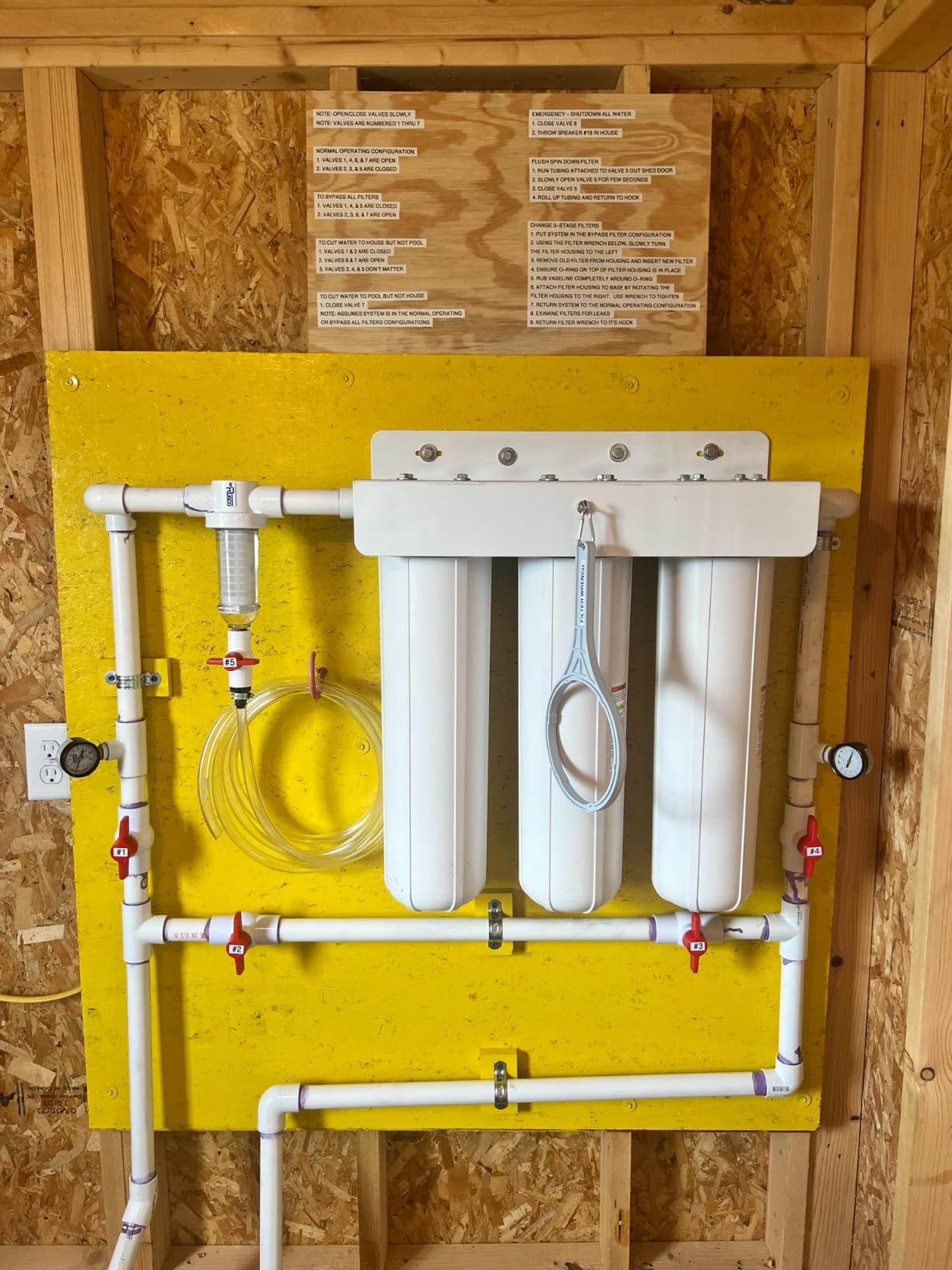
8. iSpring Heavy Metals 3-Stage – Best Budget Pre-Treatment Stage
iSpring Heavy Metals Whole House Water Filter System w/Clear Housing
12 gpm max flow
30000 gallon capacity
GAC KDF and CTO three stage train
Clear first stage housing
Pros
- GAC and KDF stage targets PFAS lead radon chloramine and H2S
- Transparent first housing shows change time at a glance
- Compact 18 by 7 by 25 inch wall mount footprint
- Also protects downstream softener resin
Cons
- Smallest capacity here at 30000 gallons
- Only 12 gpm with 3/4 inch connections
- Female threaded housings leak easily
- Does not reduce TDS or treat iron
This is the one to buy as the first stage in a two-unit setup rather than as your only whole house filter. It combines a 5-micron polypropylene sediment stage, a GAC and KDF composite stage, and a CTO carbon stage in a compact wall-mounted frame.
The manufacturer states the second stage removes chlorine, PFAS, lead, radon, chloramine and hydrogen sulfide. Capacity is 30000 gallons with a listed filter life of six months, and it handles water up to 500 ppm TDS.
The Transparent Housing Is the Feature You Will Use Most
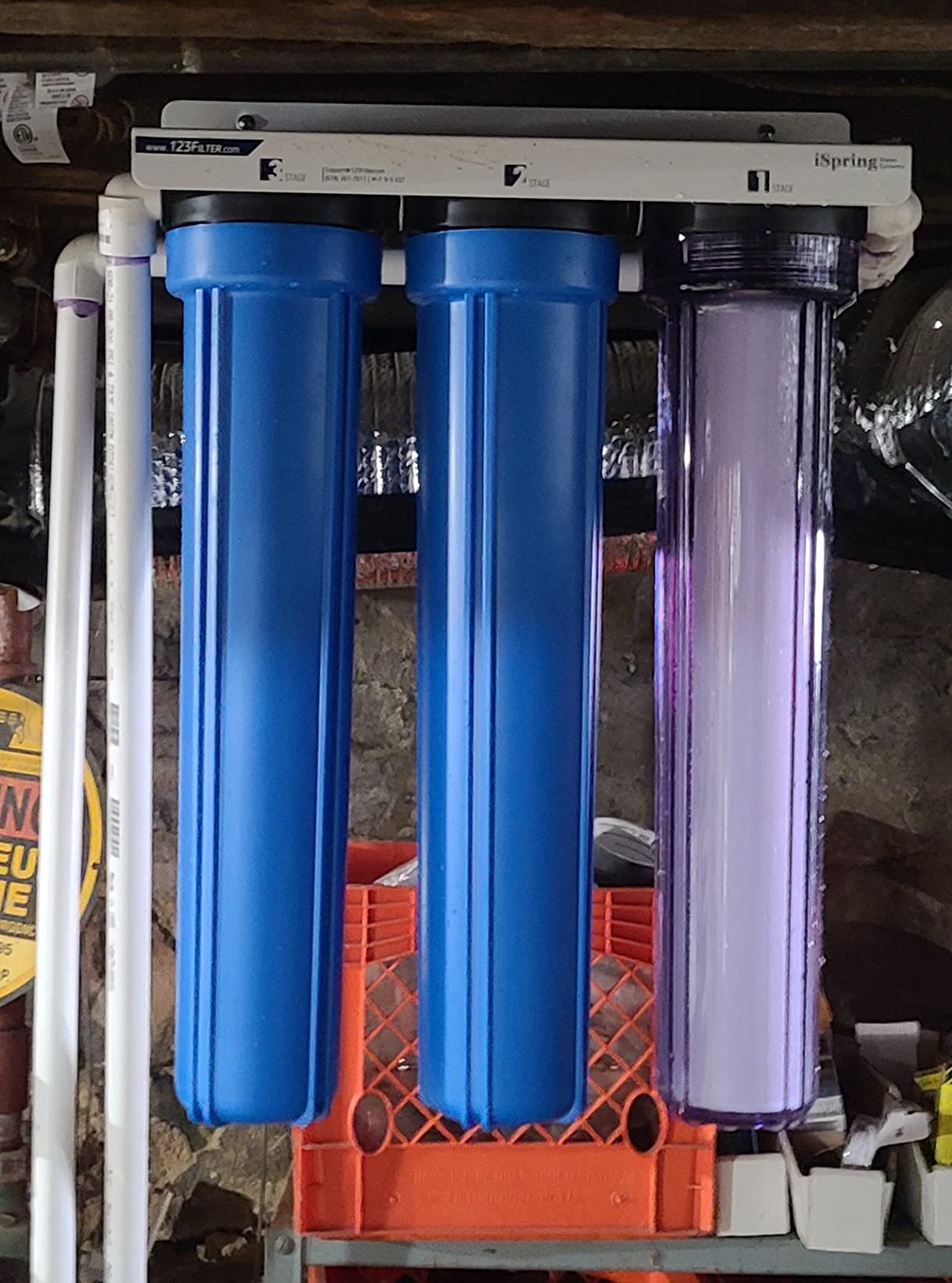
The first-stage housing is clear, so you can look at the sediment cartridge and see exactly when it needs changing rather than guessing from a pressure gauge. On a compact system in a dark mechanical room, that visibility is more useful than it sounds.
Owners also value the wall-mount footprint at roughly 18 by 7 by 25 inches, which fits tight utility spaces where a freestanding frame will not.
Treating Heavy Metals Ahead of Everything Else
Putting a GAC and KDF stage upstream does two things. It intercepts metals and radon before they reach the rest of your plumbing, and it extends the life of downstream softener resin by keeping the chlorine load off the resin.
Those claims come from the manufacturer and are not accompanied by a third-party certification number on this configuration. If metals are the reason you are filtering, treat this as pretreatment and add a certified point-of-use filter at the drinking tap.
Why It Cannot Be Your Only Filter Here
Two numbers rule it out as a standalone system for a large household: 30000 gallons of capacity and a 12 GPM rating on 3/4-inch connections. The lowest capacity and lowest flow figure of the eight systems in this roundup.
It also does not reduce TDS and does not address iron or hard water. As a first stage feeding the WGB21B or the AP904, those gaps are covered downstream.
Sealing Is the Recurring Complaint
Users report the female threaded housing connections are the dominant complaint, sometimes requiring 10 to 15 wraps of PTFE tape plus pipe dope to stop weeping. Some housings also arrive cracked because of packaging.
That said, iSpring support repeatedly ships replacement head units free of charge when leaks occur, which takes the sting out of the most common problem with this system.
Who This Is Right For
This suits a family building a two-stage train, anyone who wants metals and radon addressed at the entry point, and households with tight utility space where footprint matters more than flow headroom.
For a single high-flow system on city water, choose one of the 15 to 20 GPM picks instead. For wells, use the Home Master unit upstream of this one.
How to Choose a Whole House Filter for a Home With This Much Demand
Test Your Water Before You Choose Media
Start with a report. If you are on municipal water, pull your utility’s annual consumer confidence report, which is public and lists what was detected in your system. If you are on a well, use a certified lab test rather than a home test strip.
The distinction decides which of these eight fits you. Chlorine and sediment problems point to the carbon picks. Iron, manganese and sulfur push you toward the Home Master unit. Nothing in this roundup is a substitute for knowing what is actually in the water.
What Each Media Type Actually Removes
- Polypropylene sediment: dirt, sand, silt, rust and scale particles down to 5 microns. Removes nothing dissolved. Its job is protecting everything downstream.
- CTO carbon block: chlorine, taste, odor and a meaningful share of VOCs such as pesticides and herbicides. Does not remove metals, hardness or TDS.
- Granular activated carbon: broader adsorption than a block for certain VOCs, but prone to channeling and needs a housing that handles backwash.
- KDF copper-zinc: chlorine, chloramine, heavy metals and it inhibits bacterial growth on the media surface.
- Polyphosphate: sequesters calcium and magnesium to hold scale in solution. Needs short replacement cycles.
- Salt-free scale media: conditions hardness without salt or brine, but does not soften water.
Media also affects your water bill indirectly. Carbon block cartridges channel and lose flow as they load, so a bigger housing or a tank system can cost less over ten years than a cheaper cartridge you replace twice as often.
Certification Standards That Matter for a Family Home
NSF/ANSI 42 covers aesthetics, meaning chlorine taste, odor and sediment reduction. That is the right standard for most families buying taste and sediment control. The A. O. Smith and 3M Aqua-Pure systems carry it.
NSF/ANSI 53 covers health contaminants including lead, arsenic and mercury. NSF/ANSI 61 covers material safety, not filtration. NSF/ANSI 372 covers lead-free compliance in plumbing components.
The honest position, which is the same one several careful guides take: no widely available whole house system in this category carries third-party certification specifically for PFAS reduction at the point of entry. Where a manufacturer publishes PFAS and lead removal percentages, that is a laboratory result from the brand, not an NSF listing. If a certified PFAS reduction is non-negotiable, add a certified point-of-use filter at the drinking tap and use the whole house unit for sediment, chlorine, taste and odor.
Pressure Drop and the 3/4-Inch Connection Mistake
Every system here carries a published flow rating. Some of those ratings assume ideal conditions and 1-inch connections, and the difference matters enormously in a busy home.
Symptoms of an undersized system show up in order: the far shower runs thin, the pressure drops when the laundry starts mid-shower, and the flow at the hose bib drops when nothing else is running. None of these are cartridge problems. They are sizing problems.
Also account for appliances. A dishwasher, a whole house water-using appliance and irrigation on the main line all add to your peak load and none of them show up in a bathroom count.
Filter vs Softener: Which Comes First on the Main Line
A filter removes contaminants. A softener exchanges hardness ions for sodium. They are different jobs and large families on hard water frequently need both.
The order matters: put the filter first and the softener second. Sediment, chlorine and iron will foul softener resin, and chlorine destroys resin outright, so a carbon or KDF stage ahead of the softener extends resin life substantially. Running a softener ahead of the filter means your filter media is the only thing protecting the resin from whatever the water brings in.
One more consideration if you are moving from a tanked to a tankless water heater. Sediment and scale are far more damaging to tankless heat exchangers than to a tank with a sacrificial anode, so the pre-filter step becomes more important, not less. Nobody should change a water heater without checking what is upstream of it.
Installation: DIY Plumbing or a Licensed Plumber
All eight systems here are designed for homeowner installation with basic tools. Cutting into the main line, adding a tee, a shutoff and a bypass is normal work for anyone comfortable with a wrench and a bucket.
Hire a plumber when your main line is in a tight crawlspace, when you are working in an occupied house with old galvanized plumbing, or when a warranty requires professional installation. Several owners report that self-installing voided a long warranty, so read the terms before you start.
Whatever route you take, install a bypass valve. On every system here you will eventually need to shut the house off without shutting off your water.
Maintenance Calendar and Ten-Year Cost Thinking
High-volume households consume media faster than the printed capacity suggests. A family of six at roughly 50 to 80 gallons per person per day puts more load on a cartridge than the capacity math assumes, because cartridge life is also gated by pressure drop, not just gallons.
A realistic calendar: sediment pre-filter every 3 to 9 months depending on sediment load, carbon cartridges every 1 to 2 years, carbon block media systems every 5 to 10 years, and KDF media on a similar long cycle to carbon.
For cost thinking, compare systems on 1-inch connections versus 3/4-inch connections, because a plumber may need to upsizing the run to get the published flow rate, and that labor is often the largest single line item in the project. Then add the media replacements over ten years and divide by the years. A cartridge stack that looks inexpensive up front routinely loses that comparison by year four.
What a Large Family Does Not Need
Whole house reverse osmosis is the big over-buy. RO is a high-pressure membrane process that strips minerals, wastes water and reduces flow, none of which suits a house running 30000 gallons a month through every fixture. Use a certified point-of-use RO or carbon system at the drinking tap if you want RO quality.
You also do not need five stages just because they are available. A carbon stage behind a sediment stage, on 1-inch ports, at a flow rating matched to your bathroom count, handles the overwhelming majority of what families complain about. Extra stages add fittings, and fittings are where leaks and extra pressure drop come from.
And you do not need a salt-free conditioner if your water is already soft, or a heavy-metals pre-stage if your report came back clean on those contaminants.
While you are mapping out the setup, it is worth noting how the same high-demand logic applies elsewhere in a busy house. Our picks for rice cookers for families and toaster ovens for families come out of the same kind of capacity-versus-crowding analysis, and if dead zones are the other headache in your space our guide to fixing dead Wi-Fi spots in a large house covers that side of the problem.
Frequently Asked Questions
How many GPM for a whole house water filter?
A family of five to eight with four or more bathrooms needs a system rated at 15 to 20 GPM with 1-inch inlet and outlet connections. Small homes with one or two bathrooms do fine at 7 to 10 GPM, and three-bathroom homes sit at 10 to 15 GPM. Size for peak simultaneous demand, not daily average: two showers plus a dishwasher and laundry can exceed 15 GPM on their own.
What is the highest rated whole house water filter?
Among the systems we compared, the iSpring WGB32B 3-Stage carries the highest average rating at 4.7 across 2239 reviews. The iSpring WGB21B 2-Stage is close behind at 4.6 across a much larger base of 4271 reviews, which is why we rate it the stronger overall pick for large families: more owners, more long-term feedback, the same 15 GPM rating.
Do whole house water filters reduce water pressure?
Yes, if the system is undersized or loaded. Filters restrict flow as media collects sediment, and the restriction shows up as reduced pressure at the fixture furthest from the main line, usually the upstairs shower. Every system here is rated between 7 and 20 GPM, so match the rating to your bathroom count and replace sediment cartridges on schedule. A 3/4-inch connection caps real-world flow below the published rating regardless of the cartridge.
Can I install a whole house water filter myself?
Yes. All eight systems here are built for homeowner installation with basic tools, and most include a bracket, a filter wrench and a pressure release valve. You need to cut into the main line, add a tee, a shutoff and a bypass valve. Check the warranty terms first, because some long warranties require professional installation and a self-install can void coverage.
Do whole house filters remove fluoride, lead and PFAS?
It depends on the media and on the certification. Carbon block and GAC reduce lead, and some systems publish PFAS and radon reduction figures, but those are manufacturer laboratory results rather than third-party certifications. No widely available whole house system in this category carries NSF/ANSI 53 or P473 certification specifically for PFAS at the point of entry. For certified reduction, add a certified point-of-use filter at the drinking tap and use the whole house unit for sediment, chlorine, taste and odor.
How long do whole house water filters last?
It depends on the format. Cartridge sediment pre-filters last 3 to 9 months depending on sediment load. Carbon block cartridges run roughly 1 to 2 years or 50000 to 100000 gallons. Media tank systems such as the A. O. Smith 600000-gallon unit and the Aquasana Max Flow run 6 to 10 years. High-volume households should track pressure drop rather than gallons alone, since cartridges lose flow before they reach their stated capacity.
The Right Whole House Filter for Your Household
If you want one answer, take the iSpring WGB21B 2-Stage. It handles 15 GPM through 1-inch ports, keeps 50000 gallons between changes, and has the deepest review base in this roundup at 4271 ratings averaging 4.6. It suits a family of five or six on chlorinated water who wants chlorine and sediment gone at every tap without a large footprint.
If your home runs four or more bathrooms and overlap showers are routine, the 3M Aqua-Pure AP904 wins on flow at a 20 GPM rating, and the iSpring WGB32B 3-Stage wins on cartridge volume at 100000 gallons in 20-inch housings.
On hard water, pick the Express Water 3-Stage at 17 GPM with KDF and polyphosphate media. On a well with iron, manganese or sulfur, pick the Home Master 3-Stage, and test your water before you buy. If you genuinely never want to think about cartridges again, the A. O. Smith 600K gallon tank runs six years, but its 7 GPM rating means it needs to sit behind a higher-flow stage in a large house. If you have moderate hardness and want a decade of media life with no salt and no drain, the Aquasana Max Flow is the premium answer.
Whatever you choose, size for peak demand with 1-inch connections, put the filter ahead of the softener on the main line, and add a bypass valve you will actually use. Those three details decide whether the system works for the ten years you want it to.
Check the latest specifications and current reviews for each system before you order, since manufacturers revise media and fittings on otherwise unchanged listings. If you are still working out the numbers for your particular household, start with your bathroom count and peak shower load rather than with a brand name.