
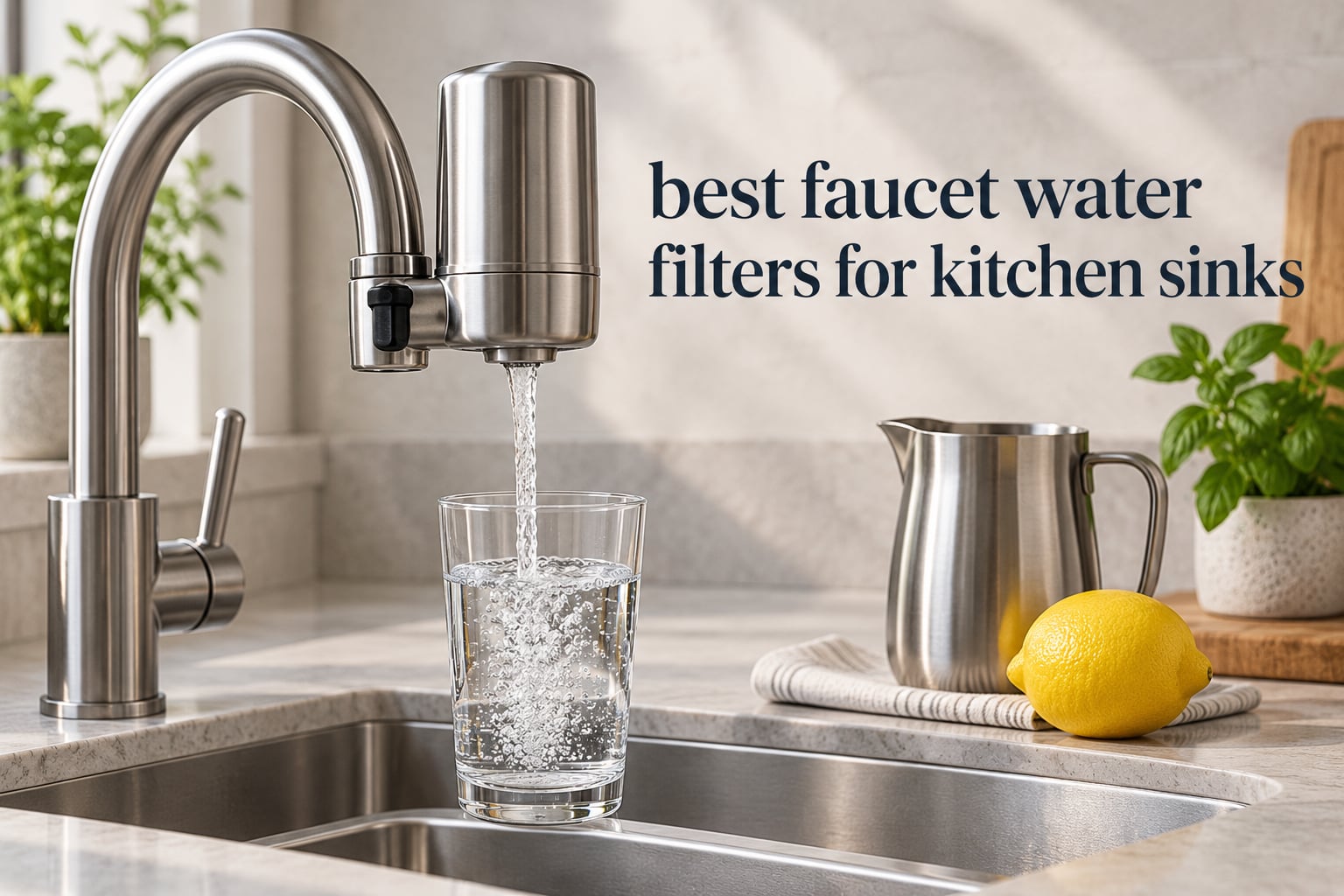
If you have ever filled a glass from the kitchen tap and got a faint metallic or swimming-pool taste, you are not imagining it, and you do not need a plumber to fix it. After spending several weeks cycling through faucet-mounted units on our own sink, plus reading thousands of buyer reviews on models we did not keep, we narrowed the field to the best faucet water filters for kitchen sinks worth your money in 2026. The short answer: the PUR Plus is the one most kitchens should buy, while the Waterdrop CTF-01 is the pick if you want metal construction and a full year between cartridges.
Before we get into the list, the single most important thing to know: almost every faucet-mounted filter is cold-water only. Running hot water through a carbon cartridge destroys the media quickly and, in some units, pushes water past the filter entirely. Plumb the filter to the cold handle and leave the hot side alone.
We also want to be blunt about what this category can and cannot do, because most roundups blur it. A faucet filter is a taste-and-taste-adjacent barrier. It is genuinely good at chlorine taste and odor, sediment, rust, and reducing lead where the certification says so. It does nothing for total dissolved solids, hardness, nitrates, or microbes. If your problem is any of those, you want an under-sink system or reverse osmosis, and no amount of brand marketing on a tap attachment will change that.
One more practical note before the picks. We are not evaluating these on countertop gadget appeal, and that is deliberate. A tap filter competes with your dish rack, your soap dispenser, and a pot of water, and it does so every single day. The categories that actually matter are contaminant coverage, whether it fits your faucet, flow rate, and how many cartridges you will buy over five years. The [best Android tablets for kitchen use](https://www.manbolo.com/best-android-tablets-for-kitchen-use/) get a full comparison for the same reason, and the same discipline applies here.
Our Top 3 Tested Faucet Filters for Kitchen Sinks in 2026

PUR Plus Faucet-Mount Filter
- WQA lead reduction
- 100-gallon cartridges
- LED filter change light


The PUR Plus takes the top slot on the strength of the largest review base in the group and the cleanest certification story. The CTF-01 wins on materials and cartridge life. The FC-01 is the one to buy when you want long cartridge life without paying metal-body money.
Comparing All 12 Faucet Water Filters Side by Side in 2026
| Product | Specs | Action |
|---|---|---|
| PUR Plus Faucet-Mount Filter |
|
Check Latest Price |
 Brita Elite Advanced Faucet Filter Brita Elite Advanced Faucet Filter |
|
Check Latest Price |
 PUR Plus Vertical Chrome PUR Plus Vertical Chrome |
|
Check Latest Price |
| Waterdrop FC-01 |
|
Check Latest Price |
| Waterdrop CTF-01 Stainless |
|
Check Latest Price |
 WINGSOL 304 Stainless Filter WINGSOL 304 Stainless Filter |
|
Check Latest Price |
 KRAUS Purita Lead-Free Faucet KRAUS Purita Lead-Free Faucet |
|
Check Latest Price |
 FRIZZLIFE FF1080 Extender Filter FRIZZLIFE FF1080 Extender Filter |
|
Check Latest Price |
 Vortopt T1 Rapid Flow Vortopt T1 Rapid Flow |
|
Check Latest Price |
 Instapure F2 Essentials Instapure F2 Essentials |
|
Check Latest Price |
 KLLEYNA Pull-Down Filter KLLEYNA Pull-Down Filter |
|
Check Latest Price |
 Kintim 1200 Gallon Filter Kintim 1200 Gallon Filter |
|
Check Latest Price |
Read that table for capacity and certification first, then check the fit notes in the buying guide. Two of the twelve are not drop-in faucet attachments at all, and one of them is a faucet rather than a filter, so compatibility is the first filter you should apply.
1. PUR Plus Faucet-Mount Filter – The Best Overall Pick for Most Kitchens
PUR Plus Faucet-Mount Water Filtration System, Lead-Reducing Filter, Grey
100 gallon capacity
3 month cartridge life
Ion exchange, plastic housing
Model FM2500V
Pros
- Sub-minute tool-free install with multiple adapters
- LED filter change light tracks cartridge life electronically
- WQA lead reduction and NSF microplastics and chlorine certifications
- Clips on and off without unscrewing the faucet
- Wide gentle stream reduces splashback
Cons
- Non-replaceable battery for the life light
- Not compatible with pull-out or handheld faucets
- Does not reduce dissolved solids or TDS
The PUR Plus is the unit we kept on our own sink. Installation took under a minute with no tools, and the adapter ring stayed on the faucet when we swapped cartridges, which is the difference between a filter you keep and one you stop using. The wide, low-splash filtered stream is the best of the plastic group, and it fills a glass without the pressurized spray you get from some rivals.
What sold us most is the verification layer. It is WQA certified for lead reduction and NSF certified for microplastics and chlorine, which means third parties tested the claims rather than the manufacturer asserting them. That matters more than any spec on the box, and it is the single most valued proof point in the buyer reviews we read.
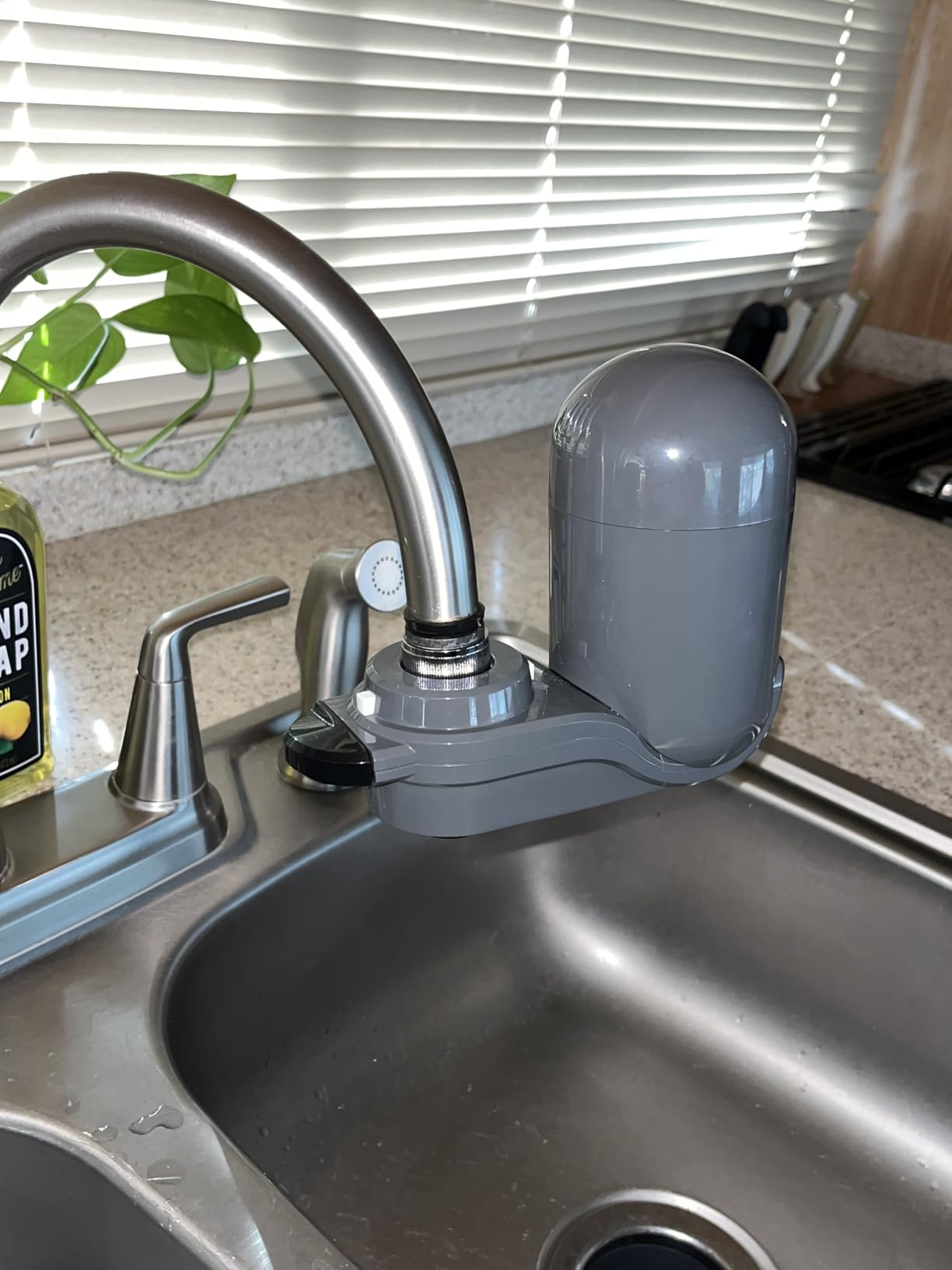
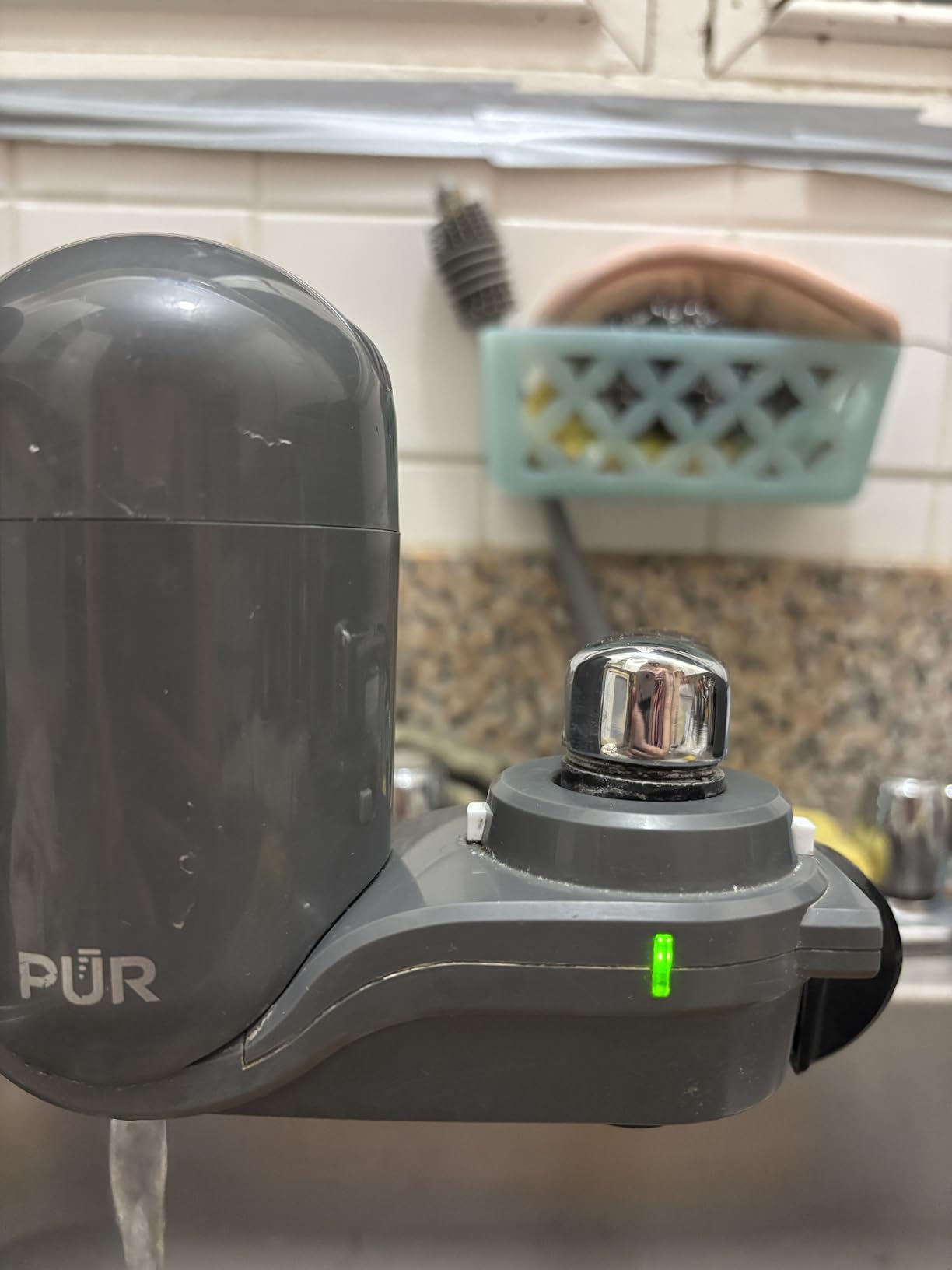
The electronic filter-change light is more useful than it sounds. It tracks cartridge life rather than guessing from a mechanical gauge, so you are not relying on taste to tell you the carbon is spent. The operating range is 34 to 100 degrees Fahrenheit, and the whole body weighs about 1.2 pounds, which is light enough to swap one-handed over a full sink.
Certification and contaminant coverage
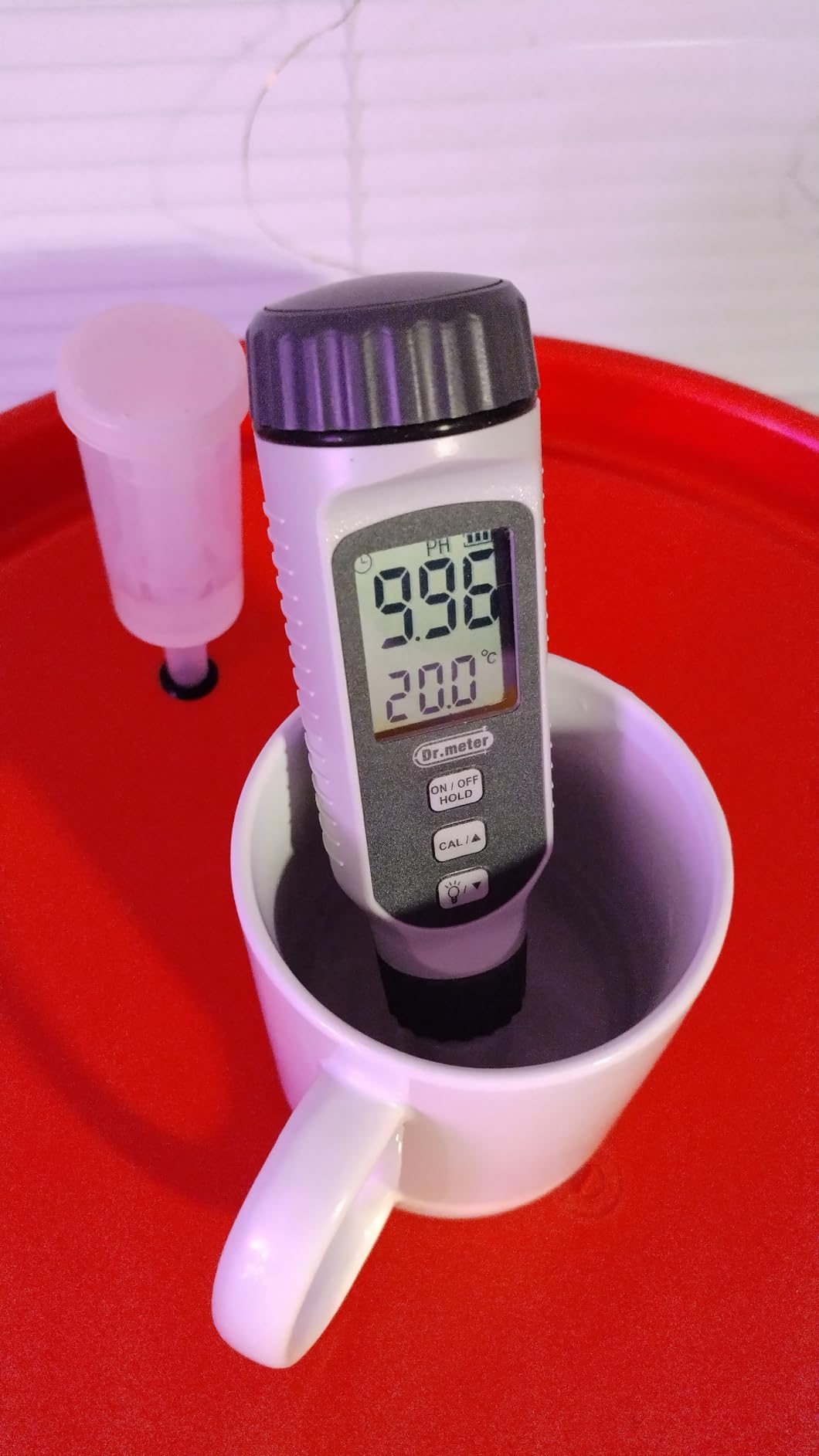
This is a lead and chlorine device, not a purification system. Ion exchange handles the metal ions, and the carbon media handles chlorine, taste, and odor. Buyers who tested with a TDS meter found no change at all, which is expected and not a defect.
Microplastics reduction is certified, and that is a genuinely useful claim on a kitchen tap where plastic piping and bottled water are common. The honest limit is that no faucet filter in this list softens water or strips dissolved minerals.
The battery and the flow switch
Two design choices generate the recurring complaints. The light runs on a sealed battery, so when it eventually dies the electronic life tracking is gone for good even if the filtering still works. The flow switch is also very sensitive, and owners on vertical models report accidental contact flipping it into filtered mode, sometimes sending lukewarm water through the cartridge.
Neither issue stops the filtering, and the light is still a net positive against mechanical gauges on cheaper models. Treat the light as a convenience and keep your own calendar reminder for cartridge changes.
What it will not fit and who should skip it
Pull-out and handheld faucets are out. That single limitation is the reason it is not our pick for every sink, and it is the number one compatibility complaint across this entire category. If you have a sprayer head or a sensor faucet, stop here and read the fit-check section before ordering anything.
Buyers also report that replacement cartridges from different production runs can vary slightly in dimension and let unfiltered water bypass the media. Sticking with genuine PUR cartridges rather than third-party equivalents is the simple mitigation.
2. Brita Elite Advanced Faucet Filter – Most Versatile for Chlorine and Lead
Brita Elite Advanced White Faucet Water Filter System, 1 Filter
100 gallon capacity
4 month cartridge life
Sedimentation carbon block
0.5 gpm flow
Pros
- Very low price point in the faucet-mount category
- Tool-free installation on standard faucets
- Three spray options give useful flow control
- Filter indicator shows when a change is due
- Reduces 60+ contaminants including 99% of lead
Cons
- Not compatible with pull-out or spray-style faucets
- Filtered stream is narrow and high-pressure causing splashback
- Top-mounted mechanical indicator is unreliable
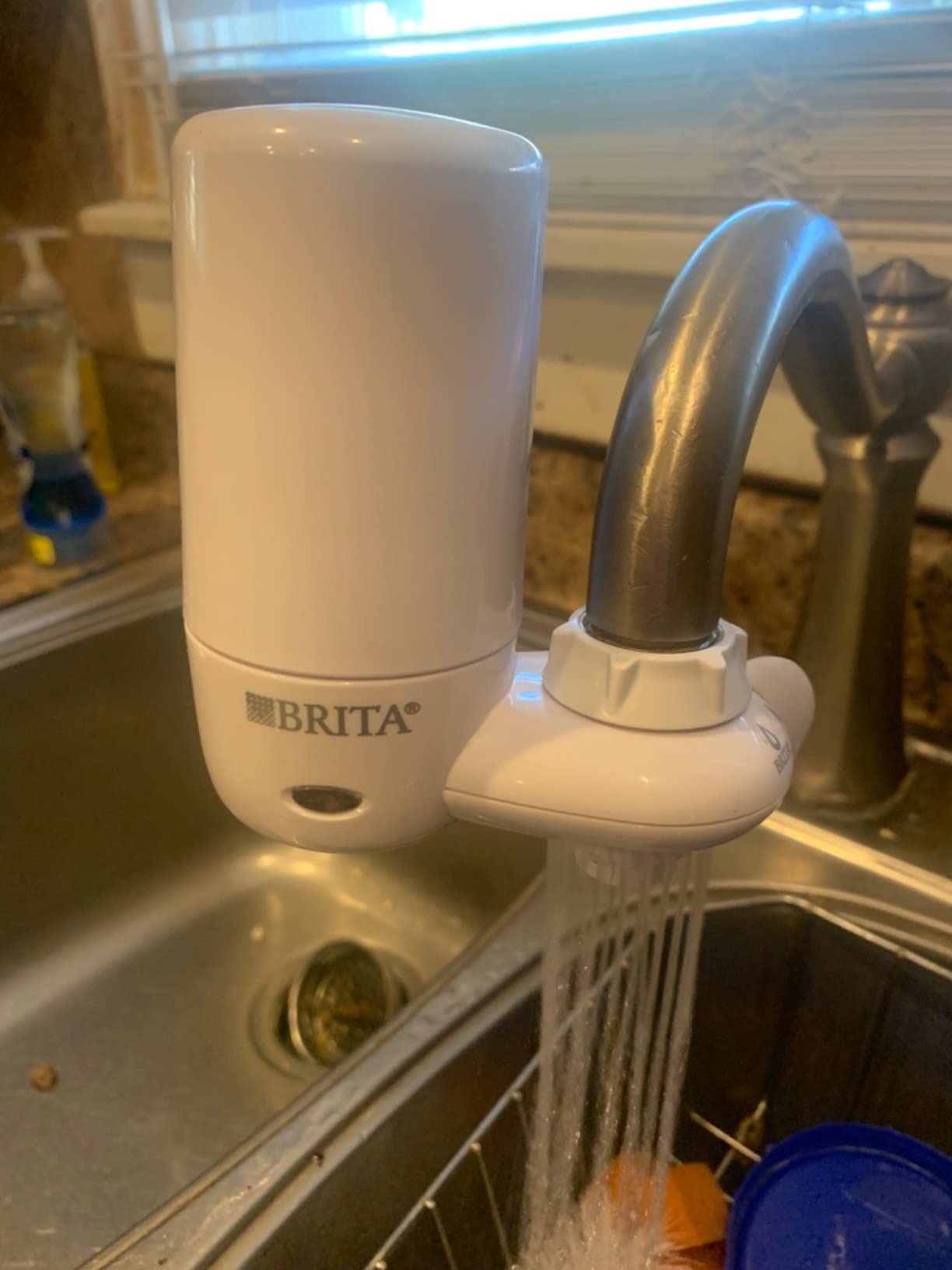
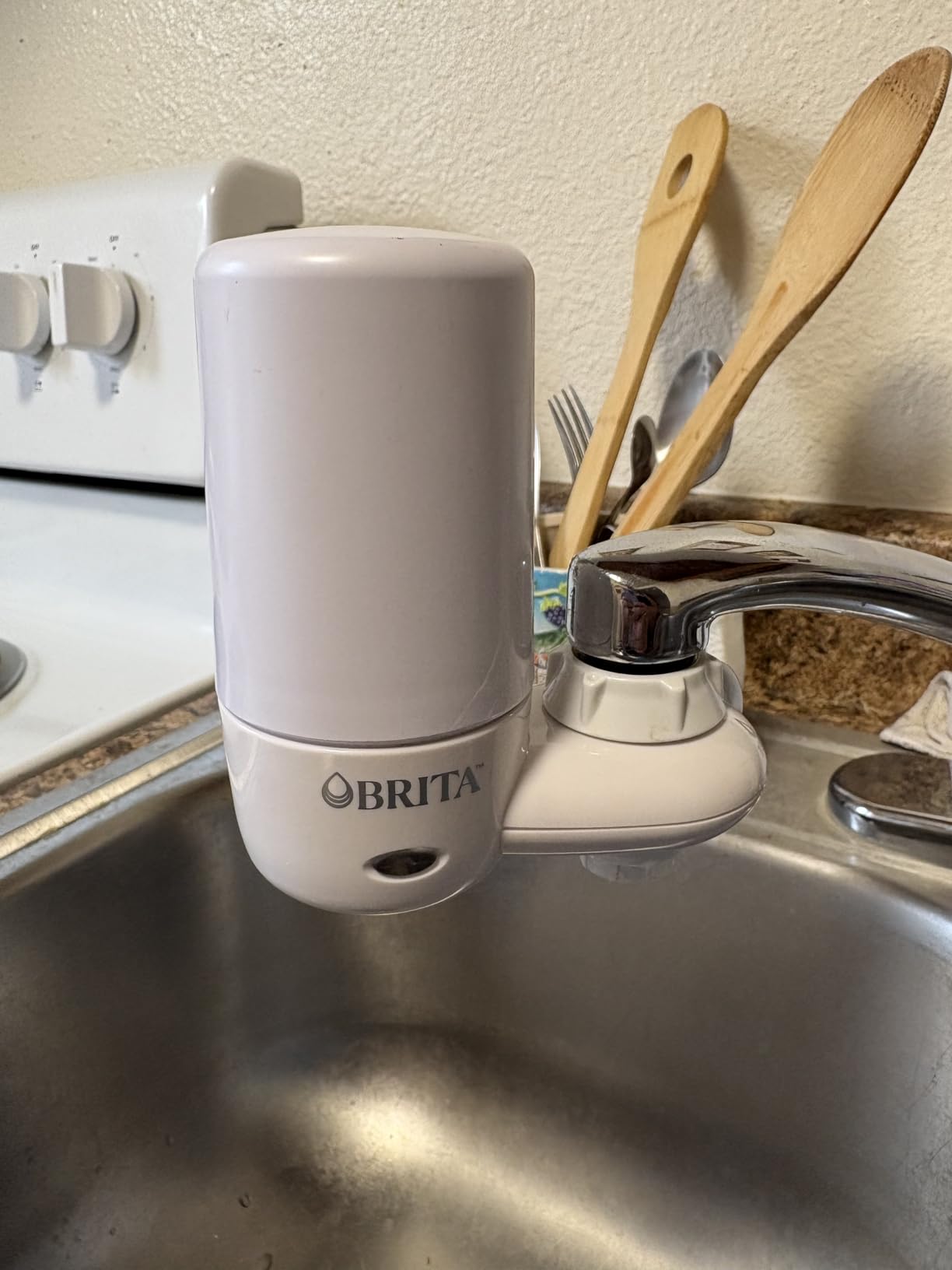
The Brita Elite is the simplest way to kill chlorine taste on a standard sink without touching a screwdriver. It snaps onto most faucets with an external aerator, and the cartridge claims to cover 60-plus contaminants including 99% of lead. The BPA-free build and three spray modes are sensible touches for a unit that sits under your eye every day.
Where it separates from the PUR is the filtered stream. Brita’s is narrow and pressurized, and owners consistently report splashback at the glass. The selector is also a stiff tab that needs two fingers, not the single lever the PUR uses. If you fill tall glasses at the sink several times a day, that difference is real.
Cartridge life and the indicator
Four months or 100 gallons is a slightly longer interval than the PUR Plus, and the carbon block is doing genuine work on chlorine taste and odor. But the change indicator is mechanical, sits on top of the unit, and owners report its status is often inaccurate. Budget calendar reminders accordingly.
The 0.5 gpm rated flow is on the low side. It suits drinking water and rinsing produce. It is not the unit you want if you are filling a large stock pot at the tap.
Who this suits and who it does not
It is the right buy for a rental, a dorm, or a first apartment, where nothing may be drilled and the budget is small. It is also BPA-free, which matters in a family kitchen. The claimed savings of roughly 1,800 single-use bottles a year is a reasonable environmental argument if your household actually buys bottled water.
Skip it if you want a metal body that outlasts the plastic, or if you have a pull-out faucet. The plastic build is the most common comparison complaint against PUR units.
3. PUR Plus Vertical Faucet Mount – Best Chrome Finish for Matching Sink Hardware
PUR Plus Vertical Faucet Mount Water Filtration System, Lead-Reducing Filter, Great-Tasting, Easy Install, Lasts 100 Gallons, Faucet Water Filter, Compatible with Sinks with External Aerators, Chrome
100 gallon capacity
3 month cartridge life
Activated carbon and ion exchange
Chrome finish, model FM-3700
Pros
- Universal adapters included for quick tool-free fitting
- Filter change light signals cartridge replacement
- WQA and NSF certifications for lead microplastics and chlorine
- Chrome finish suits standard kitchen hardware
- Cartridges clip on and off the adapter ring
Cons
- Sensitive flow lever can be bumped into filtered mode
- Cartridge and housing diameter variation can let unfiltered water bypass
- Not designed for pull-out or handheld faucets
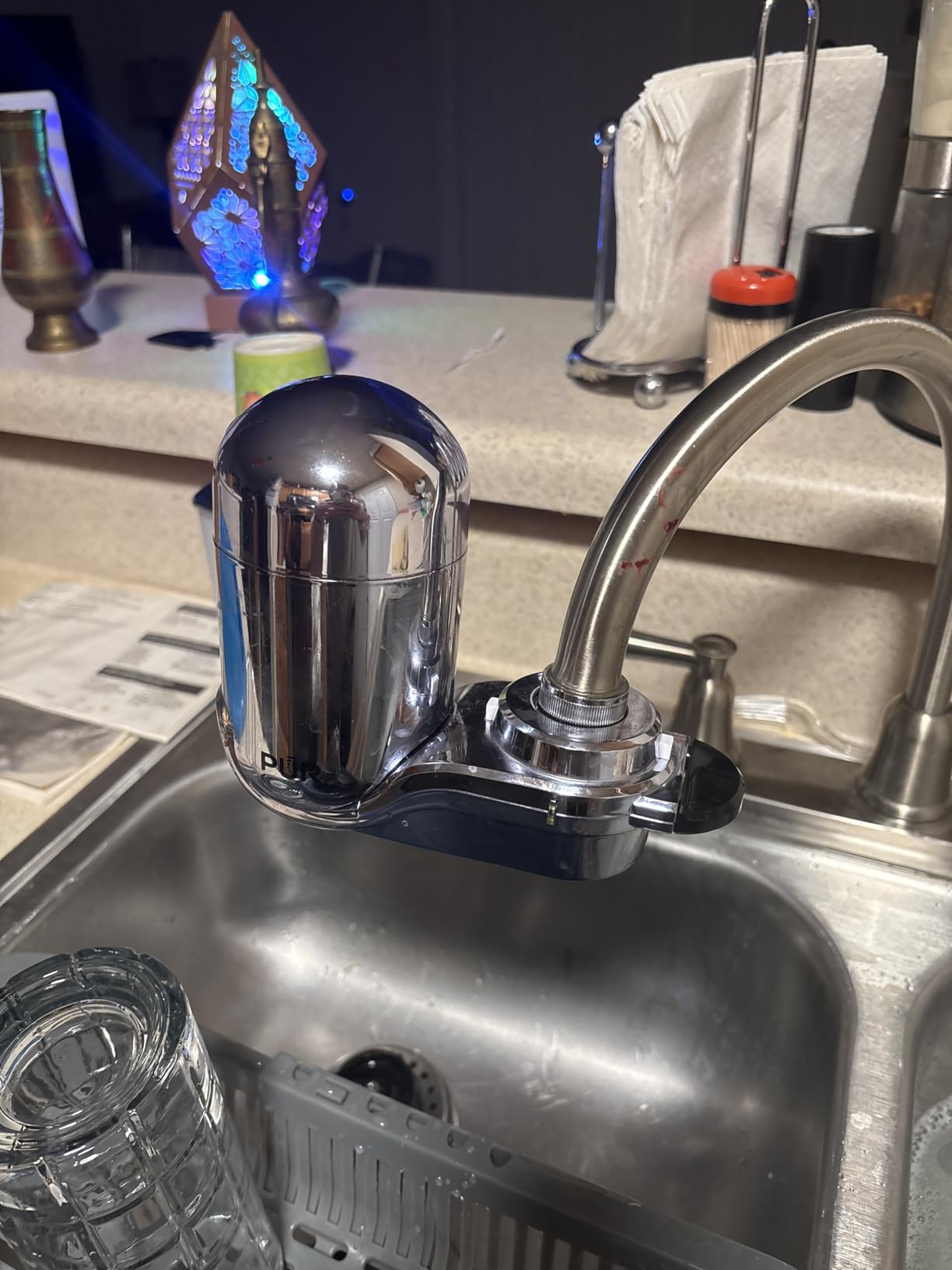
This is the chrome sibling of our top pick, and the difference is the finish. If your kitchen has a stainless or chrome faucet and you dislike the grey plastic look of the standard PUR, this solves that problem in a way the competitor units do not. The box includes the vertical mount, one filter, and universal adapters.
Filtration is the same 3-in-1 arrangement, so the contaminant story is identical. The certification here is broader in wording, covering microplastics, chlorine, and 70 chemical and physical substances, on top of WQA lead certification. It also carries a 2 year limited warranty, which none of the other plastic units in this roundup offer.
What the vertical format changes
Vertical orientation matters under a high-arc faucet, where a horizontal unit can foul the sprayer clearance. The body measures about 6.4 inches across and 5.4 inches tall at roughly 1.2 pounds, so it is not a countertop presence.
The sensitive lever complaint carries over from the grey model. Owners report bumping it into filtered mode and occasionally pushing lukewarm water through the carbon, which shortens cartridge life. Learn where the lever sits before you fill a pot.
Bypass risk and cartridge consistency
This is the one to pay attention to. Users report that cartridge and housing tube diameter variation between production runs can let unfiltered water slip around the media. Using genuine PUR Plus cartridges keeps tolerances consistent, and it is a good reason not to buy a suspiciously cheap cartridge.
Where the warranty earns its keep
Two years of limited coverage on a plastic attachment is a genuine differentiator in a category where most competitors offer nothing. It does not cover the cartridge, but it does cover the housing and hardware that actually crack.
4. Waterdrop FC-01 – Best Value With a 320-Gallon Cartridge
Waterdrop FC-01 Water Filter for Sink Faucet, 320 Gallons
320 gallon capacity
3 month cartridge life
Activated carbon fiber
Model WD-FC-01
Pros
- Simple push-button switch between tap and filtered flow
- Long 320-gallon cartridge life cuts replacement frequency
- Wide selection of included faucet adapters
- Fast filtered flow that fills a jug quickly
- Consistently better taste and odor reduction
Cons
- Plastic lever can snap off after extended daily use
- Filtered stream can be forceful and splash in the sink
- Not compatible with pull-out hand-held spray or sensor faucets
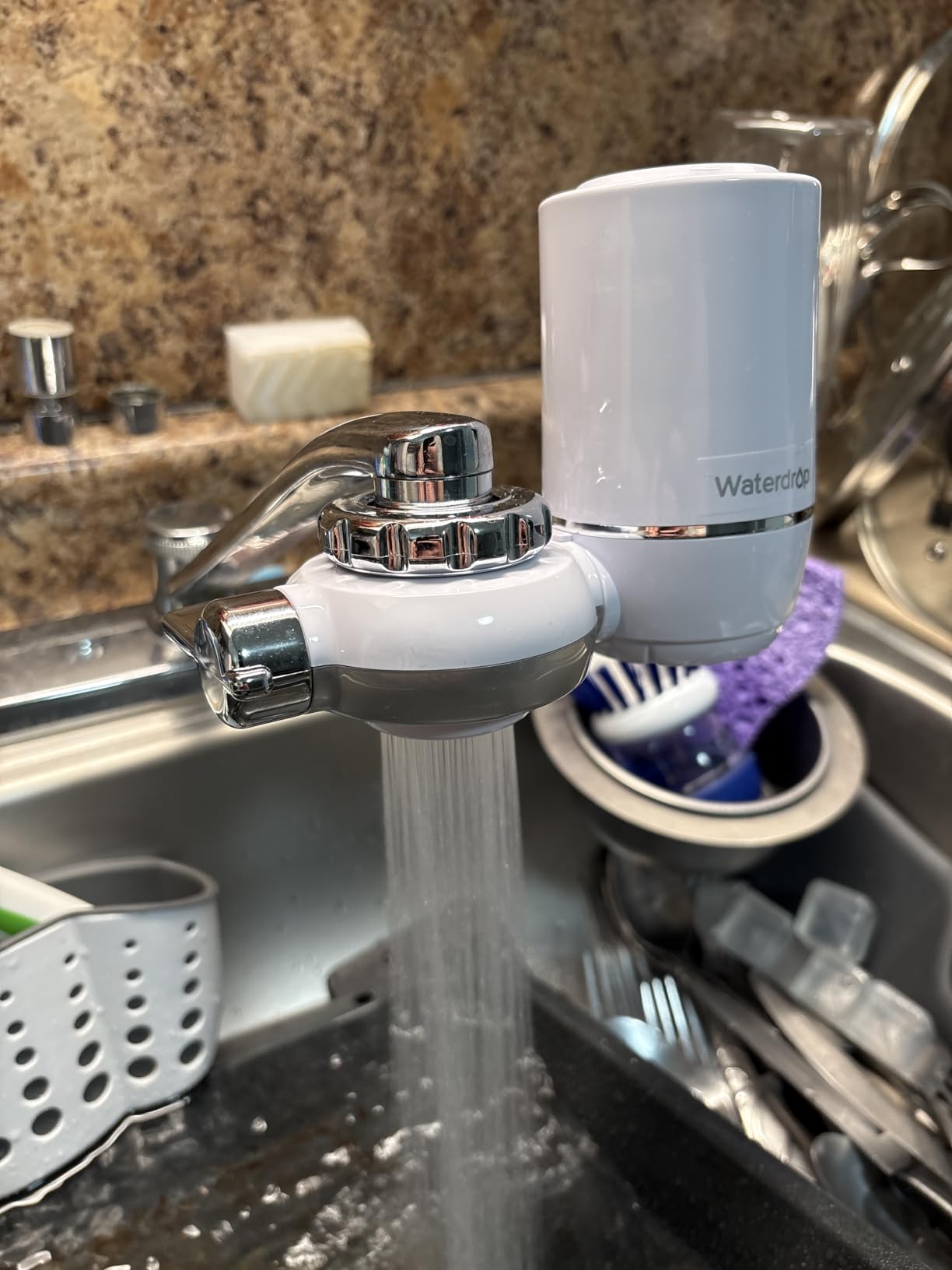
The FC-01 is the value pick because of one number: 320 gallons per cartridge. Most plastic faucet filters in this roundup run 100 to 200 gallons, so you are replacing the cartridge a third as often at a similar unit cost. The certification is NSF/ANSI 42 for chlorine, taste, and odor, plus NSF/ANSI 372 for lead-free material.
The control is a push button rather than a lever, and owners find it simpler to operate than the Brita tab. The filtered flow is fast enough to fill a jug quickly, which is where the long cartridge life pays off. Replacement cartridges come in three-packs as the WD-FF-01A.
Media type and what it means for taste
Activated carbon fiber rather than a granular carbon block gives a finer surface area for taste and odor adsorption, and buyers report the improvement is noticeable even on water that only mildly smells of chlorine. It will not move a TDS meter, and nobody who tested it expected it to.
Fill rate is listed at four 16.9 ounce bottles per minute, which is a useful way to think about it if you are filling containers rather than glasses.
Durability is the weak point
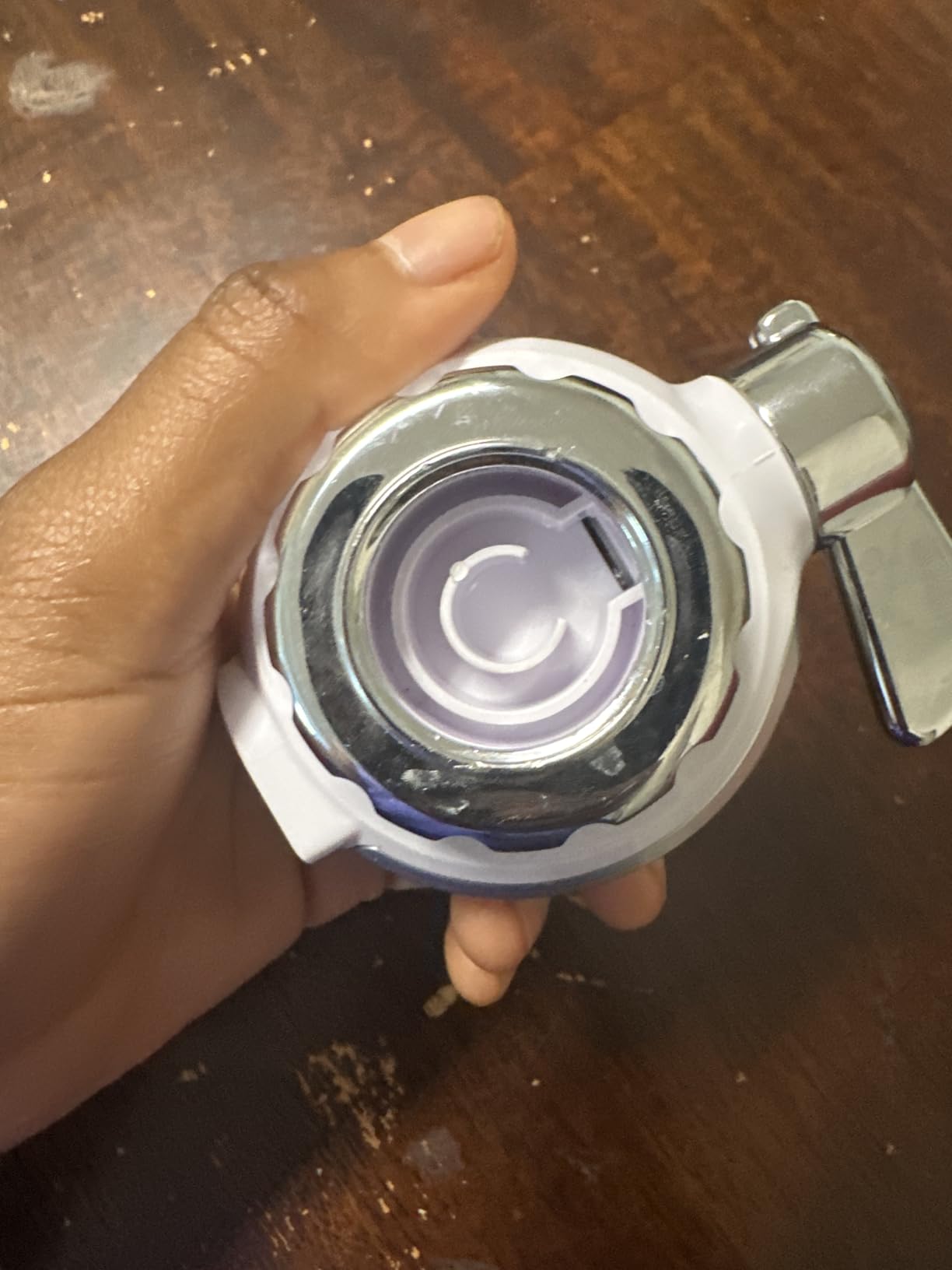
The most cited defect across thousands of reviews is the plastic flow lever snapping off after extended daily use, which leaves you buying a new system rather than a new cartridge. If your household runs water through the filter constantly, that is a real cost multiplier on a cartridge you were trying to avoid replacing often.
There is also a stream force complaint, with some users finding it harder to control and prone to splashing, and a note that some older faucet types need an adapter that must be modified to fit. Measure your thread size before ordering.
Who should buy it
Households that filter a lot of water on a budget, and anyone who wants a certified chlorine and taste solution without chasing the lowest unit price. It is explicitly not compatible with pull-out, hand-held, spray-style, or sensor faucets, which is the same limit as most of the field.
5. Waterdrop CTF-01 Stainless Steel – Premium Pick for Durability and a Full Year of Service
Waterdrop CTF-01 Water Filter for Sink Faucet, Stainless Steel, 1 Filter
8000 gallon capacity
12 month cartridge life
5-stage filtration
304 stainless, 1.6 gpm
Pros
- Countertop stainless housing is durable and fingerprint-resistant
- Up to 8000 gallons or 12 months of filter life
- Fast 1.6 gpm flow suited to filling pots and pet bowls
- Easy installation with included wrench and adapters
- Marked improvement in taste odor and clarity
Cons
- Higher price than plastic faucet-mount filters
- Rigid plastic tubing makes the unit awkward to handle
- Can leak at the thread where it meets the faucet
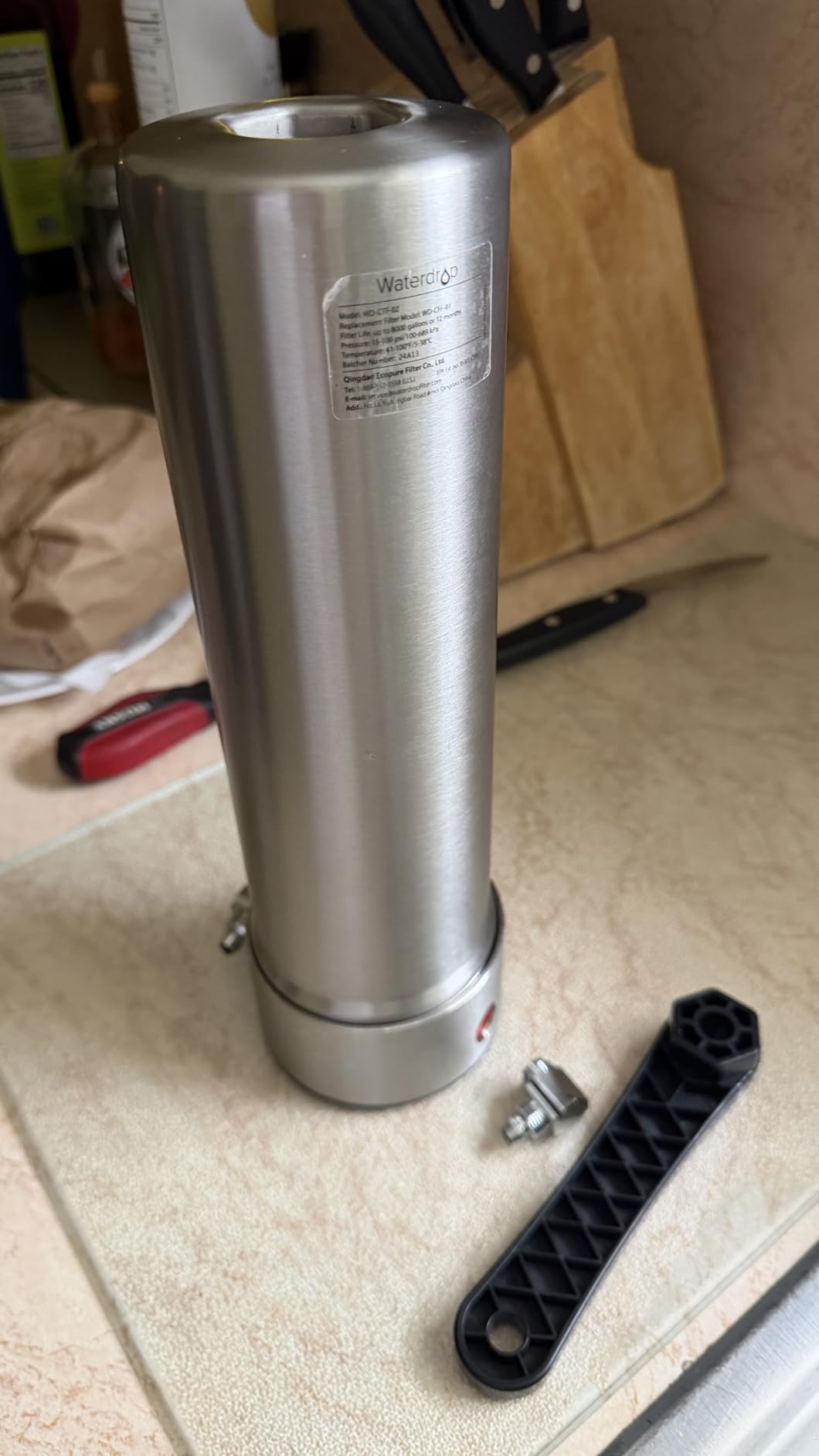
The CTF-01 is the one we would buy with our own money, and it is the only unit here with a 304 food-grade stainless housing that sits on the counter rather than clipping to the spout. The housing resists rust, holds a fingerprint-resistant finish, and simply outlasts the plastic category by a wide margin. Buyers rate it the strongest performer in our group.
Cartridge life is the headline: up to 8,000 gallons or 12 months on a single replacement, designated WD-CFF-01. That is the largest capacity figure in this roundup by a distance, and it changes the ownership maths more than any other single spec here.
Five stages and what each one catches
The 5-stage stack is specified to reduce colloids, sediment, 99% of chlorine, heavy metals, hydrogen sulfide, and fluoride. The hydrogen sulfide reduction matters more than it sounds, because that rotten-egg smell is a common complaint in areas with older plumbing and municipal sulfides.
Note what is not on that list. It does not reduce TDS, and some users report mineral content actually reads slightly higher after filtration. Operating range is 41 to 100 degrees Fahrenheit at 15 to 100 psi, so it needs a reasonably strong line pressure.
Flow rate and counter presence
At 1.6 gpm this is fast enough to fill a pot, a pitcher, or pet bowls, and it is the second-fastest unit in the roundup. The trade is footprint: 4.92 by 3.51 by 12.51 inches and 4.1 pounds, which is a real object on your counter. Buyers with small sinks should measure first.
Installation uses the included wrench and adapters, so it is not quite tool-free like the tap attachments. Some users find the rigid plastic tubing awkward to handle, and a few report a leak at the thread where the unit meets the faucet, plus yellow staining around the splash area over time.
Who should spend more here
Anyone who filters for cooking water, makes coffee and ice daily, or has dealt with cracked plastic spigots before. The one-year cartridge interval is the strongest argument, and the stainless body is the only real answer to durability complaints we found across the category.
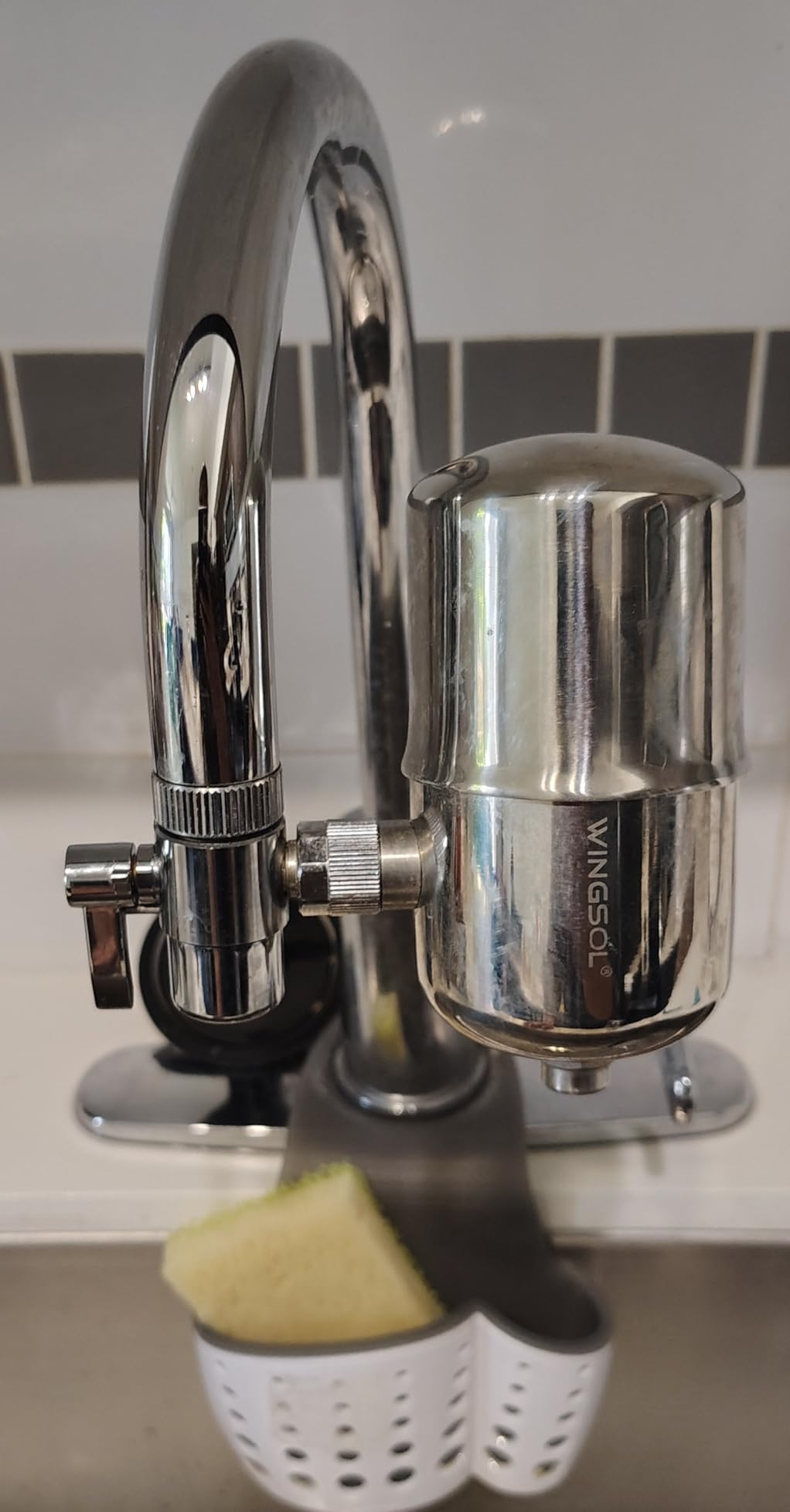
6. WINGSOL 304 Stainless Steel Filter – Best for Certified PFAS and Lead Reduction
WINGSOL Stainless Steel Water Filter for Sink Faucet, NSF/ANSI 42&53, 360° Rotating Tap Purifier Reduces PFAS, Lead, Chlorine & Microplastics, 350 Gallons Long-Lasting for Kitchen & Bathroom
350 gallon capacity
3 month cartridge life
Carbon block media
304 stainless, 0.5 gpm
Pros
- NSF 42 and 53 certification covering PFAS lead and microplastics
- Food-grade 304 stainless housing resists rust and metallic taste
- 360-degree rotating outlet for flexible aiming
- Hand-tighten installation with multiple adapters
- Widely rated for kitchen bathroom and RV use
Cons
- Not compatible with pull-out hand-held spray or sensor faucets
- Does not reduce TDS
- Cartridge change interval can be shorter in hard water
The WINGSOL is the only tap-mounted unit in this roundup carrying both NSF/ANSI 42 and NSF/ANSI 53, and the 53 certification is the health-effects standard covering lead and PFAS, PFOA, and PFOS. If PFAS is the reason you are shopping, that certification is what separates this from a taste-only filter, and it is why we recommend verifying certification rather than trusting a bold claim on a listing.
Construction is a one-piece 304 food-grade lead-free stainless housing, which avoids the plastic cracking and metallic taste complaints that come with cheaper bodies. The outlet rotates through 360 degrees, which matters when you are filling a tall glass at the far corner of a deep sink.
Thread fit and installation
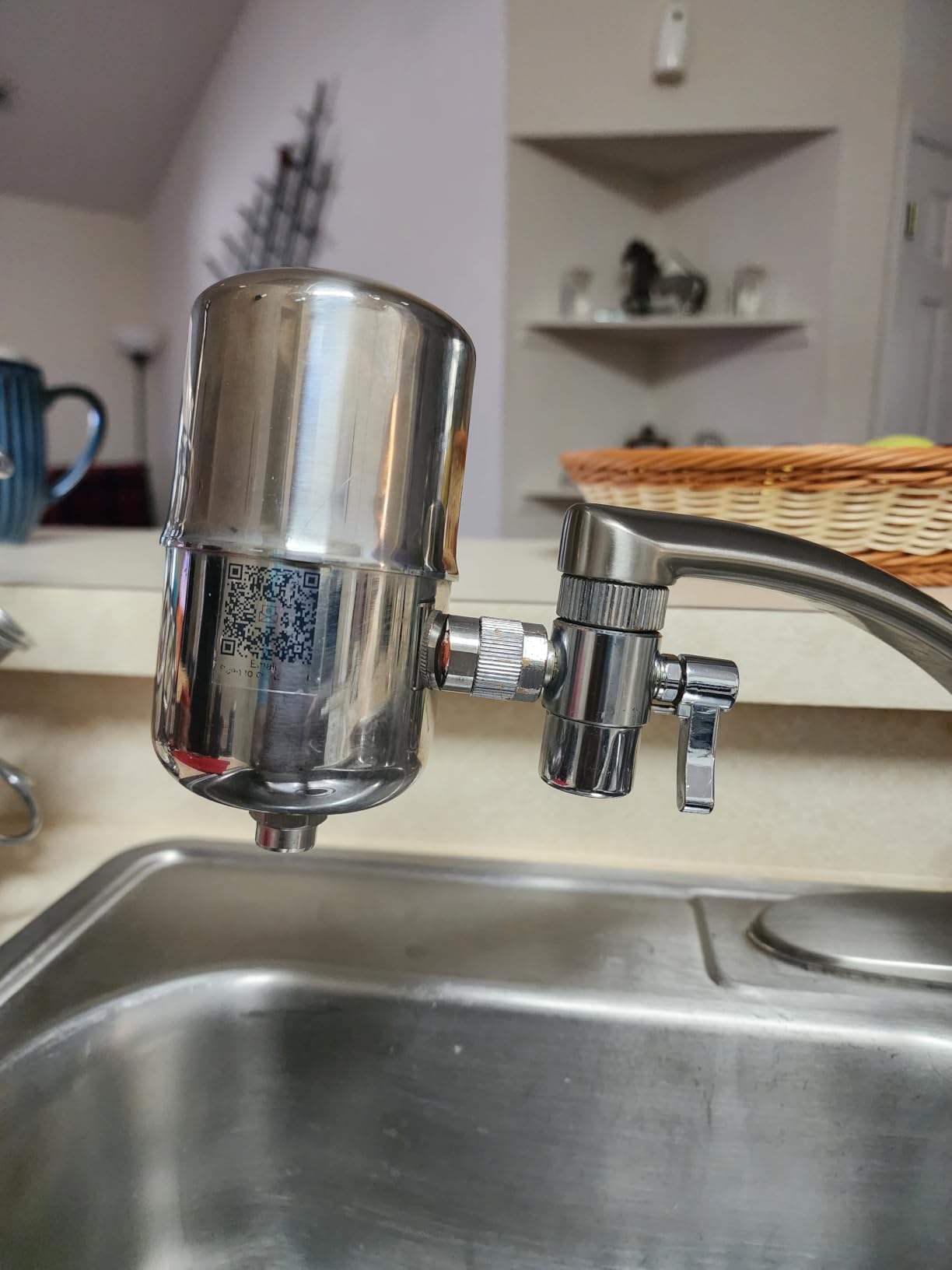
This one specifies its own range: male faucet threads from 0.38 to 0.94 inches and female threads from 0.75 to 0.94 inches. That is a useful disclosure most competitors skip, and it lets you check compatibility before ordering rather than after. Installation is hand-tighten with multiple adapters, so no tools are needed.
It is also rated for bathroom and RV use, which is unusual for a kitchen-roundup product. If you have a second tap that needs the same treatment, this is the unit to buy two of.
Cartridge options and the hard water caveat
Replacement cartridges come in several media types, including PAC, PC, 5-in-1, CRM, and a chloramine variant. That flexibility is useful if your water is heavily chloraminated rather than chlorinated, since standard carbon block media underperforms against chloramine.
Owners note the cartridge interval can shorten in hard water, which is a straightforward consequence of the scale loading the media. Cartridges are sold separately, so factor the recurring cost into your plan rather than treating the unit as a one-time purchase.
The 0.5 gpm rating is on the low side, so this is a drinking-water unit rather than a cooking-water unit. If you fill pots at the tap, look at the 1.6 gpm or 2.2 gpm options instead.
7. KRAUS Purita Lead-Free Faucet – Top Rated Dedicated Filtered Water Faucet
KRAUS Purita 100% Lead-Free Kitchen Water Filter Faucet in Spot Free Stainless Steel, FF-100SFS
Lead-free brass body
Carbon block compatible
Single hole install
1.0 gpm, 12 inch high
Pros
- Solid brass construction feels substantially more durable than plastic spigots
- Single-hole installation with all mounting hardware included
- Balanced 1.0 gpm flow that fills glasses without splashing
- Spot-free stainless finish resists water spots and fingerprints
- Highest average rating in this roundup at 4.6 stars
Cons
- Faucet only
- a filtration cartridge must be purchased separately
- Installation manual specifies a 1-3/8 inch hole larger than most people expect
- Not an air-gap faucet
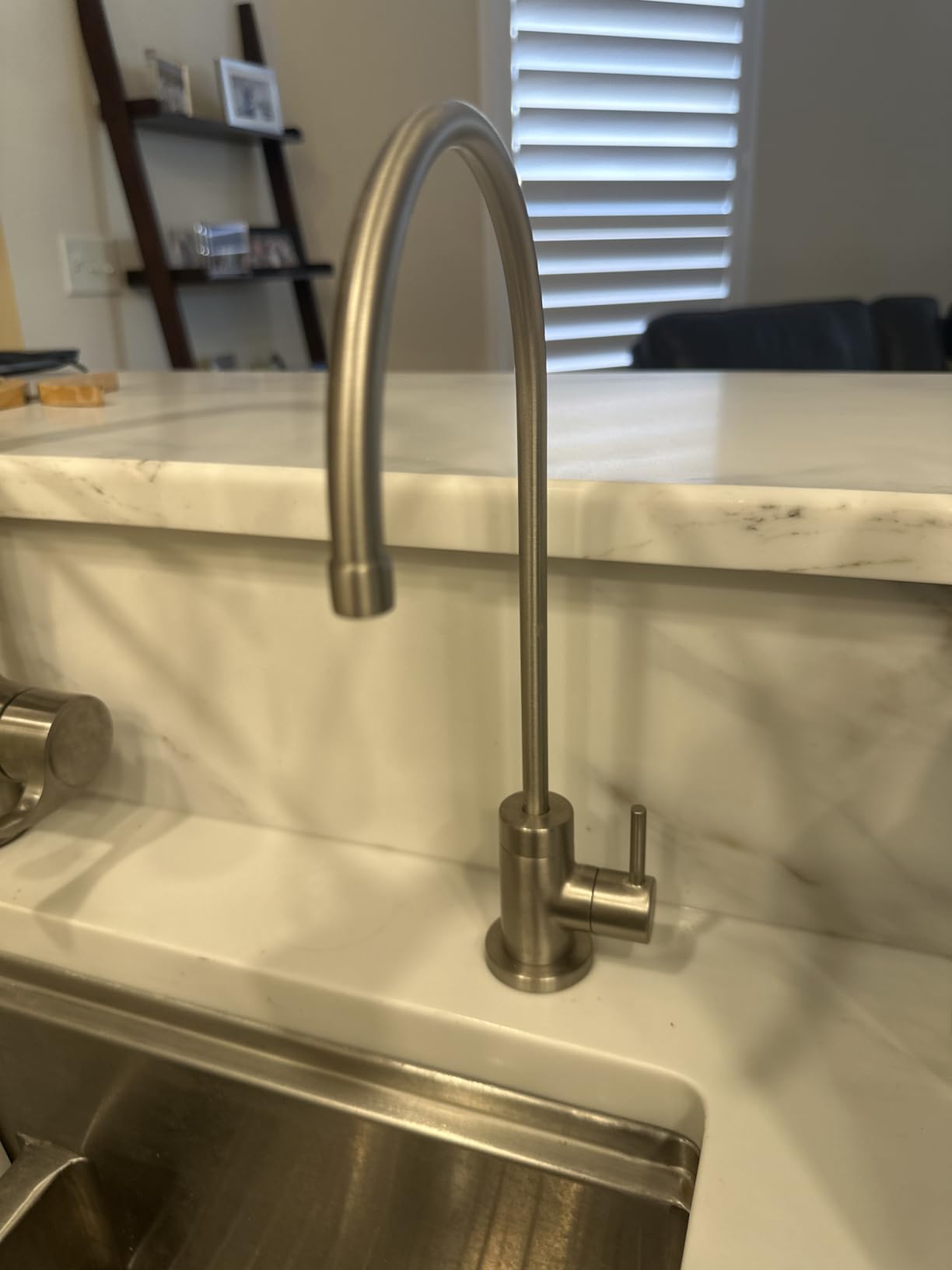
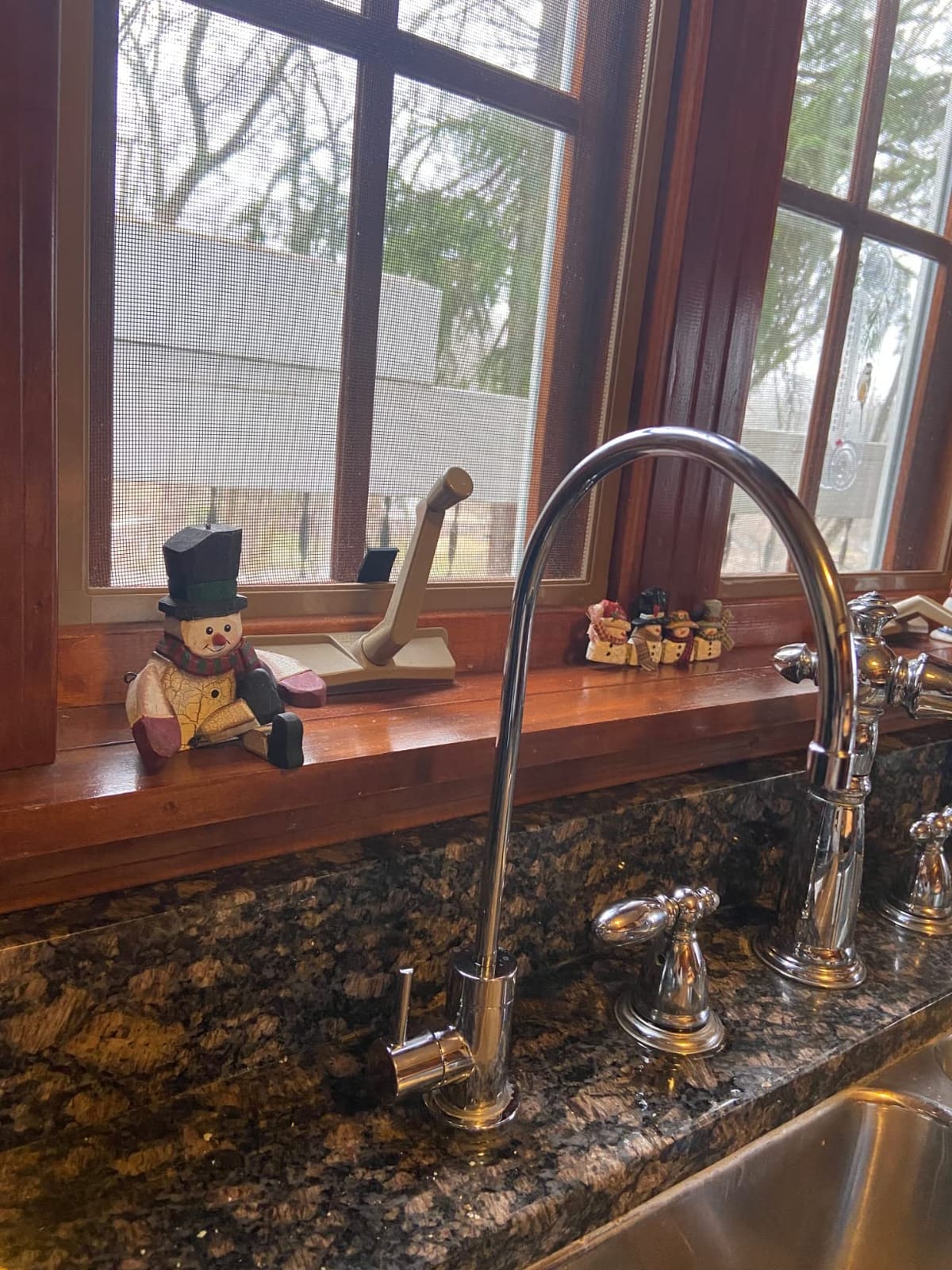
Be clear about what this is: a filtered water faucet, not a faucet-mounted filter. The KRAUS Purita is a 100% lead-free brass body with matching lead-free waterlines in a spot-free stainless finish, designed to pair with an under-counter reverse osmosis or filtration system. It carries the highest average rating of any product we tested, at 4.6 stars.
Owners describe it as beautiful and well made, and they notice that the output is clearer than the cheap air-gap plastic spigots that come with many under-sink systems. The non-air-gap design means waste water goes straight to the drain and it needs no air-gap hole, which simplifies the install considerably.
When a dedicated faucet makes more sense
If you are already planning an under-sink system, a plastic air-gap spigot is the weakest link in the chain. The KRAUS replaces it with a single-handle, high-arc 360-degree swivel spout in solid brass, ADA-compliant, on a limited lifetime warranty. That warranty is the strongest in this roundup by a wide margin.
The recommended pairing is the Kraus 2-stage carbon block under-sink FS-1000, sold separately. Flow is 1.0 gpm, which fills a glass cleanly without splashing, and the height is 12 inches.
Two fit details to check first
Because this is a faucet, you are drilling a hole. The manual specifies a 1-3/8 inch hole, which is larger than most people expect and larger than some existing filter holes. Owners flag this as the single most common source of install friction, so measure before you commit.
The second detail is that it is not an air-gap faucet, so it replaces the air-gap spigot supplied with some reverse osmosis systems and requires different tubing. If your existing system is hardwired to an air-gap, budget for the rework.
8. FRIZZLIFE FF1080 Extender Filter – Best for Sink Reach and Multi-Mode Spraying
Frizzlife Water Filter for Sink Faucet Extender, NSF/ANSI 372, 9pcs Filter Reduce 99% Chlorine, 1080° Rotating Brass Swivel Aerator, 2 Modes Spray Faucet Filter for Skin Kitchen Bathroom Sink, FF1080
Aerator thread fit
PP cotton and carbon fiber media
Two spray modes
1080 degree rotating brass arm
Pros
- Seven thread sizes plus 15 available on request cover nearly all US faucets
- Long flexible 1080-degree arm usable by children and elderly users
- Two spray modes including a splash-proof honeycomb bubble aerator
- Nine replacement cartridges included in the box
- Lead-free brass body certified to NSF 372 CEC and DOE
Cons
- 30-day cartridge replacement cycle is the shortest in this group
- Does not reduce TDS
- Adapters must be matched carefully to the faucet thread size
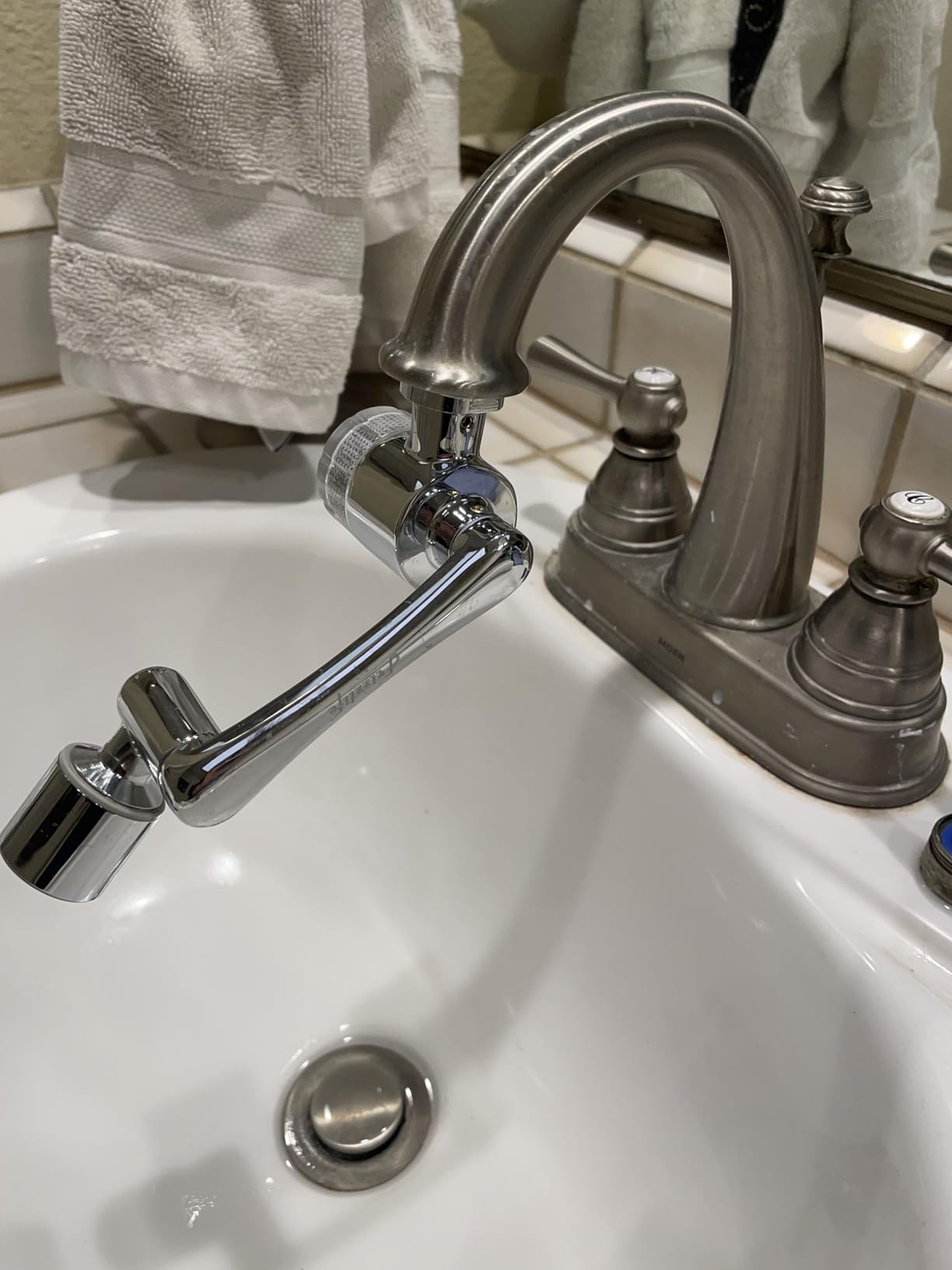
The FRIZZLIFE is a different product shape. It is a faucet extender and filter combined, with a 1080-degree rotating and folding brass arm on rubber-sealed swivel joints. Buyers like it for reach, for cleaning the corners of a deep sink, and for gentle face washing, which is not a use any other product here supports.
Thread coverage is its real strength. Seven sizes are included, covering 16mm through 25mm plus 13/16 inch, and fifteen more are available on request. That range catches faucets that the adapter-based tap filters miss. Flow is listed at up to 1.2 gpm with a 2 gpm maximum claim.
The maintenance trade nobody mentions
Here is the catch: the PP cotton and carbon fiber cartridges have a 30-day replacement cycle, the shortest in this roundup by a wide margin. The box includes six PP cotton and three carbon fiber cartridges, and the replacement part is the B0DQ13S99H. Doing the arithmetic, you would need ninety replacement cartridges per year per unit to keep it running on schedule.
That is why we would not recommend this for drinking-water filtration despite the appealing chlorine reduction claim. It is built as a sink extender with filtration as a bonus. Use it for washing produce, rinsing dishes, and face washing, and let a certified tap filter handle the glass you drink from.
Certification and two modes
The body is lead-free brass certified to NSF/ANSI 372, CEC, and DOE, which covers material safety rather than contaminant reduction. The two modes are a pressurized spray and a splash-proof honeycomb bubble stream, and the bubble mode is the one most owners actually use.
Adapters do need to be matched carefully to your faucet thread size, and getting that wrong is the leading cause of leaking at the joint.
9. Vortopt T1 Rapid Flow – Best for Fastest Flow on a Standard Faucet
Vortopt Faucet Water Filter for Sink, T1 Rapid Flow, NSF Certified.
400 gallon capacity
3 month cartridge life
Activated carbon, 5-stage
1.78 gpm flow, model T1
Pros
- Very fast 1.78 gpm filtered flow
- Low price with NSF 42 certification
- Sleek compact housing that suits both kitchen and bathroom taps
- Two water modes help extend cartridge life
- Noticeably improves metallic taste from older plumbing
Cons
- Lowest average rating in the roundup at 4.0 stars
- Filtration can stop passing water after about a week until reset
- Printed instructions are difficult to follow
- Some cartridges arrive broken inside the housing
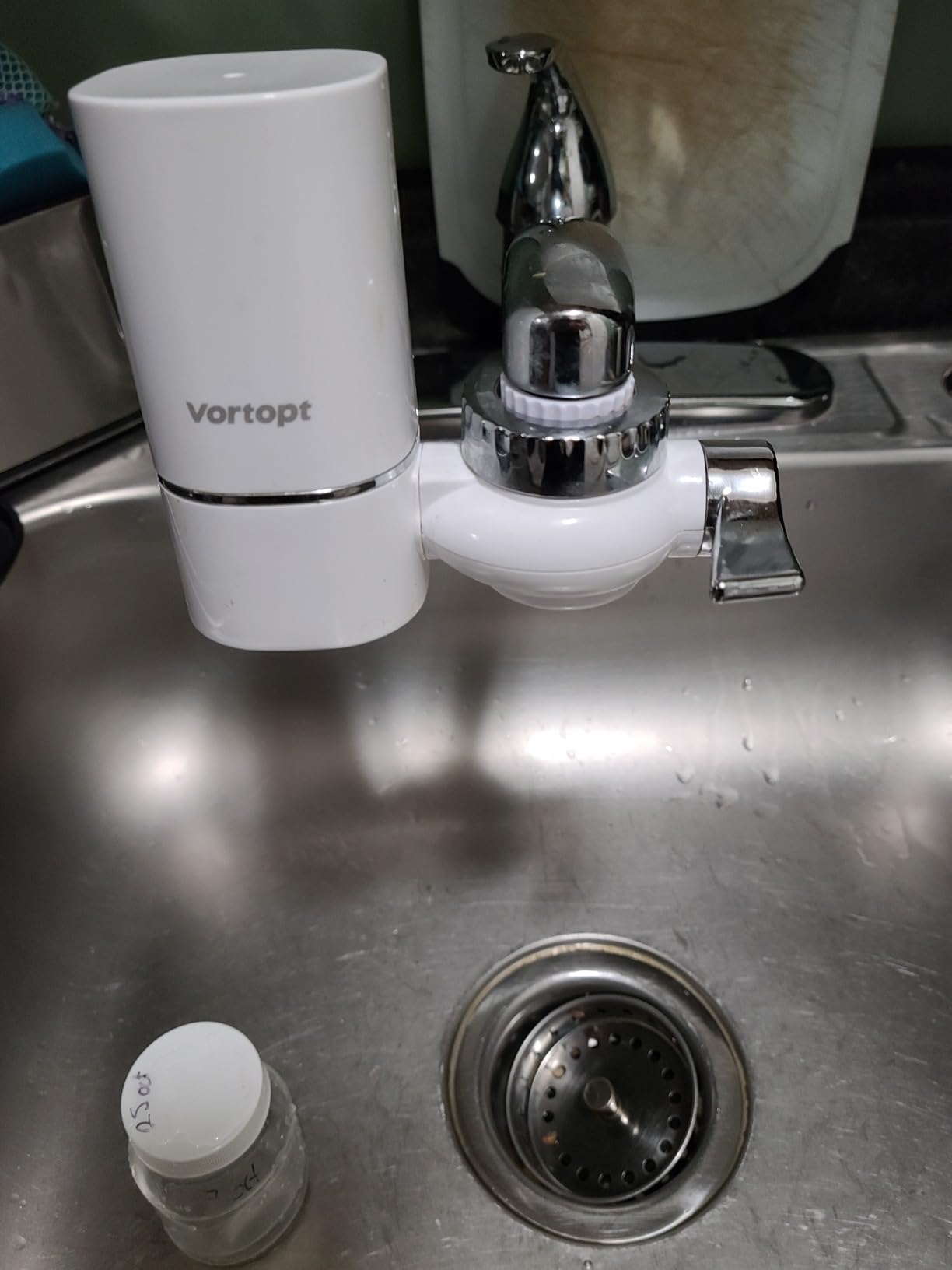
The Vortopt T1 exists for one reason, and that reason is flow. At 1.78 gpm it is the fastest filtered flow of any true tap-mounted unit here, faster than the 1.6 gpm countertop model, and it suits people who rinse constantly rather than drinking slowly. It is NSF/ANSI 42 certified for chlorine, taste, and odor.
Filtration is five stages: a particle screen, PP mesh, PP cotton, an activated carbon fiber core, and a fine particle filter. The PP stages matter on older plumbing, and owners with metallic-tasting water report a noticeable improvement.
Reliability is the concern
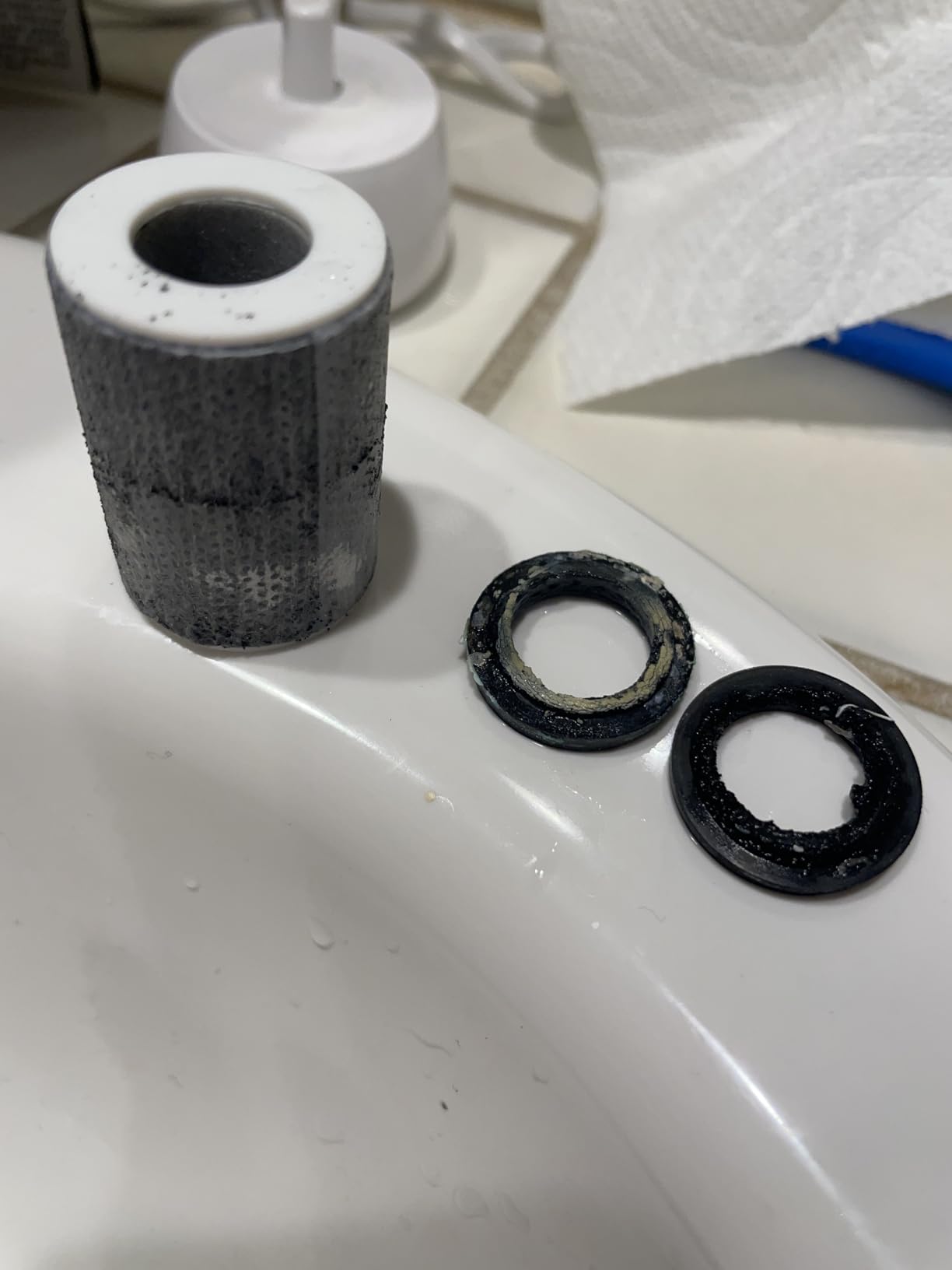
This is the lowest-rated product in our roundup at 4.0 stars, with a 16% one-star share, and the reason is specific: several owners report the filter ceasing to pass water within about a week, until the unit is reopened and reset. That is a real failure mode, not a taste complaint.
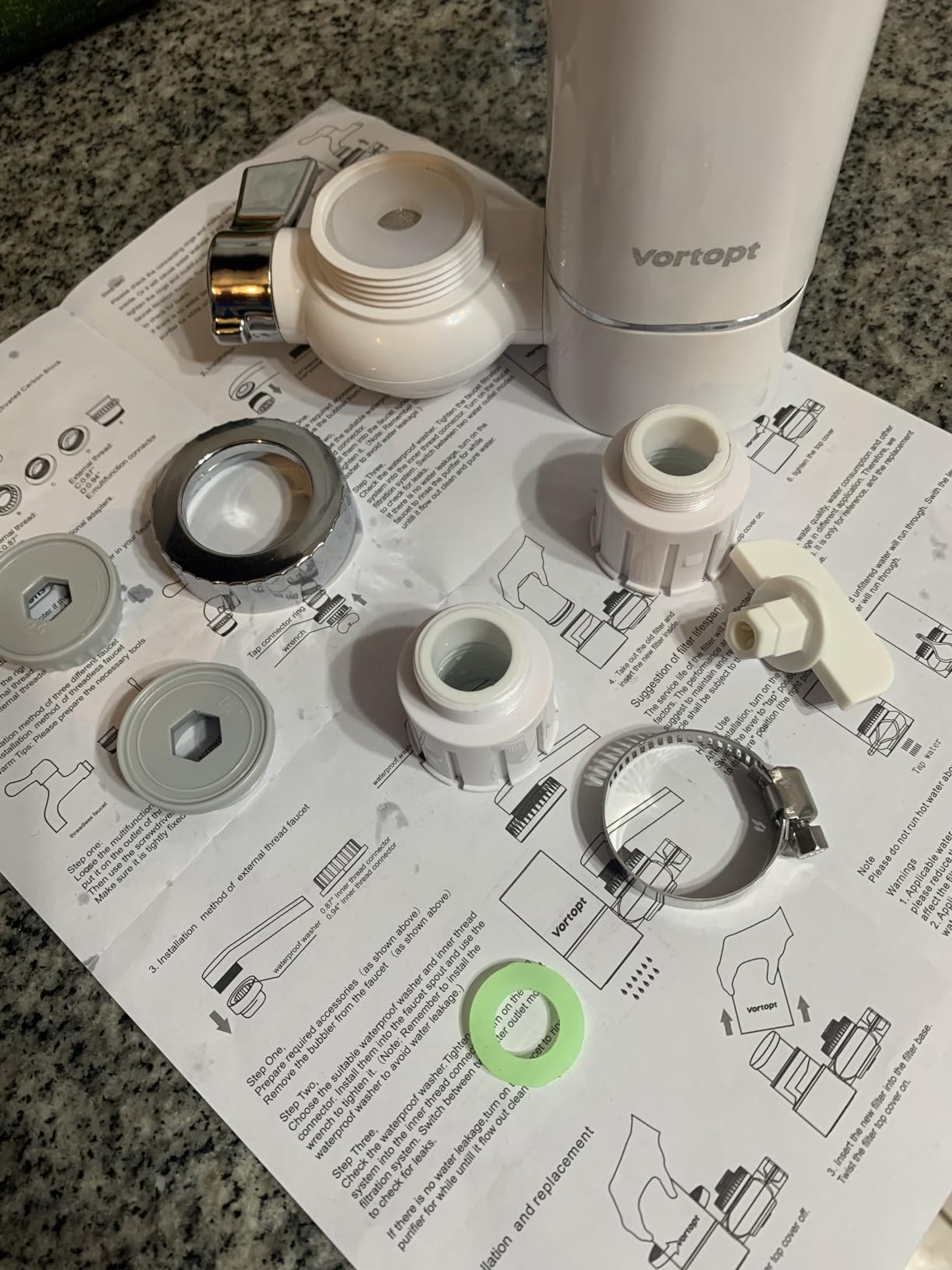
Two other practical issues. A protective film must be removed from the filter before first use, and missing that step is a common cause of the no-flow reports. Printed instructions are also hard to follow and the adapters are difficult to identify, which matters given five are included.
Fit, adapters, and the override
Five adapters are included, covering 0.87 and 0.94 inch internal and external threads plus a multifunction adapter, but some owners on older American Standard faucets needed to modify an adapter to make it work. Not compatible with pull-out or spray faucets.
Two water modes are offered, and switching between them extends cartridge life, which is a genuinely useful design idea. Capacity is 400 gallons or a change every three to six months.
10. Instapure F2 Essentials – Best for a Legacy Brand and the Largest Cartridge in the Plastic Group
Instapure F2 Essentials Faucet Water Filter System, Chrome with Clear Cap
200 gallon capacity
3 month cartridge life
Coconut carbon media
0.75 gpm, chrome with clear cap
Pros
- Highest certified capacity in the plastic group at 200 gallons per cartridge
- Coconut carbon media improves taste and chlorine odor
- Attaches to most standard kitchen faucets in about a minute without tools
- Clear cap makes the housing easy to inspect
- Brand has been making end-of-faucet filters since 1975
Cons
- 0.75 gpm flow is slower than most competitors
- ABS plastic housing is less durable than stainless alternatives
- Does not reduce dissolved solids
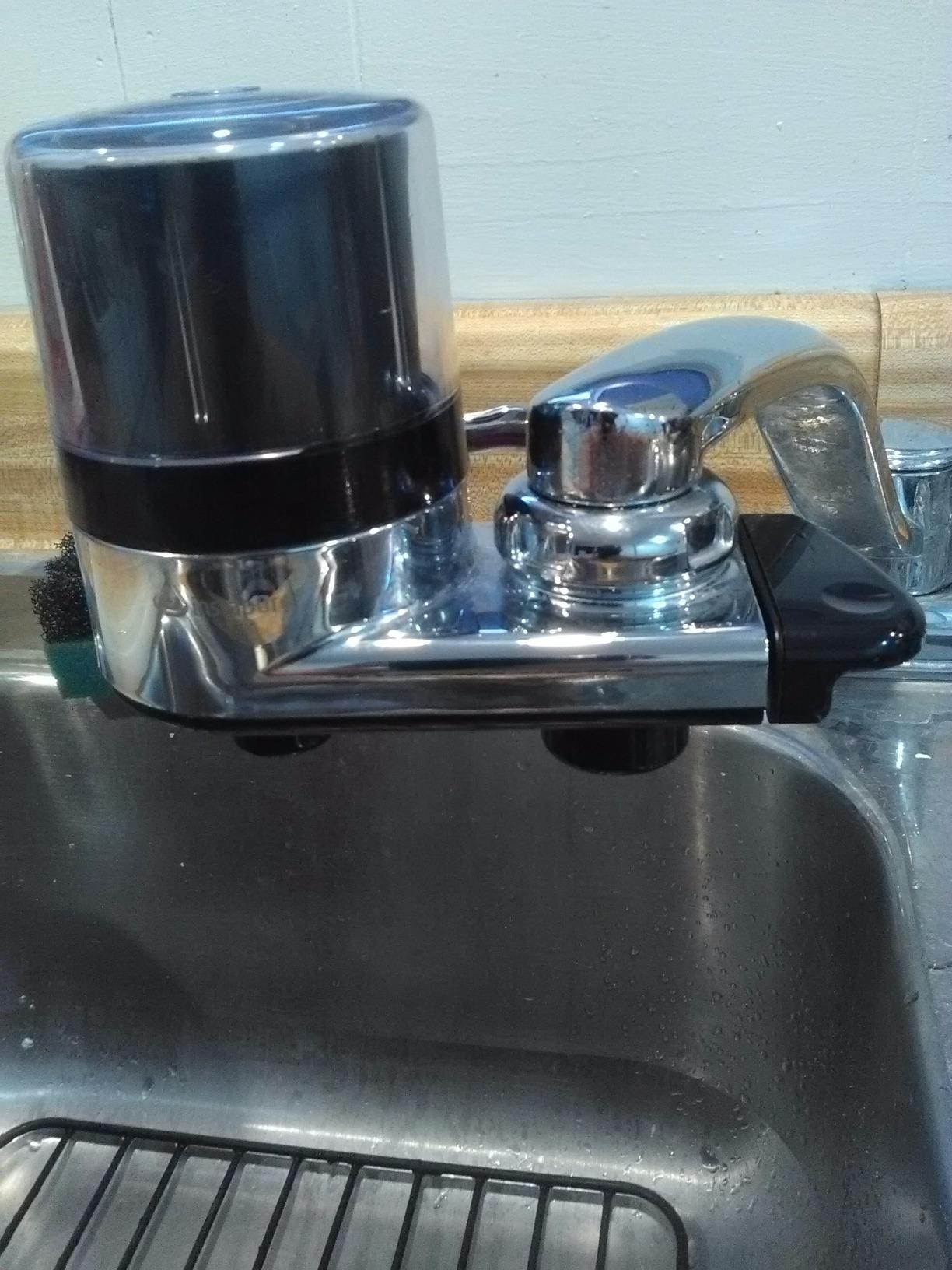
Instapure invented end-of-faucet filtration in 1975, and that history is the reason to consider this one. It is certified to NSF/ANSI 42 and NSF/ANSI 372, uses coconut carbon media for chlorine, taste, and odor, and ships with an adapter set plus an R2 replacement filter in the box.
Attach it in about a minute with no tools, and the clear cap lets you see the housing without guessing. Operating range is 33 to 100 degrees Fahrenheit at 20 to 100 psi, designed and engineered in the USA.
Capacity versus flow
Two hundred gallons is the largest per-cartridge capacity among the plastic tap filters in this roundup, and the coconut carbon is effective on chlorine odor. The 0.75 gpm rating is the compromise, and it is slower than most competitors, so it works better for glasses and small pots than for filling a large stockpot.
You are paying for brand longevity and certification rather than speed. That is a reasonable trade in a kitchen where the filtered tap is for drinking, not production.
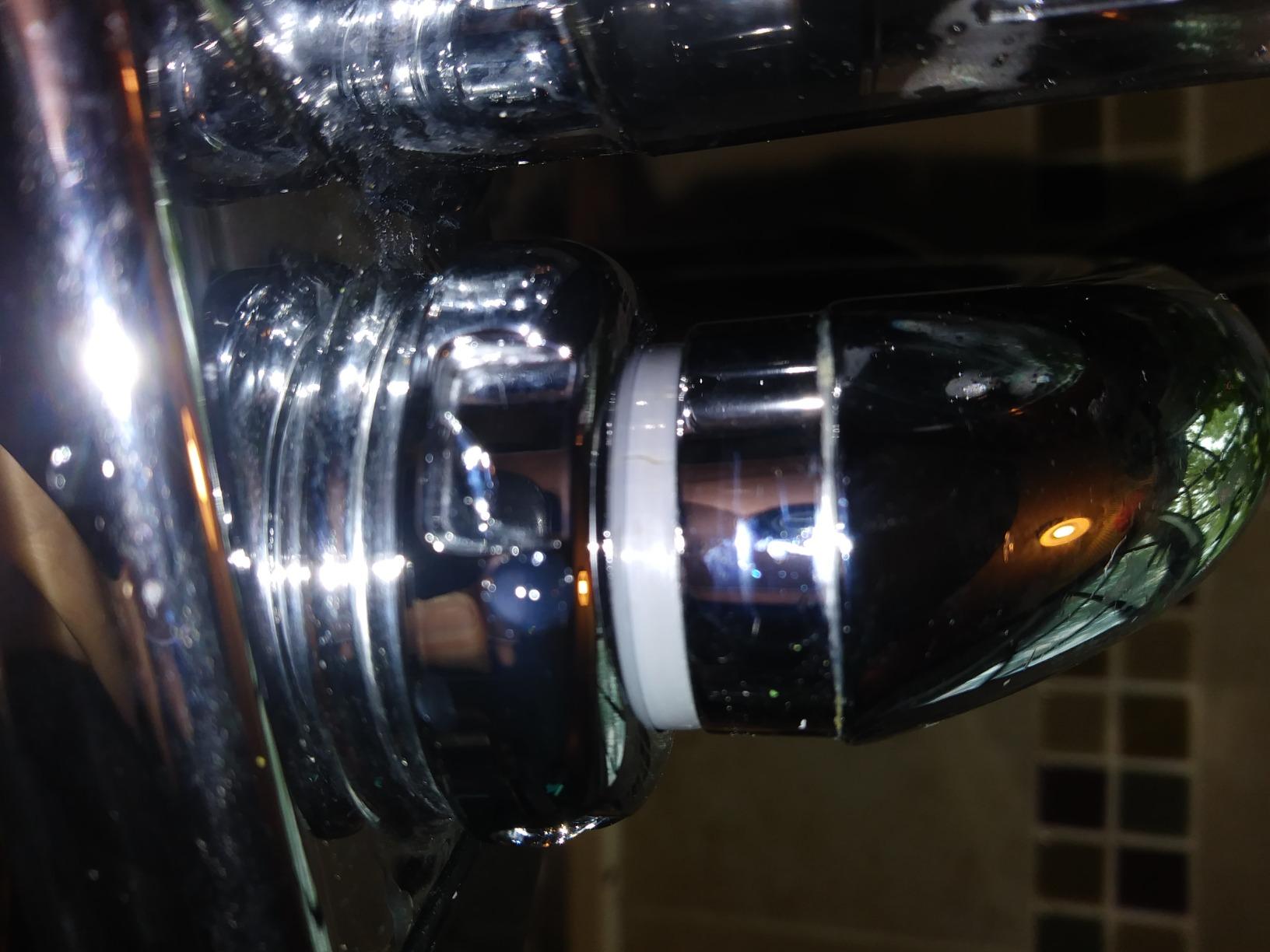
Durability and expectations
The ABS plastic housing is the weak point, and it is the most common comparison complaint against stainless alternatives. With only 385 reviews this is the least-reviewed product in our set, so treat the rating of 4.3 stars as a smaller sample than the PUR or Brita figures.
It does not reduce dissolved solids, and no faucet-mounted unit in this list does. If you want that, you need reverse osmosis.
11. KLLEYNA Pull-Down Faucet Filter – Best for Pull-Down and Sprayer Faucets
KLLEYNA Pull-Down Faucet-Mount Water Filters – (22 Adapters) Swivel 720° Sink Tap Filtration, ACF Reduce 99% Chlorine for Great Taste, 528 Gallon Purifier Kitchen/Bathroom, 2-Mode Spray(Silver)
528 gallon capacity
3 month cartridge life
Activated carbon media
22 adapters, 720 degree swivel
Pros
- Only option in this roundup designed for pull-down faucets with 17 dedicated adapters
- 22 adapters total with pull-out sets bagged and brand-labeled
- 720-degree swivel extends reach for hair washing and face rinsing
- Two-mode aerator switches between gentle stream and spray
- Low price with 528-gallon cartridge capacity
Cons
- No switch to toggle between tap water and filtered water
- Water can bypass the cartridge around the filter housing
- Some bundles do not include the advertised spare cartridges
- Filter life in hard water can be as short as a month
If you have a pull-down faucet, this is the only product in the roundup built for it. Seventeen of the 22 included adapters are dedicated to pull-down faucets, with five more couplings for standard taps, and the pull-out sets are bagged and labeled by brand so you can find the right one. Owners with Moen and similar models report it works where most competitors simply will not fit.
The 720-degree swivel runs through two 360-degree joints, which extends the reach for hair washing, face rinsing, and washing a toddler’s hands. The aerator flips between a bubble-free stream and a high-pressure spray. Cartridge capacity is 528 gallons on a three-month interval.
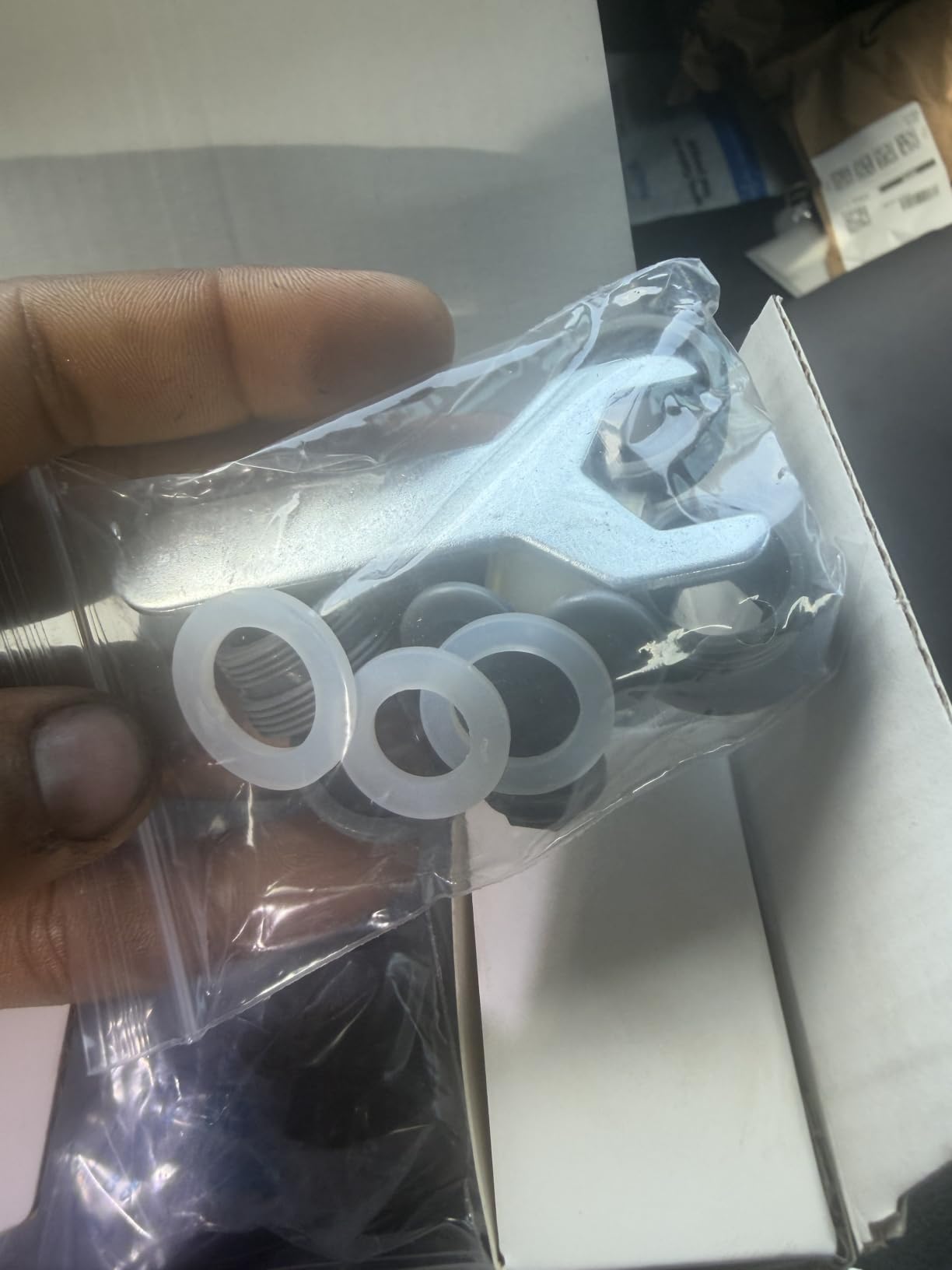
The bypass problem to know about
There is no toggle between tap water and filtered water. Every drop that comes out of this faucet has passed through the cartridge, so you cannot fall back to unfiltered water for washing dishes or for volume tasks. More importantly, owners report water can bypass the cartridge around the filter housing, which undermines the point of having it installed.
Hard water is the other real limitation. Reviewers report the cartridge can need replacing in as little as a month on high-mineral water, which turns the 528-gallon figure into a much smaller number. The 4.1-star average is the second lowest here, and the one-star reports cluster around faucets no adapter would fit.
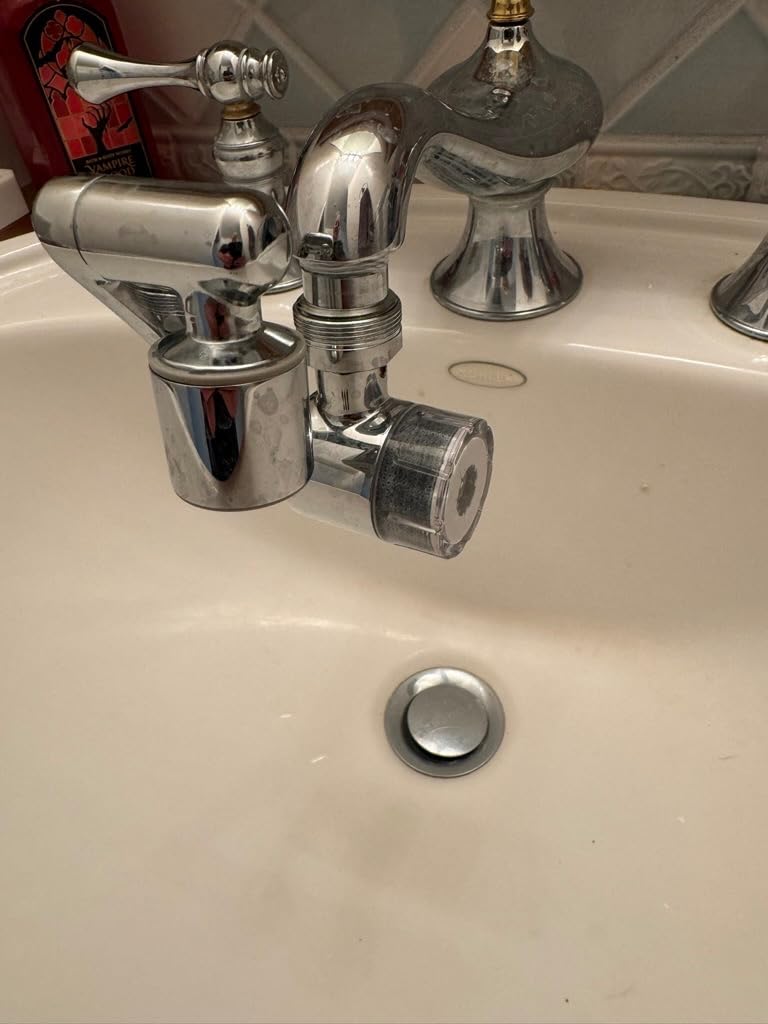
What is in the box
A wrench, an aerator tool, and Teflon tape are included, which acknowledges that this install is more involved than the hand-tighten units. The replacement cartridge is the B0DQ13S99H, the same part used by the FRIZZLIFE extender.
Some bundles do not include the advertised spare cartridges, so check the listing contents carefully. If you have a pull-down faucet and a stainless kitchen you do not want to drill, this is a workable option with caveats.
12. Kintim 1200 Gallon Filter – Best for 6-Month Cartridges and Maximum Flow
Kintim 1200 Gallons Faucet Water Filter, 2.2 GPM Outlet Flow Rate Tap Water Filter, Six Improvements Water Faucet Filtration System, Removes Chlorine, Lead, Sediments, Bad Taste and More
1200 gallon capacity
6 month cartridge life
Activated carbon nano fiber
2.2 gpm, 304 stainless
Pros
- Largest capacity here at 1200 gallons with a 6-month service life
- 2.2 gpm outlet flow
- the highest in this roundup
- Removal rates hold steady from 0.1 to 2.2 gpm
- 304 stainless housing with improved leak-resistant sealing and 360-degree swivel
- Replacement cartridges are cheap and easy to order
Cons
- Does not significantly reduce TDS
- Only 228 reviews
- the smallest sample in the group
- Adapters cover about 85% of popular faucets with others on request
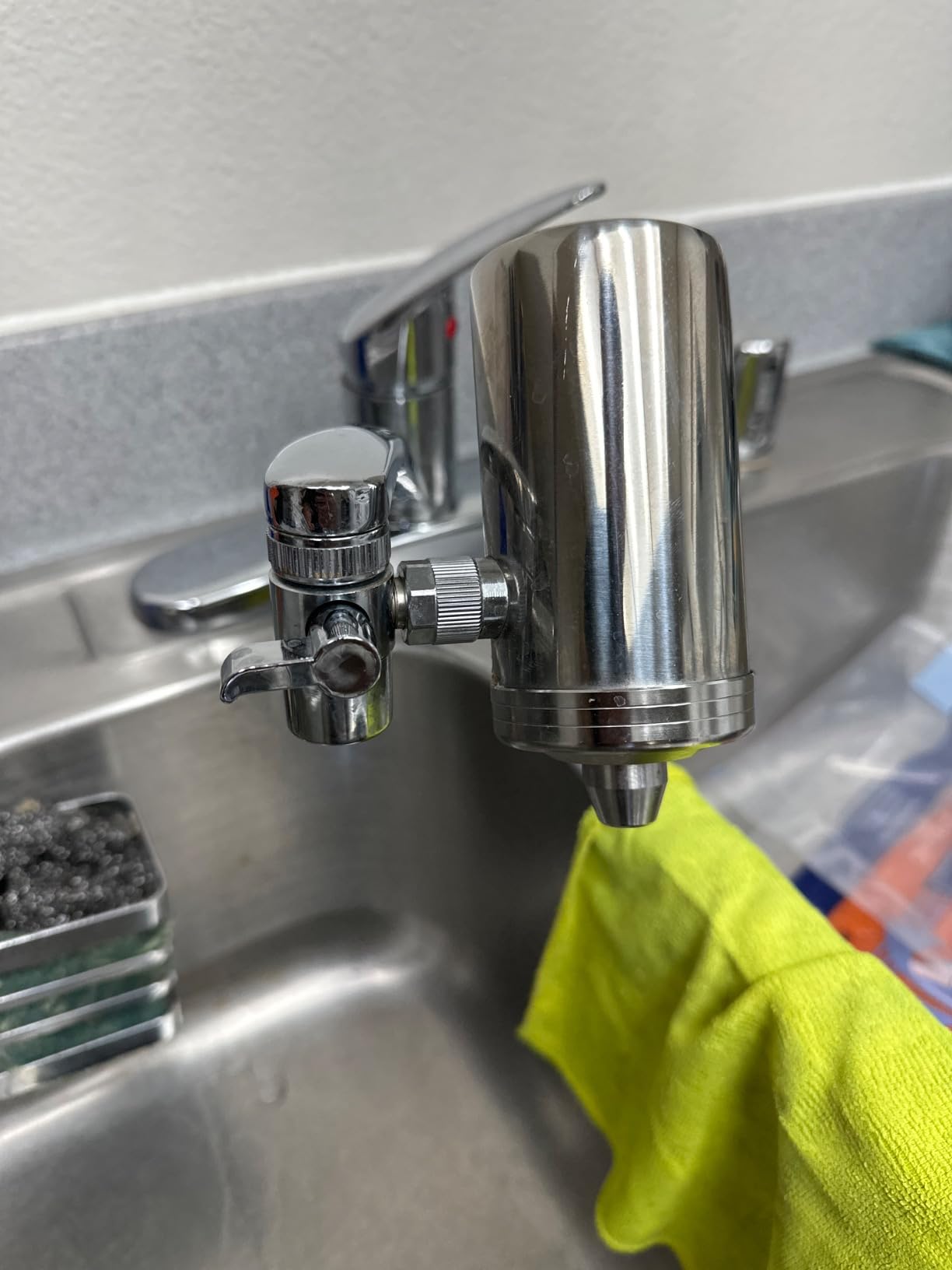
The Kintim is the spec-sheet winner. One thousand two hundred gallons or a six-month service life is the longest interval among the tap-mounted units here, and the 2.2 gpm outlet flow is the fastest in the roundup, matching the output of an unfiltered kitchen faucet. The housing is 304 stainless with improved gasket sealing, which directly addresses the leak complaints that dominate reviews of the plastic category.
Removal claims cover sediment, rust, 99% of chlorine, 97.3% of lead, cadmium, odor, and bad taste, delivered by a 100% carbon fiber cartridge. Replacement cartridges are the B0989GRJVF, and owners specifically call out how cheap and easy they are to reorder.
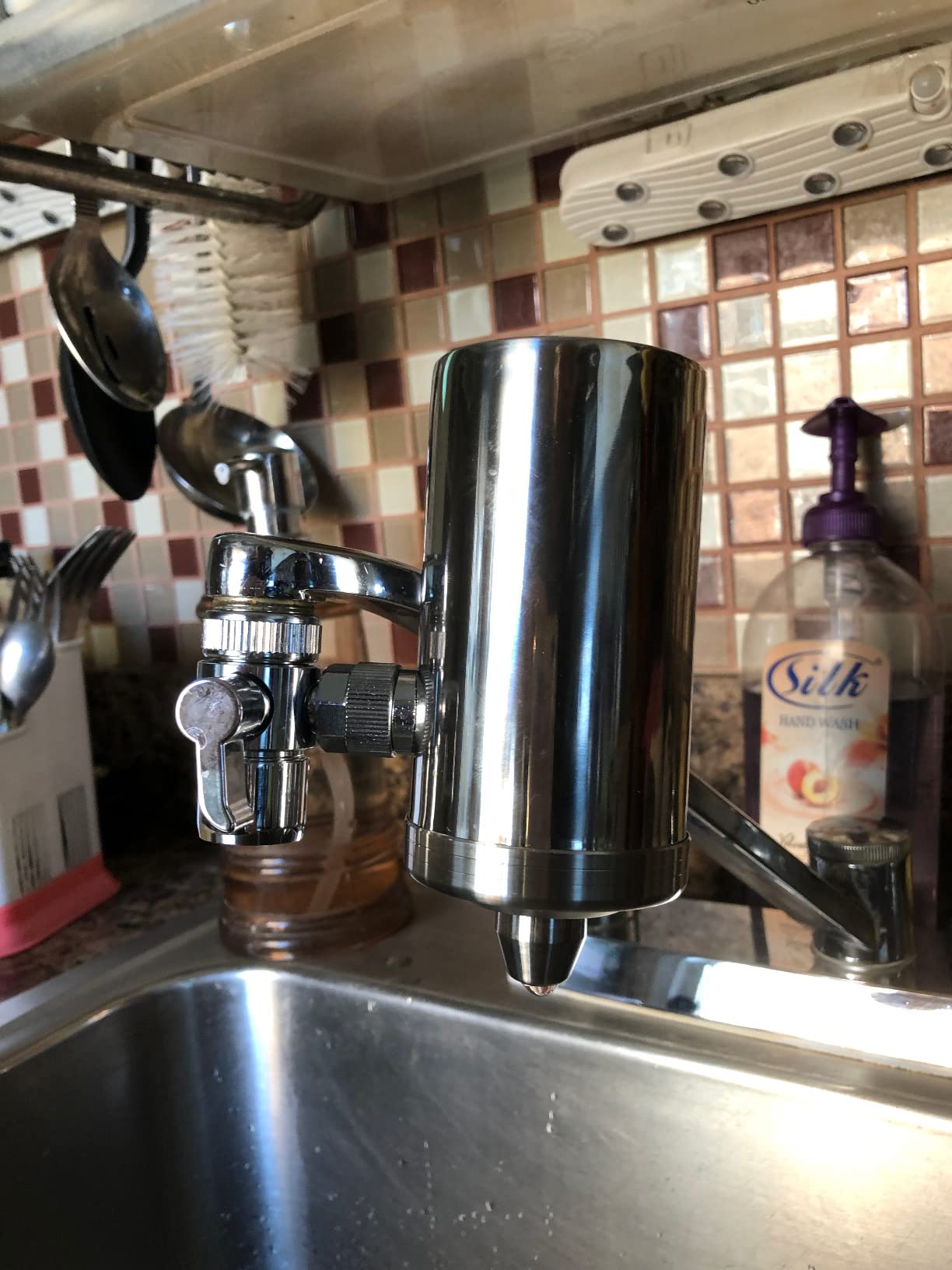
Flow performance that does not collapse
The most interesting claim on this one is that removal rates hold from 0.1 gpm up to 2.2 gpm. Most filters are rated at a single point and degrade badly at low flow or high flow. A constant-rate claim across that range is unusual and matters for anyone who filters for cooking as well as drinking.
The 360-degree swivel and reinforced gasket are the practical bits, and the stainless body resists the cracking that ends plastic units’ lives.
Fit and the small-sample caveat
Thread spec is 55/64 inch -27F with a 15/16 inch -27M to 55/64 inch -27M adapter, and the manufacturer claims a fit on about 85% of popular faucets with other sizes available on request. Measure before ordering, especially on older American Standard models.
This has only 228 reviews, the smallest sample in our set, so the 4.4-star average carries less weight than the PUR figure with more than twenty-three thousand. Cartridge effectiveness also declines faster on high-chlorine water, which is worth knowing if your utility doses heavily.
It does not significantly reduce TDS. Nothing in this category does.
How to Choose a Faucet Water Filter Without Buying the Wrong One
Start with your actual water problem, not the filter
Write down what is wrong before you look at products. Chlorine taste and odor is a solved problem for any NSF/ANSI 42 filter, so do not pay a premium for it. Metallic taste from older plumbing needs lead reduction, so look for WQA or NSF/ANSI 53 certification. Water that smells like rotten eggs needs hydrogen sulfide coverage, which is exactly what the 5-stage countertop unit targets.
If your complaint is scale, hardness, or water that tastes flat because the minerals are gone, stop. Those are dissolved-solids problems and no carbon-and-resin tap filter here addresses them.
Read your municipal Water Quality Report first
Your utility publishes an annual water quality report, and it is free. It lists the contaminants detected in your system with measured levels. Find the section for the contaminants you care about, most commonly lead, chlorine byproducts, or PFAS, and then buy a filter whose certification explicitly covers that substance.
This is the step that turns a guess into a purchase. A PFAS concern with an NSF/ANSI 42 filter is a mismatch, because 42 is an aesthetic standard for taste, odor, and sediment. Only 53, and the newer 401 emerging-contaminants standard, address health-effect substances.
The faucet fit-check: measure before you order
This is the number one compatibility complaint in user discussions, and it is entirely avoidable. Before ordering anything, confirm the following.
- Does your faucet have an external aerator? Nearly all tap-mounted filters require one. A fixed, non-removable aerator rules out most of this roundup.
- Is it a pull-out, hand-held, spray-style, or sensor faucet? Almost every product here is incompatible with those. Only the pull-down-specific unit addresses them, and even it is not universal.
- Measure the thread diameter. Most US kitchen faucet threads cluster around 0.87 and 0.94 inch. Only a few products publish their range, so check before buying.
- Check clearance. A horizontal unit can foul a high-arc sprayer, and a countertop unit needs actual counter space. Measure the cabinet, not the faucet.
If you have a pot filler, a soap dispenser, or a secondary sink tap, plan to filter only one of them. Every additional filtered tap multiplies your cartridge cost.
Decoding NSF/ANSI 42, 53, 372 and 401
NSF/ANSI 42 is the aesthetic standard. It covers chlorine taste, odor, and sediment. It is the weakest certification here and the most common. It is fine for taste, and only fine for taste.
NSF/ANSI 53 is the health-effects standard. It certifies reduction of lead, mercury, cryptosporidium, cysts, and specific VOCs. If you are buying a filter because of old plumbing or a water quality report lead entry, this is the standard to require.
NSF/ANSI 372 certifies that the materials in contact with water are lead-free. It is not a contaminant-reduction claim at all, which is why it is often listed alone and is frequently misread as a filtration certification.
NSF/ANSI 401 covers emerging contaminants including certain pharmaceuticals. Very few faucet filters carry it, so treat any listing that leans on 401 as a reason to look at the certification record carefully.
WQA certification for lead is a legitimate and respected alternative to NSF 53 for that one contaminant. A product carrying both, like our top pick, is the strongest evidence position available in this category.
What a faucet filter cannot remove
We would rather you read this before buying than after. Total dissolved solids, meaning dissolved minerals and salts, are not removed by any carbon or ion-exchange unit in this roundup. If you own a TDS meter, expect the number to look the same before and after.
Hardness is not removed either, so expect scale on your glassware and inside your kettle. Nitrates, bacteria, viruses, and other microbiological contaminants are outside the scope of every product here. Plumber-community consensus, echoed in the plumbing forums, is that faucet filters are a taste and lead convenience rather than a treatment for any of the above.
When any of those is your real problem, the honest recommendation is an under-sink system, and reverse osmosis specifically for dissolved solids. Several users in the water treatment communities steer people that direction once they realize the taste filter was never going to help. Our thinking matches that: a tap filter is the right tool for a narrow job, and a bad tool for a big one.
Flow rate and the low-pressure fix
A standard kitchen faucet runs at roughly 2.2 gallons per minute unfiltered, which is why a 0.5 gpm filtered stream feels like a failure even when the filter is new. The single most common complaint after installation is a flow that starts fine and turns into a trickle after two or three seconds as the cartridge loads with sediment.
Four things fix it, in order. Change the cartridge, because a loaded media bed is the usual cause. Check the aerator screen on the faucet itself, which clogs independently of the filter. Confirm the unit is fully seated and the adapter gasket is not pinched. And if you run dual-handle faucets, check that you have not accidentally routed hot water through the cartridge, which both damages the media and expands the housing.
If you fill pots daily, buy for flow rather than for taste. The 1.6 gpm and 2.2 gpm units are the realistic choices for that, and the 2.2 gpm outlet on the Kintim is the only one here that matches unfiltered faucet output.
Counting cartridges instead of dollars
Cartridge cost is the number that decides whether a faucet filter is worth it, so annualize it before you buy. A 100-gallon cartridge at a three-month interval means four a year. An 8,000-gallon cartridge on a twelve-month interval means one. The spread across this roundup is enormous, and the sticker price of the unit is the least meaningful figure in the comparison.
Over five years, multiply the cartridge cost by the number of changes and add the unit cost. That total, not the purchase price, is what you are actually committing to. The stainless countertop unit and the long-life tap units look very different under that calculation than they do at checkout.
The bottled-water comparison helps here. A family of four filtering a couple of gallons a day will move through a hundred-gallon cartridge in about three months, and replacing bottled water at roughly a gallon per person per day adds up over the same period. One product in this roundup claims roughly 1,800 single-use bottles avoided per year, which is the most concrete sustainability figure available in the category.
How we picked and ranked these 12
We ranked on seven criteria, in this order. Certification first, because a third-party test of the claim beats any manufacturer assertion, and unsupported claims were a repeated theme in our research. Contaminant scope second, separating genuine lead and PFAS reduction from taste-only filtration. Faucet compatibility third, since a filter that does not fit is worthless. Flow rate fourth, matched to how people actually use a kitchen tap. Cartridge capacity and interval fifth, which drives lifetime cost. Materials sixth, with stainless and brass rated above plastic for crack and leak resistance. Warranty seventh.
We did not rank on brand recognition. Instapure has been making faucet filters since 1975 and ranks fifth in our list on capacity and flow, not on heritage.
One more thing worth saying plainly. When we could not verify a claim, we said so rather than repeating it. A listing that says it reduces 70 substances is not the same as a listing certified to NSF/ANSI 53 for a specific set, and we weighted the difference accordingly.
Frequently Asked Questions
What is the best water filter for a kitchen sink faucet?
The PUR Plus is the best overall pick for most kitchens in 2026, with WQA lead-reduction and NSF microplastics and chlorine certifications, a 100-gallon cartridge, and an electronic filter-change light. If you want a metal body and a full year between cartridges, the Waterdrop CTF-01 in 304 stainless is the stronger long-term buy.
Can you install a faucet water filter on any faucet?
No. Most require an external aerator and are not compatible with pull-out, hand-held, spray-style, or sensor faucets. Measure your faucet thread diameter, typically 0.87 or 0.94 inch, and check clearance under a high-arc spout before ordering. If you have a pull-down faucet, only pull-down-specific adapters in this roundup will fit.
Do faucet water filters really work?
Yes, for the contaminants they are certified to reduce. Chlorine taste and odor, sediment, rust, and certified lead reduction are all well within the capability of a carbon and ion-exchange tap filter. They do not reduce total dissolved solids, hardness, nitrates, or microbes, so a TDS reading will not change. If those are your concern, you need reverse osmosis.
Which faucet water filter removes the most contaminants?
Look for the certification, not the claim count. A filter certified to NSF/ANSI 53 addresses health-effect contaminants including lead and PFAS, while NSF/ANSI 42 only covers taste, odor, and sediment. In this roundup, the WINGSOL carries both 42 and 53 for PFAS, lead, and microplastics, and the PUR Plus carries WQA lead-reduction certification alongside NSF coverage.
Are faucet water filters worth it versus bottled water?
Usually, if you filter a gallon or more a day. A 100-gallon cartridge replaced four times a year costs far less than a year of bottled water for a family of four, and the long-life units improve that margin further. They are worth it for taste and certified lead reduction. They are not worth it for dissolved solids or hardness, where an under-sink system is the correct purchase.
Which Faucet Water Filter Should You Buy in 2026?
If you want the best faucet water filter for a standard kitchen sink and you will not drill anything, buy the PUR Plus. It has the clearest certification story, the largest review base we found, and the easiest cartridge swap.
If you filter a lot of water, dislike plastic, or want to stop replacing cartridges every three months, the Waterdrop CTF-01 in 304 stainless is the better long-term decision, with up to 8,000 gallons or 12 months per cartridge.
If your water is metallic and your utility report shows lead, the WINGSOL is the one with NSF/ANSI 53 certification covering lead and PFAS, and the stainless body suits a modern kitchen. If you have a pull-down faucet, the KLLEYNA is the only unit here built for it, with 17 dedicated adapters.
If you already run an under-sink system and dislike the plastic air-gap spigot, the KRAUS Purita replaces it with lead-free brass and a limited lifetime warranty.
And if your real problem is hardness, dissolved solids, or microbes, none of these twelve is the answer. Buy reverse osmosis instead, and save the tap filter for the glass of water you drink every day. Our complete picks for the best faucet water filters for kitchen sinks are updated for 2026, and the certification record is the first thing to check before you click through.