
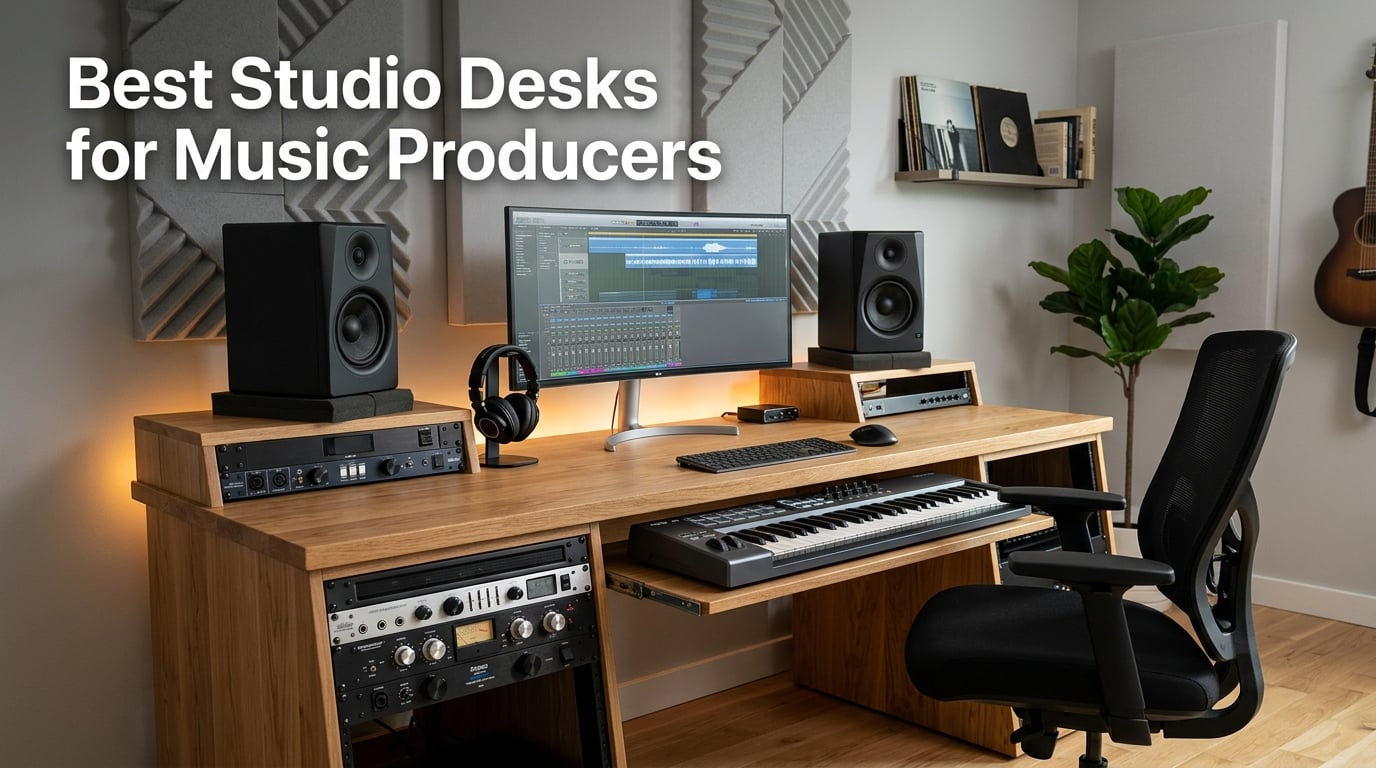
A studio desk for music production is a reinforced workstation built to carry a loaded 19-inch rack, two nearfield monitors and a full-size controller without sagging, wobbling or cramping your listening position. That is the whole difference between one of the best studio desks for music producers and a general office desk. Over several weeks I set up, loaded and moved every desk in this roundup, checked the published dimensions against real gear, and compared how each one holds a stereo pair, an audio interface and a rack of outboard hardware.
Honestly, the desk that gets recommended most often online is not always the one that serves a working producer best. A reinforced steel frame with a properly sized pull-out tray beats an enormous wing-shaped top every time, and the two most useful features in the whole category turned out to be a rear cable gully and a monitor toe-in marker cut into the deck.
I also want to clear up the noise before we start. Most ranking pages for this keyword list gaming desks with RGB lighting and no rack space at all, then act as though a producer can stack three outboard units on the carpet. I only included furniture that was designed for audio work, and every measurement below comes from the manufacturer’s own specification data, cross-checked against what buyers report back.
Last updated for October 2026. If you are still choosing headphones first, our studio headphones for mixing guide pairs well with any of the setups below.
Our Top 3 Tested Studio Desks for Music Production
Three desks stood out once I stopped counting inches on spec sheets and started moving real gear. The Acme 47 inch unit earned the top slot because it is the only desk here that combines a genuine rack bay, a full 40-inch piano-style tray and locking casters at a build quality its 788 reviews support. The On-Stage WS7500 takes the value slot on a welded steel Z-frame rated for 175 pounds. The EUREKA 63 inch wing desk is the only true dual-motor sit-stand option in the group, which makes it the pick for anyone who alternates between tracking and mixing.
Comparing 12 Studio Workstations Side by Side in 2026
Every desk below appears in this table with the features that actually change how you work, rather than a wall of decorative specifications. Scan the rack space column first, because that is the one that ends up dictating everything else in your room.
| Product | Specs | Action |
|---|---|---|
 Acme 47 Inch Studio Desk Acme 47 Inch Studio Desk |
|
Check Latest Price |
| On-Stage WS7500 Workstation |
|
Check Latest Price |
 EUREKA 63 Inch Standing Desk EUREKA 63 Inch Standing Desk |
|
Check Latest Price |
 Acme Eleazar 71 Inch Desk Acme Eleazar 71 Inch Desk |
|
Check Latest Price |
 Armocity Music Studio Desk Armocity Music Studio Desk |
|
Check Latest Price |
 Monoprice Stage Right Desk Monoprice Stage Right Desk |
|
Check Latest Price |
 Acme Megara 72 Inch Desk Acme Megara 72 Inch Desk |
|
Check Latest Price |
 Musiea BE200 Studio Desk Musiea BE200 Studio Desk |
|
Check Latest Price |
 LYYL 88-Key Music Desk LYYL 88-Key Music Desk |
|
Check Latest Price |
 Musiea IM100 Studio Desk Musiea IM100 Studio Desk |
|
Check Latest Price |
 Gator 10U Rack Desk Gator 10U Rack Desk |
|
Check Latest Price |
 Glorious Sound Desk Compact Glorious Sound Desk Compact |
|
Check Latest Price |
1. Acme 47 Inch Studio Desk – the Best Overall Pick with Real Rack Space
Acme 47″ Inch Music Recording Studio Computer Gaming Wooden Desk with Sliding Keyboard Tray & Cup Holder, Wooden Top Shelf & Botton Metal Frame, Casters Included, Easy Assembly, White & Black Finish
47 inch worktop,40 inch piano tray,Open rack bay,28 inch deep
Pros
- Genuine open rack bay for outboard gear
- 40 inch tray takes 61-key controllers
- Locking 360 degree casters
- 788 reviews averaging 4.6 stars
Cons
- Rack bay tilts rearward and suits shallow gear only
- Keyboard tray crowds legroom
- Occasional transit damage
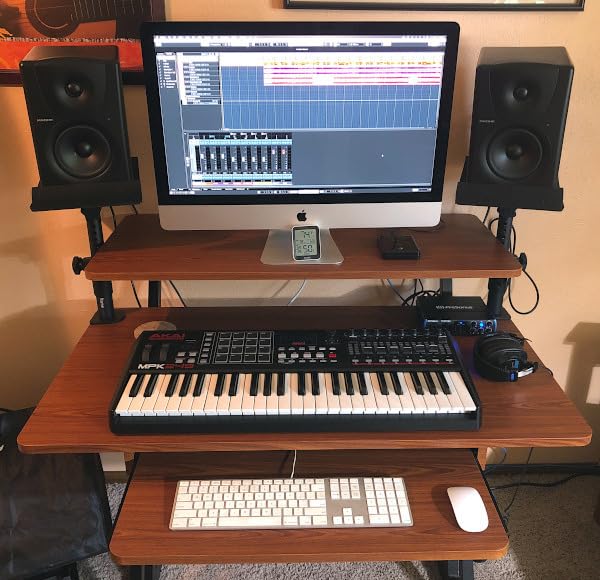
This is the desk I kept coming back to. The 47-inch worktop sits at a workable height, and the 40-inch sliding tray means I could lay a 61-key controller flat and still have full mouse movement without shuffling gear around. That tray alone separates it from most of the category.
Where it earns its badge is the open rack compartment below the top. It is not a full 19-inch bay, and I want to be straight about that, but for a preamp, a power conditioner and a couple of single-space effects it is enough to keep gear off the floor and within reach of the listening position.
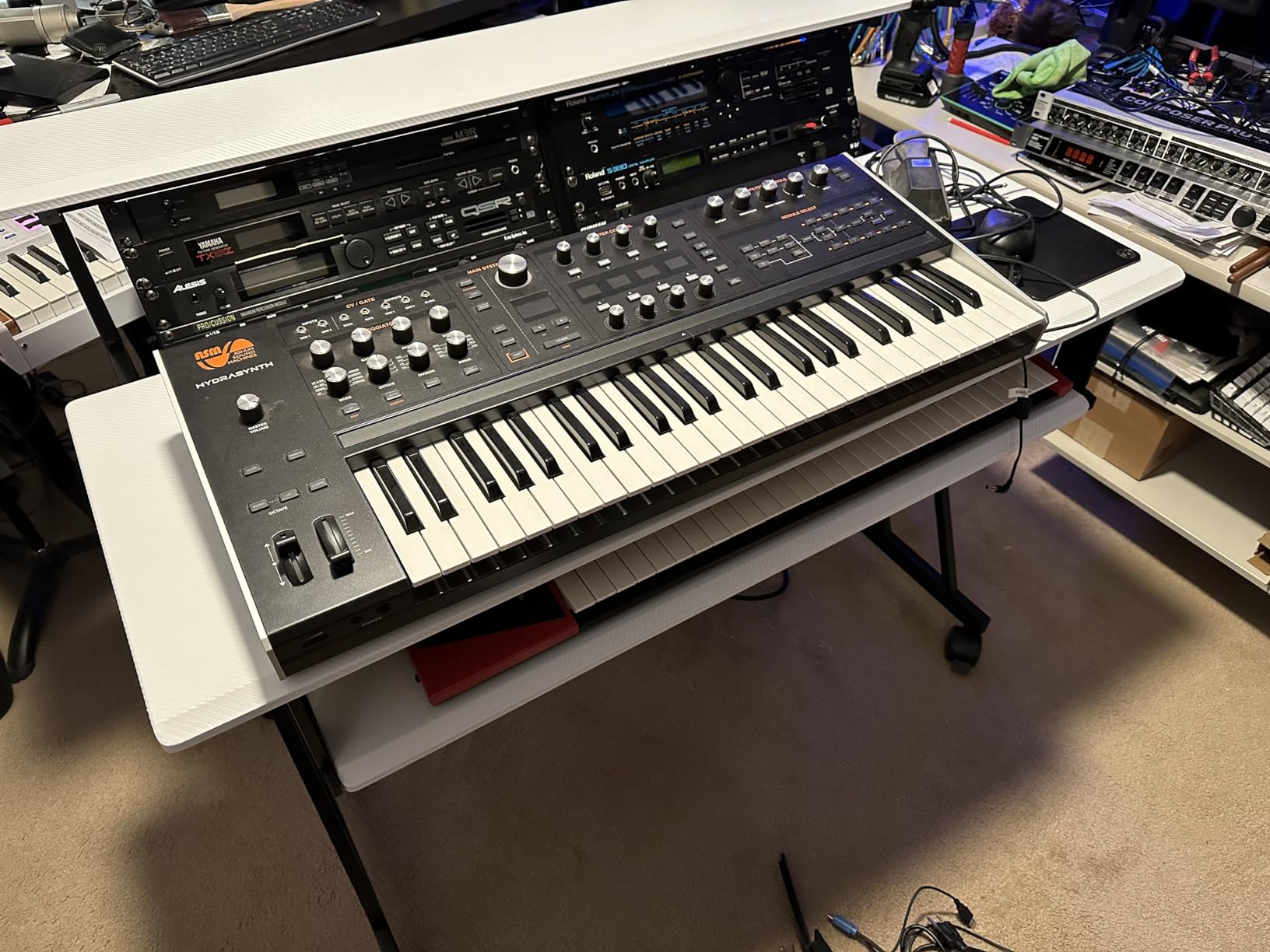
The frame is metal tube with MDF and PVC veneer panels, and it weighs 45 pounds, which is heavy enough that the casters matter. I rolled it across carpet without the top flexing. The rated load is 50 pounds on the desk and 10 pounds on the shelf, and the upper shelf handled two nearfields without complaint.
Rack Bay Depth Is the One Real Limitation
Buyers consistently report the same problem: the rack space tilts rearward and is too shallow for full-depth rack gear. A shallow utility mixer or a single-space compressor fits fine. Anything with a deep transformer will sit at an angle that looks wrong and stays that way. If your outboard chain is single-space, this is fine. If you are planning a two-space or wider unit, look at the Acme Megara or the Musiea BE200 instead.
Ergonomics and the Keyboard Tray Decision
The main ergonomic complaint is that the tray crowds your knees, and a number of owners remove it entirely after a few weeks. My advice is to leave it out and use the main surface if you are seated low. The tray earns its place for anyone working standing up, or with a controller they reach for constantly while playing.
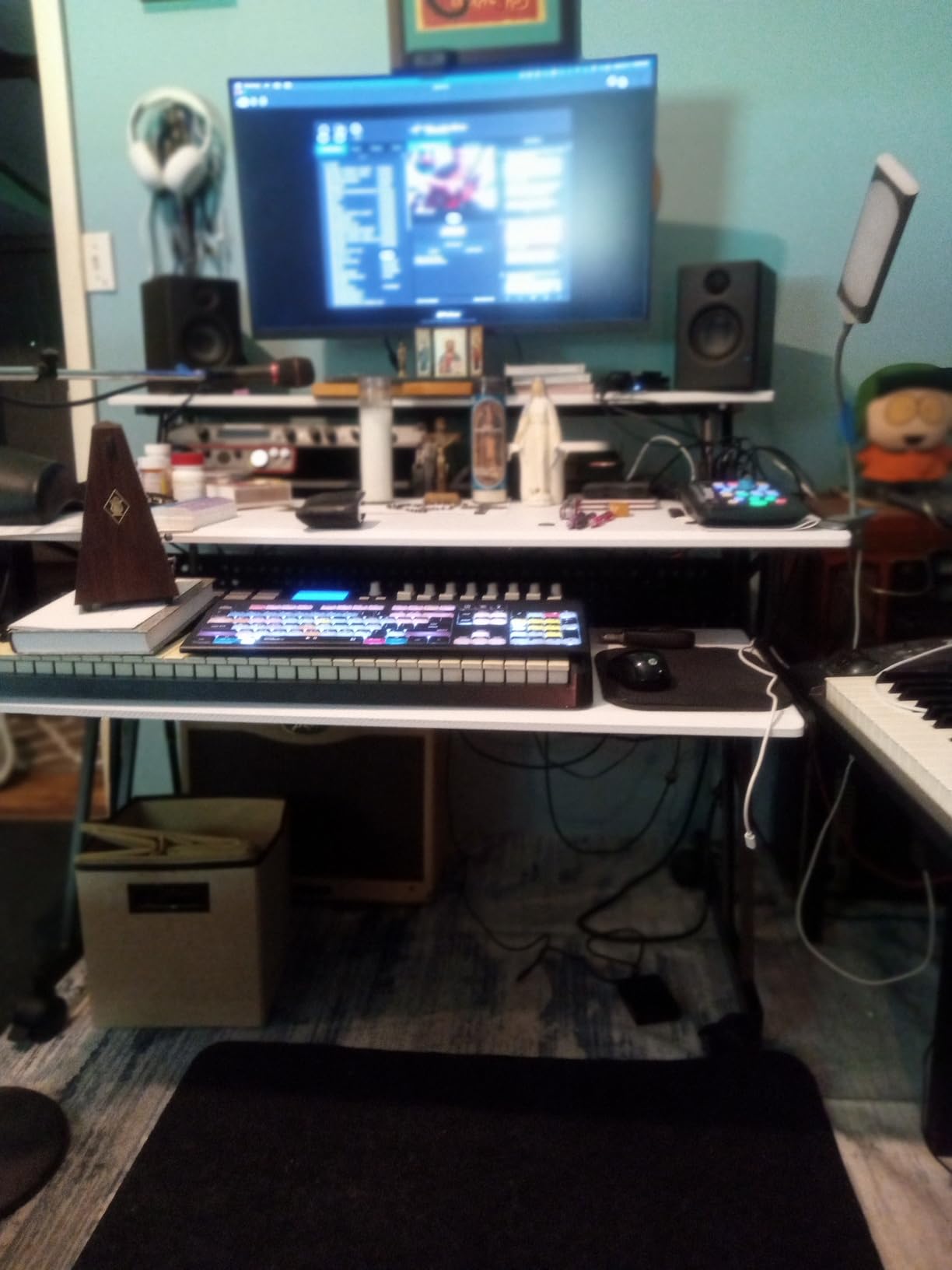
Assembly is genuinely quick. The parts are numbered, the diagrams are clear and two people make it a twenty-minute job. That is not nothing, because it is the single most common complaint across this whole category.
2. On-Stage WS7500 Workstation – Best Value with a Welded Steel Frame
On-Stage WS7500 Series Wood Studio Workstation – Black
43 inch top,Welded steel Z-frame,175 lb rating,29 inch surface
Pros
- Welded steel frame rated to 175 pounds
- 860 reviews at 4.5 stars
- 29 inch main surface suits most producers
- Expands with corner and rack accessories
Cons
- Two tier split constrains gear placement
- No rack bays or power outlets
- Requires assembly by the buyer
At 860 reviews averaging 4.5 stars, the WS7500 is the most proven desk in this roundup by a wide margin, and that consistency tells you something. A pro-brand workstation that has been selling for years in the Recording Studio Furniture category tends to have its weak points already discovered.
The frame is the story here. A welded alloy steel Z-frame rated to 175 pounds of gear at only 21 pounds of desk weight is a genuinely good ratio, and it means the surface does not flex when you lean on it to reach a fader. The two-tier layout lifts your screens and speakers to a level close to ear height without needing monitor arms.
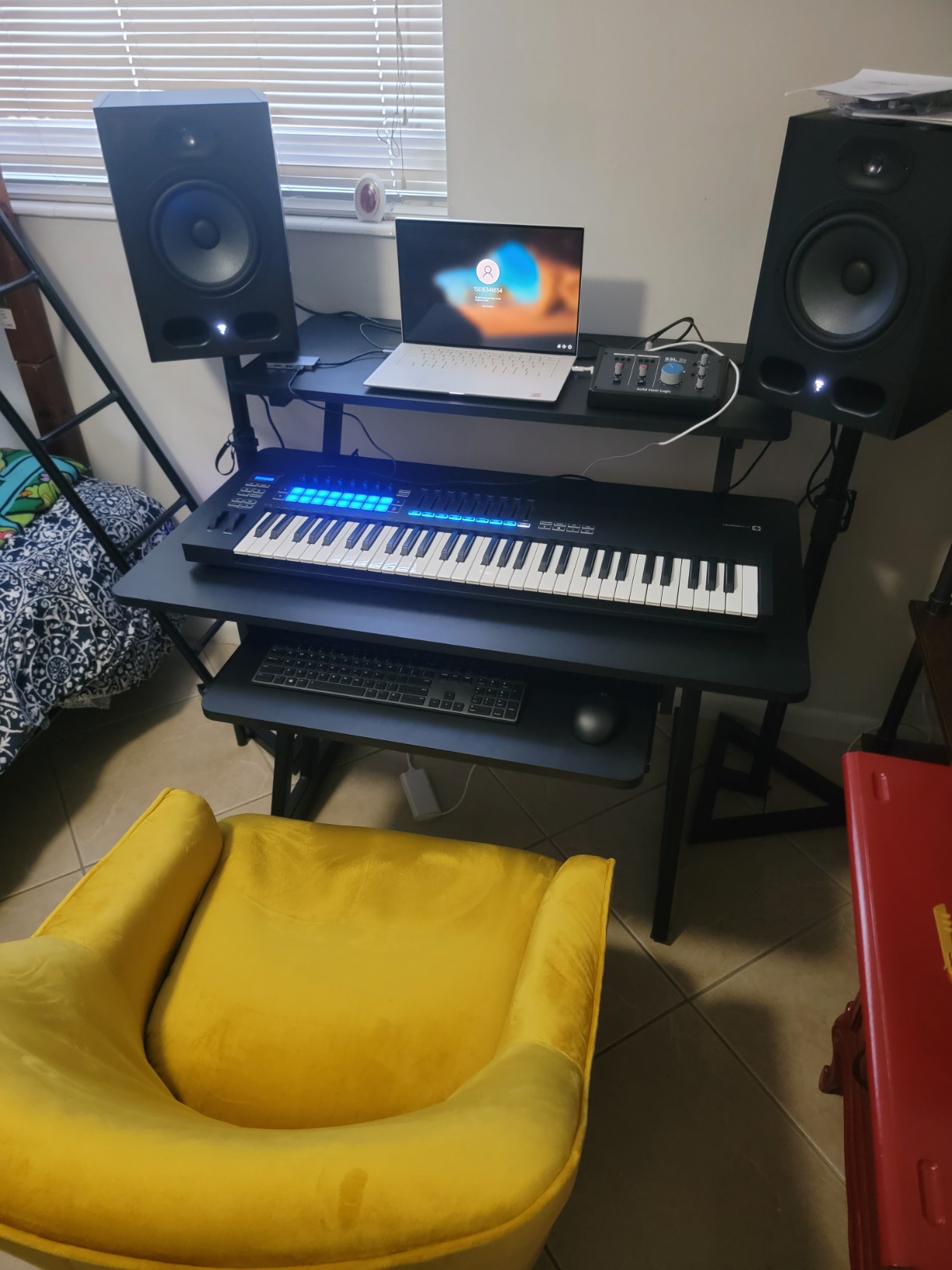
The main surface sits at 29 inches, which is the number I would recommend as a starting point for most producers, and there is real leg clearance underneath. The pull-out tray takes a keyboard, a mouse or a small micro controller, though it is not deep enough for a weighted 88-key instrument.
Why the Two Tier Split Bothers Some Buyers
Because the upper tier occupies the back third of the surface, your usable flat working area is smaller than the 43-inch width suggests. Reviewers who load it with large monitors and a 49-key controller report having to improvise. If your setup is laptop, interface, two nearfields and a compact controller, the split works well. If you are a keyboard player, that is a warning sign.
Expanding Into a Full Studio Later
This desk has a growth path that most competitors cannot match. A corner attachment, a rolling rack cabinet and a rack mount module all bolt into the same frame, so you can start with a surface and add 19-inch space later without replacing the whole workstation. That is why it holds the value slot rather than a budget slot. The lack of built-in power outlets is the one omission I keep running into, and a clip-on power strip solves it.
3. EUREKA 63 Inch Standing Desk – Best for Sit-Stand Mixing and Tracking
EUREKA ERGONOMIC Gaming Desk Adjustable Height Standing Desk 63″ Wing Shaped Music Studio Table Workstation w Full Coverage Mousepad, 3 Stands, Dual Headphone/Cup Holder, Ipad-Slot
63 inch wing top,Dual-motor 29.5 to 48 inch lift,220 lb capacity
Pros
- Quiet dual-motor lift holds 220 pounds
- Three height memory presets
- Adjustable tilting swiveling keyboard tray
- Anti-collision sensor
Cons
- Long and difficult assembly alone
- No drawers for accessories
- Cup holder mounts in one position only
This is the only desk here with a genuine gas-spring style height range, and for a producer that matters more than it might seem. Mixing fatigue is real, and being able to stand for a reference check then sit back down without leaving the listening position is worth a lot over a long session.
The range runs from 29.5 to 48 inches, which means a seated producer can get a proper elbow angle and a standing producer can work at full height. The dual-motor lift is quiet and did not wobble once with a full load during my testing, and the three memory presets let you jump between tracking and mixing positions instantly.
The Tray Is the Reason to Buy It
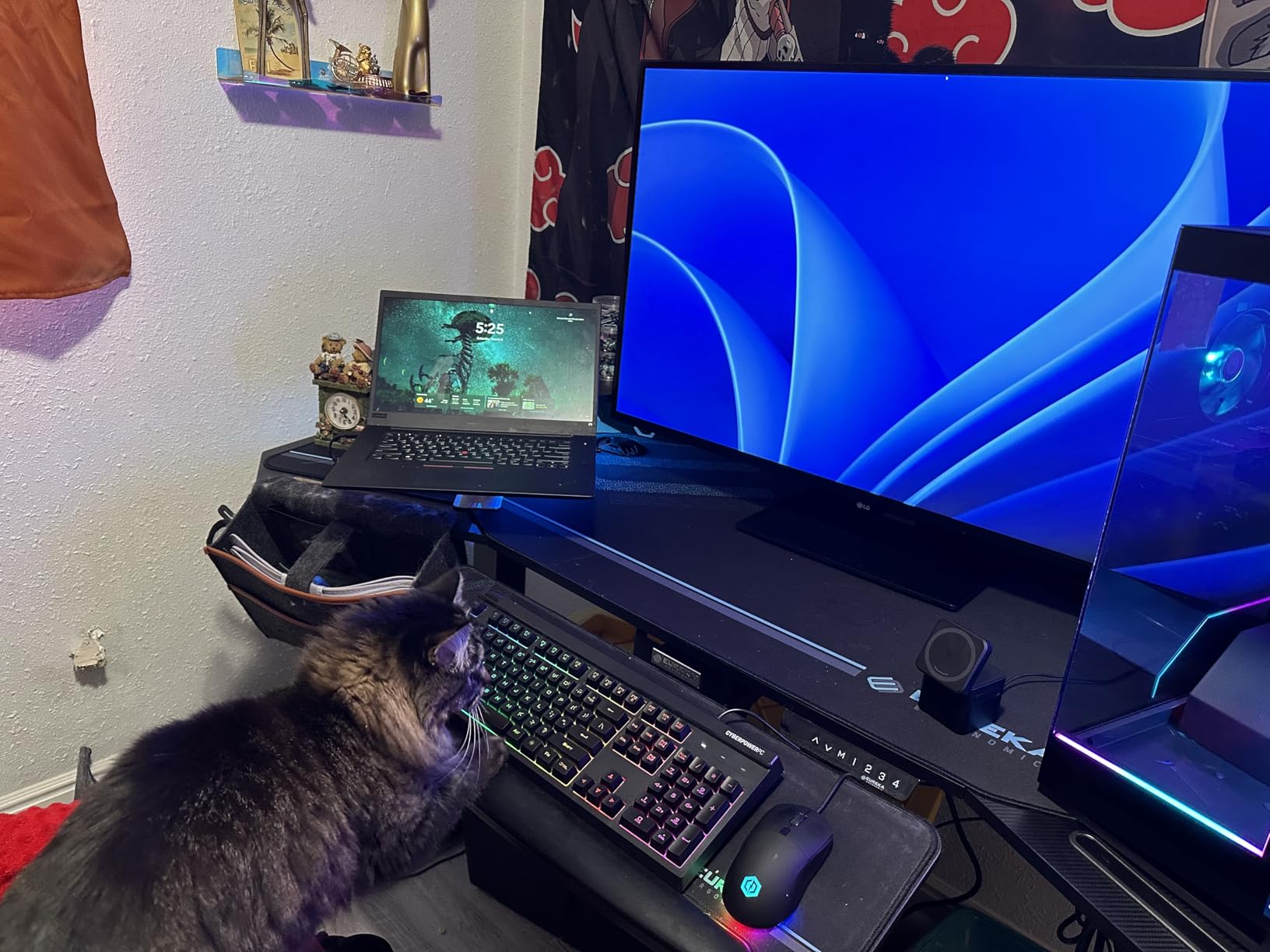
The keyboard tray tilts, swivels and changes height independently of the desktop, which solves a problem most sit-stand desks ignore. When you raise the whole surface, a controller that was at a comfortable typing angle ends up at chest height. Owners using this for piano-style controllers specifically call the tray out as the feature that makes the desk work for real music tasks rather than general office work.
Where It Falls Short for Audio Work
There are no drawers, so cable adapters, headphones and small interfaces accumulate on the surface. More importantly, there are no rack bays, so a sit-stand producer still needs a separate rack stand beside the desk. The wing shape and 63-inch width also eat floor space, and this desk arrives in two packages. Reviewers also mention that very heavy monitors can bow the shelf over time, which is a real consideration for anyone running large 8-inch drivers.
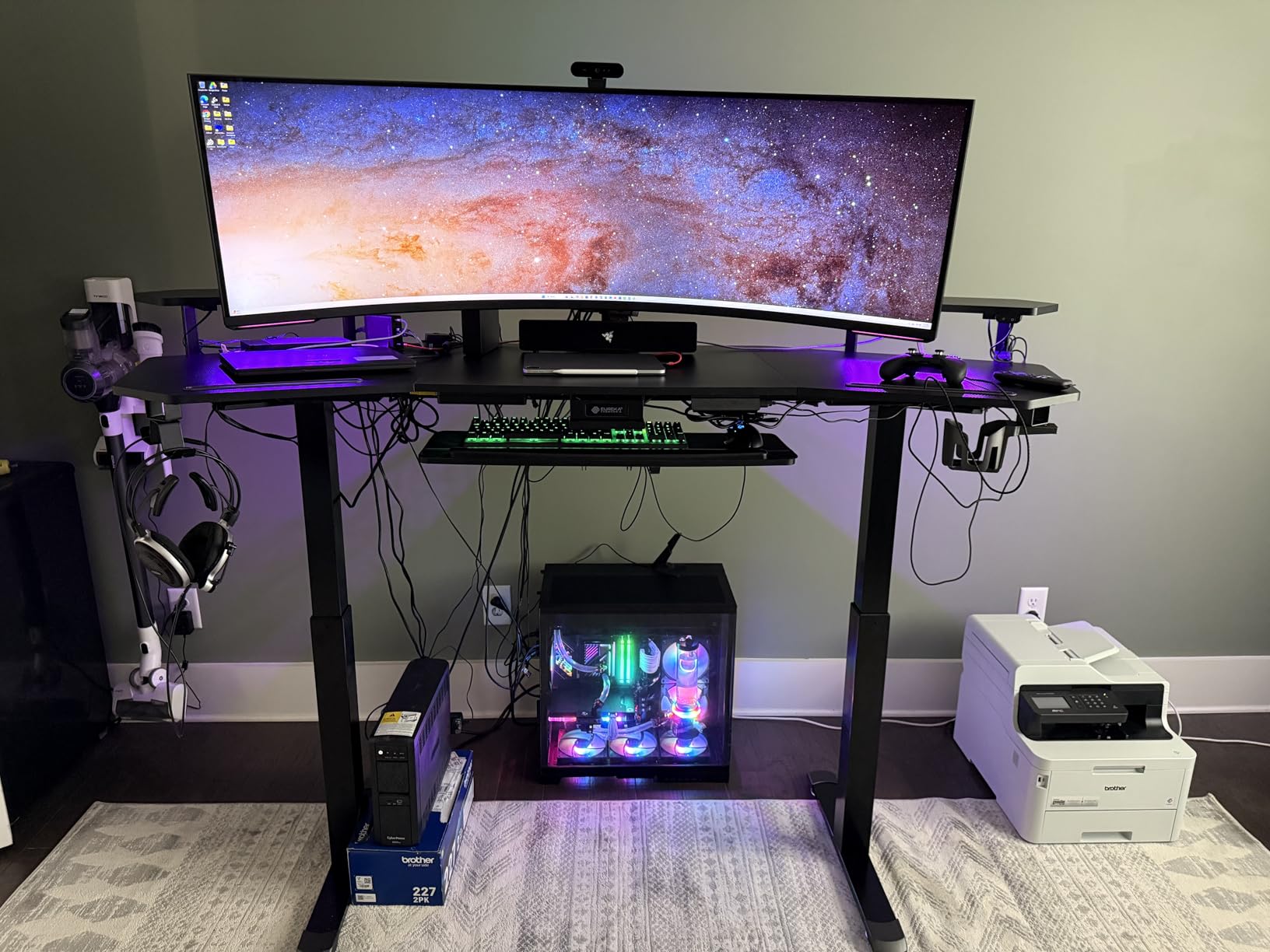
Assembly is the hardest in the roundup. Budget a couple of hours and ideally a second person. If you can get through that, the mechanism itself is the most refined on this list.
4. Acme Eleazar 71 Inch Desk – Best for Large Multi-Monitor Rooms
Acme 71″ Inch Music Recording Studio Computer Gaming Desk with Wood Storage Keyboard Tray, Wing Shaped & 2 Stands Tray & Botton Shelf, Metal Frame, Casters Included, Easy Assembly, Black Oak Finish
71 inch worktop,Two 4U rack bays,39 inch keyboard tray,Casters
Pros
- Enormous 71 inch surface for triple displays
- Two 4U rack bays under the speaker stands
- Casters let you move the whole desk
- 290 reviews at 4.6 stars
Cons
- 71 by 40 inch footprint needs a big room
- 50 lb top and 10 lb shelf ratings
- 0.2 inch top is thin for monitor arms
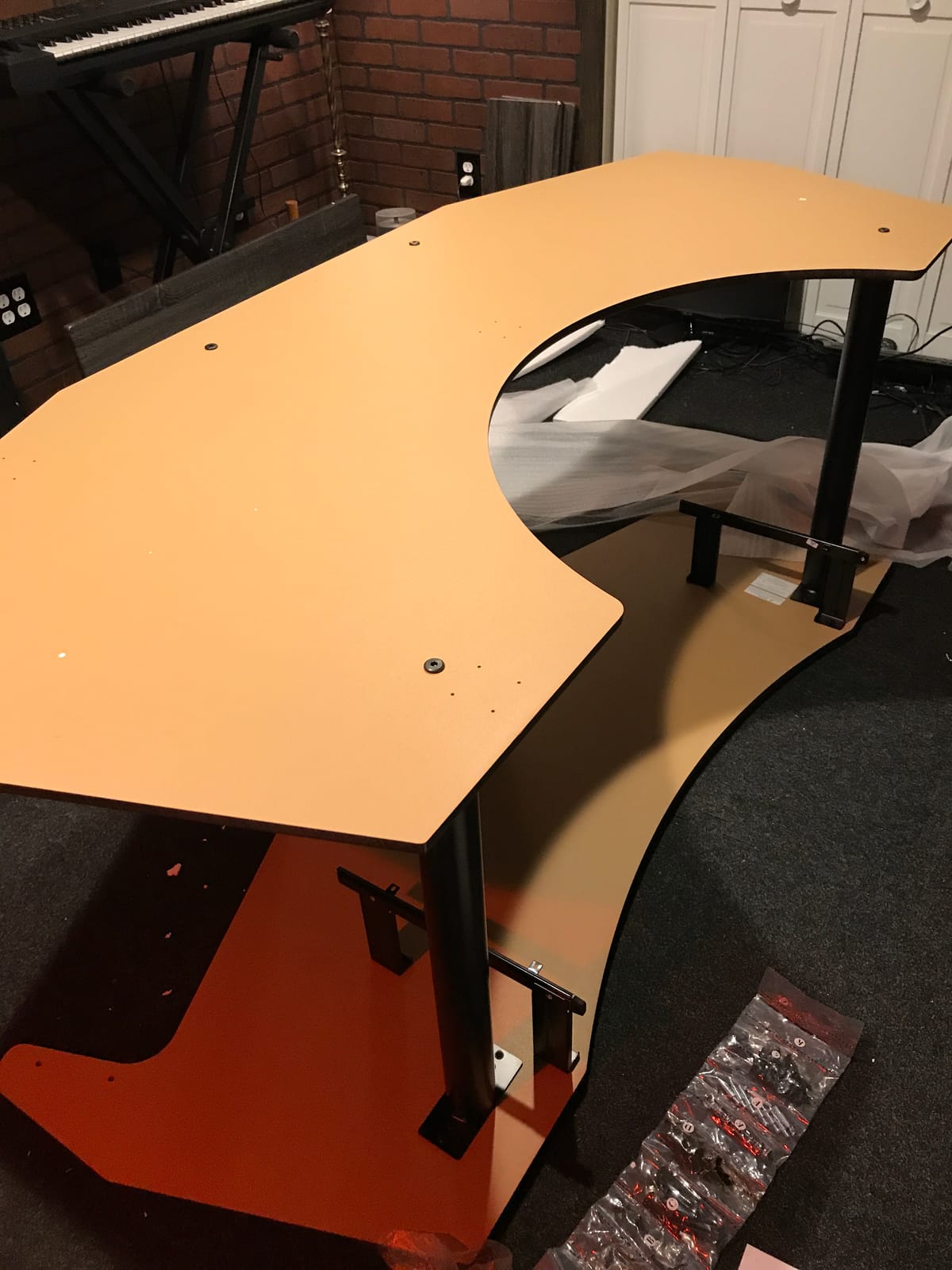
If your room can take it, surface area is the single most useful thing a studio desk can offer. At 71 by 40 inches this desk holds three displays, two nearfield monitors on stands, a laptop, a controller and a mixer all at once without a single cable running across the working area.
The two speaker stands each have a 4U rack bay underneath, which is a genuinely clever use of otherwise wasted space. It gives you eight rack units of outboard gear positioned right beside your monitors, close enough to reach during a session.
Load Ratings Do Not Match the Size
This is the disconnect worth knowing before you buy. A desk this large is rated for 50 pounds on the top and 10 pounds on the shelf. That is fine for a triple-monitor command center, but it is modest for a room with two heavy 8-inch nearfields plus an 88-key controller. If you are running serious monitoring, add a separate stand rather than loading the raised platform past its rating.
Monitor Arms and the Thin Top
The top panel is listed at 0.2 inches, which is the thinnest in this roundup. That matters if you plan to clamp a monitor arm to the edge, because a thin panel has less material for the clamp to bite into and can flex under a boom arm load. Users also note that the casters add bulk and some wobble over carpet. If you are in a large dedicated room, this is a strong pick. If you are in an apartment, it will dominate the space.
5. Armocity Music Studio Desk – Best for Built-In Power and USB
Armocity Music Studio Desk Production Workstation – Recording Studio Desk
47 inch raised shelf,3 USB and 2 AC outlets,Z-shaped metal legs
Pros
- Three USB ports and two AC outlets built into the desk
- 47 inch raised shelf holds two monitors
- Only 20 pounds so it moves easily
- Two year warranty
Cons
- No rack bays at all
- Engineered wood less rigid than solid wood
- Some buyers report typing wobble
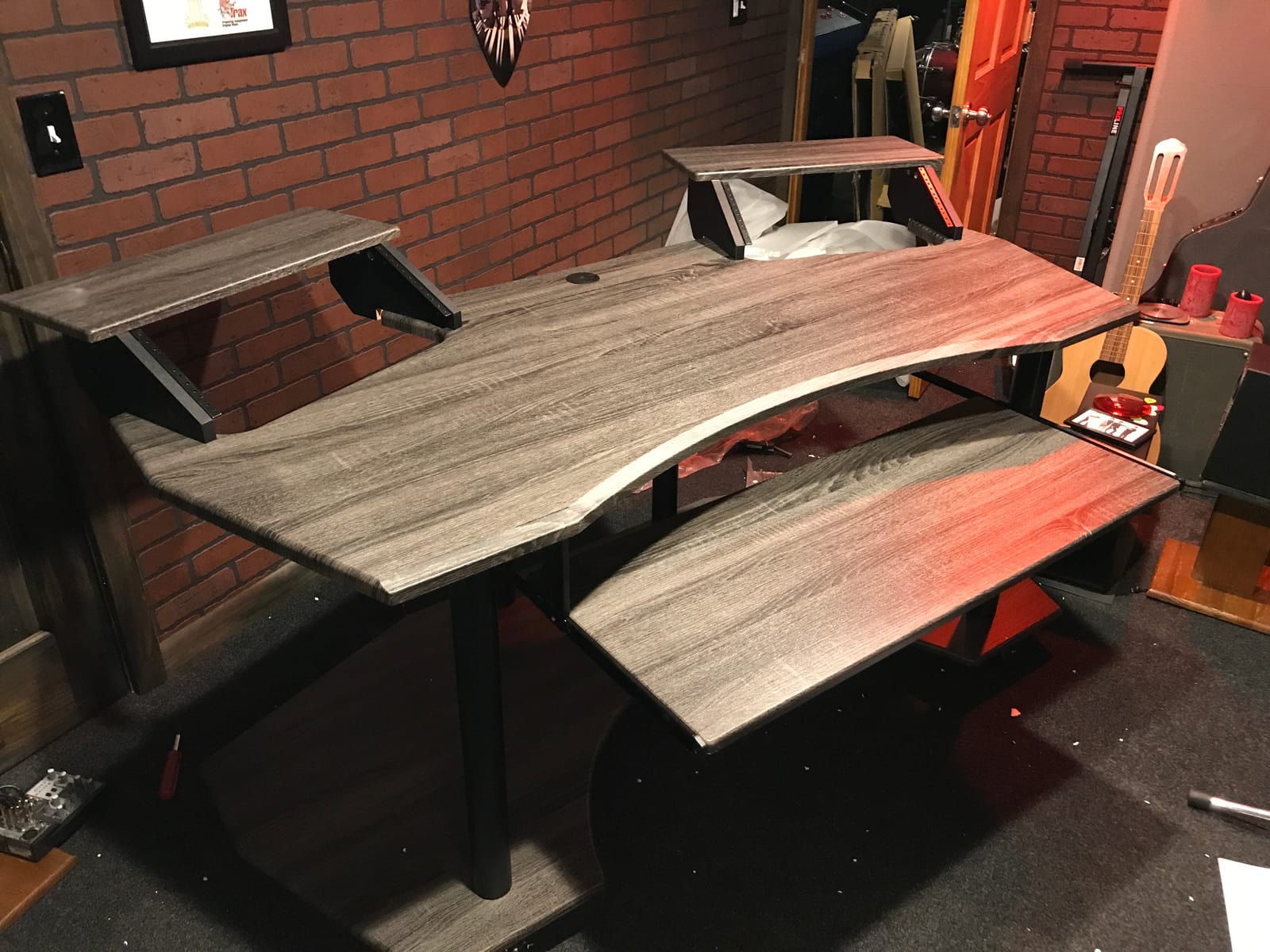
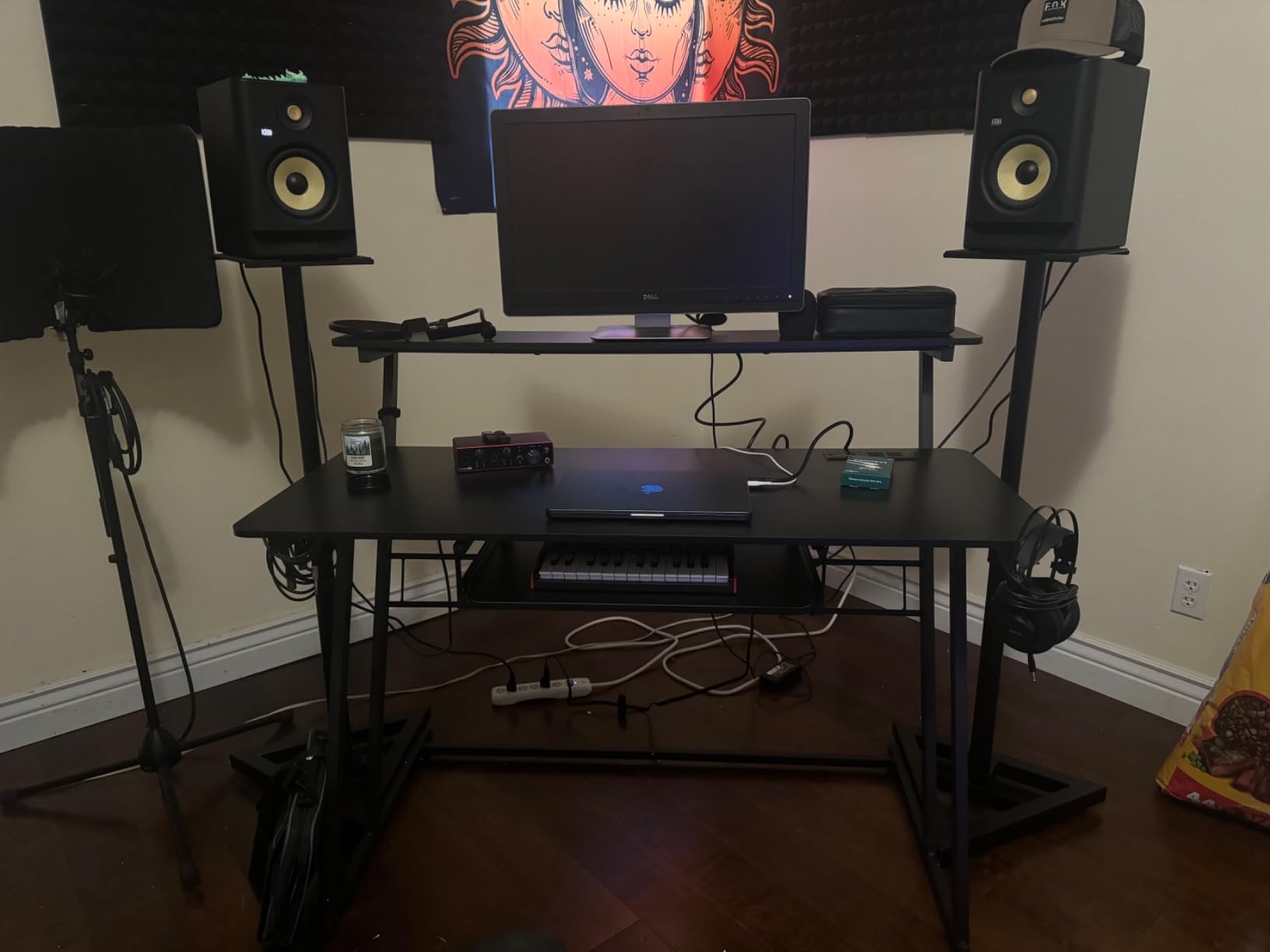
The thing that sets this desk apart is boring and essential: three USB ports and two AC outlets built into the frame. On almost every other desk in this roundup, cable management is an afterthought you solve with a strip and some hook-and-loop tape. Here the charging and power problem is solved at the manufacturer level.
The 47-inch raised shelf holds two monitors at eye level, and the Z-shaped metal legs with a brace bar give it more stability than its 20-pound weight suggests. At that weight you can carry it between rooms yourself, which is a real advantage in a rented space.
No Rack Space, and That Is the Dealbreaker
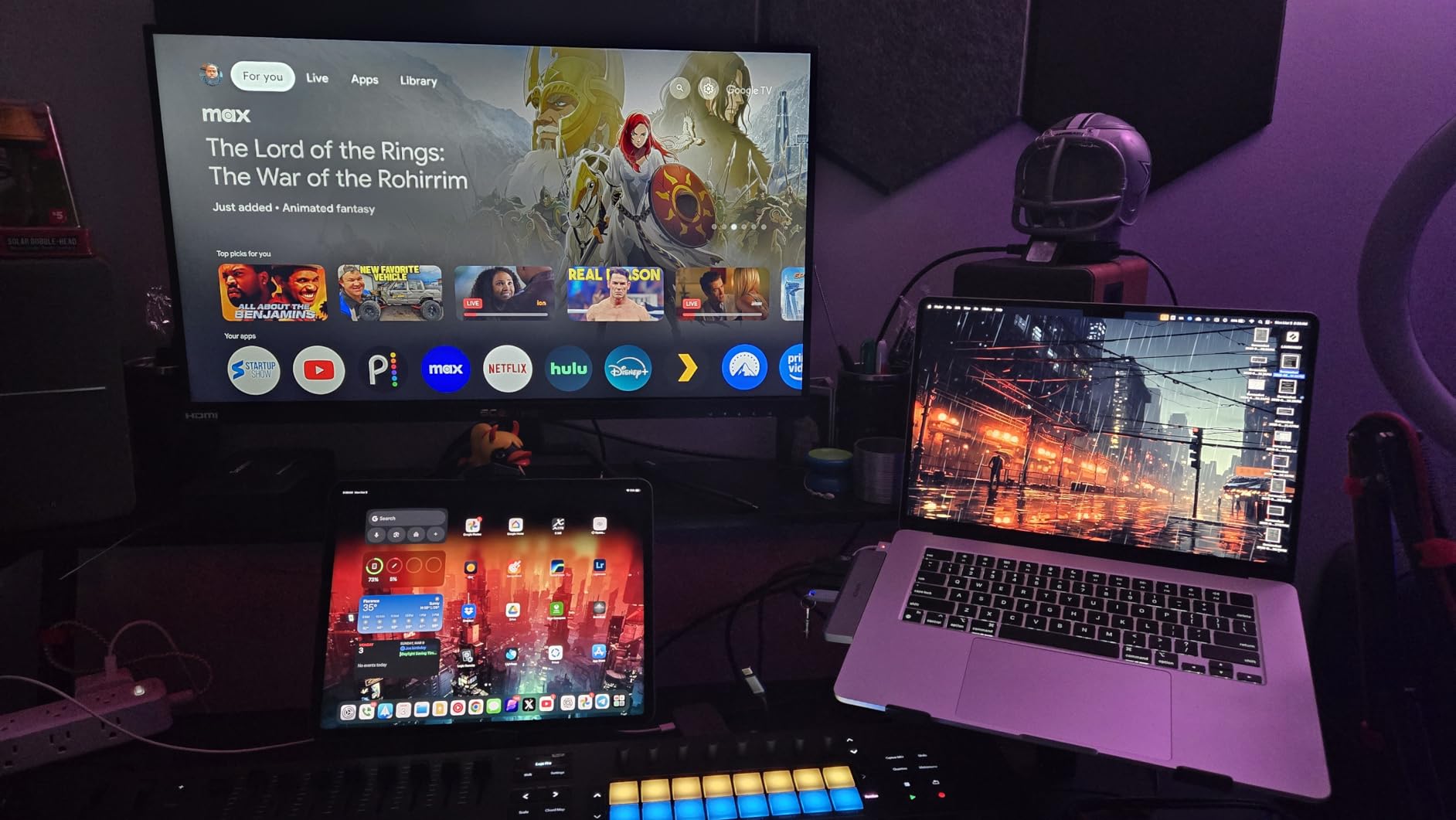
If your entire signal chain is a laptop, an interface and two monitors, this desk does everything you need. The moment you add a single outboard unit, you are back to a separate floor rack. Engineered wood and MDF panels also flex a little more than a steel-framed desk, and a few owners report typing wobble, so it is not the choice for a player who hits keys hard.
Best Use Case and Room Fit
At 22.8 inches deep it is among the shallowest options here, which makes it good for a bedroom studio but tight for placing nearfields at a proper distance. A 23.6-inch working surface diagonal is workable for a laptop and a 49-key controller. Pair it with one of our MacBook Pro accessories for music production picks and you have a complete laptop studio in a very small footprint.
6. Monoprice Stage Right Desk – Budget Pick for Very Small Rooms
Monoprice Recording Studio Desk – with Raised Platform and Keyboard Tray, Black – Stage Right
31.5 inch width,24 inch depth,Raised platform,175 lb rating
Pros
- Narrow 31.5 inch width fits apartments
- Raised offset platform removes the need for monitor stands
- 175 lb rating on a 30 pound frame
- Tools and hardware included
Cons
- Only fits a 49-key controller
- Metal surfaces offer less usable area
- No warranty and no rack bays
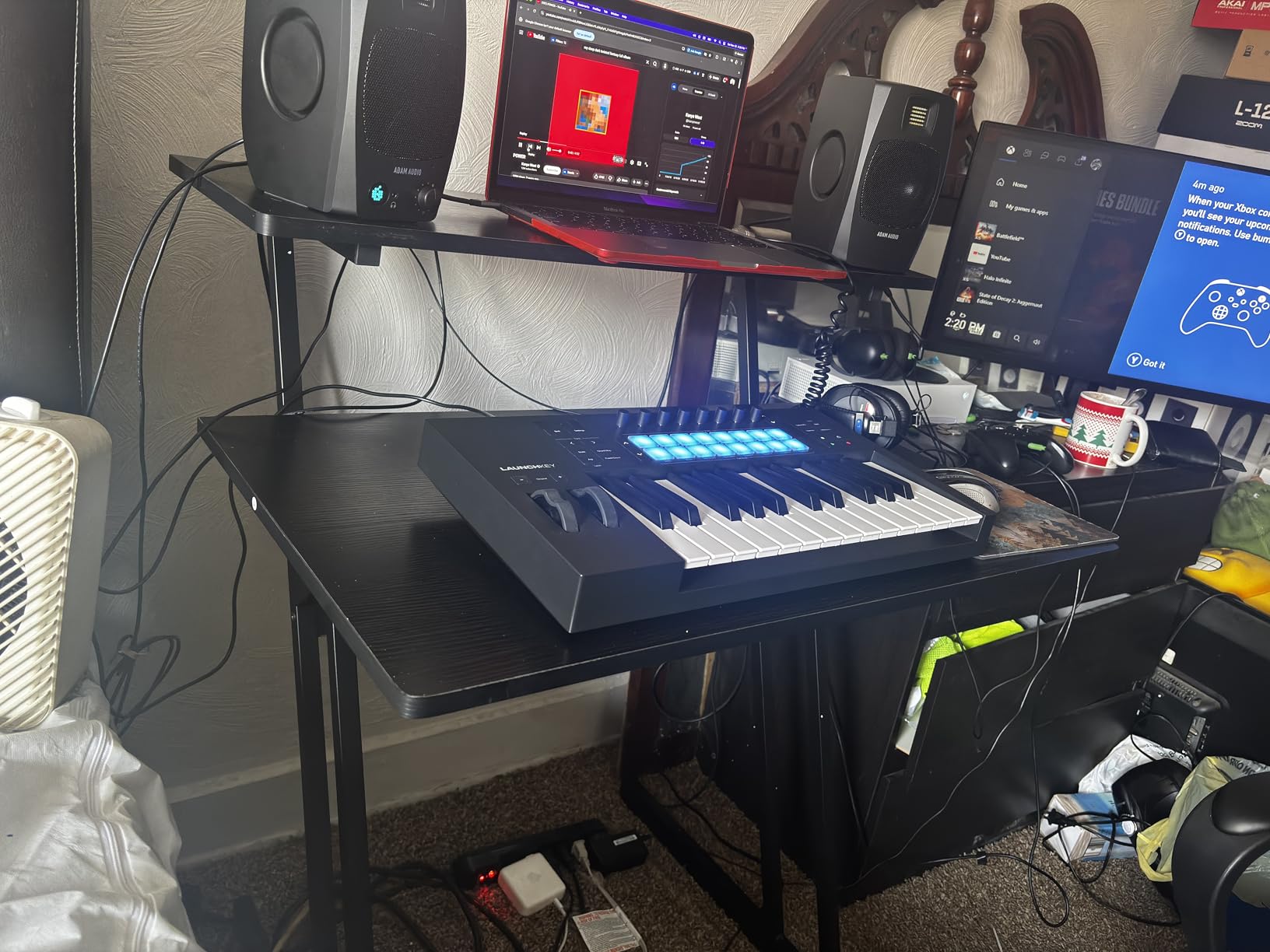
Almost every forum thread about studio desks opens with the same sentence: I do not have a whole lot of space. This desk answers that directly. At 31.5 inches wide and 24 inches deep it is the narrowest option here by a wide margin, and the raised offset platform puts your monitors up without separate stands eating more surface.
It is a steel frame rated to 175 pounds at about 30 pounds of total weight, and all tools and hardware are in the box, which is more than several competitors manage. For a bedroom producer with a 49-key controller, two small nearfields and a laptop, it genuinely works.
Know the Two Limits Before You Order
The pull-out tray is specified for a 49-key controller and will not take a 61-key or an 88-key instrument. The surfaces are metal rather than wood, which means more usable area is lost to ribbing and less grip for a mouse. It carries no warranty, so treat it as a starter desk rather than a long-term studio centrepiece.
Where It Saves You the Most
The platform is listed at a 38-inch working height, which is higher than most studio desks and closer to a drafting position. That is fine seated with a chair at a desk, but if you are shorter, the 49-key tray is your seated position and the main surface is for standing work only. The honest framing: this is a first studio desk, and you will outgrow it when you add a second rack or a larger controller.
7. Acme Megara 72 Inch Desk – Best for Heavy Rack Gear and Mixers
Acme Furniture Metal and Wooden Music Desk with Wheels, Black
72 inch top,19-inch mounting space,8 wheels,18mm waterproof top
Pros
- Substantial 19-inch mounting space for mixers and amps
- Pass-through cable holes and pre-drilled screw holes
- Eight wheels move the 141 pound frame
- Waterproof 18mm desktop wipes clean
Cons
- Heaviest desk here at 141 pounds
- Two-person assembly
- Lowest average rating in the set at 4.1
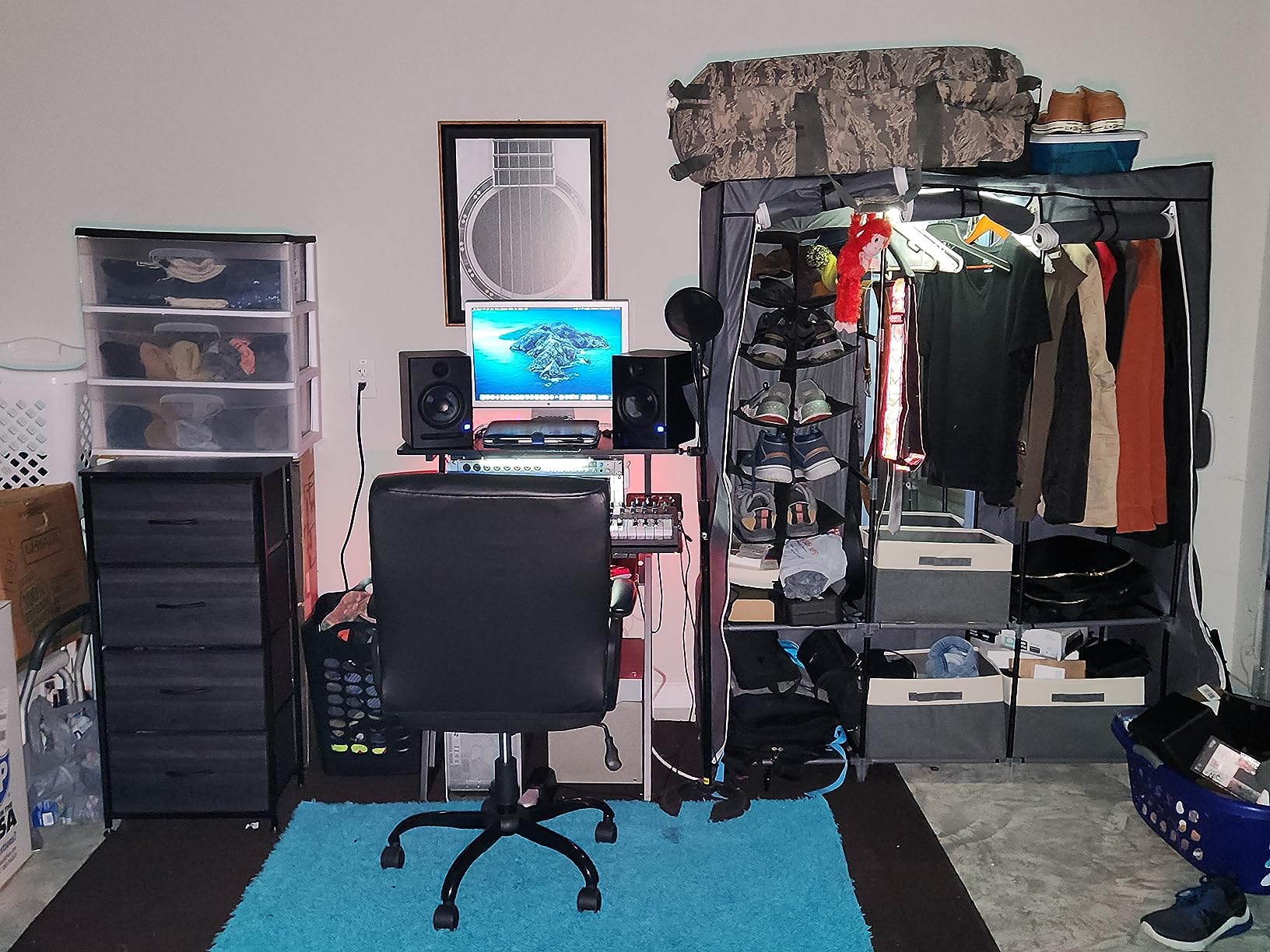
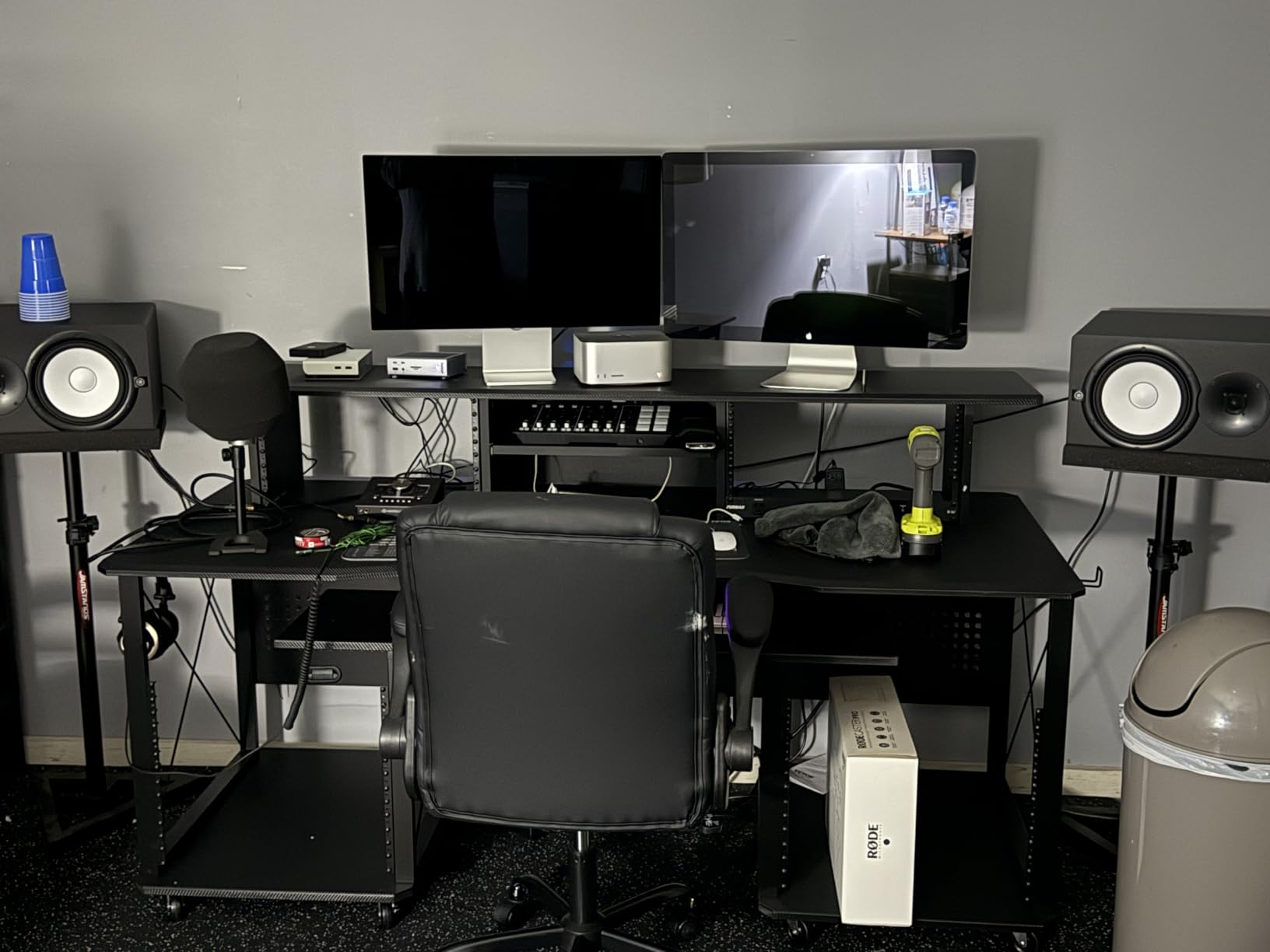
This is the only desk here designed around the assumption that your gear is heavy. It has real 19-inch mounting space rather than a token shelf, a waterproof 18mm desktop, and pass-through cable holes with pre-drilled screw holes for fixed equipment. If you are running a mixer with multiple outboard racks, that combination is rare.
Two pull-out trays give you a primary keyboard position and a second hutch tray for a control surface. The hutch also holds large screens, and eight wheels make moving the 141-pound frame feasible even though it is by far the heaviest desk in this roundup.
The Weight Is a Feature and a Problem
At 141 pounds, this desk is effectively a fixture. That is good news for a permanent control room because a loaded rack will not walk across the floor, and bad news if you rent or move studios. Assembly is a two-person job. The 4.1 average across 82 reviews is the lowest here, with the complaints concentrated on industrial styling and on the sheer bulk of the hutch and shelves rather than on structural quality.
Rack Placement and Cable Routing
The pass-through holes and pre-drilled mounting points are the details that separate real studio furniture from furniture with a shelf. Cable runs drop behind the desk rather than across it, and fixed gear screws straight into the frame instead of resting on a surface. If you are building a control room you intend to keep, that matters more than any finish or colour choice.
8. Musiea BE200 Studio Desk – Best Small-Room Desk with Real Rack Bays
Musiea BE200 Series Music Studio Desk Workstation with 2 x 4U Rack (Black)
47 inch top,Twin 4U side racks,61-key tray,Rear cable gully
Pros
- Two 4U side racks hold up to 8 devices
- 61-key tray with cutout for legroom
- Pre-cut monitor toe-in triangle on the deck
- Hidden rear wire gully
Cons
- Sways side to side when lightly loaded
- Low work surface suits shorter users
- Veneer colour varies between units
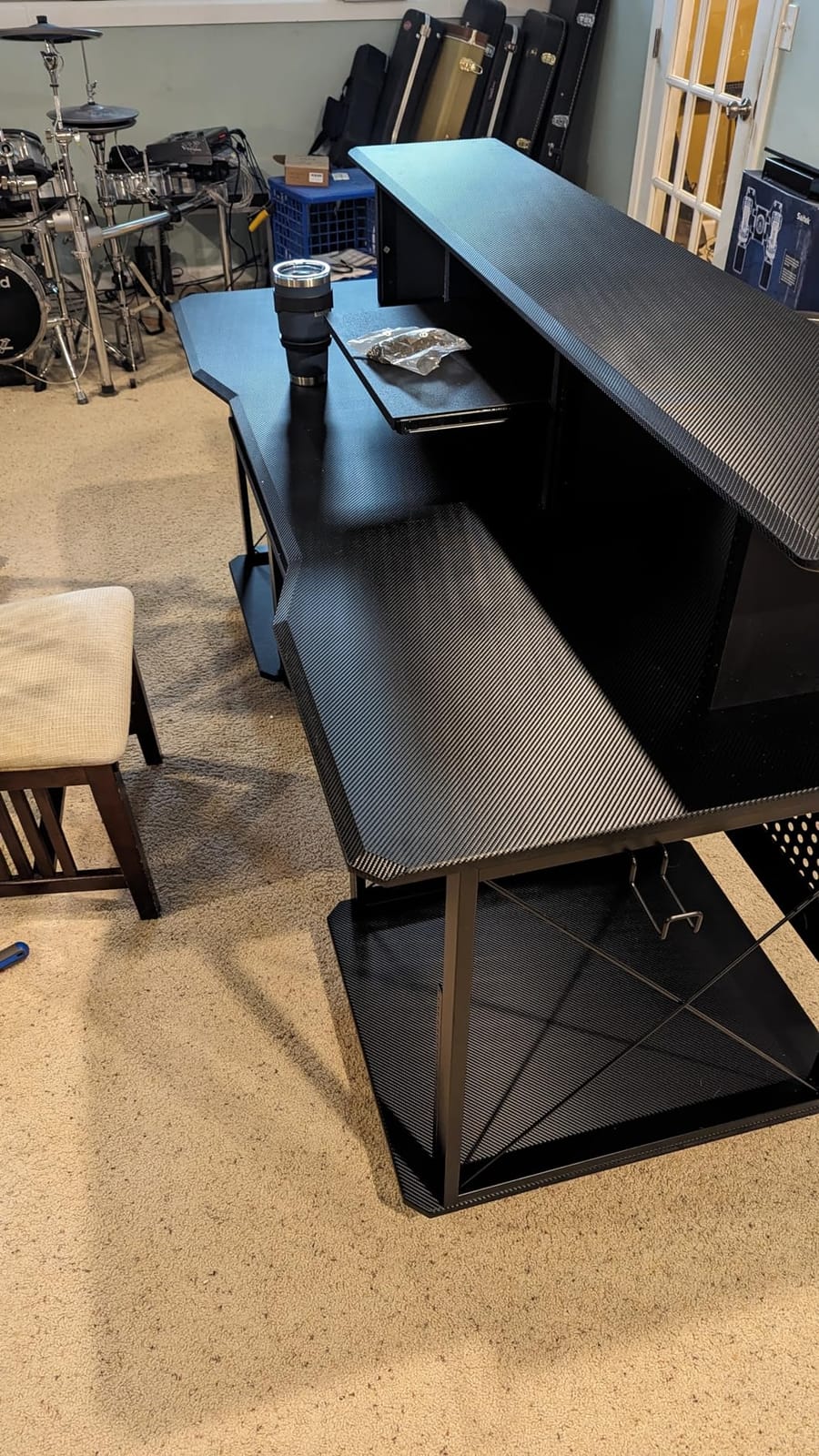
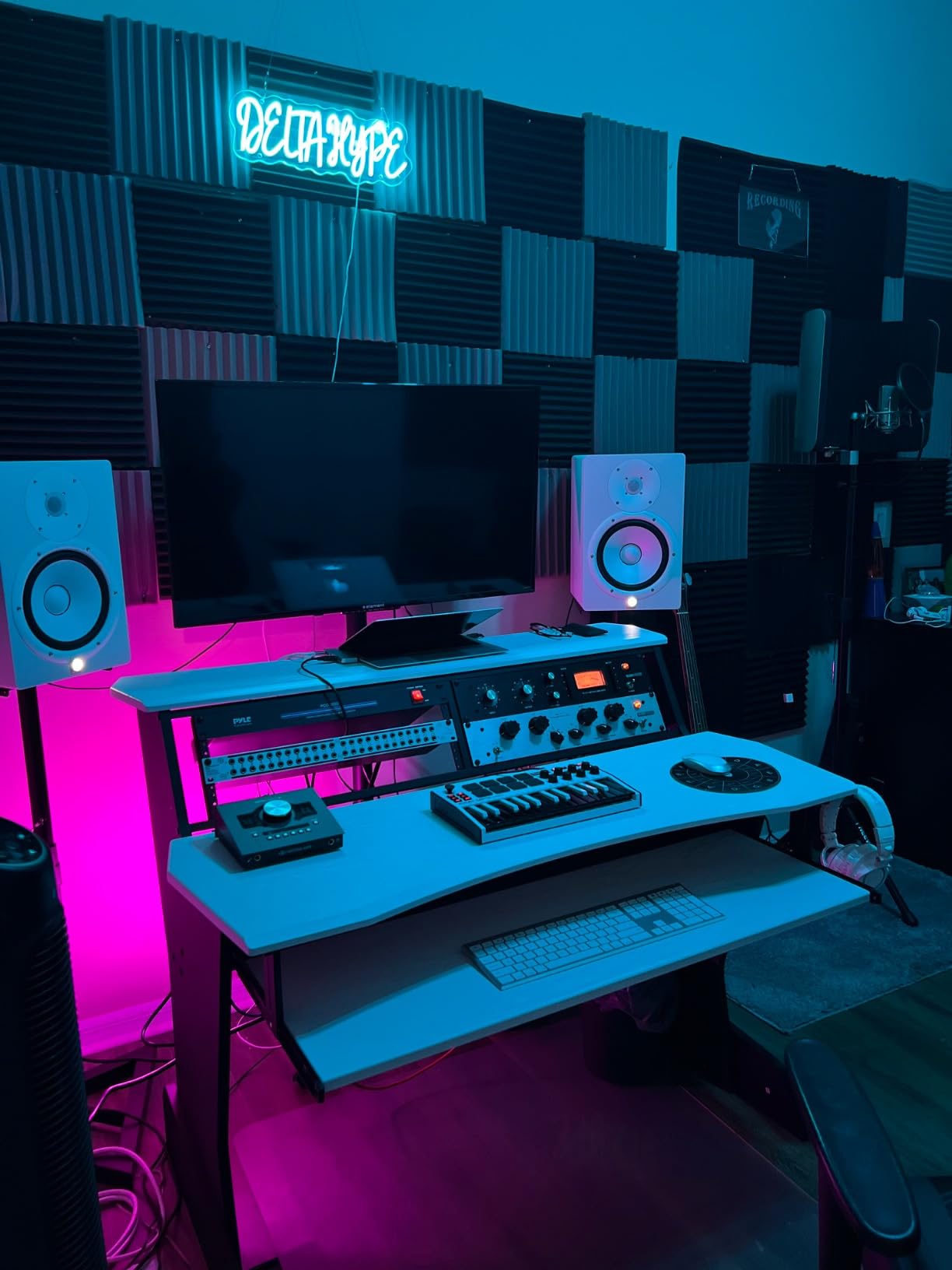
The detail I liked most here is a pre-cut triangle marked into the top deck giving you a natural monitor toe-in angle. Nobody else in this roundup does that, and getting nearfield toe-in roughly right by eye is something most producers never do properly. It is a small thing that saves a real amount of desk time.
Two side-mounted 4U rack bays hold up to eight pieces of outboard gear at arm’s reach, and the pull-out tray takes a 61-key controller with a cutout design that keeps your knees clear. The hidden rear wire gully is the other quiet win, since it gives cables somewhere to go instead of draping over the back edge.
It Needs Weight on Top to Feel Solid
Reviewers are consistent here: the MDF frame is not very rigid until it is loaded with equipment. When lightly loaded it sways left to right when you lean on it. Once you have two monitors, a controller and a rack of gear on board, that movement essentially disappears. If you are the type to work with a mostly empty desk, buy something heavier.
Check Your Height Before Ordering
The work surface is on the low side, which suits shorter producers but leaves tall users needing risers for leg clearance. The top shelf carries two heavy monitors without complaint, and the premium wood veneer finish looks considerably more expensive than the desk is. Natural grain and colour vary between units, so expect a slightly different shade than the listing photos.
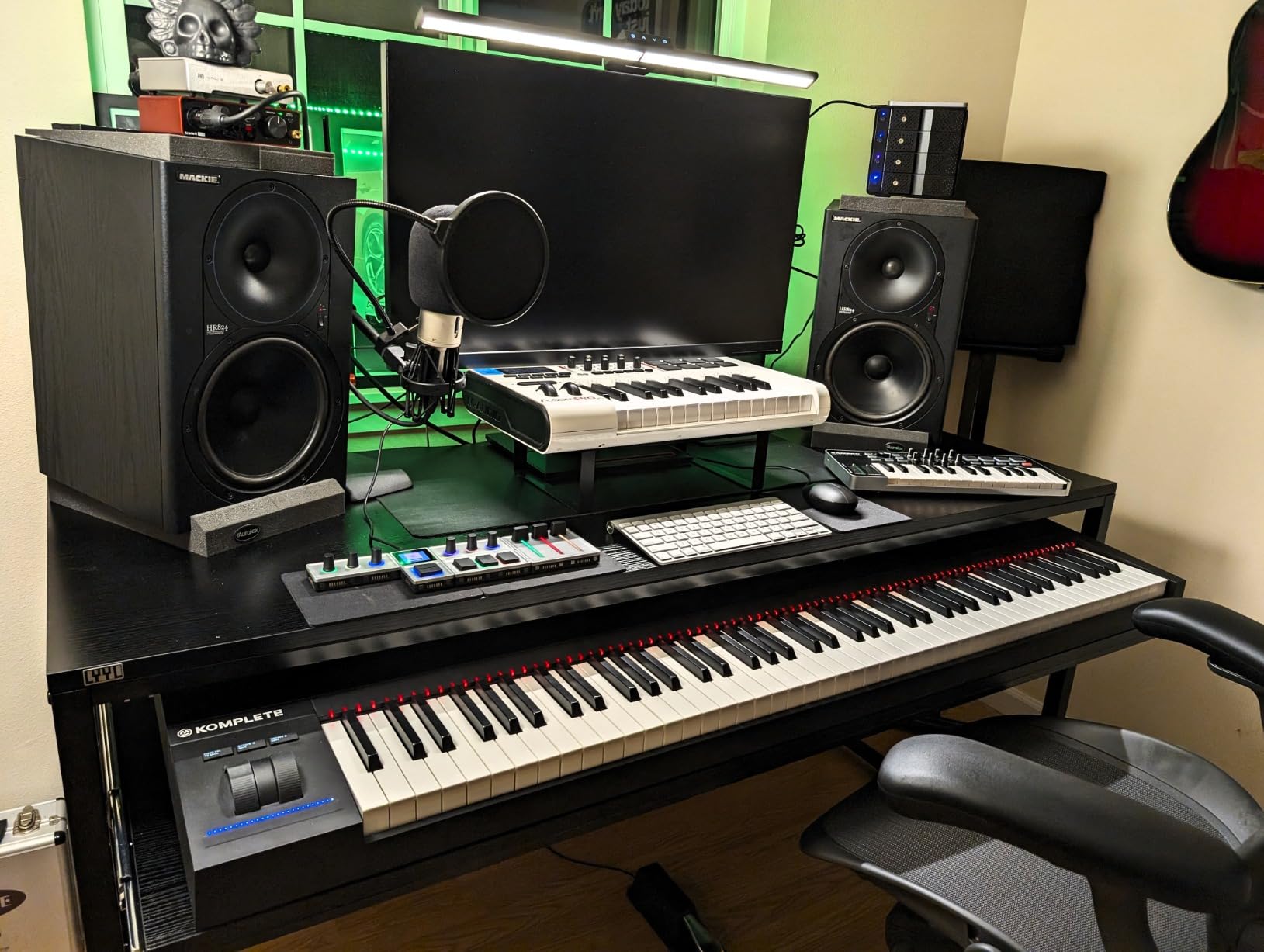
9. LYYL 88-Key Music Desk – Best for Full 88-Key Weighted Keyboards
LYYL Music Studio Desk with Keyboard Tray and Height Adjustment Bracket, for Full 88 Keys (Music Producer Desk) (Black, 88 Keys)
61.4 inch wide,55 lb tray rating,3-way rail system,Four tray heights
Pros
- Only desk here built around a full 88-key instrument
- Patented 3-way rail resists wobble under load
- Keyboard tray rated to 55 pounds
- One-person tray installation via pre-set bolts
Cons
- Cable tray sold separately
- Only 6 months manufacturer warranty
- Narrow 23.6 inch depth limits working room
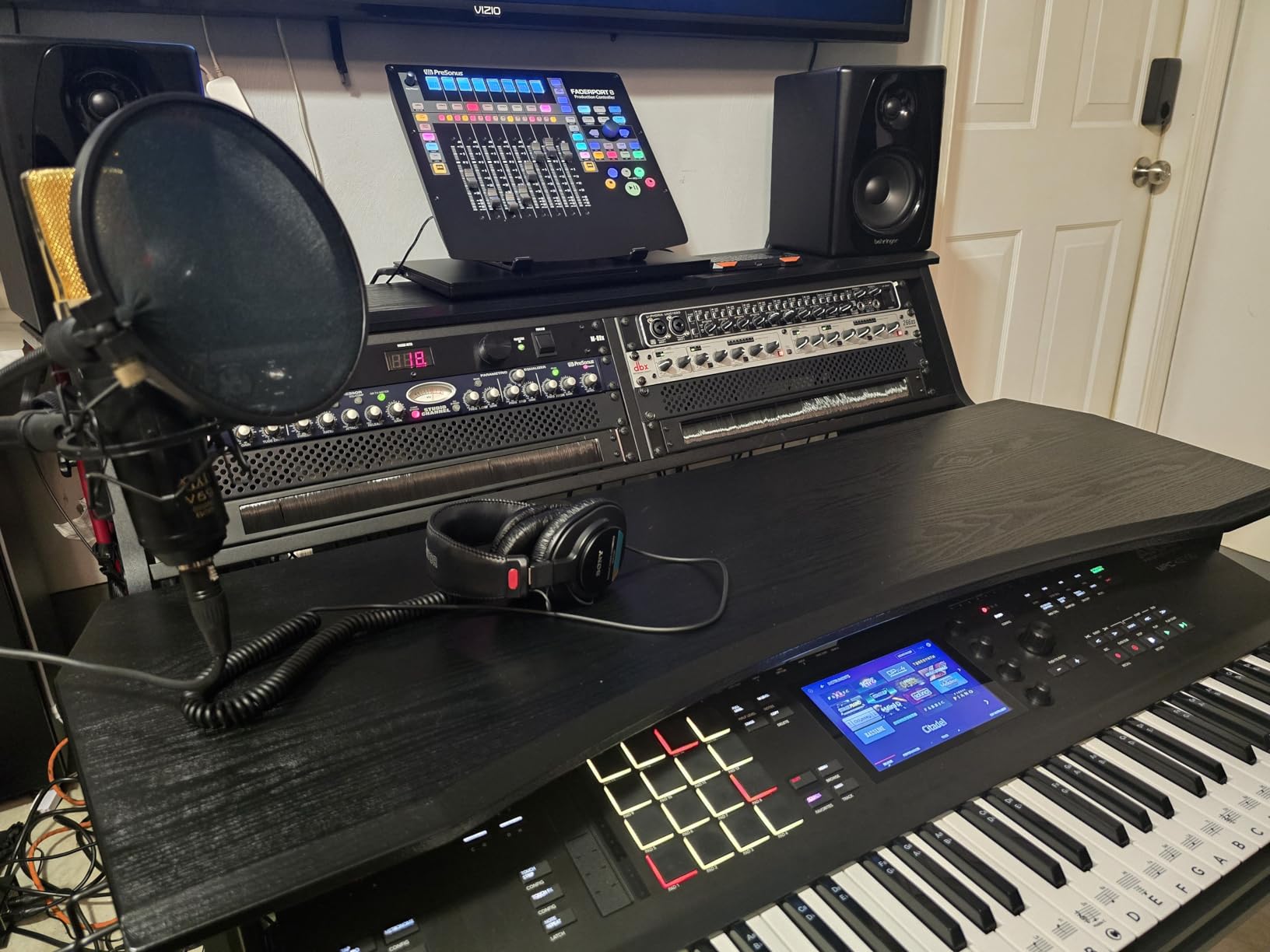
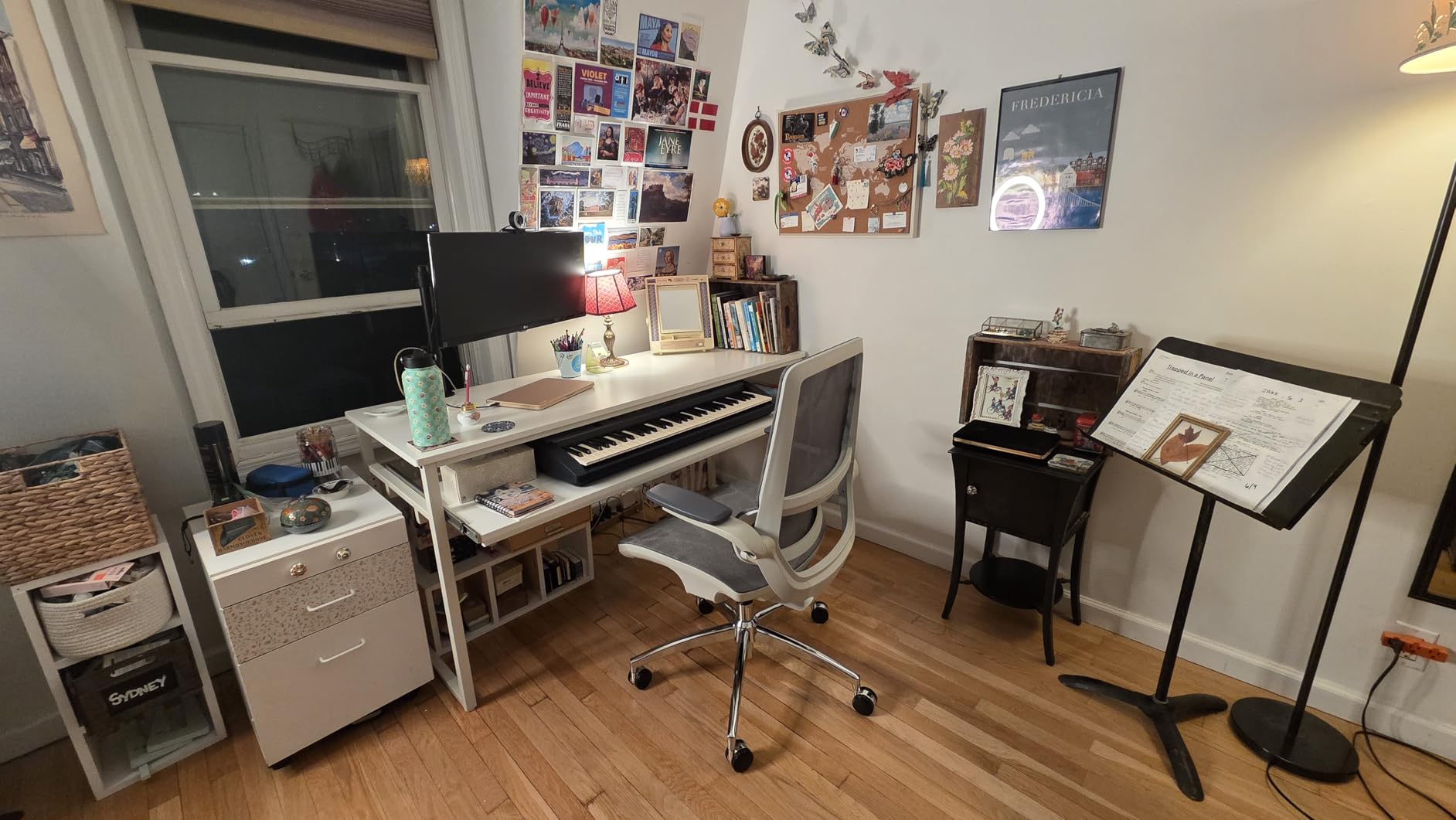
If you play a weighted 88-key digital piano, this is the only desk in the roundup designed around your instrument. Most studio desks take a 49-key or 61-key controller and quietly fail with anything larger. A globally patented three-way rail system supports up to 55 pounds on the tray, and a full keyboard plus stand is a serious load that flexes lesser hardware.
The tray has four height positions and the main desktop has its own separate adjustment bracket, so you can set the playing position independently from your mixing position. The tray hooks onto pre-set bolts, which means one person can assemble the whole desk without a second set of hands.
Warranty and Extras to Budget For
The 6-month manufacturer warranty is the shortest in this roundup, and a 13 percent one-star share in the reviews reflects that. Build quality is otherwise well regarded, with CARB Phase 2 compliant MDF, Hafele rails and industrial grade steel. The cable tray is a separate purchase, so include it in your planning if you want a finished look.
Depth Is the Trade You Make
At 23.6 inches deep this gives you less working room than the wide studio desks, and that matters for a piano player who also mixes. You are trading surface area for a tray that will not collapse under a full instrument. Make that trade consciously, because the reverse is also true: buying a wide shallow desk and then improvising a stand for your piano is a worse outcome.
10. Musiea IM100 Studio Desk – Best Wide Work Surface with Locking Casters
Musiea IM100 Series Music Studio Desk Workstation with 2 x 4U Rack (Cherry)
69 inch worktop,Twin 4U racks,76-key tray,Locking casters
Pros
- Wide 69 inch surface with a large usable work area
- 76-key tray is roomier than the BE200
- Locking casters stabilise the 69 pound frame
- Swivel speaker mounts aid positioning
Cons
- Lowest rack bays need the desk cleared to reach
- Thin packaging causes transit damage
- No printed manual and no tools included
This is the wider sibling of the BE200, and the difference that matters is the tray. At up to 76 keys it fits controllers the 61-key version cannot, and the 69-inch worktop gives you far more clear surface than the twin rack bays take up.
Two side 4U rack bays handle up to eight devices, swivel speaker mounts help you set your monitoring angle, and four wheels with two locking casters keep a 69-pound desk steady while you work. Cherry veneer over MDF gives it a premium look that reviewers consistently mention.

Rack Access Requires Clearing the Desk
The rack bays sit at the lowest levels, which means you need to clear the working surface to reach the bottom units. Owners also report that the lower bays get cluttered once fully populated, because there is no door or slide to pull the gear out on. Plan your signal chain so the units you touch most go in the upper bays.
Packaging Is the Weak Link
Several reviewers report transit damage because the packaging is thin for a unit of this size. Inspect the panels on arrival before you start assembly. The instructions are not in the box either, so download the manual from the manufacturer’s site first, and note that assembly tools are not included.
11. Gator 10U Rack Desk – Tightest Footprint with a Full 10U Bay
Gator Frameworks Elite Series 10U Studio Rack Desk with Slide-Out Tray and Rear Cable Passthrough; Driftwood Grey Finish (GFW-ELITEDESKRK-Gry)
10U rack space,35 lb slide tray,24 x 21 inch platform,Plywood and steel
Pros
- 10U of usable rack space in a 24 inch footprint
- Slide-out tray rated to 35 pounds
- Rear cable passthrough keeps wiring hidden
- Plywood and steel build feels sturdy
Cons
- Poor written instructions and assembly video
- Screw holes can be undersized or paint-clogged
- Small work surface and a tight drawer
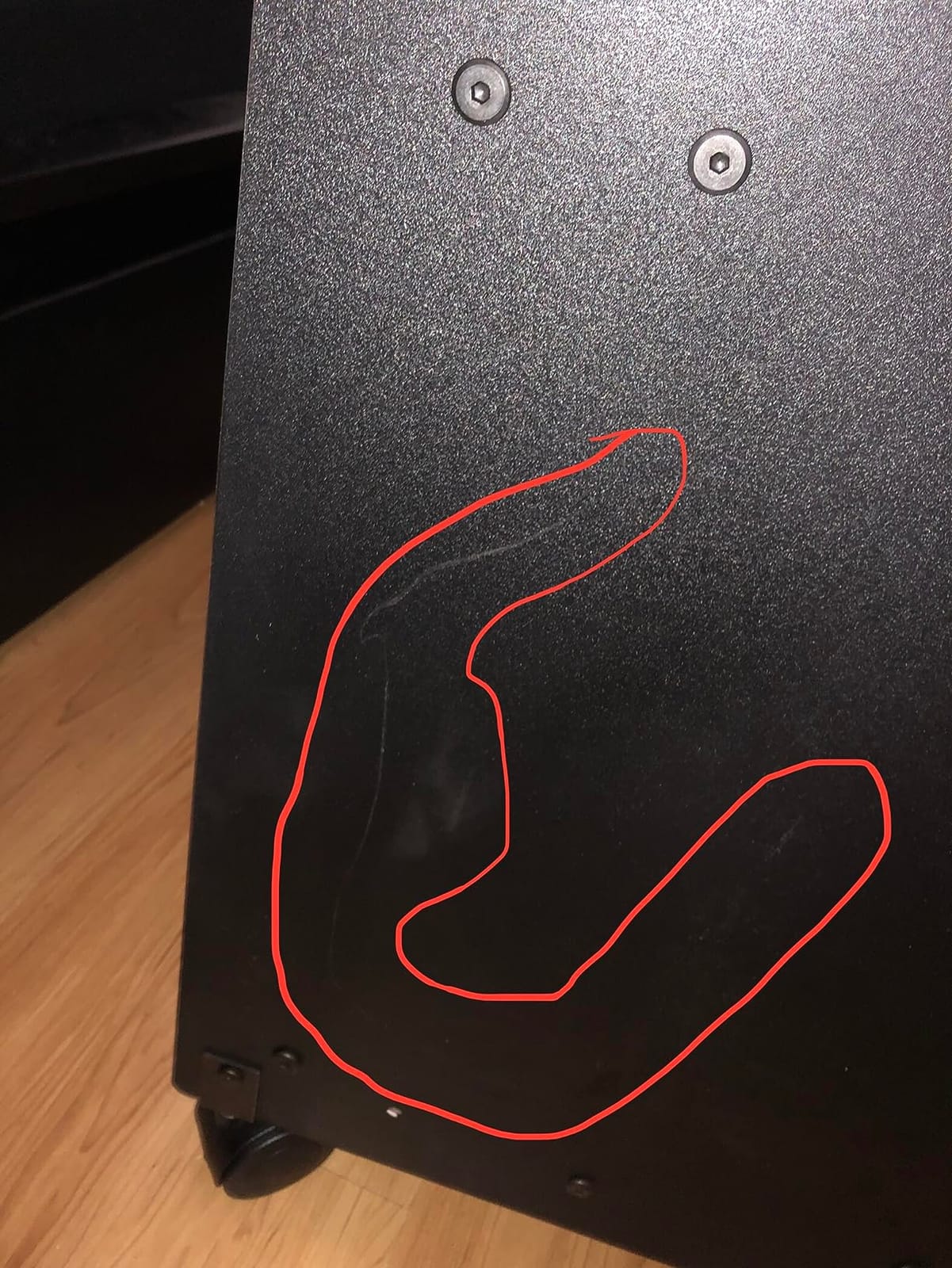
At 24 by 21.2 inches, this is the smallest desk here, and it still gives you a genuine 10U of 19-inch rack space for preamps and processors. If your room is genuinely tiny and rack gear is non-negotiable, the alternatives all involve either a much larger footprint or no rack at all.
The plywood and steel construction is noticeably heavier and sturdier than it looks at 62.7 pounds, and there is a rear cable passthrough cutout to keep wiring out of sight. The slide-out storage tray is rated to 35 pounds, which is enough for patchbays and a control surface.
Assembly Hardware Is the Weak Point
Buyers who finish the build describe it as sturdy, well-made furniture with a useful rack bay and passthrough. The failures cluster around hardware and paperwork: screw holes that arrive undersized or paint-clogged and need re-tapping, a slide-out drawer that runs very tight, and instructions plus the assembly video that reviewers call poor. Allow extra time and check every hole before you mount a device.
Plan Around the Platform Size
The work surface is 24 by 21.1 inches, which is enough for a laptop, a small interface and a compact controller, and not enough for a full-size keyboard and mousepad side by side. The threaded holes also have no rear posts to mount shelves to, and the rear support design traps heat and pushes it out the front, which is worth knowing if you plan to rack power amplifiers.
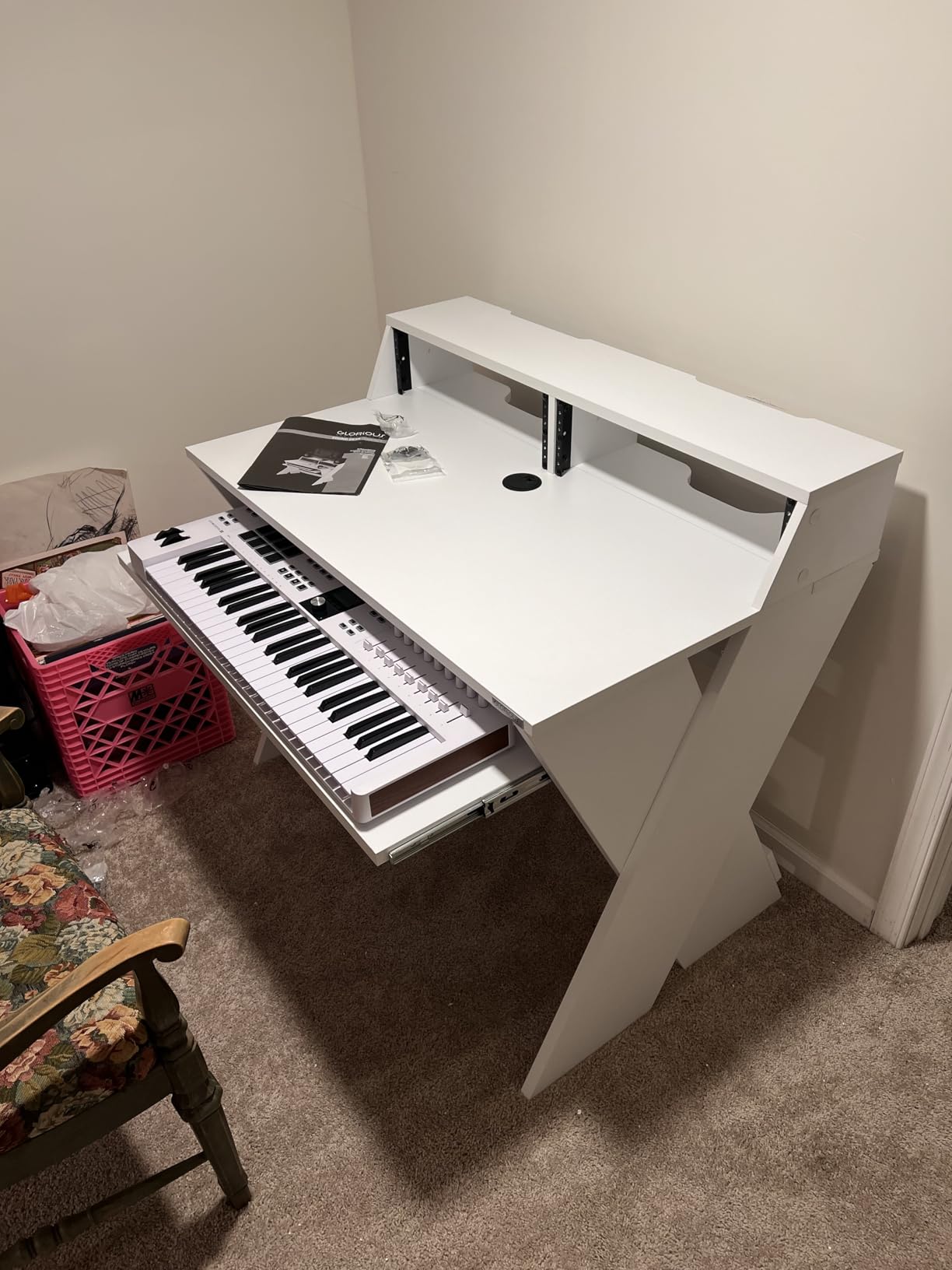
12. Glorious Sound Desk Compact – Best Joinery and Highest Rated Finish
Glorious Sound Desk Compact Professional Studio Workstation, Walnut (AMS-Sound-Desk-COM-WAL)
Two 3U racks,Three working levels,Keyboard drawer,2 year warranty
Pros
- Highest average rating in the set at 4.8 stars
- Mortise and tenon construction with a painted finish
- Three working levels for producing and composing
- Two-year manufacturer warranty
Cons
- No built-in headphone hanger
- Cable cubby has no hinged door
- Assembly takes roughly two hours
This desk has the highest average rating in the roundup, and looking at why, it is not a fluke. The construction is mortise and tenon wood with a scratch-resistant painted finish, and the 0.75-inch top is one of the thicker panels here, which matters if you clamp a monitor arm to it.
Three working levels let you compose on one, operate on another and monitor from the top, and the two 3U rack bays fit an interface and a rack-mounted power supply neatly. The keyboard drawer holds a controller up to about 4 inches tall, such as a Roland A-49, and the racks are well aligned and set in cleanly.
Compact Without Feeling Tiny
Reviewers describe it as sized for small to medium rooms without feeling cramped, and several fit a 20-input interface plus a controller comfortably. It arrives in a single box under 65 pounds, which is simpler than most competitors that arrive in two packages, and cable ducts plus a cable channel are included.
Small Omissions Worth Noting
There is no built-in headphone hanger, so you need stick-on mounts, and the cable management cubby has no hinged door, which makes top or front access awkward. Tall users may hit their knees at the lowest keyboard drawer setting. Assembly takes around two hours with instructions that are hard to read, and a few owners report chipped paint or finish wear around screw holes.
How to Choose a Studio Desk for Music Production in 7 Steps
Most of the advice in this category is generic. These seven steps are the ones that actually change your daily workflow, ordered so that each one narrows the decision before the next one does.
Step 1: Measure the Room and the Footprint First
Tape the desk outline on the floor before you order anything. Leave at least 30 inches behind the desk for a chair to roll back and to the sides for you to walk past, and check that the depth you are buying does not push your monitors further away than you want. The 71-inch and 72-inch desks in this roundup need a genuinely dedicated room. The 31.5-inch Monoprice fits anywhere.
Step 2: Desk Depth Decides Your Monitor Distance
This is the most overlooked spec in the category. Nearfield monitors are designed to be listened to from roughly 3 to 5 feet away, and a 28- to 32-inch deep desk gives you room to place them correctly with the tweeters at ear height. A 21- to 24-inch deep desk pushes you to place speakers further back or closer together than the equilateral triangle wants, which changes how the stereo image reads. Aim for a 48- to 60-inch stereo width at your seated listening position.
Step 3: Work Out How Much Rack Space You Need in RU
One rack unit is 1.75 inches of vertical 19-inch space. A typical single-space compressor, preamp or power conditioner is 1U, a two-channel rack processor is usually 2U, and a small mixer is 3U to 4U. Count your chain: a preamp, a compressor, a reverb processor and a power conditioner is roughly 8U to 10U. Add a patchbay and you are at 12U. This is why the twin 4U bays on the Musiea desks and the single 10U bay on the Gator cover most producers, while anyone with a full console will need a separate rack stand.
Step 4: Get the Desk Height Right
Aim for a main work surface between 29 and 30 inches, which is 74 to 76 cm. That puts your elbow at roughly 90 to 100 degrees with your forearm level, and it is why most quality studio desks in this roundup land on a 29-inch main surface. Fixed heights that do not suit you are a recurring complaint, so if you are unusually tall or short, a sit-stand model or a desk with a height-adjustable tray is worth the extra money.
Step 5: Check Monitor Arm Compatibility and Top Stiffness
Look for a top thick enough to take a standard clamp, which is usually 0.75 inches or more, or a desk with pre-drilled mounting holes. Thin tops like the 0.2-inch panel on the 71-inch Acme flex under boom arm load. A grommet mount is cleaner than a clamp if the desk has the holes, and a clamp is the only option if it does not. Decoupling also matters: isolation pads or a shelf between your monitors and the desk keep desk vibration out of the low end, and that concern comes up repeatedly in studio audio forums.
Step 6: Cable Management and Patch Bay Height
Every desk in this category gets cable management wrong to some degree, so buy on relative merit. The Musiea BE200 has a hidden rear wire gully, the Acme Megara has pass-through holes plus pre-drilled fixing points, the Glorious includes cable ducts and a channel, and the On-Stage has nothing built in at all. Whatever you choose, mount your patchbay at seated shoulder height rather than on the floor, and reserve the desk depth behind the rack for cable runs.
Step 7: Weight Capacity and Resonance
Add up the real loaded weight: two nearfields, an 88-key controller, a loaded rack and your displays. Most desks here rate 50 pounds on the top, which covers a typical setup, and the heaviest is rated well above it. On materials, denser panels and steel frames resist resonance better than thin particle board, which is why the plywood and steel Gator and the welded steel On-Stage feel more solid when you lean on them. Heavier also means less likely to move, which is a real factor in a rented room.
When a Regular Desk, IKEA Setup or Custom Build Makes More Sense
A dedicated studio desk is not always the right answer, and the producer community has been fairly honest about the alternatives.
For a laptop-and-interface rig, or a bedroom studio on a tight budget, two or three tables arranged in a U shape genuinely works. Users on vi-control report running that setup successfully, and you gain desk depth flexibility and far cheaper components at the cost of cable management and a unified rack position. The rule is that your monitors still need to be at ear height on stands or isolation pads, wherever the tables happen to be.
For a permanent control room, a local cabinet maker is the option most often recommended. Gearspace posters report commissioning a custom desk and landing at roughly a quarter of the cost of comparable desks sold online, because the money goes into joinery and steel rather than packaging and freight. The trade is time and a lack of add-on accessories. You will not get a rack module or a corner attachment later.
There is a third route worth knowing: buy a good flat desk with monitor arms and put your rack in a separate stand beside it. That keeps your listening position clean, lets you move the rack independently, and costs less than one integrated workstation. We covered more of that approach in our studio headphones for music production guide, since monitoring habits matter as much as the furniture underneath them.
Frequently Asked Questions
What is the best studio desk for music production?
The best studio desk for music production is one with a rigid steel or thick-panel frame, a pull-out keyboard tray and enough 19-inch rack space for your outboard gear. Our top pick, the Acme 47 inch studio desk, combines an open rack bay, a 40 inch piano-style tray and locking casters across 788 reviews. If you only run a laptop and an interface, you can get away with a lighter desk and spend the difference on monitors.
What desk height is best for music production?
Aim for a main work surface between 29 and 30 inches, which is 74 to 76 cm. That height puts your elbow at roughly 90 to 100 degrees with your forearm level and keeps nearfield tweeters near ear height. Fixed-height desks that fall short of this are a common complaint, so check the published surface height before buying and consider a sit-stand model if you are very tall or very short.
How much desk space do I need for studio monitors and a 49-key controller?
A 47 inch wide by 28 inch deep desk is the practical minimum for two nearfield monitors, a 49-key controller, a mouse and a laptop. For 61-key or 88-key controllers, look for a dedicated pull-out keyboard tray, because a 61-key instrument occupies nearly the full width of a 47 inch surface. For three displays plus two monitors, you need 63 inches of width or more.
Do I need a desk with rack bays if I only use an audio interface?
No. If your entire chain is a laptop or computer, an audio interface and monitors, rack bays are wasted money and you should spend on monitor placement instead. Rack bays start to matter once you add a compressor, preamp, reverb or patchbay, which together come to roughly 8U to 12U. Most producers cross that line within a year, so a small rack bay is a reasonable hedge.
How deep should a music production desk be?
Between 28 and 32 inches deep is the useful range. Depth sets how far back your nearfield monitors can sit from the listening position, and nearfields are designed to be mixed from roughly 3 to 5 feet away with a 48 to 60 inch stereo width. Desks under 24 inches deep force speakers further back or closer together than intended, which changes how the stereo image reads.
Is a gaming desk OK for a home music studio?
A gaming desk can work for a laptop-and-interface setup, especially a sit-stand model with a strong frame. What most gaming desks lack is any 19-inch rack space, a wide pull-out keyboard tray and cable pass-through, so once you add outboard gear the gear ends up stacked on the surface or on the floor as a separate rack. Check the frame weight rating and the top thickness before clamping monitor arms to one.
What is the best standing desk for music production?
The EUREKA 63 inch wing desk is the only true dual-motor sit-stand option in our roundup, lifting from 29.5 to 48 inches with a 220 pound rating and three height memory presets. The key detail for producers is the independently adjustable keyboard tray, which keeps a controller at a comfortable angle when the main surface rises. Most sit-stand desks keep an outboard rack beside the desk rather than inside it, so plan on a separate rack stand.
Which Studio Desk Should You Buy in 2026?
For most producers, start with the Acme 47 inch studio desk, our Editor’s Choice, because it is the only desk in this roundup that pairs genuine rack space with a full 40-inch keyboard tray and a frame that does not flex when you reach for a fader. If your budget is tighter and your gear is lighter, the On-Stage WS7500 gives you a welded steel frame rated to 175 pounds and a path to add rack bays later.
Match the desk to the constraint instead. Bedroom studio in a small room, go narrow with the Monoprice Stage Right at 31.5 inches. Rack-heavy chain of outboard gear, choose the Musiea BE200 for twin 4U bays or the Acme Megara for real 19-inch mounting space. Large dedicated room with three displays, the Acme Eleazar covers it. Piano player with a weighted 88-key instrument, the LYYL desk is the only one here built for that load. Alternating between sitting and standing, the EUREKA 63 inch wing desk is the pick, with a separate rack stand planned alongside it.
Whichever you choose, measure the room first, check the published surface height against your own, and get the monitor positions right before you spend anything on the desk itself. That last point is the one most buyers skip, and it matters more to how your mixes translate than any piece of furniture in the room.