
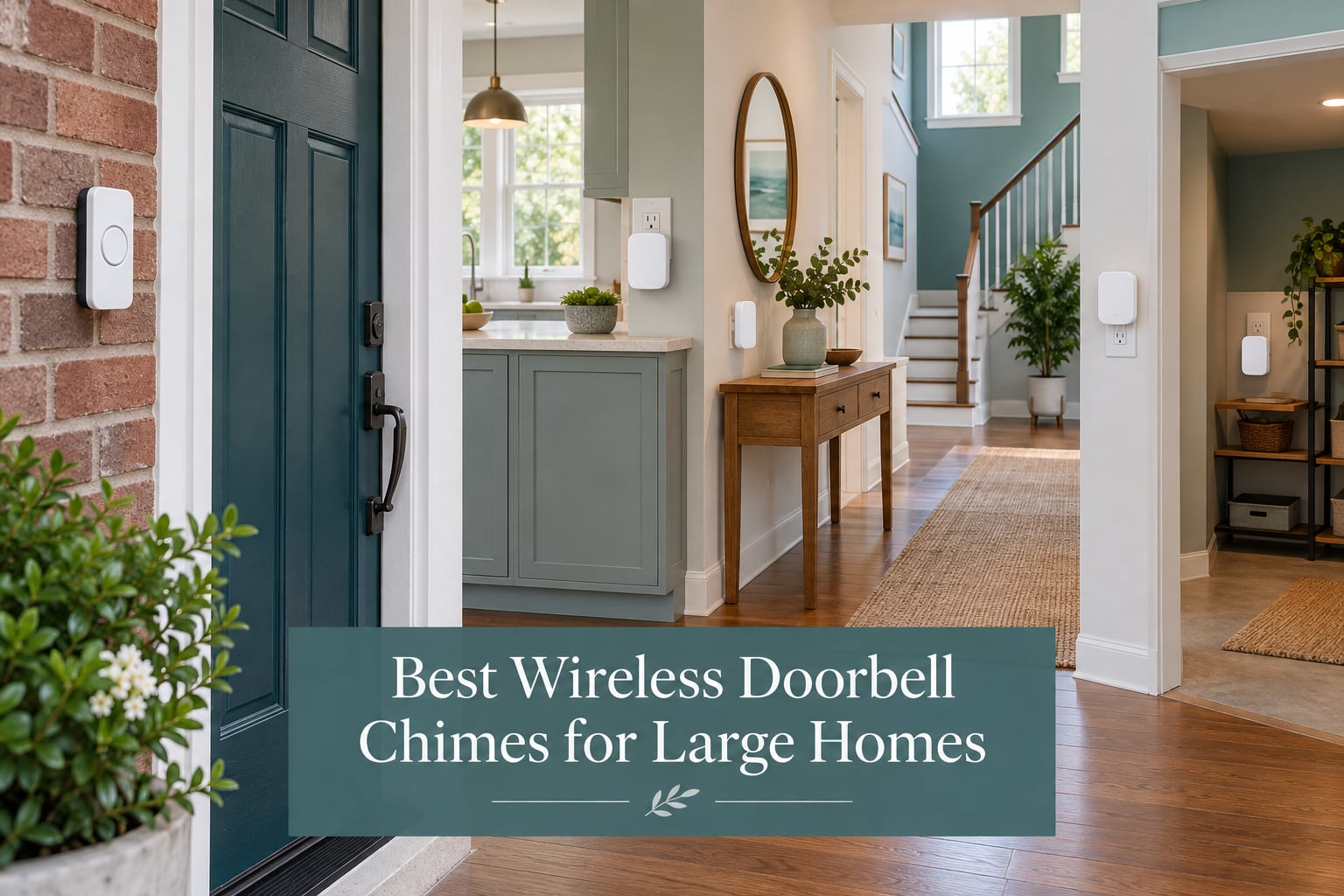
Most wireless doorbell chimes were designed for a two-bedroom ranch, and it shows the moment you move into a home with a basement, a second floor, and a detached garage out past the driveway. I spent weeks going through the current chime-only kits, reading thousands of buyer reviews, and comparing what each one actually does across floors. The short version: the best wireless doorbell chimes for large homes are decided almost entirely by how many receivers are in the box and how far a signal realistically carries through your walls, not by the range number on the front of the package.
A quick definition before we get into the picks. The push button (also called the transmitter) is the outdoor unit you press. The receiver, or chime, is the plug-in box inside that plays a tone. When you press the button, it sends a radio signal, typically on 433 MHz, and every paired receiver in range sounds. No wires to run, no app to open, no monthly fee.
All eight kits below are chime-only. None of them has a camera, which is deliberate: if you want video, this is the wrong page, and adding a camera changes the power, network, and subscription questions completely. What follows is purely about getting the sound to every floor of a big house, plus the visual alert that matters if anyone in the house has hearing loss. If your doorbell problem is actually a Wi-Fi coverage problem at the front door rather than a chime range problem, start with our Wi-Fi router picks for large homes first, because a camera-based system will not fix a dead zone that a plain RF chime would have powered right past.
Our Top 3 Wireless Doorbell Chimes for Big Houses
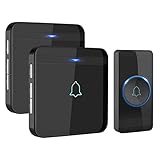
AVANTEK 1300 ft Wireless…
- 1300 ft / 400 m manufacturer-rated range
- 2 plug-in receivers
- 52 chimes
- 5 volume levels to 115 dB
- IP55 weatherproof button

TECKNET 1300 ft Wireless…
- Rated to cover 2000 sq ft
- 2 receivers
- 60 ringtones
- 120 dB max
- RGB light-only silent mode

SECRUI 3-Receiver 2-Button Kit
- 3 receivers and 2 push buttons
- Pre-paired in about a minute
- 58 chimes
- 5 volume levels
- Separate tone per door
Comparing All 8 Wireless Doorbell Chimes Side by Side
| Product | Specs | Action |
|---|---|---|
| AVANTEK Wireless Doorbell 1300 ft 2 Receivers |
|
Check Latest Price |
| TECKNET Wireless Doorbell 1300 ft 2 Receivers |
|
Check Latest Price |
| SECRUI Wireless Doorbell 3 Receivers 2 Buttons |
|
Check Latest Price |
 PHYSEN Wireless Doorbell 3 Receivers 2 Buttons PHYSEN Wireless Doorbell 3 Receivers 2 Buttons |
|
Check Latest Price |
 PHYSEN Wireless Doorbell 5 Receivers 3 Buttons PHYSEN Wireless Doorbell 5 Receivers 3 Buttons |
|
Check Latest Price |
 Fabbay 4 Buttons 4 Receivers Kit Fabbay 4 Buttons 4 Receivers Kit |
|
Check Latest Price |
 Jsieem 1200 ft 2 Receivers 1 Button Jsieem 1200 ft 2 Receivers 1 Button |
|
Check Latest Price |
 FUHONGRUI Battery Powered 1200 ft 2 Receivers FUHONGRUI Battery Powered 1200 ft 2 Receivers |
|
Check Latest Price |
1. AVANTEK 1300 ft Kit – Best Overall for Large Homes
AVANTEK Wireless Doorbell, 1300 ft Range, Waterproof, 2 Receivers, Black
1300 ft / 400 m rated range
2 plug-in receivers
52 chimes, 5 volume levels, 115 dB max
IP55 button, CR2032 included
Pros
- Highest reviewed kit in our group
- plug-and-play with no wiring
- two receivers cover two floors
- memory restores your melody and volume after an outage
Cons
- 52 melodies with few buttons makes tone selection tedious
- receiver body is wide and awkward in tight corner outlets
- one buyer received a set with an EU-plug receiver
This is the kit I kept coming back to while comparing everything else, and it wins on one specific combination: the highest review count in the group paired with a 4.7 average. Buyers describe it as the easy replacement for a dead wired or video doorbell, and the thing that keeps coming up is how far the signal carried through thick masonry in a house that had already defeated two previous systems.
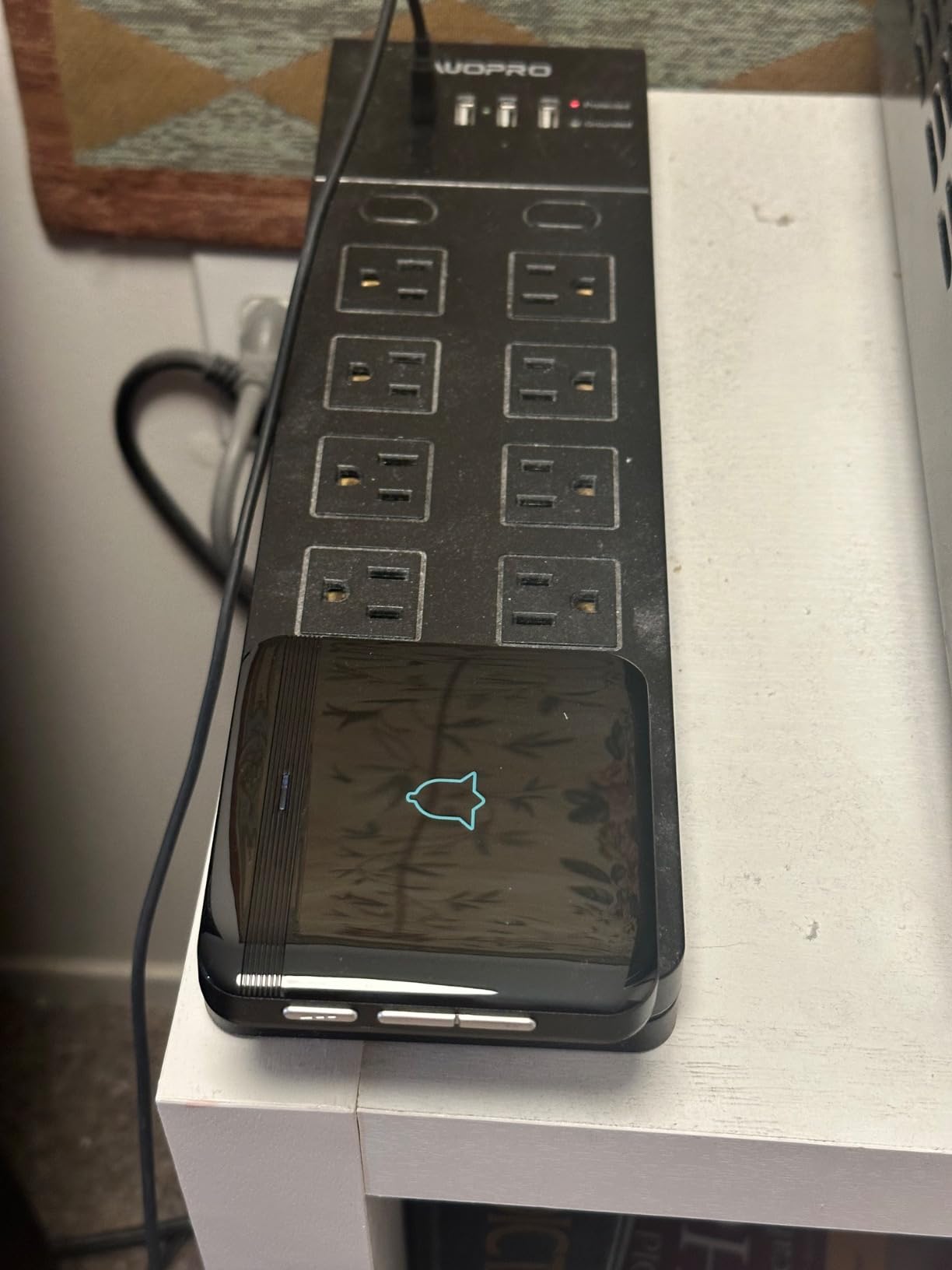
The two receivers are the reason it works in a large home. One goes near the entry level, one goes upstairs, and both ring off the same single button. The box also includes adhesive tape and screws, so you can mount the push button either way without an electrician.
Range and what survives a two-story house
The manufacturer rates this kit at 1300 ft, or 400 m, and the technical listing puts the same figure in open air. Owners in large homes describe it holding up through brick and concrete exteriors, which is the building situation that kills most budget kits. Treat 1300 ft as a manufacturer claim rather than an indoor promise, and rely on the two receivers to do the real work of carrying sound to each floor.
Tone selection, volume, and outage memory
You get 52 melodies across 5 volume levels with a maximum output of 115 dB through a 40 mm stereo speaker. The memory function is the detail that matters day to day: it restores your last melody and volume level after a power cut, so a tripped breaker does not send you back to the default jingle at 3 a.m. The trade-off is navigation, since cycling 52 tunes on a small button set is a genuine chore.
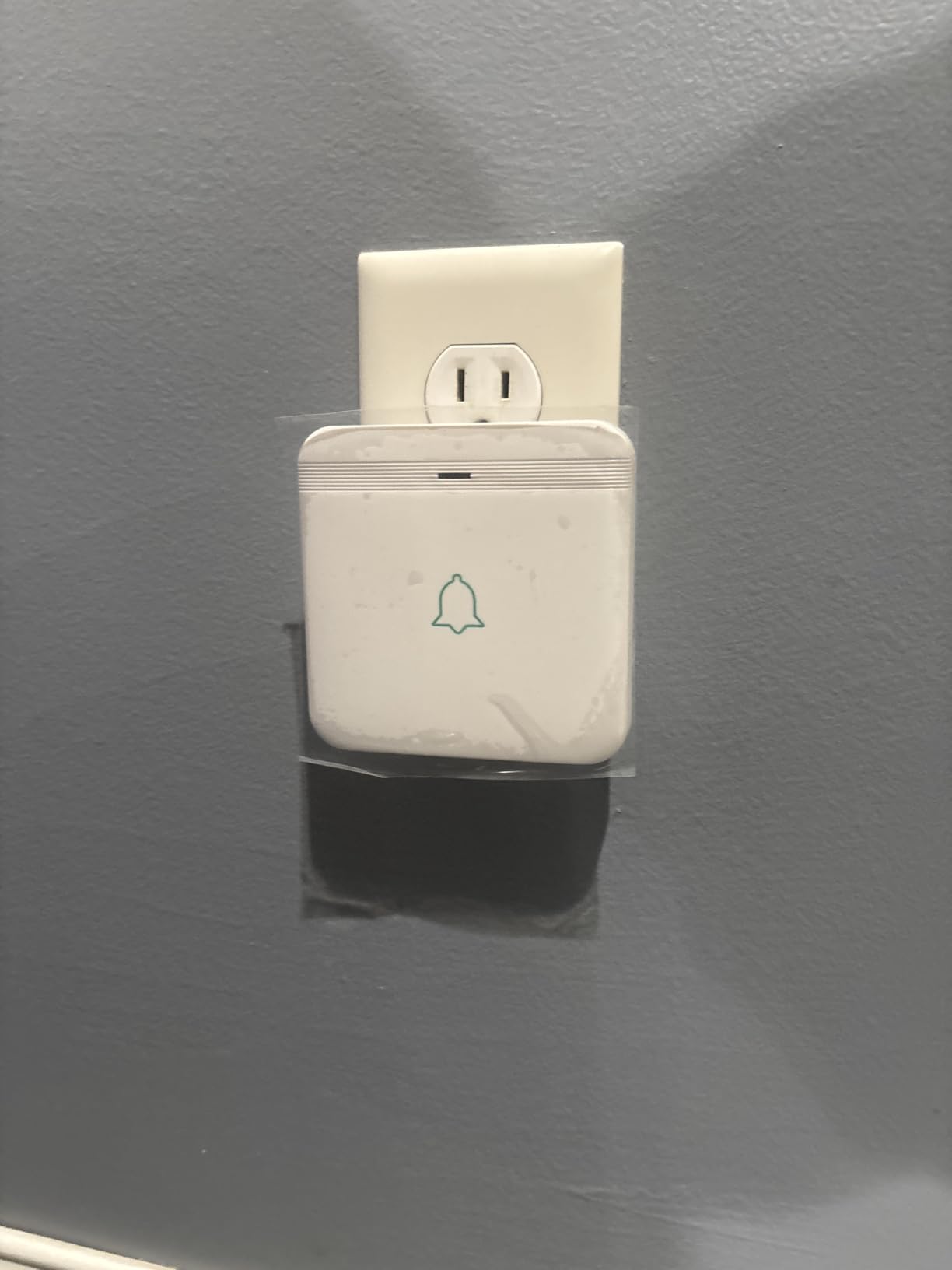
Battery, weather, and the button
The transmitter runs on a single included CR2032 lithium cell rated for up to 1095 days, and it operates from minus 4 F to 140 F. The IP55 rating on the button covers dust and water, and reviewers report it holding up through heavy rain and summer heat on exterior walls. Weighing in at 9.9 ounces, the button is small enough that it does not look like a security device bolted to the door frame.
2. TECKNET 1300 ft Kit – Best Value with Visual Alerts
TECKNET Wireless Doorbell, Door Bell 0-120dB, 1300 ft Wireless Range, IP65 Waterproof Classroom Doorbells, 60 Chimes & 5 Volume Levels, RGB Light for Home Kid Room Office Hearing Impaired, WHITE
Rated to cover up to 2000 sq ft
2 plug-in receivers
60 ringtones, 5 levels, 120 dB max
3 modes including RGB light-only
Pros
- Highest review count of any kit here
- RGB flashing light for hearing-impaired users
- FM scheme reduces cross-talk between sets
- 3-year warranty
Cons
- No back button when cycling tones
- few short basic chimes since most are long jingles
- printed instructions are largely useless
This is the most-reviewed product in the entire group by a wide margin, and for a large home it makes a specific argument that most competitors do not: it is the only kit here that states a floor-area figure, claiming coverage of up to 2000 sq ft with two receivers. For a house over roughly 2,000 sq ft, that is the closest thing to a direct answer you will find on the box.
The RGB light is the feature that separates it from the competition for accessibility. Rather than a single dim LED, it flashes a colored light, and one of the three working modes is light-only with no sound at all. That is the setting a household with a deaf or hard-of-hearing adult, a sleeping baby, or a shift worker actually needs at night.
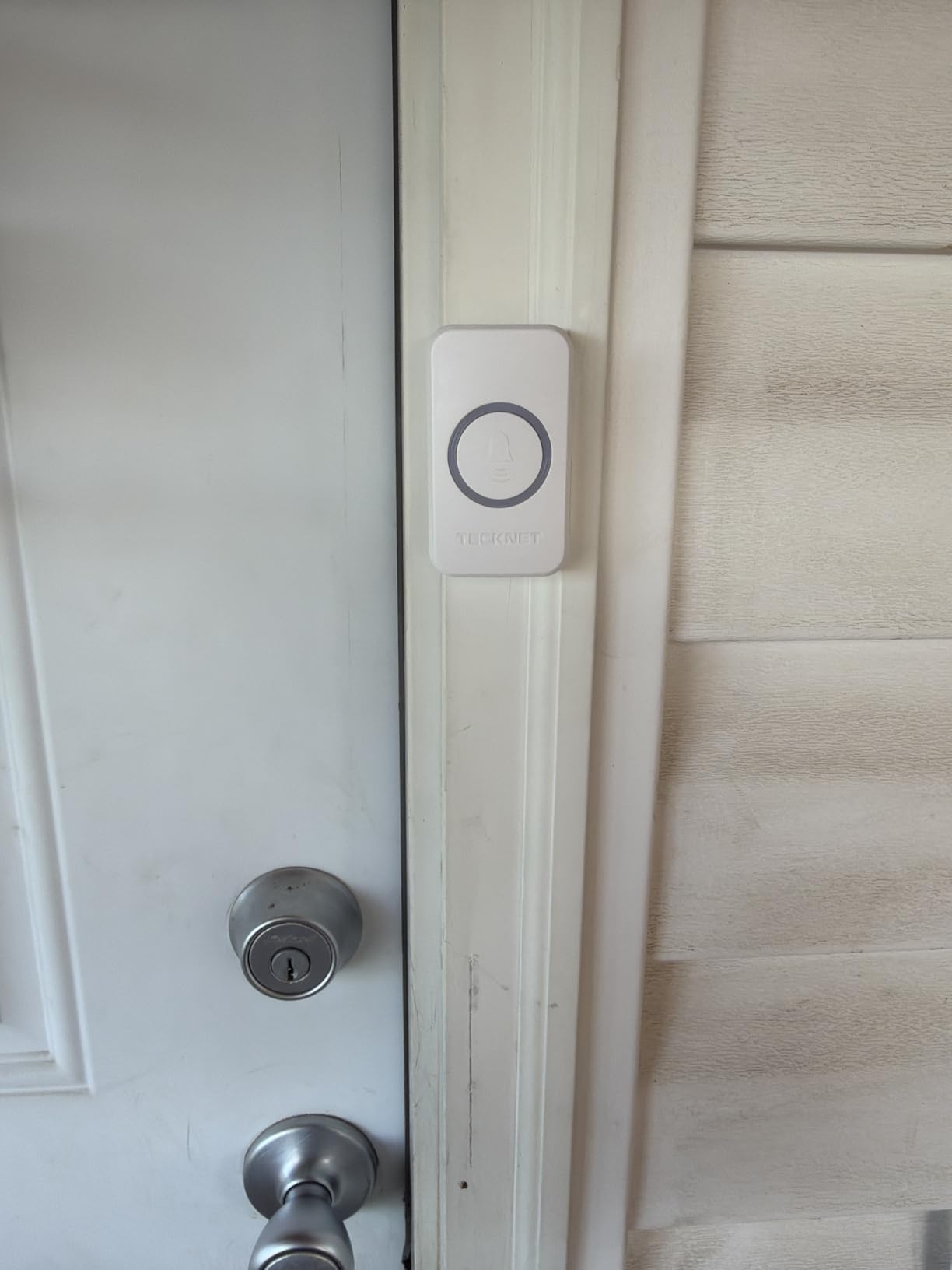
The visual alert and three working modes
You can run it as RGB light only, ring only, or ring plus light. Because the light is large and colorful rather than a small status dot, it carries into a room the way a sound does, which makes it viable for a bedroom floor where a chime would be unwelcome and a small LED would be invisible. The receiver doubles as a night light or an elderly pager, so the same hardware can serve a basement or a hallway stairwell.
Sound, tones, and the menu problem
Output goes to 120 dB with 5 volume levels including a mute step, driven by a 45 mm stereo speaker. There are 60 ringtones, and this is where the kit’s most common complaint lives: most of the selection is long jingle rather than a clean two-note ding-dong, and with no back button you have to press forward through the whole list to return to a sound you liked. It is a small irritation that shows up every time you change floors or re-pair.
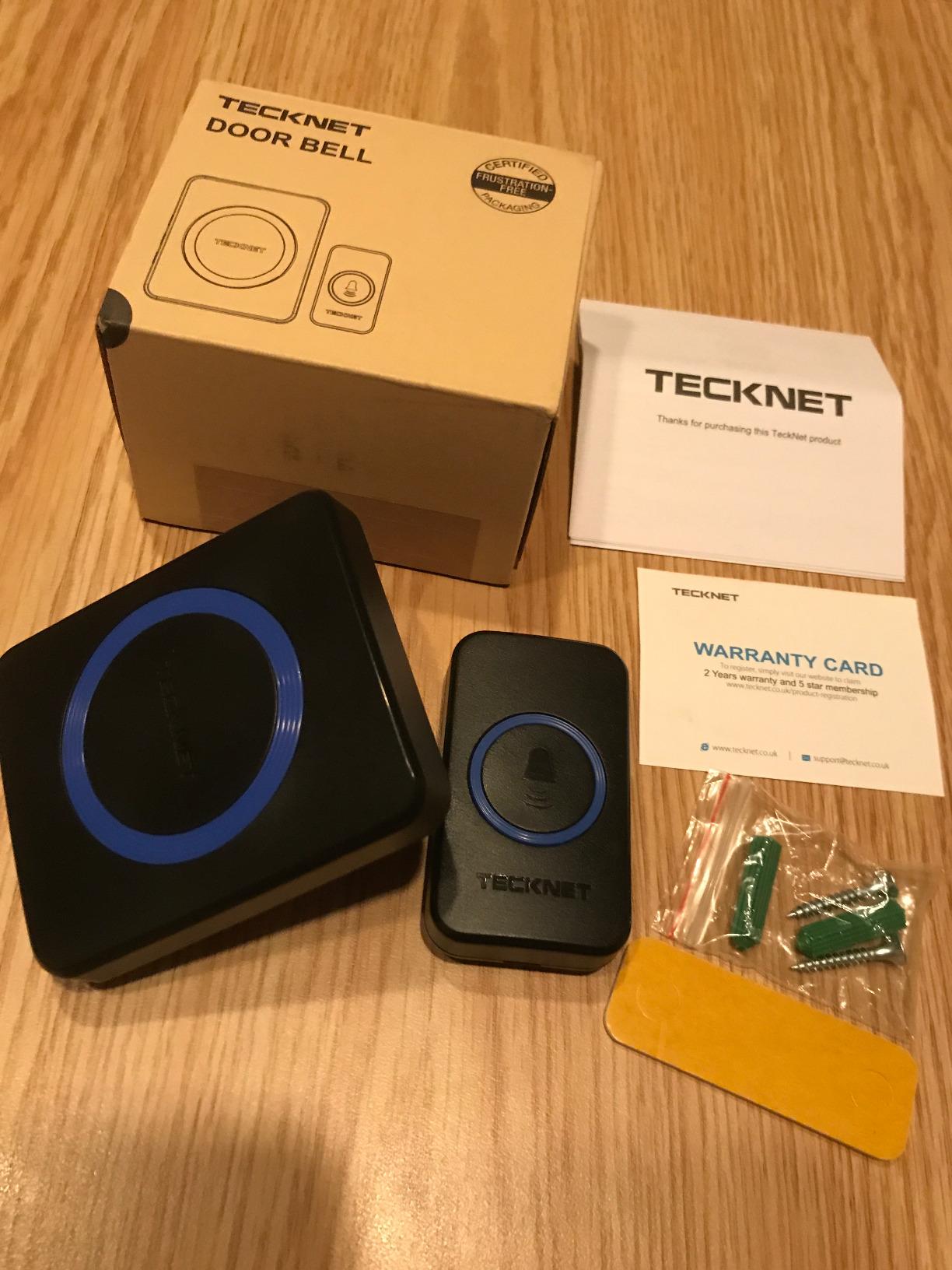
Range, weather, and interference
Like the AVANTEK, it is rated at 1300 ft and claims signal through cement, wooden doors, and walls, with an IP65 weather rating and a minus 4 F to 140 F operating range. The button battery is rated at about 4.5 years. An FM signal scheme is used specifically to keep neighboring sets from cross-firing, which matters if you live in a townhouse or a building with several doors sharing a hallway.
3. SECRUI 3-Receiver 2-Button Kit – Best Multi-Door Coverage
SECRUI Wireless Doorbell with 3Receivers 2 Push Buttons, Easy installation, Adjustable Volume, 58 Chimes, Colorful LED, 1000Ft Range, M520+F55, Black
3 plug-in receivers and 2 push buttons
Up to 1300 ft rated range
58 chimes, 5 volume levels to 120 dB
IP55, pre-paired
Pros
- Three receivers cover more floors than any two-receiver kit
- two buttons let you name each door
- pre-paired so it works in about a minute
- IP55 flame-retardant ABS
Cons
- Three outlets must be available around the house
- plug-in bodies can block the upper socket
- large bundle to store
Two receivers cover two floors. Three cover two floors plus the basement, or the upstairs, main level, and a garage workshop. That is the whole argument for this kit, and in a large home it is the argument that matters most, because the number of boxes you are holding is what determines whether the door is actually audible everywhere.
The second push button is just as useful in a big house. Owners routinely assign a different rington to the front and back doors, so you know which entrance someone is at without walking to a window. The kit arrives pre-paired and the listing puts installation at about a minute of actual setup time.
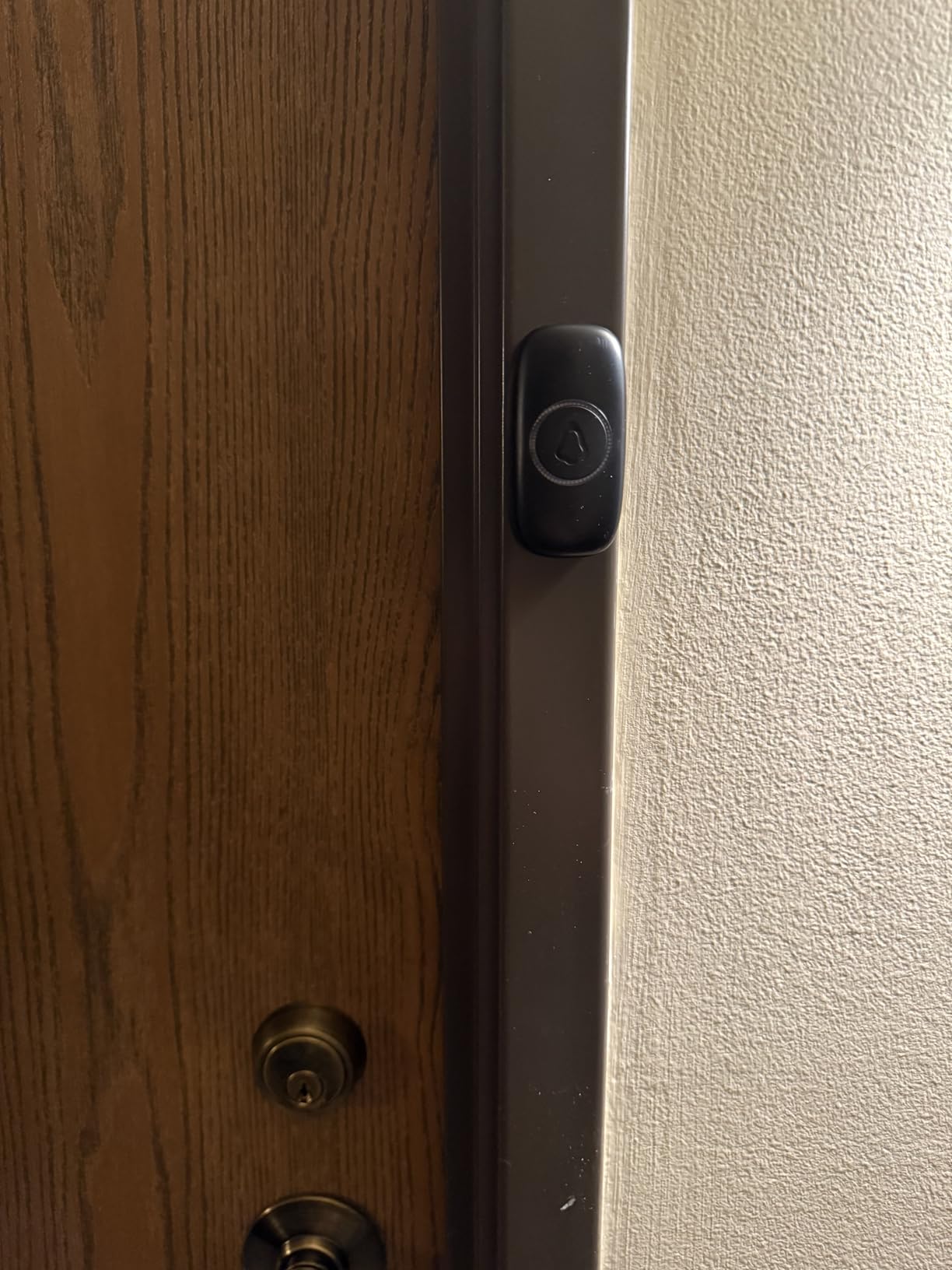
Multi-receiver and multi-button pairing
The FM scheme supports up to 1300 ft in an obstacle-free environment, and one-to-one pairing keeps your system from triggering when a neighbor presses theirs. What the extra button really buys is identification rather than coverage: in a house with a front door, a side gate, and a detached garage entrance, three different tones tell you where to send the dog. The limitation worth knowing is that this is a kit-configured system, so expanding past the included buttons may mean buying additional compatible parts rather than any receiver.
Sound and build quality
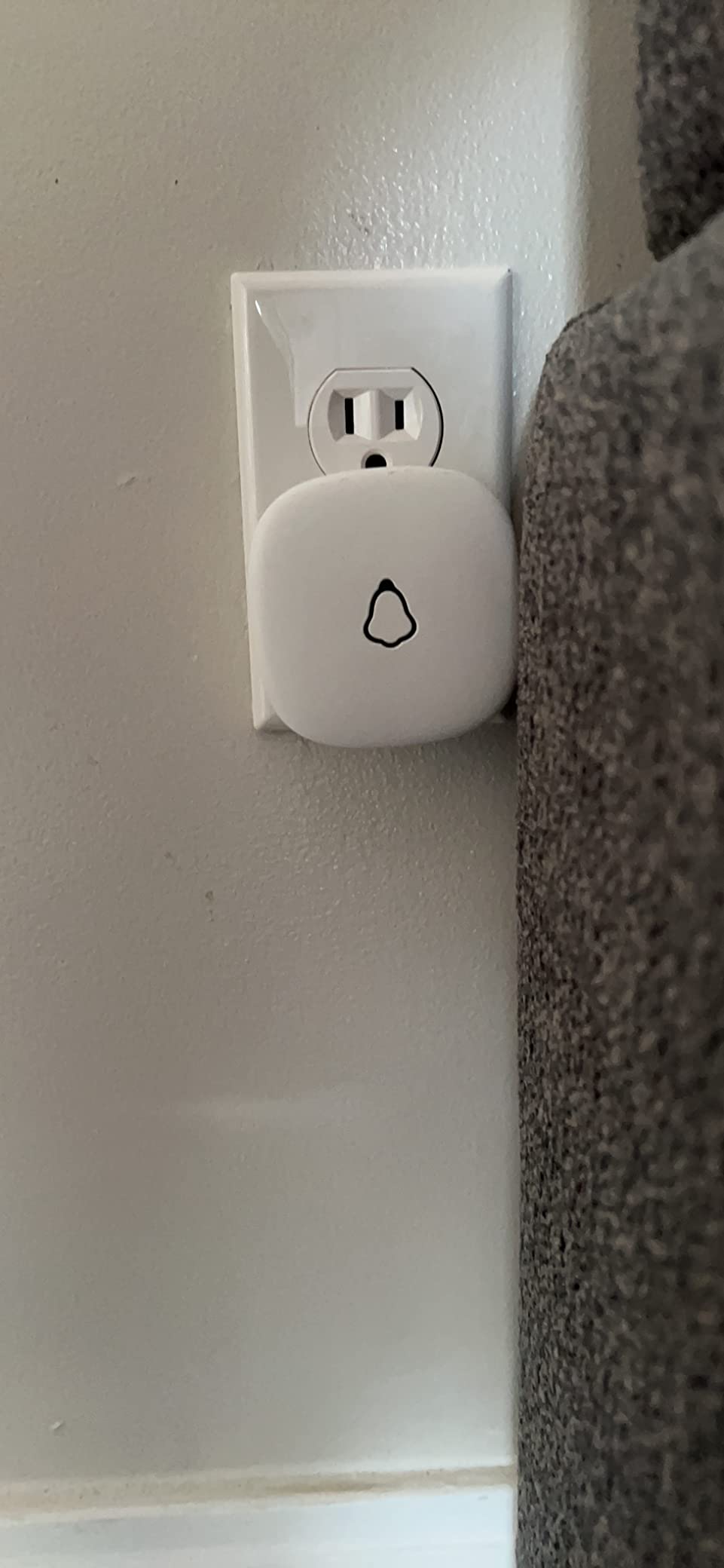
You get 58 songs across 5 adjustable volume levels at up to 120 dB, with a memory function that restores your last choice and an LED indicator on the receiver. The housing is IP55 dustproof and waterproof flame-retardant ABS, rated from minus 4 F to 140 F. At 9.5 ounces and just over 2 inches on a side, these are among the smaller receivers we looked at, which matters in older homes with tight outlets.
Battery life and cold weather
The included CR2032 cell is rated at about 3 years, and the same minus 4 F lower bound applies here as on the other kits. This is worth dwelling on in a large home with an exterior or garage door: forum discussions about wireless doorbells almost always come back to batteries dying faster in winter, because cold reduces the output of a lithium cell. Budget a yearly button swap on an exposed button, and more often if it faces north.
4. PHYSEN 3-Receiver 2-Button Kit – Best for Hearing-Impaired Homes
Wireless Doorbell with 3 Receivers 2 Buttons 1000ft Range Door bell Chimes
1000 ft / 300 m rated open-space range
3 receivers, 2 transmitters
48 chimes, 4 volume levels 0-130 dB, mute
LED strobe alert
Pros
- Three receivers give reliable coverage through multiple interior walls
- bright LED strobe works as a silent alert
- different ringtones per door
- expandable with extra receivers and buttons
Cons
- A few buyers report receivers chiming randomly without a press
- strobe may be too dim for severe hearing loss
- some ringtones are quirky rather than pleasant
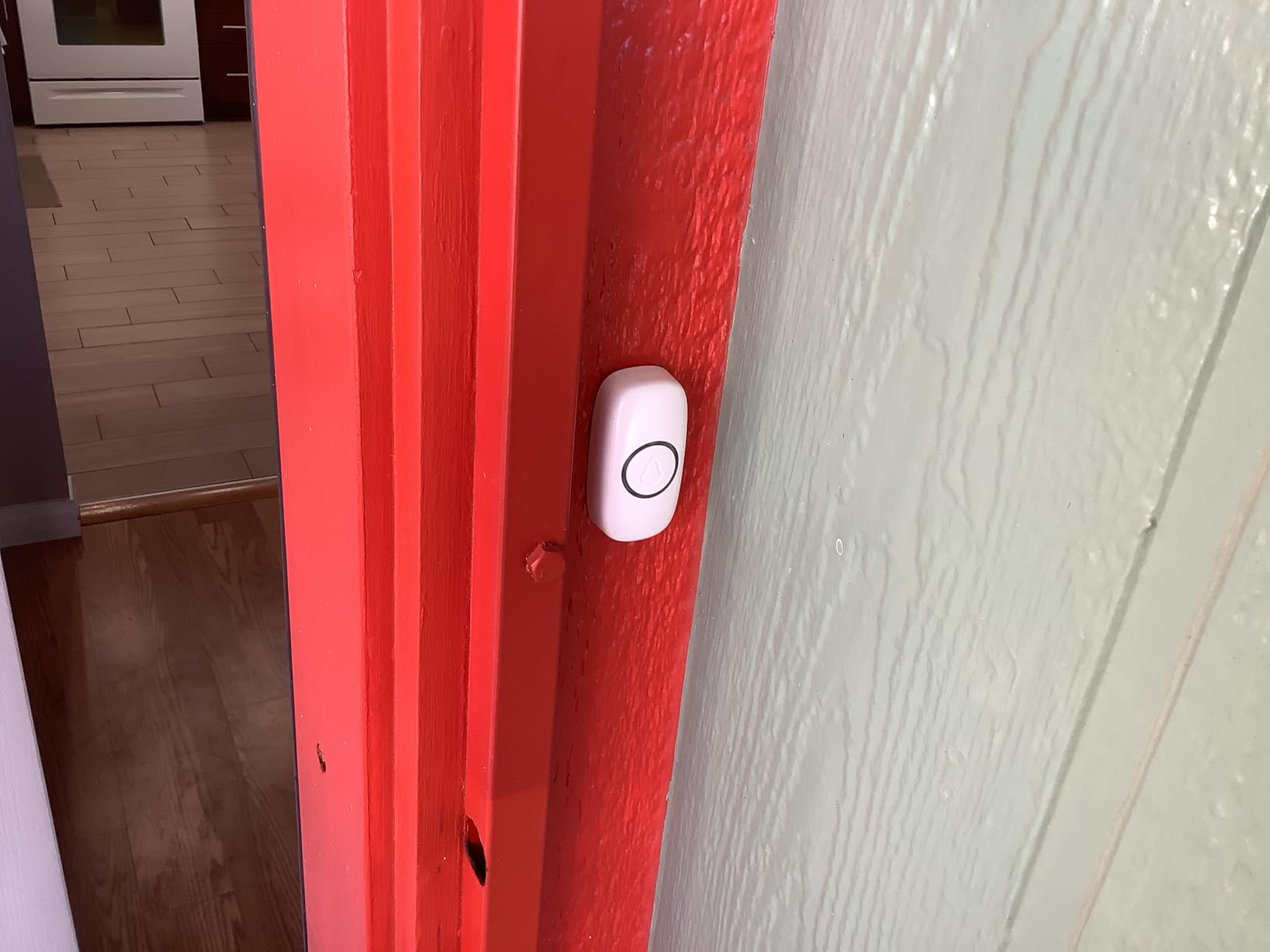
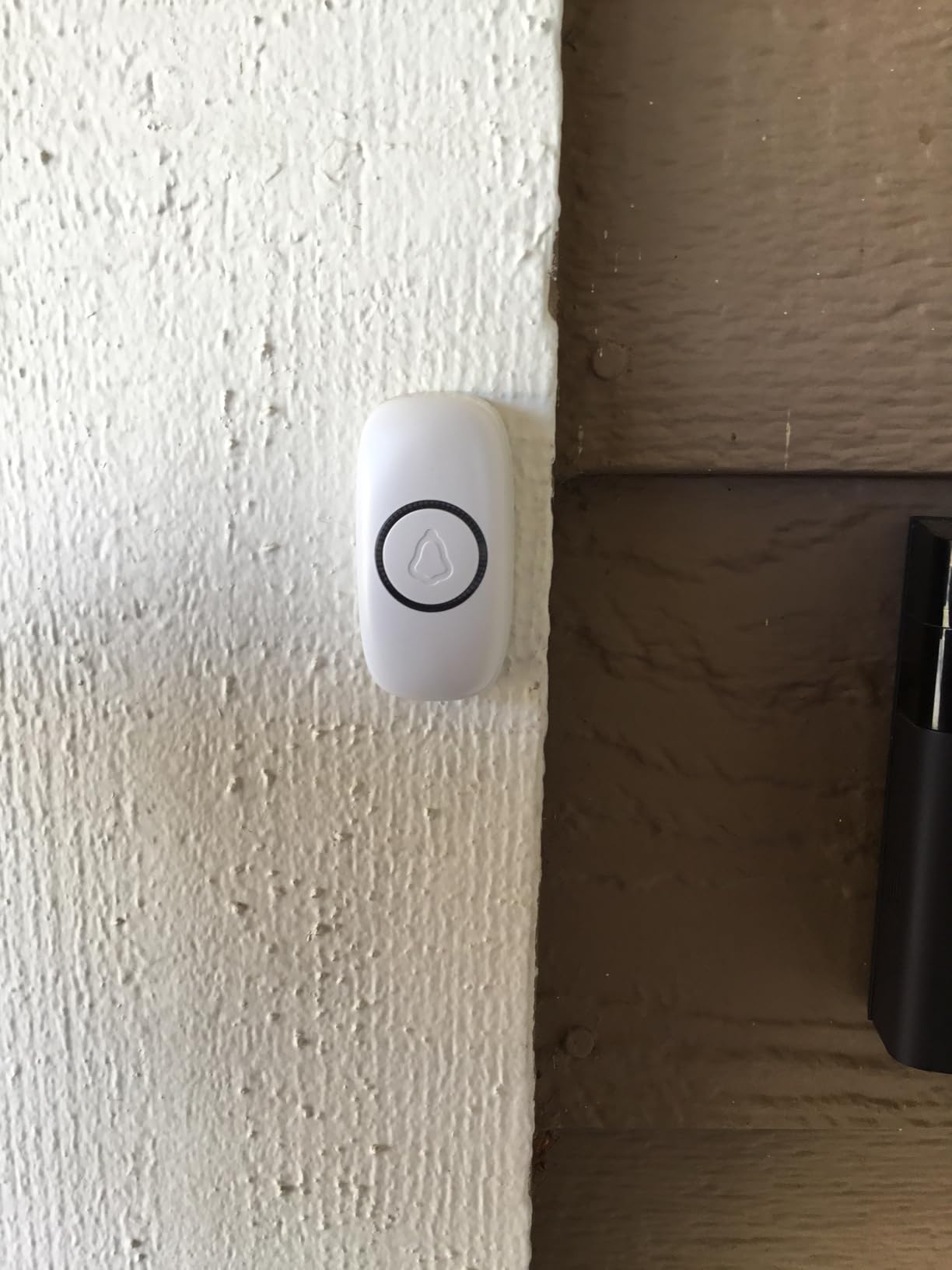
This is the kit owners most often describe as bought for their parents, and that use case shapes everything about it. Two of the most common owner comments are that the signal holds through multiple interior walls with no dropouts, and that the LED strobe gives a genuinely silent way to know someone is at the door. In a large home that also means an elderly resident can hear it on their own floor without you chasing them to the hall.
Unlike the FUHONGRUI further down, nothing here needs batteries in the receivers. The only cell is in the push buttons, which removes an entire category of maintenance from a system that is already spread across several floors.
Volume ceiling and the mute step
The range on this kit is four volume levels running from 0 dB up to 130 dB, with a dedicated mute mode and a memory function that holds your last melody and volume. The 130 dB ceiling is the highest number in this group, and combined with the strobe it gives you both channels: audible for anyone who can hear it, visual for anyone who cannot. One caveat from reviews, the strobe is not bright enough for people with profound hearing loss, so severe cases should treat the light as a supplement rather than a replacement.
Expandability for a house that keeps growing
Unlike kits where the receiver set is fixed, this one is documented as expandable with additional receivers and push buttons, and different ringtones can be assigned per door. For a home over 3000 sq ft, or a house that is adding a gate or a barn entrance later, that matters. You are not committing to a sealed box on day one. The warranty runs 18 months with 24-hour customer service, which is thinner than the 3-year coverage on the TECKNET.
Reliability notes worth knowing
Isolated reports describe some receivers chiming without a button press, and a few buyers found some of the ringtones unpleasant rather than musical. Neither is a widespread problem in the reviews, but both are the kind of detail that only shows up after a few months in a specific house. The button uses a single A cell, and the whole kit is IP55 rated from minus 4 F to 140 F.
5. PHYSEN 5-Receiver 3-Button Kit – Best Whole-House Coverage
PHYSEN Wireless Doorbell for Large Homes, 1300ft Long Range Door Chime Kit
5 plug-in receivers and 3 push buttons
1300 ft / 400 m rated range
58 chimes, 5 levels, 0-110 dB, mute
Tool-free tape or screw install
Pros
- Five receivers is the most coverage available in a single box
- three entrances can each get their own tone
- memory saves melody and volume
- no wiring and no electrician
Cons
- Biggest and heaviest bundle in the category
- needs five free outlets around the house
- lower review count than the leading kits
If your house has a basement, a second floor, a main level, an upstairs landing, and a garage workshop, this is the only kit in our group that ships enough receivers to cover all five from day one. At 1.1 pounds, it is also the heaviest bundle, and that weight is a fair proxy for how much placement planning it demands.
Three transmitters means three entrances. A front door, a side door, and a detached garage or gate can each ring with their own melody, so the system scales with the size of the property rather than just the size of the house. Buyers credit easy installation and the ability to tell doors apart at a glance.
When five receivers is the right answer
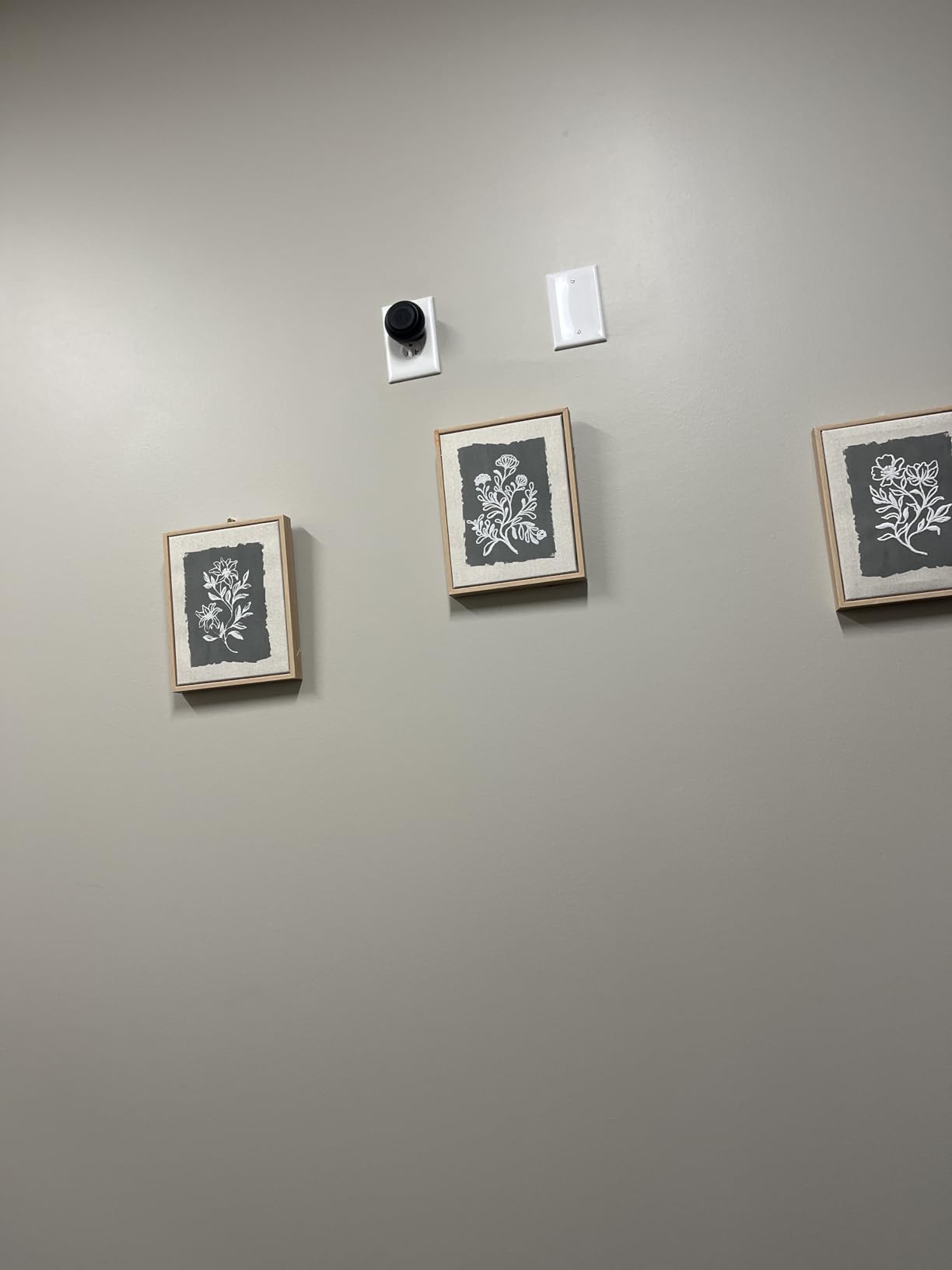
Coverage is the entire value proposition here. One receiver on the main floor will not reliably reach a finished basement in most construction, and adding a receiver is cheaper and faster than re-running a wire or building a repeater. The cost is logistics: you need five outlets within earshot of where people actually move through the house, and older homes with few wall outlets are exactly the homes that most need the coverage.
Sound and expandability
Output is 58 chimes across 5 volume levels from 0 dB to 110 dB, with a mute mode, an LED flash alert, and memory for your last melody and volume. The listing confirms it expands with additional PHYSEN receivers and push buttons, and that different ringtones can be assigned per door. Note the 110 dB ceiling, which is below the 115 and 120 dB figures on the AVANTEK and TECKNET.
Placement planning and the three-button tradeoff
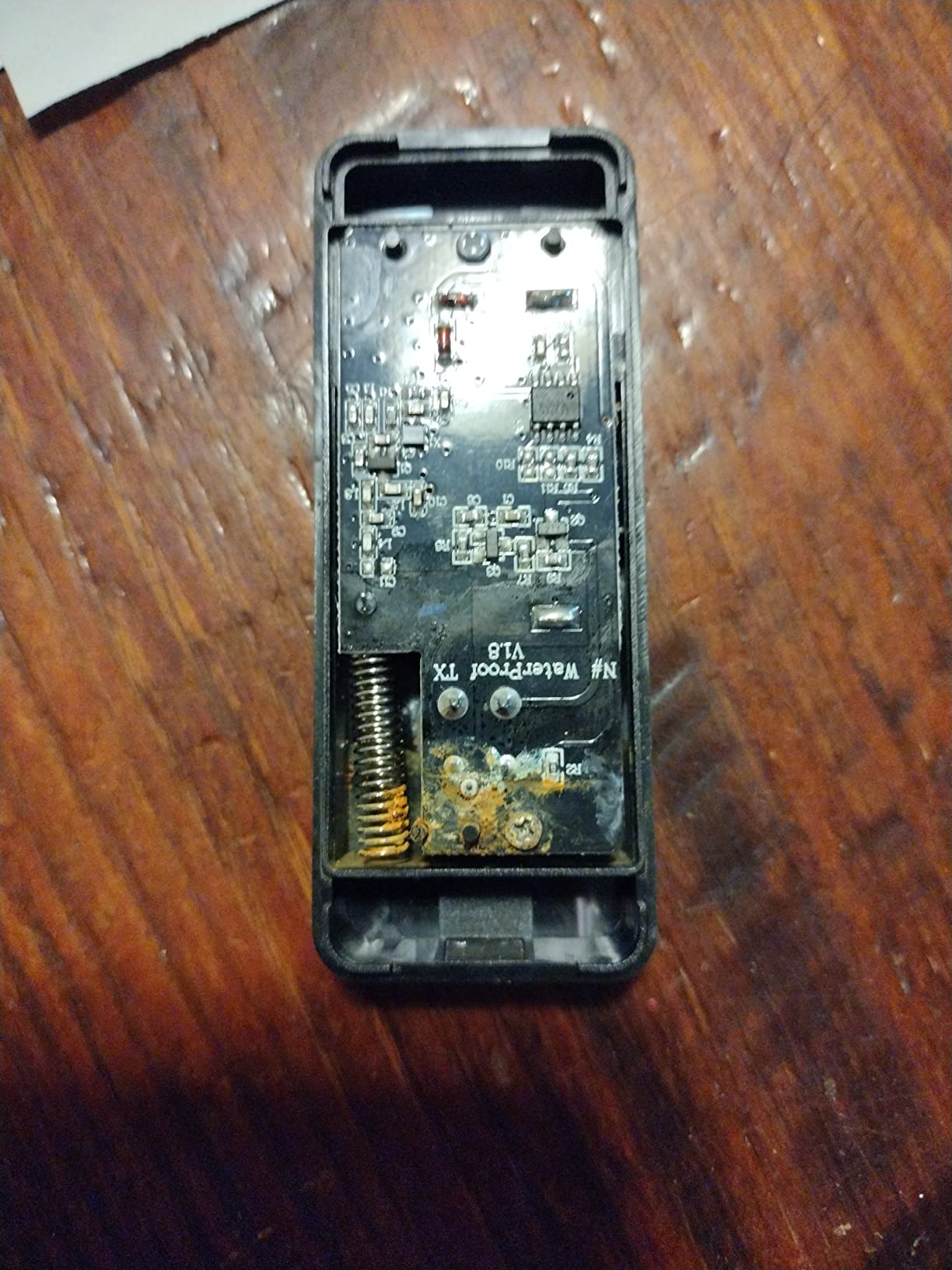
Three transmitters come with three included A23 cells, and installation is tool-free using double-sided tape or screws. The practical warning is about outlet placement rather than setup: five receivers plugged into the wrong five rooms will not help you if two of them sit in a hallway nobody uses. Plan the rooms first, then place. Review volume is lower than the leaders here, with roughly 1,900 ratings, so treat the feature set as well documented and the long-term track record as less proven.
6. Fabbay 4-Button 4-Receiver Set – Best for Rooms That Call Each Other
Fabbay 8 Wireless Doorbell, Waterproof Door Bell Button Kit 4 Pcs Home Doorbell with 4 Receivers 1000 ft Range 5 Volume Levels with 60 Door Bell Chimes and LED Flash for Home Office Classroom(White)
4 push buttons and 4 receivers, paired one-to-one
About 1000 ft rated unobstructed range
60 chimes, 5 volume levels
IP44 button, tape or screw install
Pros
- Four independent button-to-receiver pairs work as a small call system
- loud enough to carry between floors
- simple tape-and-screw install
- different chimes assignable per location
Cons
- Each button drives only one receiver
- a few buyers report units failing after some use
- receiver body is bulky on a two-socket outlet
- button needs frequent recharging
This one solves a different problem than the rest of the list. Instead of every receiver chiming for every press, each of the four push buttons is paired one-to-one with a single receiver, which turns the kit into a paging system. Buyers use it in a home office to call someone downstairs, in a classroom, and to call family members between floors.
For a large home that has a basement workshop or a home office, that per-location model is genuinely useful. The trade-off is that it cannot do what the other kits do, which is ring everything from one door.
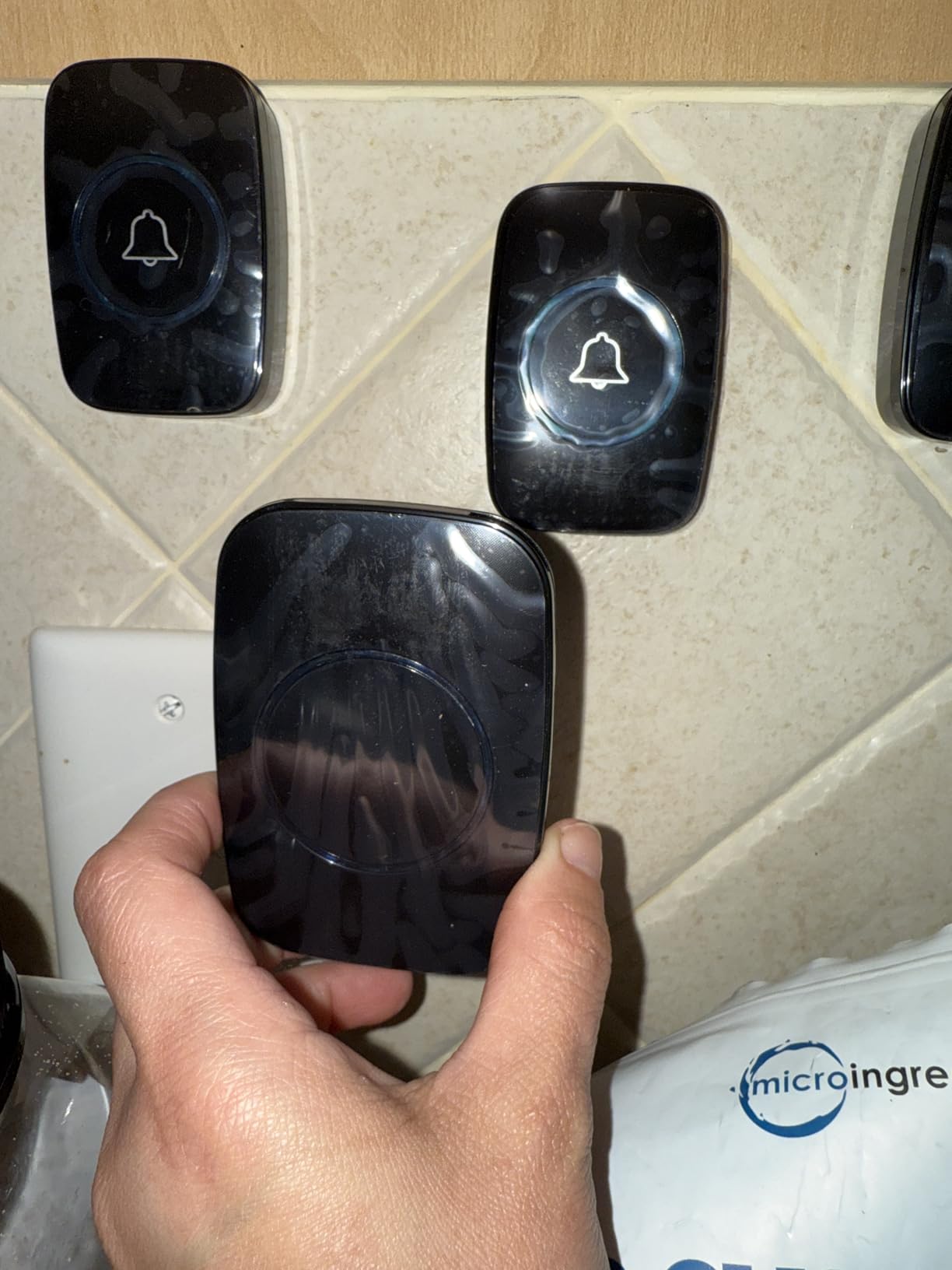
What one-to-one pairing means in practice
Each button rings only its matched receiver, so a press at the front door will not wake a receiver in the garage. If your goal is whole-house alerting from a single entrance, this is the wrong kit and one of the multi-receiver sets above is a better fit. If your goal is a study, a nursery, and an office that each need to summon a specific person, the one-to-one model is the more sensible design and saves you from sorting tones by ear.
Coverage, tones, and installation
Range is about 1000 ft in an unobstructed environment with anti-interference pairing, and there are 60 chimes across 5 adjustable volume levels. The button carries an IP44 rating and is temperature resistant, and the whole set installs with the included tape and screws in a few minutes. The package is white and 10.35 by 6.06 inches, noticeably larger than the other boxes here.
Where it falls short
Two things to weigh. First, a small but real share of buyers report units that stopped working after a period of use, and the button needs more frequent charging than the CR2032 and CR2 setups elsewhere on this list. Second, with 134 ratings, this is the thinnest review history in the group, so there is less long-term evidence behind it. The receiver is also bulky enough to limit use of both sockets on an outlet, which matters in older homes.
7. Jsieem 1200 ft Two-Receiver Kit – Best Simple Two-Floor Setup
Wireless Doorbell 1200 feet Waterproof Door Bell with Flash LED Light 36 Melodies 4 Volume Levels (2 Receivers& 1 Touch Button, White JSIEEM)
1200 ft rated maximum range
1 push button, 2 plug-in receivers
36 melodies, 4 volume levels, 110 dB max
IP44 waterproof and dustproof
Pros
- Very loud output that carries to far rooms
- bright flashing LED gives a strong visual alert
- plug in the receiver and mount the button for a simple setup
- waterproof button works indoors or outdoors
Cons
- Many ringtones sound tinny
- LED stopped working on some receivers after a couple of years
- flash may be too dim for severe hearing loss
This is the simplest two-receiver kit here and the one most often bought for an elderly relative. The combination of a loud ring and a bright strobe is what reviewers keep returning to, and for a two-level house it is a complete answer without any extra hardware. Setup is genuinely minimal: plug in the receiver, mount the button with the included tape or screws.
At 8 ounces, this is the lightest kit in the group, and the button works indoors or outdoors, so it can sit in a porch, a mudroom, or a screened entry.
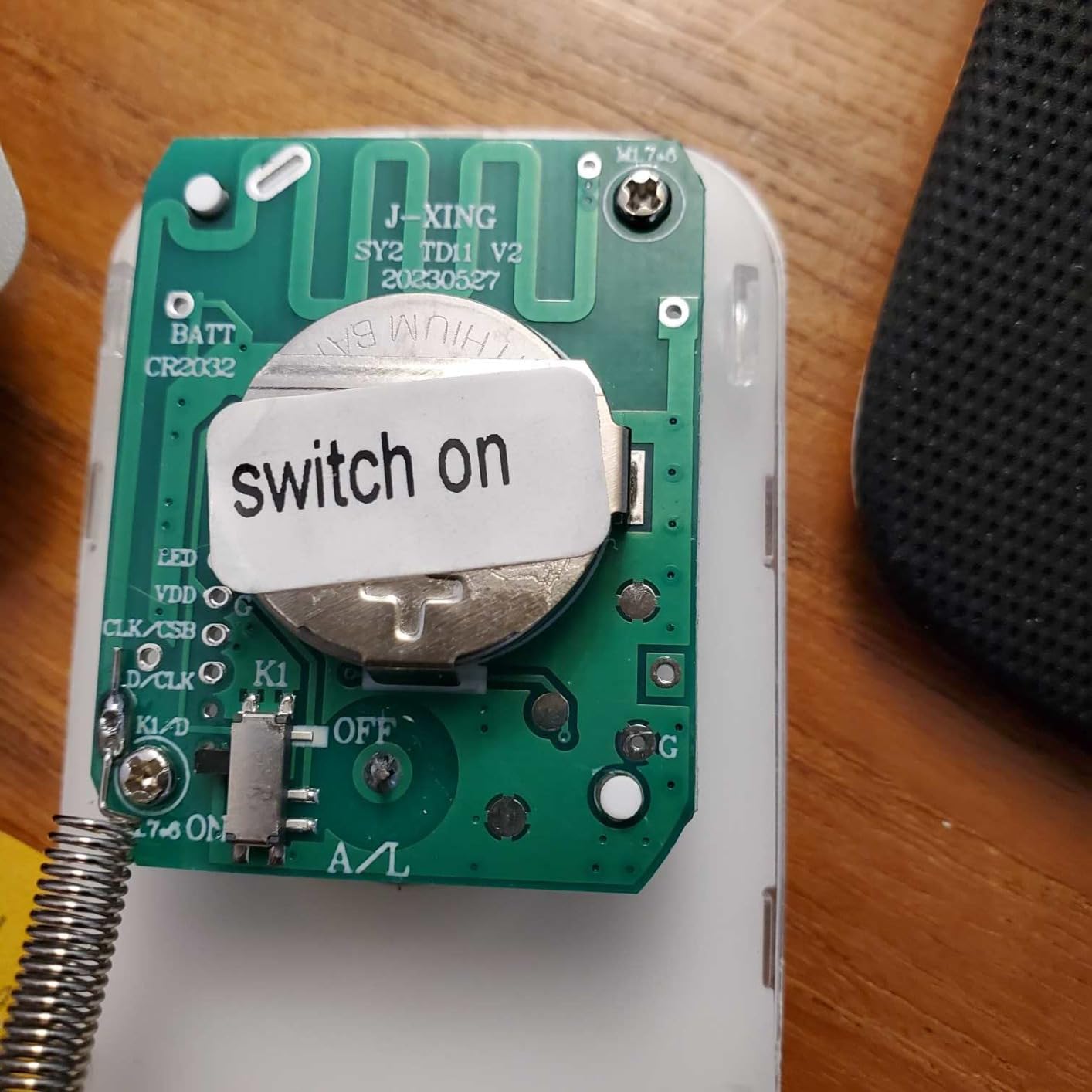
Volume and what 110 dB sounds like in practice
Four volume levels run from off through low, middle, and high, up to 110 dB. Owners report it being heard in far rooms and even outside an apartment, which is the behaviour you want when the person who needs to answer is asleep on a different floor. For profoundly deaf users, reviewers are candid that the top volume is still not enough on its own, and the strobe has to do part of the work.
The LED strobe and its long-term weakness
The colorful flashing light doubles as decoration and visual alert, which is genuinely useful in a dark hallway. The recurring complaint is durability: some receivers lost their LED after a couple of years of use. If you are buying this for a house where the visual alert is the primary channel rather than the backup, the TECKNET’s RGB light is the better long-term bet.
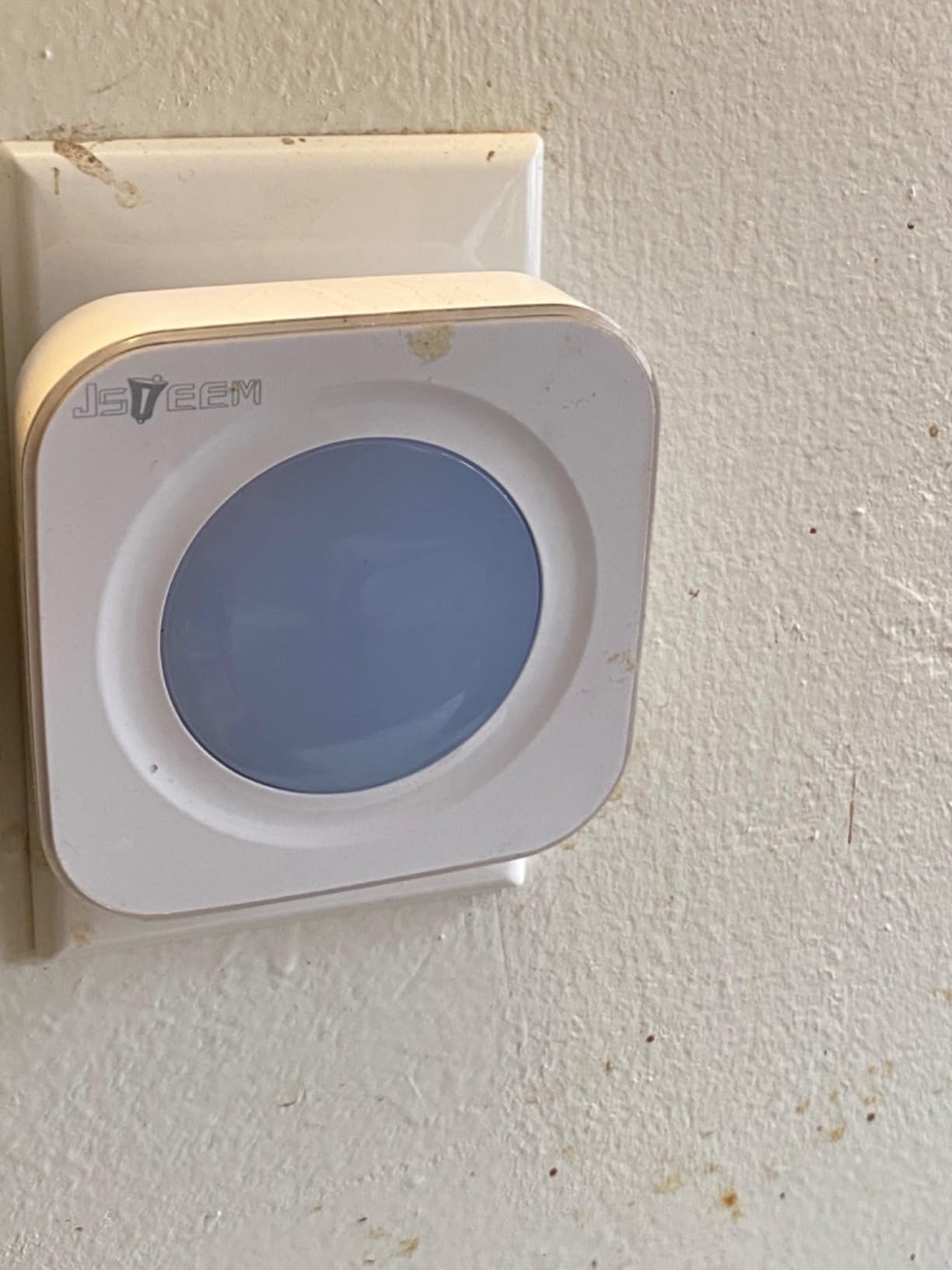
Range claims and tone quality
The listing states a 1200 ft maximum range, which sits between the 1000 ft kits and the 1300 ft kits here, and the button is IP44 rated for water and dust. On tones, be realistic: 36 melodies is a smaller library, and reviewers report that many sound tinny, with the plain ding-dong recommended as the best option. Set it once and leave it rather than auditioning the full list.
8. FUHONGRUI Battery Receivers – Best for Rentals With No Spare Outlets
Wireless Doorbell Battery Operated Wireless Doorbell for Home 1200FT Hearing Impaired Doorbell with 1 Doorbell Button & 2 Portable Doorbell,36 Ringtones 4 Volume White FUHONGRUI
Battery operated receivers, no outlet needed
1200 ft rated open-area range
36 ringtones, 4 volume levels including silent
Colorful flashing LED lights
Pros
- Receivers run on AAA batteries so they can go on a shelf
- counter
- or windowsill
- large highly visible flashing lights
- light-only sound-only or combined modes
- loud enough to solve quiet-building problems
Cons
- Batteries must be replaced in both receivers and the transmitter
- no back button when cycling tones
- not loud enough for severe hearing loss
- one buyer reported a broken unit
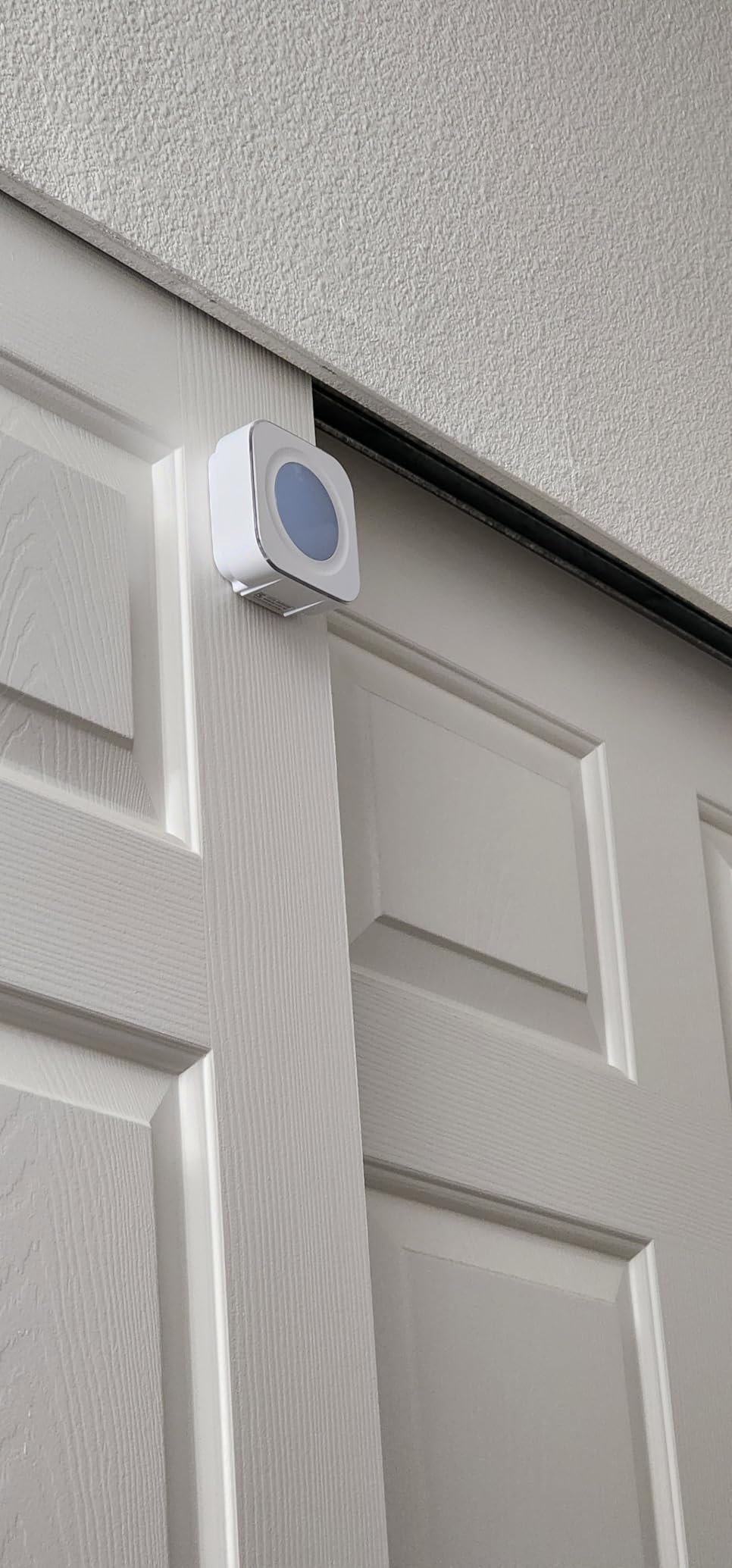
This is the only kit in the group where the receivers themselves run on batteries, and that single design choice unlocks placement spots that a plug-in receiver can never occupy. No outlet means the chime can sit on a kitchen counter, a bedside table, a workshop bench, or a windowsill, and the receiver can be carried from room to room when you want it somewhere else.
That flexibility is why it earns a place on a large-home list despite being the lowest-rated pick at 4.2. Several buyers bought it specifically because their building was quiet and hard-sound, which is a common complaint in homes with thick floors and a lot of glass.
Battery placement freedom and the cost of it
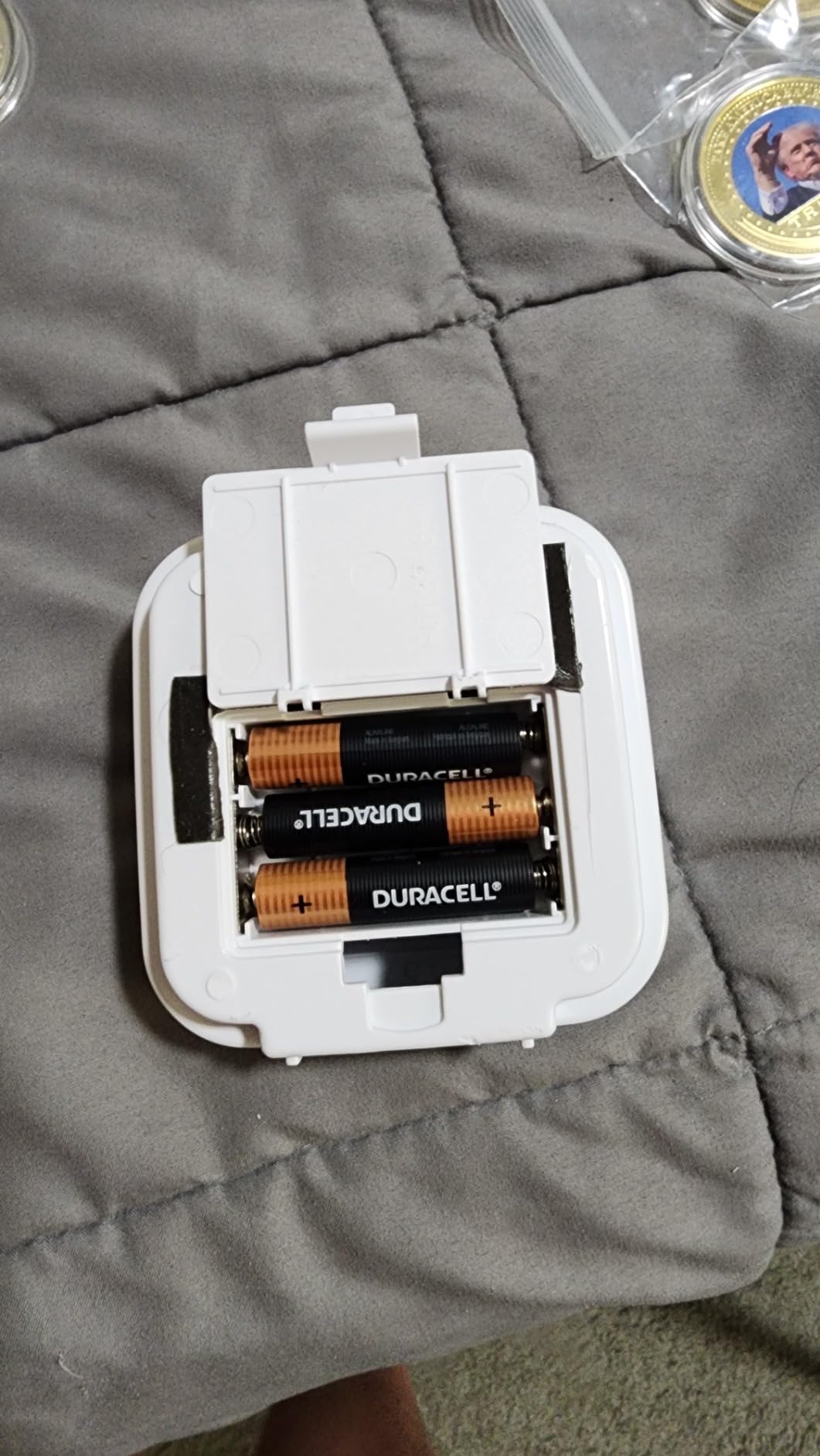
Each receiver takes 3 AAA batteries, and the transmitter uses a CR2032. In exchange for never finding an outlet, you accept a maintenance routine the other kits do not have, because now there are three sets of cells instead of one, and they will not all fail at the same time. In a house where the receivers are meant to sit on counters rather than outlets, that trade is often worth it. In a house you can wire, it is not.
Visual alerts and volume
The receivers carry large, highly visible flashing lights, which is the strongest argument for this kit in a household with hearing loss. You can run light-only, sound-only, or both, across 4 volume levels including a 0 dB silent mode and 36 ringtones. Reviewers are consistent on the limit: for severe or profound hearing loss, several buyers say the output is not sufficient, so treat this as a visual-alert device first and a sound device second.
What to watch out for
Two practical notes. There is no back button when cycling the 36 tones, so returning to a sound you liked means pressing forward through the entire list, which is the same menu frustration reported on several kits in this category. And with 115 ratings, this has the smallest review history here, plus a report of a unit that broke easily, so it is a placement-convenience pick rather than a confidence pick.
The Real Range Problem: Advertised Feet Are Not Indoor Feet
Yes, wireless doorbells work through walls. The honest answer is that they work through drywall far better than through masonry, and every range figure in this category is a line-of-sight, open-air number that no one intends you to use as an indoor promise. When a listing says 1300 ft, that is the manufacturer’s claim for an unobstructed path. Your front door to your upstairs hallway is never an unobstructed path.
What eats the signal is predictable. Interior drywall costs you relatively little. A floor assembly with joists, a closed stairwell, and two layers of door in between costs you a lot. Brick, concrete, stucco, foil-backed insulation, a metal storm door, and foil-wrapped ductwork in a basement are where budget kits start to fail. A Bogleheads poster with a 4,700 sq ft home was still hunting for a better replacement for a Heath Zenith system for exactly this reason, and a HomeImprovement thread on large homes has a user swapping batteries in an 8-year-old Honeywell portable chime rather than re-running wire.
So treat range as a tiebreaker, not a decider. Two things actually solve coverage in a big house: more receivers, placed in the rooms people occupy, and choosing a kit that is explicitly expandable. One advanced trick that forum users describe, and that no roundup covers, is relay chaining. You place one receiver within working range of the push button, then that receiver triggers a second 433 MHz RF transmitter, effectively re-broadcasting the signal to a further part of the house. It is fiddly, and it is the honest answer to a house where no single transmitter reach works.
Sound carries only so far inside a big shell, though. In a home with vaulted ceilings, a lot of glass, and hard floors, the chime handles the alert and a dedicated speaker setup handles everything else, which is exactly why we keep recommending our wireless TV speaker picks for large rooms alongside a multi-receiver kit rather than instead of one.
How Many Receivers a Large House Actually Needs
Here is the rule of thumb we use, and it is based on floor area rather than the advertised range. Up to 1,500 sq ft on one level: two receivers. A split-level or a 1,500 to 2,500 sq ft two-story: three. Anything over 3,000 sq ft with a finished basement: four to five. A detached garage or barn entrance that shares a wall or two with the house: one more, and a long-range button.
The second half of the answer is placement, and placement is where most failed systems go wrong. Work through it in this order.
First, find the farthest room anyone in the house regularly needs to hear the door from. Usually it is a basement couch, a bedroom on the opposite side, or the laundry room, and it is rarely the room closest to the front entry. Put a receiver there first, before anything else.
Second, add one receiver per additional occupied floor, positioned in a hallway or stair landing rather than inside a bedroom. Hallways are where sound travels, and a receiver in a living room will not be heard in a bedroom with the door shut, which is the opposite of what most people intend.
Third, place a receiver near the middle of the plan, not at an edge. A centrally located receiver covers more square footage per box than one pushed against an exterior wall, and it is often the receiver that makes an upstairs ring audible downstairs.
Fourth, add a visual-alert receiver in a spot the household will actually see it, such as a kitchen counter or a hallway table, and set that one to light-only at night. This is the step that solves the sleeping-child and hard-of-hearing problem at the same time, and it is why the TECKNET and the FUHONGRUI stand out in this category.
Fifth, if you need sound in a detached structure, add a receiver there last and test it by pressing the button from inside the house rather than from the driveway. A hallway that rings during the walk home is a wasted receiver.
What to Look for Before You Buy a Wireless Doorbell Chime
Receiver count in the box beats everything else
This is the single decision that determines whether you hear the door. A kit with one receiver is a kit for a small house, and buyers who discover this after unboxing are the most frustrated people in forum threads. Count the receivers first, count your floors second, and buy accordingly. The PHYSEN 5-receiver kit exists specifically for houses where the answer is more than three.
Expandability, and whether add-ons exist
Some kits are explicitly expandable with additional receivers and buttons, others are effectively sealed. For a house that will gain a gate, a workshop, or a rental unit, expandable beats cheap. Also check whether the pairing is one-to-one, as on the Fabbay, where each button drives exactly one receiver, or one-to-many, where every receiver sounds for every press.
Tone quality, volume levels, and the real dB ceiling
Decibel ratings range from 110 to 130 across these kits, and the number matters less than the tone quality. Owners repeatedly flag tinny or quirky melodies and the absence of a proper two-note ding-dong. If you can, set a short classic chime rather than a long jingle, because a long one gets irritating within a few months. Look for four or five volume levels plus a mute, and for a memory function that restores your setting after a power outage.
Visual and silent alert modes
For any household with a hearing-impaired person, this is not an accessory, it is a requirement. Look for a light-only mode rather than a small status LED, and check whether the light is bright enough to see across a room. The TECKNET offers a full RGB light-only mode, and the PHYSEN and Jsieem kits use a bright flashing LED.
Weather rating on the button, and battery chemistry
IP44 covers dust and water ingress, IP55 and IP65 step up from there. If the button sits on an exterior wall in a climate with real winters, the minus 4 F lower operating bound matters. On batteries, the recurring complaint is faster drain in cold weather, so pick a CR2032 or CR2 lithium button over a rechargeable pack and plan an annual swap. If you are buying battery-powered receivers instead, accept that you now maintain cells in three places.
Chime-only versus a video doorbell
A chime-only kit is a radio system: no Wi-Fi at the door, no account, no monthly fee, and nothing to fail when the internet drops. A video doorbell adds a camera, a network dependency, and usually a subscription for clip storage. Forum users talk openly about subscription fatigue with Ring, and the honest reason people move back to plain chimes is that a chime never stops working because a cloud plan changed. If you also want a smart speaker chiming in several rooms, our Alexa device picks for large homes cover that side.
The network side of a camera-based system
If you decide a video doorbell is worth it after all, the network at the front door becomes the limiting factor, and that is a different problem from RF range. Our gaming router setup picks for large homes cover how to get a stable signal to a doorbell or camera on the far side of a big house, which is the failure mode that most often gets mistaken for a broken chime.
Chime-only versus converting an existing wired system
If your house already has a working Heath Zenith or Honeywell wired chime, you are not obligated to abandon it. A wireless extender kit can trigger your existing chime and add plug-in receivers alongside it, which is the cheapest path to whole-house coverage. The trade-off is that you inherit the old transformer’s range limits, so verify the wired system works from the far end of the house before investing in anything.
What to do when the chime stops working
Two causes account for most failures. The first is a dead or cold-weakened button battery, which is by far the most common. The second is lost pairing after a power outage or a receiver being unplugged and moved. Replace the button battery first, then re-pair each receiver by holding the pairing control on both units until the tones match. If the signal works from a receiver near the door but not from one upstairs, you are facing a range problem, not a fault, and the fix is another receiver rather than more troubleshooting.
Frequently Asked Questions
Do wireless doorbells work through walls?
Yes, but the wall material decides how well. Drywall and hollow interior doors usually let a 433 MHz signal through with little loss, while brick, concrete, stucco, foil-backed insulation, metal storm doors and foil-wrapped ductwork in a basement cut it substantially. Because of this, the number of receivers you place matters more than the range printed on the box.
How far does a wireless doorbell actually reach?
The 1000 to 1300 ft figures on these kits are manufacturer claims for unobstructed, open-air range. Indoors, a two-story home with a closed stairwell and interior doors typically loses a large share of that reach, and masonry basements lose far more. Treat the printed number as an open-air ceiling and plan coverage by adding receivers in each occupied floor instead.
How many receivers do I need for a large house?
Count floors and occupied rooms rather than square feet alone. Two receivers cover most single-level homes, three cover a two-story or split-level, and a finished basement or a house over 3000 sq ft usually needs four to five. A detached garage or gate entrance usually deserves one more, and a light-only receiver in a kitchen or hallway solves the sleeping-child and hearing-impaired cases.
Which is better, a basic chime or a Chime Pro?
For a large home the deciding factor is receivers, not generation. A basic chime with two receivers beats a single-receiver premium unit, and none of these kits requires an app or a subscription to change tones or add hardware. If you already run a video doorbell platform, a range-extending receiver is worth adding for coverage rooms the camera hub cannot serve.
What are the common problems with wireless doorbell chimes?
The most common issues are a dead button battery, especially in cold weather where lithium output drops; a receiver that was unplugged and lost its pairing; a bulky plug-in body blocking the second socket on an outlet; tones that become irritating after a few months; and a signal that simply does not reach a finished basement from the front entry. Adding a receiver fixes the last one, and the others are quick fixes.
Why are people moving away from Ring doorbells?
The recurring reasons are subscription fatigue and app dependence. Ring’s chime and receiver features tie into the app and the account ecosystem, so tone changes and extra receivers sit behind a brand login, and clip storage has moved behind a recurring plan. Chime-only kits run as a closed radio system with no account, no app, and nothing to renew, which is why they remain popular in large homes that just need to hear the door.
Bottom Line: Which Wireless Doorbell Chime Wins in Your House
For most large homes, start with the AVANTEK kit. It pairs the highest review count in this group with two receivers, 52 chimes, a 115 dB ceiling, and a memory function, and it is the pick we would install in a two-story house with no special requirements. If anyone in the house has hearing loss or you need quiet hours, choose the TECKNET instead for its RGB light-only mode and the strongest review history here. Three floors, a basement, or multiple entrances means the SECRUI or the PHYSEN 5-receiver kit, and the latter is the only box that covers five zones without a second purchase.
Pick the FUHONGRUI only when you have no spare outlets, the Fabbay only when you want per-room paging rather than whole-house alerts, and the Jsieem when a simple two-receiver setup is exactly enough. Whichever you land on, the deciding move in 2026 is the placement walkthrough: put the first receiver in the room that is hardest to reach, then work outward by floor.