
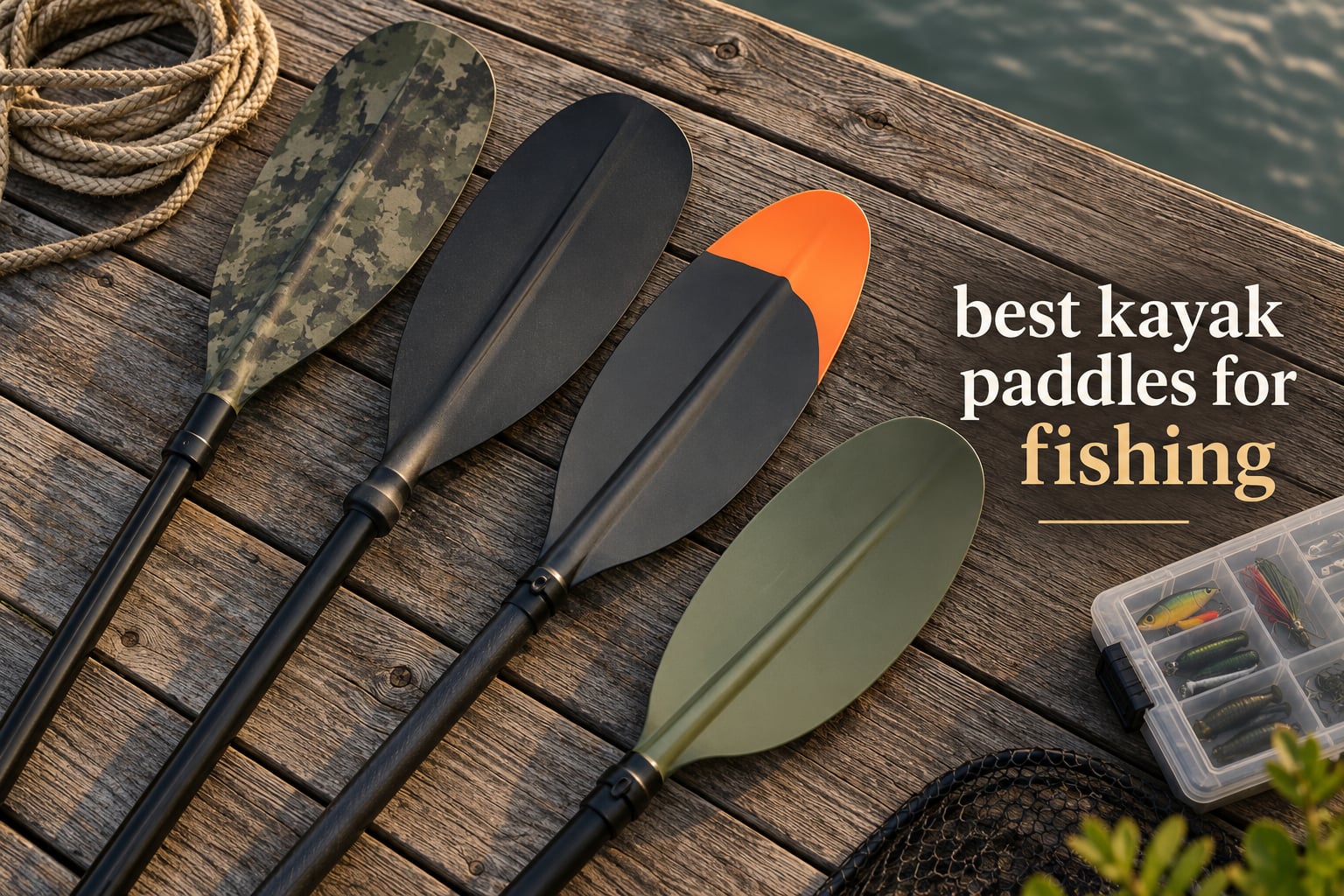
Why Fishing Paddles Are a Different Buy
A standard paddling paddle and a fishing paddle look similar in a product photo, but they fail in completely different ways. A touring paddle is built narrow and light for speed in a skinny hull. A fishing kayak is a wide, heavy, gear-laden boat that you paddle hard for twenty minutes and then sit in for three hours, so the paddle needs more blade area, more stiffness, and features that help you work a snag without breaking off.
That makes best kayak paddles for fishing a shortlist problem rather than a general paddles problem. Ten paddles below cover 230 cm to 280 cm, aluminum, fiberglass, and carbon shafts, fixed and adjustable, from a 2.1 pound aluminum all-rounder to a 2 pound carbon two-piece. We picked them by length coverage for wide hulls, shaft and blade material, angler hardware, and how much owner feedback sits behind the claims.
Our team has spent seasons paddling loaded hulls, bracing on oyster beds and pushing off submerged structure, and the pattern that showed up again and again was weight. Anglers on kayakfishing forums consistently call 26 to 32 ounces the sweet spot, and describe 42 ounce paddles as the old-school heavy end of the range. Everything else in this guide is built around that number.
If you are also mounting gear on the bow or hull, our action camera picks for fishing cover the camera and mounting side of a rig.
Our Top 3 Kayak Paddles for Fishing, Tested on Wide Water
The Poseidon leads because it pairs the largest owner base in the group with a 250 cm length that suits the most common fishing hull widths. The Catch wins on lightness for taller anglers seated high. The Carlisle Magic takes third for anyone who treats a paddle as a push-off tool around rocks and shell beds.
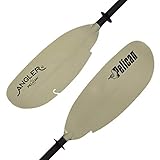
Pelican Poseidon Angler
- 250 cm aluminum shaft
- Fiberglass reinforced PP blades
- Hook notch and shaft tape
- Internal flotation blocks

Pelican The Catch
- Adjustable fiberglass shaft
- Nylon blades with hook notch
- Adjustable drip rings
- 0-65 degree angle
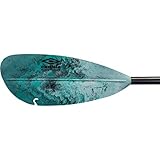
Carlisle Magic Angler
- Glass-filled PP blades
- Wrapped fiberglass shaft
- J-notch line clearing
- Two-piece design
Note that all three top slots carry a hook, J-notch, or retrieval slot in the blade. That is not coincidence: five of the ten paddles here include a printed or engraved measuring scale, and seven include a hook, J-notch, or retrieval slot.
Comparing Ten Angler Paddles Side by Side
Weight figures come from the manufacturers where stated, so treat them as guideposts rather than lab measurements. A couple of entries give a package weight instead of a paddle weight, and that is called out where it matters below.
| Product | Specs | Action |
|---|---|---|
| Pelican Poseidon Angler |
|
Check Latest Price |
| Pelican The Catch |
|
Check Latest Price |
| Carlisle Magic Angler |
|
Check Latest Price |
 Backwater Assassin Backwater Assassin |
|
Check Latest Price |
 Bending Branches Angler Ace Bending Branches Angler Ace |
|
Check Latest Price |
 OCEANBROAD Aluminum Adjustable OCEANBROAD Aluminum Adjustable |
|
Check Latest Price |
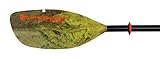 Perception Pescador Adjustable Perception Pescador Adjustable |
|
Check Latest Price |
 OCEANBROAD Carbon Fiber Adjustable OCEANBROAD Carbon Fiber Adjustable |
|
Check Latest Price |
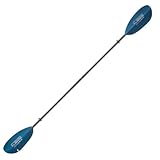 Bending Branches Angler Drift Bending Branches Angler Drift |
|
Check Latest Price |
 WONITAGO Angler Carbon Paddle WONITAGO Angler Carbon Paddle |
|
Check Latest Price |
1. Pelican Poseidon Angler – The All-Rounder With the Most Owner Feedback
Pelican Poseidon Angler Fishing Lightweight Kayak Paddle – Built-in Retrieval Hooks – Fiberglass Reinforced (Sand, 98.5 in)
250 cm two-piece aluminum shaft
Fiberglass reinforced PP blades
Hook notch and shaft tape
Internal flotation
Pros
- Hook retrieval notch plus a printed measuring tape on the shaft
- Ovalized indexing on the right side cuts wrist fatigue
- Flotation blocks keep it afloat
- Push-button feathering at 0 and 65 degrees
Cons
- Fixed length needs fit checking for larger paddlers
- Some owners add grip tape for long trips
At 98.5 inches (250 cm) this is the length most anglers end up needing. It sits in the sweet spot for hulls around 32 to 36 inches wide, and the build is deliberately plain: a two-piece anti-slip aluminum shaft and fiberglass reinforced polypropylene blades.
What stands out in the review data is consistency. With 2707 ratings at 4.6 and about 80 percent five-star, this is the paddle with the deepest owner history in the group, which means the fishing features are proven rather than promised. Owners mention the hook retrieval notch, the measurement tape running along the shaft, and internal flotation blocks that keep the paddle on top of the water instead of sinking out of reach.
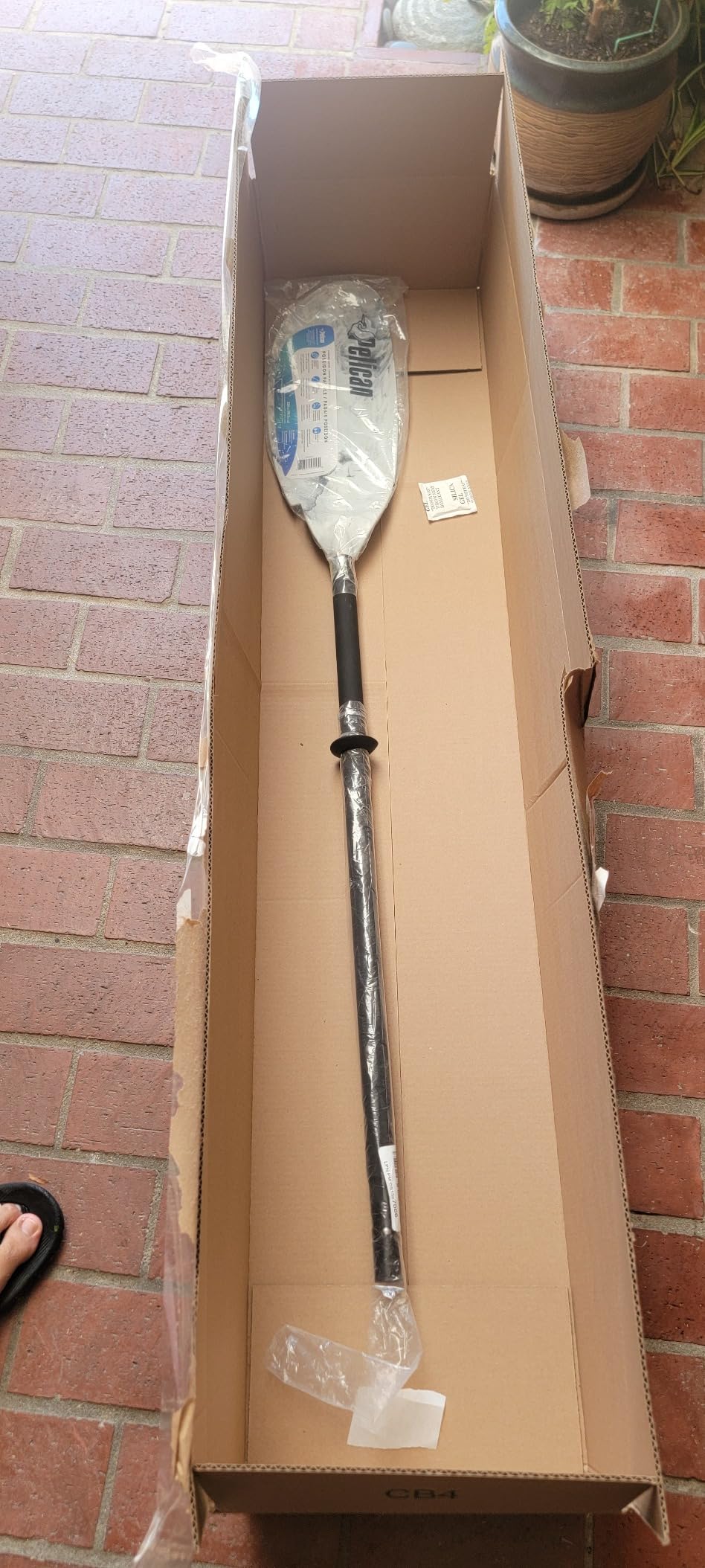
Blade And Shaft Combination That Holds Up To Bracing
Reinforced polypropylene blades are heavier than a full carbon blade but far tougher at the tip, and that trade is the right one for fishing. You use this paddle as a push-off, a rudder, and a brace, not just as a way to move. Owners who paddle over shell beds and rock structure report the blades survive contact that would ding a stiffer composite.
Feathering At 0 And 65 Degrees
The push-button system flips between inline and a 65 degree feather. For fishing, that wide feather cuts wind and wave slap while you sit still for hours, which matters more than the sprint performance a touring paddler cares about. It is a simple two-position setup rather than fine-grained angle adjustment, and that simplicity is a real advantage with wet hands.
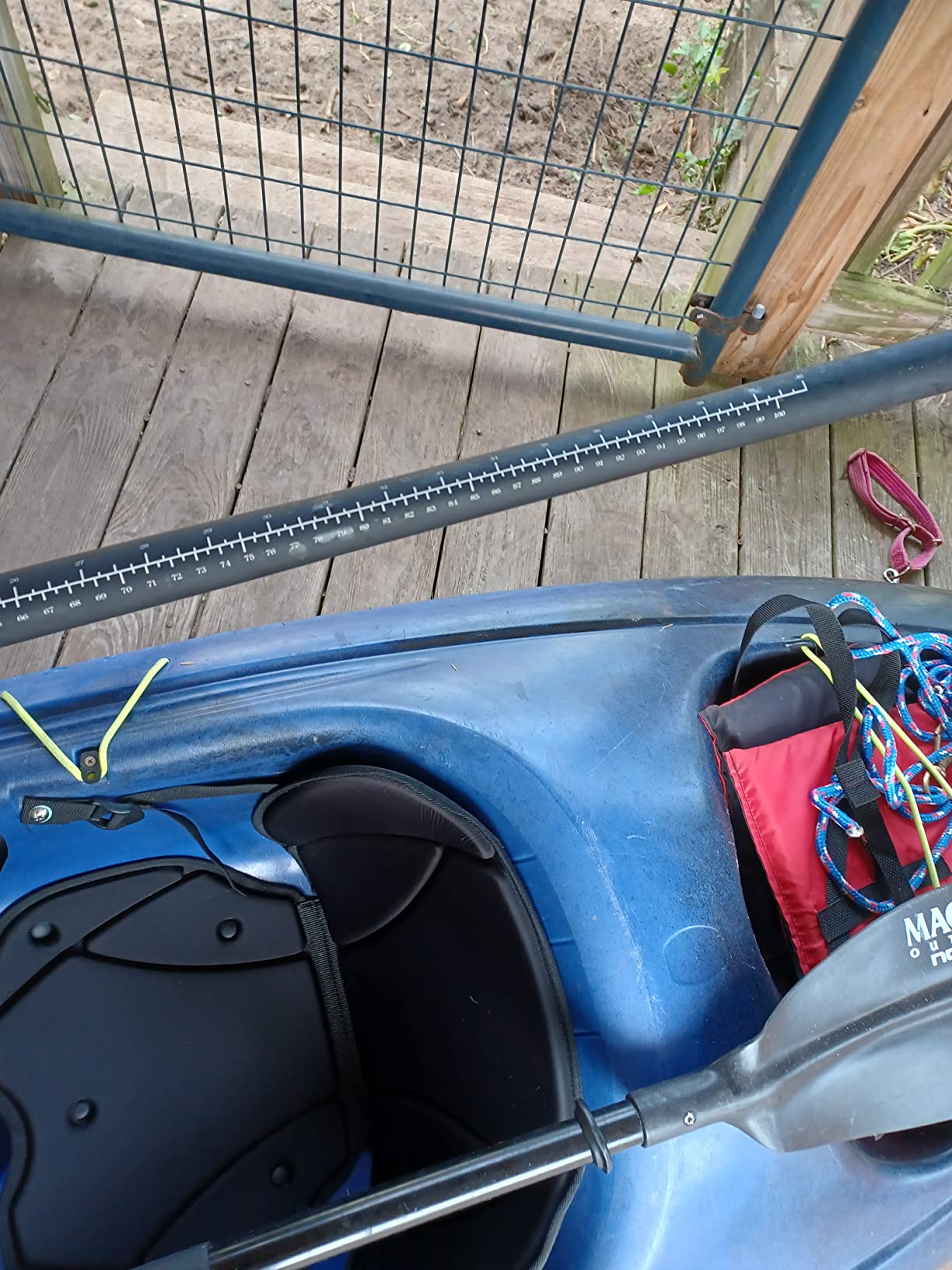
The Ovalized Shaft And Why It Reduces Fatigue
The shaft is ovalized on one side to act as an indexing reference. Owners say it puts the right hand in the same spot every stroke, which cuts wrist fatigue across a long day. Some buyers still wrap the grip with tape for extra comfort, which tells you the grip is fine but not luxurious.
The one limitation worth noting: the fixed-length option means you check your fit before buying. If you are unusually tall or seated on a high-low seat rig, look at adjustable models instead.
2. Pelican The Catch – Lightweight Fiberglass for Anglers Over 6 Feet
Pelican The Catch Kayak Paddle – Adjustable Fiberglass Shaft with Nylon Blades – Lightweight and Adjustable Perfect for Kayak Fishing – 102.4 in – Olive Camo
Adjustable fiberglass shaft
Fiberglass reinforced nylon blades
Built-in retrieval hook
Adjustable drip rings
Pros
- Noticeably lighter than aluminum versions of the same length
- Blades stay rigid under load
- Little play in the two-piece lock
- Line slot helps follow line into weeds
Cons
- Smooth shaft can feel slippery without grip tape
- A few paddles arrived with a dented shaft
- Indexing oval takes a moment to learn
This is the model to look at if you run a high-low seat or stand to cast. It is listed for anglers over 6 feet in kayaks over 34 inches wide, and the adjustable fiberglass shaft spans up to 102.4 inches (260 cm), so it fits a taller paddler sitting higher than stock.
The review pattern is a clear weight story. Owners repeatedly compare it to aluminum paddles they used before and describe a noticeable difference over a full day. That matters because fishing means a hard paddle-out followed by hours of sitting still, and the arms still feel it at two in the afternoon.
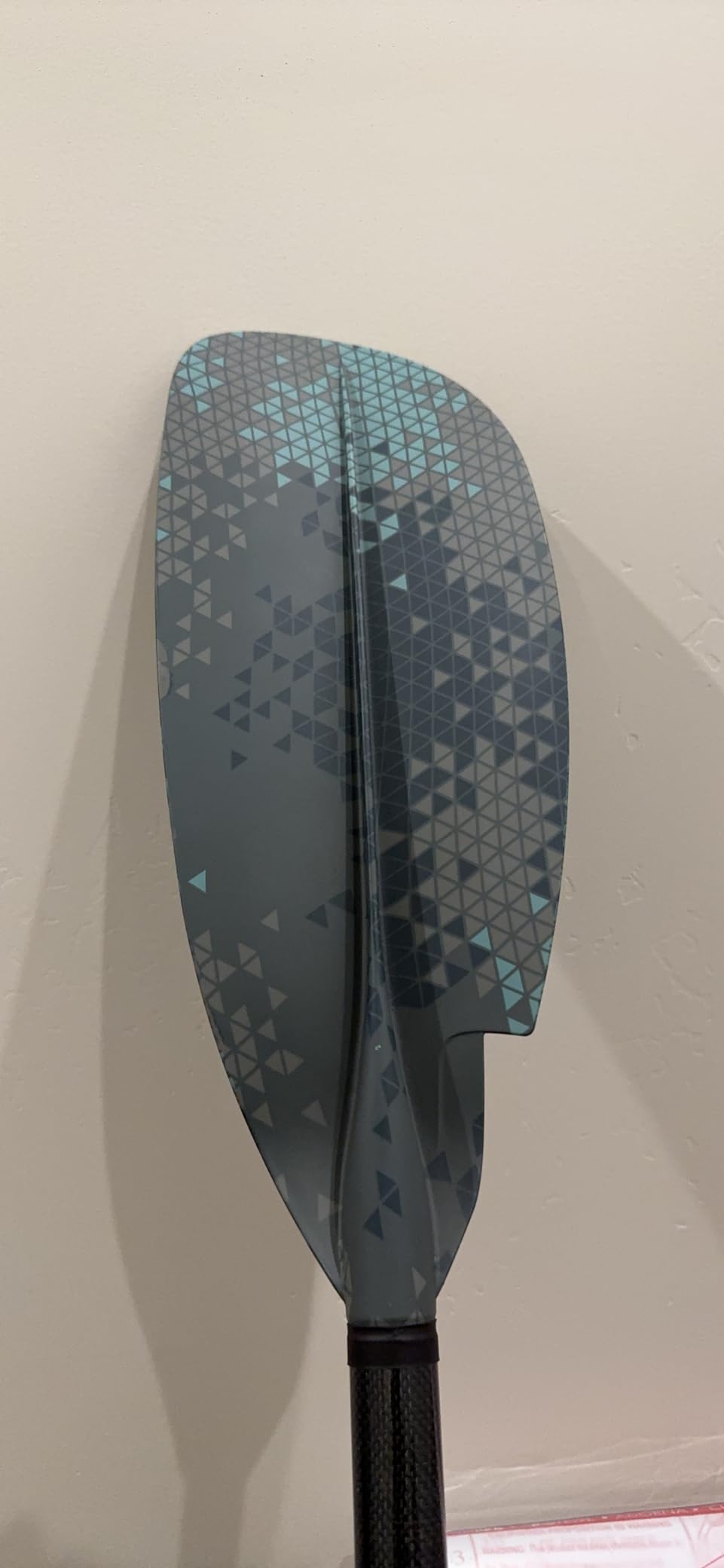
Fiberglass Shaft In Cold And Heat
Fiberglass is a reasonable middle ground between aluminum and carbon. It runs cooler to the touch than aluminum on a winter morning, and it is lighter. The wrapped ovalized shaft here also gives a fixed reference point for right-hand placement, which reviewers describe as settling into the palm once you know where it goes.
Built-In Retrieval Hook, Line Slot, And Measuring Tape
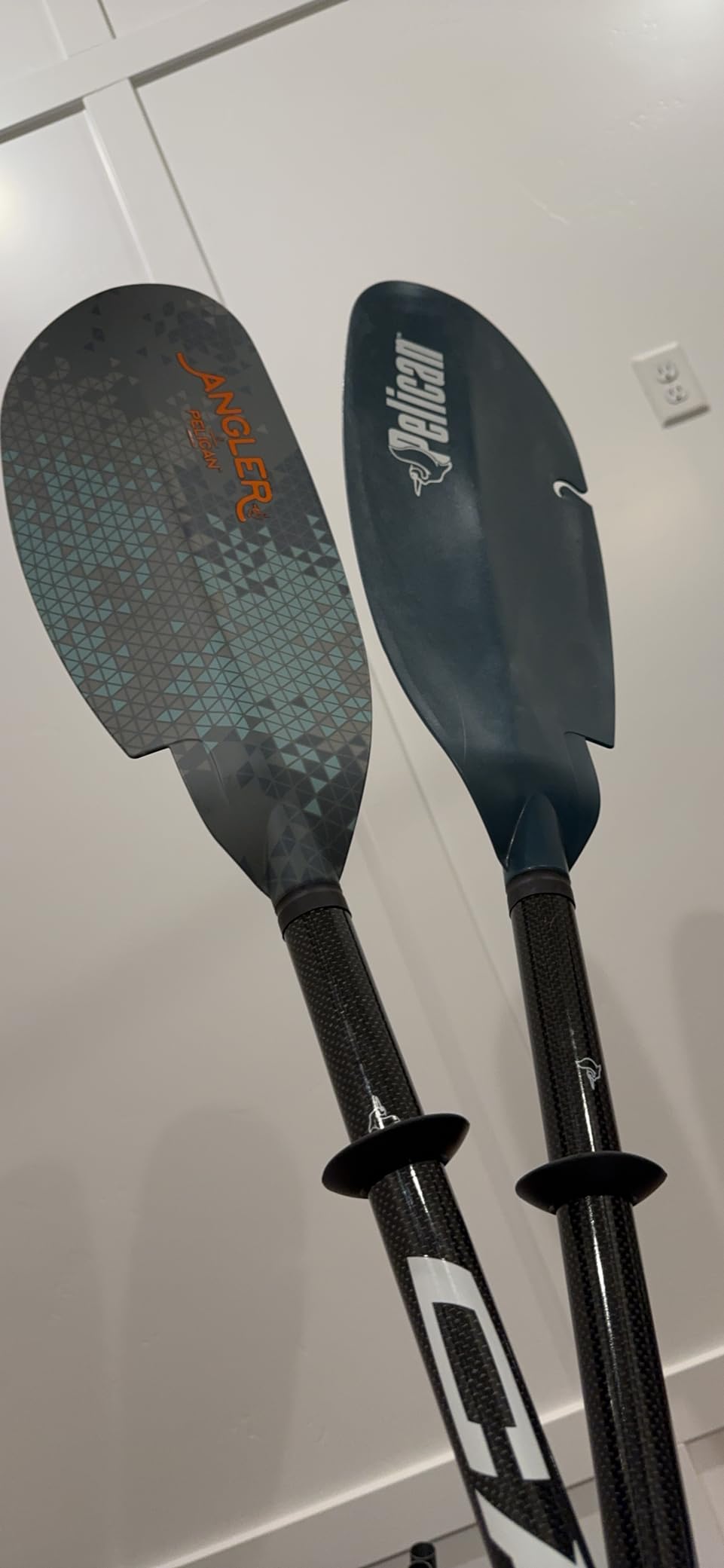
Three angler conveniences come in the box along with drip rings: a retrieval hook on the blade, a line slot for following line into weeds, and a measuring tape printed along the shaft. Adjustable drip rings keep water off your hands and off your grip, which on a fiberglass shaft is a meaningful comfort gain.
What Owners Wish It Had
The most common gripe is grip. The shaft finish is smooth, so a few buyers add tape. A small number of reviewers reported a dented shaft on arrival, which reads as a packing issue rather than a design fault, and some new owners needed instructions to understand the indexing oval.
If you want angler hardware in a carbon package, the carbon-shaft options further down this list run 240 to 280 cm and remove some shaft weight.
3. Carlisle Magic Angler – Tough Two-Piece Built for Rocks and Oyster Beds
Carlisle Magic Angler Kayak Paddle, 230 cm, Photic
230 cm fixed length
Glass-filled polypropylene blades
Wrapped fiberglass shaft
Push-button ferrule
Pros
- Blades and shaft survive rocks and bank launches
- Curved asymmetrical shape gives smooth power
- Two-piece breakdown is easy to transport
- J-notch clears snagged line
Cons
- Fixed 230 cm suits shorter paddlers
- Wrapped grip can feel soft when wet
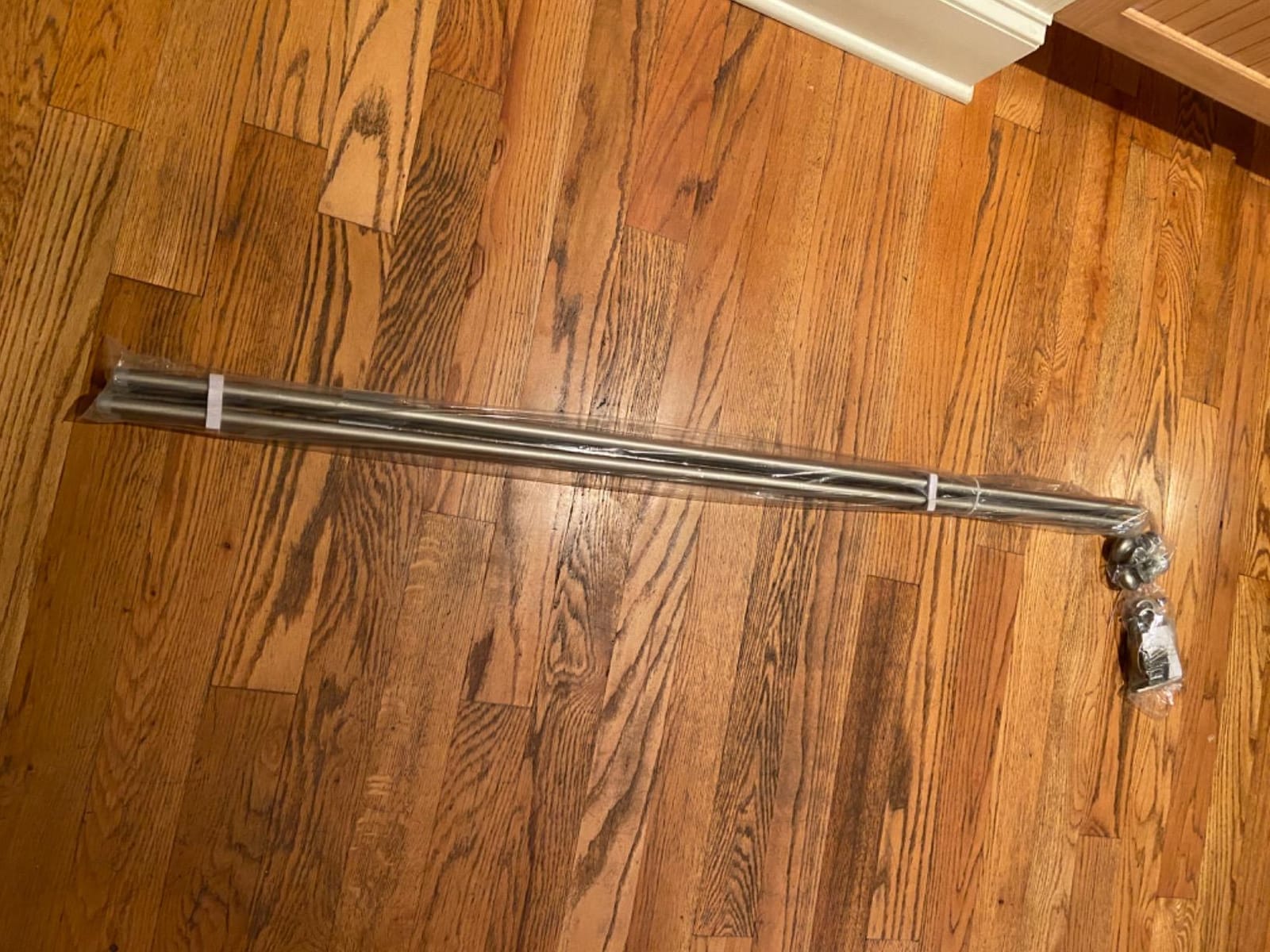
The Magic Angler is the shortest paddle here at a fixed 230 cm, and that is a deliberate choice rather than a limitation for many anglers. It suits smaller and mid-size hulls and shorter paddlers, and it is the one in this group built around a wrapped fiberglass shaft rather than a bare tube.
Owners consistently describe it as a tool. The glass-filled polypropylene blades and the shaft hold up when used as a brace for launching and for stepping in and out, and the two-piece ferrule means it fits in a truck bed or a rod locker without ceremony.
Asymmetrical Curved Blades For Power
The blade is slightly curved and asymmetrical, which smooths the stroke and concentrates power near the base. On a fishing kayak that means fewer corrections when you are trying to hold a line and move the boat at the same time, and it feels stable at low stroke rates.
J-Notch, Drip Rings, And A Ferrule That Does Both Jobs
The J-notch on the blade is for freeing snagged line, and rubber drip rings keep water running off. The push-button ferrule lets you switch between a feathered and an inline blade setting, so the same paddle handles a slow drift and a fast run to a spot.
Where The Fixed Length Bites
Two cautions from the review data. A fixed 230 cm will feel short in a hull wider than about 32 inches, and the wrapped grip can feel soft once soaked. For a wide hull with a tall seat, an adjustable model in the 250 to 260 cm range is the safer call.
4. Backwater Assassin – The Utility Paddle With a Serrated Launch Edge
Backwater Assassin Paddle 06-0017 Full-Size Carbon-Fiber Hybrid Kayak Paddle – 98.5′ to 102.5′ Length
Carbon hybrid construction
ABS injected nylon blade
Adjustable 230-240 or 250-260 cm
3 year warranty
Pros
- Hook grabs line
- decoys
- docks and limbs
- Serrated edge helps push off solid surfaces
- Long adjustable lengths suit wide heavy hulls
- Backed by a 3 year warranty
Cons
- Heaviest stated build in this group at 2.7 pounds
- Blade is plastic rather than carbon-reinforced
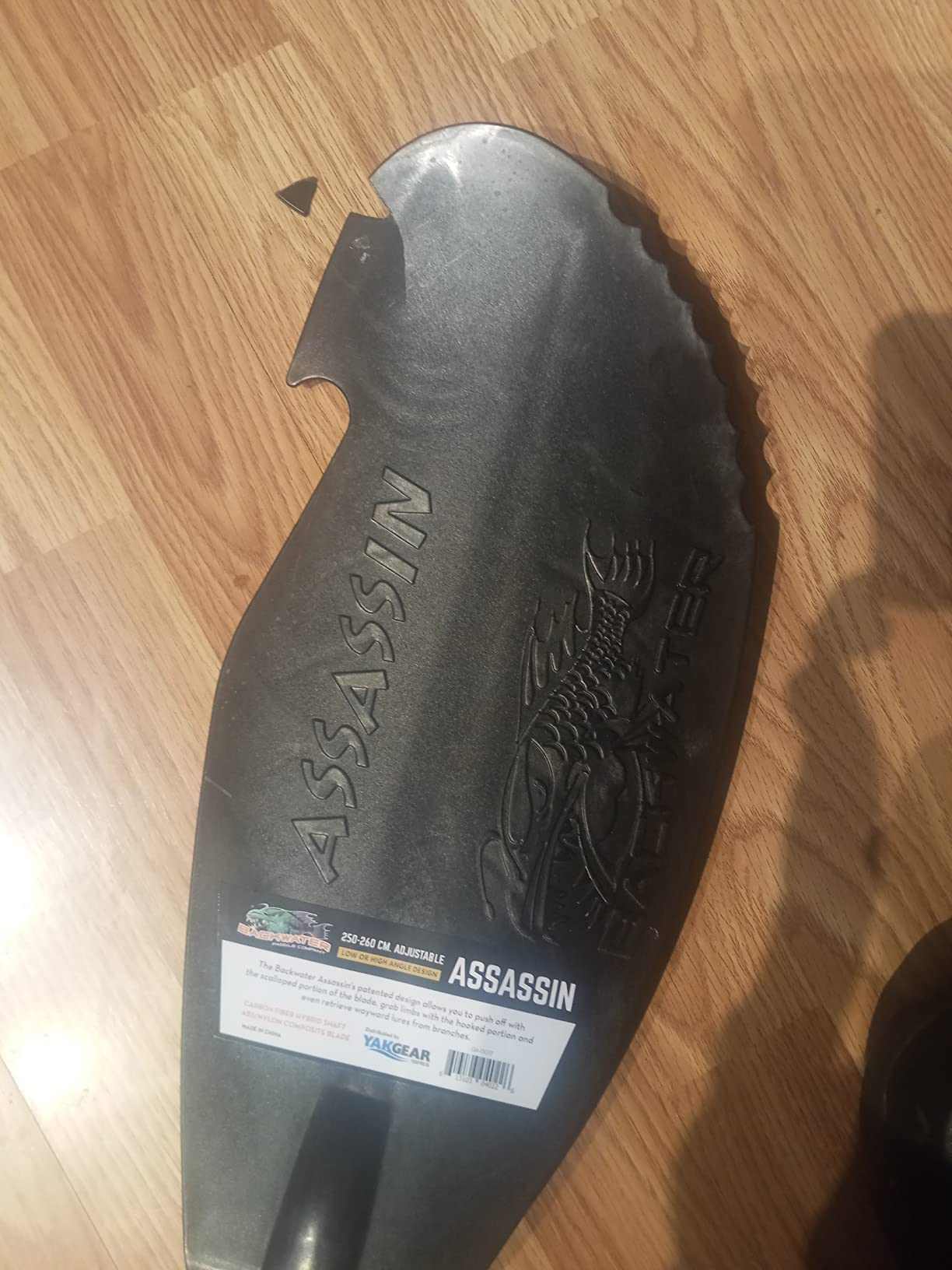
The Assassin is the odd one out in this lineup, and that is its appeal. Instead of a hook, a ruler, and a feather angle, it uses one large multifunction hook, a serrated toothed edge along the blade, and two length families that cover both short and very wide hulls. It also carries the longest warranty in the group at 3 years.
The serrated edge is the feature anglers argue about most. In practice it lets you push off a mud bank, a dock, or a rock without loading the blade flat, which is a genuine use for anyone who launches in current instead of from a beach cart.
Two Length Families, One Paddle
You choose between a 230 to 240 cm adjustable build and a 250 to 260 cm build. That second family is aimed at wide, heavy fishing kayaks where a short paddle would have you hitting the gunwale every stroke, which is the single most common complaint forum anglers raise about undersized paddles.
Carbon Hybrid Construction, Plastic Blade
The construction is described as carbon hybrid with an ABS injected nylon blade. That keeps the shaft light and reasonably stiff, but the blade is plastic rather than carbon-reinforced composite. If you are constantly pushing off oyster beds, the lighter blade material is an easier repair and a cheaper replacement than a composite tip.
What You Give Up
At 2.7 pounds this is a heavier carry than the aluminum and carbon models around it, and there is no printed measuring scale on the shaft. If your days are long paddle-outs with gear loaded, weight matters more than the serrated edge.
5. Bending Branches Angler Ace Snap-Button – Lightest Carbon Shaft in the Group
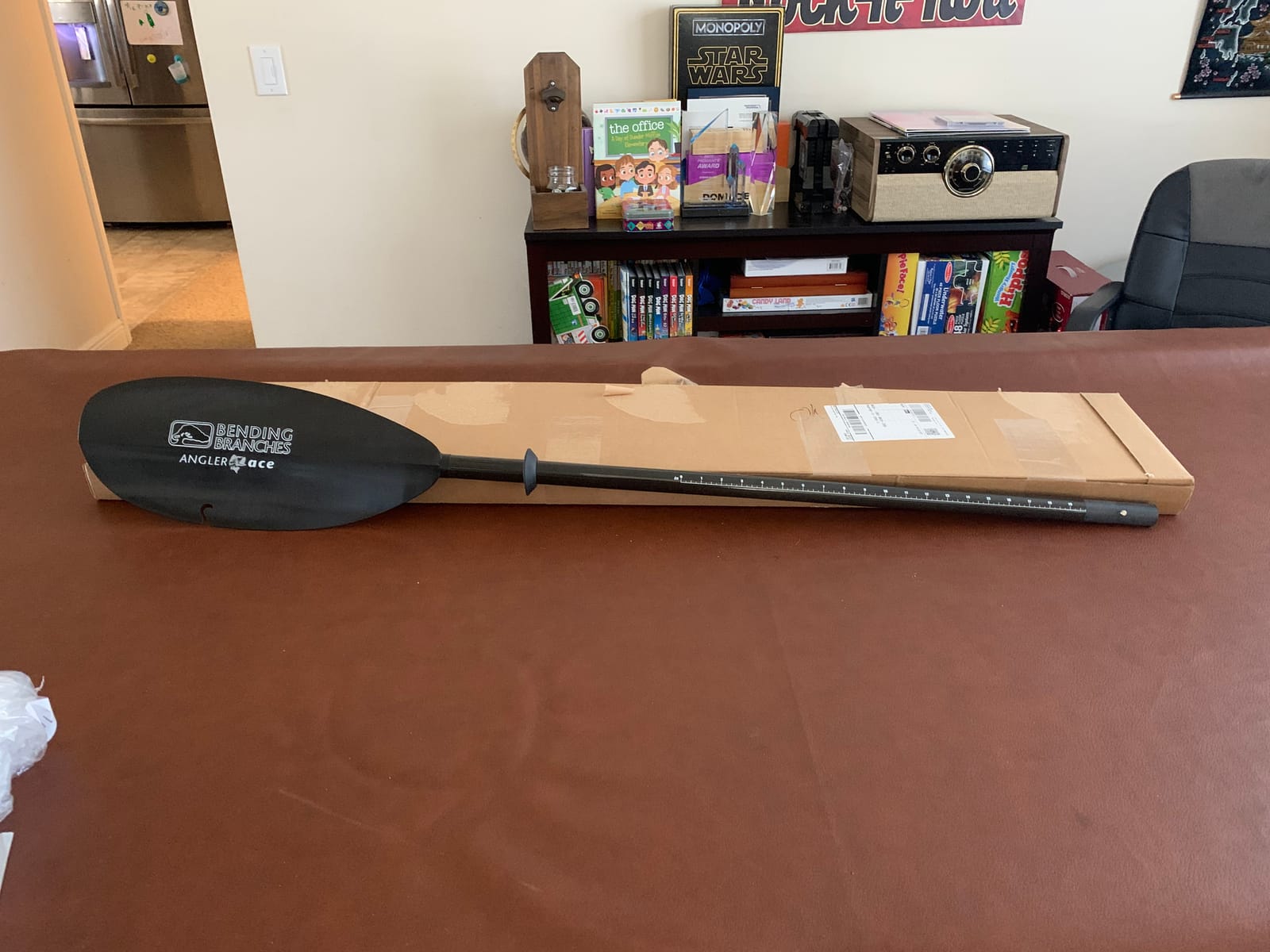
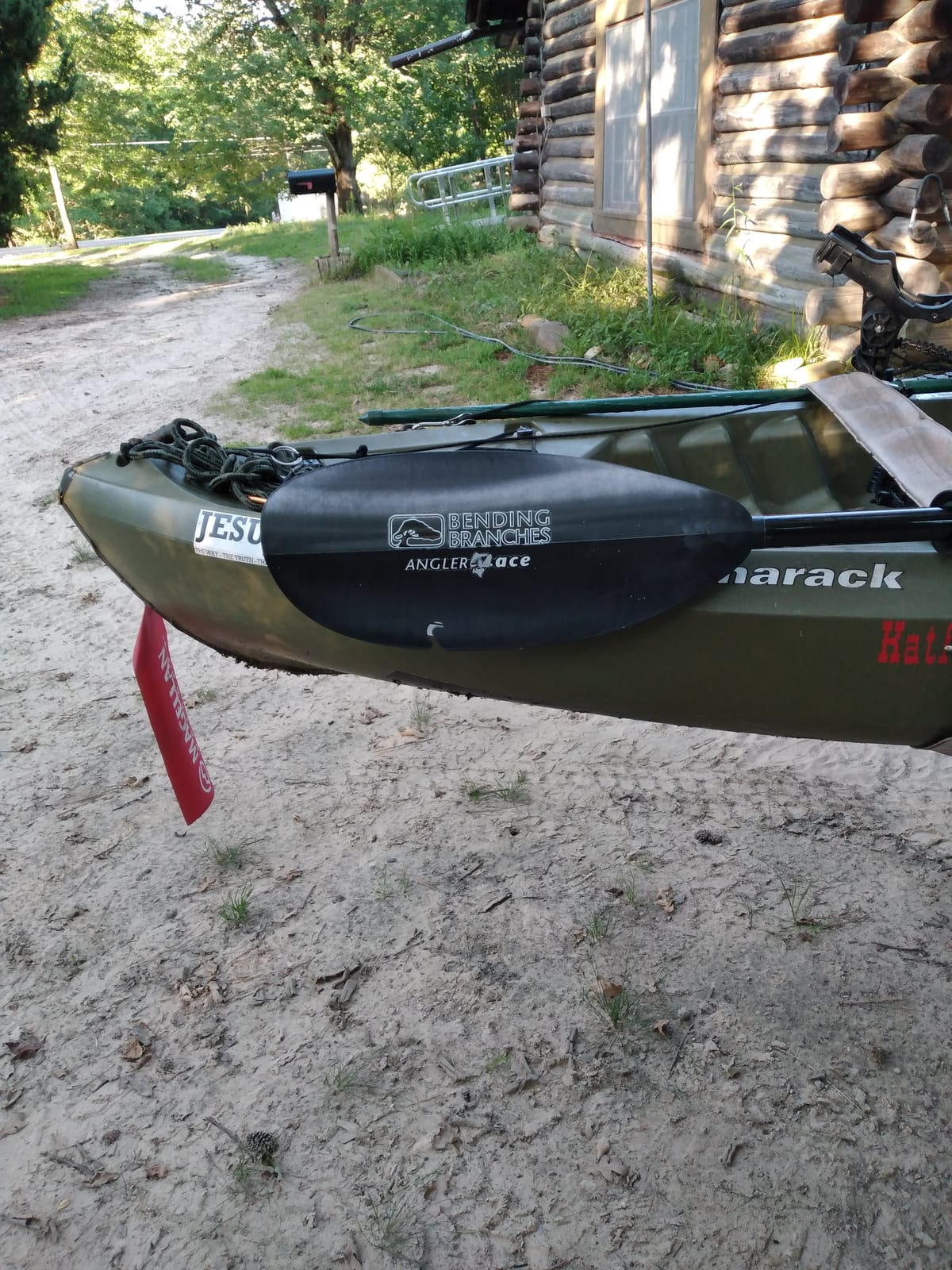
BENDING BRANCHES Angler Ace Snap-Button Kayak Fishing Paddle – Lightweight Carbon Shaft, Carbon-Reinforced Nylon Blades, 2-Piece Design, Durable Performance for Fishing & Touring Kayaks
Carbon shaft, 260 cm
Carbon-reinforced nylon blades
Snap-button two-piece ferrule
Ovalized ergonomic grip
Pros
- Lowest stated weight in the lineup for a long day on the water
- Blades survive oyster beds and rocks
- Tight ferrule with no play or wobble
- Braces fine for larger paddlers
Cons
- Higher cost than the fiberglass and budget models in this group
- Longer lengths may be needed past 35 inches
- Some paddles arrived with minimal protective packaging
This is the one to buy if you care most about how your arms feel at four in the afternoon. It lists at 2 pounds, the lowest stated figure among the full-length paddles here, and the carbon shaft is what removes weight from the part you actually hold all day.
Owner reviews praise the ferrule as much as the carbon. The two halves join with a tight fit and no wobble, which is exactly what anglers ask for, because a loose snap-button ferrule introduces flex that you feel in your wrists over hundreds of strokes. Several reviewers also note it is sturdy enough to brace on, even for a 6 foot 6 inch paddler around 350 pounds.
Carbon Shaft, Nylon Blade, And The Right Balance
The blades are carbon-reinforced nylon rather than pure composite. That keeps enough give to survive shell beds while staying stiff enough for a strong forward stroke, and the ovalized grip profile spreads pressure across your palm instead of creating hot spots.
Length Range And Measuring Marks
This model is available from 240 to 280 cm, so it covers narrow touring hulls through the widest fishing sit-on-tops. The shaft carries measuring markings, so you can measure a fish without digging for a ruler. If your hull runs past 35 inches wide, note that reviewers suggest stepping up a length rather than stretching the current one.
The Honest Trade
It costs more than the fiberglass and budget paddles in this group, and 152 ratings is a thinner base than the Pelican models carry. The weight saving is real and repeated in reviews; so is the fact that a few paddles arrived with minimal protective packaging.
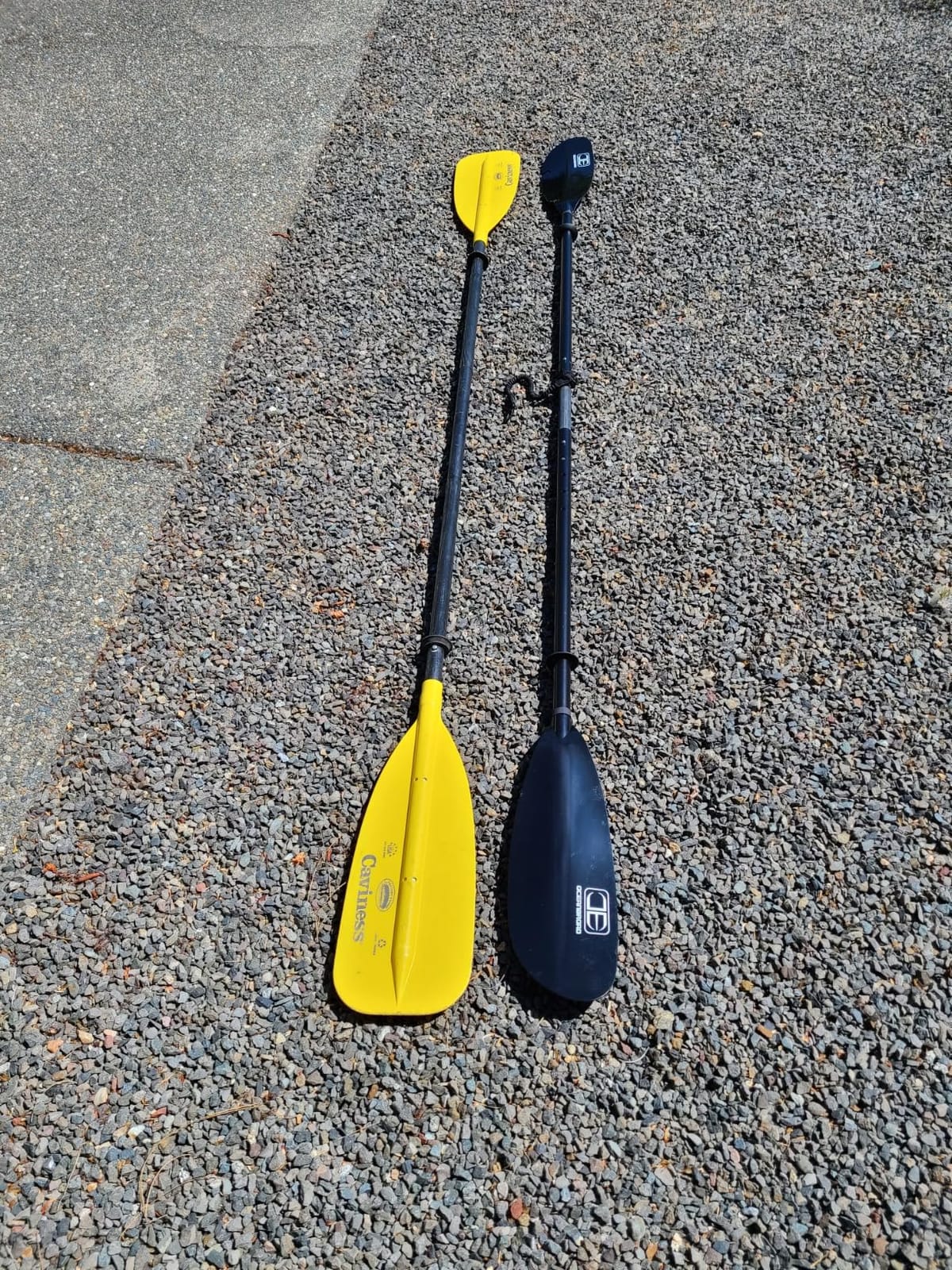
6. OCEANBROAD Adjustable Aluminum Paddle – Budget Pick With a Leash Included
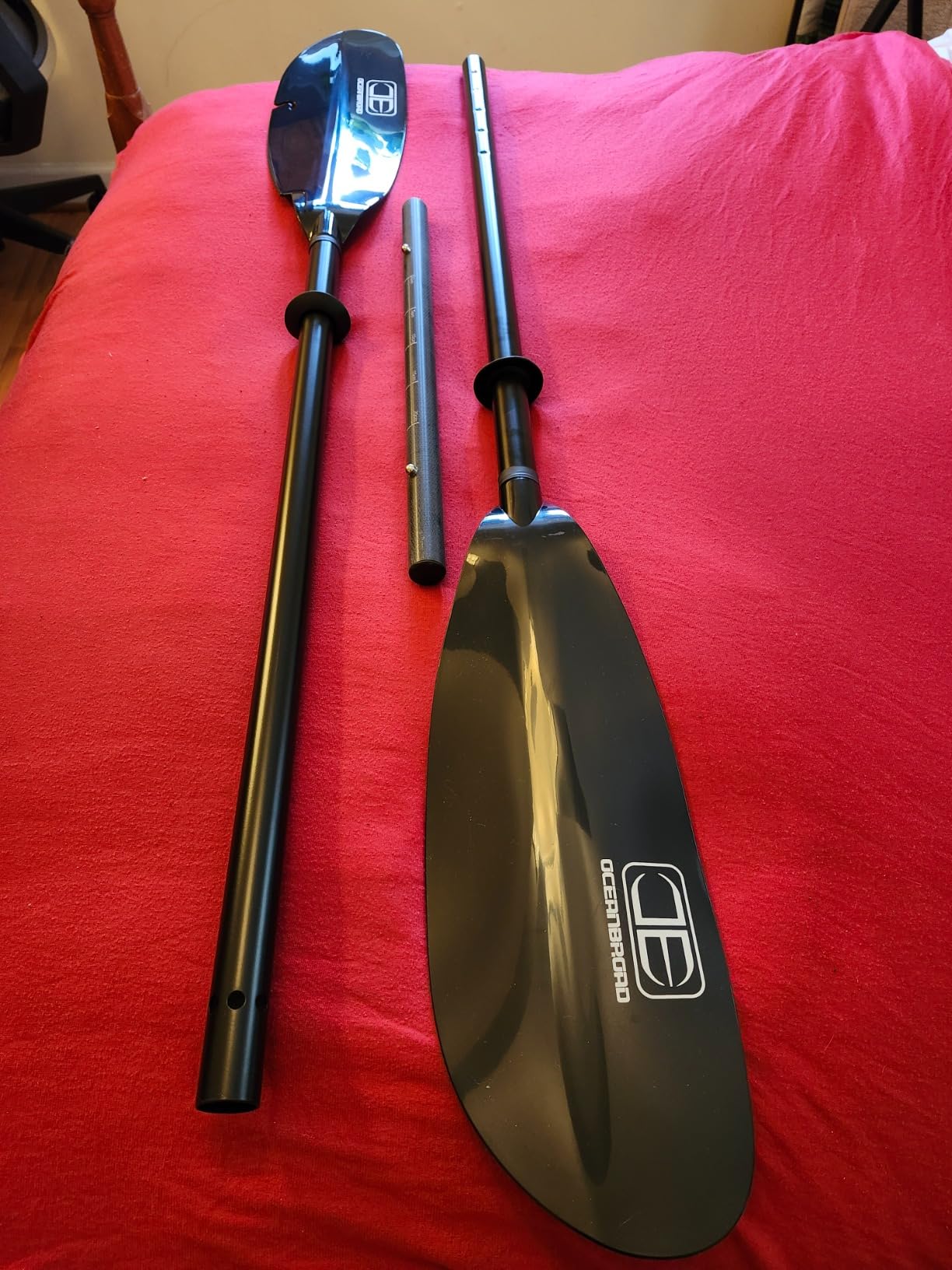
OCEANBROAD Adjustable Fishing Kayak Paddle – 94in/240cm-98in/250cm-102in/260cm Aluminum Alloy Shaft Paddles Kayaking Fishing Oar with Paddle Leash, Black
Aluminum alloy shaft, 1.1mm wall
Fiberglass reinforced PP blades
240-260 cm in 5 cm steps
Three-piece with leash
Pros
- Adjusts in 5 cm increments across 240 to 260 cm
- Bungee leash included as standard
- Stiff enough for casual and pedal kayak use
- Inch markings printed on the shaft
Cons
- Heavier than expected for some paddlers
- Blades are smaller than premium models
- One paddle arrived missing a component
The OCEANBROAD aluminum is the value entry point, and its strongest feature is adjustability. Five centimeter increments from 240 to 260 cm mean one paddle fits a range of hull widths, and the three-piece build collapses short for transport. It is also one of only three here that come with a bungee paddle leash.
That leash matters more than it sounds. Kayakers on forums treat floatation and a leash as non-negotiable safety kit, and a leash means a paddle that drifts away from a hull in current comes back with you.
Aluminum In Cold Weather, And The 1.1mm Wall
An aluminum alloy shaft with a 1.1mm wall is stiff enough to push a gear-loaded hull, and adjustable length helps you dial in stroke efficiency. The drawback anglers raise repeatedly in forums is cold hands. On a cold winter morning, a bare aluminum shaft is genuinely unpleasant to hold for a full paddle-out, which is where fiberglass and carbon pull ahead.
Three Locking Positions And Blade Size
Three locking positions cover blade angle settings, and the shaft carries inch markings for measuring fish. The common critique from owners is that the blades are smaller than those on premium paddles, so windage in a breeze is a little higher.
Who It Fits Best
This one suits a new angler who wants adjustable length, a leash in the box, and the shortest path to a paddle that works on a wide fishing kayak and a pedal kayak. Owners also like the color options, which matter more than most roundups admit when you are trying to match a camo hull.
7. Perception Pescador Adjustable – The Quiet Dihedral Blade
Perception Kayaks Pescador Adjustable Kayak Fishing Paddle -2 Piece Moss camo, 230-250cm/90.5-98.5”
Dihedral two-plane blade
230-250 cm adjustable
Push-button ferrule
Two-piece construction
Pros
- Dihedral blade gives quiet smooth strokes
- Handles heavier gear-loaded hulls well
- Push-button ferrule makes length changes fast
Cons
- Narrowest adjustable range here at 20 cm
- Lowest average rating in the set at 4.4
The Pescador is built around a dihedral, or two-plane, blade. The two angled faces split the water differently from a flat blade, which produces a quieter, smoother stroke, and quiet is the point when you are drifting over a spawning bed or approaching a wary fish.
It is also a sturdy option for bigger boats. The design is aimed at maneuverability with heavier, gear-loaded fishing kayaks, and the push-button ferrule makes length adjustments fast when you are loading gear rather than fiddling with hardware on a ramp.
Blade Weight And The Honest Number
The blade is listed at 34 ounces. That is above the 26 to 32 ounce range most anglers describe as comfortable for a full day, so expect this to feel heavier on a long paddle-out than a lighter carbon-shaft paddle. You gain control and quiet strokes, and you carry more grams all day.
Where The Range Falls Short
The adjustment window is 230 to 250 cm, a 20 cm range that does not reach the very wide hulls needing 260 cm. The 4.4 average rating is also the lowest in this group, with roughly 74 percent five-star reviews, so expectations should be set accordingly.
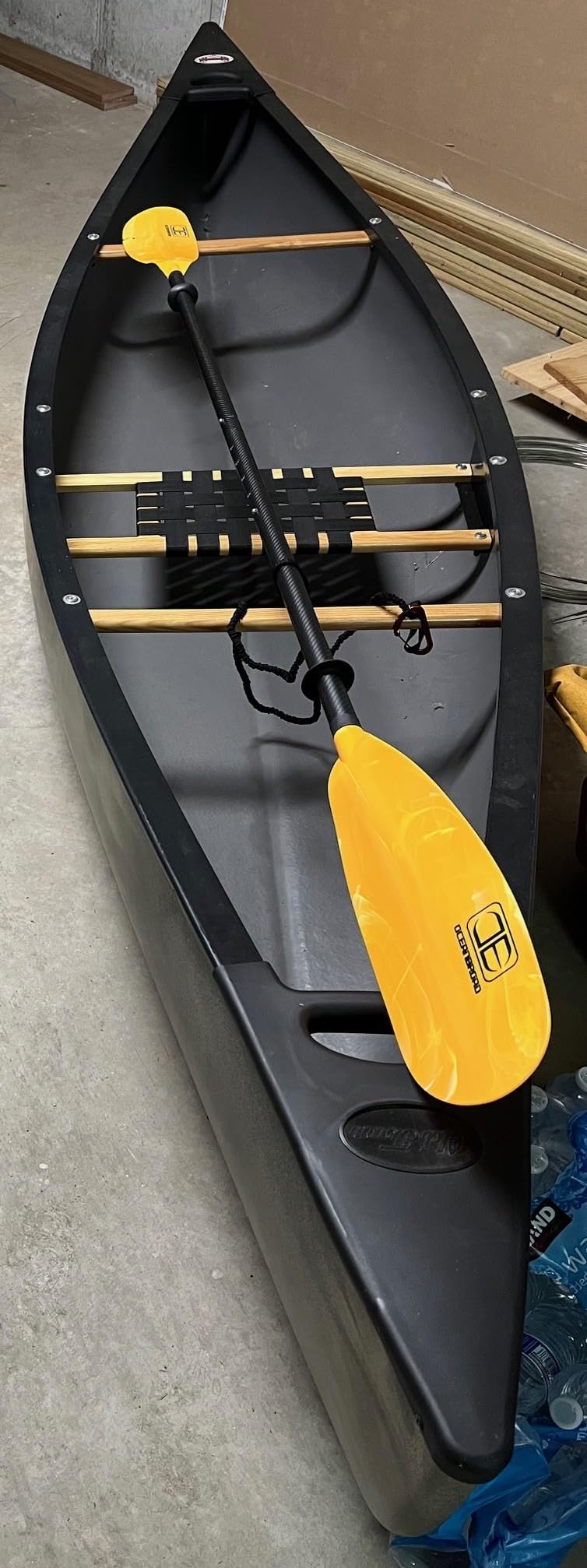
8. OCEANBROAD Adjustable Carbon Fiber – A Middle Path Into Carbon
OCEANBROAD Adjustable Carbon Fishing Kayak Paddle – 94in/240cm-98in/250cm-102in/260cm Carbon Fiber Shaft Paddles Kayaking Fishing Oar with Paddle Leash, Black
Carbon fiber shaft, 1.1mm wall
Fiberglass reinforced PP blades
240-260 cm adjustable
Three-piece with leash
Pros
- Carbon shaft at a mid-range price point
- Adjustable length covers recreational through touring
- Leash and drip rings included
- Blades stay stiff in the forward stroke
Cons
- Listed weight of 3.5 pounds runs high
- Adjustment range is shorter than premium carbon paddles
If you want a carbon shaft without stepping up to a top-tier carbon paddle, this is the middle option. The shaft is carbon fiber with a 1.1mm wall and the blades are fiberglass reinforced polypropylene, so you get a light, responsive shaft with a blade that tolerates abuse.
Owners treat it as a straightforward step into carbon. The 240 to 260 cm adjustment covers a recreational hull and a touring setup, and the leash and drip rings come as standard rather than as an add-on.
The Weight Number To Read Carefully
The listed weight here is 3.5 pounds, which is higher than comparable models and higher than what most anglers describe as comfortable for a long day. Treat that as a package figure to confirm before buying, and read recent owner comments on carry weight if you are between sizes.
Three Piece Breakdown And Blade Angle
The three-piece build stores compactly, with three locking positions for blade angle and end drip rings included. For saltwater anglers, the carbon and reinforced polypropylene combination avoids the corrosion concerns that come with bare aluminum hardware.
How It Compares To The Aluminum Version
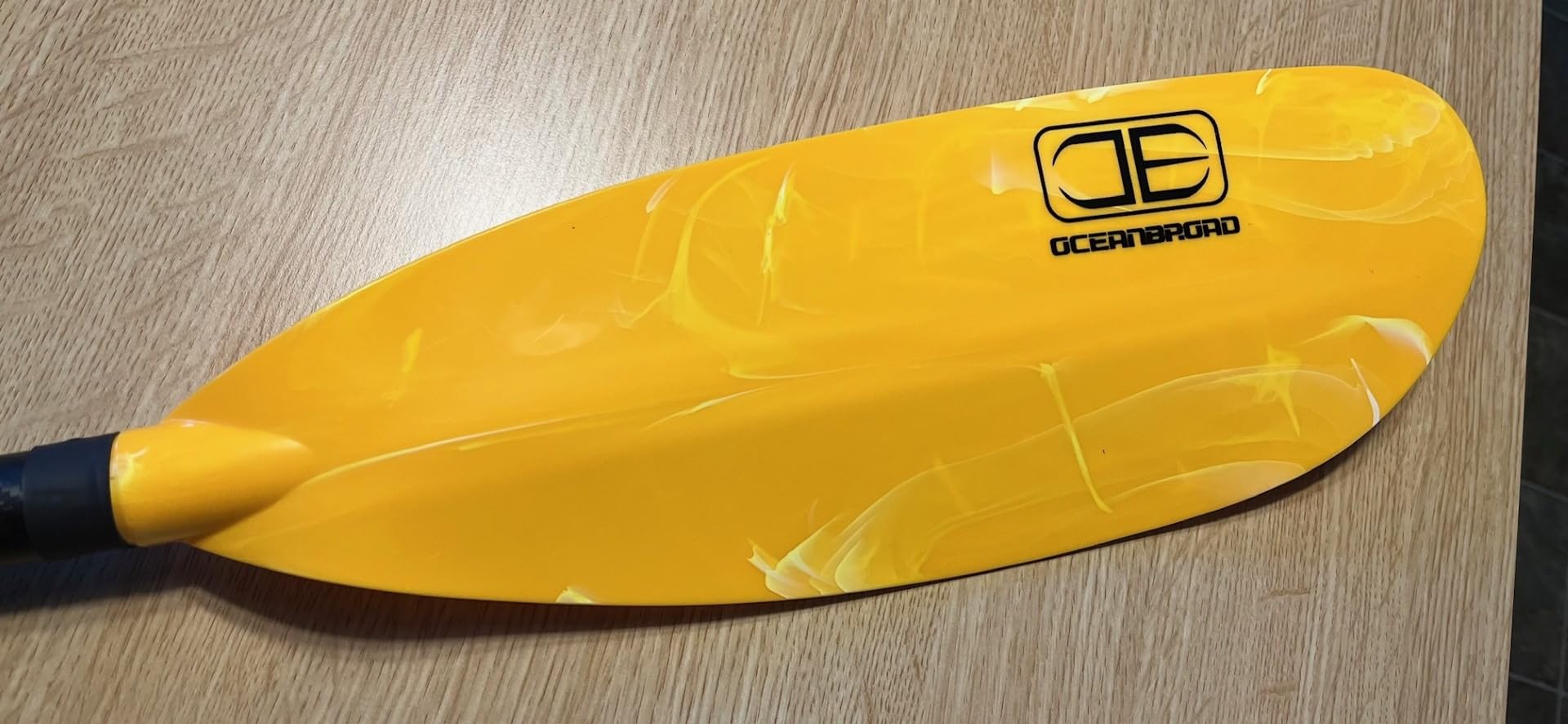
Same chassis, different shaft material, similar feature set. Owners who chose the carbon version report noticeably less fatigue; buyers who went with the aluminum version cited its lower cost.
9. Bending Branches Angler Drift Snap-Button – Stable Aluminum for Day Long Paddle Outs
BENDING BRANCHES Angler Drift Snap-Button Kayak Fishing Paddle – Lightweight Aluminum Shaft, Durable Nylon Blades, 2-Piece Design, Built for Fishing & Recreational Kayaking
260 cm aluminum shaft
Durable nylon blades
Snap-button two-piece ferrule
Two color options
Pros
- Balanced aluminum shaft reduces arm fatigue
- Nylon blades give predictable strokes
- Snap-button assembly is quick and compact
- Wide range of lengths available
Cons
- Heavier than the carbon-shaft models here
- Far fewer reviews than the established paddles
The Angler Drift is the aluminum sibling to the Angler Ace, and it shares the snap-button two-piece layout and the same length family from 250 to 280 cm. The shaft is described as balanced, which is the word owners use most: the paddle tracks straight and does not feel like it is trying to pull to one side.
It carries a 4.7 rating, though on a smaller review base of 45 with no one or two-star ratings. Treat that as encouraging rather than proven.
Nylon Blades And Calm Water Focus
The durable nylon blades are aimed at fishing kayaks and calm to moderate water, delivering smooth, consistent strokes rather than an aggressive bite. If you are paddling a wide, heavy fishing hull on a lake or a protected bay, that is the right kind of blade behavior.
Where Aluminum Loses To Carbon
Angler reviewers consistently rank aluminum shafts as heavier than the carbon options, and the forum consensus is that every ounce on the shaft is felt by mid-afternoon. This paddle also does not include a printed measuring scale or hook notch, so you would be adding that hardware separately.
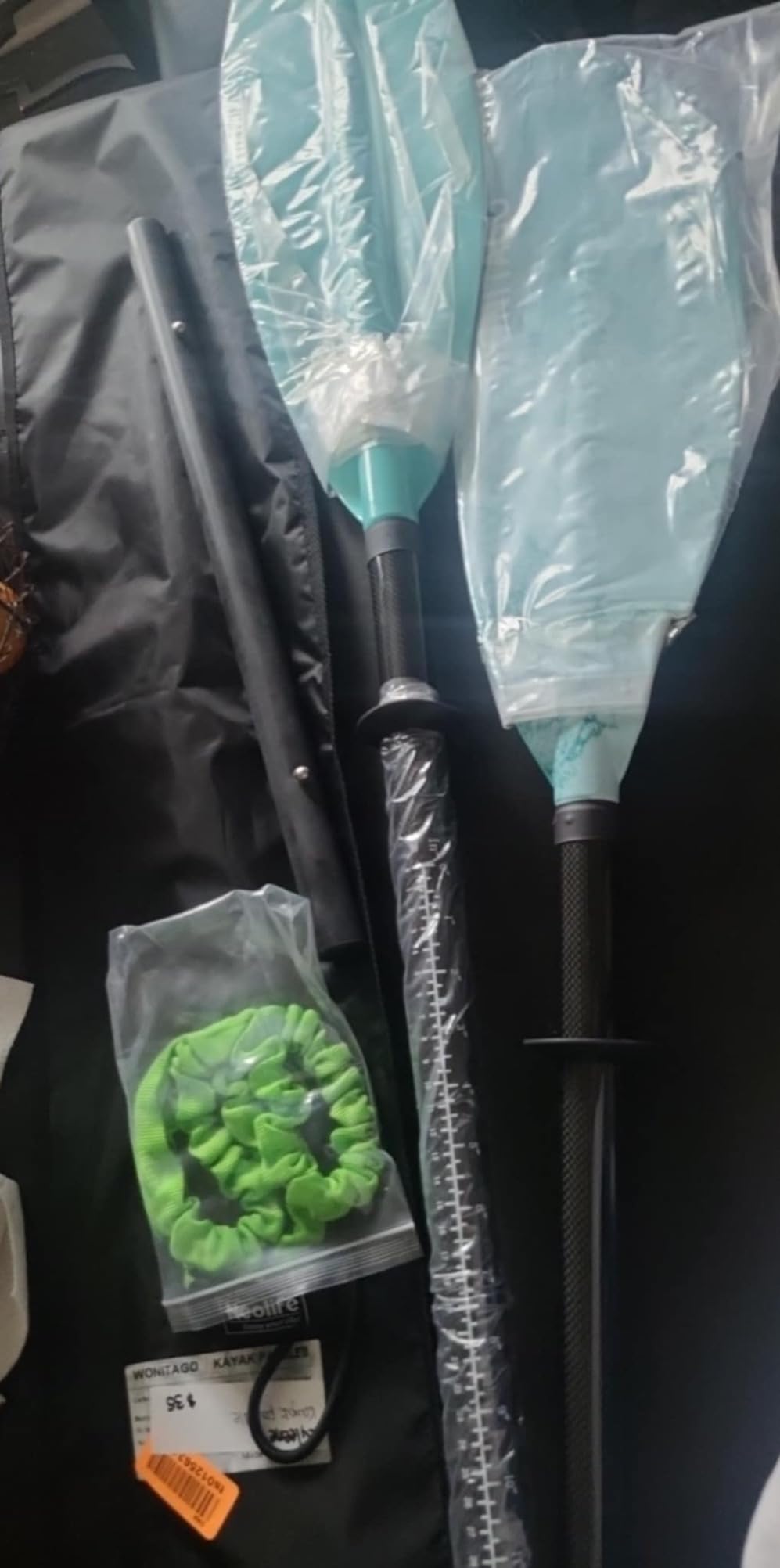
10. WONITAGO Angler Carbon Fiber Paddle – Three-Piece With an Engraved Fish Scale
WONITAGO Angler Kayak Paddle, Adjustable Carbon Fiber Fishing Kayak Oar
Carbon fiber shaft, 230-250 cm
Floating corrosion-resistant blades
40 inch engraved scale
Three-piece with leash
Pros
- Light at 2.4 lbs with all parts floating
- 20 cm of adjustment in a travel-friendly build
- Leash included for tying to the kayak
- Engraved measuring scale and hook notch
Cons
- One reviewer reported water entering shaft sections
- Shaft decal is an applied sticker that scratched
- Some felt build quality was cheaper than expected
The WONITAGO is the compact option: a three-piece carbon shaft with 20 cm of adjustment from 230 to 250 cm and a quick pin button lock at plus or minus 60 degrees. It weighs 2.4 pounds and comes with a leash and storage bag.
Two details make it interesting for anglers. The blades are described as corrosion-resistant and float in both salt and fresh water, which is rare and useful for coastal fishing. And the shaft carries a 40 inch engraved measuring scale, so the ruler is permanent rather than a printed sticker.
Carbon Shaft With Controlled Flex
The shaft is built with slight flex for power transfer and to protect the shaft under load. A quick pin button lock gives you blade angle options without fiddling with a cam lever, and the 230 to 250 cm range fits mid-size fishing hulls rather than the widest ones.
Saltwater And Travel Are The Selling Points
Corrosion-resistant floating blades are the reason coastal anglers should look here first among the lighter paddles. Combined with a leash, floating parts, and a three-piece breakdown, it is the easiest option here to move between a car and a small watercraft.
What Owners Flag
The 4.4 rating reflects a few recurring gripes: one reviewer reported water entering the shaft sections after use, the blade graphic is an applied decal that scratched, and some buyers felt the build was cheaper than they expected. Inspect the shaft seals after your first outing in choppy water.
How to Size a Kayak Fishing Paddle Without Guessing
Size a fishing paddle to your kayak’s beam width and your seat height, not your total height. A paddler 5 foot 11 sitting on a raised seat in a 36 inch hull may need a longer paddle than a 6 foot 2 angler sitting low in a 32 inch hull.
Step One: Measure The Beam
Measure the widest point of your hull, across the beam, at the widest point rather than at the bow or stern. Fishing sit-on-tops and pedal kayaks run much wider than touring kayaks, and that width is what forces longer paddles.
Step Two: Match Beam To Length
- Under 32 inches wide: 230 to 240 cm. Fits mid-size hulls and shorter paddlers.
- 32 to 36 inches wide: 250 cm. This is the most common fishing kayak width band, and it is why the Pelican Poseidon is our first pick.
- Over 36 inches wide, or any hull with a high-low seat: 260 cm or longer. Under-length paddles here make your knuckles or the gunwale contact every single stroke, and forums describe that contact as the fastest way to end a long day early.
Step Three: Adjust For Seat Height
A high-low seat raises you, which shortens your effective reach to the water and makes a longer paddle correct. An adjustable shaft solves this without a second paddle: the Pelican The Catch, both OCEANBROAD models, and the Backwater Assassin all cover enough range to absorb a seat change.
One Piece, Two Piece, Or Three Piece
One-piece paddles feel the most solid but rarely fit in a car. Two-piece paddles are the standard compromise and appear here on the Poseidon, The Catch, Carlisle, Perception, and both Bending Branches models. Three-piece paddles, like the OCEANBROAD pair and the WONITAGO, collapse further for small boats and travel, at the cost of one more joint.
Shaft and Blade Materials: Where the Money Actually Goes
The shaft is the part your hands touch for the entire session, so it is where material matters most. The blade is what meets the rock, and it is where toughness matters most.
Aluminum Shafts: Cheap, Stiff, Cold
Aluminum is the budget standard. It is stiff, cheap, and easy to repair, and it is what the Pelican Poseidon, the Bending Branches Angler Drift, and the OCEANBROAD aluminum use. The forum complaint is consistent and physical: aluminum gets cold to hold on cold mornings, which is a real deal breaker for winter fishing.
Fiberglass Shafts: The Middle
Fiberglass is lighter than aluminum, runs cooler in cold conditions, and costs less than carbon. The Pelican The Catch and the Carlisle Magic use fiberglass or fiberglass-wrapped shafts, and both are sensible answers for anglers who fish shoulder seasons.
Carbon Fiber Shafts: The Fatigue Argument
Carbon fiber is the lightest option and the one anglers notice at the end of a long day. The Bending Branches Angler Ace, both OCEANBROAD carbon models, and the WONITAGO all use carbon shafts. Reviewers describe carbon plus fiberglass or nylon blades as the best value to weight trade, because a full carbon blade is lighter than you need and less forgiving.
Saltwater And Corrosion
For coastal anglers, blades that float and resist corrosion matter more than grams. The WONITAGO lists corrosion-resistant plastic blades rated for salt and fresh water, and the carbon shaft models avoid the galvanic and rust issues that bare aluminum hardware can develop. Rinse any paddle after a salt session and inspect the ferrule before you store it.
Blade Shape: Symmetrical, Asymmetrical, Dihedral
A dihedral blade like the Perception Pescador is quiet and smooth, which helps when you are close to fish. An asymmetrical curved blade like the Carlisle Magic concentrates power and is easy to control at low stroke rates. A hook, J-notch, or retrieval slot appears on seven of the ten paddles here.
Feathering And Blade Angle
Feathering rotates the blades so one is up and one is down, cutting wind resistance. Most paddles here offer a single push-button feather at 0 and 65 degrees, while the WONITAGO uses a quick pin at plus or minus 60 degrees. For fishing, one wide feather position is enough, and a simple push button works better with wet hands than a fine-grained cam lever.
Angler Features Worth Paying For, and Ones You Can Skip
Veterans are split on angler-specific hardware, and the split is worth honoring. Some run a plain touring paddle and carry a separate bump board and lure retriever instead. Others rely entirely on the paddle. Here is how we read the feature lists.
Floatation And A Leash Are Not Optional
Two paddles here state floatation explicitly: the Poseidon with internal flotation blocks and the WONITAGO with blades that float in salt and fresh water. Three include a bungee leash. Anglers only tend to realize what these are worth after losing a paddle in current, so treat both as safety equipment rather than extras.
The Hook Notch Is Useful, The Serrated Edge Is Specialized
A hook or J-notch for freeing a snagged line earns its place. The Backwater Assassin takes that further with a serrated edge for pushing off banks and docks, which is genuinely useful if you launch in current, and unnecessary if you use a beach cart. Forum veterans call serrated edges a gimmick more often than not.
The Printed Ruler Is A Nice-to-Have
Printed or engraved measuring scales appear on the Poseidon, The Catch, the Angler Ace, the OCEANBROAD aluminum model, and the WONITAGO. It is a small thing that saves fumbling with a separate ruler, but many anglers carry a bump board anyway and consider it redundant.
Do You Need A Fishing-Specific Paddle At All?
Sometimes no. If your kayak is under 32 inches wide, you fish calm water, and you already own a bump board and a lure retriever, a decent general paddle in your correct length will serve you. The fishing-specific buys earn their place on wide hulls, in cold weather, on long paddle-outs, and wherever you use the paddle to push off structure.
Care And Repairability
Rinse the blade and shaft after salt water, lubricate the ferrule with silicone, and inspect blades for cracks around the ferrule joint. Replaceable tips and a stated warranty matter more than most buyers think: the Backwater Assassin carries 3 years, while several models here carry 1 year or a manufacturer warranty of unspecified length. For a used paddle, check the ferrule for play before anything else, because a loose snap-button is the complaint forum anglers raise most.
Frequently Asked Questions
What size paddle for a fishing kayak?
Size by hull beam, not your height. Under 32 inches wide calls for 230-240 cm, a 32-36 inch hull calls for 250 cm, and anything over 36 inches wide or fitted with a high-low seat needs 260 cm or longer. A seat raised above stock adds length because it shortens your reach to the water.
What is a good weight for a kayak paddle?
Most anglers land in the 26-32 ounce range for all-day fishing, because you paddle hard at the start and then sit still for hours. Above roughly 34 ounces, shoulder and arm fatigue shows up by mid-afternoon on long paddle-outs. Weight matters more on the shaft than on the blades.
Which type of kayak paddle is better, carbon or fiberglass?
Carbon fiber is lighter and better for long days, while fiberglass costs less and runs cooler in cold hands. A carbon shaft with fiberglass reinforced nylon blades is the most common compromise, giving you low shaft weight with a blade tough enough to survive rocks and shell beds. For winter fishing, fiberglass or carbon beats bare aluminum.
Do kayak paddles make a difference?
They do, mainly in two places. A correctly sized paddle stops you hitting the gunwale on a wide fishing hull every stroke, and a lighter shaft decides whether your arms still feel fine at two in the afternoon. Length and weight matter far more than brand for most anglers.
Are 2-piece or 3-piece paddles better?
Two-piece paddles feel tighter and are the standard compromise between strength and transport. Three-piece paddles collapse shorter for cars, small boats, and travel, at the cost of one extra joint and a little more flex. Neither is wrong for fishing; pick based on how you carry your gear to the water.
Which Paddle Fits the Way You Fish
If you fish a 32 to 36 inch hull and want the most proven angler paddle available, the Pelican Poseidon is the pick. If you sit high on a high-low seat or stand to cast, the Pelican The Catch handles tall setups and lighter carry. For cold mornings, choose fiberglass or carbon over bare aluminum.
For the lowest carry weight on long days, the Bending Branches Angler Ace leads on its carbon shaft. If you paddle shell beds and rock structure, the Carlisle Magic and the Backwater Assassin are built as tools. Coastal anglers who care about corrosion and packing down small should look at the WONITAGO. Either way, measure your beam, pick the length that matches it, and buy the lightest shaft you can live with.
Our best kayak paddles for fishing roundup is updated for 2026, and every pick above is chosen for measured specs and real angler feedback rather than marketing copy.