
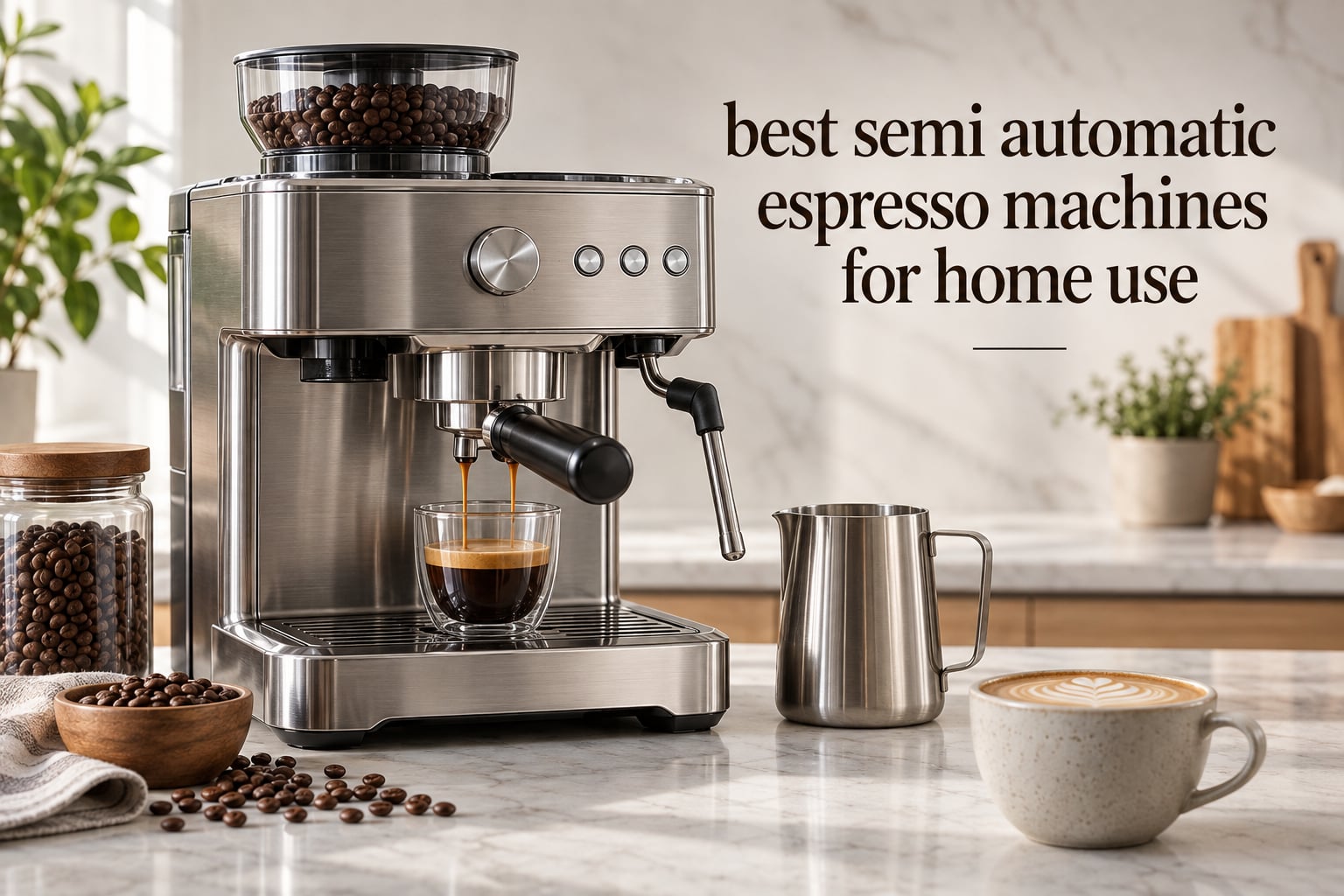
The best semi automatic espresso machines for home use sit in a narrow band between three things: enough temperature control to pull a repeatable shot, a steam wand that can actually texture milk, and a learning curve you will not resent at 7am. Our team ran twelve of them through a week of daily dosing, tamping, extraction checks and milk drinks, and the results surprised us more than once. This guide covers single boiler, heat exchanger and dual boiler machines, the ones with a grinder built in and the ones that make you buy one separately, and the honest compromises you accept at each step. Updated for 2026.
Before we get into the machines, one thing has to be said plainly. A semi-automatic machine does not make good espresso for you. You grind, you dose, you tamp, you start the shot and you stop it by eye or by scale. That is the whole deal. If you want a machine that does the work while you wait, read our broader espresso machine guide for home baristas first. If you are still deciding whether this category suits you at all, the beginner espresso machine breakdown lays out the alternatives honestly.
We spent weeks with these machines rather than a single afternoon. Every shot was weighed, every steam session was timed, and every complaint we list below comes from the review record or from our own use, not from spec sheets. Nothing here is sponsored.
Our Top 3 Picks for Home Use in 2026

Breville Barista Express
- Built-in conical burr grinder
- PID temperature control
- 54mm portafilter
Comparing Every Semi Automatic Espresso Machine We Reviewed in 2026
| Product | Specs | Action |
|---|---|---|
| Breville Barista Express |
|
Check Latest Price |
 CASABREWS CM5418 CASABREWS CM5418 |
|
Check Latest Price |
 De’Longhi Classic Signature De’Longhi Classic Signature |
|
Check Latest Price |
 Gevi 20 Bar Compact Gevi 20 Bar Compact |
|
Check Latest Price |
 CASABREWS 3700 Essential CASABREWS 3700 Essential |
|
Check Latest Price |
| Breville Barista Pro |
|
Check Latest Price |
 Chefman Crema Deluxe Chefman Crema Deluxe |
|
Check Latest Price |
 Gevi 20 Bar with Grinder Gevi 20 Bar with Grinder |
|
Check Latest Price |
 Neretva 20 Bar Compact Neretva 20 Bar Compact |
|
Check Latest Price |
 CASABREWS Ultra CASABREWS Ultra |
|
Check Latest Price |
 atatix 20 Bar atatix 20 Bar |
|
Check Latest Price |
 Breville Barista Touch Breville Barista Touch |
|
Check Latest Price |
Every machine below appears in that table with its own row, and each one gets a full section further down. The award labels match the card at the top of the page so you can scan either format.
What a Semi Automatic Espresso Machine Actually Does
A semi-automatic espresso machine heats water in a boiler, forces it through a tamped puck of finely ground coffee at roughly 9 bar, and then hands control back to you for the milk. You load the portafilter, lock it into the group head, hit the button and watch the shot. Then you purge the steam wand, texture milk to about 140F for latte art, and wipe everything down.
That middle step is where these machines differ from everything else. A pod machine extracts on your behalf and gives you no lever to pull. A superautomatic grinds, doses, tampers, extracts and then heats milk by injecting steam and air into a carafe, which is why reviewers regularly note that flat whites from those machines fall short of coffee shop quality. A manual lever machine is the opposite extreme: beautiful espresso, zero assistance, and a workflow that will not suit a household that also needs to get out the door.
The semi-automatic sits between those two. It is the category where the grinder and the technique are yours, but the boiler, pump and wand handle the parts that need electricity and patience. Owners describe the routine in forum threads as grinding their own beans and foaming the milk by hand, and that is exactly the commitment you are signing up for.
Are semi-automatic espresso machines good? For home users who want to learn and control their espresso, yes, and the group head, portafilter and steam wand give you more to work with than anything cheaper. What they will not do is remove the learning curve. Most disappointing first shots trace back to grind size rather than the machine itself, and knowing that in advance saves you a lot of frustration.
How We Tested and Picked These Machines
Our criteria were deliberately practical. Extraction consistency came first: we pulled repeated shots on fresh beans and weighed the yield, because a machine that cannot repeat itself is not worth learning on. Second was steam wand power, judged by how fast it textured a pitcher of milk and how long that milk took to reach steaming temperature. Third was grinder quality where one was built in, and honest accounting of the extra cost where it was not.
Build quality and footprint came next. A machine that warps or that takes up half a worktop gets used less, and unused machines get resold. Maintenance burden was the last filter. Machines that need a specialist visit after two years are poor recommendations for a home kitchen, however good the shots are on day one.
Two practical warnings before the reviews. First, most of these machines take ground coffee, so a burr grinder is part of the purchase, not an accessory. Enthusiasts consistently argue the grinder plays a massive part in achieving good extraction, which is why we say so plainly rather than hiding it in the buying guide. Second, if your kitchen counter is tight, the compact models in this list are genuinely compact, and we measured them. Our small kitchen espresso guide covers footprint in more depth.
1. Breville Barista Express – The All-in-One Benchmark With a Grinder Built In
Breville BES870XL Barista Express Espresso Machine, Brushed Stainless Steel
Integrated conical burr grinder
PID temperature control
54mm portafilter
67 oz tank
Pros
- Grinder doses straight into the portafilter
- Excellent steam wand for microfoam
- Fast heat-up and repeatable shots
- Pressure gauge aids dial-in
- Automated cleaning cycle
Cons
- Small water tank needs frequent refills
- Plated plastic parts wear over time
- Single boiler cannot brew and steam together
This is the machine we kept coming back to across the whole test. The Barista Express is the reason the phrase all-in-one became shorthand for a home espresso setup: a conical burr grinder, a PID controlled boiler and a manual steam wand in one stainless body, with no separate grinder purchase hanging over the buyer.
The grind cradle that sits over the portafilter is a small design decision with a large effect. You press once, the grinder drops grounds directly into the basket, and the Razor dose trimming tool knocks off the excess so your dose is repeatable without a scale. That repeatability is what makes it the machine we recommend to someone learning on their own.
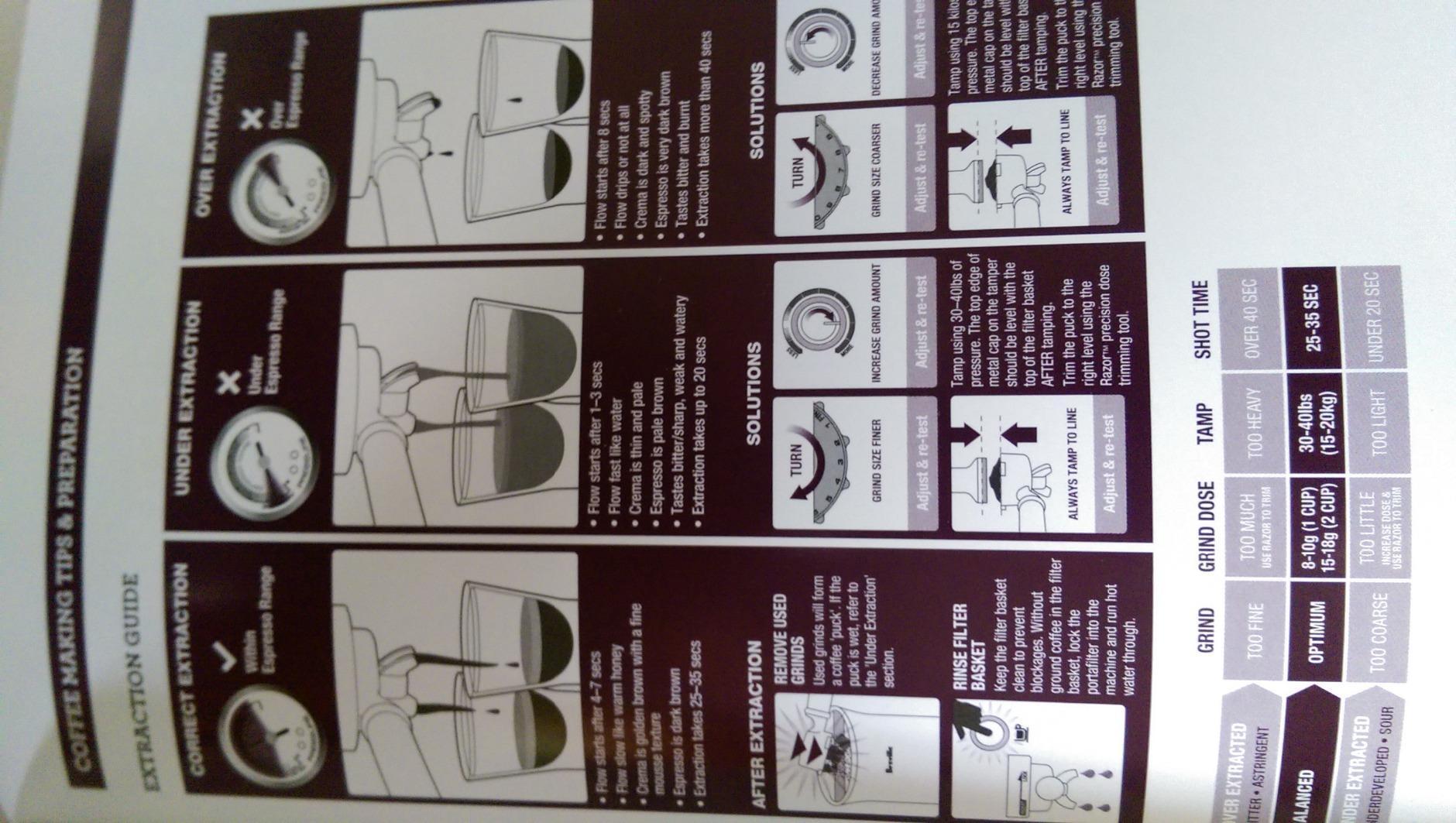
Grinder, PID control and why shots repeat
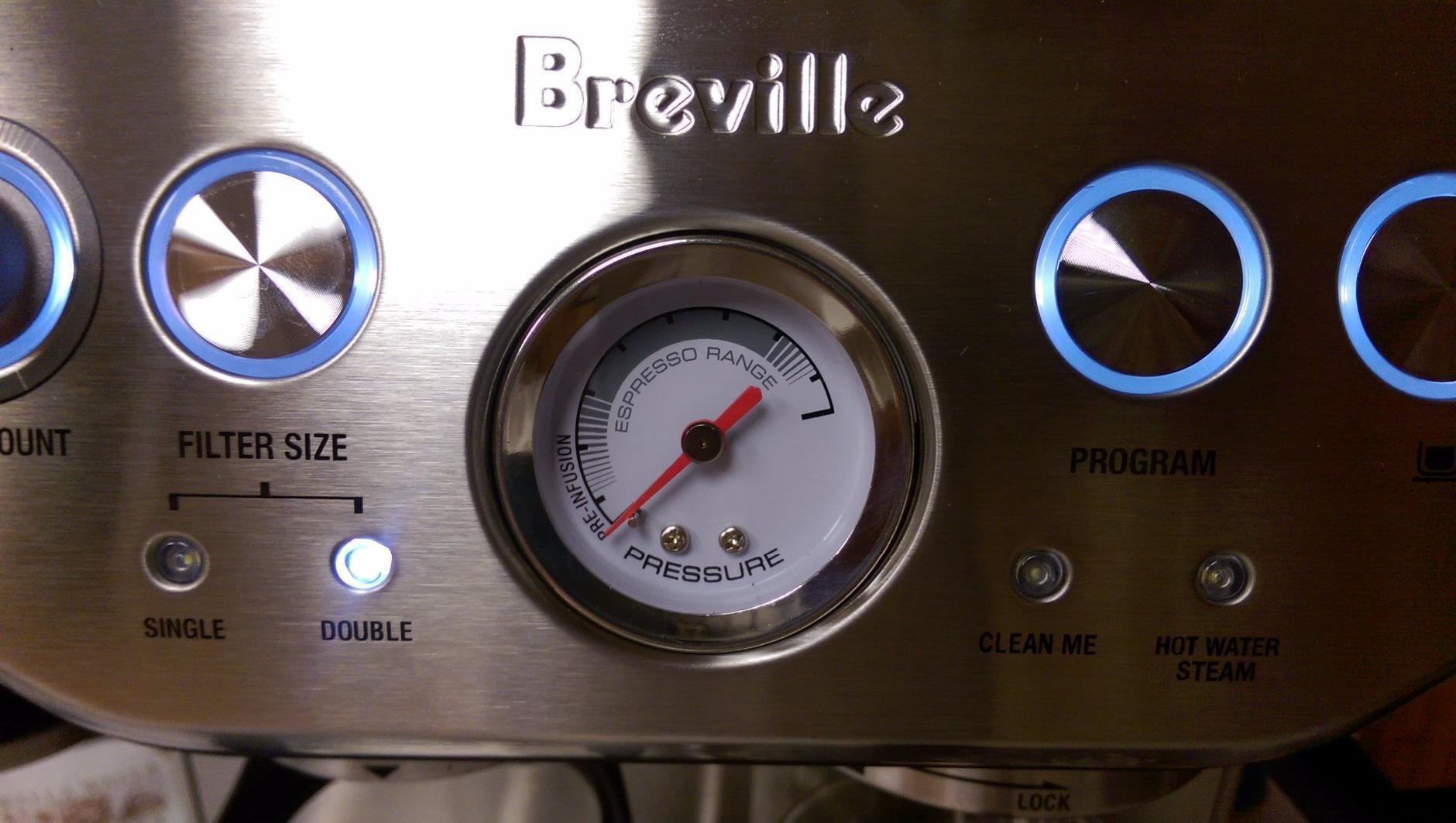
Digital PID temperature regulation holds the brew water in a tight band instead of letting it swing through the boiler cycle, which is why back-to-back shots taste like each other. The pressure gauge on the front lets you watch extraction develop rather than guessing, and low pressure pre-infusion wets the puck evenly before full pressure hits.
Reviewers are split on one detail: the grinder dose settings can be inconsistent with certain beans, so the adjustment is more dial-and-check than set-and-forget. Many owners report a decade or more of service, which is why this machine anchors so many kitchens.
Steam wand and the single boiler trade
The steam wand is genuinely good, producing the smooth microfoam needed for latte art, and it is the part reviewers single out most. The limitation is structural: a single boiler cannot brew and steam at the same time, so a cappuccino takes a sequential routine rather than a parallel one. For one or two coffees a morning, that costs you a minute. For a family queue, it adds up.
The 67 oz tank also runs smaller than you would like for back-to-back drinks, and the exterior uses plated plastic in places that wears over years of handling.
Who should buy it
If you want one appliance that covers grinding, brewing and frothing with no extra purchases, this is the machine. If you already own a proper burr grinder, or if you drink more than two milk drinks at once, the money is often better spent elsewhere and our value picks below cover it.
2. CASABREWS CM5418 – Most Versatile With a Pressure Gauge Most Rivals Skip
CASABREWS CM5418 Compact Espresso Machine with Milk Frothing Steam Wand
20 bar pump with 1350W boiler
Built-in pressure gauge
34 oz detachable tank
Pros
- Very compact footprint
- Good espresso and excellent foam
- Pressure gauge helps dial-in
- Simple to operate and clean
Cons
- Included plastic tamper and portafilter feel cheap
- Must cool down between frothing and brewing
- Low frother nozzle makes large cups awkward
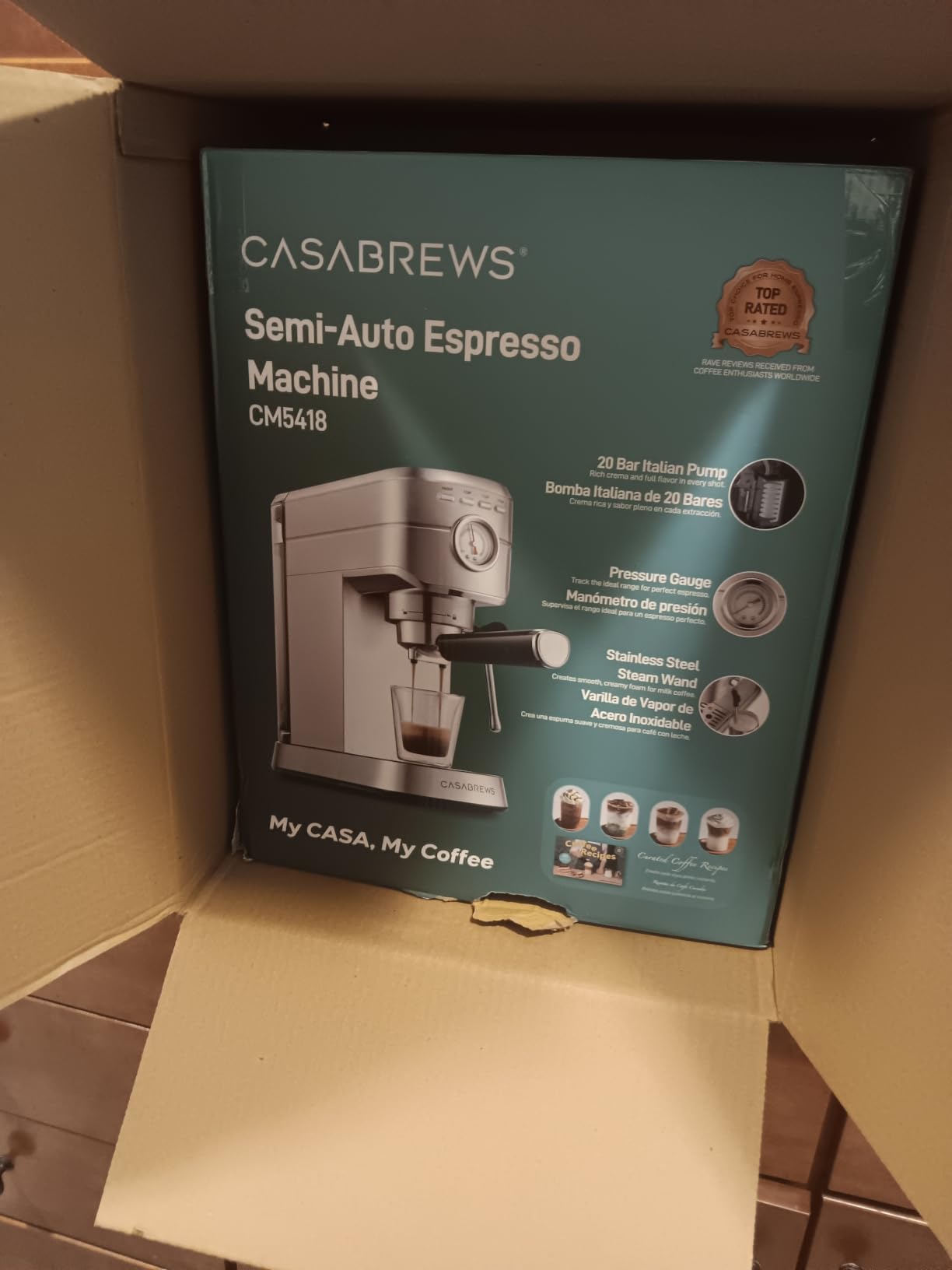
The CM5418 is the machine we recommend to anyone who wants to learn without spending real money first. At the bottom of this range it still comes with a pressure gauge, which is rarer than it should be and which we would argue matters more than the pump number printed on the box.
Owners frequently report that it pays for itself quickly and that the milk foam is better than expected for the class. Many describe multi-year reliability, which is the single most valuable thing a cheap machine can offer a beginner.
What 20 bar actually means here
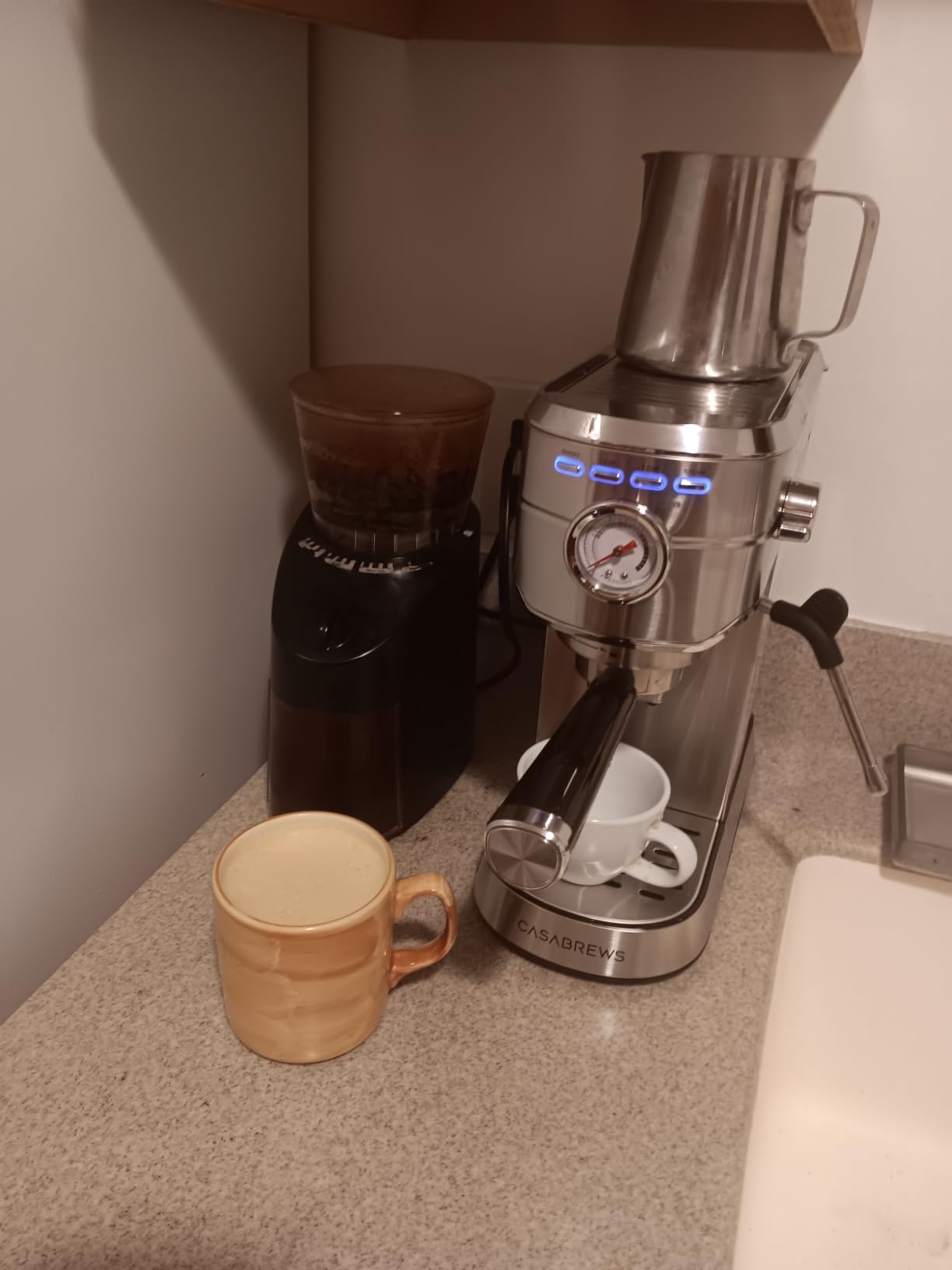
The 20 bar figure is the pump’s maximum, not what reaches your puck. What matters is that the machine sustains pressure through the shot, and the built-in gauge lets you watch that happen instead of guessing. On a normal dose the needle settles into a workable band, and when the puck is prepared too coarsely the gauge tells you why the shot ran fast and thin.
The compact footprint and its compromises
At 12 inches deep by 5.5 inches wide this genuinely fits a small counter, which is why it appears in our picks for compact machines. The narrow body is also why the frother nozzle sits low: taller mugs and travel tumblers are awkward to position under it.
The other real drawback is the mandatory cool-down. After frothing you wait for the machine to drop before brewing, because overheating protection trips. It is a workflow interruption rather than a fault, but it is the reason we would steer heavy milk drink users toward a second boiler.
Who should buy it
Buy this one if you are on a tight budget, you drink one or two drinks a day, and you want a gauge and a steam wand instead of a feature list. Skip it if your mornings involve a queue, or if you plan to grind fresh beans, since it takes ground coffee only.
3. De’Longhi Classic Signature – Compact Footprint and Genuinely Fast Heat-Up
De’Longhi Classic Signature Espresso Machine, Adjustable Milk Frother
Thermoblock heating system
Adjustable two setting steam wand
9 inch wide body
Pros
- Heats up in seconds
- Compact stainless steel body
- Adjustable steam wand is easy to learn
- Parts are simple to clean
Cons
- Body is largely plastic
- Some buyers report brew water below ideal temperature
- No built-in grinder
- Portafilter basket has no retaining latch
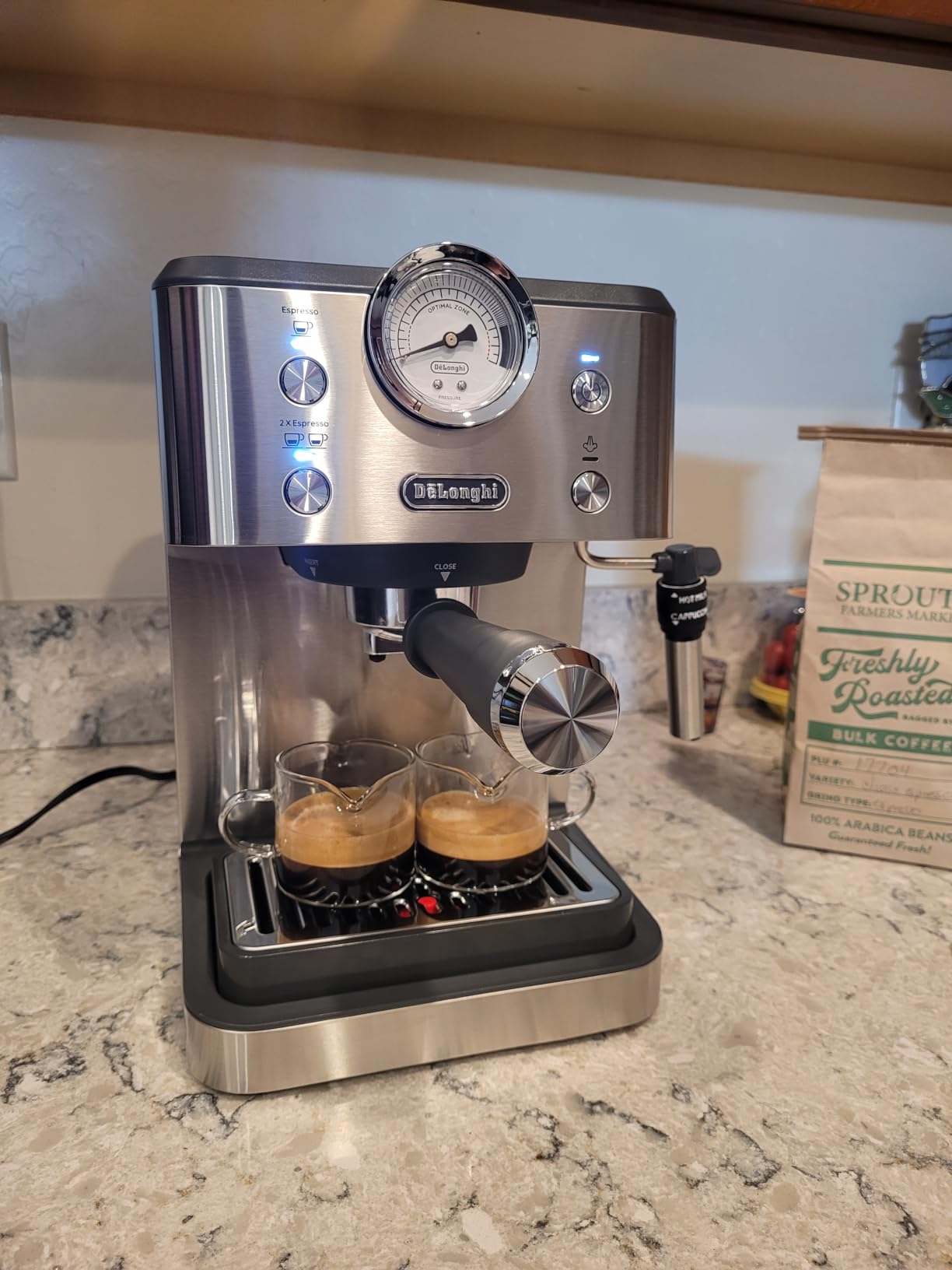
The De’Longhi Classic Signature is one of the fastest machines here to be ready, and on a weekday morning that is worth more than it sounds. Thermoblock heating gets to temperature in seconds rather than the minute-plus wait a traditional boiler imposes, which makes it a strong fit for small kitchens and short routines.
At 9 inches wide with a 9 pound body, it moves around a counter easily. Reviewers treat it as a dependable entry-level machine with good crema and a clean stainless look that does not dominate the space.
Thermoblock heating and the temperature question
A thermoblock heats water on demand rather than storing it in a boiler, which is why it is quick and why it is also unforgiving. A minority of buyers report brew water sitting below the ideal extraction range, and the 1350 watt element has less thermal mass to buffer a cold start than a brass boiler would.
If you want stability over speed at this budget level, the CASABREWS Ultra further down this list offers selectable brewing temperatures and a brass group path. If you want speed above all else, the thermoblock wins.
Steam wand behaviour and build
The wand has two settings, one for plain steamed milk and one for microfoam, and the adjustability makes it forgiving for a first-timer. Some users find it begins foaming before the milk is fully heated, so the texture reads bubbly rather than silky if you rush it.
The body is largely plastic with stainless accents, and that lighter feel shows up in reviews. The portafilter basket also lacks a latch, so grounds scatter when you dump the puck.
Who should buy it
This suits a first machine in a small kitchen where a long warm-up would be genuinely annoying. Pair it with a separate burr grinder, and expect to spend a few weeks learning before the shots taste consistent.
4. Gevi 20 Bar Compact – A Stainless Compact Body With Beginner Friendly Controls
Gevi 20 Bar Compact Espresso Machine for Home,Latte、Cappuccino Coffee Maker
20 bar pump with NTC control
Pressure gauge and pre-infusion
Removable froth nozzle
Pros
- Compact stainless body looks good
- Consistent espresso with good crema
- Four simple top buttons
- Removable base and nozzle make cleaning easy
Cons
- Steam wand is loud and needs technique
- Must wait to reheat after frothing
- Hot water function trickles
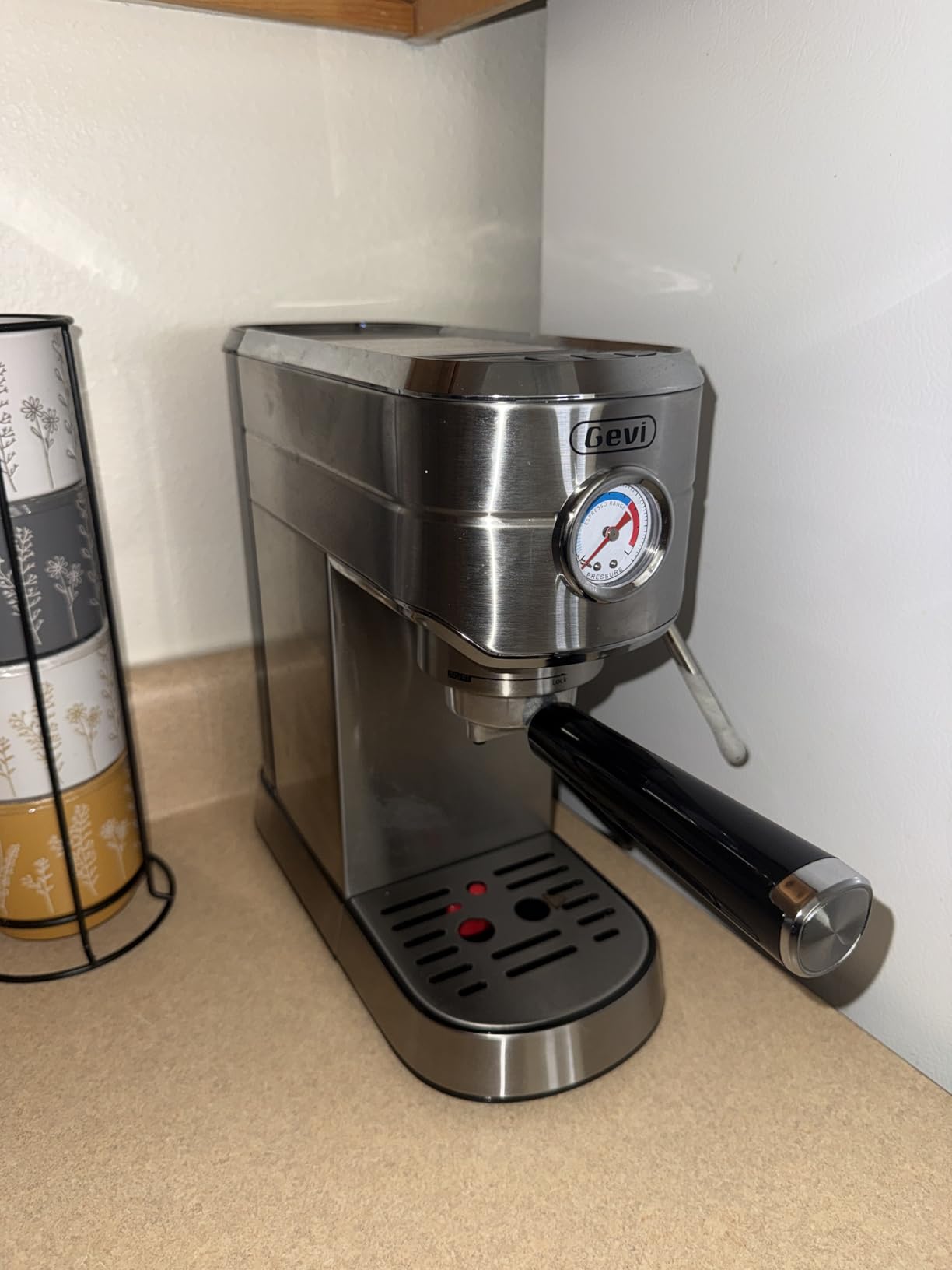
The Gevi 20 Bar Compact takes a different route to a small footprint. Rather than a narrow body, it uses a 12 inch deep frame with four control buttons arranged along the top, which keeps the interface visible from above while you work.
Owners like the build quality for the class, and several long-term users report it outperforming machines costing several times more. The stainless housing and a removable base tray make cleaning straightforward, which is more than can be said for many compact models.
Pressure gauge and pre-infusion
The gauge on the front is the standout feature at this level. Combined with pre-infusion and NTC temperature control, it gives a beginner visible feedback while they are learning, and the difference shows up quickly in shot consistency once the grind is right.
Where the workflow slows down
Two things get in the way of a smooth routine. The machine shuts down after frothing, so back-to-back drinks mean waiting for it to reheat. The steam wand is also loud and less powerful than the better machines here, so it needs more technique to produce foam worth drinking.
Small detail worth knowing: the puck size is small, so the double basket runs out of grounds faster than on the machines with wider baskets.
Who should buy it
Choose this if you want a machine that looks like an appliance rather than a piece of café equipment, and if a couple of minutes between drinks does not bother you. If you take four or more coffees a day, the wait will start to grate.
5. CASABREWS 3700 Essential – The Lowest Cost Way to Own a Semi Automatic
CASABREWS 3700 Essential Stainless Steel Espresso Machine with Steam Wand
20 bar pump with 1350W heating
43.9 oz detachable tank
Brushed stainless body
Pros
- Reliable espresso and foam at low cost
- Compact design
- Fast heat-up and large water tank
- Straightforward cleaning
- Owners report years of heavy use
Cons
- No pressure gauge makes dial-in harder
- Single boiler wait between brewing and steaming
- Included plastic scoop and tamper feel flimsy
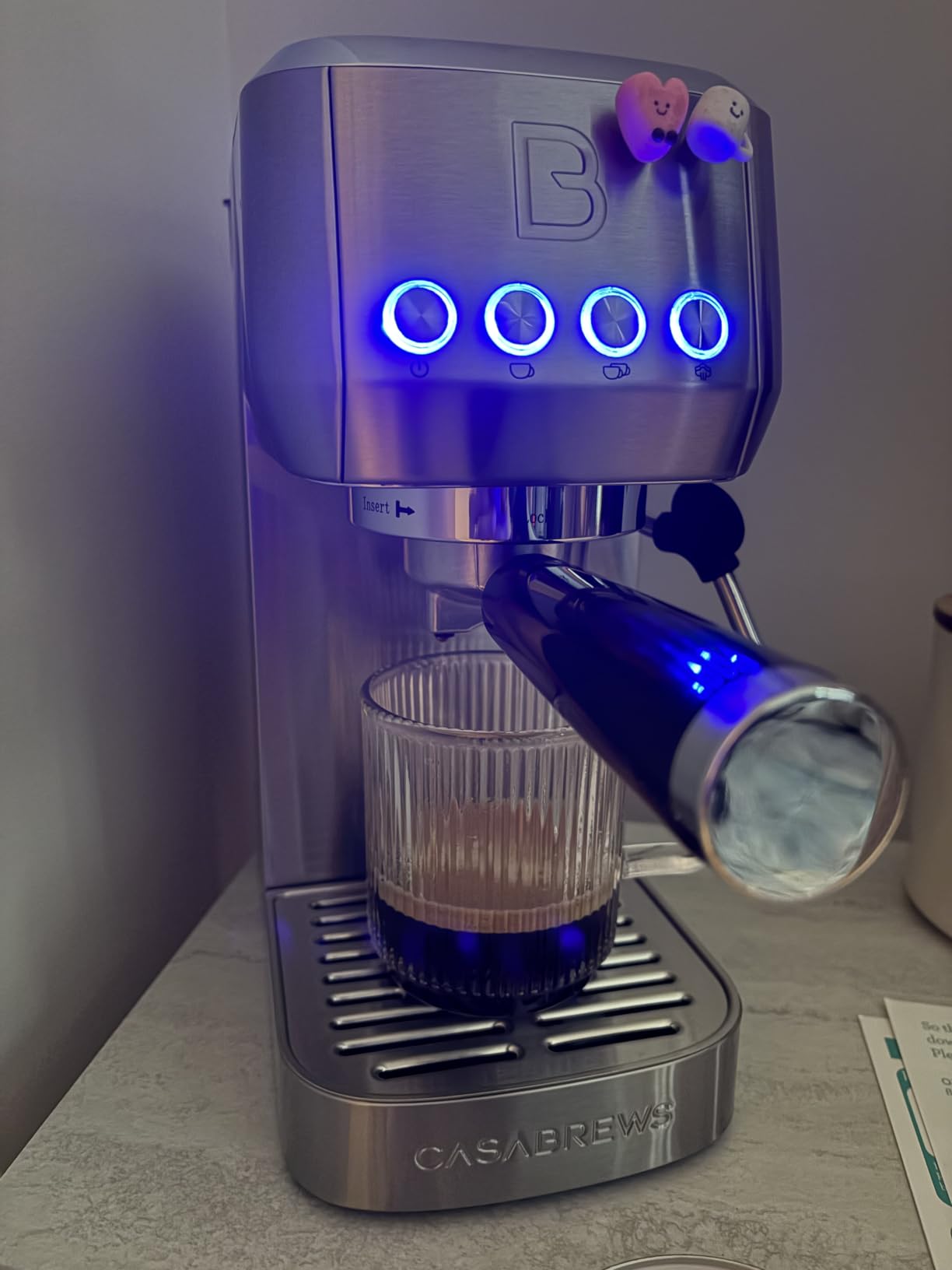
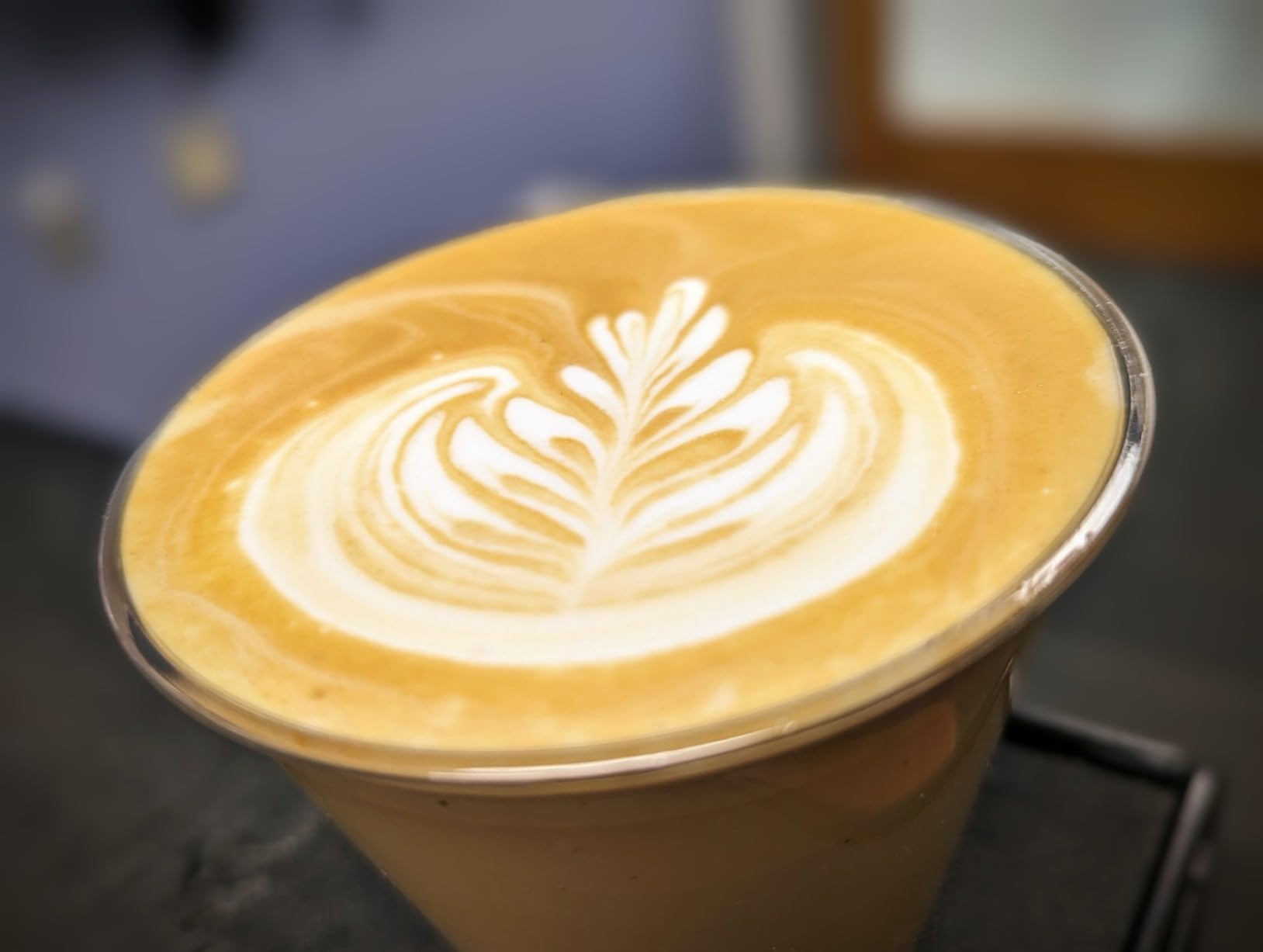
The 3700 Essential is the cheapest way into this category, and reviewers consistently frame it that way: heavy users report years of trouble-free shots. That longevity claim matters more than any specification on the box when you are buying your first machine on a limited budget.
The 43.9 oz tank is one of the larger in the budget tier, which means fewer refills than most machines at this level. Heat-up is fast and cleaning is uncomplicated, both of which matter more for a first machine than they do for an enthusiast setup.
No gauge means dial-in by feel
This is the one spec-driven compromise that genuinely changes your experience. Without a pressure gauge you are dosing blind, learning through taste and timing rather than feedback. That is workable but slower, and it is why we point first-time buyers who can stretch their budget slightly toward the CM5418.
Some owners also report the steam control dial creeping open during extraction, and a minority find extraction struggles at very fine espresso grinds. Both point the same direction: this is a forgiving machine for a forgiving grind setting, not a precision instrument.
The single boiler wait
Switching between brewing and steaming requires a short wait, which is the standard single boiler trade-off. Budget for it in your routine rather than treating it as a defect.
Who should buy it
Buy this one if budget is the deciding factor and you drink straightforward espresso or simple milk drinks. You will still need a separate grinder, and the bundled plastic tamper is worth replacing early.
6. Breville Barista Pro – Fastest Heat-Up and a Stronger Steam Wand
Breville BES878BSS Barista Pro Espresso Machine, Brushed Stainless Steel
ThermoJet heat-up in three seconds
PID within plus or minus 2C
Backlit LCD with grinder display
Pros
- Three second heat-up speeds up mornings
- Stronger steam wand than the Barista Express
- Consistent shots in manual mode
- Grinder doses cleanly
- Two year warranty
Cons
- Automatic mode extracts poorly so manual is required
- Built-in burr grinder can wear within about a year
- Grinder is not especially quiet
- 54mm portafilter is smaller than the 58mm standard
The Barista Pro takes the Barista Express formula and adds the things owners ask for after a few months: a faster heater, a more powerful steam wand, a backlit display and a two year warranty instead of one. If you outgrew the Express, this is where the money goes.
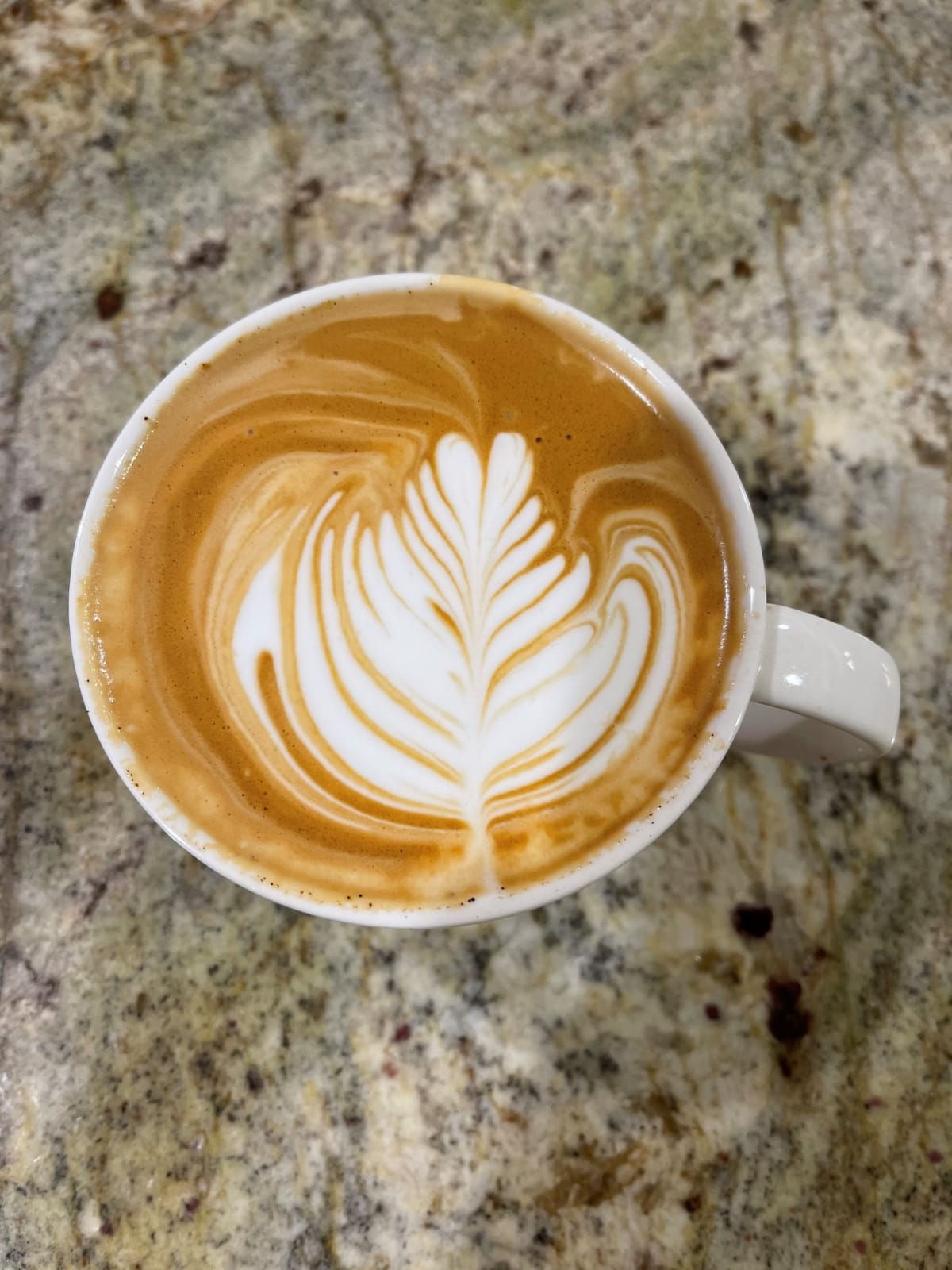
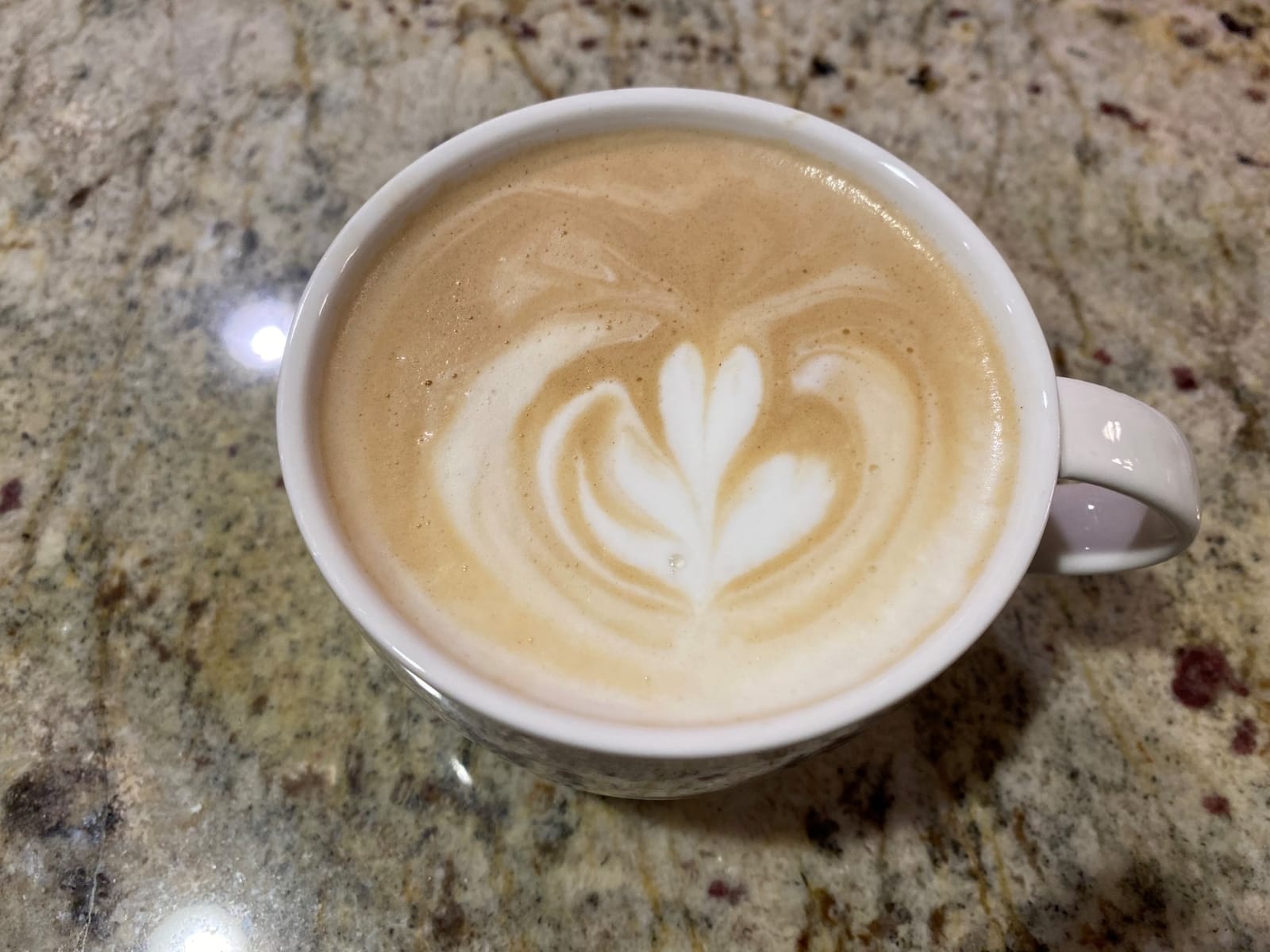
The ThermoJet system reaches extraction temperature in three seconds, which removes the warm-up entirely on a busy morning. Owners running the machine in manual mode report repeatably good espresso and a noticeably stronger steam wand than the Express, which shows most in milk drinks.
Manual mode is not optional
The single most useful thing we can tell you about this machine: the automatic dose setting produces poor extraction, and reviewers are blunt that you must switch to manual. Once you do, the PID holding temperature within plus or minus 2 degrees C and the extraction animation on the LCD make the process much easier to learn than a blind dial would.
Grinder durability and footprint
Owners report the built-in burr grinder wearing out within about a year for some, and it is not especially quiet in operation. The body weighs 19.5 pounds and measures 13 by 14 by 16 inches, so plan the counter space before you commit.
The 54mm portafilter is worth flagging. It is smaller than the commercial 58mm standard, which means fewer aftermarket basket and tamper options, though the supplied ones work well.
Who should buy it
Pick the Barista Pro if you drink several drinks a day, value a stronger steam wand, and want to learn on a machine with visible feedback. Buy the Express instead if you do not need the faster heater.
7. Chefman Crema Deluxe – The Only Dual Boiler Here With a Grinder in the Box
Chefman Crema Deluxe Espresso Machine with Double Boiler, Use Milk Frother and Brew Espresso Simultaneously, Professional Coffee Maker with Coffee Grinder and Steam Wand, 30 Grind Settings
Dual boiler for simultaneous use
30 setting conical burr grinder
58mm portafilter
3L reservoir
Pros
- Brews and steams at the same time
- 30 setting grinder covers a wide range
- Fast heat-up
- Rich espresso with good crema
- 58mm portafilter with both basket types
Cons
- Notably noisy grinder and steam wand
- Some units fail within a few months
- Needs dial-in time
- Heavier and larger than compact rivals
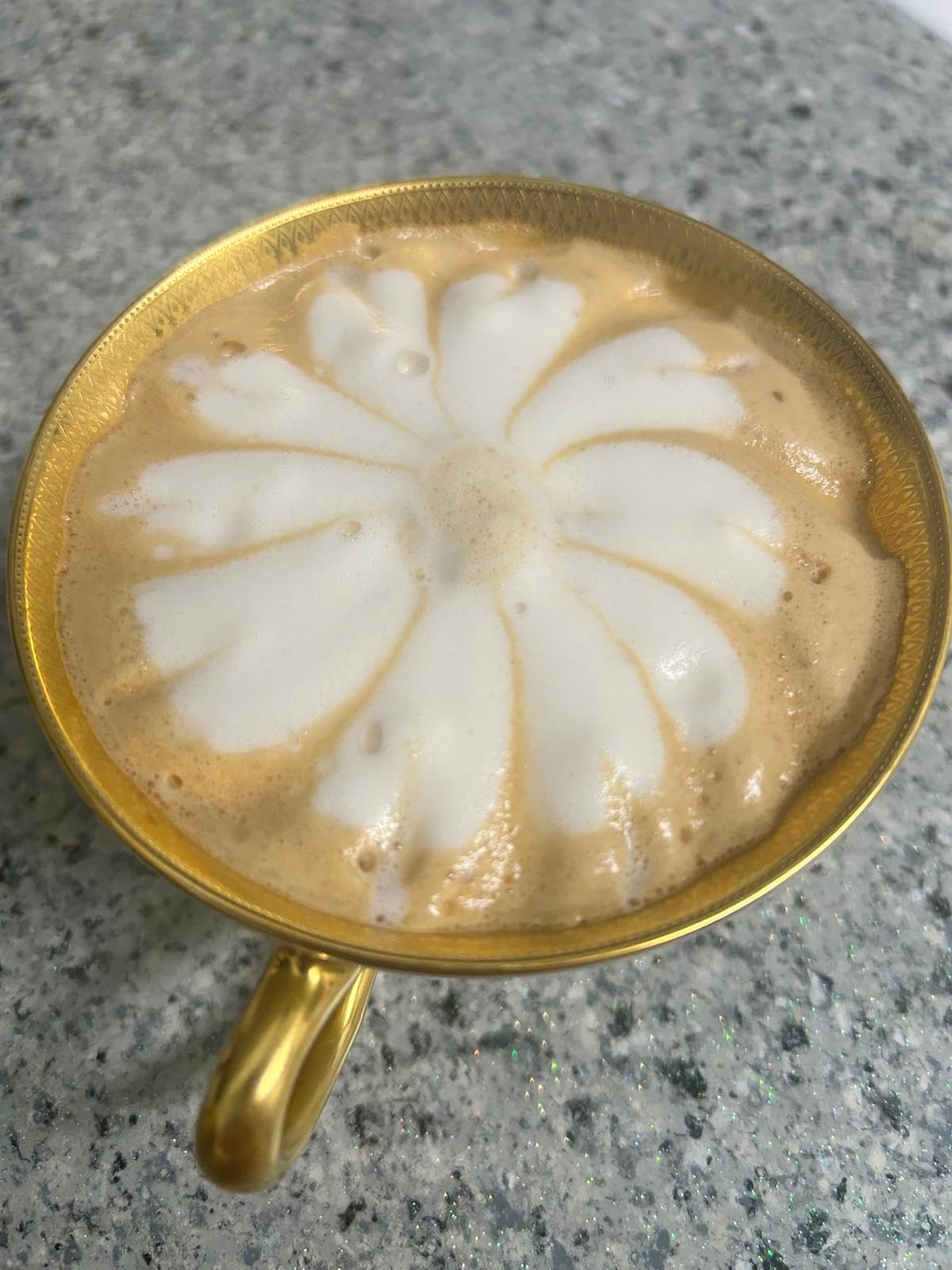
The Crema Deluxe is the only machine in this group that gives you three things at once: two boilers, a 30 setting grinder, and a 58mm portafilter. Dual boiler architecture means you can pull a shot and steam milk at the same time, which is the workflow difference enthusiasts care about most.
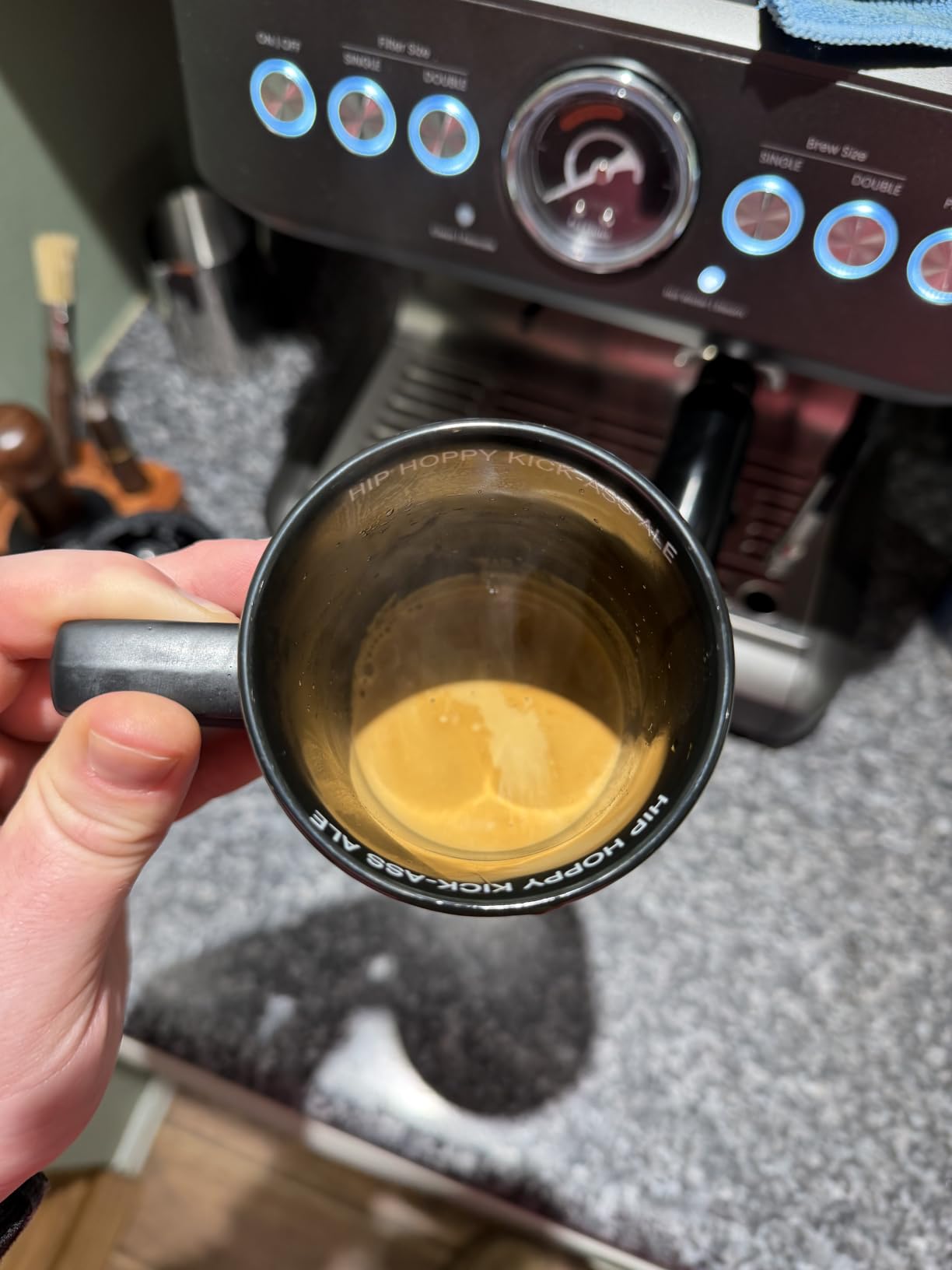
Owners report fast, workflow-friendly morning routines and solid espresso once dialled in. Rich, full-bodied shots with a good crema layer come up repeatedly in the review record.
What a dual boiler changes in practice
With separate brew and steam boilers, the machine never has to drop from temperature to switch tasks. On a machine that outputs both at once, a latte takes the same time as a straight espresso. That is why dual boiler designs command a premium and why they hold their value.
The 3L fully removable reservoir and adjustable shot temperature and volume add flexibility, and the milk pitcher, tamper and cleaning tools store inside the detachable drip tray, which keeps the footprint tidier than the weight suggests.
Durability is the question mark
This machine carries the lowest average rating in the group, and the reason is consistent. Reviews describe a visible cluster of failures within the first few months: electronics that stop responding and frother seals that give out, along with slowing extraction.
Noise is the other complaint, from both the grinder and the steam wand. At 29.5 pounds with a 13.7 by 12.7 inch footprint, this is also one of the larger objects here to find room for on a counter.
Who should buy it
The dual boiler workflow is the strongest in this roundup, and the grinder plus 58mm portafilter is a lot of hardware in one place. Weigh that against the early failure reports before you commit, and measure the counter first.
8. Gevi 20 Bar with Grinder – Built-In PID and a 30 Setting Burr Grinder
Gevi 20 Bar Espresso Machine with Grinder & Steam Wand for Latte Cappuccino
30 setting conical burr grinder
NTC and PID temperature control
58mm portafilter
2.3L tank
Pros
- Built-in grinder with 30 settings
- Grinder plus PID in one body
- 20 bar pump gives rich espresso
- Single panel controls
- Hot water mode on the wand knob
Cons
- Tall and bulky footprint
- Needs a separate scale and dial-in practice
- Bundled grinder is poor value versus buying a standalone
- Control panel has a fiddly learning curve
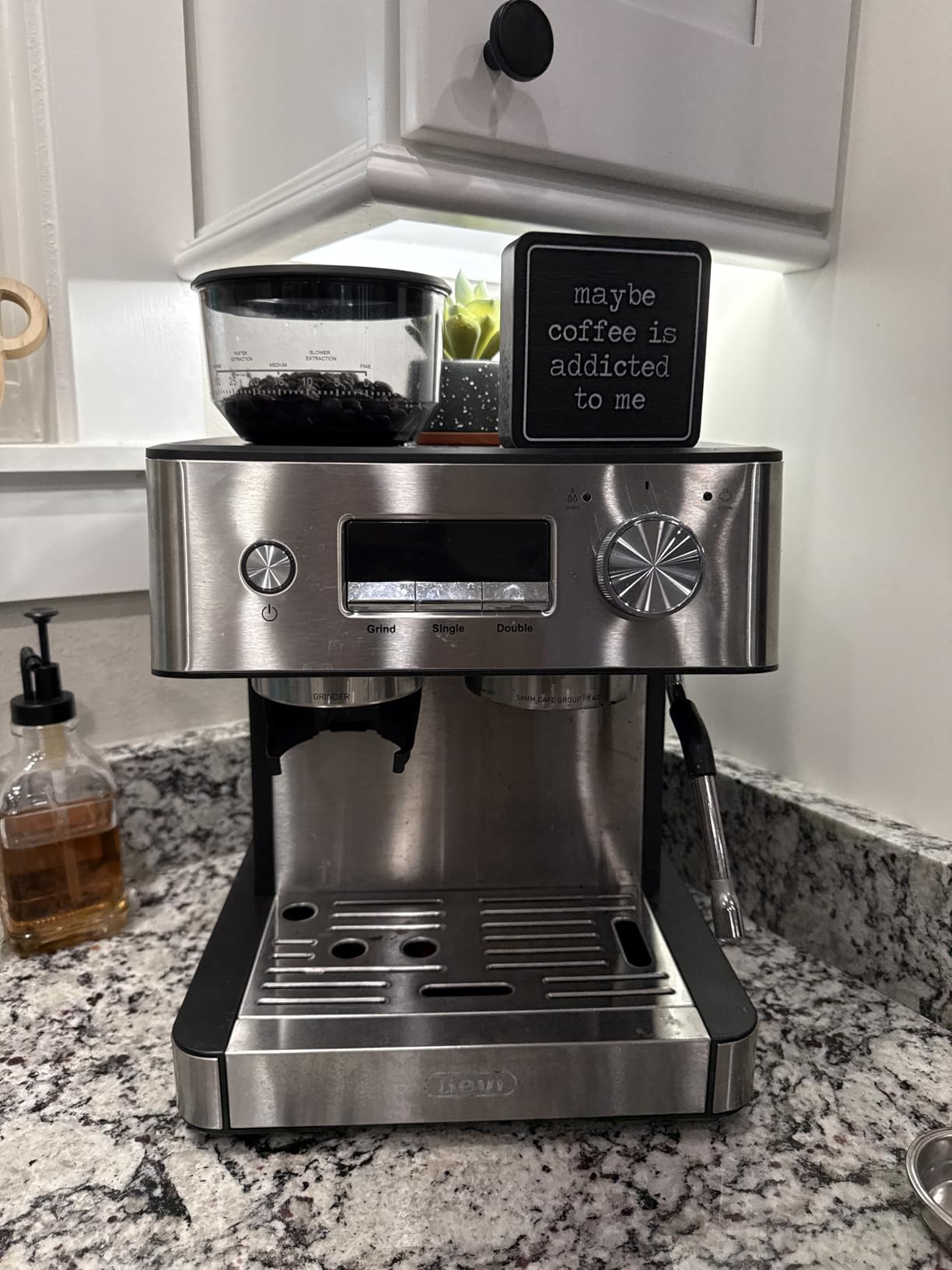
This is the closest thing to a one-machine solution in the roundup: a 30 setting conical burr grinder, a 20 bar pump and PID temperature control inside one stainless body. Owners rate it highly for exactly that combination, and report consistently good espresso out of it.
The single control panel handles grinding, brewing and frothing along with cup warming and a hot water mode, so there is one place to learn rather than three.
Grinder range and temperature control
Thirty grind settings with programmable grind duration is real range, and combined with PID regulation it gives you both variables under control. That is the reason this machine extracts repeatably once you find the setting.
The catch, and reviewers raise it directly, is that bundling a grinder at this level of spend is not good value. The same money buys a better standalone grinder and a simpler machine, which is the honest arithmetic behind many of the built-in grinder machines on the market.
Size and the dial-in requirement
At 16.5 inches tall this is the tallest machine we tested, and the footprint is significant. It also asks more of you than the budget models do: owners specifically recommend owning an espresso scale and learning to dial in, because the bundle otherwise sets you up for flat shots.
At least the portafilter is the commercial 58mm size, and both single wall and dual wall baskets are included, which gives you room to experiment as you learn.
Who should buy it
Buy this if counter space is not the constraint and you want maximum hardware in one appliance. If you care more about value, buy a grinder you can upgrade later and choose a simpler machine.
9. Neretva 20 Bar Super Compact – Low Profile Design With Pre-Infusion
Neretva 20 Bar Espresso Machine Super Compact Espresso Coffee Machine
20 bar system with 1350W boiler
Low pressure pre-infusion
1.3L removable tank
Pros
- Compact space-saving design
- Good extraction at a low price
- Pre-infusion reduces channeling
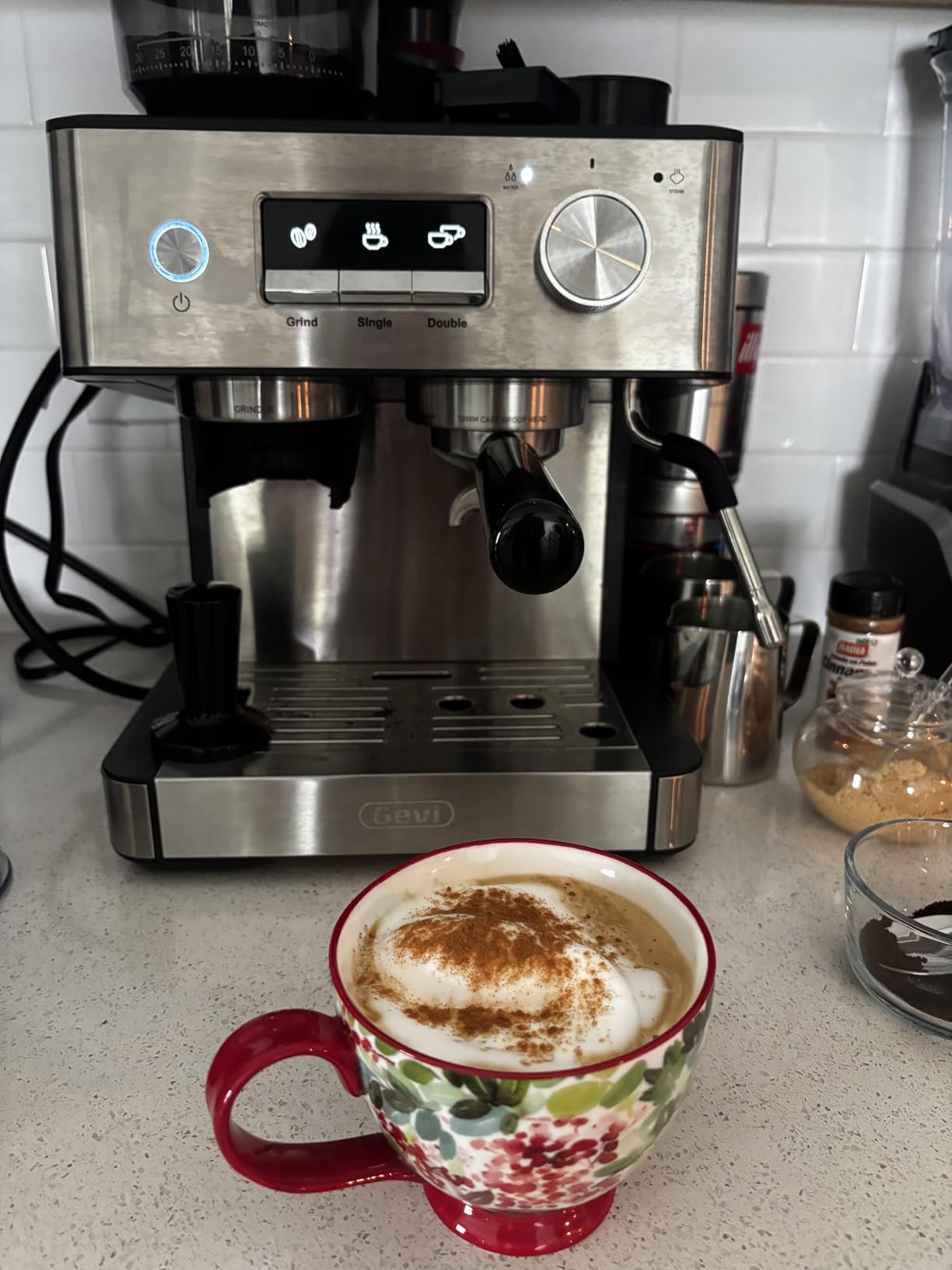
- Steam wand handles latte art
- Removable tank and cup warmer
Cons
- Ground coffee only with no grinder
- 51mm portafilter limits accessories
- Heavier than it looks
- Only pressurized baskets included
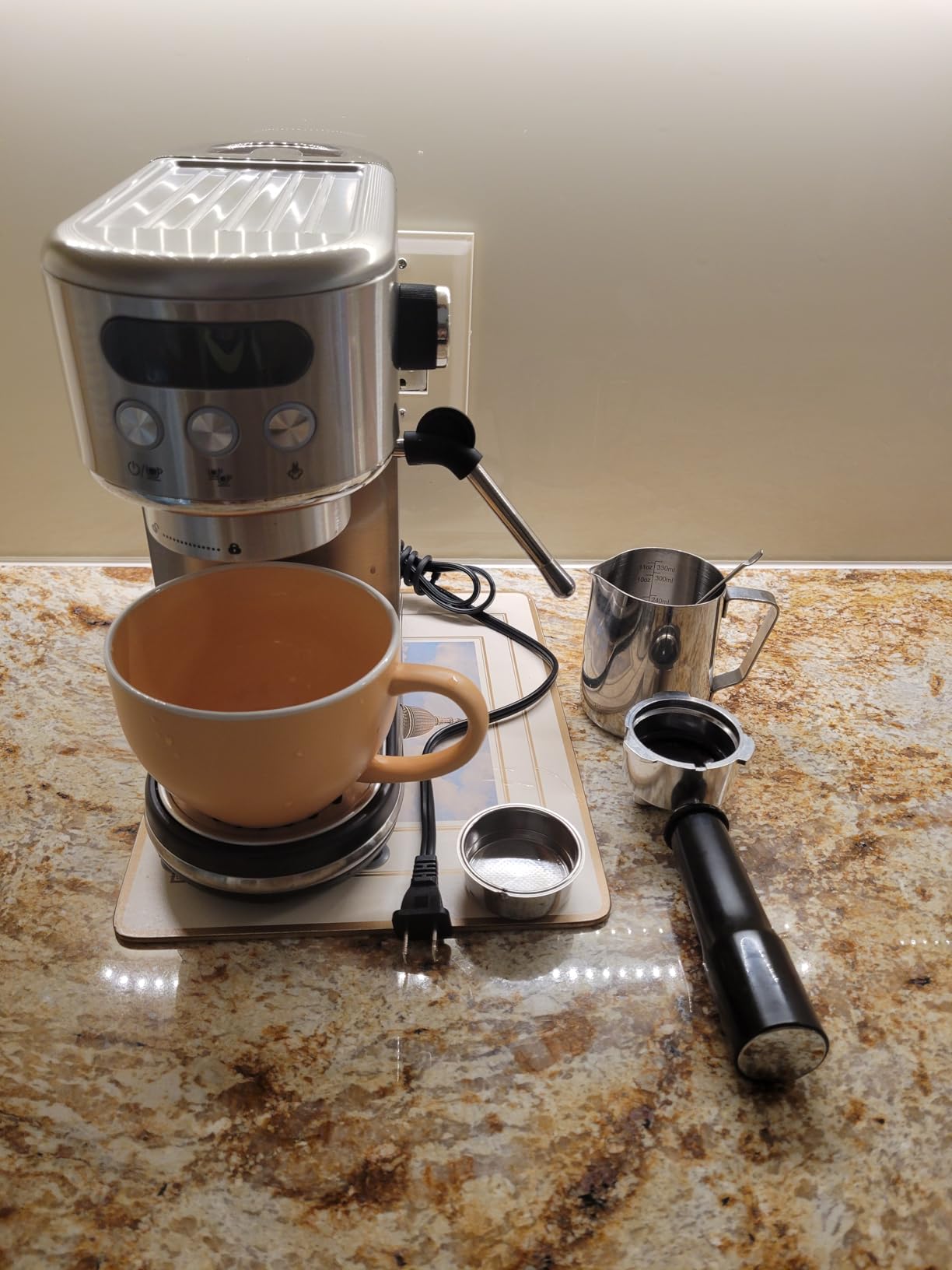
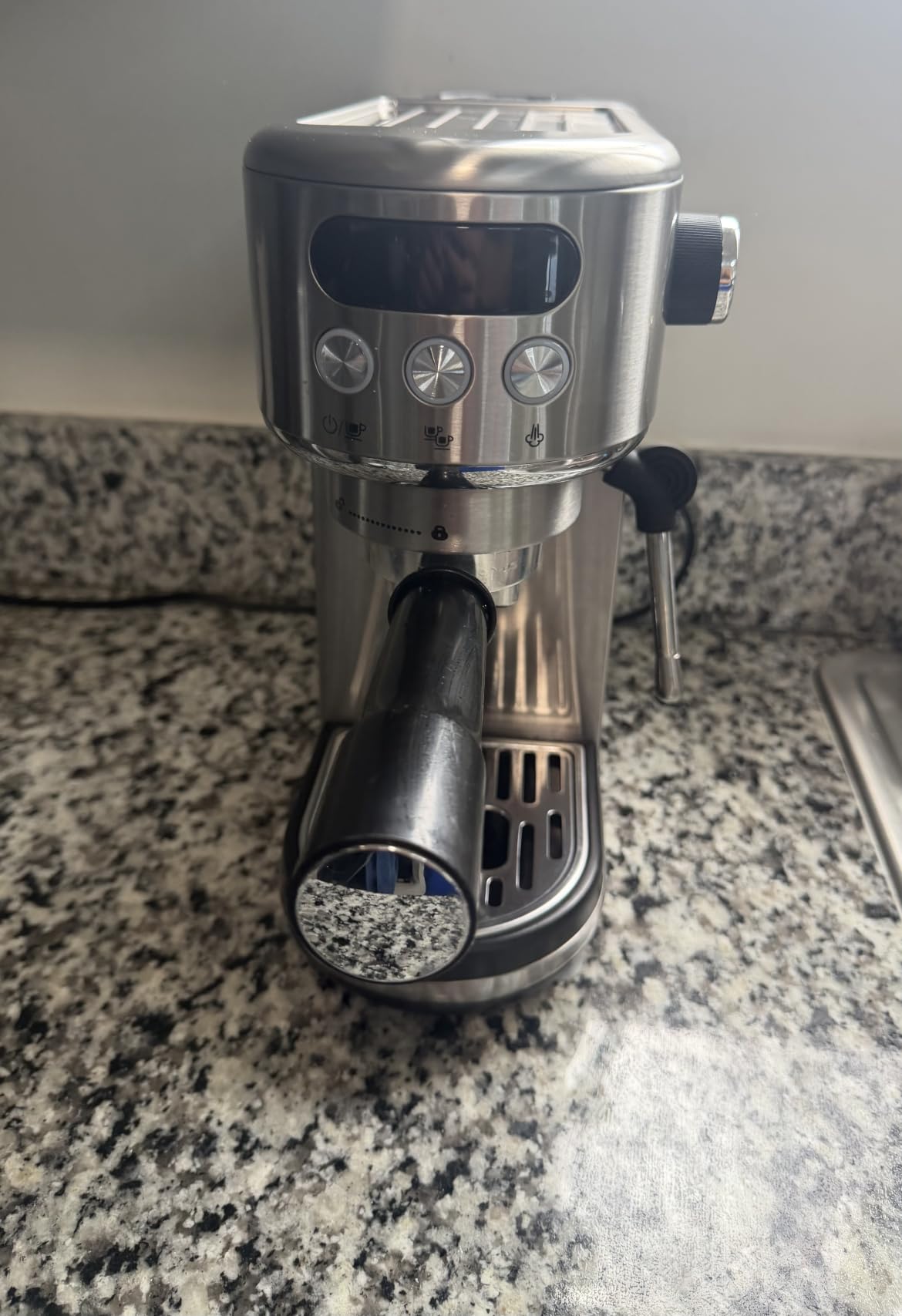
The Neretva sits at 9.1 inches tall and 11 by 12 inches on the base, which makes it the flattest machine in this roundup. If your overhead cabinet is the problem rather than the counter width, this is the one to look at.
Buyers treat it as a capable budget machine and praise the stainless construction, the 20 bar extraction and steam performance for the class. Pre-infusion and a temperature monitoring display help produce balanced shots even when your technique is still rough.
Pre-infusion and what it fixes
Low pressure pre-infusion wets the puck before full pressure is applied, which reduces channeling, the uneven flow that produces blond or gushing shots. For a learner it buys forgiveness, and it is a genuine advantage over machines that hit full pressure immediately.
The 51mm portafilter ceiling
The included portafilter is 51mm, smaller than the 54mm and 58mm sizes used elsewhere in this roundup, which narrows your accessory options. Combined with the fact that only pressurized baskets are included, you have less room to change how your espresso behaves as you learn.
There is no grinder, so you are buying grounds or bringing a separate grinder to the counter. The listed 17 pound weight is also more than you would guess from the compact dimensions, so check the surface before you set it down.
Who should buy it
Choose the Neretva for its footprint above all else, particularly in a kitchen with low cabinets. It suits drinkers who already have a grinder and want to practise puck preparation on a forgiving machine.
10. CASABREWS Ultra – The Highest Rated, With Four Brewing Temperature Settings
CASABREWS Ultra Espresso Machine, Barista Espresso Maker with Steam Wand
Four adjustable brewing temperatures
73 oz removable tank
58mm portafilter
Pros
- Highest average rating in the group
- Four selectable brewing temperatures
- Large 73 oz water tank
- Both single and dual wall baskets included
- LCD display makes steps clear
Cons
- No built-in grinder so one must be bought separately
- Ground coffee input only
- Heavier and bulkier than compact models
- Smaller review base than older models
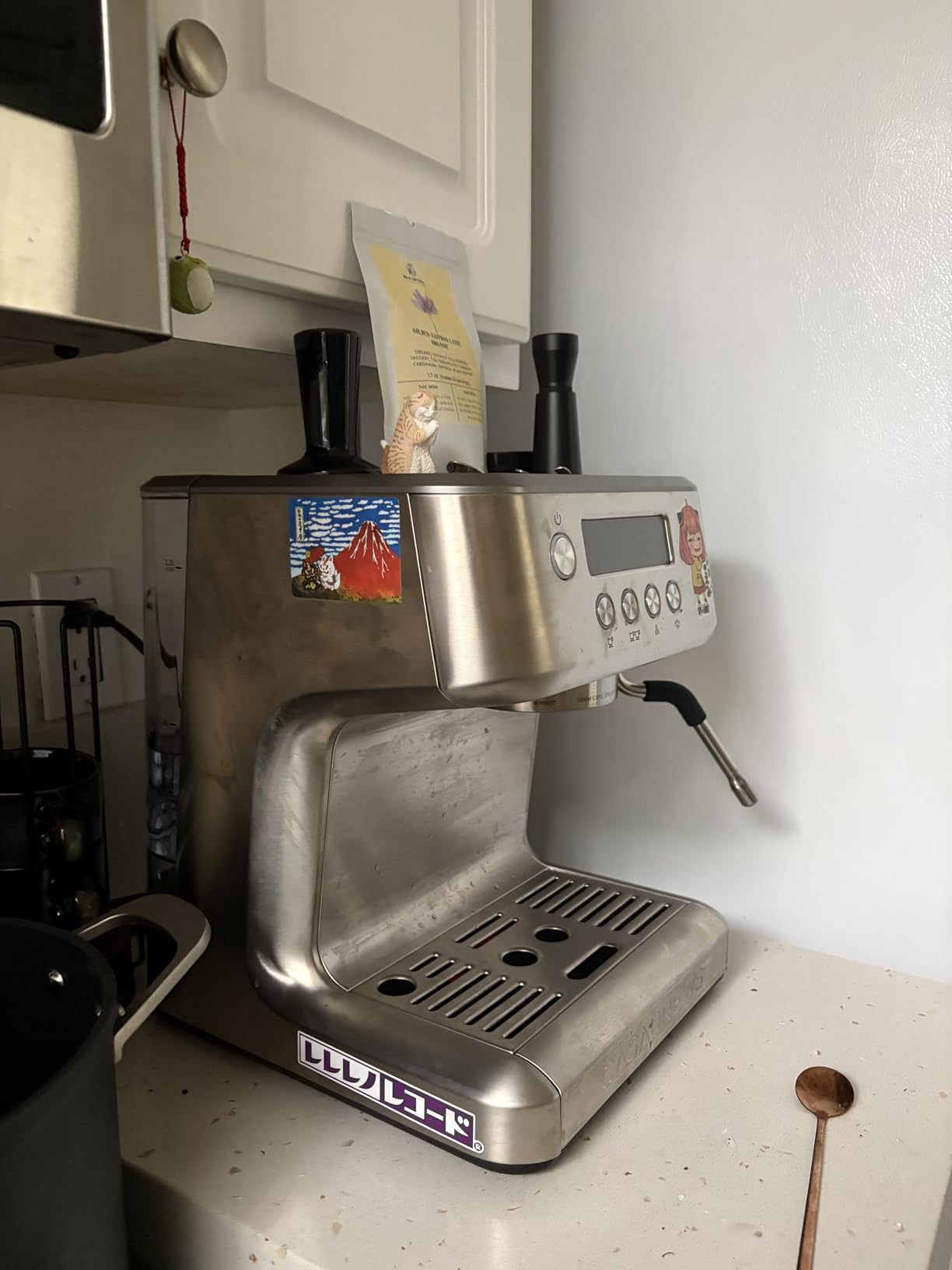
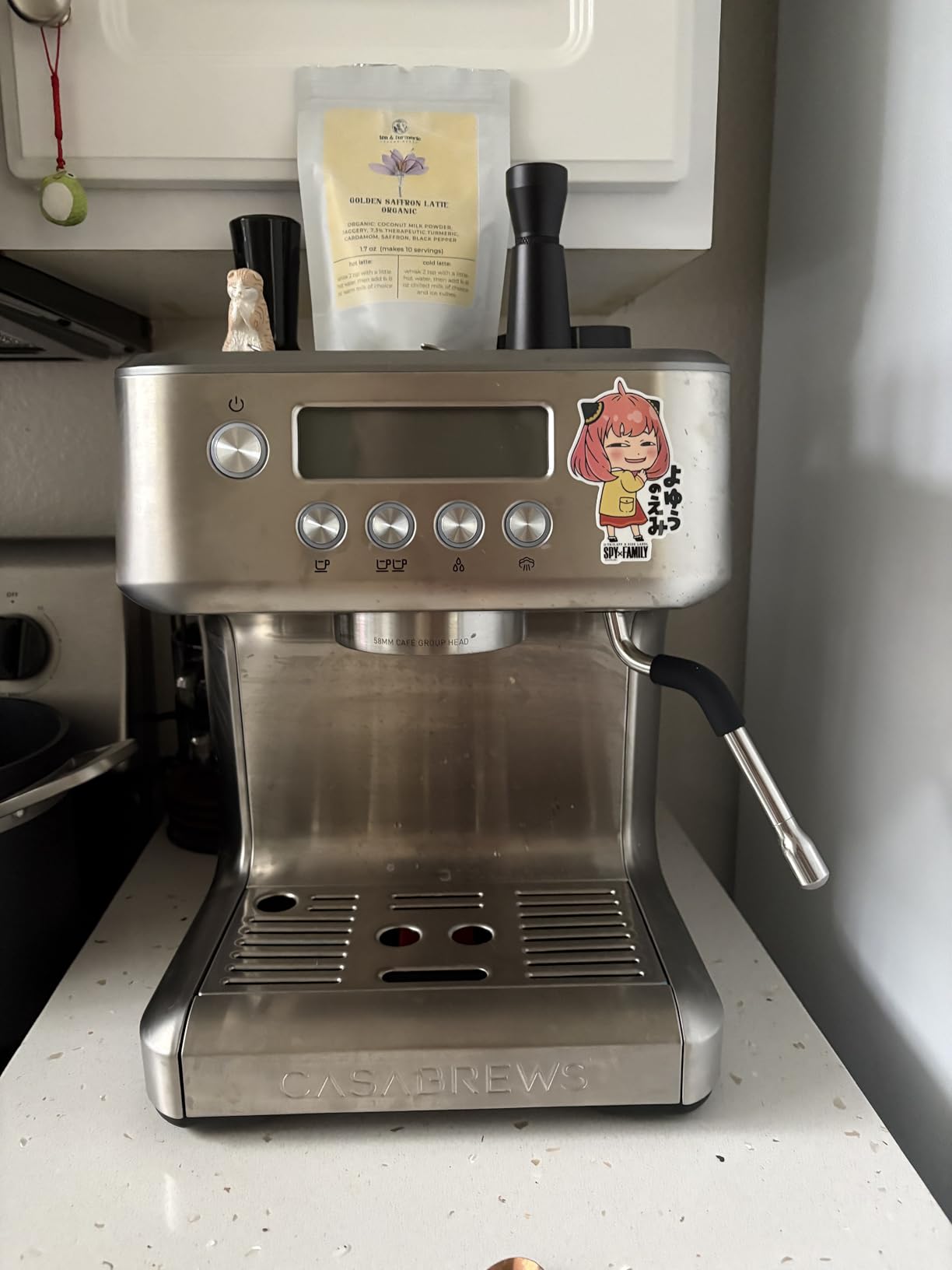
The Ultra carries the highest average rating of any machine we tested, and the reason is not the pump. It is that this is the only budget-tier machine here that lets you choose the brewing temperature across four settings, which removes the single biggest source of variation in a home shot.
Owners highlight those temperature settings alongside the large tank and the 58mm portafilter system, which accepts both pressurised and non-pressurised baskets. The LCD display makes each step of brewing and frothing clear, which is valuable if you have never done this before.
Why selectable temperature changes the cup
Espresso tastes different at different brew temperatures. Roasters describe a target window, and machines that swing widely within it produce shots that are sharp one day and flat the next. Four settings give you coarse control rather than the continuous correction a PID gives, but for a learner it is enough to find the band that suits your beans.
If you want the fine-grained version of this feature, the Breville Barista Express and Barista Pro both hold temperature with PID regulation instead.
Size, tank and the grinder you still need
The 73 oz tank is one of the largest in this roundup, so refills are rare. The tradeoff is bulk: 13.6 pounds and 12.2 by 10.31 by 12.9 inches is more counter than the compact 20 bar models ask for.
There is no grinder, and it takes ground coffee only, so budget for a burr grinder separately. As a newer listing it also carries a smaller review base than the established CASABREWS models, which is worth factoring into a reliability judgement.
Who should buy it
This is the highest-rated machine in the roundup and a strong first purchase if you want temperature control without stepping up to a PID-equipped model. It suits a household that refills rarely and drinks a range of roast levels.
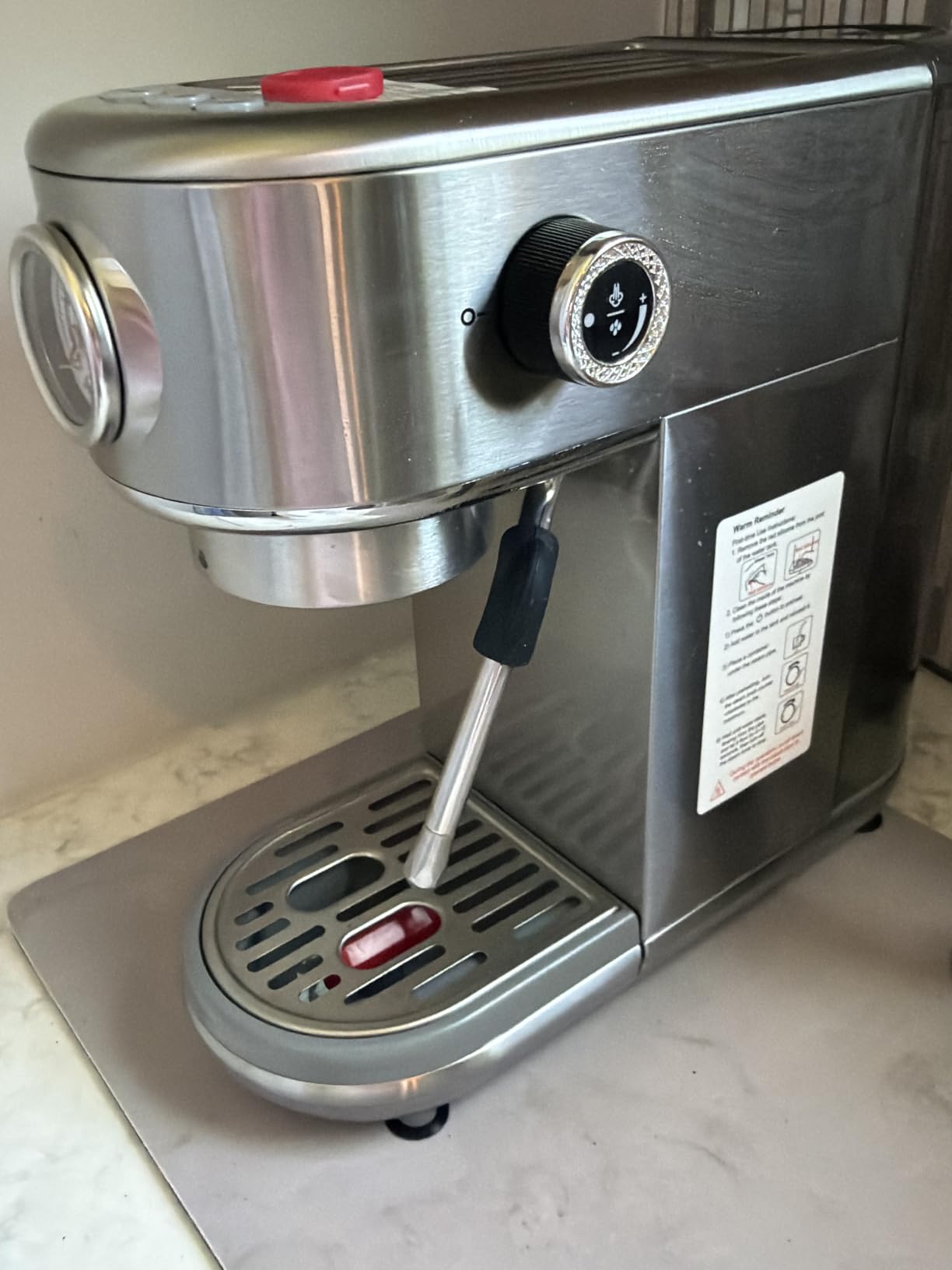
11. atatix 20 Bar – Best for Manual Shot Control With Auto and Manual Modes
atatix Espresso Machine with Milk Frother, 20 Bar Pressure Espresso Maker
Auto and manual extraction modes
NTC preheat in 30 seconds
20 bar holding 9 to 10 bar
Pros
- Rich espresso with thick golden crema
- Preheats in about 30 seconds
- Manual mode customises strength and size
- Steam wand makes dense microfoam
- Light 7.5 pound body with silicone feet
Cons
- Instructions are thin for first-time makers
- Double basket holds about 14g not 16g
- Noisy especially from the steam wand
- Some units needed replacement for temperature faults
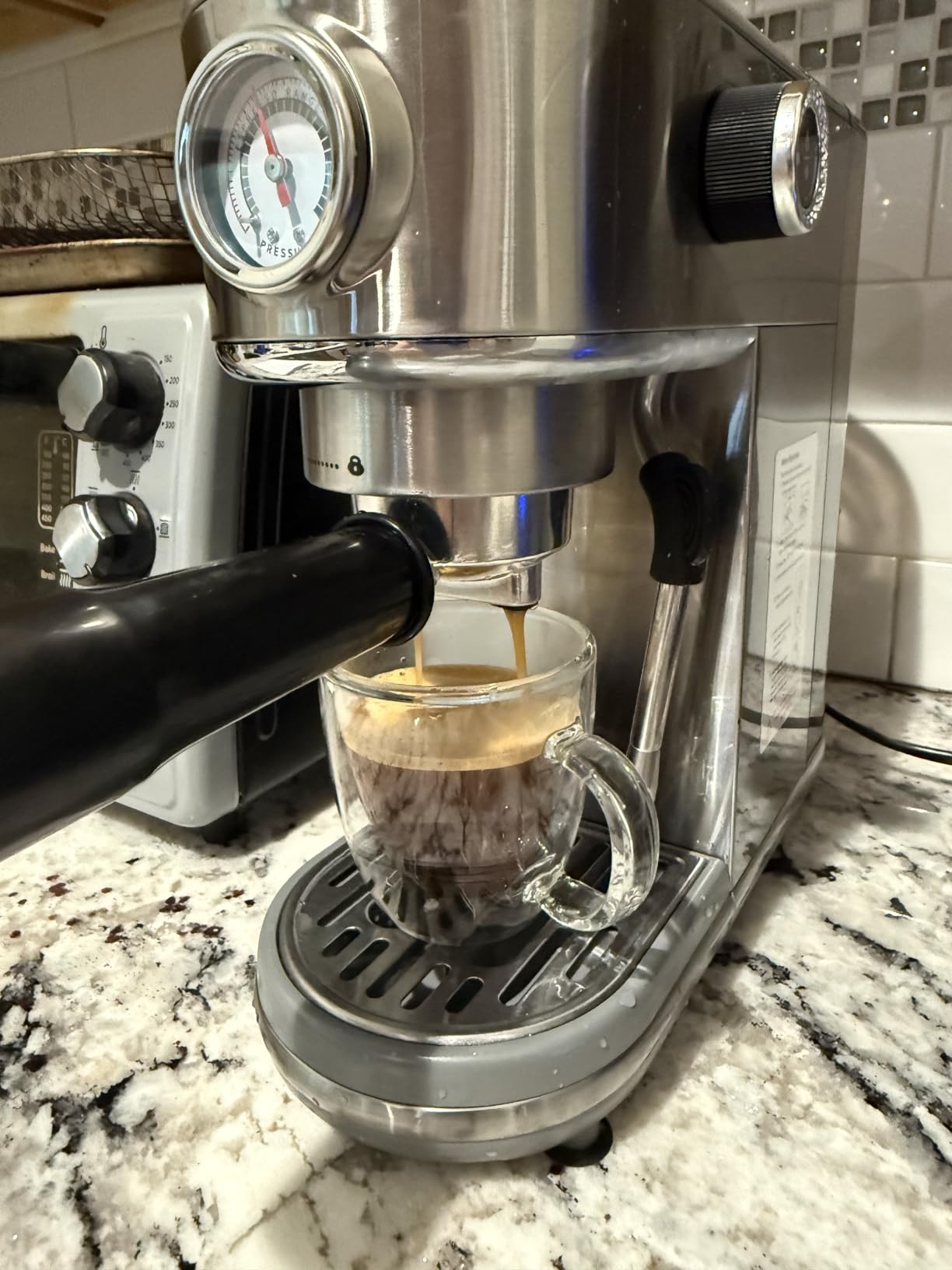
The atatix is the most hands-on machine in the list. Alongside the usual automatic mode it offers manual extraction up to 102 seconds and 180 to 350 grams, which lets you decide the strength and the size of each shot rather than accepting a preset.
Owners like the combination of 20 bar extraction, fast NTC preheating in about 30 seconds and a capable steam wand, and several mention fast setup and easy cleaning. The dense, velvety microfoam comes up often as the standout feature.
What the manual mode actually gives you
In automatic mode the machine meters a fixed volume and stops. In manual mode you start the pump and stop it, which means you can extend a shot, cut it short, or pull a double and split it. That is the difference between following a recipe and writing one, and for some drinkers it is the entire appeal of a semi-automatic.
The listed figure of 20 bar is described as sustaining 9 to 10 bar through the shot, which is the honest way to read a pump rating: the machine holds working pressure rather than delivering its maximum to the puck.
Documentation and basket size
The most common complaint is not the machine but the instructions, which reviewers describe as incomplete for first-time espresso makers. Expect to spend an evening learning rather than an afternoon.
The double shot basket holds about 14g rather than a full 16g dose, which changes your recipe slightly. At 7.5 pounds with silicone suction feet it is one of the lightest and most stable here, though the steam wand is noticeably loud.
Who should buy it
Buy the atatix if you already know how to dial in on another machine, or if you want to learn manual extraction deliberately. If you want instructions to walk you through it, choose a machine with an LCD panel such as the CASABREWS Ultra.
12. Breville Barista Touch – Best for Touchscreen Guidance and Saved Settings
Breville BES880BSS Barista Touch Espresso Machine, Brushed Stainless Steel
Touchscreen with five presets and eight custom settings
Automatic milk texturing
ThermoJet three second heat-up
Pros
- Touchscreen walks you through grind brew and milk
- Saves up to eight personalised settings
- Automatic milk texturing is repeatable
- Fast heat-up with integrated grinder
- Two year repair warranty
Cons
- Most expensive machine in the group
- Touchscreen is slower and less precise for manual dialing
- Large 21.8 pound footprint
- Automatic milk system needs extra cleaning
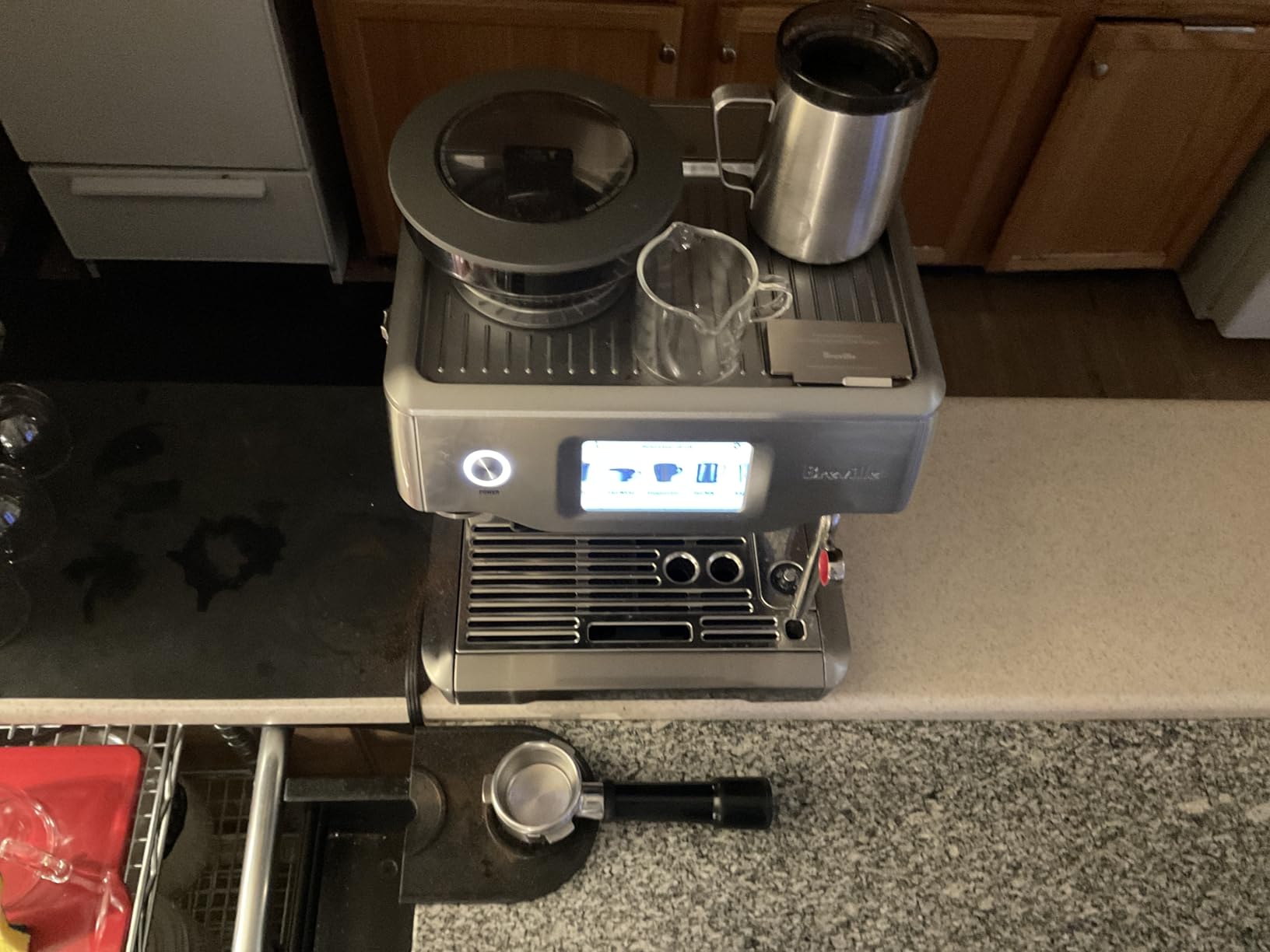
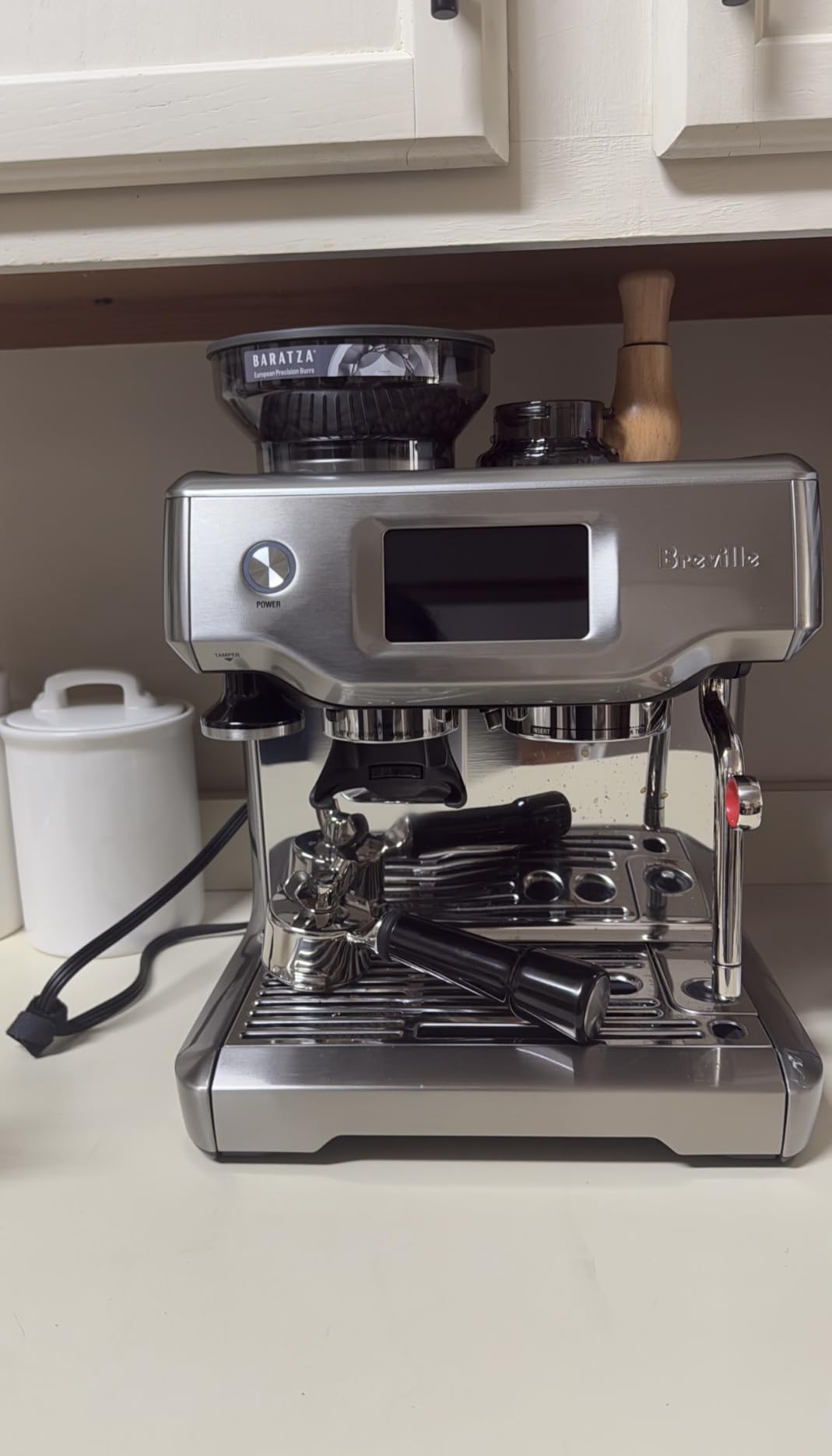
The Barista Touch is bought for convenience rather than for control. The touchscreen walks you through grind, brew and milk in three steps, and you can save up to eight personalised settings, which means a household with different preferences stops negotiating over the machine every morning.
Automatic milk texturing delivers repeatable foam temperature and texture, which removes the hardest part of learning for most beginners. It shares the Barista Pro’s three second ThermoJet heating, PID regulation and integrated conical burr grinder.
Where guidance beats hands-on
The touchscreen is genuinely clearer than a dial for a first machine. It tells you which stage you are at rather than leaving you to infer it from a gauge and a lever. For a household that wants consistent café-style drinks with minimal technique, that is a real advantage.
For anyone who already knows what they are doing, the reverse is true. Reviewers note the touchscreen is less precise and slower for manual dialing than the Barista Pro, and automatic milk texturing takes away the direct control a manual wand gives you.
The extra cleaning and the footprint
An automatic milk circuit needs regular attention beyond the wipe-down a manual wand requires, and the grinder needs cleaning too. Budget real time for maintenance, not just for coffee.
This is the most expensive machine in the group, and at 21.8 pounds with a 12.7 by 15.5 by 16 inch footprint it needs real counter space. Measure the area and weigh the cost against the convenience.
Who should buy it
The Touch fits a household with mixed experience levels who want guided results more than they want a new hobby. If you already know how to pull a shot and enjoy tuning it, the Barista Pro gives you more control for less.
How to Choose a Semi Automatic Espresso Machine for Home Use
Boiler type: single, heat exchanger or dual
Start with what you drink, not with the taxonomy. If you drink straight espresso only, a single boiler is enough. If you drink milk drinks and want a fast, parallel routine, look at a dual boiler, which heats brewing water and steam water separately so you can do both at once. A heat exchanger uses the brew boiler’s steam to warm a second tank, giving you better capacity than a single boiler at a step up in complexity.
Only the Chefman Crema Deluxe in this roundup is a dual boiler. If simultaneous brewing and steaming matters to you, that is the machine here that does it, and it is also the one with the weakest reliability record in the set.
PID control and temperature stability
PID regulation holds brew temperature in a narrow band instead of letting it swing through the heating cycle. It is the difference between shots that taste like each other and shots that surprise you. Four of the twelve machines here use PID regulation: the Barista Express, the Barista Pro, the Barista Touch and the Gevi model with the built-in grinder.
Without PID you can still make good coffee, but you chase the machine more than it serves you. The CASABREWS Ultra offers four selectable brewing temperatures, which is a coarser version of the same idea and genuinely useful for a learner.
Built-in grinder versus a separate grinder
This is the question that changes your total cost most. A machine with no grinder assumes you already own a burr grinder or that you will buy one, and enthusiasts are blunt that the grinder plays a massive part in achieving good extraction. If you do not own one, the machine price is only part of what you are spending.
Machines with a grinder built in remove that friction entirely: the Barista Express, the Barista Pro, the Barista Touch, the Chefman Crema Deluxe and the Gevi with grinder. Be honest about the trade, though. Reviewers of the Gevi note that a bundled grinder at that spend is poor value against buying a standalone one, and owners of the Barista Pro report the built-in burrs wearing out within about a year for some. Built-in is convenient, not always the smarter long-term buy.
Portafilter size and filter baskets
Portafilter size limits your accessory options. The commercial standard is 58mm, which the Chefman Crema Deluxe, the Gevi with grinder and the CASABREWS Ultra use. The Breville machines use 54mm, which works well with supplied parts but has a smaller aftermarket ecosystem. The Neretva uses 51mm, the narrowest here, which is worth weighing against its compact appeal.
Look for machines that include both single wall and dual wall baskets. Single wall baskets are perforated and give you visible extraction feedback; dual wall baskets are pressurised and forgiving when your puck is not well prepared. Starting with both gives you the choice to dial in properly later.
Steam wand power is the honest quality signal
Steam wand power tells you more about a machine’s build than any pressure figure. A powerful wand textures a pitcher in under a minute and reaches steaming temperature quickly; a weak one needs technique to produce anything but bubbles. The Gevi 20 bar compact is the clearest example here, with reviews describing a loud wand that needs work.
Also decide between a manual wand and an automatic frother. The Barista Touch automatic texturer is repeatable and needs no technique, but it requires more cleaning and removes your control over texture.
Bar pressure numbers are marketing, not quality
Almost every machine here advertises 15, 20 or 9 bar. Pump pressure during extraction sits around 9 bar, and the higher figures describe what the pump can briefly reach, not what your coffee experiences. The atatix specification is the clearest example, describing a 20 bar system that sustains 9 to 10 bar through the shot.
Ignore the number and watch the behaviour instead: does the pump hold pressure through the shot, and does the espresso arrive at 25 to 30 grams in roughly 25 to 30 seconds? A pressure gauge helps you learn that, which is why we rated the CM5418 above its budget rivals.
Countertop footprint and water tank capacity
Measure before you buy, because these machines are heavy and deep. The most compact options are the De’Longhi Classic Signature at 9 inches wide, the Gevi 20 Bar Compact and the CASABREWS CM5418 at roughly 5.5 inches wide, and the atatix at 5 inches wide. The Neretva is the flattest at 9.1 inches tall.
At the other end, the Chefman Crema Deluxe is the heaviest machine here at 29.5 pounds, followed by the Barista Touch at 21.8 pounds. Tank capacity matters for households that drink several coffees in a row: the CASABREWS Ultra carries 73 oz, while the CM5418 carries 34 oz and will need refilling.
Reliability, repairability and parts
Reliability is what separates a two-year machine from a decade machine. Warranty length is a rough proxy, and the Breville Barista Pro and Barista Touch carry two year terms against one year for most of the budget tier.
Repairability and parts availability are the criteria editorial roundups usually skip, and they matter more than any spec once you own the machine. Established brands with long-running platforms are easier to service, and models with a metal body and a conventional group head are easier to work on than sealed plastic units. If you intend to keep a machine for a decade, favour a well-known brand over an unknown one at the same spend.
Built-in grinders add a wear part that can fail before the boiler does, which is the single most common durability complaint in this group.
Maintenance and descaling schedule
Every machine here needs a rinse of the group head after each shot, a knock-out of spent pucks, and a wipe of the steam wand immediately after use, before milk dries on it. Backflush the group with cleaning tablets on a cycle determined by your water hardness. Descaling is required when flow slows or the taste turns flat, and it is a fifteen minute job with the right solution.
Machines with a cup warmer, an automatic milk circuit or a built-in grinder add cleaning tasks on top. Budget fifteen minutes a day and a monthly deep clean, and pick a machine you will happily stand at. Our home espresso machine picks under 500 cover the lower tier in more detail if your budget sits there.
Frequently Asked Questions
What is the best semi-automatic coffee machine for home use?
For most home users, the Breville Barista Express is the best semi-automatic coffee machine, because it bundles a conical burr grinder and PID temperature control into one body and steams milk well enough for latte art. Buy a separate grinder and a single boiler model like the CASABREWS CM5418 if your budget is tighter, and a dual boiler if you want to brew and steam simultaneously.
What is the most reliable espresso machine for home use?
Reliability tracks brand support and warranty length more than specification. The Breville Barista Pro and Barista Touch carry two year warranties and established service networks, and the Breville Barista Express has the largest review base in this group with many owners reporting a decade of service. The Chefman Crema Deluxe shows the most early failure reports, so it ranks last on reliability despite its dual boiler.
What is the best compact espresso machine for a home?
The De’Longhi Classic Signature is the narrowest option here at 9 inches wide, and the Gevi 20 Bar Compact, CASABREWS CM5418 and atatix are all roughly 5 to 5.5 inches wide. If your problem is overhead cabinet clearance rather than counter width, the Neretva 20 Bar Super Compact is the flattest at 9.1 inches tall.
Are semi-automatic espresso machines good?
Yes, for home users who want control over grind, dose and milk texture. You still grind, tamp, start and stop the shot yourself, so they demand more attention than a superautomatic and produce better results than a pod machine. They suit people willing to buy a burr grinder and to descale and backflush on a schedule.
Do I need a separate grinder for a semi-automatic espresso machine?
Yes, unless the machine has a grinder built in. Five of the twelve machines here include one, including the Breville Barista Express, Barista Pro and Barista Touch. For the rest, a burr grinder is part of the purchase rather than an accessory, because grind size causes more disappointing shots than the machine does.
The Verdict: Which Machine Should You Buy?
If you want one appliance and no separate purchases, the Breville Barista Express is our pick and the one we recommend to most people buying their first semi automatic espresso machine for home use. It has the grinder, the PID control and a steam wand that handles milk drinks, and it is supported by more long-term ownership reports than anything else in this roundup.
If you drink several coffees a day and want a stronger wand and a three second heat-up, move up to the Breville Barista Pro. If you are working with a small budget, the CASABREWS CM5418 gives you a pressure gauge most rivals at that level skip, and the CASABREWS 3700 Essential is the cheapest reliable starting point. If your counter is the constraint, the De’Longhi Classic Signature is narrowest and the Neretva is flattest. If temperature control is what frustrates you, the CASABREWS Ultra holds the highest rating here.
And if you want to brew and steam at the same time, the Chefman Crema Deluxe is the only dual boiler in this group, though the early failure reports mean we would buy it with eyes open. The Breville Barista Touch suits a household that wants guided results rather than a new hobby.
Whichever you pick, buy a burr grinder if the machine does not include one, and give yourself three weeks of practice before judging it. Most disappointing first shots are a grind size problem, not a machine problem. If you want a wider comparison across machine types, our home barista espresso machine guide covers superautomatics and manual machines too.