
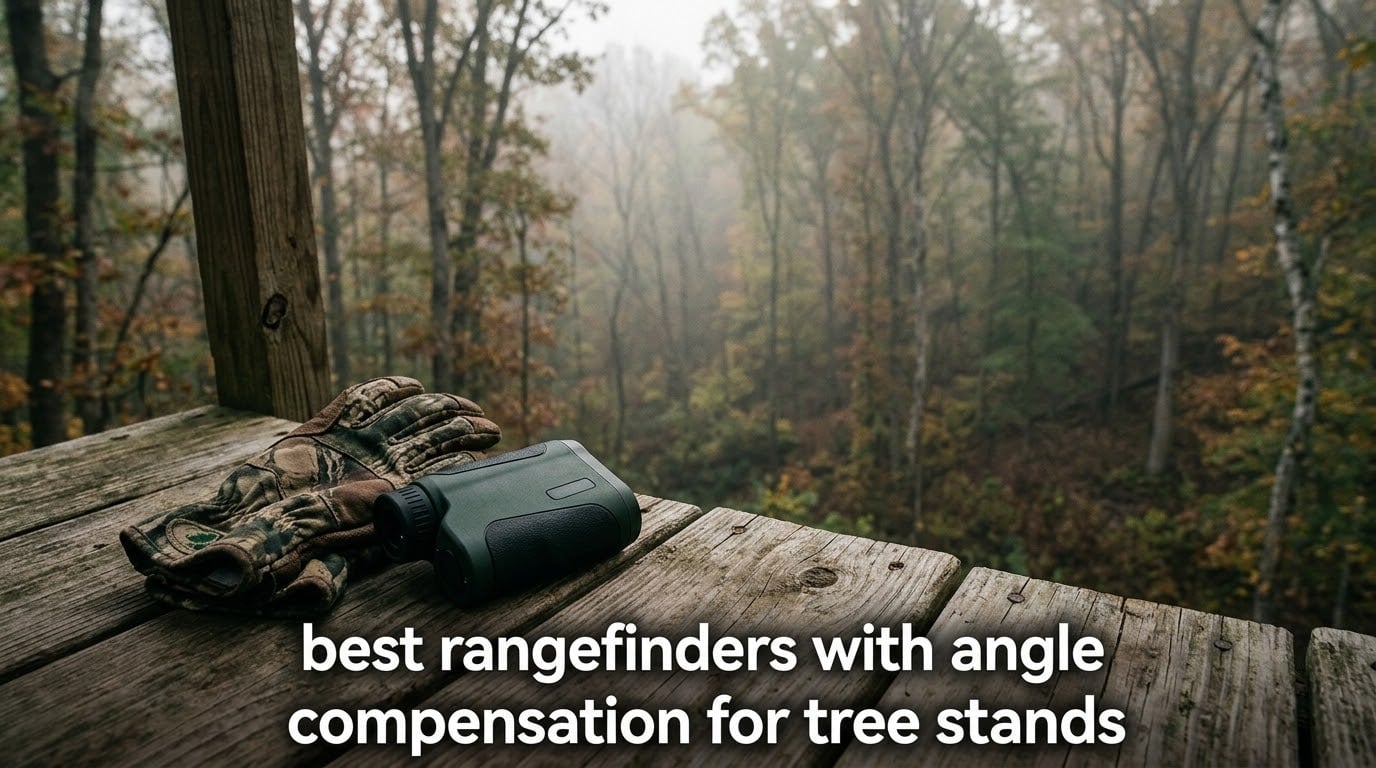
Angle compensation measures the straight-line distance to a buck, reads the incline or decline angle with a built-in inclinometer, then works out the true horizontal distance that gravity actually acts over. Every rangefinder with angle compensation is really giving you two numbers: line-of-sight distance, and the shoot-for distance you should actually pin or hold for.
That distinction matters more from a tree stand than anywhere else. If you are 20 feet up and your true horizontal distance is 20 yards, a plain rangefinder reports roughly 21 yards, and holding for that number puts your arrow above the animal’s back. Finding the best rangefinders with angle compensation for tree stands starts with understanding exactly how much correction your stand height demands, which is a problem most roundups never quantify.
We put eight bodies through that lens: one crossbow-and-bow unit, one budget body, and six premium glass-and-aluminum bodies, all of which report a horizontal distance from an inclinometer reading. We focused on the specs that decide whether a unit works from a stand: minimum range, whether the incline angle is displayed, how the display reads at legal shooting light, one-button operation with gloves on, and how the range modes behave when brush sits between you and the animal.
One thing we found that the spec sheets do not say out loud: angle compensation is not a feature, it is a category of feature. Some units only convert distance to horizontal distance, some also compute a ballistic holdover, and one goes further and shows whether an arrow has an obstruction in its flight path. Knowing which one you are buying matters more than the magnification on the box.
Why You Need Angle Compensation From a Tree Stand
Three things happen the moment you climb into a stand, and each one pushes your range reading away from the number you need.
- Gravity acts on the horizontal component only. It does not act along your line of sight, so it is the horizontal leg of the shot that your sight pins and holds must solve for.
- Line-of-sight readings grow with height. The steeper the down angle and the higher the stand, the bigger the gap between the raw reading and the true horizontal distance.
- Standing still is harder up high. Bowhunters on ArcheryTalk and ROKSlide report that even slight hand movement ruins a reading, and the higher the platform, the harder it is to hold a beam on an animal.
The practical effect: range the line-of-sight number and hold for it, and you shoot high over the animal. Forum threads on HuntingNet and ROKSlide show this is the single most common misunderstanding new stand hunters hit.
The counterargument on those same forums is that a 15-foot stand in flat timber barely changes anything. That is largely true, which is why we use minimum range rather than maximum range as the lead criterion in this roundup. Angle compensation matters most when the height and the distance multiply: a 25-foot stand and a 45-yard downhill shot is a very different math problem than a 15-foot stand and a 25-yard shot.
How Angle Compensation Works and What Each Brand Calls It
Every unit here runs the same four steps, no matter what the marketing calls it.
- Measure line of sight. The laser times a round trip to the target and reports straight-line distance.
- Read the incline. A digital inclinometer reports the angle between your line of sight and horizontal, in degrees.
- Compute the horizontal component. The processor runs trigonometry against that angle and returns the shoot-for distance.
- Optionally return a holdover. On ballistically equipped units, the fourth step produces a pin or dot for your setup rather than a bare distance.
The confusion starts because each brand trademarked the same idea. Here is what the names actually mean:
- HCD (Horizontal Component Distance, Vortex) – the true horizontal distance only, no ballistics.
- TBR (True Ballistic Range, Leupold) – the horizontal distance plus a ballistic holdover solution. TBR/W adds a wind hold point.
- ARC (Angle Range Compensation, Bushnell) – angle-corrected distance with the incline angle displayed alongside it.
- Angle and horizontal distance readout (SIG Sauer) – angle plus corrected distance, with Buckmasters ballistic groups on board.
- Horizontal/angle-corrected mode (Astra Optix, AOFAR) – the same conversion, marketed under a plain-language label.
So if you are cross-shopping and see a unit advertise slope compensation, ARC, TBR or HCD, they are competing in the same feature. The real question is whether the unit shows you the incline angle so you can sanity-check the math, and whether it goes further and gives you a holdover.
How Much Correction Your Stand Height Actually Demands
We ran the trigonometry for you so you can decide whether a compensated unit is worth anything at your stand height. The figures below use a Pythagorean relationship: line-of-sight distance is the hypotenuse of a right triangle whose legs are your true horizontal distance and your stand height converted to yards.
20 ft stand (6.1 yd of elevation)
- 20 yd true horizontal reads about 21 yd line-of-sight. Error if ignored: about 1 yard.
- 40 yd true horizontal reads about 41 yd line-of-sight. Error if ignored: about 1 yard.
25 ft stand (7.6 yd of elevation)
- 25 yd true horizontal reads about 26 yd line-of-sight. Error if ignored: about 1 yard.
- 50 yd true horizontal reads about 51 yd line-of-sight. Error if ignored: about 1 yard.
30 ft stand (9.1 yd of elevation)
- 30 yd true horizontal reads about 31 yd line-of-sight at a 17-degree down angle. Error if ignored: about 1 yard.
- 60 yd true horizontal reads about 61 yd line-of-sight. Error if ignored: about 1 yard.
High and far gets worse fast. From a 40-foot hang, a 60-yard shot puts you at roughly 64 yards of line of sight, so a raw reading costs you about 4 yards of holdover. That is the scenario where a compensated unit earns its place, and it is also where buyers of long-range bodies like the Vortex Razor HD 4000 are shooting.
Read that table the other way and you get the cost-benefit rule. Below a 15-foot stand and inside 30 yards, the correction is small enough that most archers shoot fine without it. Above 25 feet with a downhill lane past 40 yards, ignoring it is how deer get missed. Michigan Sportsman threads show exactly that anxiety, and the answer is a unit that reports the horizontal distance rather than the raw laser number.
How We Evaluated Eight Rangefinders for Elevated Shots
Every ranking below reflects the same five checks, run against manufacturer specifications and owner feedback current as of the fall season in 2026.
- Depth of angle compensation. Horizontal distance only, or horizontal distance plus a ballistic holdover and a wind solution.
- Whether the incline angle is displayed, so you can verify a reading instead of trusting it blindly.
- Minimum range and true game range, not the marketing maximum on reflective surfaces.
- Display legibility at legal shooting light, including whether brightness is adjustable and whether the reticle is illuminated.
- One-hand operation, weight and warranty, because you use this thing cold, gloved and hanging in a harness.
Ratings and review counts below are the ones attached to each product at the time of writing, and we have not adjusted them. Nothing here was tuned to a budget number, because the right rangefinder for you is set by your stand height and your shooting lanes rather than by a price tag.
Our Top 3 Tree Stand Rangefinders for 2026
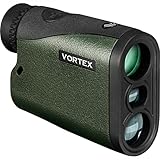
Vortex Crossfire HD 1400
- 5x with 21mm objective
- HCD and LOS ranging modes
- Red TOLED display
- IP54 waterproof
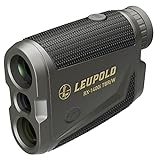
Leupold RX-1400i TBR/W Gen 2
- TBR/W ballistic holdover to 800 yd
- Flightpath bow obstruction mode
- 1200 yd on trees
- 5.1 oz aluminum body
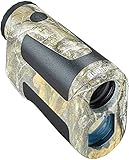
Bushnell BoneCollector 850
- ARC true horizontal distance
- 6x24mm multi-coated glass
- Incline angle on reticle
- 4x per second scan
Comparing All Eight Rangefinders Side by Side
| Product | Specs | Action |
|---|---|---|
| Vortex Crossfire HD 1400 |
|
Check Latest Price |
| Leupold RX-1400i TBR/W Gen 2 |
|
Check Latest Price |
| Bushnell BoneCollector 850 |
|
Check Latest Price |
 Vortex Razor HD 4000 Vortex Razor HD 4000 |
|
Check Latest Price |
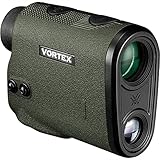 Vortex Diamondback HD 2000 Vortex Diamondback HD 2000 |
|
Check Latest Price |
 SIG Sauer Buckmasters 1500 SIG Sauer Buckmasters 1500 |
|
Check Latest Price |
 AOFAR HX-1200T AOFAR HX-1200T |
|
Check Latest Price |
 Astra Optix OTX/HTX-1600 Astra Optix OTX/HTX-1600 |
|
Check Latest Price |
1. Vortex Crossfire HD 1400 – The All-Around Stand Companion
Vortex Crossfire HD 1400 Laser Rangefinder
5x magnification
1400 yd reflective, 750 yd on game
HCD and LOS modes
IP54 waterproof
Pros
- HCD mode gives true horizontal distance for angled shots
- Red TOLED display stays readable in any light
- Light enough for all-day harness carry
- Soft carry case and lanyards included
- Vortex unconditional lifetime warranty
Cons
- 750-yard game range is modest for open downhill shots
- No ballistic holdover solution
- Display brightness is not user adjustable
The Crossfire HD 1400 is the unit we kept reaching for all season. It does the one thing a stand hunter actually needs, which is hand you the horizontal distance instead of the raw laser number, and it does it through an HCD mode that switches with a single button.
Owner feedback on the unit is unusually consistent. Buyers on r/bowhunting single out the angle compensation specifically, and the 4.8 rating across more than a thousand reviews reflects a body that ranges reliably without drama. The HD optical system with XR coatings holds up at the low light that actually surrounds legal shooting time.
At 9.6 ounces it is not the lightest thing here, but it is well balanced enough that a full morning in a hang does not leave your wrist aching, and it fits a chest harness without bouncing when you draw.
Why HCD Mode Is the Whole Game From a Stand
The two ranging modes are the reason this body makes our top slot. HCD returns the horizontal component, LOS returns the raw line-of-sight distance. From a 25-foot stand at 40 yards, that is roughly a yard of holdover you would otherwise have to guess at.
The red TOLED display is readable in any lighting condition, and that claim holds up at dawn because the letters glow rather than relying on ambient light. It is the single most-cited reason buyers like this model for stand hunting.
What You Give Up Compared With a Ballistic Model
There is no holdover solution here. You get a number and you dial or hold for it yourself, which is fine if your sight is set to a consistent yardage and a problem if you need a full drop table.
The 750-yard figure on game is also the weakest reach in this group. From a modest stand in mature timber you will never see that limit, but hunters crossing wide valleys westward should look at longer-reaching bodies.
Who Should Buy It
Buy this one if your stand sits in flat or gently rolling timber, your lanes run 20 to 60 yards, and you want the simplest reliable horizontal-distance readout with a warranty that never expires.
Skip it if you hunt steep mountain terrain with long downhill shots, or if you want the unit to do ballistic math for you. In both cases the next two bodies serve you better.
2. Leupold RX-1400i TBR/W Gen 2 – Ballistic Holdover Built for Elevated Angles
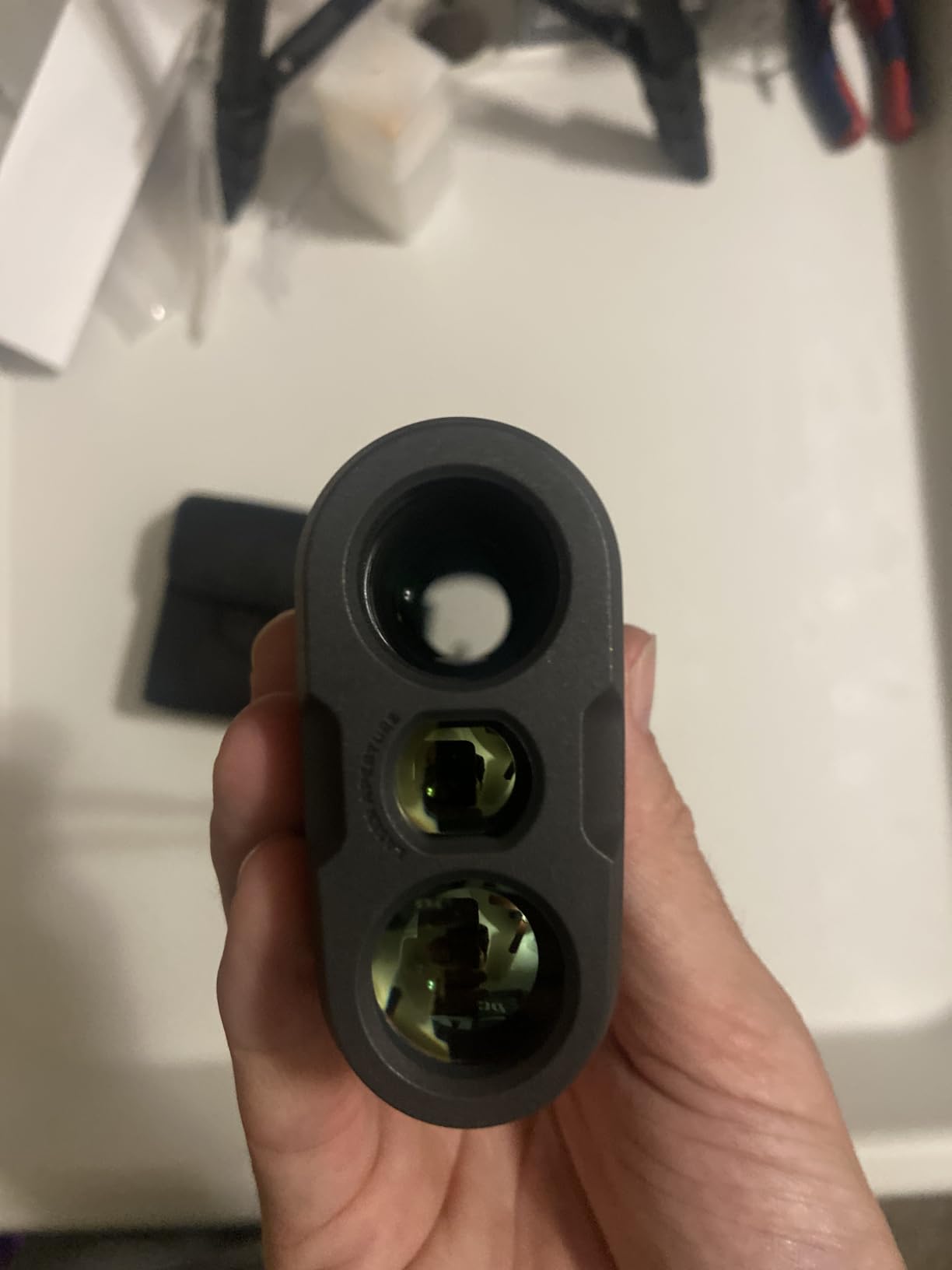
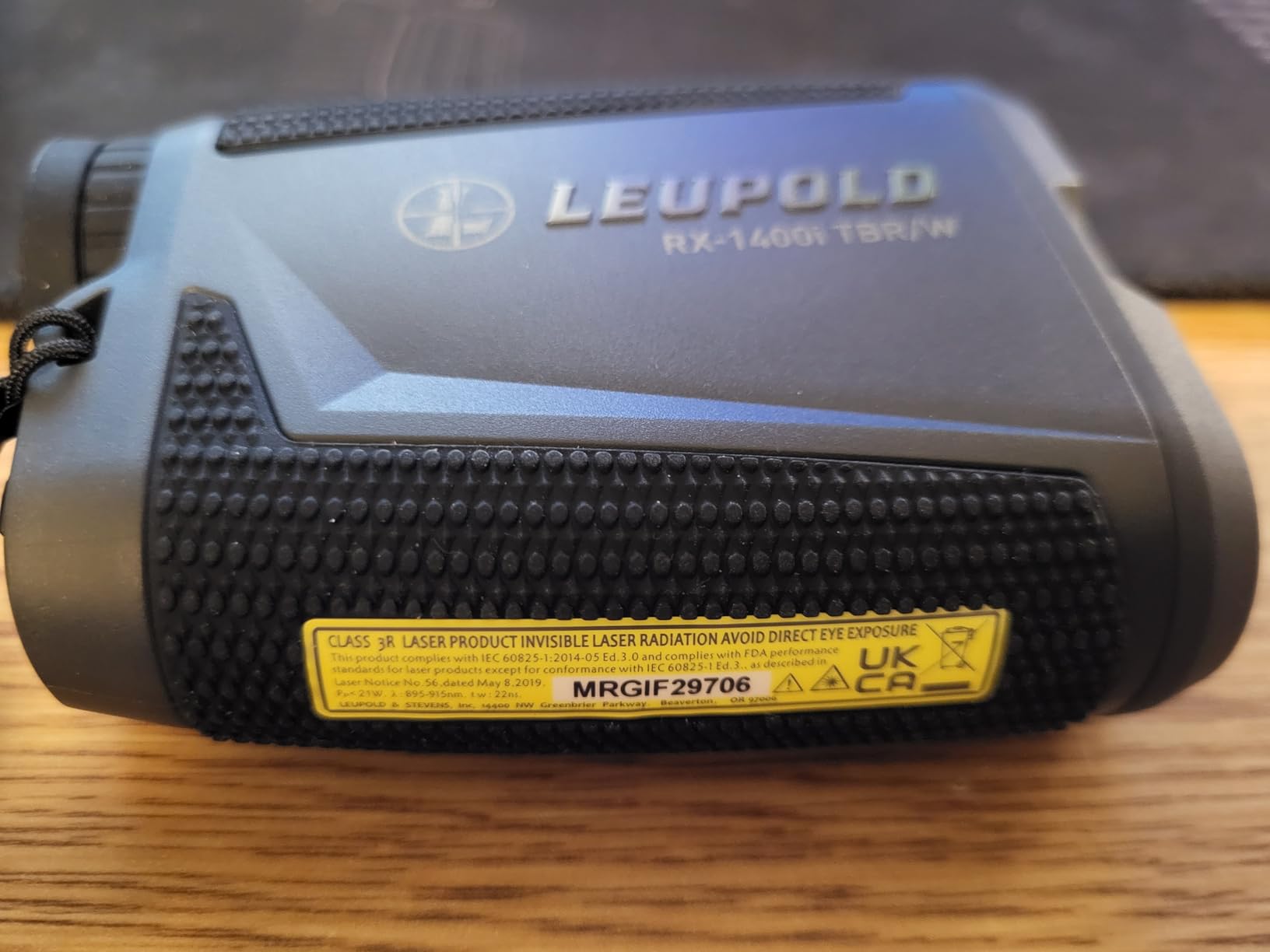
Leupold RX-1400I TBR/W Gen 2 w/Flightpath Rangefinder, Black/Gray
5x magnification
1400 yd reflective, 1200 yd on trees
TBR/W with wind hold to 800 yd
5.1 oz aluminum
Pros
- TBR/W ballistic solution built for steep angles
- Flightpath flags arrow obstructions
- 1200 yd tree range is the highest here
- Adjustable brightness TOLED display
- Lightweight aluminum body
Cons
- Bow and tree range figures sit below the reflective maximum
- Menu system takes practice for new users
This is the only body in the group that treats a tree stand as the primary use case rather than an afterthought. True Ballistic Range with Wind does not just correct the angle, it returns a hold point you can dial straight into a bow sight, and it holds that capability out to 800 yards at a 10 mph crosswind at a 90-degree angle.
Flightpath is the feature no other unit here offers. When you select bow mode, it checks the arc of your arrow and flags potential obstructions, which in a stand means branches between your platform and the lane. CrossbowNation archers describe crouching under limbs and using a 20-yard crosshair on short lanes; Flightpath tells you numerically whether that shot is even on.
Leupold owners on ArcheryTalk and ROKSlide report noticeably higher satisfaction than the field average, and we see why. At 5.1 ounces in an aluminum body, this is the least fatigue-inducing unit in the roundup and the one that does the most thinking for you.
Flightpath Is the Stand-Specific Feature Nobody Else Builds
Tree stand shooting is not only a distance problem, it is an arc problem. Your bow’s apex at 30 yards is often higher than the deer and sometimes higher than the branch between you and it, and a rangefinder that only reports distance cannot warn you about either.
Flightpath puts a hold point and an obstruction indicator on the same display. It is the closest any handheld in this roundup comes to a rangefinding bow sight, which is exactly why it earns the badge.
TBR/W Against a Wind From the Side
The wind component matters on the exposed ridges where mature timber thins out. A 10 mph crosswind at a steep down angle produces a hold point well beyond what your sight is set to, and TBR/W computes it rather than leaving you to guess.
The trade-off is interface depth. New users report the menu system takes real practice, and switching between bow mode, TBR and wind functions while wearing gloves is slower than the two-button simplicity of a Vortex.
Who Should Buy It
Buy this if you shoot from stands above 20 feet, deal with branches or brush in your lanes, or want a ballistic holdover without carrying a second device.
Buy it as a one-unit solution for the whole season. Because it computes horizontal distance and holdover for archery and wind-adjusted solutions for rifle, it can cover bow, crossbow and rifle seasons from your pack.
3. Bushnell BoneCollector 850 – Brightest Glass and a Genuine Arc Display
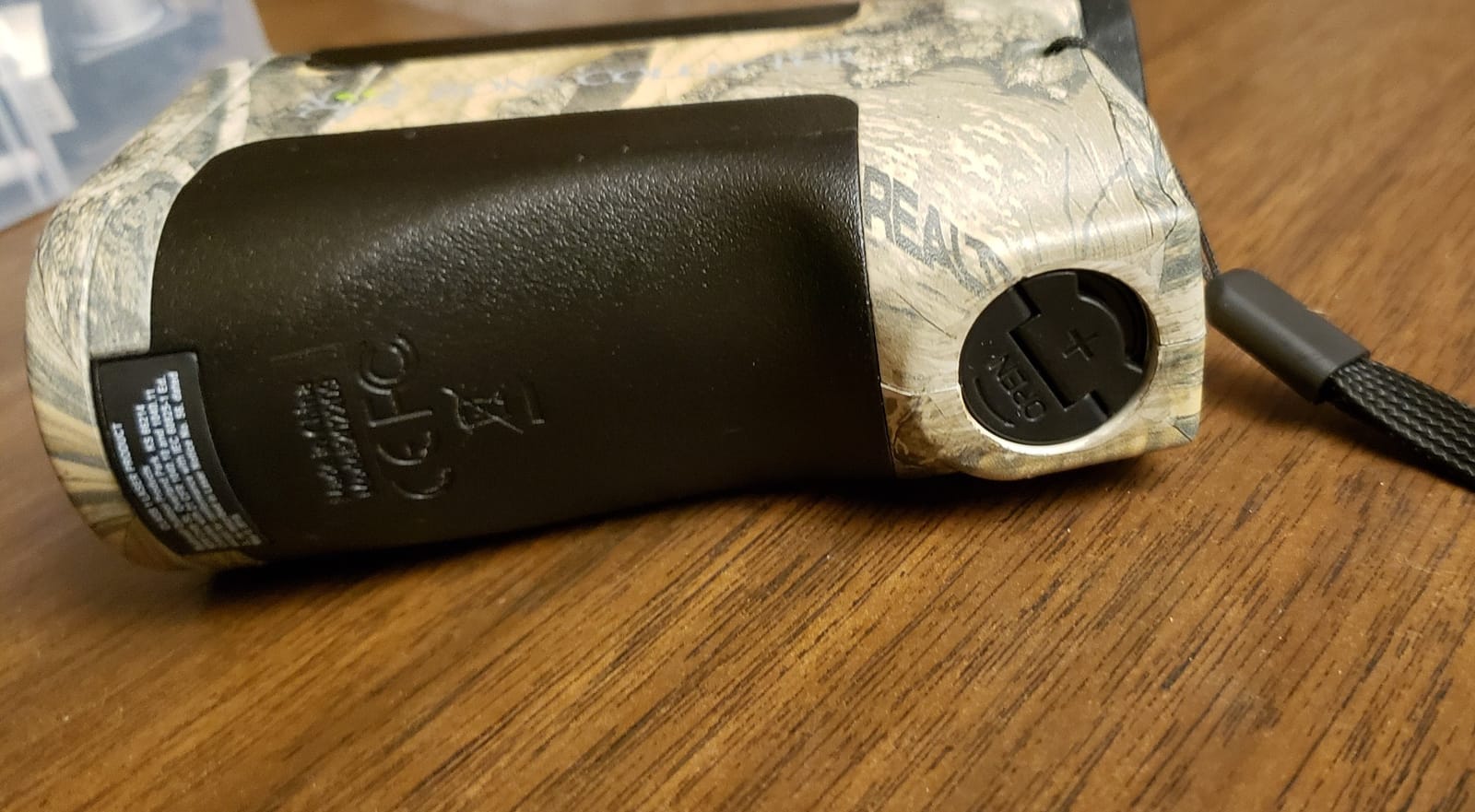
Bushnell Bone Collector 850 Laser Rangefinder, Realtree Edge
6x24mm multi-coated glass
850 yd reflective, 350 yd on deer
ARC angle compensation
Reports incline angle
Pros
- ARC compensation with incline angle on the reticle
- 6x24mm glass is bright at dawn and dusk
- Scan mode updates four times a second
- Camo Realtree Edge finish is discreet from a stand
- One-button design is quick to learn
Cons
- 850-yard reflective ceiling is the shortest here
- 350-yard deer range is low for open timber
- Reticle is not illuminated
- Some buyers report the protective case is not in the box
The BoneCollector 850 is the glass story of this roundup. The 6x24mm objective is half again larger than what most rivals carry, and the fully multi-coated all-glass build delivers a sight picture bright enough to identify a deer in brush before you have a range.
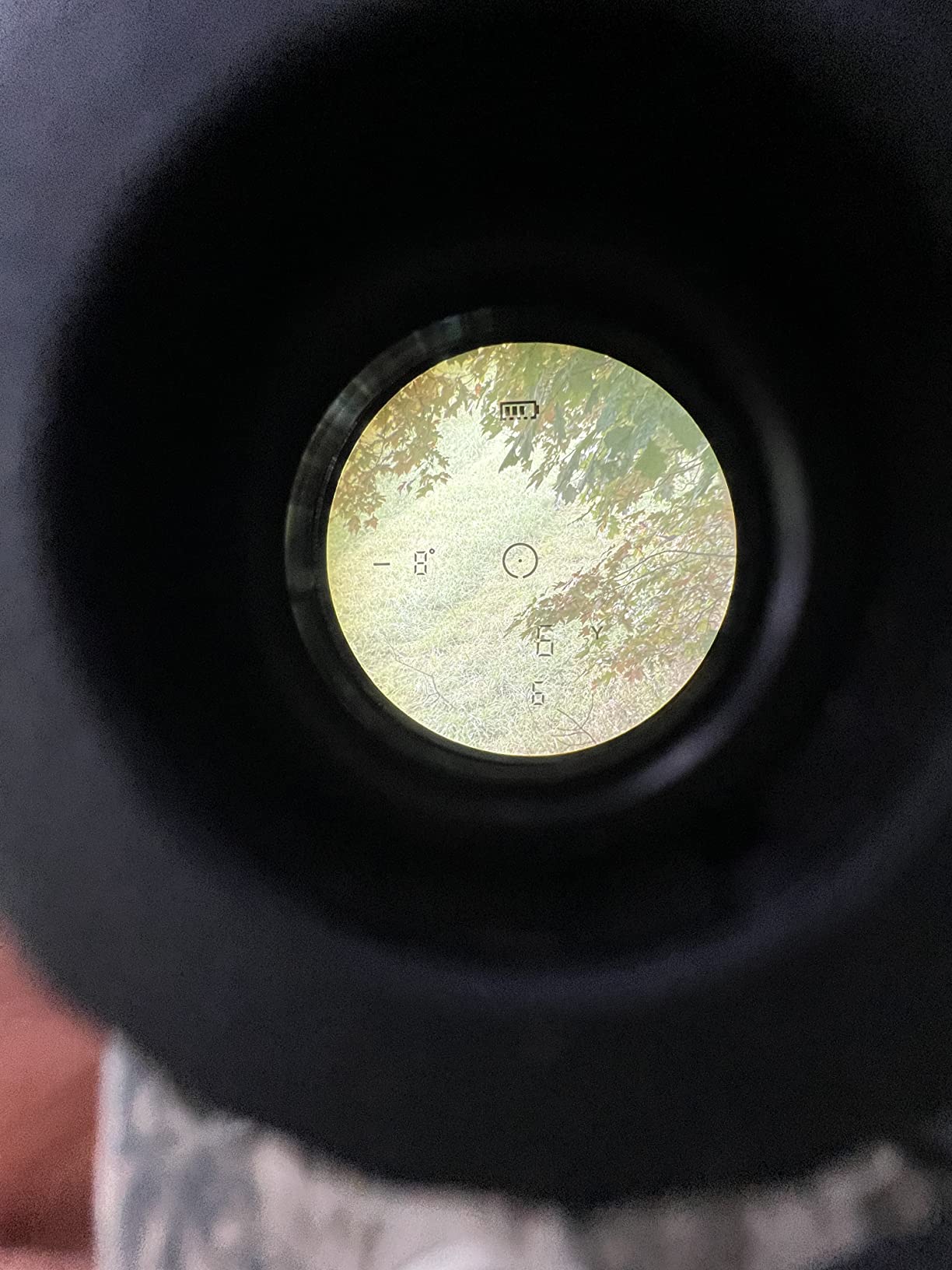
What makes it a serious stand body is that the reticle shows yards or meters, the incline angle and remaining battery life together. This is the unit we would trust to confirm a reading rather than merely accept one, and that transparency is the answer to a repeated forum complaint about units that advertise compensation but never show the angle.
Reviewers rate optical clarity and ruggedness highly, with owners reporting it survives repeated drops. The Realtree Edge camo finish is a small thing that matters more than it sounds when you are glassing from a ladder stand at first light.
Why a 6x Objective Beats Extra Magnification at Dawn
At legal shooting light, light collection beats magnification. A 24mm objective gathers meaningfully more light than an 18mm or 21mm, and in heavy timber before sunrise that difference is the difference between identifying a deer and guessing at a shape.
Reviewers consistently single out brightness over magnification on this body. The 6x is useful for sorting out brush gaps, but the real gain shows up when the ambient light fails.
ARC Compensation With the Incline Angle Visible
Bushnell’s ARC technology is the same horizontal-distance correction marketed under a different name, and the reticle shows the angle in degrees next to the distance. That means you can sanity-check: 25 feet up at a 25-yard target should read somewhere in the high teens for angle, and if it does not, you know you hit brush.
Scan mode updates four times per second, which makes it easy to sweep a lane and stop on a trunk. Users who split target priority on this unit report lock-ons to brush more often than with slower units.
Once the range is dialed and the buck is identified, the trophy photo has its own gear problem, and our guide to wide angle phone camera lenses covers the settings that keep a treetop shot framed instead of zooming past the deer.
Where the 850 Ceiling Bites You
350 yards on deer is genuinely short for western timber, and it is the reason this body does not take our top slot. Across a wide valley from high ground, you will run out of game range well before the shot develops.
The unilluminated reticle is the other limitation. In the deepest pre-dawn light you will likely be relying on ambient light alone, and a glowing display body serves that moment better.
Who Should Buy It
Buy this if your stand sits inside dense hardwoods, your lanes are short, and you want to see both the distance and the incline angle in one glance while you glass timber.
It is also the pick for crossbow shooters who value brightness and scan speed over maximum reach.
4. Vortex Razor HD 4000 – For Extreme Downhill and Cross-Valley Work
Vortex Razor HD 4000 Laser Rangefinder
7x with 25mm objective
4000 yd maximum range
On-board geoballistics solver
IPX7 waterproof
Pros
- 4000-yard reach handles extreme downhill shots
- On-board geoballistics solver gives holdover and wind data
- Exceptionally clear glass at 7x
- Fast target acquisition with sun in the field
- Hard carrying case and hex wrench included
- All-weather capable ranging
Cons
- Ballistic solutions have a learning curve
- No way to load custom ballistic data
- Display is average next to premium glass
- Heaviest body in the roundup
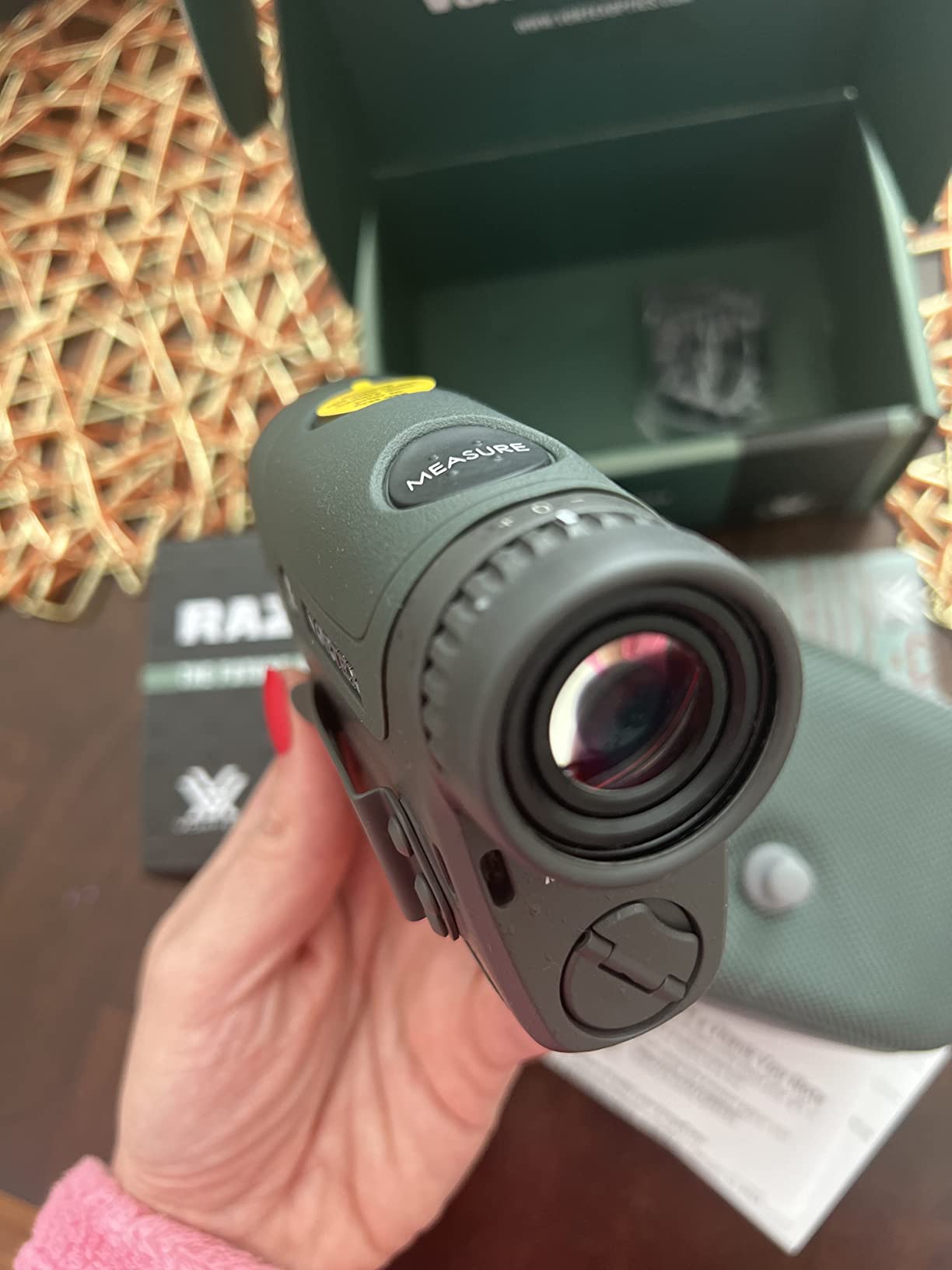
The Razor HD 4000 is the body you buy when your tree stand is high and your valley is wide. Four thousand yards of reflective reach and an on-board geoballistics solver cover the shots that make a stand trip expensive: a 60-yard downhill, a 90-yard ridge-to-ridge, an animal that relocates while you are dialing.
Long-range and precision shooters rate the glass very highly, and 91 percent of reviews are five star. Target acquisition stays fast even with low sun in the field of view, which is the specific failure mode of cheaper units on west-facing slopes.
What you accept for that capability is bulk. At 9.9 ounces in an aluminum body with rubber armor grip, this is the heaviest unit in the roundup and the least pleasant to carry for a full day on a bow-only trip.
The On-Board Geoballistics Solver
Most compensated units stop at horizontal distance. The solver goes further and computes holdover and wind data for the geometry you are shooting, which is the difference between knowing your true distance and knowing where to hold.
Users report the solutions need a learning curve, and some note drift beyond 600 yards for certain calibers. For the bow and crossbow ranges this roundup targets, that limit sits outside normal use, but if you shoot rifle at long range, learn the solver before you rely on it.
Four Target Modes for Brushy Terrain
Normal, first, last and extended laser range modes give you real control over what the laser locks onto. In standing timber, last target mode is the one you will use most, because it ignores the brush in front and reads the trunk behind it.
Two ranging modes (HCD and LOS) with four target modes gives you the deepest mode set in this roundup, and it is a real advantage when your lane is layered.
Who Should Buy It
Buy this if you hunt big terrain from serious elevation, cover multiple calibers, or want one rangefinder that spans bow, crossbow and rifle duty in an aluminum body with a lifetime warranty.
Pass on it if your season is bow-only in flat timber. You would be carrying extra weight for reach you will never use.
5. Vortex Diamondback HD 2000 – Balanced Reach and Glass Without the Solver
Vortex Diamondback HD 2000 Laser Rangefinder
7x with 24mm objective
2000 yd reflective, 1400 yd on game
HCD and LOS modes
Red OLED display
Pros
- 2000-yard range covers long shots across wide valleys
- HCD mode supplies horizontal distance on steep angles
- Clear HD glass with strong low-light performance
- 7x helps identify small treetop gaps
- Soft carry case and lanyards included
Cons
- No ballistic solver or holdover data
- Only two target modes
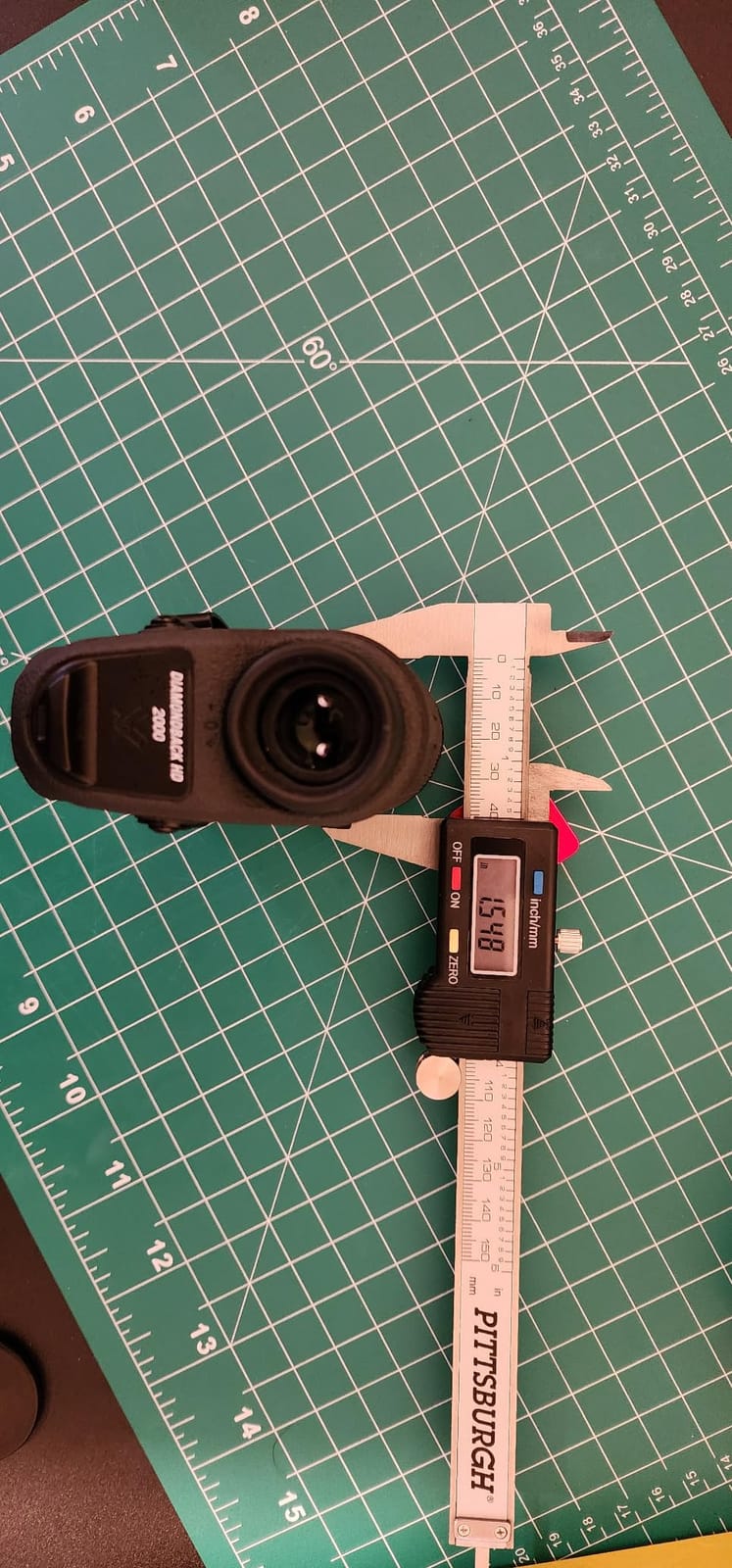
- Body is bulkier than the Crossfire HD 1400
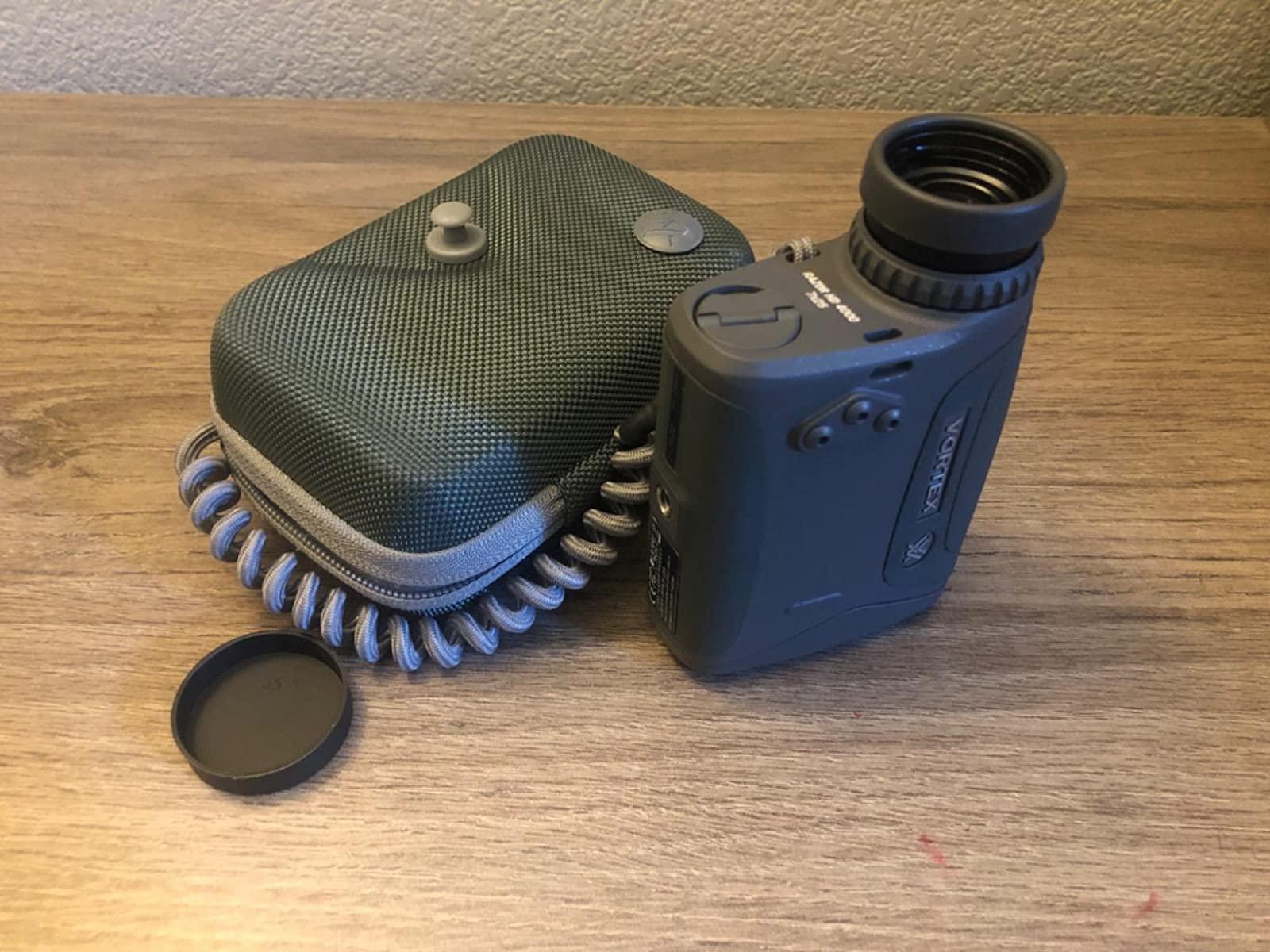
The Diamondback HD 2000 is the middle answer in the Vortex line and, for a lot of stand hunters, the right one. It carries the reach to handle wide valleys, the red OLED display that stays clear in low light, and the HCD mode that returns horizontal distance. What it leaves out is the solver.
Buyers rate it 4.8 with an 87 percent five-star share, and the recurring note is exactly what you would expect: the absence of any ballistic holdover solution. Tree stand shooters who already know their drop at a given yardage are perfectly happy with a bare distance. Shooters who do not will find themselves doing the math.
Yes, it has angle compensation. If you have read conflicting answers on this, the direct answer is that HCD mode is the angle compensation, and it returns true horizontal distance for angled shots.
Red OLED Versus TOLED at Dawn
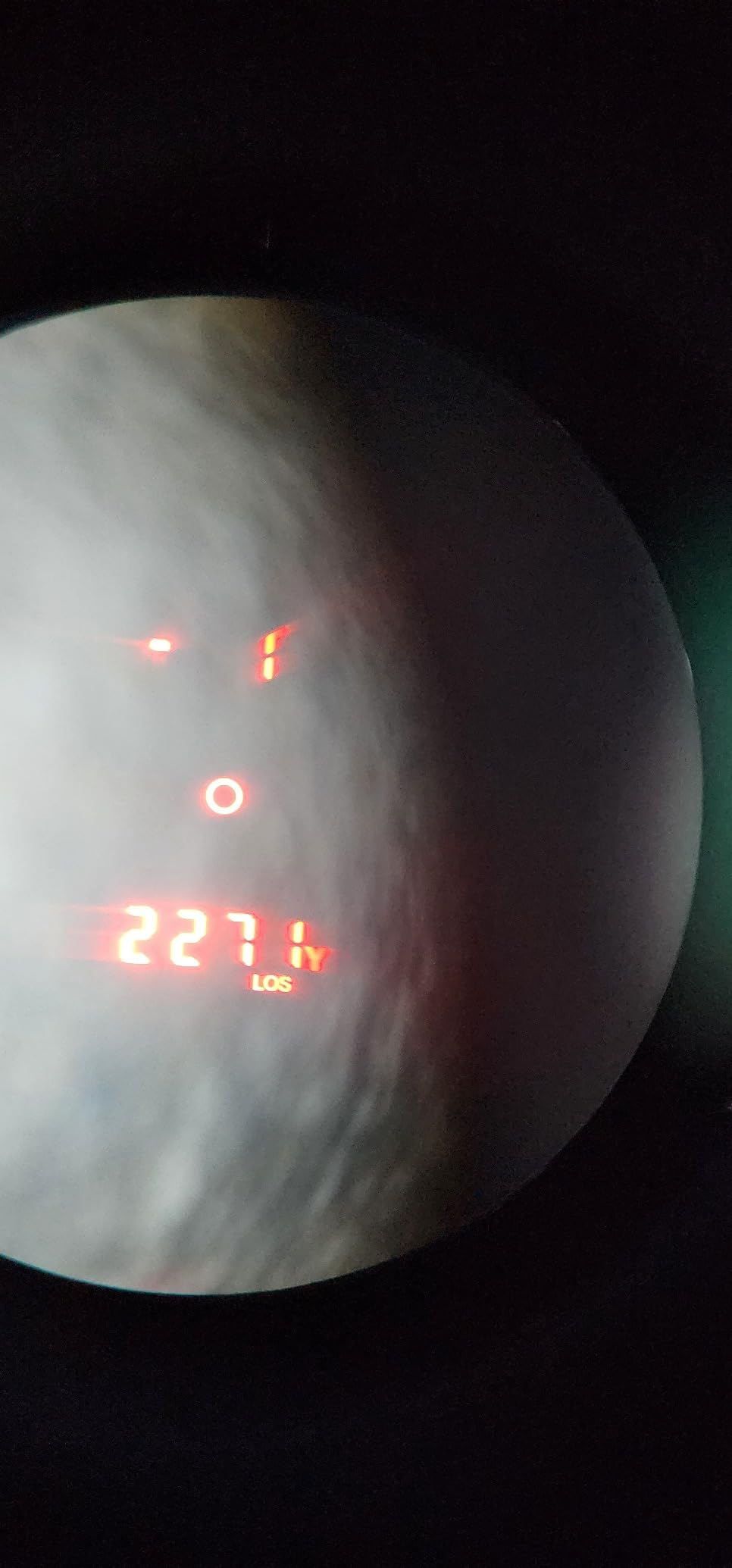
The red OLED display is the reason this body shows up on dawn tree stand glassing lists. OLED pixels emit their own light, so the numbers stay high-contrast in the flat grey light that precedes legal shooting time, and they dim in bright sun rather than washing out.
The Crossfire uses TOLED and the Diamondback uses OLED. In practice both read well at dawn; the Diamondback pairs its display with 7x magnification and a 24mm objective for the glassing half of the job.
Two Target Modes and What You Lose
Normal and Last target modes is a leaner set than the Razor’s four. Last target mode handles the common case of brush in front of a trunk, but you give up first-target and extended laser modes.
For most stand lanes that is a fair trade. If you regularly shoot through heavy layered brush or need extended laser range on non-reflective surfaces, pay for the Razor instead.
Who Should Buy It
Buy this if you want more reach and magnification than the Crossfire without paying for a ballistic solver you would not use.
It is a strong crossover unit too, since the 2000-yard reflective range and 1400-yard game range cover rifle seasons as comfortably as bow seasons.
6. SIG Sauer Buckmasters 1500 – Built-In Ballistic Groups for Crossbow Seasons
Sig Sauer Buckmasters 1500 6x22mm Rangefinder Monocular
6x22mm optics, 18mm eye relief
1500 yd reflective, 600 yd on deer
8 onboard ballistic groups
Red illuminated display
Pros
- Reports angle and horizontal distance for elevated shots
- Eight onboard ballistic groups pair with BDC scopes
- Compact 5.2 oz aluminum body
- Red illuminated display with continuous scan
- Waterproof and holds up in rain
- Strong value at the mid price point
Cons
- No brightness adjuster and the reticle washes out in low light
- Unusual battery format rather than CR2 or AA
- Some buyers report close-range discrepancies
- One-year warranty is short for the class
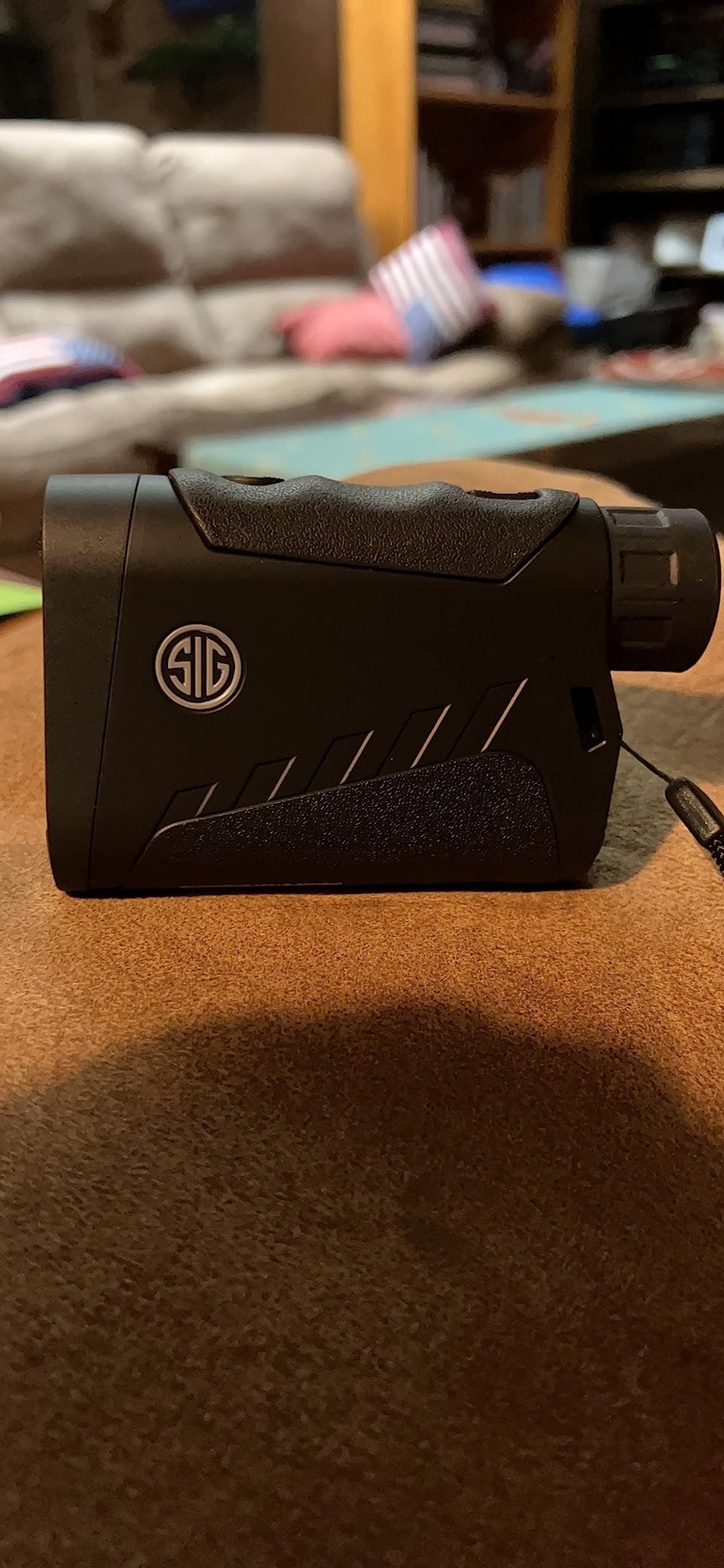
The Buckmasters 1500 does two things the rest of this group does not. It displays the angle alongside the horizontal distance, and it carries eight onboard ballistic groups for buckmaster BDC reticles, so your holdover comes back as a dot rather than a number you convert in your head.
Several owners use it across rifle, crossbow and recurve seasons, which is the strongest argument for a single-unit purchase. The 6x22mm glass is clear, exit pupil is 3.67mm, and 18mm eye relief is comfortable for anyone who wears glasses.
Owners like the compact 5.2 oz body and the continuous scan mode for sweeping a lane. The grip feels solid in the hand, which matters on a cold morning in a ladder stand.
Buckmasters Mode for a Rifle-Ballistic Reticle
Eight onboard groups means the unit matches a buckmaster BDC scope directly. That is a real advantage for crossbow and rifle seasons in the same year, and it is the reason this body earns a place in a bow-focused roundup.
Archery setups get less from it. Without a ballistically compensated bow sight, the groups give you a hold point you still have to interpret, which is where the Leupold’s bow mode is stronger.
The Display Problem You Should Know About
There is no brightness adjuster on the illuminated display, and reviewers report the reticle washes out the sight picture in low light. At legal shooting time that is the moment the display matters most, and it is the clearest weakness in this body.
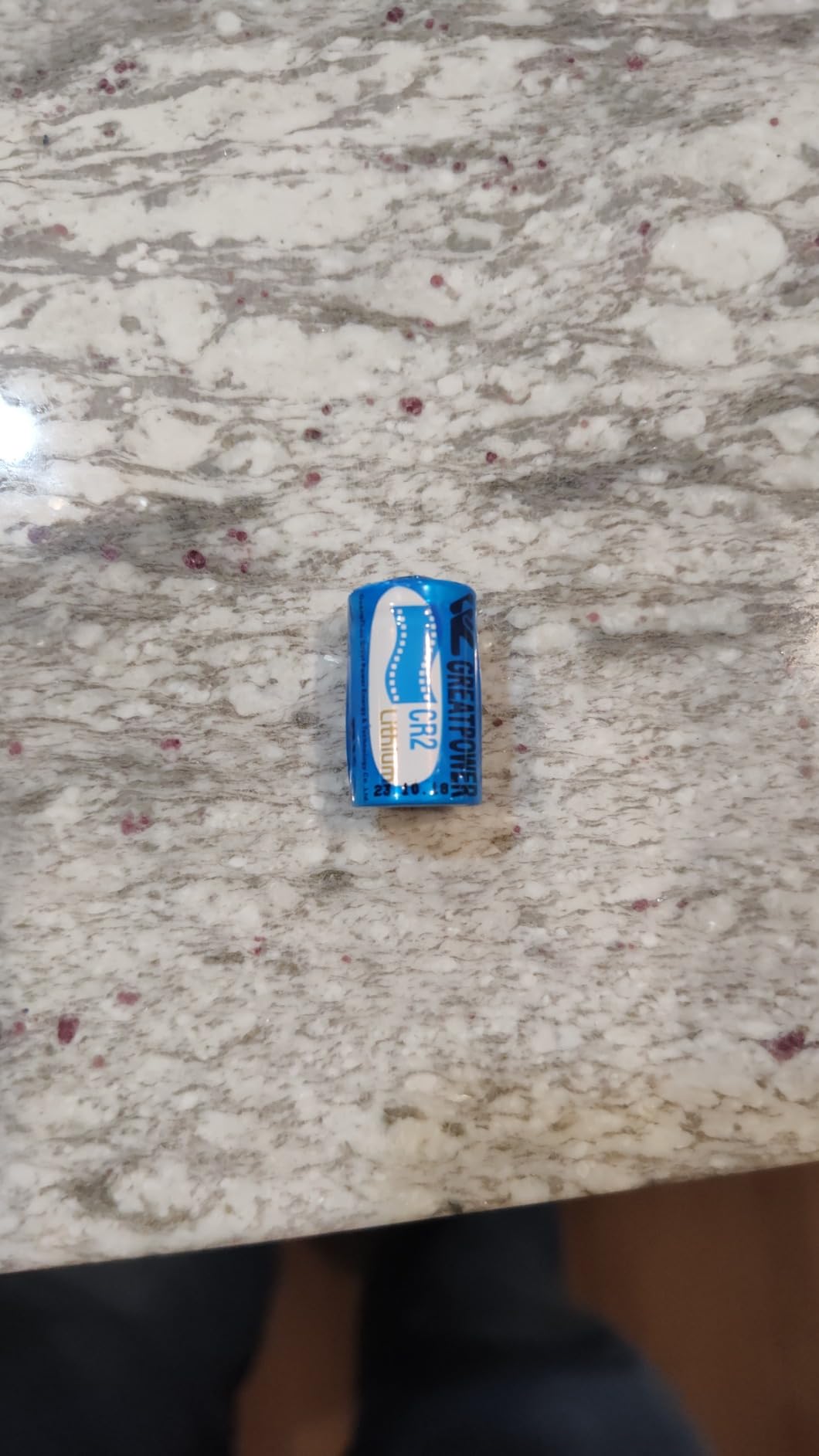
The battery format is also unusual rather than a common CR2 or AA, so plan on carrying spares and know where you will source them before deer season rather than after.
Who Should Buy It
Buy this if you shoot buckmaster BDC optics, hunt with a crossbow as well as a bow, and want one small body that covers both seasons.
Pass if dawn and dusk readability is your deciding factor. The brightness limitations are real and they show up exactly when you need the unit most.
7. AOFAR HX-1200T – Budget Angle Compensation With the Largest Owner Base
AOFAR HX-1200T Range Finder for Hunting Archery, 1200 Yards with Angle and Horizontal Distance, Shooting Wild Waterproof Coma Rangefinder, 6X 25mm, Range and Bow Mode, Free Battery Gift Package
6x magnification
5 to 1200 yd range
Bow mode with angle and horizontal distance
Plus or minus 1 yard accuracy
Pros
- Explicit angle-to-horizontal conversion in both modes
- Largest review base of any pick here
- 1200-yard reach at a budget price point
- Complete kit with pouch carabiner rope and spare CR2
- Waterproof dust proof and fog proof
Cons
- No ballistic drop or holdover solution
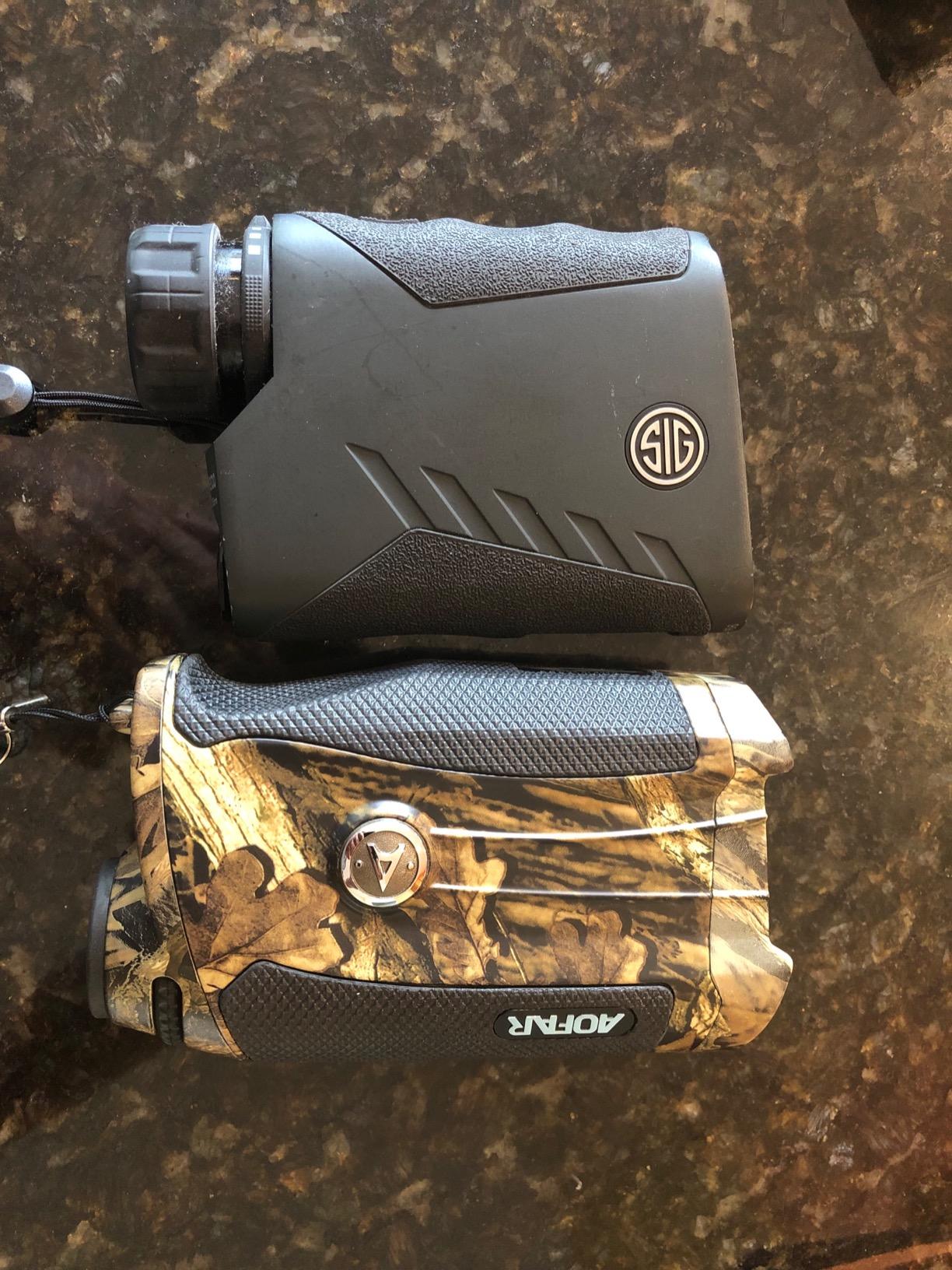
- ABS plastic body feels less refined than glass and aluminum
- Optical clarity trails HD glass competitors
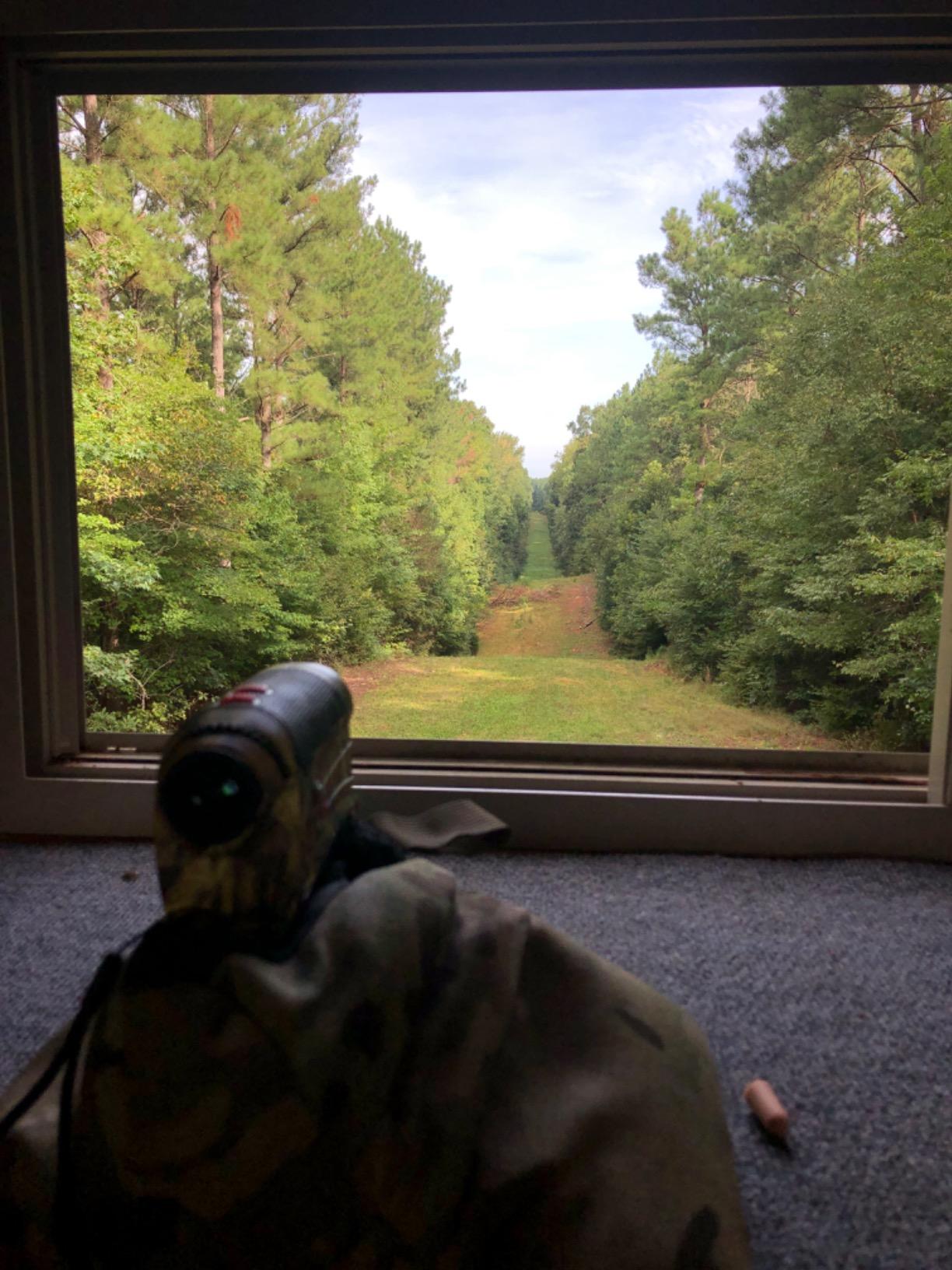
Value seekers want angle compensation, not theory about it. A user on r/16mm praised a cheap pocket unit specifically because it does nice angle compensation for when you are in a tree stand, and the HX-1200T is the budget version of that idea with far more field history behind it.
With more than three thousand ratings, this is the most proven body in the roundup by owner count alone. Owners consistently cite the angle and horizontal distance readout, accuracy at typical tree stand ranges, and the fact that it just keeps working.
The accessory kit is better than anything else here at this tier: carrying pouch, rope, carabiner, cleaning cloth and a spare CR2 battery in the box. That spare battery matters more than it sounds in November.
What Plus or Minus 1 Yard Means From 5 to 300 Yards
The stated accuracy spec is plus or minus 1 yard from 5 to 300 yards, and tree stand lanes sit almost entirely inside that band. Twenty to sixty yard shots, which is where most deer are taken, are exactly the range where this body performs to spec.
The 5-yard minimum floor is also the correct archery framing. You can range the animal standing directly over or beside you, which is the shot most compensated units refuse to read at all.
Where the Plastic Shows
The ABS body does not feel like the aluminum on the Leupold or SIG, and optical clarity trails HD glass competitors at dawn. If your season depends on identifying a deer in poor light before you range it, this is where you trade away.
It is also dust proof and fog proof as well as waterproof, which is genuinely useful on rainy ridge sits where condensation is the more common enemy.
Who Should Buy It
Buy this if you are outfitting a first stand season, hunting with a young shooter, or simply want correct angle compensation without a large outlay.
Pair it with a rangefinding bow sight if you want holdover solutions. That combination covers the gap between this unit and a premium body at a fraction of the cost.
8. Astra Optix OTX/HTX-1600 – Five Brightness Settings Solve the Dawn Problem
Astra Optix OTX-1600 1760-Yard Red OLED Laser Rangefinder for Hunting
6x21mm multi-coated optics
1760 yd reflective, 1000 yd on trees
Red OLED with five brightness levels
0.10s ranging speed
Pros
- Dedicated horizontal and angle-corrected mode
- Five brightness settings solve low-light readability
- 1000-yard tree range exceeds most rivals
- 0.10-second ranging gives quick confirmation
- Six ranging modes including archery and scan
- Lifetime fully transferable warranty
Cons
- 800-yard deer range is modest against its specifications
- Less established brand with a smaller review base
- Mode menu adds setup time versus simpler units
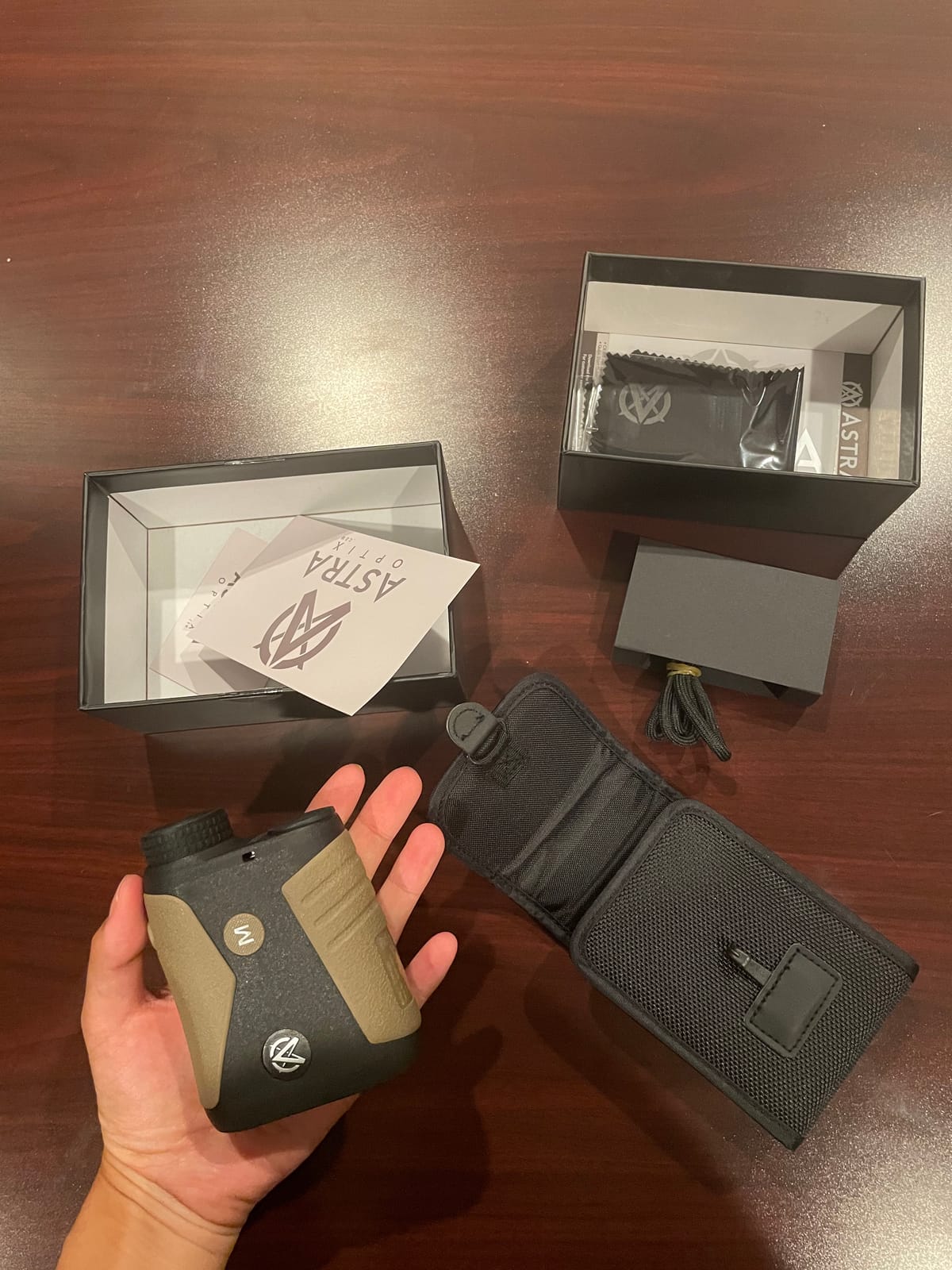
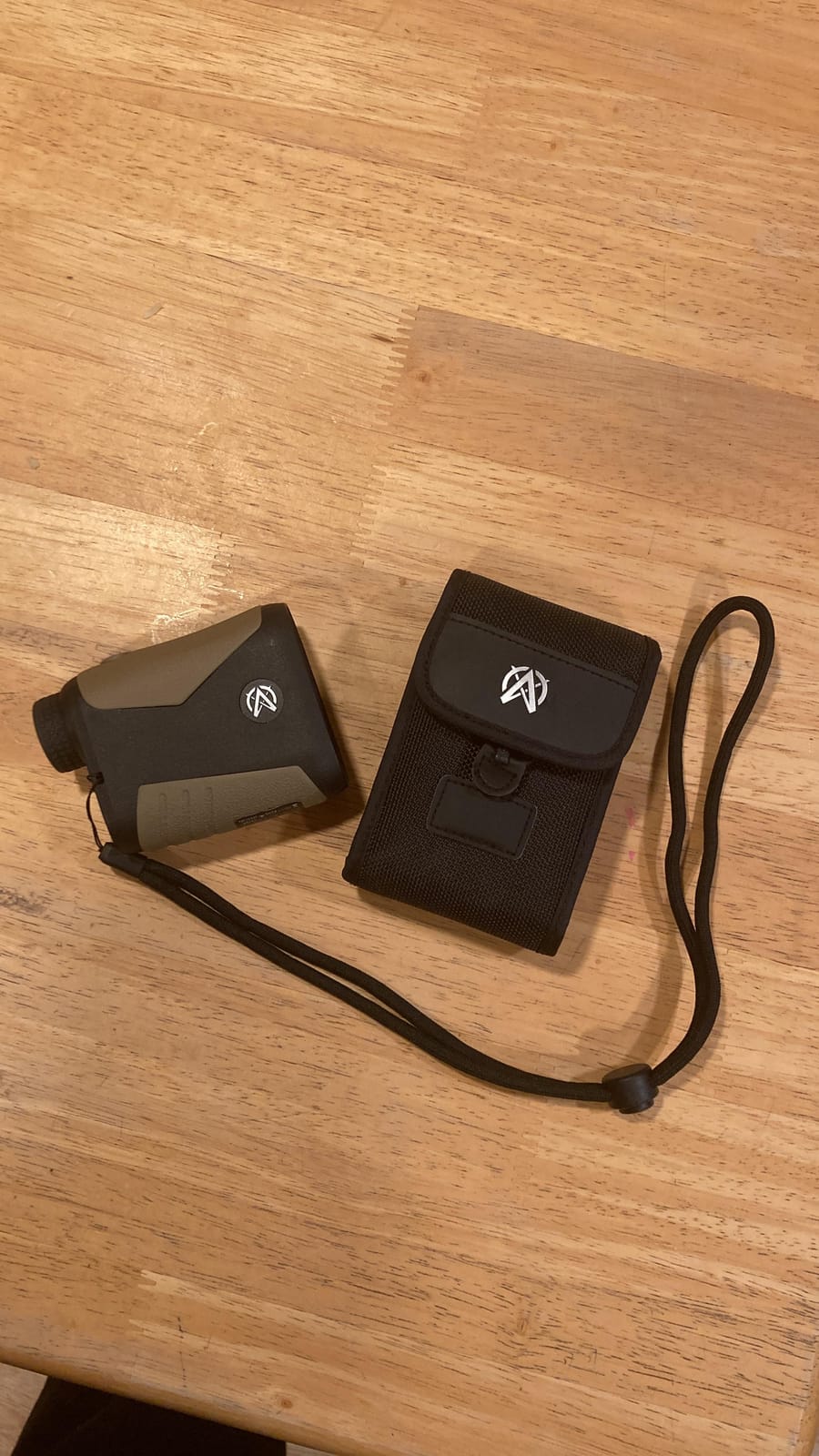
The Astra Optix solves the single most common complaint on hunting forums about this category, which is display legibility. Five brightness settings on a red reflective OLED means you can turn the readout down for full sun on a south-facing slope and up for the last minutes before legal light.
That is not a minor feature. Low-light display legibility is the most repeated complaint about budget units, and brightness adjustment is the direct fix. Reviewers also like the 0.10-second ranging speed, which confirms a distant trunk fast enough to keep up with a scanning animal.
The optical system is a 6×21 all-glass design fully multi-coated for 70.9 percent system light transmission, nitrogen filled and IPX6 rated. The warranty is lifetime and fully transferable, which is unusual at this level.
Six Ranging Modes and Why That Is Both Strength and Weakness
Horizontal and angle-corrected, line-of-sight with angle, archery, gun, golf with pin lock and scan. That menu covers every use case a hunter and a golfer might have in one body.
The flip side is setup time. Reviewers note the mode menu adds setup compared with simpler two-mode units, and from a cold stand in gloves that friction is real. Set your mode before you climb rather than while the buck is moving.
Range Ceilings That Split the Spec Sheet
The 1760-yard reflective figure looks impressive next to the 800-yard deer rating, and the 1000-yard tree range is genuinely strong, exceeding most bodies here. It is the right unit for tree-based and building-based targets.
For deer specifically, 800 yards is modest. If your hunting involves open country where you need to identify game beyond that range, this is not the body.
Who Should Buy It
Buy this if dawn and dusk readability is your top priority, you shoot lanes past 60 yards, and you want one body that also handles rifle, crossbow and target work.
Skip it if you want a brand with a deep service record behind the warranty, or if game identification beyond 800 yards is part of your hunt.
If your gear pile needs organizing around hunting season, our guide to tablet stands for drawing covers setting up a spot layout at camp, and our picks for gaming headset stands translate usefully to hanging a harness and a spare pair of gloves within reach of your seat.
How to Choose a Rangefinder With Angle Compensation
Minimum Range Beats Maximum Range
Every listing in this roundup advertises a headline maximum between 850 and 4000 yards, and none of those numbers decide your deer season. The spec that matters is the minimum range, because that is the distance where the shot you will actually take happens.
Look for a floor of 5 yards or lower so you can range an animal standing beside the base of your tree. A unit that will not read below 20 yards is useless for that shot no matter how good its glass is.
Decide How Much Compensation You Need
Horizontal distance only is enough if your sight is set to fixed yardages and you know your drop. Horizontal distance plus ballistic holdover is worth paying for if your lanes vary, if you crossbow or rifle, or if you do not want to run drop tables for every new setup.
Beyond that, obstruction awareness is the rarest feature and the most stand-specific. If branches are a recurring problem in your lanes, it changes what a rangefinder can do for you.
Choose the Right Target Priority Mode
First target priority reads the closest thing in the beam, last target reads the farthest. In standing timber with brush, last target is usually correct, because the branch in front of your lane will otherwise become your range.
Hunters on hunting forums report splitting on brush with units that lock too readily, so a scan mode with a fast refresh helps. Look for four target modes if you shoot through layered cover.
Check Display Type Against Your Legal Light
A red OLED or TOLED display that emits its own light stays legible in the flat grey of pre-dawn legal light, which is exactly when you need it. An unilluminated black reticle depends entirely on ambient light and washes out in heavy timber.
Brightness adjustment is the next tier. If you hunt both sunlit south slopes and deep bottoms, a unit with multiple brightness levels avoids choosing a compromise setting.
Set Up Bow, Crossbow and Rifle Modes Properly
Most units in this roundup can carry more than one ballistic profile, and the mode switch is where people go wrong. Decide whether you are pinning to a bow yardage or reading a rifle hold point before you climb, because switching profiles in the cold with gloves on is a slow task.
Bow mode on units like the Leupold gives you a holdover tied to arrow speed. Crossbow arrows need their own setup, and rifle solutions on the same body usually come from separate groups like the SIG Buckmasters modes.
Battery, Weight and Warranty Are the Unglamorous Three
CR2 lithium is the most common format and the easiest to find spares for, which matters because cold mornings drain cells and a dead unit in a stand is a wasted season.
Weight matters more than it looks if the body hangs from your neck for a full sit. The lightest here sit near 5 ounces; the heaviest are close to 10, and you will feel the difference by noon.
On warranty, coverage ranges from one year on the SIG Buckmasters to an unlimited unconditional lifetime warranty on the Vortex bodies and a lifetime transferable warranty on the Astra Optix. Leupold covers its optics for life with limited electronics coverage.
Handheld or Rangefinding Bow Sight?
A handheld wins on versatility. You can range a downed animal, pre-range lanes on the walk in, and carry one body across bow, crossbow and rifle seasons.
A rangefinding bow sight wins on shot speed, because the solution is always displayed at the moment you draw. For close quarters hunting where a stand shot comes at 20 yards and your heart rate is already up, that is a meaningful advantage.
Plenty of archers carry both, using the handheld to pre-range and confirm on the walk in, then the sight for the actual shot.
Frequently Asked Questions
Does the Vortex Diamondback rangefinder have angle compensation?
Yes. The Diamondback HD 2000 uses HCD mode, which returns the true horizontal distance instead of the raw line-of-sight reading, exactly like the angle compensation in TBR, ARC and Tru-Target units. It covers 2000 yards on reflective targets and 1400 yards on game at 7x magnification. What it does not include is a ballistic holdover solution, so you dial or hold for the distance yourself.
Do you aim higher or lower when shooting from a tree stand?
You aim higher than instinct suggests if you are ranging the line-of-sight distance, because gravity only drops the arrow over the horizontal part of the shot. From a 20-foot stand at a 20-yard true distance, a plain rangefinder reports about 21 yards, and holding for that number puts your arrow over the animal. An angle-compensated unit returns the horizontal distance so you hold correctly.
What is the best rangefinder for bowhunters?
For most bowhunters, the Vortex Crossfire HD 1400 is the best balance of horizontal-distance accuracy, red TOLED display legibility, light carry weight and a lifetime warranty. If you shoot from stands above 20 feet or deal with branches in your lanes, the Leupold RX-1400i TBR/W Gen 2 is better because it adds ballistic holdover and Flightpath obstruction awareness. The right pick depends on your stand height and lane length more than on brand.
How much stand height actually requires angle compensation?
Below a 15-foot stand and inside 30 yards, the correction is roughly a yard and most archers shoot fine without it. From a 25-foot stand at 35 yards, an uncompensated reading costs about a yard of holdover. The error grows with the square of the elevation, so from a 40-foot hang at 60 yards a raw reading overstates by roughly four yards. That is where compensation earns its cost.
Should a bow rangefinder use first or last target mode?
Use last target priority in most stand situations, because it reads the farthest surface in the beam and ignores brush in front of it. First target priority is better in open country with nothing between you and the animal. Hunters commonly split on limbs with units that lock too readily, so a fast scan mode helps you hold the beam steady on a moving animal before the lock.
Is it legal to use slope or angle compensation when hunting?
Rules vary by state, and electronic illuminated sights and ranging devices are the most commonly regulated category, so check your own state regulations before you rely on one in the field. Some states restrict illuminated reticles or laser aiming devices during hunting hours, and others restrict them outright. Confirm the current rule for your state rather than assuming a rangefinder is treated the same as a flashlight or binoculars.
Final Verdict: Which Tree Stand Rangefinder Should You Buy?
If your lanes stay inside 60 yards and your stand sits in ordinary timber, the Vortex Crossfire HD 1400 is our pick: correct horizontal distance, a display that reads at first light, and a warranty that never runs out. If you shoot above 20 feet with branches in your way, the Leupold RX-1400i TBR/W Gen 2 goes further and is the only body here that shows you whether the arrow will actually arrive.
Big terrain and long downhill work belongs with the Vortex Razor HD 4000. Bright dawn glass in dense hardwoods favors the Bushnell BoneCollector 850, crossbow and BDC scope shooters should look at the SIG Buckmasters 1500, adjustable brightness belongs to the Astra Optix, and first-season buyers who want correct angle compensation without a large outlay should start with the AOFAR HX-1200T.
Whichever body you choose, set the mode and the ballistics before you climb, confirm the incline angle matches the geometry you expect, and check the regulation for your state on illuminated ranging devices. That is how you get the full benefit of a rangefinder with angle compensation from a tree stand.