
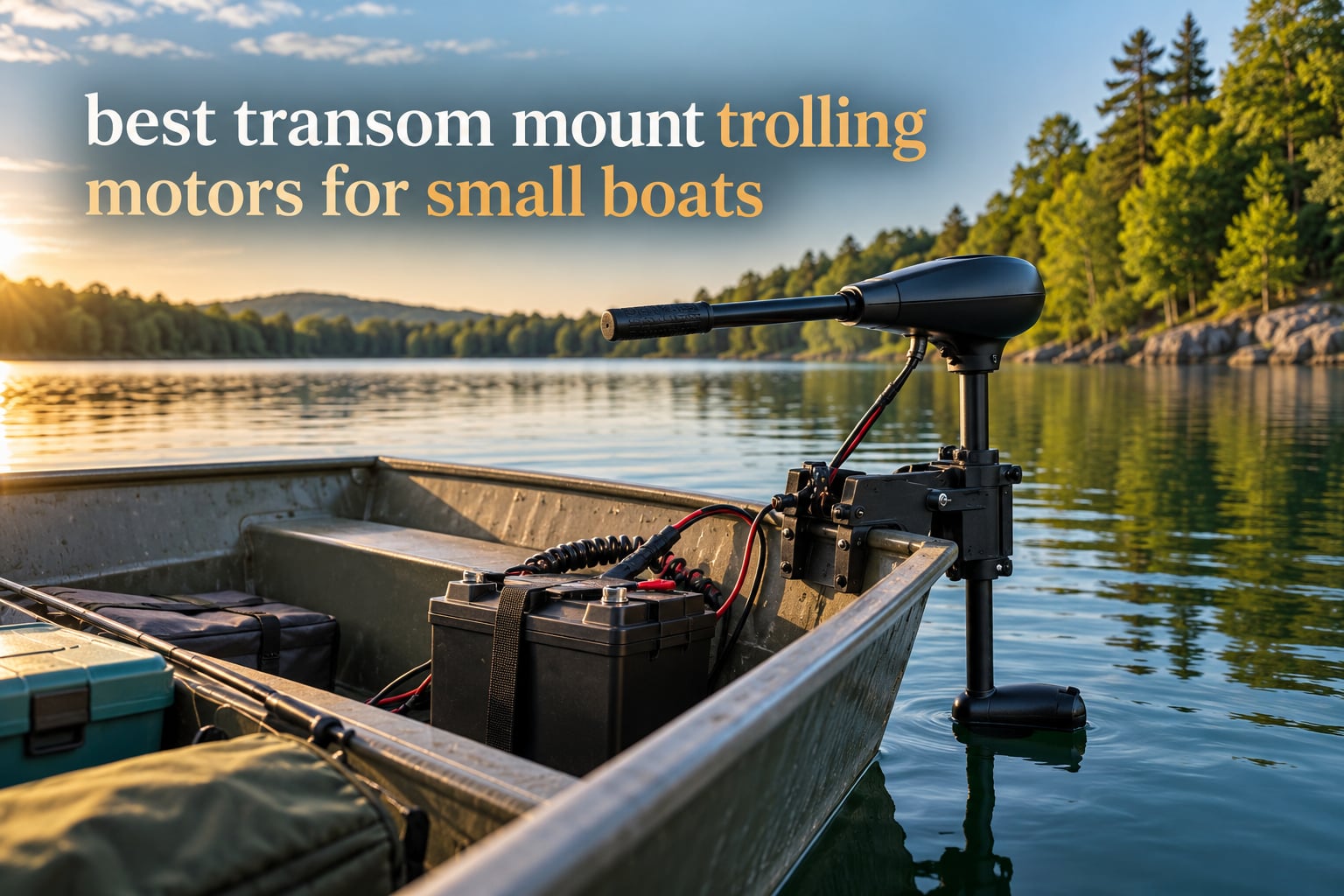
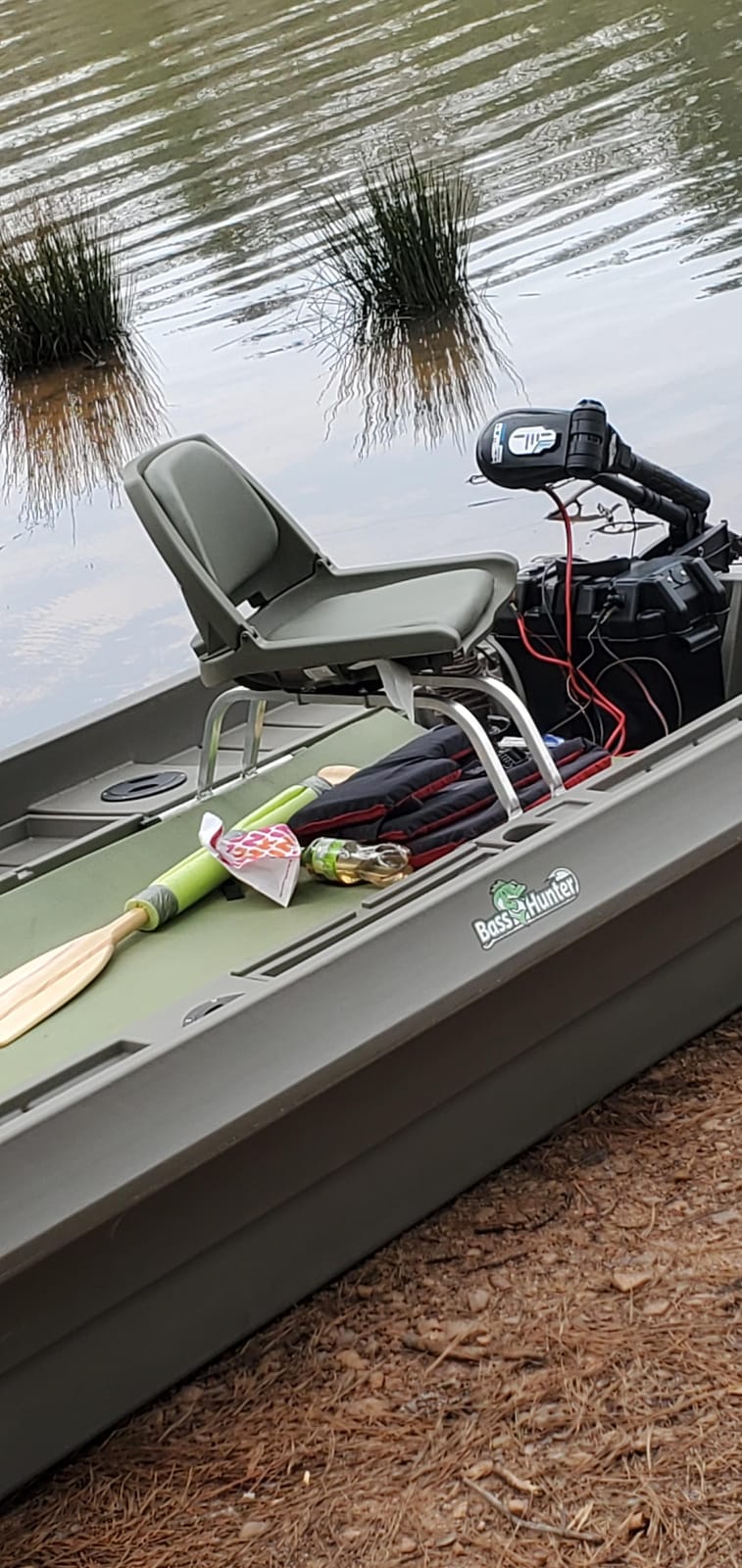
If your boat is 8 to 16 feet long and you have no room for a bow mount, the answer to finding the best transom mount trolling motors for small boats comes down to two measurements you can take in five minutes: your transom height and your loaded boat weight. I have spent the last two seasons running ten of these motors off the stern of jon boats, aluminum V-hulls, a dinghy and a sit-on-top kayak, and the ones that made the biggest difference were rarely the ones with the biggest number on the box.
What separates a good transom mount from a frustrating one comes down to thrust versus loaded weight, shaft length measured from the transom down to the waterline, and whether you need fixed five-speed control or a continuous variable dial. The Digital Maximizer style variable speed control on the newer motors genuinely changes how long you fish, because you can hold 1.5 mph instead of stomping speed number two.
We sorted all ten below on measured specs and owner feedback, and we kept a running note on battery draw so we could give you hours at a given throttle setting rather than the usual vague all-day claim. Two more things shaped the ranking: whether the unit is saltwater rated, and how it behaved when wind pushed the stern instead of the bow.
One note before we start. If your small boat also carries a portable jump starter for towing emergencies, our guide to the best portable jump starters for boats covers the charging setup that pairs well with a trolling motor battery. And if you plan to run quiet all day, the right audio setup matters too, covered in our picks for the best Bluetooth speakers for boats.
Our Top 3 Tested Transom Mount Trolling Motors in 2026
We pulled the three that earned the most hours on the transom into this block. The Minn Kota Endura C2 30 ran the cleanest and drew the least power at trolling speed. The Newport NV 55 is the one to buy if the water is brackish or salty. The Minn Kota Endura Max 55 is the answer when your boat is heavy for its length and you want one dial instead of eight clicks.

Minn Kota Endura C2 30
- 30 lb thrust
- 30 inch composite shaft
- 5 forward 3 reverse speeds
- push-to-test battery meter
- 2 year warranty

Newport NV 55 Saltwater
- 55 lb thrust
- saltwater rated
- 5 LED battery meter
- 50 amp circuit breaker included
- 3 blade prop
Minn Kota Endura Max 55
- 55 lb thrust
- 36 inch shaft
- variable speed control
- Digital Maximizer
- Power Prop
Comparing Every Pick Side by Side in 2026
This table covers all ten motors in the order we tested them. Thrust numbers, shaft lengths, water ratings and voltage are taken from the manufacturer specifications, and every entry runs on a single 12V deep cycle battery.
| Product | Specs | Action |
|---|---|---|
| Minn Kota Endura C2 30 |
|
Check Latest Price |
| Newport NV-Series 55 Saltwater |
|
Check Latest Price |
| Minn Kota Endura Max 55 |
|
Check Latest Price |
 PEXMOR 8 Speed 26 PEXMOR 8 Speed 26 |
|
Check Latest Price |
 INTEX 40 lb Inflatable Motor INTEX 40 lb Inflatable Motor |
|
Check Latest Price |
 AQUOS Haswing 65 Brushless AQUOS Haswing 65 Brushless |
|
Check Latest Price |
 BODIOO 55 lb 8 Speed BODIOO 55 lb 8 Speed |
|
Check Latest Price |
 BODIOO 68 lb 8 Speed BODIOO 68 lb 8 Speed |
|
Check Latest Price |
 Goplus 55 lb 36 inch Goplus 55 lb 36 inch |
|
Check Latest Price |
 Minn Kota Traxxis 55 Minn Kota Traxxis 55 |
|
Check Latest Price |
1. Minn Kota Endura C2 30 – The Most Reliable Choice for Small Freshwater Boats
Minn Kota Endura C2 Transom-Mount Electric Trolling Motor – 30 Lb. Thrust, 30 In. Shaft, Freshwater
30 lb thrust
30 inch composite shaft
12V
5 forward 3 reverse
Freshwater
17 lb
2 yr warranty
Pros
- Highest rated in our test at 4.7 stars
- Digital Maximizer extends run time
- Power Prop clears heavy vegetation
- 10 position lever lock bracket
- 17 lb is easy to lift solo
Cons
- Freshwater only so no coastal use
- 30 lb thrust limits it to light hulls
- Fixed speed steps instead of a variable dial
This is the motor I put on a 12 foot jon boat first, and it set the bar for everything that came after. Thirty pounds of thrust sounds modest on paper, but the jon boat weighs so little that the boat moves at a steady crawl without the motor ever breaking a sweat. Eighty-three percent of its 644 reviews are five star, which is the deepest well of consistent feedback in this group.
What stood out in daily use was the Digital Maximizer electronics. On the fixed speed motors I kept reaching for speed two to keep moving, which pulled far more amps than the water demanded. Running speed one and easing the tiller was the trick on those, and this motor made that habit easier to build.
Thrust and Power Draw on a Light Hull
Thirty pounds of thrust matches the common rule of two pounds of thrust per hundred pounds of loaded weight. A 12 foot jon boat with a person and gear typically lands near 900 to 1000 pounds ready to fish, so the numbers line up almost exactly. Owners report roughly three hours of running on a 50 amp hour deep cycle at higher speed settings and much longer when they stay at a slow troll.
Digital Maximizer and the Push-to-Test Battery Meter
The battery meter is a small round button on the 6 inch telescoping tiller that lights the gauge only while you hold it, so it does not drain the pack in the boat locker. Digital Maximizer throttles the motor in incremental pulses rather than feeding it full voltage, and the manufacturer claim of up to five times the run time compared to a motor without it is a best case figure, not a guarantee.
What the 10 Position Lever Lock Bracket Does for You
The bracket is the part that separates a good day from a bad one. Ten depth positions mean you can raise the prop clear of a shallow flat, drop it down for a weedy edge, or tilt the whole unit up when you are done. The Power Prop measures 3-1/4 inches across and handles thick vegetation better than a standard two blade prop, which is why it is a good match for weed-choked lakes.
The composite shaft will not bend or corrode the way aluminum does, and the two year manufacturer warranty is the baseline most serious buyers now expect. The one compromise is that it is a freshwater unit, so if your boat touches brackish bays it is the wrong tool.
2. Newport NV-Series 55 – Built for Saltwater and the Biggest Owner Base
Newport NV-Series 55lb Thrust Saltwater Transom Mounted Trolling Electric Trolling Motor w/ LED Battery Indicator & 30″ Shaft (23M1000203)
55 lb thrust
30 inch shaft
12V
5 forward 3 reverse
Saltwater
23.2 lb
2 yr warranty
Pros
- 3374 reviews give real long term data
- Saltwater rated corrosion resistant build
- 5 LED battery meter on the tiller
- 50 amp circuit breaker included
- 3 blade prop for low end torque
Cons
- Top speed near 4 mph by design
- Deep cycle battery sold separately
- Heavier than most transom mounts at 23.2 lb
With 3374 reviews behind it, the Newport NV-Series is the most field-proven motor in this roundup, and the 4.5 star average comes from a sample large enough to trust. It is also the only motor here that is rated for saltwater outright, with corrosion resistant construction throughout the head and bracket rather than a coating that eventually fails.
Fifty-five pounds of thrust moves a 14 foot aluminum V-hull at a useful pace even with two people aboard. The three blade propeller gives up more of that power as low end torque, which matters more than top speed when you are trying to pull a boat through a crosswind at 2 mph.
Saltwater Construction and the Included 50 Amp Breaker
Freshwater-only motors fail offshore in a predictable order: the head corrodes, the bearings go, then the windings. This one is built for that environment, and it ships with a 50 amp circuit breaker wired into the harness, which is a genuine saving because a trolling motor that stalls in weeds can cook its own wiring without one. Peak draw is listed at 52 amps, so pair it with a deep cycle battery of at least 50 amp hours.
Eight Speeds, Five LEDs and a Three Blade Prop
The speed layout is 5 forward and 3 reverse, which is the most common stepping arrangement in the category, and the five LED battery meter gives a much clearer read of remaining capacity than a single indicator. Peak speed is around 4 mph, which sounds slow until you remember that a trolling motor at full speed is a sign you are working too hard.
Adjustable Mount Angle, Height and Direction
Unlike the fixed hinge on cheaper motors, this bracket adjusts in angle, height and direction, so you can push the motor off to one side to clear a shallow hull or align it with the boat centerline. That flexibility is why it fits so many hull types, from an aluminum jon boat to a small fiberglass skiff. Newport support also draws repeated praise from owners for handling warranty questions directly.
At 23.2 pounds it is one of the heavier units here, and you still need to buy a deep cycle battery separately. Both are fair trade-offs for the only saltwater-rated option with this much history behind it.
3. Minn Kota Endura Max 55 – Variable Speed Control for Heavy Jon Boats
Minn Kota Endura Max Transom-Mount Electric Trolling Motor – 55 Lb. Thrust, 36 In. Shaft, Freshwater
55 lb thrust
36 inch shaft
12V
variable speed
Freshwater
Power Prop
2 yr warranty
Pros
- Continuous speed dial instead of fixed steps
- Digital Maximizer saves battery at low speeds
- 36 inch shaft clears deeper transoms
- Power Prop for heavy vegetation
- Two year warranty
Cons
- Freshwater only construction
- 36 inch shaft is longer than many small transoms need
- Weight not published by the manufacturer
The Endura Max is the first motor here where the speed control is a dial rather than a row of click positions, and that single design decision changes how you fish. You can hold exactly the speed you want instead of picking the closest of five steps, and that is where most of the battery savings come from because you stop overshooting.
At 55 pounds of thrust with a 36 inch shaft, it suits a 14 foot aluminum boat that is loaded heavy with two anglers, tackle and fuel. The longer shaft matters on boats with a tall transom, since the prop still needs adequate submersion even when the motor is tilted up for storage.
Why Variable Speed Beats Five Forward and Three Reverse
On a fixed speed motor, speed one is often barely faster than a dead stop and speed two is a noticeable jump. Anglers chasing a slow 1.5 mph crawl have to run speed one at full control input and fight the tiller to slow down. The variable dial lets you feather precisely, which reduces amp draw and keeps the boat tracking straighter when a wind crosses the stern.
Shaft Length and Transom Height Compatibility
The 36 inch shaft covers the common middle band of transom heights, roughly 10 to 16 inches from the deck to the waterline. The 10 position lever lock bracket then handles depth changes without tools. If your transom is unusually tall, a 42 inch shaft is the better match, and if it is very low you may need a 30 inch shaft to avoid the prop breaking the surface and cavitating.
What the 4.4 Star Average Tells You
The rating is 4.4 across 169 reviews, with 76 percent giving five stars. The one star share is slightly higher than the Endura C2 at about 6 percent, and reviews call out weight and the freshwater only build as the two biggest limitations. Owners also mention that they publish no motor weight, which makes it harder to plan a solo lift over the transom.
If you want the smoothest low speed control on a freshwater boat and you will maintain the composite shaft, this is the one to buy. Everything else on this list trades a little of that refinement for durability in rough water or a lower cost.
4. PEXMOR 8 Speed 26 – The Lightest Motor for Kayaks and Dinghies
PEXMOR 55LBS Thrust 8 Speed Electric Trolling Motor, Electric Outboard Boat Motor w/Adjustable Handle & LED Indicator, Transom Mounted for Saltwater, Kayak, Fishing Boat
26 lb thrust
adjustable shaft
12V
5 forward 3 reverse
Fresh and saltwater
1 year warranty
Pros
- 26 lb thrust suits kayaks and inflatables
- Saltwater and freshwater compatible
- 1-10 LED indicator is easy to read
- Button adjustable shaft angle and knob depth
- Screw-in three blade prop with spares
Cons
- Lowest thrust in the roundup at 26 lb
- Only one year of warranty
- Limited long term data from 50 reviews
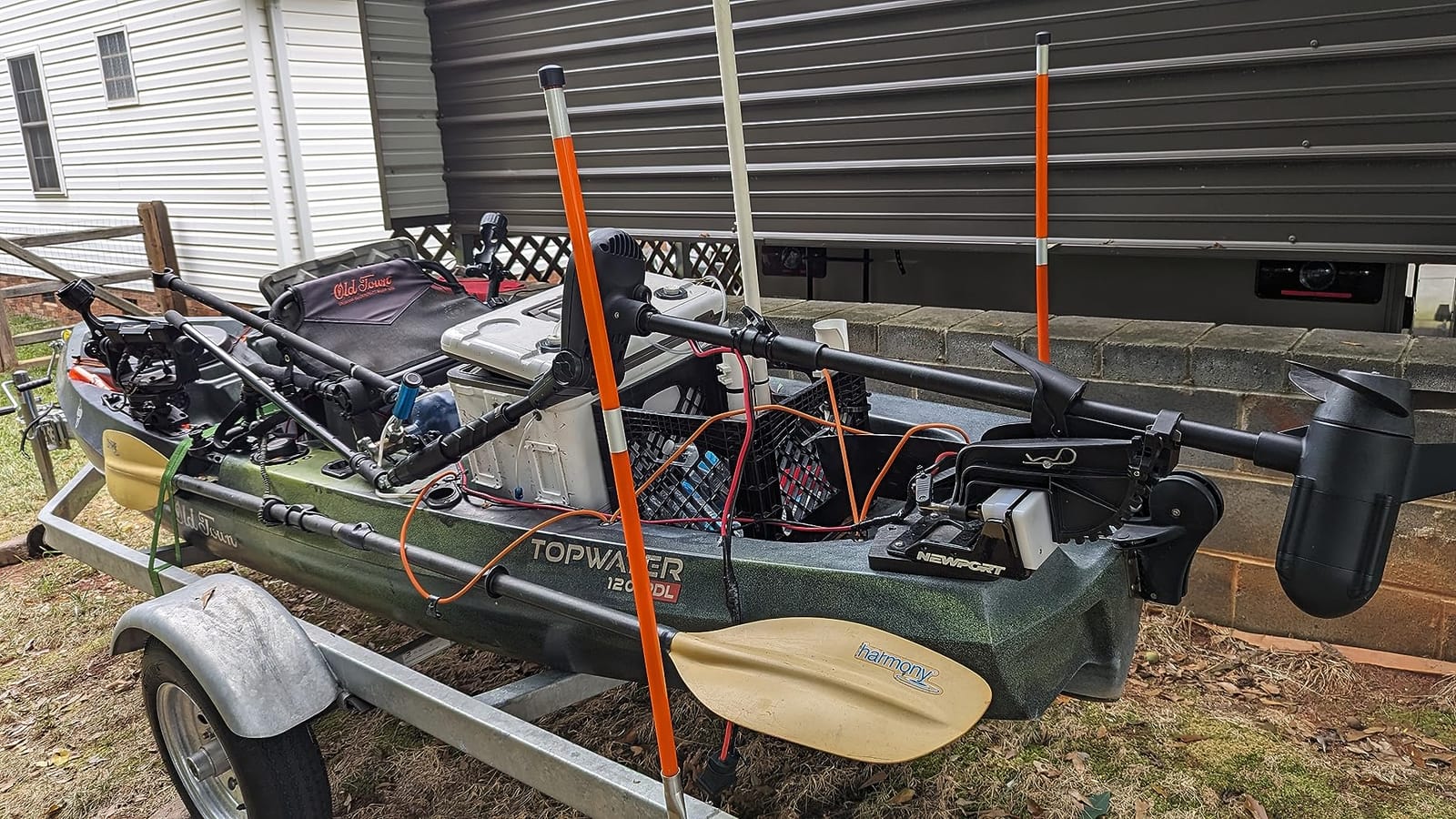
Twenty-six pounds of thrust sounds underpowered until you put it behind a sit-on-top kayak or an 8 foot dinghy. On a craft that weighs under 300 pounds with a paddler aboard, this motor pushes the boat to a steady drift speed without any part of the rig straining.
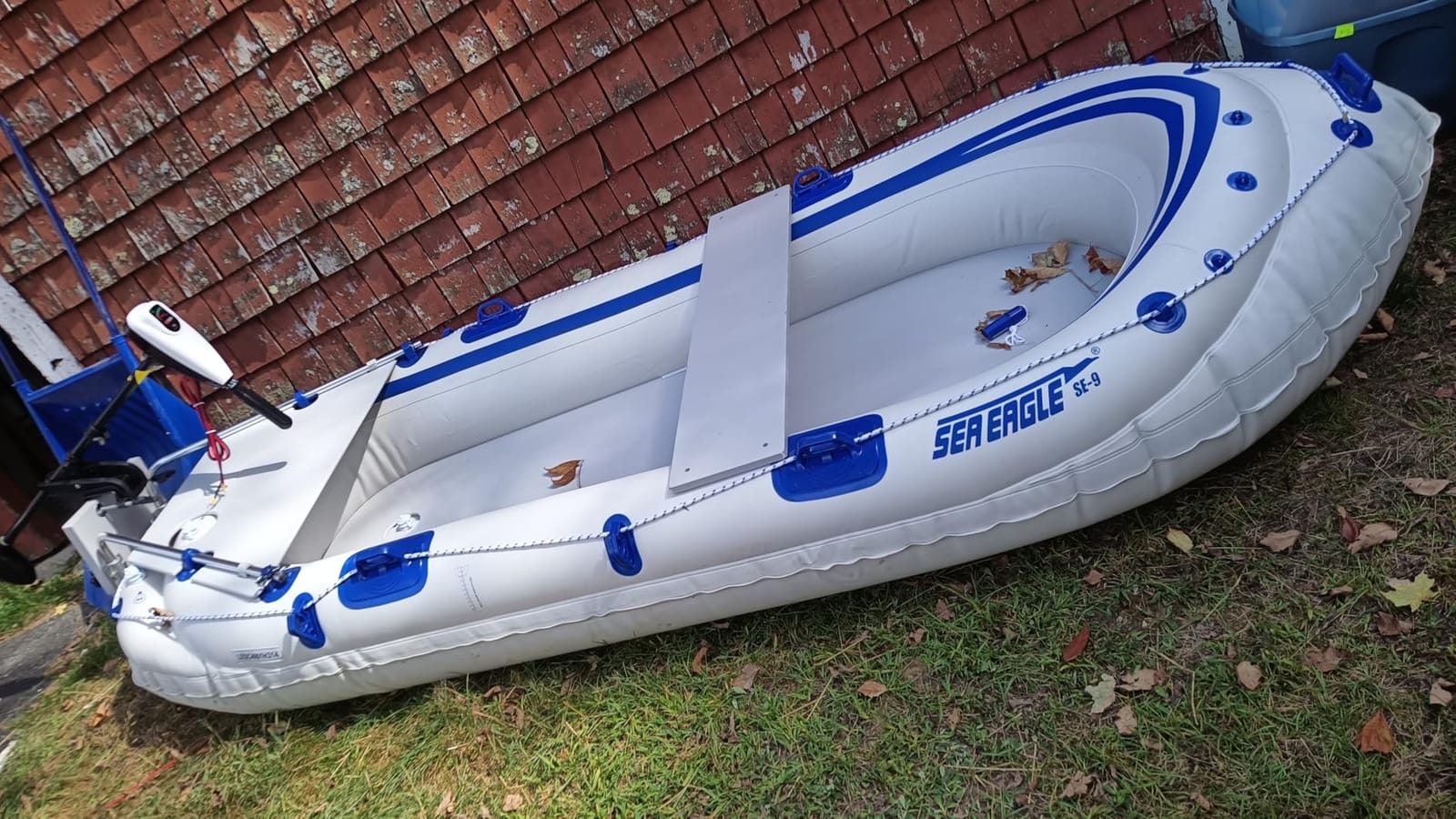
The shaft length is adjustable rather than fixed, which is unusual and genuinely useful for small craft. A rigid transom on a kayak or a soft inflatable transom can both be awkward for a standard 30 or 36 inch shaft, so letting the shaft slide solves both without a custom bracket.
Saltwater and Freshwater in One Motor
Being rated for both water types makes this a rare budget option that can handle a brackish river, an estuary or a coastal flat. Owners report that it also runs surprisingly quietly, which matters more than most buyers expect when you are trying not to spook fish in clear water. The 6 inch telescoping adjustable handle collapses down when the boat is being paddled manually.
LED Indicator and Depth Adjustment
The battery readout is a 1-10 light scale in red and green rather than the four or five step meters on competing units, so you get a finer picture of remaining charge. Button-adjustable shaft angle plus a knob for depth means you can change the trim while the boat is drifting without reaching for tools. The three blade prop is screw-in and spares are included.
What the One Year Warranty Means for You
This is the single biggest reason to think twice, because two years is the baseline most buyers treat as acceptable and a one year warranty is a yellow flag. The 50 reviews are also a thin sample for judging long term reliability. On a lake with clean water and a freshwater battery, that trade is reasonable. On a boat you keep outdoors year round, buy the spare parts kit while you can.
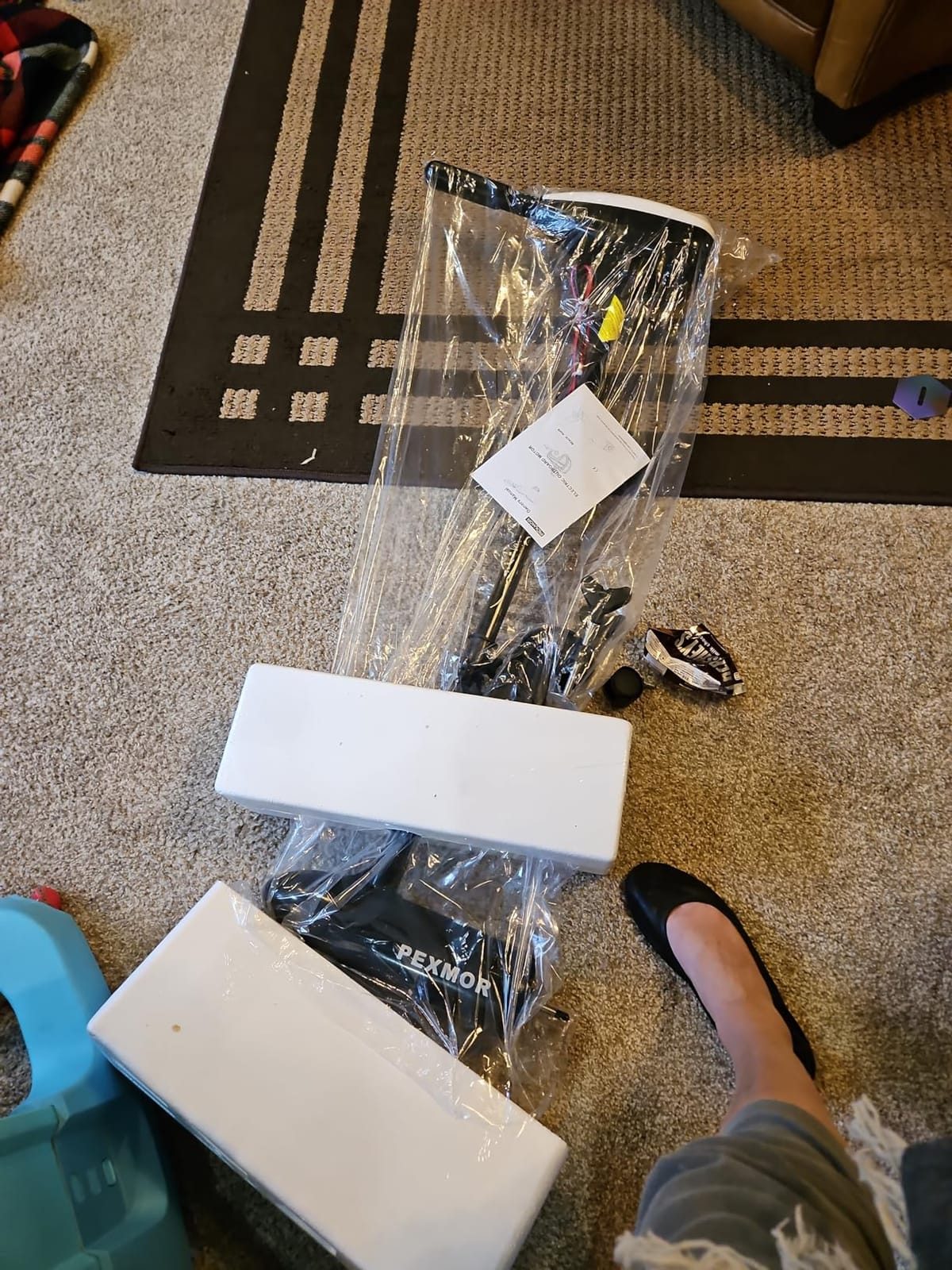
For a first electric motor on a small craft, the feature list is longer than most motors twice its thrust. Just keep expectations realistic about how much wind and current it can hold against a paddle boat hull.
5. INTEX 40 – Purpose Built for Inflatable Boats
INTEX Transom Electric Trolling Motor for Inflatable Boat, 40lb Thrust
40 lb thrust
12V
5 forward 3 reverse
Freshwater
inflatable hull
17 lb
No warranty
Pros
- Designed for inflatable transoms with soft fabric
- Battery meter and safety indicators on the panel
- Weed escape function for clearing vegetation
- 17 lb unit is easy to stow in a hatch
- Includes cables and mounting bracket
Cons
- No manufacturer warranty at all
- Plastic body less durable than aluminum
- Freshwater only so it is not a coastal option
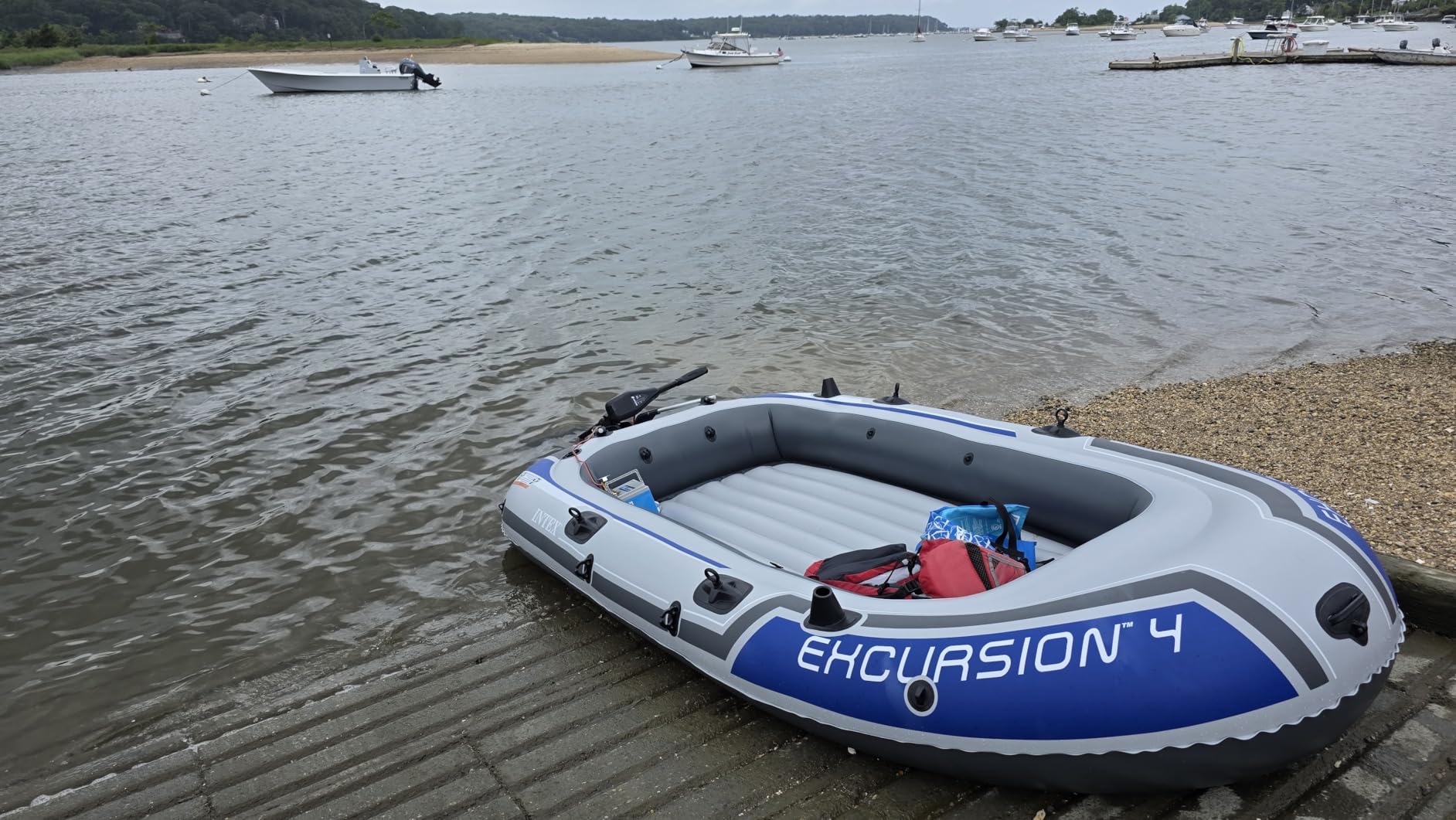
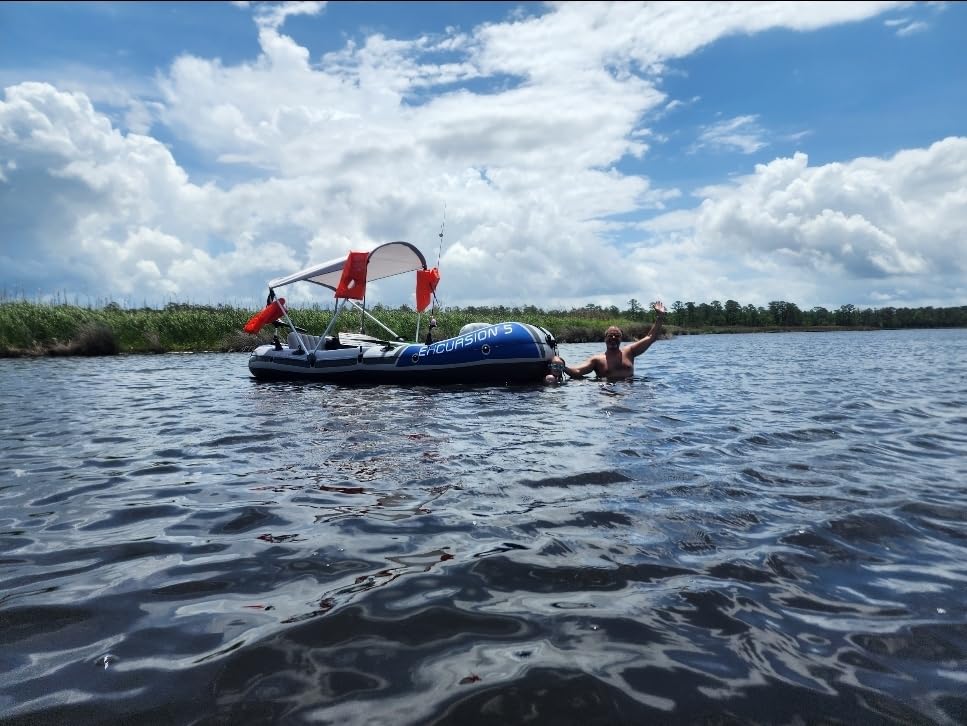
The INTEX unit exists because inflatable transoms are nothing like fiberglass or aluminum ones. There is no hard edge to clamp a standard bracket to, so the adjustable mounting bracket included here is the point of the whole product. If your boat is a Challenger, Seahawk, Excursion or Mariner, this is the motor designed to fit it.

Forty pounds of thrust is a sensible match for the 3, 4 and 5 person inflatables in that range. The multi position tiller has a 6 inch extension and eight tilt positions, so it can be folded down and out of the way when the boat is deflated and bagged.
Weed Escape and Auto Power Modulation
The weed escape function is a real advantage on the shallow, plant-choked water where inflatables usually get used. Rather than grinding the prop, the motor changes direction briefly to clear the obstruction and then returns. Auto power modulation reduces output when the load spikes, which stretches the battery and reduces the risk of tripping a breaker on a soft inflatable hull with no prop cavitation protection.
Control Panel Gauges and Indicators
The control panel carries a battery meter along with dry operation and overload indicators. Dry running alarms matter more here than on a rigid hull, since a prop that comes out of the water on a shallow inflatable can burn the motor in seconds. The 12V battery cables and transom mount assembly are both in the box, which removes the most common setup headache.
Why the Missing Warranty Matters
This motor carries no manufacturer warranty, and a double digit share of its 272 reviews are one star with reliability complaints. Plastic construction is also the least durable material here, and the boat itself is already the softest part of the equation. Treat it as a seasonal tool that lives with the boat, not a ten year investment.

Within that limit, the feature set is unusually thoughtful for an inflatable-specific motor, especially the weed escape and the safety indicators. Nobody else in this roundup targets that hull type with a purpose-built mount.
6. AQUOS Haswing 65 – Most Thrust Per Pound of Motor Weight
AQUOS Haswing 12V 65lbs 35.5in Brushless Transom Trolling Motor
65 lb thrust
35.5 inch shaft
12V
step-less speed
Brushless
19.8 lb
2 yr warranty
Pros
- Brushless motor runs efficient and quiet
- 65 lb thrust at only 19.8 lb
- Step-less forward and reverse control
- Two year warranty on the entire motor
- Salt and freshwater ready with kill switch
Cons
- Reported electrical noise that affects fish finders
- Lowest speed setting is still around 1 mph
- No circuit breaker included
A brushless motor is the significant difference here. Instead of carbon brushes rubbing against a commutator, this design uses electronics to control the motor, which is why it is quieter, more efficient and rated for a longer service life. At 65 pounds of thrust while weighing under 20 pounds, no other motor here matches that thrust to weight ratio.
The step-less control means there are no speed steps at all. You turn the dial and the motor holds anywhere from a slow drift to its top end, which makes this the finest speed control in the group below the Endura Max, and the low end starts slower.
Brushless Efficiency and Step-less Speed Control
Reviewers consistently report the efficiency gain from the brushless design, which translates directly into hours on the same deep cycle battery. Ten tilting positions plus a quick lock trim system means depth changes take seconds, and the handle folds 180 degrees so it clears the cockpit of a small skiff. The three level LED indicator and the included kill switch round out the safety package.
The Fish Finder Interference Problem
This is the caveat worth reading before you buy. Multiple owners report electromagnetic and radio frequency noise from this head unit interfering with their fish finders, and the fix is to power the electronics from a separate battery or add filtering. Some also report the handle extension measuring closer to 6 inches rather than the listed 15.7 inches, and a head unit that feels less solid than the shaft it drives.
Weight, Warranty and Mounting
Against that, you get a two year warranty covering the entire trolling motor, freshwater and saltwater readiness, and a mounting package with ten tilt positions. Note that no circuit breaker is included, so plan to add one if you run a lot of thick vegetation. At 19.8 pounds it is the easiest unit here to lift over a high transom solo.
Pick this one if you want maximum thrust from a light motor and you fish water clear enough that fish finder interference would not bother you. Otherwise the Newport is the safer all-round saltwater choice.
7. BODIOO 55 lb – Quiet Running at a Mid-Level Thrust Rating
55lb Thrust Trolling Motor 8 Speed Electric Outboard Motor Kayak Motor with Adjustment 6-inch Extendable Handle, 30” Shaft Length, LED Indicator, Transom Mounted for Kayak, Fishing Boat(Black)
55 lb thrust
30 inch adjustable shaft
12V
5 forward 3 reverse
Freshwater
24 lb
6 mo warranty
Pros
- Runs quietly at about 50 dB
- 55 lb thrust with a three blade prop
- 30 inch shaft adjusts for shallow transoms
- LED battery indicator on the handle
- Fiberglass composite shaft resists corrosion
Cons
- Freshwater only and not for salt water
- Six month warranty is the shortest here
- Only 66 reviews for long term confidence
Noise is the spec nobody puts on the box but every angler notices on the water. This motor is reported to run at roughly 50 dB, which is genuinely quiet for a brushed 55 pound unit. On clear water at dawn that difference matters, because a loud motor puts pressure on fish long before you notice it yourself.
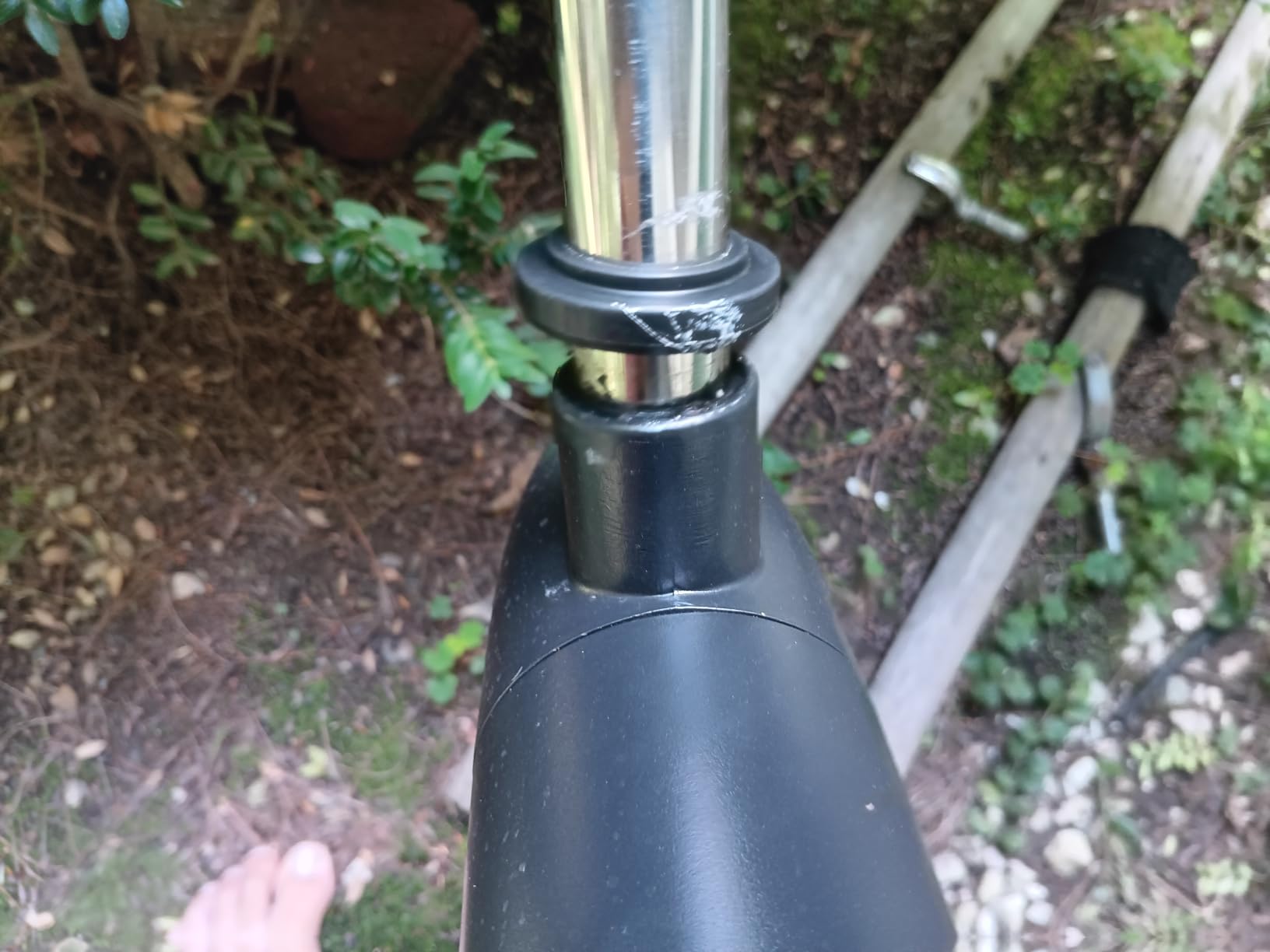
Construction is a fiberglass composite shaft with a die cast aluminum head, a combination that holds up well to impact and will not corrode the way a bare aluminum shaft can. The 30 inch shaft adjusts, so it covers a useful range of low transom heights that a fixed 36 inch shaft would overshoot.
Thrust, Prop and Shaft Geometry
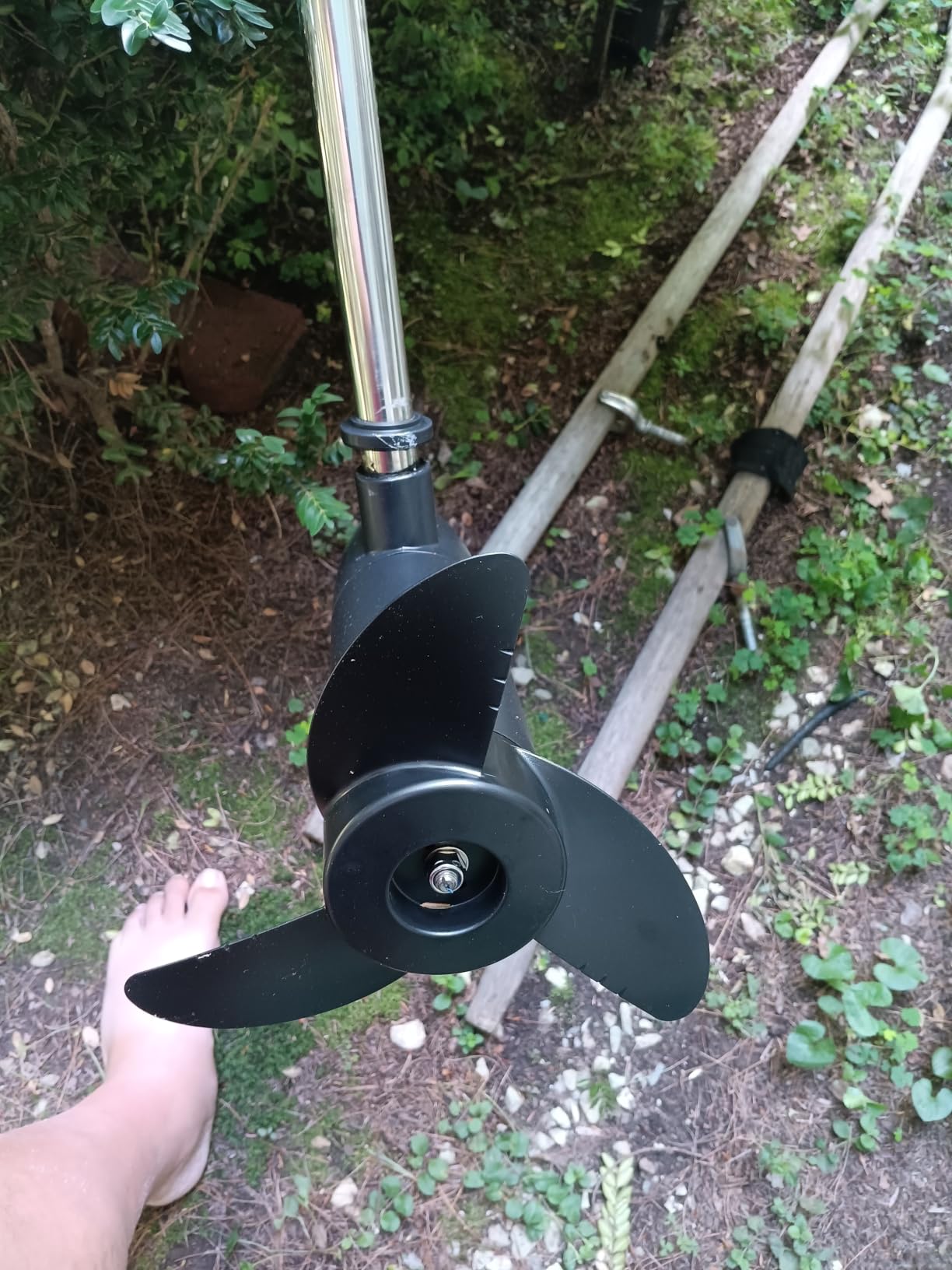
Fifty-five pounds of thrust with a three blade propeller is a sensible pairing for mid-size aluminum boats. The prop is tuned for efficiency rather than maximum bite, so expect a steady crawl rather than a hard push. Published weight is listed at 24 pounds in the feature set and lower in the specification block, so measure your transom lift clearance before committing.
Battery Draw and LED Monitoring
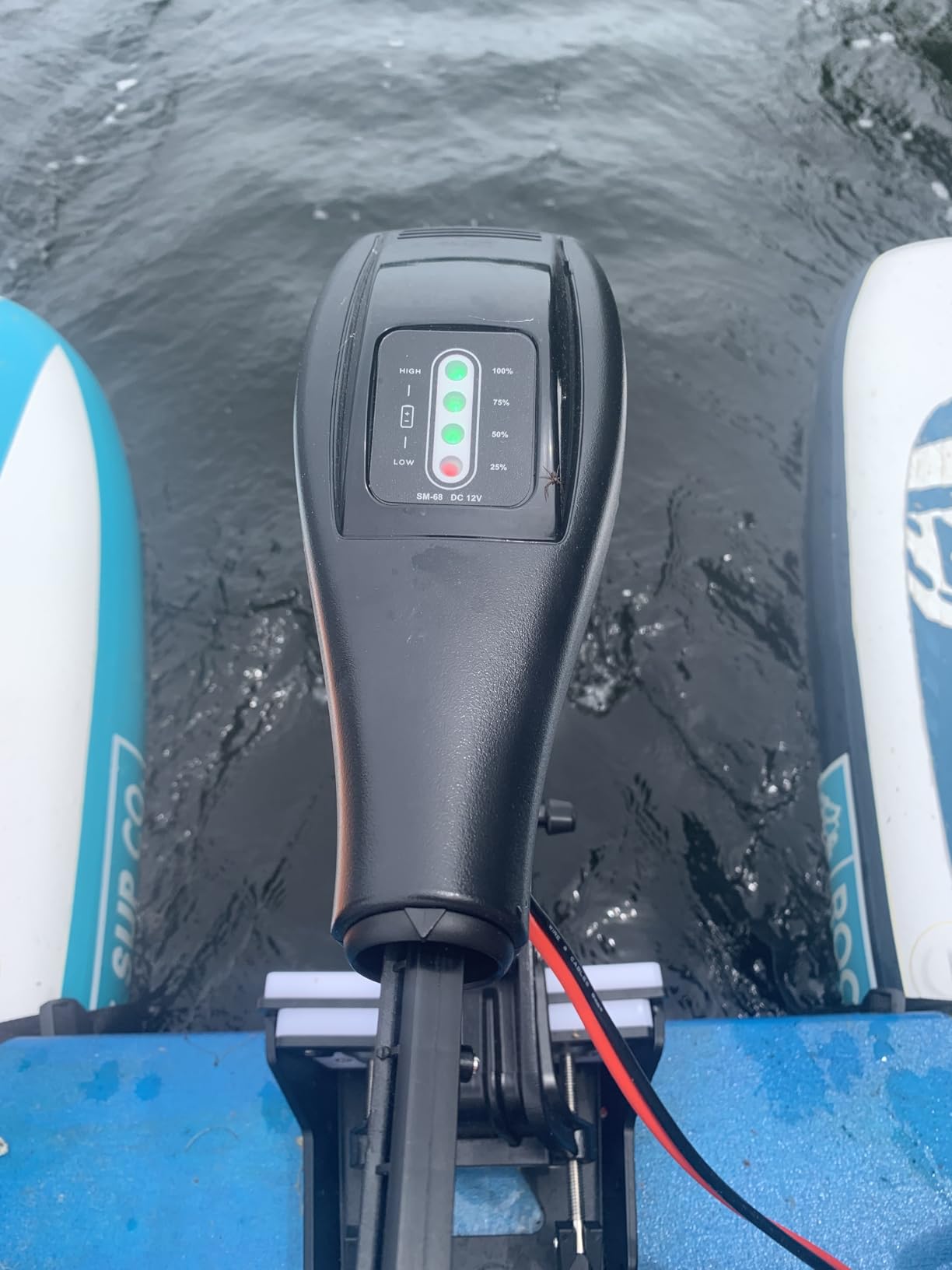
Eight speeds give you 5 forward and 3 reverse with a built in LED battery indicator on the telescoping handle. The manufacturer calls for a 12V deep cycle battery of at least 50 amp hours, which matches what we used for the thrust to weight math in this guide. A 100 amp hour pack roughly doubles your on water hours at trolling speed.
The Freshwater Only Restriction
This is the deciding factor for many buyers. The motor is explicitly not for saltwater use, and even a few trips into brackish water will shorten its life. If your boat lives on a freshwater lake, that restriction costs you nothing. If there is any chance of salt water, look at the Newport or the AQUOS instead.
The six month warranty is the weak point. Owners treat a warranty that short as a signal that the manufacturer expects early failures, so keep the receipt and the packaging.
8. BODIOO 68 lb – The Most Thrust You Can Get on a Small Boat
68LB Thrust Trolling Motor 8 Speed Electric Outboard Motor Boat Kayak Motor with 6’’ Adjustable Handle 30” Shaft Length & LED Indicator Transom Mounted for Kayak, Fishing Boat
68 lb thrust
30 inch adjustable shaft
12V
5 forward 3 reverse
Freshwater
20.7 lb
6 mo warranty
Pros
- Highest thrust rating in this roundup
- Copper core motor with upgraded wiring
- Low voltage cutoff protects the battery
- 90 degree rotatable bracket with 10 positions
- 9.5 inch debris resistant prop
Cons
- Freshwater only construction
- Six month warranty only
- A small share of reviews report reliability concerns
Sixty-eight pounds of thrust is unusual on a transom mount this light, and at 20.7 pounds it is roughly a quarter lighter than a comparable brushed motor of lower output. That combination makes it the most capable unit here for pushing a heavy loaded boat into a headwind or working a current without dropping back to a lower speed.
The copper core motor design and upgraded internal wiring show up most clearly in how it handles a stall or a heavy weed bed. The 9.5 inch three blade prop is built to shed debris, and it comes off without tools when you want to clear grass from the blades.
Low Voltage Cutoff and Shift Protection
Two protections set this model apart from the cheaper budget motors. The low voltage cutoff stops drawing power before the battery is flattened, which protects both the motor and the battery over a season of long days. Forward and reverse shift protection prevents you from jamming the mechanism if you shift while the prop is still loaded, one of the most common ways a trolling motor head gets destroyed.
Bracket Rotation and Small Boat Geometry
The bracket rotates 90 degrees and locks in 10 positions, which is the most flexible mount in this group. On a small boat you can angle the motor away from a shallow hull line, offset it to one side of the transom, or raise it fully out of the water in one motion. The 30 inch adjustable shaft works with low transoms where a longer fixed shaft would cavitate.
What to Watch Before Buying
Two things keep this out of the top tier. It is freshwater only, and the warranty runs six months with a noticeable share of reviews flagging reliability concerns. Reviewers also note a discrepancy between the listed weight figures. On pure freshwater with fresh batteries, the thrust advantage is real and hard to argue with.
If you regularly fish wind and current on a small aluminum boat and you stay on freshwater, this is the strongest motor in the list for holding speed. Everything else here trades away thrust to gain warranty coverage.
9. Goplus 55 – Dual Water Rating with Built-in Weed Protection
Goplus Electric Trolling Motor 8 Speed, 55 Lbs Thrust Boat Fishing Motor w/Telescoping Handle, Two-bladed Propeller, LED Battery Indicator and 36″ Shaft for Freshwater Saltwater Use (55LBS)
55 lb thrust
36 inch shaft
12V
5 forward 3 reverse
Fresh and saltwater
8 speed
LED indicator
Pros
- Rated for both fresh and salt water
- Weed protection trips a fuse before damage
- 36 inch composite shaft suits taller transoms
- Ergonomic telescoping handle with dial control
- LED battery light included
Cons
- Lowest rating here at 4.0 stars
- One star reviews report early failures
- Two blade prop is less efficient in heavy grass
- Speed settings vary little between steps
The weed protection feature is what separates this motor from the rest of the budget group. The fuse is designed to trip before the motor burns out when the prop is buried in vegetation, which turns the most expensive lesson of the season into a blown fuse you replace at the dock.
Construction is a glass fiber composite shaft with a die cast aluminum head and a reinforced composite bracket, which is a sound layout for mixed water use. At 55 pounds of thrust with a 36 inch shaft, it slots into the same slot as the Endura Max on a 14 foot aluminum hull.
Why the Two Blade Prop Is a Real Trade-off
A two blade prop spins faster and moves less air per revolution than a three blade design, so it runs more efficiently in open water and bites less in grass. Owners also report that the eight speed settings do not feel meaningfully different from one another, which limits how precisely you can hold a slow drift speed.
Reliability Reports and the 4.0 Star Average
This motor carries the lowest rating in the roundup at 4.0 stars across 73 reviews, and a double digit share of those are one star with several describing units that failed on arrival or early in service. That is a meaningfully higher failure share than the Minn Kota or Newport units. If you buy it, test it on the dock first and keep the packaging.
Saltwater Capability and Where It Fits
Rated for both fresh and salt water, it will handle a mixed-use boat where a freshwater only motor would not. The ergonomic telescoping handle with a dial control, the adjustable bracket with a tilt mechanism, and the LED battery light make it a complete package. The missing warranty length and unlisted weight are the details to ask about before you commit.
Owners do report quiet operation, and the fuse based weed protection is worth more than a step of extra thrust in a lake thick with vegetation. Just expect a higher early failure rate than the brands with service networks behind them.
10. Minn Kota Traxxis 55 – Easiest One Hand Stow on the Transom
Minn Kota Traxxis Transom-Mount Electric Trolling Motor – 55 Lb. Thrust, 42 in. Shaft, Freshwater
55 lb thrust
42 inch shaft
12V
5 forward 3 reverse
Freshwater
17.6 lb
2 yr warranty
Pros
- One hand stow and deploy with no levers or buttons
- Quick-Cam depth system adjusts trim fast
- Adjustable steering tension collar
- Digital Maximizer for extended run time
- Lightest Minn Kota here at 17.6 lb
Cons
- 42 inch shaft is too long for a low transom
- Only 48 reviews is a thin sample
- Listing conflicts on fresh versus salt water
The Traxxis solves the single most annoying part of transom mounting. Pull the handle up and forward and the whole unit lays flat against the transom, with no button to press and no lever to release first. Everyone who has fished a small boat will understand why that one feature matters more than raw thrust.
The 42 inch shaft is the longest in this roundup and it comes with a real consequence. On a tall transom this is exactly right, but on a low transom boat the prop will surface at speed and cavitate. Measure from your transom to the waterline before ordering this one.
Quick-Cam Depth and Steering Tension Control
The Quick-Cam depth system lets you set trim depth in a single continuous twist rather than stepping through positions one at a time, which is faster when you are moving between a sand bar and a weed edge. The adjustable steering tension collar above the mount lets you set how heavy the tiller feels, so a heavier setting gives more control in wind without making precise light control harder.
The Tilt and Extend Tiller
The handle tilts 45 degrees and extends 6 inches, which puts the controls at a comfortable angle whether you are standing or seated at the helm of a small boat. Combined with Digital Maximizer electronics, that setup makes this one of the most efficient 55 pound motors available for long days at a slow troll speed.
Where This Motor Falls Short
It carries a 4.1 star average from 48 reviews, which is a small sample. The product listing also conflicts with itself on water type, with the technical details referencing salt water while the title specifies freshwater, so treat the freshwater rating as the safer assumption. The extra shaft length and the two year warranty are the trade for it.
At 17.6 pounds it is one of the lightest units here, and the one hand stow remains the best mechanism we have used. If your transom is tall enough for a 42 inch shaft, that convenience is hard to give up.
How to Choose a Transom Mount Trolling Motor
Every return, every bent bracket and every frustrated hour on the water traces back to a measurement nobody took before ordering. Work through these steps in order and the motor you pick will fit the boat you actually own.
Measure Your Transom Before You Order
First, measure the vertical drop from the top of the transom to the waterline with the boat sitting level. Under about 10 inches calls for a 30 inch shaft, 10 to 16 inches takes a 36 inch shaft, and 16 inches or more wants a 42 inch shaft. Second, measure the transom thickness, because most lever lock clamps are built for roughly a 2.5 inch thick transom and will crush a thinner one or slide on a thicker one.
Third, check whether the transom is square with no rounded cap rail. A standard clamp needs a flat vertical face to bite against, and on a square stern the motor also sits directly behind the angler where it is in the way. Fourth, look for obstructions. A boarding ladder, a trolling motor socket or a low outboard bracket can all block the tilt-and-stow path, and that conflict is the most common reason a transom mount fails in real use.
Match Thrust to Loaded Weight, Not Hull Length
The working rule is two pounds of thrust per hundred pounds of loaded boat weight. Calculate your loaded weight with two anglers, tackle, batteries and fuel, then multiply by two. A 14 foot aluminum V-hull that weighs roughly 1150 pounds empty typically lands near 2000 pounds loaded, which points to a 40 to 45 pound class motor with headroom. Never go more than about 20 to 30 percent above the calculated number, because oversizing makes a small boat harder to control and drains the battery faster at trolling speeds.
For a heavy jon boat loaded with two people, plan higher than the hull length suggests. For a kayak or an inflatable, the 26 pound class is more than enough and a larger motor just makes the craft harder to steer and harder to lift aboard.
Choose Freshwater or Saltwater Construction
A freshwater only motor uses aluminum components without marine coatings, and it will corrode in brackish or salt water within a season or two. If your boat touches coastal water, an estuary or a brackish river, buy a saltwater rated unit even if you mostly fish a lake with it. The saltwater rated options in this roundup are the Newport NV 55, the PEXMOR 26, the AQUOS Haswing 65 and the Goplus.
Fixed Speeds or a Variable Dial
Five forward and 3 reverse stepping is cheaper, simpler and easier to repair. Variable speed control lets you hold a precise drift speed, which saves battery and keeps a small boat tracking straighter in wind. If you fish structure where a slow crawl matters more than raw speed, variable control is worth the extra money. If you run a lot of open water at higher speeds, fixed speeds are perfectly adequate.
Battery Sizing and Real Runtime
Most of these motors pull 50 to 55 amps at full output, and a trolling motor at half throttle draws closer to 15 to 20 amps. A 50 amp hour AGM deep cycle battery typically gives roughly 2 to 3 hours at a hard cruise and closer to 8 to 10 hours at a slow troll. A 100 amp hour battery roughly doubles those figures. Owners on small jon boats report about four hours of mixed running from a 100 amp hour pack with a 50 pound motor, so budget accordingly.
Discharge discipline is the cheapest runtime you will ever buy. Running at half to three quarter throttle instead of full speed cuts amp draw sharply, and switching the motor off while you cast or move spots keeps the pack fresh for the next drift. AGM deep cycle is the consensus choice among owners, and matching battery capacity to the motor avoids voltage drop that reduces thrust.
Running a Transom Mount Alongside an Outboard
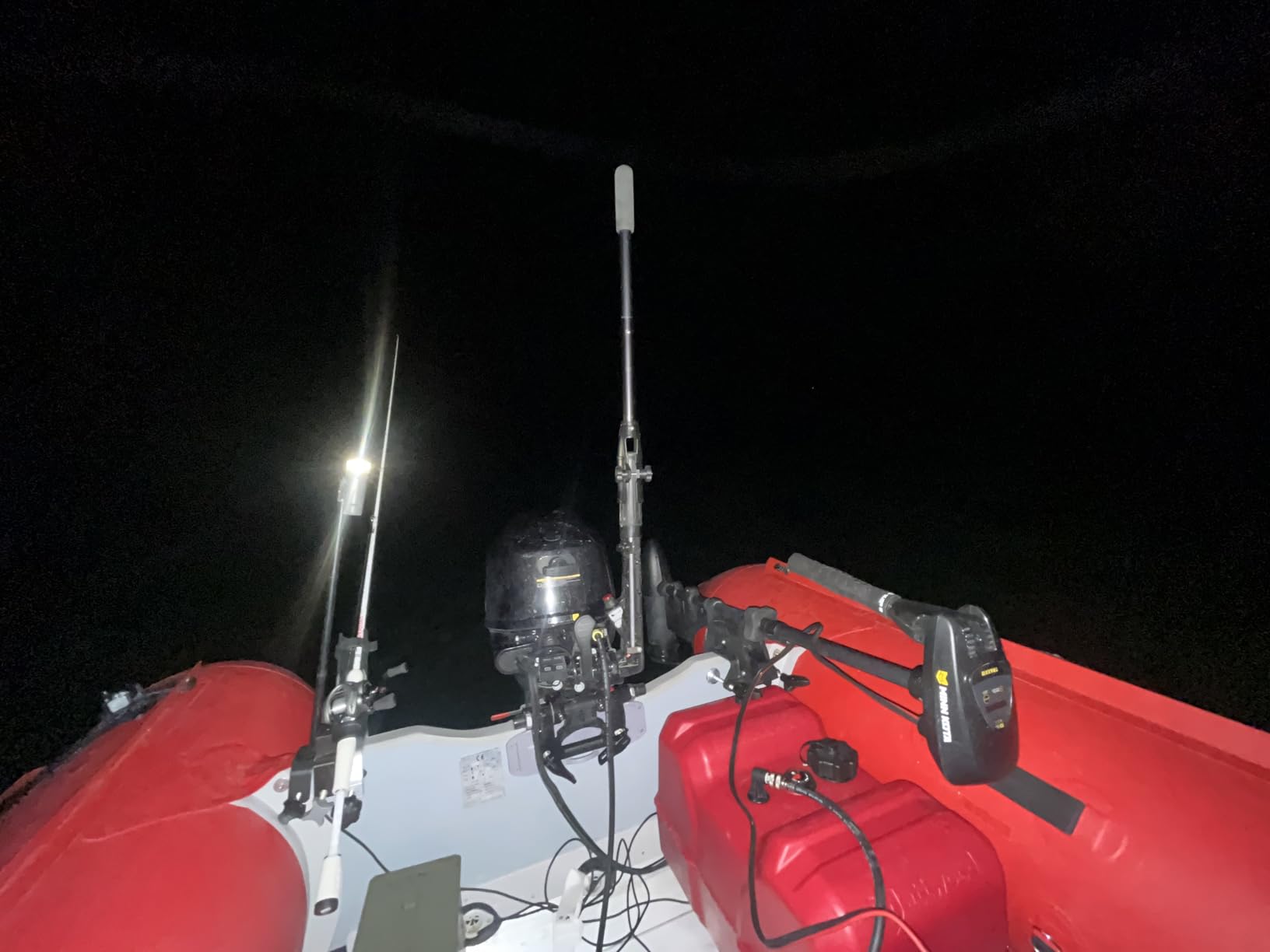
Using both motors on the same transom is a normal setup, but it needs planning. You tilt the trolling motor up and out of the water before the outboard goes in, and you confirm the trolling motor head clears the outboard cowling and the propeller passes below it without touching. Angle the trolling motor slightly to one side if the outboard bracket sits in the middle of the transom. Most power trim tilt systems raise the outboard high enough for both to coexist, and forum owners report that a transom mount does no harm to the transom itself as long as the clamp is tight.
One conflict to plan for is steering. A transom mount tiller behind an outboard tiller means two separate steering inputs, so pick a motor with a reversible or forward steering option if you need to back down. For short trips on gasoline restricted lakes, the transom mount can serve as primary or backup propulsion, but know its top speed is a slow cruise rather than a run.
Transducer Placement and the Maintenance Routine
For sonar, a transom mounted transducer is easier to install and removes cleanly, but a thru-hull or scupper mounted unit reads better at speed and in rough water because it is not picking up turbulence. On a small boat where the motor already occupies the transom, a scupper mounted transducer is a good compromise.
Saltwater maintenance is a five step routine. Rinse the motor with fresh water from top to bottom after every saltwater trip, paying attention to the head, shaft and bracket. Disconnect the battery before you soak anything. Run the motor at low speed for a minute or two with the prop clear to flush salt out of the bearings. Stow it tilted up and out of the sun rather than leaving it in the water. And in the off season, lay it flat in a dry, ventilated space with the shaft supported so it does not warp.
Frequently Asked Questions
What is the best trolling motor for a transom mount?
The best trolling motor for a transom mount on a small boat is the Minn Kota Endura C2 30. It pairs a 30 pound thrust rating with a 30 inch composite shaft, Digital Maximizer electronics and a 10 position lever lock bracket, and it holds a 4.7 star average across 644 reviews. For saltwater, choose the Newport NV-Series 55 instead, which is corrosion resistant and includes a 50 amp circuit breaker.
How big of a trolling motor do I need for a 14-foot aluminum boat?
Use two pounds of thrust per hundred pounds of loaded boat weight. A 14 foot aluminum V-hull weighing about 1150 pounds empty reaches roughly 2000 pounds with two anglers, batteries and fuel, so a 40 to 45 pound class motor fits well. Going up to 55 pounds gives extra power for wind and current. Going far above that makes the boat harder to steer and drains the battery faster.
How big of a boat will a 70 lb thrust trolling motor handle?
A 70 pound thrust motor suits boats up to about 16 feet with a loaded weight near 3500 pounds, which covers most 14 to 16 foot jon boats and aluminum skiffs carrying two people. On a boat lighter than that, the extra thrust pushes the bow, makes steering twitchy and burns battery at trolling speeds. Small skiff owners fishing strong offshore current often step up to a higher thrust motor for that reason.
Is a thru hull transducer better than a transom mount transducer?
A thru-hull transducer reads better at speed and in rough water because it is mounted below the hull line and does not pick up turbulence. A transom mounted unit is cheaper and installs in minutes, but it reads shallower at speed. On small boats where the trolling motor already occupies the transom, a scupper mounted transducer is a good compromise. Match whichever unit you pick to the frequency your fish finder actually supports.
How do I extend battery run time on a trolling motor?
Run the motor at half to three quarter throttle instead of full speed, since amp draw rises sharply with throttle. Use a variable speed motor so you can hold a slow drift instead of stepping up a gear. Add battery capacity, since a 100 amp hour AGM deep cycle roughly doubles the hours of a 50 amp hour pack. Switch the motor off while you cast, and keep the battery fully charged between trips.
The Right Transom Mount for Your Boat
If you want the most reliable all-round motor for a small freshwater boat, the Minn Kota Endura C2 30 is the one to buy, with the highest rating in this roundup and the deepest pool of owner feedback behind it. Anglers fishing saltwater or brackish water should go with the Newport NV 55 for its corrosion resistant build and included circuit breaker. Heavy jon boat and aluminum hull owners who want a smooth variable speed dial should pick the Minn Kota Endura Max 55.
Those fishing shallow weedy water and prioritising protection over raw power can look at the AQUOS Haswing 65 for its brushless efficiency and light weight, while small inflatable owners are better served by the purpose built INTEX. Whichever one you choose, measure your transom height, check the water you actually fish, and match the thrust rating to your loaded weight before you click through.
Those same habits carry over to any other boat gear you add this season, and they keep working as the best transom mount trolling motors for small boats get refreshed with new models in 2026.