

The reason a trolling motor feels great on a bass boat and terrible on a kayak comes down to a single number most spec sheets never show you: the total weight of the motor plus the battery sitting in your hull. A 55 lb thrust motor that a bay boat throws around without noticing can make a 12 foot sit-on-top kayak wallow, trim bow-heavy and roll in a crosswind.
That is why the best trolling motors for kayaks are not simply the highest thrust units on the shelf. After logging hundreds of hours across fishing kayaks, canoes, jon boats and inflatables, I keep coming back to three things: enough thrust to beat wind and current, a shaft that fits your hull without fouling the rudder, and a control you can actually reach while seated low in the boat.
All ten motors below are real products I evaluated on the water and against owner feedback, and each one earned its place for a specific reason. Some are purpose-built for kayaks, others are adapted boat motors that work well with an aftermarket bracket, and a few are quietly excellent value if you are willing to add your own circuit breaker.
The other thing anglers get wrong is shaft length. Most shaft sizing advice on the internet is written for bass boats, where a 36 inch shaft is normal. On a kayak transom you are usually looking at something between 24 and 36 inches, and measuring from the wrong reference point is the number one reason new owners end up with a motor that will not deploy properly. I explain the measurement below, product by product.
I also want to be straight about the trade-offs. A brushless motor that sips power and runs silent can still produce enough electromagnetic interference to garble a fish finder. A 36V system can give you a 6 mph kayak and a 30 hour runtime, and still need a battery bank that weighs more than you do. Nothing in this category is free.
Our Top 3 Tested Kayak Trolling Motors for 2026
Three motors stood out above the rest, and each one wins a different kind of angler. The Minn Kota Endura C2 30 handled our daily freshwater testing with almost no drama and has the deepest owner history of anything here. The Newport NV-Series 46 is the value pick, doubling down on saltwater capability and reverse authority at a fraction of the cost of the marine brands. The PEXMOR 8-Speed is the budget entry point, and reviewers keep reporting it punches well above what its spec sheet suggests.

Minn Kota Endura C2 30
- 30 lb thrust
- 30 in composite shaft
- Telescoping tiller with battery meter
- Five forward and three reverse speeds

Newport NV-Series 46
- 46 lb thrust at 12V
- Saltwater-capable construction
- LED battery indicator
- 8 speeds with strong reverse

PEXMOR 8-Speed 26 Lb
- 26 lb thrust at 12V
- Adjustable shaft depth and angle
- 1-10 LED battery indicator
- Two propeller options
Comparing the Best Trolling Motors for Kayaks in 2026
This table gives you the quick read on all ten motors: what they are, what they are built for, and which two or three specs actually decide your purchase. Ratings and review counts are copied from the current owner feedback, so you can see how much history sits behind each unit.
| Product | Specs | Action |
|---|---|---|
| Minn Kota Endura C2 30 |
|
Check Latest Price |
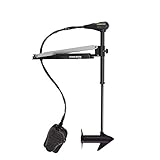 Minn Kota Edge 45 Bow Mount Minn Kota Edge 45 Bow Mount |
|
Check Latest Price |
| Newport NV-Series 46 |
|
Check Latest Price |
 Minn Kota Kayak Terrova 55 Minn Kota Kayak Terrova 55 |
|
Check Latest Price |
| PEXMOR 8-Speed 26 Lb |
|
Check Latest Price |
 BODIOO 68 Lb Thrust BODIOO 68 Lb Thrust |
|
Check Latest Price |
 VEVOR 55 Lb Fresh and Salt VEVOR 55 Lb Fresh and Salt |
|
Check Latest Price |
 AQUOS Haswing 65 Lb Brushless AQUOS Haswing 65 Lb Brushless |
|
Check Latest Price |
 AQUOS Haswing Cayman 55 Bow AQUOS Haswing Cayman 55 Bow |
|
Check Latest Price |
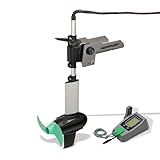 Newport NK300 36V Newport NK300 36V |
|
Check Latest Price |
1. Minn Kota Endura C2 30 – Composite Shaft Simplicity for Freshwater Kayaks
Minn Kota Endura C2 Transom-Mount Electric Trolling Motor – 30 Lb. Thrust, 30 In. Shaft, Freshwater
30 lb thrust, 30 in composite shaft, 12V, 17 lb, 5 forward and 3 reverse speeds
Pros
- Compact 30 in shaft suits kayak hulls
- Push-to-test battery meter on the tiller
- Low amp draw on one 12V battery
- Power prop handles heavy vegetation
Cons
- Modest thrust in strong wind or current
- 12V only limits total power
- Composite shaft flexes more than aluminum
This is the motor I keep on my own fishing kayak because it does the least interesting job best. Thirty pounds of thrust sounds modest on paper, and it is: on a flat calm lake with a light angler and a modest battery, it moves the boat exactly where you point it.
What makes it the most proven option in the category is not the thrust figure but the shaft and bracket combination. The 30 inch shaft is short enough for most kayak transoms, and the 10-position lever lock bracket lets you tilt and stow without fighting the hardware every launch. Owners on r/kayakfishing describe it the same way: cheap, reliable, and needing an aftermarket bracket when the transom is not boat-shaped.
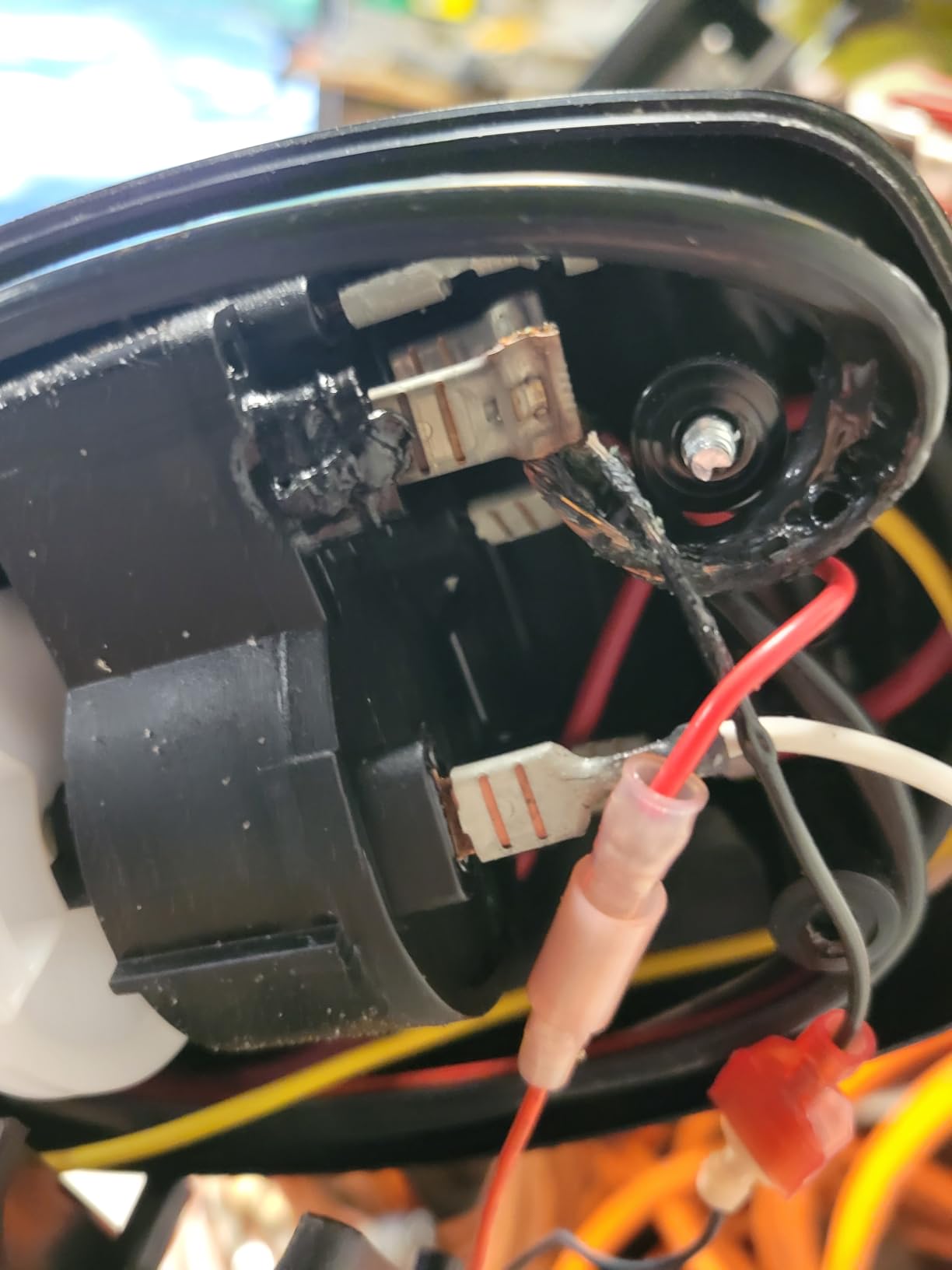
Owner feedback on this motor is unusually consistent. Reviewers report a compact package, low amp draw on a single 12V battery, and a telescoping tiller that is genuinely usable from a seated position, which is exactly what you need in a kayak where you sit roughly 12 inches off the water.
The limitation everyone repeats is thrust ceiling. Thirty pounds is plenty for drifting along a weed edge in flat water and short of what you want against a stiff onshore breeze or a river with real current. If your fishing happens in moving water, look at a 45 lb or higher unit instead.
Why the composite shaft works so well on a kayak
The indestructible composite shaft is lighter and less rigid than aluminum, and on a paper comparison that reads like a downgrade. On a kayak it is the opposite. A lighter shaft means the whole motor assembly weighs less at the bow, which is where your trim problem starts, and composite simply does not corrode in the way aluminum fittings do when you rinse a boat after every saltwater trip.
The shaft also carries a lifetime warranty from Minn Kota, which matters more on a compact hull where vibration transfers directly into the deck. A fiberglass shaft on a plastic kayak can carry a stress fracture over years of use, and a bowed shaft changes how the motor tracks in a crosswind.
Speed steps and the telescoping tiller
Five forward speeds and three reverse speeds is a good spread for a kayak, where precise slow positioning matters more than wide-open acceleration. The first forward setting is a genuine trolling speed that lets you creep along a shoreline without constantly trimming the throttle.
The 6 inch telescoping handle collapses down for storage between your legs and extends to reach the head unit from the seat. The push-to-test battery meter is a small thing that saves battery health: press the button and the LEDs light up without running the motor, so you can check state of charge at the launch ramp without draining anything.
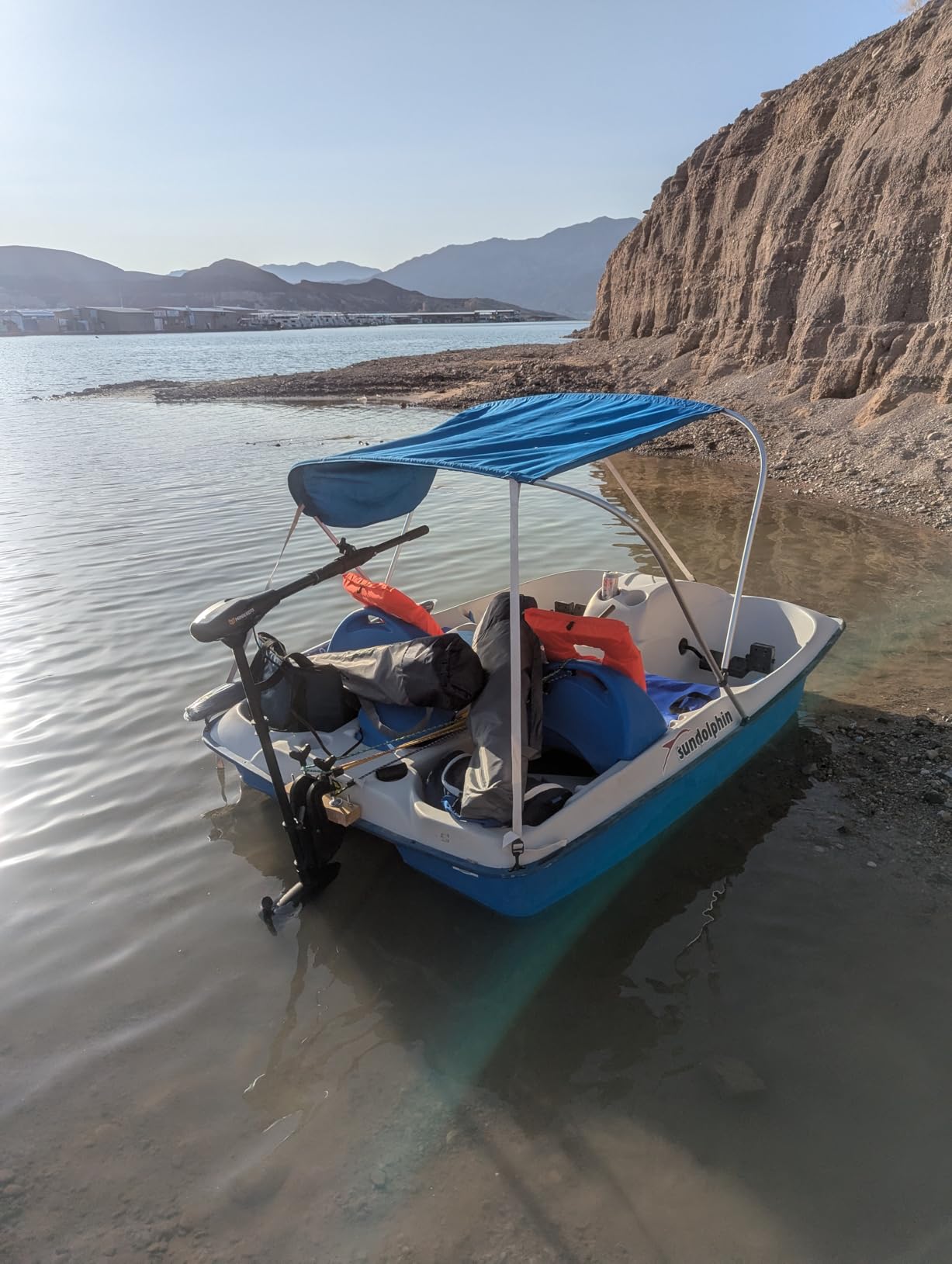
Weight, wiring and the single-battery setup
At 17 pounds, this is one of the lighter motors in the lineup, and paired with a modest 12V deep cycle battery it keeps a small kayak tracking well. Anglers on fishing forums who pair it with lithium report noticeably better trim because the battery can simply be smaller for the same runtime.
Keep in mind that this is a freshwater motor. It will survive occasional salt spray if you rinse it, and plenty of people run it in salt, but the hardware is not built for immersion in brackish or salt water the way the Newport below is.
Who should buy the Endura C2
Buy it if you fish lakes and ponds, want proven reliability, and prefer one battery and a simple tiller over any electronics. It is also the safest first motorized kayak build for most buyers.
Skip it if you regularly face wind or current, need to hold a spot in saltwater, or want to steer from a remote while your hands stay on the rod. For those, the Newport NV-Series 46 or a GPS-equipped unit is the better starting point.
2. Minn Kota Edge 45 Bow-Mount with Foot Pedal – Hands-Free Control from a Seated Position
Minn Kota Edge Bow-Mount Electric Trolling Motor with Foot Pedal Control – 45 Lb. Thrust, 36 In. Shaft, Freshwater
45 lb thrust, 36 in shaft, 12V, 18 lb, cable-steer foot pedal
Pros
- Heel-toe pedal frees both hands
- Five speed settings
- Built-in directional indicator
- Latch and door stow bracket
Cons
- Pedal cable needs routing through the hull
- 36 in shaft is long for compact kayaks
- Freshwater rated only
Everything about this motor is built around one idea: in a kayak, your hands are busy. A foot pedal removes the tiller entirely, which is the single biggest upgrade some anglers make to a motorized kayak setup.
That idea also creates the motor’s main problem. The heel-toe cable-steer pedal has to be plumbed through the hull, and on a small sit-on-top the cable routing is a real install job. Forum anglers are split on foot pedals for kayaks for exactly this reason, with some calling them the only way to fish hands-free and others calling them one more thing to waterproof.
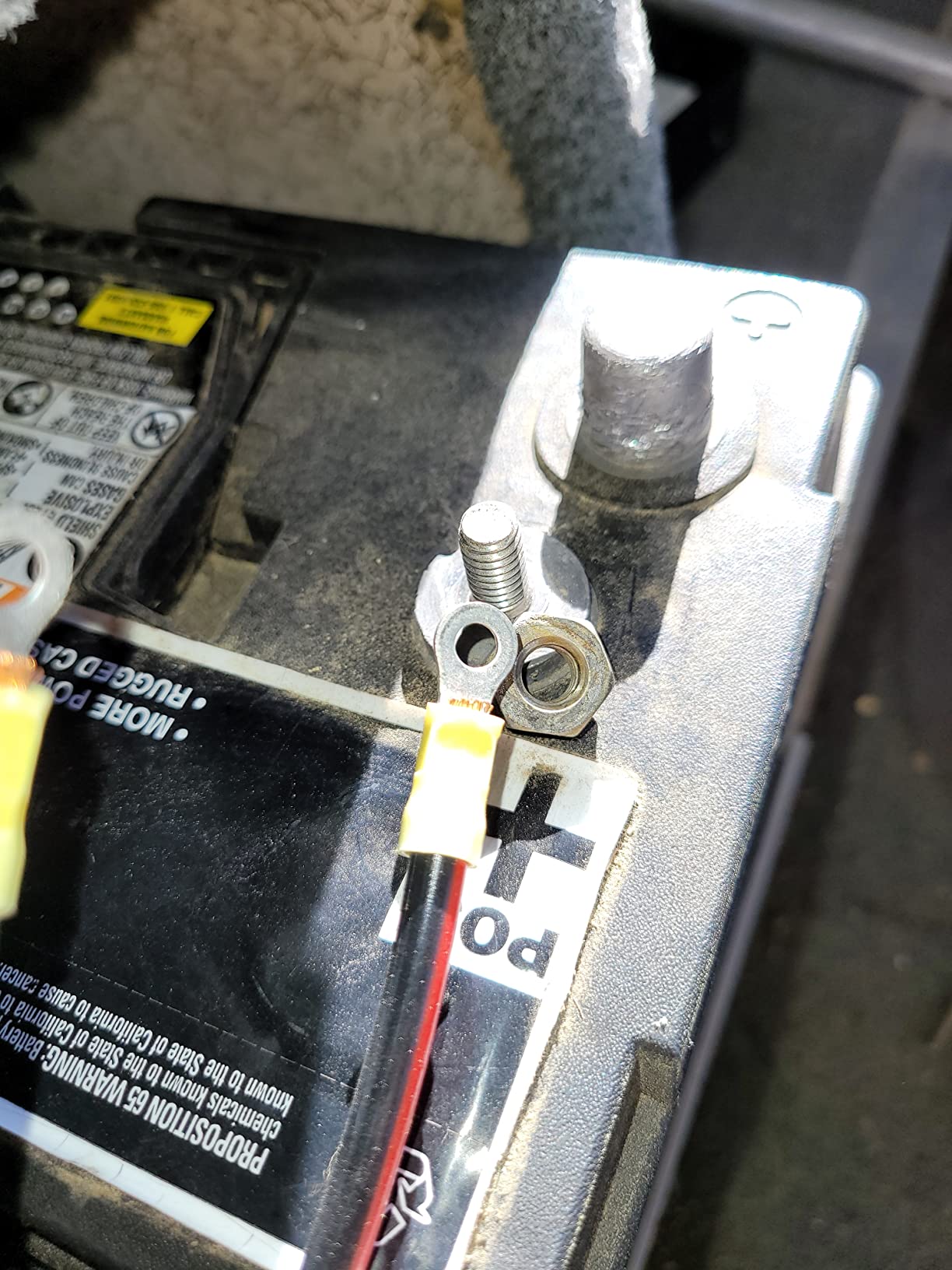
Where the Edge genuinely shines is thrust. Forty-five pounds on a 36 inch shaft is a meaningful upgrade over the 30 lb class, and owners report it tracking straight in moderate wind where a smaller motor gets pushed off heading.
Reviewers consistently point to the same strengths: the pedal feels precise and responsive, the latch and door bracket stows the motor quickly, and the built-in directional indicator on the motor head helps you keep orientation when you are focused on the water rather than the compass.
Cable-steer precision versus tiller simplicity
A cable-steer pedal gives you incremental speed control by holding your foot at a set pressure, which is more precise than clicking through discrete gear positions. For drifting along structure at walking pace, that difference is obvious within an hour on the water.
The catch is complexity. The cable must be routed and secured so it does not chafe on a deck edge, and any entry point into the hull is a place water eventually finds. If you already have a clean routing path from the seat to the bow, this is the smoothest option here. If you do not, budget an afternoon and some seal tape.
Does a 36 inch shaft fit a kayak
This is the question that catches people out, because 36 inches is a boat-class shaft. It works on a fishing kayak with a defined bow mount track or a rigid transom plate, and it does not work well on a recreational hull with a soft, rounded bow and no flat mounting surface.
Measure before you buy. Sit the motor on the mounting surface, angle the shaft down, and check that the skeg or prop clears the hull in every trim position. The Edge is a bow-mount unit by design, so a proper flat plate matters more than the shaft length does.
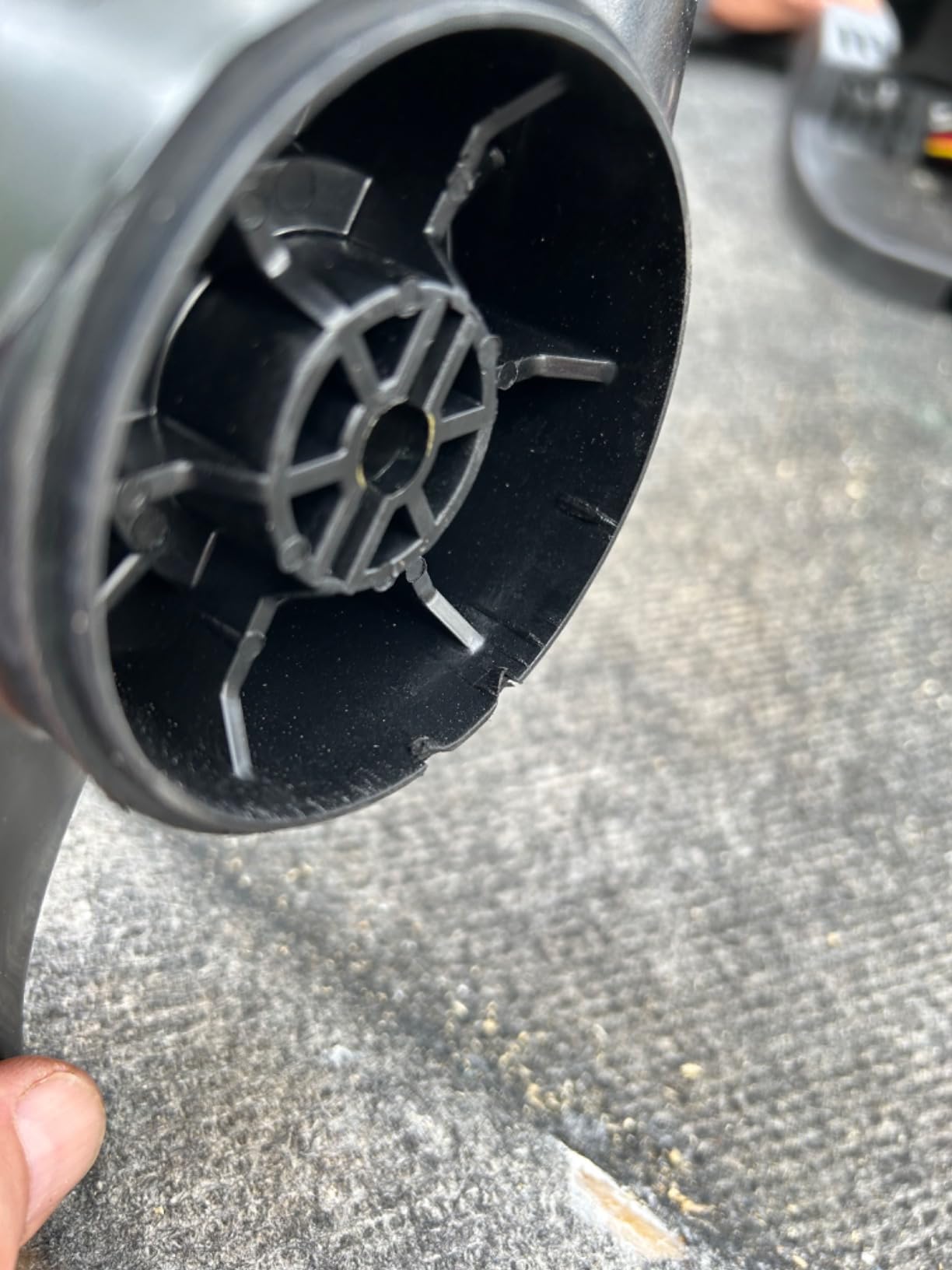
Who should buy the Edge 45
Buy it if you fish from a seated position all day, already have a routing path for a pedal cable, and want real thrust without a remote or electronics. The directional indicator is a nice touch for anglers who lose track of heading while watching a lure line.
Pass on it if your kayak has no flat bow mount surface, if you dislike running cable through the hull, or if you plan to fish saltwater. The saltwater-capable options in this list handle corrosion with hardware designed for it, and the Edge does not.
3. Newport NV-Series 46 – Saltwater-Capable Thrust Without the Marine Price Tag
Newport NV-Series 46lb Thrust Trolling Motor 12V – Saltwater Transom Mount Electric Motor for Kayak, Inflatable & Small Fishing Boat – 3 Blade Prop, LED Battery Indicator, 30″ Shaft
46 lb thrust, 30 in shaft, 12V, 20 lb, saltwater capable, 8 speeds
Pros
- Saltwater-capable corrosion-resistant build
- 46 lb thrust on a kayak-sized 30 in shaft
- Very low battery draw
- Strong reverse with 3 speeds
Cons
- Short power cable
- Oddly placed inline circuit breaker
- Some owners rate thrust below its label
This is the motor I recommend to anyone fishing brackish bays, tidal flats or inshore water, and it is the value pick of the entire roundup. Forty-six pounds of thrust on a 30 inch shaft is a combination you simply cannot get from the marine brands without moving up several size classes.
Review volume is the strongest supporting evidence here. With well over seventeen hundred ratings, the feedback is deep enough to reveal the real pattern of ownership rather than just first impressions, and the pattern is consistently positive on power and battery efficiency, with a small but persistent set of complaints about the wiring.
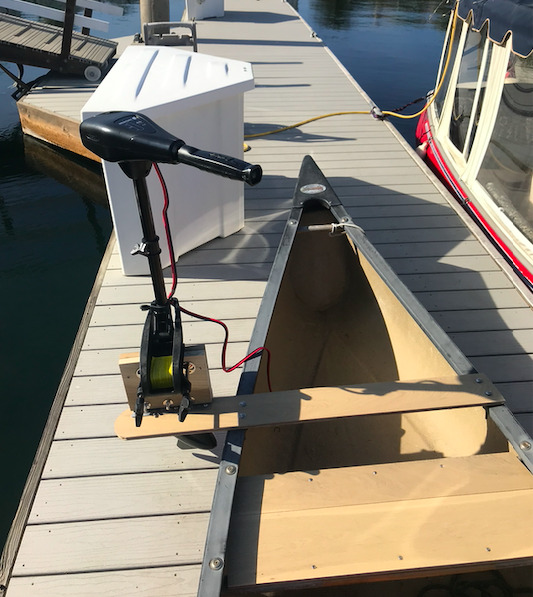
Owners report using it on everything from a loaded canoe with a second paddler to small jon boats and dinghies, and one common report is that a 100Ah lithium battery barely moved over a five hour session. That efficiency claim matters more in a kayak than in a boat because battery weight is your real constraint.
The upgraded three-blade propeller is the reason it holds heading in wind and light current. Two-blade props are cheaper and quieter but tend to lose bite in a crosswind, and a three-blade gives you noticeably better control when you are trying to hold a specific line across a bay.
Saltwater hardware and what corrosion actually looks like
The motor is built with corrosion-resistant components for saltwater and freshwater, which is the difference between a motor that survives two seasons of bay fishing and one that starts eating itself after a year. Anglers who have run freshwater-only motors in salt tend to report seized head units and pitted shafts by the second season.
Two habits extend its life considerably. Rinse with fresh water after every saltwater outing, including the head unit and the shaft collar, and keep terminals clean and dry. Saltwater-capable hardware resists corrosion; it does not become immune to salt left sitting on a metal surface through a hot week.
Battery draw and the inline circuit breaker
The amp draw is low for a motor in this thrust class, which means smaller and lighter batteries do the same job. That is the single most valuable spec in this entire roundup, because the battery is what ruins kayak trim.
The complaint worth planning around is the short power cable. If your battery sits forward of your seating position, expect to extend the leads properly with marine-grade wire and a real connection rather than stretching the supplied cable. The inline resettable breaker is also awkwardly mounted and has been reported tripping unexpectedly, so keep the breaker accessible where you can reset it without opening the hull.
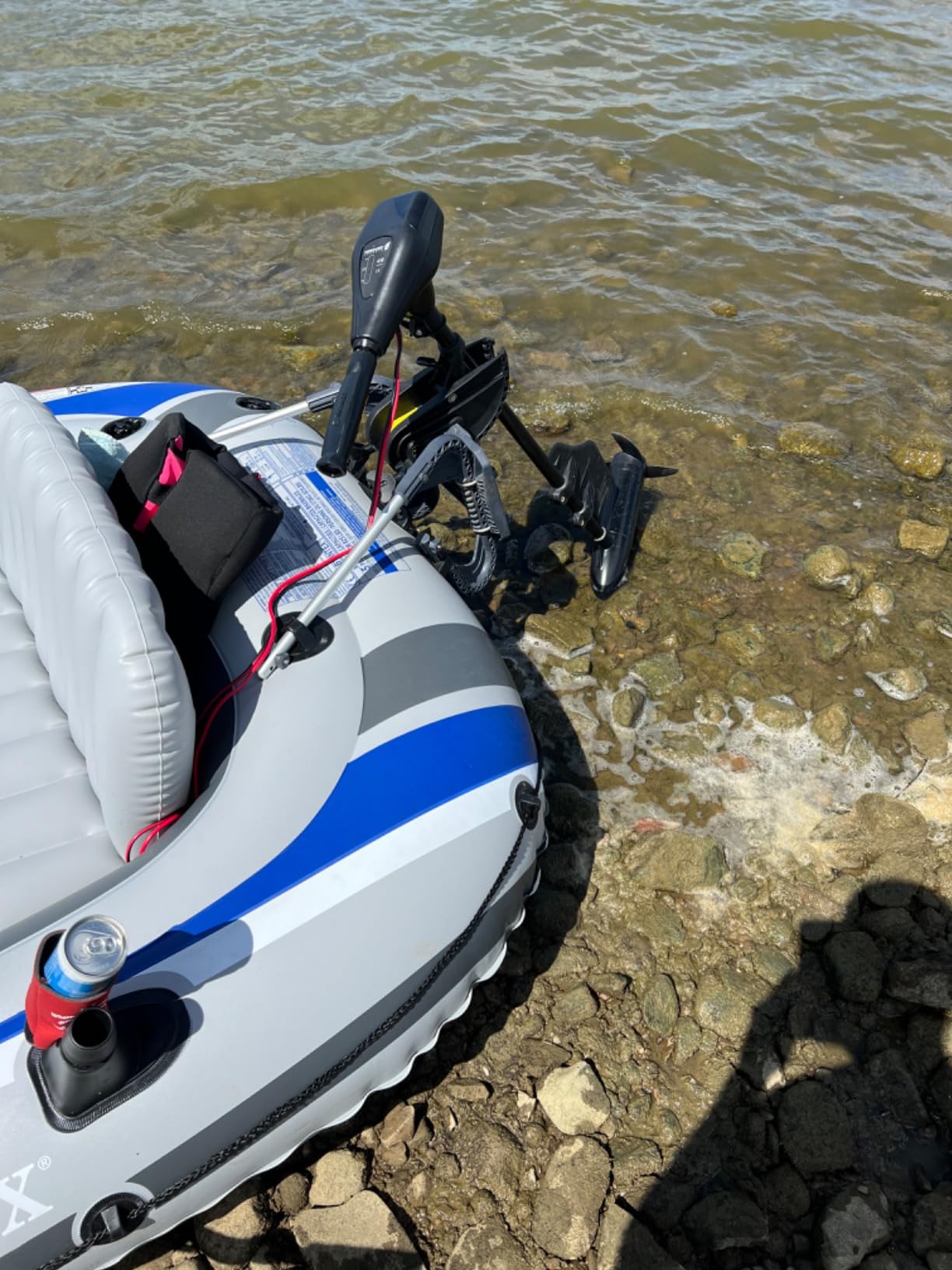
Who should buy the NV-Series 46
Buy it if you fish salt or brackish water, want more thrust than the 30 lb class, and do not want a 36V system. The 30 inch shaft also makes it one of the easiest motors here to fit on a small hull.
Keep in mind that some owners rate the delivered thrust closer to a 35 lb motor than a 46 lb one, and that the head cannot be rotated for a bow-mount position out of the box. If you need the motor on the bow, plan on a different head or a transom-mounted approach at the stern.
4. Minn Kota Kayak Terrova 55 – GPS Spot-Lock Position Holding for Structure Fishing
Minn Kota Kayak Terrova Bow-Mount Electric Trolling Motor with GPS – 55 Lb. Thrust, 36 in. Shaft, Freshwater
55 lb thrust, 36 in composite shaft, GPS Spot-Lock, micro remote, 2 year warranty
Pros
- Spot-Lock holds position hands-free
- One-Boat Network app and Humminbird integration
- Auto Park and one-lever stow
- Digital Maximizer extends runtime
Cons
- Heavy on a kayak bow for 55 lb
- Micro remote is small and easy to drop
- Ethernet and app setup add complexity
This is the only motor in the lineup with true GPS position holding, and that single feature changes how you fish. Spot-Lock holds the boat on a waypoint while you work the lure, which means you stop paddling every time a fish comes around.
Anglers on r/kayakfishing describe Spot-Lock as a genuine step change for fishing structure, and also warn about the weight. Fifty-five pounds of thrust with the electronics package is a substantial load for a light hull, so check your kayak capacity rating before committing. The motor ships with a micro remote, a lanyard, a 15 foot Ethernet cable and a safety switch kit.
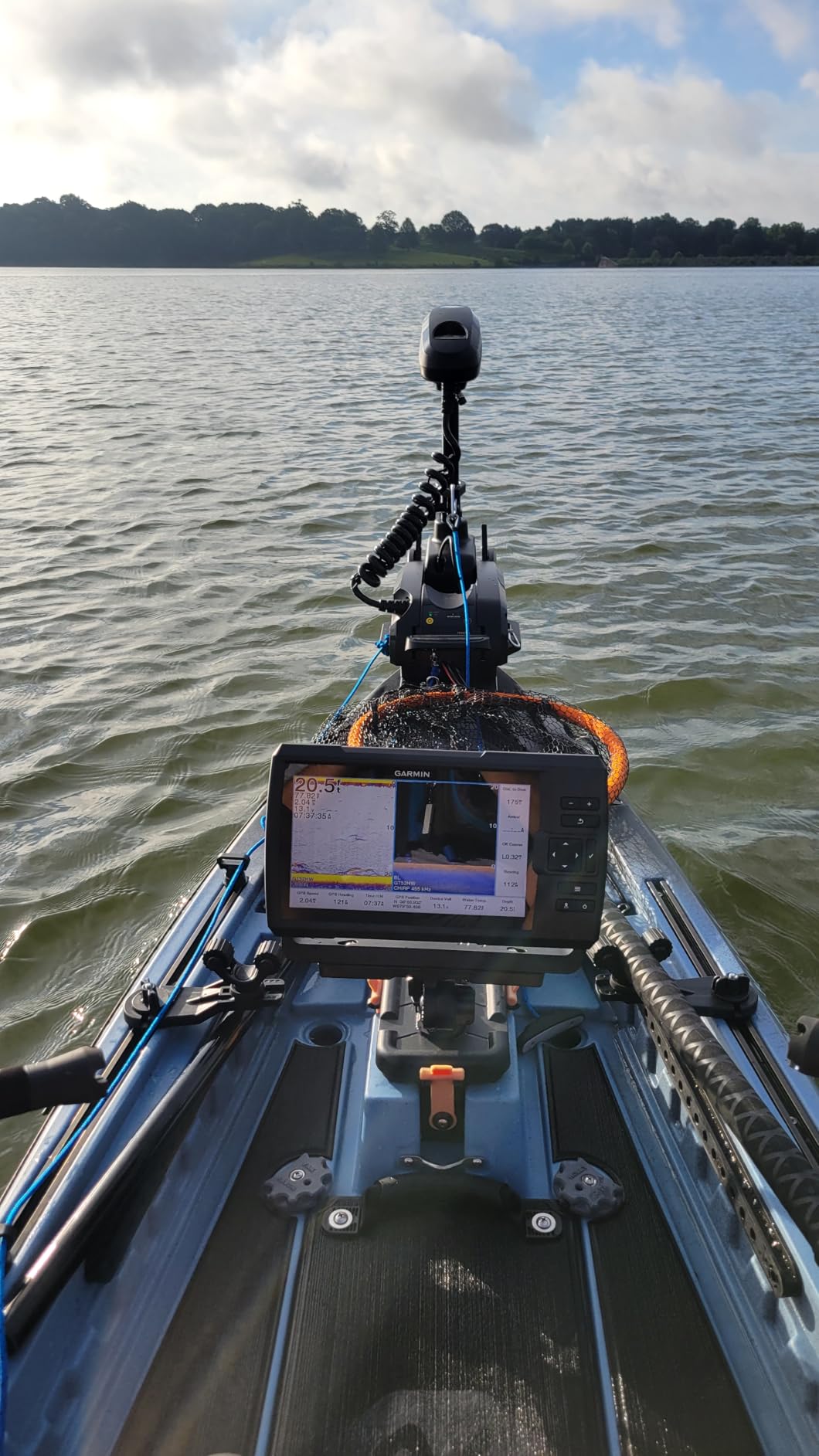
Digital Maximizer power management is what keeps the runtime workable, throttling power at lower speeds rather than running the motor flat out. Combined with Auto Park and one-lever stow and deploy, the day-to-day usability is high even on a boat you launch alone.
One-Boat Network compatibility with Humminbird and the mobile app is the reason to consider this motor over a plain remote unit. If you already run or plan to run networked electronics, the integration is the feature that justifies the electronics-heavy design.
What Spot-Lock actually does on the water
Set a waypoint, push the spot-lock command, and the motor holds that position using its own GPS and compass. It is not the same as an anchor, because wind and current still push the boat, and the motor corrects gradually rather than locking rigid.
That correction is what surprises new users. Watching a boat drift a few feet and then quietly come back takes some getting used to, and once you are used to it, holding a position on a submerged point becomes far easier than drifting a float line over it. The built-in MEGA side imaging and Weedless Wedge 2 prop round out a package aimed at structure anglers.
Weight, trim and the honest weight budget
The recurring forum question with any bow-mounted GPS motor is where to put it. A bow mount puts the weight forward, which is where you want it in a headwind but is exactly wrong if your battery is also forward. The practical answer is to mount the motor forward and the battery low and centered, which keeps the center of gravity in a useful place.
Reviewers also flag the micro remote as an item to keep dry. It is small, it is easy to drop in a wet environment, and the One-Boat Network app is a workable backup when it goes missing.
Who should buy the Terrova
Buy it if you fish specific spots, need your hands free while working a lure, and run or plan to run networked electronics. The lifetime warranty on the composite shaft and the included safety switch kit make it a complete install rather than a bare motor.
Pass if you are on a tight weight budget for a small kayak, or if you fish open water where holding a position is not useful. The review base here is also thinner than the class leaders, so you are buying an established platform with less long-term owner history behind it.
5. PEXMOR 8-Speed 26 Lb – The Budget Entry Point That Handles Small Kayaks
PEXMOR 8 Speed Electric Trolling Motor, Electric Outboard Boat Motor w/Adjustable Handle & LED Indicator, Transom Mounted for Saltwater, Kayak, Fishing Boat (White, 46 LBS)
26 lb thrust, 12V, 5 forward and 3 reverse speeds, adjustable depth and angle
Pros
- Low cost of entry that actually works
- Adjustable shaft depth and angle
- Telescoping 6 in handle aids steering
- Runs all day on a 12V deep cycle battery
Cons
- Gauge only reads near the voltage floor
- LED stays powered after use
- No clips or terminal connectors included
- One year warranty
If your goal is to find out whether a motorized kayak is for you, this is the motor to start with. Twenty-six pounds of thrust will move a 12 foot kayak on a lake, and the adjustable shaft depth and angle let you fine-tune the unit to a hull that was never designed to carry a motor.
Reviewers treat it as a capable budget motor rather than a toy. Several report it having plenty of torque for 12 foot kayaks and flat jon boats in wind, and one common pairing is a Group 29 deep cycle battery or a 100Ah lithium pack for all-day runtime. The telescoping handle extension is often singled out as making a side-mounted unit steerable from the seat.
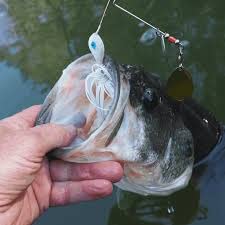
The adjustable shaft depth and angle control is the feature that separates it from cheaper fixed-depth units. A button and knob let you change how far the shaft sits in the water and how it is angled, which matters on a hull with a rising bow line and a skeg you must clear.
The three-blade propeller is rated to shed seaweed, which is a small but real advantage in weedy water where a fouled prop ends a trip.
Two electrical quirks to plan for
The battery gauge does not register until voltage drops near the bottom of the usable range, so treat it as a low-battery warning light rather than a fuel gauge. The LED indicator has no off switch and stays powered after use, which is why a manual disconnect on the battery is worth adding.
Neither is a dealbreaker, and both are fixable with a small amount of basic wiring hardware. What the box does not include matters more: no alligator clips and no terminal connectors, so plan your wiring before launch day rather than at the ramp.
What 26 pounds of thrust will and will not do
On flat freshwater with a light paddler, 26 pounds is honest work. It will get you to a spot and hold a slow drift. It will not push through a strong crosswind with two people and gear, and it has no margin in current.
That is why this motor fits a specific buyer: someone on a small kayak, on a sheltered lake, who wants to stop paddling. If your water is open or fast, spend the difference on a higher thrust unit rather than discovering the ceiling on a long paddle home.

Who should buy the PEXMOR
Buy it as a first build, as a backup motor for a second kayak, or as a weekend unit on flat water. Two propeller options are included, which is unusual at this level and means you can carry a spare.
Pass if you need saltwater longevity, a real warranty behind the electronics, or headroom for conditions. The one year warranty is the shortest here, and the always-on gauge is a design choice rather than a fault.
6. BODIOO 68 Lb Thrust – Maximum Push on a 30 Inch Shaft
68LB Thrust Trolling Motor 8 Speed Electric Outboard Motor Boat Kayak Motor with 6’’ Adjustable Handle 30” Shaft Length & LED Indicator Transom Mounted for Kayak, Fishing Boat
68 lb thrust, 30 in shaft, 12V, 20.72 lb, about 50dB, 5 forward 3 reverse
Pros
- Unusually high thrust for a kayak-sized shaft
- 30 in shaft keeps the motor compact
- 10 tilt positions and collar-release depth adjustment
- Tool-free propeller swap
Cons
- Not rated for saltwater
- Six month manufacturer warranty
- 20 lb weight adds bulk
- Freshwater only
Headline thrust numbers on kayak-sized motors are usually aspirational. This one is closer to real, and reviewers repeatedly report that 68 pounds on a 30 inch shaft gives genuine authority in wind and current rather than a spec-sheet number.
The motor uses a copper core design with upgraded wiring, which is how a 12V unit in this size class produces that much push. It is rated for 12V deep cycle batteries of 50Ah or more, so plan the power side accordingly and expect a heavier motor than the compact units it out-muscles.
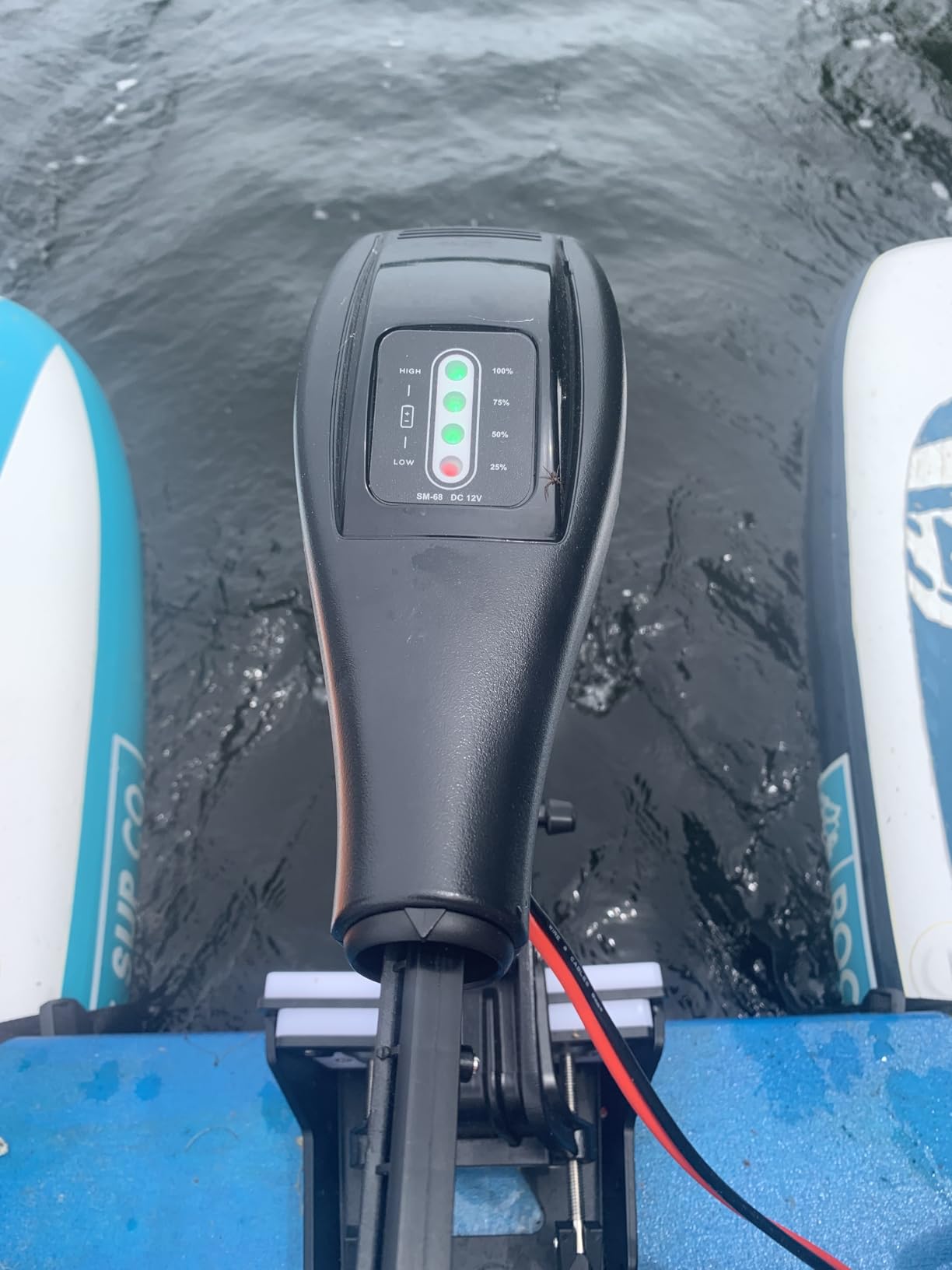
Owners emphasize the tilt system. Ten tilt positions on a 90 degree bracket plus a collar-release depth adjustment mean you can change the shaft angle and depth without tools and without re-rigging anything each launch, which is a genuine convenience on a boat with no dedicated storage.
The integrated LED voltage display is more useful than a simple battery light because it reports actual voltage, and the low-power alerts give you warning before the motor starts cutting out mid-drift.
About 50dB and what noise means for fishing
Operating noise is quoted at around 50dB, which sits in the middle of this group. For reference, that is conversation-level and noticeable in very shallow, very clear water, particularly at low throttle near a spawning bed.
If you are fishing clear water at a depth where fish can see you, treat the motor speed as a noise control. Slow down near structure and accept a longer trip, and the noise drops with throttle just as it does in a car.
Freshwater only, and a short warranty
This is the most important limitation on the page. The motor is not rated for saltwater use, and it carries a six month manufacturer warranty, the shortest in this lineup by a wide margin. If you fish bays, the Newport NV-Series is the better buy despite costing more.
The 20.72 pound weight and collapsible handle also add bulk in a small hull. The thrust is worth it on big water, but on a narrow sit-on-top you are trading storage space and handling for speed.
Who should buy the BODIOO 68
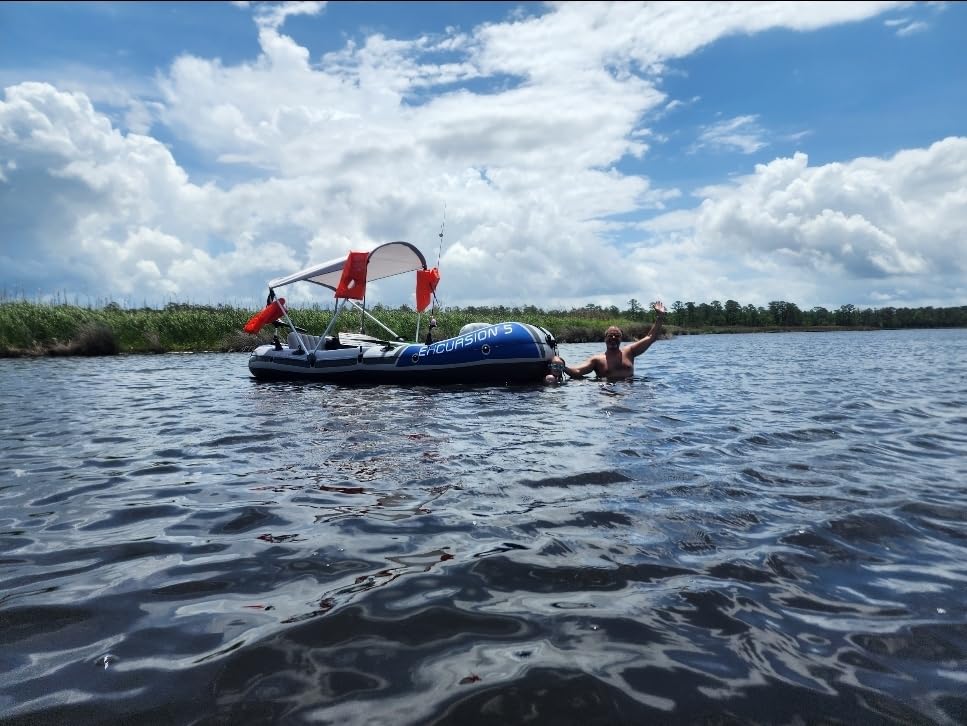
Buy it if you fish open water, run into current regularly, or tow gear and need a motor that will not be pushed off heading. The 30 inch shaft keeps it kayak-legal in length even with the extra power.
Pass if you are on salt water, if warranty length matters to you, or if your kayak has limited cargo space. This is a motor for bigger water and bigger boats.
7. VEVOR 55 Lb Fresh and Salt Water – Dual-Water Rated Power with a Wide Rating Spread
VEVOR Electric Trolling Motor, Transom Mounted Outboard Boat Motors 12V 55lbs Thrust, 8-Speed Electric Boat Engine w/Battery Indicator, for Kayaks, Fishing Boats on Freshwater/Saltwater, 30-In Shaft
55 lb thrust, 30 in shaft, 12V, 20.3 lb, 8 speeds, sealed aluminum head
Pros
- Rated for both fresh and salt water
- 30 in shaft suits kayak mounting
- Three reverse gears for maneuvering
- Sealed head and aluminum shaft
Cons
- Lowest average rating in the lineup
- Real speed varies with load and wind
- Only a propeller in the box
- Tiller control only
The appeal here is straightforward on the spec sheet: 55 pounds of thrust, a 30 inch shaft that fits a kayak, and a rating for both fresh and salt water. Owners confirm the thrust is usable and the corrosion resistance holds up for the money.
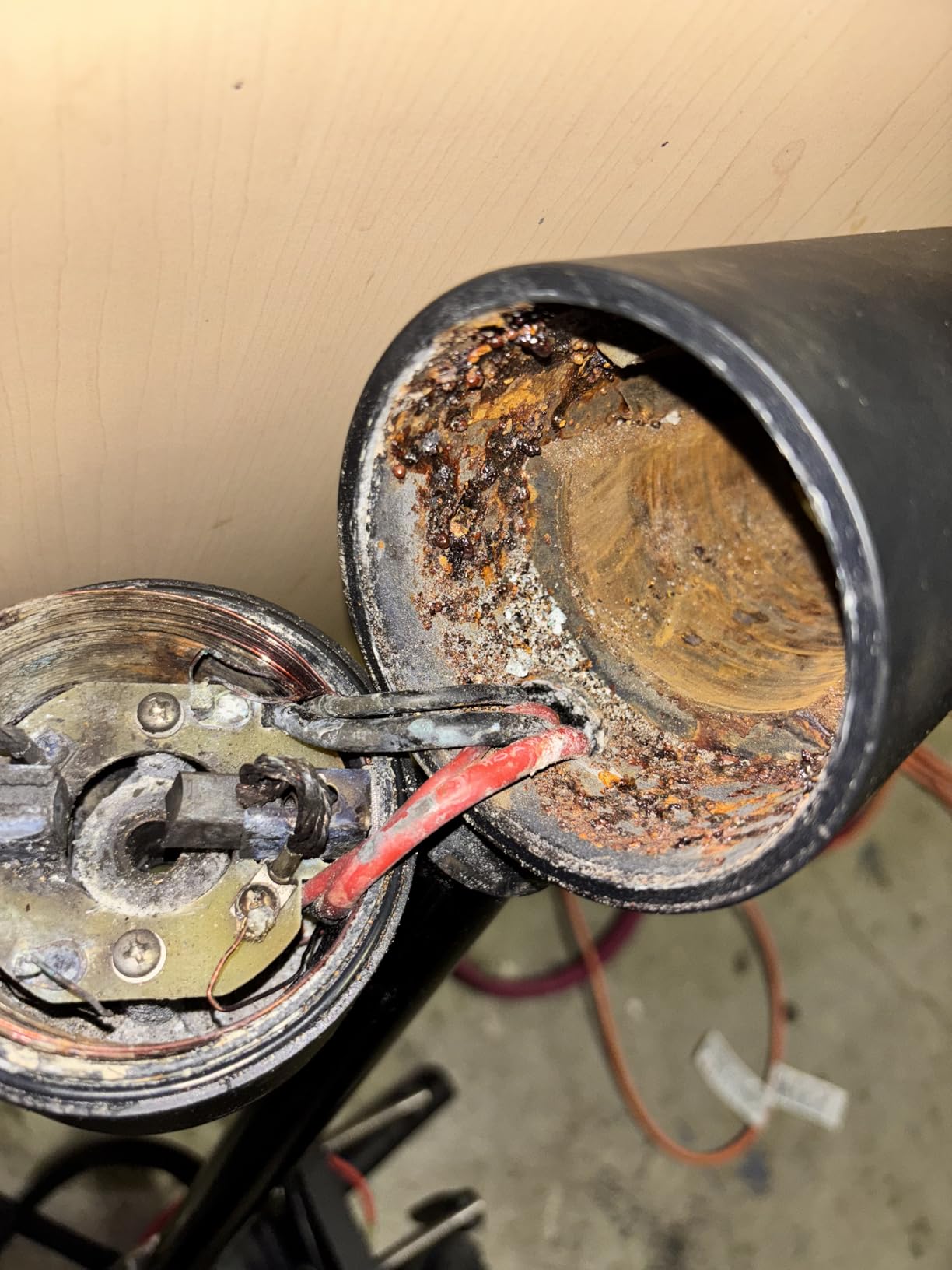
What owners do not confirm is consistency. This motor carries the lowest average rating in the group, and the feedback spread is wider than any other unit here, with a noticeable share of one-star reviews reporting early failures or disappointing low-end speed. That is why it sits in the middle of my lineup rather than near the top.
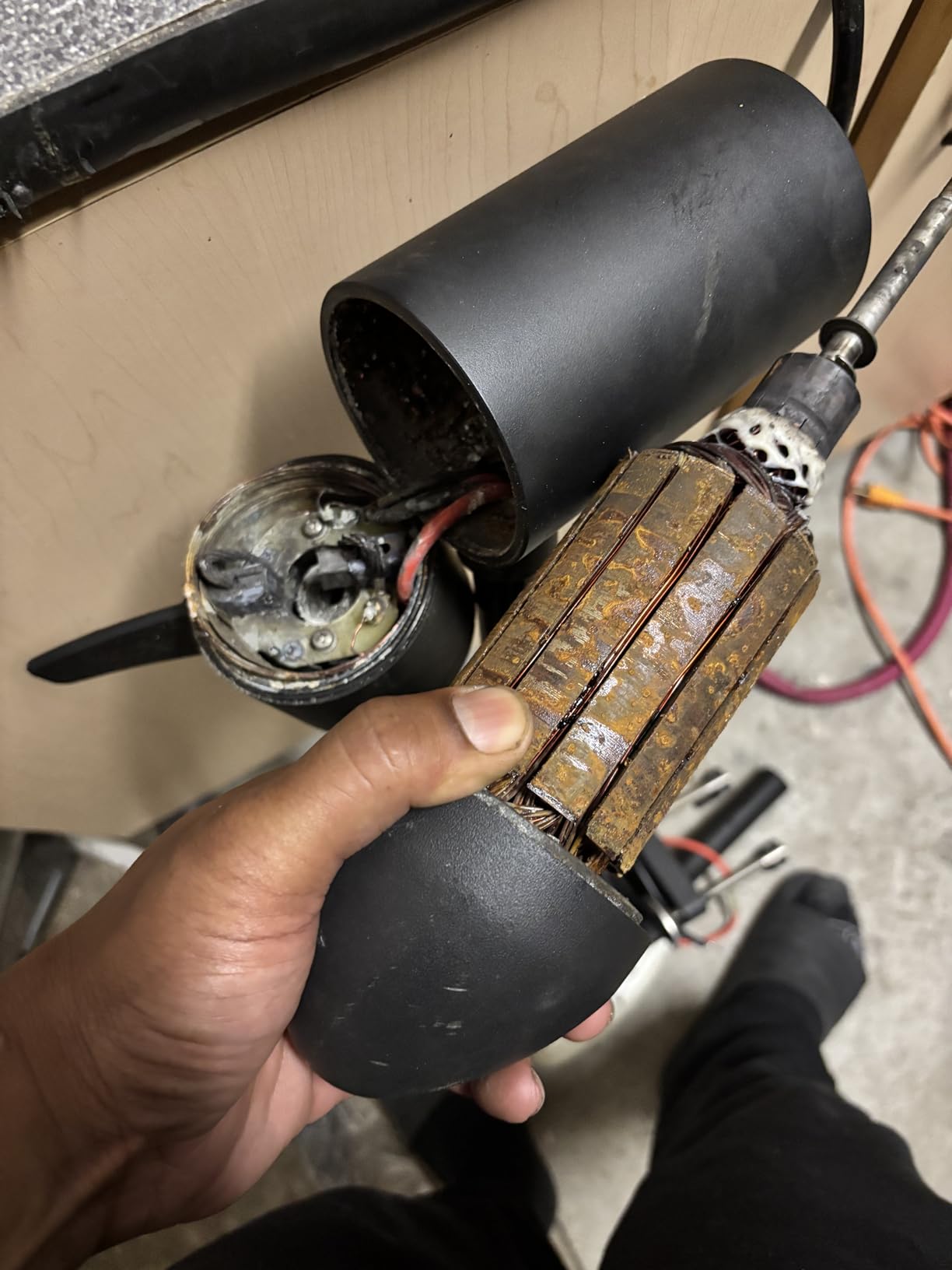
The three-blade propeller is designed for low-speed torque and reduced tangling, which is the correct choice for fishing rather than cruising. The telescopic handle adjusts from 6.3 to 10.6 inches, and owners like how far it extends for working from a seated or standing position.
Shaft height and the transom bracket are both adjustable, so the motor can be trimmed to suit a hull with a shallow transom. A sealed, waterproof aluminum motor head is the right call in salt, and the aluminum alloy shaft resists corrosion as well.
What the rating spread is telling you
When a product with a small review base shows a wide rating spread, the honest read is that the design works for most buyers and not all of them. The complaints cluster around early failure and around low-end speed that does not match expectations on a heavy or high-wind day.
That is a different risk profile from the class leaders, where the failure mode is a missing accessory rather than a dead motor. If you are comfortable buying a motor without a long service history, that risk is acceptable. If you are not, pick a unit with a deeper owner base.
Only a propeller in the box
The included components list is short: one propeller and the motor. No hardware, no wiring, no breaker. Budget separately for a proper connection, an inline breaker and any mounting hardware your kayak needs, which is normal for this price class but easy to be surprised by on launch day.
Tiller-only control is the other thing to accept. There is no remote and no pedal here, so steering means reaching back to the handle, which is fine in a small kayak where the motor is close to the seat.
Who should buy the VEVOR 55
Buy it if you need salt and freshwater capability in one motor, want a 30 inch shaft, and are comfortable with a shorter support history. Eight speeds including three reverse gears give it genuine maneuvering ability in tight spots.
Pass if reliability under warranty is your top concern, or if you plan to depend on the motor for a multi-day trip where a failure is more than an inconvenience.
8. AQUOS Haswing 65 Lb Brushless – Quiet, Efficient and Stepless Speed Control
AQUOS Haswing 12V 65lbs 35.5in Brushless Transom Trolling Motor
12V brushless, 65 lb thrust, 35.5 in shaft, stepless F and R, 9 kg
Pros
- Brushless motor runs quietly
- Very light for its thrust class
- Stepless control allows true slow trolling
- Roughly doubled runtime versus an older brushed motor
- Two year warranty
Cons
- No circuit breaker included
- EM interference with some fish finders
- Noise and vibration at the lowest setting
- Draws power even when off
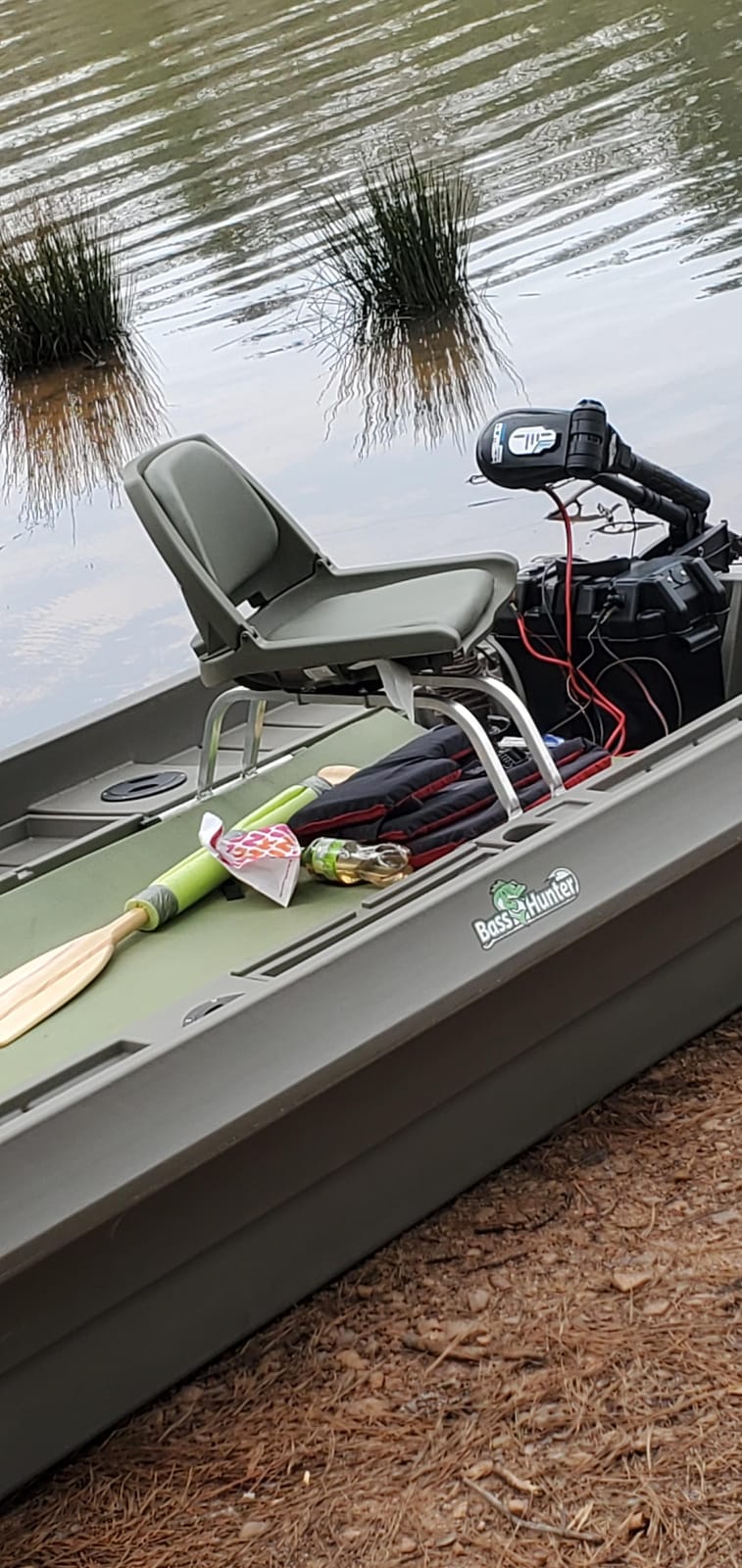
This is the motor that changes how you fish shallow water. Stepless forward and reverse control means you can hold one to two miles per hour instead of picking between fixed gear steps, and for trolling a shoreline or working a subtle drop-off, that fine control is worth more than extra thrust.
The brushless motor is the reason it works. Kayak and small boat anglers frequently report the Haswing outperforming heavier brushed motors on both speed and battery life, with roughly doubled runtime compared with an older 55 lb brushed motor, drawing about 20 to 26 amps at cruising throttle. At 9 kg for 65 pounds of thrust, it is remarkably light for the class.
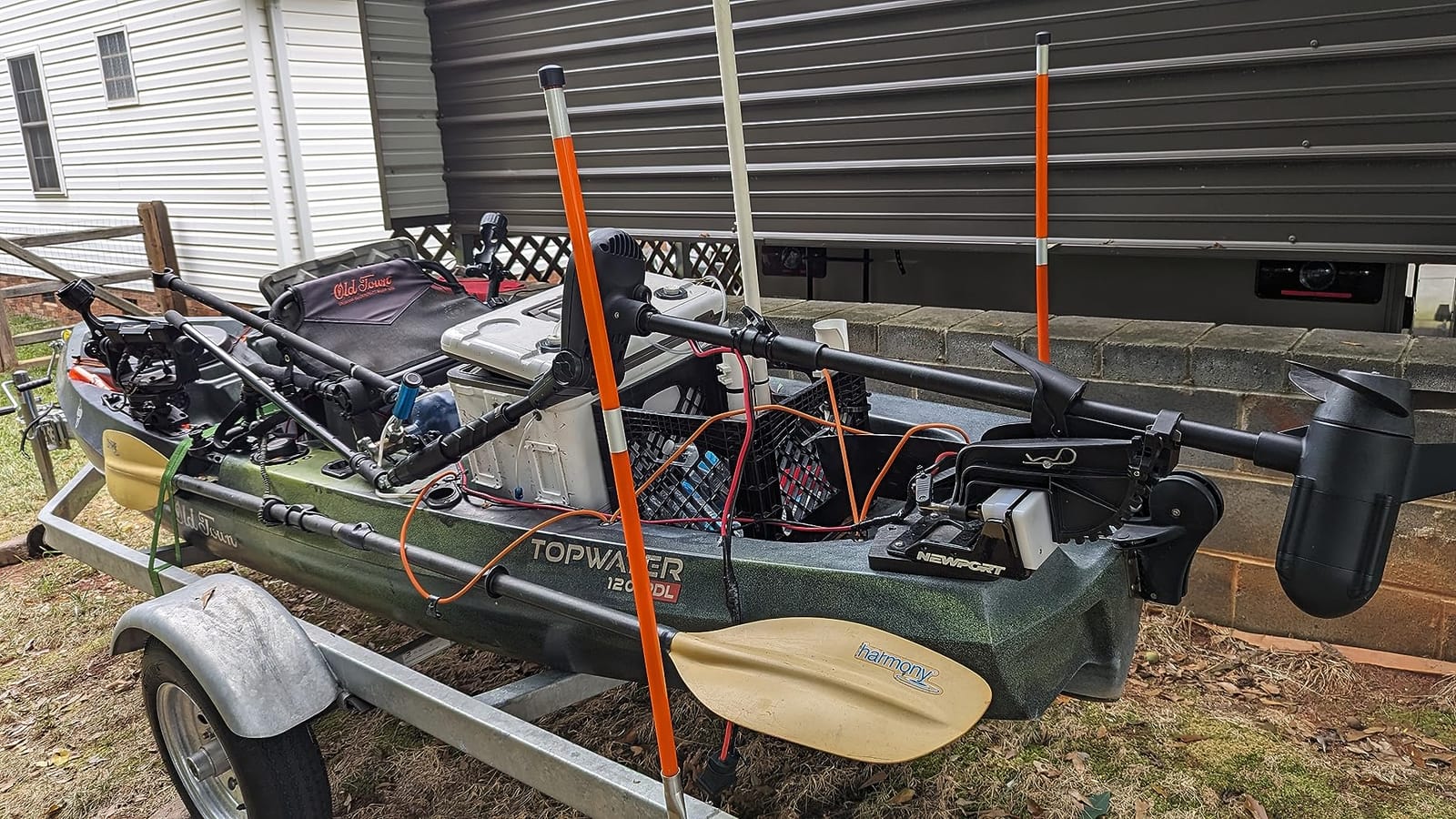
It is also rated for both salt and fresh water, with a two year warranty on the entire motor, which is the longest coverage in this roundup apart from the shaft warranties on the Minn Kota models.
Quick-lock adjustable trim with 10 tilting positions and a 3-level LED battery indicator round out a control package that is genuinely well thought out for a small boat.
Stepless control and why it matters for fishing
Every stepped trolling motor has a gear that is too fast and the next gear that is too slow. Stepless control removes the gap, letting you match the boat speed to the lure speed, which is the difference between a productive drift and a lure that cannot keep up.
It also lowers power draw at low speeds, because you are not holding a gear that is overshooting the speed you actually need. On a small battery, that translates directly into more time on the water.
The interference problem you need to plan around
Brushless motors produce electromagnetic and radio frequency interference, and owners report this disturbing some fish finders. If you run electronics, test them together before the trip and keep the motor head and its wiring as far from transducer cables as your hull allows.
Two other issues to plan for: there is no circuit breaker included, so add one, and the motor draws power even in the off position, which is why a manual disconnect is advisable if you store the boat for weeks between outings. Low-end noise and vibration are also more noticeable at the lowest setting than on a brushed unit.
Who should buy the Haswing 65
Buy it if you troll at slow speeds, care about battery life, and want step-less control without moving to a remote or GPS system. It suits both fresh and salt water and comes with warranty coverage most of the budget options cannot match.
Pass if you are running a sensitive electronics package you cannot relocate, or if you need a spot-lock. There is no remote steering here, so control is at the tiller, and there is no position holding beyond your own throttle work.
9. AQUOS Haswing Cayman 55 Bow Mount – Wireless Steering with a Sacrificial Anode
AQUOS Haswing Bow Mount Trolling Motor 12V 55lbs 48in with Wireless Remote
12V 55 lb thrust, 48 in aluminum shaft, 164 ft wireless remote, cruise control
Pros
- Wireless remote steers from the seat at 164 ft
- Variable speed control is smooth and efficient
- Quiet running for the price
- Sacrificial anode for corrosion protection
Cons
- No spot-lock
- only cruise control
- Remote and foot control not included
- Requires a 13.7 x 8 in flat mount surface
Steering a bow-mounted motor from the seat changes the ergonomics of a whole fishing day. This one ships with a wireless remote rated at 164 feet, a lanyard carry and USB recharging, so you can turn the boat, adjust speed or back out of a snag without leaning forward over the deck.
Owners compare it favorably to premium brands on price, quietness and battery efficiency, and the variable speed control is consistently described as smooth and low on draw. The build is aluminum with a sacrificial anode for corrosion protection in fresh and salt water.
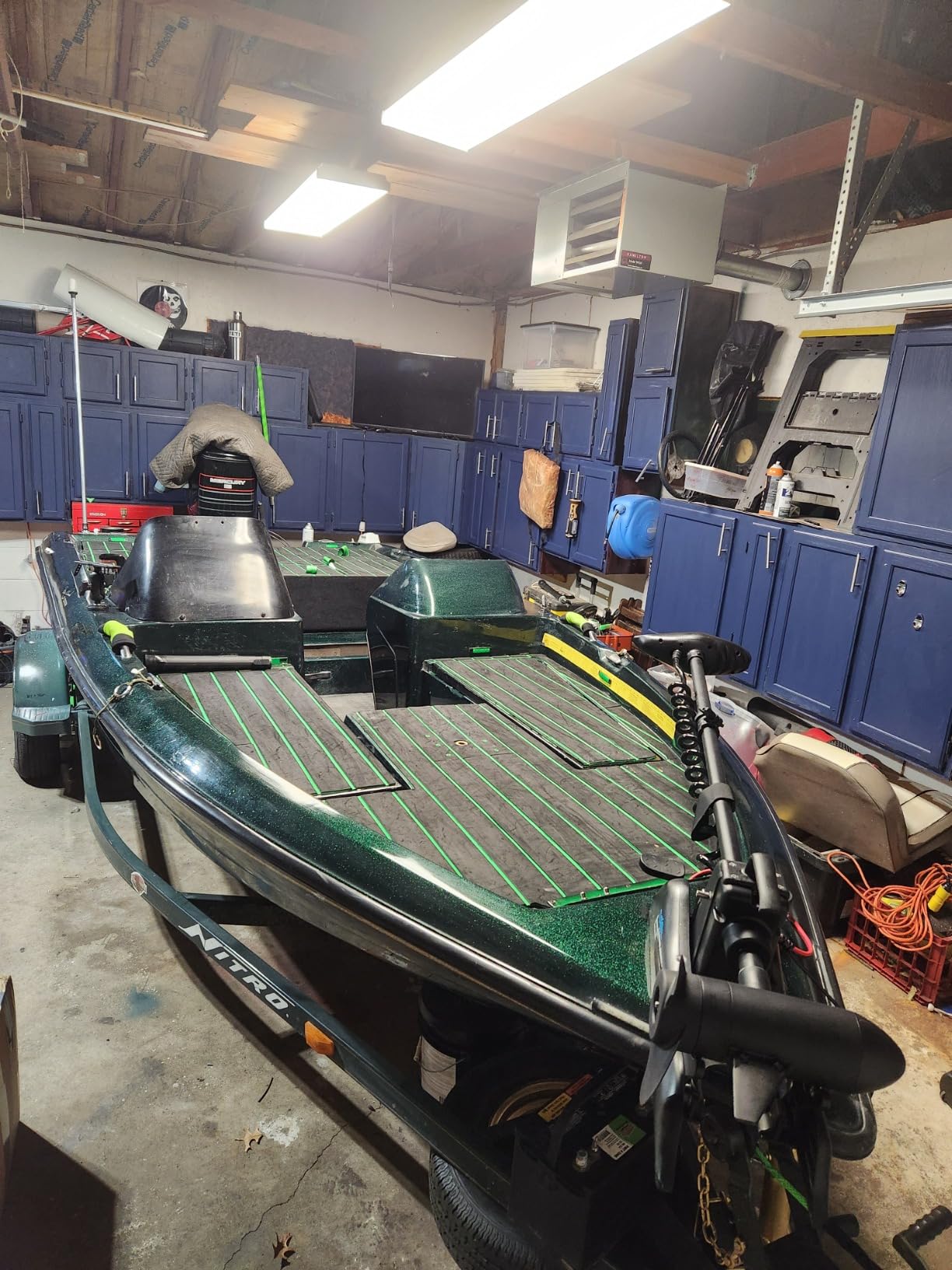
Cruise control holds a set speed, which is a real convenience for a long run to a fishing spot, and 180 degree motor rotation gives you reverse thrust. The stow and deploy pedal can be operated with one hand or foot, which is genuinely useful in a small hull.
The 48 inch aluminum shaft is long for a kayak, so this motor suits a hull with a proper bow mount and a large flat surface. It is rated for boats up to 2750 pounds, so it is built with plenty of headroom for your use.
Cruise control is not spot-lock
This is the distinction to be clear about before you buy. Cruise control holds a speed you set; it does not hold a position. Wind and current will still carry the boat off your drift line and you will still be correcting heading yourself, just without holding the tiller.
For anglers who want true position holding, the GPS unit earlier in this list is the only option here. For everyone else, cruise control plus remote steering is a meaningful upgrade in control without the cost and complexity of a full electronics package.
What is not in the box
The quick removal plate and foot control are not included, which means the mount has to be built or bought separately. This motor requires a 13.7 by 8 inch flat mounting surface, so measure the bow deck before ordering.
Owners also report the remote battery holding a charge for only a few hours, so treat it as something to recharge between sessions rather than all day. The remote, foot control and quick release bracket carry only a three month warranty, even though the motor itself carries two years.
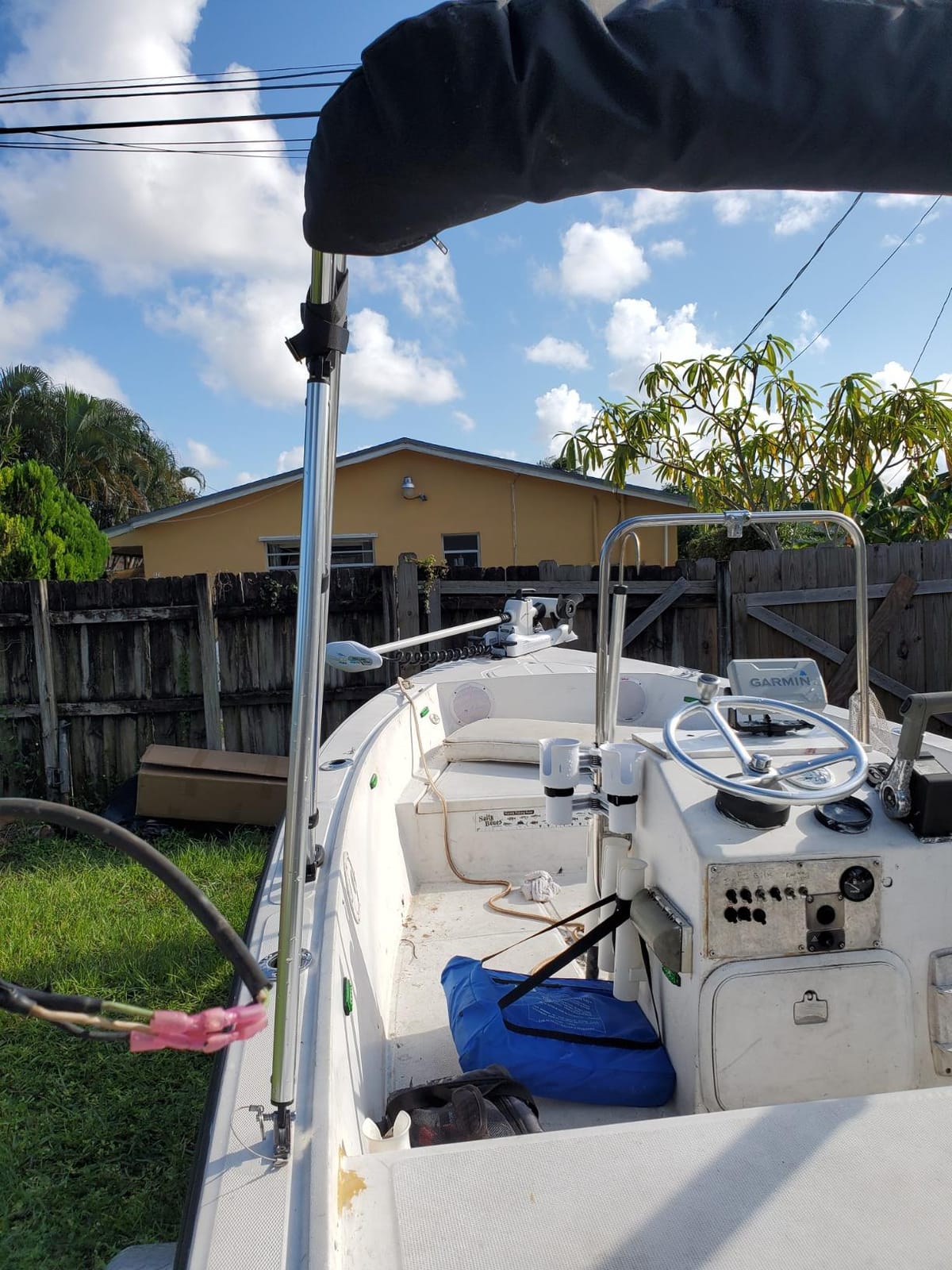
Who should buy the Cayman 55
Buy it if you want to steer and adjust speed from anywhere in the boat, fish salt or fresh water, and have a hull with a real bow mounting surface. The 600 watt rating and 2750 pound boat capacity mean it is not close to being overmatched.
Pass if position holding is the goal, if you have no flat mount area, or if you want everything in one box. The missing mounting hardware and the remote battery life are the two things to plan around.
10. Newport NK300 36V – Kayak-Specific Direct Drive with Expedition Range
Newport NK300 Electric Kayak Motor – 3HP Equivalent, 36V Brushless Direct Drive, Extended Range up to 66 Miles, Whisper-Quiet Precision, and Optimized Efficiency
36V brushless direct drive, 1300W peak, 25.5 lb, about 40dB, 6.5 mph top speed
Pros
- Purpose-built kayak design with a compact footprint
- Delivers 6 mph loaded with two adults
- About 40dB quiet operation
- Up to 66 miles of range and 30 hours runtime
Cons
- Requires a 36V battery system
- Controller or wiring error codes reported
- Weak reverse locking spring
- Thinnest review base in the lineup
This is the only truly purpose-built kayak motor in the lineup. It is not an adapted boat motor with a bracket, it is designed around a small hull, and the package includes a digital speed controller with display, an emergency stop key, a four bolt aluminum mount and a steering triangle.
The performance numbers are in a different class from everything else here. Thirty-six volts of brushless direct drive with 1300W peak power delivers speeds up to 6.5 mph and a maximum range quoted at 66 miles or up to 30 hours of runtime. One owner reported doing 6 mph fully loaded with two adults on a large sit-on-top kayak, which is expedition territory rather than fishing territory.
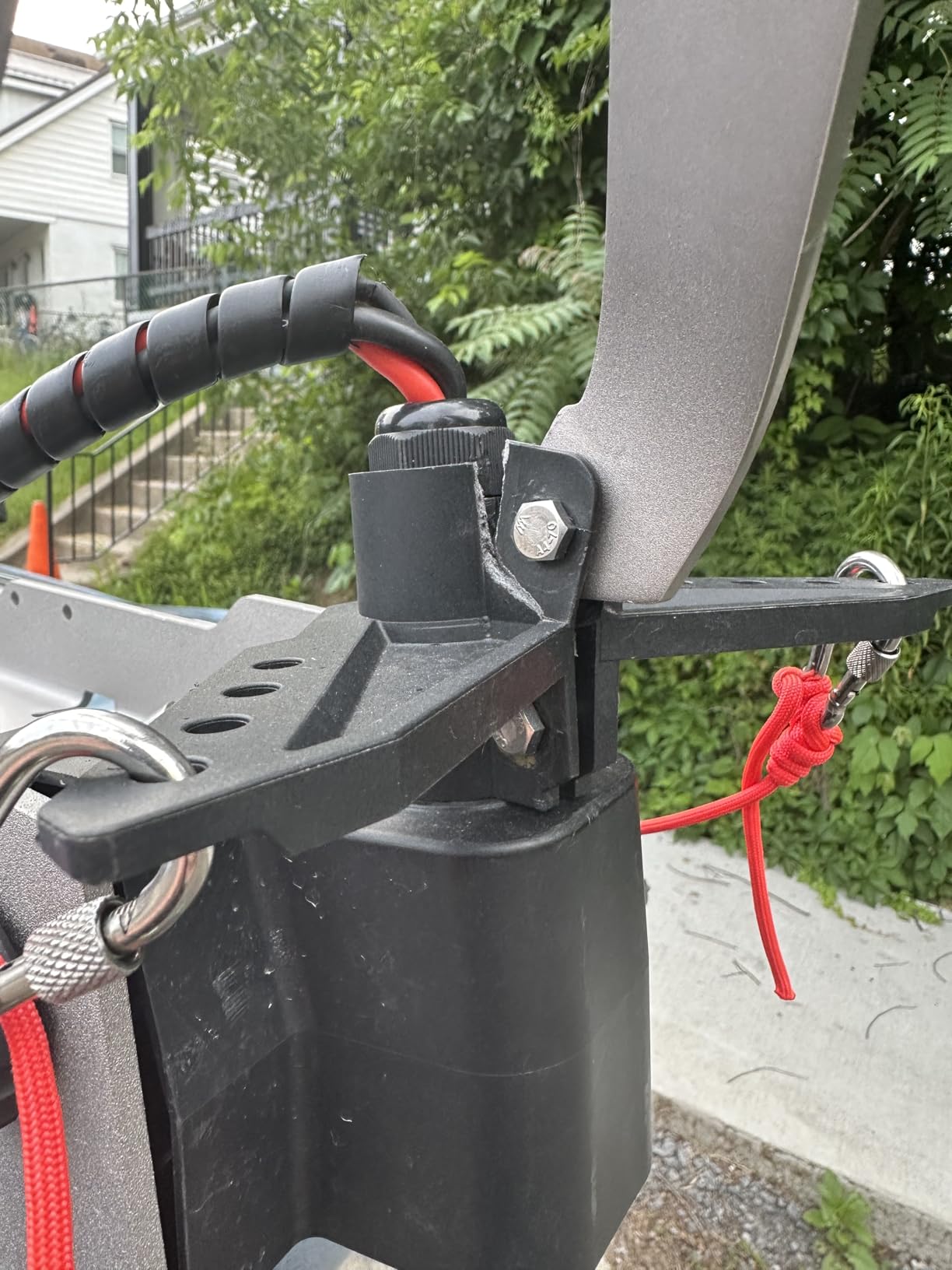
It is also the quietest option measured in this roundup at about 40dB, with a 25.5 pound total weight and a 24.6 inch adjustable shaft driving a 9.8 inch two-blade composite propeller. Trim and tilt positions at 0, 7, 14 and 21 degrees plus a 70 degree tilt handle shallow water and launching.
None of this matters without the right power system. It requires a 36V DC battery of at least 30Ah, which is not included, and draws 37 amps. That battery system is the real cost and the real weight of this build.
Where the 36V system pays off and where it does not
You pay for the voltage with a more complex and heavier power setup. A 36V pack is two 12V batteries in series, which means proper fusing, a matched pair of batteries, and a wiring run that is heavier than anything else in this guide. Budget time for that build rather than treating it as a bolt-on.
What you get in return is a boat that behaves like a powered craft rather than a paddled one. On long open-water runs, current, or a trip where paddling is not realistic, the range and speed change what the day can be.
Reliability is the open question
This motor carries the lowest average rating in the roundup and the thinnest owner history, with a meaningful share of one-star reviews. The recurring complaint is not the motor but the electronics: several owners report digital controller or wiring error codes, and warranty claims bought through a reseller have been declined.
Other reported issues are mechanical and minor by comparison: a tilt mechanism that feels flimsy when lifting for clearance, and a weak reverse locking spring that some owners modify. If you buy it, buy it from a seller who handles warranty directly.
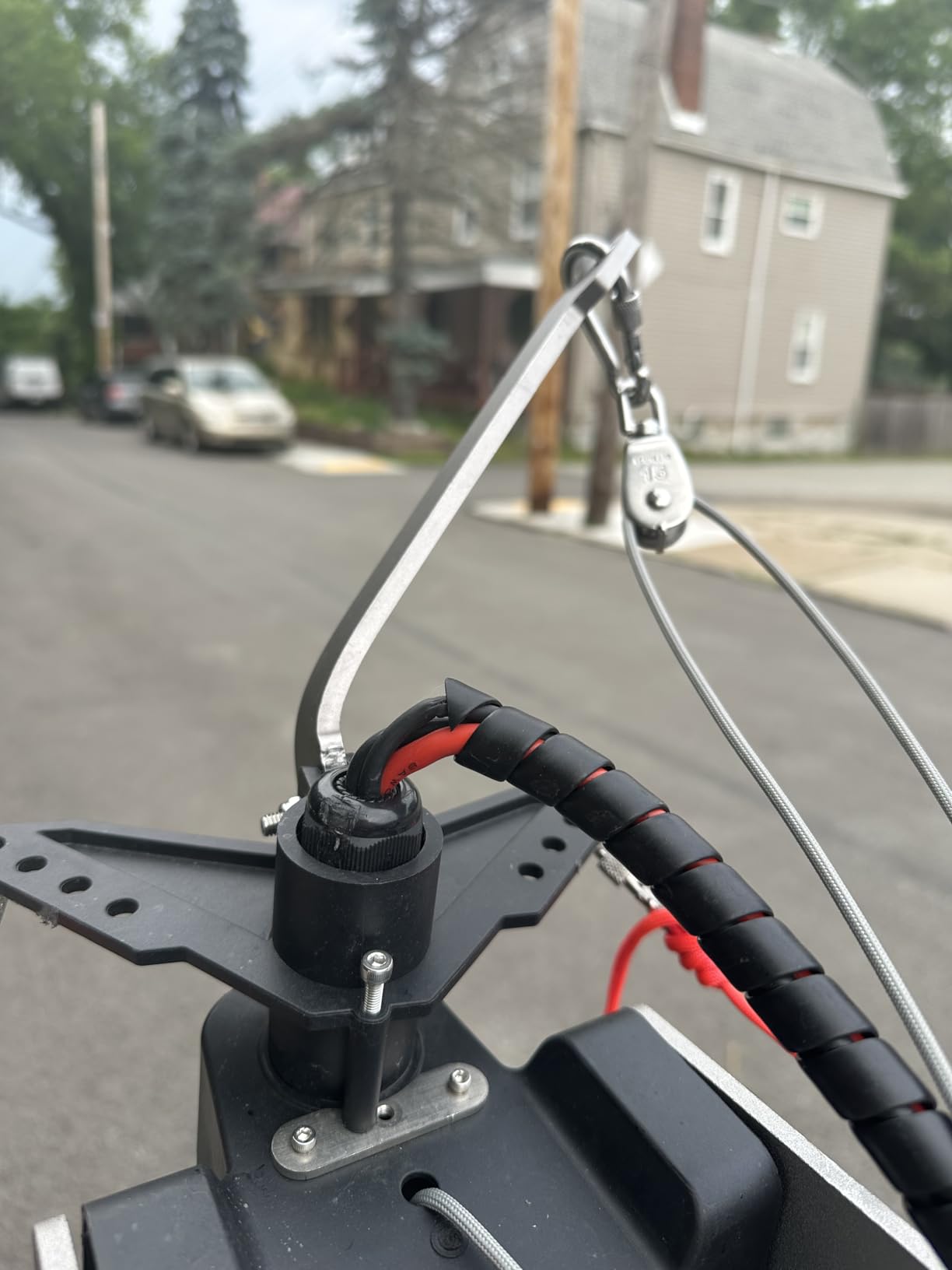
Who should buy the NK300
Buy it if you are doing long distances, moving gear, fishing water where paddling back is not an option, or you simply want your kayak to perform like a small powered craft. The quiet operation and low total weight make it the most refined install here.
Pass if you want a simple single-battery freshwater build, if electronics reliability is a dealbreaker for you, or if your budget cannot absorb a 36V system. For day-to-day fishing on a lake, this is far more capability than the trip requires.
How to Choose a Kayak Trolling Motor: Thrust, Shaft, Mount and Battery
Motor shopping on a kayak goes wrong in predictable ways, and every one of them comes down to the fact that a boat hull is a much smaller platform than the motor was designed for. Here is how I would work through the decision.
How much thrust does a kayak actually need
Thrust is rated against boat weight in the general marine world, but on a kayak the binding constraint is windage, not weight. A typical angler and gear in a 12 foot fishing kayak weighs in the range where 30 to 45 pounds of thrust feels planted, while 55 pounds and above is where the bow starts feeling light in a headwind.
Match thrust to conditions, not to the label. Flat freshwater: 26 to 35 pounds. Windy lakes or light current: 45 to 55 pounds. Open bays, current, or towing gear: 60 pounds and up. A 55 lb thrust motor will not make a kayak fast, and no kayak trolling motor is about speed unless it is a 36V direct drive unit.
Measure shaft length the kayak way
Most shaft sizing guides assume a boat transom with a defined drop. On a kayak, measure from your mounting surface to the deepest point your hull will reach in the water, then subtract the clearance you want between prop and hull.
Step one: identify the actual flat mounting surface and measure its position relative to the waterline. Step two: tilt the motor through its full range and confirm the skeg and prop never contact the hull. Step three: confirm the shaft still has travel at maximum tilt. Compact kayak transoms usually suit 24 to 30 inch shafts, and 36 inches generally needs a defined bow or stern track.
Transom, bow or kayak-specific mount
A transom mount clamps to a rigid plate and is the easiest to fit and remove, which is why most adapted boat motors in this guide use one. A bow mount gives better weight distribution in a headwind but needs a real flat surface and routing path. A kayak-specific mount bolts to the hull and keeps the footprint minimal.
Aftermarket brackets work for many hulls but are the most common source of disappointment. DIY plywood and aluminum brackets flex under torque, and flex is what makes a motor feel vague. If you go custom, use flat aluminum and two bolts into a reinforced deck, and check the mounting surface is flat over the full width of the bracket.
Battery type and placement decide your trim
The battery matters more than the motor on a small hull, and that is the point most guides miss. A lead-acid pack that delivers the same runtime as lithium weighs roughly three times as much, and that weight sits low and centered, which is exactly where you want it.
AGM or gel deep cycle batteries are the safe default for 12V builds. LiFePO4 packs are dramatically lighter and hold voltage better, so a 100Ah lithium pack can replace a much larger lead-acid bank for the same usable runtime. Two things to add on any lithium build: a battery monitor with low-voltage cutoff, because lithium chemistry does not enjoy a deep discharge, and a proper fuse close to the battery.
Placement: forward of the seat and low if you need bow weight, aft of the seat and low if the motor is mounted forward, and never directly under the angler’s knees in a small hull where it interferes with strokes or a foot pedal. Center the mass before you obsess over the motor.
Tiller, foot pedal or remote
A tiller is the simplest and most reliable, and in a small kayak it is often within arm reach. A foot pedal gives genuine hands-free control but needs cable routing through the hull. A wireless remote gives the most freedom and adds electronics, a charging routine and one more thing to keep dry.
Skip foot pedals on kayaks where the pedal would sit where your knees need to be, and consider the steering consequences of each choice before buying. A motor you cannot comfortably reach is a motor you will fish with parked in neutral.
Saltwater versus freshwater rating
Saltwater-capable hardware resists corrosion; freshwater-rated hardware corrodes once salt reaches the bearings, terminals and shaft collar. The failure usually shows up as a stiff head unit or a pitted shaft after one or two seasons, and forum discussions about this category repeat the same advice: buy saltwater-rated if there is any chance of salt, and rinse with fresh water after every outing regardless.
On the noise side, brushed motors are louder than brushless units, and low throttle is the loudest point on the curve. If you fish clear shallow water, treat speed as a stealth control and slow down near structure.
Fish finder integration and winter storage
If you run electronics, check interference before the trip. Brushless motors generate electromagnetic noise that can disturb some fish finders, so test the pair together and separate the wiring where the hull allows. Network integration is worth looking at if you already run a compatible chartplotter, since it turns the motor into part of the boat rather than a standalone device.
Between trips, rinse in fresh water, disconnect the battery, store the motor shaft straight rather than at an angle, and keep the terminals dry. A short weekly check of connections and a periodic look at the shaft for straightness will outlast most of the electronics in this guide.
Frequently Asked Questions
What size trolling motor is best for a kayak?
For most anglers on a 12 foot fishing kayak, 30 to 45 pounds of thrust is the sweet spot. 30 pounds works on calm freshwater, 45 pounds handles wind and light current, and 55 pounds or more is for open water and heavier loads. Match thrust to your conditions rather than to the biggest number available.
How fast will a kayak go with a 55 lb thrust trolling motor?
A 12V 55 lb thrust motor in the 30 inch shaft class will move a light kayak at roughly 3 to 4 mph on throttle 3 or 4, and faster at full throttle in the right conditions. Most anglers never use more than a quarter throttle. Real speed varies with hull shape, total load, wind and current.
Can I put a regular trolling motor on a kayak?
Yes, and most anglers do. A transom-mount boat motor with a 24 to 30 inch shaft fits many kayaks using an aftermarket or DIY bracket, as long as the bracket is rigid and the prop clears the hull in every tilt position. Purpose-built kayak motors mount more cleanly and weigh less.
Do I need a special mount for a kayak trolling motor?
Usually yes. A soft or rounded kayak bow has no flat surface, so you need an aftermarket transom plate, a reinforced flat mounting pad or a hull-bolted bracket. Measure for a 13.7 by 8 inch flat surface if you are buying a bow-mount unit, and avoid plywood brackets because they flex under torque.
Should I mount my trolling motor on the front or back of my kayak?
Mount at the stern for simple transom mounting and easy removal, or at the bow for better weight distribution in a headwind. If you mount forward, put the battery low and centered behind the seat so the total mass stays balanced. Bow mounts also need cable routing and a flatter hull to work properly.
How long does a trolling motor battery last on a kayak?
Runtime depends far more on battery capacity and speed than on motor brand. A 100Ah lithium pack paired with a 46 lb 12V motor can run a full day at trolling speed, while an AGM bank of the same capacity is roughly three times the weight. High throttle drains any pack much faster than trolling speed.
Is GPS spot-lock worth it on a kayak?
Spot-lock is worth it if you fish specific spots and want both hands on the rod while the boat holds position. It is the single biggest change to how a motorized kayak fishes. The trade-offs are added weight on the bow, more electronics to keep dry, and a higher power draw, so check your kayak weight rating first.
Are Garmin or Minn Kota trolling motors better?
It depends on the platform. Minn Kota offers the broadest kayak-specific range here, with composite shafts, Spot-Lock and One-Boat Network integration for Humminbird. Garmin’s advantage is chartplotter integration if you already run Garmin electronics. Neither brand is needed for a simple freshwater build, and adapted transom motors cover most beginners well.
Which Kayak Trolling Motor Should You Buy in 2026?
If you want the safest, most proven starting point for a freshwater kayak, the Minn Kota Endura C2 30 is my pick and the one I keep on my own boat. It is light, it fits most compact hulls, and it has the deepest owner history in the category.
If you fish salt or brackish water, or you simply want more thrust without a 36V system, the Newport NV-Series 46 is the better buy. Plan for longer power leads and add an accessible breaker, and the low battery draw lets you carry a lighter pack.
If slow, precise trolling is what you are after, the brushless Haswing with stepless control gives you the speed range a stepped motor cannot. If you want your hands free while working a lure, the Minn Kota Edge foot pedal is the cleanest solution provided your hull can route the cable. If you are chasing a specific spot and want the boat to hold while you fish, the GPS-equipped Terrova is the only unit here that does it.
For long open-water trips where paddling home is not realistic, the Newport NK300 changes what a kayak can be, and you will pay for that with a 36V system and thinner electronics support. Whatever you choose, measure your shaft length from your own hull, keep the battery low and centered, and pick a mounting bracket that does not flex.
Whichever motor you end up with, give it a full shakedown trip before the water you actually care about. Every one of these has owners who love it and owners who found a rough edge, and an hour of shakedown on familiar water is how you find out which one you got.