
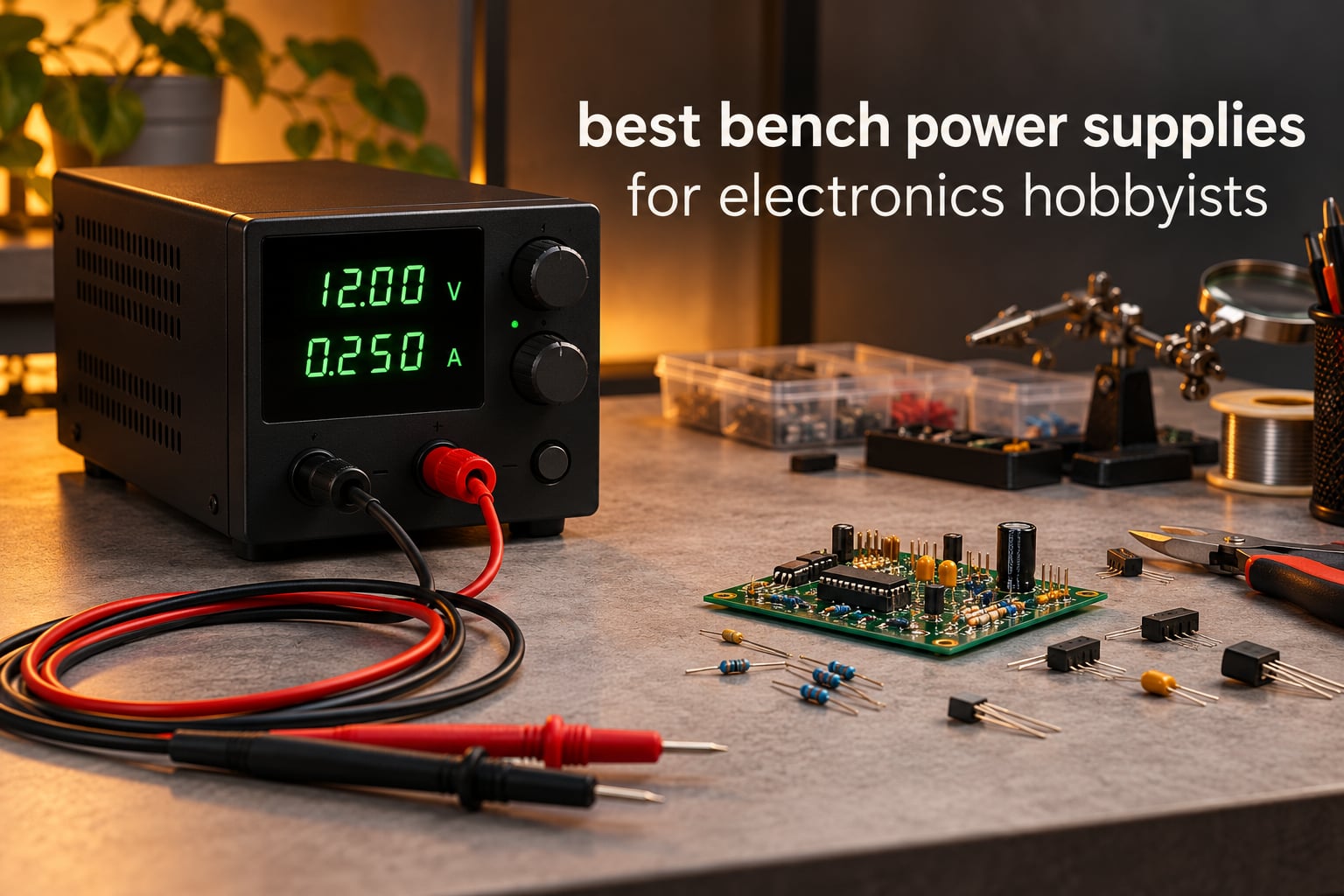
I fried my first Arduino with a wall adapter. Not dramatically — no smoke, no bang — it just stopped enumerating over USB one afternoon while it sat on the bench doing nothing, and the voltage rail on the dead board read well past 5V. The replacement board worked immediately on the same adapter, which told me everything I needed to know about unregulated output.
That mistake is why the best bench power supplies for electronics hobbyists rank so heavily in my buying decisions. A regulated, current-limited supply turns a wiring mistake into a visible mode change on a display instead of a dead board. After years of breadboarding, LED strip testing and pack repair work, I have a short list of models I actually reach for, and they are all in this roundup.
Before the picks, one framing note. Reliability is the dominant anxiety in this category, and it is the reason forum threads outrank affiliate listicles for this query. People are not hunting for the biggest wattage number; they want a unit with a traceable manufacturer, a declared protection set, and enough owners who have already burned one in. Every model below carries a published review count, and I have called out who should skip each one as plainly as who should buy it. If you also build compact systems, our picks for small form factor power supplies and power supplies built for quiet operation cover the same thermal questions from the PC side.
Our Top 3 Tested Bench Power Supplies for Electronics Hobbyists in 2026


NICE-POWER SPS-C3010
- 300W regulated output
- independent OUTPUT key
- auto CV/CC
- full protection suite
The Kungber takes the top spot on evidence rather than features: more than 2700 owner ratings on a 4.5 average is the deepest proven base in this group. The Jesverty ranks #1 in Lab Power Supplies with over 1600 ratings and packs the same 300W into a 2.4 lb tower, while the NICE-POWER is the pick if you want the most complete declared protection list on a compact vertical body.
Comparing Ten Bench Power Supplies Head to Head in 2026
| Product | Specs | Action |
|---|---|---|
| Kungber SPS3010B 30V 10A |
|
Check Latest Price |
 Siglent SPD3303X-E Triple Output Siglent SPD3303X-E Triple Output |
|
Check Latest Price |
 KORAD KD3005D 30V 5A Linear KORAD KD3005D 30V 5A Linear |
|
Check Latest Price |
 HYELEC HY3005S 30V 5A HYELEC HY3005S 30V 5A |
|
Check Latest Price |
| NICE-POWER SPS-C3010 30V 10A |
|
Check Latest Price |
 Tekpower TP3005T 30V 5A Linear Tekpower TP3005T 30V 5A Linear |
|
Check Latest Price |
 WANPTEK TPS-C3010H 30V 10A WANPTEK TPS-C3010H 30V 10A |
|
Check Latest Price |
 HYELEC HY50-06A 50V 6A HYELEC HY50-06A 50V 6A |
|
Check Latest Price |
| Jesverty SPS-3010 30V 10A |
|
Check Latest Price |
 NANKADF 30V 5A NANKADF 30V 5A |
|
Check Latest Price |
1. Kungber SPS3010B 30V 10A – The All-Rounder With the Deepest Owner Base
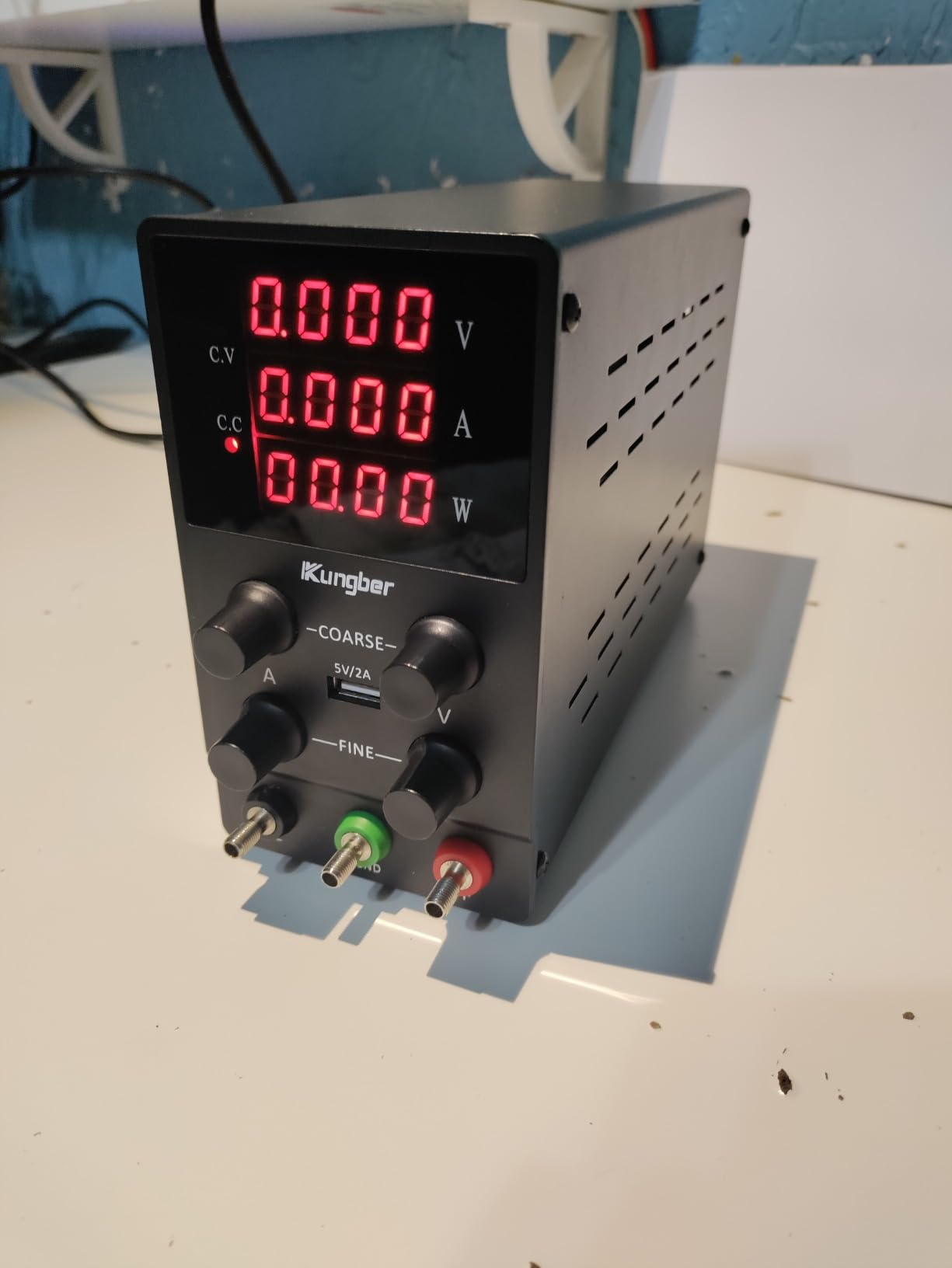
DC Power Supply Variable, 30V 10A Adjustable Switching Regulated DC Bench Power Supply with Intelligent Charging Mode, 18W USB Interface, Precision Encoder Knob (Black)
0-30V 0-10A 300W output
Charging mode with Ah readout
18W USB port
OCP alarm button
Pros
- Largest review base in the group at 2775 ratings
- Intelligent charging mode with real-time Ah display and full-charge cutoff
- OCP button cuts output deliberately on a short
- 18W USB port is more capable than 5V/2A on cheaper rivals
- Lightest 10A chassis here at 2.3 lb while still offering 300W
Cons
- No memory presets for recalling frequent settings
- Plastic enclosure feels less premium than metal-chassis rivals
- 115V input only on this listing
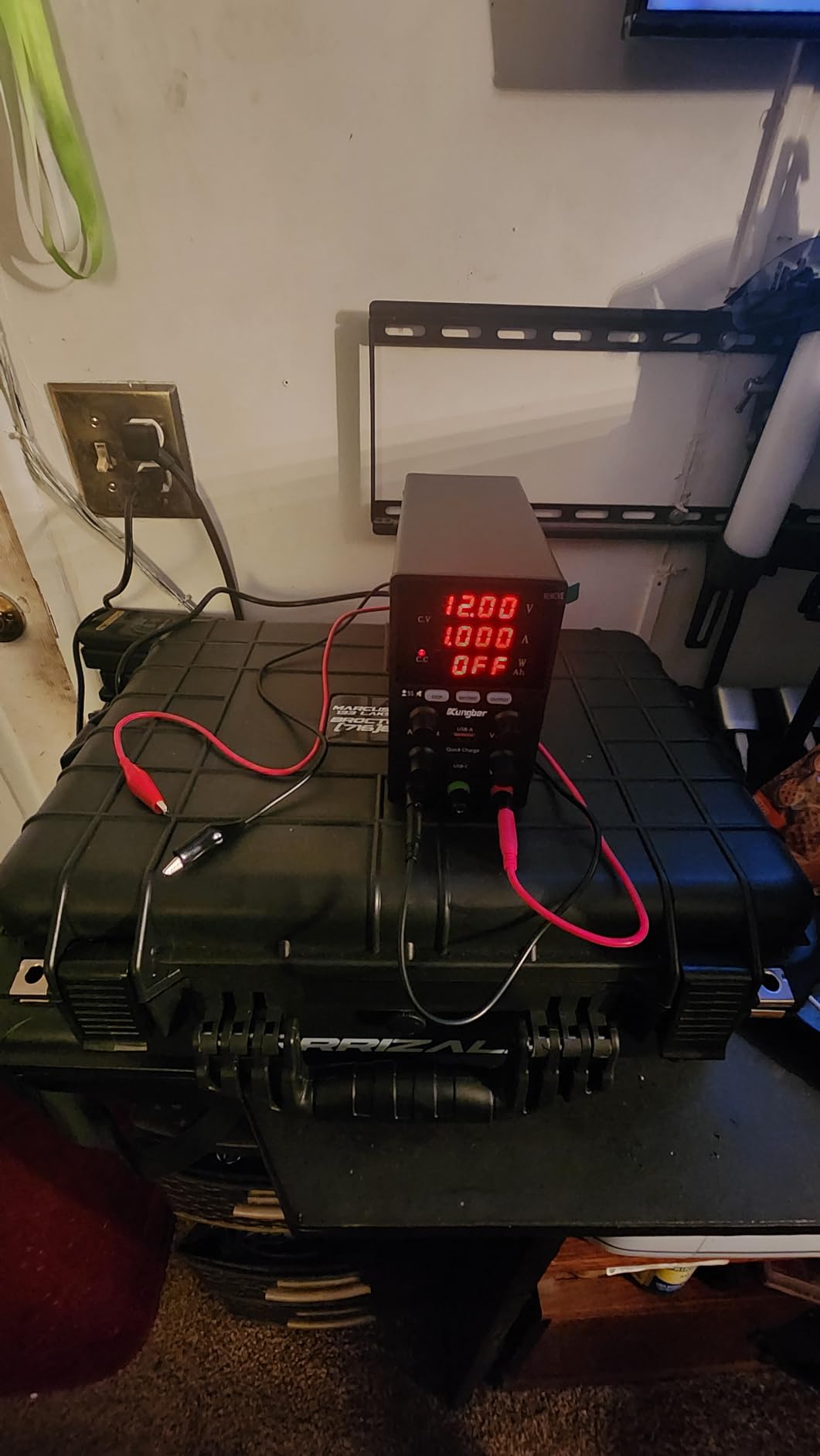
More than 2700 owner ratings at a 4.5 average is the single strongest reliability signal in this roundup, and it is why this unit takes the top spot. It measures 7.59 by 3.35 by 6.1 inches and weighs 2.3 lb, so it eats almost no bench space while still delivering 300W. I have had one of these running for pack repair work long enough that it has become the unit I reach for without thinking.
The charging mode is the feature that sets it apart from the other 30V/10A switching units. It shows an Ah readout in real time and stops automatically when the battery is full, which removes the babysitting from a long overnight charge. It also flags incorrect connections before energising, which matters when you are attaching leads to a pack with exposed pads.
300W From 0-30V, With the Derating You Should Expect
0-30V at 0-10A is 300W on paper, and that figure only holds across the top of the range. At 24V you get 10A and 240W, at 12V you get 120W, and at 5V the supply can only pull 50W because 10A is the hard ceiling regardless of voltage. For most bench work that ceiling is far above what a microcontroller or an LED strip will ever draw, so it rarely bites.
It bites when you plan a load above 10A, and it is the reason the wattage figure printed on the case is the number to plan around rather than the amp rating.
Protection Suite: The Most Complete Declared List on a Budget Body
Grounding, leakage, thermal, voltage overload, power overload and short circuit protection are all declared for this model, plus an OCP button that raises an alarm and cuts the output. That button is more useful than it sounds: a deliberate physical cut rather than a menu sequence, so you can kill a fault without looking away from the circuit.
The thermal fan activates above 122F, so it stays quiet at normal bench loads and only spins when you are genuinely working the supply hard. In a shared room that difference is noticeable.
Charging Mode Is Not a Battery Management System
This is the one warning I attach to every charging-capable supply, this one included. An Ah counter and an auto-stop tell the supply when the voltage curve has flattened; they do not balance cells, they do not detect an individual weak cell, and they will not save a badly assembled pack. If you are working on lithium, treat the charging mode as a convenience and fit a proper battery management system before you connect anything.
Who Should Buy It and Who Should Skip It
Buy it if you want 300W, a charging mode, and the reassurance of a very large owner base in one compact body. Skip it if you build to 24V rails repeatedly and want presets, because the encoder here stores nothing and you will retype the same values. The 115V input on this listing is also worth checking against your mains before you commit.
2. Siglent SPD3303X-E Triple Output – Three Isolated Rails in One Box
Siglent Technologies SPD3303X-E Triple Output Power Supply
Three isolated outputs, 220W total
Independent series and parallel modes
Trending graphs
Pros
- Three independently controlled and isolated outputs
- Independent series and parallel output modes
- 220W total power across the channels
- Trending graphs and timing output function
- Backed by a 3-year warranty
Cons
- Large and heavy at 17.6 lb with a 16 by 14 by 11 inch body
- Highest cost in this group for a hobby bench
- 32V per channel ceiling limits higher-voltage designs
Almost every other model in this roundup gives you one adjustable channel and a 5V USB rail as a bonus. This one gives you two channels at 32V/3.2A plus a fixed 2.5V, 3.3V and 5V output at 3.2A, each independently controlled and isolated from the others, for 220W total. If you bring up a board that needs 3.3V logic and a 12V motor rail at the same time, this removes the juggling.
The isolation is the part experienced users care about. Separate channels mean you can tie one output to a circuit ground and another to a different reference without creating a loop through the supply chassis, which is the usual cause of mysterious hum or sensor drift on shared-ground circuits.
Linear Topology in a Multi-Output Frame
This is a linear design, which matters for analog work: the noise floor is low enough that preamp and reference-voltage circuits do not pick up switching hash from the supply itself. The trade-off is physical. Linear regulation at 220W generates real heat, and Siglent handles it with a 17.6 lb chassis and air cooling that keeps the box stable at the bench.
That weight is the honest drawback. It is not a portable or dorm-room supply, and it will claim a permanent square of desk.
Series and Parallel Modes, and Why They Matter
Beyond independent operation, the outputs can be linked in series or parallel. In series you reach higher voltage from two channels; in parallel you roughly double available current for a load that needs it. Very few hobby-class supplies offer this, and it is the feature that makes a three-channel unit genuinely different from three channels stapled together.
Users report that once you start using the linking modes, the timing output and trending graphs become the tools you actually reach for during a long characterisation session rather than novelty features.
Three Years of Warranty and a 100-230V Input Range
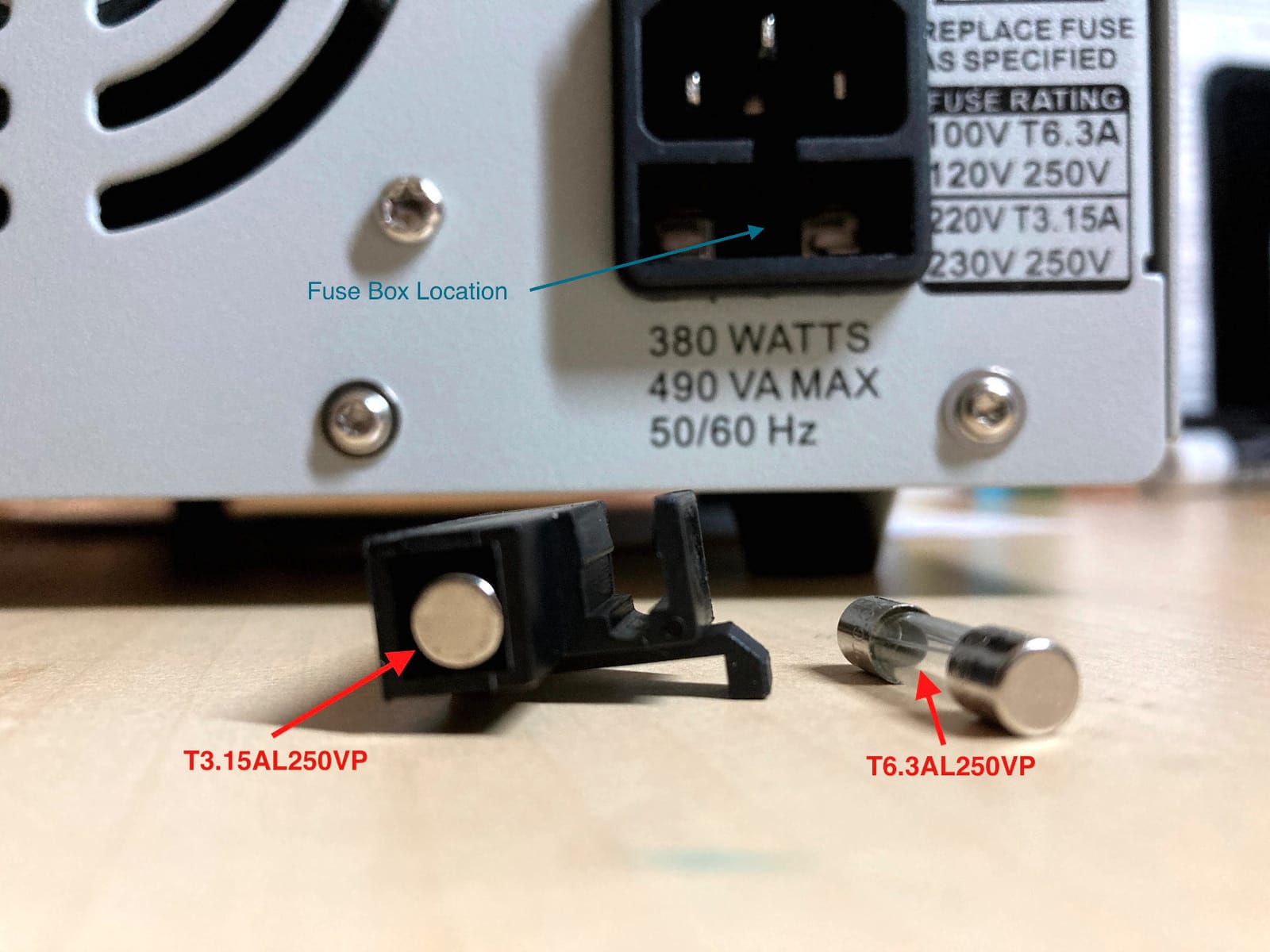
The mains input is specified from 100V to 230V, so the same unit works in a 115V kitchen and a 230V European bench without a rear selector. That removes the single most common buying mistake in this category entirely. The 3-year warranty is also the longest in this group.
Upper temperature rating is 40C, which is normal for lab equipment and worth noting if your bench room runs warm in summer.
Who Should Buy It and Who Should Skip It
Buy it if you routinely run circuits with more than one rail, if you need galvanically isolated channels, or if you characterise components rather than just powering them. Skip it if you are building a first bench on a tight budget, or if you need to go above 32V per channel, because the per-channel ceiling stops well short of what a 50V supply in this list can do.
There is a case for anyone who is only ever running a single 5V or 3.3V project to spend the same money on a switching unit and keep a couple hundred watts of headroom in reserve.
3. KORAD KD3005D 30V 5A Linear – The Quiet Choice for Analog Circuits
KORAD KD3005D – Precision Variable Adjustable 30V, 5A DC Linear Power Supply Digital Regulated Lab Grade…
0-30V 0-5A linear output
Dual 4-digit LED displays
Switchable 110V/220V input
Pros
- Linear regulation gives very low noise and ripple for analog work
- Dual 4-digit displays show voltage and current at the same time
- Automatic mA and A display switching prevents unit misreads
- Metal enclosure and 9 lb chassis feel durable
- 5A test leads cord and manual included in the box
Cons
- Single isolated 0-30V 5A channel limits you to one rail at a time
- Larger footprint than modern compact switching units
- No memory presets or USB output for dev boards
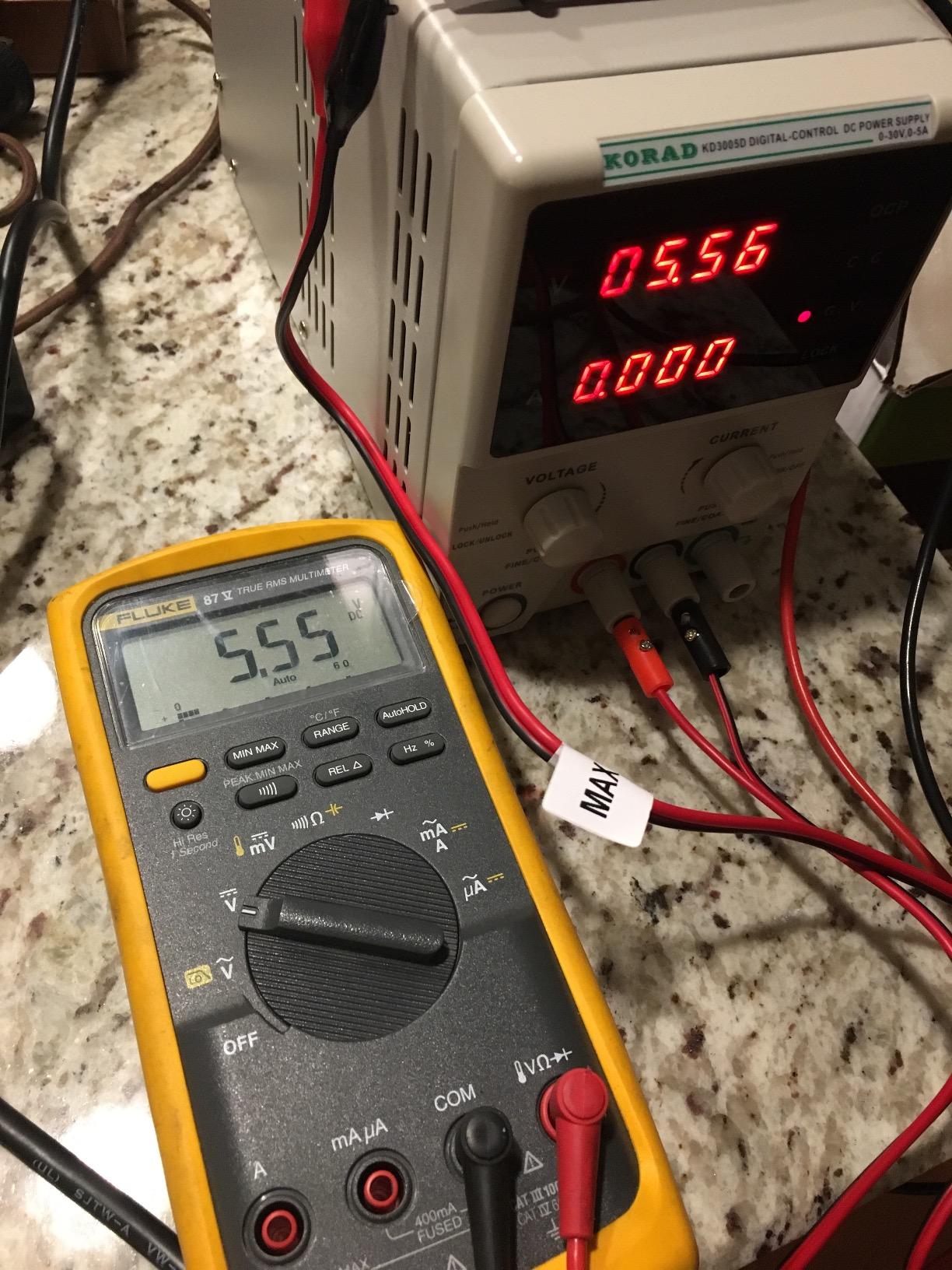
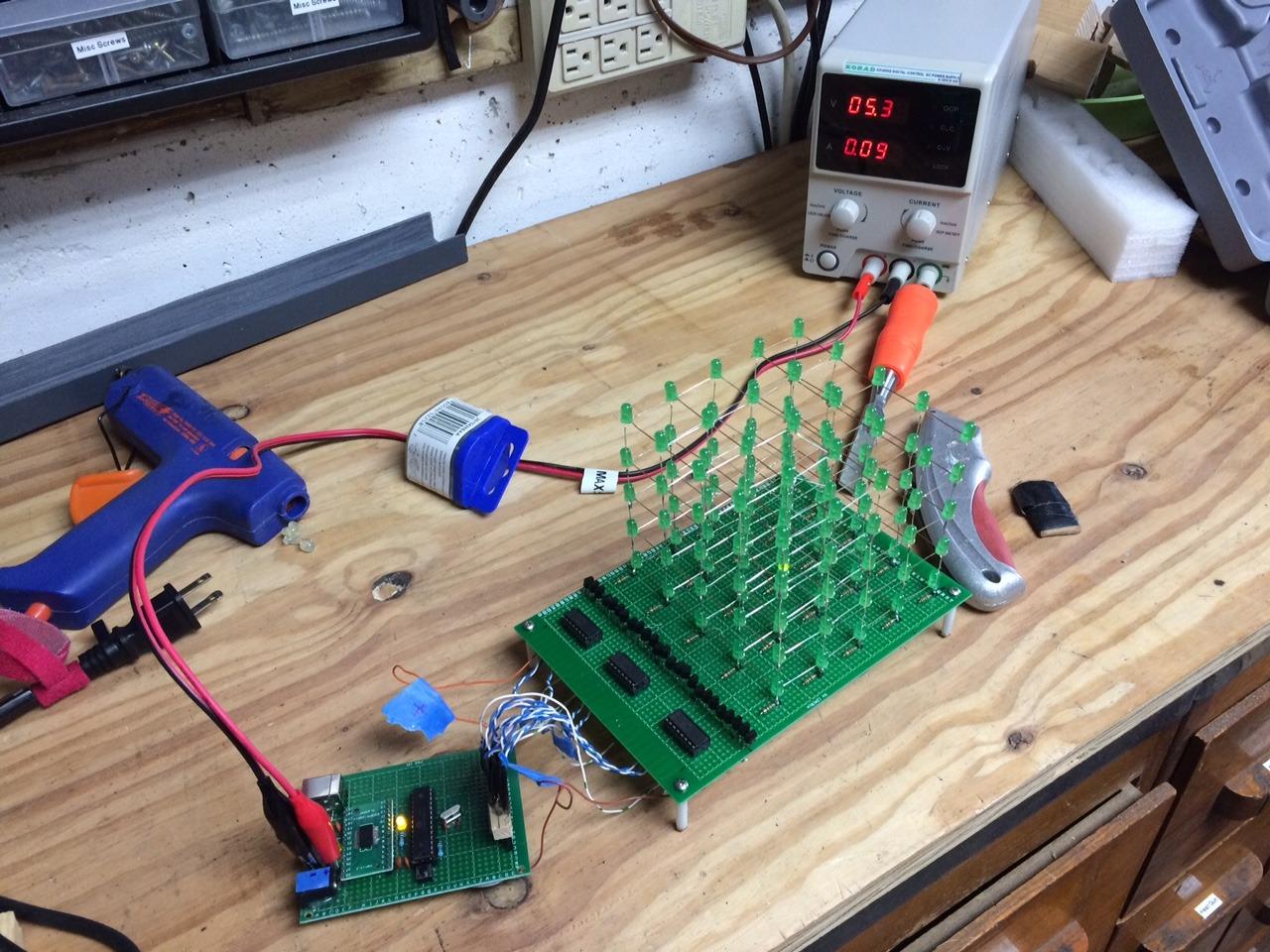
KORAD is the name hobbyist forums recommend most often when someone asks about true linear regulation, and the KD3005D is the reason. It is a 0-30V, 0-5A linear supply rated at 300W in a metal chassis weighing 9 lb, and the low noise is the entire point. Audio preamps, strain gauge amplifiers and low-level sensor front ends are where you feel switching ripple as measurement error.
It also declares its wattage more generously than the switching units in this list. Because linear regulation can deliver 5A at any point up to 30V, you get useful power at every voltage rather than only near the top of the range.
Dual 4-Digit Displays and the Auto mA/A Switch
Both channels are visible simultaneously, which matters more than it sounds when you are chasing a current draw on a circuit that should be drawing far less. The automatic switching between mA and A removes a genuinely common beginner error: setting 0.5A, reading 500 on a fixed-unit display and believing you have accidentally set half an amp when you have set half a milliamp.
The digital controls on a unit of this age are simple, and simplicity here is an advantage. There is no menu tree to learn.
Protection and the Switchable Mains Input
Overload, short circuit and over-temperature protection are all present, which is the minimum sensible set. The 110V/220V input switch on the rear is the feature to check twice before first power-up, because setting it wrong produces an output that looks broken rather than obviously wrong.
Banana jack outputs and an AC plug input keep the connection conventional, and the box includes 5A test leads, so nothing extra is needed to get working.
Where Linear Topology Costs You
Linear supplies convert excess voltage into heat, so a 5A supply at 5V wastes most of a 300W budget as heat in the sink. In a closed room that is a real consideration, and it is why linear units are usually sized to the load you actually have. If you mostly run 12V and 24V loads at moderate current, a switching supply converts far less of your input energy to waste.
That efficiency gap is the honest trade for the noise floor, and for analog work it is one most people accept gladly.
Who Should Buy It and Who Should Skip It
Buy it if your circuits are analog, if noise is part of your measurement, or if you want a supply that behaves the same at 6V as it does at 28V. Skip it if you need two rails at once, if you want to power a dev board from a USB port on the supply, or if bench footprint matters, because the 14 by 10 by 10 inch body is a substantial commitment of desk space.
It is also the right unit for anyone whose work is already noisy in other ways, where adding supply hash would be the last straw.
4. HYELEC HY3005S 30V 5A – The First-Time Builder’s Supply
DC Power Supply Variable 30V 5A, Hyelec Adjustable Switching Regulated Power Supply with 4-Digit LED Display, Coarse and Fine Adjustments,5V2A USB Interface,110V Input Voltage
0-30V 0-5A switching output
Encoder coarse/fine switch
0.01V/0.001A readout
OUTPUT on/off key
Pros
- Highest average rating in the group at 4.7 with 85 percent five-star reviews
- Users report the readout matches a reference meter to within a few millivolts
- Independent output switch sets voltage and current before energising the load
- 5V USB output doubles as a second source for a Raspberry Pi or phone
- Very light and compact at roughly 1.65 lb
- Binding post terminals ease breadboard hookup
Cons
- Light chassis shifts if you press the buttons hard
- 110V input only so it will not run directly on 230V mains
- Switching design is noisier than a linear supply for audio or RF work
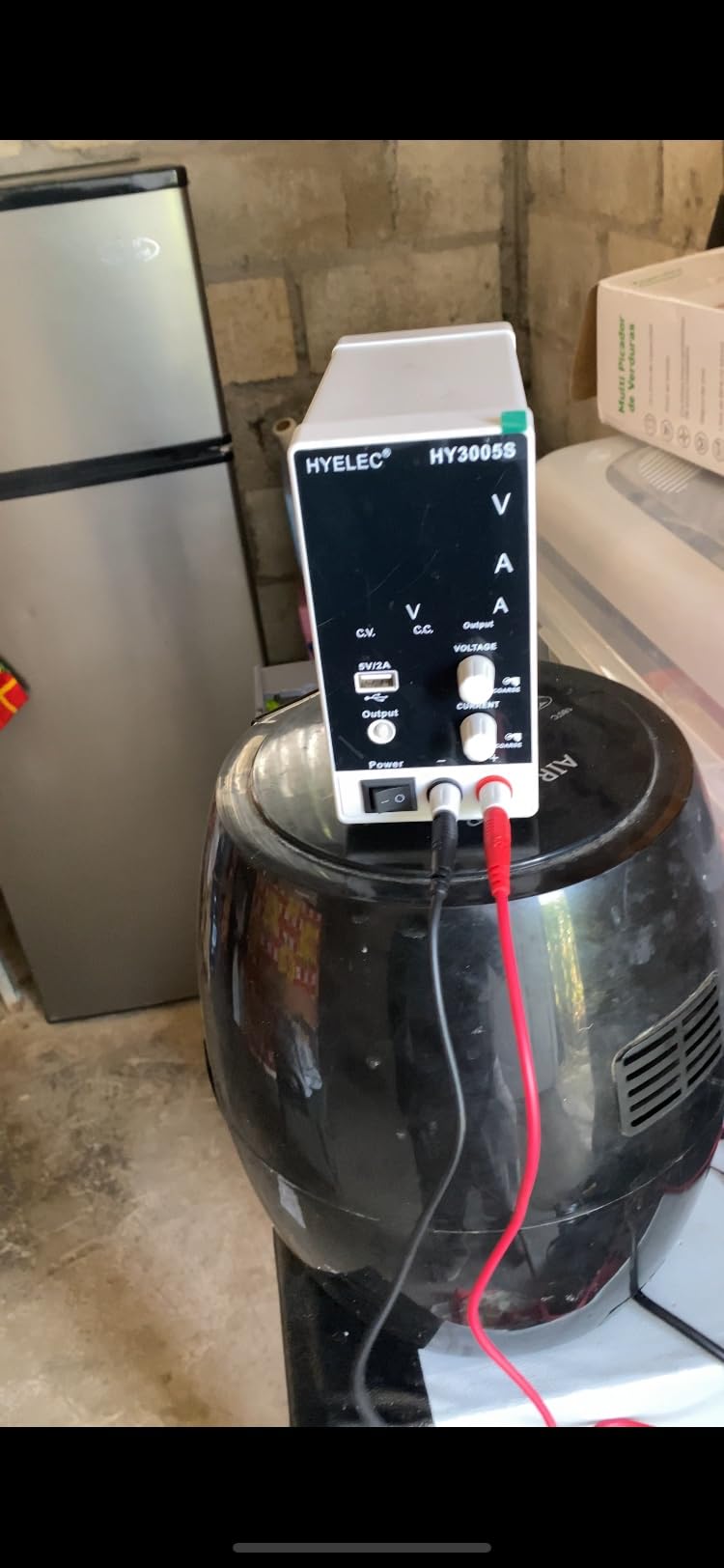
This is the supply I hand to people who have never used one. The 4.7 average is the highest in this roundup, with 85 percent five-star ratings, and the feature that earns it is the independent OUTPUT button. You dial in your voltage and current limit with the output dead, then press one button to energise. That single switch removes most of the beginner bench accidents.
It is also the smallest and lightest unit here at roughly 1.65 lb, which sounds like a feature right up until you find it sliding across the bench when you press the encoder firmly.
Encoder With a Coarse and Fine Switch in One Knob
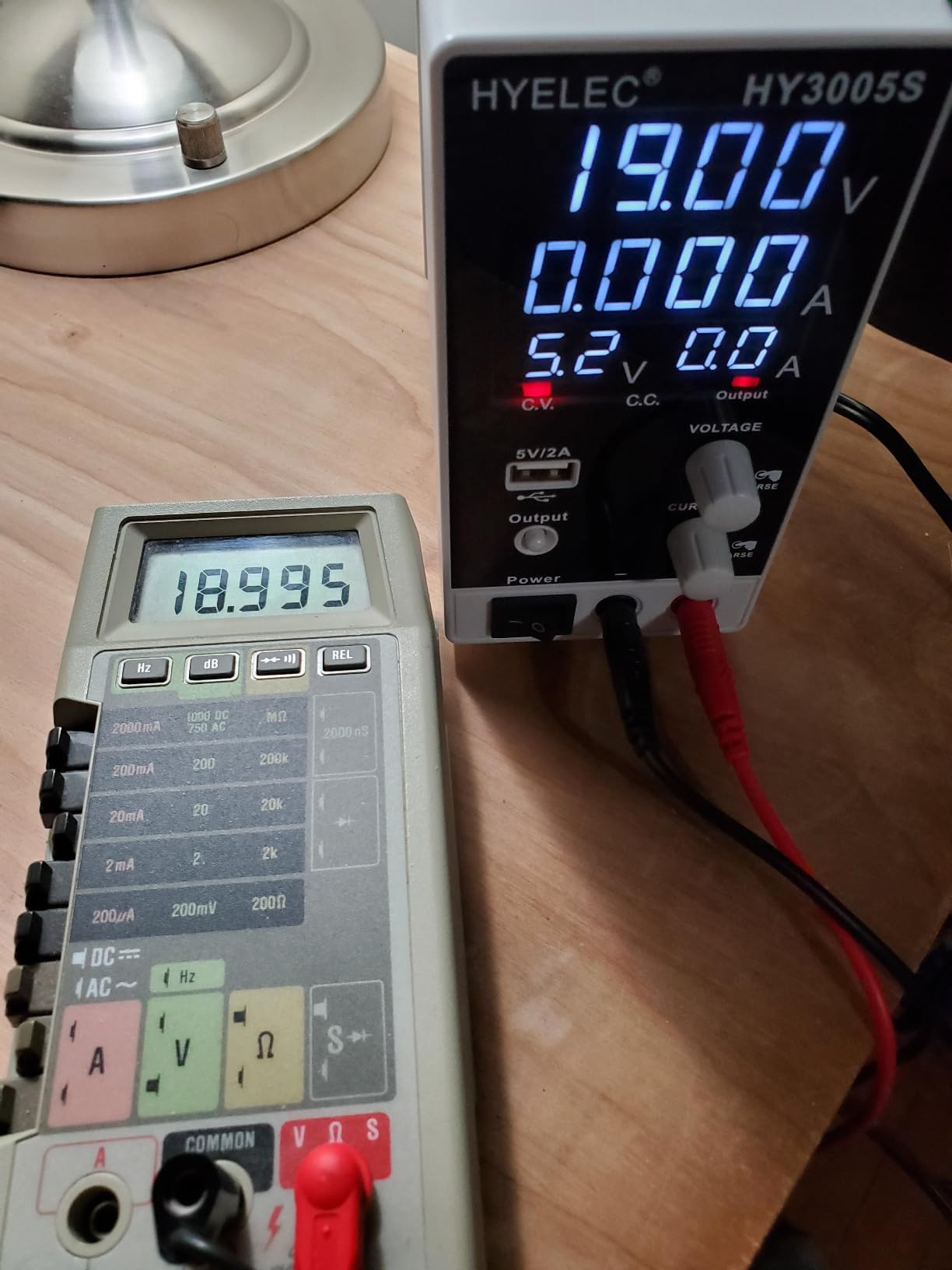
A single encoder with a mode switch replaces the two-knob layout of the older supplies. In coarse mode you sweep the range quickly; flip to fine and the same knob moves one digit at a time. Display resolution is 0.01V and 0.001A on a 4-digit LED, so you can set 3.30V rather than 3.3V and actually know which one you have.
Owners report checking the readout against a reference meter and finding agreement within a few millivolts, which is the sort of verification most review sections skip.
The 5V USB Rail as a Second Source
The 5V USB output is genuinely useful rather than decorative. A Raspberry Pi, an ESP32 dev board or a phone can run from the supply while the main channel handles something else, which means one box covers a logic-level bring-up and a motor or relay test without swapping cables.
Temperature-controlled cooling means the fan is tied to actual internal temperature, so it is not a constant background hum while you work.
Where It Falls Short
110V input only is the hard limit on this one, and in a 230V region it means a step-down transformer before the supply is usable at all. For audio or RF work, the switching topology also produces more noise than any linear unit in this roundup, which is the one scenario where a hobbyist should reconsider.
The 150W-class ceiling is not stated as a headline wattage here, but 0-30V at 0-5A is 150W at the top of the range and less below it. That is plenty for logic and small motors, and short for pack work.
Who Should Buy It and Who Should Skip It
Buy it if you are setting up a first bench, if you mostly work at 12V or below, or if accuracy at low currents matters more than raw power. Skip it if you need more than 5A continuously, if you are on 230V mains, or if your project is a low-noise audio or RF measurement.
For most first builds, none of those exclusions apply, which is why it is the recommendation I make most often to people asking where to start.
5. NICE-POWER SPS-C3010 30V 10A – Most Versatile With the Longest Protection List
NICE-POWER DC Power Supply Variable 30V 10A, Adjustable Switching Regulated DC Bench Power Supply with Output Switch High Precision 4-Digit LED Display, Benchtop Lab Power Supplies with 5V/2A USB Port
0-30V 0-10A 300W output
V/A/W display readout
Auto CV/CC switching
OUTPUT key, coarse/fine knobs
Pros
- Automatic CV/CC crossover works well for unattended battery module work
- Coarse and fine knobs for both voltage and current
- Quiet under normal load with the fan reserved for hard work
- 5V/2A USB output for Arduino and Raspberry Pi prototypes
- Only 2.6 lb in a small vertical footprint
Cons
- One reviewer had a unit fail after about a week though the replacement worked well
- Supplied leads show significant voltage drop at 4A so measure at the terminals
- Fine adjustment range is limited and can run out of travel
- 110V input only with no 220V version
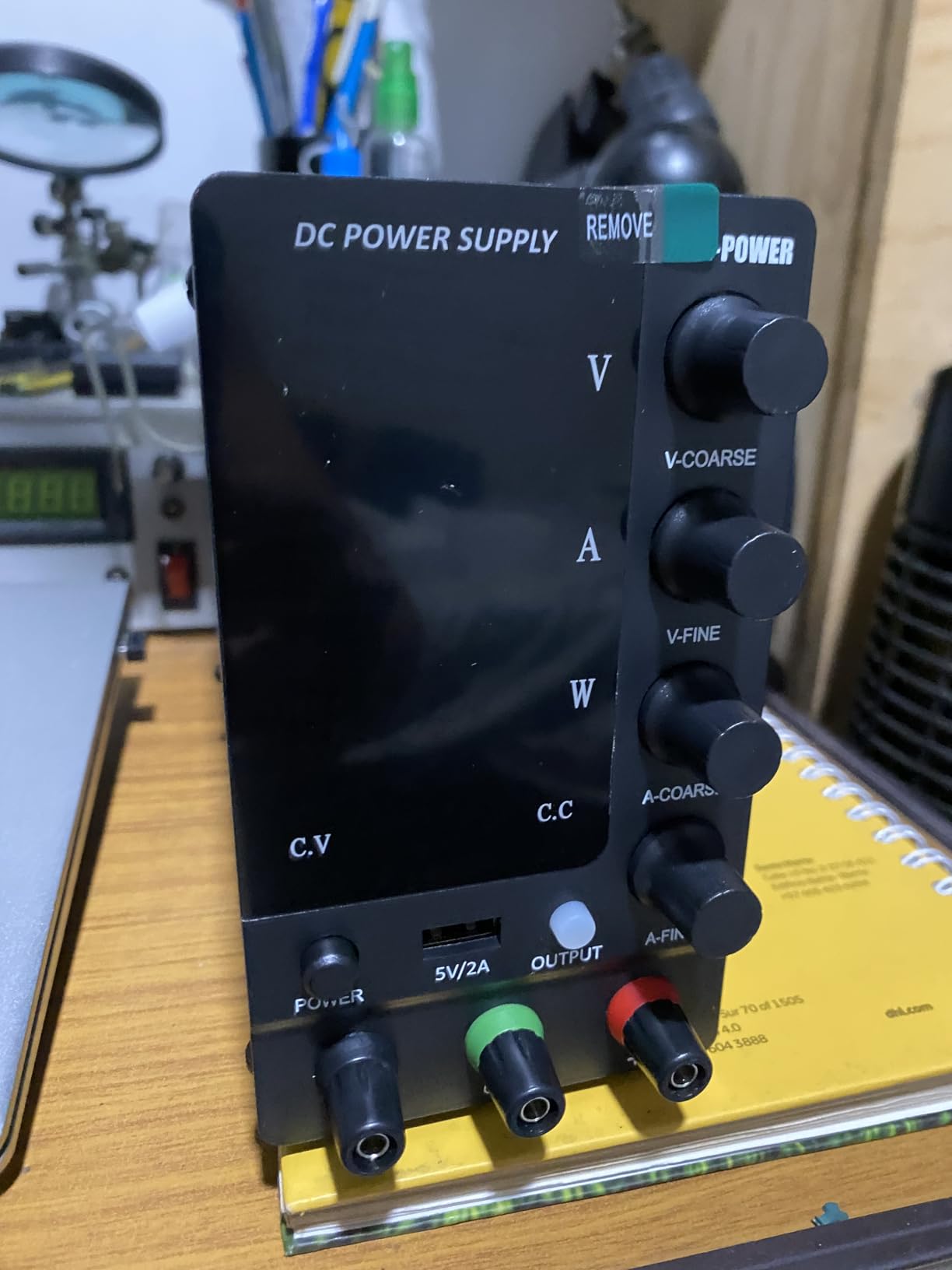
The declared protection list here is the longest in the roundup: leakage, grounding, over-voltage, over-current, over-power, over-load, over-temperature and short circuit. Buyers who work on packs notice, because a grounding fault indication is not something you get on every budget body. At 2.6 lb and 3.3 by 8.4 by 5.5 inches it is also the most space-efficient 300W unit in the group.
With 604 ratings averaging 4.5, it is one of the more proven budget 30V/10A supplies you can buy, and the automatic CV/CC conversion is what makes it workable for pack work left running.
Set the Limit, Then Walk Away
The independent OUTPUT key lets you set voltage and current while the load is disconnected, which is the correct order of operations for any bench supply. Once connected, the supply shifts into constant current on its own when the load demands more than your limit, so a cell that goes short does not become a smoke event.
Owners describe using exactly this behaviour for balancing EV battery modules, and one describes repairing a hybrid battery pack with it. That is the sort of use the CC limit was designed for.
The Four-Digit Readout Shows Watts Too
Voltage, current and power are displayed together in real time at 0.01V and 0.001A. The live wattage figure is what lets you confirm a load is behaving as designed without doing arithmetic on the panel, and it is what you watch when you are hunting for a circuit drawing more than it should.
The temperature-controlled fan activates above 122F, so the unit is quiet at typical bench loads. At 10A continuously it will be working hard, and the fan earns its keep.
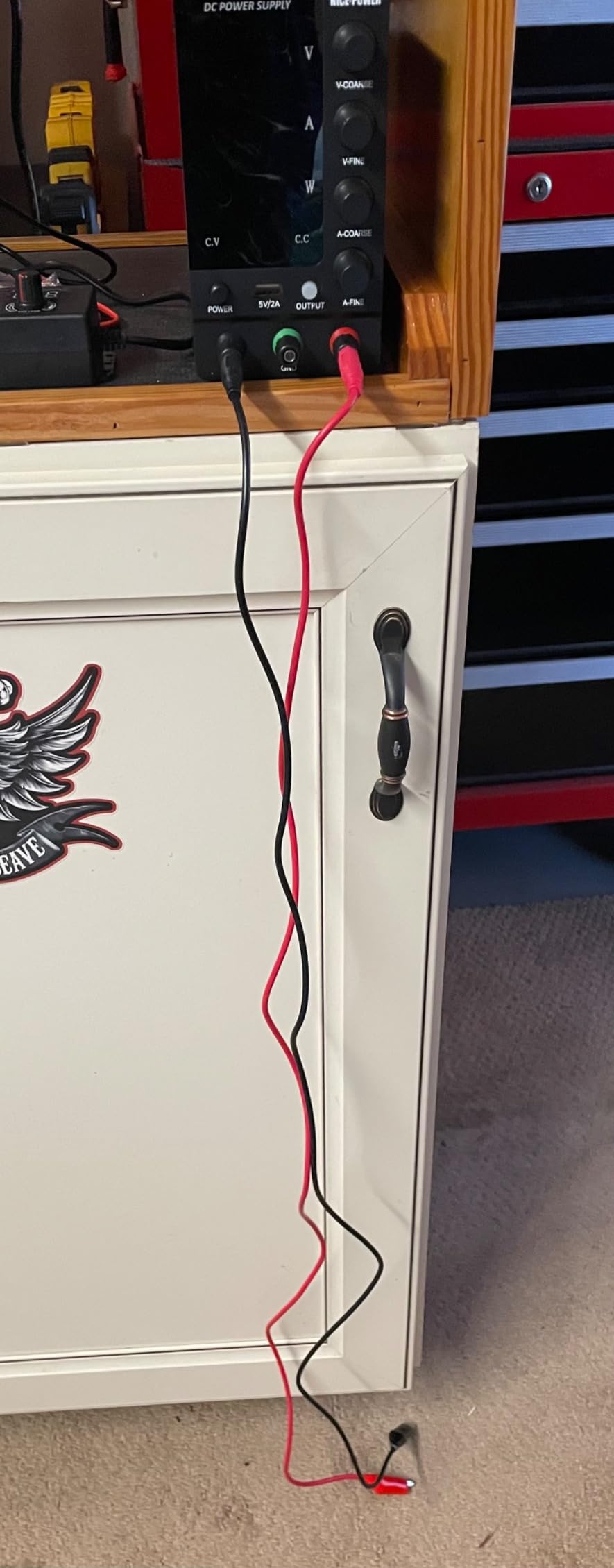
Watch the Leads, Not the Panel
One of the most useful warnings in the owner reviews: the supplied leads show significant voltage drop at 4A, so the panel reading is not the voltage arriving at your board. The supply output is fine; the thin leads are the bottleneck. If you are running sustained current, replace the leads with heavier terminated cable and measure at the far end.
The fine adjustment range is also limited, so you can run out of travel and have to return to the coarse knob. That is an irritation rather than a fault, and it is the main reason I keep the coarse and fine layout on my own bench.
Who Should Buy It and Who Should Skip It
Buy it if you want 300W in a small vertical footprint with a genuinely complete protection declaration and USB output for a dev board. Skip it if you are on 230V mains, if you cannot accept the supplied leads for your current level, or if you are uneasy about the single early failure report, which is rare but real and resolved by the replacement working well.
Nothing else in this list packs that protection list into that footprint, which is the reason it takes the budget slot rather than a lesser model.
6. Tekpower TP3005T 30V 5A Linear – The Long-Service Workhorse
Tekpower TP3005T Variable Linear DC Power Supply, 0-30V @ 0-5A with Alligator Test Leads
0-30V 0-5A linear output
CV and CC modes
Thermo-sensor cooling fan
LED at 0.1V and 0.01A
Pros
- Linear topology gives quiet low-ripple output for audio and precision analog work
- Constant voltage and constant current modes cover bench and battery tasks
- Thermo-sensor fan keeps it cool at sustained load
- Metal body and 12 lb weight keep it planted on the bench
- Alligator leads included so it works out of the box
Cons
- Coarser display resolution at 0.1V and 0.01A than modern 4-digit supplies
- Alligator clips are less convenient than banana plugs for repeated hookups
- Single 0-30V output with no second channel or USB port
- Older dated styling and 110V-only input
With 667 ratings averaging 4.4, this is the longest-serving unit in the roundup, and hobbyist circles describe it as the one people keep coming back to. The reason is stability over hours rather than headline features: a linear 0-30V, 0-5A output rated at 300W in a 12 lb metal body that stays put on the bench.
For audio preamp work, transmitter bench supply use and general repair, that is exactly the profile you want. For a modern digital prototyping bench, the interface is dated in ways you will notice immediately.
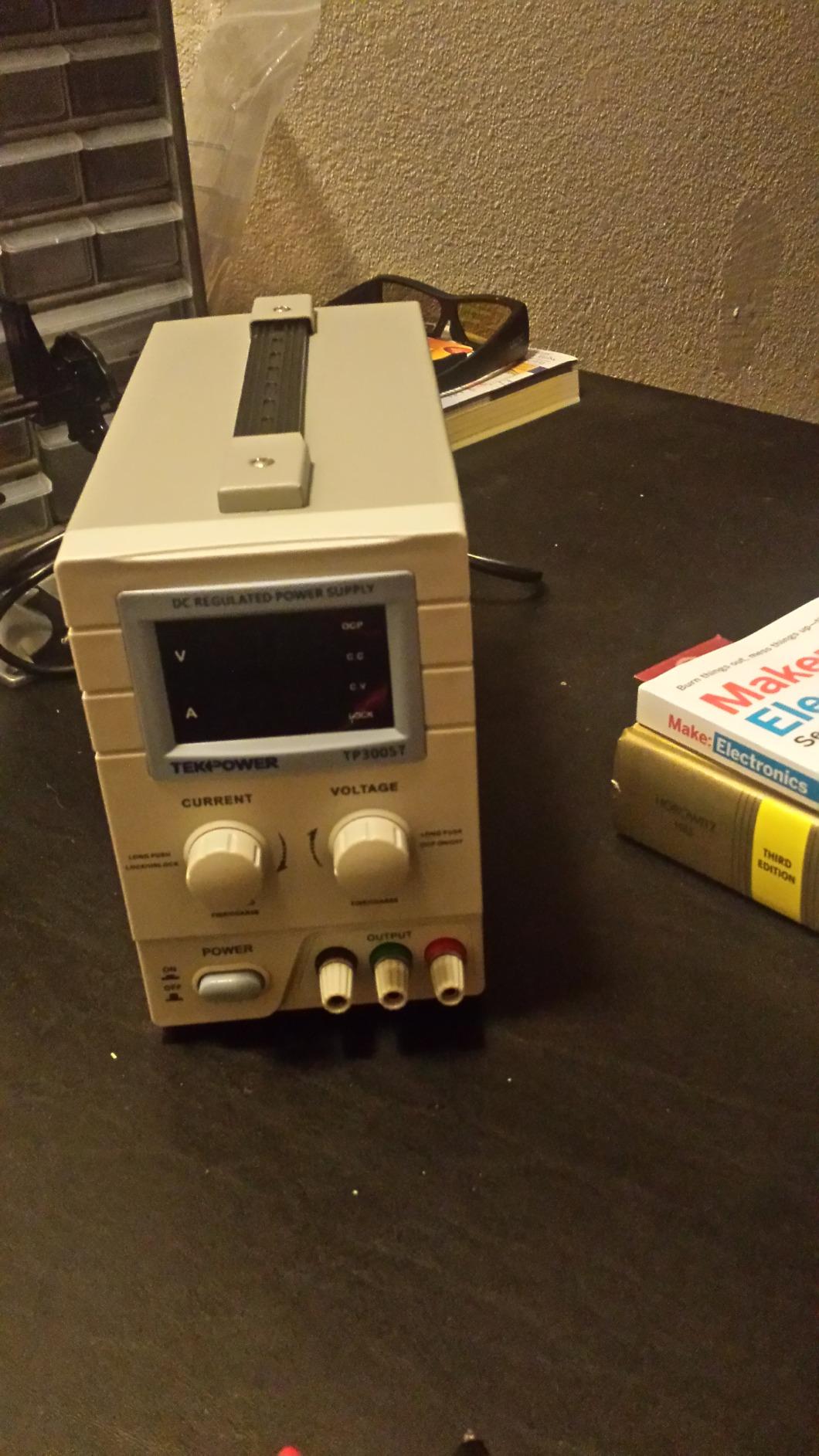
Why Linear Matters at 0.01A Resolution Workloads
When you are watching a 10 mA sensor bias or a reference rail, supply noise is not an abstract specification. It shows up as measurement noise in whatever you are testing downstream. A linear topology keeps that contribution low enough that you stop chasing noise that was never in the circuit.
The constant voltage and constant current modes cover both bench bring-up and battery work, and the built-in thermo-sensor brings the cooling fan in only when internal temperature calls for it.
Where the Interface Falls Behind
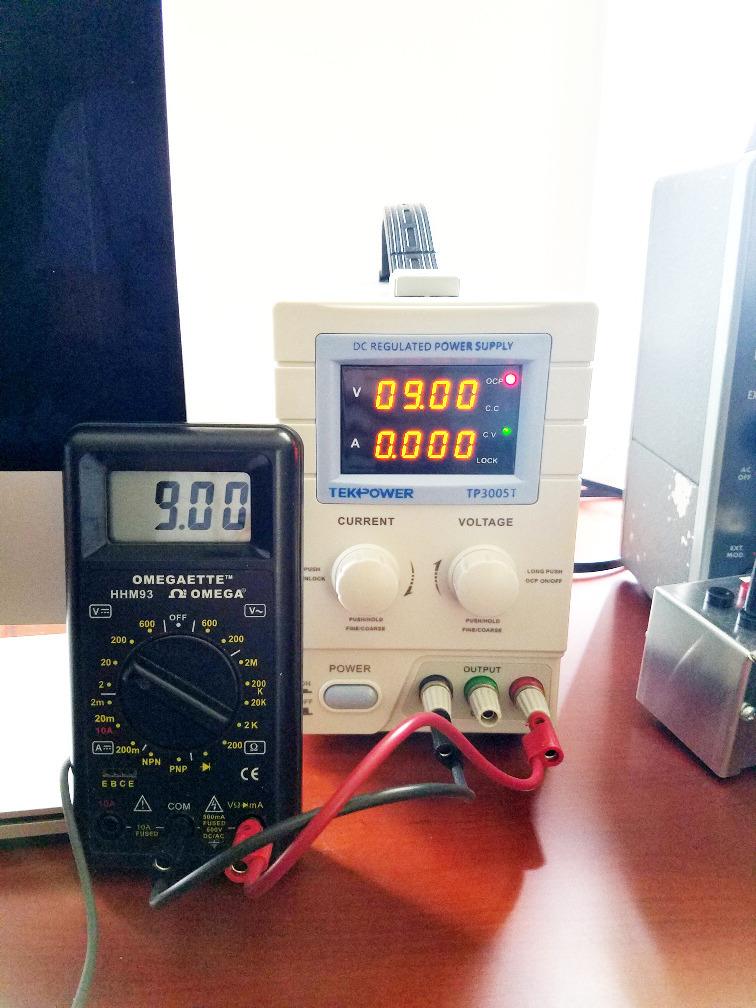
The back-lit LED resolves to 0.1V and 0.01A, which is coarse compared with the 0.01V and 0.001A on the modern switching units here. If you are setting 3.30V, this display cannot tell you that you are at 3.3 rather than 3.4. On a 5V logic rail that is a meaningful gap.
The included alligator clips are also less convenient than banana plugs for repeated hookups, because you have to hold them in place. Most owners who do serious work here replace the leads, and they are honest about it.
The 7 Percent One-Star Share and What It Reflects
This model has the highest one-star share of anything in the roundup at 7 percent, and the cause is early quality variance rather than a design fault. In practice that means check the unit on arrival, confirm the readings against a reference meter, and use the protection circuits early rather than assuming.
It carries a 1-year manufacturer warranty, which is the shortest stated here, though most owners report the unit simply keeps running.
Who Should Buy It and Who Should Skip It
Buy it if your work is analog, audio or radio, if you want a supply that stays put and runs for years, and if you value alligator leads for occasional clamp-style hookups. Skip it if you need fine setpoint resolution, if you want a USB output for dev boards, or if you want a second channel.
The trade is simple: you accept a coarser dial and a dated interface to get a quiet linear output that has proven itself over a large owner base.
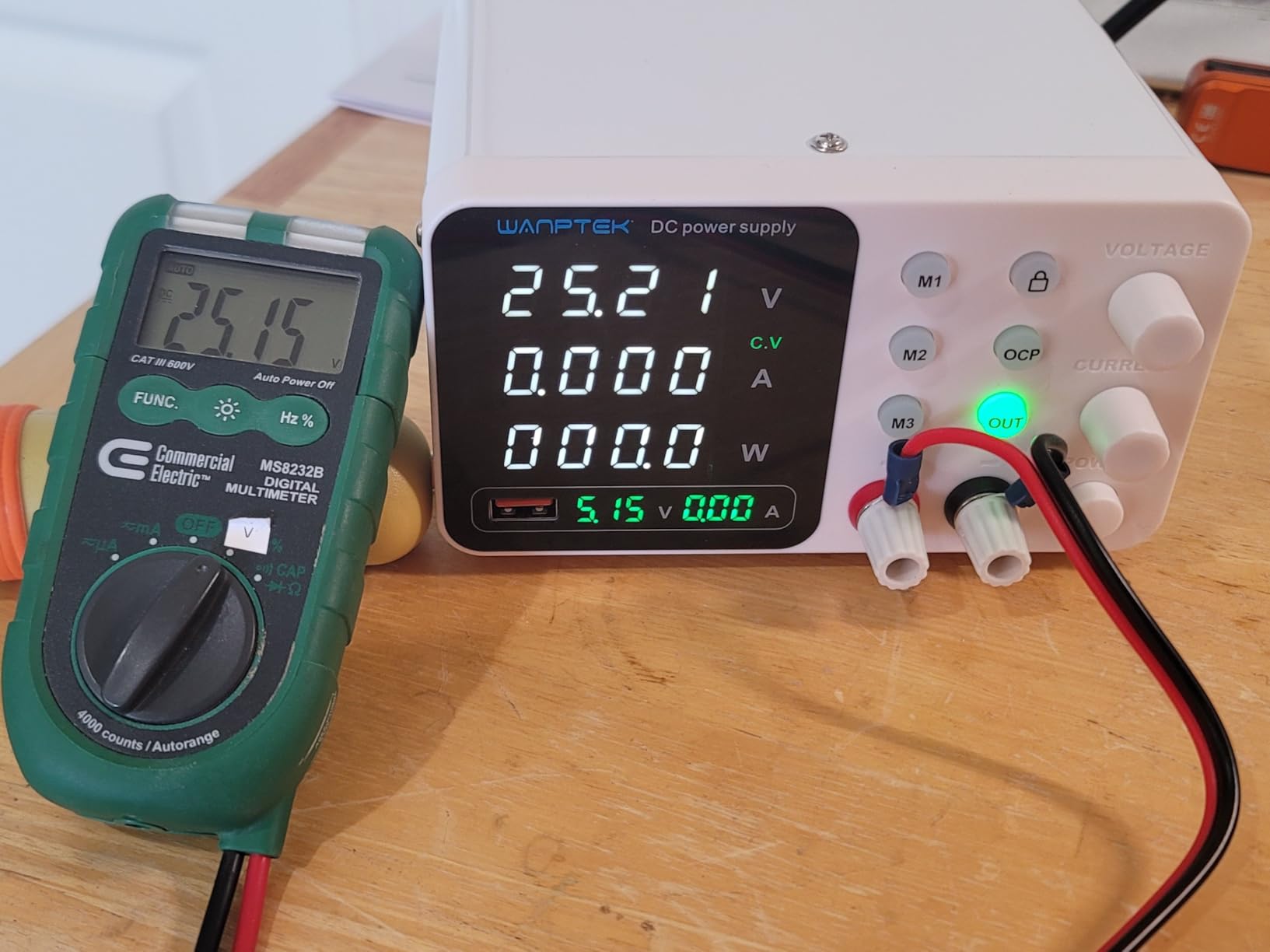
7. WANPTEK TPS-C3010H 30V 10A – Built for a Repair Bench With Memory Presets
WANPTEK DC Bench Power Supply 30V 10A, Regulated Variable Lab Power Supply with Memory Presets, Encoder Knob,OCP Protection, Output Switch, 4-Digit LED, USB Fast Charge and Key Lock for Repair
0-30V 0-10A 300W output
Encoder digit-by-digit
M1/M2/M3 memory presets
OCP cut-off and key lock
Pros
- Three memory presets make repeating a saved setup a single button press
- Encoder resolves to 0.01V and back-steps when idle so fine tuning does not overshoot
- Key lock and output switch add real safety for repair work
- Users report it holds 24V once the rear input selector is set correctly
- Quiet compact horizontal footprint at 1.2 kg
Cons
- Loud beeper on some events and the power-on beep cannot be disabled
- One buyer reported no ground connection noted
- Supplied leads are bare terminals rather than banana plugs
- Short AC power cord of roughly 3 feet
This is the model I would put on a repair bench rather than a prototyping bench. The M1/M2/M3 presets mean a recurring job such as a 12V rail check becomes one button press instead of re-dialing two values, and 300W at 0-30V and 0-10A covers the range most board-level repair actually touches.
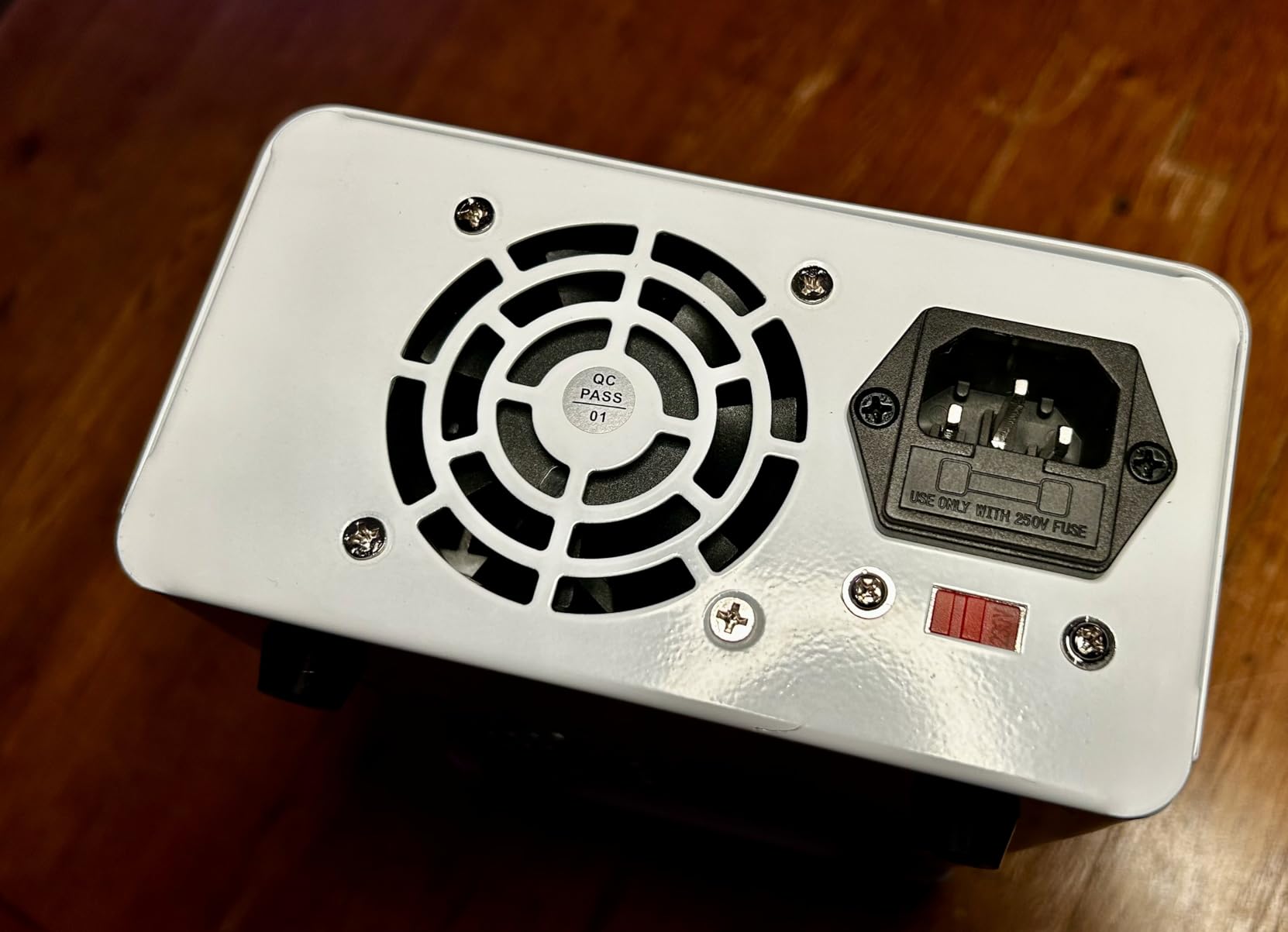
It is also one of only two models here with a 115V/230V rear selector, so the same unit works across regions once you set the switch correctly.
Encoder Adjustment That Does Not Overshoot
Digit-by-digit entry on the encoder resolves to 0.01V, and the knob back-steps to 0.1V when you stop turning it. That behaviour sounds trivial until you have spent twenty minutes chasing a 3.3V rail that kept landing on 3.4V because a coarse pot has no such resolution.
The 4-digit LED shows voltage and current together, and a USB fast-charge port covers incidental device charging without a second supply on the desk.
Protection, the Output Switch and the Key Lock
Over-current protection cuts the output on a short circuit and resumes automatically once the fault is cleared. The output on/off switch prevents sparking while you rewire a live board, and the key lock stops accidental knob movement during a long unattended run. Both of those features exist because of exactly the mistakes people make on repair benches.
The combination is a genuinely safety-aware front panel for a unit at this level.
Three Real Quirks to Know Before You Buy
The beeper is loud on some events and the power-on beep cannot be disabled, which matters more than it should in a shared room. The supplied leads are bare terminals rather than banana plugs, so plan on terminated leads from the start. The AC cord is short at roughly 3 feet, which on a crowded bench means the supply sits near the wall rather than near your work.
The most important quirk is the input selector itself: on some units the factory setting is wrong, and the symptom is an output that looks broken. Set it to match your mains before anything else, and the 24V performance owners describe follows immediately.
Who Should Buy It and Who Should Skip It
Buy it if you do recurring repair work at known voltages, if you travel between 115V and 230V benches, or if you want presets plus a key lock. Skip it if you work in silence, if you want leads that are ready to clip onto a breadboard out of the box, or if you are on 230V mains and would rather have a unit with no selector to get wrong.
For a fixed-voltage repair bay, the presets alone justify the choice.
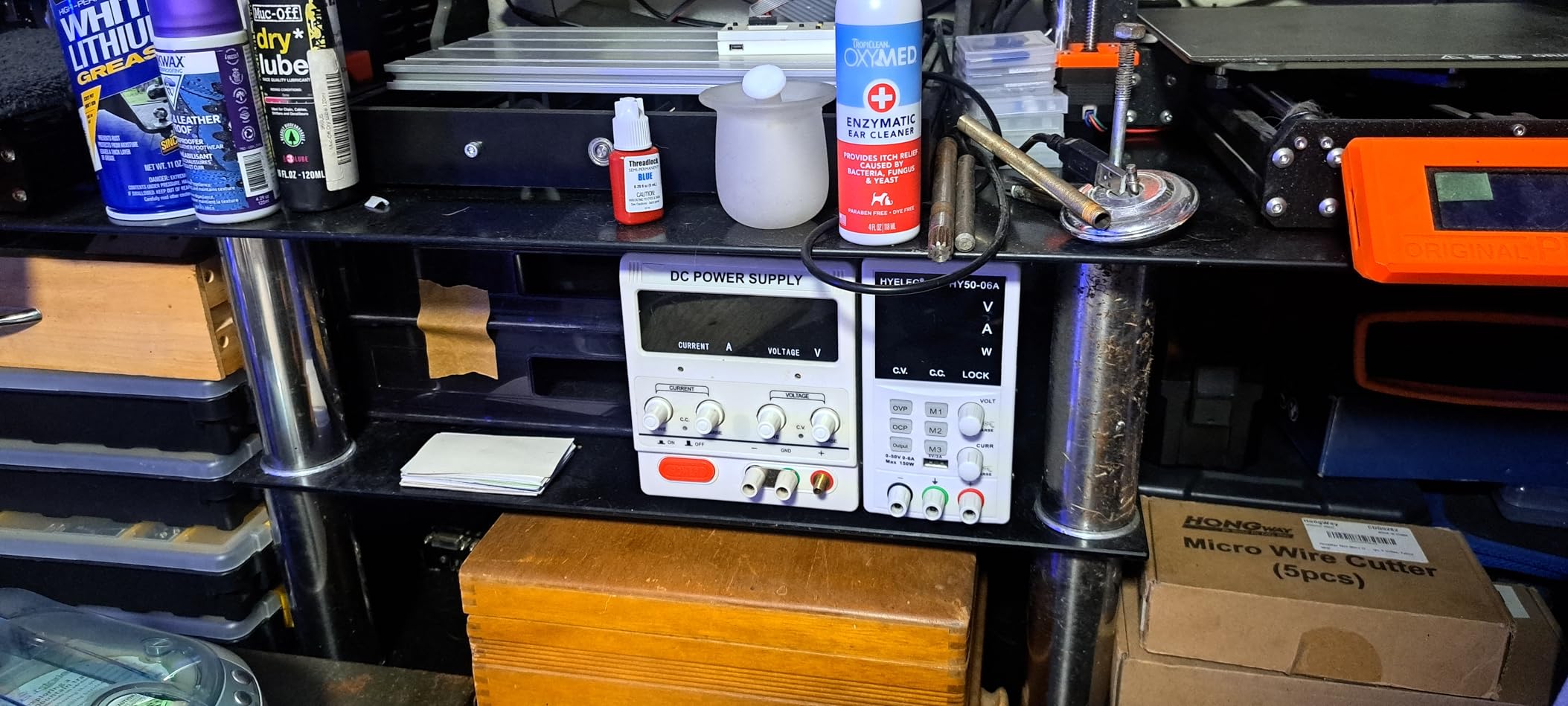
8. HYELEC HY50-06A 50V 6A – The Only Unit Here That Reaches 50V
HYELEC Variable DC Power Supply,0-50V 0-6A max150W Switching Regulated Bench Power Supply with Memory, 4-Digit LED Display, 5V2A USB Interface, Output Switch, Coarse and Fine Adjustments
0-50V 0-6A up to 150W
Encoder coarse/fine switch
0.01V/0.001A resolution
Three memory keys
Pros
- Only model in this roundup reaching 50V for higher-voltage and LED work
- Three memory presets plus coarse and fine encoder control in one knob
- Over-voltage and over-current protection thresholds adjustable to arbitrary values
- Manufacturer reports a 72-hour uninterrupted full-load test
- 4-digit display that stays steady rather than jumping digits
- Output enable button prevents accidental powering of a connected load
Cons
- 150W ceiling is well below the 300W available from 30V/10A alternatives
- 6A maximum current restricts larger loads
- 110V input only with no 220V variant
- Only 2.7 lb so it is light on the bench
Everything else in this roundup tops out at 32V per channel, so if your work genuinely needs more, this is the model. 0-50V at 0-6A covers higher-voltage LED bar testing, 36V motor and fan work, and the top of the range of small electroplating setups. The 4.6 average with 76 percent five-star ratings reflects owners who bought it for the voltage ceiling and were glad about everything else too.
Read the wattage carefully before committing: 150W maximum, and the derating is severe at the top. At 50V you get 3A, not 6A.
The Derating Curve You Need to Memorise
With a 150W ceiling, available current falls as voltage rises. At 12V you get the full 6A, which is 72W. At 25V you get 6A, which is 150W and hits the ceiling. Above 25V the current falls: at 50V the supply delivers 3A for 150W. If you plan a 48V load, budget 3A, not 6A.
This is the single most common surprise in the category, and it is the reason I read the wattage figure before the amp figure on any listing.
Adjustable Protection Thresholds and Memory Keys
Over-voltage and over-current thresholds can be set to arbitrary values rather than fixed defaults, so you can define your own safe envelope for a particular board. Owners pair that with the three memory keys, storing a voltage and current combination for a recurring test.
The manufacturer reports a 72-hour uninterrupted full-load test, which is a specific and checkable claim rather than a vague durability promise. Display stability is called out by owners as well, staying steady rather than flickering between digits.
Who Should Buy It and Who Should Skip It
Buy it if you work above 32V, if you run higher-voltage LED fixtures, or if you want settable protection limits. Skip it if you need serious current, because 6A and 150W is half the power of the 30V/10A units in this list for similar money, and skip it if you are on 230V mains.
If you are torn between this and a 30V/10A unit, work out the highest voltage your projects actually need before choosing. Most benches never go past 24V, and if that is you, the 30V units are the better buy.
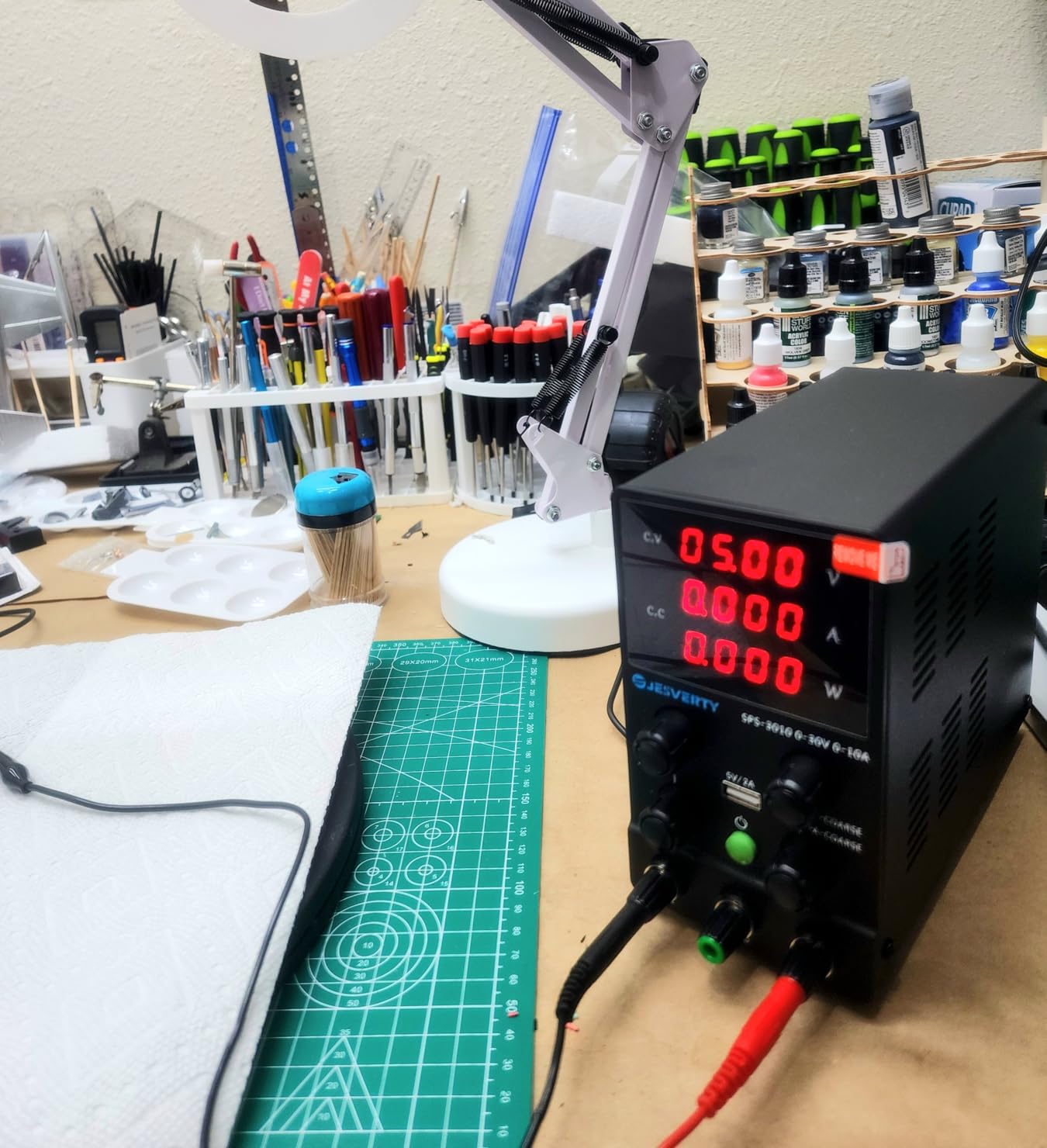
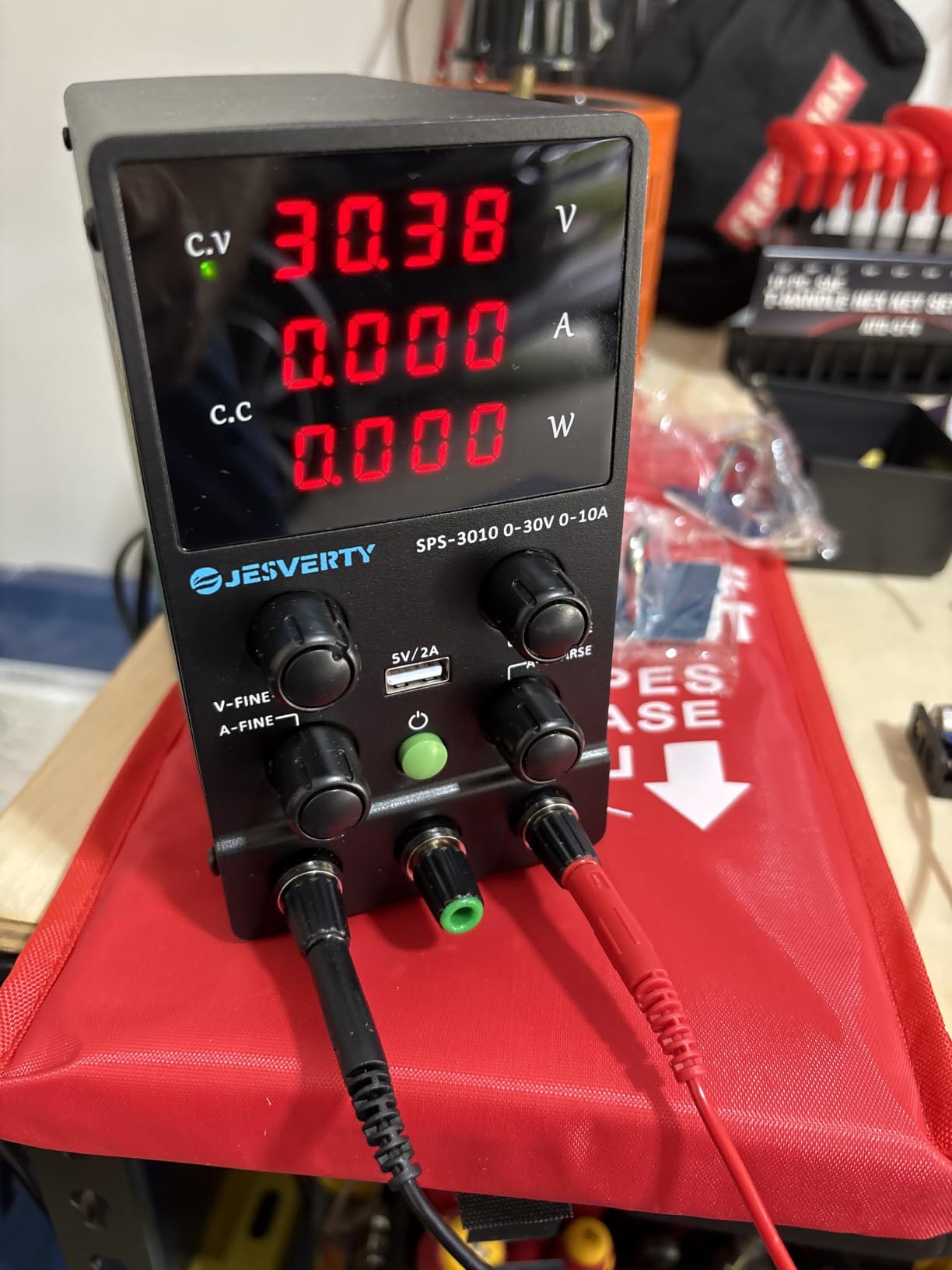
9. Jesverty SPS-3010 30V 10A – The Most Proven 300W Listing in the Category
Jesverty DC Power Supply Variable, 0-30V 0-10A Adjustable Switching DC Regulated Bench Power Supply with High Precision 4-Digit LED Display, 5V/2A USB Port, Coarse and Fine Adjustment SPS-3010
0-30V 0-10A 300W output
4-digit V/A/W readout
Auto CV/CC switching
5V/2A USB port
Pros
- Ranked number 1 in Lab Power Supplies with 1664 ratings
- 300W of usable power in a 2.4 lb tower body
- 4-digit display shows voltage
- current and power at fine resolution
- Automatic CV/CC crossover is useful for battery charging and current limiting
- Wide family of sibling variants covering encoder knobs and higher voltages
Cons
- Supplied test leads are described as throwaway for serious high-current work
- Polycarbonate tower case is less rugged than a metal chassis
- Base variant has no memory presets
- AC input setting and cord vary by destination
This listing sits at number 1 in Lab Power Supplies with 1664 ratings averaging 4.5, and the sales rank tells you why: it is the version most people actually end up with. The 3.35 by 6.1 by 7.09 inch tower at 2.4 lb delivers the same 300W as units with twice the footprint, and the display is the clearest of the budget group.
For most hobbyists this is the default answer, which is why it is the value pick rather than a reluctantly placed runner-up.
Automatic CV/CC Crossover as the Crossover Point
The set values act as the crossover point between modes, so the supply holds constant voltage until the load asks for more than your current limit, then drops voltage and holds current instead. That behaviour is what makes it usable for battery charging and for deliberately limiting current through an unknown circuit.
Display resolution is 0.01V, 0.001A and 0.1W, so the wattage figure is precise enough to compare against a design calculation rather than a rough guess.
The Family Argument
Jesverty publishes a wide set of sibling variants: encoder-knob versions, 60V and 120V ceilings, and dual-output models. If you outgrow 30V/10A later, you move up within the same family and the panel layout and workflow stay identical. That continuity is worth more than it sounds when you are learning a bench.
The coarse and fine adjustment knobs on this base variant are physical dials, which some people prefer to an encoder for blind adjustment.
What Owners Consistently Replace
The included test leads are the near-universal complaint: described as throwaway, and owners of switching units frequently replace them before doing serious current work. This is the same lead-resistance problem flagged in the NICE-POWER review, and it is a property of cheap bundled cable rather than of any particular brand.
The polycarbonate tower case is also less rugged than a metal chassis, so it is a better traveller than a better long-term bench fixture. And the AC input setting and cord vary by destination, which is the classic first-setup confusion.
Who Should Buy It and Who Should Skip It
Buy it if you want the safest default in this category: proven reliability, 300W, a clear display and a family you can grow within. Skip it if you need memory presets, a metal chassis, or a unit you can leave on a bench permanently in a shared workshop.
If you want presets specifically, look at the encoder models in the same range rather than settling for a feature you will use every week.
10. NANKADF 30V 5A – A Metal-Cased Compact With the Strongest USB Port
NANKADF DC Power Supply, 30V 5A Bench Power Supply with Memory Storage & Recall,Variable Power Suppy with Encoder Adjustment Knob, 5V/3.6A USB Quick-Charge & OCP Short Circuit Alarm
0-30V 0-5A 150W output
Encoder knob with preset display
Three memory groups
5V/3.6A USB
Pros
- Aluminium enclosure is more rugged than the plastic cases on comparable budget models
- Memory presets plus encoder knob give quick access to repeat settings
- 5V/3.6A quick-charge is the highest USB output in this group and supports several protocols
- Buzzer alerts you when a short trips the protection
- Compact 2.5 lb body with FCC and RoHS compliance
Cons
- Lowest rating in this group at 4.3 with a 9 percent one-star share
- 150W and 5A ceiling is half the power of the 30V/10A units for similar money
- Some buyers report the buzzer noise as intrusive
- Smallest review base here at 174 so long-term reliability data is thinner
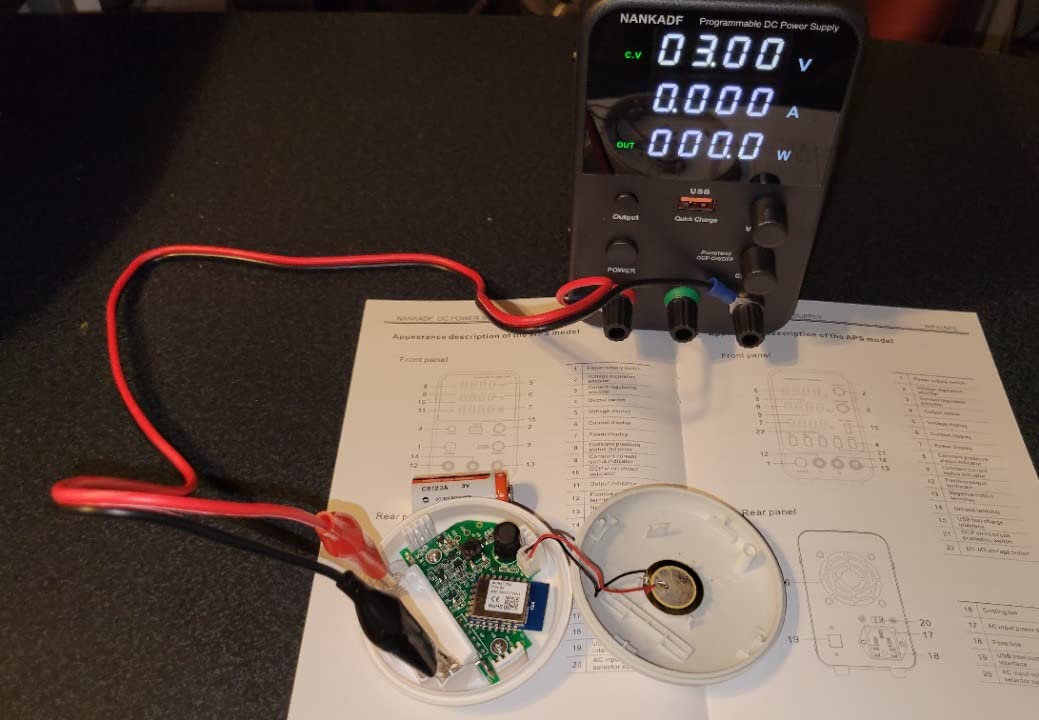
The 5V/3.6A quick-charge port is the standout here, supporting several fast-charging protocols where most competitors offer a fixed 5V/2A. If you routinely top up a phone, a tablet or a dev board from the bench, that port does more useful work than the extra current rating would.
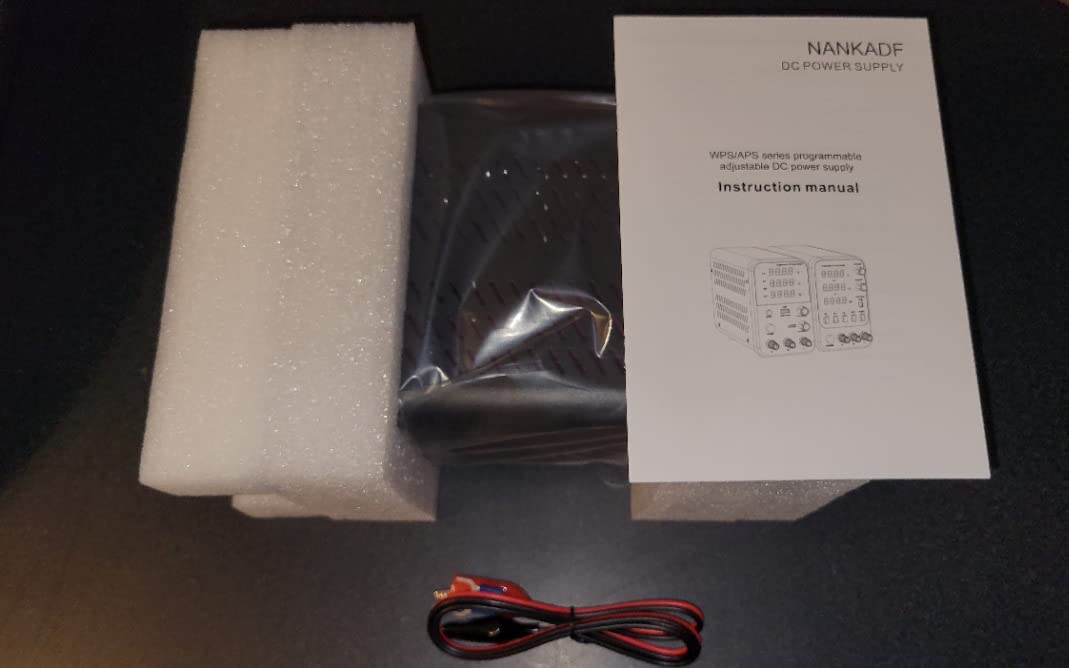
The aluminium enclosure at 2.5 lb and 7.4 by 3.5 by 5.7 inches also feels more like a permanent bench fixture than the plastic-tower alternatives, and FCC and RoHS compliance is declared.
Encoder With Pre-Displayed Set Values
The encoder knob shows the values you are about to commit on screen before you apply them, which reduces the number of accidental over-adjustments compared with a knob that changes the output as it turns. Three M1/M2/M3 memory groups store common voltage and current combinations for one-press recall.
Over-voltage, over-current, over-heat and short-circuit protection are all declared, with a buzzer alert on a short circuit so you notice an event without watching the display.
Where the Limits Are Honest Ones
This is the least proven unit in the roundup: 174 ratings at a 4.3 average, with a 9 percent one-star share. That is not a condemnation, but it is thinner evidence than the 2775 ratings behind the top pick, and for a permanent bench fixture the difference matters.
The 150W and 5A ceiling is also the real constraint. At 0-30V and 0-5A you have half the power of the 30V/10A models for comparable money, so this is a precision and convenience pick rather than a capacity one. The buzzer, useful as it is, is also the most commonly criticised noise in the reviews.
Who Should Buy It and Who Should Skip It
Buy it if you want a metal-cased compact unit, if you need fast-charging USB more than high current, or if you are building a travel kit where the enclosure has to survive being moved. Skip it if you need more than 5A, if you are buying a unit you expect to run for a decade, or if an audible buzzer on every protection event would irritate you.
Its 4.3 average is a fair reflection of a solid unit with a narrower base of owners behind it, not of a problematic product.
How to Choose a Bench Power Supply for Your Workbench
A bench power supply is an adjustable, regulated DC source that sits on your electronics workbench, letting you dial in a specific voltage and a maximum current limit while watching both numbers live. That combination is what turns a wiring mistake into a visible mode change rather than a destroyed board. Most of the selection questions below reduce to a single idea: match the supply to the loads you actually have, then check that the region and protection details match your bench.
Output Range and the Wattage Ceiling You Actually Get
Start with the highest voltage your projects need, not the highest number on the listing. A 0-30V unit covers the overwhelming majority of hobby work. Above that, a 50V supply opens higher-voltage LED, motor and small electroplating jobs, and 60V and 120V variants exist for those who genuinely need them.
Then understand the wattage ceiling, because it is the most misunderstood specification in the category:
- Current is capped at the headline amp rating at every voltage, so 10A on a 0-30V supply means 10A is available at 12V as well as 30V.
- Power at the top of the range is voltage multiplied by current: 30V at 10A is 300W, but 12V at 10A is only 120W.
- Beyond the rated wattage, current falls as voltage rises. On a 150W, 0-50V supply you get the full 6A at 25V and only 3A at 50V.
- Linear supplies can hold their full current rating across the whole range, which is why a 0-30V 5A linear unit is more useful than its wattage number suggests.
Plan on the worst case: the load that draws most current at the voltage you actually use.
Linear vs Switching: Which Topology Fits Your Circuits
Linear regulation produces a quieter output because there is no high-frequency switching element generating hash, at the cost of efficiency and heat. Switching regulation is efficient, compact and cool-running, and adds a small amount of ripple and switching noise to the output.
For audio preamps, low-noise sensor work, reference voltage circuits and RF-adjacent measurement, linear is worth the extra heat and weight. For microcontroller bring-up, motors, LED strips and pack work where current matters more than noise, switching is the better tool. You will notice the difference in a scope trace long before you notice it in a listening test, which is why the decision should be made at the measurement, not by ear.
Display Resolution and How You Set a Voltage
Resolution is stated as the smallest step the display can show. A 0.01V and 0.001A readout lets you set 3.30V exactly. A 0.1V and 0.01A display cannot tell you whether you are at 3.3 or 3.4V, which is a meaningful difference on a 5V rail and a common source of confusion for beginners.
Control style matters as much as the number. Coarse and fine dual knobs are fast and unambiguous. A single encoder with a coarse/fine switch saves panel space. A digit-by-digit encoder is the most precise, and the one that is easiest to overshoot if you are used to a coarse pot.
The Protection Circuits That Actually Save Your Work
Look for over-current, over-voltage, short-circuit and over-temperature protection as the minimum set, and treat grounding and leakage indication as a genuine bonus on a budget unit because it is uncommon there. Adjustable protection thresholds let you define a safe envelope for a specific board, which is more useful than a fixed cut-off.
Two panel features matter more than buyers expect. An independent output enable switch lets you set voltage and current before energising a load, which prevents sparking and mistakes. A keypad lock stops an unattended run being changed by a stray hand.
Mains Input: Why a 110V-Only Unit Is a Dealbreaker
This is the mistake I see most often, and it is not recoverable after delivery. A 110V-only supply in a 230V region is not a compatibility question; it is an unusable unit unless you run it through a step-down transformer.
Check one of three things before buying: a 100-240V universal input, a 110V/230V rear selector, or a confirmed 115V-only specification that matches your region. Most of the models in this roundup are 110V or 115V, which is worth weighing carefully if you are outside North America. If you are building a quieter bench in the same room, our guide to power supplies for quiet operation covers the fan-noise side of the same decision.
Test Leads, Terminals and the Voltage Drop Nobody Warns You About
The panel reading is measured at the supply terminals, not at your board. Cheap bundled leads add resistance, and at several amps the difference becomes measurable. One owner of a 30V/10A unit in this roundup reports significant drop at 4A through the supplied leads and advises measuring at the far end.
Banana plugs and binding posts are far better than alligator clips for repeated hookups and for high current. If a supply ships with alligator clips or bare terminals, plan on buying proper leads before doing sustained current work. This is the single most common accessory upgrade on this bench, and it applies to every switching model in the roundup regardless of brand.
How to Use a Bench Power Supply Without Killing a Board
This sequence is the reason to buy one of these at all, and it takes about fifteen seconds once it is a habit.
- With the output off, set your current limit first. The output switch or key should be off or disabled before anything else. Set the limit to roughly double what you expect the circuit to draw, so a healthy circuit sits in constant voltage mode and a fault trips you into constant current rather than past it.
- Then set the voltage. Confirm the set value on the display before you connect anything. On a 5V logic rail, check that you have set 5.00V and not 5.0V at a display that only resolves to 0.1V.
- Connect the load with the output still off. Polarity first: positive to positive, ground to ground. A reversed connection on a linear supply can be genuinely damaging.
- Enable the output and watch the mode indicator. In constant voltage mode the current reads what your circuit draws. If it drops into constant current, the load is pulling more than your limit, which means either your limit is too low or you have a short.
- Power down in the reverse order. Disable the output, disconnect, then remove the mains. Leaving the output enabled while you rewire is the most common source of sparks and of accidental shorts.
If you short the output deliberately during a test, the supply should drop into constant current and hold the current at your limit rather than delivering whatever the wiring asks for. That behaviour is the single feature that makes a bench supply safer than a wall adapter.
Frequently Asked Questions
How do I choose a bench power supply?
Choose on four things in order. First, the highest voltage your projects need, since 0-30V covers most hobby work. Second, the current your largest load draws, not the largest you imagine. Third, the protection set, which should include over-current, over-voltage, short-circuit and over-temperature. Fourth, the mains input, which must be 100-240V or match your region. Then check display resolution, because 0.01V and 0.001A matters on logic rails.
Which bench power supply brands are most reliable?
Reliability tracks evidence rather than logo. The strongest signal is owner review volume combined with a declared protection set: a supply with thousands of ratings and an itemised protection list has been run hard by many people and survived. KORAD and Siglent carry traceable manufacturer names and long warranties, while the 300W switching models from Kungber, Jesverty and NICE-POWER carry the largest owner bases in the budget tier.
Which bench power supply brands should I avoid?
Avoid by risk category rather than by name. Skip unbranded marketplace clones with no traceable manufacturer and no model number. Skip any unit that does not declare its protection circuits. Skip 110V-only models if you are on 230V mains, since they will not run. Be cautious with listings that quote a single figure of very high power with no wattage ceiling stated, and replace bundled test leads before sustained high-current work on any model.
Do I need a bench power supply for Arduino or Raspberry Pi?
For a single dev board on a USB cable, a decent wall adapter is genuinely enough. The moment you move beyond one board, you benefit from setting a current limit so a short becomes a mode change rather than a casualty. A bench supply also lets you power motors, relays, servos and LED strips from the same box, and many units include a 5V USB port that runs a Raspberry Pi while the main channel does something else.
Can I charge a lithium battery with a bench power supply?
You can charge with constant-voltage and constant-current behaviour, and several models here add an Ah readout with an automatic stop. But a charging mode is not a battery management system. It will not balance cells, detect a weak individual cell, or save a badly assembled pack. For lithium work, fit a proper BMS first and treat the supply charging mode as a convenience rather than a safety system.
What do CV and CC mean on a power supply?
CV is constant voltage: the supply holds the voltage you set and delivers whatever current the circuit demands, up to your limit. CC is constant current: the load has asked for more than your limit, so the supply drops voltage until the current sits at the value you set. The crossover happens automatically, and watching it happen the first time is the clearest demonstration of why a current limit protects your work.
Which Bench Power Supply Should You Buy in 2026?
If you want the strongest combination of proven reliability and features, the Kungber SPS3010B is the pick: 300W, a charging mode with an Ah readout, an 18W USB port and more than 2700 owner ratings behind it. If you want the same class of power in the smallest, most proven package, the Jesverty SPS-3010 matches it and sits at number 1 in its category.
If your work is analog, the KORAD KD3005D is the linear choice for low-noise front ends, and the Tekpower TP3005T covers audio and radio benches where alligator leads and long service matter. If you need more than one rail at once, only the Siglent SPD3303X-E gives you three isolated channels with series and parallel linking. If you need to go above 32V, the HYELEC HY50-06A is the only unit here that reaches 50V, at the cost of a 150W ceiling.
Two checks before you commit: confirm the mains input matches your region, and plan to replace the bundled leads if you will run sustained current. Those two steps eliminate most of the disappointment people report with an otherwise good supply. For the wider picture of how these compare to the supplies inside a machine, see our power supply picks for gaming PCs.
Whichever you choose, set the current limit before you connect the load, every single time. That habit, more than any spec on the list, is what keeps your boards alive.