
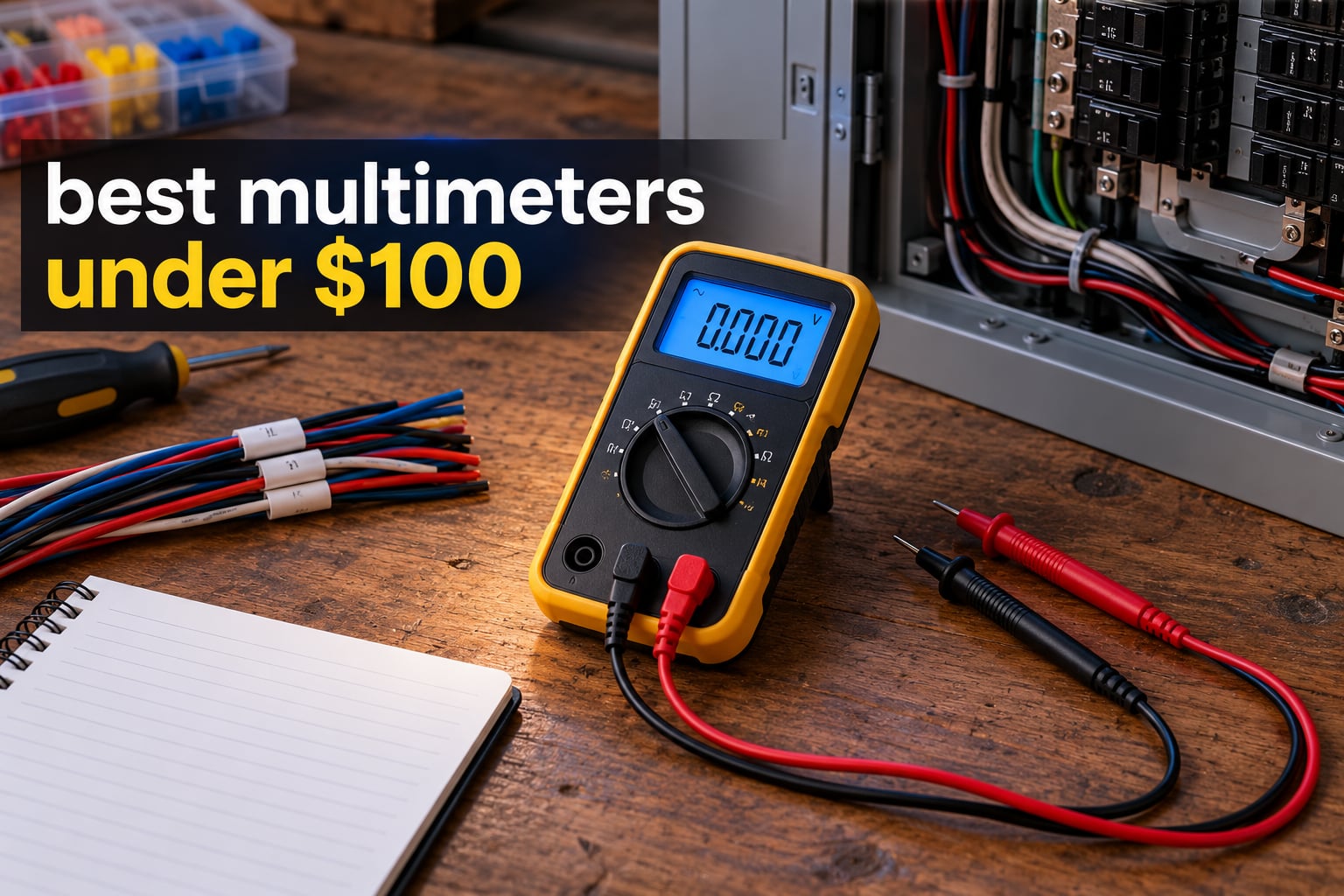
Short answer first: the KAIWEETS HT118A is the best multimeter under 100 dollars we could find, because it pairs a CAT III 1000V / CAT IV 600V safety rating with double ceramic fuses and a feature set most meters twice its age cannot match.
I have been putting budget meters through real circuits for years, mostly on household panels, car harnesses and dead power supplies on the bench, and the pattern repeats every time. Below roughly 30 dollars you give up documented input protection. Above 100 dollars you start paying for certifications and traceable calibration that a weekend project never actually needs. The sweet spot for a homeowner, a hobbyist or a working technician who needs a second meter is right in the middle, and that is exactly where this list lives.
Twelve meters made the cut. Every one of them was checked for the same things: does it publish an accuracy specification or just a display count, what CAT category does it claim, does it measure True RMS or average-sense the waveform, and what protection is actually built into the current jacks. Where reviewers published comparisons against a reference instrument, I weighted that heavily, because a spec sheet is a promise and a side-by-side reading is evidence.
Before the picks, one framing note. A multimeter is a handheld instrument that measures voltage, current and resistance, and on modern units also continuity, capacitance, frequency, duty cycle and temperature. It is the single tool that turns “is this broken?” into a diagnosis. If you are still choosing between keyboards and mice for the desk, you may prefer our mechanical keyboard picks under 100 dollars or the gaming mice roundup instead. If you are here to probe something live, please read the safety section near the end before you plug anything in.
Our Top 3 Picks: The Meters We Trust Most Under 100 Dollars
KAIWEETS HT118A
- CAT III 1000V and CAT IV 600V
- 6000 counts
- True RMS
- temperature probe
- NCV
- double ceramic fuse

AstroAI AST-6000-D
- True RMS on AC voltage and current
- 6000 counts
- capacitance
- temperature
- 1000V DC
Klein Tools MM325
- Manual ranging
- CAT III 600V
- battery test mode
- backlit display
- lead-alert LEDs
Our editor’s choice, the KAIWEETS HT118A, is the only meter in this list that carries a CAT III 1000V and CAT IV 600V rating while also including a temperature probe, capacitance, duty cycle and min/max/average recording. The AstroAI AST-6000-D is the value pick: reviewers who bench-tested it against an Amprobe AM-570 found voltage, current, resistance and diode readings held up, which is more evidence than most meters in this price range can offer. The Klein MM325 is the budget pick for anyone who wants a rugged, familiar brand on a panel and does not mind turning a dial by hand.
Every Multimeter Under 100 Dollars at a Glance
| Product | Specs | Action |
|---|---|---|
| KAIWEETS HT118A |
|
Check Latest Price |
| AstroAI AST-6000-D |
|
Check Latest Price |
| Klein Tools MM325 |
|
Check Latest Price |
 AstroAI 4000 Count Auto-Ranging AstroAI 4000 Count Auto-Ranging |
|
Check Latest Price |
 Fluke 101 Fluke 101 |
|
Check Latest Price |
 Klein Tools MM420 Klein Tools MM420 |
|
Check Latest Price |
 AstroAI AM33D AstroAI AM33D |
|
Check Latest Price |
 Crenova MS8233D Crenova MS8233D |
|
Check Latest Price |
 Innova 3320 Innova 3320 |
|
Check Latest Price |
 FNIRSI DMT-99 FNIRSI DMT-99 |
|
Check Latest Price |
 Klein Tools MM720 Klein Tools MM720 |
|
Check Latest Price |
 Neoteck 8233D PRO Neoteck 8233D PRO |
|
Check Latest Price |
Two things stand out in that table. First, only three of these twelve publish a category rating that reaches CAT IV, and only two reach 1000V. Second, display counts and accuracy are almost unrelated: a 9999-count colour screen and a 2000-count monochrome screen can sit on the same bench and give you the same reading, because accuracy is a separate published number. We explain how to read both in the buying guide.
1. KAIWEETS HT118A – The Best All-Rounder Under 100 Dollars
KAIWEETS Digital Multimeter Automotive TRMS Tester 6000 Counts NCV for Car
CAT III 1000V and CAT IV 600V
6000 counts True RMS
1000V DC and 750V AC
60 MOhm resistance
Pros
- True RMS with 1000V DC range
- Temperature probe and capacitance included
- Jack LEDs prevent lead mistakes
- Double ceramic fuses with thermistor protection
- 36-month after-sales service
Cons
- Only 6000 counts of resolution
- Rear flashlight and kickstand add bulk
- Accuracy figures are not published as a percent plus digits
The HT118A is the meter I hand to someone who wants one tool that does not embarrass them in front of a client. It measures up to 1000V DC and 750V AC, 10A AC and DC current, and 60 MOhms of resistance, then adds temperature, capacitance, frequency, duty cycle, wire on-off, diode and continuity. That is a lot of ground to cover, and it does it on a 2.9-inch backlit LCD with 6000 counts of resolution.
What sold me is the safety envelope, not the feature list. It is rated CAT III 1000V and CAT IV 600V under IEC and RoHS certification, with double ceramic fuses and thermistor protection in a silicone case. The jack LEDs light for the selected function, which quietly removes the single most common beginner error: probing current with the leads in the voltage jacks.
More than 23,000 reviews sit behind that rating, and the pattern in them is consistent. Owners pick it for automotive work first, then home electrical troubleshooting, and the feature breadth is what keeps coming up. You also get non-contact voltage detection with a sound and light alarm, a rear flashlight for engine bays, and min/max/average recording with data retention so a reading holds while you move the probes.
Temperature And Capacitance Without A Second Meter
The included thermocouple covers HVAC and appliance work out of the box, which is rare in this class. Checking a run capacitor, a thermistor or a cooling fan becomes a single-meter job rather than a two-meter job with a borrowed probe. Capacitance range is a real bonus for anyone who works on boards with bulk electrolytic filtering.
For students, the 36-month after-sales service and lifetime technical support are worth more than they sound. r/AskElectronics regulars repeatedly recommend owning two inexpensive meters, one in the garage and one in the toolkit, precisely so a second unit is always available. This is a good candidate for that garage meter because it is feature-rich enough to be the only meter for a few years.
Where The Specification Sheet Goes Quiet
This is the one honest caveat. The published accuracy is expressed as a range and a count figure rather than a percent-of-reading plus digits, so you cannot compare it against a Fluke datasheet the way a professional would. In practice, owners comparing readings against reference instruments report agreement on DC voltage, resistance and current, but that is owner testing, not a certified traceable calibration.
Who It Falls Short For
Six thousand counts of resolution is modest next to the 9999-count unit later in this list, so if your work lives in fine detail, look there instead. It is also a large meter at 0.55 kg, which matters if you are climbing a ladder with one hand or working in a cramped panel. The kickstand and rear flashlight that make it pleasant on a bench add bulk you may resent in a tool bag.
2. AstroAI AST-6000-D – Best Value True RMS With Bench-Verified Accuracy
AstroAI Digital Multimeter, True RMS 6000 Counts Auto-Ranging Volt Meter for Automotive & Home Electrical Troubleshooting, AC/DC Voltage Current Resistance Continuity Capacitance Temperature Tester
True RMS on AC voltage and current
6000 counts auto-ranging
1000V DC maximum
F400mA and F10A ceramic fuses
Pros
- Bench-checked against an Amprobe AM-570
- More than 20000 reviews
- Capacitance range exceeded its published claim
- California support with 24 hour response
Cons
- Frequency counter tops out far below its 60MHz claim
- Transistor hFE test reads about half true gain
- Included magnet picks up loose hardware
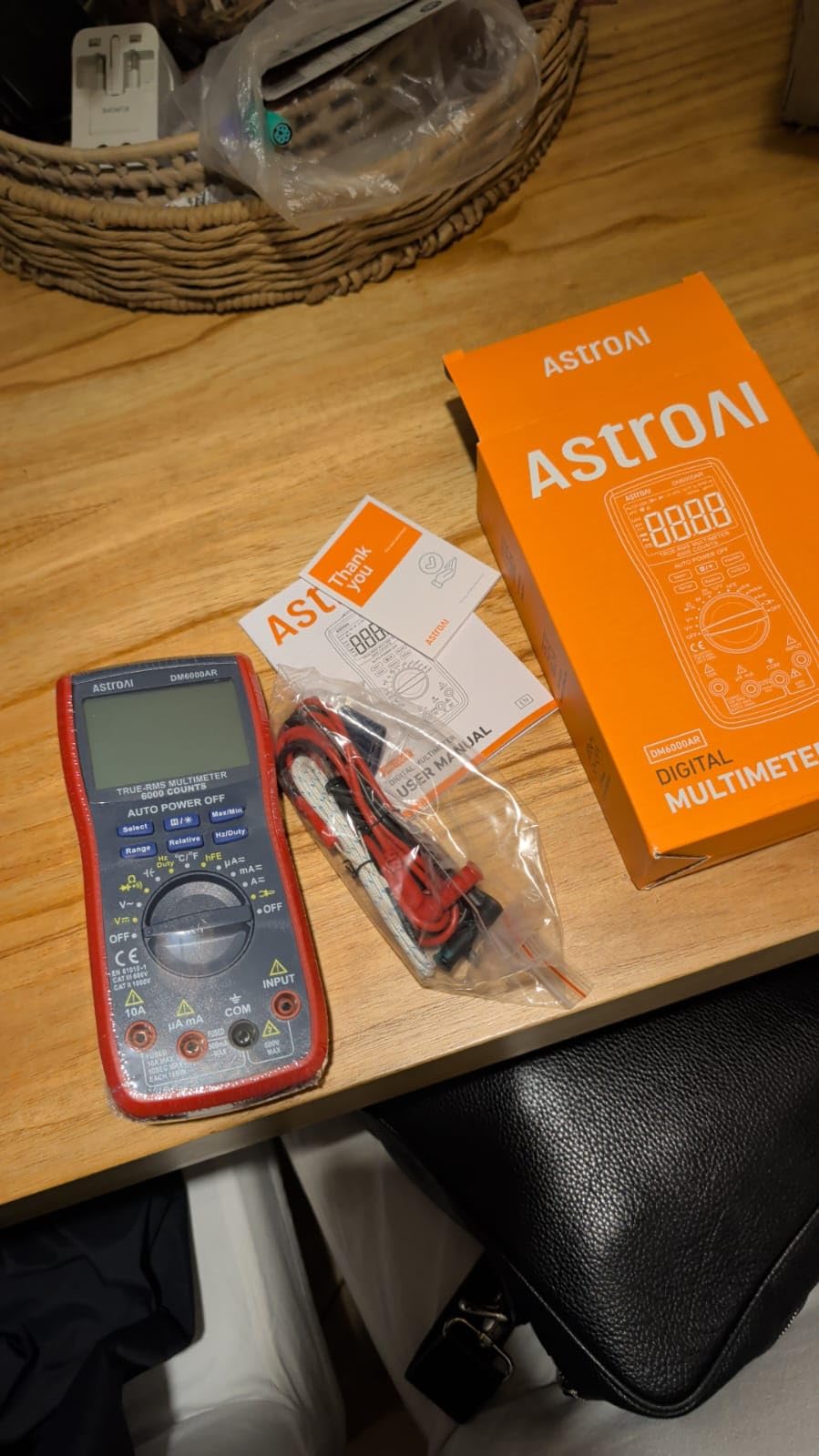
More than 20,000 reviews make the AST-6000-D the most heavily examined meter in this roundup, and for once the detailed owner testing lines up with the marketing. Reviewers bench-compared it against an Amprobe AM-570 and found DC voltage, AC RMS, resistance, current and diode readings within spec. That is a stronger claim than almost anything else we could make about a meter at this level.
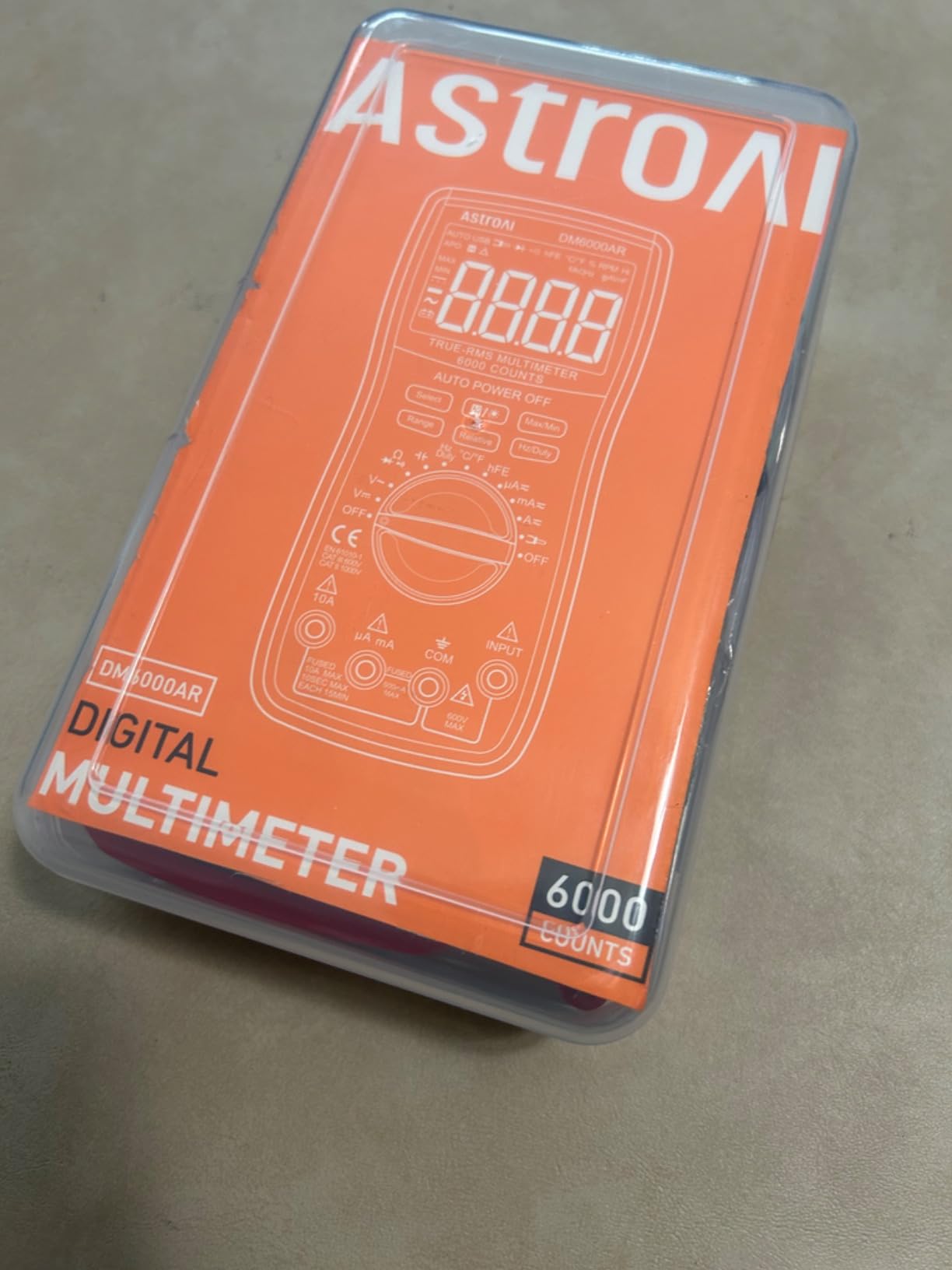
It covers AC and DC current and voltage, capacitance, frequency, duty cycle, resistance, diode, continuity and temperature, all on an auto-ranging 6000-count backlit display with data hold and auto shut-off. The 1000V DC maximum gives it headroom for automotive and light industrial work, and a kickstand plus included magnet make it workable on a hood or a bench.
The Frequency Counter And hFE Test Overpromise
This is the most useful thing we can tell you about this meter. The published spec claims a 60MHz frequency counter, and reviewers who tested it found the real ceiling nearer 16MHz, needing roughly 5V peak-to-peak before it will lock onto a signal. The transistor hFE socket is worse: it biases at a low 1V and 1mA, so readings come in around half the true gain. Treat both as party tricks rather than instruments.
Everything else held up better than expected. The capacitance range exceeded its published ceiling, reading a 2200uF cap accurately, and the fuse system is properly documented: F400mA/600V and F10A/600V explosion-proof ceramic tubes. Documented fuse values matter, because a meter with a glass fuse is telling you something about its engineering budget.
The Magnet Is A Bench Workaround And A Bench Hazard
The included magnet is genuinely useful for a hands-free reading on a starter or a starter solenoid test, and also a genuine problem on an electronics bench. Users report it collecting nuts, staples and loose pins and dropping them onto a solder joint. If you do electronics work, take it off or leave the meter flat.
Who It Falls Short For
The included test leads are described as thin, and at 492 g this is the heaviest meter in the list. If you need a second cheap meter in a tool bag, that bulk adds up. It is also not the choice for anyone who works on low-level millivolt signals, where the AC input floor rules it out.
3. Klein Tools MM325 – The Most Versatile For Panels And Batteries
Klein Tools MM325 Multimeter, Digital Manual-Ranging 600V AC/DC Voltage Tester, Tests Batteries, Current, Resistance, Diodes, and Continuity
CAT III 600V safety rating
Manual ranging
600V AC and DC voltage
2 MOhm resistance ceiling
Pros
- Nearly 3000 reviews averaging 4.7 stars
- Lead-alert LEDs and a backlit display at this price
- Battery test mode that field technicians actually use
- Built-in kickstand and lead holders
Cons
- Manual ranging means choosing the range each time
- Resistance ceiling of only 2 MOhms
- DC current only
- no AC current
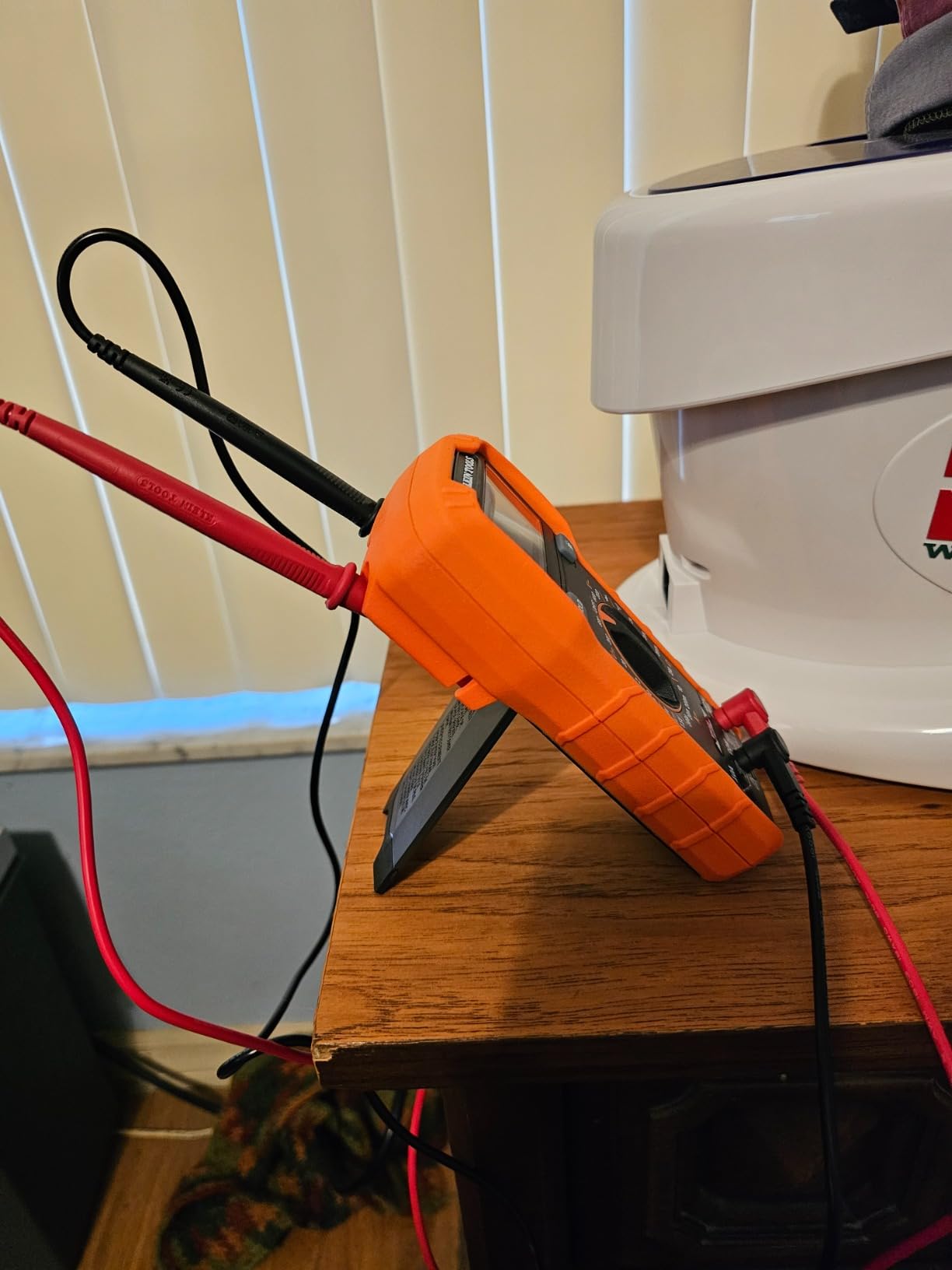
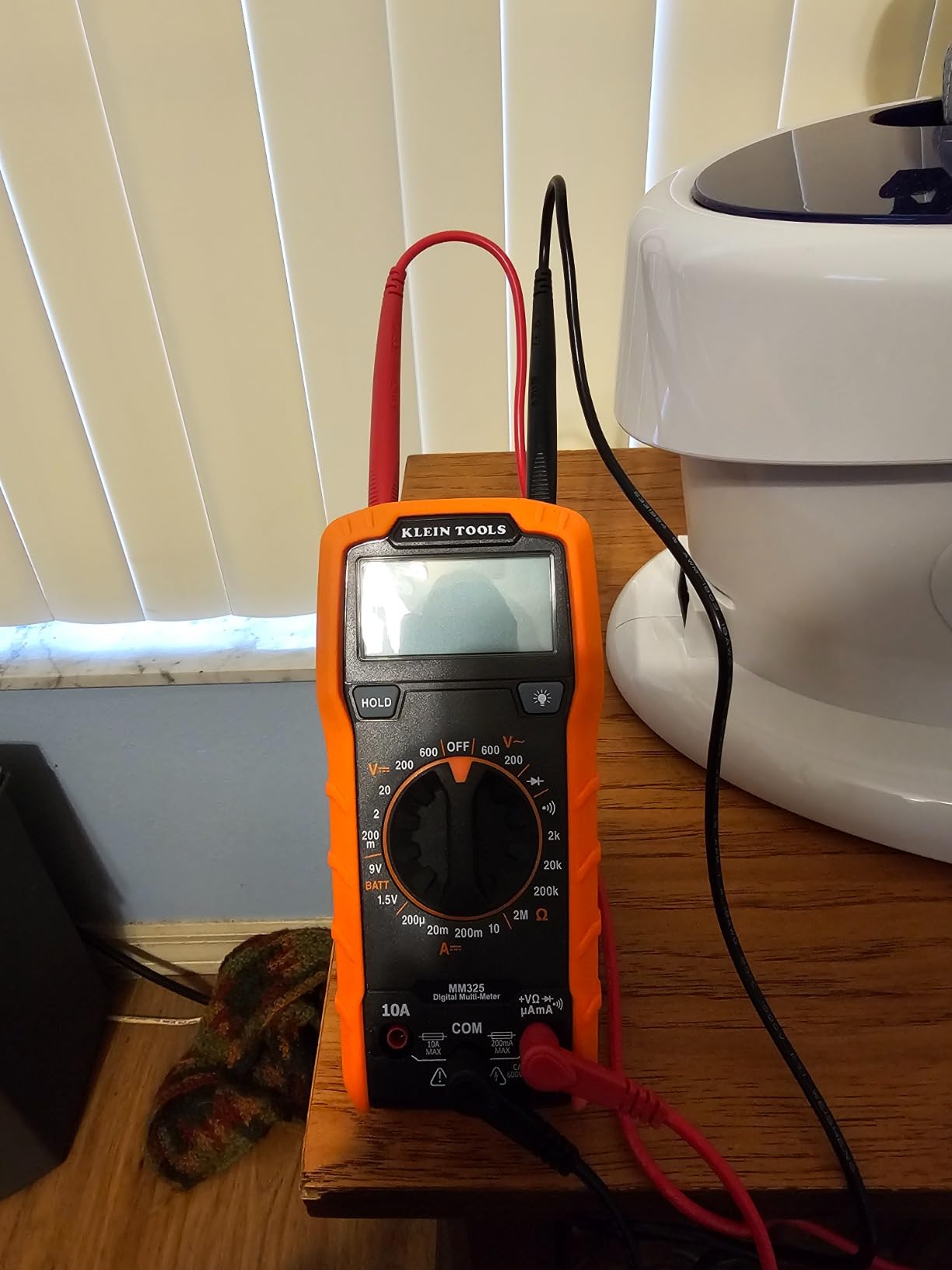
The MM325 is the meter I recommend to someone whose hands do the thinking. Everything sits on a rotary dial, the ranges are printed in words rather than symbols, and the lead-alert LEDs tell you when your leads are in the wrong jacks. There is no menu to learn and nothing that changes when you turn the dial unexpectedly.
It measures AC and DC voltage to 600V, 10A DC current, resistance to 2 MOhms, and adds continuity, diode test and a battery test function with a dedicated range. That battery test is the reason it keeps showing up in automotive recommendations: it gives you a pass or fail indication on a 12V or 9V cell without guessing.
When Manual Ranging Is A Feature
Auto-ranging meters are convenient, but they cannot be forced onto a range that is slightly off-scale, which is exactly what happens when you are chasing an intermittent voltage drop. Turning the dial yourself and watching the digits roll gives you a faster read on where the problem is. Experienced electricians on r/electricians describe this as the reason they still like a manual meter in the bag.
The trade-off is real, though. You set the range before every measurement, and if you pick wrong the display shows an over-range indicator until you correct it. For a beginner measuring an outlet twice a year, that friction is a genuine tax. The lead-alert LEDs and the backlit display partly repay it in the field.
What The 2 MOhm Ceiling Rules Out
Two megohms is low. A lot of modern electronics has circuit resistances in the tens of kilohms, and anything above 2 MOhms simply reads as over-range. If you intend to work on PCBs, or to test sensor circuits and high-value resistors, you want the 40 to 60 MOhm ceiling the AstroAI and KAIWEETS units offer. For outlets, wiring, fuses and batteries, the ceiling never comes up.
Who It Falls Short For
There is no AC current measurement, and the resistance ceiling rules it out of most bench electronics work. Working electricians on r/electricians describe Klein as the same quality as a Fluke for half the money, but they pair that with a CAT III 600V rating, and that rating is the limit of what this meter is certified for. It is not a panel or service-entrance instrument.
4. AstroAI 4000-Count Auto-Ranger – Best For Battery And Household DIY
AstroAI Digital Multimeter, TRMS 4000 Counts, Auto-Ranging, Battery Test
4000 counts auto-ranging
600V AC and DC
1.5V 9V and 12V battery tests
Double ceramic fuse, CAT III 600V
Pros
- Battery test modes with red and green indicator lights
- Non-contact voltage detection with audible alarm
- Backlit screen plus built-in flashlight
- More than 6700 reviews at 4.7 stars
Cons
- Fewer digits of detail than a 6000-count display
- Lower price tier means less precision than a Fluke or Klein
- Owners note the price climbed from earlier levels
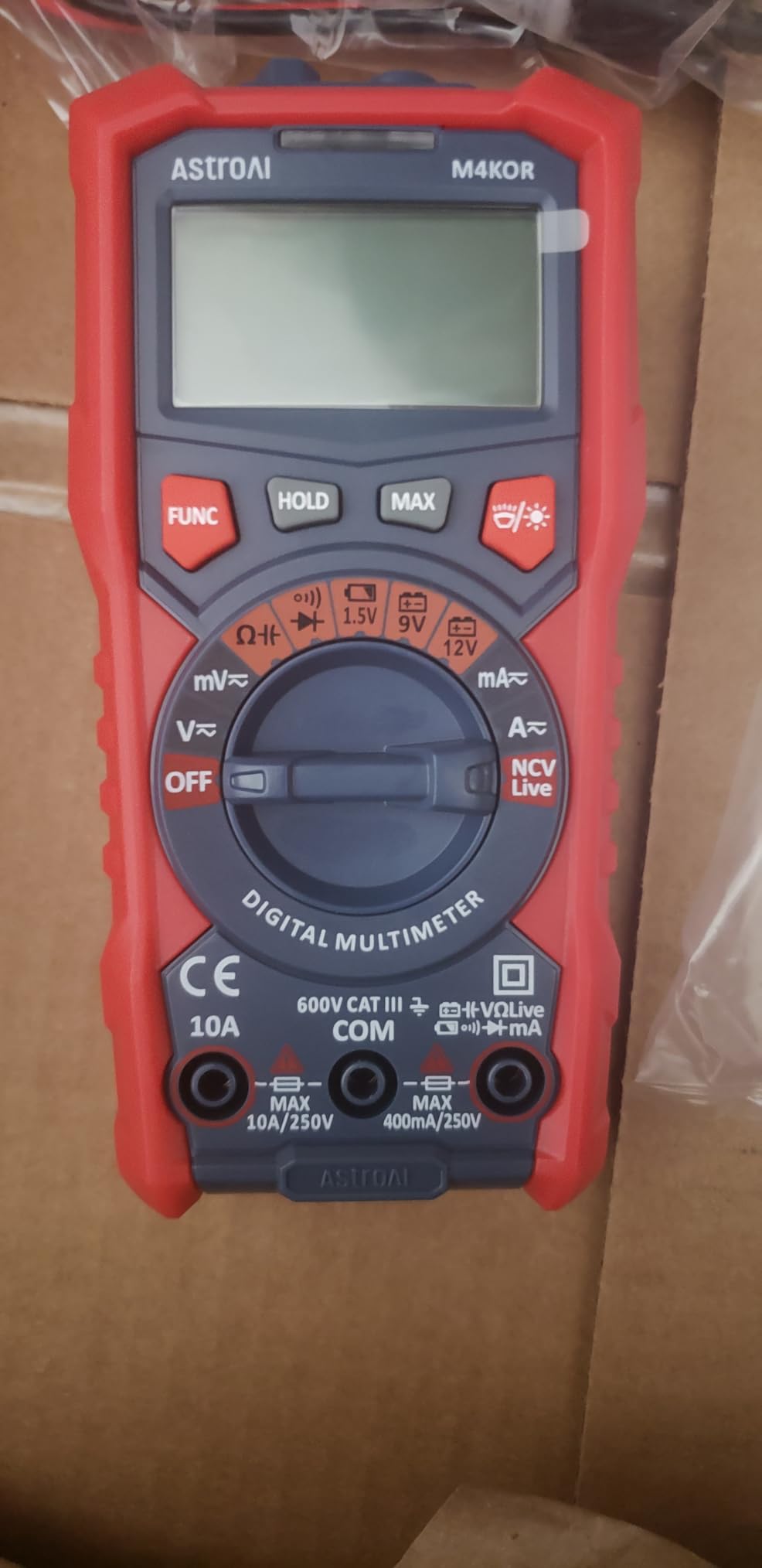
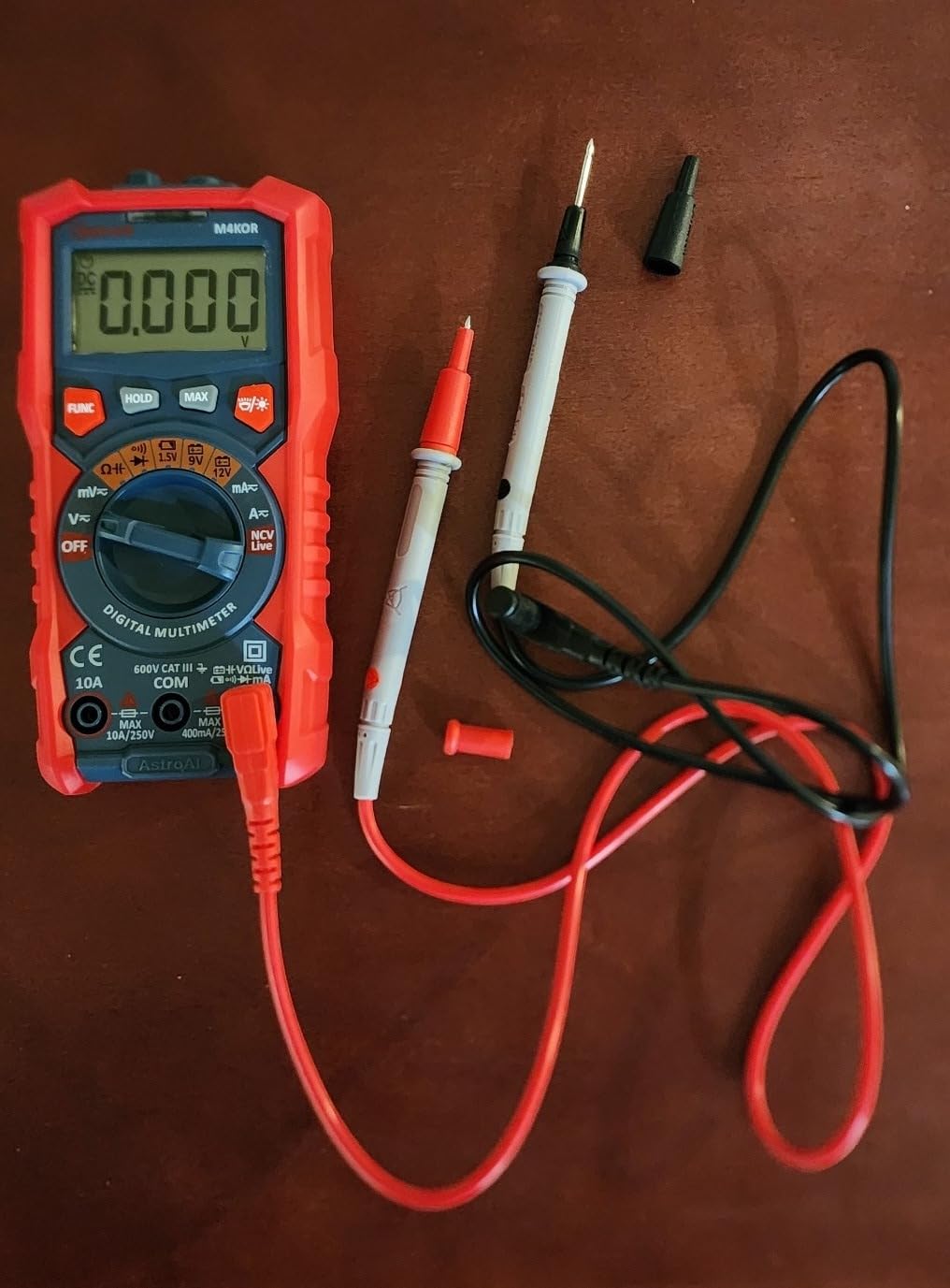
This is the meter most people in this price range actually end up with, and for household work it is hard to argue with. It auto-ranges across AC and DC voltage to 600V, current to 10A and resistance to 40 MOhms, then adds continuity, diode, battery and live-wire testing. Auto-ranging means you turn the dial to the function and probe, which is the whole learning curve.
The battery test modes are the differentiator. Dedicated 1.5V, 9V and 12V ranges with red and green charge indicator lights turn battery testing from a voltage judgement into a pass or fail, which is exactly the judgement most people are trying to make when they grab a meter for a car.
Non-Contact Detection As A First Pass
Non-contact voltage detection gives you an audible and visual alarm before you touch a conductor, which is a useful way to find a live feed without probing around blindly. Treat it as a screening tool rather than a measurement. It tells you something is energised nearby, not what the voltage is, and the buzzer will react to induced charge on an unpowered cable.
Double ceramic fuses and a CAT III 600V rating put it in the same safety class as the Klein MM325, and a silicone cover absorbs the drop that panel work eventually produces. Data hold, max reading, auto shut-off and a low battery indicator round out a sensible household package.
4000 Counts Versus 6000 Counts In Practice
Four thousand counts means the finest resolution on the low ranges is 0.1 percent of reading rather than 0.01 percent. For a mains voltage check or a battery test, that difference is invisible. For comparing two readings that sit close together, or for resolving a small drop across a component, you will notice the missing digit.
Who It Falls Short For
There is no temperature probe and no capacitance here, so it cannot size a run capacitor or check a thermistor. The precision is below what a Fluke or Klein bench meter delivers, which matters if your work involves calibration or matching values. If you are the sort of buyer who wants room to grow, the KAIWEETS at number one adds those functions for a modest step up.
5. Fluke 101 – Best For Build Quality And Brand Trust
FLUKE-101 Digital Multimeter
0.5 percent basic DC accuracy
CAT III 600V
160 g and 5.12 inches long
Voltage, resistance, diode and continuity
Pros
- 0.5 percent basic DC accuracy is the best published figure here
- 160 g body fits a shirt pocket
- Build quality that professionals describe as the last tool to fail
- More than 4300 reviews
Cons
- No auto-ranging
- no capacitance
- no temperature
- No current measurement at all on this model
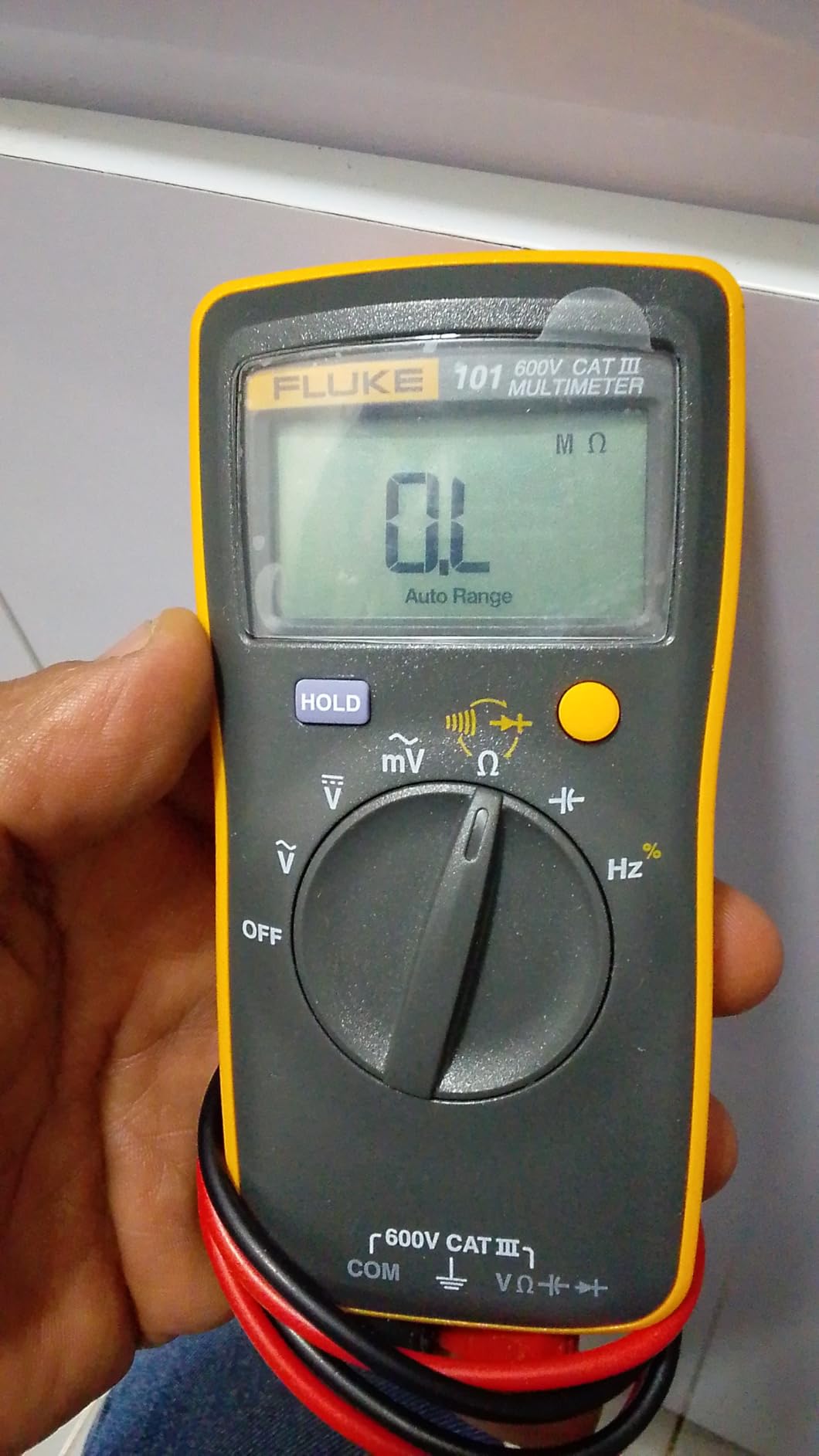
The Fluke 101 is the accuracy play. It publishes a 0.5 percent basic DC accuracy figure rather than a count number, and that published specification is why electricians and inspectors accept a reading from it. In a category where most rivals quote a display resolution and leave accuracy implied, a real number is worth a great deal.
It is also the smallest meter here by a wide margin at 160 g and 5.12 inches long, so it genuinely lives in a pocket rather than a tool bag. Reviewers regularly describe it as the easy first Fluke for basic residential and hobby checks, and the rubberised body has the feel of something that will outlast several cheaper meters.
Know What You Are Buying: A Deliberately Small Tool
There is no auto-ranging, so you choose the range yourself, which is fine for someone who knows what they are measuring and frustrating for someone who does not. There is no capacitance, no temperature and no frequency counter. The measurement set is voltage, resistance, diode and continuity, and that is genuinely all.
There is also no current measurement on this model. That is the detail most people miss when they see the Fluke name and assume a full function set. If you need to measure draw on a circuit, or size a draw capacitor, the Fluke 101 is the wrong tool and you need one of the auto-ranging meters in this list.
When Brand Recognition Is Worth Paying For
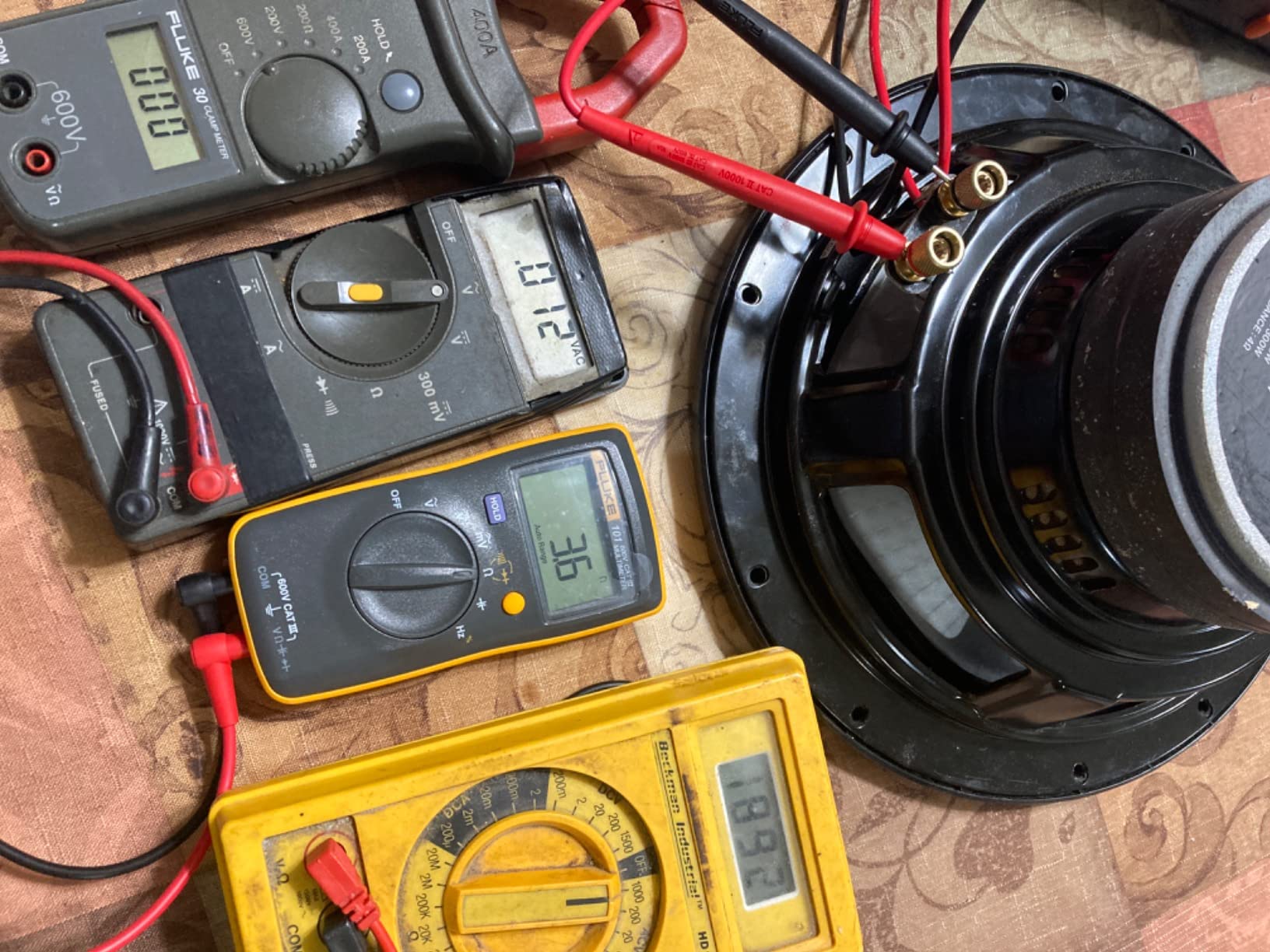
On forums, working electricians consistently describe a Fluke as the last tool to fail, and that reputation is not marketing so much as a long service history. If you are doing work someone else will inspect, or you simply do not want to think about whether your meter is lying to you, that history has real value. Working trades describe Klein as the same quality for half the price, which is also a fair summary of this list.
Who It Falls Short For
If you need AC current, temperature, capacitance or auto-ranging, look elsewhere in this roundup. The premium over a similarly featured budget meter buys you accuracy documentation and reputation, not functions. For a hobbyist who will measure a battery and a fuse, that trade can be backwards.
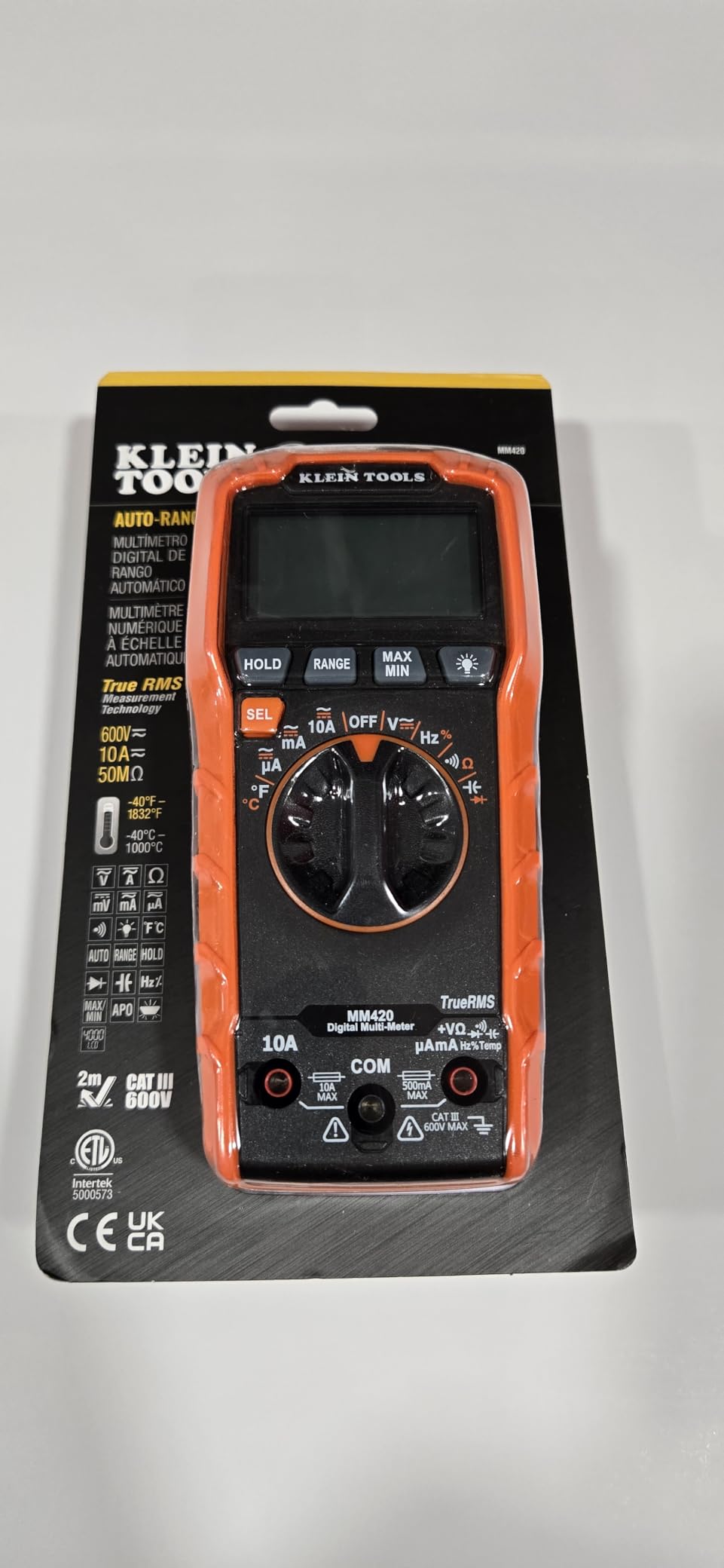
6. Klein Tools MM420 – Best For HVAC And Appliance Repair
Klein Tools MM420 Digital Multimeter, Auto-Ranging TRMS Multimeter, 600V AC/DC Voltage, 10A AC/DC Current, 50 MOhms Resistance
Auto-ranging True RMS
CAT III 600V
600V AC and DC with 50 MOhm resistance
Temperature, capacitance, frequency and duty cycle
Pros
- Lead-alert LEDs show correct lead placement
- Backlit display and audible buzzer for field use
- Rated to survive a 6.6 foot drop
- Leads include CAT III and CAT IV safety caps
Cons
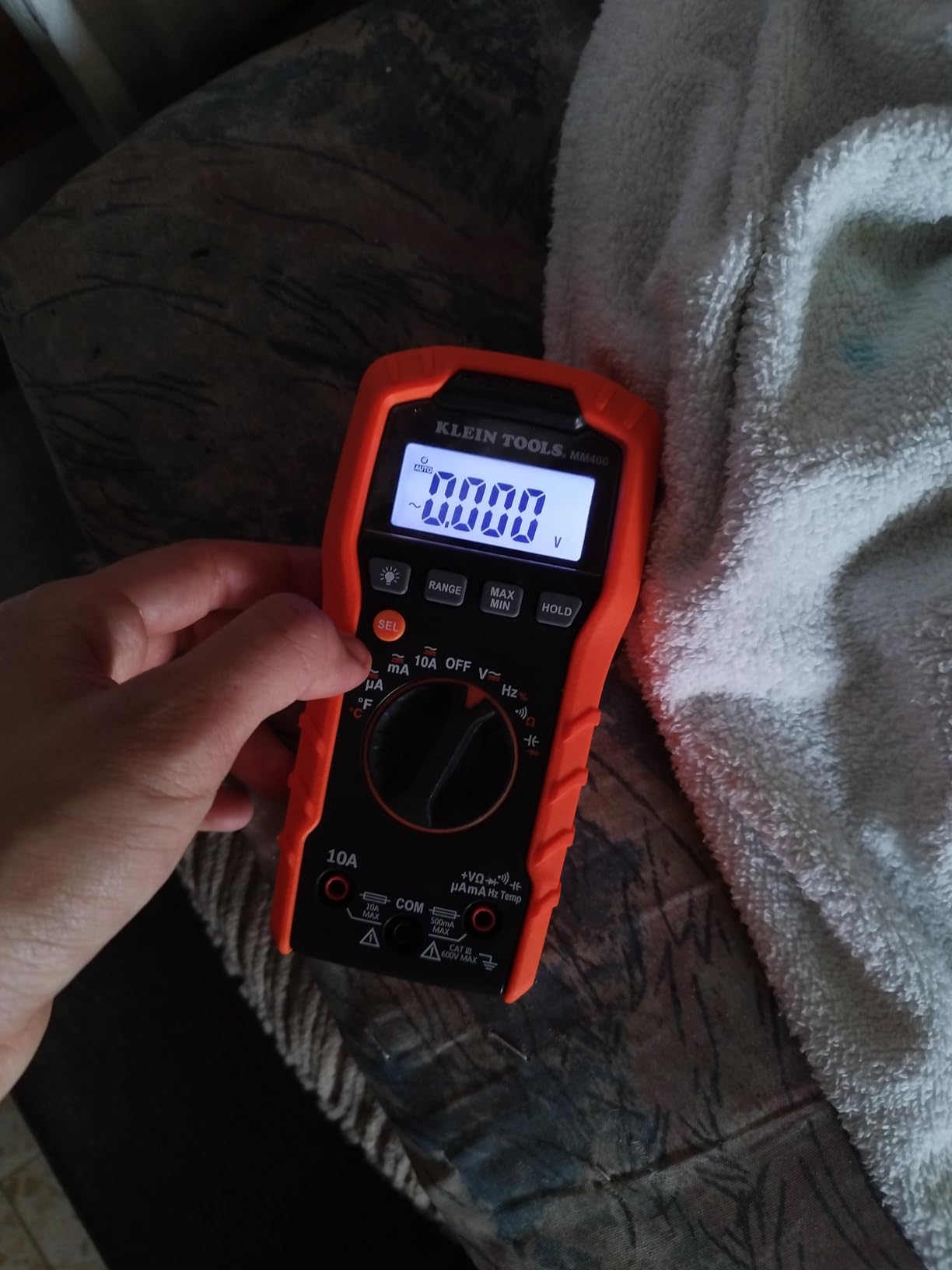
- Function positions marked with symbols rather than words
- Shared AC and DC voltage selector needs repeated presses
- Backlight auto-offs and cannot be disabled
The MM420 is the Klein to buy if you repair appliances. It measures AC and DC voltage to 600V, 10A AC and DC current, and 50 MOhms of resistance, with continuity, temperature, capacitance, frequency, duty cycle and diode test. Auto-ranging True RMS means it handles the non-sinusoidal waveforms that show up in modern appliance control boards without reading low.
Reviewers describe it as solidly built, quick to use and accurate, and the 6.6-foot drop rating is a real number rather than a marketing adjective. The included leads carry CAT III and CAT IV safety caps, a thermocouple is in the box, and lead holders plus a kickstand keep the probes out of the way while your hands are on a valve or a compressor.
The Lead-Alert LEDs Are The Feature To Value
Blown internal fuses from setting the meter to current mode and probing across a voltage source are the single most repeated meter mistake on forums, and the LEDs here address it directly by lighting for the jack that belongs to the selected function. On a service call with the panel open and one hand holding a probe, that is a meaningful safety net rather than a gimmick.
True RMS Matters On Modern Appliances
Average-sensing meters read low on non-sinusoidal waveforms, which is exactly what variable speed compressors, electronic controls and LED ballasts produce. If you are chasing a fault on a modern board, True RMS on both AC voltage and AC current keeps you from concluding that everything is fine when the meter is simply under-reporting.
Who It Falls Short For
Function positions are marked with symbols rather than words, which some users find less intuitive, and a single voltage setting defaults to AC so you press SEL repeatedly to reach DC. The backlight shuts itself off automatically and cannot be disabled, which is annoying when you are working in a crawlspace. The review base of 750 is also the thinnest of any Fluke or Klein here, which tells you the feature-rich Klein models have not found the same mass audience as the MM325.
7. AstroAI AM33D – The First-Time Owner’s Meter
AstroAI Digital Multimeter Tester 2000 Counts with DC AC Voltmeter and Ohm Volt Amp Meter; Measures Voltage, Current, Resistance, Continuity and Diode, Blue
1999 count backlit LCD
500V maximum voltage
Double fuse anti-burn protection
3 year manufacturer warranty
Pros
- Backlit LCD and data hold at the lowest price point here
- Double fuse protection with a silicone shock cover
- 3 year manufacturer warranty
- Battery
- leads and manual included so it works out of the box
Cons
- 2000 count display limits resolution on close readings
- No AC current measurement and AC voltage only down to 100mV
- Manual ranging rather than auto-ranging
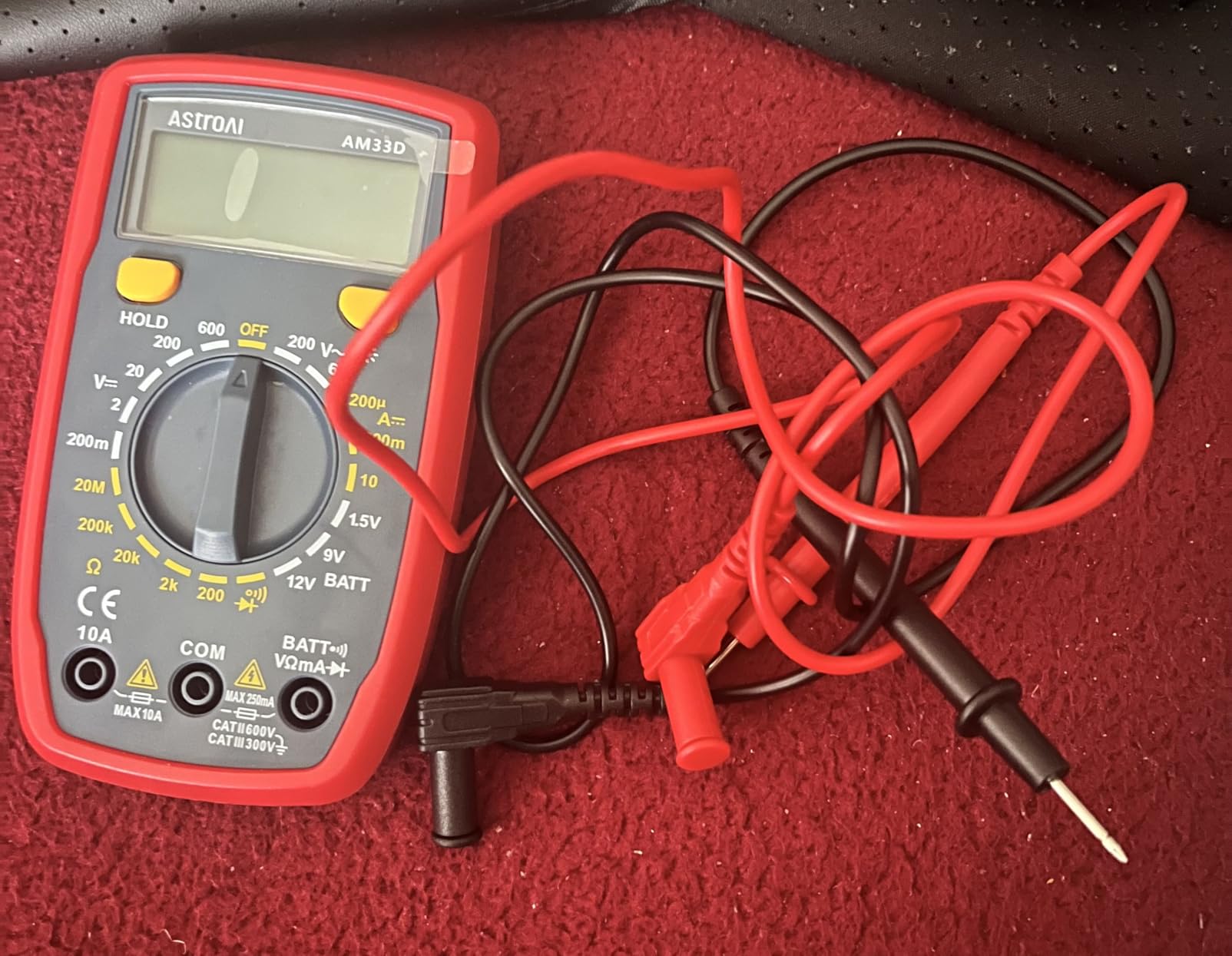
With more than 56,000 reviews, this is the most proven meter in the roundup by a wide margin. The AM33D is a 3.5-digit 1999-count meter with a 0.6-inch backlit LCD, a continuity buzzer, data hold and a low battery indication. It measures AC and DC voltage, DC current, resistance and diode. For checking an outlet, a fuse, a switch or a car battery, that function set is enough for years.
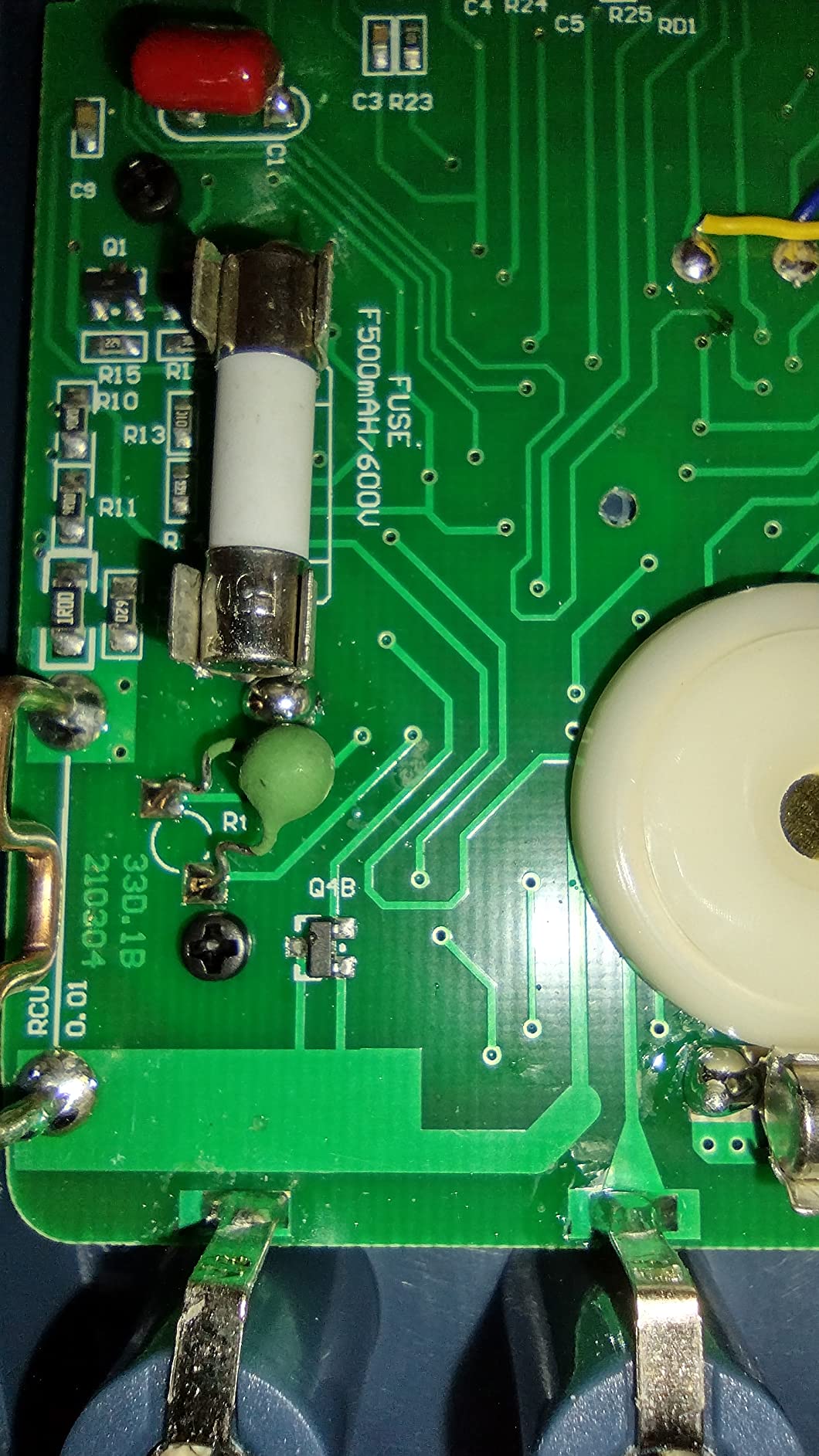
Double fuse anti-burn protection sits under a silicone shock-absorbing cover, and AstroAI backs it with a 3-year manufacturer warranty, which is longer than most competitors offer. California-based technical support with a 24-hour response target is unusual at this level and worth something when a new meter will not power on.
The 100mV AC Floor Is The Real Limitation
This meter cannot test AC current at all, and it cannot read AC voltage below 100mV. That rules it out of millivolt work, sensor circuits, audio equipment and anything where you are chasing a small signal. It also means that if you ever want to measure the ripple on a power supply line rather than its average, you need a different instrument.
The manual ranging adds friction that a first-time owner will feel. You turn the dial to the function and the range, and if you pick a range that is too low the display shows an over-range indicator until you correct it. Expect to get this wrong a few times in the first hour. Nobody does.
Who It Falls Short For
Two samples per second is fine for stable readings and slow for anything transient. The 1999-count resolution means you get three and a half digits, so two readings that differ by 1 percent on a 12V supply will look identical. If your work involves electronics rather than household wiring, step up to a 6000-count unit. If you are checking outlets and batteries, the limits here do not matter.
8. Crenova MS8233D – Best Box Contents For The Money
Crenova MS8233D Multimeter TRMS 6000 Counts Auto-Ranging Live Wire NCV
6000 count 3 5/6 digit LCD
Switchable manual and auto ranging
IEC61010-1 CAT III 600V
NCV with a rising buzzer
Pros
- Alligator clips
- carry case and spare batteries in the box
- Offers both manual and auto ranging modes
- NCV buzzer speeds up as detected voltage rises
- More than 9000 reviews
Cons
- Listed weight of 0.55 kg is heavier than typical in this class
- Accuracy is not verified by independent bench comparison in available reviews
- Only a one-year warranty
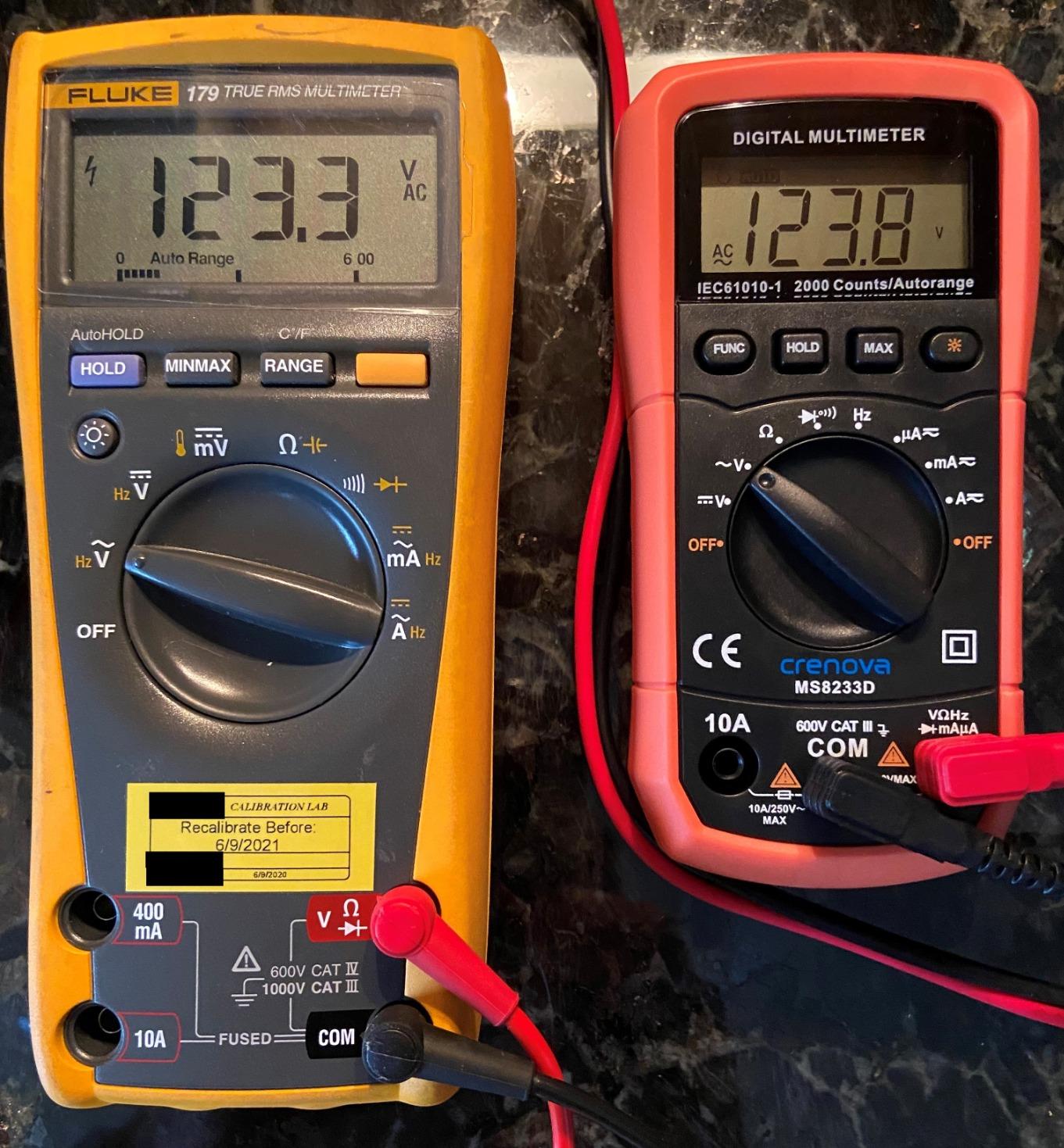
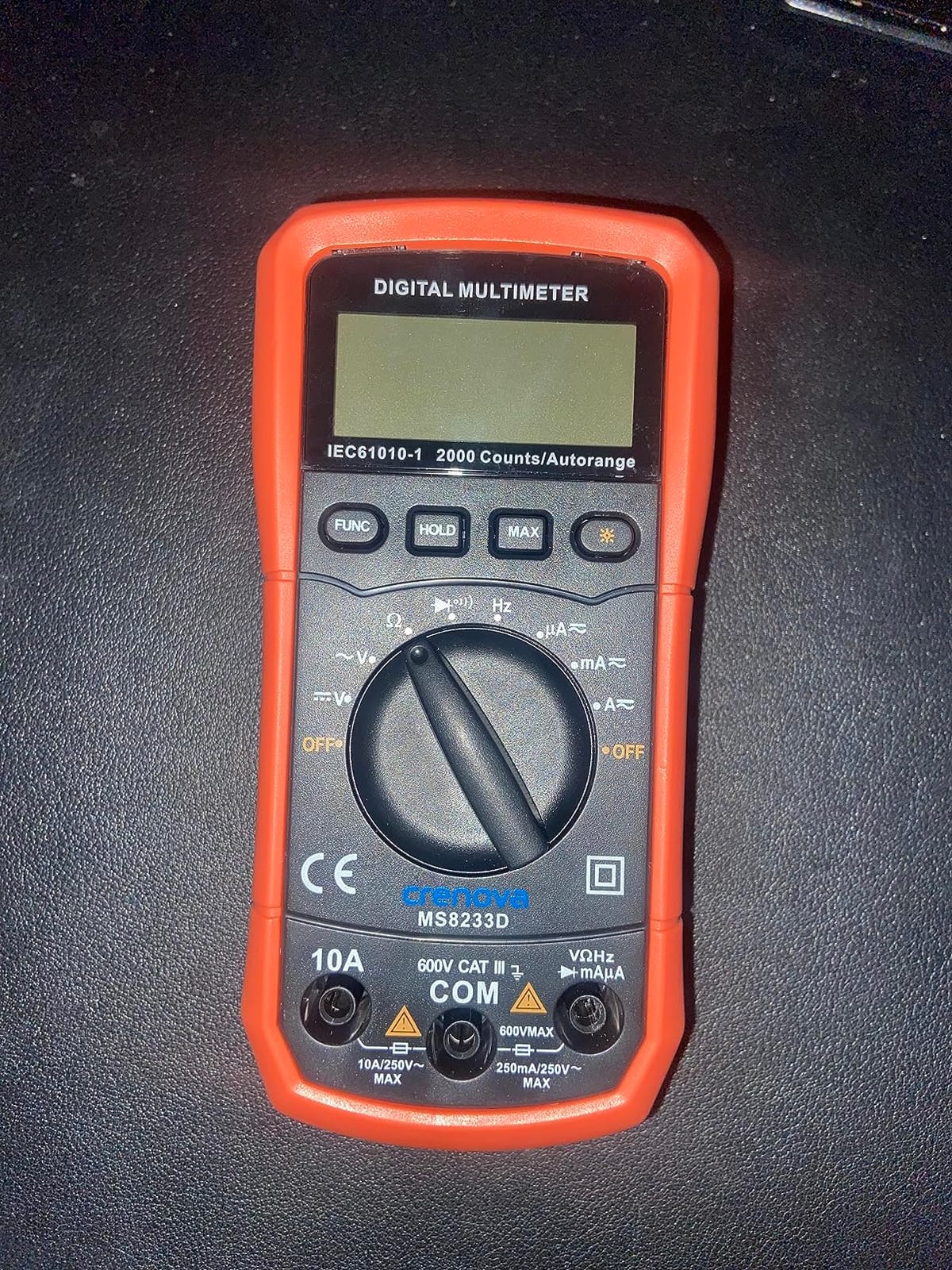
The Crenova MS8233D is consistently described as more capable than its price suggests, and the box is the reason. You get the meter, probe test leads, alligator clips, two AAA batteries, a carrying box and a manual. Most rivals at this level give you the meter, two leads and a manual, which means your first purchase is a bag of accessories.
It measures DC and AC voltage and current, resistance, capacitance, frequency, duty cycle, continuity, diode, live wire and NCV on a 6000-count backlit LCD sampling three times per second. The switchable manual and auto ranging is unusual at this price, and the non-contact detector uses a buzzer that speeds up as detected AC voltage rises, so you can tell how close you are.
Why Switchable Ranging Is Worth Having
Auto-ranging is faster for most measurements. Manual ranging is better when you are chasing something that sits just off-scale, or when you want to watch the digits change as you move a probe across a connection. Having a switch for both means you do not have to choose a philosophy up front, which is why this meter appeals to buyers who are not sure what they will be measuring.
Max and min value capture, data hold, a low battery indicator and auto power off are all present, and the insulated rubber holster plus two built-in fuses mean the meter survives the sort of drop the Klein claims for. The IEC61010-1 CAT III 600V rating is printed on the box rather than left vague.
Who It Falls Short For
The accuracy is not verified by independent bench comparison in the reviews we could find, and the warranty is one year, which is short next to the AstroAI at number seven. The listed weight of 0.55 kg is heavier than typical for a meter this size, so it is not a pocket tool. If you need a documented percent-of-reading accuracy specification for client or inspector acceptance, this is not the meter to buy.
9. Innova 3320 – Best For Automotive Battery Load Testing
INNOVA 3320 Auto-Ranging Digital Multimeter, Red & Black
UL certified
10 MegOhm input impedance
Load test battery function
Auto-ranging with a single resistance setting
Pros
- Readings test nearly identical to a calibrated Fluke 179
- Load test function with colour-coded indicator lights
- 10 MegOhm input impedance protects vehicle ECUs
- Owners report 6 years of continuous use
Cons
- AC current limited to about 200mA
- Accuracy drops on low AC voltage readings below roughly 50V
- Dial can feel loose and cause reading drift
- Display is not backlit and there is no hold
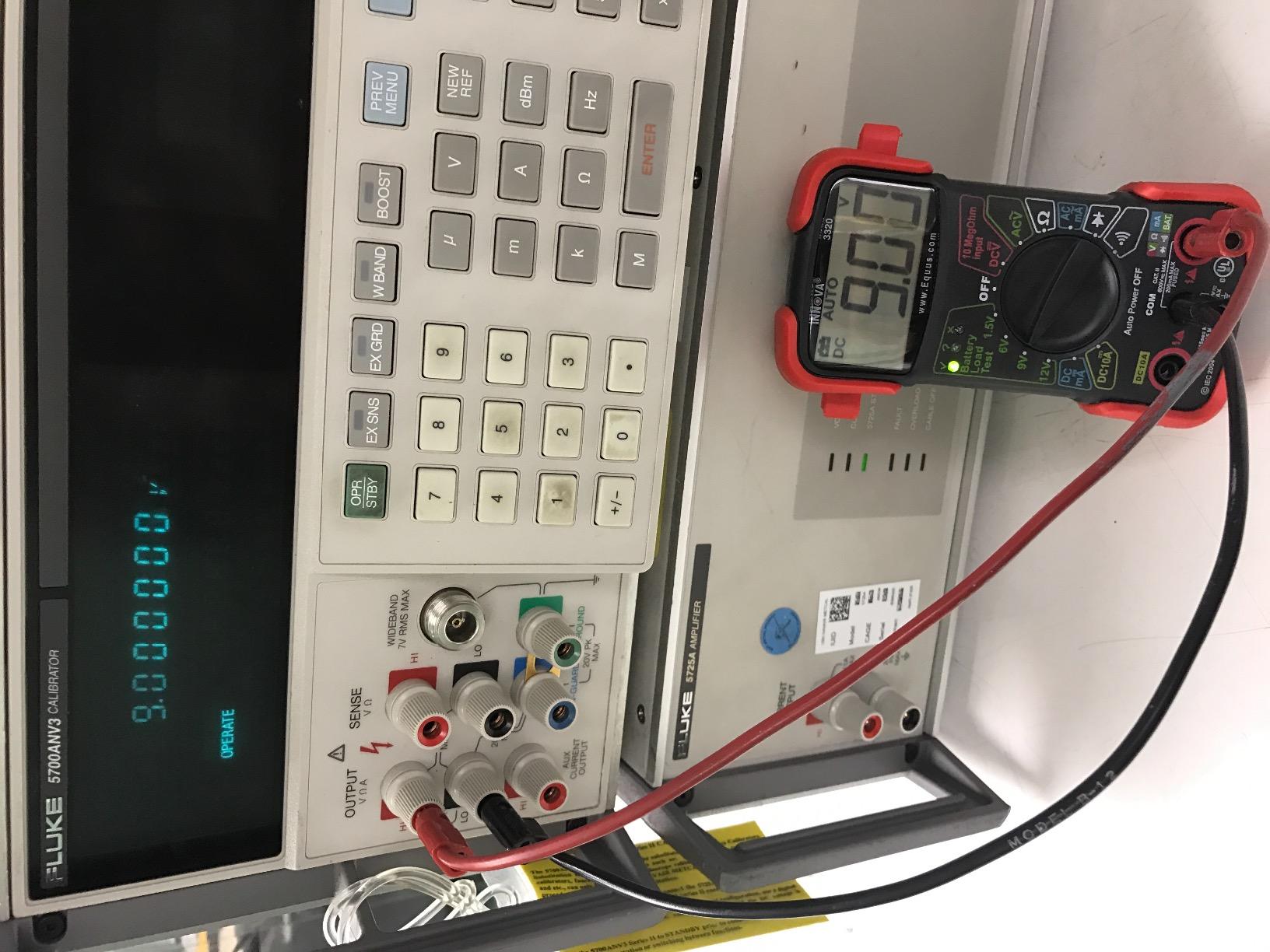
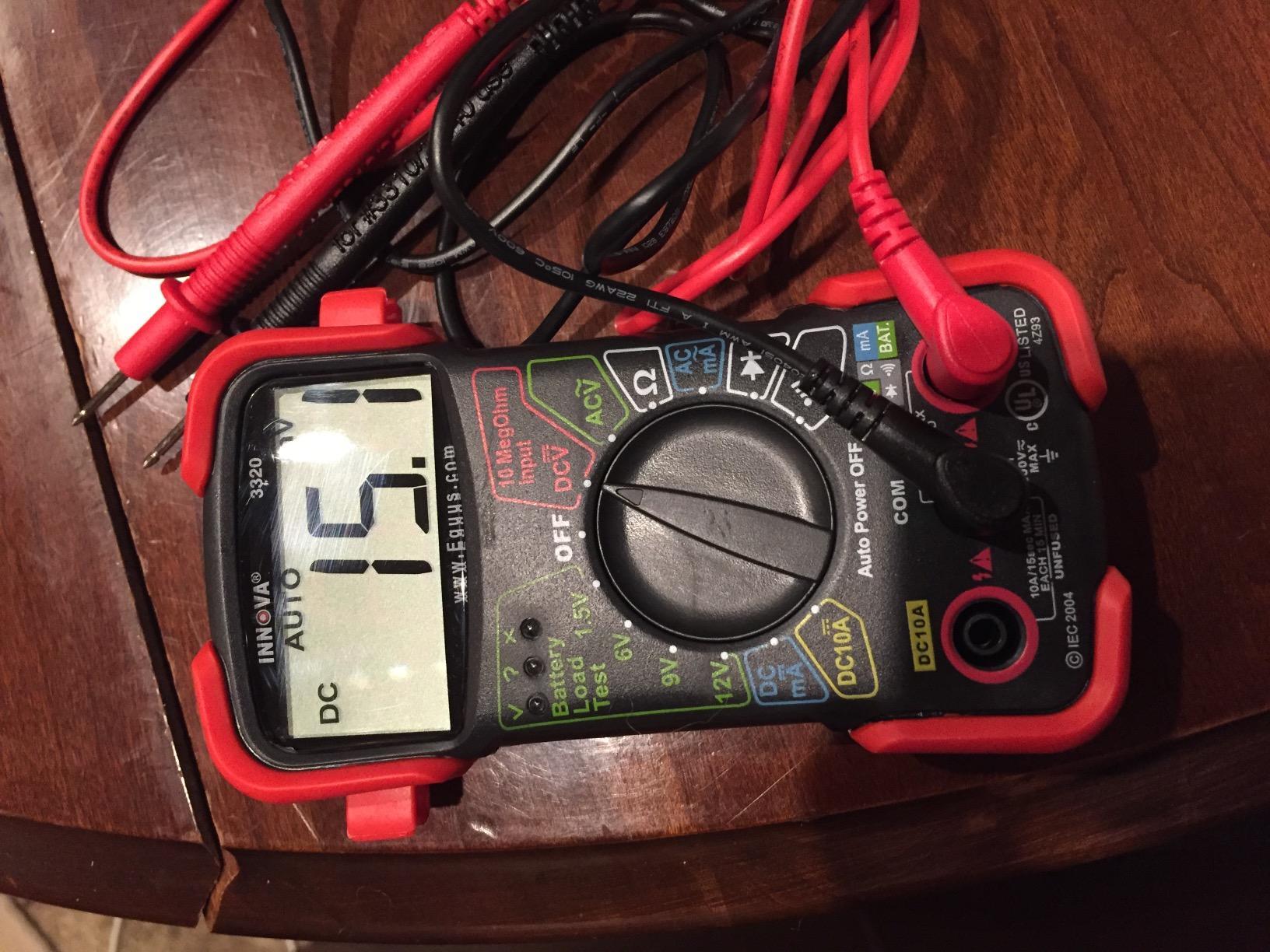
The Innova 3320 is a cult favourite in automotive circles for one reason: the battery load test with colour-coded indicator lights. Automotive users on forums report that a basic 2000-count class meter is fine for most fault finding, and that the differentiator they actually want is a real load test. This is that meter, and it is UL certified for both automotive and household troubleshooting.
Detailed side-by-side testing found readings nearly identical to a calibrated Fluke 179 across DC volts, AC volts, DC current and resistance, which is a remarkable result at this level. Long-term owners report 6 years or more of continuous use across multiple units, and the auto-ranging acquisition is fast relative to other meters here.
10 MegOhm Input Impedance Is The Reason It Is Safe On A Car
A modern vehicle ECU can be damaged by a meter that draws too much current from a circuit when probing. The 10 MegOhm input impedance is the figure that protects it, and it is the specification automotive buyers should be checking rather than the display count. Combined with a single-setting resistance function shared across AC and DC voltage, it is a deliberately simple, deliberately safe design.
The Limits Reviewers Keep Repeating
Three caveats come up consistently. AC current measurement tops out at about 200mA, which is low for appliance or motor work. Accuracy drops noticeably on low AC voltage readings below roughly 50V, so do not use it for signal work. And the dial can feel loose, so bumping the meter while it is set to a range can cause the reading to drift.
Who It Falls Short For
There is no backlight, no data hold and no memory function, which is a problem in an engine bay or a crawlspace at night. Forum complaints about the 3320 include a dial that no longer holds position and a fuse that needed replacing after several years, so it is a tool to buy once and keep rather than one to drop constantly. For sensitive electronics or low AC voltage, pick a different meter.
10. FNIRSI DMT-99 – Best For Electronics Bench Work
FNIRSI DMT-99 Digital Multimeter 9999 Counts TRMS, Rechargeable Volt Meter
9999 count True RMS
1500mAh rechargeable cell with Type-C charging
2.4 inch HD TFT colour screen
Graphic waveform and monitoring modes
Pros
- Only rechargeable meter here with a 1500mAh battery
- 9999 count True RMS is the highest resolution in the list
- Waveform graphing and threshold alarms are unusual features
- 6.72 oz body with fine SMD test leads
Cons
- Menu-driven colour screen is harder for beginners than a dial meter
- Rechargeable cell is less convenient than replaceable cells on long field days
- No temperature or capacitance
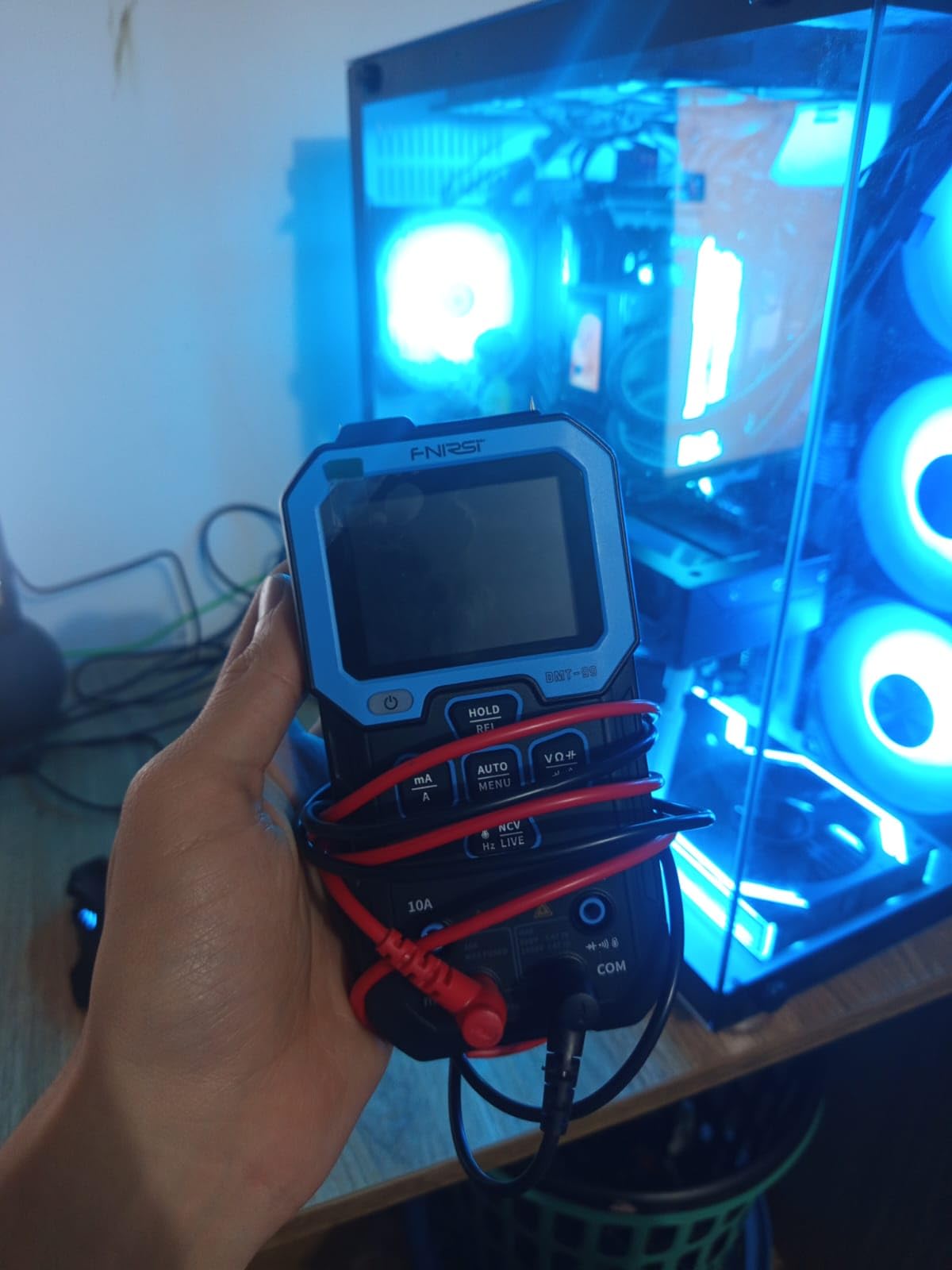
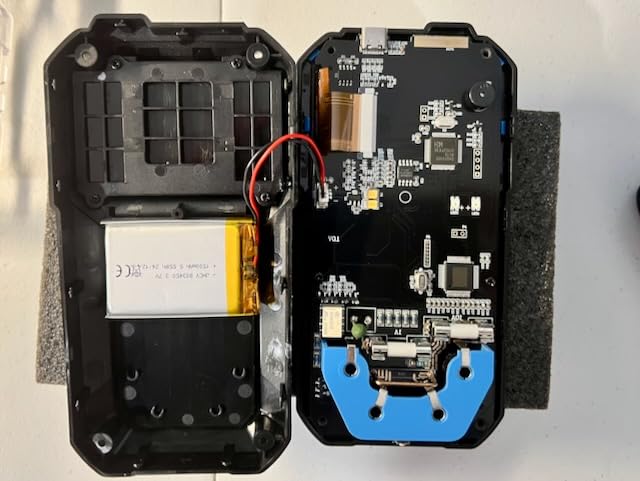
The DMT-99 is the odd one out in this list, and that is why it is here. Instead of a monochrome LCD it has a 2.4-inch HD TFT colour screen with adjustable brightness, and instead of a 9V battery it has a 1500mAh rechargeable lithium cell charged over Type-C. It is also the highest resolution meter we included, at 9999 counts of True RMS.
Auto-Mode detects AC or DC voltage, resistance and continuity on its own, and a graphic view plots real-time voltage and current fluctuations as waveforms. Monitoring Mode triggers alarms at thresholds you set, which means you can leave the meter connected to an intermittent circuit and walk away rather than sitting there watching digits.
Waveforms And Alarms Change How You Chase Intermittents
On a bench, seeing a ripple or a spike as a shape rather than a number is the difference between guessing and diagnosing. Dual ceramic fuses and added protection circuitry cover the current inputs, and the fine test leads are sized for SMD work rather than chassis-scale probing, which is a real advantage on a populated board.
At 6.72 ounces with integrated lead storage slots and a kickstand, it is the most portable meter here. It also suits automotive work for the same reason, since a bright screen is easy to read in an engine bay.
Who It Falls Short For
The menu-driven screen suits less experienced users than a simple dial meter, and there is no temperature or capacitance function, so it cannot size a run capacitor or check a thermistor. A rechargeable cell is also less convenient than replaceable cells when you are several days from a shop. If you want a straightforward tool for panels and outlets, this is the wrong shape entirely.
11. Klein Tools MM720 – Best For Panel Work And Ghost Voltage
Klein Tools MM720 Digital Multimeter, Auto-Ranging TRMS, Low Impedance (LoZ), 1000V AC/DC Voltage, 10A AC/DC Current, 60 MOhms Resistance
Low impedance LoZ mode
CAT IV 600V and CAT III 1000V
1000V AC and DC range
60 MOhm resistance with reverse-contrast LCD
Pros
- LoZ mode identifies and eliminates ghost voltages
- Reverse-contrast display stays readable in bright and dark conditions
- 1000V CAT III and CAT IV 600V give real headroom
- Auto-ranging True RMS across the board
Cons
- Larger and heavier chassis than the MM420 and MM325
- Narrower review base than the cheaper Klein meters
- Highest cost in this roundup
The MM720 is the only meter in this list with low impedance mode, and for panel work that matters more than any feature count. Ghost voltage is the phenomenon where a high-impedance meter reads 40 or 80 volts on a circuit that is not actually energised, because it is picking up induced charge through the wiring. LoZ mode loads the circuit down and shows you the truth instead.
It measures AC and DC voltage to 1000V, 10A AC and DC current, and 60 MOhms of resistance, with continuity, temperature, capacitance, frequency, duty cycle and diode test on an auto-ranging True RMS platform. The large reverse-contrast LCD is readable in bright sunlight and in a dark panel, which solves a problem no backlit screen in this list does.
The CAT Ratings Here Are The Point
CAT IV 600V and CAT III 1000V is the strongest pairing we found under 100 dollars, and it is the reason this meter qualifies for work the others do not. The KAIWEETS at number one shares those ratings, so if you want LoZ on top of them you are looking at this one.
Who It Falls Short For
At 345 g in a large chassis, it is heavier and bulkier than the MM420 and MM325, and the review base of 396 is the smallest of any Klein here, which means less long-term owner evidence. It is also the most expensive meter we included, so a buyer who does not need LoZ is paying for a feature they will never switch on. Nobody should buy a CAT II-only meter for panel work, and this is the alternative at this budget.
12. Neoteck 8233D PRO – Best For Students And Coursework
Neoteck Auto-Ranging Digital Multimeter with Backlit LCD,2000 Counts
2000 counts with 2000uF capacitance
200kHz frequency
AC and DC voltage to 600V
18 month US base warranty
Pros
- Alligator clip cable included for car terminals
- Large backlit LCD with auto polarity display
- Separate high-current and low-current fuses
- 18-month US base warranty with responsive support
Cons
- Capacitance will not read below roughly 3uF
- Readings take 3 to 4 seconds to settle
- Backlight only stays lit for about 4 to 5 seconds
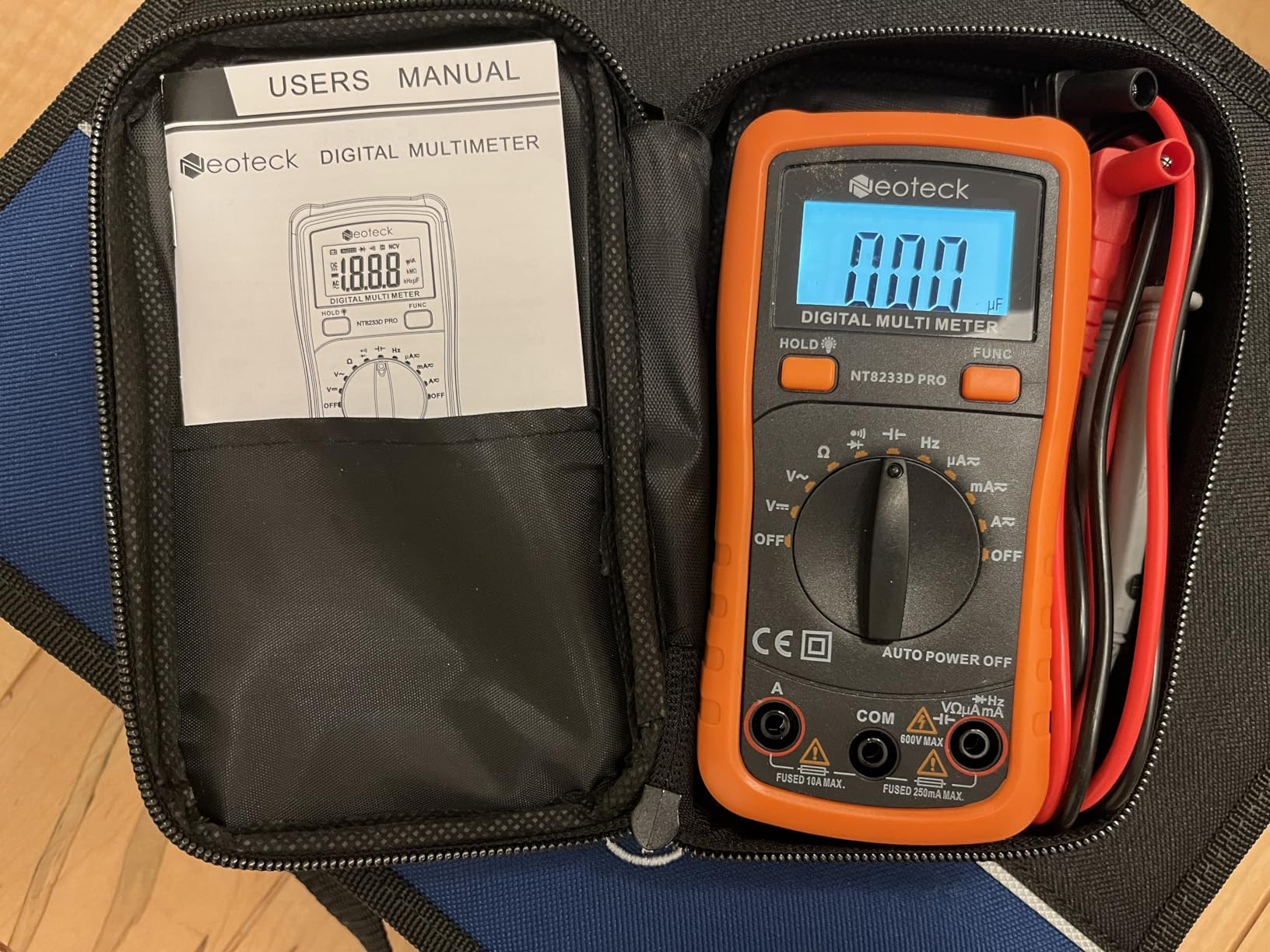
The Neoteck 8233D PRO is built for a lab bench. It measures AC and DC voltage to 600V, AC and DC current to 10A, resistance to 20 MOhms, capacitance to 2000uF and frequency to 200kHz, on a 2000-count auto-ranging display with a max-reading mode, continuity buzzer and auto polarity display.
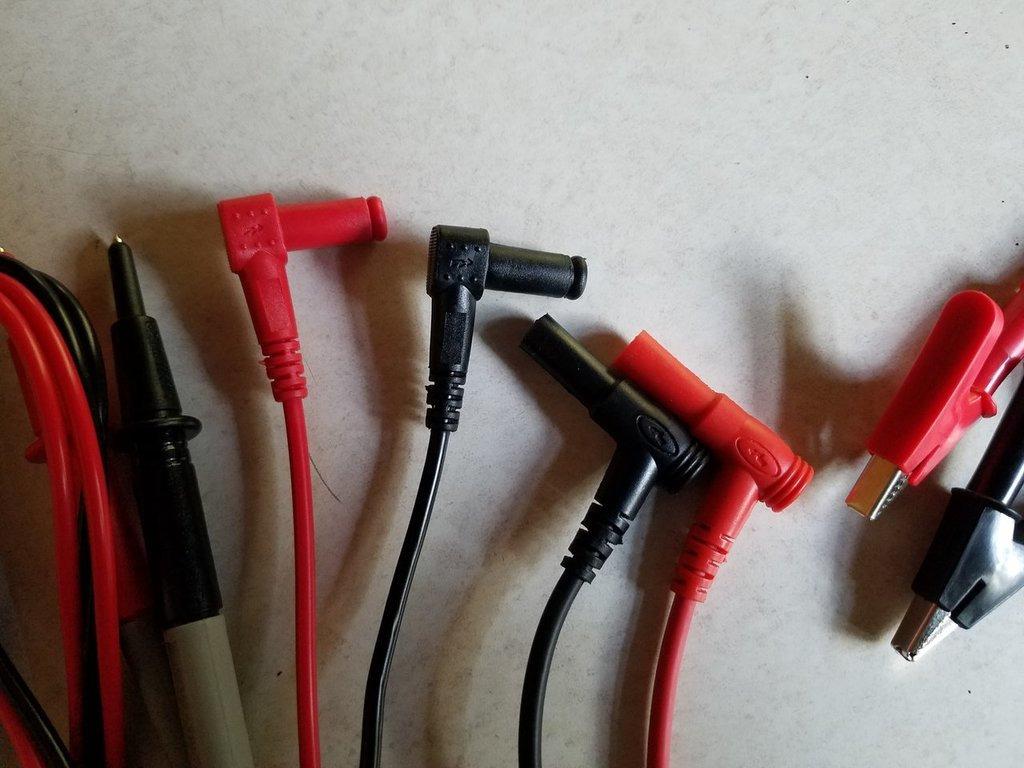
What makes it interesting is the box. Alongside the meter, batteries and test leads you get a banana plug to alligator clip cable, which lets you clamp onto a car battery or a screw terminal without holding a probe. A non-slip soft plastic shell with a built-in 45-degree stand protects it from the bench drops that kill LCDs, and the warranty is 18 months from a US base.
Capacitance That Stops At 3uF
Bench comparisons show the capacitance mode will not read below roughly 3uF, and readings under about 27uF come in off the true value. That is fine for bulk filtering capacitors and a problem for small ceramic decoupling, where the interesting values are in the tens of nanofarads. For a first lab meter covering Ohm’s law, voltage and current work, the function set is generous.
Readings take 3 to 4 seconds to settle, slower than a Fluke, and the backlight only stays lit for about 4 to 5 seconds with no way to keep it on. If you are staring at a display in a dim room, that is a real irritation, and it is worth pressing the backlight key before you start a measurement rather than after.
Who It Falls Short For
The 2000-count display and the included leads are the weakest in this roundup, and there is no temperature function. If your coursework involves small-signal electronics rather than basic circuits, a 6000-count unit with better leads will serve you better for a modest step up. For Ohm’s law, Kirchhoff and general lab use, this is a capable and well-supported first meter with more than 7,000 reviews behind it.
How to Choose a Digital Multimeter Under 100 Dollars
Almost every buyer in this category makes the same mistake, which is counting features on a spec sheet before checking the safety category. Forums describe the rule plainly: features are cheap, accuracy is not. Work through these steps in order and the right meter picks itself.
Step 1: Safety Category Comes Before Features
A CAT rating describes where in a building’s electrical system you are physically standing when you measure, and what is between you and a fault. CAT II covers receptacle and plug loads. CAT III covers distribution panels, feeders and anything downstream of the panel. CAT IV covers the service entrance, where the utility side of the meter lives. The number after it, such as 600V, is the maximum voltage the category is tested against.
Work out which of those you will actually touch. Checking a wall outlet is CAT II territory, and most meters here qualify. Opening a panel or measuring a feeder is CAT III, and that rules out several meters in this list. Only the KAIWEETS HT118A and the Klein MM720 carry a CAT IV rating, so those are the only two you should consider for service-entrance work at this budget. Treat any meter with no printed CAT rating as indoor, non-live use only.
Step 2: Display Counts Are Not Accuracy
Counts describe how many steps the display has, not how close the reading is to the truth. A 1999-count meter shows 3 and a half digits, a 6000-count meter shows 3 and a five-sixths digit display, and a 9999-count meter shows four. That is a resolution difference and nothing more. Accuracy is published separately, usually as a percentage of reading plus a number of digits, and that is the figure worth comparing.
Only the Fluke 101 publishes a clean 0.5 percent basic DC accuracy figure in this roundup. For everything else, judge accuracy by whether the maker publishes a specification at all, and whether reviewers have cross-checked readings against a known reference. A meter with no published accuracy and no independent testing is a device you use for indication rather than for diagnosis.
Step 3: True RMS or Average-Sensing
An average-sensing meter assumes the waveform is a clean sine wave and estimates the true value from that assumption. On modern electronics, loads such as switch-mode power supplies, variable frequency drives and LED ballasts produce waveforms that are not sinusoidal, and an average-sensing meter reads 10 to 40 percent low. The half of the list that measures True RMS on both AC voltage and AC current is the half you want if you touch any of those devices.
For pure household resistive loads, which is what a lamp or a toaster produces, True RMS changes nothing. If you only ever check outlets, fuses and switches, spend your budget on build quality and a CAT rating instead.
Step 4: Auto-Ranging Versus Manual Dial
Auto-ranging meters pick the range themselves, which removes a whole category of beginner error and speeds up routine work. Manual ranging gives you control when a reading is slightly off-scale, which matters when hunting an intermittent fault. Most buyers should start auto-ranging, and r/AskElectronics threads repeatedly suggest that a beginner who is unsure will not miss manual ranging, while an experienced technician will.
One specific behaviour to check: whether the continuity buzzer fires as you turn the dial. A meter that beeps while you rotate through positions will get muted, and then you will not hear it when you need it.
What Each Dollar Tier Unlocks
Under 30 dollars buys a workable 2000-count meter with a backlight, double fuse protection and a multi-year warranty. The AstroAI AM33D and the Neoteck 8233D PRO sit here, and for outlet, fuse and battery checks either will do the job for a decade.
Between 30 and 60 dollars buys True RMS, 6000 counts, capacitance, temperature and a backlight. This is where the Crenova, the Innova and the AstroAI 4000-count and 6000-count meters live, and it is the most useful band for anyone doing mixed household and electronics work. The Fluke 101 also falls here on accuracy reputation rather than features.
Between 60 and 100 dollars buys the safety headroom: CAT III 1000V, CAT IV 600V, low impedance mode and documented ceramic fuse systems. Only the KAIWEETS HT118A and the Klein MM720 reach this band, and if you are doing panel or feeder work, they are the only sensible buys here. Above 100 dollars you are paying for traceable calibration certificates and certifications a weekend project never notices.
What Should Be In The Box
Look for test leads, the correct batteries, a thermocouple if you need temperature, and a carry case. The Crenova MS8233D is the best example in this list, arriving with alligator clips, spare batteries and a carrying box that most rivals sell separately. A wrist strap is worth having if you work on ladders. One complaint that appears across budget-meter reviews is thin included leads that make poor contact and produce false continuity readings, which is the highest-return upgrade in the category.
Verify The Accuracy Yourself In Ten Minutes
You do not need a laboratory to sanity-check a new meter. Put a fresh 9V battery across the DC voltage range and confirm the reading sits within a few tenths of a volt of the printed value. Then check a known resistor, if you have one, and confirm the continuity buzzer behaves. Anyone cross-checking budget meters against Fluke 87-5, Fluke 179 and Amprobe references finds DC voltage, resistance, DC current and diode readings within spec, so a simple battery check is a reasonable proxy for the real thing.
Replace The Test Leads First
Buy a pair of silicone-insulated test leads with proper probe tips early, because a meter is only as good as the connection at the tip. Silicone insulation stays flexible in cold weather and does not crack, and good tips bite into a screw terminal instead of sliding off it. This upgrade costs less than the meter and removes a surprising share of the false readings beginners blame on the meter.
Safety First: What the 100-Dollar Ceiling Can and Cannot Buy
Certification is what separates a cheap meter from a dangerous one, and it is the one thing you should never trade away to get more functions. Every meter in this list has a published category rating, but not all of them publish an accuracy figure or a documented fuse system. Those two documents are what make a meter acceptable to an inspector or a client.
The Rules To Follow Before Probing Anything Live
Probe one conductor at a time. Keeping the other hand on your hip or behind your back means you cannot complete a circuit through your body if you touch a live conductor, which is the single most effective habit a beginner can build. The automotive 10 MegOhm input impedance specification on a meter matters for the same underlying reason: a meter that draws too much current from a circuit can damage a control module.
Use the highest range first, then step down until the reading is stable. A meter set to current mode and placed across a voltage source blows its internal fuse, and blown fuses from that mistake are the most repeated complaint on every electrical forum. Never measure current across a component, only in series with it. Verify your meter on a known live source before you trust it in an emergency, and keep the supplied safety caps on CAT III and CAT IV leads fitted whenever you are near a panel.
Counterfeit Meters And How To Spot Them
Grey-market Flukes are a genuine risk when buying from the largest marketplaces, and the counterfeit-detection question comes up repeatedly on forums. Check the calibration sticker for crisp printing rather than a blurry sticker over a grey card, look for a manufacturer warranty card rather than a generic one, and confirm the serial number registers with the brand. A meter with a great price and no traceable warranty is not a bargain, it is an unknown instrument that tells you the voltage in your panel.
Below 100 dollars you also cannot buy a data logger, a clamp meter, a low pass filter for inverter noise, or peak capture for transient hunting. If your work needs any of those, budget above this ceiling. For household outlets, panels, batteries, appliance boards and automotive circuits, everything in this list is enough.
Frequently Asked Questions
What is the best multimeter for under 100 dollars?
The KAIWEETS HT118A is the best multimeter under 100 dollars. It carries a CAT III 1000V and CAT IV 600V safety rating, measures 6000 counts of True RMS, and includes a temperature probe, capacitance, duty cycle and min/max/average recording. Double ceramic fuses and jack LEDs make it the safest and most complete meter in this price range.
What is the best multimeter for value for money?
The AstroAI AST-6000-D is the best value. Reviewers bench-tested it against an Amprobe AM-570 and found DC voltage, AC RMS, resistance, current and diode readings within specification, plus a capacitance range that exceeded its published claim. It has more than 20,000 reviews behind it. Ignore its frequency counter and hFE socket, which fall well short of their claims.
What is the best low-cost multimeter?
For a first meter on outlets, fuses and car batteries, the AstroAI AM33D is the cheapest option that still has double fuse anti-burn protection, a backlit display and a 3-year warranty. If you can stretch further, the Crenova MS8233D adds 6000 counts, capacitance, NCV detection and a carry case for very little more.
Are cheap multimeters any good?
Yes, for household and automotive work, provided they publish a CAT rating and a documented fuse system. Reviewers cross-checking budget meters against Fluke and Amprobe references find DC voltage, resistance, current and diode readings within specification. What you do not get under 100 dollars is a data logger, a clamp meter, true low-impedance mode on most models, or traceable calibration certificates.
Which multimeter has the best True-RMS accuracy?
The Fluke 101 is the only meter in this roundup publishing a clean accuracy figure of 0.5 percent basic DC accuracy, and professionals trust it because of that documented specification. The AstroAI AST-6000-D has the broadest True RMS feature coverage and has been verified against a reference instrument, while the KAIWEETS HT118A and Klein MM720 add the strongest CAT ratings.
Should I buy a Fluke or a Klein Tools multimeter?
Buy the Fluke 101 if you want published accuracy and brand reputation, and can live without current measurement, capacitance and temperature. Buy the Klein MM325 if you want a rugged manual-ranging meter with a battery test function, or the MM420 if you repair appliances and need True RMS, temperature and capacitance. Working electricians describe Klein as the same quality for half the money.
What test leads should I buy with a budget multimeter?
Buy silicone-insulated replacement leads early, ideally with thread-insulated fine probe tips for electronics work. Thin included leads are the most common cause of false continuity readings on an otherwise good meter, and poor contact at the tip gets blamed on the meter. Check that replacement leads match the input jack type and voltage rating of your meter before fitting them.
Final Verdict: Which Multimeter Should You Buy
If you want one meter that covers panels, appliances, cars and boards without compromise, buy the KAIWEETS HT118A. It is our pick of the best multimeters under 100 dollars because the CAT III 1000V and CAT IV 600V rating, double ceramic fuses and jack LEDs solve the problems that actually cause damage, while the temperature probe and capacitance cover the jobs that would otherwise need a second instrument.
If your work is electronics and automotive rather than panels, the AstroAI AST-6000-D is the better buy for the money, and the evidence from bench comparisons is stronger than anything else in this list. If you are a first-time owner who just wants to check outlets and batteries, the AstroAI AM33D costs less and will do it for years. If accuracy documentation matters to you or an inspector, the Fluke 101 publishes a figure nothing else here does.
Who should skip this price range entirely? Anyone who needs a clamp meter, a data logger, low-impedance mode on a budget, or service-entrance work without paying more. And anyone who expects a 2000-count meter to resolve electronics signals, because the display simply will not show you the detail.
Whichever you choose, buy one set of proper silicone test leads with it, check the reading against a fresh 9V battery before you rely on it, and remember that a meter is a diagnostic tool, not a guessing device. If you are still assembling a bench or a workbench for the rest of your setup, our streaming microphone picks and gaming keyboard roundup cover the other side of the desk. Whichever meter you land on, use the button below to check the current 2026 price for it.