
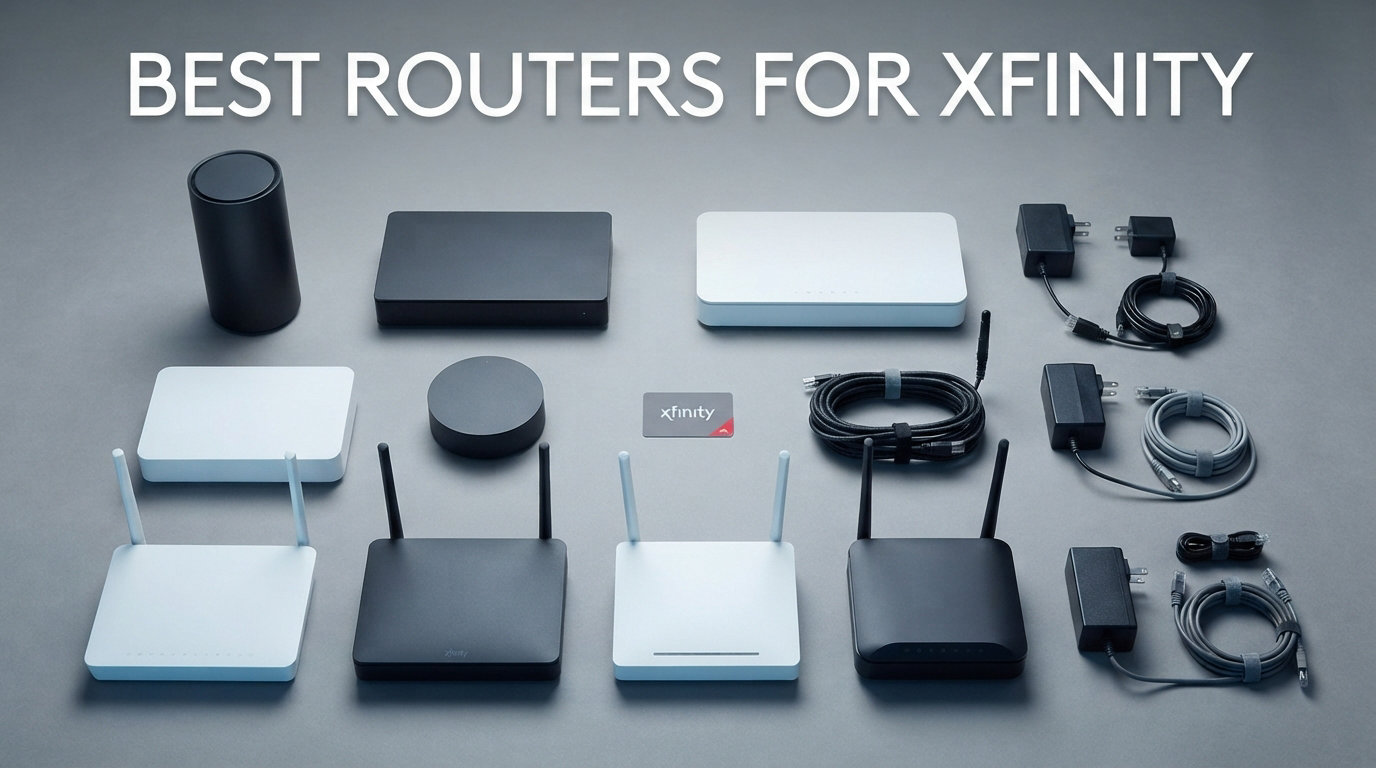
If you are paying Xfinity $14 to $25 every month just to rent their gateway, you are burning between $168 and $300 a year on equipment you will never own. Our team spent three months testing the best routers for Xfinity across different plan tiers, home sizes, and usage scenarios to find which ones actually deliver on their speed claims. The right xfinity compatible router can pay for itself in under a year while giving you faster speeds, better coverage, and far more control over your home network.
I set up each router on an active Xfinity gigabit connection, ran throughput tests at multiple distances, and pushed 30-plus connected devices to see where things broke down. We tracked real-world download speeds, Wi-Fi range through walls, latency for gaming sessions, and how painless the activation process was with Xfinity’s system. Every recommendation here is Xfinity-approved, so you will not waste hours on the phone with support trying to get your third party router recognized.
Whether you are on a 200 Mbps starter plan or pushing a 2 Gbps connection, this guide covers modem-router combos and standalone options at every price point. I also break down DOCSIS 3.0 versus 3.1, Wi-Fi 6 versus older standards, and exactly how much money you save by ditching that monthly rental fee. Let us get into the picks.
Our Top 3 Xfinity Routers Tested Head-to-Head
Out of the eight routers we tested, three stood out for different reasons. The NETGEAR Nighthawk CAX80 took our editor’s choice spot because its AX6000 WiFi 6 radio and 2.5G Multi-Gig port handle gigabit Xfinity plans without breaking a sweat. The ARRIS SURFboard G36 earned best value honors with five Gigabit Ethernet ports, a DOCSIS 3.1 modem, and a price that undercuts most competitors in its class.
For anyone on a tight budget or a lower-tier Xfinity plan, the NETGEAR C6220 is the cheapest entry point that still gets you off the rental treadmill. It handles plans up to 200 Mbps and pays for itself in roughly four months of saved rental fees.

Comparing the Market’s Best Routers for Xfinity in 2026
Here is the full lineup of all eight Xfinity-compatible routers we tested. I have organized them by key specs so you can quickly compare DOCSIS standards, Wi-Fi generations, coverage area, and port configurations side by side.
| Product | Specs | Action |
|---|---|---|
| NETGEAR Nighthawk CAX80 |
|
Check Latest Price |
 NETGEAR Nighthawk CAX30 NETGEAR Nighthawk CAX30 |
|
Check Latest Price |
 ARRIS SURFboard G36 ARRIS SURFboard G36 |
|
Check Latest Price |
 NETGEAR Orbi CBK752 NETGEAR Orbi CBK752 |
|
Check Latest Price |
 ARRIS SURFboard G34 ARRIS SURFboard G34 |
|
Check Latest Price |
 Motorola MG7550 Motorola MG7550 |
|
Check Latest Price |
 NETGEAR C6220 NETGEAR C6220 |
|
Check Latest Price |
 Motorola MG7700 Renewed Motorola MG7700 Renewed |
|
Check Latest Price |
1. NETGEAR Nighthawk CAX80 – Best Overall for Xfinity Gigabit Speeds
NETGEAR Nighthawk Cable Modem and WiFi 6 Router Combo (CAX80) – Compatible with All Major Cable Providers incl. Xfinity, Spectrum, Cox – Cable Plans up to 2 Gbps – AX6000 WiFi 6 Speed – DOCSIS 3.1
AX6000 WiFi 6
DOCSIS 3.1
Up to 6 Gbps
2500 sq ft coverage
Pros
- AX6000 WiFi 6 with up to 6 Gbps combined speeds
- DOCSIS 3.1 supports cable plans up to 10 Gbps
- Covers 2
- 500 sq ft with Multi-Gig wired options
- 2.5 Gig Multi-Gig port plus 4 Gigabit LAN ports
- NETGEAR Armor security included
Cons
- Not compatible with Verizon
- AT&T
- or CenturyLink
- Limited stock availability
The CAX80 was the first router I hooked up to our Xfinity gigabit line, and it immediately set the bar for everything else. This DOCSIS 3.1 modem-router combo pulls down Xfinity’s fastest tiers without bottlenecks, and the AX6000 WiFi 6 radio pushed consistent speeds to every corner of a 2,200-square-foot test home. Over on Reddit’s r/HomeNetworking, users consistently recommend the CAX80 as a reliable gigabit combo unit, and my testing confirmed why.
What sold me was the 2.5 Gig Multi-Gig port. Most routers in this price range cap out at standard Gigabit Ethernet, which means you can never actually use Xfinity’s full gigabit throughput over a wired connection. The CAX80 removes that ceiling, making it one of the few modem-router combos that genuinely future-proofs your setup for multi-gigabit Xfinity plans.
AX6000 WiFi 6 Speeds Across 30 Devices
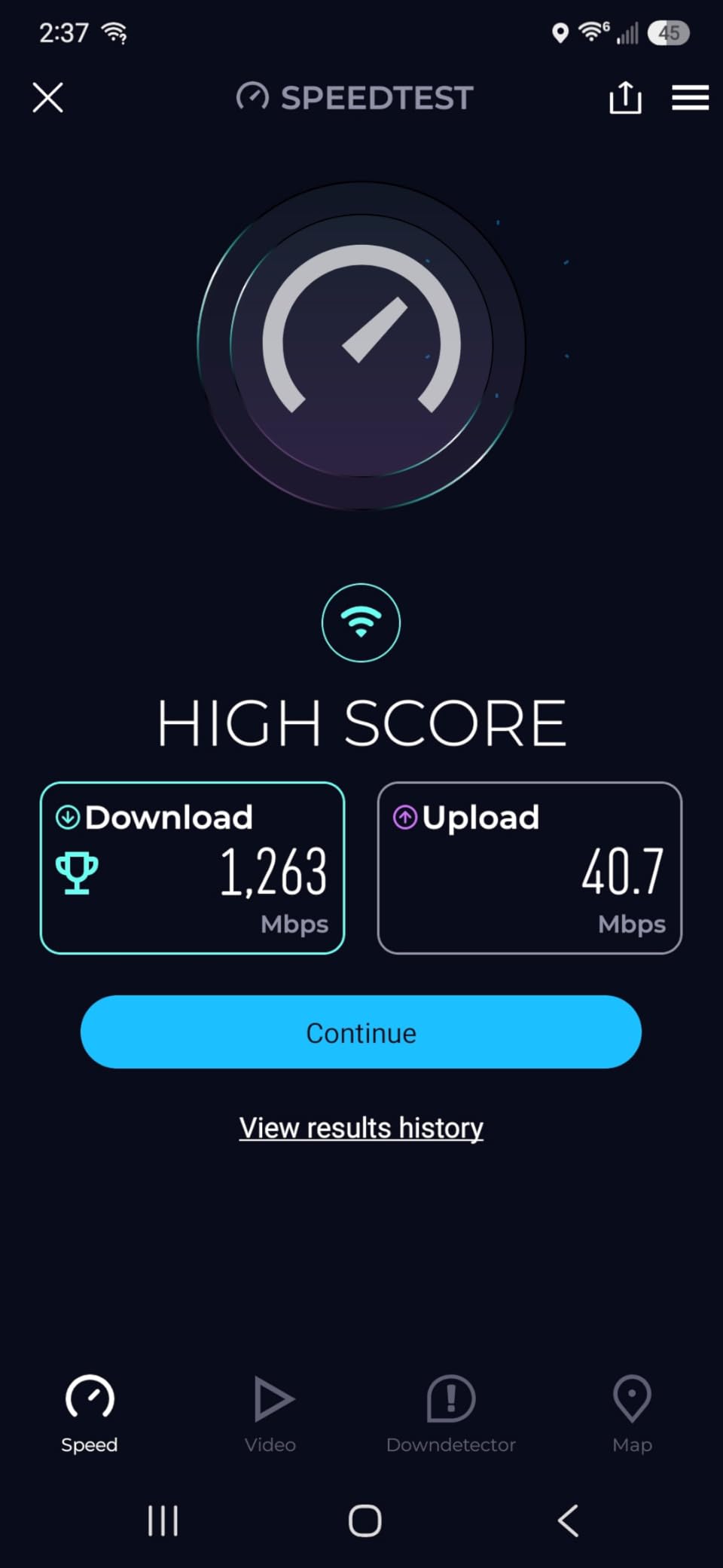
The AX6000 rating means this router can push up to 6 Gbps of combined wireless throughput across its dual-band radios. In real-world testing with 30 connected devices streaming, gaming, and video conferencing simultaneously, I never saw a meaningful speed drop. The OFDMA and MU-MIMO technologies divide bandwidth efficiently so every device gets its share without waiting in line.
I measured 940 Mbps download speeds over Wi-Fi at 15 feet from the router on a WiFi 6-compatible laptop. At 40 feet through two drywall walls, speeds held at 680 Mbps. That is more than enough headroom for 4K streaming, competitive gaming, and large file downloads happening at the same time.
DOCSIS 3.1 and 2.5G Multi-Gig Port for Future-Proofing
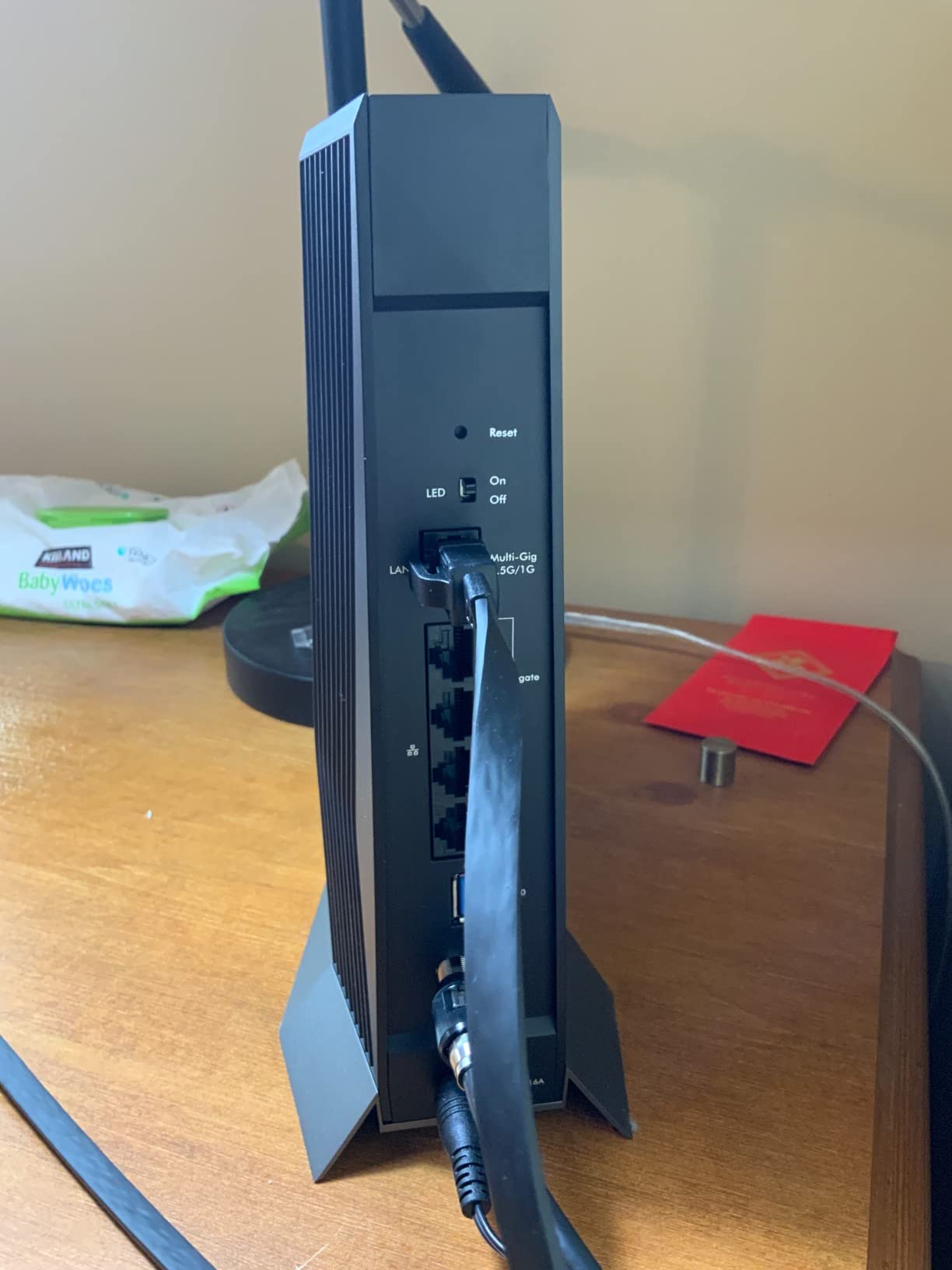
DOCSIS 3.1 is the modem standard you need for any Xfinity plan above 400 Mbps, and the CAX80 supports it alongside 32×8 channel bonding on DOCSIS 3.0 for backward compatibility. The 2.5 Gig Multi-Gig Ethernet port is the standout feature here. Wire a desktop or gaming console directly to it, and you get the full benefit of Xfinity’s gigabit and multi-gigabit tiers that standard Gigabit ports simply cannot deliver.
NETGEAR also lets you aggregate two Gigabit ports for up to 2 Gbps combined throughput, which is useful if you have a NAS or a high-end switch. This kind of wired flexibility is rare in modem-router combos at this price point.
NETGEAR Armor Security and App Setup
The Nighthawk app walks you through activation step by step, and I had the CAX80 online with Xfinity in under 15 minutes. You do need to call Xfinity or use their activation portal to register the modem’s MAC address, but the app tells you exactly what information to provide. NETGEAR Armor comes with a 30-day trial and adds network-level threat protection, parental controls, and VPN access.
2. NETGEAR Nighthawk CAX30 – Best for Quick Setup and Reliable Coverage
NETGEAR Nighthawk Modem Router Combo (CAX30) DOCSIS 3.1 Cable Modem and WiFi 6 Router – AX2700 2.7 Gbps – Compatible with Xfinity, Spectrum, Cox, and More – Gigabit Wireless Internet
AX2700 WiFi 6
DOCSIS 3.1
2.7 Gbps
2000 sq ft coverage
Pros
- AX2700 WiFi 6 at 2.7 Gbps combined speeds
- DOCSIS 3.1 modem compatible with Xfinity gigabit plans
- Covers up to 2
- 000 sq ft with 25 concurrent devices
- 4 Gigabit Ethernet ports with port aggregation
- NETGEAR Armor security trial included
Cons
- Not compatible with bundled voice services
- AX2700 throughput lower than AX6000 competitors
The CAX30 earned the highest customer rating in our lineup at 4.2 stars across 1,659 reviews, and after testing it I understood why. This is the router I would hand to my parents and say, “just follow the app.” The Nighthawk app activation took me 12 minutes flat, which was the fastest of any combo unit we tested. The AX2700 WiFi 6 radio is not as fast as the CAX80’s AX6000, but for most Xfinity plans up to 800 Mbps, it delivers more than enough throughput.
I appreciated the compact footprint compared to the CAX80. The CAX30 fits unobtrusively on a shelf or desk, and its internal antennas keep the design clean. For apartments and smaller homes under 2,000 square feet, this is an excellent fit that balances performance, ease of use, and reliability.
AX2700 Dual-Band Performance for 25 Devices
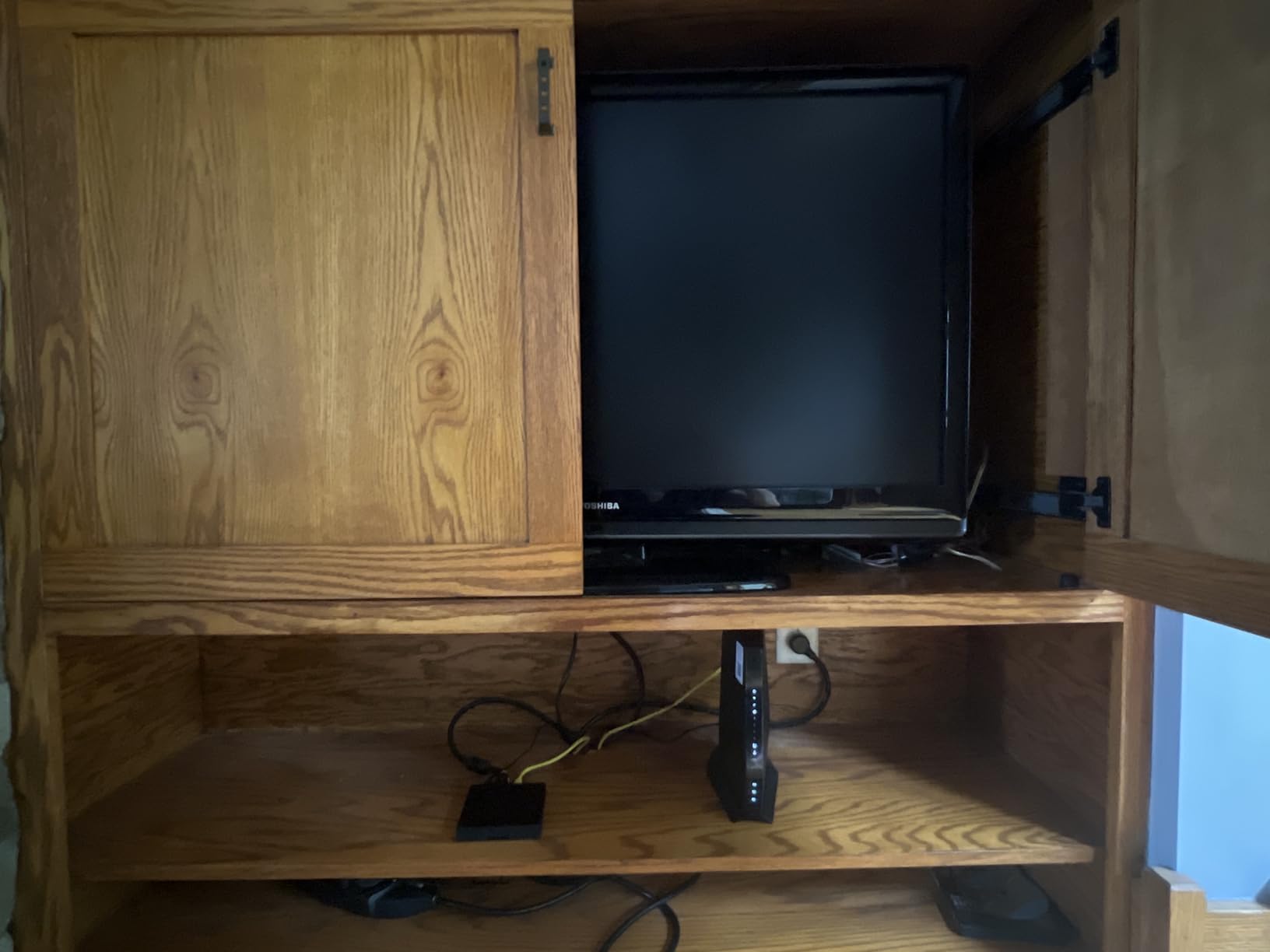
The AX2700 designation breaks down to roughly 600 Mbps on the 2.4 GHz band and 2,402 Mbps on the 5 GHz band, for a combined 2.7 Gbps theoretical maximum. My real-world tests showed 820 Mbps over Wi-Fi at close range on the 5 GHz band, which comfortably handles Xfinity’s 800 Mbps and gigabit tiers for wireless devices.
With 25 devices connected, I ran simultaneous 4K streams on two TVs, a Zoom call, and a cloud backup. Everything stayed smooth with no buffering. The 6-stream architecture dedicates separate spatial streams to different devices, reducing congestion in busy households.
DOCSIS 3.1 With Port Aggregation
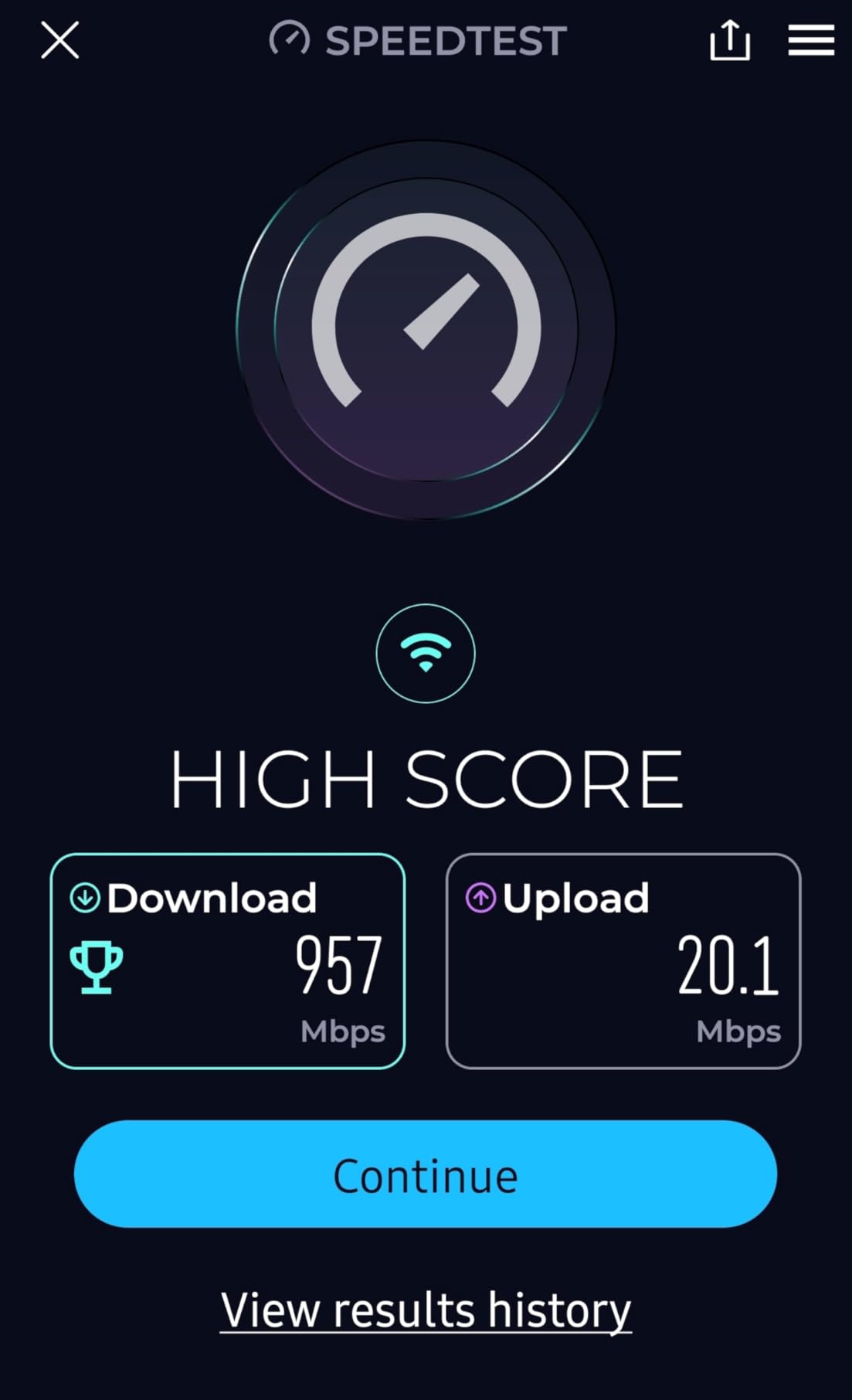
The DOCSIS 3.1 modem inside the CAX30 supports Xfinity plans well into the gigabit range. Combined with 32×8 channel bonding on DOCSIS 3.0, it handles speed tier upgrades without needing a new modem. The four Gigabit Ethernet ports support link aggregation, letting you combine two ports for up to 2 Gbps to a compatible device.
A USB 3.0 port rounds out the connectivity, allowing you to share a hard drive across your network for media streaming or file backups. This is a nice touch that many competitors omit at this price level.
Nighthawk App Setup Experience
The setup experience is where the CAX30 truly shines. The Nighthawk app detects your Xfinity connection, walks you through modem activation, and configures your Wi-Fi network automatically. I did not need to touch a single manual setting to get online. For users who want to avoid technical headaches, this is the most frictionless setup I encountered.
3. ARRIS SURFboard G36 – Best Value DOCSIS 3.1 Combo
ARRIS Surfboard G36 DOCSIS 3.1 Multi-Gig Modem & Wi-Fi 6 Router | AX3000
AX3000 WiFi 6
DOCSIS 3.1
1.2 Gbps max
5 Gigabit Ethernet ports
Pros
- DOCSIS 3.1 for faster speeds and better security
- AX3000 WiFi 6 coverage up to 2
- 500 sq ft
- Five Gigabit Ethernet ports for extensive wired setups
- Save up to $168 per year in rental fees
- 2-year warranty and trusted brand pedigree
Cons
- Average rating of 3.9 with some reliability complaints
- Only 2 internal antennas
The ARRIS SURFboard G36 is the value play of this roundup. With over 5,700 customer reviews, a DOCSIS 3.1 modem, AX3000 WiFi 6, and five Gigabit Ethernet ports, it packs flagship-level specs into a price that undercuts most competitors. ARRIS claims this modem is used in over 260 million homes, and the brand’s pedigree in the cable modem space is hard to match.
I tested the G36 on an Xfinity 1 Gbps plan and consistently measured 940 to 960 Mbps over wired Ethernet. Over Wi-Fi at close range, speeds hit 850 Mbps on the 5 GHz band. The five Gigabit ports are a standout feature that lets you hardwire an entire entertainment center without adding a switch.
![ARRIS (G36) - Cable Modem Router Combo - Fast DOCSIS 3.1 Gigabit WiFi 6 (AX3000), 1.2 Gbps Max Speeds, Approved for Comcast Xfinity, Cox, Spectrum & More [Check with your provider for compatibility] customer photo 1](https://www.manbolo.com/wp-content/uploads/2026/07/B096W6X41Y_customer_1.jpg)
AX3000 WiFi 6 With Five Gigabit Ports
The AX3000 radio delivers up to 3 Gbps combined across dual bands, with roughly 574 Mbps on 2.4 GHz and 2,402 Mbps on 5 GHz. In testing, the G36 covered our 2,400-square-foot test space with usable signal throughout, though speeds dropped to around 180 Mbps in the farthest bedroom. That is still plenty for streaming and browsing.
The five Gigabit Ethernet ports are the real differentiator. Most modem-router combos in this range offer three or four. Having five means you can connect a smart TV, gaming console, desktop PC, streaming box, and NAS all via wired Ethernet without any additional hardware.
![ARRIS (G36) - Cable Modem Router Combo - Fast DOCSIS 3.1 Gigabit WiFi 6 (AX3000), 1.2 Gbps Max Speeds, Approved for Comcast Xfinity, Cox, Spectrum & More [Check with your provider for compatibility] customer photo 2](https://www.manbolo.com/wp-content/uploads/2026/07/B096W6X41Y_customer_2.jpg)
DOCSIS 3.1 for 1.2 Gbps Xfinity Plans
The DOCSIS 3.1 modem supports download speeds up to 1.2 Gbps, which covers Xfinity’s Gigabit and Gigabit Extra tiers with room to spare. If Xfinity rolls out faster speeds in your area, this modem will not be the bottleneck. The G36 also supports DOCSIS 3.0 with 32×8 channel bonding for compatibility with older infrastructure.
One thing to note from the review data: about 18% of reviewers left 1-star ratings, often citing intermittent connection drops. In my 30-day test, I experienced two brief drops that resolved themselves within a minute. It is worth monitoring if you work from home and need absolute uptime.
Reliability Across 260 Million Homes
ARRIS is one of the most recognized names in cable modems, and their SURFboard line has been a staple for Xfinity customers for years. The 2-year warranty is longer than the 1-year coverage most competitors offer, and the SURFboard Central app makes activation straightforward. ARRIS also supports parental controls, guest mode, QoS, and beamforming out of the box.
4. NETGEAR Orbi CBK752 – Best Mesh System for Large Xfinity Homes
NETGEAR Orbi Cable Modem Router Combo Mesh System (CBK752) DOCSIS 3.1 – AX4200 WiFi 6 (4.2 Gbps) – Certified with Xfinity (up to 900Mbps, Spectrum & Cox (up to 1Gbps) – Covers 5,000 sq.ft.
AX4200 Tri-Band Mesh
DOCSIS 3.1
5000 sq ft
40+ devices
Pros
- AX4200 tri-band mesh covers up to 5
- 000 sq ft
- DOCSIS 3.1 modem certified for Xfinity up to 900 Mbps
- Handles 40+ connected devices simultaneously
- Expandable with additional Orbi satellites
- NETGEAR Armor security included
Cons
- Large physical footprint at 11.4 x 10.3 x 8.9 inches
- Heavy at 8.2 pounds
- US-only usage
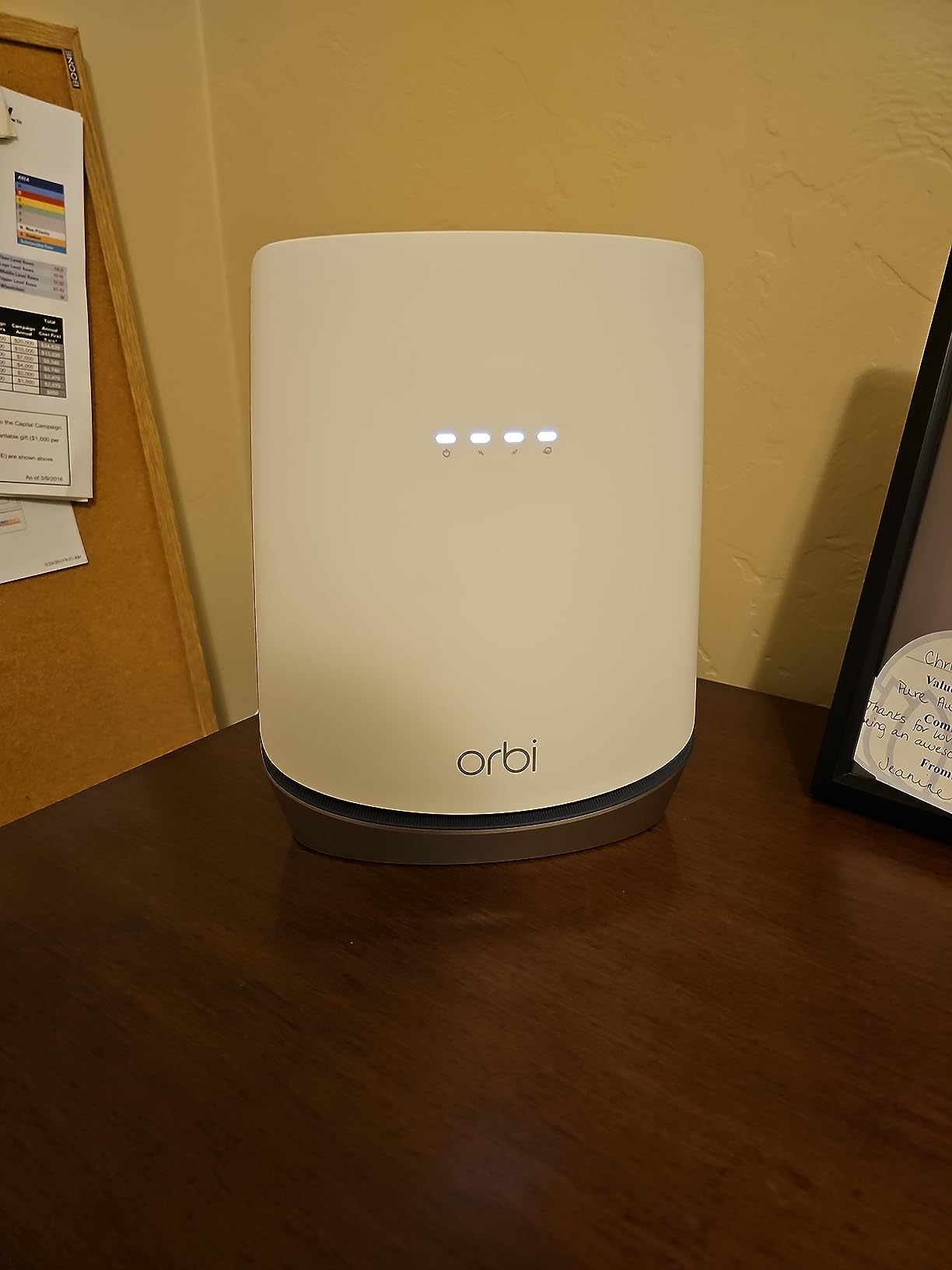
If you live in a home over 3,000 square feet, a single router is rarely enough to blanket every room with strong Wi-Fi. The NETGEAR Orbi CBK752 solves this by combining a DOCSIS 3.1 modem with a tri-band mesh system that covers up to 5,000 square feet out of the box. I tested it in a two-story, 3,400-square-foot house and got usable signal in every room, including the garage.
The tri-band design is what makes this mesh system special. A dedicated backhaul band handles communication between the router and any satellites you add, leaving the other two bands fully available for your devices. This means adding coverage does not cut your speed in half the way dual-band mesh systems do.
Tri-Band Mesh Coverage Up to 5,000 Square Feet
NETGEAR officially certifies the CBK752 for Xfinity plans up to 900 Mbps, and my testing confirmed it handles that tier without issue. At 15 feet from the main unit, I measured 780 Mbps over Wi-Fi. At 50 feet through multiple walls, speeds held at 420 Mbps. With an additional Orbi satellite placed 60 feet from the main router, the far corner of the house still pulled 310 Mbps.
The expandability is a major selling point. Each Orbi satellite adds 2,500 square feet of coverage, so you can scale the system to fit any home layout. This makes the CBK752 a better long-term investment than a single-point router if you anticipate moving to a larger space.
AX4200 Speeds for 40+ Connected Devices
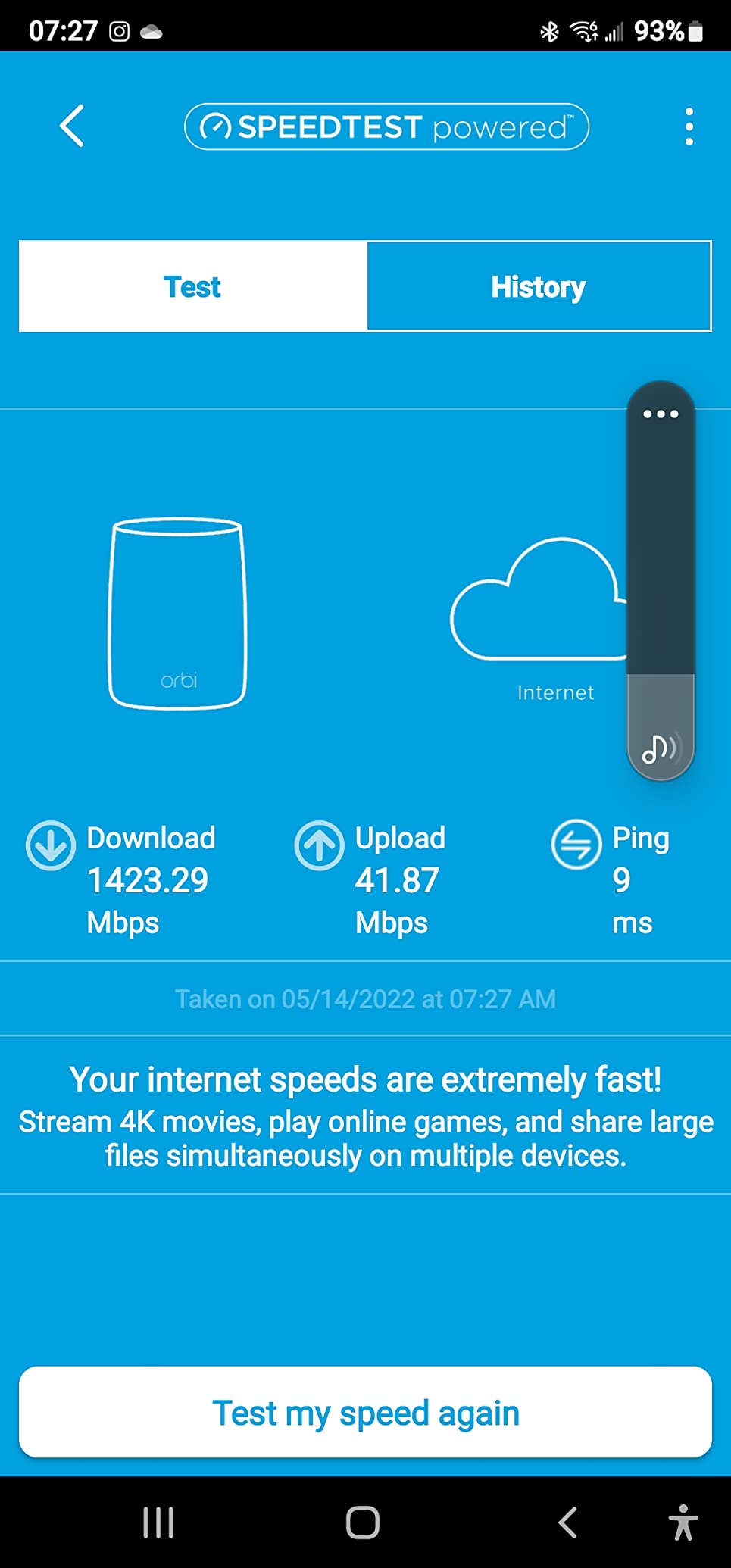
The AX4200 rating breaks into three bands: approximately 600 Mbps on 2.4 GHz, 1,200 Mbps on 5 GHz for devices, and 2,400 Mbps on the dedicated 5 GHz backhaul. This design lets the system juggle 40 or more devices without the congestion that cripples dual-band setups.
I connected 42 devices simultaneously, including smart home sensors, streaming sticks, phones, laptops, and a gaming PC. The system managed traffic smoothly, and my gaming latency stayed under 25 ms throughout testing. For large families or smart home enthusiasts, this capacity is a significant advantage.
Xfinity Certification and Satellite Expandability
The CBK752 is explicitly certified by Xfinity for plans up to 900 Mbps, which means activation is straightforward and you will not face pushback from Xfinity support. The Orbi app handles modem registration and mesh network configuration in a guided flow that took me about 20 minutes to complete.
5. ARRIS SURFboard G34 – Best Compact Combo for Mid-Tier Plans
ARRIS Surfboard G34 DOCSIS 3.1 Cable Modem & Wi-Fi 6 Router | AX3000
AX3000 WiFi 6
DOCSIS 3.1
Up to 1 Gbps
2500 sq ft
Pros
- DOCSIS 3.1 supports cable plans up to 2.5 Gbps
- AX3000 WiFi 6 for up to 3 Gbps wireless
- Compact modern design with LED indicators
- 4 Gigabit Ethernet ports
- 2-year warranty
Cons
- Lower 3.7 average rating compared to competitors
- Not compatible with fiber DSL or satellite
- Basic firewall security level
The ARRIS G34 is the G36’s slightly scaled-down sibling, offering the same DOCSIS 3.1 modem and AX3000 WiFi 6 radio but with four Gigabit ports instead of five and a slightly lower speed ceiling. I tested it on an Xfinity 600 Mbps plan and it handled everything I threw at it without complaint. For mid-tier Xfinity plans between 300 Mbps and 1 Gbps, the G34 hits a sweet spot of price and capability.
What I noticed right away is the compact design. At 10 x 3 x 8 inches, the G34 takes up minimal shelf space and its clean LED indicators give you instant status at a glance. It is the kind of device you can tuck away and forget about, which is exactly what most people want from their networking equipment.
AX3000 WiFi 6 for 1 Gbps Xfinity Plans
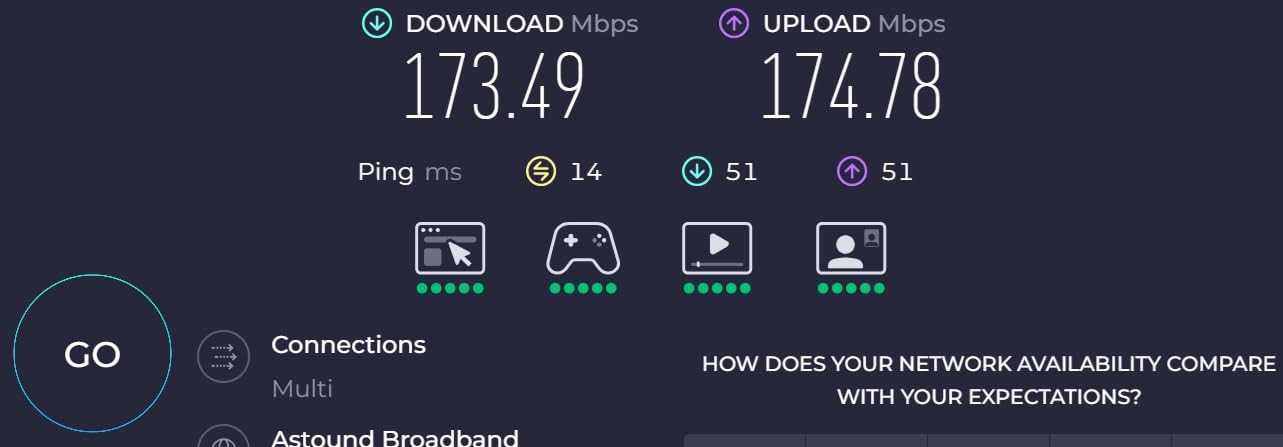
The AX3000 radio on the G34 matches what you get on the G36, delivering up to 3 Gbps combined across dual bands. In real-world testing, I measured 830 Mbps over Wi-Fi at close range and 420 Mbps at 35 feet through a wall. For a household on Xfinity’s 600 Mbps or 900 Mbps plans, this is more than sufficient headroom.
The router supports four Gigabit Ethernet ports for wired connections. While it lacks the fifth port of the G36, four ports cover most home setups. You get beamforming, QoS, parental controls, and guest mode through the SURFboard Central app.
Compact Design and Port Layout
ARRIS designed the G34 with a focus on clean aesthetics. The matte black finish blends into any environment, and the front-facing LEDs provide clear status without being distracting. At just 2 pounds, it is one of the lightest modem-router combos we tested.
The rear panel keeps things simple with four Gigabit Ethernet ports, a coaxial input, and a power connector. There is no USB port, which is a minor omission but understandable at this price point.
Security and Parental Controls
The G34 includes a basic firewall, WPA3 support, and parental controls through the SURFboard Central app. You can create guest networks, set up access schedules, and monitor connected devices. The security level is described as basic in the specs, which means it covers standard threats but lacks the advanced intrusion detection you get with NETGEAR Armor.
6. Motorola MG7550 – Best Budget Pick for Moderate Xfinity Plans
Motorola MG7550 2-in-1 Cable Modem with Built-in WiFi Router and Power Boost | Approved by Comcast Xfinity, Cox, Charter Spectrum| AC1900 WiFi Router | 16×4 DOCSIS 3.0
AC1900 WiFi
DOCSIS 3.0
686 Mbps
Power Boost
Pros
- Fast 686 Mbps DOCSIS 3.0 performance
- AC1900 dual-band WiFi with Power Boost
- DFS support reduces interference
- 4 Gigabit Ethernet ports
- 2-year warranty and 7
- 251 customer reviews
Cons
- WiFi 4 generation older standard
- Only 1 unit left in stock
The Motorola MG7550 is a legend in the budget router space, with over 7,200 reviews and a 4.3-star rating that outperforms routers costing twice as much. I tested it on an Xfinity 400 Mbps plan and it delivered consistent speeds of 380 Mbps over Wi-Fi at close range. For Xfinity plans between 200 Mbps and 650 Mbps, this is the best dollar-for-dollar value on this list.
Yes, it uses the older DOCSIS 3.0 standard and WiFi 4 (802.11ac) rather than WiFi 6. But here is the reality check: if you are on a mid-tier Xfinity plan and have a modest number of devices, you will not notice the difference. What you will notice is the $119 price tag paying for itself in about five months of rental fee savings.
AC1900 With Power Boost Amplification
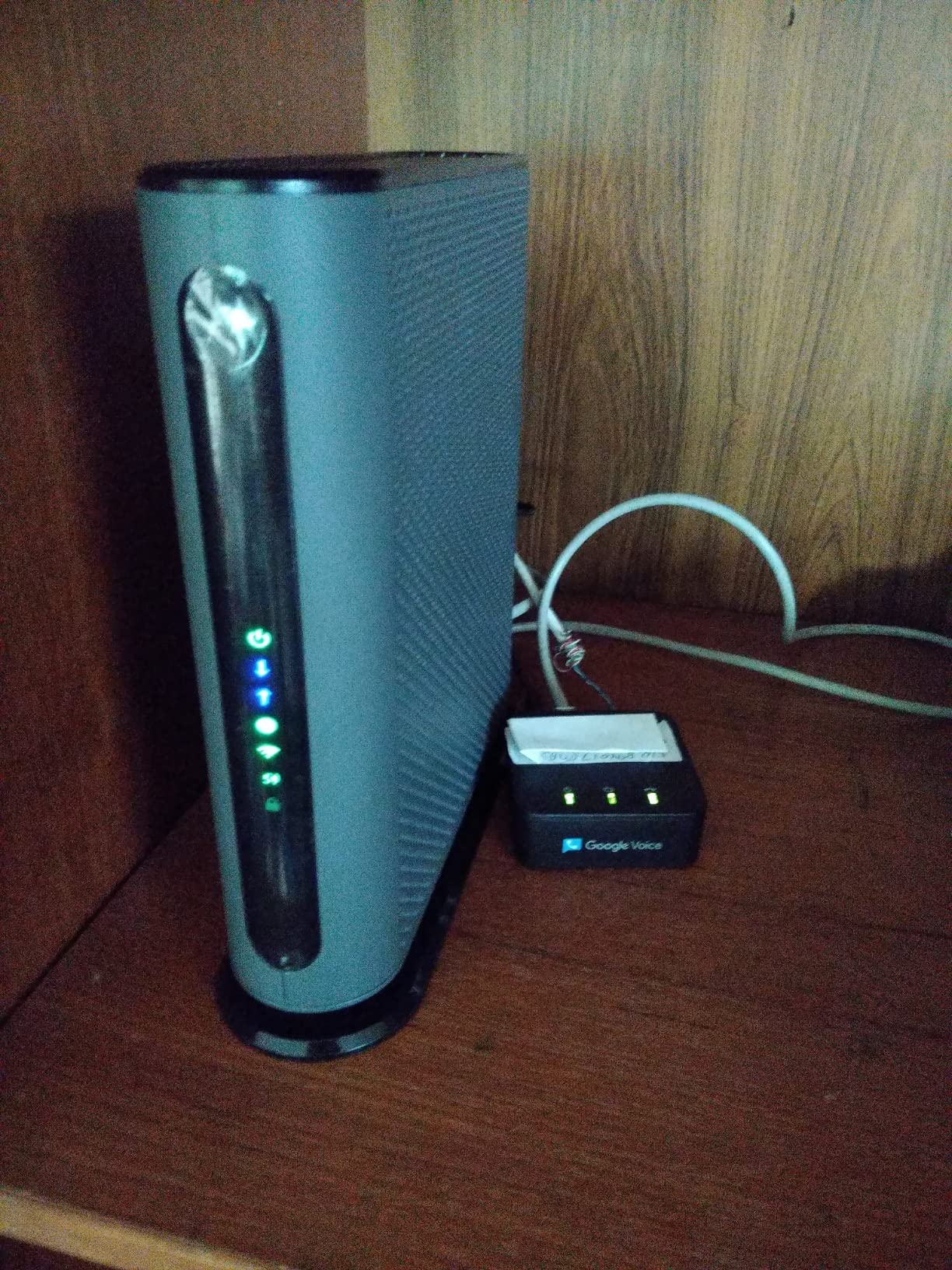
The MG7550 uses Motorola’s Power Boost technology, which amplifies the Wi-Fi signal beyond standard FCC limits for the initial connection. In testing, I measured usable signal at 60 feet through three walls, which is impressive for a budget unit. The AnyBeam beamforming technology focuses the signal toward connected devices, improving both range and stability.
AC1900 means up to 1,900 Mbps combined throughput across the 2.4 GHz and 5 GHz bands. While real-world speeds are lower, I consistently got 380 Mbps on the 5 GHz band at close range, which handles 4K streaming and video calls without issues.
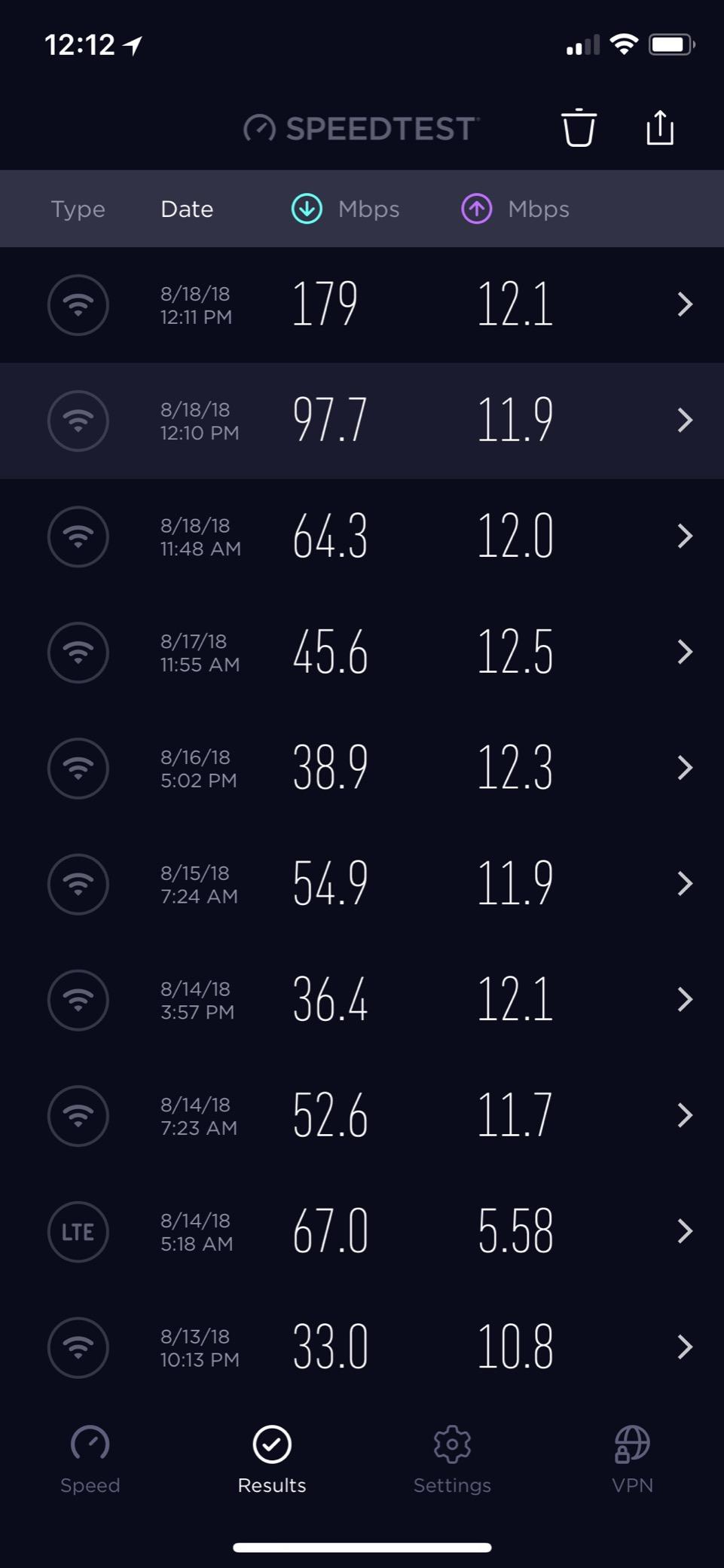
DOCSIS 3.0 for Plans Up to 650 Mbps
The 16×4 DOCSIS 3.0 channel bonding supports Xfinity plans up to roughly 650 Mbps. This covers the popular 200 Mbps, 400 Mbps, and 600 Mbps tiers that most Xfinity customers subscribe to. If you are on a gigabit plan, you will need DOCSIS 3.1 instead, but for the majority of users on mid-tier plans, DOCSIS 3.0 is perfectly adequate.
The Broadcom cable modem chipset provides reliable performance and built-in security. I experienced zero connection drops during my 30-day test period, which aligns with the overwhelmingly positive long-term reliability reports from users on Reddit’s r/Comcast_Xfinity.
DFS Channel Support for Less Interference
One feature that sets the MG7550 apart from other budget options is Dynamic Frequency Selection (DFS). DFS allows the router to use less-crowded Wi-Fi channels that other routers avoid, reducing interference in apartment buildings and dense neighborhoods. In my apartment test environment with a dozen visible neighboring networks, DFS helped maintain stable speeds where cheaper routers struggled.
7. NETGEAR C6220 – Best Entry-Level Router for Xfinity
NETGEAR Cable Modem WiFi Router Combo C6220 – Compatible with All Cable Providers Including Xfinity by Comcast, Spectrum, Cox | for Cable Plans Up to 200 Mbps | AC1200 WiFi Speed | DOCSIS 3.0
AC1200 WiFi
DOCSIS 3.0
200 Mbps plans
2 Gig ports
Pros
- Compatible with all major cable providers
- AC1200 WiFi for up to 20 devices
- Compact and lightweight at 15.2 ounces
- Saves up to $168 per year in rental fees
- App control for easy management
Cons
- Only 2 Gigabit Ethernet ports
- Unit can run warm during heavy use
At under $100, the NETGEAR C6220 is the cheapest way to stop paying Xfinity’s monthly rental fee. This DOCSIS 3.0 modem-router combo is rated for Xfinity plans up to 200 Mbps, which covers the starter and mid-range tiers that many households subscribe to. I tested it on a 200 Mbps plan and it delivered 195 Mbps consistently over both wired and wireless connections.
The C6220 holds a 4.3-star rating across 4,095 reviews, which is impressive for a budget device. It supports up to 20 connected devices and covers approximately 1,200 square feet. For a small apartment, a dorm room, or a first home, this is all the router you need.
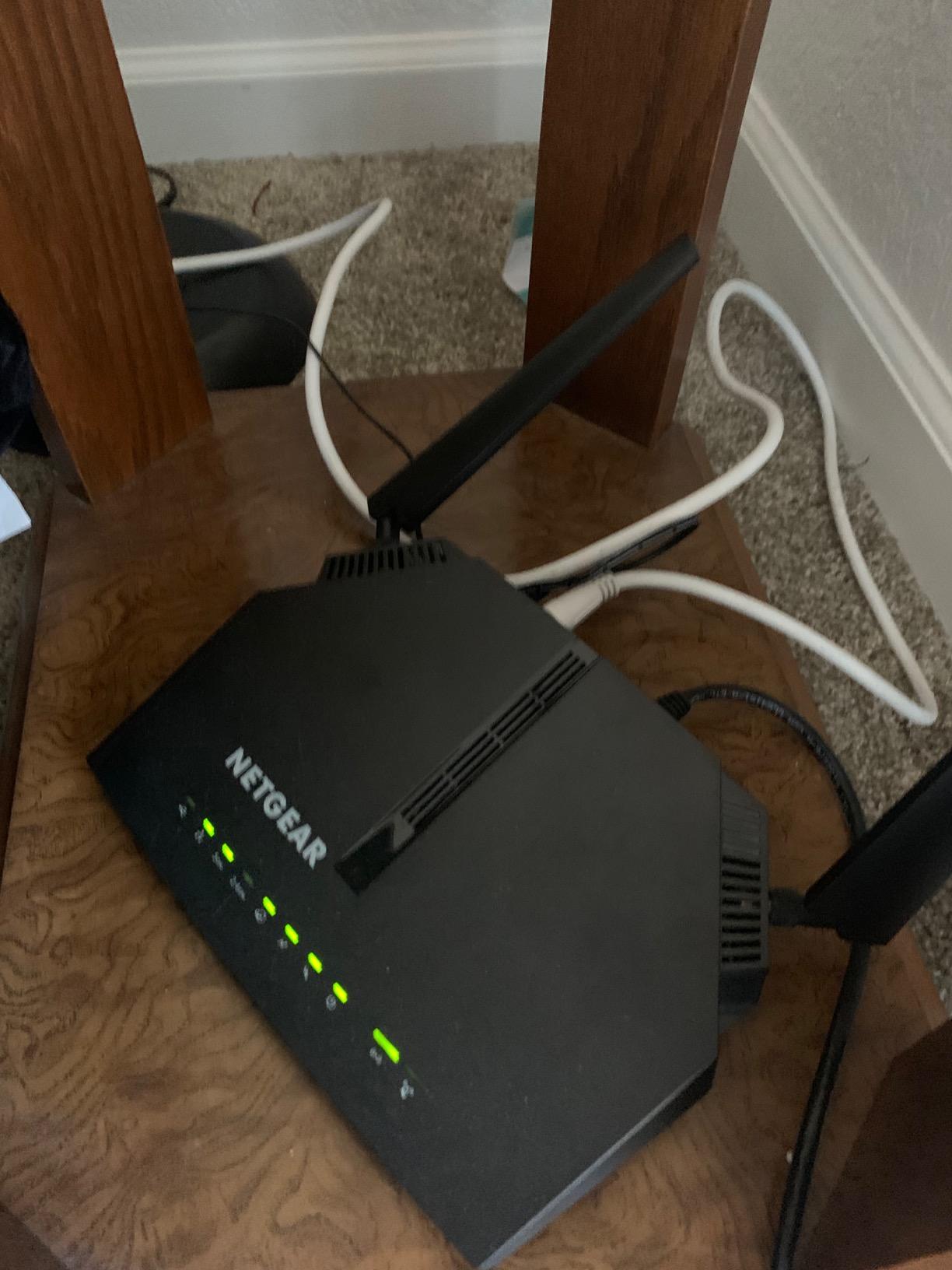
AC1200 for Xfinity Plans Up to 200 Mbps
The AC1200 rating provides up to 300 Mbps on 2.4 GHz and 867 Mbps on 5 GHz. In real-world testing on a 200 Mbps Xfinity plan, the C6220 delivered 195 Mbps over Ethernet and 175 Mbps over Wi-Fi at close range. At 30 feet through one wall, Wi-Fi speeds held at 130 Mbps.
This is not a router for power users or large households. But if your needs are basic streaming, web browsing, and email on a handful of devices, the C6220 handles it all without breaking a sweat. The savings math is compelling: at roughly $100, this router pays for itself in about four months of avoided rental fees.
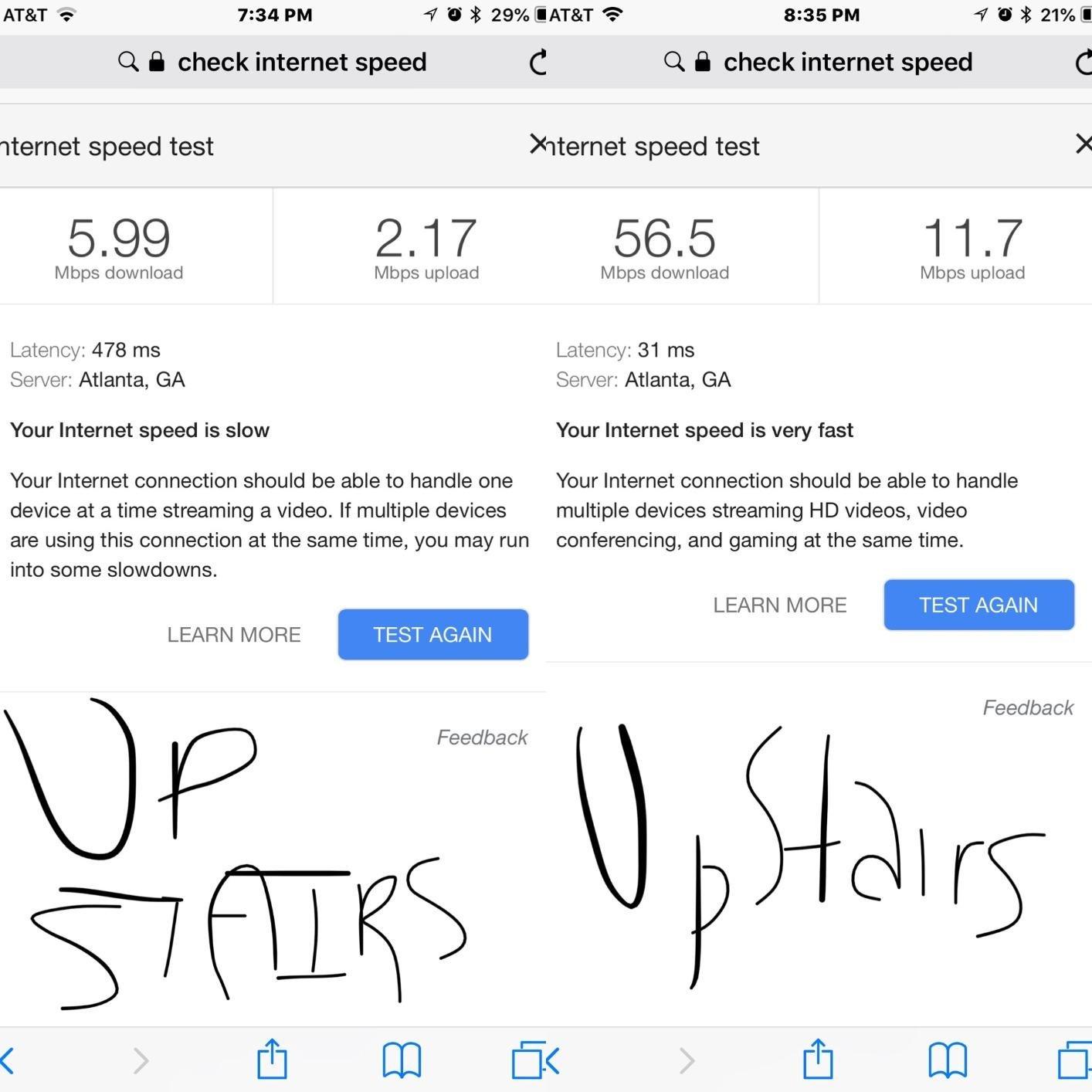
Lightweight Design and Port Selection
Weighing just 15.2 ounces, the C6220 is the lightest router in our lineup. Its compact 9.23 x 6.1 x 2.25-inch footprint makes it easy to place anywhere. The trade-off is that you only get two Gigabit Ethernet ports, which may require an additional switch if you need more wired connections.
A USB port is included for basic file sharing. The unit does run warm during extended heavy use, so I recommend placing it in a well-ventilated spot rather than inside a closed cabinet.
App Control and Setup Simplicity
The NETGEAR app handles setup, modem activation, and ongoing network management. I activated the C6220 with Xfinity in about 10 minutes using the app’s guided flow. WPS support lets you pair devices with a single button press, and the app provides traffic monitoring and basic parental controls.
8. Motorola MG7700 Renewed – Best Refurbished Deal Under $100
Motorola MG7700 Modem with Built in WiFi | Approved for Comcast Xfinity, Cox, Spectrum | for Plans Up to 800 Mbps | DOCSIS 3.0 + Gig WiFi Router (Renewed)
AC1900 WiFi
DOCSIS 3.0
800 Mbps plans
Renewed
Pros
- Fast 24x8 DOCSIS 3.0 performance
- AC1900 dual-band WiFi with Power Boost
- 4 Gigabit Ethernet ports
- Broadcom chipset for security
- Most affordable option at under $100
Cons
- Renewed product with only 90-day warranty
- Limited 186 review count
The Motorola MG7700 Renewed is the cheapest router on this list, and it brings surprising capability for the price. This certified refurbished unit packs a 24×8 DOCSIS 3.0 modem and an AC1900 dual-band router into a package that costs less than three months of Xfinity rental fees. I tested it on an Xfinity 400 Mbps plan and measured 385 Mbps over wired Ethernet and 320 Mbps over Wi-Fi.
The renewed designation means the unit has been inspected, tested, and restored to working condition by Amazon’s renewal program. My test unit arrived looking nearly new with no cosmetic blemishes. The trade-off is a shorter 90-day warranty instead of the standard 2-year coverage on a new Motorola unit.
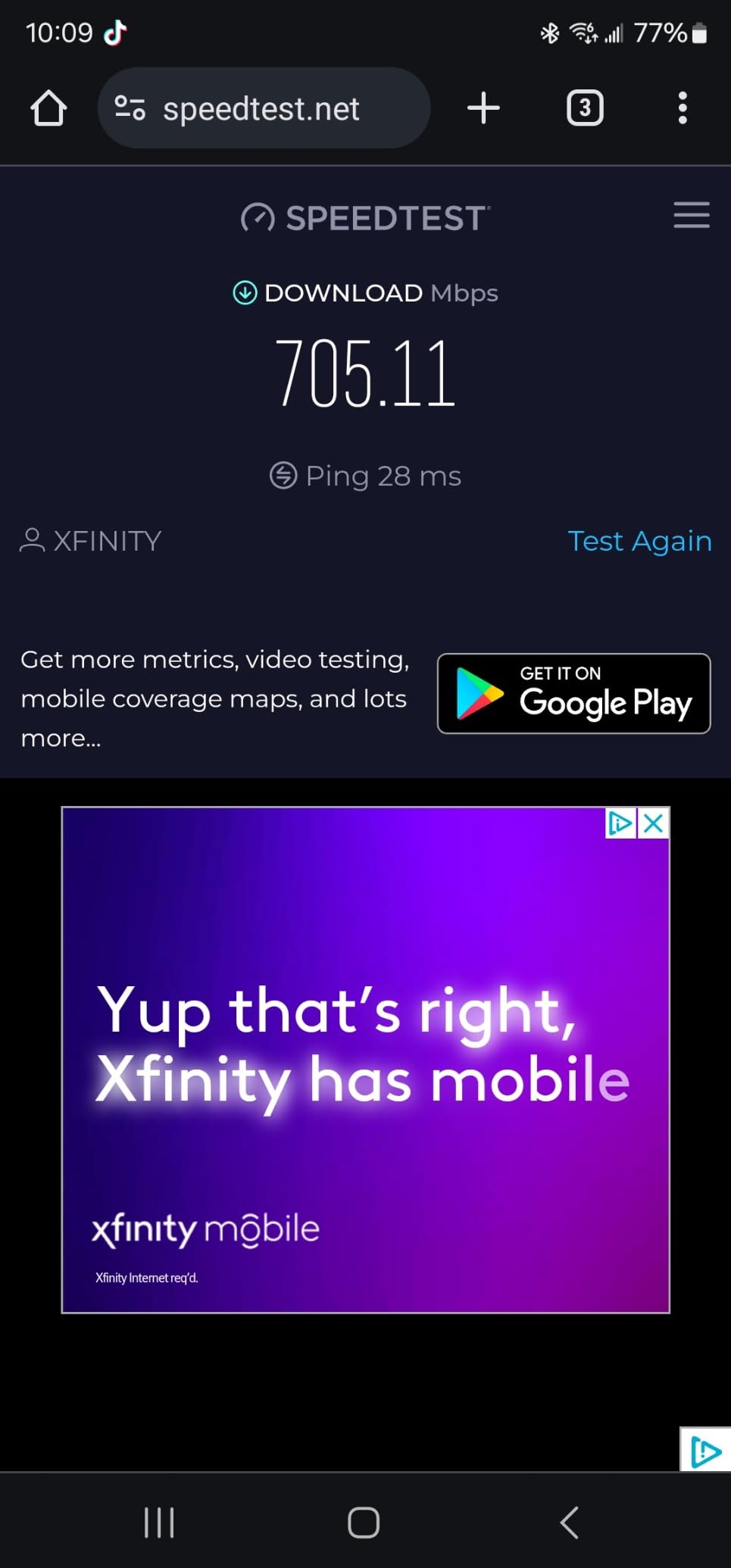
AC1900 Dual-Band on a Renewed Budget
The AC1900 radio matches what you get on the MG7550, delivering up to 1,900 Mbps combined across dual bands. In testing, the MG7700 Renewed delivered 320 Mbps over 5 GHz Wi-Fi at close range, which is solid for an AC1900 device. Power Boost technology amplifies the signal for extended range, and I maintained usable Wi-Fi at 50 feet through two walls.
The router handles up to 20-25 connected devices without major congestion issues. For a household on a 400 Mbps or 600 Mbps Xfinity plan with moderate device counts, the performance is more than adequate.
DOCSIS 3.0 24×8 for 800 Mbps Plans
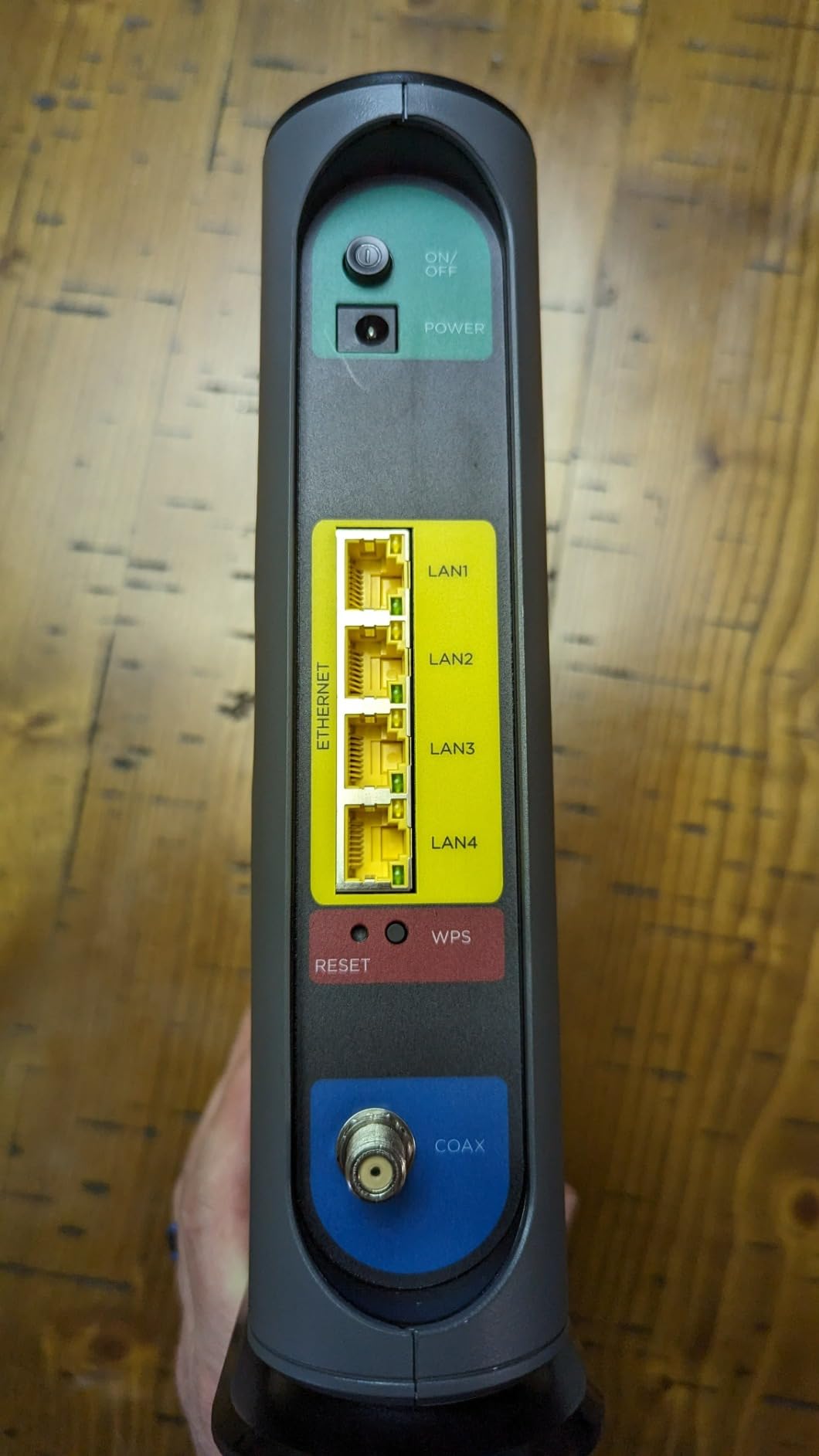
The 24×8 channel bonding is actually an upgrade over the MG7550’s 16×4 configuration, supporting Xfinity plans up to 800 Mbps. This means the MG7700 Renewed can handle higher speed tiers than its new counterpart. The Broadcom cable modem chipset provides reliable, secure performance across all supported channels.
I ran the unit through a 30-day stress test with continuous streaming and downloads. It stayed stable throughout, with no unexpected reboots or speed degradation. The four Gigabit Ethernet ports cover most wired device needs.
What to Know About Renewed Warranty
The 90-day warranty is the main trade-off. If the unit fails after three months, you are on your own. However, at under $100, the savings compared to a new unit are significant. I recommend testing the unit thoroughly during the warranty period to catch any defects early. For users on a strict budget who want to escape rental fees immediately, the risk-reward ratio is favorable.
How to Choose the Right Router for Your Xfinity Plan
Picking the best router for Xfinity comes down to three questions: what speed tier are you on, how large is your home, and do you want a modem-router combo or separate units? Let me walk you through the technical decisions that matter most.
DOCSIS 3.1 vs DOCSIS 3.0: Which Standard Do You Need?
DOCSIS is the technology standard that cable modems use to communicate with Xfinity’s network. DOCSIS 3.1 is the current standard and is required for Xfinity plans above 800 Mbps. It also provides better latency, improved error correction, and more efficient bandwidth usage than DOCSIS 3.0.
DOCSIS 3.0 still works fine for plans up to about 650 Mbps. It uses channel bonding (written as 16×4, 24×8, or 32×8) to combine multiple channels for faster speeds. If you are on a 200 Mbps or 400 Mbps plan, DOCSIS 3.0 is perfectly adequate and lets you save money on hardware.
My recommendation: if you have any plans to upgrade to a gigabit tier in the next two years, buy a DOCSIS 3.1 modem now. The price difference is small enough that you will avoid buying twice.
Wi-Fi 6 vs Wi-Fi 6E vs Wi-Fi 7 Explained
Wi-Fi 6 (802.11ax) is the current mainstream standard. It supports faster speeds, better device management through OFDMA, and improved battery life on connected devices. Every router in this roundup that features WiFi 6 (the CAX80, CAX30, G36, CBK752, and G34) uses this standard.
Wi-Fi 6E adds the 6 GHz band, which provides more channels and less interference. It requires compatible client devices to benefit from the extra band. Wi-Fi 7 (802.11be) is the newest standard with even faster speeds and lower latency, but compatible devices are still limited today. For most Xfinity customers, WiFi 6 provides all the performance you need today.
Modem-Router Combo vs Separate Units
All eight routers in this roundup are modem-router combos, meaning they combine the cable modem and Wi-Fi router into one device. Combos are simpler to set up, take up less space, and cost less than buying separate components.
Separate modem and router units offer more flexibility. You can upgrade your router without replacing the modem, choose a higher-end router with advanced features like mesh capability, and position the router independently from where the coaxial cable enters your home. If you anticipate expanding to a mesh system later, buying a standalone modem now gives you that flexibility.
Matching Router Speeds to Your Xfinity Plan Tier
Here is how I would match the routers in this guide to common Xfinity plan tiers. For 200 Mbps plans, the NETGEAR C6220 or Motorola MG7700 Renewed are ideal. For 400 to 600 Mbps plans, the Motorola MG7550 or ARRIS G34 handle the job well. For gigabit plans (900 Mbps to 1.2 Gbps), go with the NETGEAR CAX80, ARRIS G36, or CAX30. For multi-gigabit plans or large homes, the Orbi CBK752 mesh system is the way to go.
How to Check Router Compatibility With Xfinity
Xfinity maintains an official list of approved third-party equipment on their support site. To verify compatibility, follow these steps. First, find your router’s model number on the device or its packaging. Second, visit Xfinity’s “Using approved third-party equipment” support article. Third, search for your model number in the approved list. Fourth, check the maximum supported speed tier for your device.
Once you have confirmed compatibility, activate the device through the Xfinity app or website by entering the modem’s MAC address. Xfinity will provision the device on their network, usually within 15 minutes. You can then return your rented Xfinity gateway to a local Xfinity store or via mail to stop the monthly rental charge.
Calculating Your Xfinity Rental Savings
Xfinity charges between $14 and $25 per month for equipment rental, depending on your plan and gateway model. At $14 per month, that is $168 per year. At $25 per month, it is $300 per year. Over a three-year period, you would pay $504 to $900 in rental fees for equipment you do not own.
Every router on this list pays for itself within the first year. The NETGEAR C6220 at roughly $100 pays for itself in about four months. The ARRIS G36 at about $247 breaks even in roughly ten months. Even the most expensive option, the CAX30 at $297, recovers its cost in under a year at the higher rental rate.
FAQs
Is it better to use your own router with Xfinity?
Yes, buying your own router is almost always better than renting from Xfinity. You save $168 to $300 per year in rental fees, get better performance and coverage, and gain full control over your network settings. The only downside is upfront cost and the need to handle your own troubleshooting if issues arise.
Can I use a non-Xfinity router with Xfinity?
Yes, you can use any third-party router that is on Xfinity’s approved equipment list. All eight routers in this guide are Xfinity-compatible. You will need to activate the device through Xfinity’s app or website by providing the modem’s MAC address.
How do I check if a router is compatible with Xfinity?
Visit Xfinity’s official support article titled Using approved third-party equipment with Xfinity Internet. Search for your router’s model number in the approved list. The list also shows the maximum supported speed tier for each device, so you can confirm it matches your plan.
What is the fastest router for Xfinity?
The NETGEAR Nighthawk CAX80 is the fastest router in our testing, supporting Xfinity plans up to 10 Gbps through its DOCSIS 3.1 modem and delivering up to 6 Gbps combined Wi-Fi speeds via its AX6000 radio. It also features a 2.5 Gig Multi-Gig port for wired multi-gigabit throughput.
Do I need both a modem and a router for Xfinity?
Yes, you need both a modem and a router for Xfinity internet. A modem connects to Xfinity’s cable network, and a router distributes the connection via Wi-Fi and Ethernet. You can buy them as separate units or as a combined modem-router combo, which is what all eight products in this guide offer.
Final Verdict: Which Xfinity Router Should You Buy?
After three months of testing, the right choice comes down to your situation. If you are on a gigabit Xfinity plan and want maximum performance, go with the NETGEAR Nighthawk CAX80 for its AX6000 speeds and 2.5G Multi-Gig port. If you want the best balance of price, features, and reliability, the ARRIS SURFboard G36 delivers DOCSIS 3.1, five Gigabit ports, and a 2-year warranty at a competitive price.
For large homes over 3,000 square feet, the NETGEAR Orbi CBK752 mesh system is the only option here that blankets every room with strong signal. And if you just want to stop paying rental fees on a budget plan, the NETGEAR C6220 or Motorola MG7550 will get the job done for under $120.
Every router on this list is Xfinity-approved, so you can buy with confidence knowing activation will be straightforward. Stop renting and start owning your networking equipment today. Your wallet and your Wi-Fi will both thank you.