
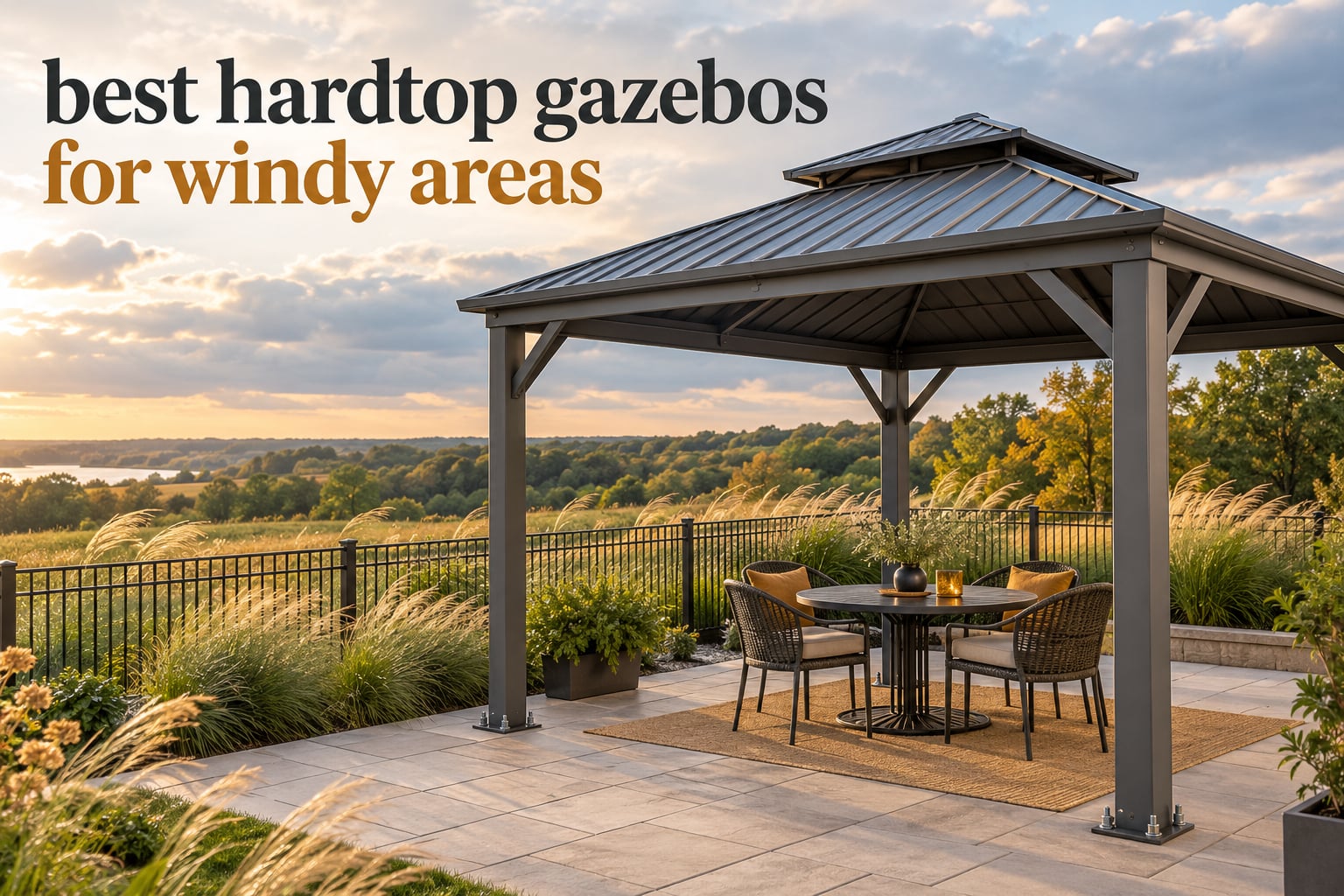
Windy is not a vibe, it is a specification. When people ask for the best hardtop gazebos for windy areas, they are usually recovering from a structure that twisted, walked across the patio, or took off entirely. We went through ten hardtops, pulled the published wind data, the frame dimensions, the roof geometry and the anchoring hardware on each, and separated what a manufacturer actually certifies from what a listing merely claims.
Our method was simple. We treated a wind rating as credible only when a number and a testing standard came attached to it, we read the negative reviews first because that is where the wind complaints live, and we treated every anchoring kit as part of the structure rather than an accessory. A 100 mph gazebo bolted to nothing is a 20 mph gazebo.
Two things shaped this list more than any spec sheet. First, the overwhelming majority of hardtop gazebos sold online publish no wind figure at all, so we say so rather than borrowing a number from a sibling model. Second, the fabrics attached to almost all of them are the real storm liability. A long-running thread on r/longisland about gazebos for exposed coastal yards makes the same point from the other direction: buyers say the listings simply do not publish wind capacity, so there is nothing to filter or compare against.
Below, the tier framework comes first because you cannot score a gazebo until you know what the numbers mean. Then the ten picks, each with a verdict, a wind tier, a spec breakdown and an honest list of who it is not for. If you are outfitting a house in open country or a rural lot, our guide to the best WiFi routers for rural areas covers a different gap; here we stay on wind.
Our Top 3 Wind-Rated Hardtop Gazebos for 2026

PURPLE LEAF 10×12 Aluminum Hardtop
- 4.7 inch thick posts
- Double vented galvanized roof
- Curtains and netting included

PURPLE LEAF 14×20 Bronze Hardtop
- 280 sq ft coverage
- 3000 lb snow-rated roof
- 20 percent wider frame

Backyard Discovery Arcadia 14×12 Cedar
- Pro-Tect tested to 100 mph
- 6x6 cedar posts
- 8700 lb snow load
All three of those are wind-rated picks, not style picks. The first is the most complete package for a normal windy yard, the second covers a large patio in one span, and the third is one of only two structures here with third-party wind certification attached.
What Wind Rating Does a Hardtop Gazebo Need?
Buy a hardtop gazebo rated for 40 mph or more if your yard sees moderate gusts, and insist on a 100 mph third-party certified model for coastal, storm-track or open-plain locations. Anything under 30 mph is soft-top territory. An unanchored frame is a wind liability at any rating.
That 40 mph figure is the number most manufacturers skip. Out of the ten hardtops we examined, only three publish a wind speed at all, and the split is stark.
- 25 to 30 mph tier: portable soft-top canopies and pop-up frames. Wind is an existential event for these, and a single gust ends the product’s life. Nothing in our list sits here.
- 31 to 40 mph tier: entry hardtops with a basic metal frame and a single or double steel roof. Usable in sheltered suburban yards, not in an exposed position.
- Engineering-rated aluminum tier: powder-coated aluminum posts at 4.7 inches or wider, a vented double roof, pre-drilled bases and stainless hardware. This is where most serious buyers should shop.
- 100 mph certified tier: third-party Pro-Tect testing, Category 2 hurricane territory, available here only on cedar-frame structures. Both carry a written condition that the rating holds when anchored as specified.
Two verification rules before you trust any number. If a listing says heavy-duty, storm-proof or hurricane-rated without attaching an mph figure and a testing body, treat it as unverified marketing. And a wind rating is a rating for the roof assembly, not permission to leave it floating on a patio.
Comparing All 10 Hardtop Gazebos for Windy Backyards in 2026
| Product | Specs | Action |
|---|---|---|
| PURPLE LEAF 10×12 Aluminum Hardtop |
|
Check Latest Price |
| PURPLE LEAF 14×20 Bronze Hardtop |
|
Check Latest Price |
| Backyard Discovery Arcadia 14×12 Cedar |
|
Check Latest Price |
 Domi 10×12 Double Roof Hardtop Domi 10×12 Double Roof Hardtop |
|
Check Latest Price |
 EROMMY 12×14 Hardtop EROMMY 12×14 Hardtop |
|
Check Latest Price |
 YITAHOME 10×12 Hardtop YITAHOME 10×12 Hardtop |
|
Check Latest Price |
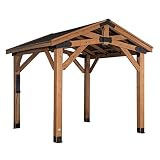 Backyard Discovery Norwood 10×10 Cedar Backyard Discovery Norwood 10×10 Cedar |
|
Check Latest Price |
 YOLENY 12×16 Hardtop YOLENY 12×16 Hardtop |
|
Check Latest Price |
 ABCCANOPY 8×8 Double Hardtop ABCCANOPY 8×8 Double Hardtop |
|
Check Latest Price |
 Aoxun 10×12 Hardtop Aoxun 10×12 Hardtop |
|
Check Latest Price |
Why Most Gazebos Fail in Wind (And What Actually Fixes It)
Almost every damaged gazebo we read about broke for one of four reasons, and none of them is that the aluminum snapped.
Anchor pull-out is the number one cause. A heavy frame that is only sitting on a slab or held by shallow stakes will lift and drag once the frame catches wind. A Long Island homeowner described a heavy 10×10 gazebo that shifted after installation without proper footings, and posts on r/HomeXpert describe a whole structure lost to a summer storm. The mass of the gazebo works against you here: a heavier structure driven by a broad roof face generates more load, not less.
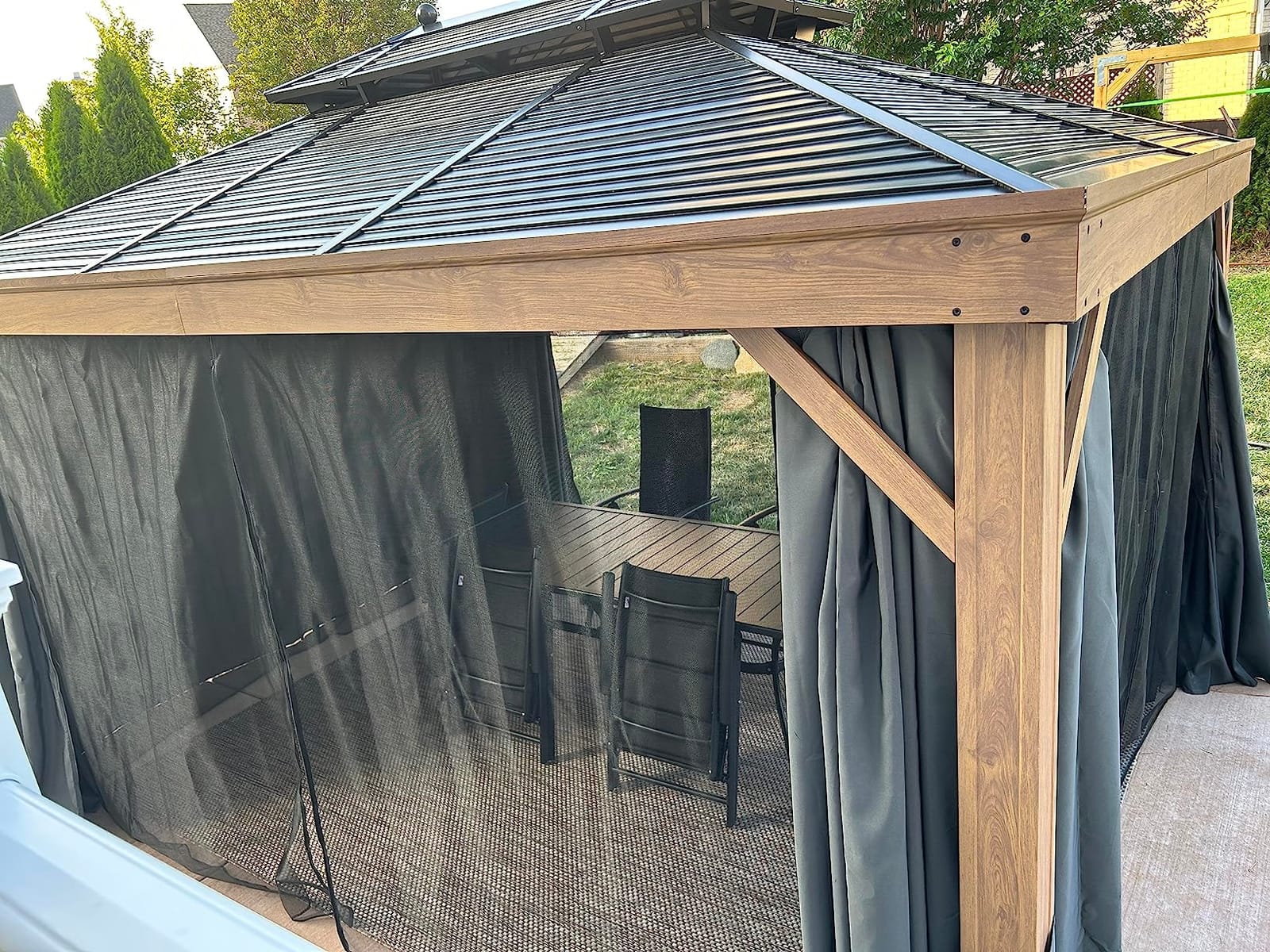
Sail effect is the second, and it is entirely self-inflicted. Curtains and mosquito netting on a double-track sidewall present a large fabric surface to moving air. One of the manufacturers in our group tells buyers outright to remove the canopy, curtains and mesh during extreme weather, which tells you how seriously the fabric should be treated. Fabric comes off in about ten minutes. Do it.
Uplift through a sealed roof is the third. A solid single roof traps air above it and the pressure difference tries to launch the whole assembly. A vented double roof lets air escape, which is why that design shows up in the feature lists of nearly every wind-conscious model here, and why the installers we drew on single out a roof with no holes and top-and-bottom attachment as the most reliable construction they see.
Frame fatigue at the joints is the fourth and the least common. It happens where thin posts meet the roof beam, usually after a structure has already been rocking for seasons. This is the one failure mode that material upgrades fix on their own.
Interestingly, a related leak pattern traces back to wind as well: installers report water blown under the upper roof of a double-roof design entering through the seam below it. If a hardtop develops drips during driving rain, look at the roof edge before you assume the panels are defective.
1. PURPLE LEAF 10′ x 12′ Aluminum Hardtop – The Best Overall Pick for Windy Yards
PURPLE LEAF Permanent Hardtop Gazebo 10′ X 12′ Aluminum, Gray
4.7 inch thick aluminum posts
Double vented galvanized steel roof
120 sq ft
Pre-drilled bases
Pros
- 4.7 inch posts and pre-drilled bases anchor well
- Double vented roof vents pressure
- Built-in gutter drains water off the frame
- Curtains and netting included
- Five year warranty on the top panel
Cons
- Assembly runs long and needs extra hands
- Instructions are picture-only
- Gutters clog and need regular clearing
This is the most complete windy-yard package we found, and the 1570 reviews behind its 4.8 average make that rating the most statistically meaningful one in the group. The 4.7 inch thick powder-coated aluminum posts are among the widest on any aluminum hardtop we examined, and the pre-drilled base holes mean anchoring is a bolt-down job rather than a field modification.
The vented double roof is the piece that matters most in wind, and the built-in drainage does the quiet work of keeping water off the frame and posts in a driving storm. Curtain and netting are included, which is where most of the wind risk lives, so plan to unzip them and stash them before a forecast turns serious.
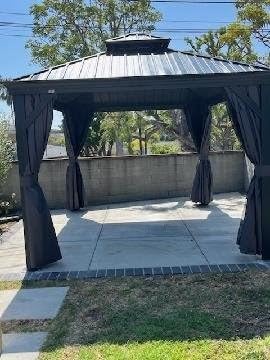
A Texas owner reported the structure taking hail and an 80 mph gust after replacing damaged panels, and multiple buyers call out responsive customer service. That 80 mph is an owner report rather than a published certification, and we want to be clear about the difference, but it is consistent with the frame geometry.
Why the 4.7 inch post width matters in a gust
Post width is the number that separates gazebos that stay put from gazebos that rock. A wider post has more cross-section resisting lateral deflection, which means less flex at the joint and less accumulation of fatigue cracking over seasons of gusting.
At 268 pounds for a 120 square foot footprint, this is also a genuinely substantial structure, and that mass works in your favor during moderate wind. It only becomes a liability if the frame is not fixed to something.
Double vented roof: the anti-uplift feature
The upper tier gives trapped air somewhere to go, which reduces the pressure differential that tries to lift the roof plane off the frame. The same idea shows up in the ABCCANOPY and YITAHOME listings as a marketing phrase, but it is a real aerodynamic decision, and it is the reason a vented double roof survives gusts that trouble a sealed single roof.
Gutters, drainage and the leak you did not expect
The sloped roof with integrated gutter sends water out along the frame edges and down the poles, so runoff never pools at the base plates. Reviewers do warn that the gutters clog, and clearing them twice a year in leaf season is the cheapest wind-related maintenance a buyer can do.
Warranty, assembly and the honest trade-offs
The warranty runs five years on the top panel, two on the curtain and netting, and one on the frame. Assembly is the real weakness: it is not a snap-together build, the instructions are picture-only, roof parts are easy to mix up, and a few buyers sourced missing screws locally. Budget a full day with at least three people, and leave bolts loose until each section is closed up.
Not for anyone who wants a two-hour patio project. Perfect for a homeowner who will anchor it properly once and use it for a decade.
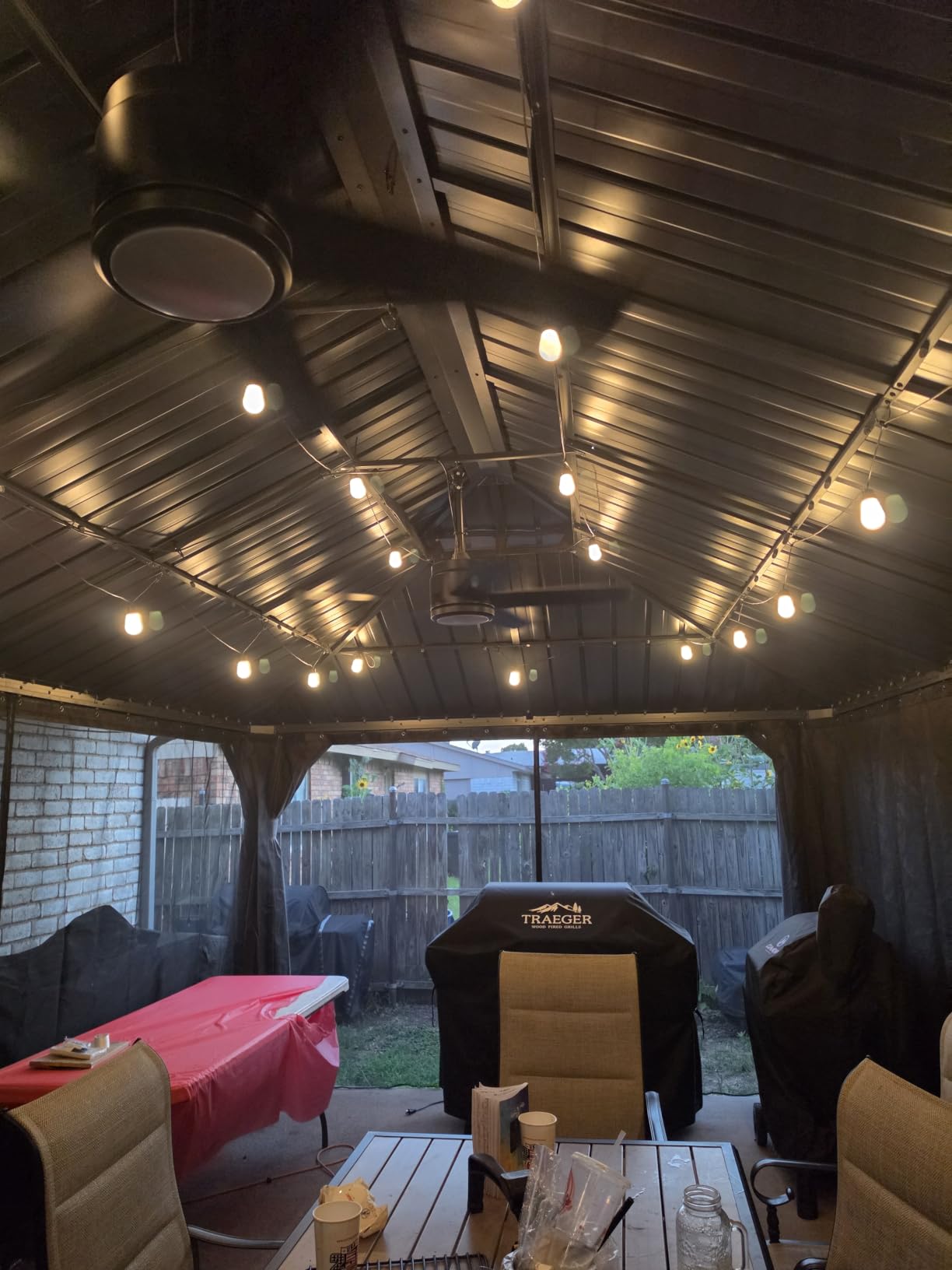
2. PURPLE LEAF 14′ x 20′ Bronze Hardtop – Best for Covering a Large Patio in One Span
PURPLE LEAF Outdoor Hardtop Gazebo 14′ x 20′ Bronze Metal 4.7″ Wide Frame
4.7 inch wide aluminum frame
3000 lb snow-rated double roof
280 sq ft
5 year roof plan
Pros
- Frame is 20 percent wider and uses 60 percent more material
- Double roof rated for 3000 lb of snow
- 280 sq ft from a single structure
- Netting rated to stay stable in 10 mph winds
Cons
- Multi-day multi-person assembly job
- Performance depends entirely on anchoring
- Permits or HOA rules may apply at this size
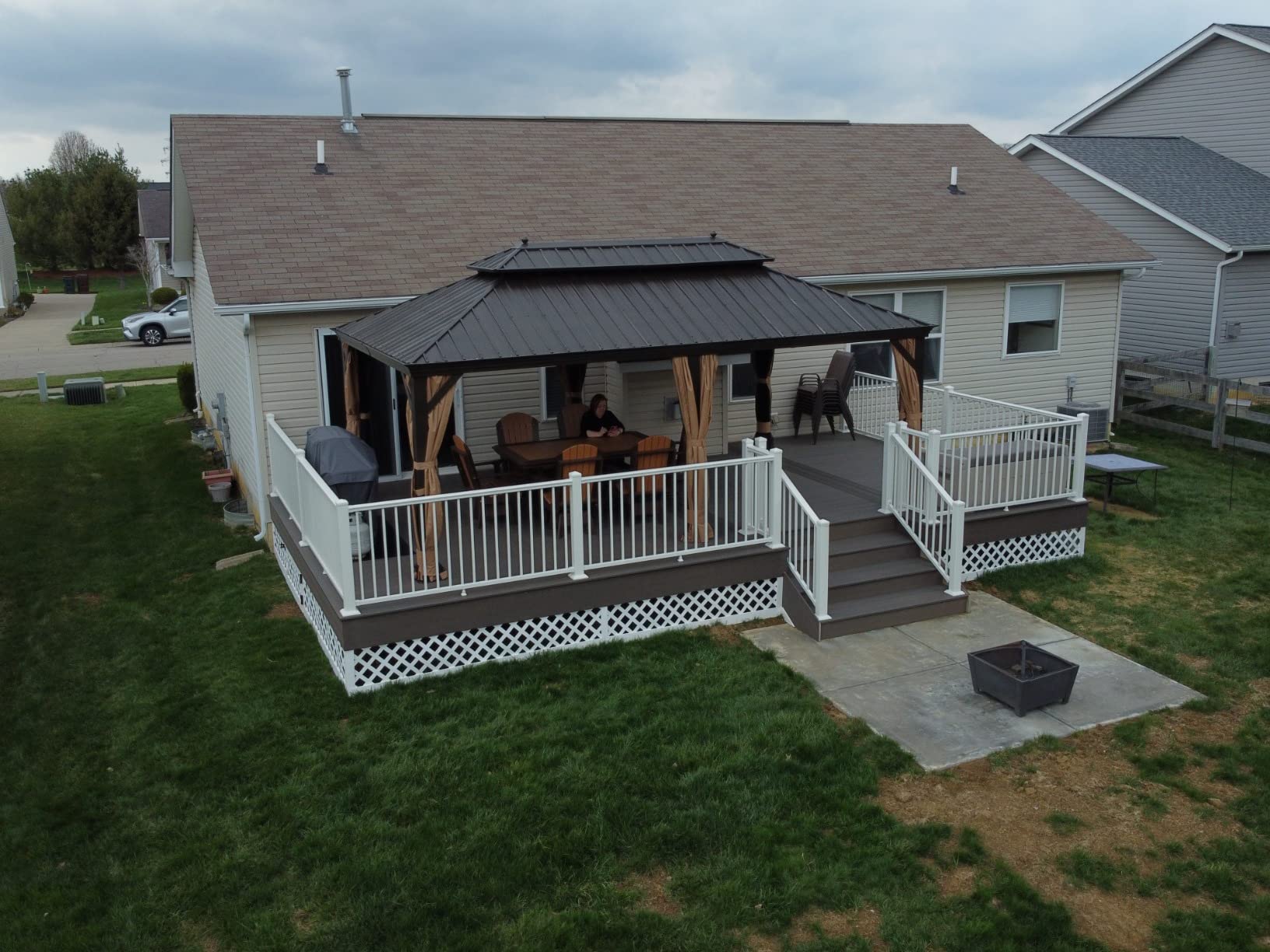
When a gazebo has to cover a hot tub, an outdoor kitchen and a dining set in one footprint, joining two structures creates a seam that wind finds. This one is engineered as a single 280 square foot structure, and the frame is the beefiest in our list: 20 percent wider than market average and using about 60 percent more aluminum than a typical frame.
The reinforced double galvanized steel roof is rated for up to 3000 pounds of snow, which matters in the northern half of the country where snow and wind arrive together. Netting at 260 GSM is high-tensile and specified to stay stable in 10 mph winds, so the fabric is a supplementary layer rather than a structural one.
Snow load as the real differentiator
Wind rating is the headline, but a roof rated for 3000 pounds of snow is what separates this from a 168 square foot backyard model. If your winters deliver more than a foot at a time, the roof is carrying dead load while the wind is loading the frame laterally, and the two add up faster than either number alone suggests.
Owners describe this as the model that performs in heavy rain and high wind, and the drainage design channels water from the top of the frame down to the poles instead of letting it spill around the perimeter where it can reach the base plates.
Curtains that resist fading, netting that resists wind
The yarn-dyed curtain is specified to hold fade resistance for at least two years, which is a real improvement over the coated polyesters that chalk within a season in full sun. The 260 GSM high-tensile netting carries a published stability figure, and that is one of the few times a gazebo listing gives you a number for the fabric rather than calling it heavy-duty.
The warranty and the scale problem
Coverage runs five years on the hardtop roof, two on the curtain and netting, and one on the frame. The real constraint is logistics: this is a multi-day, multi-person build, and at this size the structure is only as strong as the anchoring under it. Local building codes or HOA rules may require a permit for a footprint this large, so check before you commit.
Best for a serious outdoor living build in a northern climate. Not for a small patio, a rental, or anyone working alone.
3. Backyard Discovery Arcadia 14′ x 12′ Cedar – Best Where a Certified 100 mph Rating Is the Requirement
Backyard Discovery Arcadia 14′ x 12′ Cedar Wood Outdoor Gazebo Pavilion with Hardtop Galvanized Steel Slope Roof, Snow Support, Wind Resistance, PowerPort, Shade for Garden, Patio, Deck, Entertaining
Pro-Tect tested to 100 mph
8700 lb snow load
6x6 cedar posts
29-gauge steel roof
Pros
- Only cedar option with third-party 100 mph testing
- Pro-Tect tested for 8700 lb and 30 inch snow loads
- PowerPort adds three outlets and three USB ports
- Pre-drilled parts align precisely
Cons
- 782 pounds means a professional crew
- Posts are laminated engineered cedar not solid lumber
- Roof steel scratches and kit omits deck lag screws
If you need a documented wind number rather than an assurance, this is the structure to buy. It is Pro-Tect tested to 100 mph and to 8700 pounds or 30 inches of snow, with the crucial qualifier that the wind figure holds when anchored as specified in the manual. Very few gazebos of any material offer a third-party figure at all.
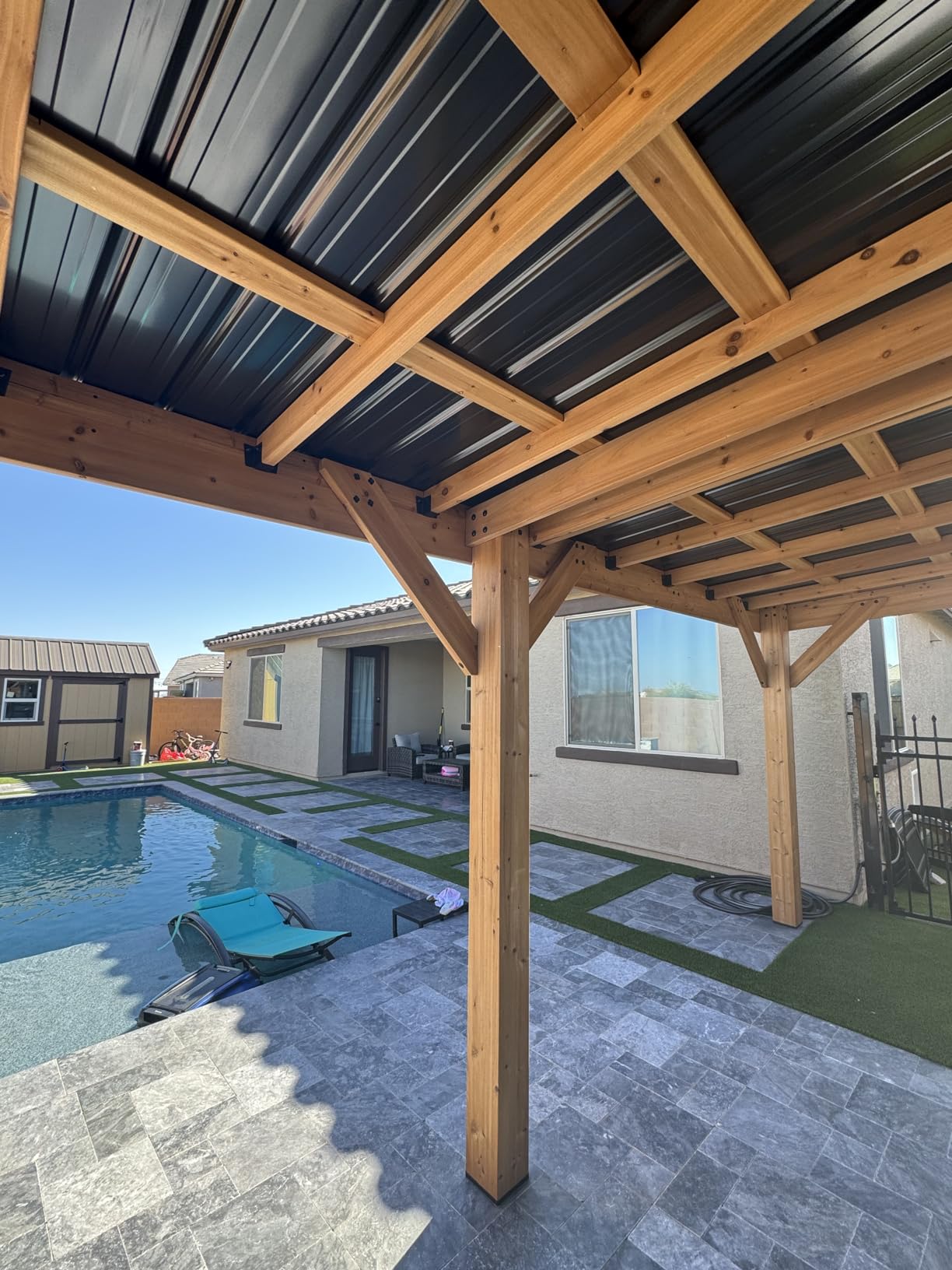
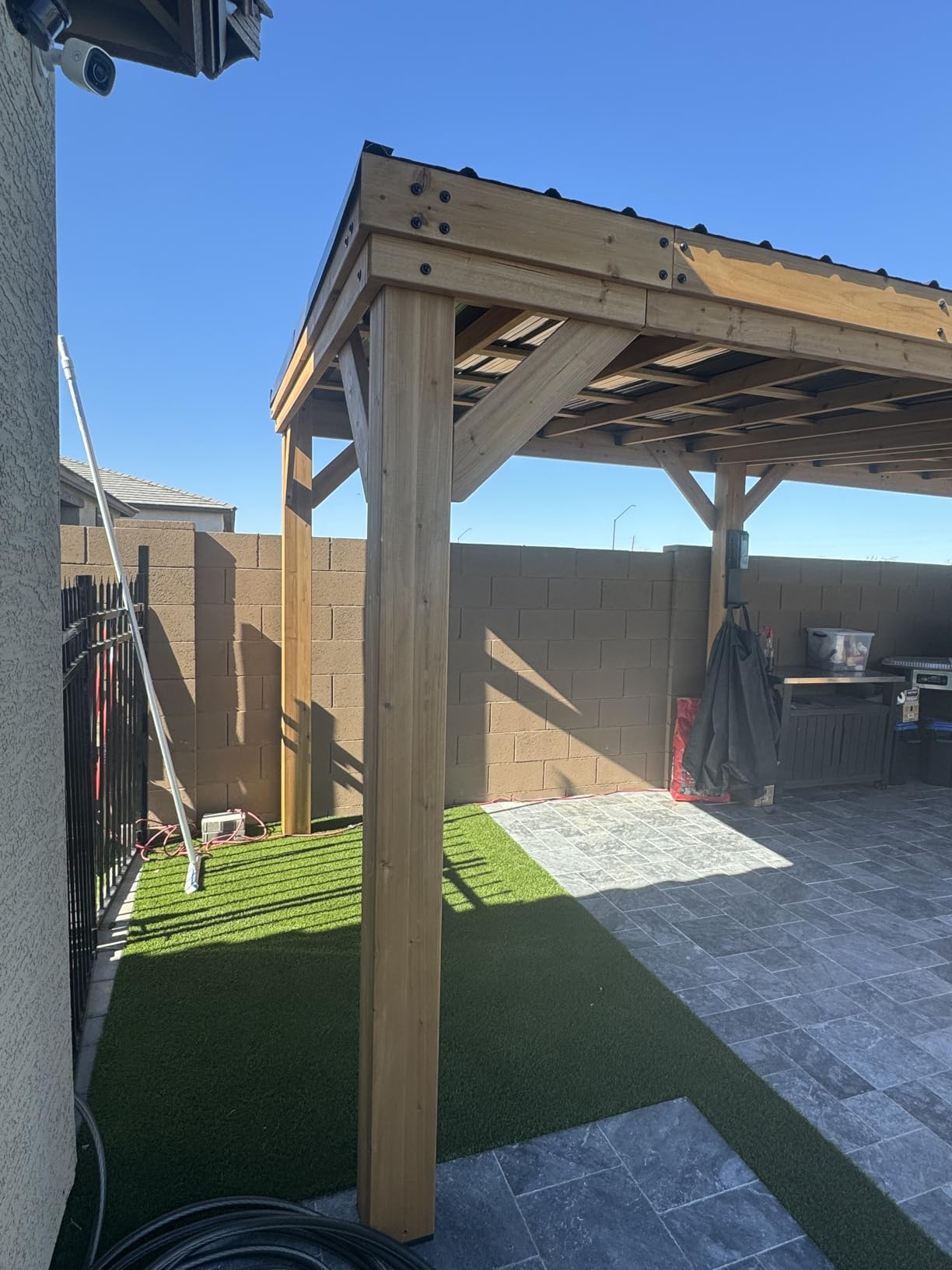
At 168 square feet with 6×6 cedar posts, it also has the visual weight and the thermal mass to work as year-round outdoor living space. Cedar resists decay naturally, and several owners report the structure did not move at all during dust and wind events.
What Pro-Tect testing actually tells you
Third-party certification means an outside lab loaded the assembled structure to a defined limit rather than a marketing team writing a bullet. The number is only valid inside the tested configuration: the anchoring matters as much as the frame, and the manual’s anchoring instructions are part of the rating, not a suggestion.
Owners report no wobble or creak even with a ceiling fan at high speed, which is a good sign that the joints are transmitting load rather than flexing at them.
Cedar posts, steel roof and the trade between them
Cedar posts at 6×6 give you a cross-section no aluminum model here matches, and they will not corrode near salt water. The roof is 29-gauge black steel with dent and corrosion resistance, and a 5 degree pitch keeps water moving. That said, the posts are laminated engineered cedar rather than solid milled timber, and steel roof parts will scratch and eventually show surface rust.
PowerPort and the BILT app build
The patented PowerPort mounts to any post and carries three electrical outlets plus three USB ports, which removes the need to run a cord across the deck. Assembly is the strongest story in this roundup: pre-cut, pre-drilled and pre-stained pieces with app-based instructions, hardware arriving in numbered bags, and holes that reviewers say actually align.
Where the compromises sit
At 782.6 pounds this needs a professional crew or several strong helpers, and full assembly runs two to four days. The kit does not include lag screws for deck anchoring, which is a problem for exactly the buyers most likely to want this model. Not for a weekend DIY build, and not for a small urban patio.
4. Domi 10′ x 12′ Double Roof Hardtop – Best for Buyers Who Want a Published Wind Number on Aluminum
Domi 10’X12′ Gazebo with Double Roof Steel, Heavy Duty Outdoor Patio Gazebo
Published 40 mph rating
4.72 inch aluminum posts
2500 lb snow rating
299 pounds
Pros
- Only aluminum hardtop here publishing an mph wind figure
- 4.72 inch powder-coated aluminum posts
- Stainless hardware resists fading and corrosion
- 2500 lb snow-rated vented double roof
Cons
- Build commonly runs 8 to 12 hours
- Picture-only instructions are hard to follow
- Roof clips and panel holes can be finicky
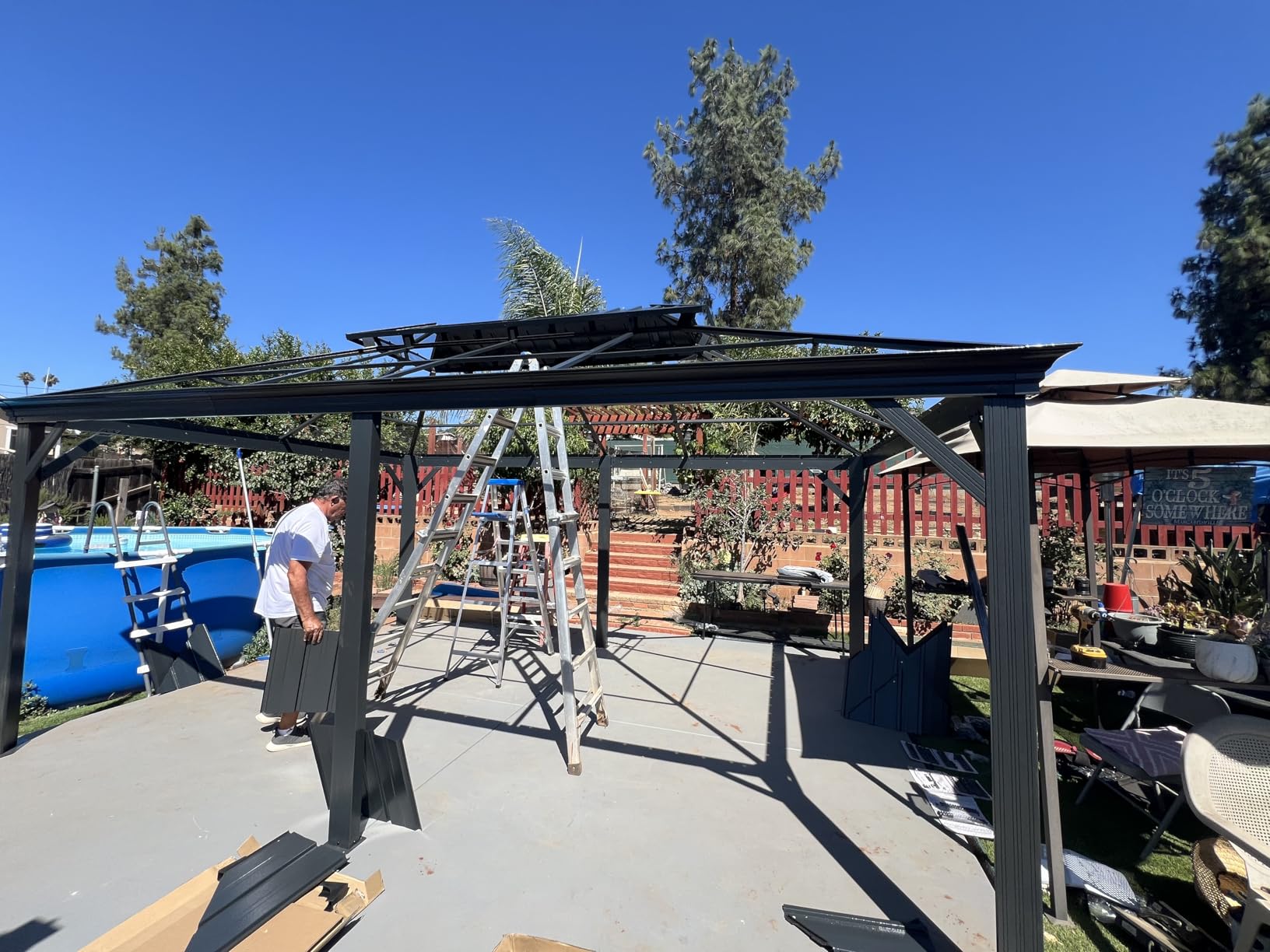
Domi is one of only three brands in this roundup publishing a specific wind speed, and the only one on an aluminum frame. The 40 mph figure is modest next to a certified 100 mph, but it is a number you can plan around, and the 4.72 inch powder-coated aluminum posts with pre-drilled bases are properly proportioned for it.
Owners in exposed locations report it has held up well across multiple seasons, and the double-layer sloped roof with gutter drainage is rated to 2500 pounds of snow. At 120 square feet and 299 pounds, it is a serious piece of hardware for a backyard structure.
Why 40 mph is a usable number and 100 mph is not always needed
A published 40 mph rating tells you the frame was designed and documented for a specific lateral load, which is more than most listings in this category offer. For a suburban yard with trees and buildings breaking the wind, 40 mph anchored correctly is plenty. For an open lot or a coastal property, it is not enough, and you should be looking at certified 100 mph models instead.
The stainless hardware is worth noting on its own. Stainless fasteners resist the corrosion and streaking that take the finish off cheaper zinc hardware in a wet coastal climate.
Roof geometry and the drainage path
The ventilated double-layer sloped roof moves air out of the upper tier and sends rainwater down the frame edge and along the pole, away from the base plates. Double-sided zipper netting on a privacy curtain track gives you bug control and shade without sealing the structure, which matters because sealed walls add to the pressure problem in a gust.
The build: 8 to 12 hours is the honest number
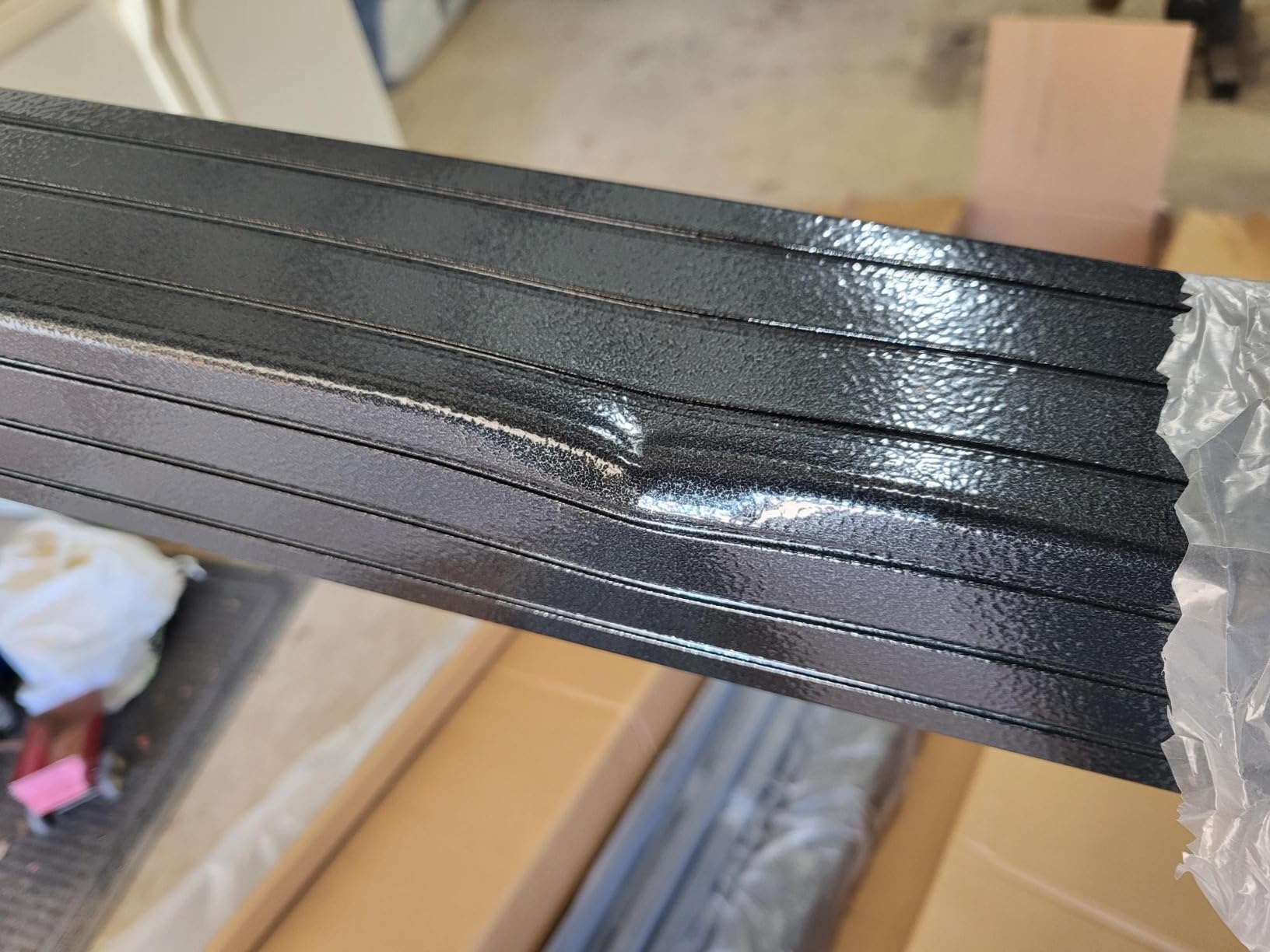
Buyers consistently advise leaving bolts loose until each section is complete, laying out all hardware first, and budgeting a full day or more with multiple people. Some roof panels arrived bent or too long and had to be trimmed, and panel holes plus plastic clips can be finicky enough to need glue or reseating. Customer service replaced missing parts quickly when buyers reached out.
Not for a same-day project. Good for anyone who wants a documented rating without moving to cedar.
5. EROMMY 12′ x 14′ Hardtop – Best Value for a Generous Covered Area
EROMMY 12′ x 14′ Hardtop Gazebo, Aluminum Frame Gazebos with Galvanized Steel Double Roof, Permanent Outdoor Metal Pavilion with Curtain and Netting for Patio, Lawn, Deck
3.94 inch triangular aluminum frame
Vented double-top roof
168 sq ft
99 percent UV protection
Pros
- 168 sq ft of covered area at a mid-tier footprint
- Vented double roof lets wind pass through
- Pre-drilled bases suit uneven ground
- Roof hooks for lights and fans
Cons
- No published mph wind figure
- Rating spread includes notable 1-star build complaints
- Roof panels are the slowest and fiddliest step
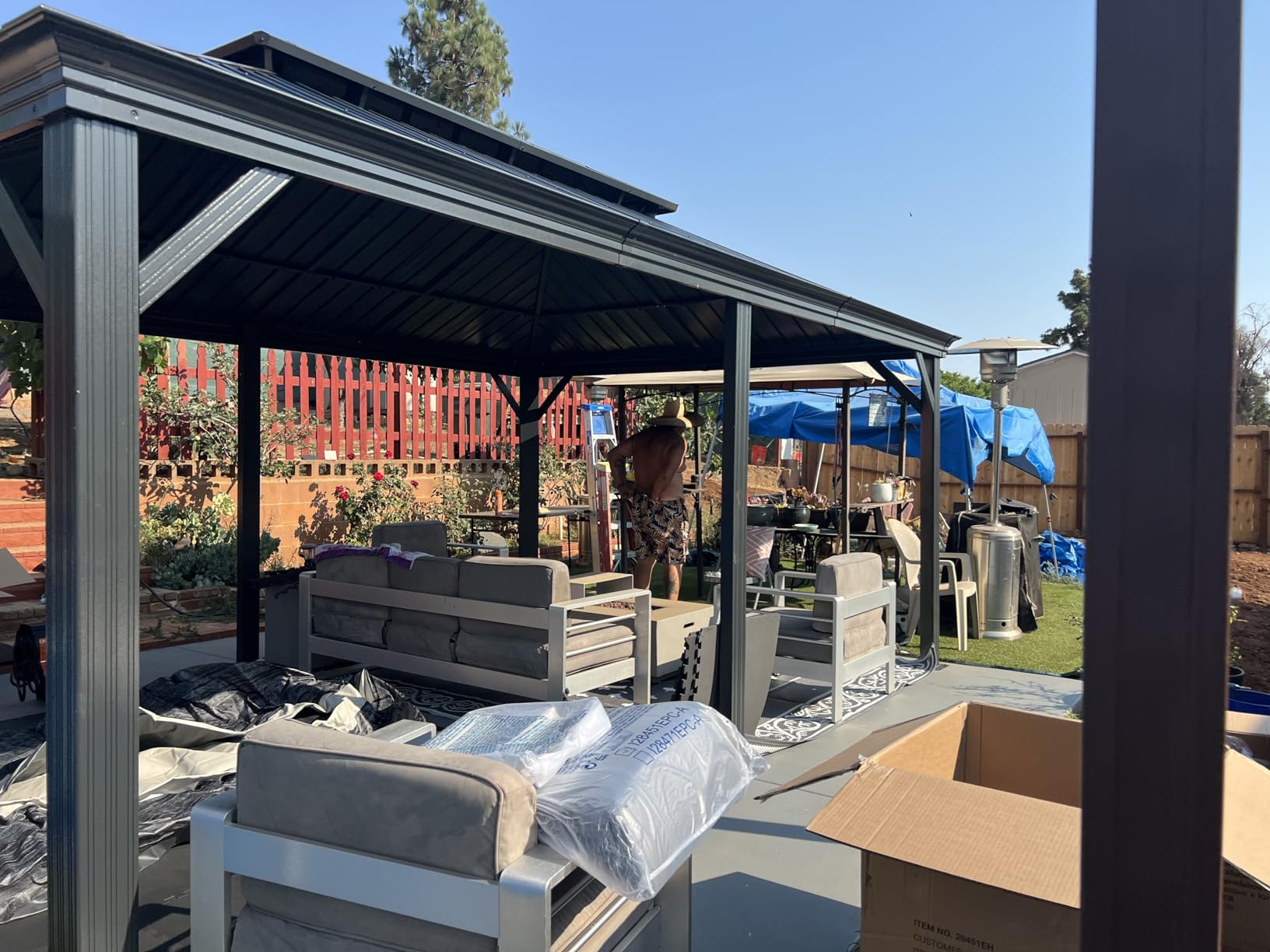
The EROMMY gives you more square footage than most competitors at this tier, at 168 square feet, and the roof is a galvanized steel hardtop rather than fabric or polycarbonate. Reviewers single that roof out as far more wind-stable and snow-capable than the soft-top canopies it replaced.
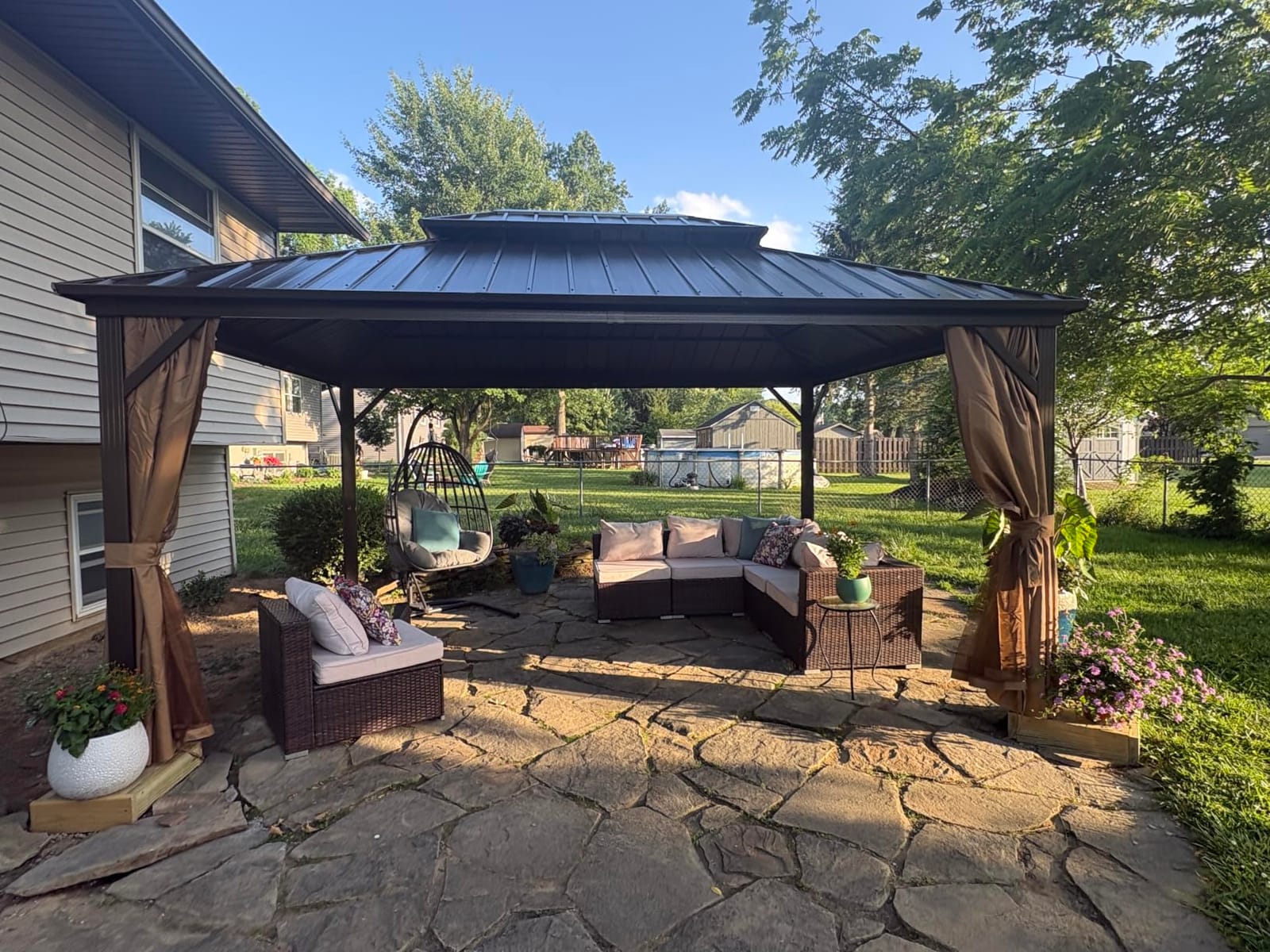
The vented double-top design is specified to let wind pass through rather than build pressure, and the 3.94 inch powder-coated triangular aluminum frame is wider than most at the same tier. Pre-drilled bases mean it can go onto uneven ground without fabrication.
The vented double roof and the triangular frame
Triangular post geometry matters in wind because the section distributes lateral force across three faces instead of two, so it resists twisting at the joint. Combined with a roof that vents, this is the configuration that keeps a metal gazebo from becoming a drum in a crosswind.
Coverage is the other argument here. At 168 square feet it holds a sofa set or a 7-piece dining set, which is more usable space than the 120 square foot models most buyers end up with.
Be honest about the rating spread
This is a 4.2 across 733 reviews, and the spread is wide, with a notable share of one-star feedback tied to build quality and missing hardware. The recurring pattern is not structural failure but quality control: hole alignment, occasional missing components, thin pictorial documentation. If you are not comfortable aligning roof panels yourself, budget extra time or hire help.
Sidewalls, netting and the wind question
The dual-track zippered system gives you full enclosure or full open air, and the netting provides 99 percent UV protection. As with every fabric product in this list, take the curtains and mesh down before high wind, and anchor the frame to the surface it was rated for. This model publishes no mph figure, so treat its wind performance as untested rather than assumed.
Best for a family-sized patio on a budget. Not for a buyer who needs a certified rating in a hurricane zone.
6. YITAHOME 10′ x 12′ Hardtop – Most Versatile for a Permanent Metal Shelter
YITAHOME 10x12ft Hardtop Gazebo with Nettings and Curtains Heavy Duty
Double galvanized iron vented roof
Powder-coated aluminum frame
Ground stakes included
120 sq ft
Pros
- Lowest-cost permanent hardtop in this group
- Ground stakes included in the box
- Vented upper tier for airflow
- Once bolted down no leaking or movement
Cons
- Manual has labeling errors
- Protective film is tedious and edges are sharp
- Roof panel holes do not always line up
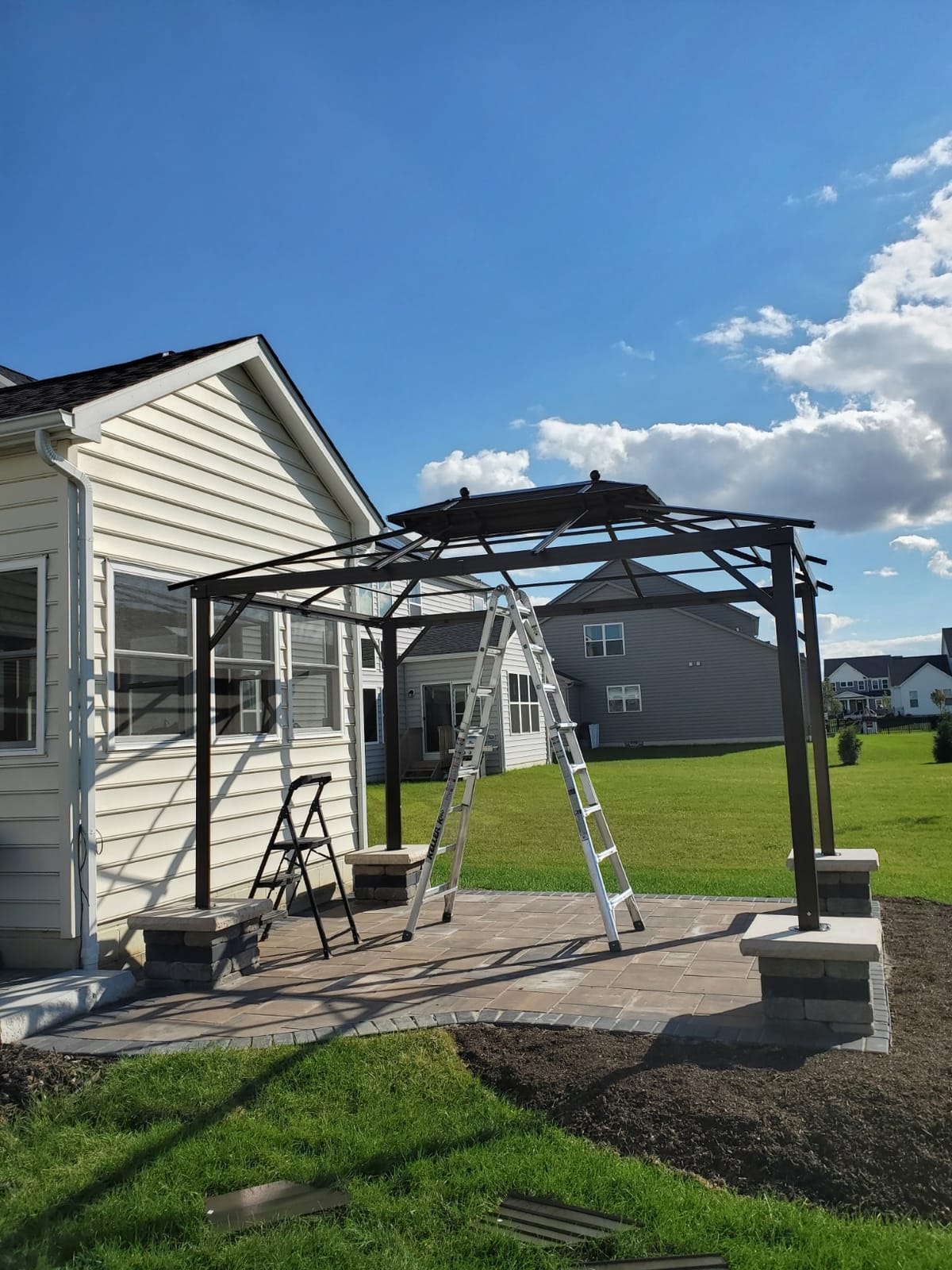
YITAHOME is the cheapest way to replace a shredded fabric canopy with something rigid, and at 1099 reviews it has the largest owner-reported base in the budget tier. Long-term owners rate it well on sturdiness and appearance once it is anchored to a patio, and report no leaking in heavy rain and no movement in wind.
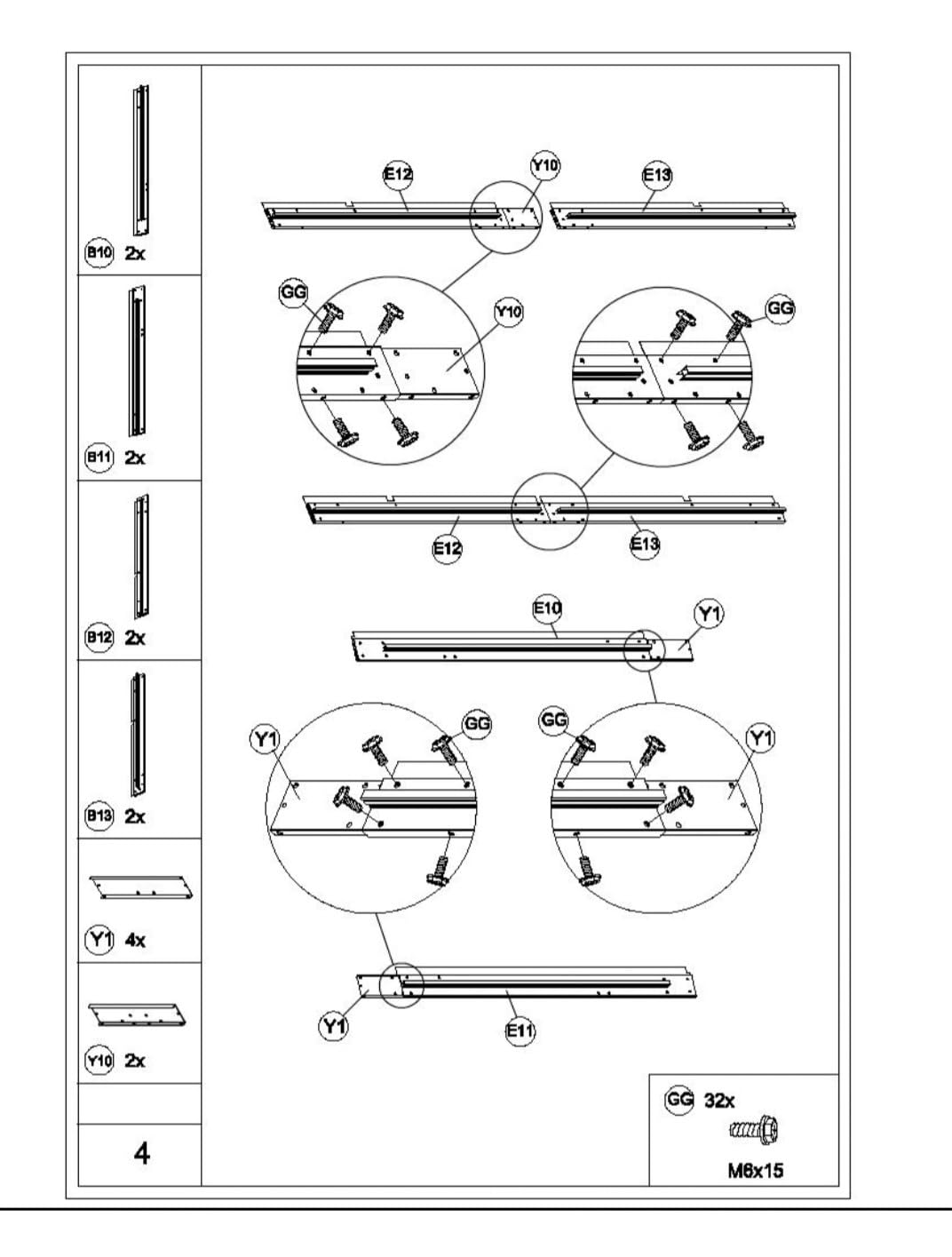
The double galvanized iron roof has a vented upper tier, and the powder-coated aluminum frame has reinforced corners, pre-drilled feet and ground stakes in the box. That last point matters more than it sounds: anchoring hardware is the single most common omission, and this one includes it.
What the anchors in the box actually get you
Ground stakes are a soil solution, and they are the weakest of the three. They work in soft ground where stakes can drive deep, and they do very little on a slab, a paved patio or a deck. On hard surfaces you need expansion bolts through the pre-drilled feet, which this frame supports.
Owners who anchored report the structure stays put. Owners who did not, do not. The frame is the same either way.
The rating split is a skill signal
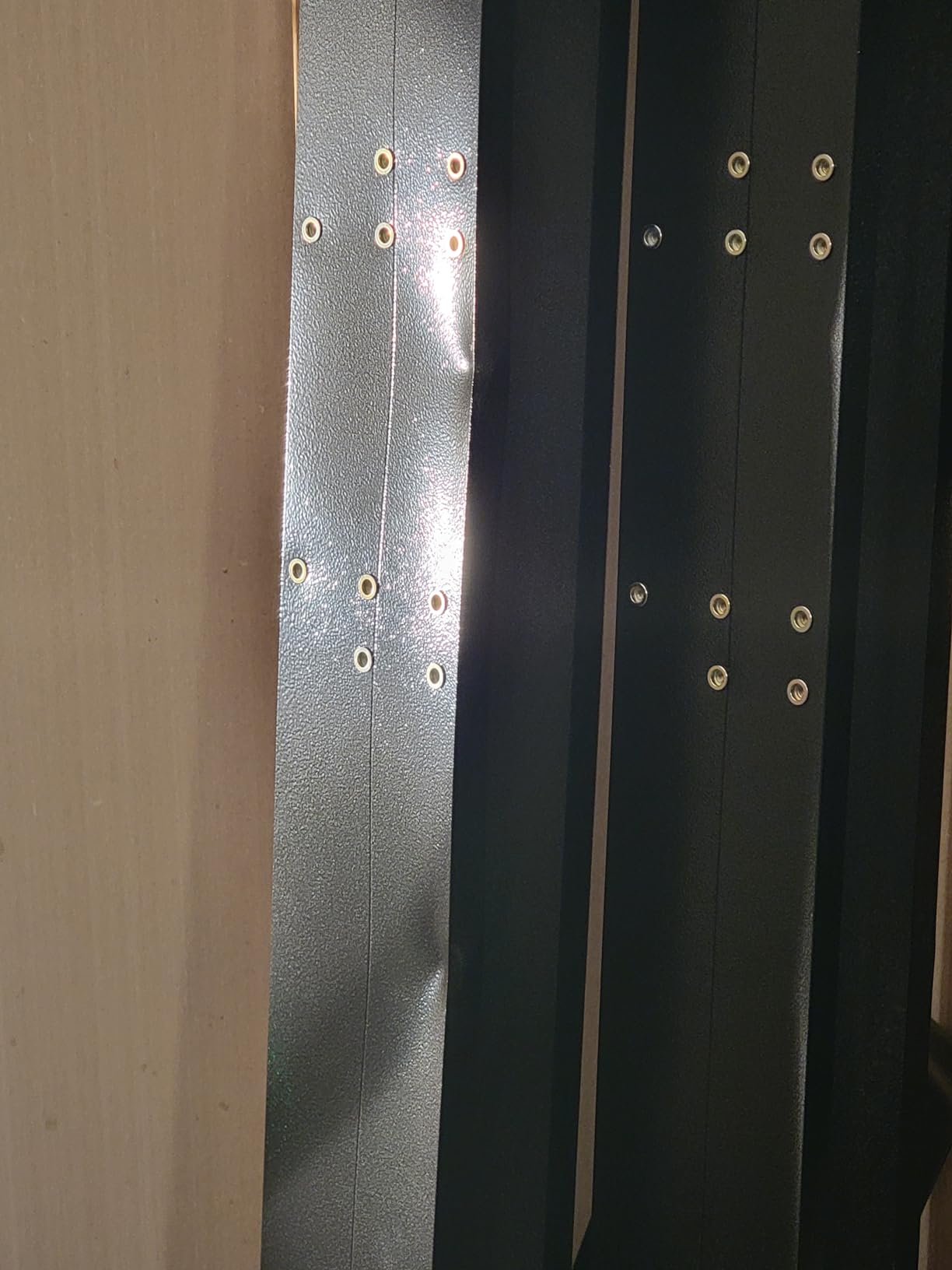
The 4.2 average across 1099 ratings tracks build experience almost perfectly: confident DIYers rate it near the top, while people who hit mislabeled parts, sharp metal edges and roof hole misalignment rate it at the bottom. The manual has labeling errors, the protective film on the roof panels is tedious to peel, and the metal edges are sharp enough to matter around children.
Assembly: genuinely quick, with a fiddly roof
Installation takes roughly 2 to 4 hours with 2 to 4 people, which is the shortest realistic figure any of these manufacturers publishes. The roof is the slow step because panel holes do not always line up. Tutorial installation videos and a manual are included, and customer service is responsive when components are missing, though spares are not stocked separately.
Best for a first hardtop on a modest budget. Not for exposed coastal sites or anyone who will not read the manual.
7. Backyard Discovery Norwood 10′ x 10′ Cedar – Best Certified Rating in a Compact Footprint
Backyard Discovery Norwood 10′ x 10′ Cedar Wood Outdoor Gazebo Pavilion with Hardtop Galvanized Steel Peak Roof, Snow Support, Wind Resistance, PowerPort, Shade for Garden, Patio, Deck, Entertaining
Pro-Tect tested to 100 mph
5600 lb snow load
Peak roof
6x6 cedar posts
Pros
- Third-party 100 mph rating in a 10x10 footprint
- Pro-Tect tested for 5600 lb and 30 inch snow
- Roof corrugations shed snow peak to eave
- Pre-drilled holes align
Cons
- 615 pounds usually needs a professional crew
- Drip edge not included
- Posts are hollow laminated cedar not solid timber
The Norwood answers the hardest question in this roundup: how do you get a certified 100 mph wind rating into a small backyard? At 100 square feet it is a 10×10 structure, so it fits a compact patio, and it still carries Pro-Tect testing for 100 mph, 30 inches of snow and 5600 pounds of load when anchored as specified.
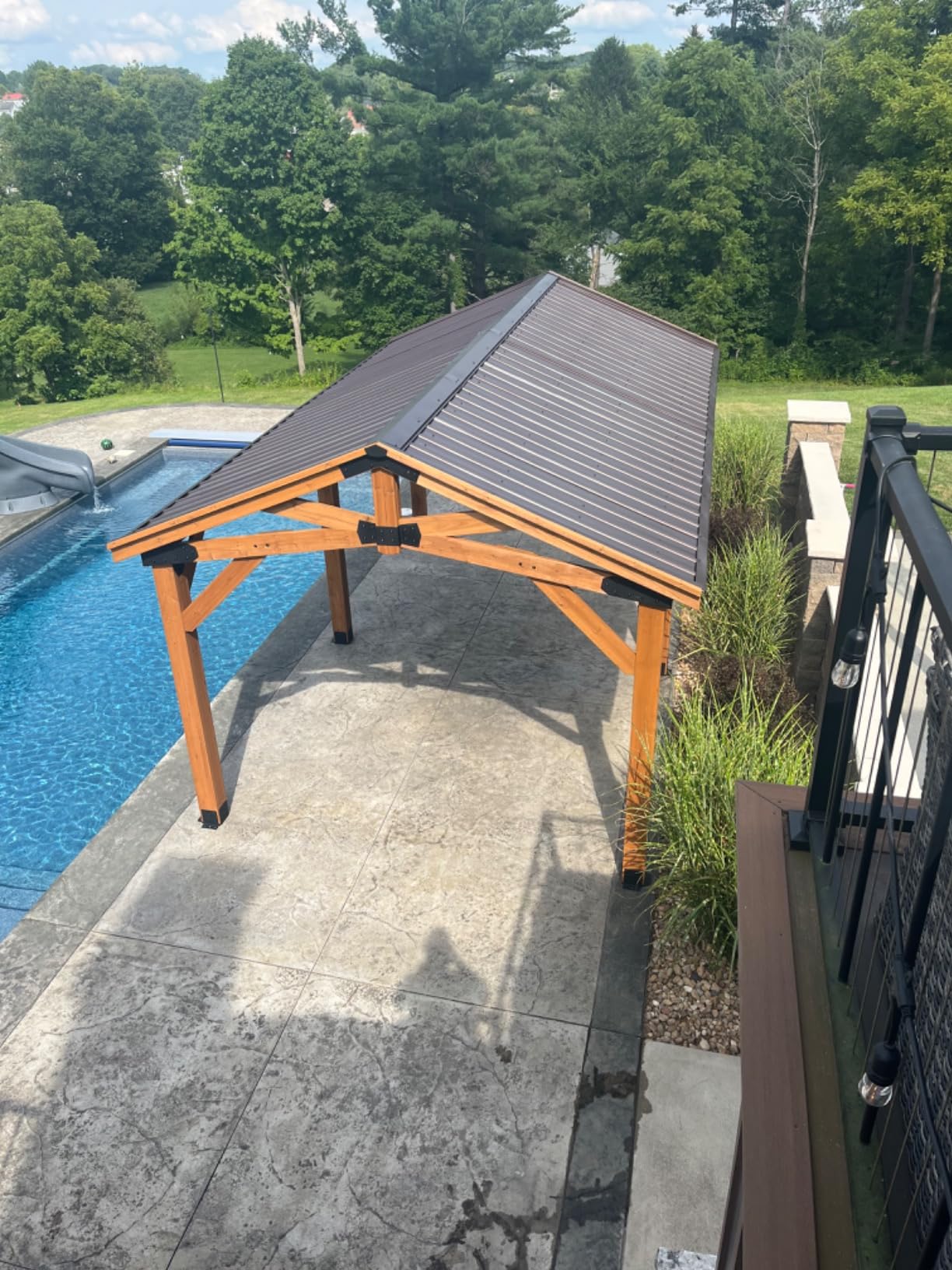
Owners report it stood through 60 mph gusts and 12 inches of snow without moving or leaking. The 29-gauge Tudor Brown galvanized steel roof has corrugations running peak to eave so snow sheds instead of accumulating, and the 6×6 cedar posts are powder-coated bracket hardware on pre-cut, pre-drilled, pre-stained parts.
Peak roof geometry and where wind gets in
The peak profile directs load down through the posts rather than across the frame, and the corrugation direction means snow leaves the roof before it builds the lateral load that a flat accumulation creates. In a northern climate, snow shedding and wind resistance are the same problem seen from two angles.
What a peak roof does not do is vent, and this model does not claim a double tier. That is the trade for the 100 mph figure: solid cedar and a sloped roof rather than a vented aluminum assembly.
PowerPort and build quality
The PowerPort strip carries three outlets and three USB ports off a single post, and the BILT app plus printed booklet make the sequence easy to follow. Reviewers consistently praise the engineering and packaging, with hardware shipped in labeled bags and spares included. The recurring note is scale rather than quality: a five-person crew and multiple days is a common report.
The compromises to know about
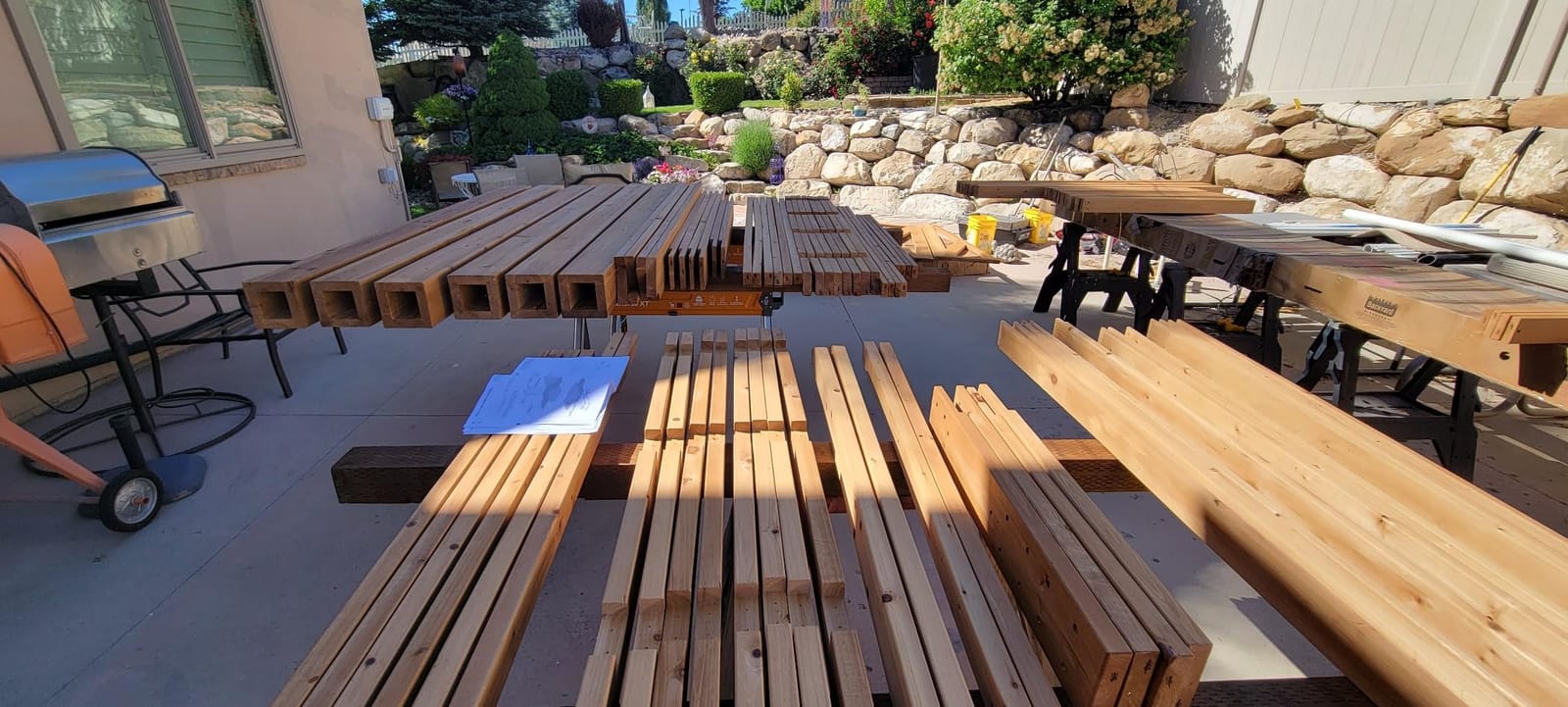
At 615 pounds the structure can exceed 1600 pounds assembled, and the 6×6 posts are hollow laminated cedar rather than solid milled timber. Drip edge is not included, so gutters are needed to protect the fascia in heavy rain. A smaller set of reports covers ridge beam sag over time and difficulty obtaining replacement parts, and one reviewer reported boards breaking in high winds before anchoring.
Best for a certified rating on a small lot. Not for a quick build or a strict budget.
8. YOLENY 12′ x 16′ Hardtop – Best for a Wood-Look Frame Without Wood Maintenance
YOLENY 12′ x 16′ Hardtop Gazebo, Wood Looking Gazebo with Aluminum Frame and Single Galvanized Steel Roof, Outdoor Permanent Metal Pavilion with Curtains and Nettings for Deck, Backyard and Patio
Wood-grain aluminum poles
Powder-coated galvanized roof
Single-slope profile
192 sq ft
Pros
- Wood appearance with no stain or paint maintenance
- Triangular aluminum poles larger than standard
- 192 sq ft of covered area
- Eaves drainage sends water to the ground
Cons
- Single-slope roof gives less vented headroom
- Review base of 196 limits long-term data
- Wood-grain finish will not accept stain
The YOLENY answers a specific preference: buyers who want a gazebo that reads as wood in a garden setting but will not need re-staining every couple of seasons. The frame is triangular aluminum in a wood-grain powder finish, and the roof is powder-coated galvanized steel rather than fabric.
At 192 square feet it is the second largest covered area in this list, and the eaves drainage design routes rainwater from a leakage hole straight to the ground instead of letting it track back along the frame. The dual-track zippered system provides both netting and curtains with zippers on all four sides.
What a single-slope roof gives up in wind
This is the one model in our list without a double or vented tier, and that matters more in wind than in rain. A single sealed slope has less opportunity for air to escape above the roof plane, so more of the frame’s capacity goes to resisting pressure rather than to shedding it. In a moderate wind zone with good anchoring it is perfectly serviceable; in an exposed position it is not our recommendation.
Frame size and finish durability
The triangular aluminum poles are described as noticeably larger and more solid than typical models, which is the cross-section that resists lateral twisting. The limitation is cosmetic: if the wood-grain powder finish wears through, the aluminum underneath will not accept stain or paint the way real wood does, so scratches do not blend away.
Read the review count before you trust the rating
With 196 ratings this is the thinnest evidence base in the roundup, and the 4.2 average is a mix of satisfaction with value and reservations about long-term durability of a non-wood frame. Buyers like the finish and the drainage; the reservations cluster around how the structure ages rather than how it performs in a storm.
Best for appearance-led buyers in a sheltered yard. Not for coastal exposure or anyone who needs third-party wind certification.
9. ABCCANOPY 8′ x 8′ Double Hardtop – Best for Small Patios With Expansion-Bolt Anchoring
ABCCANOPY Hardtop Gazebo 8×8 – Outdoor Metal Hard Top Gazebo, Permanent Galvanized Steel Aluminum Framed Pavilion with Netting and Curtain for Patio Backyard Lawn Garden (Double Roof, Gray)
3 inch triangular aluminum posts
Vented double roof
64 sq ft
Expansion-screw base
Pros
- Vented double roof reduces wind stress
- Pre-drilled base designed for expansion screws
- Compact 64 sq ft footprint suits small patios
- Replacement parts shipped quickly
Cons
- Many pre-drilled holes do not line up
- Roof rail clips fall off easily
- Sharp exposed metal edges
A 64 square foot hardtop is a small commitment, which makes this the sensible pick when the patio is compact or you are replacing a canvas model that kept failing. The galvanized steel roof carries a high-performance coating for fade, UV, wind, rain and snow resistance, and the ventilated double roof is specified to reduce wind stress compared with a single hardtop.
The 3×3 inch triangular aluminum posts are powder coated against rust and corrosion, and the pre-drilled post base is explicitly designed for expansion screws, which makes slab and paved installation straightforward.
Why the double roof matters more at this size
On a compact structure with modest post cross-section, pressure management is a bigger share of the performance budget than it is on a 280 square foot model with a wide frame. The vented tier lets trapped air leave instead of loading the roof plane, and that is the feature that justifies treating this as a permanent fixture rather than a seasonal one.
Assembly quality is the weak point
Owners report a typical build in 5 to 8 hours. The problems are consistent: a number of pre-drilled holes do not line up and need hand drilling, instructions are picture-only with pages out of order in at least one report, roof rail clips fall off easily, and mesh netting can arrive torn. Warranty coverage is one year on metal construction and six months on curtains and netting, the shortest term here.
Heat and sharp edges in a small footprint
Dark metal absorbs sun, so the interior gets noticeably hot on bright days with little air movement through a 64 square foot space. Reviewers also flag sharp exposed metal edges, including pieces children can reach, which is worth checking over before the first family cookout.
Best for tight patios and a permanent replacement for a fabric canopy. Not for a large gathering space or a high-wind site.
10. Aoxun 10′ x 12′ Hardtop – Best Only for Sheltered, Mild-Wind Yards
Aoxun Gazebo 10×12 Hardtop Gazebo with Double Galvanized Steel Roof, Gray
Wind resistant grade 7 at 31 to 38 mph
Double galvanized steel roof
4 ground piles included
120 sq ft
Pros
- Publishes a wind resistant grade rather than a vague claim
- 4 ground piles and expansion screws included
- All hardware ships in the box
- 120 sq ft covered area
Cons
- Lowest wind figure in the group
- Manufacturer advises removing canopy and curtains in extreme weather
- UV protection listed at only 50
We include this one because the honest number matters. Aoxun publishes a maximum wind resistant grade of 7, which works out to 31 to 38 mph. That is the lowest documented figure in the group and it places this gazebo firmly in the sheltered-yard category, not the windy-area category.
On the plus side, the double galvanized steel vented roof is rust and fade resistant, the powder-coated metal frame comes with 4 ground piles and expansion screws, and every piece of hardware is in the box. Installation is suggested at 2 to 4 hours with 3 to 4 people, and the warranty runs one year.
Read the manufacturer’s own weather instruction
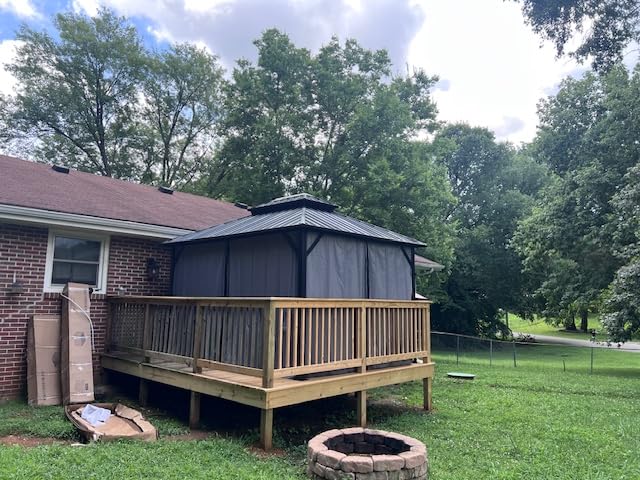
The listing tells buyers to secure the canopy with ground stakes or expansion bolts and to remove the canopy, curtains and mesh screens during extreme weather including strong winds, heavy rain, storms and snowfall. That instruction is the most useful wind data on the entire page, because it tells you the manufacturer does not consider this structure a storm shelter.
We would only consider it where a house, fence or hedge breaks the prevailing wind, and we would not build a wind strategy around it.
The rating spread and the UV figure
At 4.0 across 719 reviews, this is the weakest satisfaction spread in the lineup, with only 56 percent of ratings at five stars and a 12 percent one-star share. Complaints cluster around materials feeling lighter than expected. UV protection is listed at 50, well below the 95 to 99 percent figures claimed by competitors, which shows up as a faded interior over time.
Best as a low-cost covered dining area in a sheltered yard. Not for open land, coastal exposure, or any buyer who intends to leave it standing through a storm.
How to Anchor a Hardtop Gazebo So It Cannot Blow Away
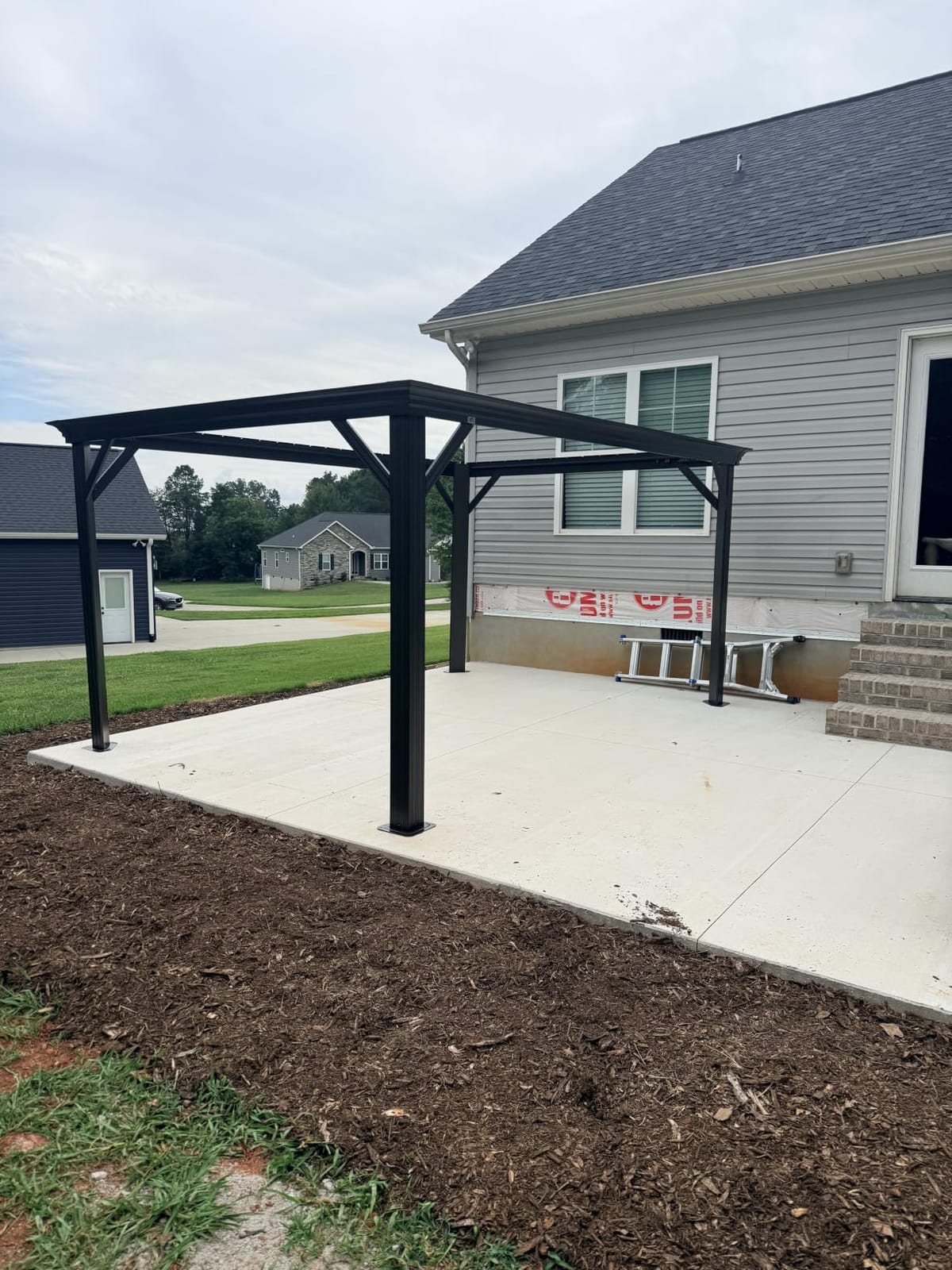
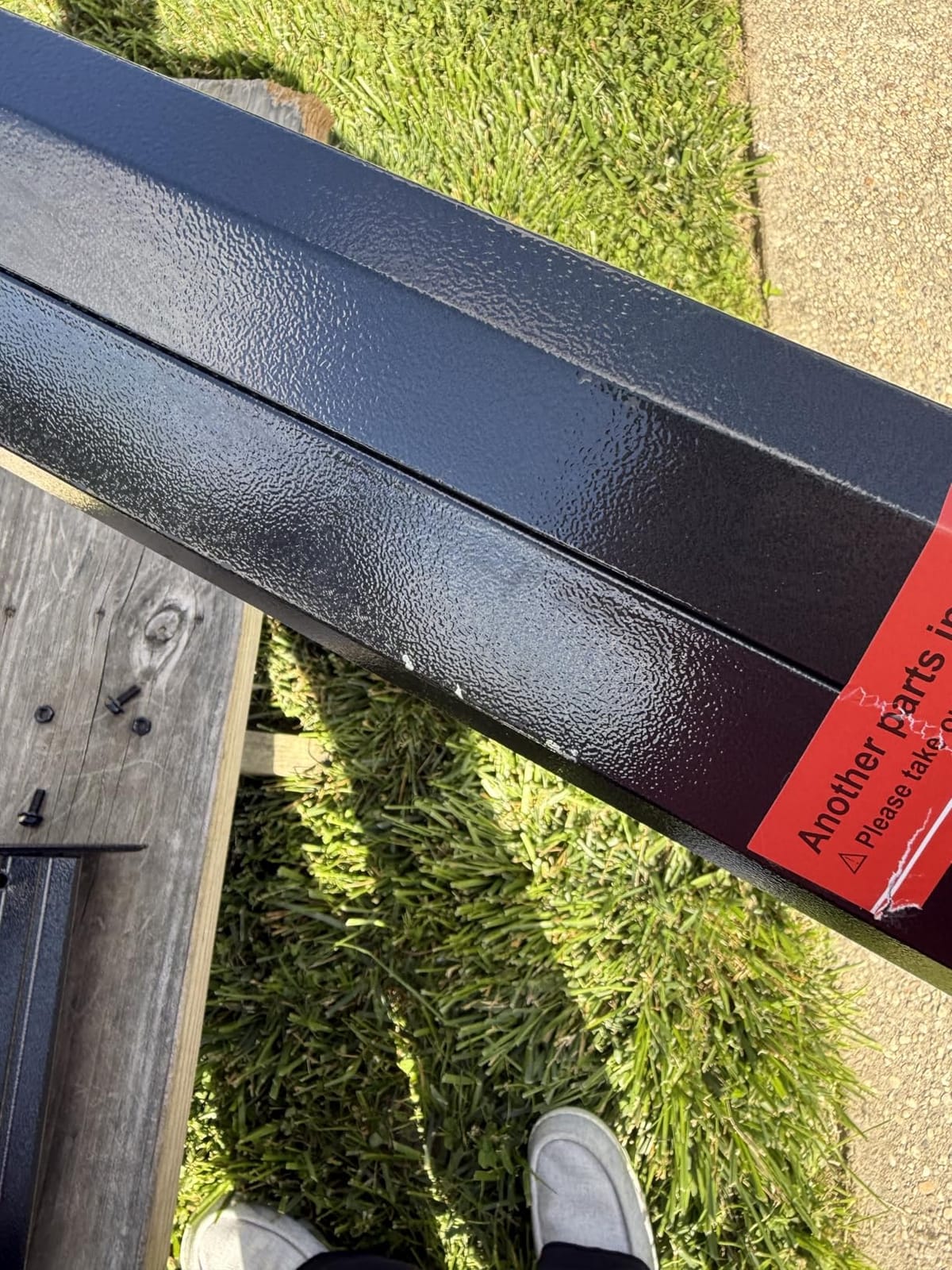
Anchor it to the structure beneath it, not to the surface on top of it. Every failure story in the reviews and forums traces back to a gazebo standing on a patio with nothing holding it down, and installers are blunt about it: ground pins and surface fasteners into pavers are the weakest option, and the frame of a deck or a poured foundation is the right one.
Concrete slab or paved patio: use expansion or anchor bolts through the pre-drilled base holes, seated properly in the pour rather than into the topping layer. This is the only surface where the standard included hardware is genuinely appropriate.
Soil or lawn: auger-type ground stakes driven at an angle away from the post, set deep enough that the frost line cannot heave them out. Ground stakes included with a gazebo are typically the shallow, decorative kind, so treat them as a starting point rather than a solution.
Deck: the myth is that you cannot anchor a gazebo to a deck. You can, but not to the boards. Bolt through into the deck joists or the ledger, and confirm the joists are attached to the house. A freestanding gazebo on a deck is only as strong as the joists beneath it, and the kit often omits the lag screws you need.
Wall-mounted or attached to the house: this removes the failure mode entirely, because the load path runs into the building foundation instead of into soil. It is also the only configuration we would consider for a genuinely exposed coastal site where a freestanding frame is not acceptable.
Always: add wind ropes or guy lines at roughly 45 degrees in the two weakest axes, and re-torque and re-check the anchors at the start of each storm season and after any severe event. A rusted bolt is a failed bolt, and that is the cheapest maintenance in this entire article. If a storm gets water into your house after the fact, the interior cleanup is the other half of the plan.
Storm-Proofing Your Hardtop Gazebo: A Step-by-Step Protocol
Run this before the forecast turns, not during it. Every step takes minutes and the difference between a gazebo that survives and one that becomes debris is almost entirely preparation.
- Remove curtains and netting. This is the single most important step and the one most owners skip. Zippered fabric on a double-track sidewall is a sail; it comes off in about ten minutes and it is the difference between a gust and a catastrophe.
- Close and latch the roof, then re-check the peak. Loose roof panels are what actually leave the frame. Confirm any panel that has flexed in the sun is seated flat and clipped at both ends.
- Re-torque every anchor bolt. Aluminum frame, steel hardware, seasonal thermal movement. A loose anchor is the same as no anchor.
- Check guy lines and wind ropes. They should run at about 45 degrees, on the two faces that take the prevailing wind, and be tight without being over-stressed.
- Clear roof snow before it reaches the rated load. A rated snow load assumes level, evenly distributed snow. A wind-drifted drift against a gable is several times the load per square foot the rating is computed for.
- Move loose furniture, planters and grills out from under it. The structure may survive and the contents will not.
- Know your takedown threshold by tier. If your only wind data is a 31 to 38 mph grade, plan to disassemble the roof or take the unit down well before severe weather. A structure with no certification is not a structure you leave standing in a storm.
- Inspect and document afterward. Photograph the anchoring and the frame before you claim anything on a homeowners policy, since documented anchoring and a certified rating are what a claims adjuster will look for.
If you also serve the same area from an open porch or a rural outbuilding, the same prep logic applies to everything else outside. Our picks for TV antennas for rural areas go through a similar review for reception rather than load.
Buying Guide: How to Choose a Wind-Rated Hardtop Gazebo
Tell a certified rating apart from a marketing claim
Ask for three things: a number in mph, the name of the testing body, and the condition under which the number holds. Only the two cedar models in this roundup carry a third-party certification, and both state that the 100 mph figure applies when anchored as specified. Everything else is a manufacturer claim, and a manufacturer claim about a vented double roof is worth more than a claim about heavy-duty steel, because roof geometry is verifiable on the structure in front of you.
Read roof geometry as an engineering feature
A vented double roof lets air escape instead of building pressure against the underside of the roof plane. A hip or gently sloped profile sheds both water and snow. A single sealed slope, however attractive the price, gives away the aerodynamic advantage and pushes more demand onto the frame. If you are buying for wind, treat the roof profile as a structural feature rather than a styling one.
Measure the post, not the roof
Post cross-section is the most honest number on any listing. In this group it runs from 3 inches on the compact ABCCANOPY to 4.7 inches on the PURPLE LEAF models and 6×6 solid-feeling cedar on the Backyard Discovery structures. Triangular sections resist twisting better than square ones of the same nominal width. Note also that listed dimensions usually describe the frame, and the roof overhangs each side.
Think about salt air before you think about price
Coastal buyers get shortchanged in this category. The question that comes up constantly in forums is whether salt air destroys aluminum and steel gazebos, and the answer is that it depends entirely on the finish. Powder-coated aluminum holds up well if you rinse it down with fresh water a few times a year, while cheaper powder coat and non-stainless fasteners corrode first and fastest. Look for stainless hardware, keep drains and gutters clear so salt-laden water does not sit in a channel, and treat any structure stored near the water in winter as needing a rinse in spring. Coastal buyers are also the group most likely to be looking for the certified 100 mph option, and that is a cedar-frame decision.
Orient to the prevailing wind, not the view
Turn the narrowest side toward the prevailing wind. A rectangular gazebo presents less face to a gust when its short axis is upwind, and if you have a choice of two spots on the lot, put the structure where a fence, hedge or the house itself breaks the flow. This costs nothing and it is the cheapest wind mitigation available.
Check permit rules before you order
Large anchored structures can trigger a permit or HOA requirement depending on local code, and buyers regularly report being surprised by this after ordering. If the footprint is over roughly 12×12 and it is being anchored to a slab or a deck, ask your local building department before delivery day, not after.
Budget for a real assembly
Manufacturer estimates run from 2 to 4 hours with 2 to 4 people for the entry models, while professional crews report 2 to 5 hours for standard aluminum units and multiple days for the 615 and 782 pound cedar structures. Treat any single-person assembly claim as marketing, and read the negative reviews first, because most complaints cluster on assembly difficulty rather than on wind performance. If you are furnishing the interior too, high-traffic floor care is a separate problem with its own guide to the best carpet cleaners for high traffic areas.
Frequently Asked Questions
What wind speed can a hardtop gazebo withstand?
It depends on the rating. Soft-top pop-up canopies sit around 25 to 30 mph, entry hardtops with a basic metal frame are typically rated 31 to 40 mph, engineered aluminum hardtops with 4.7 inch posts and a vented double roof are built for 50 to 70 mph conditions, and only independently certified 100 mph models belong in hurricane territory. Any figure only holds when the structure is anchored as specified.
What type of gazebo is best for windy conditions?
A rigid hardtop with a vented double roof, a wide post cross-section of at least 4 inches, and a complete anchoring kit matched to your surface. Add third-party wind certification if you are coastal or on open land. Fabric and polycarbonate roofs are poor choices for wind because they act as sails, and a pop-up frame is a seasonal product at best.
Which gazebos have a wind rating of 100 mph?
Very few aluminum hardtops do. In this roundup the two Backyard Discovery cedar models are the only structures with a third-party Pro-Tect rating of 100 mph, valid when anchored as specified, alongside snow load testing of 30 inches. Aluminum hardtops in the group top out at a published 40 mph or carry no mph figure at all, so buyers in hurricane zones should plan on cedar or on a wall-mounted design.
How do I stop my gazebo from blowing away?
Bolt it to something structural. Use expansion or anchor bolts on a concrete slab, auger ground stakes driven deep in soil, or through-joist lag screws into a deck frame. Add wind ropes at roughly 45 degrees on the two weakest faces, re-torque the anchors each season, and remove curtains and netting before a storm because the fabric is what turns a gust into a disaster.
Do I need to remove gazebo curtains before a storm?
Yes, and it is the step most owners skip. Zippered sidewalls on a double-track system present a broad fabric surface to moving air, which creates the same sail effect the roof frame is designed to resist. Curtains and mesh come off in about ten minutes and should be stored before a severe-weather forecast, regardless of the wind rating on the frame.
Is a wall-mounted gazebo safer in high winds than a freestanding one?
Yes. A wall-mounted design transfers wind load into the house foundation rather than into soil or a slab, which removes the single most common failure mode. It is the configuration we would consider for a genuinely exposed coastal site. The trade-offs are that it needs a suitable wall to attach to, it cannot be relocated, and the attachment points must be specified by the manufacturer.
Do hardtop gazebos need to be anchored to concrete?
Not necessarily, but they do need to be anchored to something. Concrete with proper expansion or anchor bolts is the strongest option and the one the standard included hardware is designed for. Soil works with deep auger-style stakes, and a deck works only when you bolt through the boards into the joists or ledger. Bolts into a patio surface alone are the weakest option and the most common cause of a shifted gazebo.
Final Verdict: Which Hardtop Gazebo Stays Put in Wind?
For a typical windy suburban yard, choose the PURPLE LEAF 10×12 aluminum hardtop. Its 4.7 inch posts, vented double roof, built-in drainage and pre-drilled bases are the most complete wind-oriented package here, and its 4.8 rating across 1570 reviews is the best-evidenced opinion in the group. For a large patio or a hot tub cover, step up to the 14×20 model with the 3000 pound snow-rated roof.
For coastal, storm-track or open-plain sites, the Backyard Discovery Arcadia and Norwood are the only structures here with third-party 100 mph certification, and you should accept the crew cost and the cedar maintenance that come with them. If you want a documented number on an aluminum frame instead, the Domi 10×12 publishes 40 mph and pairs it with stainless hardware and a 2500 pound snow rating.
For everyone else, anchor it properly, take the curtains down, and buy on post width and roof geometry rather than on the word heavy-duty. A 100 mph rating is a statement about a properly anchored structure, and the anchoring is the part you control.