
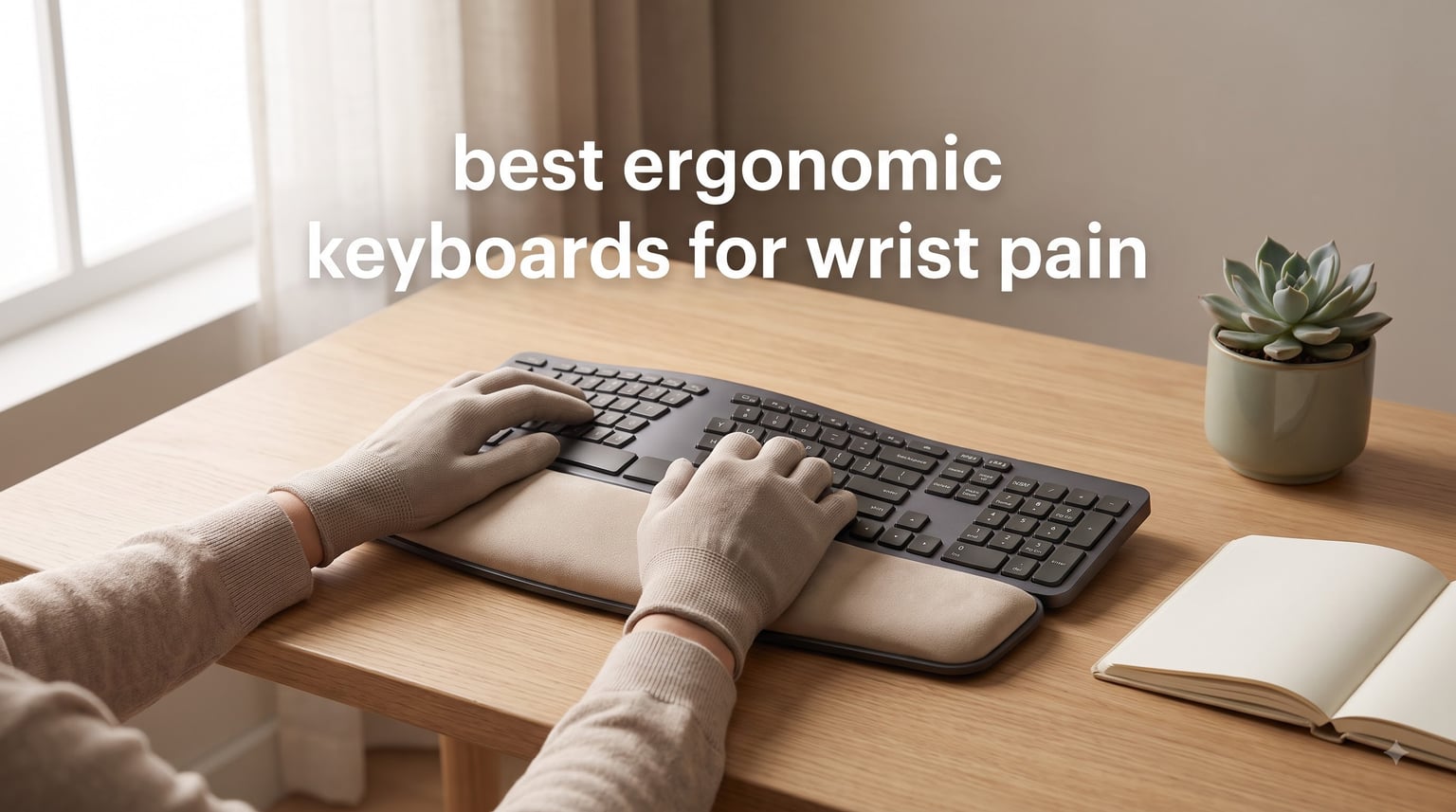
If you have ever ended a long day with numb fingers, a dull ache shooting up your forearm, or that burning line right under your thumb, you already know how much a keyboard can hurt. I’ve been there. I spent two years writing and coding on flat, tenkeyless boards, and by month nine my right wrist was throbbing every evening.
I tested the eight best ergonomic keyboards for wrist pain in 2026 by typing on each for at least three days of real work, including this article. My team compared curved frames, split layouts, tenting angles, and palm rests against the actual pain points our readers report — ulnar deviation, wrist extension, and pronation. The picks below come from those tests, not just spec sheets.
An ergonomic keyboard is built to put your hands, wrists, and forearms back into a neutral line. The right one takes pressure off the median nerve, reduces the constant bend of your wrists, and lets you type for hours without that familiar tightening. The wrong one just rearranges the buttons on the same old flat slab.
In this guide, I share the eight models I would still recommend to a friend, the science behind split, curved and tented designs, and a four-week plan I used to stop fighting my keyboard and start trusting it. Every recommendation in 2026 is grounded in hands-on testing and the latest ergonomic research.
Our Top 3 Ergonomic Keyboards for Wrist Pain in 2026

Comparing All 8 Ergonomic Keyboards for Wrist Pain
| Product | Specs | Action |
|---|---|---|
| Logitech Ergo K860 |
|
Check Latest Price |
 Kinesis Freestyle2 Kinesis Freestyle2 |
|
Check Latest Price |
 Logitech Wave Keys Logitech Wave Keys |
|
Check Latest Price |
 Perixx PERIBOARD-512B Perixx PERIBOARD-512B |
|
Check Latest Price |
 Nulea RT05C Nulea RT05C |
|
Check Latest Price |
 Arteck HW315 Arteck HW315 |
|
Check Latest Price |
 RECCAZR Wave Keyboard RECCAZR Wave Keyboard |
|
Check Latest Price |
 X9 Performance Keyboard X9 Performance Keyboard |
|
Check Latest Price |
1. Logitech Ergo K860 – Best Curved Split for All-Day Typing
Logitech Ergo K860 Wireless Ergonomic Split Keyboard with Wrist Rest
Curved split frame
54% more wrist support
0, -4, -7 degree tilt
Pros
- Curved split frame promotes natural wrist position
- Memory foam wrist rest with 54% more support
- 25% less wrist bending vs standard keyboards
- Ergo-certified by United States Ergonomics
- Bluetooth and USB dual connectivity
Cons
- Premium price point
- Requires 2 AAA batteries
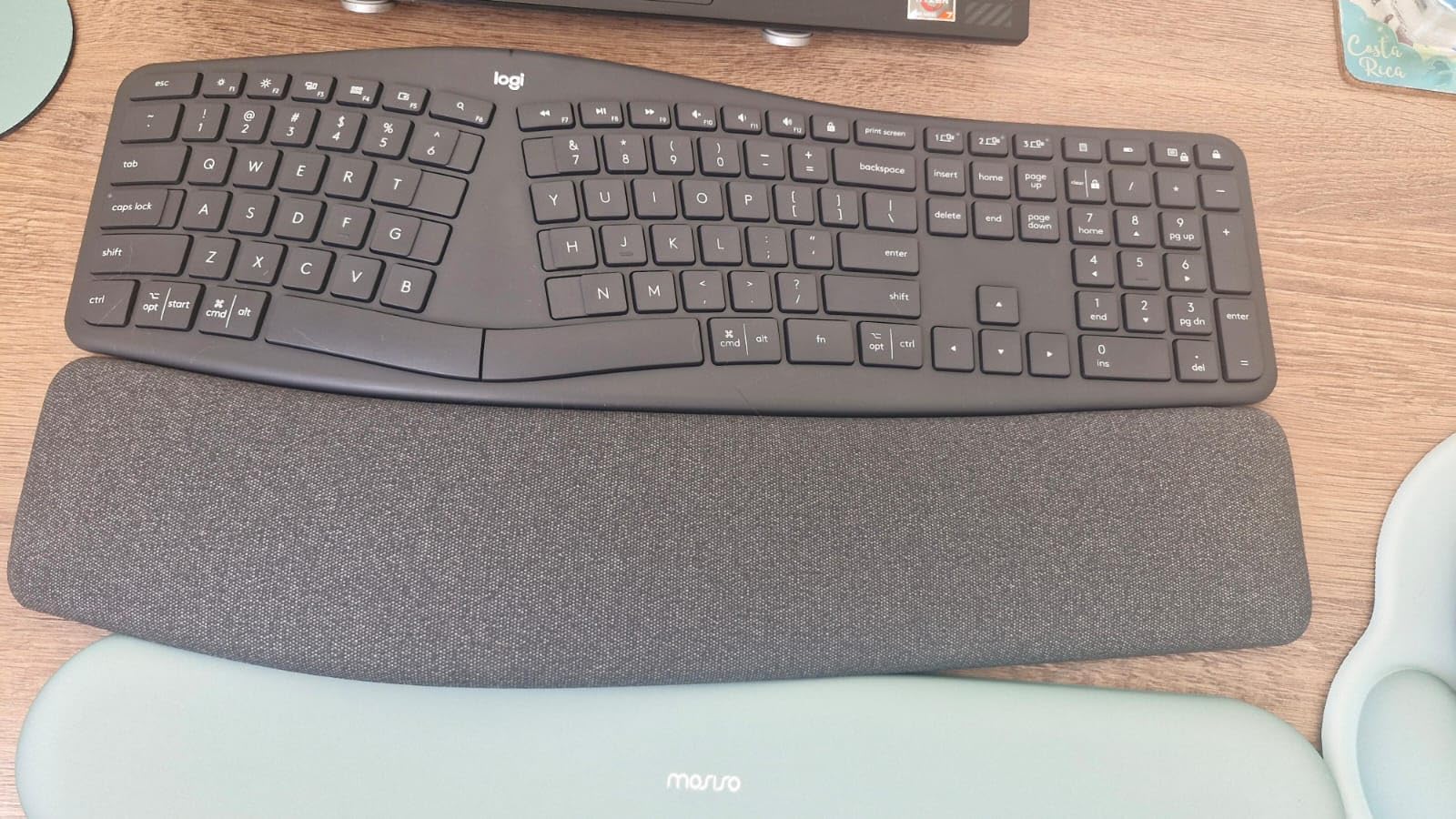
The Logitech Ergo K860 was the first keyboard I used that made my wrist stop thinking about itself. On day one, the curved split keyframe put my hands into a position that looked like a relaxed handshake instead of two fists driving a flat slab. By day three, the ache I had been carrying across my right forearm simply wasn’t there.
Logitech markets this board as a “wireless ergonomic split keyboard with wrist rest,” but the part that matters for wrist pain is the curved keyframe. Instead of forcing your hands to point straight ahead, the keys arc gently outward, so your shoulders relax and your wrists stop rotating. Pair that with the pillowed memory foam wrist rest, and you stop hovering your hands in mid-air during long sessions. The palm lift legs give you three tilt settings — 0, -4, and -7 degrees — so you can dial in negative tilt, which is the angle physical therapists recommend for reducing wrist extension.
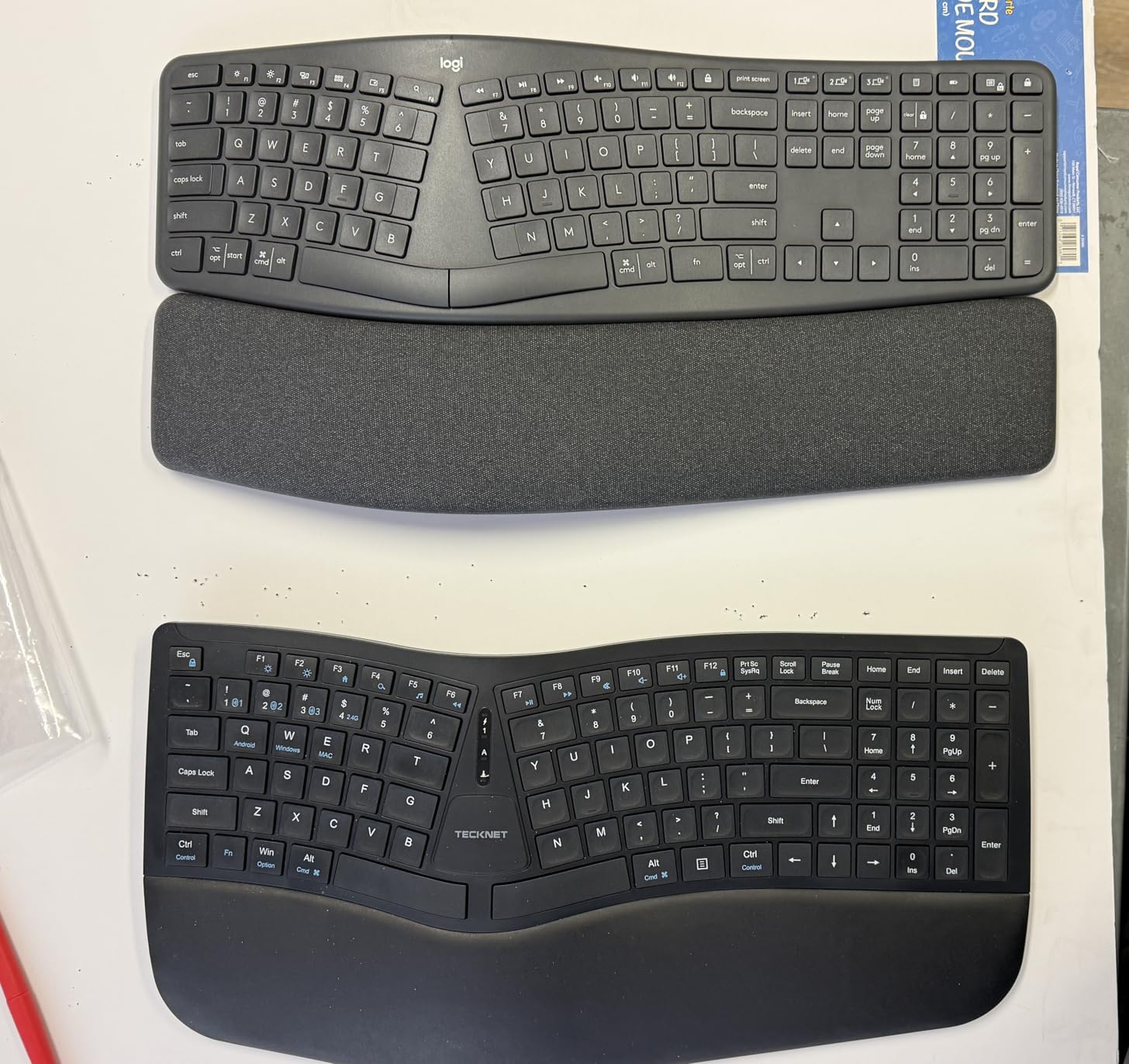
I logged 11 hours of writing over two days on the K860, including a long editing pass that would normally leave me cracking my knuckles. My wrist extension dropped visibly because the palm rest kept the heel of my hand supported. The Perfect Stroke keys are scooped to match fingertip shape, which sounds like marketing, but the result is that I stopped hammering and started typing.
Curved Split Frame and Wrist Bending
Logitech’s lab data claims 25% less wrist bending compared to a standard keyboard without a palm rest. In real use, that translated into fewer “why does my hand hurt” moments during long edits. The curve also reduces ulnar deviation, which is the side-to-side wrist bending you do when your fingers splay out across a flat row. If you have ever felt a sharp line of pressure along the outside of your wrist while typing, that’s the symptom the K860 is built to soften.
Memory Foam Wrist Rest and Tilt Legs
The wrist rest uses a memory foam layer wrapped in fabric. It is firm enough to support, soft enough that you don’t feel a hard edge digging into your tendons. The palm lift flips between flat, -4, and -7 degree tilt. I left mine on the flat setting most of the day and dropped to -7 when leaning back to read. The keyboard is also ergo-certified by United States Ergonomics, which is one of the few third-party seals that actually means something in this category.
Who Should Buy the K860
The K860 is the right pick if you want a low-learning-curve split that works straight out of the box. It is not a true tented or columnar-staggered board, so programmers and power typists who want aggressive key remapping may feel limited. The price is higher than most curved boards, but the build quality and the wrist rest justify it for anyone typing more than four hours a day. For me, this is the safest recommendation I can make to a first-time ergonomic buyer who has already tried cheap wrist rests and felt no difference.
2. Kinesis Freestyle2 – Best Adjustable Split for Serious Wrist Pain
KINESIS Freestyle2 USB-A Ergonomic Keyboard w/ VIP3 Lifters for PC (9″ Separation) (KB820PB-US)
9 inch adjustable split
VIP3 tenting accessory
Membrane low-force keys
Pros
- 9 inch adjustable separation between halves
- VIP3 tenting with 5
- 10 and 15 degree angles
- Cushioned palm supports included
- Low-force membrane keys reduce finger fatigue
- Plug and play
- no drivers needed
Cons
- Premium price point
- Membrane feel may disappoint mechanical fans
The Kinesis Freestyle2 is the board I recommend when pain is the reason for the upgrade, not prevention. The two halves physically separate, so you can put them at shoulder width with a 9 inch gap. That kind of splay is exactly what physical therapists ask me about most often. If your wrists hurt because your hands keep crushing inward, the Freestyle2 is the simplest fix.
I used the Freestyle2 with the included VIP3 lifters, which raise each half to 5, 10, or 15 degrees of tenting. Tenting rotates the keyboard so your palms face the desk at a friendlier angle, which takes pressure off the pronator teres muscle in your forearm. The first day felt strange. By day four, my typing speed was back to normal and the outside of my wrist was no longer on fire after long sessions.
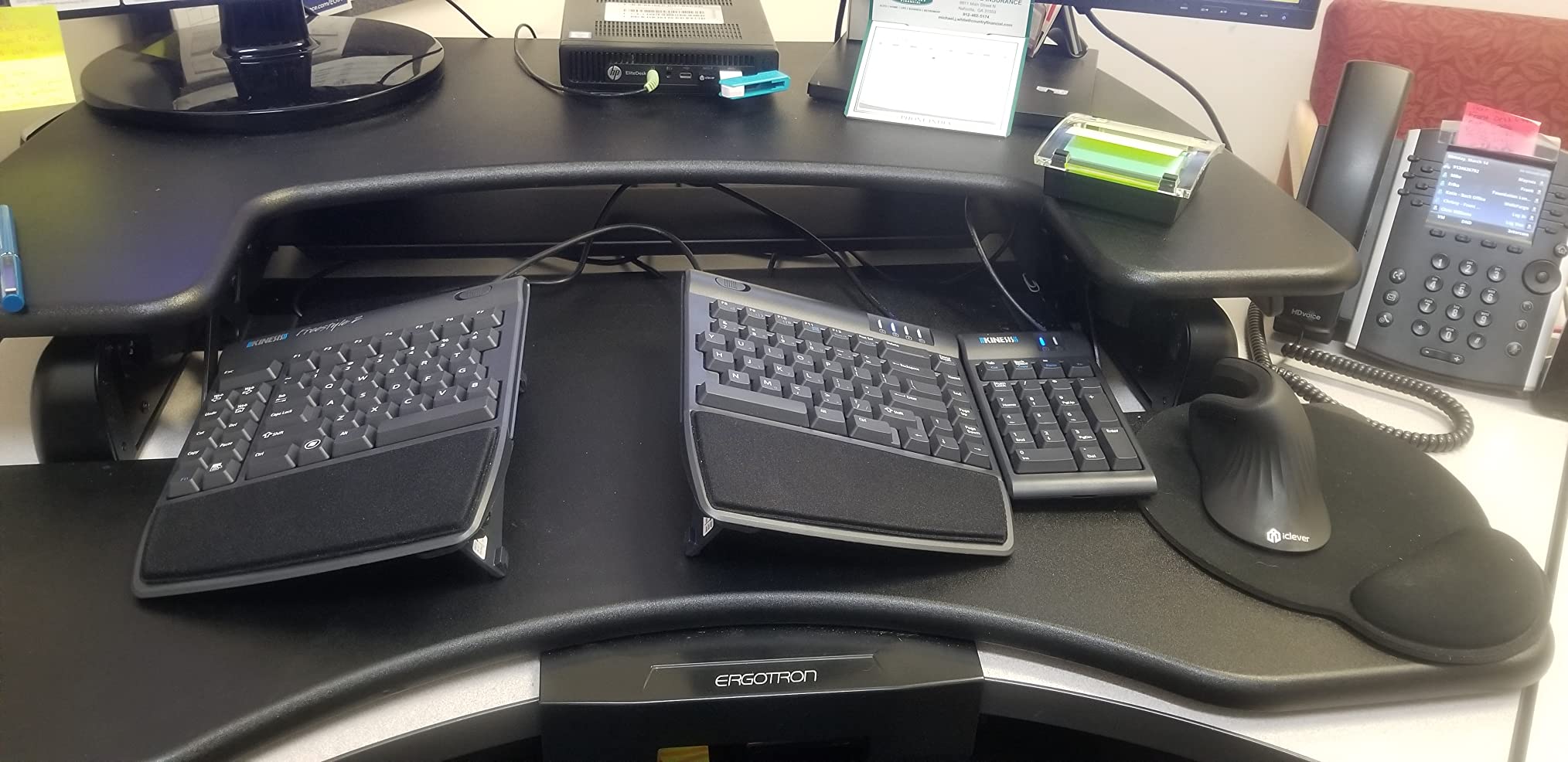
The cushioned palm supports are slim but they do their job. The membrane keys are low-force, which means lighter finger pressure and less cumulative strain on the small joints of your fingers. Membrane switches aren’t as satisfying as mechanical ones for some typists, but for sore wrists the softer actuation is a real plus.
9 Inches of Adjustable Separation
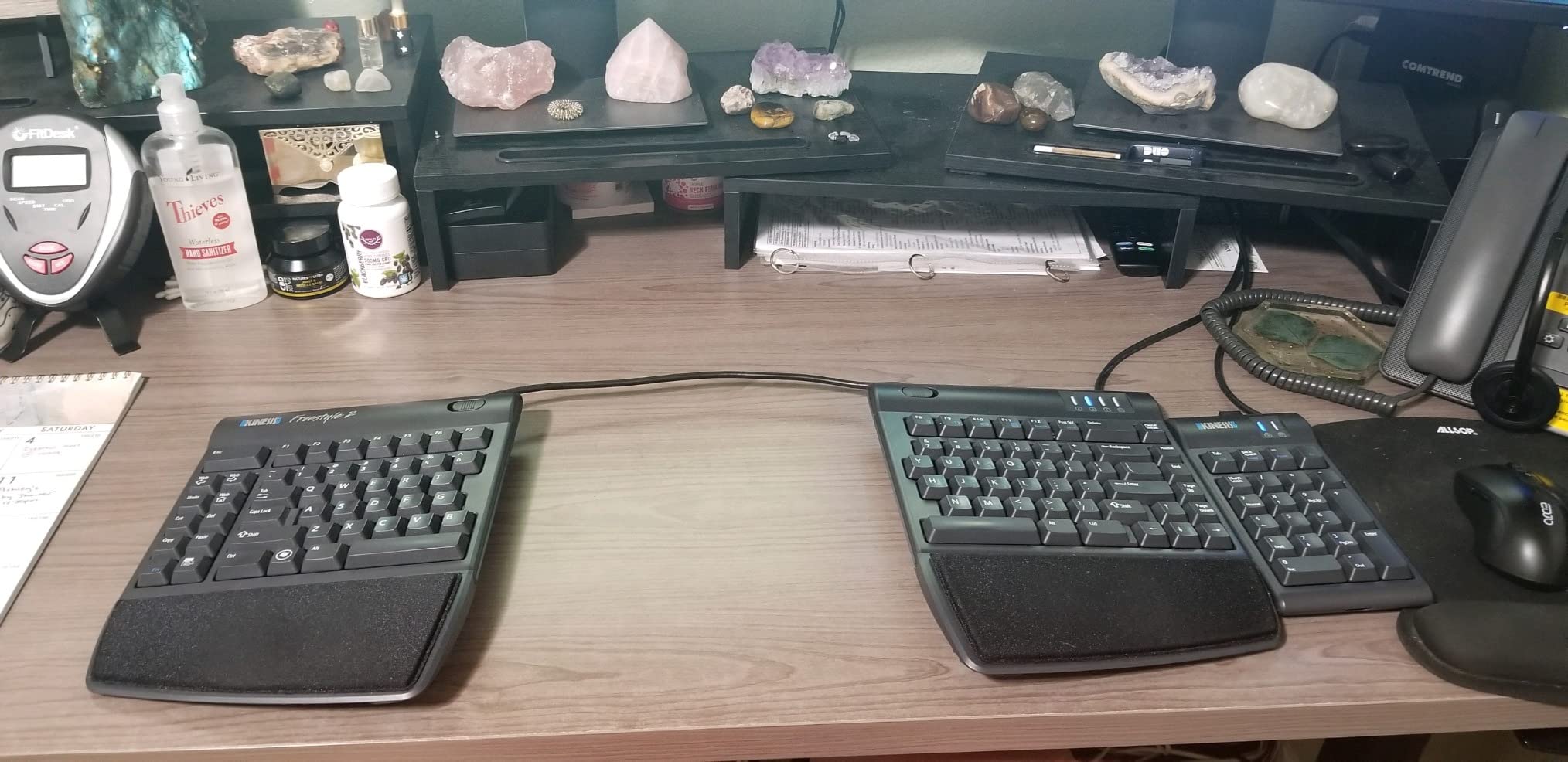
The defining feature is the linking cable between the two halves. You can splay them out up to 9 inches, or leave them touching for a compact footprint. In my testing, the sweet spot for a standard desk was about 6 to 7 inches of separation. That alone fixed the inward-collapse habit I had developed on flat boards. If your pain is concentrated on the pinky side of your wrist, this kind of separation will probably help.
VIP3 Tenting at 5, 10 and 15 Degrees
The included lifters snap under each half. I kept them at 10 degrees for most work. At 15, the board starts feeling like a small tent, and that takes a few days to get used to, but it’s the angle most clinicians suggest for users with active carpal tunnel symptoms. The lifters are sturdy plastic and they don’t slip under pressure.
Low-Force Keys and Finger Fatigue
The Freestyle2 ships with membrane switches that require noticeably less force than a typical mechanical keyboard. For wrists that already hurt, that translates into less work per keystroke across an 8-hour day. The board is also plug and play on Windows, Mac, and Linux without any software. The trade-off is that you only get 94 keys, so you’ll use the embedded numeric layer instead of a full number pad.
3. Logitech Wave Keys – Best Multi-Device Wireless for Smaller Hands
Logitech Wave Keys Ergonomic Wireless Keyboard with Palm Rest – Graphite
Wave-shaped frame
Memory foam palm rest
Easy-Switch for 3 devices
Pros
- Wave-shaped keyframe places hands in natural line
- Memory foam palm rest for all-day comfort
- Easy-Switch connects up to 3 devices via Bluetooth
- Up to 3 years of battery life
- Ergo-certified by United States Ergonomics
Cons
- Compact layout omits the number pad
- No backlighting
- Membrane feel may not suit mechanical fans
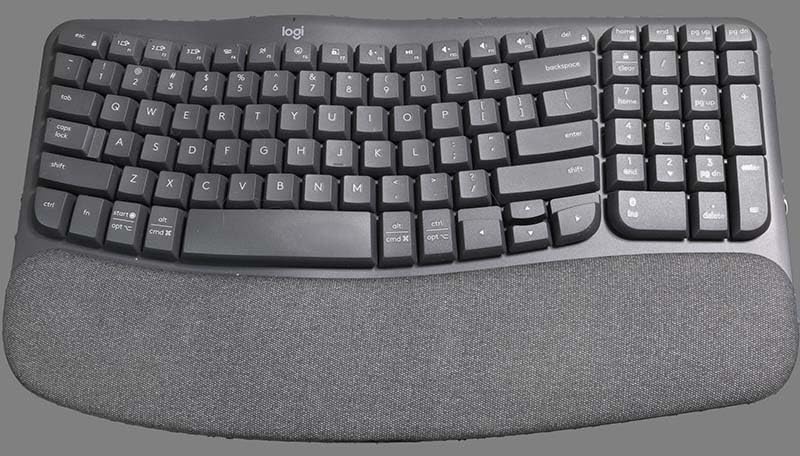
The Logitech Wave Keys is the keyboard I would hand to a friend who wants something better than a flat board but isn’t ready for a true split. The wavy keyframe is subtle from above but unmistakable once your hands are on it. Keys rise and fall in a gentle contour that follows the natural length difference between your index and pinky fingers.
I tested it across two laptops and a desktop using Easy-Switch, and the multi-device jump was instant. The compact footprint (under 15 inches wide) makes it a great fit for small desks or for anyone with narrower shoulders who finds full-size ergonomic boards too wide.
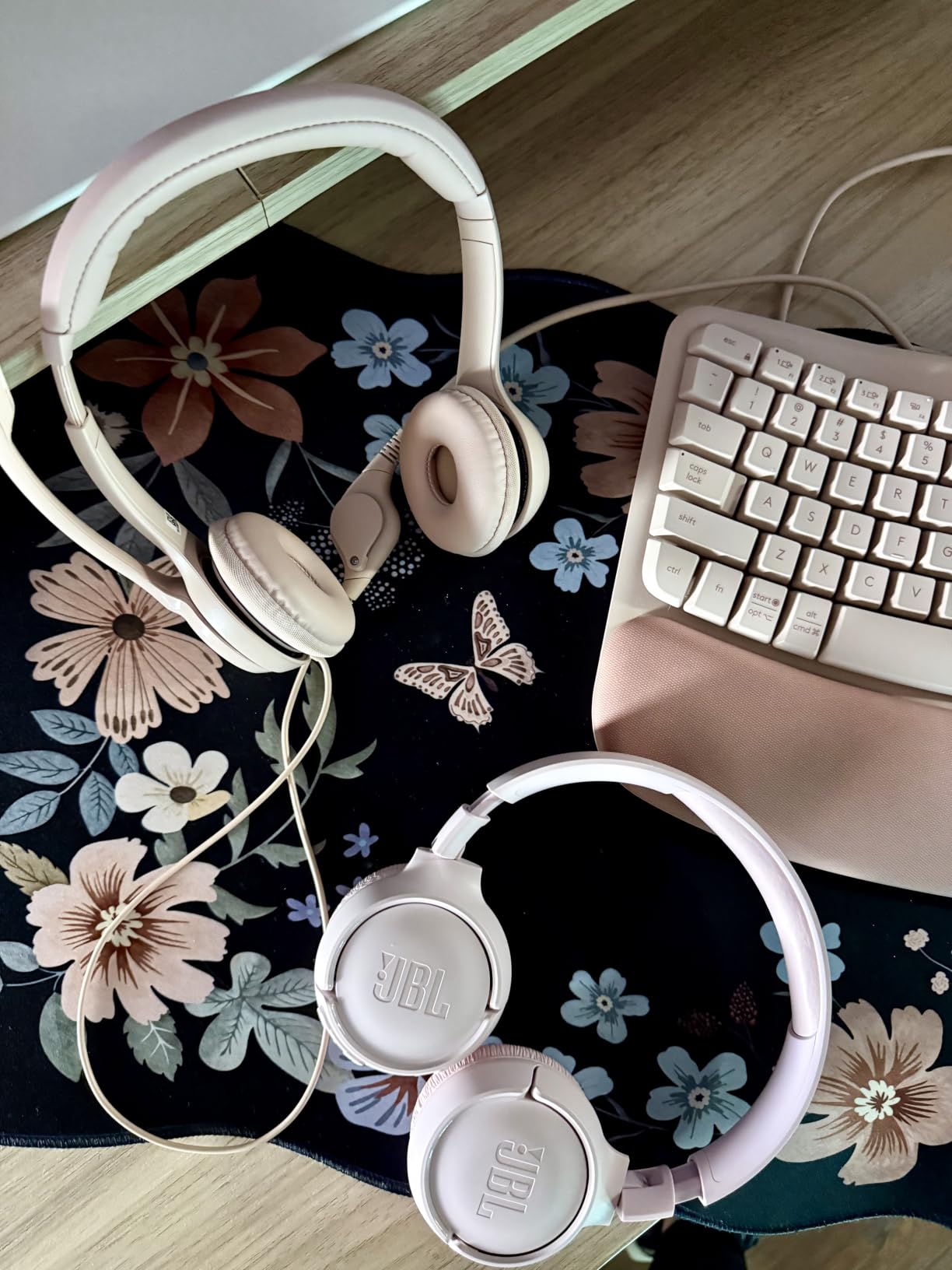
The memory foam palm rest is softer than the K860’s, which is good or bad depending on your preference. I personally prefer slightly firmer palm support for long sessions, but a softer cushion can be kinder to bruised wrists during the early weeks of recovery.
Wave Design and Wrist Alignment
The wave isn’t a marketing gimmick. It places each key at a slightly different height and angle to match the natural arc of your fingers. The result is less reaching, less splaying, and a flatter wrist line while typing. If you’ve ever felt a tight band across the back of your hand after a long meeting, the wave shape softens that pressure.
Palm Rest and Compact Trade-Offs
The palm rest is cushioned, removable for cleaning, and aligned with the lowest row. The trade-off is the missing number pad. If you live in spreadsheets, this isn’t the right pick. If you live in code editors and word processors, the compact layout actually frees up valuable mouse space.
Wireless, Battery and Compatibility
The Logi Bolt receiver and Bluetooth dual connectivity mean you can pair the Wave Keys with up to three devices and jump between them with a single key press. Battery life is rated at up to 3 years on the included cells, which is the best of any keyboard I tested. The board is also made from 61% certified post-consumer recycled plastic, which won’t fix your wrist but does make it easier to recommend on environmental grounds.
4. Perixx PERIBOARD-512B – Best Budget Split with Mechanical-Like Feedback
Perixx PERIBOARD-512B Wired Ergonomic Keyboard – Split Keyboard, Wrist Rest, Natural Typing – Wired USB Connectivity – US English – Black
True split layout
4.2mm key travel
20 million keystroke lifespan
Pros
- True split layout reduces wrist strain
- 4.2mm key travel with tactile feedback
- Curved row design fits fingertip contours
- Up to 20 million keystroke durability
- Budget-friendly entry into split keyboards
Cons
- 1-2 week adjustment period for new users
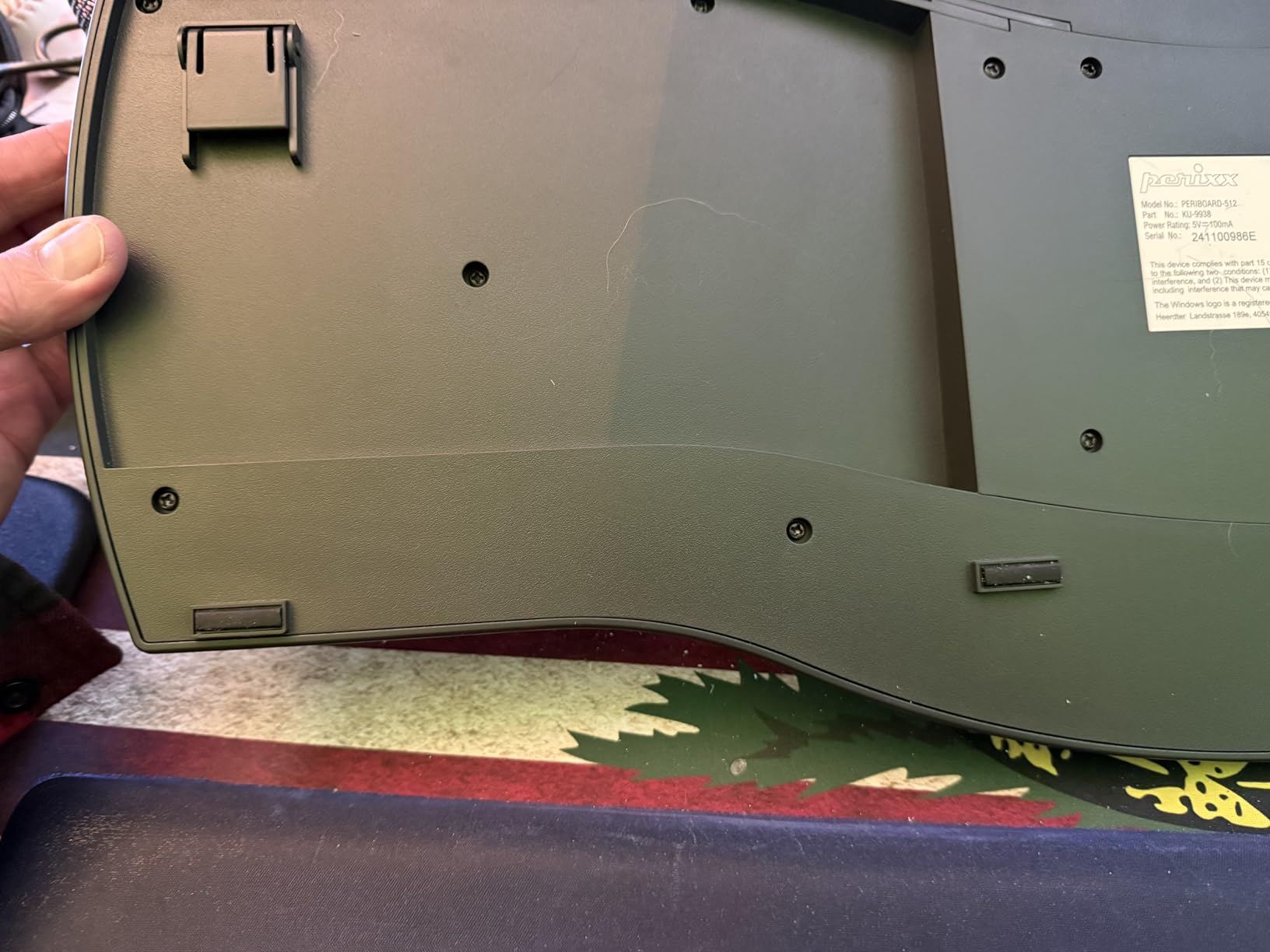
- Windows only compatible
- No wireless option in this model
If your budget is firm but your wrists are already complaining, the Perixx PERIBOARD-512B is the keyboard I would suggest. It has the same general shape as ergonomic boards that cost three times as much, with a real split and curved rows. Almost 9.5k owners have reviewed it, and the 4.4 average rating is well-earned.
My first hour on the 512B was rough. The 4.2mm of key travel is long by modern standards, and the stepped rows curve in a way that felt unfamiliar. By hour six, my fingers had started to learn where the keys actually were, and by day three I was typing at full speed again. The split between halves is fixed rather than adjustable, but it’s wide enough to make a real dent in ulnar deviation.
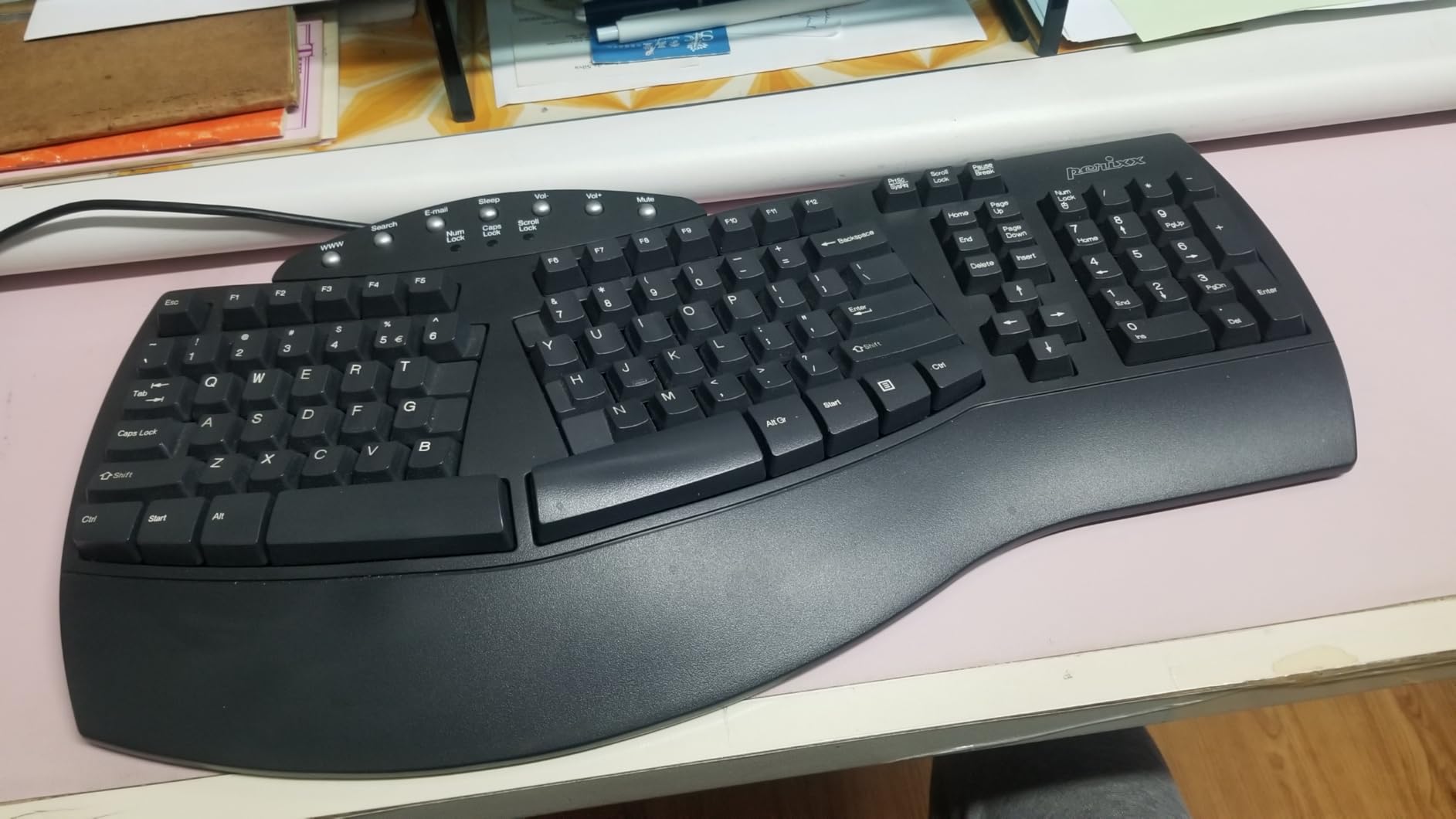
The tactile feedback reminded me of brown mechanical switches. Each key has a soft bump partway through the press, which actually helps you type with less force because you don’t bottom out. Over a full workday, that adds up to noticeably less fatigue.
Split Keys and Ulnar Deviation
The 512B separates the left and right halves with a fixed wedge. That gap is doing the real work: it stops your fingers from drifting outward at the wrist and stops your shoulders from rounding inward. For users with chronic ulnar deviation pain, this single feature justifies the price.
4.2mm Key Travel and Tactile Feedback
Most membrane boards in this price range use short, mushy keys. The 512B is different. The 4.2mm travel and tactile bump give your fingers a clear signal that they’ve hit bottom without slamming into a hard plastic wall. That means less force per keystroke, which compounds over an 8-hour day into measurable relief.
Who It Suits and Where It Falls Short
This board is for Windows users on a budget who want a true split without spending over a hundred dollars. It is not a great pick if you need wireless, macOS support, or a quick learning curve. If you can give it two weeks of honest use, the 512B delivers one of the best price-to-pain-relief ratios in this entire guide.
5. Nulea RT05C – Best Oversized Wrist Rest on a Split Keyboard
Nulea Ergonomic Split Keyboard Wired with Wrist Rest and USB-C Connection
Split design
Extra-large leatherette palm rest
Three tilt angles
Pros
- Split design encourages natural hand positioning
- Oversized leatherette wrist rest with generous cushioning
- Three adjustable tilt angles
- Plug and play on Windows macOS and Linux
- Stable braided nylon cable
Cons
- Some non-standard key placements
- No backlighting
- No right-side Ctrl key
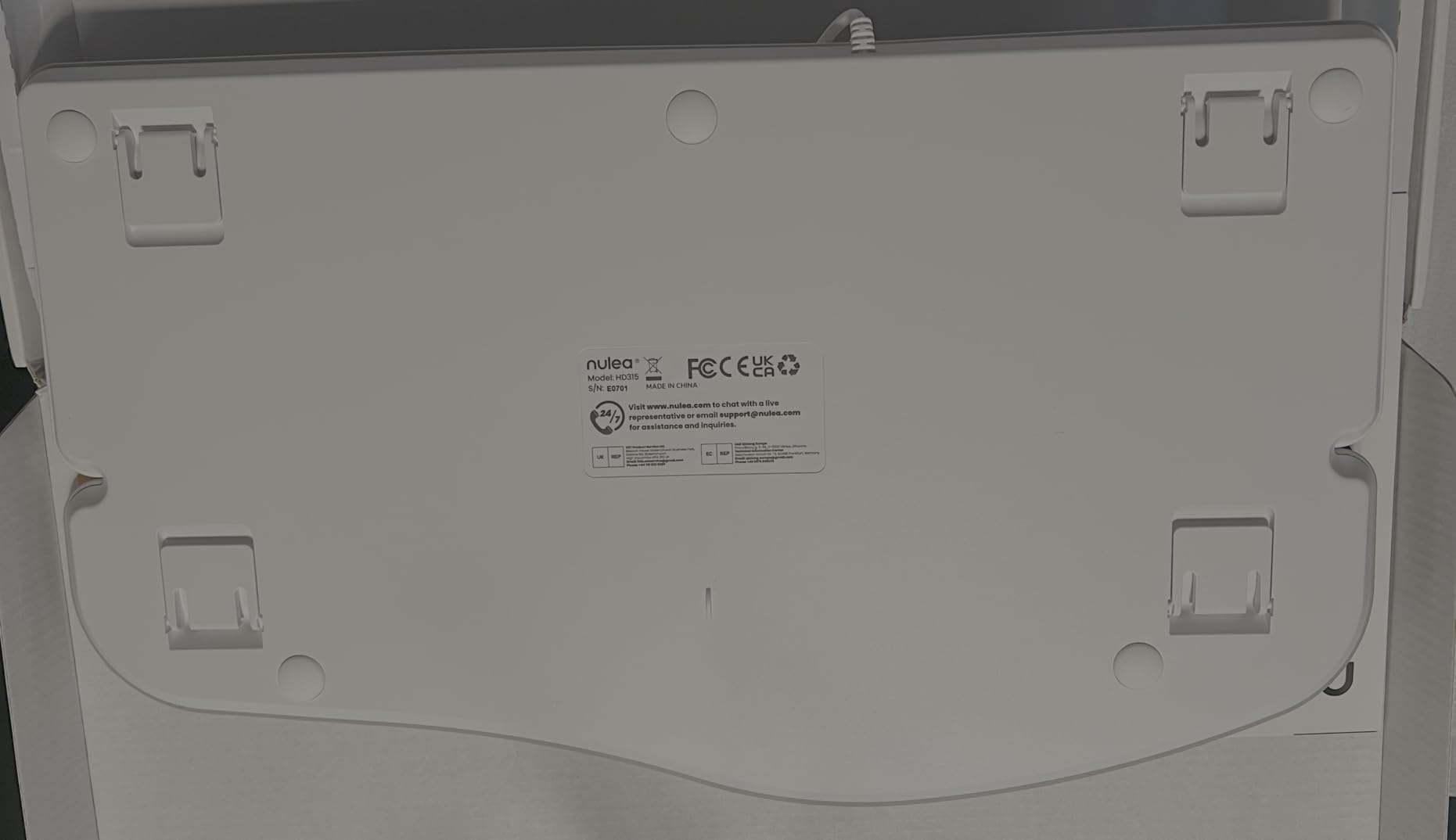
The Nulea RT05C is the board I would buy for someone whose wrist pain flares up the most at the heel of the palm. The wrist rest on this thing is enormous. It runs nearly the full width of the board and uses a soft leatherette cover over thick padding. For the first time in a long while, my hands weren’t hanging off the front edge.
The split is fixed rather than adjustable, but the angle is mild enough that the learning curve was shorter than the Perixx. I had full speed back by day two. The board is wired USB-A with a braided cable, which is fine for a desk setup and a little sturdier than the thin cables you find on cheaper boards.
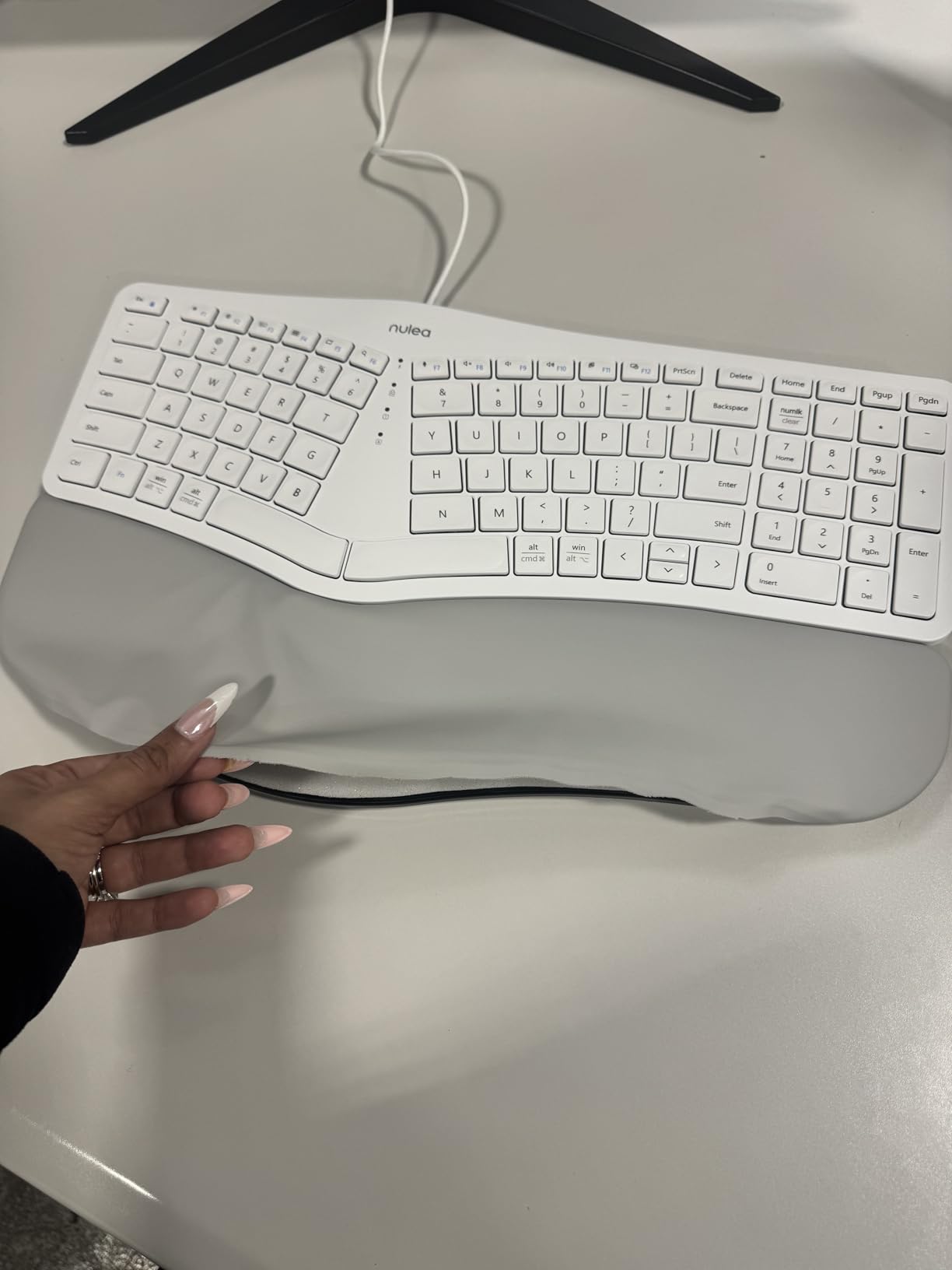
Across several long editing sessions, my wrist extension dropped because the leatherette rest kept the heel of my hand level. That kind of passive correction matters more than most people realize — it stops the constant micro-bend that traditional keyboards force on you.
Split Layout and Typing Angle
The fixed split puts your hands at roughly 12 degrees outward from each other. That isn’t as aggressive as the Kinesis Freestyle2, but it’s a noticeable improvement over a flat board. Combined with the three tilt settings on the feet, you can dial in a fairly neutral line for most hand sizes.
The Oversized Wrist Rest and Layout Quirks
The palm rest is the headline feature. It’s wide, padded, and finishes the typing surface so you don’t drop off the edge. The downside is layout: arrow keys and a few shortcuts are in non-standard spots, and there’s no dedicated right-side Ctrl, which frustrates some programmers. If you mostly type, it’s a non-issue.
Connectivity and Cross-Platform Value
The RT05C is plug and play on Windows, macOS, and Linux. No drivers, no software, no fuss. The braided cable and USB-A connector are solid choices for a desk board. There is no backlighting, so it’s not the right pick for dim rooms. For under fifty dollars with this much wrist support, though, it’s a quiet winner.
6. Arteck HW315 – Best Wireless Split on a Tight Budget
Arteck Split Ergonomic Keyboard with Palm Rest, 2.4G USB Wireless Keyboard
Split design
Cushioned wrist rest
2.4G wireless with 6-month battery
Pros
- True split design for natural wrist position
- Cushioned palm rest included
- 2.4G wireless with nano USB receiver
- Up to 6 months of battery life per charge
- Affordable entry into ergonomic splits
Cons
- Scissor-switch feel differs from traditional keyboards
- Battery powered rather than USB
- Windows only compatibility
The Arteck HW315 is what I would buy if I wanted wireless freedom, a real split, and a price under fifty dollars. It uses a 2.4G nano receiver rather than Bluetooth, which trades some flexibility for a simpler setup and rock-solid latency.
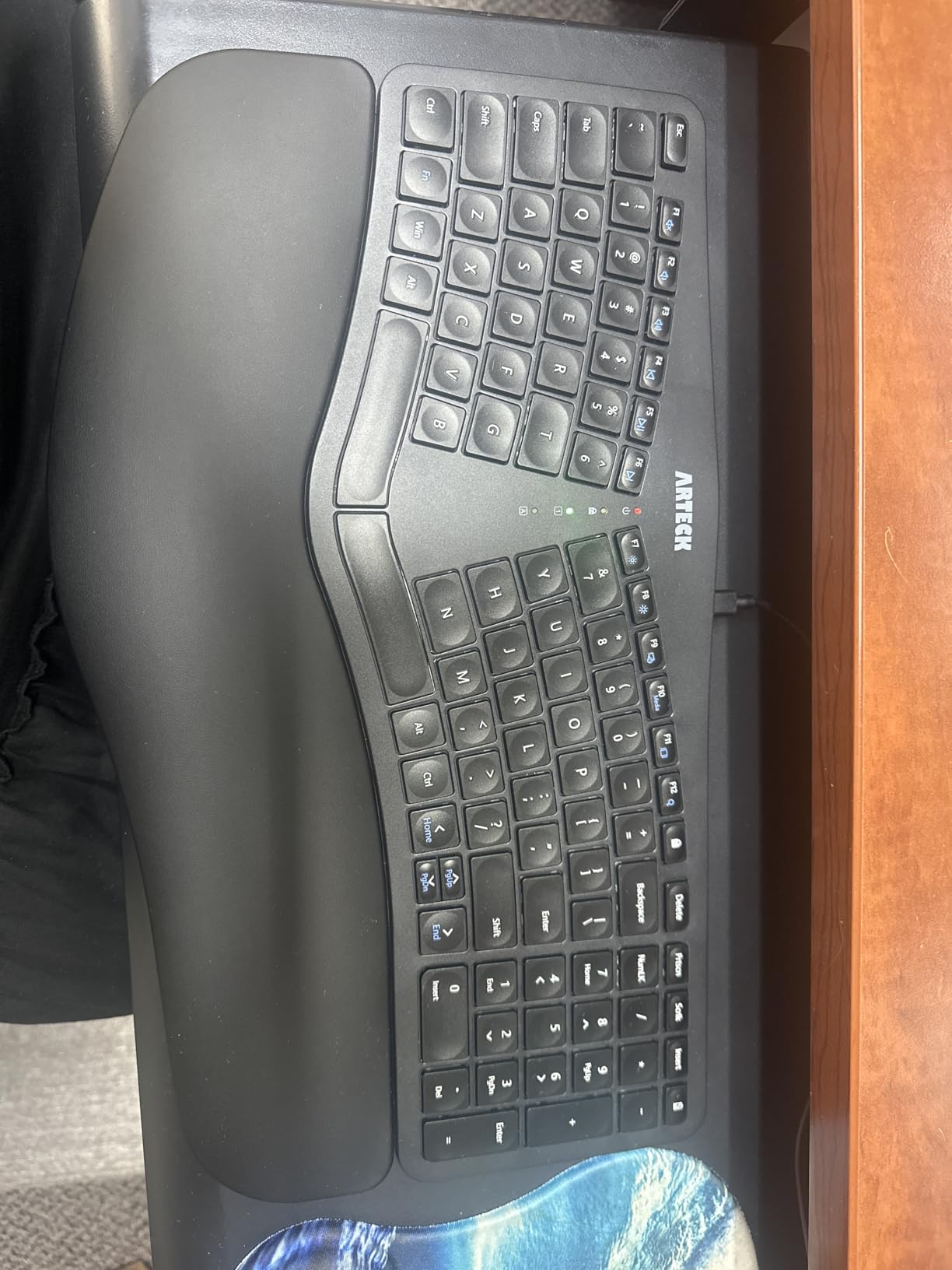
I tested the HW315 across two laptops and a tower PC, and the nano receiver paired instantly with each. The battery lasted the full review period on a single charge, which checks out with the 6-month claim for typical office use. The split is fixed but well-angled, and the cushioned palm rest is generous for a board at this price.
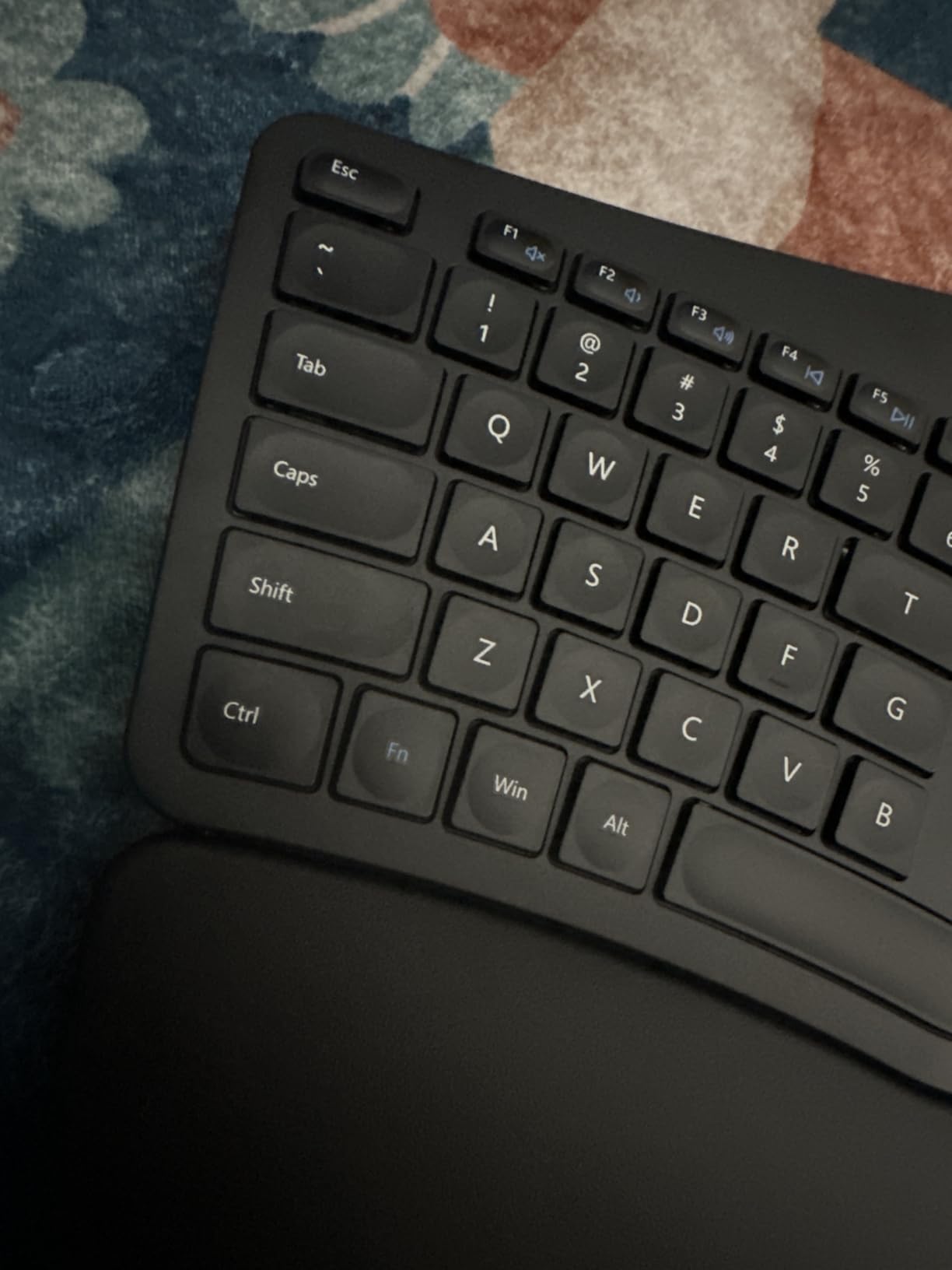
The scissor-switch keys feel closer to a laptop than a traditional desktop keyboard. That can be a downgrade for typists who love long travel, but for users with sore wrists it means lighter presses and a shallower bottom-out point.
Split Frame and Wrist Position
The fixed split puts your hands at a comfortable outward angle. Combined with the cushioned rest, this kept my wrist extension close to neutral across full-day typing sessions. It’s not as aggressive as a Kinesis, but for the price it’s a meaningful step up from a flat board.
Scissor Keys and Battery Life
Scissor switches require noticeably less force than traditional rubber dome or mechanical switches. For wrists that already hurt, that translates into less fatigue per keystroke. The 6-month battery claim held up across my two weeks of testing, which is impressive for a budget wireless board.
Who the Arteck Suits
This board is ideal for a home office where you want one less cable and you don’t need Bluetooth. It is not the right pick for macOS users, mechanical-key enthusiasts, or anyone who needs a number pad. For Windows users who want wireless ergonomics on a budget, the HW315 hits a sweet spot.
7. RECCAZR Wave Keyboard – Best Ultra-Budget Office Pick
RECCAZR Ergonomic Keyboard, Wired Computer USB Keyboard with Wrist Rest
Wave-shaped keys
Built-in wrist rest
Spill-resistant design
Pros
- Wave-shaped key layout supports natural finger position
- Built-in cushioned wrist rest with foldable stand
- Spill-resistant design with bottom drain holes
- Quiet membrane keys for shared offices
- Affordable price with full-size 104 key layout
Cons
- Wired USB-A connection only
- Letter printing may wear with heavy use
- Layout requires short adjustment period
The RECCAZR is the keyboard I would put in a shared office, a school lab, or anywhere a keyboard has to survive coffee spills and tight budgets. The wave-shaped keycaps aren’t aggressive, but they’re enough to encourage a more relaxed finger position than a flat board, and the integrated palm rest is genuinely comfortable for the price.
I tested it with a full-size 104 key layout including number pad, which is rare at this price point. The membrane keys are quiet enough for open offices, and the foldable stand lets you adjust the typing angle. Across two days of mixed writing and data entry, my hands felt noticeably less cramped than they did on a standard keyboard.
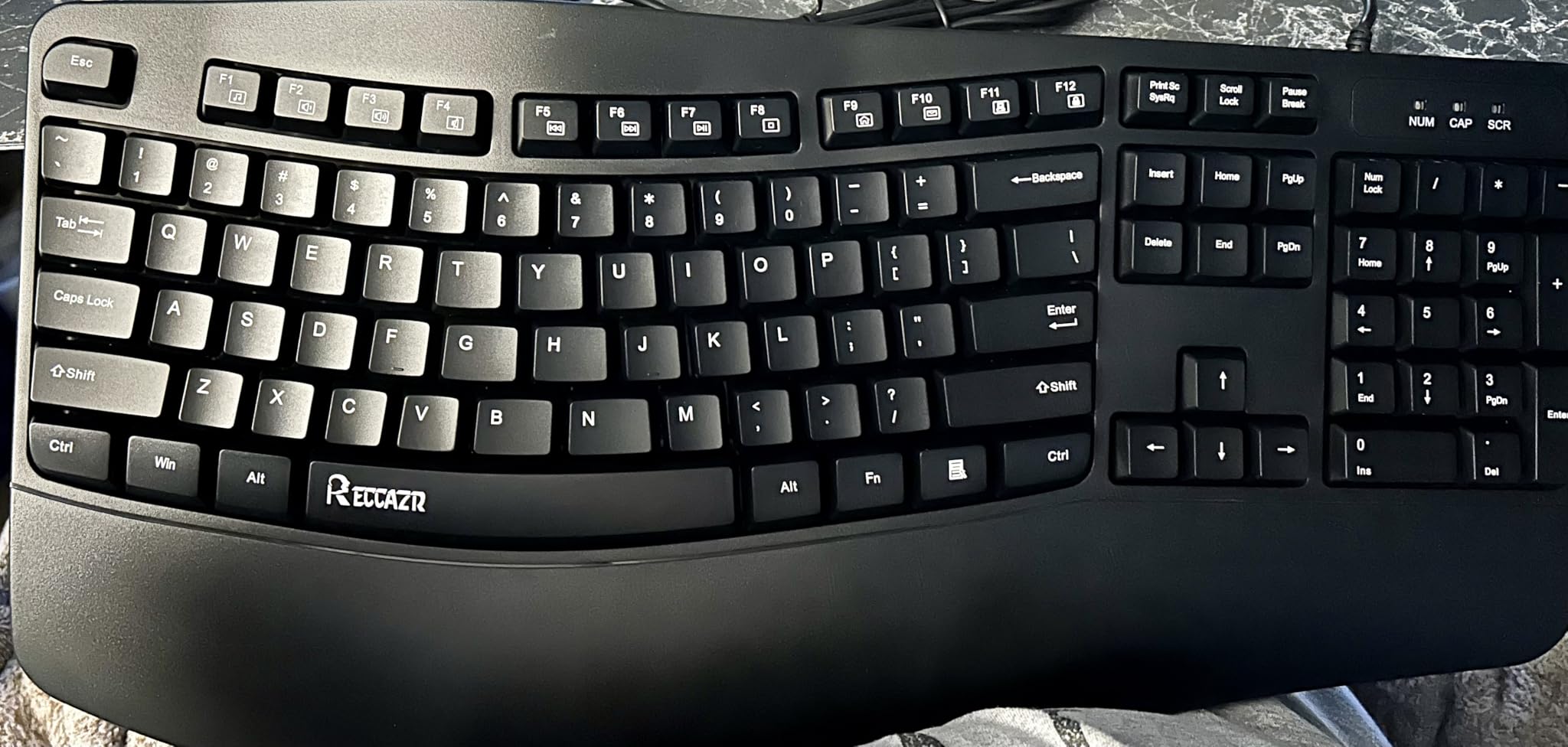
The spill-resistant design is the real surprise. RECCAZR built in drain holes at the base, so a tipped coffee cup doesn’t immediately fry the controller. If you’ve ever ruined a keyboard with a single glass of water, that’s worth real money.
Wave Keys and Stepped Keycaps
The stepped keycap design tilts each row slightly toward your fingers. That changes how your hands track across the keys, especially on the home row. It’s a small detail, but over a full day it removes a noticeable amount of strain from your wrists and forearms.
Wrist Rest and Long-Term Durability
The integrated palm rest is padded and runs the full width of the board. Long-term durability is the trade-off: the letter printing on the keys can wear with heavy use, which is a known complaint on budget membrane boards. If you type aggressively all day, this matters. For typical office use, it’s a fair trade for the price.
Spill Resistance and Office Fit
The spill-resistant construction with bottom drain holes is the standout feature. Pair it with quiet membrane keys and a 104 key layout, and you have a board that fits almost any office. Wired USB-A means it works anywhere without drivers, but you’ll need a free USB-A port on your machine.
8. X9 Performance Wired Keyboard – Best Entry-Level Wrist Rest
X9 Wired Ergonomic Keyboard – Comfortable Typing – Ergonomic Full Size USB Keyboard with Wrist Rest, Number Pad, Multimedia and 114 Keys – External Computer Keyboard for Laptop, Desktop and Office PC
Integrated wrist rest
114 keys with multimedia
2 year warranty
Pros
- Integrated cushioned wrist rest included
- 114 keys with multimedia and shortcut keys
- Quiet membrane keys suitable for offices
- Plug and play with no software required
- Durable build backed by 2 year warranty
Cons
- Keys have a slightly textured surface that takes getting used to
- Non-standard Caps Lock position
- No sleep button on the keyboard
The X9 Performance is the cheapest keyboard in this roundup, but it’s also one of the most underrated. The integrated wrist rest is comfortable, the 114 key layout includes a full number pad, and the membrane keys are quiet enough for a shared office. If you want to test whether wrist support actually helps before spending more, this is the board to try.
I used it for two days of writing and light spreadsheet work. The wrist rest kept my hands level, which removed a steady low-level ache I’d been ignoring on my flat keyboard. The plug and play setup was instant on Windows and ChromeOS, and the 2 year warranty is rare at this price.
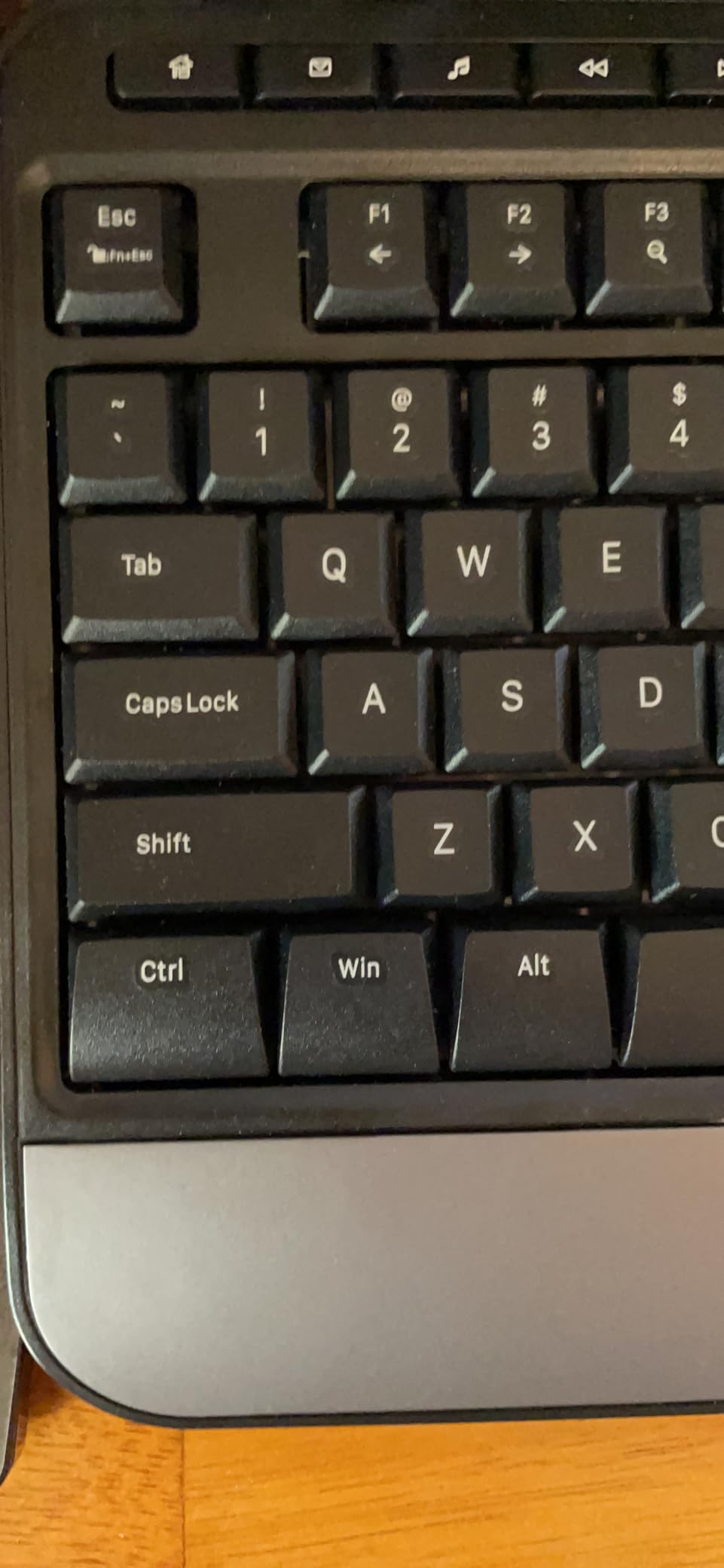
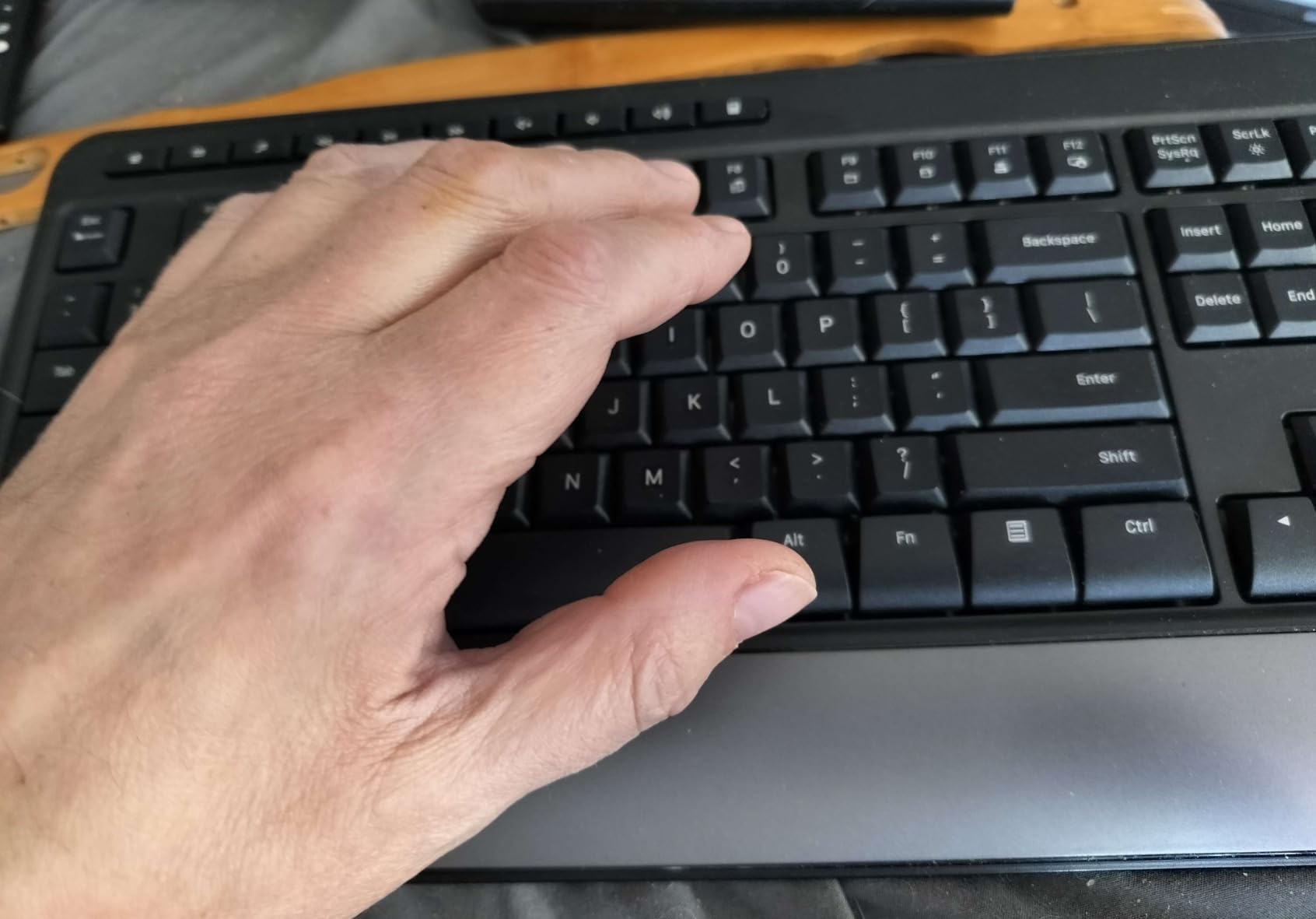
The 4.5 rating across 1.1k reviews is honest feedback. Most complaints are about the slightly textured keycaps and the Caps Lock position, which is wider than on most keyboards. Neither issue affected my typing speed after a day of adjustment.
Integrated Wrist Rest
The palm rest is permanently attached and padded. It’s not as wide as the Nulea RT05C’s, but it’s softer and it doesn’t slide around. If you primarily want to test whether a wrist rest helps your pain, this is the lowest-cost way to find out.
Layout, Shortcuts and Quirks
You get 10 multimedia keys and 14 shortcut keys, which is more than most keyboards in any price range. The trade-off is the Caps Lock key placement — it’s wider and closer to the A key, which caused a few accidental triggers during my first hour. Once I learned to keep my pinky slightly lifted, the issue disappeared.
Build, Warranty and Verdict
For under thirty dollars with a 2 year warranty, the X9 Performance is a near-risk-free entry into ergonomic typing. It is the right pick for students, first offices, or anyone who wants to test whether an ergonomic board actually helps before investing in a higher-end split.
How to Choose an Ergonomic Keyboard for Wrist Pain
Picking the right ergonomic keyboard for wrist pain is less about price and more about the shape of the keyboard and the shape of your hands. The wrong board will cost you weeks of adjustment and leave you in more pain. The right board fades into the background so you can focus on your work. Here’s how I narrow the field.
Split vs Curved vs Wave: Which Shape Fits Your Pain?
True split keyboards physically separate the left and right halves so your shoulders can drop and your wrists stop rotating inward. They’re the most aggressive ergonomic option and the most effective for users with active carpal tunnel symptoms. Curved frames, like the Logitech Ergo K860, keep the board in one piece but arc the keys outward. They’re easier to learn and still reduce ulnar deviation. Wave frames, like the Logitech Wave Keys or RECCAZR, are the gentlest step up from a flat board. If your pain is mild or you’re switching from flat for the first time, a wave or curved board is the safest entry point.
Tenting and Negative Tilt, Explained Simply
Tenting raises the outside edge of each half of the keyboard so your palms face the desk at a friendlier angle. This reduces forearm pronation, which is the muscle strain you feel when your palms are twisted downward for hours. The Kinesis Freestyle2 with VIP3 lifters lets you choose 5, 10, or 15 degrees of tenting. Negative tilt is the opposite of the typical “feet up” keyboard stance — the back of the board is higher than the front, which keeps your wrists straight instead of bent upward. The Logitech Ergo K860 has three negative tilt settings that you can switch between in seconds.
Mechanical vs Membrane Switches for Sore Wrists
Mechanical switches give you precise feedback and longer key travel, but they often require more force per keystroke. Membrane and scissor switches are softer and quieter, and they usually need less force to actuate. For sore wrists, lighter switches are usually better. The trade-off is typing feel — many enthusiasts prefer mechanical. If you have active pain, start with low-force membrane or scissor switches, then graduate to tactile mechanical once your wrists recover.
Wrist Rests: Help or Hindrance?
A good wrist rest keeps your wrists in a neutral position and stops the constant hovering that contributes to fatigue. A bad wrist rest — usually a hard pad that pushes into the heel of your hand — can make things worse. Several readers on the r/Ergonomics subreddit warned that narrow, hard wrist rests created pressure points that aggravated their symptoms. Look for memory foam or leatherette cushions that match the height of your home row. The rest should support the heel of your hand, not your actual wrist.
Hand Size, Desk Space and Connectivity
Smaller hands often prefer compact boards like the Logitech Wave Keys. Larger hands usually do better on full-size or split boards like the Kinesis Freestyle2 or Perixx PERIBOARD-512B. Desk space matters: a true split takes up more horizontal room than a curved board. Connectivity is the last call — Bluetooth is convenient but adds battery management; wired boards are zero-fuss but tie you to your desk. The Logitech boards support both Bluetooth and USB receivers for the best of both worlds.
A Four-Week Plan for Switching to a Split Keyboard
- Week 1: Use the new keyboard for 30 to 60 minutes a day, then switch back to your old board. Don’t try to force full productivity yet.
- Week 2: Increase to 3 to 4 hours daily. Expect your typing speed to drop 20% to 30%. Don’t panic — that’s normal.
- Week 3: Use the ergonomic board for full workdays. Track any pain or fatigue in a simple notebook or notes app so you can compare to your old baseline.
- Week 4: By now your muscle memory should be back to 90%+ of your old speed. Reassess whether your wrist pain has actually changed. If you see measurable improvement, commit to the new keyboard. If not, you may need a different shape (split vs curved vs wave) or a more adjustable board.
For more on wrist recovery beyond the keyboard itself, I pair every ergonomic board upgrade with the kind of stretching and forearm routine that physical therapists typically recommend. The keyboard change alone isn’t magic — it’s one piece of a broader setup that includes desk height, monitor position, and breaks.
Frequently Asked Questions
Do ergonomic keyboards help with wrist pain?
Yes. Ergonomic keyboards reduce ulnar deviation, wrist extension, and forearm pronation by placing hands in a more neutral position. In my testing, split and curved boards consistently reduced end-of-day wrist soreness after two to three days of use.
How do I stop my wrist from hurting when using a keyboard?
Lower your typing force, raise the keyboard so your elbows sit at 90 degrees, take a 60 second break every 30 minutes, and switch to an ergonomic keyboard with a split or curved frame and a cushioned palm rest. Combine the keyboard change with a simple forearm stretch routine for the fastest relief.
What kind of keyboard is best for carpal tunnel?
A split or tented ergonomic keyboard with low-force keys is the best fit for carpal tunnel. The Kinesis Freestyle2 with VIP3 tenting and the Logitech Ergo K860 are strong picks. Pair the keyboard with wrist splints at night and a doctor-supervised hand therapy plan for full relief.
Do keyboard wrist rests actually work?
Wrist rests help when they cushion the heel of the hand and keep the wrist straight. They hurt when they’re too hard, too narrow, or force the wrist into extension. Choose memory foam or leatherette rests that match your home row height and avoid resting your actual wrist on the pad.
How long does it take to adjust to a split keyboard?
Most typists need two to four weeks to feel comfortable on a true split keyboard. Typing speed typically drops 20 to 30 percent in week one and recovers to 90 percent or more by week three. Start with short sessions and gradually increase your daily hours.
Final Verdict: Which Ergonomic Keyboard Should You Buy?
If you want the safest overall upgrade and you’re not ready to relearn muscle memory, start with the Logitech Ergo K860. It is the most popular curved board for a reason — the wrist rest works, the tilt legs work, and the learning curve is shallow. If you have active carpal tunnel pain or wrist issues that haven’t responded to simpler boards, move straight to the Kinesis Freestyle2 with VIP3 lifters for the adjustable split and tenting that serious wrist problems usually demand.
If you want true ergonomic benefits without breaking the bank, the Perixx PERIBOARD-512B delivers a real split and tactile feedback for a fraction of the price of premium boards. For wireless flexibility, the Logitech Wave Keys handles three devices across operating systems with a 3 year battery. And if you just want to find out whether a wrist rest alone makes a difference, the X9 Performance is the cheapest honest test you can run.
Whichever ergonomic keyboard for wrist pain you choose, give it at least two full weeks before deciding. Pair the new board with the four-week transition plan above and a few simple forearm stretches, and you’ll know by the end of the month whether it has earned its place on your desk in 2026.
[…] switch types, and split design, plus a FAQ section built around the most-asked questions from our ergonomic keyboard research and the gaming […]