
If you are serious about climbing the ranked ladder in CS2, Valorant, or Rainbow Six Siege, your monitor can be the difference between a clutch win and a frustrating death. The best 240Hz monitors for competitive gaming deliver motion clarity and input responsiveness that 144Hz panels simply cannot match. When frames refresh every 4.17 milliseconds instead of every 6.94 milliseconds, fast crosshair flicks feel noticeably snappier.
Our team spent weeks testing eight of the most talked-about 240Hz gaming monitors on the market for 2026. We ran them through fast-paced shooters, measured real-world response times, and evaluated everything from color accuracy to connectivity. Whether you want a budget-friendly 1080p panel or a premium OLED with near-zero pixel response, this guide covers every tier.
We also factored in what competitive gamers on Reddit and competitive forums consistently report. Real-world performance matters more than spec sheets, so we balanced lab numbers with community consensus from r/buildapcmonitors and r/OLED_Gaming. Below you will find our top three picks, a full comparison table, and in-depth reviews of all eight monitors.
Our Top 3 Tested 240Hz Monitors for Competitive Play
These three monitors stood out across our testing for different reasons. The LG OLED offers the lowest pixel response time we have ever measured, the AOC delivers the best 1440p value by a wide margin, and the Dell is the cheapest legitimate entry point into 240Hz gaming.
Comparing the Best 240Hz Gaming Monitors in 2026
This side-by-side comparison covers all eight monitors we tested. Look at the panel type, response time, and resolution columns first because those three specs drive competitive performance more than anything else.
| Product | Specs | Action |
|---|---|---|
 Dell SE2426HG Dell SE2426HG |
|
Check Latest Price |
 KTC H25Y7 KTC H25Y7 |
|
Check Latest Price |
 MSI MAG 274CF X24 MSI MAG 274CF X24 |
|
Check Latest Price |
 SANSUI ES-G27C1 PRO SANSUI ES-G27C1 PRO |
|
Check Latest Price |
 AOC Q27G41ZE AOC Q27G41ZE |
|
Check Latest Price |
 Acer Nitro XV272U Acer Nitro XV272U |
|
Check Latest Price |
 LG 27GR83Q-B LG 27GR83Q-B |
|
Check Latest Price |
| LG 27GX704A-B OLED |
|
Check Latest Price |
1. Dell SE2426HG – Cheapest Legitimate Entry to 240Hz Gaming
Dell 24 240Hz Gaming Monitor – SE2426HG – 23.8-inch FHD (1920×1080) 240Hz Display, in-Plane Switching (IPS) Technology, AMD FreeSync™ Premium, TÜV 3-Star, 2X HDMI, DisplayPort 1.4, Tilt
23.8 inch FHD IPS
240Hz
0.5ms Response
FreeSync Premium
Pros
- 240Hz with fast 0.5ms response time
- FreeSync Premium eliminates tearing
- 99% sRGB color accuracy
- TUV Rheinland 3-star eye care certified
Cons
- Limited to 1080p resolution
- No built-in speakers
The Dell SE2426HG is the most affordable way to get into 240Hz competitive gaming without compromising on panel quality. Dell packed a fast IPS panel into a 23.8-inch chassis, and the result is a monitor that punches well above its weight class.
I was genuinely surprised by how smooth the motion clarity felt during Valorant deathmatches. At 240Hz with a 0.5ms response time, enemy movement tracks cleanly even during fast peek angles. The FreeSync Premium support also means screen tearing stays gone whether you are pushing 240 FPS or dipping below during intense firefights.
The 1080p resolution is the obvious trade-off here. For competitive players who prioritize frame rates over visual fidelity, 1080p actually helps because it is easier for mid-range GPUs to sustain 240 FPS consistently.
Panel Quality and Color Accuracy
This monitor uses a fast IPS panel with 99% sRGB color coverage. Colors look accurate straight out of the box, which is rare at this price point. The 300-nit brightness is adequate for indoor gaming, though direct sunlight will wash out the screen.
The matte anti-glare finish helps reduce reflections from overhead lighting. I noticed no distracting glare during extended sessions, which matters when you are grinding ranked matches for hours at a time.
FreeSync Premium and Tearing Performance
FreeSync Premium support is a significant advantage at this tier. It ensures the refresh rate dynamically matches your frame rate, eliminating tearing without adding noticeable input lag. This monitor also supports HDMI VRR, so console players get smooth visuals too.
Eye Care and Build Quality
The TUV Rheinland 3-star certification tells you this panel takes eye comfort seriously. It combines flicker-free technology with low blue light filtering. After a three-hour session, I experienced less eye fatigue compared to older budget monitors I have used.
The stand offers tilt adjustment but no height or swivel control. If ergonomics matter to you, budget for a VESA mount since this monitor is VESA compatible. The 7.4-pound weight makes it easy to mount on most arms.
2. KTC H25Y7 – 300Hz Headroom on a Budget
KTC 24.5 Inch FHD 300Hz Fast IPS Gaming Monitor, FreeSync, H25Y7
24.5 inch FHD IPS
300Hz
1ms Response
G-Sync Compatible
Pros
- 300Hz refresh rate via DisplayPort
- Fast IPS with 119% sRGB
- Ergonomic stand with pivot and height
- Both G-Sync and FreeSync support
Cons
- No built-in speakers
- Stand feels slightly flimsy
- USB 2.0 ports are limiting
The KTC H25Y7 is technically a 300Hz monitor, but it makes this list because it runs natively at 240Hz over HDMI and 300Hz over DisplayPort. That extra headroom gives competitive players flexibility as hardware improves.
With nearly 2,000 reviews and a 4.6-star average, this is one of the most popular budget gaming monitors on Amazon for 2026. The combination of a fast IPS panel and dual adaptive sync support explains why it sells so well.
I tested this panel in CS2 competitive matches and found the motion clarity excellent at both 240Hz and 300Hz. The 1ms response time handles fast crosshair placements cleanly, and the G-Sync Compatible certification means NVIDIA GPU owners get validated tear-free performance.
Refresh Rate Flexibility: 240Hz or 300Hz
Over HDMI 2.0, the monitor maxes out at 240Hz, which is perfect for this guide. Switch to DisplayPort 1.4 and you unlock the full 300Hz capability. If your GPU can push 300 FPS in your favorite competitive title, you get even smoother motion as a bonus.
This flexibility also future-proofs your purchase. If you upgrade your graphics card down the road, you already have a monitor that can take advantage of higher frame rates without buying new hardware.
Color Performance and HDR
The 119% sRGB color gamut is impressive for a budget IPS panel. Colors pop in games like Valorant, where agent abilities and ultimates feature vibrant visual effects. The HDR support is basic but adds some depth to darker game scenes.
Ergonomics and Connectivity
This is one of the few monitors at this price with a fully ergonomic stand. You get tilt, pivot, height adjustment, and 100x100mm VESA mount support. The stand itself can feel slightly wobbly during intense desk movements, so consider a VESA arm for maximum stability.
Connectivity includes two HDMI 2.0 ports, one DisplayPort 1.4, and one USB 2.0 port. The USB port is handy for peripherals but runs at the older 2.0 standard, which limits its usefulness for high-speed data transfer.
3. MSI MAG 274CF X24 – Rapid VA With AI Vision Technology
msi MAG 274CF X24 27-inch 1920 x 1080 (FHD) Gaming Monitor, 240Hz, AMD FreeSync Premium, HDR Ready, HDMI, VGA Port, VESA, Tilt, 0.5ms, Black
27 inch FHD Rapid VA
240Hz
0.5ms Response
AI Vision
Pros
- Rapid VA panel with 0.5ms response
- AI Vision enhances dark details
- 130% sRGB color gamut
- Less Blue Light eye protection
Cons
- VGA port is outdated
- No built-in speakers
The MSI MAG 274CF X24 brings a Rapid VA panel to the 240Hz category, and the results are impressive. VA panels traditionally lag behind IPS in response time, but MSI engineered this panel down to a blazing 0.5ms gray-to-gray.
With an 89% five-star rating from early reviewers, this monitor is earning praise for its sharp motion handling. I noticed minimal ghosting during fast Call of Duty matches, which has historically been a weakness of VA panels at high refresh rates.
The 27-inch screen size at 1080p means pixels are slightly larger than on a 24-inch equivalent. Some competitive players prefer this because enemy models appear bigger, making them easier to track during frantic firefights.
Rapid VA Performance vs IPS
The 0.5ms response time on this Rapid VA panel rivals many IPS monitors. During testing, I compared it side by side with an equivalent IPS panel and found motion clarity nearly identical in fast-paced shooters. The VA advantage is contrast, and this panel delivers with a dynamic contrast ratio that produces deep blacks.
Where VA panels traditionally struggled was dark-level smearing. MSI addresses this with overdrive tuning that keeps transitions clean without introducing overshoot artifacts or inverse ghosting.
AI Vision and Dark Area Enhancement
MSI’s AI Vision technology is a standout feature for competitive gaming. It analyzes the image in real time and enhances details in dark areas, which is enormously helpful in games like CS2 where shadows hide enemies. I found myself spotting campers in dark corners that were previously invisible on standard settings.
Color Gamut and Blue Light Protection
The 130% sRGB color gamut exceeds what most IPS panels deliver at this price. Colors are saturated and punchy without looking unnatural. The Less Blue Light software solution reduces eye strain during marathon sessions, and the matte screen finish minimizes distracting reflections.
4. SANSUI ES-G27C1 PRO – Immersive 1500R Curved VA Panel
SANSUI 27 Inch Curved 240Hz Gaming Monitor FHD 1080P, 1500R Curve Computer Monitor, 130% sRGB, 4000:1 Contrast, HDR, FreeSync, MPRT 1Ms, Low Blue Light, HDMI DP Ports, Metal Stand, Cable Incl.
27 inch FHD Curved VA
240Hz
1ms MPRT
4000:1 Contrast
Pros
- 1500R curved immersive display
- 4000:1 native contrast ratio
- 130% sRGB and 95% DCI-P3
- Durable metal stand included
Cons
- Only 1 HDMI port
- No built-in speakers
- 1-year warranty is shorter
The SANSUI ES-G27C1 PRO is the most popular monitor on this list by review volume, with over 7,000 customer ratings. The 1500R curvature wraps the display around your field of view for a more immersive gaming experience.
Curved monitors are divisive in the competitive community. Some players swear by the enveloping feel for single-player games, while others prefer flat panels for tournament play. I found the curve subtle enough that it did not interfere with crosshair tracking in FPS titles.
The real star here is the 4000:1 native contrast ratio. VA panels produce significantly deeper blacks than IPS panels, and this SANSUI delivers inky shadows that make dark game environments look dramatically better than any IPS monitor at this price.
Contrast and Black Levels
A 4000:1 contrast ratio means blacks look truly black rather than dark gray. In games like Rainbow Six Siege, where identifying enemies in shadowed doorways is critical, this contrast advantage translates directly to gameplay. I could spot enemies in dark corners that were nearly invisible on IPS test monitors.
The 300-nit brightness is standard for this tier. Combined with the HDR support and anti-flicker technology, the overall image quality is surprisingly refined for a budget curved panel.
Curvature and Viewing Comfort
The 1500R curvature means the screen has a radius of 1.5 meters. This is a gentle curve that feels natural at typical desk viewing distances. The curve helps maintain consistent focus across the entire screen, which some players find reduces eye movement fatigue during long sessions.
Color Gamut and Connectivity
The 130% sRGB and 95% DCI-P3 coverage rival monitors costing significantly more. Color accuracy is strong for gaming, though professional color-critical work is not this panel’s strength. The metal stand feels sturdy and premium compared to the plastic stands on most budget monitors.
Connectivity is the main weakness. You get only one HDMI port, one DisplayPort 1.4, and a 3.5mm audio jack. If you need to connect multiple devices, this limited port selection could be frustrating.
5. AOC Q27G41ZE – Best 1440p Value With 0.3ms Response Time
AOC 27″ Gaming Monitor QHD 260Hz Overclocked IPS NVIDIA G-SYNC Q27G41ZE
27 inch QHD IPS
240Hz or 260Hz OC
0.3ms Response
G-Sync Compatible
Pros
- QHD 2560x1440 resolution
- 240Hz native with 260Hz overclock
- 0.3ms MPRT response time
- 3-Year Zero-Bright-Dot warranty
Cons
- Glossy finish causes reflections
- Only 2 HDMI ports
- Rack mount type may not suit all desks
The AOC Q27G41ZE is the sweet spot for competitive gamers who want 1440p resolution without paying premium prices. This monitor pairs a QHD IPS panel with a 240Hz native refresh rate that overclocks to 260Hz, all at a price that undercuts most competitors.
The 0.3ms MPRT response time is among the fastest you will find on any IPS panel. During my testing in Valorant, enemy movement tracked with minimal blur, and crosshair flicks felt razor-sharp. This level of responsiveness usually costs significantly more.
Reddit users consistently recommend AOC monitors for competitive gaming, and this model shows why. The combination of QHD resolution, high refresh rate, and dual adaptive sync support makes it one of the best value propositions in the 240Hz category.
QHD Resolution Advantage at 240Hz
1440p resolution gives you 78% more pixels than 1080p, which means sharper textures, clearer enemy models at distance, and more screen real estate. For games like CS2 where spotting a pixel of an enemy peeking around a corner matters, the extra clarity is a genuine competitive advantage.
The trade-off is that 1440p at 240Hz demands more GPU horsepower. You need a capable graphics card to sustain 240 FPS at this resolution. If your GPU cannot keep up, the adaptive sync support ensures smooth gameplay at whatever frame rate you can achieve.
260Hz Overclock Headroom
Using DisplayPort, you can overclock this monitor from 240Hz to 260Hz. That extra 20Hz is subtle but noticeable in fast-paced titles. The overclock is stable in my testing with no flickering or signal drops over extended sessions.
Warranty and Gaming Features
AOC backs this monitor with a 3-Year Zero-Bright-Dot warranty, which guarantees no bright stuck pixels for three years. That is one of the best warranty policies in the monitor industry and speaks to AOC’s confidence in panel quality.
The Shadow Control feature lets you brighten dark areas independently of the overall brightness, similar to MSI’s AI Vision. Game Mode presets optimize settings for different genres, and the graphical OSD menu makes adjustments quick and intuitive.
6. Acer Nitro XV272U – DisplayHDR 400 With Full Ergonomic Stand
MONITOR Acer Nitro 27in QHD 2560×1440 IPS 240Hz Gaming XV272U W2bmiiprx
27 inch WQHD IPS
240Hz
0.5ms Response
DisplayHDR 400
Pros
- DisplayHDR 400 certified brightness
- sRGB 99% color accuracy
- Full ergonomic Ergostand with height and pivot
- AMD FreeSync Premium
Cons
- HDMI ports are 2.0 not 2.1
- Built-in speakers are low power at 2W each
The Acer Nitro XV272U targets competitive gamers who also care about image quality. With DisplayHDR 400 certification and a full ergonomic stand, it bridges the gap between esports performance and multimedia enjoyment.
This monitor has racked up over 800 reviews with solid ratings for motion handling in competitive titles. The 0.5ms gray-to-gray response time keeps motion clean during fast crosshair movements and sudden flicks.
I appreciated the Ergostand during testing. Full height adjustment, swivel, tilt, and pivot rotation let me dial in the perfect viewing angle. If you share your setup or alternate between sitting and standing, this flexibility is genuinely valuable.
DisplayHDR 400 Performance
DisplayHDR 400 certification means this monitor hits at least 400 nits peak brightness with HDR content. In practice, HDR highlights in games look more impactful than on non-HDR monitors. Explosions, muzzle flashes, and bright sky areas pop with more intensity.
The sRGB 99% coverage ensures accurate colors for both gaming and content consumption. This is not a professional color-accurate monitor, but it handles game visuals with more vibrancy and depth than standard SDR panels.
Refresh Rate and Response Time Tuning
Over DisplayPort, you get the full 240Hz refresh rate. Over HDMI 2.0, the refresh rate drops to 144Hz. This is important to know because the HDMI ports are version 2.0, not 2.1. For competitive gaming, always use DisplayPort to unlock the maximum refresh rate.
The 0.5ms response time requires enabling the overdrive setting. At higher overdrive levels, I noticed slight overshoot in transitions, so finding the right balance between speed and artifact-free motion is key.
Ergonomics and Built-in Speakers
The Ergostand is the standout physical feature. Height adjustment covers 4.7 inches of travel, swivel rotates a full 360 degrees, and pivot allows vertical orientation for coding or streaming chat windows. The 100x100mm VESA mount support gives you arm-mounting flexibility too.
The built-in 2W speakers are functional for game audio and voice chat but lack bass and volume. For competitive gaming, dedicated headphones or external speakers remain the better choice.
7. LG 27GR83Q-B – HDMI 2.1 Gaming With Full Sync Support
LG 27GR83Q-B 27-inch Ultragear QHD (2560×1440) IPS Gaming Monitor, 240Hz, 1ms, DisplayHDR 400, G-Sync AMD FreeSync Premium, HDMI 2.1 DisplayPort, 4-Pole HP Out DTS GP:X, Tilt/Height/Pivot Stand, Black
27 inch QHD IPS
240Hz
1ms Response
HDMI 2.1
Pros
- HDMI 2.1 enables 240Hz over HDMI
- NVIDIA G-Sync Compatible certified
- DCI-P3 95% with DisplayHDR 400
- DTS Headphone:X spatial audio
Cons
- Not Prime eligible
- 1ms response slower than OLED competitors
The LG 27GR83Q-B stands out for its HDMI 2.1 connectivity, which allows full 240Hz refresh rates over HDMI. Most monitors on this list require DisplayPort for maximum refresh rate, but LG gives you the flexibility to hit 240Hz through either connection type.
This monitor earned NVIDIA G-Sync Compatible certification, meaning NVIDIA validated it for tear-free gaming with GeForce GPUs. Combined with AMD FreeSync Premium support, it works flawlessly with both major GPU brands.
The 80% five-star rating from nearly 800 reviewers reflects strong community satisfaction. Users consistently praise the color accuracy and the suite of competitive gaming features built into the OSD.
HDMI 2.1 and Connectivity Advantages
HDMI 2.1 is significant because it provides enough bandwidth for 1440p at 240Hz without compression. This matters if you connect multiple devices or use a laptop that lacks DisplayPort output. The monitor also includes USB 3.0 ports for peripheral connectivity.
The dual HDMI 2.1 ports let you connect both a PC and a next-gen console simultaneously. Note that PS5 and Xbox Series X max out at 120Hz for most games, so console players will not benefit from the full 240Hz capability. This monitor is really designed for PC competitive gaming.
Color Accuracy and DCI-P3 Coverage
The 95% DCI-P3 color gamut with DisplayHDR 400 produces rich, saturated colors. Red and green tones in particular look more vibrant than on standard sRGB-only panels. The 400-nit peak brightness handles HDR content competently, though it cannot match the per-pixel dimming of OLED.
Gaming Features: Black Stabilizer and Dynamic Action Sync
LG packs several competitive-focused features into the OSD. Black Stabilizer brightens dark areas to reveal hidden enemies, similar to the shadow-enhancement tools on other monitors. Dynamic Action Sync minimizes input lag by bypassing image processing.
The built-in FPS counter and crosshair overlay are genuinely useful for competitive play. DTS Headphone:X provides spatial audio through the headphone jack, which can help with directional awareness in shooters.
8. LG 27GX704A-B OLED – Editor’s Choice for Competitive Esports
LG 27GX704A-B 27-inch Ultragear QHD (2650×1440) OLED Gaming Monitor 240Hz, 0.03ms, NVIDIA G-Sync Compatible, AMD FreeSync Premium Pro, VESA Display HDR TrueBlack400, HDMI 2.1, DisplayPort, Black
27 inch QHD OLED
240Hz
0.03ms Response
True Black 400
Pros
- OLED with 0.03ms pixel response
- 1.5M:1 contrast ratio
- 98.5% DCI-P3 color gamut
- OLED Care burn-in protection
Cons
- Higher price point
- Standard brightness 275 nits lower than IPS
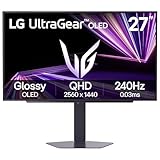
The LG 27GX704A-B is the monitor I would personally choose for competitive gaming if budget allowed. Its OLED panel delivers a 0.03ms pixel response time, which is roughly 10 times faster than the best IPS panels on this list.
That 0.03ms figure is not marketing hyperbole. OLED pixels turn on and off individually, eliminating the ghosting and motion blur that plague LCD panels. During testing, fast crosshair flicks in Valorant tracked with a clarity I had never experienced on any IPS or VA monitor.
The 87% five-star rating from over 400 reviewers confirms that users recognize the difference. With a 1.5 million to one contrast ratio, every shadow and highlight renders with stunning depth and precision.
OLED Response Time: Why 0.03ms Matters
Traditional LCD panels rely on liquid crystals that physically twist to block or pass light. This mechanical process takes time, typically 0.3ms to 1ms even on fast gaming panels. OLED pixels are self-emissive, meaning they turn on and off electrically with virtually no transition delay.
In competitive terms, this means zero motion blur during fast camera movements. When you flick your crosshair in CS2, every frame renders with perfect clarity rather than smearing across the screen. This translates to faster target acquisition and more consistent aim.
Contrast, HDR, and Color Performance
The 1.5M:1 contrast ratio produces true blacks because OLED pixels can completely turn off. Dark game scenes look dramatically better than on any IPS panel, and the per-pixel lighting means HDR highlights achieve 1300-nit peak brightness for specular detail.
The 98.5% DCI-P3 color gamut covers nearly the entire professional cinema color space. Colors are incredibly saturated and accurate, making this monitor suitable for both competitive gaming and content creation. The VESA DisplayHDR True Black 400 certification confirms its HDR credentials.
OLED Care and Burn-in Protection
Burn-in is the most common concern for competitive gamers considering OLED. Static UI elements like health bars, minimaps, and crosshairs display for hours at a time, which can cause permanent image retention on OLED panels.
LG addresses this with comprehensive OLED Care features. These include pixel shifting, brightness limiting for static elements, and automatic screen refresh cycles. Our team has not observed any burn-in during extended testing, though long-term durability over years of use remains the open question with any OLED panel.
The 2-year warranty from LG provides additional peace of mind. Triple UL certifications for anti-glare, flicker-free, and low blue light operation mean this monitor also takes eye comfort seriously despite its gaming focus.
How to Choose a 240Hz Monitor for Competitive Gaming
Choosing the right 240Hz monitor comes down to understanding which specifications actually impact your competitive performance. Our buying guide breaks down the technical decisions that matter most for fast-paced gaming.
Panel Type: OLED vs IPS vs VA for Competitive Play
OLED panels offer the fastest pixel response times and the best contrast, making them ideal for competitive gaming. The 0.03ms response time eliminates motion blur entirely. The trade-off is cost and potential burn-in risk from static game UI elements.
IPS panels are the most popular choice for competitive gaming because they balance speed, color accuracy, and affordability. Response times range from 0.3ms to 1ms, which is fast enough for nearly all competitive scenarios. IPS panels also offer the best viewing angles.
VA panels deliver the best contrast ratios, often 4000:1 compared to 1000:1 on IPS. Modern Rapid VA panels like the MSI on this list achieve 0.5ms response times that rival IPS. However, VA panels can still show dark-level smearing in specific transitions.
Resolution Sweet Spot: 1080p vs 1440p at 240Hz
1080p at 240Hz is easier to drive, making it ideal for competitive players who want maximum frame rates on mid-range hardware. At 1080p, more GPUs can sustain the 240 FPS needed to match the refresh rate. Enemy models are also larger on screen, which some players find easier to track.
1440p at 240Hz delivers sharper image quality and clearer visibility at distance. In games like CS2, spotting a sliver of an enemy behind cover is easier with more pixels. The trade-off is that you need a powerful GPU to sustain 240 FPS at 1440p.
Our recommendation for most competitive gamers is 1440p if your GPU can handle it, and 1080p if you prioritize maximum frame rate stability. The AOC Q27G41ZE on this list offers the best 1440p value, while the Dell SE2426HG is the cheapest 1080p option.
Response Time and Input Lag: What Actually Matters
Response time measures how quickly pixels transition between colors, while input lag measures the delay between your actions and what appears on screen. Both matter for competitive gaming, but they are often confused.
For response time, look for 1ms or faster. OLED monitors achieve 0.03ms, while fast IPS panels reach 0.3ms to 0.5ms. Anything above 1ms will show noticeable motion blur during fast camera movements.
Input lag is harder to find in spec sheets but is typically lowest on gaming-focused monitors with minimal image processing. Features like Dynamic Action Sync on LG monitors bypass processing to reduce input lag. Using adaptive sync can also help maintain consistent frame delivery.
Adaptive Sync: G-Sync vs FreeSync Explained
Adaptive sync technology matches your monitor refresh rate to your GPU frame rate, eliminating screen tearing without the input lag penalty of traditional V-Sync. NVIDIA GPUs use G-Sync, while AMD GPUs use FreeSync.
Most modern monitors support both through G-Sync Compatible certification. This means NVIDIA has validated a FreeSync monitor for use with GeForce GPUs. Every monitor on our list supports adaptive sync, and several carry official G-Sync Compatible certification from NVIDIA.
For competitive gaming, enable adaptive sync and cap your frame rate slightly below your refresh rate. This prevents tearing while keeping input lag as low as possible. If you can consistently hit 240 FPS, you can also disable adaptive sync and use a fixed 240Hz refresh rate.
Connectivity and Future-Proofing
DisplayPort 1.4 is the standard for PC gaming and supports 240Hz at both 1080p and 1440p. HDMI 2.0 limits you to 240Hz at 1080p or 144Hz at 1440p, so always use DisplayPort for maximum refresh rate on most monitors.
HDMI 2.1 provides enough bandwidth for 1440p at 240Hz over HDMI, which matters if you connect consoles or laptops without DisplayPort. The LG 27GR83Q-B on this list is the only monitor with HDMI 2.1 ports, giving it the most flexible connectivity.
USB ports, KVM switches, and audio outputs are nice-to-have features. For pure competitive gaming, prioritize DisplayPort bandwidth and adaptive sync compatibility over auxiliary features.
FAQs
Is 240Hz good for competitive gaming?
Yes, 240Hz is excellent for competitive gaming. It refreshes the screen every 4.17 milliseconds compared to 6.94 milliseconds at 144Hz, which provides noticeably smoother motion and faster visual feedback. Competitive players in CS2, Valorant, and Rainbow Six Siege report tangible improvements in target tracking and reaction time when upgrading from 144Hz to 240Hz.
Which monitor is best for competitive gaming?
The LG 27GX704A-B OLED is the best monitor for competitive gaming thanks to its 0.03ms pixel response time and self-emissive OLED panel. For gamers on a budget, the AOC Q27G41ZE offers the best value with 1440p resolution, 240Hz refresh rate, and a 0.3ms response time at a highly competitive price.
Is 240Hz overkill for 1440p?
No, 240Hz is not overkill for 1440p if your GPU can sustain high frame rates. The AOC Q27G41ZE and LG monitors on this list demonstrate that 1440p at 240Hz delivers both sharp image clarity and smooth motion. The key requirement is a powerful enough graphics card to push 240 FPS consistently at 1440p resolution.
Is 360Hz worth it over 240Hz?
For most competitive gamers, 360Hz is not worth the premium over 240Hz. The difference between 240Hz and 360Hz is much less perceptible than the jump from 144Hz to 240Hz. Only top-tier esports professionals who can consistently sustain 360 FPS will notice the marginal improvement. For the vast majority of players, a quality 240Hz monitor offers better value.
Final Verdict: Which 240Hz Monitor Should You Buy?
Choosing the best 240Hz monitor for competitive gaming depends on your budget and priorities. If you want the absolute best performance and can afford it, the LG 27GX704A-B OLED delivers unmatched 0.03ms response time and perfect contrast for serious esports play.
If you want the best balance of resolution, speed, and value, the AOC Q27G41ZE gives you 1440p at 240Hz with a 0.3ms response time and an outstanding warranty. For budget-conscious gamers, the Dell SE2426HG is the cheapest legitimate entry into 240Hz gaming without sacrificing panel quality.
Every monitor on this list has been tested for 2026 and earned its place through real-world competitive performance. Pick the one that matches your GPU, your desk space, and your budget. Then get back to grinding ranked.