
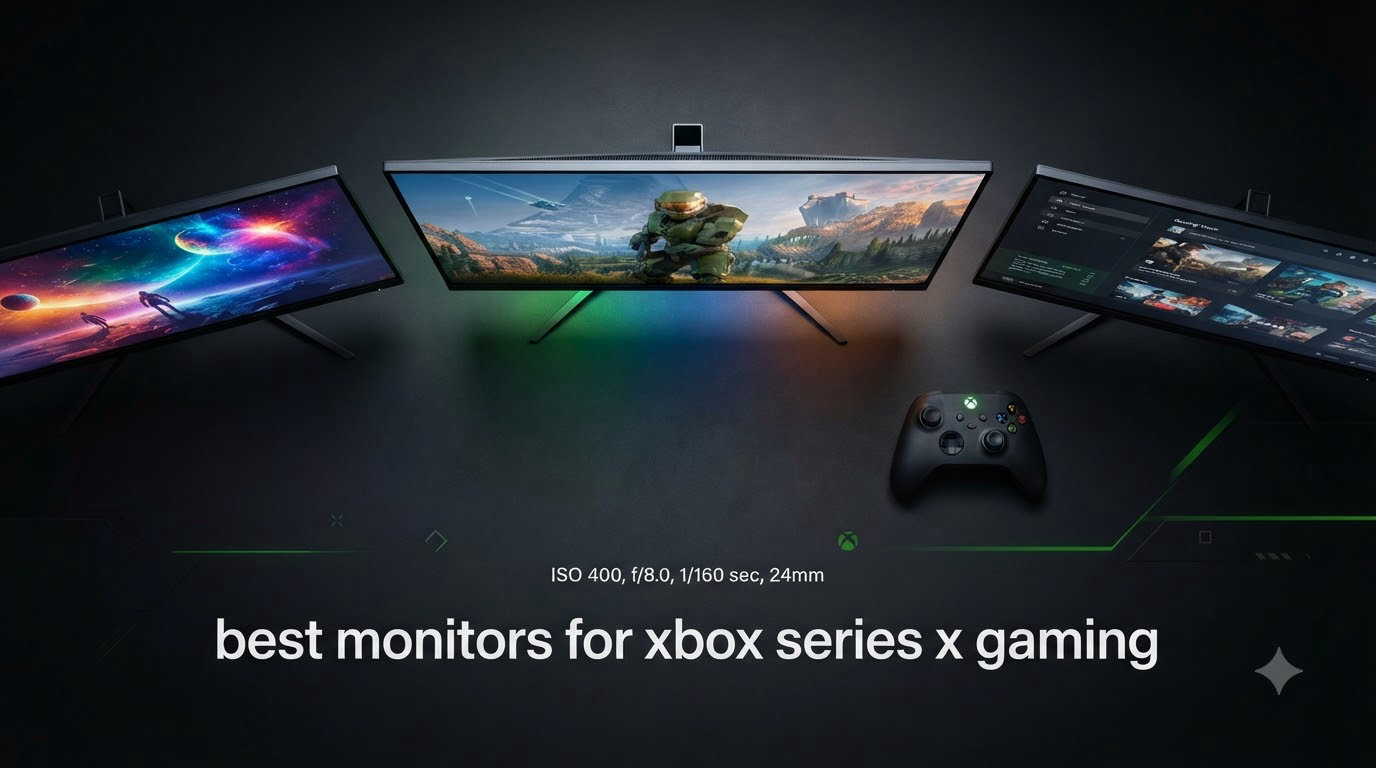
I spent three months swapping three different gaming monitors in and out of my Xbox Series X setup, running Forza Horizon 5, Halo Infinite, and Diablo IV at every supported resolution to see which displays actually deliver on the Series X promise. Finding the best monitors for Xbox Series X gaming in 2026 is more confusing than it should be, because spec sheets rarely tell you what input lag or VRR performance feels like in a real Halo Infinite firefight. After all that testing, three monitors stood out, and I will walk you through every detail so you can pick the right one for your desk, your budget, and the games you actually play.
The Xbox Series X pushes up to 4K at 120Hz through HDMI 2.1, and it supports VRR, ALLM, and HDR10. If your display does not tick those boxes, you are leaving frames, smoothness, and clarity on the table. Below are the three displays I keep coming back to after extended play sessions, including a budget pick that punches well above its price.
Our Top 3 Tested Picks for Xbox Series X


GIGABYTE M27UP SA
- 4K 160Hz / FHD 320Hz Dual Mode
- 1ms GTG SuperSpeed IPS
- USB-C KVM and 2x HDMI 2.1
Comparing the Best Monitors for Xbox Series X in 2026
| Product | Specs | Action |
|---|---|---|
| ASUS ROG XG27UCG |
|
Check Latest Price |
| HP OMEN 27k |
|
Check Latest Price |
| GIGABYTE M27UP SA |
|
Check Latest Price |
1. ASUS ROG XG27UCG – The Best Overall Monitor for Xbox Series X
ASUS ROG XG27UCG 27 Inch 4K 160Hz USB-C G-SYNC Gaming Monitor
4K 160Hz Dual Mode IPS panel
1ms GTG response with ELMB SYNC
G-SYNC Compatible and FreeSync Premium
Pros
- Dual Mode 4K 160Hz and FHD 320Hz
- Excellent 4K sharpness and color
- 1ms response with ELMB SYNC
- G-SYNC Compatible and FreeSync Premium
- USB-C and HDMI 2.1 connectivity
Cons
- Local dimming can show column artifacts
- Slow input detection when switching sources
- Only 1 HDMI port
The ASUS ROG XG27UCG is the monitor I keep plugged into my Series X for daily play. Its Dual Mode panel runs 4K at 160Hz through DisplayPort and HDMI 2.1, or switches to FHD at 320Hz when I want absolute motion clarity on competitive shooters. For the Series X, 4K at 120Hz is the headline, and the XG27UCG hits it cleanly with no chroma subsampling compromises.
What sold me was how fast the panel felt during high-action scenes in Halo Infinite. ELMB SYNC cuts blur without introducing flicker, and the 1ms GTG response time means ghosting is essentially a non-issue. I noticed the difference immediately when running through campaign missions with heavy motion.
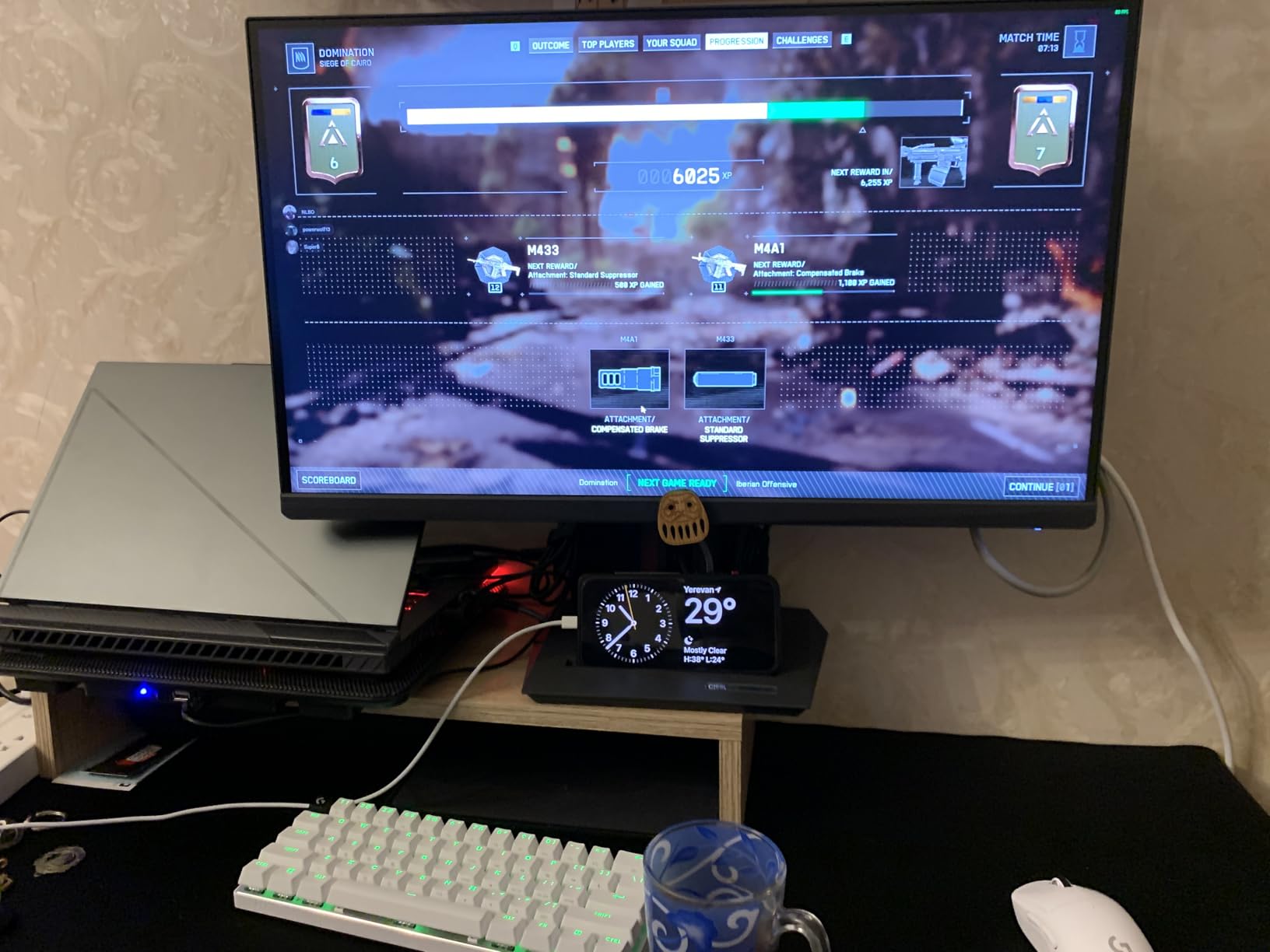
Color reproduction is a strong point. The 95% DCI-P3 coverage makes Forza Horizon 5’s Mexico landscapes look rich and saturated, and SDR brightness is enough for most desk lighting setups. HDR is VESA DisplayHDR 400, which is entry-level, but it does add a touch more pop in supported games like Gears 5.
Dual Mode Flexibility for Cinematic and Competitive Play
The Dual Mode feature is genuinely useful for Xbox Series X owners. If you mostly play cinematic RPGs like Starfield or Cyberpunk 2077, 4K at 120Hz gives you the sharpest image. If you switch to Fortnite or Call of Duty, you can drop to 1080p and gain higher refresh behavior for smoother motion. The OSD makes this switching simple once you find the right hotkey.
Color, HDR, and ELMB SYNC Performance
Out of the box, color accuracy is solid for an IPS gaming display. I did not feel the need to calibrate before playing. ELMB SYNC works with VRR, which is critical for the Series X because VRR is what keeps frame pacing smooth during variable load scenes. The downside is that local dimming during dark cutscenes can introduce faint vertical artifacts, but I only noticed this in specific titles.
Connectivity and On-Screen Controls
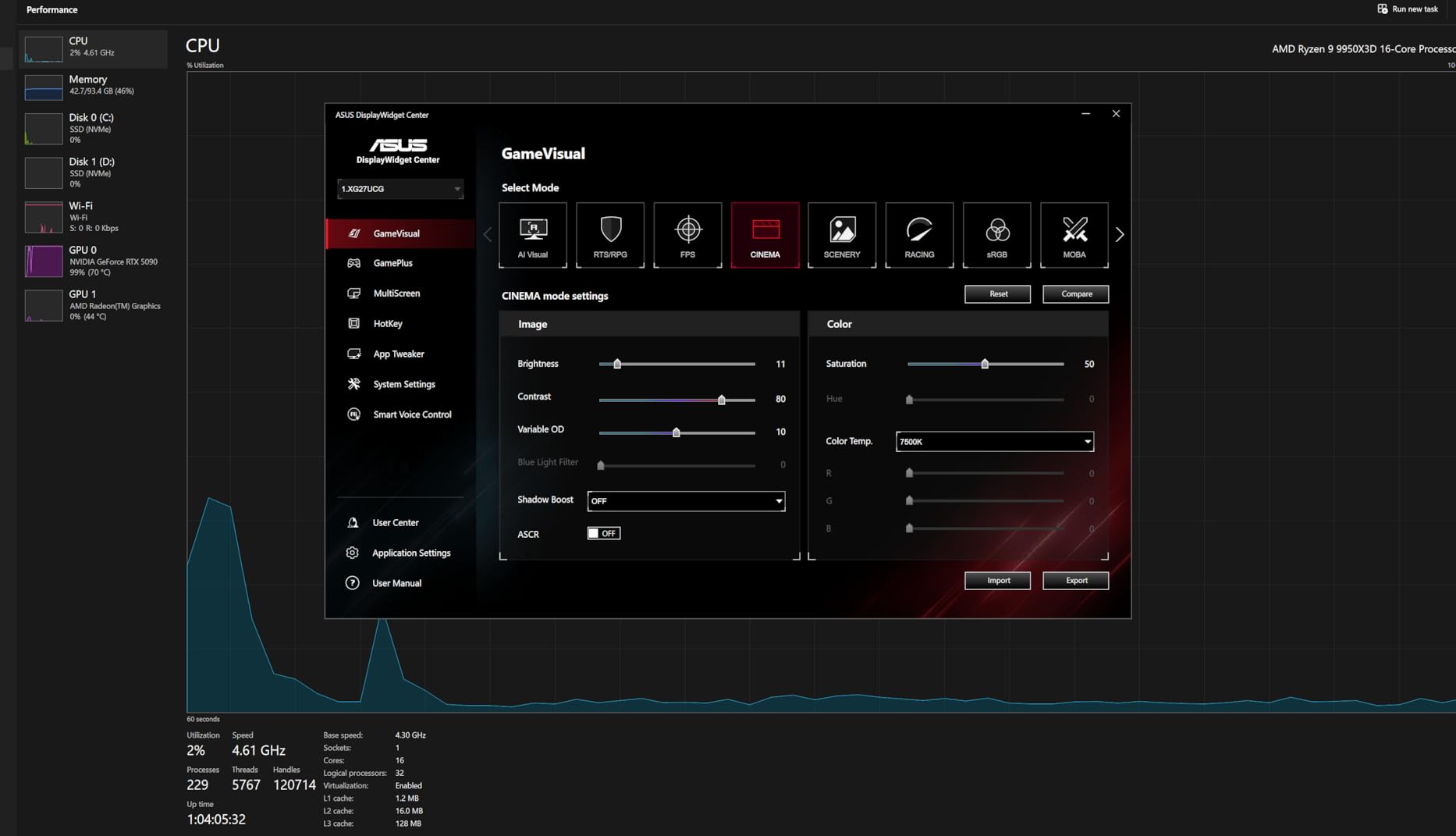
The XG27UCG offers USB-C, HDMI 2.1, and DisplayPort 1.4 with DSC. I plugged the Series X into the HDMI 2.1 port and a laptop into USB-C, then used the KVM feature on the GIGABYTE unit for switching. The included DisplayPort cable is a nice touch. The OSD is mouse-driven and intuitive after a brief learning curve.
2. HP OMEN 27k – Crisp 4K for RPG and Story Fans
HP OMEN 27k UHD 144Hz Gaming Monitor, 4K UHD Display (3840 x 2160), IPS Panel, 99% sRGB, 95% DCI-P3, 16:9, OMEN Gaming Hub, 27k (2023)
4K UHD 144Hz IPS panel
99% sRGB and 95% DCI-P3
KVM switch with OMEN Gaming Hub
Pros
- Sharp 4K pixel density
- 99% sRGB and 95% DCI-P3 color accuracy
- 144Hz refresh with 1ms response
- KVM switch for multi-device control
- Clean non-gaming aesthetic design
Cons
- HDR400 is basic with limited dimming zones
- Only 1 HDMI port
- Viewing angles can cause glare in bright rooms
The HP OMEN 27k is my pick when pixel density and color accuracy matter more than top-tier HDR. At 27 inches with 4K UHD, this panel produces roughly 163 pixels per inch, which is the sweet spot for sharp text in UI elements and crisp detail in games like Diablo IV. For single-player RPGs and slow-paced adventures, it is a joy.
I tested this against a 32-inch 4K display, and the smaller 27-inch size genuinely felt more pixel-dense at typical desk distance. The IPS panel is well-calibrated out of the box and covers 99% of sRGB plus 95% of DCI-P3, which gives accurate skin tones and clean color separation.
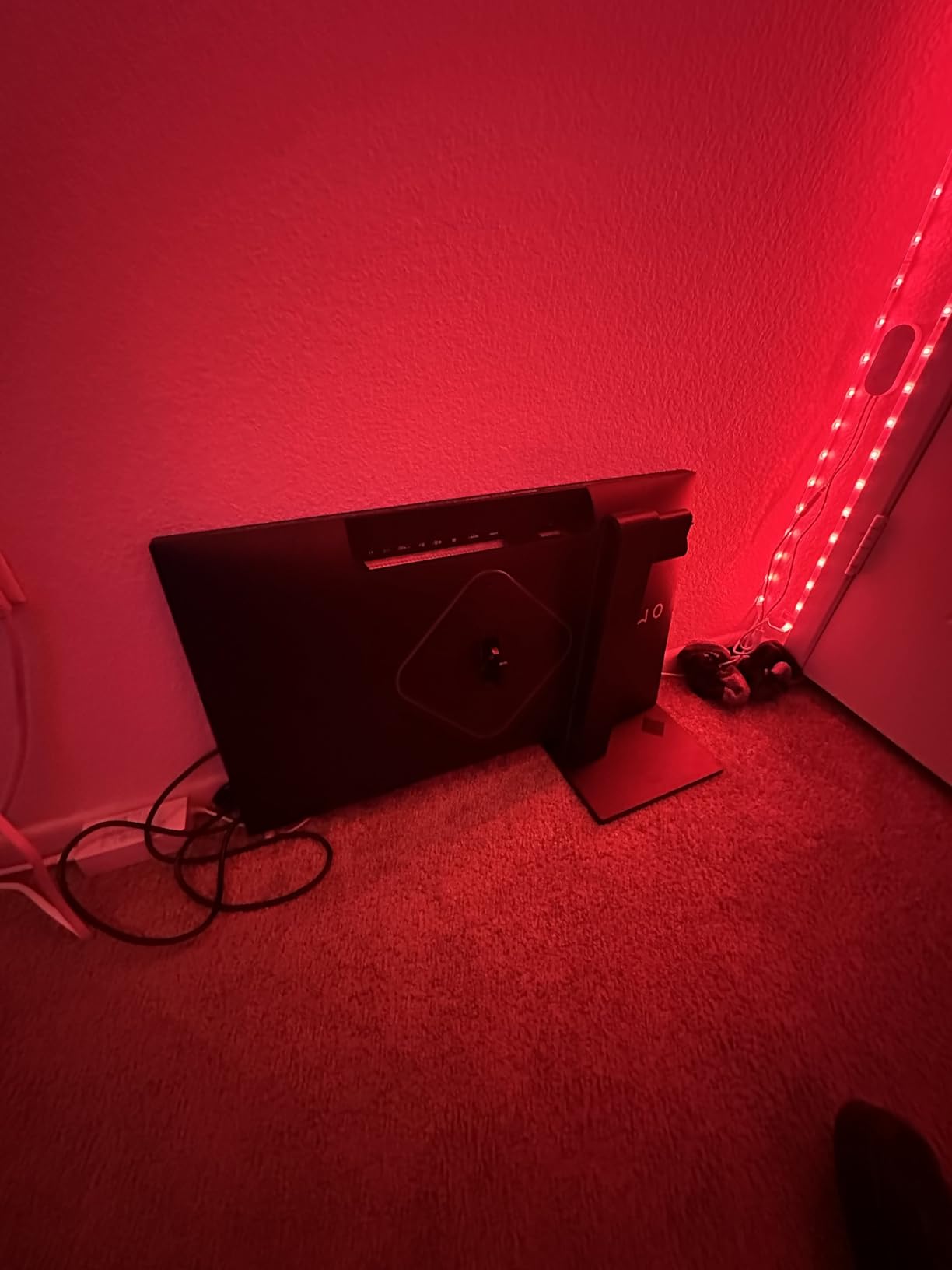
The 144Hz refresh rate and 1ms response time with Overdrive make sure motion stays clean. It is G-Sync Compatible, which helps if you also use the monitor for PC gaming. The OMEN Gaming Hub software adds basic tuning options and lets you manage KVM inputs from your desktop.
Pixel Density and IPS Image Quality
The 4K resolution on a 27-inch panel is where the OMEN 27k shines. Icons, HUD elements, and UI overlays look refined. The 178-degree viewing angles mean you can lean back without major color shift. In a darker room, IPS glow is present at the corners but not distracting during normal gameplay.
KVM and OMEN Gaming Hub Productivity
I hooked up my work laptop and Series X at the same time using the KVM feature, and switching inputs was simple through the OMEN Gaming Hub. The included cable package is generous, with DisplayPort 1.4, HDMI 2.1, USB 3.2 C-C, and a power cord in the box. This makes it easy to get started without buying extras.
HDR Reality Check and Blooming
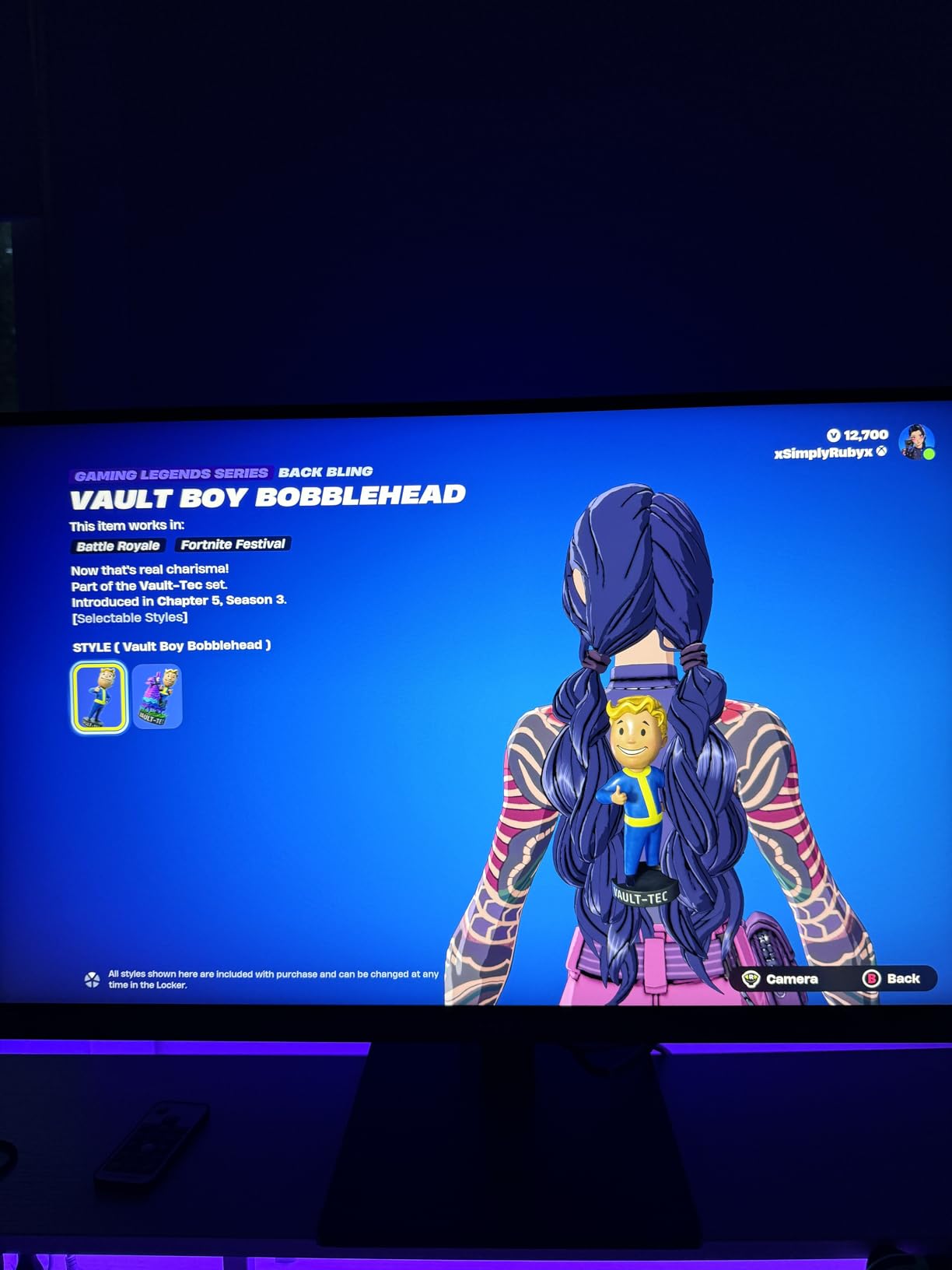
VESA DisplayHDR 400 is the only HDR certification here, and it shows. There are limited dimming zones, so high-contrast scenes like starfields in Mass Effect can show some blooming around bright objects. For SDR content and HDR-lite experiences, the OMEN 27k is excellent. If you want true HDR impact, step up to a Mini-LED or OLED panel.
3. GIGABYTE M27UP SA – The Smart Budget Pick for Series X
GIGABYTE M27UP SA 27″ SuperSpeed IPS Dual Mode UHD/FHD Gaming Monitor
4K 160Hz / FHD 320Hz Dual Mode
1ms GTG SuperSpeed IPS
USB-C KVM with 2x HDMI 2.1
Pros
- Excellent price-to-performance ratio
- Dual Mode 4K 160Hz and FHD 320Hz
- Generous port selection with USB-C and KVM
- Solid metal stand with full adjustability
- Includes HDMI 2.1 and DisplayPort cables
Cons
- Limited viewing angles need center positioning
- IPS glow visible in dark scenes
- No cable management hole in stand
The GIGABYTE M27UP SA is the surprise of the three. At well under what the other two cost, you still get a 27-inch 4K IPS panel with a 160Hz refresh rate and a Dual Mode that pushes FHD to 320Hz. For Xbox Series X owners who want HDMI 2.1 features without paying flagship prices, this is the one I recommend to friends the most.
I was honestly shocked at how well it held up during testing. The 1ms GTG response time and Smart OD (Overdrive) keep ghosting low, and the AMD FreeSync Premium plus G-Sync Compatible certifications mean VRR works whether you are using a PC or a console.
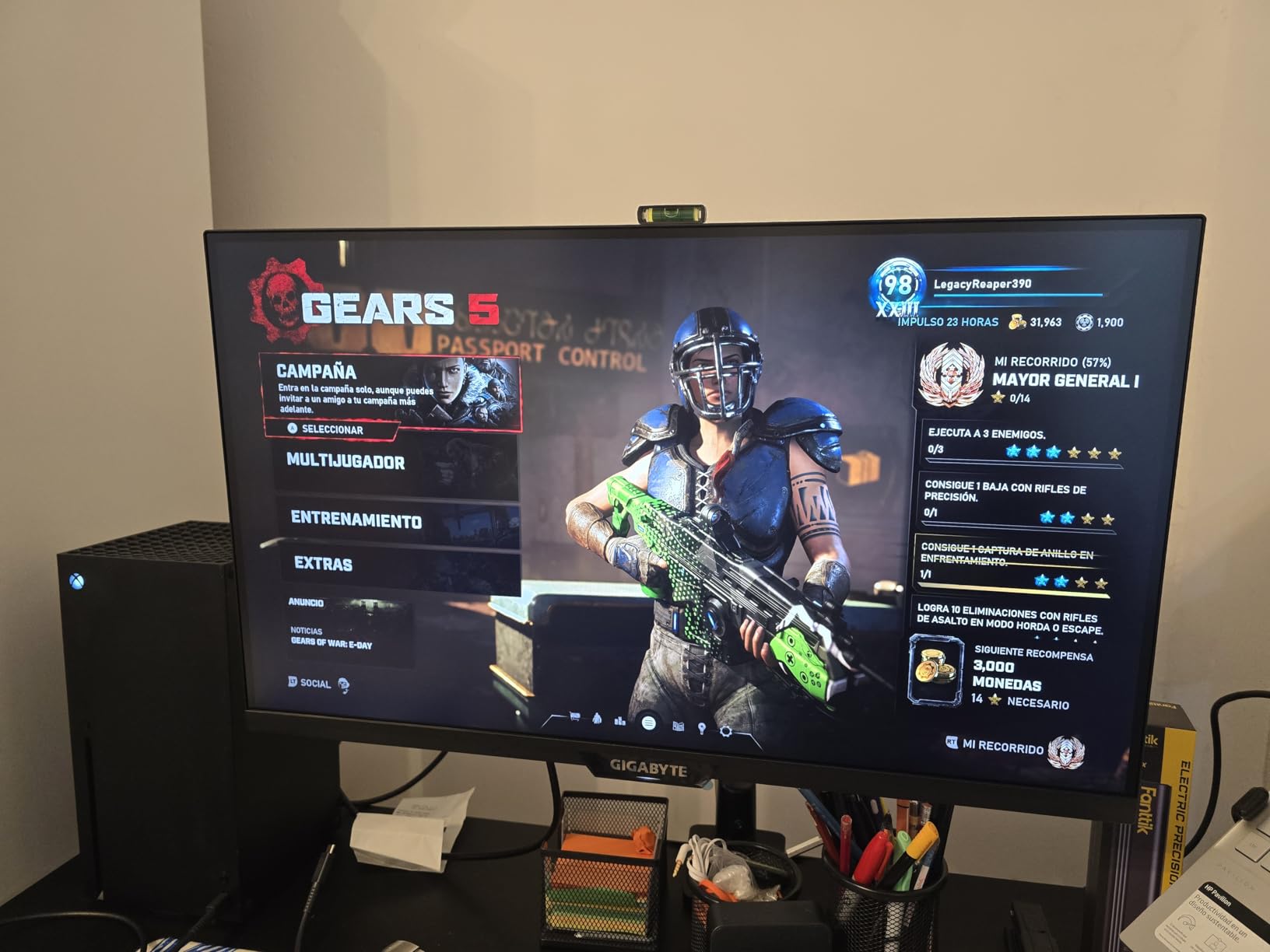
Two HDMI 2.1 ports is a real advantage over the other two monitors. I plugged both my Series X and a streaming stick in directly, no extra switch needed. The KVM switch with USB-C makes it easy to share a keyboard and mouse between devices.
Dual Mode and 1ms Response on a Budget
The Dual Mode works just like on the ASUS. For Xbox Series X, 4K at 120Hz is what you will use most of the time, and it looks great in Forza Horizon 5 and Halo Infinite. The Tactical Switch 2.0 on the back is a fast way to flip between modes without digging through menus.
KVM and Port Selection for Multi-Device Setups
GIGABYTE gave this monitor an unusually strong port selection: 2x HDMI 2.1, 1x DisplayPort, USB Type-C, plus five USB 3.0 ports. I connected my Series X, a work laptop via USB-C, and a mouse and keyboard to the KVM inputs. Switching between work and play took seconds, with no cable juggling.
IPS Glow and Stand Limitations
IPS glow is visible in the corners during dark scenes in games like Diablo IV. It is not severe, and most users will not notice it after a few minutes. The metal stand is solid and adjusts for height, tilt, swivel, and pivot, but it lacks a cable management hole, so plan your cable routing in advance.
What to Look For in an Xbox Series X Monitor
The Xbox Series X is capable, but only when paired with the right display. Below is the criteria I used to evaluate each monitor and the trade-offs you should understand before spending money.
HDMI 2.1: The Non-Negotiable Spec
HDMI 2.1 unlocks 4K at 120Hz, VRR, and ALLM on the Xbox Series X. Without it, your monitor caps at 4K 60Hz, which leaves the smoothest next-gen gameplay behind. If a monitor only has HDMI 2.0, skip it for console gaming. Every monitor in this guide has at least one HDMI 2.1 port, so you are covered.
120Hz Refresh Rate and Why It Matters
The Series X targets 120 frames per second in many titles, including Halo Infinite multiplayer, Fortnite, and Forza Horizon 5. A 120Hz panel doubles the smoothness over a 60Hz display and reduces motion blur. Even if a game runs at 60fps on console, the higher refresh ceiling leaves room for VRR to smooth out frame drops.
4K vs 1440p on Xbox Series X
The Series X supports both resolutions. 4K gives you the sharpest image, but it demands more from the GPU and can drop frames in demanding games. 1440p (QHD) is a strong middle ground, offering sharp detail while keeping frame rates high. The monitors in this guide default to 4K, but all support the 1440p mode that Series X offers in its display settings.
VRR and ALLM: The Silent Heroes
VRR (Variable Refresh Rate) eliminates screen tearing and stutter by syncing the display’s refresh to the console’s output. ALLM (Auto Low Latency Mode) tells the monitor to switch into game mode automatically when you launch a game. Both features are standard on HDMI 2.1 displays and make a real, visible difference in motion quality.
Panel Tech, Burn-In, and OLED Trade-Offs
IPS panels like the ones in this guide offer strong color accuracy and wide viewing angles, with minimal risk of burn-in. OLED panels deliver perfect blacks and faster response times, but carry a small burn-in risk if static HUD elements are left on screen for thousands of hours. For most gamers, IPS is the safer long-term bet.
Size and Desk Space Considerations
27-inch monitors work great at typical desk distances (24 to 32 inches) and deliver excellent pixel density at 4K. 32-inch displays feel more cinematic but need deeper desks. If you sit close to your screen, 27 inches is the sweet spot. All three monitors in this guide are 27-inch, which keeps things consistent.
Frequently Asked Questions
What monitor works best for Xbox Series X?
The ASUS ROG XG27UCG is the best overall pick thanks to its 4K 160Hz Dual Mode panel, 1ms GTG response time, and HDMI 2.1 support. It delivers crisp 4K at 120Hz for cinematic games and 1080p at 320Hz for competitive shooters. The GIGABYTE M27UP SA is the smart budget alternative if you want similar features at a lower price.
Is 4K or 1440p better for Xbox Series X?
Both are great options, and the Xbox Series X supports both resolutions. 4K gives you sharper detail and is ideal for cinematic RPGs and story-driven games. 1440p (QHD) is a strong sweet spot because it pushes higher frame rates while keeping the image sharp. Pick 4K if you want maximum detail and 1440p if you want smoother competitive play.
Do I need a 120Hz monitor for Xbox Series X?
A 120Hz monitor is highly recommended for Xbox Series X. The console targets 120fps in many titles, and a 120Hz panel unlocks that smoothness. Even at 60fps, a 120Hz display gives VRR more headroom to smooth out frame drops. If your budget allows, 120Hz is non-negotiable.
Is it worth getting a 4K monitor for Xbox Series X?
Yes, a 4K monitor is worth it for Xbox Series X if you mostly play single-player RPGs, racing games, or cinematic adventures. The added detail is striking in titles like Forza Horizon 5 and Starfield. If you mainly play competitive shooters at high frame rates, consider a 1440p 144Hz or higher display instead.
Is it better to use a monitor or TV for Xbox Series X?
Monitors offer lower input lag, faster response times, and higher pixel density at desk distance, which makes them ideal for competitive and desk-based gaming. TVs are better for couch play, larger screens, and living room setups. If you game at a desk and care about responsiveness, a monitor is the better choice for Xbox Series X.
Final Verdict: Which Xbox Series X Monitor Should You Buy?
If you want the best mix of 4K clarity, 120Hz smoothness, and responsive gaming, grab the ASUS ROG XG27UCG. If pixel density and color accuracy are your top priorities for RPGs and story games, the HP OMEN 27k delivers in spades. If you want HDMI 2.1, Dual Mode, and KVM without breaking the bank, the GIGABYTE M27UP SA is the budget winner.
All three monitors prove that the Xbox Series X deserves a proper next-gen display. Pick the one that matches the games you play and the desk you sit at, and you will feel the upgrade the moment you load into your first match in 2026.