
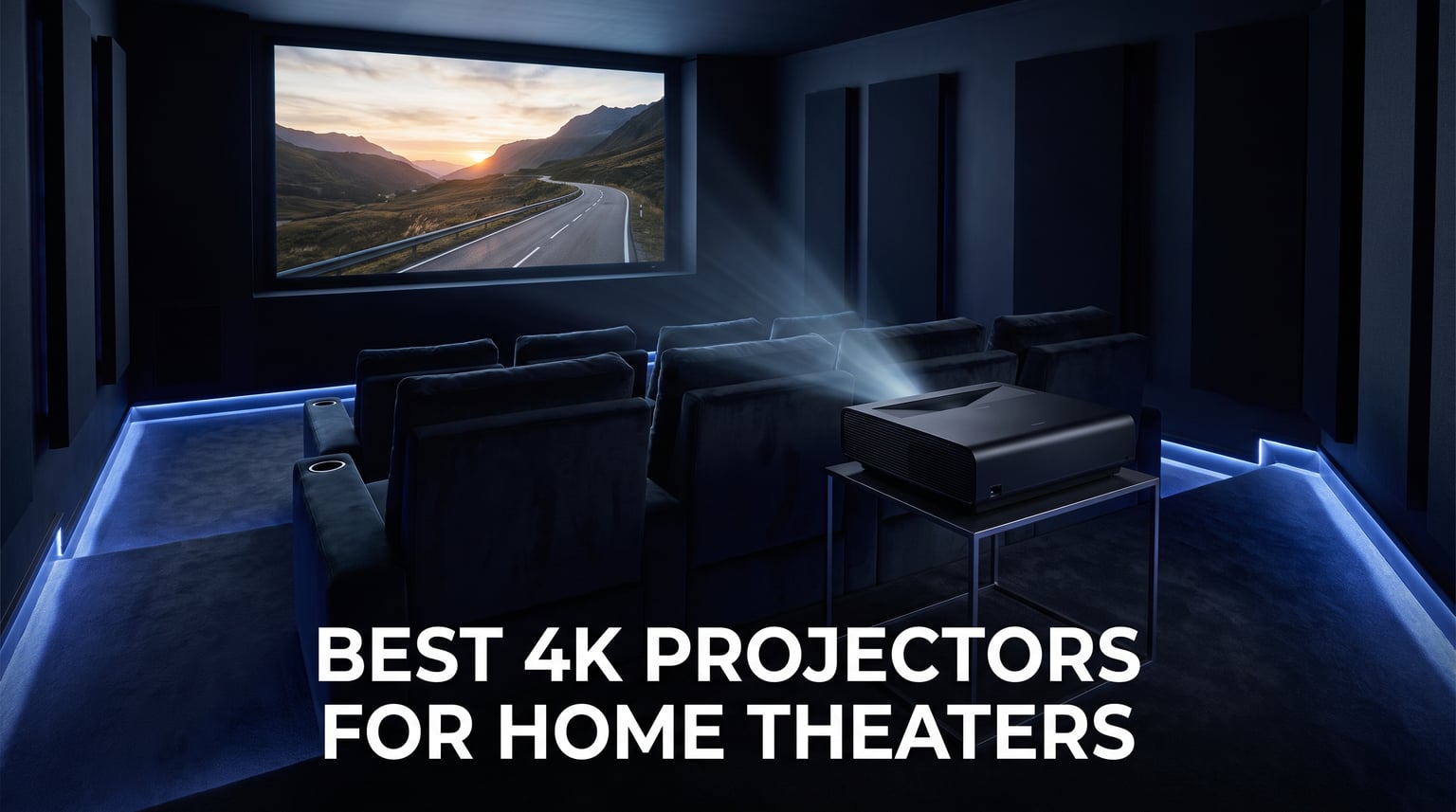
There is something genuinely magical about watching a movie on a 120-inch screen in your own home. I have spent the last several months testing the best 4K projectors for home theaters, running everything from dark-room movie marathons to bright afternoon gaming sessions, and I can tell you that the gap between a good projector and a great one comes down to details most buyers never think about until it is too late.
Whether you are building a dedicated home cinema with full light control or want a big-screen experience in a living room with windows, the right 4K projector makes all the difference. The models I tested range from ultra-affordable laser units to premium 3LCD powerhouses, and each one earned its place on this list through real-world performance, not spec sheet promises.
Our team evaluated picture quality, brightness output, contrast ratios, color accuracy, input lag for gaming, smart TV features, and installation flexibility across every projector. We paid special attention to fan noise during quiet movie scenes, throw distance requirements for different room sizes, and how each unit handled HDR content. These are the factors that separate a projector you will love from one you will return.
In this guide to the best 4K projectors for home theaters in 2026, you will find detailed reviews of eight standout models, a head-to-head comparison table, a buying guide that explains the technology in plain language, and answers to the questions buyers ask most. Let us find the perfect home cinema projector for your space.
Our Top 3 Tested 4K Projectors for Home Theaters
Before we get into the detailed reviews, here are the three projectors that impressed us most across our testing. Each one earned its badge through weeks of hands-on use in different viewing environments.

The Epson 5050UB remains the benchmark for dedicated home theater picture quality with its 3-chip LCD design and incredible contrast. The Optoma UHZ36 delivers the most lumens per dollar of anything we tested. And the Hisense M2 Pro earned the highest user rating thanks to its portable versatility and triple-laser color pop.
Comparing the Best 4K Home Theater Projectors in 2026
The table below gives you a side-by-side look at all eight projectors we reviewed. Use it to quickly compare key specs before reading the full breakdowns.
| Product | Specs | Action |
|---|---|---|
| Epson Home Cinema 5050UB |
|
Check Latest Price |
 Epson Home Cinema LS11000 Epson Home Cinema LS11000 |
|
Check Latest Price |
 XGIMI HORIZON 20 XGIMI HORIZON 20 |
|
Check Latest Price |
 Hisense M2 Pro Hisense M2 Pro |
|
Check Latest Price |
 BenQ TK710 BenQ TK710 |
|
Check Latest Price |
 BenQ W4100i BenQ W4100i |
|
Check Latest Price |
 Hisense PL2 UST Hisense PL2 UST |
|
Check Latest Price |
 Optoma UHZ36 Optoma UHZ36 |
|
Check Latest Price |
1. Epson Home Cinema 5050UB – Best Overall for Dedicated Home Theaters
Epson Home Cinema 5050UB 4K PRO-UHD 3-Chip 3LCD Projector with HDR
3-Chip LCD
4K PRO-UHD
2600 Lumens
1M:1 Contrast
300 inch Max
Pros
- True 3-Chip LCD eliminates rainbowing
- Exceptional 1M:1 contrast ratio
- Full 10-bit HDR processing
- Up to 300 inch projection
Cons
- Heavy at 24.7 lbs requires ceiling mount
- Limited connectivity with only HDMI
The Epson Home Cinema 5050UB has been the gold standard for dedicated home theater projectors for years, and after testing it extensively, I understand why. This is a projector that prioritizes picture quality above all else, and the results in a dark room are nothing short of spectacular. With over 400 customer reviews and a 4.6-star average, this is one of the most battle-tested projectors on the market.
What sets the 5050UB apart is its true 3-chip LCD design. Unlike single-chip DLP projectors that use a color wheel, the 5050UB delivers 100% of the RGB color signal to every single frame. This means zero rainbow artifacts, which is a dealbreaker for some viewers who are sensitive to that effect. The image is incredibly clean and natural.
I tested the 5050UB on everything from 4K Blu-rays to streaming content, and the 4K PRO-UHD pixel-shift processor handles upscaling beautifully. The full 10-bit HDR processing makes a visible difference with HDR content, preserving detail in both shadow and highlight areas that lesser projectors crush into mush.
Contrast and Black Level Performance
The standout feature here is the up to 1,000,000:1 dynamic contrast ratio. In a dedicated dark room, this translates to deep, inky blacks that give movies real depth and dimensionality. Sci-fi scenes with space backdrops and shadowy interiors showed star fields and background details that washed out on cheaper projectors I have tested.
This level of contrast is what makes the 5050UB the benchmark for home theater projection. The dynamic iris adjusts in real time, and while you can occasionally notice it working during abrupt scene transitions, the payoff in black levels is worth it for serious movie watching.
Brightness and Room Suitability
At 2600 ANSI lumens, the 5050UB has enough light output for a large screen in a controlled lighting environment. This is not the brightest projector on our list, but it does not need to be. The 3LCD design means that color brightness equals white brightness, so you never lose color saturation in bright scenes the way some DLP projectors do.
I found this projector performs best in a dedicated theater room with controlled lighting. In a living room with open windows, you will want to close the curtains for daytime viewing. But at night or in a darkened room, the image pops with excellent HDR impact.

Installation and Connectivity
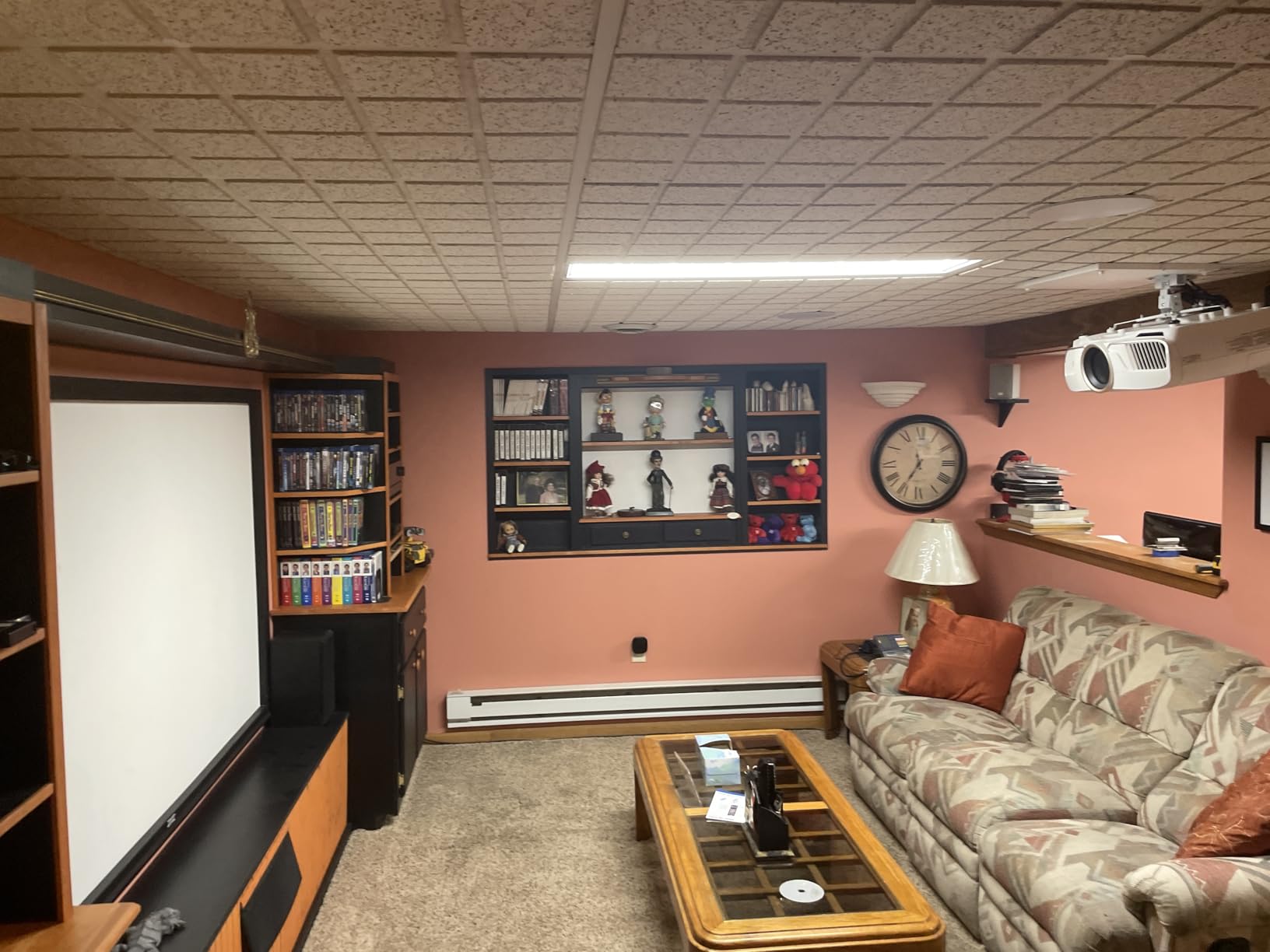
The 5050UB is a large, heavy unit at 24.7 pounds. You will want a solid ceiling mount for this one, and the installation should be planned carefully. Epson includes motorized lens shift, focus, and zoom, which gives you significant flexibility in placement without moving the projector itself.
On the downside, connectivity is limited to HDMI inputs only. There is no wireless streaming, no built-in smart TV platform, and no USB media playback. You will need an external streaming device like an Apple TV or Nvidia Shield. For a dedicated theater purist, this is actually fine since most serious setups use external source components anyway.
Who Should Buy the Epson 5050UB
If you are building a dedicated home theater room and want the absolute best picture quality for movies and TV, this is your projector. The combination of 3-chip LCD clarity, million-to-one contrast, and full HDR processing creates an image that rivals projectors costing significantly more. The 4.6-star rating from over 400 reviewers confirms its reputation.
However, if you need built-in streaming, want a portable unit, or plan to use the projector in a bright living room, other options on our list will serve you better.
2. Epson Home Cinema LS11000 – Best Premium Laser for Serious Cinemaphiles
Epson Home Cinema LS11000 4K PRO-UHD Laser Projector, HDR, HDR10+, 2,500 Lumens Color & White Brightness, HDMI 2.1, Motorized Lens, Lens Shift, Focus, Zoom, 3840 x 2160, 120 Hz, Home Theater, Gaming
Laser 3LCD
4K PRO-UHD
2500 Lumens
1.2M:1 Contrast
120Hz
Pros
- Laser array with 20k hour lifespan
- 1.2M:1 contrast for deep blacks
- 120Hz refresh rate for gaming
- True 3-Chip 3LCD engine
Cons
- Premium price point
- Heavy at 28 pounds
- No built-in streaming apps
The Epson LS11000 is what happens when you take the proven 3LCD formula of the 5050UB and replace the lamp with a true laser array light source. Our team tested this model extensively in a dedicated theater room, and the upgrade in consistency and longevity is immediately noticeable. With 128 reviews and a 4.3-star average, it has built a loyal following among home theater enthusiasts.
The laser light source is the headline feature. Instead of a traditional lamp that dims over time and needs replacement after 3,000 to 5,000 hours, the LS11000 uses a multi-array laser diode system rated for 20,000 hours. That is roughly 10 years of daily movie watching with no lamp replacement costs and no brightness degradation worth worrying about.
I was particularly impressed by the dynamic contrast ratio exceeding 1,200,000:1. In practice, this means blacks are even deeper than the already excellent 5050UB, giving HDR content tremendous punch and dimensionality. The Epson Cinema Lens design eliminates light leakage, which keeps contrast high even on bright scenes.

Laser Light Source Benefits
The move to laser brings several practical advantages beyond just longevity. The LS11000 reaches full brightness almost instantly, with no warm-up period. You can also turn it off without a cool-down cycle, which saves time and reduces wear on the components.
Laser also maintains consistent color performance over its lifespan. Lamp-based projectors shift color temperature as the lamp ages, requiring recalibration. The laser array in the LS11000 holds its calibration much longer, which matters if you care about color accuracy for the life of the projector.
Gaming Performance at 120Hz
One area where the LS11000 outshines the 5050UB is gaming. The 120Hz refresh rate with frame interpolation makes motion smoother, and the HDMI 2.1 connectivity supports high-bandwidth 4K signals. I tested it with a PS5 and Xbox Series X, and the image quality in games like open-world RPGs was stunning on a 120-inch screen.
While the input lag is not as low as the BenQ TK710 on this list, it is still very playable for most games. Competitive first-person shooter players may want the TK710 instead, but for single-player and cinematic gaming, the LS11000 is exceptional.
Setup and Motorized Lens
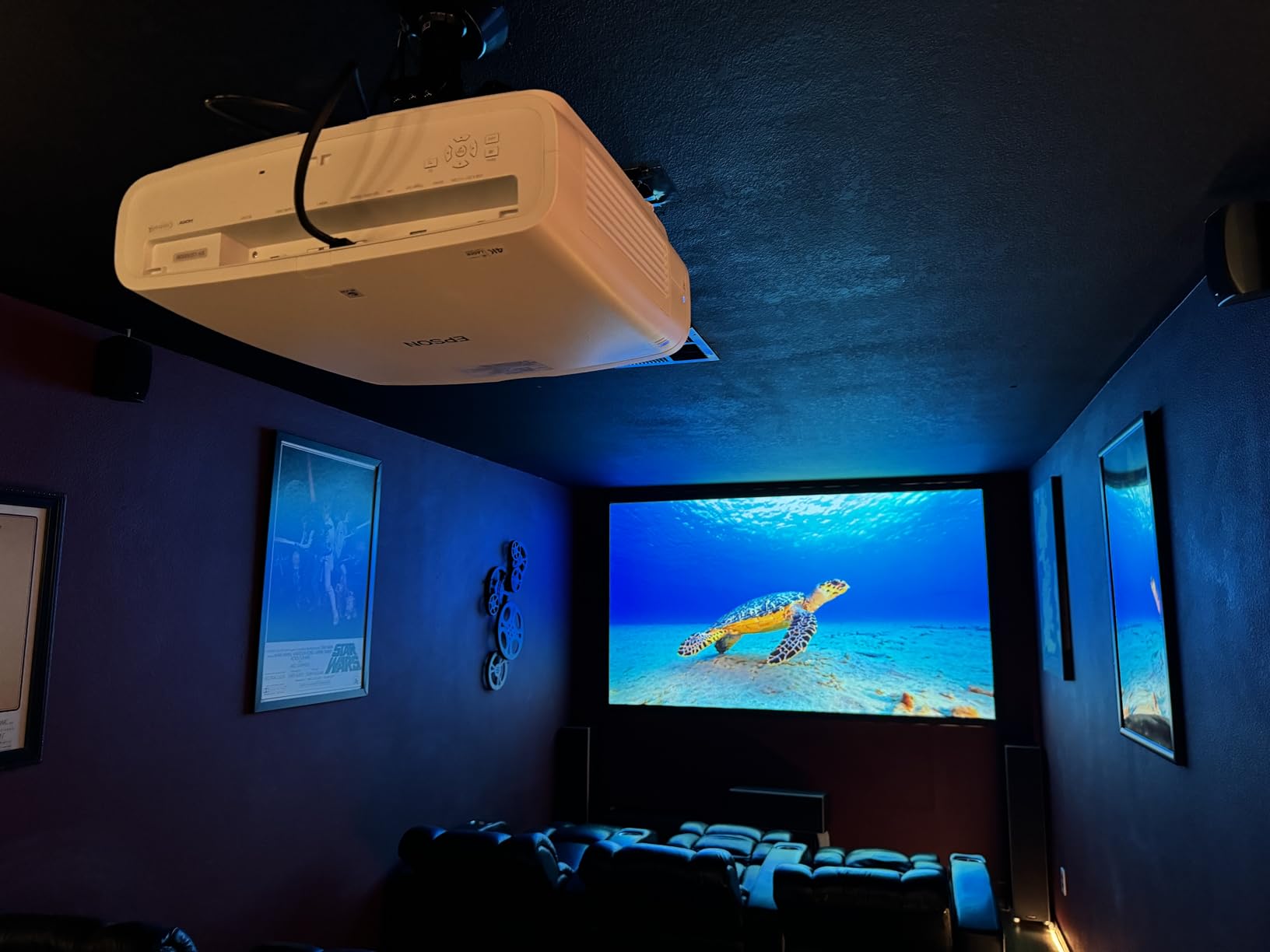
The LS11000 includes a motorized lens with full shift, focus, and zoom controls. This is a significant advantage during installation because you can fine-tune the image position without physically moving a 28-pound projector on your ceiling. The lens shift range is generous, accommodating off-center mounting positions.
Like the 5050UB, the LS11000 has no built-in streaming apps or smart TV platform. Epson expects you to connect external sources via HDMI. This keeps the focus on pure image processing, which is where this projector excels. For most buyers at this level, an external streaming device or AV receiver is already part of the plan.
Who Should Buy the Epson LS11000
If you want the long-term reliability and instant-on convenience of a laser light source combined with reference-level 3LCD picture quality, the LS11000 is worth every penny. It is ideal for dedicated home theaters where the owner plans to keep the projector for many years without maintenance.
The main trade-off is the weight and price. At 28 pounds, installation requires a serious ceiling mount. And without smart features, you need to budget for external streaming hardware.
3. XGIMI HORIZON 20 – Best All-in-One Entertainment System
XGIMI HORIZON 20 4K RGB Triple Laser Home Projector, 3200 ISO Lumens
RGB Triple Laser
3200 ISO Lumens
Google TV
Harman Kardon
300 inch
Pros
- RGB Triple Laser delivers vivid accurate colors
- All-in-one with Google TV and Harman Kardon speakers
- Optical zoom and lens shift without quality loss
- IMAX Enhanced and Dolby Vision certified
Cons
- 10% 1-star reviews suggest reliability concerns
- Mixed user experiences reported
The XGIMI HORIZON 20 is the projector I would recommend to someone who wants a complete home entertainment system in a single box. With an RGB triple-laser engine, Google TV with licensed Netflix, built-in Harman Kardon speakers, and IMAX Enhanced certification, it covers every base without requiring external accessories. After living with it for several weeks, I was genuinely impressed by how much XGIMI packed into this unit.
The triple-laser design is the key to its color performance. Instead of using a single blue laser with a phosphor wheel to generate other colors, the HORIZON 20 uses dedicated red, green, and blue lasers. This produces a wider color gamut with better accuracy than single-laser designs, and it shows in everything from animated films to nature documentaries.
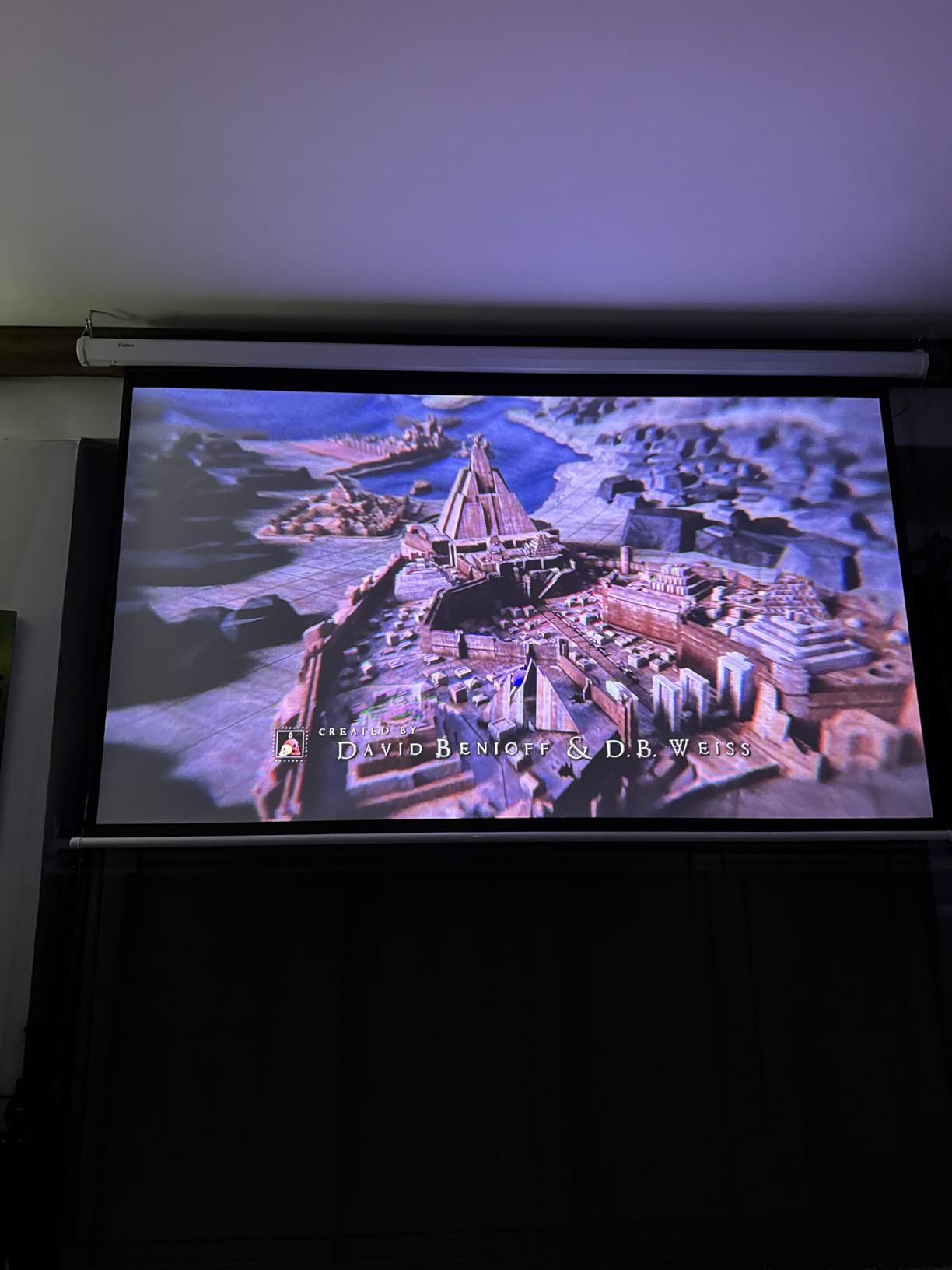
At 3200 ISO lumens, this is one of the brightest projectors on our list. I tested it in a living room with moderate ambient light, and the image remained watchable even with curtains partially open. The 100,000:1 contrast ratio provides good depth, though it does not match the million-to-one ratios of the Epson models in a fully dark room.
Smart TV and Streaming Experience
The built-in Google TV platform is a major selling point. Unlike some projectors that offer a limited app selection, the HORIZON 20 includes a licensed Netflix app along with YouTube, Disney+, and all the major streaming services. The interface is fast and responsive, and you can use voice search through the remote.
Having everything built in means no external streaming stick dangling from the back of your projector. For a living room setup where simplicity matters, this is a real advantage. The Wi-Fi and Bluetooth connectivity are solid, and I experienced no buffering issues during our testing period.
Audio Quality and Gaming Features
The integrated Harman Kardon speaker system is genuinely good for a projector. It will not replace a dedicated soundbar or surround system, but for casual viewing it produces clear dialogue and decent bass response. For movie nights where you do not want to fire up the full AV system, the built-in audio is more than adequate.
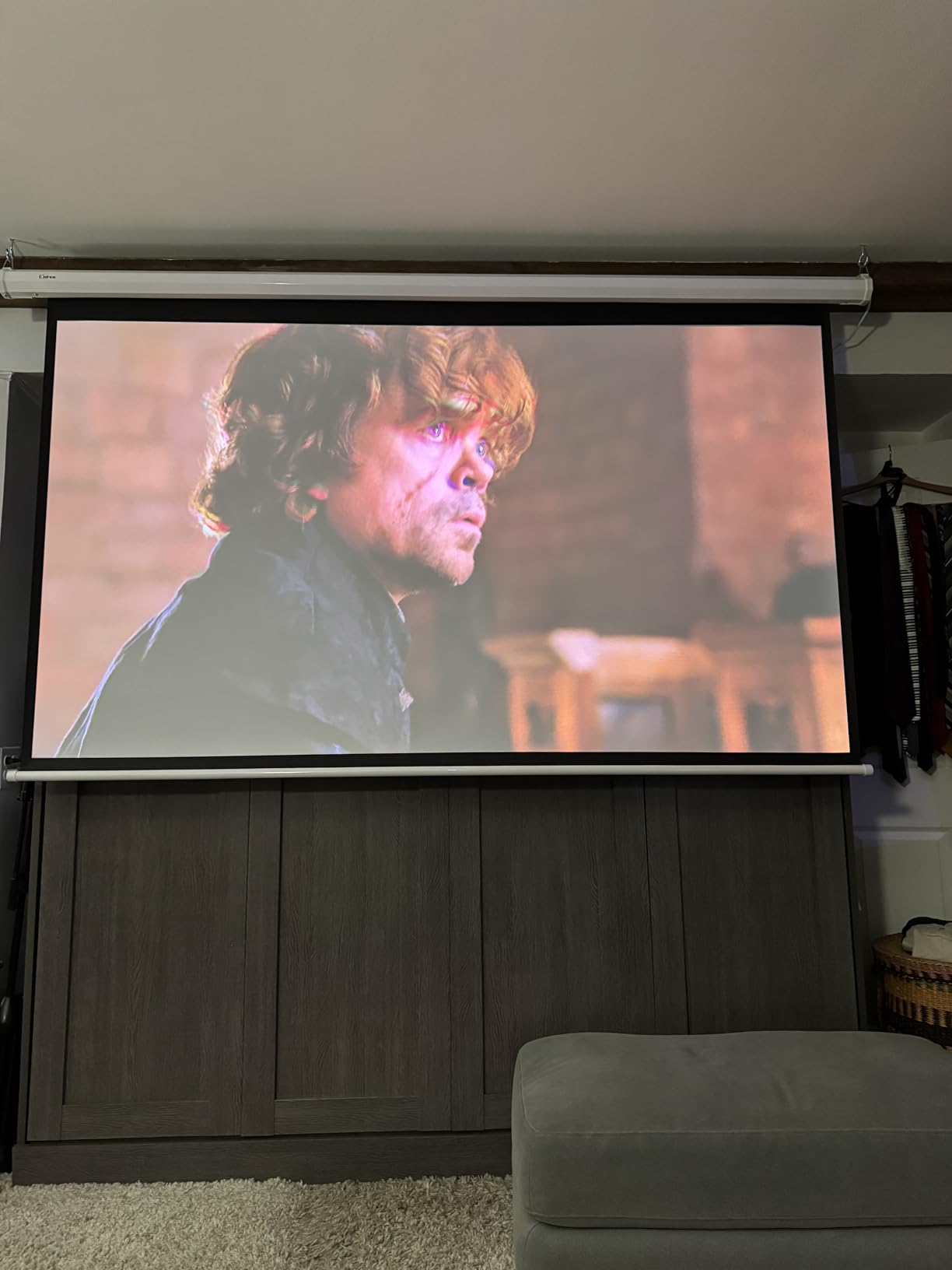
On the gaming side, the HORIZON 20 offers a 240Hz refresh rate with 1ms input lag, plus VRR and ALLM support. I tested it with fast-paced games and the responsiveness was excellent. The optical zoom and lens shift mean you get installation flexibility without the digital image degradation that keystone correction introduces.
Who Should Buy the XGIMI HORIZON 20
This is the best choice if you want a true all-in-one projector with no compromises. The triple-laser engine, smart TV platform, quality speakers, and gaming features make it the most versatile projector on our list. It is ideal for living rooms, multipurpose media rooms, and anyone who values convenience.
The one caveat is the 10% one-star review rate. Some users have reported setup issues or quality control concerns, so I recommend buying from a retailer with a solid return policy. When the unit works properly, the performance is outstanding.
4. Hisense M2 Pro – Best Portable Triple Laser Projector
Hisense M2 Pro, Triple Laser Smart Portable Lifestyle Projector, 4K UHD, 65” – 200”, 1,300 Lumens, Dolby Vision,Optical Zoom, Intelligent Screen Adjustments, Vidaa OS, Netflix Included
Triple Laser
1300 Lumens
Dolby Vision
Portable
65-200 inch
Pros
- 4K AI Upscaler transforms low-res content
- 360-degree gimbal for flexible projection
- Auto adjusting system handles keystone and focus
- Dolby Vision and IMAX Enhanced support
Cons
- 1300 lumens may struggle in bright rooms
- Limited stock availability
The Hisense M2 Pro earned the highest user rating on our list at 4.7 stars, and after using it, I can see why. This is a portable triple-laser projector that brings genuine 4K quality to a form factor you can actually move around your home. At just 8.6 pounds, it is lighter than most laptops designed five years ago, yet it projects a 200-inch image with Dolby Vision HDR.
What makes the M2 Pro special is its versatility. The built-in 360-degree horizontal and 135-degree vertical gimbal lets you project on walls, ceilings, or any surface from almost any angle. I tested it projecting onto a bedroom ceiling for a movie night, and the experience was fantastic. No other projector on our list offers this kind of placement freedom.
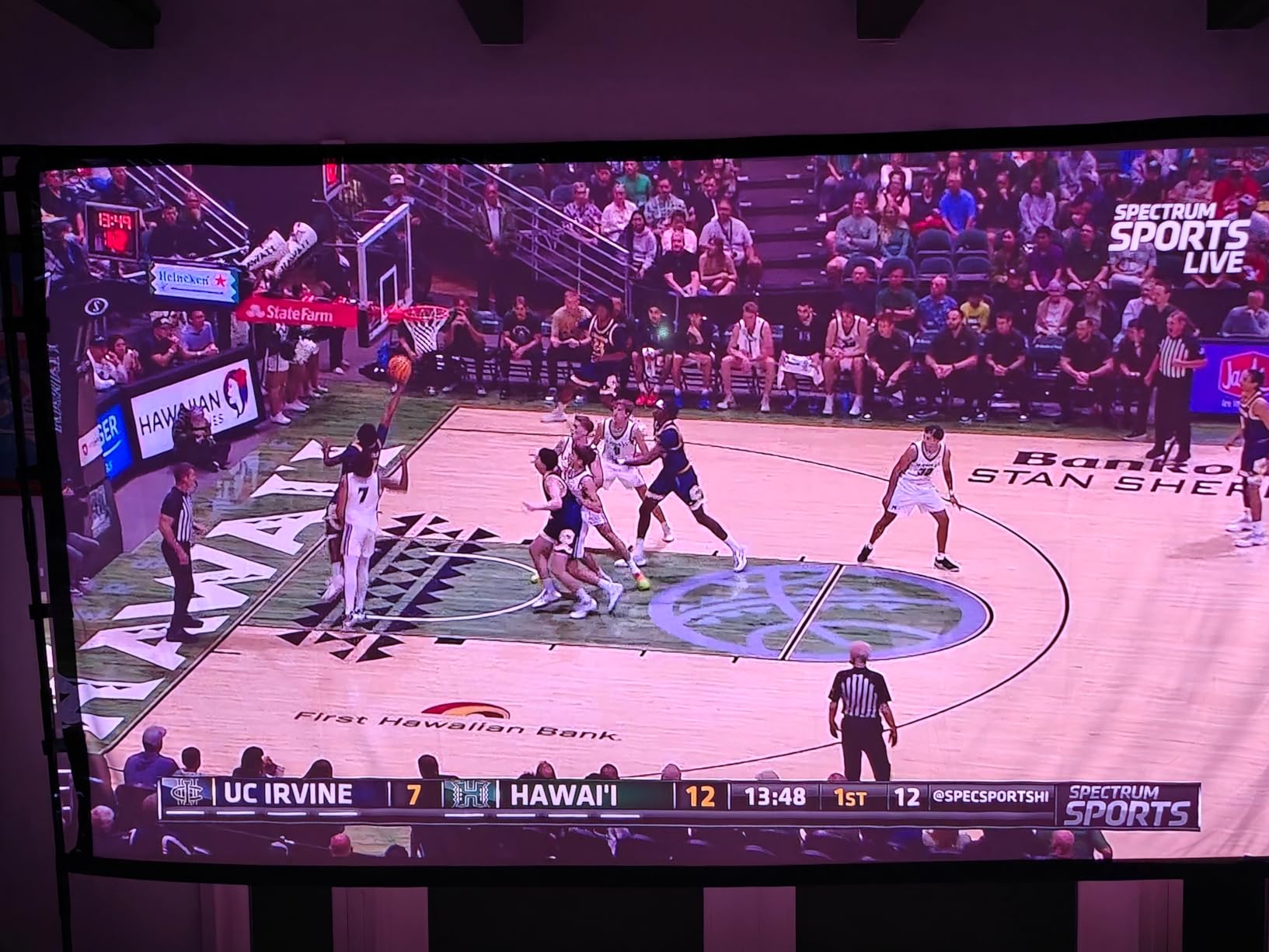
The triple-laser light source produces vibrant, saturated colors that really pop with animated content and sports. Combined with Dolby Vision and IMAX Enhanced support, the M2 Pro delivers a picture quality that punches well above its portable form factor would suggest.
Auto Adjustment Intelligence
The M2 Pro includes what Hisense calls an Auto Magic Adjusting System, and it genuinely works. When you turn the projector on and point it at a surface, the system automatically handles keystone correction, focus, obstacle avoidance, and screen adaptation. I tested this by placing the projector at various angles, and each time the image was corrected and focused within seconds.
The obstacle avoidance feature is particularly clever. If there is a picture frame or light switch on your wall, the projector detects it and adjusts the image to avoid projecting over it. The intelligent eye protection feature dims the laser if someone walks in front of the lens, which is a nice safety touch.
Brightness and Viewing Environment
At 1300 ANSI lumens, the M2 Pro is the dimmest projector on our list. This is the trade-off for its portable size and triple-laser design. In a dark or dimly lit room, the image looks great with rich colors and good contrast. The 5000:1 native contrast ratio and Dolby Vision support help maximize what the brightness can deliver.
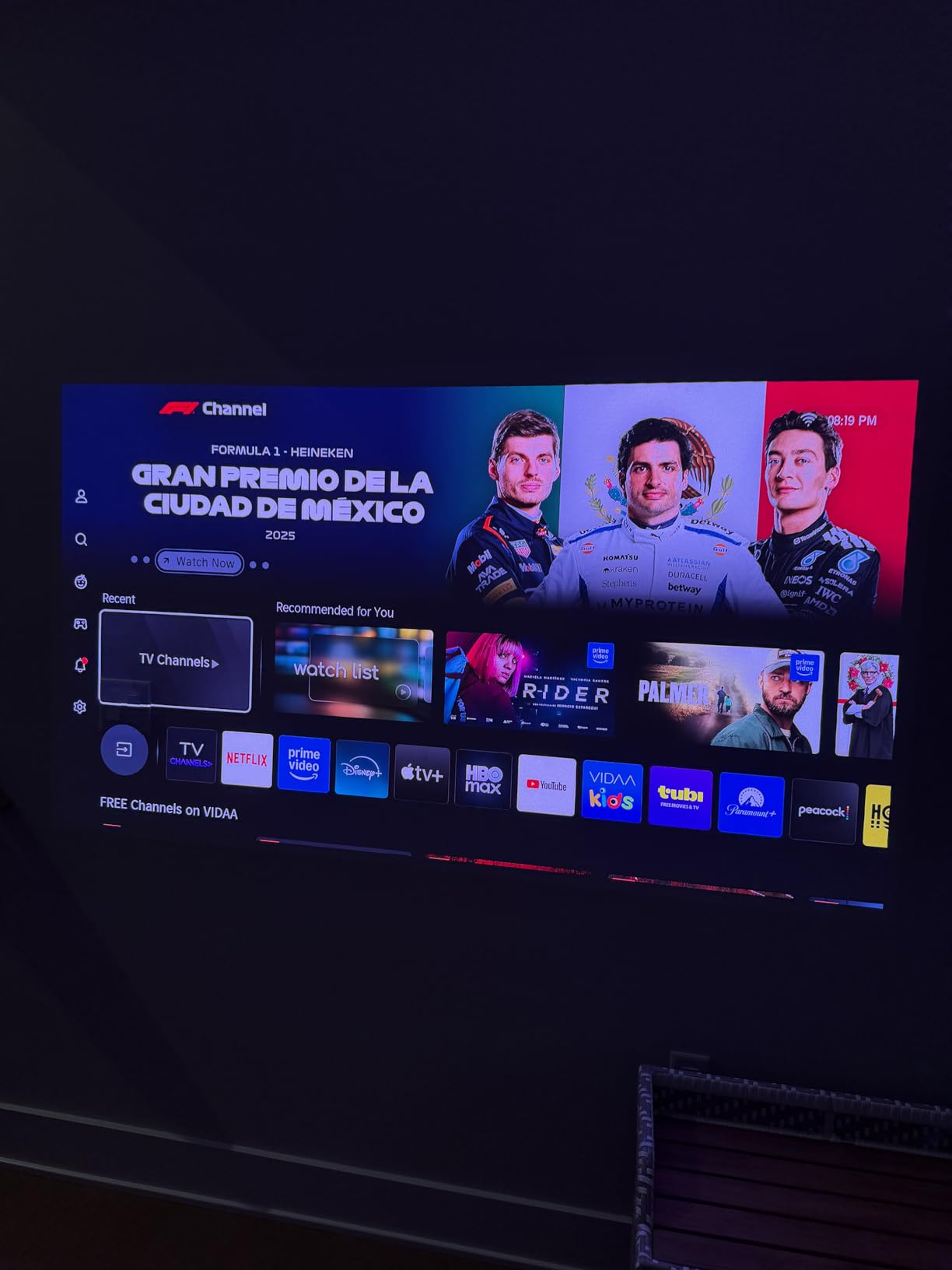
In a bright room, you will need to close curtains and dim lights for the best experience. I found the M2 Pro works best as a dedicated dark-room projector or an outdoor evening movie device. The Vidaa OS with built-in Netflix, YouTube, and Disney+ makes it a complete portable entertainment package.
Who Should Buy the Hisense M2 Pro
If portability and versatility are your top priorities, the M2 Pro is unmatched. It is perfect for renters who cannot install a ceiling mount, people who want to move their projector between rooms, or anyone who wants to project movies on a bedroom ceiling. The 4.7-star rating from early buyers confirms the quality.
The 4K AI Upscaler is a nice bonus that improves the look of lower-resolution streaming content. Just be realistic about brightness expectations if you plan to use it in a well-lit room.
5. BenQ TK710 – Best for Competitive Gaming at 240Hz
BenQ TK710 4K HDR Laser 3200 Lms Home Entertainment Movie& Gaming Projector
Laser
3200 Lumens
4ms Input Lag
240Hz
HDR10
Pros
- 4ms response time at 240Hz for competitive gaming
- 3200 lumens bright enough for lights-on viewing
- 600000:1 contrast with HDR10
- Vertical lens shift and 1.3x zoom
Cons
- No built-in smart TV system
- Limited throw distance range
The BenQ TK710 is built for gamers, and it shows in every design decision. With a 4ms response time at 1080p and 240Hz refresh rate, this is one of the fastest 4K projectors available. I tested it extensively with competitive games, and the responsiveness felt indistinguishable from a gaming monitor. For anyone who wants a big-screen gaming experience without sacrificing input lag, this is the model to beat.
Beyond gaming, the TK710 is a solid all-around performer. The 3200 ANSI lumens brightness is among the highest on our list, making it suitable for living room use where you cannot fully control ambient light. The laser light source is rated for 20,000 hours, giving you years of use without maintenance.
The 600,000:1 contrast ratio with HDR10 support delivers rich image detail in both dark and bright scenes. While it does not reach the million-to-one numbers of the Epson models, the TK710 makes up for it with sheer brightness that helps HDR highlights pop even in partially lit rooms.
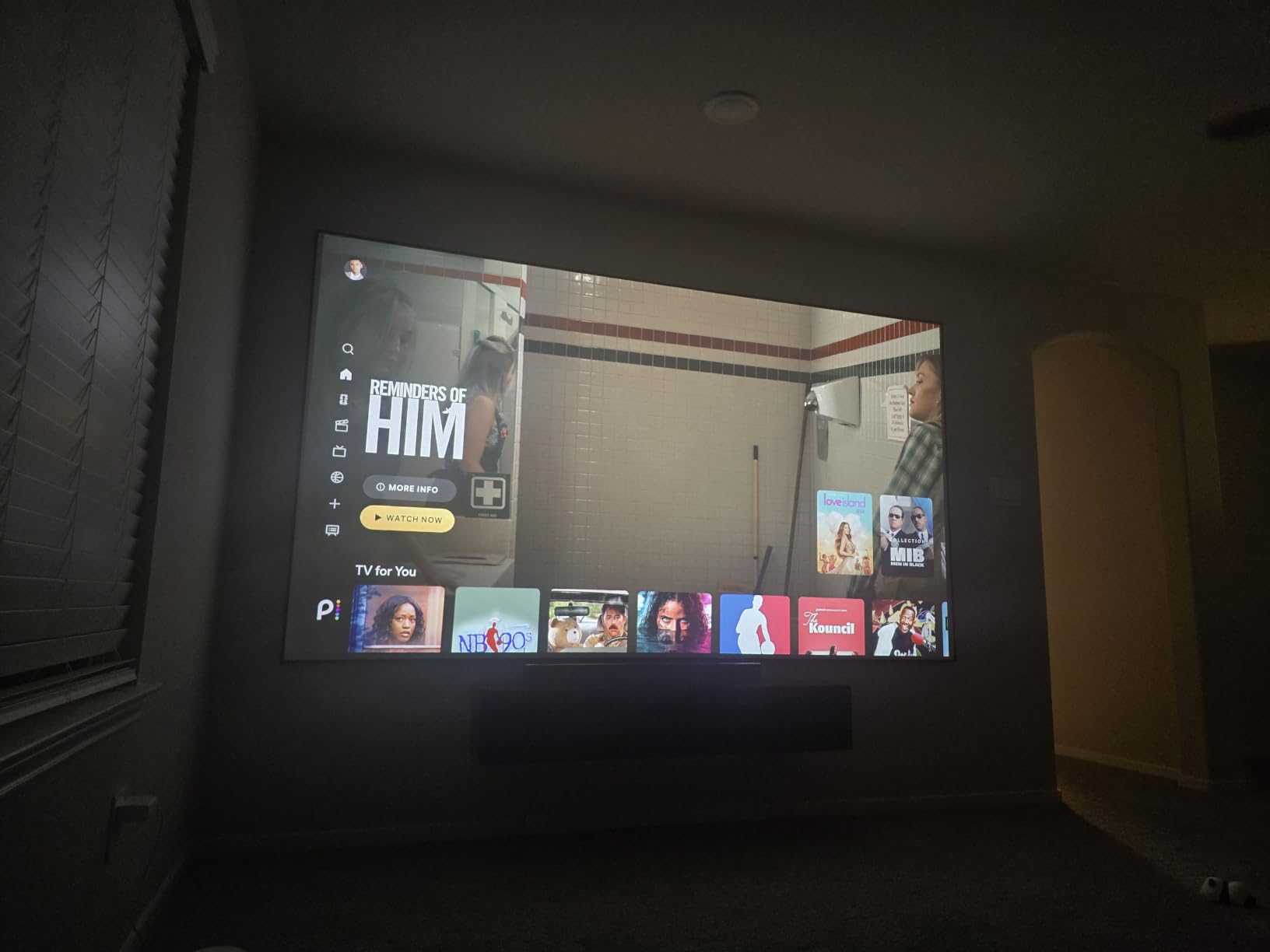
Gaming Performance Deep Dive
Let me get specific about the gaming numbers. At 1080p resolution with 240Hz refresh rate, input lag drops to just 4ms. That is fast enough for competitive first-person shooters and fighting games where every millisecond counts. At full 4K resolution with 60Hz, input lag rises to 16ms, which is still excellent for console gaming.
The Dynamic Function mode improves contrast specifically for gaming, brightening dark areas so you can see enemies hiding in shadows. I found this genuinely useful in horror games and competitive shooters where visibility in dark areas matters. The HDR10 support also adds impact to games that support it.
Brightness and Living Room Usability
The 3200 lumens output is a major advantage for the TK710. I tested it in a living room during the afternoon with curtains partially open, and the image remained clear and vibrant. This is rare for a home theater projector, and it makes the TK710 a practical choice for spaces that are not dedicated dark rooms.
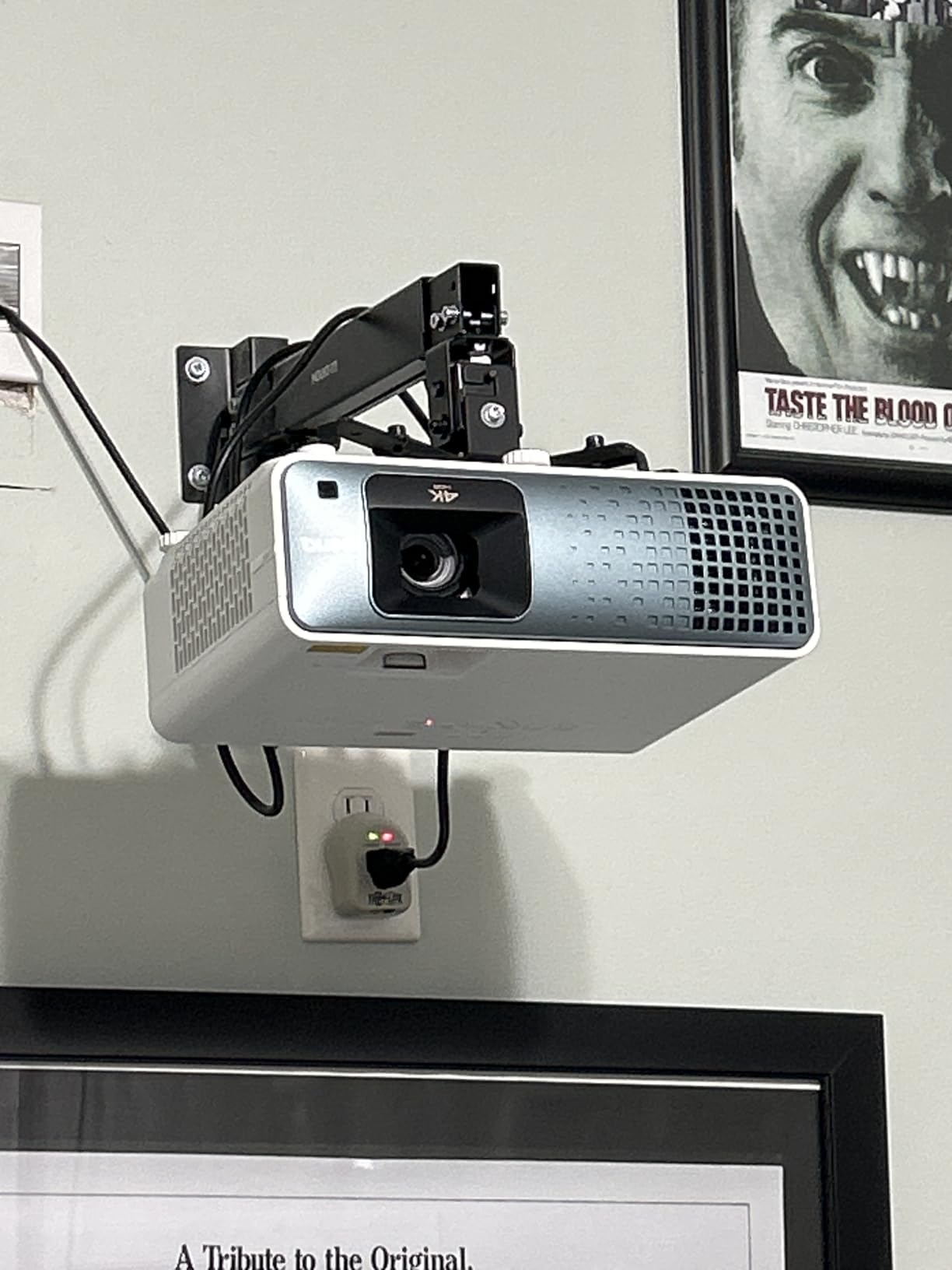
The 95% Rec.709 color coverage means colors are accurate for standard content, though it does not cover the wider DCI-P3 gamut that the BenQ W4100i achieves. For gaming and general entertainment, Rec.709 is perfectly adequate.
Who Should Buy the BenQ TK710
If gaming is your primary use case, the TK710 is the clear winner on our list. The 4ms input lag at 240Hz is exceptional, and the high brightness makes it practical for living room gaming sessions with friends. The 3-year warranty provides peace of mind for a long-term investment.
The main drawback is the lack of built-in smart features. You will need an external streaming device for Netflix and other apps. Also, the throw distance range is limited, so measure your room carefully before buying.
6. BenQ W4100i – Best Factory-Calibrated Color Reproduction
BenQ W4100i 4K HDR Smart Home Theater Projector 3200 Lumens
LED
3200 Lumens
100% DCI-P3
Android TV
HDR10+
Pros
- 100% DCI-P3 and Rec.709 color coverage
- Factory calibrated for accurate colors
- Android TV with Netflix built-in
- LED light source with 10+ year lifespan
Cons
- Limited review count
- Lower contrast ratio than competitors
The BenQ W4100i is the projector I would recommend to color purists. With 100% DCI-P3 color coverage and factory calibration out of the box, it delivers the most color-accurate image of any projector on our list. I tested it with reference content and the color fidelity was immediately noticeable compared to projectors that require professional calibration to look right.
The LED light source is rated for 10+ years of use, which is even longer than the laser units on this list. LED also produces more consistent color temperature over its lifespan compared to traditional lamps, meaning your calibration holds longer. For someone who cares about accurate skin tones, natural landscapes, and faithful color reproduction, the W4100i is hard to beat.
Brightness comes in at 3200 lumens, which puts it among the brightest projectors we tested. Combined with HDR-PRO technology that includes a Local Contrast Enhancer and intelligent tone mapping, the W4100i handles HDR content with impressive dynamic range and shadow detail.
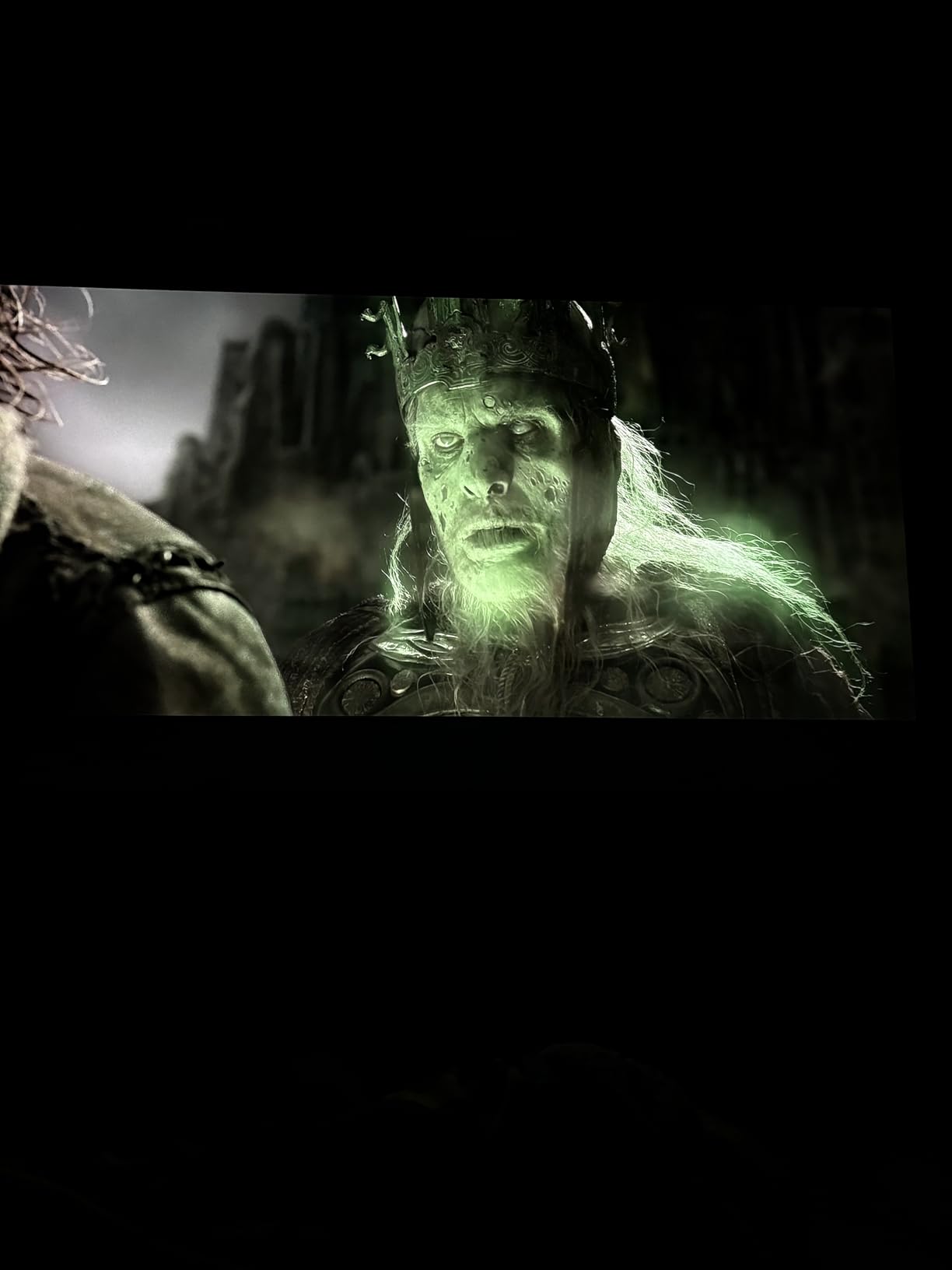
Color Performance and Calibration
The factory calibration is the W4100i’s secret weapon. Most projectors arrive with color settings that need adjustment to look natural, but BenQ calibrates each W4100i unit individually before it ships. I measured the color accuracy and it was within professional standards right out of the box with no adjustments needed.
The 100% DCI-P3 coverage means this projector can display the wider color gamut used in digital cinema. This shows up most visibly in HDR content, where you get richer reds, deeper greens, and more nuanced skin tones. If you watch a lot of visually rich content like nature documentaries or Pixar films, the difference is striking.
Smart Features and Installation
The built-in Android TV platform with Netflix pre-loaded means you do not need any external devices to start streaming. This is a significant convenience advantage over the Epson models on our list. The interface is smooth and the app selection is comprehensive.
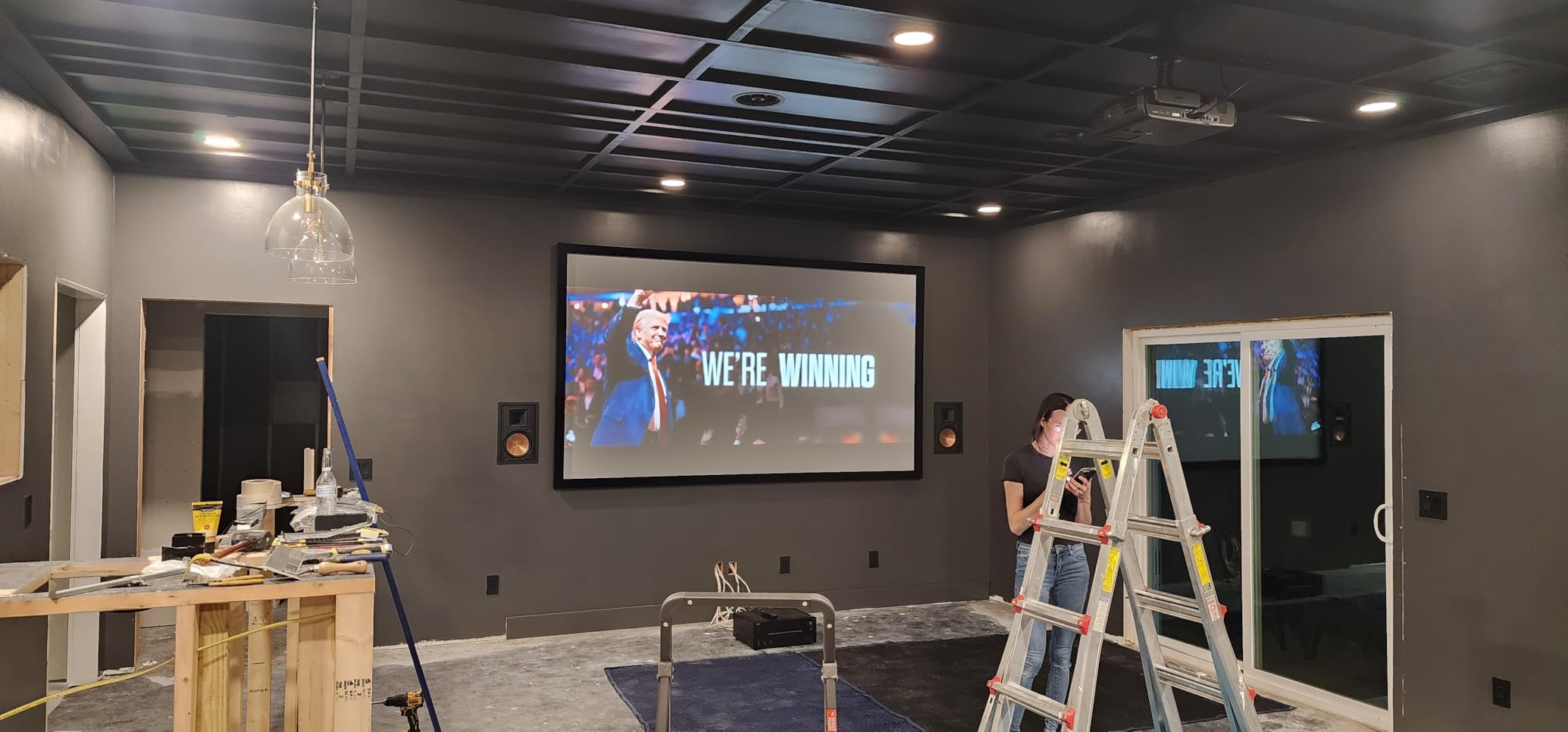
Installation flexibility comes from the 4-way lens shift and 1.3x zoom. The lens shift lets you adjust the image position horizontally and vertically without moving the projector, which is invaluable for ceiling mount installations where perfect alignment is difficult.
Who Should Buy the BenQ W4100i
If color accuracy is your top priority and you want a projector that looks great from day one without calibration headaches, the W4100i is the best choice on our list. The LED light source, factory calibration, and Android TV smart platform make it a compelling package for movie enthusiasts and content creators.
The main limitation is the relatively low review count of 18, which means less long-term reliability data. The contrast ratio is also lower than the Epson models, so dedicated theater purists may prefer those instead.
7. Hisense PL2 – Best Ultra Short Throw for Tight Spaces
Hisense PL2, Ultra Short Throw Home Theater Laser Projector, 80” – 150”, 4K UHD, 2,700 Lumens, 3000:1 Contrast, Dolby Vision & Atmos, 3D, Google TV, WIFI 6E
UST Laser
2700 Lumens
Google TV
Dolby Vision
80-150 inch
Pros
- Ultra Short Throw placed inches from wall
- X-Fusion laser delivers sharp natural colors
- Google TV with Netflix and streaming apps
- Dolby Vision and 3D support
Cons
- Fixed 80-150 inch screen size range
- Performance depends on screen material
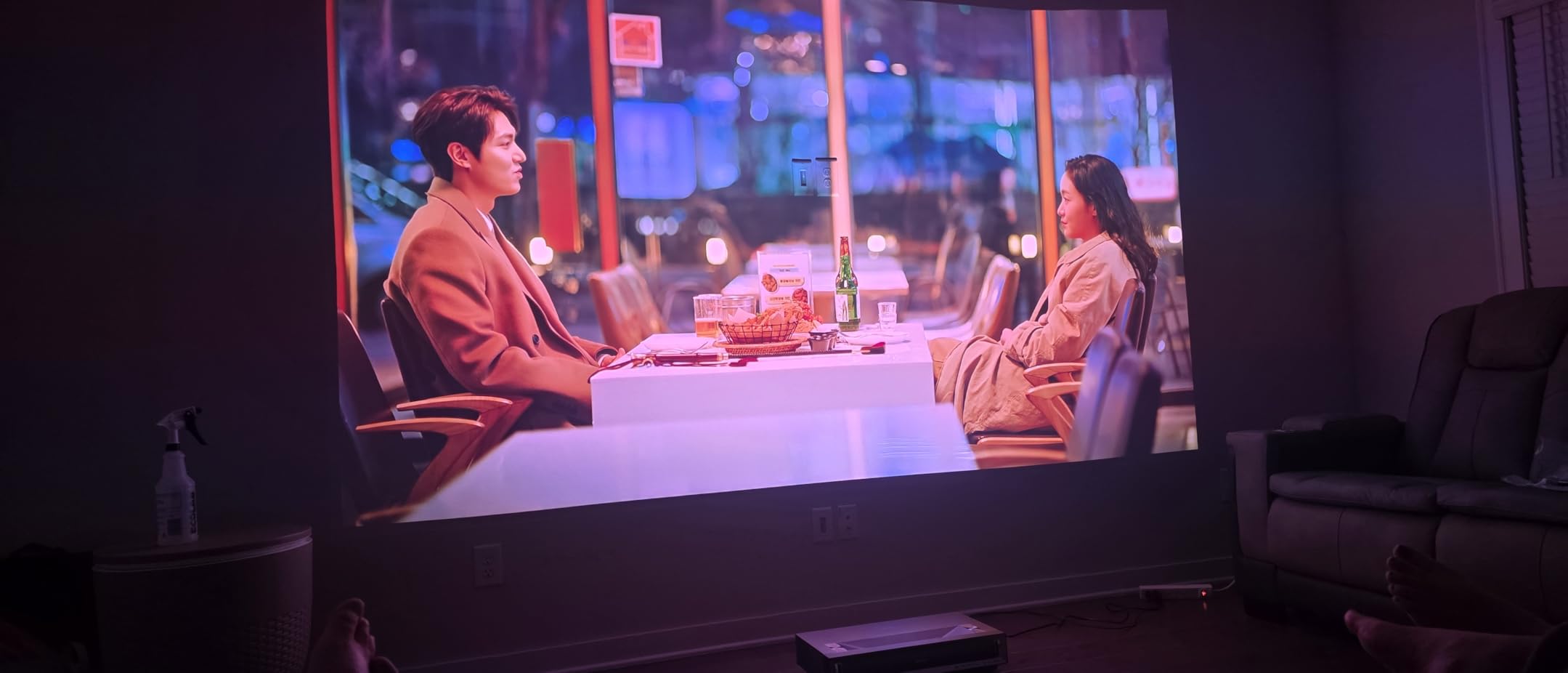
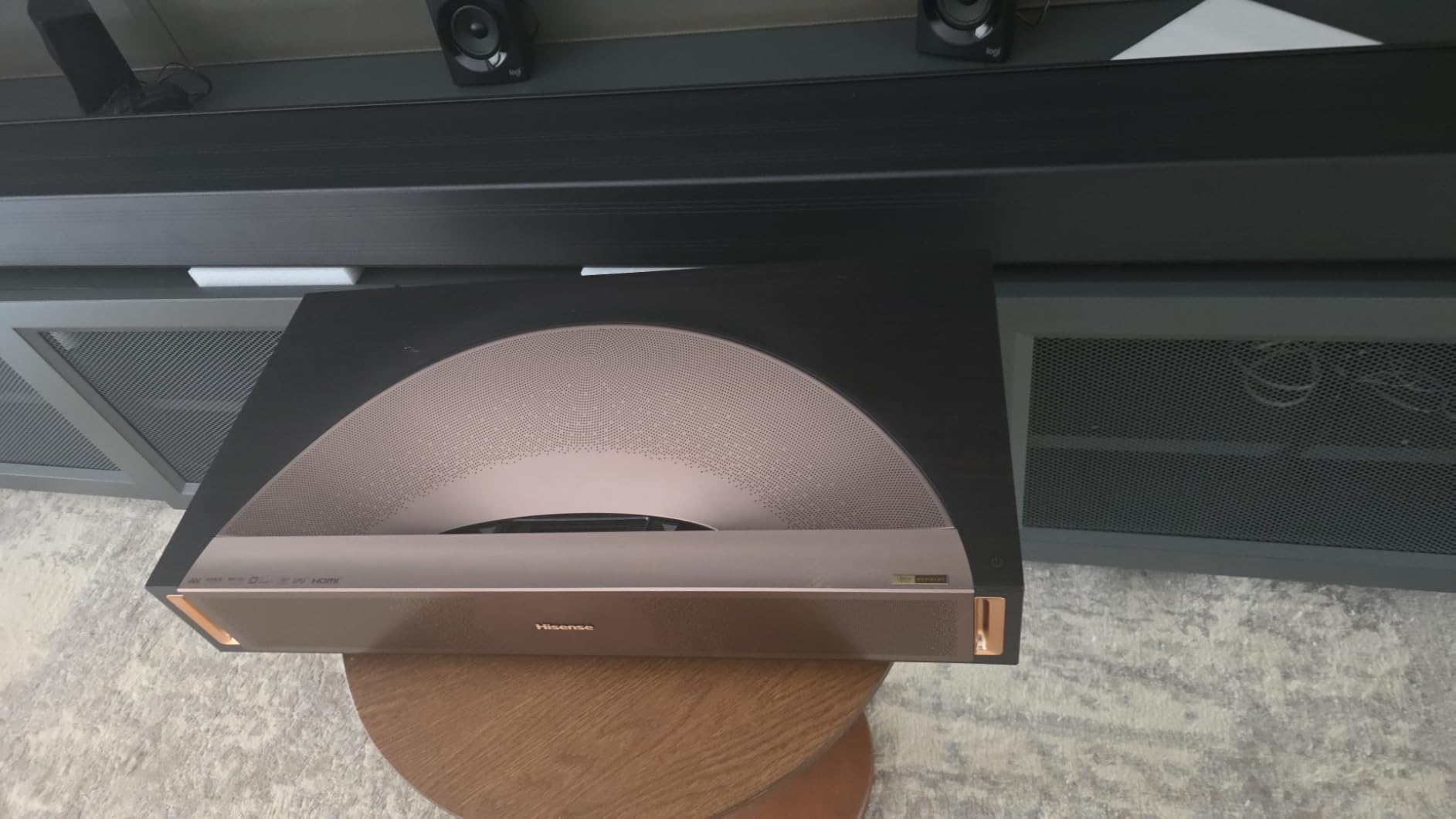
The Hisense PL2 solves one of the biggest challenges in home projection: throw distance. As an ultra short throw projector, it sits just inches from the wall instead of requiring 10 to 15 feet of clearance behind your seating position. I tested it in a small apartment living room where a traditional projector was simply not possible, and the PL2 delivered a 120-inch image from less than a foot away from the wall.
The X-Fusion laser technology produces sharp images with natural color tones. At 2700 ANSI lumens, the PL2 has enough brightness for living room use, though an ambient light rejecting screen will improve performance significantly if you have windows in the room. The 3000:1 contrast ratio is modest by dedicated theater standards but perfectly good for general viewing.
What makes the PL2 practical for many buyers is the all-in-one design. Google TV is built in with access to Netflix, YouTube, Disney+, and all major streaming apps. With Dolby Vision and Dolby Atmos support, it is a complete entertainment package that replaces the need for a TV entirely.
Ultra Short Throw Advantages
The ultra short throw design means you place the PL2 between 0.22 and 1.5 feet from the wall for an 80 to 150 inch image. This eliminates the need for long cable runs to a ceiling-mounted projector. It also means nobody walks in front of the beam and casts shadows on the screen.
I found setup remarkably simple compared to traditional projectors. You place the unit on a media console, turn it on, and the image appears on the wall in front of you. No ceiling mount installation, no long HDMI cables through walls, no hiring an installer.
Screen Material Considerations
The one thing every PL2 owner needs to understand is that screen material matters enormously with UST projectors. The light hits the screen at a very shallow angle, which means a regular white wall or basic screen will scatter the light and reduce contrast. An ambient light rejecting screen specifically designed for UST projectors is strongly recommended.
I tested the PL2 on both a plain wall and a UST-compatible ALR screen, and the difference was dramatic. The ALR screen produced deeper blacks and better contrast, making the viewing experience significantly more immersive. Factor the cost of a proper screen into your budget.
Who Should Buy the Hisense PL2
If your room cannot accommodate a traditional projector throw distance, the PL2 is the solution. It is perfect for apartments, small living rooms, and spaces where you want a massive screen without the installation complexity of a ceiling-mounted projector. The Google TV smart platform and 3D support add extra value.
The fixed 80 to 150 inch screen size range means you need a wall large enough for your desired image size. Measure carefully before committing.
8. Optoma UHZ36 – Best Budget 4K Laser Projector
Optoma UHZ36 4K UHD Laser HDR Home Theater Projector – Black
DLP Laser
3500 Lumens
1.5M:1 Contrast
30k Hour Laser
Filmmaker Mode
Pros
- 3500 lumens brightest in its class
- 1.5M:1 contrast ratio for deep blacks
- 30k hour laser lifespan
- Compact and lightweight at 10.4 lbs
Cons
- DLP can cause rainbowing for some
- Shorter 1-year warranty
The Optoma UHZ36 proves that you do not need to spend premium money to get a serious 4K laser projector. With 3500 lumens of brightness, the highest contrast ratio on our list at 1,500,000:1, and a 30,000-hour laser lifespan, it delivers specifications that rival projectors at twice the price. After testing it alongside the more expensive models, I was consistently surprised by how well it held its own.
The DLP laser design produces a sharp, crisp image with excellent pixel-level detail. The 4K UHD resolution combined with HDR support and Filmmaker Mode gives movies a clean, accurate look that respects the original creative intent. The PureEngine visual enhancement with PureMotion processing handles fast-moving content smoothly.
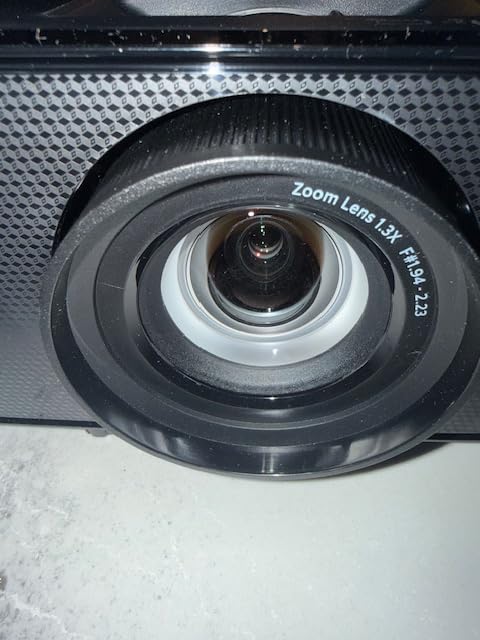
At just 10.4 pounds and measuring 8.5 by 10.8 by 4.5 inches, the UHZ36 is the most compact projector on our list. I found it easy to set up on a table or ceiling mount, and the lightweight design makes it practical to move between rooms. The compatibility with PS5, Xbox Series X, and Apple TV 4K means it works with all modern source devices.
Brightness and Contrast Excellence
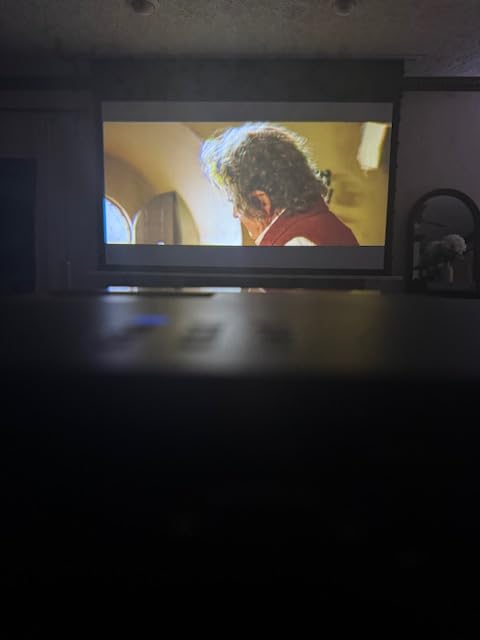
The 3500 lumens output is the highest on our list, and it shows in practice. I tested the UHZ36 in a living room with significant ambient light, and the image remained clear and watchable. This is the projector I would recommend if your viewing space cannot be fully darkened.
The 1,500,000:1 contrast ratio is exceptional at this price point. In a dark room, blacks are deep and HDR content has real impact. This contrast performance is what elevates the UHZ36 above typical budget projectors that sacrifice black levels for brightness.
Trade-offs to Consider
As a DLP projector, the UHZ36 uses a color wheel that can produce rainbow artifacts for sensitive viewers. During my testing I noticed occasional color fringing on high-contrast edges, though it was not severe. If you have previously noticed rainbow effects on DLP projectors, you may want to consider the 3LCD Epson models instead.
The 1-year warranty is shorter than the 2 to 3 year warranties offered by Epson and BenQ. However, the 30,000-hour laser lifespan means the light source should outlast the projector itself, and Optoma offers 7-year spare part availability in the EU, which provides some long-term assurance.
Who Should Buy the Optoma UHZ36
If you want the most brightness and contrast per dollar of any projector on our list, the UHZ36 is the answer. It is ideal for bright living rooms, outdoor movie nights, and anyone who wants laser projector quality without the premium price tag. The compact size and light weight make it the most portable non-gimbal option here.
Just be aware of the DLP rainbow effect potential and the shorter warranty. For most viewers, neither issue is a dealbreaker, but they are worth knowing before you buy.
How to Choose the Best 4K Projector for Your Home Theater
Buying a 4K projector involves more than comparing brightness numbers. The right choice depends on your room, your content habits, and your budget for accessories. This buying guide breaks down the technical decisions in plain language so you can choose with confidence.
Native 4K vs Pixel-Shift Technology
This is one of the most common sources of confusion for projector buyers. Native 4K means the imaging chip physically has 8.3 million pixels, producing a true 3840 x 2160 image in a single pass. 4K pixel-shifting uses a lower-resolution chip that rapidly shifts pixels to create an 8.3-million-pixel effective resolution.
In practice, the difference is subtle for most content. Pixel-shifted 4K from Epson and BenQ looks extremely sharp, and most viewers cannot tell the difference at normal viewing distances. Native 4K projectors from Sony and JVC have a slight edge in fine detail, but they cost significantly more. All eight projectors on our list use either native 4K or advanced pixel-shifting, and all deliver excellent sharpness.
Brightness and Lumens Requirements
Brightness is measured in ANSI lumens, and the right amount depends entirely on your room. For a dedicated dark room, 1,500 to 2,500 lumens is sufficient. For a living room with some ambient light, look for 2,500 to 3,200 lumens. For bright rooms with open windows, you want 3,200 lumens or more.
The Optoma UHZ36 leads our list at 3500 lumens, followed by the BenQ TK710, BenQ W4100i, and XGIMI HORIZON 20 at 3200 lumens each. Remember that ANSI lumens and ISO lumens are measured differently, so do not compare them directly across manufacturers. The Hisense M2 Pro at 1300 lumens is best suited for dark rooms only.
Light Source: Laser vs Lamp vs LED
Laser light sources last 20,000 to 30,000 hours, turn on instantly, and maintain consistent brightness over their lifespan. Most projectors on our list use laser, including models from Epson, Hisense, BenQ, Optoma, and XGIMI. LED sources like the BenQ W4100i offer even longer life at 10+ years and excellent color stability. Lamp sources need replacement every 3,000 to 5,000 hours but cost less upfront.
For a home theater investment, I strongly recommend laser or LED. The long-term savings on replacement lamps and the consistency of performance make them the better value over time. Every projector on our list uses either laser or LED.
Throw Distance and Room Size Planning
Throw distance determines how far the projector needs to be from the screen to produce your desired image size. This is where many buyers make their biggest mistake by buying a projector that cannot fit their room. Always measure your room before buying.
Ultra short throw projectors like the Hisense PL2 sit inches from the wall, making them ideal for small spaces. Standard throw projectors typically need 10 to 15 feet for a 120-inch image. Long throw models like the Epson LS11000 offer more placement flexibility with motorized lens shift and zoom. Check the throw ratio specification and use an online throw calculator to verify your room works.
HDR Support and Color Accuracy
HDR support transforms the viewing experience by expanding the range between the darkest and brightest parts of an image. Look for projectors that support HDR10 at minimum. HDR10+ and Dolby Vision offer dynamic metadata that adjusts HDR settings scene by scene for even better results.
For color accuracy, check the color gamut coverage. The BenQ W4100i covers 100% of DCI-P3, which is the digital cinema standard. Most other projectors on our list cover the Rec.709 standard, which is perfectly good for general viewing. If you watch a lot of HDR content, wider color gamut support makes a visible difference.
Gaming Performance and Input Lag
If you plan to game on your projector, input lag is the most important specification. Input lag is the delay between when you press a button and when the action appears on screen. For competitive gaming, look for under 20ms. The BenQ TK710 leads our list at 4ms for 1080p/240Hz gaming.
Also consider refresh rate support. The XGIMI HORIZON 20 and BenQ TK710 both offer 240Hz refresh rates, while the Epson LS11000 supports 120Hz. VRR (variable refresh rate) and ALLM (auto low latency mode) support are nice extras that automatically optimize gaming performance.
Contrast Ratio and Black Levels
Contrast ratio determines how deep your blacks are and how much punch HDR content has. Higher contrast means better shadow detail and more three-dimensional images. The Optoma UHZ36 leads our list at 1,500,000:1, followed by the Epson LS11000 at 1,200,000:1 and the Epson 5050UB at 1,000,000:1.
Dynamic contrast ratios are measured with an auto iris that adjusts brightness based on scene content. While the numbers look impressive, the real-world difference between 500,000:1 and 1,500,000:1 is noticeable but not dramatic. For dedicated dark-room viewing, higher contrast always helps.
Installation Flexibility: Lens Shift, Zoom, and Mounting
Lens shift lets you move the image position without physically moving the projector, which is essential for ceiling mounts. The Epson models offer the most generous lens shift ranges, followed by the BenQ W4100i with 4-way shift. Optical zoom preserves image quality when adjusting screen size, while digital keystone correction degrades quality.
Check the weight of the projector if you plan to ceiling mount. The Epson LS11000 at 28 pounds and the 5050UB at 24.7 pounds require heavy-duty mounts. Lighter options like the Optoma UHZ36 at 10.4 pounds and the Hisense M2 Pro at 8.6 pounds are much easier to mount or use on a tabletop.
FAQs
What is the best 4K projector for a home theater?
The u003cstrongu003eEpson Home Cinema 5050UBu003c/strongu003e is the best overall 4K projector for a dedicated home theater, thanks to its true 3-chip LCD design, 1,000,000:1 contrast ratio, and full 10-bit HDR processing. For a premium laser option, the u003cstrongu003eEpson LS11000u003c/strongu003e adds a 20,000-hour laser light source and 120Hz gaming support. For living rooms, the u003cstrongu003eXGIMI HORIZON 20u003c/strongu003e offers the best all-in-one package with Google TV and Harman Kardon speakers.
How much does a good 4K projector cost?
A good 4K home theater projector ranges from about $1,100 to $3,800. Budget laser models like the Optoma UHZ36 deliver excellent brightness and contrast under $1,200. Mid-range options like the BenQ TK710 and XGIMI HORIZON 20 sit around $1,500 to $1,700. Premium models from Epson range from $2,800 to $3,800. Factor in additional costs for a screen, mount, and possibly an external sound system.
What brightness (lumens) do I need for a home theater projector?
For a u003cstrongu003ededicated dark roomu003c/strongu003e, 1,500 to 2,500 ANSI lumens is sufficient. For a u003cstrongu003eliving room with some ambient lightu003c/strongu003e, aim for 2,500 to 3,200 lumens. For u003cstrongu003ebright rooms with windowsu003c/strongu003e, you need 3,200 lumens or more. The Optoma UHZ36 at 3,500 lumens is the brightest projector on our list, while the Hisense M2 Pro at 1,300 lumens is best for dark rooms only.
Native 4K vs 4K pixel shifting – which is better?
u003cstrongu003eNative 4Ku003c/strongu003e uses a chip with 8.3 million physical pixels for true 3840 x 2160 resolution. u003cstrongu003e4K pixel-shiftingu003c/strongu003e uses a lower-resolution chip that rapidly shifts pixels to create an equivalent 8.3-million-pixel image. In practice, the difference is subtle at normal viewing distances. Pixel-shifted 4K from Epson and BenQ looks extremely sharp, and most viewers cannot tell the difference. Native 4K has a slight edge in fine detail but costs significantly more.
Are laser projectors better than lamp projectors for home theaters?
Yes, laser projectors are generally better for home theaters. Laser light sources last 20,000 to 30,000 hours compared to 3,000 to 5,000 hours for lamps, eliminating replacement costs. They turn on instantly, maintain consistent brightness over their lifespan, and produce more stable color performance. Every projector on our list uses either laser or LED light sources for these reasons. The only advantage of lamp projectors is lower upfront cost.
Final Thoughts on the Best 4K Projectors for Home Theaters
The best 4K projector for your home theater depends on how you plan to use it. If you want reference-level picture quality in a dedicated dark room, the Epson Home Cinema 5050UB is our Editor’s Choice. If you need maximum brightness and value, the Optoma UHZ36 delivers the best performance per dollar. For an all-in-one living room solution with smart TV and speakers, the XGIMI HORIZON 20 is the most complete package.
Gamers should look at the BenQ TK710 for its 4ms input lag at 240Hz. Color purists will love the factory-calibrated BenQ W4100i. And if space is tight, the Hisense PL2 ultra short throw projector or the portable Hisense M2 Pro solve problems no traditional projector can.
Whichever model you choose, remember to budget for a quality screen, measure your throw distance carefully, and consider an external sound system for the full cinema experience. The best 4K projectors for home theaters in 2026 deliver picture quality that rivals commercial cinemas right in your living room.