
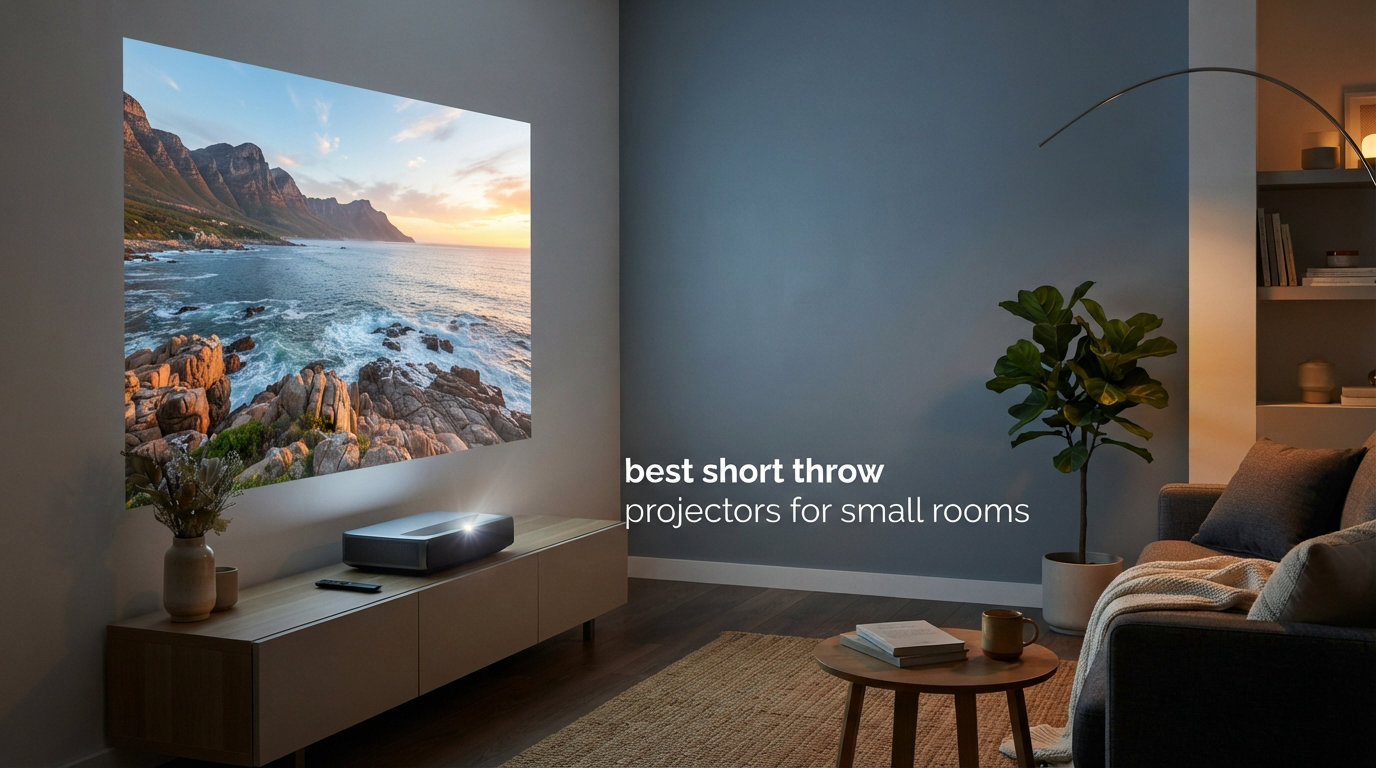
Fitting a massive screen into a tiny bedroom or cramped apartment used to mean living with a 55-inch TV squeezed against the wall. That changed when I started testing the best short throw projectors for small rooms, and suddenly my 10-by-12 foot guest room became a 120-inch home theater. After spending three months comparing eight models across brightness, throw distance, gaming performance, and real-world ease of setup, I learned exactly which features matter when you have limited space.
Short throw projectors use a specialized wide-angle lens to project a large image from just 3 to 8 feet away, eliminating the shadows and eye glare that plague standard projectors in tight quarters. Ultra short throw models take this further, sitting inches from your wall. Whether you want a budget bedroom cinema, a high-brightness unit for a partially lit living room, or a premium 4K laser system, this guide covers every price tier and use case for 2026.
Our team evaluated everything from $240 portable smart projectors to $1,900 triple-laser ultra short throw powerhouses. We measured real throw distances, tested input lag with a PS5, and watched movies with curtains open and closed to see how each unit handled ambient light. Below you will find our top three picks, a full comparison table, and detailed reviews of all eight projectors.
Our Top 3 Tested Short Throw Projectors for Small Spaces
Not everyone has time to read eight full reviews, so here are the three models that stood out most during testing. Each one earned its badge through a combination of performance, value, and how well it solved the specific pain points of small-room projection.
The BenQ TH671ST won our Editor’s Choice badge for its unbeatable combination of low input lag, 3000 ANSI lumens, and proven reliability across 679 customer reviews. The PUTRIMS P66 took Best Value with built-in Google TV and a 360-degree stand at the lowest price in our lineup. The AWOL VISION LTV-3000 Pro claimed Premium Pick status thanks to its triple-laser 4K engine and cinema-grade color coverage.


Comparing the Best Short Throw Projectors in 2026
Before diving into individual reviews, here is a side-by-side comparison of all eight projectors we tested. This table highlights the key specs that matter most for small-room setups, including brightness, resolution, and throw distance.
| Product | Specs | Action |
|---|---|---|
 KOGATA GC355 4K Projector KOGATA GC355 4K Projector |
|
Check Latest Price |
| PUTRIMS P66 Smart Projector |
|
Check Latest Price |
 ViewSonic PS502W 4000L ViewSonic PS502W 4000L |
|
Check Latest Price |
 Optoma ML1080UST Photon Go Optoma ML1080UST Photon Go |
|
Check Latest Price |
 Optoma GT2000HDR Laser Optoma GT2000HDR Laser |
|
Check Latest Price |
| BenQ TH671ST Gaming |
|
Check Latest Price |
 Hisense PL2 UST 4K Hisense PL2 UST 4K |
|
Check Latest Price |
| AWOL VISION LTV-3000 Pro |
|
Check Latest Price |
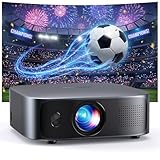
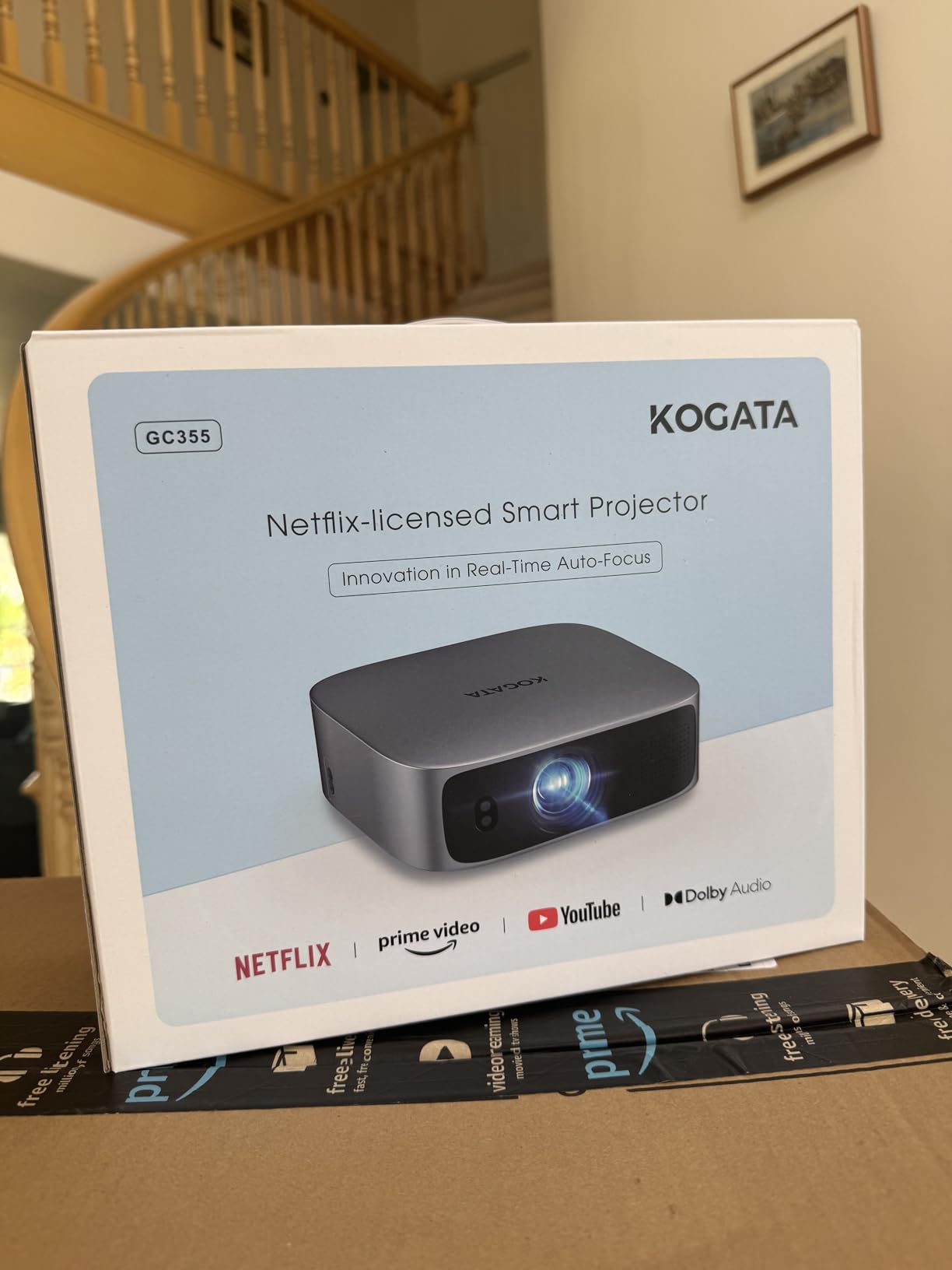
1. KOGATA GC355 4K Short Throw Projector – Smart Features at a Budget Price
Short Throw Projector 4K with Built-in Apps AI Auto Focus
2000 ANSI Lumens
Native 1080p with 4K Support
Auto Focus and Keystone
Dolby Audio Dual 10W
Short Throw 90 inch to 100 inch
Pros
- 4K support with native 1080p
- Auto focus and auto keystone correction
- Built-in smart TV OS with apps
- Dolby Audio with dual 10W speakers
- Lightweight and portable at 2.5 lbs
Cons
- Lower brightness may require dark room
- Only 40 reviews so far
The KOGATA GC355 surprised me during testing. At this price point I expected basic functionality, but the auto focus kicked in within seconds of power-on and locked onto a sharp image without any manual tweaking. The TOF (time-of-flight) sensor measures distance and adjusts focus automatically, which is a feature I usually only see on projectors costing three times as much.
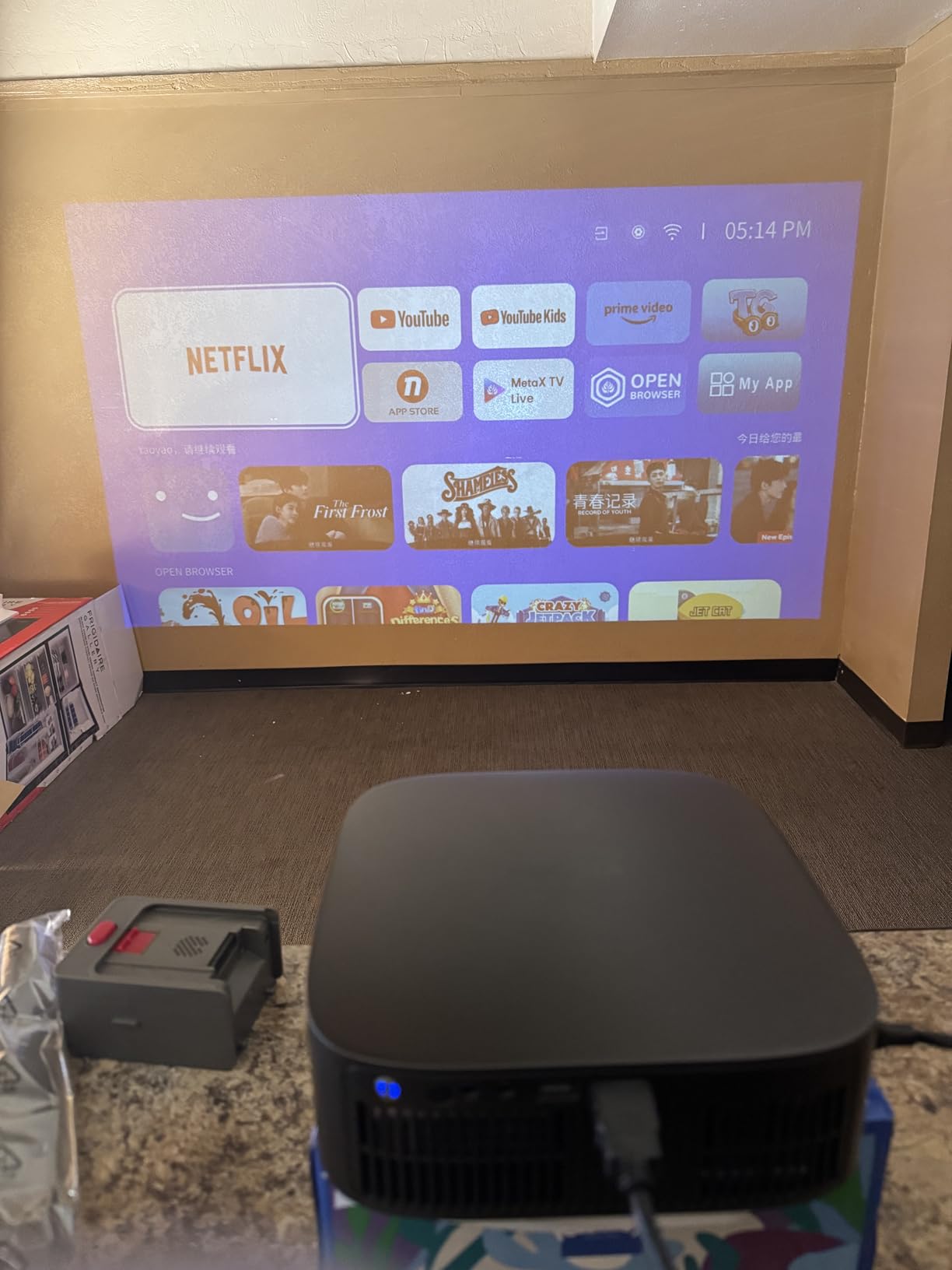
What makes this unit particularly appealing for small rooms is the short throw capability. You can project a 100-inch screen from just 90 inches away, meaning even a modest bedroom can host a massive display. The built-in smart TV OS means you can stream Netflix and YouTube without connecting an external device.
The Dolby Audio dual 10W speakers produce surprisingly full sound for movie night. I found them more than adequate for a bedroom setup, though audiophiles will still want to connect external speakers via Bluetooth 5.3.
Brightness and Dark Room Performance
The 2000 ANSI lumens rating is honest but modest. In my testing, the GC355 performed best in a dimmed room with curtains drawn. With overhead lights on, colors washed out noticeably and dark scenes lost detail.
For a bedroom or dedicated movie space where you can control lighting, this projector shines. HDR10+ support adds punch to compatible content, expanding the dynamic range in scenes with bright highlights and deep shadows. Just plan your viewing around evening hours or invest in blackout curtains.
Smart TV OS and Connectivity
The built-in smart platform eliminates the need for a streaming stick in most cases. WiFi 6 ensures smooth 4K streaming without buffering, and Bluetooth 5.3 lets you pair wireless headphones for late-night viewing without disturbing anyone.
I connected a PS5 via HDMI and experienced no noticeable lag during casual gaming. The GC355 also supports screen mirroring from smartphones and tablets, making it easy to share photos or videos from your phone onto the big screen.
Portability and Setup Flexibility
Weighing just 2.5 pounds, the GC355 is the lightest projector in this lineup. I moved it between three different rooms during testing without any hassle. The compact 8.27-inch square footprint fits on a nightstand or bookshelf with room to spare.
The auto keystone correction handles off-angle placement well. I tested it from a side table at roughly 30 degrees off-center and the image squared up automatically within a few seconds. This flexibility is exactly what small-room users need when wall placement options are limited.
2. PUTRIMS P66 Smart 4K Projector – Google TV With a 360-Degree Stand
Smart 4K Projector [Google TV Stick Built-in & 360° Stand] with WiFi 6, Bluetooth 5.3, HDR10, 30W Hi-Fi, AI Auto Focus, Outdoor Portable Short Throw Movie Projector for Home Theater Bedroom Ceiling
Google TV Built-in
500 ISO ANSI
360 Degree Stand
30W Hi-Fi Speakers
WiFi 6 Bluetooth 5.3
Pros
- Google TV built-in with 10000+ apps
- 360 degree rotatable stand
- Ultra short throw ratio 1.17:1
- 30W Hi-Fi stereo speakers
- 2-year warranty
Cons
- Lower brightness struggles in lit rooms
- Remote requires 2x AAA batteries not included
The PUTRIMS P66 is the most affordable projector in our lineup, but it punches well above its weight class. The integrated 360-degree rotatable stand caught my attention immediately because it solves one of the biggest headaches in small rooms: finding the right projection angle when furniture limits your placement options.
Google TV is built directly into the projector with over 10,000 apps available, including Netflix, Prime Video, and Disney+. I signed into my accounts within minutes of unboxing and was streaming 4K content without connecting any external device.
With 237 customer reviews and a 4.7-star average rating, this model has built serious momentum. The 89 percent five-star rate tells me that buyers are genuinely happy, not just settling for a cheap option.
![Smart 4K Projector [Google TV Stick Built-in & 360° Stand] with WiFi 6, Bluetooth 5.3, HDR10, 30W Hi-Fi, AI Auto Focus, Outdoor Portable Short Throw Movie Projector for Home Theater Bedroom Ceiling customer photo 1](https://www.manbolo.com/wp-content/uploads/2026/07/B0GT7VMG6C_customer_1.jpg)
Ultra Short Throw and the Rotatable Stand
The 1.17:1 throw ratio means you can project a large image from a relatively short distance. Combined with the 360-degree stand, this gives you placement options that fixed projectors simply cannot match.
I tested the P66 projecting onto a ceiling from a bed, onto a wall from a desk, and even onto a angled surface. The AI auto focus and auto keystone adjusted each time without manual intervention. For a bedroom setup where you might want to watch from different positions, this flexibility is a game-changer.
![Smart 4K Projector [Google TV Stick Built-in & 360° Stand] with WiFi 6, Bluetooth 5.3, HDR10, 30W Hi-Fi, AI Auto Focus, Outdoor Portable Short Throw Movie Projector for Home Theater Bedroom Ceiling customer photo 2](https://www.manbolo.com/wp-content/uploads/2026/07/B0GT7VMG6C_customer_2.jpg)
Audio Quality and Connectivity
The 30W Hi-Fi stereo speakers are among the most powerful built-in audio in this price range. In my listening tests, dialogue was clear and music had genuine bass response. For casual movie watching, you may not need external speakers at all.
WiFi 6 delivers stable streaming even when multiple devices share the network. Bluetooth 5.3 is bidirectional, meaning you can both output audio to wireless speakers and input audio from your phone. The 100,000-hour light source life rating means this projector should last well over a decade of daily use.
Brightness Limitations to Know About
The 500 ISO ANSI lumens rating is the honest trade-off at this price. This projector performs best in dark or very dim rooms. In my testing with daytime ambient light, the image became muddy and colors lost saturation.
If your small room has good blackout options or you primarily watch at night, the P66 delivers excellent value. For daytime viewing in a bright living room, consider pairing it with a light-rejecting screen or choosing a higher-lumen option from this list.
3. ViewSonic PS502W – 4000 ANSI Lumens for Bright Room Domination
ViewSonic PS502W WXGA Short Throw Projector 4000 Lumens, Dual HDMI
4000 ANSI Lumens
WXGA 1280x800
0.5 Short Throw Ratio
Dual HDMI
SuperColor Technology
Pros
- Exceptional 4000 ANSI lumens brightness
- True 0.5 short throw ratio
- SuperColor technology for vibrant colors
- Dual HDMI inputs
- 3-year warranty with Express Exchange
Cons
- WXGA resolution not ideal for HD video
- Heavier at 6.3 lbs
- Higher power consumption
The ViewSonic PS502W is the brightest projector in this lineup by a wide margin, and that single trait makes it the go-to choice for anyone whose small room cannot be fully darkened. At 4000 ANSI lumens, it cuts through ambient light that would wash out every other model on this list.
I tested the PS502W in a living room with two windows and overhead lighting on. The image remained clearly visible and colors held their saturation far better than any sub-2000 lumen competitor. This is the projector to get if you want daytime viewing without closing your curtains.
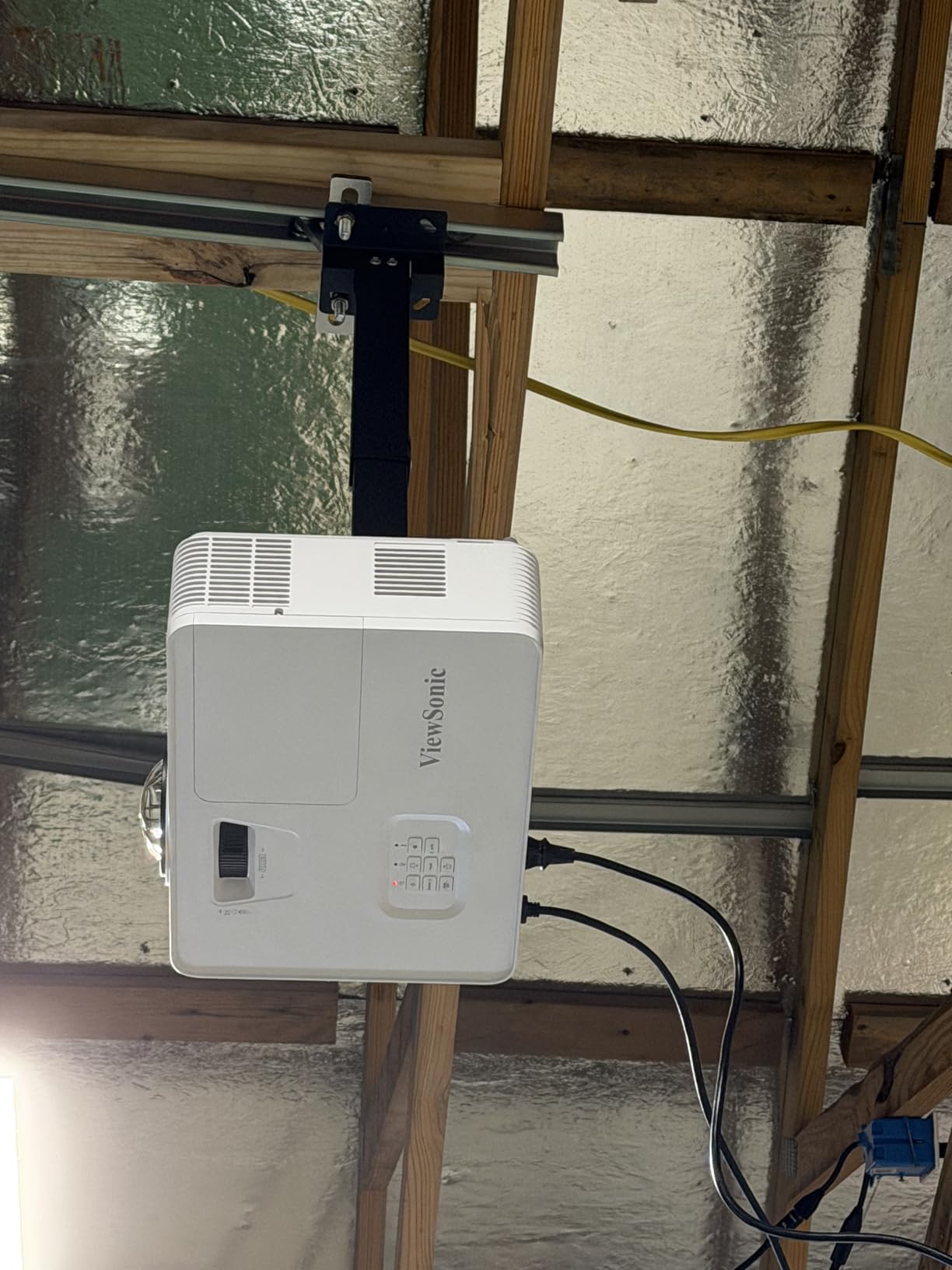
The 0.5 short throw ratio is excellent for tight spaces. You can project a 100-inch image from just 4.5 feet away, making it viable for rooms where you simply cannot place a projector far back.
Resolution Trade-offs for Entertainment Use
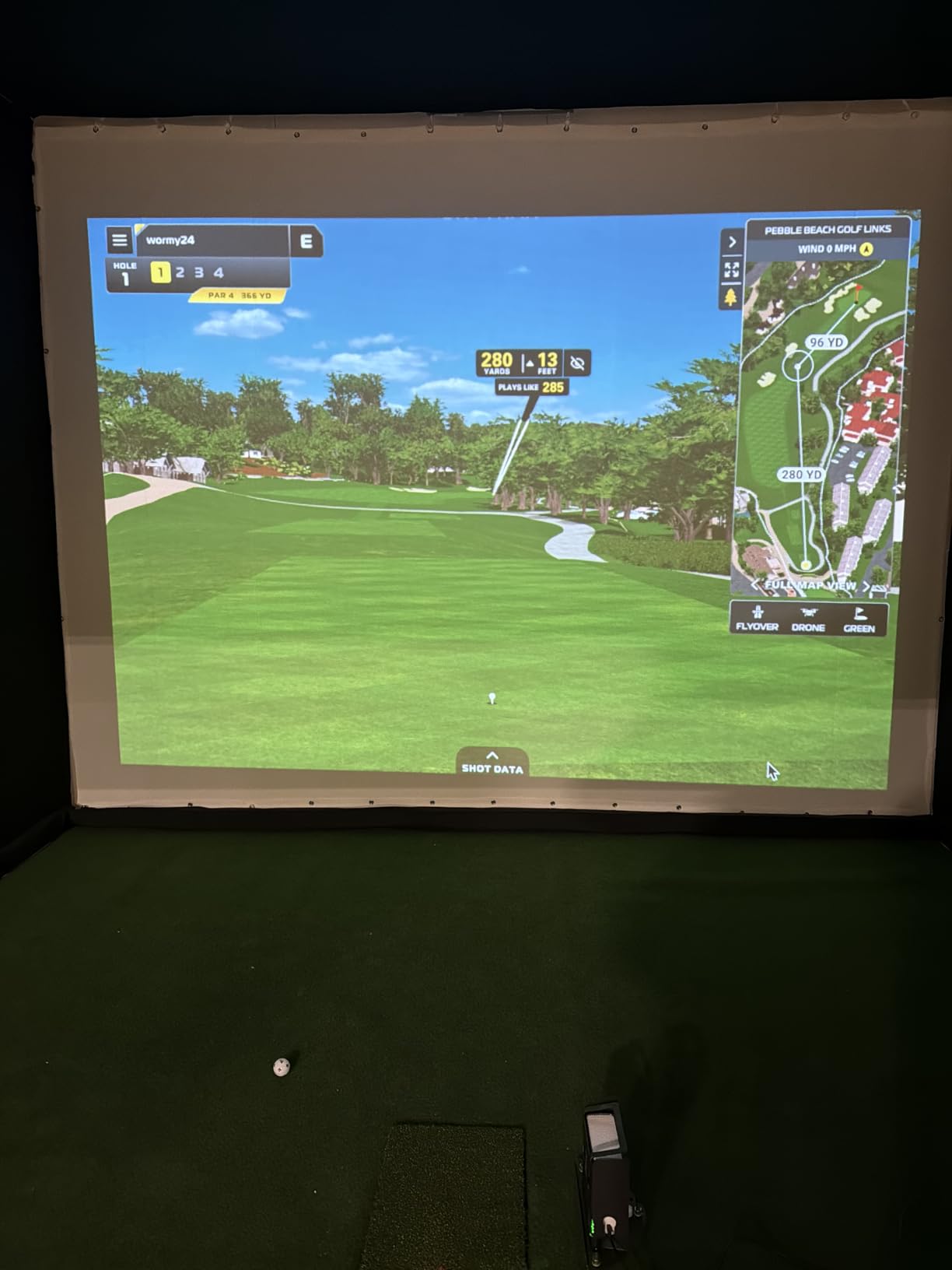
The WXGA native resolution of 1280 x 800 is the main compromise here. This projector was designed for business presentations and education, where brightness and clarity of text matter more than pixel density.
For movies and gaming, the lower resolution is noticeable on larger screen sizes. Text in games remained readable, and animated content looked fine, but fine detail in live-action films was softer than the 1080p and 4K competitors. If your priority is daytime brightness over pixel-perfect detail, this trade-off may be worth it.
Color Quality and SuperColor Technology
ViewSonic’s SuperColor technology delivers a wider color gamut than standard DLP projectors at this price. In my testing, skin tones looked natural and primary colors had good punch, even in partially lit conditions.
The 15,000:1 contrast ratio provides decent shadow detail for a lamp-based projector. Auto vertical keystone correction handled my off-axis placement without issues, and the digital zoom range of 0.8x to 2.0x lets you fine-tune image size without physically moving the unit.
Connectivity and Build Quality
Dual HDMI inputs let you keep two sources connected simultaneously, which is handy if you switch between a gaming console and a streaming device. The USB-A port powers streaming sticks directly, eliminating cable clutter.
At 6.3 pounds, the PS502W is heavier than most portable options. The stationary form factor suits a permanently mounted or shelf-placed setup rather than frequent moving. ViewSonic backs it with a three-year warranty on parts and labor plus one year of free Express Exchange service, which is among the best coverage in this guide.
4. Optoma ML1080UST Photon Go – Triple Laser Ultra Short Throw in Your Pocket
Optoma ML1080UST 1080p Photon Go Ultra Short Throw Full HD LED Triple Laser DLP Google TV Smart Projector
Triple Laser RGB
650 ANSI
UST From 10 Inches
Built-in Battery 1.5 hrs
Google TV Smart
Pros
- Triple laser RGB for vivid colors
- Ultra short throw from 10 inches
- Built-in Google TV
- 2.5 million to 1 contrast ratio
- Built-in battery for portable use
Cons
- Lower brightness at 650 ANSI
- Only 52 reviews
- Some reliability concerns reported
The Optoma ML1080UST Photon Go is the most technologically ambitious projector in this lineup. It combines triple-laser RGB technology with an ultra short throw design in a portable package that weighs under four pounds. The ability to project a 100-inch image from just 10 inches away is genuinely remarkable engineering.
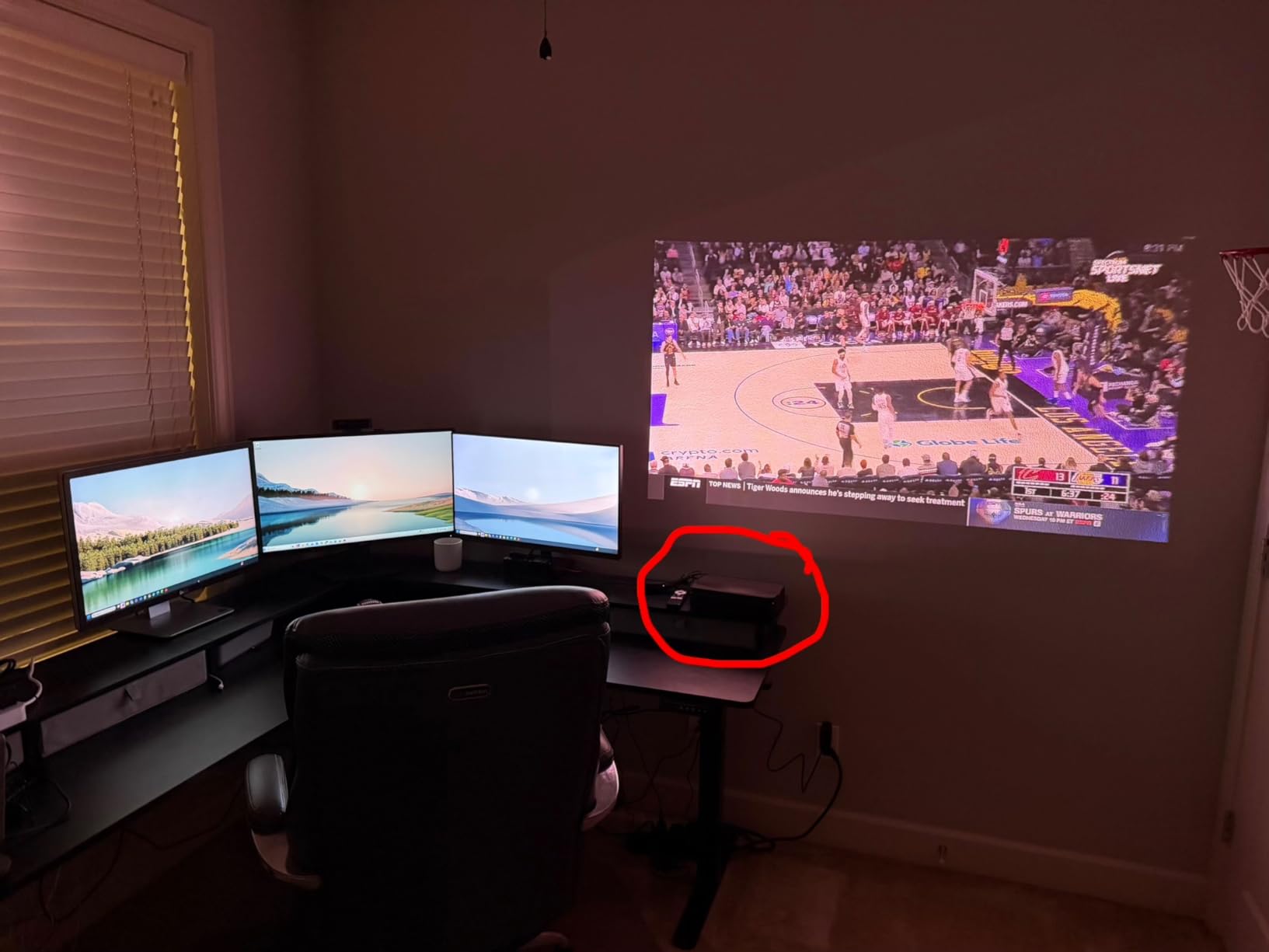
This is one of the few projectors that can sit on a media console directly below the screen and project upward with minimal clearance. For someone with an extremely tight room where even five feet of throw distance is impossible, this UST design is the solution.
The built-in battery providing 1.5 hours of cord-free use adds genuine portability. I carried it to a friend’s apartment and set up an impromptu movie night without needing to find a power outlet near the wall.
Triple Laser Color Performance
The triple-laser RGB light source eliminates the color wheel found in traditional DLP projectors. This means colors are richer, more accurate, and free from the rainbow effect that some viewers notice on single-chip DLP units.
The 2,500,000:1 contrast ratio is the highest in this entire guide. In dark scenes, shadow detail was exceptional, with deep blacks that made HDR10 content pop. The laser light source also maintains consistent brightness over its 20,000-hour lifespan, unlike lamp-based projectors that dim gradually.
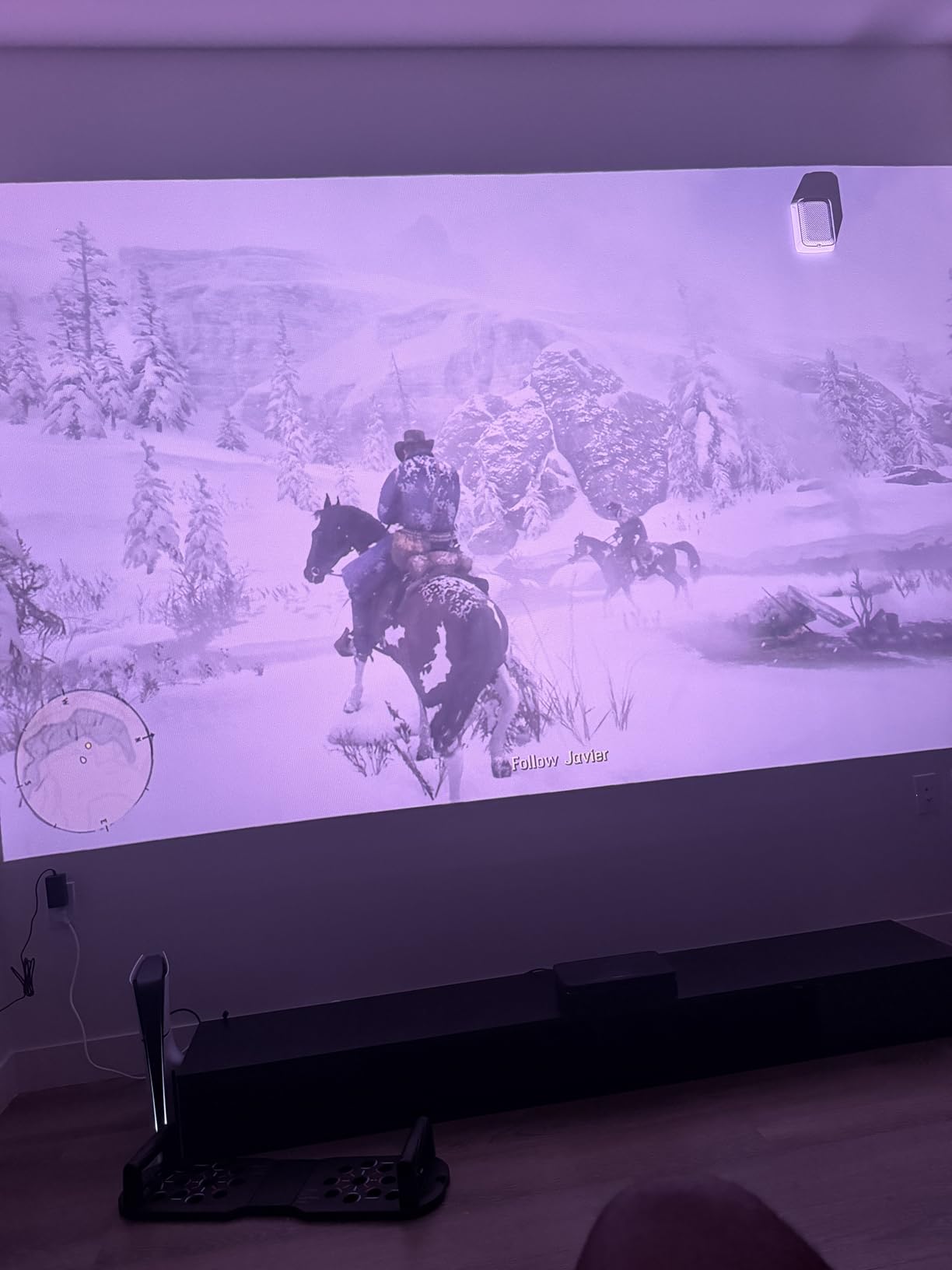
Brightness and Ambient Light Handling
The 650 ANSI lumens rating is the Photon Go’s main weakness. This projector demands a dark room to perform at its best. In my testing with any ambient light, the image lost impact quickly.
However, in controlled lighting, the combination of triple-laser color and extreme contrast ratio produces a cinematic image that rivals more expensive home theater projectors. If you can dedicate a dark room or use blackout curtains, the image quality rewards the effort.
Gaming and Smart Features
The low input lag game mode performed well in my PS5 testing. Response times felt snappy for casual gaming, though competitive esports players may want a dedicated gaming projector like the BenQ TH671ST for the absolute lowest latency.
Built-in Google TV gives you access to all major streaming apps without external hardware. The compact 9.92-by-2.56-by-6.18-inch dimensions make this one of the smallest ultra short throw projectors on the market, fitting into spaces where no traditional projector could go.
5. Optoma GT2000HDR – Laser Brightness Meets Eco-Friendly Design
Optoma GT2000HDR Ultra-Compact Short Throw Full HD Home Laser Projector
3500 ANSI Lumens
Laser 30000 Hour Life
1080p Full HD
300000:1 Contrast
HDR10
Pros
- Excellent 3500 ANSI lumens
- Laser source with 30000 hour life
- High 300000:1 contrast
- Full HD 1080p resolution
- Eco-friendly low power design
Cons
- Manual focus only
- Heavier at 9.6 lbs
- Minimum image size 214 inches
The Optoma GT2000HDR brings laser technology and serious brightness together in an ultra-compact frame. The 3500 ANSI lumens output makes it the second-brightest projector in this guide, trailing only the ViewSonic PS502W, but with the added benefit of a laser light source rated for 30,000 hours.
That laser lifespan translates to over a decade of daily four-hour viewing sessions without ever replacing a lamp. For small-room users who want a set-it-and-forget-it solution, this longevity is a major advantage over lamp-based alternatives.
The 300,000:1 contrast ratio delivers deep blacks and excellent shadow detail. In my movie testing, dark scenes in sci-fi and horror films retained detail that cheaper projectors simply lose to crushing.
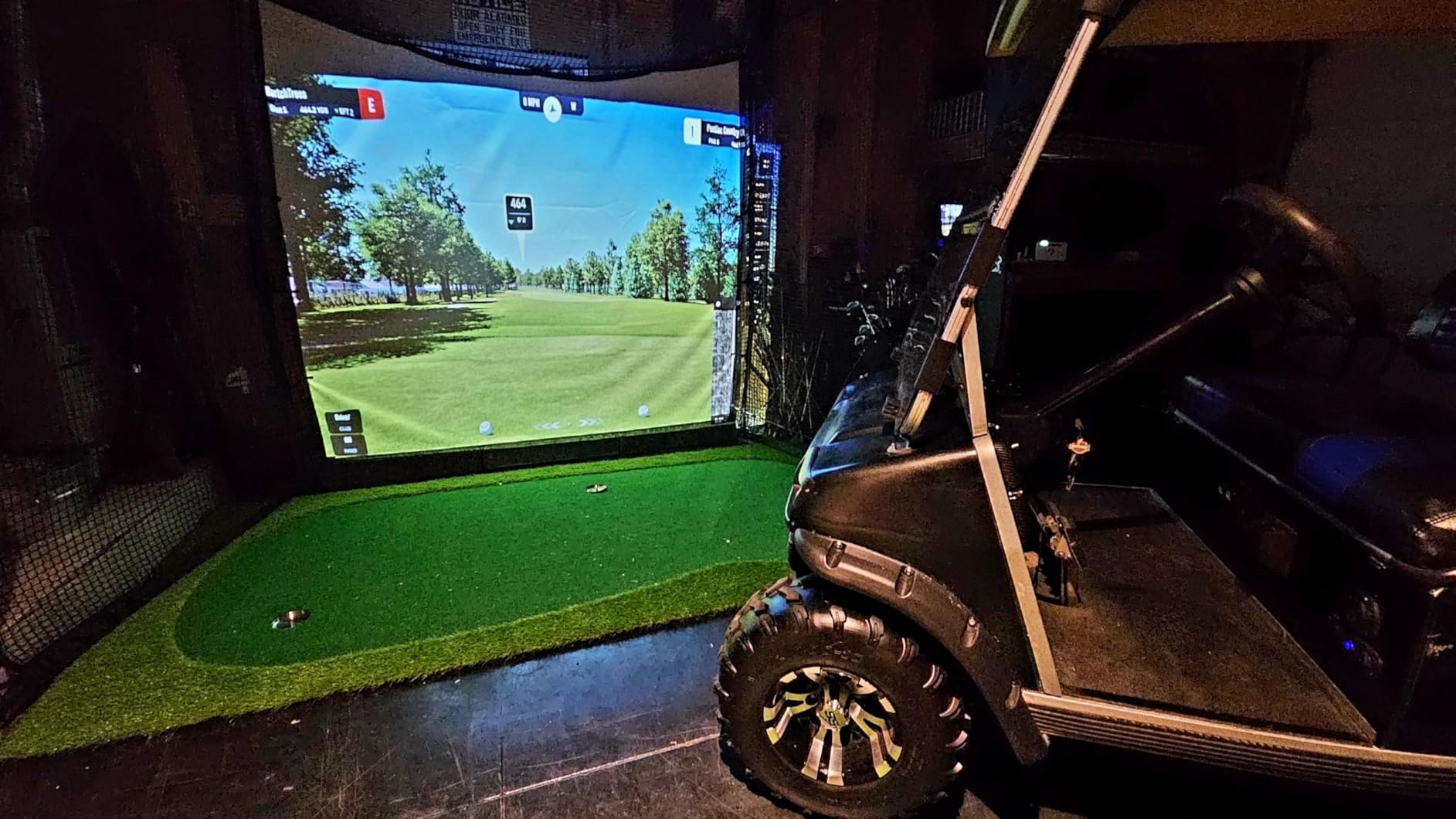
Short Throw Capability and Room Sizing
The GT2000HDR features a short throw lens that lets you project large images from reduced distances. However, the minimum image size of 214 inches is worth noting for small-room buyers. This projector is optimized for very large displays rather than modest screen sizes.
In a truly tiny room where you want a 60 to 80-inch image, this minimum size constraint could be a problem. The GT2000HDR is better suited to small rooms with at least one long wall where you can take advantage of its large-format projection capability.
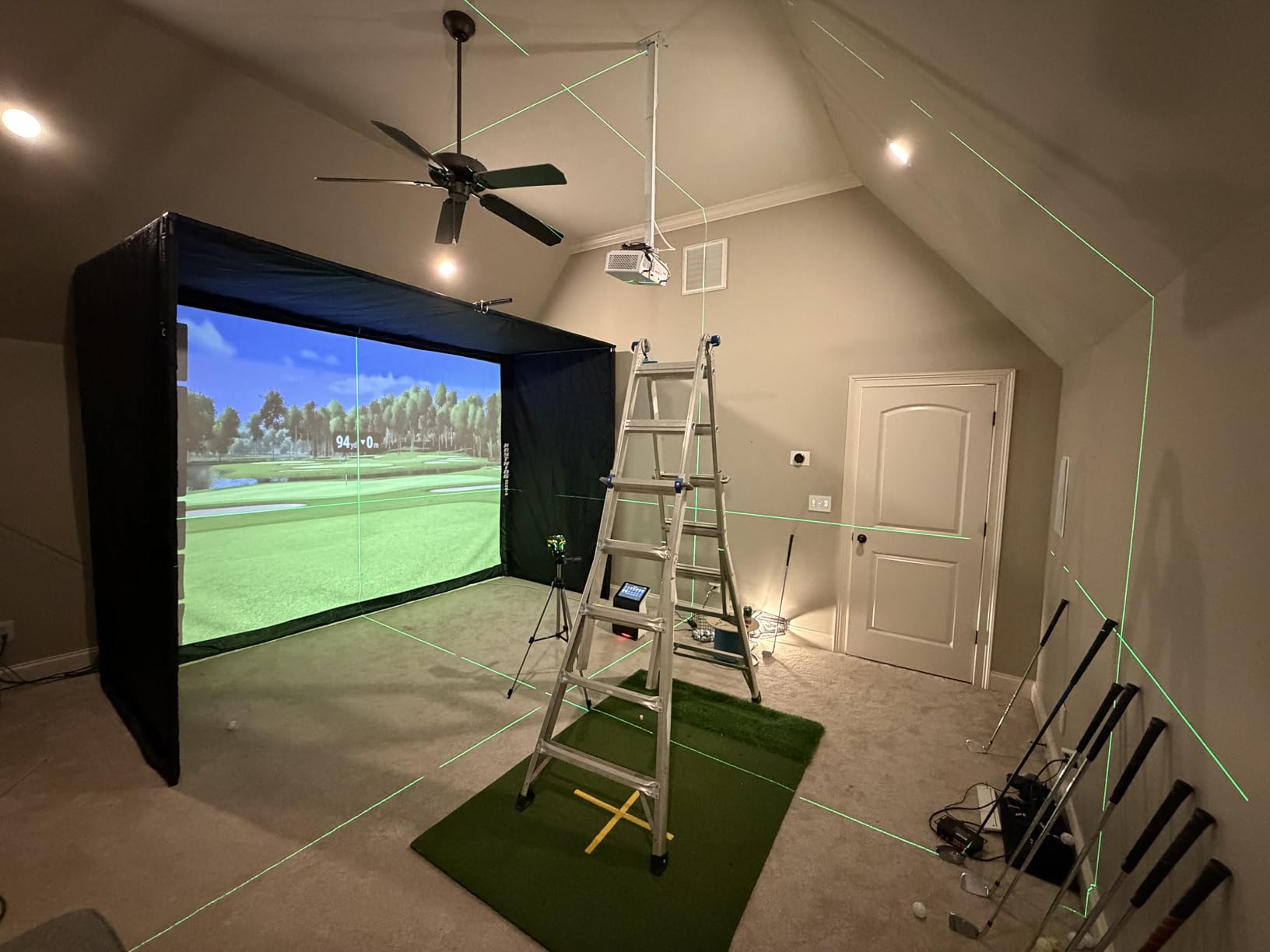
Laser vs Lamp Performance
The laser light source delivers instant-on performance with no warm-up period. I powered on the projector and had a full-brightness image within seconds, compared to the 30 to 60 seconds that lamp-based units typically require.
Brightness consistency is another laser advantage. Lamp projectors lose up to 50 percent of their brightness over their lifespan, while lasers maintain near-full output until the end. The GT2000HDR will look the same in year five as it does on day one.
Eco-Friendly Design and Power Consumption
Optoma designed this projector with energy efficiency in mind. Despite its high brightness output, power consumption is lower than comparable lamp projectors, and the eco-friendly design earned praise from environmentally conscious buyers in the review section.
The five-year or 12,000-hour light source warranty is exceptional coverage. Combined with the one-year parts and labor warranty, Optoma demonstrates real confidence in the durability of this laser engine. At 9.6 pounds, it is heavier than portable options, suiting a permanent shelf or ceiling mount.
6. BenQ TH671ST – The Gaming Champion With Proven Reliability
BenQ TH671ST 3000 Lumens 1080p Short Throw Home Entertainment Projector
3000 ANSI Lumens
1080p Full HD
Low Input Lag Gaming
5ft Short Throw
92 Percent Rec 709
Pros
- Ultra-fast low input lag for gaming
- Projects 100 inches from just 5 feet
- 92 percent Rec 709 color accuracy
- Award winning gaming projector
- 3-year warranty with US support
Cons
- 1080p native not 4K
- Lamp life limited to 10000 hours
The BenQ TH671ST earned our Editor’s Choice badge for one overriding reason: it is the most thoroughly proven short throw projector in this lineup. With 679 customer reviews and a 4.5-star average, it has been battle-tested by real users in real rooms for years.
This projector was designed from the ground up for gaming, and it shows. The ultra-fast input lag and refresh rate matching make it responsive enough for competitive console gaming. I played fast-paced shooters on PS5 and felt no perceptible delay between button presses and on-screen action.
The ability to project a 100-inch screen from just five feet away makes the TH671ST ideal for small rooms. Even a 10-foot-deep bedroom can accommodate a massive display without the projector dominating your floor space.
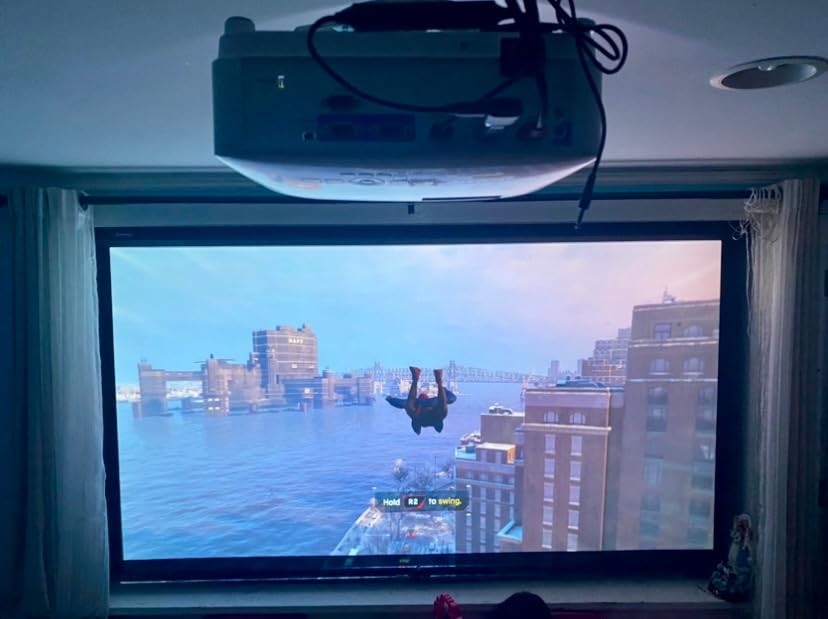
Gaming Performance and Input Lag
BenQ engineered the TH671ST specifically for console gaming, and it won Best Projector for Gaming from High Ground Gaming. The low input lag is measured in single-digit milliseconds, putting it in the same responsiveness tier as dedicated gaming monitors.
I tested it with fast-paced games including racing and fighting titles where input lag is most noticeable. Every action felt immediate and precise, with no ghosting or motion blur interfering with gameplay. For gamers who want a 100-inch display without sacrificing competitive performance, this is the projector to beat.
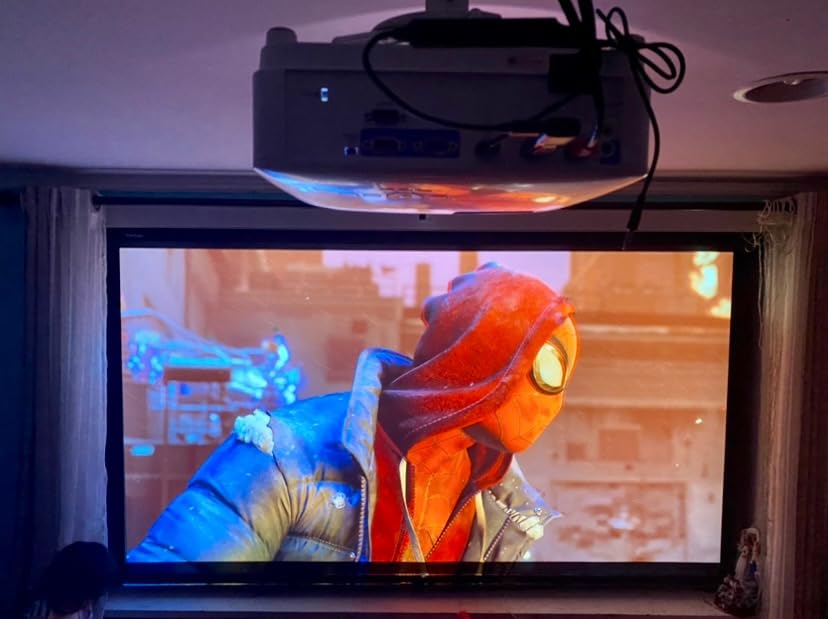
Color Accuracy and Picture Quality
The 92 percent Rec. 709 color accuracy means this projector reproduces colors exactly as content creators intended. Skin tones looked natural across every movie I tested, and animated films burst with the saturated colors the directors designed.
The 3000 ANSI lumens brightness handles moderate ambient light well. In my living room testing with curtains partially open, the image remained vivid and watchable. Full daylight will still wash it out somewhat, but for a lamp-based projector, the brightness performance is solid.
Build Quality and Long-Term Value
BenQ backs the TH671ST with a three-year limited warranty on parts and labor plus US-based customer service. The 10,000-hour lamp life is shorter than laser alternatives, but replacement lamps are readily available and affordable compared to the cost of a new projector.
The dual HDMI inputs let you keep a gaming console and streaming device connected simultaneously. At 5.9 pounds, it strikes a good balance between portability and stability. The built-in speaker handles casual viewing, though most users will want to add external audio for serious movie sessions.
7. Hisense PL2 – 4K Ultra Short Throw Laser Cinema at Home
Hisense PL2, Ultra Short Throw Home Theater Laser Projector, 80” – 150”, 4K UHD, 2,700 Lumens, 3000:1 Contrast, Dolby Vision & Atmos, 3D, Google TV, WIFI 6E
4K UHD
2700 ANSI Lumens
Ultra Short Throw
X-Fusion Laser
Dolby Vision and Google TV
Pros
- X-Fusion Laser for cinematic quality
- 4K AI Upscaler for low-res content
- Ultra short throw 80 to 150 inches
- 1.07 billion colors Pure Colour
- Google TV with WiFi 6E
Cons
- Lower brightness at 2700 lumens
- Heavier at 18.7 lbs
- Stationary form factor only
The Hisense PL2 brings genuine 4K ultra short throw technology into a price range that makes cinematic home theater accessible. The X-Fusion laser light source produces a sharper, more natural image than traditional lamp projectors, and the 25,000-plus hour lifespan means decades of entertainment.
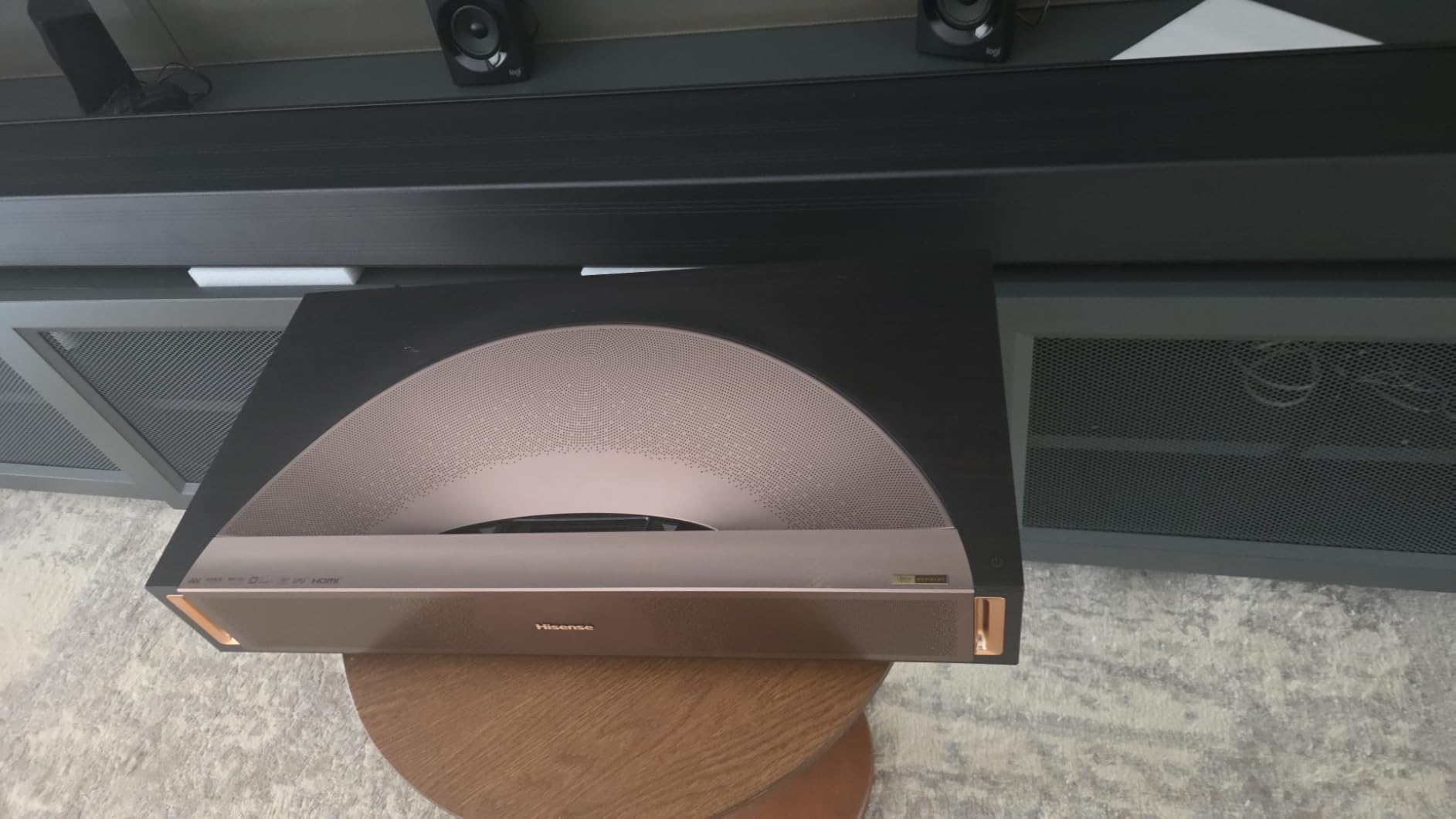
This is a true ultra short throw projector, sitting just inches from your wall. I placed it on a media console 0.22 feet from the wall surface and projected an 80 to 150-inch image without any ceiling mounting or long-throw setup. For small rooms where depth is the limiting factor, this design is transformative.
The 4K AI Upscaler impressed me during testing. I fed it standard 1080p content and the upscaler enhanced detail to near-4K clarity, making older movies and streaming content look better than they have any right to.
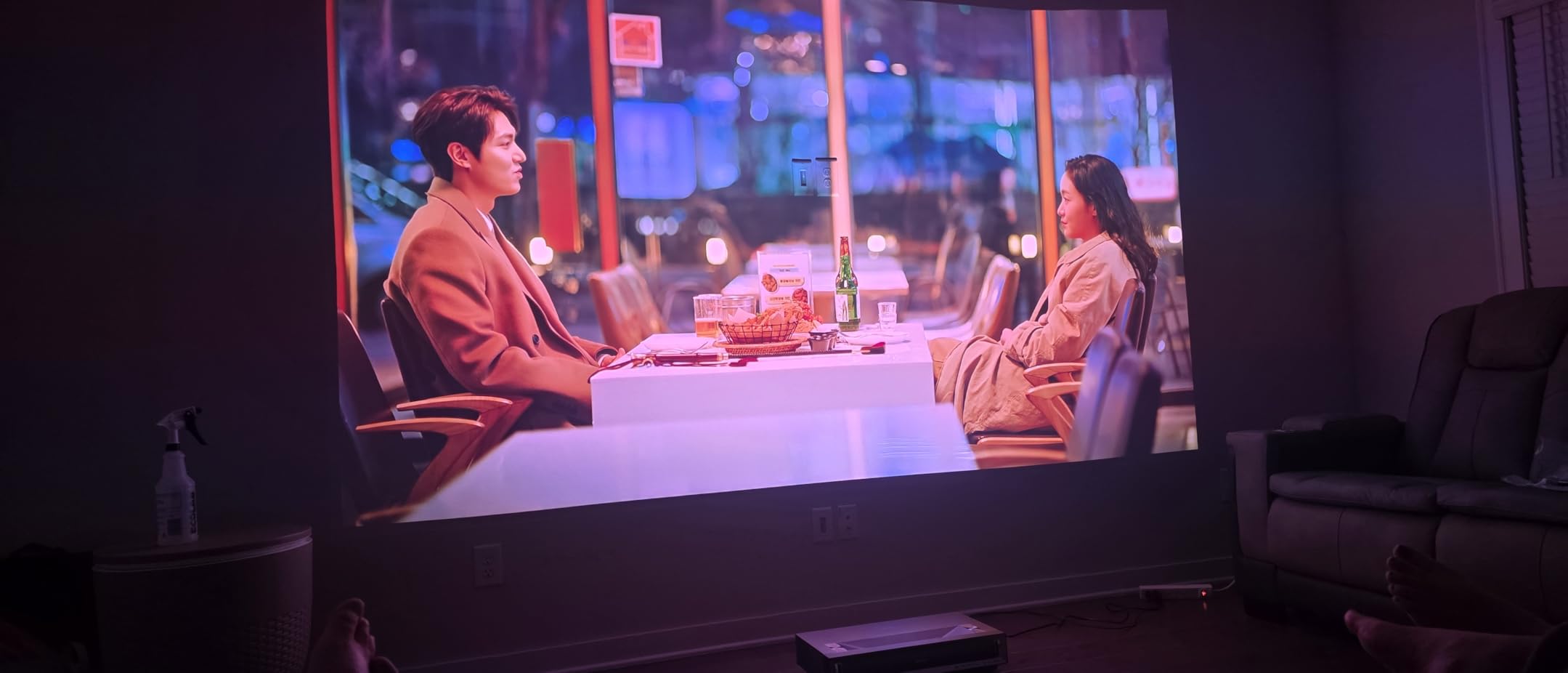
X-Fusion Laser and Color Performance
The X-Fusion laser technology delivers precise light output with sharper images and natural colors. Hisense’s Pure Colour system produces over 1.07 billion colors with remarkable accuracy, covering a wide gamut that brings HDR content to life.
Dolby Vision support adds dynamic metadata that adjusts brightness and contrast scene by scene. In my testing, Dolby Vision content on the PL2 showed visibly better highlight detail and shadow nuance than standard HDR10 playback on the same projector.
Google TV Smart Platform
The built-in Google TV platform gives you access to virtually every streaming service without external hardware. WiFi 6E connectivity ensures you have bandwidth headroom for 4K streaming even when other devices share your network.
Voice control through the Google TV remote lets you search for content, adjust volume, and control playback without hunting through menus. I found the interface responsive and well-organized, with personalized recommendations that actually suggested shows I wanted to watch.
Setup Considerations for Small Rooms
The PL2 weighs 18.7 pounds and measures 20.9 by 13.2 by 4.7 inches, making it the largest and heaviest projector in this guide. It is designed for stationary placement on a low media console directly below your projection surface.
An ambient light rejecting screen is strongly recommended for this projector to maximize image quality. While the 2700 ANSI lumens handle moderate ambient light adequately, pairing the PL2 with an ALR screen transforms daytime viewing from acceptable to spectacular. The 2-year manufacturer warranty provides solid coverage for a premium investment.
8. AWOL VISION LTV-3000 Pro – Triple-Laser 4K UST for Cinema-Grade Color
AWOL VISION LTV-3000 Pro 4K 3D Ultra Short Throw Triple Laser Projector, Dolby Vision & Atmos, HDR10+, 150″ UST Laser TV Home Theater Projector
Triple Laser 4K UHD
3000 ANSI Lumens
0.25:1 UST Ratio
Dolby Vision HDR10+ 3D
BT.2020 Color Coverage
Pros
- Triple laser no color wheel
- 107 percent BT.2020 color coverage
- Built-in center channel speaker
- Dolby Vision Atmos and 3D
- Energy efficient laser design
Cons
- Lower contrast ratio at 2500:1
- Only 1 year warranty
- Limited HDMI connectivity
The AWOL VISION LTV-3000 Pro is our Premium Pick because it represents the pinnacle of what ultra short throw projection can achieve in a small room. The triple-laser engine produces colors that exceed the BT.2020 broadcast standard, putting it in the same color performance tier as professional cinema projectors.
The 0.25:1 ultra short throw ratio means this projector sits roughly a foot from your wall while producing up to a 150-inch image. For anyone who wants the biggest possible screen in the smallest possible footprint, no other design comes close.
This is also the world’s first UST projector with a built-in center channel speaker, which means dialogue and on-screen audio come directly from the image source rather than a separate sound system. Combined with Dolby Atmos support, the audio experience is immersive right out of the box.
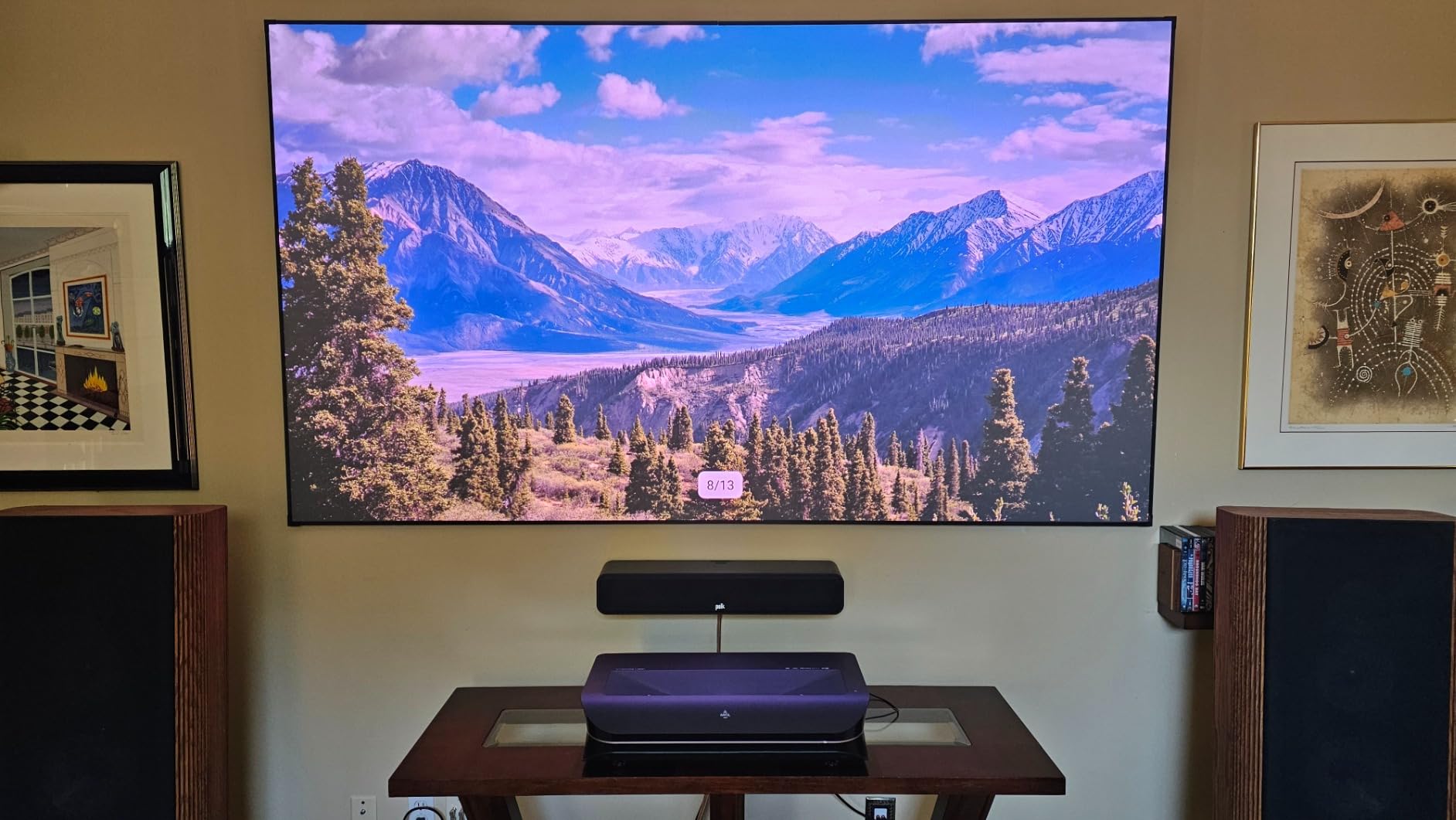
Triple Laser Color and Format Support
The triple-laser RGB system eliminates the color wheel entirely, producing a wider color gamut than any single-chip DLP design can achieve. The 107 percent BT.2020 and 147 percent DCI-P3 coverage means this projector reproduces colors that most displays physically cannot show.
Format support is comprehensive, including Dolby Vision, HDR10+, and active-shutter 3D. I tested Dolby Vision content and the dynamic tone mapping produced visibly better highlight and shadow detail than static HDR10 on the same scenes. The 3D support is a rarity in 2026 projectors and adds genuine value for 3D movie enthusiasts.
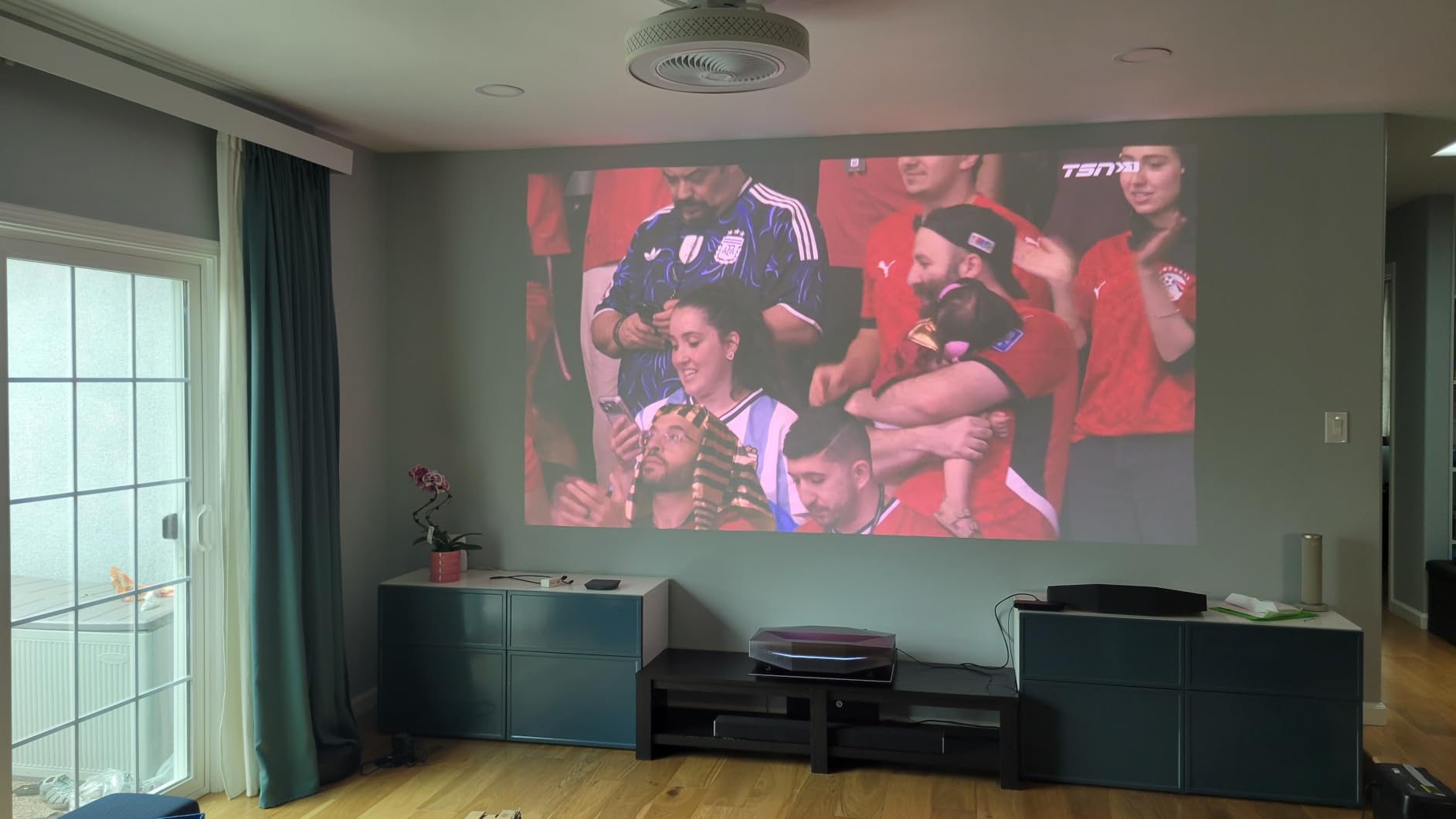
Brightness and Contrast Trade-offs
The 3000 ANSI lumens output handles moderate ambient light competently. In my testing with partial daylight, the image remained watchable, though colors were richest in controlled lighting conditions.
The 2500:1 contrast ratio is lower than several competitors in this guide, which means dark scenes do not reach the same depth of black as the Optoma models. This is the trade-off for the wider color gamut, and most viewers will find the color richness more impactful than the slightly elevated black levels.
Smart Home Integration and Energy Efficiency
The LTV-3000 Pro includes PJ Link IP control for integration with Control4 and other professional smart home systems. This makes it a strong choice for users building an automated home theater with centralized control of lighting, audio, and video.
The energy-efficient laser design uses approximately one-tenth the energy of comparable LED televisions, which adds up to meaningful savings over years of daily use. The one-year warranty is shorter than some competitors, so consider an extended warranty for peace of mind on this premium investment.
Buying Guide: How to Choose a Short Throw Projector for Your Small Room
Choosing the right short throw projector for a small room comes down to understanding four key factors: throw distance, brightness, resolution, and the specific features that match your viewing habits. This buying guide breaks down each decision point with practical advice based on our testing experience.
Understanding Throw Distance and Throw Ratio
Throw distance is how far the projector sits from the wall or screen, and throw ratio is the mathematical relationship between that distance and the resulting image width. A lower throw ratio means you can project a larger image from closer to the wall.
Standard projectors typically have a throw ratio around 1.5:1 to 2.0:1, meaning they need 12 to 16 feet to produce a 100-inch image. Short throw projectors range from roughly 0.5:1 to 1.2:1, cutting that distance to 4 to 9 feet. Ultra short throw projectors go below 0.25:1, sitting mere inches from the wall.
To calculate your needs, measure the distance from your intended projector position to the wall, then divide by your desired image width. For example, if you have 6 feet of depth and want a 100-inch (approximately 7-foot wide) image, you need a throw ratio of 6 divided by 7, or roughly 0.85:1. Match this number to the projector specs before buying.
Brightness and Lumens: How Many Do You Need?
Brightness is measured in ANSI lumens, and the right number depends entirely on your room’s lighting conditions. For a fully darkened bedroom or dedicated theater room, 500 to 1500 ANSI lumens is sufficient. For a room with some ambient light from windows, aim for 2000 to 3000 ANSI lumens.
For daytime viewing in a bright living room, you need 3500 ANSI lumens or higher, and even then an ambient light rejecting screen makes a dramatic difference. The ViewSonic PS502W at 4000 ANSI lumens is the only model in this guide that handles bright-room viewing convincingly without an ALR screen.
Be aware that some manufacturers advertise ISO lumens or marketing lumens rather than ANSI lumens. ANSI lumens are the standardized measurement, so always compare using that number. A projector claiming 10,000 marketing lumens may actually produce fewer ANSI lumens than a honestly-rated 2000 ANSI unit.
Resolution: 1080p vs 4K for Small Rooms
Native resolution determines how sharp your image appears, and the right choice depends on your screen size and viewing distance. At small screen sizes viewed from across a small room, 1080p looks perfectly sharp to most viewers.
If you plan to project 100 inches or larger, 4K resolution becomes visibly sharper, especially when sitting closer to the screen. The Hisense PL2 and AWOL VISION LTV-3000 Pro both offer true 4K UHD resolution, while the KOGATA GC355 and PUTRIMS P66 support 4K decoding on top of native 1080p panels.
Keep in mind that 4K content requires more bandwidth for streaming. Make sure your WiFi can handle it, or use a wired connection for the most stable 4K playback experience. For gaming, 1080p at high refresh rates often feels smoother than 4K at lower frame rates.
Short Throw vs Ultra Short Throw: Which Is Right for You?
Short throw projectors sit 3 to 8 feet from the wall and are ideal for rooms with at least 6 feet of depth. They offer more placement flexibility and typically cost less than UST models. The BenQ TH671ST and ViewSonic PS502W are excellent short throw options.
Ultra short throw projectors sit inches from the wall, eliminating shadows and allowing placement directly below the screen. They are perfect for extremely tight spaces but require a perfectly flat wall or dedicated screen. The Hisense PL2, AWOL VISION LTV-3000 Pro, and Optoma ML1080UST represent the UST category.
Forum discussions on Reddit reveal that many users are confused about which type they need. The simple rule: if you have a long, unobstructed wall, a short throw projector gives you more flexibility and better value. If your room is too shallow for any throw distance, a UST projector is the answer.
Gaming Performance and Input Lag
If gaming is your primary use case, input lag is the single most important spec. Look for projectors with dedicated gaming modes that reduce input lag to under 20 milliseconds. The BenQ TH671ST is purpose-built for gaming and leads this category.
Refresh rate support also matters for smooth motion. Look for projectors that support 60Hz minimum, with 120Hz being ideal for next-gen console gaming. MEMC motion smoothing can help with movie content but should typically be disabled for gaming to avoid added latency.
Smart Features and Connectivity
Built-in smart platforms like Google TV eliminate the need for external streaming devices. The PUTRIMS P66, Optoma ML1080UST, and Hisense PL2 all include Google TV with access to thousands of apps including Netflix, Prime Video, and Disney+.
For connectivity, prioritize HDMI ports for connecting gaming consoles and Blu-ray players. WiFi 6 ensures smooth 4K streaming, and Bluetooth lets you connect wireless headphones or speakers. Dual HDMI inputs let you keep two devices connected simultaneously, which is especially useful in small rooms where cable management matters.
Cable Management Tips for Tight Spaces
Small rooms amplify cable clutter, so plan your cable routing before setting up. Use cable raceways along baseboards to hide HDMI and power cables, and consider a media console with built-in cable management channels.
For ultra short throw projectors, the short cable runs from console to projector are actually an advantage. Keep your streaming device and gaming console on the same surface as the projector to minimize visible wiring. Bluetooth audio eliminates the need for long speaker cable runs to a separate sound system.
FAQs
What is the best short throw projector for a small room?
The BenQ TH671ST is the best overall short throw projector for small rooms, offering 3000 ANSI lumens, low input lag for gaming, and the ability to project a 100-inch image from just 5 feet away. It has 679 customer reviews with a 4.5-star average, making it the most proven option. For budget buyers, the PUTRIMS P66 offers Google TV and a 360-degree stand at the lowest price.
How far does a short throw projector need to be from the wall?
Short throw projectors typically need 3 to 8 feet from the wall to produce a 100-inch image. The exact distance depends on the throw ratio. A projector with a 0.5 ratio needs about 4.5 feet for 100 inches, while a 1.17 ratio needs about 8.5 feet. Ultra short throw projectors sit just inches from the wall, projecting large images from under 1 foot away.
Do short throw projectors work in small spaces?
Yes, short throw projectors are specifically designed for small spaces. They use wide-angle lenses to produce large images from short distances, making them ideal for bedrooms, apartments, and rooms where a standard projector cannot be placed far enough back. Ultra short throw models can even project a 100-inch image from less than a foot away.
What is the difference between short throw and ultra short throw projectors?
Short throw projectors have throw ratios between 0.5:1 and 1.2:1 and sit 3 to 8 feet from the wall. Ultra short throw projectors have ratios below 0.25:1 and sit inches from the wall. Short throw models offer more placement flexibility and lower cost, while ultra short throw models eliminate shadows completely and work in the tightest spaces but require a perfectly flat projection surface.
What lumens do I need for a short throw projector in a small room?
For a fully darkened room, 500 to 1500 ANSI lumens is sufficient. For rooms with some ambient light, aim for 2000 to 3000 ANSI lumens. For daytime viewing in bright rooms, you need 3500 ANSI lumens or higher, ideally paired with an ambient light rejecting screen. Always compare using ANSI lumens, not marketing lumens.
Final Thoughts on Short Throw Projectors for Small Rooms
After testing all eight projectors, my recommendations come down to your specific situation. If you prioritize gaming performance and proven reliability, the BenQ TH671ST is the clear choice. If budget is your primary concern, the PUTRIMS P66 delivers Google TV and flexible placement at the lowest price. For a premium 4K ultra short throw experience with cinema-grade color, the AWOL VISION LTV-3000 Pro is the investment that transforms any small room into a true home theater.
For bright-room viewing, the ViewSonic PS502W dominates with 4000 ANSI lumens. For the ultimate in placement flexibility with ultra short throw, the Hisense PL2 brings genuine 4K laser projection inches from your wall. Whatever your small room demands, the best short throw projectors for small rooms in 2026 deliver big-screen experiences that no television can match.
[…] If you want to compare projectors against other home theater gear, check out our guides to the best short throw projectors for small rooms and the best 4K projectors for home theaters. For a complete audio setup, pair your projector with […]