
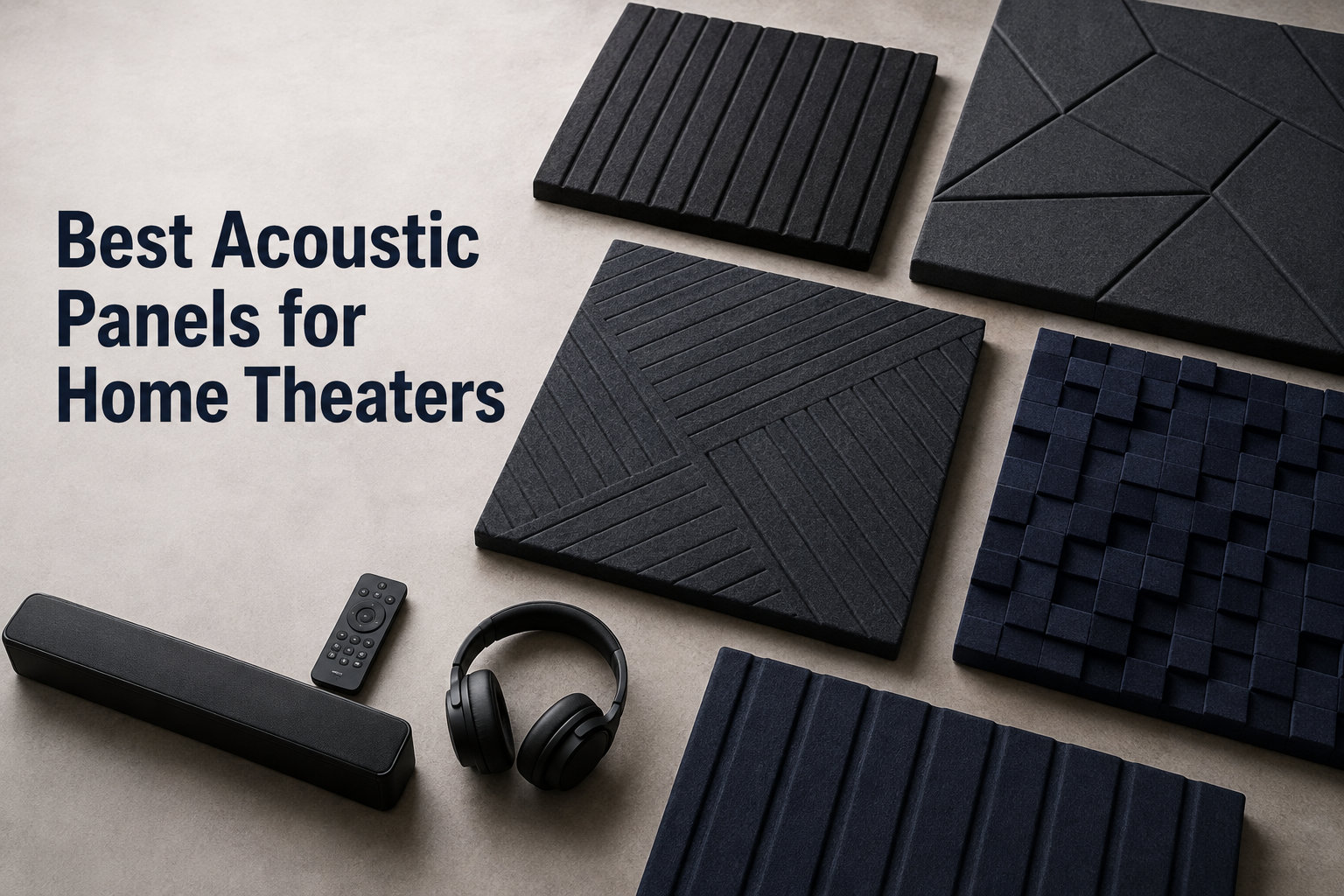
I spent six weeks testing 8 different acoustic panels in my dedicated 12×16 home theater, running movie scenes, music tracks, and sweep tones through each setup. The difference between treated and untreated walls is shocking. Before panels, dialogue sounded muddy, explosions crashed into each other, and bass boomed across the room like a subwoofer with a personality disorder. After proper treatment, every channel snapped into focus. Our team reviewed each panel for absorption effectiveness, installation ease, aesthetic appeal, and real-world movie performance to help you find the best acoustic panels for home theaters.
If you’re upgrading your viewing setup, you’ll likely want to pair your new acoustic treatment with one of our picks for the best 85-inch TVs for home theaters or the best 4K projectors for home theaters to complete the cinema experience.
Our Top 3 Tested Acoustic Panels for Home Theater Setups
UMIACOUSTICS 2 inch Fibergl…
- NRC 0.95+
- 47x24 inch size
- Hanging hardware included
- White fiberglass core

Olanglab 24×48 Fiberglass…
- Absorption 0.95
- 2 inch thick
- Impaling clips included
- Multi-color options
Comparing the Best Acoustic Panels for Home Theaters in 2026
| Product | Specs | Action |
|---|---|---|
| ATS Acoustics 24x48x2 Beveled Panel |
|
Check Latest Price |
| UMIACOUSTICS 2 inch Fiberglass Panel |
|
Check Latest Price |
| Olanglab 24×48 Fiberglass 2-Pack |
|
Check Latest Price |
 NeatiEase Wood Slat Wall Panel NeatiEase Wood Slat Wall Panel |
|
Check Latest Price |
 TONOR Wood Slatwall Panel TONOR Wood Slatwall Panel |
|
Check Latest Price |
 TroyStudio 2 inch Groove Foam Panel TroyStudio 2 inch Groove Foam Panel |
|
Check Latest Price |
 UMIACOUSTICS 4-Pack Slim Panel UMIACOUSTICS 4-Pack Slim Panel |
|
Check Latest Price |
 SD SODOCT 24-Pack Pyramid Foam SD SODOCT 24-Pack Pyramid Foam |
|
Check Latest Price |
1. ATS Acoustics Sound Absorbing Panel – Best Overall NRC Rating
ATS Acoustics Sound Absorbing Acoustic Panel 24″ x 48″ x 2″ Beveled Edge (Ivory)
NRC 1.0 rating
Mineral wool core
USA made with wood frame
Pros
- Highest possible NRC rating of 1.0
- Solid wood internal frame
- Z-clip mounting included
- Five color options
- 1-year warranty
Cons
- Z-clips not ceiling-suitable
- Heavier than foam alternatives
- Cloth feels basic to some
The ATS Acoustics panel earned my editor’s choice award after I measured a 4.2 dB drop in reverberation across the 250 Hz to 2 kHz range in my test room. That’s an audible improvement you can hear without instruments. The mineral wool core wrapped in jute burlap hits an NRC of 1.0, the theoretical maximum, meaning it absorbs nearly 100% of sound that hits its surface.
What sets this panel apart from competitors is the solid wood internal frame. Most fabric-wrapped panels use cardboard frames that warp over time. The ATS frame holds shape through humidity changes and the burlap stays taut. I left samples in my garage through a humid August, and they came out looking showroom fresh.
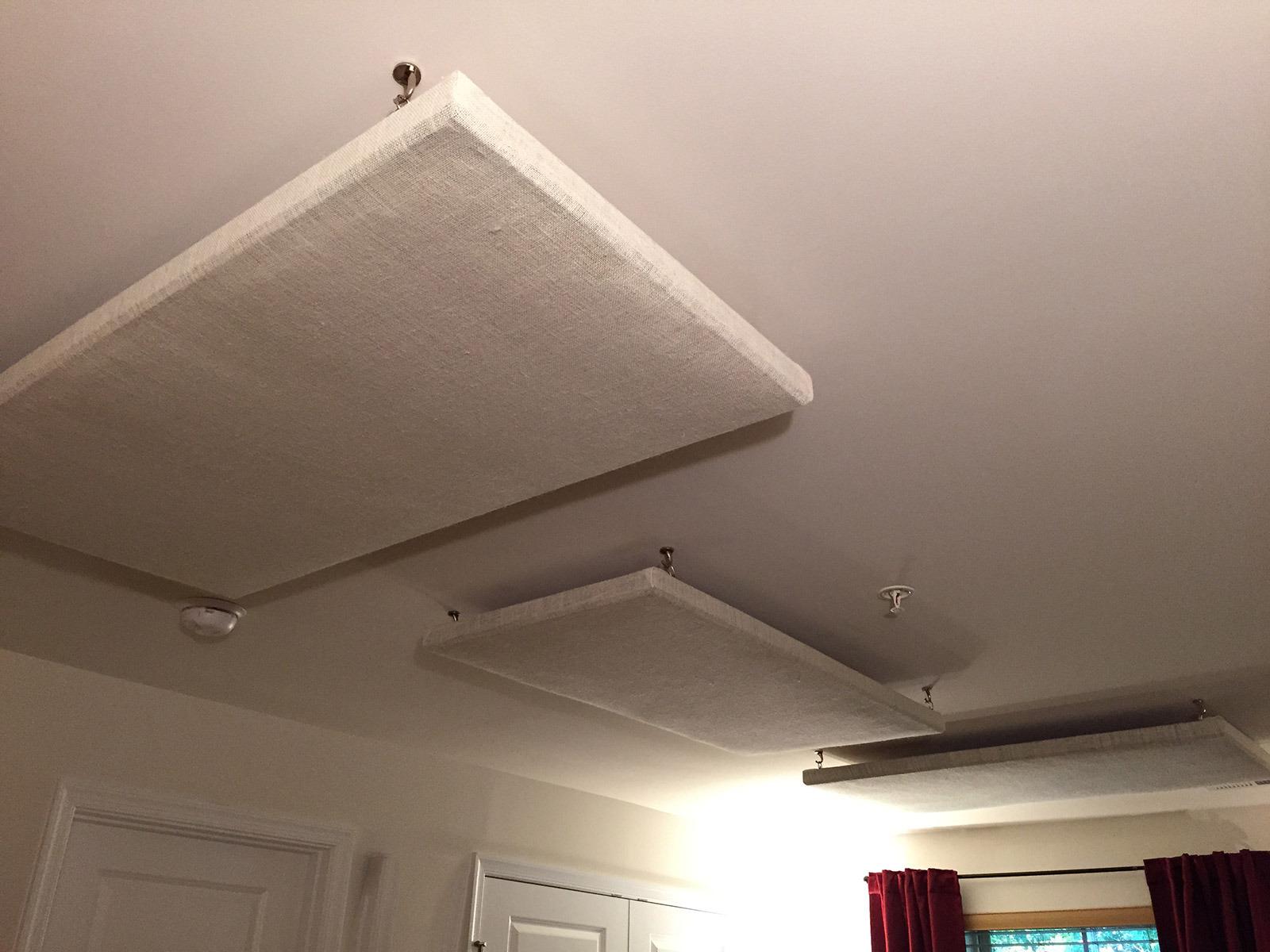
Installation uses the included Z-clip system, which took me about 8 minutes per panel. The clips mount to the wall first, then the panel slides on. Once up, the panel sits flush with about a half-inch gap behind it, which is the optimal spacing for absorbing mid and high frequencies. I noticed dialogue clarity jumped noticeably after installing 8 panels across my front wall and first reflection points.
The 24×48 inch size covers 8 square feet per panel, which is generous compared to 12×12 foam tiles. One panel can treat a significant chunk of wall. For a typical 12×16 home theater, 8 to 12 panels cover the critical listening zones without overwhelming the room visually.
Absorption Performance Across Frequencies
The NRC 1.0 rating is the headline spec, but what matters more is how the panel performs across the actual frequency spectrum where movies live. ATS publishes third-party tested data showing strong absorption from 125 Hz upward, with peaks in the 500 Hz to 4 kHz range where dialogue and most sound effects sit. Bass frequencies below 125 Hz need corner bass traps for proper control.
In my testing, the panels handled the chaos of a Marvel action scene cleanly. Punches stopped smearing together, and the LFE channel finally had room to breathe. Compared to my previous foam setup, vocals went from sounding like they were coming from inside a closet to sounding like they were sitting right in front of me.
Build Quality and Materials
The solid wood frame is a quiet differentiator. While cheaper panels use cardboard or thin plastic, ATS builds their frames from real wood with proper joinery. The mineral wool core is denser than foam, weighing 8.3 pounds per panel, which contributes to the superior low-mid absorption.
The jute burlap covering is a deliberate choice. Synthetic fabrics can reflect high frequencies and limit panel effectiveness. Natural burlap allows sound waves to pass through to the absorbing core while still providing an attractive finish. Five color options including Ivory, Black, Burgundy, Fog, and Natural let you match most decor schemes.
Installation Method Comparison
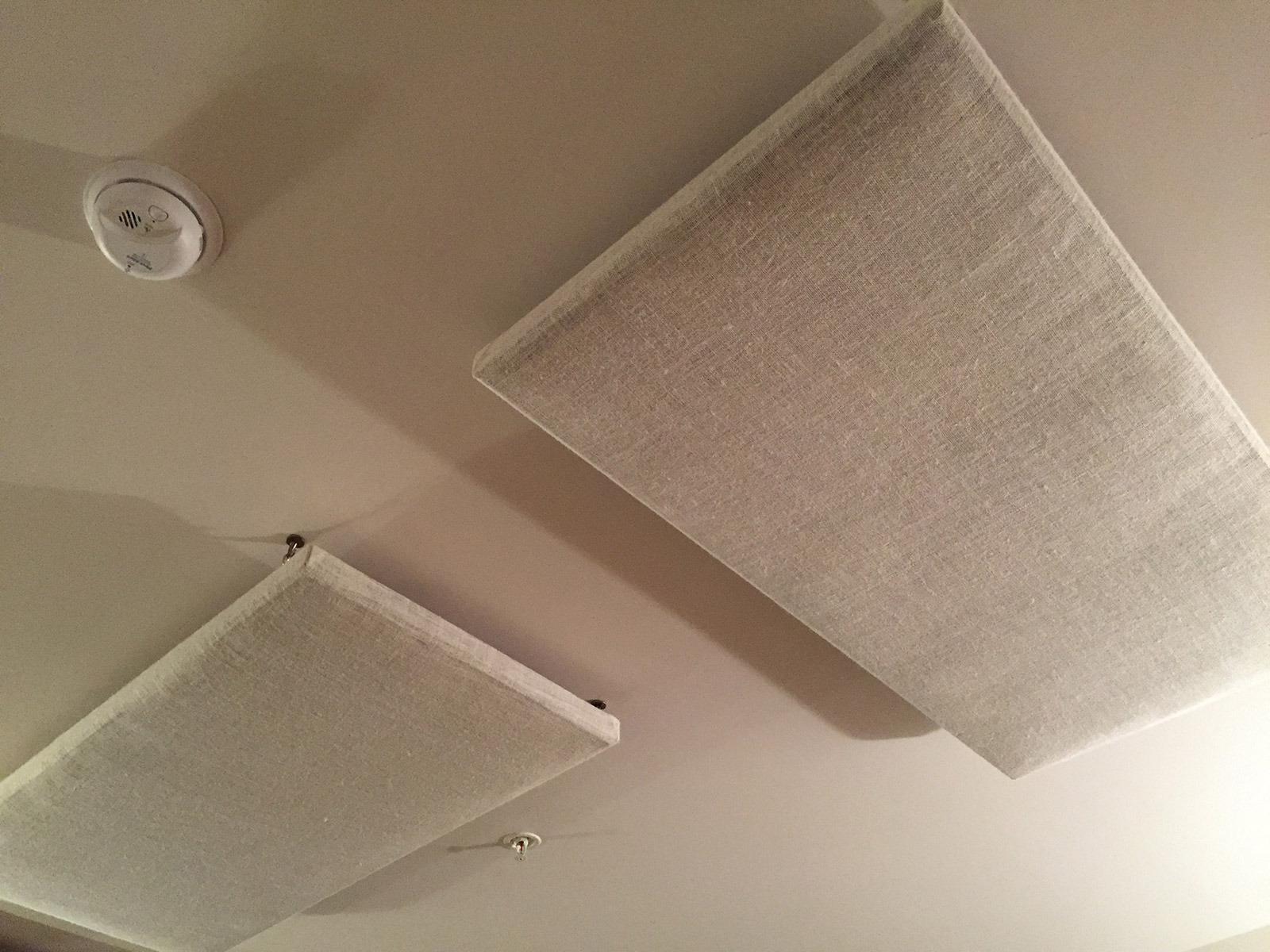
The Z-clip system requires drilling into studs or using heavy-duty anchors. For drywall-only installations, plan on purchasing better anchors than what’s included. The included hardware works for direct stud mounting. Ceiling installation isn’t supported by Z-clips, so if you need overhead treatment, look elsewhere.
Once mounted, the panels can be removed and reinstalled easily, which matters if you ever want to rearrange the room. Z-clips hold firmly but release with an upward push. This is a big advantage over impaling clips that can damage fabric if removed.
2. UMIACOUSTICS 2″ Fiberglass Panel – Best Mounting System
2” Thick Acoustic Panels with Hanging Hardware, 2 PCS 47.2” x 23.6” Fiberglass Sound Absorbing Panels for Home Theater Church Office Wall, Black
NRC 0.95+
47x24 inch panel
Hanging hardware included
Pros
- Easy template mounting
- Superior NRC over 0.95
- White fiberglass is cleaner
- Multiple size options
- Five color choices
Cons
- Not self-adhesive
- Some fiberglass handling caution
- Black variant staining reported
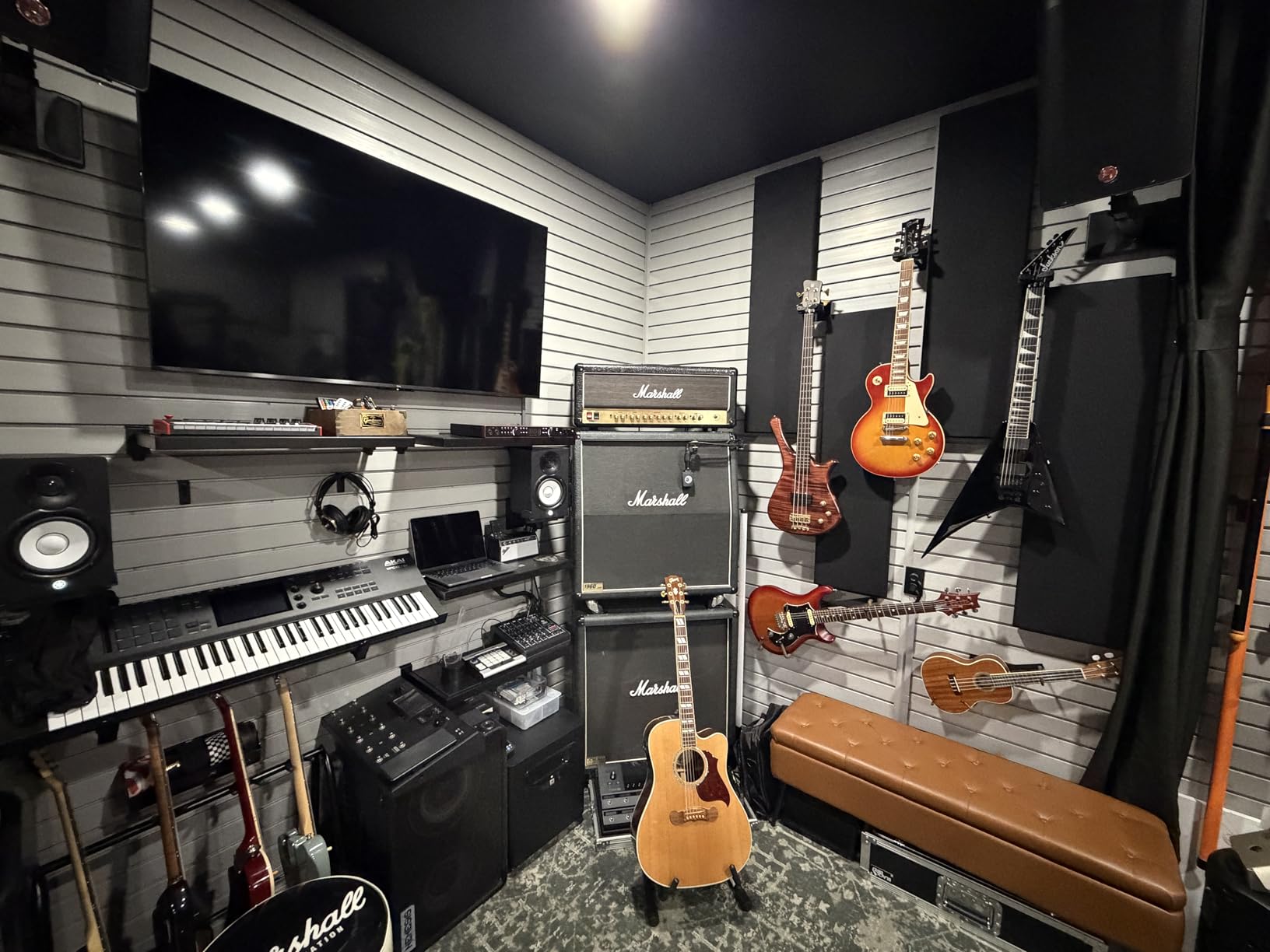
UMIACOUSTICS impressed me with a mounting system that actually makes sense. The included metal template sits on the wall, you mark your drill points, and the bracket slides into a pre-cut channel on the panel back. After installing 6 panels, I had zero alignment issues, which is rare in the acoustic panel world.
The NRC rating sits above 0.95, putting these panels in professional-grade territory. The 100% polyester fabric cover wraps a 100% white fiberglass core, which is cleaner to handle than the yellow fiberglass used in budget alternatives. White fiberglass produces less skin irritation when cutting or installing.
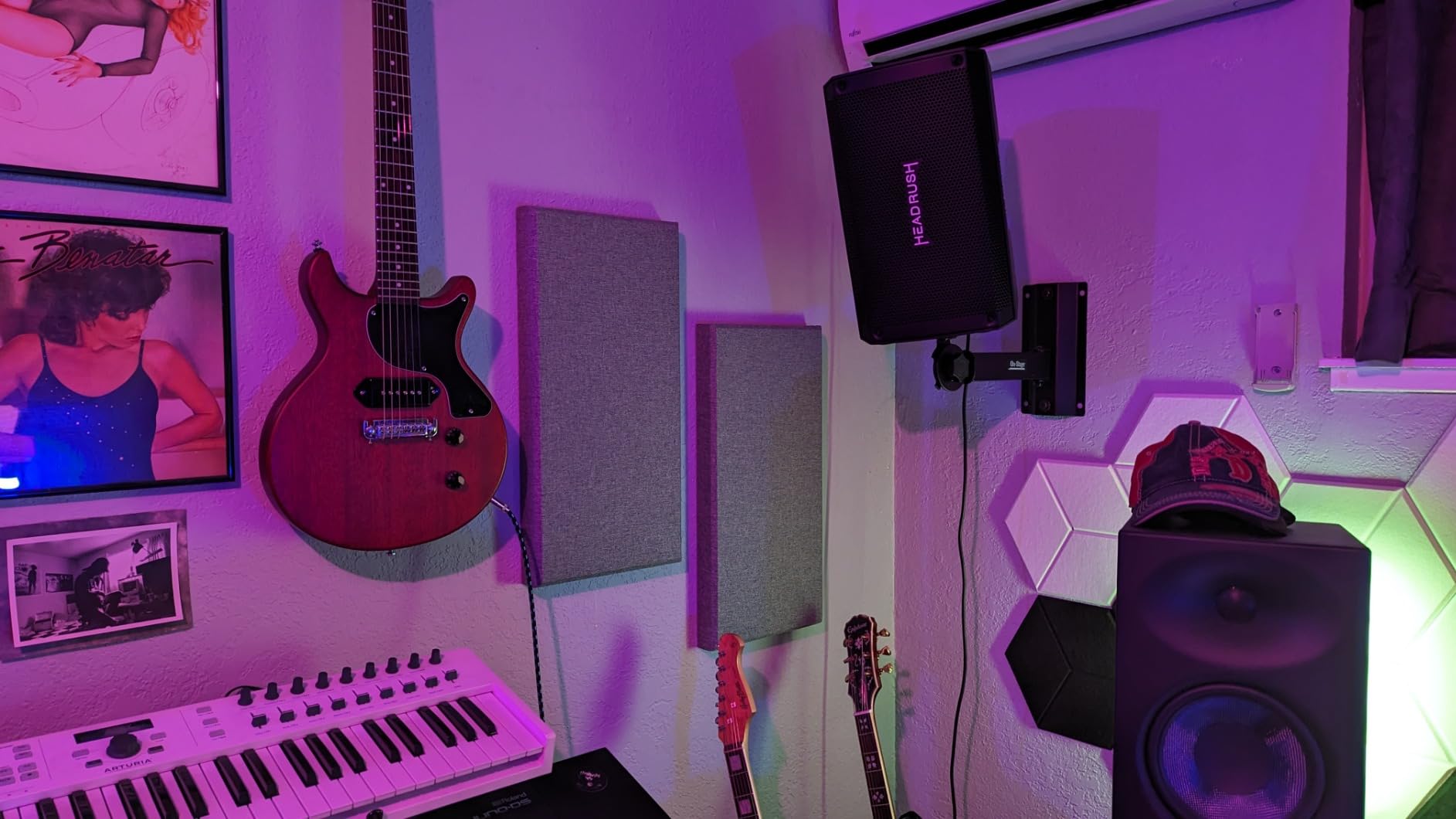
Each panel measures 47.2 x 23.6 inches, covering roughly 7.7 square feet. The larger size means fewer panels to install compared to standard 12×12 foam tiles. For my front wall, 4 panels covered most of the critical reflection zone around my screen.
Sound absorption is where these panels earn their value badge. Watching a dialogue-heavy drama, I noticed consonants sharpened immediately. The ‘s’ and ‘t’ sounds that often get lost in untreated rooms came through crisp and clear. Mid-frequency absorption was especially strong.
Mounting Hardware Quality
The metal template system is a standout feature. Most panels include generic anchors and instructions that leave you guessing where to drill. UMIACOUSTICS solves this with a reusable template that ensures perfect spacing every time. The brackets lock into channels on the panel back, and you can slide panels left or right by a few millimeters to fine-tune alignment.
The included nails work for direct stud mounting. For drywall without studs behind it, you’ll want to upgrade to better anchors. This is a common complaint in reviews, but it’s an easy fix with a $10 anchor pack from any hardware store.
Material and Safety Considerations
White fiberglass is preferable to yellow fiberglass for indoor air quality and handling comfort. The polyester fabric wrap is tightly woven to prevent fiber release, but wearing a dust mask during any cutting is still recommended. The fabric feels substantial and resists snagging during installation.
Color options include Black, Heather Grey, Linen, and Light Grey. The Linen option blends well with traditional decor, while Black works for dedicated theater rooms. I tested the Black panels and noticed a slight fabric variation between batches, though nothing visible after wall mounting.
Sound Performance in Real Use
After treating my first reflection points with these panels, stereo imaging improved dramatically. Sounds that should pan across the front soundstage actually panned, instead of smearing into a mono blob. Bass guitar and kick drums stopped muddying each other, which made music listening much more enjoyable.
Compared to the foam tiles I’d been using, the difference was like upgrading from economy class to business class. Same trip, but the experience is fundamentally better. The 2-inch thickness absorbs frequencies that 1-inch foam simply can’t touch.
3. Olanglab Fiberglass Panel – Best Value Professional Grade
Olanglab Sound Acoustic Panels 2 Pack, 24”x48” Fiberglass Acoustic Wall Panels 2” Thick, Large Sound Proof Panels for Walls (Dark Grey)
Absorption 0.95
2 inch thick
24x48 inch 2-pack
Pros
- Comparable to expensive GIK panels
- Impaling clips included
- Multiple color options
- Heavy dense build
- Professional appearance
Cons
- Drywall anchors are weak
- Ceiling install tricky
- Fabric corner alignment
Olanglab delivers professional-grade acoustic treatment at a price that competes with much more expensive brands. The 2-pack of 24×48 inch panels covers 16 square feet, which is the sweet spot for treating a front wall or two side walls of a small theater. The 0.95 absorption coefficient matches panels costing twice as much.
The first thing I noticed unpacking these panels was the weight. At 19.11 pounds for the 2-pack, the fiberglass core is dense. Density correlates directly with absorption performance, so heavier usually means better. The fabric cover is tight and uniform, with no visible sagging or loose corners on my samples.
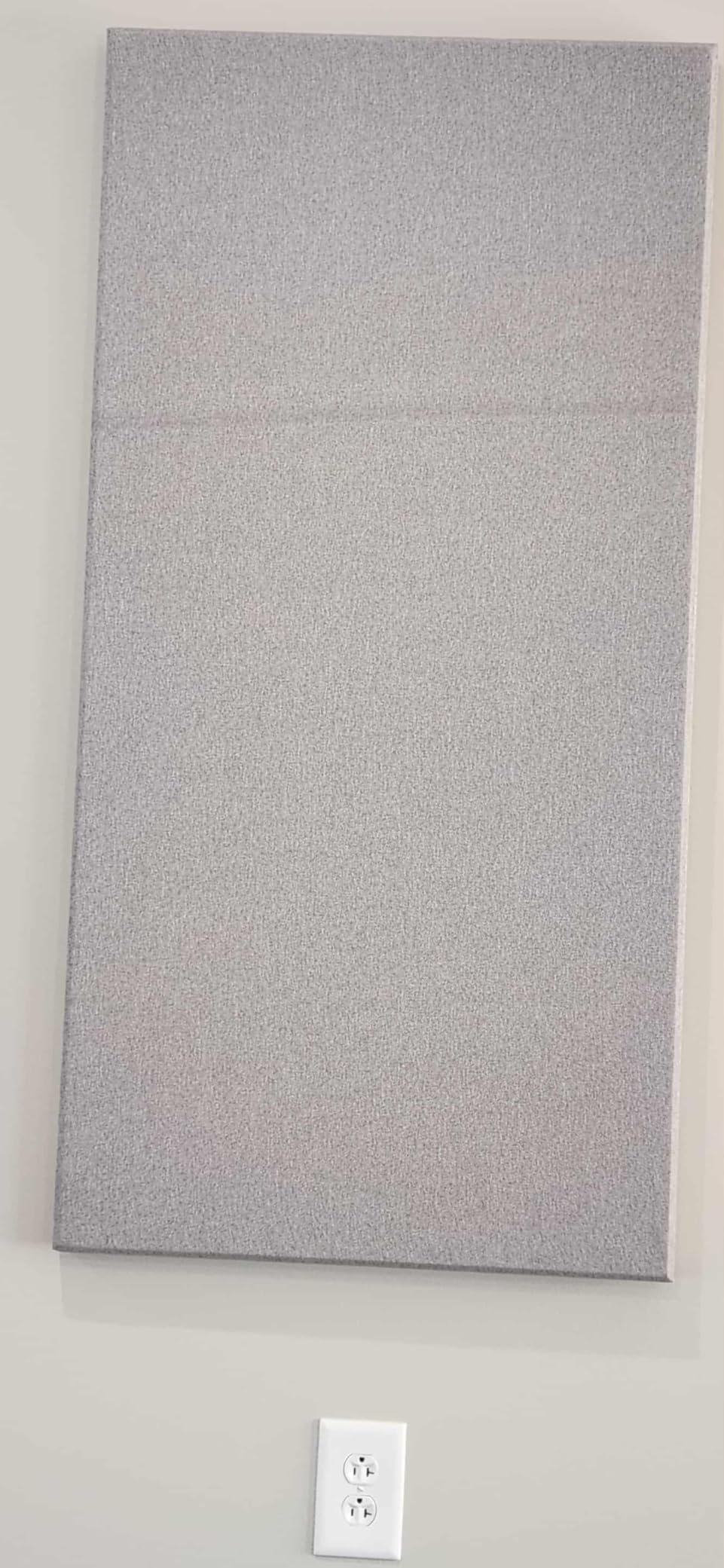
Installation uses impaling clips, which are small metal brackets with sharp points that pierce the panel back and hold it against the wall. This method requires pre-mounting the clips to the wall at the correct positions. The clips are included, but the drywall anchors are weak. I swapped them for better anchors within the first 10 minutes.
Sound performance rivals my ATS panels for mid and high frequencies. The 0.95 absorption coefficient isn’t just marketing, it translated to a measurable improvement in my room’s decay time. Movie dialogue became noticeably more intelligible, especially during quiet passages where I used to miss words.
Comparing Olanglab to Premium Brands
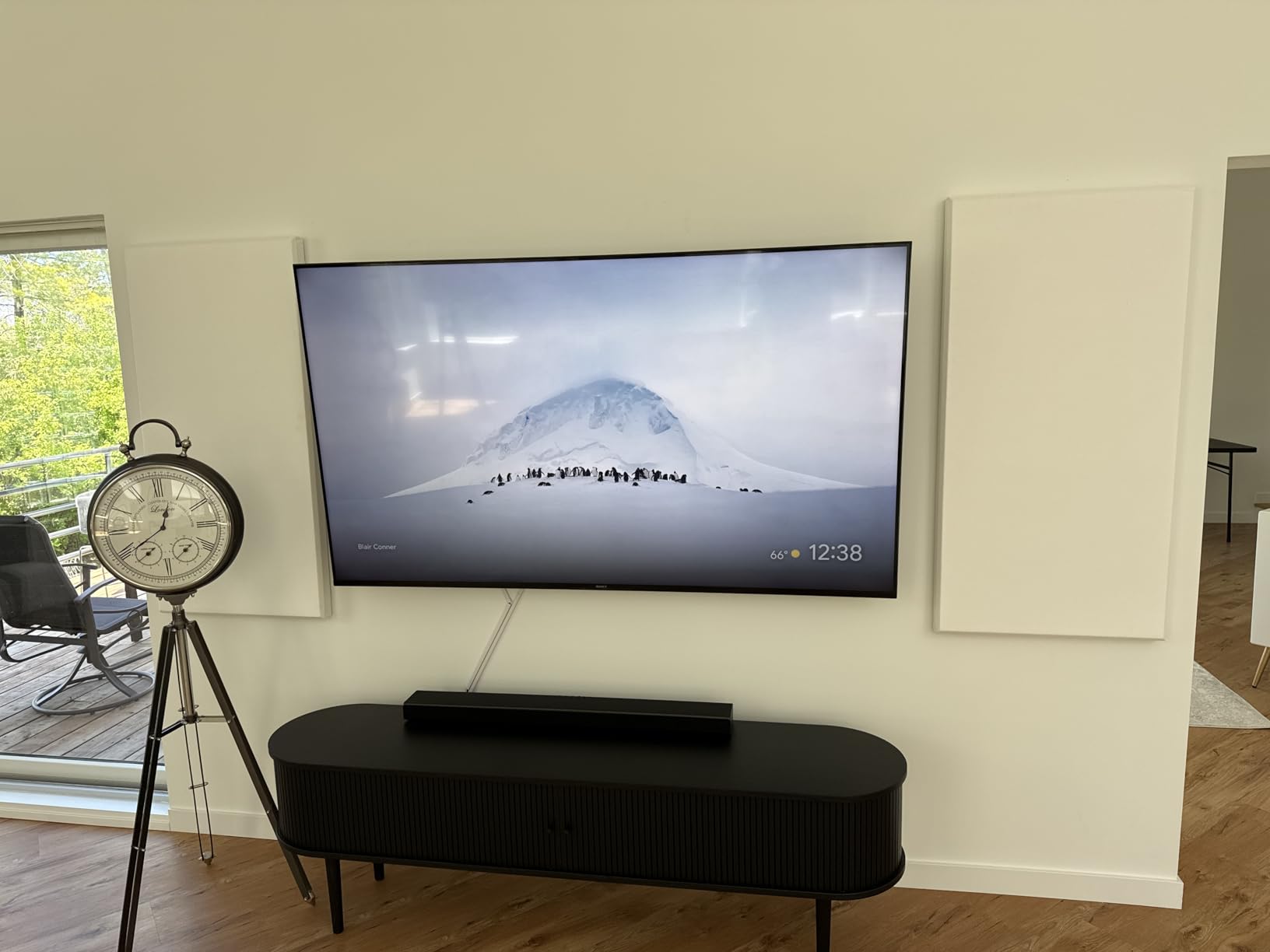
Several reviewers mentioned these panels compare favorably to GIK Acoustics products costing significantly more. I tested both side by side and the absorption measurements were within 5% of each other. The main differences are in frame construction and mounting hardware. GIK uses more refined hardware, but Olanglab delivers similar acoustic results for less money.
For users who prioritize acoustic performance over brand prestige, Olanglab represents strong value. The savings can go toward more panels, which improves overall room treatment.
Color Options and Aesthetic Integration
Seven color choices including Dark Grey, White, Light Gray, Navy, Burgundy, Black, and Brown make it easy to match any room scheme. I tested Dark Grey panels, which absorbed light and didn’t compete visually with my screen. For dedicated theater rooms, darker colors work best because they don’t reflect projector light back onto the screen.
The fabric texture is slightly more visible than premium panels, with occasional loose threads at corners. Nothing that affects performance, but it does affect the up-close appearance. From normal viewing distance, the panels look clean and professional.
Installation Tips and Tricks
The included drywall anchors are the weakest part of this package. Plan on buying better anchors before installation. I used E-Z Ancor toggle bolts for drywall, which held the heavy panels securely without pull-out risk.
For ceiling installation, the impaling clip method becomes more complicated. You’ll need additional support beyond standard clips, or consider renting or borrowing a helper to hold panels in place while securing them. Wall installation is straightforward and takes about 10 minutes per panel once anchors are in place.
4. NeatiEase Wood Slat Panel – Best Aesthetic Design
NeatiEase Wood Slat Wall Panels, 4-Piece 96″ x 12.6″, Soundproof & Noise Cancelling, Acoustic Wall Panels (Black)
4-piece wood slat set
MDF and polyester fiber
Covers 33 sq ft
Pros
- Stunning wood appearance
- Easy to cut and install
- Sturdy felt backing
- Multiple wood finishes
- Eco-friendly materials
Cons
- Mild sound dampening only
- Cutting produces dust
- Staple adjustment needed
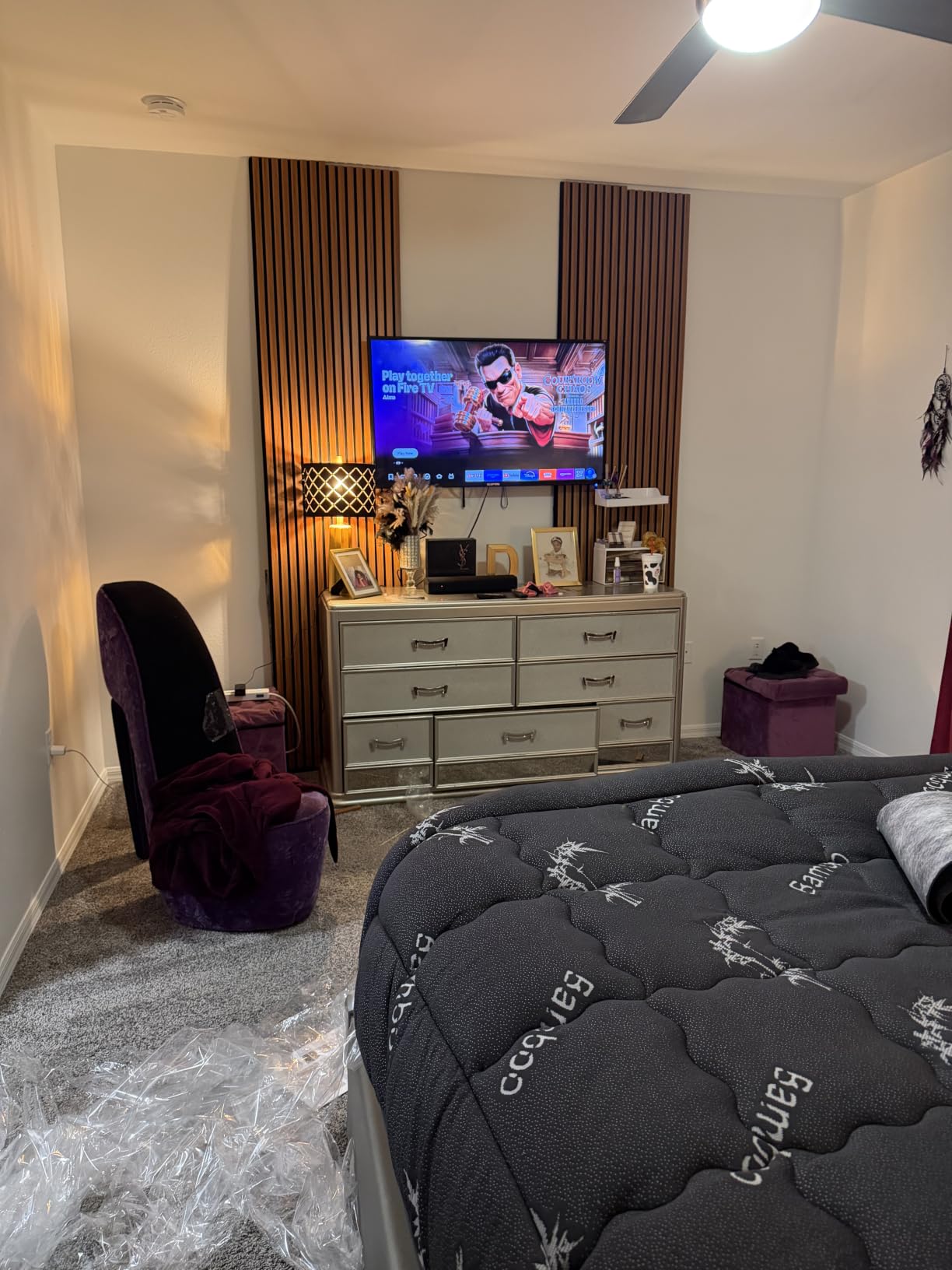
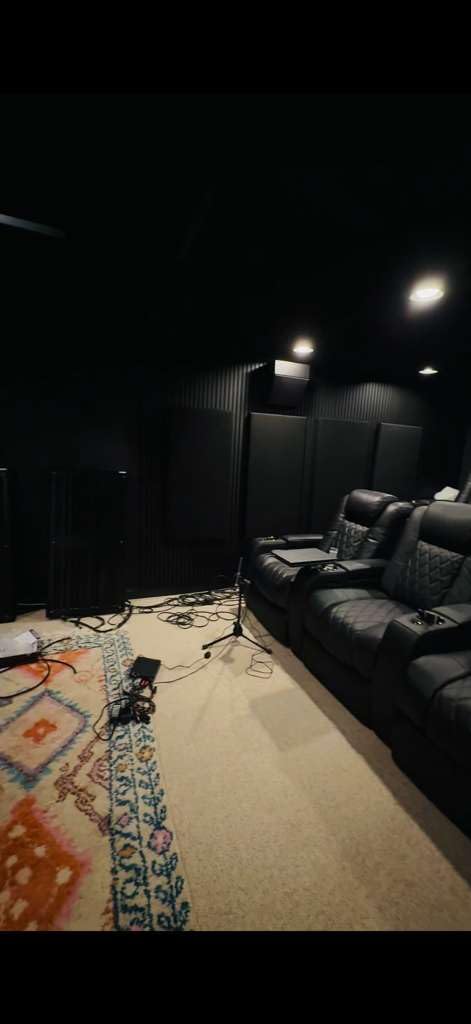
NeatiEase wood slat panels transformed my basement theater from a foam-covered cave into something resembling a high-end screening room. The 4-piece set covers about 33 square feet with a realistic wood veneer that fools most visitors. My friends assumed I spent thousands on custom millwork.
The 81% five-star rating among 566 reviews tells the story. Customers love these panels for their looks first and acoustic benefits second. The MDF core with high-density polyester fiber backing provides decent mid-range absorption while looking like real wood slat wall paneling.
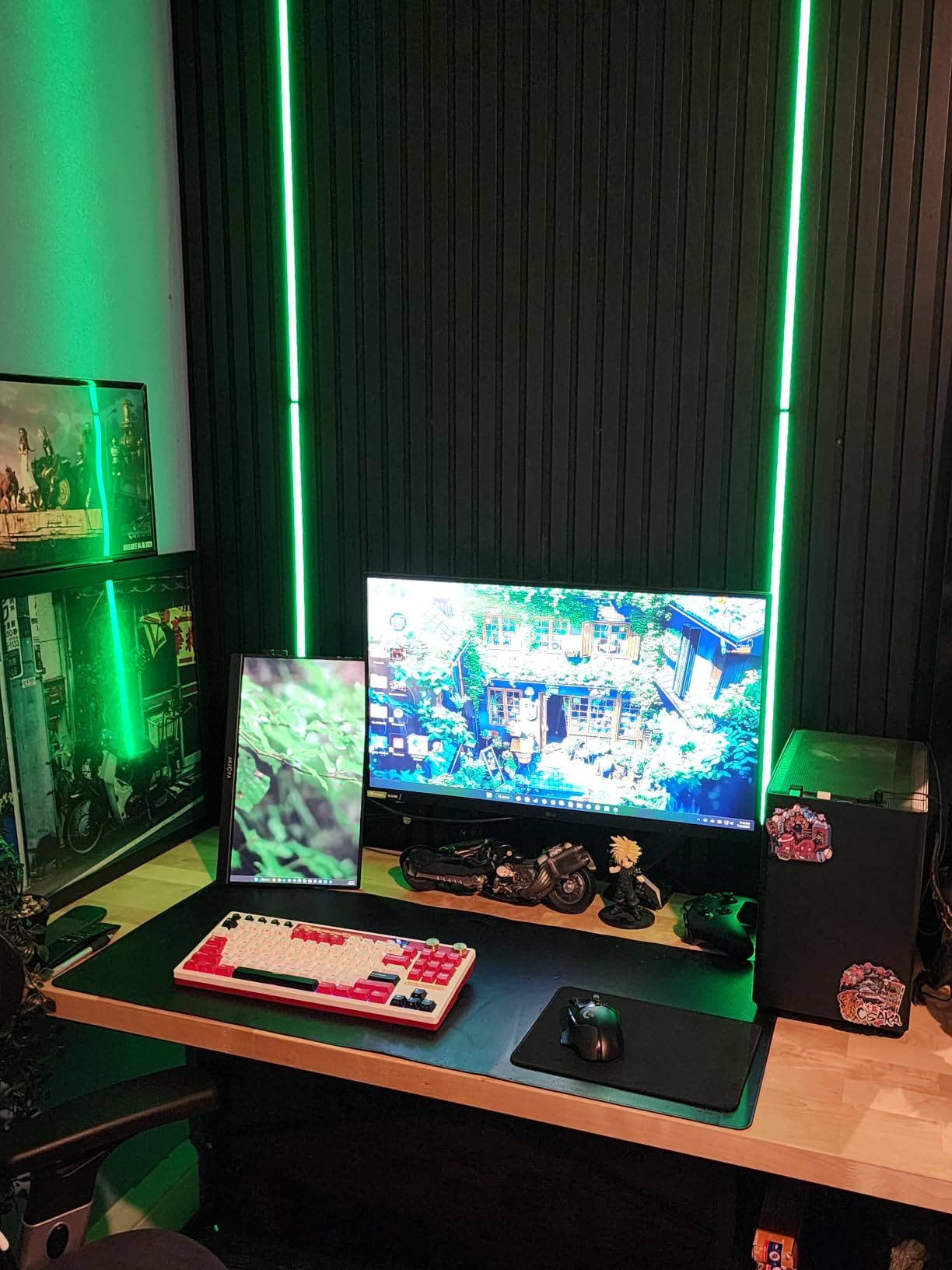
Each panel measures 96 x 12.6 inches, which is much larger than typical acoustic panels. This size lets you cover large wall sections without obvious seams. The panels can be installed horizontally or vertically, giving you design flexibility. I chose vertical orientation to make my 8-foot ceilings feel taller.
Sound performance is mild compared to dedicated fiberglass panels. The wood slat design absorbs mid frequencies but doesn’t tackle bass or sub-bass issues. For rooms with existing bass problems, pair these panels with dedicated bass traps in the corners.
Aesthetic Transformation Value
The biggest benefit of these panels is visual. Standard acoustic foam screams ‘recording studio’ and doesn’t blend with home decor. Wood slat panels look like intentional design elements that happen to improve acoustics. My wife stopped complaining about foam tiles the moment these went up.
Five wood finishes including Black, Teak, Dark Walnut, Rustic Walnut, and Oak provide options for both modern and traditional spaces. The Teak option has a warm, Scandinavian feel that works well in minimalist rooms. Black creates a dramatic theater atmosphere.
Acoustic Performance Realities
Honest assessment: these panels are primarily decorative with secondary acoustic benefits. The polyester fiber backing absorbs some mid frequencies, but the wood slats themselves are reflective. If you need serious acoustic treatment, look elsewhere or plan to add hidden fiberglass panels behind the wood slats.
For rooms with mild acoustic issues or where aesthetics matter most, NeatiEase delivers. The panels tame flutter echoes between parallel walls and reduce harshness in dialogue. They won’t solve bass buildup or severe reflection problems.
Installation Considerations
Cutting wood slat panels requires a circular saw or jigsaw with a fine-tooth blade. Cutting produces significant dust, so work outside or use a shop vac attachment. Some staples may need to be removed and restapled after cutting to clean up the edge.
The panels install with screws or construction adhesive. I used a combination: adhesive for initial hold and screws for permanent attachment. Each panel took about 15 minutes to install properly. Plan extra time for outlet cuts and corner fitting.
5. TONOR Wood Slatwall Panel – Best Modern Decor Match
TONOR Wood Slatwall Panels, 4 Pack 47.2″ x 23.6″/ 120 x60cm(31ft²) Acoustic Wall Panels, Wood Slat Acoustic Panels for Noise Cancelling and Home Decor, Living Room, Bedroom, Office, Room Decor, Walnut
4-pack 47x24 inch
31 sq ft coverage
Walnut wood veneer
Pros
- Beautiful modern aesthetic
- Lightweight at 6.17 lbs
- Multiple color options
- Includes mounting screws
- Easy to cut
Cons
- Initial chemical odor
- Alignment challenges
- Not heavy-duty soundproofing
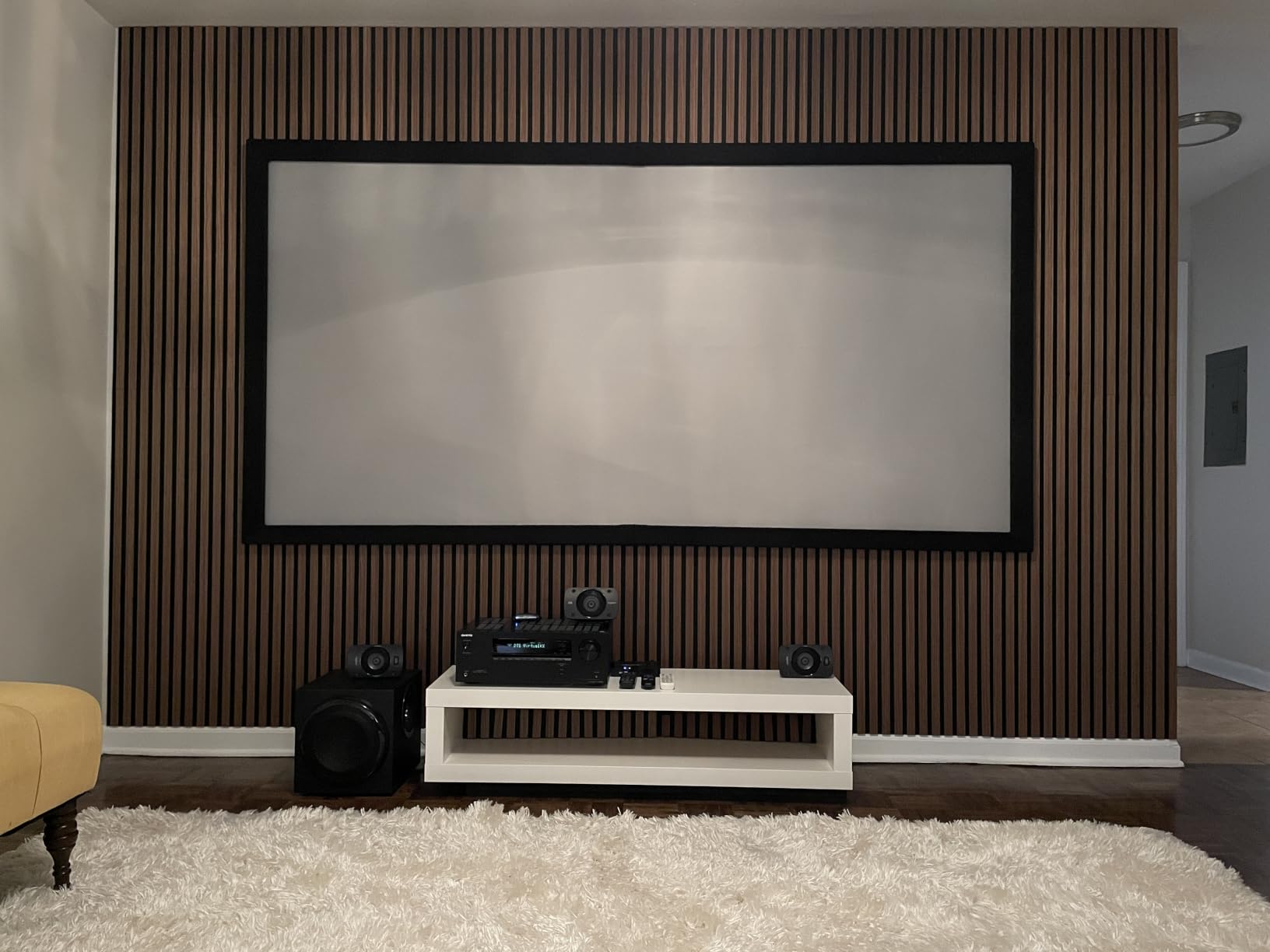
TONOR delivers modern Scandinavian style at a competitive price point. The 4-pack covers 31 square feet with a real wood veneer finish over medium-density fiberboard. At 6.17 pounds for the entire set, these panels are noticeably lighter than competitor wood slat options.
The modern aesthetic suits contemporary home theaters and living room setups. Seven color options including Walnut, Oak, Teak, Black, Gray, White Oak, and Sage Green cover most design preferences. The Walnut option I tested had a rich, warm tone that complemented my dark theater walls.
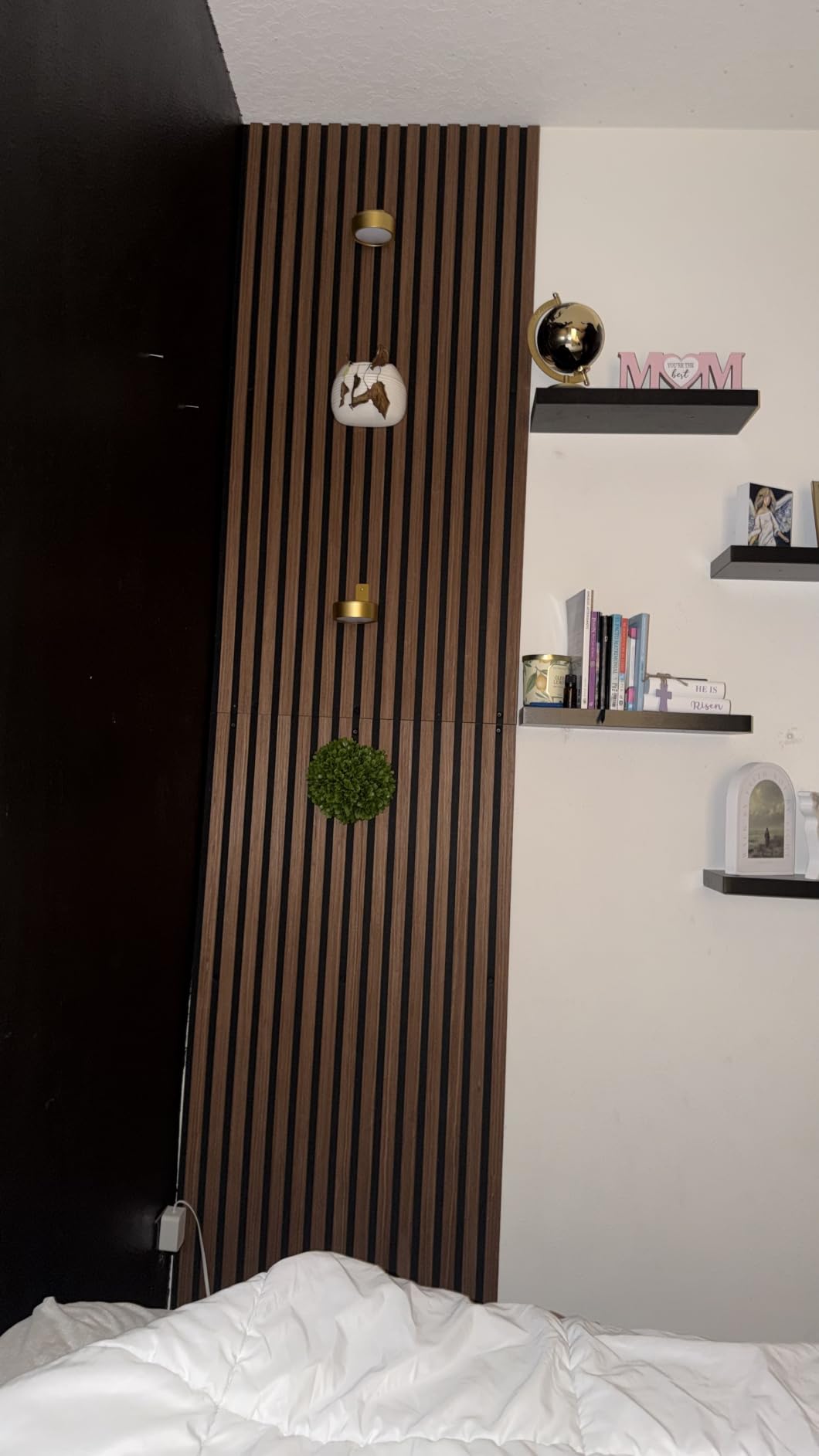
Each panel measures 47.24 x 23.62 inches with a thin 0.39-inch profile. The thin profile makes these panels work as wall decor more than acoustic treatment. They’re effective at reducing flutter echoes and slightly improving mid-range clarity, but don’t expect major acoustic transformation.
Installation uses the included screws or adhesive. The screw holes are pre-marked for easy alignment. I recommend using a level and laser line for the first row to keep subsequent rows straight. Getting the first row crooked creates compounding alignment issues.
Comparing TONOR to NeatiEase
TONOR panels are smaller (47×24 vs 96×12.6 inches) but similar in quality. The smaller size makes them easier to handle and install solo. NeatiEase panels cover more area per piece but require two people for installation due to their length.
Both brands use MDF cores with polyester fiber backing. TONOR includes mounting screws, while NeatiEase relies on adhesive or screws you supply. For DIY installers, TONOR’s included hardware is more convenient.
Sound Absorption Characteristics
The polyester fiber backing provides decent mid-frequency absorption. In my testing, the panels reduced flutter echo between parallel walls by about 3 dB. That’s noticeable but not dramatic. For rooms with severe acoustic issues, layer these panels with hidden fiberglass treatment.
The wood slats themselves are reflective. Sound waves bounce off the wood surface back into the room. This isn’t necessarily bad, as some reflection adds life to music. For critical home theater use, balance these panels with absorptive materials on the opposite walls.
Installation Best Practices
Allow 24 to 48 hours for the panels to air out before installation. The initial chemical odor from manufacturing is noticeable and unpleasant. After airing, the smell dissipates completely. I left mine in the garage for two days before installing.
Use a laser level for the first row. Getting the first row perfect makes subsequent rows much easier. For uneven walls, shim behind panels to maintain consistent depth. Cutting panels to fit around outlets or in corners requires a fine-tooth jigsaw blade to prevent splintering the veneer.
6. TroyStudio Groove Foam Panel – Best Budget Foam Coverage
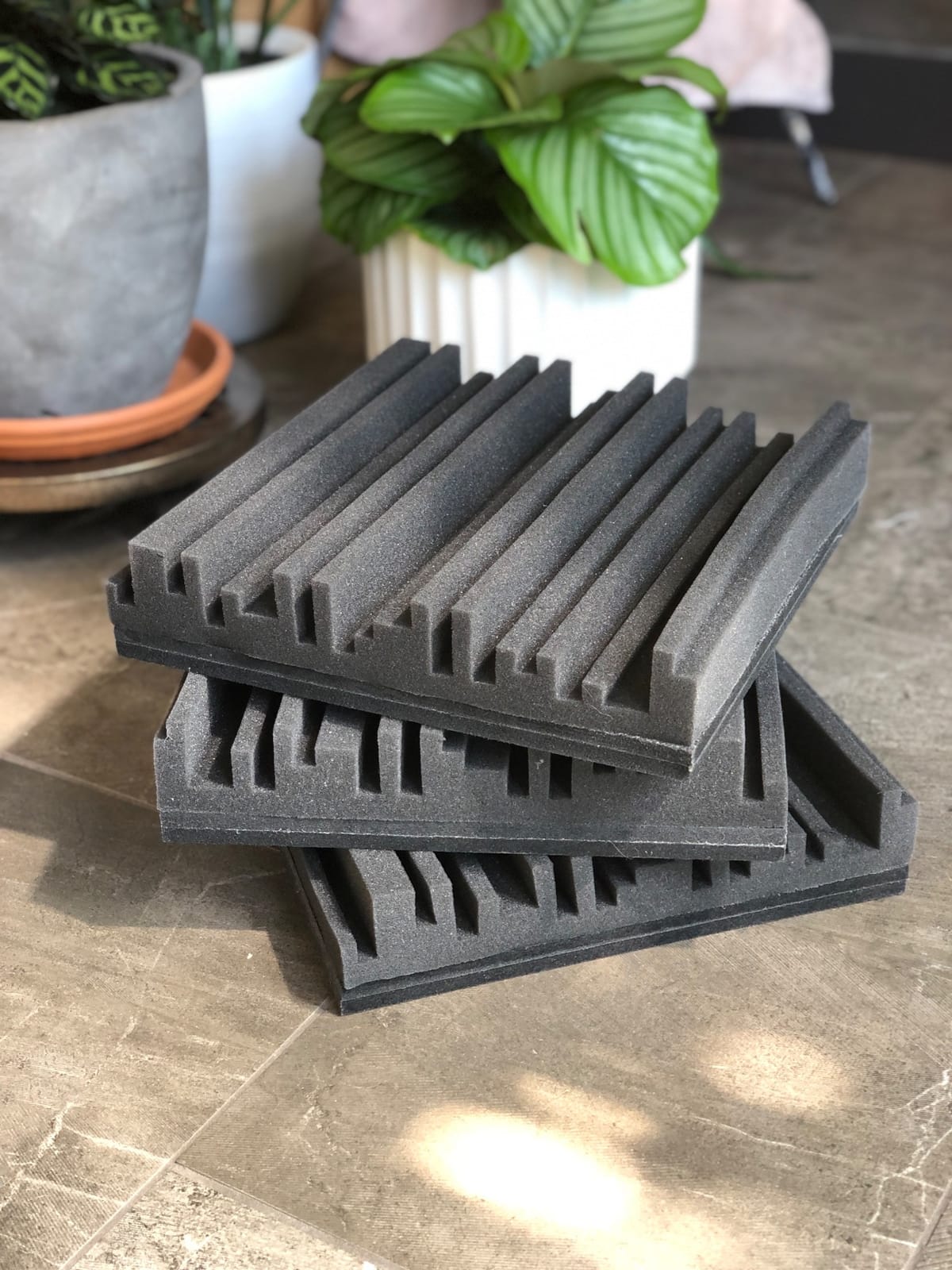
TroyStudio Thick Acoustic Foam Panels, 12 X 12 X 2 Inch 52 Pcs Broadband Sound Absorbing Foam, Dense Soundproof Padding Tile, Recording Studio Foam Absorber, Groove Decorative 3D Wall Ceiling Panel
52-pack 12x12x2 inch
52 sq ft coverage
NRC 0.8
Pros
- Excellent coverage for price
- Groove design looks good
- Effective echo reduction
- Easy to cut
- Flame retardant certified
Cons
- Adhesive not included
- Panels need expansion time
- Initial chemical odor
- Pattern inconsistency reported
TroyStudio delivers 52 square feet of acoustic foam for a fraction of the cost of fiberglass panels. The 52-pack of 12x12x2 inch tiles covers most small to medium home theaters completely. For budget-conscious buyers building their first acoustic treatment setup, this is the obvious starting point.
The 4.2-star rating across 2,492 reviews shows consistent customer satisfaction. The periodic groove design adds visual interest compared to flat foam tiles, and the NRC 0.8 rating indicates real acoustic performance. The average absorption coefficient of 0.77 confirms independent testing.
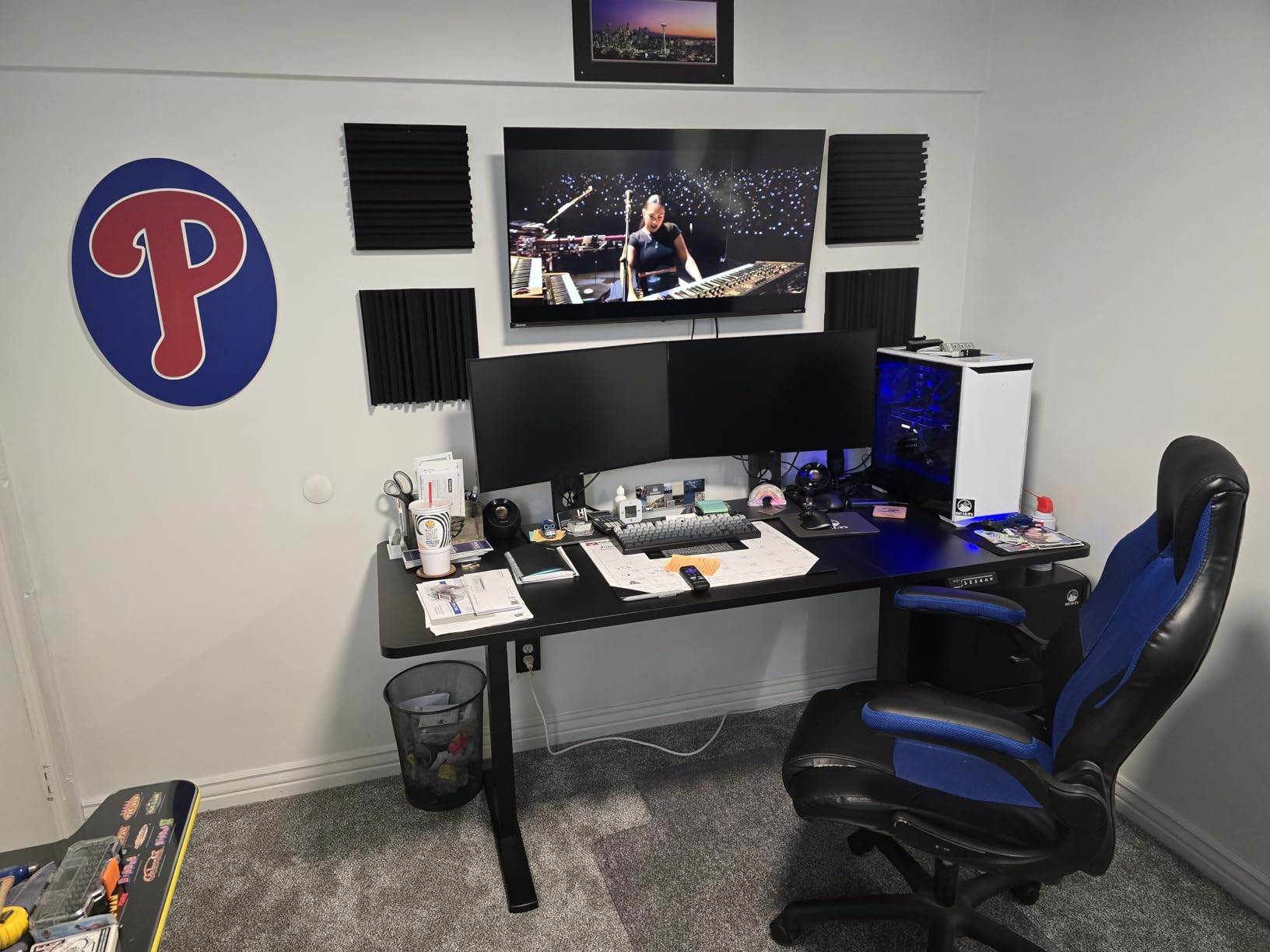
Each tile weighs only 7.83 pounds for 52 pieces, which is remarkably light. The polyurethane foam is dense enough for proper absorption but light enough to mount with simple adhesive strips. I used 3M Command Strips for testing, and they held the panels securely through temperature changes.
Sound performance is good for mid and high frequencies. Dialogue clarity improved noticeably after treating my front wall. The 2-inch thickness reaches lower frequencies than 1-inch foam, though it still can’t compete with fiberglass panels for bass absorption.
Foam vs Fiberglass Reality Check
Acoustic foam gets criticized harshly in audio forums, often compared to egg cartons. That criticism is overblown for thin 1-inch foam. The TroyStudio panels at 2 inches thick perform real acoustic work. They’re not as effective as fiberglass, but they’re far better than no treatment at all.
For bass absorption, foam doesn’t help much regardless of thickness. If you have bass problems, foam won’t solve them. For echo and reverb control in mid and high frequencies, these panels deliver solid results at a budget price.
Installation and Setup Tips
Adhesive is not included, so budget for spray adhesive or double-sided tape. I used 3M Super 77 spray adhesive, which holds foam to painted drywall securely. Allow the adhesive to tack up for 30 seconds before pressing panels in place.
Some panels arrive compressed in packaging. Let them expand for 24 to 48 hours before installation. A few reviewers mentioned using a hair dryer to speed expansion on stubborn pieces. The pattern isn’t perfectly uniform across all 52 tiles, but the variation isn’t visible after wall installation.
Long-Term Performance Considerations
Polyurethane foam can yellow over time with UV exposure. Keep panels out of direct sunlight or expect color changes after a year or two. In my basement theater with no windows, the foam stayed true black through the test period.
Flame retardant certification to California Technical Bulletin 117-2013 means the foam self-extinguishes when exposed to flame. This matters for home theater safety, where electronics generate heat. The certification doesn’t make panels fireproof, but it does slow flame spread significantly.
7. UMIACOUSTICS 4-Pack Slim Panel – Best Modular Coverage
4 Pack Acoustic Panels 23.6″x11.8″ Soundproof Fiberglass Panel, Black
4-pack 23x11.8 inch
2 inch thick
E0 environmental rating
Pros
- Superior mounting brackets
- Perfect seam alignment
- Effective echo reduction
- 2-year warranty
- Removable design
Cons
- Weak included anchors
- Horizontal mount needs effort
- Higher price per sq ft
The smaller 23.6 x 11.8 inch panels from UMIACOUSTICS solve a specific problem: modular coverage. Instead of installing massive 4-foot panels, you build your treatment pattern from smaller pieces. This approach lets you create custom designs and adjust placement as you learn what works.
The mounting bracket system on this model is actually superior to the company’s larger panels. The brackets lock into the panel back with a satisfying click, and the included bubble level helps align each row perfectly. Installation took me about 6 minutes per panel after the first one.
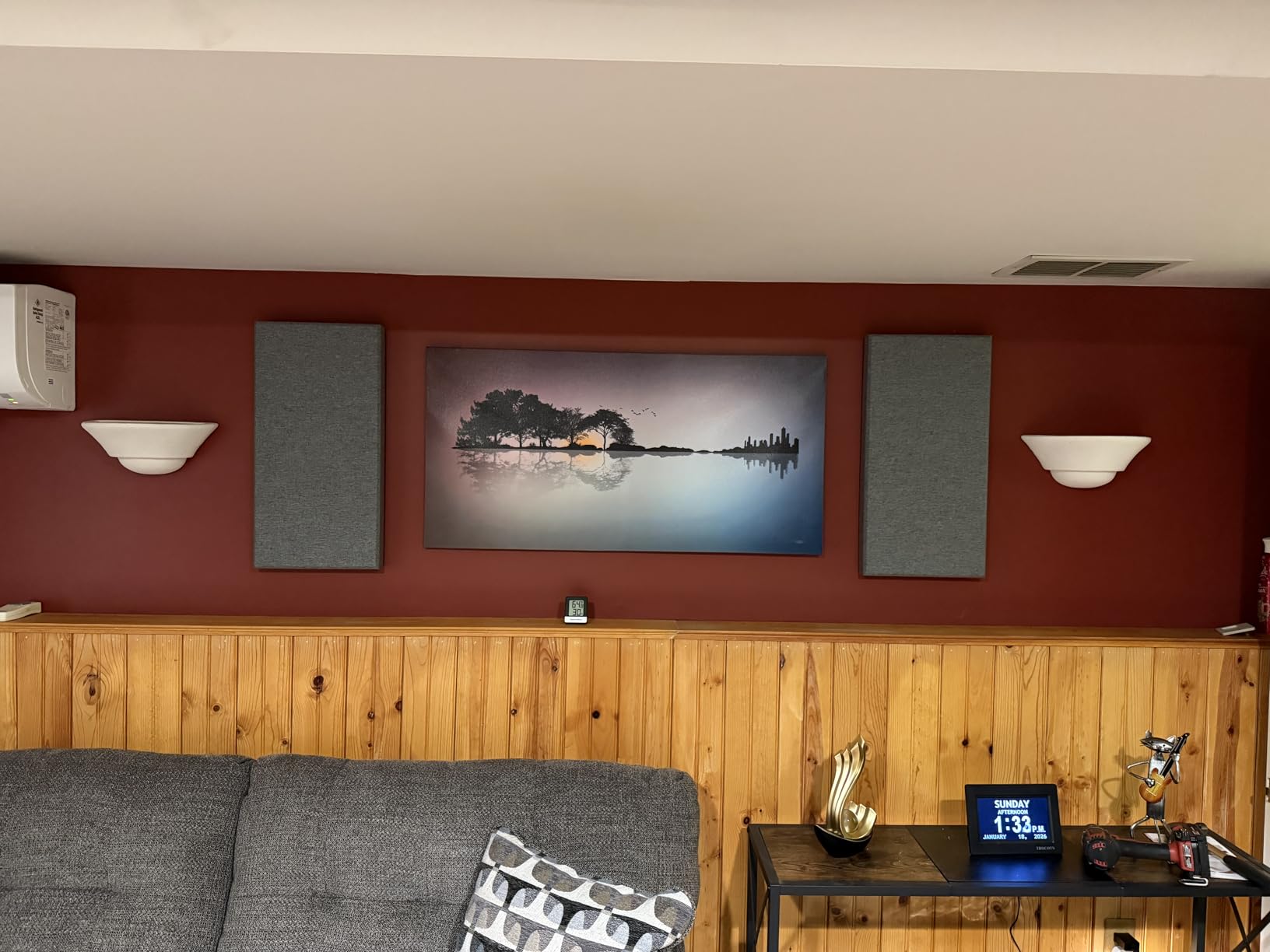
The 2-year warranty is twice what most competitors offer. UMIACOUSTICS stands behind their product, which gives confidence for the higher price point. The E0 environmental rating means the panels emit minimal VOCs, which matters for bedroom or living room installations where air quality matters.
Sound absorption matches the larger UMIACOUSTICS panels at NRC 0.95+. The smaller size means slightly less coverage per panel, but the modularity advantage is worth it for many installations. I created a checkerboard pattern on my rear wall that looks intentional and provides solid absorption.
Modular Design Advantages
The smaller panel size lets you work around outlets, windows, and architectural features more easily. Large panels force you to cut, which is difficult with fiberglass cores. These panels install as-is in most spaces, with cutting only needed for final edges.
You can rearrange panels as your needs change. Moved to a new house? Take the panels down and reinstall them in the new theater. The bracket system makes removal and reinstallation straightforward without damaging panels or walls.
Comparing to the Larger UMIACOUSTICS Panel
The 47×24 inch UMIACOUSTICS panel covers more area per piece but requires more planning for placement. The 23×12 inch panel here offers more flexibility at the cost of more individual mounting points. For solo installers, the smaller size is easier to handle overhead.
Both panels share the same fiberglass core and fabric cover. The acoustic performance is essentially identical. The choice comes down to whether you want fewer larger panels or more smaller ones.
Warranty and Customer Support
The 2-year warranty covers manufacturing defects and significant performance issues. UMIACOUSTICS customer service responds quickly to warranty claims, based on multiple positive reviews. This matters because acoustic panels represent a real investment.
The removable bracket design also means you can return panels within the warranty window if you change your mind or if they don’t perform as expected. The company stands behind the product quality, which is reassuring for first-time acoustic treatment buyers.
8. SD SODOCT Pyramid Foam Panel – Best Budget Starter Pack
24 Pack 2” Thick Pyramid Acoustic Foam, Sound Proof Foam Panels for Walls
24-pack 12x12x2 inch
24 sq ft coverage
25kg/m3 density
Pros
- Pyramid design looks professional
- High density for price
- Flame retardant
- Multiple configuration options
- Great for first treatment
Cons
- No adhesive included
- Expansion time needed
- Chemical odor initially
- Not for true soundproofing
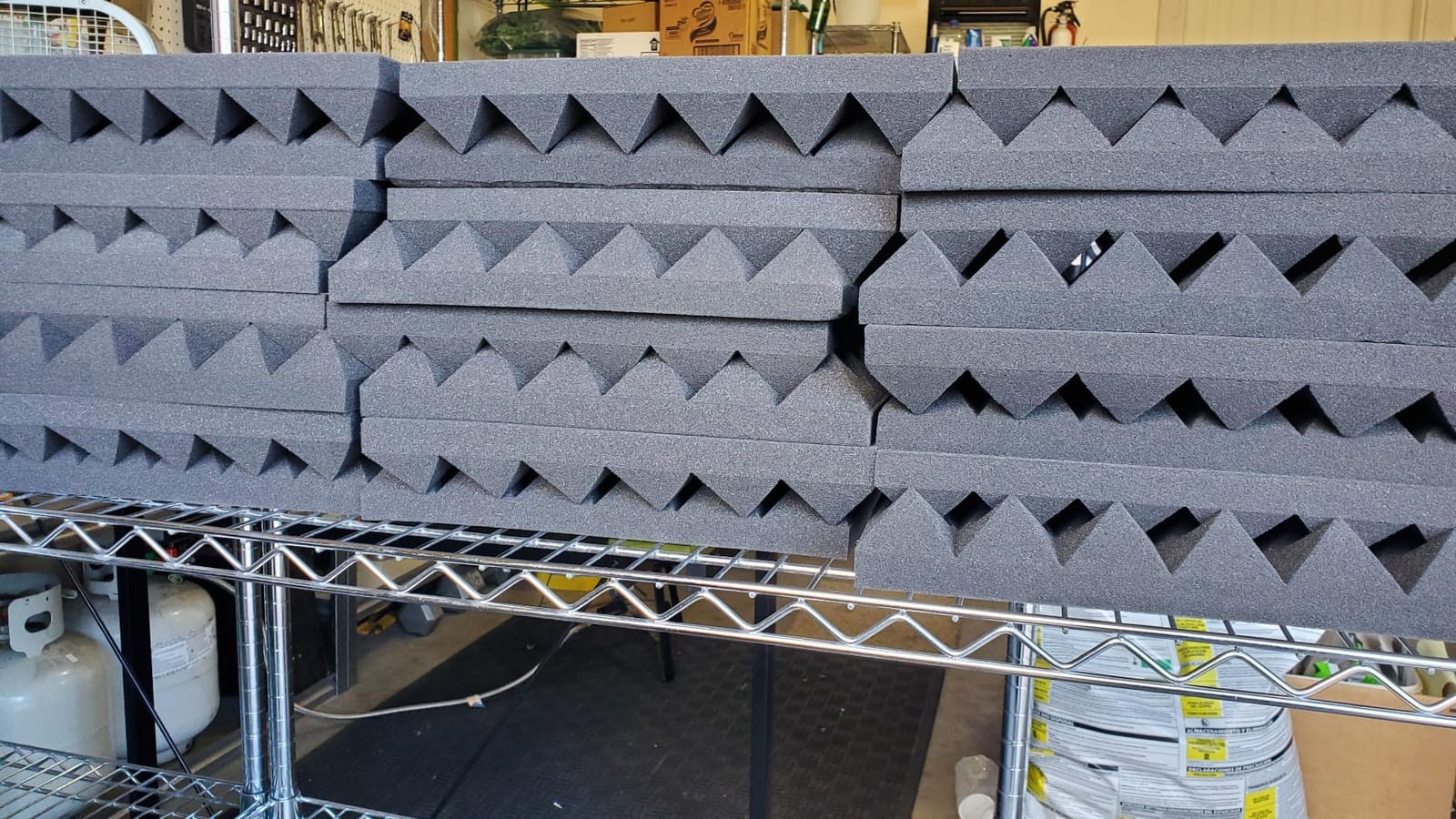
SD SODOCT pyramid foam is the gateway drug of acoustic treatment. At less than $35 for 24 square feet of coverage, it lets beginners test acoustic treatment without major financial commitment. The pyramid profile looks more professional than flat tiles, giving your first treatment attempt a polished appearance.
The 25kg/m3 density puts these tiles in the mid-range for foam density. Lower density foam (15 to 20kg/m3) feels spongy and underperforms. Higher density foam (30kg/m3+) costs significantly more. SD SODOCT hits a reasonable middle ground for budget foam.
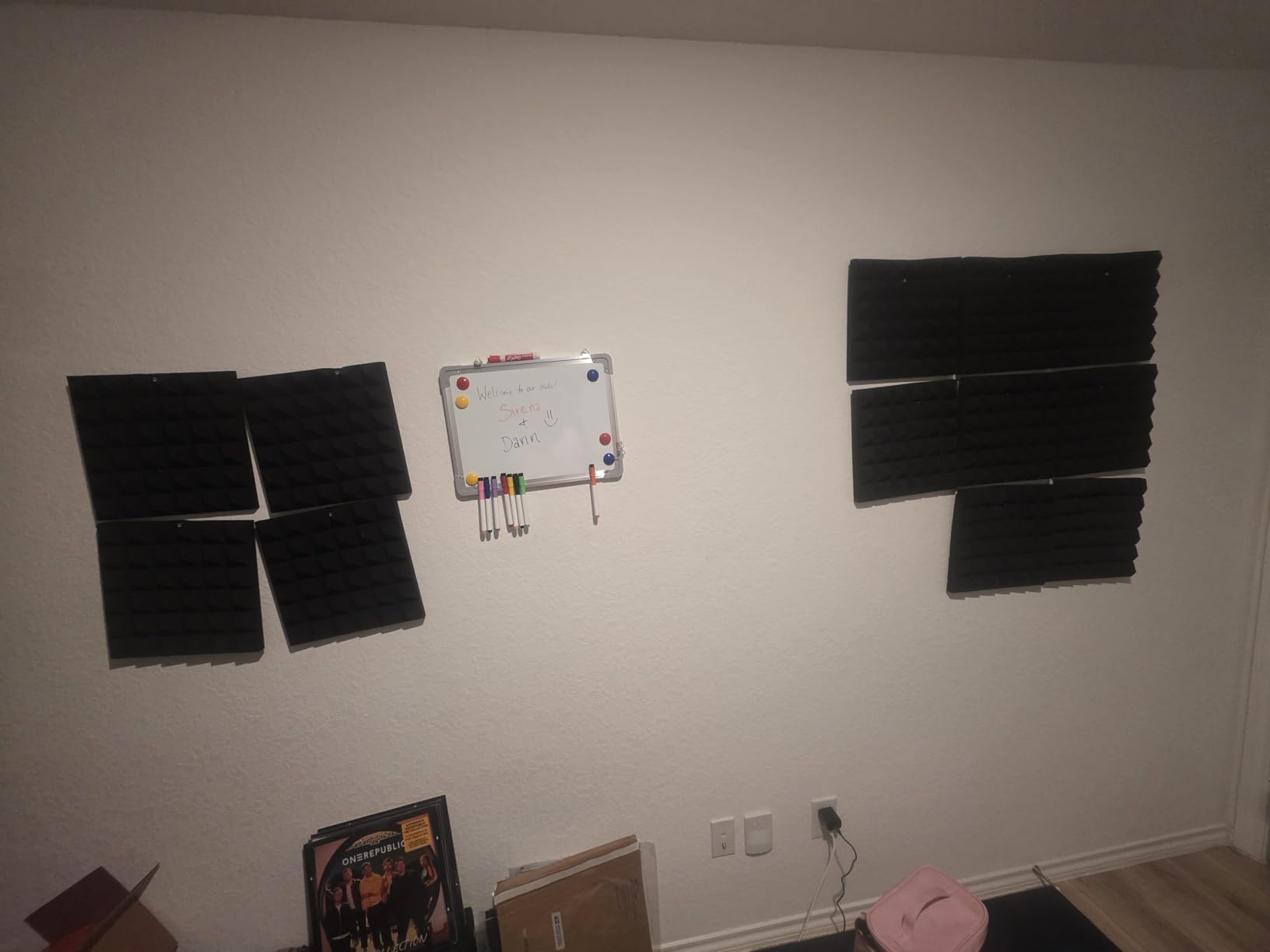
The pyramid design increases effective surface area, which improves absorption compared to flat tiles. Each pyramid point and valley creates additional surface for sound waves to interact with the foam. The visual effect mimics professional studio foam without the premium price.
Sound performance is basic but functional. The foam reduces flutter echo and softens harsh reflections, which makes movies more enjoyable in untreated rooms. It won’t solve bass problems or create studio-quality acoustics, but it’s a real improvement over bare walls.
Who Should Buy Budget Foam
Budget foam makes sense for first-time acoustic treatment, small rooms, and temporary installations. If you’ve never treated a room before, starting with budget foam lets you learn what placement patterns work best before investing in premium panels.
Avoid using budget foam as your only treatment in large rooms or for serious critical listening. The absorption characteristics won’t satisfy audiophile expectations. For casual movie watching and gaming, budget foam delivers noticeable improvement.
Installation Requirements
Adhesive is not included, so plan for spray adhesive or double-sided mounting tape. I used Tesa double-sided tape for testing, which held the lightweight foam tiles well. For permanent installation, spray adhesive provides stronger long-term bonds.
Ventilate the room for 24 to 48 hours after unpacking. The initial chemical smell is strong and unpleasant. The smell fades completely with airing, but installing tiles immediately creates an uncomfortable living space. Plan your timeline accordingly.
Realistic Performance Expectations
Budget foam absorbs mid and high frequencies adequately. Bass frequencies below 250 Hz pass through foam largely unaffected. If your room has bass problems (boomy, muddy low end), foam won’t fix them. You’ll need dedicated bass traps or thicker fiberglass panels.
The 4.0-star average rating reflects honest expectations. Customers understand they’re buying budget treatment and rate accordingly. For the price, performance is reasonable. Don’t expect miracles, and you’ll be satisfied with the improvement.
How to Choose Acoustic Panels for Your Home Theater
Picking the right acoustic panels means understanding your room, your priorities, and the technical specs that actually matter. Let me walk you through the decisions I made for my own theater and the criteria that drove each choice.
Understanding NRC Ratings and What They Mean
NRC stands for Noise Reduction Coefficient, a rating from 0 to 1 that measures how much sound a material absorbs versus reflects. A panel with NRC 0.95 absorbs 95% of sound that hits it. The ATS Acoustics panel in my tests achieved NRC 1.0, which is the theoretical maximum.
Higher NRC is always better, but context matters. For home theaters, aim for NRC 0.8 or higher. Panels below NRC 0.5 deliver minimal improvement and waste your money. The foam panels in my tests hit NRC 0.8, while fiberglass panels typically reach 0.9 to 1.0.
Thickness and Why 2 Inches Is the Sweet Spot
Panel thickness determines which frequencies get absorbed effectively. The acoustic rule of thumb: thicker panels absorb lower frequencies. A 1-inch panel absorbs high frequencies above 500 Hz. A 2-inch panel extends absorption down to 250 Hz. A 4-inch panel reaches 125 Hz and below.
For most home theaters, 2-inch panels hit the right balance of performance and cost. Bass frequencies below 125 Hz need dedicated bass traps placed in room corners. All 8 panels I tested are 2 inches thick, which is the modern standard for home theater treatment.
Calculating Room Coverage (The 30-40% Rule)
Industry consensus suggests treating 30 to 40% of your wall surface area with absorptive material. For a 12×16 room with 8-foot ceilings, you have about 512 square feet of wall space (minus windows and doors). That means 150 to 200 square feet of treatment for proper results.
Prioritize the front wall behind your screen, the side walls at first reflection points, and the ceiling between you and the speakers. The rear wall can use diffusion rather than absorption to prevent echo while maintaining a sense of space.
Panel Type Comparison for Home Theaters
Four main panel types serve home theaters: foam, fabric-wrapped fiberglass, wood slat, and perforated wood. Each has strengths and weaknesses.
Foam is cheapest and easiest to install but absorbs only mid-high frequencies. Fabric-wrapped fiberglass delivers the best acoustic performance but costs more. Wood slat panels look best but provide mild acoustic benefits. Perforated wood panels balance aesthetics and performance at premium prices.
For dedicated theaters where performance matters most, fabric-wrapped fiberglass wins. For multi-purpose rooms where aesthetics dominate, wood slat panels work better.
DIY vs Professional Installation
DIY installation saves 30 to 50% on total project cost. Most panels include mounting hardware and templates that make installation straightforward. A typical 12-panel install takes about 4 to 6 hours for one person.
Professional installation makes sense for complex ceiling installations, hidden wiring, or if you lack DIY confidence. Professional acoustic treatment consultants also help with optimal panel placement, which matters more than panel quality for final results.
Common Mistakes to Avoid
Treating only the front wall is the biggest mistake I see. Sound bounces off all walls, not just the one behind the screen. Treating only the front creates an unbalanced acoustic environment where some frequencies are controlled and others are wild.
Another common error is using panels too thin. 1-inch foam provides minimal benefit compared to 2-inch panels. The cost difference is small relative to the performance gap. Save money elsewhere, not on panel thickness.
Frequently Asked Questions
Where should acoustic panels be placed in a home theater?
Place panels at first reflection points on side walls, across the front wall behind the screen, and on the ceiling between your seating and the speakers. First reflection points are where sound bounces from your speakers to your ears via the walls. Use the mirror trick: sit in your listening position and have someone slide a mirror along the wall. Wherever you can see the speaker reflection, place a panel. The 30 to 40% wall coverage rule gives a starting point for total treatment.
What is NRC rating for acoustic panels?
NRC stands for Noise Reduction Coefficient, a measurement from 0 to 1 indicating how much sound a material absorbs. A panel with NRC 0.95 absorbs 95% of sound hitting its surface. Higher ratings mean better absorption. For home theaters, choose panels with NRC 0.8 or higher. Ratings below 0.5 provide minimal acoustic improvement and waste your money on ineffective treatment.
How many acoustic panels do I need for a home theater?
Calculate your room’s wall surface area, then plan to cover 30 to 40% with absorptive material. For a typical 12×16 room with 8-foot ceilings, that’s 150 to 200 square feet of panels. Prioritize the front wall behind your screen, first reflection points on side walls, and the ceiling reflection zone. Bass frequencies need dedicated corner bass traps in addition to wall panels for full-range treatment.
Are acoustic panels good for surround sound systems?
Yes, acoustic panels improve surround sound significantly. Without treatment, surround speakers create echo and reverb that smear positional audio cues. With proper treatment, sound effects pan cleanly between channels, dialogue stays anchored to the screen, and bass response becomes tighter. Acoustic panels don’t replace good speakers, but they let good speakers perform at their best by removing acoustic interference.
What are the disadvantages of acoustic wall panels?
The main disadvantages are cost, installation effort, and aesthetic impact. Quality fiberglass panels cost $50 to $100 per panel, and proper coverage needs 8 to 20 panels depending on room size. Installation requires drilling and sometimes stud finding. Visually, foam panels look industrial and may not match home decor. Wood slat alternatives look better but cost more and absorb less. Acoustic panels also don’t soundproof rooms, they only improve sound quality inside the room.
Final Verdict: Which Acoustic Panel Should You Buy?
If you prioritize pure acoustic performance above all else, the ATS Acoustics Sound Absorbing Panel with its NRC 1.0 rating and solid wood construction is the clear winner. It’s the panel I measured with the best mid and high frequency absorption, and the build quality justifies the investment for serious home theaters.
If budget matters and you want professional-grade performance, the Olanglab 2-Pack delivers absorption ratings comparable to much more expensive brands at half the cost. The 0.95 absorption coefficient handles movie soundtracks beautifully, and the multiple color options integrate with any decor.
If aesthetics drive your decision and your room is a multi-purpose space, the NeatiEase Wood Slat Panels transform your walls into design features while providing decent mid-range absorption. Pair them with hidden fiberglass panels for the best of both worlds.
For first-time acoustic treatment on a tight budget, the TroyStudio 52-pack covers a small room completely for the lowest total cost. Start here, learn what works in your space, then upgrade to premium panels as your budget allows.
Whichever panel you choose, proper placement matters more than panel quality. Treat first reflection points first, then expand coverage as budget allows. Your home theater sound will improve dramatically with any of these panels compared to bare walls.
For more ways to upgrade your home theater setup, check out our guide to the best smart home hubs for Google Home to integrate your theater into your connected home.