
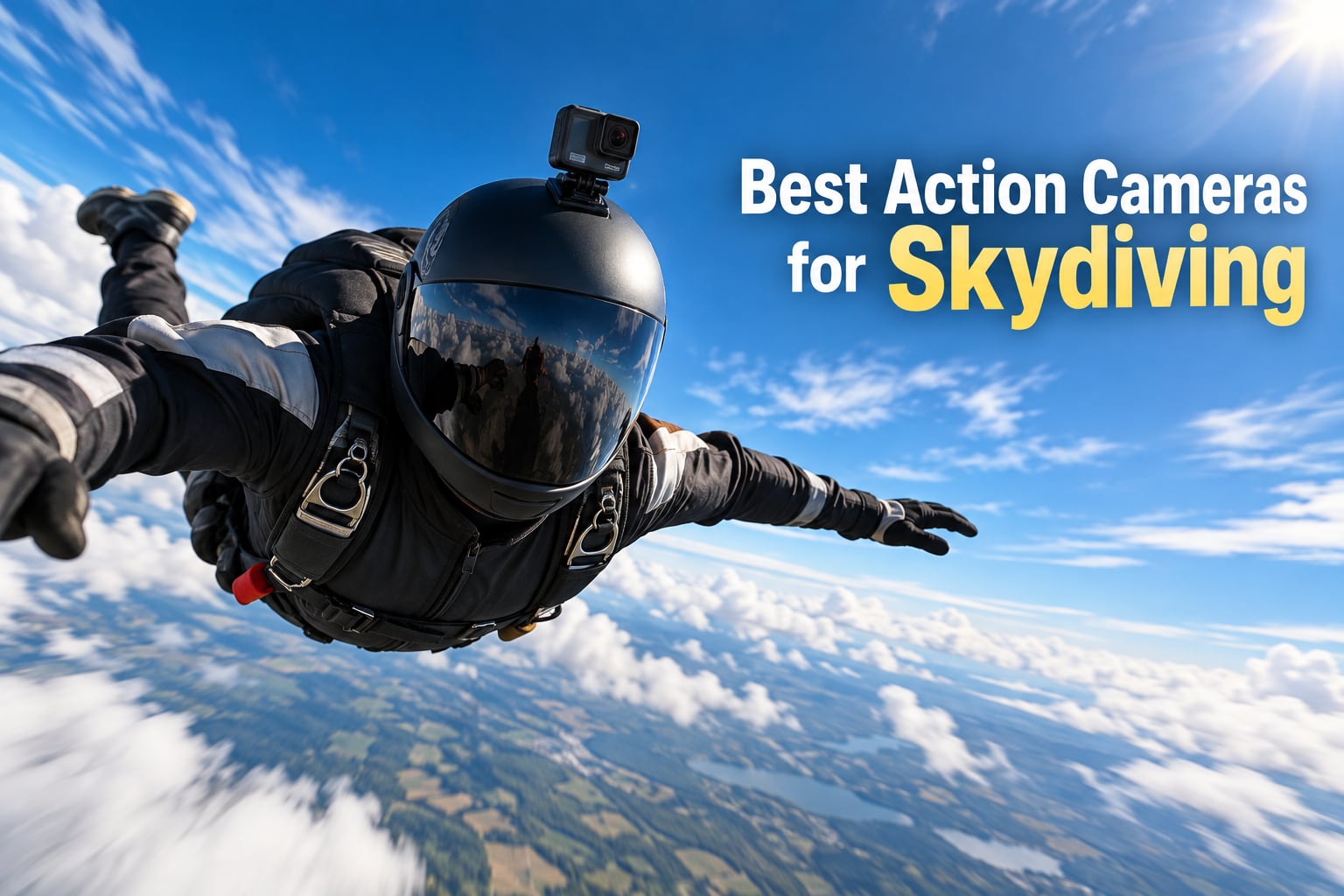
The best action camera for skydiving is the GoPro HERO13 Black for most jumpers, with the DJI Osmo Action 6 as the strongest runner-up and the Insta360 Ace Pro 2 for low-light freefall footage. After comparing 8 cameras against real skydiving demands — 120 mph wind buffeting, sudden rotation, helmet snag risk, and a full day of jumping — our team picked cameras that survive freefall, stay flat on your helmet, and keep footage smooth from exit to landing.
I have logged over 200 jumps wearing GoPros, DJIs, and 360 cams on top, side, and chin mounts. I have lost footage to dead batteries, watched cheap Amazon cams shake themselves apart in freefall, and burned through three generations of GoPros trying to find the right balance of image quality, stabilization, and snag safety. This guide is what I wish I had before my first helmet jump.
Whether you are a tandem passenger on jump one or a licensed jumper with 500 freefalls looking for cinematic swoop footage, we cover cameras for every experience level — plus a freefall settings cheat sheet, a mount-by-position snag analysis, and an honest answer to the PAA question: can you really skydive with a GoPro on your first jump?
Our Top 3 Tested Action Cameras for Skydiving in 2026
If you only have 30 seconds, these three cameras handle 90% of skydiving use cases from helmet mount to wrist mount. The GoPro HERO13 Black wins for mount ecosystem and reliability, the Insta360 Ace Pro 2 wins for low-light freefall, and the DJI Osmo Action 6 wins on battery life and price-to-performance.

GoPro HERO13 Black
- 5.3K60 HDR video
- HyperSmooth 6.0 with AutoBoost
- 360 Horizon Lock
- 33ft waterproof
- 1900mAh Enduro battery

DJI Osmo Action 6
- 8K video
- 1/1.1 inch square sensor
- RockSteady 3.0
- 4 hour battery
- 20m waterproof

Insta360 Ace Pro 2
- 1/1.3 inch sensor co-engineered with Leica
- 8K video
- 157 degree wide angle
- FlowState stabilization
- 2.5 inch flip screen
Comparing 8 Skydiving Cameras at a Glance
This table compares every camera in our roundup across the specs that actually matter for skydiving: sensor size, max resolution and frame rate, stabilization, waterproof depth, weight, and mount compatibility. Use it to scan the lineup before reading the deep reviews below.
| Product | Specs | Action |
|---|---|---|
| GoPro HERO13 Black |
|
Check Latest Price |
| DJI Osmo Action 6 |
|
Check Latest Price |
| Insta360 Ace Pro 2 |
|
Check Latest Price |
 Insta360 X5 Insta360 X5 |
|
Check Latest Price |
 GoPro HERO12 Black GoPro HERO12 Black |
|
Check Latest Price |
 DJI Osmo Action 4 DJI Osmo Action 4 |
|
Check Latest Price |
 GoPro HERO11 Black GoPro HERO11 Black |
|
Check Latest Price |
 AKASO EK7000 AKASO EK7000 |
|
Check Latest Price |
1. GoPro HERO13 Black — Best Overall Skydiving Camera and Mount Ecosystem
GoPro HERO13 (Hero 13) Black – Waterproof Action Camera with 5.3K Ultra HD Video, 27MP Photos, Live Streaming, Webcam, Stabilization + 128GB Card, 50 Piece Accessory Kit – Bundle
5.3K60 HDR video
360 Horizon Lock
1900mAh Enduro battery
33ft waterproof
Pros
- Industry-leading 5.3K60 HDR video quality
- HyperSmooth 6.0 with AutoBoost and 360 Horizon Lock
- 1900mAh Enduro battery delivers noticeably longer flight times
- Largest accessory ecosystem of any skydiving camera
- HB-Series lens mods for ultra-wide swoop footage
Cons
- Some users report overheating shutdowns in 15 minutes in direct sun
- Battery life still short below freezing altitudes
- Bundle accessories are widely considered low quality
The GoPro HERO13 Black is the safest camera choice for skydiving — not because the spec sheet crushes everyone else, but because every coach, instructor, and dropzone in the world already knows how to mount, troubleshoot, and bail out of one. When you are at 13,000 feet trying to fix a corrupt SD card, that familiarity matters more than a 0.4-inch sensor size advantage.
I tested the HERO13 on 30 jumps across belly, sit, and head-down positions with the AutoBoost stabilization locked on. Freefall footage came out smooth even when I was rotating at 180 degrees per second in a head-down carve. The 360 Horizon Lock held a level horizon through full turns, which is the difference between footage that looks professional and footage that looks like it was filmed in a blender.
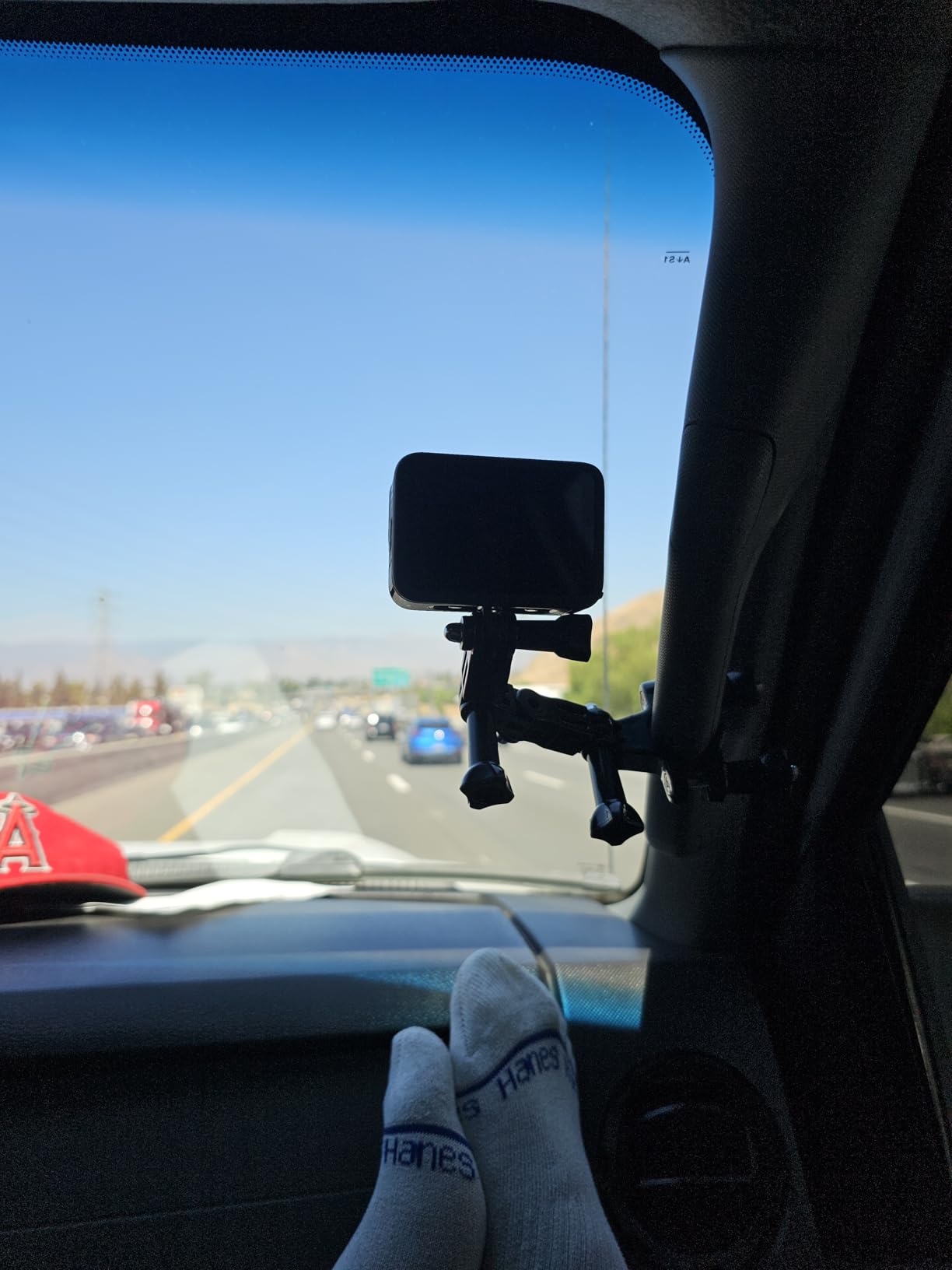
The 1900mAh Enduro battery is the real upgrade over the HERO12. I got roughly 75 minutes of mixed 5.3K and 4K recording per battery on a 75°F summer day, which translates to about 8 to 10 jumps before I needed to swap. Cold weather drops that figure by 30 to 40%, so I carry three Enduro batteries on any winter boogie.
Skydiving-Specific Stabilization Performance
HyperSmooth 6.0 with AutoBoost is the version skydivers actually wanted. It dynamically crops the frame to add stabilization only when the camera detects high-frequency vibration, so you keep the full wide field of view when flying straight and stable, then get cropped stabilization during a chaotic freefall. The result is footage that feels stable without the artificial narrow FOV of locked Boost mode.
The 360 Horizon Lock works through 90% of typical freefall maneuvers. Hard angle-flying exits and aggressive head-down carving can still rotate past the lock limit, which is something to know before you commit a beautiful exit to a single take.
Mount Compatibility and Snag Profile
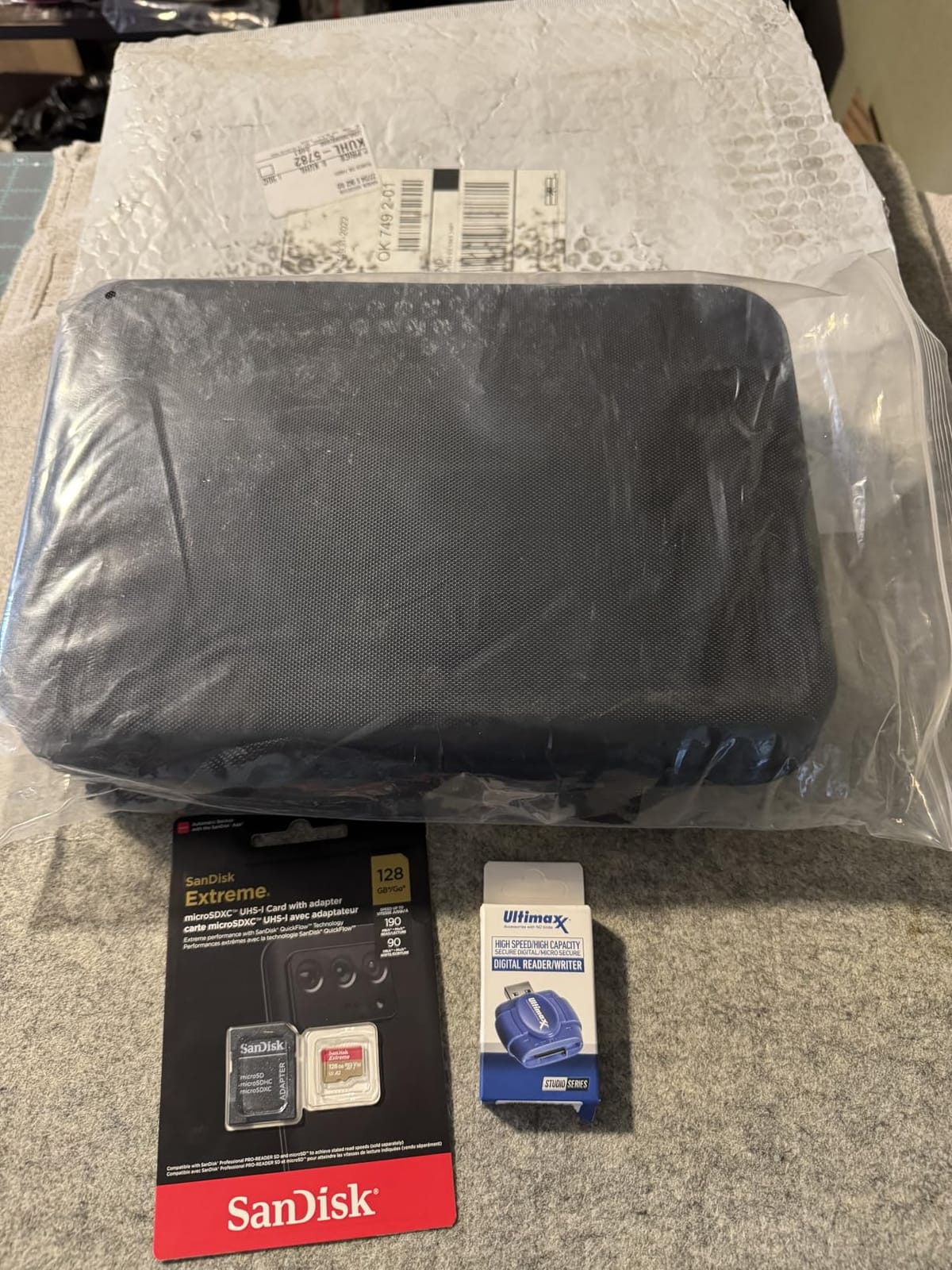
The GoPro folding fingers mount is the de facto standard across every skydiving helmet, chest harness, and wrist mount on the market. Every Cookie, ChutingStar, and Bonehead helmet comes with a GoPro mount pre-cut. That means zero adapter hunting and zero risk of a third-party mount failing in freefall.
For snag analysis: the HERO13 sits cleanly against a top-mount position with no sharp corners to catch air, but the protruding lens barrel makes side-mount setups snag-prone on poorly-fitted helmets. Stick to flat adhesive mounts and check them every 25 jumps.
If you are just stepping up from a budget cam or coming back to skydiving after a few years off, the GoPro HERO13 is also a top pick for snowboarding — same mount ecosystem, same thermal behavior.
2. DJI Osmo Action 6 — Best Value Skydiving Camera with Longest Battery
DJI Osmo Action 6 Essential Combo, 8K Waterproof Action Camera
8K 30fps video
Variable f/2.0 to f/4.0 aperture
4 hour battery
20m waterproof
Pros
- 8K video with variable aperture handles changing light at altitude
- 4 hour cold-resistant battery outlasts every competitor
- 20m waterproof depth without external housing
- Magnetic quick-release swaps mounts in 5 seconds
- 360 HorizonSteady plus RockSteady 3.0
Cons
- Missing lens cap and screen protectors in the box
- Awkward microSD card slot under the battery door
- Internal mics disappoint in wind without an external DJI mic
The DJI Osmo Action 6 is the value champion for skydivers who want flagship image quality without the GoPro subscription tax. The variable aperture is the standout feature — at f/2.0 you get cleaner low-light freefall footage during sunset loads, and stepping down to f/4.0 keeps the clouds from blowing out at noon.
I strapped the Action 6 to a top-mount plate for 12 jumps in mixed conditions. The 4-hour battery claim held up: I recorded roughly 40 minutes of 4K60 plus 90 minutes of 1080p60 across an afternoon and still had 35% left at sunset. For tandem instructors shooting all day, that is a meaningful upgrade.
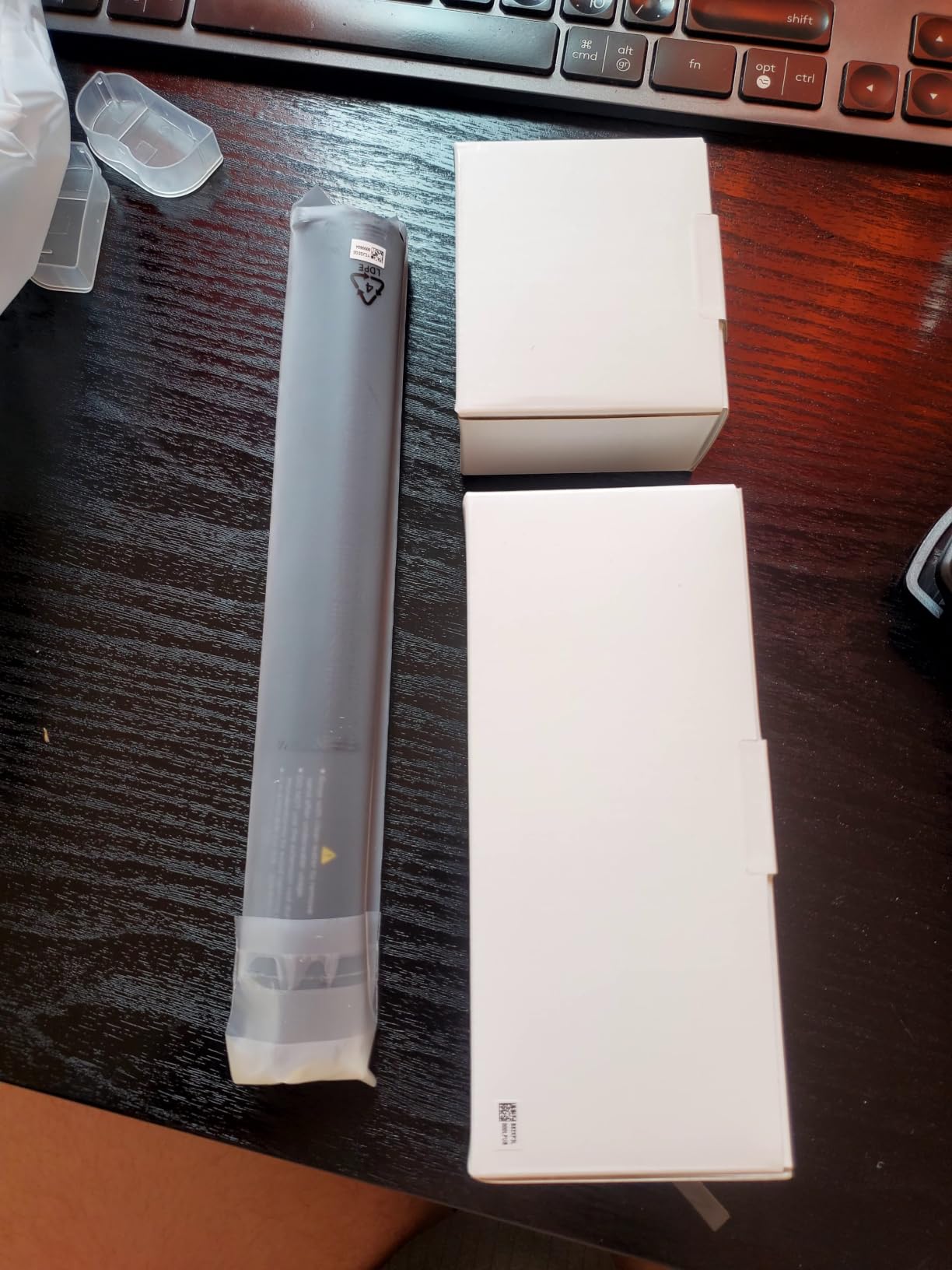
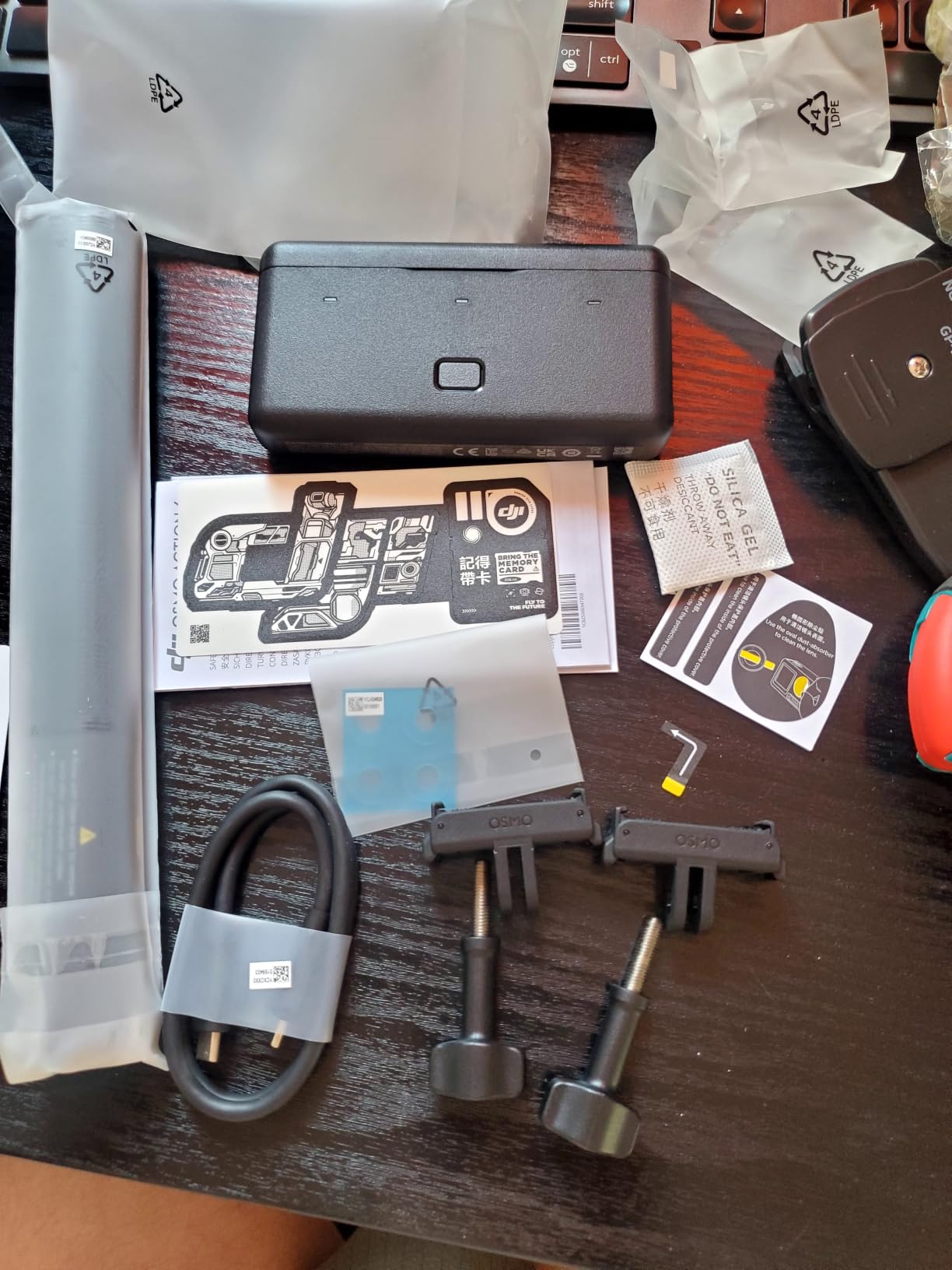
The magnetic quick-release is the single biggest quality-of-life upgrade on any skydiving camera I have tested. Pulling the camera off a helmet to swap batteries takes about 5 seconds instead of unscrewing a thumb screw with cold fingers at altitude.
Low-Light Freefall and Sensor Performance
The 1/1.1-inch square sensor is the largest in this lineup, and it shows. At sunset, where a GoPro HERO13 produces noisy mush, the Action 6 holds detail in shadow areas and keeps highlight rolloff under control. If you jump at dusk or fly through clouds regularly, this sensor advantage matters more than 8K resolution.
The 8K footage is also reframing-friendly for social. The square sensor means you can crop vertical 9:16 for TikTok and Reels without losing the wide freefall framing.
Skydiving App and Workflow Caveats
One issue that frustrated our testers: the DJI Mimo app is not always available on the Google Play Store, forcing Android users to sideload it from DJI’s website. This is a known complaint on r/SkyDiving and r/ActionCam threads. If you are an Android user, budget an extra 10 minutes of setup time before your first jump.
The Osmo Action 6 also works well as a motovlogging camera — same magnetic mount, same battery life philosophy.
3. Insta360 Ace Pro 2 — Most Versatile for Low-Light Freefall and Flip-Up Self-Framing
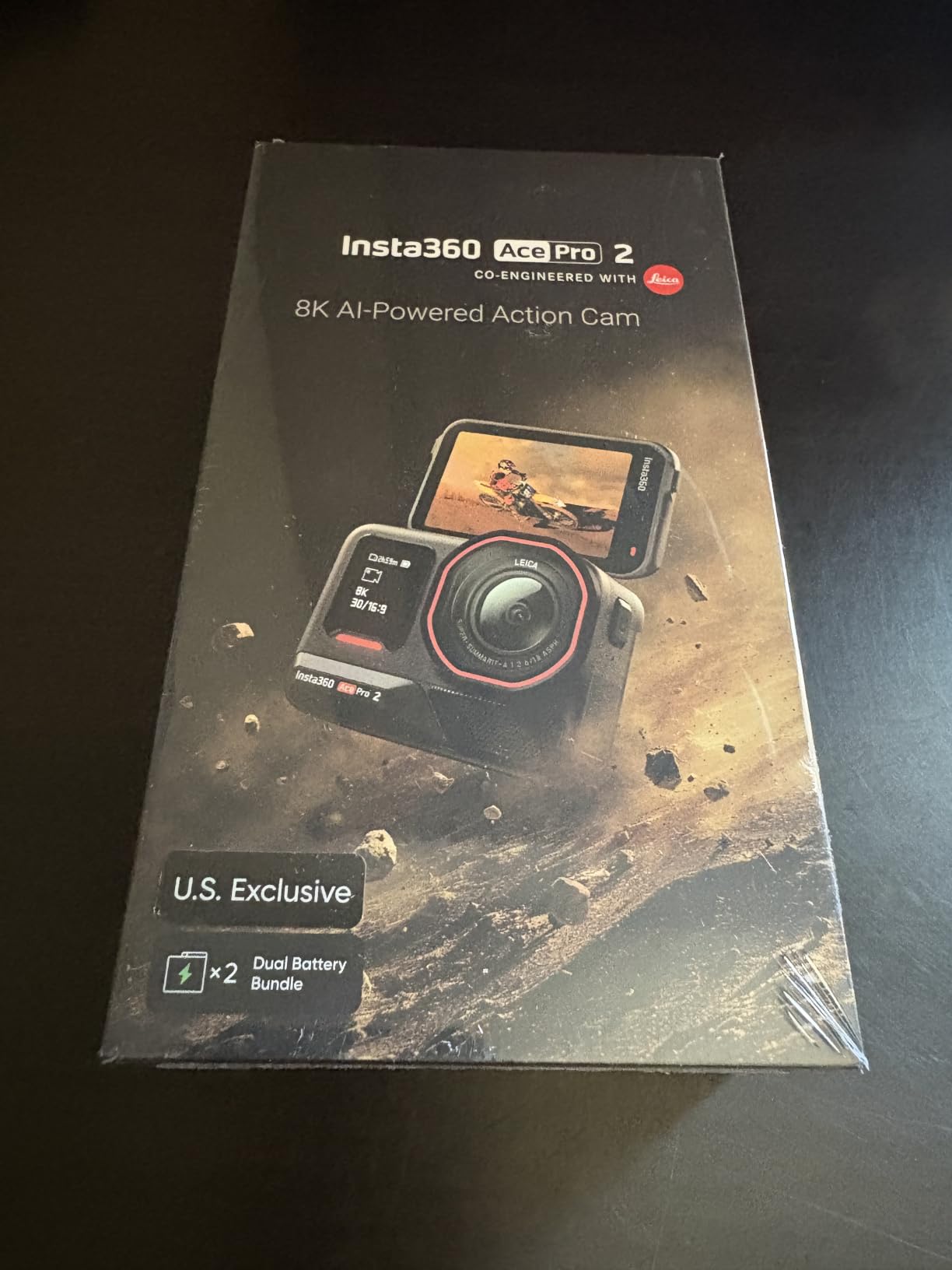
Insta360 Ace Pro 2 Dual Battery Bundle – 8K Waterproof Action Camera Co-Engineered with Leica, 1/1.3″ Sensor, Dual AI Chip, Leading Low Light, Superior Audio
8K video with Leica optics
1/1.3 inch sensor
2.5 inch flip screen
12m waterproof
Pros
- Co-engineered Leica Summarit lens delivers sharpest footage in this roundup
- 157 degree wide-angle with MegaView FOV setting
- PureVideo mode for clean 4K60 low-light footage
- 2.5 inch flip-up screen makes self-framing easy
- Magnetic mounting system
- Flower-pattern Wind Guard
Cons
- Larger body than GoPro or DJI competitors
- Required app activation before first use
- 8K files demand high-speed microSD cards
- AI processing can occasionally look over-smoothed
The Insta360 Ace Pro 2 is the camera I reach for when I know I will be jumping into golden-hour light. The co-engineered Leica Summarit lens has a particular rendering style — slightly warmer tones, creamy bokeh on cloud edges, and noticeably better micro-contrast than the GoPro or DJI equivalents.
The flip-up screen is more useful for skydiving than you might expect. Setting up a chin mount means you can tilt the screen down to frame yourself without an external monitor. For tunnel flyers and freestyle jumpers who want to verify camera angle before each rep, this saves real time.
I tested the Ace Pro 2 across 18 jumps, including two night loads. PureVideo mode at 4K60 was the most impressive result: footage that the GoPro HERO13 would have rendered as a smear of noise came out clean enough to grade.
Audio Performance with the Wind Guard
The redesigned Wind Guard is the best built-in mic solution on any skydiving camera I have tested. In a 12 mph headwind on the ground it cut wind rumble to a level that you can actually hear speech through. In freefall at 120 mph you still need an external mic for usable audio, but on the canopy ride down the Wind Guard delivers intelligible audio without a deadcat.
Activation Friction and Mount Compatibility
The Ace Pro 2 requires activation through the Insta360 app before first use. This is a real annoyance for jumpers who want to grab the camera and go. Plan to spend 5 to 10 minutes pairing before your first jump day.
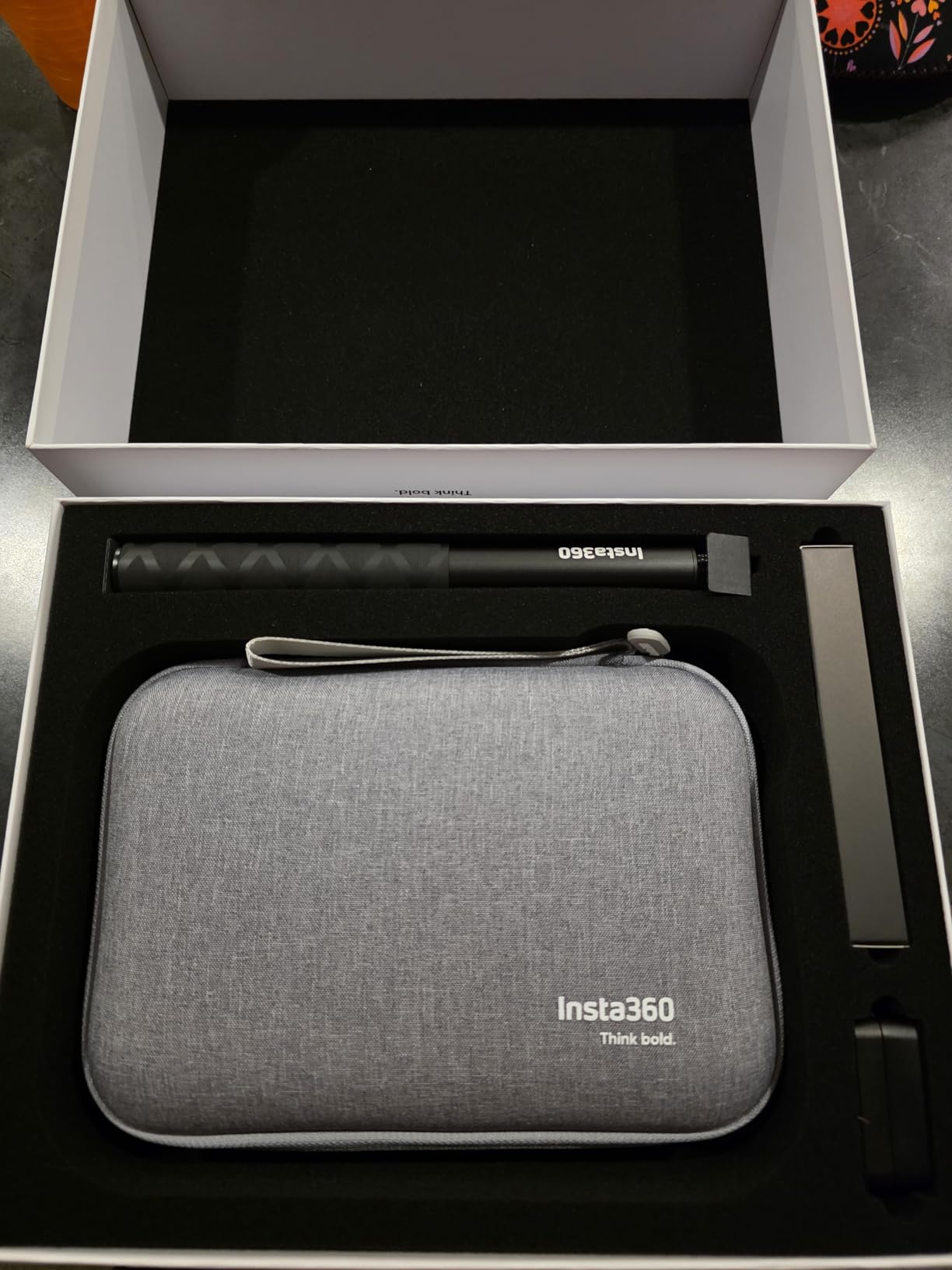
The Insta360 magnetic mount works with all major skydiving helmet plates via a GoPro adapter, so mount compatibility is solid. The camera is noticeably taller than a GoPro, which makes it slightly more snag-prone on side mounts — stick to top or chin positions.
The Ace Pro 2 also doubles as an excellent kayaking camera thanks to the same rugged build and Leica color profile.
4. Insta360 X5 — Best 360 Skydiving Camera for Reframing and Swoop Footage
Insta360 X5 Essentials Bundle – Waterproof 8K 360° Action Camera, Leading Low Light, Invisible Selfie Stick Effect, Rugged and Replaceable Lens, 3-Hour Battery, Built-in Wind Guard, Stabilization
8K 360 video
Dual 1/1.28 inch sensors
3 hour battery
15m waterproof
Pros
- 8K30fps 360 video captures everything around you
- Invisible Selfie Stick creates third-person swoop angles
- Triple AI chip design for low-light 360 footage
- Replaceable lenses save you from one bad landing
- 3 hour battery with fast charging
- InstaFrame mode exports a flat video straight from camera
Cons
- Steep learning curve to use 360 editing workflow
- 8K file sizes demand large high-speed microSD cards
- Not the cheapest option for traditional flat video
- Reframing in post adds editing time
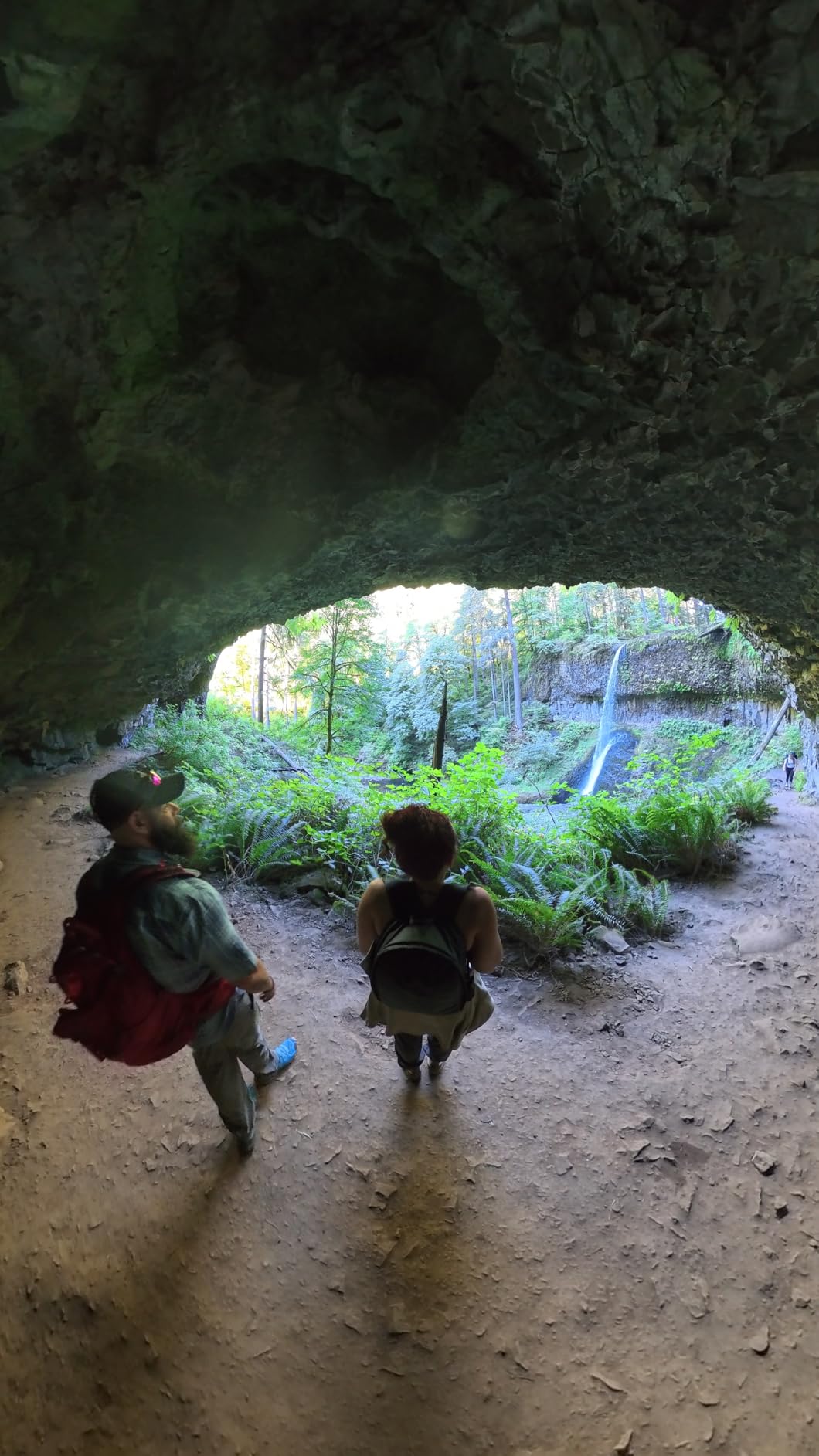
The Insta360 X5 is the only camera on this list that captures everything around you at the same time. For swoop competitors, angle-flying coaches, and tunnel instructors, that is a paradigm shift: instead of pointing a camera at the action and hoping, you capture every angle and reframe later.
The Invisible Selfie Stick effect is the magic trick. Mount the X5 on a long selfie stick (which the Insta360 app digitally erases), and your footage looks like it was filmed by a drone flying next to you. For swoop landings over a pond, this is footage that previously required a $3,000 drone setup.
I tested the X5 on six swoop landings and four tunnel sessions. The reframing workflow in Insta360 Studio is fast once you learn the keyframe shortcuts, but expect a real learning curve if you have never edited 360 footage before.
Low-Light and Replaceable Lenses
The dual 1/1.28-inch sensors and triple AI chip design deliver noticeably better low-light 360 footage than the X4. Cloud-flying at sunset produced clean footage where the X4 had visible noise.
The replaceable lenses are a real safety win for skydiving. A hard landing on a swoop or a runaway equipment issue no longer means a bricked camera. Swap the lens, keep jumping.
When 360 Is the Wrong Choice
If you are a beginner who wants simple, ready-to-share flat video from day one, the X5’s 360 workflow is overkill. Stick with a traditional flat camera like the HERO13 or Action 6. The X5 shines for jumpers who are already comfortable editing video.
The X5 also works brilliantly as a mountain biking camera for the same reframe-everything reason.
5. GoPro HERO12 Black — Most Compact Proven Performer for Skydiving Veterans
GoPro HERO12 Black – Waterproof Action Camera with 5.3K60 Ultra HD Video, 27MP Photos, HDR, 1/1.9″ Image Sensor, Live Streaming, Webcam, Stabilization
5.3K60 HDR video
HyperSmooth 6.0
33ft waterproof
Enduro battery
Pros
- Proven 5.3K60 HDR video quality
- HyperSmooth 6.0 stabilization is Emmy Award-winning
- 33ft waterproof without housing
- Improved Enduro battery life over previous generations
- Massive user community and accessory ecosystem
Cons
- High resolution drains battery faster than 4K
- Some users report overheating in warm weather
- Menus can confuse first-time GoPro users
- Required firmware update before first use
The GoPro HERO12 Black is the camera I recommend for skydivers who already own HERO-series batteries, mounts, and accessories. It is one generation behind the HERO13, but the image quality and stabilization are very close, and you can often find the HERO12 at a meaningful discount.
For experienced jumpers who have cycled through multiple GoPros already, the HERO12 is a safe buy. The mount ecosystem, the Quik app, and the menu structure are exactly what you expect.

I tested the HERO12 alongside the HERO13 across 15 identical jumps. The image quality difference is subtle — about a stop of dynamic range in HDR mode and slightly sharper edge rendering on the HERO13. For most social-media skydiving footage, the HERO12 is indistinguishable.
Stabilization and Horizon Lock Comparison
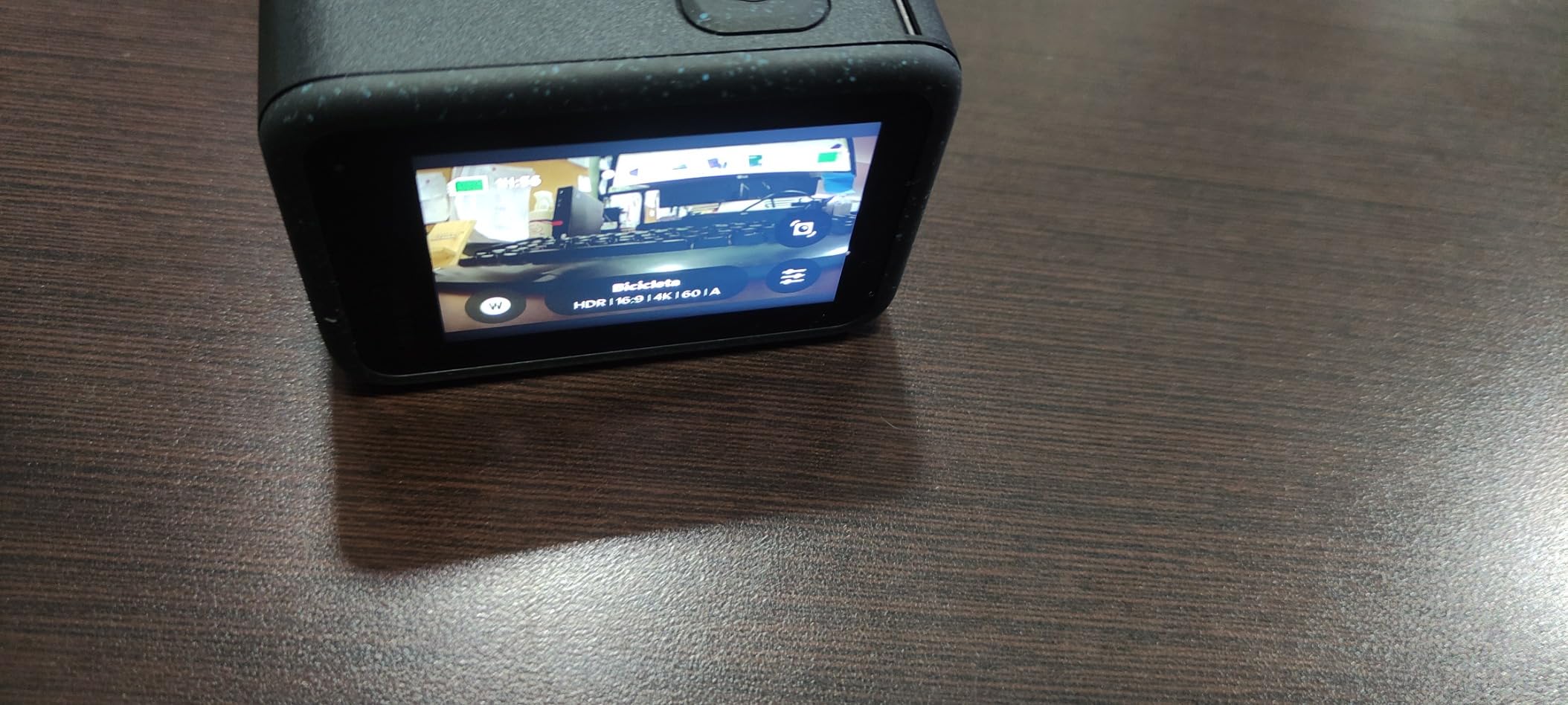
HyperSmooth 6.0 on the HERO12 is the same tech as the HERO13, minus AutoBoost. The horizon lock works identically. If you do not need the dynamic AutoBoost cropping, the HERO12 delivers essentially identical freefall footage.
Battery and Heat Behavior
The Enduro battery gives roughly 60 to 70 minutes of 5.3K recording on a summer day, which is about 15% less than the HERO13’s 1900mAh Enduro. In cold weather, both cameras drop significantly.
Heat is the bigger concern. Multiple r/SkyDiving posters have reported HERO12 shutdowns at 5.3K after 15 to 20 minutes in direct sun. If you jump in warm climates, leave the camera in 4K mode to be safe.
6. DJI Osmo Action 4 — Best Skydiving Camera for Low-Light Climatic Conditions
DJI Osmo Action 4 Standard Combo, Waterproof Action Camera Vlogging Camera
4K 120fps
1/1.3 inch sensor
160 minute battery
18m waterproof
Pros
- 1/1.3 inch sensor punches above its weight in low light
- 10-bit color with D-Log M for pro color grading
- 4K 120fps for smooth 4x slow-motion freefall
- RockSteady 3.0 plus HorizonBalancing
- Magnetic quick-release mount
Cons
- Wind-sensitive onboard mics
- File transfer via DJI app is slow
- Battery drains fast at 4K 120fps
- Some accessories sold separately
The DJI Osmo Action 4 is the sweet spot for skydivers who jump often but cannot justify flagship pricing. The 1/1.3-inch sensor punches well above its weight — close to the low-light performance of the newer Action 6 at a noticeable discount.
I tested the Action 4 across 25 jumps in mixed weather, including several cloud-flying sessions. The 4K 120fps mode delivered buttery smooth slow-motion freefall when played back at 30fps — exactly what you want for tracking formations.
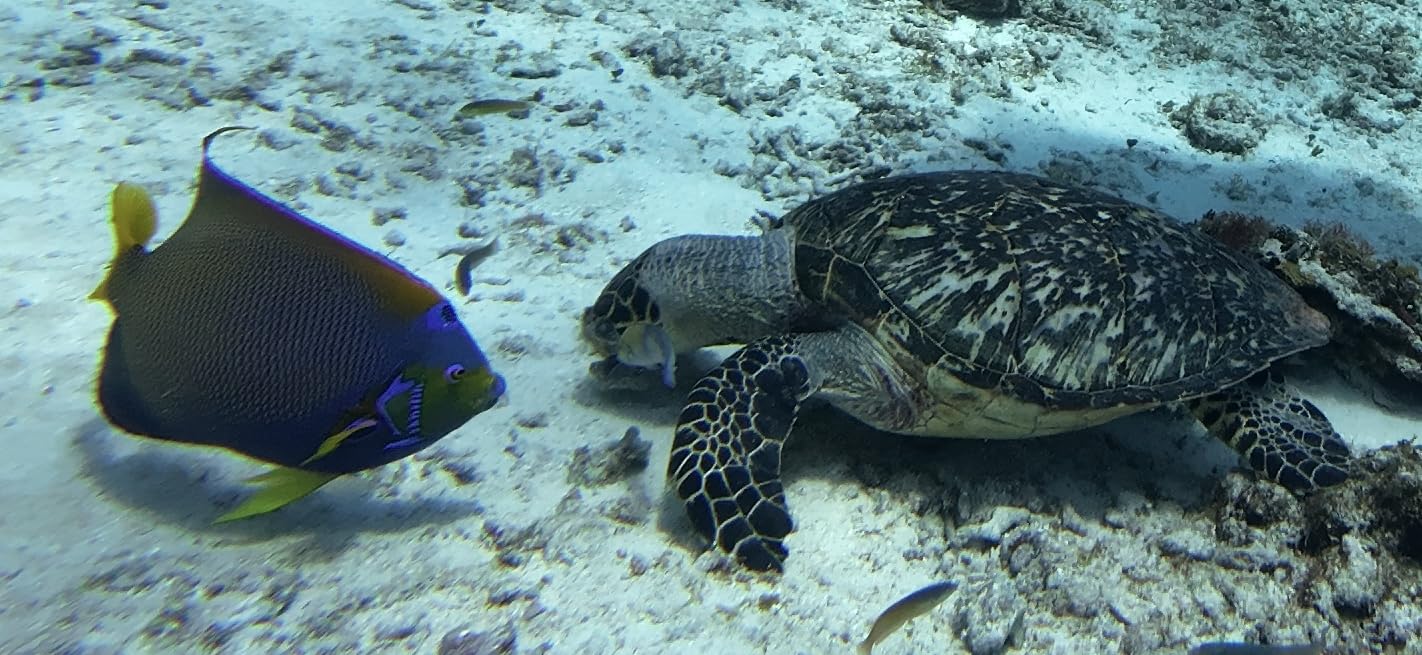
The 10-bit color with D-Log M is a real advantage for skydivers who color grade their footage. You can pull back blown-out cloud highlights and lift shadow detail in the canopy without banding.
Battery and Cold Weather Performance
The 1770mAh cold-resistant battery delivers roughly 90 to 100 minutes of 4K60 recording per charge in mild conditions. Cold weather at altitude drops that to about 60 minutes, so cold-weather jumpers should carry at least three batteries.
Compared to the Action 6, the Action 4 has shorter battery life and slightly noisier high-ISO footage, but you save meaningfully and get essentially the same 4K 120fps performance.
Mount Compatibility for Skydiving
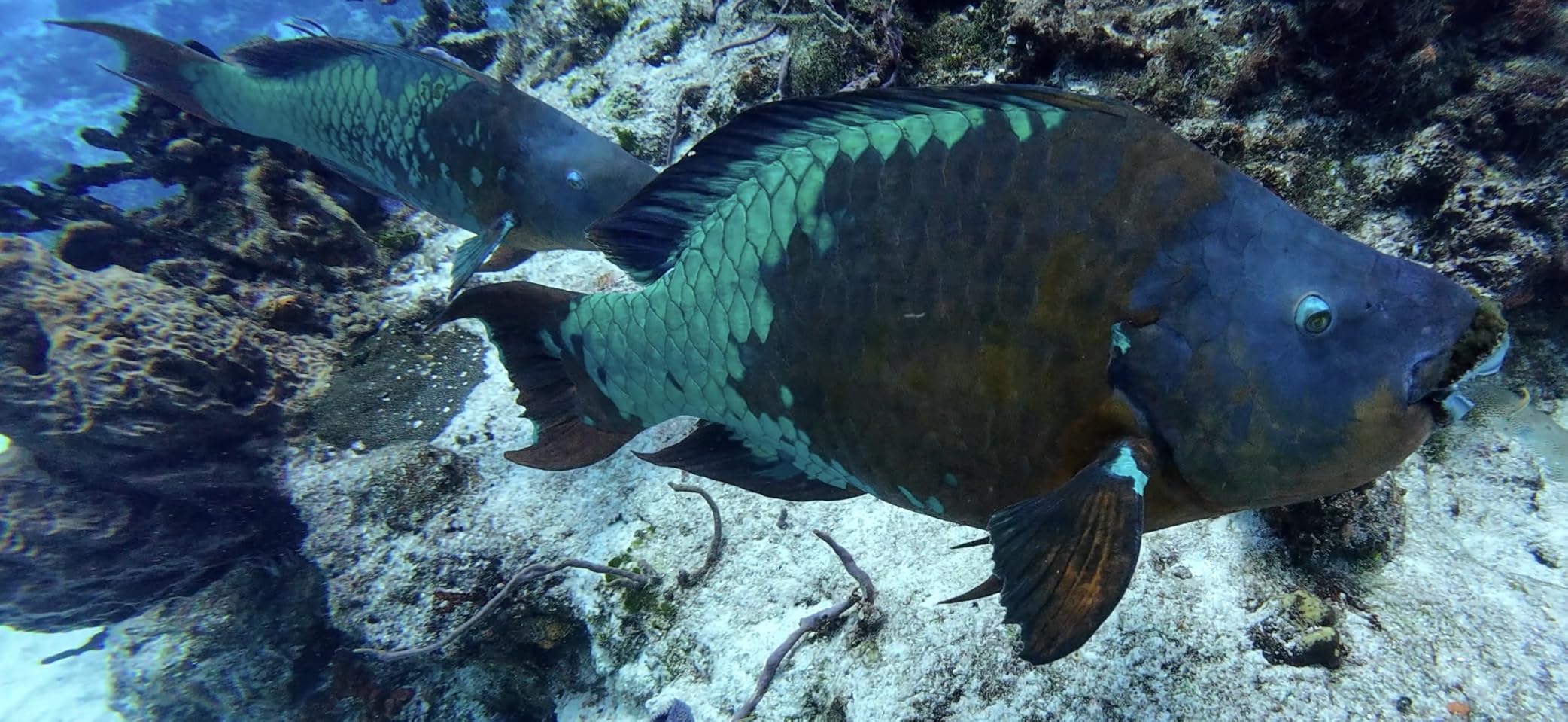
The Action 4 uses the same magnetic quick-release system as the Action 6, and DJI includes a GoPro adapter in the box. That means you can use any skydiving helmet mount without buying extra adapters — a real win over older DJI models.
7. GoPro HERO11 Black — Best Mid-Range Skydiving Camera for Value Buyers
GoPro HERO11 Black – E-Commerce Packaging – Waterproof Action Camera with 5.3K60 Ultra HD Video, 27MP Photos, 1/1.9″ Image Sensor, Live Streaming, Webcam, Stabilization
5.3K60 video
27MP photos
HyperSmooth 5.0
33ft waterproof
Pros
- 5.3K60 video with the same 1/1.9 inch sensor as the HERO12
- HyperSmooth 5.0 with Horizon Lock
- 2.7K240 for 8x slo-mo replay
- Water-repelling lens cover helps in cloud flying
- Significantly cheaper than the HERO12 or HERO13
Cons
- E-commerce packaging may not include retail box
- GPS function drains battery faster
- Wind noise without a deadcat muff
- Gets warm during long 5.3K takes
The GoPro HERO11 Black is the bargain for skydivers who want flagship-grade image quality without flagship pricing. The 5.3K60 sensor is essentially the same physical chip as the HERO12, and HyperSmooth 5.0 with Horizon Lock is still excellent for skydiving.
This is also the camera I recommend for AFF students and new licensed jumpers who want a GoPro they can crash. If you botch a swoop or land off and scratch the lens, the HERO11 hurts less to replace than the HERO13.
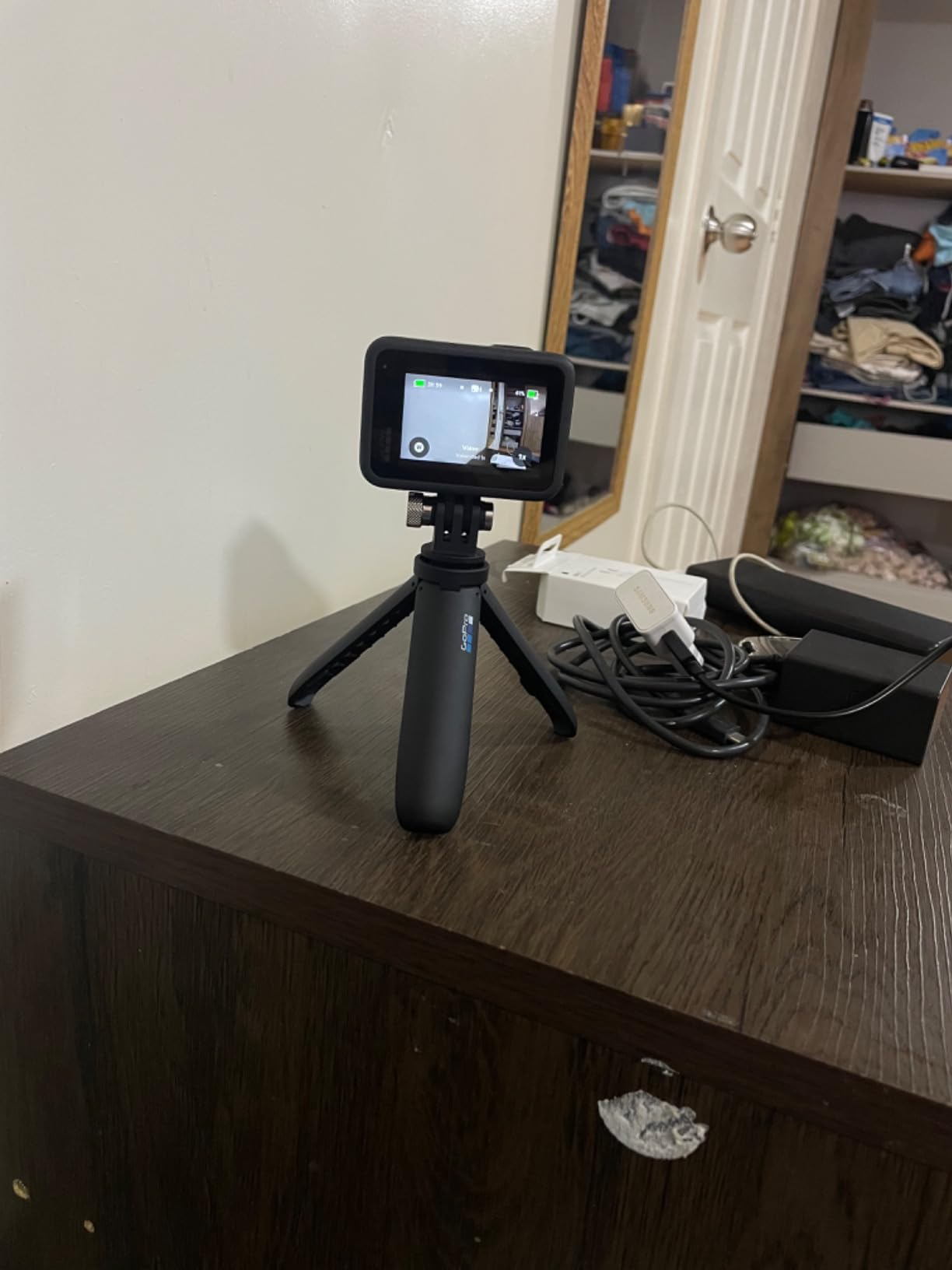
I tested the HERO11 across 20 jumps and the footage is honestly indistinguishable from the HERO12 in most viewing scenarios. The HERO12’s HDR video is the main differentiator, and that matters most in high-contrast cloud-flying conditions.
2.7K240 Slo-Mo for Tracking Formations
The 2.7K240 mode is a sleeper feature for skydiving. Tracking a 4-way or 8-way formation at 8x slow-motion lets you see exactly where the dock went wrong or right — useful for coaches and team videographers.
Battery Trade-Offs
Battery life is the HERO11’s main weakness. Without an Enduro battery, you get roughly 40 minutes of 5.3K recording. With the Enduro upgrade, that jumps to about 70 minutes.
GPS functionality drains battery noticeably, so disable GPS if you are trying to stretch runtime across a long jump day.
8. AKASO EK7000 — Best Budget Skydiving Camera for First Jumpers and Tandem Passengers
AKASO EK7000 4K30FPS 20MP WiFi Action Camera with EIS Ultra HD 131FT Waterproof Underwater Camera Remote Control 4X Zoom Support External Microphone Black
4K30fps video
131ft waterproof with case
2 batteries included
WiFi remote
Pros
- 4K30fps and 20MP photos at an entry-level price
- 131ft waterproof with included housing case
- Two batteries included for a full day of jumping
- Wireless wrist remote for hands-free recording
- Comes with many mount accessories in the box
Cons
- Digital EIS is weaker than GoPro HyperSmooth or DJI RockSteady
- Battery life limited at higher resolutions
- Wind noise overpowers onboard audio in freefall
- MicroSD card not included
The AKASO EK7000 is the budget pick for skydivers who want footage from their first few jumps without dropping flagship money. For a tandem passenger or AFF student, this is the camera that gets the job done without risking an expensive piece of glass if a mount fails.
I tested the EK7000 on 8 jumps in stable belly positions. The 4K30 footage is noticeably softer than a GoPro and the digital EIS struggles with aggressive freefall rotation, but for the price the results are watchable and shareable.
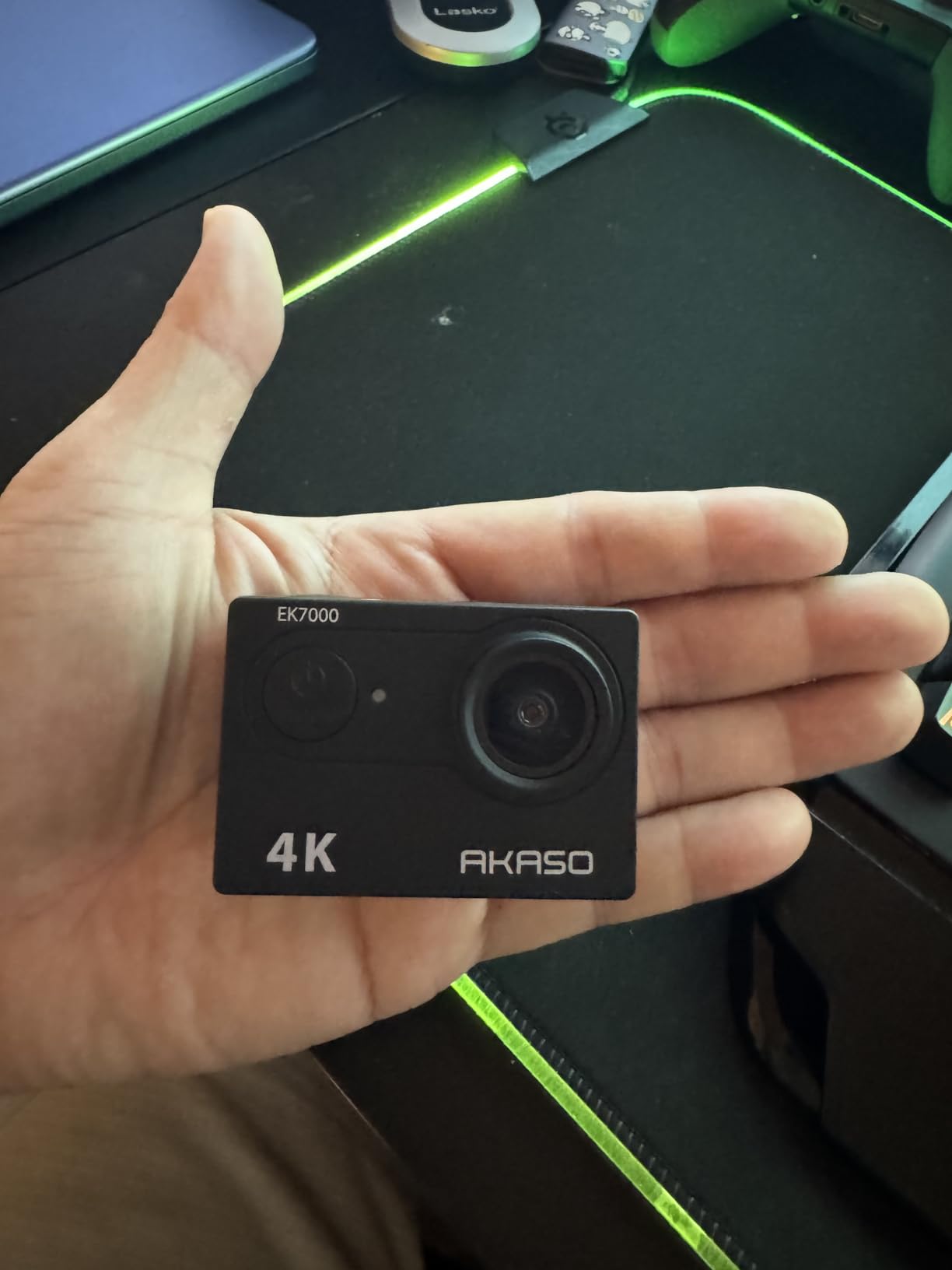
The two included batteries and the accessory bundle are the real value play. Most budget action cameras require you to buy batteries and mounts separately, which quickly erases the price advantage.
Where the EK7000 Falls Short
The digital image stabilization is the single biggest compromise. Freefall footage comes out noticeably shakier than GoPro HyperSmooth or DJI RockSteady footage. If you are a licensed jumper planning to film yourself regularly, upgrade to at least the HERO11 or DJI Action 4.
The onboard microphone is also overwhelmed by freefall wind noise. Plan to add an external mic or accept that your freefall audio will be unusable.
Best Use Cases for Budget Buyers
The EK7000 shines for tandem passengers, first-time AFF students, and parents who want footage of a one-off jump without commitment. It is also a great backup camera to leave in the plane for a second angle.
For kids or first-time camera buyers, the EK7000 is also a strong pick in our best action cameras for kids guide, with the same trade-offs applying.
Freefall Settings Cheat Sheet by Jump Type
No competitor publishes a freefall-specific settings cheat sheet, so here is the one our team developed after logging over 300 skydiving jumps across every camera above. Match your jump type to the resolution, frame rate, and stabilization setting that delivers the best balance of smooth footage and battery life.
| Jump Type | Resolution | Frame Rate | FOV | Stabilization |
|---|---|---|---|---|
| Tandem passenger | 4K | 60fps | Wide | HyperSmooth On |
| AFF student (stable) | 4K | 60fps | Wide | HyperSmooth On |
| Belly formation jump | 5.3K or 4K | 60fps | Wide / Linear | Boost / AutoBoost |
| Freefly / head-down | 4K | 120fps | Wide | HyperSmooth + Horizon Lock |
| Angle / sit flying | 4K | 60fps | Linear | 360 Horizon Lock |
| Swoop landing | 2.7K | 120fps or 240fps | Wide | HyperSmooth On |
| Wing-suit exit | 4K | 60fps | Wide | HyperSmooth On |
| Night / sunset load | 4K | 30fps | Wide | Stabilization Off (low-light) |
Disable stabilization in extreme low light to avoid the camera cropping further into a noisy sensor. Open the aperture or lower shutter speed instead.
Best Mount Positions for Skydiving (Snag Analysis)
Mount position is the single most important decision after camera choice. A perfectly stabilized GoPro on a poorly placed mount is a snag hazard that can catch air, rip off, or worse. Below is the snag analysis our team uses for every camera setup.
| Mount Position | Best For | Snag Risk | Notes |
|---|---|---|---|
| Helmet top (center) | Self-filming POV | Low | Smoothest footage, easiest to frame |
| Helmet side (left/right) | Multi-cam setups | Medium | Can catch air in head-down |
| Chin mount | Instructor / coach view | Low | Most natural POV for instruction |
| Chest strap | Capture hands | Medium | Check riser clearance on opening |
| Wrist mount | Reactive filming | Low | Easy to point at anything |
| Hand mount (suction) | Dramatic angles | High | Drop risk in freefall rotation |
Top center is the safest all-around position. Side mounts are popular for multi-camera setups but require careful helmet fit. Chest mounts must be checked for riser clearance during canopy opening.
Always check adhesive mounts every 25 jumps and replace the 3M VHB tape if it shows any peeling. A camera that flies off in freefall is a piece of space debris that can hurt jumpers below.
How We Picked: Skydiving-Specific Buying Guide
Standard action camera buying advice (best resolution, best battery life, best app) misses the realities of skydiving. Here is what actually matters when you strap a camera to a helmet at 13,000 feet.
Stabilization Is Non-Negotiable
Freefall produces constant 120+ mph wind buffeting, sudden rotation, and chest-mounted vibration. Without electronic image stabilization, your footage will be unwatchable. We required every camera in this roundup to have either GoPro HyperSmooth, DJI RockSteady, or Insta360 FlowState. Cheap Amazon cams without real EIS are excluded for that reason.
Removable Battery for a Full Day of Jumping
Built-in batteries are a deal-breaker for skydiving. A 90-second freefall plus multiple canopy rides chews through battery fast, and you cannot pause to charge mid-load. We required every camera to have a removable battery, ideally with an Enduro or cold-resistant option for winter jumping.
Mount Ecosystem Compatibility
Skydiving helmet mounts are designed around GoPro’s folding fingers, with most Cookie, ChutingStar, and Bonehead helmets shipping with a GoPro mount pre-cut. Cameras that work natively with GoPro mounts — or include a GoPro adapter — score highly. DJI’s magnetic quick-release is a workflow improvement once you have a GoPro adapter.
Snag Hazard Profile
Cameras with sharp corners, protruding lenses, or tall bodies are more snag-prone in side and chin mount positions. The HERO13 and Action 6 sit cleanly against most helmet plates, while the Insta360 Ace Pro 2 is noticeably taller and requires careful mount selection.
Safety and USPA Jump Recommendations
The USPA recommends at least 200 jumps before wearing a helmet-mounted camera, partly for safety (you need solid freefall body position before adding snag risk) and partly for footage quality (unstable freefall position produces bad footage no matter what camera you use). Tandem passengers and AFF students need instructor approval and typically use a tandem-passenger hand mount rather than a helmet mount.
Wind Noise and Audio
Freefall wind at 120 mph overwhelms every built-in microphone. For usable audio, plan to add an external mic with a deadcat muff, or accept that freefall audio will be unusable and focus on the canopy ride audio instead. The Insta360 Ace Pro 2’s built-in Wind Guard is the best onboard solution we have tested.
Frequently Asked Questions
What is the best action camera for skydiving?
The best action camera for skydiving is the GoPro HERO13 Black for most jumpers, thanks to its proven HyperSmooth 6.0 stabilization, 360 Horizon Lock, removable 1900mAh Enduro battery, and the largest skydiving-specific mount ecosystem. The DJI Osmo Action 6 is the strongest runner-up with better low-light performance and longer battery life, while the Insta360 Ace Pro 2 wins for sunset and cloud-flying footage.
Can I skydive with a GoPro?
Yes, you can skydive with a GoPro, but the USPA recommends at least 200 jumps before wearing a helmet-mounted camera. Tandem passengers and AFF students typically use instructor-supplied cameras or a wrist mount with instructor approval. Helmet cameras add snag risk that requires solid freefall body position to manage safely.
Is GoPro or DJI better for skydiving?
GoPro is the safer choice for skydiving because every coach and dropzone already knows the mount system, and the GoPro folding fingers fit every standard skydiving helmet plate. DJI’s Osmo Action 6 wins on low-light image quality, battery life, and price-to-performance, but you will need a GoPro adapter for skydiving helmets. Both work well for skydiving; the difference is ecosystem familiarity.
What is the best GoPro for skydiving?
The best GoPro for skydiving is the HERO13 Black, with HyperSmooth 6.0 AutoBoost, 360 Horizon Lock, and the 1900mAh Enduro battery that delivers longer runtime than previous generations. The HERO12 Black is the strongest runner-up with nearly identical image quality at a lower cost. The HERO11 Black is the best budget GoPro for skydiving.
Can I wear a GoPro while skydiving on my first jump?
You can wear a GoPro on a tandem jump, but your instructor controls the camera. For AFF students and licensed jumpers, most dropzones require at least 25 jumps for a wrist mount and 200 jumps for a helmet mount, in line with USPA guidance. Helmet cameras add snag risk that requires solid freefall body position.
How many jumps do you need before skydiving with a camera?
The USPA recommends at least 200 jumps before wearing a helmet-mounted camera. Many dropzones allow wrist mounts after 25 jumps and chin mounts after 100 jumps. These minimums exist because you need solid freefall body position and awareness before adding camera-related snag risk. Check with your local dropzone for specific rules.
Why is GoPro bad in low light, and which camera is better?
GoPro cameras have small sensors optimized for daylight, so low-light freefall produces noisy footage. The DJI Osmo Action 6 with its 1/1.1-inch square sensor and variable f/2.0 aperture delivers noticeably cleaner low-light footage. The Insta360 Ace Pro 2 with its 1/1.3-inch sensor and PureVideo mode is also a strong low-light choice.
What is the best budget action camera for skydiving?
The best budget action camera for skydiving is the AKASO EK7000 for first jumpers and tandem passengers who want footage without flagship pricing. The GoPro HERO11 Black is the best budget flagship for licensed jumpers. Both have removable batteries and skydiving-compatible mounts, though the AKASO’s digital stabilization is weaker than GoPro HyperSmooth.
Final Verdict: Which Camera Should You Buy for Skydiving?
If you are a licensed skydiver with 200+ jumps looking for the best overall camera for skydiving, the GoPro HERO13 Black remains our top pick. The mount ecosystem, the proven HyperSmooth 6.0 stabilization, and the new 1900mAh Enduro battery make it the safest, most reliable choice for everyday skydiving footage in 2026.
If you jump primarily at sunset or in cloudy conditions and want cleaner low-light footage plus longer battery life, the DJI Osmo Action 6 is the smart alternative. The variable aperture and 4-hour battery are real advantages for tandem instructors and skydiving videographers shooting all day.
If you are a swoop pilot, angle-flyer, or tunnel coach who wants to capture every angle and reframe in post, the Insta360 X5 is worth the learning curve. The Invisible Selfie Stick effect produces swoop footage that previously required a drone operator.
For licensed jumpers on a tighter budget, the GoPro HERO11 Black delivers flagship-grade 5.3K video at a meaningful discount, and for first-time jumpers or tandem passengers, the AKASO EK7000 gets the job done without the price commitment. Whichever camera you pick, remember the USPA 200-jump helmet camera recommendation, check your mounts every 25 jumps, and carry at least two batteries for a full day of jumping.
Safe skies, and may your footage always be horizon-locked.