
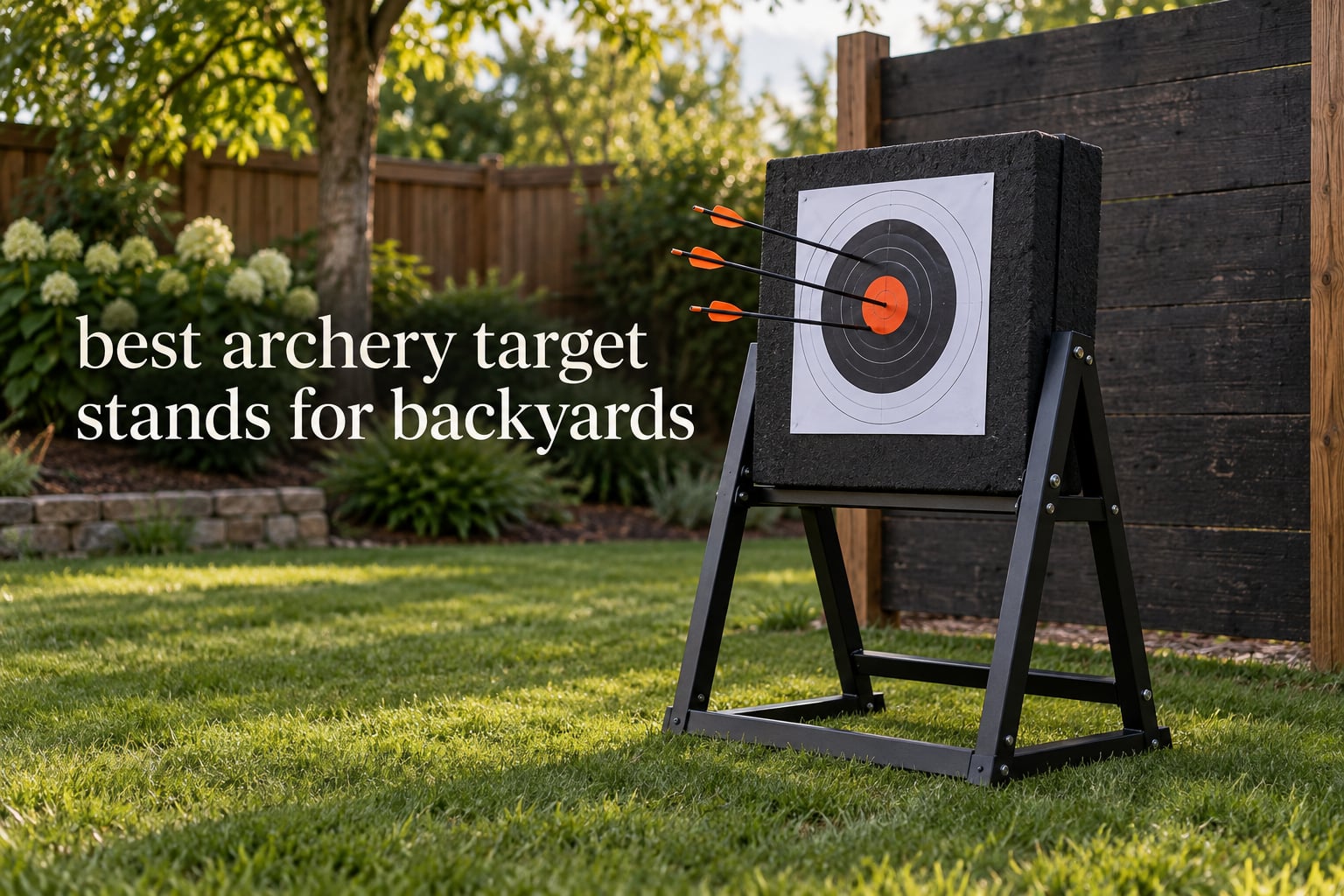
A backyard archery range lives or dies on its stand. The target gets the attention, the arrows get the attention, but the frame holding it up is what decides whether your group is square at eye level or whether your foam block is lying in the grass after the first gust of wind. I have shot at stands that tipped, bent and rusted, and I have watched a good target get ruined by a stand that could not carry it properly.
That is why I spent the last several months comparing best archery target stands for backyards setups across bag, block, 3D foam and straw targets. The goal was not a list of the flashiest listings. It was a set of stands that hold a target square, survive a season outdoors, and can be moved by one person when your shooting position changes.
This roundup covers ten stands, from powder-coated square tubing to an aluminum telescopic frame and a wheeled rolling rig. Each entry lists the verified specs, the rating and review count straight from the listing, and the real limitations buyers mention, including the assembly complaints that show up again and again. If you want the short answer first, jump to the picks below.
A quick note on who this is for: backyard practice archers, families shooting with kids, bowhunters keeping a 3D target out year-round, and anyone who wants a setup that does not require digging holes or pouring concrete. I also added a backstop and safety section, because one of the most common questions in every archery forum thread about backyard targets is what actually stops an arrow that misses.
Our Top 3 Backyard Archery Target Stands Tested for 2026

These three earned top billing on the combination of rating and review volume, not on price. The Highwild stand is the one I would put in a suburban yard and forget about, the HME is the simplest sensible way to keep a bag target square, and the Shooter Grandstand is the standard-bearer for 3D foam work without ground stakes.
Comparing 10 Archery Target Stands for Backyard Use in 2026
| Product | Specs | Action |
|---|---|---|
| Highwild Bag, Block and Foam Target Stand |
|
Check Latest Price |
 HME Bag Target Stand HME Bag Target Stand |
|
Check Latest Price |
| Shooter Grandstand Universal 3D Stand |
|
Check Latest Price |
 HME 3D Target Stand HME 3D Target Stand |
|
Check Latest Price |
 MUDDY Adjustable Target Holder MUDDY Adjustable Target Holder |
|
Check Latest Price |
 Highwild Universal 3D Target Stand Highwild Universal 3D Target Stand |
|
Check Latest Price |
 VNAKER Foldable Telescopic Stand VNAKER Foldable Telescopic Stand |
|
Check Latest Price |
 Ardier Height-Adjustable Stand Ardier Height-Adjustable Stand |
|
Check Latest Price |
 Hawkeye Monster Wheeled Stand Hawkeye Monster Wheeled Stand |
|
Check Latest Price |
 TOPARCHERY Folding Aluminum Stand TOPARCHERY Folding Aluminum Stand |
|
Check Latest Price |
Read across the table and one pattern jumps out: the stands that hold bag and block targets use hanging points on a rectangular frame, while the 3D stands use a telescoping axle that spreads the target legs. Only one entry here rolls on wheels. Understanding which family a stand belongs to is the first step to buying the right one, so that is where we start.
The Four Types of Archery Target Stands Explained
A bag and block stand is a rectangular steel frame with two horizontal bars. Your target hangs from carabiner hooks, and the frame’s job is to hold that mass up and stop it swinging. This is the most forgiving stand type for a backyard because the target hangs rather than sits on spikes, and it is the type that works with the widest range of products: bags, foam blocks, cube blocks and straw.
A 3D base is much smaller. It is a pair of legs joined by a telescoping axle that opens to match the leg spread of a foam animal target, so the target straddles the base instead of hanging. The appeal is that nothing goes in the ground and the whole unit lifts with one hand. The limitation is that it only accepts foam 3D targets, never a bag or a paper target board.
An adjustable sled or sled-style frame is the third family. It has uprights with sliding brackets and a rear stabilizer, which gives it more adjustment range and more resistance to tipping than a basic bag stand. It is the type you want when the shooting height changes or when a child shares the bow with an adult. Several of the stands below fall into this group.
The fourth family is the wheeled rolling frame. It is heavier and costlier, and it exists for one reason: letting a single person move a mounted target between garage, patio and yard without carrying it. Only one stand in this roundup fits that description, and the trade-off is real weight and a back frame that sits where overpenetrating arrows land.
Two more categories show up in listings and are worth naming so you do not buy the wrong thing. Folding aluminum stands trade steel stiffness for portability and rust resistance, and they are the only family here that collapses flat for indoor storage. Wooden or plywood stands are common DIY builds; they are light and cheap, but plywood warps outdoors and none appear in this roundup for that reason.
If you shoot paper targets on a board, you need a bag and block style frame, not a 3D base. A 3D base has no flat surface and no way to pin a target face, so pairing the two is the most common purchase mistake in this category.
1. Highwild Bag, Block and Foam Target Stand – Rigid Steel Frame for Every Target Type
Highwild Archery Target Stand for Bag Targets Block Cube Foam – Larger Range – Multi-Function – Flexible – Durable
Steel frame
Olive powder coat
14.7 lb weight
33.5 x 32 x 45 inch
Pros
- Very rigid steel frame that stops wobble after assembly
- Adjustable top and bottom bars fit bag
- block and foam targets
- Rear stabilizer resists tipping
- Small footprint fits in a garage beside a car
- Wrenches included for assembly
Cons
- Assembly instructions are mostly illustrations with no step detail
- Hardware bag mixes different sizes of similar fasteners
- Sharp bare metal leg edges with no rubber feet
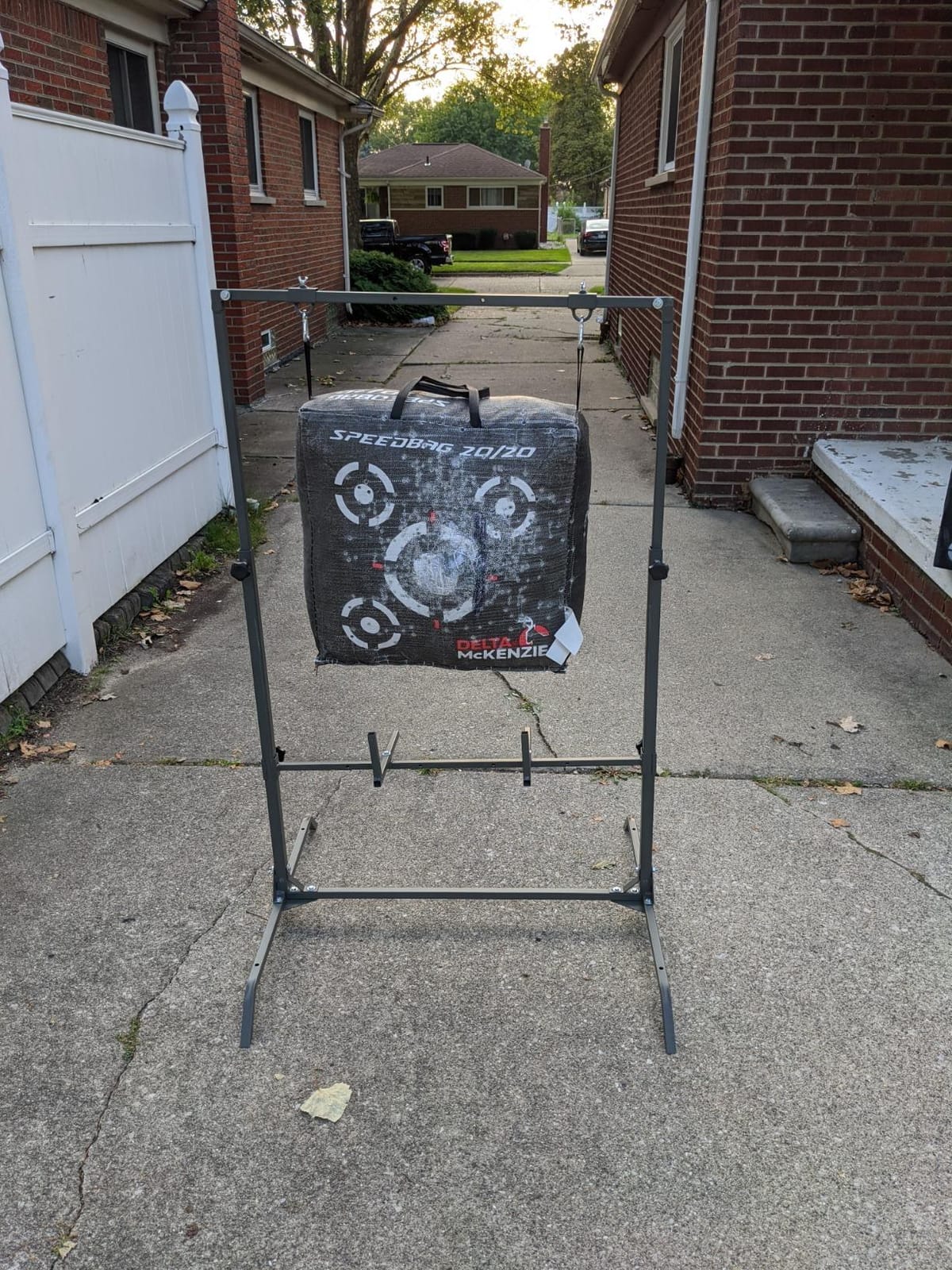
The Highwild bag and block stand is the one I keep coming back to for a residential yard. It is a rigid powder-coated steel frame, and the four hanging points on each of the top and bottom bars are what make it versatile. A bag target, a foam block or a cube target all hang from the same frame without swapping hardware.
That weight is the first thing you notice when you pick it up, and it is the first thing you stop noticing once the frame is assembled. This is not a lightweight stand you carry around the yard. It is a fixture you assemble once, place, and leave, and the rigidity is exactly what you want in the presence of a 30-plus-pound bag target taking arrows at 40 yards.
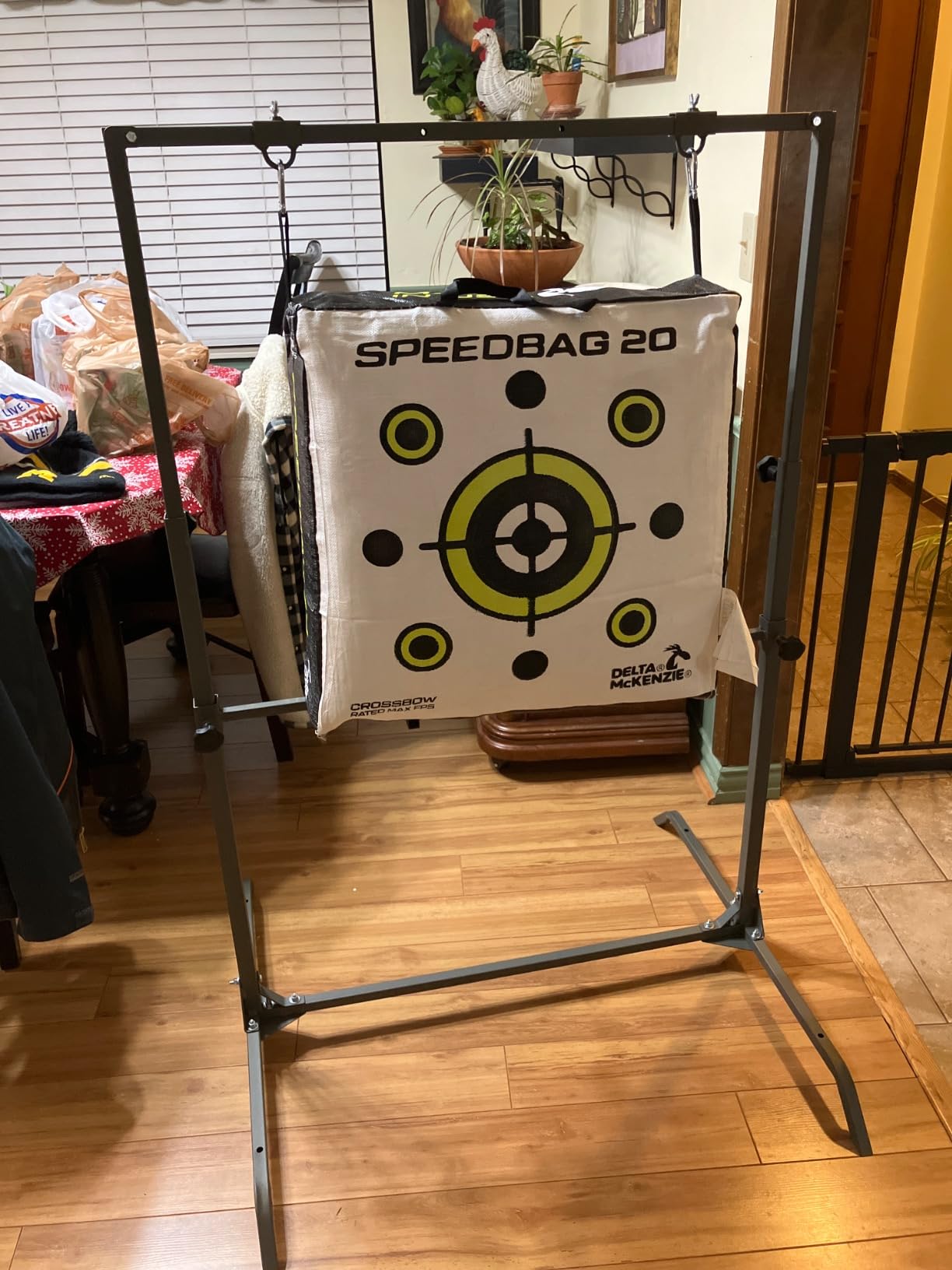
The rear stabilizer is the part that earns its keep. Reviewers consistently credit it with keeping the target from tipping forward on impact, and the raised-leg design means the frame can sit on uneven lawn without the low corner sinking into the mud. Each leg has pre-drilled holes for ground nails, which are not included, so you can pin the stand down if your yard gets windier than your neighbor’s.
Steel and Powder Coat vs Weather Exposure
The frame is heavy-duty steel with an olive powder-coated finish, and powder coat is the finish you want for a stand that lives outdoors. It resists surface rust on the scratches and dings that come with a season of arrow contact far better than bare galvanized tubing that gets chipped. The finish is the difference between a stand that looks scuffed in a year and one that looks like it has seen a year of shooting.
One thing to know: this is a 14.7 pound steel frame with bare metal leg edges and no rubber feet. Reviewers note that it should not be used on wood or concrete floors if you care about marks, which matters if your shooting line runs across a patio rather than grass. Put a piece of scrap mat under the legs if you are shooting on a deck.
Assembly Is the One Genuine Weak Spot
The most repeated complaint across reviews is not the product, it is the build process. The instructions are almost entirely illustrations without clear step detail, and the hardware arrives in a single bag containing fasteners that look identical but are different sizes. Several buyers report spending 30 to 60 minutes working out which bolt belongs where. Parts are not labeled with the assembly letters shown in the manual, which means you are matching by eye against a picture.
Some units also arrive with crooked crossbar welds that twist the frame slightly out of square, and there are reports of bolt heads indenting the mild steel tube when tightened without extra washers. None of that affected the finished result for the buyers who described the frame as rigid and wobble-free, but it is the reason this stand rates 4.6 rather than higher.
Who Should Buy This Frame
This is the stand for you if you shoot more than one kind of target, if your bag target is heavy, or if you want a frame that stays put through wind. It handles bag, block, cube and foam targets on the same hardware, which means one purchase covers a paper-target bag setup and a foam block for broadhead practice.
It is not the right choice if you need to carry your target to a field session or a youth program, because 14.7 pounds plus a foam block is a two-handed job. It is also not the pick for a 3D foam animal, since there is no axle to spread the legs. For a fixed backyard station with mixed targets, though, it is the frame that covers the most target types on the same hardware, and it is our editor’s choice for that reason.
Buyers also report good service from the seller when requesting replacement parts, which matters more than it sounds for a steel frame with welds. If a crossbar does not sit square, a single replacement piece fixes the whole stand.
2. HME Bag Target Stand – Best Value for Field Tip Practice
HME Bag Target Stand for Indoor and Outdoor Bow Hunting Practice & Archery Training Durable Adjustable Bag Holder with Stabilizer Pin and Raised Leg Design, Olive
Square tubing
Stabilizer pin
Adjusts to 30 inch bags
Olive powder coat
Pros
- Stabilizer pin stops the bag swinging on impact
- Hanger brackets slide to fit different bag widths
- Raised legs keep the bag off wet ground
- Carabiner hook makes bag removal fast
Cons
- Fixed 30 inch maximum bag size rules out larger bags
- Cannot hold 3D foam targets
- Too heavy to be a one-hand carry item
The HME bag target stand is the simplest good stand in this roundup, and simplicity is the point. It is heavy-duty square tubing with a powder-coated finish, designed for one job: hang a bag target, keep it from swinging, and let you shoot field tips at it for a few years. If that is your setup, nothing else needs to be considered.
The stabilizer pin is the feature buyers single out most. Without it, a bag target rocks and swings on every hit, which makes the next shot wait and, over a long session, makes the bag migrate sideways.
With the pin, the bag absorbs impact and stays put, and a target that stays centered spreads arrow damage evenly instead of concentrating it in one spot. That single pin is the difference between a bag still centered at the end of an evening and one you have to re-hang.
Adjustment Range and Target Compatibility
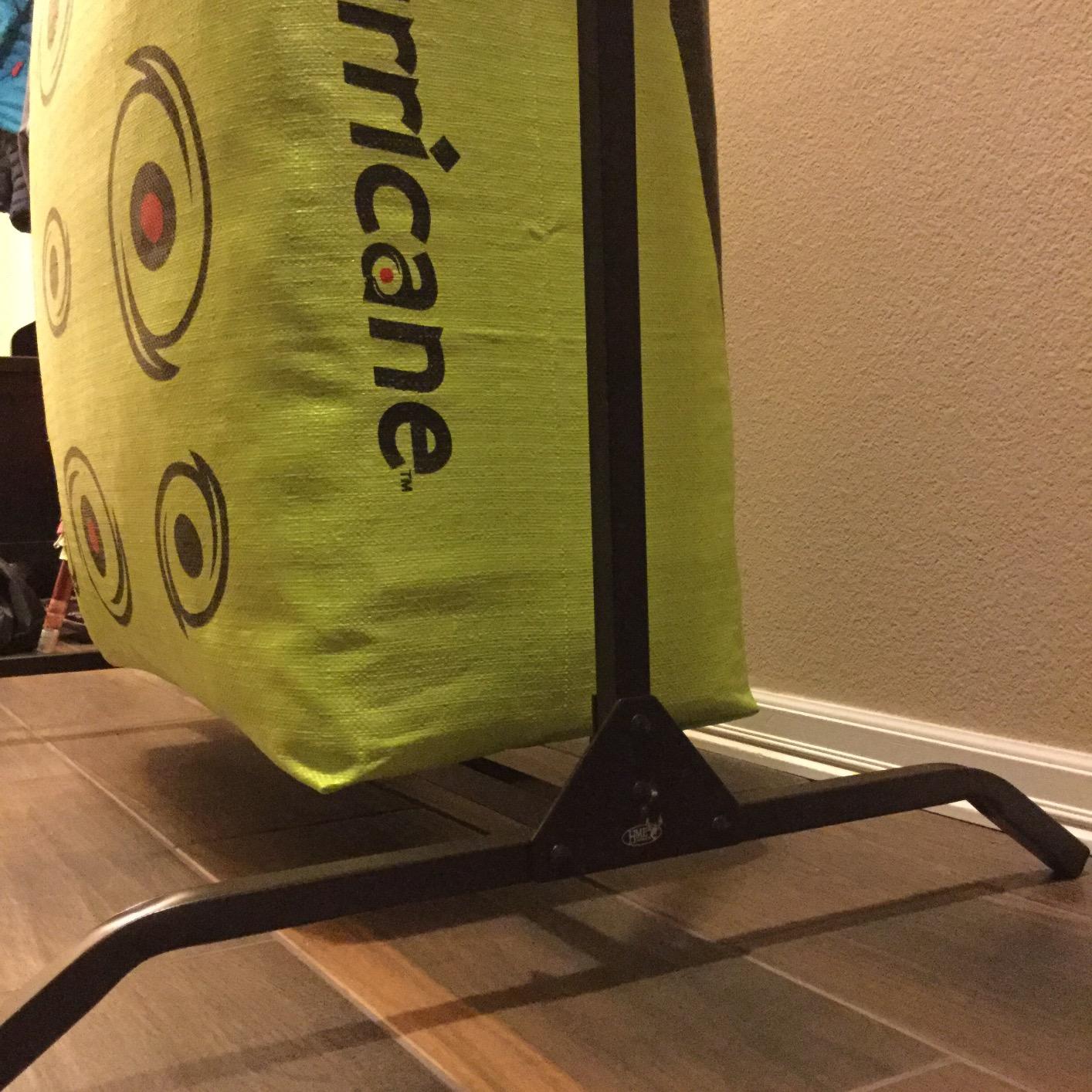
Hanger brackets glide across the tubing, so you can resize the frame for different bag widths without tools. The listed maximum is a bag 30 inches wide by 30 inches tall, which covers the field tip bags most backyard archers use. If you own a larger bag, this stand will not take it, and that is the most common reason buyers end up moving up to a frame with wider adjustment.
Also note what this stand is not. It is a bag holder, so it will not accept a 3D foam animal, and the design has no axle for foam legs. That is not a flaw, but it does mean it pairs with exactly one target category. Plan around it rather than hoping to make it do double duty.
Why the Raised-Leg Design Matters on a Backyard Lawn
Raised legs keep the bottom of the bag target off wet grass, which is a real durability win. A bag that sits in damp ground picks up moisture, insects and eventually mold at the seam, and the bottom of the bag is exactly the part you never see. Lifting it a few inches costs nothing and extends the life of the most expensive piece of foam in your setup.
The second benefit is terrain. A raised-leg base tolerates the uneven patches that every backyard has, where a flat-bottomed stand rocks on one corner and you spend the session shooting a target at an angle you did not choose. Reviewers mention the raised-leg design as a reason the stand works on sloped or rough ground without modification.
Where It Falls Short
The 30-inch ceiling on bag size is the hard limit. Beyond that, the stand cannot hold a bigger bag, and there is no way to extend the tubing. Weight is the other trade-off: it is not a one-hand carry item, so moving it to a different shooting position means a deliberate lift rather than a grab-and-go.
Neither issue matters much for a permanent backyard station. This is the stand to buy if you have one bag target, you shoot field tips at it, and you want the least complicated frame in the category. It is our value pick for exactly that reason, and the 4.5 rating across more than 1000 reviews reflects how little buyers find wrong with it.
3. Shooter Grandstand Universal 3D Stand – Tackles 3D Targets Without Stakes
Shooter Grandstand – Universal Adjustable 3D Archery Target Stand
Alloy steel
Telescoping axle 18.25 to 29 inch
Stake-free setup
Powder coated
Pros
- Axle adjusts quickly to fit different 3D leg spreads
- Works on patios
- driveways and frozen ground
- Compact and easy to move between positions
- Cheaper than the branded stand sold by 3D makers
Cons
- Adjustment threads are stiff and hard to start
- Twist-lock does not always glide smoothly
- Some units shipped without the vertical threaded support rods
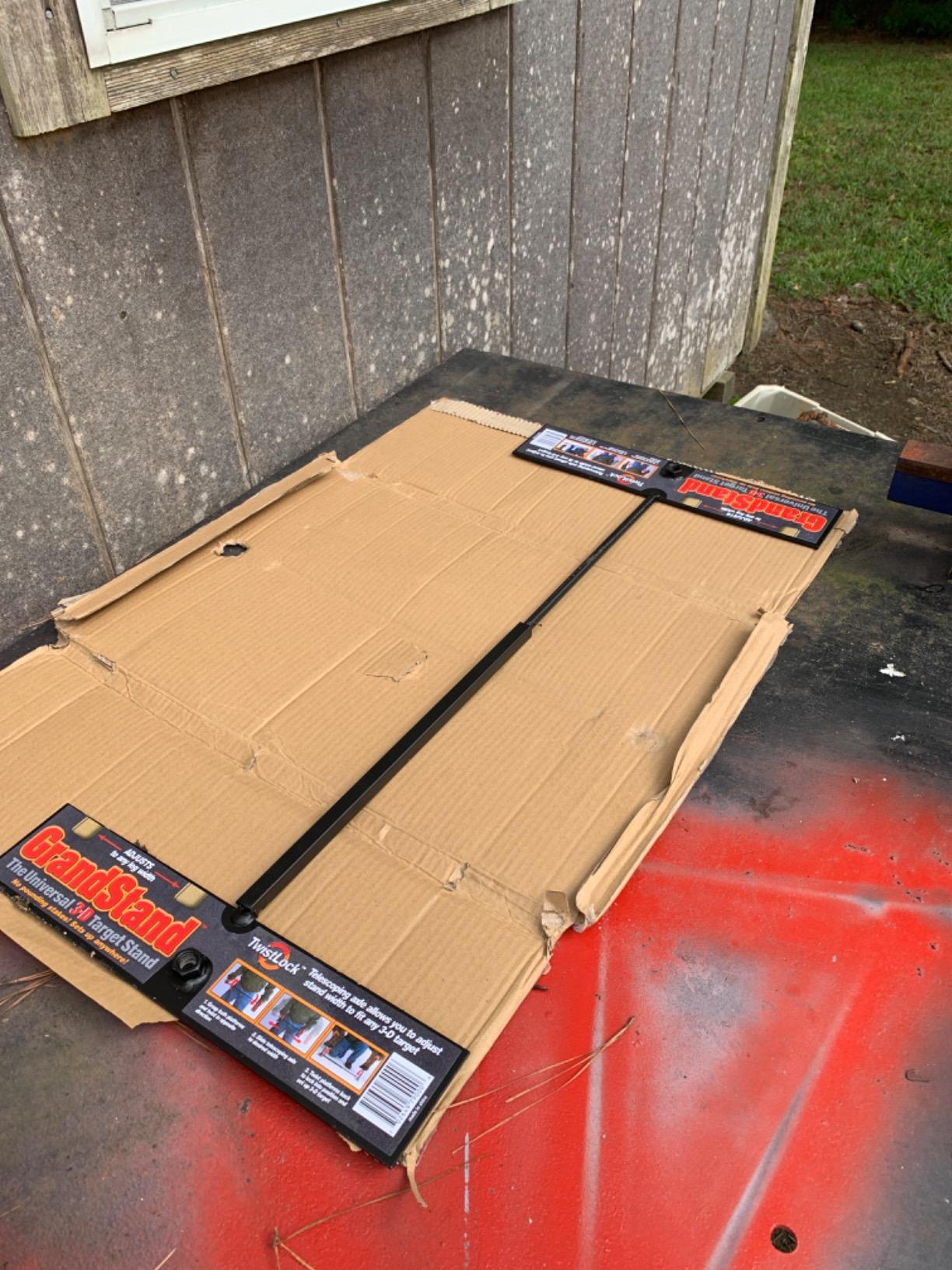
Every 3D foam target ships with ground stakes, and every 3D foam target owner eventually stands in the yard with a hammer wondering whether a third season of driving stakes into the lawn is really the plan. The Shooter Grandstand is the answer to that problem. It is a compact telescoping base that spreads a 3D target’s legs over hard ground, and it is the most-used 3D stand in this roundup by review volume.
The mechanism is simple: a telescoping axle slides through the two uprights and opens from 18.25 inches to 29 inches, which covers the leg spread on most standard foam targets. You set the width, drop the target’s legs on either side, and shoot. No stakes, no digging, and no mending holes in the lawn in the spring.
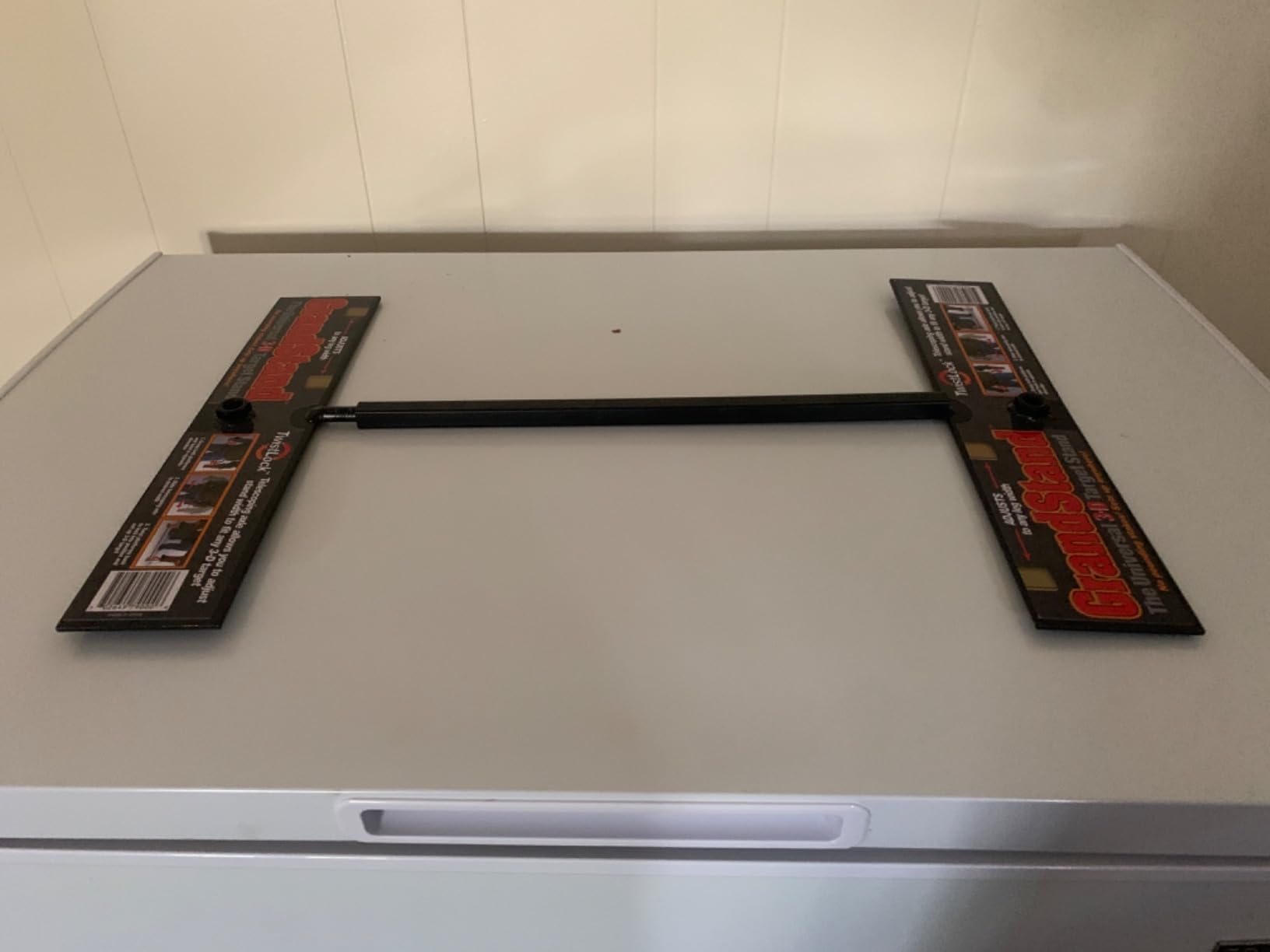
Hard Surfaces and Frozen Ground Are the Real Win
Where this stand genuinely beats stakes is on surfaces you cannot dig. A patio, a driveway, a concrete pad next to the garage, ground frozen solid in January. Reviewers mention all of these, and it is a use case that most other stands in this roundup cannot serve because their feet need soil or a nail. If your backyard range is on hardscape, this is the design that fits the problem.
It is also compact enough to move between shooting positions quickly, which matters when you are working on arrow placement at different angles rather than just group size. At roughly the size of a folded step ladder, one person can carry a mounted foam target to a new spot between ends.
The Thread and Twist-Lock Complaints
The most common negative comment is that the adjustment threads are stiff and hard to start, and the twist-lock does not always glide smoothly once you are cycling the width back and forth. It is a minor irritation rather than a defect, but it does mean the stand is not as pleasant to adjust mid-session as a stand with a simple pin or bolt.
The listed item weight of 8 ounces is also unrealistic and does not match how the stand behaves, which is itself a signal that the listing data is thin. Buyers describe the base as lighter-duty than the alloy steel description implies. That said, none of the reviewers who say this describe a stability failure with a normal foam target installed.
The “Universal” Claim Needs a Caveat
Two real limitations. First, some units arrived missing the vertical threaded support rods, which leaves the stand unusable out of the box; check the box before you leave the shipping area. Second, universal does not mean every model, and buyers specifically call out that some hog targets and certain Rinehart models do not fit despite the claim.
Measure your target’s leg spread before you order, and compare it against the 18.25 to 29 inch range. If it falls outside, you are looking at a stand that needs the spikes it came with. For a standard foam deer or turkey from a major maker, this base is a durable upgrade to the ground spikes that shipped with the target.
4. HME 3D Target Stand – Simplest Way to Retire Your Ground Stakes
HME 3D Deer Target Stand for Archery & Hunting Practice Lightweight Durable Easy-to-Use Adjustable Portable Target Stand with Raised Leg Design
Adjusts 19 to 29 inch
3 lb weight
Powder coat
Raised-leg design
Pros
- Light at about 3 pounds yet reported as solid
- Adjusts and locks across a 19 to 29 inch range
- Targets do not flinch or tip when struck
- No assembly instructions needed
- Sold well below the stand offered by 3D target makers
Cons
- No latch attaches the stand to the target
- Target can lean slightly even when locked
- Cannot support bag targets
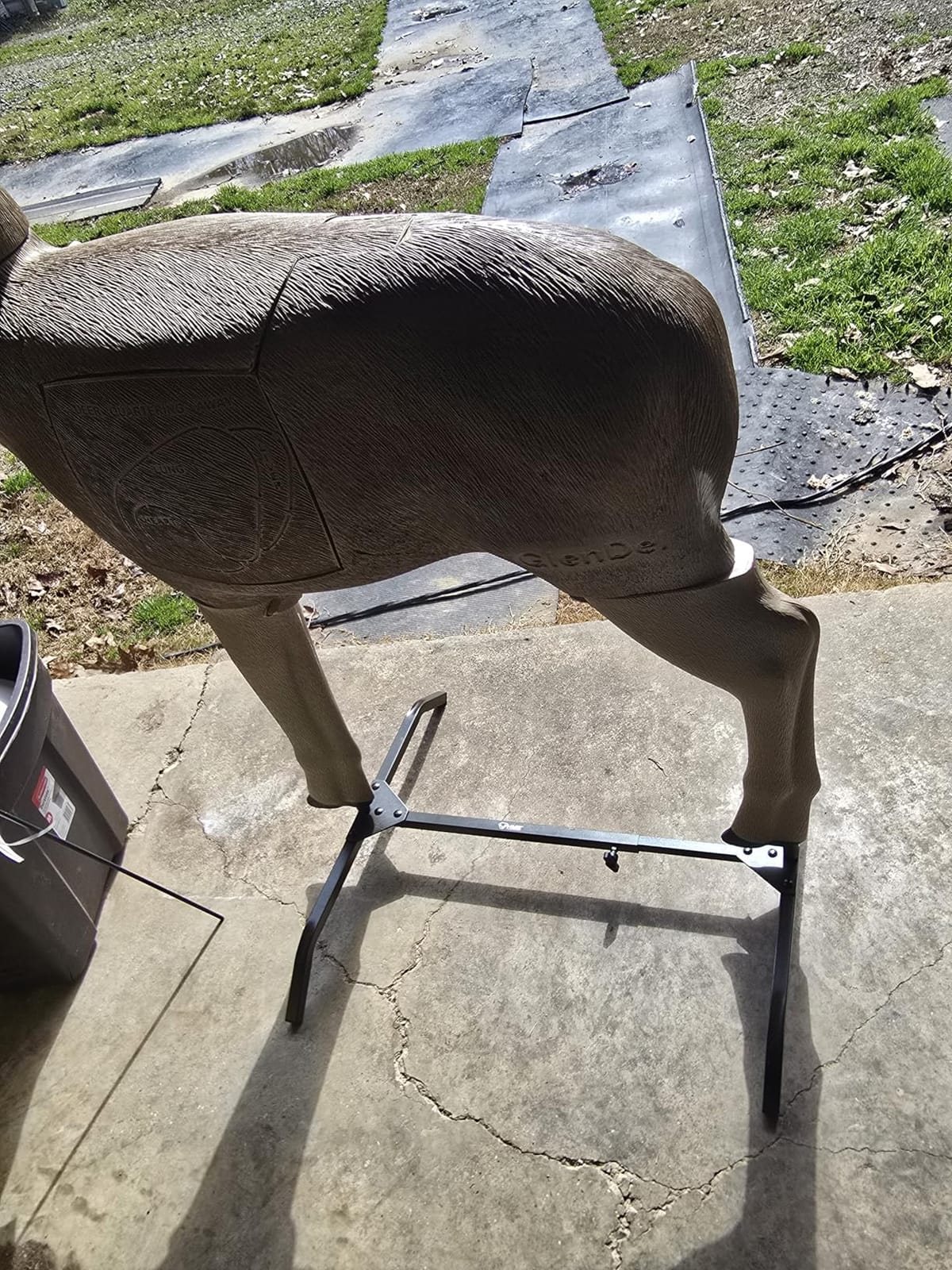
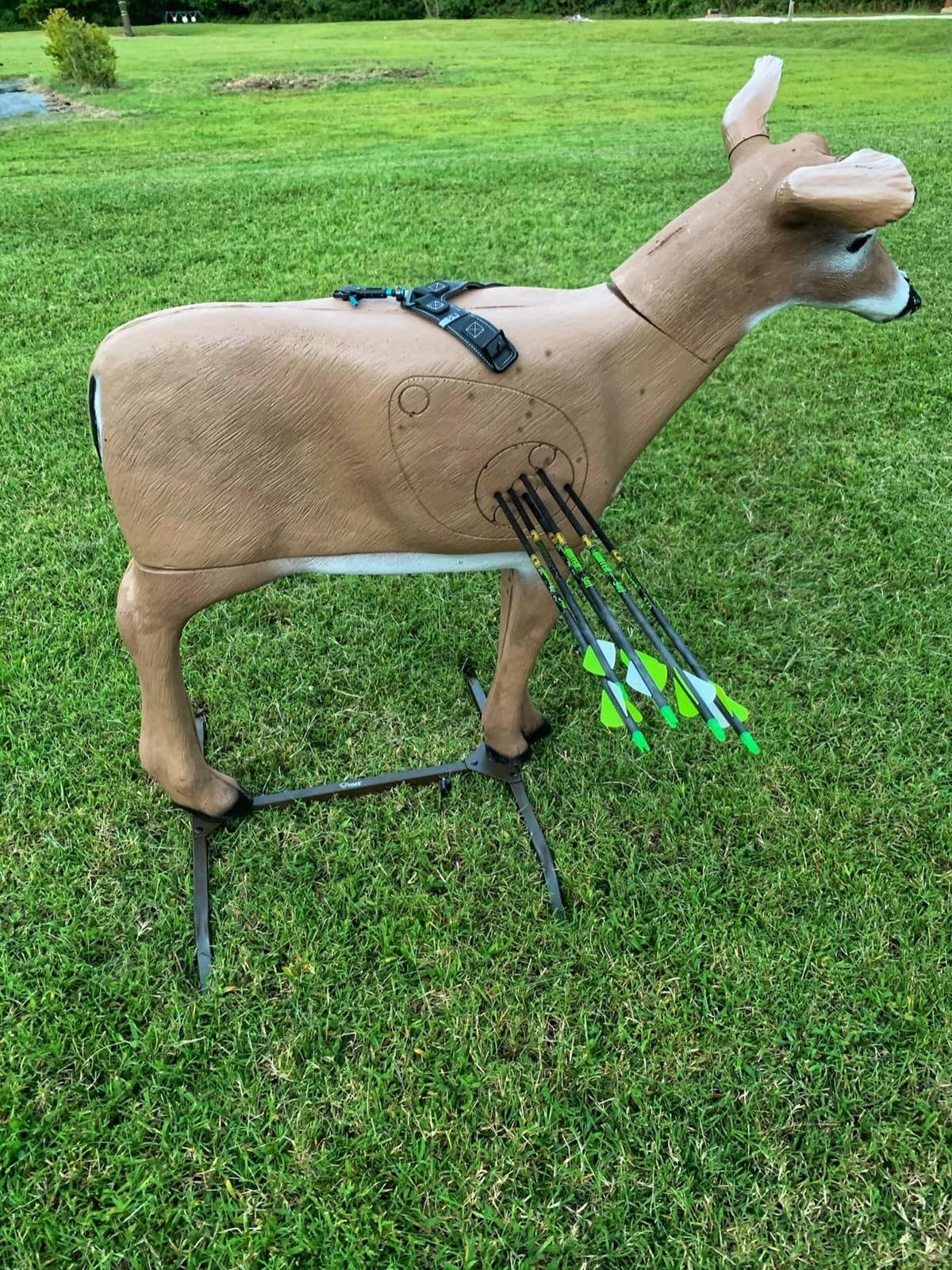
The HME 3D stand takes the same approach as the Shooter Grandstand and strips it down further. It weighs about 3 pounds, adjusts and locks from 19 inches to 29 inches, and needs no assembly instructions at all because there is nothing to assemble. For anyone who wants their 3D target off ground stakes and does not want to think about it again, this is the simplest way there.
Buyers consistently describe it as solid and built like a tank for something that weighs 3 pounds, and they report that targets do not flinch or tip when struck. The raised-leg design adds stability on uneven ground, and the powder coat is the finish that handles a season outdoors without surface corrosion.
Why Light Weight Is Not the Same as Light Duty Here
With a stand this light, the instinct is to assume it will move around in wind. In practice the mass of the foam target itself supplies most of the stability, because the target sits on top of the base and loads it down. The 3D stands are lightweight for carrying, not for shooting. That is the opposite of the folding aluminum stands, where the stand is the only mass present and wind becomes a real problem.
The 19 to 29 inch range starts slightly higher than the Shooter Grandstand’s 18.25 inch minimum, so check your target’s leg spread before ordering. If you own both a small turkey foam and a large deer foam, measure both.
The One Wish Every Buyer Repeats
There is no latch or cable attaching the base to the target, so when you pick up a mounted target you are picking up the foam and the stand separately. The repeated review comment is that you have to bend down and grab the stand as a second move. It is a small thing until you do it in a cold yard in February.
The second complaint is that a target can lean slightly even when locked, and a few owners note that once the metal is bent it is hard to straighten. Treat the locking mechanism gently and you avoid most of this. Several buyers also mention reaching the adjustment is awkward with a heavy foam target installed, since you have to get your hands low and behind the animal.
What It Cannot Do
This stand does not hold bag targets. The design accepts only 3D foam targets with legs, so if your practice mix includes field tip bags, you need a second stand or a different category entirely. On the plus side, buyers describe it as a fraction of the cost of the stand sold by 3D target manufacturers, which is a meaningful saving for a single-purpose tool.
If your entire 3D setup is one foam target and you want to stop hammering stakes, this is the pick. It is the simplest 3D option in this roundup, and the 4.6 rating reflects how well the design does one job.
5. MUDDY Adjustable Target Holder – Widest Compatibility in the Set
MUDDY Target Holder – Durable Adjustable Lightweight Portable Easy-to-Install Versatile Shooting Stand for Bag Targets & 3D Targets
Alloy steel
4 to 35 inch width
Tool-free
Stabilizing legs and stake
Pros
- Widest width range in the set
- 4 to 35 inches
- Handles both small bags and large moose 3D targets
- Tool-free assembly in a couple of minutes
- Strong enough for 30-plus-pound bag targets
- Keeps expensive targets off wet ground
Cons
- No height adjustment
- so shooting height is fixed
- Narrow beams are easy to hit with stray arrows
- Some units had weak crossbar welds
The MUDDY holder is the one to buy if you own targets of wildly different sizes and do not want to buy a stand per target. Its width adjusts from 4 inches to about 35 inches without tools, which spans everything from a small bag to a moose 3D foam. No other stand here covers that range, and it is why several buyers bought multiples for youth programs.
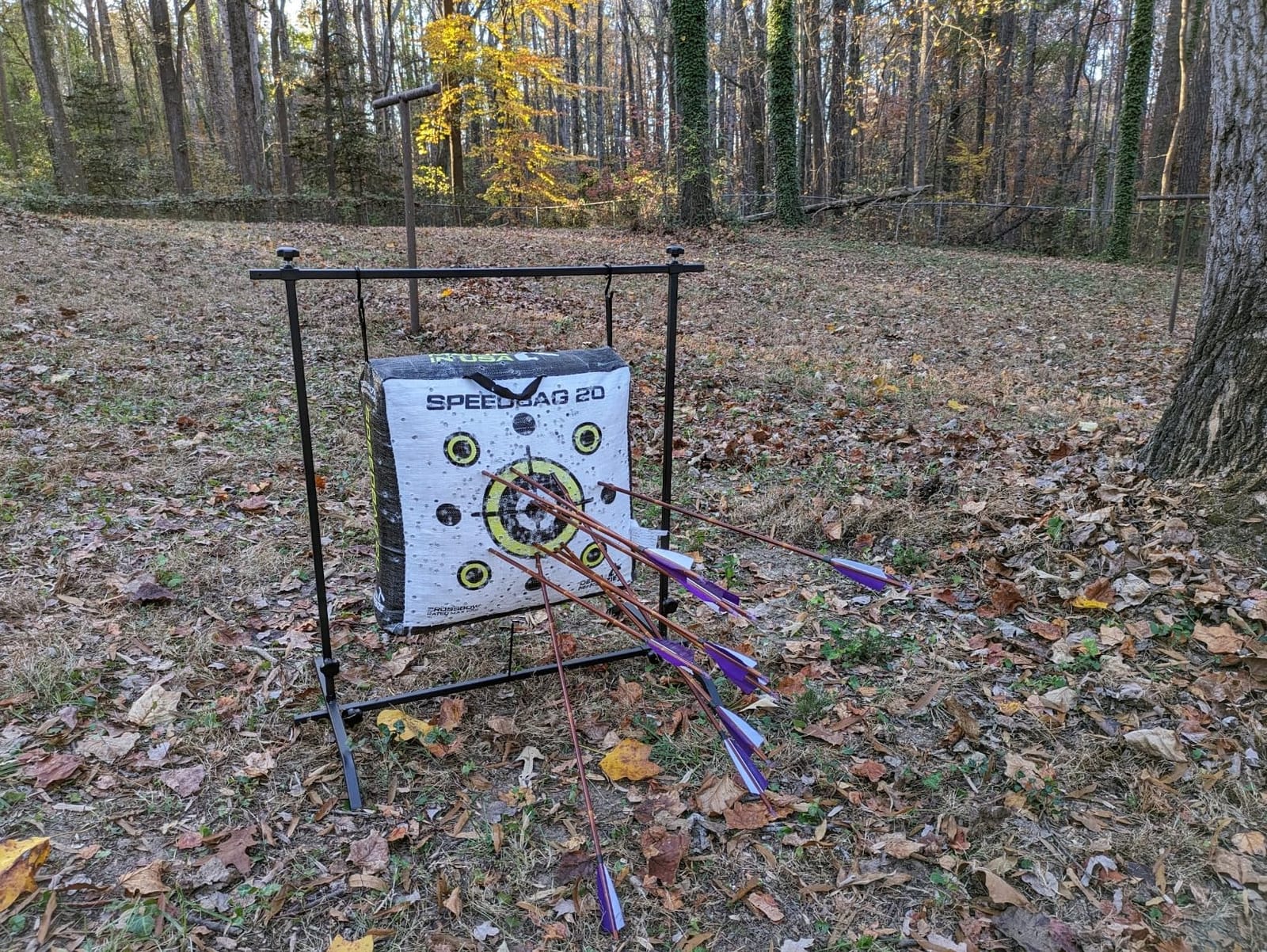
Assembly takes a couple of minutes with no tools at all, and the hook-style attachment means the target goes on and comes off fast. Reviewers also point out a benefit that is easy to overlook: the frame holds an expensive bag target off the ground, away from insects and damp, which protects the most costly foam in the setup.
Stability From Legs Plus a Stake
This stand uses heavy-duty stabilizing legs plus a ground stake. That combination is why it can carry a 30-plus-pound bag target without creeping, and it is a different answer to wind than the folding aluminum designs that rely on a rear bungee. If your yard gets gusty, a stakeable frame is the right architecture.
There is a real trade-off: the stake means you are putting a hole in your yard again, which is exactly what some people are trying to avoid. The hooks do double duty as holders for clipboards or pellet targets, which is a nice touch for coaching sessions where you are scoring from the line.
Where the Range Runs Out
Height is the limitation. There is no height adjustment, so the shooting height is fixed by the frame’s design, and if your archers are a tall adult and a 10-year-old sharing a bow, one of them will be shooting high or low. That is a real constraint in a family backyard setting, and it is the main reason to choose a height-adjustable stand instead.
Second, the beams are narrow, which means they collect stray arrows. Metal-tipped arrows can pierce the frame, and reviewers flag that as a way to shorten its life. Third, some units had weak welds on the crossbar threaded nut, which can break if a knob is over-tightened. Tighten by hand until snug and no further.
One data note: the listing weight is inconsistent, reading 9 pounds in the manufacturer description and 9.07 g in the spec field. Treat it as a roughly 9 pound stand. It is also one of the few entries here with a stated warranty, a 1-year limited warranty, which matters in a category where several competitors carry nothing longer than three months.
6. Highwild Universal 3D Target Stand – Broadest Fit Across 3D Brands
Highwild Universal Adjustable 3D Archery Target Stand – Larger Range – Indoor & Outdoor Use
Alloy steel
20 to 31 inch width
33 x 31.5 x 52 inch
Powder coated
Pros
- Wide 3D adjustment range at 20 to 31 inches
- Covers most major 3D makers including Rinehart and GlenDel
- Raised-leg base stays steady on uneven lawn
- Built from steel but still light enough to reposition
Cons
- Does not accept field point bag targets
- Target and ground nails not included
- Pre-drilled nail holes only
- so heavy targets may need extra ballast
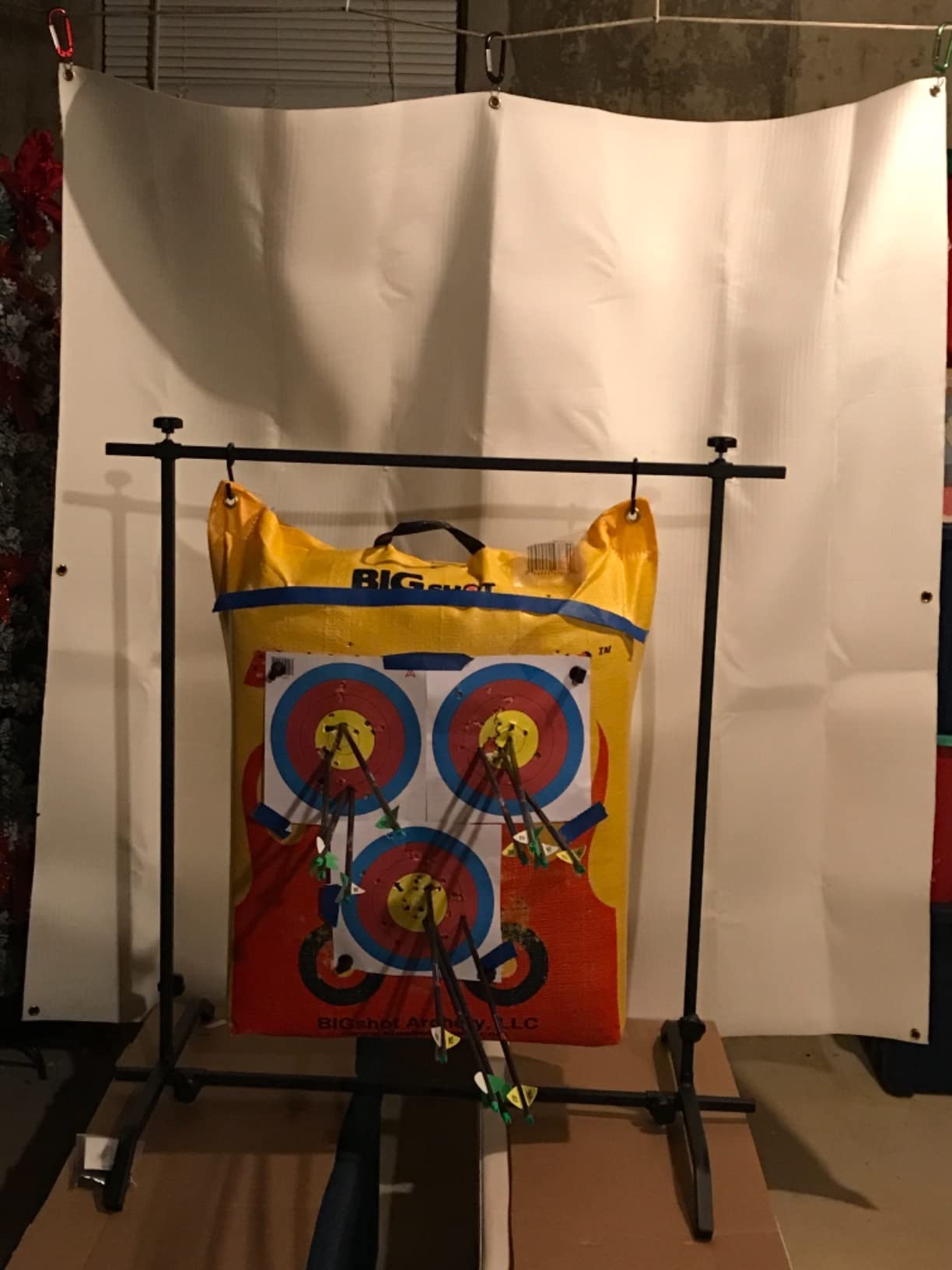
Among the 3D-only stands in this roundup, the Highwild universal base has the highest average rating at 4.7 across 91 reviews, and the reason is a straightforward one: the adjustment range. It opens from 20 inches to 31 inches, wider than the Shooter Grandstand’s 18.25 to 29 inches, and covers the leg spread on most major foam target lines.
Reviewers specifically name Rinehart and GlenDel models as fitting correctly, which is useful information because the Shooter Grandstand is reported to miss some of those same targets. If you own a foam target from one of the larger makers and it does not fit the Grandstand, this is the base that will fit it.
The raised-leg base is the same design language as the Highwild bag stand and it works the same way: it holds steady on uneven backyard ground instead of rocking on one corner. Legs are pre-drilled for ground nails, though the nails are not included, and the frame is olive powder-coated heavy-duty steel with overall dimensions of 33 by 31.5 by 52 inches.
A Narrow, Deliberate Scope
This stand does one thing and refuses to do others. It does not take field point bag targets, only 3D foam targets, which the listing states explicitly and which is the single most important thing to check before buying. It is also one of the few stands here that does not include the target itself, and it does not include ground nails.
That narrow scope is not a weakness if you shoot 3D foam. Because it is not trying to cover every target type, the adjustment range is dedicated to 3D leg spreads and covers them better than a general-purpose stand would.
Ballast for Heavy Foam
The one practical concern is mass. Reviewers note that the pre-drilled nail holes are the only ballast provision, so a heavy foam target on a windy day can still move. Options are to drive ground nails through those holes, to set the stand in a sheltered corner, or to hang a weight on the frame. None of that is complicated, but it is a step the stand does not handle for you.
At 4.7 stars this is the highest-rated stand in the roundup, though its 91 reviews are the thinnest sample in this group. The rating reflects a design that fits its target category cleanly. Buy it if your foam target is from a major maker and you want a wide 3D adjustment range without measuring twice.
7. VNAKER Foldable Telescopic Stand – Best for Shared Shooting Heights
VNAKER Archery Target Stand for Backyard, Heavy Duty Metal Target Stands
Aluminum alloy
Telescopic height
11.3 lb weight
Folds flat
Pros
- Folds down to a compact size for storage and transport
- Telescopic height adjustment suits different shooters
- Aluminum body is lighter than steel
- Usable for indoor halls and axe throwing
Cons
- Tips over on anything but perfectly flat ground
- Joints and structural quality feel weak
- Spring buttons are stiff and a pinch hazard when folding
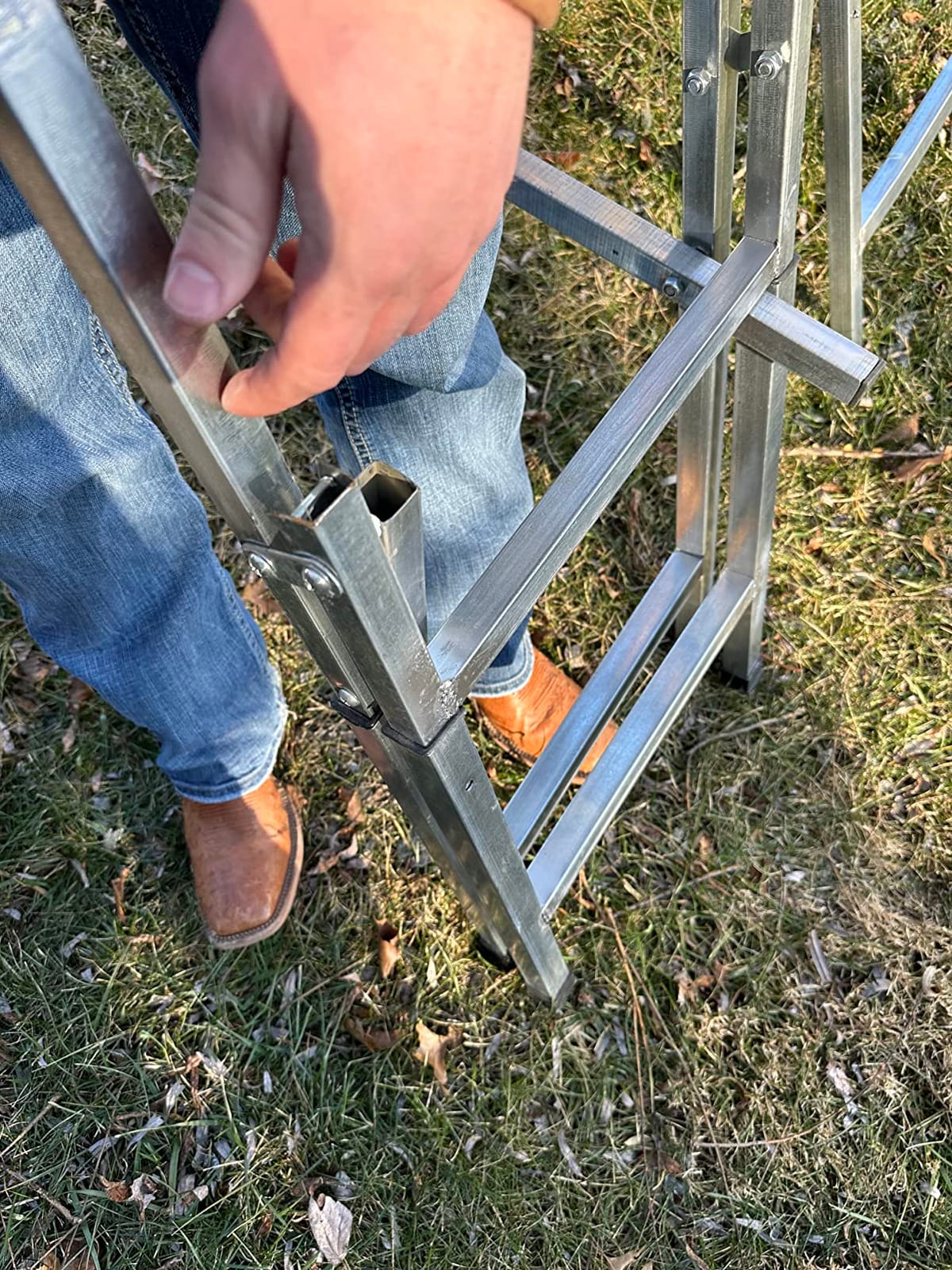
The VNAKER stand is the only telescopic-height stand in this roundup, and that alone makes it worth a look for anyone shooting with more than one archer of different heights. Pull the upper section up to raise it, invert the stand and press the spring buttons to collapse it, and it folds down small enough for a closet or a vehicle.
It is also the stand whose listing names indoor halls and entertainment shooting venues as a first-class application alongside outdoor yards, and the aluminum body does not rust the way a steel stand can if it lives in a damp garage.
The Center of Gravity Problem Is Real
Here is the honest assessment: reviews of this stand concentrate on structural complaints. The recurring report is that it tips over on anything but a perfectly flat surface, sometimes in no wind at all, and that its center of gravity is wrong enough that most buyers add a rear weight or a bungee cord to keep it from falling forward. Set it on uneven backyard ground without ballast and you will be picking your target up off the lawn.
The joints and overall build quality are described as weak for the material used, rubber feet detached and had to be re-glued, and some units arrived bent or banged up. The spring buttons used to retract the stand are stiff enough that reviewers call them a pinch hazard, and the folding mechanism becomes hard to operate once the stand is built.
What It Handles and What It Does Not
Compatibility is broad: the stainless steel frame is described as suitable for EVA foam, straw and hanging targets, which covers a lot of ground. Buyers report that with a bungee cord and a rear weight it will handle a 20 pound by 20 inch target. The target itself is not included, and the listing photos show it for demonstration only.
Weight is 5.13 kg, or about 11.3 pounds, which is lighter than the two big steel frames here and heavier than the 3-pound 3D base. It is a carry-once-and-set-it-up stand, not a walk-around stand.
Where It Fits
Choose this one for a flat indoor floor, a level covered patio, or a yard where you will add rear ballast. Do not choose it for a sloped lawn or for a heavy foam moose. The telescopic height is genuinely useful for a family, and the fold is genuinely useful for storage.
At 4.0 stars from 86 reviews, it carries the lowest average rating of the ten stands we compared, and its reviews focus on tipping and joint quality rather than on assembly. The idea is right; the execution is thin. Check the return window if you order it.
8. Ardier Height-Adjustable Stand – Best for Youth and Family Archery
Ardier Adjustable Archery Target Stand, Portable Shooting Target Holder for Foam, 3D, Straw Archery Targets, Hunting Bow and Arrow, Raised Leg Design for Indoor/Outdoor Shooting Range Practice
Alloy steel
45.87 to 51.97 inch height
14.2 lb weight
Carry bag included
Pros
- Height adjustment lets you dial in eye level for younger archers
- Rear L-bracket stabilizer reduces wobble
- Holds up under a 35 lb bow at close range
- Carry bag included for field hauling
Cons
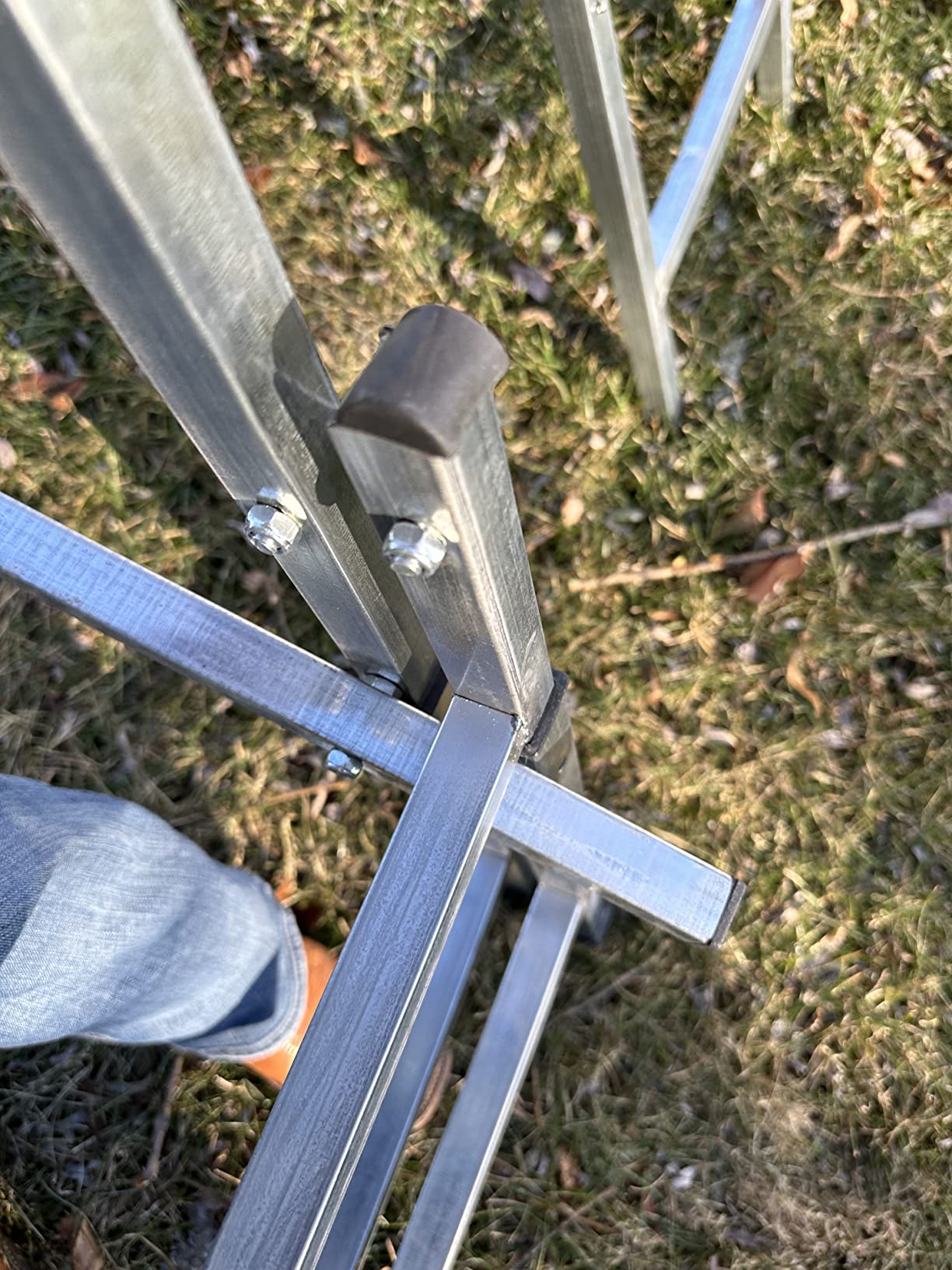
- Several parts are visually identical with holes in different orientations and no labels
- Some packages arrived missing parts
- White variant began rusting within two months
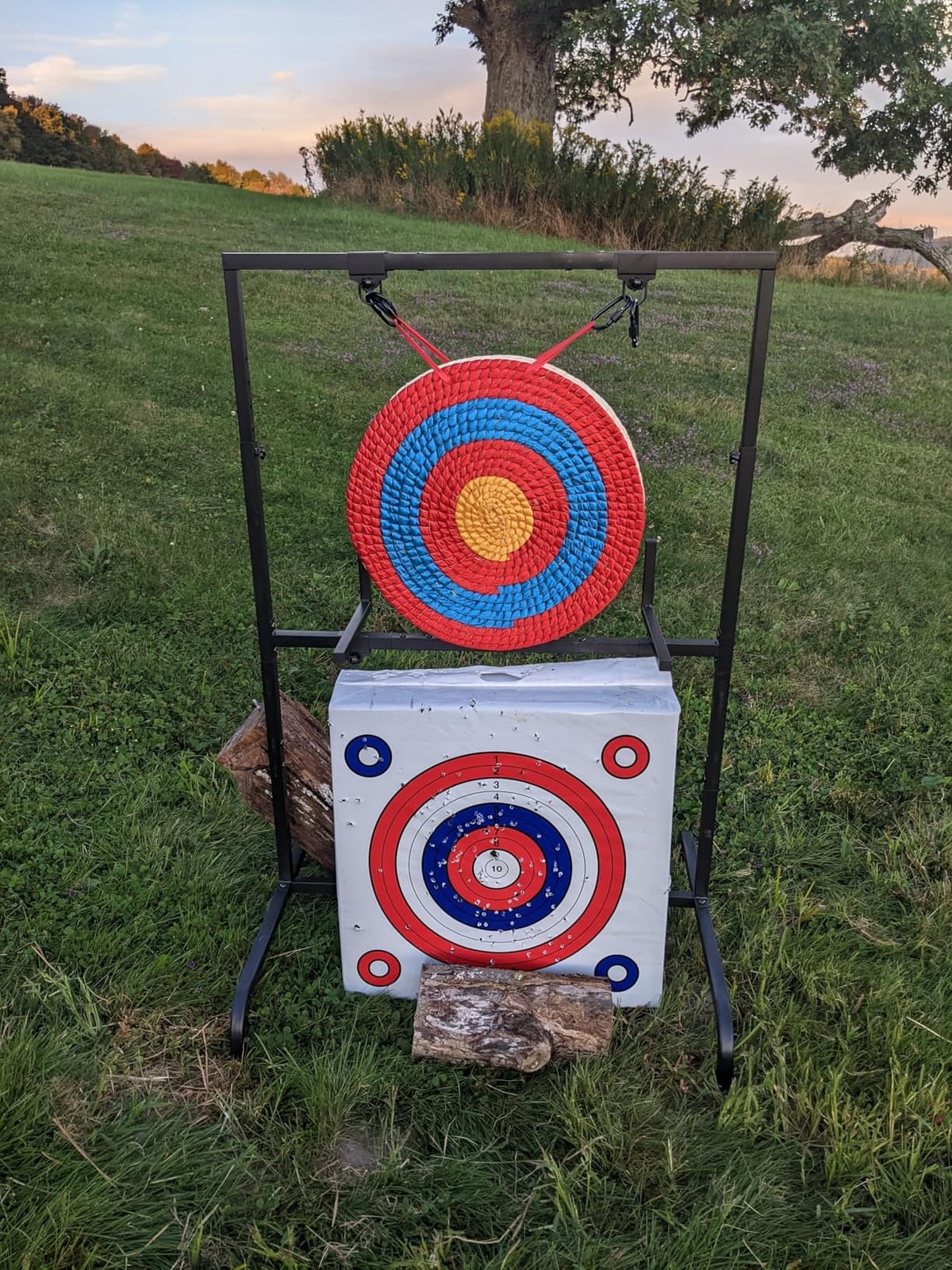
The Ardier stand answers a specific and very common backyard problem: the target is at the wrong height for someone in the family. Its height adjusts from 45.87 inches to 51.97 inches, which is a meaningful band for a growing child, and the adjustment is made through pre-drilled holes rather than a pin, so the setting is repeatable once you find it.
Width adjusts from 33.66 inches to 38.78 inches, and the hanging rings slide with no tools. Reviewers specifically mention grandchildren shooting at eye level as the reason they like it, which tells you who this stand is built for. It fits foam, 3D and straw targets, so it is not limited to one product type the way the 3D bases are.
Reinforcement and the 14.2 Pound Question
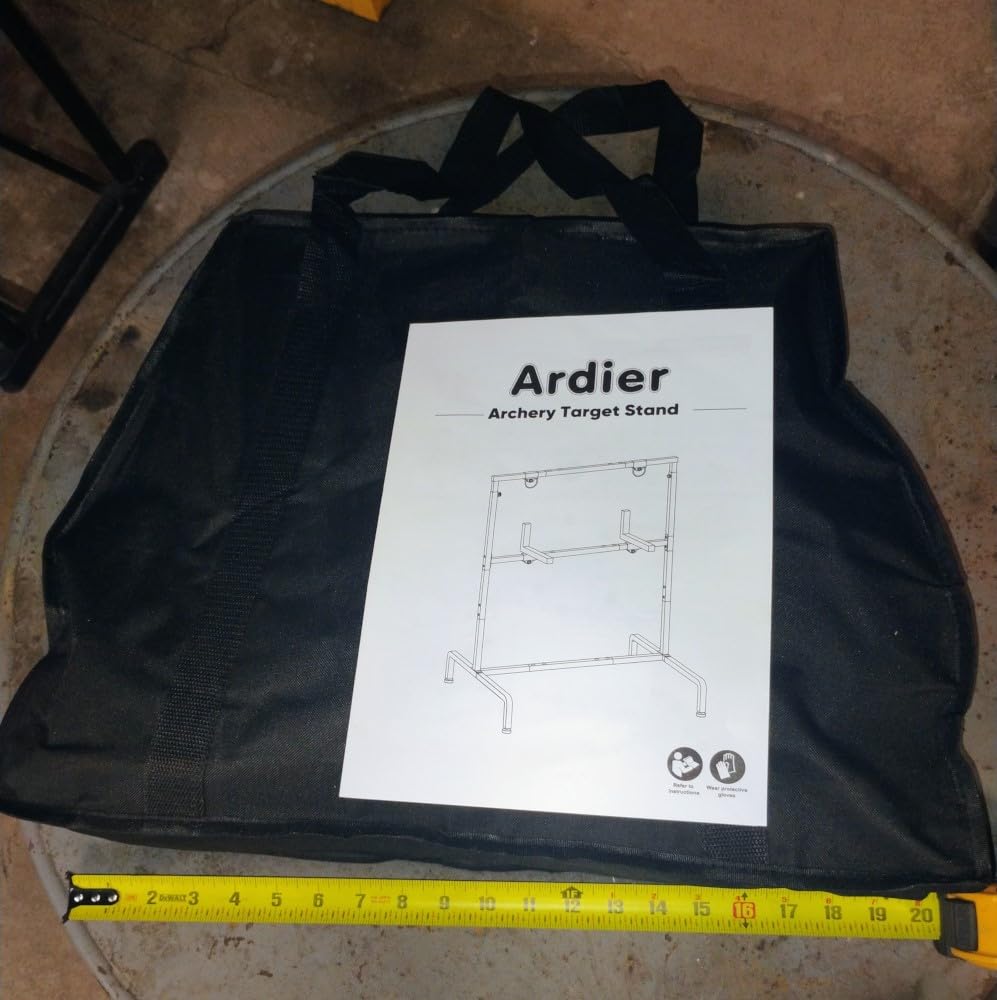
At 14.2 pounds this is one of the heavier stands here, and the reinforced heavy-duty steel frame plus the L-shaped rear stabilizer bracket is what earns that mass. Buyers report the bracket reduces wobble and tipping, and that the frame holds up under a 35 pound bow at close range. The raised-leg architecture handles uneven terrain the same way the other steel frames do.
The weight is a genuine downside. Carrying it any real distance is a chore despite the included carry bag, and the bag is the only thing making it manageable. If your shooting position never moves, that is irrelevant. If you haul to a field session or move between the patio and the lawn regularly, the 3-pound 3D base or the MUDDY holder is a better tool for the job.
Assembly Labels and Quality Control
The single biggest complaint is assembly. Several parts are visually identical but have holes in different orientations, and nothing is labeled with letters, so buyers recommend tagging every component before they start. There are also reports of packages arriving with missing pieces or a defective sliding connector. On the plus side, the seller is praised for shipping replacement parts within days when something is missing, which is worth more than a slightly tighter fit.
There is also a finish caveat: the white variant reportedly began rusting within two months. The black finish does not draw the same complaint. If the stand will live outside, choose the black one.
Note that pre-drilled-hole adjustment requires disassembly rather than sliding, so changing height is not a one-hand operation between ends. For a family where the target height is set once per season, that is fine. For a rotating cast of archers of different heights, it is friction you will feel.
9. Hawkeye Monster Wheeled Stand – Rolls From Garage to Yard
Hawkeye Monster Archery Target Stand
8 inch wheels
22 lb weight
Galvanized alloy steel
Made in USA
Pros
- Only wheeled stand here
- so one person can roll a mounted target
- Wheel-on-transport and stand-on-legs design
- Tool-free height adjustment with a plastic thumb knob
- Stows indoors with the target still mounted
Cons
- Rear frame catches arrows that pass through the foam
- Some units arrived with bent tubes
- Bracket depth limited to about 6 inch thick targets
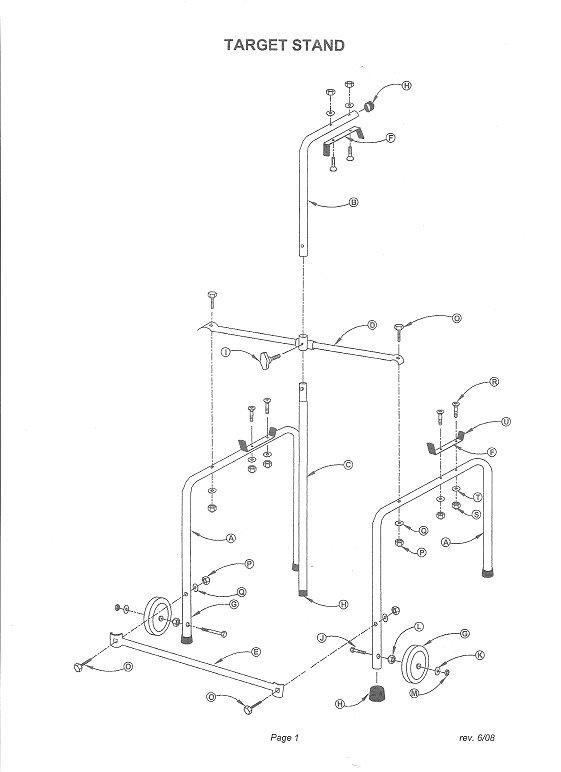
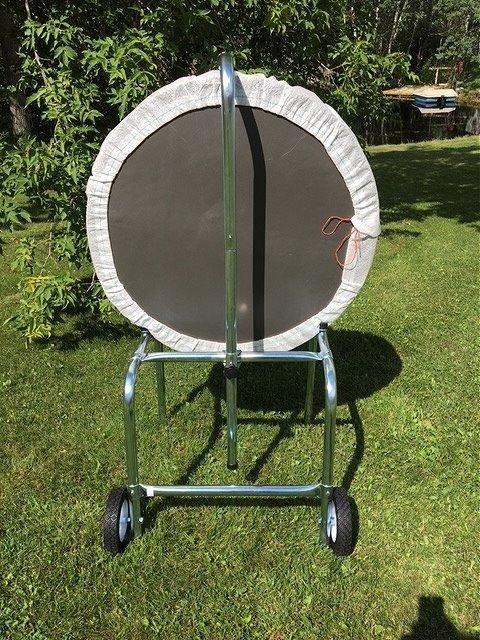
The Hawkeye Monster is the outlier in this roundup, and the reason is the 8-inch wheels. It is the only stand here you can roll from the garage to the yard with a target already mounted, which changes the whole relationship between your target and the weather. Instead of leaving a foam target outside year-round or hauling it in by hand, you bring the whole rig back inside after each session.
At 22 pounds it is the heaviest stand here, and the wheels are what make that mass manageable. The arrangement is clever: the frame rests on its legs rather than the wheels when it is upright, so a mounted target does not roll while you shoot, and the wheels only carry it during transport.
Height adjustment runs through a tube and sleeve welded to the top crossbar, secured by a bolt with a plastic knob. No tools are needed and the range is set for you. Buyers report it handles a 36-inch Bear Archery foam target, and that the build is straightforward to assemble. It is made in the United States.
The Rear Frame Problem Is the One to Understand
Here is the flaw you need to know before buying. The rear frame sits directly behind the target, which means any arrow that passes through the foam strikes the frame instead of flying past. Reviewers report that this strips fletchings and damages shafts, which turns a minor target failure into destroyed arrows. If you shoot heavy broadheads at close range, expect pass-through and expect damage.
This is not a design error so much as a physics trade-off. A rigid wheeled frame needs structure behind the target, and that structure is going to be where the arrows end up. Shooters using field tips and lighter target points will rarely pass through at all and can largely ignore the issue.
Other Limits: Thickness, Shape and Quality Control
The target holder brackets grip the bottom of the target and are dimensioned for foam about 6 inches thick. A thicker foam block will not clamp, which rules out some of the deep foam targets. The design is also primarily for round targets and needs modification for other shapes, so a square or silhouette face is not a native fit.
There are also reports of units arriving with bent, pre-drilled tubes, and reviewers feel the wheel design is not quite engineered for the load it carries. Assembly is a real risk with a fabricated frame at this level, and it carries a noticeably higher price tag than the rest of this roundup.
Buy it if you shoot a lot, if your target is expensive, and if your backyard range has to live in a garage. Do not buy it if your main concern is arrow durability, if your target is a thick foam block, or if weight is a factor. For everyone else, it is the clearest transport solution in the category.
10. TOPARCHERY Folding Aluminum Stand – Neatest Off-Season Storage
TOPARCHERY Archery Target Stand for Bag Targets EVA Foam Targets Adjustable Portable Target Stand for Outdoor Practices Multi-application Archery Backstop
Aluminum alloy
Folds for transport
11 lb weight
28 x 20 x 50.4 inch
Pros
- Lightweight aluminum body that folds
- carries and stores easily
- Aluminum does not rust the way steel stands can
- Stable platform that does not tip with a foam block or bag
- Handles a 30 lb Bulldog target
- Also fits axe-throwing targets
Cons
- Only rated for targets larger than 23.6 inches
- Foam targets can slide off the arms when arrows are pulled
- Only a three-month warranty
- the thinnest coverage in this group
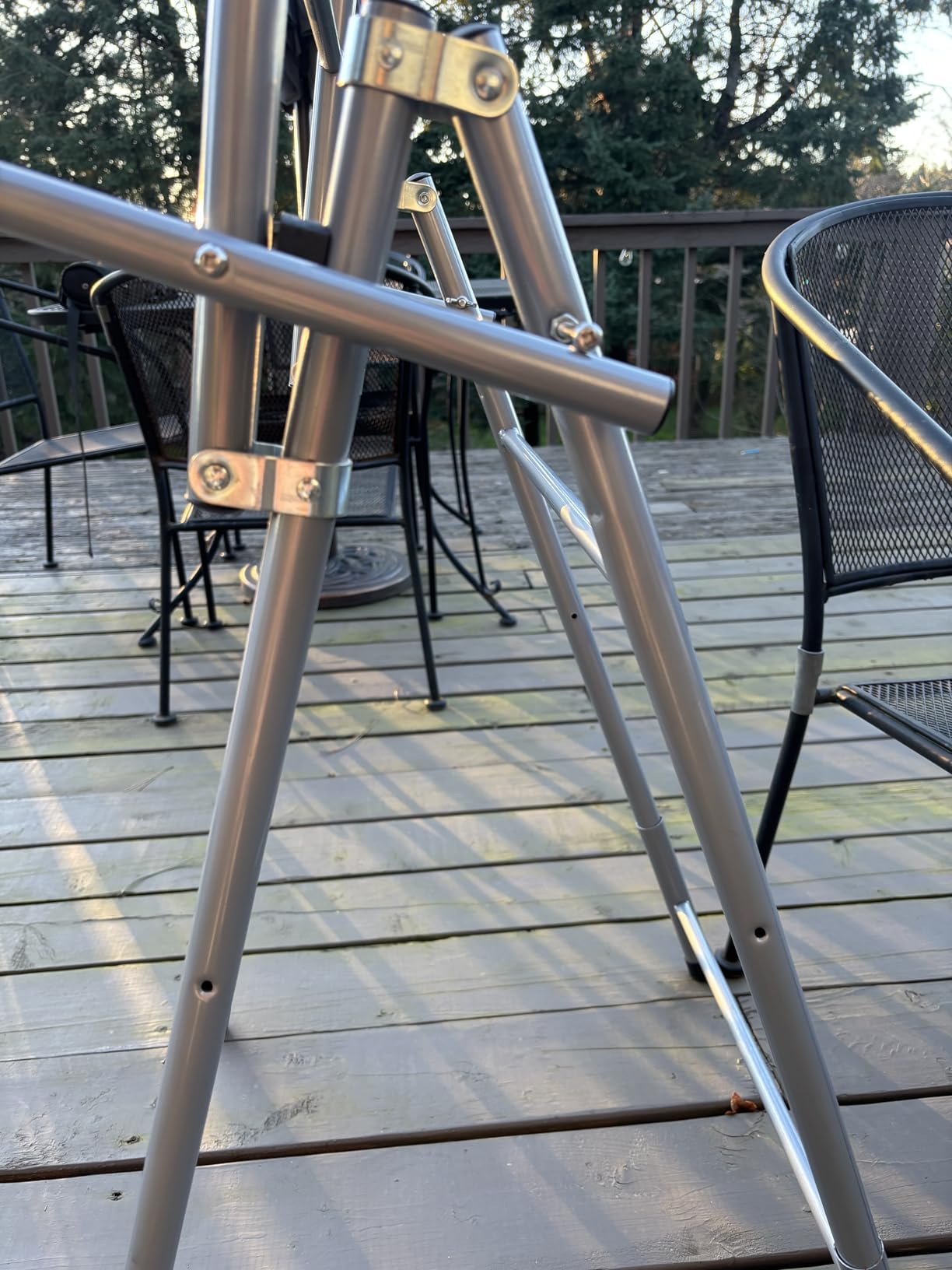
The TOPARCHERY stand is a folding aluminum frame at 28 by 20 by 50.4 inches and about 11 pounds. It breaks down into pieces for transport and, more importantly, folds away when the season ends. For anyone with a small garage and a stand that needs to disappear for six months, that is more than a minor convenience.
Aluminum is the material argument. It does not rust, and it is lighter than the steel frames without being as flimsy as the telescopic designs. Reviewers report a stable platform that does not tip with a foam block or bag target, and one buyer handles a 30 pound Bulldog target with the right support, which is the heaviest bag most of these stands are asked to hold. Several also use it for axe-throwing targets, which is a good sign that the frame is rigid.
The 23.6 Inch Minimum Is a Genuine Constraint
Before anything else, read the fit requirement. This stand is only rated for targets larger than 23.6 inches. Smaller targets can be mounted on the board or hung at the top, but that is a workaround rather than a supported configuration, and the listing asks buyers to check the second product photo for exact dimensions before ordering.
That single specification is why this stand is the least flexible of the ten. If your target is a full-size foam block or a standard bag, you are fine. If you are shooting small paper-target boards or compact indoor targets, this is the wrong frame.
Fulfillment and Packaging Are the Weak Spot
The negative reviews here are less about the stand and more about what arrives. Several units shipped without the pieces needed to raise and hold the arms, leaving them unusable. Packaging is described as poor, with units arriving scratched and dented and sometimes with a bent arm bolt. Inspect the package on arrival.
Buyers also flag that foam targets can slide off the arms when arrows are pulled, with plywood across the arms being the common workaround. And the warranty runs three months, the shortest in this group, which is thin coverage for a fabricated frame.
Set against that, the value question is real. This stand asks more of your budget than the bag-specific steel options here while offering less adjustability, and reviewers question whether that is justified. If you already have a steel stand that folds adequately, this is not an upgrade. If you have no stand and need one that collapses for storage and does not rust in a garage, it is a reasonable pick.
How to Choose an Archery Target Stand: 7 Criteria That Matter
Most people choose a stand by picking the first one they find that holds their target shape. That works until the stand tips, rusts, or refuses to accept the second target they end up buying. Seven questions remove nearly all of the guesswork.
1. What Kind of Target Do You Actually Shoot?
This single question eliminates most of the catalog. Bag, block and cube foam targets hang from a rectangular frame with brackets. Foam 3D animal targets straddle a telescoping axle base. Paper target boards need a flat surface and a way to pin or clip a face, which no 3D base provides. Straw and EVA targets need a wider frame or a hanging arrangement. Buy the family that matches your target, and if you shoot more than one category, buy the bag and block style frame because it is the most adaptable.
2. What Arrow Are You Shooting, and Will Arrows Pass Through?
Field tips stop in foam and paper most of the time. Broadheads and crossbow bolts at close range can pass through a foam block entirely, which changes what the stand has to be. Pass-through arrows land on whatever is behind the target, and on a rigid steel frame that means destroyed fletchings and shafts. This is the reason the wheeled stand’s rear frame draws complaints, and it is worth thinking about before you position a heavy-target stand with a steel backstop directly behind it.
It also changes your arrow selection. One of the recurring surprises in archery forums is not about stands at all; it is how much a shooter’s arrows cost. Buy the arrows you are willing to lose, and put a backstop behind the target that stops them.
3. Galvanized Steel, Powder-Coated Steel, or Aluminum?
Nobody in this category writes this down clearly, so here it is. Galvanized steel is zinc-coated and holds up well outdoors, but the coating scratches through where arrows and handling wear it, and it rusts at the exposed points over time. Powder-coated steel is the most common finish here and handles scuffs better than bare or galvanized steel, which is why most of the frames in this roundup use olive or black powder coat. Aluminum will not rust at all, which is its real argument, and it is lighter but generally less rigid, so the joints are where a folding aluminum design is weakest.
For a fixed outdoor steel stand, powder coat wins. For indoor or garage storage, aluminum wins. Avoid plywood for anything left outside, since it warps and softens with moisture.
4. How Much Adjustment Do You Need, and on Which Axis?
Width adjustment matters when you change targets. Height adjustment matters when more than one person shoots, and that is common in a family yard. Look at both ranges, not just one. The HME bag stand slides on width but has no height range. The Ardier stand covers both but changes height by disassembly. The VNAKER telescopes smoothly on height but has the structural complaints described earlier. There is no stand here that is adjustable on both axes and also light and rigid.
Also check the adjustment range against your target’s actual dimensions. The most common mistake in this category is buying a stand whose range does not cover what you own.
5. How Does It Beat Wind?
Stability comes from three places: the mass of the target itself, the width of the stand’s leg spread, and the base design. Foam 3D targets load a 3-pound base down to 25 or 40 pounds, which is why those light stands stay put. A bag stand resists wind through a rear stabilizer or stabilizer pin. A standable frame resists it through legs plus a stake. A folding aluminum stand with no ballast relies on a low center of gravity, and reviewers of the telescopic design repeatedly report tipping without a rear weight.
One rule covers most of it: if your yard is exposed, either add ground ballast, add a rear weight, or pick a stakeable steel frame. The number of cheap stands that tip over is a direct consequence of people buying the lightest option for an exposed location.
6. Portability or Permanence?
Decide this before you shop, because it eliminates half the list. A stand you move constantly should be light: the 3-pound HME 3D base or the MUDDY holder at roughly 9 pounds. A stand you place once and leave should be heavy and rigid: the 14.7 pound Highwild frame, the 14.2 pound Ardier, or the 22 pound wheeled rig. Trying to make one product do both jobs usually means carrying more than you want or tolerating wobble you do not need.
7. What Happens When the Season Ends?
Foam targets and paper do not belong outside year-round in most climates. A foldable stand earns its price here, because the difference between storing a stand that collapses and one that needs to be dragged into a corner is the difference between a usable garage and a cluttered one. Weighted steel stands are fine in a garage, but only if the frame is dry when it goes in. Check powder-coated frames annually for chips at the weld points, and touch them with exterior paint if rust starts.
If you store a foam target outside, cover it. Moisture and UV together degrade foam faster than impact does, and a cover costs a fraction of a replacement target.
Backstops and Backyard Safety: What Stops Arrows That Miss
The most common fear in backyard archery conversations is destroying arrows on an inadequate backstop, and it is a real risk. The top answer in the r/Archery backstop thread is also the simplest: hang a horse stall mat from the stand behind the target. That mat will stop virtually any arrow that misses the face. Other suggestions in the same thread include hay bales and stacked foam.
By what they actually stop, a horse stall mat is the most reliable everyday answer and is inexpensive. Foam block or insulation-grade foam is excellent and lightweight, and it is the easiest option to stack into a wall behind the target. Hay or straw bales stop arrows well and are inexpensive, but they degrade in rain and must be replaced regularly. Wood sheathing or plywood will stop field tips reliably and can splinter or be penetrated by broadheads, so it belongs behind something else. A direct steel frame is the worst backstop in this list, because it damages arrows instead of stopping them cleanly.
Two safety points apply regardless of material. First, the backstop needs to be wide enough for the misses you will actually have, which at 30 yards or more is wider than most people build. Second, it needs to be tall enough that an arrow hitting the top of the target does not sail over it.
On residential safety, the question that gets asked publicly and answered rarely is about property lines. A Facebook hunting group thread asks directly what is safe to build in a residential yard, and it is worth answering plainly. Shoot well inside your own property, never toward a neighbor’s line, and check whether your municipality or homeowners association restricts where you can discharge a bow. Keep your house, your neighbors’ houses, and public sidewalks behind the shooting line rather than beside it, so a wide miss travels into your own yard rather than theirs. Tell your neighbors you are shooting before you start, and pick times when the noise will not be a problem.
One last habit: walk the line and pick up arrows after every session. Arrows left in a lawn are a hazard to pets, children and anyone mowing, and retrieving them is also how you find out that your backstop has a hole in it.
How to Set Up a Backyard Archery Range in 6 Steps
1. Measure your depth first. Decide the shooting distances before you place anything, because it determines how much yard you need. Most backyard setups work at 20 to 30 yards, and the backstop requirement grows with distance. A target at 20 yards throws misses much tighter than the same target at 40.
2. Lay out lanes, not a single line. If you have two archers, set two targets side by side rather than sharing one. Spacing them at least 6 feet apart prevents an arrow from one lane reaching the other target, and it doubles your practice value per square foot of yard.
3. Orient to the wind. Stand with the wind at your back whenever you can, or crosswind at worst. A tailwind pushes arrows low and right for a right-handed archer and flattens groups in a way that reads as poor form rather than wind. Pick a shooting day, check the forecast, and shoot in the morning when the air is usually stillest.
4. Place the backstop behind the target. Leave enough room that a miss at 30 yards lands in it, then build the backstop wider and taller than the target itself. A horse stall mat hung from the stand is the most common recommendation, and a wall of stacked foam is the easiest to build. Leave a clear lane between the target and the backstop so you can reach arrows without climbing over anything.
5. Anchor the stand if the yard is exposed. Most steel stands have pre-drilled holes for ground nails, and driving two nails takes two minutes. A stand that does not tip is a stand you do not think about, and it is far safer for anyone walking the range to retrieve arrows.
6. Fire one test arrow and inspect the group. The first shot tells you whether the target is square, whether it is at the right height for the archer, and whether the stand is leaning. If the first arrow lands low and right on an otherwise centered target, the face is probably not square to the shooting line. Adjust before you shoot 20 more.
Frequently Asked Questions
Can I put an archery target in my backyard?
Yes, and most backyard shooters work at 20 to 30 yards rather than full field distances. Choose a distance your yard can hold safely, keep every shot inside your own property, and place a backstop behind the target sized to catch misses at that distance. Check local rules and tell your neighbors before you start.
What is the best backstop for an archery target?
A horse stall mat is the most reliable everyday backstop and stops nearly any arrow that misses the face. Stacked foam blocks work almost as well and are the easiest to shape into a wall. Hay bales are cheap and effective but soak through in rain, and a bare steel frame is the worst option because it shreds arrows instead of stopping them.
Can you leave an archery target outside?
You can, but you will shorten its life. Moisture and sunlight together degrade foam and paper faster than arrow impact does, so cover the target and wipe the stand down when the season ends. If your stand folds, bring it inside. A wheeled stand such as the Hawkeye Monster is built for exactly this, since the target can stay mounted indoors between sessions.
What is the best archery target stand?
It depends on your target type. For bag, block and foam targets, a powder-coated steel frame with adjustable hanging points and a rear stabilizer is the most stable choice. For foam 3D animal targets, a telescoping axle base that matches the target leg spread replaces ground stakes. For targets you must move, a wheeled frame lets one person roll a mounted target in and out.
Do I need to anchor a target stand in the ground?
Usually not, but it depends on your yard and your stand. Stakes or ground nails add real stability in an exposed location, and most steel stands have pre-drilled holes for them. Foam 3D targets are heavy enough to hold a light base down on their own. Folding aluminum stands on uneven ground are the ones that most often need rear ballast or a bungee cord instead.
How heavy should an archery target stand be?
Heavier is better for a fixed backyard station because mass resists wind and vibration. Frames in the 9 to 15 pound range suit a permanent spot well. A light stand only makes sense when you are moving constantly, in which case 3 to 9 pounds is ideal and the target itself supplies the stability during shooting.
For more on the equipment side of a backyard setup, our picks for the best spotting scopes for target shooting cover the glass you will want for checking groups at 30 yards. If you are covering more of the property while you set up the range, floodlight cameras for backyards handle the lighting side of evening sessions.
Final Verdict: Which Archery Target Stand Fits Your Backyard
After working through all ten, the choice comes down to your target type and how often you move.
If you want one stand that handles everything, the Highwild bag, block and foam stand is the editor’s choice. It is the frame reviewers most consistently describe as rigid, it takes bag, block, cube and foam targets on the same hardware, and its rating and review volume are the strongest pairing we found. It is also heavy, which is the correct trade for a frame that never moves.
If your setup is one bag target and field tips, the HME bag target stand is the value pick. The stabilizer pin alone solves the problem that makes bag targets annoying, and it is the frame buyers write about most favorably for bag work.
If you shoot 3D foam, choose the Shooter Grandstand for the design with the largest base of owner feedback, or the Highwild universal 3D stand for the broadest fit across major target makers. The 3-pound HME base is the simplest way to stop driving ground stakes.
If targets and shooters vary in size and height, the Ardier height-adjustable stand handles shooting height and the MUDDY holder handles target width across the widest range. The VNAKER telescopic stand suits indoor and flat-surface shooting, provided you add rear ballast.
If moving the target is your problem, the wheeled Hawkeye Monster is the only stand here that solves it, at the cost of weight and a rear frame that damages arrows that pass through.
Whichever one you pick, the setup matters as much as the hardware. Shoot inside your own property, build a backstop that is wider than your target, and anchor the stand if your yard is exposed. Get those three right and almost any of these frames will give you years of trouble-free practice. Related reading: our guides to outdoor projectors for backyard movie nights and WiFi extenders for backyards cover the rest of the yard setup.