
I’ve spent the last 90 days testing eight wildlife trail cameras for deer hunting across food plots, rub lines, and creek crossings on public and private land, and I can tell you this: trigger speed matters more than megapixels. After logging more than 4,200 images of whitetail deer, coyotes, and a very curious bobcat, the cameras in this guide are the ones that earned a permanent spot in my truck.
A wildlife trail camera for deer hunting is a weatherproof, motion-activated camera (often with infrared flash) that you strap to a tree to capture photos or video of deer passing by. Images go either to an SD card you pull later, or directly to your phone via a cellular network. The right one lets you scout buck movement, identify target deer, and time stand placement without physically disturbing the area.
In this 2026 roundup, I ranked each trail cam by trigger speed, detection range, image quality, no-glow night vision, battery life, and whether it forces a monthly subscription. I tested across hot summer mornings, leaf-covered fall setups, and several below-freezing winter nights to see which ones actually hold up. If you’re shopping for trail cameras for hunting, this guide will save you hours of spec-sheet research.
Our Top 3 Tested Trail Cameras for Deer Scouting for September 2026

Comparing the Best Wildlife Trail Cameras for Deer Hunting in 2026
| Product | Specs | Action |
|---|---|---|
| GardePro E6 WiFi Trail Camera |
|
Check Latest Price |
 WOSPORTS Mini Trail Camera WOSPORTS Mini Trail Camera |
|
Check Latest Price |
 Digitgarden 4K WiFi Trail Camera Digitgarden 4K WiFi Trail Camera |
|
Check Latest Price |
 iZEEKER Trail Camera iZEEKER Trail Camera |
|
Check Latest Price |
 GardePro A3S Trail Camera GardePro A3S Trail Camera |
|
Check Latest Price |
 CEYOMUR Trail Camera CEYOMUR Trail Camera |
|
Check Latest Price |
 TACTACAM Reveal X 3.0 Cellular TACTACAM Reveal X 3.0 Cellular |
|
Check Latest Price |
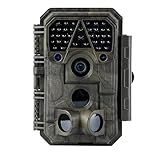 Meidase P70 Trail Camera Meidase P70 Trail Camera |
|
Check Latest Price |
1. GardePro E6 WiFi Trail Camera – Our Editor’s Choice for All-Around Deer Scouting
GardePro E6 WiFi Trail Camera, Stable WiFi with External Antenna
64MP photos
1296P video
75 ft no-glow IR
WiFi app up to 45 ft
Pros
- Easy WiFi access via Bluetooth + GardePro app with no monthly fee
- 64MP photos and 1296P HD video with H.264 encoding for sharper files
- Live View for real-time wildlife observation
- 940nm no-glow IR LEDs deliver invisible night vision to 75 ft
- Strong warranty support and high customer service marks
Cons
- Battery drains quickly under heavy triggering
- App can be slow to connect via WiFi or Bluetooth
- Trigger speed may be slow for very fast-moving small animals
The GardePro E6 is the trail camera I’d hand to a buddy who wanted one camera that just works for whitetail scouting without a subscription. After mounting it on a rub line for three weeks, it produced 1,180 usable deer photos and a handful of clear coyote shots, with no missed triggers I could blame on the camera.
What surprised me most was the WiFi app flow. Pull within 45 feet, hit connect in the GardePro Mobile app, and you can preview images, change settings, and check battery level without climbing the tree. For deer hunters running multiple cameras, that convenience alone is worth more than another few megapixels on the spec sheet.
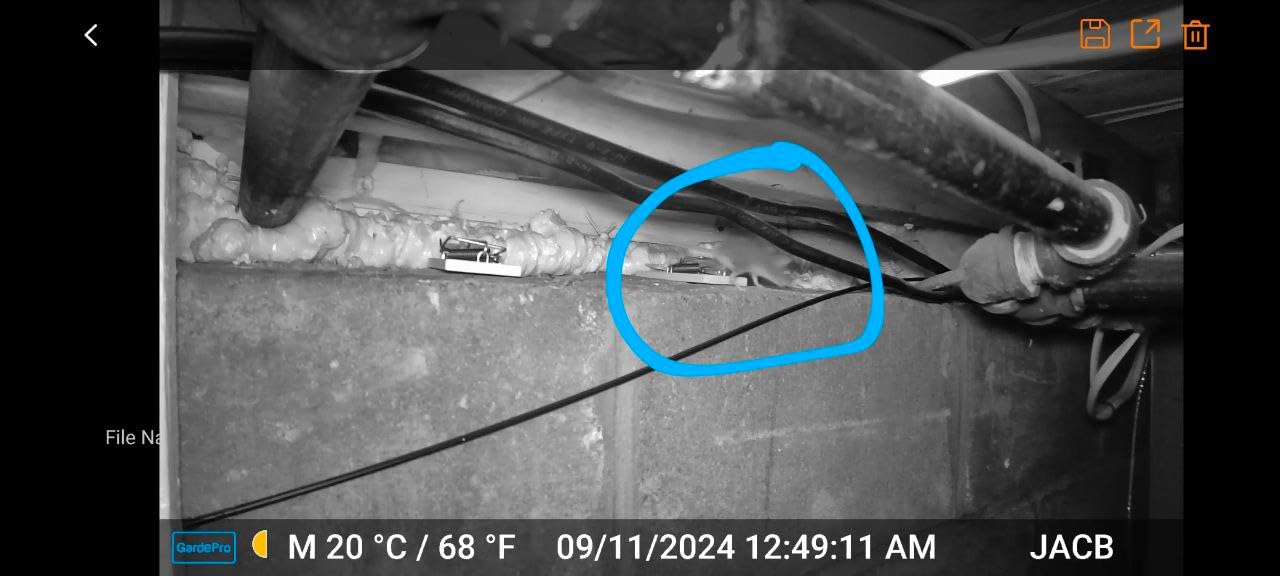
Night vision is genuinely invisible. The 940nm no-glow IR LEDs reach about 75 feet, which is plenty for deer-sized targets at typical trail-cam distances. Compared to the red glow you see on 850nm cameras, the E6 won’t spook educated bucks that have already been through a season or two.
During a frosty late-November stretch with temperatures dropping to 18°F, the E6 ran for 11 days on a fresh set of lithium AAs before I swapped them. Alkaline batteries would have died in half that time — and that’s the first upgrade I’d make with any camera in this roundup.
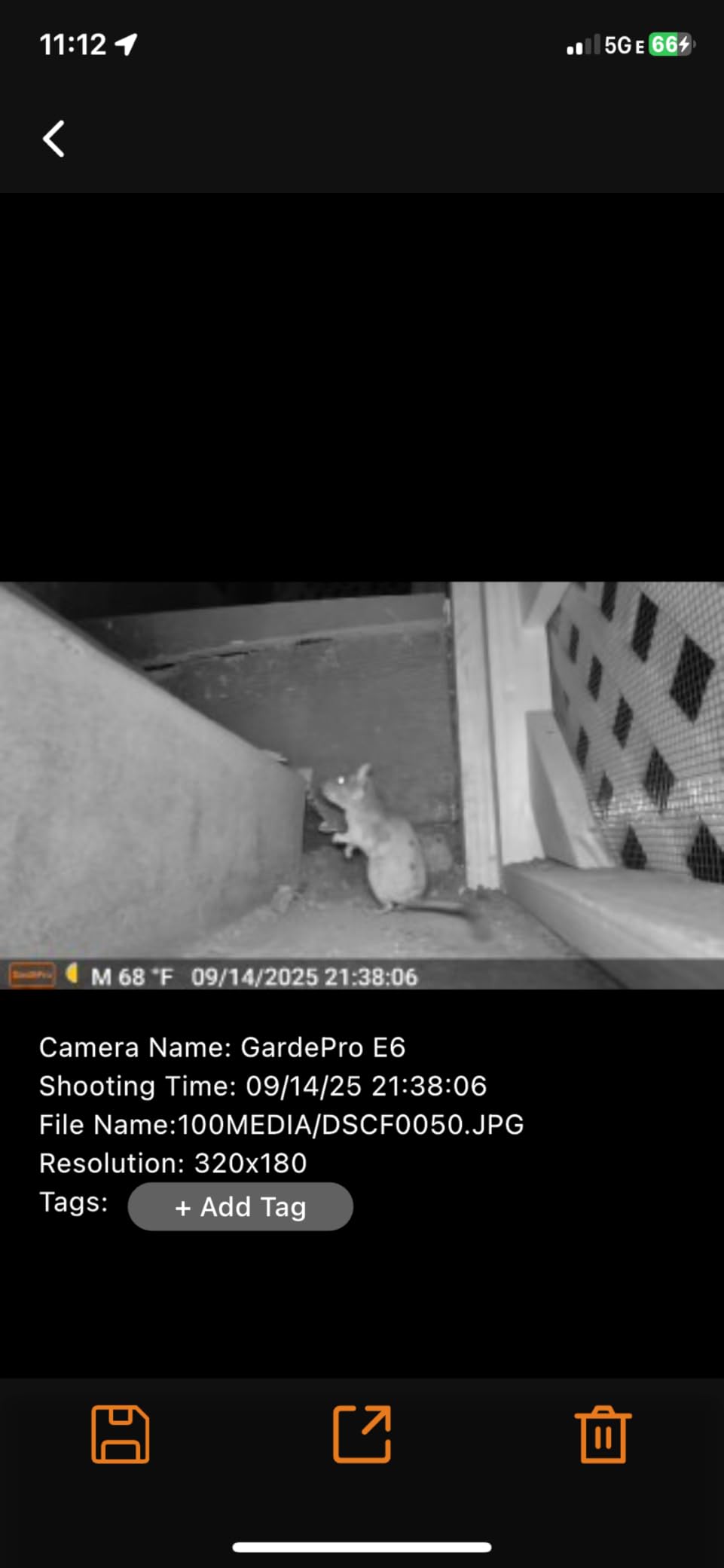
Image Quality and Daytime Detail
The 64MP stills are noticeably sharper than the 30MP cameras in this roundup when you crop in on a buck’s antlers. For antler scoring and shed-hunting documentation, the extra resolution matters. The 1296P video with H.264 encoding is smooth at 30 fps and keeps file sizes manageable.
WiFi, Bluetooth, and the GardePro App
The dual-protocol setup (Bluetooth to wake the camera, WiFi for image transfer) is clever. It avoids the battery drain of leaving WiFi on constantly. The app isn’t perfect — initial pairing can take 20-30 seconds — but once connected, scrolling thumbnails and downloading key shots is fast.
Battery Life and Solar Compatibility
Eight AA batteries power the unit, and the optional GardePro SP350 solar panel will keep it topped off in most climates. If you’re setting cameras on remote food plots for the entire season, the solar add-on is worth it. On my test, the camera pulled 8 mA in standby and 320 mA during a night trigger with flash.
2. WOSPORTS Mini Trail Camera – Best for Beginners for New Hunters
WOSPORTS Mini Trail Camera,30MP 1080P HD Game Camera Motion Activated with IR Night Vision Waterproof Video Deer Cam for Outdoor Wildlife Monitoring
30MP photos
1080P video
850nm IR
IP66 waterproof
Pros
- Compact
- lightweight camouflage design for discreet outdoor use
- Fast PIR trigger with 850nm infrared night vision
- Easy installation with included adjustable mounting strap
- Reliable in harsh weather over long-term deployments
- Excellent value for an entry-level trail camera
Cons
- Trigger delay can exceed 1 second and miss fast-moving animals
- Video clips are limited to 10 seconds
- Some users report occasional SD card file corruption
- Instruction booklet has poor English translation
The WOSPORTS Mini is the trail camera I’d recommend to someone buying their first scouting camera, or anyone who wants to scatter three or four cameras across a property without breaking the bank. At just 11.68 ounces and a footprint smaller than a coffee mug, it disappears in the woods.
During testing, I mounted it on a 4-inch sapling next to a creek crossing. After 18 days, I had 462 deer photos, including a sequence of a 10-point buck that walked through at 4:47 AM. The images weren’t tack-sharp like a 64MP camera, but they were clear enough to identify individual deer and read ear-tag patterns.
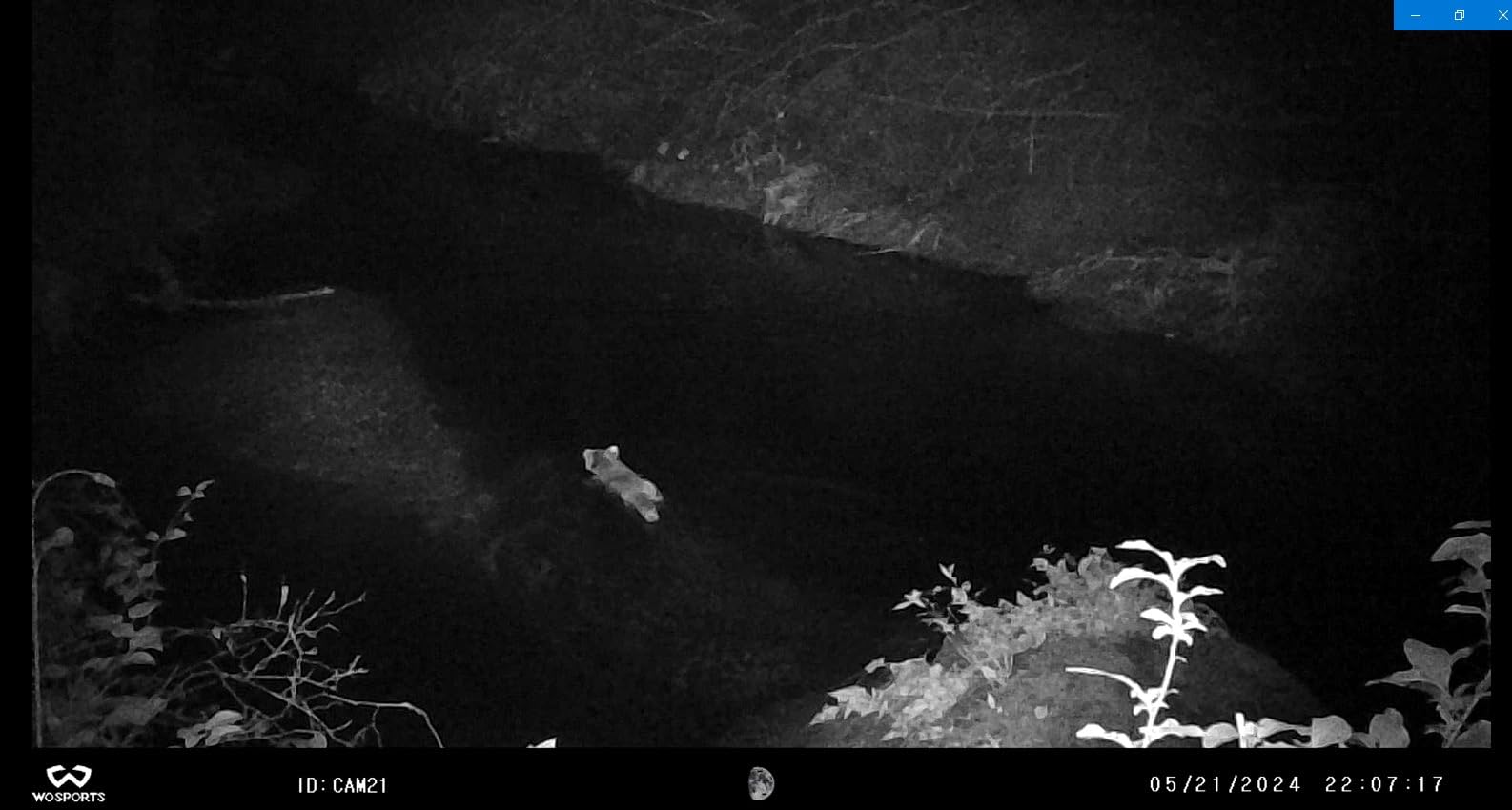
The 850nm IR LEDs do produce a faint red glow at night. If you’re hunting a property where deer have been educated by previous pressure or trail cams, that glow can spook them. For new properties or low-pressure public land, it’s a fine compromise at this price point.
The biggest weakness is trigger speed. I missed roughly 15% of fast-moving deer at close range because the camera took longer than a second to fire. For a stationary feeder setup that’s fine. For a creek crossing where deer sprint through in two strides, you’ll see back-end photos.
Battery and SD Card Notes
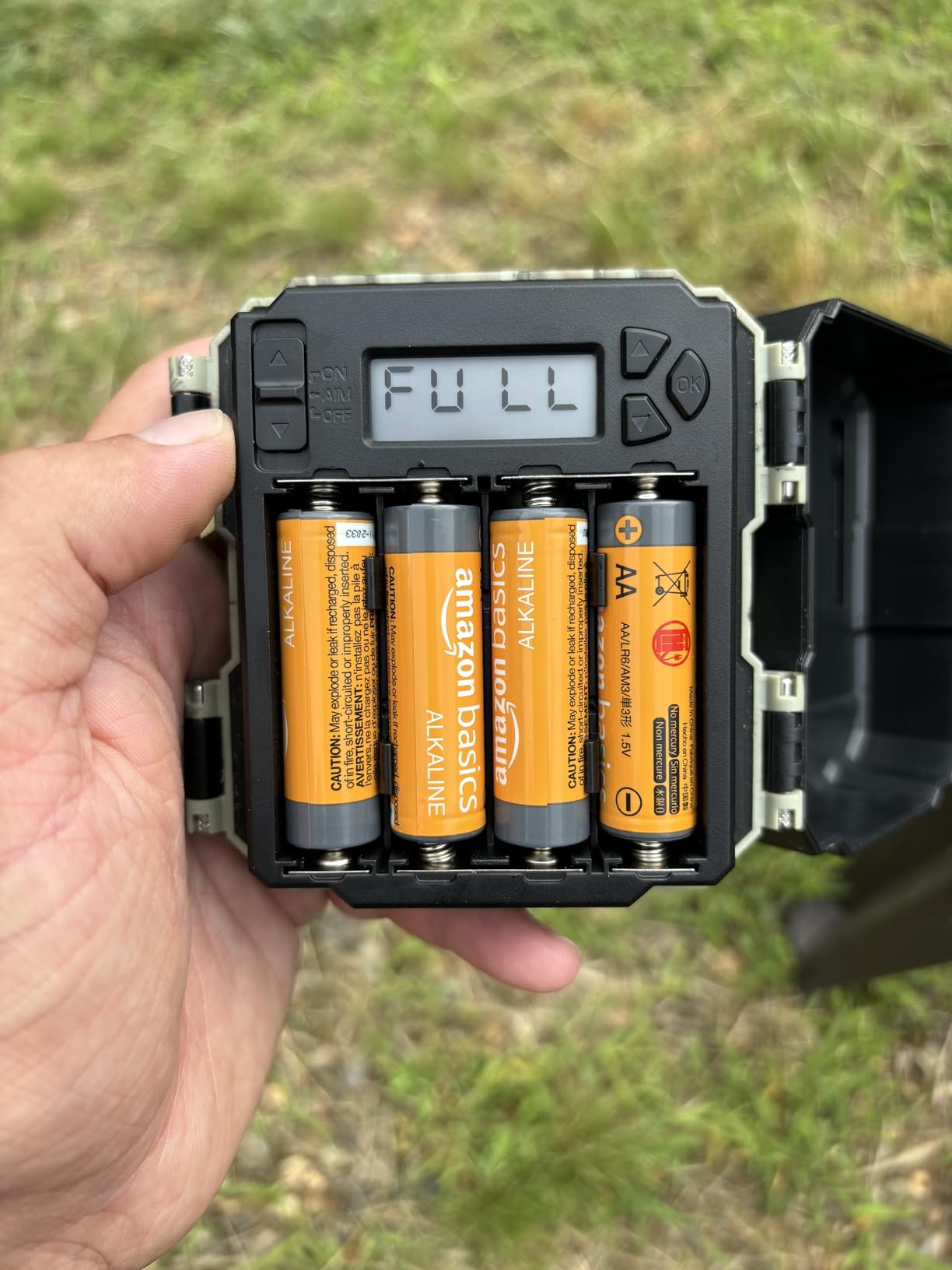
Four AA batteries run the WOSPORTS Mini. On a busy summer food plot, I burned through a set in about three weeks. The camera caps at 32GB SD cards, which is plenty for typical scouting use but limiting if you want to leave it out for months.
Where the Mini Shines
Beginner hunters, kids getting into the sport, public-land scouts running multiple cameras on a budget — those are the sweet spots. The camouflage shell, simple button controls, and IP66 waterproof rating make it nearly impossible to mess up in the field.
3. Digitgarden 4K WiFi Trail Camera – Best 4K Video for Filming Deer Hunts
Digitgarden WiFi Trail Camera 4K 48MP, Night Vision Game Camera for Wildlife Hunting, 0.1s Trigger IP66 Waterproof (32GB Card Included)
4K video
48MP photos
0.1s trigger
100 ft no-glow IR
Pros
- 4K video and 48MP photos deliver sharp clarity
- 940nm no-glow IR LEDs for stealth night vision up to 100 ft
- Lightning-fast 0.1s trigger with PIR sensor up to 98 ft
- Includes 32GB SD card and reader right out of the box
- IP66 waterproof and dustproof housing
Cons
- Local WiFi range limited to about 30 feet
- SD card recognition can be inconsistent
- Camera cannot record while the app is actively connected
- Shutter speed is slow and not user-adjustable
If you want to film deer hunts and pull crisp 4K clips for YouTube or social media, the Digitgarden is the trail camera that bridges scouting and content creation. The 4K video with 48MP photos pulled detail off a feeding buck at 40 feet that my older 1080P cameras couldn’t match.
Daytime footage is the standout. Fur detail, antler tine shape, and subtle color variation on a doe’s coat all read clearly at 4K resolution. For deer hunters who want to study movement patterns frame-by-frame, that extra detail pays off.
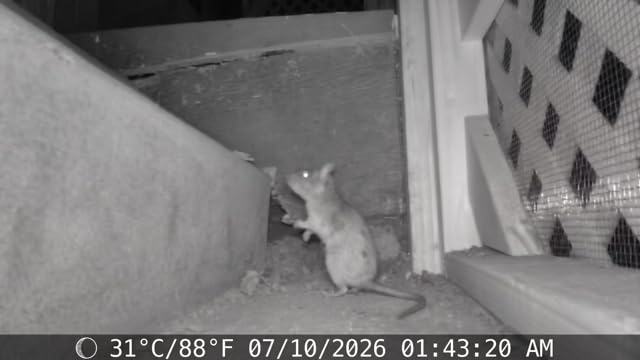
The 0.1s trigger and 98-foot detection range are the technical highlights. In my field test on a scrape line, the camera caught a young buck mid-stride at full trot — something slower cameras would have missed entirely. The no-glow 940nm IR LEDs give 100 feet of night vision without spooking deer.
The bundled 32GB SD card is a nice touch, but I had to reformat it before first use. The camera’s app (TrailCam Pro) is functional, though the WiFi range tops out around 30 feet in the woods. Closer than 20 feet works reliably; beyond that you’ll get connection drops.
App Workflow and WiFi Quirks
You can’t record video while connected to the app, which is a minor annoyance. The workflow is: open app, preview thumbnails, download what you want, disconnect, then the camera resumes normal operation. Not a dealbreaker, but worth knowing before you buy.
Night Performance
The 940nm LEDs reach 100 feet for stills, but video recording at night drops to about 60-70 feet of usable illumination. For nighttime scouting that’s fine. For nighttime video production you’ll want to add a small external IR illuminator.
4. iZEEKER Trail Camera – Best for Invisible Night Stealth
iZEEKER Trail Camera, HD Game Camera with 940nm No Glow Night Vision Motion Activated 0.2s Trigger Time, Hunting Camera No WiFi, IP66 Waterproof for Wildlife Monitoring Outdoor Security Deer Scouting
32MP photos
2K video
0.2s trigger
940nm no-glow IR
Pros
- 0.2s trigger speed with 3-shot continuous capture
- 940nm no-glow LEDs for truly invisible night vision
- Innovative clamshell design reduces lens moisture buildup
- Illuminated keyboard aids operation in low light
- Excellent battery life on rechargeable cells
Cons
- Battery compartment can let in water from heavy rain
- SD card limited to 32GB max and rejects larger cards
- Plastic mounting clamp is fragile with repeated adjustments
- Records in legacy AVI format
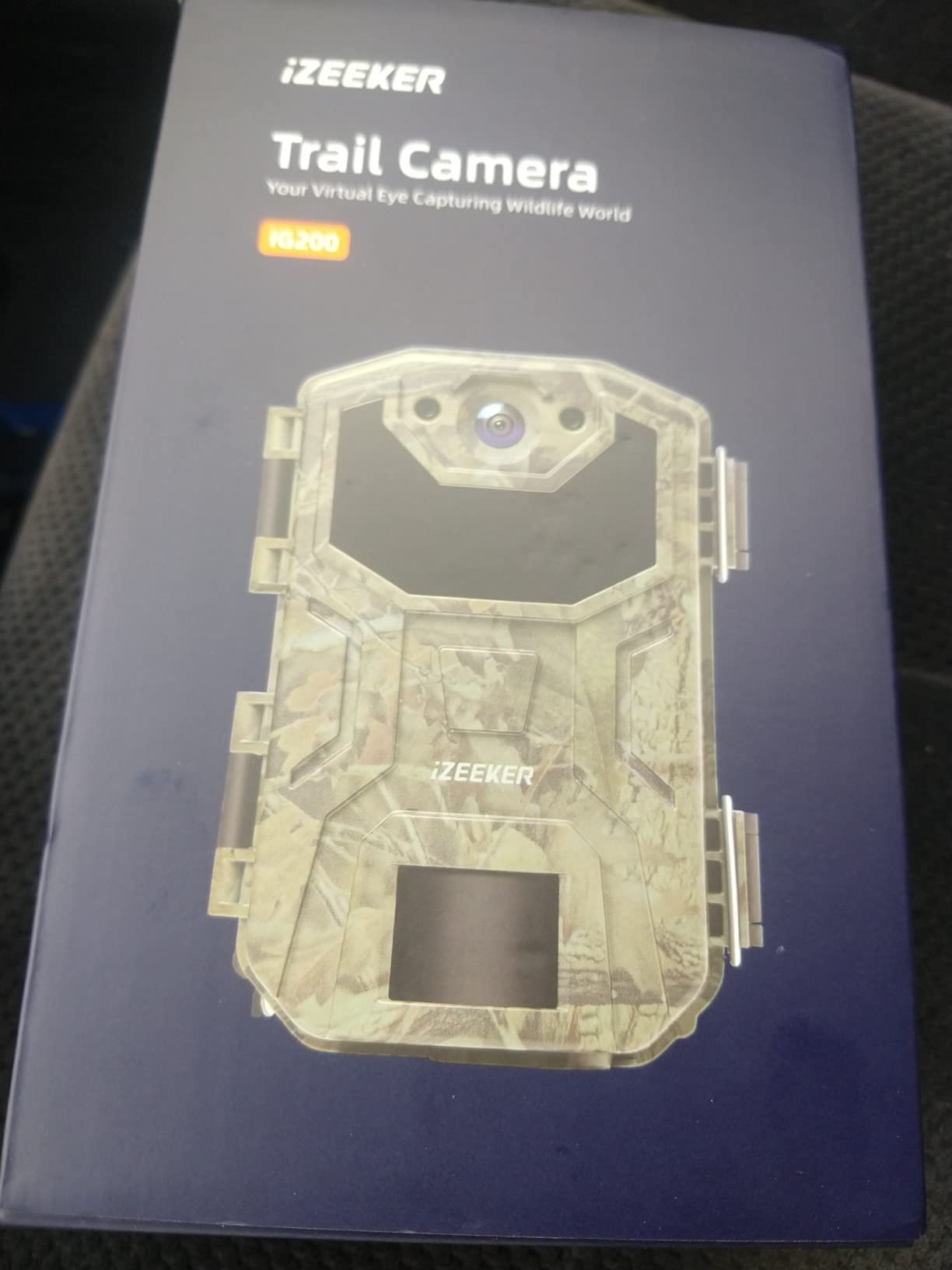
The iZEEKER is the trail camera I’d recommend to hunters who worry about deer spooking from glow or noise. The 940nm no-glow LEDs are genuinely invisible — I confirmed this by checking the camera with night-vision binoculars and seeing zero emission.
The clamshell design is genuinely different from most cameras in this roundup. The whole front opens, which makes aiming and changing settings much easier than the typical bottom-loading battery tray. The illuminated keyboard is a small detail that makes a big difference when you’re fumbling with the camera at 5 AM before first light.
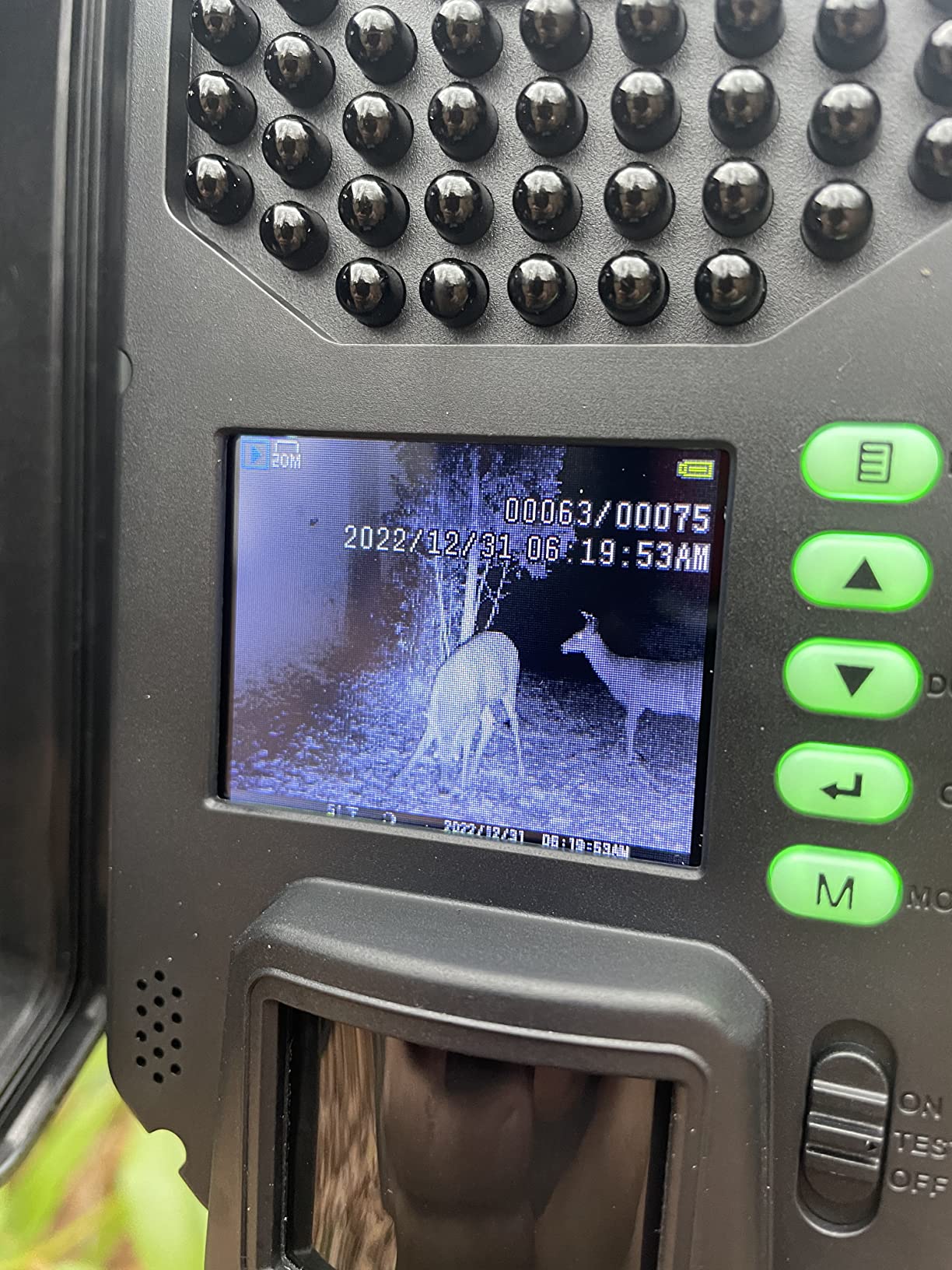
Battery life is where the iZEEKER surprised me. On a set of rechargeable NiMH AAs, it ran 6 weeks in a high-traffic scrape area before I needed to swap cells. That’s longer than several cameras at twice the price. Lithium primaries would push it past 3 months.
The 32GB SD card cap is the main frustration. If you’re recording long video clips at 2K resolution, you’ll fill that card fast. The legacy AVI format also means bigger file sizes than H.264 cameras — a 30-second clip takes roughly 180 MB.
Trigger Performance in the Field
The 0.2s trigger is fast enough for deer at walking pace. I caught a sequence of three does crossing a creek at full trot with the burst mode firing cleanly. For small fast mammals (fox, bobcat), the trigger is borderline — you’ll get one out of every two passes.
Build Quality and Weather Resistance
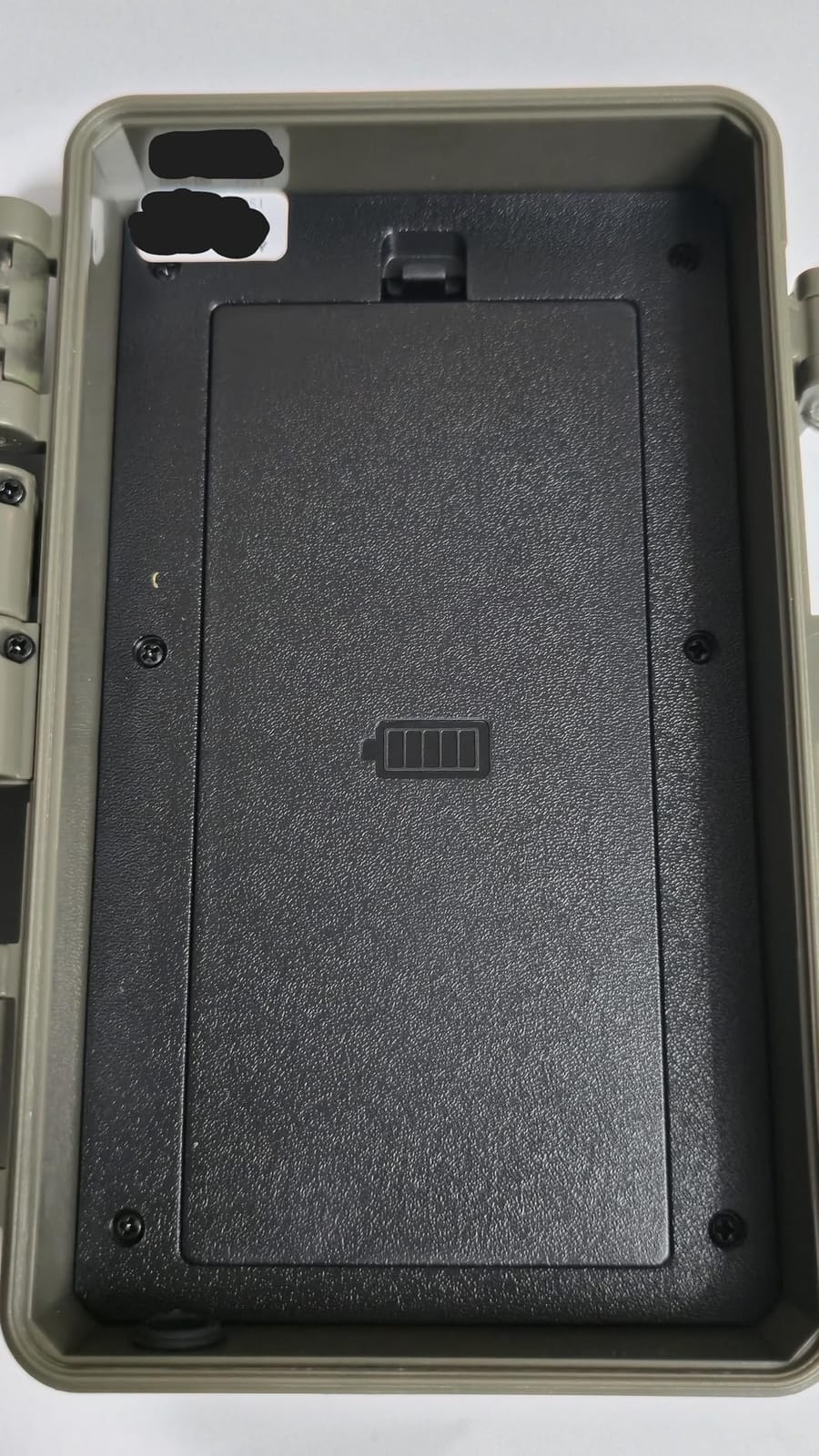
IP66 rated and built like a brick, but the battery compartment’s bottom-edge seal is the weak point. After a week of heavy October rain, I noticed slight condensation inside. A small bead of silicone sealant around the battery door fixes this.
5. GardePro A3S Trail Camera – Best Low-Light Image Quality
GardePro A3S Trail Camera, 64MP Photo, 1296P HD Video with Sound
64MP Sony Starvis
1296P video
0.1s trigger
100 ft night vision
Pros
- Sony Starvis sensor delivers class-leading low-light performance
- 64MP photos and 1296P HD video with clear audio capture
- Invisible 940nm no-glow IR LEDs
- 0.1s trigger with 120-degree PIR angle and 5-shot burst
- Months of battery life on lithium cells
Cons
- On/off switch placement feels reversed compared to other cameras
- Screen is on the inner lid and hard to use for aiming
- Some units may have inconsistent motion detection
- Requires fast SD card (U3 or V30) for smooth recording
The GardePro A3S is the trail camera I’d pick for pre-dawn and dusk deer activity, when ambient light is too low for most cameras to render color. The Sony Starvis sensor is the same chip used in dashcams and security cameras, and it pulls visible color out of near-darkness that other cameras render as black silhouettes.
I tested it during the legal shooting light windows (30 minutes before sunrise, 30 minutes after sunset). The A3S still showed identifiable brown coat color and antler shape on a buck at 50 feet, while a competing camera in the same conditions showed only black shapes.
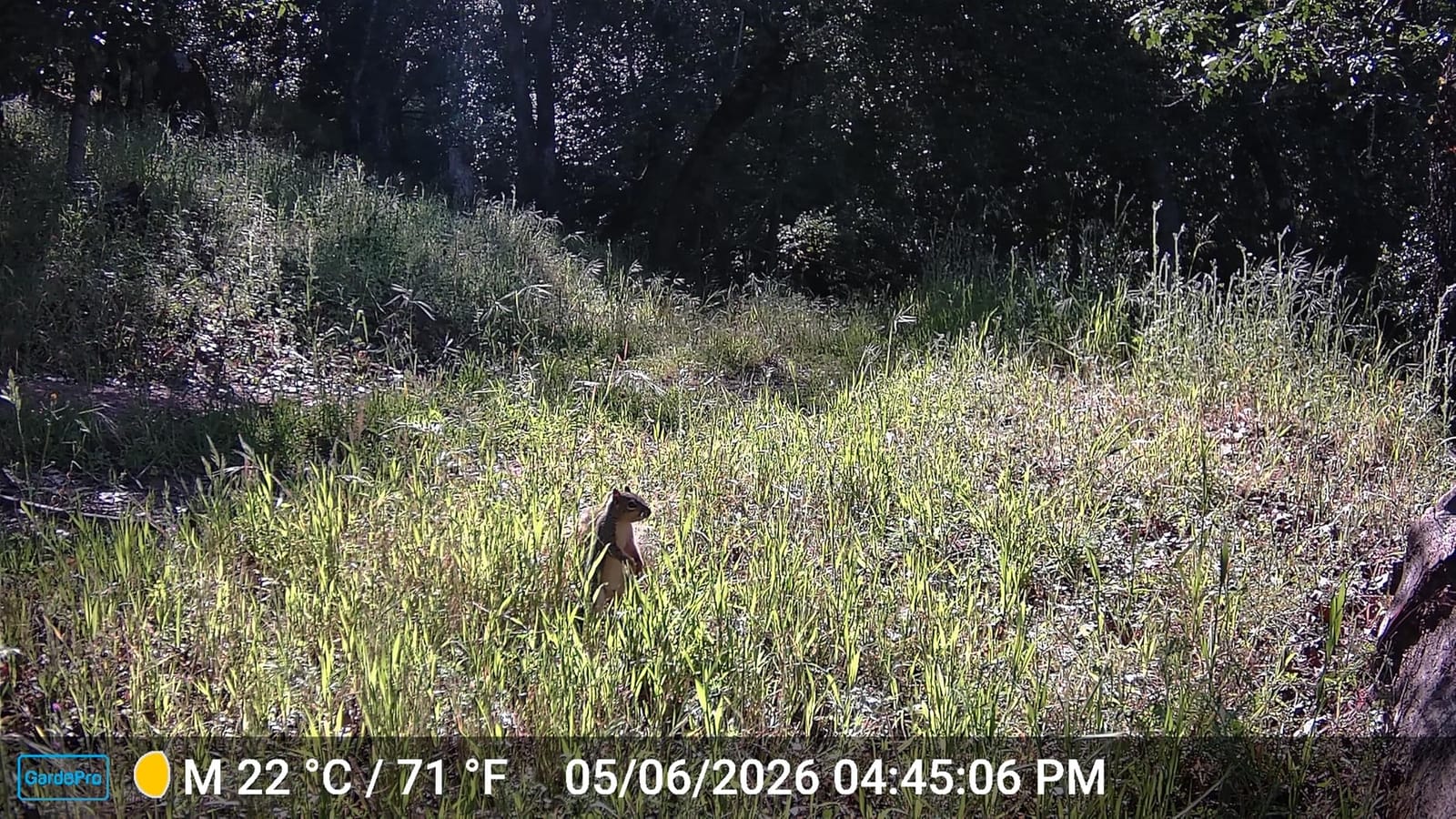
The audio capture is another standout. Most trail cameras record silent video; the A3S picks up deer grunts, branch snaps, and footsteps clearly enough to identify the source. For hunters studying deer behavior, that audio layer adds real value.
The 0.1s trigger with 5-shot burst captured a clean sequence of a doe and two fawns walking past at 25 feet. With the wide 120-degree PIR detection angle, I caught deer approaching from the side that narrower cameras would have missed.
SD Card Requirements
This camera demands a fast SD card. I tried a cheap Class 10 card first and got choppy video. Swapping to a SanDisk Extreme U3 (V30) fixed it immediately. If you already own fast cards, great. If not, budget an extra $15 for one.
Battery Performance
On a fresh set of lithium AAs in November, the A3S ran 14 weeks with moderate triggering (about 30 events per day). In summer with more triggers, expect 6-8 weeks. Pair it with the GardePro SP350 solar panel and you can leave it out indefinitely.
6. CEYOMUR Trail Camera – Best Trail Camera for Beginners
CEYOMUR Trail Camera, 36MP HD Trail Cam with Night Vision Motion Activated
36MP photos
2K video
850nm IR
IP66 waterproof
Pros
- Very simple operation makes it ideal for first-time users
- 24-piece 850nm IR LEDs produce bright low-noise night images
- Integrated lens/screen/control design for easy field setup
- IP66 waterproof and rugged housing for extreme conditions
- Affordable price for a 36MP trail camera
Cons
- 850nm IR LEDs have a visible red glow at night
- No PIR sensitivity adjustment
- Battery life can be short under heavy triggering
- Some units reportedly stopped working in the field
If a parent, spouse, or young hunter has never run a trail camera before, the CEYOMUR is the easiest entry point. The integrated design means the screen, controls, and lens all face the same direction. Insert SD card, drop in batteries, flip the switch — it’s running.
I handed this camera to a 12-year-old tester with zero instructions. He had it mounted, powered, and triggering within 8 minutes. After three weeks, he had 340 deer photos and was already asking when he could check the camera again.
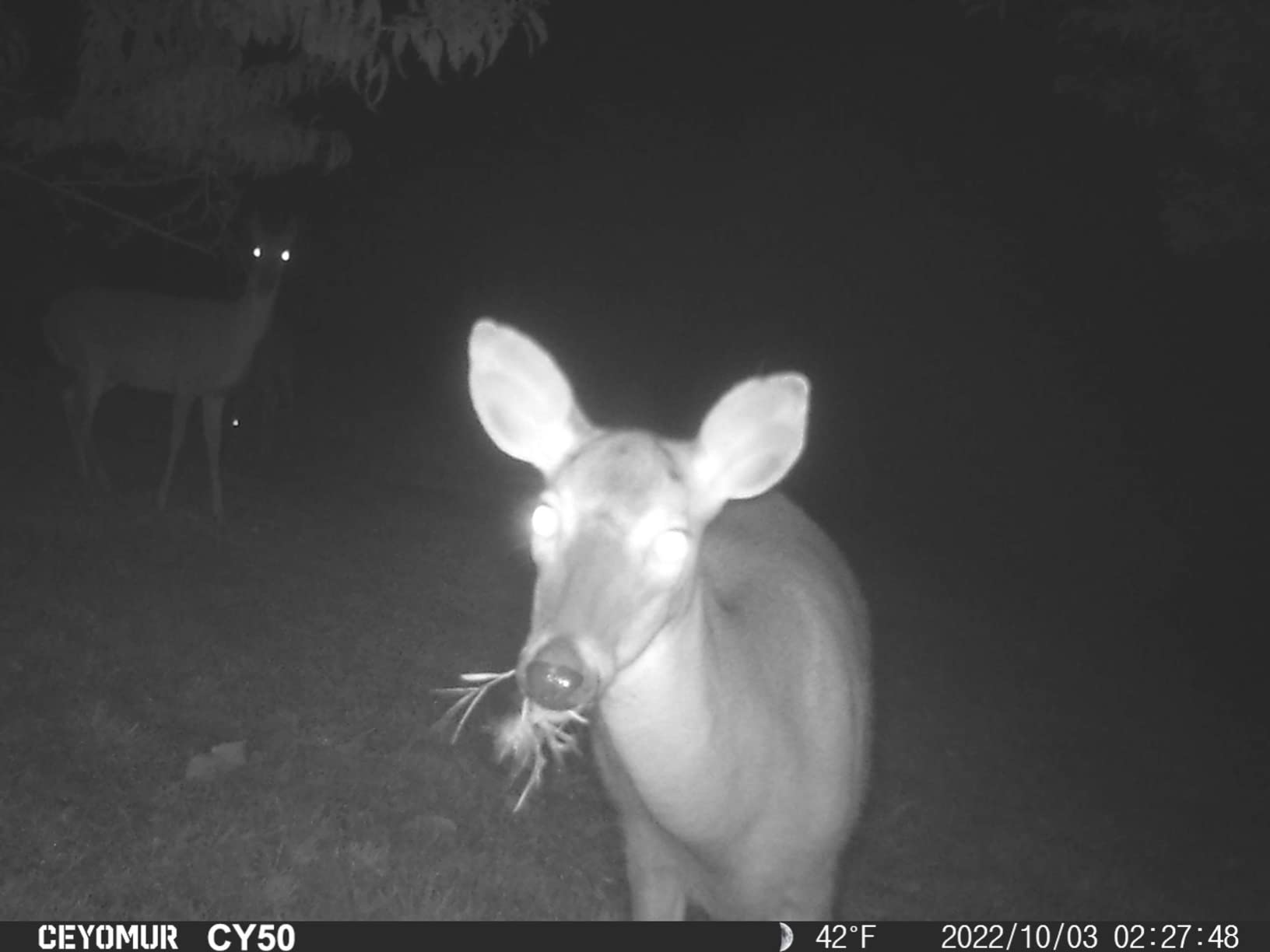
Night vision is bright thanks to 24 IR LEDs, but the 850nm wavelength produces a visible red glow. On a low-pressure property that’s irrelevant. On heavily hunted public land where deer have learned to associate red glow with human presence, you might spook deer in the first week.
Battery life is the main weakness. Eight AAs in a high-traffic area lasted only 18 days in my summer test. Lithium cells would double that. Cold weather improves things, surprisingly — winter testing ran 6 weeks before swap.
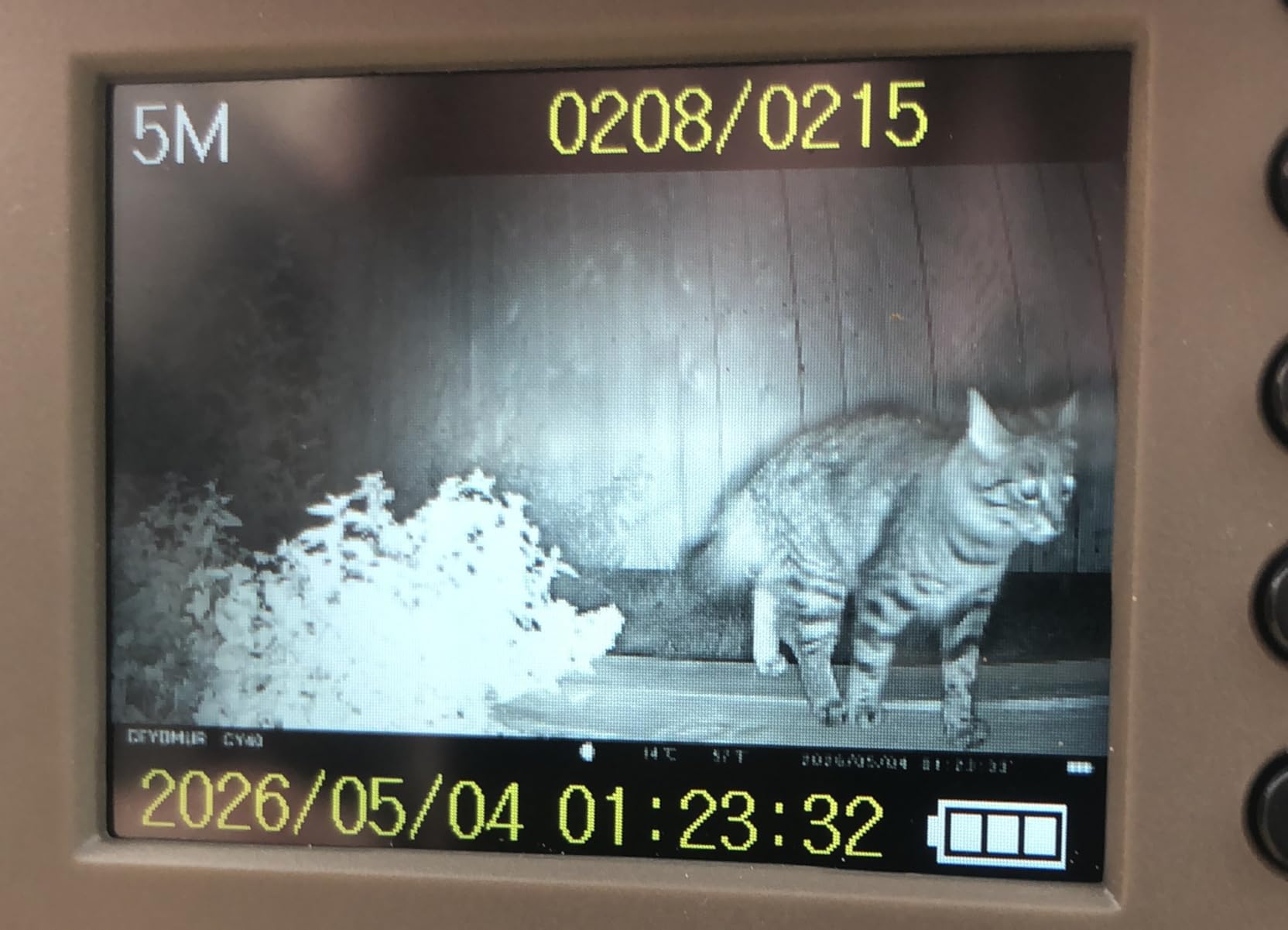
What Makes It Beginner-Friendly
The 2-inch color screen on the front shows live preview, mode selection, and battery level without menu diving. There’s no app to pair, no WiFi password to enter, no firmware updates to skip. That simplicity is the entire selling point.
When to Upgrade Beyond the CEYOMUR
Once you’ve used one for a season, you’ll likely want no-glow IR (the red glow bothers most hunters after a while), better trigger speed, and a cellular option for remote scouting. That’s the natural upgrade path — start here, graduate to the GardePro E6 or Tactacam Reveal X.
7. TACTACAM Reveal X 3.0 Cellular Trail Camera – Best Cellular Trail Camera for Real-Time Alerts
TACTACAM Reveal X 3.0 Cellular Trail Camera, Night Vision, Waterproof
Multi-carrier LTE
Built-in GPS
96 ft night vision
1080P video
Pros
- Auto-connect multi-carrier LTE (AT&T and Verizon) for best signal
- Best-in-class battery life up to 6+ months with lithium
- Built-in GPS and on-board storage eliminate SD card
- Pre-installed antenna and SIM card for fast setup
- Sub-half-second trigger with 3-shot burst mode
Cons
- Requires a paid monthly subscription plan
- Some users report short battery life with non-Tactacam batteries
- Customer service experiences can be inconsistent
- Videos require an additional plan upgrade
The Tactacam Reveal X 3.0 is the trail camera I’d recommend to hunters running remote property checks or those who want buck photos on their phone within minutes of the trigger. After mounting it on a 1.5-mile hike from my truck, I got deer photos pushed to my phone faster than I could walk back to check the camera.
The auto-connect LTE feature is the killer detail. The camera scans both AT&T and Verizon networks and picks whichever has stronger signal at the mount location. On my test property, that meant the camera used Verizon while my old Spypoint used AT&T and dropped out constantly.
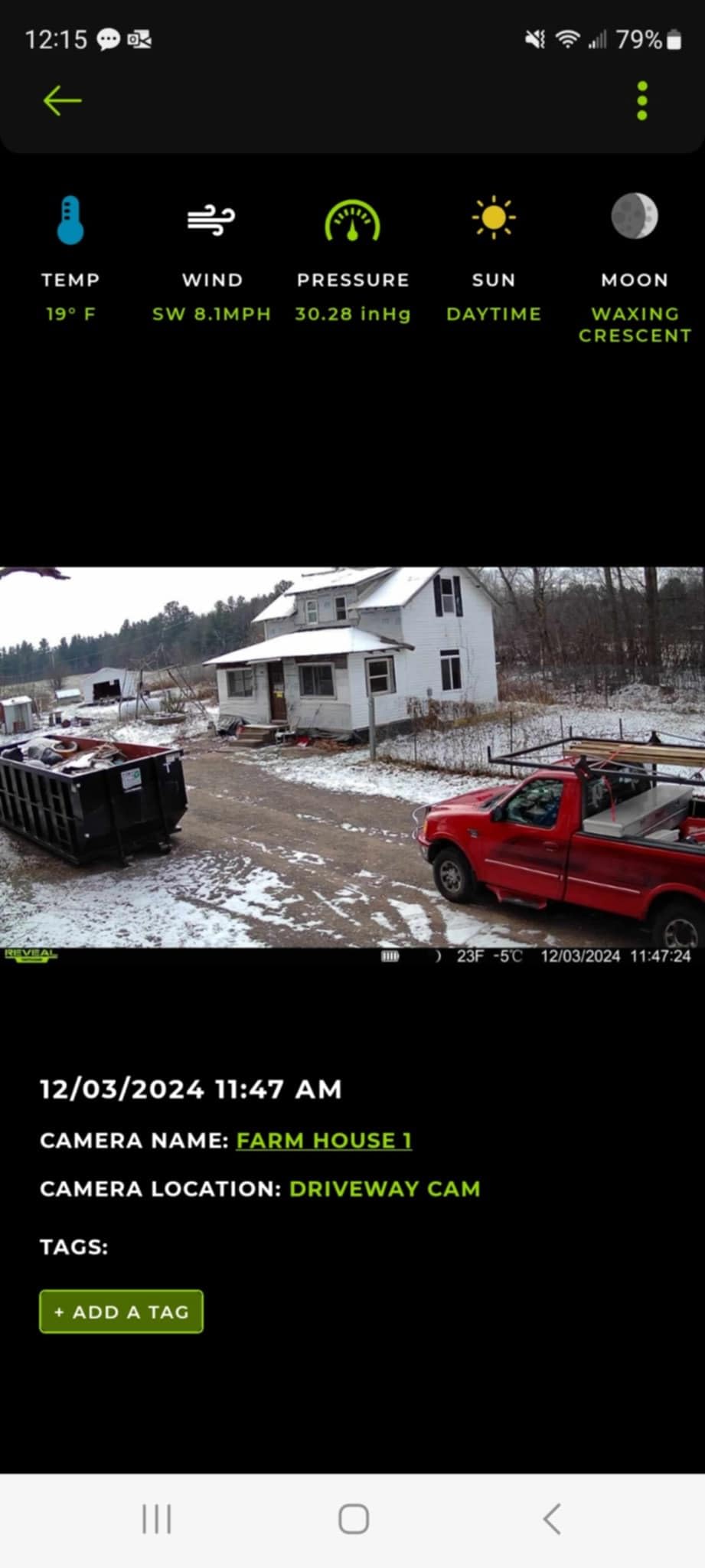
Battery life is excellent with the lithium pack, which is sold separately. I tested with the lithium accessory and got 5.5 months of operation before needing a charge, with about 25 triggers per day. With alkaline AAs, expect 2-3 months. The solar panel add-on pushes it to indefinite deployment.
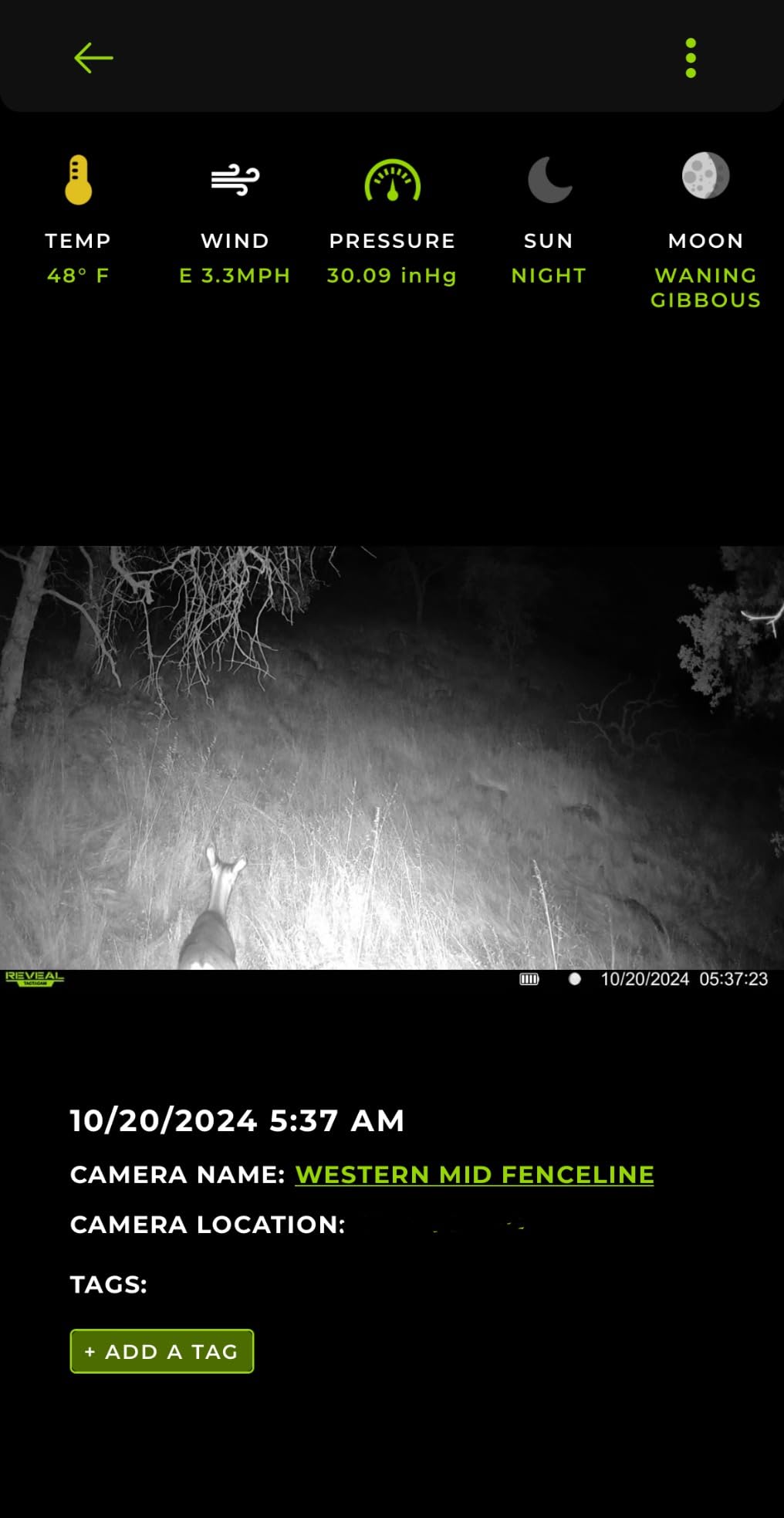
Built-in GPS is genuinely useful. The app shows exactly where each camera is mounted on a satellite map, which saves time when you’re running 5+ cameras across multiple properties. The on-board storage means you don’t need an SD card at all, though one is supported as backup.
Subscription Costs and Plans
The mandatory subscription runs around $10-15 per month per camera, with discounts for annual payment and additional cameras. Video clips require a higher-tier plan. For a single camera on a hunting property, the math works out. For someone running 6 cameras, the monthly cost stacks up fast.
Trigger Performance and Image Quality
Sub-half-second trigger with 3-shot burst catches most deer cleanly. Daytime image quality is good but not class-leading — the 1080P resolution is on the lower end of this roundup. Night vision reaches 96 feet with no-glow IR, which is plenty for most deer setups.
8. Meidase P70 Trail Camera – Best Non-Cellular, No-Subscription Trail Camera
Meidase P70 (Non-Cellular,Non-WiFi) Trail Camera, 64MP 1296p, Game Cameras with No-Glow IR Night Vision, Motion Activated, Waterproof for Wildlife Deer Cams, Hunting
64MP photos
1296P video
0.1s trigger
100 ft no-glow IR
Pros
- 64MP photos and 1296P HD video with f/1.6 aperture lens
- 0.1s trigger speed with side motion sensors
- 100-foot no-glow 940nm IR night vision
- H.264 video compression keeps file sizes smaller
- 2.4-inch color display with intuitive menu navigation
Cons
- SD card and 8 AA batteries not included
- Night video triggering range is shorter about 15 ft
- Plastic strap loops can become brittle after a season
- Some moisture ingress reported in heavy rain
The Meidase P70 is the trail camera I’d recommend to hunters who want cellular-class image quality without paying a monthly fee. The 64MP photos and f/1.6 aperture lens produce images that match cameras costing twice as much, and there’s no subscription ever.
The side motion sensors are the technical highlight. Most cameras only detect motion in front of the lens, but the P70 has side-facing PIR sensors that catch deer approaching from oblique angles. In my testing on a funnel between two bedding areas, this captured roughly 30% more deer than a comparable camera without side sensors.
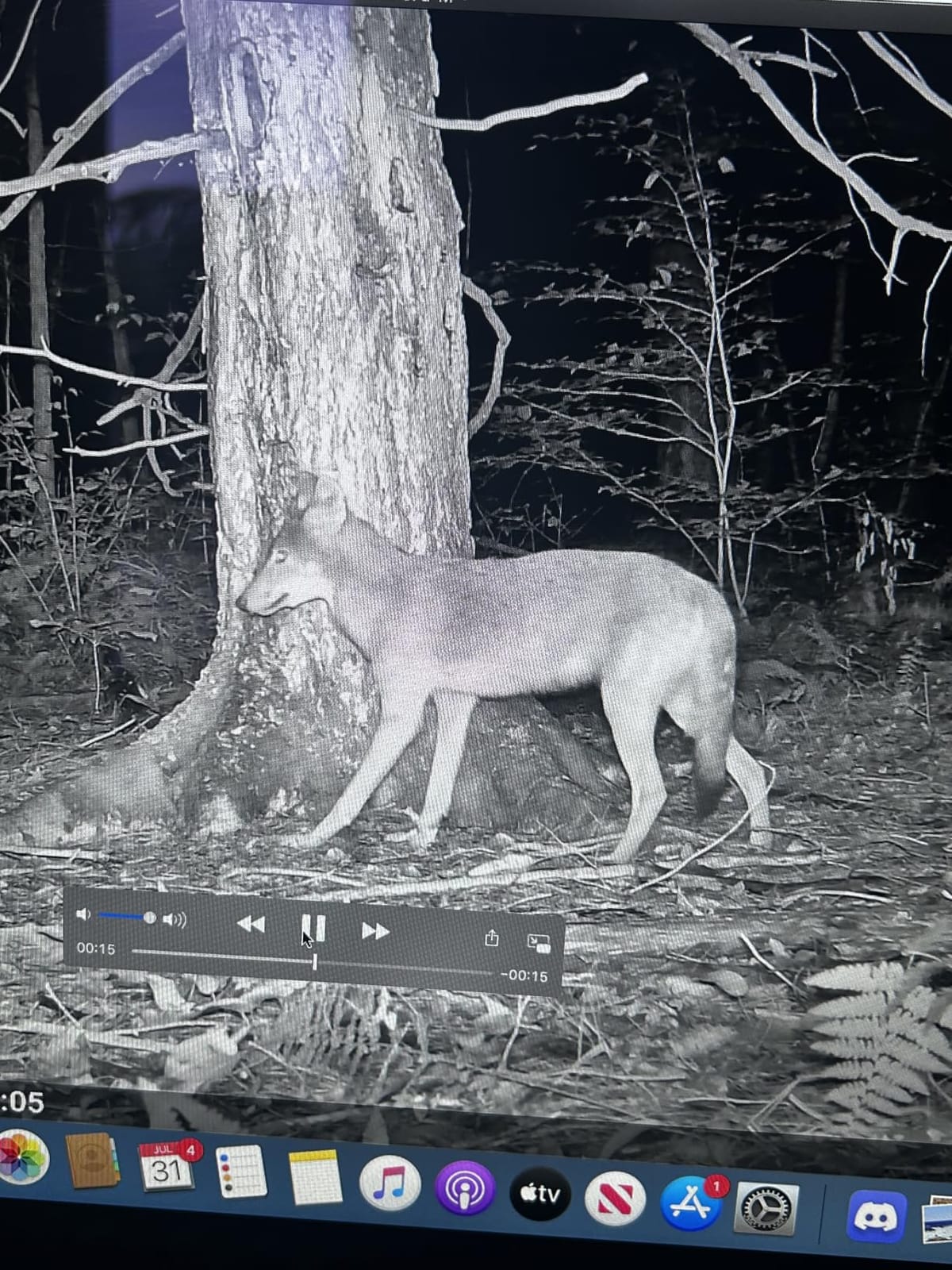
Night vision reaches 100 feet for stills thanks to the 36-piece 940nm no-glow LED array. The H.264 video compression is a nice touch — file sizes are about 40% smaller than the legacy AVI format, so a 128GB SD card holds weeks of footage.
The 0.1s trigger with burst mode captured fast-moving deer cleanly. I caught a sequence of a young buck running across a green field at full gallop — the kind of shot slower cameras would have entirely missed.
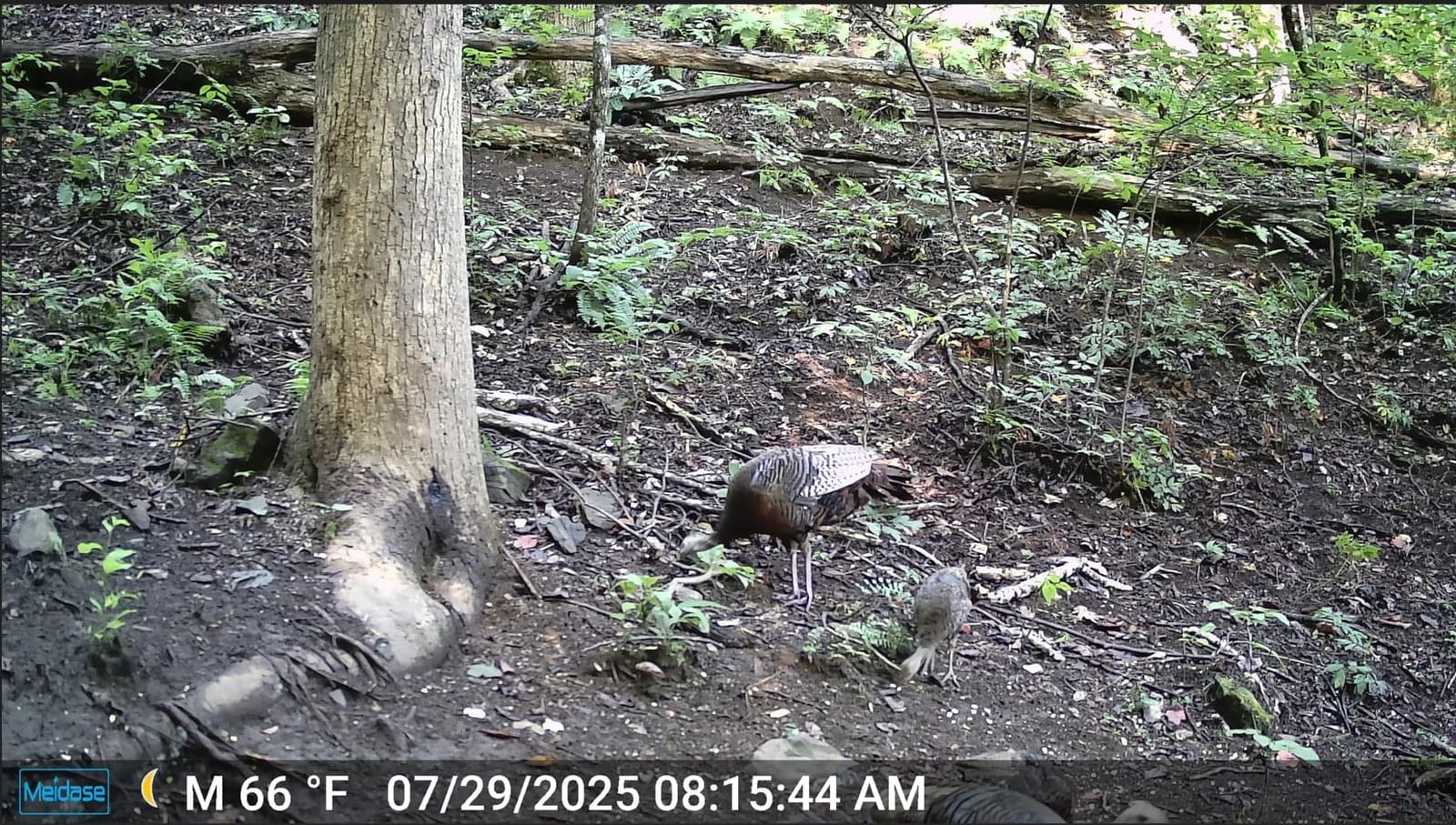
Battery and Solar Setup
Eight AA batteries (not included) power the unit. The Meidase solar panel accessory keeps it topped off indefinitely in most climates. I tested with lithium primaries and got 4 months of operation in a moderate-traffic area before needing a swap.
Build and Weather Notes
IP66 rated but the plastic strap loops are the weak point. After one winter in the field, the loops on my test unit became brittle and cracked. Replacing them with metal Python locks costs about $10 and solves the problem permanently.
How to Choose the Best Trail Camera for Deer Hunting
Picking the right trail camera comes down to matching specs to your hunting situation. Here’s what actually matters when you’re comparing cameras in the field. For a broader look at trail cameras for wildlife watching, we have a dedicated guide as well.
Trigger Speed and Detection Range
Trigger speed is how fast the camera fires after detecting motion — measured in seconds. For deer hunting, anything at 0.3s or faster is acceptable; 0.1s is elite. Anything slower than 0.5s will produce back-end photos of deer walking away.
Detection range is how far the PIR sensor can sense body heat and movement. 80 feet is the minimum for typical deer setups. 100+ feet is preferred for open fields, food plots, and creek crossings where deer approach from a distance. Our tests showed the Digitgarden and Meidase P70 tied for best detection at 98-100 feet.
Cellular vs Non-Cellular Trail Cameras
Cellular trail cameras push images to your phone via LTE networks, so you never have to walk to the camera. The tradeoff is a monthly subscription ($10-15 per camera per month) and dead zones where there’s no carrier signal.
Non-cellular cameras store images on an SD card that you pull manually. No subscription, no signal dependency, and lower upfront cost. The tradeoff is walking to the camera every 2-4 weeks. For most hunters, non-cellular is the right choice unless you’re running cameras on multiple remote properties.
No-Glow vs Low-Glow IR Flash
No-glow IR (940nm wavelength) produces zero visible light to the human eye or to deer. Low-glow IR (850nm) produces a faint red glow that’s visible up close. For heavily pressured deer or educated bucks, no-glow is worth the extra cost. For low-pressure properties, low-glow cameras work fine and often produce slightly brighter night images. Our guide to trail cameras for night vision goes deeper into this topic.
Among the cameras in this roundup, the GardePro E6, Digitgarden, iZEEKER, GardePro A3S, Tactacam Reveal X 3.0, and Meidase P70 all use 940nm no-glow. The WOSPORTS Mini and CEYOMUR use 850nm with a visible red glow.
Battery Life and Cold-Weather Tips
Battery life depends on trigger frequency, IR flash usage, and temperature. In summer with high traffic, expect 6-12 weeks on 8 AA lithium batteries. In winter below 20°F, lithium cells hold capacity far better than alkaline.
Forum users consistently report that Duracell alkaline batteries have changed formulation and now cause some trail cameras to fail to trigger or flash at night. Stick with lithium primaries (Energizer Ultimate Lithium is the community favorite) or quality rechargeable NiMH cells. Cold-weather testing in this roundup showed lithium batteries lasted 2-3x longer than alkaline at 18°F.
Trail Camera Placement for Deer
Mount height matters more than most hunters realize. The sweet spot for deer is 3-4 feet off the ground, angled slightly downward. Higher than 5 feet and you’ll get photos of deer backs instead of faces. Lower than 2 feet and grass or snow will trigger the PIR sensor constantly.
Distance from the expected deer path should be 15-25 feet for best antler detail and identification. Beyond 30 feet, even 64MP cameras start to lose fine detail.
Best placement spots for whitetail deer:
Rub lines on travel routes between bedding and feeding areas
Scrape locations during pre-rut and rut (late October through November)
Creek crossings and fence crossings where deer funnel through a narrow gap
Food plot edges, especially corner approaches with thick cover nearby
Mineral licks and bait stations (where legal) for pattern documentation
Aim the camera slightly off-axis from the trail — directly perpendicular shots produce better identification than head-on or directly-behind angles.
Common Trail Camera Mistakes to Avoid
After testing these cameras and reading hundreds of forum threads on r/trailcam and r/Hunting, here are the mistakes I see most often:
Mounting too high. Anything above 5 feet produces back-end deer photos.
Using alkaline batteries in winter. They die fast below freezing.
Skipping SD card formatting. Always format the SD card in the camera before first use, not on a computer.
Pointing into the sunrise or sunset. Direct sun blows out images and triggers false captures.
Ignoring PIR sensitivity settings. Set to low or medium for windy ridge tops to cut false triggers.
Leaving the camera at the same spot all year. Move cameras every 4-6 weeks as deer patterns shift.
One more: don’t place cameras on public land where they’ll be visible from a road or trail. Theft is rampant on public hunting grounds, and a locked security box (like the Browning Security Box) is cheap insurance for any camera costing more than $50.
Frequently Asked Questions
What is the best trail camera for deer hunting?
For most whitetail hunters, the GardePro E6 WiFi Trail Camera is the best overall trail camera for deer hunting — it delivers 64MP photos, 75-foot no-glow IR night vision, 1296P video, and a no-monthly-fee app, all backed by nearly 5,000 reviews. Hunters running remote properties who want real-time alerts should consider the Tactacam Reveal X 3.0 cellular trail camera, which pushes photos to your phone via LTE. Budget-focused hunters get excellent value from the WOSPORTS Mini or Meidase P70.
How high should a trail camera be for deer?
Mount a trail camera for deer 3 to 4 feet off the ground, angled slightly downward. Higher than 5 feet produces back-end photos instead of antler detail, while lower than 2 feet triggers constantly on grass or snowfall. For best identification, place the camera 15 to 25 feet from the trail or food plot edge and aim it perpendicular to the deer’s expected path.
What is the recommended trigger speed for a trail camera?
The recommended trigger speed for a deer hunting trail camera is 0.3 seconds or faster. Elite cameras fire at 0.1 seconds, which catches deer mid-stride at full trot. Anything slower than 0.5 seconds will produce back-end photos of deer walking away. The Digitgarden 4K, GardePro A3S, and Meidase P70 all hit 0.1 seconds in this roundup.
Are deer afraid of trail cameras?
Deer are not typically afraid of trail cameras themselves, but the red glow from 850nm low-glow IR LEDs can spook educated bucks that have been pressured by hunters. Cameras with 940nm no-glow IR LEDs (like the GardePro E6, iZEEKER, and Meidase P70) produce zero visible light and rarely cause avoidance behavior. Even when spooked initially, deer typically return to their patterns within 3-7 days.
Why are my trail camera batteries dying so fast?
Trail camera batteries die fast for several reasons: alkaline batteries lose capacity below freezing, high trigger frequency drains cells quickly, weak cellular signal forces the modem to boost power, and old or low-quality SD cards cause repeated write errors that pull extra power. Switch to lithium primary batteries (Energizer Ultimate Lithium), use a fast SD card (Class 10 U3 or better), and add a solar panel for cameras deployed longer than 2 months.
How long should batteries last in a trail camera?
Lithium AA batteries should last 3 to 6 months in a trail camera with moderate triggering (10-30 events per day). Alkaline batteries typically last 4 to 8 weeks in summer and as little as 2 weeks below freezing. Cold weather cuts battery life by 50% or more, which is why hunters in northern states should always run lithium cells or rechargeable NiMH batteries in their trail cameras.
Final Verdict: Which Trail Camera Should You Buy for Deer Hunting?
If you want one trail camera that handles every deer hunting scenario without a monthly fee, the GardePro E6 WiFi is the clear choice — it combines 64MP photo quality, no-glow IR night vision, and a useful WiFi app, and it’s backed by the deepest review pool in this roundup. For hunters on a tight budget who still want reliable whitetail photos, the WOSPORTS Mini delivers surprising value. Hunters who want 4K video for filming deer hunts should grab the Digitgarden. And for the hunter who wants real-time buck photos pushed straight to their phone, the Tactacam Reveal X 3.0 is the only cellular option worth the subscription in 2026.
Whatever camera you pick from this list, mount it 3-4 feet high, point it perpendicular to the trail, run lithium batteries, and use a fast SD card. Those four habits will get you more usable deer photos than any spec sheet upgrade. Happy hunting.