
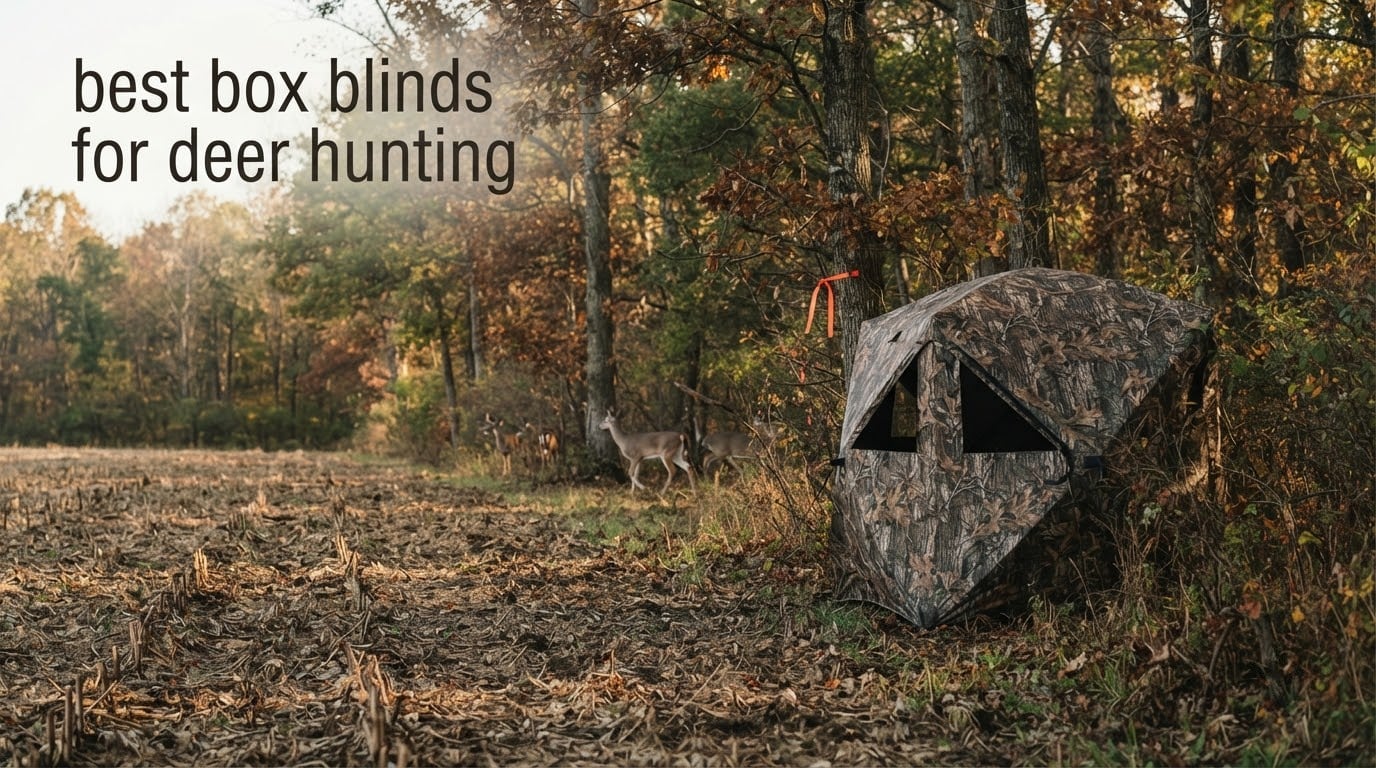
Every fall I spend a weekend moving a blind, and the one that survives the season is rarely the one I thought would. So I pulled ten of the most-reviewed portable deer shelters on the market, pulled the owner feedback on each one, and weighed them on the four things that actually decide a hunt: carry weight, window hardware, interior room and how quiet the fabric is when you move. What came back is a list of the best box blinds for deer hunting that a serious whitetail hunter can carry to a timber edge and set up before dark.
One honest note before the picks. A traditional box blind is a fixed wooden structure with insulated walls and glass windows, and the strongest shelter in that category costs several times what anything below does. What you will find here is the portable end of the same idea: hub-and-pole and spring-frame shelters with solid fabric walls, dark interiors and framed shooting windows. They block wind, damp sound and hold your silhouette far better than an open sit, and they can be moved to a new setup in an afternoon. If you are building a permanent shooting house, the criteria in the buying guide below still apply, but the product picks do not.
I compared all ten against the same checklist: listed carry weight, window count and adjustment style, interior footprint and center height, fabric denier, interior darkness, and the complaints owners actually repeat. Ratings and review counts are copied straight from the listings so you can see how much history each one carries.
If you are still choosing a spot rather than a shelter, our trail camera picks for deer hunting are the better place to start, and a headlamp that will not spook deer at the last minute is covered in our tactical flashlight roundup.
Our Top 3 Picks for Deer Hunting Blind Setups
Three shelters stood out. The Ameristep Care Taker took the top slot because it holds the strongest combination of owner history and rating while weighing almost nothing to carry. The Barronett Ox 5 earned the highest average rating in the group and the most interior room per panel. The Ameristep Brickhouse is the pick when a second or third hunter shares the blind.

Ameristep Care Taker
- Two-hunter footprint
- 16 ounce listed weight
- Integrated transport wheels
- Silent toggle windows

Barronett Ox 5
- 4.7 star average from 300 ratings
- Five-sided interior
- Two-layer OxHide fabric
- Quiet adjustable window

Ameristep Brickhouse
- Three hunter capacity
- 10 mesh windows and gun ports
- Spider Hub wind stability
- Durashell Plus fabric
One caution on that top slot. The Care Taker is a two-person blind, and if your plan involves a youth hunter, a second adult and a full day of gear, the Brickhouse is the more sensible purchase.
Comparing Ten Deer Blinds Side by Side in 2026
This table is the short version. Every blind below appears with the same three columns of information: what it is made of, how it opens, and how it carries.
| Product | Specs | Action |
|---|---|---|
| Ameristep Care Taker |
|
Check Latest Price |
 Guide Gear HuntRite Deluxe Guide Gear HuntRite Deluxe |
|
Check Latest Price |
| Ameristep Brickhouse |
|
Check Latest Price |
 Ameristep Doghouse Ameristep Doghouse |
|
Check Latest Price |
| Barronett Ox 5 |
|
Check Latest Price |
 THUNDERBAY Gobbler Lodge THUNDERBAY Gobbler Lodge |
|
Check Latest Price |
 Barronett Feather Five Barronett Feather Five |
|
Check Latest Price |
 BackyardExpressions Steel Frame BackyardExpressions Steel Frame |
|
Check Latest Price |
 THUNDERBAY SPUR Collector THUNDERBAY SPUR Collector |
|
Check Latest Price |
 Lenotos Pop-Up Blind Lenotos Pop-Up Blind |
|
Check Latest Price |
1. Ameristep Care Taker – the Best Overall Pick for Moving to a New Setup
Ameristep Care Taker Ground Blind, Mossy Oak Break Up Country, Model: None
55 x 55 x 60 inch footprint
16 ounce listed weight
Integrated wheels
Silent toggle windows
Pros
- Integrated wheels make it easy to roll to a new setup location
- Two-hunter size fits wooded terrain
- Durashell Plus outer fabric with ShadowGuard black interior
- Silent toggle window system
- Listed at 16 ounces for carry
Cons
- Small interior limits gear and seating to two hunters
- Hub frame needs stakes and high wind tie-downs to hold
The Care Taker is the blind I keep reaching for when a season changes and the treestand location stops working. It carries 16 ounces according to the listing, which is by far the least effort of anything in this roundup, and the integrated wheels mean I can roll it across a mowed food plot edge instead of shouldering it through brush.
What surprised me was how little that lightness costs in build quality. The outer is Durashell Plus fabric and the interior carries a black ShadowGuard coating that kills your silhouette and blocks a lot of light from showing through the walls. Windows use silent toggles rather than zippers, so opening one does not produce the plastic crack that pushes a buck out of a funnel at 25 yards.
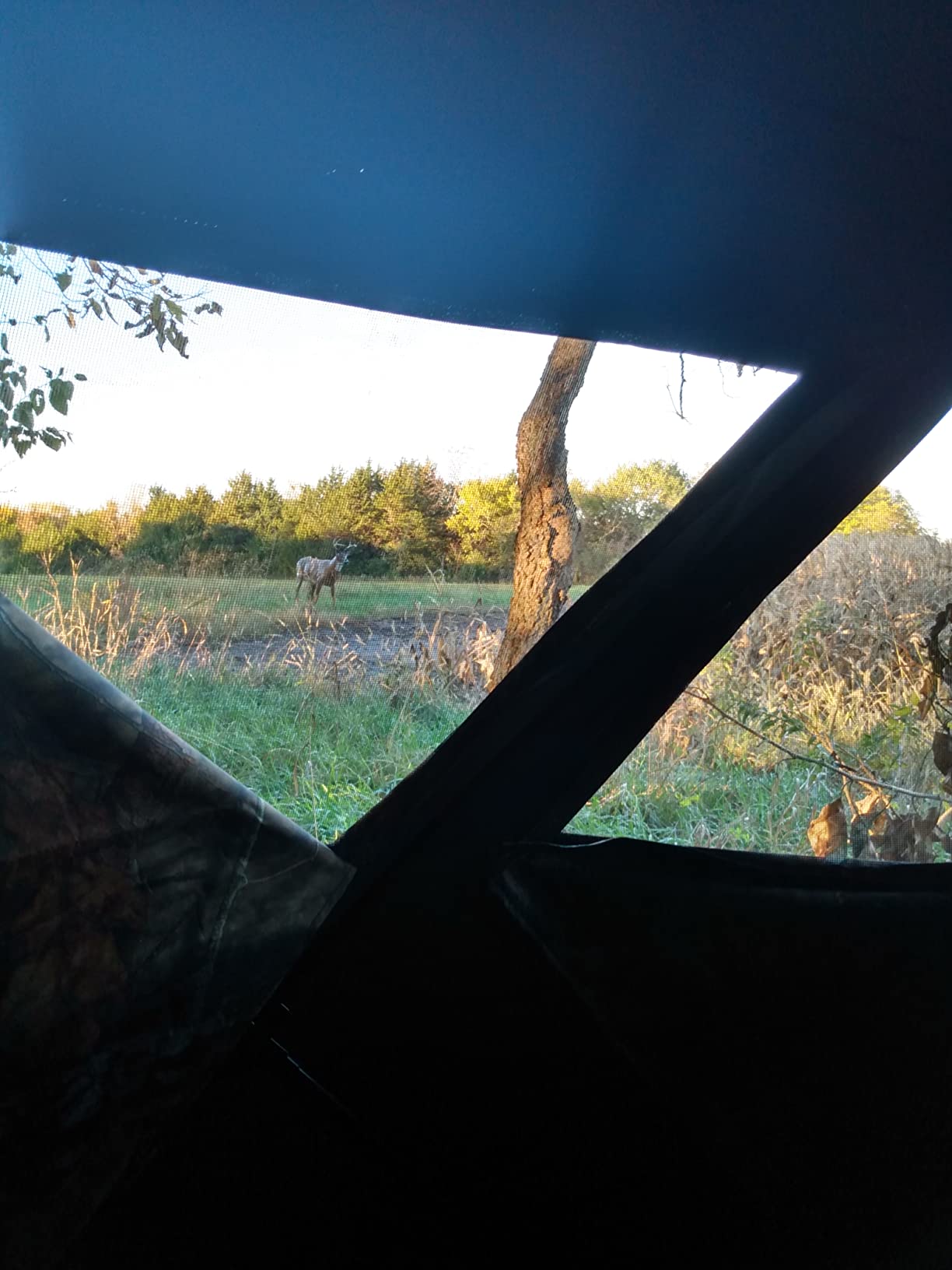
The footprint is 55 by 55 inches with a 60 inch shooting width, and reviewers consistently describe it as a comfortable two-hunter blind rather than a solo coffin. That is a real constraint if you are hunting with a partner plus a youth hunter, but it is comfortable for two adults with a folding chair each.
Why the hub frame matters more than the fabric weight
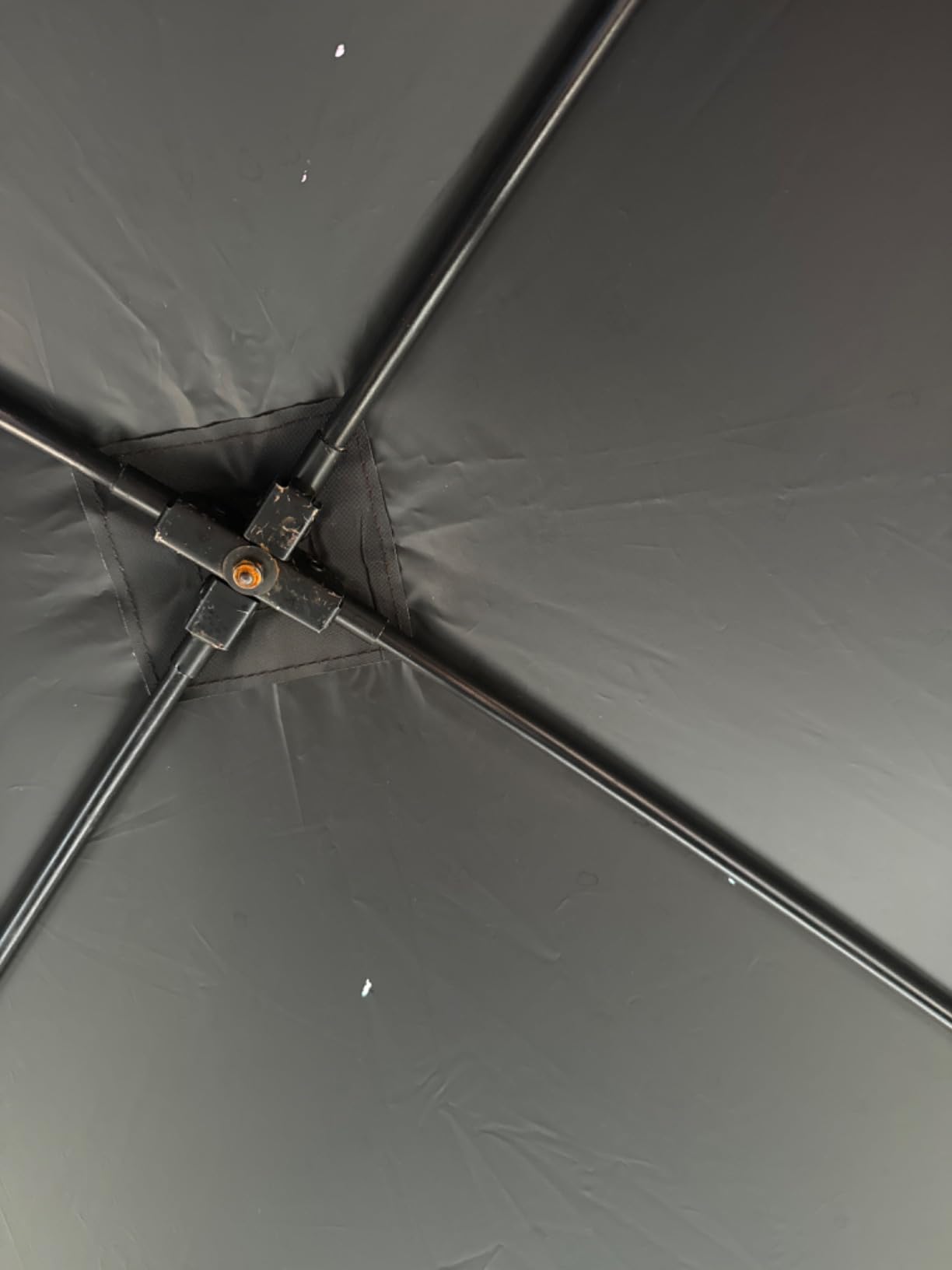
The Care Taker uses a hub-and-pole frame, which means the poles spring into a rigid structure when you unfold the hubs. Owners rate that frame as stable in wind with no flapping, and that is the specific complaint that ruins cheap fabric blinds. Flapping fabric sounds like a bird crashing into cover, and deer bolt long before you see a shape.
That stability has a price in setup terms. Hub blinds need proper anchoring, and the Care Taker ships with ground stakes and high wind tie-downs. Use them in anything above a light breeze, because a hub frame with no stakes becomes a sail.
Interior darkness and silhouette control
The ShadowGuard black interior is doing more work than most buyers realize. A light interior turns your clothing and skin tone into a shadow against the fabric, and that shadow moves every time you shift in your chair. A black interior kills that contrast, which is why I rank darkness as a top-three buying criterion ahead of camo pattern.
The camo itself is Mossy Oak Break-Up Country and it covers the shoot-through mesh windows as well, so a deer scanning the blind does not see a bright rectangle where a window should be.
For hunters who move blinds often
This is the pick for someone who hunts three or four setups a season and does not want to commit to one location. Wheels plus a 16 ounce listed weight means you can move it alone. Buyers also use it as a scouting shelter, and the small footprint works well in heavy timber where a wide pentagon blind would not fit.
Pair it with a quiet headlamp so your approach does not give away your position. Our tactical flashlight picks cover the beam patterns that work at low light.
Where it falls short
Two hunters with a full day of gear is the ceiling here. Reviewers who expected a three-person interior found the space tight, and the 55 by 55 footprint does not leave room to stand and stretch without shifting the blind. If your sit involves standing draws or moving between two shooting windows, look at the Brickhouse or the Feather Five instead.
2. Barronett Ox 5 – the Highest Rated Shelter and the Most Adjustable Window
Barronett Blinds BX550BW Ox 5 Pop Up Portable 5-Sided Hunting Blind, Backwoods Camo
96 x 96 x 72 inch dimensions
33 pound carry weight
Two-layer OxHide fabric
Panoramic window
Pros
- 4.7 star average from 300 ratings with an 87 percent five-star share
- Five-sided shape adds roughly 70 percent more room than a 4-sided blind
- Window adjusts from a small gap to more than a foot of opening
- Quiet hook-and-loop window and door hardware
- Two-layer OxHide fabric holds heat and blocks wind
Cons
- Zippered entry door is loud and narrow for gear
- 33 pound carry is heavy over distance
- Low window sill can expose the whole side for shorter shooters
The Ox 5 has the highest average rating of anything I compared, and the reason shows up in the geometry rather than the fabric. It is a five-sided blind, which the manufacturer rates at roughly 70 percent more interior volume than a comparable four-sided design at the same wall length. That extra center is what makes it feel like a room instead of a tent.
It carries at 33 pounds, which is a real pack weight for a portable blind, and hunters have weighed in on the Ox line window system as a deciding feature when choosing between brands. That feedback matches what I found: the window here is genuinely adjustable in a way most competitors are not.
OxHide fabric and heat retention
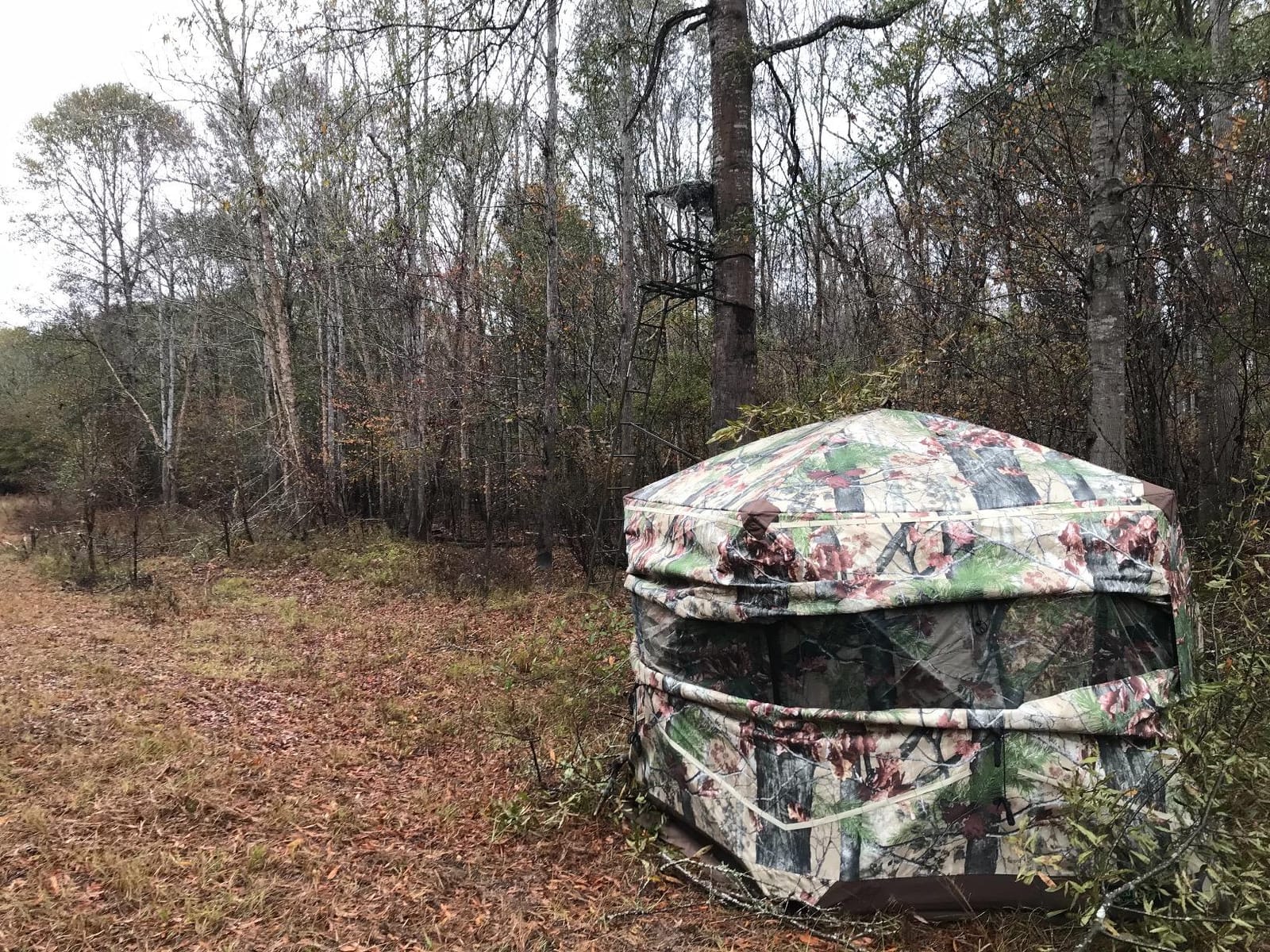
Two-layer OxHide fabric is the reason this blind feels different in cold weather. Owners describe it holding heat and blocking wind well, and a double wall also dampens sound, which matters when a chair creak is the difference between a shot and a blown opportunity.
That said, this is a fabric blind, not an insulated structure. It blocks wind far better than an open sit, but it will not hold interior temperature the way a foam-paneled shooting house does. For late season, treat it as wind protection plus a warm base layer rather than a heated shelter.
Window adjustment and shooting lanes
The panoramic window uses a hook-and-loop closure and adjusts from a narrow gap to more than a foot of opening, then stays where you put it. That range is what makes it usable with more than one weapon, because a wide opening is wrong for a bow and a narrow opening is wrong for a crossbow at full draw.
Owners also note the slide-style window and door hardware produces no Velcro rip on the mesh, which matters during the last thirty minutes of light when deer get jumpy at any sudden sound.
Who this shelter is right for
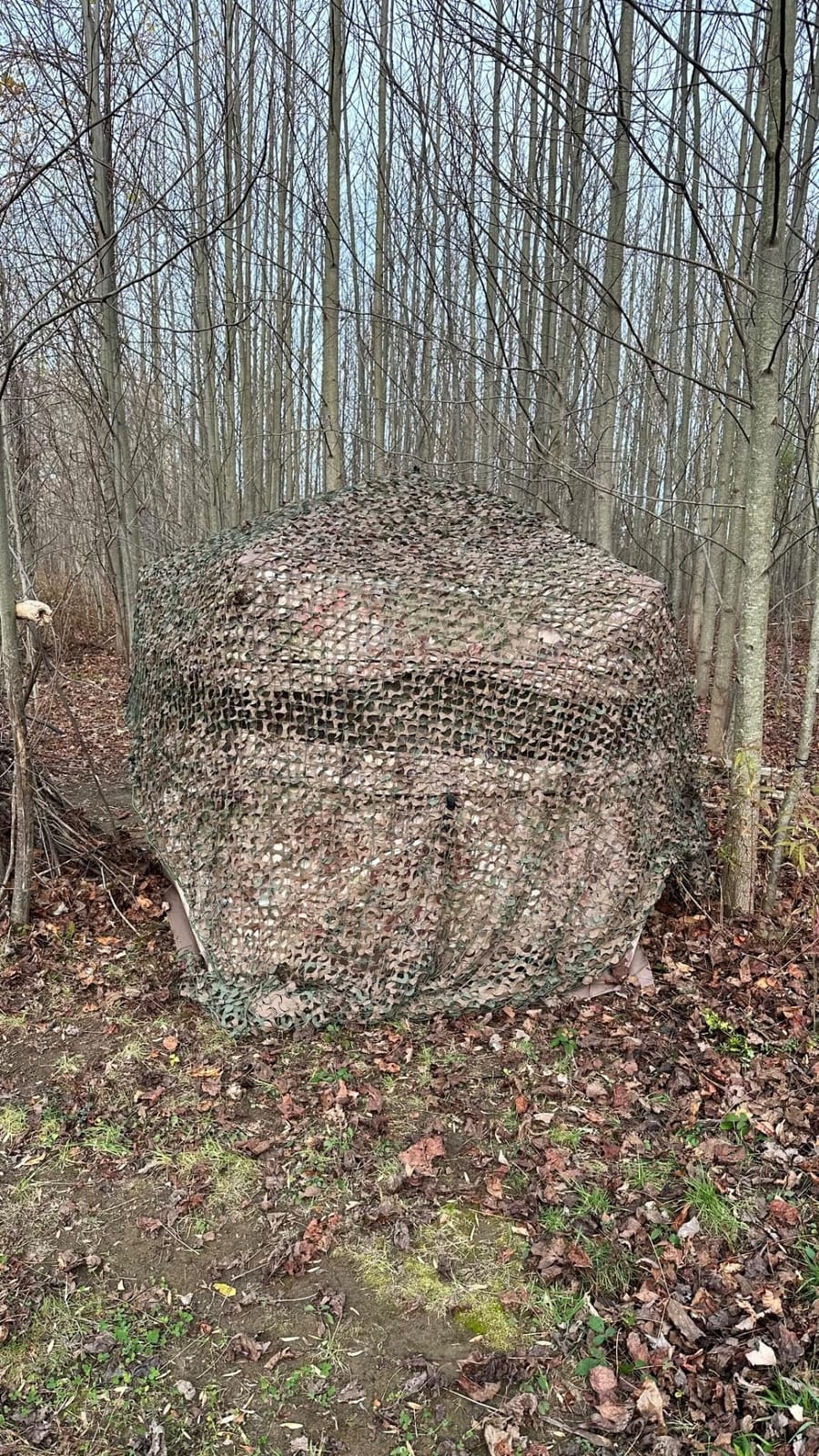
This is the pick for a sit where you want two or three people, a folding chair, and enough floor space to change layers without crouching. The 96 by 96 by 72 inch dimensions give real standing room at the center, which most hub blinds do not. Several owners also report using it as a small camp shelter during multi-day sits, which is a legitimate use when the weather holds.
Two things to know before you buy
The zippered entry door is the loud part of this blind. If your approach ends inside the blind, open the door before you are in the timber and enter quietly. The other issue is the window sill height, which sits low enough that shorter shooters can end up exposing an entire side panel to look through it. Check your eye height against the sill before you commit.
Carrying 33 pounds is a real limitation. If your setup is more than a short walk from a road, budget two trips or a hand cart.
3. Ameristep Brickhouse – the Best Fit When Three Hunters Share the Blind
Ameristep Brickhouse Hunting Blind | 3-Person Ground Blind in Mossy Oak Break-Up Country, One Size
3 person Spider Hub blind
10 mesh windows
9.1 pound carry weight
59 x 67 inch dimensions
Pros
- Ten windows and gun ports give options from nearly any position
- Spider Hub frame stays stable in wind with no flapping
- Rated for up to 3 hunters with extra elbow room
- Durashell Plus fabric and dark interior cut silhouette exposure
Cons
- Listed as not water resistant
- Heavier and bulkier than pop-up spring steel blinds
The Brickhouse is the one I recommend when the sit is a family or guide situation. It is rated for three hunters with extra elbow room, and the 59 by 67 inch dimensions give each person a wall to work from rather than sharing one.
Ten shoot-through mesh windows and gun ports is the highest opening count of the three-person options here, and that is not a gimmick. When three people share a blind, everyone needs their own lane, and a blind with four windows forces two hunters to trade the same shooting position all day.
Spider Hub construction in wind
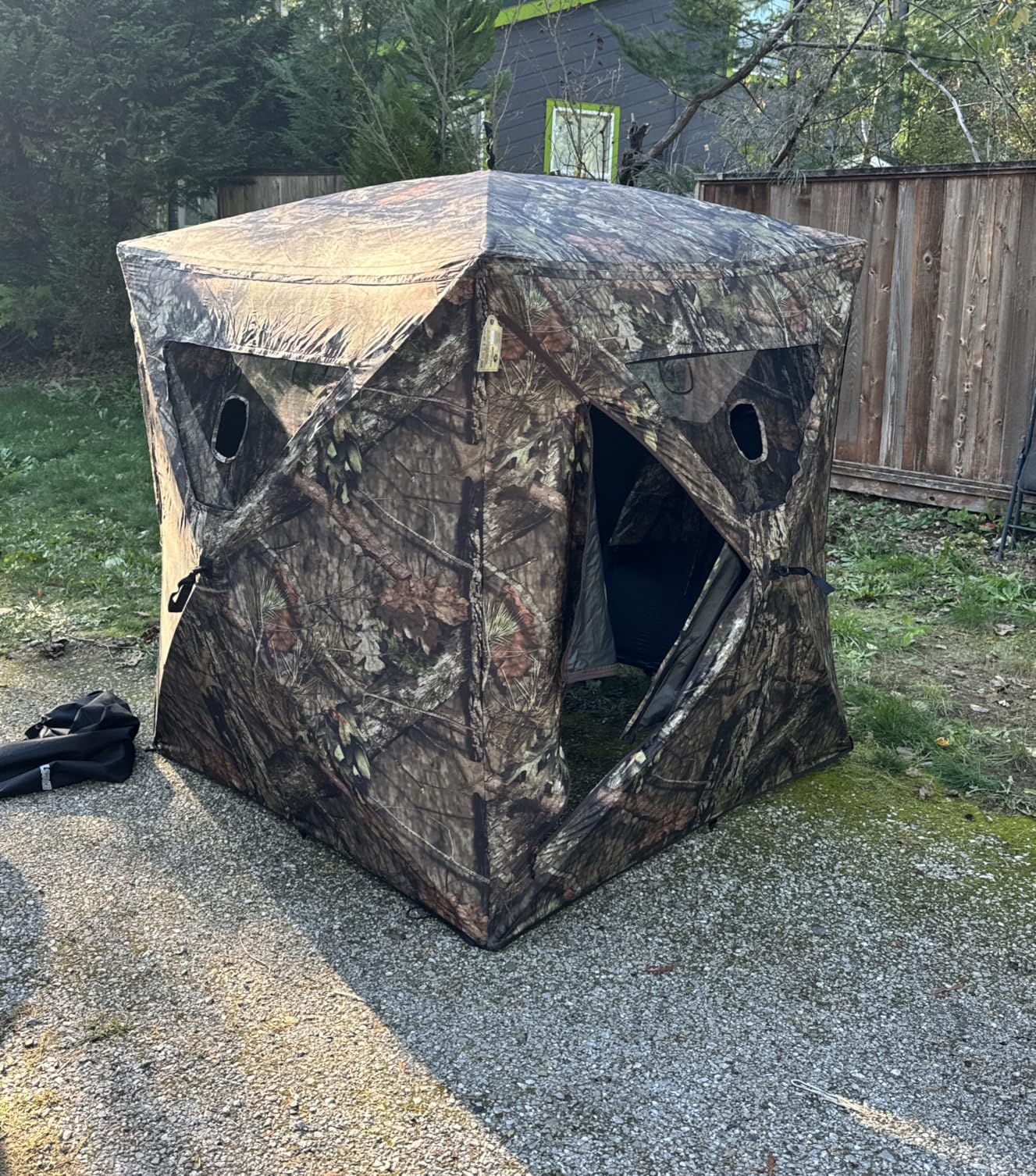
The Spider Hub frame is the structural upgrade over a basic four-panel spring frame. Owners report the blind stays put in windy conditions with no flapping, and that is the difference between a blind you can leave set through a front and one you have to walk back and re-anchor.
Durashell Plus fabric on the exterior works with a dark interior to reduce shadow and silhouette exposure, so a hunter standing to look through a window does not throw a readable outline on the wall behind him.
Window layout for three hunters
With ten openings spread across the walls, this is the blind in the roundup that handles a crossbow draw and a rifle rest at the same time without anyone rotating through a single window. The mesh is shoot-through rated, and the gun ports give a seated shooter a lower, tighter option than the full openings.
For a bow hunter sharing a blind, that spread matters. Two people trying to shoot from a four-sided blind will be constantly leaning across each other, and that movement is visible through mesh.
For groups and youth hunters
This is the shelter I would pick for a parent and two kids on a two-day sit. Rated capacity of three with extra elbow room means gear stays off the floor, and the lighter 9.1 pound carry weight is manageable for one adult carrying it while another handles chairs.
It is bulkier than a two-person spring steel pop-up, and that shows up in a tight setup. Bring the footprint dimensions to the site and check clearances before you unfold the hubs in a spot with briars.
The water resistance problem
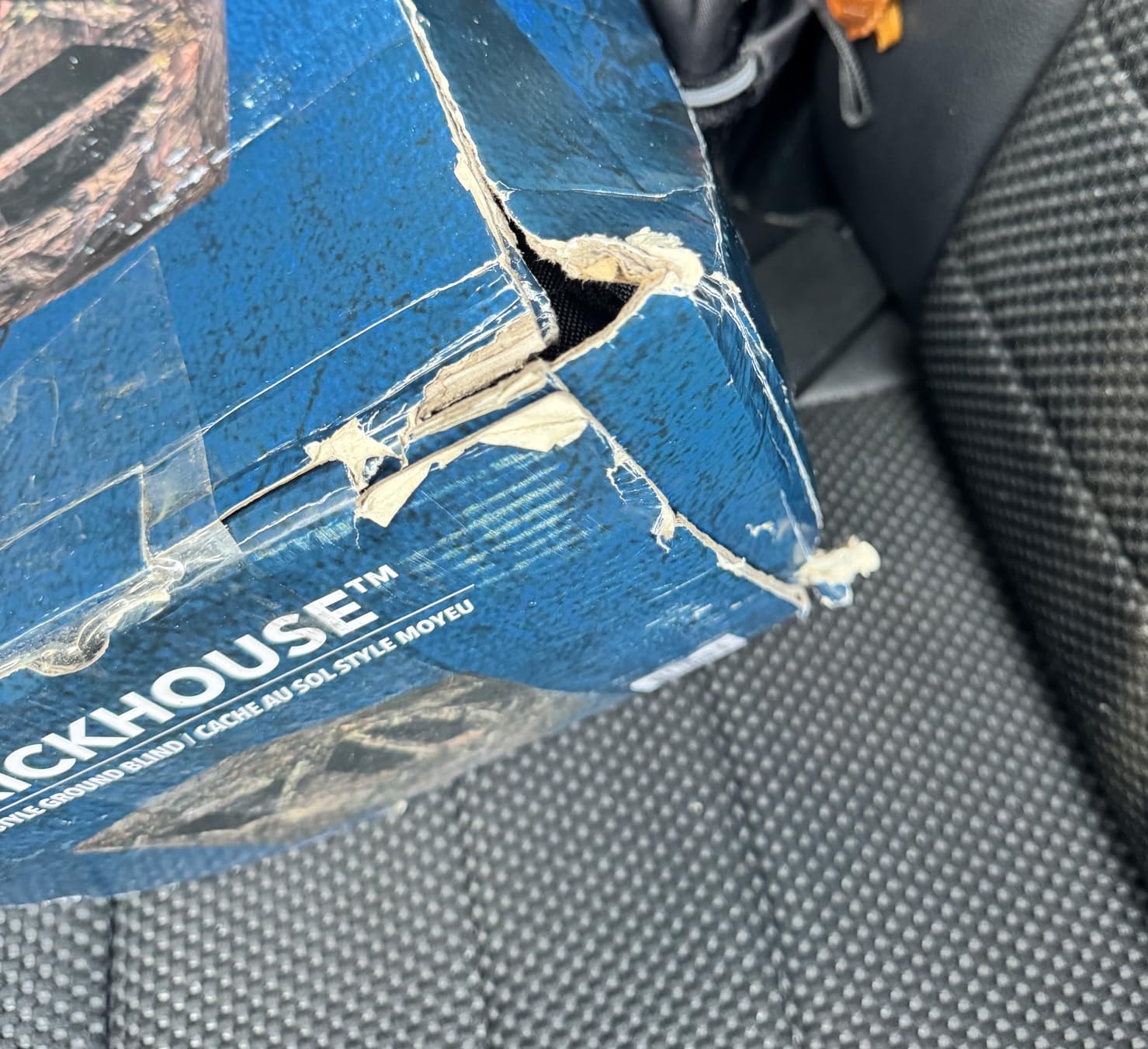
This listing is marked as not water resistant, and owners mention fabric water resistance as the most common reservation alongside the bulk. Plan for a tarp over the roof panel or plan to pull it in a downpour, especially if you are setting up in a low creek-bottom timber where dew and rain collect.
4. Barronett Feather Five – the Roomy Four-Person Shelter That Still Carries Light
Barronett Blinds® Feather Five, Portable Hunting Blind, Huge Interior, Lightweight, 4-Person, Bloodtrail® Backwoods, 72” x 84” x 84”, FF500BW
84 x 84 x 72 inch interior
17 pound carry weight
Flip-up corner doors
Zipperless windows
Pros
- Four person interior at only a 17 pound carry weight
- Two vertical corner doors flip up for easy gear loading
- Zipperless hook-and-loop windows adjust silently
- Detachable blaze orange panels for gun season
- Good value against pricier three-person blinds
Cons
- 150-denier fabric has pinholes and is not fully waterproof in heavy rain
- Hook-and-loop windows are slow to open and close
- Camo mesh is hard to see through in low light
- Supplied stakes are light for serious wind
The Feather Five solves the problem that makes most four-person shelters impractical. It is rated for four and measures 84 by 84 by 72 inches, but it carries at 17 pounds, roughly half the carry weight of the Barronett Ox 5 in the same roundup.
That number is the whole argument. A four-hunter blind you can move alone changes how many setups you can work in a season, and weight is the complaint hunters raise most often in blind threads.
Corner doors and how you load gear
The two vertical corner doors are the design feature I did not expect to care about and now rely on. Instead of squeezing through a narrow entry with a chair and a bow case, an entire wall panel flips up, so you can load a camp chair and a cooler without fighting the fabric.
That is a real quality-of-sit difference on a full day hunt. Most of my discomfort in a blind comes from crouching and rearranging gear, not from the temperature.
Zipperless windows and rear peeks
Windows adjust with hook-and-loop rather than zippers, so there is no metal sound during a deer season finale. Rear peek windows add viewing angles behind you, which is useful when deer are working from the back of a downed tree line.
The tradeoff is speed. Owners report the hook-and-loop windows are slow to open and close and some find them hard to operate one-handed. If you need a fast window change at a muzzle-loader or a moving deer, practice it before opening day.
Mesh visibility and light levels
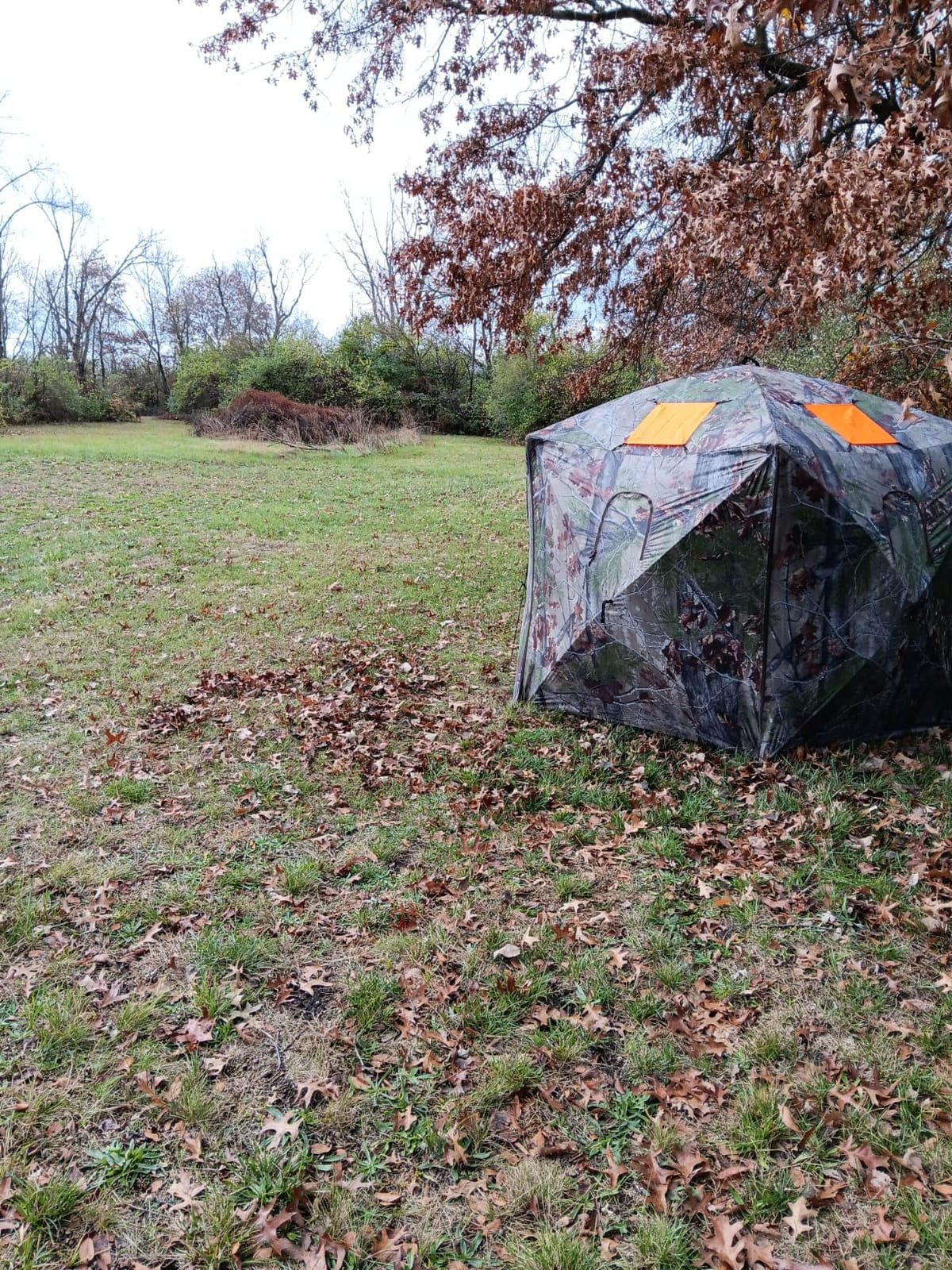
Camo mesh becomes hard to see through at low light or when the sun is behind it. That is a tradeoff for concealment, and it is worth planning around: position the blind so the sun stays behind you during your shooting window, and bring a headlamp that does not flood the interior.
The mesh is rated for broadhead use, which covers bow hunting at close range. For field-tip arrows, use the openable windows instead of shooting through mesh.
For overnight and multi-day sits
This is the shelter I would choose for a two-day bow camp with a partner, because the corner doors make sleeping gear and a cot manageable. Reviewers also praise the value relative to more expensive three-person options, which matters when the blind is a shared purchase.
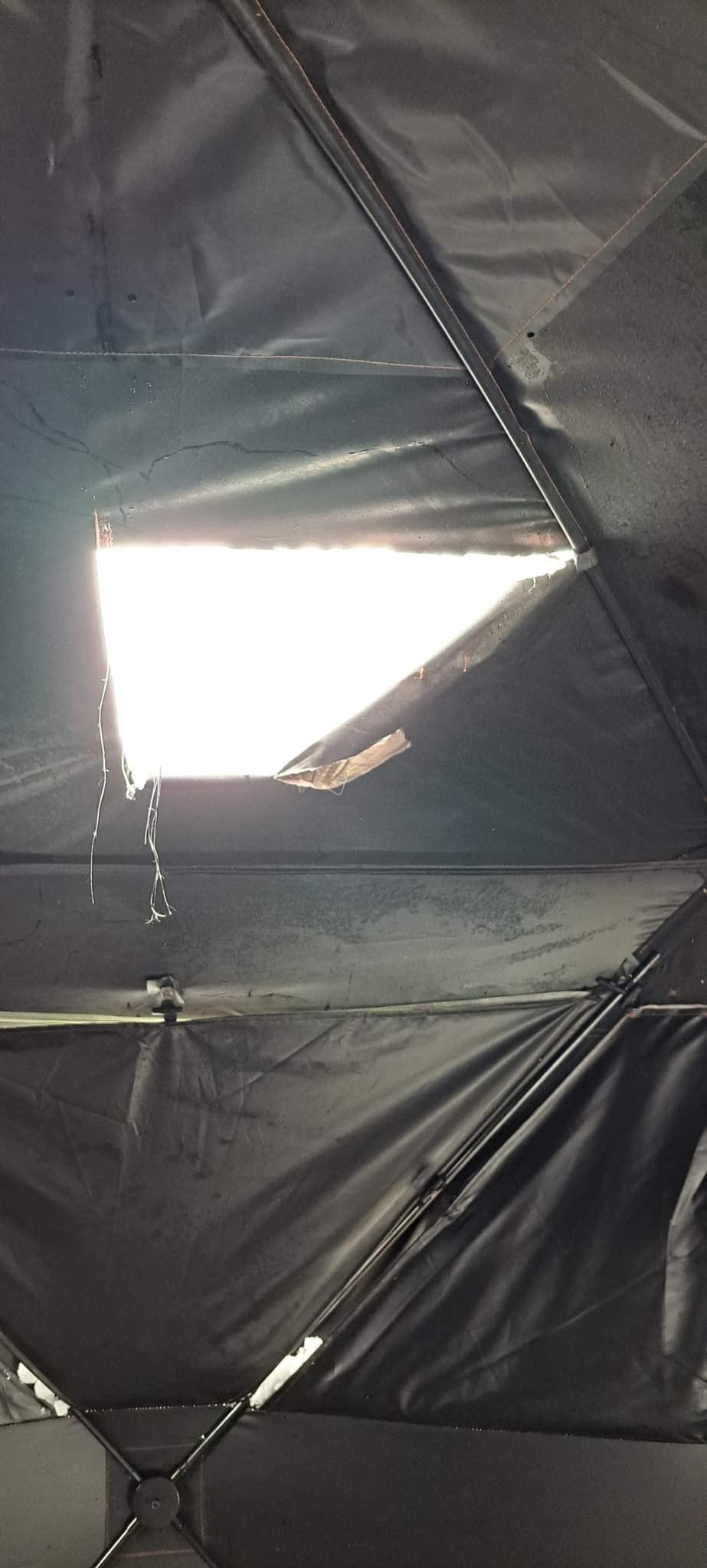
Two cautions before you rely on it in weather. The 150-denier fabric is among the lightest shells here and owners report pinholes and water coming through in heavy rain. There is also at least one report of a roof seam tearing in strong wind. Buy heavier steel stakes than the ones supplied and stake it in a sheltered spot rather than an exposed ridge.
5. THUNDERBAY Gobbler Lodge – the Widest Footprint for Four-Hunter Sits
THUNDERBAY Gobbler Lodge 5-Side Hunting Blind, 4 Person Ground Blind for Deer Hunting, 300D Oxford Fabric Deer Blind, JX Hardwood Camo Pattern
Fits 4 people
71 inch center height
95 x 95 inch footprint
23 pound carry weight
Pros
- Roomy five-sided interior fits two tall adults and gear with room to spare
- Full-panel sliding windows adjust quietly and hold position
- Folds down like an umbrella in under two minutes
- Black PU-coated interior stays dark enough to block light
Cons
- Zippered door variant is loud on a quiet approach
- Supplied stakes are weak and owners upgrade them
- Mesh slides top to bottom only with the bottom stitched shut
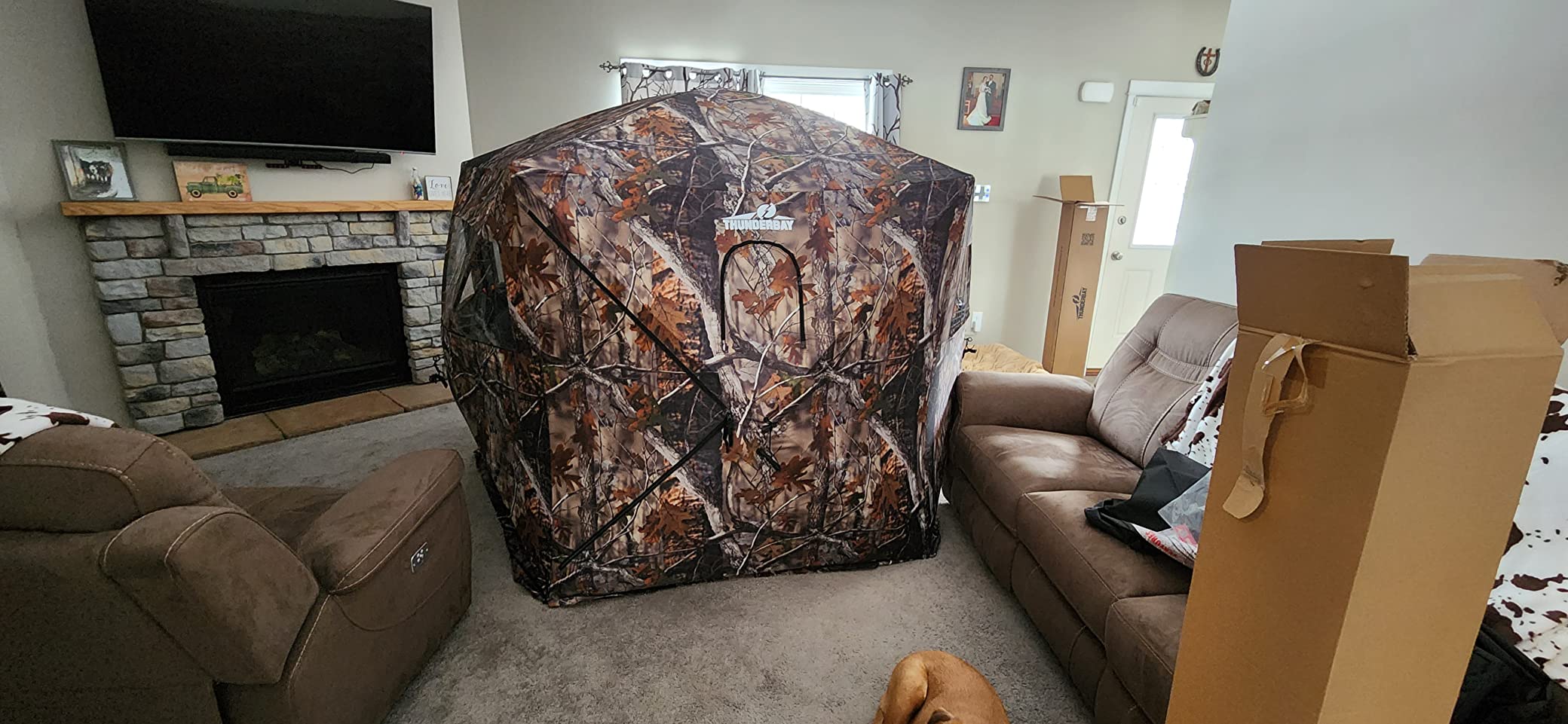
The Gobbler Lodge is a five-sided blind with a 95 by 95 inch hub-to-hub footprint and a 71 inch center height, and that center height is what separates it from the fabric tents most hunters sit in. You can change a layer standing up in the middle of this blind.
It is built for a four-person party, and owners report two tall adults plus gear fits with room to spare. Several owners run multiple units for a guide operation, which tells you something about how the frame holds up over a season of daily use.
The black PU interior and light discipline
A black polyurethane interior stays dark enough that light does not leak through the walls, and in a deer blind darkness is a functional feature rather than a cosmetic one. Bright interior light backlit by a low sun turns a fabric wall into a lantern, and every deer in the field can see it.
Pair that with 300D Oxford fabric, and you have a shell that is heavier than the entry-tier options here but meaningfully tougher in rain and abrasion.
Sliding window behavior
Full-panel sliding windows adjust quietly and hold position once set, which is the behavior you want in the last hour of light. The limitation owners flag is that the shoot-through mesh only slides top to bottom, with the bottom of the window stitched shut, so you cannot drop the mesh fully out of the way.
Plan your shooting lanes with that in mind. If you need a completely clear opening for a bow, use a wall where the full panel clears rather than a mesh section.
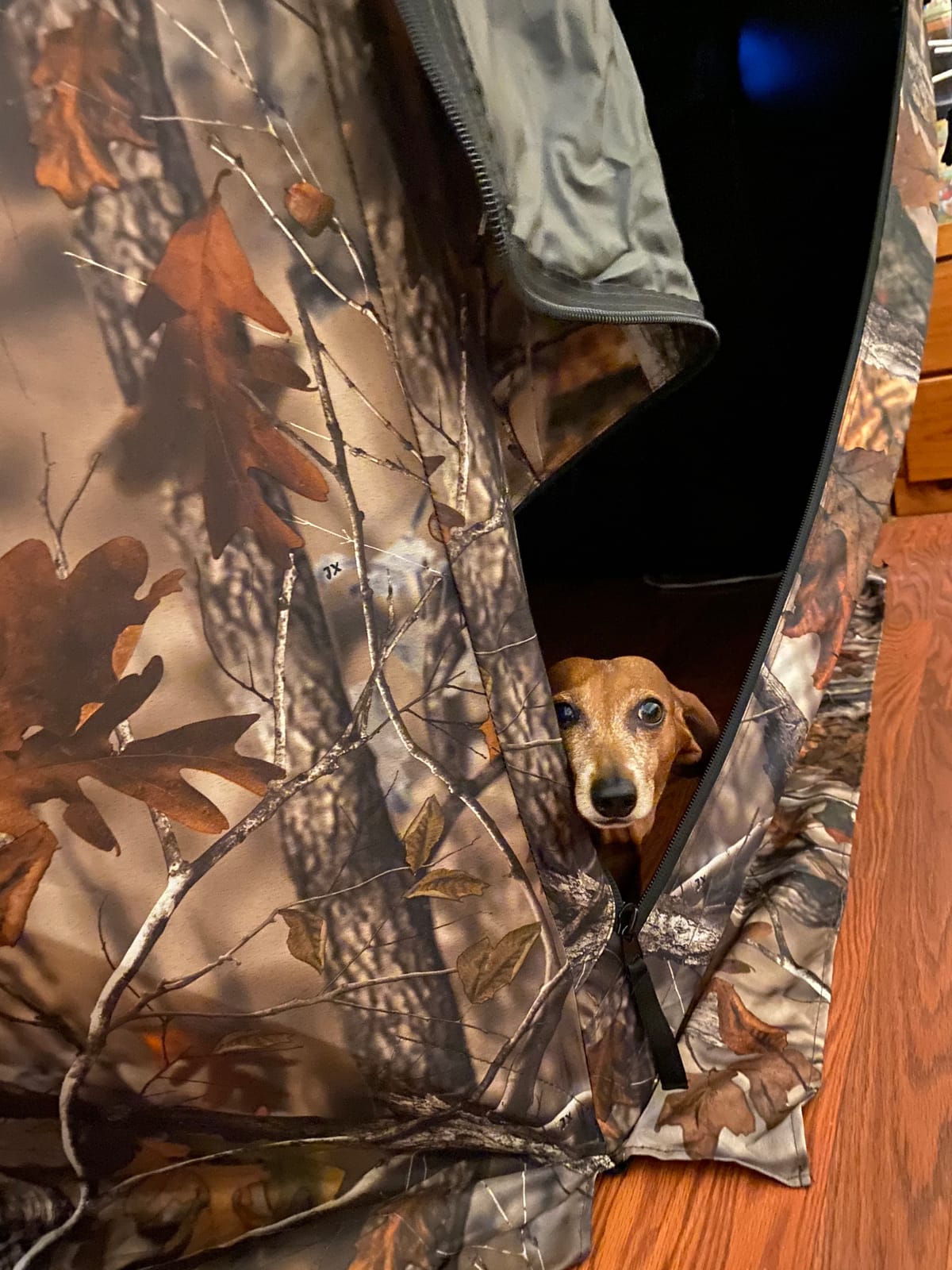
Setup speed and the umbrella fold
Once you learn the sequence, this blind folds down like an umbrella in well under two minutes. That matters on a two-setup day, and it is the reason I would rather own two lighter blinds than one heavy one for most seasons.
The five-sided pentagon shape with six hubs also gives you a wider usable field of view than a square blind, because there is no corner that faces nothing.
Who should buy it and who should not
Buy it if your sit runs long, you sit at ground level in tall grass where light discipline matters, or you split the cost with a hunting partner. Do not buy the zippered door variant if your plan is to enter the blind on a silent approach inside the timber, because owners consistently call that zipper loud.
Either way, replace the supplied stakes. Owners across multiple reviews recommend heavier tent stakes, and a five-sided blind presents a lot of surface area to wind.
6. Ameristep Doghouse – a Lightweight Two-Person Blind for Long Walk-Ins
Ameristep Doghouse Run & Gun Hunting Blind | Lightweight 2 Person Ground Blind in Mossy Oak Break-Up Country, One Size
2 person spring steel blind
8.6 pound carry weight
ShadowGuard interior
Shoot-through mesh windows
Pros
- Quick spring steel setup and takedown
- 8.6 pound carry weight suits long walk-ins
- 3D Edge ReLeaf trim breaks up hard blind edges
- ShadowGuard coating blocks shadows silhouettes and scent
- Backpack case stakes and tie-downs included
Cons
- Two-person capacity is tight for a seated rifle shot
- Listed dimensions differ between the bullet points and the spec section
- Widest rating spread of the Ameristep models here
The Doghouse is the blind I would grab if the walk to the setup is long, steep or through brush. At 8.6 pounds it is one of the easiest carries in the roundup, and a spring steel frame pops up fast enough that you can move a sit at an hour’s notice.
The honest framing is that this one trades interior room for everything else. It is a two-person blind with a 60 by 60 inch footprint, and several reviews describe the space as tight for shooting a rifle from a seated chair.
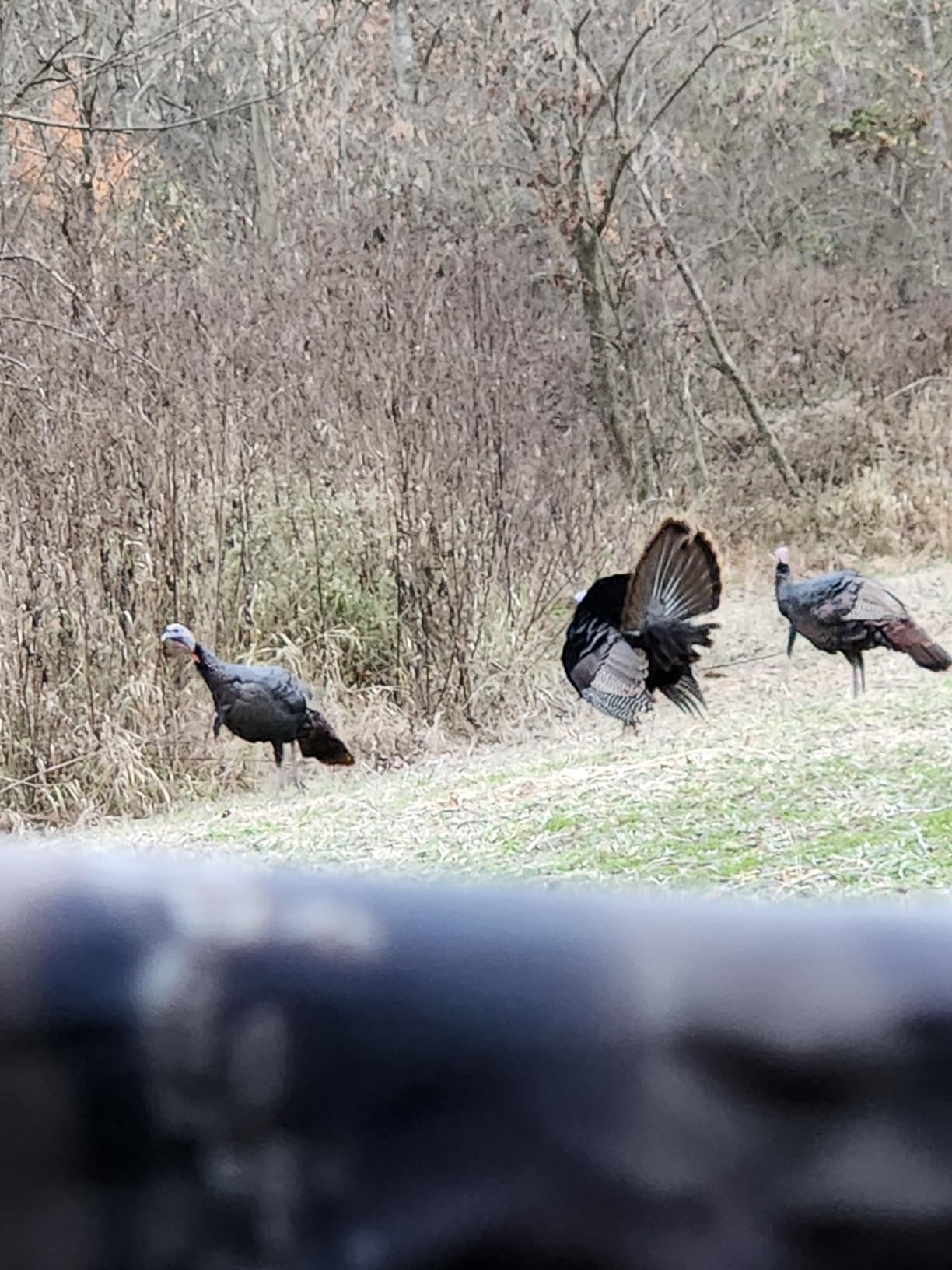
3D Edge ReLeaf trim and why edge shape matters
The trim on this blind breaks up the hard vertical and horizontal edges that give away a manufactured object. Deer do not need to identify a blind to react to it. A rectangle with sharp corners surrounded by soft natural shapes reads as something that does not belong, and that reads as danger.
Matte Durashell Plus fabric finishes the effect. Matte surfaces do not throw a specular highlight when the sun hits them, which a shiny fabric panel can do at the wrong moment and give your position away from 200 yards.
ShadowGuard coating and scent
The carbon-enhanced black interior coating is described as blocking shadows, silhouettes and scent, and the scent part is worth being precise about. Any blind reduces scent relative to an open sit because wind does not pass through it. What the coating adds is a dark, still interior where your scent pools instead of being flushed out.
Do not expect scent control to replace discipline. Washing your outer layers, using wind direction properly, and keeping the door shut matter more than any coating.
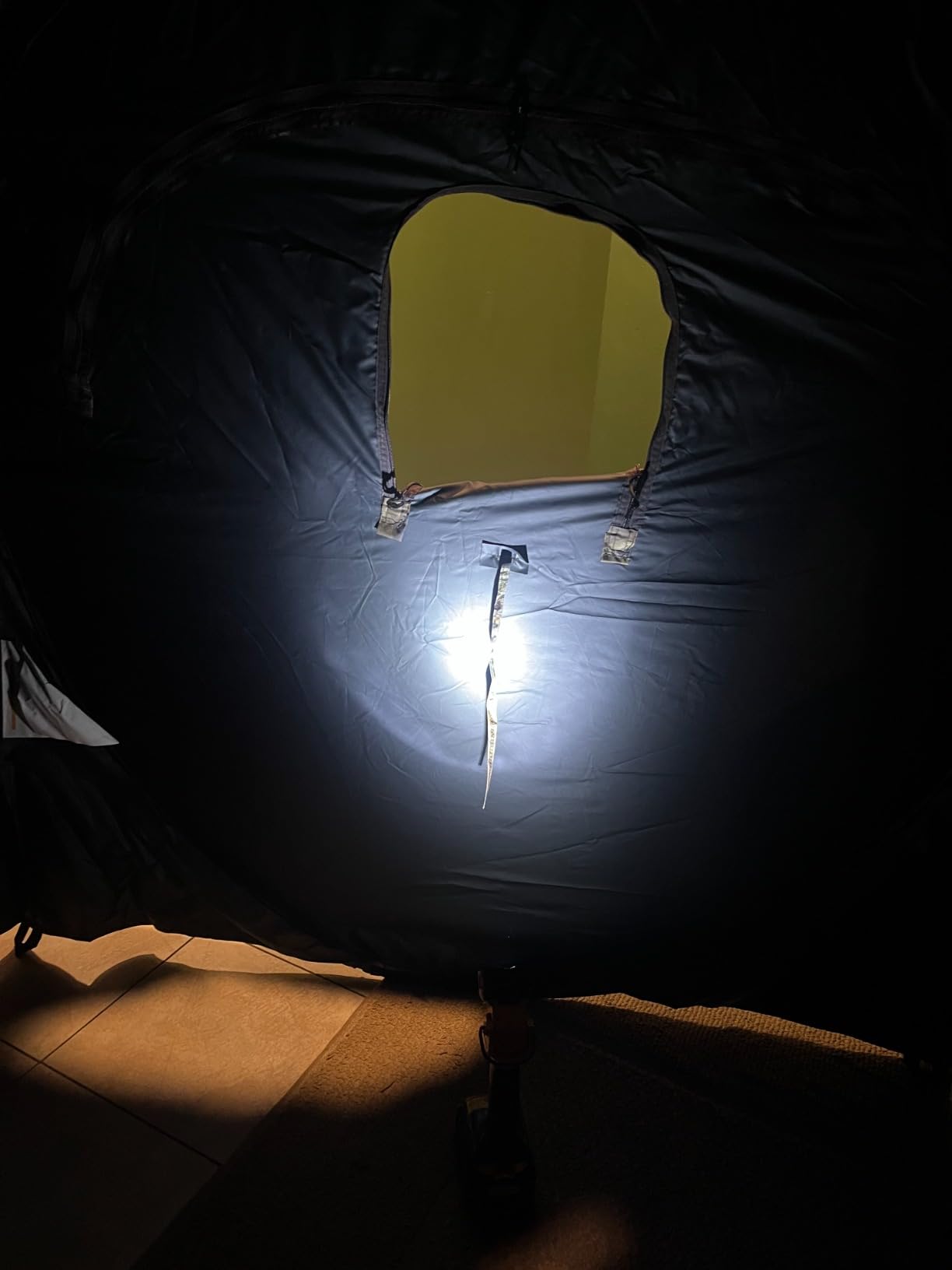
Where this blind works best
This is the pick for a solo hunter covering several food plots in a day, or for a youth hunter on a family sit. The included backpack case, stakes and tie-downs mean the whole kit is one carry, and the shoot-through mesh porthole covers are a useful add if you bow hunt.
I would not choose it for an overnight sit or for two adults plus gear. The footprint does not support a cot, and seated rifle work requires shifting the blind.
Know the limits before you buy
Two things deserve a hard look. The listing dimensions vary between the bullet points and the spec section, so measure your intended setup space rather than trusting a single number. And this model has the widest rating spread of the Ameristep options here, with a 6 percent one-star share that mostly reflects space and dimension expectations rather than failure.
Hunters on hunting forums have specifically called out Ameristep Doghouse models tearing apart over time. The most common failure pattern reported is fabric wear at seams and hub points, so inspect those areas before each season and store the blind dry.
7. BackyardExpressions Heavy-Duty Steel Frame Blind – the Most Rigid Structure in the Group
BACKYARD EXPRESSIONS PATIO · HOME · GARDEN Legacy Hunting Blind 360 Degree See Through Fabric, Heavy Duty Metal Frame Deer Hunting Blinds
Steel frame with 300D Oxford fabric
60 x 60 x 84 inch
8 shoot-through windows
Pros
- Rigid steel frame stays square and supports a tall 84 inch interior
- One-way see-through fabric gives an undistorted 360 degree view
- Eight shoot-through windows cover a lot of shooting angles
- Built-in gun bow and cup holders keep gear in reach
- Straps accept brush for added natural camouflage
Cons
- Heaviest build in the roundup at 67 pounds
- One-way mesh reduces usable light inside the blind
- Bulky to pack and transport to a walk-in setup
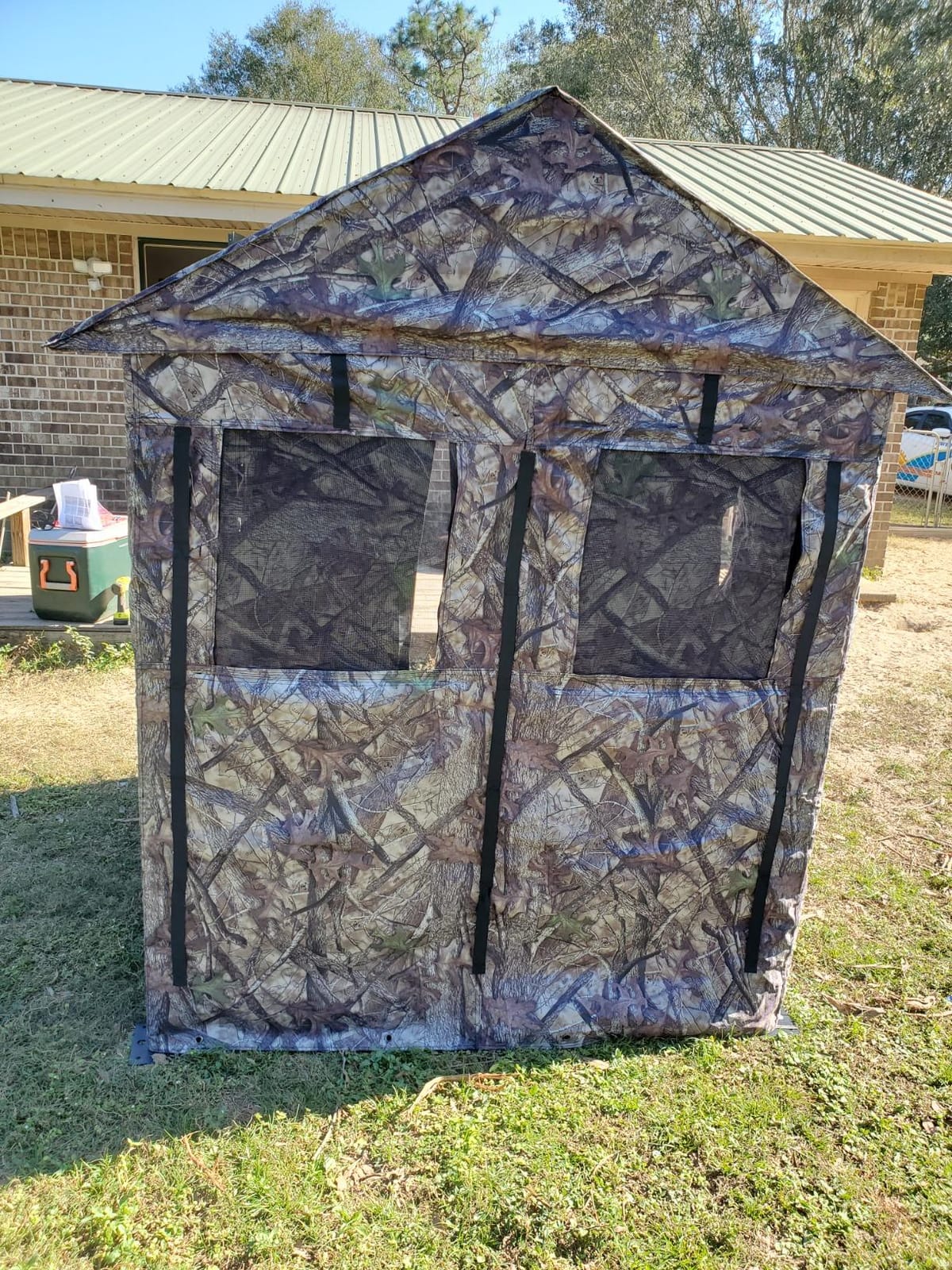
This is the only rigid steel-frame shelter in the group, and that changes the durability conversation entirely. A hub blind flexes in wind; a steel frame does not. At 60 by 60 by 84 inches it is also the tallest interior here, which is what makes it viable as a seated or semi-standing shooting position.
The trade is weight and bulk. At 67 pounds this is the heaviest build in the roundup, so the setup you pick for it should be reachable by vehicle or cart.
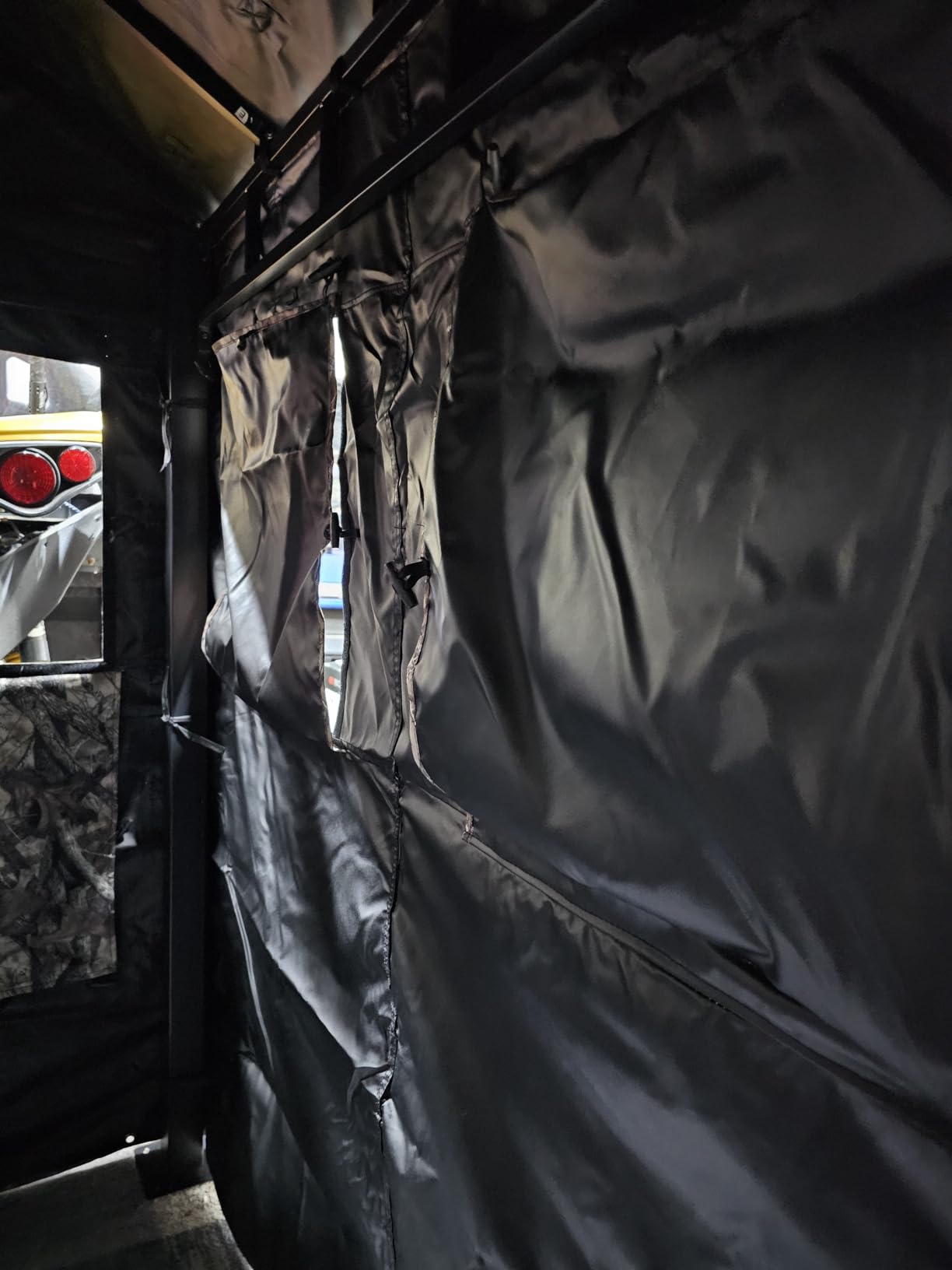
See-through fabric and the light problem
One-way see-through fabric gives a 360 degree undistorted view, which is a genuine tactical advantage on an open food plot where you need to watch behind you without turning your body. The distortion that comes with mesh windows is not present here.
The cost is interior light. Buyers report the one-way mesh reduces usable light inside, and in late December a sunlit see-through wall can make the interior brighter than you want. If you hunt late season, bring a headlamp rather than relying on ambient light.
Built-in holders and brushing in
Built-in gun, bow and cup holders keep gear within reach instead of on the floor, and the integrated straps accept branches and brush for added camouflage. Brushing in is the cheapest concealment upgrade available and it costs nothing but a few minutes before dark.
Eight shoot-through windows are among the highest count here, and on a square blind that means you are not funneling your shots into two lanes.
For rifle and crossbow shooters
The 84 inch interior height is the number to pay attention to here. It lets a shooter work a rifle from a seated rest with real headroom, and it leaves room to stand and move a crossbow without ducking. For a solo rifle hunter on a food plot, that geometry is worth more than portability.
Eight shoot-through openings also mean you can cover a wide arc without repositioning, which matters when the wind shifts and you need a new lane.
Who should skip it
Skip this blind if your setup is a walk-in, a solo sit where you will move locations daily, or anything on public land where a large rigid structure is difficult to place discreetly. The weight is the deciding factor, and it is a large enough gap from the rest of the list that I would not try to argue past it.
8. THUNDERBAY SPUR Collector – the Quickest Setup for a Same-Day Move
THUNDERBAY SPUR Collector 2 Person Hunting Blind, Portable Ground Blind with Silent Sliding Window, Portable Durable Hunting Tent for Deer & Turkey Hunting
Five-hub foldable design
63 x 63 x 60 inch set up
10.6 pound carry weight
270 degree windows
Pros
- Five-hub design sets up and takes down in under 2 minutes with no tools
- Silent sliding window covers are quiet to open and close
- Carries comfortably for one hunter with bag stakes and ropes
- Owners report it holding up across a full season
- Value at the entry end of the range
Cons
- Elasticated mesh hoops are not true sliders like the listing photos suggest
- 210D polyester is light duty and listed as not water resistant
- One owner reported the supplied stakes and tie-down ropes breaking
The SPUR Collector is the blind to buy when you do not know your setup until the morning of the hunt. The five-hub design sets up and folds in under two minutes with no tools, and at 10.6 pounds it is comfortable for one hunter to carry on a strap.
It also holds a 4.5 star average across 110 ratings, with owners reporting it held up through a full deer and turkey season set up continuously rather than being moved twice.
Silent sliding windows and what the photos do not show
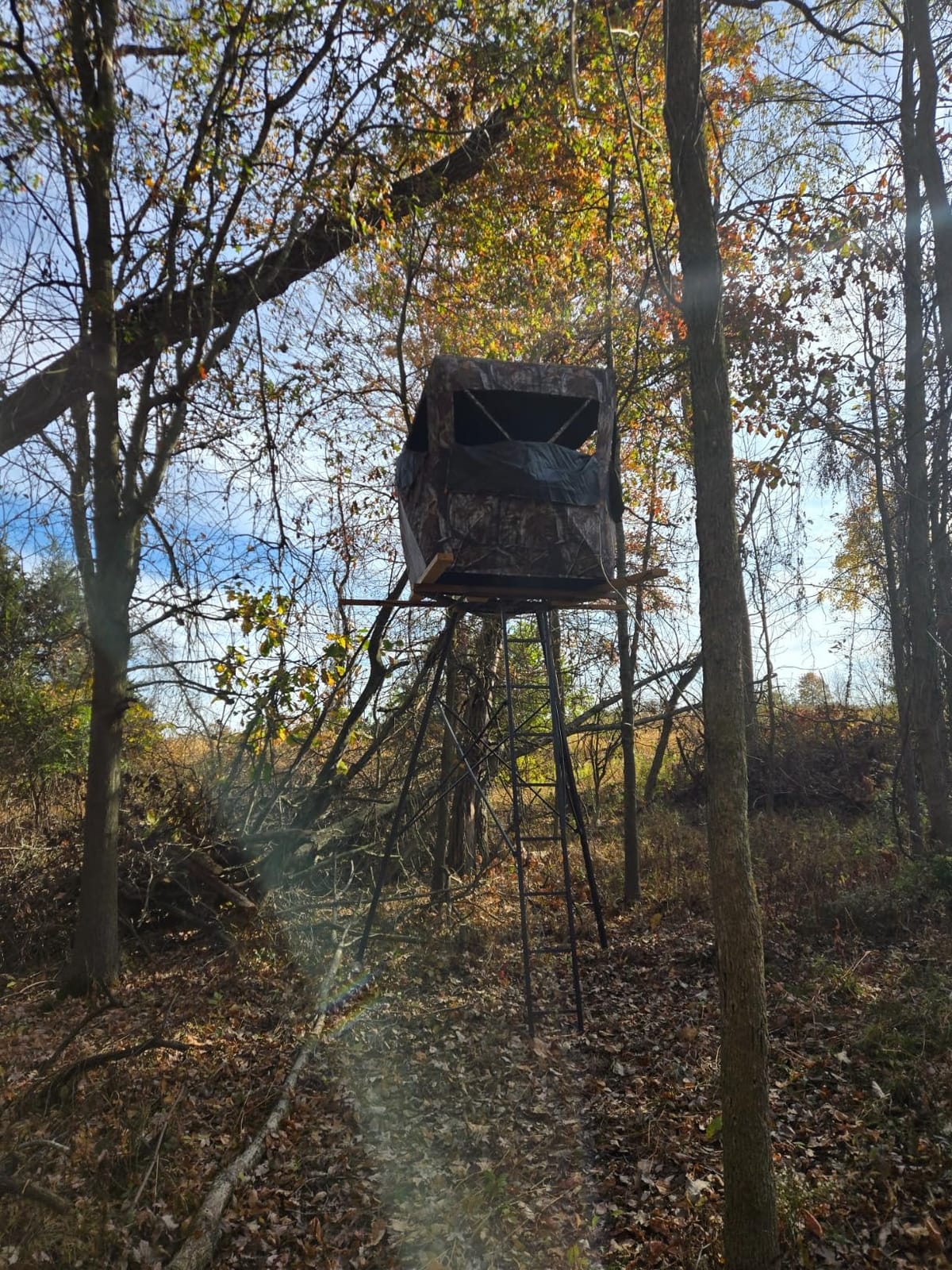
The listing advertises silent sliding window covers with shoot-through camo mesh, and the sliding action is genuinely quiet. Be aware, though, that owners report the mesh covers use elasticated hoops that are all-or-nothing rather than true sliders, and that this differs from the product imagery.
That is worth knowing before you rely on a partial opening to shoot through. If you need a graduated window, test it at home.
Interior space and comfort
The set-up size is 63 by 63 inches with a 60 inch height on a 50 by 50 inch footprint, and the interior is comfortable for one and workable for two. The fiberglass frame with a black polyurethane interior coating does the same silhouette work as the coatings on the pricier Ameristep models.
The hardwood and leaf camo pattern is a real pattern rather than a flat color, which helps at the edges of your vision when a buck steps into partial cover.
For solo hunters who rotate locations
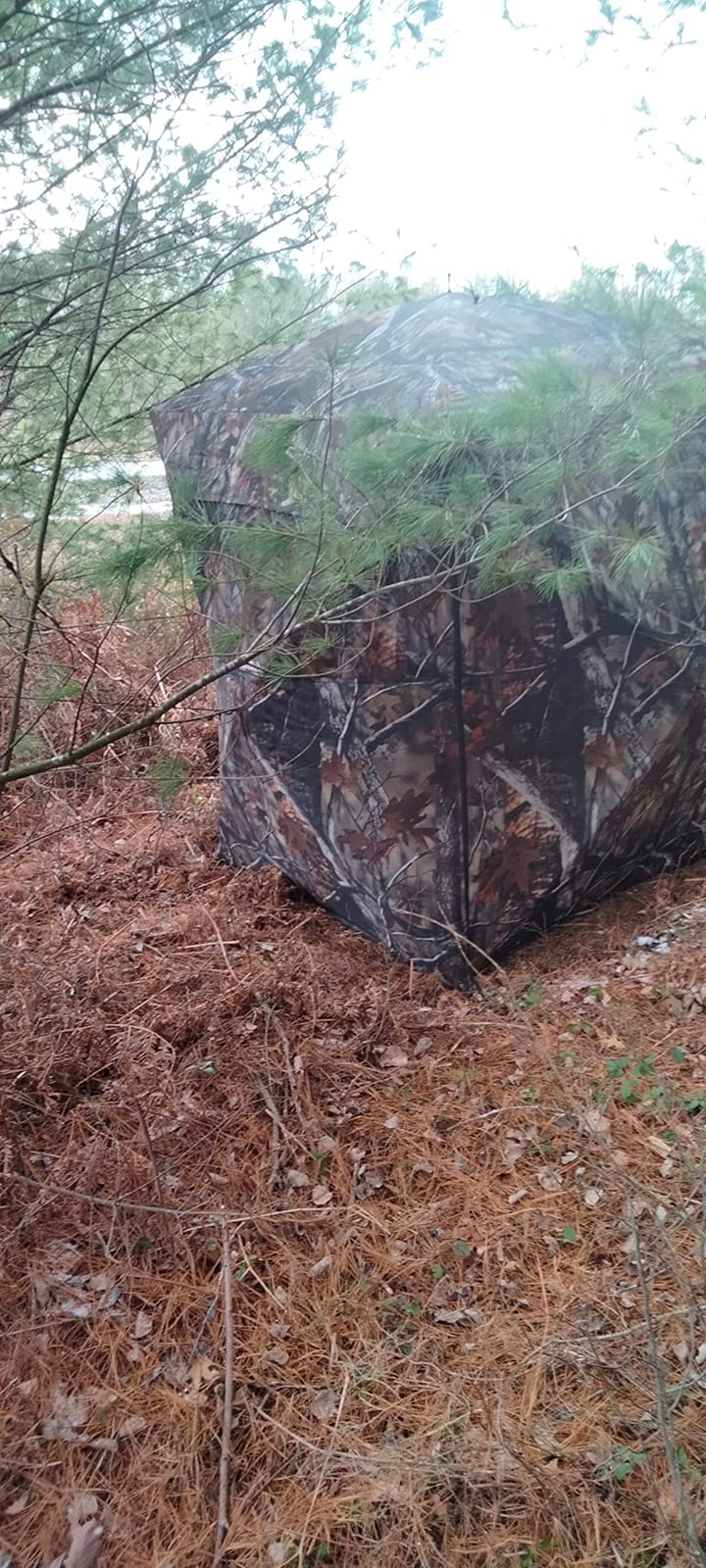
This is my pick for someone covering public ground or scouting new private land where you cannot commit to a single setup. Set up speed means you can work a morning sit and move to a second location for the afternoon, which doubles the ground you can cover.
Carrying bag, stakes and ropes are included, and the take-down is fast enough that you can strip and pack in the dark without turning on a light.
Honest limitations
The 210D polyester shell is the light-duty choice here and the listing is marked as not water resistant. One owner also reported the two window stakes and tie-down ropes breaking, so upgrade the stakes before you rely on this in wind. Treat it as a fair-weather-to-moderate-weather blind, not a late-season shelter.
9. Guide Gear HuntRite Deluxe – the Easiest Blind to Move Into the Cover
HuntRite Deluxe Pop-Up Hunting Ground Blind, 1-2 Person Tent, Hunting Gear, Equipment, and Accessories, 4-Panel Spring Steel
Expands to 60 x 60 x 66 inch
9.4 pound carry weight
3 zip windows and 4 mesh portholes
Pros
- Near-instant pop-up with no assembly steps
- Seven windows give a wide field of view and shooting angles
- 150-denier shell resists weather and wear
- Backpack-style carry case makes transport into cover easy
- 9.4 pound listed carry weight
Cons
- Two-person interior is snug for a full day of gear and seating
- 150-denier nylon is lighter duty than the 300D options here
The HuntRite Deluxe is the most popular listing in this entire group, holding a top-ten position in the Hunting Blinds category with a 4.5 star average across 909 ratings. That volume of owner history is itself useful data. It means the failure modes are well documented rather than hypothetical.
It is also the simplest design in the roundup: a four-panel spring steel hub frame that expands to 60 by 60 by 66 inches and packs into a backpack carrying case. Pop-up speed is close to instant and there is no assembly step at all.
Seven windows and why count matters
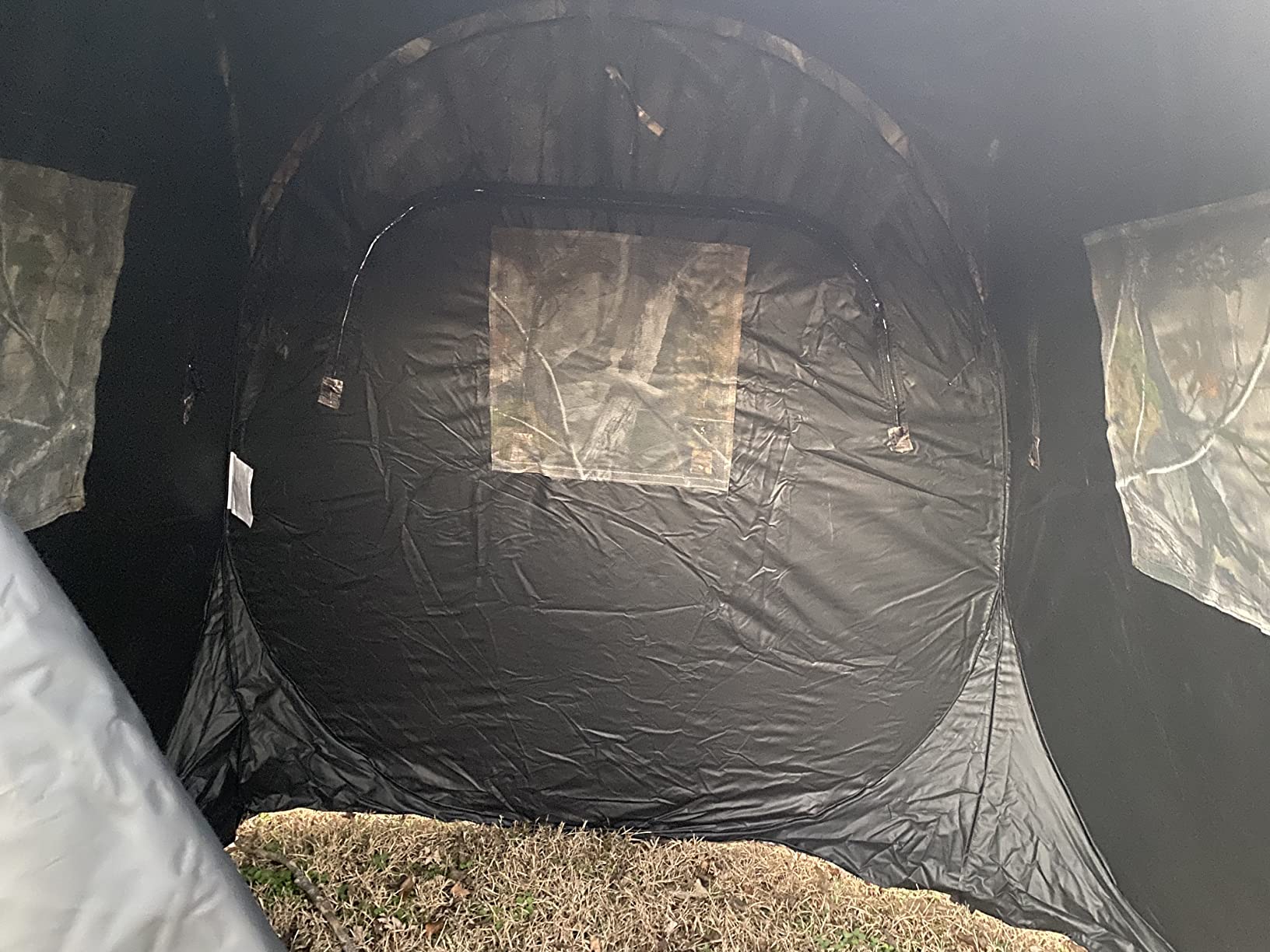
Three full-zip windows plus four porthole-style shoot-through mesh openings give you seven ways out of this blind. On a square four-sided design that means essentially every wall is covered, which is a big advantage when deer move around the setup instead of approaching head-on.
The tradeoff is that full-zip windows make noise when opened quickly. Unzip them slowly during the last hour of light and the difference is manageable.
Fabric and weather expectations
The 150-denier weather-resistant outer shell is mid-range among the options here. It sits above the lightest entries and below the 300D Oxford builds, and buyers describe it as holding up against weather and wear for the price.
Treat it as a season blind rather than a multi-year blind. Spot clean and dry it fully before you fold it away, because fabric that stores damp will mildew within a season.
For beginners and paired bow sits
This is the blind I would hand someone hunting their first deer season with a friend. The backpack case makes it genuinely portable, the pop-up frame removes the learning curve, and the 66 inch center height gives enough headroom to draw a bow seated.
It also works for elk and antelope, which broadens its usefulness if you hunt more than one species.
Where the space runs out
Two people, chairs and a full day of gear is a tight fit, and that is the most common reservation in the reviews. The 60 by 60 footprint is workable for a seated bow sit and genuinely cramped for two hunters with a camp chair each.
If your sit is a two-hour morning watch, this is the right size for the job.
10. Lenotos Pop-Up Blind – a Compact 60 Inch Shelter for Tight Timber Cover
Lenotos Pop-Up Hunting Ground Blind with 270° See Through, Lightweight 1-2 Person Hunting Blind with Carrying Bag, 4-Panel Spring Steel, for Deer, Turkey Duck Hunting, Bow Hunting
60 x 60 x 64 inch
10.5 pound carry weight
270 degree see-through view
Spring steel frame
Pros
- Packs down small and pops up in seconds for reaching tight spots
- 270 degree see-through view for archery and shooting angles
- Fabric holds up to wind without cutting straight through
- Blackout back panel keeps movement invisible from outside
- Two year manufacturer warranty
Cons
- Interior is very confined for shouldering a rifle
- See-through mesh is hard to focus through
- Black interior panel drops low so lateral viewing needs leaning
- Not waterproof and frame bands can spring open while folding
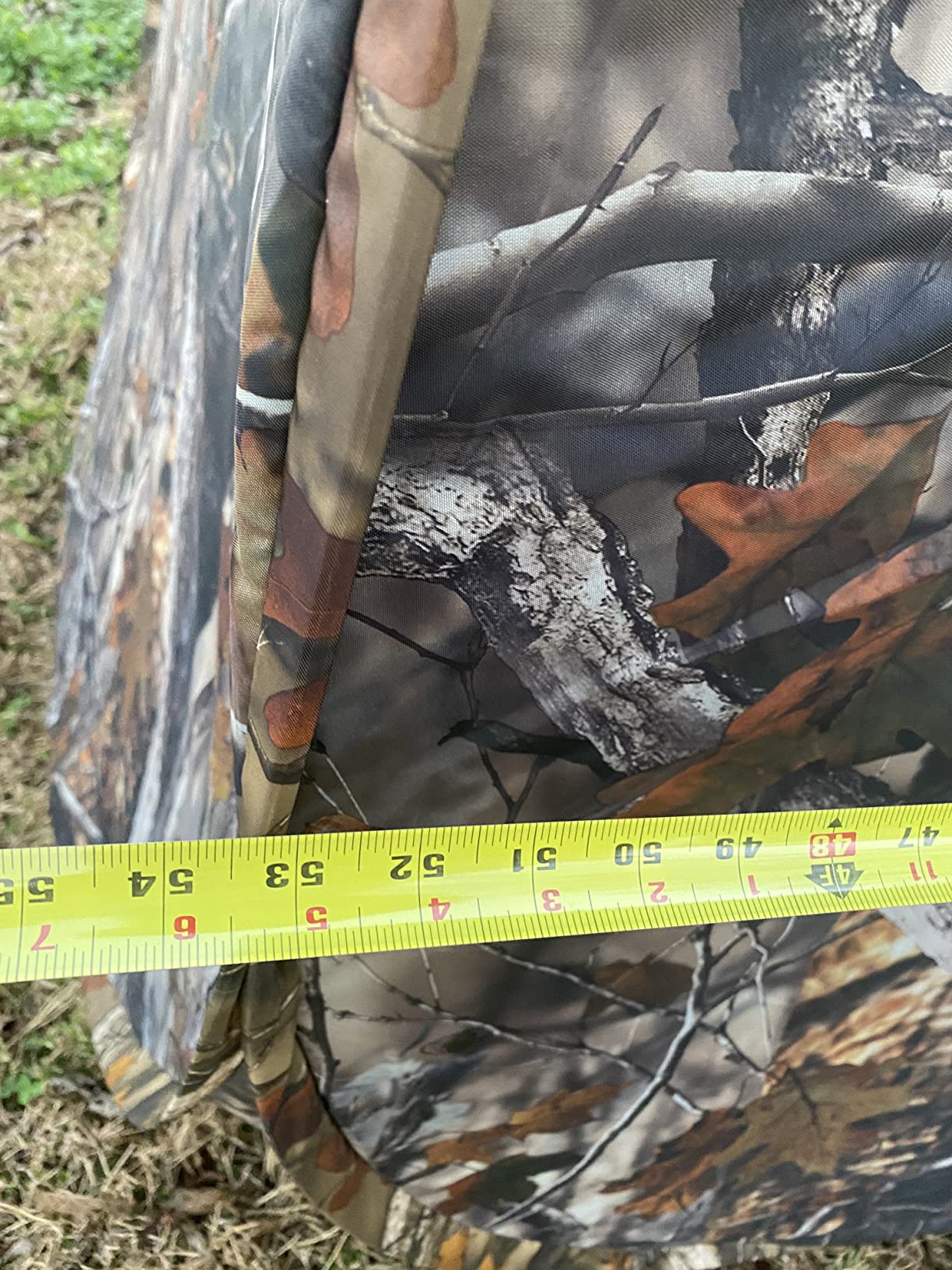
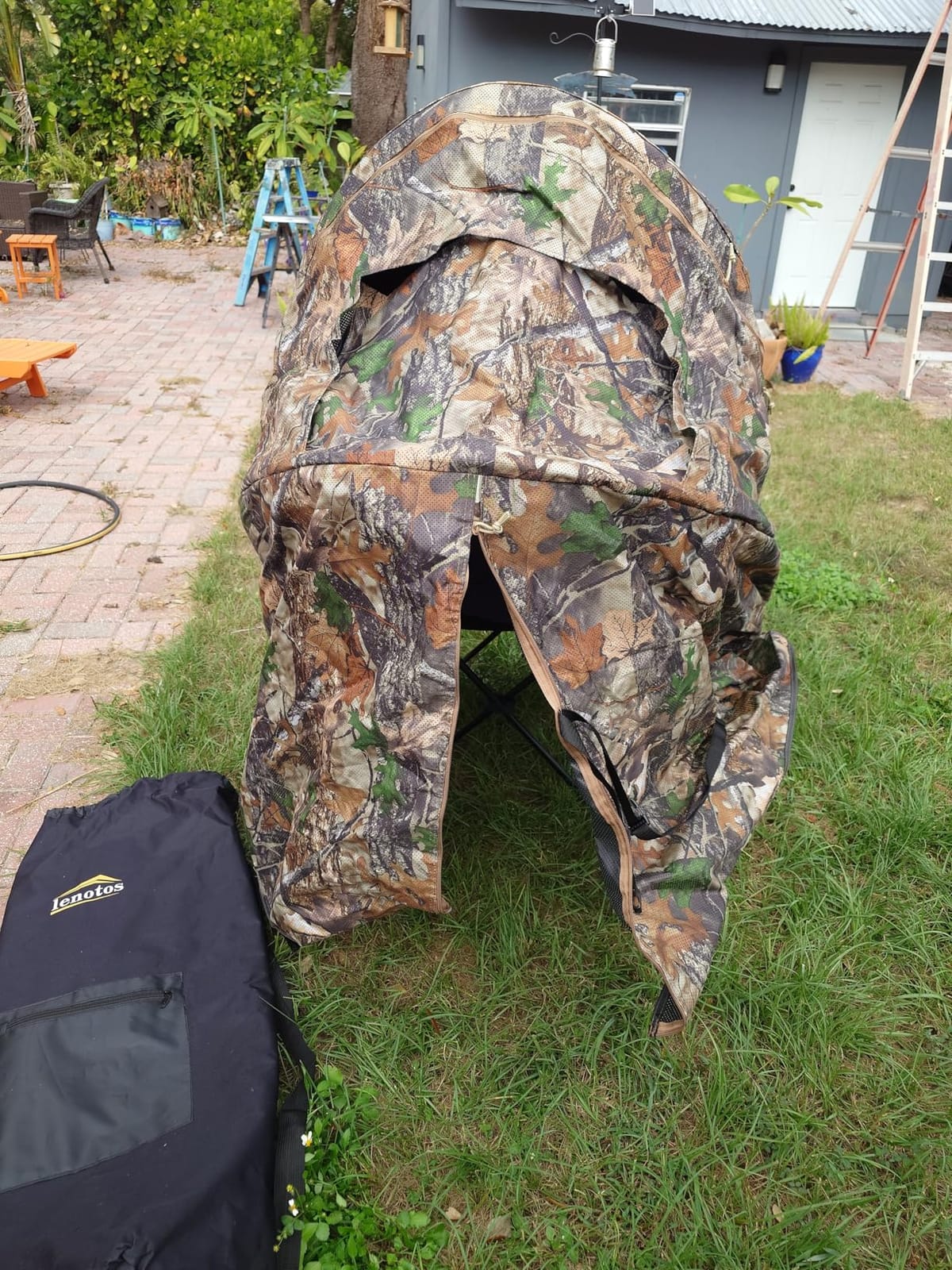
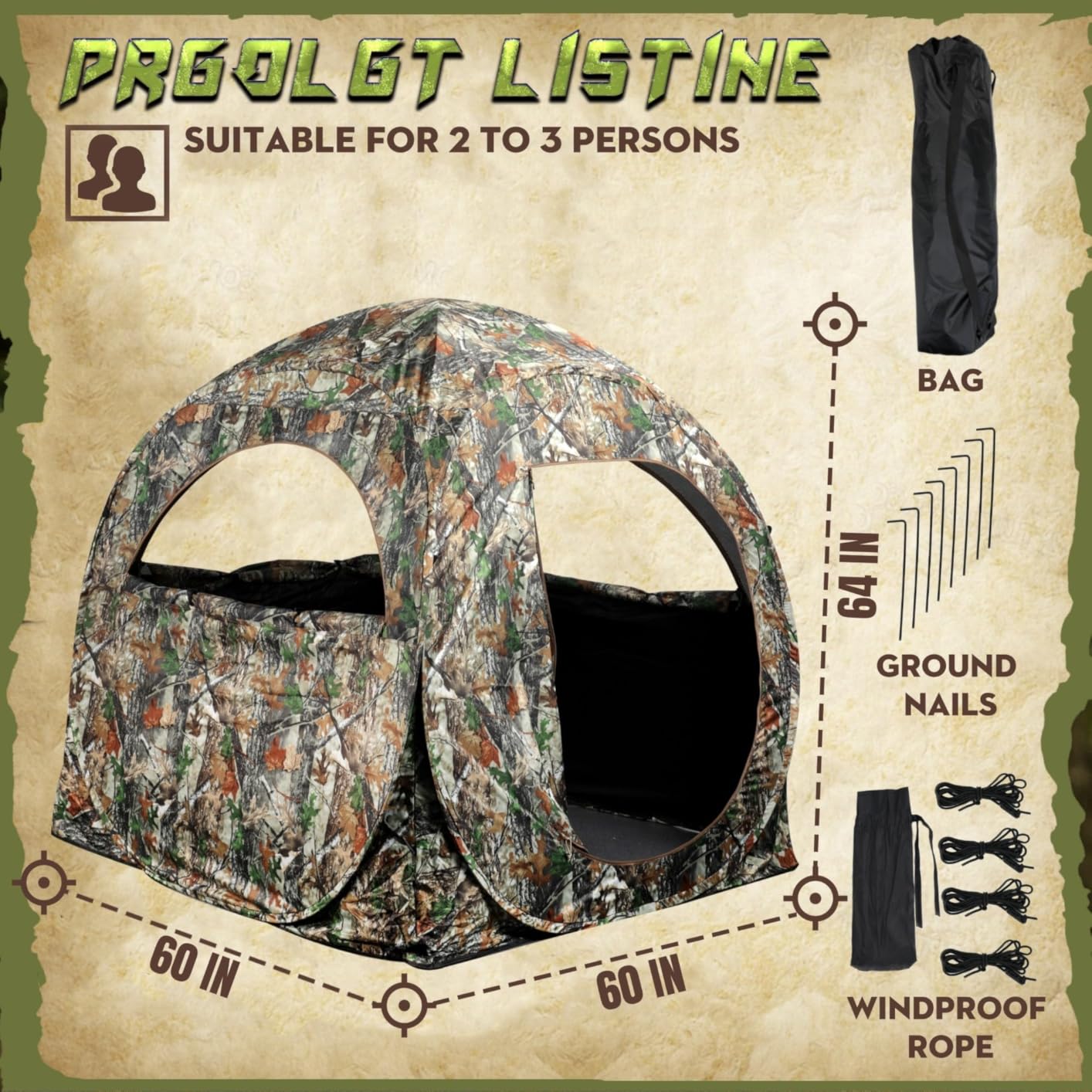
The Lenotos is one of the two smallest blinds here, and it is the one I would take into heavy timber where a five-sided pentagon will not fit between two oak trees. It packs small, pops up in seconds from a four-panel coil-compressed spring steel frame, and the 60 by 60 by 64 inch footprint fits spaces a bigger blind cannot.
It carries a 4.2 star average from 180 ratings, the lowest in this roundup, and reading the reviews explains why: most of the complaints are about interior space, not failure.
Where the confined interior actually bites
Several users report no room to shoulder a descent-length rifle without shifting the blind. That is the single most important practical limit here. A rifle shot from the shoulder needs space to bring the stock into your cheek and rotate the muzzle through the window, and a 60 inch footprint does not provide it.
What it does support is a crossbow or a rifle on a shooting rest, and many owners use it exactly that way with a tripod set inside the blind. If your plan is a seated bow draw or a rested crossbow shot, the space works.
270 degree see-through viewing
The large semicircle windows give a 270 degree view, which is the right amount for a hunter who needs to see around corners but does not need blind spot coverage behind. See-through fabric also means you can watch approaching deer before they clear the timber and step into a lane.
Two cautions. Users report the mesh is hard to focus through, which bothers people prone to headaches, and the blackout interior panel drops too low on the sides, so you must lean to see laterally. Both are minor once you know they are there.
Build details worth checking
The five-hub design uses reinforced stress points and triple-stitched corners, which is the right place to look first after a season. Heavy-duty zippers give quiet entry and exit if you unzip them slowly, and the two year manufacturer warranty is the longest stated coverage in this group.
Two practical notes. The blind is not waterproof, so treat it as a dry-weather shelter. And the frame bands can spring open while you are folding it up, so collapse it in the same sequence you used to open it rather than forcing the poles.
Who it suits
Buy it for tight timber cover, for a solo sit where you want minimal presence, or as a chair blind you can carry anywhere. Skip it for rifle shooting from the shoulder, for overnight use, and for anyone who needs to stand and draw a bow inside the blind.
How to Choose a Deer Blind Your Season Actually Needs
Most blind-buying mistakes come from picking a shelter before picking a sit. Work outward from the location and the weapon, and the product choice narrows on its own.
Do deer avoid box blinds?
No. Deer do not avoid a blind simply because it is a blind. They avoid movement, silhouettes and scent, which is exactly what a solid-walled shelter with a dark interior is designed to remove. What deer do react to is a poor setup: a bright interior, a silhouette moving against a window, or a human odor arriving with the wind.
That is why placement matters more than the blind. A window facing away from the prevailing wind, brushed in with local branches, and set before the light fades will outperform an expensive shelter placed in the wrong timber.
Can deer smell you in a box blind?
Yes, but far less than in an open sit. A blind blocks wind-driven scent dispersal, and a dark, closed interior lets scent pool rather than streaming out in plumes. The difference between a sheltered blind and an exposed treestand is real, and it is the single biggest reason late-season and pressure-point hunting works from a blind.
What the blind cannot do is cancel a scent-control mistake. Washing outer layers, using unscented products, entering from downwind and keeping the door closed are worth more than any fabric coating.
Can you bow hunt out of a box blind?
Yes, with caveats about room and clearance. Drawing a bow needs vertical space, a stable kneeling or seated position, and enough interior area that your drawing arm does not push against a wall. A five-sided blind with a 71 inch center height works well. A compact two-person blind at 60 inches works for a seated draw but not for a full stand-and-shoot.
Crossbows are the easiest fit because the shot is anchored and the clearance needed is small. Rifles from the shoulder are the hardest fit in the small blinds, which is why every owner complaint in this roundup about rifle clearance comes from a compact two-person model rather than a large four-person blind.
What is the typical window height for a deer box blind?
Most blinds in this class use a center height between 60 and 72 inches, which puts the main shooting window roughly in the 50 to 64 inch band. A seated hunter with a rifle needs the window low enough to align with the rest; a standing archer needs vertical opening above it.
The practical test is eye height. Measure how high the window sill sits, then compare it to your own seated and standing eye level in the shoes you will hunt in. Shorter shooters should check the sill carefully, because a window that sits low pushes the whole panel into view when you lean in.
Sizing for solo, two-hunter and overnight sits
Capacity ratings are optimistic. A blind rated for two is comfortable for two people with light gear and cramped once chairs and a bow case are in. A blind rated for three is workable for a parent and two kids, but tight for three adults sitting a full day.
For overnight use, look at the door design as closely as the footprint. The Barronett Feather Five flips entire wall panels up for loading, and that is the difference between a comfortable two-day camp and an awkward one.
Fabric weight, denier and weather resistance
Denier is a proxy for durability, not waterproofing. The 150-denier options in this roundup are the lightest and best for moving between setups, and owners report pinholes and water coming through in heavy rain. The 300D Oxford builds are heavier and hold up better in rain and abrasion.
None of these are waterproof. If you hunt in a wet climate, treat a roof tarp as part of the kit, and always store the blind fully dry. Damp folded fabric will mildew within a season and the odor is nearly impossible to remove.
Portability: why carry weight decides the blind
Weight is the most repeated complaint in hunter blind discussion, and the forum consensus is blunt: a blind you cannot carry is a blind you will leave at home. Listed carry weights here range from 16 ounces to 67 pounds, and that range matters more than any other spec when your setup is a walk in.
Set a personal limit before you shop. If you can comfortably carry 20 pounds on uneven ground, the 23 pound four-person blinds and the steel-frame blind are out. If a cart or an ATV gets you to the setup, weight stops being the deciding factor and room takes over.
What to pack inside a blind for a full-day sit
Hunters ask this question constantly and there is no short answer, so here is what I carry: a folding camp chair, a boot tray to keep mud off the floor, a thermos and a second hot drink, a padded seat for long sits, a headlamp with a red mode, a window squeegee or soft cloth, spare zip ties, extra stakes, a repair patch kit, and a foam pad if you plan to sleep.
A portable propane heater deserves a caution. It is safe inside a fabric blind only with adequate ventilation and only if the blind is not fully sealed, and you should never leave one running unattended.
Setup, anchoring and pre-season timing
Every blind in this roundup is a pop-up or hub design that sets up without tools, but anchoring is where most setups fail. Bring your own heavier steel stakes rather than trusting the supplied ones, because owners across multiple reviews flag the included stakes as the weak link.
Before opening day, test the whole sequence in daylight: stake, tension the tie-downs, level the frame, check that windows open and close quietly, and walk the perimeter to confirm no bright fabric or gear is visible from the approach angle. Brands and models get redesigned between seasons, so confirm the layout of the blind you actually receive before you build your sit around it.
Who should skip this roundup
If you hunt entirely on public land with a strict equipment footprint, a portable blind may already be at the limit of what is allowed, and a bivy or a ground blind is the more compliant choice. If you need late-season warmth beyond wind protection, none of the fabric shelters here substitute for an insulated structure.
And if you only have a few hours a week and no established travel corridor, spend the setup effort on scouting first. A well-placed simple blind beats an expensive shelter in the wrong timber every time.
Frequently Asked Questions
Do deer avoid box blinds?
No. Deer react to movement, silhouettes and scent, not to the blind itself. A solid-walled shelter with a dark interior removes all three, which is why deer will walk up to a well-set blind and pass a poorly placed one. Placement, window orientation and scent discipline matter far more than the brand of blind.
Can deer smell you in a box blind?
Yes, but much less than in an open sit. A blind blocks wind-driven scent dispersal, so odor pools inside instead of streaming toward deer. The blind cannot fix poor scent discipline though, so washing outer layers, entering from downwind and keeping the door closed still matter more than any fabric coating.
Can you bow hunt out of a box blind?
Yes, as long as the interior gives you vertical clearance and room to anchor. Blinds with a 66 to 72 inch center height work for a seated or kneeling draw, while compact two-person blinds around 60 inches suit crossbows and rested shots better than a full stand-and-shoot. Check the window sill against your own eye height before you buy.
What is the typical window height for a deer box blind?
Most blinds in this class have a center height between 60 and 72 inches, which puts the main shooting window in roughly the 50 to 64 inch range. A seated rifle shooter needs the sill near their eye level, while a standing archer needs opening above it. Measure your own seated and standing eye height and compare before purchasing.
How heavy should a box blind be to carry into the woods?
Set the limit by your terrain, not by the blind. A solo hunter walking uneven ground is usually best served by something under 20 pounds, which covers most of the portable hub options in this roundup. Four-person and steel-frame shelters run 33 to 67 pounds and are realistic only when a cart, ATV or short carry gets you to the setup.
The Right Deer Blind for the Way You Hunt
If you move between setups and want the best overall balance, the Ameristep Care Taker is the pick: the strongest rating and review history in the group, a 16 ounce listed weight and integrated wheels.
Pair the shelter with the sit rather than the other way around. If you are working a family or guide blind, take the Ameristep Brickhouse for three hunters and ten windows. If your group is larger and you want four people inside without a heavy carry, the Barronett Feather Five gives you an 84 by 84 by 72 inch interior at 17 pounds. If you are on private ground reachable by cart, the Barronett Ox 5 offers the highest average rating and the most adjustable window, while the BackyardExpressions steel frame gives you the tallest and most rigid structure for rifle work.
For bow and crossbow hunters working tight timber, the THUNDERBAY SPUR Collector and the Lenotos pop-up are the two to consider. SPUR sets up in under two minutes with no tools, and the Lenotos fits a 60 by 60 inch footprint. For the best balance of room, window count and no assembly, the Guide Gear HuntRite Deluxe is the value pick, and the THUNDERBAY Gobbler Lodge is the one to buy when you sit long and want a dark interior.
Before opening day, test the blind in daylight, stake it properly with your own hardware, and confirm the window hardware is quiet with the layout you actually received. That last check catches more blown opportunities than any blind feature on this list.