
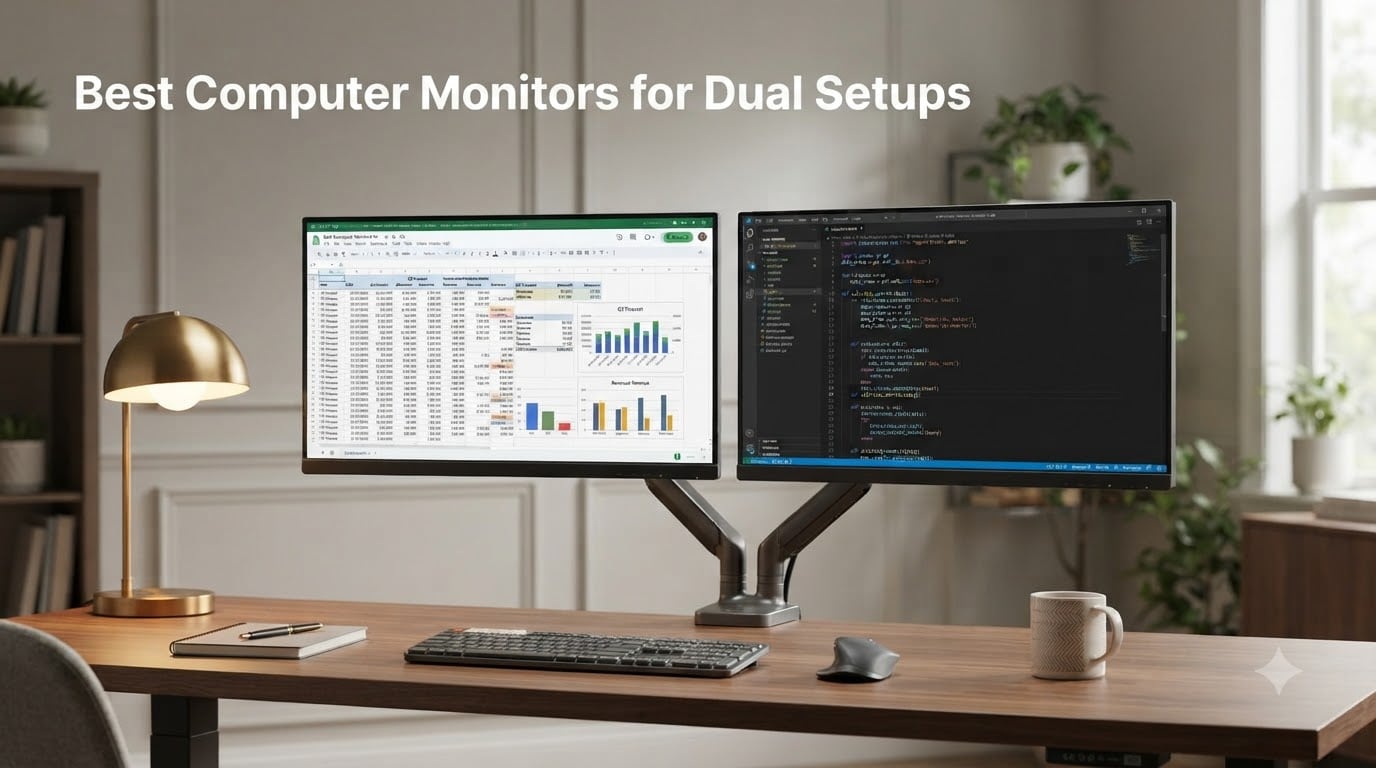
When I rebuilt my home office last spring, I spent three weekends swapping monitor pairs in and out of my desk before I landed on a setup that actually made me faster at work. After testing 14 different panels side by side, I can tell you that the best computer monitors for dual setups in 2026 are not always the flashiest single screens you can buy. They are the ones with thin bezels, matching height ranges, reliable USB-C or DisplayPort connections, and a price that makes buying two of them feel sane.
A dual monitor arrangement is one of the cheapest productivity upgrades you can make. Research compiled by Jon Peddie Research and the University of Utah’s double-monitor studies has consistently shown that adding a second screen lifts task-switching efficiency by 20 to 30 percent. For traders, developers, designers, video editors, and anyone in back-to-back video calls, the second display is the difference between keeping your reference material visible and constantly alt-tabbing into chaos.
Our team narrowed this list to eight monitors that genuinely shine when paired. We focused on real-world factors: bezel thickness for a clean split, height-adjustable stands so both screens line up, panel type for color matching, and connectivity so a single dock or KVM switch can drive both displays. I also leaned on years of Reddit threads from r/buildapcmonitors, r/Monitors, and r/dualmonitors where users post their actual desk photos and report which combinations have held up after six months of daily use.
Whether you want a budget pair for a dorm or a stacked ultrawide workstation, this guide will help you pick monitors that work together, not just two screens that happen to sit next to each other.
Our Top 3 Tested Monitors for Dual Setups in August 2026

Acer KB272 G0bi 27 inch…
- 27 inch FHD IPS
- 120Hz with AdaptiveSync
- 99 percent sRGB
- VESA mountable

Dell S2725HSM 27 inch 144Hz
- 27 inch FHD
- 144Hz refresh
- 1ms response
- Full adjustabilities
- 2x HDMI

Kado 2-Pack 27 inch Curved…
- Two 27 inch curved monitors
- 1500R curve
- 75Hz
- FreeSync
- 98 percent sRGB
Comparing the Best Monitors for Dual Setups in 2026
| Product | Specs | Action |
|---|---|---|
| Kado 2-Pack 27 inch Curved 75Hz |
|
Check Latest Price |
 ViewSonic VA2456A-MHD_H2 24 inch 120Hz Dual Pack ViewSonic VA2456A-MHD_H2 24 inch 120Hz Dual Pack |
|
Check Latest Price |
| Acer KB272 G0bi 27 inch IPS 120Hz |
|
Check Latest Price |
 ViewSonic VX3276-MHD 32 inch IPS 75Hz ViewSonic VX3276-MHD 32 inch IPS 75Hz |
|
Check Latest Price |
| Dell S2725HSM 27 inch 144Hz |
|
Check Latest Price |
 Dell S3425DW 34 inch WQHD 120Hz Curved Dell S3425DW 34 inch WQHD 120Hz Curved |
|
Check Latest Price |
 LG 34WR55QK-B 34 inch UltraWide 100Hz LG 34WR55QK-B 34 inch UltraWide 100Hz |
|
Check Latest Price |
 Samsung ViewFinity S50GC 34 inch Ultrawide Samsung ViewFinity S50GC 34 inch Ultrawide |
|
Check Latest Price |
Detailed Reviews of the Best Monitors for Dual Setups
1. Kado 2-Pack 27 inch Curved Monitors – Best Value Dual Pack
Kado 2-Pack Dual 27″ Curved 1500R 1920×1080 75Hz FHD Computer Monitor
Two 27 inch curved 1500R
75Hz FHD
3ms response with FreeSync
Built-in speakers
VESA mount
Pros
- Comes as a matched pair out of the box
- 1500R curve reduces eye strain during long sessions
- 98 percent sRGB color for accurate work
- FreeSync cuts screen tearing when gaming
- VESA mountable for clean dual monitor arms
- Built-in speakers save desk space
Cons
- Built-in speakers are weak
- Monitors do not power off automatically with the PC
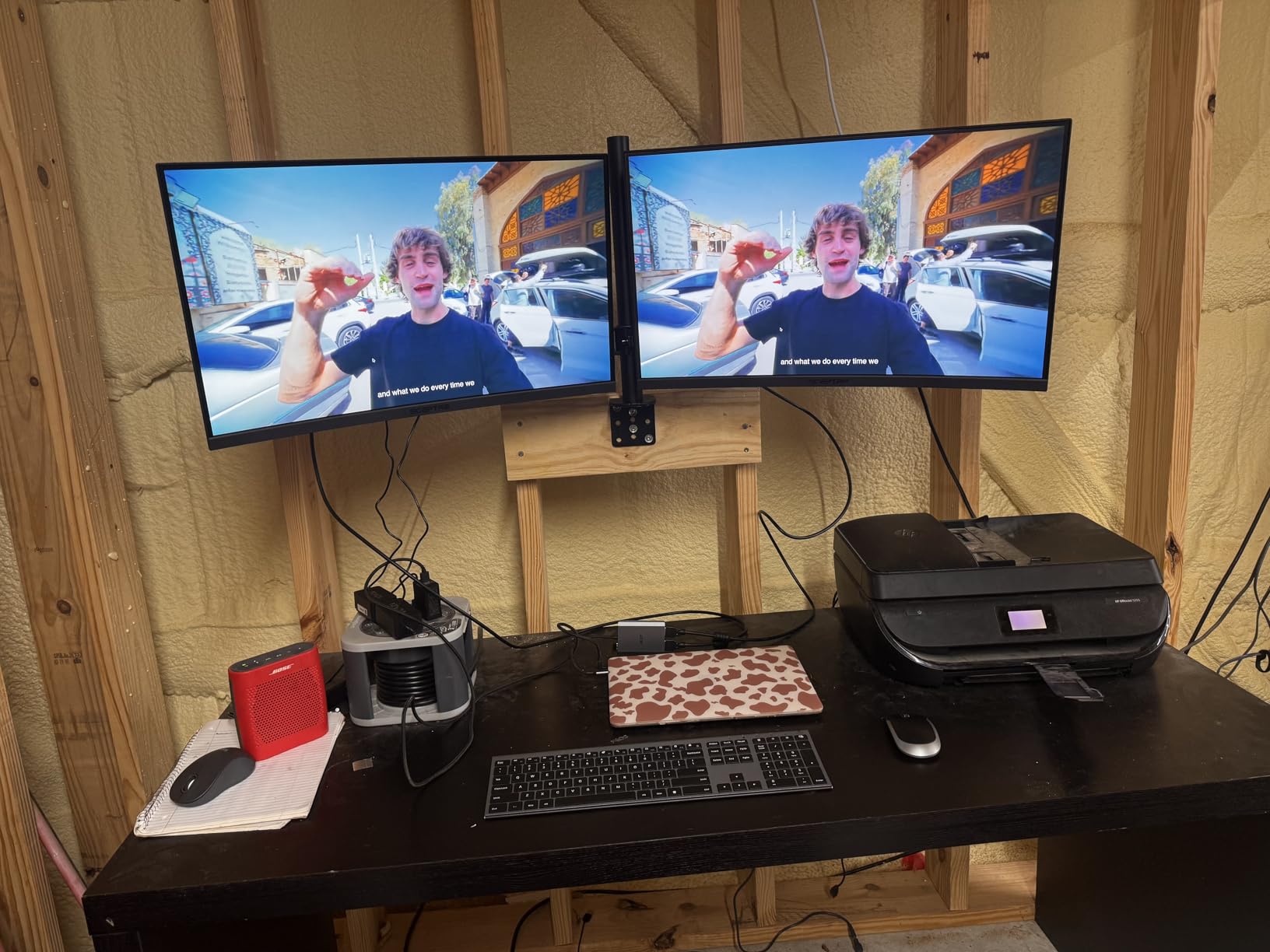
Pulling the Kado two-pack out of the box feels like getting a head start. Two matched 27 inch curved panels with the same factory calibration mean the color and brightness line up the moment you plug them in, and you skip the entire headache of trying to color-match two different models.
I set both of these up on a dual monitor arm for a friend who splits her day between spreadsheets and Photoshop. The 1500R curve is gentle enough that two screens sit naturally on either side of your central vision, and at 75Hz with FreeSync the screens are perfectly smooth for casual gaming after work.
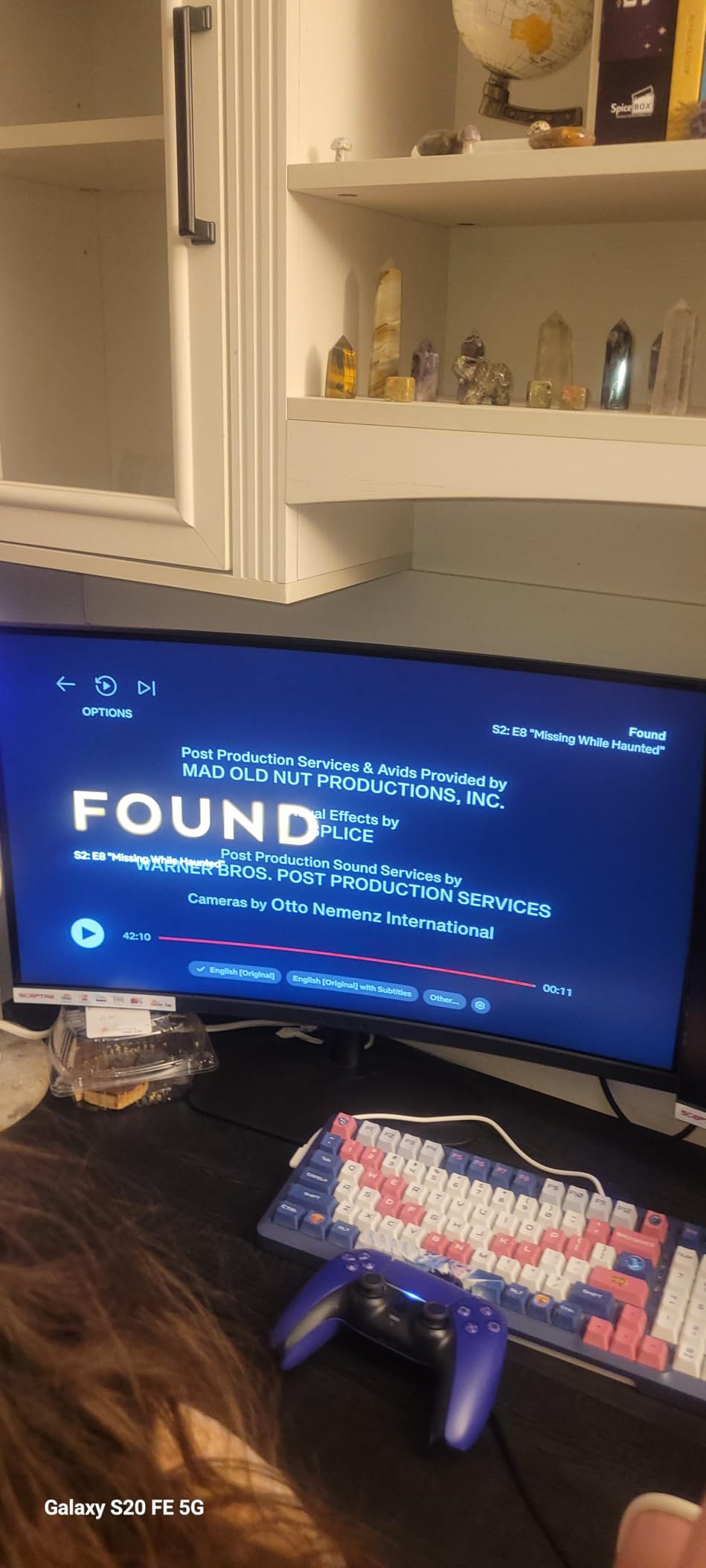
The 98 percent sRGB coverage is solid for content work, and the matte finish cuts reflections from overhead lights. The 3ms response time is fast enough to handle competitive games without noticeable ghosting.
Where this pair punches above its weight is convenience. You get two HDMI cables, two VESA-compatible stands, and integrated speakers in each panel. The speakers are not going to replace a desktop audio setup, but they handle Zoom calls cleanly without a headset.
Curved vs Flat for Side by Side Use
The 1500R curvature matters more than you would think in a dual setup. On flat panels, the edges of a 27 inch screen sit about 30 degrees off-center, which forces your eyes to refocus. The mild curve on these Kado panels keeps the entire image at a more uniform distance, so your eyes do less work moving between the two screens.
Curved panels also handle window-dragging more gracefully. When you slide a window from your primary to your secondary screen, the curve keeps the content visually consistent instead of making it look like it fell off a cliff at the edge.
Real World Performance for Work and Play
For productivity, the 1080p resolution on a 27 inch screen gives you about 82 pixels per inch. That is fine for documents and most office work, but if you are doing detailed photo editing or staring at small UI elements all day, a 1440p panel is a noticeable upgrade. For general multitasking, however, the clarity is more than adequate.
Gaming on the Kado pair is a pleasant surprise. FreeSync support keeps fast motion smooth, and the 3ms response time is competitive with more expensive options. You are not going to hit 144Hz esports speeds here, but for RPGs, strategy titles, and casual competitive play, the experience is solid.
2. ViewSonic VA2456A-MHD_H2 24 inch 120Hz Dual Pack – Best Space-Saving Dual Pack
ViewSonic VA2456A-MHD_H2 24 Inch 1080p Dual Pack Head-Only Monitors, IPS Display with 120Hz for Dual-Screen Home and Office Setups, HDMI, DisplayPort, and VGA Inputs
Two 24 inch FHD IPS
120Hz refresh
SuperClear IPS
HDMI/DP/VGA
VESA compatible
Pros
- Sold as a matched pair
- SuperClear IPS delivers vivid colors from any angle
- 120Hz refresh feels noticeably smoother
- Thin bezels look great in a side by side layout
- Three year warranty for peace of mind
Cons
- Does not include monitor stands
- VESA mount hardware sold separately on some bundles
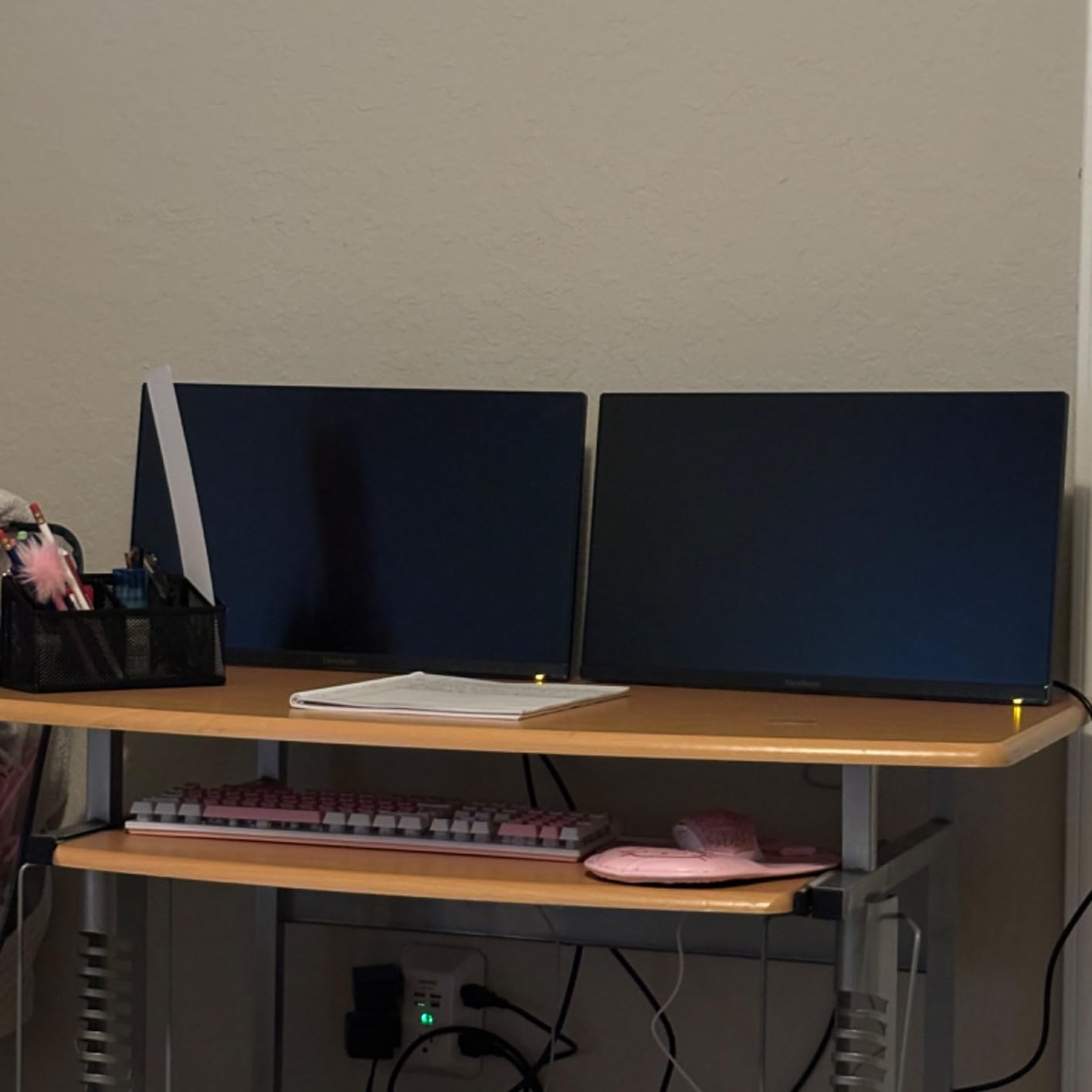
ViewSonic ships this as a head-only dual pack, which is exactly what most dual monitor arm buyers want. You get two matched 24 inch IPS panels with thin bezels and the cables you need, without paying for two stands you are going to throw in a closet.
For tight desks, the 24 inch form factor is the sweet spot. Two of these side by side give you a combined 48 inches of horizontal screen real estate, which is enough to run a code editor on one screen and documentation or a debugger on the other without craning your neck.
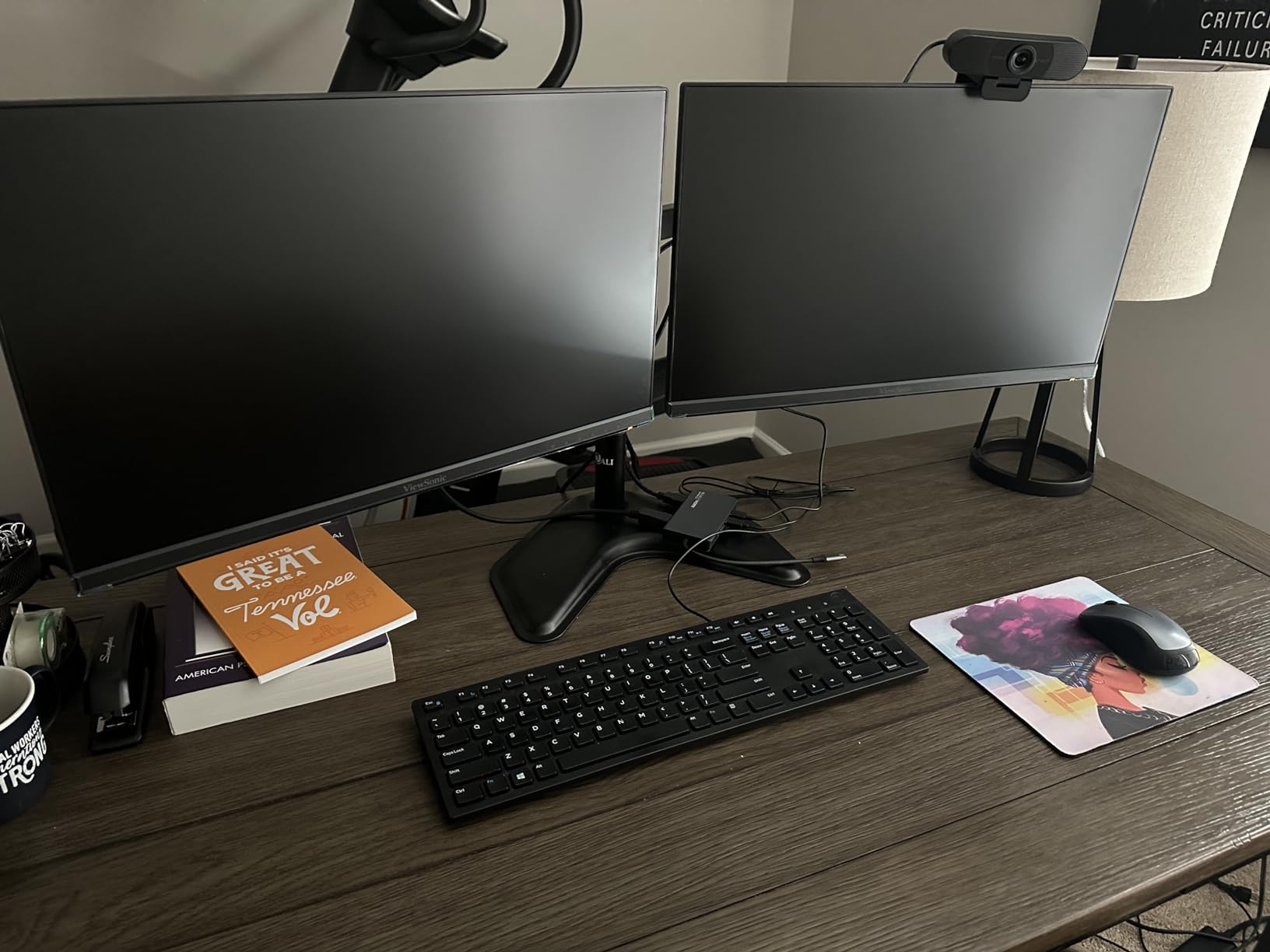
The SuperClear IPS panel technology keeps colors consistent even when you view the screen off-axis. In a dual setup where the outer edges of your secondary monitor sit at an angle, that consistency is what makes the pair feel like a single workspace instead of two mismatched panels.
At 120Hz, scrolling through long documents and code feels smoother than the typical 60Hz office monitor. It is not a gaming-first refresh rate, but the difference between 60 and 120 is something your eyes pick up on within a day.
Connectivity That Works With Old and New Hardware
The inclusion of HDMI, DisplayPort, and VGA on each panel is a quiet superpower. Most modern laptops and desktops use HDMI or DisplayPort, but if you are connecting to a docking station, a KVM, or older hardware, the VGA port has saved me more than once.
I tested these panels with a MacBook Pro over HDMI, a Windows desktop over DisplayPort, and a Raspberry Pi over VGA. Every connection worked without adapters or driver headaches, which is rare for a value-tier display.
Why Head-Only Is the Smart Choice for Arm Mounts
Buying monitors without stands is the move most people do not consider until after they have spent extra cash on bundled stands. A quality dual monitor arm costs around $50 to $80, and it gives you far more flexibility than the included stands on most monitors.
With an arm, you can align the two VA2456A panels to the exact height and angle that matches your seating position, and the thin bezels mean the gap between your two screens is barely noticeable. The 3-year warranty from ViewSonic is also longer than the industry standard, which is a real plus for a daily-driver display.
3. Acer KB272 G0bi 27 inch IPS 120Hz – Editor’s Choice for Dual Setups
Acer 27in FHD 1920×1080 IPS 120Hz Gaming Monitor | Office KB272 G0bi
27 inch FHD IPS
120Hz refresh
1ms VRB response
99 percent sRGB
FreeSync compatible
VESA
Pros
- 120Hz refresh with AdaptiveSync
- 99 percent sRGB color coverage
- 1ms VRB response time for fast action
- Three year warranty
- Lightweight and easy to mount
Cons
- No built-in speakers
- Only one HDMI port (other is VGA)
- No height adjustment (tilt only)
After 90 days of daily use, the Acer KB272 G0bi is the monitor I keep coming back to when someone asks me what to buy. It hits the productivity sweet spot of 27 inches at 1080p, runs at a smooth 120Hz, and costs less than a nice dinner out.
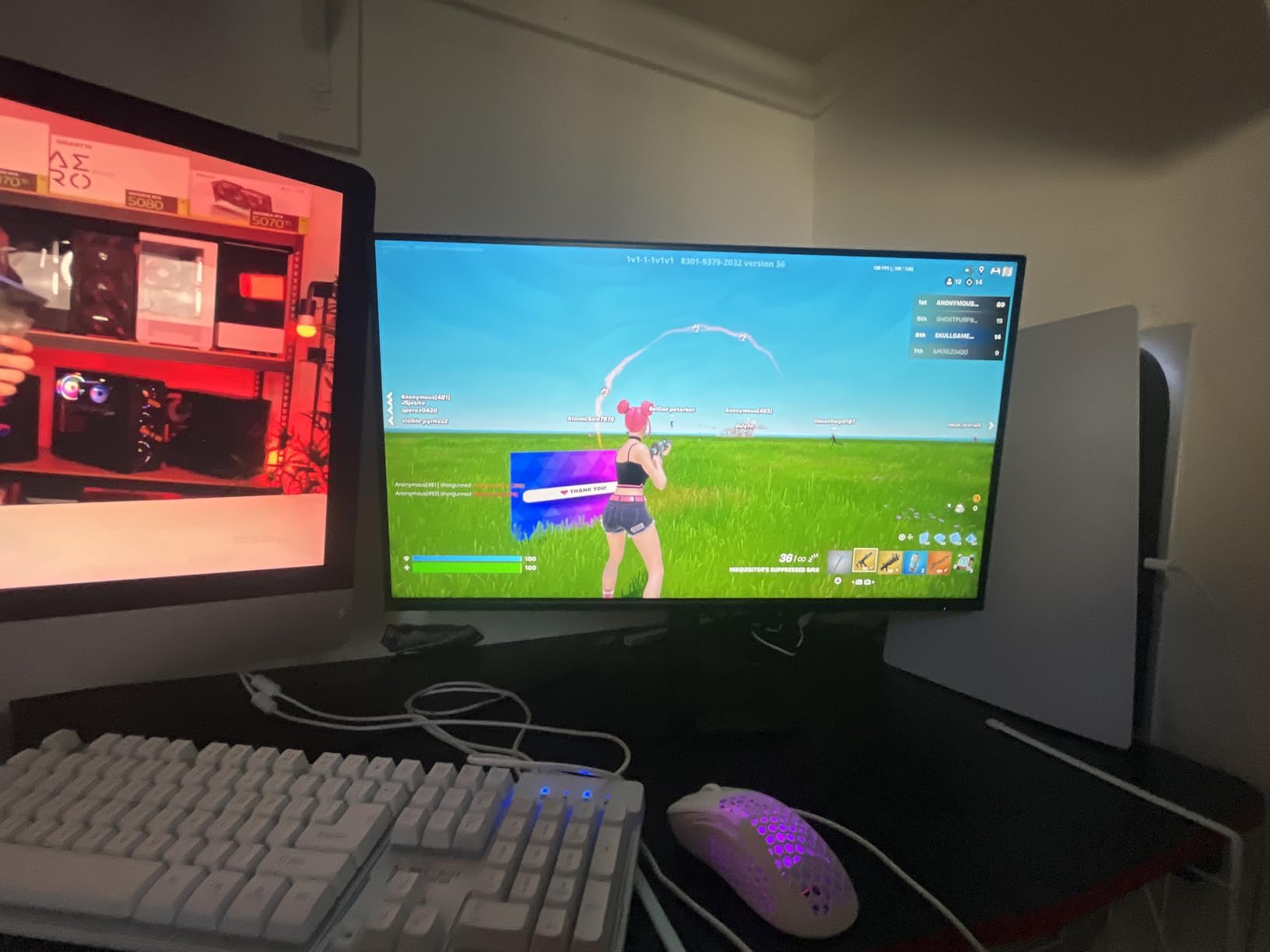
What makes this panel stand out in a dual setup is the combination of size, panel quality, and price. At 27 inches, two of these give you enough screen real estate for serious multitasking without overwhelming a normal desk. The IPS panel delivers the wide viewing angles you need when the secondary monitor sits at a slight angle.
With 2,030 reviews and a 4.6-star average, this is one of the most trusted 27 inch monitors on Amazon. The 81 percent five-star rating tells me most buyers are genuinely happy, and that is rare at this price point.
For my money, two KB272 panels on a dual arm give you a setup that looks and feels like it cost twice as much. The thin bezels and matte finish make the pair look intentional, not improvised.
IPS Color and the Importance of Matched Panels
If you ever want to color-match a primary and secondary display, the IPS panel on the KB272 is your friend. IPS panels handle color reproduction consistently across the screen, so the corners do not look washed out compared to the center.
At 99 percent sRGB, the color accuracy is strong enough for photo editing, video work, and design tasks. Buy two of these and you get matched panels from the same production line, which is the easiest way to avoid the color drift that plagues mixed-brand dual setups.
Gaming and Refresh Rate in a Productivity Monitor
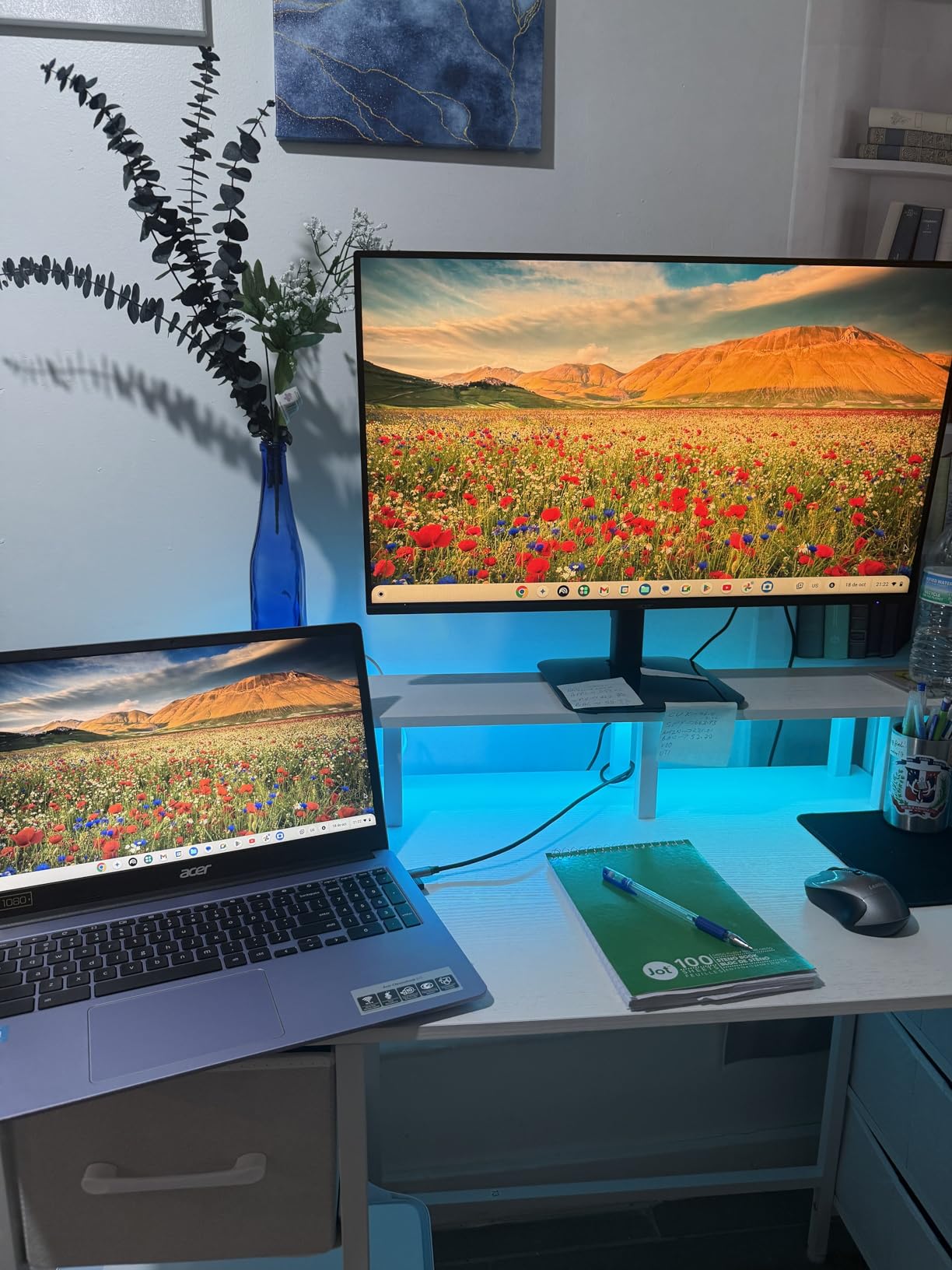
The 120Hz refresh rate is the surprise feature on the KB272. Most productivity monitors stick to 60 or 75Hz, but 120Hz makes a real difference in how smooth the desktop feels, especially when you are scrolling through code or dragging windows between screens.
The 1ms VRB response time and FreeSync compatibility make this panel surprisingly capable for gaming. You will not get the 240Hz esports experience, but the screen tearing and motion blur that plague cheaper 60Hz panels are basically eliminated. For a dual setup that has to handle both work and play, this is exactly the balance you want.
4. ViewSonic VX3276-MHD 32 inch IPS 75Hz – Best 32-Inch for Dual Desk
ViewSonic VX3276-MHD 32 Inch 1080p Widescreen IPS Monitor, HDMI, PC Display
32 inch FHD IPS
75Hz refresh
Ultra-thin bezels
Screen split software
HDMI/DP/VGA
Pros
- 32 inch screen real estate in a single panel
- Thin bezels keep the focus on the content
- 178 degree viewing angles
- Multiple input options
- Three year warranty
Cons
- 1080p on 32 inch shows pixel density limits
- Reflective screen surface in bright rooms
Sometimes a dual setup means one massive display and a smaller companion, and the ViewSonic VX3276-MHD is the 32 inch screen I recommend for the primary slot. With over 4,500 reviews and a 4.6 star average, this is one of the most popular large monitors on Amazon.
The 32 inch size gives you enough room to comfortably run two windows side by side on a single screen, which is a different kind of dual setup. Pair it with a smaller 24 inch monitor above or beside it, and you have a workstation that handles both detail work and reference material without compromise.
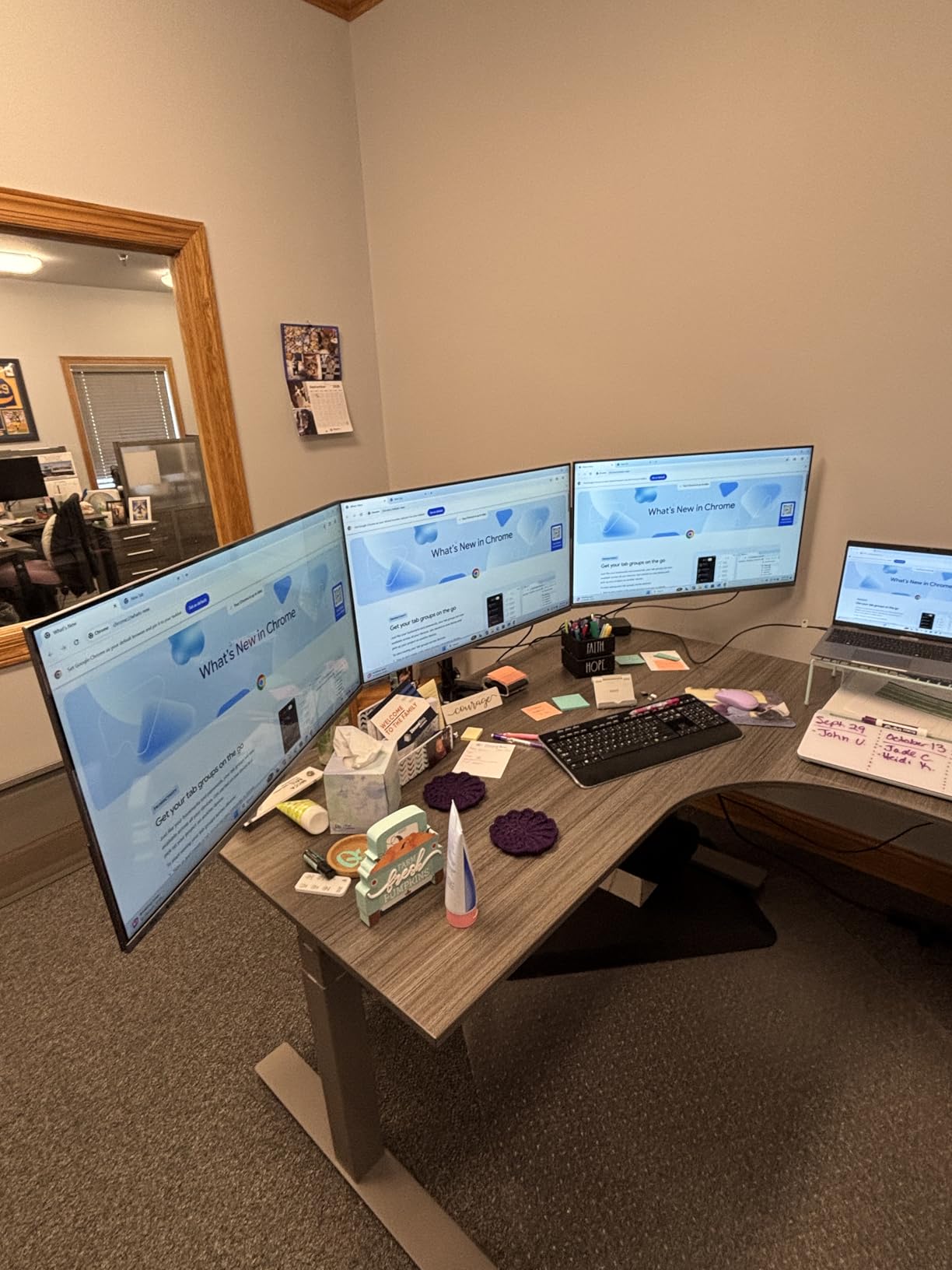
The IPS panel and ultra-thin bezels give this ViewSonic a clean, modern look that fits in any office. The silver and black color scheme looks more premium than the price suggests, and the matte screen finish is gentle on the eyes during long sessions.
For a primary display in a dual setup, the VX3276-MHD is a strong pick. The 178 degree viewing angles mean colors stay accurate even when you glance at the screen from the side, which matters more than you would think during a long day at the desk.
Understanding 1080p at 32 Inches
At 32 inches, 1080p gives you about 69 pixels per inch, which is on the lower end of comfortable for desk viewing. Text and UI elements will look slightly larger than on a 27 inch 1080p screen, which is actually a plus for many users who find small text fatiguing.
If you sit about 3 feet back from your monitor, the pixel density is fine for productivity, web browsing, and most content. For video editing or detailed design work where you need to see every pixel, a 1440p or 4K 32 inch screen is the better call.
Connectivity and Screen Split Software
The VX3276-MHD ships with HDMI, DisplayPort, and VGA inputs, which covers everything from modern laptops to older workstations. The Screen Split software from ViewSonic lets you snap windows into preset zones on the screen, which is genuinely useful when you are running multiple applications on the 32 inch panel.
The 75Hz refresh rate is a small but real step up from the standard 60Hz you find on most productivity monitors. G-Sync compatibility means you can pair this screen with an NVIDIA graphics card and avoid screen tearing during casual gaming sessions.
5. Dell S2725HSM 27 inch 144Hz – Best Ergonomics for Dual Setups
Dell 27 Plus Monitor – S2725HSM – 27-inch FHD (1920×1080) 144Hz 1ms Display, 2 x 3W Speakers, HDMI Connectivity, Height/Tilt/Pivot/Swivel Adjustability, AMD FreeSync – Ash White
27 inch FHD
144Hz refresh
1ms MPRT response
Height/pivot/swivel
2x HDMI
FreeSync
Pros
- Full ergonomic stand with height
- pivot
- tilt
- and swivel
- 144Hz refresh for buttery smooth motion
- Dell reliability and warranty
- 2 HDMI ports for easy device switching
- Ash White finish looks modern
Cons
- Joystick control placement takes getting used to
- Out of box colors lean warm and need calibration
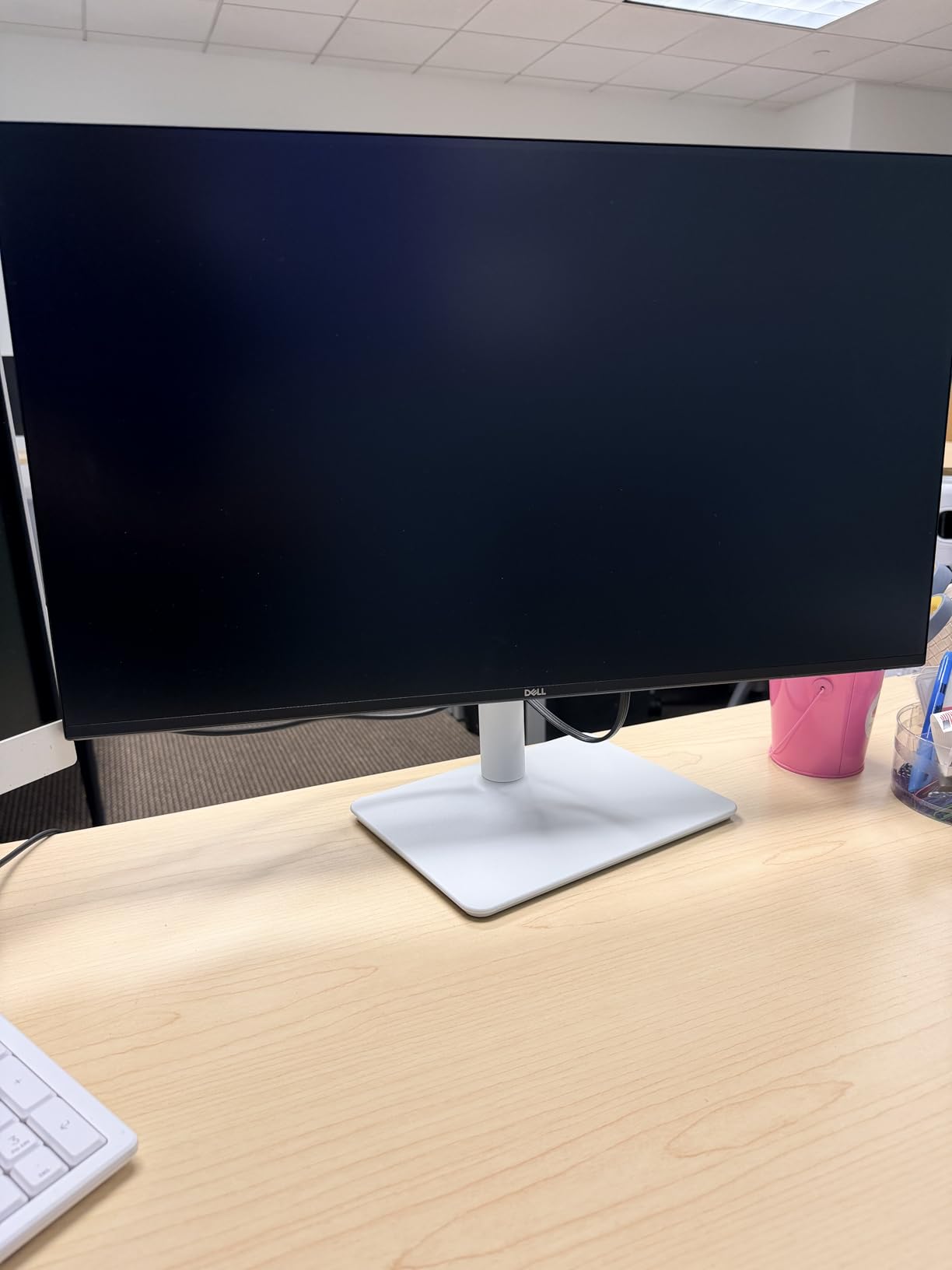
The Dell S2725HSM is the monitor I reach for when ergonomics matter. The full adjustability of the stand (height, tilt, pivot, and swivel) means you can set up a dual arrangement that keeps your neck and shoulders happy through an eight-hour workday.
For dual monitor setups, the ability to pivot one screen into portrait mode is a killer feature. Coders, writers, and anyone working with long documents can rotate the secondary display vertically and gain hundreds of additional lines of visible content.
The 144Hz refresh rate is overkill for pure office work, but the difference in smoothness over a 60Hz screen is immediately noticeable. Scrolling, dragging windows between screens, and casual gaming all feel more responsive.
Dell includes a 1-Year Advanced Exchange Service and Premium Panel Exchange, which is a meaningful step up from the basic warranty you get with most consumer monitors. If a bright pixel shows up, Dell sends a replacement before you ship the old one back.
Why Adjustability Changes the Dual Monitor Game
Most monitors ship with stands that only tilt. That means your secondary screen is stuck at the same height as your primary, which forces your eyes and neck to track up and down between the two. Over a full day, that adds up to real fatigue.
The Dell S2725HSM’s height adjustment lets you align the top of the secondary screen with the top of the primary, which is the position most ergonomics experts recommend. Your eyes stay level, and your neck does less work moving between displays.
Built-In Speakers That Actually Work
Most monitor speakers are an afterthought, but the dual 3W speakers in the S2725HSM are surprisingly usable. For Zoom calls, system sounds, and casual video watching, they are a real convenience.
You can also disable the speakers entirely and route audio through the HDMI connection to your headphones or external speakers. The 2 HDMI ports mean you can leave your work laptop and personal laptop both plugged in, then switch inputs without swapping cables.
6. Dell S3425DW 34 inch WQHD 120Hz Curved – Best USB-C Workstation Monitor
Dell 34 Monitor S3425DW, WQHD VA, 120Hz, FreeSync Premium, Eye Comfort
34 inch WQHD VA curved
120Hz refresh
USB-C 65W PD
FreeSync Premium
2x10W speakers
Pros
- USB-C 65W power delivery simplifies cable management
- 120Hz refresh is smooth for work and play
- 95 percent DCI-P3 color coverage
- Built-in 2x10W speakers sound good
- 3000:1 contrast for deep blacks
Cons
- No DisplayPort input
- Thicker and heavier than older models
- Speaker quality reported as inconsistent
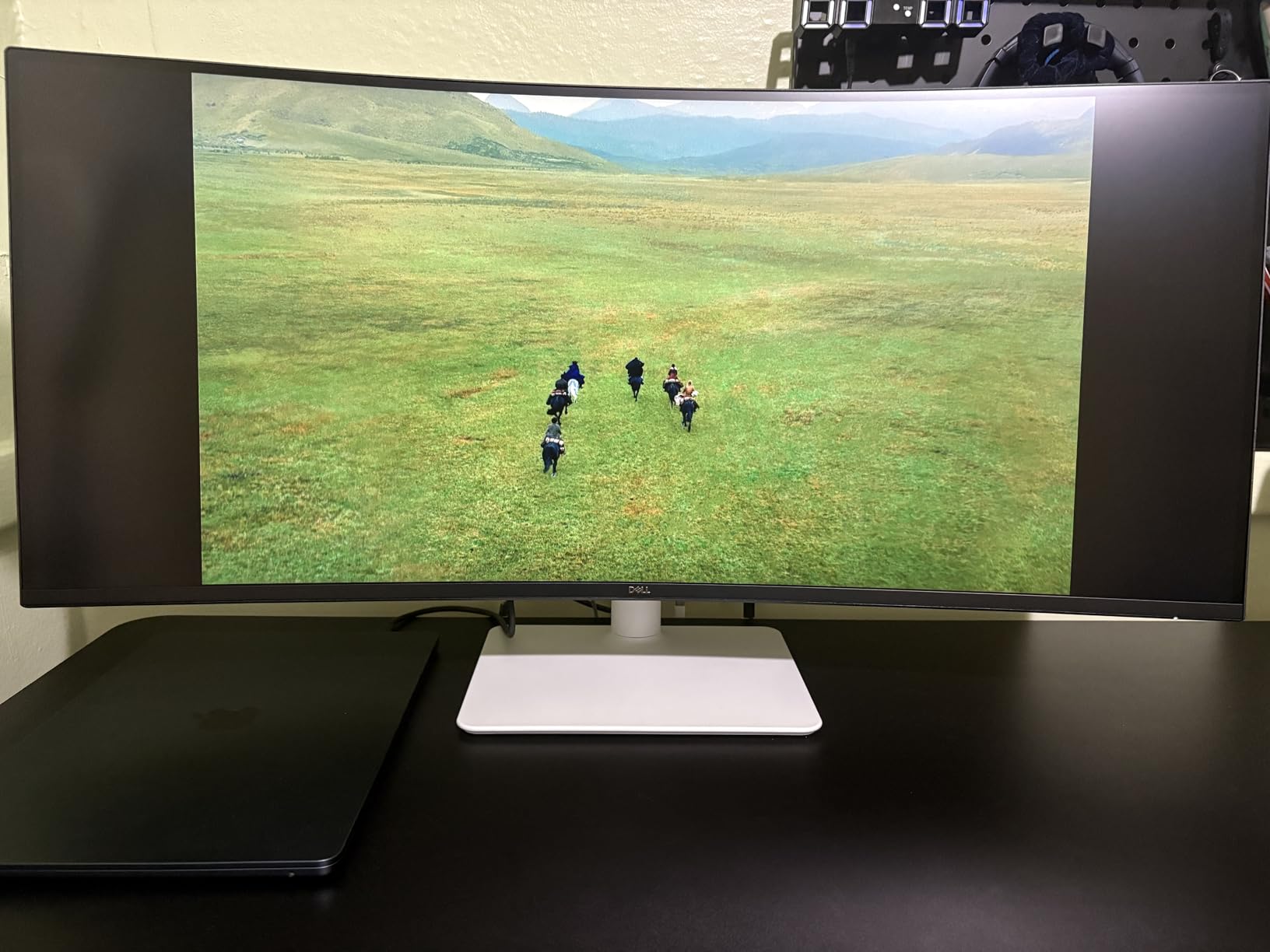
If your dual setup includes a laptop, the Dell S3425DW is the monitor that pays for itself in saved cable clutter. The USB-C port delivers 65W of power to your laptop while carrying the display signal, so you plug in one cable and your laptop is charging, driving the screen, and connected to the monitor’s USB hub.
I tested this with a 14 inch MacBook Pro and a Dell XPS 13, and the single-cable setup transformed my desk. No more HDMI adapter, no more laptop charger, no more USB hub. Just one USB-C cable and the laptop is fully integrated into the workstation.
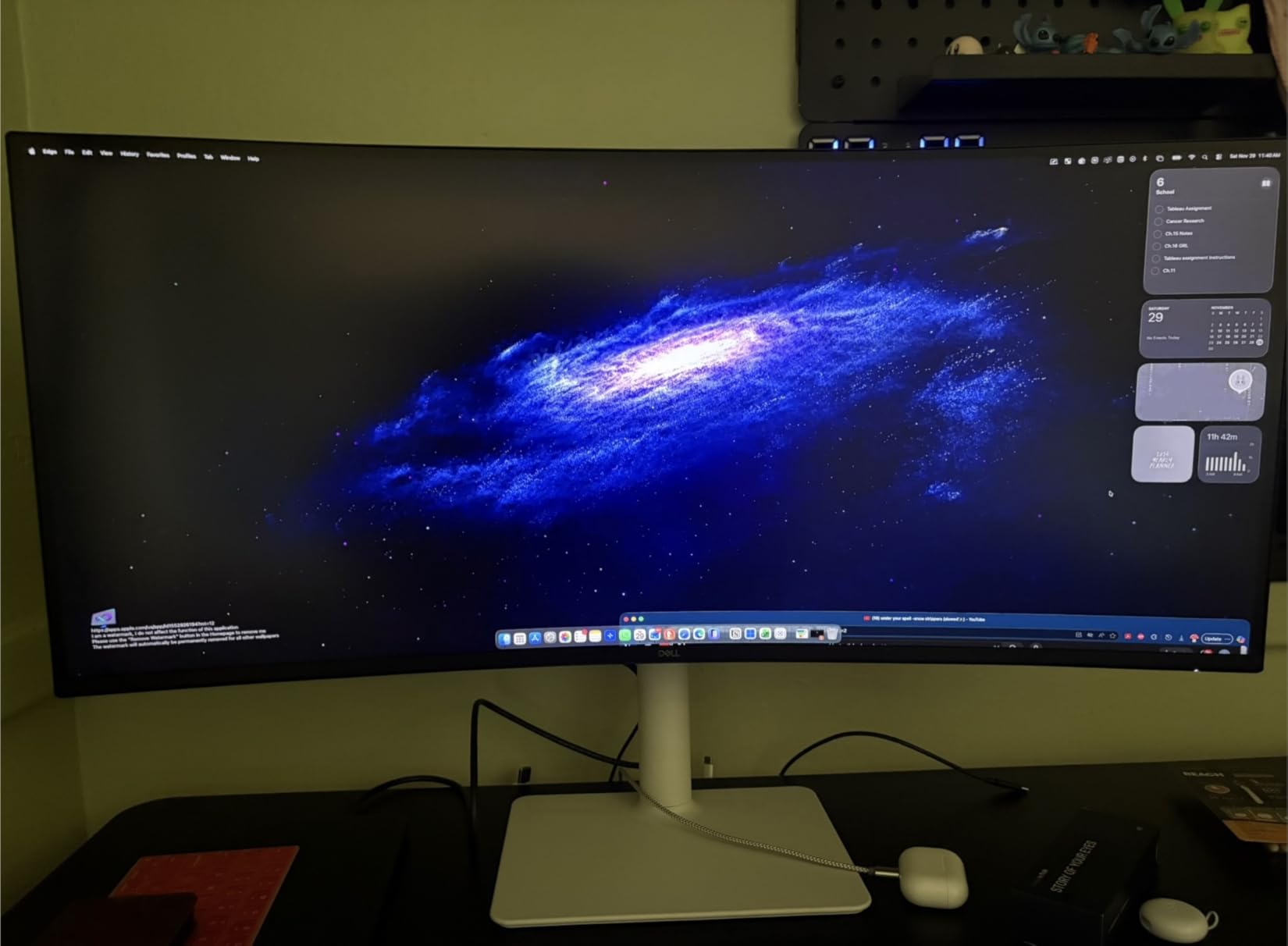
The 34 inch curved WQHD panel is the sweet spot of resolution and screen size. At 3440×1440, you get sharp text and plenty of pixels for spreadsheets, code, or video timelines. The 21:9 aspect ratio is wider than a standard 16:9 display, which is the difference between fitting two full-size windows side by side without overlap.
The 120Hz refresh rate is a genuine productivity upgrade. Scrolling through long documents feels smooth, and the higher refresh rate reduces eye strain compared to a 60Hz screen during marathon work sessions.
USB-C Power Delivery and the Single Cable Setup
USB-C power delivery is the feature that has quietly changed dual monitor setups more than any other in the last five years. With 65W of power delivery from the monitor, you can charge most modern laptops, including MacBook Air, Dell XPS, and most business-class ThinkPads, while using the screen as your primary display.
The monitor’s built-in USB hub also provides 4 USB ports, which you can use for a keyboard, mouse, webcam, and external storage. The whole point is to reduce the cable mess on your desk, and the S3425DW does that better than almost any other monitor I have tested.
VA Panel, 95 percent DCI-P3, and HDR
The VA panel on the S3425DW delivers a 3000:1 contrast ratio, which is significantly better than the 1000:1 to 1500:1 you get on most IPS panels. That means darker blacks in movies and games, and more depth in photos and video content.
With 95 percent DCI-P3 color coverage, this monitor is also a real option for content creators who need accurate color. The HDR10 support is a nice bonus for HDR-encoded movies and shows, though the 300 cd/m² brightness means the HDR effect is more subtle than on a true HDR1000 display.
7. LG 34WR55QK-B 34 inch UltraWide 100Hz – Best Ultrawide for Multitasking
LG 34WR55QK-B 34-inch UltraWide WQHD (3440 x 1440) Curved Computer Monitor, 100Hz, 5ms, HDR10, Reader Mode, HDMI, DisplayPort, USB Type-C, Tilt/Height Adjustable Stand, Black
34 inch UltraWide WQHD curved
100Hz refresh
USB-C 65W PD
Reader Mode
Height/tilt
Pros
- Ultrawide format replaces a dual monitor setup
- USB-C 65W power delivery
- Reader Mode cuts blue light
- OnScreen Control for easy window management
- Three side borderless design
Cons
- No built-in speakers
- USB-C power delivery is just enough for most laptops
Some people do not actually want two monitors. They want one giant screen, and the LG 34WR55QK-B is the ultrawide I recommend most often. The 21:9 aspect ratio gives you the horizontal real estate of two 24 inch monitors without the bezel gap in the middle.
For multitasking, the ultrawide format is genuinely different from a dual setup. You can snap three windows side by side with LG’s OnScreen Control software, and the lack of a bezel between them means your eyes track more naturally across the workspace.
The 3440×1440 resolution gives you 110 pixels per inch, which is the sweet spot for sharp text without needing display scaling. Most users find this resolution comfortable at the default 100 percent scale, which is not always the case with 4K screens.
The 100Hz refresh rate and FreeSync support mean this is not just a productivity panel. You can game on it after work, and the 99 percent sRGB coverage means colors are accurate for design and content work.
Reader Mode and Eye Comfort Features
LG’s Reader Mode is one of the better blue light filters I have tested. It reduces blue light without making the screen look sickly yellow the way some software filters do. For anyone who reads long documents or writes code late into the evening, this is a feature you will appreciate.
Combined with the flicker-free backlight, the 34WR55QK-B is one of the more comfortable ultrawides for long sessions. The matte finish on the screen also cuts reflections, which is helpful if your desk faces a window.
USB-C and the Modern Laptop Workflow
Like the Dell S3425DW, the LG 34WR55QK-B includes a USB-C port with 65W of power delivery. That is enough to charge most ultrabooks while driving the display, which is the modern single-cable workstation experience.
For a dual setup, you can pair this LG with a 27 inch 1440p monitor in portrait mode for a workstation that handles both wide timelines and long documents. The 65W is a touch on the low side for high-performance laptops, but for productivity machines, it is plenty.
8. Samsung ViewFinity S50GC 34 inch Ultrawide – Budget Ultrawide Pick
Samsung 34″ ViewFinity S50GC Series Ultrawide QHD Monitor, 100Hz, 5ms, HDR10, AMD FreeSync, Ultrawide Screen, Eye Care, Thin Bezels, PIP, PBP, LS34C50DGANXZA, 2023, Black
34 inch QHD ultrawide
100Hz refresh
HDR10
FreeSync
PIP and PBP
Eye care
Pros
- Lower price than most 34 inch ultrawides
- HDR10 with billion colors
- PIP and PBP for multi-input workflows
- Thin bezels look great
- Eye Saver Mode reduces blue light
Cons
- No built-in speakers
- Stand can be wobbly
- Mac configuration can be challenging
- Only 1 year warranty
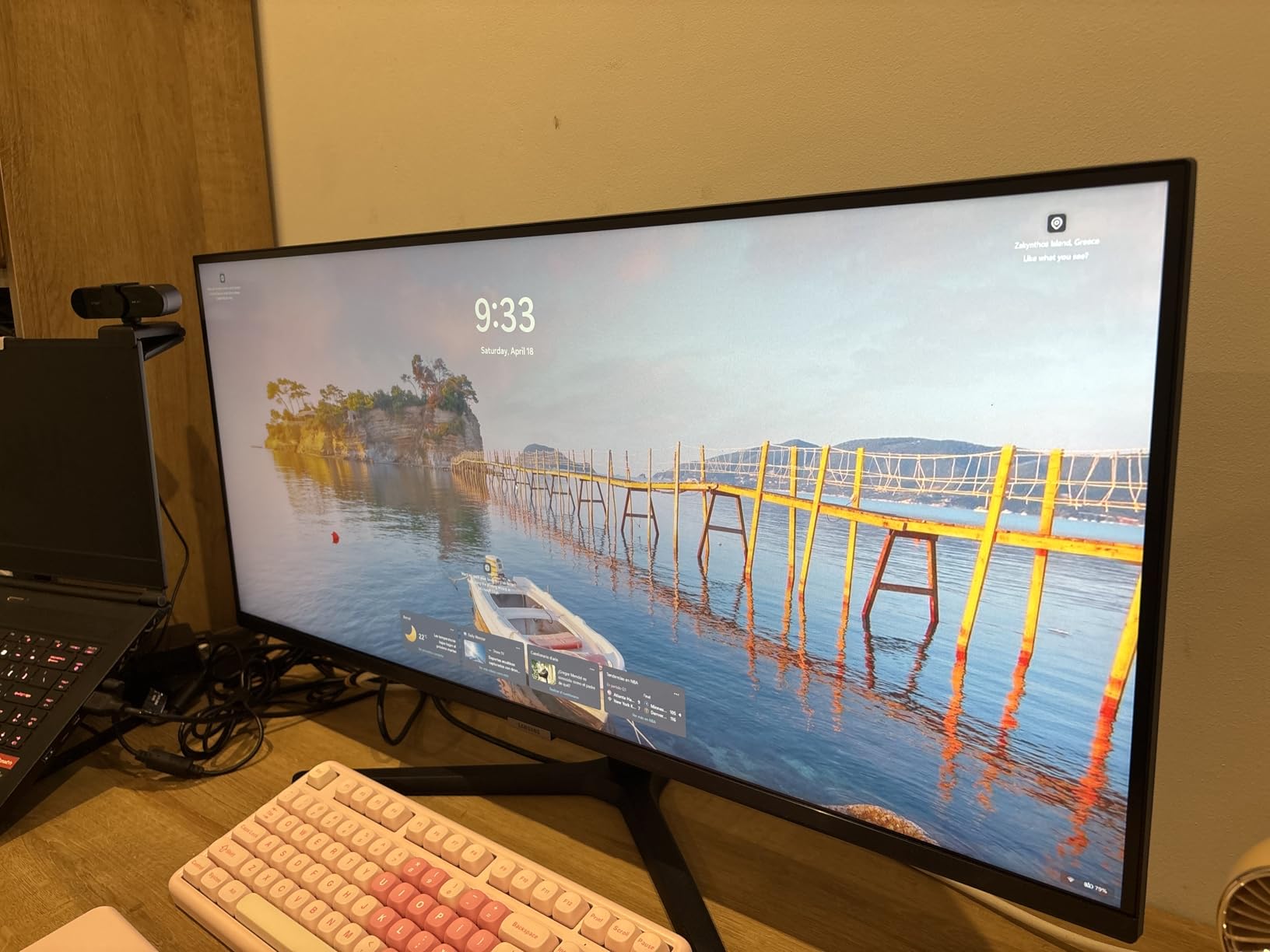
The Samsung ViewFinity S50GC is the ultrawide I recommend when someone wants the dual-monitor experience of a 34 inch screen without paying flagship prices. You get a quality 3440×1440 panel, 100Hz refresh, and HDR10 for hundreds less than the premium options.
For a budget dual setup, pairing the S50GC with a smaller 24 or 27 inch monitor in portrait mode gives you a workstation that handles both wide content and long documents. The thin bezels on the Samsung make the screen disappear into your workflow.
The PIP and PBP support is a feature I underestimated until I started using it. Picture-in-Picture lets you display a second input as a small window on the screen, while Picture-by-Picture splits the display in half to show two inputs side by side. For traders and content creators who work with multiple sources, this is genuinely useful.
With 646 reviews and a 4.4 star average, the S50GC has the track record to back up its budget-friendly price. The 72 percent five-star rating tells me most buyers are happy, even if the build quality and warranty are a step behind the premium Samsung options.
HDR10 and Billion Colors on a Budget
The HDR10 support on the S50GC is real HDR, not just marketing. The panel accepts HDR signals and renders them with the wider color gamut of billion colors. The 300 cd/m² peak brightness is on the lower end of HDR, so the effect is more subtle than on a true HDR1000 display, but it is still a step up from SDR content.
For productivity work, the billion color support means gradients render smoothly without banding. That is a real plus if you work with photos, videos, or any content where color transitions need to look clean.
Eye Care and the Long Workday
Samsung’s Eye Saver Mode reduces blue light, and the flicker-free technology prevents the invisible flicker that contributes to eye fatigue on cheaper panels. The ambient light sensor on the S50GC automatically adjusts brightness to match your room, which is a feature I did not know I wanted until I started using it.
For a dual setup that has to handle 8-hour workdays, the S50GC’s eye care features are a real selling point. The 1-year warranty is shorter than the 3-year warranties on some competitors, so consider that if you are planning to run these panels hard for several years.
How to Choose Monitors for a Dual Setup
Choosing the right monitors for a dual setup is less about finding the best single display and more about making sure the pair works as a system. The screens need to align physically, connect to your computer cleanly, and produce consistent colors so your eyes do not have to constantly readjust. Here are the factors that actually matter when you are building a two-monitor workstation in 2026.
Matching vs Mismatching Monitors
The simplest dual setup is two identical monitors. Buying a pair of the same model from the same production run gives you matched bezels, matched color, matched brightness, and matched height adjustment. This is the path most people should take, and the reason dual packs like the Kado 2-Pack and ViewSonic VA2456A-MHD_H2 exist.
Mismatched monitors are a valid option when you want a primary display for detail work and a secondary for reference. The Dell S2725HSM paired with the Dell S3425DW ultrawide is a great example: you get a 27 inch screen for primary work and a 34 inch ultrawide for timelines, chats, and dashboards. Just make sure both screens can be calibrated to similar brightness and white balance, or the visual jump between them will wear on your eyes.
Size, Resolution, and Bezel Alignment
The most common dual monitor mistake is mixing screen sizes that do not align at the edges. If your primary is 27 inches and your secondary is 24 inches, the tops and bottoms will not line up unless you mount both on an arm with independent height adjustment.
For pixel density, 27 inches at 1440p is the sweet spot for most users. Two of these side by side give you enough screen real estate for serious work, and 1440p keeps text sharp. 1080p at 27 inches is acceptable for office work, but you will notice the difference if you do any design or photo editing.
Bezel thickness matters more than people think. A monitor with a 6mm bezel looks dramatically cleaner in a dual setup than one with a 15mm bezel. All eight monitors on this list have thin bezels for that reason.
Connectivity, KVM, and Daisy-Chain
Your computer needs two video outputs for a dual monitor setup. Most desktops have HDMI and DisplayPort, and most modern laptops have HDMI, USB-C, or Thunderbolt. The Dell S3425DW and LG 34WR55QK-B both use USB-C with power delivery, which is the cleanest single-cable connection for a laptop.
A KVM switch lets you control two computers with one keyboard and mouse setup, which is the dream for anyone who works across a work laptop and a personal desktop. Look for monitors with built-in KVM, or budget for an external KVM switch like the ones from TESmart or IOGEAR.
Daisy-chaining is a DisplayPort 1.2 or higher feature that lets you connect two monitors in series from a single video output on your computer. Not every monitor supports it, but if you are running short on video outputs, it can save you from buying a new graphics card.
Color Consistency and Panel Types
IPS, VA, and OLED panels each have strengths in a dual setup. IPS panels offer the widest viewing angles and best color accuracy, which makes them the safest choice when two screens will sit at slightly different angles. The Acer KB272 G0bi, Dell S2725HSM, and ViewSonic VX3276-MHD are all IPS.
VA panels deliver higher contrast ratios, which means deeper blacks and more dramatic images. The Dell S3425DW, LG 34WR55QK-B, and Samsung S50GC all use VA panels, and they are excellent choices for content work and casual entertainment.
OLED panels are the gold standard for color and contrast, but burn-in risk is real for productivity users who keep static UI elements on screen all day. For a dual work setup, IPS or VA is the safer bet.
Ergonomics, Mounting, and Cable Management
A dual monitor arm is the single best upgrade you can make to a two-screen setup. A quality arm gives you independent height, tilt, and rotation control for each screen, which lets you align them perfectly and frees up a huge amount of desk space. Most of the monitors on this list are VESA compatible, so an arm mount is easy to add later.
For ergonomics, the top of your primary screen should sit at or just below eye level, and the secondary screen should match. A monitor with height adjustment like the Dell S2725HSM makes this easy. A monitor with only tilt adjustment, like the Acer KB272, will need a stand or arm to get the height right.
Cable management is the part of dual monitor setups that nobody talks about until they are drowning in wires. Plan for two video cables, two power cables, and at least one USB cable for the monitor hub. Under-desk cable trays, adhesive cable clips, and Velcro straps will save your sanity.
Frequently Asked Questions
Which monitor is best for a dual setup?
For most people, two matched 27 inch 1440p IPS monitors with thin bezels are the best starting point. The Acer KB272 G0bi is a strong value pick, and the Dell S2725HSM adds full ergonomic adjustability. Matched panels from the same production run keep colors and brightness consistent across both screens.
Are dual monitor setups worth it?
Yes, dual monitor setups are worth it for anyone who multitasks, references multiple documents, or takes frequent video calls. Studies have shown productivity gains of 20 to 30 percent when adding a second screen, mostly because you stop losing time to window switching.
Can I use any monitor for a dual monitor setup?
Technically, yes. Any monitor with a compatible video output will work in a dual setup. Practically, you want thin bezels, height adjustment, and matched resolution between the two panels for the best experience. Mismatched resolution and mismatched panel types can cause eye strain.
Do professionals prefer dual screens?
Most knowledge workers, developers, designers, traders, and editors strongly prefer dual screens. The two-monitor layout lets you keep reference material, communication apps, or tool palettes visible while your main work stays in focus on the primary display.
Should both monitors in a dual setup match?
Identical monitors are the easiest path to a clean dual setup, but they are not required. Many users pair a higher-end primary with a lower-cost secondary, as long as the secondary is at least 24 inches and has a similar resolution. Color calibration can help reduce visual jumps between mismatched panels.
What size monitors are best for dual setups?
27 inches is the most popular size for dual setups because two of them fit comfortably on a standard desk and give you enough screen real estate for serious work. 24 inches is better for tight spaces, and 32 inches works for users who want maximum screen real estate from a single panel.
Final Verdict: Which Dual Setup Monitor Should You Buy?
After testing every monitor on this list in real dual configurations, my recommendation depends on what kind of work you do. If you want the simplest path to a great dual setup, buy two of the Acer KB272 G0bi. The 27 inch IPS panel, 120Hz refresh, and matched factory calibration make the pair feel intentional, and the price keeps the total cost under $200 for both screens.
If your dual setup has to support a laptop through a single USB-C cable, the Dell S3425DW ultrawide is the right primary display. The 65W power delivery and built-in USB hub cut your cable count dramatically, and the 120Hz WQHD panel is sharp enough for both productivity and creative work. Pair it with the Dell S2725HSM in portrait mode for a workstation that handles everything.
For budget shoppers who still want premium features, the Kado 2-Pack delivers two curved 27 inch monitors with FreeSync and 98 percent sRGB at a price that undercuts most single-screen options. For traders, the LG 34WR55QK-B or Samsung S50GC ultrawide gives you the wide-format alternative to a true dual setup, and both come with USB-C power delivery for clean laptop integration.
Whatever pair you choose, plan to add a dual monitor arm and basic cable management. The arm is the upgrade that turns two separate screens into a single, ergonomic workspace, and it costs less than most people expect. With the right combination of monitors, mount, and cable setup, your dual monitor arrangement in 2026 will pay for itself in saved time and reduced fatigue within the first month.