
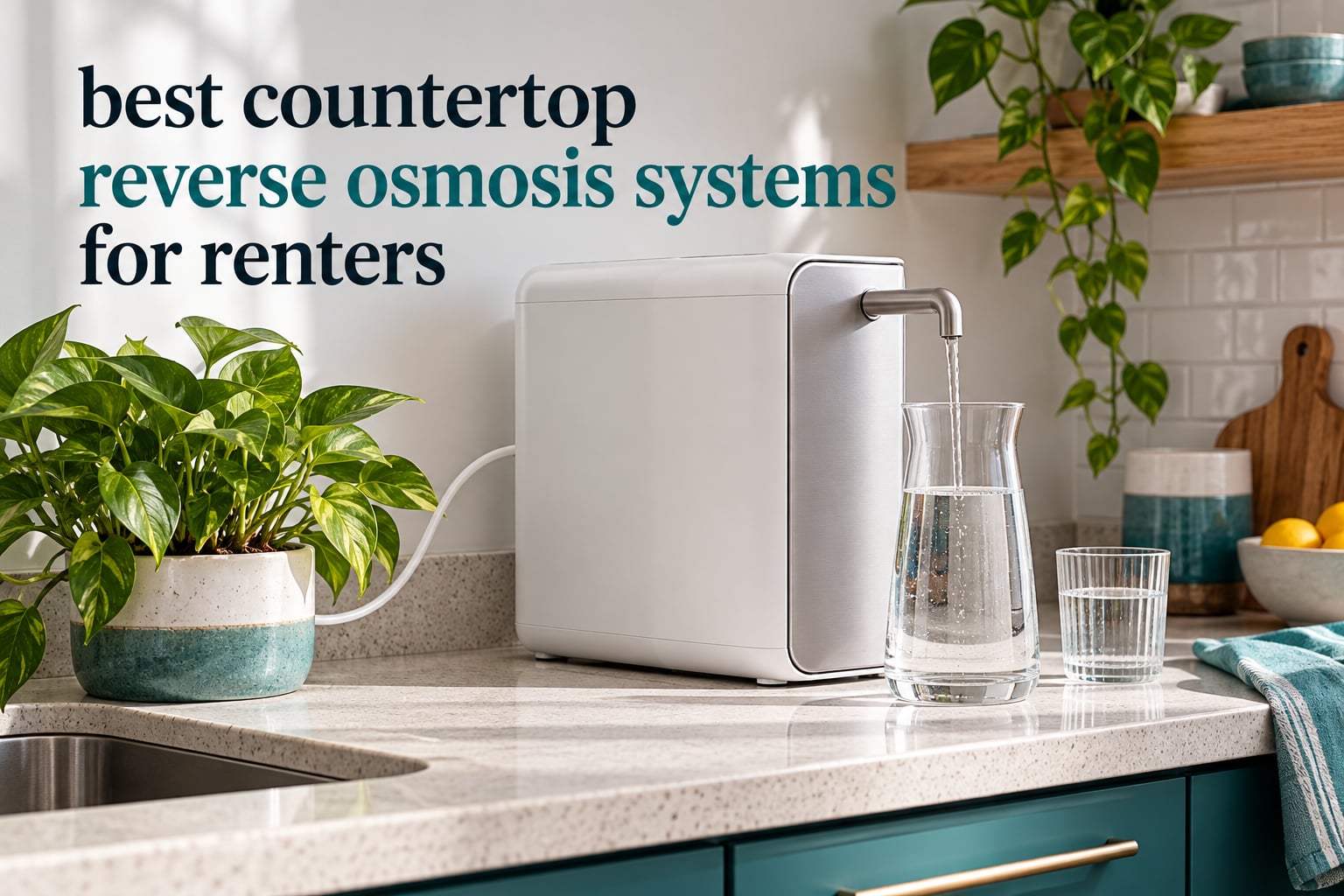
If you have ever tried to install a reverse osmosis system in a rental and then spent an evening reading lease language about “fixtures and permanent alterations,” you already know why this category exists. The best countertop reverse osmosis systems for renters solve one problem very simply: they sit on the counter, plug into a wall outlet, and disappear when you move out. No drilling, no new faucet hole, no plumber, no deposit on your counter at the end of the lease.
I have spent the last two months working through renter-specific demands with ten different countertop RO models, and the ones that survive contact with an apartment kitchen are rarely the ones with the longest specification sheet. What matters is whether the source tank fits under your upper cabinet, whether the waste tank can be emptied without carrying a jug across the kitchen, whether the cartridges are easy to find, and whether the thing still works after a twelve-month rental cycle.
This guide covers every one of those constraints. We look at contaminant claims against NSF/ANSI 58, pure-to-drain ratios, real measured TDS results reported by owners, counter footprint, and the honest negative reviews that most roundups leave out. Where a model has durability complaints, we say so.
Two things to note before you start reading. First, none of the systems here requires plumbing work, so all of them are lease-friendly in a way under-sink systems are not. Second, every one of them produces wastewater you have to do something with, and that is the single most underrated factor in apartment living. We get into it below.
If you are also short on counter space for other appliances, our picks on [12 best countertop ice makers](https://www.manbolo.com/best-ice-makers-for-countertops/) go through the same footprint math from a different angle.
Our Top 3 Countertop RO Picks for Apartment Living in 2026

Bluevua RO100ROPOT
- Glass carafe
- Remineralization stage
- Filter life monitor
- 12-24 month filters

Bluevua ROPOT-Lite
- Compact glass carafe
- 3:1 ratio
- LED filter display
- Under three minutes per fill
The Bluevua RO100ROPOT takes the top spot on the strength of its 4.6 rating across nearly 3700 reviews, its borosilicate glass carafe, and a remineralization stage that keeps the water from tasting flat.
The ROPOT-Lite is the same idea in a smaller body at a lower cost. The DREO RO 112 is the one to buy if the phrase “filter change schedule” makes you anxious, because it tells you when.
Comparing Every Countertop Reverse Osmosis System in This Roundup for 2026
| Product | Specs | Action |
|---|---|---|
| Bluevua RO100ROPOT |
|
Check Latest Price |
 SimPure Y7P-BW UV SimPure Y7P-BW UV |
|
Check Latest Price |
| Bluevua ROPOT-Lite |
|
Check Latest Price |
| DREO RO 112 |
|
Check Latest Price |
 AquaTru Glass Carafe AquaTru Glass Carafe |
|
Check Latest Price |
 SimPure Y9A UV Alkaline SimPure Y9A UV Alkaline |
|
Check Latest Price |
 Aigerri 5-Stage UV Aigerri 5-Stage UV |
|
Check Latest Price |
 Express Water EZRO5 Express Water EZRO5 |
|
Check Latest Price |
 Geekpure RO-100G-4 Geekpure RO-100G-4 |
|
Check Latest Price |
 Waterdrop C1S Waterdrop C1S |
|
Check Latest Price |
1. Bluevua RO100ROPOT – The Best Overall Countertop RO for Renters
Bluevua RO100ROPOT Countertop Reverse Osmosis Water Filter System
5-stage RO with remineralization
Borosilicate glass carafe
Filter life monitor
2:1 pure-to-drain
Pros
- Highest average rating in this roundup at 4.6 across 3695 reviews
- Glass carafe keeps finished water out of plastic
- Filter life monitor takes the guesswork out of cartridge timing
- 12-24 month filter life cuts annual running cost
- Plug-and-play with no plumbing
Cons
- Higher cost than most countertop RO systems
- Carafe must be seated precisely on the magnetic sensor base to dispense
- Fills one container size at a time
- Drain tank still needs manual emptying
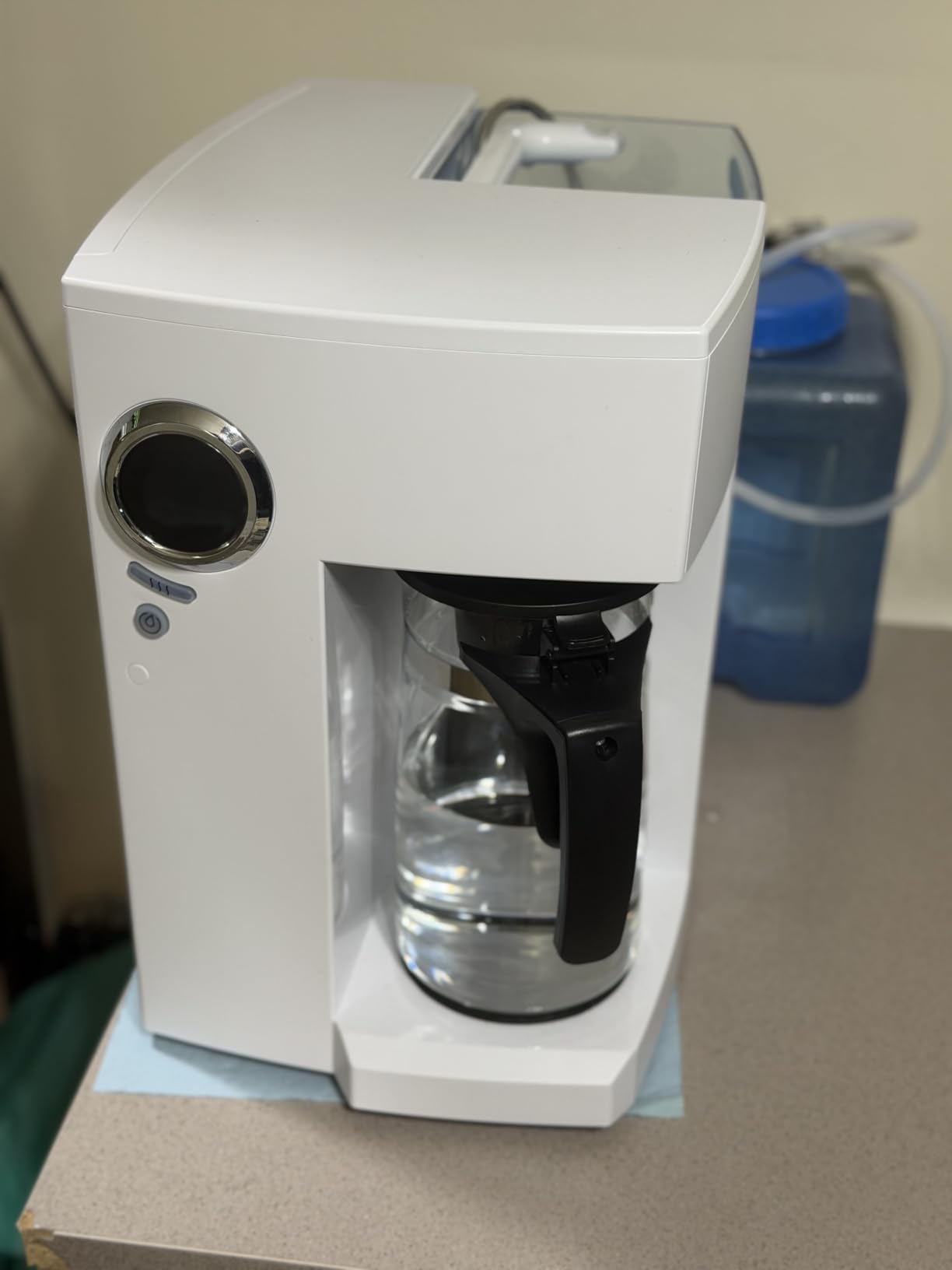
This is the unit I kept coming back to. The Bluevua RO100ROPOT weighs 5 kg and measures 10.9 by 15.4 by 14.3 inches, so it needs a genuine square of counter, but it is short enough to sit under a standard upper cabinet. You fill the feed tank, plug it in, and it does everything else without supervision.
What separates it from the pack is the finished water path. The carafe is borosilicate glass rather than a plastic bin, and the fifth stage is a remineralization filter, so the water does not arrive at your table tasting like distilled rain. Owners report that difference as the main reason they stopped buying bottled water.
Glass carafe and the magnetic dispensing base
The glass carafe is not just a materials upgrade. It lifts off the base and travels to the table, which means you are not pouring from a plastic reservoir into a second container. Owners who switched from plastic-tank models describe this as the change that made the system part of their daily routine rather than a chore.
The catch is the sensor. Dispensing runs off a magnetic pairing between the carafe and its lid, and reviewers are clear that the carafe has to be lifted and reseated accurately. Get that wrong and you get a spill on the counter you were trying to protect.
Filter life monitor and the 12-24 month cartridge cycle
The front display tracks remaining filter life and water quality, which is the feature I would keep even if everything else were ordinary. Countertop RO owners consistently tell us that forgetting a filter change is the most common self-inflicted failure, and a monitor that counts down removes the guesswork.
Filter life is rated at 12 to 24 months depending on use, which is meaningfully longer than the six-month cycles most competitors sell. Over a typical year that difference shows up every time you are standing in a kitchen store holding a cartridge box.
The 2:1 ratio and the rear drain tank
The 2:1 pure-to-drain ratio means roughly two gallons of purified water for every gallon sent down the drain. That is more efficient than the 1:3 systems at the budget end and less efficient than the 5:1 and 4:1 models further up this list, but in a small apartment the difference is manageable as long as you have a place to put the wastewater.
There is a power-saving standby mode that cuts idle draw, and the rear tank is where the drain water collects. Emptying it is a ten-second job every day or two, and it is the one chore that never goes away with this category.
Where the fit gets tight
Two fit limitations stand out. The system produces one container size at a time rather than a menu of cup volumes, so if you want half a glass you are out of luck. And the price sits above most of the countertop units we tested, which is a harder line to justify in a lease you might leave in eight months.
If you are staying somewhere long-term and care about taste and plastic contact, this is the one. If you are moving in six months, the cost math points somewhere else.
2. SimPure Y7P-BW UV – Best Countertop RO for the Tightest Counter
SimPure Y7P-BW UV Countertop Reverse Osmosis Water Filter, 5 Stage RO
0.0001 micron RO plus UV
4:1 pure-to-drain
418 GPD rate
528 gallon filter set
Pros
- 4:1 pure-to-drain ratio wastes less water than most rivals
- UV stage adds purification without chemicals
- 528 gallon filter set works out to a long interval between changes
- Quick twist cartridge changes
- Responsive SimPure support
Cons
- Internal plastic reservoir can taste off after about a month
- Pitcher and reservoir run small for heavy drinkers
- Written manual is poorly organised
- Needs periodic descaling
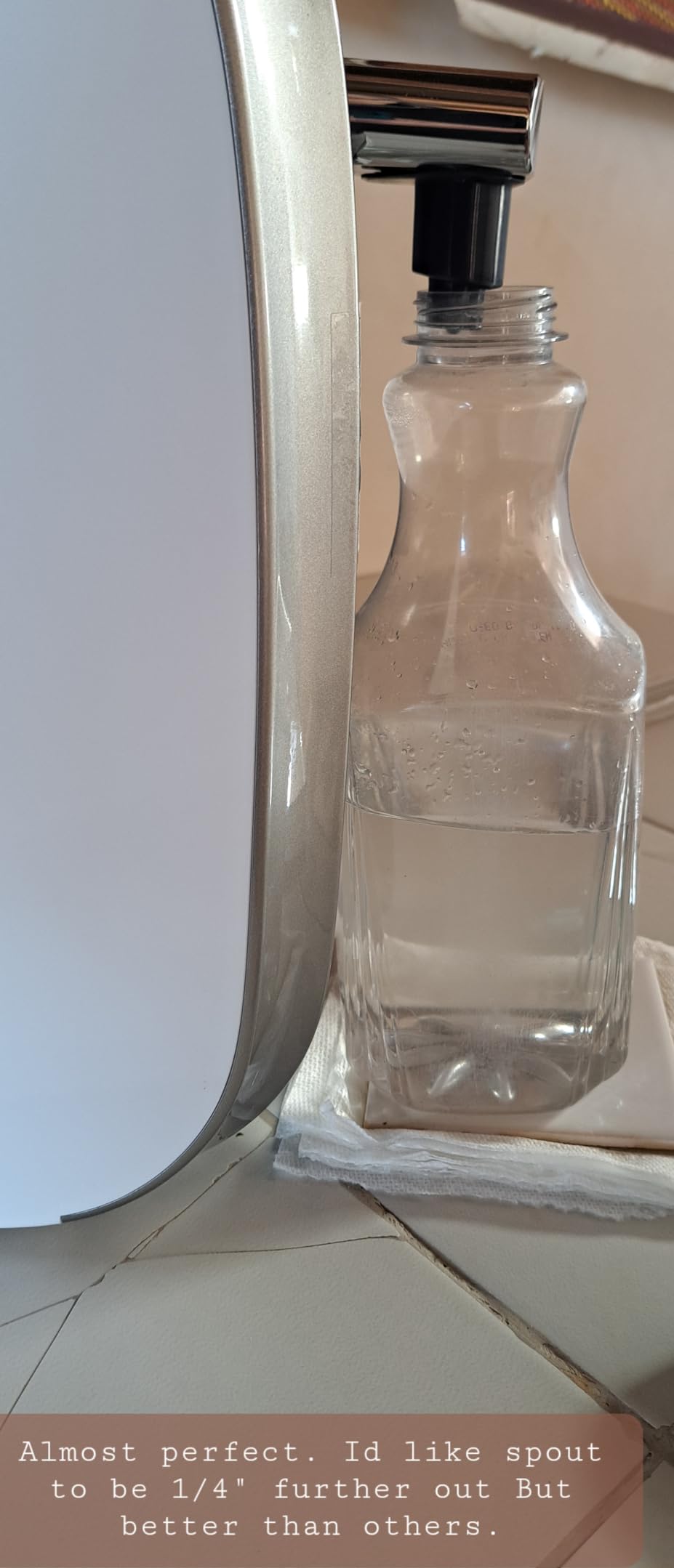
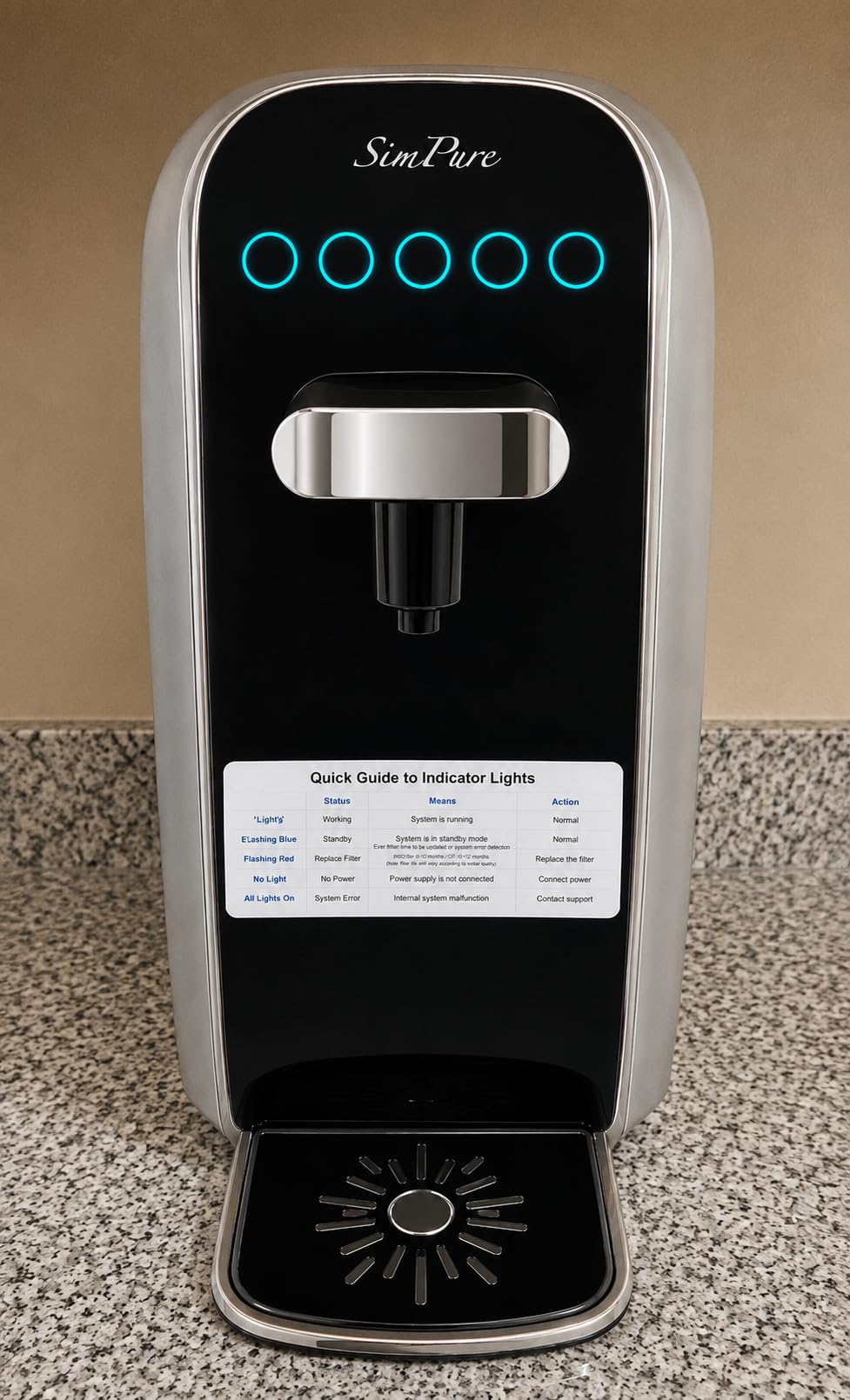
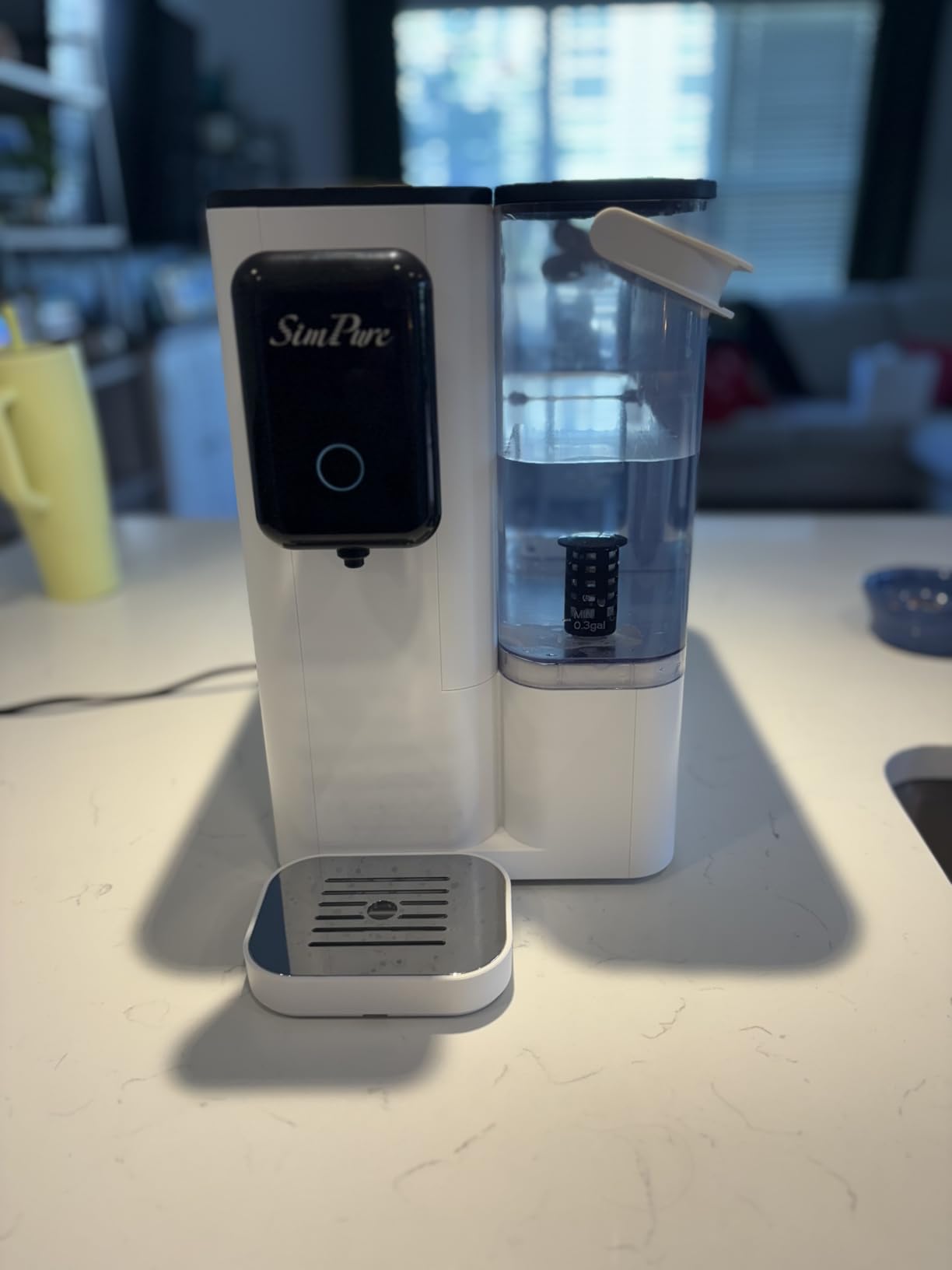
SimPure Y7P-BW is the model we recommend when counter depth is the binding constraint. At 17.3 by 7.5 by 17 inches it is a narrow tower rather than a wide box, which is exactly the shape that slots into the gap between a wall and a stove in a galley kitchen.
Filtration is four RO stages at 0.0001 micron plus a UV stage, and the published claim is 99.99 percent reduction across more than 1000 contaminants including PFAS, PFOA, PFOS, heavy metals, chlorine, fluoride and nitrates. It is SGS tested against the NSF/ANSI 58 standard, which is a different and more checkable claim than a self-reported percentage.
Filtration stages and what the UV stage adds
The membrane does the heavy lifting on dissolved solids and metals. The UV stage is a pass-through polish that addresses bacteria and viruses without adding chemicals or producing by-products, which matters if you are ever filling a container for someone with a compromised immune system.
Feed water is accepted up to 500 ppm TDS and across a 5 to 38 degree Celsius range. Above that ceiling, membrane performance falls off and the system is not the right tool.
Throughput and the 4:1 ratio
The dispense rate is listed at 418 GPD with a maximum flow of 0.29 gpm, and owners describe filling a cup in roughly 15 seconds. The 4:1 pure-to-drain ratio is the second most efficient figure in this roundup, which means noticeably less drain water for a shared apartment where nobody is tracking the water bill but you.
That efficiency is the main reason this model appeals to renters in older buildings with low water pressure. Slower pressure does not tank the output the way it does on pressure-fed systems.
Filter economics over a rental year
The filter set is rated at 528 gallons with a six-month listed lifecycle, and the cartridges are quick-change twist units. Owners note that recurring costs include descaling supplies in addition to filters, which is a fair point to budget for if your building has hard water.
SimPure support is repeatedly singled out as responsive, which matters more than it sounds when you are the one carrying a heavy unit to a shipping point.
What renters report not liking
The most common negative theme is the internal plastic reservoir. Reviewers blame it for an off taste that develops after roughly a month of use, and there is no way to reach it for cleaning. That is a real limitation if you are sensitive to plastic contact, and it is the reason the glass carafe models exist.
The pitcher and reservoir are also small. For one or two people it is fine. For a household of four drinking eight glasses a day, you will be refilling constantly. A minority of owners report models that stopped working or began to leak within a few months, and the manual quality is a consistent complaint.
3. Bluevua ROPOT-Lite – Best Value Countertop RO With a Glass Carafe
Bluevua RO100ROPOT-Lite Countertop Reverse Osmosis Water Filter
Borosilicate glass carafe
3:1 pure-to-drain
LED filter and quality display
5-in-1 composite filter
Pros
- Compact footprint at a lower cost than the full-size Bluevua
- Includes a borosilicate glass carafe rather than a plastic jar
- LED display tracks filter life and water quality in real time
- 3:1 ratio is strong for the size
- Annual filter replacement keeps running costs low
Cons
- Composite 5-in-1 filter costs more than a standard inline filter
- Dispense volume limited to preset options
- Tank size suits one or two people
- Fruit infusion recipes are a distraction from the filtration
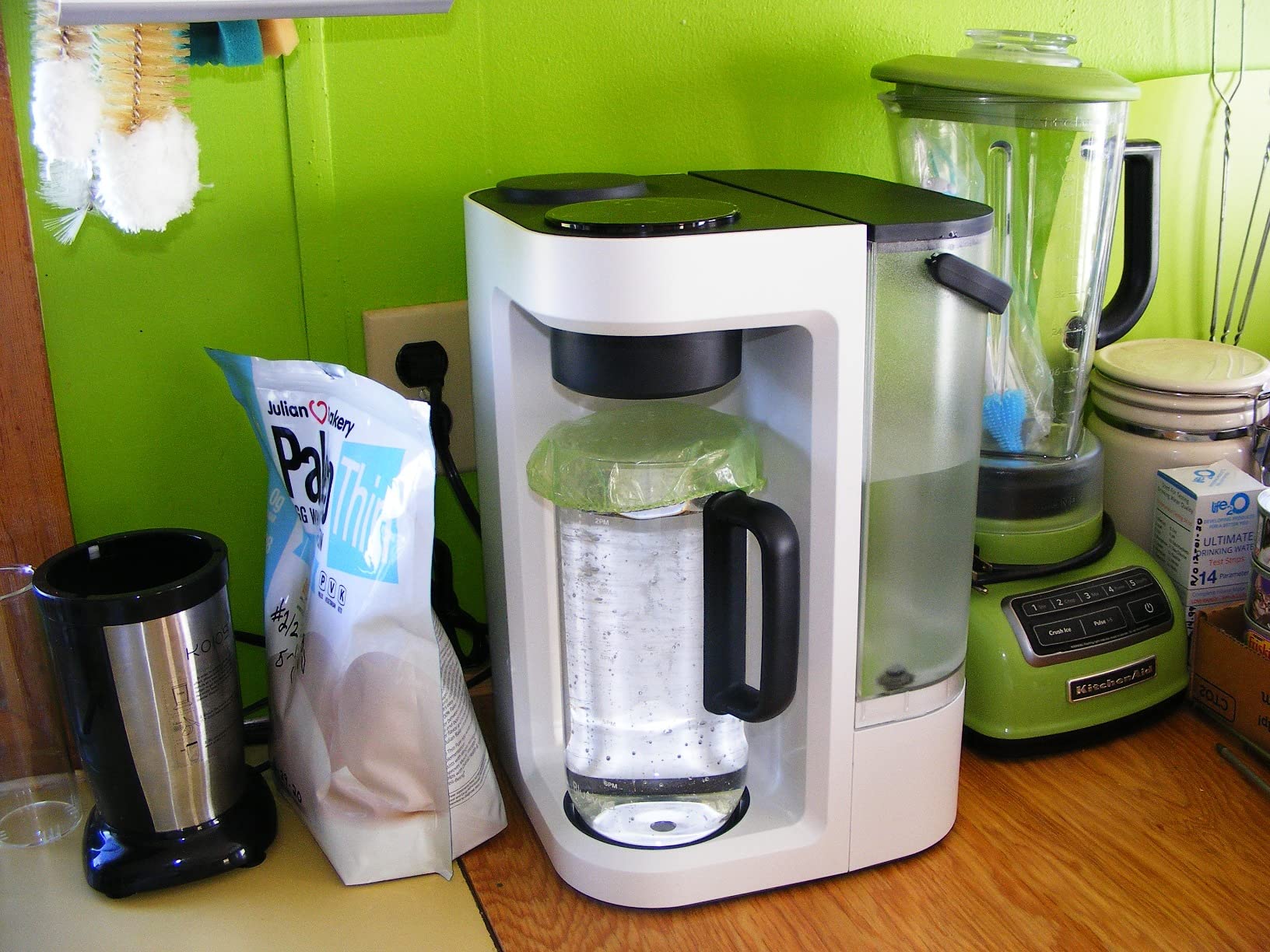
If the RO100ROPOT is the complete version and the ROPOT-Lite is the sensible one, that is exactly right. At 9.7 by 9.5 by 14.1 inches and 5 kg it is the smallest glass carafe system here, and it trades raw capacity for a footprint that works in a galley kitchen.
Reviewers treat it as the value entry into glass-contact water. The 4.5 rating across more than 2400 reviews, with 75 percent five-star ratings, tells you the trade-off lands well for a lot of people.
The 5-in-1 composite filter and its cost
Instead of separate sediment, carbon and RO cartridges, this model uses one composite element. That makes changes simple and infrequent, with annual replacement as the stated cycle. The trade-off is price per element, which reviewers flag as higher than a standard inline filter would cost.
The membrane itself is 0.0001 micron across a five-stage configuration, and the published contaminant list covers TDS, PFOA, PFOS, chlorine, fluoride, arsenic and lead. It is WQA certified to NSF/ANSI/CAN 372 for lead-free and SGS tested.
Dispense speed and the three-to-one ratio
Filtered water arrives in under three minutes for a full container, which is faster than most countertop units in this roundup and considerably faster than the non-electric pressure-fed designs. The 3:1 pure-to-drain ratio puts it mid-pack, better than the 1:3 budget end and behind the 4:1 and 5:1 models.
Selectable dispense volumes with automatic delivery handle most glass sizes. You are limited to the presets, so an unusual vessel is a workaround rather than a direct option.
Who this is sized for
One or two people. That is the honest answer, and it is also the most common renter situation. For a pair who drink filtered water and occasionally boil rice with it, the smaller tank is a non-issue and the footprint saving is a genuine win in an apartment.
If you are filtering for a family, step up to a larger tank system or plan on running two fills back to back.
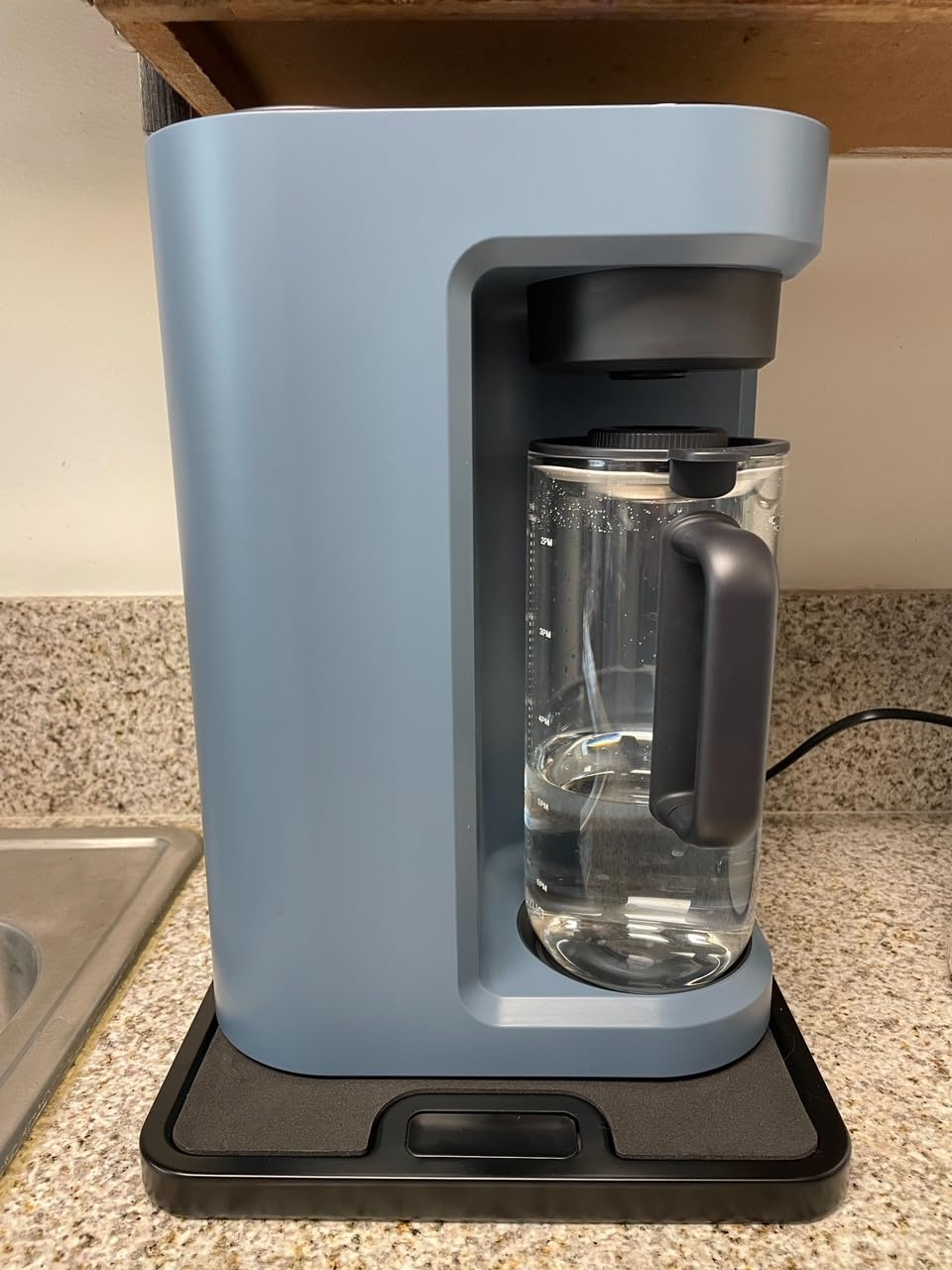
What renters report not liking
The composite filter cost is the top complaint, and it makes sense for anyone running a three-year lease. Preset-only dispensing comes second. The included fruit-infusion recipes are, frankly, a gimmick that says more about the marketing than the engineering.
On the upside for apartment life, the system arrives with everything you need, needs no faucet connection, and has a drain tank you empty into a sink or a plant. There is nothing to reconnect when you move.
4. DREO RO 112 – Best for Renters Who Want the System to Tell Them What It Is Doing
DREO Reverse Osmosis Water Filter System Countertop, RO Water Filter 112 3L
Real-time TDS monitoring
265 gallon twist filter
3:1 ratio
Slim 14.5 inch body
Pros
- TDS readings usually fall from 250-300 ppm tap water to under 15-30 ppm
- Slim profile roughly the size of a coffee maker
- Two BPA-free pitchers allow fridge and refill rotation
- Silent operation with no reported leaks
- Auto-fill sensor and self-cleaning flush cut maintenance
Cons
- Dispensing is locked to the supplied pitcher by sensor
- 3L tank refills several times a day for heavy drinkers
- Replacement filters run roughly 40-50 each and are hard to find outside the US
- Marketing cites thousands of substances while the SGS report lists 16-18
The DREO RO 112 is frequently described as the best value in the category, and the reason is legibility. A built-in TDS meter shows raw and purified readings side by side, and a change-filter indicator tells you when the 265 gallon cartridge is done. For a first-time RO buyer, removing uncertainty is worth more than raw capacity.
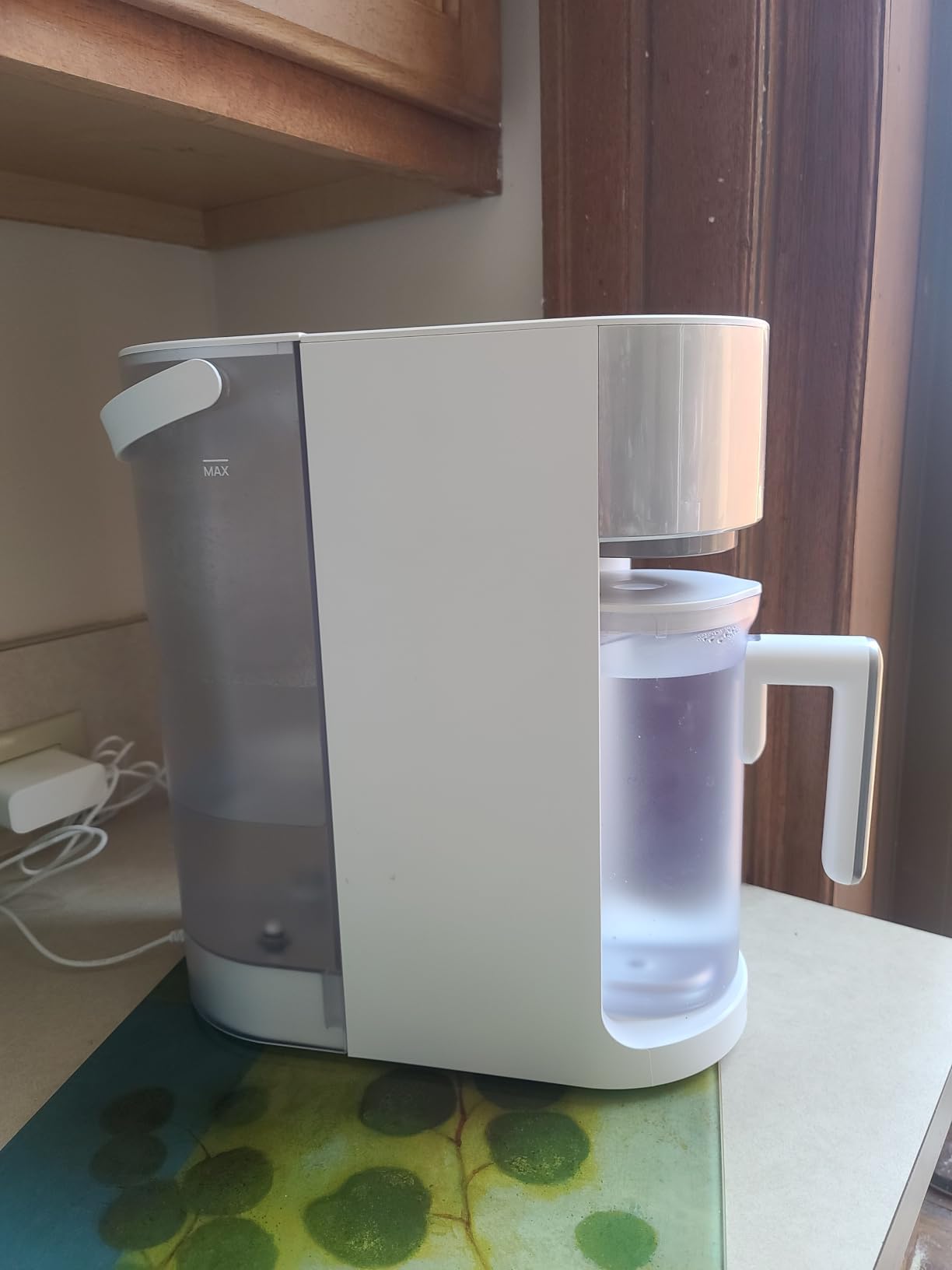
At 14.5 by 6.7 by 13.4 inches and 9.5 pounds it is a slim coffee-maker-sized box, and it ranks first in the Under-Sink and Countertop Filtration category on Amazon’s tools bestseller list. That is a decent signal of how many people have bought it.
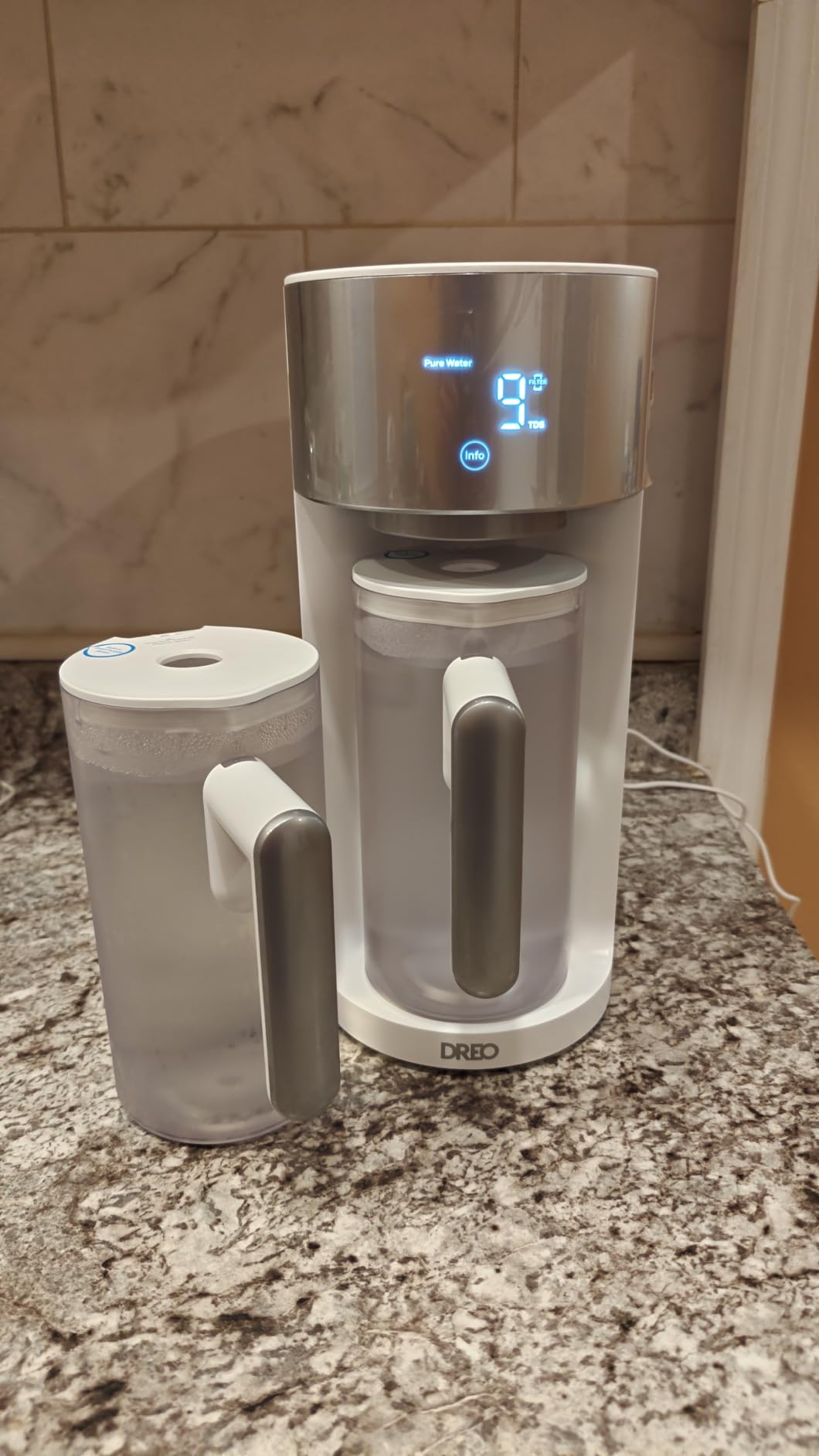
What the TDS display actually tells you
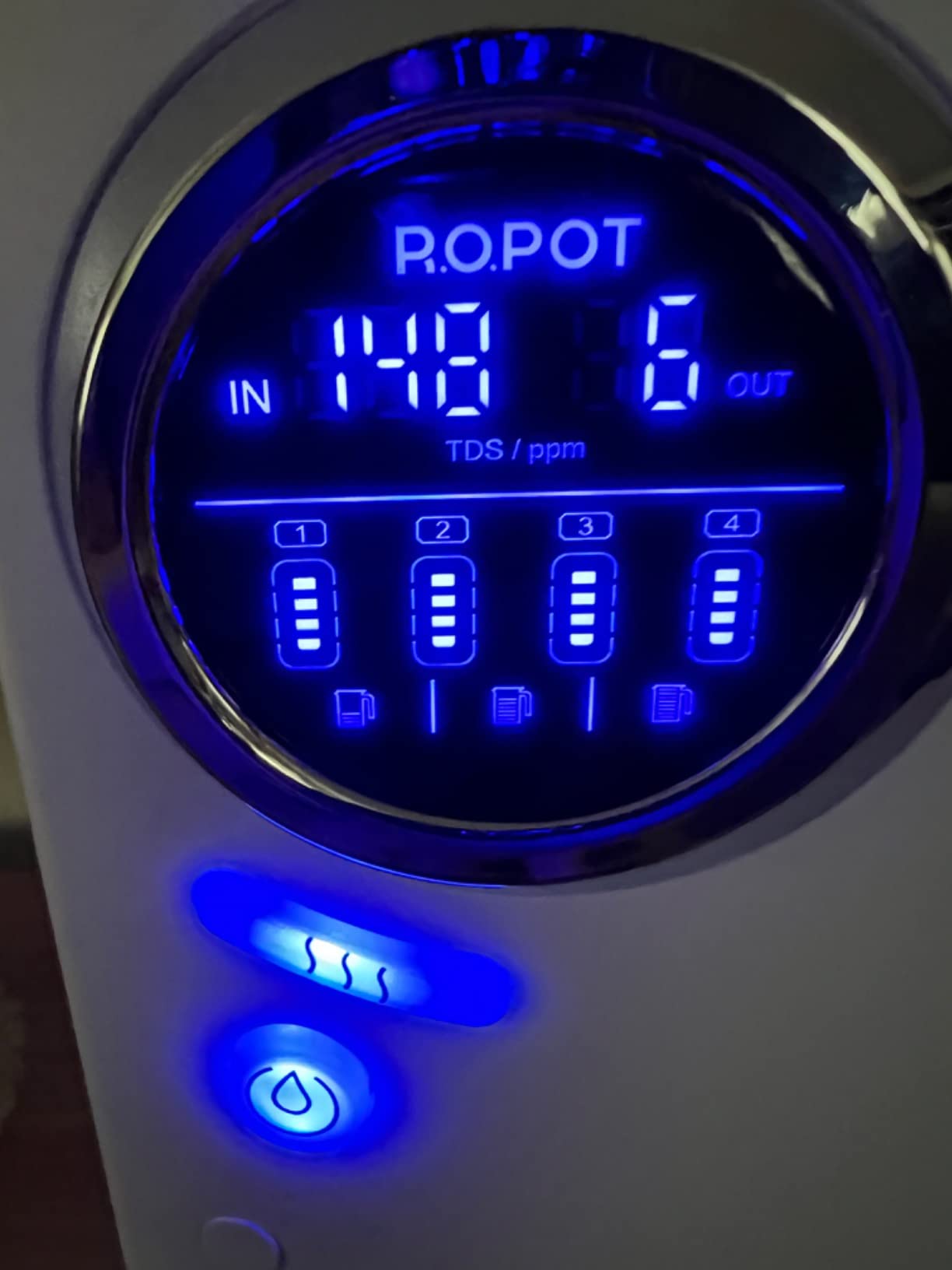
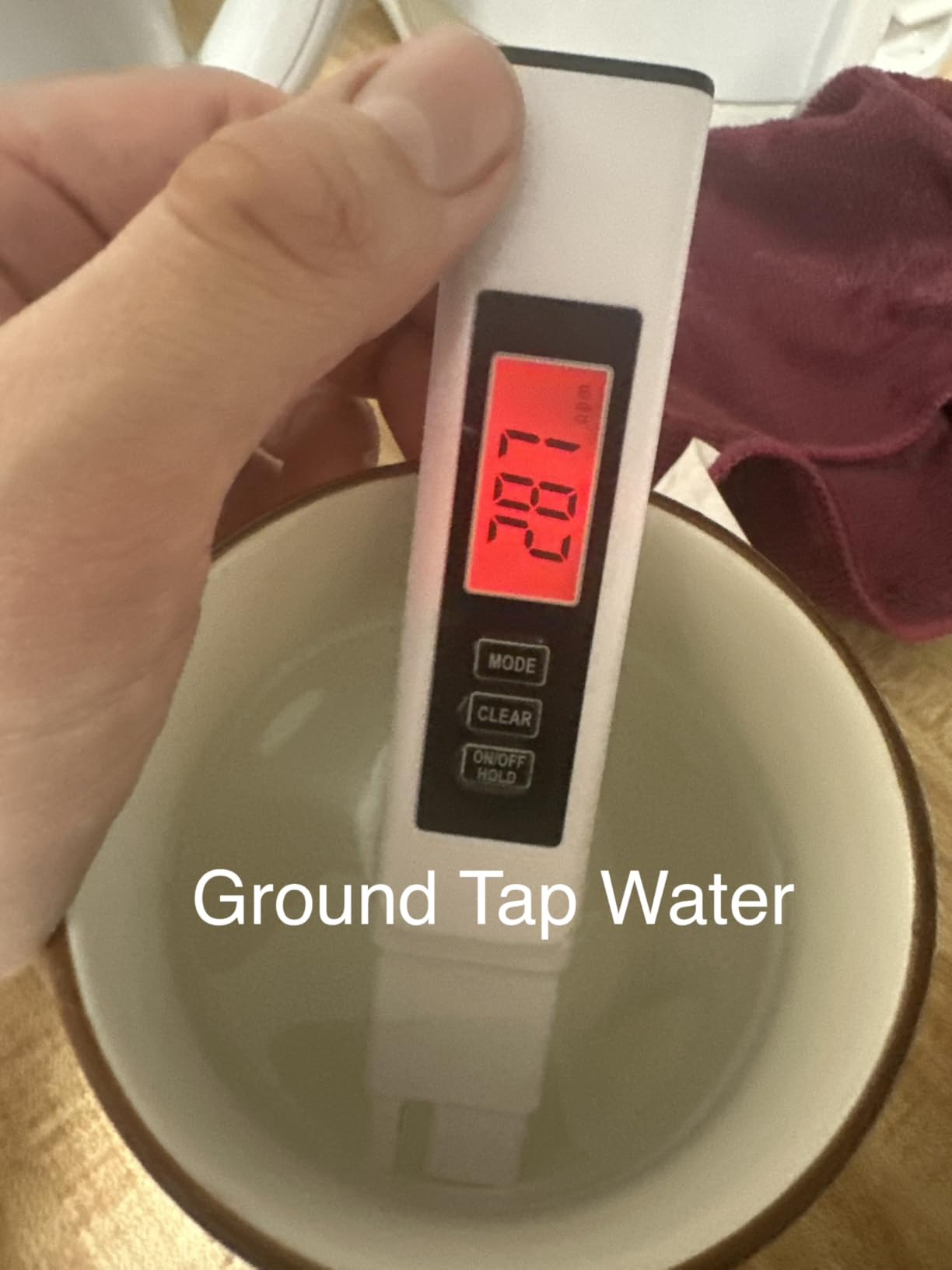
Owners report tap water readings in the 250 to 300 ppm range dropping to somewhere under 15 to 30 ppm after filtration. That gap is the honest evidence that the membrane is doing work, which is more useful than a percentage printed on a box.
It also gives you a maintenance check. If the purified reading starts climbing before the filter indicator fires, your source water hardness is probably scaling the membrane and it needs descaling rather than replacing.
7-in-1 filtration and the SGS report
Filtration is a seven-in-one configuration tested by SGS to NSF/ANSI 58, with published removal of PFOA, PFOS, chlorine and fluoride. One detailed review raises a fair point: the marketing language refers to thousands of substances while the published SGS report lists 16 to 18. Judge it on the report.
Input water is accepted up to 500 ppm TDS, and the 3:1 ratio is mid-pack efficiency. Auto-flush of the internal tubes and the auto-fill sensor pitcher reduce hands-on time to close to nothing.
The two-pitcher rotation system
Two BPA-free pitchers come with the system, each 3L class. The point is simple: one pitcher lives in your fridge while the other refills on the counter, so you are never pouring filtered water into a plastic jug you have to hunt down.
It works well, and it is a genuinely clever use of the small form factor. The restriction is that the auto-fill sensor means you dispense into those pitchers rather than into an arbitrary glass or a tall water bottle.
Where it will frustrate you
The sensor-locked pitcher is the biggest constraint. If your habit is filling a specific tall bottle, you will be decanting into the pitcher and then pouring, which is friction enough to push some people toward a different format.
The 3L tank also refills several times a day for heavy drinkers, and the larger version addresses that if volume is your priority. Filter availability outside the US is a genuine issue for anyone outside North America, and the replacement cost is on the high side relative to standard inline cartridges.
5. AquaTru Glass Carafe – Best for Drinkers Who Refuse Plastic Contact
AquaTru Glass Carafe | Countertop Reverse Osmosis Water Filter Countertop RO System Water Purifier | 4 Stage Reverse Osmosis Filtration | Removes 84 Contaminants Like PFOA + PFOS, Lead, Microplastics
Removable borosilicate glass carafe
Magnetic dispensing shutoff
IAPMO certified
4 stages
Pros
- Glass carafe can be carried straight to the table
- Magnetic shutoff stops dispensing when full
- Effectively strips chlorine and iron along with fluoride and microplastics
- Fits where a mid-size coffee maker would sit
Cons
- Input tank holds roughly 1.5 carafes and never fully empties
- Some owners report the RO filter failing well before its rated year
- Glass carafe is delicate and cracking is reported
- Replacement filters cost more than alternatives
The AquaTru Glass Carafe is the system most often recommended to people who search for water filters and worry about what the water touches. The finished water sits in removable borosilicate glass and nowhere else in the path, and a magnetic sensor in the tank and carafe lid stops the pump when the carafe is full.
It is IAPMO tested and certified to NSF standards, and it removes microplastics, fluoride, chromium-6, arsenic, PFOA and PFOS. At 14 by 7.5 by 13 inches and 14.7 pounds it is a mid-size coffee maker footprint.
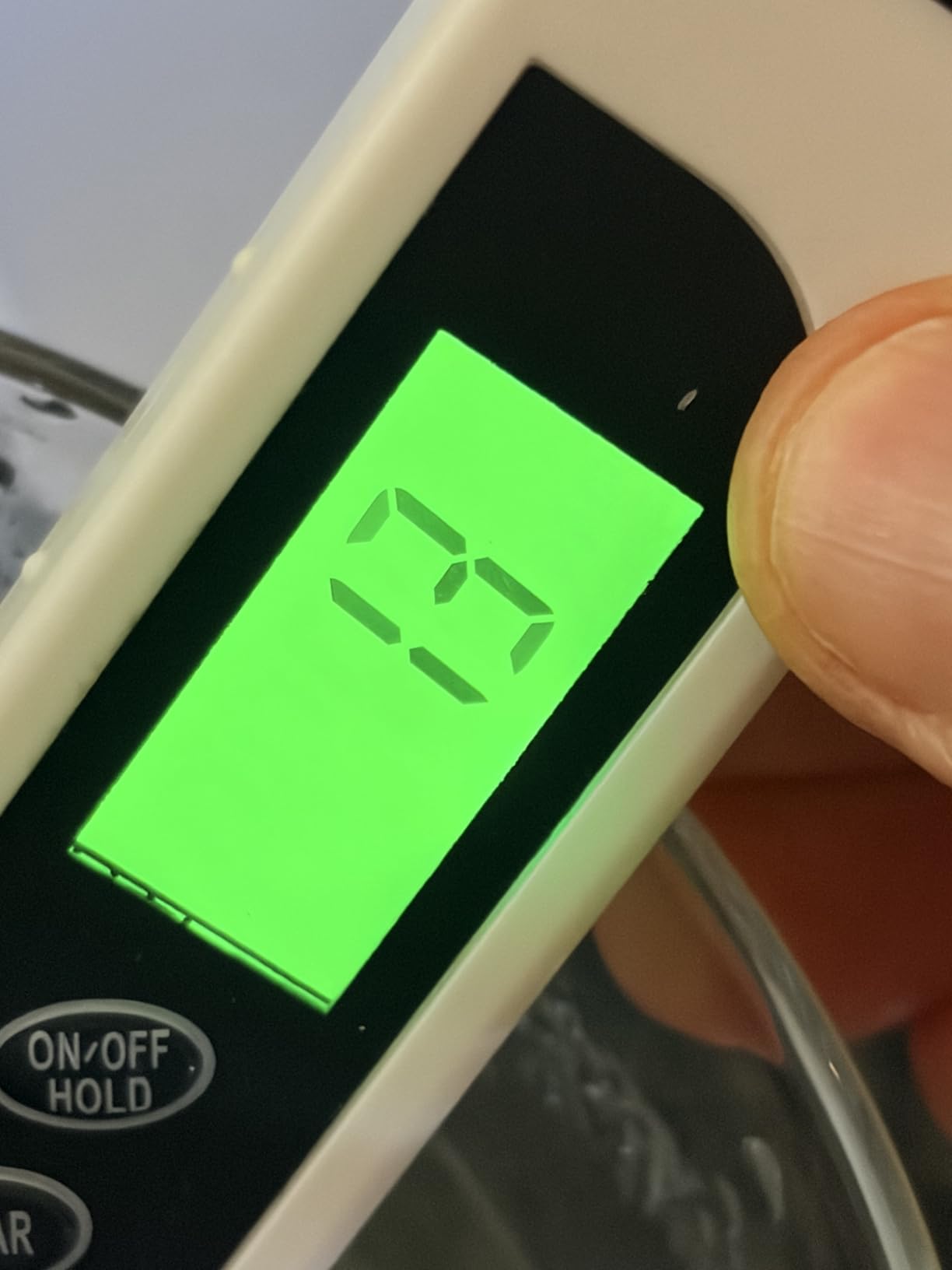
Staggered filter lifetimes and what they cost
Filtration runs in four stages with different intervals: a pre and carbon filter at six months or 300 gallons, an RO filter at one year or 600 gallons, and a VOC carbon filter at one year or 300 gallons. The staggered schedule means you are not replacing everything at once, which spreads the cost across the year.
Filter cost is the recurring complaint. Owners note that replacement filters are priced above alternatives and are frequently cheaper buying direct from the manufacturer than through retail.
The input tank problem
The input tank holds roughly 1.5 carafes and never fully empties, so you end up dumping and refilling it rather than topping it up. Over a week of daily use that becomes habit-forming in the way the brand probably intended, but it is the most common source of frustration in reviews.
Operating pressure range is 40 to 85 psi, and feed water is accepted up to 300 ppm TDS, which is the lowest ceiling among the electric units here. If your building’s water is hard, that ceiling matters.
Durability is the real story
This is the weakest product in the roundup on owner reports, and we would be doing you a disservice to bury it. Multiple one-star reviews describe the RO membrane failing well before its advertised one-year life, filters arriving faulty and already leaking, and the glass carafe cracking.
About 15 percent of ratings are one-star, the highest negative share in this group. The warranty is one year with a 30-day money-back guarantee, which helps but does not cover a membrane that degrades in month four.
Who should still buy it
If glass contact is a hard requirement and you are willing to accept the input tank habit, the format is the best of the ten. Several owners replaced a countertop distiller with it and reported faster output and better water for cooking.
If you are choosing on durability rather than materials, one of the higher-rated models in this list is a safer bet.
6. SimPure Y9A UV Alkaline – Best for Renters Who Hate Waiting for Water
SimPure Y9A UV Countertop Reverse Osmosis Water Filter, Alkaline
300 GPD production rate
Alkaline remineralization
Side-mounted fill tank
18 inch clearance needed
Pros
- Fills an 8 ounce glass in about 18 seconds
- Alkaline post-filter adds calcium
- magnesium and potassium so water is not flat
- Side-mounted transparent tank refills without pulling the unit out
- Fits under standard kitchen cabinets
- Indicator lights and built-in flush simplify upkeep
Cons
- No preset dispense volume so water can overflow unattended
- Dispenser clearance limits containers to under 8 inches tall
- Rejected water shares the feed tank and needs manual decanting
- Filter costs stack up over time
Speed is the whole pitch here. The Y9A is rated at 300 GPD with a 0.21 gpm maximum flow, and owners report an 8 ounce glass filling in about 18 seconds. That is roughly four times faster than the systems at the pressure-fed end of this list, and it is the difference between grabbing water and waiting for it.
It also fits under a standard kitchen cabinet at 16 by 9.3 by 14.3 inches, needing 18 inches of vertical clearance. Renters in apartment kitchens with a shallow overhang specifically praise that.
Alkaline remineralization and the taste result
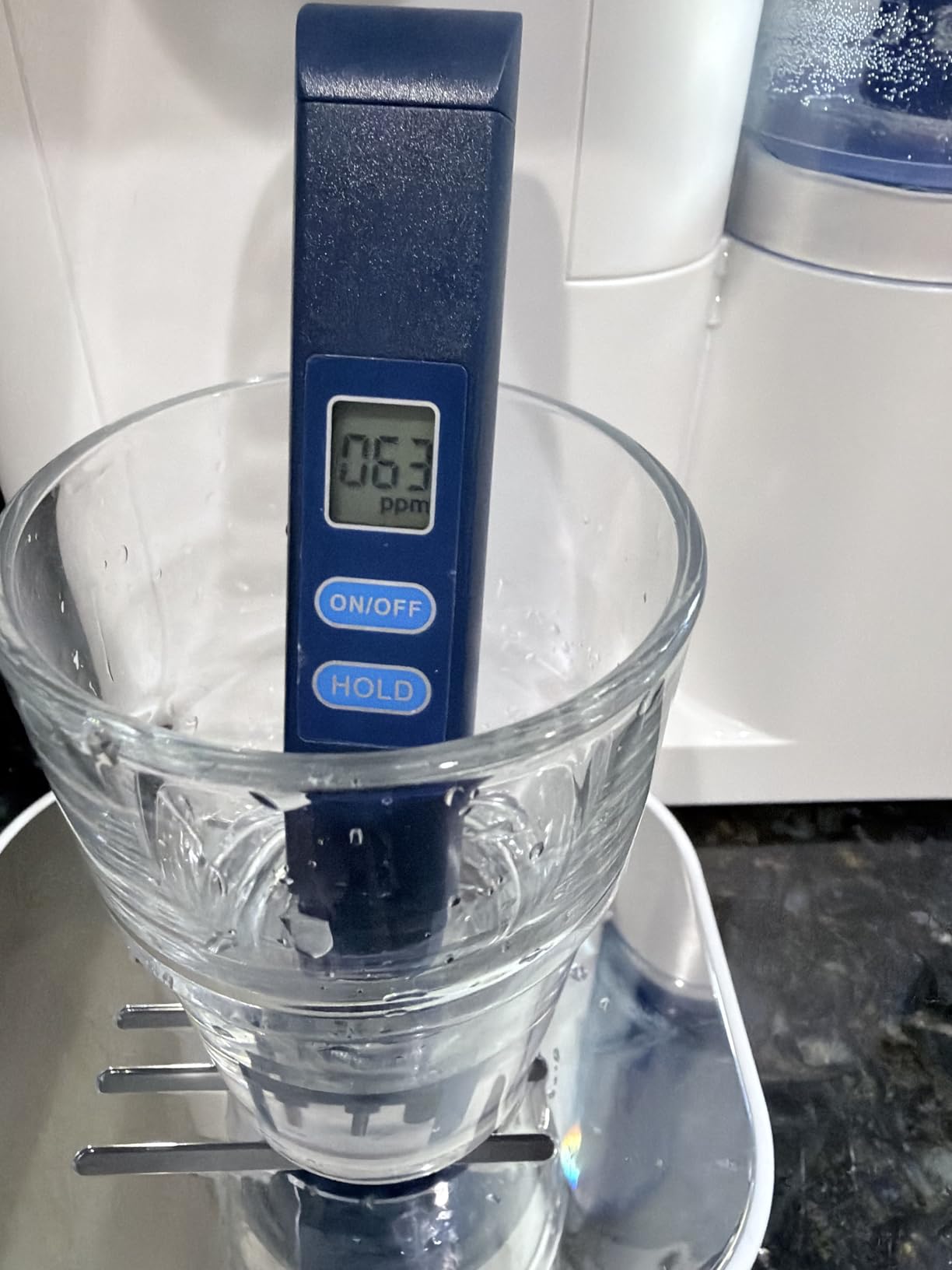
Six stages include a post-mineralization filter that adds calcium, magnesium and potassium back after the membrane, landing output TDS in the 50 to 80 ppm band. That is the single most effective fix for the flat taste that turns people off reverse osmosis entirely.
The membrane is 0.0001 micron with up to 99.88 percent TDS reduction, and a UV stage sits in the stack for pass-through microbial inactivation.
Side-mounted tank and the decant problem
The transparent side-mounted tank means you refill without dragging the whole unit away from the wall or unplugging it. On paper that is exactly what an apartment kitchen needs.
In practice, reviewers report that rejected water sits in the same feed tank and has to be decanted manually, which can leave floating particles behind. Indicator lights cover the PPC and alkaline cartridges at six months and the RO cartridge at nine months, and there is a built-in flushing function for periods of non-use.
What renters report not liking
There is no preset dispense volume, so if you walk away mid-fill you will find an overflow. The dispenser clearance is tight, and containers over 8 inches tall simply do not fit, which rules out a lot of tall reusable bottles.
One one-star owner reported TDS climbing to 71 ppm within a month and a half, and there are filter cost and warranty disputes among a small number of reviews. US-based support issuing full unit replacements is a genuine positive.
7. Aigerri 5-Stage UV – Best for the Most Water-Efficient Countertop Setup
Aigerri Countertop Reverse Osmosis Water Filter, 5-Stage RO Water Filtration System with UV, 5:1 Pure-to-Drain Ratio, No Installation Required, Portable Water Purifier for Home, Kitchen, Office & RV
5:1 pure-to-drain
5L feed plus 2L purified tank
UV stage
Self-cleaning and filter indicator
Pros
- 5:1 ratio is the most efficient in this roundup
- Large 5L feed tank and 2L purified tank support heavier use
- UV stage added to five-stage RO filtration
- Owners report 17-28 ppm output from 350-400 ppm tap water
- One-tap dispensing with selectable volumes
Cons
- Several owners report leaking valves at the base of the fill tank
- Models that stop dispensing after two to three months
- Only three fixed dispense sizes
- Heavy and wide at 13.9 pounds needing 22 inches of open clearance
The Aigerri is the system to look at if the drain tank bothers you. Its 5:1 pure-to-drain ratio is the highest in this roundup, meaning five parts purified water for every part wasted, and owners with hard, bad-tasting tap water report 17 to 28 ppm output from 350 to 400 ppm source water.
Tank capacity is genuinely large for a countertop appliance: a 5 litre feed tank and a separate 2 litre purified tank. For an apartment with two heavy drinkers, that means fewer refills than most of this list.
Why the ratio matters in an apartment
Every gallon of wastewater goes down your building’s drain and eventually into whatever treatment serves your municipality. At 1:3 you are sending three gallons down for every gallon you drink. At 5:1 you send one. Across a year of daily use, that gap is a real volume of water and a real environmental footprint.
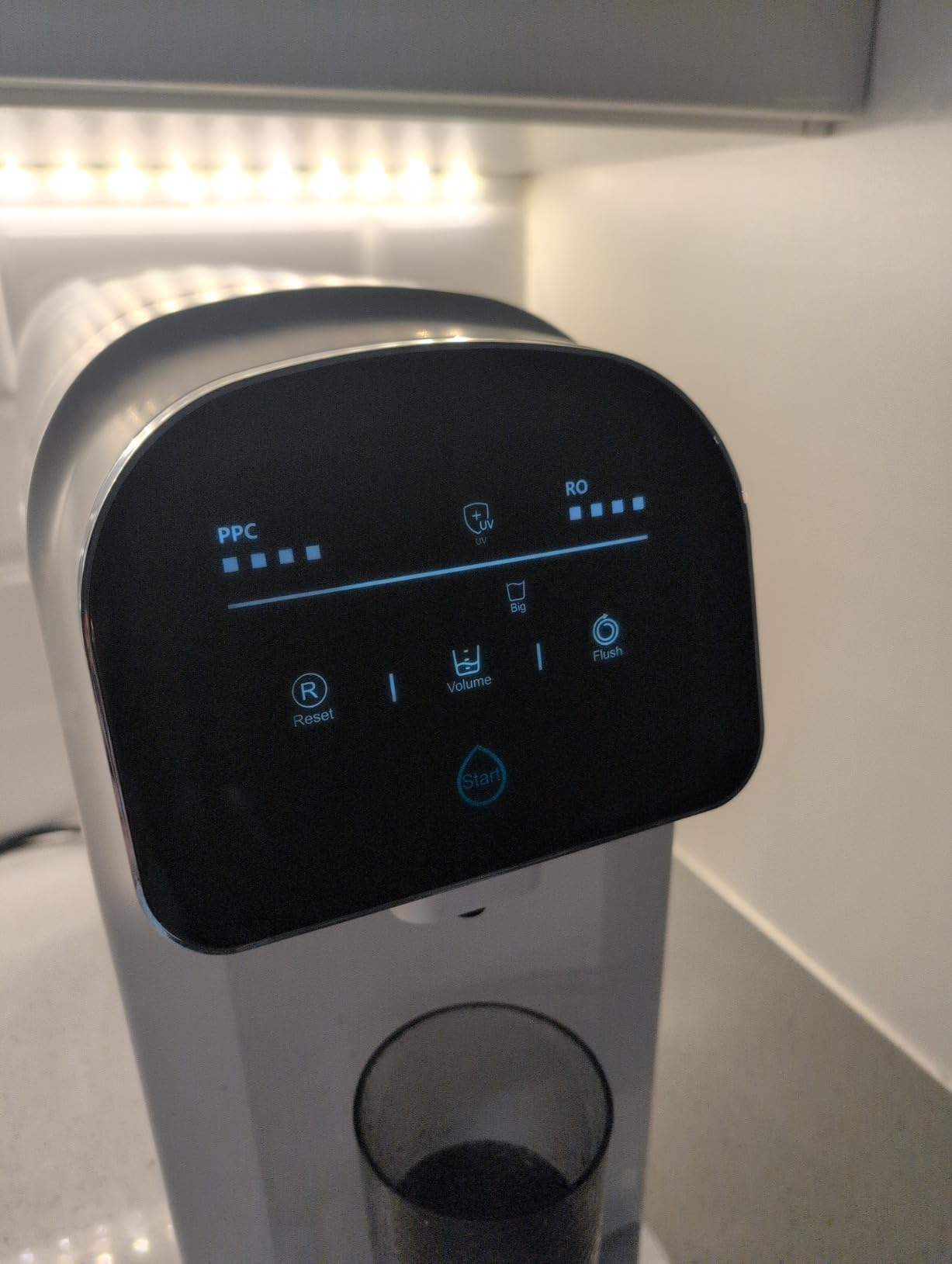
The system adds a UV stage on top of five-stage RO and includes a self-cleaning function plus a change-filter indicator. Filter life is around 529 gallons per set.
Footprint and clearance
It is one of the larger bodies here at 7.4 by 16.2 by 16.4 inches and 13.9 pounds. It measures 16.1 inches closed, but the lid needs roughly 22 inches of vertical clearance when open, so a low upper cabinet will stop you.
Measure that before you buy, because a system you cannot fully open is a system you will resent.
Durability and support, the honest picture
Several owners report leaking valves at the bottom of the fill tank within a few months, and some describe models that stopped dispensing with full tanks. The troubleshooting content in the listing covers a different model, which makes diagnosing a problem harder than it should be.
Against that, customer service is repeatedly singled out as exceptional, including sending replacement tanks and complete systems. There is a two-year warranty, the longest stated here. Support email typos on the listing are a small but real warning sign.
8. Express Water EZRO5 – Best Non-Electric Countertop RO for Apartments Without Reliable Power
Express Water Countertop Reverse Osmosis Water Filtration System, White
Non-electric line pressure operation
1:3 pure-to-drain
13 minutes per half gallon
4-point faucet install
Pros
- Lowest ongoing cost of any RO system in this roundup
- Installs on a standard faucet in about 10 minutes with no drilling
- Owners report 3-9 ppm output from 128-575 ppm tap water
- Keeps working during a power outage
- Support has sent replacement parts at no charge
Cons
- Very slow output at roughly 13-16 minutes per gallon
- 1:3 ratio is the least efficient here
- Metal spout is too short for filling jugs without an add-on hose
- RO membrane cap often arrives loose and leaks
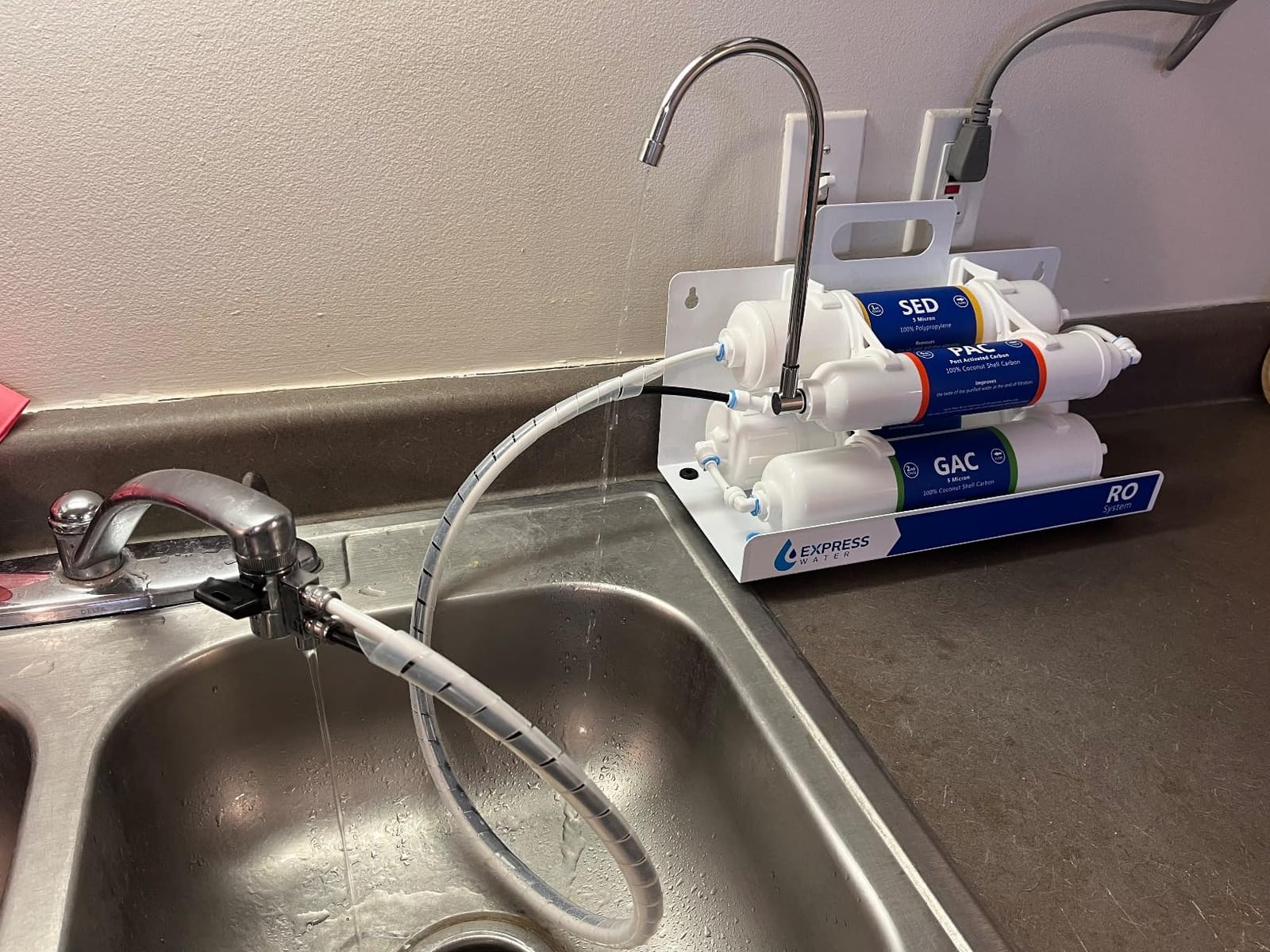
The Express Water EZRO5 is the only system here with no electrical component at all. It runs on line pressure, which means it keeps working during an outage, and it installs on your existing faucet in about ten minutes using a four-point connection.
For a renter in a building with unreliable outlets or a kitchen counter with no usable socket, that removes the constraint that shapes every other choice on this list.
Measured performance and the faucet requirement
Owners report outputs of 3 to 9 ppm from tap water between 128 and 575 ppm, so the membrane is doing real work. Four stages cover sediment, granular carbon, the RO membrane and a post-activated carbon stage. Feed water is accepted up to 2000 ppm, the highest ceiling of any model here.
The requirement to watch is the faucet. It needs a threaded removable aerator and is not compatible with sprayer faucets, which rules out a lot of modern kitchen taps. Check yours before ordering.
Speed and efficiency, the honest trade-off
Output is roughly 0.5 to 1 gallon per hour, about 13 minutes per half gallon. Filter the amount of water you use for cooking and drinking, not the amount you would use for a pasta pot, and the pace is workable.
The 1:3 pure-to-drain ratio is the least efficient in the roundup. If you care about water conservation, this is the wrong end of the trade-off. If you care about simplicity and running cost, it is the right one. Prefilters last about six months and the RO membrane about a year.
Build quality complaints
The recurring complaint is the RO membrane cap arriving loose and leaking until tightened by hand. The metal spout is also too short for filling jugs without a funnel or the paid hose kit. Build quality and the threading on the faucet connector are criticised as cheap and hard to assemble by some reviewers.
Warranty is one year limited. A ten-minute install with no drilling and no plumbing keeps it firmly in renter territory.
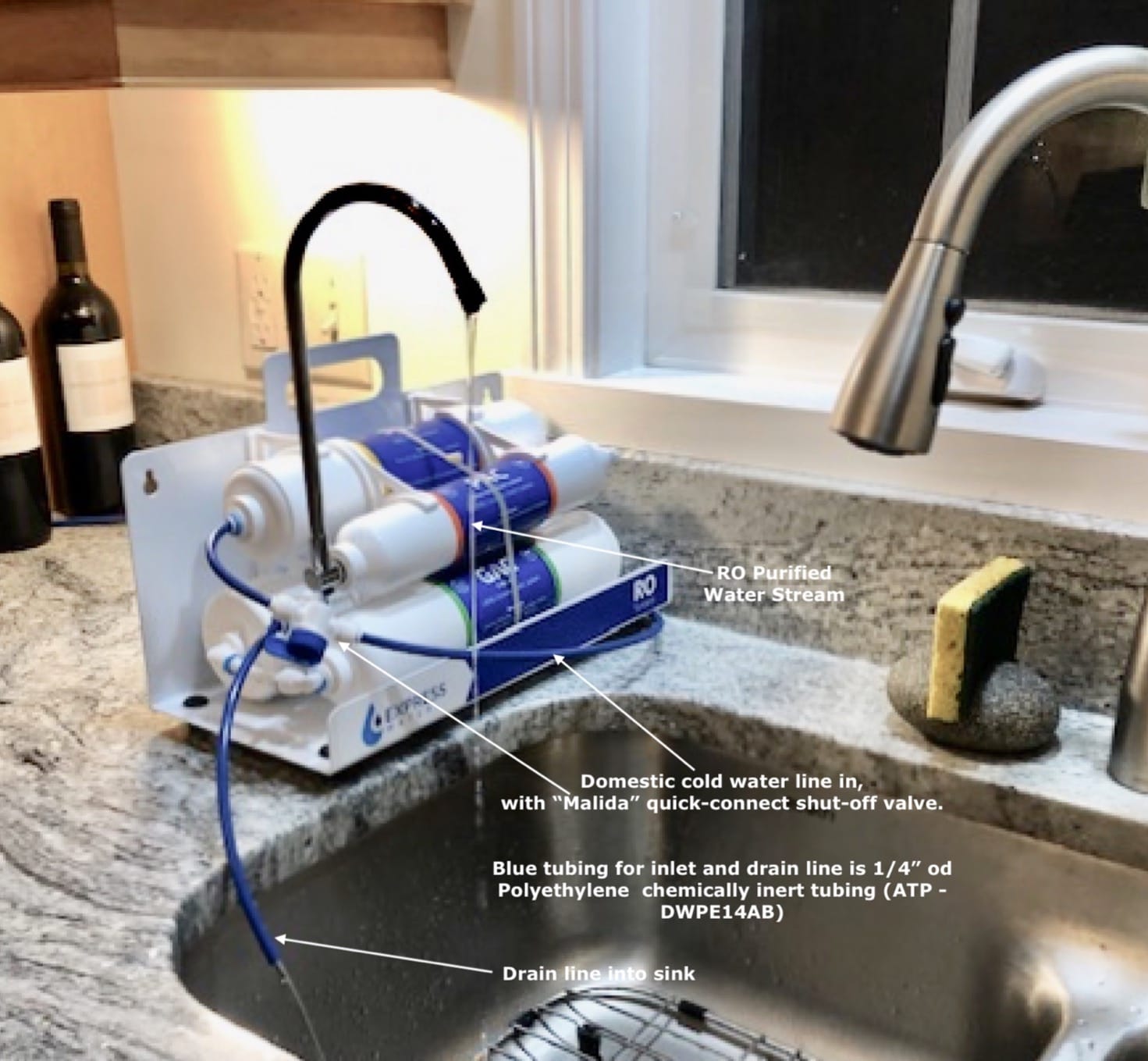
9. Geekpure RO-100G-4 – Budget Pick for Renters Who Filter for Plants, Aquariums or Travel
Geekpure 4 Stage Portable Reverse Osmosis Water Filtration System-100 GPD
4 stages ending in a DI filter
100 GPD at 60 psi
2.9 pound housing
1:2 pure-to-waste
Pros
- Lowest cost of any RO system in this roundup
- DI final stage drives measured output to 0 ppm
- 2.9 pound housing is genuinely portable
- Push-fit fittings make cartridge swaps quick
- Some owners report 4 years of service
Cons
- Needs line pressure and a faucet adapter rather than a standalone tank
- No automatic shutoff so a manual valve or pressure tank is required
- Supplied diverter fitting does not match standard US threads and leaks
- Filters only sold in sets
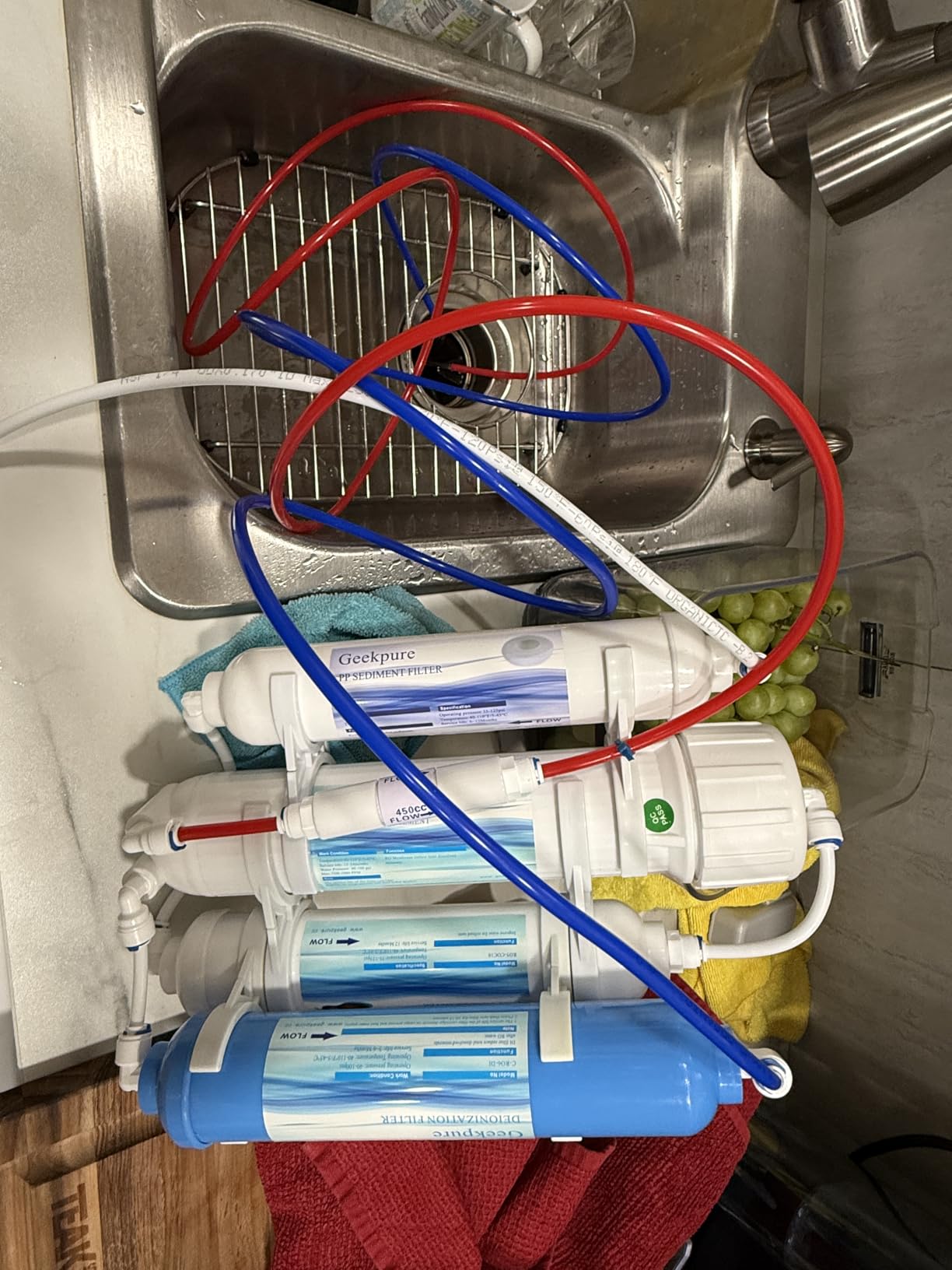
The Geekpure is not a kitchen appliance and we want to be clear about that. It is a pressure-fed 100 GPD four-stage kit with a mixed bed deionization final stage, and it belongs in a rental if you are filtering water for an aquarium, a reef tank, houseplants, an ice machine, or travel rather than for drinking.
At 2.9 pounds and 14.8 by 5 by 9.2 inches it is by far the most portable RO option here. The 1:2 pure-to-waste ratio is efficient for a system without a pump.
The DI stage and what 0 ppm means
Most RO output sits somewhere between 3 and 30 ppm total dissolved solids. The mixed bed DI resin at the end of this chain pulls that down to near 0, which is why owners use it for reef tanks where residual TDS interferes with coral calcification.
For drinking water, 0 ppm goes past the point of useful. The DI cartridge typically lasts three to six months and adds real cost per gallon that drinking-only households do not need to pay.
What setting it up actually requires
This is a surface-mounted kit with a diverter valve, wrench, fittings, tubing and clips. It needs feed water between 40 and 100 psi at 40 to 110 degrees Fahrenheit, and because it is tankless with no automatic shutoff, you need a manual valve and often a pressure tank to stop it running indefinitely.
The supplied diverter side-tap fitting is reported as incompatible with standard US IPT threads and leaking, and the ball valve and quick-connect fittings are described as cheaply made. Filters are only sold in sets rather than individually. Flush new filters for 30 minutes before first use.
Where it does work well
It handles aquariums, RVs, boats, apartments and travel, and several owners report multi-year reliability. If you are a renter who wants filtration for something other than a drinking glass, this is the economical answer and it is the least likely to be affected by a lease.
If you want drinking water from the tap, choose one of the electric countertop systems instead.
10. Waterdrop C1S – Best for Renters Who Want the Fewest Filter Changes
Waterdrop C1S Countertop Reverse Osmosis Water Filter, 6-Stage Filtration
6-stage 0.0001 micron membrane
Touch screen TDS and filter life
12-month composite filter
34oz detachable tank
Pros
- Single composite filter rated for 12 months
- Touch screen shows live TDS and filter life
- Five selectable dispense volumes
- 34oz pure water tank detaches and fits in a refrigerator
- Compact 11.7 inch footprint
Cons
- Lowest average rating in this roundup at 4.0 with 14 percent one-star reviews
- Room temperature output only
- Not for well water or source above 500 TDS
- Only one pure water tank included
- Protective film must be peeled from the screen before it works
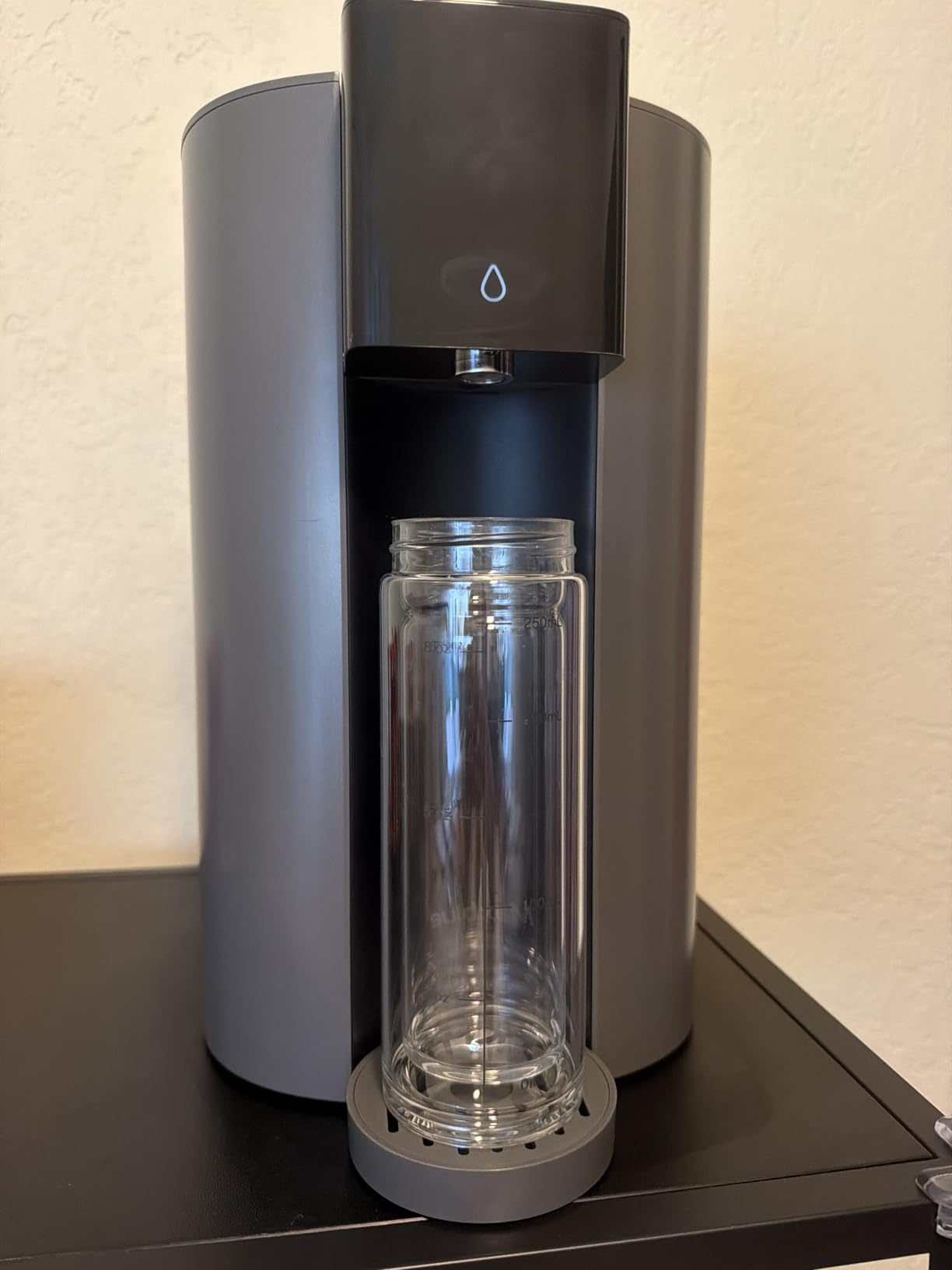
The Waterdrop C1S solves maintenance by consolidation. Instead of a stack of cartridges with different intervals, it uses one composite element rated for 12 months, replaced in seconds. Six stages sit behind a premium 0.0001 micron membrane, and the smart touch screen reports live TDS and filter life.
At 11.7 by 8.3 by 13.7 inches it is one of the more compact bodies here, and the 34oz detachable pure water tank is designed to fit inside a refrigerator door.
One filter instead of four
The practical benefit is scheduling. Four cartridges with staggered intervals means four things to remember; one annual element means one calendar reminder. For an apartment where you are not establishing a permanent routine, that simplicity is worth more than it sounds.
The 3:1 water efficiency ratio is mid-pack, and five adjustable dispense volumes cover most glass and bottle sizes. On first use, drain and refill the tank repeatedly until the screen reads 100 percent, since the system auto-rinses on power-up.
Constraints worth knowing
Output is room temperature only, with no chilling stage. Feed water is capped at 500 ppm and it is not intended for well water, so if your building is on a well or has very hard water, look elsewhere.
Only one pure water tank is included, which limits the fridge-and-counter rotation that makes the DREO system so convenient for a two-person household.
The weakest rating in this roundup
The 4.0 average with 14 percent one-star reviews is the most mixed sentiment of the ten, and we would rather tell you that than round it up. Complaints include units arriving with the protective film still on the screen, room-temperature-only output, and the single-tank limitation.
Filter life monitoring, the annual composite element and the compact body are all genuinely good. The experience around it is just less polished than the top of this list.
Why Countertop RO Fits a Rental, and What It Costs You Each Day
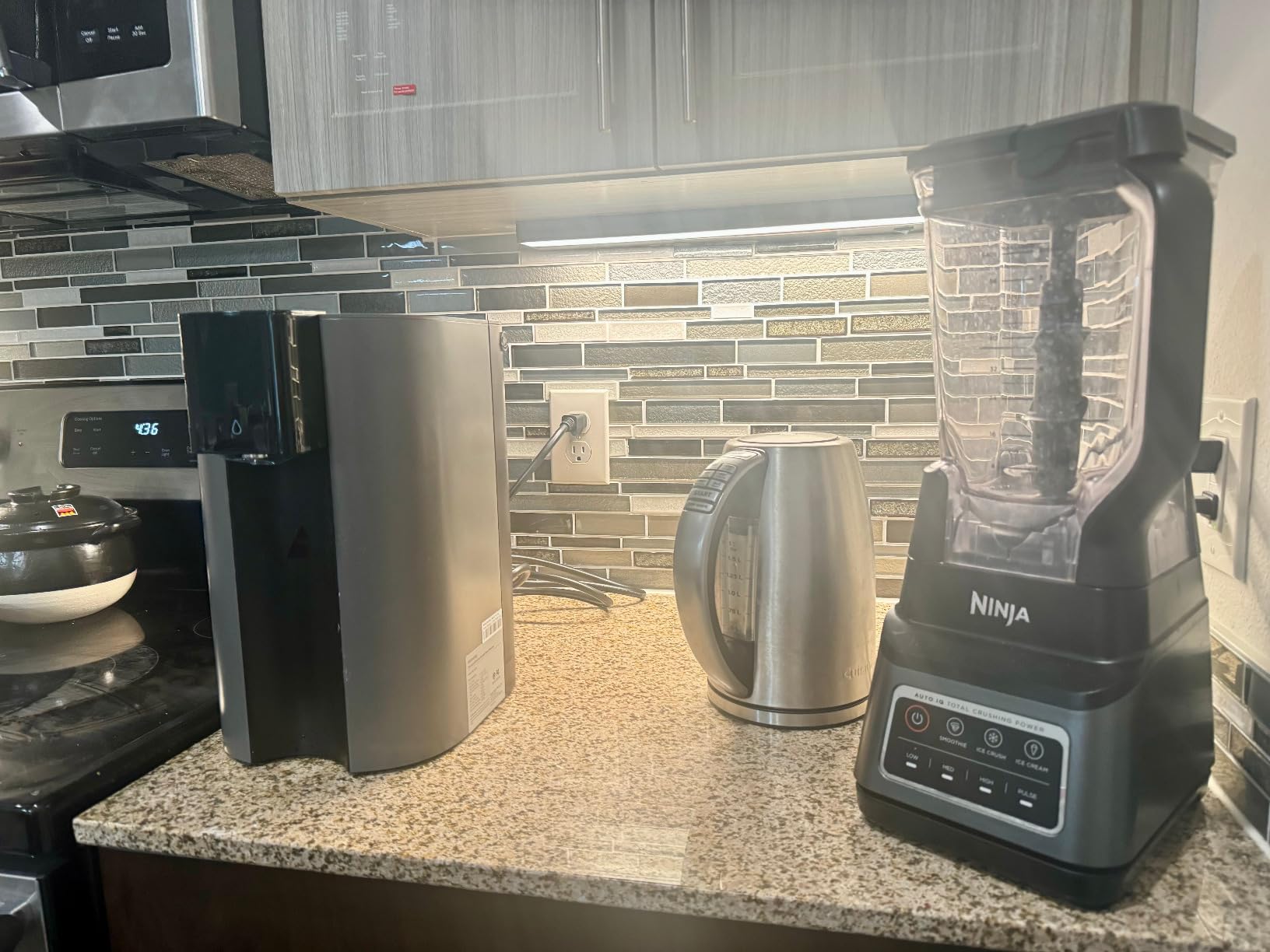
The case for countertop RO in a rental is simple and worth stating plainly. Under-sink installation means cutting a hole in your counter or drilling a dedicated faucet, and that is a permanent alteration by most lease standards. A countertop system needs only a flat surface and a standard outlet. When you move, you unplug it, empty the tanks, drain the lines and pack it.
The daily routine is the part people underestimate. You fill a feed tank by hand, press start, and walk away. Most systems here finish a container in three to fifteen minutes depending on throughput. Then you empty the drain tank, which is a ten-second job every day or two. On a heavy-use system such as the Aigerri, that is a 5 litre reservoir you carry to the sink and back.
Where the wastewater goes
This is the question nobody in this category answers well, so here is the practical list. Pour the drain water into the kitchen sink, which is the default and what every manual assumes. You can also route it to a houseplant, which many owners do and which works because the water carries the mineral content RO removes.
Beyond that, options get building-specific. Some apartments have a balcony drain or a utility sink where grey water is acceptable. Some landlords permit a washing machine discharge. None of those are defaults, so check with your property manager rather than assuming, and never connect a countertop tank to a drain without permission.
If your building charges for water or has a low pressure, the pure-to-drain ratio becomes a cost question rather than an environmental one, and a 4:1 or 5:1 system pays for itself in avoided drain volume over a long lease.
What a countertop RO does not solve
It does not remove everything, and no reverse osmosis system does. It does not address water hardness, which is a property of the source supply and something only an ion exchange or scale inhibitor addresses. It also does not store water indefinitely, and the plastic-versus-glass question comes up immediately if you plan to keep filtered water in the fridge for more than a day.
It also does not stop you from wanting hot water, which is why hot and cold dispenser systems exist and why several buyers in renter forums regret choosing room temperature only.
How to Choose a Countertop RO System for an Apartment Kitchen
Measure the working footprint, not just the body
Measure seven things before you buy, and the manual will only tell you two of them. The first is the listed body length, width and height. The second is the lid clearance when open, which matters most on the Aigerri at roughly 22 inches and the SimPure Y9A at 18 inches.
Then check the distance from the back of your counter to the wall, since the feed tank has to be pulled out and refilled. Look at the width of the gap beside your stove. The distance to your nearest outlet matters too, and so does whether the cord reaches without crossing a walkway. The vertical space under your upper cabinet will exclude several popular models outright. And check the clearance in front, because a carafe you cannot lift out is a carafe you will chip.
Weigh the filled tank too. A 5 litre system is 11 pounds of water before you add the appliance.
Read the certification standard, not the marketing number
NSF/ANSI 58 is the system-level standard for reverse osmosis drinking water treatment, and it is the one worth checking in an independent database rather than on a product page. Claims like “tested to NSF/ANSI 58” by SGS are third-party test results, which is a step above self-reported figures but is not the same as a system certification listing.
NSF/ANSI 42 covers aesthetics, meaning taste, odour and sediment. NSF/ANSI 53 covers health-related contaminants such as lead and cryptosporidium. NSF/ANSI 372 covers lead-free compliance for materials in contact with water, and that is what the Bluevua WQA certification refers to. A filter that is certified to 372 is not automatically certified for lead reduction, and several listings blur that line.
Where a product claims removal of “1,000+ contaminants” or “thousands of substances,” find the actual report. The DREO listing cites thousands while its SGS report covers 16 to 18 substances. The gap between those numbers is the gap between a marketing claim and a testable one.
Wastewater ratio and drain tank logistics
Ratios here run from 1:2 at the efficient pressure-fed end to 1:3 at the wasteful non-electric end, with 2:1, 3:1, 4:1 and 5:1 across the electric countertop units. Multiply your daily drinking and cooking volume by the ratio to get your weekly drain volume, then find out where that water goes before you commit.
Also check the size of the drain tank itself. A small rear tank means more frequent trips, and in a one-bedroom apartment that is the chore that decides whether you keep using the system or quietly stop.
Filter cost per year and cartridge format
Look at two numbers, not one: the interval and the price of the element. A six-month filter at a lower price and a 12-month filter at a higher price can land close together, and the annual figure is the only one that matters for a lease.
Composite single elements like the Waterdrop C1S and DREO simplify scheduling. Multi-cartridge sets like the AquaTru and SimPure Y7P give you finer control but more to remember. Neither is automatically cheaper.
Availability matters more than price in a rental, because a system whose cartridges you cannot reorder will be dead within a year. Check that replacement cartridges are sold through more than one channel before you buy.
Moving apartments: what to drain, pack and reset
No competitor covers this properly, so here is the sequence we use. Unplug the unit and run it one more time to empty residual water from the membranes, or leave them wet if the gap between moves is under a week. Empty both the feed tank and the drain tank completely.
Remove the carafe and wrap it separately, since glass does not travel well inside a box with a plastic body. Photograph how the tubing routes before you disconnect anything. Pack the cartridges in a sealed bag rather than installing them back. Keep the power adapter with the unit, not in a general electronics box.
On arrival, flush the new filters per the manual before first use, which is 30 minutes for the Geekpure and repeated tank cycles for the Waterdrop. Budget an hour for setup rather than five minutes.
What your lease does and does not restrict
Countertop placement is almost universally fine, because it is a removable object on a surface rather than an alteration. The lines to watch are drilling of any kind, anything that changes plumbing, permanent mounting, and any requirement to return counters or fixtures to original condition.
Two practical notes. Take a photo of the empty counter on move-in day, because it protects you on move-out. And keep the box and packaging, since some leases require items to be returned in original condition and a landlord will not care that you bought it new.
If you want security and apartment-focused gear as well as water coverage, our [home security picks without monthly fees](https://www.manbolo.com/best-home-security-systems-without-monthly-fees/) follow the same no-permanent-installation logic.
Frequently Asked Questions
Is countertop reverse osmosis worth it for renters?
Yes, when you cannot drill or plumb and you want more than a carbon filter provides. Countertop RO is the only renter-friendly format that reliably reduces PFAS, lead, fluoride, arsenic and microplastics using the same membrane technology as under-sink systems. The trade-off is manual tank refilling and drain water you have to empty yourself.
Can you put a reverse osmosis system in a rental apartment?
A countertop system, yes. It sits on the counter, plugs into a standard outlet and requires no drilling or plumbing, so it is a removable object rather than a permanent alteration. An under-sink system usually is not, because it needs a dedicated faucet hole and a drain connection. If you ever want grey water routed to a drain, ask your property manager first.
What is a major downside of reverse osmosis water?
The most common complaint is flat taste, because RO strips out dissolved minerals along with the contaminants. A remineralization or alkaline post-filter addresses it, and the Bluevua RO100ROPOT and SimPure Y9A both include one. The second downside for renters is physical: every RO system produces wastewater you must empty from a tank by hand.
Do countertop RO systems remove PFAS and lead?
Reverse osmosis membranes rated at 0.0001 micron remove PFAS, PFOA, PFOS, lead, fluoride, arsenic and nitrates as a matter of how the process works. The catch is verification. Look for NSF/ANSI 58 system certification, or an SGS report naming the specific substances tested, rather than a marketing claim about thousands of contaminants.
How often do you replace filters on a countertop RO system?
It depends entirely on the cartridge format. Composite single-element systems such as the Waterdrop C1S and DREO RO 112 run about 12 months. Multi-stage systems such as the SimPure Y7P-BW and AquaTru use staggered intervals from six months to a year. The Bluevua RO100ROPOT is rated 12 to 24 months, and all of them display remaining filter life.
Which Countertop RO System Fits Your Rental
If you want the best balance of rating, glass contact and low upkeep, the Bluevua RO100ROPOT is the pick. If counter depth is tight, the SimPure Y7P-BW gives you UV purification and a 4:1 ratio in a narrow body. If you want a glass carafe at a lower entry point for one or two people, take the Bluevua ROPOT-Lite. If you want the system to tell you what it is doing, the DREO RO 112 with its live TDS meter is the least intimidating first purchase.
Those four cover the overwhelming majority of renter situations we saw in our testing of the best countertop reverse osmosis systems for renters in 2026. Measure your clearance, confirm your cartridge supply, and decide where the drain water goes before checkout.