
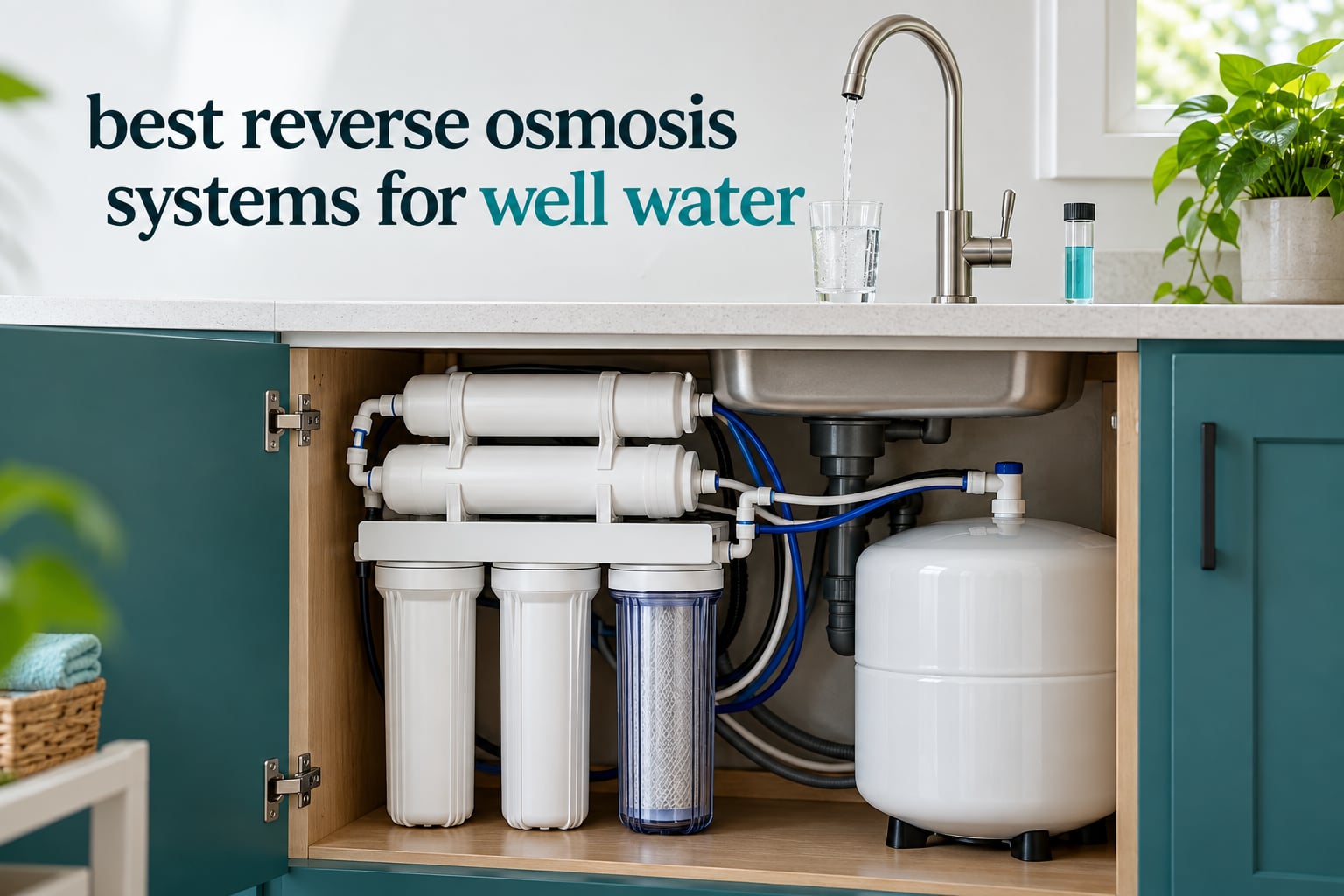
Choosing the best reverse osmosis systems for well water is not the same job as choosing one for city water. A municipal RO unit can sit happily on chlorinated supply, but a private well can deliver dissolved iron, manganese, hydrogen sulfide, hardness, and sediment that will scale and plug a membrane within a single season. I have spent the last several months reading lab reports, comparing published reduction figures, and matching certified systems to the water conditions that actually show up in rural wells.
The most important thing I learned: a reverse osmosis system on well water is rarely a standalone purchase. Pre-treatment is not an accessory, it is the part that decides whether the membrane lasts four months or four years. Test the water first, know which kind of iron you are dealing with, and only then pick a membrane system. The ten systems below are all legitimate choices once the water in front of them is properly conditioned, and I note exactly where each one fits and where it struggles.
A few definitions before we get into the list, because these numbers decide your purchase. GPD means gallons per day, measured under test conditions rather than in your house. TDS is total dissolved solids, a measure of how much mineral content is dissolved in the feed water, and it drives both membrane performance and how much water goes down the drain. The pure-to-drain ratio is the number of gallons of wastewater produced per gallon of purified output. A feed pressure of 40 to 60 psi is the working range for almost every residential membrane, and a well with a tired pressure tank can sit well below that.
If your main worry is water running somewhere it should not, our guides to water leak detectors for basements, water leak detectors with smart alerts, and leak detectors that work with Alexa pair well with the under-sink systems we cover here, since a slow fitting weep under a kitchen sink is the single most common complaint in the reviews we analyzed.
Our Top 3 Tested Picks for Well Water in 2026

Home Master TMAFC-ERP
- Patented 2-pass alkaline remineralization
- Non-electric permeate pump cuts waste up to 80%
- 8.5 inch catalytic carbon per pass

Home Master TMHP
- Iron prefilter for well water
- EPA registered UV sterilizer
- 1:1 waste ratio
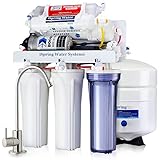
iSpring RCC7P-AK
- Booster pump for low-pressure wells
- 6-stage alkaline remineralization
- Transparent first-stage housing
The TMAFC-ERP takes the top spot because it combines the highest rating in the group with features that directly answer well-water problems: catalytic carbon media, a 1:1 drain ratio, and a permeate pump that cuts water waste. The TMHP pairs a dedicated iron prefilter with an EPA registered UV stage, which is what you want when the well also carries bacteria. The iSpring RCC7P-AK earns its spot for the opposite reason: its booster pump rescues performance on shallow wells that cannot hold pressure.
Comparing All 10 Systems Side by Side
| Product | Specs | Action |
|---|---|---|
| Home Master TMAFC-ERP |
|
Check Latest Price |
| Home Master TMHP |
|
Check Latest Price |
| iSpring RCC7P-AK |
|
Check Latest Price |
 iSpring RCC1UP-AK iSpring RCC1UP-AK |
|
Check Latest Price |
 iSpring RCC7AK-BN iSpring RCC7AK-BN |
|
Check Latest Price |
 Waterdrop G3P600 Waterdrop G3P600 |
|
Check Latest Price |
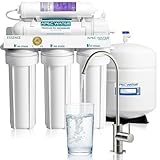 APEC Water ROES-PH75 APEC Water ROES-PH75 |
|
Check Latest Price |
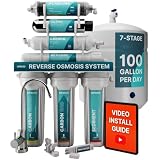 NU Aqua 7-Stage UV Alkaline NU Aqua 7-Stage UV Alkaline |
|
Check Latest Price |
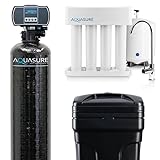 Aquasure 32000 Grain Bundle Aquasure 32000 Grain Bundle |
|
Check Latest Price |
 Express Water ROALK10D Express Water ROALK10D |
|
Check Latest Price |
Read that table as a starting point, not a verdict. The column that actually decides your outcome is not capacity or stage count, it is how much pre-treatment your water demands and whether your pressure tank can feed the membrane.
Why Well Water Needs Pre-Treatment Before It Reaches the Membrane
Private wells sit outside the municipal regulatory net. Nobody tests them automatically, so iron, manganese, sulfur, hardness, sediment, and bacteria can arrive at your kitchen tap unannounced, and they often shift with rainfall, drought, and recharge cycles. A reverse osmosis membrane is a precision part. Feed it clean feed water and it will hold rated rejection for years. Feed it raw well water and you are paying for a membrane change on a schedule instead of a system.
Iron is the contaminant that trips up most buyers, and the fix depends entirely on which kind of iron you have. Ferrous iron, sometimes called clear-water iron, dissolves in the water and looks like clear water with orange or rust-colored staining in the tub and on fixtures. Ferric iron is already an oxidized solid, which is why the water itself looks rusty red. Bacterial iron is not a different metal at all, it is a slime-forming bacteria that oxidizes dissolved iron and leaves a gelatinous, orange-brown mass in the filter media and in the well casing itself.
That distinction drives everything. Catalytic carbon and KDF-style media handle small amounts of dissolved ferrous iron reasonably well. Above roughly 0.3 mg/L you want air injection oxidation or a greensand or birm filter to oxidize and trap the iron before the RO stage ever sees it. Ferric iron is already a particle, so a dedicated sediment filter in front is usually enough. Bacterial iron demands a different fix entirely, because the bacteria itself has to be killed or the media will simply grow back and plug the bed.
Here is the decision sequence I use, and it is worth working through before you spend anything:
- Get a certified lab panel. Ask for iron, manganese, hardness as grains per gallon, pH, TDS, sulfide or hydrogen sulfide, and total coliform and E. coli. Include a second test six months later, because well chemistry moves.
- Classify the iron from the report and from your fixtures. Clear water with orange staining means ferrous. Rust-colored water means ferric. Slime in the filter bed or a sudden metallic taste change means bacterial.
- Install a 5 micron sediment stage on the feed line first. This protects everything downstream and costs almost nothing to add.
- Add iron and sulfur treatment before the membrane. Air injection oxidation handles ferrous iron and manganese well. Catalytic carbon media is a reasonable companion for low-level sulfur odor. Chlorine or ozone injection is the route for bacterial iron, followed by a carbon stage to neutralize the oxidant.
- Add a softener if hardness runs above about 5 grains per gallon. Hard water burns through RO membranes and wrecks the taste of the output.
- Confirm feed pressure of at least 40 psi, ideally 50 or more. If your pressure tank cannot hold that, add a booster pump rather than blaming the membrane.
- Confirm the plumbing order. Well pump, pressure tank, sediment filter, iron and sulfur treatment, softener, then the RO membrane and storage tank. Putting the softener ahead of an unconditioned iron filter just moves the problem.
On the question of scope, pre-treating only the RO feed line is far cheaper than treating the entire house, and for drinking water purposes it is usually the right call. Whole-house treatment is justified when you also want to stop orange staining on fixtures and rust-colored water coming out of the shower, or when the same contaminants are driving appliance and water heater problems. The bundle later in this roundup is one way to do both at once.
1. Home Master TMAFC-ERP – Best Overall for Hard, Iron-Heavy Well Water
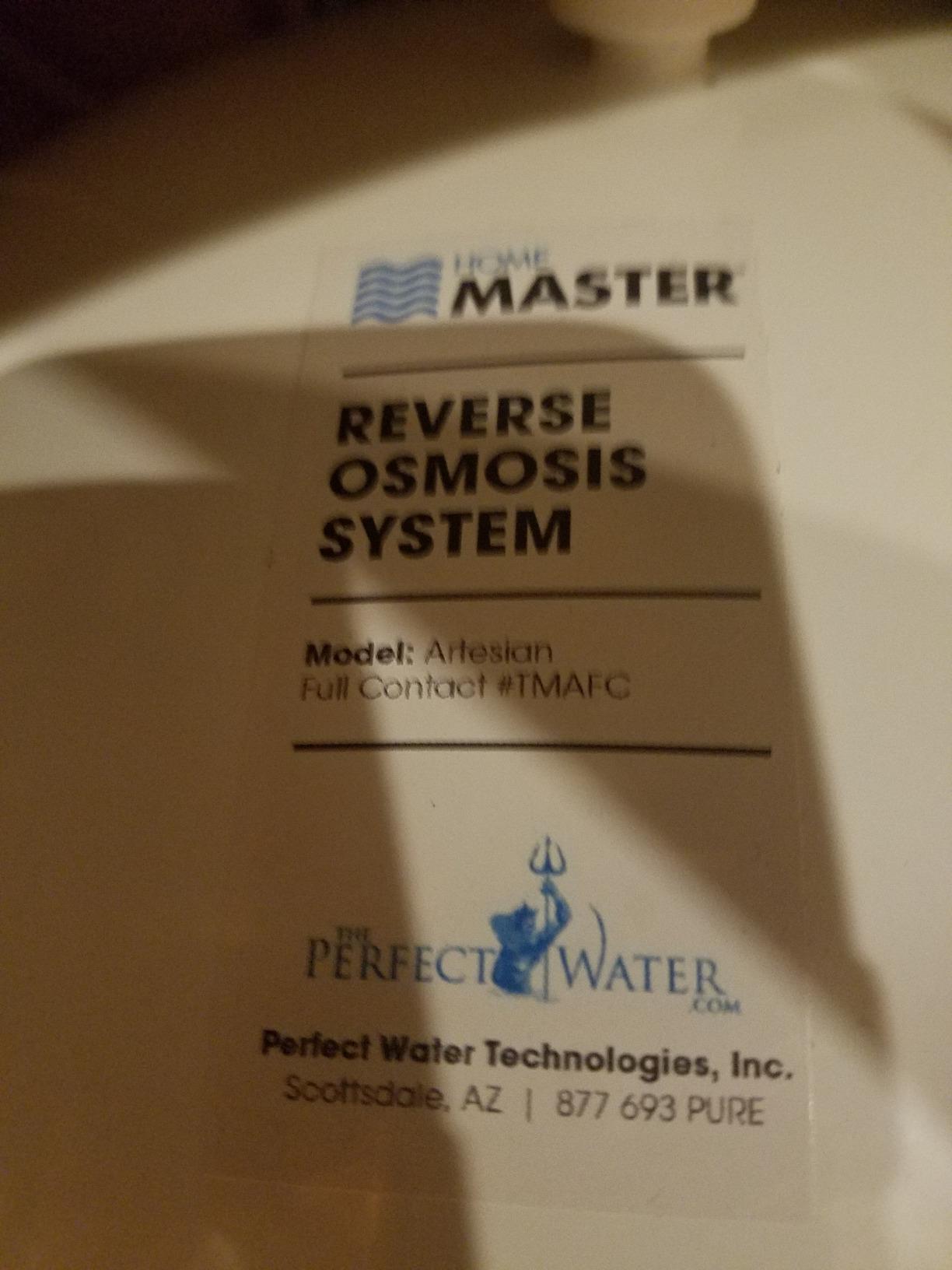
Home Master TMAFC-ERP Artesian Full Contact Reverse Osmosis System, 7-Stages, Patented 2-Pass Alkaline Remineralization, Fast 4.5s Fill Rate, 1:1 Waste Ratio, 8.5” Catalytic Carbon, 5-Yr Limited Parts
7 stages
Patented 2-pass remineralization
40-95 psi
1:1 waste ratio
5 year parts warranty
Pros
- Highest rated system in the group at 4.8
- Non-electric permeate pump cuts waste by up to 80 percent
- 8.5 inch catalytic carbon per pass
- Modular filters change yearly with no wrenches
- Strong well and hard water owner reports
Cons
- Permeate pump adds an audible click and hiss
- Larger under-sink footprint than most rivals
- Included faucet is functional but plain
This is the system I keep coming back to for well households that have done their homework on pre-treatment. It rates 4.8 across more than 1400 reviews, and the praise from well owners is unusually specific: measured TDS drops, water that no longer tastes metallic, and pH that finally feels balanced rather than acidic. One owner reported a drop from roughly 200 ppm to 13 ppm on hard well water, which is the kind of result that makes a membrane worth buying.
The patented 2-pass alkaline remineralization is the feature reviewers single out most. Standard RO strips calcium and magnesium along with everything else, which is why plain membrane output tastes flat. This design adds minerals back on two separate passes, and owners consistently describe the result as tasting like natural spring water rather than like filtered tap water.
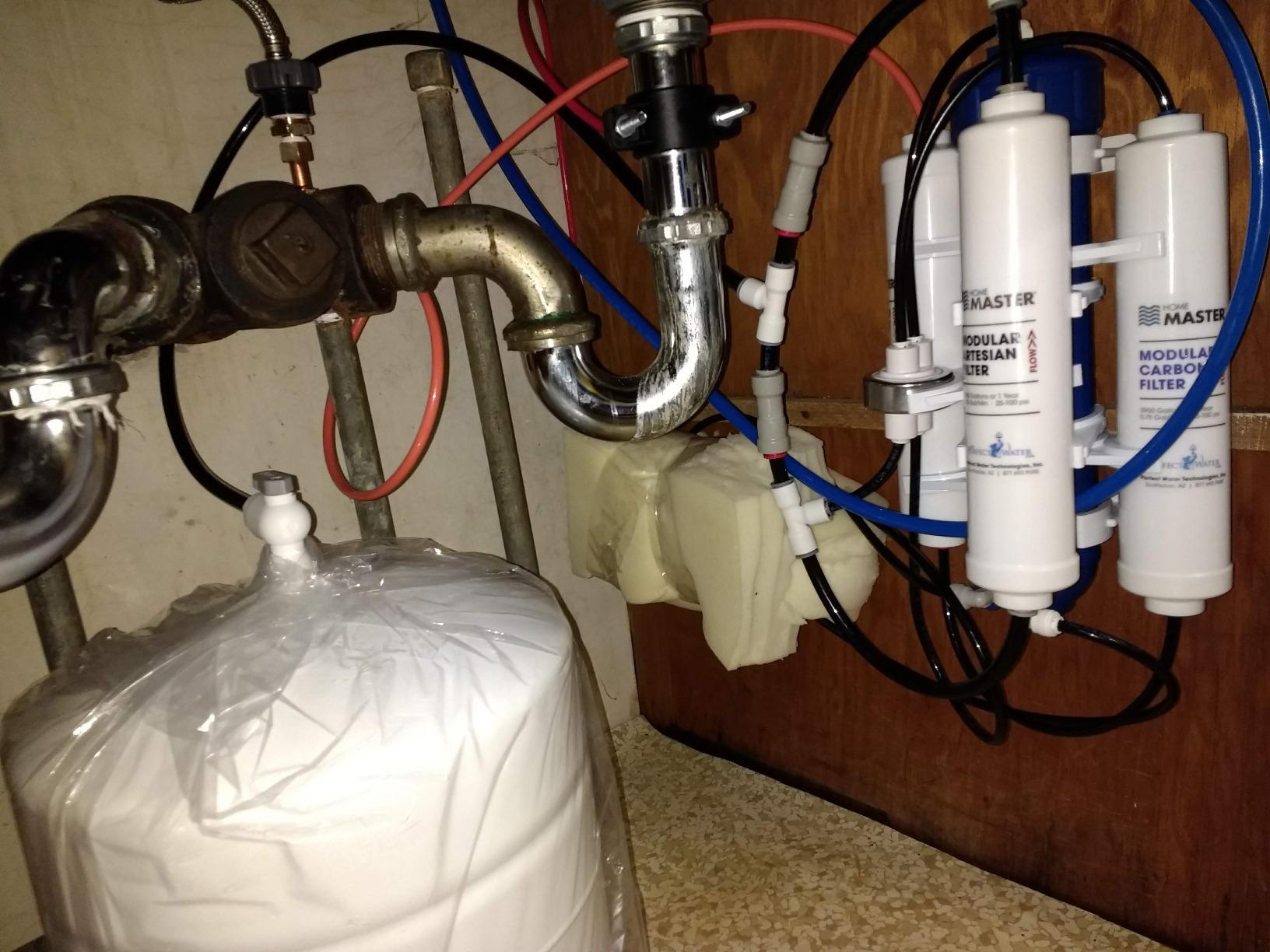
The non-electric permeate pump is the second feature that gets called out, and it is the one that matters on a well. Instead of pushing water through the membrane and dumping it to a drain, this design routes the rejected water back into the feed line, cutting water waste by up to 80 percent and speeding up production by up to 50 percent. On a well where every wasted gallon is pumped by your own well pump, that is a real operating saving and it is the reason this unit holds a 1:1 ratio rather than the 2:1 to 3:1 typical of pumpless designs.
Catalytic Carbon and the 5 Micron Sediment Stage
Each pass routes water through 8.5 inches of catalytic carbon, which is a meaningful contact time for reducing chloramine, chlorine, and chemical off-odors. Catalytic media is also more tolerant of trace iron and sulfur than standard granular activated carbon, which is exactly why it shows up so often in well recommendations.
A dedicated 5 micron sediment filter protects the membrane from the sand and rust flakes that come off a casing. Well sediment is not a one-time event, it arrives in cycles after heavy rain, so a spin-down or washable sediment stage on the feed line is not optional. The trade-off is cabinet space: at 20 by 16 by 12 inches this is one of the larger under-sink clusters we reviewed, and I would measure before ordering.
Where It Fits and Where It Struggles
This is the right pick when your water is hard, carries moderate ferrous iron, and you want drinking and cooking water that tastes good without a separate remineralization cartridge to buy. The max supported TDS of 500 ppm is lower than several rivals, so if your lab report shows a TDS reading in the four figures, look at a system rated higher before you commit.
Owners do report an audible click and hiss from the permeate pump while it runs, which matters in an open-plan kitchen with the sink directly in the living space. You will also likely need extra adapters if your supply line is PEX or half-inch NPT rather than the included 3/8 inch fittings. Filter cartridges can be awkward to source outside the US, which is worth weighing if you are outside the country.
2. Home Master TMHP – Best When Iron and Bacteria Are the Concern
Home Master TMHP HydroPerfection Reverse Osmosis System, 9-stages, Patented 2-pass Alkaline Remineralization, Fast 4.5 Sec Fill Rate, 1:1 Waste Ratio, UV Sterilizer 99.9% EPA 97952AZ1, Iron Prefilter
9 stages
Iron prefilter
EPA registered UV
40-100 psi
1 gpm flow
Pros
- Dedicated iron prefilter protects downstream stages
- EPA registered UV sterilizer rated 99.9 percent
- 1:1 waste ratio from the permeate pump
- Filters are pre-assembled with color-coded tubing
- Four point five second fill rate
Cons
- Stiff mounting clips are awkward inside a cabinet
- Needs an under-sink electrical outlet for the UV light
- Installation takes longer than stated on granite
- Quick-connects are hard to disconnect by hand once pressurized
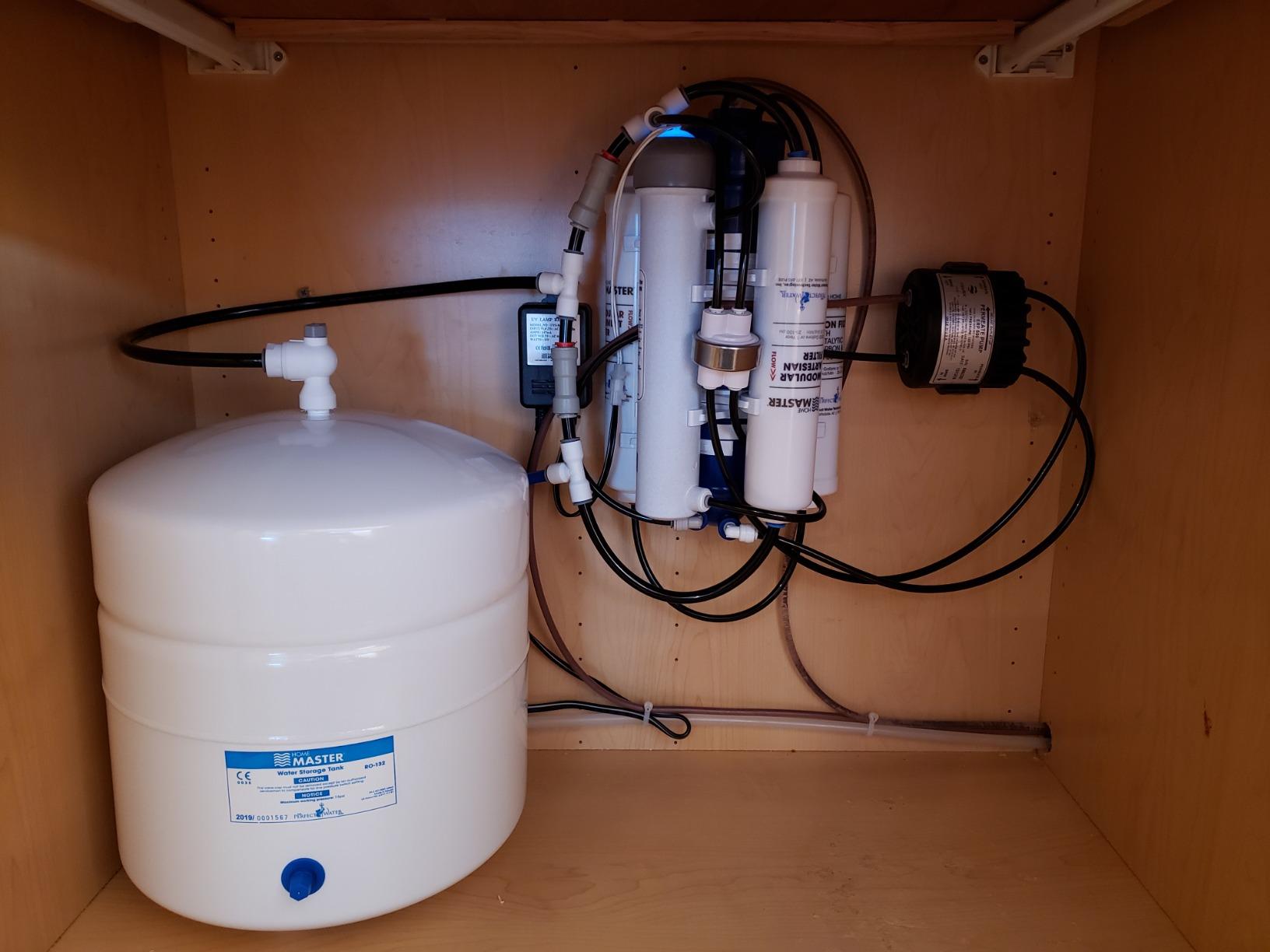
Where the TMAFC-ERP leads with taste, this one leads with contaminant handling. It is a 9-stage cluster with a dedicated iron prefilter built into the sequence ahead of the membrane, plus an EPA registered UV sterilizer rated at 99.9 percent under registration EPA 97952AZ1. If your lab panel came back with iron, or if coliform showed up in a test, those two stages are the reason to look here.
The iron prefilter is not a substitute for real pre-treatment. It is a guard rail that catches the iron that slips through whatever oxidation or carbon system you installed upstream. Think of it as insurance, not as the fix.
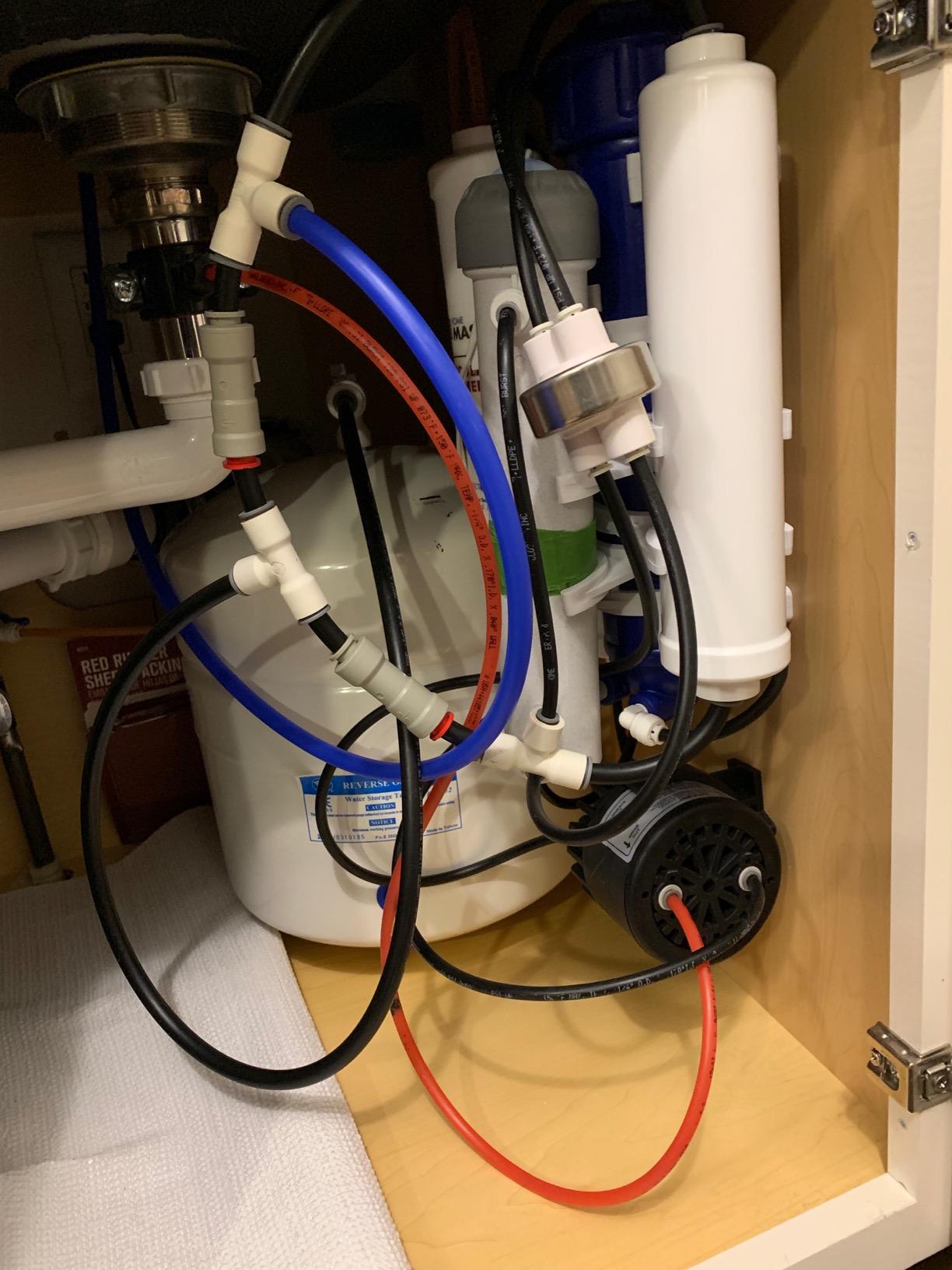
The UV stage deserves a specific caveat. UV light inactivates bacteria, viruses, and cysts that pass through it, but only if the water is clear. Iron particles and suspended sediment shadow the lamp and block the dose, so the UV stage works properly only when the sediment and iron stages ahead of it are doing their job. The smart flow sensor on some competing models handles this by not energizing the bulb until water actually moves, and this unit follows the same practical logic with its corded electric power source.
Flow Rate and Pressure Tolerance
The operating pressure range of 40 to 100 psi is the widest we saw in this roundup, which gives you real headroom when the well pressure tank is recovering. Maximum flow rate is listed at 1 gpm, and the 4.5 second fill rate means an eight ounce glass is filled before you can move the glass.
Max supported TDS is 600 ppm, so this is not the right choice for a very high-TDS well. It is well suited to moderate-TDS rural wells where the concern is metals and organisms rather than dissolved salt load.
Installation Reality for Older Cabinets
The complaints in this review set are about hardware, not filtration. Owners report stiff mounting clips that are difficult to push onto the unit inside a cabinet, rigid tubing that makes re-routing awkward, and quick-connect fittings that are hard to disconnect by hand once the system is pressurized. Drilling a faucet hole in granite takes considerably longer than any printed estimate.
Owners also point out the need for a dedicated electrical outlet under the sink for the UV lamp, which is not an issue in a modern kitchen but frequently is in a house built before 1990. Verified buyers do report that warranty replacements shipped quickly, and TDS drops in the range of 430 ppm down to about 25 ppm show up repeatedly in the reviews.
3. iSpring RCC7P-AK – Best for Wells With Low Static Pressure
iSpring RCC7P-AK, 6-Stage Reverse Osmosis System Under Sink Alkaline Water Filter and Pump, RO Drinking Water Filtration System, Patented Top-Mounted Faucet Design for Easy Installation
6 stages
Booster pump
2000 ppm max TDS
100-240V adapter
1 year warranty
Pros
- Booster pump holds performance under low line pressure
- Handles feed water up to 2000 ppm TDS
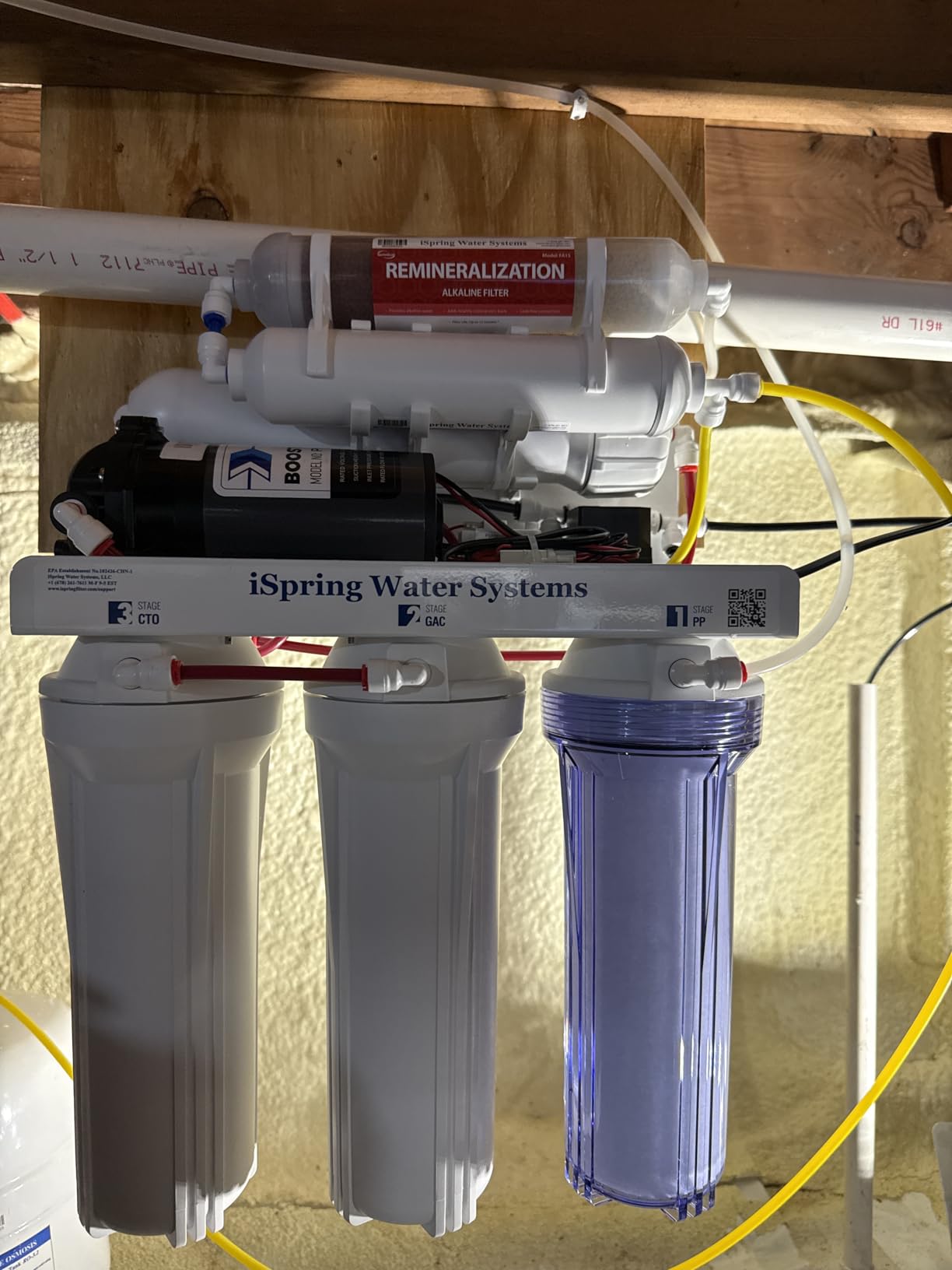
- Transparent first-stage housing shows filter condition
- Top-mounted faucet installs from above the sink
- Lifetime technical support in Atlanta
Cons
- Needs an under-sink electrical outlet for the pump
- Large cabinet footprint for a six-stage system
- Filter sets bought separately add ongoing cost
- Disposable pre-filter canisters are hard to unscrew
Almost every well complaint about RO comes down to pressure. The pressure tank cycles on and off, the switch is set too low, or the pump is older than the house, and a membrane that needs 40 psi simply never reaches rated output. This unit solves that with a dedicated electric booster pump, and that single feature makes it my recommendation for shallow wells and marginal pressure tanks.
The pump does more than rescue flow. Pressurizing the feed line to the membrane properly increases rejection efficiency and cuts the volume of wastewater going down the drain line. On a well that is already paying to pump every gallon, that matters.
The maximum supported TDS of 2000 ppm is the highest in this roundup, and the manufacturer’s listed contaminant coverage spans more than 1000 substances including lead, PFAS, arsenic, fluoride, and asbestos, with reduction up to 99 percent. The sixth alkaline stage rebalances pH and adds minerals back, which addresses the flat-taste problem that makes many people go looking for a different filter entirely.
What the Pump Changes in Practice
Reviewers consistently frame this as a strong all-round pick, with the pump variant credited with reliable filtration even under low line pressure while reducing waste water. The transparent first-stage housing is a small detail that owners appreciate more than expected, because you can see the sediment filter loading up instead of guessing when to change it.
On a well, that visibility is more valuable than on city water, where the sediment load is far more consistent. A glance every month tells you whether your pre-treatment is actually working or whether your iron is passing straight through.
Where the Cabinet Space Goes
At 15 by 8 by 18 inches and 20 pounds, this is not a compact system. Owners moving up from pumpless models consistently mention the jump in under-sink space, and the assembly with pump and housings takes noticeably more room than a bare membrane cluster. Measure the cabinet height against the tallest housing, and leave access room for filter changes.
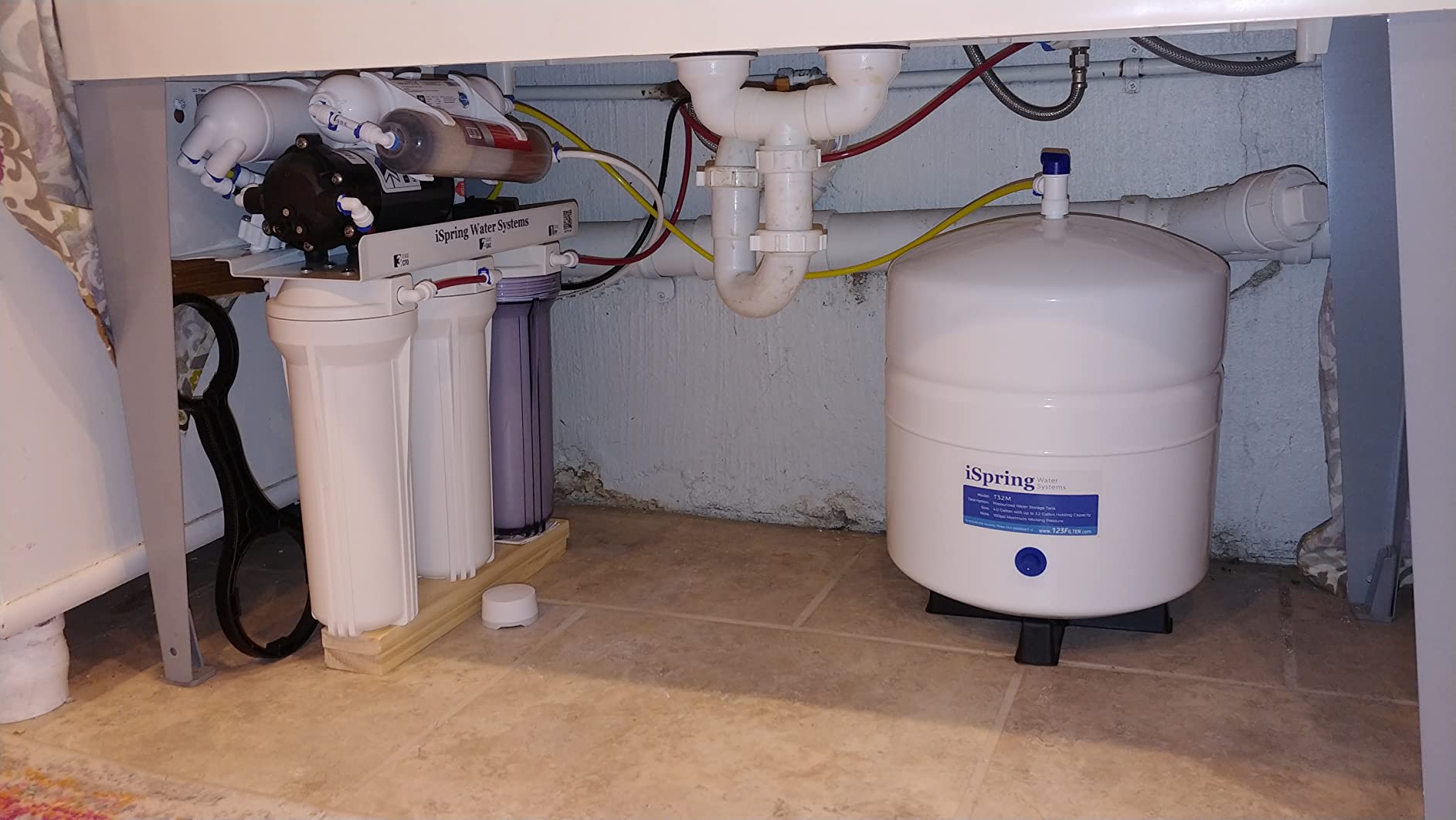
Two other practical notes from the reviews. The top-mounted faucet fastener lets you install the faucet entirely from above the sink, which is a real advantage if you are working alone. And the universal 100-240V 50/60Hz adapter means the unit works across household voltage setups, which matters for anyone outside North America. Filter sets are purchased separately and account for the ongoing cost of ownership, so factor that into a five-year budget rather than comparing purchase prices alone.
4. iSpring RCC1UP-AK – Best for Hard Water With Elevated TDS
iSpring RCC1UP-AK, 100 GPD 7-Stage Reverse Osmosis Under Sink Water Filtration System with Boost Pump, Alkaline Remineralization and UV Filter, Patented Top-Mounted Faucet Design for Easy Installation
7 stages
100 GPD
Boost pump
UV with flow sensor
750 ppm max TDS
Pros
- Boost pump improves efficiency and cuts wastewater
- Flow-sensor UV extends bulb life
- Reported to work well on hard well water with iron staining
- Tank fills in about 40 minutes
- Long reported service life from original owners
Cons
- Bulky and needs both power and under-sink space
- Booster pump can be noticeably loud
- Alkaline cartridge can taste flat without a pre-flush
- Some tubing arrives out of round
This is the model the well community recommends most often, and the reason shows up repeatedly in owner reports: measured TDS drops from around 300 ppm into the teens, and clear improvement over acidic, metallic tap water. The 100 GPD rating is roughly a third more capacity than a standard 75 GPD unit, which matters if you are filling cooking pots and drinking water at the same time.
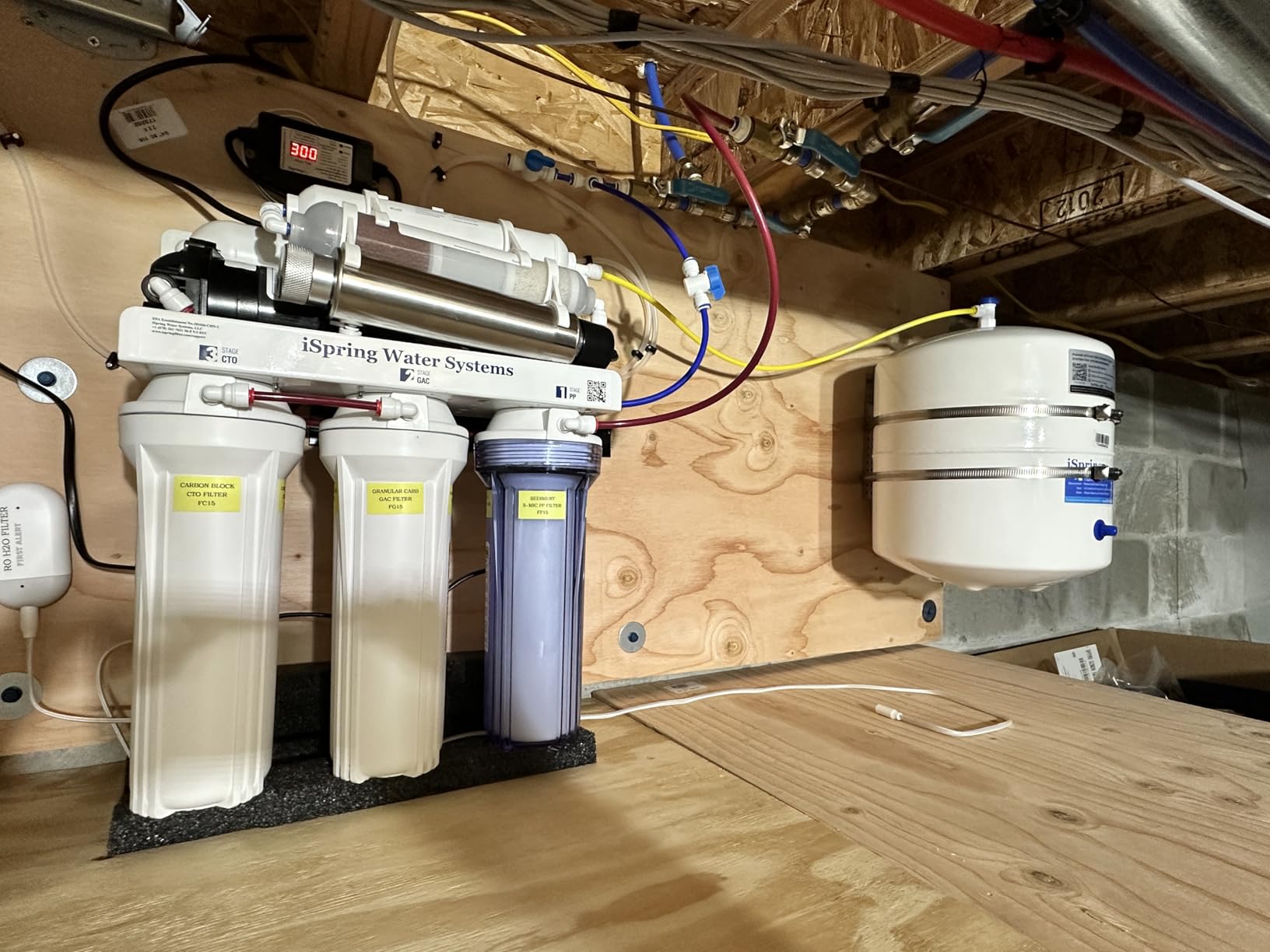
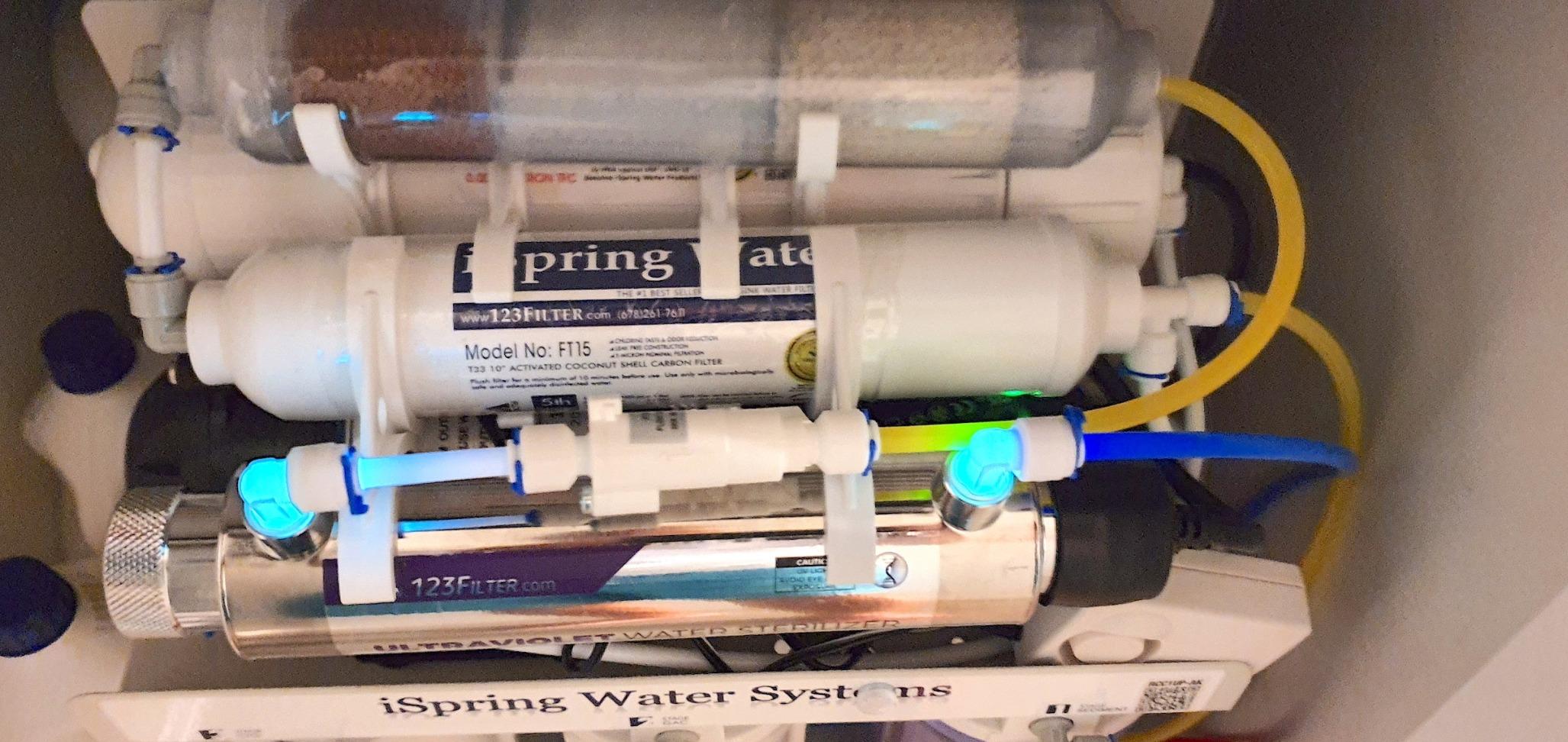
Unlike the smaller pumpless designs, this system pairs its booster pump with a 0.0001 micron thin-film composite membrane, an alkaline filter, and a UV stage. That combination is closer to what a treatment contractor would assemble for a moderately hard well.
The UV Flow Sensor and Bulb Life
The UV lamp uses a smart flow sensor with a three-minute delay before it energizes. Water passing through triggers the light, and when flow stops the lamp waits before shutting down so it does not flicker on for a splash. Owners report this extends bulb life noticeably, which matters because a UV bulb that runs continuously on a cabinet that sees frequent short draws would burn out far sooner.
It is a thoughtful power management decision, and it is one of the reasons this unit holds up on a well where a whole-house softener or iron filter is also drawing water on the same line.
Hardness, Iron, and Real-World Well Performance
Reviewers describe this as working well on well water with high hardness, iron staining, and elevated TDS, and the filler time for the roughly 3 gallon storage tank is about 40 minutes for most households. That is a good number to sanity-check against your own routine: if you are a family of four who wants RO water for drinking and cooking only, it refills well within a day.
The Hardware Trade-Offs
Owners report the booster pump can be noticeably loud, with some describing clatter in the cabinet. The alkaline cartridge can leave a flat or earthy taste if water sits in it, which a short pre-flush resolves. Some tubing arrives slightly out of round and needs trimming before it seats and seals, and the faucet mounting hardware may not fit thick sinks such as cast iron or granite.
Against those, the support experience is repeatedly described as exceptional, with named technicians resolving fitting, pump, and faucet problems and shipping parts at no charge. One buyer reported still running the same unit more than a decade after buying it, and another needed a replacement pump head after roughly 12 years. Max supported TDS is 750 ppm, so treat this as a strong choice below that threshold rather than for the highest-TDS wells.
5. iSpring RCC7AK-BN – The Most Proven NSF-Certified System
iSpring RCC7AK-BN NSF Certified, 75 GPD, Alkaline 6-Stage Reverse Osmosis System, pH+ Remineralization RO Water Filter System Under Sink Patented Top-Mounted Faucet Design for Easy Installation
6 stages
75 GPD
70 psi operating
No power needed
NSF/ANSI 58 certified
Pros
- Largest review base in the group at more than 21000 ratings
- NSF/ANSI 58 certified for the entire system
- No electricity required
- Alkaline pH+ stage balances taste
- Published reduction figures per contaminant
Cons
- Needs about 45 psi static pressure to perform
- 2:1 to 3:1 waste ratio is higher than pump designs
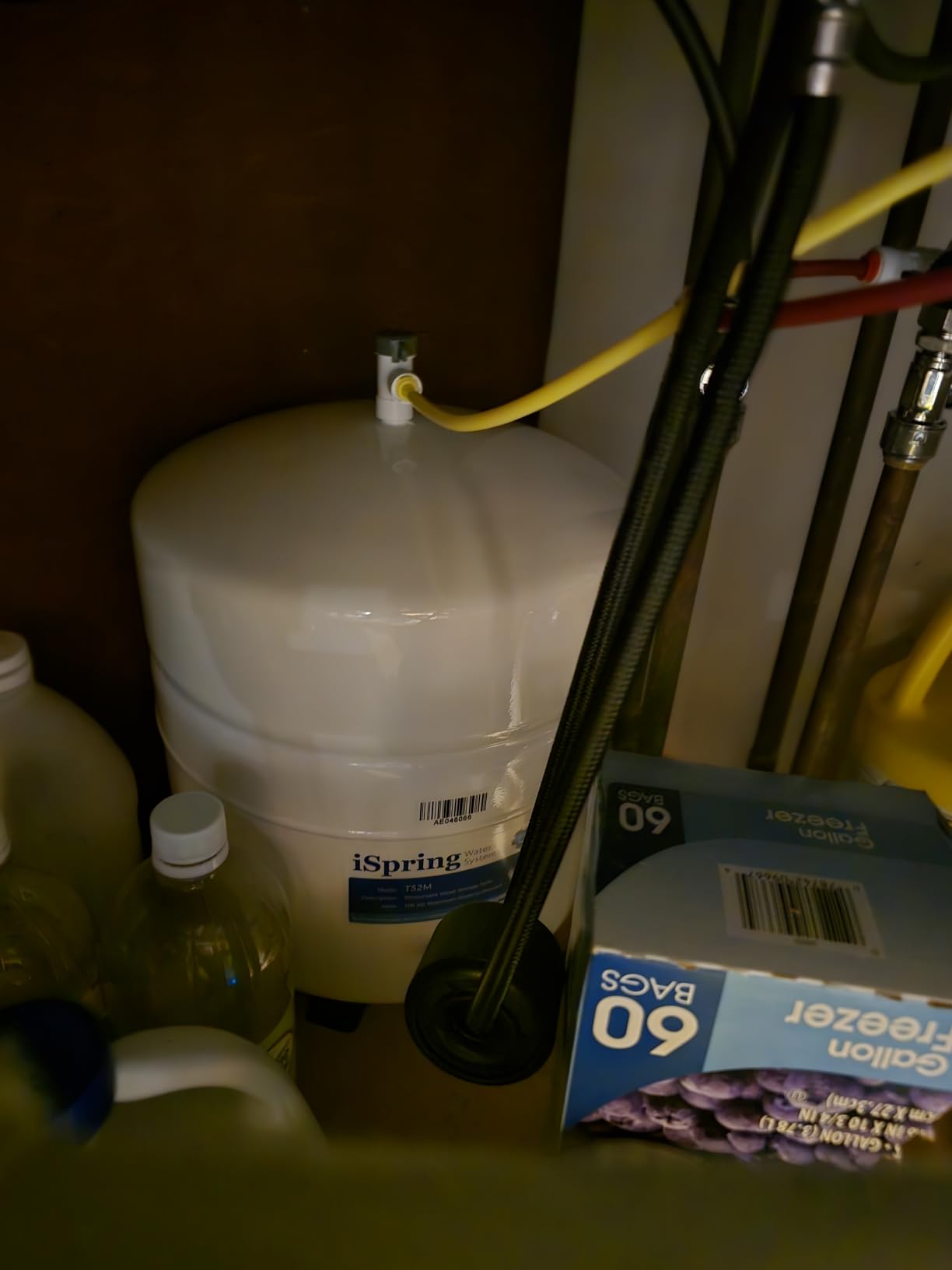
- Tank often will not sit upright under a sink
- Supplied tubing is frequently too short
With more than 21000 ratings, this is the most proven system we evaluated, and on well water its appeal is a specific combination: full-system NSF/ANSI 58 certification, published reduction figures per contaminant, and zero power requirements. On a well where a pump fails, that last point is not trivial.
The published numbers are the differentiator. TDS reduction of 93 to 98 percent, PFAS 96 to 99 percent, chlorine 95 to 99 percent, lead above 98.9 percent, and asbestos above 99.7 percent. Certification for the complete system rather than for individual components means the assembly as a whole has been verified, which is the standard the well community asks for.
What the No-Pump Design Costs You
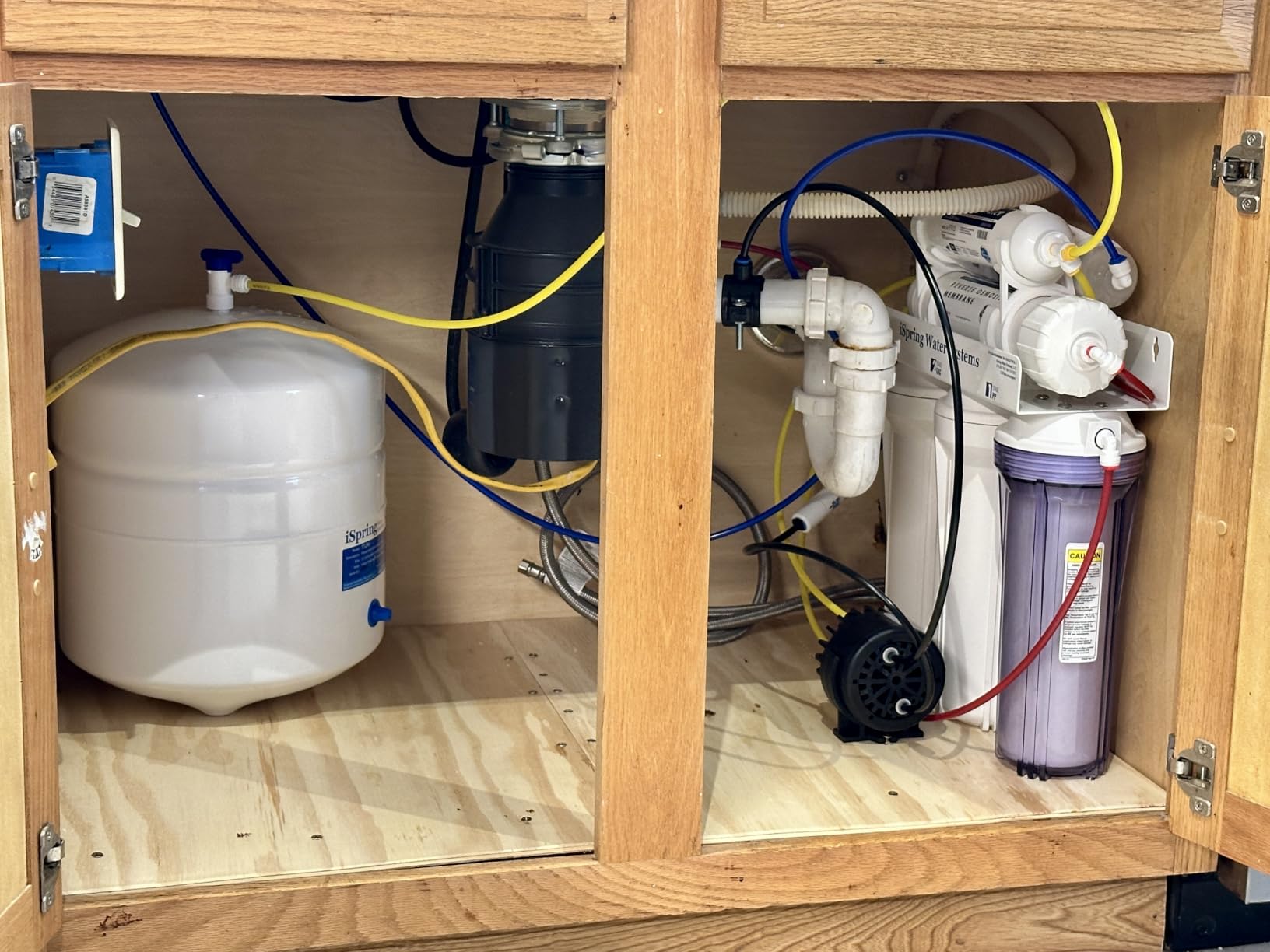
The trade-off is explicit and worth stating plainly. Without a booster pump, performance is tuned for 45 to 70 psi, and homes below roughly 45 psi static pressure will underperform. The waste-to-pure ratio typically runs 2:1 to 3:1, which is the price of the no-power, no-pump design. On a well, that means more drain water per gallon of output, and the drain line needs to handle it.
If your well pressure is solid and you want the simplest install with nothing to plug in, this is a good match. If your tank struggles, step up to a pumped system such as the RCC7P-AK.
Taste, pH Balance, and Support
The sixth-stage alkaline mineral boost is the most mentioned feature among owners, delivering balanced pH rather than the acidic flatness of plain membrane output. Many describe calling iSpring support with their measured PSI and ppm readings and receiving a specific recommendation along with free replacement parts when a canister or tank valve fails.
Fitting It Under a Real Sink
The practical complaints are consistent. The storage tank often will not fit upright under a standard sink and has to be laid on its side, the supplied 10 foot tubing lengths are regularly too short for real installs, and the filter housings have no handle, which makes changes fiddly in a tight cabinet. A 75 GPD rating is modest for larger households, so size your actual drinking water consumption before committing.
6. Waterdrop G3P600 – Best Tankless System for Large Families
Waterdrop G3P600 Tankless Reverse Osmosis Water Filter System, 600 GPD
8 stages
600 GPD
Tankless
NFS 58 and 372 certified
Smart faucet
Pros
- Tankless design frees roughly 70 percent of under-sink space
- 600 GPD with a 2:1 pure-to-drain ratio
- Front-facing filters change in about 3 seconds
- Smart faucet shows live TDS and filter life
- SGS tested 8-stage filtration
Cons
- Requires under-sink electricity
- Replacement filters cost more than competing systems
- CF filter has been hard to find at times
- Faucet needs a larger sink opening
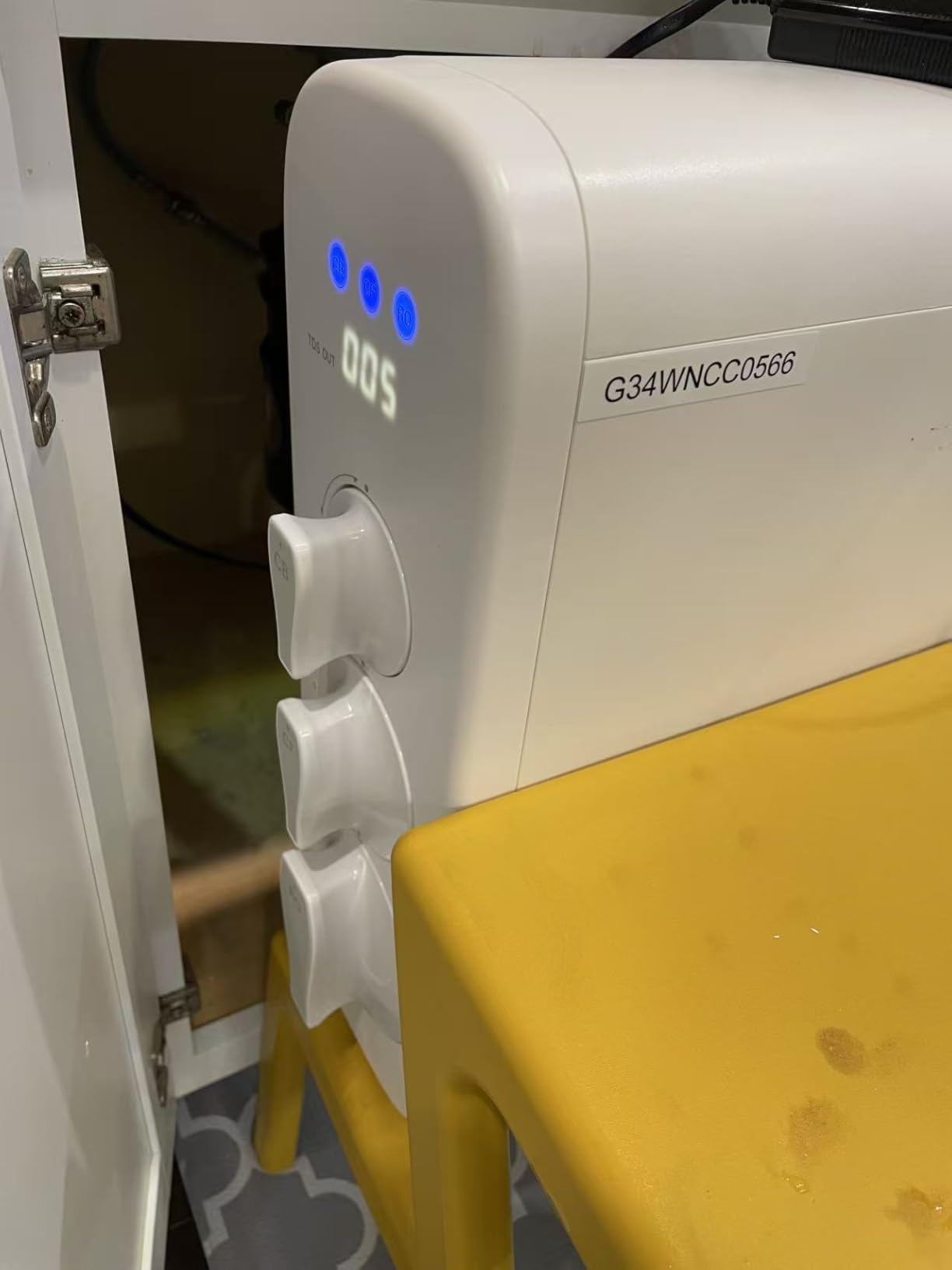
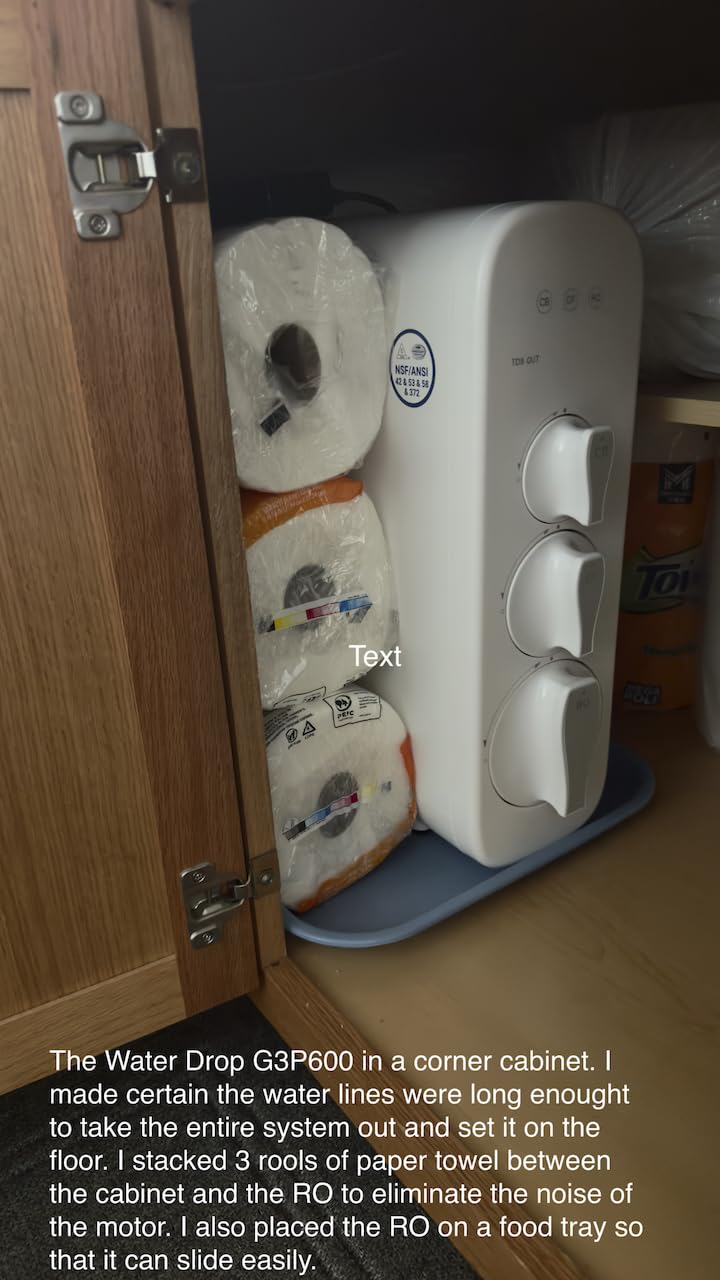
The tankless argument is a hygiene argument as much a space argument. A pressurized storage tank is a sealed plastic vessel that sits in a dark cabinet, and owners who migrate to tankless systems frequently cite the removal of that tank as a headline benefit alongside the roughly 70 percent of under-sink space it frees.
On the performance side, 600 GPD at a 2:1 pure-to-drain ratio is a strong combination. Max supported TDS is 1500 ppm, the highest rated in this roundup, and an eight ounce cup fills in about eight seconds. The filter cluster is SGS tested, and the unit carries NSF/ANSI 58, NSF/ANSI 372, and NSF/ANSI 42 certification along with FCC, EU, and UKCA standards.
The Display Faucet and Filter Life Tracking
The smart display faucet shows live TDS plus a per-filter life tracker with blue, yellow, and red status. On well water this is more than a convenience, because pre-filter loading rate is the thing that tells you whether your iron treatment upstream is still working. Owners frequently verify the display against an independent TDS meter, and the readings generally confirm the claims.
One owner reported a measured reduction from 358 ppm to single digits, which is the kind of result that happens when the feed water is already in good shape. That is the honest framing for this and every other system here: the membrane polishes, the pre-treatment does the heavy lifting.
Costs and Practical Constraints
The recurring gripes are financial and logistical. Replacement filter sets cost noticeably more than competing RO systems, and the CF replacement filter has historically been hard to find, which creates downtime between changes. The unit needs under-sink electricity, ideally on an always-hot unswitched outlet. The faucet requires a larger sink or counter opening than most small RO faucets, and the automatic flush can trigger after very little use, wasting water unexpectedly.
Measure your cabinet against 18.12 by 5.67 by 17.72 inches before you order, and be aware that tankless systems show some TDS creep, so the first draw after a long idle period can read or taste differently until flushed.
7. APEC Water ROES-PH75 – Best Budget Entry With Full Certification
APEC Water ROES-PH75, 6-Stage Under Sink RO System, Alkaline, 75 GPD
6 stages
75 GPD
40-85 psi feed
2000 ppm max TDS
WQA certified
Pros
- Lowest entry cost of the certified systems we reviewed
- WQA plus NSF 58 and 372 certification
- Alkaline pH+ cartridge adds calcium
- Handles well water up to 2000 ppm TDS
- Complete install kit included
Cons
- Very low flow rate of about 0.05 gpm
- No booster pump so needs 40 psi or more
- Higher waste ratio than pump or tankless designs
- Proprietary APEC cartridges for replacements
APEC has been building certified RO systems for two decades, and the appeal here is straightforward predictability. This is a WQA certified system with NSF 58 and NSF 372 certification, a 75 GPD rating, and an alkaline pH+ cartridge that uses premium-grade calcium to rebalance the acidity of standard RO output.
It is also the system rated for the highest feed TDS in this roundup at 2000 ppm, with a documented feed pressure window of 40 to 85 psi. For a well with mineral-heavy water but a reliable pressure tank, that combination is unusually capable.
Where the Slow Flow Matters and Where It Does Not
The 0.05 gpm maximum flow rate is genuinely slow compared with pump-equipped rivals. If you are filling a large stock pot for cooking, you will notice the difference. For drinking, formula, and ice water, most owners accept the trade without complaint, and reviewers repeatedly frame it as the price of the low purchase cost rather than a defect.
What you do not get is any help from a pump if your well pressure is marginal, and the waste-to-pure ratio runs higher than permeate-pump or tankless 2:1 designs. On a well with a large household, that higher drain ratio is worth factoring into the operating calculation.
Certification and the Upgrade Path
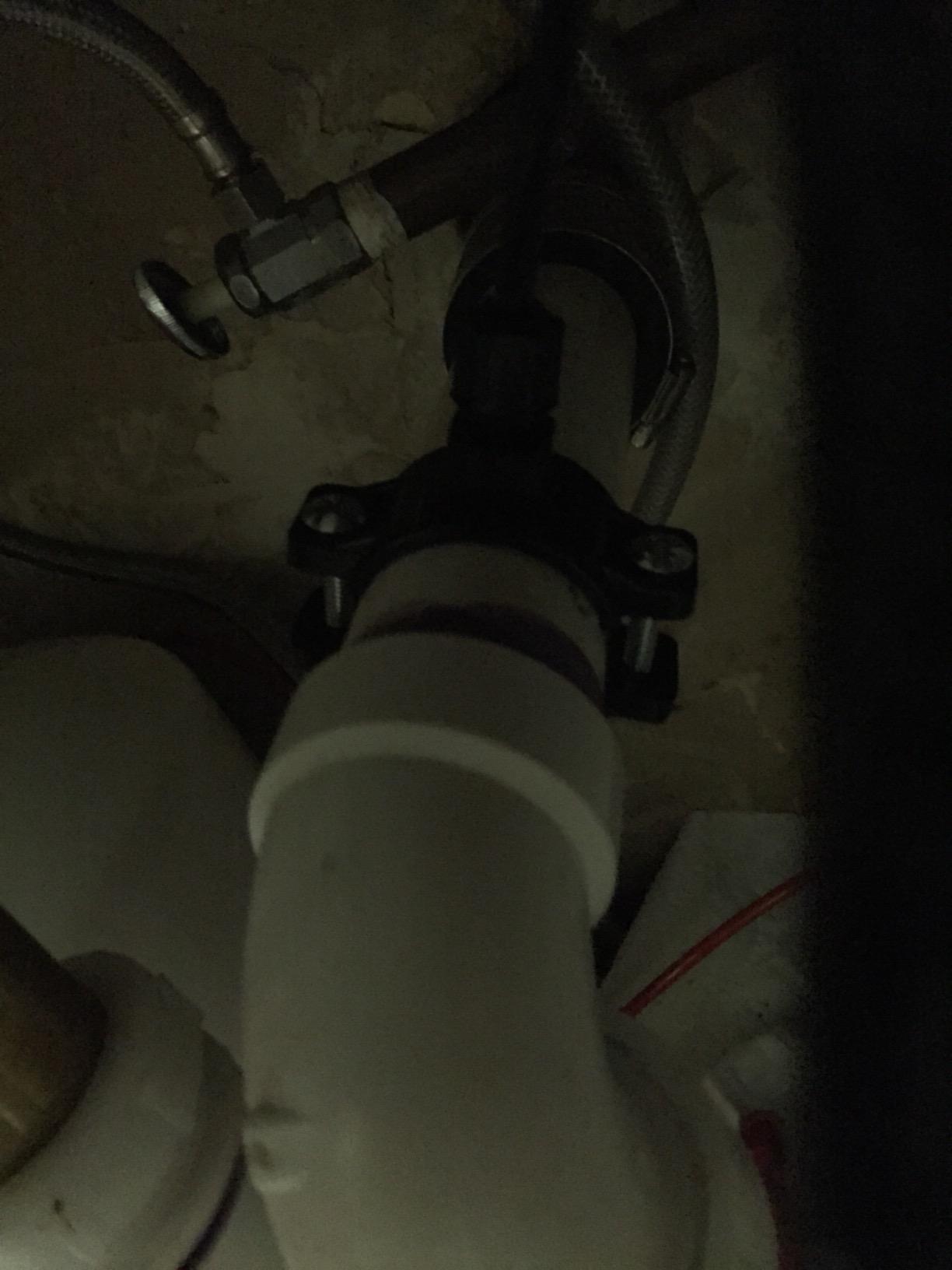
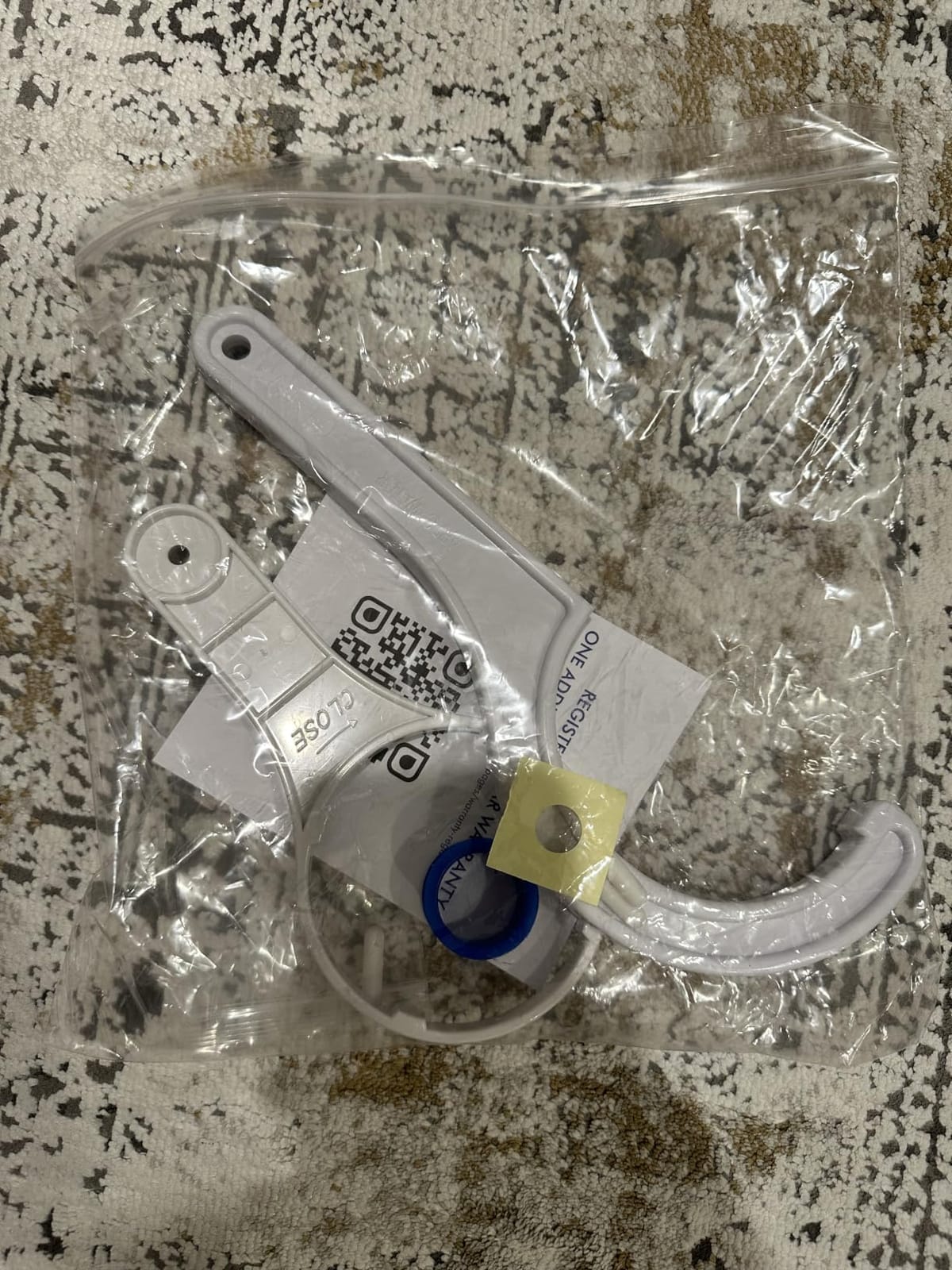
The full install kit ships with the filter set, tank, faucet, tubing, drain saddle, feed water adapter, and wrenches, so the hardware cost of getting started is covered. Filter housings are also available in 5, 6, and 7 stage variants, which lets you step up filtration as your budget and water demands change without replacing the system.
The long-run consideration is that replacement filters are proprietary APEC cartridges, so costs accumulate over the life of the system. Budget for that rather than assuming generic inline filters will fit.
8. NU Aqua 7-Stage UV Alkaline – Best for Cyst and Bacteria Protection
NU Aqua 7-Stage UV Alkaline Under Sink Reverse Osmosis Water Filter System
7 stages
100 GPD
UV sterilization
300 ppm max TDS
3 year warranty
Pros
- 120-day home trial plus 3-year warranty
- PPM meter and leak detector included in the box
- 100 GPD is double a standard under-sink unit
- UV stage targets cysts and bacteria on well water
- Color-coded tubing and quick-connect fittings
Cons
- Tallest unit reviewed at 19.5 inches
- Lowest rating in the group at 4.4
- Alkaline stage gave some owners a sulfur-like smell
- Storage tank arrived over-pressurized in one case
- Customer support criticized as slow and lacking expertise
This system is worth a look if coliform or cysts showed up in your well test and you want a second line of defense after the membrane. The UV stage sits alongside a seven-stage sequence and a HydraCoil membrane process that the manufacturer rates at up to 99 percent rejection of more than 1000 total dissolved solids.
Two things make it unusual in this group. A 120-day home trial with a three-year manufacturer warranty lets you run it through a full season of your water, and the box includes a free PPM meter and a leak detector, which are normally add-on purchases.
Where the Well Water Reports Are Strongest
The most enthusiastic reports come from well households dealing with metallic taste and staining, and long-term owners describe surprising durability, including one who reports three systems over nearly eight years without a leak. At 100 GPD the capacity runs double a standard 50 GPD under-sink system, and the maximum flow rate of 0.07 gpm is more useful than it sounds for a well household.
Max supported TDS is 300 ppm, which is the lowest ceiling of the units we rated. If your lab report shows a TDS reading above 300 ppm, this is not the right choice, whatever else it does well.
Support and Component Complaints
This unit scored 4.4, the lowest in our group, and the reason is a distinct cluster of after-sales complaints: automatic shutoff valve and fitting failures producing new leaks within months, a storage tank that arrived over-pressurized from the factory and would not fill, and customer support described as lacking RO expertise and slow to ship parts. At least one owner found the alkaline sixth stage produced an unpleasant sulfur-like smell and removed the cartridge.
Counterweight those reports with the physical constraints. At 19.5 inches tall, it is the tallest unit we evaluated and can fail to fit under shallower cabinets, and the UV light makes the first few seconds of water warm. If your priority is the trial period and the bundled meter rather than long-term support responsiveness, this is a reasonable pick. If support reliability matters most, choose a system with a larger review base.
9. Aquasure 32000 Grain Whole House Bundle – Best When Every Tap Needs Softening
Aquasure 32,000 Grains Whole House Water Filter Bundle with Automatic Digital Metered Control Softener and 75 GPD RO Reverse Osmosis Drinking System | Removes Hardness | Ideal for 1-3 bathrooms
32000 grain softener
75 GPD RO included
Freestanding
1200 ppm max TDS
Up to 5 year warranty
Pros
- Only bundled option pairing whole-house treatment with a drinking RO
- Well owners report the rustiest water turned clear and rust free
- Digital metered control head reduces maintenance
- Owners report noticeably softer skin and hair
- Available in 32000 and 48000 and 64000 grain versions
Cons
- Most expensive option we reviewed
- 52 inch freestanding softener needs a floor location
- Installation instructions described as unclear
- Support criticized over a salt consumption fault
- Salt replenishment is easy to overlook
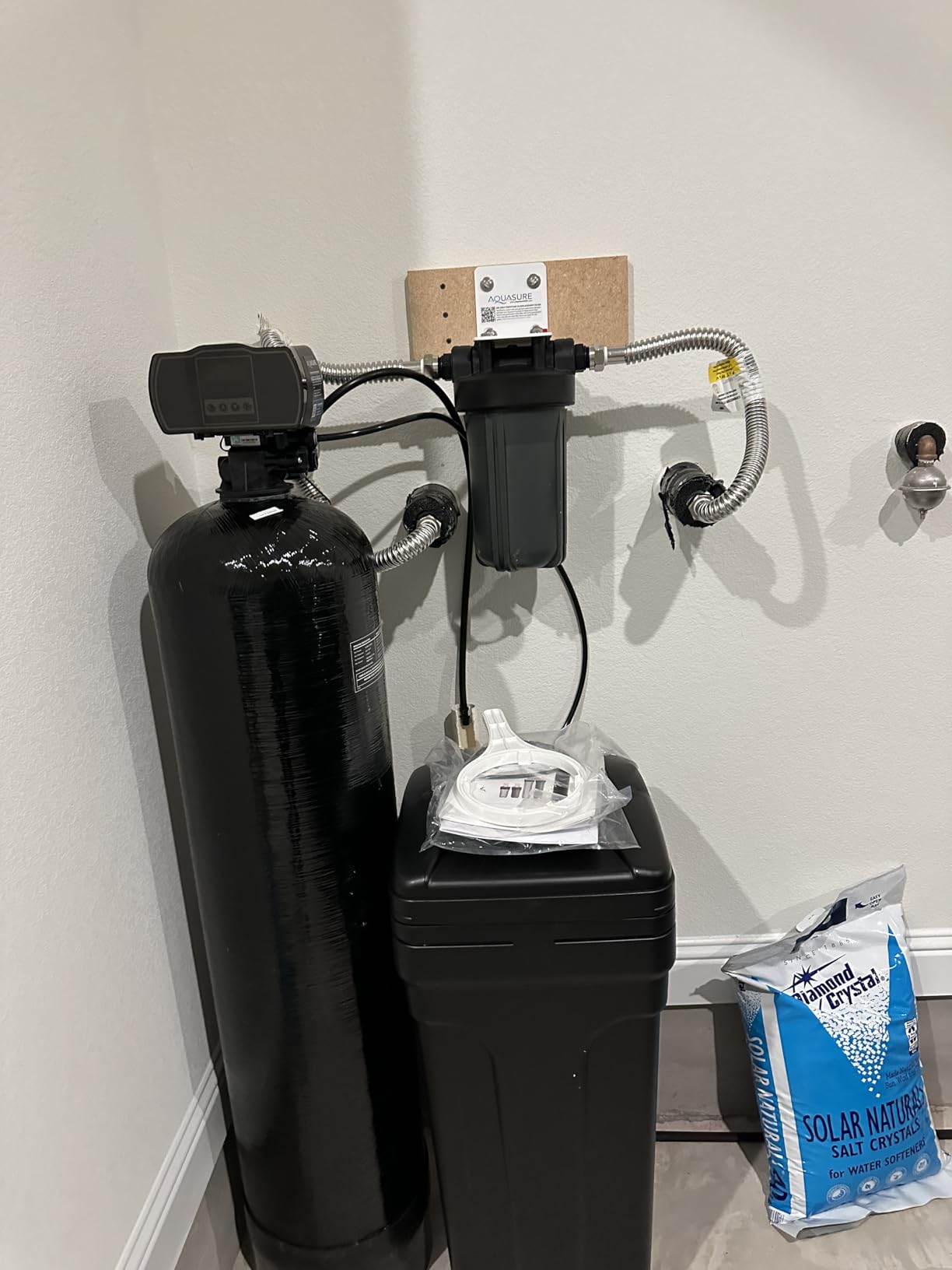
This is the only true whole-house option in the roundup, and it exists because of a well-specific reality: if your water is hard enough to leave orange staining and rust in the shower, pre-treating only the RO feed line fixes your drinking water but leaves the rest of the house untreated. This bundle treats everything and adds a dedicated 75 GPD drinking system at the sink.
The softener removes 32000 grains of hardness capacity with an Aquatrol automatic digital metered control head, which meters regeneration to actual water used rather than a clock schedule. That reduces both water and salt consumption, and owners consistently report the practical result: softer skin and hair, and water that no longer stains fixtures.
Iron Removal at the Point of Entry
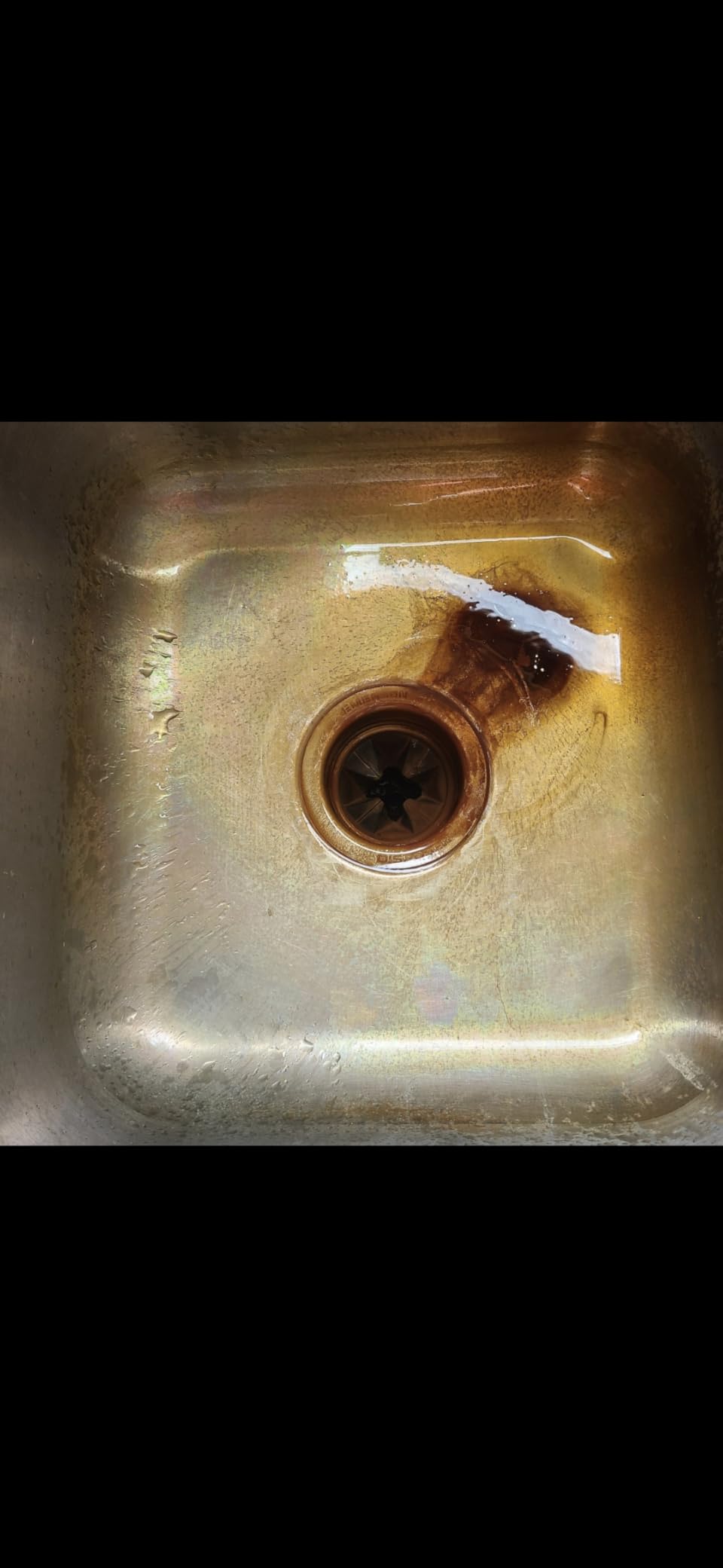
Well owners who installed this system describe the most dramatic results in the entire review set. One describes the rustiest well water they had ever seen coming out completely clear and rust free. That matters for membrane protection as much as for appearance, since the whole-house filter sits ahead of the RO drinking system and keeps the feed line cleaner.
Sizing is specified for homes with 1 to 3 bathrooms and up to 3 family members, and larger grain capacities exist for bigger homes. Max supported TDS for the drinking component is 1200 ppm.
Installation and Support Realities
At 52 inches tall this is a freestanding unit that needs a floor location, typically beside the water heater or in a utility area, not under-sink space. Installation instructions are described as unclear and the RO line needs warming to become pliable before it seats, so budget time or call a plumber for that portion.
The most serious complaint in the review set concerns after-sales support: a small but vocal group spent months chasing a salt consumption fault with little progress, which is a serious problem for a system you cannot bypass. Owners also note the softener needs periodic salt replenishment that is easy to forget until the system starts behaving badly. Several DIY installers report saving more than 1000 dollars in professional installation charges, but the documentation gap is real.
10. Express Water ROALK10D – Best Reported Results on Sulfur and Iron Odor
Express Water ROALK10D, 10-Stage Under Sink RO System, Alkaline, 100 GPD
10 stages
100 GPD
0.8 gpm flow
1000 ppm max TDS
BPA free
Pros
- Ten stages with a UV option in an entry-level package
- Owners on iron and sulfur wells report the odor is completely gone
- Built-in emergency leak stop detector
- Quick-connect fittings allow UV and deionization add-ons
- Common cartridge sizes are easy to source
Cons
- Smallest review base at just over 100 ratings
- Bulky footprint that caused trouble on an island sink
- Pedal-style feed valve confuses new owners
- Faucet mounting requires drilling
Where the other well-report systems carry thousands of ratings, this one has just over 100. I include it because the specific reports from iron and sulfur wells are unusually direct, and because the built-in emergency leak stop detector is a feature most competitors sell separately.
Owners with high iron and a sulfur smell report the odor is completely gone in the finished water, and several describe quiet operation with no leaks after months of use. Rated 4.5 on a small sample, treat that number as encouraging rather than conclusive.
Ten Stages and 0.8 gpm Flow
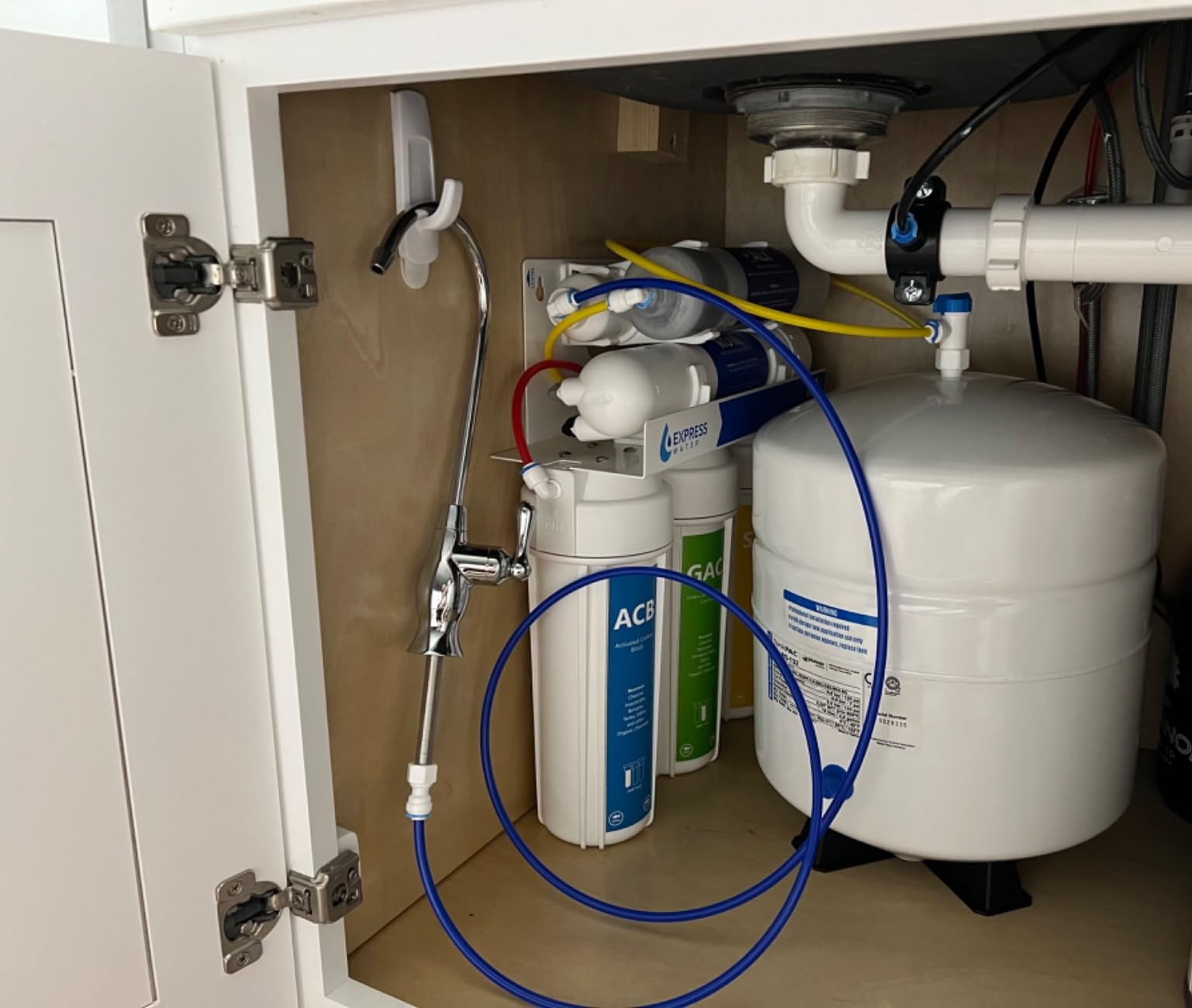
The specification sheet claims 10-stage filtration removing up to 99.99 percent of lead, chlorine, fluoride, nitrates, calcium, arsenic, and bacteria, with Active Mineral Technology adding calcium, potassium, and magnesium back to the finished water. The 100 GPD capacity with flow up to 0.8 gpm is faster than most pumpless systems in this roundup despite having no listed pump, and max supported TDS is 1000 ppm.
On odor specifically, treat the result cautiously. A sulfur smell strong enough to survive RO usually means hydrogen sulfide is high enough that pre-treatment, not the membrane, is the controlling factor. Owners here clearly got a result, but the system cannot substitute for oxidation or catalytic carbon upstream when the raw water carries a heavy sulfide load.
The Practical Quirks
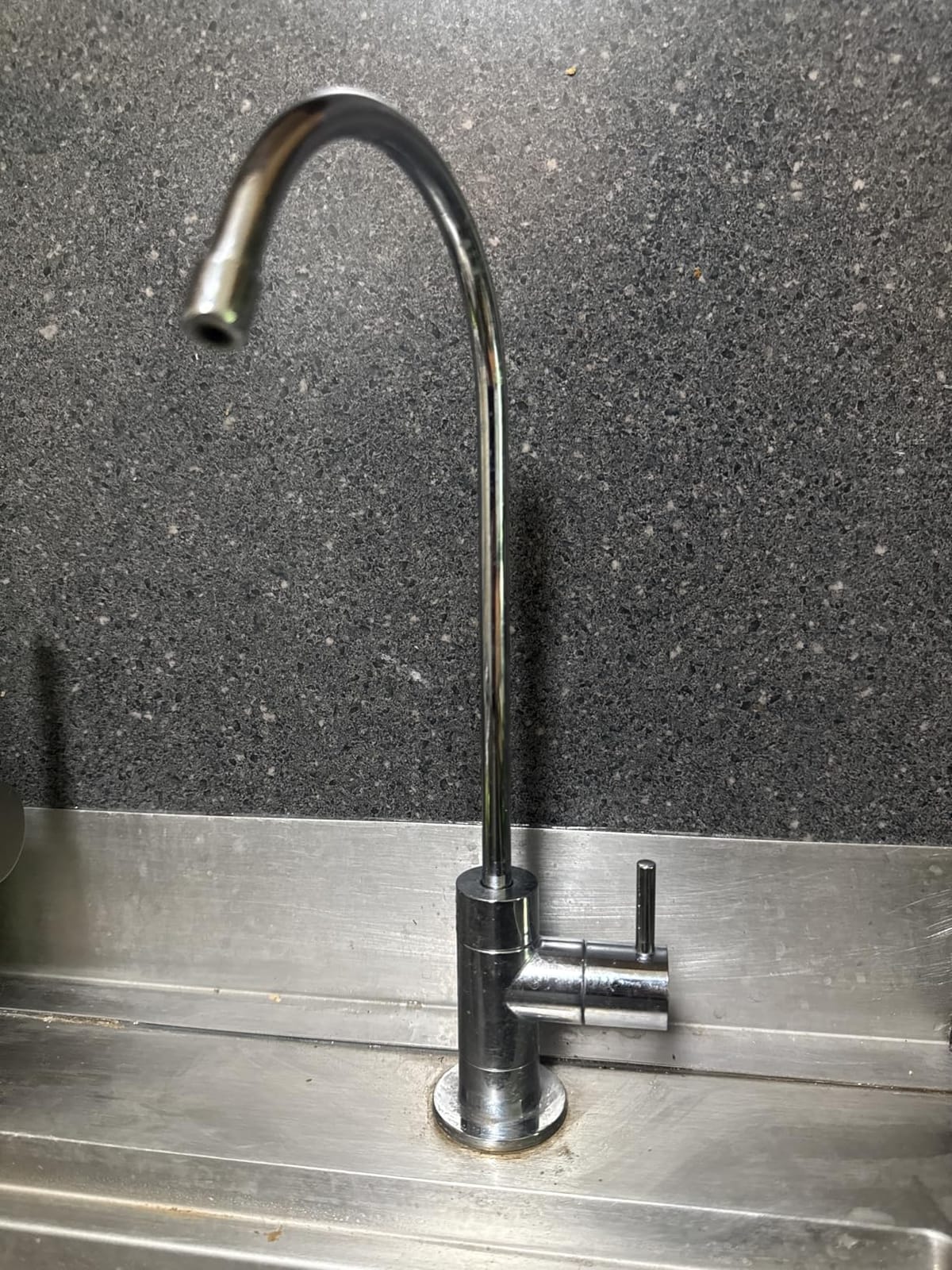
Two design choices generate most of the complaints. The pedal-style feed valve looks nothing like a standard valve, and more than one new owner assumed the system had failed when they saw it. The included faucet mounting requires drilling, and several owners substituted an all-in-one faucet to avoid cutting their counter.
The unit is also bulky at 27 pounds, which caused trouble for one owner on a kitchen island sink. On the positive side, the stages use common cartridge sizes that are straightforward to source, and the system is fully upgradable through quick-connect fittings including UV and deionization attachments. Components are BPA free and NSF 372 certified, with a one-year warranty and on-demand expert support.
How to Choose a Reverse Osmosis System for Your Well
Start with a certified water test, not a product list
Every recommendation in this article assumes you know what is in your water. Request a certified lab panel covering iron, manganese, hardness in grains per gallon, pH, TDS, sulfide, and coliform bacteria, and run a second panel six months later because well chemistry shifts with rainfall and recharge. The Consumer Confidence Report from your local water utility is a useful reference for comparison but does not test your well.
Match GPD to how you actually use drinking water
GPD is production under test conditions, not what you will get at your sink. A household of one or two drinking and cooking only needs about 75 GPD. A family of four or a home where you fill large pots and make ice benefits from 100 GPD or more. A 600 GPD tankless system is oversized for most single-family kitchens and only makes sense if you want no tank and near-instant flow.
Check feed pressure before anything else
The membrane needs 40 to 60 psi to work as rated. Measure static pressure at the sink with the pressure tank fully charged, and cycle the well pump if necessary. Below 45 psi, choose a pumped system or install a booster pump rather than accepting poor output. This single check eliminates most of the disappointment we found in the reviews.
Pre-treat the feed line or the whole house
Protecting only the RO feed line is the cheaper path and handles drinking water. Treating the whole house also stops fixture staining, protects the water heater, and makes other taps usable. Whole-house treatment earns its cost when iron is high enough to discolor water outside the kitchen or when hardness is eating your water heater.
Read the certification label, not the marketing claim
NSF/ANSI 58 covers TDS reduction for RO systems, NSF/ANSI 53 covers health-related contaminants, NSF/ANSI 42 covers taste and odor, and NSF/ANSI 372 covers lead-free materials. Full-system certification is stronger than component certification, and published per-contaminant reduction figures are more useful than a single blanket percentage. WQA certification is another mark worth looking for.
Budget for filters, not just the system
On well water, pre-filters typically need changing every 3 to 6 months rather than the 6 to 12 months typical on city water, because iron and sediment load the media faster. Add in the higher drain volume of a no-pump system and you have a running cost that a purchase price alone does not reveal. Filter availability matters as much as price, since proprietary cartridges in some lines have been hard to find.
What RO cannot do on its own
Reverse osmosis does not remove every contaminant equally. It is very effective on dissolved metals, TDS, PFAS, fluoride, and many dissolved organics, but it is not a disinfectant for bacteria, and it does not address iron that has not already been oxidized. It also strips minerals, which is why every well-focused system here includes a remineralization stage. And it produces waste water, so plan the drain line before the drinking water line.
Frequently Asked Questions
Which reverse osmosis system is best for well water?
The Home Master TMAFC-ERP is our pick for most well households because its 8.5 inch catalytic carbon media per pass, non-electric permeate pump, and 1:1 drain ratio handle moderate ferrous iron, hard water, and high sediment load while cutting water waste by up to 80 percent. It is rated to 4.8 across more than 1400 reviews. It still requires pre-treatment if your lab panel shows iron above roughly 0.3 mg/L.
Does a reverse osmosis system work with well water?
Yes, but not effectively on raw well water. A reverse osmosis membrane needs 40 to 60 psi of feed pressure and clean feed water. Private wells commonly carry iron, manganese, hydrogen sulfide, hardness, sediment, and bacteria that scale and foul the membrane. Add a 5 micron sediment stage, iron and sulfur treatment, a softener above about 5 grains of hardness, and enough pressure first.
Will a reverse osmosis system remove sulfur from well water?
A membrane alone usually does not fix a sulfur problem, because hydrogen sulfide is a dissolved gas and passes through with the feed water. You need oxidation-based pre-treatment such as air injection, chlorine or ozone injection, or catalytic carbon media ahead of the membrane. The Home Master TMHP and Express Water ROALK10D have owner reports of sulfur odor eliminated in the finished water, but both assume treatment upstream.
Does reverse osmosis remove iron from well water?
It removes some, but iron at high levels will foul the membrane and shorten its life. Ferrous iron dissolves in the water and needs oxidation before filtration, which is what air injection systems and catalytic carbon media do. Ferric iron is already an oxidized solid and is caught by a 5 micron sediment filter. Above roughly 0.3 mg/L, pre-treatment is the controlling factor, not the membrane.
What is a major downside of reverse osmosis water?
The most cited drawback is that reverse osmosis strips dissolved minerals such as calcium and magnesium, leaving flat, slightly acidic water. That is why every well-focused system in this roundup adds a remineralization or alkaline stage. The second drawback is wastewater: a no-pump design commonly sends 2 to 3 gallons of drain water per gallon of purified output, which is costly on a well.
Final Verdict: Matching a System to Your Well
If you want one answer for most well households, the Home Master TMAFC-ERP is the system to build around in 2026. Its catalytic carbon, permeate pump, and two-pass remineralization answer the three well problems that show up most often, and it holds the highest rating in the group. If iron and bacteria are your specific worries, add the Home Master TMHP with its iron prefilter and UV stage.
If your pressure tank is the weak link, choose a pumped system: the iSpring RCC7P-AK for moderate TDS, or the iSpring RCC1UP-AK at 100 GPD for hard, high-TDS wells. If cabinet space or a hard water tank is driving your decision, the Waterdrop G3P600 gives you 600 GPD with no tank at all. If cost is the barrier to entry, the APEC ROES-PH75 is a fully certified starting point.
For whole-house hardness and staining, the Aquasure bundle is the only option here that treats every tap and adds a drinking system. Whatever you choose, get the lab panel first, pre-treat the feed, and confirm 40 psi at the sink. That prep work is what makes the best reverse osmosis systems for well water last.