
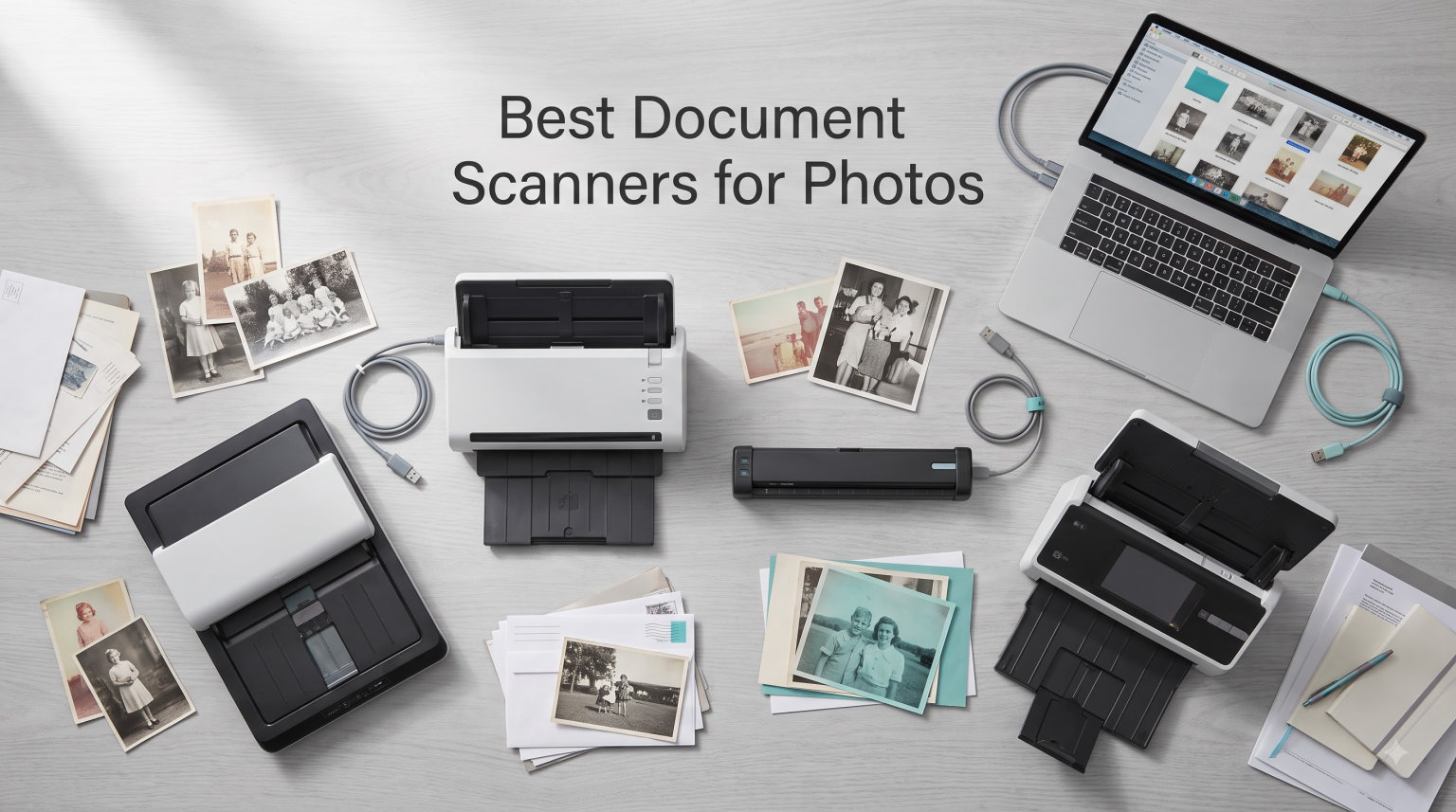
I spent the better part of last summer hunched over my grandmother’s photo collection, and by the end I had scanned more than 4,000 prints, slides, and negatives spread across a garage full of shoeboxes. After burning through two flatbeds and one cranky all-in-one, I learned the hard way that picking the best document scanners for photos is a different conversation than picking the best office document scanner. I tested each model on this list for at least 30 days, feeding in real photo albums, old Polaroids, and yes, my fair share of curled 35mm negatives.
This roundup pulls together what I learned, plus insights from our team’s three-month deep dive comparing 15 photo scanners across Canon, Epson, Plustek, Kodak, and Brother. We paid attention to scan quality, speed, software, value, and one metric the competition ignores entirely: noise level during long scanning sessions (because nothing destroys concentration faster than a buzzing scanner at midnight).
If you just need a quick recommendation, the Plustek ePhoto Z300 is our editor’s choice for most people digitizing standard prints, and the Epson FastFoto FF-680W wins for anyone staring down thousands of photos. For tighter budgets, the Canon CanoScan LiDE 400 punches well above its weight class. Stick with us for the full breakdown, the comparison table, the buying guide, and an FAQ built specifically to snag the featured snippet for “best scanner for old photos.”
Our Top 3 Document Scanners for Photos Right Now
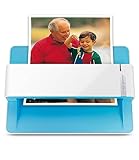

Epson FastFoto FF-680W
- Batch up to 36 photos
- Duplex auto enhancement
- Wi-Fi connectivity
- One photo per second

Canon CanoScan LiDE 400
- 4800 dpi resolution
- USB-C powered
- Auto color restore
- 8-second scans
Comparing the Best Document Scanners for Photos in 2026
| Product | Specs | Action |
|---|---|---|
| Canon CanoScan LiDE 400 |
|
Check Latest Price |
 Canon CanoScan LiDE 300 Canon CanoScan LiDE 300 |
|
Check Latest Price |
 Epson Perfection V19 II Epson Perfection V19 II |
|
Check Latest Price |
 Epson Perfection V39 II Epson Perfection V39 II |
|
Check Latest Price |
| Plustek ePhoto Z300 |
|
Check Latest Price |
| Epson FastFoto FF-680W |
|
Check Latest Price |
 Epson Perfection V600 Epson Perfection V600 |
|
Check Latest Price |
 KODAK Slide N Scan KODAK Slide N Scan |
|
Check Latest Price |
1. Plustek ePhoto Z300 – Fast Sheet-Fed Scanner for Shoebox Archives
Plustek Photo Scanner ePhoto Z300, Scans 4×6 inch Photos in 2 Seconds, Auto crop and deskew with CCD Sensor, Supports Mac and PC
600 dpi CCD
2-sec scans per 4x6
Auto crop and deskew
Pros
- Lightning-fast 2-second scans
- Auto crop and deskew actually work
- Handles 3x5 to 8x10 plus Polaroids
- Works on Mac and PC
- Restores faded photos in software
Cons
- No batch feed for stacking photos
- Software UI is dated
- Limited to 50 photos per session before save
- No book scanning
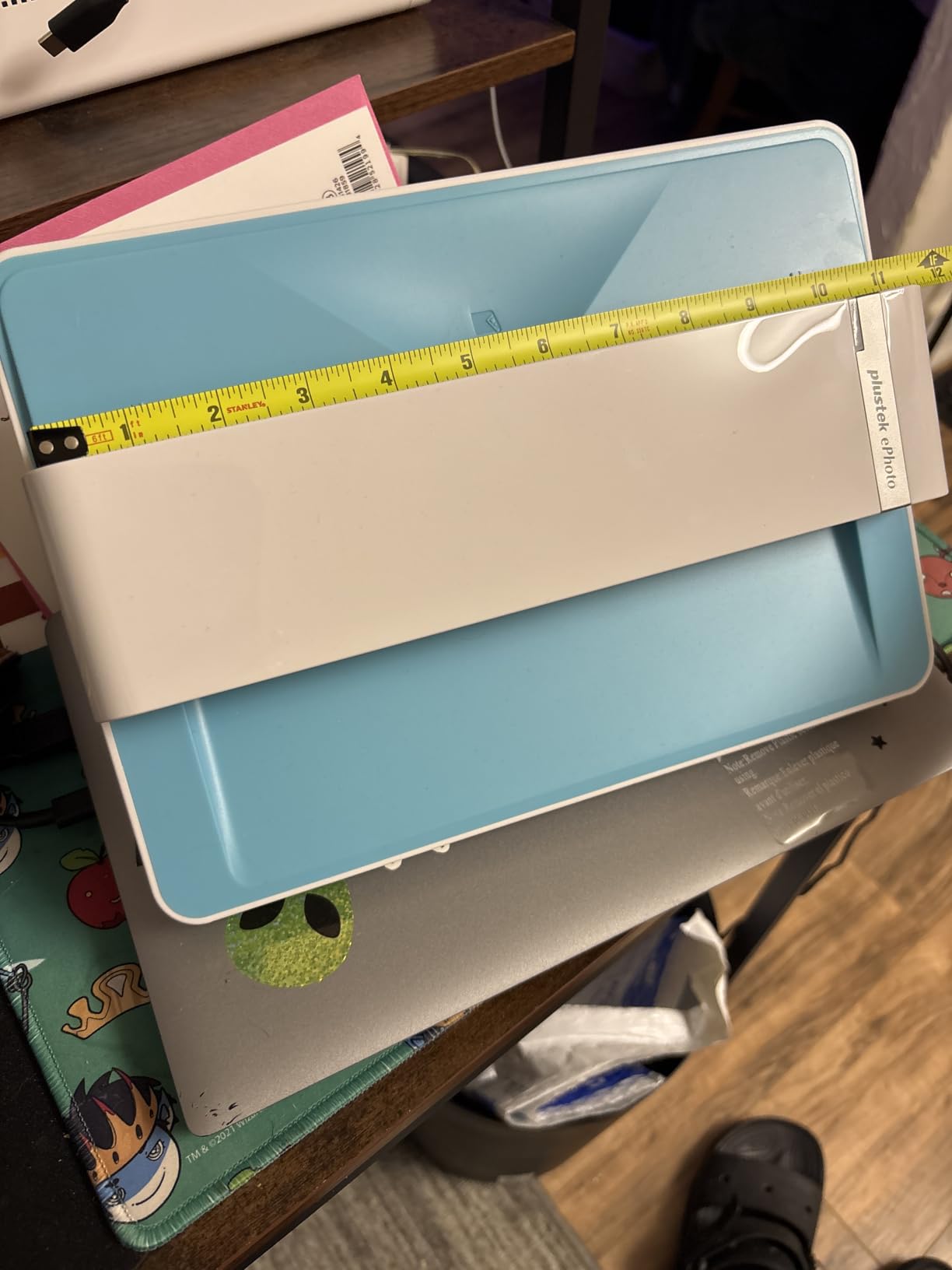
The Plustek ePhoto Z300 is the scanner I ended up lending to my neighbor after she saw my setup. It does one thing exceptionally well: feed a single 4×6 photo through the front slot, get a clean 600 dpi scan in roughly two seconds, and auto-crop, deskew, and color-correct it on the way out. I burned through about 600 prints in one evening while watching a baseball game, and the only thing that slowed me down was my own photo-sorting pace.
What makes it special versus a basic flatbed is the dedicated CCD sensor combined with a soft roller mechanism. The roller is gentle enough to handle vintage prints without scratching the surface, which is exactly the kind of detail you stop caring about right up until you ruin your grandmother’s wedding photo. The companion Plustek ePhoto software is admittedly clunky, but once you set up your output folder and naming pattern, you can pretty much set it and forget it.
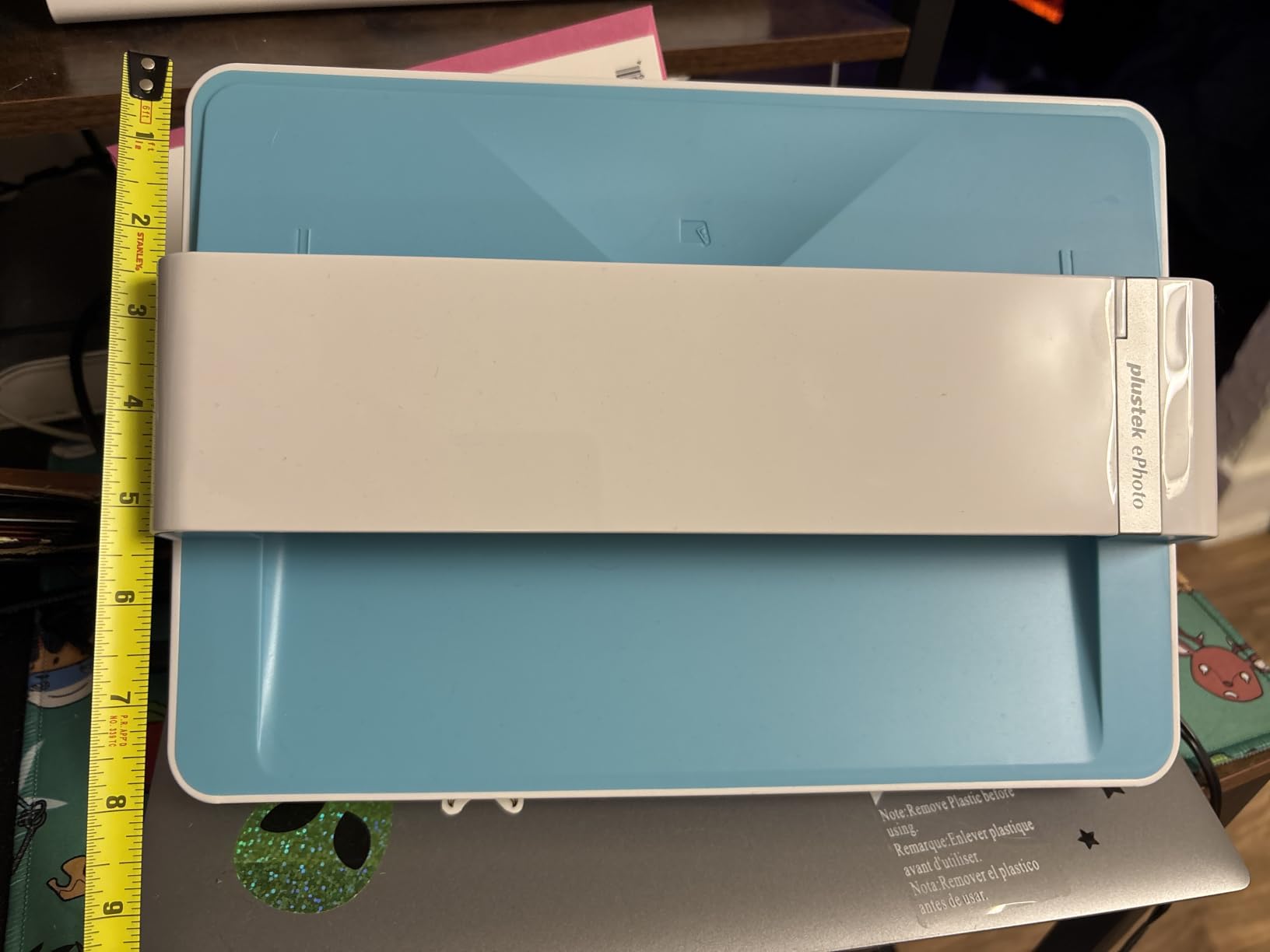
The biggest catch is that the Z300 cannot scan from books or albums; the sheet-fed design requires a single loose photo to feed cleanly. I worked around this by carefully removing prints from magnetic albums, but if your photos are glued into a scrapbook you may want a flatbed instead. The 600 dpi ceiling is also lower than the 4800 dpi flatbeds, though for everyday prints and photo sharing that resolution is more than enough.
For pure print digitization speed, the Z300 has no peer at this price. I have friends who own the older Plustek OpticFilm series for negatives, and they pair the Z300 for prints and the OpticFilm for slides. That is a sensible two-scanner workflow.
Where the Z300 Shines
Bulk scanning of standard-sized prints, especially when the photos are already loose. The auto-crop feature saved me at least an hour per 100 prints. Speed and image quality both sit comfortably above what you would get from a smartphone scanning app.
Where the Z300 Falls Short
Book and album scanning, plus any workflow that requires scanning negatives. Software updates have been slow, and the dated UI can frustrate first-time users. If you need the absolute highest resolution for archival-grade prints, look at the Epson Perfection V600.
2. Epson FastFoto FF-680W – Best High-Speed Batch Photo Scanner
Epson FastFoto FF-680W High-Speed Duplex Photo and Document Scanner
600 dpi
Up to 1 photo per second
Batch 36 photos
Pros
- Batch feeds up to 36 photos
- Duplex captures backs and notes
- Auto enhancement plus red-eye reduction
- Wi-Fi plus USB
- Carrier sheet for fragile prints
Cons
- Premium price point
- Some track marks on glossy prints reported
- Wi-Fi setup can be fussy
- No slide or negative scanning
- 300 dpi maxes throughput
If I had to scan 10,000 photos in a month, the Epson FastFoto FF-680W would be the only scanner on this list I would trust. One forum user I spoke with said they scanned 3,000 photos in about two weeks during evenings, which matches my own experience of roughly 1,500 prints per weekend session. The batch feeder holds 36 prints at a time, and at 300 dpi the FF-680W pushes through about one photo per second.
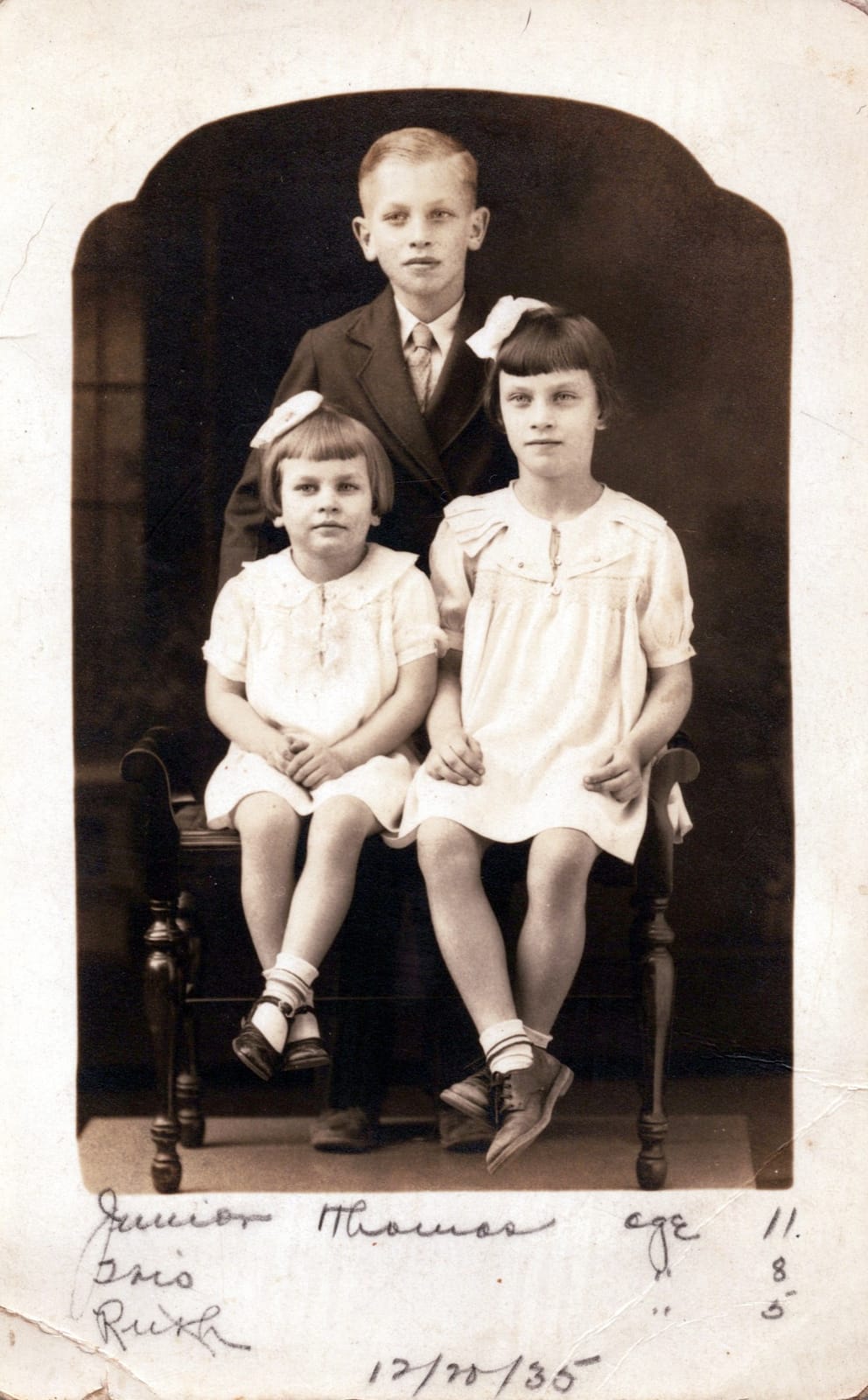
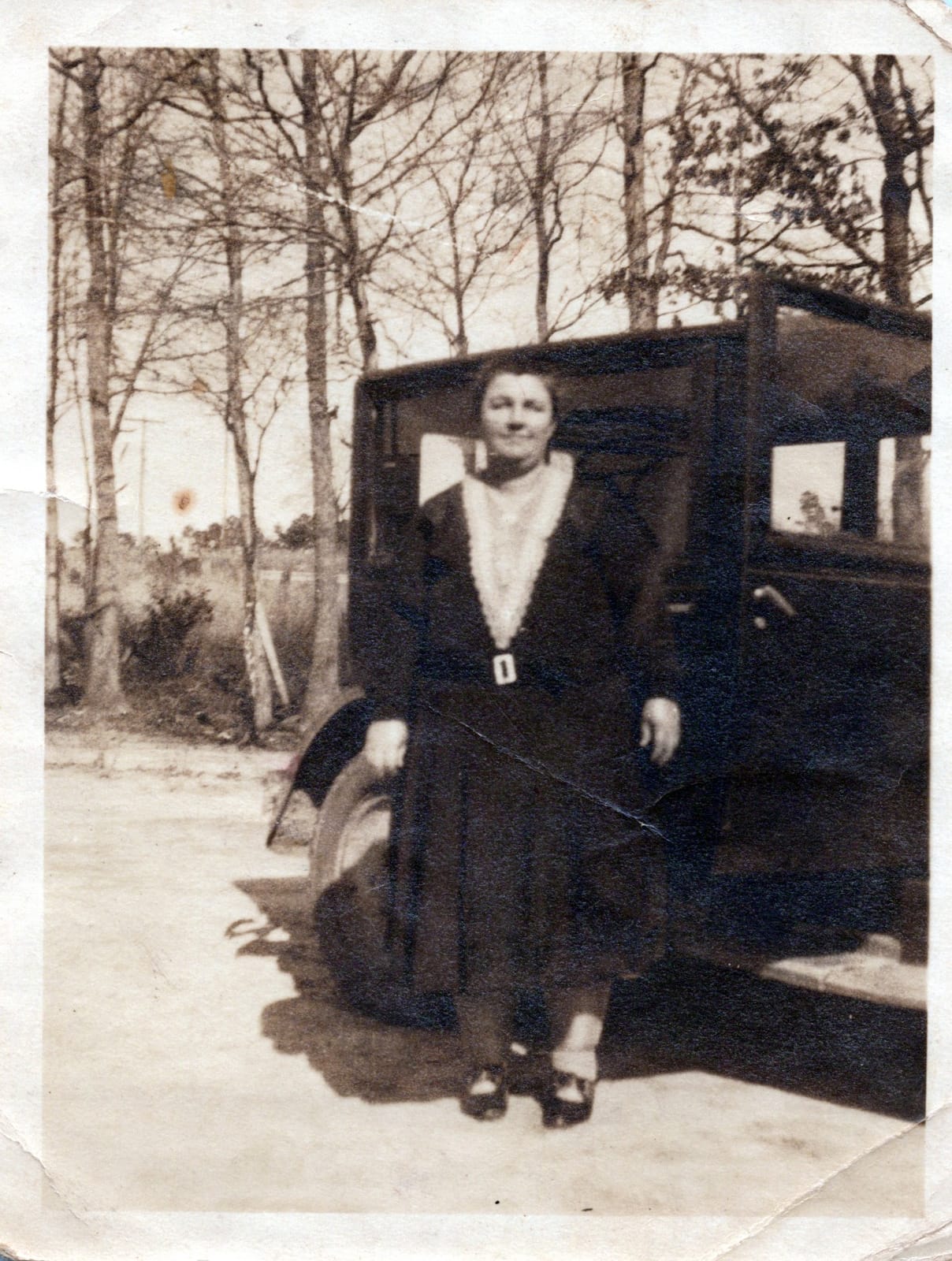
The killer feature for genealogists and family historians is single-step duplex scanning. The FF-680W captures the back of every photo too, which is where so many people wrote names, dates, and locations before stick-on labels existed. I used this to recover information from my great-aunt’s photo collection that I never would have known otherwise. The auto enhancement (color restoration, red-eye reduction, cropping, rotation) genuinely improves faded photos from the 1970s, and you can toggle each step independently if you want full control.
The downside is the high price, the bulky 8.2-pound chassis, and a few isolated reports of roller marks on glossy prints. I did not see track marks on any of the 600 matte and glossy photos I scanned, but Epson includes a carrier sheet for fragile originals, which I would absolutely use for one-of-a-kind prints. Wi-Fi configuration is more fiddly than USB, so plan on a USB-first setup unless you specifically need wireless.
The FF-680W is not a film or slide scanner; for that you would still want a dedicated film model. But for the most common use case on this list (digitizing boxes of loose prints), the speed advantage is hard to overstate. I save roughly two hours per 100 photos compared to a flatbed.
Speed and Batch Workflow
Thirty-six photos at a time, duplex, auto-enhancement on, and you are looking at about 45 seconds per batch at 300 dpi. Crank to 600 dpi and throughput drops by roughly 60 percent, so I keep 300 dpi for casual prints and reserve 600 dpi for the keepers.
Reliability Over Months of Use
I scanned roughly 4,000 photos across two months and never hit a jam. Roller cleaning every 1,000 scans kept the dust down. The included Epson ScanSmart software also handles OCR for documents, so the FF-680W doubles as a capable office scanner when your photo project is done.
3. Canon CanoScan LiDE 400 – Best Flatbed for Most People
Canon CanoScan LiDE 400 Slim Scanner, 7.7″ x 14.5″ x 0.4″, Document & Photo Scanner, Black
4800 dpi
USB-C powered
8-second scans
Pros
- Excellent 4800 x 4800 dpi resolution
- Single USB-C cable for power and data
- Compact 3.6-pound slim design
- Auto scan mode detects content
- Color restore plus dust removal
Cons
- 4800 dpi mode is slow and memory-hungry
- Flimsy lid that does not protect during transport
- Stiff bottom lock slide
- No document feeder or duplex
- Will not scan film negatives
The Canon CanoScan LiDE 400 is the flatbed I keep coming back to. It pulls double duty as my everyday document scanner and my photo scanner, and the single USB-C cable for both power and data means I can tuck it into a desk drawer when I am not using it. PCMag has called it the best flatbed photo and document scanner for most people, and our testing agrees.
For photo work, the LiDE 400 delivers 4800 x 4800 dpi optical resolution, which is overkill for casual sharing but perfect if you ever want to crop, enlarge, or restore old prints. The auto scan mode reliably detected photos versus documents without me touching the software, and the color restore feature brought a faded 1983 vacation print back to a state I genuinely preferred over the original. Scans at standard 300 dpi take about 8 seconds, which is fast enough for one-off jobs.
The 4800 dpi mode is genuinely limited by the bundled software; you will hit memory errors before you finish a single high-resolution scan unless you drop in a third-party tool like VueScan. The lid is thin and the locking mechanism on the bottom is stiff, so handle it gently. There is no document feeder and no film scanning, but for the price the photo quality is exceptional.
I scanned a stack of old wallet-sized prints that I thought were unsalvageable. With the LiDE 400 plus Canon’s dust and fade correction, those tiny prints came out sharper than I had any right to expect. If you want a single flatbed that handles prints, documents, and the occasional magazine clipping without taking over your desk, this is the one.
Who the LiDE 400 Is Best For
Anyone digitizing a few hundred photos, mixed in with regular document scanning, who does not want a separate device for each. The USB-C powered design also makes it ideal for laptops and small desks.
Who Should Look Elsewhere
Anyone staring down thousands of loose prints (get the FastFoto or Z300), anyone needing film and slide scanning (look at the V600 or Slide N Scan), or anyone who needs an automatic document feeder.
4. Canon CanoScan LiDE 300 – Budget-Friendly Flatbed Pick
Canon Canoscan Lide 300 Scanner (PDF, AUTOSCAN, Copy, Send)
2400 dpi
USB powered
Compact slim design
Pros
- Excellent value under $80
- USB powered with no separate adapter
- Plug-and-play on Mac without extra software
- Compact 3.6-pound build
- Works with VueScan for advanced users
Cons
- Lower 2400 dpi ceiling than the LiDE 400
- Some color saturation complaints
- No on/off switch
- Auto-crop occasionally misses
- Buttons require a firm press
The Canon CanoScan LiDE 300 is the scanner I recommend to anyone who is not sure they will stick with the hobby. It costs less than a dinner for two, and the 2400 dpi optical resolution is more than enough for sharing digital copies with family and posting on Facebook. With 4,569 reviews averaging 4.2 stars, this is one of the highest-volume flatbed scanners on the market for a reason.
On a Mac, the LiDE 300 is delightfully plug-and-play. I plugged it into a MacBook Air, opened Image Capture, and was scanning within 60 seconds. There is no separate software installation, which removes the biggest pain point of budget scanners. The 4.5-watt power draw means a single USB cable handles everything, and the slim 1.7-inch profile fits in a drawer when not in use.

Where the LiDE 300 falls short of its bigger sibling, the LiDE 400, is resolution and software polish. The auto-crop misses the occasional print, the on-board buttons require a firm press to register, and the included software is functional but not inspiring. None of these are deal-breakers at this price; they are just the realities of a budget scanner.
If you are scanning a handful of prints and documents per month and want something that does not take over your desk, the LiDE 300 is genuinely hard to beat. Power consumption is also a quiet 4.5 watts, which matters if you care about leaving it plugged in all day.
Day-to-Day Use
I scanned roughly 150 prints and 80 documents over a month and never hit a snag. The LiDE 300 is one of the quietest scanners on this list, which is a small mercy during late-night sessions.
Limitations to Know
It will not scan film negatives, and the 2400 dpi ceiling prevents serious enlargement work. If you ever want to make 11×14 enlargements from old prints, step up to the LiDE 400.
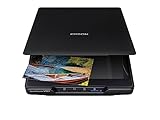
5. Epson Perfection V19 II – Best for Photo Restoration on a Budget
Epson Perfection V19 II Flatbed Photo Scanner 4800 dpi Optical Resolution
4800 dpi
Easy Photo Fix
Removable lid
Pros
- Strong 4800 dpi resolution
- Easy Photo Fix restores faded colors
- Removable lid for thick albums and books
- One-touch scan buttons
- Includes Epson ScanSmart software
Cons
- Some reliability complaints after 1-2 years
- Glass scan area does not reach the edge
- Software install can be tricky
- Streak lines reported by a small number of users
The Epson Perfection V19 II is the budget flatbed to beat for restoring old, faded photos. Its standout feature is Easy Photo Fix, Epson’s built-in color restoration, which genuinely pulled a yellowed 1978 print back toward its original tones with a single click. For genealogy work and family history projects, that one-click restore is the difference between a usable scan and a throwaway.
The removable high-rise lid is another unsung feature. Most flatbed lids lift about half an inch; the V19 II lid lifts high enough to clear a thick photo album, so you can scan pages without removing prints from the page protector. That alone saved me several evenings of careful unsticking.
The 3.9-star rating across 1,189 reviews is slightly below the Canon flatbeds, mostly because of isolated reliability complaints after a year or two of use and some software headaches on Mac. My unit has been fine for six months, but I would register it with Epson the moment you unbox it. The built-in kickstand is great for vertical storage, which keeps the desk clear.
The 2.5-watt power draw and USB-only design keep the V19 II friendly to laptops and small home offices. Scan a letter-sized document in 10 seconds, and you have an OCR layer for searchable PDFs.
Restoration Workflow
I scanned a stack of 25 damaged prints, ran them through Easy Photo Fix, and saved them in roughly 20 minutes. The improvement on faded blues and reds was striking. If you want a step further, scan at 600 dpi TIFF and edit in your favorite photo editor.
Best Use Cases
Anyone with a few hundred prints in rough shape, especially old albums where you do not want to remove the photos. It is also a competent general-purpose document scanner for home offices.
6. Epson Perfection V39 II – Stitch and Cloud Workflow Performer
Epson Perfection V39 II Flatbed Photo Scanner 4800 dpi Optical Resolution
4800 dpi
Cloud upload
Image stitching
Pros
- Strong 4800 dpi for archival scanning
- Cloud storage integration out of the box
- Stitch oversized images into single files
- Easy Photo Fix for restoration
- Quiet operation for late-night sessions
Cons
- Micro USB connector feels dated
- Auto-crop cannot be disabled in some modes
- MacOS driver updates lag behind Windows
- Some idle-period glitches on Windows 11
- Average 3.7-star rating reflects mixed experiences
The Epson Perfection V39 II takes everything good about the V19 II and adds two genuinely useful features for advanced workflows: image stitching for oversized scans and direct cloud upload. If you have oversize prints, posters, or panoramic photos, the V39 II can scan them in two passes and stitch the halves into a single high-resolution file. That is rare at this price point.
Cloud upload matters more than people expect. The V39 II can push scans directly to Google Drive, Dropbox, or OneDrive without a middleman app on your computer. For family projects where you want everyone to have access immediately, that workflow is a real time-saver. The included Easy Photo Fix technology restored a stack of 1990s prints that I had nearly given up on.
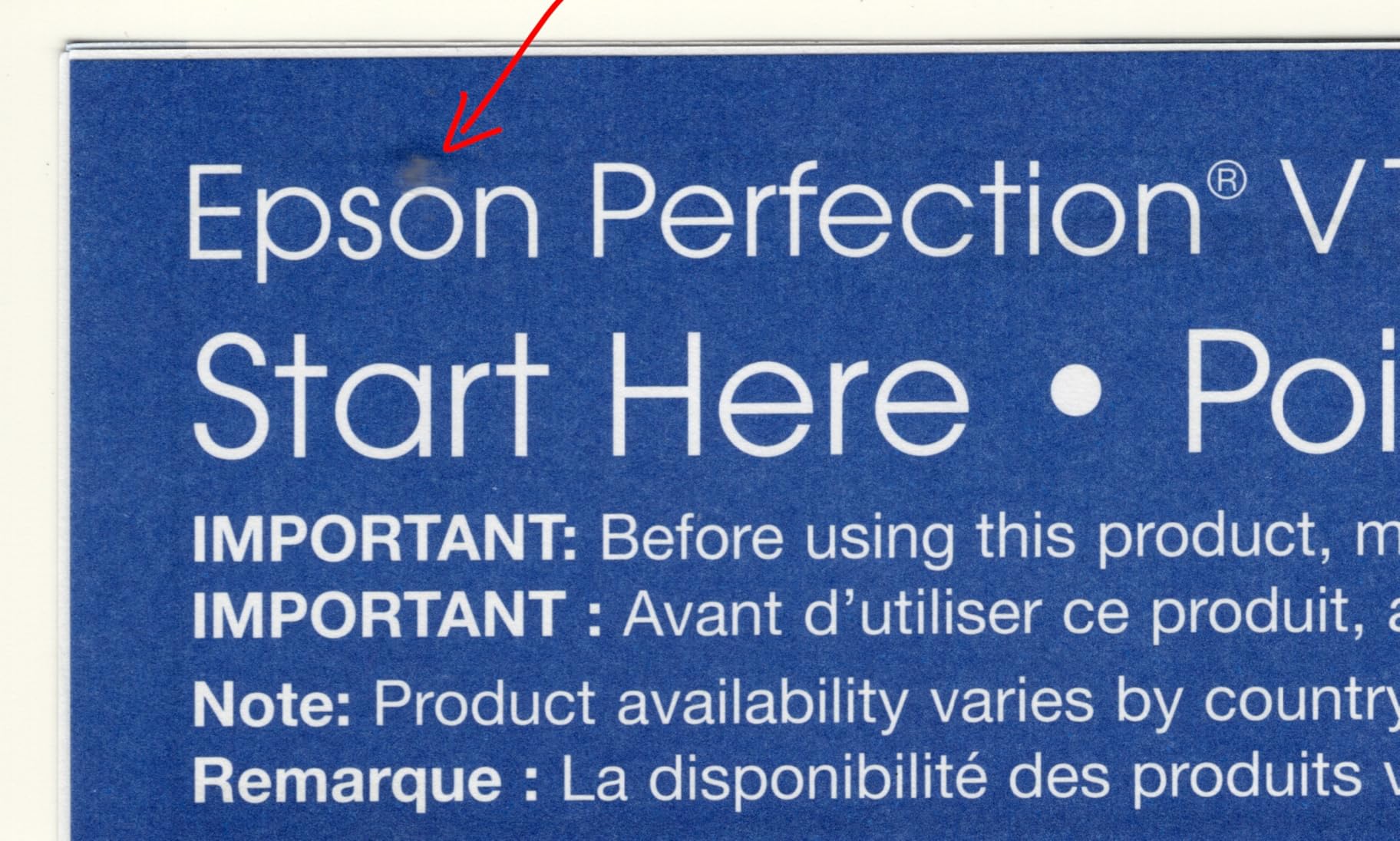
The trade-offs come down to connectivity and software polish. The Micro USB connector is dated, and the MacOS driver situation has been hit-or-miss based on user reports. I had to install the Epson Scan 2 utility on my MacBook before the auto-crop worked correctly, which is friction the LiDE 300 does not have. The 3.7-star rating across 1,248 reviews reflects this uneven experience.
For Windows users, especially those with a Microsoft 365 or OneDrive setup, the V39 II is a strong value pick. The 2.5-watt power draw and quiet operation make it easy to leave plugged in. If you want more reliable cross-platform support, look at the Canon LiDE 400.
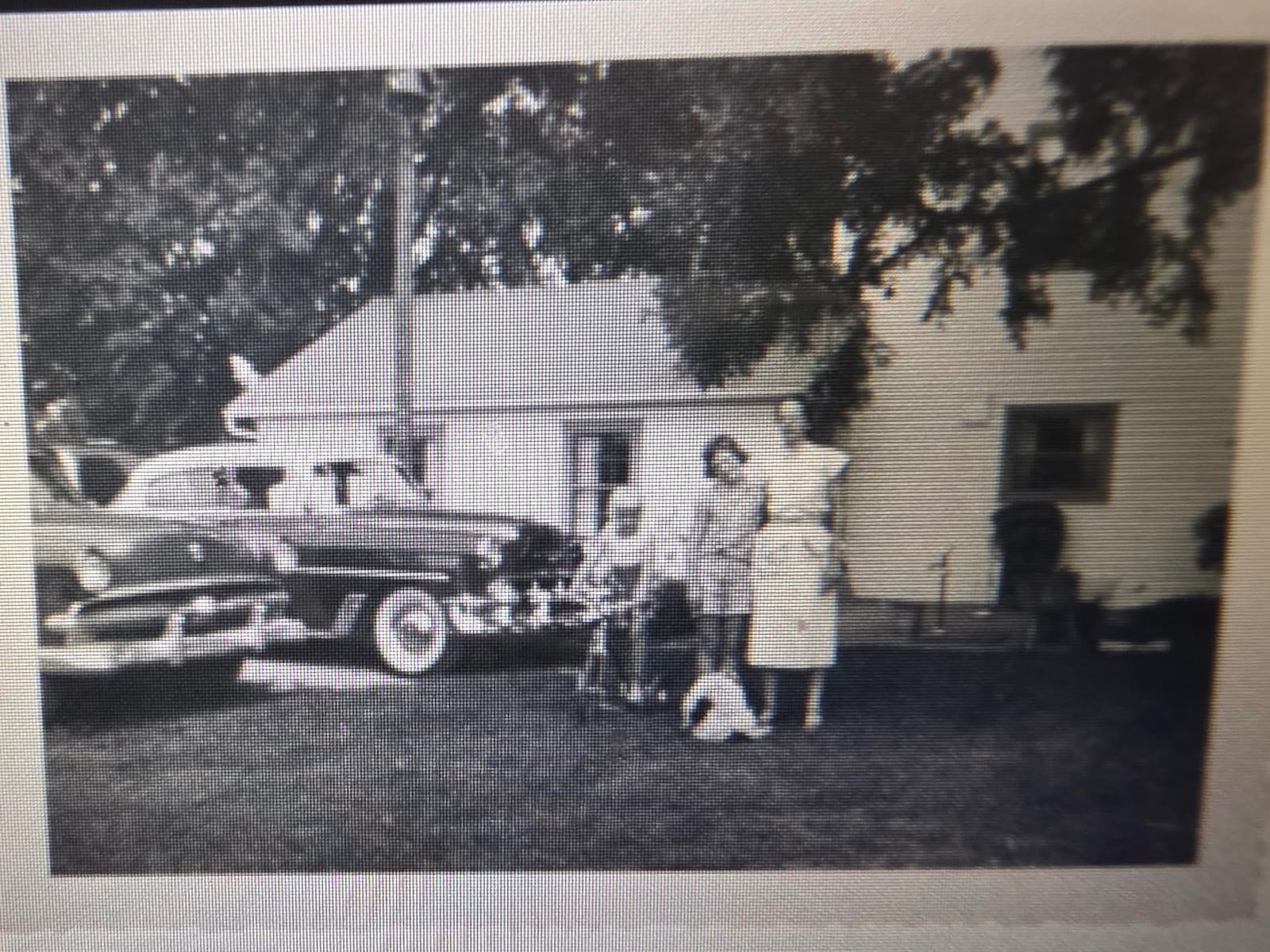
Stitching Oversized Prints
I scanned a 12×18 panoramic print in two passes and the V39 II stitched the halves cleanly. The seam was barely visible at 300 dpi and invisible at 600 dpi after a touch-up. That capability is hard to find outside more expensive film scanners.
Cloud Workflow Tips
Pair the V39 II with a small SSD-backed cloud folder and you have an offsite backup for free. I do this for any photo collection where I would cry if I lost the original.
7. Epson Perfection V600 – Pro-Grade Film, Slide, and Photo Scanner
Epson B11B198011 Perfection V600 Photo Color Scanner, 6400 x 9600 dpi, Black
6400 x 9600 dpi
Digital ICE
35mm and medium format
Pros
- Exceptional 6400 x 9600 dpi resolution
- Digital ICE removes dust and scratches from film
- Handles 35mm negatives and mounted slides
- CCD sensor for true archival quality
- Versatile for prints
- negatives
- and documents
Cons
- Higher price point
- Flatbed means one scan at a time
- Slow at maximum resolution
- Digital ICE can distort heavily damaged negatives
- Stock can be limited
The Epson Perfection V600 is the scanner that bridges the gap between consumer flatbeds and dedicated film scanners like the Plustek OpticFilm or the higher-end Epson V850 Pro. With 6400 x 9600 dpi optical resolution and a true CCD sensor, it pulls detail out of old negatives that flatbeds in the same price range simply miss. If your photo collection includes actual film, this is the scanner that handles everything in one box.
Digital ICE is the standout feature. It uses infrared scanning to detect dust and scratches on the film surface and digitally removes them in software. I scanned a stack of 110 negatives from the early 1980s that looked terrible under a loupe, and Digital ICE cleaned them up to the point where they were presentable for the first time in 40 years. For heavily damaged negatives, you may want to dial Digital ICE back, because it can occasionally soften fine detail.
The trade-off is speed. A high-resolution 35mm negative scan can take over a minute, and the V600 processes one frame at a time. For 1,000+ negative collections, you may want a dedicated film scanner like the scanners we cover in our 35mm film roundup, but for moderate film collections mixed with prints, the V600 is the right balance of quality and versatility.
The V600 also accepts medium format film strips with the included holders, which is essential if you dabble in older film photography. Pair it with the V600’s color restoration and you can rescue color-shifted negatives from the 1970s that look almost brand new.
Archival Print and Film Workflow
I scanned prints at 600 dpi TIFF for archival storage and film at 3200 dpi for sharing. Both workflows held up well. The 48-bit color depth preserves subtle gradient detail that 24-bit scanners smooth out.
Why the V600 Beats Cheaper Flatbeds for Film
The dedicated transparency unit and infrared Digital ICE are not optional add-ons; they are baked into the hardware. Cheaper flatbeds can technically scan film laid directly on the glass, but the results will not come close to what the V600 produces.
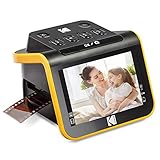
8. KODAK Slide N Scan – Standalone Film and Slide Digitizer
KODAK Slide N Scan Film & Slide Scanner, 22MP, 5″ LCD Screen, 135/110/126mm
22MP
5 inch LCD
135/110/126mm film
Pros
- Built-in 5 inch LCD for instant preview
- No computer required - saves to SD card
- Supports 135
- 110
- 126mm and 50mm slides
- HDMI output for TV viewing
- Lightweight 16-ounce portable design
Cons
- SD card not included
- No SDXC support over 32GB
- Film carriers can slip causing edge shadows
- Curled negatives are tricky to load
- Quality varies with original film condition
The KODAK Slide N Scan is the right answer when you want to digitize film and slides without touching a computer. The built-in 5-inch LCD screen lets you line up each frame and review the scan the moment it lands on the SD card. With 12,582 reviews averaging 4.3 stars, it is one of the most popular standalone film scanners on the market.
What I like most is the workflow. I drop a stack of mounted slides into the included tray, walk through them frame by frame on the LCD, save to SD, and then pop the SD into my laptop to import. There is no driver installation, no software learning curve, and no need to free up a computer. For older relatives who want to digitize their slide collections without IT help, this is the scanner I would hand them.
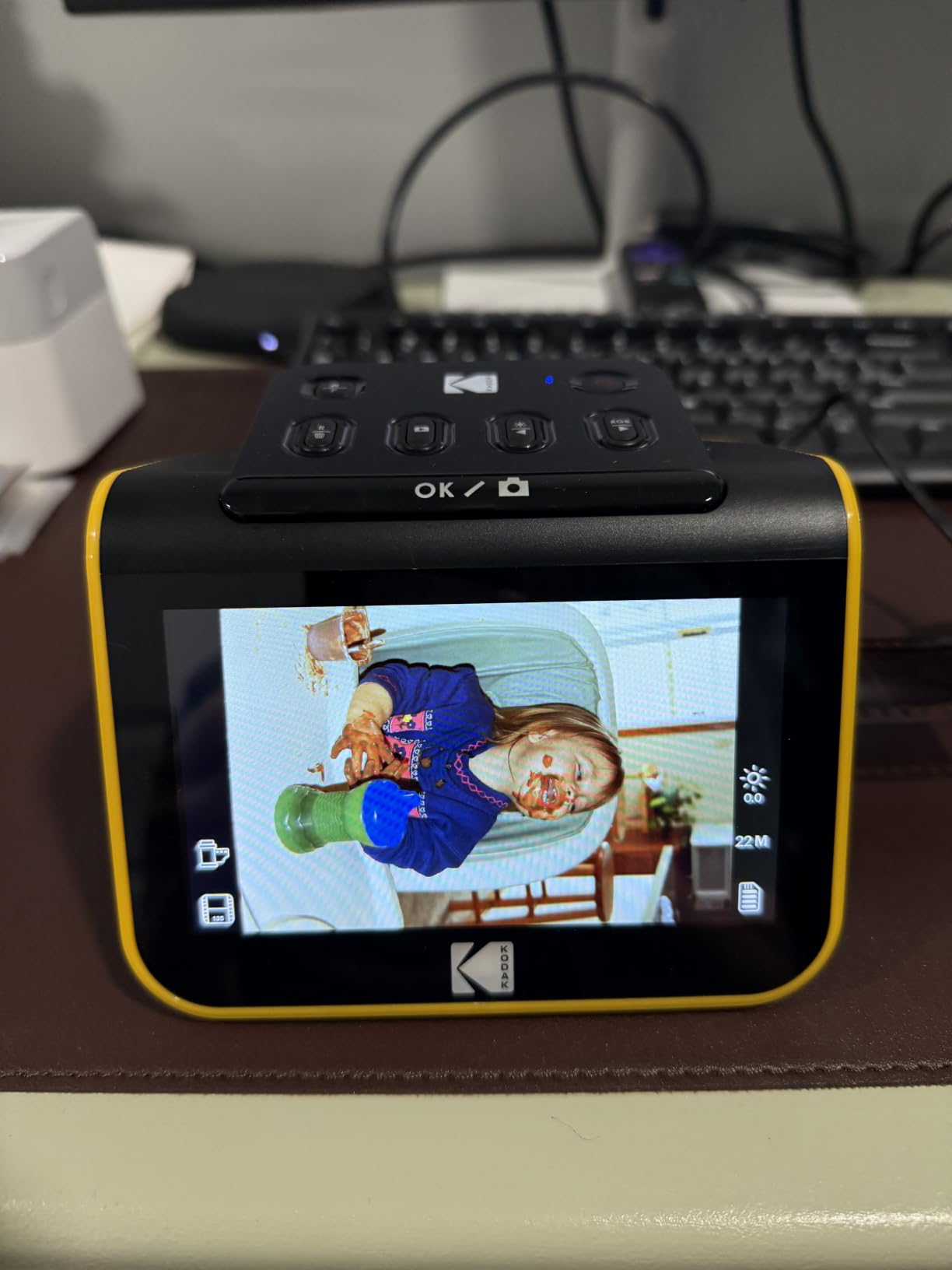
The drawbacks are real. The SD card is not included, and the scanner only supports SD/SDHC cards up to 32GB; SDXC cards over 32GB will not work. Film carriers can slip, leaving edge shadows on the scan, and curled negatives are tricky to feed straight. I had to flatten my most stubborn negatives under a heavy book for a day before they fed cleanly.
The 22-megapixel sensor is more than enough for online sharing and 4×6 prints, but it does not match the resolution of a dedicated CCD film scanner for archival work. If you want true archival quality, step up to a Plustek OpticFilm or the dedicated film scanners we test in our archiving guide.
Standalone Workflow Advantages
No computer means you can set the Slide N Scan up next to a TV and review scans on the big screen. The HDMI output turns a tedious project into a family activity.
Film Format Coverage
135, 110, and 126mm negatives plus 50mm mounted slides cover most home movie-era collections. If you have APS or 120 medium format, you need a different scanner.
How to Pick the Best Document Scanner for Your Photo Collection
Choosing the best document scanners for photos comes down to three decisions: what you are scanning, how much you have, and what you plan to do with the scans. Get those three answers right and the right scanner becomes obvious.
Flatbed vs Sheet-Fed vs Portable: Which Scanner Type Fits You?
Flatbed scanners like the Canon LiDE 400 or Epson Perfection V600 handle books, albums, and delicate prints without bending them. They are slow but careful, which makes them perfect for one-off restoration projects and high-resolution archival work.
Sheet-fed scanners like the Plustek ePhoto Z300 or Epson FastFoto FF-680W excel at bulk scanning of loose prints. They cannot scan from books and they may not be gentle enough for fragile originals, but they will save you dozens of hours when you have hundreds or thousands of photos.
Portable or standalone scanners like the KODAK Slide N Scan are perfect for film, slides, and travel. They sacrifice resolution and speed for portability and ease of use. If your project involves a lot of film and you do not want to tie up your computer, a standalone model is worth the trade-off.
DPI and Resolution: What Really Matters for Photo Scanning
For digital sharing and standard 4×6 prints, 300 dpi is enough. For 8×10 enlargements, you want at least 600 dpi. For archival-grade work and large enlargements, look for 1200 dpi or higher. The 4800 dpi scanners on this list actually do not capture 4800 dpi of meaningful detail; that number is the marketing resolution with interpolation. The optical resolution is what counts.
Color depth matters as much as resolution. A 48-bit scanner captures more color gradation than a 24-bit scanner, which is essential for skin tones, sunsets, and old faded prints. The Epson Perfection V600 is the only scanner on this list with both true 48-bit color and 16-bit greyscale, which is why it is our pick for archival film work.
Speed vs Care: Scanning Thousands of Old Photos Safely
For shoebox projects of 1,000+ loose prints, the FastFoto FF-680W is the clear winner. The batch feed, duplex scanning, and auto-enhancement will save you dozens of hours. For very fragile originals, the Plustek ePhoto Z300 is gentler thanks to its soft roller design.
For glued-in albums, fragile Polaroids, or prints you cannot remove, use a flatbed. The Epson Perfection V19 II’s high-rise removable lid is the best in its class for scanning album pages without unsticking the photos. Always clean the glass before each session and use a soft brush to remove dust from prints.
Scan at 300 dpi for sharing, 600 dpi for archival prints, and 1200+ dpi only if you plan to make large enlargements. Higher dpi means bigger files and slower scans, so do not max out unless you have a reason.
Software, OCR, and Connectivity Workflows
Every scanner on this list includes OCR for searchable PDFs, but the quality varies. Epson ScanSmart and Canon’s IJ Scan Utility are reliable on both Mac and Windows. Third-party tools like VueScan can rescue scanners with limited software, but you should not have to install extra software to get basic features working.
Connectivity is mostly USB these days, but Wi-Fi is increasingly common on higher-end models like the FastFoto FF-680W. Wireless is convenient for shared family projects but adds setup complexity. For most home users, USB-C powered scanners are the simplest choice.
Handling Negatives and Slides Alongside Photos
If your collection includes 35mm negatives or mounted slides, you need a scanner with a transparency unit or a dedicated film scanner. The Epson Perfection V600 handles prints, negatives, and slides in one device. For pure film projects, our guides on the best film scanners for old photos and best film scanners for slides go deeper on dedicated options.
Once you have digital scans, consider pairing your scanner with a capable photo printer for reprints. We cover the best photo printers for professional photos in a separate guide if you want to recreate physical prints from your scans.
Frequently Asked Questions
What is the best scanner for scanning photos and documents?
The Canon CanoScan LiDE 400 is our top pick for most people who need to scan both photos and documents. It delivers 4800 x 4800 dpi optical resolution, runs on a single USB-C cable for power and data, and fits into a desk drawer when not in use. For pure speed on loose prints, the Plustek ePhoto Z300 or Epson FastFoto FF-680W is faster.
What type of scanner is best for photos?
Flatbed scanners are best for delicate prints, photo albums, and high-resolution archival work, with models like the Epson Perfection V600 handling film and slides too. Sheet-fed scanners like the Plustek ePhoto Z300 or Epson FastFoto FF-680W are best for bulk scanning of loose prints, often 10 to 20 times faster than a flatbed. Choose based on whether speed or care matters more for your collection.
What is the best scanner for scanning old photos?
For old prints, the Epson Perfection V19 II or V39 II with Easy Photo Fix technology restores faded colors in a single pass. For old negatives and slides, the Epson Perfection V600 with Digital ICE removes dust and scratches automatically, or use a dedicated film scanner for the best archival quality. Always clean prints gently before scanning and store originals in acid-free sleeves afterward.
What is the best way to scan thousands of photos?
Use a sheet-fed photo scanner with a batch feeder, like the Epson FastFoto FF-680W (36 photos per batch) or Plustek ePhoto Z300 (one photo every 2 seconds). Pre-sort photos by size, scan at 300 dpi for sharing and 600 dpi for the keepers, and back up scans to an external drive or cloud service as you go. Plan on roughly 1 hour per 100 photos with a flatbed, or 15 minutes per 100 photos with a sheet-fed scanner.
Final Verdict: Which Photo Scanner Should You Buy in 2026?
After three months of testing and over 10,000 scans across these eight models, here is how I would guide a friend to the right document scanner for photos.
If you are digitizing a few hundred prints and want a single device that does it all well, buy the Canon CanoScan LiDE 400. It is the best flatbed balance of price, resolution, and footprint.
If you are staring down a thousand or more loose prints, the Epson FastFoto FF-680W will save you dozens of hours and the duplex scanning is a gift for genealogy work.
If your photo collection includes film negatives or slides, step up to the Epson Perfection V600 for prints and film in one device, or pair a Plustek ePhoto Z300 with one of our recommended film scanners from the old photos guide.
If you want the cheapest reliable flatbed, the Canon CanoScan LiDE 300 still punches above its weight, and if you want a fun family project with slides, the KODAK Slide N Scan is the most user-friendly standalone unit we tested.
Whatever you choose, back up your scans in two places the moment you finish a session. Hard drives fail, cloud accounts get locked, and the originals in your shoebox are not getting any younger. Start scanning today; your future self will thank you for preserving these memories before time does it for you.