

A feeler gauge is a fan of thin, precision-ground steel blades of known thickness, used to measure the narrow gaps that decide whether an engine runs right. The main job is valve clearance (valve lash) between the cam lobe and the bucket or rocker face, but the same blades set spark plug gaps, check piston ring end gaps, and verify distributor point openings. If you are hunting for the best feeler gauges for engine work, the difference between a good set and a cheap one shows up in one place: how confidently the blade slides into a live gap without folding, kinking, or lying about its thickness.
I have spent years in garages with these blades in my back pocket, and the honest truth is that most people buy the wrong set. They buy a 32-blade straight gauge because the picture looks impressive, then discover their engine has angled valve stems tucked behind a bracket, or they need a .017 inch blade their set does not carry. What matters is not blade count. What matters is coverage of the sizes your engines actually specify, plus blade geometry that survives contact with a hot, oily, cramped valvetrain.
There is also a technique problem that no product can fix. The most common thread I see on r/EngineBuilding is not “which brand,” it is loose versus tight. Someone has a spec of .008 to .010 inch, slides a .009 blade, gets light drag, and cannot decide whether that reading is correct. I will give you a defensible rule for that in the buying guide below, along with the top dead center procedure, the cold versus hot question, and a way to check whether a set has drifted out of tolerance before you trust it on a head that is apart.
What I did for this roundup: I compared 12 feeler gauge sets across blade range, unit marking, blade geometry, material, stated accuracy, warranty coverage, and reader verdicts pulled from thousands of owner reviews. Every product listed here has a genuine gap it solves, and every one has an honest weakness. I have not included a go/no-go-format set in this group because none of the analyzed sets ships in that format, so I cover the format and how to fake it with a fan set instead.
While you are setting up your bench for engine work, lighting matters more than people admit. Our picks for headlamps for work are worth a look if you are working under a hood in a dark bay, and if the engine is road legal and you want to read codes before you start, our OBD2 scanner picks cover that side of the job.
Our Top 3 Feeler Gauges for Engine Work in 2026

Spurtar 32-Blade Dual-Marked
- 0.001-0.04 inch / 0.03-1.00 mm
- 32 dual-marked blades
- Hardened flexible manganese steel
- Oil-coated against rust
- Folds into a steel case

Mutt Tools Straight and…
- Straight plus angled gauge
- 0.001-0.040 inch plus a 2 mm blade
- Laser-etched dual markings
- Offset access for tight valve locations

GearWrench 161D 32-Blade…
- 0.0015-0.035 inch / 0.038-0.889 mm
- Extra .010 inch brass blade
- Dual SAE and metric markings
- Limited lifetime warranty
The Spurtar set is the one I reach for first. It carries the broadest double-marked coverage in this group, it has been in service long enough to have thousands of owner verdicts behind it, and the manganese steel blades are stiff enough to survive a careless slip against a valve spring without taking a set. The one thing that slows me down is the etched size numbers, which are smaller and dimmer than I would like in a dark bay.
The Mutt Tools two-piece set solves the problem the Spurtar cannot, which is access. A straight blade will not slide past a bracket or into a stem area that an offset blade reaches without a fight, and it is rated 4.7 across more than 1,700 reviews. The GearWrench 161D carries the highest average rating of the twelve at 4.8 and adds a brass blade for electronic ignition work, though its range stops at .035 inch.
Comparing 12 Feeler Gauge Sets for Engine Work in 2026
Every set below covers a real gap in an engine shop. The columns that matter most are the size range, whether the blades are marked in one unit system or two, and the blade geometry, because those three decide whether the set can actually reach the gap you need to measure.
| Product | Specs | Action |
|---|---|---|
| Spurtar 32-Blade Tapered Dual-Marked |
|
Check Latest Price |
| Mutt Tools Straight and Angled Set |
|
Check Latest Price |
 Handook 32-Piece Stainless Steel Handook 32-Piece Stainless Steel |
|
Check Latest Price |
| GearWrench 161D 32-Blade Deluxe |
|
Check Latest Price |
 CHERALKEST 32-Blade Manganese Steel CHERALKEST 32-Blade Manganese Steel |
|
Check Latest Price |
 Hoiny 2-Piece Straight and Angled Hoiny 2-Piece Straight and Angled |
|
Check Latest Price |
 TUSK 32-Blade Tapered Set TUSK 32-Blade Tapered Set |
|
Check Latest Price |
 Lisle 68050 Valve Feeler Gauge Lisle 68050 Valve Feeler Gauge |
|
Check Latest Price |
 Performance Tool W80541 Long Blade Set Performance Tool W80541 Long Blade Set |
|
Check Latest Price |
 Hotop 25-Blade Long Set Hotop 25-Blade Long Set |
|
Check Latest Price |
 Lisle 68100 Deluxe Feeler Gauge Lisle 68100 Deluxe Feeler Gauge |
|
Check Latest Price |
 Tokyzexi 2-Piece Straight and Angled Tokyzexi 2-Piece Straight and Angled |
|
Check Latest Price |
1. Spurtar 32-Blade Tapered Dual-Marked Set – The Broadest Coverage for Everyday Engine Work
Spurtar Feeler Gauges 0.001-0.04″ (0.03-1.00mm) 32 Blades Tapered
Range 0.001-0.04 inch (0.03-1.00 mm)
32 dual-marked blades
Hardened flexible manganese steel
Oil-coated and folding steel case
Pros
- Broadest double-marked range in this group
- Covers .001 inch and 1.00 mm in one set
- Stiff hardened manganese steel that resists taking a set
- Oil coating slows rust between jobs
- Folds into a plated steel case with a thumbscrew
Cons
- Etched size numbers are small and hard to read in low light
- No angled or offset blades
- Case closure is a thumbscrew rather than a snap
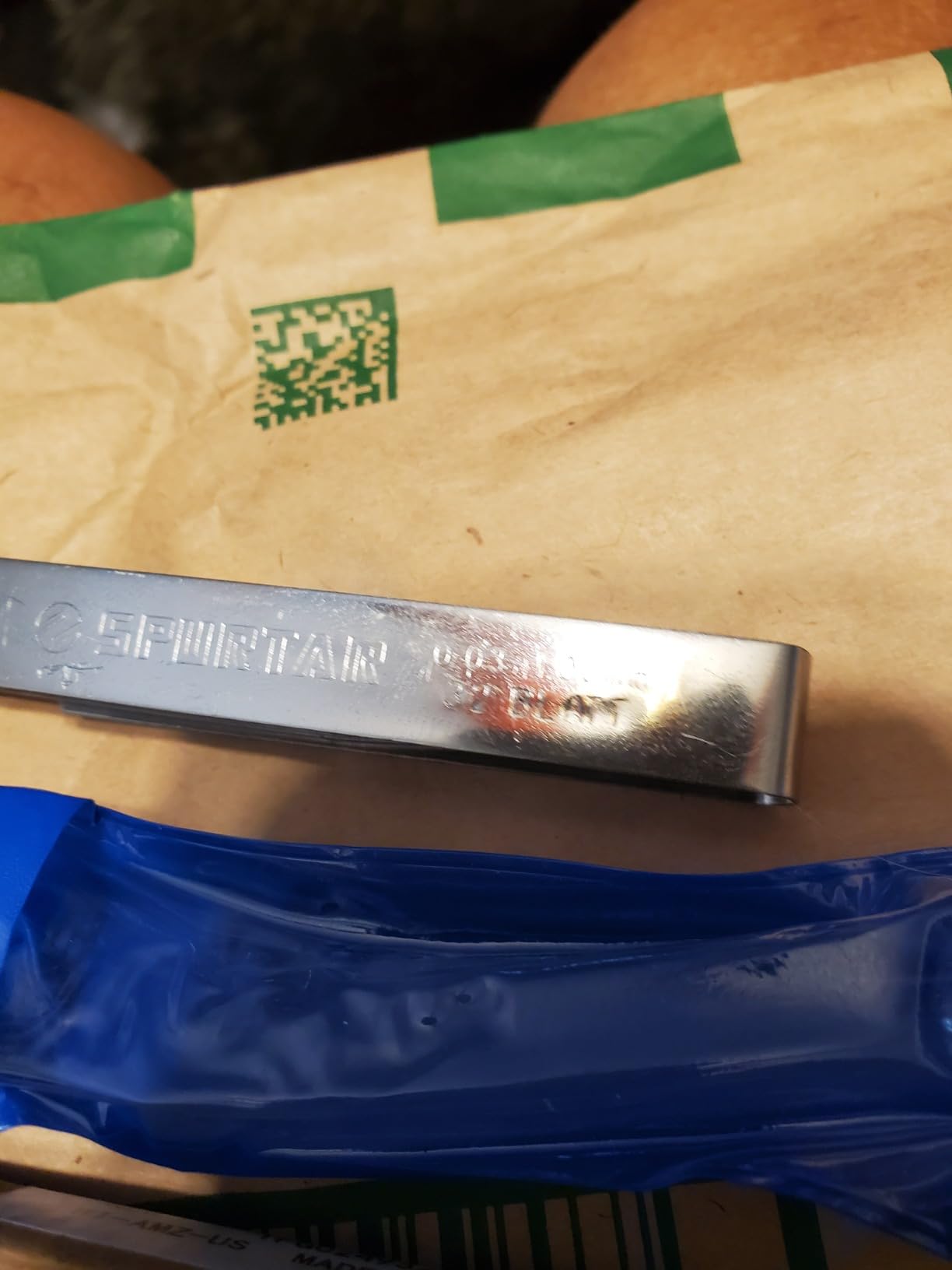
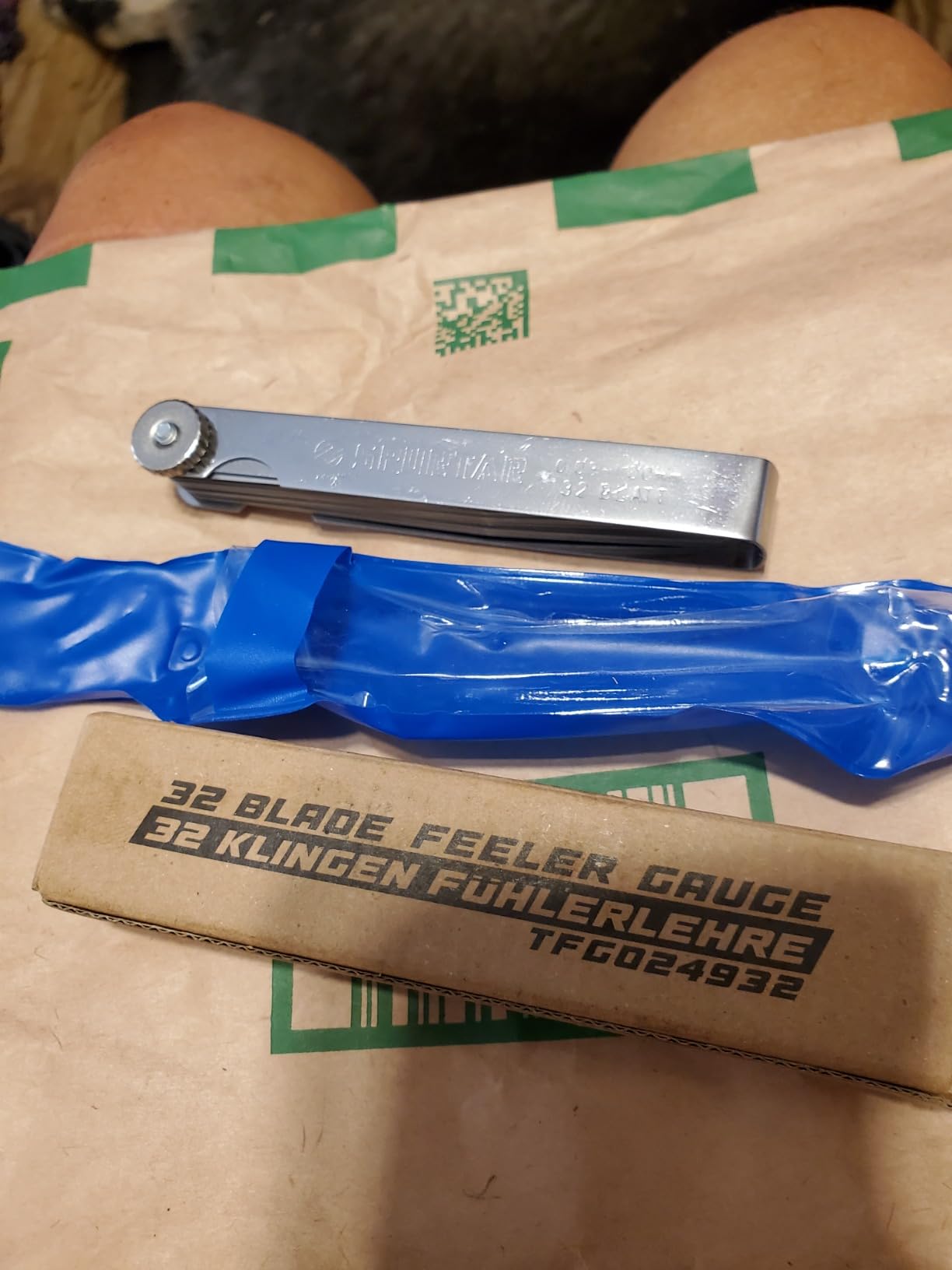
This is the set that has stayed in my own tool bag the longest, and the reason is coverage rather than prestige. It runs from .001 inch to .040 inch, which in metric terms is .03 mm to 1.00 mm, and every blade carries both scales etched into it. That means I can set a Japanese head that specifies millimeters and an American head that specifies thousandths without swapping tools or doing arithmetic in my head with oily fingers.
Blade material is hardened, polished flexible manganese steel, and the finish is smooth enough to slide between your fingers without catching. That matters more than it sounds. A blade with a rough ground edge will not sit flat in a gap; it will rock, and rocking gives you a reading that is a blade thickness too generous.
Blade Range and Marking Legibility
The .001 inch through .040 inch span covers the working window of most valve clearances, from a very tight .003 inch lash on a modern small-valve head up to .040 inch on a worn big-block with a worn cam. The dual marking is the real feature here. Owner reviews describe the etched numbers as quick to identify once you know the layout, with the recurring complaint being size rather than accuracy: the numerals are small, and in a dim garage you will sometimes tilt the blade to catch light on the etching.
One reader mic’d blades from this set and found them spot on for valve work, which matches what the broader rating spread suggests. Across more than 7,500 reviews the set holds a 4.6 average with roughly 81 percent five-star verdicts, and the complaints cluster around legibility and case feel rather than dimensions.
Manganese Steel and Oil Coating in Real Service
Manganese steel springs back into flat better than plain carbon steel, which is why this material dominates both professional sets and the better budget ones. The blades here are oil-coated for rust protection, so if you wipe them down after a job you are removing the protection, and if you leave them gummy the oil will pick up swarf and lay it against the blade faces.
My routine is simple: wipe each blade with a lint-free rag, run a thumb along the edge to feel for a crease, and fan the set closed so the blades do not rub. The set folds into a plated steel case with a thumbscrew closure, which survives a drop out of a pickup bed better than a plastic wallet, though the thumbscrew is a step behind a snap or a captive retainer.
Where It Falls Short in an Engine Shop
There is no angled or offset blade in this set, and that is the single reason I sometimes carry a second gauge. When a stem tip sits behind a bracket or a valve spring tower, a straight blade will only enter from the front, and the thinnest blades in the set are the floppiest in exactly that position. Vintage Honda Twin owners on the vintagehondatwins.com boards describe this frustration with small-diameter blades specifically, and it is a geometry problem, not a quality problem.
If your engines are overhead-cam four cylinders with easy side access, this set alone will carry you. If you service older heads with tight rocker-arm stacks or motorcycle engines, read the angled options further down before you commit.
2. Mutt Tools Straight and Angled Set – Best Answer to Tight Access Problems
Mutt Tools Feeler Gauge Set Metric and Inch for Valves, Spark Plug Gap Tool
Two-piece straight plus angled gauge
0.001-0.040 inch plus a 2 mm blade
Laser-etched dual metric and imperial
Offset configuration with protective holder
Pros
- Ships both straight and angled gauges in one package
- Angled blades reach bracket and stem areas a straight blade cannot
- Dual markings laser-etched on every blade
- Arrives factory lubricated
- Verified accurate by readers who mic'd the blades
Cons
- Some blades feel slightly loose at the pivot
- Blades are less stiff than a dedicated master set
- Only one report of surface rust after shipping
Access is the deciding variable in engine work far more often than size range, and this is the set that attacks it head on. You get a straight gauge and an offset gauge in the same package, which means the awkward valve location and the easy valve location can both be measured with one purchase. For heads where a bracket or a spark plug wire loom blocks the front entry, that alone justifies the set.
The straight gauge runs .001 to .040 inch, and the package also includes a 2 mm thickness blade, which is a useful addition for measuring a larger gap without stacking. Every blade is laser-etched with both metric and imperial scales, and laser etching is the marking method I prefer over stamped or acid-etched numerals because it stays legible after years of oil and heat.
Why Angled Blades Change the Result
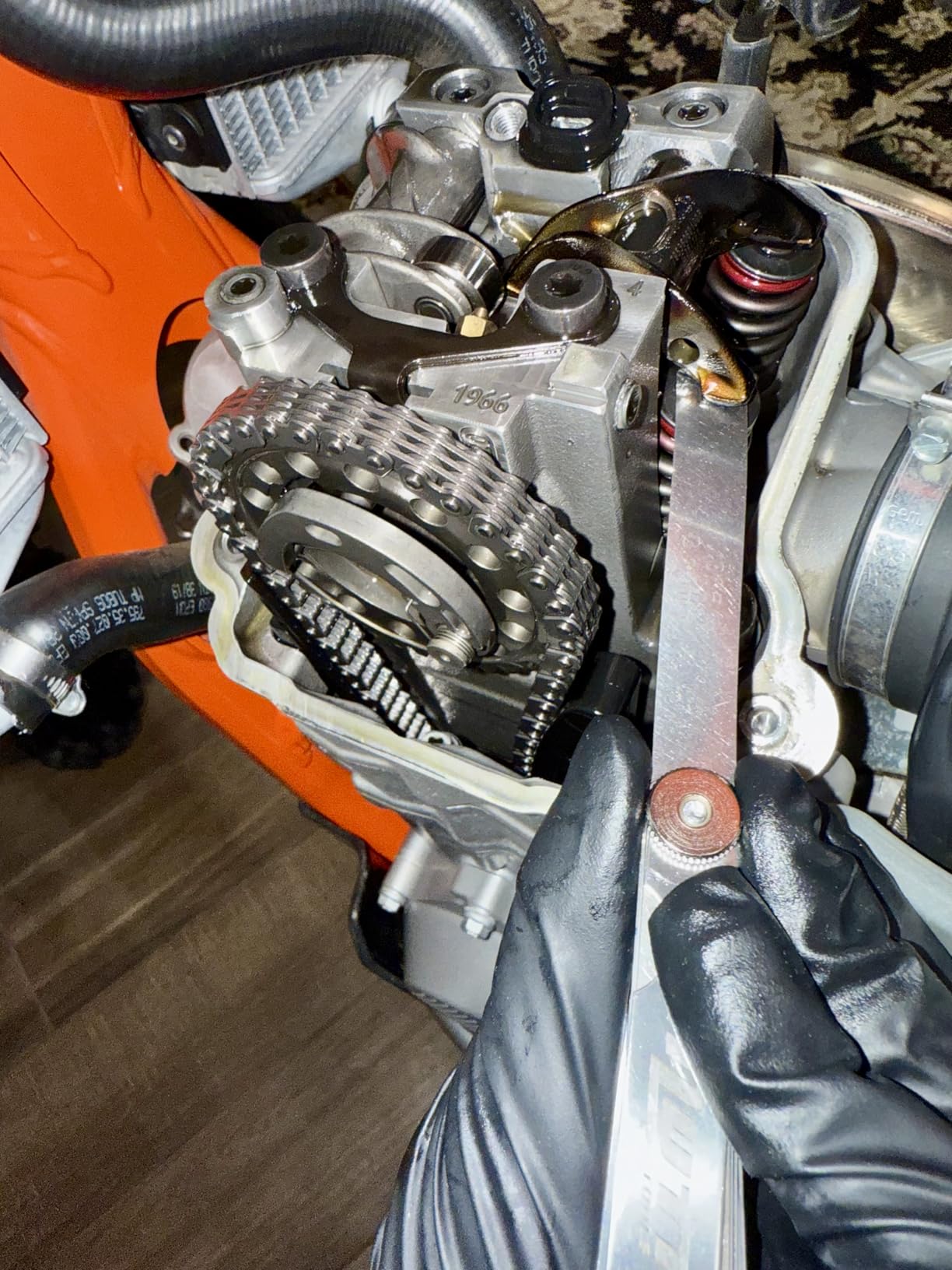
An offset gauge does not measure anything a straight gauge cannot. What it changes is the approach angle, so you can bring the blade in sideways from a rocker-arm end or low from a bracket rather than needing a straight line of sight. On a mechanical valvetrain with a stud-mounted rocker and limited swing room, that is the difference between finishing the job and removing the intake manifold.
Reviewers on mechanical-heavy jobs describe the angled half as the reason they keep the set in the truck. The drawback they raise is stiffness: a few buyers find these blades less rigid than a heavy master gauge, and some report slight play at the pivot. Pivot play is worth checking the moment the set arrives, because a loose blade that shifts its angle mid-measurement will give you a reading that drifts as you move the handle.
Dual Marking and Factory Lubrication
Because each blade carries both scales, I can work a metric-spec head and an SAE-spec head in the same session without stopping to convert. The etched markings are clear enough to read quickly, which is where this set beats several cheaper competitors that use faint stamped numerals.
Arriving factory lubricated reads to most buyers as evidence of careful assembly, and it is genuinely useful because the oil film keeps the blades from galling against each other in the fan. One owner mic’d the blades and reported them spot on, which is the kind of check most of us skip but should not.
Best Fits and Known Limits
This is my pick for a mixed fleet of older carbureted engines, motorcycle heads, and anything with a bracket in the way. It is also a sensible second gauge to keep alongside a full-size straight set, because the angled half covers the one job the straight set cannot do.
It is not the set to buy if your work is heavy head machining and daily shim work where you want maximum blade rigidity, and it is not the answer to a sub-.001 inch requirement, which nothing in this category is designed to cover. Check pivot tightness before your first measurement and re-check it after a month of use.
3. Handook 32-Piece Stainless Steel Set – Best Verified Accuracy in a Stainless Build
Stainless Steel Feeler Gauge Universal Standard SAE and Metric Offset Valve Thickness Gauge 32-Piece Blade Tool for Measuring Gap Width/Thickness
Range 0.0008-0.040 inch / 0.02-1.00 mm
Hardened tempered stainless steel
Anti-pitting oil coating
Blades bound in a protector
Pros
- Owner verified accuracy against calipers
- Stainless steel blades resist corrosion in a wet bay
- Blades bound in a protector to prevent loss
- Knurled tightener knob on a solid holder
- Dual marked from .0008 inch at the thin end
Cons
- Etched numerals are light and hard to read in poor light
- Blades and case arrive heavily coated in oil
- Offset format suits tight areas less than a dedicated angled set
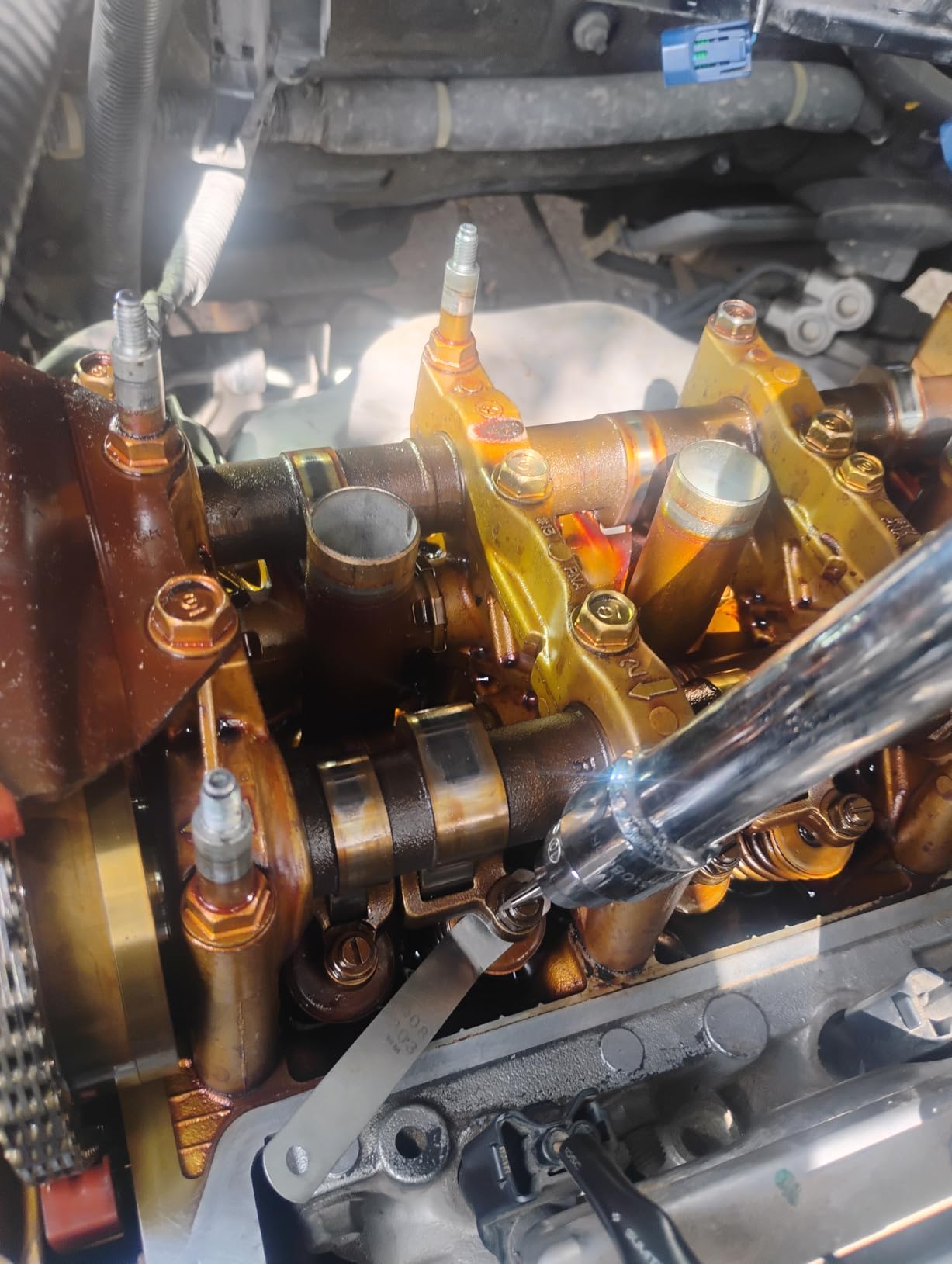
This set has one owner report that matters more than any marketing line: a reviewer checked it with calipers against competing sets and found it more accurate than several of them. That is the kind of claim I can build a decision on, because the failure mode of a feeler gauge is a blade that is off by more than the increment you are trying to resolve, and no amount of good handling fixes a blade ground wrong.
It also starts at .0008 inch, which is thinner than most sets in this group, and reaches 1.00 mm at the top. The blades are hardened tempered stainless steel with an anti-pitting oil coating, and they are bound in a protector so a blade cannot spring out of the fan during a job. Across more than 1,500 reviews the set holds a 4.6 average with about 78 percent five-star verdicts.
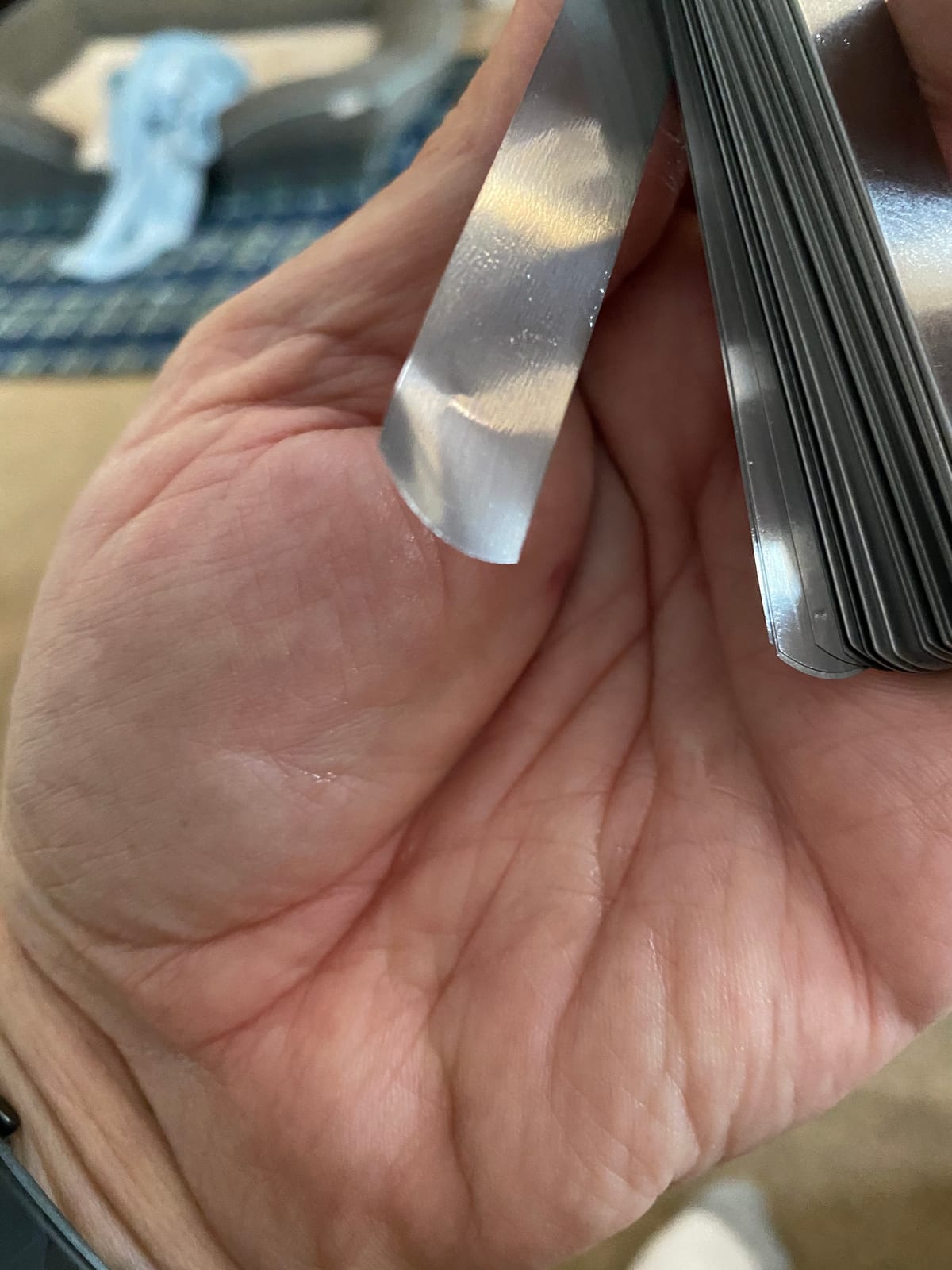
Stainless Steel and the Corrosion Question
Stainless steel is the right call in a working bay because it does not go grey and pitted the way carbon steel does after a season of condensation and brake dust. The trade-off is that not all stainless behaves the same, and one owner elsewhere in this category found a magnet would stick to the blades, which suggests a lower-grade magnetic stainless rather than an austenitic one. This set is described as hardened tempered stainless with an oil coating, so I would still wipe it dry after use rather than trust it indefinitely.
The oil coating is a genuine two-sided feature. It fights pitting between jobs, and reviewers note the set arrives heavily coated, which means you must wipe the blades before delicate work. That warning matters for anyone also using feeler gauges on instrument movements, guitar neck relief, or paper thickness, where an oily film changes the reading.
Holder Design and Blade Retention
The knurled tightener knob on a solid holding bracket is a small upgrade over the plain screw-and-nut holder used by most value sets, and it is the detail that keeps the fan tidy. Combined with blades bound in a protector, this addresses the most common complaint in the category, which is losing a single blade and then not being able to close the case.
Blade retention matters for more than tidiness. A fan that lets a blade shift position while you are reaching into a head can rotate the blade enough to change its effective thickness at the point of contact, and you will not notice the shift. A knob you can finger-tighten and leave alone is a better setup than a loose hinge.
When to Choose This Over a Cheaper Set
Choose it if you measure your own work, if you want the thinnest end of the range available in a dual-marked set, or if you work in a damp garage. It is also a good match for brake shoe and pad clearance checks, where the offset format and the mid-range sizes get used more than the thinnest blades do.
The two recurring complaints are legibility of the etched numbers in poor light and the heavy oil finish on arrival. Neither affects accuracy, and both are manageable with a rag and a decent work light. This is the set I would hand to someone who wants stainless construction and verifiable accuracy without moving into a professional master gauge.
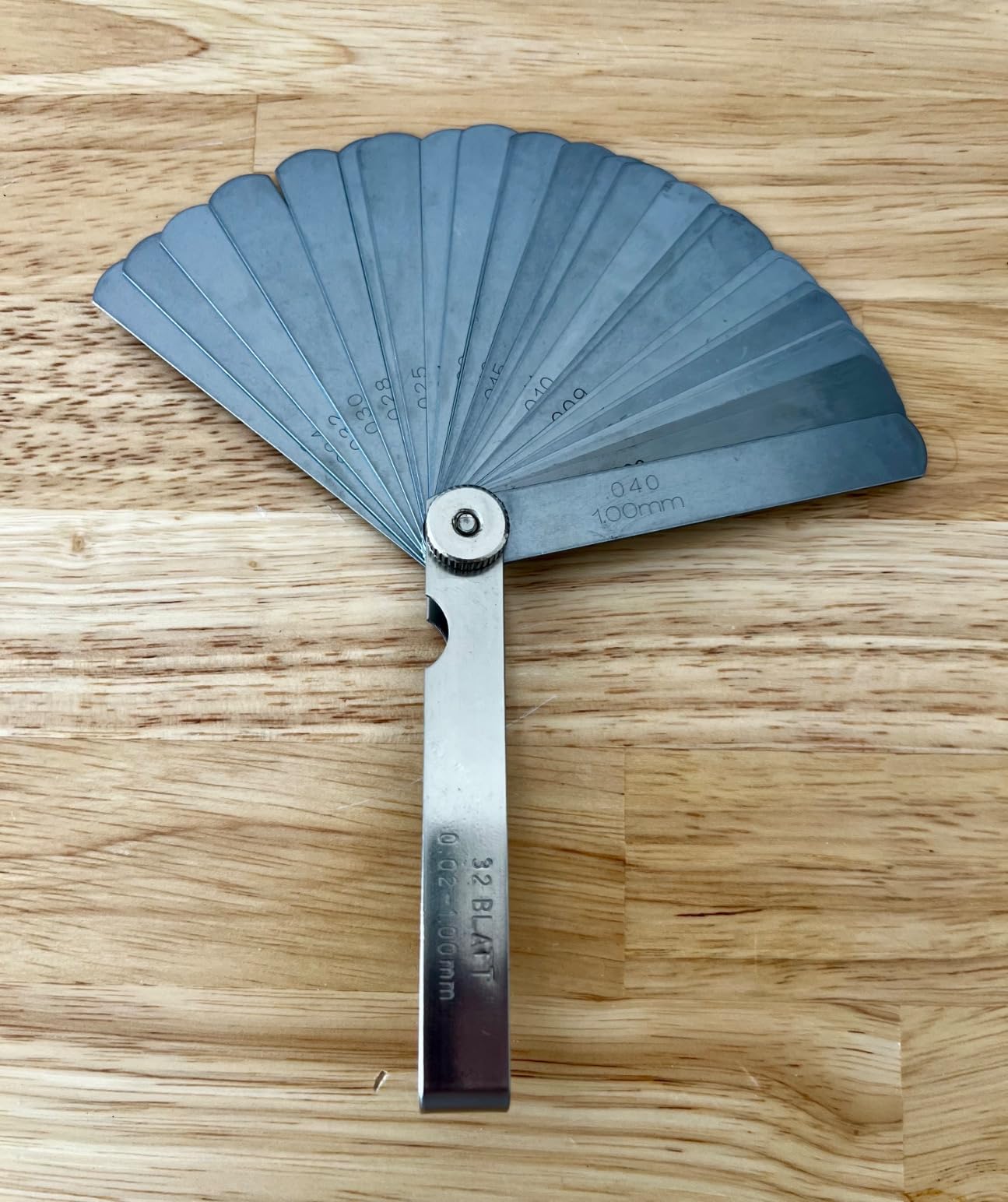
4. GearWrench 161D 32-Blade Deluxe – Highest Rated Set With a Brass Ignition Blade
GEARWRENCH 32 Blade Deluxe SAE/Metric Feeler Gauge | 161D
Range 0.0015-0.035 inch / 0.038-0.889 mm
Extra .010 inch brass blade
3-5/16 inch by 1/2 inch blades
Standard limited lifetime warranty
Pros
- Highest average rating in this group at 4.8
- Includes a dedicated .010 inch brass blade for electronic ignitions
- Dual SAE and metric markings on every blade
- Backed by a limited lifetime warranty
- Blade width gives a stable reading in a valve gap
Cons
- Range stops at .035 inch so very wide gaps need stacking
- No blades under .0015 inch
- Thinner coverage than a full 32-blade master set
The GearWrench 161D is the highest rated set in this group at 4.8 across more than 1,000 reviews, with roughly 87 percent five-star verdicts and very few complaints of substance. That kind of consistency usually means the product simply works, does not gimmick, and does not break. It is a straight dual-marked set with no angle, no curve, and no long blades, and it is the reference point against which I measure the others.
Its distinguishing feature is the extra .010 inch brass blade, which is a non-ferrous blade intended for electronic ignition and electrical work where a steel blade near a distributor or a magneto could be a problem. On engine work it is a nice extra, and on the electrical side of a tune-up it is the reason to own this specific set.
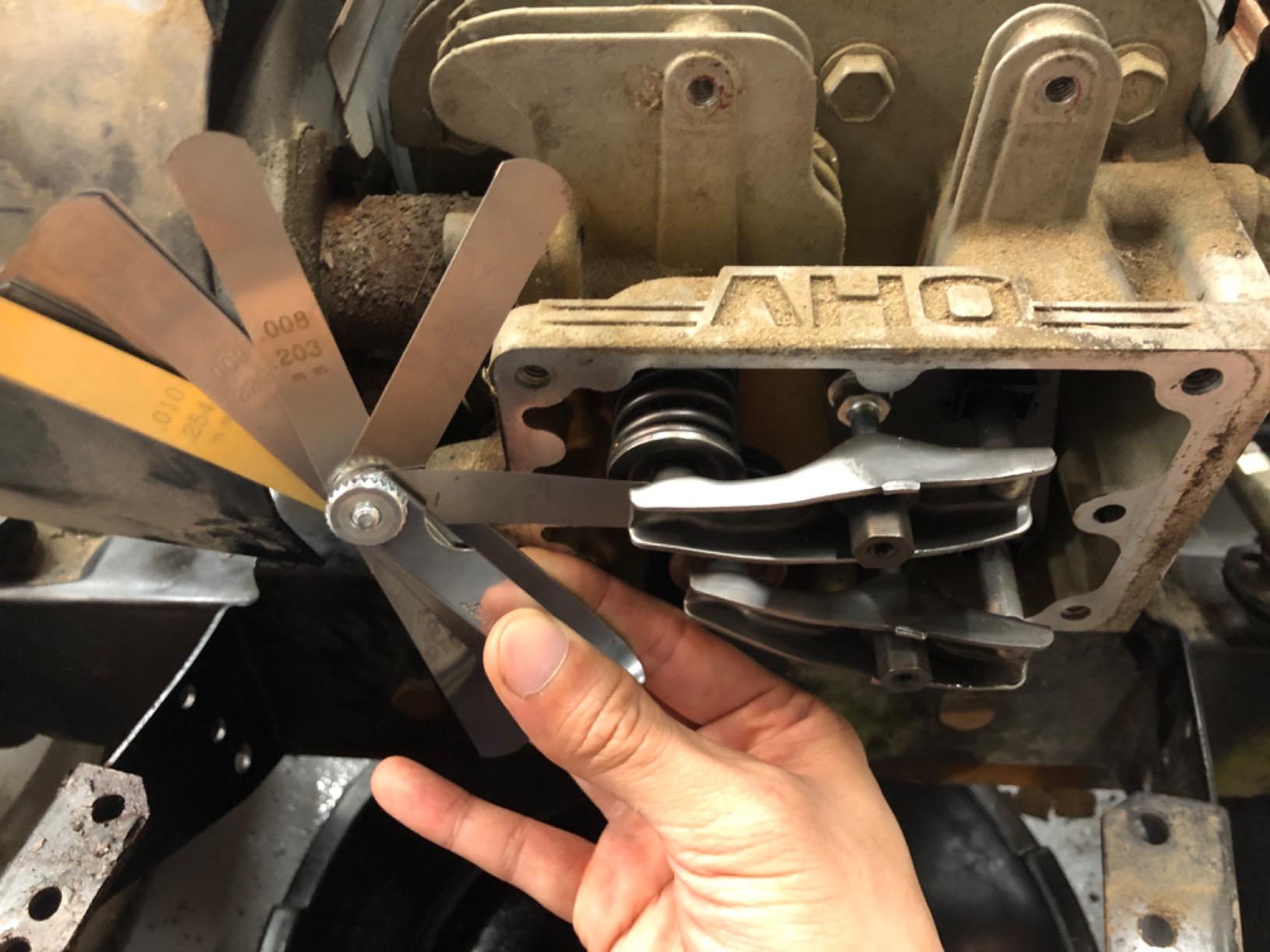
What the .0015 Inch Floor Means for Engine Work
The range is .0015 to .035 inch, which is .038 to .889 mm. The floor matters if you are setting shims under a bucket tappet or working a modern small-valve-clearance head, where the target number sits down at .003 or .004 inch. The ceiling matters on a worn engine that needs a shim or a lash adjuster backed off to reach a large factory clearance.
Anything wider than .035 inch is reachable by stacking, and stacking is a legitimate technique on a straight gauge because the blades are parallel and the fan clamps them flat. It is slower and it compounds error across two blades, so I reserve it for checks rather than for setting clearance.
Blade Dimensions and Reading Stability
Blades measure 3-5/16 inch long by 1/2 inch wide. That half-inch width is a genuine advantage in a valve gap, because a wider blade resists the sideways deflection that makes a thin blade flutter as you push it into a narrow slot. A narrow blade gives you a finer edge to drop between two close surfaces, and a wide blade gives you a more stable reading once it is in position.
This is the tradeoff nobody in the category talks about openly. Wide and stable suits a flat, accessible gap. Narrow and tapered suits a slot with a wall right next to the blade. The 161D is a wide-blade set, and for conventional rocker-arm lash on a mechanical or older OHC head it is exactly the right shape.
Warranty and What a Lifetime Policy Actually Means Here
The standard limited lifetime warranty is the strongest coverage claim in this roundup, and it is a real differentiator for a shop that buys once. Lifetime coverage on a tool like this usually means the manufacturer replaces a set that fails through normal use, not that they re-verify thickness on a blade that has been dropped or bent.
Blades take a set if you crease them, and a creased blade will read incorrectly forever with no visible warning. Treat the warranty as protection against manufacturing variation rather than as a calibration service, and check the two or three sizes nearest your engine’s spec on arrival so you have a reference.
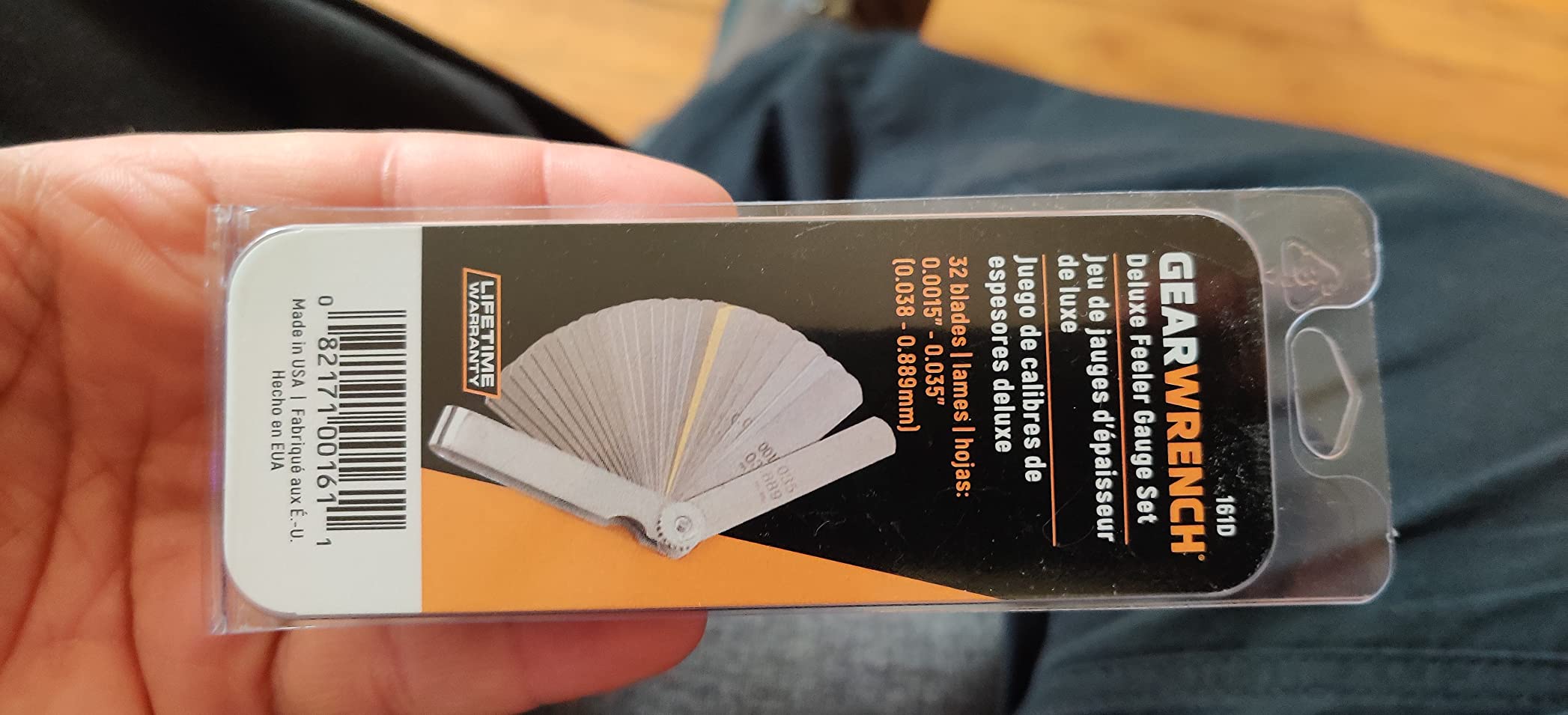
5. CHERALKEST 32-Blade Manganese Steel Set – Best Budget Pick With Odd-Size Coverage
CHERALKEST Feeler Gauge Set Stainless Steel Thickness Gauge 32 Blades
Range 0.0015-0.035 inch / 0.04-0.88 mm
32 blades in #65 manganese steel
Includes odd sizes such as .014 and .017
Foldable case
Pros
- Covers odd inch sizes such as .014 .017 .021 and .023 that many sets skip
- Dual metric and imperial etched markings
- Lowest entry point of the 32-blade sets
- Useful for tappet
- spark plug
- bearing and ring clearances
- Folds flat for storage
Cons
- Value-tier construction is less refined than premium brands
- Etched numbers need good light to read
- No angled blades and no case latch
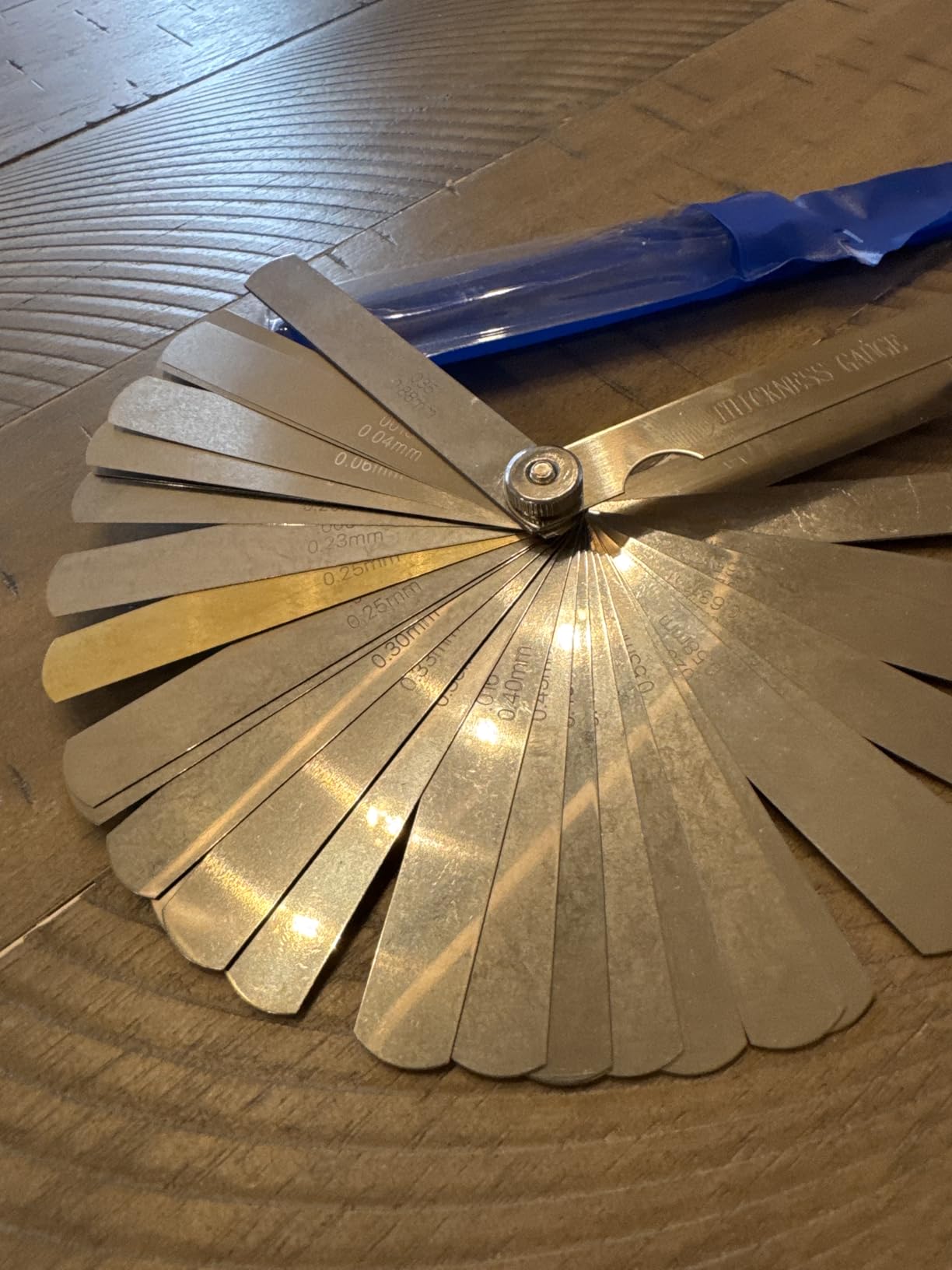
The thing that separates this budget set from the other 32-blade budget options is the size list. It includes .014, .017, .021, and .023 inch, which are the odd intermediate sizes that many 32-blade sets skip in favor of regular increments. If you are chasing a factory clearance that sits between two standard steps, those blades are the reason your measurement lands on the spec instead of near it.
It is #65 manganese steel across 32 blades, dual marked from .0015 to .035 inch and .04 to .88 mm, with sizes etched into each blade. The set holds a 4.7 average from more than 770 reviews with about 82 percent five-star verdicts, which places it above several sets that cost noticeably more.
Why Odd Sizes Beat Blade Count
Here is the arithmetic that matters. A 32-blade set covering .0015 to .040 inch in even .001 inch steps gives you 39 steps and no odd .001 increments, so a target of .0175 inch means you are either stacking or interpolating. This set includes the odd intermediate sizes, so a target like .017 or .023 is a direct fit with a single blade and a clean answer.
That is worth more to me than an extra ten blades in the fan, because the extra blades get used on jobs you do not have while the one missing size is the one you need at 11pm with a head apart. Reviewers single out the same point, calling out broad size coverage including the odd-inch blades that many sets skip.
Manganese Steel Build at a Budget Level
#65 manganese steel is the same springy material used in the sets I reach for first, and it is the right choice for spring temper and resistance to taking a permanent set. Where a value-tier set shows itself is in the pivot, the case, and the consistency of the etch depth between blades.
I would treat this as a shop-second set or a starter set for a learner, not as the only gauge in a professional bay. The absence of complaints about accuracy across hundreds of reviews is encouraging, but the honest framing is that construction is less refined than a premium master gauge even where the material is comparable.
Everyday Engine Chores It Handles
Beyond valve clearance this set is advertised for and used for tappet clearance, spark plug gap, bearing clearance checks, and piston ring end gap. Those are all jobs where the target sits in the middle of the range, which is exactly where a full-range set earns its keep quickly.
It folds flat into a compact case at 4.2 ounces, which makes it easy to keep in a toolbox rather than on a shelf. If you need one set that does the common jobs and covers the odd sizes, this is the most efficient buy in the roundup.
6. Hoiny 2-Piece Straight and Angled Set – Category-Leading Pairing for Valve Access
Hoiny 2pcs Feeler Gauges Set Stainless Steel, Spark Plug Gap Tool
32 straight plus 16 angled blades
Straight 0.0008-0.04 inch, angled 0.005-0.02 inch
Laser-etched dual scales
Stainless steel with knurled knob
Pros
- Currently ranked first in the feeler gauge category
- One owner checked every size with digital calipers and found them accurate
- Angled half is genuinely useful in narrow engine spaces
- Laser-etched markings stay clear and fade-proof
- Blades arrive clean rather than heavy with oil
Cons
- A magnet sticks to the blades
- suggesting lower-grade stainless
- Storage pouches arrive wrinkled and inexpensive
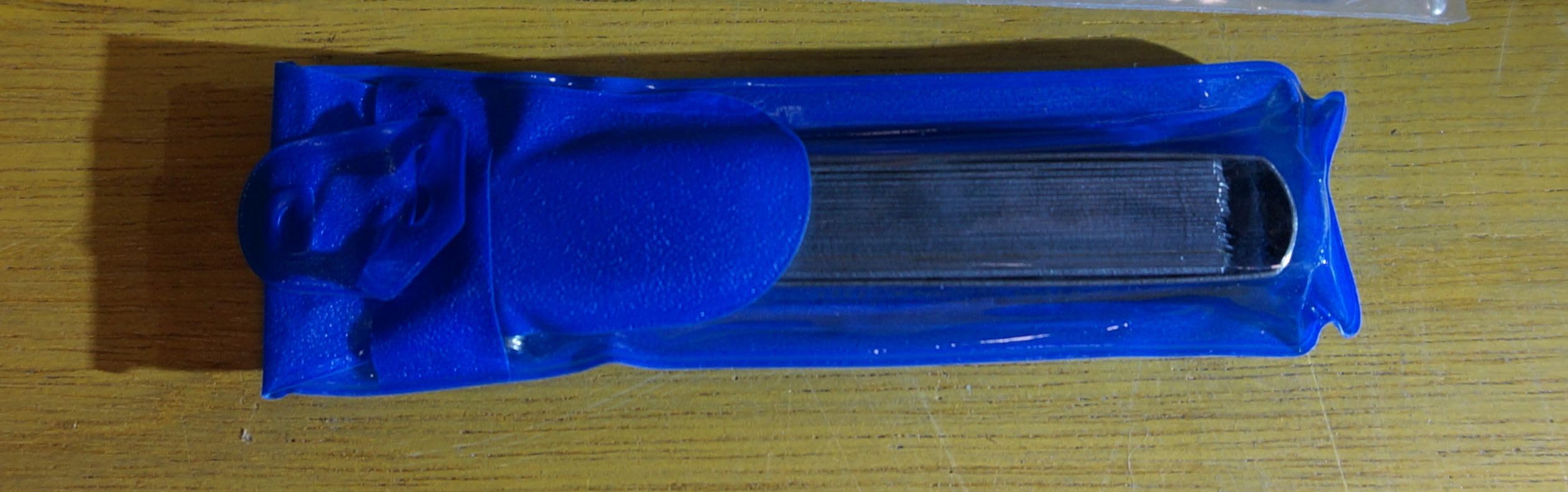
This is the pairing I recommend when the engine decides the tool. The straight gauge runs .0008 to .04 inch, and the offset gauge covers .005 to .02 inch, which is precisely the window where valve clearances on most engines live. The angled half is not filler; it is a purpose-built set of sizes for getting into a stem area with a side approach.
It holds a 4.7 average from close to 700 reviews with about 84 percent five-star verdicts, and the strongest single piece of evidence in those reviews is an owner who checked every size with digital calipers and reported them accurate. That is the check I run on arrival with every set, and I would rather trust one verified report than three unverified ones.
The Magnet Test and What It Means About the Steel
The most repeated caveat is that a magnet sticks to the blades. That points to a magnetic stainless grade rather than the austenitic stainless that is normally non-magnetic, and it means two things in practice. It will not hurt accuracy, since thickness is what matters. It does mean the steel is more prone to surface rust over a long storage life, so wipe the blades dry and do not leave them damp in the pouch.
This is a good example of reading a review complaint for what it actually is. An owner who notices magnetism and reports it is giving you information about metallurgy, not about fit. The set still arrives clean rather than swimming in oil, which is genuinely convenient when you are about to measure something delicate.
Angled Blade Range and Where It Pays Off
Restricting the offset gauge to .005 through .02 inch keeps those blades short and stiff, which is the whole point. A thin blade that is 95 mm long and only .020 inch thick behaves like a hinge; the same thickness in a 40 mm blade holds its position. Concentrating the angled set into the useful range is a smarter engineering choice than mirroring the full straight range.
For a rocker-arm area where you come in from the end, or a head where a bracket sits to the side of the bucket, this angled half is the difference between finishing and stripping the intake. The knurled knob lets you rearrange and hold the blades without tools, and the etched dual scales mean no conversion arithmetic in the middle of a job.
Weaknesses Worth Knowing Before You Buy
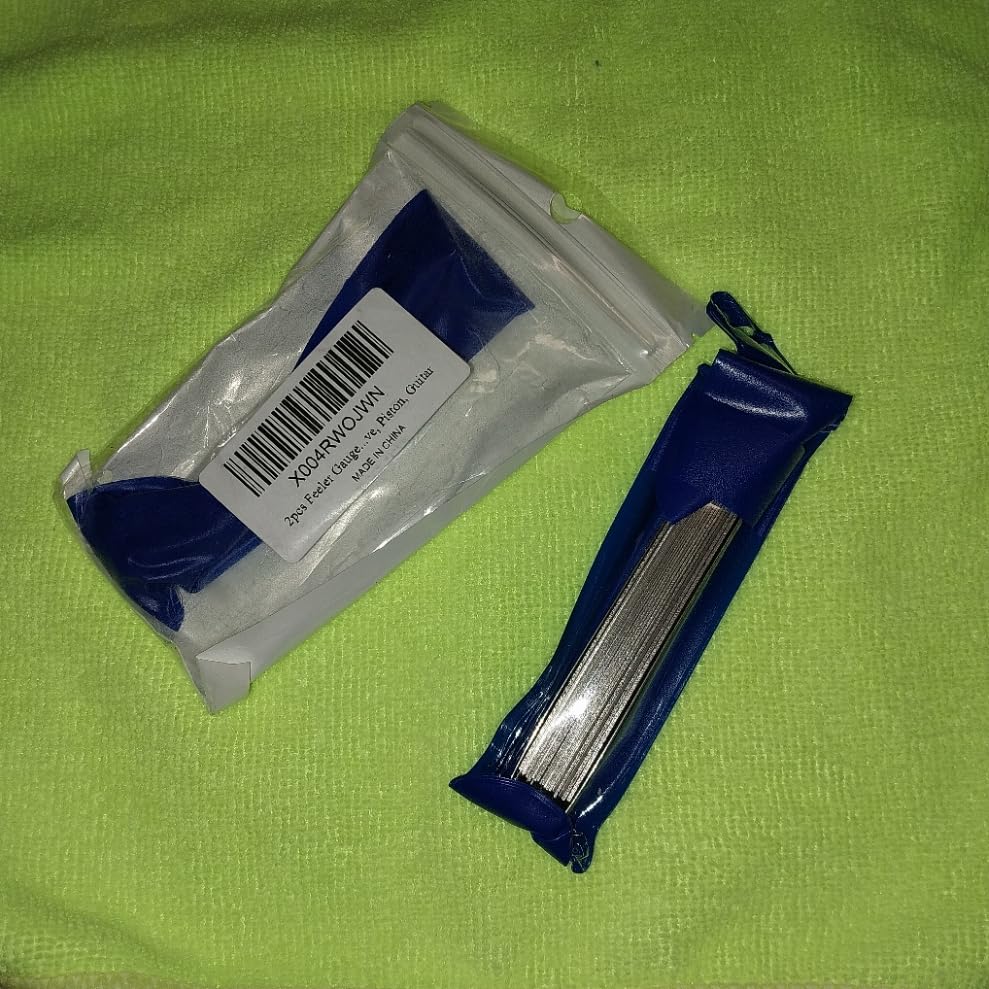
The storage pouches are the weak point. They arrive wrinkled and cheap, and a pouch that does not hold a shape will not keep a 32-blade fan from springing open in a drawer. I would put this set in a tool tote or a small rigid box instead.
Given the magnet finding, I would treat this as a strong daily set rather than a museum piece, and I would not store it long-term in a damp shed. For owners who want one package that covers both the easy and the awkward valve, it is hard to argue with.
7. TUSK 32-Blade Tapered Set – Best for Motorcycles, ATVs and UTVs
TUSK Tapered Feeler Gauge Set – 32-Blade Dual-Marked (Inch & Metric) Precision Valve Clearance Tool 0.001″-0.040″ / 0.03 mm-1.0 mm
Range 0.001-0.040 inch / 0.03-1.0 mm
32 tapered blades approx. 95 mm long
Tapered tip for buckets and tappets
Steel construction
Pros
- Tapered tip makes tight valve and bucket access noticeably easier
- Clear dual inch and metric markings on every blade
- 95 mm blades reach without being cumbersome in a small engine bay
- Suits motorcycles
- ATVs and UTVs
- Folds flat
Cons
- Blades are shorter than long-reach sets for deep engine bays
- 4.5 average with a 4 percent one-star share shows occasional build inconsistency
- No angled blade in the set
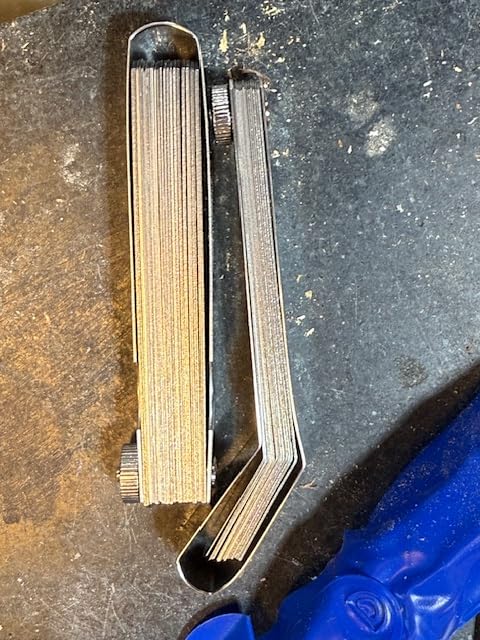
A tapered tip solves the exact problem I described with the straight-blade sets, without needing a second gauge. The blade is wide at the pivot and narrows toward the tip, so you get the stiffness of a full-width blade where you push and the narrowness to enter a tight slot. On a motorcycle head where the valve sits under a cam cover lip, that shape is the difference between reaching the gap and giving up.
The range is .001 to .040 inch, dual marked .03 to 1.0 mm, across 32 blades of approximately 95 mm length. TUSK is a powersports brand, which tells you where this set is aimed: quads, side-by-sides, and small engines where the head is compact and the access is tight.
Where Tapered Tips Beat Every Other Shape
Compare the three geometries. A straight blade is a rectangle: stiff, predictable, needs a clear line of sight. An angled blade rotates the approach so you can come in from the side. A tapered blade narrows the entry while keeping the body stiff, which helps when the obstruction is a wall right next to the gap rather than something off to the side.
Reviewers consistently call out the tapered tip as the standout feature for valve clearance work, which matches what the shape is meant to solve. On a cylinder head where the bucket sits close to the cam cover wall, the tapered end will enter where a full-width blade bottoms out on the casting.
Blade Length as a Limitation
At approximately 95 mm, these blades are shorter than the long-reach sets in this roundup. That is the right length for a motorcycle or UTV head, and it is the wrong length for a deep V-configuration valley where the rocker sits far down between the cylinders.
If your work spans both, this set plus a long-reach set covers everything. If your work is exclusively small engines and powersports, the shorter blade is not a limitation at all, it is a feature, because a long blade in a cramped bay is just a lever you can bend.
Build Consistency and Where It Falls Behind
This set holds a 4.5 average from more than 640 reviews with about 74 percent five-star verdicts and a 4 percent one-star share, which is the widest spread of satisfied and unhappy buyers in this group. Reviewers who mic’d nothing still report the blades are close, and the dissatisfaction concentrates in finish quality rather than dimensions.
That is the honest reason it sits outside my top three. It is not the least accurate set here, it is the least consistent in build, and on a job where the head is apart you would rather be surprised at the store than at the bench. For a powersports owner doing seasonal service, it is more than adequate and the tapered tip is a real asset.
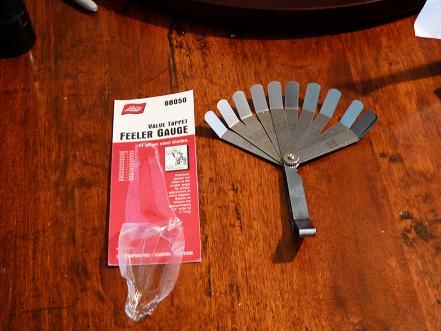
8. Lisle 68050 Valve Feeler Gauge – Best Coarse-Range Angled Set for Valve Lash
Lisle 68050 Valve Feeler Gauge
11 pieces with angled blade tips
Covers .008 to .040 inch, stackable
Machined steel with limited lifetime warranty
22.68 g, 7.25 inch overall
Pros
- Angled blade ends are praised as a genuine help in tight valve locations
- Numbers reportedly do not fade over time
- Reviewers who mic'd the blades found them spot on
- Limited lifetime manufacturer warranty
- Light at 22.68 g
Cons
- Thinnest blade is .008 inch so small-engine work needs another set
- Missing .009 .011 and the common .017 inch size
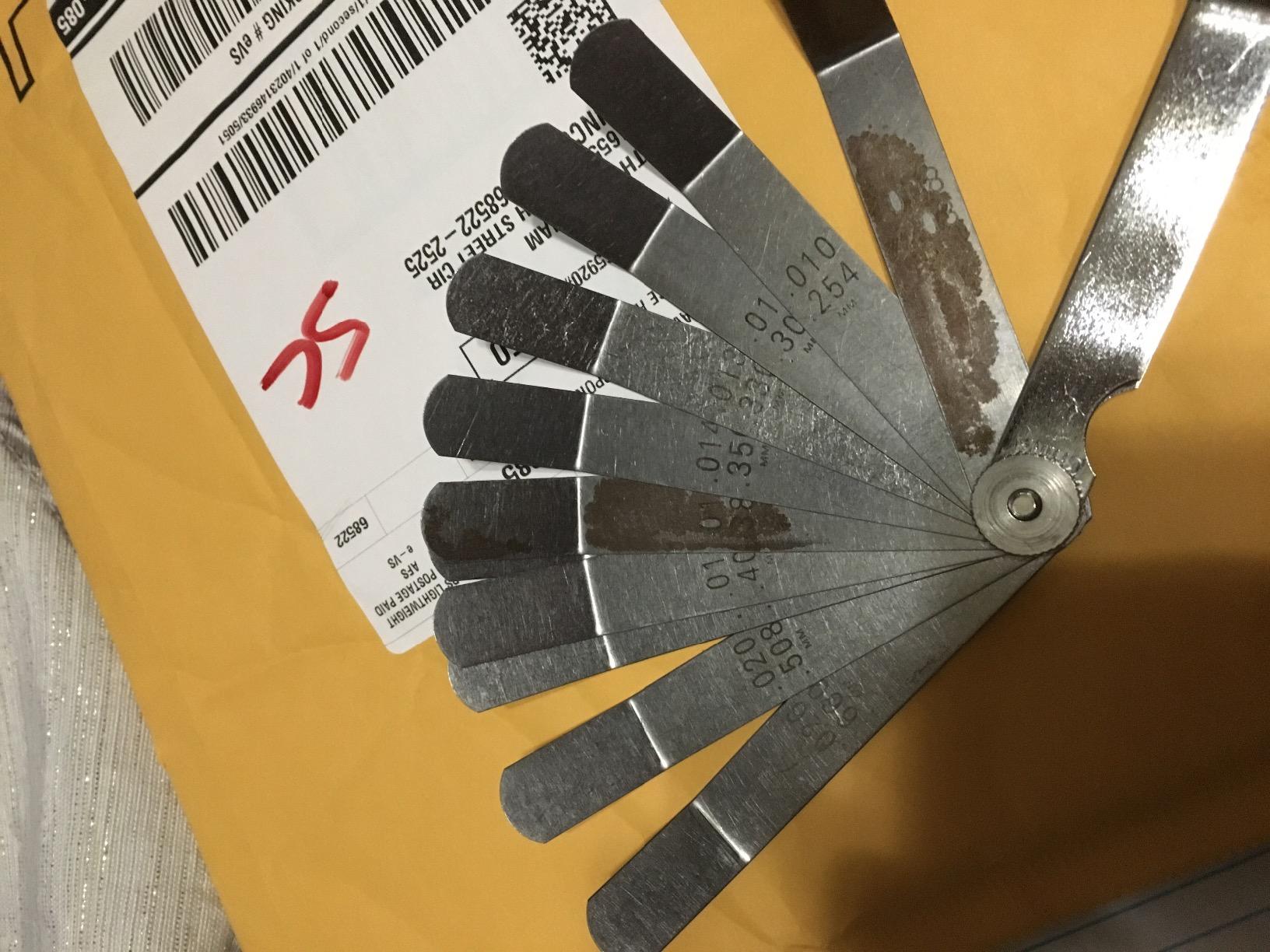
- One report of blades arriving rusty in the packaging
Some engines do not have fine clearances. Big-block American engines with hydraulic lifters and hardened lash adjusters routinely sit at .010 to .040 inch, and for those an 11-piece set is not a compromise, it is a focused tool. The Lisle 68050 covers .008 through .040 inch with angled blade tips, and the angle is the reason it earns its place.
Reviewers rate it on a par with professional feeler sets for valve lash work, and the number that stands out is that the etched numbers reportedly do not fade over time. On a set you expect to keep for years in an engine bay, marking durability is not a small detail.
Why a Coarse Range Is Sometimes the Right Answer
If your service manual says .010 inch and you are deciding between a .009 and a .011 blade, resolution is not your problem, access is. An angled 11-piece set gives you a shorter, stiffer blade that fits a specific geometry, and in a tight rocker-arm stack the shorter blade is the more accurate instrument.
Blades stack here too, with .008 to .020 inch available per blade and coverage up to .040, so wider gaps remain reachable. Stacking on a coarse set is more acceptable than stacking thin blades because the errors are proportionally smaller against the total reading.
The Missing Sizes Problem
Here is the honest limitation. The set skips .009, .011, and .017 inch, and .017 inch is a common valve lash size on American engines. One reviewer who mic’d the blades found them spot on, and that reviewer still flagged the missing size as the reason the set cannot cover everything.
My workaround is to keep a full-range dual-marked set in the toolbox for the sizes this one lacks and use the Lisle in the tight geometry. If you service one engine family whose specs all sit in this window, that is a reasonable two-gauge setup. If you rotate across makes, buy a set that carries the odd sizes.
Other Uses and the Warranty
It is also used for automatic transmission clutch pack clearance, where a specific gap rather than a range is the goal and a short angled blade reaches into a pack that a full-size gauge will not. The limited lifetime warranty is the same coverage style as the GearWrench set, and machined steel construction gives the blades a finished feel.
The one quality complaint worth repeating is rust on arrival in a single report, which is a packaging issue rather than a metallurgy issue. Wipe the blades on the way out of the box and store the case somewhere dry, and you will not run into it.
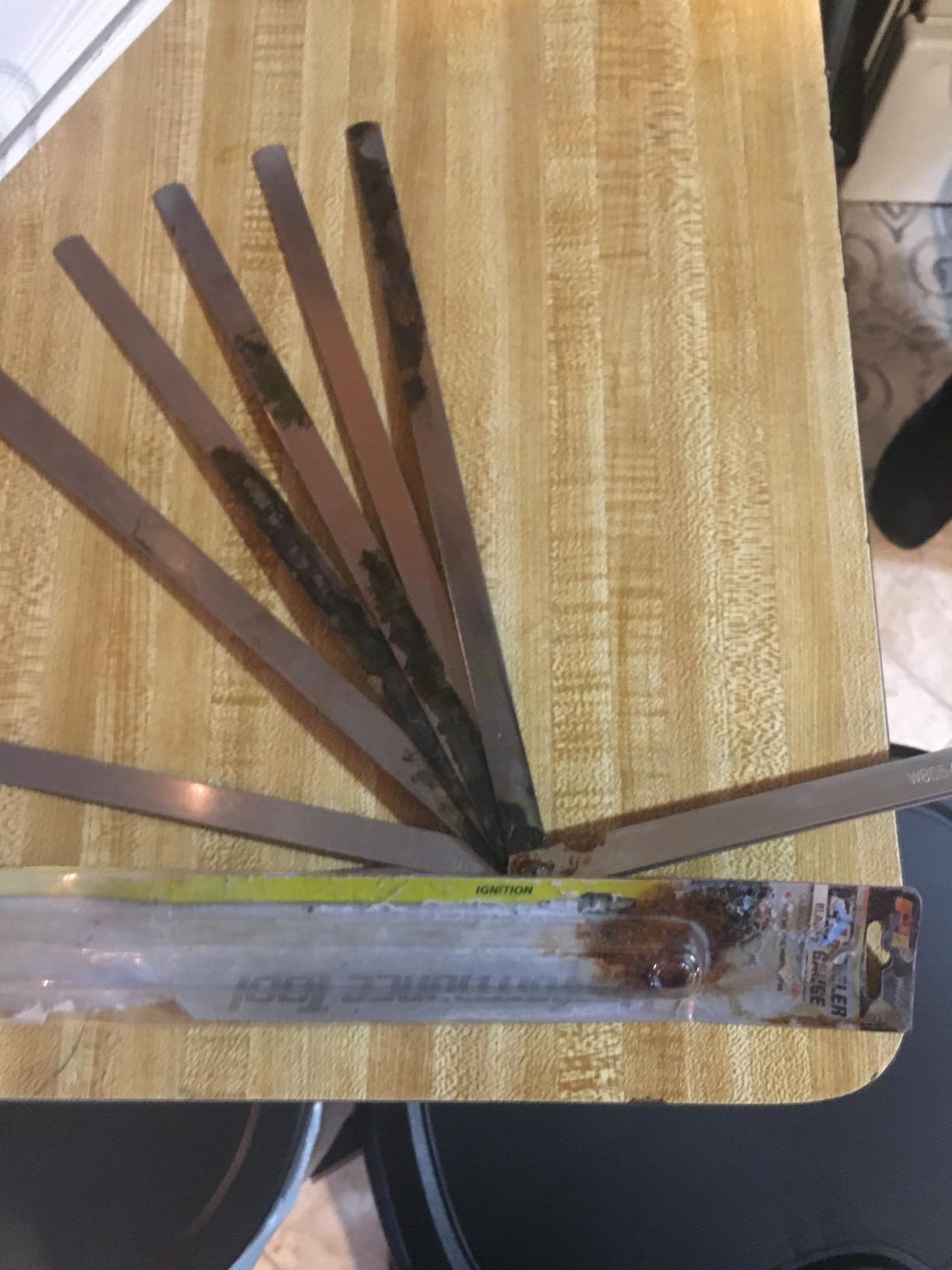
9. Performance Tool W80541 Long Blade Set – Best for Deep Access Under a Manifold
Performance Tool W80541 12 in. Long Feeler Blade Set
1/2 inch by 12 inch blades, 20 sizes
0.002 through 0.040 inch
Permanent SAE and metric markings
Stackable flexible blades
Pros
- 12 inch blades reach deep into engines and other hard-to-access areas
- Blades are easy to read and flexible enough to stack
- Popular for daily lifter work and for measuring brake clearances
- Blades live in a steel holder that will not tear
Cons
- Only even-numbered .002 inch increments with no .001 .003 or .005
- Comes in a steel holder with no separate carrying case
- Thin long blades flex if you steer them rather than push straight
Twelve inch blades are the answer to a problem no other product here addresses, which is a valve buried deep in a valley or behind an intake runner. The Performance Tool W80541 carries 20 sizes from .002 to .040 inch on half-inch wide blades in a steel holder, permanently marked in SAE and metric, and the reach is the entire point of the product.
It is popular with lifters doing daily valve-lash work and is also used for brake clearance measurement, where the long blade reaches between a caliper and a rotor or into a bracket channel that a 3 inch blade will not enter.
What 12 Inches of Reach Buys You
Picture a V8 with the intake manifold still on and a rocker arm at the far end. A 3 inch blade has no path. A 12 inch blade can be laid on top of the cylinder head, past the intake runner, and slid down between components into a gap that faces sideways. This is why long-reach sets exist separately rather than as an upgrade to a standard gauge.
The trade-off is stiffness. A 12 inch blade at .002 inch is a cantilever, and if you steer it in a curve it will follow the curve. Push it straight along its length into the gap and it will hold its thickness. That habit is worth practicing on a bench before you do it inside an engine.
The Even-Increment Limitation
This is the honest weakness and it is significant on some engines. The set runs in .002 inch steps, so it has no .001, .003, or .005 blade. If your target is .003 inch and you need to know whether the clearance is .003 or .004, this set cannot tell you, and you will be interpolating rather than measuring.
For daily valve-lash work where the factory spec is a round .010 or .020, even steps are fine. For a bucket-tappet shim job where you are hunting one thousandth, even steps are a real limitation and you need a fine-resolution set alongside it.
Handling, Marking and the Steel Holder
Blades are permanently marked in both SAE and metric, and reviewers call them easy to read, which is a step up from etched numerals on cheaper sets. The blades stack for combined readings, so .020 plus .010 gives you .030, though I would only stack on a check rather than on a setting.
The steel holder is a plain keeper rather than a case, so the set lives in a drawer or a tool tote. There is no separate carrying case, and for a 15 inch long assembly that means you need somewhere in the vehicle with real length to it. Plan the storage before you buy, not after.
10. Hotop 25-Blade Long Set – Best Long Reach on a Budget
Hotop 25 Blades Steel Feeler Gauge for Measuring Gap, 0.038-1.02mm
Range 0.0015-0.04 inch / 0.038-1.02 mm
65 manganese steel, 25 blades
Blades approx. 12 inches long
Anti-rust oil coating
Pros
- Blades measure about 12 inches long
- giving unusually good reach for the price
- Etched dual-unit markings are readable in normal light
- Range covers odd inch sizes such as .017 .019 and .021
- Affordable enough that some owners keep a spare set
Cons
- Some blades vary slightly from listed thickness within expected tolerance
- Build quality is a step below name brands
- Only 25 blades so the fan is narrower than a 32-blade set
Reach is the headline here. The blades measure about 12 inches long, which is a long-reach set at a budget price point, and combined with 65 manganese steel construction and an anti-rust oil coating it is the most unusual spec sheet in the roundup. You get long blades without paying for the professional long-reach category.
The range is .0015 to .04 inch, dual marked .038 to 1.02 mm, with odd inch sizes such as .017, .019, .021, and .027 included. The stated accuracy is plus or minus 0.0015 inches, which is worth understanding before you rely on it, because that figure is wide relative to the increments.
Reading the Stated Accuracy Figure
Stated accuracy of plus or minus 0.0015 inches is common in this category and it is much looser than the increment between blades. It means individual blades may deviate from their nominal thickness by up to a thousandth and a half. For a valve-lash check where the spec is a range, that is acceptable. For a shim job where you are chasing a thousandth, it is not.
Reviewers confirm this in practice, describing blades that vary slightly from the listed thickness within expected tolerance but are noticeable on careful checks. The honest framing is that this set is a good general-purpose long-reach gauge, not a measuring instrument for precision shim work.
Odd Sizes in a 25-Blade Fan
Twenty-five blades is fewer than the typical 32, and the way manufacturers get there is by choosing increments rather than trimming the range. This set uses that budget on odd inch sizes, which means more targets are hit with a single blade rather than a stack.
That is a real advantage on a restoration where the factory clearance is an odd number, and it explains the 4.6 average from more than 470 reviews with around 79 percent five-star verdicts. The companion advantage owners mention is affordability, since several keep one as a spare so a bent blade never stops a teardown.
Where It Ranks Below Name Brands
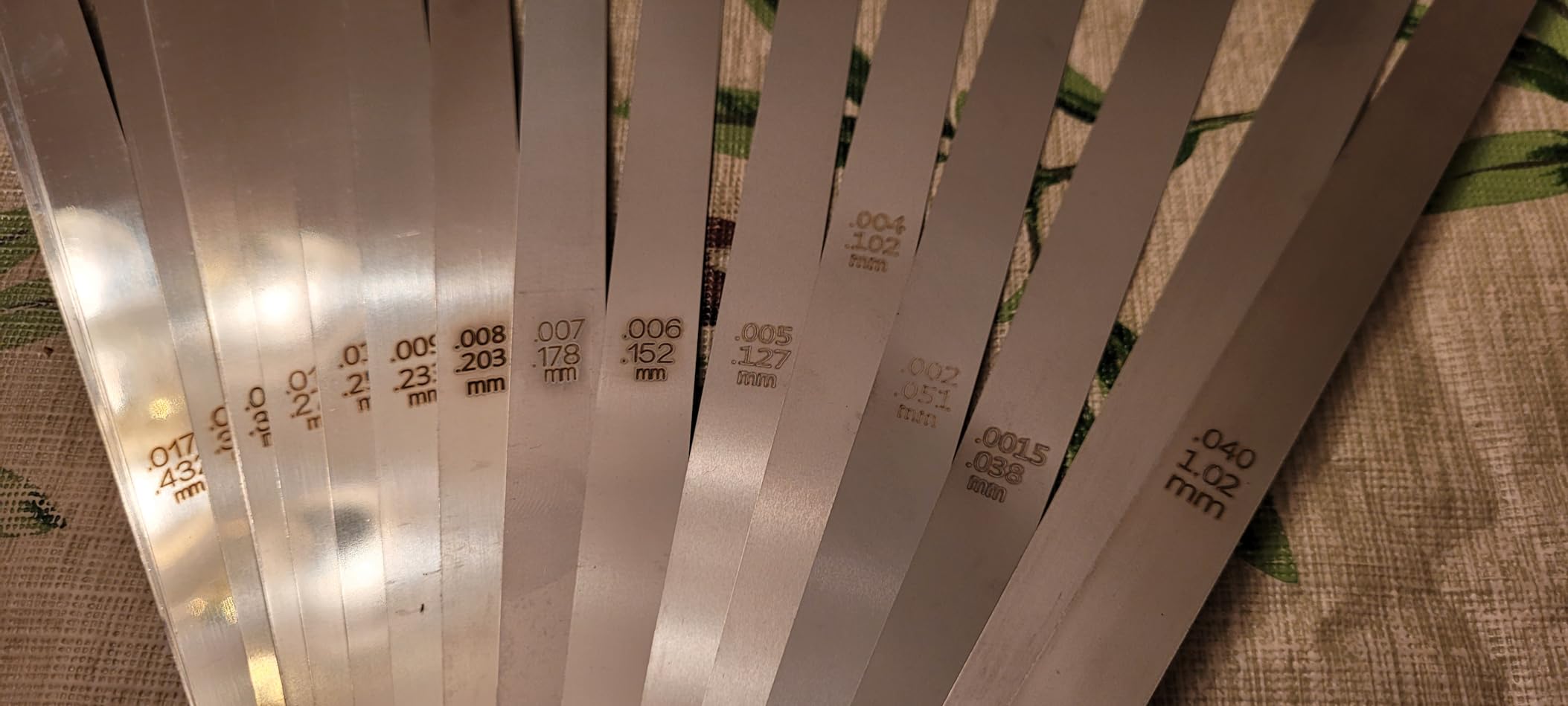
Owners place build quality a step below name brands, and I would agree. The finish is functional rather than refined, the case is a foldable rather than a rigid box, and the etched markings need reasonable light.
It is still a strong value. For someone who needs reach more than they need sub-thousandth precision, this delivers the reach at a fraction of what a dedicated long-reach professional set costs, and the odd-size coverage makes it more useful than a plain even-step long set.
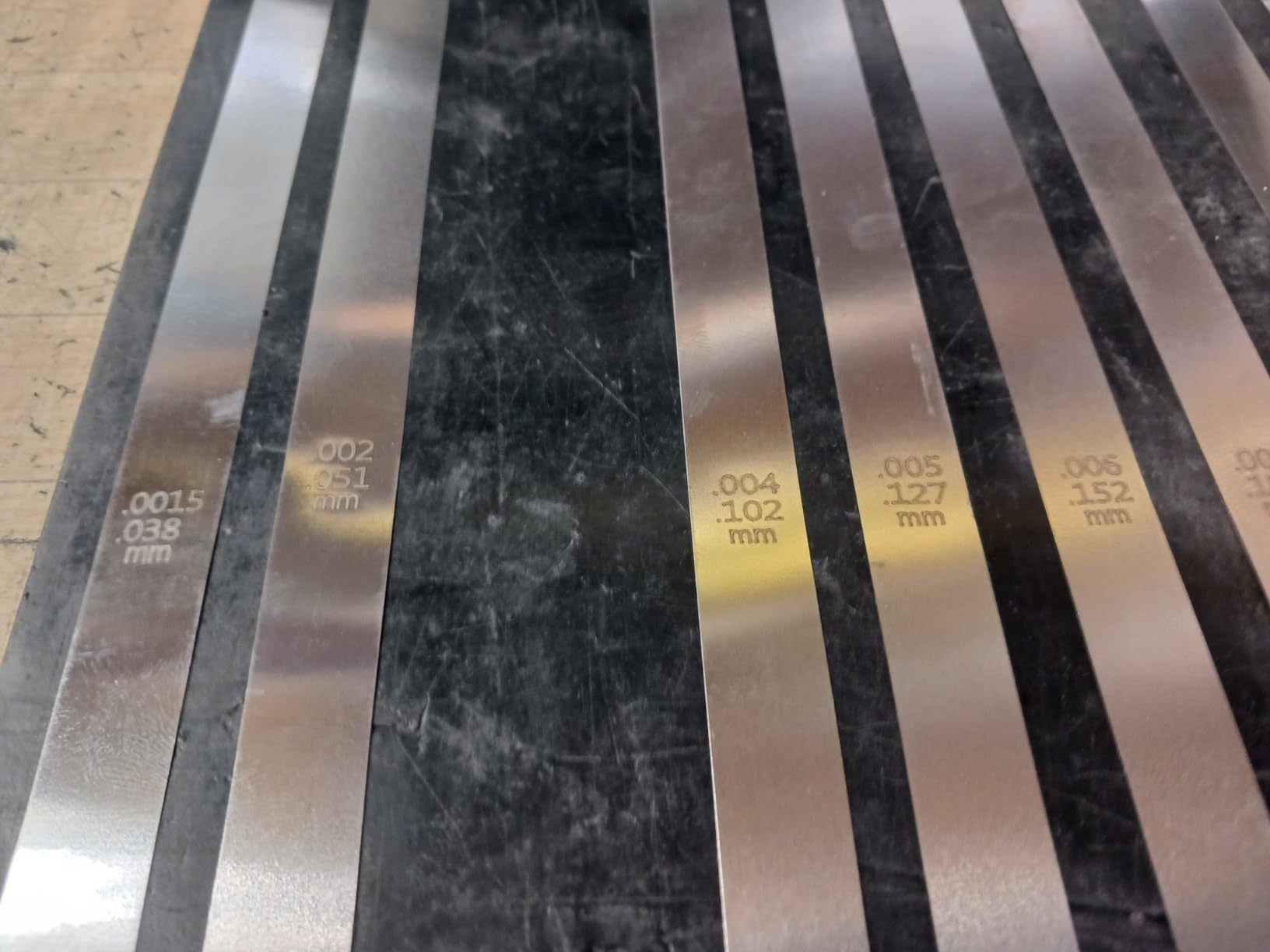
11. Lisle 68100 Deluxe Feeler Gauge – Tightest Stated Accuracy in the Group
Lisle 68100 Deluxe Feeler Gauge
31 blades plus a .010 inch brass blade
Range 0.0015-0.035 inch
Stated accuracy plus or minus 0.0001 inch
Lifetime warranty
Pros
- Tightest stated accuracy figure in this group at plus or minus 0.0001 inch
- Half-inch wide blades give a stable reading in a valve gap
- Lifetime warranty from an established tool brand
- Includes a .010 inch brass blade for ignition work
Cons
- Lowest average rating of the Lisle listings at 4.4 with a larger share of dissatisfied buyers
- Range starts at .0015 inch so very fine gaps need another set
- Stops at .035 inch so wide gaps need stacking
The headline number on this set is plus or minus 0.0001 inches, an order of magnitude tighter than the plus or minus 0.0015 inches claim on the long-reach set in this roundup. Whether the manufacturing delivers that is a fair question, but the spec sheet is the strongest precision claim of any set here, and for measuring under a spec written in ten-thousandths that is the number to shop on.
Construction is 31 steel blades plus one .010 inch brass blade, .0015 to .035 inch, on blades about half an inch wide by three and a half inches long, with a lifetime warranty. It is a compact, conventional straight set with no angle, no taper, and no long reach.
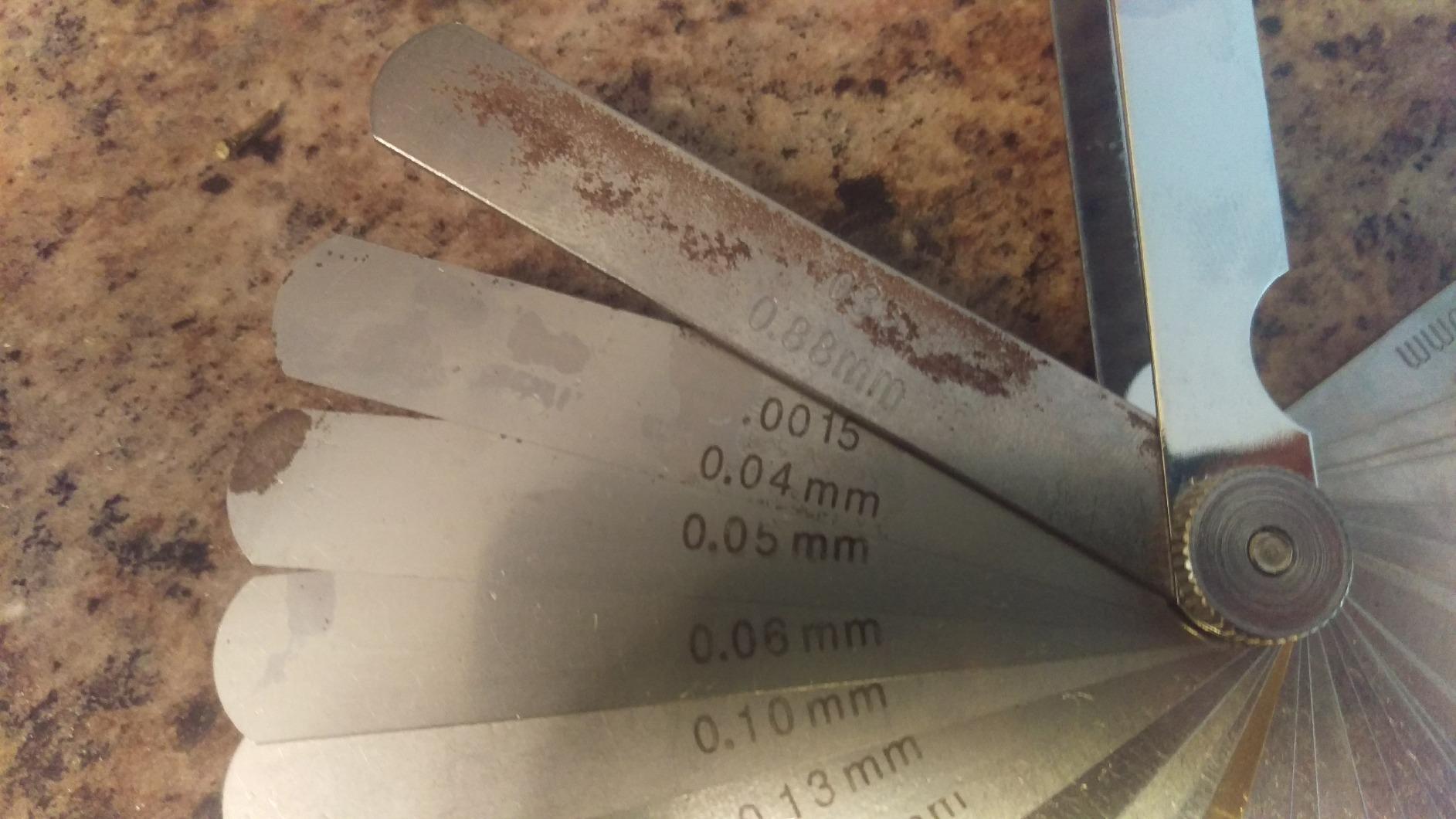
Half-Inch Wide Blades and Reading Stability
The half-inch width is doing real work here. In a valve gap, a wider blade resists the flutter that makes a narrow blade give a different reading each time you push it. It also gives you more surface to feel drag against, which is what makes a light-drag call reproducible between two people working on the same head.
The trade-off is the mirror image of a tapered blade. Width helps a flat, open gap and hinders a slot with a wall adjacent to the blade. This set is built for the first case, and it pairs naturally with a tapered or angled set rather than replacing one.
What the 4.4 Rating Is Actually Telling You
This set holds a 4.4 average from more than 430 reviews, with 7 percent two-star and 4 percent one-star feedback, which is the largest dissatisfied share of any set in this roundup. Reviewers acknowledge the precision claim and the warranty, and the ratings distribution shows a meaningful group of people who were not happy.
Looking across the complaint themes for this category, the recurring issues are all range complaints rather than dimension complaints: the floor at .0015 inch and the ceiling at .035 inch both force a second set for extreme gaps. If your engines live in the middle of the range, the dissatisfaction is likely about a size you needed and this set did not carry.
The Brass Blade and the Warranty
The extra .010 inch brass blade is a non-ferrous blade for ignition and electrical work, useful around a distributor or magneto where a steel blade is undesirable. It also gives you a slightly softer feel reference at a common clearance value.
The lifetime warranty is the strongest coverage term of the sets here alongside the GearWrench. On a set with a tighter stated accuracy figure, the warranty is at least consistent with the positioning, and it is a reasonable reason to prefer a known brand over an unbranded set with a better-sounding number on paper.
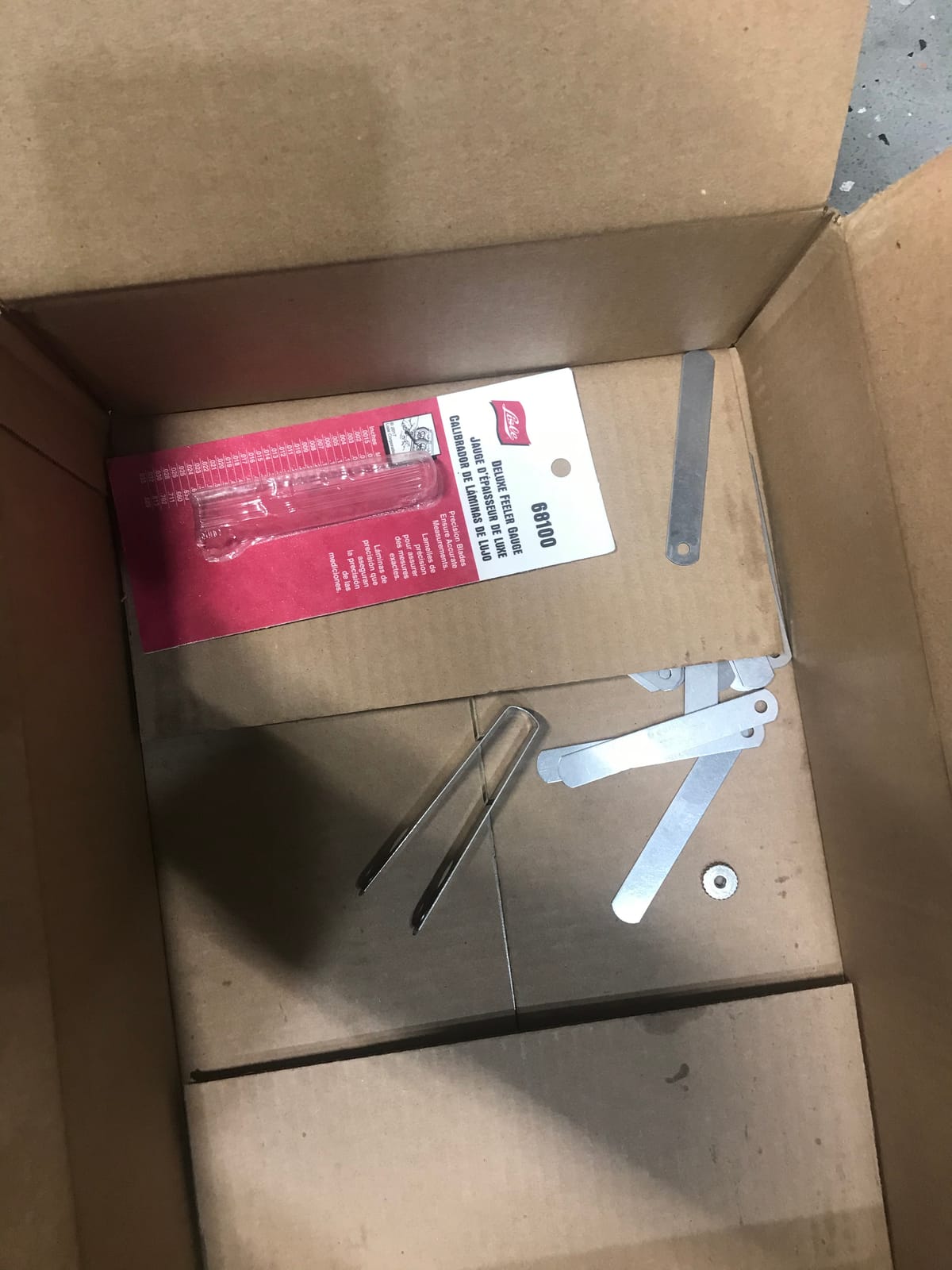
12. Tokyzexi 2-Piece Straight and Angled Kit – Best Budget Second Set
Tokyzexi 2Pcs Feeler Gauge Set,Premium Straight & Angled Feeler Gauges Kit
32 straight plus 16 offset blades
Straight 0.0015-0.035 inch, offset 0.005-0.02 inch
Hardened stainless with laser etching
Knurled pivot knob for friction control
Pros
- Straight and offset pairing covers awkward areas a single set cannot reach
- Knurled pivot knob lets you release blades and adjust friction
- One buyer reports it replaced a set whose retaining screw failed and scattered blades
- Laser-etched metric and imperial sizes are clear and readable
Cons
- Entry-level construction and finish
- Straight gauge starts at .0015 inch so it cannot measure finer gaps
- Storage is basic
This is the pairing I would buy as a second set rather than a first one, and the reason is friction control. The knurled knob on the pivot shaft lets you release blade clamping pressure and adjust it, which is the feature that separates a set you fight with from a set that works. One owner reports it replaced a set whose retaining screw had failed and scattered blades around the bench, and that is the exact failure this category is notorious for.
It is a 32-blade straight gauge covering .0015 to .035 inch plus a 16-blade offset gauge covering .005 to .02 inch, in hardened stainless steel with laser-etched dual markings. It holds a 4.7 average from just over 300 reviews with about 84 percent five-star verdicts.
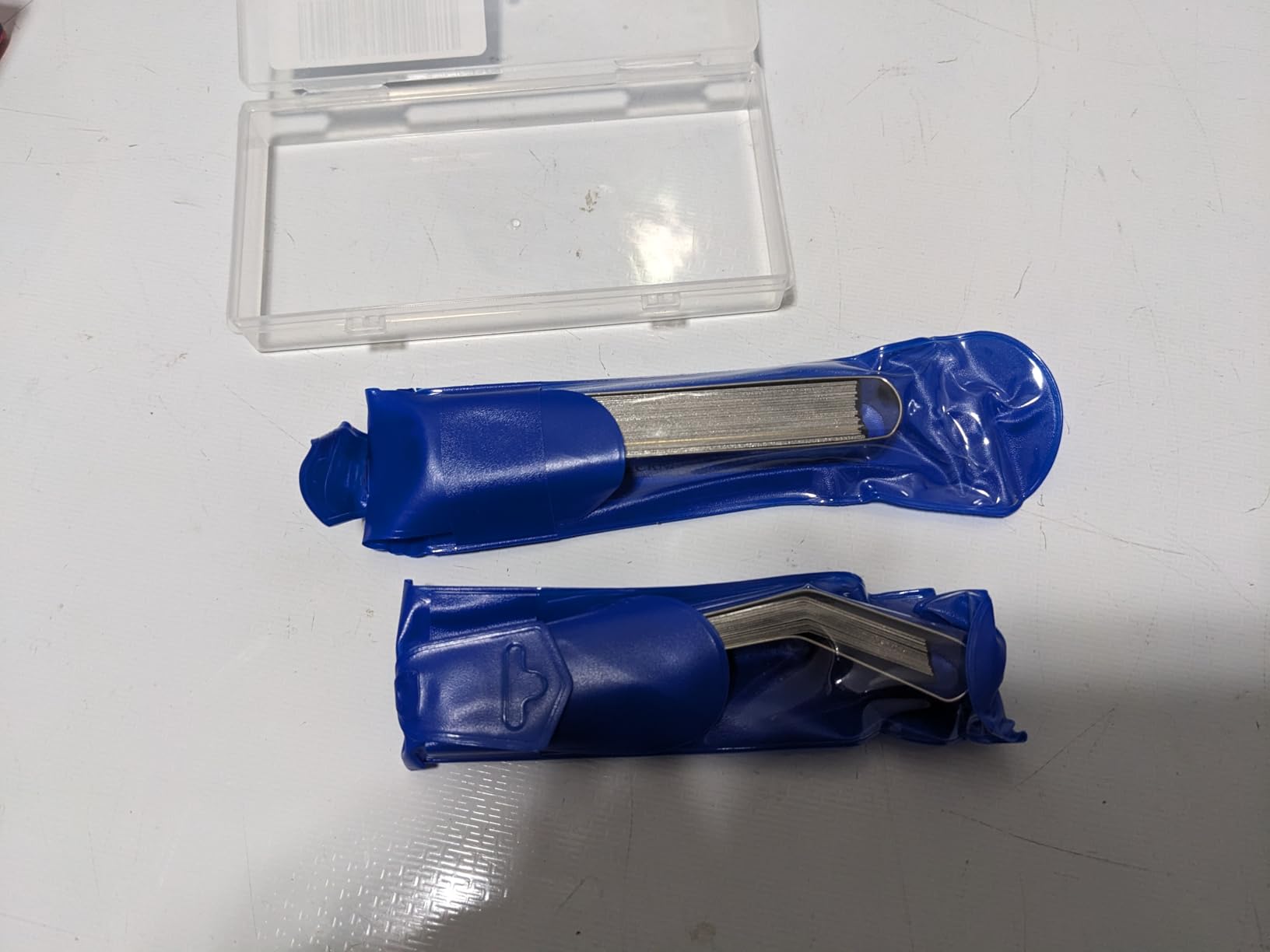
Adjustable Pivot Friction as a Feature
On a gauge with thin blades, the clamping force of the pivot is a real variable. Too loose and the fan spreads and the blade angle shifts during a measurement. Too tight and a thick blade cannot be seated at all, and thin blades pick up a curl at the pivot.
A knurled knob that releases pressure lets you set the tension for the work in front of you. For a valve-lash job with .005 to .020 inch blades, a light setting is better. For a stack of several thicker blades, you want more. This is a small feature that pays off every time you change job type, and it is why I keep this pair as a complement rather than a single-gauge setup.
Two Gauges, Two Geometries, One Price Point
The straight gauge carries the full working range while the offset concentrates on the valve window, which is the same smart range discipline seen in the Hoiny pairing. Short, stiff angled blades in the sizes you actually need beats long angled blades in sizes you do not.
For a learner or a weekend mechanic, this is also a legitimate single purchase. The pairing covers the two most common access problems in one package, and the rating data supports the build even though the review volume is the lowest in this roundup.
Honest Limits
Entry-level construction and finish is the accurate description, and the range floor at .0015 inch means it cannot measure anything finer. If your work includes bucket-tappet shimming where you are chasing .002 to .004 inch, this set will not get you there without stacking.
The correct framing is that this kit solves access and blade management at a price that makes it a sensible second gauge in any toolbox. It is not a replacement for a verified, tight-tolerance master set on a professional head job.
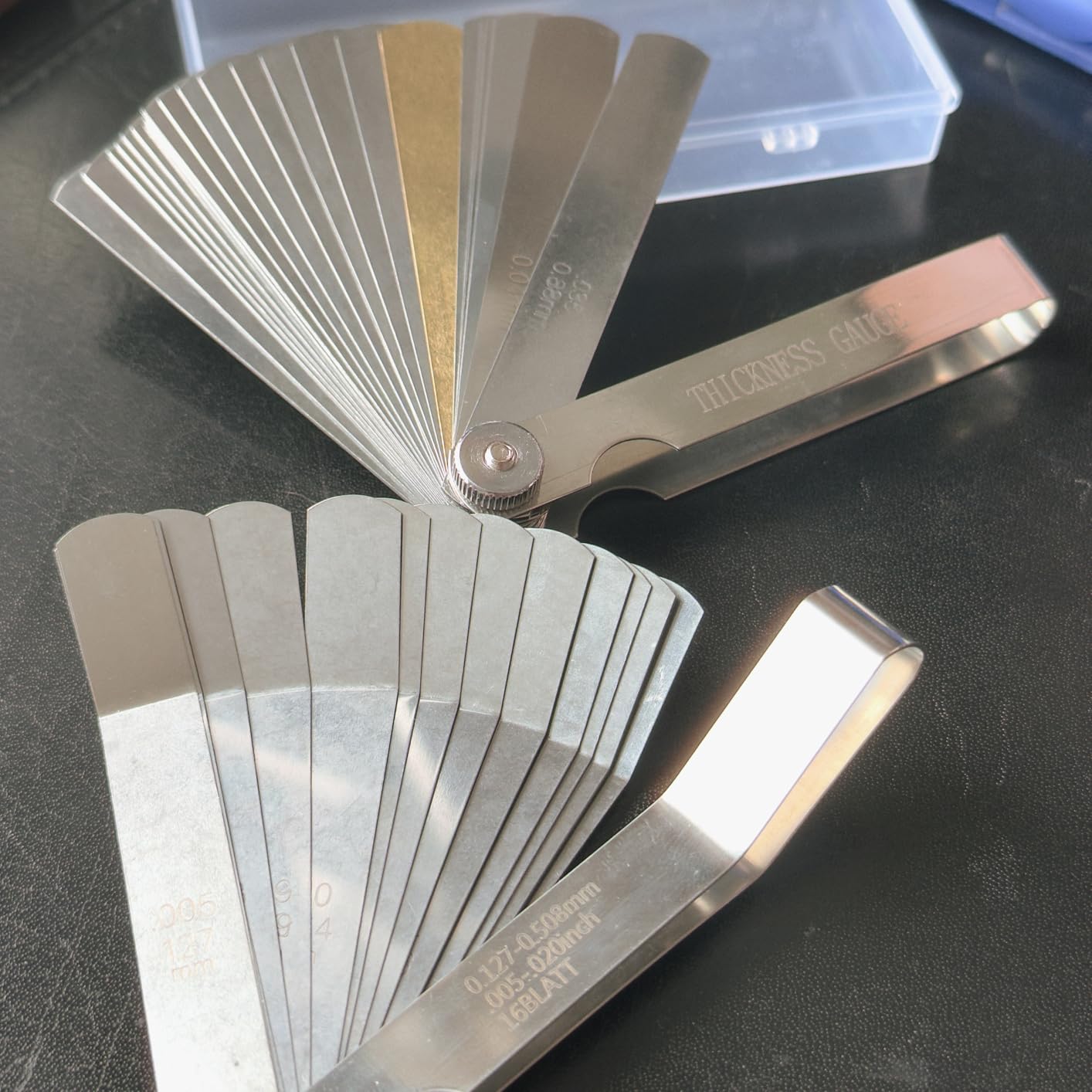
How to Choose a Feeler Gauge Set for Engine Work
Pick the unit system your engines are built in, pick the blade geometry that matches your worst access problem, pick a resolution finer than your tightest specification, and then verify accuracy before you trust the set. Everything else in this category is preference.
What is the best brand of feeler gauge for professionals?
For professional engine work, look for a set with dual SAE and metric markings, blades that include the odd intermediate sizes such as .017 and .023 inch, a holder that prevents blade loss, and a warranty that covers manufacturing variation. The GearWrench 161D and the Lisle 68100 both carry limited lifetime coverage and dual markings. A shop working metric-heavy engines should insist on dual marking so one set covers Japanese, European, and American heads. Verify the two or three sizes nearest your engine spec with a micrometer on arrival, and replace any set that fails that check.
SAE, Metric or Dual Marked: Match the Gauges to the Engines in Your Shop
The unit debate online never resolves because the answer depends entirely on what you service. Japanese, European, and most modern Asian engines specify clearance in millimeters, and many of those specs sit at a .05 mm or .10 mm interval that no SAE step lands on cleanly. American engines, particularly big-block and older small-block, specify in thousandths of an inch, and those specs are written in odd values.
A dual-marked set eliminates the problem entirely, and all twelve of the sets here are dual marked. Single-system sets still exist in this category, and one marked in only a single unit system is a hard stop for a mixed-fleet shop. If you service only metric engines, a metric-only set is fine, but you lose the ability to handle an American engine without a second purchase.
- 0.001 inch (0.03 mm) sits at the thin end, where modern heads live.
- 0.003 inch (0.08 mm) is typical of shim-under-bucket clearances.
- 0.005 inch (0.13 mm) shows up on aggressive bucket tappet lash.
- 0.010 inch (0.25 mm) is a very common mechanical lash spec.
- 0.017 inch (0.43 mm) is the odd intermediate American engines specify.
- 0.020 inch (0.51 mm) is typical big-block hydraulic lash.
- 0.035 inch (0.89 mm) is the upper end of worn-engine lash.
Those pairings are useful precisely because they are not round. The moment a spec lands on an odd value, the set that skipped that blade forces you to stack or interpolate, and interpolation is where small errors enter.
Blade Geometry: Straight, Tapered, Angled and Long-Reach
Choose the geometry by identifying your worst access problem, not by what looks good in a photo. A straight blade is stiff, predictable, and needs a clear line of sight. A tapered blade narrows toward the tip so it can enter a slot with a wall next to it while the body stays stiff. An angled or offset blade changes the approach direction so you can come in from the side past a bracket. A long-reach blade solves depth, and it introduces flex.
Users on vintagehondatwins.com describe the floppiness problem directly: blades in the .02 to .04 mm range are so soft that they cannot be pushed in from the front of a rocker arm without bending. That is a geometry failure, and the answer is an angled or tapered blade, not a different brand. My rule is that if you have ever fought a blade into a gap, you need a shape you do not currently own.
Most working mechanics end up with two gauges, a full-size straight set for daily work plus a short angled or tapered set for the head that fights back. The four two-piece kits in this roundup are all built on that logic.
Resolution and Why Increments Decide the Measurement
Resolution is the gap between sizes. A .001 inch step is a thousandth, which is a quarter of a typical mechanical lash spec and is the resolution you want for shim work. A .002 inch even-step set, like the long-reach set in this roundup, gives you half that resolution and cannot distinguish a .003 from a .004 reading.
This is the point forum members raise about cheap sets that only offer .003 inch increments being too coarse for modern small-valve-clearance engines. Coarse increments are fine for a check and unacceptable for a setting. Match the resolution to the tightest spec your engines carry, and be honest if that spec is a shim job.
Manufacturers that chase very fine increments push you toward thin blades, and thin blades get more flexible and more fragile. The practical compromise most shops settle on is .001 inch steps through the working range, with thicker blades only above .010 inch.
Accuracy Versus Resolution, and How to Verify a Set
No competitor publishes a method for checking whether a gauge has drifted, so here is the one I use, and it takes five minutes. First, pick the two or three sizes nearest the spec you care about. Second, measure each blade at three points along its length with a micrometer that has been checked against a gauge block. A blade that varies along its length is not flat, and a non-flat blade will read differently depending on where it sits in the gap. Third, compare each blade to its nominal thickness. Anything off by more than a few thousandths gets pulled from service.
A second check that needs no equipment is the double-blade test. Stack two identical blades and push them together between thumb and finger. They should meet cleanly with no visible bow and no wobble. A blade that bows on the stack test is carrying a set, and it will read falsely tight in a gap.
Do this on day one, photograph the measurements, and repeat it annually. The cost is negligible and the alternative is discovering a wrong clearance after a full reassembly.
Go/No-Go and Stop/Go Formats for Bucket Tappets and Shims
A go/no-go set is built as a pass-fail instrument rather than a range instrument. It carries a small number of specific thicknesses, typically the go blade and the no-go blade bracketing your target. The go blade must slide in freely, and the no-go blade must not slide in at all. That gives a binary answer in seconds, which is why shops that shim under a bucket tappet use one for production work.
None of the twelve sets analyzed here ships in that format, so here is how to fake it cheaply. Pull the two blades that bracket your target out of any full-range set, put them in a small separate holder or a marked envelope so they do not go back into the fan, and treat them as a dedicated go/no-go pair. Keep them together, keep them clean, and label the target number on the holder. The physical separation is what stops you from grabbing the wrong blade mid-measurement.
On ktmforum.co.uk, owners use individual single feelers for stop/go valve clearance work for the same reason, with the same caveat that individual feelers are not available in every size, which forces them to buy more than one series.
How to Set Valve Clearance: TDC, Light Drag, Cold or Hot
Here is the sequence I use, and it resolves the loose versus tight argument. First, find top dead center for the cylinder you are adjusting. On a mechanical or SOHC valvetrain, align the cam mark with the pointer and the timing marks. Second, rotate the crankshaft by hand through the extra few degrees after TDC so the lash is taken up and the bucket or rocker is on the base circle. Owners on xs650.com describe rotating the crank with a flex bar and feeling the blade drag as it passes the adjuster as by far the quickest and easiest way to adjust, and they are right. Third, select the blade matching the middle of your spec range. Fourth, the fit is correct when the blade slides with a light, continuous drag, not when it drops freely loose and not when it binds. Loose at the .008 with a .010 spec is too tight a setup; binding at the .010 with a .008 to .010 spec is too tight. Light drag at .009 sits in the middle, which is where you want it.
Measure cold unless the service manual specifies hot. Clearance changes with temperature because the exhaust valve is running much hotter than the intake, so the head grows and the clearance closes on the exhaust side. For that reason many engines are set tighter cold than the hot spec, and some are set to zero lash cold. Read your manual rather than adopting a general rule, and never set a clearance on an engine that has just been run without a stated cold-to-hot correction in the manual.
Finally, recheck every valve after the adjusters are torqued, because rotating an adjuster and then another can disturb the first. On a fresh rebuild, measure, adjust, then re-measure before the head goes back on.
Beyond Valve Clearance: Spark Plug Gap, Ring End Gap and Other Engine Jobs
The same blades cover several other engine measurements. Spark plug gap is the most common and the set covers it well, though be aware that a carbon deposit in the plug well can change the reading and that a plug gap on a modern coil should be set to the maker’s number rather than a generic value. Piston ring end gap is checked with the ring in the bore and a feeler blade at the ring, and this is where a wide, stable blade is preferable because you are reading a flat gap against a flat surface rather than a slot.
Other engine uses include distributor point gap on an old points ignition, automatic transmission clutch pack clearance, valve stem and guide clearances on a rebuild, and caliper or brake shoe clearance on the same vehicle. The dual-marked sets win here, because ring end gap and plug gap specs move between unit systems from one manual to the next.
Brand Tiers and When Individual Blades Beat a Fan Set
The category has a clear structure. Budget sets are the 32-blade dual-marked fan gauges in hardened or manganese steel with etched markings, and they deliver most of the function for occasional work. Enthusiast sets add odd-inch sizes, tapered or angled geometry, and better holders. Professional sets add verified accuracy, tighter stated tolerances, warranty coverage, and construction that resists repeated abuse. Dealer-grade sets are the ones a manufacturer supports with a service manual procedure and a calibration story.
Individual blades beat a fan set in exactly three situations. When you want a dedicated go/no-go pair for one engine’s spec, individual blades remove the guesswork. When a specific size is needed repeatedly, buying a single blade in that thickness is cheaper than replacing a whole set. And when you work in a metric-only environment, individual metric feelers are sold in a size range that fan sets do not always cover.
One recurring complaint across the category is losing a single blade from a fan and never closing the case again. A protector, a case with a proper latch, or a small separate holder for the sizes you use most prevents that entirely.
Frequently Asked Questions
What is the best brand of feeler gauge for professionals?
Look for dual SAE and metric markings, coverage of odd intermediate sizes such as .017 and .023 inch, a blade-protecting holder, and a limited lifetime warranty. The GearWrench 161D and the Lisle 68100 both meet that profile. Verify the two or three sizes nearest your engine specification with a micrometer on arrival, because a stated accuracy figure is not a measurement.
How do I choose the right feeler gauge?
Choose in four steps. First, match the unit system: dual marked sets cover Japanese, European, and American engines. Second, match the blade geometry to your worst access problem, where a straight blade needs a clear line of sight, a tapered blade enters a tight slot, an angled blade comes in from the side, and a long blade reaches deep. Third, pick a resolution finer than your tightest specification, so .001 inch steps for shim work. Fourth, verify accuracy with a micrometer before you trust the set.
What size feeler gauge blades do I need for valve clearance?
Most mechanical-valvetrain engines specify between .008 and .020 inch, and modern bucket-tappet and shim-under-bucket setups can call for .003 to .005 inch. A set covering .0015 to .035 inch handles the middle of that range, but include the odd sizes such as .017 and .023 inch, because many American engine specs land there. Do not rely on stacking for the sizes you set to.
Should valve clearance be measured hot or cold?
Measure cold unless your service manual specifies otherwise. The exhaust valve runs far hotter than the intake, so the head expands and exhaust clearance closes as the engine heats up, which is why many engines are set tighter cold than the hot specification. Some engines are specified for zero lash cold. Never set a clearance on a just-run engine without a stated cold-to-hot correction in the manual.
What is loose versus tight when using a feeler gauge?
The correct fit is a light, continuous drag. If the blade drops in freely you are loose, and if it binds and will not slide you are tight. For a spec of .008 to .010 inch, a .009 blade that slides with light drag is the correct reading. Aim for the middle of the spec range rather than the low end, and re-measure every valve after the adjusters are torqued.
What can I use instead of a feeler gauge?
For valve clearance, nothing replaces a feeler gauge for speed, but three tools add precision. A dial indicator and rocker stand measures the opening of the valve and can be set to a target number, which is how most engines are adjusted today. A micrometer measures shim thickness and actual lash. A dial bore gauge measures cylinder bore diameter, which is a different job entirely. A caliper is for larger dimensions, not for a gap between a cam and a bucket.
Do feeler gauges need calibration?
They do not get calibrated on a schedule, but they do drift and they do bend. Check the two or three sizes nearest your engine specification with a micrometer at three points along each blade, and run a double-blade stack test to catch a blade carrying a set. A blade that bows, varies along its length, or misses nominal thickness by more than a few thousandths should come out of service.
Are feeler gauges still used?
Yes, every day. They are the standard tool for setting mechanical valve lash, checking bucket tappet and shim clearance, setting spark plug gaps, and measuring piston ring end gap. What has changed is the surrounding equipment: dial indicator and rocker stand systems now handle many modern bucket-tappet engines, while feeler gauges remain the fastest check available and the only tool that fits a narrow stem-tip gap cheaply.
Final Verdict: Which Feeler Gauge Belongs in Your Garage in 2026
If you want one set that handles almost anything, take the Spurtar 32-blade dual-marked gauge. It carries the broadest double-marked range of the twelve, the manganese steel blades stand up to abuse, and it has the deepest body of owner feedback behind it. It is the best feeler gauge for engine work for anyone who cannot justify a second purchase on day one.
If access is your recurring headache, the Mutt Tools straight and angled pairing is the answer, and the Hoiny two-piece set is the alternative when you also want the thinnest end of the range. For a head where a bracket or a cam cover lip blocks the front entry, one of those two is a solved problem.
If you service a mixed fleet and want warranty-backed coverage, the GearWrench 161D is the highest rated set here and the Lisle 68100 carries the tightest stated accuracy. For motorcycles, quads, and UTVs, the TUSK tapered set solves the tight-bucket problem with one tool. For deep engine bays, the Performance Tool long blade set earns its place and the Hotop set gives you the same reach with odd-size coverage on a budget.
Whichever you choose, check the sizes nearest your engine specification with a micrometer before the head goes back together, and settle the loose-versus-tight question with one rule: light continuous drag, in the middle of the spec. Then wipe the blades, fan the set closed, and put it back where you can reach it before you need it.