
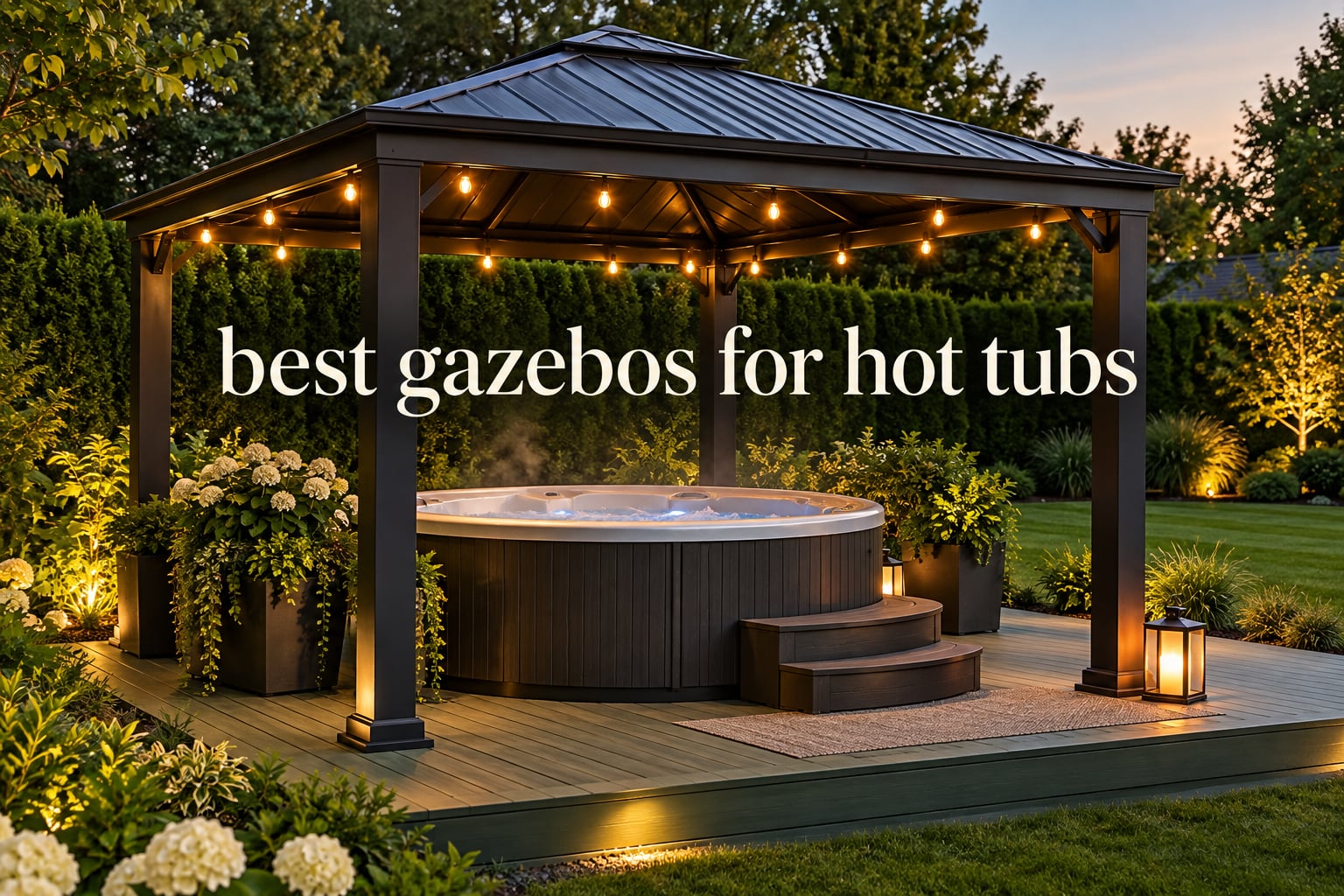
Quick answer: the best gazebos for hot tubs are hardtop structures with a galvanized steel or aluminum frame and at least 12 inches of clearance on every side. Our top pick is the PURPLE LEAF 12×16 aluminum hardtop, which pairs a vented steel double roof with a 4.7 inch post and a pre-drilled base for anchoring.
I have spent the last few months putting spa shelters through their paces, and the thing that separates a good gazebo from a disappointing one almost never shows up in the product photos. It is fit. A roof that looks generous in a listing turns out to be an inch too tight the moment you try to step into the tub.
That is why the best gazebos for hot tubs cannot be ranked on style alone. A spa throws off constant humidity, a fair amount of chemical vapor, and a lot of splashed water onto whatever frame is standing next to it. A structure that handles a patio fine can look rough beside a tub within two seasons.
We compared ten hardtop gazebos, weighing frame gauge, roof material, published weight, floor area, wall systems, warranty terms, and the assembly burden described by actual buyers. The list runs from a 120 square foot steel-roofed unit to a 144 square foot cedar pavilion with a published wind rating, because hot tub owners are not shopping for one kind of shelter.
Some people want a full outdoor room with sliding doors and year-round walls. Others want shade, some bug control, and a weekend build. Others have a snowy backyard and need a roof rated for real load. The right gazebo depends on your tub shape, your climate, and how much of the year you plan to sit in the water.
One thing worth settling early: a gazebo does not replace an insulated spa cover. It protects the cover from sun and falling debris, and it cuts the wind-driven evaporation that drains a tub fastest, but the cover still goes on between uses. Any seller who tells you otherwise is selling you a cheaper answer than you need.
While we were reviewing heat management, we ran into the same physics problem on a much smaller scale with laptop cooling pads, and our notes on laptop cooling pads for hot climates made the point nicely: airflow around the heat source matters more than the device around it. A sealed roof over a spa works the same way in reverse.
Our Top 3 Gazebos for Hot Tub Owners in 2026
These three cover the most common situations we saw: a large tub wanting serious headroom, a value build that still blocks sun and bugs, and the smallest useful footprint we would put over water.

PURPLE LEAF 12×16 Aluminum Hardtop
- Powder-coated aluminum frame
- 4.7 inch thickened post
- Built-in gutter drainage
- 260 gsm netting

YOLENY 10×13 Polycarbonate Hardtop
- Double-layer polycarbonate roof
- Aluminum frame
- Double-track curtains and mesh
- 130 sq ft floor area

Aoxun 12×10 Hardtop Gazebo
- Double-layer polycarbonate roof
- Removable curtains and zipped netting
- Illustrated numbered instructions
- Roof hooks for lights
All 10 Gazebos Compared Side by Side
This grid is the fast version. Every entry below sits in one of three shelter families: a hardtop with a steel or polycarbonate roof, a cedar pavilion, or a fully enclosed solarium. The narrowest footprint here is 10 by 10, and the widest is 12 by 16.
| Product | Specs | Action |
|---|---|---|
| PURPLE LEAF 12×16 Aluminum Hardtop |
|
Check Latest Price |
| YOLENY 10×13 Polycarbonate Hardtop |
|
Check Latest Price |
| Aoxun 12×10 Hardtop Gazebo |
|
Check Latest Price |
 Aoxun 10×12 Hardtop with LED Lights Aoxun 10×12 Hardtop with LED Lights |
|
Check Latest Price |
 EROMMY 12×12 Steel Hardtop EROMMY 12×12 Steel Hardtop |
|
Check Latest Price |
 Domi 12×12 Hardtop Gazebo Domi 12×12 Hardtop Gazebo |
|
Check Latest Price |
 Jolydale 12×12 Aluminum Gazebo Jolydale 12×12 Aluminum Gazebo |
|
Check Latest Price |
 Backyard Discovery Norwood Cedar Pavilion Backyard Discovery Norwood Cedar Pavilion |
|
Check Latest Price |
 Modern Shade 10×10 Hardtop Modern Shade 10×10 Hardtop |
|
Check Latest Price |
 PURPLE LEAF 12×16 Solarium PURPLE LEAF 12×16 Solarium |
|
Check Latest Price |
1. PURPLE LEAF 12×16 Aluminum Hardtop – The Best Gazebo for Hot Tubs Overall
PURPLE LEAF Hardtop Gazebo 12′ X 16′ Aluminum with Light, Gray
Powder-coated aluminum frame
4.7 inch post
190 x 142.9 x 120.9 inch
363 pounds
Built-in gutters
Pros
- Thick 4.7 inch powder-coated aluminum post resists rust and corrosion
- Built-in gutter drainage moves runoff off the frame
- 260 gsm netting drapes stably and resists tearing
- Yarn-dyed polyester curtains hold color
- Pre-drilled base accepts concrete anchors
Cons
- Not a snap-together build
- expect 14 to 16 hours for two people
- Gutters clog and need regular clearing
This is the one we kept coming back to. The frame is aluminum throughout with a 4.7 inch post, and at 363 pounds the whole structure has the kind of mass that makes you stop worrying about a gust catching it. For a tub that sprays water in every direction, an aluminum frame that resists corrosion is exactly what you want standing a foot away from the water.
The footprint is the selling point for spa owners. At 190 by 142.9 inches of overall dimension and a 120.9 inch height, it leaves genuine walk-around room on the long sides, which is the difference between a tub you use and a tub you step over carefully.
Buyers consistently single out three things after a season of use: the built-in gutter system, the 260 gsm textile netting, and how well the yarn-dyed polyester curtains keep their color. Support also comes up often in a good way, with owners reporting quick replacement parts when a panel or curtain takes damage.
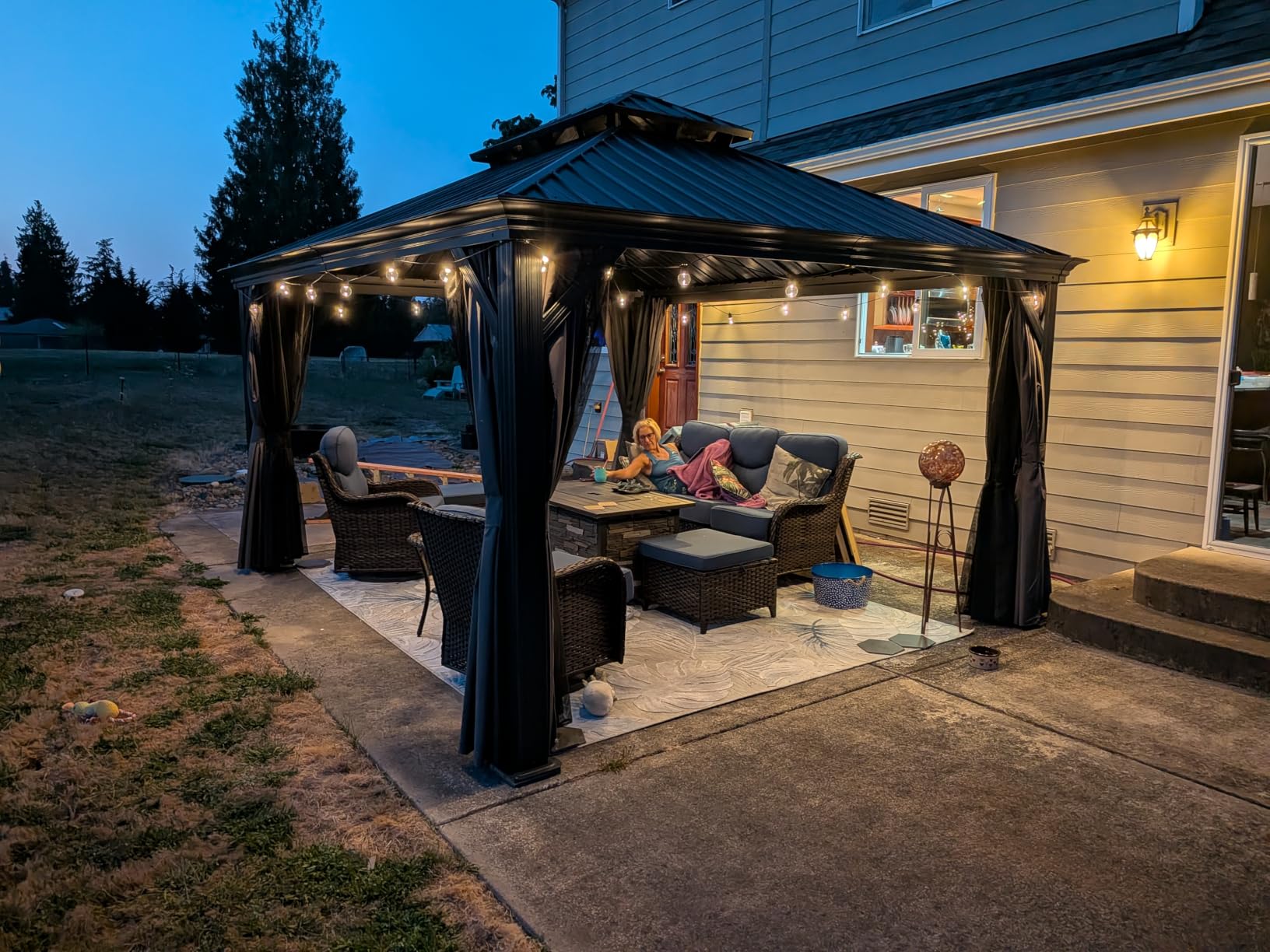
The honest drawback is build time. Owners report 14 to 16 hours for two people, and the instructions are pictures only, which means similar-looking posts and brackets get confused. Build it square and level in its final position, because once the roof panels go on you are not moving it.
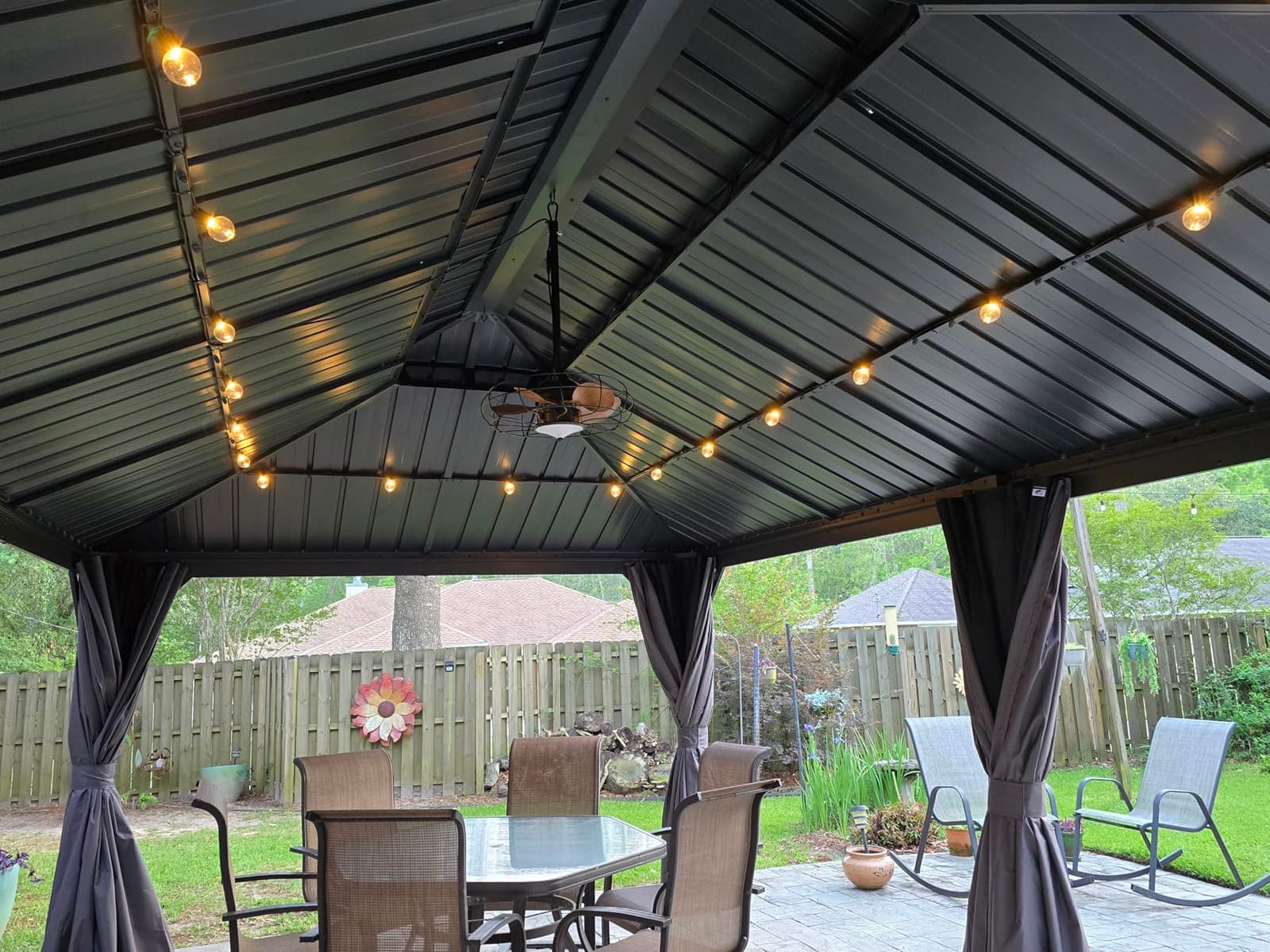
Reviewers also note that the interior turns stifling on a still, hot day unless you hang a fan from the roof hooks, and there is no clean way to run a power cord to a light or fan inside. Plan for a fan and an outdoor-rated extension run before the first warm weekend.
Your phone spends that same afternoon next to the tub, and the same physics apply, which is why we keep one of the best phone cooling fans for hot climates in the basket rather than letting it cook on the deck ledge.
Clearance math for larger rectangular tubs
Add 12 inches on each side of the tub footprint and you have your minimum gazebo. An 84 by 84 inch tub needs roughly 108 by 108 inches of clear floor, so a 10 by 10 structure clears it on paper with almost nothing to spare. The 12 by 16 layout gives you a full extra foot of walking room on the long sides, which matters when the cover is folded back and lying on the deck.
Why the post gauge matters beside water
A 4.7 inch post is not a marketing number for its own sake. It resists racking when the roof takes a side gust, and it keeps the frame from flexing, which is what eventually pops screws loose over a wet, chemical environment. Powder-coated aluminum also does not need sealing the way bare steel or softwood does.
Gutters, drainage and the ground under your tub
Built-in gutters are genuinely useful here because they push runoff away from the frame feet and away from the splash zone around the spa. The complaint owners raise most is clogging, so clear leaves and debris a few times a season, and put the spa on a pad that slopes away from the structure.
Warranty and parts reality
Replacement panels and parts are the real test of a gazebo brand, and owners of this model describe support as responsive and quick to send what is needed. That matters more for a spa setup than for a patio, because a torn curtain beside a wet tub is not a weekend annoyance.
2. YOLENY 10×13 Polycarbonate Hardtop – Best Value Double-Roof Shelter
YOLENY 10’x13′ Hardtop Gazebo, Outdoor Polycarbonate Double Roof Canopy, Aluminum Frame Permanent Pavilion with Curtains and Netting, Sunshade for Garden, Lawns, Patio
Double-layer polycarbonate roof
Aluminum frame
130 sq ft floor area
141.1 pounds
UV 50 plus
Pros
- Double polycarbonate roof blocks UV while letting light through
- 130 sq ft of floor area for a 6 to 8 person layout
- Powder-coated aluminum resists corrosion
- Curtains and zipped mesh run on a double track
- Pre-drilled base with expansion screws
Cons
- Light 141 pound frame must be anchored or it lifts
- 7 to 8 hours of assembly over two days
- Polycarbonate blocks UV but not heat
This is the unit we would hand to someone who wants a proper roof over a four to six person spa without turning the project into a major build. At 130 square feet it is a comfortable, efficient footprint, and the double-track wall system means you can screen it against mosquitoes while leaving airflow in place.
The polycarbonate double roof is the compromise that makes it work in a hot climate. It stops the direct sun that bakes a spa cover, but the same panel that kills the UV lets heat through, so on a hot still afternoon the interior can still feel warm. Owners who want cooler air under the roof add their own fan.
Most of the review volume on this model is about value. Buyers describe a structure that looks considerably more expensive than it is, with a finish that holds up to scratching and peeling, and a light that passes through the roof rather than turning the space into a cave.
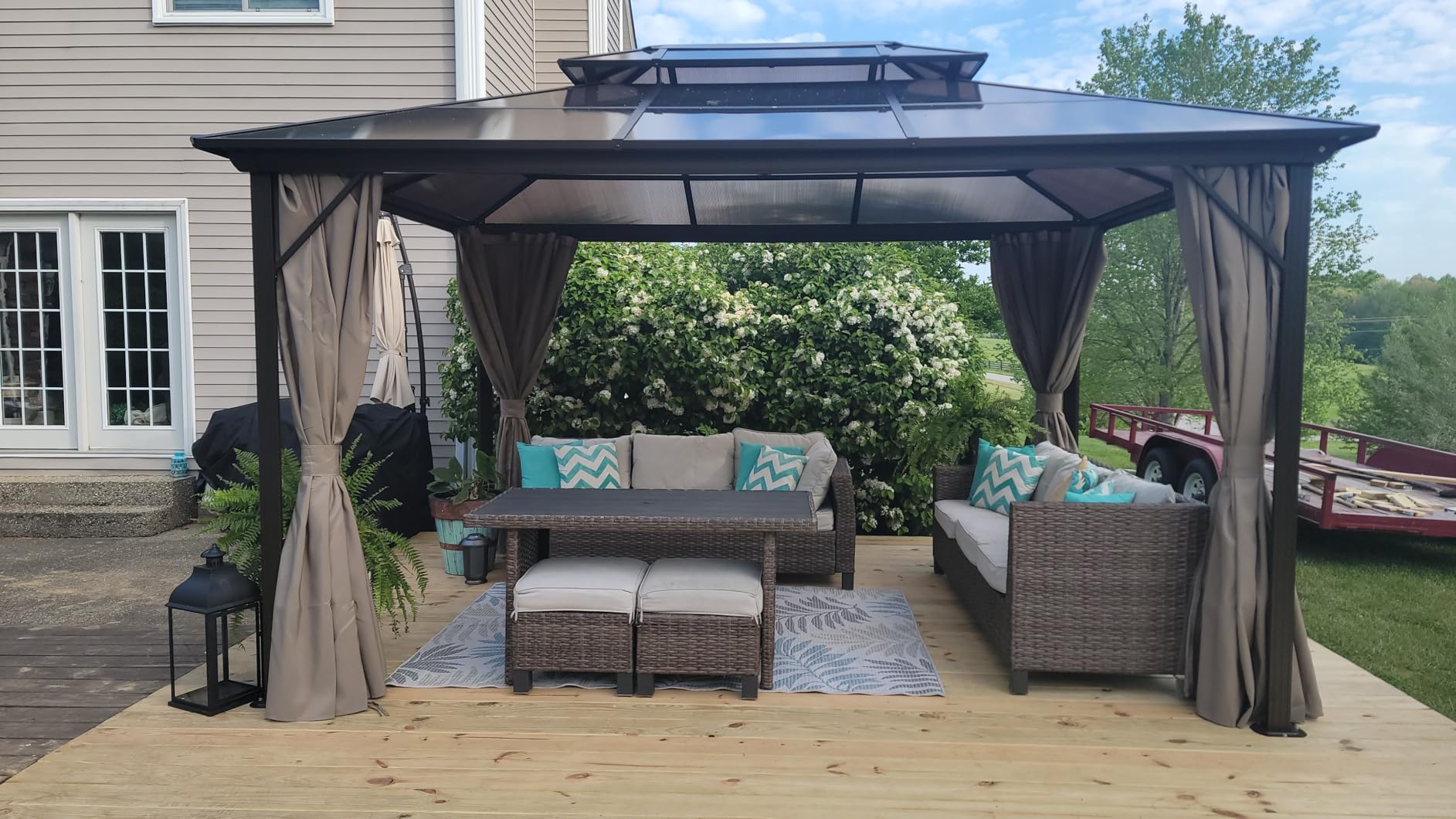
Size the frame to the tub before you start, because a 141 pound structure that is not bolted down can behave like a sail. Several owners report damage after the frame was lifted or twisted in wind, and at least one mentions planning a full replacement every few years after a storm event.
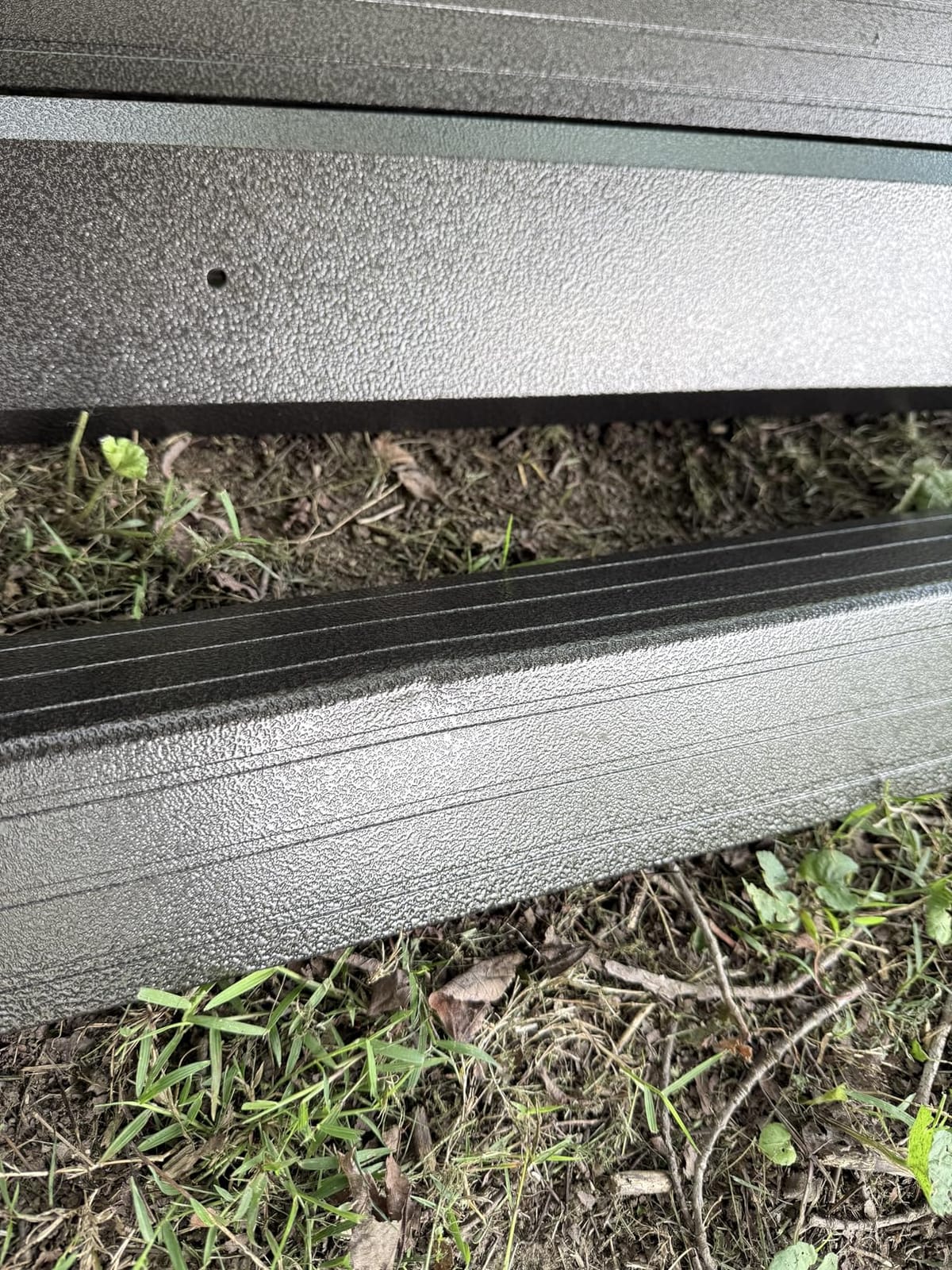
Assembly runs 7 to 8 hours across two days with 2 to 3 people, and the instructions are pictures only with a few minor errors. A few buyers received roof panels with dings or panels that would not fully seat in the channel, so inspect everything before the frame goes up.
Is 130 square feet enough for a hot tub
For a round tub in the 6 to 8 foot range, yes with care. The 10 by 13 layout gives you a footprint where the tub sits with clearance on the long sides and roughly a foot at each end. For an 84 by 84 tub you will be stepping in and out through the long opening, so measure your tub plus the folded cover before you commit.
Polycarbonate versus steel in a snowy yard
Polycarbonate is the right call for mild winters and shaded patios. In a climate with meaningful snow load or hail, it is the weakest link in the whole structure, and several owners of polycarbonate roofs note dents and cracking after one bad season. If snow is a regular fact of life, move up to a galvanized steel roof.
The double-track wall system
Two parallel tracks let you hang solid polyester curtains for privacy and then slide mesh panels in front of them for airflow and bug control. For a hot tub this is the difference between a private room and a screened porch, and it is the feature spa owners mention most after the roof itself.
Anchoring is not optional
The base is pre-drilled and expansion screws are included for concrete. On grass or a light deck you need ground pegs and a wind rope, and you need to check the whole frame for square before the panels go on. Light structures fail at the feet first, not at the roof.
3. Aoxun 12×10 Hardtop Gazebo – Budget Pick for a Compact Patio
Aoxun 12’x10′ Hardtop Gazebo with Polycarbonate Double Roof, Brown
Double polycarbonate roof
Powder-coated metal frame
142.9 x 117.3 x 107.1 inch
197.3 pounds
Pros
- Roof hooks already in place for a fan or light
- Removable curtains plus zipped inner netting
- Instructions number every part clearly
- Handles coastal breezes once anchored
Cons
- Greenhouse effect under the tinted roof
- Aluminum parts bend if handled roughly
- Bundled ground stakes are too short for most soil
The strongest thing about this model is documentation. Instructions with clearly numbered parts are rare in this category, and for a first hardtop build that removes a real layer of frustration. The frame is a thick powder-coated metal build, and once it is up and anchored owners report it holds steady in coastal wind.
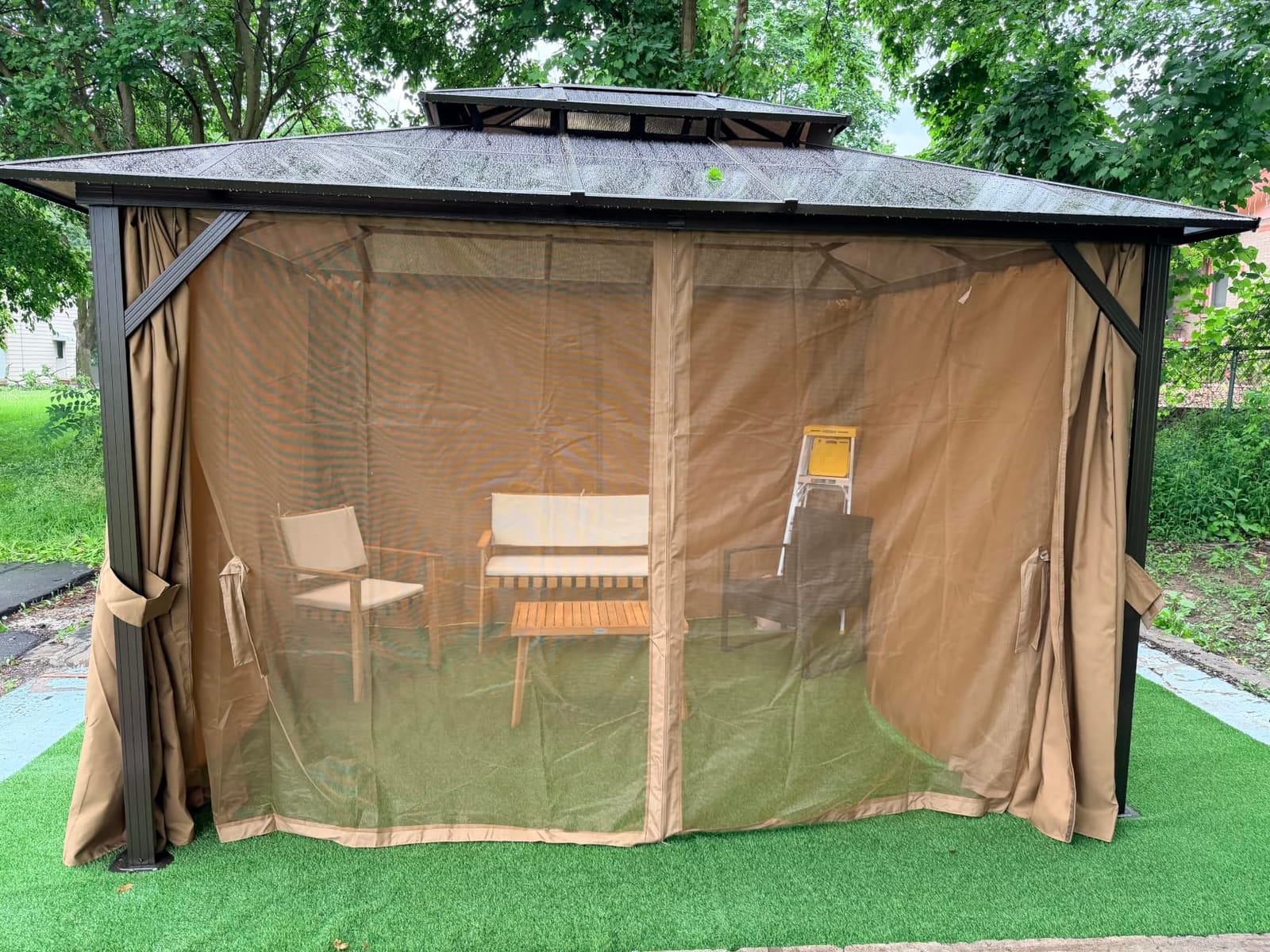
At 142.9 by 117.3 inches it is a tight, efficient rectangle, which makes it a good answer for a patio that cannot host a 12 by 12 square. The wall system pairs removable polyester curtains with zipped inner netting, so you can screen the tub at night without sealing off the airflow.
Roof hooks are built in for lights, fans and decorations, which matters more here than the spec sheet implies. Over a spa you will want a fan in summer and a light after dark, and retrofitting hooks into a finished frame is unpleasant work.
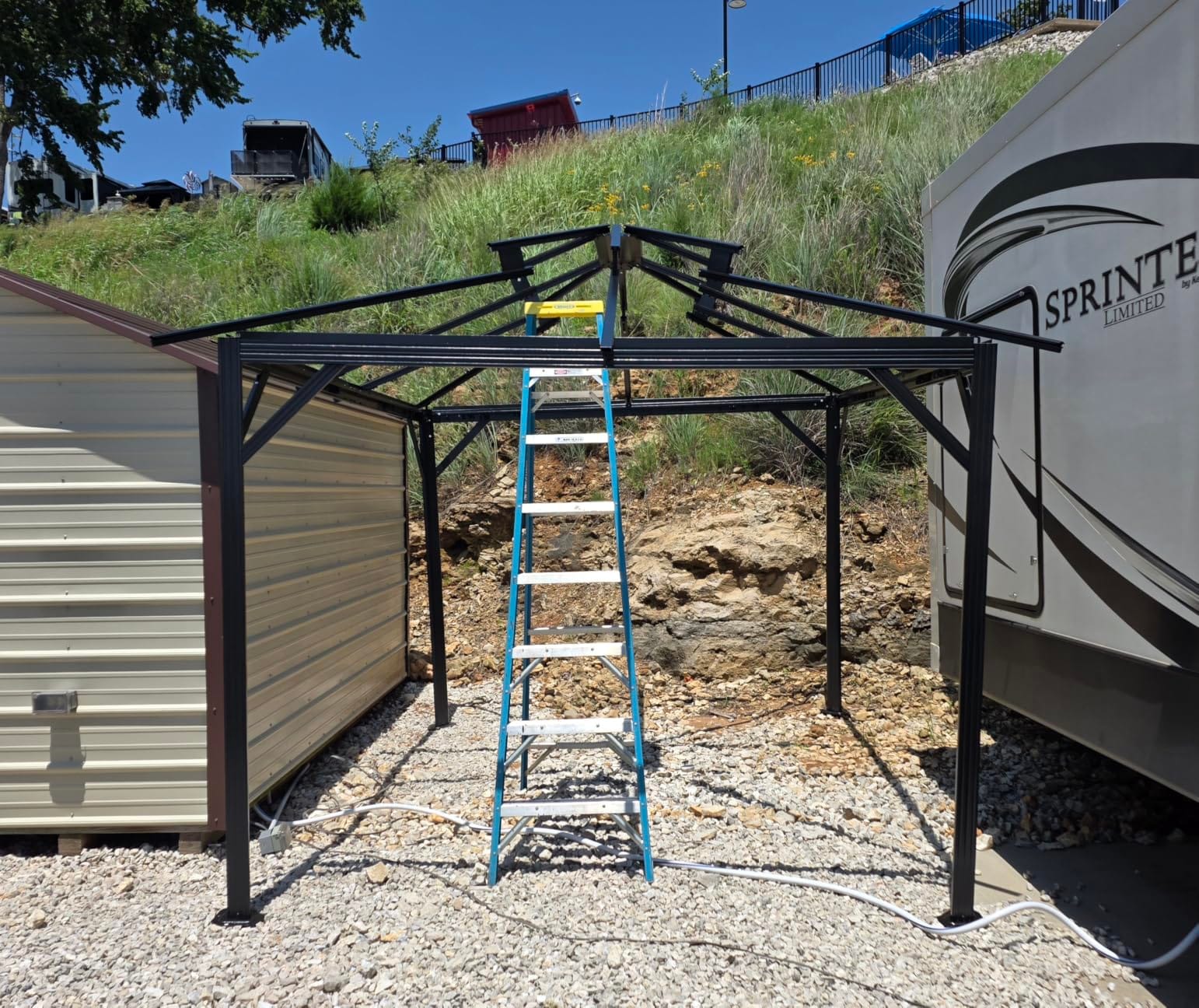
The recurring comfort complaint is the greenhouse effect. The tinted double polycarbonate blocks direct sun on the water, which protects the spa and its cover, but the interior itself still heats up in high temperatures. If your tub sits in full afternoon sun, plan on a fan from day one.
Buyers also flag light-gauge aluminum that bends if it is handled roughly during assembly, flimsy plastic curtain rings, and ground stakes that are too short for anything but hard clay. Bring your own longer anchors and treat the frame parts gently during the roof stage.
Fitting a square tub into a 12 by 10 frame
A 10 by 12 arrangement suits a round tub or a smaller rectangular spa rather than a large square deck. The width is the constraint, not the length, so measure the narrow dimension of your tub plus 24 inches before ordering. If you are close, the longer side of the frame is where the door opening and the folded cover go.
Polycarbonate heat behavior in summer
Polycarbonate panels block a large share of UV but convert most of what they absorb into heat inside the space. That is acceptable in a temperate yard and frustrating in a hot one. A roof hook fan changes the experience more than any amount of extra curtain ever will.
What the wall system really gives you
Removable solid curtains give privacy and a wind break, and the zipped inner netting handles mosquitoes without cutting airflow. Many owners in mosquito country run the mesh alone during the day and add the solid curtains in the evening, which is the pattern that works best around a spa.
Assembly pacing and the roof stage
Two or three people and several hours is the common report. The roof panels and their protective film are the most tedious part, and alignment issues there cause most of the frustration. Set every panel in place and secure them one at a time rather than fitting them all and then tightening.
4. Aoxun 10×12 Gazebo with LED Lights – Best for Evening Soaks
Aoxun Gazebo 10×12 Hardtop Gazebo with LED Lights, Gray
Galvanized steel double roof
Aluminum frame
143.7 x 118.1 x 116.1 inch
120 sq ft
IP65 LED string
Pros
- Galvanized steel double roof handles snow and wind
- LED string has 15 sockets and 16 shatterproof bulbs
- Netting on zip tracks plus curtains with binding belts
- Ground piles and expansion screws included
Cons
- Assembly runs 6 to 10 hours
- protective film on the roof panels is dangerous to remove
- No integrated gutter so runoff soaks the ground inside
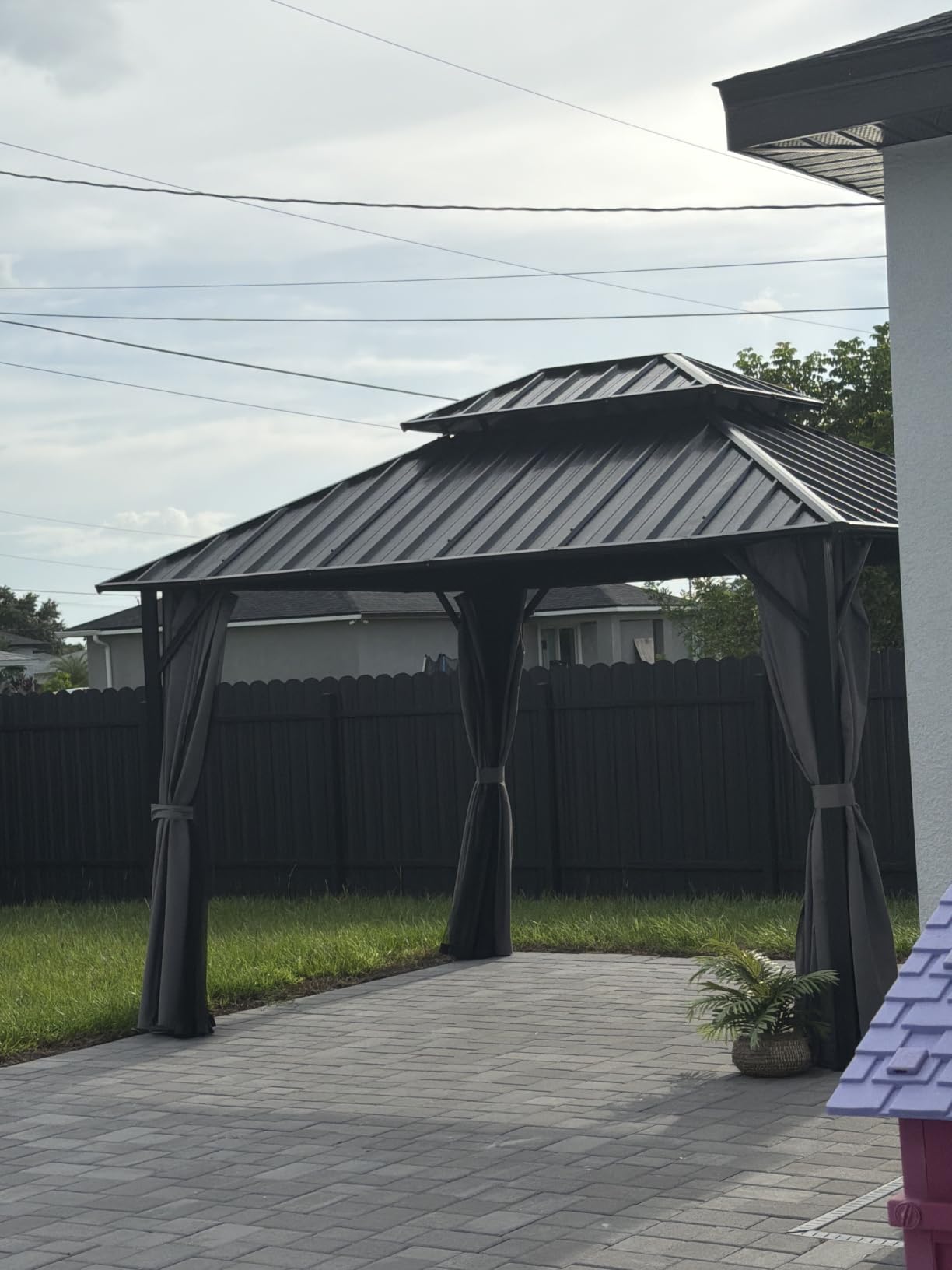
Steel rather than polycarbonate is the deciding feature. Owners consistently describe this as a genuine upgrade over canvas tops that need replacing every couple of years, and the double roof adds both insulation and a ventilation gap that keeps the underside cooler.
The bundled lighting is the reason this model earns its spot in our list. The IP65 string light set includes 15 sockets and 16 shatterproof LEDs, which is a real advantage in a damp, steamy enclosure where a normal bulb socket becomes a hazard. After sunset, the tub area is lit without dragging a cord across the deck.
At 120 square feet inside a 10 by 12 outline, this is snug for a spa. It works well for a small round or rectangular tub with the walls used mostly for netting, but it is not a room for furniture and a tub together.
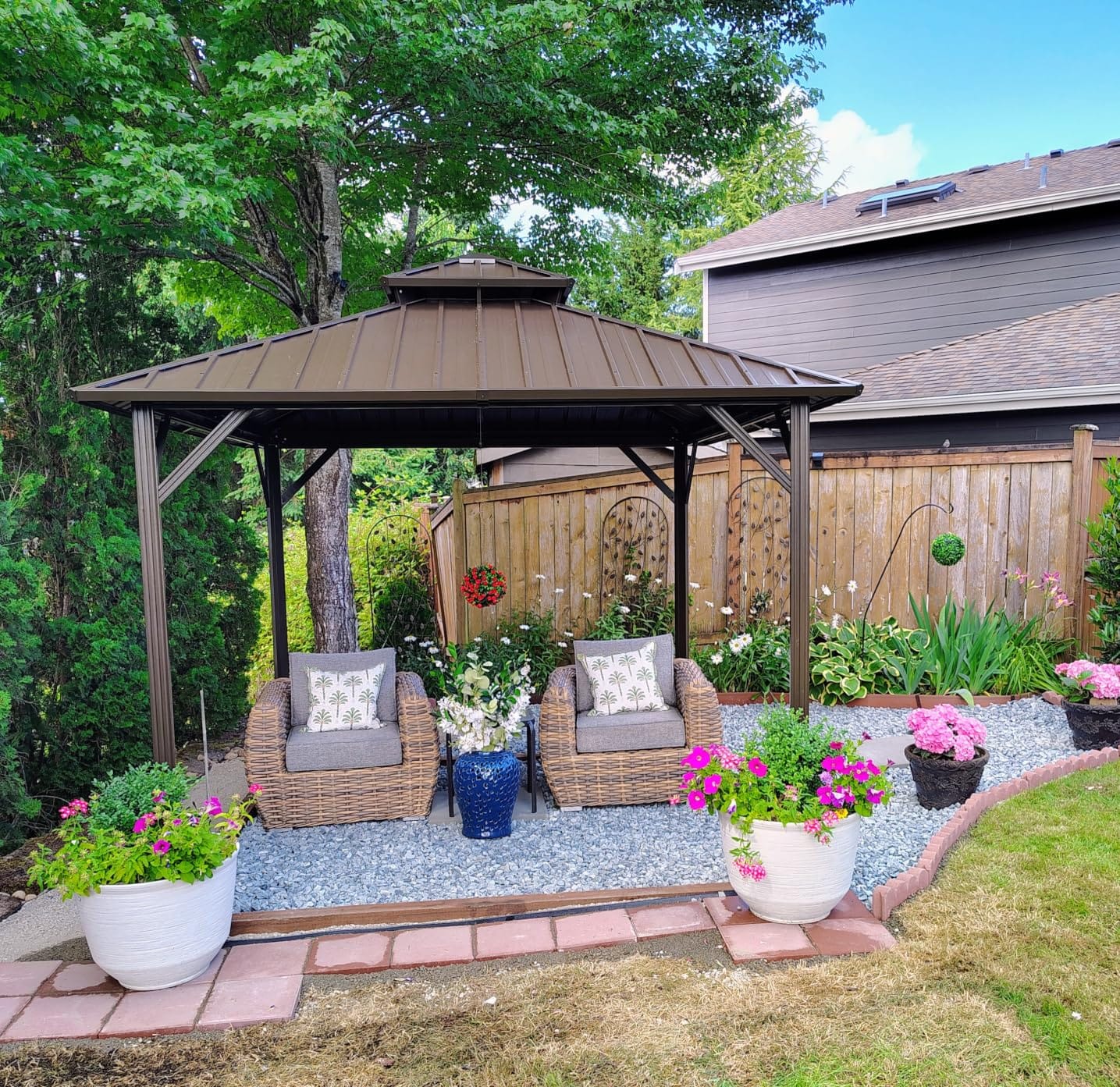
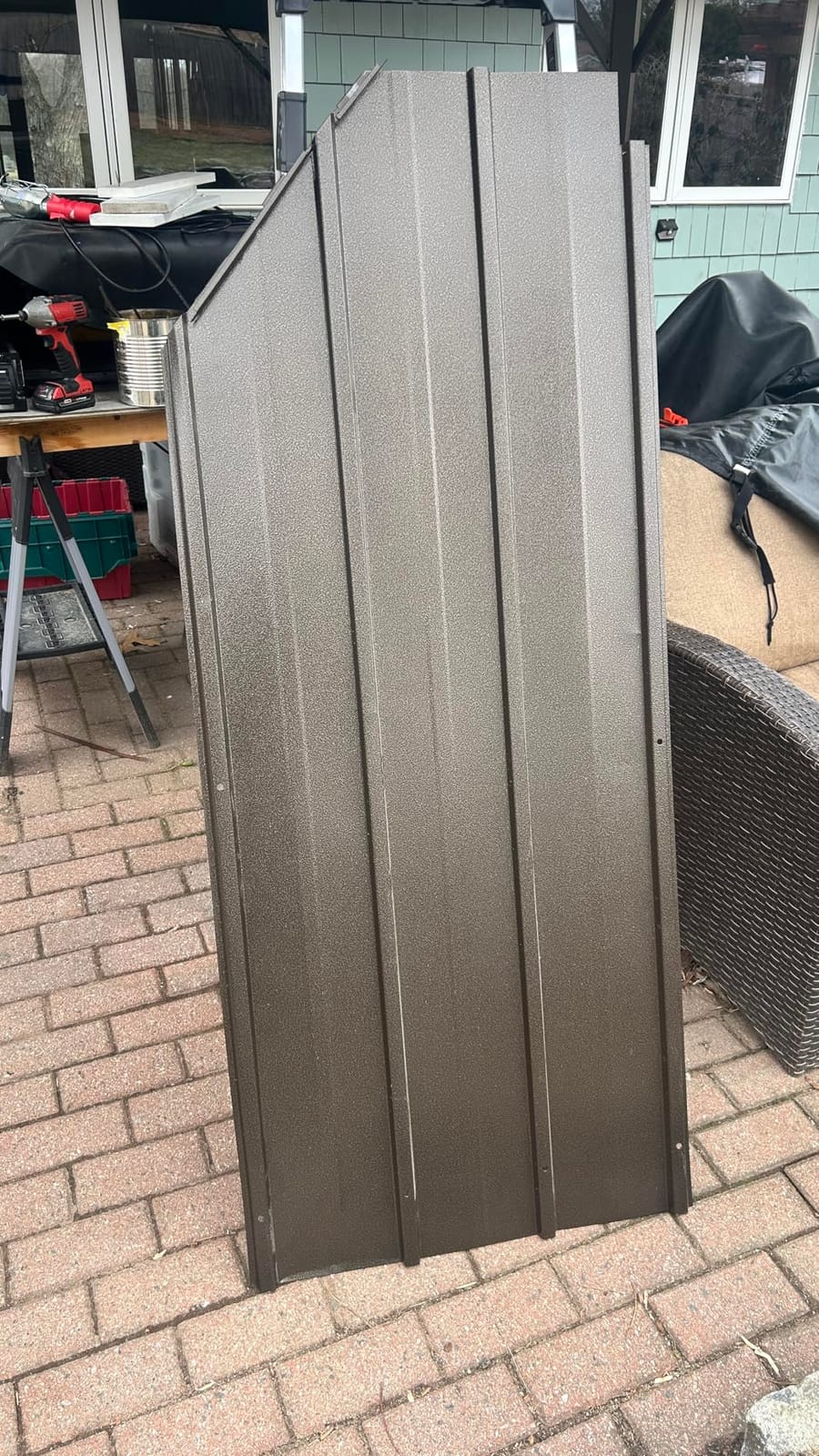
Buyers report 6 to 10 hours for the build against an advertised figure closer to half that, and the plastic film on the roof panels is the part people warn each other about. It tears into fragments with sharp metal edges, so gloves are not optional. Only one pair of gloves is in the box for a job that realistically wants three or four people.
There is no integrated gutter, so water runs off the eaves and pools near the frame feet, which is the last thing you want beside a tub. Several owners add their own gutter strips or a drainage channel. Seam leaks also appear when panels are not fully pushed up into the channel.
Where the 10 by 12 footprint works
Inside dimensions of 120 square feet suit a 6 to 7 foot round tub or a compact rectangular spa with 12 inches of clearance. The vertical dimension of 116.1 inches gives enough headroom to lift the cover on its hinge without scraping the frame, which is the check most buyers forget before ordering.
Double roof and heat behavior
The upper and lower roof create a chimney effect that pulls hot air out and pulls cooler air in, which works best when there is an actual breeze. On a dead-calm day the benefit shrinks, and the same buyers who praise the ventilation also note that the space still warms up in high summer.
Lighting safety in a wet enclosure
Shatterproof, IP65 rated bulbs on a sealed string are the correct spec for a structure sitting next to splashing water and steam. The curtains also carry binding belts, which keeps fabric from billowing into the walkway when you step out of the tub. The optional ceiling fan, however, has no mounting instructions for this frame, and rigging it to a hook feels unsafe to several owners.
Warranty and drainage gaps
Coverage here is a one-year warranty, which is short against the heavier builds in this list. Combine that with the missing gutter and you should plan to add drainage yourself from day one, and keep the anchors tight through the first winter.
5. EROMMY 12×12 Steel Hardtop – Best 144 Square Foot Galvanized Build
EROMMY 12′ x 12′ Hardtop Gazebo, Aluminum Frame Gazebos with Galvanized Steel Double Roof, Permanent Outdoor Metal Pavilion with Curtain and Netting for Patio, Lawn, Deck
Galvanized steel double roof
Aluminum frame
139.3 x 139.3 x 119.5 inch
144 sq ft
231 pounds
Pros
- Steel roof sheds heavy snow far better than fabric or polycarbonate
- Vented double top blocks up to 99 percent of UV
- Triangular aluminum frame adds real rigidity
- Zippered double-layer sidewalls on sliding double tracks
Cons
- Ventilation benefit depends on a real breeze
- Greenhouse-like warmth in high summer
A square 12 by 12 at 144 square feet is one of the most useful shapes in this whole category, and this model fills it with a galvanized steel double roof rather than a fabric or panel top. Owners put the roof stability first, describing it as noticeably stronger under snow and wind than the alternatives they had owned.
The triangular powder-coated aluminum frame is the quiet engineering win. Rather than simple L-bracket corners, the triangle geometry resists racking, which is what keeps a frame square after a season of thermal movement and wind.
Sidewalls are fully enclosed and zippered, with a sliding double-track system that lets you run mesh, solid fabric, or both. Roof hooks are included for lighting and a fan, and the interior is regularly described as comfortable for a sectional with a grill, or a full dining set beside the tub.
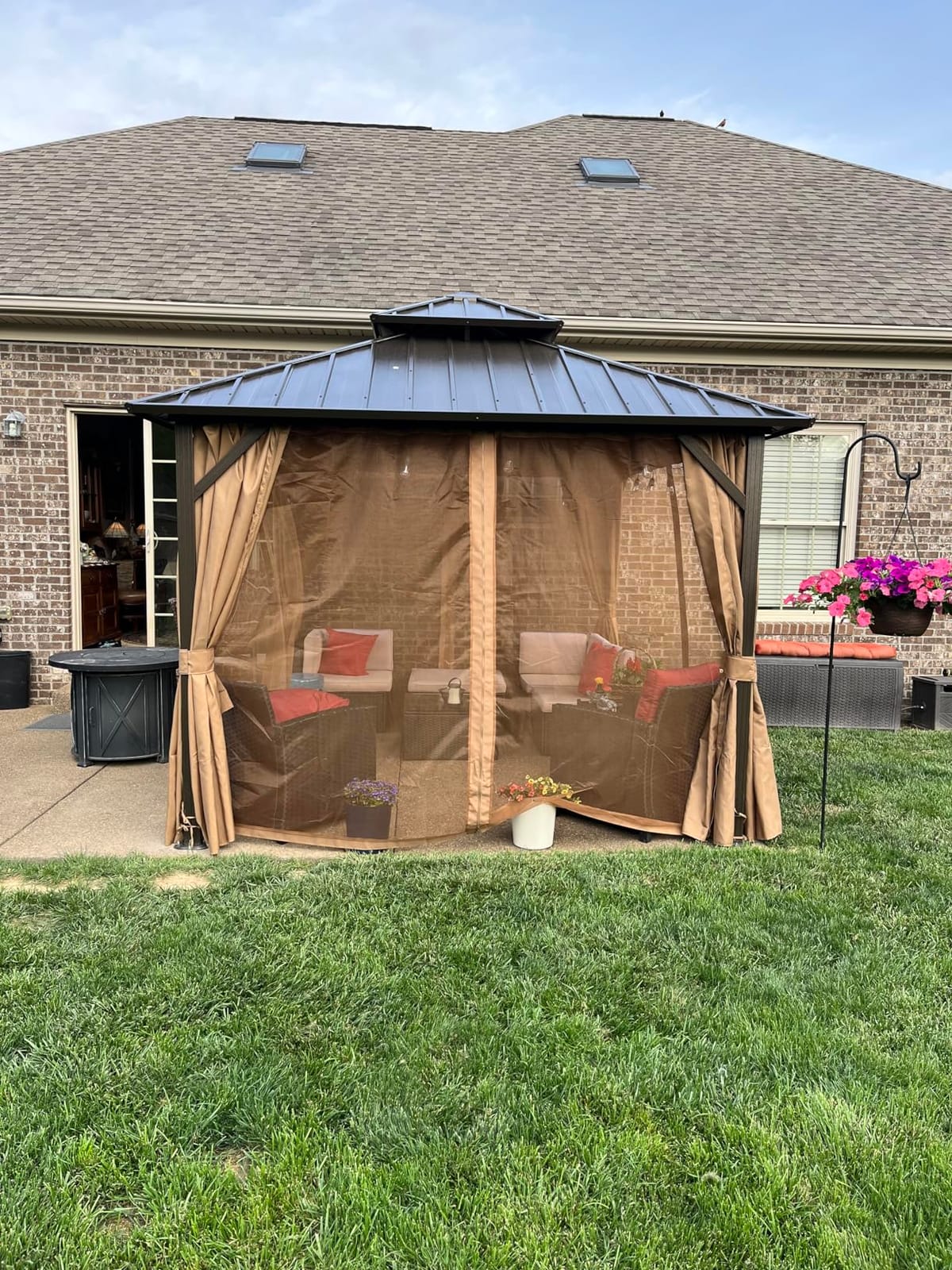
Two honest caveats come from the same review pattern. The double roof only ventilates when there is a breeze to move the air, and the space can feel greenhouse-warm in high summer if the walls are closed. Leave a panel or a screen section open on a still day.
Because the brand offers a wide range of sizes and styles, the most common buyer mistake is ordering the wrong footprint. Confirm the outside dimensions, not the listed floor area, before you commit to a tub layout.
Square layout and tub geometry
A square footprint wastes nothing around a square or round tub. With 12 inches of clearance on every side, an 84 by 84 inch tub leaves a walk-around lane on all four faces, which is the arrangement people on hot tub forums describe as the comfortable one. It also gives the folded cover a place to lie without blocking a doorway.
Steel roof and snow load behavior
Galvanized steel does not crack, dent into shards, or need seasonal re-tensioning. That is the practical argument for paying up from a polycarbonate build if you are in a region that sees snow. It also shrugs off hail far better than a plastic panel, though it can still dimple.
Ventilation, off-gassing and running the spa closed
A running spa releases warm moist air and chemical vapor into the enclosure, so airflow is not a comfort detail, it is a material detail. The vented double top and the sliding screens are how you keep that air moving. Leave the top vent and at least one wall section open during long soaks, and avoid sealing every panel shut for hours.
Weight and the build crew
At 231 pounds this is a real two-person job with a third person making the roof stage faster. The pre-drilled base is designed to install on uneven ground, which helps when the pad around a tub is rarely perfectly level.
6. Domi 12×12 Hardtop Gazebo – Best Pick for Snow and Wind Ratings
Domi 12×12 Hardtop Gazebo Aluminum Frame, for Outdoor Patios, Grey
Galvanized steel roof
Aluminum frame
22 lbs per sq ft snow load
50 mph wind
321 pounds
Pros
- Published 22 lbs per sq ft snow load rating
- 50 mph wind resistance and UPF 50 plus
- Self-draining system limits water pooling
- 4.7 inch posts and 20 lb rated roof hooks
Cons
- 321 pounds makes this a substantial multi-person build
- Ventilation only works when there is a breeze
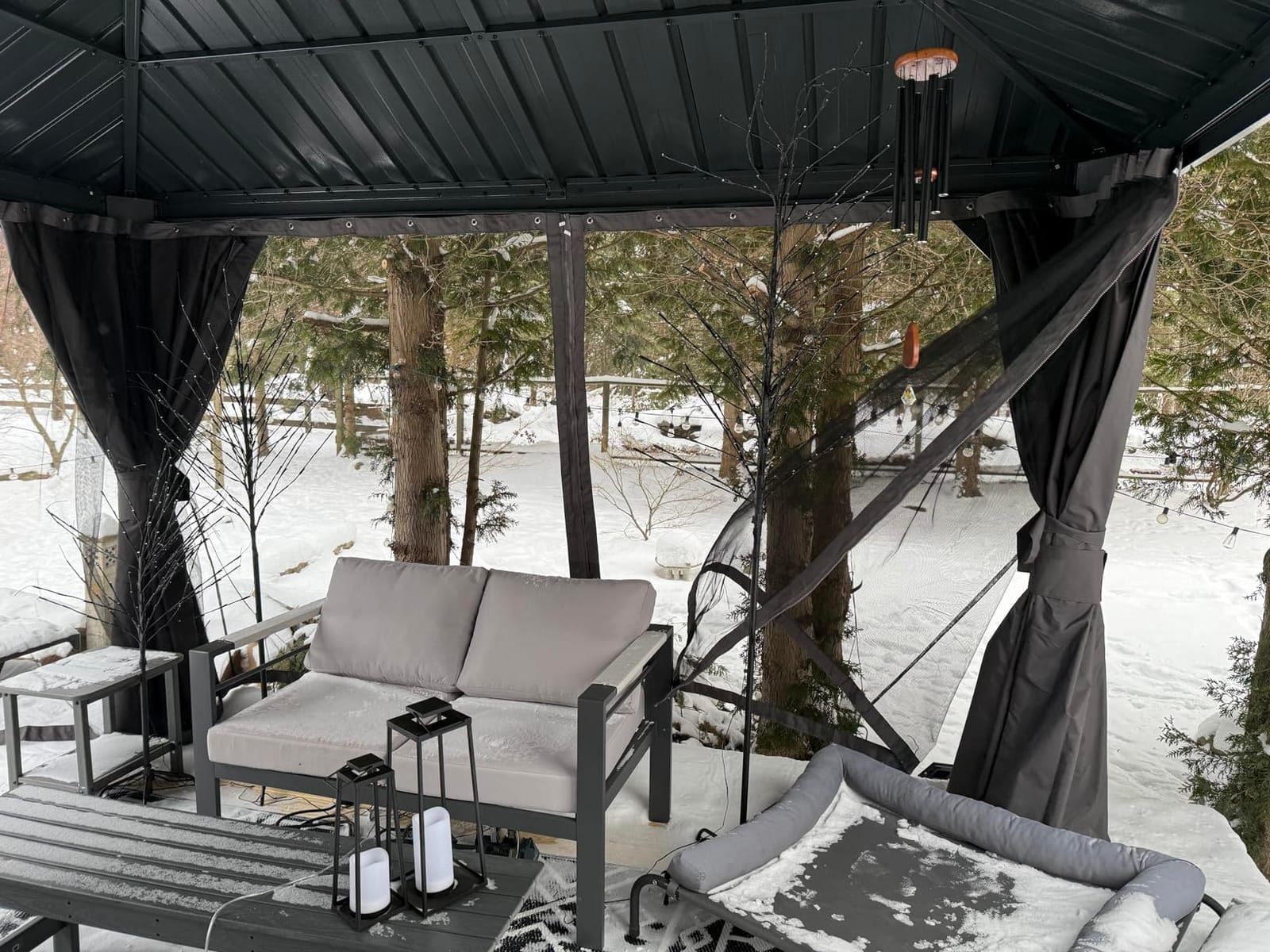
One of only two units in this group publishes hard numbers for both wind and snow, and those numbers are exactly the ones a hot tub owner in a cold climate needs. A 22 pounds per square foot snow load and 50 mph wind resistance turn a marketing claim into something you can test against your local weather records.
At 144 square feet with 4.7 inch posts and a galvanized steel roof, it is also one of the heavier builds here at 321 pounds. That mass is the point: a filled tub and a large steel roof sitting on a light frame is how gazebos end up in a neighbor’s yard after a storm.
78 percent of reviews are five-star, and owners describe a structure that looks high-end and performs to the published figures. The self-draining water management system is appreciated for keeping puddles from forming under the frame, and the UPF 50 plus fabric rating is a genuine benefit for a sun-exposed tub.
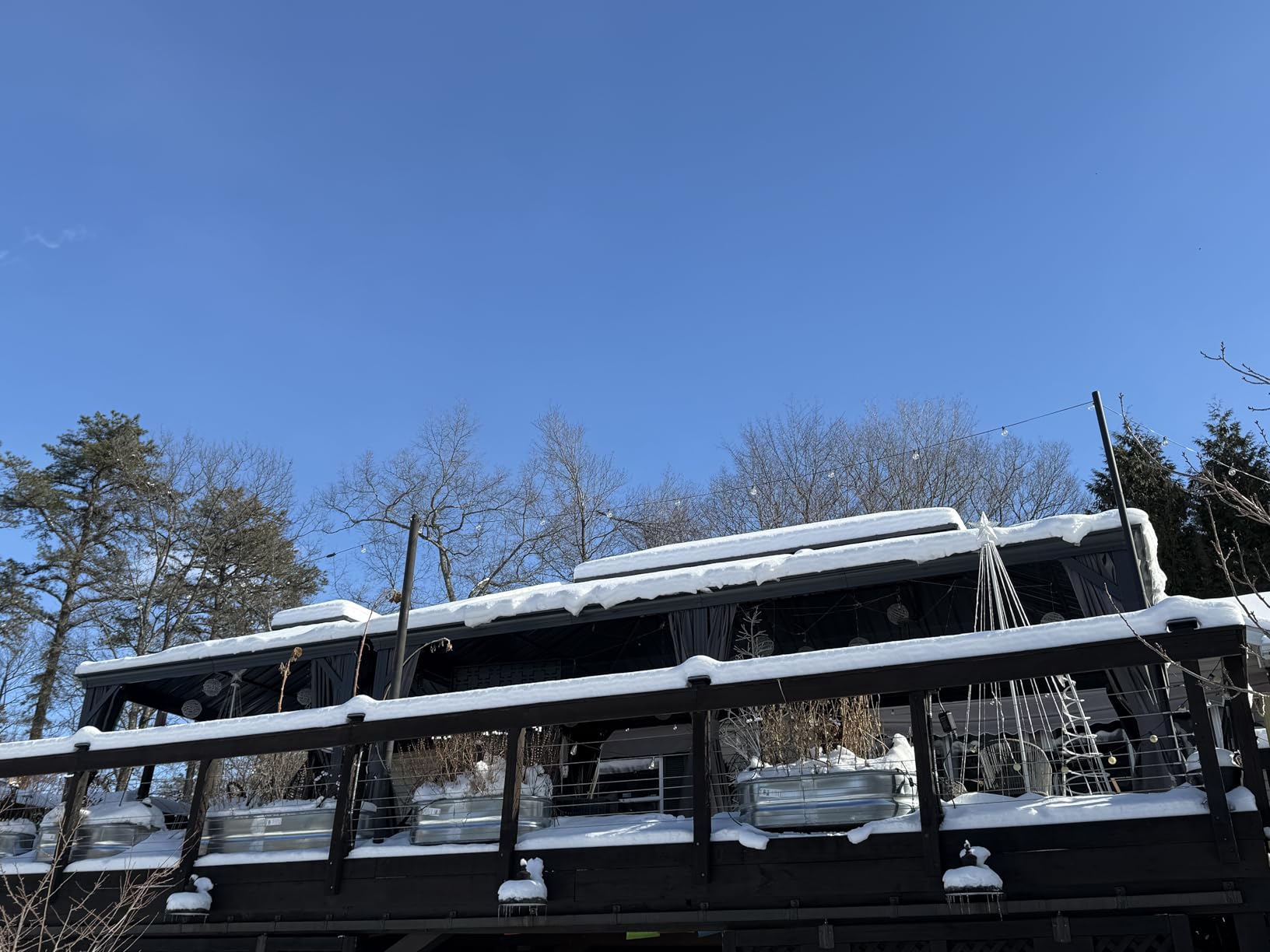
The dual roof genuinely cools the space in moving air and insulates against cold when it is closed, but the same airflow dependency applies everywhere in this category. On a still day the ventilation gap does far less than the spec sheet implies.
Plan the crew around the weight. Owners describe it as a larger two-person-or-more build, and the 321 pound figure is the honest number when you are deciding whether to hire help for the roof stage. Roof hooks are rated to 20 pounds each, which comfortably carries a fan and a light.
Reading a published snow load rating
22 pounds per square foot is a capacity figure for the roof surface. Compare it to your area’s design snow load and add a safety margin, because a wet, heavy storm loads a roof faster than dry snow does, and a published capacity is a starting point for comparison rather than a guarantee.
Why wind rating matters most near a tub
A spa is a large, flat surface sitting inside the structure, and a tub full of water is a lot of dead weight the frame has to carry. A frame rated for 50 mph is a frame that will not be lifted and dropped while your water is in it. Pair the rating with proper anchoring and you have covered the real risk.
Lifetime warranty as a durability signal
A lifetime warranty on the frame is the strongest long-horizon signal in this roundup, and it tells you the manufacturer expects the aluminum and steel to outlast the textiles. Curtains, netting and LED strings are consumables; the structure is not. This is the model we would point to for a tub intended to stay put for a decade.
Interior use beyond the tub
Owners regularly describe the 144 square feet as a multipurpose space: barbecues, family meals, an outdoor office, even a yoga area. Around a tub that flexibility is useful, because the same room can be the soaking space in the evening and the covered gear area during the day.
7. Jolydale 12×12 Aluminum Gazebo – Best Balanced Starter Build
12 Ft. W X 12 Ft. D Aluminum Patio Hardtop Gazebo
Dual-layer polycarbonate roof
Aluminum frame
144 x 144 x 110 inch
144 sq ft
Waterproof
Pros
- Balanced 12 by 12 footprint at 144 sq ft
- Thickened 180g polyester curtains add privacy and warmth
- Netting keeps mosquitoes out with a clear view
- Powder-coated frame resists scratching and rust
Cons
- Polycarbonate is lighter duty than steel in snow and hail
- Grass installs need ground pegs and wind rope
- Delivered in two boxes that may arrive separately
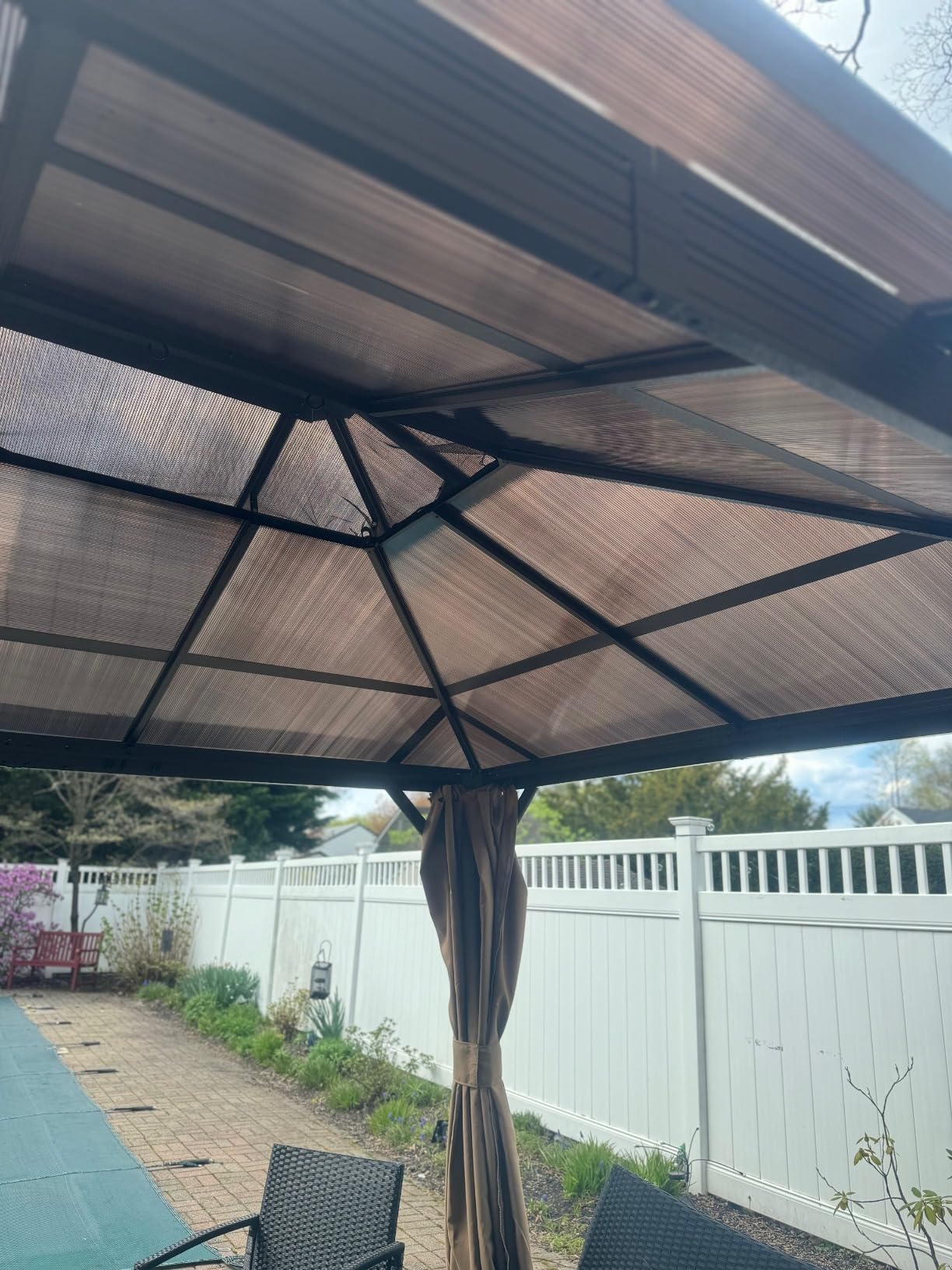
When a tub is the priority and the rest of the patio is secondary, a balanced 12 by 12 square is the easiest shape to work with. This model delivers that footprint with a dual-layer polycarbonate roof and a powder-coated aluminum frame, and reviewers call it a solid mid-tier option.
The 180g polyester curtains are thicker than the norm and do real work in cooler weather, when you want the sides closed against a chill after the soak. The netting handles mosquitoes without blocking your view of the yard, which keeps the enclosure from feeling like a tent.
Buyers also like that 144 square feet is a comfortable room size rather than a token shelter. With a tub centered, you still have space for a small side table and a step platform, which is what makes a gazebo usable rather than purely functional.
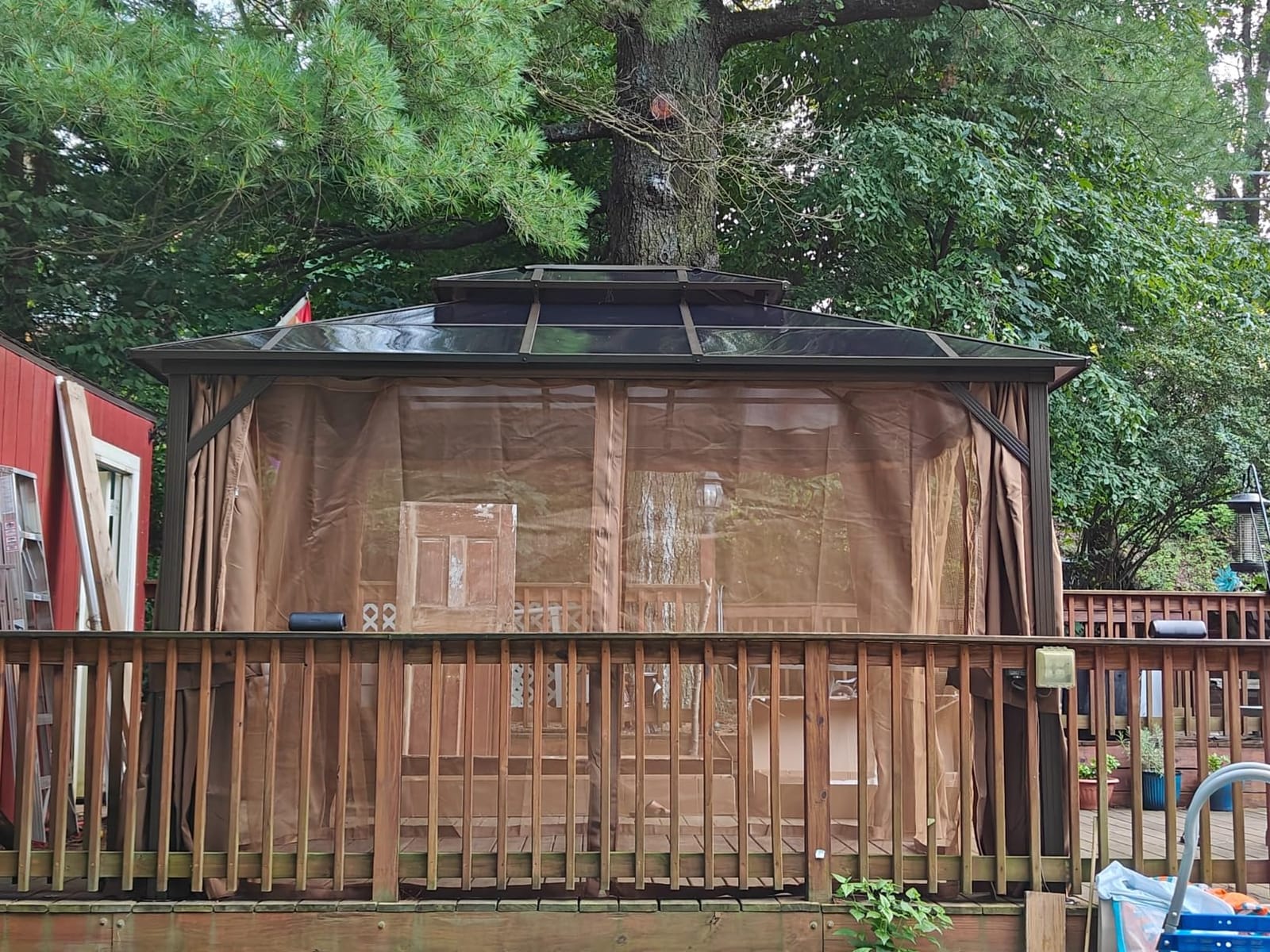
The logistics are the main practical note. This unit is delivered as two boxes, so check the tracking on both cartons before you start.
On grass, ground pegs and a wind rope are required, and polycarbonate is the weaker material if your winters bring snow or hail. In a mild climate that is a fair trade for the lighter build and simpler handling.
Height and cover handling
At 110 inches tall, this gives you enough vertical room to stand and to lift the insulated cover onto its hinge without hitting a beam. That headroom check matters more than most buyers expect, because a cover that will not lift clear of the frame is an expensive discovery after assembly.
Polycarbonate versus the steel builds
The steel-roofed models here handle snow and hail noticeably better and add real weight that resists wind. Polycarbonate wins on price and on how easily two people can raise it. Pick by climate first, then by how many helpers you have for the roof stage.
Curtains, netting and daily use
Thick curtains for warmth, netting for bugs, and a dual-track arrangement so you can mix them, is the combination that makes an enclosure pleasant across a full season. Owners also note the waterproof rating holds up in normal rain once the frame is level and seated.
Planning the build around a two-box delivery
Check the tracking on both cartons before you start. Two people and a long weekend covers this footprint comfortably, and doing it in one session means you can correct a square or level problem before the roof goes on, rather than discovering it afterward.
8. Backyard Discovery Norwood 14×10 Cedar Pavilion – Best Cedar Build for a Spa
Backyard Discovery Norwood 14′ x 10′ Cedar Wood Outdoor Gazebo Pavilion with Hardtop Galvanized Steel Peak Roof, Snow Support, Wind Resistance, PowerPort, Shade for Garden, Patio, Deck, Entertaining
100 percent cedar frame
6x6 inch cedar posts
173 x 121.3 x 117 inch
29-gauge steel peak roof
646 kg
Pros
- Pro-Tect tested for 7700 lb or 30 inches of snow load
- 100 mph wind rating when anchored as specified
- PowerPort with 3 outlets and 3 USB ports
- Pre-cut and pre-drilled cedar with app-based instructions
Cons
- Heaviest unit here
- listed at 646 kg for a multi-person build
- Cedar needs periodic restaining to hold its finish
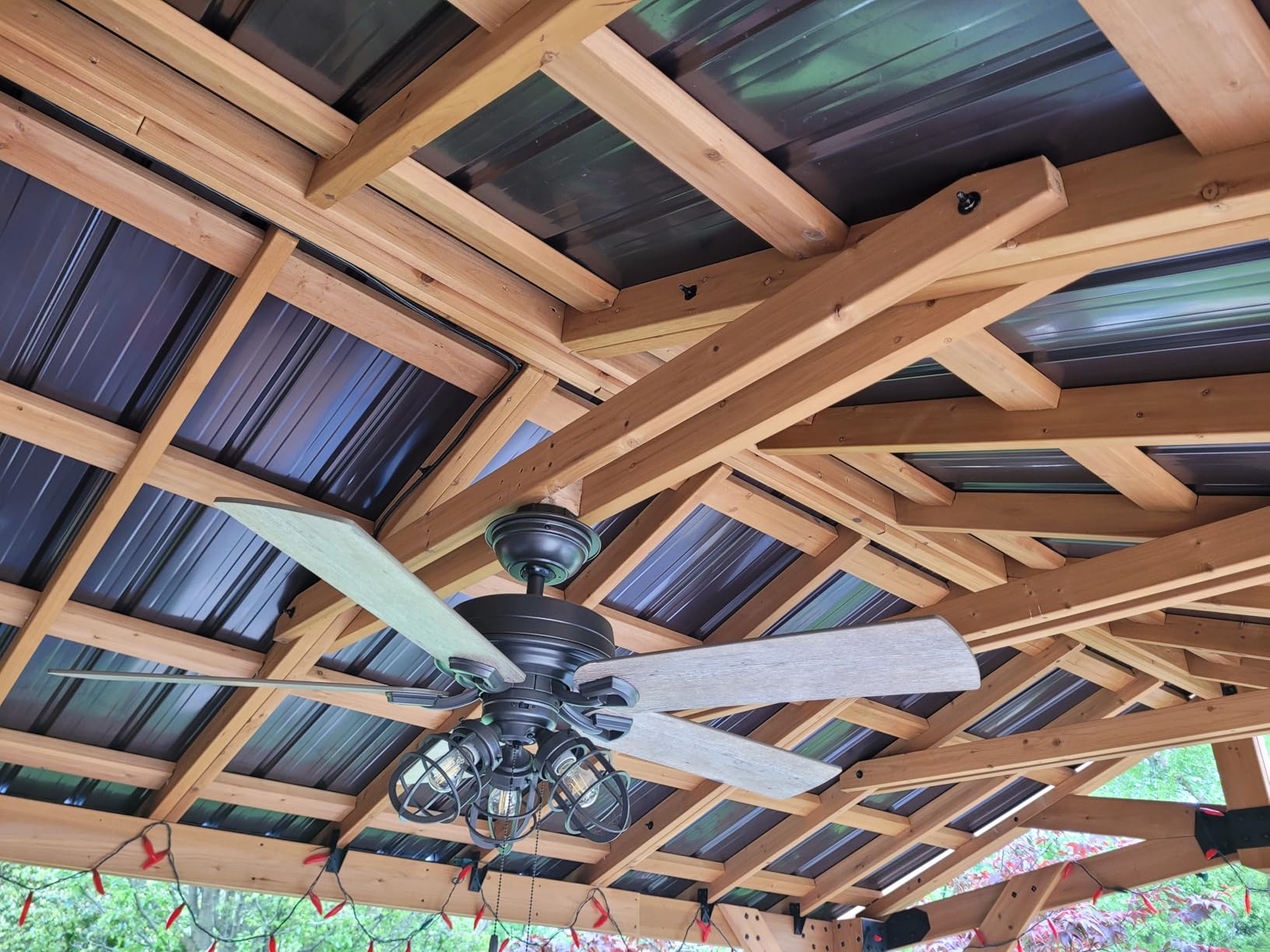
This is the only all-wood structure in the group, and that changes the character of the yard immediately. Cedar has a natural resistance to decay, and the 6×6 inch support posts are a real timber dimension rather than a decorative skin over a metal frame.
The published ratings are the strongest in this roundup. Pro-Tect testing covers up to 7,700 pounds or 30 inches of snow load, with wind resistance up to 100 mph when anchored as specified. Owners mention those numbers directly as the reason they have real confidence using the structure year-round.
The patented PowerPort is the detail spa owners care about most. Three outdoor outlets and three USB ports mounted in the structure remove the extension cord problem entirely, which is a complaint owners raise for every gazebo in this list that lacks integrated power.
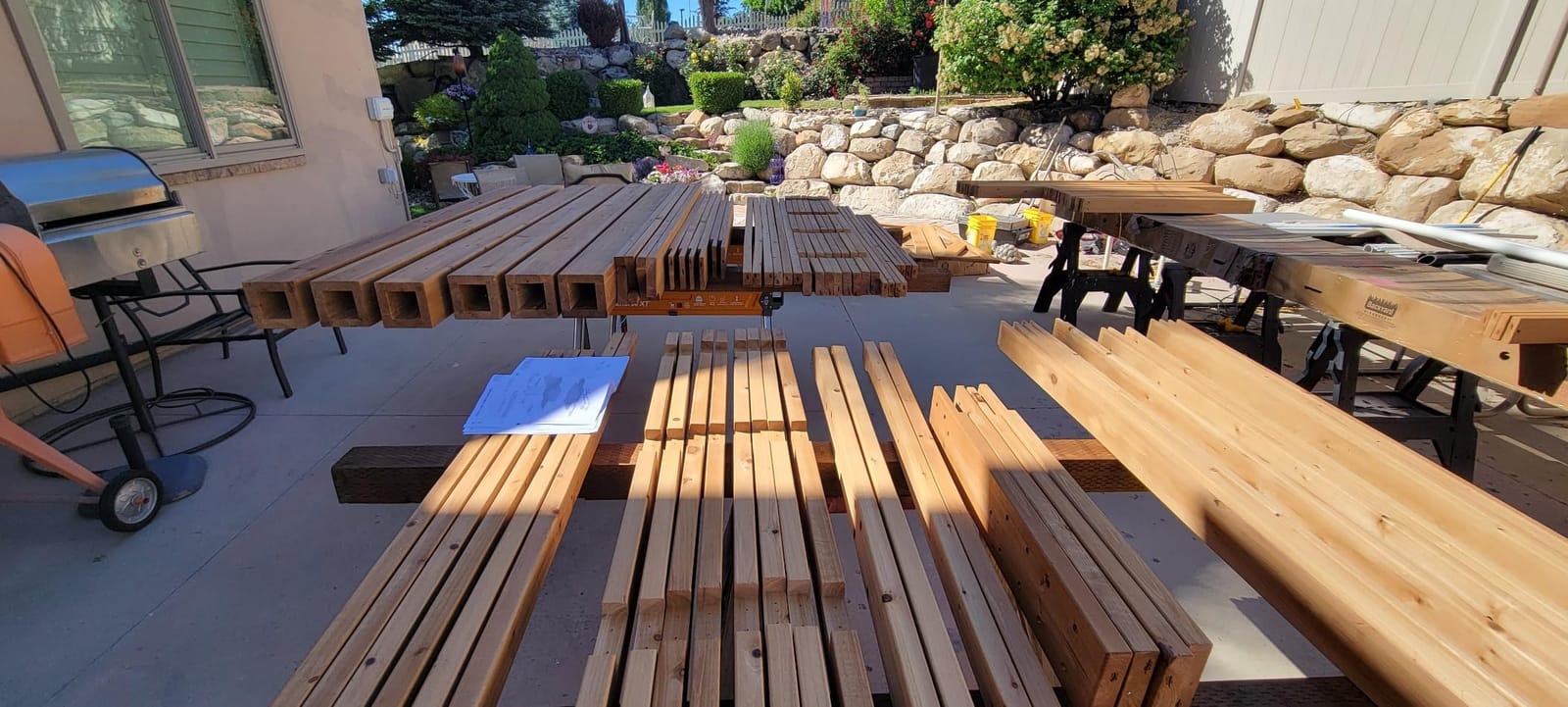
At 14 by 10 inches overall, this is the longest footprint in the roundup and the one that most comfortably takes a bigger rectangular spa with real walk-around space. It also works as a full outdoor room: dining, a bar area, or a seating zone around the tub.
The listed weight of 646 kg makes it the heaviest build here by a wide margin and a genuine multi-person job, so factor in hired help if your crew is two. Cedar also needs periodic restaining to hold its finish, and stain saturation varies slightly between pieces, which is normal for real wood.
Cedar in a humid, chemical environment
Cedar tolerates damp ground and seasonal moisture better than softwood, which is why hot tub owners on forums frequently favor it for long-term builds. The trade is maintenance: an annual or bi-annual restain keeps the surface from silvering and keeps moisture out of the grain.
Matching a large rectangular spa
This is the pick in our list when a tub is 84 by 84 inches or larger, because a 10 by 10 or 12 by 12 frame leaves no room to walk once the cover is folded back. The 14 by 10 outline gives you a full extra couple of feet on one long side, which is where a deck-style tub actually needs it.
PowerPort versus extension cords
Running a cord from the house to a fan, light, or the spa control panel across a wet deck is a recurring safety complaint in hot tub forums. Three outlets and three USB ports inside the structure solve it cleanly, and it is a strong reason to look past bare-bones kits.
Assembly help and the BILT app
The cedar arrives pre-cut, pre-drilled and pre-stained, with step-by-step instructions in an app, which shortens the build. The weight does the opposite. Budget for extra hands on the post stage and for a clear, level footprint before the first beam goes up.
9. Modern Shade 10×10 Hardtop – Best Fit for Small Yards
Modern Shade Hardtop Gazebo 10×10 with 4 LED Lights for Backyard, Black
Galvanized steel build
Double-layer roof
118 x 118 x 115 inch
268.4 pounds
Four solar LED lights
Pros
- Galvanized steel is a real upgrade from fabric tops
- Handles rain
- wind and up to 5 inches of snow
- Four solar LED lights included for evening use
- Net rods make fitting and removing screens quick
Cons
- Roof supports must stay loose until all panels are set
- Package contains multiple boxes
- Three people are needed for the main frame
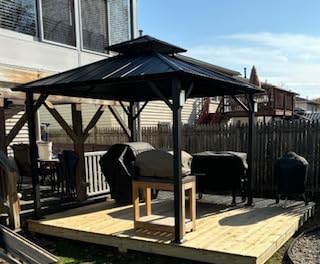
A 10 by 10 square is the smallest footprint we would put over a tub, and it only works cleanly for a compact round or small rectangular spa. What makes this one interesting is the roof: galvanized steel, not fabric, at 268.4 pounds, which is serious mass for a structure this small.
Owners make the same comparison over and over, describing it as a genuine upgrade from fabric models that only look good for a couple of years. The steel blocks UV, cuts solar heat accumulation, and handles rain, wind and up to 5 inches of snow.
The double roof creates a ventilation gap that keeps the interior cooler on hot days, and the four included solar LED lights mean the tub area is usable in the evening without wiring anything. A central hanging hook plus multiple top mounting points cover fans and decorations.
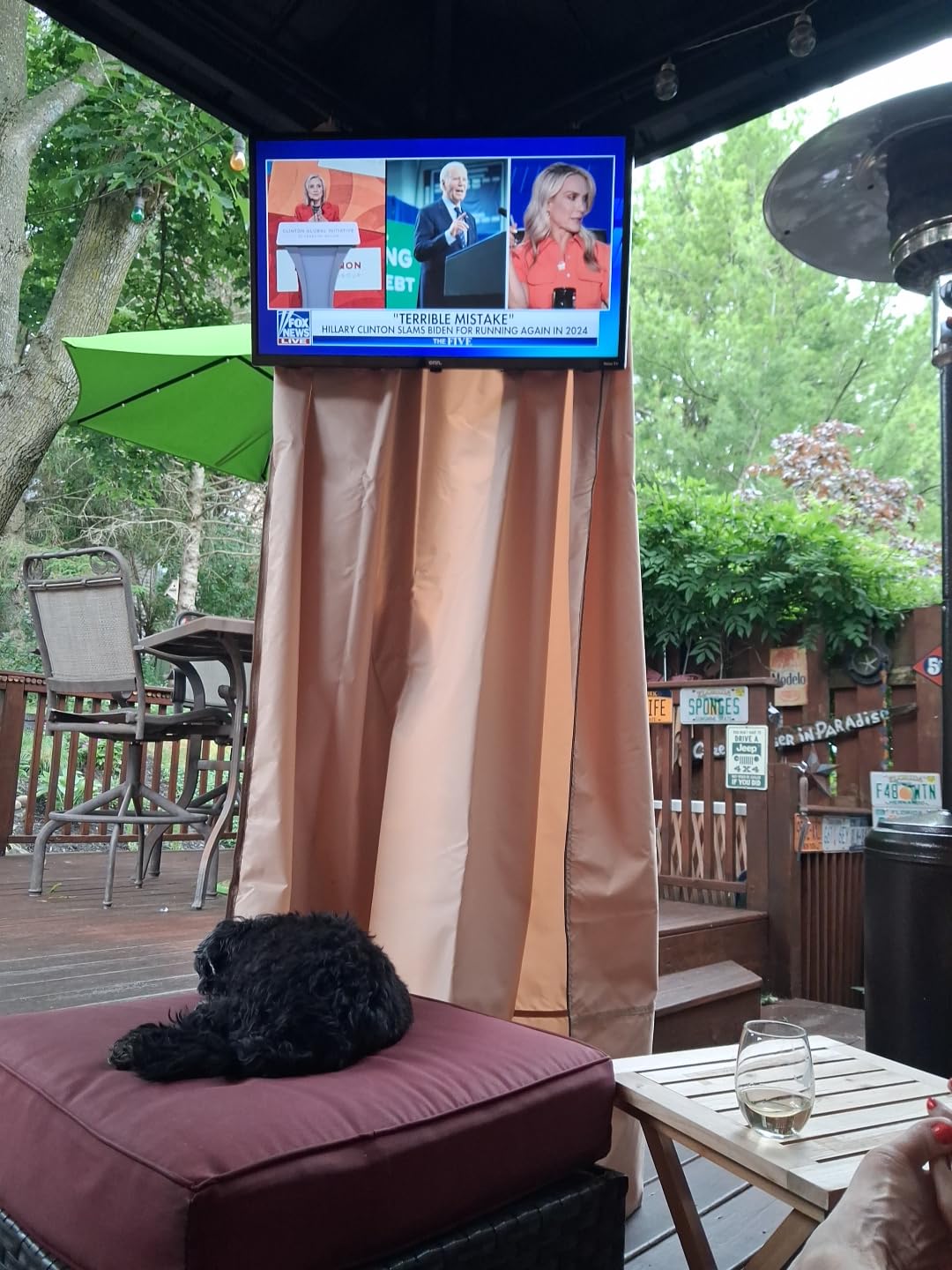
Assembly is described as straightforward with thorough, well-illustrated instructions and tight fits, but there is a real sequencing trap. Roof supports and panels must stay loose until every panel is placed, or they will not fit and you will be doing rework on the roof.
Expect a multi-box delivery, and at least three people for the main frame. A handful of parts are sometimes mislabeled, so compare each piece against the parts list before you start rather than discovering the mismatch at the roof stage.
When a 10 by 10 is enough
Work out the math honestly: a tub plus 12 inches of clearance on every side has to land inside 120 inches. A 6 foot round tub fits with roughly 24 inches of slack all around. An 84 by 84 tub does not, and forcing it means stepping over the cover to get in.
Steel mass in a small footprint
Small structures catch wind more than large ones, so a steel roof and steel frame on a 10 by 10 footprint is a deliberate choice rather than luck. Anchor it into concrete or a properly rated deck with the included expansion screws and treat the base as the structural element it is.
Solar lighting and evening soaks
Four solar LED lights with no wiring is the feature that changes how you use a gazebo after dark, and it pairs well with a spa. A central hook gives you a mounting point for a small fan, which is the other accessory you will want on a hot day.
Long evening sessions also argue for a pair of secure-fit earbuds built for sweat, since condensation off a warm tub reaches everything within arm’s reach of the water.
Net rods and quick screen changes
The included net rods let you install and remove mosquito netting or curtains in minutes rather than reworking the wall system. Around a tub that flexibility is worth more than it sounds, since you will want full screening on a buggy evening and open sides on a warm one.
10. PURPLE LEAF 12×16 Solarium – Best Enclosed Sunroom-Style Shelter
PURPLE LEAF Outdoor Hardtop Gazebo 12′ X 16′ Solarium Double Roof Bronze
360 degree enclosure
Wood-grain aluminum frame
179.1 x 131.8 x 120.8 inch
Magnetic sliding doors
Pros
- Full 360 degree enclosure with three window modes
- Vented galvanized steel double roof with screened vent
- Front and back magnetic sliding doors
- Built-in racks store the removable panels
Cons
- Interior height is about six feet
- Assembly runs 6 hours or more with three people
- Build it away from its final position
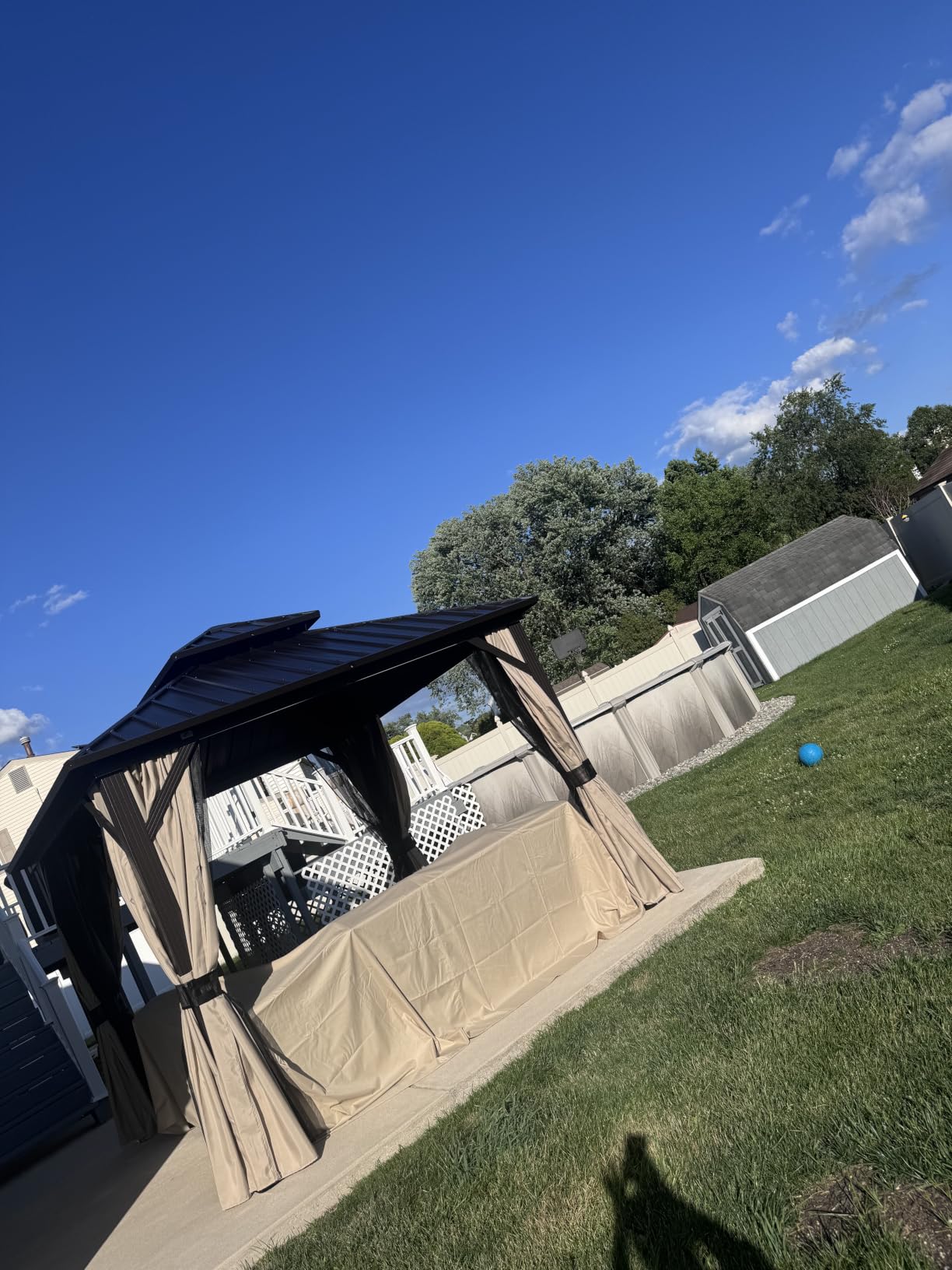
This is the only true outdoor room in the group. Rather than netting on a track, you get removable screens and PC panels with three window modes, so you choose airflow, protection, or fully open views depending on the weather and who is using the space.
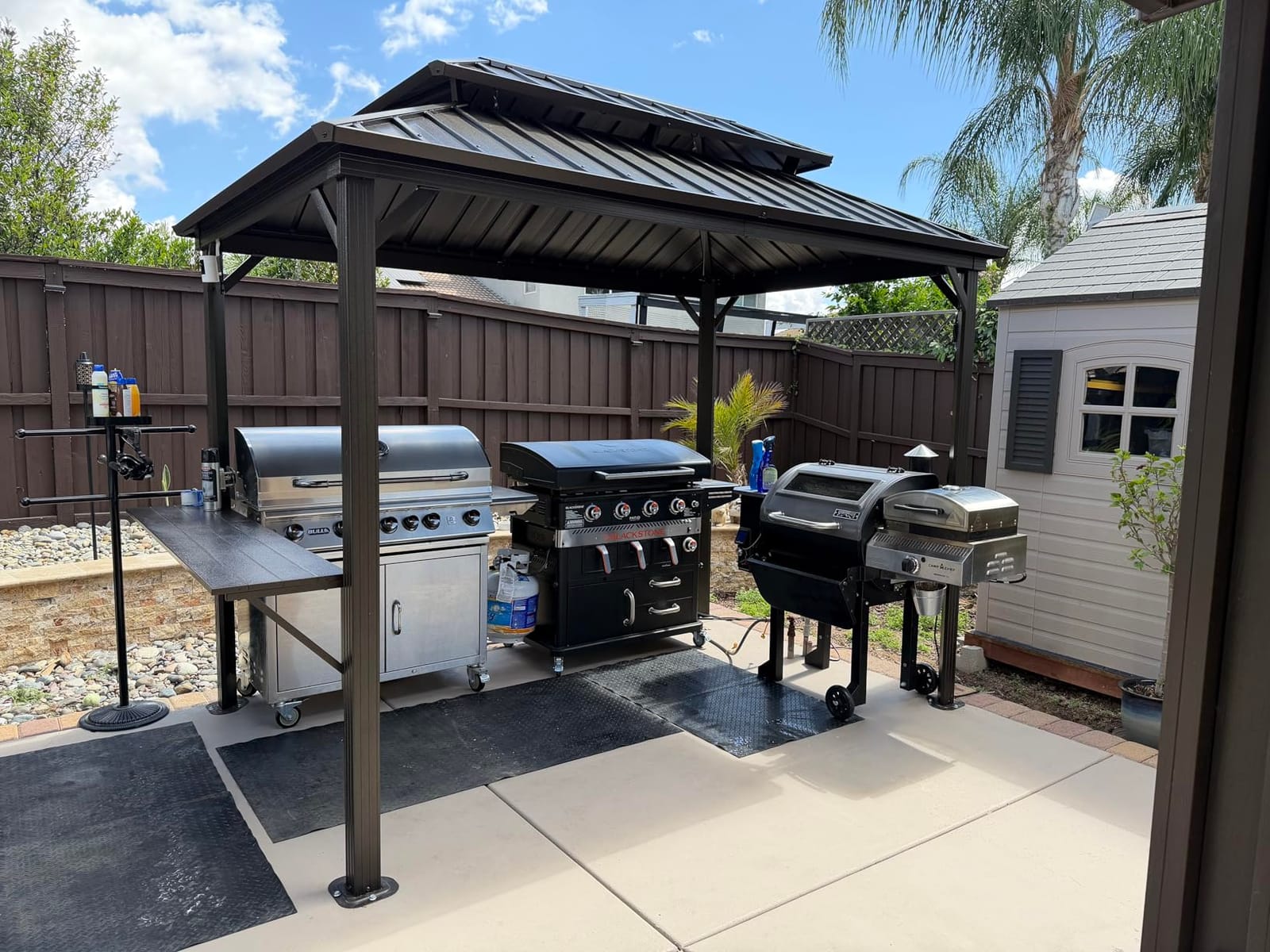
Owners of hot tubs and grills call out the payoff plainly: the structure protects the equipment from rain, which removes the need to drain or cover anything before a storm. For a spa, that changes the routine more than any roof comparison on this list.
The build is a ventilated galvanized steel double roof with a screened vent, mounted on a wood-grain aluminum frame that resists rust while blending into a yard. Front and back magnetic sliding doors give easy access, and built-in storage racks keep the removable panels organized.
Assembly runs 6 hours or more with three people, and longer for a solo build. The instructions are almost entirely pictures with little explanatory text, and a few buyers report curtain zippers installed upside down and a grommet that popped off shortly after delivery.
Interior height is about six feet, which is snug for taller users and worth checking against your household. Several owners advise assembling the structure away from its final position and moving it into place rather than building around a fixed hot tub, which is advice we would repeat without hesitation.
Enclosure modes and spa comfort
Three window modes matter more around a tub than around a patio. Full mesh gives you airflow with bug protection, the PC panel layer adds shade and privacy in the sun, and fully open screens turn it back into a screened pavilion for a mild evening. The removable panels store in the built-in racks, so you are not stacking them against the frame.
Ventilation and chemical vapor
A fully sealed room around a running spa is the one configuration to avoid. The screened roof vent and the sliding doors exist for that reason. Crack the enclosure during long soaks so warm, humid, chemically treated air keeps moving out instead of sitting against the frame and textiles.
Rain protection and spa longevity
Keeping rain off the tub and its cover is the strongest argument for an enclosed structure in a wet climate. The cover stays drier, debris does not collect on it, and you stop scheduling around the forecast. Combined with the double steel roof, it is the most weather-independent option here.
Build logistics and warranty split
Curtain rollers should be installed late in the build or they can roll off the frame ends, and roof panels can slide free if you follow the instructions literally, so secure them one at a time. Warranty terms are split, with one year on bolts, nuts and frame and five years on the roof panels.
How to Choose a Gazebo for a Hot Tub
Ten products, and the differences that matter to a spa owner are narrow and specific. Ignore anything that does not answer these questions for your actual tub, your actual yard, and your actual winter.
Match the footprint to your tub before anything else
Add 12 inches to the tub’s length and width on every side and you have your minimum gazebo. That single rule eliminates most sizing mistakes, and it is the number forum owners argue about most often when they are trying to fit a large square tub.
For a round tub under 6 feet across, a 10 by 10 or 10 by 12 frame works. For an 84 by 84 tub, 12 by 12 is comfortable and 10 by 10 is tight. For a large rectangular spa or a tub on a built deck, 12 by 16 or 14 by 10 is the sensible target, and 12 by 12 stops being enough once the folded cover is in play.
Side clearance and headroom for the propped-open cover
Side clearance is only half the check. You also need vertical headroom to lift the insulated cover off the water and fold it back without hitting a beam or a hook, and you need that clearance with the cover lifted, not folded. Structures here range from about 110 to 121 inches tall, and the taller the better if your cover is thick or hinged high.
Then check the door opening. A double-track wall system with removable or zippered panels lets you create a wide entry when the cover is coming off, which a fixed narrow doorway does not.
Roof material decides how long it lasts in a wet, chemical air
Three roof families appear in this roundup. Galvanized steel is the strongest and the heaviest, and it is the right answer for snow, hail and year-round use. Polycarbonate is the middle tier, blocking UV while letting light through, but it cracks, dents and runs warm inside. Fabric and pop-up tops need replacing on a multi-year cycle and are not built for a wet enclosure.
Also look for a double roof. The gap between the upper and lower layers moves air, which reduces heat build-up under a steel roof and adds insulation in cold weather, and it only works when there is a breeze to move it.
Frame material and the humidity problem
Aluminum is the practical answer beside a spa because it will not rot and does not need sealing. Powder-coated steel also performs well. Cedar is the natural-looking option and tolerates moisture, but it needs periodic restaining. Untreated softwood is the material to avoid, because a permanently damp frame sitting in chlorinated air will soften and rot from the inside of the post.
A good related question is whether the manufacturer sells replacement parts. Curtains, netting, roof panels and hooks all take damage eventually, and a brand that sends a replacement panel quickly is worth more than a brand with a longer brochure warranty.
Wind and snow ratings explained
Two numbers matter, and only some products publish them. In this roundup, 50 mph and 100 mph wind ratings and snow capacities of 22 pounds per square foot, 7,700 pounds or 30 inches are all documented claims, and they let you compare against your local weather instead of against marketing language.
If your gazebo has no published rating, treat a fabric or lightweight polycarbonate top as a seasonal structure that should come down or be secured before a storm. Ratings mean nothing without anchoring, and anchoring is the part most people skip.
Enclosure add-ons that actually solve bugs and privacy
Roof alone does not stop mosquitoes. Look for zipped mosquito netting on a separate track from solid curtains, so you can run mesh during the day and privacy fabric at night. Flimsy curtain rings are a common failure point, and thicker fabric such as 180g polyester holds up better in damp air than a thin weave.
Roof hooks rated for a fan and a light are worth as much as any roof feature in a hot climate, which is the same conclusion we reached in our guide to mesh office chairs for hot climates where airflow and seating comfort mattered more than upholstery. Integrated power outlets, as on the cedar pavilion, remove extension cords from a wet deck entirely.
Anchoring, permits and the pad underneath
A filled spa carries a lot of dead weight, and deck builders raise that load question constantly. A slab or a properly engineered pad is the safe answer.
Permit rules are local, so call your planning office rather than guessing. Larger structures, any structure fixed to a deck, and anything close to a property line are the ones that draw review, and a cedar pergola in a planned development may trigger HOA approval on top of city rules.
Assembly time, crew size and the two-box problem
Realistic build times in this category run from about 6 hours to 16 hours, with two to four people. Advertised figures are frequently optimistic, and picture-only instructions are the norm rather than the exception. Add an hour for a first-time build and another for a heavy steel roof.
Several units here are delivered in two or more boxes, so wait for a complete delivery before starting. That single habit prevents the most common regret we found: a half-built frame sitting on the pad while the roof panels are still in transit.
What not to buy for a hot tub
Skip untreated softwood frames, non-waterproof fabric tops, an 8 by 8 canopy that leaves no walk-around room, and any structure with no drainage path near the tub. Also avoid wall systems with a single track, because you will want bugs out and heat in at the same time.
And skip any gazebo with no anchoring provision at all. Around a filled tub, an unanchored structure is a liability in the first serious wind event.
Frequently Asked Questions
Can I put a hot tub under a gazebo?
Yes, and most spa owners end up doing it. The structure needs three things: at least 12 inches of clearance on every side of the tub, enough vertical headroom to lift the insulated cover clear of the frame, and a pad or deck rated for a filled spa. The gazebo reduces wind-driven evaporation and keeps rain and sun off the tub and its cover, but it does not replace the insulated cover.
What is the best shelter for a hot tub?
A hardtop gazebo with a galvanized steel or aluminum frame is the best shelter for most spas. Steel roofs handle snow, hail and wind; aluminum frames resist the humidity and chemical exposure around a tub. A polycarbonate roof is a reasonable middle tier in a mild climate, and a cedar pavilion is the choice when looks and integrated power matter more than assembly weight.
What size gazebo do I need for my hot tub?
Add 12 inches on each side of your tub footprint. A round tub under 6 feet fits a 10 by 10 or 10 by 12 gazebo, an 84 by 84 tub fits 12 by 12 comfortably, and a large rectangular spa or built deck needs 12 by 16 or 14 by 10. Also check vertical headroom for lifting the cover and for the folded cover lying on the deck.
Which brand of gazebo is the most durable?
Durability comes from materials rather than the badge on the box. Powder-coated aluminum frames with galvanized steel double roofs last longest in a wet, chemical environment because neither material rots or rusts quickly. Cedar performs well with periodic restaining. Untreated softwood and bare steel are the two to avoid beside a spa. Check whether replacement panels and parts are sold separately.
Do I need a permit for a gazebo over my hot tub?
It depends on local code, size and what it is fixed to. Larger structures, anything anchored into a deck, and anything near a property line are the ones most likely to require review. Call your local planning office with the footprint, height and mounting plan before you buy, and check HOA rules separately, which often apply to cedar structures.
Bottom Line: Which Gazebo Fits Your Spa
If you want the most headroom and the least worry about corrosion, the PURPLE LEAF 12×16 aluminum hardtop is our pick for the best gazebos for hot tubs, and its 4.7 inch post plus gutter system is built for a wet corner of the yard. It is also one of the heavier builds in our list, so plan the crew and the anchoring before the first panel goes on.
If a snowy climate is part of your year, the Domi 12×12 is the only unit here with published wind and snow figures, and it carries a lifetime frame warranty. If you want real cedar and integrated power outlets, the Backyard Discovery Norwood 14×10 takes a large rectangular tub and the highest assembly effort in the group.
If your budget is tighter, the Aoxun 12×10 and the YOLENY 10×13 both block sun and mosquitoes at a lower tier, and neither will outlast a steel roof in hail or heavy snow. Pick the 10×13 for more room, or the 12×10 for a tighter patio footprint.
For evening soaks, the Aoxun 10×12 with its IP65 string lights saves you from running a cord across a wet deck. For a genuine outdoor room, the PURPLE LEAF 12×16 Solarium keeps rain off the tub entirely, provided you leave the vent and a screen open while the water is running.
Whatever you choose, measure the tub, add your clearance, and anchor the structure. Check the current details for any of these picks, then build it before the first cold snap rather than after.