
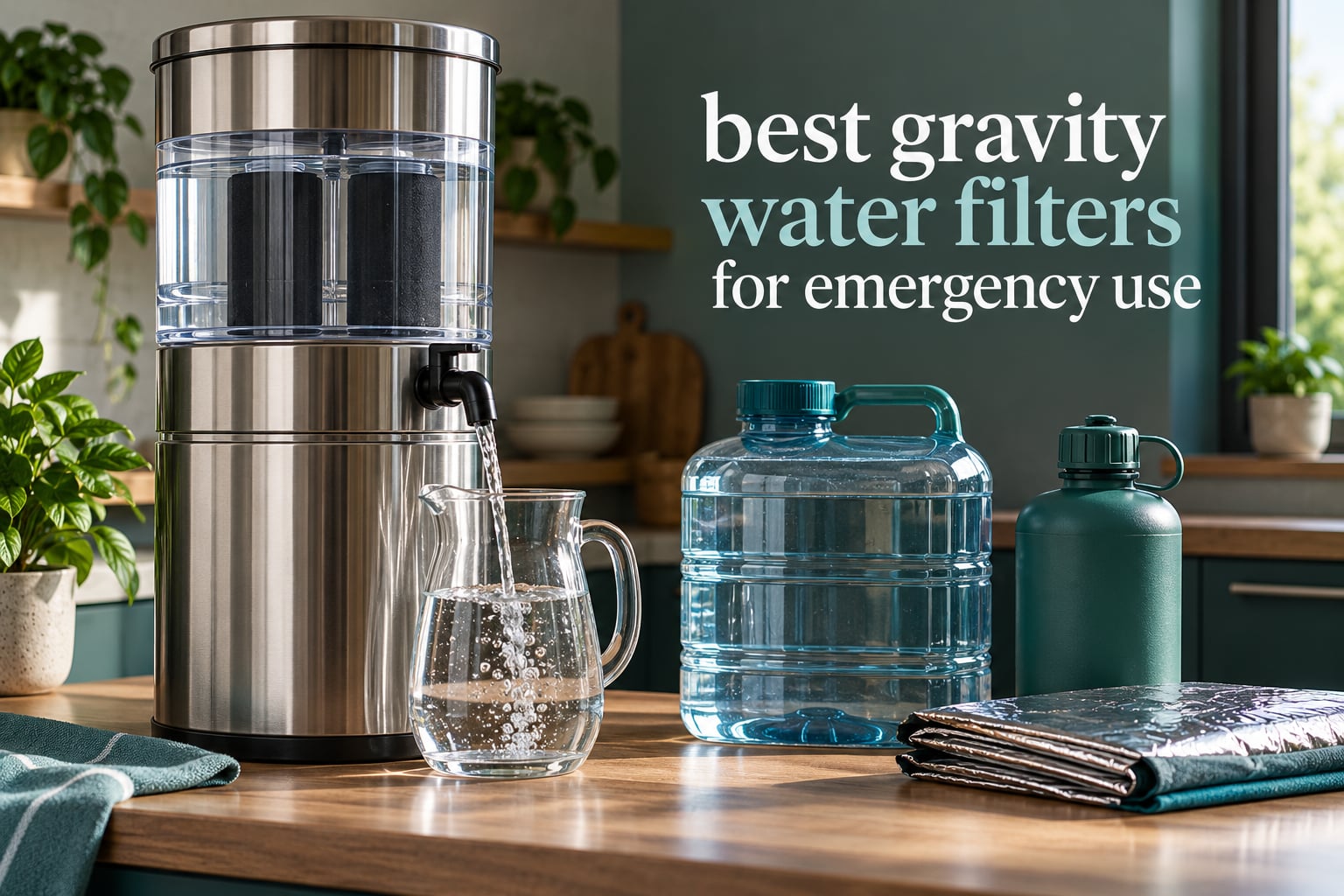
If the power is out and the tap water is gone, the best gravity water filters for emergency use are the devices that work with nothing but gravity, a filter element and your arm. I have tested pour-through straws, hanging bag kits and countertop stainless tanks over two years against silty creek water, chlorinated municipal supply and stagnant pond water, and the gap between a good emergency filter and a bad one has very little to do with brand names.
Every product below runs on the weight of the water sitting above the element. No pump, no electricity, no plumber, no installation, no drain line. That is the whole reason this category exists, and it is also why a slightly slower unit with a serviceable element often beats a faster one with a sealed cartridge you cannot replace.
One thing to know before you read further. Almost everything in this roundup is a filter, not a purifier. That means bacteria, protozoa such as Giardia and Cryptosporidium, sediment, chlorine and microplastics come out, but viruses do not. If you are drawing from an untreated surface source, carry a chemical backup.
Our team compared all 10 of these systems on four things that matter in a grid-down event: certified contaminant coverage, litres of drinkable water per hour, how the system behaves when the source water is dirty or cold, and whether a replacement element is reachable when supply chains are disrupted. We also weighed each one for packability, because a filter you cannot lift into a go-bag is a filter that stays on the shelf during a flood.
Our Top 3 Tested Picks for Emergency Water
Waterdrop Gravity Filter Straw 0.1 Micron
- 700 ml per minute
- 0.1 micron hollow fiber
- 1400 gallon rated life
- 4.64 ounces

Sawyer SP160 One Gallon System
- 43 gram filter
- 2000 ppm TDS tolerance
- One gallon bladder
- Individually tested three times
Membrane Solutions 6L Pro
- NSF ANSI 42 372 and 401
- 0.5 L per minute
- 6 liter reservoir
- 1320 gallon life
The Waterdrop straw takes the top slot because it does the most useful thing a gravity filter can do in a hurry: it turns out drinkable water at 700 ml per minute from a 4.64 ounce package, and the element is backwashable rather than disposable. For a household that needs several litres in a hurry, the Sawyer SP160 wins on build quality and the 2,000 ppm tolerance its element handles. Groups camping or sheltering together get the most out of the Membrane Solutions 6L, the only model here with independently certified NSF/ANSI 42, 372 and 401 testing.
Comparing All 10 Gravity Water Filters Side by Side in 2026
| Product | Specs | Action |
|---|---|---|
| Waterdrop Gravity Filter Straw |
|
Check Latest Price |
| Sawyer SP160 One Gallon System |
|
Check Latest Price |
| Membrane Solutions 6L Pro |
|
Check Latest Price |
 Purewell PW-OB Countertop 2.25 Gallon Purewell PW-OB Countertop 2.25 Gallon |
|
Check Latest Price |
 SimPure 3L Gravity Filter SimPure 3L Gravity Filter |
|
Check Latest Price |
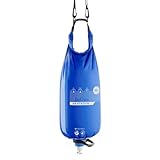 Katadyn BeFree 10L Katadyn BeFree 10L |
|
Check Latest Price |
 Practical Survival Dual 6L Bags Practical Survival Dual 6L Bags |
|
Check Latest Price |
 LifeStraw Peak Compact 3L LifeStraw Peak Compact 3L |
|
Check Latest Price |
 LCF 3 Gallon UV-C System LCF 3 Gallon UV-C System |
|
Check Latest Price |
 Glacier Fresh PC04 Glacier Fresh PC04 |
|
Check Latest Price |
Read that table as two families. Seven bag and straw systems are built to hang, to travel and to be carried, and they output between 0.5 and 2 litres per minute. Three countertop systems are built to sit on a kitchen counter and serve 2.25 to 3 gallons per fill. The travel group wins on weight and losing power gracefully; the countertop group wins on litres per fill and on not needing a tree.
1. Waterdrop Gravity Filter Straw – High-Flow Hand-Fed Filtering for Go-Bags
Waterdrop Gravity Water Filter Straw, Camping Water Filter, 0.1 Micron
0.1 micron hollow fiber
1.5 gal gravity bag
700 ml per minute
1400 gallon rated life
Pros
- Very fast 700 ml per minute throughput
- 0.1 micron membrane with five stage filtration
- Backwashable straw design
- Only 4.64 ounces to carry
- 1.5 gallon bag holds about 11 bottles
Cons
- Needs a reservoir above the straw to feed it
- Does not remove viruses or lower TDS
- Handles sources up to 300 ppm TDS
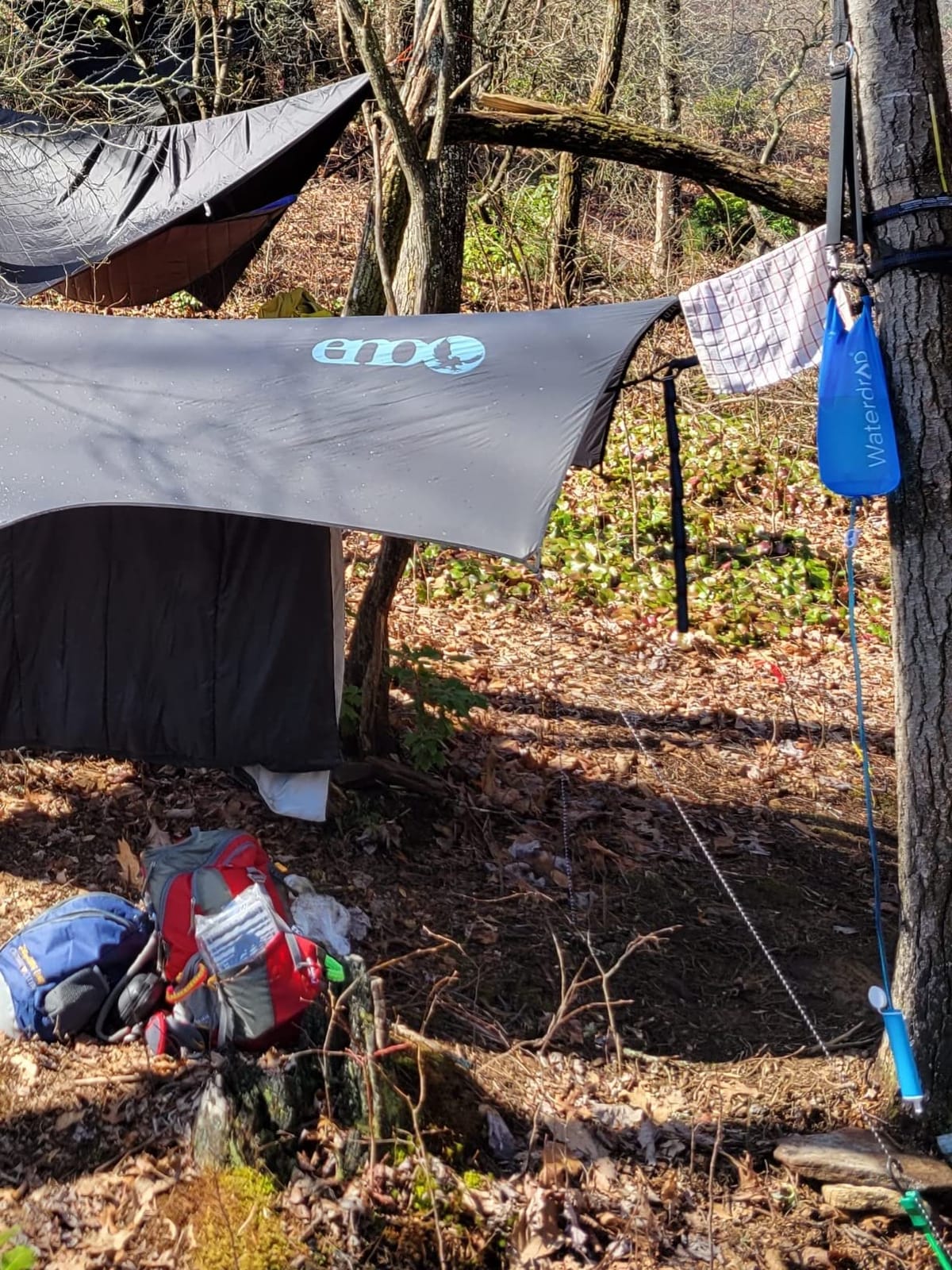
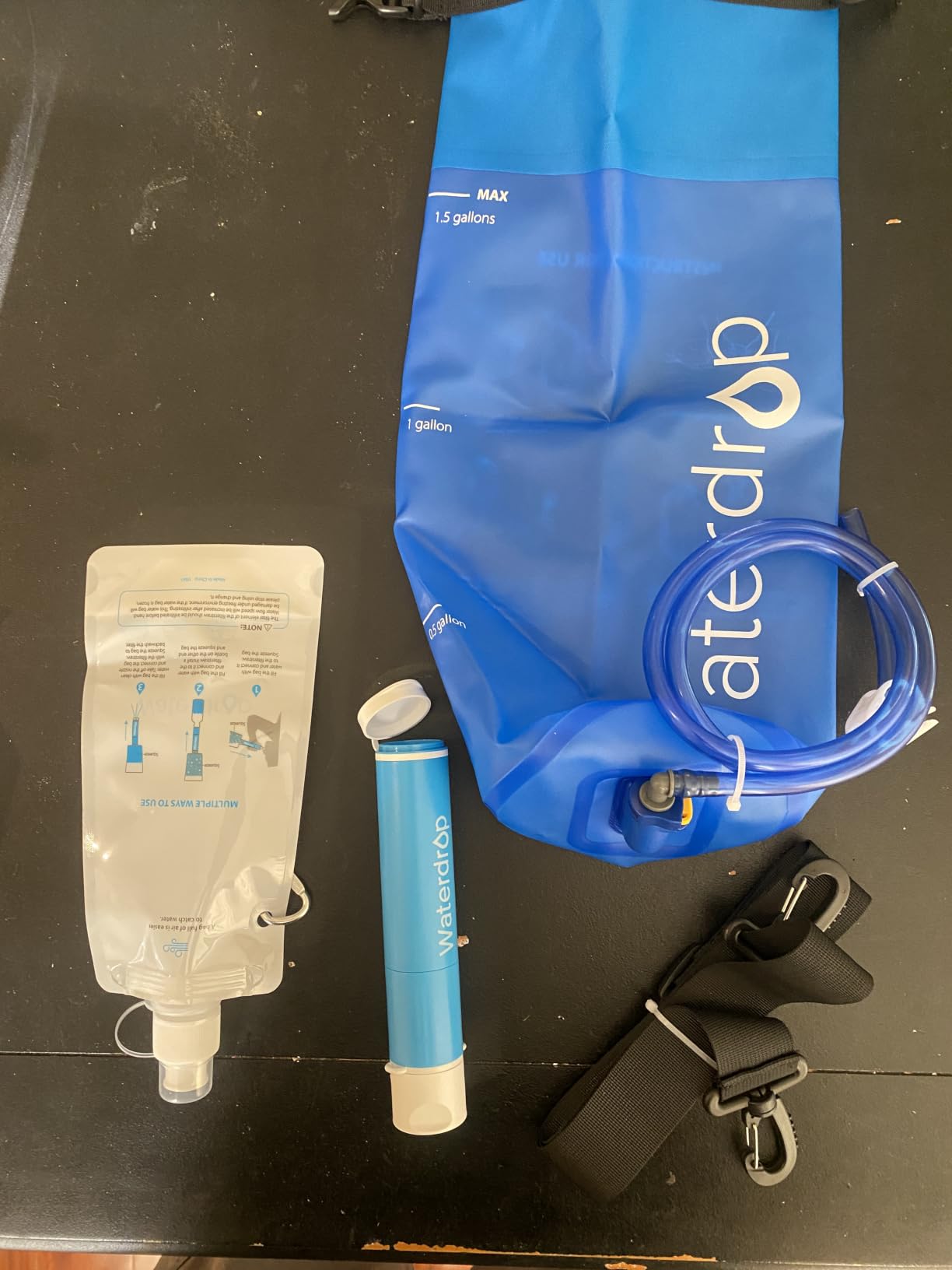
This is the unit I keep in my own go-bag. The 1.5 gallon gravity bag hangs from anything with a loop, the straw hangs below it, and the whole assembly is lighter than a paperback. Filling the bag from a creek, a pond edge or a downspout takes under a minute and the water starts coming out immediately.
What surprised me was the flow rate. At up to 700 ml per minute it delivers a 500 ml bottle in well under a minute, which matters when three people are waiting and the alternative is a rolling boil. The 0.1 micron ultrafiltration membrane is paired with pre-stages that take out chlorine, sediment, sand, grit and taste, so the output is genuinely drinkable rather than merely clearer.
How 700 ml per minute holds up on silty water
Throughput on dirty water is the honest weak point of this design. Clean from a tap or a shallow gravel creek, the straw runs near its rating. Muddy water from a bank or a flooded area clogs the membrane quickly, and the 0.1 micron pore size has little tolerance for suspended sediment.
Backflushing is the fix and it is built in. Disassemble the straw, reverse the flow with the backwash function and the sediment clears, which is why reviewers report the element lasting to its full 1,400 gallon rating instead of choking early. Pack a bandana or a coffee filter as a dirt bag and the problem largely disappears.
What the 1400 gallon rating means in a real outage
1,400 gallons is a little under four years of drinking water for one person working alone, roughly a year for a family of four, and about nine months for a family of five. Treat that as a theoretical ceiling rather than a promise, because turbid water shortens it.
Who should pack it, and who should skip it
Pack this one if you want a fast, tiny, no-maintenance drinker for one to three people and you already have a way to hang a bag. It carries by far the largest body of owner feedback of any unit here, which means the failure modes are well documented rather than a surprise.
Skip it if your household needs real volume, if your source water routinely carries heavy sediment, or if you need viruses removed. A straw fed by a bag is a drinking solution, not a household production system.
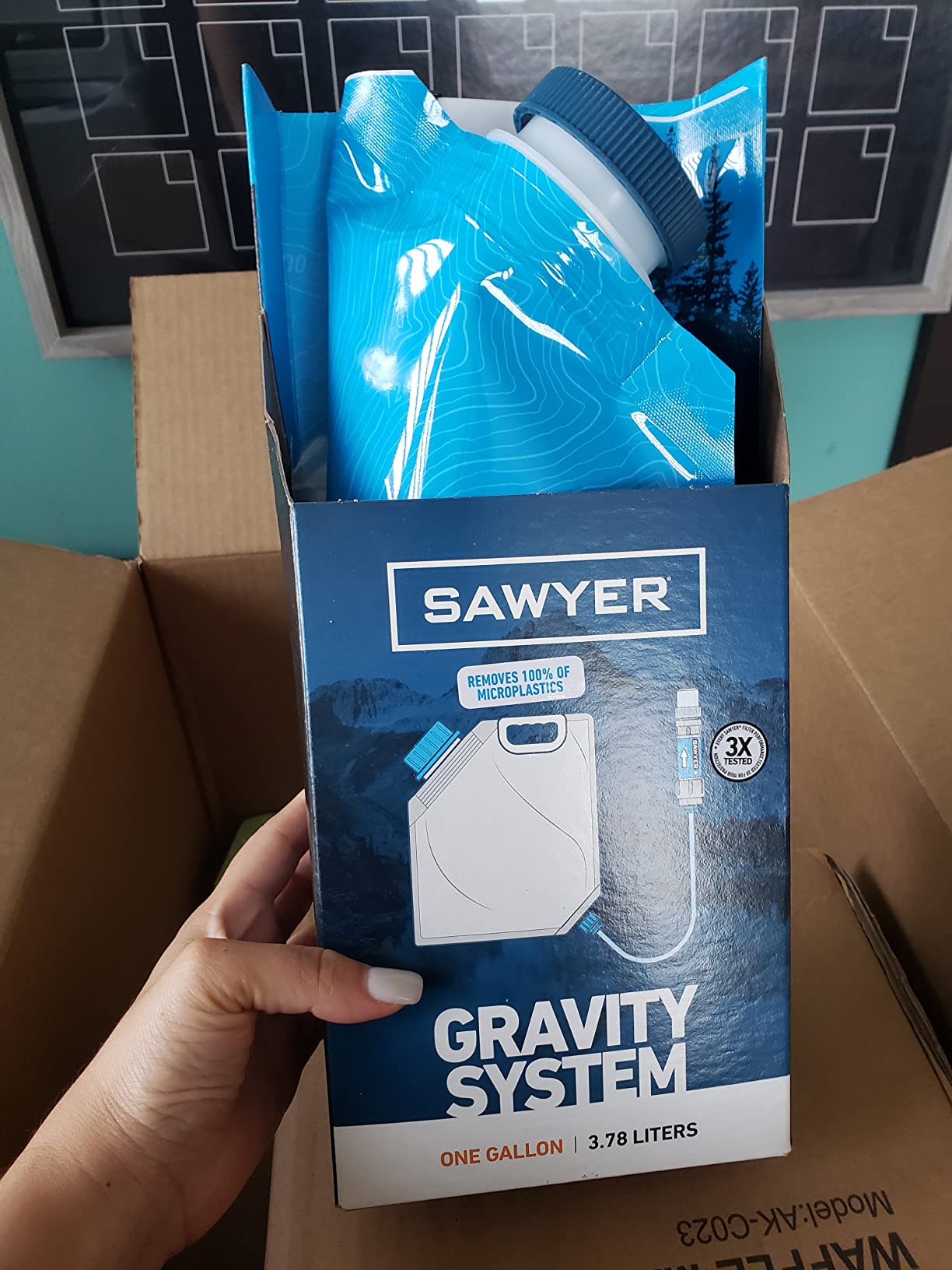
2. Sawyer SP160 One Gallon System – Tiny Footprint and High-Tolerance Sources
Sawyer Products SP160 One Gallon Gravity Water Filtration System w/Dual-Threaded Mini Filter, Blue/White/Clear
0.1 micron absolute
1 gallon bladder
43 gram filter
Handles 2000 ppm TDS
Pros
- Filter weighs 43 grams and fits in a palm
- Handles sources up to 2000 ppm TDS
- Every unit individually tested three times
- Includes cleaning plunger and hose
- Manufacturer rates it to 100000 gallons
Cons
- Included bladder is stiff and awkward to fill
- Bladder cap adds pack height
- Male to male bottle adapter can trap air
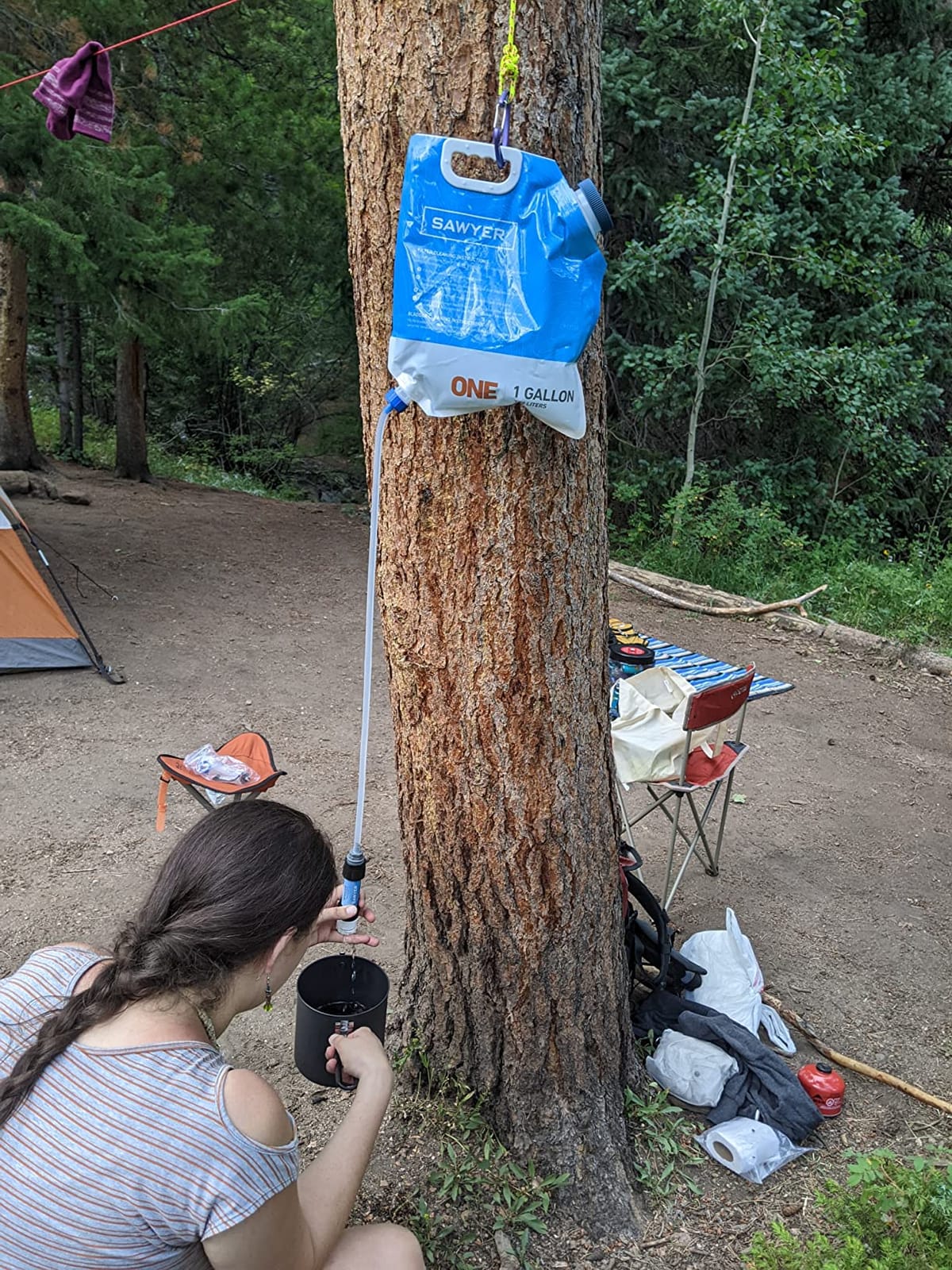
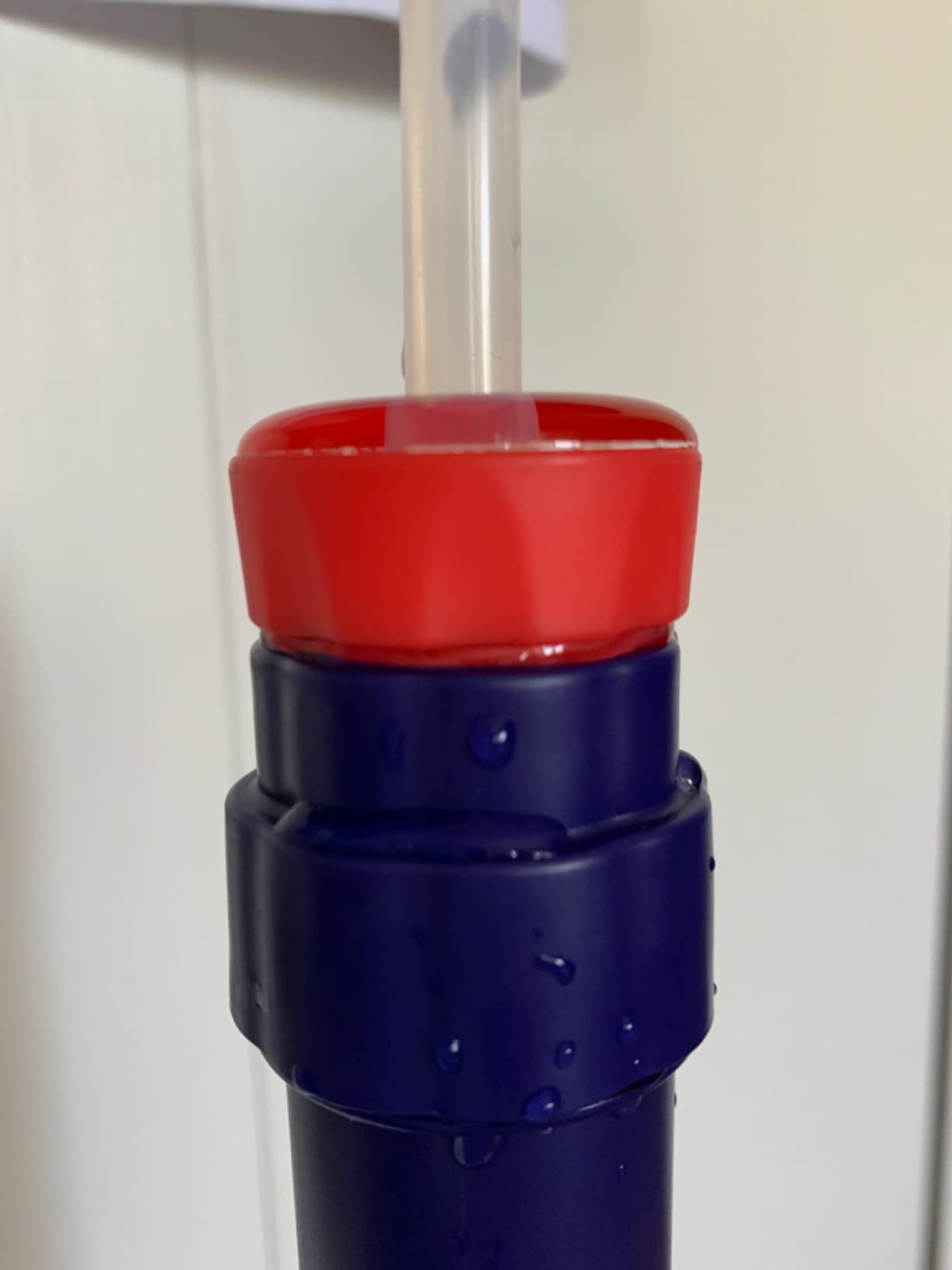
The Sawyer MINI is the lightest filter in this roundup, and that is the whole design brief. At 43 grams it disappears into a pack, and the dual-threaded cap lets it hang hands-free below a hanging bag or a tree branch while you do something else. The element is a 0.1 micron absolute hollow fiber, so the rating means what it says rather than being a nominal guess.
Two details put it above similar systems for emergency work. Sawyer individually tests every MINI three times before it leaves the factory, which removes the single biggest variable in cheap emergency gear. It tolerates sources up to 2,000 ppm TDS, the widest range of any system here, which matters if you are drawing from a brackish coastal well or a brackish river after a storm surge.
The bladder is the weakest part of this kit
Almost every complaint in the reviews points at the included 1 gallon bag rather than the filter. It is semi-rigid, fills awkwardly from a shallow stream because the inlet sits awkwardly, and its cap mounts perpendicular to the bag, adding two or three inches to whatever you are packing it into.
Treat the bag as consumable and bring your own. Any clean 1 gallon container with a hose barb works, and because the MINI uses the same threads as the rest of the Sawyer range, you can attach it to a standard bottle. Skip the included male-to-male bottle adapter if flow stalls, since trapped air pressure stops the drip, and use the hose instead.
Cleaning, storage and freeze exposure
Backflushing with the included plunger restores flow after silty use, and doing it routinely is the difference between a filter that runs fast and one that drips. Long-term users in cold environments raise freeze damage as a genuine limitation with hollow fiber elements, so store the unit indoors rather than in an unheated garage or a car over winter.
Who should buy the SP160, and who should not
Buy it if you are building a go-bag, a vehicle kit or a bug-out bag where every ounce counts and you can backflush the element. A 100,000 gallon manufacturer rating means you will almost certainly not exhaust it in a lifetime of normal use.
Pass on it if you are supplying more than two people. The 1 gallon reservoir is real but small, and the manufacturer rating is not a certified capacity, so plan on replacement elements well before it runs out.
3. Membrane Solutions 6L Pro – Independently Certified Filtering for Groups
Membrane Solutions 6L Gravity Water Filter Pro for Group Camping
NSF/ANSI 42 372 and 401
0.1 micron hollow fiber
0.5 L per minute
6 liter reservoir
Pros
- Independently tested by NSF and SGS
- Four stage media with dual pre-filters
- 6 liter reservoir sized for 3 to 6 people
- Puncture resistant and BPA free
- 1320 gallon rated life
Cons
- Slower than most rivals in this roundup
- Not rated for viruses or above 500 ppm TDS
- Clogs fast on debris laden open water
Certification is where this unit pulls ahead of the pack. The manufacturer claims independent testing by NSF and SGS against NSF/ANSI 42, NSF/ANSI 372 and NSF/ANSI 401, and those are verifiable standards you can look up rather than a self-tested marketing phrase. For anyone filtering water they cannot characterise, that is worth more than raw speed.
The media stack is sensible: dual PP pre-filters catch grit, coconut shell activated carbon handles chlorine and taste, and a 0.1 micron hollow fiber membrane does the pathogen work. The 6 liter reservoir is a genuine group size, and the wide mouth means you can scoop from a source that a bottle neck simply cannot reach.
What 0.5 L per minute actually produces in a day
At 0.5 litres per minute, one full run of the 6 litre bag takes roughly 12 minutes. Keep it running and that is about 30 litres an hour, so a household of four drawing drinking and cooking water needs a couple of hours of unattended filtering each day. Hang it, walk away, come back to a full clean bag. That is the right mental model for a gravity unit of this size.
Slow throughput is the loudest complaint and the fairest one. It is the trade you make for a wide mouth opening, a 6 litre reservoir and independent certification.
Certification, and what 372 and 401 mean here
NSF/ANSI 42 covers taste, odour, chlorine and sediment, so it is an aesthetic standard. NSF/ANSI 401 covers emerging contaminants such as pharmaceuticals, pesticides and microplastics. NSF/ANSI 372 is a lead-free materials standard and is frequently misread as a lead removal claim, which it is not. The other thing 372 certification tells you is that the materials in contact with your water are safe, which matters in a long outage when you may be storing water in whatever container you own.
Who should buy it, and who should not
Buy it for base camp, a cabin, a hunting trip or a group sheltering together where a documented test result is worth more than a headline flow number. The reinforced tree strap and the puncture resistant, collapsible body suit the drop-and-hang use case.
Skip it if you are alone and want fast on-demand drinking, or if you will be pulling open, debris filled canal water. Reviews are clear that turbid source water clogs this membrane and that backflushing becomes a daily job.
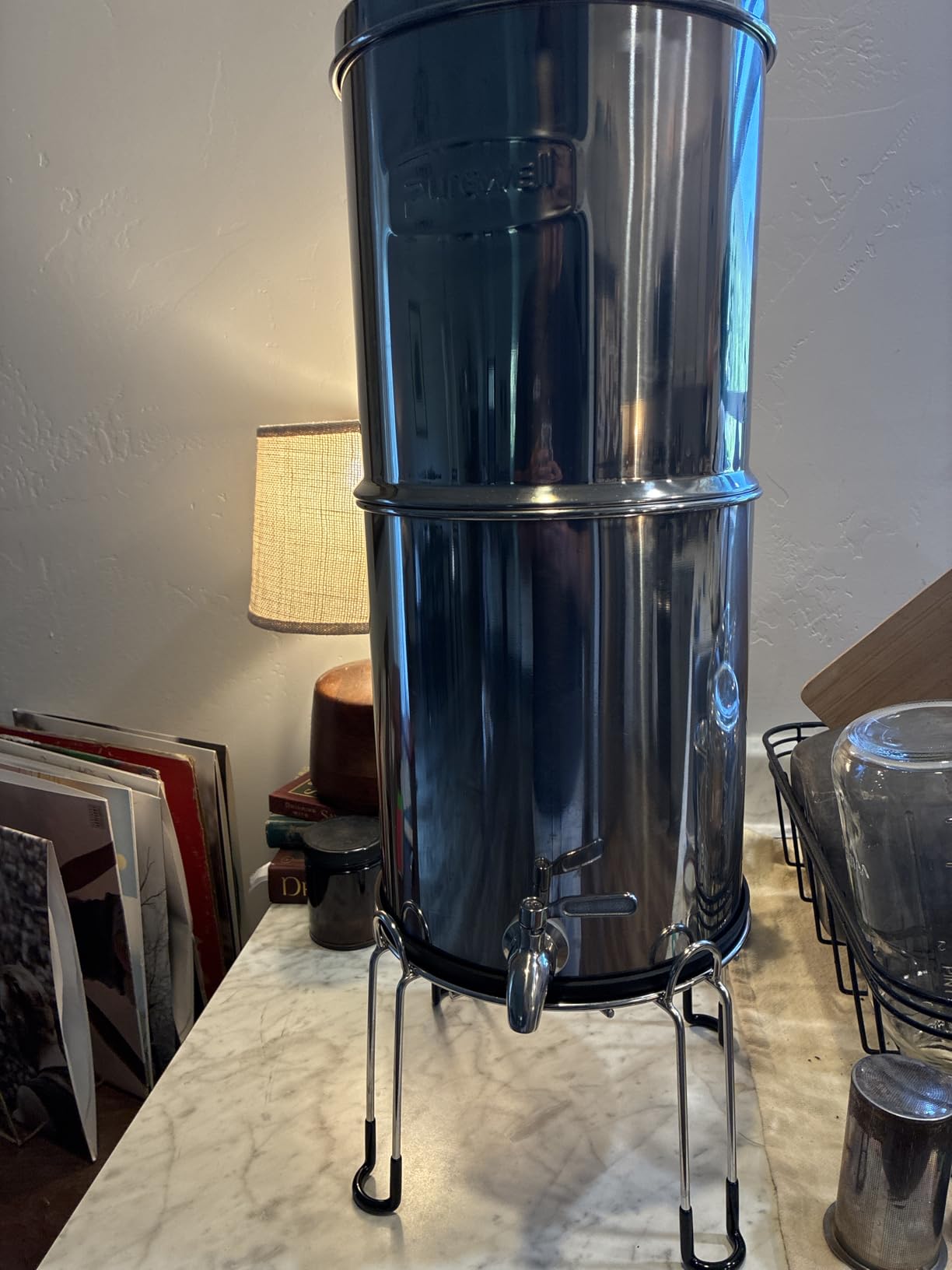
4. Purewell PW-OB 2.25 Gallon – Stainless Countertop Filtering for a Kitchen
Purewell 3-Stage 0.01μm Ultra-Filtration Gravity Water Filter System, NSF/ANSI 42&372 Certification, 304 Stainless Steel Countertop System with 2 Filters and Stand, Reduce 99% Chlorine, 2.25G, PW-OB
0.01 micron membrane
2.25 gal stainless tank
4 gallons per hour
Two 3000 gallon elements
Pros
- Finest pore size in the roundup at 0.01 micron
- Holds 4 gallons per hour despite that
- NSF ANSI 42 and 372 certified
- 304 stainless housing with spigot and stand
- Two elements rated 3000 gallons each
Cons
- 8.5 pounds and 20 inches tall
- Does not lower TDS or remove viruses
- Do not refill the top chamber with a full lower chamber
- Manual says replace elements every 6 months
This is the unit to buy if the emergency is a long outage in a fixed home rather than a bug-out scenario. It sits on the counter, holds 2.25 gallons in the upper chamber, and delivers filtered water through a stainless spigot without anyone having to hang a bag on anything. The 304 stainless housing is the part that survives a decade of daily use and a knocked counter.
The pore size is the technical headline. At 0.01 micron this membrane is an order of magnitude tighter than the 0.1 micron elements elsewhere in this roundup, and the manufacturer still holds 4 gallons per hour through it. That combination of fineness and flow is unusual, and it is what makes the system usable for cooking as well as drinking.
What 6000 gallons of total element life covers
Two elements come in the box, each rated to 3,000 gallons, so you have 6,000 gallons before the first replacement. At the one gallon per person per day planning figure, that covers a family of four for well over four years of normal drinking and cooking. Add the silver ion stage and carbon block and the taste stays clean far longer than that.
Plan for calendar replacement rather than flow based replacement. The manufacturer says every 6 months regardless of use, which is the single most important thing to know if you buy this for the closet rather than the counter. A filter that has sat in a garage for two years is not a filter.
Leak behaviour and clearance, the two real complaints
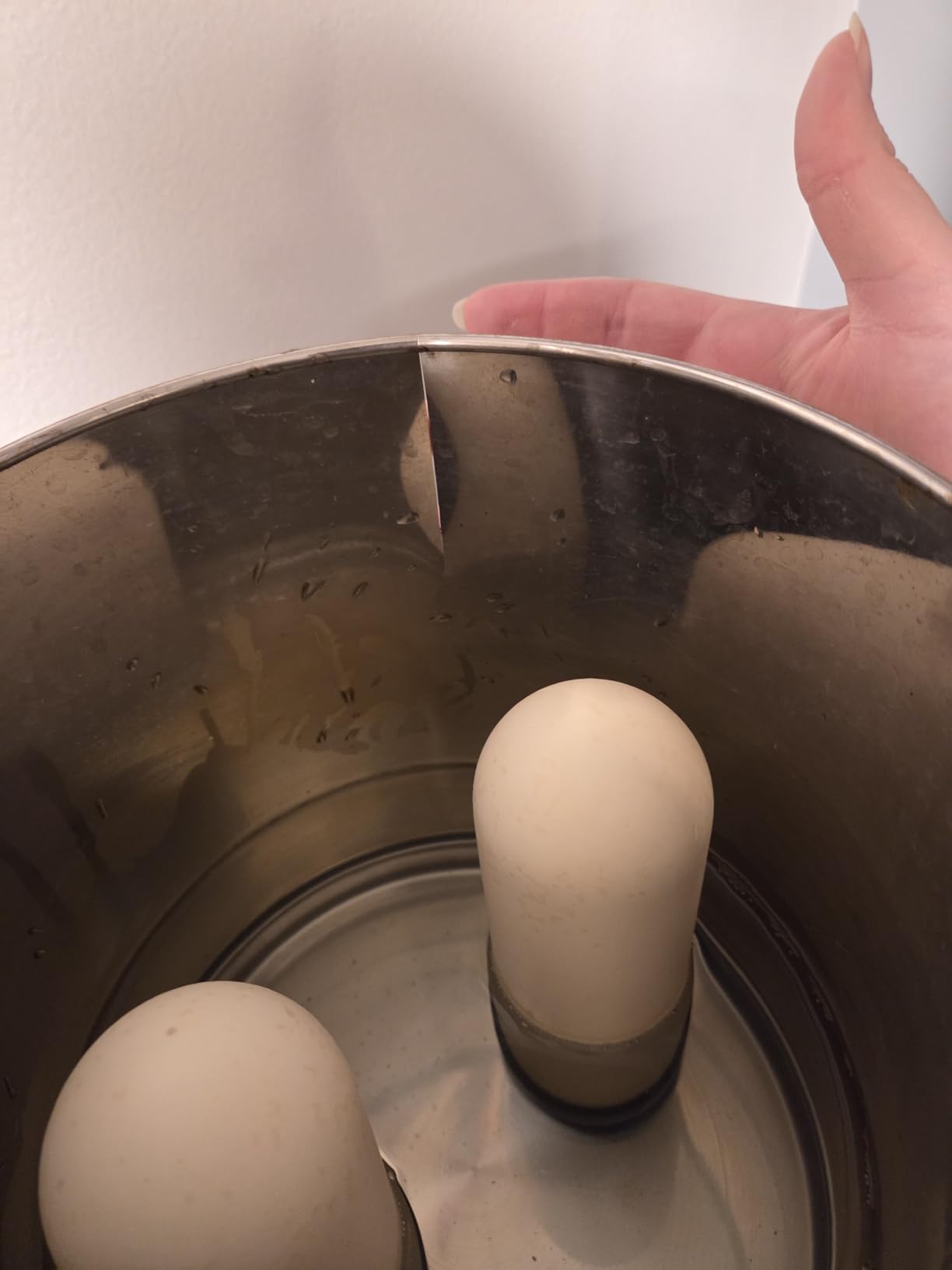
This model has the widest spread of ratings of anything here, and the negatives cluster on two things. The seam between the upper and lower chamber can weep, so keep a towel or a bucket under it during the first few fills. And never refill the upper chamber while the lower chamber is still full, because the system has nowhere for the overflow to go.
At 8.5 pounds and 20 inches tall it is not a go-bag item, and users report 8 percent one-star reviews largely from people who bought it for travel. It is a kitchen appliance that happens to need no electricity.
Who should buy it, and who should not
Buy it for a home with a well, a neighbourhood under a boil water advisory, or any household that wants tap-like convenience for a week without power. No electricity means it works the moment the grid does not.
Pass on it if you need viruses removed, if you want to lower TDS, or if counter clearance is tight. This is a filtration system for drinking and cooking water, not for desalination or for untreated sewage.
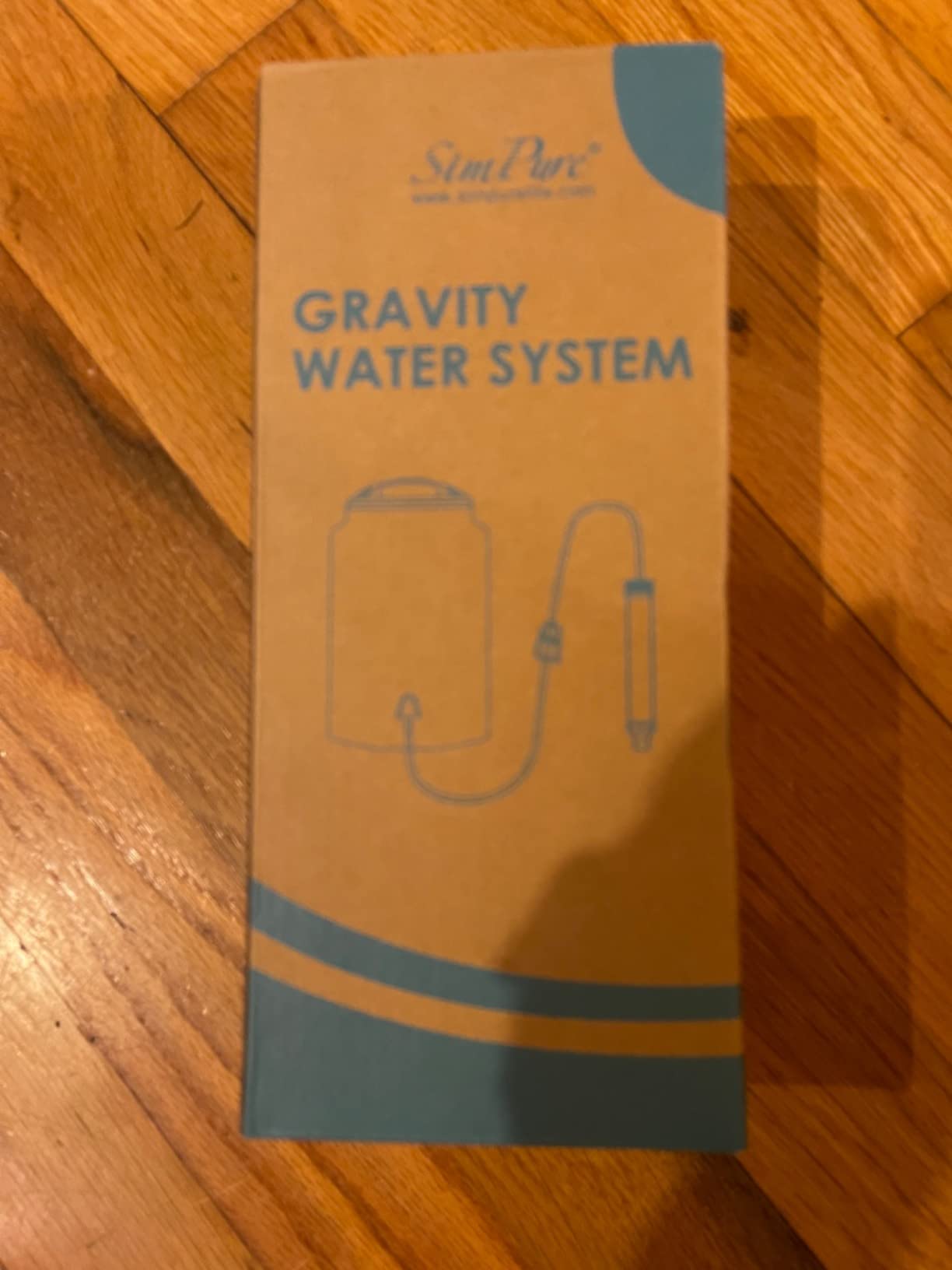
5. SimPure 3L Gravity Filter – The Lightest Kit for a Go-Bag
SimPure Portable Gravity-Fed Water Filter with 3L Bag
0.1 micron hollow fiber
3 liter bag
27 liters per hour
5000 liter rated life
Pros
- Very light complete kit at 3.2 ounces
- 27 liters per hour flow
- Works as a straw or a hanging bag
- 5000 liter rated life
- Tree strap included
Cons
- Bag holds closer to 2.25 litres than the advertised 3
- Slim bag is hard to dry after washing
- Some units arrive cracked or leaking
- One report of a strong plastic taste
The SimPure is the answer when the question is what fits in the bag. At 3.2 ounces including the bag, it is among the lightest complete gravity systems here, and it rolls flat rather than taking up a rigid box of space. The 29.5 inch extension tube lets you hang it under a bag, a branch or a vehicle awning, and it also works as a direct straw for your own bottle.
Filtration is a three stage stack: a 0.1 micron hollow fiber ultrafiltration membrane, a 5 micron coconut shell granular activated carbon layer and a 0.2 micron PP fiber pre-filter. The rated life is 5,000 litres, which the maker frames as about 3.5 years for a family of four.
Why 27 litres per hour is a useful number
That is 0.45 litres per minute, slower than the Waterdrop straw, but the difference matters less than it sounds because the SimPure is designed to run unattended. Hang the bag, hook up the tube and come back to a full clean container an hour later. For drinking and cooking water for two or three people, an hour of passive filtering is easier to live with than a bottleneck at the tap.
The catch tray around the filter input is a small and clever piece of design. It stops unfiltered dirty water running down the outside of the hose and into your clean output, which is a cross-contamination bug that quietly ruins other systems.
Where the advertised 3 litres falls short
Reviewers consistently report the bag holding closer to 2.25 to 2.4 litres than the stated 3. Size your plan around the smaller figure. The narrow shape is also slow to dry after washing, so store it loosely hung rather than rolled in a damp duffel where a retained smell becomes a taste problem.
Who should buy it, and who should not
Buy it for a bug-out bag, a hiking kit or a vehicle emergency box where weight rules. It is a two-person kit that can stretch to three for drinking water only, and the price point leaves room in a budget for tablets and a spare element.
Skip it if you cannot inspect the unit on arrival. A small share of reviewers report a cracked filter body or a leaking raw water bag out of the box, and one reported a strong plastic or chemical taste, so test it on known clean tap water before you depend on it.
6. Katadyn BeFree 10L – High-Volume Filtering for Base Camp
Katadyn BeFree Gravity Water Filter 10L for Base Camp & Large Groups
0.1 micron EZ-Clean
10 liter bag
2 L per minute
Spare filter included
Pros
- 2 litres per minute throughput
- 10 litre reservoir collapses flat when empty
- Cleans by shaking with no tools
- Instructions imprinted on the bag
- 10.7 ounces and a 2 year warranty
Cons
- Bag fills only through the cap end so shallow sources need scooping
- Flexible bag is puncture prone
- One report of a loosening screw ring seal
- Does not filter viruses
The BeFree is built for a camp where people stay for weeks rather than hours, and the 10 litre reservoir is the reason. It is the largest collapsible reservoir here, it holds its shape while full and packs to almost nothing once drained. Katadyn has been making water treatment hardware since 1928, which shows up in details like the cleaning instructions moulded straight into the bag wall.
Throughput is 2 litres per minute from a 0.1 micron EZ-Clean hollow fiber element, and the cleaning method needs no disassembly at all. Fill the bag with clean water, close it, shake it, and backflush. Long-distance users report six weeks of continuous use with no failures, and the shake method visibly restores flow.
Why the fill method is the thing to plan for
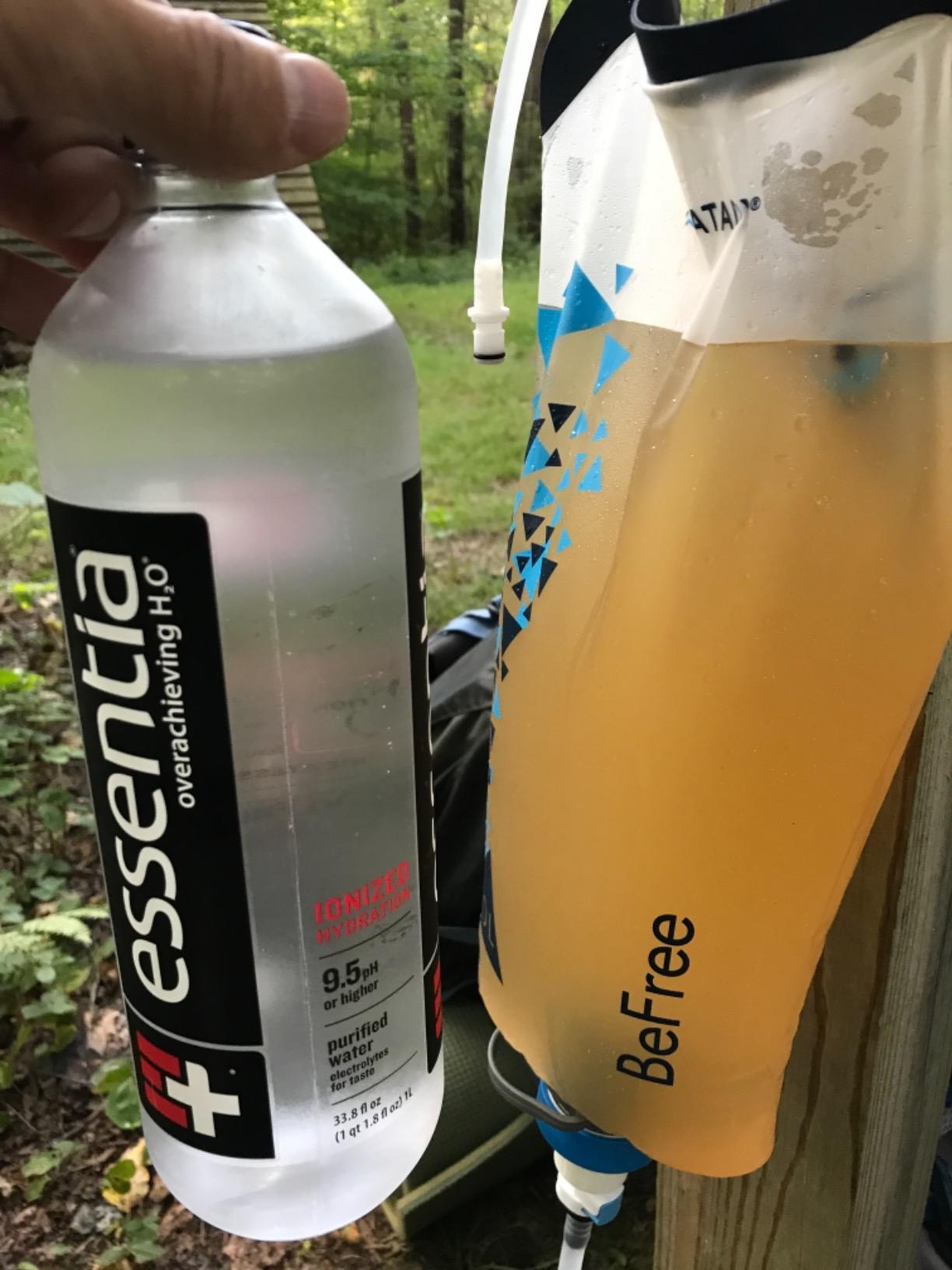
You fill this bag through the cap end, which means drawing from a shallow or slow moving source takes several scoops with a bottle or a cup. If your water is coming from a creek bed rather than a tap or a tank, bring a wide mouth container and expect to make a trip. It is an inconvenience, not a defect, but it is the first thing to think about before a trip.
The quick connect cap also accepts a hydration tube, so you can drink straight from the bag without a second container. For a base camp that saves a lot of washing.
Freeze resilience, TDS range and warranty
The element tolerates sources up to 1,500 ppm TDS, which covers brackish coastal creeks and many tidal sources, and the unit carries a 2 year limited warranty. As with every hollow fiber product here, store it somewhere that does not drop below freezing. A bag that has frozen and thawed can crack a membrane that looked fine a day earlier.
Who should buy it, and who should not
Buy it for a base camp, a fishing or hunting cabin, a long family camping trip, or a shelter situation where several people need litres at a time. It is also the pick I would trust for a two week off-grid stay rather than a three day emergency.
Skip it for a one-person go-bag, where 10 litres of reservoir is dead weight, and skip it if your source is open canal water. The flexible bag is puncture prone in rough terrain and one reviewer reported a screw ring seal loosening after a single use.
7. Practical Survival Dual 6L Bags – Balanced Filtering for an Emergency Kit
Gravity Water Filtration System – 2 High Capacity Lightweight Hanging Bags for Backpacking, Camping, Survival, Hiking, Hunting – Dirty, Clean Water Bags, Water Filter and Cleaning Plunger Included
Dual 6 liter bags
0.1 micron hollow fiber
0.6 gallons per minute
1800 gallon life
Pros
- Rated removal of over 99.99 percent bacteria and parasites
- Dual 6 litre dirty and clean bags
- 1800 gallon life with 10 year spare part availability
- Starts filtering in under 60 seconds
- Under one pound with plunger and carry bag
Cons
- One reviewer had a dirty bag seam rip in the first week
- Tube kinks when the lids are screwed on
- Clean bag connection has no valve or drip tap
- Flow is slower than the Katadyn BeFree
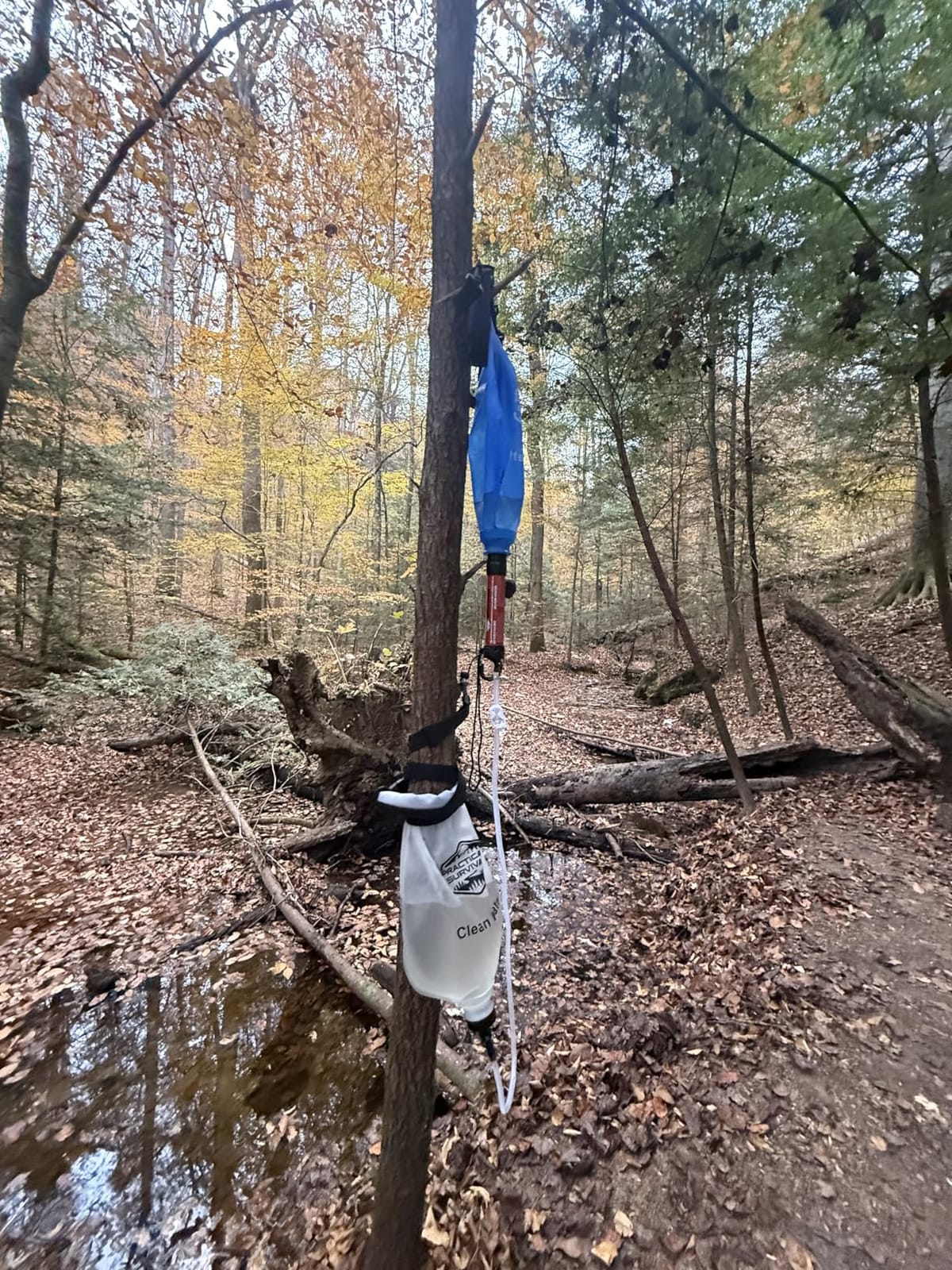
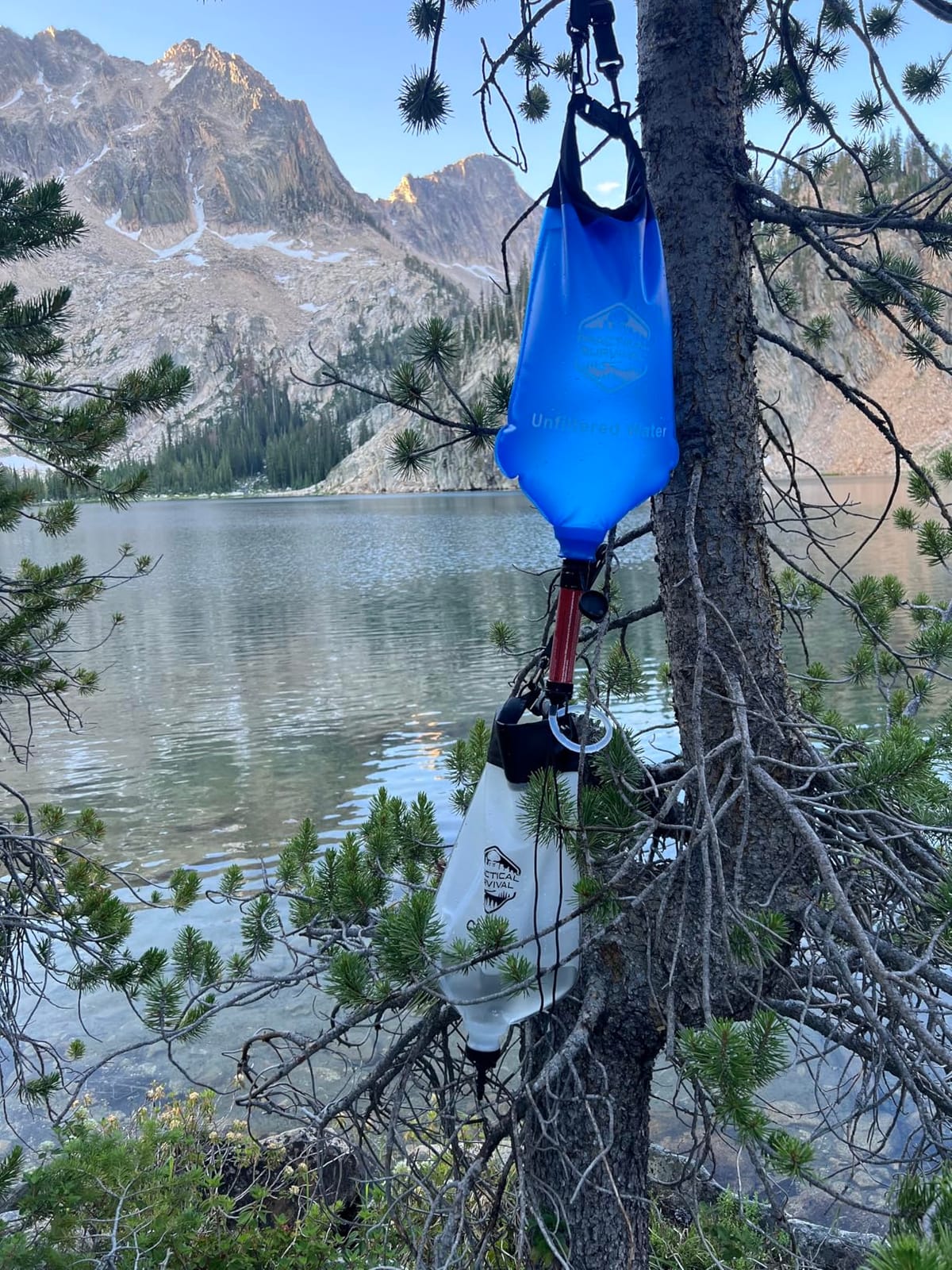
This kit is purpose built for the scenario in the title of this article. You get a 6 litre dirty bag, a 6 litre clean bag, a hollow fiber element, a cleaning plunger, connectors and a carry case, and the whole thing weighs under a pound. Fill the dirty bag, hang it, connect the filter, and filtered water starts collecting in the clean bag within a minute.
It carries the highest average rating of the ten models here, with a majority of five star reviews, and owners buying it explicitly for emergency kits and Scout trips single out how easily the bags clean and dry. The 10 year spare part availability figure is also a real advantage, because your element will still be replaceable a decade from now.
0.6 gallons per minute and what it fills
At 0.6 gallons per minute a full 6 litre bag takes about 10 minutes, which is a real number you can plan a day around. The 1,800 gallon element life works out to roughly 1,800 days for one person drinking 1 gallon a day, or about a year for a family of four. The separation of the dirty and clean sides is the design point that matters most here, because it keeps contaminated hose ends away from the finished water.
Bag seams, kinked tubing and cross-contamination
Keep the dirty and clean hoses physically separate and never let the outflow hose sit in the bucket you are drawing from. Experienced users describe this as the genuinely hard part of any shared setup, and it is the reason a dual bag system beats a single reservoir when other people are involved. Do not use a dirty bag that has been through a freeze, and inspect the seam under stress before a trip, because one reviewer had a seam rip in the first week of a two-week trip.
Who should buy it, and who should not
Buy it if you are assembling a kit for Scouts, a youth group, a neighbourhood block or any situation where more than one person draws from the same source. The bag capacity and the included plunger make it the most complete all in one package here.
Pass on it if you need a drip tap or a shutoff valve, because the clean bag connection is a single hookup with no valve to stop the flow mid pour. Several reviewers ask for exactly that part.
8. LifeStraw Peak Compact 3L – One Filter Used Four Ways
LifeStraw Peak Compact Gravity Water Filter, 3 L, Dark Mountain Gray
3 liter bottle style
Spare filter included
Backwash accessory
228 grams
Pros
- Works as gravity bag squeeze bottle straw or bottle filter
- Re-engineered membrane resists sand and silt
- Backwash accessory restores flow
- Extra replacement filter in the box
- Tall bottle form stands unsupported
Cons
- Does not remove viruses
- A 228 gram full setup is heavy for a pack
- Rated only to 500 ppm TDS
- Does not lower TDS
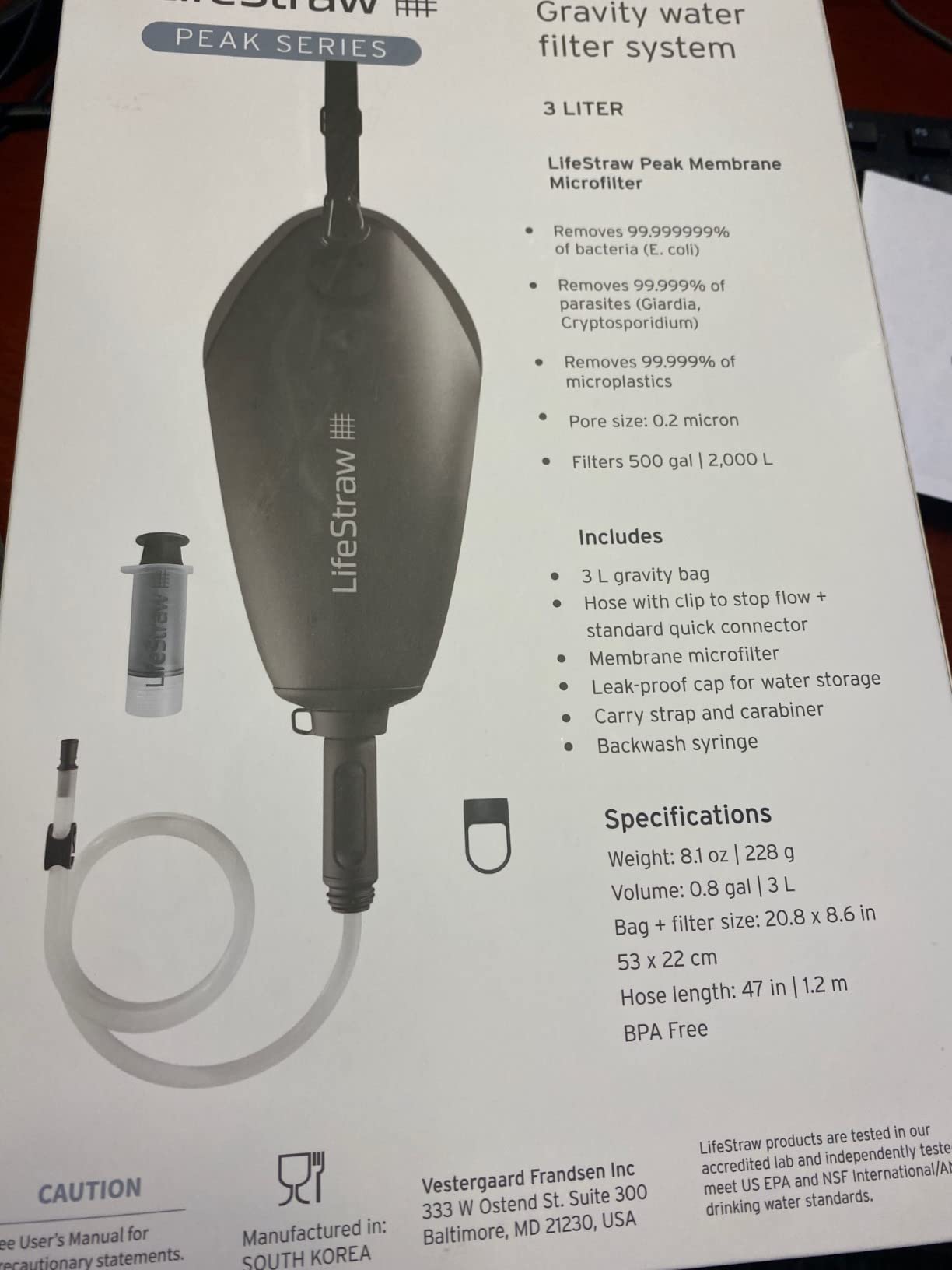
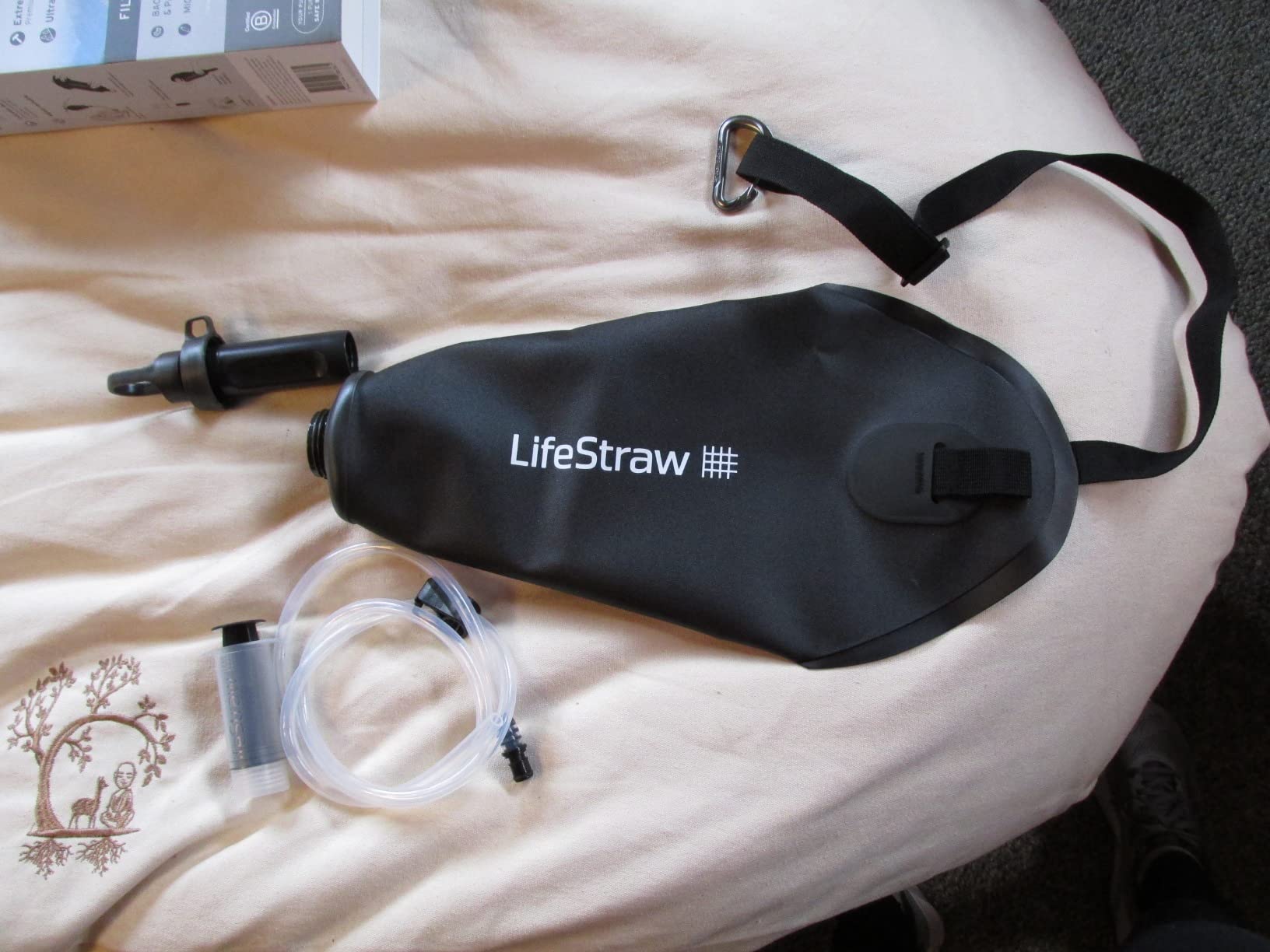
The LifeStraw Peak Compact is the one I recommend when the same person is filtering water in a hotel room, at a campsite and in a car park in the same week. The same unit runs as a gravity system with the 3 litre reservoir, as a large squeeze bottle, as a drinking straw, or attached to any standard bottle. One device, four modes, no adapter hunt.
The manufacturer claims reduction of 99.999999 percent of bacteria including E. coli and Salmonella, 99.999 percent of parasites including Giardia and Cryptosporidium, and 99.999 percent of microplastics, silt and sand. The re-engineered membrane and the included backwash accessory exist specifically because silty water is the usual failure mode for this kind of unit.
Bottle form versus bag form
The 3 litre reservoir is a rigid bottle rather than a collapsible bag, which means it stands on its own on a counter or in a vehicle trunk with no tree, no hook and no clamp. That is a real convenience in an emergency. The cost is weight. At 228 grams the rigid bottle adds heft compared with a collapsible bag, and that extra bulk is a poor fit for a walking go-bag where every gram is carried on foot.
Backflushing and long silty days
The backwash accessory is the item most first time buyers overlook and the one that keeps flow up. If you are filtering a week of creek or river water rather than treated supply, backflush between fills and expect the membrane to hold its rate far longer. Straining through a cloth prefilter first is the other half of that habit.
Who should buy it, and who should not
Buy it for travel, van life, an RV, or anyone who wants one device that covers four situations without reconfiguration. A spare element in the box means you are not one failure away from having no working filter.
Skip it if viruses are the concern, if your water is above 500 ppm TDS, or if you are counting grams. It does not reduce dissolved solids, which matters if you have hard well water and taste is the reason you are filtering.
9. LCF 3 Gallon UV-C System – Countertop Filtering With a UV-C Stage
LCF UV-C Gravity Water Filter System, NSF/ANSI 42 Certified, 3G, 6 Filters
3 gallon upper reservoir
UV-C on USB-C
2 gallons in 16 minutes
Six carbon filters
Pros
- Only unit here with a UV-C stage after filtration
- 3 gallon upper tank serves 4 to 6 people
- Six carbon filters rated to 18000 gallons total
- USB-C module runs off a power bank or solar panel
- Single piece 304 stainless chamber with 2 year warranty
Cons
- UV-C stage needs a USB power source to run
- Leaks reported at the spout
- Does not remove calcium or lime
- Slower and larger than other countertop units
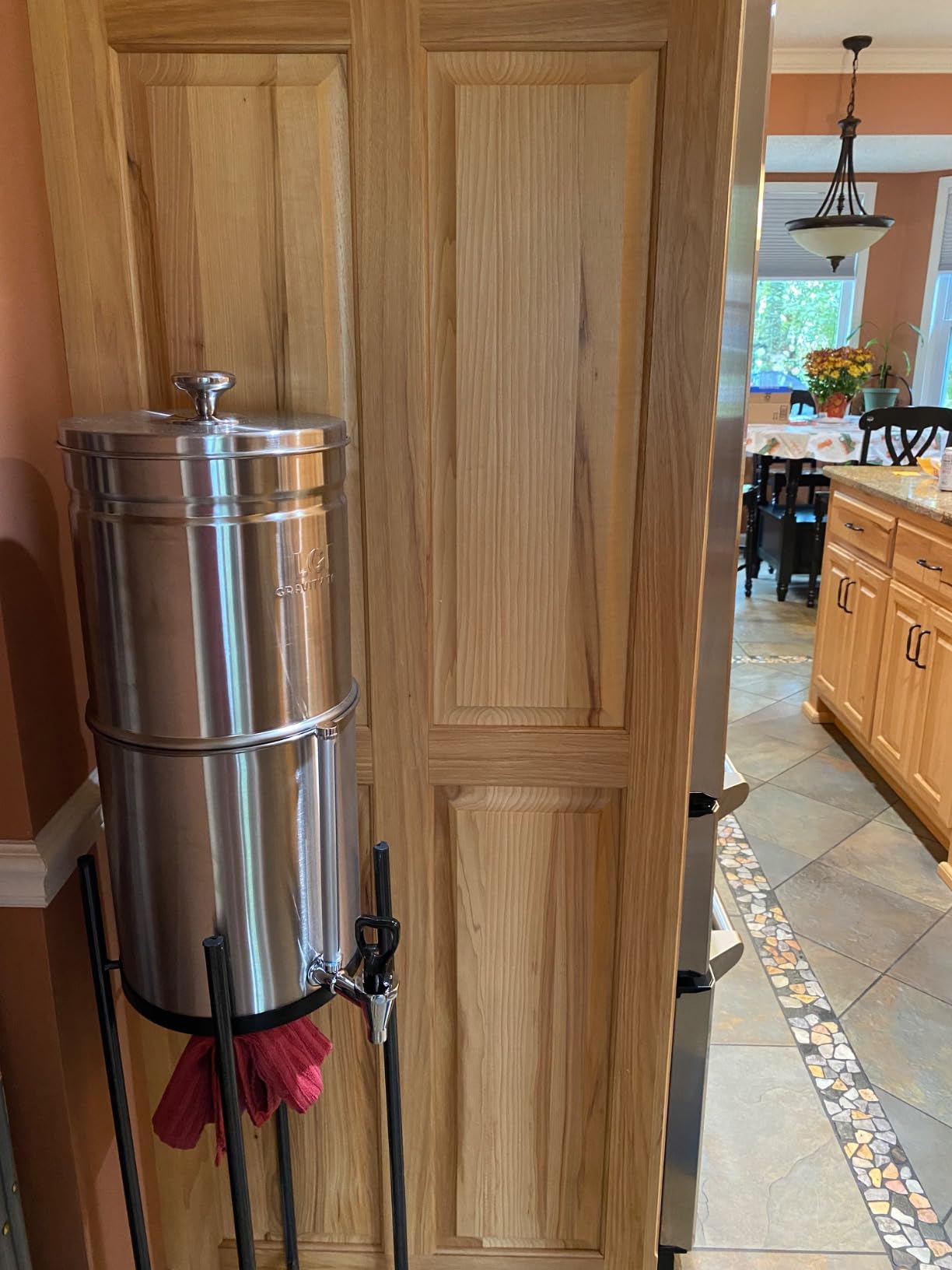
This is the only gravity system in the roundup with a built in UV-C module, and that single fact changes the viral calculus. Filtration handles what a filter handles, then UV-C light treats the stored water continuously, which mainly works against recontamination in a reservoir that sits for days. It matters most for well and cistern owners running several gallons a day, who report good chlorine and odour removal and good value against premium brands.
The chamber is stamped from a single piece of food-grade 304 stainless steel and carries a 2 year warranty, and the 3 gallon upper tank yields 2 gallons of finished drinking water in about 16 minutes. Six coconut shell carbon and silver filters come in the box with a combined rating of up to 18,000 gallons.
How to think about the USB-C UV-C module
The gravity part needs no electricity at all. The UV-C module does, and it takes any USB-C source including a power bank or a small solar panel, which is a fair trade in a grid-down event. If you are running on battery power, switch the module off and you still have a working gravity filter with carbon and silver stages. Plan for a spare power bank in the kit rather than expecting wall power.
The manufacturer claims the carbon and silver media removes up to 99 percent of chlorine and up to 200 contaminants including sand, rust, odour, sediment and heavy metals. Mineral content is not addressed, and one reviewer descales a kettle weekly because of it.
Leaks, mineral taste and the review spread
This is the lowest rated system in the roundup at 4.3 across 128 reviews, with a noticeable share of one star feedback. Spout leaks requiring a bucket underneath come up repeatedly, and setup takes longer than buyers of a countertop unit expect. A small number of reviewers report unpleasant taste or feeling unwell after drinking the output, which on a review base this thin is a signal to test carefully on known water first.
Who should buy it, and who should not
Buy it for a household drawing 3 to 4 gallons a day from a well or a cistern, where the UV stage adds a layer that no other gravity system here provides. At 28.3 inches tall it stands taller than the other countertop models, so check your clearance before ordering.
Pass on it if the water has high mineral content, if you have no way to charge a USB-C battery during an outage, or if you want the least bulky countertop option. The stainless chamber is a good thing, but it is a large object to own in a home that might be evacuated.
10. Glacier Fresh PC04 – Stainless Electrosorption for Chlorine and PFAS
GLACIER FRESH PC04 Gravity-Fed Countertop Water Filtration System
2.25 gal stainless
200 gallons per cartridge
Municipal water only
3 month change interval
Pros
- Electrosorption media targets charged submicron contaminants
- Claimed PFOA and PFOS reduction tested to SGS standards
- Entirely non-electric
- Leak free keg style pour spout
- Berkey style standard cartridge fit
Cons
- Largest footprint here at 14.25 by 13.58 by 16.14 inches
- Manual specifies municipal tap water only
- Cartridge rated only to 200 gallons and a 3 month interval
- No visible water level indicator
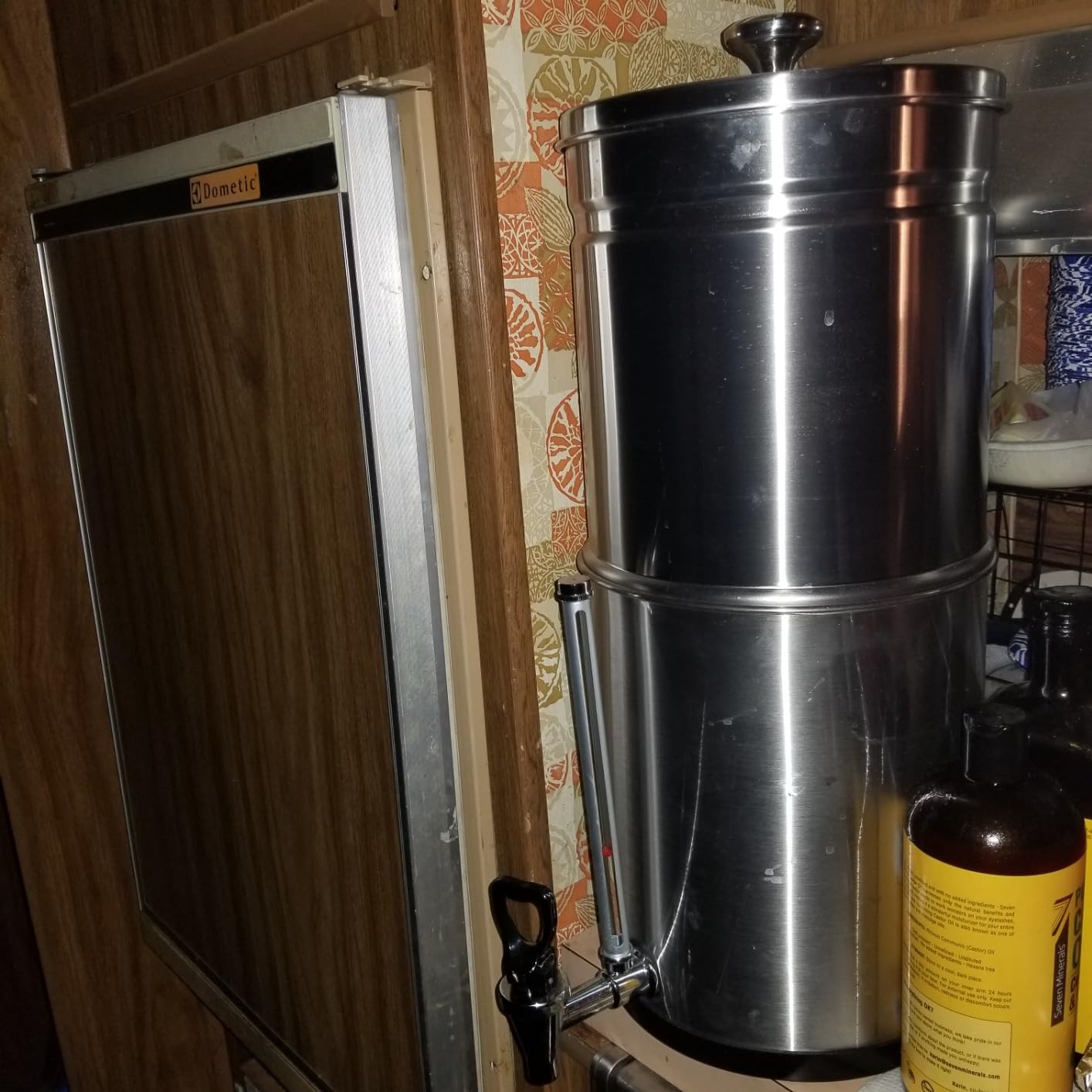
The Glacier Fresh takes a different technical approach from everything else here. Instead of a membrane, it uses Elarisey electrosorption: the mineral crystal structure takes on a positive charge in water between pH 5 and 9, which attracts negatively charged submicron contaminants, pathogens, heavy metals and PFOA and PFOS. It is one of the few countertop gravity systems that makes a claim on PFAS.
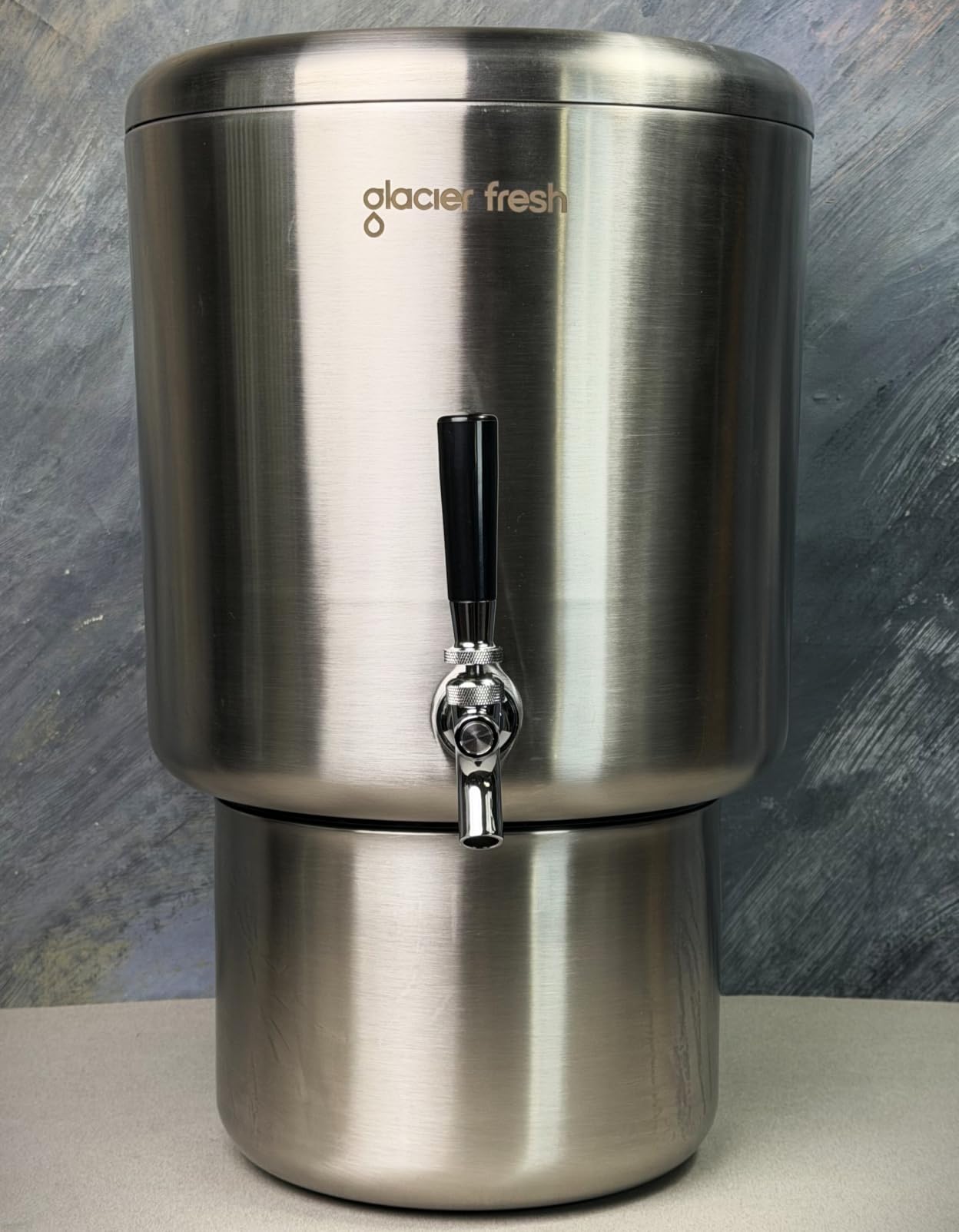
It is also completely non-electric, installs with no tools or plumbing skills, and the water inlet system is designed to minimise leftover water in the chamber so stale water does not sit between uses. The keg style stainless pour spout is genuinely dripless, which is why owners replacing a fridge pitcher like it.
The 200 gallon cartridge and the 3 month clock
Each cartridge delivers up to 200 gallons and the manual says to replace it every 3 months for best results. That is the shortest rated cartridge life of any system in this roundup, and it is the single most important fact about this product. Before hurricane season, put several cartridges aside, because chasing a replacement mid-crisis is the failure mode most emergency gear shares with everything else.
It takes Berkey style standard cartridges, so owners who want a higher performance third party element can upgrade. That is worth knowing, and it is also a point of confusion that experienced users flag: the same element behaves identically, but the performance claim belongs to the original maker system, not to your housing.
Footprint and the municipal water limit
At 14.25 by 13.58 by 16.14 inches this is the widest countertop footprint in the roundup, and several owners could not fit it under a low hanging cabinet. Measure before you order. The manual also specifies municipal tap water, so this is not a well water or untreated surface unit despite the claims its cartridge makes.
Who should buy it, and who should not
Buy it for a household on a municipal supply that is concerned about chlorine, PFAS or general taste, and for anyone replacing a Berkey style setup who wants the standard cartridge fit. It keeps working with no power during outages, snowstorms and floods.
Skip it if you are on a well, if untreated water is your emergency source, or if you are not willing to change a cartridge every 3 months. Under those conditions the cartridge interval becomes the weak point, and one reviewer has already reported an internal cartridge failure releasing black particles into the water.
How to Choose a Gravity Filter You Will Actually Use in a Crisis
What a gravity filter actually removes, and what it does not
A gravity filter removes sediment, sand, silt, rust, chlorine, bad taste and odour, most microplastics, and the bacterial and protozoan contaminants that matter most outdoors: Giardia, Cryptosporidium and E. coli. That is the honest list, and it is a long and useful one.
It does not remove viruses such as norovirus, rotavirus or hepatitis A. It does not lower TDS, does not soften hard water, and does not remove salt from brackish or seawater. Any product that claims virus removal without a purifier stage, a UV stage or an absolute membrane rating is describing something the hardware cannot do.
Size it with the one gallon per person per day rule
A 1.5 gallon bag and 700 ml per minute is roughly 1.1 gallons an hour, so a full bag runs in about 80 minutes while you get on with something else. At that rate a household of four drawing 1 gallon each per day is a four hour job spread across the day, which is exactly what a hanging system is good for. A countertop tank trades that waiting for litres on tap instead.
One gallon, about 3.8 litres, per person per day covers drinking and basic cooking, so multiply by your household and by the number of days you are planning for. For a 72 hour kit, a family of four needs about 12 gallons, which is five full fills of the 2.25 gallon Purewell tank or a few days of unattended bag filtering plus stored water. Get the arithmetic right before you buy, because capacity is the one spec that cannot be improvised later.
Filter versus purifier, and the viral gap
A filter removes contaminants physically. A purifier also inactivates viruses, usually through a tighter membrane, UV light or chemical treatment. Most of the units in this roundup are filters, and the exception is the LCF with its UV-C module.
The field solution practitioners use is a layered kit rather than one device. Filter first for speed, then treat the output with chlorine dioxide tablets or drops for viral coverage. Dwell time matters more than sequence, so read the label and wait the full stated period. Adding tablets to filtered water takes almost no time, and it closes the one gap a gravity filter leaves open.
What NSF/ANSI 42, 53 and 401 actually certify
NSF/ANSI 42 is an aesthetic standard covering chlorine, taste, odour and sediment. It is the weakest claim a manufacturer can make and it is frequently the only claim made. NSF/ANSI 53 is the health contaminant standard, covering cysts, bacteria, lead and similar claims, and it is the number worth paying attention to. NSF/ANSI 401 covers emerging contaminants such as pharmaceuticals, pesticides and microplastics. NSF/ANSI 372 verifies that materials contacting water are lead free, which is not a lead removal claim.
The certifying body matters as well. NSF International and IAPMO R&T are separate accredited bodies with separate listings, and a claim is only as good as the number you can look up. Tested, verified and certified are not synonyms, and manufacturer self testing is none of them. Spend five minutes searching the standard number in the certifying body public database before you buy.
Your first 72 hours, and where the water actually comes from
In most grid-down events, municipal water keeps running for the first hours while pressure drops and pumping stations fail. Tap water then goes advisory, and only after that do people reach for groundwater, streams, standing water in tanks, or water collected from rain. Your filter needs to handle the first source with no fuss and the second source with prefiltering and patience.
Stage one is stored water and tap water, where taste and chlorine are the complaint. Stage two is surface water, where a dirt bag becomes essential and a rolling boil is a genuine backup. Stage three is questionable or flood water, where a filter alone is not enough and chlorine dioxide or boiling is not optional.
Where gravity filters fall short
Slow throughput is the first limitation, and it is the loudest complaint from anyone filtering for more than one or two people. The second is viruses, which no membrane product in this category handles. The third is turbidity, because every hollow fiber element here is damaged by sediment faster than it is damaged by use.
Then there is storage, which almost nobody checks. Filter elements degrade on a calendar whether or not you used them, and there is generally no reliable way to test whether an element is still functional after years in a garage. There is no way around a dated element other than replacing it. Freeze damage, cracked housings, missing hose clamps and cross-contamination between the dirty and clean side round out the physical failure list.
What to do tonight: a six step emergency water kit
First, decide how many people you are covering and multiply by 3.8 litres per person per day for 72 hours. Second, choose one gravity filter sized to that number rather than one sized to a marketing photo. Third, buy two elements so a damaged membrane is not the end of your water.
Fourth, add chlorine dioxide tablets or drops, a dirt bag or a bandana for prefiltering, and two clean containers for storing finished water. Fifth, sanitise your storage containers before you fill them, because a contaminated bucket undoes clean water in one step. Sixth, write the water treatment steps on paper and put them with the kit, because the person using it in three days may not be you.
Frequently Asked Questions
What is the best water filter system for emergencies?
The best system for emergencies is a gravity filter paired with chemical backup. A gravity unit needs no power, no plumbing and no installation, so it still works when everything else stops, and chlorine dioxide tablets close the viral gap that no membrane filter closes on its own. For household volume, the Purewell PW-OB gives 2.25 gallon fills at 4 gallons per hour. For a go-bag, the Waterdrop straw runs at 700 ml per minute and weighs 4.64 ounces.
Do gravity water filters actually work?
Yes, for the contaminants they are built for. A gravity filter removes bacteria including E. coli, protozoa such as Giardia and Cryptosporidium, sediment, sand, rust, chlorine, microplastics and most taste and odour issues, using nothing but the weight of the water above the element. It does not remove viruses, and it does not lower dissolved solids or salt. Pre-filter silty water before it reaches the membrane, or throughput will collapse within a day.
What are the disadvantages of gravity filters?
The main disadvantages are slow throughput, a viral gap, sediment damage, and calendar based element expiry. Output ranges from 0.5 to 2 litres per minute, so filtering for more than two people takes planning. Viruses pass through every membrane unit in this category without a UV or chemical stage. Muddy water clogs hollow fiber elements within hours. And elements degrade on a schedule whether or not they were used, so a kit in a garage needs its dates checked yearly.
How much water does one person need per day in an emergency?
Plan on one gallon, about 3.8 litres, per person per day for drinking and basic cooking. For a 72 hour kit, a family of four needs roughly 12 gallons, which is five full fills of a 2.25 gallon countertop tank. Filters and stored drinking water are different things, so count both. Households with babies, older adults, pets or medical needs should add 25 percent to the figure and include a way to boil water as a backup method.
Do water filters expire if you never use them?
Yes, they expire on a calendar whether or not they were used. Hollow fiber membranes, carbon blocks and gaskets all degrade in storage, and there is generally no reliable test for whether an element is still functional. Manufacturers deal with this two ways, with a time interval such as six months, and with a rated capacity such as 1,320 gallons. Check the date on any kit you already own, and replace the element rather than trying to guess whether it still works.
Which Gravity Water Filter Should You Buy?
If you want one device that covers most emergency situations without much thought, the Waterdrop gravity filter straw is our top pick for 2026. It is the fastest on-demand drinker in the roundup, it backflashes instead of being discarded, and at 4.64 ounces it costs you nothing in pack weight to have it in two kits at once.
If your emergency is a home rather than a road, buy the Purewell PW-OB for kitchen volume or the Membrane Solutions 6L for groups that need documented certification. If the water will be cold, muddy or tidal, the Sawyer SP160 handles the widest range of source types. If the kit must weigh almost nothing, the SimPure 3L is the one to pack.
Whichever you choose, buy a second element, add chlorine dioxide tablets, and run a boil-water drill with your household before you need one. Start tonight with the six step checklist above, and the best gravity water filters for emergency use become the least interesting part of your preparation.