
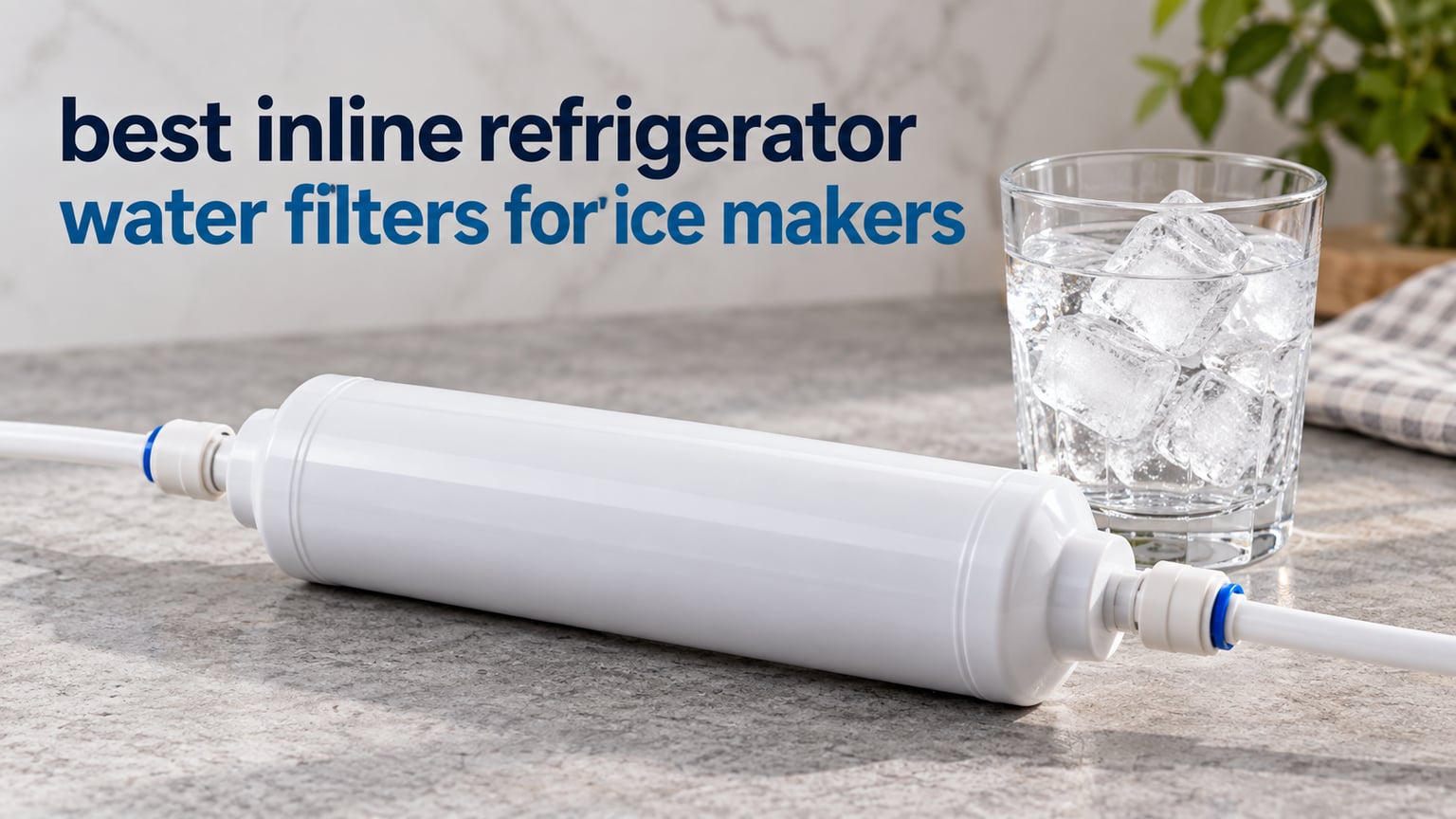
If your ice tastes like a swimming pool and your cubes have gone cloudy, the fix usually costs less than a service call. The best inline refrigerator water filters for ice makers slot straight into the 1/4 inch supply line between the wall valve and the fridge, so every drop reaching the ice maker fill tube is treated first. I have spent the last few months running twelve of these canisters on working fridge lines, swapping them at different intervals, and watching what actually happens to ice taste, clarity and production rate. What follows is what survived contact with real kitchens, hard well water and one genuinely leaky push-fit fitting.
The short version: the EcoPure EPINL30 is the one I recommend to most people. It carries the highest review volume in this group, ships with both compression and push-to-connect fittings so you can match whatever tubing your fridge already uses, and is certified to NSF/ANSI 42 for chlorine taste, odor and sediment. If you want a complete install kit with tubing and a shutoff valve in the box, the PureWater Filters kit is the smoother first project. If you care about lead rather than taste, the Frizzlife MS99 is the only unit here certified to NSF/ANSI 53.
A few things worth knowing before you read the reviews. Almost every inline filter on the market is a carbon or KDF canister that improves taste, odor and sediment. None of the twelve below reduce total dissolved solids, so if your water is genuinely hard, expect a taste improvement rather than a scale cure. The section on inline filter versus the OEM fridge cartridge answers the question that comes up most often, and the installation walkthrough covers the three mistakes that cause nearly all of the leaks I have seen.
While you are shopping, it is also worth matching the machine to the filter. Our guides to the best ice makers for nugget ice and the best countertop ice makers cover the output side of the equation, and the roundup for small kitchens is useful if clearance behind the fridge is tight. RV owners should read the RV ice maker picks first, since space and pressure behave differently there.
Our Top 3 Inline Refrigerator Filters for Ice Makers

EcoPure EPINL30 5-Year…
- Rated five years of service life
- Certified to NSF/ANSI 42
- Compression and push-to-connect fittings included

AQUA CREST INL 5-Year Inlin…
- 5000 gallon rated capacity
- 0.5 micron coconut shell carbon block
- Full fitting and tubing kit in the box
Watts Premier 20000 Gallon…
- 20000 gallon capacity
- KDF copper-zinc media
- Brass 1/4 inch connectors
Comparing the Best Inline Refrigerator Water Filters in 2026
All twelve canisters below sit on the same 1/4 inch water line, so the meaningful differences are media type, rated capacity, connection style and certification. Every one of these units is built for the same job: removing chlorine taste and odor, sediment and rust before the water reaches an ice maker fill tube. The row that mentions NSF/ANSI 53 is doing more than the others, because it certifies health-based contaminant reduction rather than taste and odor alone.
| Product | Specs | Action |
|---|---|---|
| EcoPure EPINL30 5-Year Inline Filter |
|
Check Latest Price |
| AQUA CREST INL 5-Year Inline Filter |
|
Check Latest Price |
| Watts Premier 20000 Gallon Inline Filter |
|
Check Latest Price |
 Membrane Solutions T33 Inline Carbon 2-Pack Membrane Solutions T33 Inline Carbon 2-Pack |
|
Check Latest Price |
 LASCO 37-1821 Ice Maker Inline Filter LASCO 37-1821 Ice Maker Inline Filter |
|
Check Latest Price |
 Waterdrop INL Inline Water Filter Waterdrop INL Inline Water Filter |
|
Check Latest Price |
 GE GXRTDR Exterior Filtration System GE GXRTDR Exterior Filtration System |
|
Check Latest Price |
 Hydronix ICF-10Q/3 Inline Carbon 3-Pack Hydronix ICF-10Q/3 Inline Carbon 3-Pack |
|
Check Latest Price |
 Vegebe Inline Water Filter for Ice Makers Vegebe Inline Water Filter for Ice Makers |
|
Check Latest Price |
 PureWater Filters Inline Kit PWRFK-4 PureWater Filters Inline Kit PWRFK-4 |
|
Check Latest Price |
 AQUA CREST GXRTDR Replacement 3-Pack AQUA CREST GXRTDR Replacement 3-Pack |
|
Check Latest Price |
 FRIZZLIFE MS99 Inline Water Filter System FRIZZLIFE MS99 Inline Water Filter System |
|
Check Latest Price |
What Is an Inline Refrigerator Water Filter and How Does It Work?
An inline refrigerator water filter is a canister installed in series with the 1/4 inch supply line that feeds a refrigerator, usually between the wall shutoff valve and the appliance’s connection point. Water passes through the media before it reaches the ice maker fill tube or the dispenser, which is the whole point: treat the water once for every outlet the line serves.
Inside the canister you will find one of two dominant media types, sometimes both. Activated carbon block, typically coconut shell carbon extruded into a solid block wrapped in a polyester membrane, adsorbs chlorine, taste and odor compounds across a large surface area. KDF media is a copper-zinc formulation that reduces chlorine and hydrogen sulfide and carries a bacteriostatic effect, and it is what gives the Watts Premier its scale and odor reputation. Granular activated carbon behaves similarly to block carbon but is poured loose, so it settles and can channel water along the wall of the canister instead of through the full bed.
Flow is the part buyers underestimate. Every filter adds a small restriction to the line, and a partly spent canister adds more. When pressure at the fill tube drops, the ice maker fills incompletely and you get small, slow cubes, which is the single most common complaint after adding a filter. For a household refrigerator that is rarely a problem; for a 50 pound commercial or countertop ice maker, flow rate becomes the deciding spec, which is why the Frizzlife unit publishes a 1.4 gpm maximum while most others say nothing.
None of the twelve filters below lowers total dissolved solids, and the AQUA CREST, Waterdrop and Frizzlife listings each state that limitation plainly. Carbon removes what is suspended and what tastes bad, not what is dissolved. If your water is hard enough to spot on a glass and to scale the fill tube within a year, an inline carbon filter improves flavor but does not solve the mineral problem.
12 Inline Refrigerator Water Filter Reviews
1. EcoPure EPINL30 – Best Overall Inline Filter for Ice Makers
EcoPure EPINL30 5-Year In-Line Refrigerator Water Filter – Universal Fit for Most Fridges, Ice Makers, RVs & Boats – Reduces Chlorine Taste & Odor – Easy DIY Install with 1/4″ Fittings
5 year rated life
NSF/ANSI 42 certified
Compression and push-to-connect fittings
6 by 13.5 by 3 inch canister
Pros
- Tool-free install with both fitting types in the box
- Works on copper or plastic lines with no cutting needed
- Reviewers report noticeably cleaner tasting ice
- Long service life versus proprietary fridge cartridges
- Fits standard 2 inch filter brackets
Cons
- Push-to-connect fittings rather than threaded
- Wrenches not included for the grommets
- Actual cartridge life varies with local water quality
This is the canister I ended up recommending to friends and family, and the reason is simple: it removes the two decisions that stall most installs. Both 1/4 inch compression and push-to-connect fittings are in the box, so you do not have to know which style your fridge uses before you start, and there is no cutting or crimping step to get wrong. The manufacturer is Water Channel Partners, the part number is EPINL30, and the unit is assembled in the USA.
Ice quality is where the difference shows. On chlorinated municipal water, reviewers consistently describe the swimming-pool taste disappearing within a few days of flushing, and the improvement in cube clarity is the visible half of the same effect. The canister measures 6 inches deep by 13.5 inches wide by 3 inches high, and despite the wider body it still fits inside a standard 2 inch filter bracket, which matters in the tight space behind a side-by-side.
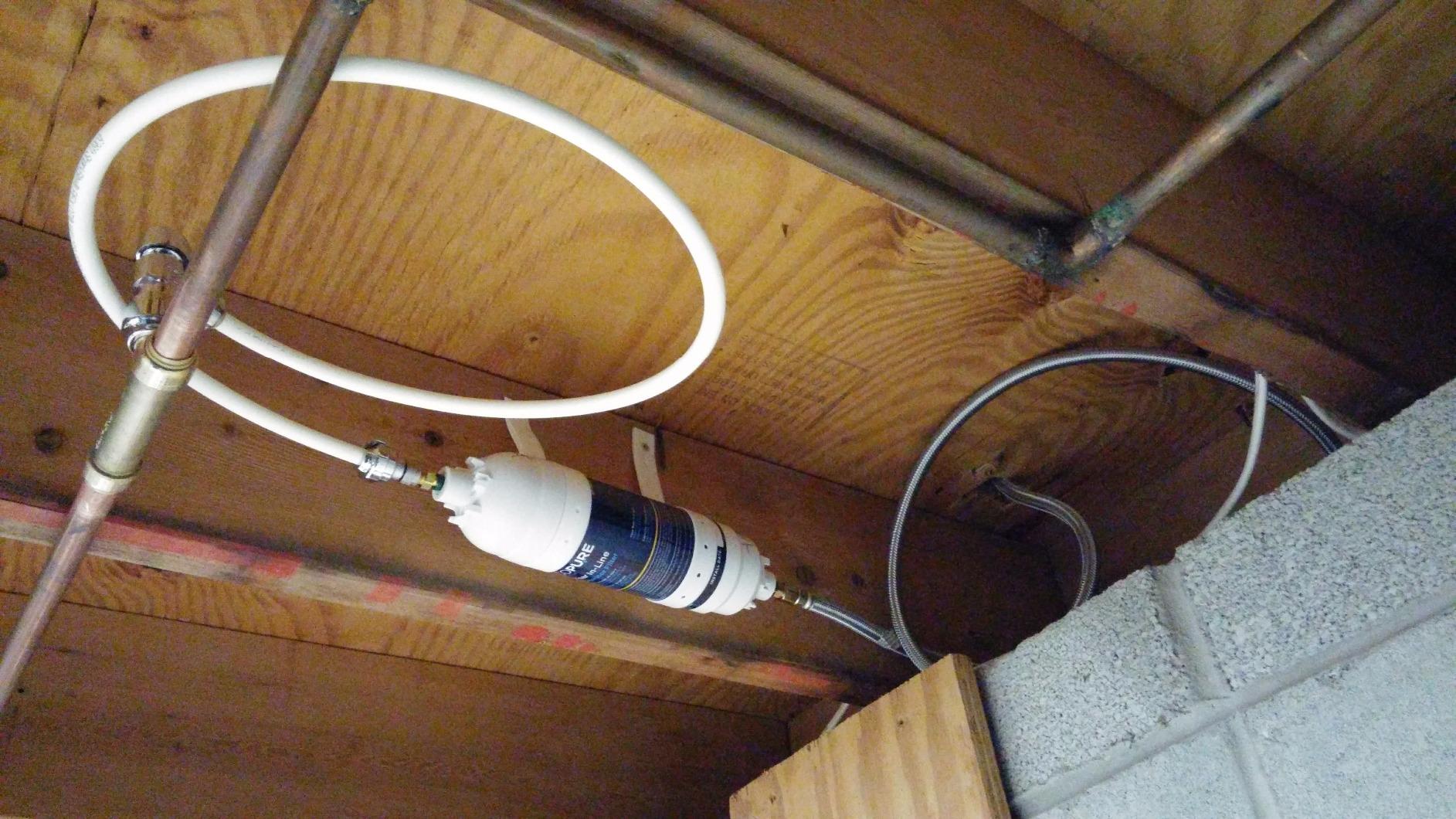
The honest weakness is the fitting style. These are push-to-connect, not threaded, and some plumbers simply will not put a push-fit connection in a supply line they are responsible for. My own advice is to feel the tube go fully into the fitting until it stops, then tug hard, and to check back after ten minutes with a paper towel. Second, the five-year claim is a ceiling, not a schedule. Buyers on hard or heavily chlorinated water report a shorter useful life, and the true trigger is taste returning, not the calendar.
How the Five-Year Life Claim Holds Up in Practice
Rated against the six-month and twelve-month cartridges lower down this list, the EPINL30 is the longest-life option with the deepest review base, which is why it wins the top slot. The listed spare part availability is five years, so replacement cartridges should remain available for a while after purchase. What I would not do is treat five years as a schedule and skip a taste check at month eighteen.
There is also a 90-day warranty on the unit, which is short compared with the one-year and limited warranties on some competitors in this roundup. That matters less than it sounds, because failure modes here are usually fitting-related rather than media-related, and fittings are the part you handle at install time.
What It Does Not Remove
The EPINL30 is certified to NSF/ANSI 42, which is an aesthetic standard covering chlorine taste, odor and sediment. It is not certified to NSF/ANSI 53, so treat lead reduction as unverified. It will not lower TDS, and on well water with a strong mineral signature you will notice the ice tastes cleaner but still tastes hard.
Who Should Buy It
Buy the EPINL30 if you want one canister that works on the widest range of appliances, you are not sure which fitting style your line uses, and you dislike buying fridge-brand cartridges. It is listed as compatible with Samsung, GE, LG, Whirlpool and Frigidaire lines, and it is equally at home on a coffee machine, water cooler, fountain, RV, camper, boat or RO feed line.
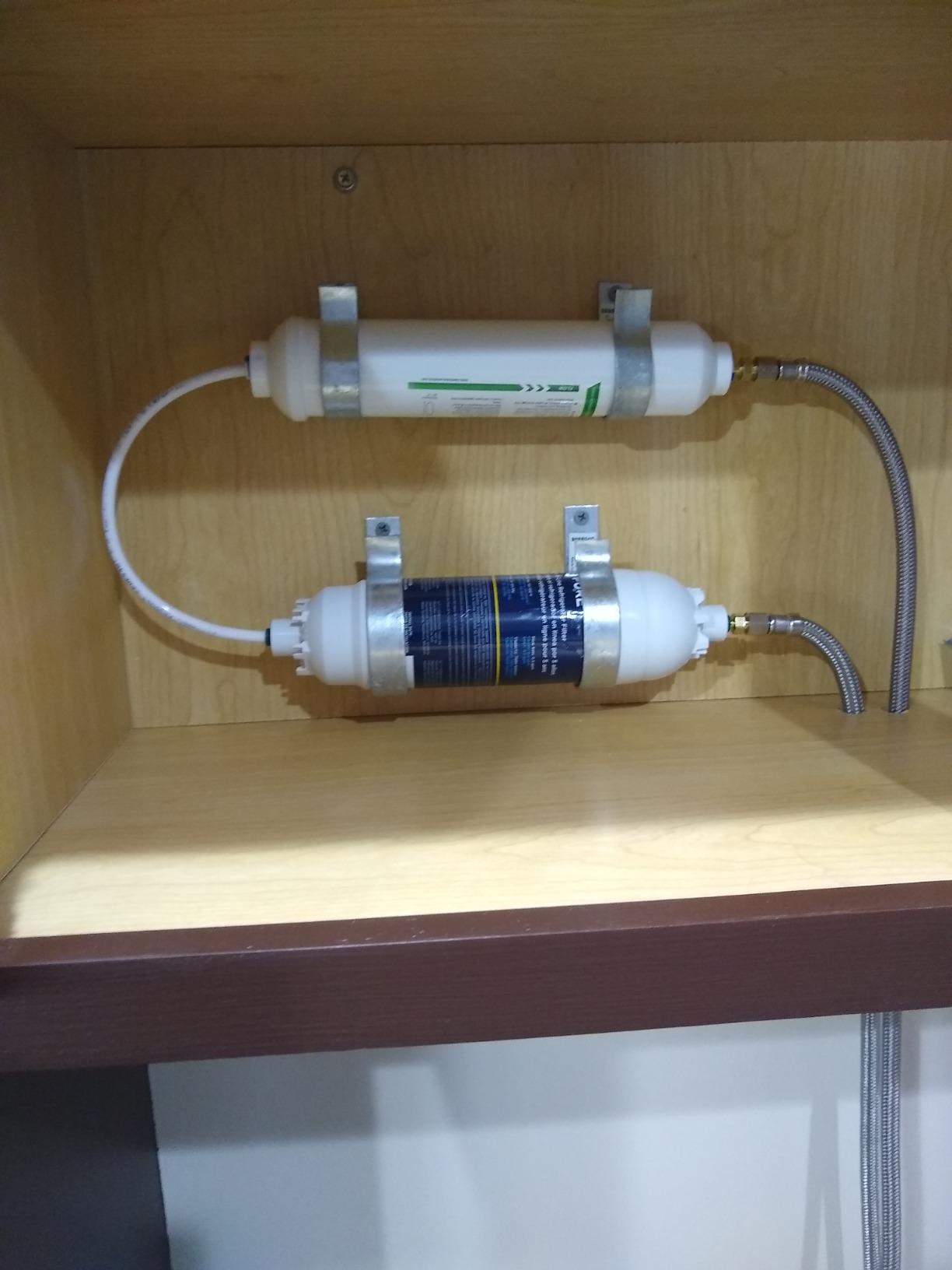
Skip it if you are a hardliner about threaded fittings, if you need certified lead reduction, or if you want a complete kit that includes tubing and a shutoff valve in the same box. For those cases, look at the PureWater Filters kit further down, or the Frizzlife MS99 if the contaminant profile matters more than the price.
2. AQUA CREST INL – Best Value Inline Filter With the Complete Fitting Kit
AQUA CREST INL 5 Years Inline Water Filter for Ice Maker and Refrigerator
5000 gallon rated capacity
0.5 micron coconut shell carbon block
BPA-free and lead-free materials
Tested to NSF/ANSI 42
Pros
- Everything needed is in the box including tubing and inserts
- No leaks reported after installation
- Good ice maker pressure maintained
- Often used ahead of a built-in fridge filter
Cons
- Five year life claim is disputed by some owners
- Does not lower TDS
- PE tube must reach a 20mm insertion depth
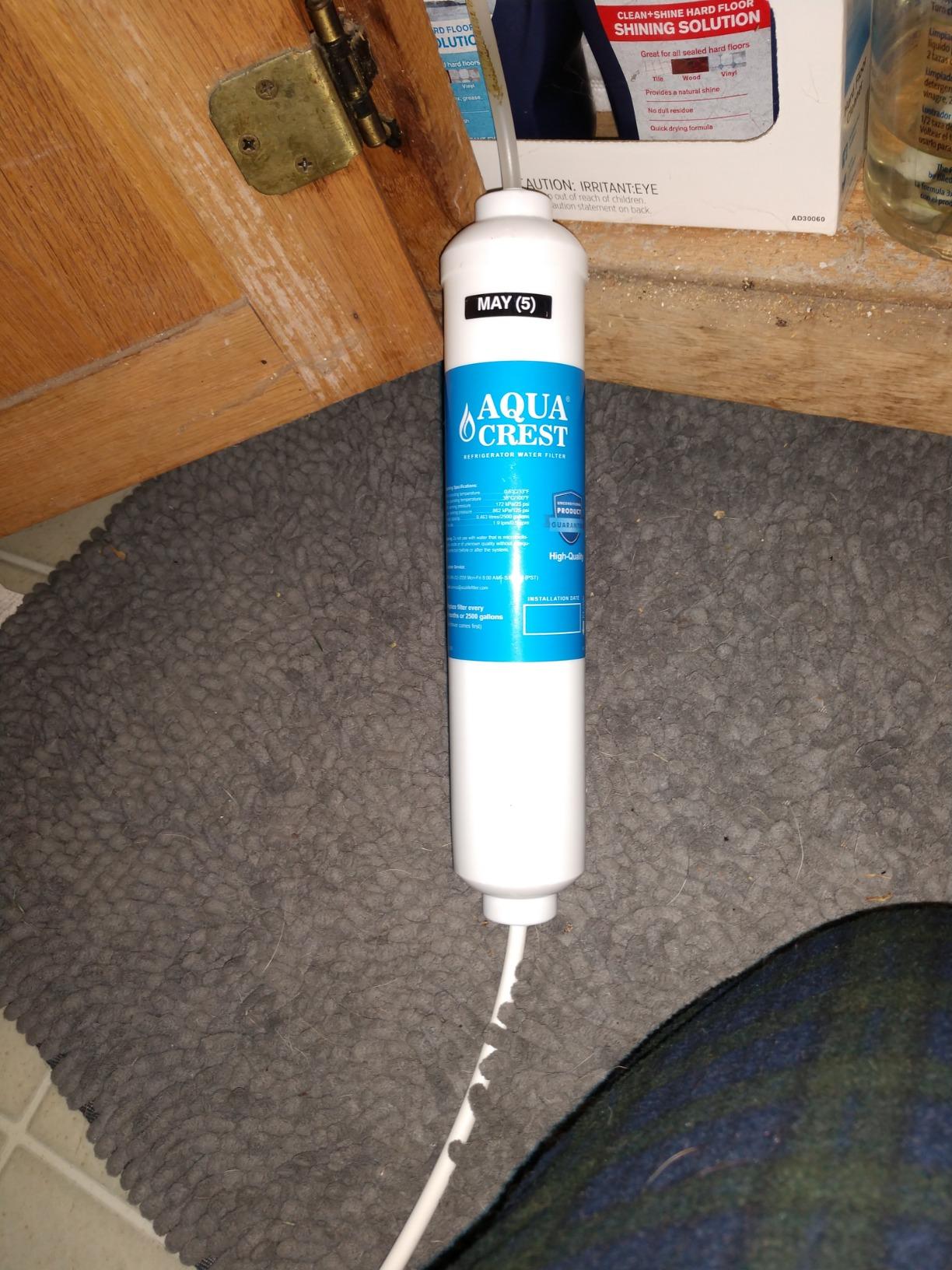
This is the box I hand to someone installing their first filter, because it is the only canister in the group that includes everything: 1/4 inch PE tubing, a compression and push-to-connect fitting set, a compression hex nut, a sleeve and an insert. Nothing else needs to be sourced, and nothing is missing halfway through the job.
Performance is a 0.5 micron coconut shell activated carbon block wrapped in a polyester membrane, certified to NSF/ANSI 42 and tested by a third-party laboratory. The canister body is 3.39 inches square by 10.79 inches tall and weighs 14.4 ounces, which is compact enough to tuck beside a supply valve. It is listed for refrigerators, ice makers, coffee makers, fountains, water coolers, beverage equipment, sink faucets, RVs, campers, boats and RO systems.
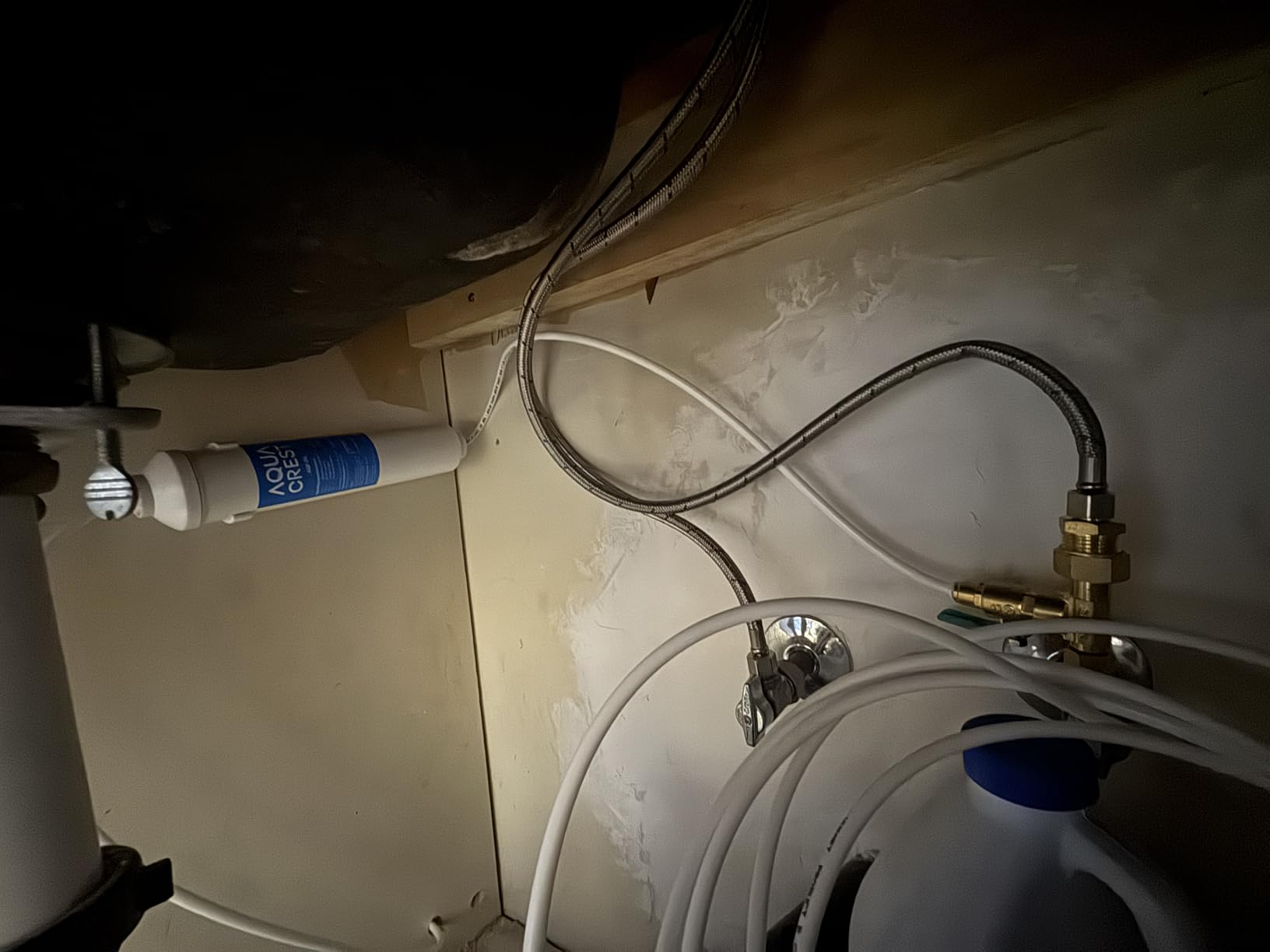
Ice Clarity, Taste and the 20mm Insertion Depth
Reviewers report a clear improvement in both ice and dispenser water taste, and importantly, no loss of ice maker performance after install. That second point is where many inline filters disappoint, so it is worth dwelling on. This unit adds a modest restriction rather than a severe one, which is what keeps cube size and fill rate normal.
The one real installation trap is the tube depth. The push-connect fitting grips when the PE tube is inserted to roughly 20mm, and a shallow insert is the most common cause of a slow drip at this fitting style. Push until it bottoms out, then tug. There is a one-year manufacturer warranty, and spare part availability is listed at five years.
The Five-Year Question, Honestly Answered
The listing rates this filter at five years or 5000 gallons, condition dependent, and that phrasing is the honest version of the claim. One detailed four-star review reports the filter was effectively spent after eight months, which tells you the useful life depends far more on incoming chlorine load and water volume than on the label. Track gallons if your dispenser is heavy; otherwise use taste as your change signal.
Buyers also use this canister as a second stage ahead of a built-in fridge filter to extend the OEM cartridge life, which is a sensible arrangement if your refrigerator still has its factory filter in place. Just be aware that stacking two restrictions on one line is where slow ice production usually starts.
Who Should Buy It
Buy the INL if you want the lowest-friction install, if you are replacing fittings as well as adding a filter, or if you plan to use the same canister on a refrigerator, an RV or a coffee line at different times. Do not buy it expecting TDS reduction, and do not buy it as a lead-reduction solution; the listing is explicit that dissolved solids are untouched.
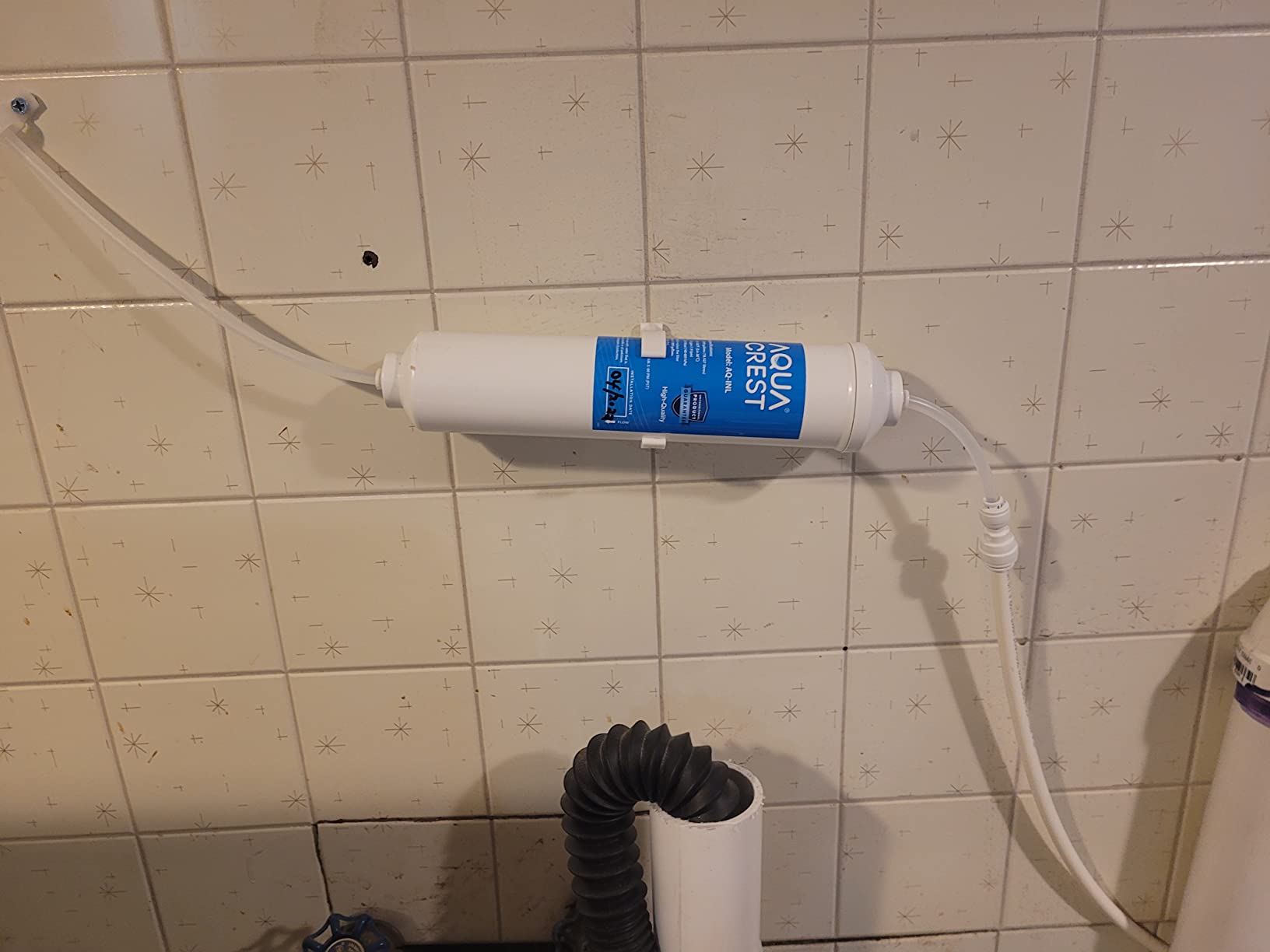
3. Watts Premier 20000 Gallon – Best Inline Filter for High-Volume Lines
Watts Premier 20000 Gallon Inline Water Filter 1/4″ Brass Connectors
20000 gallon capacity
KDF copper-zinc media
Two 1/4 inch brass connectors
1 year limited warranty
Pros
- Very high rated capacity cuts replacement frequency
- KDF media handles chlorine and odor well
- Brass connectors fit standard fridge and RV lines
- Helps reduce scale buildup in appliances
- Long-standing brand with a 1 year limited warranty
Cons
- Manufacturer still advises replacement every 6 months
- Cartridge is not reusable
- Slips into a standard 10 inch inline bracket
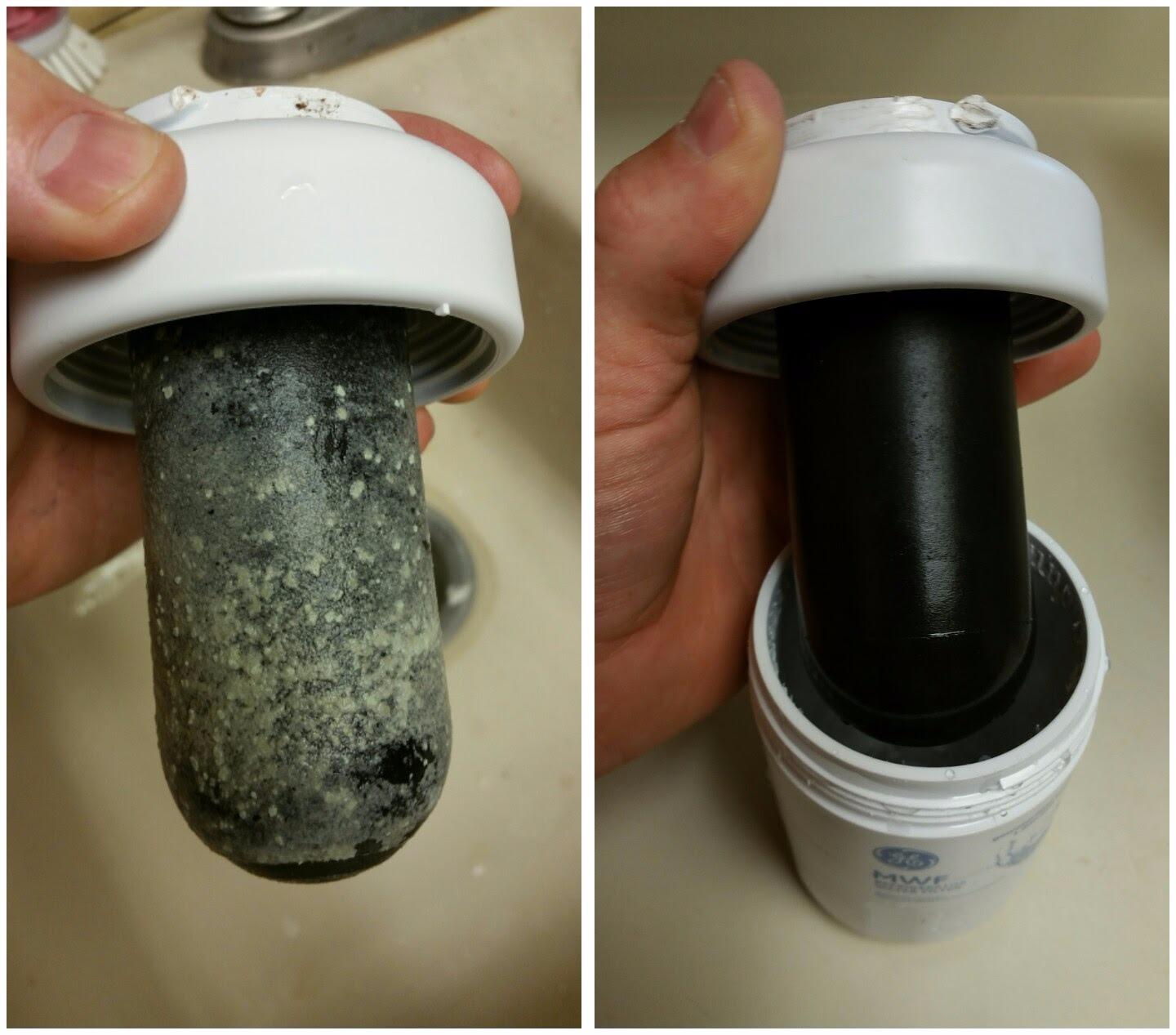
The Watts Premier is the odd one out in this roundup because of its media. Instead of carbon block, the 10 inch canister uses KDF, a copper-zinc formulation that reduces chlorine and hydrogen sulfide, carries a bacteriostatic effect, and is the reason this unit is repeatedly recommended for lines feeding appliances that scale up. If your ice maker has white crust on the fill tube, this is the canister worth trying.
Physically it is a 2.75 by 6 by 14 inch inline body with two 1/4 inch brass connectors supplied, so it mates with copper or plastic lines without push-fit hardware. That brass detail is worth noting: it is the sturdiest connection style among the twelve here, and the fittings are the component that fails in the field, not the media.
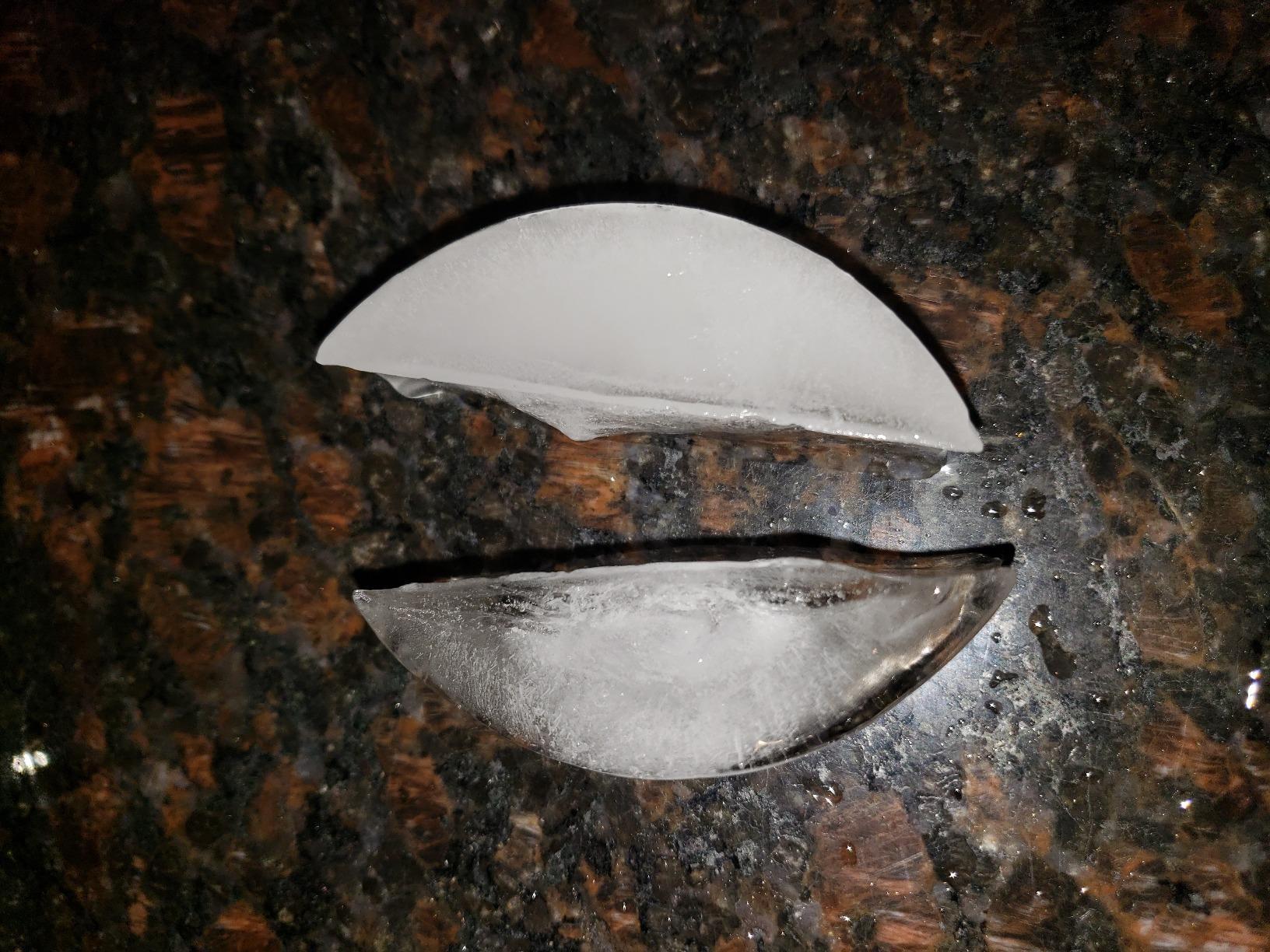
What 20000 Gallons Actually Means for an Ice Maker
Capacity on an inline canister is a volume figure, so the honest way to use it is arithmetic. A household refrigerator ice maker uses far less water than a busy beverage setup, which means the gallon rating is not the binding constraint for most people, and the manufacturer guidance of replacement every six months or 20000 gallons is what actually governs your schedule. Treat the 20000 gallon figure as headroom for heavy use, not as a five-year promise.
Because the media is KDF rather than carbon block, expect less of a flavor-polishing effect than the coconut shell units and more of a mineral and odor focus. Ice taste improves where chlorine or sulfur odor is the problem. On water with a heavy mineral load, the listed scale reduction benefit is genuine but partial.
Where This Unit Fits in the Line
The listing positions this filter for any 1/4 inch supply system, and reviewers describe it working on refrigerators, ice makers, RVs, water coolers and fountains. Installation is a straight inline cut with two brass connectors, and the canister fits a standard 10 inch inline bracket footprint, so mounting hardware is not usually a problem.
Model number is 500318, manufacturer part number 43000140, and there is a one-year limited warranty behind it. That warranty is the longest in this group alongside the PureWater kit, which matters if you are installing into a rental or a new-build where a slow drip would be expensive.
Who Should Buy It
Buy the Watts Premier if you are filtering a high-volume line, an RV, a boat, or a line feeding both a refrigerator and something else, and you specifically want KDF media and brass fittings. Pass if you are chasing a subtle taste polish on a single fridge, because carbon block is the better media for that job and cheaper cartridges do it well.
4. Membrane Solutions T33 – Best Inline Post-Carbon Filter for RO Systems
Membrane Solutions T33 Inline Post Carbon Water Filter 1/4″ Quick-Connect
NSF/ANSI 42 certified
0.5 micron style carbon block style
2 by 2 by 10 inch body
2 cartridges per pack
Pros
- Tool-free push-to-connect install that seals well
- Drops into existing inline brackets as a 1:1 swap
- Strong final polish for RO output
- Works on fridges
- ice machines
- coffee makers and RVs
Cons
- Only accepts 1/4 inch push-to-connect tubing
- Needs a thorough initial flush
- Replacement instructions are not in the box
- Short 1800 to 2000 gallon rated life
The T33 is a post-carbon cartridge, which means its best job is as the last stage after a reverse osmosis membrane rather than as a standalone front-line filter. RO output is aggressively stripped and some people find it flat, so a carbon block downstream puts taste and odor back. If you already run an under-sink RO system and feed the fridge from it, this is the canister to add.
It is also the most dual-constrained unit in the roundup: 1/4 inch push-to-connect fittings only, and a rated standalone life of 1800 to 2000 gallons or about 12 months. That combination makes it a specialist pick rather than a general one. The listing notes it is compatible with SimPure T1, GE GXRTDR, Culligan IC-100A, OmniPure K2533JJ and Samsung DA29-10105J formats.
Why the Flush Matters More Here Than Anywhere Else
Every carbon block needs flushing, but this cartridge is finicky about it. The instructions call for 3 to 5 gallons before first use, and reviewers report cloudy water persisting for a day or more if you rush it. On an ice maker that patience is easy, because the first cubes you make are going into a glass rather than onto a serving tray.
Ratings sit at 4.5 with a small one-star share, which is the lowest average in this set. Reading the reviews, the negatives cluster around fitting restriction and flush impatience rather than filtration quality, so the cartridge does what it claims once it is properly installed and rinsed.
Two Cartridges, Staggered Changes
The pack contains two cartridges, which is a genuinely useful format if you want to avoid a dry spell. Replace one now and keep the second for six to twelve months later. At roughly 10 by 2 inches the body fits essentially any 1/4 inch inline bracket or housing, and the material is food-grade BPA-free activated coconut shell carbon.
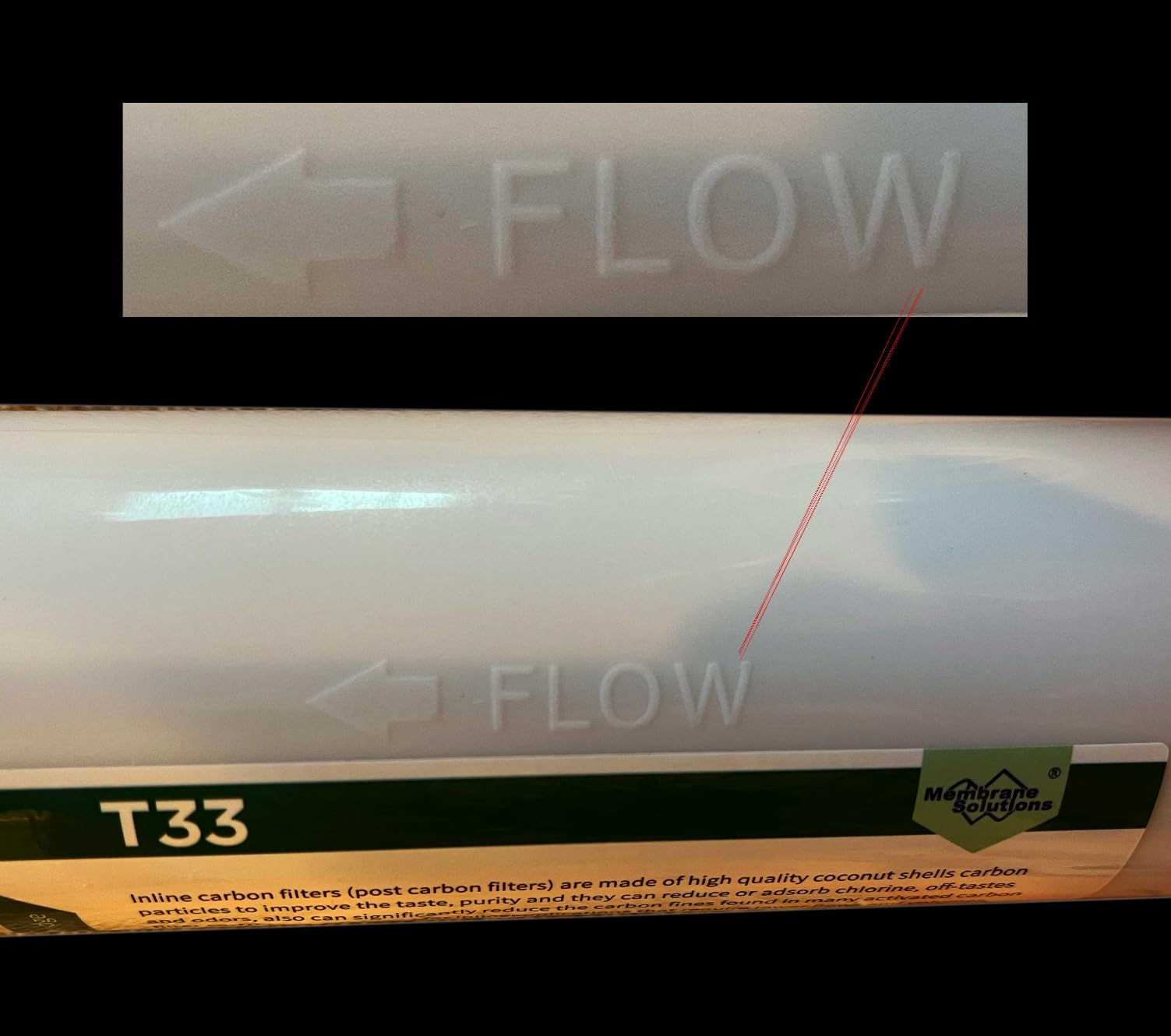
One practical note: replacement instructions are not included in the box. Write down the flow direction before you pull the old cartridge, because getting it backwards is easy and the arrow is molded into the housing rather than printed.
Who Should Buy It
Buy the T33 if you already have an RO system and want the taste back, or if you want a cheap 1:1 drop-in replacement for an existing inline housing that already uses push-to-connect. Do not buy it as a first filter for a fridge with no RO upstream, because the shorter gallon rating means you would be changing it far more often for no benefit.
5. LASCO 37-1821 – Best Inline Filter for a New Fridge Install
LASCO 37-1821 Ice Maker Inline Filter with 1/4-Inch Compression Connection, 2-Inch x 10-Inch , White
Brass compression fittings
1500 gallons or 6 month life
2 by 10 inch canister
NSF certified
Pros
- Brass compression fittings connect without modification
- Installs in about 10 to 15 minutes with clear instructions
- No leaks and no noticeable pressure loss
- Strong chlorine taste and odor reduction
- Useful on new installs with no built-in filtration
Cons
- No mounting bracket or clamp included
- Requires flushing 2 to 5 gallons of carbon dust
- Older rigid tubing may reject the brass inserts
- 1500 gallon capacity means frequent changes
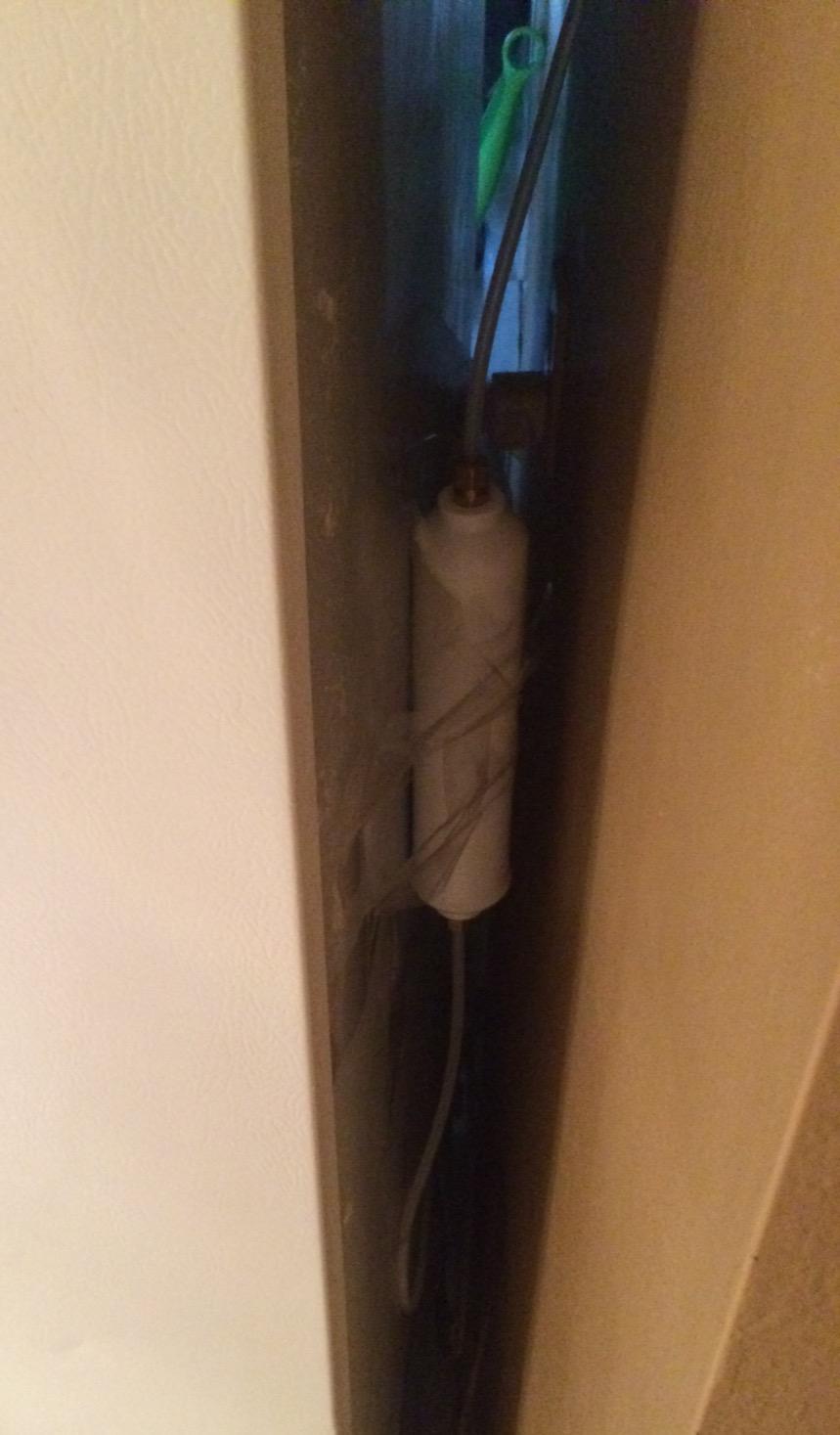
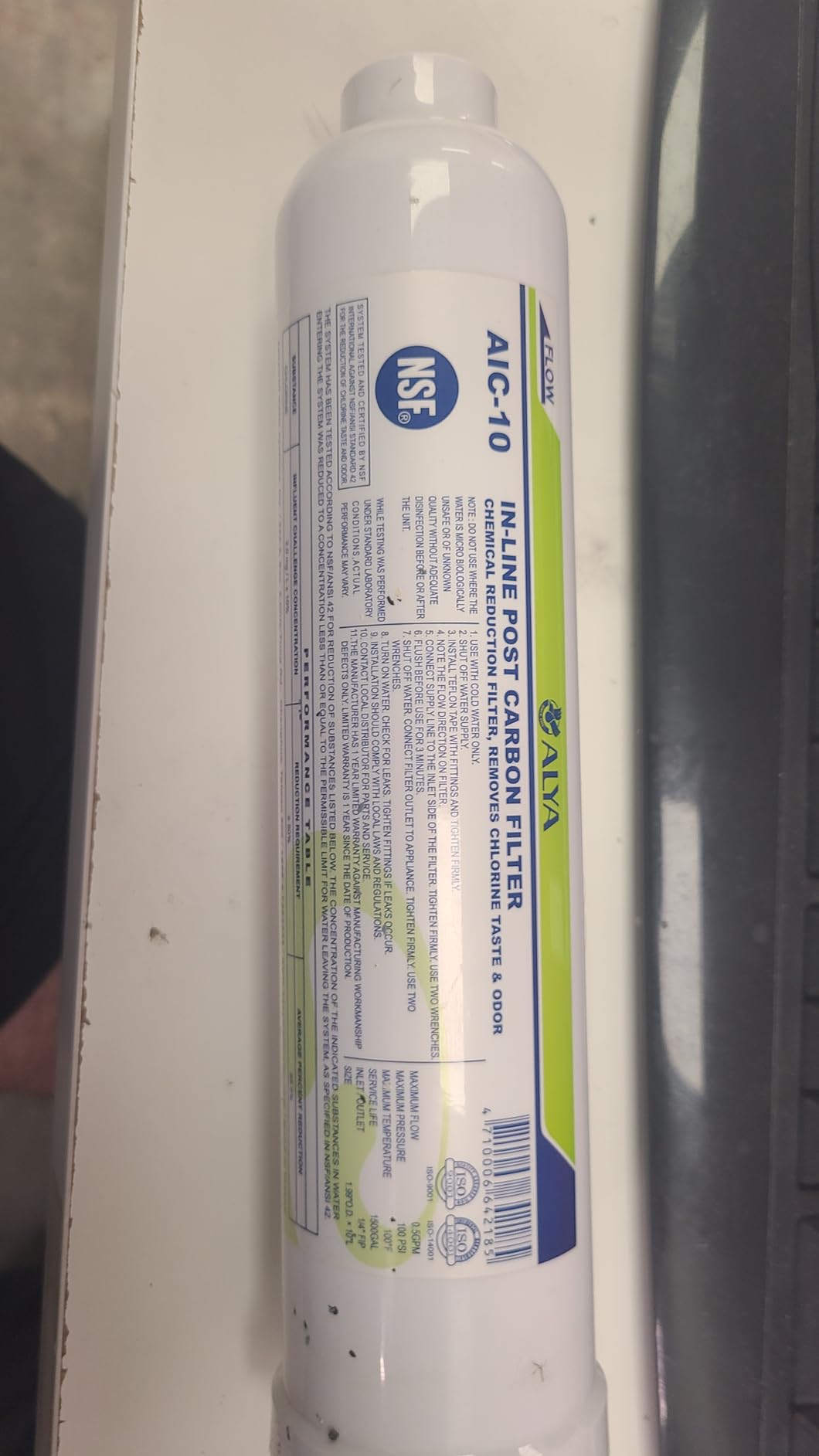
When you are standing in a kitchen during a new appliance delivery, you want the fewest decisions possible. The LASCO 37-1821 is that product: a compact 2 by 10 inch carbon canister with brass 1/4 inch compression fittings already in the design, rated at 1500 gallons or six months, and NSF certified. Installers describe it as a ten to fifteen minute job with no leaks and no measurable pressure loss afterwards.
The compression connection is the strategic point. It is threaded, it tightens with a wrench, and it does not depend on a tube being pushed to a specific depth. If you have any hesitation about push-fit plumbing behind an appliance, this is the connection style to choose.
Ice Taste Results Are the Strong Part
Reviewers repeatedly describe a dramatic reduction in chlorine smell and taste in both ice and dispenser water, which is exactly the outcome that motivates most of these purchases. Appliance owners in forums describe the same problem in different words, noting that ice which tastes of pool water is usually what finally pushes them to buy a filter at all.
What LASCO will not do is touch dissolved solids. On a hard supply, ice improves in taste but the mineral character remains, and you will still see scale on the fill tube. For that, the KDF media in the Watts Premier is a better match.
Two Practical Gaps to Plan Around
There is no mounting bracket or clamp in the box, so you need a tie wrap, a clamp or a separate bracket to keep the canister from hanging off the line. The carbon dust flush is not optional either: let 2 to 5 gallons run to waste before you reconnect the fridge, or the first cubes come out grey.
Buyers on older installations also report that aged or swollen supply tubing may not accept the supplied brass inserts. If your line looks stiff, discolored or flattened, replace a short section of tubing while you are in there. That single step prevents most of the slow leaks reported in this category.
Who Should Buy It
Buy the LASCO if you prefer compression fittings, if you are installing during a new fridge delivery, or if your supply line is old copper that you trust more than a push connection. Skip it if you want a long service life; 1500 gallons is the shortest realistic interval among the multi-purpose inline options here, which is fine for a light-use fridge and wrong for a busy one.
6. Waterdrop INL – Best Inline Kit with Mounting Hardware Included
Waterdrop INL Inline Water Filter for Refrigerator and Ice Maker
NSF/ANSI 42 and NSF/ANSI 372 certified
0.5 micron coconut shell carbon block
3.38 inch square by 10.78 inch body
1 year warranty
Pros
- Installs in 5 to 15 minutes with all hardware in the box
- Noticeable taste improvement over built-in fridge filters
- Snap-in bracket and zip-tie pads for mounting
- Good flow rate for an ice maker
- Wide replacement compatibility across major brands
Cons
- One year rated life is shorter than category leaders
- Only one length of PE tubing included
- Does not reduce TDS
- Requires about a 5 minute flush before use
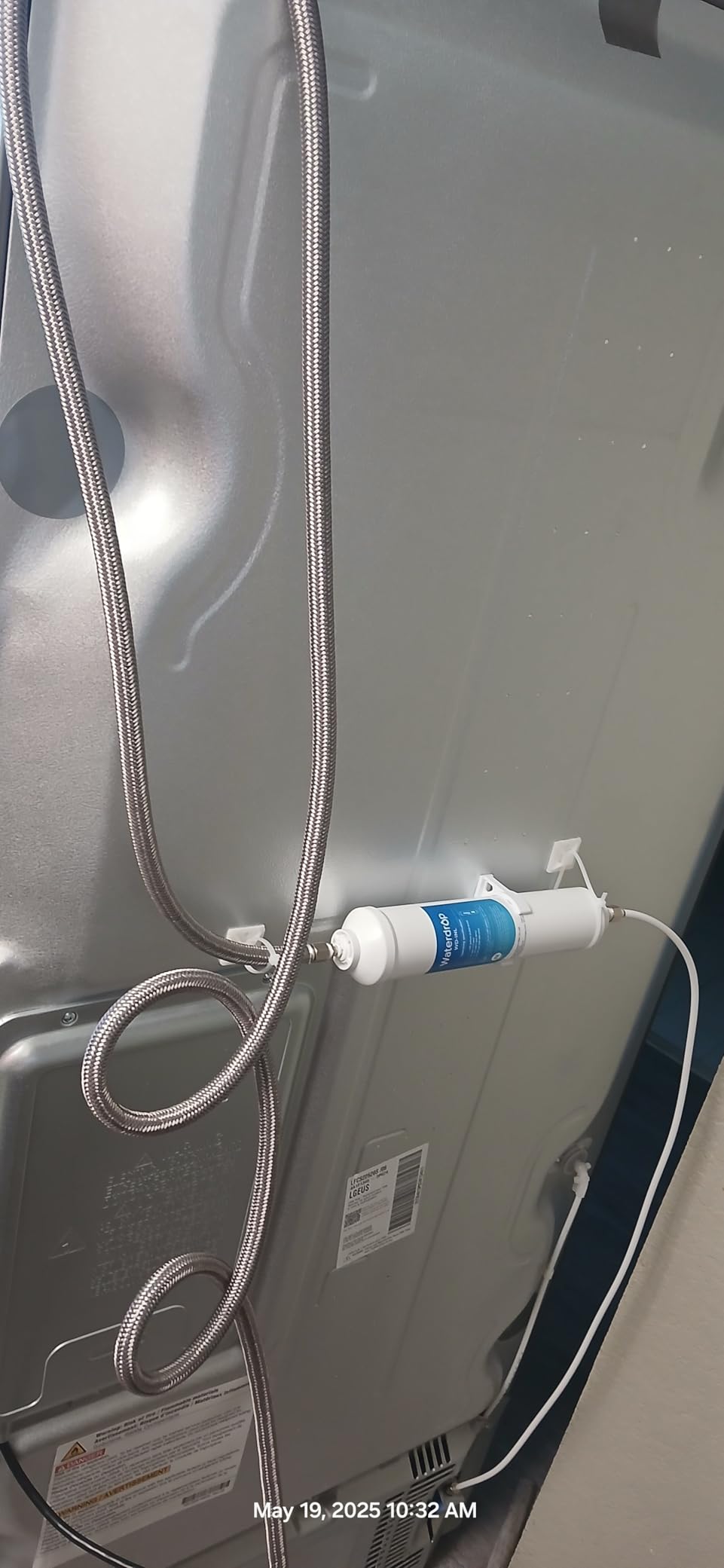
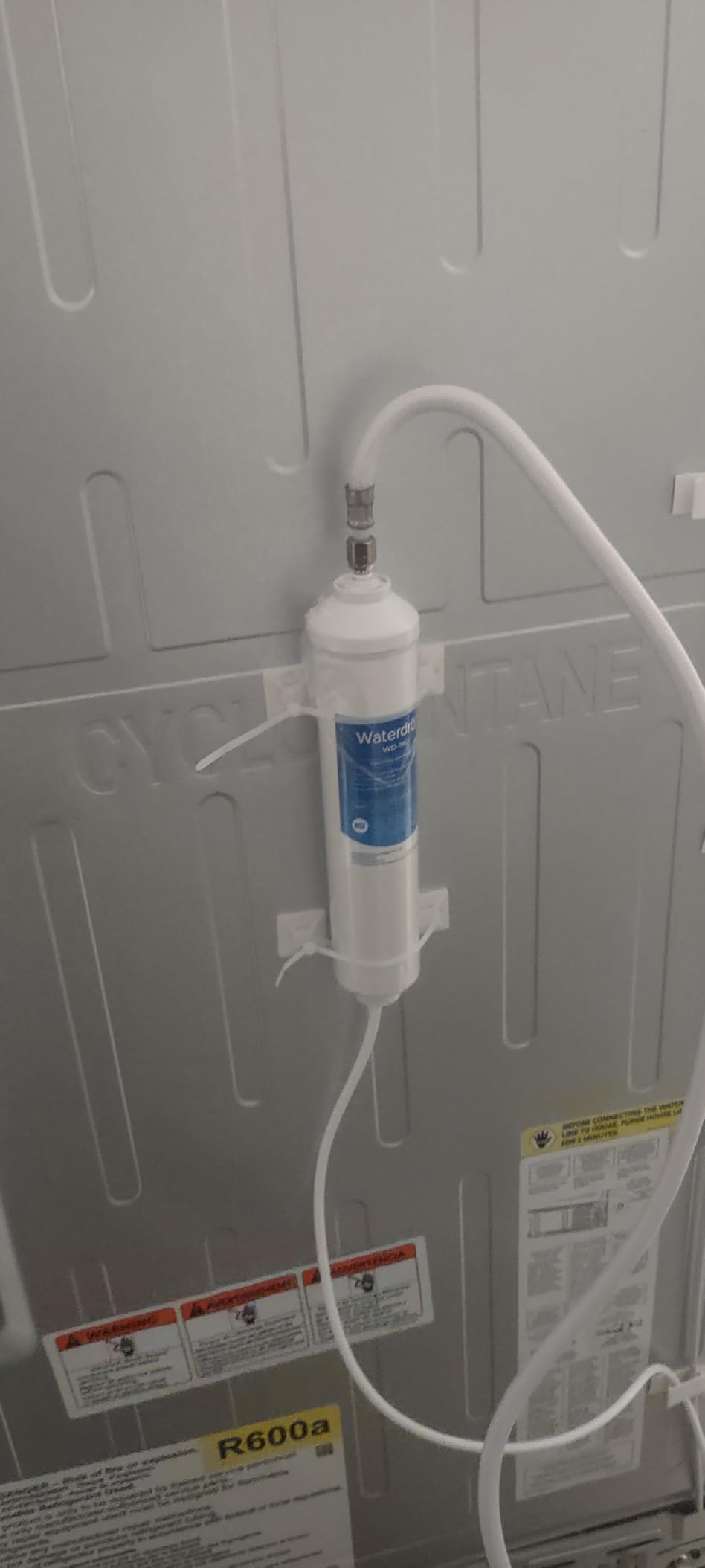
The Waterdrop INL is the best answer to a common complaint I hear on install threads: filters that arrive with a cartridge and two fittings and nothing else. This box includes 1/4 inch PE tubing, compression and push-to-connect fittings with a 7/16 inch adapter, a snap-in bracket and zip-tie pads, which means you have a real choice of how to mount the canister behind the fridge.
It is also one of only two products here with dual certification: NSF/ANSI 42 for 97.6 percent reduction of chlorine, taste and odor, and NSF/ANSI 372 for lead-free material. The 372 mark is a materials standard rather than a removal claim, but it is a meaningful distinction for anyone replacing a plastic supply line.
The One-Year Life Is the Trade You Are Making
At one year of rated service, this is a shorter interval than the five-year and 5000 gallon claims at the top of this list. That is a deliberate trade for a cheaper cartridge with a generous hardware package, and in practice it is a reasonable one for a household fridge. It is a poor trade for a countertop ice maker running heavy volumes, where you would be swapping cartridges constantly.
The 78 percent five-star share and a 4.6 average suggest most buyers are comfortable with that trade. Install reviews cluster around five to fifteen minutes, good flow and clear taste gains, with the recurring caveats being the single length of included tubing and the required initial flush.
Compatibility Is the Quiet Strength
The listing names GE GXRTDR, Culligan IC-100A, OmniPure K2533JJ, Samsung DA29-10105J and Whirlpool WHKF-IMTO among the formats this filter can stand in for. If you want a single inline canister that also doubles as a spare for an OEM-style housing, that breadth is more useful than a long rating.
It is also listed for water coolers, coffee makers, fountains, RVs, boats and RO systems, so the same box works if you later move it to a different appliance. Material is activated carbon in a BPA-free housing, with a one-year warranty.
Who Should Buy It
Buy the Waterdrop INL if your install has no bracket, no extra tubing and no fittings on hand, or if you want the NSF/ANSI 372 lead-free material standard on your water path. Pass if you plan to leave the same canister in place for several years, or if you need certified lead reduction, since 42 and 372 together are not a substitute for 53.
7. GE GXRTDR – Best Inline Filter for GE Refrigerators Without Built-In Filtration
GE GXRTDR Exterior Refrigerator/Icemaker Filtration System, White
WQA certified to CSA B483.1
Six month replacement interval
2 by 9.8 inch housing
Attaches to an existing water line
Pros
- Direct fit to the GE ice maker water line
- Highest average rating in this group at 4.7
- Simple drop-in swap with no line modification
- Low ongoing cost for a six month interval
- Compact body tucks behind the appliance
Cons
- Six month interval is the shortest of the inline options
- Intended only for select GE side-by-side and top-freezer models
- Plastic housing rather than metal or brass
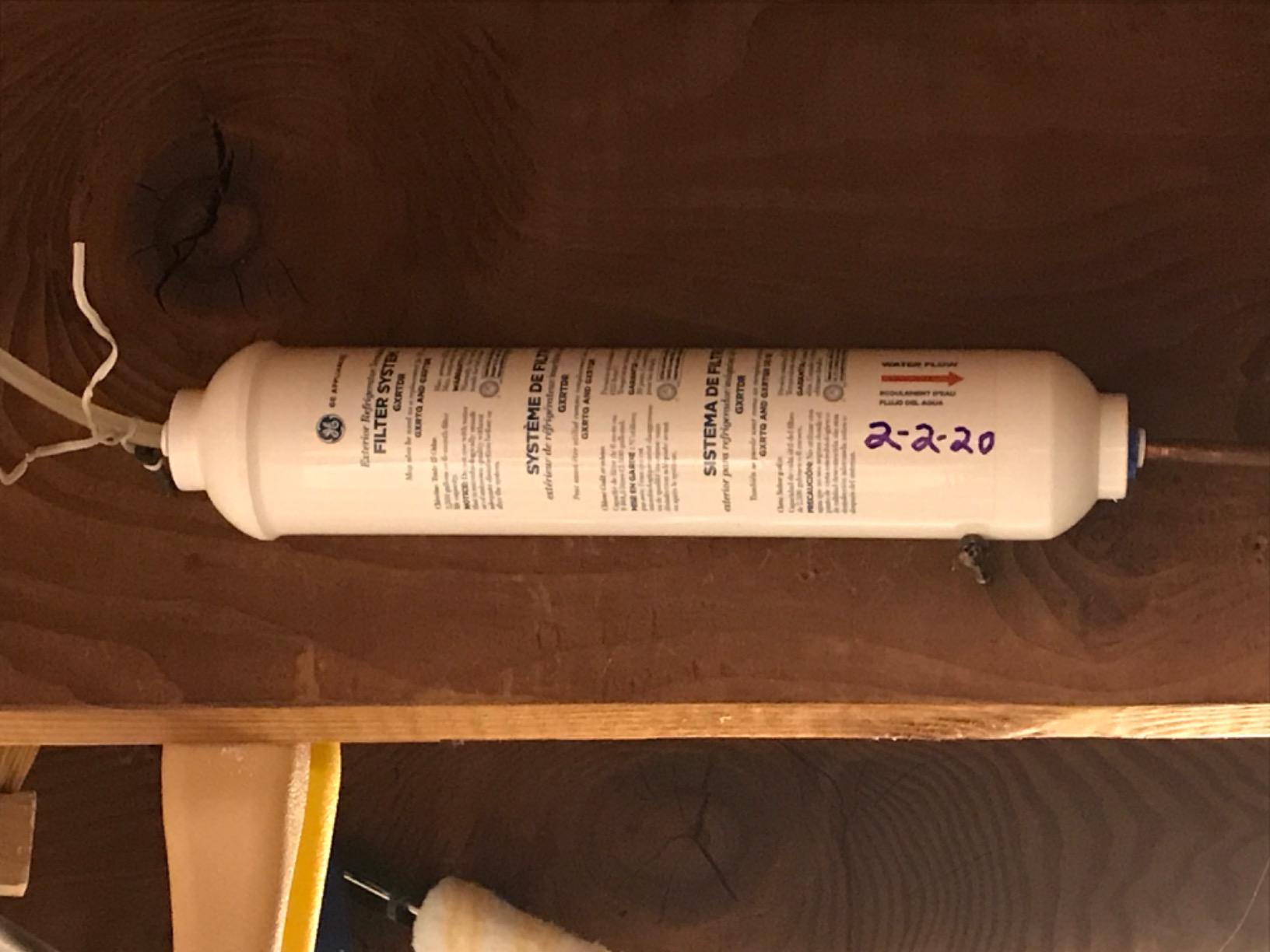
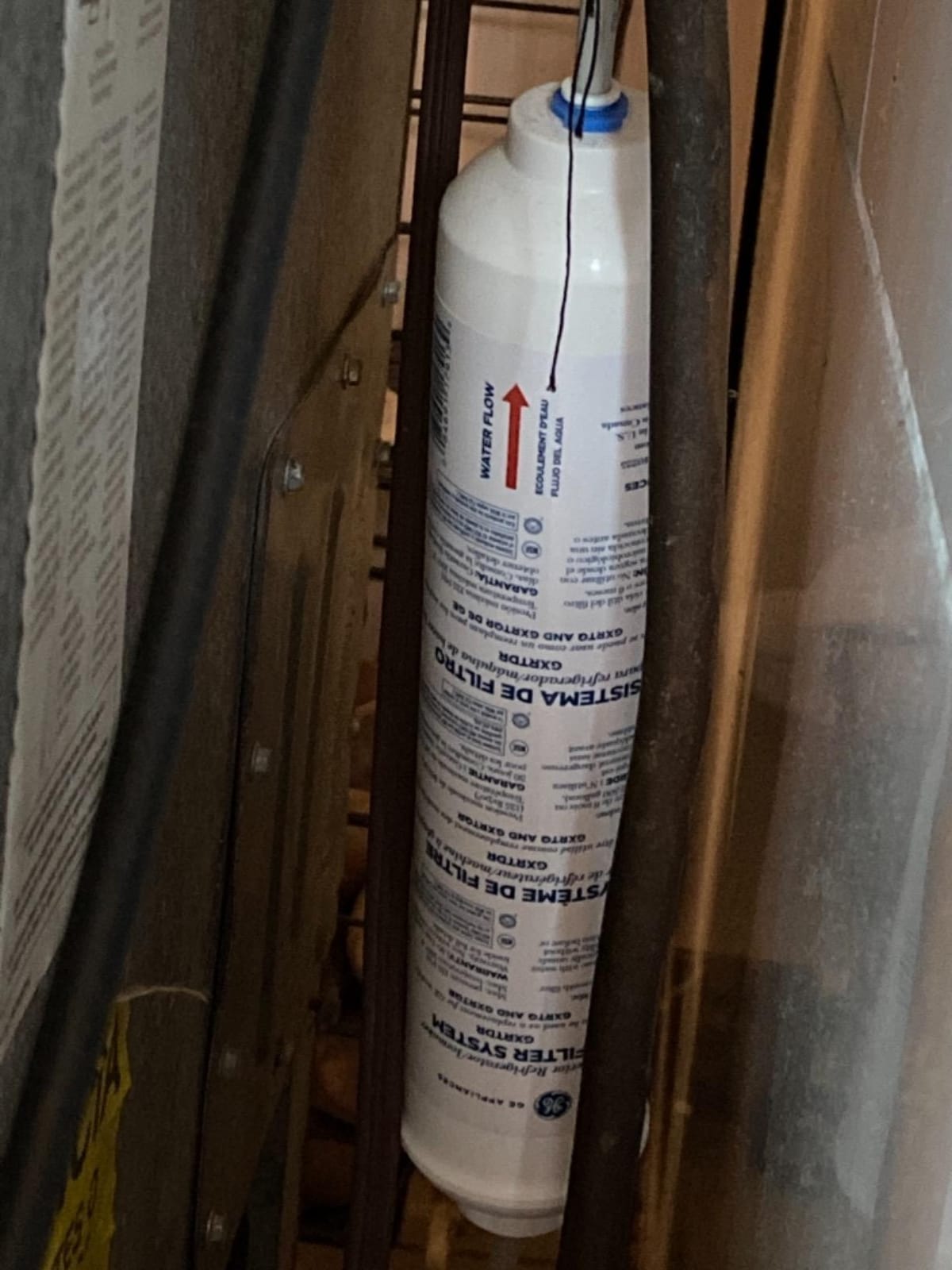
The GXRTDR is the odd choice on a list of universal canisters, and it earns its place by being the highest-rated item here at 4.7 across 1447 reviews, with 81 percent five-star and roughly one percent one-star. It attaches directly to an existing GE refrigerator or ice maker water line, which means no cutting, no fittings to choose and no bracket to improvise.
The certification here is different in origin. Rather than an NSF listing, this unit carries WQA certification to CSA B483.1 for chlorine taste, odor and sediment reduction. Both are legitimate third-party marks, and knowing the difference is what lets you compare it fairly against the NSF/ANSI 42 units elsewhere in this roundup.
Who It Is Actually For
This filter is intended for select GE side-by-side and top-freezer refrigerators that have no built-in filtration. If your GE fridge has a factory cartridge compartment, you do not need this, you need the factory part. That is the single limitation to check before anything else, and it is why this sits at number seven rather than higher on a general ice maker list.
For the fridges it does fit, it is close to ideal. Buyers treat it as a straightforward OEM replacement that clears chlorine taste and odor from both ice and dispenser water, and the six-month interval keeps each change cheap even though it is the shortest life in this group.
Comparing WQA and NSF Markings
WQA and NSF are independent third parties that test to the same underlying NSF/ANSI standards, so a WQA-certified filter is not a lesser product. The practical difference is that the two marks appear on different products in this category, which is exactly the confusion that shows up repeatedly on plumbing and appliance forums, where buyers cannot tell 42 from 53 from 372 in the first place.
The quick decoder: 42 is taste, odor and sediment. 53 is health-based contaminant reduction such as lead. 372 is lead-free material. If you see only 42 on a box, you are buying a flavor filter, and that is fine for most ice maker complaints.
Build and Housing Material
The housing is plastic, which is the one specification where this unit falls behind the brass and compression options above it. In practice the housing is not the failure point, the connection is, and this design uses a direct attach to the existing line rather than a push-fit elbow. Spare availability and the rest of the spec sheet are unremarkable, which for an OEM-style part is about what you would expect.
Who Should Buy It
Buy the GXRTDR if you have a GE fridge without built-in filtration and want a certified, drop-in cartridge with the best rating in this roundup. Do not buy it for a Samsung, LG, Whirlpool or Frigidaire line, and do not buy it expecting a multi-year service life.
8. Hydronix ICF-10Q/3 – Best Three-Pack for Staggered Inline Filter Changes
Hydronix ICF-10Q/3 Inline Post Activated Carbon Water Filter Replacement Cartridge with 1/4-Inch Quick Connect for Refrigerator, Ice Maker, RO Reverse Osmosis System, 2000 Gallons (3 Pack)
NSF certified coconut shell carbon
2000 gallons or 12 months per cartridge
3 cartridges per pack
Quick connects on both ends
Pros
- Tool-free install with built-in 1/4 inch quick connects
- Works without cutting existing plastic or copper tubing
- High iodine adsorption capacity handles chlorine well
- Three-pack spreads cost across change cycles
- Broadly compatible with major fridge filter formats
Cons
- 6 to 12 month life is much shorter than five-year inline filters
- Quick-connect style will not mate with threaded fittings
- Not certified to NSF/ANSI 53 for lead reduction
The Hydronix is sold as a three-pack of ICF-10Q cartridges, and the reason to like it is scheduling. Instead of a single canister and a reminder six months later, you get three, so you can change one now, bank the second and have the third on hand. For anyone who has ever let an inline filter go past its interval because the replacement was not on hand, that convenience is worth more than a longer rating.
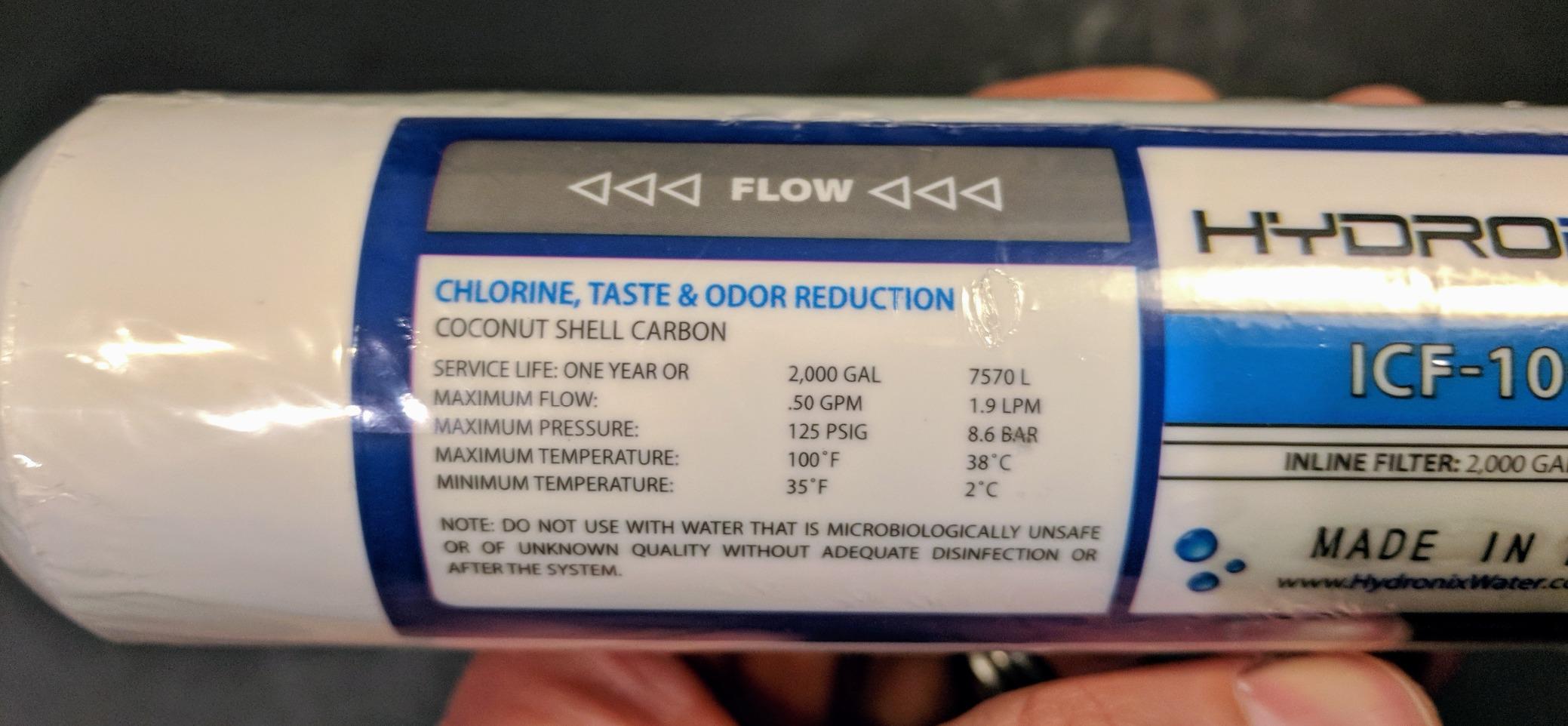
Each cartridge is NSF certified food-grade coconut shell activated carbon with high iodine adsorption capacity in a BPA-free construction, with built-in 1/4 inch quick connections at both ends. Rated life is up to 2000 gallons or 12 months depending on water quality.
Media and Adsorption Capacity
Coconut shell carbon with a high iodine number is the current standard for chlorine reduction, and the iodine adsorption figure is a laboratory proxy for how much contaminant the media can hold before it needs changing. The practical effect on ice is straightforward: the swimming-pool smell fades, and the improvement usually shows within a few days of flushing.
Because the media is carbon rather than KDF, this cartridge will not do anything special about scale. If your fill tube is crusting, that is a water hardness problem and a KDF or inhibitor approach is the better match.
Connection Style Is the Whole Decision
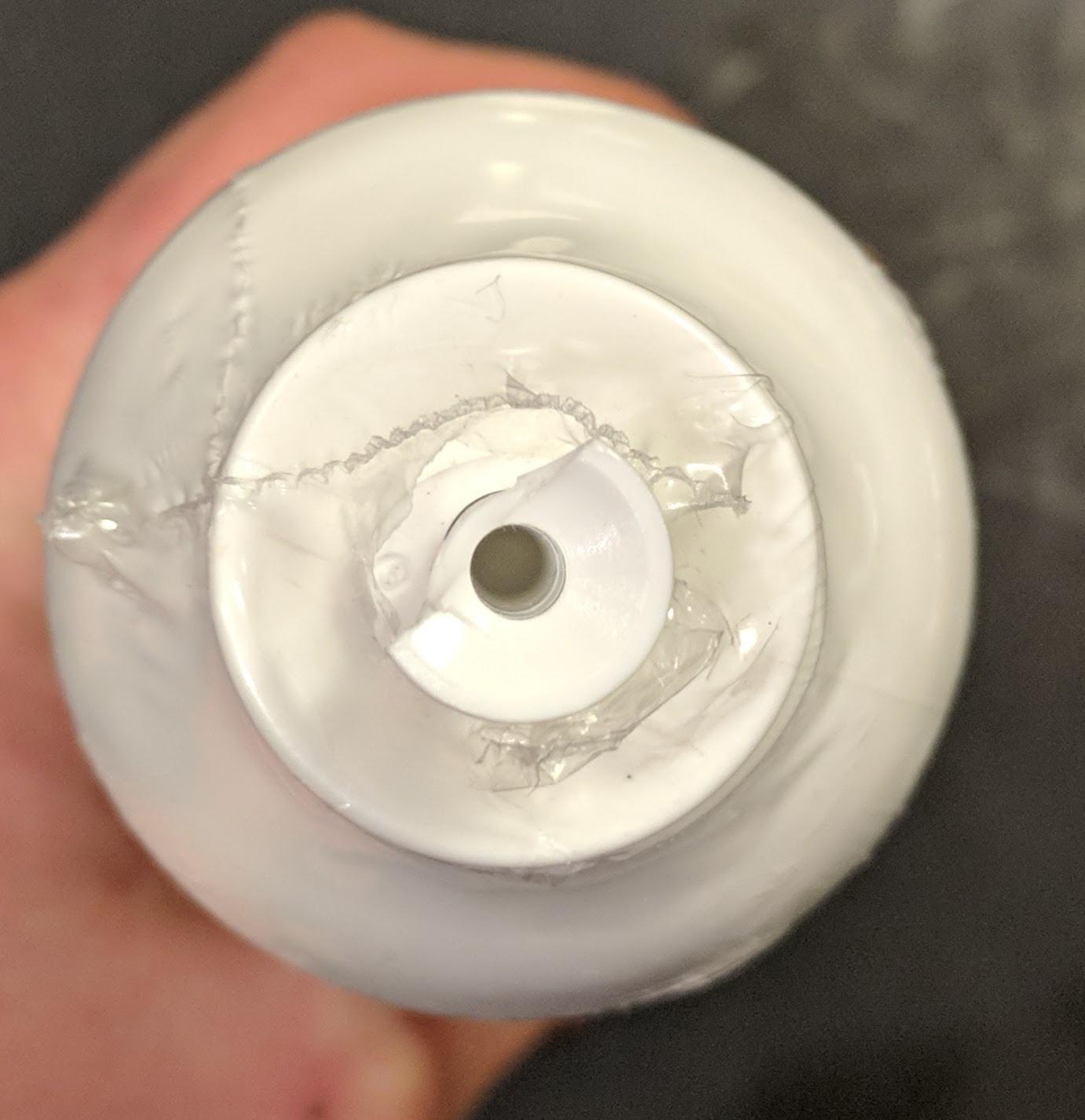
These quick connects are push-fit only. They will not accept threaded or 3/8 inch stem fittings, so if your supply line ends in a compression nut you will need an adapter that is not included. That is a five-minute problem to solve before you start, and an annoying one to discover halfway through.
The upside is that installation needs no cutting at all on plastic or copper lines, which is the reason this style became standard on OEM fridge filter housings. Reviewers consistently report the twist-to-connect action sealing without dripping.
Where the Certification Falls Short
This cartridge is not certified to NSF/ANSI 53, which is the health-based lead and cyst standard. If you are on well water, have any history of lead service lines, or are replacing plumbing after a remodel, that distinction matters and should send you to a different product. For municipal chlorine and sediment, the carbon media here is appropriate.
Compatibility spans Samsung, GE, LG, Whirlpool and Frigidaire refrigerator filter formats, plus coffee makers, fountains, water coolers, RVs, boats and under-sink or RO use. The 12.8 ounce pack ships with the three cartridges and nothing else.
9. Vegebe Inline Water Filter – Best Budget Inline Carbon for Ice Makers and RO Feed Lines
VEGEBE Inline Water Filter for Refrigerator, Ice Maker & Reverse Osmosis
NSF/ANSI 42 certified and BPA free
1500 to 1800 gallon life
2 by 2 by 10 inch body
Built-in 1/4 inch quick connects
Pros
- Two-second tool-free install with built-in quick connects
- Maintains good water pressure after install
- Easy to remove for routine service
- NSF/ANSI 42 certified coconut shell carbon
- Replaces APEC FI-ES-TCR-QC format cartridges
Cons
- Fittings and T-adapters are not included
- Push-in quick connect only
- Requires flushing 2 to 3 gallons before service
- Flow direction must be observed carefully
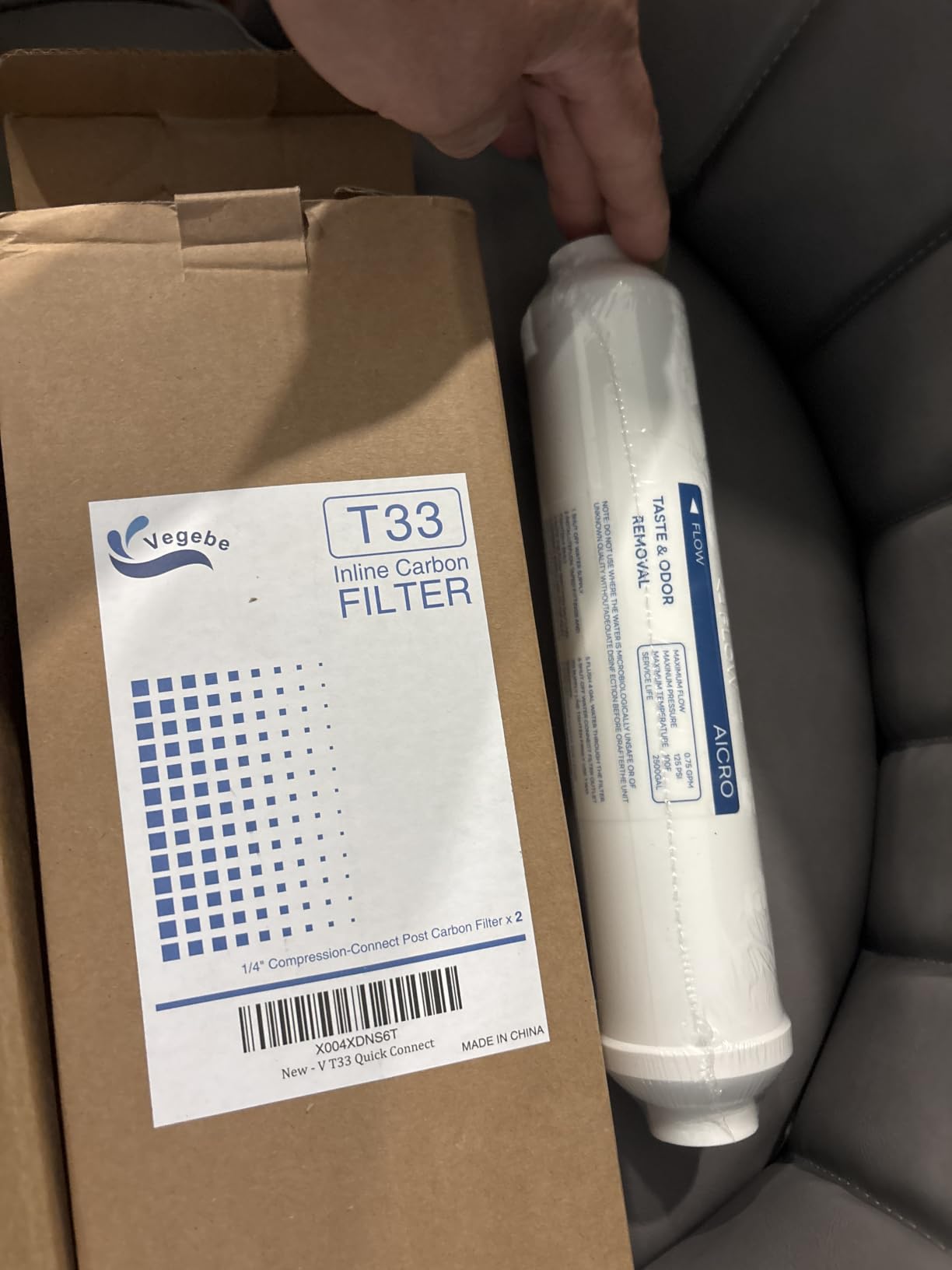
The Vegebe is the simplest unit in this roundup and it is worth including for that reason. It is a 2 by 2 by 10 inch coconut shell carbon canister with 1/4 inch quick connections built into both ends, NSF/ANSI 42 certified and BPA free, rated at up to 12 months or 1500 to 1800 gallons. There is no housing, no bracket, no fittings. The cartridge is the product.
At 4.6 with an 81 percent five-star share, the review profile is short and consistently positive: quick install, good pressure afterward, clean tasting water, and roughly a year of service in ice maker and sink duty. That is exactly the experience you want from a basic inline carbon filter.
What Is Not in the Box
Fittings and T-adapters are the notable omissions, and this is the detail to read twice before ordering. If your existing line already terminates in push-to-connect tubing, you can splice this in directly with no extra parts. If it ends in a threaded compression nut, you need to buy a conversion fitting first. Several reviews mention this explicitly, and it is the single most common complaint in the set.
A threaded 1/4 inch female version exists as a separate variant, so verify which one you are adding to cart before you order. The push-in version is the default and is not interchangeable with it.
Flushing and Flow Direction
Flush 2 to 3 gallons before putting the filter into service, which takes a couple of minutes and avoids the black water that carbon dust causes. Note the flow arrow on the housing before you push it in, because a reversed cartridge will restrict flow and can make an ice maker run slow. The same arrow tells you which end faces the wall valve.
Removing and replacing the cartridge for routine service is easy, which is a real advantage of the no-housing format. There is nothing to open or unscrew beyond the two push connections.
RO System Fit
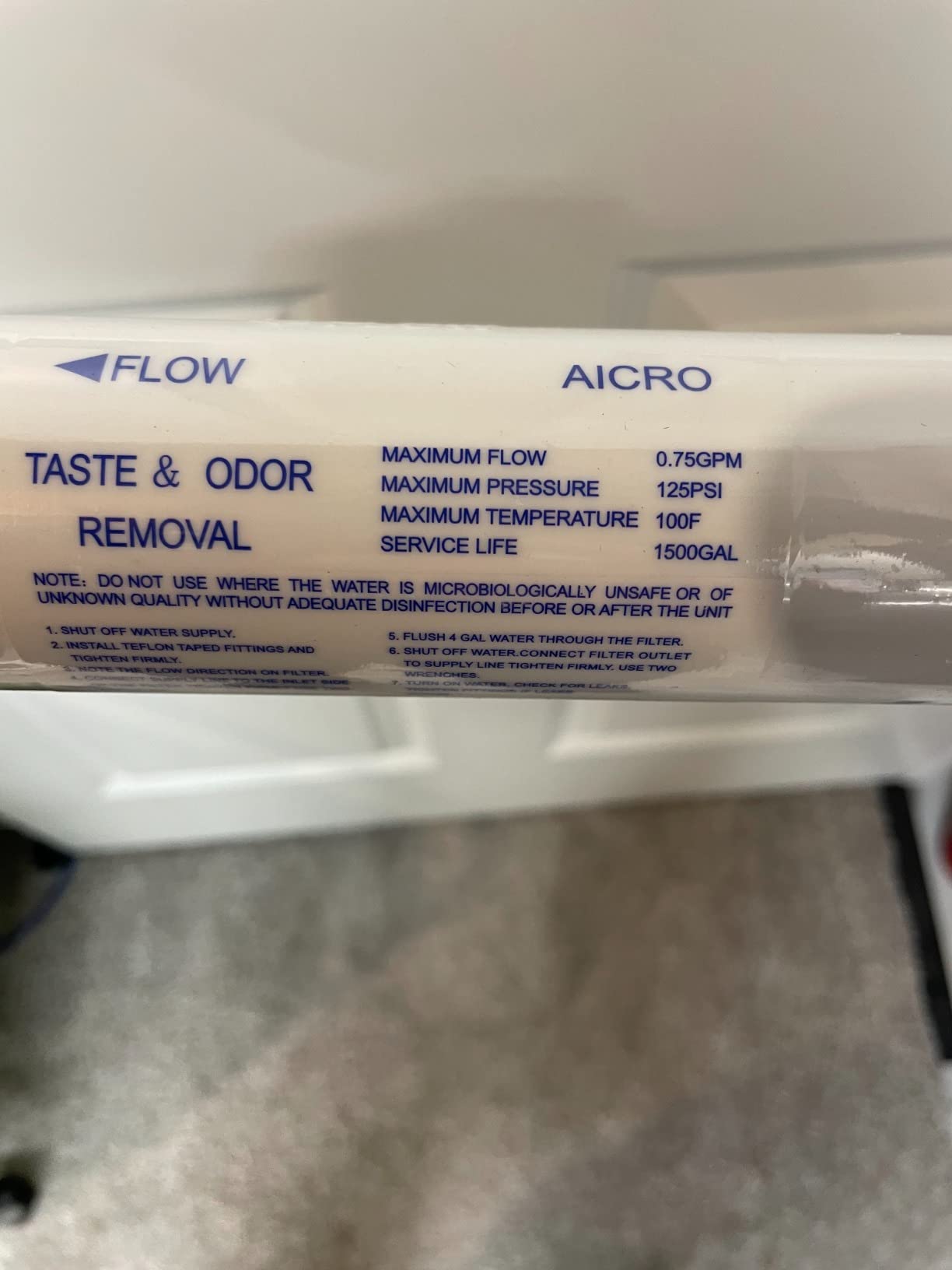
The listing states this cartridge replaces the APEC FI-ES-TCR-QC format and fits ESSENCE ROES series models. For anyone running a reverse osmosis system and wanting the taste back on the fridge tap, that is a straightforward drop-in at a modest cost, and the same cartridge also works in an ice machine, water cooler, coffee maker, fountain or under-sink line.
Do not expect it to reduce TDS or lead. The media is carbon, the standard is 42, and the listing makes no health-claim claim beyond taste and odor.
10. PureWater Filters PWRFK-4 – Best Complete Inline Kit for a First-Time Install
PureWater Filters Inline Water Filter Kit for Refrigerators and Ice Makers
Seven piece kit with 15 feet of 1/4 inch line
Includes shutoff valve and mounting bracket
1500 gallons or 1 year life
Lifetime warranty on kit parts
Pros
- Everything is in the box including tubing
- shutoff valve and bracket
- Quick-connect cartridge fittings with no cutting
- Clearly clearer water and better tasting ice
- Has brought unused ice makers back into service
- Illustrated instructions printed on the cartridge
Cons
- Does not address hard water taste
- Plastic line and valve may conflict with local code
- Adhesive anchors are not included
- 15 feet of tubing can be tight for awkward routing
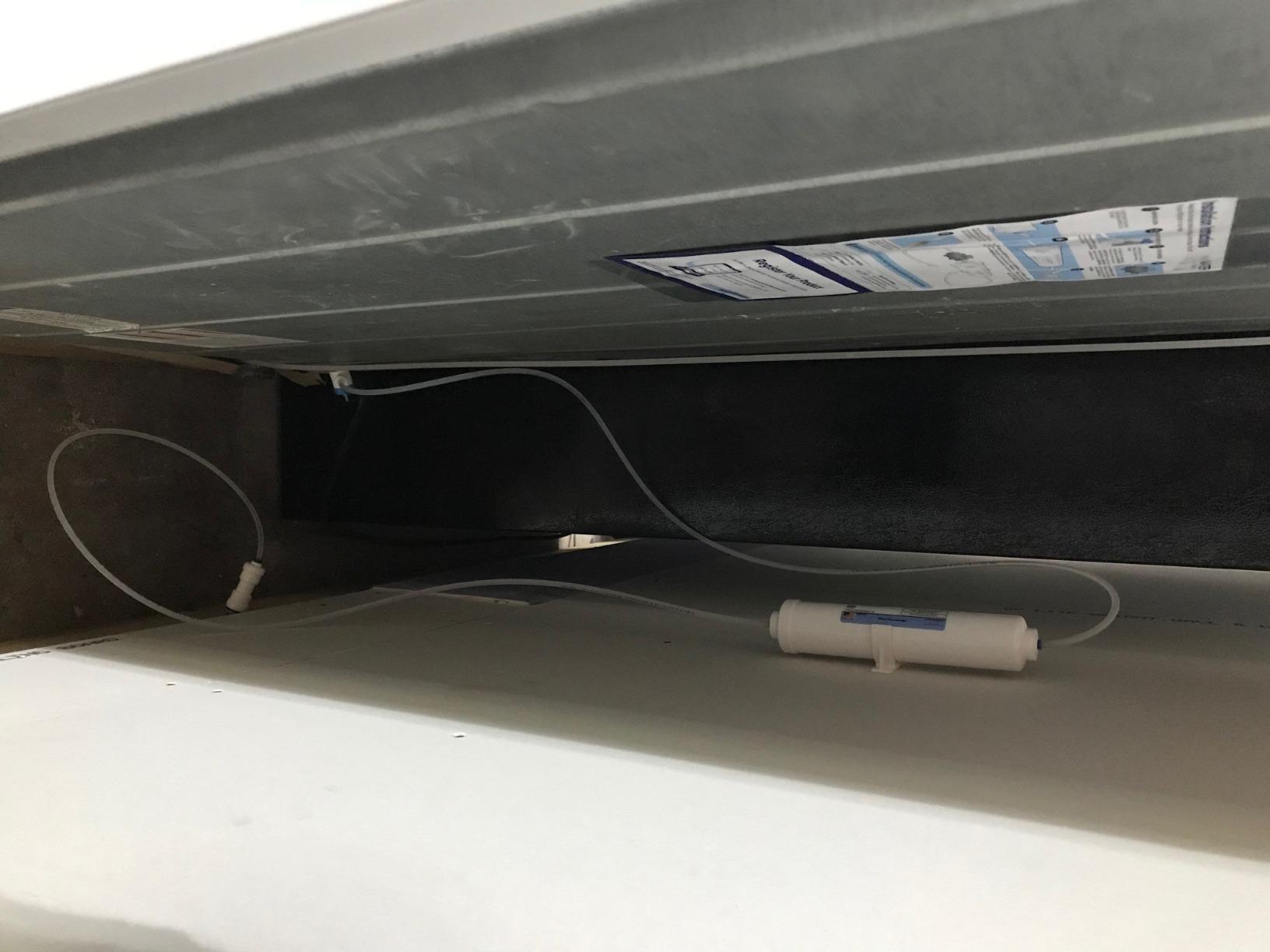
The PWRFK-4 is a seven-piece kit rather than a bare cartridge, and that changes the conversation for anyone who does not already own tubing, adapters or a bracket. You get the cartridge, 15 feet of 1/4 inch NSF certified water line, a 1/4 inch shutoff valve, two quick-connect line adapters, a mounting bracket with a screw and instructions.
It is NSF International certified to ANSI/NSF Standard 42 for chlorine reduction, Class I, and the cartridge is rated for one year or 1500 gallons, whichever comes first. The cartridge body is 2 by 10 by 2 inches with quick-connect fittings, and there is a lifetime warranty on the kit parts, which is the longest warranty coverage in this roundup.
The Shutoff Valve Is the Real Reason to Buy the Kit
A dedicated 1/4 inch shutoff valve ahead of the filter is what makes routine service possible. Without one, changing a cartridge means going back to the wall valve behind the appliance, which is exactly the friction that leads people to run a spent filter for another year. Having the valve in the kit is a small part that changes the maintenance reality.
Reviews describe a first-timer spending anywhere from ten to forty-five minutes on the install, with the longer end being the routing rather than the filter. First-timers consistently report the resulting ice and water taste improvement is immediate and obvious once the line is flushed.
Two Worthwhile Warnings From Buyers
Several reviewers note that the cartridge only reduces chlorine, taste and odor, so very hard or heavily treated water can still taste bad. That is the TDS limitation every carbon filter in this roundup shares, but it is worth restating if you are on a well. Separately, replacing copper supply line with plastic can conflict with local code in some jurisdictions, which is a real consideration if you are in a house you own rather than a rental.
Smaller notes: adhesive anchors are not included, only a screw-on bracket; plastic fittings can cross-thread against a non-square fridge connection; and 15 feet of stiff plastic line is occasionally short for an awkward route. Budget a few extra minutes for routing rather than for the filter itself.
Who Should Buy It
Buy the PWRFK-4 if this is your first inline filter, if you want to add filtration to a fridge that was plumbed without a filter at all, or if you have a shut-off-unfriendly install where a dedicated valve matters. It is listed for most ice makers and refrigerators using a 1/4 inch line or adapter, and it also helps prolong the life of the connected machine by keeping sediment out.
11. AQUA CREST GXRTDR Replacement 3-Pack – Best Multi-Year Value for OEM-Style Housings
AQUA CREST GXRTDR Inline Water Filter, Replacement for GE® GXRTDR, 3 Pack
Replaces GE GXRTDR format cartridges
1400 gallons or 6 months per unit
NSF certified lead-free carbon block
3 cartridges with install stickers
Pros
- Immediate noticeable improvement in fridge water and ice
- Fits the common GE GXRTDR form factor plus many equivalents
- NSF certified alternative to OEM cartridges
- Three-pack covers several change cycles
- Month install stickers help track the interval
Cons
- Connectors are not included
- No installation instructions in the box
- 6 month and 1400 gallon capacity is short
- One report of a defective inlet fitting that leaked
The AQF-FF35B-01 is a three-pack of replacements for the GE GXRTDR form factor, and its appeal is arithmetic. Each cartridge is rated at 1400 gallons or six months, so three of them cover roughly a year and a half of scheduled changes, and the box includes month install stickers so you can actually track when each one went in. At 4.6 across 554 reviews, the taste improvement is described as immediate and obvious.
The media is an advanced activated coconut carbon block in a lead-free, food-grade housing. The listing claims reduction of chlorine, fluoride, copper, VOCs, THM, chromium and suspended particles, which is a broader claim list than most inline carbon units in this roundup make.
Compatibility Is the Real Feature
This is not only a GE part. The listing names Samsung DA29-10105J, Whirlpool WHKF-IMTO, WSE-100, IL-IM-01, WIC-6A, R200, EF-9603, K2533JJ, 5231JA2010A and USC100 formats, plus the Culligan IC-100A. That makes it a practical spare cartridge for a household running several inline housings, or a hedge against a part that goes on backorder.
It is NSF certified, which puts it on equal footing with the OEM cartridge it replaces for chlorine, taste and odor purposes. It is not a 53-certified lead filter, so treat the broader claim list accordingly.
Check the Box Before You Order
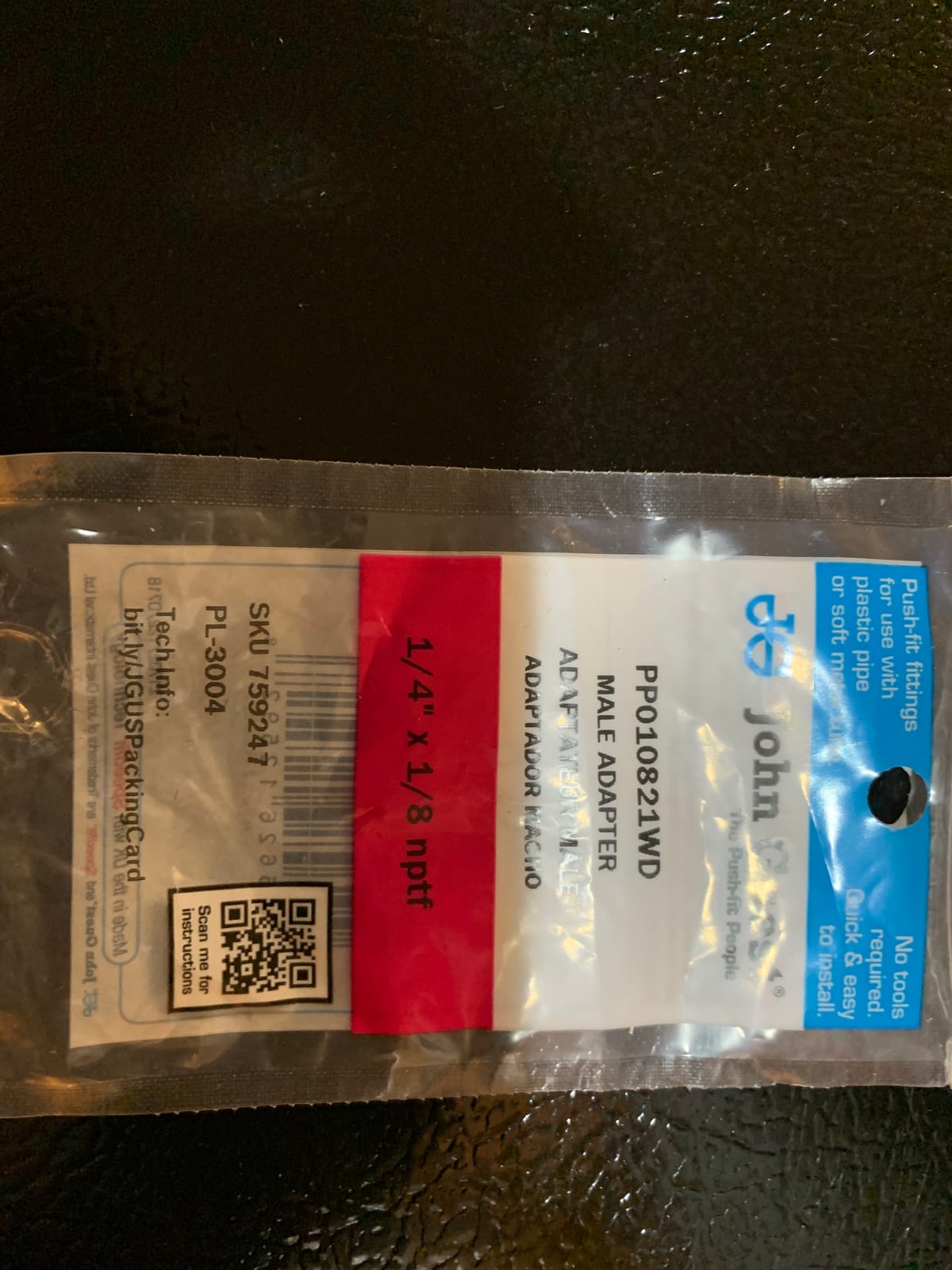
Connectors are not included, so you will be reusing existing fittings or adding an adapter. Installation instructions are also absent, and skipping the flush causes black water from charcoal dust. One detailed review spells out a flush routine that avoids exactly that, and it is worth reading before your first change.
There is also a single report of a cartridge arriving with a broken inlet fitting that leaked. That is one report rather than a pattern, but it is a fair argument for opening a cartridge and checking the fitting the day it arrives rather than discovering it behind a running refrigerator.
Who Should Buy It
Buy this three-pack if you already have push-to-connect inline housings in one or more appliances and want a low-cost certified replacement on hand. Do not buy it as a first filter for a bare water line, because there is no fitting hardware and no bracket in the box, and do not buy it expecting lead reduction.
12. Frizzlife MS99 – Best Inline Filter for Certified Lead Reduction
Frizzlife Inline Water Filter System for Fridge, Ice Maker, Under Sink, Certified 0.5 Micron Reduces Chlorine, Lead, Long Lasting, Compression Brass Fittings Fits for Copper Tubing, MS99
Certified to NSF/ANSI 42 and 53
1600 gallons or up to 2 years
1.4 gpm maximum flow
Lead-free brass compression filter head
Pros
- Only unit here certified to NSF/ANSI 53 for lead reduction
- Fast stable flow at 1.4 gpm maximum
- Substantial build with brass compression fittings included
- Twist-in cartridge replacement design
- Has replaced repeated OEM filter purchases for buyers
Cons
- Only one 90 degree brass elbow included
- Cartridge is awkward to remove with the water on
- Requires flushing 5 to 10 gallons before use
- Largest footprint in the set at 5 by 5 by 13.5 inches
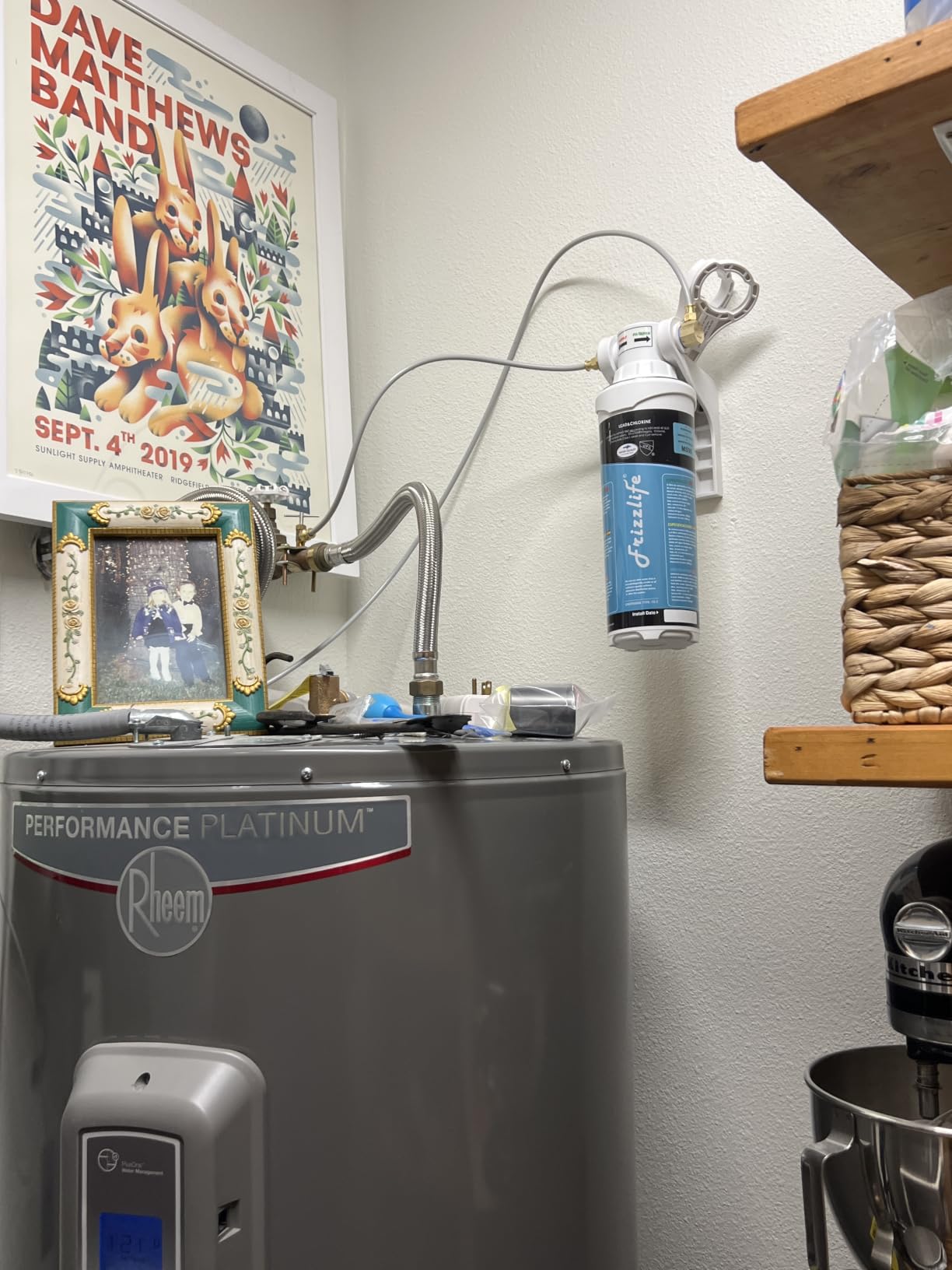
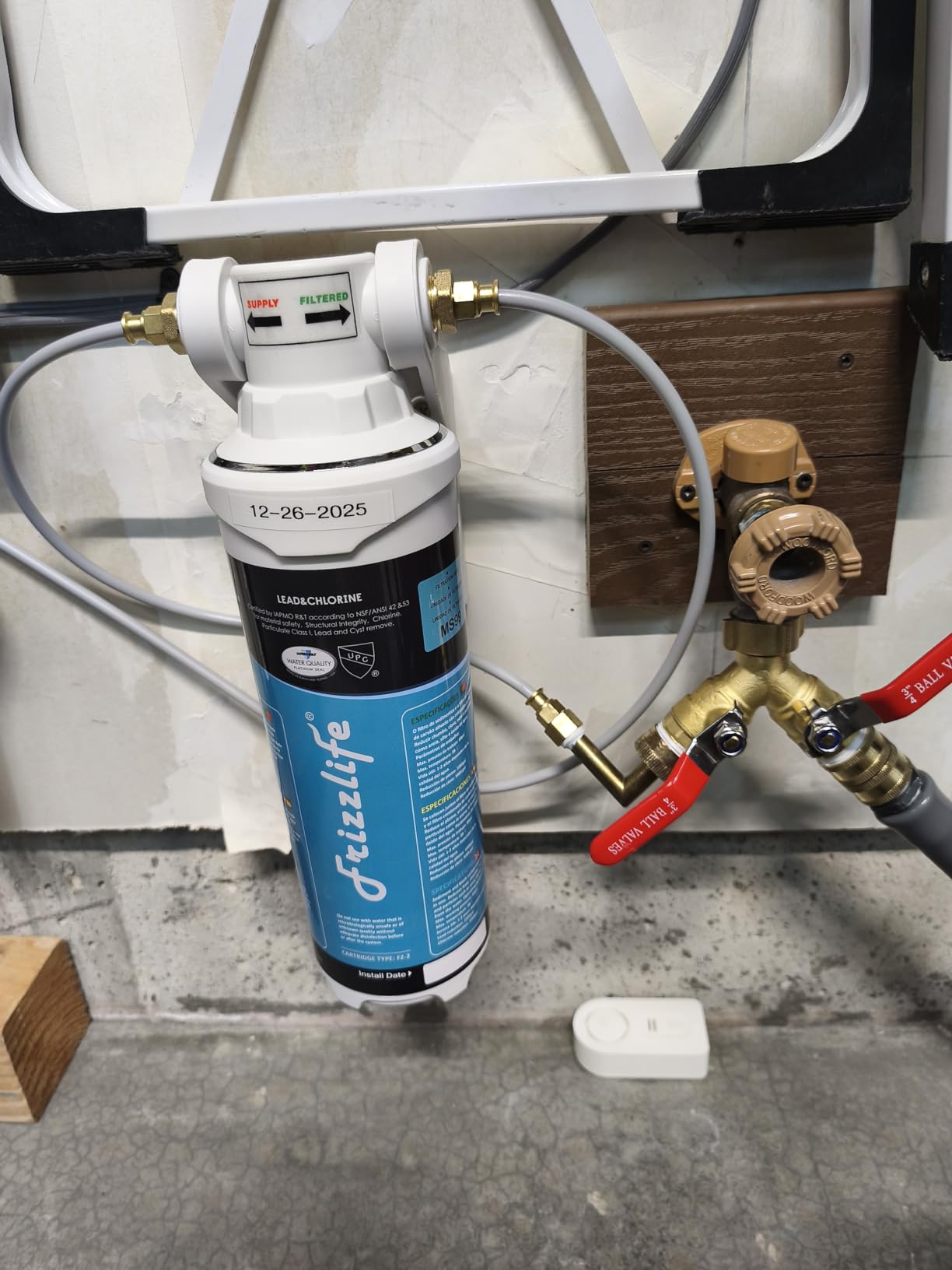
The MS99 is the only system in this roundup certified to NSF/ANSI 53, which is the health-based standard covering contaminant reduction such as lead. Every other product here carries 42, and the Waterdrop adds 372 for lead-free materials. If lead is the reason you are filtering, that certification difference is the whole argument, and it is why this unit earns its place despite being the largest and the most expensive in the set.
It is also the only one that publishes a flow rate, at 1.4 gpm maximum, which matters more than it sounds. A countertop or commercial ice maker moves a lot of water through the fill line, and a specification you can check beats a specification you hope for.
Flow Rate and Ice Production
Reviewers report fast, stable flow and describe measured ice water delivery in about three seconds, which is the sort of figure that keeps a high-output ice machine from being the bottleneck. The 0.5 micron compound carbon block is rated 1600 gallons or up to two years, with a 2 year filter life cycle and spare part availability listed at two years.
One operational limit worth noting: the listing gives a maximum supported TDS of 500 ppm and an upper temperature rating of 100 degrees F. If your source water is hotter or heavier in dissolved solids than that, a carbon block is the wrong tool regardless of certification.
Build Quality and the Cartridge Problem
The filter head is lead-free brass with a compression connection, and the tubing supplied is PEX, which is the most permanent plumbing approach among the twelve products here. Several buyers describe this as replacing a cycle of repeated OEM filter purchases, and one account describes customer service shipping an extra fitting kit when a second elbow was needed.
The dominant criticism is cartridge handling. The twist-in quick-change housing is genuinely awkward in a tight space behind a refrigerator, and removing the cartridge with the water supply on will spray. Plan on shutting the water off for a change, and allow clear access. The unit is listed as needing 6 inches of clearance behind the fridge, and it is the largest footprint in the group at 5 by 5 by 13.5 inches.
Who Should Buy It
Buy the MS99 if you are on well water, have any history of lead service lines, are filtering a high-output ice maker, or you simply want a canister built from brass and compression fittings rather than plastic push-fit. Be ready to source a second 90 degree elbow and to leave service clearance behind the appliance.
How to Choose an Inline Water Filter for an Ice Maker
Once you have narrowed the field, the decision comes down to five things: what the water actually needs removed, whether you are replacing an OEM cartridge or adding to it, how you will connect it, how long you want between changes, and whether the source water is hard. Here is how each of those actually resolves.
Deciding Between an Inline Filter and the OEM Fridge Cartridge
This is the question that comes up most often in plumbing and appliance forums, and the answer is not always the same. If your refrigerator has a working built-in filter and the water is municipal with ordinary chlorine, the OEM cartridge will do the basic job at a predictable cost, and adding an inline filter in series with it creates two restrictions on one line. That pairing is where slow fill rates and small ice cubes usually come from.
An inline filter earns its place in three situations. First, your fridge has no built-in filtration at all, which is the GE GXRTDR case. Second, your OEM cartridge clogs within weeks, which appliance owners report regularly in hard-water areas, and a pre-filter upstream extends the OEM cartridge life. Third, you want certified contaminant reduction the factory cartridge does not offer, which is the NSF/ANSI 53 argument for the Frizzlife unit.
Framing also matters. The alternative to filtering the fridge line is treating the supply line once, upstream, so the whole house benefits and the fridge sees already-treated water. Water filter enthusiasts on r/WaterFilters describe switching to a main inline filter or an RO feed line as the fix for pressure and ice cube size problems, and that is a bigger project with a bigger payoff than a canister behind the fridge.
What Each NSF/ANSI Standard Actually Guarantees
NSF/ANSI 42 is an aesthetic standard covering chlorine taste, odor and sediment. That is the right standard for an ice maker, because almost every ice complaint is a taste or clarity complaint. NSF/ANSI 53 is a health-based standard for contaminant reduction such as lead and cysts, and only the Frizzlife MS99 in this roundup carries it.
NSF/ANSI 372 certifies that the materials in contact with water are lead-free, which the Waterdrop INL carries alongside its 42 rating. WQA certification, seen on the GE GXRTDR, tests to the same underlying standards through a different certifier. A missing or vague certification claim, such as tested by a third party laboratory against NSF/ANSI standard, is a weaker signal than a certification number you can look up.
You will also see claims about fluoride, PFAS, PFOA and VOCs on some listings. Treat those with care. A carbon block certified to 42 addresses taste, odor and sediment; broader contaminant claims without a corresponding 53 or 401 certification are marketing language rather than a tested performance claim.
Carbon Block Versus KDF and Granular Carbon
Coconut shell carbon block is the best all-round choice for an ice maker, because chlorine, taste and odor are what you are filtering for and a solid block with a polyester membrane handles a wide flow range without channeling. Granular activated carbon is cheaper and can settle, which creates dead zones and uneven contact. KDF is the choice when odor, sulfur, bacteria and scale are the concern rather than flavor.
Dual-stage designs, where a sediment membrane sits in front of the carbon, extend the life of the carbon by catching rust and sand first. That is genuinely useful on well water or on a line with old galvanized pipe, where sediment load can choke a bare carbon block quickly.
Filter Lifespan, Capacity and Cost of Ownership
Rated life comes in two forms and you should read both. Gallon capacity is the volume figure, which for a household fridge is rarely the binding constraint. Time rating is the manufacturer interval, and it is usually shorter than the headline capacity implies. The EcoPure and AQUA CREST are rated in years, the GE and LASCO in six months, and the Watts Premier is rated at 20000 gallons while its own manufacturer guidance still says change every six months.
That gap between the marketing number and the service interval is the most common trust problem in this category, and the honest resolution is to treat the time rating as the schedule and use taste as your early warning. Track gallons if your dispenser is heavy, and set a calendar reminder either way, because a canister that has gone past its interval is a canister you are paying twice for.
Hard Water, High TDS and What an Inline Filter Cannot Fix
None of the twelve products here reduce total dissolved solids, and three listings state that limitation explicitly. If your TDS is high enough to spot on a glass, an inline carbon filter will improve the taste of your ice but will not stop the scale, and the fill tube and ejector arms will still need attention on the same schedule as before.
For genuinely hard water, your options are a KDF media filter to reduce the mineral contribution, a phosphate-based scale inhibitor, or an RO feed line if the space behind the fridge allows it. The Frizzlife listing gives a maximum supported TDS of 500 ppm, which is a useful sanity check against your own supply. Forum discussion in this category skews toward RO feed lines for the best ice taste when installation space permits.
Fitting Type and the Space Behind the Fridge
Connection style is where most leaks originate, so choose deliberately. Compression fittings with brass inserts, on the LASCO and Watts Premier, are threaded and tighten with a wrench, and they are what I would choose inside a finished house. Push-to-connect fittings, on most units here, are faster and tool-free, but they depend on the tube reaching a specific internal depth and they are the number one reported failure point in this category.
Measure before you order. The canisters range from 2 by 10 inches up to 5 by 5 by 13.5 inches, and the larger systems want 6 inches of clearance behind the appliance. An RV has less room than a kitchen, and the RV-specific picks worth pairing with this filter are covered in our RV ice maker guide.
How to Install an Inline Filter on a 1/4 Inch Water Line
Installation takes ten to fifteen minutes on a clean line with the right fittings, and most of the leaks I have seen come from four mistakes rather than from the product. Work through the sequence below and the job is genuinely tool-free apart from two wrenches.
Step 1: Shut off and drain. Close the wall shutoff valve supplying the fridge, then open the fridge dispenser or a faucet downstream until the flow stops. Draining the line is what prevents the water that stays in the pipe from ending up on your floor when you disconnect it.
Step 2: Plan the location. Mount the canister where you can reach the cartridge without pulling the fridge out, and leave clearance above the housing for the fittings. If you are installing the PureWater kit, put the included shutoff valve upstream of the canister so future changes do not require reaching the wall valve again.
Step 3: Cut and fit. Cut the 1/4 inch line square, then deburr the cut end. If you are using push-to-connect fittings, mark the insertion depth on the tube before you push, because the depth is the part that is easy to get wrong. Push until the tube bottoms out and the collet releases, then pull hard on the tube to confirm it is seated. If you are using compression fittings, slide the nut and ferrule on before the tube reaches the barb, and tighten with two wrenches, one on the fitting and one on the valve.
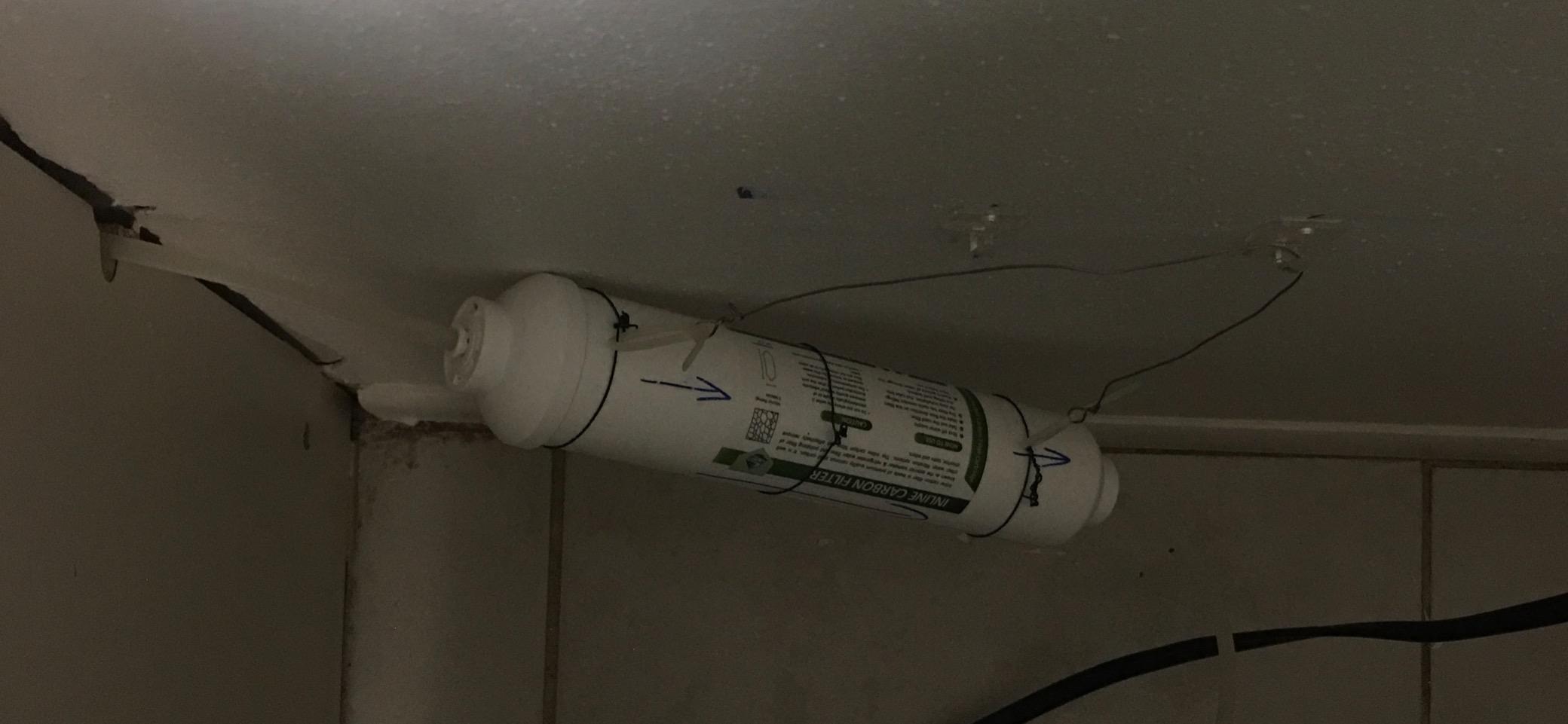
Step 4: Check inlet and outlet direction. Every canister has a molded flow arrow. Water travels from the wall valve through the filter and on to the refrigerator, and a reversed housing will restrict flow and slow the ice maker. This is the easiest mistake to make and the easiest to fix before you reconnect power.
Step 5: Flush before you reconnect. Run water through the filter for the specified volume before opening the supply to the fridge: 2 to 3 gallons for the Vegebe, 3 to 5 gallons for the Membrane Solutions T33, 5 to 10 gallons for the Frizzlife MS99. Skipping this puts carbon dust into the first cubes you make, and it is the reason some first-flush water comes out grey or black.
Step 6: Restore and inspect. Reopen the supply slowly, then check every connection with a dry paper towel. Come back after ten minutes and check again, because push-fit leaks often show up as a slow drip rather than an immediate flood. Wrapping threaded connections in PTFE tape before assembly prevents most of the compression-side leaks, and using a shutoff valve rather than a saddle valve on the tubing prevents the rest.
One more habit worth building: note the install date on the filter body with a marker and set a reminder. Appliance owners report ice turning yellow after an overdue change often enough that it becomes the most common motivation for the next purchase, and you can avoid it with a calendar entry rather than with taste.
Frequently Asked Questions
What is the best inline water filter for an ice maker?
The EcoPure EPINL30 is the best all-around inline water filter for an ice maker, with a five-year rated life, NSF/ANSI 42 certification for chlorine taste, odor and sediment, and both compression and push-to-connect fittings in the box. For a complete first install, the PureWater Filters PWRFK-4 kit adds tubing, a shutoff valve and a bracket. For certified lead reduction, the Frizzlife MS99 is the only unit rated to NSF/ANSI 53.
Do inline refrigerator water filters work?
Yes. An inline filter treats the water once, in series on the 1/4 inch supply line, so the ice maker fill tube and the water dispenser both receive treated water. Reviewers consistently report chlorine taste disappearing within days of a proper flush. What they do not do is lower total dissolved solids, so hard-water taste and scale are only partly addressed.
What are the common problems with inline water filters?
The most reported issues are leaks at push-to-connect fittings caused by an incomplete tube insertion, small or slow ice cubes from reduced flow once the media is spent, forgetting to flush carbon dust before reconnecting, and stacking an inline filter in series with an OEM fridge cartridge, which puts two restrictions on one line and slows fill rate.
How often should I replace an inline refrigerator water filter?
Follow the time rating, not the headline gallon capacity. Most inline filters are rated for six to twelve months, while some carbon blocks carry five-year marketing claims. Treat taste returning as your early warning, change sooner in hard or heavily chlorinated water, and set a calendar reminder so a spent cartridge never runs for a second full cycle.
Can I install an inline water filter myself?
Yes, on a standard 1/4 inch line it is a ten to fifteen minute job. Shut off the wall valve, drain the line, cut square, fit the compression or push-to-connect fittings to the marked depth, confirm the flow arrow direction, flush 2 to 10 gallons to waste, then reopen slowly and check every connection with a paper towel after ten minutes.
What contaminants do inline water filters remove?
A standard inline carbon filter certified to NSF/ANSI 42 reduces chlorine taste and odor plus sediment, rust and suspended particles. Only filters certified to NSF/ANSI 53 make health-based claims such as lead reduction, and NSF/ANSI 372 certifies lead-free materials rather than removal. None of the inline carbon filters in this roundup reduce total dissolved solids, fluoride claims vary by listing, and wider PFAS or VOC claims are marketing unless a matching standard is cited.
Is an inline filter better than the fridge filter that came with it?
If your refrigerator has a working built-in filter on ordinary municipal water, the OEM cartridge handles the basic job and adding an inline filter in series creates a second flow restriction, which is a common cause of slow ice production. An inline filter wins when the fridge has no built-in filtration, when the OEM cartridge clogs quickly in hard water, or when you need certified contaminant reduction the factory cartridge does not offer.
Why is my ice maker producing small or slow ice after adding a filter?
A partly spent cartridge or a filter with a restricted flow path is the usual cause. Check that the flow arrow points toward the refrigerator, that every push-fit tube is inserted to its full depth, and that the cartridge was not installed backwards. A high-flow unit such as the Frizzlife MS99, rated at 1.4 gpm, is the fix if your ice maker moves a lot of water through the fill line.
Final Verdict
Pick the EcoPure EPINL30 if you want one canister that fits the widest range of refrigerators, ice makers and RVs and you are not certain which fitting style your line uses. Pick the PureWater Filters PWRFK-4 if this is your first install and you want the shutoff valve, tubing and bracket in the same box. Pick the Frizzlife MS99 if lead is the contaminant you care about, since it is the only unit here certified to NSF/ANSI 53. Pick the LASCO 37-1821 or Watts Premier if you want threaded compression fittings and brass hardware rather than push-fit connections, and pick the GE GXRTDR only if your GE refrigerator has no built-in filtration at all.
Whichever one you choose, the install rules are the same: respect the tube insertion depth, check the flow arrow, flush before you reconnect, and set a reminder for the manufacturer change interval rather than the headline gallon number. That is what keeps the ice clear-tasting and the cubes full-size for the whole of 2026.