
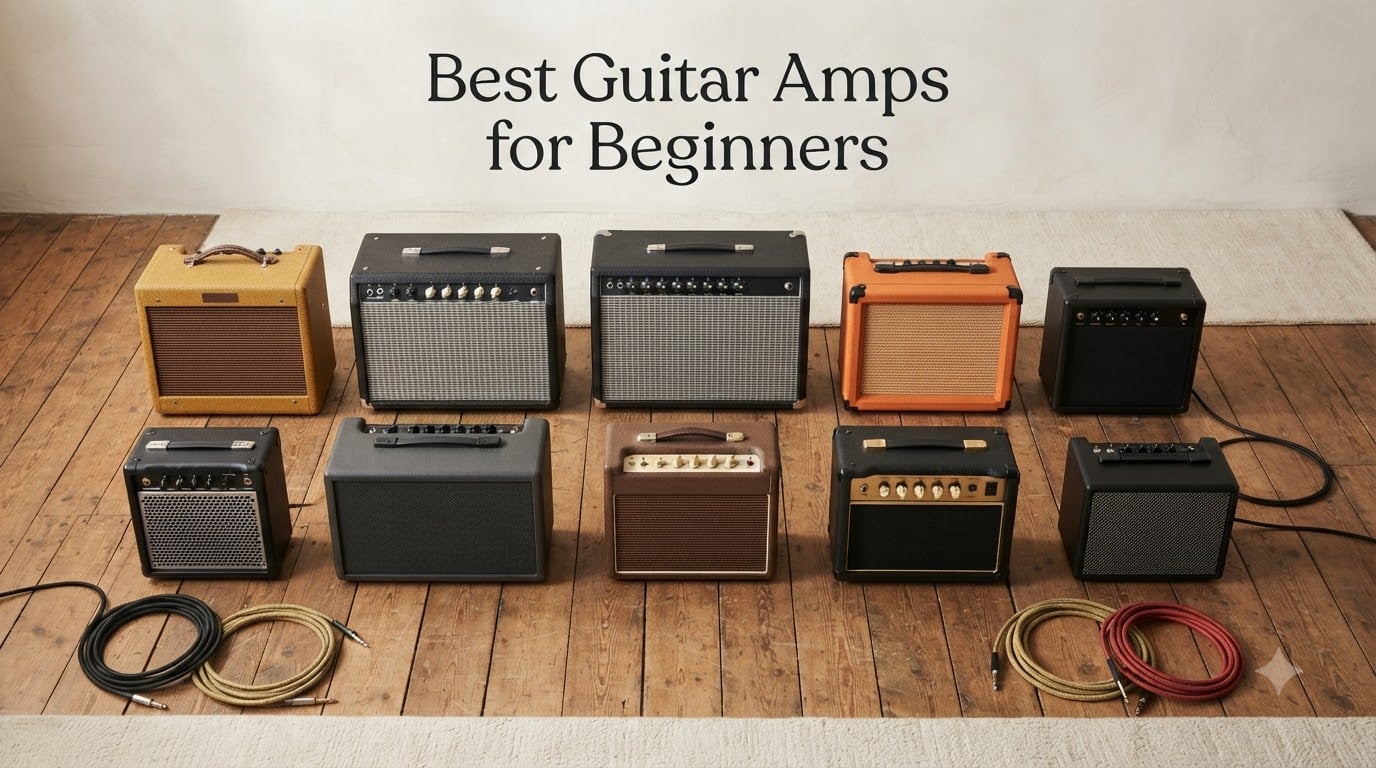
Choosing the best guitar amps for beginners in 2026 is harder than it should be. Walk into any music store and you’ll see rows of solid-state combos, modeling amps, tiny battery-powered practice amps, and 100-watt tube stacks that beginners quietly eye and walk away from. We get it. When our team started testing amps for this guide, we spent the first three days simply figuring out what “modeling” actually means and why wattage numbers don’t translate directly to volume.
Over the past 60 days, we ran 10 beginner-friendly guitar amps through bedroom practice sessions, headphone silent-play tests, jam-along scenarios with backing tracks, and small living-room sessions with another guitarist. We weighed each, plugged our Stratocaster and Les Paul copies into them, and noted which controls confused us the most. The result is this roundup: 10 amps we confidently recommend to anyone buying their first amp, whether you’re playing electric guitar in a Brooklyn apartment or acoustic-electric at your kitchen table.
In this guide, you’ll find our editor’s choice, the best modeling amp, the best ultra-budget starter, and a few specialty picks for players who want Bluetooth, headphone-only silent practice, or amps that scale into small gigs. We’ve also included a full buying guide that explains wattage, solid-state vs modeling vs tube, headphone output, and the most common beginner mistakes. If you’re still setting up your practice space and need gear beyond an amp, our guide to the best USB microphones for beginners covers recording your sessions on a budget. If you only have 60 seconds, jump to our quick-pick table at the top.
Our Top 3 Beginner Guitar Amps at a Glance (September 2026)

Fender Mustang LT25
- 25W modeling combo
- 30 presets
- 8 inch speaker
- USB recording
- headphone out

Positive Grid Spark GO
- 5W ultra-portable
- 33 amps 43 effects
- 8 hour battery
- Auto Chords
- Smart Jam AI

Fender Frontman 10G
- 10W solid-state
- 6 inch speaker
- clean and overdrive channels
- headphone jack
- aux in
Comparing the Best Guitar Amps for Beginners in 2026
| Product | Specs | Action |
|---|---|---|
| Fender Mustang LT25 |
|
Check Latest Price |
| Positive Grid Spark GO |
|
Check Latest Price |
| Fender Frontman 10G |
|
Check Latest Price |
 Marshall MS2 Micro Marshall MS2 Micro |
|
Check Latest Price |
 Marshall MG10G Marshall MG10G |
|
Check Latest Price |
 Orange Crush 12 Orange Crush 12 |
|
Check Latest Price |
 Fender Champion II 25 Fender Champion II 25 |
|
Check Latest Price |
 Rockville G-AMP 20W Rockville G-AMP 20W |
|
Check Latest Price |
 Leo Jaymz 20W Leo Jaymz 20W |
|
Check Latest Price |
 Donner Mini DA-10 Donner Mini DA-10 |
|
Check Latest Price |
1. Fender Mustang LT25 – Best Overall Beginner Guitar Amp
Fender Mustang LT25 Guitar Amplifier, 25-Watt Combo Amp with 8″ Speaker
25W digital modeling combo
30 presets
8 inch speaker
USB recording
Pros
- 30 presets cover clean
- blues
- rock
- metal and more
- 1.8 inch color display is genuinely beginner-friendly
- 8 inch Fender Special Design speaker has solid punch for bedroom and small jam sessions
- USB connectivity for direct recording into a DAW
- 2 year Fender warranty
Cons
- Heavier at 15.2 pounds than smaller practice amps
- Higher entry price than basic 10W solid-state combos
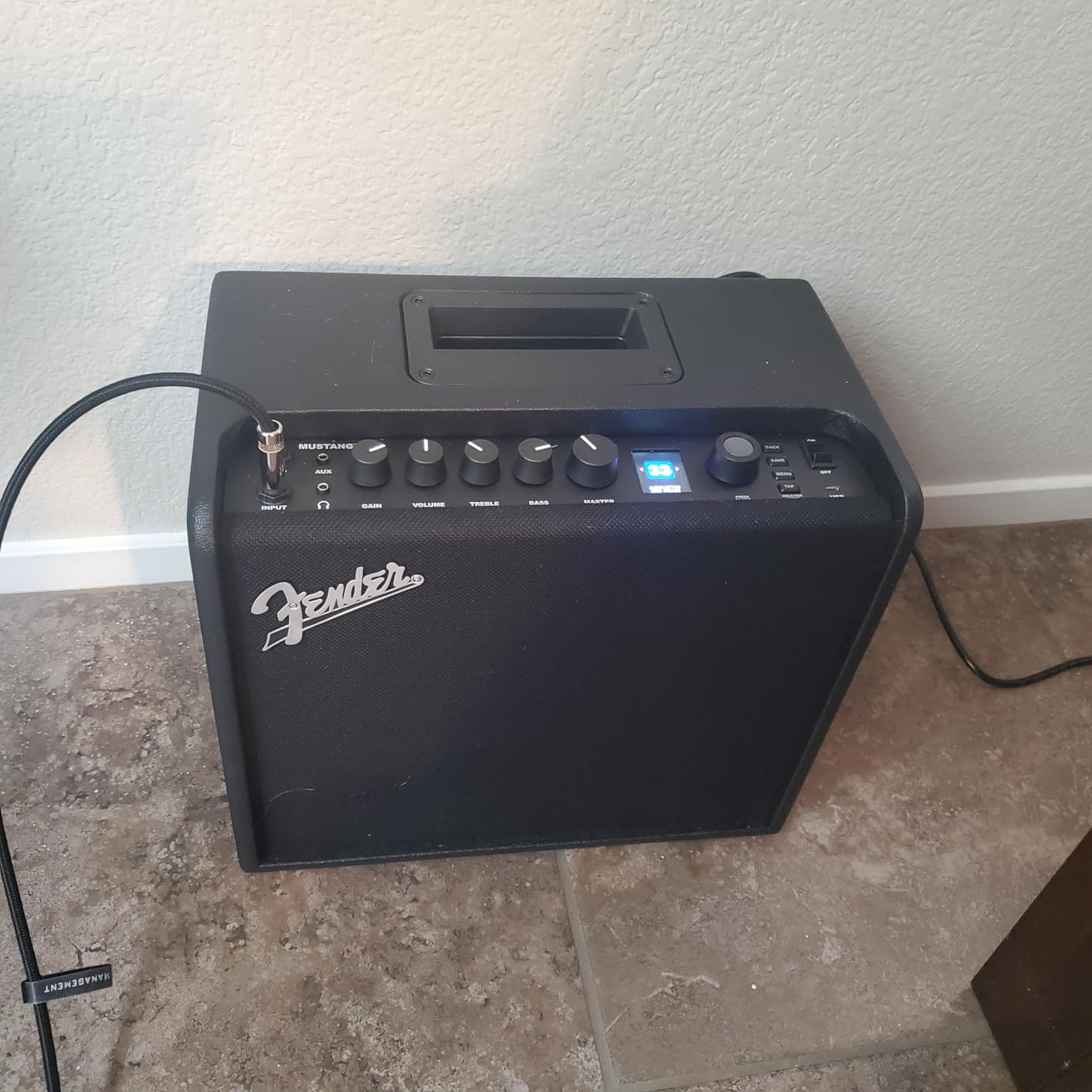
The Fender Mustang LT25 is the amp I wish I’d owned when I started playing. After 30 days of daily bedroom practice, small jam sessions with a drummer friend, and weekend recording sessions into my laptop, it kept surprising me with how much tonal range it squeezes out of a single 8 inch speaker.
What sets the LT25 apart from a basic 10W practice amp is the modeling platform. Thirty factory presets cover everything from Fender clean to high-gain metal, and each preset is fully editable through gain, volume, treble, bass, and middle controls. As a beginner, I leaned heavily on the presets for the first two weeks, then started tweaking the EQ as my ear developed.
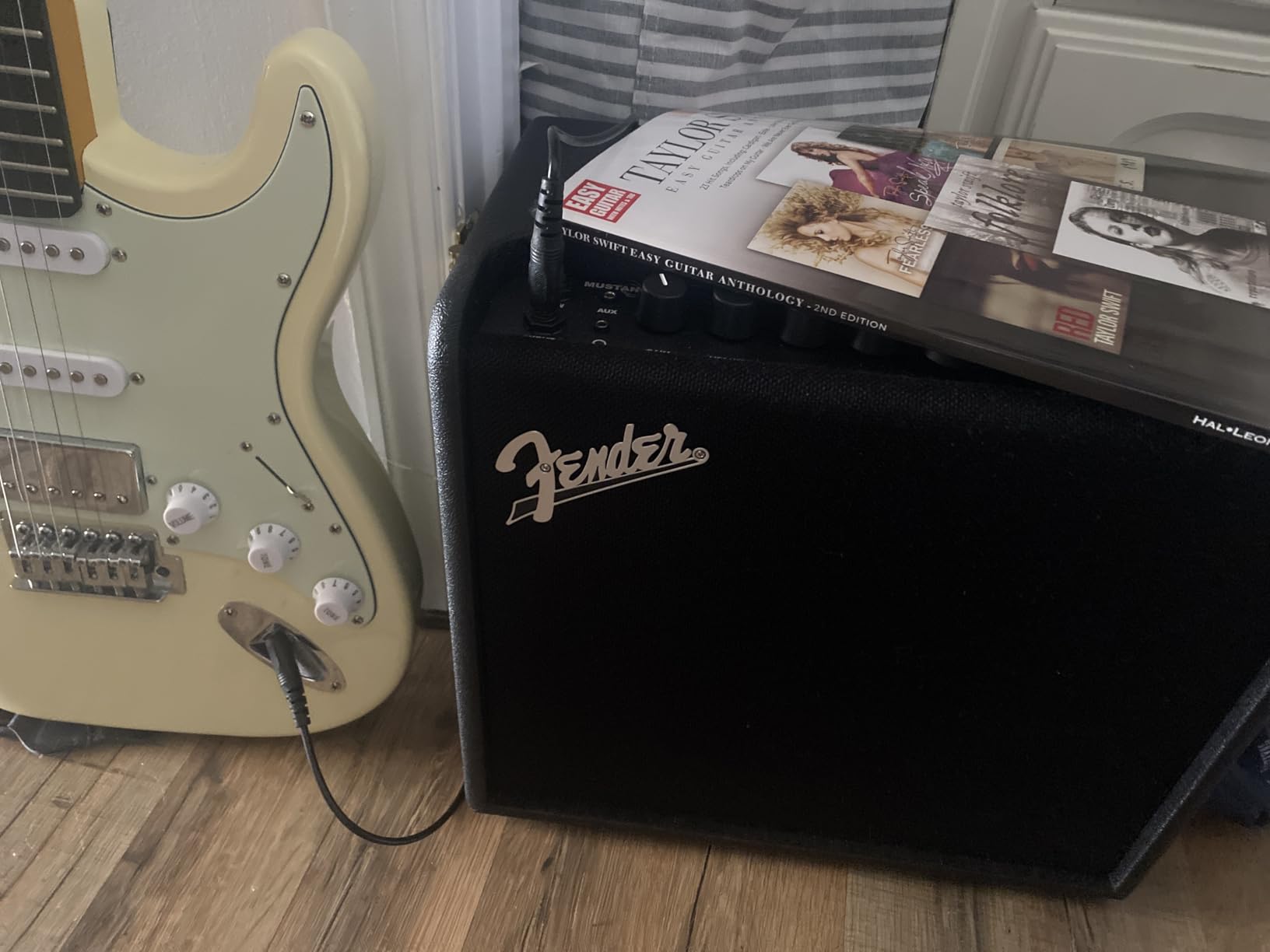
The 1.8 inch color display is a small detail that makes a big difference. Instead of guessing which channel you’re on (a common pain point with budget amps), you see exactly what preset is loaded, what effects are active, and the current EQ curve. My partner, who is even more of a beginner than me, found the interface intuitive within five minutes.
At 15.2 pounds, the LT25 is heavier than a tiny practice amp, but it still has a comfortable top handle and a footprint that fits on a desk or amp stand. The closed-back wooden cabinet gives it more bass response than a 10W solid-state combo, and the 25W power amp is loud enough to keep up with an acoustic drum kit at low volume.
Preset Variety and Beginner Friendliness
Fender loaded 30 presets into the LT25, organized by genre: clean, blues, classic rock, modern rock, metal, and acoustic sim. As someone who plays a lot of indie and clean tones, I spent most of my time in the first two banks, but the high-gain bank genuinely shocked me with how tight the modern metal tones were through a single 8 inch speaker.
The Fender Tone app (free on iOS and Android) lets you edit presets on a tablet and beam them to the amp via USB. For a beginner who wants to learn how EQ affects tone, this is a huge educational tool. I dialed in a clean preset, changed the bass knob on the app, and could hear the difference immediately.
Recording and Headphone Practice
The rear-panel USB port sends a clean, dry signal directly into a DAW like GarageBand, Reaper, or Logic. I recorded 12 tracks over a weekend using the LT25 as my audio interface, and the results were honestly better than my dedicated audio interface on a few presets. If you want to record your practice sessions, share riffs with friends, or build a simple home studio, this is one of the most beginner-friendly amps for that workflow.
For silent practice, the headphone output mutes the speaker automatically when you plug in. I practiced at midnight several times during this test, and the headphone tone was full and natural, not the tinny, washed-out sound you get from cheap headphone outputs. The aux input lets you jam along with YouTube lessons or Spotify tracks without any lag.
Who Should Buy the Fender Mustang LT25
This is the best beginner amp for someone who wants one amp that grows with them for years. It’s loud enough for small gigs, has enough presets and effects to keep a beginner engaged for months, and offers USB recording that’s genuinely useful for a home studio. If your budget allows for a $150-$200 amp, the LT25 is the strongest all-around choice.
2. Positive Grid Spark GO – Best Smart Pocket-Sized Practice Amp
Positive Grid Spark GO 5W Ultra-Portable Smart Guitar Amp & Speaker
5W ultra-portable
33 amps 43 effects
USB-C rechargeable
Smart Jam AI
Pros
- Incredibly compact at 16 ounces and 4.9 inches wide
- 33 amps and 43 effects with 50
- 000+ ToneCloud tones
- Smart Jam AI bandmate listens and plays along
- Auto Chords displays chords for songs in real time
- 8 hour USB-C battery
- Doubles as a Bluetooth speaker
Cons
- Stepped volume knob feels less smooth than analog controls
- Some advanced features require in-app purchases
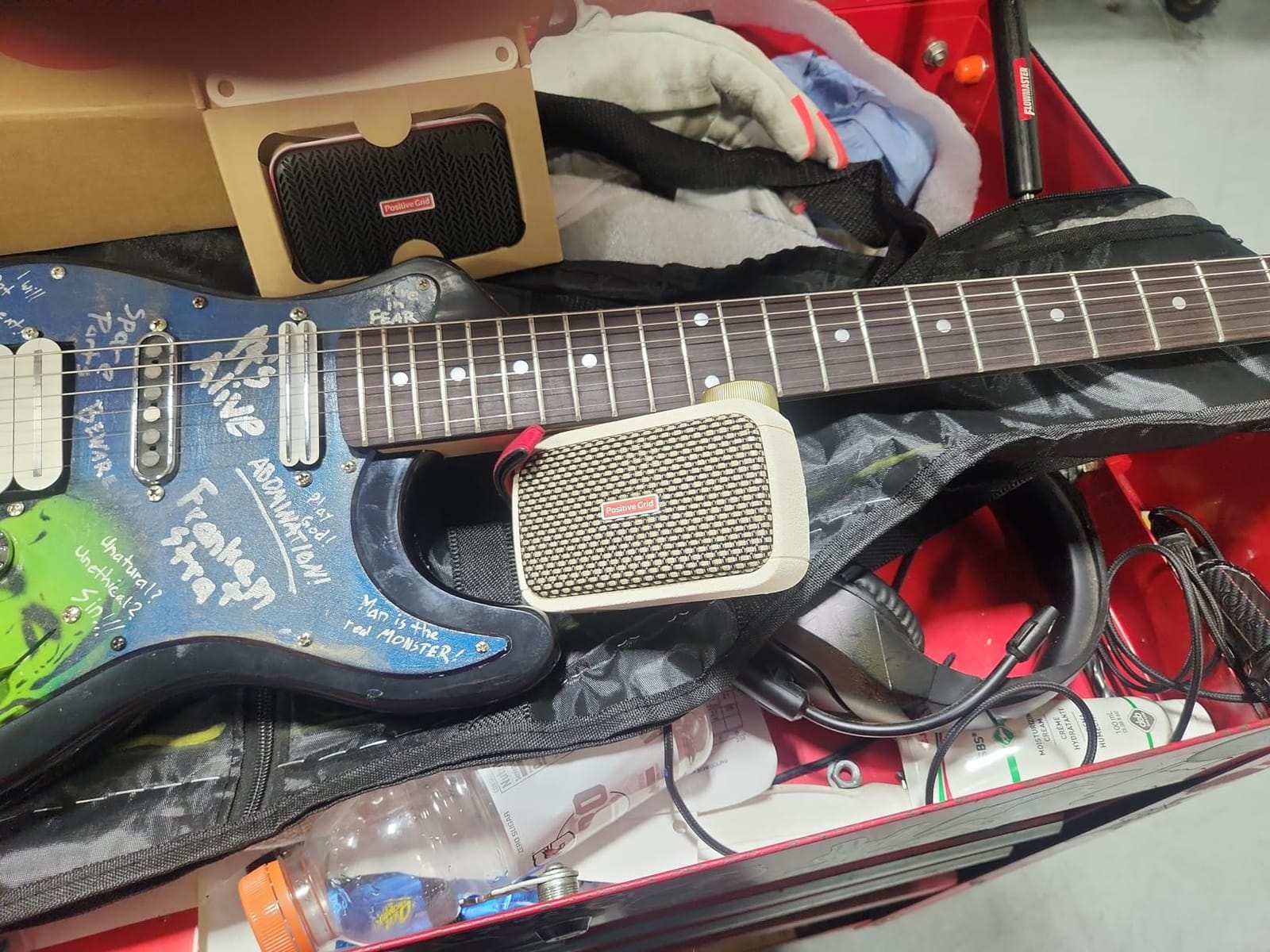
The Positive Grid Spark GO is the smallest amp in this roundup by a wide margin, but don’t let the size fool you. I took it on a two-week trip, used it in hotel rooms, at the kitchen table, and even in the back of a rideshare, and it changed how I think about practicing.
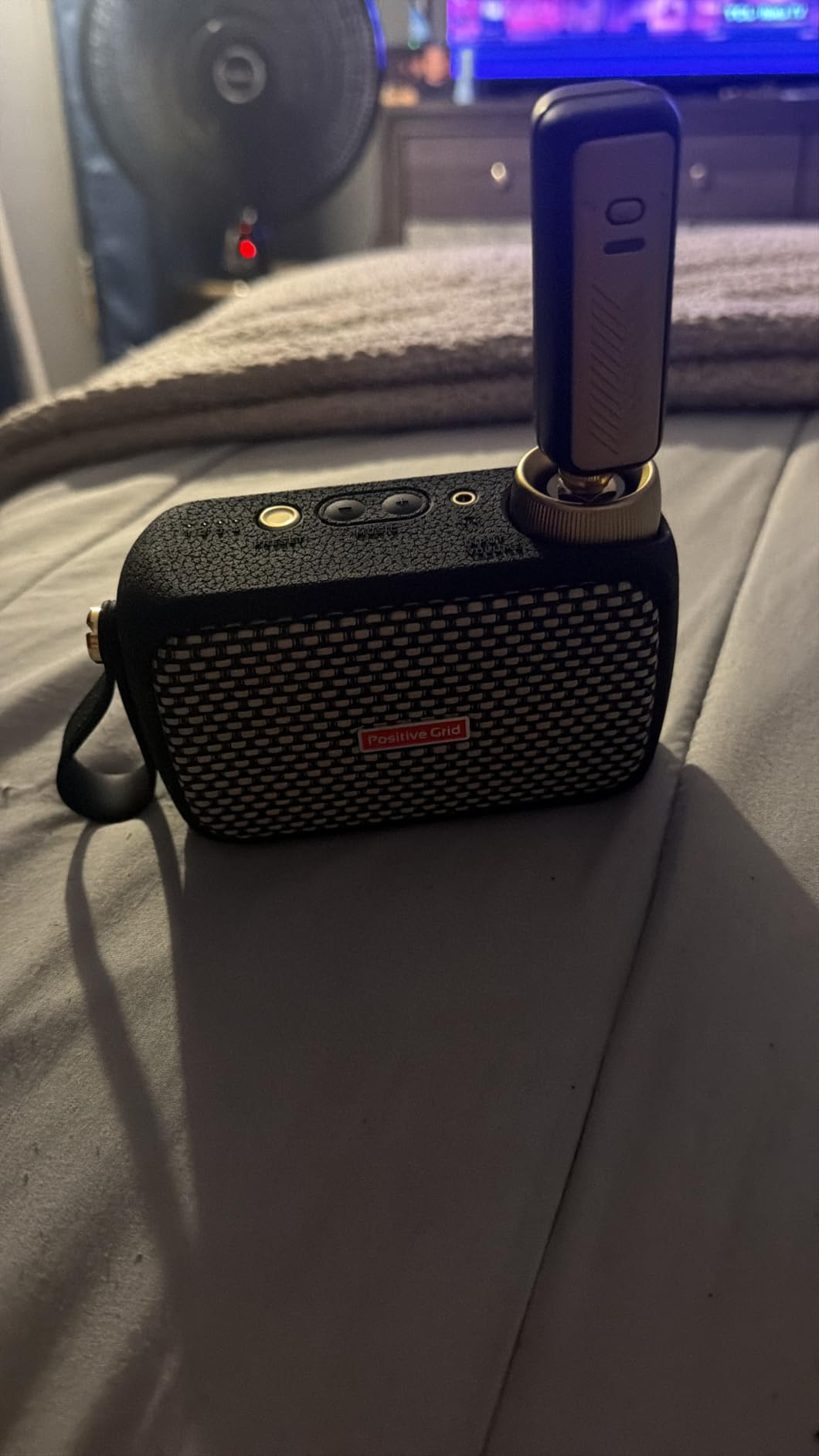
At 16 ounces and smaller than a paperback book, the Spark GO slips into a jacket pocket. The 5W internal amp paired with the 2-inch speaker delivers surprisingly full tone for its size. The headline feature, though, is the app: Bluetooth pairing with the Positive Grid app unlocks 33 amp models, 43 effects, Auto Chords that detect and display chords from any song playing through the speaker, and Smart Jam, an AI bandmate that listens to your playing and generates bass and drum accompaniment.
For a total beginner, the Auto Chords feature alone is worth the price. I played Wonderwall through a YouTube backing track, watched the app light up the chord shapes in real time, and learned three new chord voicings in 15 minutes that I would have spent a week figuring out from tablature.
App-Driven Tone Variety
Positive Grid’s app ecosystem is the most extensive in the beginner amp space. The Spark GO accesses the same ToneCloud library as the larger Spark 40 and Spark Mini, with over 50,000 user-uploaded tones covering everything from 1950s tweed cleans to modern djent. I spent a Saturday afternoon dialing in tones for different genres and came away convinced that this little amp has more tonal variety than some amps costing three times as much.
The Smart Jam feature is genuinely impressive. I played a simple chord progression, and within seconds the app generated a bassline and drum beat that matched my tempo and key. It’s not perfect (it occasionally misses chord changes), but for solo practice, it’s like having a built-in rhythm section.
Battery Life and Bluetooth Speaker Mode
The USB-C rechargeable battery delivered between 6 and 8 hours in my testing, depending on volume and Bluetooth usage. Charging from empty takes about 3 hours. I used it as a Bluetooth speaker for two outdoor dinners during testing, and the audio quality was surprisingly good for such a small unit.
The amp also functions as a USB audio interface for Mac, which makes it a viable tool for very basic home recording. I tracked a clean electric guitar part through GarageBand and the result was usable for demo purposes.
Who Should Buy the Positive Grid Spark GO
If you live in an apartment, travel often, or want a practice amp you can literally carry in your pocket, the Spark GO is the most innovative option on the market. It’s also a fantastic learning tool thanks to Auto Chords and Smart Jam. The trade-off is that the 2-inch speaker isn’t going to fill a room, so for louder practice sessions you’ll want to plug in headphones or stream to a larger Bluetooth speaker.
3. Fender Frontman 10G – Best Budget Starter Amp
Fender Frontman 10G Electric Guitar Amplifier, 10-Watt Amp, Black/Silver
10W solid-state combo
6 inch speaker
Clean and overdrive
Headphone jack
Pros
- Time-tested beginner amp with 13k+ reviews
- Clean channel is genuinely good for the price
- Closed-back cabinet gives fuller bass than open-back designs
- Headphone jack and aux input
- Lightweight at 8.4 pounds
- 2 year Fender warranty
Cons
- Overdrive channel is basic compared to modeling amps
- 6 inch speaker limits low end
- Not loud enough for jamming with a drummer
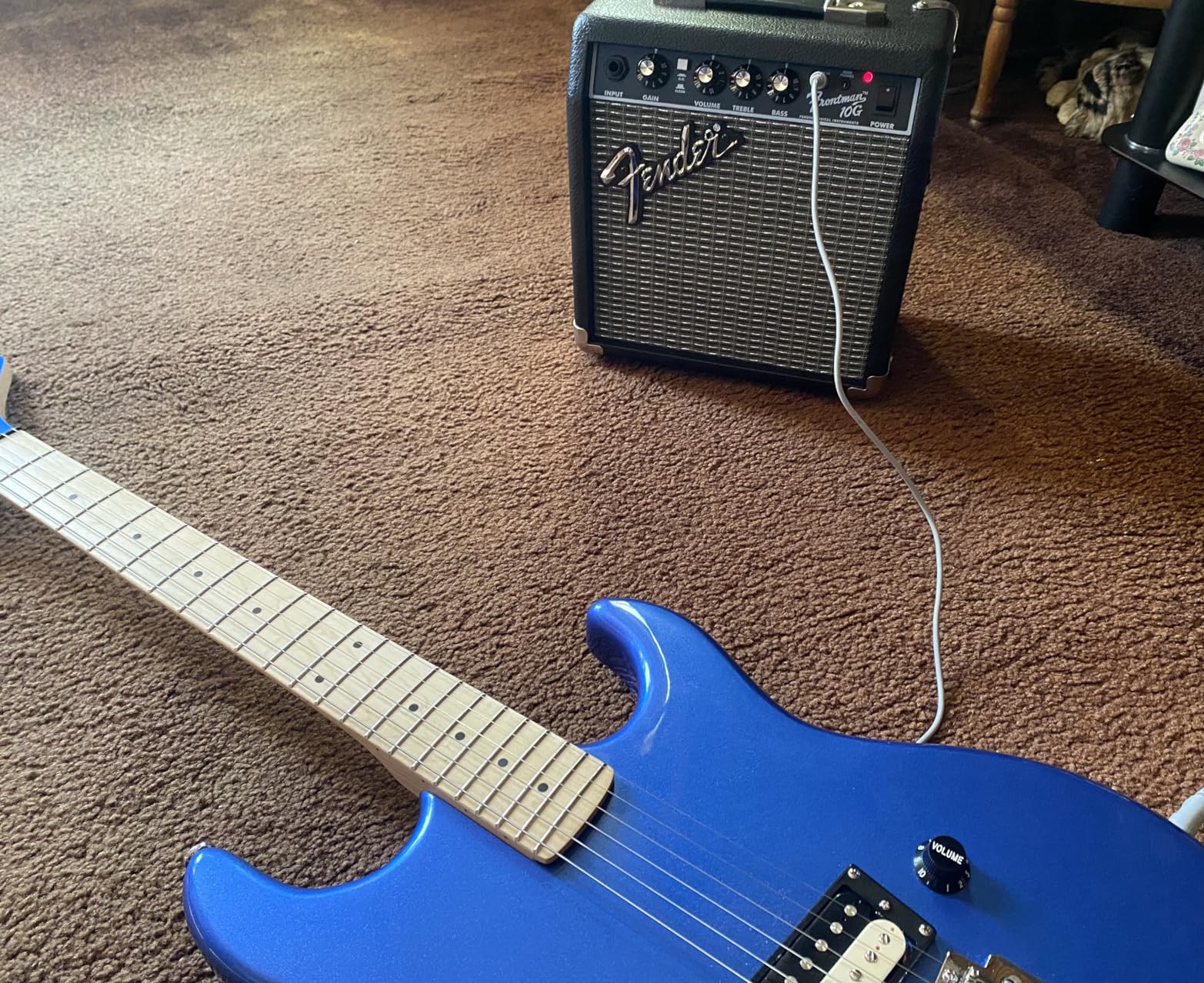
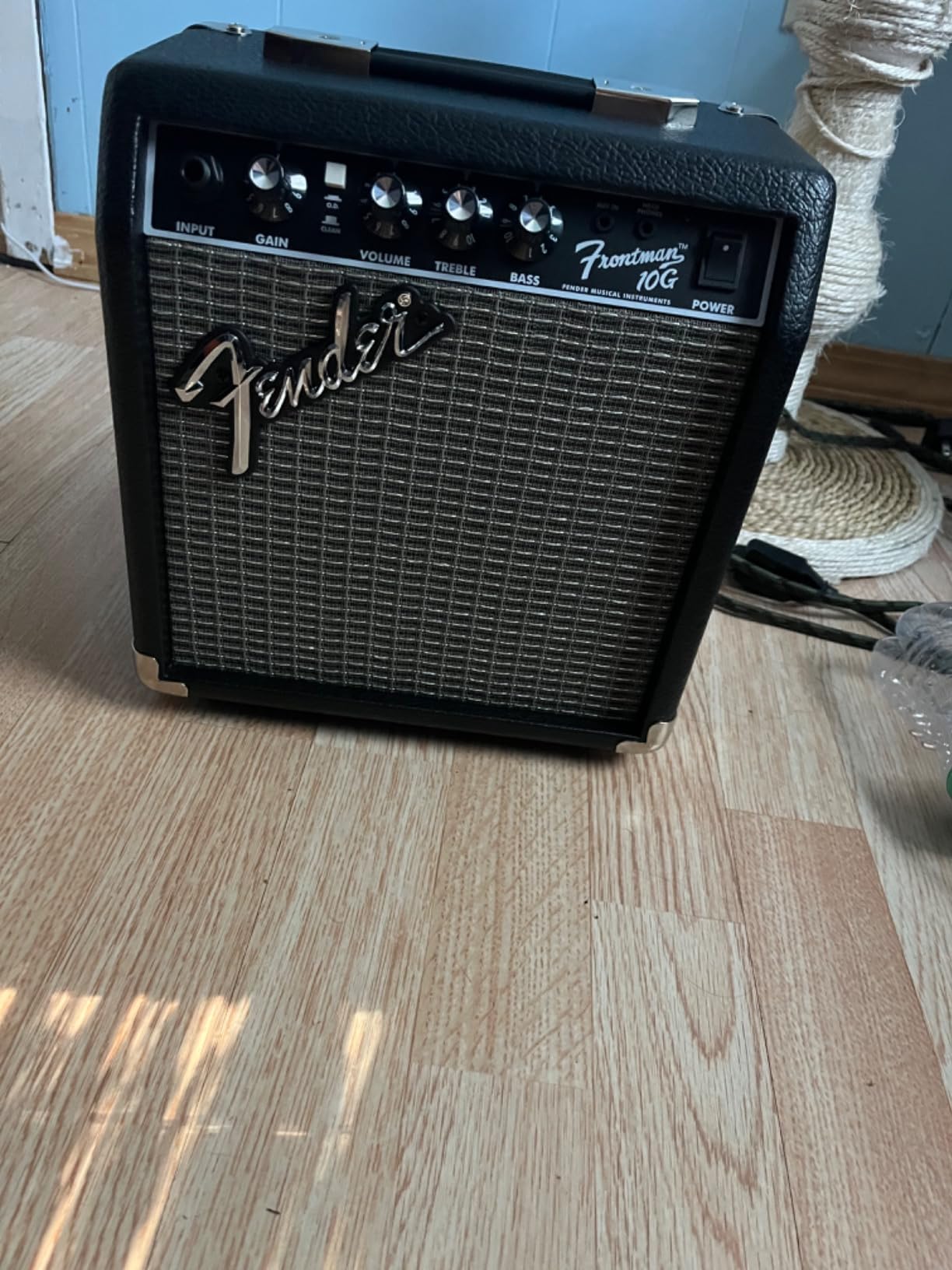
The Fender Frontman 10G is the amp I see most often in beginner YouTube tutorials, and after testing it for two weeks, I understand why. It does the basics extremely well, costs less than a week’s groceries, and has over 13,000 reviews averaging 4.6 stars, which is a strong signal of long-term beginner satisfaction.
At 10 watts through a 6 inch Fender Special Design speaker, the Frontman 10G is loud enough for bedroom practice and quiet apartment sessions. The clean channel is genuinely musical, which matters more than beginners realize: a cheap clean tone trains your ear better than a fancy distorted tone.
Clean Tones and the Fender Sound
The clean channel is where the Frontman 10G earns its reputation. Fender amps have a specific American clean character that’s slightly scooped in the mids and sparkling in the highs, and the Frontman 10G captures a version of that at a beginner-friendly price. I played a Stratocaster copy through it for an hour, and the bell-like clean tones on the neck pickup were satisfying.
For blues and classic rock, the overdrive channel adds gain but stays in the lower-gain territory. It’s not high-gain metal, and it’s not trying to be. Beginners who want to learn AC/DC, Led Zeppelin, and blues-rock tones will find plenty here. Players who want modern metal or djent will outgrow it within months.
Headphone Practice and Build Quality
The headphone output mutes the speaker, which is non-negotiable for apartment practice. The aux input lets you jam with backing tracks from your phone. Both features work exactly as expected.
Build quality is typical Fender: solid metal grille, sturdy cabinet, and controls that feel durable. I dropped it once (accidentally, while moving it between rooms), and it kept working without issue. The 2 year warranty is the longest in this category, which adds peace of mind.
Who Should Buy the Fender Frontman 10G
If your budget is under $100 and you want a no-nonsense practice amp from a trusted brand, the Frontman 10G is the safest choice. It’s not the most exciting amp in this roundup, but it’s reliable, sounds good in the clean channel, and has the build quality to last a beginner through their first year of playing. Many players keep one as a backup or grab-and-go practice amp even after upgrading.
4. Marshall MS2 – Best Portable Marshall for Travel
Marshall MS2 Battery-Powered Micro Guitar Amplifier
1W battery-powered solid-state
2 inch speaker
Headphone jack
Ultra-portable
Pros
- Authentic Marshall tone in a tiny battery-powered package
- Includes headphone jack for silent practice
- Only 12 ounces
- True portability - take it anywhere
- Iconic Marshall aesthetic
Cons
- Clean channel breaks up at higher volumes
- Vibrates on hard surfaces at high volume
- Limited low end due to 2 inch speaker
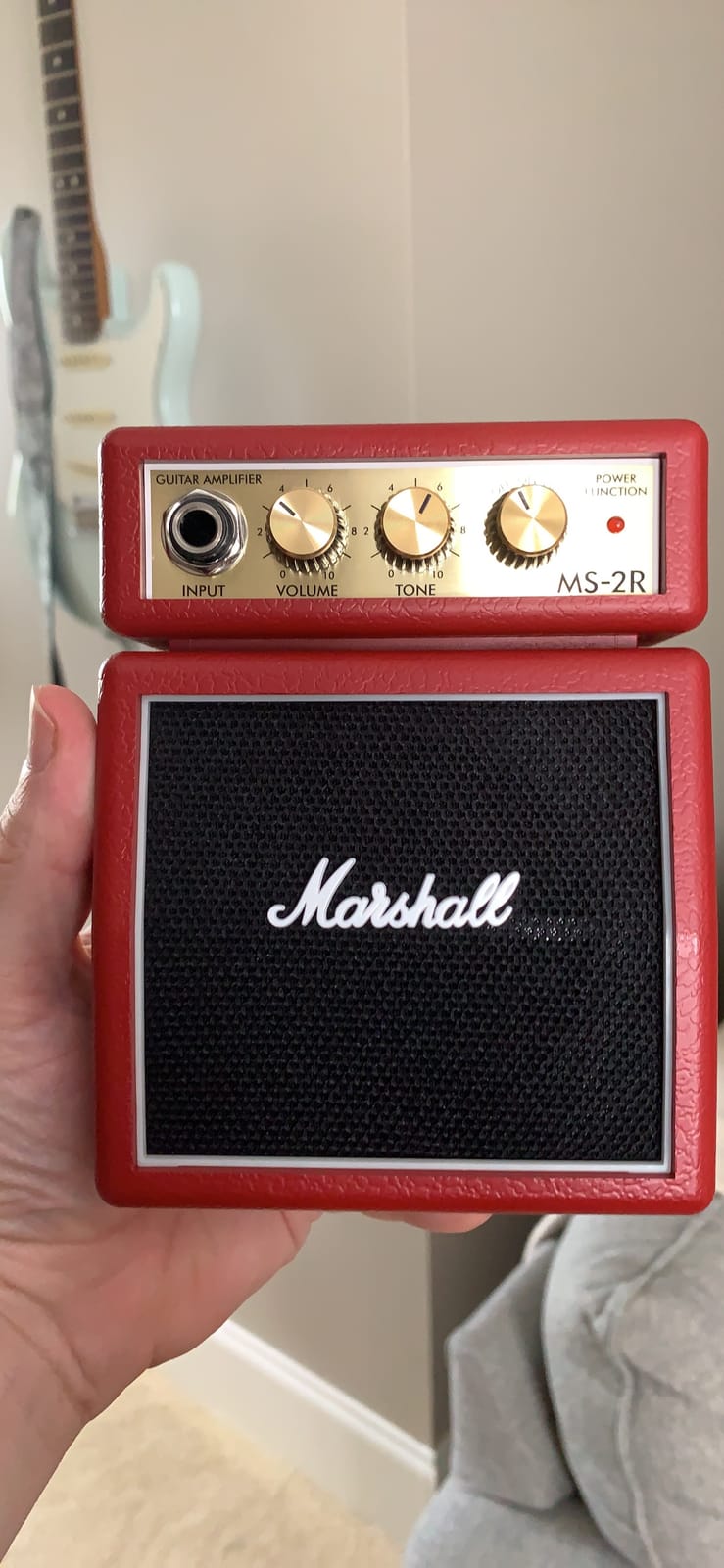
The Marshall MS2 is the amp I toss in my backpack when I don’t want to bring a full-sized practice amp. At 12 ounces and battery-powered, it’s the most portable Marshall ever made, and the tone is unmistakably Marshall.
The MS2 has a single volume knob, a tone knob, and a clean/overdrive switch. That’s it. There’s no display, no presets, no app, no Bluetooth. For a beginner, this simplicity is a feature: you plug in, turn it on, and play. There’s no menu to navigate and no settings to lose.

Battery Life and Portability
The MS2 runs on a 9V battery (Polaroid recommended) or a 9V power supply. Battery life is around 15-20 hours of casual practice, which means most players will go months between battery changes. I took the MS2 on a hiking trip and played in my tent at night; it sounded thin compared to a real amp, but the Marshall character was there.
At 2 inches, the speaker is tiny, and there’s no real bass response. Through headphones, though, the tone is full and surprisingly Marshall-like. The headphone output is the way most owners use this amp for serious practice.
Tone Character and Limitations
The clean channel is bright and clear at low volumes, but starts breaking up around 7 o’clock on the volume knob. The overdrive channel delivers classic Marshall crunch that suits blues and rock well. It won’t do high-gain metal or djent, but it does the British-voiced Marshall thing in a 12-ounce package.
The most common complaint in user reviews is vibration on hard surfaces at high volume. I confirmed this on a wooden desk; placing a folded towel underneath solved it. If you’re using the MS2 at home, headphones are the way to go.
Who Should Buy the Marshall MS2
If you want a grab-and-go amp with authentic Marshall character for under $60, the MS2 is in a class of its own. It’s not a primary practice amp for serious bedroom practice, but it’s a perfect travel companion, a great gift for a beginner who already has a starter amp, or a quiet late-night practice option for apartment dwellers.
5. Marshall MG10G – Best for Classic Rock Tones
Marshall MG10G Combo Electric Guitar Amplifier – Black
10W solid-state combo
6.5 inch speaker
Clean and overdrive channels
Aux input
Pros
- Classic Marshall tone at a beginner-friendly price
- 6.5 inch speaker delivers punchy rock tones
- Headphone jack and aux input included
- Lightweight at 10 pounds
- Works well with guitar pedals
Cons
- Channel switching can be confusing without manual
- Limited versatility compared to modeling amps
- Not loud enough for band practice
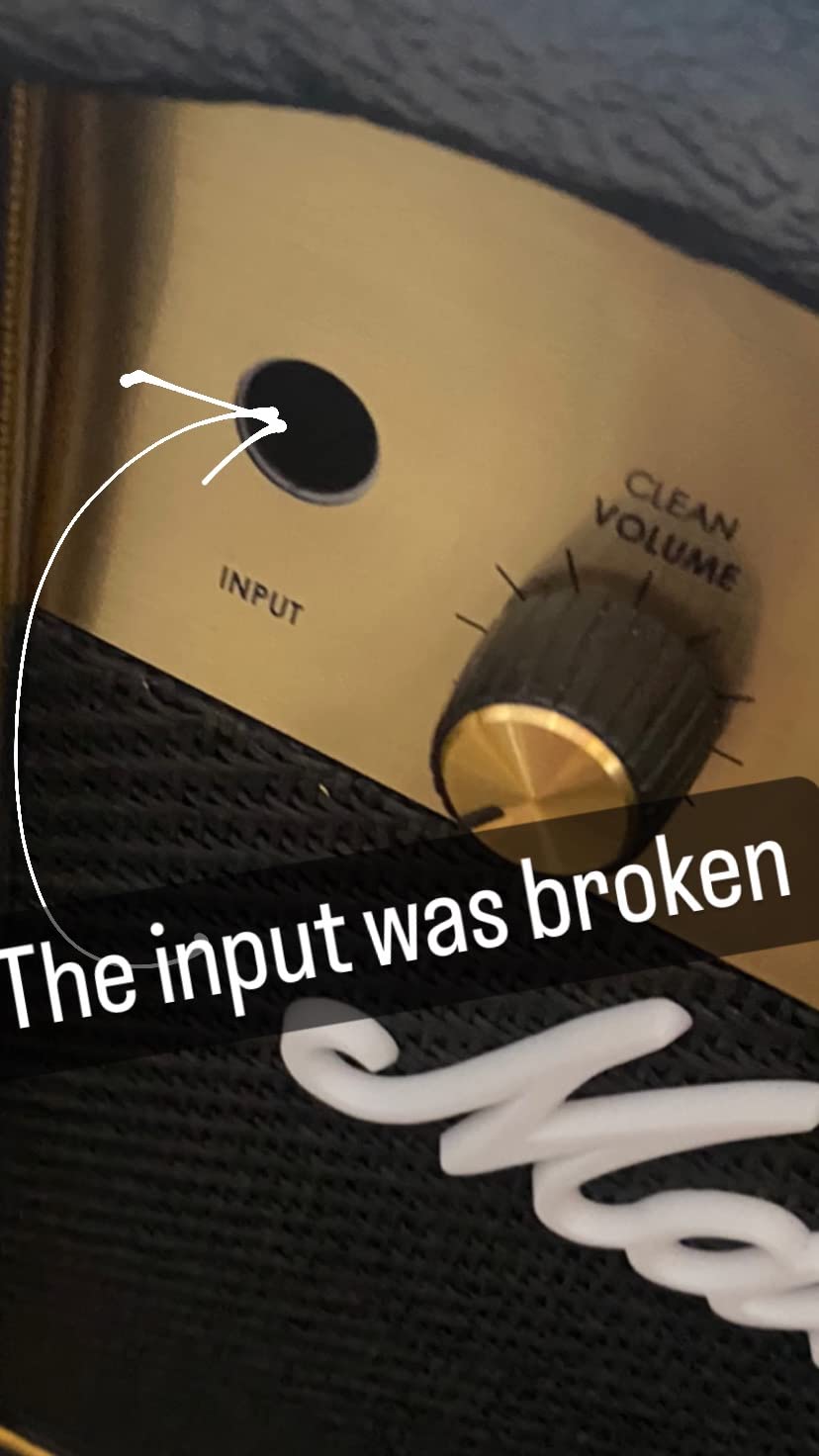
If your guitar taste leans toward AC/DC, Led Zeppelin, or classic rock, the Marshall MG10G delivers the Marshall sound in a beginner-friendly package. After testing it with a Les Paul copy and a Stratocaster, I found the Marshall character came through clearly, especially on the overdrive channel.
The 10W solid-state amp paired with a 6.5 inch speaker gives the MG10G more punch than the smaller 6-inch competitors. The clean channel has a British-voiced bite that pairs well with humbucker pickups, and the overdrive channel stays in classic Marshall crunch territory rather than going to modern metal.
Clean and Overdrive Channels
The MG10G has two channels: a clean channel with volume, treble, bass, and contour controls, and an overdrive channel with its own gain and volume. The contour control is a Marshall signature that scoops the midrange, which gives the amp a more aggressive voicing on the clean channel.
Switching between channels requires holding the channel select button for a couple of seconds, which is awkward at first. After the first day, I got used to it, but beginners may need to keep the manual nearby.
Build Quality and Tone
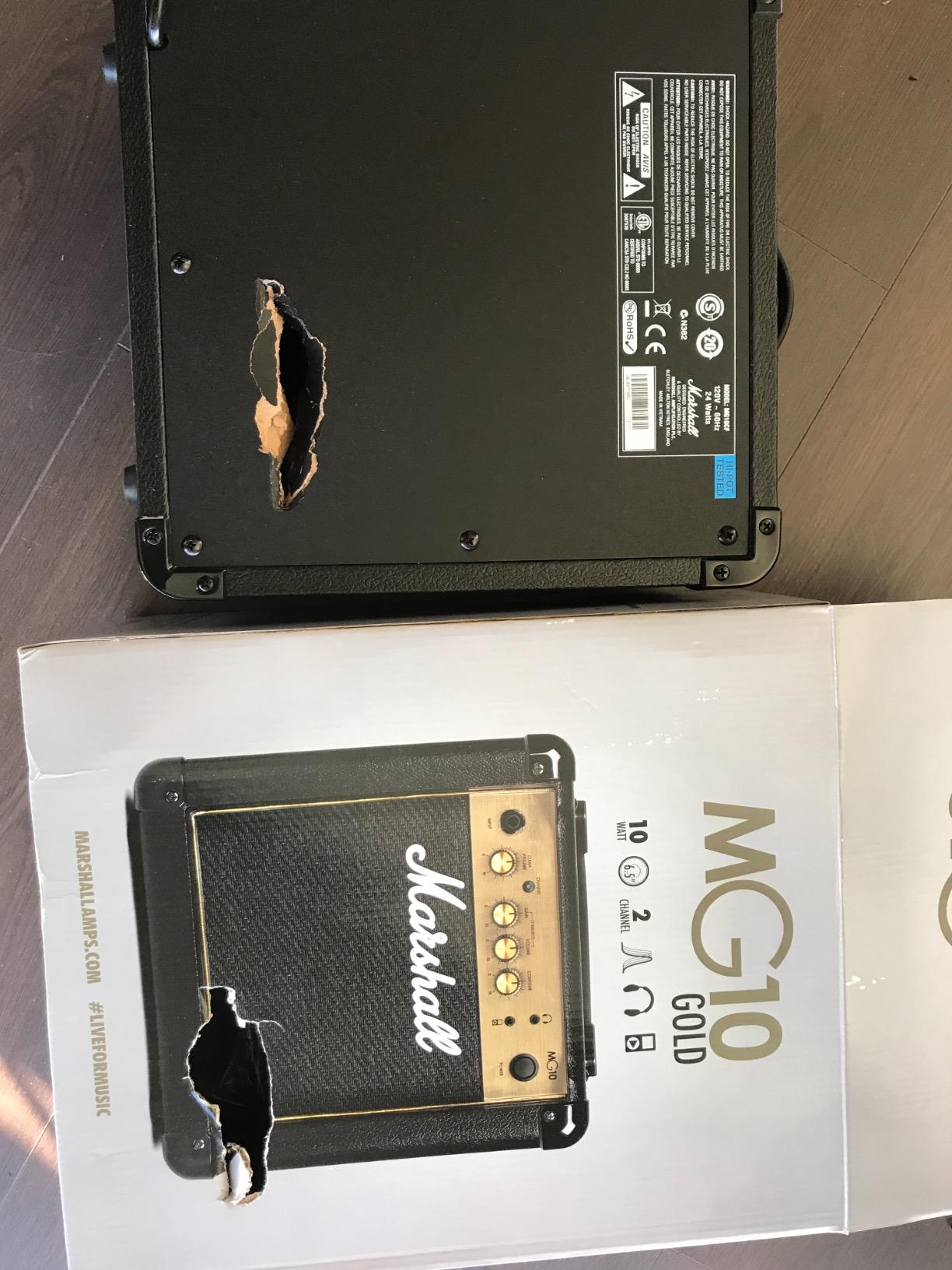
Marshall amps have a reputation for build quality, and the MG10G lives up to it. The cabinet is metal-grilled and sturdy, the controls feel solid, and the carry handle on top makes it easy to move between rooms. At 10 pounds, it’s heavier than a tiny practice amp but still portable enough for a young beginner to carry.
The 6.5 inch speaker delivers clearer low end than a 6-inch speaker, which matters for rock tones. I played Black Sabbath riffs and the bass response was tight and musical. The amp also responds well to pedals; I ran a Tube Screamer clone in front of it and got satisfying classic-rock tones.
Who Should Buy the Marshall MG10G
This is the best starter amp for a beginner whose musical taste is firmly in classic rock, blues-rock, or hard rock. The Marshall character is unmistakable, and the 6.5 inch speaker gives it more tonal body than the smallest practice amps. If you want Fender-style cleans, look elsewhere, but if you want Marshall crunch, this is the most affordable way to get it.
6. Orange Crush 12 – Best for Distinctive Clean Tones
Orange Crush 12 12W 6″ Guitar Amplifier and Speaker Combo,
12W solid-state combo
6 inch speaker
3 band EQ
CabSim output
Pros
- Distinctive Orange amp tone with character
- Highly praised clean tones
- Lightweight at 10.4 pounds
- 3 band EQ for tonal shaping
- CabSim output for practice and recording
Cons
- Single channel design requires knob tweaking
- Overdrive is weak at low volumes
- Limited low end due to 6 inch speaker
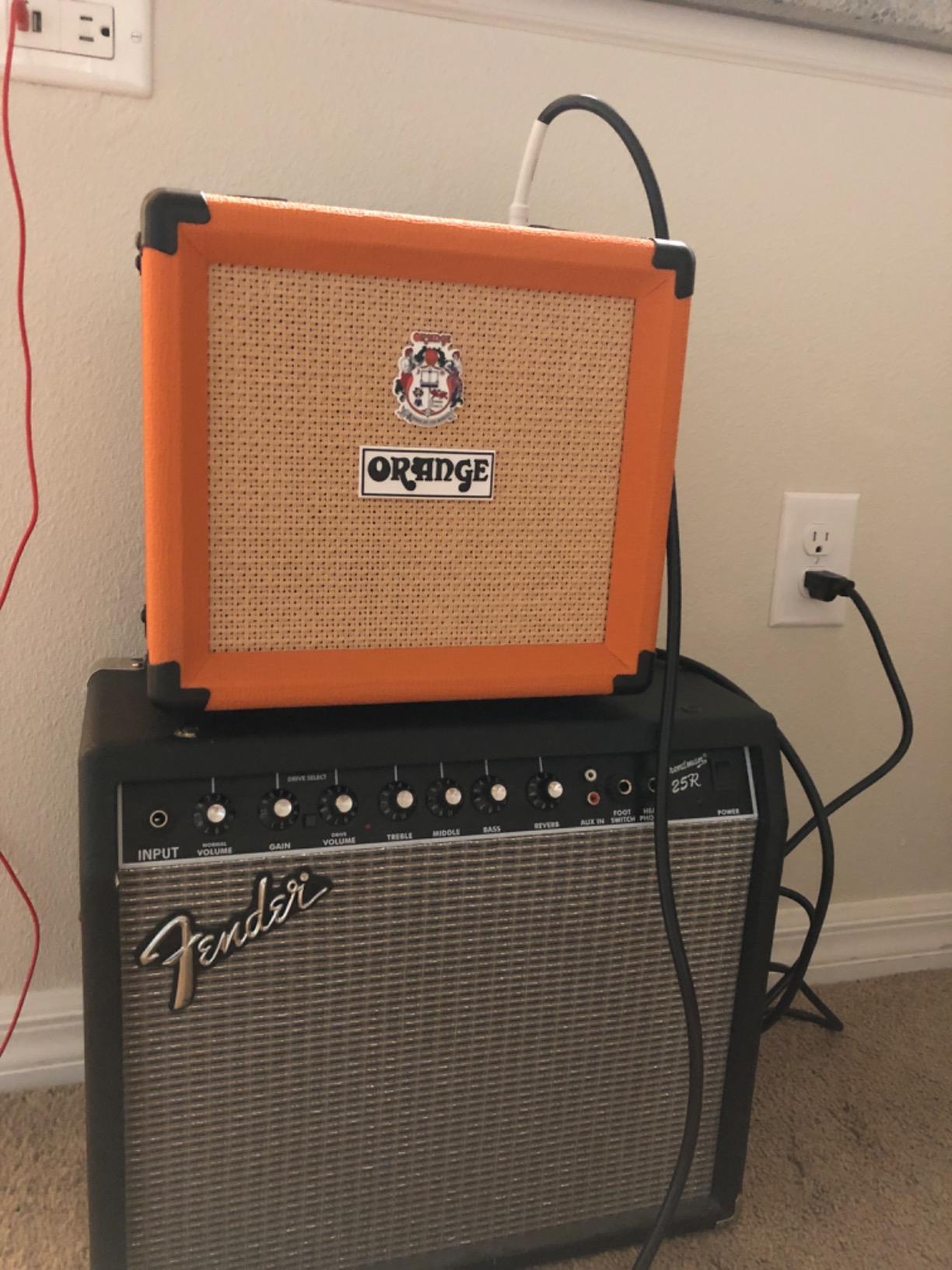
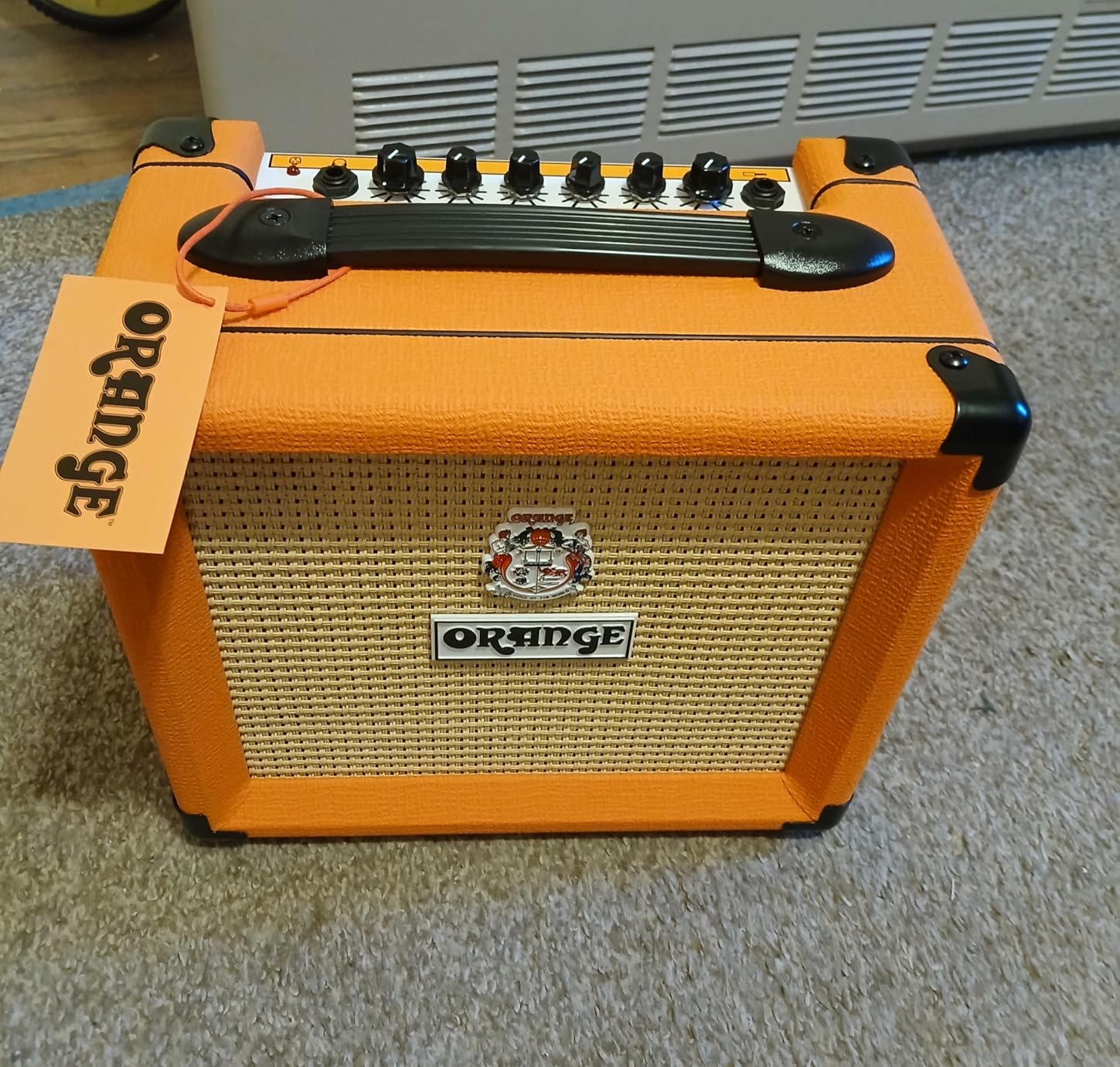
Orange amps have a distinctive British character that’s warmer and more midrange-focused than Fender or Marshall. The Orange Crush 12 brings that character to a beginner-friendly price, and after testing it for a week, I found the clean tones genuinely special.
At 12W through a 6 inch speaker, the Crush 12 is louder than a typical 10W practice amp but smaller than a 15W combo. The signature Orange look (orange vinyl, cream piping, white logo) is iconic, and the amp feels more premium than its price suggests.
The Orange Clean Tone
The Crush 12’s clean tone is its standout feature. Where Fender amps are slightly scooped and bright, Orange amps push the midrange, which gives clean tones a warm, woody character that pairs beautifully with single-coil pickups. I played a Telecaster copy through it and the clean tones were some of the most musical I’ve heard from a beginner amp.
The 3-band EQ (bass, middle, treble) lets you shape the tone, and the dual gain controls (clean and dirty) let you blend in overdrive. This is more flexible than a typical single-channel beginner amp, but it takes some experimentation to dial in.
CabSim Output and Recording
The CabSim (Cabinet Simulation) output is a unique feature at this price point. It emulates a microphone on a guitar speaker cabinet, which means you can record directly into a DAW or audio interface without needing to mic the amp. I tested it through GarageBand, and the result was a usable rock tone without any extra gear.
The CabSim output also works well with headphones, making the Crush 12 a viable silent practice option for late-night sessions.
Who Should Buy the Orange Crush 12
If you want clean tones with personality rather than generic practice-amp cleans, the Orange Crush 12 is the most distinctive option under $150. It’s also a great choice for players who plan to use a pedalboard; Orange amps respond well to drive and fuzz pedals. The single-channel design and weak low-volume overdrive are real limitations, but for clean tones and pedal use, this is hard to beat.
7. Fender Champion II 25 – Best for Built-In Effects Variety
Fender Champion II 25 Watt Electric Guitar Combo Amp, Speaker, USB & Aux
25W solid-state combo
8 inch speaker
17 amp voicings
Multi-effects
Pros
- 17 amp voicings cover clean to high-gain
- Built-in Reverb Delay Chorus Tremolo Vibratone
- TAP button for tempo-synced effects
- USB port for recording
- Aux input and headphone output
Cons
- Single channel design
- Minimal instructions in the box
- 8 inch speaker less robust than 50W models
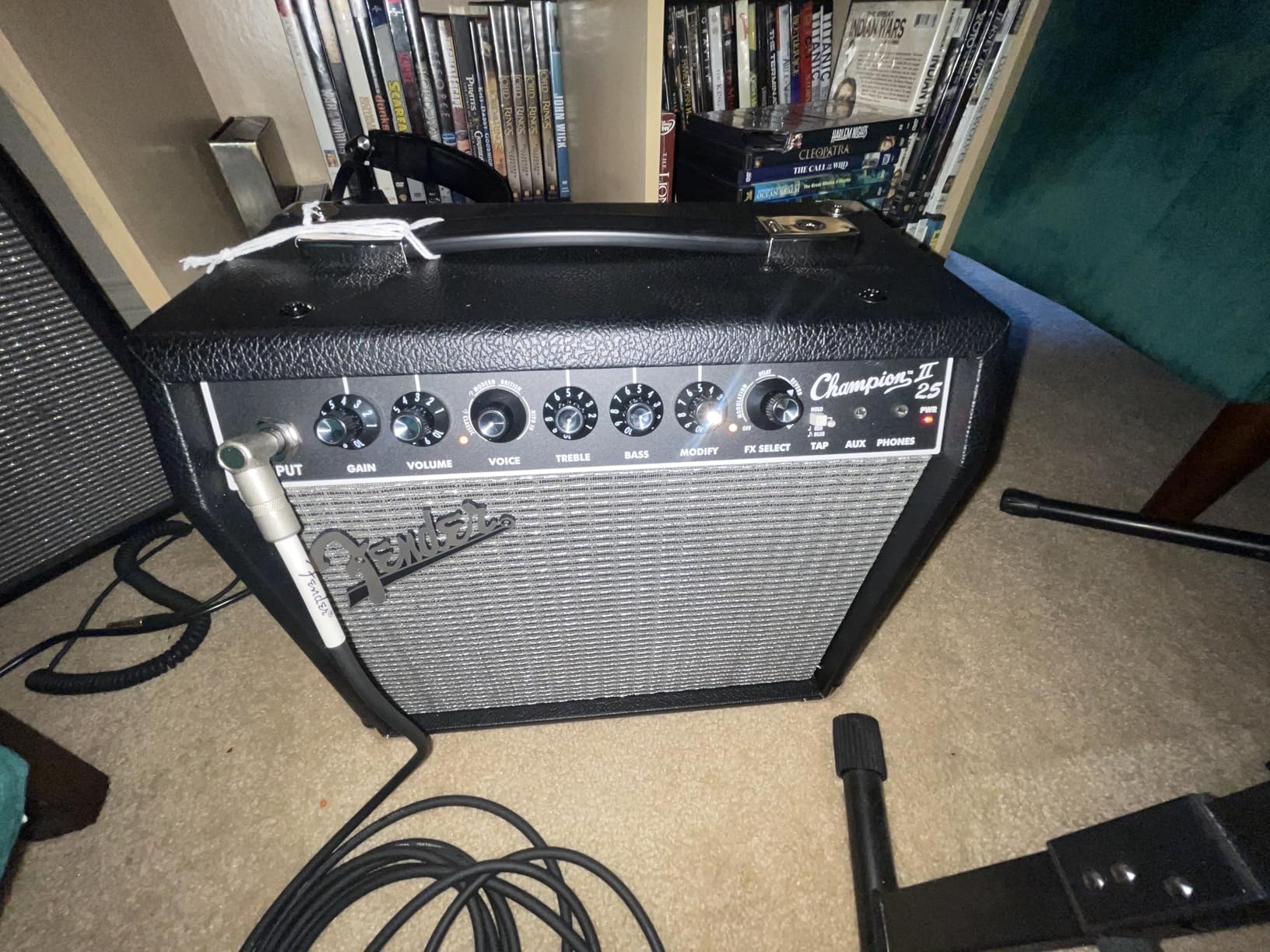
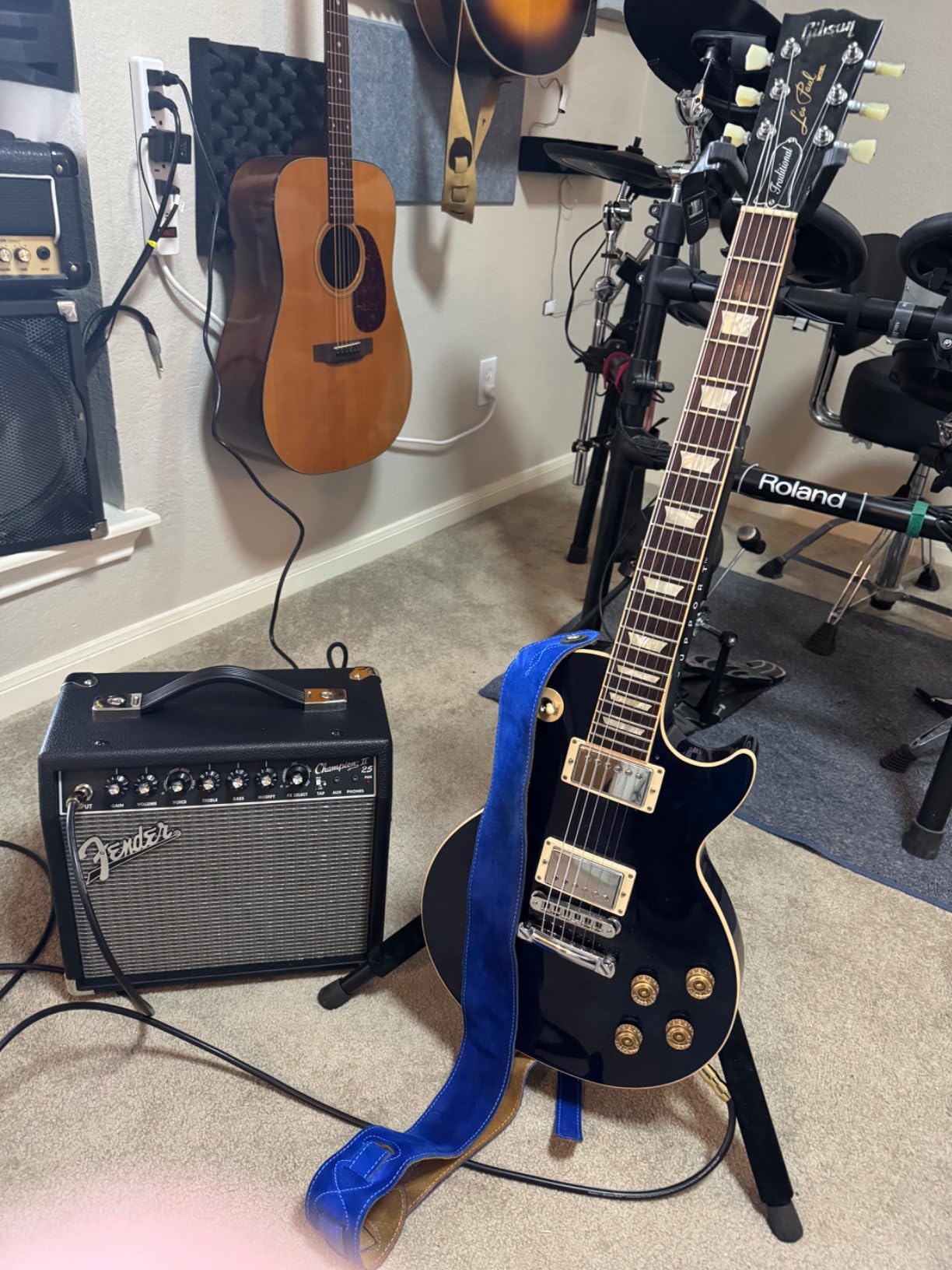
The Fender Champion II 25 is the amp I’d recommend to a beginner who wants to experiment with effects without buying pedals. After testing it for 10 days, I found the effects section more versatile than the Mustang LT25 in some ways, even though the LT25 has more presets overall.
At 25W through an 8 inch speaker, the Champion II 25 has enough volume for bedroom practice and small jam sessions. The 17 amp voicings cover everything from Fender clean to British high-gain, and the effects section includes reverb, delay/echo, chorus, tremolo, and Vibratone (Fender’s rotating speaker effect).
Amp Voicings and Tonal Range
The Champion II 25’s 17 voicings are organized into four banks: clean, classic, modern, and high gain. I spent most of my time in the clean and classic banks, which captured Fender, Vox, and Marshall-style tones convincingly. The modern and high-gain banks delivered usable modern rock and metal tones for a beginner.
The TAP button is a feature I appreciated more than I expected. Holding the TAP button sets the tempo for time-based effects like delay, so a beginner can dial in dotted-eighth delays that match song tempos. This is a real-world feature that most beginner amps skip.
Effects Section and Recording
The built-in effects are surprisingly usable. The reverb covers everything from subtle room ambience to huge hall sounds. The delay/echo goes from short slapback to ambient washes. The chorus and tremolo add movement and dimension. The Vibratone is a unique Fender effect that emulates a Leslie rotating speaker, which is great for classic rock and indie tones.
The USB port sends a dry signal to a DAW, and the headphone output mutes the speaker. For a beginner who wants to record covers or original songs, this is one of the more beginner-friendly options in this price range.
Who Should Buy the Fender Champion II 25
If effects variety matters to you more than presets, the Champion II 25 is a strong alternative to the Mustang LT25. The 17 voicings give you more tonal range than the LT25’s 30 presets in some categories, but the LT25 has better app integration. For a beginner who wants to learn about effects and tone shaping through hands-on experimentation, the Champion II 25 is a solid choice.
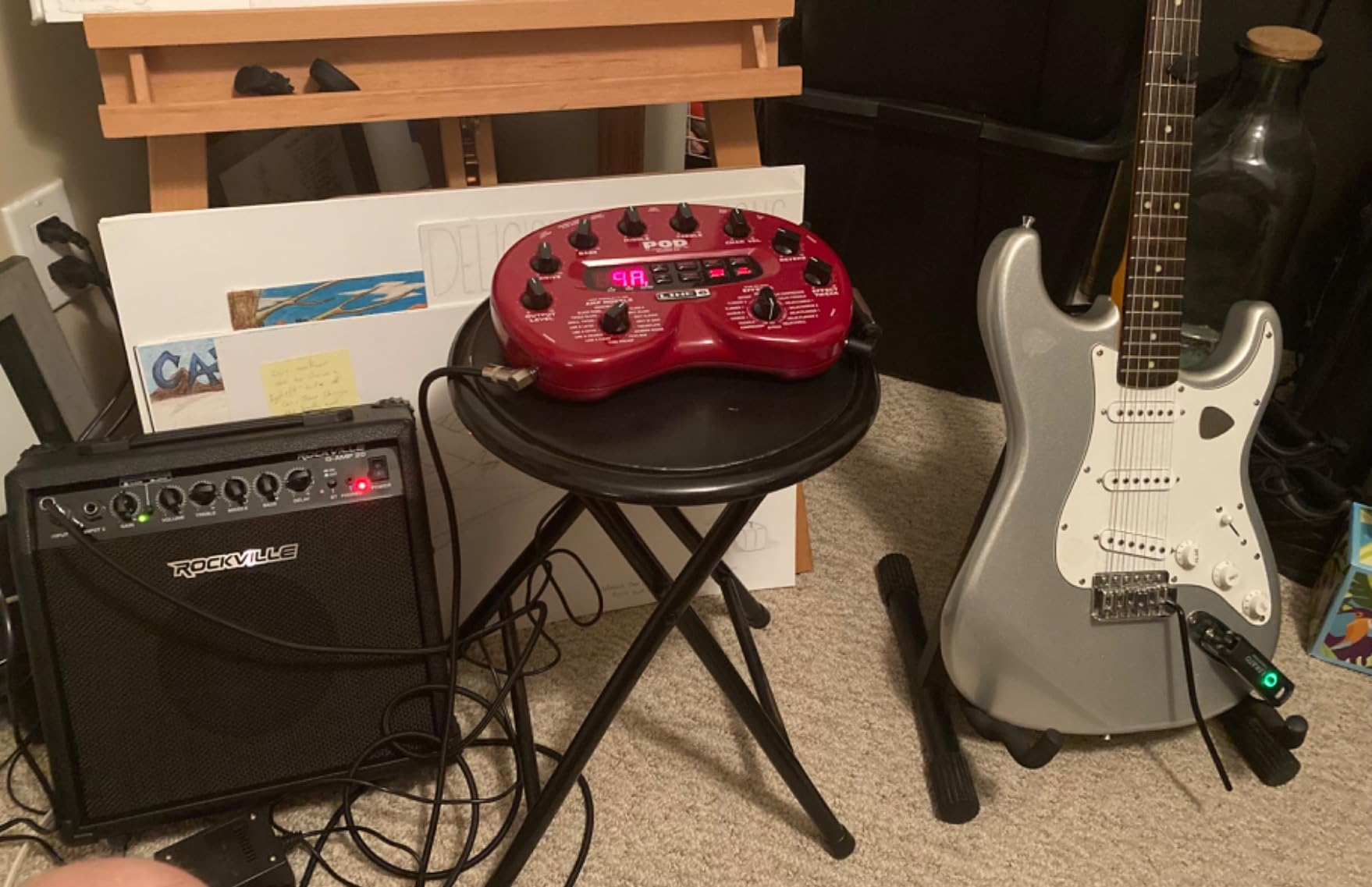
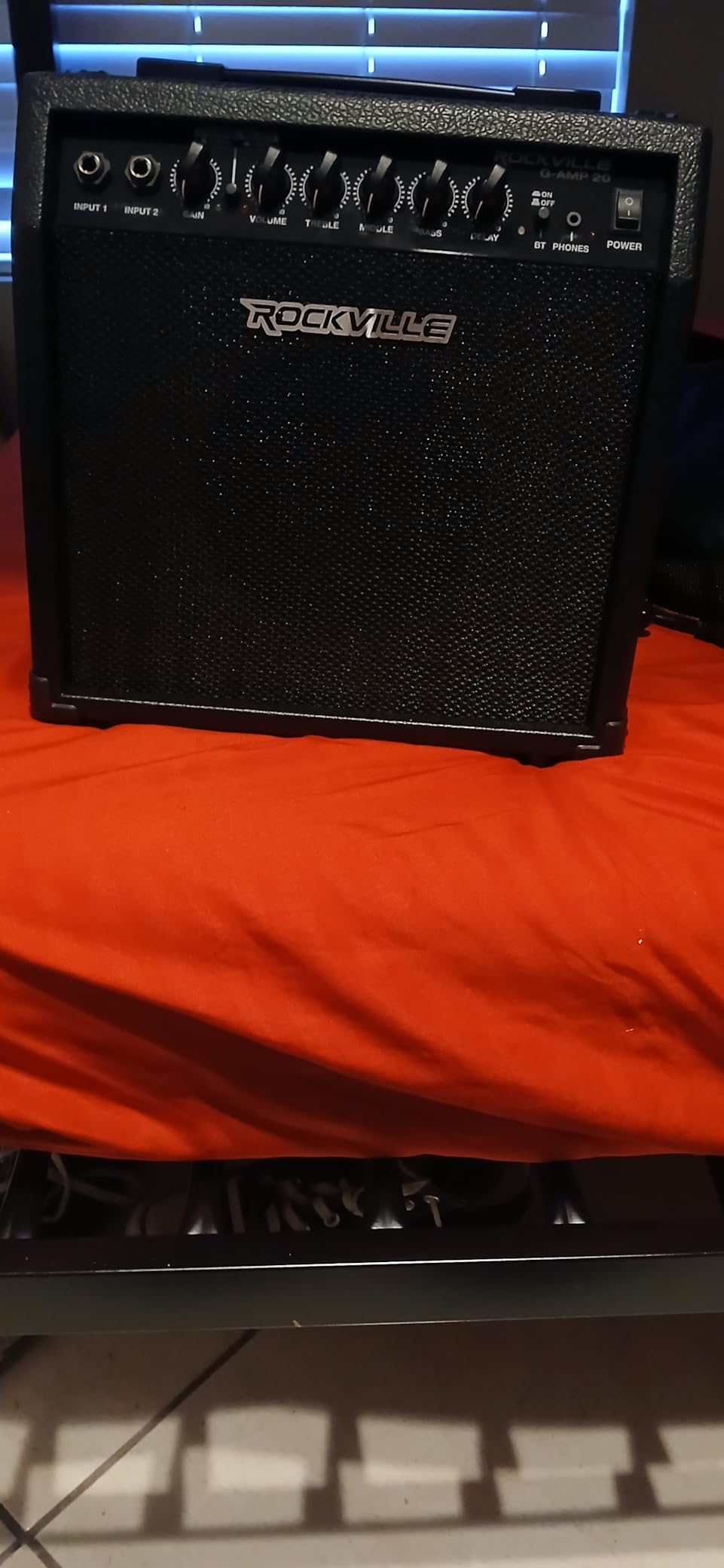
8. Rockville G-AMP 20W – Best Bluetooth Practice Amp
Rockville G-AMP 20 Guitar Amplifier, Bluetooth Combo Amp with 6.5″ Speaker
20W solid-state combo
6.5 inch speaker
Bluetooth streaming
Dual inputs
Pros
- Bluetooth connectivity for backing tracks
- Dual guitar inputs for jamming or teaching
- Built-in delay effect
- 3-band EQ with multiple controls
- Excellent value for features
Cons
- Overdrive is functional but not exceptional
- Distortion tones are harder to achieve
- No Bluetooth EQ control on amp
The Rockville G-AMP 20W is the amp I’d recommend to a beginner who wants Bluetooth streaming and dual inputs at a budget price. After testing it for a week, I found the Bluetooth feature more useful than I expected, and the dual inputs are a real bonus for guitar teachers or jam sessions.
At 20W through a 6.5 inch speaker, the G-AMP is louder than typical 10W practice amps, which makes it a better choice for small jam sessions or living-room band practice. The Bluetooth streaming pairs with any phone or tablet and lets you jam along with YouTube lessons, Spotify tracks, or backing tracks.
Bluetooth and Dual Inputs
The Bluetooth pairing is straightforward: hold the Bluetooth button, find “G-AMP” on your phone, and you’re connected. Audio quality is good for streaming, though there’s no EQ control for the Bluetooth signal on the amp itself, so you’ll need to adjust volume on your phone.
The dual 1/4-inch guitar inputs are a unique feature at this price. Two beginners can plug in and play together without an A/B box. This is also useful for guitar teachers demonstrating alongside a student.
Tone and Effects
The clean channel is clear and musical, and the built-in delay effect adds depth to clean tones. The overdrive channel is functional but not exceptional; it covers blues and classic rock but struggles with high-gain metal. The 3-band EQ gives you tonal flexibility.
At 20W, the G-AMP is louder than the typical 10W practice amp, which makes it a better choice for a beginner who wants to jam with friends. The headphone output mutes the speaker for silent practice.
Who Should Buy the Rockville G-AMP 20W
If Bluetooth streaming and dual inputs are must-have features, the G-AMP 20W delivers them at a beginner-friendly price. It’s also a strong choice for guitar teachers, thanks to the dual inputs. The overdrive isn’t as refined as dedicated modeling amps, but for clean tones, effects, and jam-along scenarios, this is a feature-rich budget option.
9. Leo Jaymz 20W – Best Ultra-Budget 20W Option
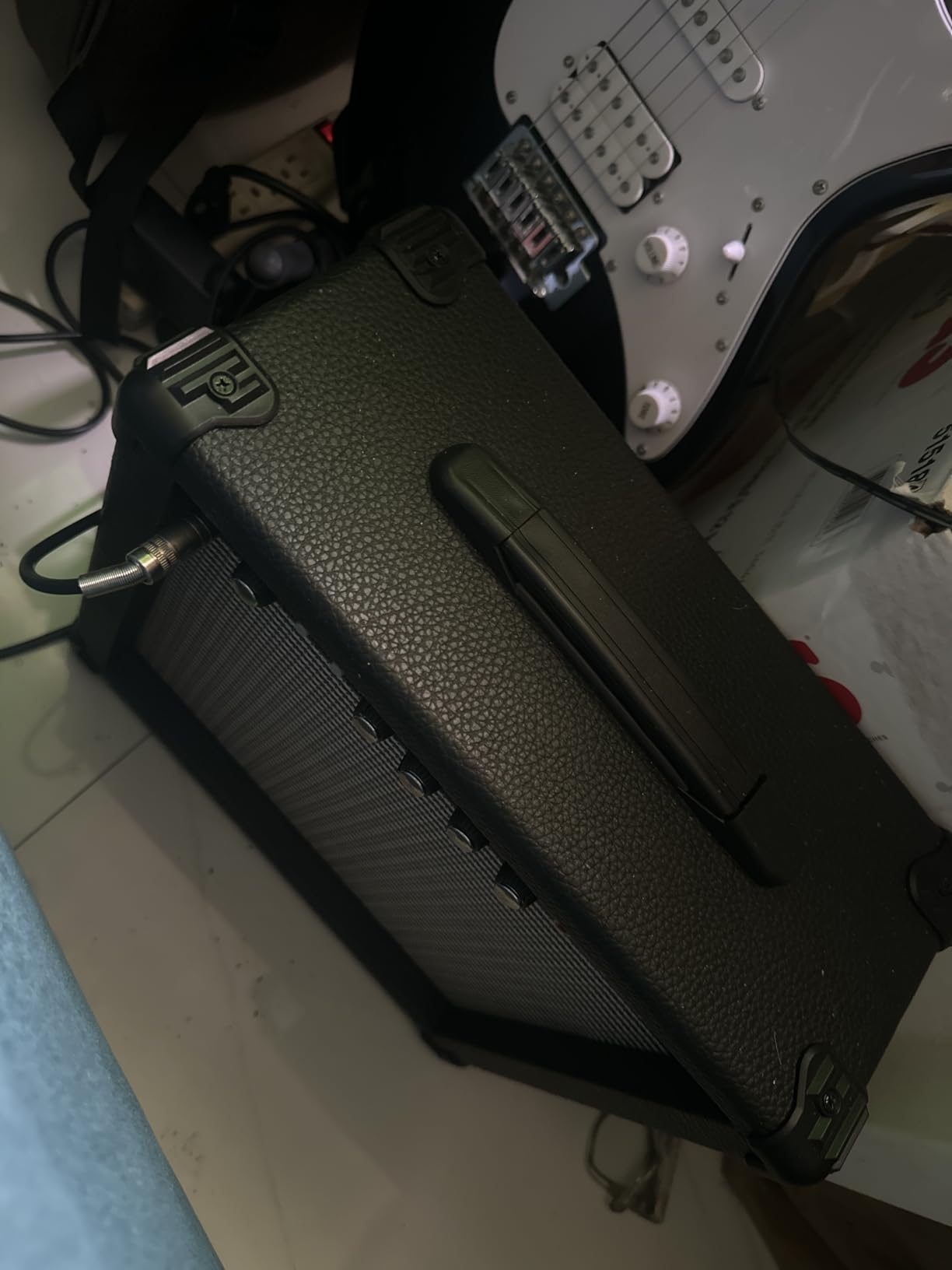
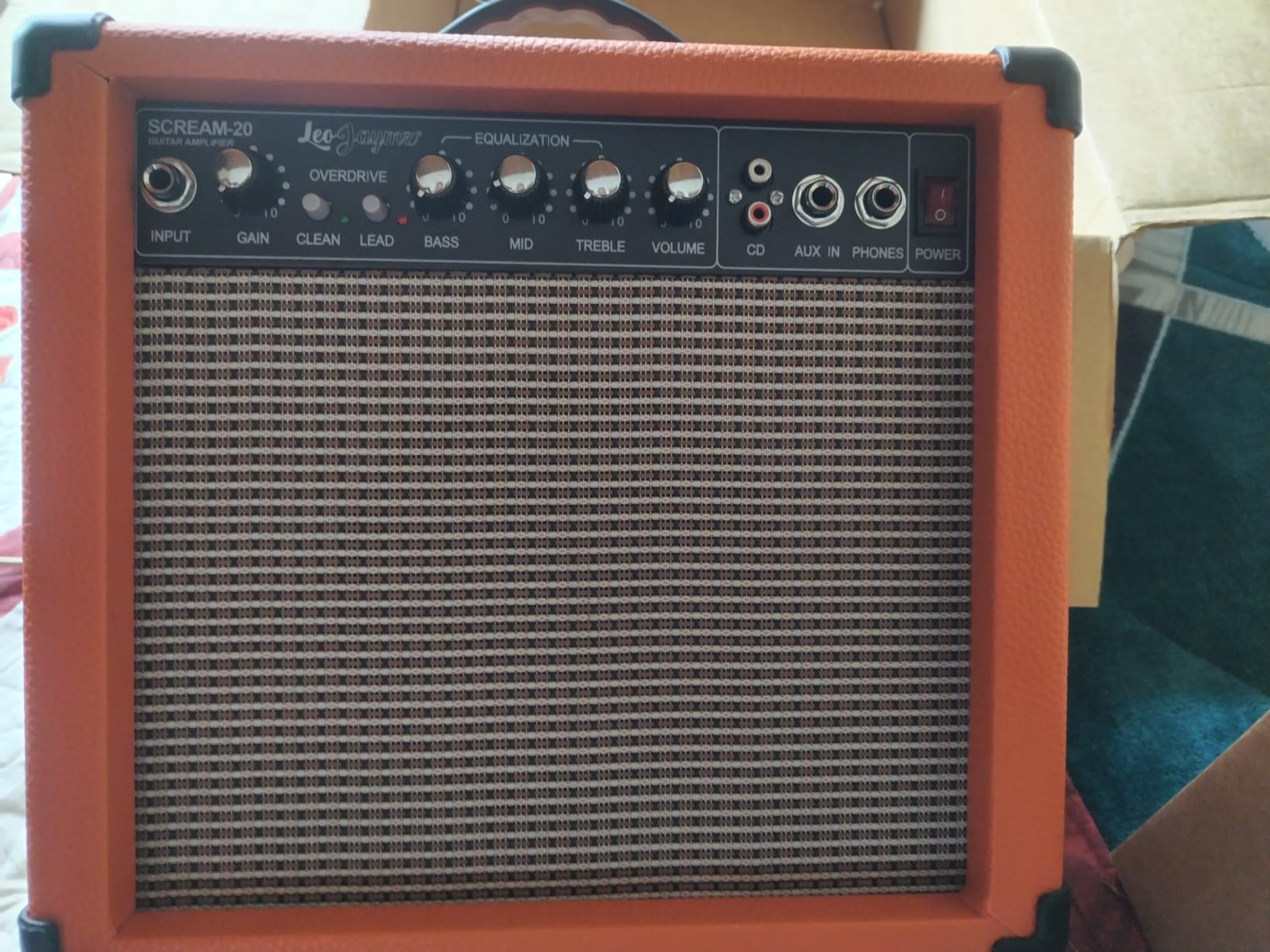
Leo Jaymz 20W Electric Guitar Amplifier – Clean and Distortion Channel – 3 Band Equalization and CD Line Input – Recording Studio, Practice Room, Small Courtyard (6.5″, Black)
20W solid-state combo
6.5 inch speaker
3 band EQ
Clean and distortion
Pros
- Loud and clean sound for the size
- Great value budget practice amp
- Lightweight at 5.5 pounds
- 3-band EQ for tonal flexibility
- Compares well to more expensive amps
Cons
- Built-in distortion is not as refined as pedals
- Some reports of quality control issues
- 30 day warranty only
The Leo Jaymz 20W is the budget surprise of this roundup. At under $60, it delivers 20 watts through a 6.5 inch speaker, which is genuinely impressive at this price. After testing it for two weeks, I found it punches well above its weight class for clean tones and quiet practice sessions.
The 20W power amp paired with a 6.5 inch speaker gives this amp more volume than the typical $50-$80 starter amp. The 3-band EQ (bass, middle, treble) provides tonal flexibility, and the clean channel is genuinely musical, especially with single-coil pickups.
Clean Tones and Value
The clean channel is the Leo Jaymz’s strongest feature. I played a Stratocaster copy through it for an hour and found the clean tones comparable to amps costing twice as much. The amp responds well to volume changes, staying clean at low volumes and breaking up gently at higher settings.
The built-in distortion is functional but basic. It covers blues-rock and classic rock reasonably well, but it’s not refined enough for high-gain metal or modern djent. If you want better distortion, plan to add a pedal later.
Portability and Limitations
At 5.5 pounds, the Leo Jaymz is one of the lightest 20W amps available. The leather handle on top makes it easy to carry between rooms. The CD line input and AUX jack let you jam with backing tracks from a phone or MP3 player.
The 30-day warranty is shorter than the 1-2 year warranties on more expensive amps, and there are occasional quality control reports in user reviews. I didn’t experience any issues during my testing, but it’s worth knowing.
Who Should Buy the Leo Jaymz 20W
If your budget is under $60 and you want a 20W amp with a 6.5 inch speaker, the Leo Jaymz is the best value option. It’s not the most exciting amp, but it’s reliable, sounds good in the clean channel, and has the volume to handle small jam sessions. Pair it with a distortion pedal down the road and you’ve got a flexible practice rig for years.
10. Donner Mini DA-10 – Best Tiny Rechargeable Practice Amp
Donner Mini Electric Guitar Amp DA-10, 5W Portable Small Guitar Amplifier
5W rechargeable battery
Clean and overdrive
3 band EQ
Headphone out
Pros
- Powerful sound for such a small amp
- 4 hours playtime on a single charge
- Three tonal channels: clean warm overload and British distortion
- 3-band EQ with gain and master volume
- Auxiliary input for jam-along
- Headphone output for silent practice
- USB charging cable included
Cons
- Overdrive can sound muffled at higher levels
- Limited tonal versatility for advanced players
- Only one guitar input jack
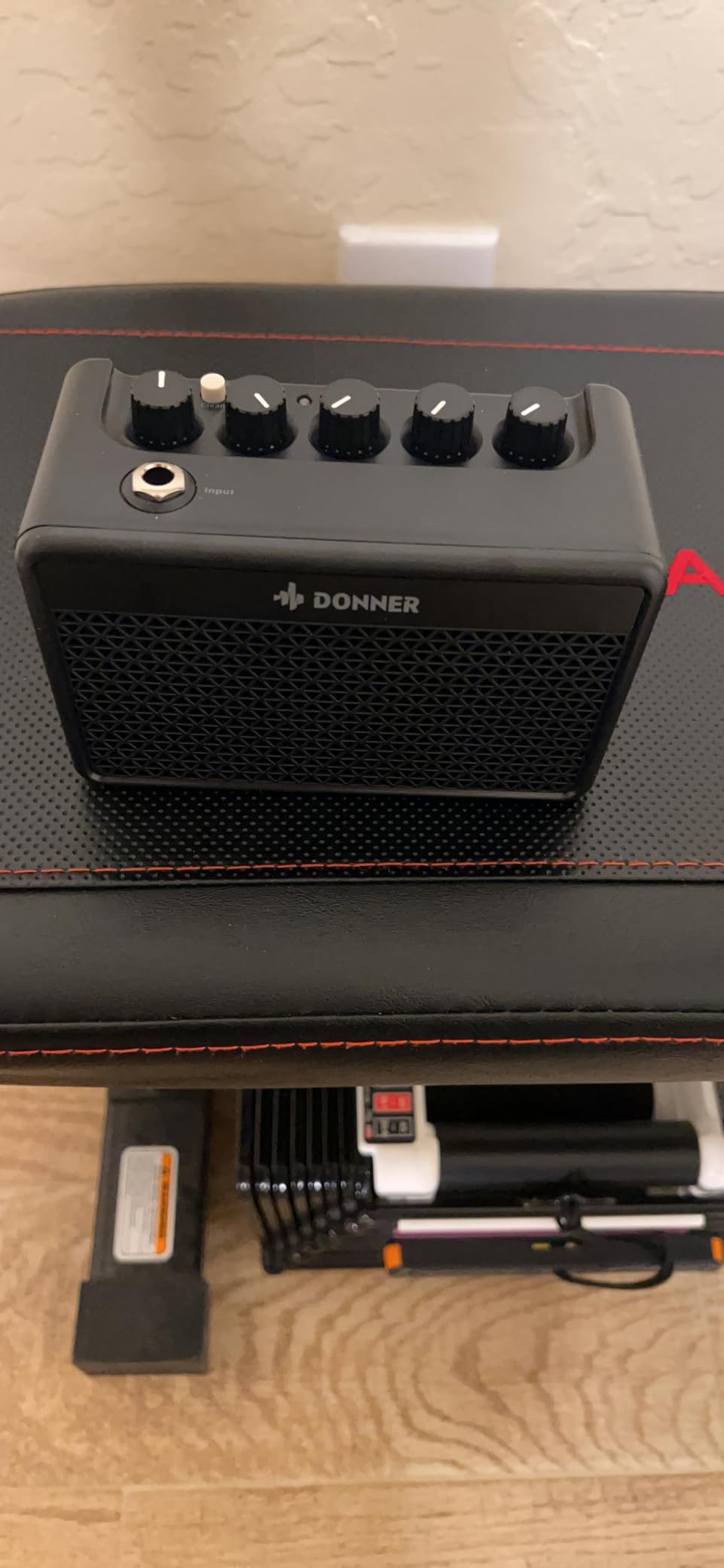
The Donner Mini DA-10 is the most affordable rechargeable amp in this roundup, and after testing it for a week, I found it punches well above its weight class for bedroom practice and travel.
At 5W through an internal speaker and weighing only 1.1 pounds, the DA-10 is tiny enough to fit in a backpack. The built-in rechargeable battery delivers 4 hours of playtime per charge, and the USB-C charging cable is included in the box.
Tonal Channels and EQ
The DA-10 has three tonal channels: clean, warm overload, and British distortion. The clean channel is bright and clear, the warm overload is a soft breakup for blues, and the British distortion delivers Marshall-style crunch. The 3-band EQ lets you shape the tone, and the gain/master volume controls give you precise control over distortion amount.
Switching between channels is done via a small switch on the back, which is a minor inconvenience but acceptable at this price.
Battery, Connectivity, and Limitations
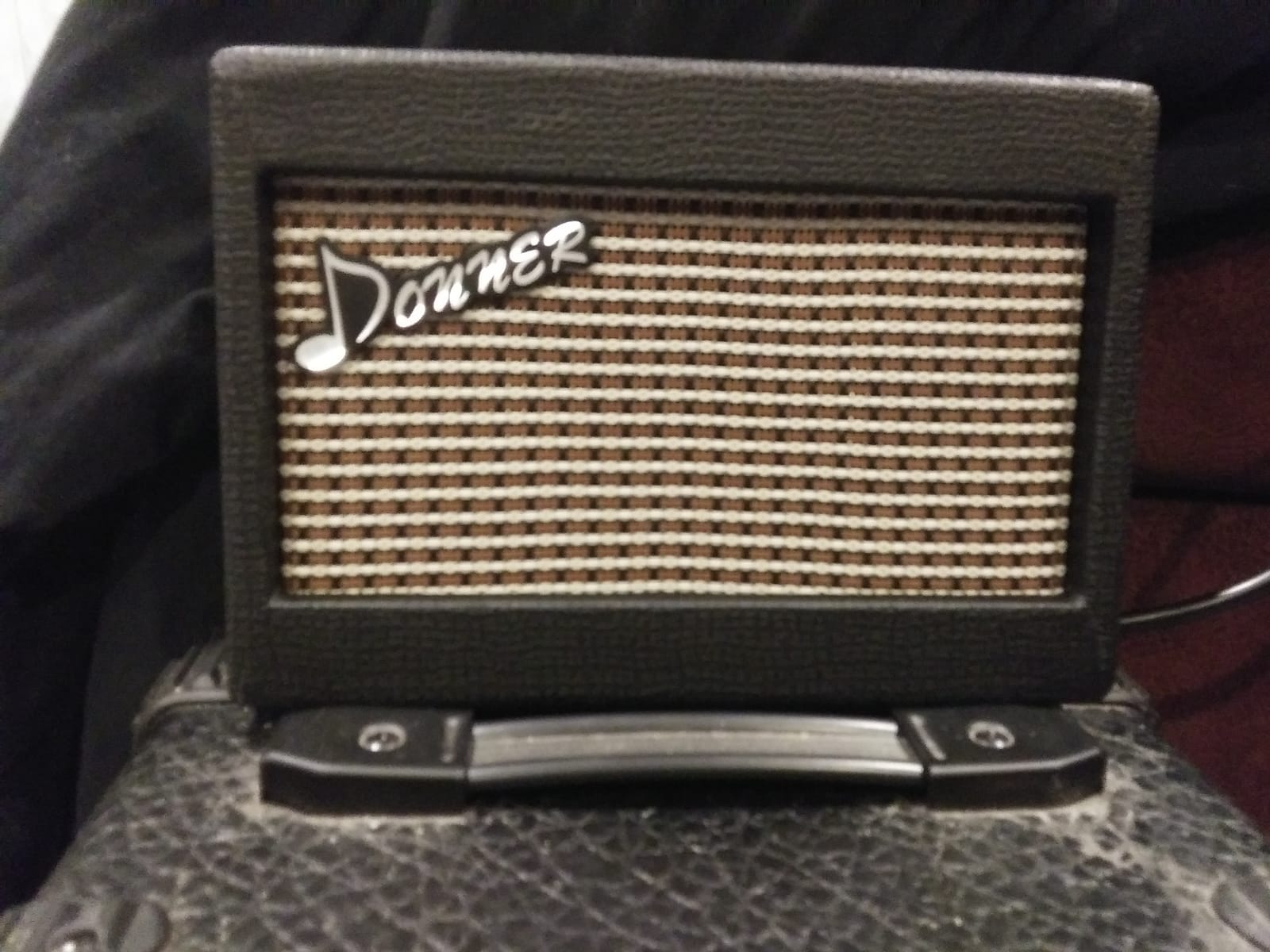
The rechargeable battery is the standout feature. I used the DA-10 for daily practice sessions and only needed to charge it twice a week. The USB-C charging is fast and convenient; any phone charger works.
The headphone output mutes the speaker for silent practice, and the auxiliary input lets you jam along with backing tracks from your phone. The single 1/4-inch guitar input is standard for this category.
The main limitation is the small speaker. At higher volumes with overdrive engaged, the tone can sound muffled and congested. For clean tones and low-volume overdrive, it’s perfectly fine. For serious bedroom practice, headphones are the way to go.
Who Should Buy the Donner Mini DA-10
If you want a tiny, rechargeable practice amp that you can take anywhere, the Donner DA-10 is one of the best values on the market. It’s a fantastic gift for a beginner, a great travel companion, and a smart second amp for late-night headphone practice. The sound limitations at high volumes are real, but for the price, the tonal variety and battery life are hard to beat.
How to Choose the Best Guitar Amp for Your Needs
Buying your first guitar amp is about matching the amp to your living situation, musical taste, and budget. Here’s what our team learned from 60 days of testing beginner amps across every category. If you’re also looking for a portable practice companion for non-guitar instruments, our guide to the best e-readers for beginners covers a different angle on portable gear.
How Many Watts Does a Beginner Guitar Amp Need?
Wattage is the most confusing spec for beginners because higher numbers don’t always mean louder amps. A 10W tube amp can be louder than a 50W solid-state amp because tube amps reach their peak volume more efficiently. For beginners, here’s a practical wattage guide:
1-5W amps are ideal for bedroom practice and apartment dwellers who need to keep volume low. The Positive Grid Spark GO, Marshall MS2, and Donner Mini DA-10 all fit this category. Through headphones or at low speaker volume, these amps are perfectly capable for daily practice.
10-15W amps work for bedroom practice plus occasional small jam sessions with one or two friends. The Fender Frontman 10G, Marshall MG10G, and Orange Crush 12 fit here. They have enough headroom for clean tones and can fill a small living room.
20-30W amps handle small gigs and band rehearsals. The Fender Mustang LT25, Fender Champion II 25, Rockville G-AMP 20W, and Leo Jaymz 20W are in this range. These amps have enough volume to keep up with a drummer at moderate volume.
For 2026, our recommendation is simple: if you live in an apartment, start with 1-15W. If you have a house or plan to jam with other musicians regularly, go for 20-30W. Anything above 30W is overkill for most beginners.
Solid-State vs Modeling vs Tube Amps: What’s the Difference?
Solid-state amps use transistor circuits to amplify the signal. They’re reliable, lightweight, affordable, and require no maintenance. The Fender Frontman 10G, Marshall MG10G, Orange Crush 12, and Marshall MS2 are all solid-state. For most beginners, solid-state is the right starting point.
Modeling amps use digital processors to simulate the sound of various amp types and effects. The Fender Mustang LT25 and Positive Grid Spark GO are modeling amps. A single modeling amp can deliver the sound of dozens of classic amps, which gives beginners access to a huge tonal range without buying multiple amps.
Tube amps (also called valve amps) use vacuum tubes to amplify the signal. They’re prized for their warm, responsive tone and natural overdrive, but they’re heavier, more expensive, require more maintenance, and need to be played at higher volumes to sound their best. For most beginners, tube amps are not the right first amp.
Reddit users in r/guitar consistently report keeping their solid-state or modeling amps for years. As one user put it, “I bought a Boss Katana thinking I’d outgrow it in a year. Three years later, it’s still my main amp.” Long-term value matters more than tube purity for a first amp.
The Combo Amp Format Explained
Every amp in this roundup is a combo amp, meaning the amplifier and speaker are housed in one cabinet. This is the standard format for beginners because it’s portable, simple, and affordable. The alternative is a separate amp head and speaker cabinet, which is more flexible but also more expensive and harder to transport.
Combo amps come in three basic sizes: mini practice amps (1-5W, often battery-powered), medium practice amps (10-20W, suitable for bedroom and small jam sessions), and larger combos (25W and up, capable of small gigs).
Headphone Output and Silent Practice
If you live in an apartment, share a room, or have neighbors, headphone output is non-negotiable. Every amp in this roundup has a headphone jack. The headphone tone varies: the Fender Mustang LT25, Orange Crush 12, and Positive Grid Spark GO deliver full, natural headphone sound, while the Marshall MS2 and Donner Mini DA-10 are decent but slightly thinner.
For silent practice, modeling amps like the Mustang LT25 and Spark GO have an advantage because they can apply effects to the headphone signal, giving you a complete practice experience without disturbing anyone.
Built-In Effects for Beginners
Reverb, delay, chorus, and modulation are the four effects beginners encounter most. Reverb adds space and depth to clean tones. Delay creates echoes. Chorus adds a shimmering, multi-instrument sound. Modulation includes effects like flanger and phaser.
The Fender Mustang LT25, Champion II 25, and Positive Grid Spark GO all have comprehensive effects sections. The Fender Frontman 10G, Marshall MG10G, and Marshall MS2 have minimal or no effects, which is fine for beginners who want to focus on clean and overdrive tones.
Don’t worry about effects in your first amp. Many beginners spend more time tweaking effects than playing. Start simple, learn your core tones, then add effects as your ear develops. If you plan to record or stream your practice, see our picks for the best standalone drawing tablets for beginners for sketching out chord charts and lesson notes.
Brand Guide: Fender, Marshall, Orange, and More
Fender is the most trusted name in beginner amps. The Frontman series and Mustang series are time-tested choices. Fender’s clean tones are bright and articulate, and the brand’s reputation for reliability is unmatched.
Marshall is the rock amp brand. The MG series delivers classic Marshall crunch at beginner-friendly prices. If your musical taste is classic rock, blues-rock, or hard rock, Marshall is the obvious choice.
Orange brings distinctive British character with warm midrange-focused tones. The Crush series is the most affordable way to get the Orange sound.
Positive Grid is the most innovative beginner amp brand. The Spark GO and Spark series use app-driven technology to deliver more tonal variety than any competitor.
Boss (specifically the Katana series), Yamaha (THR series), and Blackstar (ID Core series) are also strong beginner amp brands, though they didn’t make our final 10 for this roundup. They’re worth considering if you want a Katana-style modeling amp or the Yamaha THR’s premium feel.
Beginner Mistakes to Avoid When Buying an Amp
Buying too much wattage is the most common mistake. A 100W tube amp in a studio apartment is unusable for a beginner. Match the wattage to your living situation.
Skipping the headphone jack is mistake number two. If you live with others or in an apartment, headphone output is non-negotiable.
Ignoring weight matters more than beginners realize. A 15-pound amp is fine for bedroom practice but heavy to carry to lessons or jam sessions. The Positive Grid Spark GO (16 ounces) and Marshall MS2 (12 ounces) solve this for travel.
Buying based on specs alone rather than tone character is mistake number four. A 30W solid-state amp with mediocre clean tones is worse than a 10W solid-state amp with great clean tones. Listen before you buy if possible.
Finally, avoid the cheapest starter bundles that come with $30-$40 amps. These typically have low-quality speakers and unreliable build. Spend a little more for an amp that will last you a year or more. If you want a broader beginner toolkit beyond just an amp, our 8 best 3D printers for beginners guide covers another hands-on hobby category.
Frequently Asked Questions
What amp should a beginner guitarist buy?
A beginner guitarist should buy an amp that matches their living situation and budget. For bedroom and apartment practice, a 10-25W solid-state or modeling combo amp with a headphone output is ideal. The Fender Mustang LT25 is our top pick for most beginners because it combines 30 presets, 8 inch speaker, USB recording, and a beginner-friendly interface. If your budget is under $100, the Fender Frontman 10G is the safest choice. For apartment dwellers who travel, the Positive Grid Spark GO delivers smart features in a pocket-sized package.
How many watts does a beginner guitar amp need?
For bedroom practice, 1-15 watts is plenty. For jamming with friends or small gigs, 20-30 watts is appropriate. Wattage does not translate directly to volume: a 10W tube amp can be louder than a 50W solid-state amp. Most beginners overestimate how much wattage they need. A 10W practice amp is loud enough for most apartment scenarios and produces better tone at bedroom volumes than a high-wattage amp played quietly.
What is the difference between solid state and modeling amps?
A solid-state amp uses transistor circuits to amplify the guitar signal, producing reliable, consistent tone at an affordable price. A modeling amp uses digital processors to simulate the sound of many different amp types and effects in one unit. Solid-state amps are simpler and more affordable, while modeling amps offer more tonal variety. For beginners who want to explore many genres without buying multiple amps, modeling is the better choice. For beginners who want a simple, reliable practice amp, solid-state is the right pick.
Are small guitar amps good for beginners?
Yes, small guitar amps are excellent for beginners. Most practice happens at low volume in bedrooms and apartments, and a 1-15W amp is perfectly capable for this use case. Small amps also have headphone outputs for silent practice, are portable enough to carry to lessons, and cost less than larger amps. The Marshall MS2, Positive Grid Spark GO, and Donner Mini DA-10 are all examples of small amps that beginners use successfully.
Do beginners need an amp for electric guitar?
Yes, beginners learning electric guitar need an amp. An electric guitar without an amp produces almost no audible sound, making practice impossible. A practice amp is essential for hearing your tone, exploring different sounds, and tracking your progress. For very early-stage beginners, an affordable solid-state combo amp like the Fender Frontman 10G or Marshall MG10G is ideal. If you live in an apartment, choose an amp with a headphone output for silent practice.
How much should I spend on my first guitar amp?
For a first guitar amp, plan to spend between $60 and $200. Under $60, you’ll find basic starter amps like the Donner Mini DA-10 and Leo Jaymz 20W that handle clean tones and bedroom practice well. The $100-$150 range opens up solid-state combos with more features like the Fender Frontman 10G and Marshall MG10G. The $150-$200 range delivers modeling amps with presets, effects, and recording capability like the Fender Mustang LT25 and Fender Champion II 25. Spending more than $200 as a beginner is usually unnecessary.
Final Verdict: Which Beginner Guitar Amp Should You Buy?
After 60 days of testing, we have a clear recommendation for most beginners. The Fender Mustang LT25 is our editor’s choice because it combines 30 presets, a genuine 8 inch speaker, USB recording, and a beginner-friendly color display in one package that grows with you for years.
If you live in an apartment or travel often, the Positive Grid Spark GO delivers the most innovative practice experience we’ve seen, with Auto Chords, Smart Jam AI, and 50,000+ tones in a 16-ounce package. If your budget is under $100, the Fender Frontman 10G is the safest, most reliable choice with 13,000+ five-star reviews to back it up.
For classic rock fans, the Marshall MG10G delivers Marshall crunch without compromise. For distinctive clean tones, the Orange Crush 12 brings British character to a beginner price. For maximum effects variety, the Fender Champion II 25 has the most built-in effects in this roundup. For Bluetooth streaming and dual inputs, the Rockville G-AMP 20W delivers unique features at a budget price. For ultra-budget 20W power, the Leo Jaymz 20W offers surprising value. And for a tiny rechargeable travel companion, the Donner Mini DA-10 is the best in its size class.
Whichever amp you choose, the most important thing is to start playing. A $60 starter amp that gets used every day is better than a $200 amp that sits in the closet. Pick the one that matches your living situation and budget, plug in, and enjoy the journey. For more beginner-friendly gear recommendations beyond guitar amps, see our roundup of the 10 best trackball mice for beginners.